

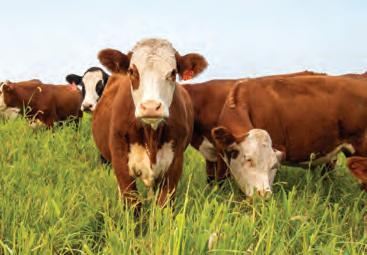
Alfalfa is key to healthy soils and provides more protein per acre than other cropping choices. It is the ultimate regenerative crop, increasing biodiversity and enhancing ecosystems. Quality alfalfa rations enhance your dairy operation’s overall ROI while strengthening your environmental footprint.
6
Returning to the farm after clinching a Division II national championship, Keith Snoddy of Shreve, Ohio, leads the double life of a star athlete-turned custom forage harvester.
14 Football, forages, and grass-fed beef
This Iowa couple raises cattle completely on forages and shares their grass-fed story with followers across the country.
A
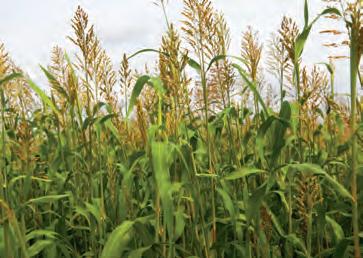
interest in feeding sorghum silage has breathed new life into breeding efforts.
Published by W.D. Hoard & Sons Co.
MANAGING EDITOR Amber M. Friedrichsen
SENIOR EDITOR Michael C. Rankin
ART DIRECTOR Todd Garrett
EDITORIAL COORDINATOR Jennifer L. Yurs
DIRECTOR OF MARKETING John R. Mansavage
DIGITAL MARKETING
Sam Rasmussen Sidney Hebbe
ADVERTISING SALES
Kim E. Zilverberg kzilverberg@hayandforage.com
Jenna Zilverberg jzilverberg@hayandforage.com
ADVERTISING COORDINATOR Patti J. Kressin pkressin@hayandforage.com
W.D. HOARD & SONS
PRESIDENT Brian V. Knox
EDITORIAL OFFICE
28 Milwaukee Ave., West, Fort Atkinson, WI, 53538
WEBSITE www.hayandforage.com
EMAIL info@hayandforage.com
PHONE 920-563-5551
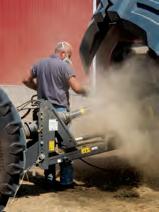
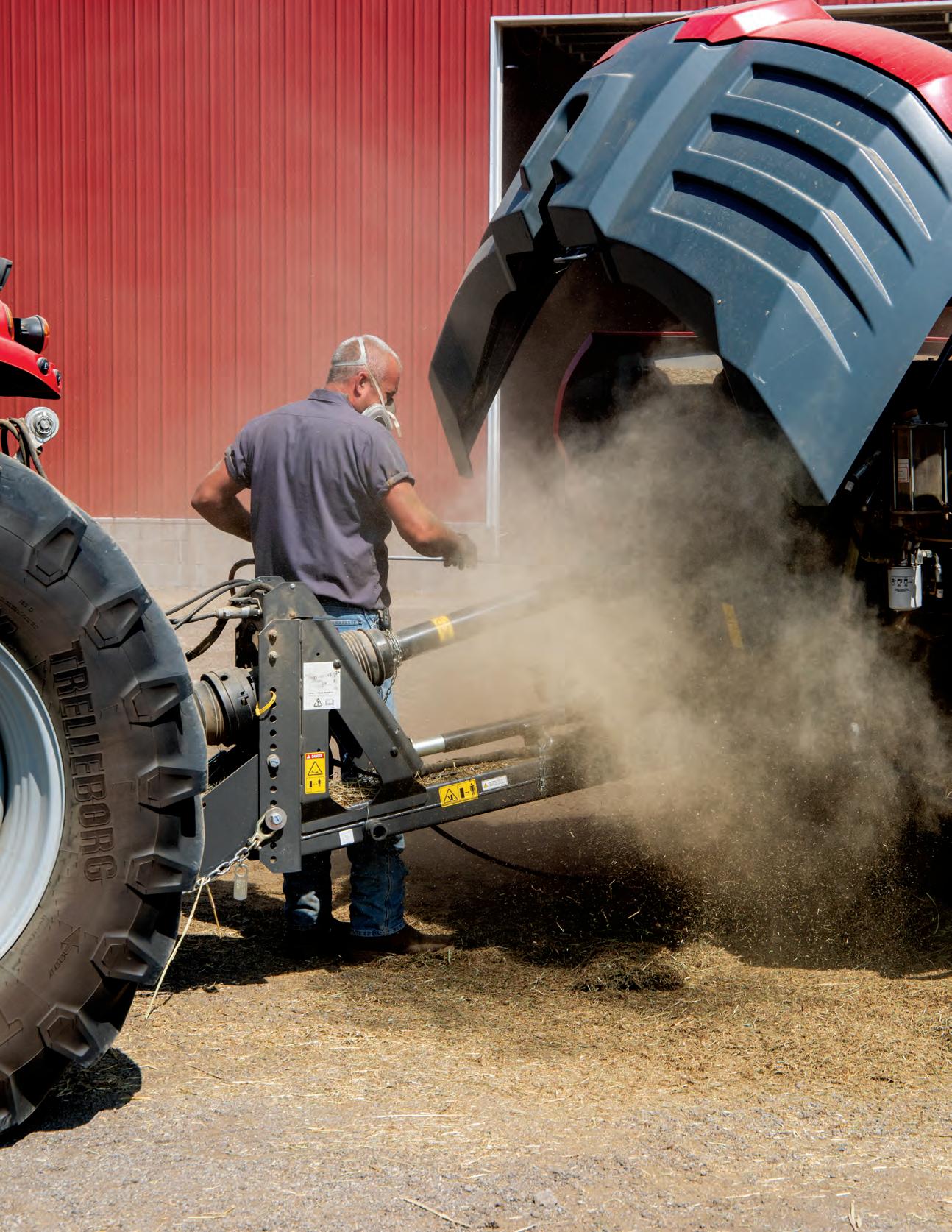
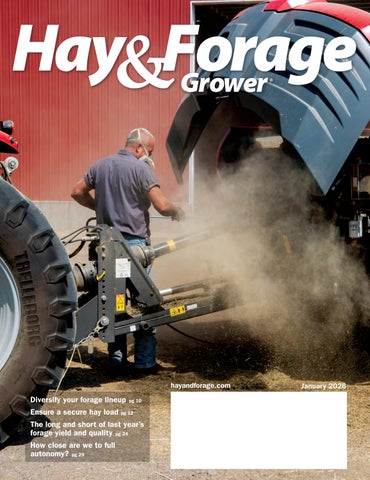
Cleanliness is next to godliness; it’s true for people and farm equipment. Andy Middaugh, a field service technician with Lowe & Young Inc. in Wooster, Ohio, blows the chaff out of a baler owned by Miller Farms Custom LLC in Valley City. The large commercial hay operation will be highlighted in a future issue of Hay & Forage Grower Photo by Mike Rankin

Amber Friedrichsen Managing Editor
THE other day, I received a question about using bale films to protect stored forage. Before responding, I decided to cross-reference my knowledge on the subject with whatever trusted sources I could find on the internet to ensure the insight I had to offer was fair and accurate. So, I made a quick Google search for “bale films.” The results were not what I expected. Instead of finding statistics on storage loses or how-to guides for wrapping high-moisture hay, I was presented with a list of every movie actor Christian Bale has starred in since his breakout role in 1987.
I was inundated with articles about the Batman portrayer’s academy award nominations, red carpet appearances, and a definitive ranking of his greatest cinematic performances. Despite being the star in one of my personal favorites, the money-heist comedy “American Hustle,” I learned more about Christian Bale than I’ll ever need to know — all from that tiny, two-word Google search. Needless to say, that wasn’t the sort of bale film information I was looking for.
In a world with so much information available with such little effort, it’s easy to get lazy in our approach to access it. Typing a few keywords into a search engine — which may or may not be spelled correctly, let alone form a complete sentence — is all it takes to get answers to our questions, all within a fraction of a second. Sometimes, though, those impulsive inquiries lack the context needed to get the big picture. Or in my case, you get a major motion picture, but one that has nothing to do with the desired topic.
Context is key to understanding the niches and nuances of hay and forage, especially in an industry that gives farmers the freedom to think outside the box and go against the grain — literally. There is essentially an open playing field of opportunity when it comes to forage crop production, product marketing, and overall business management. No two hay growers, beef graziers, dairy farmers, or custom forage harvesters run their operations the same way.
Regional differences in weather patterns and consumer demands add to the variation of farming strategies and forage philosophies, and having this type of context is critical to compare and contrast farm-level experiences with what is happening in the forage industry at the national — and even global — scale.
Context is also key when we analyze how market trends impact farm income and break-even costs. Take average alfalfa hay prices, for example. Reports of month-over-month average price reductions seem relentless, but the momentum of that downward slide makes a little more sense considering the extreme height at which recordhigh alfalfa hay prices peaked just a few years ago. That doesn’t make it any easier for farmers to turn a profit, but it might provide some clarity to the situation.
Moreover, low hay prices are usually supported by low commodity prices. Ask any of your row-cropping counterparts about recent corn and soybean prices, and they will likely describe the commodity market with a few choice words that offer more context than you bargained for.
In addition to industry-wide issues, context is key to understand the ins and outs of individual operations, and I’ve learned that the best way to gain that understanding is by getting curious. What type of production are the farmers involved in? What skills are necessary to do each job on the farm? What does a typical hay cutting, grazing rotation, or day on the dairy look like? What challenges arise that cause these tasks to stray from business as usual?
The context of the ensuing answers is derived from more than verbal explanations. It is evident in a farmer’s daily routine; it is conveyed in the way they speak about their employees, whether those people are hired hands or a part of the family; and it evolves with a farm’s history. Without trying to, producers also provide context for their personal values and belief systems when they describe why they do what they do, because more often than not, they consider farming a lifestyle, not just an occupation.
With all that said, my hasty Google search may have been a failed attempt to learn more about bale films, but it was a good reminder about the responsibility we have to share relevant, research-based, and real-life content with appropriate context. Hopefully, that context is the key that unlocks ideas for forage improvements and opens doors for new connections to be made.

Competitive sports and parental encouragement helped this Ohio farmer establish a successful custom forage harvesting business.
by Mike Rankin, Senior Editor
LIFE experiences range from mundane to energizing. Custom forage harvester Keith Snoddy hasn’t had much of the former, logging many hours behind a chopper, a center, and on an oil rig.
The 67-year-old Shreve, Ohio, farmer grew up on a registered Holstein dairy operation that his grandfather purchased and his father eventually took over. “I hated milking cows, so I got more into the machinery end of things,” Snoddy recalled while sitting in his office chair during a visit from Hay & Forage Grower last summer. “After high school, I went off to Youngstown State University and got a business degree, not knowing if I’d ever come back to the farm.”
Snoddy did come back home to help his dad, but he didn’t stay long. He was enticed to start a job working in a Texas oil field. “That was when I figured out my place was on the farm,” Snoddy said. “After six months, I left Texas and came back to the farm in 1982.”
Snoddy’s return to the farm may seem like that of a lot of rural kids who work elsewhere and discover it’s with the cows and crops at home that’s where they want to be. But this farm kid had another pull on his life: He was an athlete, or more precisely, an exceptional athlete.
By his sophomore year in high school, Snoddy had become a varsity starter in football, basketball, and baseball at Triway High School near Wooster. He was the football team’s starting quarterback for three seasons and was All-Conference as a sophomore. He then led Triway to a conference title as a senior, gathering All-Conference, All-District, and All-State recognition.
Snoddy’s prowess on the gridiron is what took him to Youngstown State University after high school. As their quarterback, Snoddy still ranks as one of the school’s all-time leaders in touchdown passes in a game (four, which he accomplished three times during his career), most touchdown passes in a season (19), and most touchdown passes in a career (40). As a senior, he was named an Honorable Mention Division II All-American.
“Athletics have been a big part of my life,” Snoddy asserted. “When I was at Youngstown, we played for a national championship my senior year. I had hoped to play beyond college, but pro teams weren’t looking for a 5-foot, 11-inch quarterback.”
When Snoddy returned home for good, the dairy cows were eventu-
ally sold. Once that happened, he was able to scratch his athletic itch again by coaching basketball during the winter. Starting with the school’s seventh grade team, he quickly worked through the ranks to head varsity coach at the high school he once starred for. Through his 11 years of varsity coach tenure, Snoddy had two teams make it to the state’s championship game. These days, Snoddy still assists the current coach. “Basketball always fit my schedule as a custom forage chopper,” he said. “It was a lot of fun, and all three of my daughters were cheerleaders for my teams during my years as the head coach.”
Most athletes develop over time, and the same can be said for a successful custom forage harvesting business. Snoddy’s venture into custom harvesting began in the late 1980s when he and his father decided to purchase a silage bagging machine for their dairy. “I bought the bagging machine, but then I also did custom bagging for other farmers,” Snoddy explained. “I got frustrated with how long it took some farms to chop, and I’d be sitting at the bagging machine for a half hour between loads. Finally, I asked them if I could just chop for them using our farm’s New
Snoddy was a star quarterback for Youngstown State University in the late 1970s. He led his team to the Division II national championship game during his senior year.
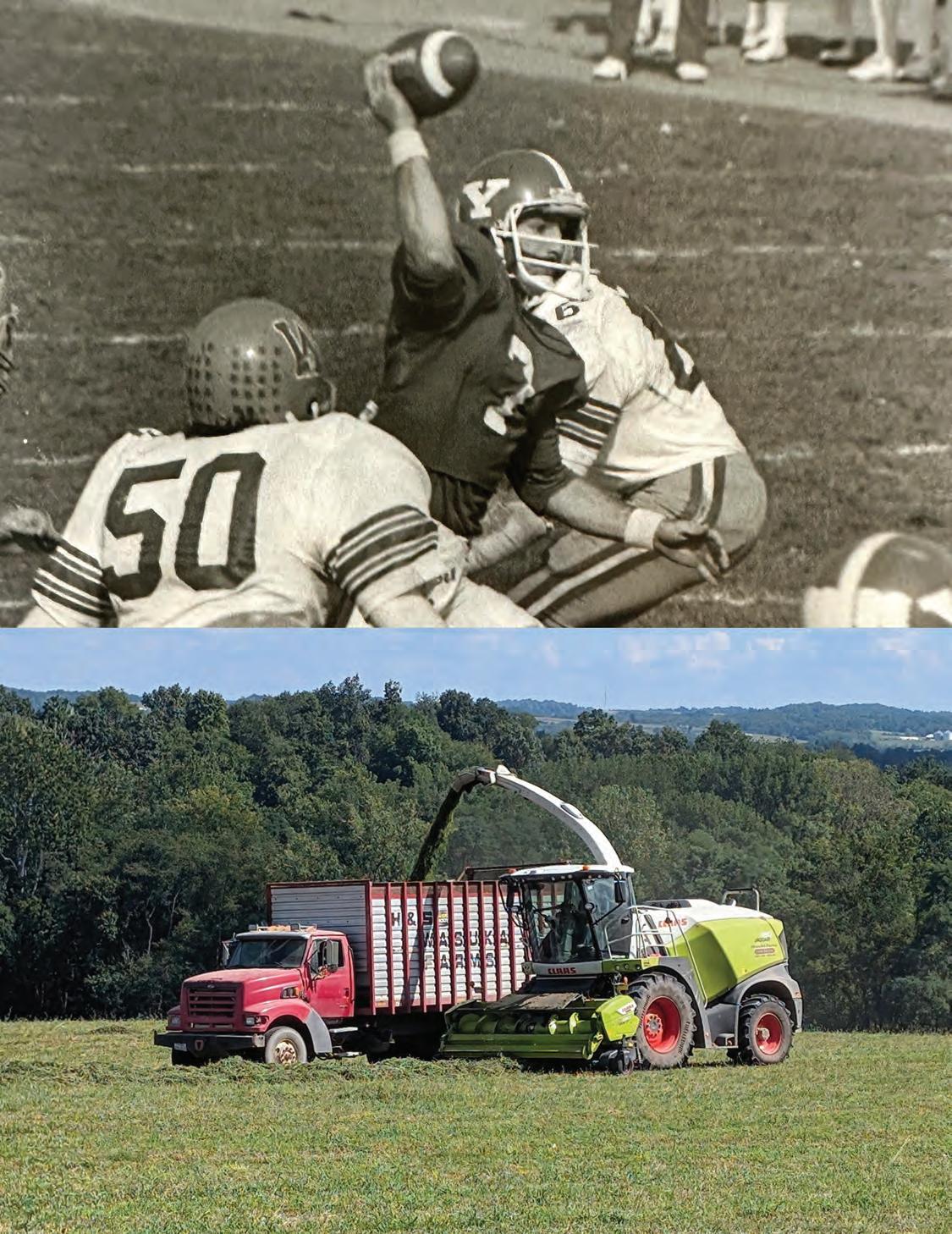
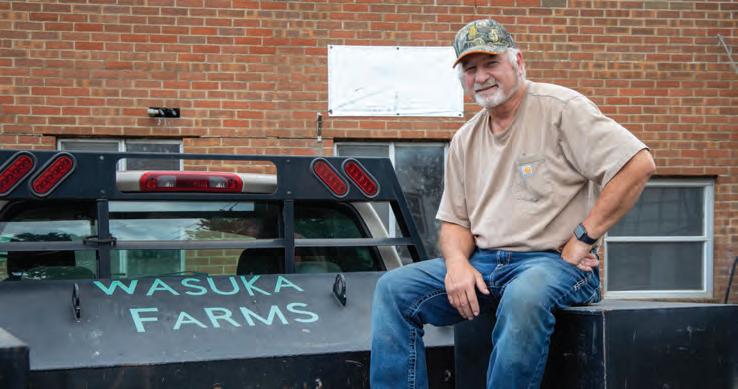
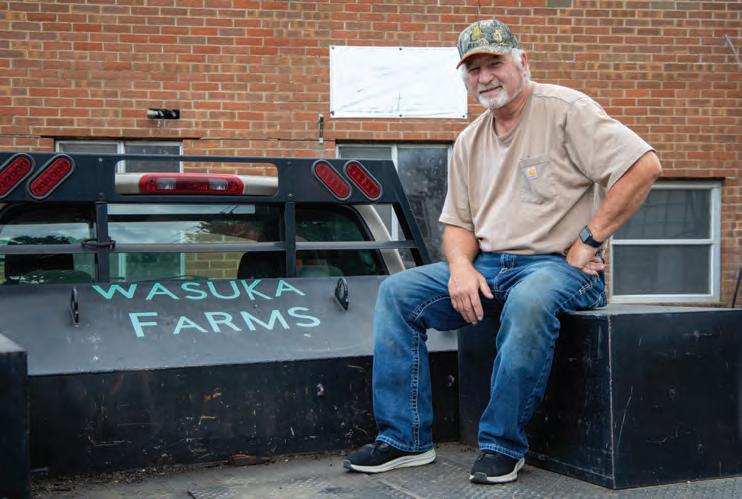
Wasuka Farms chops about 30,000 tons of corn silage each year. “If you want to be successful in this business, you need good employees and client relationships,” Snoddy noted as his keys to success.
he said. “It’s much easier this way.”
Idea Uni-Harvester. Business started to pick up, so I upgraded to a John Deere 5830 chopper, eventually replacing that with a Claas machine.”
When the farm sold all the cows in the late 1990s, Snoddy transitioned strictly into custom harvesting. “This was done with my dad’s blessing. He always encouraged me, even though I hated milking cows,” Snoddy said. “His help and support were immeasurable when I got started.”
Initially, the young forage-chopping entrepreneur planned to grow his own corn silage and then sell it to neighboring dairy farms. “I did that for a couple of years, but it just wasn’t a consistent income,” Snoddy confessed regarding his first business plan. “Then one of the area feed nutritionists approached me around 2000 about raising dairy heifers because we had a lot of unused facilities. We’ve continued to do that, and we now have about 700 head from a couple of different farms that we feed and care for. That has offered a more consistent income, and we use the crops from our farm to feed them,” he added.
Snoddy recalled that early into his foray as a custom harvester he would go just about anywhere to find work, but it was a lot of driving with equipment and trucks. “In the past 10 years, I’ve really backed off on the traveling and started doing most of my work for one nearby dairy that has several thousand cows and does 20,000 tons of corn silage per year,”
Currently, Snoddy chops about 30,000 tons of corn each year and does all four cuttings of hay on about 650 acres along with some acres where they just do the first cutting. Those totals include his own farm, which is tabbed Wasuka Farms and encompasses 350 owned and 150 rented acres. In addition to corn chopping, he also offers mowing and merging services for hay and currently co-owns a triple mower with flail conditioners.
Snoddy has six of his own trucks. He buys older Mack straight trucks with 20-foot boxes that self-unload. These work perfectly for the bagger, which is still used on the home farm and for some of his clients. Snoddy runs one 950 Claas chopper with a Scherer processor. For most of his years in the business, Snoddy would run a new chopper for three years and then trade it in for a new one. “I never felt comfortable with an old machine because I was chopping for a dozen farms,” he noted. “Major breakdowns weren’t an option.”
Snoddy has always been a bit of an innovator. Once, he went to a power show and saw a small camera and screen being sold and used on combines to view grain hopper unloading. He decided he could do the same thing on his chopper to monitor truck loading. These days, of course, most choppers come with this option.
Snoddy cites two key elements to a successful custom harvesting busi-
ness. The first is to hire and keep good employees. He has two full-time employees, one of which has been with him for 35 years. During harvest, there is a call list of part-time workers, many of whom are retired from farming or other jobs. During the winter, Snoddy keeps his two full-time employees busy in the shop. “We do a lot of the machinery maintenance and repair work for the large dairy we chop for beyond just our own work,” he said.
“I’ve loved the custom harvest business, even if it is stressful,” Snoddy admitted. “I was put in a leadership position early in my life as a quarterback and a pitcher, so to lead a custom harvesting crew came as second nature. If you want to have good people working for you, you must treat them right. And to be successful in this business, you need good employees, and there’s just no way around that. If employees don’t look at the farm as you do as an owner, then there are going to be problems. Admittedly, it took me some years to learn how to manage employees. Too often, my temper got the best of me. Employees need to feel like they’re an integral part of the business. It’s up to me to make them feel that way,” he emphasized.
Snoddy’s second component for success in the custom harvesting business is a strong client relationship. “Your clients have to trust you,” he said emphatically. “This is a relationship-based business.”
Speaking of relationships, the Buckeye State farmer is quick to credit his wife, Cheryl, for enduring the kind of hours that a custom forage harvester keeps. “I couldn’t have made this work without her support and understanding,” Snoddy said. “She played a big role in raising our daughters when I couldn’t always be there.”
As for the future, Snoddy knows he’s on the tail end of his chopping career. “I’m 67 years old and don’t have any kids who will be taking over. I want to leave myself enough time to see the world. I’ve never been the guy who was going to die farming. I don’t just want to chase the rabbit; I want to catch it.” Down the road, it looks like there may be a position change from quarterback to receiver. •
by Alan
RE you feeding hay on the same pasture this winter as you have in the past? Winter hay feeding is a common activity around the country, and your livestock require sufficient energy to withstand the winter chill and cold winds. But, if the same pasture is repeatedly used, the path to the hay ring is likely well worn.
Well-fed livestock ensure the integrity of your farm investment. Certainly, hay feeding is necessary if the grass has stopped growing and there is no forage stockpile available. It’s logical to sacrifice a single pasture for hay feeding to limit damage from livestock trampling over wet soil from frequent winter rains and snow melt. Stockpiling forage for deep-winter grazing was a plan that needed to be developed and implemented in early autumn, so if this plan wasn’t executed, then you’ve likely become accustomed to the daily or weekly feeding of hay.
There are some soil health implications from repeated hay feeding in the same pasture location. Each ton of hay has a relatively predictable level of energy and nutrients. However, the actual nutritive value of hay can only be determined with a forage analysis, as there are considerable variations in quality depending on species, the season of cutting, and nutrient management.
The energy animals consume from hay is utilized as digestible energy to maintain body condition of mature livestock or to grow body mass in developing animals. However, daily deposits of urine and feces contain another source of energy and nutrients that are potentially recycled and utilized by another set of organisms on your farm — soil fauna and microbes, such as earthworms, beetles, bacteria, and fungi. If you have to feed hay to 30 head of mature cows for 60 days in the winter, then you would need roughly 78 bales, assuming the bales weigh an average of 800 pounds. That winter feeding cost will probably be $2 per head per day or more, so getting fresh bales out frequently will lead to better feed
efficiency. You might be putting out four bales twice a week.
Getting back to the fate of the nutrients in the hay, let’s assume that you feed those 78 bales on the same tenth of an acre in the same pasture all winter. Nutrients that are recycled from hay
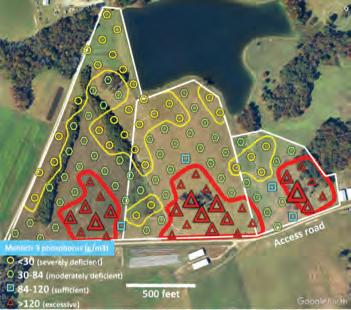
Soil-test phosphorus concentrations at the 0-to-4-inch depth in a 50-acre field
through livestock will be deposited nearby, leaving a potential enrichment zone in the half-acre around the feeding area. That could include up to 1,860 pounds of nitrogen per acre, 310 pounds of phosphorus per acre, and 1,240 pounds of potassium per acre, as well as a considerable amount of calcium, magnesium, sulfur, and a small amount of various trace elements.
These elements were contained in the hay that you either bought from another farm or harvested from your own farm. Such large nutrient concentrations are not likely to be of the greatest value in this small spot and could be considered a liability in sensitive watersheds or when the hay feeding location is near major water runoff channels.
A conservative estimate of the economic value of just the hay nutrients is $50 per ton, which would translate to a fertilizer input cost of $3,100 per acre in the feeding impact zone. This may
be a third of the cost of the hay itself, so there could be substantial value in the residual nutrients from winter hay feeding. Another important economic value that is more difficult to quantify is in the residual energy supplied to soil microorganisms as a result of excrement deposition and fouled hay.
The nutrient and energy values to soil are of far greater benefit when spread out over a larger area and not concentrated in winter hay-feeding zones. This should encourage you to learn more about alternative feeding options, such as fall stockpiling for winter grazing, hay unrolling, or bale grazing.
When sampling winter hay-feeding pastures on research stations in North Carolina, researchers, including myself, mapped several hot spots of nutrient concentrations in the top 4 inches of soil — see the figure for an example of soil-test phosphorus on one farm. Hot spots were exactly where repeated winter hay feeding occurred. Fertilizer was not often applied to the remainder of the pasture, which led to nutrient deficiency in the majority of the system. Hot spots had soil-test phosphorus concentrations that were several orders of magnitude greater than sufficient.
A traditional hay-feeding strategy that placed bales on hilltop portions of the pasture near access gates were easier to manage for farm workers. However, this strategy led to excessive phosphorus concentrations in hay-feeding spots and deficient phosphorus concentrations throughout the rest of the system. Results of the full study can be found at bit.ly/HFG-SOS-Jan26.
Do you have similar conditions on your farm? Could hay nutrients be more uniform with a more distributed feeding strategy? The impacts of these alternative feeding options will be explored in future columns. •
ALAN FRANZLUEBBERS
The author is a soil scientist with the USDA Agricultural Research Service in Raleigh, N.C.

OVER half a century ago, W.D. Young made the decision to diversify his southern Georgia farming operation to include row crops, cattle, and a tractor dealership. As many readers will agree, diversification is a hedge against selling a product for which you don’t control the price and a marketplace that swings wider than the batter’s box. It proved to be a smart move.
Young, also known as grandpa to me, dropped out of grade school to start working and help feed the family, and after decades of hard work, sacrifice, and savvy, built a diversified farm that still thrives today in the hands of his offspring. While we sold the ailing tractor dealership years after Ford became New Holland, cattle have continued to be an integral part of our our row-crop operation, with about one-third of our fields fenced for winter grazing. In the fall, we think ahead to determine what crops will be grown in our rotation the following year and decide what to plant for our cattle. We also take a look at the
markets. Will corn break even? Will cattle prices be on the rise? Can annual forages pencil a profit?
Last year, we cut our corn acres in half and took advantage of record cattle prices by planting and grazing summer annuals. A pound of gain is worth nearly twice as much as it was a few short years ago.
We typically sow cereal rye, spring oats, spring pea, grazing radish, and hybrid turnip in mid- to late September here in climate Zone 9a, depending on temperature and moisture. We hope to be grazing by late November and are often done grazing in March. Usually, we get two decent grazing rotations and perhaps a clean-up graze prior to our cash crop preparations.
Peanuts have become the backbone of our row-crop rotation, and we know those fields must be prepped in April and planted in May. This allows for a longer grazing period, and these stands often include cereal rye, oats, triticale,
hybrid turnip, and a small amount of ryegrass. Too much ryegrass creates a root structure that can be hard to deal with prior to peanut planting.
We sometimes include a small amount of crimson clover and hairy vetch in the seeding, but we keep forage legumes to a minimum in front of the row-crop legume. Many farmers are fearful of both ryegrass and hairy vetch as potential weeds; know your weed control mechanism prior to including those in your mix.
Summer annuals sometimes get stockpiled, and since frost doesn’t usually happen until November, we lean on heavy sorghum-sudangrass plantings as they retain good quality. Sunn hemp will provide a trellis for the late growing cowpea. An understory of crabgrass can provide a lower growing biomass, but it loses quality in October when it goes to seed.
The fields that will be planted to summer annuals the following year get
the royal treatment: heavy ryegrass, crimson clover, and hairy vetch. That is usually punctuated with triticale, winter oats, spring oats, cereal rye, and a brassica or two. We try to be done planting these fields as soon as we finish peanut harvest, which sometimes goes into mid-November.
Our last winter plantings are in the pasture where the perennial grasses typically get in the way until the first
we like to include four plant families — grasses, legumes, brassicas, and broadleaves — to mimic natural systems, promote soil microbial diversity, and create an entourage effect. We lean on the grasses and legumes, but we also intersperse our pastures with a few productive members of the other plant families.
Address the issues
nature germinate a seed? What can we do differently to affect this process? We believe we must always be thinking about the big picture and not just applying Band-Aids.
We have irrigation on many fields, which allows us to plant on time. Moisture is necessary to have success, so we are circumspect about the reality of our opportunities. Overall, preparation and timing are critical to getting stands off to a good start and reducing winter feeding costs to get the most from forage investments. Diversifying your sward — like a business — and hitting those planting windows is a solid hedge against Mother Nature and the markets pitching outside the batter’s box. •

Proper attention to details in loading hay results in successful transport to its destination. Secure your load before you take to the road.
by Elysia Rodgers
FEW sights capture rural life quite like hay bales dotting a golden field beside a red barn. It’s a postcard image of hard work and harvest. But for those who grow, haul, and sell hay, the bales represent much more than nostalgia — they are a livelihood. Whether destined for the barn, the sale lot, or a customer who lives miles down the road, every load of hay carries both value and risk. Transporting hay safely is more than just good practice; it’s good business. Each trip down the road puts your time, equipment, fuel, and reputation on the line. And when things go wrong — whether it’s a lost bale or a traffic accident — costs can mount quickly. Let’s consider some practical considerations and safety tips for hauling hay and forage products that will help you move loads efficiently, legally, and safely.
For most producers, hauling hay means working within narrow time windows that are often at the end of long days and under pressure from weather or schedules. It’s tempting to load up and hit the road quickly, but public highways offer a mix of hazards. Drivers who aren’t familiar with farm equipment may underestimate how slowly hay wagons move or the width of a loaded trailer. A sudden approach by a fast-moving car can lead to dangerous decisions — swerving into oncoming traffic, clipping mailboxes, or misjudging a pass. Even minor accidents can turn costly if property damage, injury, or liability claims arise.
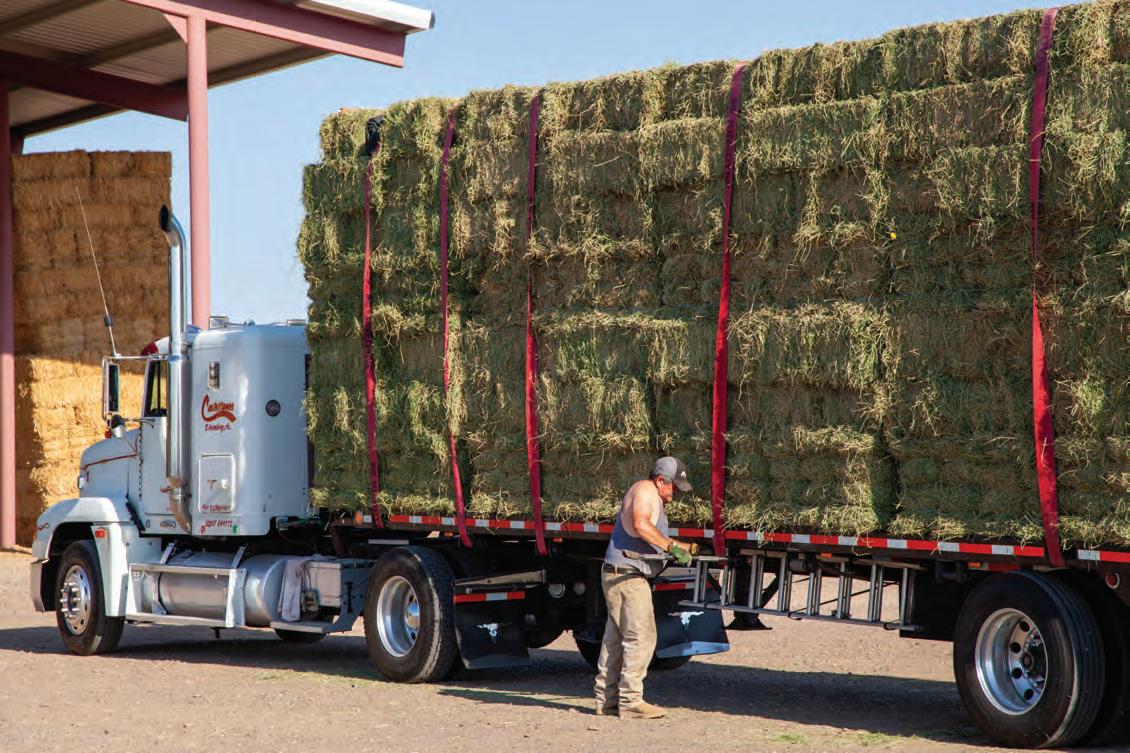
A safe hay load starts with minimizing bale movement. One loose bale can cause serious accidents or liability. To prevent that, focus on these essentials:
• Inspect straps. Replace any frayed
or cut straps. Defects can lead to fines and/or accidents.
• Limit forward and backward movement. Use headboards or ramps and secure round bales on top tiers to prevent rolling during stops or turns.
• Prevent side-to-side shifting. Run straps along the length of the trailer to keep bales from sliding or falling off.
• Pack even and tight. Center bales on the bed and close any gaps to create a stable load.
• Lock layers together. Stack square bales in a crisscross pattern to square and tighten the load.
• Do a quick visual check. If the load doesn’t look secure, add more straps. A few extra minutes can prevent costly damage.
Hay haulers on public roads must meet Department of Transportation
(DOT) regulations for load securement (Code of Federal Regulations, Title 49, Part 393). These include:
1. Minimum straps required:
• O ne strap for loads less than or equal to 5 feet in length and 1,100 pounds or more.
• T wo straps for loads less than or equal to 5 feet but over 1,100 pounds.
• T wo straps for 5- to 10-foot loads.
• O ne strap per 10 feet (or fraction) for longer loads. For example, a 25-foot trailer needs a minimum of three straps.
2. Working load limit (WLL): The total WLL of all straps must equal at least half the weight of the load. For example, a 30,000-pound load requires a combined WLL of 15,000 pounds or more. Use tagged, rated straps and replace any damaged ones (see photo).
3. Replace damaged or worn straps: A strap must be taken out of service when cumulative tears or worn areas across its tensioned width exceed limits based on the strap’s original width.
• 1 3/4- to 2-inch straps: Remove if worn or torn areas exceed 3/8 inch.
• 3 -inch strap: Remove if worn or torn areas exceed 5/8 inch.
• 4 -inch strap: Remove if worn or torn areas exceed 3/4 inch.
4. Forward movement protection: If no headboard or ramp protects the load, add a “penalty strap” at the front. A rear strap may be needed if there’s no gate.
5. Alternative option: A Federal Motor Carrier Administration exemption allows two front-to-back straps and at least four cross-straps for multi-tiered loads, but total WLL rules still apply. Lighting and marking requirements also come into play when hauling hay. Other drivers can’t avoid what they can’t see. Properly placed lighting, reflective tape, and slow-moving vehicle (SMV) emblems are your best defense on the road. If you’re hauling after dark or in low visibility, make sure all trailer lights are clean and working.
Don’t overlook your tires when loading up, because if they fail, all other safety measures are undone.
Examine tire condition and tread wear. A worn tire is an unsafe tire. Look for low or uneven tread wear or deteriorated rubber. Be sure to replace any damaged tires.
Check pressure requirements. Confirm the air pressure requirements
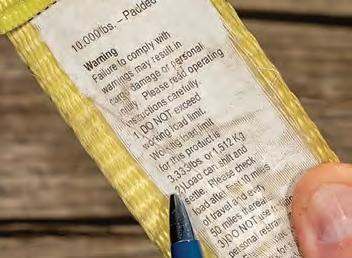
A manufacturer’s tag is attached to a strap. The tag clearly shows the relationship of the working load limit (WLL) and a reminder to check the load after the first 10 miles and every 50 subsequent miles.
of your tires and ensure that they are inflated to that level. This will avoid unnecessary wear.
Check load limits. Know the load limits of the tires on your trailer to ensure that you don’t carry more than they can safely transport.
Determine the speed rating of the tire. Be sure to check the tire sidewall to determine if they are adequate for the speed to be traveled.
Know the type and use of tire. Tires are built differently depending on their use. Look on the sidewall to ensure your tire is labeled for trailer use.
• P = passenger vehicle tire
• LT = light truck tire
• ST = special trailer tire
• T = temporary or spare tire
• R = radial construction, the most common for passenger tires
Even the most careful hauler can face unexpected problems such as a blown tire, a shifting load, or a close call with an impatient driver. In those moments, how you respond matters.
Stay calm; move safely off the road, if possible; and use hazard flashers or cones to alert traffic. Never risk walking between lanes or trying to pick up fallen bales while vehicles are moving nearby. If there’s damage or injury, report the incident immediately and document the scene for insurance or liability protection.
A single accident can ripple through a farm’s operation — not only in repairs or replacements but also in lost time and potential claims. Following a consistent hauling plan reduces those risks dramatically.
Safe hay hauling isn’t just a task; it’s a mindset. It starts with routine
equipment checks, continues with smart loading and strapping practices, and ends with defensive, alert driving. Each load you haul represents the hard work, time, and care you’ve invested in your farm.
Farmers who make safety a habit protect not only their operation but also their reputation within the community. Every trip on a public road is a shared responsibility between the agricultural and nonfarming public. The better prepared we are, the safer everyone will be. Taking a few extra moments to correctly secure a hay load is a simple way to ensure that you and the load make it safely to the planned destination. •
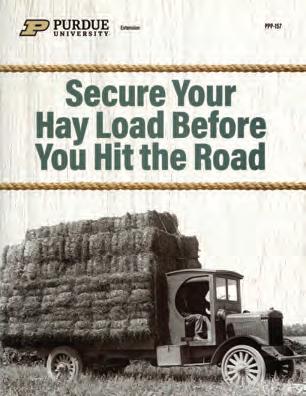
Purdue University Extension recently made available a new publication on securing hay loads for road travel. The 56-page resource details all aspects of safe and secure travel with trucks, trailers, and wagons. To order a copy, use the QR code below:


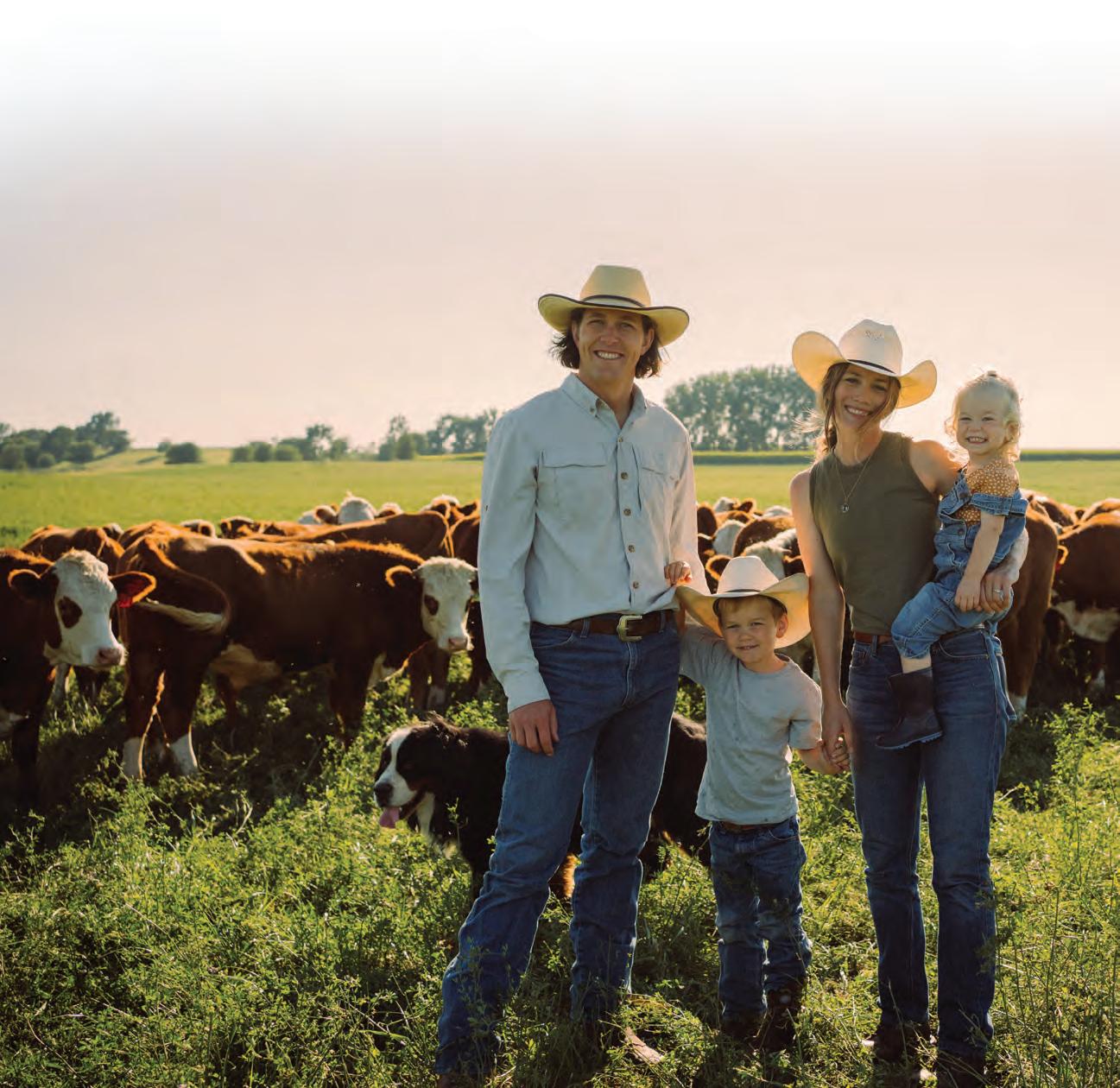
This Iowa couple would have never guessed they’d be raising and selling grass-fed, grass-finished beef across the country when they first met as summer interns for a National Football League team.
by Amber Friedrichsen, Managing Editor
IT ALL started with the Seattle Seahawks.
That’s where the story behind Grand View Beef begins, anyway.
Knute and Amanda Severson met in Seattle the summer they both interned for the Seahawks. He was a horticulture major at Iowa State University who landed an internship with the football field’s turfgrass team, and she was a hospitality and events intern who had already graduated with a strategic com-
munications degree from Washington State University.
Both working what they considered their dream jobs at the time, the Iowa farm boy and the Washington state native hit it off as friends, which evolved into a relationship, but then they broke it off at the end of the football season when Knute returned
to college. Fast-forward to Amanda’s post-graduation job search and a job offer that landed her in Iowa, and the couple realized it was meant to be.
Knute grew up on his family’s century farm in Clarion, Iowa. His parents, Troy and Beth, introduced Horned Hereford cattle to the row-crop operation in 1996, and although they prioritized a high standard of animal
husbandry, they were never interested in selling meat directly to consumers. Knute and Amanda, on the other hand, had a vision for direct beef sales and bought their first steer from Troy and Beth when they moved back to Clarion and got settled on their own slice of the home farm in 2017.
The next year, the couple raised a dozen cattle, finishing half of the herd on corn and the other half on pasture. When they brought meat from both groups to the farmers market, there was clearly a preference for the pasture-raised beef.
“We had people walk away from the table when we told them the cattle were corn-finished,” Knute recalled. “When my wife and I met, we went to farmers markets in Portland, San Francisco, and Seattle, and it was very evident that grass-finished beef was the popular thing. So, we did some consumer research, and it felt like there was a really big demand that was not being met.”
From that point forward, the Seversons went all-in on selling 100% grassfed, grass-finished products under the Grand View Beef label, buying more calves and growing their number of market-ready animals by about a dozen head every year. In 2025, their finish-

ing herd size jumped to more than 100, and the couple sold beef to customers as close as small-town Clarion and as far away as the East and West Coasts — even Alaska and Hawaii.
Although their dream job descriptions have changed since their stints with the Seahawks, those early experiences laid the foundation for their roles in the beef business today. Knute handles farm operations, including forage seedings and pasture moves, and Amanda manages all things sales and marketing, running their website, hosting farm-to-table events, and maintaining an engaging social media presence that lets viewers behind the scenes of farm life and cattle grazing.
“It’s less about sales and more about trying to connect with the consumer and provide them with transparency,” Knute said about building the Grand View Beef brand online. “If you’re a consumer, you want to know where your food comes from and who your farmer is, and that’s just kind of our avenue for it. That is one of the things we are most proud of.”
As they’ve grown their business, the Seversons have also grown their pasture base. To do so in the middle of row-crop country, though, the couple had to go against the grain — literally. Roughly 300 acres of their total system — which includes both their finished beef and cow-calf operations — was previously corn and soybeans.
“There was definitely some rumbling in the community, like, ‘Who is this idiot who moved back and is selling grass-fed cattle and turned corn and beans into pasture?’” Knute chuckled. But the beef farmer wasn’t fazed. Another 300 acres of the grazing system is anchored in perennial pasture, and he seeds 300 to 500 acres of annual forages every year.
The spring grazing season begins in April when cattle are turned out on cereal rye and triticale that Knute plants after row-crop harvest the previous fall. Then, the herd grazes perennial pastures containing orchardgrass, smooth bromegrass, tall fescue, festulolium, and alfalfa into midsummer.
Once these cool-season species hit their slump, cattle rotate through sorghum-sudangrass and a highly diversified cocktail mix including turnips, radishes, millet, cowpea, and
chickpea. These pastures are part of a three-year rotation that rolls into corn, followed by soybeans, and then a crop of fall oats. After an initial pass through the warm-season annuals, Knute stockpiles some of the paddocks and utilizes them through January — sometimes longer.
“Don’t get me wrong, it’s not the same nutrient content that it is in September when it’s still growing and the plant is alive and well. But there is usually enough forage out here that will give the steers enough sustenance as long as I give them a little alfalfa hay with it,” he said, overlooking a partially grazed stand of sorghum-sudangrass last summer. In general, it takes 18 to 20 months to finish steers on forage after the Seversons buy them in as weaned calves.
Just south of the pastures is the barn and feed yard where Knute gives the herd a blend of alfalfa baleage and dry hay in the winter. He has about 130 acres of dedicated hayfields to fulfill these seasonal needs; however, baling generally goes against his farming philosophy.
“If you can avoid baling hay, do so,” Knute said. “Stockpiling forage is the best-case scenario because you don’t have any costs. You don’t have to cut it, you don’t have to bale it, and you don’t have to haul it.”
According to their analytics, Grand View Beef is well above industry standards when it comes to repeat customers, and the couple sells goods that run the gamut of beef and by-products. In addition to grass-fed hamburger patties, steaks, snack sticks, and roasts, they sell specialty cuts, bone broth, and dog bones. Six years ago, grass-fed beef tallow was virtually a waste product. Now, it’s the fastest selling item on their website.
“It just flies off the shelves,” Knute said about beef tallow, which can be used for anything from deep-frying chicken to skin care and candle making. Although many customers report learning about Grand View Beef by word-of-mouth, he attributes a large percentage of online sales to search engine results when people look up the niche products like beef tallow that can be found in their catalog.
Similar to others buying cattle in today’s market, though, the Sever-
sons have been skating on thin profit margins. Their calf prices have nearly tripled in the past several years; what used to cost $800 in 2019 cost $2,200 in 2025. They can adjust their product prices slightly to reflect inflation, but they ultimately accept that they’re playing the long game and grass-fed premiums might not pay off until the next market cycle.
From a forage perspective, their biggest challenge is finding affordable farmland to expand, especially since Knute is the only neighbor turning row-crop acres into pasture. “Wright County, Iowa, is highly productive,” he said.
And then there are the inevitable pivots and occasional redirections that must be made when establishing forage and rotating cattle. For instance, Knute learned the hard way that grazing alfalfa can be risky despite the bump in protein it provides in mixed pastures. After the herd experienced a high frequency of bloat last summer, he vowed to eliminate alfalfa from perennial pastures and seed more acres to summer annuals moving forward, utilizing these stands earlier in the summer and stockpiling more of them for the fall and winter.
“I feel like we still learn something every day about the best way to get animals fat and the best way to manage ruminants on 100% forage,” Knute said. “They’re not meant to eat grain, but trying to get them buttery fat on 100%
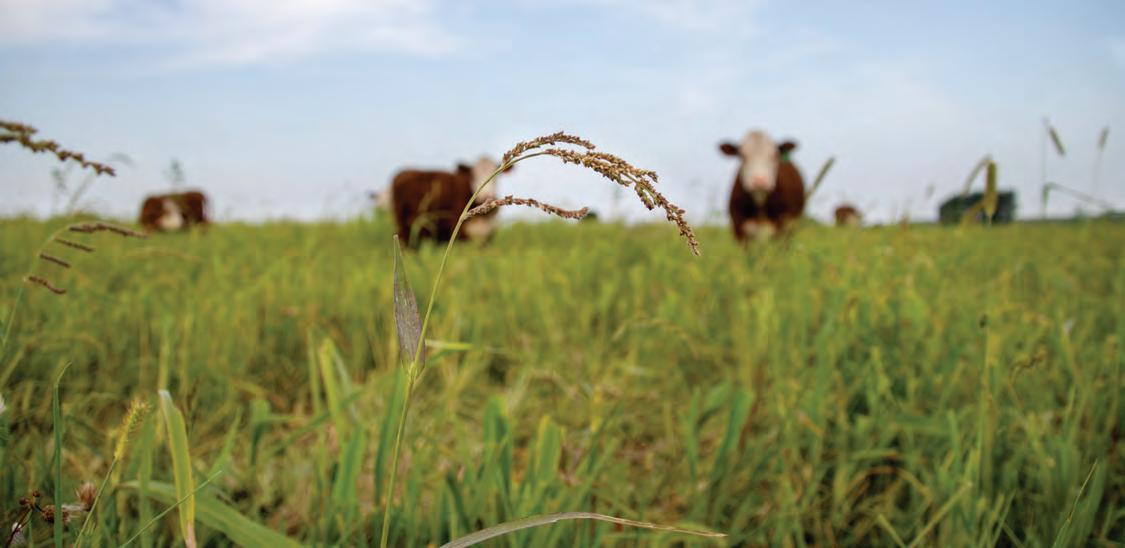
In addition to establishing perennial pasture on what used to be corn and soybean fields, Knute seeds 300 to 500 acres of annual forages every year.
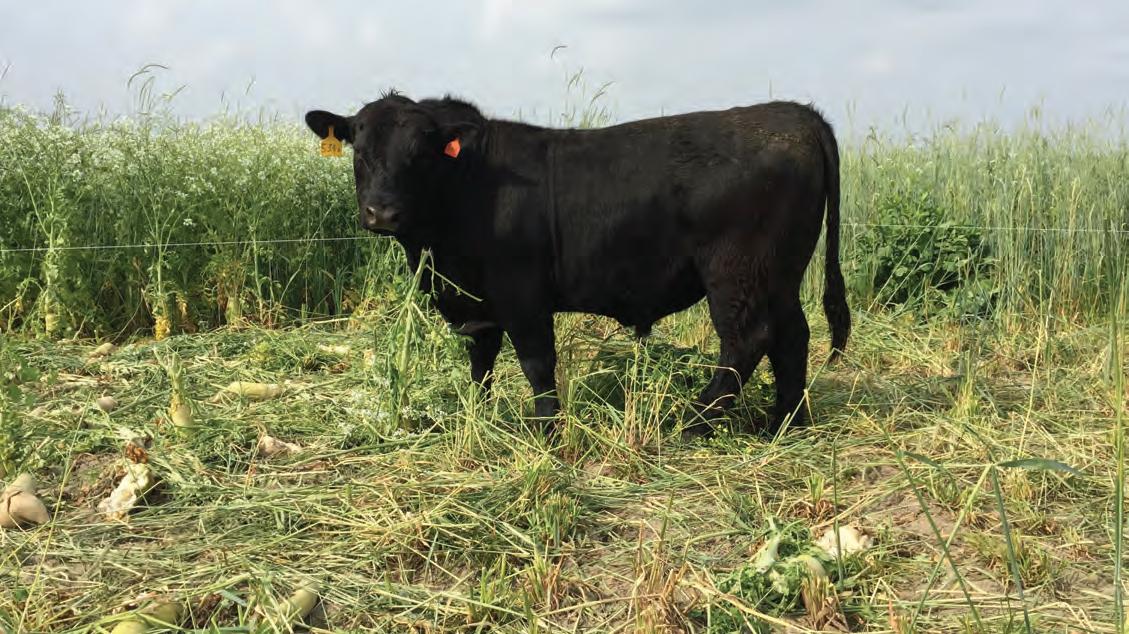
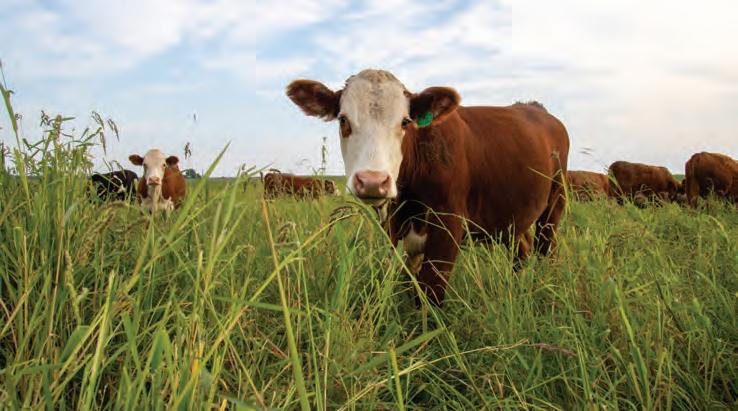
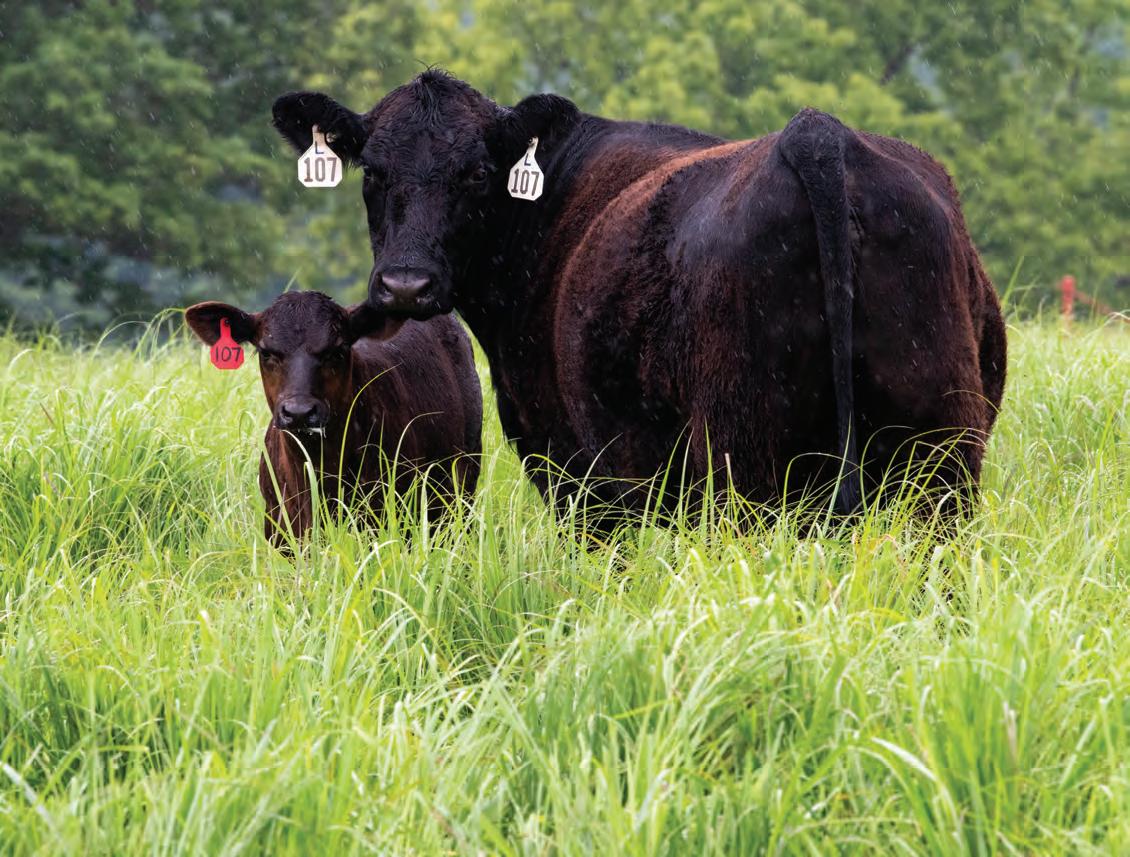
The Seversons started farming with a single steer in 2017 and have grown their grazing herd to roughly 300 head.
forages without grain has proven to be a difficult thing to do.”
There have been some setbacks and learning curves, but the Seversons stand by the benefits of grazing cattle, whether those pluses are seen on their balance sheet or measured below the soil surface.
“Your equipment costs are less, your input costs are less, you get manure out of it, and you’re increasing your soil health,” Knute said. “The drawbacks are that it’s something different. It’s just hard for a lot of people in agriculture to be comfortable with doing something different.”
Looking ahead, the couple aspires to
scale their business beyond their home farm and sell enough meat under the Grand View Beef label to feed a football stadium — or two.
“I would love to have 10,000 head of cattle,” Knute said, painting a picture for the future of the operation. This would involve sourcing livestock from farmers across the country with similar values and grazing systems. Just like the Seversons connect their customers to agriculture through social media and storytelling, they want to connect producers to consumers by doing the legwork of branding and marketing. Their goal is to bridge those gaps on both sides of the table, and they believe the missing link is a hearty serving of grass-fed beef. •












As farmers and producers, you know best that a good, quality food product means everything to the consumer. And with Liphatech Ag rodenticide solutions, the security of your output is in good hands. Our team will stop at nothing to help protect the hard work of farmers and producers.










































by Matt Poore
IN RECENT years, regenerative agriculture has become a popular topic in our industry. The idea is to improve your production system using the principles of soil health, which include reducing soil disturbance, keeping the soil covered with plant residue, keeping living roots in the soil yearround, elevating both plant and animal biodiversity, and integrating livestock.
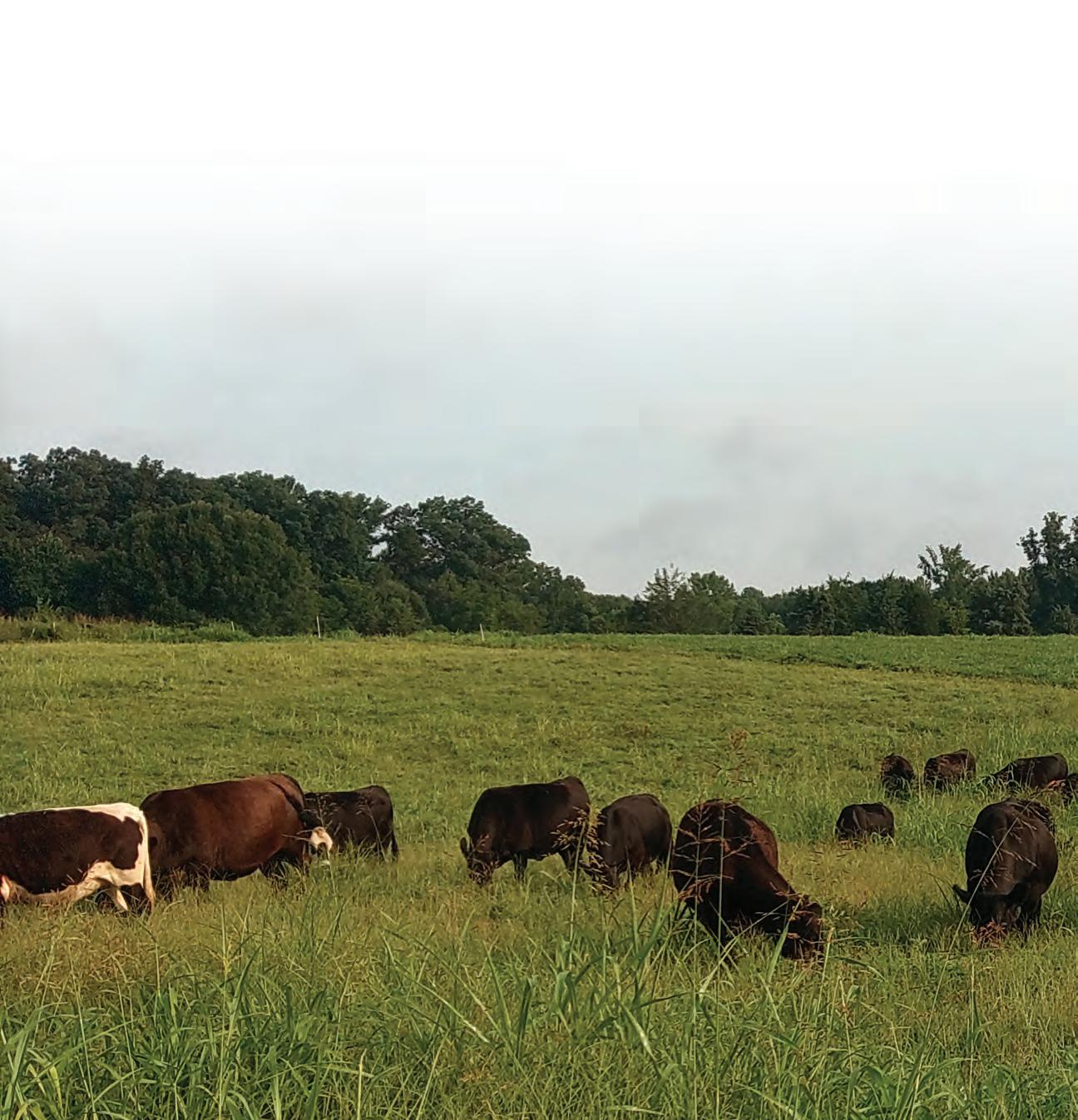
Regenerative grazing with beef cattle has a jump start on this concept as most beef production systems are based on perennial forages and inherently integrate livestock. The fundamentals of good grazing management include limiting the length of grazing events, leaving residual forage, and allowing for long rest periods. These get us on the road to regeneration by building soil health.
Regenerative grazing requires a different mindset in which farmers accept the fact that most agricultural systems — in this case, pasture — are in a degraded state. Many farmers use inputs such as fertilizers and herbicides as a crutch to solve problems that continue to recur. The regenerative mindset is to move the system back toward a functioning ecosystem that can self-perpetuate with help from only our management and the grazing action of the cows. Once you have a healthy and diverse plant population, elevated soil organic matter, and a high level of nutrient cycling, it is possible to be productive without those expensive inputs.
Unfortunately, it is not so simple, and it can take a long time to get to this long-term goal. In the ideal situation, you might already have all the pieces in place to make no-input grazing happen. But if your system is heavily degraded to begin with, you might never get the system
to regenerative status.
I frequently read suggestions in social media groups for beginner graziers that strongly recommend never using any herbicides, fertilizers, or other inputs. After 45 years of managing a farm, I realize that it is critical to use all the tools available to steer your system in the right direction. It was possible for me to create a self-perpetuating ecosystem, but it didn’t happen without some important inputs along the way.
We have many tools that can help us get on the right path, but farmers need to understand how and when to use them. The first step is to soil test and correct nutrient deficiencies, meanwhile scoring the condition of each of your pastures. Pasture Condition Scoring is a highly recommended method developed by the Natural Resources Conservation Service (NRCS), and there are guides and worksheets available.
Soil pH is a critical factor in soil health. Eventually, organic matter
will help buffer acids produced in the soil, but if your soil is initially acidic, then it will be necessary to use lime to raise soil pH. Moreover, legumes are core components of a pasture system because they fix nitrogen from the atmosphere, but most legumes are sensitive to low soil pH, so correcting those levels is crucial.
It is also common to find pastures and hayfields that have been overgrazed by continuous grazing with little to no fertilizer applied for decades. If the levels of phosphorus and potassium are at rock bottom, then you need to bring those nutrients back into the system. This can be done with commercial fertilizers or alternative sources like poultry litter or hay, but without some type of input, soil fertility will be slow to improve. Again, use a soil test to guide your applications, but understand that with very low nutrients in the soil, a high level of nutrient cycling cannot occur.
Another common problem in degraded systems is that the plant populations may not be what you want. Tough invasive weeds like nimblewill, dog fennel, and blackberries are difficult to remove without some action on the farmer’s part.
Learn to identify your plants, and if you have strong populations of undesirables, you might benefit from the use of an herbicide. Don’t think that all “weeds” are bad, and that you need a pure stand of grass. Good plant diversity means having a balance of grasses, legumes, and nonleguminous forbs. But there are poisonous plants out there, and some that have little value in a grazing system.
In some cases, plant populations will be so bad that a complete renovation might be the best approach to achieving a healthy ecosystem. Implementing pasture renovation may involve the use of a broad-spectrum herbicide and some selective broadleaf herbicides when desirable grasses are developing in a stand. After the grasses are up and healthy, the addition of nutritious legumes and forbs like plantain and chicory can build a diverse plant community.
Mowing is an underappreciated method for improving pastures, and it is especially helpful with brush and tree species. If common sense tells you to mow following a grazing event, do it.
Essentially, there is no one-size-fitsall solution to developing a regenerative system without several inputs. Every
situation is different, so don’t believe a “never” or “always” approach. Understand your tools, apply them strategically to get the effect you are after, and then put them on the shelf after they are no longer needed.
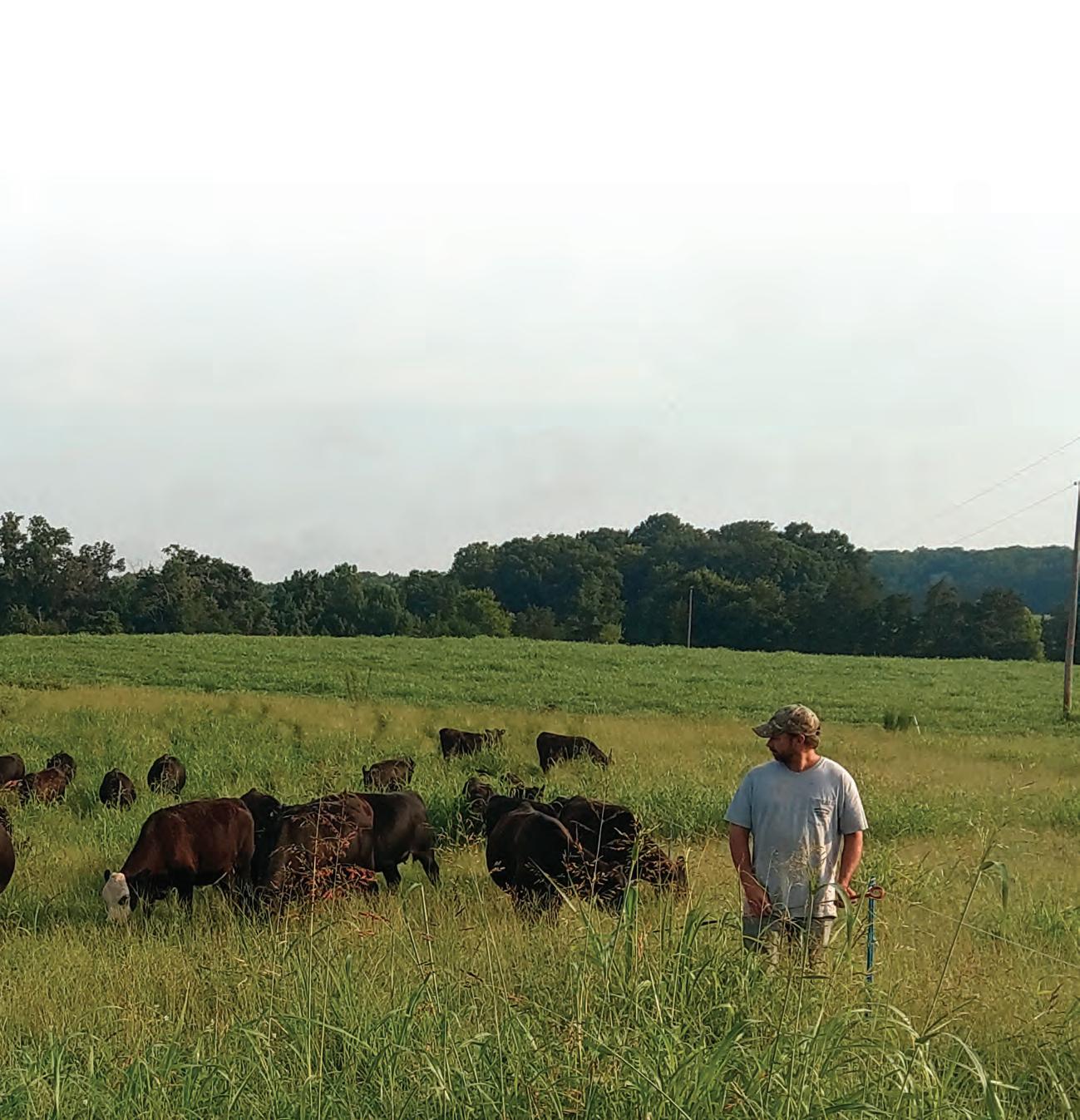
Regenerative grazing is an exciting new frontier for us. It is possible to produce a lot of forage and beef per acre without the use of traditional inputs, but there will always be situations where the strategic use of these inputs might be beneficial. Be especially wary of new inputs marketed to farmers that have not been proven by science or seem too good to be true. They usually are.
In the end, the most critical aspects of regenerative grazing are to move animals frequently, allow long rest periods, and match your livestock to their environment. If you do those things and use inputs strategically, but sparingly, good things will generally happen. •

Hay & Forage Grower is featuring results of research projects funded through the Alfalfa Checkoff, officially named the U.S. Alfalfa Farmer Initiative, administered by National Alfalfa & Forage Alliance (NAFA). The checkoff program facilitates farmer-funded research.
WHEN new federal rules and legal challenges put paraquat under scrutiny, alfalfa producers began looking for other spring burndown options. Albert Adjesiwor, an assistant professor and extension weed management specialist at the University of Idaho, set out to find them.
“We wanted to evaluate herbicide alternatives to paraquat so growers have reliable options if additional restrictions occur, or if paraquat disappears entirely,” Adjesiwor said.

ALBERT ADJESIWOR
Funding: $48,549
Working with Utah State University extension agronomist Earl Creech, Adjesiwor led a two-year, multi-state study in Kimberly, Idaho, and North Logan, Utah, during 2023 and 2024. Trials compared paraquat with several potential replacements, including carfentrazone (Aim EC), saflufenacil (Sharpen), pyraflufen (Vida), tiafenacil (Reviton), diuron plus hexazinone (Velpar Alfamax), and glyphosate. These were applied to established Roundup Ready alfalfa with 2 to 4 inches of new spring growth. Researchers tracked weed control, plant height, yield, and forage quality.
Nearly all alternatives provided equal or better control of dandelion, flixweed, and shepherd’s purse compared with paraquat. Carfentrazone, tiafenacil, and saflufenacil temporarily stunted plants, but alfalfa recovered quickly, with no yield or quality differences by harvest. At the Utah site, saflufenacil and diuron plus hexazinone slightly reduced yield, suggesting farmers may need to delay cutting by about 10 days to allow full regrowth.
Economically, paraquat remained the lowest cost option, but pyraflufen, tiafenacil, saflufenacil, and carfentrazone were all competitive, offering a viable path forward if paraquat use becomes more restricted.
“Carfentrazone, saflufenacil, pyra-
flufen, tiafenacil, and diuron plus hexazinone are promising alternatives for spring weed burndown in alfalfa,” Adjesiwor concluded. “Even if paraquat goes away, growers will still have effective options.”
He noted that not all products are
Herbicide (lbs. ai/A)DandelionFlixweedShepherd’s
Paraquat (0.25) 71 b1 68 c66
Glyphosate (1.13)99 a99 a90 ab80 cd
Carfentrazone (0.0156) 94 ab90 ab75 bcd81 bcd65 abc
Carfentrazone (0.0313) 95 ab95 ab87 ab89 abc79 abc
Saflufenacil (0.0223)99
Saflufenacil (0.0445)
Pyraflufen (0.0016) 71 b 60 c 54 e 55 f 47 c
Pyraflufen (0.0032)76 ab77 bc67 cde69 de57 bc
Tiafenacil (0.0221)99 a 96 a 88 ab99 a69 abc
Tiafenacil (0.0442)95 ab99 a91 ab 96 a 79 abc
Diuron + hexazinone (1.69) 91 ab77 bc83 abc66 ef90 ab
Diuron + hexazinone (3.38) 99 a95 ab90 ab75 de 97 a
P-value
<0.001<0.001<0.001<0.001<0.001
1Within a column, and for each factor, means followed by the same letters are not different at the 0.05 probability level according to Tukey’s HSD. Means of 2023 and 2024.
PROJECT RESULTS
• Carfentrazone, saflufenacil, pyraflufen, tiafenacil, and diuron plus hexazinone effectively controlled broadleaf weeds in established alfalfa.
• Yield and forage quality were generally unchanged relative to paraquat.
• S aflufenacil and diuron plus hexazinone may require about 10 days longer recovery before cutting.
• Paraquat remains the cheapest, but several alternatives are economically competitive.
yet labeled for spring use, but discussions with BASF, Gowan, and Helm Agro could expand labeling and ensure producers keep multiple, safe burndown tools available. A full copy of the final report can be found at alfalfa.org. •






by Jonathan Kubesch
IHAVE never been a fan of flashy cars or used car salesmen. My first car was a green 2005 Ford Taurus with a huge dent in the passenger door. My dream car was a gold 2014 Toyota Camry, which I flipped on my honeymoon. My current car is another 2014 Toyota Camry — but with a red paint job. All these vehicles have been proudly purchased from private sellers.
While this article is not an endorsement of the humble, yet reliable, Camry, I would suggest that we need to consider new forage options with the same scrutiny as buying cars. Having heard a lot of sales pitches, I aim to make an honest case for native warm-season grasses.
Native warm-season grasses are promoted by public and private entities for both forage and wildlife. These grasses were widespread long before people settled here, but they disappeared as land was cleared and cultivated in the 19th and 20th centuries. Sizable populations of these species have per -
sisted into the 21st century in roadside ditches, powerline right-of-ways, and even in some pastures.
The five species most often seen and planted are:
• Big bluestem ( Andropogon gerardii)
• L ittle bluestem (Schizachyrium scoparium)
• Indiangrass (Sorghastrum nutans)
• Switchgrass (Panicum virgatum)
• Eastern gamagrass (Tripsacum dactyloides)
Some of the native grasses were bred as forage crops between about 1900 and 1940, and agronomists, wildlife managers, and landscapers have been promoting and planting sizable native
grass acreage since the 1990s. With that said, the 50-year gap between developing these species as forage crops and achieving widespread use raises some questions about their utility. We need to understand what native warm-season grasses have to offer a grazier, as well as their limitations.
Fill the gap
Native warm-season grasses will start growing a little earlier in late spring and early summer than bermudagrass and bahiagrass. This timing works well in the Fescue Belt to get cattle off of tall fescue to avoid toxicosis. Where pastures are dominated by warm-season species, native grasses might fit a gap if annual ryegrass comes up short and bermudagrass and bahiagrass are slow to grow early in the season.
Native warm-season grasses are more water-use efficient than bermudagrass or tall fescue. This efficiency appears to be a function of a larger, and potentially deeper, root system than most forages. As a result, they can grow further into dry periods than most commonly grown species. Pushing the herd onto native grasses can allow additional rest for the adjacent bermudagrass or bahiagrass fields. Cattle can also be put on native grasses while bermudagrass or bahiagrass are being harvested for hay.
Native warm-season grasses are effective at putting weight on heifers, stockers, and other growing classes of livestock. I was able to put an additional half pound of daily gain on heifers using a bluestem-indiangrass mixture as part of my doctoral research work. That performance only required 20% of the farm to be planted in native grasses. Most native grass research has prioritized getting the neediest animals off toxic tall fescue, but these gains can be similarly important when bermudagrass and bahiagrass nutritive value declines in the summer.
Native warm-season grasses require additional attention to detail when it comes to moving animals into or out of the pasture. The growing points on native warm-season grasses are higher up on the plant stem and more easily removed by grazing animals than the growing points of bermudagrass or bahiagrass. Our existing warm-season perennial forages are widespread because they handled the realities of low-input, continuously grazed pastures. Leaving adequate stubble, providing rest, and careful planning of grazing events is even more important for native grasses than for most other forages.
Native warm-season grasses can be expensive in terms of seed and establishment costs. This includes the cost of killing an existing sod and replacing it with a new warm-season grass stand. Successful plantings aren’t ready to graze until the end of the establishment year, at the earliest. Marginal seedings will need time to thicken and can’t be grazed until the second year. On most farms, the best approach is to limit plantings to 5 to 10 acres at a time. This will hedge the opportunity cost and lower the risk of a stand failure.
Cost-share opportunities, wildlife habitat, novelty, and some of the advantages of having a native-grass stand might entice farmers to plant these warm-season species, but
these reasons do not constitute a clear plan. Wildlife biologists prefer a thinner stand with some broadleaf or shrubby component to favor quail habitat. Agronomists and animal scientists want a solid, thick native stand that will provide adequate forage.
The average farmer must balance the objectives and constraints on his or her grazing operation, which can be challenging when making a native planting. The conversation must start with a clear goal, such as “I would like to plant 8 acres of native grasses for my summer stocker program.” Otherwise, well-meaning advisers might build a plan that reflects their own goals rather than the farmer’s desired objective.
Native warm-season grasses are a great forage option for farmers who are willing to adjust their practices for a dedicated field. These species will not resolve overstocking, overgrazing, or ineffective use of the current forage base; however, they can enhance an existing grazing system and offer a grazing alternative when other species become less productive. •


S EACH year winds down and we approach a new one, we tend to reflect on the previous 12 months. This year is no different, with the top moments in sports, music, or news filling year-end headlines. In agriculture, there has also been no shortage of newsworthy events.
This past year brought record forage and grain yields for many and dismal yields for others. Mother Nature dictated crop performance, with excellent planting conditions early on for those who experienced record yields. Unfortunately, on the other end of the spectrum, excessive rainfall forced hay crop harvesting and corn planting delays on many farms.
Let’s review 2025 forage production for growers in different regions across the U.S. To put this summary together, I referenced a publicly available nutrition history app from Rock River Laboratory based in Watertown, Wis. I also included graphs of key forage analysis metrics that were observed in each region compared to data from the prevous two years on the opposite page.
Haylage production was a challenge this year due to early season rains. Protein and lignin levels were similar year-over-year; however, neutral detergent fiber digestibility (NDFD)
was muted and energy levels were hampered. In corn silage, starch content was largely down and lignin levels were up. The net result was a dip in total digestible nutrient (TDN) levels.
The Midwest experienced a wholesale contrast to the Eastern U.S. growing season, with favorable early season conditions followed by a wetter mid-season. Resulting haylage protein and fiber were similar year-over-year, while fiber digestibility and ash were up a tick from last year.
The net result was slightly higher TDN in haylage. Corn was planted during an ideal stretch, and record yields were matched up with average quality. This year’s silage crop presented similar starch levels as old crop, with elevated lignin and mixed fiber quality. The Midwestern corn silage crop is a fascinating beast, with mixed energy potential. The variation is beyond what is normal.
The Western hay crop had higher protein this year, thanks to better growing conditions and moisture. The fiber digestibility was equivalent to last year’s, but ash content was notably down, and TDN was up.
Western corn silage starch levels
were up slightly, and ash levels were down — similar to the hay crop. Corn silage fiber digestibility was similar year-over-year, and TDN levels were average. The decline in ash content in Western forage is distinct and likely due to less blowing dust and soil under wetter conditions.
With 2025 behind us, let’s turn the page to new and exciting forage innovations to explore in 2026 — especially with seed genetics and new varieties top of mind. As we look even further out toward 2030, brown midrib (BMR) corn hybrids will become less available.
In the absence of BMR corn, there is new demand for alternative corn hybrids to bridge the gap in fiber digestibility between what BMR hybrids offer versus conventional corn. I anticipate this will be an increasingly hot topic in 2026.
In the September issues of Hoard’s Dairyman, I covered strategies that growers can pursue in the absence of BMR corn. I discussed how to evaluate corn silage quality and benchmark economic performance. The gold standard to compare hybrids or practices is evaluating them based on the cost per ton of digestible silage produced. Short corn hybrids with a brachytic dwarf mutation are an
intriguing option for us to evaluate in future trials.
Short corn may offer agronomic and quality advantages over conventional seed. In theory, more leafy tissue with equivalent grain yield compared to conventional corn hybrids would result in greater TDN and energy.
Over the next two years, we’ll get first-hand experience with short corn hybrids for silage. And thanks to my Italian colleague, Andrea Bellingeri, and his dairy producer clients, we have a glimpse into how short-corn silage TDN stacks up relative to conventional corn silage.
In dairy producer-led Italian field trials beginning in 2023, researchers collected data without support from the seed industry. The quality and yield outcome was fantastic, with short corn producing significantly higher TDN yield per hectare on Italian dairy farms. Without diving into these trial outcomes in detail, I’ll admit I’m looking forward to gaining more experience with short corn performance for silage in the U.S.
Reflecting on 2025, it was another tumultuous growing season, with forages ranging in yield and quality to a great extent across all regions. As we pivot to the new year, let’s continue pushing forage production forward with new technologies and innovations. •

by Jon Paul Driver
MONEY stress weighs heavily on farmers — especially hay farmers. Fluctuating hay prices, a pile of bills, and equipment breakdowns are all cause for worry. Add in weather you can’t control, and it can feel like you’re constantly reacting but never quite ahead of the curve.
Most hay producers know the pressure, and uncertainty makes stress worse. When you don’t know exactly what you own, what it’s worth, or how much debt is attached to it, your mind can fill in the blanks with fear. But there’s a practical, simple way to push back against that stress: Keep an asset inventory. And the more stressed you are about money, the more often you should update it.
At its core, an asset inventory is just a written list of what you own that makes
the farm run — land and hay barns, the hay in those barns, equipment, livestock, and other supplies in the tank or shed. You can build an asset inventory with nothing more than a notebook, a spreadsheet, or even a piece of scrap paper taped to the shop wall. That list becomes more than just words on paper, though. It replaces uncertainty with facts; it builds credibility with lenders and landlords, and it supports decisions about whether to trade, expand, or hold back. Farmers who keep an inventory often say they
feel more in control, and that’s no small thing.
The first list feels like the hardest because it takes effort to gather numbers, recall years and models, and think through acres or bale counts. But once everything is written down, you’ve crossed the biggest hurdle and every update after that is easier. That’s why the payoff grows with time. The first list clears the fog. The next updates are quick tune-ups that keep you steady.
Think of your asset list as a snapshot of the farm’s backbone. Include the acres you farm and whether they’re owned or rented; the hay barns, shops, or irrigation pivots that make those acres productive; and the machinery and vehicles that keep hay harvests moving. Don’t forget livestock or the inputs that often go unnoticed, like
seed in the shed, fertilizer in the bin, or diesel in the tank, either.
An asset inventory isn’t just for bankers — it’s also a powerful insurance tool. Once it’s built, send a copy to your agent and check your coverage. Make sure your limits reflect current market value. Schedule big-ticket items like tractors, balers, and pivots so they’re clearly covered. Ask about hay in storage, fences, and improvements — these are often underinsured or overlooked. A short review with your agent can prevent painful surprises later.
The higher your stress, the more often you should update your list. When things feel stable, updating twice a year — perhaps at tax time and after harvest — may be enough. If you feel a little uneasy, check in quarterly to see progress and catch problems before they grow. If you’re lying awake at night, worried about bills and wondering what’s left in the bank, update monthly until the fog lifts.
Frequent updates aren’t busywork — they are a mental reset. Each time you sit down and change a few numbers, you’re reminding yourself that you’ve got resources, you’ve got value, and you’ve got something to work with. Stress thrives in the unknown, but an updated list puts real numbers in front of you. Watching a loan balance shrink or seeing the equity in your equipment grow can remind you that you are making progress, even in a tough season. Conversations get easier, too. When your banker, spouse, or landlord sees a current list, they will know you’re working with facts.
Think about it: A banker doesn’t just want to know if you’ve had a rough season. They want to see how you’re positioned overall. Walking into that meeting with an updated list changes the tone completely. Instead of pleading for understanding, you’re showing you know your numbers and are prepared to make a plan. That alone lowers stress.
The key to tracking assets is not perfection — it’s consistency. Keep the list simple enough that you’ll actually use it. If you’re a pen-and-paper person, dedicate a notebook to it. If you’re more
comfortable on a computer, build a simple spreadsheet. Tie these updates to something you already do, like paying bills, so it becomes part of the routine instead of another chore. Then, share the list with your spouse, family, or business partner(s). Letting others see the numbers spreads the weight and opens the door to making better decisions together.
Most importantly, remember that the hardest part is behind you once the first asset inventory is built. Every update afterward is faster, easier, and less stressful. What once felt like a big chore quickly becomes a five-minute check-in.
Of course, an asset inventory won’t change the weather or shift hay prices. But it will change the way you face those challenges. Each time you update your list, you’re reclaiming a little ground from stress. You’re moving from uncertainty to clarity.
Grab a notebook today and start with the basics: acres, tractors, and hay stacks. Don’t worry about getting every
number perfect. The act of writing it down is the breakthrough. Then, make yourself a promise: The more stressed you feel about money, the more often you’ll update the list. With every update, it gets easier. The first list takes the most effort. After that, you’re just keeping it current.
Financial stress won’t disappear overnight. But you can fight back with simple tools that give you control. Two inventories — one for assets and one for products — are among the most powerful. They cost nothing but a little time, and the payoff is clarity, credibility, and confidence. •
JON
PAUL DRIVER
The author is a farm and ranch management specialist with Washington State University Extension and the host of the “Hay Kings” podcast.
This article is the first in a series designed to help you take control of your financials and know exactly where your farm stands.
by Peter Robinson
KETOSIS is defined as a metabolic state in which a shortage of carbohydrates and protein requires cows to use body fat to fuel body function. While it has long been a common disease in U.S. dairy cattle, clinical ketosis is much rarer than it was in the past, primarily due to aggressive pre- and postcalving treatments on well-managed dairy farms.
When ketosis does occur, it is most common seven days precalving when ration dry matter (DM) intake declines, and for roughly 14 days postcalving when the energy demands of rapidly increasing milk production exceed the energy available from DM intake.
Regardless of the fact that fewer dairy cows are showing signs of clinical ketosis, it is likely that subclinical ketosis saps the productive capacity of cows, especially in early lactation. Thus, we must know the extent of ketosis in a herd and identify the cows that require supplementary attention.
A by-product of body fat mobilization is beta-hydroxybutyrate (BHBA), which accumulates in blood if body fat mobilization is so rapid that it cannot be cleared faster than it is produced. High levels of BHBA in the blood make it abnormally acidic, leading to loss of water, sodium, and potassium. As a result, animals can experience abdominal pain, confusion,
and a lack of muscle function. Blood BHBA levels are often used as indicators of ketosis. Opinions differ, but the consensus seems to be that 1.2 to 1.4 millimoles of BHBA per liter of blood is indicative of ketosis, and if 15% of a group exceeds this value, then action should be taken. But is this BHBA level correct?
One of the most common reasons farmers aim to prevent subclinical ketosis in dairy cows is to minimize the reduction in feed intake that accompanies it, since this will have a direct and immediate impact on milk production. The level of BHBA that is associated with a reduction in milk production is the point at which ketosis becomes clinically important.
To investigate this, researchers collected blood samples from 260 multiparous cows at 11 days prior to calving to zero days in milk (DIM) and at two to 15 DIM. The study was at a well-managed dairy over several months. Data were clustered into several blood BHBA groups according to the measured levels ranging from zero to 4.8 millimoles per liter.
Blood BHBA levels prior to calving were consistently low, with group averages of 0.5 to 0.6 millimoles per liter. The highest individual value was 1.2 millimoles per liter. In contrast, BHBA levels postcalving peaked at about six DIM with declines thereafter.
However, these general patterns mask BHBA-level variability among individual cows. Values in close-up cows were tightly clustered, whereas fresh cow values were highly variable. If blood with 1.2 millimoles per liter BHBA is accepted as the cutoff for subclinical ketosis, then no close-up cow in the study had subclinical ketosis precalving. But 40% of fresh cows had subclinical ketosis postcalving.
If individual fresh cows have clinical or subclinical ketosis, this would reduce milk production due to high body fat mobilization. It would also have negative impacts on metabolic function from high levels of blood BHBA. However, there was no association of blood BHBA levels on fresh cow milk production until it exceeded about 2.7 millimoles per liter. Based on this BHBA level, only 7% of fresh cows in the study would classify as clinically ketotic.

The point at which cows become ketotic may be well above the generally accepted blood BHBA level of 1.2 millimoles per liter. Indeed, in this group of 260 highly productive dairy cows, the percentage of ketotic cows declined from 40% to 7% when 2.7 millimoles BHBA per liter was the accepted level, which is when fresh cow milk production was reduced.
There are many reasons to monitor fresh cows for ketosis, but it seems possible that the true BHBA indicator of ketosis for multiparous cows in early lactation could be higher than the conventional consensus of 1.2 to 1.4 millimoles per liter.

WE ARE surrounded by autonomous machines, with drones hovering overhead, self-driving cars hitting the road, and even street-smart robots that can deliver your groceries cropping up in major cities. But will there come a day when humans are no longer needed and forage harvesters operate autonomously?
That’s the goal, according to Matt Digman, an agricultural engineer with the University of Wisconsin-Madison. He said forage harvester automation has been around for a while, beginning with the addition of metal detectors on choppers in the 1990s. Since then, other features like crop flow and moisture sensors have become fixtures on forage harvesters. But even though manufacturers have taken great strides with these developments, creating a fully autonomous machine is another endeavor altogether.
Digman broke down what it will take to achieve full automa-
said although the industry has made hefty investments in this area, there remains a gap in interoperability.
The state of autonomous machine setup and maintenance is a mixed bag. On one hand, some regular maintenance tasks, like lubrication and knife sharpening, have been successfully autonomized in choppers that are currently on the market. On the other hand, humans are still largely responsible for overall machine condition monitoring, and many maintenance tasks still need to be done by hand.
Chopper coordination with silage wagons and trucks is also evolving, but autonomizing over-the-road vehicles is a major roadblock. Digman can envision an intermediate solution in which autonomous choppers can stop and fill wagons and trucks, but those vehicles would need to be driven by humans. There will arguably always be room for improvement when it comes to safety and compliance. Even though researchers


by William Rooney
SILAGE sorghum is a niche, yet increasingly important, component of the U.S. forage landscape. Unlike grain sorghum grown primarily for grain and export, silage sorghum is grown specifically for biomass that is chopped and fermented for cattle. Nationally, silage sorghum occupies a small fraction of forage acreage compared to corn silage, but it plays a large role where heat, drought, or input costs make corn less attractive.
Silage sorghum is distinctly different than forage sorghums like sorghum-sudangrass hybrids for grazing or hay production and greenchop forage sorghum that doesn’t produce grain. Sorghum hybrids bred for silage production are taller and leafier than grain sorghum but have comparable grain yields.
Silage sorghum acreage is rapidly growing. In 2024, silage sorghum was produced on approximately 300,000 acres across the U.S. Geographically, that acreage was concentrated in the Central and Southern Plains — the same areas where grain sorghum is commonly grown.
Several agronomic and economic reasons make silage sorghum an attractive corn alternative. Sorghum is inherently more tolerant of water stress and high temperatures compared to corn. It can maintain yields under limited water, making it a reliable choice on dryland acres or where irrigation is constrained. In fact, extension and industry sources often cite sorghum’s ability to produce comparable yield and quality to corn silage using roughly one-third less water in irrigated environments. Sorghum silage production also boasts lower input costs. Seed costs, fertilizer response, and crop protection
needs for sorghum silage are often lower than for corn silage hybrids. Moreover, there are new sorghum silage hybrids, including brown midrib (BMR) types, that, when combined with new kernel processing equipment in silage harvesters, offer higher nutrient density and forage quality that is comparable to corn silage.
The enhanced interest in silage sorghum has renewed breeding efforts. Breeding programs are introducing a range of specific traits designed to enhance forage quality, yield stability, and adaptability across diverse growing environments. These efforts reflect the dual need to make sorghum silage comparable in feeding value to corn silage while retaining sorghum’s natural advantages in water-use efficiency and drought tolerance. Modern hybrid development combines conventional selection with molecular breeding tools, enabling breeders to introduce complex
trait combinations more efficiently. One of the most important advancements in forage sorghum improvement is the incorporation of the BMR trait. This mutation reduces lignin content in the plant’s cell walls by altering key enzymes in the lignin biosynthesis pathway. Lower lignin levels improve fiber digestibility, allowing for greater dry matter intake and higher total digestible nutrients (TDN), which results in improved feed conversion and animal performance. Current breeding efforts aim to combine BMR genes with strong agronomic traits, such as high biomass yield, disease resistance, and lodging tolerance, to offset the slight yield reductions sometimes associated with BMR hybrids.
Another valuable improvement is the introduction of varying levels of photoperiod sensitivity. Grain production in photoperiod-sensitive hybrids is often delayed under long summer days, and this extended growth period leads to higher tonnage and maintains ideal moisture levels for silage harvest. Similarly, silage sorghum breeders are incorporating stay-green traits, which promote delayed leaf senescence and sustained photosynthetic activity during grain fill and drought stress. Stay-green hybrids maintain green leaf area later into the season, preserving both yield and forage quality, especially under water-limited conditions.
Efforts to enhance grain digestibility are also a priority. Sorghum kernels are typically harder and less digestible than corn kernels, limiting starch availability in the rumen. Breeding programs are evaluating silage hybrids with larger kernels, higher and/or more digestible protein, and some researchers are integrating high-amylopectin starch types into their programs to further enhance digestibility and fermentation efficiency. Whether these modifications reach commercial hybrids, they may have the potential to improve starch digestibility and energy availability, particularly when paired with effective kernel processing during harvest.
Sorghum breeders are also working to boost soluble carbohydrate and sugar content in stems and leaves. Borrowing from sweet sorghum germplasm, these hybrids accumulate higher levels of fermentable sugars, which promote rapid silage fermentation and improve
palatability. The challenge lies in maintaining this trait without raising moisture content or compromising lodging resistance or biomass yield, which breeders address through careful selection for stronger stalks and optimized plant architecture.
Lodging resistance remains a key selection criterion in any type of sorghum since high-yielding, tall hybrids can complicate harvest and reduce feed quality. Breeders select for thicker stalks, stronger rind tissues, and shorter internodes to improve standability while maintaining high biomass production. These physical traits complement improvements in disease and pest resistance, which protect leaves and stalks from major threats, such as anthracnose, rust, bacterial leaf streak, and sugarcane aphid. Marker-assisted selection and genomic tools are helping silage sorghum breeders stack resistance genes to provide durable protection without compromising forage quality.
Abiotic stress tolerance is another key, particularly against drought and heat. Sorghum’s inherent water-use efficiency provides a strong foundation, but this can be enhanced further with deeper rooting, improved stomatal regulation, and waxy leaf coatings. These adaptations help stabilize yield and quality under the dry, high-temperature conditions common in major sorghum-producing regions such as Texas, Kansas, and the western High Plains. In addition to these characteristics, low-dhurrin genotypes that have reduced prussic acid potential are being developed to improve safety for livestock, reducing the risk of cyanide toxicity when the crop is grazed or ensiled.
Options to control grass weeds in sorghum have traditionally been limited until the recent development and deployment of resistance to acetolactate synthase (ALS) and acetyl-CoA carboxylase (ACCase) herbicides in grain sorghum. These traits are now actively being introduced into forage and silage sorghums, so it is not unreasonable to expect that these hybrids will have herbicide resistance within two years.
Models that use genomic selection, phenotyping, and hybrid testing specifically for silage sorghum are in the final phases of development, and although these will not accelerate the improvement process, they will enable breeders to design hybrids tailored to specific environments and production systems.
With that said, improvements in silage sorghum will not only come from genetics but also from advances in agronomic practices that maximize yield potential and forage quality.
Precision agriculture tools — such as variable-rate seeding, site-specific irrigation, and nutrient management — will allow growers to optimize plant density, water use, and fertilizer efficiency based on soil and environmental variability. Targeted harvest timing and cutting height recommendations will help balance starch accumulation with fiber digestibility, ensuring higher total digestible nutrients are available in the ensiled material.
The use of kernel processors and specialized forage harvesters will further enhance starch availability from the grain portion of silage sorghum. Additionally, integrated crop rotations with legumes or cover crops can improve soil structure, nitrogen availability, and water infiltration, leading to more sustainable production systems.
Research into silage inoculants and fermentation will continue to improve preservation quality, reduce losses, and enhance feed stability. Collectively, these agronomic innovations — combined with improved hybrid genetics — will enable silage sorghum to achieve higher productivity, superior forage quality, and greater consistency across diverse U.S. growing regions.
Silage sorghum is a relatively new and important forage crop that will play a major role in water-limited environments. The deployment of these hybrids in the Southern Great Plains provides a mechanism to use the available irrigation water more efficiently, extending a valuable resource that is required for feed crop production in the region. The development of silage sorghum hybrids, updated harvest technology, proactive inoculant use, and better feeding practices have transformed it from a “backup forage” into a strategic, water-efficient crop. •

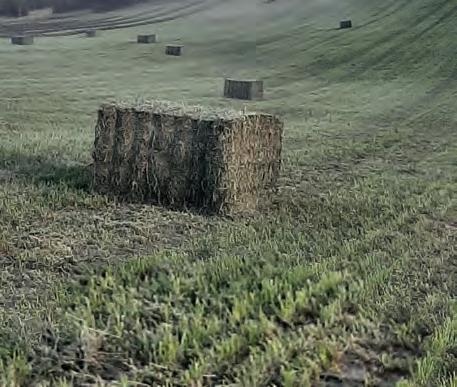
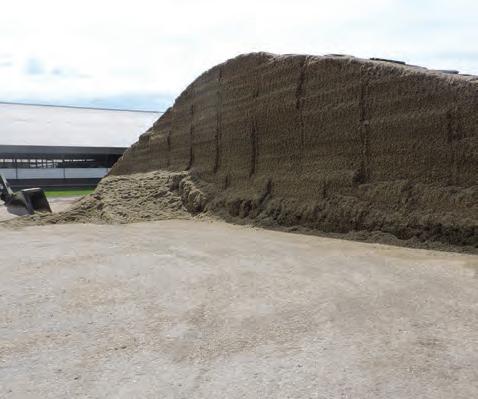


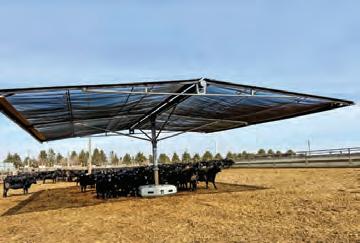


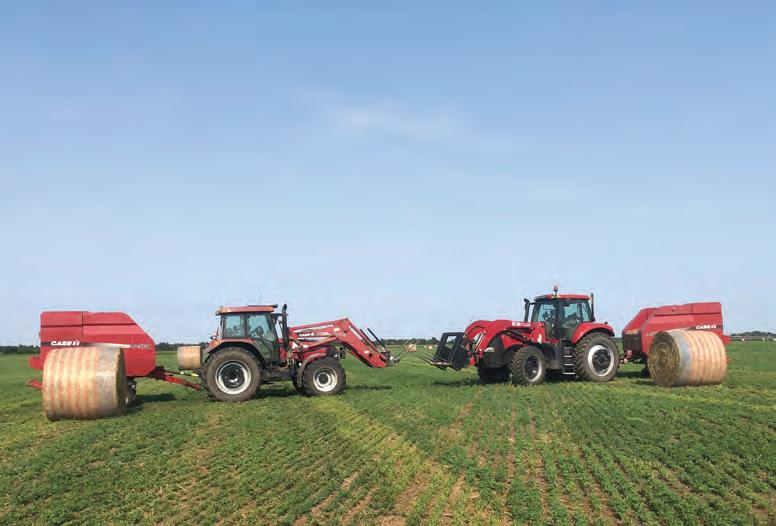

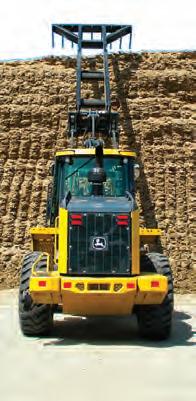
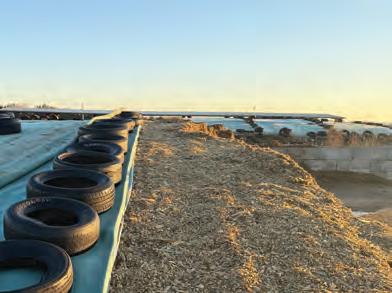


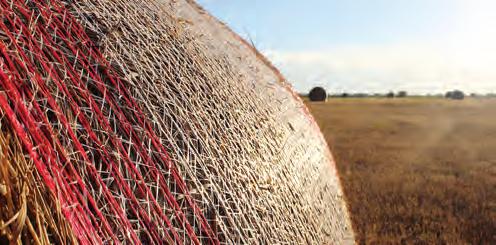
•
•
•
•
•
•



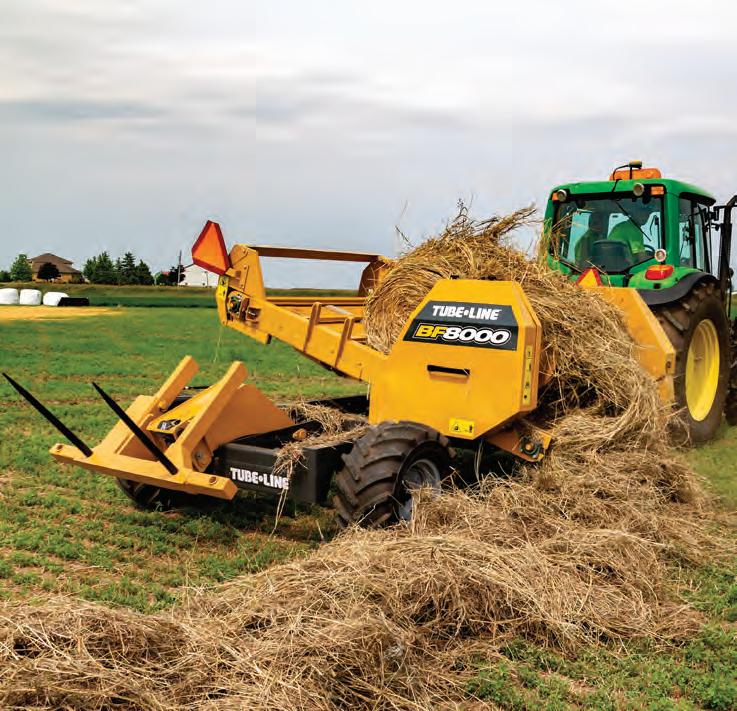











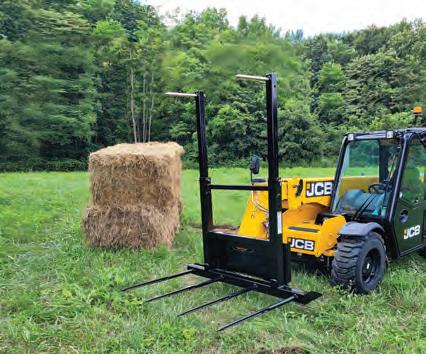
American Forage & Grassland Council Annual Conference
Jan. 12 to 15, Asheville, N.C.
Details: afgc.org
Northwest Hay Expo
Jan. 21 and 22, Kennewick, Wash.
Details: wa-hay.org
Driftless Region Beef Conference
Jan. 22 and 23, Dubuque, Iowa
Details: bit.ly/HFG-DRBC
Southwest Hay & Forage Conference
Jan. 22 and 23, Ruidoso, N.M.
Details: nmhay.com
GrassWorks Grazing Conference
Jan. 22 to 24, La Crosse, Wis.
Details: grassworks.org
Western Alfalfa Seed Growers Assn. Winter Seed Conference
Jan. 25 to 27, Savannah, Ga.
Details: wasga.org
U.S. Custom Harvesters Annual Convention
Jan. 29 to 31, Des Moines, Iowa
Details: uschi.com/annualconvention
Cattle Industry Convention and NCBA Trade Show
Feb. 3 to 5, Nashville, Tenn.
Details: convention.ncba.org
World Ag Expo
Feb. 10 to 12, Tulare, Calif.
Details: worldagexpo.com
Midwest Forage Association/ Wisconsin Custom Operators Symposium
Feb. 16 to 18, Wisconsin Dells, Wis.
Details: midwestforage.org
Alfalfa Intensive Training Seminar
Feb. 17 and 18, Wisconsin Dells, Wis.
Details: alfalfa.org
As we get deeper into the winter hay-feeding season, livestock producers may need to get creative in order to make the most of a high supply of lower quality hay.
With that said, we look forward to the release of USDA’s Dec. 1 hay stocks
data and its final summary of 2025 crop production.
The prices below are primarily from USDA hay market reports as of late November and early December. Prices are FOB barn/stack unless otherwise noted. For weekly updated hay prices, go to “USDA Hay Prices” at



Your dairy farm or cow/calf operation needs a baler built to efficiently handle everything you throw its way. That’s where the Massey Ferguson® RB 4100 Series comes in. Its rugged design and innovative features add up to faster production and the highest quality forage possible.
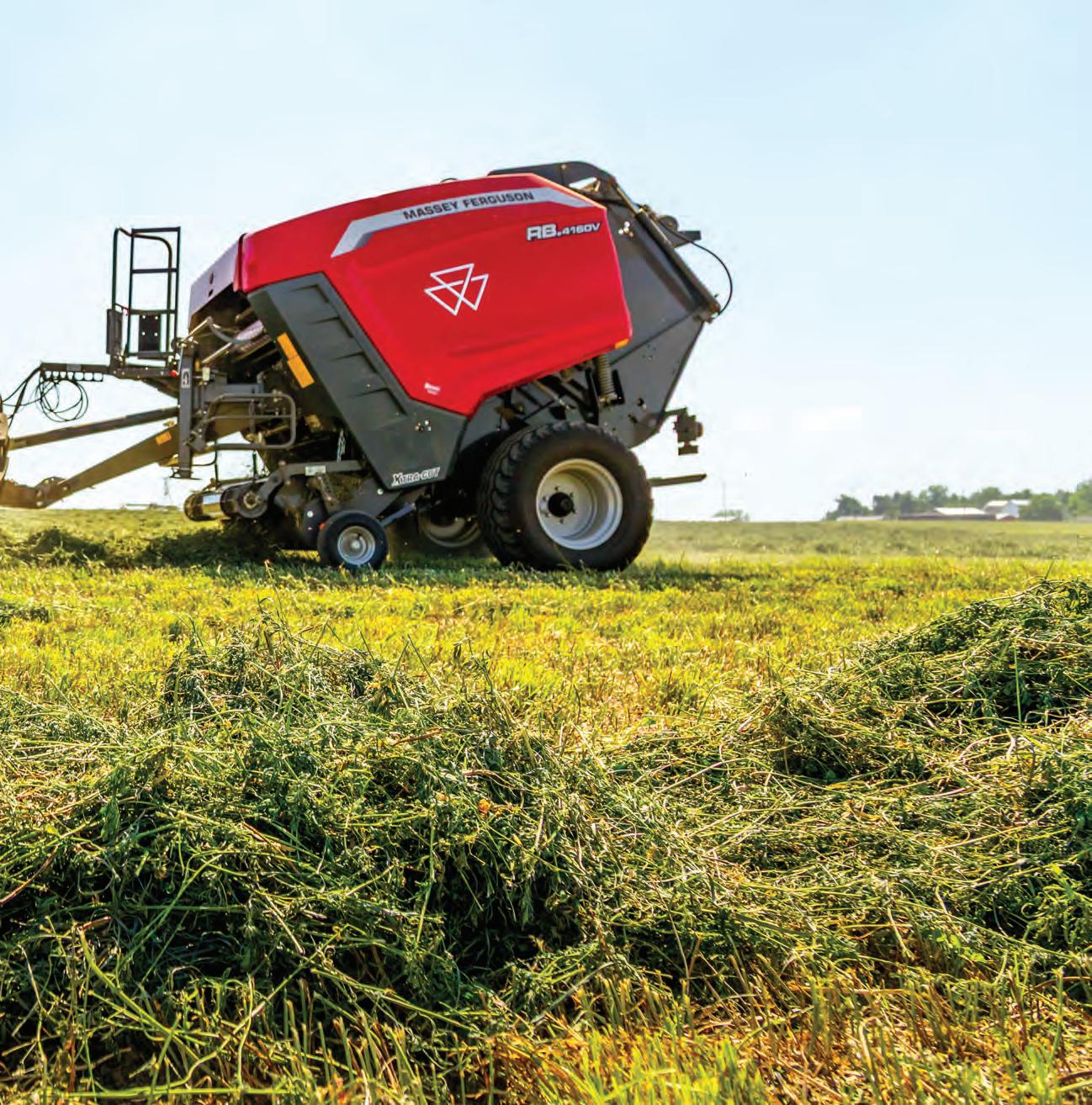
Discover the Massey Ferguson RB 4100 Series round baler at www.masseyferguson.us, or visit your local dealer.