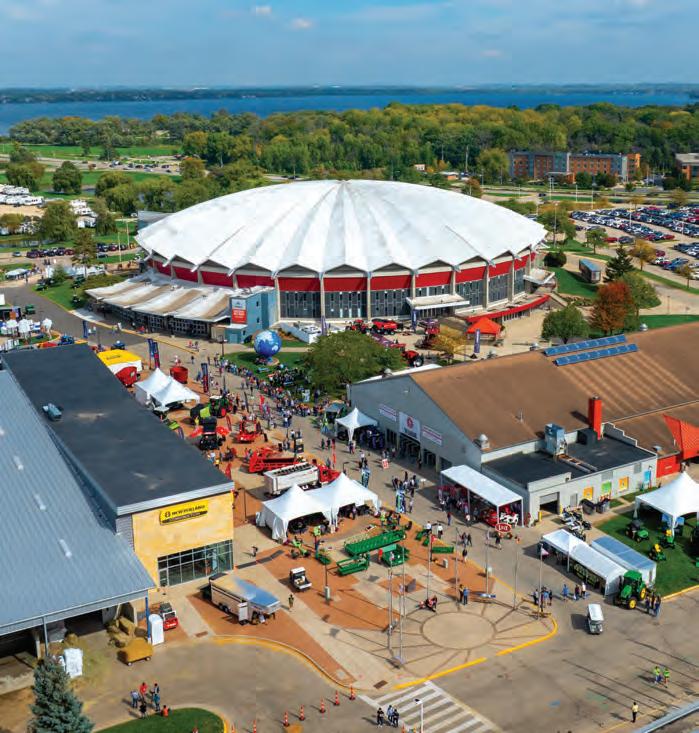
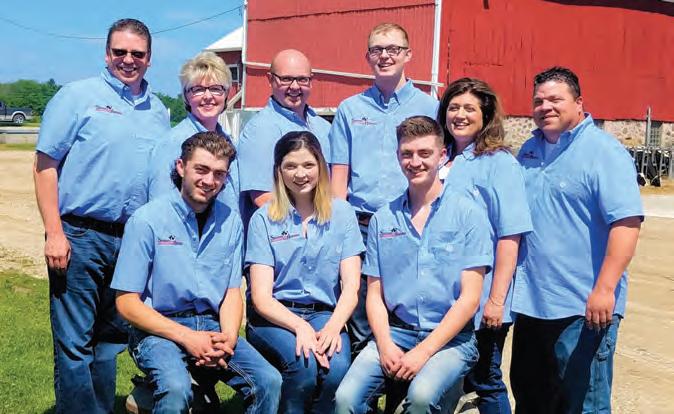
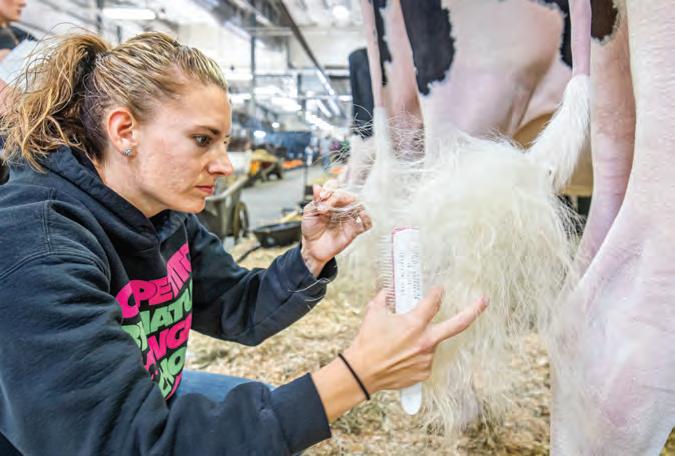
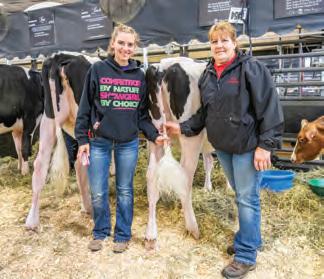
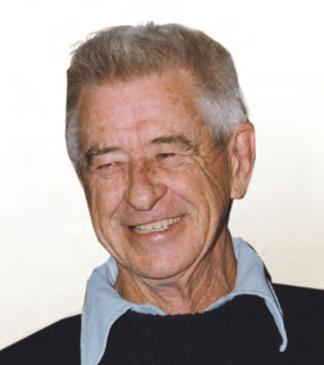
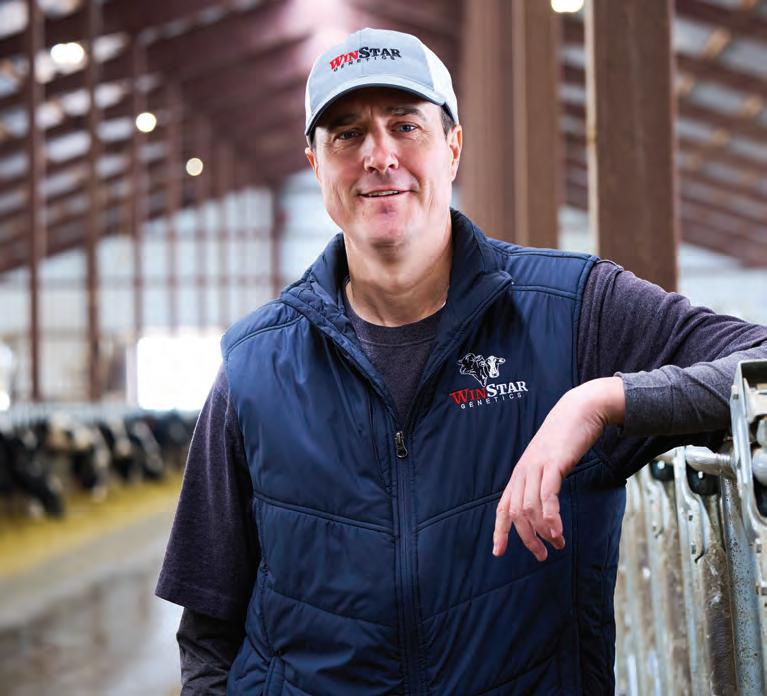
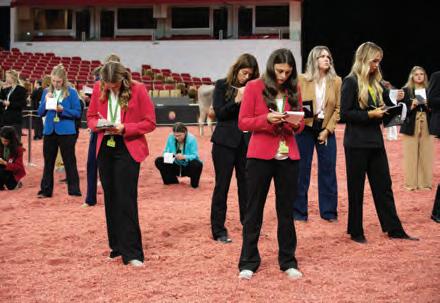
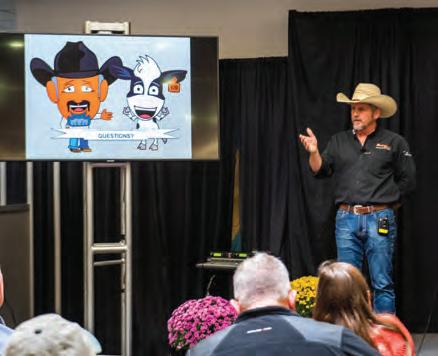
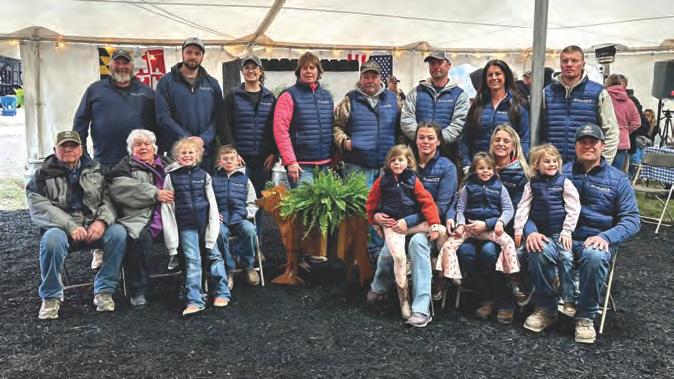
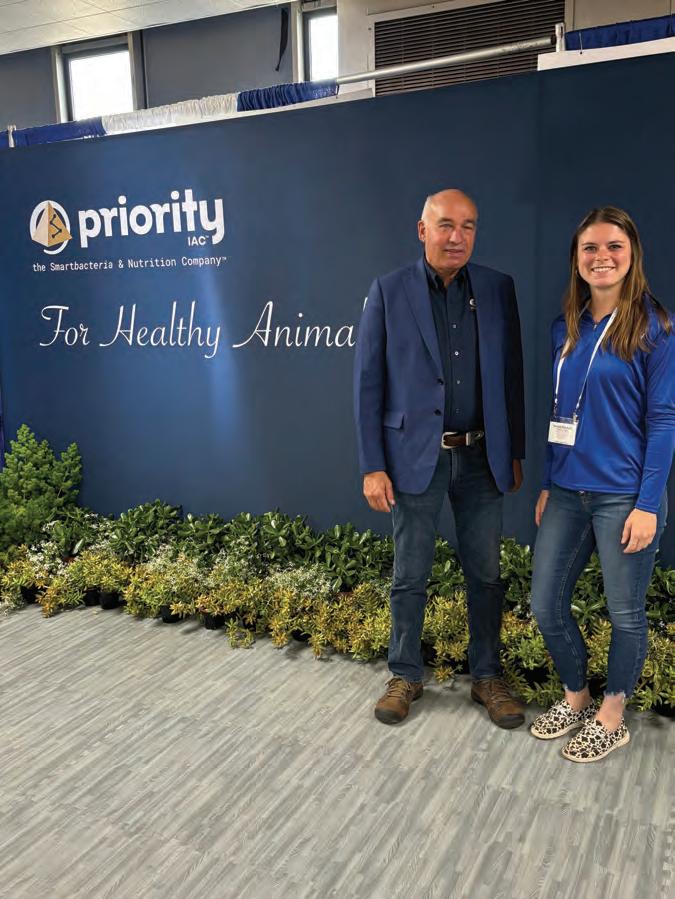
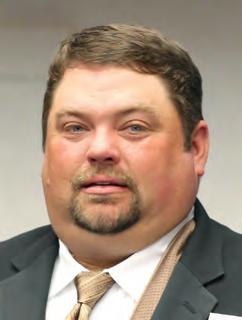
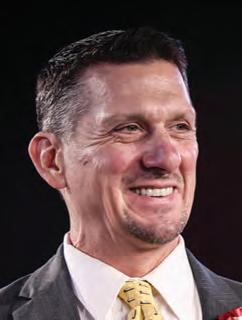
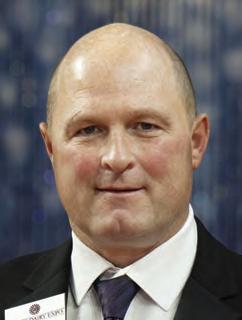
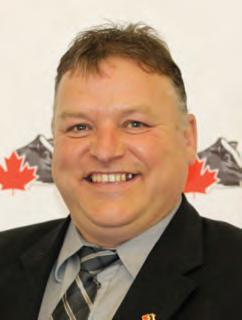
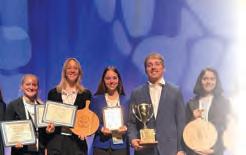
IT’S the people, the friends, and the connections that bring me each year” is a familiar sentiment about the attraction of attending World Dairy Expo. To help young professionals and students benefit from the connections and networking at Expo, Career Connections was established in 2021 for those seeking internships and job opportunities in dairy.
Jenna Langrehr, attendee programs manager at World Dairy Expo, explained that the event expands the offerings for young dairy professionals attending Expo and leverages on-site networking opportunities. The goal is to provide a more casual and industry-focused alternative to the traditional career fair experience that students often encounter.
Unlike general campus fairs, Career Connections zeroes in on dairy-specific roles and companies, bringing together a mix of employers and students. These range from two- and four-year college students to graduate and veterinary school candidates. The event allows participants to explore career paths in areas such as agricultural communications, consulting, nutrition, sales, and dairy herd management.
New connections for new professionals FREE OMEGAS in Every Sip
by Laura Hensley
the event, the connections she made proved valuable in other ways. “I was able to connect with others from a company I interned with my sophomore summer,” she said. “It also allowed me to share additional opportunities and internships with members of my dairy science club when we hosted our career mixer the following week.”
Strengthening bonds
What sets Career Connections apart is not just the access it provides to potential employers, but the community it fosters. Nielsen noted, “When chatting with a few of the industry members, it was fun to see the connections that we had through others in the industry, shared experiences, or background.”
Langrehr emphasized that Career Connections is meant to be approachable and adaptable: “The great thing about Career Connections is that it is beneficial for all types of job seekers. Whether you’re looking for an internship, a first job out of college, or simply want to explore the different directions a dairy-focused career can take you, this is the place.”
continues to partner with organizations like National Dairy Shrine and adapt to the needs of students and employers alike, it stands as a testament to the power of collaboration, community, and opportunity at World Dairy Expo.
In 2024, the event was moved from the Friday during World Dairy Expo to the Monday before. This shift was significant, and according to Langrehr, “Additional programming, including a luncheon and panel conducted by National Dairy Shrine, resulted in fantastic cross-promotion, and we are excited to work with National Dairy Shrine again to build upon the event even further.”
The new timing allows participants to kick off the week of Expo with meaningful engagement and sets the tone for further conversations during the rest of the show.
Ripple effects
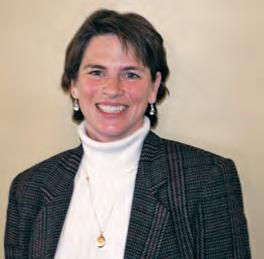
For students like Irene Nielsen, a participant from Iowa State University, the experience has proven to be both inspiring and practical.
“The Career Connections program was a great opportunity to connect with dairy-focused companies and industry members who have a wide range of experience,” she shared. “It was interesting to see the different companies and industries represented, as many of them are heavily involved in supporting youth and academic programs through sponsorships, internships, and scholarships.”
Though Nielsen did not land a new internship directly through
Beyond the conversations, the program aims to spark a broader interest in the dairy industry at a time when talent and innovation are needed more than ever. The timing of the event aligns well with students’ internship and job search timelines. “It is a great space to meet members of the industry, especially for those students who are looking to get more involved in the dairy industry and explore different sectors,” Nielsen said. “With the event being in late September or early October, it is a great chance for students to start exploring internships early and to connect with companies before the application and interview processes.”
The growth and evolution of Career Connections reflect the dairy industry’s commitment to investing in its future leaders. As the program
“Alexa, turn off the electric fence.”
This year’s Career Connections will be on Monday, Sept. 29, 10 a.m. to 12 p.m.
Job seekers can register here: on.hoards.com/careerconnections
Companies can enroll here: on.hoards.com/ companyconnections
The author is an agricultural writer based in Holt, Mich.
WORLD DAIRY EXPO FEATURES
New connections for new professionals byLauraHensley .... 399
Second in command byMicheleAckerman................ 402
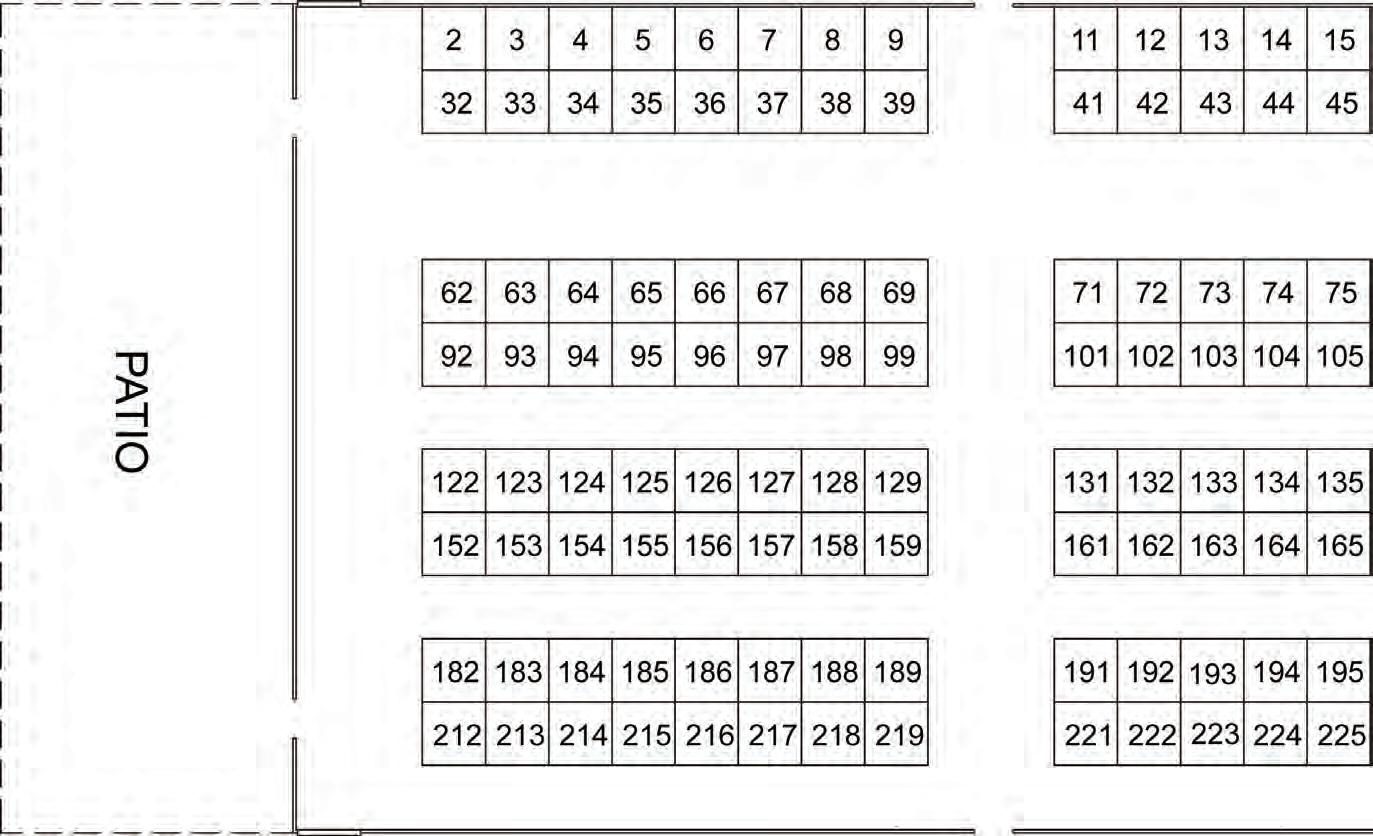
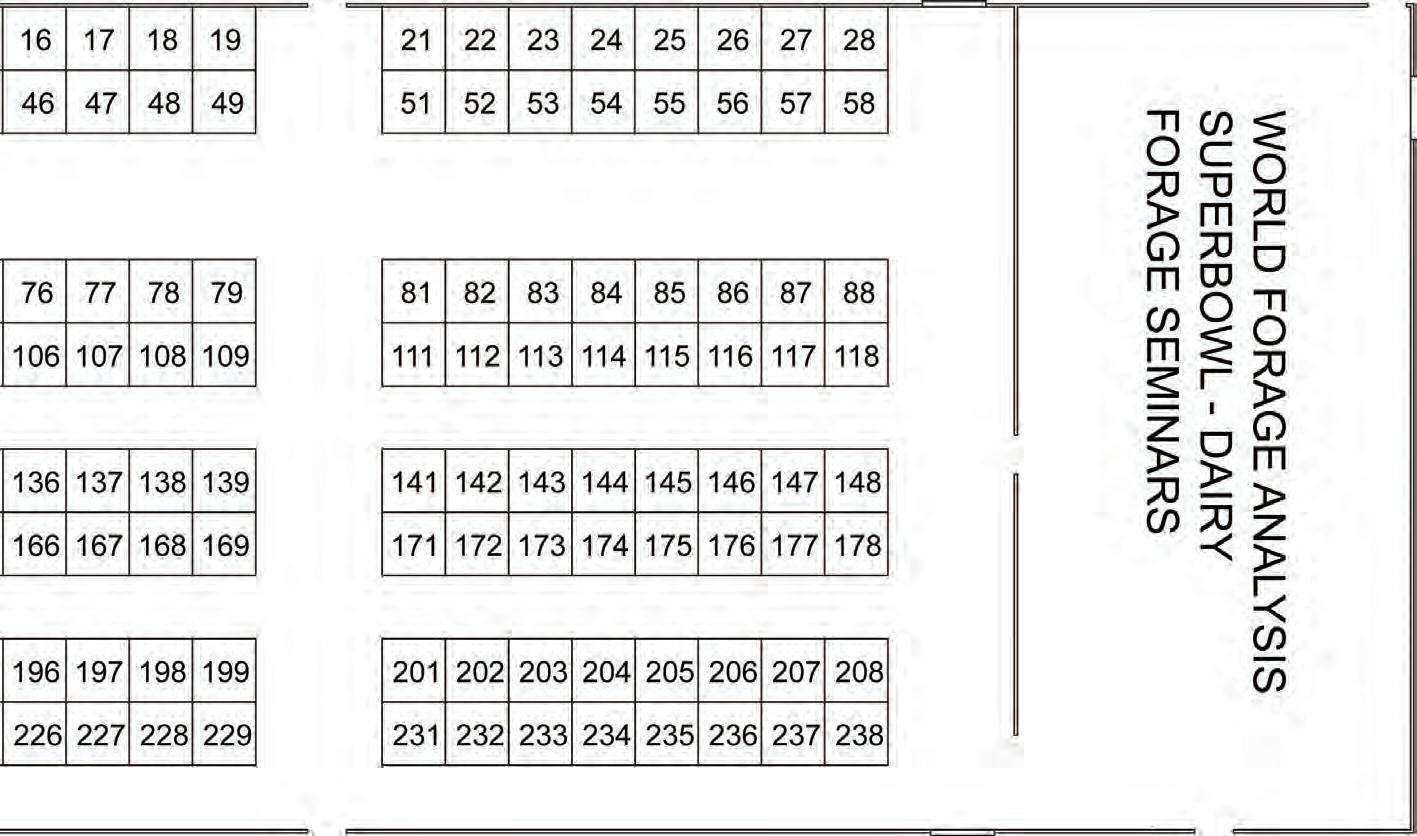
Exhibitor list, schedule, and maps ............. 404 to 411
A day in the life of a junior at World Dairy Expo .......... 412 byMicheleAckerman
Cattle, competition, and commitment byLauraHensley ..... 418
Beyond the booth byLauraHensley .................... 458
Meet the 2025 judges 464
How well do you know Expo? ....................... 465
U. S. Patent office (ISSN 0018-2885).
28 Milwaukee Ave., W., P.O. Box 801, Fort Atkinson, WI 53538-0801. Unwholesome, immoral and questionable medical advertising is excluded. The right to decline or
BUSINESS
A milk check balanced on beef and exports byLeonardPolzin
Defining the details byGarySipiorski...................
Reducing the stigma of mental health byColleenStegenga
New tax optics byGeraldR.Anderson
CROPS, SOILS, AND FERTILIZERS
Do you need forage? byEvThomas
FEEDING, BREEDING, AND HERD HEALTH
Shifting seasonal temperatures byNesliAkdeniz
Four State Dairy Conference findings byMikeHutjens
Choose the best teat dip byAmyVasquez,D.V.M.
Corn silage economics in a post BMR era byJohnGoeser
Where’s the penicillin? byMarkHardesty,D.V.M.
Navigating the ins and outs of farm fun byAndreaStolzfus
DEPARTMENTS
Artificial Breeding 455 Common Threads 447 Cowside Practice ......... 454
Photo by Andy Poster
Washington Dairygrams
USDA HAS MADE MOVES TO LIMIT SUBSIDIES for solar projects on prime farmland. Secretary Brooke Rollins announced USDA would no longer use taxpayer dollars to fund solar panel projects on productive farmland, and would also not allow solar panels manufactured by foreign adversaries to be used in USDA renewable energy projects.
COW NUMBERS CONTINUE TO GROW, and U.S. milk production climbed 3.4% year-over-year in July, according to USDA reports. The number of dairy cows on U.S. farms rose to 9.49 million head, up by 159,000 from July 2024 and up 10,000 head from June. July milk production totaled 19.6 billion pounds.
THE NATIONAL MILK PRODUCERS FEDERATION (NMPF) and U.S. Dairy Exports Council announced support for the Joint Statement on the United States–European Union Framework Agreement on reciprocal, fair, and balanced trade. “U.S. farmers win when competition is fair, but there’s nothing fair about Europe’s system,” said Gregg Doud, president and CEO of NMPF. “An agreement with the EU has the potential to unlock billions in new opportunities for American dairy.”
NEW ZEALAND CONTINUES A STRONG START to the milk production season, with 0.9% more milk in July compared to a year earlier.
USDA SECRETARY BROOKE ROLLINS traveled to Austin, Texas, to announce a five-pronged plan to battle New World screwworm (NWS). The steps include: innovating to eradicate; protecting the border; preventing wildlife migration; stopping NWS from spreading in Mexico; and continuing to inspect animals and carcasses at slaughter for NWS.
LIMITED SUPPLY AND STRONG DEMAND have brought about historic cattle prices. “Whether it’s beef or dairy heifers, inventories are historically tight and neither category shows any signs that prices will soften over the next two to three years,” CoBank’s Corey Geiger shared.
A DECADE AGO, DAIRY REPLACEMENT VALUES PEAKED at $2,120 per head in October 2014, according to data tracked in USDA’s Agricultural Prices. “ In that era, record milk prices, not record beef prices, were driving dairy replacement values,” Geiger noted.
THIS JULY, VALUES MOVED TO $3,010 PER HEAD, reported USDA. “While those prices represent retrospective data, top dairy heifers in California and Minnesota auction barns have been bringing upward of $4,000 per head by mid-year 2025, speaking further to the limited supply,” CoBank’s lead dairy economist explained.
$2.0K
$1.5K
$1.0K
$0.5K
$0.0K
Experience Expo from anywhere
If World Dairy Expo is on your travel itinerary this year, we hope you will stop by our booth to say hello. We are located in the Exhibition Hall in booth numbers 4327 and 4328. If you are attending in person or keeping up with the events from afar, we will once again bring daily coverage of Expo. Updates begin with our recap of the weekend’s youth contests and continue through Friday’s Supreme Champion ceremony. Follow Hoard’s @ Expo coverage on our Facebook page and at www.hoards.com. You will also find past Expo photo galleries, winners, history, and more on our website.
Second in command
by Michele Ackerman
MORE cows. Bigger barns. Larger shows. As World Dairy Expo has grown, so too have the responsibilities of the man or woman in the center of the ring, the judge tasked with placing some of the world’s most elite show animals. To help in this effort is the associate judge, chosen by the head judge as a partner to evaluate and rank animals in classes that may reach upward of 50 entries.
While it is now standard to see an associate standing alongside the head judge in the Coliseum at Madison, this has not always been the case.
The Holstein breed was the first to include an associate judge, Victor Gray of California, who assisted Richard Keene of New York in placing the National Holstein Show in 1971. The Brown Swiss breed used an associate in 1980, followed by Ayrshire in 1988, Guernsey in 1998, Jersey in 2005, and Red and White in 2006.
Since 2011, when Milking Shorthorns first introduced an associate judge, all shows at Expo have been evaluated by both a head judge and an associate.
This year, a team of eight officials and their eight associates will evaluate the 2,500-plus entries expected across the eight breed shows. Richard Landry of Quebec, the most frequently requested associate at Expo, will once again serve in this capacity at the International Junior Holstein Show, working with the official judge, Pierre Boulet of Quebec. Landry has previously traveled to Madison to serve as an associate in 2010, 2021, and 2022.
Knowing their stuff
In the business world, the second in command supports the leader by providing input, managing operations, and executing the vision. Traits like loyalty and integrity are essential. In the dairy showring, the second in command serves the same purpose.
“When I am choosing an associate, I look for someone familiar with the breed I am judging, someone I respect as a person and know will have my back in the ring,” said Lynn Harbaugh, who has judged nine shows at Expo since 2007 and been associate for one. He operates Bella-View Holsteins, a 20-acre farmette in Marion, Wis., with his family, focusing on elite show heifers. The Harbaughs have shown at Expo nearly every
year since 1990, exhibiting the Grand Champion of the Grand International Red and White Show in 2000 and breeding the Reserve Grand Champion in 2011.
“I need to have confidence in my associate, knowing he or she will be respectful of our conversations and leave them in the middle of the
ring,” continued Harbaugh. “There are a lot of cows that people have paid top dollar to show, so I need a professional beside me, someone who can forget how a cow placed earlier in the year and evaluate her for what she is on that day.”
Keeping things moving
Although shows are managed differently, Expo requests the lead judge to place the top half of the class and the associate to place the bottom half. This keeps the show moving and was among the primary reasons associates were initially asked to participate.
In the Expo history book, We Need a Show, Steve White of Indiana, an 11-time judge in Madison, stated, “If you can keep the ring and exhib-
itors organized and your cattle lined up . . . it makes a better day for everyone.”
Both jobs in the center of the ring are prestigious because they are determined by one’s peers. Since 2014, all breeds have adopted a process in which exhibitors nominate candidates for their breed show the following year by the close of the current Expo. The breed’s selection committee narrows this list to three to six individuals. A ballot of the top three who have agreed to the responsibility is emailed to exhibitors in midNovember. The individual with the most votes is announced as the winner in mid-December.
The head judge then chooses three options for the associate judge. The breed committee selects this individual and announces its decision in mid-January.
“Every experience I have had at Expo has been incredible in its own unique way,” Harbaugh remarked. “The greatest honor is to be chosen by your peers to judge the best of the best on the colored shavings at the world’s premier dairy event.
“It is the equivalent of pitching in Game 7 of the World Series,” he continued. “It requires us to stay grounded and place cattle as we see them in that moment.”
Throughout Expo history, associates have represented 21 states, five Canadian provinces, and the countries of Australia, Ireland, Italy, New Zealand, and Spain. Carrie Sears of Massachusetts became the first woman to serve as an associate, assisting David Trotter at the International Guernsey Show in 2005. Since then, six other women have taken on this role but never in tandem. Women have been the head judge or associate for Guernseys five times — more than any other breed.
Two individuals have been selected as officials this year after debuting as associates in 2024: Aaron Eaton of New York will judge the Holstein Show after partnering with lead judge Jamie Black of New York, and Mike Maier of Wisconsin will oversee the Milking Shorthorn Show after working with Chris Lahmers of Ohio.
Additionally, Adam Hodgins of Ontario has been selected to take center stage in the Red and White showring after assisting Kevin Doeberiener of Ohio last year and Adam Liddle of New York in 2011.
The author is a dairy and agricultural writer based in Columbus, Ohio.
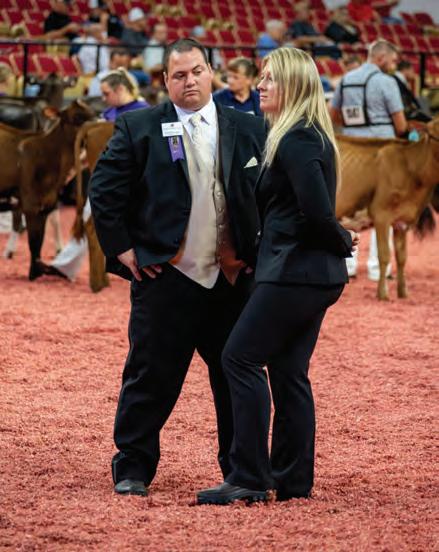
BRANDON FERRY and Michelle Upchurch confer on the colored shavings at last year's World Dairy Expo.
MILK CHECK OUTLOOK
by Leonard Polzin
A milk check balanced on beef and exports
THE U.S. dairy sector is in the middle of a structural shift. More than $8 billion has flowed into new processing facilities across the country. Nationally, this expansion is expected to consume tens of millions of additional pounds of milk each day by 2027, creating a generational jump in processing capacity.
Milk production has risen in step. Regions hosting new plants have seen accelerated herd growth, often through “brownfield” expansions of existing dairies and new “greenfield” operations clustered near processing hubs. Texas alone posted a 10.6% year-over-year increase in April, accounting for over half of the nation’s herd expansion that month. The result is a geographic shift and consolidation of production, with large-scale operations in the Great Plains and West supplying processor demand.
At the same time, each cow is producing more solids. By early 2025, U.S. milk solids output was up 1.65% year-over-year even though milk volume was essentially flat. Higher fat and protein concentrations mean fewer cows are needed per pound of cheese or butter output.
New plants are lifting milk demand in the short term, encouraging producers to expand and optimize for components. But the industry is scaling up and concentrating at a pace that could test margins if demand does not keep pace.
Beef: A new profit force
Beef has become a driver of dairy farm profitability. At a Wisconsin auction barn in August, 100- to 200pound, black dairy-beef calves sold for $10 to $15.85 per pound — more than $2,000 per head. Prices like these fundamentally change herd economics, encouraging producers to breed more cows to beef sires, hold onto marginal cows longer, and capitalize on beef revenue without cutting milk output.
The concern is what happens when beef prices normalize. Today’s windfall can mask weak milk margins, keeping cows in production. If cattle values return to average levels, those extra cows could tip milk supply past demand, setting the stage for prolonged low milk prices.
Some herds are already expanding, specifically to produce more dairybeef calves. Beef strength is slowing the contraction one might expect during a milk downturn. The danger is that adjustment will be more painful if the “beef pillar” weakens.
Global volatility
Exports have opened new markets, raised the value of milk solids, and provided a vital outlet for
growth. But with this opportunity comes exposure to global forces that can influence farm-level prices.
By 2024, about 20% of U.S. milk solids were exported, up from single digits a couple decades ago. Mexico, Canada, and China together now account for roughly 40% of U.S. export value, with Mexico alone near 28%.
Exports are especially important for skim solids. About 22% of skim solids leave the country, compared to just 5% of milkfat. This trade has buoyed milk prices by preventing a domestic glut of powder and whey. But if export growth slows, that dependence could create challenges that ripple back to farm milk checks. As exports have grown, U.S. milk prices have become more closely linked to world conditions, leading to greater price swings. Research by USDA’s Economic Research Service as well as by Christopher Wolf at Cornell University shows that strong farm profits are closely tied to export surges. From 2000 to 2022, “good” profit years (as measured by return on assets) saw export volumes rise by over 31% year-over-year, while “poor” years saw growth of only 1% to 2%.
That makes producers vulnerable to trade disputes, tariffs, and geopolitics. Chinese tariffs in 2018 cratered U.S. whey exports; policy changes to food assistance programs can ripple through milk prices at home. In today’s environment, global shocks
translate more directly into local milk check changes.
Cautionary lessons
History shows rapid capacity expansions can overshoot demand.
The U.S. soybean crushing industry offers a cautionary tale. In the early 2020s, dozens of new plants were announced to supply soybean oil for renewable diesel. If all had been built, capacity would have jumped nearly 25%, far more than the feed market could absorb in meal.
When oil prices and biofuel credits weakened, crush margins tightened. By 2024, many projects were delayed or canceled, and soybean meal prices sank to multi-year lows as initial capacity came online.
Corn ethanol tells a similar story. Mandated blending sparked rapid expansion in the 2000s, briefly lifting corn to record prices. Once capacity caught up and oil prices fell, ethanol production plateaued, corn demand leveled, and prices moderated.
The lesson for dairy: Growth cycles can shift quickly, and building capacity faster than demand is growing can pressure margins. While it is prudent to capitalize on favorable trends — like butterfat demand or beef income — it is equally prudent to ask “what if?”
Navigating opportunity
In the near term, milk supply will expand as new plants ramp up and
beef continues to subsidize farm profitability. Higher components will allow more cheese, butter, and powders to be produced without proportional herd growth. Strong cattle prices may keep many operations afloat even through weak milk markets.
Looking a few years out, the industry could face beef prices back to normal, new plants running at full tilt, and global dairy trade growing only modestly. In such a scenario, pillars that have recently supported milk checks would weaken. Even historically strong products like high-protein whey could soften as more supply hits the market, removing an important support for Class III prices.
The U.S. dairy sector is expanding on multiple fronts, yet those very strengths could sow the seeds of a correction. Around the time new plants are fully online, the tailwinds could fade simultaneously.
Producers should prepare accordingly. Shoring up balance sheets, being deliberate in expansion, and offsetting risk are prudent steps.
The likely “new normal” is a larger, more efficient industry, but one that operates with tighter margins and greater volatility, and where factors such as beef and global market dynamics set the pace.
The author is the dairy markets and policy outreach specialist at the University of WisconsinMadison.
Patz Corporation EH 2111B-2316 Paul Mueller Company EH 1807-1909 PeopleCor EH 4400 phasetwo MC 35-36
Phibro
Prime
ProActive
Probios EH 2713-2714
Professional Dairy Producers EH 4427
Progress Eco TC 92
Progressive Dairy EH 1103-1104
Promat EH 2017-2318
Protekta EH 4301-4302
Provita Animal Health EH 4106
Provita Supplements EH 2915-2916
Puli-Sistem EH 1516
Purina Animal Nutrition EH 1507
QLF Agronomy EH 4008-4109
QualiTech EH 4405-4406
Quality Liquid Feeds EH 4008-4109
Quality Roasting Inc EH
Quality
SE Agricultural Solutions TC 131-162
Sealpro
Secco International EH 1617-1718
Select Sires EH 4001-4103; 4201-4202
Seneca Dairy Systems EH 3916
Shearwell Data EH 4005
Skinner AgSolutions EH 4304
smaXtec EH 3413-3414
Smith Manufacturing TC 62-63
South Dakota State University EH 4401
Southwest Wisconsin Tech. MC 48tt Soy Best EH 4210
SoyRoaster TM Z
SPR Flex TC 205
Steuart Laboratories MC 86
STgenetics EH 3208-3309
Straight Arrow Energy Consulting EH 1414
Sullivan Supply TM U
Sun-North Systems EH 2608-2709
Sundown Industries EH 1111
Suntaq International TC 77
Superior Attachments
Supreme
Roll-O-Matic
Ronald
Rostech
Roto-Mix
6-X
Sanova
SAVECO
Schaefer
Scherer
Schippers
Schwartz
Commercial exhibits are open Tuesday through Thursday, 9 a.m. to 5 p.m., and Friday, 9 a.m. to 4 p.m.
CO: Coliseum EH: Exhibition Hall SP: Sale Pavilion TC: Trade Center TT: The Tanbark
Set your World Dairy Expo schedule
Saturday, September 27
Main Events
9 a.m. Youth Fitting Contest, SP
12 p.m. Youth Showmanship Contest, CO
Main Events
7:30 a.m. National 4-H, Intercollegiate, and Post-Secondary Dairy Cattle Judging Contests, CO
12 p.m. International Junior Holstein Show, CO
12 p.m. International Guernsey Show: heifers, CO
5:30 p.m. National 4-H, Intercollegiate, and Post-Secondary Dairy Cattle Judging Contest Awards Banquet, TT
7 p.m. World Ayrshire Event Sale, SP
Main Events
7 a.m. International Jersey Show: heifers, CO
10 a.m. Career Connections, EH
12:30 p.m. International Ayrshire Show: heifers, CO
2:30 p.m. International Guernsey Show: cows, CO
5 p.m. National Dairy Shrine Reception and Awards Banquet, EH
Main Events
7 a.m. International Jersey Show: cows, CO
7 a.m. International Ayrshire Show: cows, CO
8 a.m. Central National FFA Events, SP and EH
“New strategies for fly control in dairy farms,” Speaker: Mike Catangui, MWI Animal Health. Time: Tues. 10:30 a.m.
“Improving hoof health protocols using automated locomotion monitoring with vision technology,” Speaker: Arnold Harbers, Nedap. Time: Tues. 11:30 a.m.
“Methane reduction – genetics for a more sustainable future,” Speaker: Christopher Orrett, CRV USA. Time: Tues. 12:30 p.m.
“Postbiotics in practice: enhancing immunity, digestion, and performance in dairy herds,” Speaker: Matt Dodd, D.V.M., Diamond V. Time: Tues. 1:30 p.m.
“Understanding AI to milk your data,” Speaker: Shari van de Pol, OVC, CATTLEytics. Time: Tues. 2:30 p.m.
“Benefits of PEMF for conven-
2 p.m. International Brown Swiss Show: heifers, CO
6 p.m. Top of the World Jersey Sale, SP
Virtual Farm Tour
10 a.m. Hurtgenlea Holsteins, Elkhorn, Wis.
Wednesday, October 1
Main Events
7 a.m. International Milking Shorthorn Show: heifers, CO
7 a.m. International Brown Swiss Show: cows, CO
2 p.m. International Red and White Show: heifers, CO
3 p.m. World Premier Brown Swiss Sale, SP
6 p.m. Recognition Awards Reception & Banquet, TT
7 p.m. Global Opportunity Guernsey Sale, SP
Educational Forums
8 a.m. Council on Dairy Cattle Breeding Industry Meeting, TT
11:30 a.m. “OZOLEA non-antibiotic strategy to manage udder health issues: A keystone of milk production,” Mendota 3. Hosted by OZOLEA Rete Agricola
1:00 p.m. “Introducing MilkGenius,” Waubesa. Hosted by BouMatic
Forage Seminars
10 a.m. “Corn silage utilization in dairy rations,” TC. Speaker: Luiz Ferraretto, University of WisconsinMadison Extension
1:30 p.m. “Use of cover crops in dairy cattle nutrition,” TC. Speaker: Ken Kalscheur, U.S. Dairy Forage Research Center
Virtual Farm Tour
10 a.m. MoDak Dairy Inc., Goodwin, S.D.
Main Events
7 a.m. International Red and White Show: cows, CO
7 a.m. International Milking Shorthorn Show: cows, CO
1:30 p.m. International Holstein Show: heifers, CO
5 p.m. International Reception, EH Mendota 1 to 4
6 p.m. World Classic ’25 Holstein Sale, TT
8:30 p.m. Supreme Champion of the Heifer Show Selection, CO
Educational Forums
8 a.m. “No-feed, successful results: A new era in robotic milking,” TT. Hosted by DeLaval Inc.
8 a.m. “The heifer equation: Time, feed, and fertility,” Monona. Hosted by Parnell
8:30 a.m. “Beyond the barn: How U.S. dairy genetics leads the world,” Mendota 3. Hosted by Wisconsin Department of Agriculture, Trade and Consumer Protection
8:30 a.m. “Progressive farmer panel: Innovation, strategy, and the future of dairy farming,” Mendota 2. Hosted by National Young Cooperators Programs
10:30 a.m. “Emerging diseases in dairy cattle,” Mendota 2. Hosted by National Dairy FARM Program
12 p.m. “U.S. Farm Report LIVE!” TT. Hosted by Tyne Morgan, U.S. Farm Report
1 p.m. “Dairy policy in the Trump Era: The first 250 days,” Mendota 2. Hosted by National Milk Producers Federation
“Coated amino acid,” Speaker: David P. Casper, Global Ingredients Corporation. Time: Wed. 9:30 a.m.
“Do more with less: New technology boosts your existing parlor,” Speaker: James Bringe, GEA Farm Technologies Inc. Time: Wed. 10:30 a.m.
“Feed with confidence: Connecting workflows with results,” Speaker: Melissa Freitas, VAS. Time: Wed. 11:30 a.m.
“Emerging agriculture sector threats,” Speakers: Stephen Goldsmith, D.V.M., and Special Agent Scott Mahloch. Time: Wed. 12:30 p.m.
“Probiotic use in livestock –A veterinarian’s perspective,” Speaker: Dr. Ryan Royer, Novonesis. Time: Wed. 1:30 p.m., Thurs. 11:30 a.m.
“Build a better cow,” Speaker: Jeffrey Bewley, Holstein Association USA. Time: Wed. 2:30 p.m.
“Magnesium matters — putting solubility to the test,” Speaker: Dr. Noelia Silva del Rio, UC Davis School of Veterinary Medicine. Time: Wed. 3:30 p.m.
“Revolutionizing rumen health from the inside out,” Speaker: Louisa Koch, smaXtec Inc. Time: Thurs. 9:30 a.m.
“New strategies for fly control in dairy farms,” Speaker: Mike Catangui, MWI Animal Health. Time: Thurs. 10:30 a.m.
“Data you can use. Insights you can trust. Meet the dairy data partner,” Speaker: Stuart MacLennan, Intelligent Dairy Solutions. Time: Thurs. 12:30 p.m.
“Unlocking fiber efficiency: Enhancing rumen function and
2:30 p.m. “Dairy hot topics: from milk check transparency to ag workforce concerns,” Wingra. Hosted by the American Dairy Coalition
Forage Seminars
10 a.m. “Forage makes milk on Woldt Farms,” TC. Speakers: Kelsey Woldt and Jeff Evenson, Woldt Farms
1:30 p.m. “What’s new in corn silage harvest technology,” TC. Speaker: Brian Luck
Virtual Farm Tour
10 a.m. Norm-E-Lane, Chili, Wis.
Main Events
7 a.m. International Holstein Show: cows, CO
4 p.m. Parade of Champions, CO
Educational Forums
9 a.m. “Becoming an employer of choice: Strategies for hiring and retention,” TT. Hosted by Dairy Girl Network and NMPF’s National Young Cooperators Program
Forage Seminars
10 a.m. “Improving weed management by adding alfalfa to your ration,” TC. Speaker: Mark Renz, University of Wisconsin-Madison Extension 1:30 a.m. “Harvesting the benefits of dairy manure application,” TC. Speaker: Eric Young, U.S. Dairy Forage Research Center
“Advancing fresh cow monitoring to improve transition outcomes,” Speakers: Greg Palas and Robert Fourdraine, Dairy Records Management Systems. Time: Fri. 11:30 a.m.
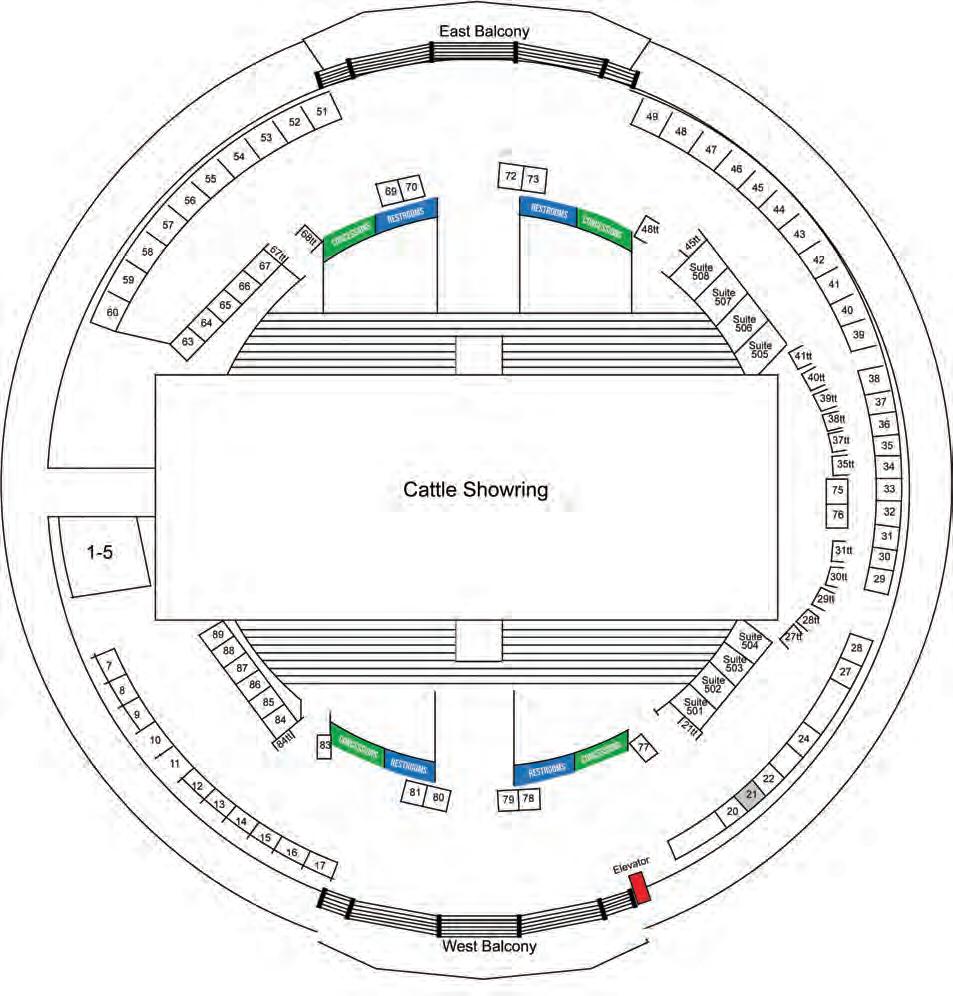
World Dairy Expo Coliseum Building
Main Concourse
(Upper Level)
•
•
•
Concrete Grooving
World Dairy Expo — Grounds
Trade Center
A field trial with 1,725 cows from three California dairies evaluated the impact of post-calving FerAppease use on health and milk production.
TRUST THE SCIENCE AND MAXIMIZE YOUR RESULTS WITH FERAPPEASE. DIAGNOSTICS &
Metritis: 54.9% reduction
Milk production: 4.94 more lb/cow/day at 4 weeks fresh
Mastitis: 27% reduction
Pain score on day 4: 29% decrease
Multiple diseases in first 60 days: 50% reduction
on the study
Based
conducted by Prof. José Eduardo Portela Santos and the University of Florida.
Gabel Belting, Inc.
WORLD Dairy Expo
hums with excitement, energy, and activity. For junior exhibitors, every moment revolves around a single goal — preparing their animal to shine on the colored shavings in the Coliseum in Madison.
Exhibiting on this world premier stage is the highlight of the year. Only the best of the best compete here, and that means no one simply walks into the ring. Preparation begins months in advance and continues with finishing touches in the days leading up to the show.
For Kyla Johnson of Tomah, Wis., it is this transformative process that makes showing so rewarding.
“I love that moment when a heifer leaves the string and heads to the ring,” Johnson remarked. “Watching her change and develop in the hours before a show is my favorite part of Expo. It is a great feeling to see her compete in the ring and be able to say, ‘I got her ready.’”
A sophomore at the University of Wisconsin-River Falls studying elementary education, Johnson grew up on a grain farm and began showing dairy cattle with her sister in 2017. Heifers are raised at the home farm. Milk cows are managed with the milking string at a dairy farm about 30 minutes away. The
A day in the life of a junior at World Dairy Expo Get Tuff.
by Michele Ackerman
Johnson herd includes every breed but Guernsey.
Johnson first participated in World Dairy Expo breed shows in 2023. Her Jersey spring calf placed eighth in the Junior Show and was middle of the pack in the Open Show — an impressive feat given her April 17 birth date, making her the youngest in the class. Last year, her Expo heifer was a Holstein summer yearling that stood 11th in the Junior Show. Johnson also won her heat in showmanship
with the heifer and finished third in the finals.
Though she said her sister naturally excels in showmanship and fitting, Johnson was proud of the progress she herself has made.
“Last year was huge for me,” she explained. “I had probably the biggest heifer in senior showmanship finals, so being able to compete at that high level was amazing.”
For the past two years, Johnson and her sister have brought their string to Expo on their own and wel-
comed tie-ins from multiple other families as well. Last year, every breed but Red and White Holstein was represented in the string, so every single day of Expo was “transformation day” for at least one cow or heifer in the pack.
“My sister and I get everybody ready when it comes to filling and feeding,” Johnson noted. “We fit our own cattle and some of the exhibitors with tie-ins clip and fit theirs. But we make sure they are where they need to be when it comes to eating and drinking, and then they take them to the ring when they are ready to go.”
It takes tremendous organization and preparation on Johnson and her sister’s part to make sure everything runs without a hitch. Getting ready for Expo begins long before the cattle trailer exits onto John Nolen Drive. Preparations include details such as entry forms, registrations, health papers, and gathering everything that bovine and human alike will need for both the excursion and the week-long “vacation” in Madison.
“Packing the trailer and making meals is my department,” remarked Johnson. “I create a super long checklist on my phone and start packing weeks before we head to Expo, so we have everything we need and don’t overlook anything.”
Setting up
Cattle begin to arrive at Expo on Thursday and must be checked in by noon on Saturday. Friday is the big arrival day for the Johnson crew.
“Normally, my sister, her boyfriend, and our dad come down in the morning to set up our backdrop and pack,” Johnson said. “Then later that afternoon they bring the cattle down. That way we can get them off the trailer, washed, and right to lying down and eating. I join them in Madison after my Friday afternoon classes to get cattle settled in and washed.”
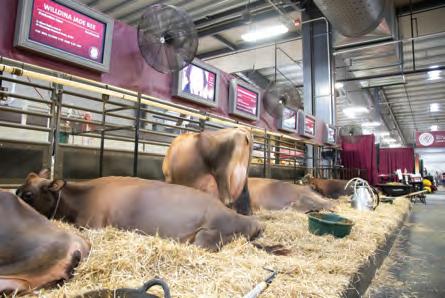
Setting up the pack entails fastening the pack boards to the gates and then filling the cavity with shavings and straw. Fans are installed overhead to ensure adequate ventilation. A tent is set up to store supplies out of sight. A cattle chute, hay, straw, and other feed are stored near the pack as well. Decorations and display signs above each animal are added to make the exhibit more attractive and give visitors additional details about each animal.
Daily duties and show time
Johnson, the day manager, gets help with day chores from her sister and other day hands. Night duties are handled by two other people. The exhibitors with tie-ins help with chores when they can. Dayto-day tasks include watering and feeding twice a day, rinsing animals, milking, reworking the pack to keep it clean and dry, and tidying the exhibit.
Every day, at least one animal is also prepared for a show.
Prep includes fitting details like cleaning ears, shining hooves, setting toplines, fluffing tails, wiping muzzles, and any other final touches to make an animal look her best.
Prep also includes fill — Johnson’s favorite part. Show-day fill, though, is really the icing on the cake, and success depends on the work done well in advance.
“While they are still at home, you have to make sure they have good quality hay in front of them,” she explained. “That way they are putting on a good fill and getting a good gut. Then when they get to Expo, they fill even more on the hay we bring and can be filled with beet pulp, too.”
Pulling off show-day fill takes superhuman organization.
“When you have a morning show, you have to back-track your time to make sure you are filling those animals and bagging them for a morn-
ing show,” Johnson remarked. “For afternoon shows, you are filling and bagging on a different schedule.”
Cattle being prepped for show day are pulled aside or tied off, so they are not eating and drinking like the rest of the string.
“We have to pay attention to who is getting watered and when, and who is eating what and when,” Johnson explained. “We start feeding good fill hay the night prior to the show and beet pulp a few hours before they head to the ring. If we have a heifer showing in the morning, we won’t water her during
morning chores. We will water her a couple of hours later, right before she goes to the ring.”
Last-minute details also include a change into show whites and strapping on a show harness with your exhibitor number.
Camper life
Home away from home for many exhibitors, including Johnson and the crew, is Willow Island, the campground on the Expo grounds.
This past year, the Johnsons upgraded to a cozy fifth wheeler.
“It has a bed up front, three beds in the back, plus a couch and table that both fold out into beds,” Johnson explained. “Usually there are three to four of us there at night and the night shift crew during the day.”
Showers are taken at public showers located between the two barns while meals are prepared in the camper and the tent next to the string in the barn.
“A lot of times we make crock pot meals, like crack chicken or soups,” Johnson said. “I also love making French toast — that’s my specialty. I always get requests for it, no matter the time of day.”
Heading home
Once animals are released, the barns become a whirlwind of activity.
“When the show is done, it is all about grabbing your stuff and tearing everything down,” noted Johnson. “You work as fast as you can, and when the trailer arrives, you load up and haul out as quickly as possible.”
By that point, exhaustion sets in.
“We’re all tired, stressed, and overwhelmed,” she said. “Even the most patient among us have reached their limit by the time Friday rolls around.”
The Expo experience
With seven full days at Expo, one might think exhibitors have plenty of free time — but that’s far from the truth. Their days are packed with caring for their animals.
Despite this, Johnson makes an effort to carve out a few hours to explore the trade show.
“I set aside a couple of hours on one of the days to walk through the trade show,” she explained. “There are a few booths we always visit to pick up essentials like jeans and white show pants, along with some vendors I like to check in with each year.”
Beyond the hustle of show preparation are also plenty of moments to socialize with like-minded people and partake in grilled cheese sandwiches from the stand operated by the University of Wisconsin-Madison’s Badger Dairy Club.
What makes World Dairy Expo so special for Johnson and other dairy enthusiasts like her?
“Everybody is there,” Johnson concluded. “You can walk down any aisle in the barn and recognize somebody or run into a friend you haven’t seen since Expo last year. It is cool to be able to reconnect with everybody in one place.”
The author is a dairy and agricultural writer based in Columbus, Ohio.
Delivering a synergy of bioactives sourced from mom’s colostrum with researched electrolyte technology, new Replenish Ab+ accelerates a calf’s ability to overcome scours events. Support gut balance, bring electrolyte correction, and mitigate the severity and duration of scouring.
JOHNSON, A SOPHOMORE at the University of Wisconsin-River Falls, has shown at the World Dairy Expo since 2023. Each year’s successes and progress are encouraging, but for her, the experience is really about friends, family, and connection.
FARM FLASHES
PROS AND CONS: CORN SILAGE CUTTING HEIGHT
Penn State University Extension explored a question many dairy producers face annually: Should you raise the cutting height of your corn silage? Backed by 11 university studies, the article breaks down how shifting from a standard cut to a higher cut influences both forage quality and yield.
In general, raising the cutting height improves silage quality but lowers yields — around 7.3%, or $9 per acre on average. At a higher cut height, producers can expect a slight jump in dry matter and starch content (6%), better fiber digestibility, and a bump in milk-per-ton potential (3 pounds per day on average). These nutritional advantages can be especially valuable when feeding high-producing lactating cows. Milkfat, on the other hand, may slightly decrease.
For farms with ample forage inventories, the quality boost may outweigh the slight dip in yield. Cutting corn silage a foot higher may
boost dry matter by 2%. This potentially opens the door for an earlier harvest. But for herds tight on feed or land, the drop in overall dry matter per acre could be limiting. A higher cut leaves more residue behind — which is beneficial for soil erosion protection — but a cereal rye cover crop would do the same.
SEXED SEMEN SUSTAINS REPRODUCTIVE PROGRAMS
Most dairy producers would say a heifer calf is almost always the preferred outcome. Sexed semen has made this more achievable, along with in vitro fertilization (IVF) and embryo transfer (ET) technologies only becoming more prevalent as times goes on. But how well does that sexed semen perform in IVF and ET? A study recently published in the Journal of Dairy Science offered some timely insight into the breeding practices we have come to know as standard.
Researchers compared the use of conventional and sexed semen in IVF programs using both dairy and beef donors, with Holstein cows and heifers serving as embryo recipients. As expected, beef donors produced more oocytes and embryos per session than dairy donors. However, the use of sexed semen did not negatively affect embryo development or pregnancy outcomes.
PROTECTING SOIL NUTRIENTS OVER WINTER
Corn silage harvest is a prime window for dairy manure application. The Ohio State University Extension manure management field specialist, Glen Arnold, offered some timely guidance. Using manure in combination with a cover crop is one way to simultaneously meet the overarching goals of nutrient recovery and protecting water quality. Arnold emphasized the importance of incorporating manure into the soil shortly after application. This retains nitrogen and reduces the chance of loss through surface runoff. Soil condition is also critical. As always, avoid saturated soils to reduce the risk of compaction and rutting. Waiting for ideal conditions ensures more nitrogen is retained and erosion minimized. Cover crops
retain nitrogen from fall-applied manure. Fall applications allow “the uptake of nitrogen early in the spring when fields are not yet suitable for traffic in March and April and manure nitrogen is still available for plant uptake,” Arnold wrote. Wheat is an efficient nitrogen recycler — it captures large amounts of nitrogen from fall-applied manure. It germinates well when soil temperatures drop and can be used as a forage crop, or wheat silage, come spring. Oats are much like wheat but need to be planted sooner after silage harvest. Cereal rye is the most common cover crop and is also able to be used as a forage crop in spring. Research indicates cereal rye can acquire and retain up to 50 pounds of nitrogen per acre.
IS A FALL ALFALFA CUT RISKY?
For dairy producers looking to top off forage inventories for the winter, it’s tempting to take one last alfalfa cutting. But as Amber Friedrichsen pointed out in a Hay & Forage Grower article, cutting during the critical fall period can come at a cost.
That “critical timing” window – about six weeks before the area’s first killing frost is expected – is when alfalfa shifts gears from vegetative growth to storing energy in the roots for winter survival. If cut during that period, without enough growing degree days (GDD) left in the season to generate adequate regrowth, the stand will be weaker heading into winter.
Strict dormancy ratings don’t confine cutting dates as much as in the past thanks to advanced genetics. Many modern alfalfa varieties with higher fall dormancy ratings carry stronger winter survival traits. But even the hardiest stand needs time — roughly 500 GDD after cutting — to recover and recharge. If you’ve got young, healthy stands with good soil fertility and especially strong potassium levels, you may be able to fall cut safely within the next few weeks. The key is to make sure the stubble is tall enough to insulate the soil over winter. If it’s an older field that has already been pushed hard over the summer, or if frost is expected soon, it’s probably better to let it rest.
SAFETY ALWAYS PAYS
Safety deserves a fresh reminder this time of year with combines, choppers, extra tractors, and manure wagons in the field. Phil Kaatz and Laurel Morano from Michigan State University offer a simple reality check in a recent article: “Farm work is always hazardous.” Agriculture stands out as one of the most injury-prone and dangerous professions, topping the list of fatal and non-fatal incidents. Hundreds of accidents occur each year, and with so many family members in the mix, the stakes are always high.
Below are a few safety tips to keep in mind for the farmer, employee, parent, neighbor, or friend.
• Have and review emergency plans, check operators’ manuals, and train anyone new or
seasonal before they begin work.
• Stop engines, disengage power takeoffs (PTOs), and set parking brakes before getting off equipment. Also, keep guards and shields in place and in working order.
• Put a slow-moving vehicle (SMV) sign on every piece of equipment. Have seat belts, rollover protective structures (ROPS), safety glasses, gloves, masks, high visibility clothing, and hearing protection at each station.
• Don’t overlook long hours and fatigue. Longer hours mean greater risk. Stress and exhaustion delay reaction time and judgement.
• Limit riders; farm kids and friends always want to ride along, but this increases the likelihood of foot traffic around equipment.
Blastocyst development rates remained consistent — about 20% to 25% — and pregnancy per ET at both Day 32 and Day 63 showed no significant differences between semen types. Pregnancy loss during that window was also comparable. For dairy producers exploring IVF or expanding ET programs, these results are encouraging. Sexed semen can still deliver the heifer calves that many are aiming for without compromising either embryo quality or conception rates.
Whether you’re focused on building your replacement herd or pursuing more strategic genetic pairings, this study confirms that sexed semen remains a reliable and effective tool in the reproductive program. With no clear fertility trade-off, sexed semen continues to be a technology worth keeping in the dairy producer’s toolbox.
FINE-TUNING TRANSITION EXAMINATIONS
Many have their cow-checking routines down to muscle memory — checking water intake and taking mental notes on appetite, manure, and posture. Still, Brad Heins and Emmanuel Rollin from the University of Georgia outlined ways to make cowchecking routines more consistent and meaningful in a recent article.
Start by defining your purpose: Are you identifying individual sick cows, monitoring herd-level trends, or both? Next, decide which cows to check. Some farms focus on high-risk animals, while others thoroughly check all fresh cows. Determine when those checks happen — days two, four, and seven postcalving are common benchmarks. Just as important is knowing what to look for. Key indicators include elevated body temperature, sluggish rumen fill, off-feed behavior, loose or dry manure, and abnormal discharge. Common diseases and complications during this time include hypocalcemia, ketosis, metritis, retained placenta, displaced abomasum, mastitis, and digestive upsets. Heins and Rollin emphasize that being alert to early signs of ketosis or digestive issues is important. Subtle changes in breath, rumen activity, or behavior may indicate issues.
Record findings in a consistent way that allows everyone to track issues over time. First-lactation cows tend to face more calving-related challenges, while mature cows are more prone to metabolic problems. Separate these groups preand postcalving when feasible to help target care more precisely.
Shifting seasonal temperatures
Evaluating ventilation energy use with more warm weather days.
by Nesli Akdeniz
DAIRY farmers have always worked closely with the weather, but it has recently become clear that changing seasonal patterns are raising the cost of keeping dairy buildings ventilated. As summers become longer and warmer, the energy needed to keep cows comfortable is growing. We compared average seasonal data from the past five years (2020 to 2024) to data from 20 years earlier (2000 to 2004) and estimated dairy ventilation energy needs for both periods. For these analyses, we assumed that when temperatures rise above 68°F, the ventilation rate is set at 60 air changes per hour (ACH), and when temperatures fall below 40°F, it is set at 4 ACH. During the transitional periods in spring and fall, the ventilation rate changes in five incremental steps between these two levels. While we recognize that ventilation on farms is not controlled this precisely, we followed a standardized approach to highlight the effects of changing seasonal patterns.
Pattern changes
According to the Köppen Classification, as expected, southern Wisconsin generally experiences warmer temperatures than the central and northern regions. Table 1 summarizes the change in seasonal temperatures in southern Wisconsin (Madison) and northern/central Wisconsin (Wausau) in the last 20 years. The data show a shift to an elevated number of warm days in both locations. In Madison, the number of summer days (68°F and higher) bumped up from 67 to 85 days, while winter days (less than 40°F) declined slightly from 135 to 131 days. Similarly, Wausau experienced a jump in summer days from 57 to 71 days, along with a reduction in winter days from 151 to 150 days. Transitional days declined at both
locations, dropping from 163 to 149 days in Madison and from 157 to 144 days in Wausau. These changes suggest a trend, with longer summers and shorter transitional seasons becoming more common in Wisconsin.
Energy requirements
Taking changes in seasonal temperatures into account, we calculated the energy requirements required to maintain the recommended air exchange rates in dairy buildings throughout the year. While in our previous studies, our focus was on summer ventilation, here, calculated for year-round operating conditions, assuming a fan efficiency of 16 cubic feet per minute per watt (cfm/watt).
As shown in Table 2, annual energy consumption for ventilation
per cow in Madison (14%) and a $5 jump in Wausau (11%). These spikes reflect both higher electricity rates and greater ventilation demands over time due to longer or more frequent warm periods. Factors such as genetic changes in cows, can also contribute to growing ventilation requirements; however, they were not considered in this study.
Staying profitable
This quick analysis reveals that energy consumption for ventilation is rising on Wisconsin farms. Even if the rise may not be as steep as in some other states, improving ventilation efficiency can help reduce energy costs — especially important when considering fluctuations in milk margins over the past five years. In Wisconsin, while 2024 recorded milk margins were on the higher side at $12.33 per hundredweight (cwt.), lower values were seen in 2021 at $8.09 per cwt. and 2023 was $7.13 per cwt. Cutting ventilation-related energy costs can help stabilize income during low-margin years.
In a previous study, we examined the number of days in Wisconsin over the last five years with conditions that may have caused mild, moderate, and severe heat stress. The data showed that, on average, there were about 46 days per year with conditions for mild heat stress, with a temperature-humidity index (THI) of 68 to 72, 23 days with the potential for moderate stress at 72 to 78 THI, and approximately half a day conducive to severe heat stress with a THI greater than 78. Assuming nearly 70 days in a year may cause a 5% to 15% reduction in milk production, efficient ventilation becomes even more critical. While we do not have control over the seasons, there are practical strategies that can support profitability:
• Select energy-efficient ventilation fans. While the initial investment may be higher, they typically pay for themselves in a short period through reduced energy use.
• Size air inlets correctly. Proper inlet sizing is critical for maintaining consistent airflow and achieving effective ventilation.
• Maintain equipment regularly. Dirty or poorly maintained fans and shutters can reduce airflow efficiency and inflate energy use.
spiked between 2004 and 2024 for both Madison and Wausau. Using average electricity rates of 7.24 cents per kWh in 2004 and 12.85 cents per kWh in 2024, we estimated the annual ventilation energy cost per cow. We used the Consumer Price Index (CPI) to adjust the cost from 2004 to 2024 to make a fair comparison that accounts for inflation.
In 2024, the annual ventilation cost per cow was $57 in Madison and $52 in Wausau. These values may be lower than those observed in practice, as they are based on the assumption that ventilation was precisely managed to meet seasonal air exchange requirements. In comparison to the 2024 costs, the inflation-adjusted 2004 costs were $50 per cow in Madison and $47 per cow in Wausau. This represents a $7 rise
• Use natural ventilation when possible. In mild weather conditions, natural airflow can reduce the need for mechanical ventilation.
• Match ventilation rates to seasonal needs. Adjusting ventilation fans based on temperature improves cow comfort while minimizing energy use.
• Use the University of WisconsinMadison’s CoolCows tool, accessible at go.wisc.edu/coolcows, to assess mechanical ventilation design.
Farmers are constantly adjusting to changing conditions. Ventilation is another opportunity to do the same by making good choices that support long-term profitability.
The author is an assistant professor and extension specialist at the University
EDITORIAL COMMENT
KEEPING KIDS SAFE
FEWER childcare options in rural areas, paired with the growth of operations requiring larger equipment than even one generation ago, make children on farms more at risk today than ever before.
A study published in 2017 evaluated pediatric farm injuries and looked at a 10-year review of farm-related accidents. This study estimated that nearly 1 million youth under the age of 20 live on farms, and another 260,000 nonfarm youth were hired to perform farm work. A 2013 study found that in the U.S., 45 children are injured every day, and another dies every three days in agricultural-related incidents. These numbers are sobering, and those in the agricultural communities are all too familiar with them. A 2020 fact sheet from the National Children’s Center for Rural and Agricultural Health and Safety notes that 60% of household youth were not working when they were injured.
There are many resources available to help with farm safety planning. Extension programs and Farm Bureau are great sources of information with local presence. Additionally, the National Farm Medicine Center/National Children’s Center for Rural and Agricultural Health and Safety has a full website of resources at cultivatesafety.org. This site also offers tips for integrating safety into agritourism. There are many resources on the AgriSafe Network website, as well as the National Center for Agricultural Safety (NECAS) website.
TThis is not an exhaustive list, as there are many excellent programs available across the country. The majority of these programs are fully dedicated to providing educational resources, training, and planning at no charge to farmers.
National Farm Safety and Health Week is recognized every third week of September; this year’s dates are Sept. 21 to 27. The NECAS will hold twicedaily free webinars through the week, addressing topics from roadway safety to ATV/UTV operation. We encourage you to visit their website to register for these webinars. NECAS also has farm first aid kits available for sale. With more than 100 components, the kits are specifically designed for first aid requirements on the farm.
With the fall harvest upon us, taking every opportunity to refresh all aspects of farm safety is worth every moment spent. Looking at areas on the farm that are blind spots to hazards can sometimes take a second set of eyes.
The lessons of growing up on a farm are invaluable, but come with risks that are an ingrained part of farm life. Taking steps in reducing these injury and fatality statistics is a 24-hour-a-day, 7 days-a-week job — not just for parents, but for all family and farm employees. Having a safe working environment is a goal for everyone, but especially when it comes to keeping the youngest and most at-risk individuals safe in all areas of the farm.
We wish you a safe, healthy, and successful harvest 2025.
CHECKOFF WORK
HERE are many story angles on the positives of dairy; some of the most frequent headlines announce that full-fat is not the enemy anymore, and protein is still at the top of the pedestal for those looking to fill gaps in their diet. One story that has been under the radar is the research the Dairy Management Inc. (DMI) team is doing on the many beneficial molecules in milk. By using AI-assisted tools to summarize studies that would take humans many days to weeks, the DMI team and researchers are working to present the many benefits of the macronutrients and micronutrients in milk. Breaking down this complex information in a “digestible” way to share this information with product developers, retailers, dietitians, nutri-
tionists, marketers, and researchers has incredible future potential for discoveries. The additional health benefits of dairy are within our grasp and are waiting to be applied to new products, shared widely with consumers, and to drive consumption of the dairy staples on the shelves today.
If you haven’t looked recently, we invite you to visit the checkoff website to see what additional actions are taking place at dairycheckoff.com. Also, be sure to tune into “Your Dairy Checkoff Podcast” to learn more about export news, farmer image efforts, partnerships, growing demand for dairy, health and nutrition, sustainability, and youth wellness initiative programs. The future of the many stories dairy has to share is as bright as ever.
LESSONS FROM THE SAVANNAH BANANAS
POPULAR music, dance routines, stunts on stilts, and family entertainment, interrupted by an occasional break to play a baseball game. This is the blueprint for a newly built independent baseball league, one that had previously competed in a collegiate summer league until 2022, when “banana ball” was formed. The Savannah Bananas, based out of Savannah, Ga., these days are a privately owned entity, having moved from the collegiate and minor-league ranks to a traveling show business extravaganza.
The Bananas have built a social media frenzy, with tens of millions of followers on various platforms. They have taken their show out of Savannah in the last several years to the big leagues, selling out major football and baseball stadiums across the U.S. throughout the summer months.
What does this have to do with the dairy industry? Several parallels could be made, notably that there is a niche to be carved out in every industry. Baseball is steeped in tradition — one could argue it is as American as apple pie — and it has seen ups and downs, especially in the major leagues. It has had to adapt with the times and bring people back to the ballpark. The same could be said for dairy. A staple product in the refrigerator and on the kitchen table, dairy consumption has adapted with the lifestyle of the American consumer. It is also making a comeback: Whole milk, ultrafiltered milk, and cottage cheese are new stars, and consumers are responding.
Additionally, the story of changing with the times and adapting to the tastes of the consumer holds another lesson for dairy — entertainment as a new revenue source. We have covered many innovative farm families, and in this issue, you will read about a dairy farm family investing their capital in agritourism, making a way for the extended family to stay involved in the operation.
New revenue streams through nontraditional means are ways of carrying ahead — not only to survive, but to thrive. This is a lesson from the banana ball league that dairy can leverage. There are numerous examples of success with surely more in the future to come: on-farm or local shop collaboration with direct-to-consumer sales, farm tours, bed and breakfast on the farm, and fall festivals, just to name a few. There are many areas for dairy to learn from the new baseball entertainment giants. No TikTok dancing while swinging a baseball bat is required.
140 YEARS AGO
The young farmer who starts now in the dairy business with a determination to make it his life work, and not merely a temporary makeshift — a business that he will soon quit — if he will use his brains and stick to his business, will achieve a success.
HOARD’S DAIRYMAN FARM
Amino acid math
We always calculate the lysineto-methionine ratio of 2.7 to 1 for better milk production, but shouldn’t we also calculate the total amount of both amino acids to ensure we’re feeding enough of each?
IDAHO P. J.
That’s the correct ratio, but you really want to look at the total amounts of these amino acids in that diet, because we need them to replace worn-out tissue. To me, the ratio is secondary; I look at the actual amounts. Additionally, the models now look at other amino acids — we’re seeing some interest in histidine, for example.
MIKE HUTJENS University of Illinois
Seasonal stress
If someone wanted to put a low-forage ration into place on their farm, do you have recommendations for the time of year to implement it?
IOWA J. O.
If you have the choice and are considering this approach, think about stress and variation. You want to do it when there’s less stress on the cow. I would do it when the weather is fairly stable — not in the summer, or during a cold snap, but maybe spring or fall.
— KIRBY KROGSTAD The Ohio State University
Advice for a fall cutting
I’m going to be short of alfalfa silage this year, so I’d like to take a fall harvest, but this is something I don’t usually do. Are there any steps I should take to do this without damaging the health of the stand?
NEW YORK C. D.
First, make sure there’s a sufficient harvest interval prior to the fall harvest to give the alfalfa plant plenty of time to recover
Dairying with the Dempsters
root carbohydrates. It should probably be longer than with prior cuts. This is especially important if there’s any chance of regrowth after harvest. Ideally, the timing of the fall harvest will result in little, if any, regrowth.
If there’s a killing frost prior to taking that last cut, beware of any significant rain following frost, which could leach nutrients from the crop. Also, by this time of year the naturally occurring fermentation bacteria in the field may be low, so using a bacterial silage inoculant is highly recommended.
EV THOMAS Oak Point Agronomics
MUN monthly
What are the most important monthly metrics that a farm can track or monitor as they strive to improve component production?
PENNSYLVANIA M . W.
If the key word is “monthly,” I would look at milk urea nitrogen (MUN) values. Per Iowa State University research, if MUN values start shifting by at least two units, that indicates something is going on. From a monthly or even weekly standpoint, I would also look at pen averages, as that’s another powerful tool. Your DHI reports come once a month, and you also can look at those, particularly regarding individual cows. If your milk processor offers de novo synthesis and preformed fatty acid analysis, monitor changes from month to month.
— MIKE HUTJENS University of Illinois
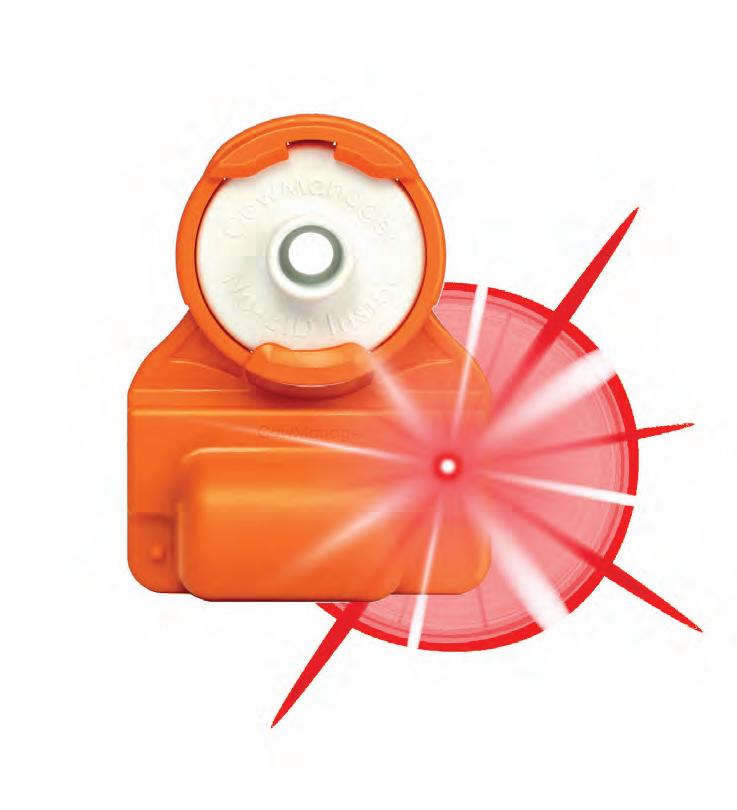
Whether she’s in heat, sick or in the wrong pen, Find my Cow Flash helps you locate the right animal fast—cutting down on labor and boosting daily efficiency.
A flashing light on the ear sensor makes identification quick and easy. Simply activate it from your CowManager app or desktop, and then locate the cow or calf soon after.
Efficient, accurate and designed for herds of all sizes, Find my Cow helps keep your operation running smoothly.
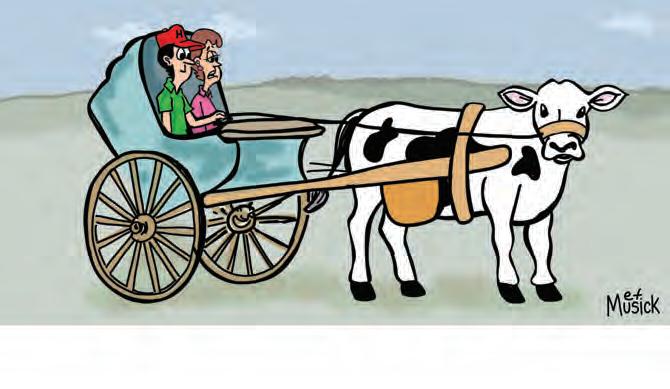
“It’s just not as romantic as a horse-drawn carriage.”
Cattle, competition, and commitment
by Laura Hensley
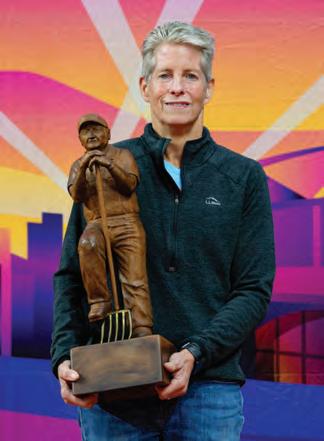
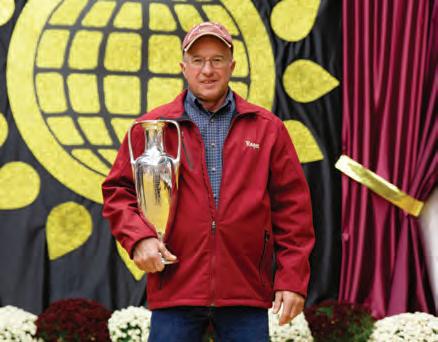
T THE 2024 World Dairy Expo, the Klussedorf-MacKenzie Award was presented to Joan Seidel, a name familiar to many at dairy shows and sales. For those who know her, the honor comes as no surprise. But for Seidel herself, it was an unexpected and humbling recognition for a life spent doing what she loves.
Growing up in Avon, N.Y., Seidel’s journey with dairy cattle started on her family’s farm. Though they sold their milking herd when her father, Tom Coyne, turned his attention to sales, the family barns remained full, boarding show animals for others.
“We did everything a dairy farmer does, except milk cows,” Seidel said. The exposure to taking care of other people’s animals set the stage for her future career. From exhibiting in 4-H and junior Holstein shows to traveling to the All-American in Harrisburg, Pa., Seidel’s foundation was grounded in her love for good cattle and a love for competition.
Returning home after college, Seidel took what she thought would be a temporary job at Ruanne East — a new operation on the old Hanover Hill property. The short-term plan turned into three years. “I fell back in love with cows,” she said. From there, her career path became more clear. Working sales and shows across the country, Seidel built a reputation for her attention to detail and her ability to get cows looking their best. She met
her husband, Doug, when they were both fitting at shows and sales. In 1992, they married and joined forces, launching Camelot Cattle Company. For the next decade, they were on the road nearly nonstop, fitting cattle for sales, picturing, and shows for farms around the U.S. “It was great,” she said. “We were as busy as we wanted to be, and we got to see the country and meet so many people.”
In 2002, the couple shifted gears, accepting a position managing Pintail Point Farm in Maryland. “It was a total change,” she said. “We went from fitting cattle to managing a whole herd, showing from the other side — not just as fitters but as managers and caretakers.” It was another chapter in her evolving journey, one that gave her a deeper appreciation for the full scope of herd management.
In 2008, as the economic downturn hit, the farm’s owner decided to disperse the herd. Seidel stayed on to raise heifers for a few more years, working closely with breeders like Richard Green and raising show calves and embryo transfer (ET) heifers. Slowly, she started to work her way back into fitting — first at a few sales, then a few shows.
When the Maryland property was sold in 2013, Seidel faced a crossroads. “I had to ask myself — do I go all in and build this business again? Or do I do something completely different?” she recalled.
With Doug no longer interested in returning to the show circuit, she set out on her own. It was an intimidating shift. “When we worked together, we sold ourselves as a team. Now, I had to sell just me. I had to prove I was enough on my own.”
The answer came over time. “Every year got a little better,” she said. With each show and sale, Seidel reestablished her place, proving that her experience, eye for cattle, and work ethic still had value. Over time she has also become a mentor to youth and a consistent presence at shows and sales across the country.
For Seidel, the toughest part of her job isn’t always the physical labor — it’s the pressure. “At Expo,
everyone’s watching. The best in the industry are there. And you want to do your best,” she said. “I don’t back down from a challenge. I’m always trying to do better. That mindset — that’s what carries you.”
Her career, she admits, didn’t always follow a straight line. “I had to reinvent myself more than once,” she said. “But every chapter — whether working with Doug, managing a herd, or doing this on my own — taught me something new.”
Receiving the KlussendorfMacKenzie Award was a moment of reflection for her. “I was beyond surprised,” she said. “In my mind, I was just trying to make a living. To think that a group of people I respect so much saw me as worthy of that honor — it’s humbling.”
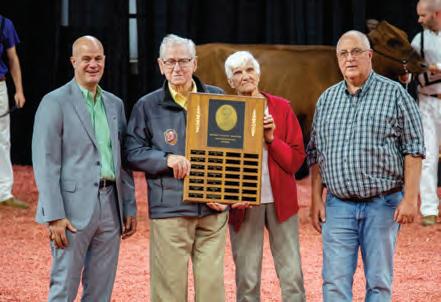
In addition to her dairy industry friends and colleagues standing ringside when she was presented her award, she also had immediate and extended family there.
“I’m proud of the life we built,” she said. “The people, the cows, the miles — all of it.”
She can now add the Klussendorf-MacKenzie Award to her list of accomplishments, not as a culmination, but as a marker along a continuing journey of always looking to grow and change to meet the latest challenge.
The author is an agricultural writer based in Holt, Mich.
Spot behavioral changes sooner. Treat and prevent with precision. Reduce stress during transition. Put milk back in the tank fast. With leading technology, identification and biopharma solutions working together in the M-Power dairy portfolio from Merck Animal Health, you’re fully empowered to hit your goals. Then exceed them.
MONEY MATTERS
by Gary Sipiorski
Defining the details
HAVING a casual discussion at a dairy meeting with a top dairy producer and a farm manager with years of experience highlighted once again what paying attention to detail means. There are so many moving parts on a dairy with many farms milking nearly 24 hours a day. Having a staff of employees keeps dairy producers busy just seeing the day’s work get done. With so much going on, some details may slip out of sight. Taking time to talk and listen to family and employees may get shoved aside or ignored as the days go by. Here are two examples of small details with huge dollar impacts that were corrected by taking the time to think.
Money down the drain
The first real-life example is a dairy producer who had an employee say, “I do not think one of the waterers in the freestall barn is working.” The dairy producer took time to walk back into the freestalls with the employee to take a look. Sure enough, there was no water coming. However, after further investigation, it appeared the waterer was neither broken or in need of repair. Then, the thought occurred to the farmer, “The waterer is just not getting enough water supply!” That got everyone thinking that adding another well might be in their future.
Not long after, another well was added. After only a few days, the entire herd was up 4 pounds of milk. Without any other diet changes, the surge in milk did not back off.
Four pounds of milk per cow may not look like much for one day; however, in 305 days it equates to 1,220 pounds multiplied by the number of cows in the herd. It was pretty easy to do the math on this one regarding additional annual income and it was almost like getting free milk. It all came down to one thing: paying attention to details.
Clogged income stream
The second example came from a seasoned farm manager who noticed
something was a little off. As the herd was slowly building over a few years, the precooler was not top of mind. After all, there were plenty of other decisions to make, and the milk in the tank was at the appropriate temperature.
Then, one day the manager thought, “Maybe we should make an addition to the chiller.”
The addition was made and the next milk check showed that the butterfat percent skyrocketed from 3.6% to 4%. That seemed like an astronomical bump from one month to the next.
The conclusion was the precooler was being overworked and small fat clusters had begun to form. Apparently, this was not helping with the fat test. The interesting thing about the jump was that it did not go away. The manager kicked himself, thinking about how many years of premiums the rather large herd had been losing.
Understandably, some days dairy producers are just too busy to stop and think of the not so obvious. These are just two simple, yet costly, examples of paying attention to details. The good part about both fixes is that the farms added substantial income to their bottom lines.
“I found the problem on your tractor. The warranty ran out.”
Behind Expo’s sweetest tradition
by Andrea Haines
EACH fall, as the sun begins to rise over the World Dairy Expo grounds in Madison, Wis., there’s one smell that cuts through the morning air before the cattle even stir: fresh coffee and donuts. And for more than five decades, one man has been behind it all, quietly making early mornings a little easier for the herdspeople, exhibitors, and hardworking folks who bring Expo to life.
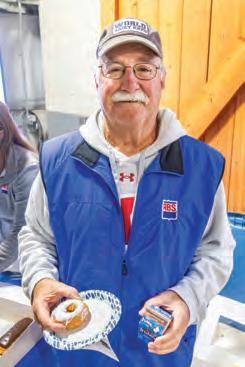
Meet Vern Meier, better known at Expo as the “Donut Man.”
Simple idea turned tradition
Meier’s story with World Dairy Expo goes back to the late 1960s. What began as an effort by a few ABS employees, inspired by thenABS president Robert Walton, has grown into a beloved tradition that kicks off the day for countless exhibitors.
“Dr. Walton saw the need early on,” recalled Meier. “He wanted to make sure the herdspeople, the ones working long hours behind the scenes, had something warm to start their day. That’s when the donut cart was born.”
After a few years, Louise Hamre (another longtime ABS employee) and Meier started pitching in to help.
operator, developer, tour guide, and webmaster. Even in retirement, he mows the grass at the DeForest, Wis., campus and occasionally leads tours.
Donuts and community
This year, ABS’s Ashley Grimes has taken the lead on the donut operation, but Meier is still there, doing what he’s always done, making people feel welcome with a warm drink and a sweet treat. “I enjoy my mornings with Vern,” stated Grimes. “Many of the exhibitors recognize his familiar face and I believe it makes their day to see an old friend.”
While the “Nutty Persian” once reigned supreme among donut flavors, changing tastes (and budgets) have brought a rise in cake donut popularity. “Some folks only want filled, some want plain, and there’s always that one exhibitor who used to ask us to dig through the boxes for all the nutty ones,” Meier laughed.
Back then, coffee was brewed at home and donuts were picked up from Lane’s Bakery on Park Street. “We would start brewing coffee shortly after midnight to make sure we had enough each day,” explained Meier. “Chocolate and white milk have always been available to us from a local vendor and stored on the Expo grounds in a semi-trailer.” The team would wheel a custom-built cart across 11 barns, braving Wisconsin’s unpredictable weather. The coffee was served alongside milk as they ran a daily operation that was as logistical as it was generous.
“Now, with the addition of modern pavilions and onsite kitchens, the system is more streamlined. We have two distribution stations, plenty of grateful faces, and still the same heart behind it,” shared Meier. “It was always interesting working the last day — the herdspeople sure partied that Friday night.”
Although semi-retired, Meier is in his 59th year with ABS, having worn many hats, from mail clerk to lab technician to IBM mainframe
Donuts are picked up from Kwik Trip outside of Waunakee, Wis., a partner Meier praises for their consistency, variety, and even Holstein-decorated treats. They go through 75-plus gallons of coffee, an untold number of milk cartons, and dozens upon dozens of donuts each week. “Some days, we’re out in 20 minutes flat, and that was from 50 dozen donuts,” he shared.
For Meier, it’s never just been about the donuts. “Food is a great way to connect,” he said. “We’re there to make their day a little better. It’s about being part of something bigger than yourself, supporting the people who make Expo what it is.”
He takes pride in the community, familiar faces, early-morning greetings, and the shared purpose of celebrating and advancing the dairy industry. Observing the exhibitors in line, the tired faces light up when they see Meier. His smile and friendly “good morning” set the day off right for many.
“I’ve made friends from all over the world,” said Meier. “Expo brings people together in a way that few events can. If I can help start someone’s day with a smile and a donut, well, that’s a good day.”
Think Biosolutions For thriving herds
In case you haven’t heard, Chr. Hansen and Novozymes have joined forces to become Novonesis. Together, we’re committed to delivering biosolutions that support productivity and sustainability.
With over 100 years of expertise, we scientifically select probiotic strains for our range of direct-fed microbial products. Talk to us about maximizing feed efficiency and supporting the health of your dairy herd.
DAIRY RATIONS
by Mike Hutjens
Four State Dairy Conference findings
LA CROSSE, Wis., was the place to be on June 11 and 12 at the annual Four State Dairy Nutrition and Management Conference. Attendance was solid with 515 registered participants and over 50 commercial booths. The latest research was presented along with commercial products featured in commercial booths. Several of the presentations are summarized below.
The soybean scoop
Alycia Bates with Michigan State University and Kyle Taysom with Dairyland Laboratories gave an update on high oleic soybeans.
High oleic soybeans contain an optimal blend of 76% oleic fatty acids and 7% linoleic fatty acids compared to 54% linoleic fatty acids and 23% oleic fatty acids in standard conventional soybeans.
Linoleic fatty acids can lower fiber digestibility, leading to lower milkfat. Five studies at Michigan State University were summarized. Roasting soybeans at 290°F to 300°F and steeping for 30 minutes before cooling improved rumen undegraded protein (RUP) levels. Excessive heating reduced amino acid quality, especially lysine. Income over feed costs improved to $1.70 per hundredweight (cwt.) in a Michigan herd when high-oleic soybeans were grown on the dairy farm, reducing purchased protein and commercial fat sources.
The recommended levels of roasted soybeans in early lactation was 4 to 6 pounds, depending on the level of milk yield and current
fat levels in the diet. Feeding 2 to 3 pounds in late lactation reduces the risk of heavy cows while optimizing milk components. Processing roasted soybeans to a particle size of 700 to 800 microns (cracking to 1/8 to 1/4 pieces) allows for optimal RUP responses. Processing under 600 microns can negatively impact ration digestibility. On-farm roasting may be considered for large herds and/or for providing custom roasting services. The cost of purchasing the roaster, cooling system, and bins can exceed $100,000.
Roasted soybeans can be tested using the protein dispersion index (PDI) test, which costs $25 to $30 with an optimal value of 9 to 13 units.
Take-home message: High oleic soybeans can be an economical protein and fat choice for dairy cows.
Making the most Luiz Ferraretto with the University of Wisconsin-Madison discussed corn silage efficiencies.
Corn silage shrink can vary from 5% to 26%, with 2% to 20% due to field losses, 2% to 6% related to respiratory losses, and fermentation losses accounting for 1% to 10%. Secondary fermentation reductions include surface losses and aerobic exposure.
Yeast levels below 100,000 colony forming units (CFU) reflect stable corn silage. Higher yeast levels shift rumen fermentation, lower neutral detergent fiber (NDF) digestibility, and can lead to a loss of 240 pounds of milk per ton of corn silage. A meta-analysis on adding a silage inoculant, such as Lactobacil-
lus buchneri, reported a 1.05% boost in acetic acid, lower yeast numbers (0.84 log number), lower mold count (0.40 log number), and additional aerobic stability compared to control corn silage (82 hours). As the starch becomes more available due to storage time, cows adjust their patterns: more eating time, slower eating rate, and more meals. No differences in dry matter intake (DMI) or energycorrected milk were reported. Take-home message: Corn silage efficiency and cow eating behavior can improve with reduced shrink and less yeast contamination.
Navigating nitrogen
Mike Van Amburgh with Cornell University discussed strategies to improve nitrogen utilization.
The goal is to reduce urinary nitrogen to 30 to 50 grams per day in high-producing cows. Excess rumen ammonia is absorbed in the blood and converted to urea by the liver, with 30% to 40% recycled back into the rumen for microbial growthforming amino acids. The remaining urea is then excreted into the urine.
Precision feeding of amino acids can reduce potential loss by balancing the ammonia levels in the rumen while meeting amino acid needs of the cow. Rumen-fermentable carbohydrates (starch, sugar, and soluble fiber) improved microbial capture of ammonia. Branch chain volatile fatty acids (BCVFA) production is another role of amino acids supported by soybean meal and other feed sources.
Take-home message: Reduce
urine nitrogen losses to improve farm profits while also reducing environmental risks.
Focus on muscle
Jackie Boerman with Purdue University gave insight into muscle changes during lactation. Dairy cows can mobilize significant levels of body fat in early lactation. These cows also mobilize muscle protein as a source of amino acids for milk protein, and hormonal signaling, intermediate compounds in the tricarboxylic acid energy cycle (TCA), and immunity.
In a recent study, cows were grouped as high-muscle or low-muscle cows. Changes in muscle mass were monitored based on the level of 3-methyl histidine (reflecting muscle breakdown) and creatine (muscle mass), along with ultrasound images. It was found that high-muscle cows produced more milk in early lactation and delivered larger calves. Low-muscle cows produced more milk in late lactation, had lower milk urea nitrogen levels and body condition scores, and had smaller calves. Muscle protein replacement continued during the lactation period, requiring additional dietary protein. Muscle protein reduction started during the close-up dry period into early lactation.
Take-home messages: Evaluating cows based on their muscle mass and physical changes all the way throughout the lactation cycle may be useful to help dairypersons make more informed decisions about the future of their herd, leading to better profitability.
What can probiotics do?
Isaac Salfer with the University of Minnesota, along with Jesse Thompson, Arm and Hammer, gave a probiotic update.
Probiotics are viable live bacteria fed to dairy cattle to compete and overpower undesirable bacteria. The live bacteria help to optimize
CHECKOFF-LED EFFORTS GROW SALES AND BUILD TRUST
In an increasingly competitive food and beverage market, the role your checkoff plays in growing sales and building trust in dairy cannot be understated. Your dairy checkoff team has a comprehensive strategy in place to help dairy thrive now and into the future.
Here are some noteworthy efforts led by Dairy Management Inc., which manages the national dairy checkoff program, that have produced tangible results:
Dairy’s link to brain health
The first 1,000 days of a baby’s life – encompassing pregnancy through the child’s second birthday – is a critical period for brain development. Research shows dairy can significantly impact a child’s cognition and overall success in life, which is the basis of checkoff-led strategies that highlight dairy consumption with expecting mothers and new parents.
Dairy-Centric Product Innovation
The checkoff helps accelerate product innovation, which translates to exciting new offerings such as General Mills’ yogurt-based YoBark lineup. YoBark is a healthy, parentapproved snack food that appeals to kids with the goal of bringing them back to the yogurt category.
Want to learn more about checkoff strategies that grow sales and trust?
Visit dairycheckoff.com to explore programs and initiatives.
nutrient availability and improve nutrient absorption in the digestive tract (rumen and intestine), provide enzymes, and scavenge oxygen. Examples include yeast, lactic acid fermenters, Bacillus, Propionibacterium, and Megaphaera elsdenii
Companies screen over 82,000 bacterial strains to test against more than 500,000 pathogenic isolates.
Organisms are selected for their positive effects on animal performance, as well as their stability in the rumen and digestive tract. All strains of a specific bacterial group are not equal. Diet has an impact on response with regional differences occurring, leading to on-farm evaluation. Shifting of the microbial population to improve fiber digestibility
can improve feed intake and boost milk production.
Take-home message: Probiotics are used to optimize rumen fermentation, stabilize the rumen, and reduce disease, as well as for manure treatment and bedding stabilization.
Your dairy checkoff has helped lay the groundwork to secure dairy’s dominance — more than 96% of U.S. households purchased real dairy last year. Checkoff-led research, innovation and marketing efforts are producing consistently strong results. Visit dairycheckoff.com to learn how we’re making every drop count.
The author is a professor emeritus of animal sciences at the University of Illinois, Urbana.
*Source:
Siemers named Distinguished Breeder
THE National Dairy Shrine recognizes Siemers Holstein Farm Inc. of Newton, Wis., as the 2025 recipient of the Distinguished Dairy Cattle Breeder Award. This honor is awarded annually to a breeder who exemplifies success in managing a dairy herd through strong genetic and business practices. Few embody those traits more completely than the Siemers family.
A sixth-generation family operation located along Lake Michigan, Siemers Holsteins has grown into one of the most recognized breeding programs in the world. With 8,000 cows on test, the farm maintains a rolling herd average of 33,924M, 4.39% fat, and 3.13% protein. Their genetic program is equally impressive, with 369 bulls placed in A.I. under the Siemers prefix, and an average TPI of 2,613 on the milking herd and 2,902 on heifers.
A hallmark of the Siemers breeding philosophy is their commitment to balance — what they describe as “Genetics for cow people.” Their approach blends type, production, and health traits to develop cows that are not only high-performing but also built to last. Their consistency has earned them numerous accolades, including Holstein USA Herd of Excellence every year since 2016 and the Progressive Genetics Herd Award annually since 1991.
Nearly 1,300 Excellent cows carry the Siemers prefix, including four homebred EX-95s and 75 scored EX-94 or higher. They have also bred nearly 500 Dams of Merit and three Gold Medal Sires. The herd is the only one in the world to have bred three Holstein International
Global Cow of the Year winners, most recently Siemers Lstr Hanan 33317-ET EX-91 in 2024.
Though widely known for their success in both commercial and show cattle circles, Siemers Holsteins is also recognized for its progressive facilities, innovative use of reproductive technologies, and marketing impact worldwide. Their cattle have been sold across the U.S. and internationally, influencing genetics on a global scale.
“Innovation, commitment to excellence, and major genetic contributors are just a few thoughts that come to mind when thinking of Siemers Holsteins,” said Kevin Jorgensen, senior Holstein sire analyst at Select Sires Inc. and owner of Ke-Jo Holsteins and Sales. “They have bred or developed nearly 1,300 excellent cows including four homebred EX-95s, and marketed thousands of cattle globally. Very few herds are more deserving of this prestigious honor.”
Family remains central to the operation, with Dan and Janina Siemers and their son, Jordan; Paul Siemers and his sons, Jake and Josh; and Tyler Schafer forming the core team. The Siemers family has been a steady presence in the dairy community — hosting judging contests, supporting youth programs, serving on boards, and giving back to the industry at every level.
The Siemers family will be formally recognized at the National Dairy Shrine Awards Banquet on Monday, September 29, 2025, in Madison, Wis. Their portrait will be added to the National Dairy Shrine Dairy Hall of Fame and Museum in Fort Atkinson.
Back row L to R: Dan Siemers, Janina Siemers, Jordan Siemers, Connor Siemers, Jenny Siemers, Paul Siemers Front Row L to R: Josh Siemers, Lauren Siemers, Jake Siemers.
Arthur W. Nesbitt, a well-known businessman, longtime champion of the dairy industry, and voice of World Dairy Expo for over 37 years, passed away on July 22. Nesbitt dedicated many decades of service to the National Dairy Shrine, holding roles as secretary, treasurer, and executive director. He was the driving force behind the organization’s endowment fund that now serves as a critical resource for the National Dairy Shrine.
The 4-E Award, created in his honor alongside lifelong friend, Eugene Meyer, continues to recognize those who give tirelessly to the National Dairy Shrine. In 1993, Nesbitt was named Guest of Honor at World Dairy Expo.
Nesbitt’s commitment to the dairy industry extended far beyond leadership. He generously supported the National Dairy Shrine Museum, ensuring growth and creating experiences for all visitors. His passion for youth was evident in his sponsorship of scholarships, recognition of collegiate dairy products evaluation and post-secondary judging contest winners, and his own presence at the museum to help greet visitors.
Known for his warm smile, firm handshake, and genuine interest in people, Nesbitt created lasting connections and always embraced a welcoming spirit that will be dearly missed. His dedication, leadership, and passion leave a legacy that will continue to inspire the dairy industry for many years to come.
Dairy Farmers of Wisconsin (DFW) and Discover Dairy are back with their “Adopt-a-Cow” classroom initiative, which will be returning for another year throughout Wisconsin schools, as local classrooms adopt calves and follow along with their daily lives through fun, realtime updates. K-12 schools, homeschool groups, 4-H clubs, and more are each paired with two calves from a participating Wisconsin farm, including Schleis Farms of Two Rivers, Nellie Holsteins of Eau Claire, OrthRidge Jerseys in Lancaster, and McFarlandale Dairy located in Watertown.
“Adopt-A-Cow provides an engaging way to connect elementary school students to agriculture and learn about their farmer next door,” said Erika Schade, DFW’s School and Community Programs Manager. “Last year, we reached 55,000 students in over 1,500 classroms, helping them gain a better understanding of how dairy products reach their tables.”
Students will get to interact with their calves virtually, receive photos, videos, farm stories, and handson lessons, and will even get to connect with their farmer. “Being a
part of the Adopt-A-Cow program is a wonderful way for us to share the day to day of what we do on the farm and how we care for the animals,” said Tasha Schleis, owner of Schleis Dairy Farm. Students will have the opportunity to learn about the calf’s diet, environment, and daily care. Most lessons align with Common Core standards. Enrollment closes Sept. 15.
The Laughing Cow is introducing pumpkin spice flavored cheese, its latest limited-edition seasonal flavor. Available now through November, this variety combines flavors of pumpkin and cinnamon with The Laughing Cow’s signature creamy texture. Designed to capture the essence of fall, the new flavor aims to bring the season’s favorite taste to consumers in a fun and convenient form.
“Pumpkin spice is the flavor of fall, and we’re thrilled to bring it to life,” said Jessica Dillon, senior brand director of The Laughing Cow. “This limited-edition variety delivers all the cozy, ‘craveable’ notes of the season, combined with our signature creamy texture. It’s a flavorful twist that can instantly elevate any snack or spread throughout the season.”
Each wedge is individually wrapped, made with real cheese, provides 2 grams of protein, and is a good source of calcium. Perfect for fall gatherings, tailgate snack spreads, or a quick after work treat, the pumpkin spice wedges make celebrating fall easy.
The Laughing Cow’s pumpkin spice flavor is now available at major retailers nationwide, including Kroger, Albertsons, Market Basket, Brookshire Grocery, Meijer, and Publix, with a retail price of $4.99.
Oikos, part of the Danone family, has launched Fusion, a new line of nutrient-dense cultured dairy drinks tailored for GLP-1 and weight loss consumers. Each 130-calorie, 7-ounce bottle delivers 23 grams of complete protein, 5 grams of prebiotic fiber, zero added sugar, no artificial sweeteners, and essential vitamins including B3, B12, A, and D, along with calcium.
Available in strawberry, mixed berry, and vanilla, the drinks offer bold, flavorful options. Developed with the help of nutrition scientists and dietitians, Oikos Fusion features a blend of whey protein, leucine, and vitamin D to support muscle protein synthesis and overall nutrient intake. Unlike many protein drinks that use casein, Oikos Fusion uses rapidly digesting whey with higher leucine content.
Launching at Walmart this month, the line will expand to additional retailers this fall, offering a protein-rich solution for those seeking dairy drink options that support health, muscle, and nutrition goals.
Ventilation MATTers
Wet conditions trap moisture and ammonia, creating an unhealthy environment for calves. Our hutches come standard with flexible ventilation, keeping air fresh and calves healthy.
Our adjustable vents ensure ventilation from top to bottom with
Show recycling
by Sydney (Endres) Flick
KEVIN Uphoff is doing the math. “How many years ago were you born?” he asks his son. After getting the response, he adds a year to solve for X: “Thirty-seven years ago, my brother Kendal was approached by Greg Blaska and R. Dale Jones, World Dairy Expo directors at the time, to propose a price to haul all manure and bedded pack out of the Alliant Energy Center,” he said. With the family’s farming background and equipment, the brothers knew they would be a good fit for the job.
Kendal cash crops approximately 2,000 acres, custom farms about the same number of acres, and has a small trucking company and snow removal business. He also has a few specialty contracting jobs, including the one with the Alliant Energy Center for Expo and other events held there. Kevin owns a landscaping business. The brothers and their employees work together year-round across the businesses.
At World Dairy Expo, their team works quietly to keep the grounds clean of bedded pack. A crew arrives at midnight and works until around 5 a.m., cleaning out bays and taking the pack to their load station. At 5 a.m., they start loading semis and hauling to a compost site until all the dirty pack is gone. The rest
of the day, Badger Dairy Club workers empty out the bays. When the show concludes, the Uphoffs clean the barns out completely.
As the Uphoff family approaches their 38th year of cleanup at World Dairy Expo, Kendal explained how they have changed the management of pack removal throughout the years to improve their efficiency and sustainability. When they first started in 1987, the goal was to move away from sending all the waste to a landfill. The Uphoffs trucked the straw and manure to nearby fields to spread it after the crop came off.
Kendal explained that he always tried to plant so that the crop would be harvested right after Expo, but Mother Nature didn’t always agree with his plan. During those years, he would have to pile the pack and compost it, which created quite a bit of steam for the neighbors.
Kendal shared his thinking: “What can we do that is better than this?” They experimented using a square baler to bale the cleaner pack from the end of the show. It worked, and didn’t create steam. Then they tried a round baler with net wrap, also with success. They
used a manure spreader to spread the material, then raked it, and followed through with the round baler on site before trucking it out. “Now, did it save us anything? Not really,” Kendal said. “But it is a better product for composting that sits better throughout the year.”
The last two years, the Uphoffs have made more than 1,000 bales with the cleaner bedded pack. They team up with RG Huston, a local company that does heavy earthwork, to compost the bales. RG Huston previously used cornstalk bales for retention ponds. Kendal approached them with the bales from Expo, already moist, and they now use all the bales for their projects.
Having less material to spread on their fields has made it easier for the Uphoffs to incorporate the compost into the field. Previously, they would need a moldboard plow to work in the amount of compost on the field. Now they can use a less-disturbing tillage practice.
The Uphoffs also started taking care of milk removal over 10 years ago. “We did it with the 5-gallon milk pails dumped into a bulk tank the first year, but then said, ‘This doesn’t work,’” Kendal said. They proposed using PolyDome tanks and a vacuum truck to empty them, eliminating the need for so many bodies and muscles to take care of the milk.
“For a few years, we worked with the Wisconsin Department of Natural Resources (DNR) to spread the milk on the fields, but the timing didn’t work well with cropping,” shared Kendal. Then Metrogro, a biosolids product from the Madison Metropolitan Sewerage District, showed interest. Metrogro uses wastewater — and milk — during Expo and recovers the biosolids needed to create Metrogro, a nutrient-rich organic fertilizer that supports plant growth and soil fertility.
Kendal shared that he has had plenty of ideas fail over the years, but they always learn something new. However, the good ideas have evolved from their initial recycling of the material into more effective and sustainable methods. “World Dairy Expo has been really good to work with, and we have a wonderful relationship with the guys and gals of Badger Dairy Club,” Kendal said. “We couldn’t ask for a better group to all work together, and you have to give World Dairy Expo credit for putting the right people in the right place.”
Dear Nutritionists,
Fat, fiber and protein. Is that so much to ask? They’re really good for us. And they’re all found in whole cottonseed.1
We’re worth it. So is our milk.
Studies show that adding highly digestible whole cottonseed to our ration mix improves the quantity and quality of the milk we produce.2 Basically, what you put in improves what we put out.
There’s nothing “fuzzy” about it.
Seed kernels are the source of energy (fat) and protein. The “fuzzy” little linters found on whole cottonseed aren’t residual cotton lint. They’re cellulose, a super e ective source of fiber.
Now you know why whole cottonseed is an excellent feed ingredient and a high-quality forage extender for lactating cows.3
You “herd” it here first.
Sincerely, Dairy Cattle Everywhere
See what whole cottonseed can do for you and your favorite cows at wholecottonseed.com/dearnutritionists.
1Kellog, D. W., J. A. Pennington, Z. B. Johnson, and R. Panivivat. 2001. Survey of management practices used for the highest producing DHI herds in the United States. J. Dairy. Sci. 84:E120–E127. doi:10.3168/jds.S0022-0302(01)70206–8
2Smith, NE. et. al. Digestibility and Effects of Whole Cottonseed Fed to Lactating Cows. Journal of Dairy Science, vol. 64, no. 11, November 1981, pp. 2209-2215., doi: https://doi.org/10.3168/jds. S0022-0302(81)82831-7.
3Stewart, L. and Rossi, J. (2010). Using cotton byproducts in beef cattle diets. Bulletin 1311. The University of Georgia and Ft. Valley State University, the U.S. Department of Agriculture and counties of the state cooperating.
A lifetime of quiet excellence
by Laura Hensley
T THE 2024 World Dairy Expo, Tom Cull was the recipient of the prestigious Klussendorf Award which honors the top dairy showman in the U.S. While this award will stand next to many others he has received, he admits the journey itself has always been more important than the trophies.
“It’s the accumulation of everything,” Cull said. “I think it’s the entire journey that has made me who I am. It’s not about winning one show or one prize — it’s about working hard every day, wanting to do better, and taking both constructive and sometimes unconstructive criticism along the way.”
A humble beginning
Cull’s passion for dairy cattle was sparked early. Growing up on a registered Holstein farm, he participated in local fairs and shows through 4-H. His family’s farm wasn’t a powerhouse, but they took pride in their cattle and were committed to doing things right.
Cull remembers being intrigued by stories from the older generation of traveling by boxcars to show their animals. Those stories fueled his interest and competitive spirit, which he equates to participating in a sport. “Success doesn’t happen on show day.
Success happens in the daily grind. I enjoy that grind. It’s my business, but it’s also my hobby,” he said.
Unlike others who start their show careers early, he didn’t show an animal at World Dairy Expo until his early 20s. His early exposure to showing cattle came from being a professional cattle fitter for nine years, learning the ins and outs of show preparation while helping other breeders showcase their best.
One step at a time
When Cull returned to the home farm in 2000 after marrying his wife, Kelli, Budjon Farms began to evolve. What started as a few partnerships and a willingness to help others grew into a top-notch boarding facility — a business model that few had imagined at the time.
“It wasn’t planned,” Cull explained. “We didn’t sit down and say, ‘We’re going to build a boarding business.’ It just grew from the trust people had in how we cared for their cattle.”
Early partnerships with breeders like Joel Kietzman and Mark Rueth shaped Budjon Farms. In 1996, the Culls partnered with Kietzman to acquire Krull Broker Elegance, a cow whose genetics have influenced
care for Van Dyk-K Integrity Paradise, who went on to win Grand Champion at Expo in 2000. These early successes brought on additional opportunities. As they developed a reputation for excellent care, breeders from across the country asked the Culls to board their animals. Over time, Budjon Farm became a satellite center, managing donor cows, calves, and
have today, but we always took what we were doing seriously,” Cull said. “We took care of cattle like they were our own, and that mattered.”
A diversified dairy
Part of Cull’s long-term success is his willingness to adapt. Today, their business is multi-faceted: milk production, custom cropping, genetic sales, embryo work, and the management of donor and show animals for others. This diversity provides stability in a changing dairy economy.
Their team remains small and tight knit. Cull and Kelli run the day-to-day operations with the support of Cull’s father and a few dedicated employees. Internships have also become an important part of the farm’s culture, providing handson learning experiences for young people to explore the dairy industry.
“I think that’s one of the coolest parts now — helping shape the next generation,” Cull said. “Some of these kids find out this is exactly what they want to do, and others figure out it’s not for them. Either way, it’s a valuable experience.”
Grounded perspective
THE TANK BUILDER
For all the glamour that surrounds the show string on Expo’s colored shavings, Cull is quick to remind people that behind the scenes is continual learning, daily dedication, and relentless commitment.
“You can’t just grab a halter and expect to win,” he said. “You have to make that animal look that way. It’s a craft. It’s a process. And it
Cull is also realistic about the changing nature of the dairy industry. He believes that young people coming up today sometimes struggle with taking criticism or persevering through tough times, but he also sees incredible potential in those who are willing to work, learn, and
When asked for advice for the next generation, Cull kept it simple: “Be willing to work. Success doesn’t happen overnight. You have to love the process.”
Receiving the Klussendorf Award is a crowning achievement, but for Cull, it’s more than an award — it’s a recognition of decades of effort, relationships built, and the cattle carefully developed along the way.
“It’s not about me,” Cull said. “It’s about all of it. The people, the cows, the work. That’s what makes this meaningful.”
PAST KLUSSENDORF AWARD WINNERS
2024: Tom Cull, Lomira Wis.
2023: Joey Airoso, Tipton Calif.
2022: John Erbsen, Lanark, Ill.
2021: Jeff Core, Salvisa, Ky.
2019: Ken Melvold, Fresno, Calif.
2018: Adam Liddle, Argyle, N.Y.
2017: Harry Papageorge, Ogden, Utah
2016: Roger Riebe, Cumberland, Wis.
2015: Lorne Ella, Milton, Ontario, Canada
2014: Gilbert Teixeira, Turlock, Calif.
2013: Wayne Conard, Sharon Springs, N.Y.
2012: Paul “Buddy” Fleming, Cortland, N.Y.
2011: Joel Kietzman, Waunakee, Wis.
2010: Mike Stiles, Clearbrook, Va.
2009: Charlie McEvoy, Marathon, N.Y.
2008: Mark Rueth, Oxford, Wis.
2007: Barry Quickfall, Belmont, Ontario, Canada
2006: Paul Stiles, Clearbrook, Va.
2005: Bertram Stewart, Elora, Ontario, Canada
2004: Darrell Worden, Wausau, Wis.
2003: Brian Sayles, Paris, Ontario, Canada
2002: Stephen White, New Castle, Ind.
2001: Steve Blessing, Fort Wayne, Ind.
2000: Bill Taylor, Oldwick, N.J.
1999: Alta Mae Core, Salvisa, Ky.
1998: Clark Vilter, Hartland, Wis.
1997: S tuart Rowe, Davis, Calif.
1996: S tephen A. Briggs, Turner, Maine
1995: David Bachmann Sr., Sheboygan, Wis.
1994: Allan Barr, Knowlton, Quebec, Canada
1993: Robert F. Brown, Paris, Ontario, Canada
1992: Howard Voegeli, Monticello, Wis.
1991: K arl Mueller, Arlington, Minn.
1990: Keith King, Oneida, Ill.
1989: Norman E. Nabholz, West Union, Iowa
1988: Kenneth Empey, Dorchester, Ontario, Canada
1987: David F. Younger, Easton, Md.
1986: Wayne E. Sliker, St. Paris, Ohio
1985: R. Peter Heffering, Port Perry, Ontario, Canada
1984: William Chilcoat, Lakeville, Conn.
1983: M yron W. Lancaster, Blaine, Wash.
1982: Roy Jacobs, Sparta, Wis.
1981: Terry Lee, Sheboygan Falls, Wis.
1980: Lowell H. Willis, Seminole, Fla.
1979: G eorge Edgerton, Mathias, W. Va.
1978: Max Gordon, Winchester, Ind.
1977: Edward S. Hall, Glendale, Ariz.
1976: Homer Morris, Albuquerque, N.M.
1975: Lee G. Yost, Benton, Pa.
1974: Rowland R. Beauvais, Hillsborough, N.C.
1973: Willie L. Olson, Amery, Wis.
1972: G eorge M. Barlass, Janesville, Wis.
1971: Henry J. LaFranchi, Calistoga, Calif.
1970: Allen C. Hetts, Fort Atkinson, Wis.
1969: Lewis Porter, Lexington, Ky.
1968: Paul Sparrow, Concord, Tenn.
1967: Carl Bourne, Somerville, N.J.
1966: Clarence Okerlund, Redmond, Wash.
1965: T. Frank Dale, Hope, R.I.
1964: Ray Brubacher,
Guelph, Ontario, Canada
1963: Frank M. “Bo” Chestnut, Denison, Kan.
1962: Woodrow C. Nunamaker, Plain City, Ohio
1961: D uncan MacKenzie, Carnation, Wash.
1960: Buell C. Jennings, West Unity, Ohio
1959: Nelson McCammon, Monroe, Wis.
1958: J. Allan Hay, Estacada, Ore.
1957: Elis M. Knutson, Oconomowoc, Wis.
1956: Chris Kampf, Eustis, Fla.
1955: Arthur G. Clark, Topsfield, Mass.
1954: Merle Howard, Watertown, Wis.
1953: Merton B. Sowerby, Grand Rapids, Mich.
1952: A .C. “Whitie” Thomson, Burlington, Ill.
1951: Henry Thomas, Cortland, N.Y.
1950: Willie S. Watson, Hutchinson, Kan.
1949: Clyde B. McAdams, Durham, N.C.
1948: D r. Jack Spearing, Charlottesville, Va.
1947: Neill Heitke, Mora, Minn.
1941: Vernon C. Hull, Strasburg, Va.
1940: Leslie T. Leonard, Morristown, N.J.
1939: Gilbert Muir, Hope, R.I.
1938: Paul Jackson, Wilmington, Ohio
1937: Olaf J. Kjome, Spring Grove, Minn.
No two dairies are alike.
We don’t expect them to be.
We expect you to demand original thinking.
Original data, with original insights.
An original approach that achieves real results.
That’s what you get from the world’s only comprehensive dairy nutrition company. Will you settle for what’s expected? Or are you an original, too? cargillanimalnutrition.com/original
MILK QUALITY
by Amy Vasquez, D.V.M.
PRE and postmilking teat disinfectants have been successfully implemented on dairies for the reduction of intramammary infections and for the maintenance of healthy teat skin for decades. A plethora of commercially and noncommercially manufactured products exist with various germicidal ingredients, emollient packages, and levels of surfactant. Surfactants exist to allow for appropriate teat coverage and improved removal of debris.
Choosing carefully
With so many options, it can be challenging for individual farms to make a choice. Selection of product should depend on pathogen load and prevalence, environmental conditions, application (premilking, postmilking) and style of application (spray, foam, dip, brush), market requirements, and economics. Additionally, we should make informed decisions based on current peer-reviewed research — for example, by first considering outcomes from efficacy trials that have examined commercial products. However, after taking a deep dive into the literature myself, there are few publications within the last 10 years that critically evaluate teat disinfectants. Why would this research be difficult to find?
Historically, in the U.S., the FDA has regulated teat disinfectants as over-the-counter products that can be marketed without approval. Here, there is no requirement to prove efficacy, but companies must follow FDA-directed good manufacturing processes and ensure the product is safe and meets food safety requirements. In other countries, these products are considered veterinary drugs and must undergo a thorough approval process. This approval process allows companies to make specific claims for controlling mastitis pathogens. Regardless, many commercial teat disinfectants are produced by global companies that apply the same testing to products for U.S. distribution.
Testing requirements abroad
Let’s look at regulatory testing required for registration of disinfectants in other countries.
Laboratory trials. These initial trials, which are not performed on animals, evaluate the germicidal activity of the product using standardized methodology. They determine whether there is adequate microbiological (usually bacterial) kill under different levels of organic load. For example, 2%, 5%, and 10% of whole milk is added to the teat dip being tested, and subsequently, the dip is challenged with specific quantities of bacteria.
Safety trials. These trials evaluate the safety of the application for
Choose the best teat dip
use on skin and also evaluate any tissue or milk residues that may result from application.
Clinical trials: These trials are performed on animals. In some countries, companies are required to demonstrate that there is a reduction of new intramammary infections relative to undipped teats. These trials can be “natural exposure” trials or “experimental challenges.”
Experimental challenge trials consist of dipping teats in bacterial suspensions to simulate exposure to large amounts of bacteria and then immediately applying the product(s), whereas natural exposure involves monitoring cows and quarters and documenting clinical or subclinical cases that occur with application of the products as a part of the regular dairy routine.
Natural exposure trial design
NMC: The Global Milk Quality Organization developed efficacy protocols and guidelines that define how disinfectant trials should be performed to ensure scientific validity and consistent reporting. In brief, one or more commercially available products are compared to one another or to no product (a negative control). The products must be used according to the manufacturers’ directions, and ideally, the milking technicians and scientists should remain unaware of which cows receive which product; labels are removed and a color-coding scheme is employed. The following designs are suggested:
Split-udder: The teats from an individual cow receive different treatments.
Split-herd: All quarters of the same animal receive the same treatment and animals within the same pen are randomized to receive different treatments.
Throughout the trial, intramammary infections, as well as teat health, are evaluated. Determination of whether more new infections occur with one product versus another requires that quarter-level milk samples be evaluated at defined intervals; these milk samples are tested for the presence of mastitis pathogens. Somatic cell count (SCC) samples taken on the same day can also be used as a screening tool to determine which milk samples need to be tested for pathogens. Additionally, clinical mastitis cases will be regularly recorded by farm management throughout the entirety of the project. Teat health measurements include teat barrel and teat end scoring for dryness, cracking, and hyperkeratosis. Finally, statistical evaluations are performed using robust modeling techniques and account for important variables and correlations, including week of the trial, parity, days in milk, location of the teat, and more.
Farm-level trials
A well-organized clinical trial can be costly. For chemicals manufactured in the U.S., word-of-mouth of successful use and appropriate marketing strategies may trump a costly and often time-consuming clinical trial as evidence of effective use. But should a farm take the plunge based on minimal information? We often receive calls from farms that want to switch dips but wish to collect their own data. The following is a guide for developing a simple split-herd study to evaluate efficacy on an individual farm. As a general rule, the number of cows in a trial can limit the ability to find a statistical difference, and an overabundance of cows or data points
may result in a statistical but nonmeaningful difference.
To start, we recommend making sure all milking equipment is properly functioning, the farm has adequate recordkeeping, and all premilking procedures are performed with appropriate timing to allow for efficient and effective letdown.
• Take baseline measurements immediately before the trial. This should include SCC, teat-barrel scoring (dry, cracked, or smooth), and teat-end scoring. Accessible scoring guides can be found on university extension websites.
• Assign each cow to a specific disinfectant. This can be tricky because the most thoughtful study design means randomizing the cows to one disinfectant or the other without making a biased decision on which cows receive what product. Ideally, cows should be balanced by parity, days in milk, milk production, and initial linear score within an individual pen.
• Identify the cows that will receive one product versus another. We suggest using color-coded leg bands that match the dip- or foamer-cup top containing the appropriate product.
• Ensure that milking technicians maintain compliance. A new routine can be confusing. For chemicals that need mixing or dilution, we recommend using test kits on a weekly basis to ensure the disinfectant is being applied at the appropriate concentration.
• Collect data by taking measurements (cell counts, mastitis cases, scores, and cultures) at regular intervals for all enrolled cows.
• If you are not data savvy, find a friend who can analyze the outcomes of interest. If cows receiving one product are at higher risk for developing dry teats, poor teat end scores, or more new subclinical or clinical mastitis cases, then perhaps the disinfectant is not meeting the needs of the dairy. If there are no significant differences, consider that the study design may not have had enough power due to a small sample size or disinfectant similarity. In this case, the decision may come down to cost or ease of application.
Regardless of whether an on-farm trial is performed, we recommend educating yourself about the individual product being considered. We continue to recommend products currently registered with the FDA and those shown to effectively reduce the intramammary infection rate by controlled research trials. This information can often be acquired from the manufacturer.
What it means to win
by Michele Ackerman
FEW wins carry as much weight as those at World Dairy Expo. A champion can put a farm on the map and bring buyers to the door. A fertile champion that transmits exceptional traits is worth her weight in gold.
Some Expo champions are recognized worldwide by a single name — Charity, Apple, Veronica, and Snickerdoodle, to name a few. Their influence reaches far beyond the ring in Madison on the day of the show
The first of these, Brookview Tony Charity, may be the most decorated dairy show cow in history. She is the only cow to claim four championship titles on both sides of the border — Supreme Champion at Expo and Grand Champion at the Royal Agricultural Winter Fair (RAWF) — and was undefeated in class. She was owned by Hanover Hill Holsteins of Ontario when she claimed her first supreme title in 1982 and then by Hanover Hill when she secured her second title in 1984.
The following year, she sold for $1.45 million in the Hanover Hill dispersal to Romandale Farms Ltd. of Ontario, who partnered with Hanover Hill in ownership. That same year, she earned her third crown before stepping away from the tanbark trail in 1986 to undergo embryo transfer. In 1987, she was again crowned Supreme Champion. Even today, her descendants are making their mark in showrings.
KHW Regiment Apple-Red-ET won the black and white class of Junior Two-Year-Olds at Expo in 2006 and sold for $1 million to the Apple Partners of Wisconsin in 2008. She made history in 2013 as Reserve Grand Champion of the International Red and White Show, flanked by her clone as Grand Champion on one side and her daughter as Honorable Mention on the other. Apple is also the granddam of Erbacres Snapple Shakira-ET, two-time Expo Supreme Champion, and Premium Apple Crisp Lilly-Red, two-time Grand Champion of the Red and White Show.
Huronia Centurion Veronica 20J was named Supreme Champion in 2006 for her owner, Arethusa Farm, Litchfield, Conn. She has exerted tremendous influence
through thousands of descendants.
Fittingly, she was named winner of the Jersey Journal Great Cow Contest in 2015 by a vote of Jersey breeders. Her daughter Arethusa Response Vivid-ET was Reserve Supreme Champion of Expo in 2012 and Supreme Champion at the RAWF in 2014.
Another colored cow, Old Mill E Snickerdoodle, was Expo’s Supreme Champion in 2003. She is the only cow of any breed to win a breed championship six times, along with every milking class at Expo. She has more than 100 offspring.
Snickerdoodle is among the few Supremes to have been both bred and shown by her owners, the Bassler family, then of Virginia and now of Florida, where Snickerdoodle passed just shy of 19 and is buried.
Path to triumph
Matriarchs like these prove that a victory in the Coliseum in Madison is more than a win — it is a fast track to success. “World Dairy Expo is the reason we get up in the morning,” said Jim Ostrom, a partner in MilkSource Genetics of Kaukauna, Wis. “We start planning for the next Expo the day after the last Expo. And some cows are being prepped for Expo two years out.”
Expo is an important venue for MilkSource Genetics, not just for exhibiting, but for breeding and marketing. The genetics company manages 35 elite show cows as donor dams in an in vitro fertilization program along with a herd of recipients. They also sell show heifers.
“Expo plays a big role in our effort to identify and acquire young cows with lots of potential and develop
great show calves from them,” continued Ostrom. “When you start with elite genetics and manage them with world-class calf-raising skills, amazing results can happen.”
Creating legacies . . .
An example of this played out last year when MilkSource A TierneyRed-ET, a heifer purchased by the partnership of Clarkvalley, Pierre Boulet and Jeff and Jim Butler of Ontario, was named Reserve Supreme Champion of the Heifer Show at Expo and Reserve Junior Champion at the RAWF. She is the granddaughter of Strans-Jen-D Tequila-ET, a cow MilkSource purchased and showed to Grand Champion laurels at Expo in 2015 and 2016.
In the showstring in 2015 were two other Grand Champions whose lines have been developed at MilkSource Genetics: Lovhill Goldwyn Katrysha, the Holstein Champion, and Musqie Iatola MarthaET, the Jersey Champion. The two also stood together in the spotlight that year as Supreme and Reserve Supreme Champions, respectively. The following year, Martha was Supreme. In 2017, she repeated as Reserve Supreme.
. . . And carrying them on MilkSource is also developing a great-granddaughter of Veronica, GMBV Joel Dixie, who was named Intermediate Champion at Expo last year, and Glenirvine Unix Sally, who earned the same title in the Holstein Show in 2023.
“In life, one rarely gets a chance to compete at the highest level in the world, and winning it all is a very fleeting moment,” Ostrom remarked.
Another breeder who is highly visible at Expo, on the halter and as the official in the middle of the ring, is Callum McKinven of Lookout Farm in Canton de Hatley, Quebec. Since 1995, he has judged 12 shows and been an associate twice. He has shown several homebred winners, partners with others in banner-winning females, and boards elite show cattle.
One such collaboration is with Brian Pacheco, Jer-Lene Swiss, Kerman, Calif., whom he first met in 2016 through fellow California breeder Les Davis while attending the California Spring Show. McKinven invited Pacheco to the Lookout Crackholm Main Event Tag Sale later that spring. Davis and Pacheco traveled to the sale in Ontario, where Pacheco made several purchases. Bolstered by their performance, he began entrusting McKinven to purchase animals on his behalf.
Iroquois Acres Jong Cali was the
first Swiss McKinven sourced for Pacheco. Her discovery was happenstance. McKinven and his wife, Kathy, had gone to Iroquois Acres in Vermont for another purpose — to purchase commercial Brown Swiss cattle — but noticed Cali in a pasture heading down the drive.
“Kathy said, ‘That’s a good heifer,’ so I called the breeder to inquire about her,” recalled McKinven. “I thought Brian might have an interest and learned she was due to calve as a Junior Two-Year-Old. We came to terms on a price, and Cali and the daughter she eventually bore — Iroquois Acres Total Candy — came to Quebec.”
In 2017, Cali made her debut in Madison in 10th place as a Junior Two-Year-Old. The following year, she won her class and was Reserve Intermediate Champion for Pacheco, who had assumed ownership. In 2019, she topped her class again and then stood second in 2021 and 2022. Candy made her Expo debut in 2019, and, like her dam, rose in the rankings. In 2022, she placed third in the Five-Year-Old class.
High points, high honors
The parade of champions in 2023 was one for the history books as Cali and Candy were named Grand and Reserve Grand Champion, respectively, the only Swiss dam and daughter to do so the same year.
“Like most things in life, I could not have accomplished this on my own,” Pacheco said. “It started with the Ouellette family and their breeding, and then Callum and his family, whose daily care has allowed Cali and Candy to reach their full potential. It has been a team effort, and we have formed a great partnership that continues to this day.”
Another foundation cow McKinven sourced for Pacheco was Brown Heaven Carter Tutti. The same age as Candy, the two have flip-flopped placings over the years. At Expo last year, Tutti bettered her herdmate by one place to win the aged cow class and was named Reserve Grand Champion.
“There is only one World Dairy Expo breed Grand Champion each year,” Pacheco noted. “Rare is the opportunity to invest in offspring of that caliber.”
The impact of these contemporary champions is only beginning to take shape. Time will reveal what that means for their exhibitors, breeders, and others who develop their maternal lines.
Brookview Tony Charity
Huronia Centurion Veronica 20J
Old Mill E Snickerdoodle
Adding that finishing touch
by Andrea Haines
IN THE competitive world of dairy cattle showing, every detail matters, from the animal’s conformation to its overall presentation in the ring. For many exhibitors, a full, flowing tail isn’t just decoration; it’s part of the cow’s identity.
This is where JK Tails shines. The mother-daughter business run by Jolene Pederson and Kristin Baranczyk of Cecil, Wis., specializes in restoring what nature may have withheld, or what time may have taken away: a flowing tail. “A nice tail can help an animal look complete,” Baranczyk shared. “When it’s missing or thin, it changes the whole appearance of the animal.”
The roots of JK Tails stretch back to Baranczyk’s childhood. Growing up in a family connected to a meat market in Freedom, Wis., she and her mom became familiar with all aspects of livestock. One day, Pederson noticed a particularly beautiful tail on a processed animal and kept it. That moment planted the seed for what would become their specialty.
Over the years, with the cooperation of the market’s current owners, they began collecting tails from processed animals. Each new addition is cleaned, cured, and stored, slowly building a diverse inventory that now includes more than 100 tails in colors and textures to suit every
dairy breed.
While the idea might sound straightforward, attaching a tail so it looks natural takes a lot of skill. Baranczyk begins by securing it to the base of the cow’s tailbone. The cow’s own hair is lifted, the extra switch is placed underneath, and then the hair is blended and fluffed until the addition disappears from view.
“It sounds easy, but if done incorrectly, it’s very noticeable. A good tail placement means that no one is able to tell it’s a false one,” Baranczyk explained. “These are real tails,
so they blend in better than synthetic options.” The extensions stay on for the entirety of a show and can withstand washing if needed. For some cows, one extension is enough; others require two to achieve the right balance and fullness.
Baranczyk’s comfort with this meticulous work isn’t new. She has been styling tails since she was young, earning a place among fellow exhibitors as “the tail lady.” What others might see as stressful, she finds calming. Laden with the tools of the trade, the team gets many steps in during the show season as
they run from barn to barn. “We especially get on the move during World Dairy Expo,” Pederson said. “My daughter and I have a large inventory but each animal is unique so we must match the tails with colorings. Often, we need to use tails multiple times in one day.”
During peak show season, the JK Tails collection hangs neatly in their show heifer barn, organized by breed and length for quick selection. Clients are encouraged to book their tails in advance, but Pederson and Baranczyk also keep extras on hand for last-minute requests from exhibitors who spot them at work.
In the off-season, the tails are carefully stored in containers to protect their condition, ready to be brought back out when the next round of competition begins. For the mother-daughter team, the service is about more than just aesthetics. It’s about giving every exhibitor, and every animal, the confidence to shine in the ring.
“It’s not something you wake up one day and say, ‘Hey, I want to style cow tails onto animals,’” Baranczyk said. “I enjoy the styling part of it and happened to find a need that I can fulfill within the industry we get to be around every day.”
“I
The author is a freelance writer based in Taneytown, Md.
tried to knock over a grain silo.”
KRISTIN BARANCZYK and her mother, Jolene Pederson, team up on the details.
Thank you for being a friend
by Sydney (Endres) Flick
IT’S no secret that World Dairy Expo would not function without the incredible support of volunteers. Around 500 people dedicate their time across Expo grounds before, during, and after the show to make the event possible. Each year after the event, a Friends of Expo reception celebrates these volunteers by bestowing a Friends of Expo Award upon influential volunteers.
Since its inception in 1981, 152 of the most integral Expo volunteers have been recognized with the Friends of Expo Award. The award differs from the World Dairy Expo Recognition Awards by the fact that it is the only award selected inhouse by Expo staff. Other awards are given by nomination and are selected by judges or an anonymous panel. Lisa Behnke, World DairyExpo communications manager, shared, “The staff that works with volunteers sits down after the event each year and recalls above and beyond instances, recalls events, and comes to a recipient(s) of the Friends of Expo Award. This is the management at Expo truly expressing their appreciation of these individuals giving their time to make the event happen,” she said.
The term “Friends of Expo” was coined prior to an award being pre-
sented by Bev Craig, executive director of Expo from 1969 to 1979. Every winter, Expo staff would invite volunteers to a Friends of Expo reception to thank them for their time.
In 1980, Brad Rugg took over as the executive director of Expo. He shared, “In those early days of Expo, we didn’t have much of a working budget. We had a paid staff of two full-time people and would hire a couple of part-time people in the summer. The show was completely driven by volunteers.” Rugg continued the tradition of the Friends of Expo reception but got a little creative with it. He recalled hosting a casino night one year to celebrate volunteers, and another year, a secret dinner with each course served at a different location around Madison. Area businesses would donate gifts willingly for these celebrations because of the amount of business Expo was bringing to Madison.
However, Rugg felt they needed something a bit more formal to recognize the importance of volunteers. With such a low budget, people and businesses were donating an incredible amount of time and resources, all crucial to the success of Expo. There were individuals who recruited a significant
number of other volunteers, people who ran programs during Expo, and businesses that sent volunteers and donated resources ranging from veterinary services to advertising. Rugg created an executive committee to help identify winners of the Friends of Expo Award.
The first Friends of Expo Award was given to Jim Crowley in 1981. “Jim Crowley was the most amazing volunteer expert I have ever worked with,” Rugg said. “He had the most unique way of drawing people in that I have ever seen. Based on his presence, you knew you needed to run with any idea he had. We got the University of Wisconsin’s dairy science department involved because
Better Cows Start with Herds Like Mine.
of him. Jim would host huge gettogethers at his house before Badger football games to thank Expo volunteers himself.”
The first award was presented in the showring during the Central National Holstein show. Crowley received a standing ovation from the ringside spectators and exhibitors. The physical award presented was a beautiful, brass-plated milk can. Rugg recalled, “We owned a bunch of milk cans that Badger Dairy Club used for the milk runs. I saw a milk can plated with brass somewhere and thought it could be a unique award that didn’t cost much money.” Rugg picked out one of the better milk cans in stock, found a place in Madison to do the brass plating, and paid $52 the first year for the award.
The tradition of awarding a brass-plated milk can continued for many years until staff could no longer find a place to service the milk cans. Today, recipients receive merchandise from the Purple Cow gift shop. The award is now presented at the annual Friends of Expo banquet in December. “The Friends of Expo party has historically been a night to celebrate the previous year’s show and honor all of the individuals who give so unselfishly of their time, and also to recognize several from among them who have gone above and beyond in their role,” Behnke said.
World Dairy Expo would not have grown to the event it is today without the extraordinary volunteers of its past, and certainly would not continue without the support of volunteers year after year. Behnke added, “We can never have too many volunteers, and we can never thank them enough for what they do.”
If you are interested in volunteering at Expo, reach out to Dawn Dammisse at ddommisse@wdexpo.com.
The author is a freelance writer and dairy farmer from Wisconsin.
Crowley
Reducing the stigma of mental health
by Colleen Stegenga
SOMETIMES you have to visit the doctor. Or the dentist to get a root canal. Maybe you visit a dermatologist to treat a skin condition.
You wouldn’t just let a painful toothache, infected cut, or maybe a more serious condition like diabetes or high blood pressure go untreated. As a matter of fact, your family, friends, and colleagues would be thankful that you went and got treatment for those medical issues because your health is so critically important. Mental health is no different from physical health.
Yes, mental health is real
You can’t see conditions like diabetes or high blood pressure, but treating them is essential to living a long, healthy life. Typically, you can’t see when a person is struggling with anxiety, depression, or thoughts of suicide. However, obtaining proper treatment for mental health challenges is equally essential to living a long, healthy — and happy — life.
Unfortunately, mental health conditions have a negative misconception. Some portrayals of people with mental health conditions on television, movies, or media have characterized these conditions as violent, unstable, or dangerous. While some mental health struggles can manifest through anger, yelling, or abuse, the majority of mental health challenges are under the surface.
There is still a great deal of education needed on mental health conditions, causes, and how they
impact individuals, especially in rural America.
Why is it ignored?
In many small farming communities, it can be hard to keep a secret. Your neighbor saw you go into the therapist’s office — and that starts the local gossip. The next thing you know, Joe from church is asking why you went to see the shrink. Discomfort, embarrassment, and shame result, as well as an end to mental health treatment.
Research shows this type of scenario is a reason that some neglect mental health. About 40% of Canadian farmers say they would be uneasy seeking help for mental illness because of what others may think, according to 2018 research from the University of Guelph.
An offhand joke or comment about mental health at a family dinner, in the local watering hole, or at the
county fair can stay with someone for decades, and prevent them from getting the help they may need.
Another reason some folks might not want to address a mental health issue comes from their fear of looking “weak” or lacking willpower. Farming comes with tremendous responsibilities, and many farmers identify themselves as being strong, resilient, and hard-working. Showing any sign of weakness just doesn’t jibe with the mental self-image that the dairy producer has developed. What many don’t understand is that you can’t pull yourself up by your bootstraps and out of depression — mental health challenges just don’t work that way. Suffering from a mental health condition impacts people in so many different ways. Someone with anxiety or depression may come across as humble, but really they may struggle with low self-esteem. Sometimes, those impacts are easier to
see. Farmers who usually keep their equipment, tools, and farms neat and tidy may become sloppy or disorganized. Chores may be done inefficiently, or not at all. Yet this is not always the case; everyone handles stress and coping differently.
What can you do?
Put aside your fears. If you are personally struggling with a mental health condition, don’t be afraid of what others may think or say about you. Taking care of yourself is the best thing you can do, whatever that requires. If you know someone who seems to be struggling, don’t be afraid to talk to them — ask if they’re really doing all right, or just offer to be a listening ear.
Explore the options. If you don’t want to be seen going into the local therapist’s office, many therapists offer telehealth appointments that can be done on your computer or smartphone. You don’t even have to leave your tractor cab, farm office, or the privacy of your own home to talk to a mental health professional. Be supportive, not judgmental. If someone you know is taking positive steps with their mental health, don’t be nosy. Don’t make assumptions. No one ever really knows what happens in a person’s internal life, and it’s not our place to judge someone else and how they choose to handle their mental health. Simply be kind. Let’s work together to end the negative stigma of taking care of our mental health.
The author is the owner of Embracing Change Counseling Services LLC based in South Dakota.
National Dairy Shrine scholars honored
KILDEE SCHOLARSHIP
The Kildee Scholarship recognizes a graduate student studying a dairy-related field. It is named in honor of H. H. Kildee, dean emeritus at Iowa State University. Two $3,000 scholarships are presented this year.
Kylie Konyn Univ. of WisconsinMadison
Megan Ratka Univ. of Minnesota
DMI DAIRY PRODUCT SCHOLARSHIPS
The Dairy Shrine and Dairy Management Inc. (DMI) scholarships support sophomore and junior level students at a four-year college or university pursuing careers in the marketing of milk or dairy products, dairy product development, quality control, nutrition, or related roles in the dairy and food industries.
Clancey Krahn of Albany, Ore., is this year’s top recipient of the $1,500 award. Four students will receive $1,000 scholarships.
Clancey Krahn Oklahoma State University Animal Science, Ag Communication
Nicole Arrowsmith Penn State University Agribusiness Management
Mary Beth Collette Virginia Tech Ag Business
Jacob Harbaugh Univ. of Minnesota Animal Science, Applied Economics
Rachel Visser Univ. of Minnesota Ag and Food Business Management, Ag Communications and Marketing
DMI COMMUNICATION SCHOLARSHIPS
The Dairy Shrine and Dairy Management Inc. (DMI) established these scholarships for sophomore and junior level students in a
four-year college or university pursuing education or communication careers in the dairy or food-related industries. They are open to students majoring in marketing, food science, nutrition (human), public relations, education, social media, and communications.
This year’s top $1,500 scholarship goes to Allison Foss of Cambridge, Minn. Three additional awards of $1,000 are also presented.
Allison Foss Univ. of Minnesota Ag and Food Business Management
Regan Jackson Louisiana State University Nutrition and Food Science
Katie Ketchum Univ. of WisconsinRiver Falls Ag Education
Abbygail Schlough Univ. of Minnesota Ag Education and Animal Science
MCCULLOUGH SCHOLARSHIPS
Marshall McCullough was a nutrition researcher, educator, and journalist. Scholarships are given in his memory to freshman level students majoring in agricultural journalism or communications at a fouryear college or university. Two $1,000 awards are presented this year.
CORE SCHOLARSHIPS
The friends of Maurice Core, longtime executive secretary of the American Jersey Cattle Association and former Dairy Shrine secretary/ executive director, donated the funds for these awards. The scholarships recognize freshman level college or university students majoring in dairy or animal science. Six $1,000 awards are presented this year.
Breunig
Brooklyn Kilgard Iowa State University Ag Communications
Shelby Swanson Univ. of Minnesota Ag and Food Business Management
Chloe
Univ. of WisconsinMadison Dairy Science
Caroline Egolf Purdue University Animal Science
Joshua Folts Cornell University Animal Science
Sophie Griswold Cornell University Animal Science
Trevor Hath Univ. of Minnesota Animal Science
Zachary Johnson The Ohio State University Animal Science
SOWERBY JUNIOR SCHOLARSHIPS
The Merton Sowerby Scholarships recognize junior level undergraduate students at a four-year college or university who are planning a career in the dairy industry. They are given in honor of Merton Sowerby, a Dairy Shrine Pioneer and former Klussendorf winner from Michigan.
This year’s top $1,500 recipient is Lauren Breunig of Sauk City, Wis. Five additional students will receive $1,000 scholarships.
Lauren Breunig Univ. of WisconsinMadison Life Sciences Communication
Rachel Craun Purdue University Ag and Biological Engineering
Brady Gille Univ. of Minnesota Animal Science
Jenna Gries Univ. of WisconsinMadison Dairy Science
Keenan Thygesen Univ. of Minnesota Animal Science
Jordan Anderson Univ. of Wyoming Ag Communications
Haley Beukema Univ. of Minnesota Ag Communications and Marketing
Emory Bewley
Penn State University Animal Science
Delana Erbsen
Iowa State University Dairy Science
LANCASTER SOPHOMORE SCHOLARSHIPS
The Mike Lancaster Scholarships recognize undergraduate sophomores at a four-year college or university and encourage pursuit of a career in the dairy industry. They are named for former Dairy Shrine Distinguished Dairy Cattle Breeder and Klussendorf winner Mike Lancaster. Alexis Hoefs of New Prague, Minn., receives the top honor of $1,500. Five students will receive $1,000 awards.
Alexis Hoefs Univ. of Minnesota Animal Science
Clarissa Ulness Univ. of WisconsinMadison Dairy Science
SENIOR STUDENT RECOGNITION SCHOLARSHIPS
The Senior Student Recognition Scholarships recognize outstanding leadership, activity participation, academic ability, and a sincere interest in the dairy industry. These are earned by nominations from the student’s university.
This year’s top honoree and recipient of a $2,000 scholarship is Benjamin Styer of Menomonie, Wis.
The second award of $1,500 goes to Sarah Hagenow of Poynette, Wis. In addition, four $1,000 awards are also allocated.
Benjamin Styer Univ. of Minnesota Animal Science
Sarah Hagenow Univ. of Minnesota Ag and Food Business Management
animal or dairy science. This year's two $1,000 awards are based on academic standing, leadership, and dairy industry interest.
Tanner Baker Western Texas College Animal Science
Aubree Topp Northeast Iowa Community College Ag Business
DAIRY PRODUCTION SCHOLARSHIP
These scholarships were established to encourage undergraduate students to
Sara Dorshorst Univ. of Minnesota Animal Science
Kelsey Hardy Univ. of WisconsinMadison Dairy Science
Hannah Mansfield Penn State University Animal Science
Brianna Meyer Univ. of WisconsinMadison Dairy Science
Tyler Ratka Univ. of Minnesota Animal Science
IAGER SCHOLARSHIPS
The Charles Iager family of Fulton, Md., funded these scholarships for second-year students at a two-year agricultural school majoring in
pursue a career related to dairy production. They are available to undergraduate students enrolled in their final year at a two-year college, a certificate program, or a four-year college with an explicit interest in a management role on a dairy farm.
Caden Carlson Univ. of Minnesota Plant Science, Agronomy Production
Irene Nielsen Iowa State University Dairy Science, Ag Communications, International Agriculture
Call the FAN/BAUER boys: East: Jim Dewitt, 1-630-750-3482, j.dewitt@bauer-at.com
Sales Director: Ray Francis, 1-219-229-2066, r.francis@bauer-at.com
Parts/Operations: Rob Hultgren, 1-800-922-8375, r.hultgren@bauer-at.com BAUER North America Inc. 107 Eastwood Road, Michigan City, IN 46360, 1-800-922-8375, bnasales@bauer-at.com
RAINSTAR TRAVELERS
HOARD’S HAS HEARD . . .
The winners of the World Dairy Expo Recognition Awards will be honored during the Recognition Awards Banquet on Oct. 2. These individuals are nominated and selected by their peers.
The Dairy Producers of the Year are Ken, Mike, Tom, Dave, and Clay McCarty of McCarty Family Farms in Rexford, Kan. As fourth-generation dairy farmers, McCarty Family Farms doesn’t take “feeding the world” lightly and strives to use their farm as a force for good. For them, that means producing high-quality milk while prioritizing animal welfare, regenerative farming, and implementing impactful business practices for their team and community. Recognized as the world’s largest registered herd of Holsteins, the family milks 15,000 cows across four sites in Kansas with an additional 4,000cow herd at MVP Dairy in Ohio. To support farm growth, their dairy processing plant was recently updated to include ultrafiltration and reverse osmosis technologies. McCarty Family Farms produces Non-GMO Project Verified milk for Danone North America.
The Industry Person of the Year is Jim Mulhern, the former
president and CEO of National Milk Producers Federation in Arlington, Va. Mulhern delivered numerous positive results for America’s diligent dairy farmers by working behind the scenes to have conversations explaining many of dairy’s dynamic and deep issues to elected leaders and policymakers. His work has made lasting impacts on dairy and ag policy.
The International Person of the Year is Juan Moreno, CEO and co-founder of STgenetics in Colombia and Navasota, Texas. His journey originated from humble beginnings on a Colombian cattle farm to the founder and CEO of Sexing Technologies (ST). Moreno pioneered gender-sorted semen technology and introduced a dairy feed efficiency index. In his career spanning decades, he has been a key contributor to innovations in reproductive biotechnology and agricultural science.
World Dairy Expo’s Trade Show has long been a one-stop shop for dairy producers and industry professionals to get a set of eyes on the latest technology and equipment in the industry. Recognized among the Top 100 trade shows of 2024, it
continues to serve as a popular hub for visitors to lean into innovation, education, and connection within the dairy community. Serving as a new way to recognize exhibitors and their booth efforts, World Dairy Expo introduced its Doug Williams Memorial Booth Awards. These honors will highlight commercial exhibitors who stand out in various categories, including Best New Exhibitor, Best Outdoor Space, The Showstopper, Most Interactive, and Best of Show. Booth judging will be done by two industry experts and a member of the Expo Commercial Exhibitor Committee, with winners announced Tuesday, Sept. 30, and recognized on Wednesday, Oct. 1.
Booth awards serve as a tribute to Doug Williams, who passed away in January 2025. For three decades, Williams welcomed attendees to Kuhn North America’s booth and spent 24 years serving on Expo’s Commercial Exhibitor Committee, including his term as chairman. Williams was also involved with the executive committee and the board of directors, and he was honored as a Friend of Expo in 2014. These new awards celebrate his legacy of service at World Dairy Expo.
Malorie Thorson of Waverly, Minn., was named the 72nd Princess Kay of the Milky Way during an August 20 ceremony held at the Minnesota State Fairgrounds. Representing Wright County, the 20-year-old South Dakota State University student will reign as an ambassador for nearly 1,800 Minnesota dairy farm families.
Ten county dairy princesses
vied for the Princess Kay of the Milky Way crown. Alexis Hoefs of Le Sueur County and April Klaphake of Stearns County were runners-up. Scholarship winners included Hoefs, Natalie Clemenson of Goodhue County, and Nicole Hauschildt of Wabasha County. Lauren Steffl of Brown County earned Miss Congeniality honors.
During her year-long reign, Thorson will travel throughout Minnesota, making public appearances, visiting classrooms, and speaking about the nutritional benefits of dairy and farmers’ commitment to sustainability. Her first official duty was to sit in a rotating cooler as Minnesota artist Gerry Kulzer created a 90-pound butter sculpture of her. Each finalist also had their chance to be carved into butter on consecutive days during the fair.
Princess Kay candidates are evaluated on dairy knowledge, communication skills, and enthusiasm for the dairy industry. The program is sponsored by Midwest Dairy and funded through the dairy farmer promotion checkoff.
The North American Intercollegiate Dairy Challenge (NAIDC) announced new leadership for the 2025-2026 term, including four new directors and the executive committee. Now in its 23rd year, Dairy Challenge continues to grow and expand, providing hands-on learning experiences for more than 500 students annually through its national contest, Dairy Challenge Academy, and four regional events held throughout the year. Joining the 15-member volunteer board are:
Lauren Mayo, an assistant professor in reproductive physiology with extensive experience in dairy education, research, and student coaching at North Carolina A&T State University.
Linda Parreira, a relationship manager at AgWest Farm Credit who has supported dairy producers for a decade and actively volunteers as a Dairy Challenge mentor and judge.
Doug DeGroff, a longtime Progressive Dairy Solutions consultant and nutritionist with a background in herd management and dairy cattle nutrition.
Elizabeth Eckelkamp, an assistant professor and extension specialist at the University of Tennessee focusing on precision dairy technologies, herd health, and value-added production.
Since its founding in 2002, NAIDC has grown from one national contest with 56 students to a multi-event program that has helped prepare more than 9,000 students for a future in a dairy-related career.
Elevating Every Stage
Maximize
their potential through every transition.
Successful dairies do everything they can to ensure the quality and care of their animals, starting before they’re even born. Purina offers research-backed nutrition and management solutions for every phase of a dairy animal’s lifecycle, so they can reach their ultimate genetic potential, generation after generation.
Pioneer Award honorees
THE National Dairy Shrine has named the 2025 recipients of its prestigious Pioneer Award. The professional Agri-Graphics photographers, Joseph Lineweaver, David Selner, and Paul VanRaden and George Wiggans will receive the Pioneer Awards at the National Dairy Shrine Awards Banquet on Monday, Sept. 29, in Madison, Wis. Their portraits will be permanently displayed in the Dairy Hall of Fame at the Dairy Shrine Museum in Fort Atkinson, Wis.
The professional AGRI-GRAPHICS PHOTOGRAPHERS are collectively honored for revolutionizing the visual presentation of dairy cattle over five decades. Their skill in capturing the conformation and character of dairy animals brought marketing and genetic promotion to new heights. Their work helped breeders showcase cattle nationally and internationally, and their iconic images live on in breed publications, sale catalogs, and the memories of dairy families.
Agri-Graphics, founded by Danny Weaver in 1963 and owned by Kathy DeBruin starting in 1990, is recognized as a place where female photographers could make their mark, establishing the role of these photographers as significant contribu-
tors to the dairy industry. As the first female dairy cattle photographers in a male-dominated industry, Kathy DeBruin and Maggie Murphy helped pave a career path for many talented women that followed at Agri-Graphics, including Julie DeLavergne, Cindy Taranto, Betty Crowell, Sylvia Cooper, Judy Black, Eileen DeBruin, Sonja Agrimson, Mary Lippert, Lisa Cooper Leach, Christine Putman, Susan Kelly, Cybil Fisher, Sarah Damrow, and Beth Herges in addition to Jim Miller, Bruce Pickering, Craig Johnson, Fred Hall, Tom Pearson, Jim Fisher, and Bruce Kuehl.
JOSEPH LINEWEAVER built a legacy in reproductive physiology and embryo transfer. From his time as an extension specialist at Virginia Tech University to his founding of Blue Ridge Embryos, Lineweaver advanced the science of semen handling and embryo transfer at a time when the technology
was still in its infancy. His pioneering work led to the first registered Jersey embryo transfer offspring, and his efforts in developing industry standards and mentoring others have made a profound impact on the field.
Lineweaver was also a passionate supporter of youth in the dairy industry, offering scholarships in his name and always making time to personally congratulate recipients. Known for his leadership roles in the American Embryo Transfer Association and the American Jersey Cattle Association, his contributions were instrumental in the growth of both organizations. Even into his 90s, he has remained active in the dairy community, embodying the values of lifelong service and innovation.
The late DAVID SELNER was a visionary in genetics, education, and youth leadership. Raised on a Wisconsin Holstein farm, Selner held key roles in the artificial insemina-
tion industry, spearheading efforts in genetic evaluation, sire development, and global promotion of U.S. genetics. He helped launch the first Multiple Ovulation Embryo Transfer (MOET) program and served as a genetic consultant to organizations across the globe.
Beyond his technical achievements, Selner’s legacy lies in his passion for youth development and show ethics. He helped found the North American Intercollegiate Dairy Challenge and served as superintendent of the National Intercollegiate Dairy Judging Contest for many years. His voice became synonymous with World Dairy Expo, where he was announcer and ethics advocate.
Selner also played a significant role as executive director of the National Dairy Shrine. During his nine-year tenure, he worked tirelessly to support and grow membership in the organization. He established new scholarships and expanded the reach of existing scholarships to serve more dairy industry youth. He was also committed to enhancing the experience at the National Dairy Shrine museum, working to digitize the museum’s historical archives, ensuring dairy history is accessible for generations to come.
PAUL VANRADEN AND GEORGE WIGGANS are honored together for their unparalleled impact on dairy cattle genetics and genomic evaluation. This duo developed and implemented much of the U.S. system for genetic evaluation, enabling more accurate and efficient selection of elite dairy animals. Their work advanced traits like fertility, longevity, and calving ease, and their genomic selection models have doubled genetic progress in North America.
Combined, VanRaden and Wiggans have authored more than 500 publications. Over careers that spanned decades at USDA’s Animal Genomics and Improvement Laboratory, VanRaden and Wig-
gans revolutionized data processing and genetic modeling for dairy traits. Their work enabled tools like Net Merit indexing, genomic reliability, and the identification of lethal recessives.
The Pioneer Award was first given in 1950, when the Dairy Shrine was located in Waterloo, Iowa. That year, 25 recipients’ pictures were hung in the Pioneer Room of the then-Dairy Shrine Club. An article in the November 1950 issue of Hoard’s Dairyman noted that individuals honored included notable historic figures such as Louis Pasteur and Gregor Mendel. That year, Pioneer Awards were also bestowed on dairy industry leaders, academics, and innovators: Gail Borden, Carl Gustaf Patrick DeLaval, William Dempster Hoard, Clarence Henry Eckles, Theophilus Levi Haecker, F. Lathrop Ames, W. B. Barney, Henry L. Coit, Arthur J. Glover, C. E. Gray, Solomon Hoxie, Mark Keeney, William Armon Henry, Christian Larsen, W. W. Marsh, M. D. Munn, Frank O. Lowden, Robert Scoville, George L. McKay, Helmer Rabild, Paul P. Stewart, E. A. Stewart, and Stephen Moulton Babcock. A full list of Pioneer Award recipients can be found at on.hoards.com/ pioneeraward.
JOSEPH LINEWEAVER
KATHY DEBRUIN
DAVID SELNER
GEORGE WIGGANS
PAUL VANRANDEN
LIFE is constantly changing. Today, you can purchase binoculars that are A.I. enhanced to identify 9,000 different species of birds. That is a cool feature.
But it isn’t just the world of bird watching that is changing — so is the world of taxation. In the beginning of July, the One Big Beautiful Bill Act (OBBBA) passed and it is the law of the land. Now is the time to get out the binoculars and take a close look at all the changes coming up. Some are only temporary and are going to fly away, just like nervous birds. Let’s dig in.
Passed back in 2017, the Tax Cuts and Jobs Act contained a lot of provisions that were set to expire in 2025. OBBBA makes many of them permanent, including the child tax credit, which has also been increased to $2,200. The larger standard deductions are here to stay. Personal exemptions are eliminated. Most dairy farmers are familiar with these current structures. However, there are other sweeping changes to be aware of.
First of all, there has been a dramatic shift away from green energy projects and alternate energy, and it kicks in soon. The Residential Clean Energy Credit that provides a 30% tax credit toward the cost of buying and installing solar panels or other energy-saving devices was scheduled for phaseout in 2033. Those credits now expire at the end of the year. To claim them, you need to start construction by the end of this year. The credit to buy new and used electric vehicles ends even sooner on Sept. 30. This is bad news for auto manufacturers who retooled to meet this market. If you want the $7,500 credit on new vehicles or the $4,000 credit on used vehicles, you must act soon.
For those interested in buying a new car, one aspect of OBBBA that might appeal to dairy farmers is a deduction of up to $10,000 in interest on any car assembled in the U.S. The good news is you don’t have to itemize to claim this deduction. The interest deduction is available between 2025 and 2028 with phaseouts for individuals earning more than $100,000 or $200,000 for married couples.
During the 2024 presidential election, there were some promises made that the OBBBA honors. From 2025 through 2028, employees can deduct up to $12,500 a year in overtime pay (or $25,000 if they are married and filing jointly). There are phaseouts for single filers with modified adjusted gross income (MAGI) of more than $150,000, or joint filers with MAGI greater than $300,000. Another promise concerned tip income, and between 2025 through 2028, eligible workers can deduct up to $25,000 a year. Again, there are
New tax optics
by Gerald R. Anderson
some phaseouts for single and joint filers earning more than $150,000 or $300,000 respectively.
Trump Accounts, another OBBBA provision, gives parents of children born between Jan. 1, 2025, and Dec. 31, 2028, eligibility for $1,000 in federal funds to establish a tax-advantaged savings account for their offspring. Parents, grandparents, or other people can annually contribute up to a combined $5,000 of aftertax contributions to the account. The money is invested in a fund that tracks a stock index and grows tax deferred. Contributions can be made until the child turns 18, at which point withdrawals are permitted. These accounts are structured somewhat similarly to Roth IRAs but with additional restrictions.
Years ago, I had a college German instructor who complained that changes in the tax code discouraged charitable giving. He was right; it
is a deduction that bounces around like a basketball. Sometimes you can only get the charitable deduction by itemizing; other times, different rules apply. Under the new law, there are some rather complicated changes. Starting in 2026, if you take the standard deduction and are married filing jointly, you can deduct $2,000. But taxpayers who itemize and deduct charitable contributions are — for the first time — subject to a new limit on the amount they can deduct. They can only deduct contributions to the extent they exceed 0.5% of their adjusted gross income. There are other existing rules for people who itemize that limit the charitable contribution further. If you are planning on making large charitable contributions, talk to a tax professional before proceeding.
When OBBBA passed, the Social Security Administration sent emails
to everyone receiving Social Security benefits explaining that thanks to the passage of the bill, only 12% of Social Security beneficiaries will now pay taxes on their benefits, compared to 36% today. This is a little bit misleading. The reason for the change is a hike in the standard deduction, not exemptions for Social Security income. Starting in 2025, those 65 or older will be eligible for an additional standard deduction of $6,000. This is a bonus deduction — it comes on top of the existing boost of the $2,000 deduction for single filers who are 65 years old or older (for married couples filing jointly — 65 years or older — it’s $1,600 for each spouse). So it is possible for a married couple who are 65 years old or older and filing jointly to have a standard deduction of $46,700. Again, these are shortterm deductions through 2028. There are phaseouts for taxpayers whose MAGI is too high.
Finally, under the new tax bill, capital gain tax rates are still favorable to dairy farmers. The law bumps up the estate tax exemption from $13.99 million in 2025 to $15 million per person or $30 million for a married couple in 2026. After that, it will be adjusted for inflation. The One Big Beautiful Bill Act was very controversial. Cuts were made to Medicaid to pay for a portion of this bill’s massive costs. Only time will tell what impact all these changes will have on our economy.
The author is a dairy farmer from Brainerd, Minn.
WHILE the core elements of World Dairy Expo remain unchanged, it has continually evolved, incorporating innovative and contemporary features. Launched in 1967 as the “World Food Exposition,” it became World Dairy Expo in 1969 when its dairy focus showed great potential. Over the past six decades, Expo has seen many firsts. Read on to learn some fun facts about its history.
FACILITIES AND GROUNDS
Though the face of Expo has been ever-changing, its location has not. Since 1967, the event has been held on a campus that was then known as the Dane County Expo Center.
• The first cattle shows were held in the Arena Building in 1967 and 1968. Built in 1953, the structure is the oldest on the grounds today. It has been used for cattle housing, commercial exhibits, and is now called The Tanbark.
• In 1968, the sixth barn for cattle housing was built, followed by more barns in 1979 and 1994.
• Cattle were first shown in the Coliseum in 1969. The iconic building is still the venue for cattle shows today.
• In 1978, the Youth Building was expanded and renamed the Forum Building.
• The famed “colored shavings” were introduced to the floor of the showring in 1984. They were first tied to a theme when that concept was launched in 1988.
• In 1995, doors to the newly constructed Exhi-
bition Hall were opened. The structure, built onto the Forum Building, enabled Expo to attract more commercial exhibitors and guests.
• In 2000, the campus was renamed as the Alliant Energy Center.
• In 2014, the nine cattle barns were demolished to make way for a pair of New Holland Pavilions. The multi-use structures feature improved ventilation, a state-of-the-art milking parlor, covered manure storage, and expanded wash racks.
• Visitors first visited commercial exhibits in the newly built Trade Center — on the east side of the Outdoor Trade Mall — in 2021.
SHOW COWS
At the heart of Expo are the cows. The cattle show is the very reason the event was created.
• In 1970, the first Supreme Champion was selected — the Holstein winner Wind Drift Countess Nora. She repeated the feat in 1972.
• The first colored breed Supreme Cham-
pion was an Ayrshire, Oak Ridge Kellys Rosid, crowned in 1975.
• Marcia Shaver-Floyd of Iowa became the first female judge at Expo when she placed the Milking Shorthorn Show in 1978.
• In 1980, the class for 2-year-olds was split into Junior Two-Year-Olds and Senior Two-Year-Olds.
• In 1985, neck medallions replaced ribbons as class awards.
• In 1987, Brookview Tony Charity became the first cow to win a record four Supreme Champion titles. She was also the champion in 1982, 1984, and 1985.
• An Intermediate Champion was first crowned in five of the shows in 1994.
• The Red and White National Show moved to Expo in 1995 and became the International Red and White Show. The first national show was held at Expo in 1968, but was held elsewhere until it returned to Madison.
• The Jersey breed was the first to show yearlings in milk in 1995, followed by Holsteins. All breeds included a class for milking yearlings by 2009. Also in 1995, the Red and White breed introduced the 100,000-pound production class.
• In 1997, milk samples were first collected from each breed’s Grand and Reserve Grand Champion to determine if unethical practices had been used to prepare cattle for show. A code of ethics was established in 2002, and ultrasound technology was incorporated into the process.
• In 2007, the Guernsey Champion, Indian Acres MM Pistachio Pie, became the first cow to be named Supreme Champion of both the Open and Junior Shows.
• ExpoTV began streaming breed shows live in 2008.
• Also in 2008, the total number of dairy cattle on the grounds surpassed 2,600 for the first time. A record 2,663 head were on the grounds in 2022.
• 2010 was the first year Expo was an allfemale event. Jersey and Milking Shorthorn were the last to offer bull classes the year before.
• In 2013, radio frequency identification (RFID) tags became the only accepted method of permanent identification.
SALES
Sales have always been an integral part of Expo. While their names and features have evolved over the years, one thing remains unchanged — breeders continue to consign top-tier genetics from the top of their herds.
• The first sale associated with Expo was the Dairy Breeder’s Calf and Heifer Sale in 1967. All animals were donated, with proceeds used to set up the World Food Exposition. A second donation sale was held in 1969.
• The Expo’s first World Premier Sale was held in 1968.
• In 1982, the World Premier Sale was split into two events: the World Premier Holstein Sale and World Premier Colored Breeds Sale. Since 1989, five of the breeds have regularly conducted sales in conjunction with Expo.
• The first of three ABS Americana Sales was held at Expo in 1983. Setting trends for the industry, ring men donned tuxedos — a tradition now embraced by judges in the Expo ring — and the shavings were colored — a practice Expo adopted the following year.
• In 1987, the first of two Genetic Connection Sales, with no live animals — just embryos and contract flushes — was conducted at Expo.
• In 2000, Expo became the venue for the first clone sold at public auction when a yet-to-becloned copy of C Laduc Broker Mandy sold for $82,000 as the high seller of the World Classic (Holsteins). The story even made the “ABC Evening News” with Peter Jennings.
• Mr Frazzled Artistocrat-ET became the highest-selling lot in Expo history when he sold to Diamond Genetics of the Netherlands for $620,000 at the 2017 World Classic.
YOUTH EVENTS
Today, Expo offers numerous opportunities for young people to showcase their skills in competition with their peers. Some long-standing events have found a home at Expo, while others were introduced there.
• In 1970, the intercollegiate and 4-H dairy cattle judging contests, which had been operated since 1916 and 1919, respectively, were moved to Expo. They were designated as the National Intercollegiate and National 4-H Dairy Cattle Judging Contests in 1977.
• The National 4-H Dairy Conference, established in 1955, was first held in conjunction with Expo in 1970.
• The Badger Dairy Club became a mainstay at Expo in 1972 when the new club established formalized responsibilities. In the early days, they worked night shifts and helped in the milk house. Today, they do much of the behind-the-scenes work as well and operate the famous grilled cheese stand.
• The Youth Showmanship Contest was introduced in 1984.
• In 1986, juniors were recognized in all breed shows for the first time.
• The inaugural International Post-Secondary Dairy Cattle Judging Contest was held in 1989.
• In 1994, the Supreme Champion of the Junior Show was selected for the first time.
• The Holstein breed held a separate show for juniors beginning in 2004. It is the only breed to do so; other breeds run their Junior Show concurrently with the Open Show.
• The Expo’s Youth Fitting Contest was launched in 2010.
TRADE SHOW AND EDUCATIONAL EVENTS
Expo’s solid financial footing has largely hinged on the development of the trade show and educational events.
• The event’s first management workshops were held in 1971.
• In 1984, the World Forage Analysis Superbowl was first held.
• The school tour program was launched in 1984 to bring Madison area schoolchildren to Expo to learn about the dairy industry.
• Virtual farm tours replaced actual farm tours in 2001 after an outbreak of hoof-and-mouth disease occurred in Europe.
• The inaugural Championship Dairy Products Contest was held in 2003. Award-winning entries are either auctioned at Expo to fund scholarships or donated to local organizations.
• In 2019, Knowledge Nook Sessions were conducted for the first time to showcase some innovative products introduced to the market since the previous Expo.
Awards have been part of Expo from the onset. Recipients are honored at the Recognition Awards Banquet or announced during the shows.
• In 1969, the first Man of the Year was awarded. This recognition is now known as the Industry Person of the Year.
• The inaugural Dairyman of the Year was awarded in 1970.
• In 1971, the National Dairy Shrine held its annual meeting and award banquet at Expo for the first time. The organization has given the Guest of Honor since 1949, the Pioneer Award since 1950, and the Distinguished Dairy Cattle Breeder since 1973.
• The inaugural Dairy Woman of the Year was given in 1973.
• The Klussendorf Trophy — a prestigious recognition for showmen that dates to 1937 — was first presented at Expo in 1973. For the next two years, it was given at the North American in Columbus, Ohio. The presentation returned to Expo, its current home, in 1976.
• In 1982, the International Person of the Year was first awarded.
• The Klussendorf-MacKenzie Award was initially presented in 1991.
• 2004 was the first time the Merle E. Howard Award was given.
• The Klussendorf Association introduced the Robert “Whitey” McKown Master Breeder Award in 2009.
• In 2020, the awards for Dairyman of the Year and Dairy Woman of the Year were merged and renamed as the Dairy Producer of the Year.
• In 2023, a pair of new awards were given: the Annette Ostrom Memorial Supreme Showman Award and the Overall Fitter Award in memory of Michael Heath. The latter has been expanded and is now called the Michael Heath Overall Fitter Award.
As dairy enthusiasts from around the world gather for Expo, many more firsts are sure to come. What they will be, only time will tell.
Ohio.
Peace & Plenty wins Master Breeder
by Samantha Stamm
PEACE & Plenty Farm
LLC in Union Bridge, Md., owned by the Schwartzbeck family, has been chosen as the 2025 recipient of the Robert “Whitey” McKown Master Breeder Award by the Klussendorf Association. This honor celebrates generations of dedication to advancing the Holstein breed, a commitment evident in every aspect of their dairy operation.
For decades, the Schwartzbeck name has been synonymous with quality and passion. The 1,100 acres of Peace & Plenty Farm, owned by Joe and Nona Schwartzbeck, is home to 600 registered Holsteins, each an example of meticulous breeding and dedicated animal care. The farm’s journey began in 1968, when their sons, Gus and Shane, grew up working alongside their parents.
Today, Gus, his wife, Lisa, and their sons, Davis and Austin, work full time on the farm alongside Joe and Nona. Davis and Austin play a critical role in mating decisions, herd health, and the overall success of the Peace & Plenty herd. Davis and Austin’s families are also deeply involved with the daily management of the farm. Austin’s wife, Lauren, and Davis and Austin’s sister, Aubrey, play a pivotal role in their show heifer program and partake in daily chores on the farm. Furthermore, the family is fortunate to have additional help from Shane as well as their longtime feeder, David Miller.
The Schwartzbecks’ commitment to advancing the Holstein breed goes beyond the farm’s gate. As active members of the Carroll County and Maryland Holstein associations, they participate in various efforts to advance the breed they cherish. Their reputation for excellence is further cemented by numerous accolades, including the Maryland and Virginia Milk Quality Award, recognition as the 2010 Dairy of Distinction, and the esteemed title of Master Farmer.
But it’s about more than winning awards. The Schwartzbecks take immense pride in educating others about the milk industry and the realities of running a family farm — frequently opening their farm for tours and community groups. Their achievements and dedication to the Holstein breed and dairy farming lifestyle have not gone unnoticed — another characteristic that establishes them as a top-notch breeder. The Schwartzbeck breeding philosophy is rooted in advancement, versatility, and thoroughness. Peace & Plenty Farm has bred an impressive 181 Excellent Holstein cows. Other statistics include two cows at 95
HAVING BRED MORE THAN a dozen All-American nominations in the past two years, the Peace & Plenty herd won the 2025 McKown Master Breeder Award from the Klussendorf Association. Shown in the photo are the Schwartzbeck family members who work toward genetic and showring success.
points, 10 cows at 94 points, 14 cows at 93 points, 25 cows at 92 points, 36 at 91 points, and 95 cows achieving 90 points. Beyond individual classification, their program has also produced six Merit dams and four Gold Medal dams, solidifying their status as top-tier breeders.
Anchored by the Jubilant “Jubie” family, they have achieved considerable success showing in Maryland for many years and are increasingly making their mark nationwide.
A notable early success was winning the first ever Junior Supreme Champion of the Premier National
Junior Show in Harrisburg, Pa., with a homebred heifer. Their Peace & Plenty Atwd Jubilant EX-93 3E has also emerged as a new cornerstone of success. Her offspring are bringing recognition for the Schwartzbecks and their partnered exhibitors at national caliber shows.
The Jubilant family alone produced six All-American nominations in 2023 followed by six more nominations in 2024, including Junior Champion of the open show at the Eastern Fall National in Harrisburg, Pa. Additional honors have included Reserve Grand Cham-
pion at the Eastern Fall National and Grand Champion at Southern Spring National. As a further testament to the value of their genetics, the farm hosted a sale in the spring of 2025 with Ducketts and Borderview, grossing over $1 million.
The Schwartzbeck family is diligent in cow care and environmental stewardship alike. Their cows are comfortably housed in freestall barns equipped with mattresses, while dry cows enjoy a newer loose housing barn. Fresh cows and show animals have a dedicated barn where they receive extra attention. Their commitment to the land is equally as strong, earning them the 2006 Carroll County Soil Conservation District Cooperator of the Year award, as well as acknowledgment for outstanding conservation achievements as part of the Double Pipe Creek Rural Clean Water Project. Their achievements within the Holstein breed combined with their loyalty to education and outreach have rightfully earned Peace & Plenty Farm the 2025 McKown Master Breeder Award. Their steadfast devotion leaves an indelible mark on the dairy industry and future generations, setting a shining example from their Maryland home.
The author was the 2025 Hoard’s Dairyman editorial intern.
Navigating the ins and outs of farm fun
As they explore the boundaries of agritourism, this Pennsylvania family puts a new twist on corn mazes.
by Andrea Stoltzfus
WHEN other farmers in New York are planning to chop their cornfields, one dairy family is planning for thousands of people to walk through their cornfields, and find their way back out again.
The Peila family in Oxford, N.Y., own and operate Peila View Farm, a dairy farm in the south central part of the state. For the last seven years, they’ve also offered a 10-acre corn maze on their farm that attracts visitors from around the region in September and October.
to diversify and add to the farm’s income, those example operations played a big role in the Peila’s decision to add a corn maze.
“We have very few family-friendly activities in our local area, and we had great mentors to help us along the way,” Victoria said. “We also have great pride in being able to share our farm with families every year — and watching their families grow.” After researching corn maze design and support companies, they chose The MAiZe, which the Peila family worked with to design their first corn maze with a “So God Made A Farmer” theme.
John and Michelle Peila and their three daughters, Victoria, Megan, and Emma, moved to Oxford from Pennsylvania in 2013, gradually building their dairy herd to the current herd size of 50 milking cows. Almost all of the milking herd are descendants of three original show animals from the family’s years in 4-H.
Diversification decisions
Creating a corn maze wasn’t part of the original plan, Victoria said, but in 2018, after several years of low milk prices, she convinced John to try to bring the idea to life. Family members in Massachusetts had run a corn maze for a long time, and friends in Pennsylvania also operated a successful corn maze and activity experience.
When considering other ways
Corn learning curve
Learning to plant and grow corn for agritainment was a change from the traditional corn planting John had been doing all his life. Maze corn is planted late to keep the field as green as possible into the fall.
“The corn is planted in a grid pattern, unlike typical corn that is planted in rows,” she said. “The MAiZe company comes out of Utah when the corn is at about 5-leaf stage and cuts the design into the field for us.”
Currently, about 5 acres of the property are devoted to the actual maze. The rest is used for other activities, such as a petting zoo, pedal carts, a concession stand, a jump pillow, and a pumpkin patch.
When they opened in 2018, Peila View only had the maze, a tractorpulled “cow” train, concessions, and a party tent. In 2019, they constructed a large pavilion that
has been used for many events, including Victoria’s wedding reception in 2021.
John and Michelle; Victoria and her husband, Thomas Ryan, and their children; Megan and her boyfriend, Nathan; and Emma and her boyfriend, Owen, all work together to make the corn maze successful.
“Like most small family businesses, we all pitch in to make it work,” Victoria said. Megan and Nathan handle the daily dairy farm operation. Victoria and Thomas both work off the farm, but she handles private bookings, marketing, and social media accounts. Emma is in her senior year at Cornell University studying animal science but works as the concession stand manager on weekends.
Victoria said weather is the biggest challenge, not only during the fall, but during the planting and growing seasons as well.
“In 2024, we were only able to be open about 50% of our scheduled days,” she said. “This year we are facing the effects of spring flooding and drought-like days this summer, which has raised havoc on our maze corn, pumpkin crop, and sunflowers.”
Gearing up for fall
While the maze is only open two months of the year, a great deal of planning and prepping fills the rest of the calendar. Building new pieces for the maze, deciding on new activities for guests, and choosing a design, in addition to keeping the property maintained to prepare for fall opening, all add to the daily farm chores. Advertising and marketing start in earnest in August as summer winds down.
Most of the maze’s advertising is through social media and word of mouth, along with local flyers and community groups. The maze is only open on weekends, so the Peilas welcome school field trips and other groups on weekdays. Four years ago, they began partnering with a local winery and brewery for a fall festival. They also offer non-scary maze walks at twilight in October as the season comes to an end.
As the Peila family grows, they hope to continue to add to the maze. “We like to add something new each year, but ideally I would like to see this business continue into the next generation of kids,” Victoria said. “Seeing families come with their kids to make their own memories is what makes it worthwhile.”
The author and her family own and operate a 570-cow Holstein and Jersey dairy near Berlin, Pa.
For more information on Peila View Farm and their corn maze, visit them on Facebook or Instagram.
OPERATING THEIR DAIRY FARM with about 50 milking cows, along with the agritainment side of the business, takes a lot of work and year-round coordination.
THE PEILA’S VERY FIRST MAZE, which debuted in 2018, was designed with the help of The MAiZE company out of Utah. The team at MAiZE has designed more than 4,000 corn mazes throughout the U.S. Businesses that provide corn maze services typically work with farmers using computer-aided design (CAD) and global positioning system (GPS) technology to map out and execute the mazes. GPS-guided tractors are utilized to cut the paths through the cornfield. Other techniques call for precision planting, where the maze is designed and the corn is planted following the layout. Any stalks that emerge in the eventual pathway are pulled. In 1993, Lebanon Valley College in Pennsylvania laid claim to the then-world’s largest corn maze — no small feat, considering that it was created by a dozen people pulling stalks by hand. Today’s technology allows farmers to more easily accomplish massive and intricate designs. And although the precision of these mazes is obviously only visible from the air, the details matter, especially when farmers are marketing this season’s design online, where drone photos can show off the ins and outs of their creations.
Stoltzfus
FAMILY FUN ISN’T JUST FOR visitors; the Peilas get creative with their agritainment offerings, coming up with new ideas and ways to reach the local community.
A SUCCESSFUL CORN MAZE starts with good planning — and good planting. The Peilas have learned to plant their maze field late in order to push the season well into the autumn months.
by Marilyn K. Hershey
OUR employees are key to our dairy farm and each person investing time and energy for the betterment of our animals has a place in our business. There is no doubt that workforce development is one of the most rewarding and most challenging parts of our day.
The range of generations and the uniqueness that each brings is important. Each one has characteristics that spill into the others, but they also carry differences that make them stand out from the past generation.
Over my years of writing, I have mentioned my father many times — the work he put in with the calves and the value he brought to his co-workers. He just made it into the Silent Generation, those born between 1928 and 1945. This generation is known for their strong work ethic and their desire for stability and conformity. They are determined and dedicated to their tasks.
This describes my father’s farming life accurately. He lived through many decades of tough farming, skyrocketing interest rates, and unstable milk markets. He learned frugality from his parents. In spite of the tight financial pressures, my parents knew how to give us a good life and operate the farm with the small amount of help they received. They were very similar to other dairy farm families at that time.
That dedication and strong work ethic led into the next generation, known as the Baby Boomers, who are born between 1946 and 1964. I fit into this generation by the skin of my teeth and Duane is in it with both feet. We are known to be goaloriented, focused, and experienced with a strong work ethic and dedicated to the work at hand. “Finish the tasks that you start” is always a goal. The average U.S. dairy farmer falls into this generation, and these characteristics laid the foundation of the modern dairy industry. Dairy farmers in this era stepped into tie stall barns with pipeline systems or parlors with freestalls.
The next generation, Gen X, is known as the Forgotten Generation. Surprisingly, it might be the only generation that is not represented on our dairy farm, as it is sandwiched between stronger forces.
The Millennial and the Gen Z generations are the most represented in our workforce. They were born between 1981 and 2010. It was the time that our children were born and the period that we expanded to a parlor and freestall.
These generations were, and are, shaped by the digital age. They went from clunky computers with slow programming to smartphones to now, having instant information constantly in their hands, whether they are ordering parts for the tractor, identifying a heifer to breed, or checking on commodity prices. The farm management that happens at their fingertips is mind-blowing. Thankfully, they know how to use the technology, because if I am honest, that is not always the case with my generation.
The younger generations have many great characteristics, but the three that relate most to our dairy are the desire for work-life balance, career development, and flexible work schedules. This can be a challenge at times because our generation is not molded with work-life balance in mind and quite frankly, the animals need to be cared for twenty-four/seven. Because of this, plans need to be made to accommodate the extra balance between work and play. I am certainly not saying this mindset is wrong; I truly believe it makes us better people if we have more balance than not. But it is a shift from the driven, “work till we drop” mentality that built this industry.
There is no doubt dairy farmers will always have a strong work ethic. Thanks to technology, registering calves, washing calf bottles, milking, and keeping an eye on freshening cows are all chores that are more efficient than they were when I was a child. The good news is that no generation is without change, and each one that passes the baton onto the next gives us uniqueness and insight into the future.
I look at my grandchildren, who belong to Generation Alpha, and I wonder what dairy farming will be like for them — if they choose to keep the farm going. Born between 2010 and 2025, this is the largestanticipated generation with a population of over 2 billion, which means we will need a lot of milk to sustain their nutrition. It is said that this generation lives in the moment, their learning is personalized, and they have an opportunity to redefine the workforce.
I would agree that this can be said about my two grandsons living on the farm. I also recognize that some things are staying the same as the last generation. For instance, I was helping our grandson with his 4-H show calf the other day and as we went over the pace to walk it was much like when I helped his mother a generation before.
A BASE FOR BIOSECURITY
For a biosecurity checkpoint for feed trucks, fuel trucks, or anyone entering the biosecure zone on our farm, my husband came up with a simple solution. Taking a 55-gallon plastic drum, he cut a hole in the side large enough for the hand sprayer, which is used to spray all tires entering the facilities. He poured cement in the bottom of the barrel for a weight, then several screws were fastened to the invoice mailbox on top and a few more fastened the sign.
J.K. MARTIN, PENNSYLVANIA
A COW STOP
To keep my cows from going too far ahead in the stalls, I installed a plastic pipe and fastened it to the stalls, creating a barrier that doesn’t allow the cows to advance too far ahead.
RILEY
WIPF, SOUTH DAKOTA
Do you have an idea you’d like to share with other dairy producers? We pay $50 for handy hints we use in the magazine. All hints must include a clear, print-quality photo. Please send items to: Hoard’s Dairyman, Handy Hint Dept., P.O. Box 801, Fort Atkinson, WI 53538 or editors@hoards.com.
AN EASY GATE LATCH
I welded a large washer to a chain that I use to latch our gates. I like this because there are no moving parts to rust.
RILEY WIPF, SOUTH DAKOTA
Hershey
The author and her husband, Duane, own and operate a 550-cow dairy in Cochranville, Pa.
A vision for the next era
National Dairy Shrine Student Recognition honoree Ben Styer blends a passion for youth programs and advanced genetics to drive the industry into the future.
by Samantha Stamm
LIFE, especially one entrenched in farming, is anything but predictable. Each day is a new adventure for those in the dairy sector. It’s a dynamic industry, constantly evolving to meet demands while maintaining its foundational strength — and it’s not without hardship. In this landscape of innovation and tradition, young leaders are the designers of the path forward. One such visionary is Ben Styer, 2025 National Dairy Shrine Student Recognition winner. His story, rooted in Menomonie, Wis., exemplifies a progressive attitude strengthened by an upbringing in 4-H, FFA, dairy judging teams, and a keen passion for the future of dairy.
Family legacy
The story of Alfalawn Farm stretches back to the 1850s, a testament to generations of dedication. Styer and his siblings are the fifth generation of the family who milk 2,300 cows and manage 4,000 acres of cropland, raising corn, soybeans, alfalfa, and rye cover crops. When Styer was young, it was a 450-cow dairy, growing in number throughout the early 2000s, with the major expansion happening in 2015. Before that, Styer’s father and uncles managed between 100 to 250 head throughout the 1980s and 1990s.
Growing up on the family farm instilled in Styer an appreciation for resilience and the rhythm of dairy farming. He was on the farm’s payroll as early as middle school, working with calves, maintaining their automatic feeders, and assisting with health checks. These early experiences laid the foundation for his understanding of the industry’s challenges and opportunities.
Broader community
Styer’s journey was also shaped off the farm by his involvement in youth agricultural programs. He began showing and judging dairy cattle in third grade through 4-H, continuing into his teenage years throughout the state and nation. He later was an active member in FFA. His experiences and travel through 4-H and FFA led him to the University of Minnesota. There, Styer was a member of the Gopher Dairy Club and a key player on both the dairy judging and Dairy Challenge teams. His commitment to leadership was evident when he took time away from college to
serve as the 2021 to 2022 Wisconsin FFA president.
“Because of agriculture, my eyes have been opened to incredible opportunities, beautiful cattle, and selfless people,” Styer said. His achievements and endeavors, including being the high individual at the 2023 World Dairy Expo National Dairy Judging Contest and traveling overseas to Scotland and Ireland, underscore the power of these clubs and organizations.
For Styer, what truly defines the dairy industry isn’t the cattle or the neat technology; it’s the people. He credits much of his success to “really great coaches and excellent programs,” emphasizing that getting out of his comfort zone through these organizations not only enhanced his dairy knowledge, but also forged his passion and developed his leadership abilities. “I am really grateful for the mentors in my life,” he shared. “The success that I’ve seen has been because of their belief in me . . . and a lot of hard work.” His parents’ unwavering support for these opportunities, even if they temporarily led him away from the farm, has also been pivotal in his ventures.
4-H, FFA, and dairy judging teams have noticeably made Styer a promising young dairy industry member. “We have a really strong generation of young people, and we’re going to have a great support system among one another when we become the movers and shakers of agriculture,” Styer remarked.
“We know people have to eat three times a day, and that’s promising in itself,” Styer divulged as he reflected on the industry’s fundamental importance. “The days that I question whether I want to — or if I can — do this, I remind myself that someone relies on the dairy farmer and it gives me hope as a young person.”
Styer’s forward-thinking mindset is especially evident in his keen interest in dairy genetics, particularly in vitro fertilization (IVF) and embryo transfer (ET). At Alfalawn, you’ll find modern tools like an app-powered sort gate, digital cow monitoring systems, a sand separator, and a rotary parlor — technologies Styer and his family readily discuss with other farmers seeking solutions to problems on the farm.
His passion for progress was further fueled by a recent internship with ABS Global as a dairy genetics program intern. Through that experience, he generated genetic reports and mating recommendations for dairy farms worldwide and participated in public relations activities.
Achieving equilibrium
Just as balance is sought in technological, reproductive, and managerial improvements, it’s also needed in personal character. Styer credits his upbringing on the family farm for making him, “calmer in the face of challenges and able to withstand setbacks with grace.” Challenges are
not an “if,” but rather a “when.” Being able to experience both successes and failures from a young age, whether it be a show heifer not ending the season as planned or unpredictable prices, Styer said you become accustomed to things that are uncomfortable.
Styer expressed that his dad and uncles were proactive in adopting and implementing technology on the family farm in the face of challenges, and it’s what inspires his problem-solving approach to life. He wants to continue their vision of building the genetic level of the herd using IVF and ET. “Chasing higher components and trying to get the most profitable cow we can will always be what drives us,” Styer said.
In the Styer family, the key for these plans is to find the sweet spot with work and life together. “Taking joy in the smaller tasks goes a long way,” Styer said, grinning. As a family, they offset the inevitable stress of running a family farm with their faith.
Styer quoted the Serenity Prayer and added that he tries to carry out life in this manner: “God, grant me the serenity to accept the things I cannot change, the courage to change the things I can, and the wisdom to know the difference.” The Serenity Prayer “applies to many different contexts in life,” he added.
A committed future
In May 2025, Styer graduated from the University of Minnesota with a bachelor’s degree in animal science with a dairy production emphasis. He returned to the University of Minnesota in pursuit of a master’s degree in dairy genetics this fall. Unsure of what his next steps are after graduate school, he plans to enter the dairy genetics industry and long term will return to Alfalawn.
As he wrote in his National Dairy Shrine Student Recognition application, “Simply put, the dairy industry has made me the person I am today. I will continue to stay involved in the agriculture industry by coaching local dairy judging teams, exhibiting dairy cattle at shows throughout the Midwest, serving as the official judge at local shows, and hopefully, one day raising my future children in the agriculture community.” The author was the 2025 Hoard’s Dairyman editorial intern.
GROWING UP ON ALFALAWN FARM in Wisconsin, Ben Styer discovered the value of defying conventions to pave the way for a brighter future.
FIELD TO FEEDBUNK
by Ev Thomas
Do you need forage?
WHEN farmers used to ask me about the consequences of leaving the last cutting of alfalfa in the field, I’d refer to some old Midwest research on this topic. That research found that leaving 1 ton per acre of alfalfa dry matter in the field in the fall resulted in a reduction of about one percentage point of crude protein in the first cut the following spring.
We now have new data on this topic from the University of Minnesota. Agronomists there sampled seven alfalfa fields that were not harvested in fall 2023, then after the fields were harvested at the bud stage the following spring, they separated the new growth from the old stems and analyzed the forage. Similar to the older study, leaving the fall crop unharvested resulted in 1% lower protein (22% versus 23%) in the first cutting the following spring.
The mixture of new and old growth contained 10% old stems and had 4% more crude fiber and 4% lower neutral detergent fiber (NDF) digestibility than the new growth alone. The researchers noted that there wasn’t much snow cover during the winter of 2023 to 2024, so more old stems remained upright than would be expected during a winter with more snow.
Leave at least 4 inches
If the decision is made to take a fall harvest, one of the reasons given for leaving at least a 4-inch stubble is to catch and hold snow, protecting the alfalfa crowns from winter injury. Another reason cited is that the bottom several inches of the alfalfa plant are lower in qual ity, so leaving a 4-inch stubble will raise the forage quality of the fall harvest compared to a 2-inch stub ble height.
However, fall-harvested alfalfa is often quite low in fiber and high in crude protein from top to bottom, so this slight boost in quality may be of little practical importance. There fore, farmers should leave 4 inches or so of stubble, but not primar ily because of the impact on forage quality. This is also recommended for alfalfa-grass.
Winter blues
There’s another reason for leav ing the fall harvest other than for catching and holding snow. It’s not nutritionally related since even when a fall harvest is taken after a killing frost, there’s still a negative impact on future yields. I don’t have data to support this, but I think that another reason to leave a taller stubble during a fall harvest is that many of the uncut alfalfa stems remain standing throughout the winter.
When there’s a layer of ice, either on bare ground or on top of a layer of snow, the alfalfa stems are darker than the surrounding snow or ice. During sunny days, these stems absorb enough solar heat to melt a tiny air channel through the layer of ice.
We know from our experience during the devastating ice storm affecting the northeastern U.S. in January 1998 just how impor
at the time) to a complete wipeout of alfalfa stands.
Exceptions to the rule
The fall of 2024 was an unusual one for some farmers in the Northeastern U.S. While other dairy farming regions were suffering from drought, much of the Northeast had abundant rainfall from May through August. As a result, many silos and hay storages were filled
tion is, “Only if you need the forage.” However, in the fall of 2024, some farmers had dense stands of alfalfa and alfalfa-grass that were knee-high, so the question was how much damage would be done if the alfalfa lodged and smothered the crowns? To make matters worse, over the years, many farmers who planted alfalfa-grass had switched their grass species from timothy or orchardgrass to tall or meadow fescue, and as the weather cools, the fescues tend to add on considerably more fall growth than do other grass species.
In a few cases, there was so much forage that we told farmers to harvest the crop even though they may have had to be creative in figuring out what to do with it. While too much forage can be a good problem, it often creates other issues when it comes to storage availability. (Farmers affected by low yields due to drought may understandably have limited sympathy for the problem of “too much high-quality forage.”) One farmer asked about fall harvest only after applying liquid manure to a heavy crop of alfalfagrass. Harvesting this would have
Klussendorf, McKown winners named
SEVEN outstanding collegiate dairy students will each receive a $1,500 scholarship through the Klussendorf Association and the McKown/ Klussendorf Fund at the National Dairy Shrine Awards banquet during World Dairy Expo.
Award winners are in their first, second, or third year of study at a two- or four-year college or university in the U.S. or Canada, majoring in a field that will lead them to a career in the dairy industry. These students demonstrate the highest level of leadership, participate in extracurricular activities, and share a special interest in showing dairy cattle in their trueto-breed form.
Klussendorf scholars
The Klussendorf Scholarship is representative of the late, legendary showman and dairy cattle fitter Arthur B. Klussendorf. It was made possible through a gift from the late Chris Kampf, along with other members of the Klussendorf Association, and is awarded to students who most nearly exemplify Klussendorf’s character and ethics.
Allison Foss, Cambridge, Minn., is studying agricultural and food business management with a minor in agricultural communications at the University of Minnesota. Known for her showring success with
Brown Swiss and her dedication to mentoring younger showmen, Foss also manages a youth lease program to help others experience dairy firsthand.
Zachary Johnson, Tunbridge, Vt., is a freshman at The Ohio State University and active in the Buckeye Dairy Club. With experience in multiple breeds and a standout show record, Johnson envisions a future in dairy cattle sales and promotion, building on the strong network and communication skills developed through his judging and leadership roles.
Clancey Krahn, Albany, Ore., is a sophomore at Oklahoma State University, majoring in agricultural communications and animal science. With deep roots in her family’s creamery and an extensive national show career, Krahn hopes to advocate for the dairy industry through marketing, policy, and consumer engagement.
McKown recipients
Friends and family of the late Robert “Whitey” McKown established the McKown Scholarship to honor Whitey, the 1992 Honorary Klussendorf recipient and long-time Holstein enthusiast.
Chloe Breunig, Sheboygan Falls, Wis., is a freshman at the University of Wisconsin-Madison. She brings a strong background in animal care and health on her family’s farm, where she assists with fresh cow management. With a unique knack for technology developed at a young age, Breunig is poised to explore and integrate new farm technologies and become a leader in the agricultural community.
Jon Chapman, Keyes, Calif., is completing his associate’s degree in welding technology while taking dairy science courses at Modesto Junior College. He will transfer to Iowa State University to major in agriculture systems management. Chapman currently merges his technical skills and dairy background to offer mobile welding services and aims to continue building innovations that support on-farm efficiency, productivity and profitability.
Caroline Egolf, Churubusco, Ind., is majoring in animal science at Purdue University. A seasoned showman and dairy nutrition intern, Egolf’s background on her sixth-generation family farm has
driven her to work toward a career as a dairy nutritionist, focused on herd health and sustainability.
Jamie Gibbs, Rollingstone, Minn., attends the University of Minnesota, where she is double majoring in animal science and kinesiology with plans to pursue a doctorate in occupational therapy. A passionate show person and advocate for farm safety and accessibility, Gibbs plans to help farmers through rehabilitation care specifically tailored to rural environments.
To be considered for the Klussendorf or McKown scholarships, students are asked to provide official transcripts, and write short essays on the following topics:
• Their dairy cattle experiences (home dairy or other dairies).
• Their dairy-related and studentrelated activities, including 4-H, FFA, or breed association experiences in dairy cattle judging, showing, and leadership roles.
• Their motivation for being part of the U.S. or Canadian dairy industry’s future, the roles they wish to pursue, and how they are preparing for these roles.
Youth affiliated with all dairy breeds are encouraged to apply for the scholarships; however, for the McKown scholarship, preference is given to applicants with predominately Holstein backgrounds.
Thorbahn named National Dairy Shrine Guest of Honor
DAVID Thorbahn has been named the National Dairy Shrine’s 2025 Guest of Honor, the highest level of recognition offered by the organization each year. This award recognizes an exemplary dairy leader for his or her accomplishments and contributions to the dairy industry.
Thorbahn’s passion began in his youth on his family’s farm in Ohio, where his interest in improving the dairy industry took root. Today, he is a true leader, known for his remarkable achievements during his tenure as the president and chief executive officer of Select Sires Inc., a position he has held since 2000.
Visit us at World Dairy Expo
We will have all products available at our Booth 18/19, just inside the coliseum west entrance. We ask that sizable orders be placed ahead of time to accommodate your needs.
Prior to Select Sires, he worked with ABS Global, heading up the Holstein young sire program. There, he held various positions and received numerous promotions before returning to his home state to lead the Select Sires team.
Under his leadership, Select Sires has grown into the biggest supplier of bovine genetics in North America and one of the largest globally. It was Thorbahn’s leadership that drove the company to be first to market with sex-sorted semen. During his tenure, Select Sires has seen substantial growth, expanding sales from 6 million doses in 1999 to more than 24 million doses by 2021. He also led seven major acquisitions, including the purchase of Low Carbon Beef, which supports sustainability efforts by enabling dairy and beef producers to gain carbon credits.
Additionally, Thorbahn’s dedication to mentorship and youth development is well known, particularly through his role as a founding member and first Chairman of the North American Intercollegiate Dairy Challenge. This initiative has grown to provide a unique learning and career development experience for countless university students across the country.
As a respected figure in the industry, Thorbahn has served on numerous boards, including the National Association of Animal Breeders, the U.S. Council on Dairy Cattle Breeding, and World Dairy Expo. He has been honored with
several prestigious awards, including The Ohio State University Distinguished Alumni Award and the 2024 Ohio State University Dairy Hall of Service induction.
Randy Kortus of the Select Sires Board of Directors is one of several influential figures in the dairy industry who recommended Thorbahn for the award. He said, “I cannot think of a more qualified individual who has accomplished so much for the dairy and beef industries.”
Thorbahn will receive the Guest of Honor award at the National Dairy Shrine Awards Banquet on Monday, Sept. 29 in Madison, Wis. His portrait will be displayed in National Dairy Shrine’s Dairy Hall of Fame and Museum in Fort Atkinson, Wis.
home.”
The author is an agricultural writer based in Holt, Mich.
DAVID THORBAHN
FEEDING FUNDAMENTALS
by John Goeser
Corn silage economics in a post BMR era
FEW days before a company press release about the phasing out of its brown midrib (BMR) seed corn products was published in May, I received a hot tip that BMR corn silage was destined for mainstream extinction. A day or two later, also ahead of the press release, I got a call from a senior technical nutritionist from the company breeding corn with the BMR trait confirming the hot tip. I expected that this news would rock the forage seed industry and dairy producers, leading to all sorts of calls and discussion. The press release came and went with some buzz. However, the questions and conversations in the following weeks with dairy producers weren’t what I expected.
A slow start
Coming out of graduate school in 2008, with dual degrees in animal nutrition and plant breeding and genetics, I quickly found myself fielding questions about seed corn. I didn’t have any real-world experience, but my academic background and research in plant breeding under Jim Coors at the University of Wisconsin-Madison provided me with some foundational knowledge. At that time, BMR versus conventional seed discussions were filled with excitement and debate.
During the past 15 years in the dairy industry, I’ve lost track of how many times I’ve been asked, “What would I plant?” The answer is never straightforward, and it is dependent upon the farm and market-specific conditions. Hence, when news broke about BMR seed corn floating into oblivion like a piece of driftwood, I expected this to be one of the bigger dairy farming stories to hit the hearts of farmers in 2025.
Initially, I didn’t hear much about BMR seed going away as the cropping season began. Midwestern farmers enjoyed a great start to the spring, while Eastern growers were hit with frequent rain. The growing season continued to play out across the U.S., and wide-ranging hay crop quality became more evident as the season progressed. We’ll cover yearover-year crop quality in this column in the months to come.
Coming back to the on-farm conversations and issues, cropping and nutrition discussions initially centered on various hot topics like high-oleic soybeans. BMR seed corn largely wasn’t in the conversational mix. This struck me as odd, but as the season went along, the inquiries started to trickle in.
Gaining attention
Now that we’re several months removed from the press release, I’m starting to understand how the dairy industry is receiving this news, and
the questions about what we can do to influence fiber digestibility and quality are more frequent. I think the realization that BMR seed corn will not be readily available is settling in. The iron is hot to revisit silage management and seed genetic evaluation strategies for improved total digestible nutrient yield, with eyes on 2026 and beyond.
The interest in genetic technologies and management strategies to improve corn silage quality and hygiene is strong and won’t go away. Short corn and other unique genetic technologies will likely continue to demonstrate potential for silage, though we have to assume more control in our evaluation efforts and partial budgeting, recognizing that
corn silage represents roughly $2 to $3 per hundredweight in feed costs. We’ve learned a lot over the years on how to better evaluate seed corn performance and lessen feed costs by way of improving our corn silage.
Randy Shaver, an extension dairy nutritionist emeritus with the Universiy of Wisconsin-Madison, and I conceptualized a partial budget approach to evaluate BMR versus conventional corn silage. We published it as a University of Wisconsin Extension worksheet, available at https://on.hoards.com/calculators.
Stepping aside from BMR versus conventional, this road map to modeling the economic impact different seed technologies can have on your farm is the gold standard.
As your farm considers different seed corn options, there are several key components to the whole-farm profitability model that need to be evaluated by your nutritionist, seed adviser, agronomist, and management team. These include:
• Diet model projections
• Inclusion of dry matter intake, milk production and component potential, and noncorn silage feed cost per pound of dry matter
• P rojected income and feed cost
• Corn silage yield potential and herd size
• P rojected acres needed to feed the herd
• Crop production cost per acre
• P rojected corn silage feed cost per pound
Ensure your team accounts for these economic model inputs in your seed corn evaluations. We can set up plots, strip trials, or split fields to arm ourselves with better information to model from as well.
Circling back to the post-BMR seed corn era that is ahead, both this column and the next one to follow will center on silage. In the next issue, we’ll revisit starch and fiber contributions to silage energy value for evaluating silage quality. Trust that there are wide-ranging opinions out there, and I’ll bring mine.
The author is a dairy nutrition and management consultant with Progressive Dairy Solutions Inc., and an adjunct professor at the University of Wisconsin-Madison.
COWSIDE PRACTICE
by Mark Hardesty, D.V.M.
OUR community recently had a challenge when three pharmacies closed. They were locally owned, had operated for more than 100 years, and were always busy. They had expanded to six stores a few years ago in an effort to secure enough marketing power to compete with the big chains. Competition is tough when physicians routinely ask if you want your prescription filled at “the mart.”
There are also different Medicare rules for small pharmacies versus big chains. I know this because when filling my mom’s prescriptions, the local pharmacy told me that Medicare would only allow 30 days of that drug and they set the price below the local pharmacy’s cost. They said if they could fill 90 days, those prices would support a small margin to pay for overhead. When the local pharmacy closed and we switched to “big pharm,” we could get 90 days. Medicare (the government) is not supporting local pharmacies.
The people at “big pharm” are nice enough, but they have to work within a system that creates a definition of service much like what a bull does to a cow. When you called a local pharmacy, you could usually resolve your question. When you call “big pharm,” you are in an endless loop that never answers your question but drives you to anger or to just hang up.
When I thought I had scripts resolved, I went to “big pharm” to
Where’s the penicillin?
pick up my mom’s prescription and rather than asking name and birth date, I had to enter the information into a touchscreen that didn’t work. So, what used to be a pleasant experience has been turned into one that is not. This is not what I think of as normal. To be clear, normal is what we have gotten used to: What is happening in the last five years may not be normal, but it will be by the decade’s end.
Inventory illusions
Of course this could never happen in veterinary medicine. Oh, but wait — maybe it has. The drive toward efficiency has caused many drugs to only be manufactured in one plant. When that plant goes down or fails an inspection or gets taken over by military, the world does not have that product for some time. This is the situation with penicillin and a few other products. We have an inventory manager that is a hound dog about finding drugs that are not available, and we have a conference call every month to get updates on current drug supply challenges. Often, we have products on our shelves that distributors don’t have. We do this to fill our clients’ needs. It does, however, throw out the good management practices that we followed in normal times. One of the good inventory practices is to measure your turns. This is the number of times your whole inventory
and individual products turn over in a year. Prostaglandins may turn over 30 times in a year, while thiamine runs in streaks, but may only turn over six times a year. The goal for the whole inventory is 12 times a year, or once a month. We carefully calculated a system of reorder points and reorder quantities to always keep products on the shelves without tying up large amounts of capital that could be used elsewhere. Since we have not been in normal times for a few years, we are stocking more than makes sense, just to be sure we can supply our clients. Two decades ago, when we were a smaller practice, we would not have had the capital to do this.
The USDA has assistance programs to help practices in underserved areas. The government can’t make these practices sustainable, but the clients and drug companies can help. Clients can help by buying drugs from their local veterinarian and paying their bill promptly. Drug companies can help by collapsing the quantity price differences. Does it make sense for those who buy more to get better prices? Sure. Does it make sense for those price differences to be in double-digit percentages? Probably not.
Rebates and rising prices
Another deviation from normal is price increases and rebate programs. We will stock up when we
know prices will go up to prolong the time until we need to raise prices. Rebate programs are a way that drug companies make their inventory problem our inventory problem. Rebates are usually based on a sales amount during a given period. Three months is common. It is not announced that there will be another rebate three months or so later — but there commonly is. A strategy that we use as a customer service, but not the best money management, is to buy three months’ supply during the last week of a rebate period. Why would we tie up our money? A six-month certificate of deposit (CD) will pay 3.5%. By the time we sell and get paid for our product, the average is four months. So, a 3% rebate three times a year is 9% return on the stock we put in barring no shrink and no return to labor, building, or electric.
Buying local
The Federal Trade Commission (FTC) only allows us to discuss drug margins in generalities, but we can discuss trends, which would be the race to zero. Drug sales from your local veterinary practice keep the utilities on and employees paid. You may or may not be able to get a better deal somewhere else — but you may think it is a worse deal when you need help and there is no one to come.
Every dairy farm has one. Every dairy farm needs one. And you have options. But when it comes to the most efficient, highest performance, greatest cost-to-value, there’s only one option. SAVECO products are designed to be the very best. You deliver the milk. We’ll deliver you one of the best business decisions you’ll ever make. Call us at 224.441.4204, and start turning a problem into a better dry solids solution.
When we bought our practice, there was little charge for service and high markups on drugs. We still have some practices in parts of our industry that do the same. I’ve observed a tendency for those practices to sell a lot of drugs, some that might not be needed. Animal caretakers have a tendency to ask, “What else could I give that might help?” The more prudent thought is “What does this animal need to get better?” Once we bought our practice, we quickly moved to markups of 30%, but those have declined to single-digits. Many practices have given up playing the drug game and scripted everything out. That is a problem when you have a sudden need. After losing that income stream, they have to raise service prices or accept less income. Less income makes it difficult to attract the best of the next generation of veterinarians. You can ensure veterinary service in the future by buying local, paying your bill in a timely fashion, and having open discussions about treatment and prevention protocols. Drug use is an essential part of livestock veterinary practice, and when it rewards the veterinarians who provide needed services, it keeps those practices sustainable.
ARTIFICIAL BREEDING
by Chad Dechow
Components drive most index gains
MOST economic selection indexes around the world now place less than half of their emphasis on yield traits, including Lifetime Net Merit (NM$) and Cheese Merit (CM$) here in the U.S. Does that mean more than half of our economic efficiency gains come from traits other than component yield, such as productive life or fertility? That is the question we will address in this article.
Figure 1 includes the amount of emphasis placed on combined fat and protein yield in CM$ for the different versions of CM$ in the last 25 years. There is a slight negative weight on milk yield, which is not reflected in the figure.
At the turn of the century, we placed 60% emphasis in the CM$ formula on fat and protein, with a breakdown of 42% on protein and 18% on fat. Milk yield had a weight of -6% at that time. The other primary traits emphasized at that time included productive life (14%), somatic cell score (-9%), and udder composite (7%).
The emphasis placed on component yield dropped between 2000 to 2010, and then rebounded to some degree with a current emphasis of 47.4%. Within that 47.4%, the relative weight on fat versus protein has shifted dramatically since 2000. We now put more emphasis on fat, 30% of weight in CM$, than on protein, at 17.4%.
Weights and genetic change
Let’s consider how CM$ has shifted this century and how much of that change is due to component yield in our second figure. CM$ rose by $1,033 for cows born in 2022 compared to those born in 2000. You will note that the rate of change
grew rather rapidly beginning in 2010, which was due to the introduction of genomic selection and the subsequent reduction in sire generation interval. From 2000 to 2010, we were making around $22 of progress per year for CM$; that shifted to an average of $68 since then.
Nearly all of the change we see in CM$ has been due to the change in fat and protein yield. This is demonstrated by the second line in our figure, which is the economic gain from component yield. The cur-
rent CM$ formula assumes that a 1-pound boost in predicted transmitting ability (PTA) for fat is worth $5.01 and a 1-pound jump in protein is worth $4.73 over the lifetime of a bull’s daughter.
Of the $818 gain in CM$ from 2010 to 2022, 88% — or $722 — was due to the change in fat and protein. We saw the same general trend from 2000 to 2010 as well.
Given that we place around half of our emphasis on component yield in our selection indexes, we expected
that around half of the progress we saw in CM$ would be due to changes in components. Clearly, that is not the case: Economic gains from components drive nearly all the gain in economic efficiency both currently and in the past.
In previous iterations of CM$, USDA scientists projected the expected gain for each trait over the next decade. If we go back to 2010, they projected a 38-pound boost in PTA for fat and 21.5 pounds for PTA protein over 10 years. Instead, we saw nearly twice the expected gain with 68 pounds and 48.5 pounds of fat and protein, respectively.
Productive life, on the other hand, changed somewhat less than expected with an increase in four months versus an expectation of five. Daughter pregnancy rate PTA was expected to rise by 1.75%, but declined a bit instead.
Holding the line
Clearly, we have observed impressive gains in CM$; however, our gains occurred differently than what was expected with more progress for yield and less for fitness traits than projected.
Some of the deviation in how traits moved results from farmers placing different emphasis on the bulls they choose than what is called for by CM$ or NM$. Milk production pays the bills at the end of the day, so farmers make sure the bulls they use are high for fat and protein. That is not to say they ignore fitness traits, but they may be willing to compromise for a bull that excels in yield.
There may be a bigger factor at play. Fat and protein yields have much higher heritability than traits such as productive life and fertility traits like daughter pregnancy rate. That makes selection more effective for fat and protein because high heritability results in more accurate genomic evaluations and indicates relatively more genetic variance.
That does not mean selection for fitness has been ineffective. If I told you in 2010 we would raise combined fat and protein by 150 pounds without witnessing a deterioration in fertility, udder health, and longevity, we would have considered that quite a success.
The first versions of NM$ and CM$ were introduced in 1994. At that time, we were mired in a rut of declining fertility and elevated mortality rates. The goal of those multiple trait indexes was to make sure we did not boost yield at the expense of cow fitness. We’ve done very well on that front. Components pay the bills for most, and that is where we continue to see the most improvement.
Figure 1. The relative emphasis placed on fat plus protein yield
Figure 2. Average cow CM$ and relative economic value of fat plus protein yield by cow birth year
WITH fewer opportunities for face-to-face interaction than ever before, trade shows remain a vital touch point for the dairy industry. Big events can help brands build relationships, introduce innovations, and reconnect with long-time customers. But how companies and organizations show up is evolving — and those who are adapting are seeing stronger, more meaningful engagement.
Take 2024 World Dairy Expo, for example. It drew more than 55,000 attendees, with 30% of those being dairy farmers and 41% agribusiness professionals. The interest is clearly there, but attendees often aren’t coming to peruse. They have clear priorities and a “must-visit” list.
Matt Olson, account supervisor at C.O.nxt, has seen this evolution firsthand. The agency has spent more than 30 years working with clients across the agricultural industry, helping them stay relevant and build lasting relationships.
“Producers and industry professionals are walking into these events with a plan,” Olson said. “If you want
Beyond the booth
by Laura Hensley
booth design and investing in integrated engagement strategies that begin before the show, continue throughout the event, and extend long after the exhibition hall closes.
Create anticipation
Getting on that “must-visit” list begins long before a trade show opens. Today’s most successful exhibitors are leveraging targeted digital ads, personalized emails, social media campaigns, and even direct mail to capture attention in advance.
“A strong trade show presence doesn’t begin on the first day of the event,” Olson explained. “It begins weeks or months ahead of time by generating curiosity and relevance. If you’re not top of mind before the show, they’re much more likely to breeze by your booth during the show.”
At other recent industry events like NCBA’s CattleCon and the World Pork Expo, Olson and his team have helped clients execute full-funnel campaigns that drive booth traffic and create a cohesive brand experience. “It’s about showing up intentionally — everywhere your audience is looking,” he added.
of an exhibitor’s presence. Olson advises exhibitors to treat the booth as a space where messaging, visuals, and staffing should align to leave a strong impression.
A recent example comes from Merck Animal Health, which launched a new portfolio at the 2024 World Dairy Expo. With a neon theme, they brought together identification, technology, and biopharma products in one unified presence that popped in signage, lighting, clothing, and giveaways.
“It was memorable because it was seamless,” Olson said. “Every detail reinforced their campaign identity. That cohesion made it stand out.”
“What stood out most was how engaged people were — not just with the booth, but with the overall experience,” said Amanda Welsh, director of cattle marketing at Merck Animal Health. “The campaign gave us a visual language and energy that sparked real conversations. It helped us connect with producers in a more meaningful way about how we approach holistic solutions to their challenges.”
hall. From branded happy hours and farm tours to private demos and off-site learning sessions, these events offer added value that resonates with attendees.
“People don’t want to be sold to,” Olson said. “They want to feel like their time is respected. If you can offer something useful or be helpful, something less transactional and more intentional, then you’re building a relationship that will pay dividends in the future.”
This approach is gaining traction with decision-makers who are selective with their time.
“Hosting a customer happy hour gave us the space to have deeper conversations outside the noise of the trade show floor,” Welsh said. “It wasn’t about selling — it was about listening, connecting, and showing up as a true partner.”
Staff matters
One of the most overlooked factors in trade show success are the people working the booth. Olson pointed out that overstaffing or sending unprepared personnel can dilute your message and put off attendees.
“Your team is your brand,” Olson said. “They need to understand why you’re there, what you’re focused on, and how to represent your company or organization with clarity.”
He recommends dedicating time to aligning the booth team’s messaging with broader campaign goals — especially when launching new products or emphasizing specific value propositions.
Success via follow through
Once the show ends, the savviest of companies and organizations keep the momentum going through thoughtful follow-up. This can include thank-you emails to connections you made, a recap of content on social media, and one-on-one outreach to top contacts.
“A trade show isn’t a one-and-done event,” Olson said. “It should be one piece of a longer relationship-building goal. If you’ve made a meaningful connection, the most rewarding work starts after the event.”
By shifting to more cohesive experiences, brands are forging deeper connections with the people who
Olson said, “It’s not about being the flashiest booth on the trade show floor. It’s about showing up with purpose, offering real value, and creating an experience and relationships that people will remember.”
2025 Fall Showcase Product Spotlight
Dairy genetic improvement is powered by producers like you who collect, transmit and deliver high-quality individual cow data into the National Cooperator Database – the engine that helps breed better cows. The output: U.S genetic evaluations and dairy decision tools that are the global standard – data-driven, future-focused, reliable, and independent. Learn about sharing data into the National Cooperator Database. https://uscdcb.com/data-fuels-genetics/
Support your herd with RE-COVR®, the only FDA approved injectable antihistamine formulated for beef and dairy cattle. Be RE-COVR® ready throughout the spring allergy season with the product trusted by veterinarians for targeted, reliable care of antihistamine related allergic and respiratory responses. Visit https://creative.science/re-covr-20mg-ml/ to learn more!
Maximize the value of your homegrown feed with Pioneer® brand forages. Pioneer brand TonnEdge corn silage hybrids, Pioneer brand Plenish® high oleic soybeans, and Pioneer brand inoculants help you deliver maximum output and provide superior dairy nutrition. And when you plant Pioneer forages, you also get built-in agronomic support that is unmatched in the industry. Improve the performance of your entire farm and optimize on-farm feeding with forages from Pioneer.
Huvepharma introduces PrimeLine® IN5 - the first and only intranasal BRD vaccine with a label claim “effective against mortality caused by Mannheimia haemolytica” as well as protection against respiratory disease caused by IBR, BRSV, PI3, Pasteurella multocida and Mannheimia haemolytica. PrimeLine IN5 is comprised of the most CURRENT MODIFIED LIVE VIRAL AND ATTENUATED LIVE BACTERIAL COMPONENTS for immune stimulation and is safe to use in calves 3 days of age or older. Prime your cattle immune system with PrimeLine® IN5 from Huvepharma.
In a Class of Their Own KUHN’s MM 701 and 890 Merge Maxx® hay mergers offer 24’ and 30’ pickup widths, ideal for mid-to-large dairy and forage operations. They merge left, right, or 50/50 for even windrows. Features include a floating windguard for smoother harvesting, crop netting for better leaf retention, mechanical flotation that eliminates hydraulic float engagement and the IntelliMerge™ ISOBUS control system. Visit our website to learn more! www.kuhn.com
Start with StartUp Gel. The perfect introduction to seehow Priority IAC Smartbacteria effectively help your animals. See for yourself how our Smartbacteria help keep animals of any age on feed or get them back on feed in times of transition, birth, feed changes, shipping, and stress.
• Easy to administer Stimulates water and feed consumption
• Starts up calves, fresh cows, and cows off feed.
Agri-Comfort offers high-quality farm solutions – from rubber flooring and mattresses to slat flooring and comfort brushes. Our comfort brushes help cows stay clean and relaxed, reducing stress and encouraging productive downtime. We support dairy producers worldwide in improving cow comfort, hoof health, and milk production. Our products reduce lameness and enhance hoof care, leading to better overall performance. Scan the QR code to learn more at Agri-Comfort.com
Produce safe, comfortable cow bedding with the SEPCOM brand of screw separators from Saveco. Featuring an automatic pneumatic back pressure device, the SEPCOM Bedding Separator reliably produces dry solids with minimal operator interaction. As with all our manure dewatering products, SEPCOM Bedding Separators are precision engineered to deliver reliable, consistent results while providing lower capital and operating costs. Whether it’s an existing system or a new facility, squeeze more profit from your manure with SAVECO.
Original From the Start No two dairies are alike. We don’t expect them to be. We expect you to demand original thinking. Original data, with original insights. An original approach that achieves real results. That’s what you get from the world’s only comprehensive dairy nutrition company. Will you settle for what’s expected? Or are you an original, too? cargillanimalnutrition/original
Proven to help lower body temperature, Bovine BlueLite® also promotes water and feed intake, helps restore electrolyte and energy balance, and helps maintain milk production during heat stress periods. Bovine BlueLite technology is built on a palatable and buffered source of electrolytes combined with energy sources. Our formulation contains components that help to maintain cell volume and fluid balance and is also fortified with antioxidant vitamins necessary for combatting toxins.
Your Cows from The Inside Out® with Bovine BlueLite®.
When scouring events occur. Count on Mom.
Cool
The Press Screw Separator PSS by FAN covers a broad spectrum of applications, from agriculture over biogas and bioethanol plants and food processing to the chemical industry. The innovative technology separates sewage in its solid and liquid elements. The secret of the versatility of the Press Screw Separator PSS is that it can adjust to different dry matter contents. Compared to conventional separation systems the PSS is time and cost efficient. www.fan-separator.de/en/products/separator-pss
Evolution®, a division of Conewango™, features innovative liners engineered for high-performance. One of our most popular options for large herds is the RSTDriver, with its unique transitional barrel. It delivers more milk per hour, higher peak flow rates, reduced unit-on-time, fewer forced detaches, less residual milk, lower mouthpiece chamber vacuum and a money-back guarantee! Proven in independent trials. Watch for exciting news about the RST-Driver, coming soon! See us at World Dairy Expo, Booth EH1107.
Choline is an essential nutrient for dairy cows with various functions for optimal milk production, reproduction, and health — especially during the transition period. CholiGEM™ is an enhanced form of rumenprotected choline that promotes optimal transition health and lactating performance in dairy cows. With its uniform particle size and ideal specific gravity, CholiGEM is designed to reduce rumen transit time and provide a highly bioavailable source of choline at the intestinal level. Learn more: kemin.com/choligem-us
If You Have Cows… You Need Fight Bac The most effective disinfectant for teat care and more. Fight Bac has been trusted by producers for decades as an affordable, effective post-milking teat disinfectant. But its uses go far beyond teat health—it’s also ideal for cuts, wounds, injection sites, calf navels, udder rot, and before intramammary infusions. If you have cows, you need a can in every corner. Visit Booth EH1609; receive a free can. www.FightBac.com
The MagStream meter ensures a continuous and completely free milk flow and air flow. This meter has the lowest occurrence of vacuum drops and fluctuations of any meter on the market today. Thanks to advanced technologies for power management, data communication and recording, it is the first milk meter that is completely wireless. The MagStream records milk yield and flow rate of individual cows during each milking with the highest accuracy. Learn more at boumatic.com/magstream
New Find my Cow Flash helps you quickly locate the right animal—whether she’s in heat, ill or in the wrong pen—saving labor and boosting daily efficiency. A flashing light on the CowManager ear sensor makes identification simple. Just activate it from your CowManager app or desktop and locate the cow, heifer or calf soon after. Designed for herds of all sizes, Find my Cow Flash keeps your operation running smoothly. Learn more: https://bit.ly/flash0925; World Dairy Expo Booth 4204.
United in our commitment. With over 30 years of pharmaceutical experience, a stable of established brands, and an ability to react quickly to changes, US VET™ is constantly developing new solutions to help improve your business. Solutions such as Ampicillin for Injectable Suspension, Ampicillin Sodium, go-dry™, MASTI-CLEAR®, and of course, Quartermaster® Suspension. And all our products continue to be made in the USA. United in our commitment to farming communities, we are US VET™. usvet.com
WE SUPPORT OUR DAIRY FARMERS! Tuffy milk filters are research proven to provide the best milk filtration. Our unique non-woven fabric is engineered specifically to capture and hold more sediment and maximize more milk flow than any other filter on the market. Plus, Tuffy filters last longer so you don’t have to change them out as often, saving you time and money. Take the Tuffy Test and improve your milk quality. www.schwartzmfg.com, WDE Booth EH1108
Shearwell is a family run, farmer owned business that is committed to supporting hard working ranchers with robust, reliable products. We supply visual and USDA approved electronic tags, readers, apps, weighing equipment, and a range of dairy husbandry products. Looking for a management, electronic or feedlot tag? You can trust Shearwell to supply quality tags with a quick turnaround. FREE applicator offer with your first tag order from Shearwell. Reach out to find out more. Call 1-800-778-6014 www.shearwell.com
The Cream of the Crop Rises to the Top Maximize the value of your homegrown feed with Pioneer® brand Plenish® high oleic soybeans. Plenish soybeans come with the next-level agronomics and yield potential you expect from Pioneer. Plus, they can provide a dense energy source and bypass protein to potentially improve milk fat and lower feed costs. With expert consultation from our dedicated Nutritional Science team, Plenish soybeans can help improve your entire operation.
2025 Fall Showcase Product Spotlight
Protect your silage and speed feedout with the Fritsch Forage Facer. Built for big herds, it preserves a clean bunker and prevents spoilage. Dual direct-drive hydraulic wheel motors—no chains— power hardened teeth that bite without jumping. Available in 6’, 8’, 10’, and 12’ drums with loader quick-tach options, it reaches high piles (up to 30 ft). Rugged, low-maintenance design keeps operators moving and cows fed. Made by Fritsch, machinery you can trust.
Blueprint Dairy Calf & Heifer Program
The Blueprint dairy calf and heifer products are first-of-their-kind, designed to allow calves to reach their genetic potential and enhance digestion and nutrient intake while promoting natural defenses. Founded on the belief that the form of nutrition delivery is just as important as the level of supplementation, Blueprint products are made with 100% Bioplex organic trace minerals for superior bioavailability to support exceptional health and performance. To learn more, visit www.hubbardfeeds.com/brand/blueprint
Udder Tech launches new teal color in their iconic bibbed overalls. 2025 marks the 20year anniversary for the bibs, known for their quality and function. They are an essential item on any farm. You can also find the new color available in the kids’ bibbed overalls, shoulder guards and the roll top bag. Udder Tech has been the industry leader in workwear since 1994. Visit their booth at World Dairy Expo for a few special promotions.
Are you steering or smearing?
The MAXX-TRAC’s fully automatic steering system is gentle on fields and roads, and makes road travel safer. The Dura-Tech parallel-link suspension handles rough terrain with ease while reducing maintenance time and expense. Enjoy smoother rides and superior control with 4, 6 or 8-wheel models, and you can build it your way with our vast selection of options.
linPRO-R is a land-based rumen-protected Omega-3 feed ingredient. By protecting the Omega-3 rich oil found in flaxseed with a patented protein barrier, the PUFA by-pass the rumen and are utilized for immunity support by the cow. linPRO-R becomes a cost-effective way to balance the Omega-6 to Omega-3 dietary intake. On top of this, the ability to produce Omega-3 rich dairy products can also be achieved, creating nutritionally better food. It’s all about the balance! www.otfarms.com 1.306.543.4777
Over 96% Of U.S. Households Bought Real Dairy Last Year
Through research, innovation and promotion, your checkoff works to grow real dairy sales and trust. Read more at DairyCheckoff.com
Are you prepared to beat the heat?
Combat dehydration and stress during the hot summer months. Bovine Accellyte II is a specialized electrolyte designed to promote feed and water intake during periods of stress. To learn more, visit www.selectsires.com/maximize-cow-performance or contact a Select Sires representative.
A healthy intestinal tract, including a high functioning rumen, is critical for dairy operations to take advantage of the benefits of good management and feeding programs. Yea-Sacc 1026 BAC combines the proven rumen modifier Yea-Sacc 1026 with the combined powers of Bacillus licheniformis and Bacillus subtilis to optimize total gut health and efficiency.
Benefit from a billion years of biology. Every part of herd management matters. Support the health of your dairy herd with our versatile range of sustainable biosolutions like Bovamine® Dairy Plus probiotic. Big challenges? Think biosolutions. Think Novonesis. Chr. Hansen and Novozymes are now Novonesis, your leading biosolutions partner. Or visit Novonesis.com
STREAMLINE DRY-OFF WITH STOPLAC’S ONE STEP SOLUTION
StopLac transforms the dry period into an opportunity for herd success. Its antibiotic-free, oral delivery minimizes disruption. This gentle approach ensures cows enter lactation stronger, with trials showing over 6 pounds/day higher milk yield compared to controls.
• Reduces infection risks and allows for proper udder rest
• Less udder engorgement and milk leakage after dry-off
• No udder work reduces labor and errors
NOW AVAILABLE: ahvint.com/us/cow-calf/stoplac-bolus/
Better Feeding. Healthier calves. Milk Bar™ Revolution Snap-On Nipples are designed to mimic natural suckling and support healthy calf development. With built-in flow control, calves feed slower, digest better, and grow stronger –promoting long-term health and performance. Their performance starts with us. Scan the QR code to learn more at calfhutch.com or call 888-231-3575.
CLASSIFIEDS
The U.S. Dairy Market at your fingertips — in print and online. Your classified ad reaches every Hoard’sDairyman subscriber, and appears for a full month on: www.hoards.com/classifieds
RATES:
• Standard Per Word
$2.75 per word, per issue
• Standard Display $275 per column inch, per issue
Email your classified ad request to: classifieds@hoards.com
Include your contact information and we’ll call to confirm word count and payment information. Or call us at 920-563-5551 ext. 125. Deadline is 30 days prior to issue date.
HOARD’S DAIRYMAN 2026 CALENDAR
Prepare for a new year with the 2026 Hoard’s Dairyman calendar. The monthly images will fill your home, barn, or office with stunning farm scenes of the dairy industry around the country. This 10” by 14” calendar includes large boxes with plenty of room to record important dates. Only $14.95 plus shipping. Available online at: hoards.com/bookstore, or by calling 920563-5551. /f
TWO LELY ASTRONAUT A4 ROBOTS One left-handed version and one right-handed version. 319-480-2355. MCJUD/13
BUY - SELL - TRADE: Used bulk milk coolers. (765) 455-8664. AOANPOA/8 BULK TANKS, COOLING EQUIPMENT, MILKING EQUIPMENT. Used all brands. SALVAGE HOUSE. 800-844-5427 or visit www.salvagehouse.net. SCEQCO/15
*SELL *TRADE OR *BUY new and used bulk milk tanks: 1-800-558-0112 or (920) 3970448. WIDASUB/13
GALVANIZED HYDRAULIC hoof trimming tilt table. Models include skid steer, 3 pt. hitch, stationary and portable. We deliver. Toll Free: 1-877-230-9993. Video available online. www.berkelmanswelding.on.ca BEWELD/25
BUYING AND SELLING BULK MILK COOLERS. Wanted: all sizes. Several coolers on-hand. 319-330-2286. SCCASEI/13
FARMS FOR SALE: All sizes of dairy farms for sale in the heart of WI Dairyland. Christiansen Sales Corp., Abbotsford, WI. (715) 223-6345. www.christensensales.com. CHLOCO/23
DAIRY FOR SALE in Quincy, Washington. 285 acres, 213 under circle irrigation. Doubletwenty herrigbone. Was milking 1,300 cows. Room for more. Possible owner financing. $5,300,000. Ted: 509-944-6808. KOTED/28
WISCONSIN DAIRY FACILITY FOR SALE. Price improvement. Possible owner financing. 36 acres, 600 head freestall operation. Doubletwelve parallel milk barn recently remodeled. Sold cows in March 2025. Quality feed onsite. 602-768-6678. BLJEF/31
LOOKING FOR A DAIRY THAT’S WANTING TO RETIRE and wanting to help a young guy get started. 423-371-5780 or hicksbrandon385@ gmail.com HIBRAN/20
CONTACT HANSEN AGRI-PLACEMENT, www.hansenagriplacement.com. All listed salaries are starting salaries. Housing and benefits are not included as part of the listed salary. Call Kirk Hansen at: 308-382-7370 or Email: kirk@hansenagriplacement.com. HAAGPL/29 DAIRY MANAGER, CALIFORNIA $100,000$170,000. HANSEN AGRI-PLACEMENT. 308382-7370. HAAGPL/6 DAIRY MANAGER, MICHIGAN: $100,000$120,000. HANSEN AGRI-PLACEMENT. 308382-7370. HAAGPL/6 DAIRY MANAGER, COLORADO: $100,000$150,000. HANSEN AGRI-PLACEMENT. 308382-7370. HAAGPL/6 DAIRY MANAGER, CALIFORNIA $80,000$120,000. HANSEN AGRI-PLACEMENT. 308382-7370. HAAGPL/6 ASSISTANT MANAGER, VIRGINIA: $80,000$120,000. HANSEN AGRI-PLACEMENT. 308382-7370. HAAGPL/6 DAIRY MANAGER, WISCONSIN: $80,000$100,000. HANSEN AGRI-PLACEMENT. 308382-7370. HAAGPL/6 HERD MANAGER, OHIO: $60,000 - $90,000. HANSEN AGRI-PLACEMENT. 308-3827370 HAAGPL/7 FEED MANAGER, MICHIGAN: $75,000$85,000. HANSEN AGRI-PLACEMENT. 308382-7370. HAAGPL/6 HERD MANAGER, VIRGINIA: $60,000$80,000. HANSEN AGRI-PLACEMENT. 308382-7370. HAAGPL/6
POSITIONS: Small To Large Dairies Throughout America. $40,000 - $200,000+. 308-382-7370. For Our Full Listings And Complete Job Descriptions, Visit www.hansenagriplacement.com HAAGPL/21
ASSISTANT HERDSPERSON WANTED for our 450 cow family farm. Must have successful AI experience; housing included. Claremont, NH. Salary commensurate with experience. macglaflinfarm@gmail.com. MAJUL/23
POSITIONS WANTED
VISIT www.hansenagriplacement.com To Review Our Up-To-Date PARTIAL Candidate Listings Or Call (308) 382-7370. HAAGPL/13
HIGH SOMATIC CELL will cut in half in 10–14 days. Call 800-588-2558. ONONON/13
From the publishers of Hoard’s Dairyman! Journal of Nutrient Management
Finally, beef, dairy, pork, and poultry producers have an all-new U.S. publication focused on animal waste handling and management.
Subscribe FOR FREE online at: www.jofnm.com/subscribe or call 920-563-5551 ext. 138
NOTICE TO BUYERS — WHEN BUYING CALVES OR DAIRY CATTLE, inspect and select cattle personally or have them checked by someone in whom you have confidence. Complete understanding in writing between buyer and seller is important. Should you buy on approval, it is advisable to have animals inspected by veterinarian on arrival before acceptance. Report serious health problems to your state veterinarian. - Hoard’s Dairyman WANT TO BUY cross/bred and Holstein heifers, bred & open heifers. STEVE MACKEY, Olathe, KS: (816) 225-8510. MASTEVC/17
LOW LEASE RATES ON QUALITY DAIRY CATTLE
Payment based on cows YOU select. Leasing quality cows since 1990. THE SUNRISE GROUP, INC. TOLL FREE: 888-920-6789
HOARD’S WEBINARS
Webinars
*2024 Ag Editors’ Award winner!*
First place webinar award winner 11 of the past 12 years!
The Hoard’s Dairyman webinar series Held the second Monday of each month and broadcast from noon–1 p.m. Central.
HIGH-QUALITY WESTERN ALFALFA. Delivered by the semi load. Also low potassium grass hay and clean straw. Don Christianson. 44 years of satisfied customers. 608-781-7765. CHDONO/25
TOP QUALITY ALFALFA DAIRY AND HORSE HAY. DAVID WOODS ALFA FARMS. We deliver 3x4x8 bales. Call David, (620) 2855030. davidwoodshays@gmail.com WODAVI/19
ALFALFA: 100% Shedded, from our Kansas farm to your farm. Maintaining repeat customers! www.fisheralfalfa.com, 620-793-2407. FIREGG/15
Subscribe to Hay & Forage Grower magazine! From the publishers of Hoard’s Dairyman An excellent resource for farmers, ranchers and producers. The magazine and online newsletter, eHay Weekly, are free to qualified subscribers. Visit: hayandforage.com
DAIRY GROOVING AND TEXTURING. Western States. CONCRETE ROUGHENING SERVICE. www.dairygroovingandtexturing.com, (800) 8692755. COROSE/11
MILK TANK FREON REPAIR. 30+ years experience. Work guaranteed. 605-881-1578. SWTODD/10
CONCRETE GROOVING by scabbling keeps your cows on their feet. www.SmithsofWisconsin.com 715-3140388 SMOFWI/12
RENEW YOUR SUBSCRIPTION to Hoard’s Dairyman early. Or, Are You Moving? Notify us of your new address 30 days in advance. Don’t miss any issues! Call 920-563-5551 Ext. 138
October 13, 2025 “Managing milk quality” by Pam Reugg, Michigan State University Visit hoards.com/webinars for more information and to register.
VIEW PAST WEBINARS FROM OUR ARCHIVES 2025:
September 8: “H5N1 in dairy cattle: What we have learned in the past 18 months.” Jason Lombard, Colorado State University.
August 18: “Making the most of this year's corn silage” John Goeser of Progressive Dairy Solutions Inc., and an adjunct professor at the University of Wisconsin-Madison.
July 21: “Market dynamics continue to reshape milk checks” Corey Geiger, lead economist for dairy with CoBank, a member of the Farm Credit System.
June 9: “Start smart: Maternity pen and newborn calf care tips” Barb Petersen, D.V.M., Sunrise Veterinary Service PLLC.
May 12: “Feeding for seven pounds of milkfat and protein” Mike Hutjens, University of Illinois.
April 14: “Beyond heat stress: Understanding environmental impacts on dairy cattle” Jimena Laporta, University of Wisconsin-Madison.
March 10: “Managing through droughts and floods by optimizing low-forage rations” Kirby Krogstad, The Ohio State University.
February 10: “Understanding and preventing embryonic loss in dairy cows” Matthew Lucy, University of Missouri-Columbia.
January 13: “The Dairy and situation outlook for 2025” Leonard Polzin, Univ. of Wis-Madison.
Sept. 30–Oct. 3, 2025
Alliant Energy Center
Visit the Hoard’s Dairyman booths at Exhibition Hall (EH) 4327, 4328
Visit the Hay & Forage Grower booth at Trade Center (TC) 88
Meet the 2025 judges
WORLD Dairy Expo welcomes the following individuals to place the cattle that will be exhibited on this year’s colored shavings.
GREGORY EVANS is the International Ayrshire Show official judge. Evans of Georgetown, N.Y., operates Sunny Acres Farm along with his parents, Doug and Kathryn, and wife, Kathy. Sunny Acres has bred, owned, and developed more than 200 All-American or Junior AllAmerican nominations. The herd is comprised of 26 Excellent, 22 Very Good, and four Good Plus cows with five animals reaching the maximum score of 94. Sunny Acres has exhibited 14 National Grand Champions since 1992 including the Grand Champion at World Dairy Expo in 2013 with Sunny-Aces TSB SilkEX-94. Sunny Acres has achieved the Constructive Breeder award 28 times, which accounts for the herd’s performance in both production and classification. At the 2013 National Ayrshire Convention, Evans received the Young Ayrshire Leader award for his involvement in many aspects of the U.S. Ayrshire Breeders Association. Evans has judged more than 50 local, district, and state shows in the past 10 years.
Jean-Philippe Charest of Saint Alexandre, Quebec, Canada, is the associate judge.
ALLYN “SPUD” PAULSON of Rockford, Ill., is the International Brown Swiss Show official judge. Paulson owns and operates PauleView Transport LLC, specializing in transporting high-end dairy cattle from coast to coast. He shares his passion for show cattle with his two boys, Suton and Dakota, alongside his partner, Tammy Voegeli. He has spent the past 25 years in the industry fitting and caring for show strings across the United States. Paulson has judged numerous county fairs, state fairs, and national shows. He considers his biggest accomplishment to date judging World Dairy Expo in 2015 and 2017, where he placed Milking Shorthorns and Ayrshires. Paulson has also judged North American International Livestock Expo in Louisville, Ky., where he has officiated the Holstein, Red and White, and Guernsey shows. With help, he developed multiple 93- to 95-point cows in four different breeds along with numerous excellent cows and All-American nominations in the Brown Swiss, Holstein, Milking Shorthorn, and Red and White breeds.
Brian Olbrich of Harvard, Ill., is the associate judge.
MARK RUETH of Oxford, Wis., is the official judge of the International Guernsey Show. Rueth grew up on a 35-cow grade dairy farm. After graduating from the University of Wisconsin-River Falls, Rueth began working with some of the leading dairy herds in Wisconsin and the Pacific Northwest. He purchased Westlynn Tom Dee with a group of partners. Tom Dee went on to become a four-time World Dairy Expo Grand Champion and earned Reserve Supreme Champion honors. Rueth and his wife, Nicky, and daughter, Paradise, own and operate Rosedale Genetics Ltd. They currently milk 40 head and raise an additional 70 head of heifers, maintaining a BAA of 113.7. Rueth has judged numerous shows around the world, and he was the official judge of the 2009 International Holstein Show. Rueth has served on World Dairy Expo’s Dairy Cattle Exhibitor Committee and has been recognized for his skills with dairy cattle, earning the Klussendorf-MacKenzie Award in 1995 and the Klussendorf Award in 2008.
Tina McDonald of Signal Mountain, Tenn., is the associate judge.
AARON EATON of Marietta, N.Y., is the official judge of the International Holstein Show. Eaton, his wife, Caitlin, and daughters, Avery and Evelyn, run Eaton Holsteins in Marietta, N.Y. They manage their cattle in collaboration with Currie Holsteins, where Eaton assists with operations, cattle development, showing, and marketing.
Eaton Holsteins has owned or developed more than 150 All-American or All-Canadian nominations and has produced numerous champions in the Holstein, Jersey, and Red and White breeds at World Dairy Expo and The Royal Agricultural Winter Fair. Most notably, Highcroft Absolute Lily and Rach-Len Dundee Lilly, both 3E-97, as well as Underground Adeline, 3E-96, have been perennial campaigners for the last 10 years. Eaton gained international experience working with many well-known show herds and sales as a dairy cattle fitter for 12 years. He has judged various state, regional, and national shows throughout North America including the 2023 Canadian National Holstein Show. Eaton also served as the associate judge at the 2024 International Holstein Show and officiated the 2025 Ontario Spring Discover Show.
Pat Lundy of Granville, N.Y., is the associate judge.
KELLY BARBEE is the International Jersey Show official judge. Barbee and his wife, Cherilyn, reside in Concord, N.C., and they have two adult children, Emily and Ryan. Barbee enjoys exhibiting cattle at various shows throughout North America and has achieved many honors along the way. Currently, his cattle are housed at various locations across the United States. He is quick to give accolades to the caretakers of these animals. Barbee is currently employed by Holstein USA as a Holstein classifier. Previously, he managed his own
farm where he also boarded and developed numerous Holstein and Jersey All-American nominations. Barbee has owned or sold more than 40 animals that have achieved AllAmerican or All-American nomination status. He has judged many county, district, and state shows across the country in addition to serving as the associate judge for the 2009 International Jersey Show and the official judge for the 2010 International Jersey Show. Jon Kingdon of Warwick Township, Ontario, Canada, is the associate judge.
MIKE MAIER of Stitzer, Wis., is the International Milking Shorthorn official judge. Maier operates Lazy M Farm LLC with his parents, Herman and Peggy Maier; his partner, Suzie Benoit; her two daughters, Haidyn and Ella; and their son, Brooks. At Lazy M Farm, the Maiers milk 500 cows comprised of six different breeds. Over the past three World Dairy Expos, Lazy M Farm was named Premier Breeder of the International Milking Shorthorn Show, as well as winning Junior Champion and Reserve Grand Champion honors in 2014 and 2015, respectively. In the 2023 All-American Milking Shorthorn contest, Lazy M Farm garnered more than 17 nominations. Maier also partners on multiple Ayrshires, breeding and selling All-American nominees under the Old-N-Lazy prefix. Maier was also the associate judge of the 2024 International Milking Shorthorn Show.
Rueth Evans Paulson Eaton
Barbee Maier
Hodgins Boulet
Josh Fairbanks of Anamosa, Iowa, is the associate judge.
ADAM HODGINS is the official judge of the International Red and White Show. Hailing from Kincardine, Ontario, Canada, Hodgins owns and operates Hodglynn Holsteins with his wife, Jess, and five children: Cole, Austin, Bella, Tessa, and Connor. Hodglynn Holsteins is a 350acre farm, home to a herd of 60 milking Holsteins, with a focus on breeding for a balance of high type and production. They are currently working with several of the top cow families in the industry. Hodgins has owned, bred, and sold numerous All-Canadian and AllAmerican nominees. He shares his passion with youth in his area by mentoring local 4-H groups, where he is a strong advocate for the industry and the showring. He also served as the associate for the Quebec Supreme Show and the 2024 International Red and White Show. Joel Phoenix of Cannington, Ontario, Canada, is the associate judge.
PIERRE BOULET of Montmagny, Quebec, Canada, is the International Junior Holstein Show official judge. Boulet owns and operates Ferme Pierre Boulet alongside his partner, Katie Coates, where they manage a 450-head herd composed mainly of Holsteins, as well as some Ayrshires, Brown Swiss, and Jerseys. Boulet has five children: Carole-Anne, Sarah-Maude, Charles, Madison, and Katrina. Since 1993, Boulet has bred and owned more than 260 Excellent cows under the Pierstein prefix and has bred and/or owned over 175 AllCanadian and All-American nominated animals. In addition to his work on the farm and selling cattle, Boulet is the auctioneer and co-owner of Les Encans Boulet, the family’s auctioneering business. As one of Canada’s most successful showmen, he has been named Premier Exhibitor at The Royal Agricultural Winter Fair eight times and has also earned the Premier Breeder title. Additionally, Boulet has received both the Premier Exhibitor and Premier Breeder banners at World Dairy Expo. As an official judge since 2005, Boulet has officiated numerous prestigious shows across Canada, the United States, and internationally in France, Italy, Australia, and several South American countries. This will be Boulet’s third time judging on the colored shavings, having served as official judge for the International Red and White Show and International Holstein Show.
Richard Landry of Ste-Brigittedes-Saults, Quebec, Canada, is the associate judge.
HOW WELL DO YOU KNOW EXPO?
WITH its long history and hundreds of thousands of attendees, World Dairy Expo has had its share of noteworthy guests and memorable events. How well do you know the legacies and lore of Expo? Test your knowledge with the questions below, some of which were inspired by the anniversary book of Expo history, We Need a Show. To find out more about the book or to purchase a copy, visit hoards.com/flex-300-bookstore.html.
1. How long was the first Expo, which took place in 1967 and was billed as a World Food Expo?
a. Three days
b. Seven days
c. 10 days
d. 14 days
2. What year was Wind Drift Countess Nora named the first Supreme Champion selection?
a. 1970
b. 1967
c. 1980
d. 1968
3. What was the first theme chosen for the Expo showring in 1989?
a. French Provincial garden
b. English cottage garden
c. Zen garden
d. Tropical garden
4. When did FFA join the dairy judging ranks at Expo?
a. 1974
b. 1973
c. 1972
d. 1971
5. What kind of engine helps the Expo globe spin?
a. 1972 Gran Torino
b. 1972 Barracuda
c. 1970 Chevrolet Chevelle SS
d. 1970 Pontiac GTO
6. International attendees at the 1971 Expo came to Madison from which of the following?
a. Japan
b. Yugoslavia
c. The Netherlands
d. All of the above
7. Who was the show’s first general manager?
a. Allen Hetts
b. Bruce Walter
c. Norm Magnussen, Sr.
d. Gene Nelson
8. What was one of the song selections that former official musician Mike Ashworth was asked to play in 2014?
a. “Eye of the Tiger” by Survivor
b. “Homegrown” by Zac Brown Band
c. “Golden” by Harry Styles
d. “Forever After All” by Luke Combs
9. In what year did neck medallions replace ribbons as class awards?
a. 1985
b. 1980
c. 1975
d. 1970
10. The Klussendorf Award has been handed out every year, apart from which period of time?
a. 1939 to 1945
b. 1940 to 1945
c. 1941 to 1946
d. 1942 to 1946
11. Who runs the grilled cheese stand at Expo?
a. FFA
b. The Badger Dairy Club of University of Wisconsin-Madison
c. Dairy Forward
d. Wisconsin Dairy Products Association
12. Where can Expo attendees learn about innovative products and services that have come on the market in the past year?
a. Willow Island
b. The Knowledge Nook
c. The Exhibition Hall
d. Dairy Showcase Village
Answer key
OWNERSHIP
VETERINARY COLUMN
by Theresa Ollivett, D.V.M. School of Veterinary Medicine, University of Wisconsin
Fresh approach
What are your tips for working the fresh pen? How can we streamline our processes?
WISCONSIN B . T.
Checking your fresh cows each day will be quicker, smoother, and more consistent if you start with a solid plan. Here are my top priorities in a freestall system with headlocks:
1. Fresh feed first. Have fresh feed available to encourage cows to get up and go to the feedbunk.
2. Plenty of space. Provide 30 inches of bunk space per cow so they can all stand at the feedbunk at the same time.
3. Enough help. Have enough people so cows are only locked up for 30 to 45 minutes.
4. Same lead person. A consistent person in charge helps keep care the same every day.
5. Veterinarian-guided protocols. Use your vet’s guidance for treating common problems.
6. Regular follow-up. Keep track of health issues, early milk production, and any cows that leave the herd.
Big-picture protocols
Make it routine. Work the fresh pen at the same time each day so you can plan for feed delivery and helpers. Always have fresh feed available and gently move any cows still lying down up to the bunk. If possible, keep first-calf heifers and older cows in separate pens to make things easier and less stressful.
Be efficient with help. You should have enough people to get the job done quickly, but not so many that nobody knows the cows well. Having the same lead per -
son each day helps spot changes in behavior, attitude, and appetite. Marking a cow’s fresh date on her hip or udder with a crayon is an easy way to indicate how many days she’s been milking, which is helpful when walking through the pen. Smaller sections of headlocks that you can unlock as you go mean fewer cows standing locked up for too long. Single-headlock pins are also handy so you can work on one cow without holding up the whole section.
Plan for common conditions. Quickly scanning cows from the front and back of the feedbunk allows you to assess attitude, appetite, udder fill, any abnormal respiratory patterns, gastrointestinal signs, or uterine discharge, and allows you to keep an eye on milk production. If you don’t have daily milk weights, try to be in the parlor when the fresh cows are milked, or at least communicate with the milkers daily to see if they suspect any health concerns in the fresh cows.
A quick check on any abnormal animals should rule out common fresh cow issues like uterine infections, mastitis, milk fever, pneumonia, displaced abomasum, and ketosis. Be sure to consult with your veterinarian about any sick cows that don’t fit your farm’s treatment protocols. Record health events and treatments in each cow’s permanent record and work with your veterinarian, nutritionist, and other relevant consultants to measure the success of your program.
With a clear routine, the right people, and consistent follow-up, your fresh cow checks will be faster, easier, and more effective.
DESCRIPTION:
Each 10-mL disposable syringe contains 1,000,000 units of procaine penicillin G, micronized, and 1 gram of dihydrostreptomycin base, as dihydrostreptomycin sulfate, in an extended action base consisting of 1% w/v hydrogenated peanut oil, 3% w/v aluminum monostearate, and peanut oil, q.s. Manufactured by a non-sterilizing process.
INDICATIONS:
For intramammary use to reduce the frequency of existing infection and to prevent new infections with Staphylococcus aureus in dry cows.
A tradition that keeps going strong, Quartermaster ® Suspension has been depended on to manage and prevent mastitis for over 40 years. That’s why US VET is proud to offer this product as an indispensable tool for veterinarians and producers, alike.
WARNINGS:
For udder instillation upon drying off only. Not to be used within six (6) weeks of freshening. Not for use in lactating cows. Milk taken from animals within 96 hours (8 milkings) after calving must not be used for food. Animals infused with this product must not be slaughtered for food within 60 days from time of infusion nor within 96 hours after calving.
CAUTION:
Federal law restricts this drug to use by or on the order of a licensed veterinarian.
STORAGE CONDITIONS:
Store at controlled room temperature 20° to 25°C (68° to 77°F). Store under dry conditions.
HOW SUPPLIED:
Quartermaster Suspension is supplied as: Packers of 12–10 mL (.33 Fl Oz) disposable syringes with 12 convenient single-use isopropyl alcohol pads......... .............NDC 86108-901-03
Pails of 144–10 mL (.33 Fl Oz) disposable syringes with 144 convenient single-use isopropyl alcohol pads.........NDC 86108-901-05
ATTENTION DOCTOR:
It is your responsibility to inform your client of the warnings stated above so as to avoid adulteration of meat or milk and possible prosecution under Federal law.
Quartermaster is a trademark of West Agro, Inc.
THE MOST COMPLETE MIXER LINE IN THE INDUSTRY
KUHN offers the most comprehensive and adaptable line of TMR mixers available on the market today. Whether your operation requires mixing 100% long-stem hay, 100% grain, or any combination in between, KUHN has a tailored solution to meet your specific feeding requirements. From small farms to large commercial dairies, the range of options ensures you can achieve optimal feed efficiency and nutrition.
KUHN TMR mixers are built for maximum versatility and performance. The Vertical Maxx® vertical mixers handle the widest variety of feedstuffs with ease, while Botec® 4-auger mixers eliminate dead spots for consistent, thorough blending. Reel Auggie® mixers round out the lineup with unmatched durability and mixing precision—providing reliable results every time.