It Begins with an Elegant Home
Feel at home among grand views of ocean and mountain, in a residence where every detail
Studio, One, Two, and Three Bedroom Residences
THE PROJECT IS LOCATED IN WARD VILLAGE, A MASTER PLANNED DEVELOPMENT IN HONOLULU, HAWAII, WHICH IS STILL BEING CONSTRUCTED. ANY VISUAL REPRESENTATIONS OF WARD VILLAGE, INCLUDING WITHOUT LIMITATION, RETAIL ESTABLISHMENTS, PARKS, AMENITIES, OTHER FACILITIES AND THE CONDOMINIUM PROJECTS THEREIN, INCLUDING THEIR LOCATION, UNITS, VIEWS, FURNISHINGS, DESIGN, COMMON ELEMENTS AND AMENITIES, DO NOT ACCURATELY PORTRAY THE CONDOMINIUM PROJECTS OR THE MASTER PLANNED DEVELOPMENT. ALL VISUAL DEPICTIONS AND DESCRIPTIONS IN THIS ADVERTISEMENT ARE FOR ILLUSTRATIVE PURPOSES ONLY. THE DEVELOPER MAKES NO GUARANTEE, REPRESENTATION OR WARRANTY WHATSOEVER THAT THE DEVELOPMENTS, FACILITIES OR IMPROVEMENTS OR FURNISHINGS AND APPLIANCES DEPICTED WILL ULTIMATELY APPEAR AS SHOWN OR EVEN BE INCLUDED AS A PART OF WARD VILLAGE OR ANY CONDOMINIUM PROJECT THEREIN. EXCLUSIVE PROJECT BROKER WARD VILLAGE PROPERTIES, LLC, RB-21701. COPYRIGHT ©2026. EQUAL HOUSING OPPORTUNITY.
WARNING: THE CALIFORNIA DEPARTMENT OF REAL ESTATE HAS NOT INSPECTED, EXAMINED OR QUALIFIED
T E C T S
ARCHI
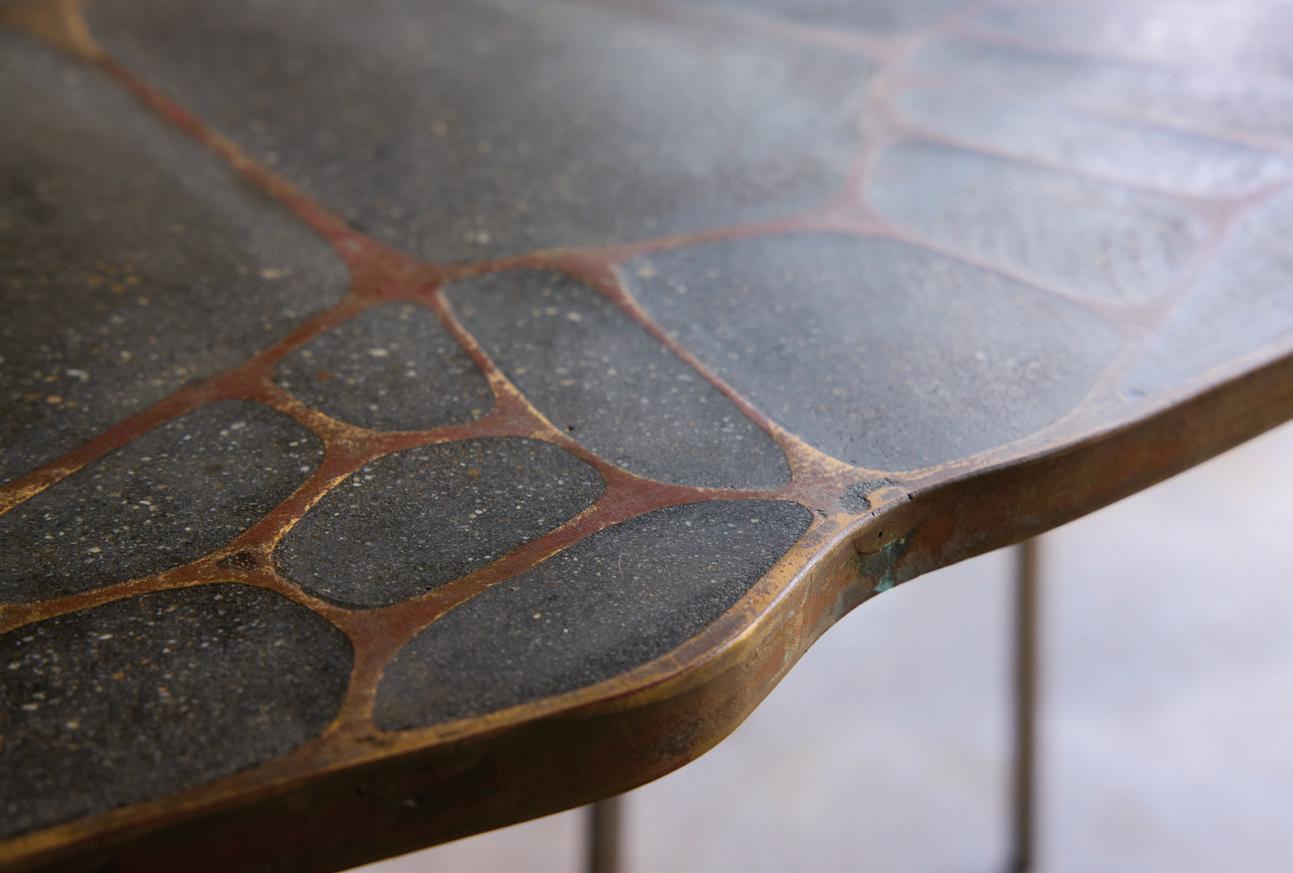
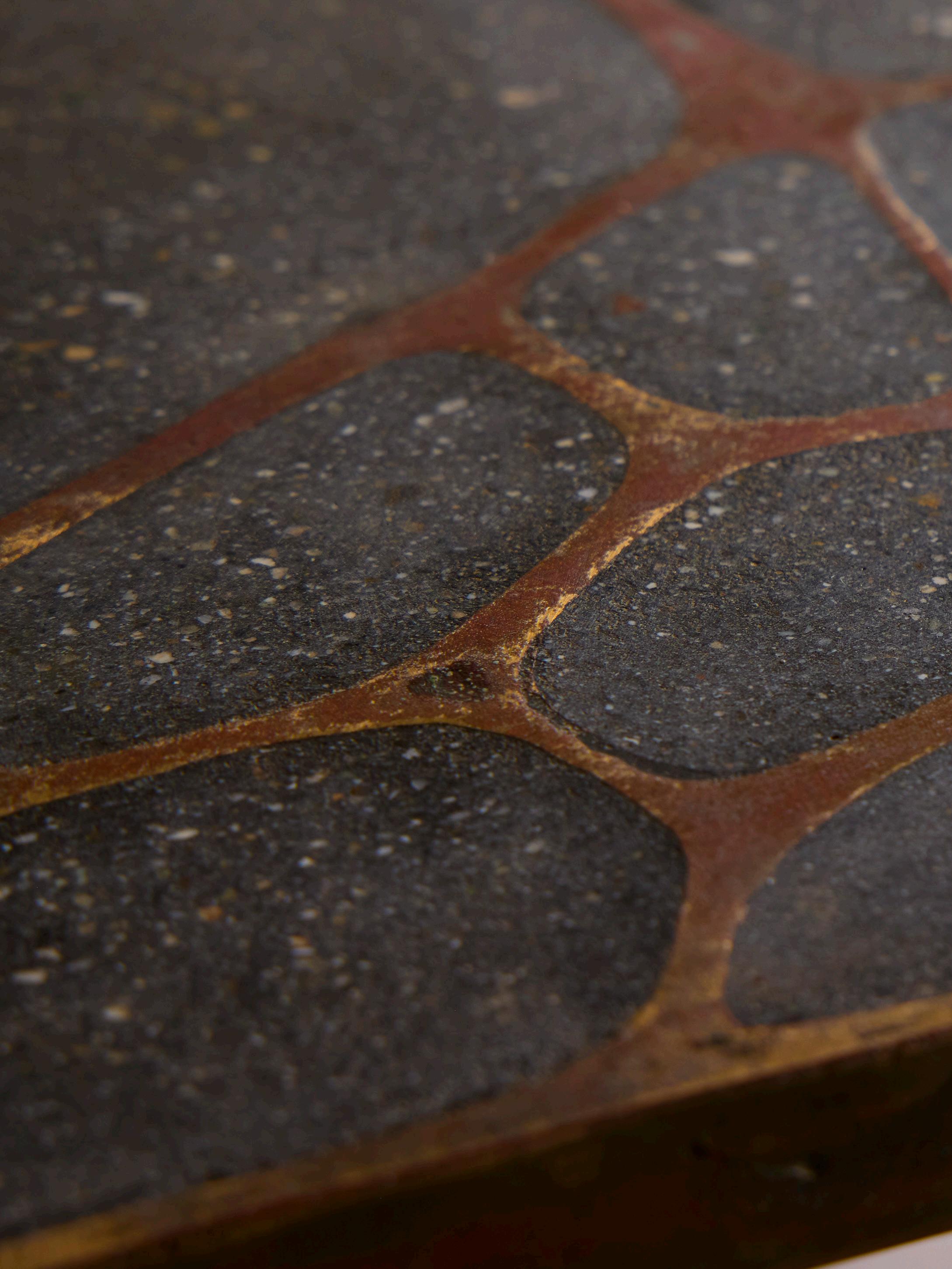
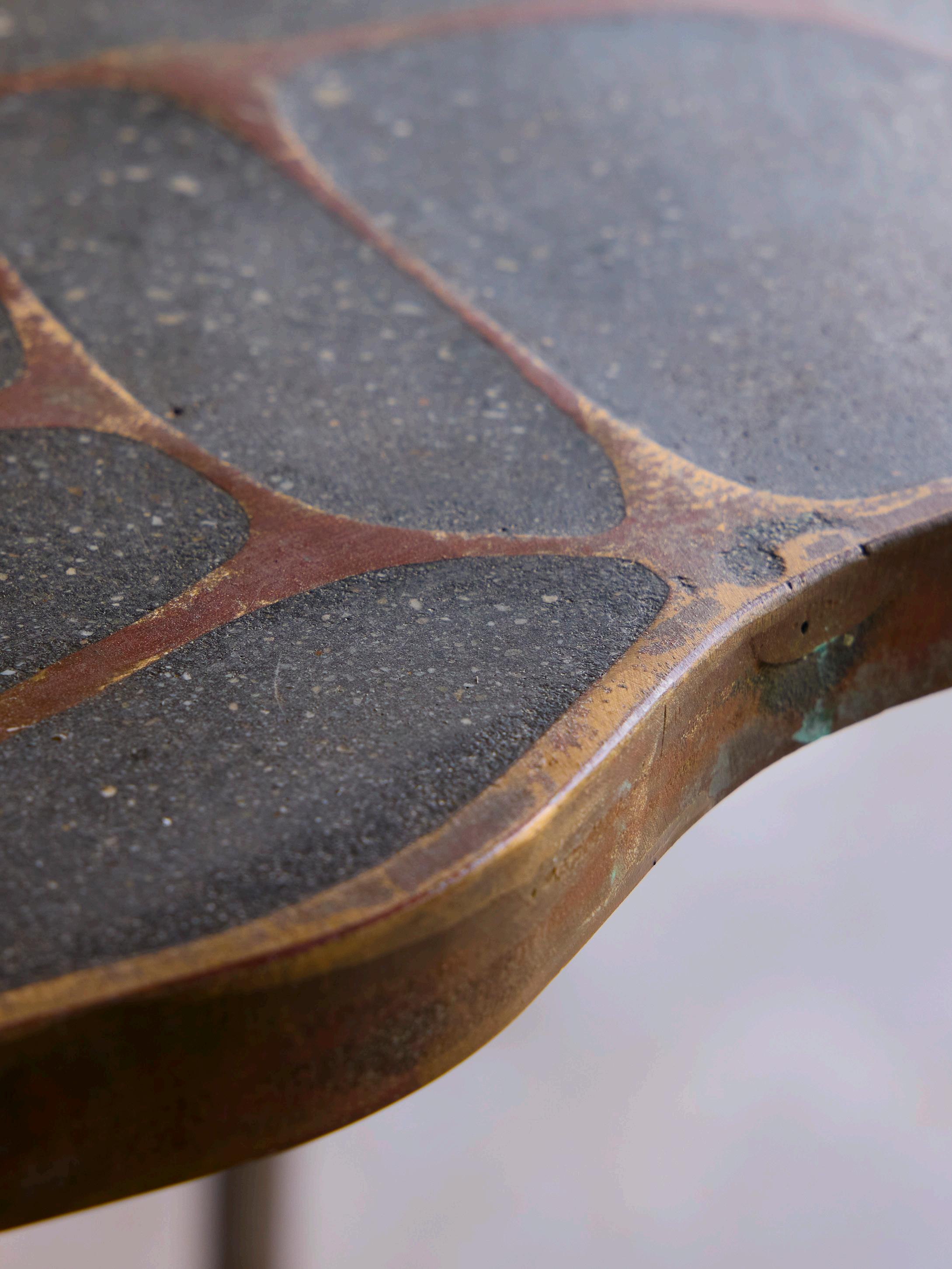
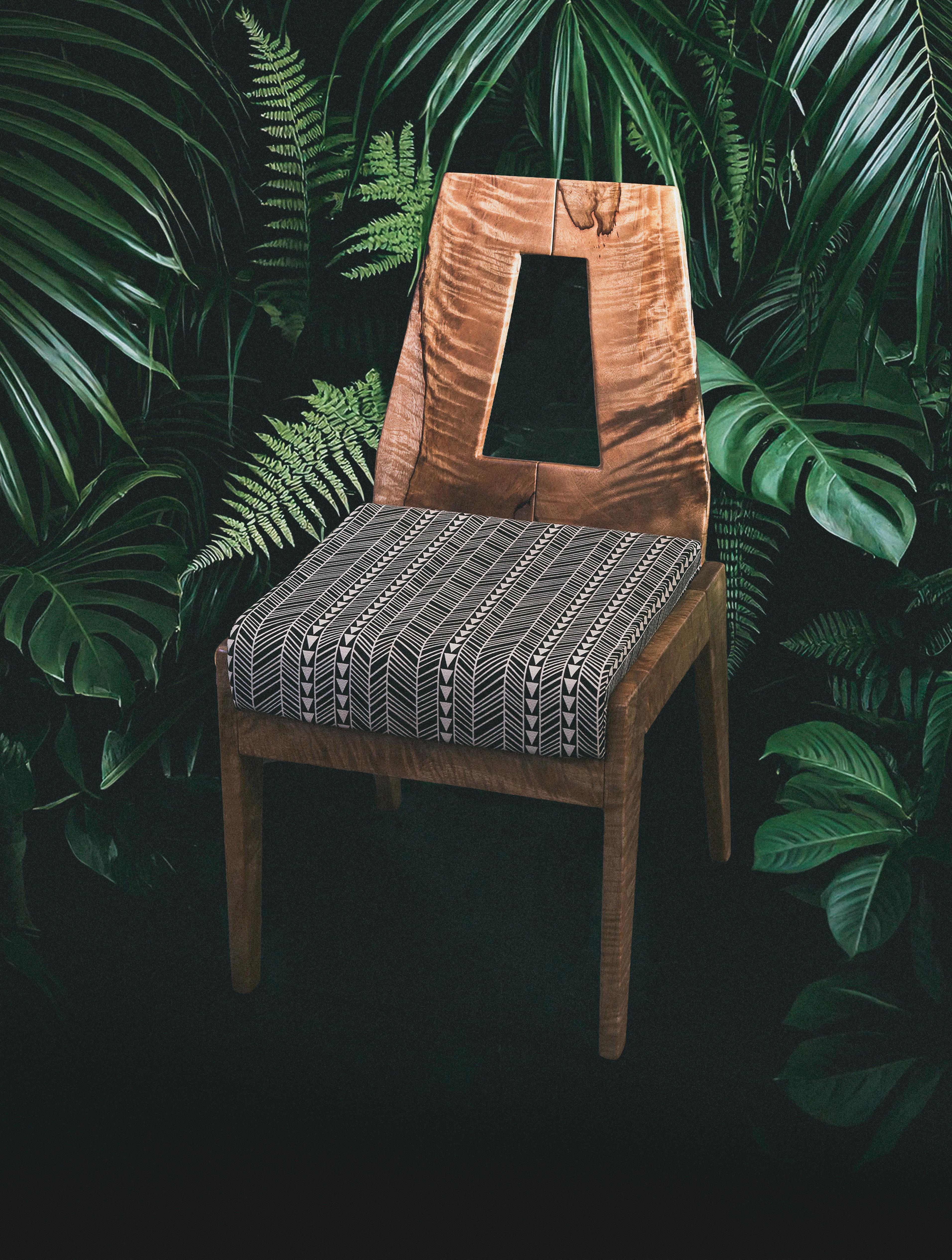
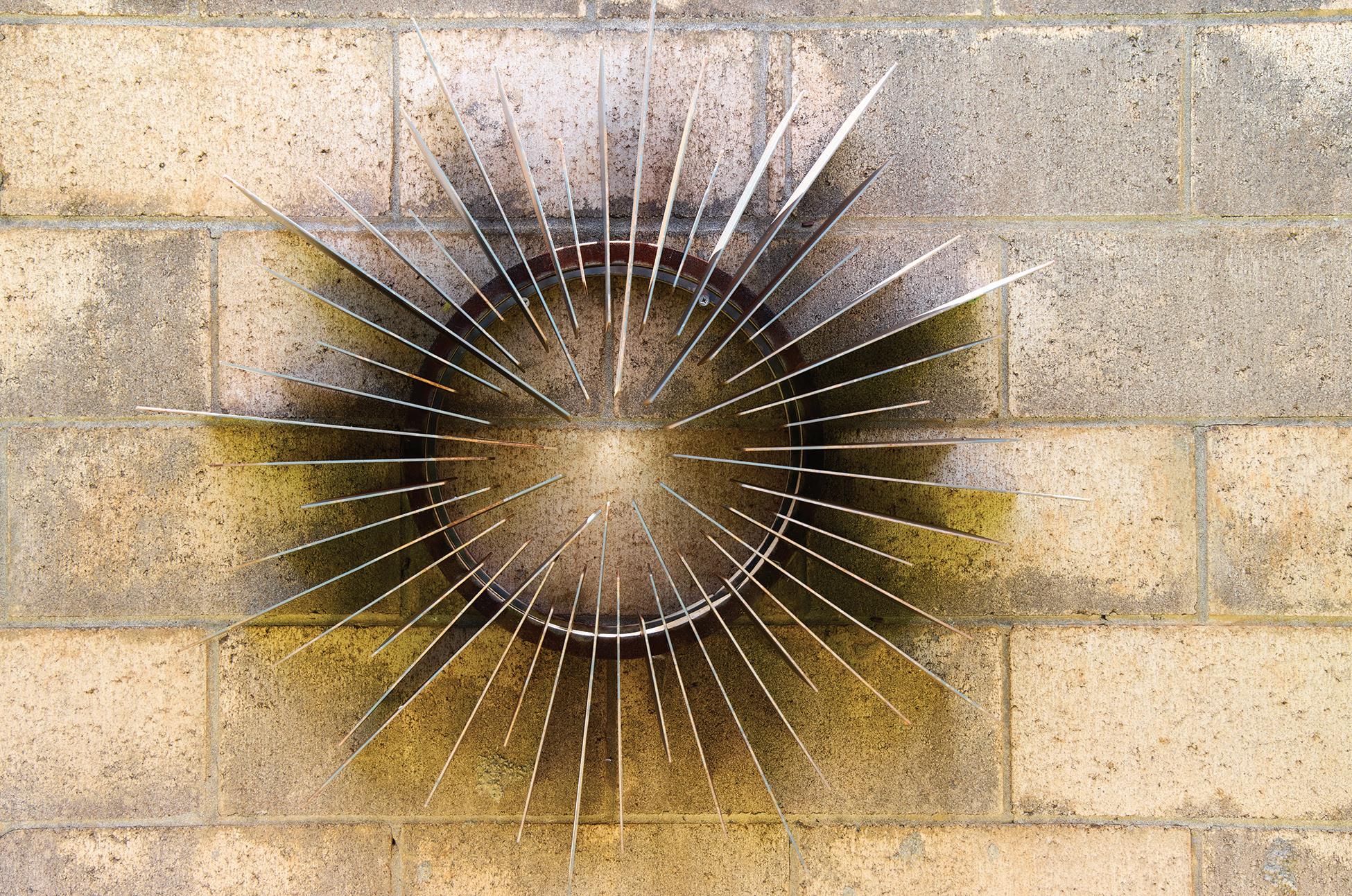
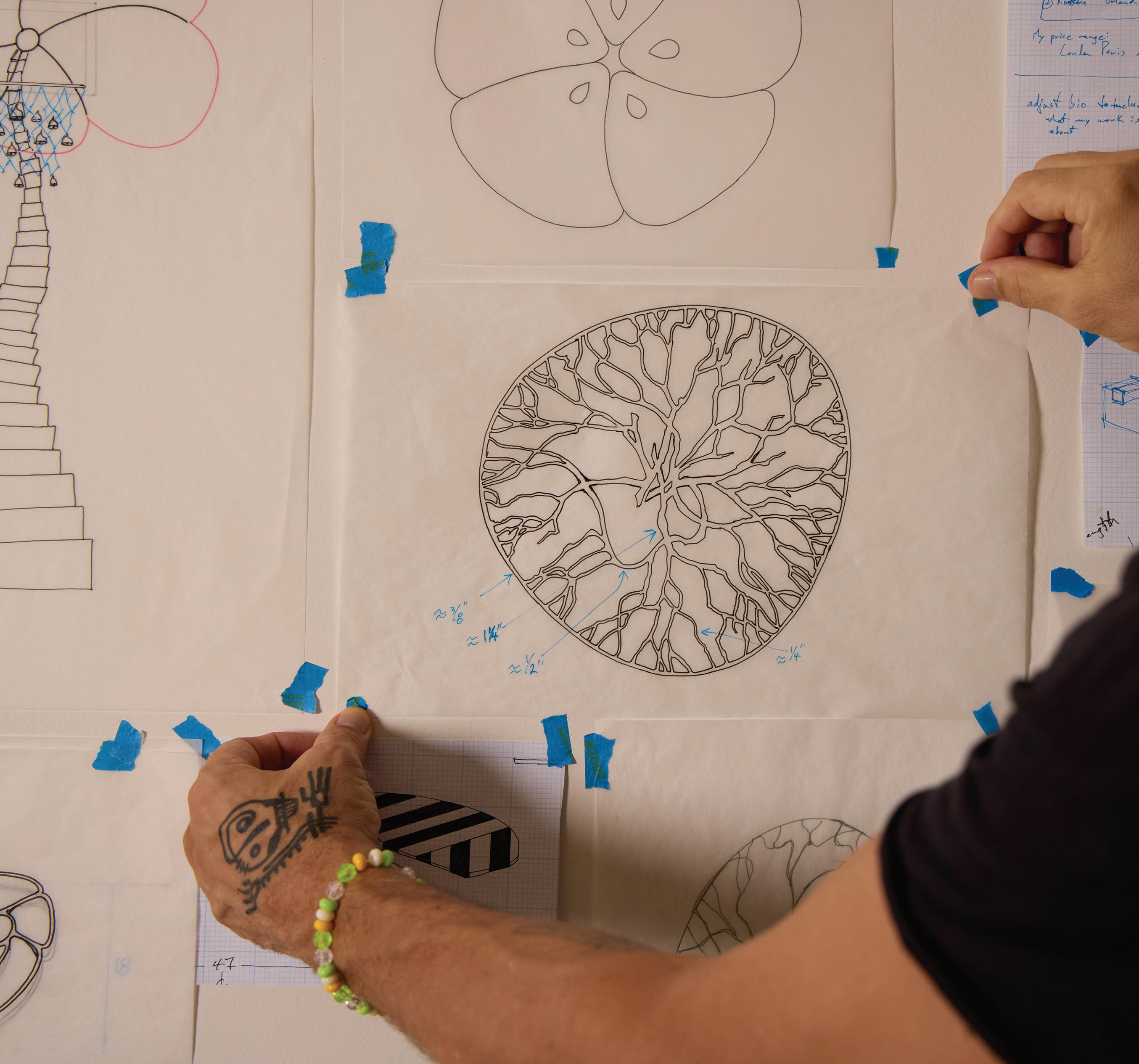
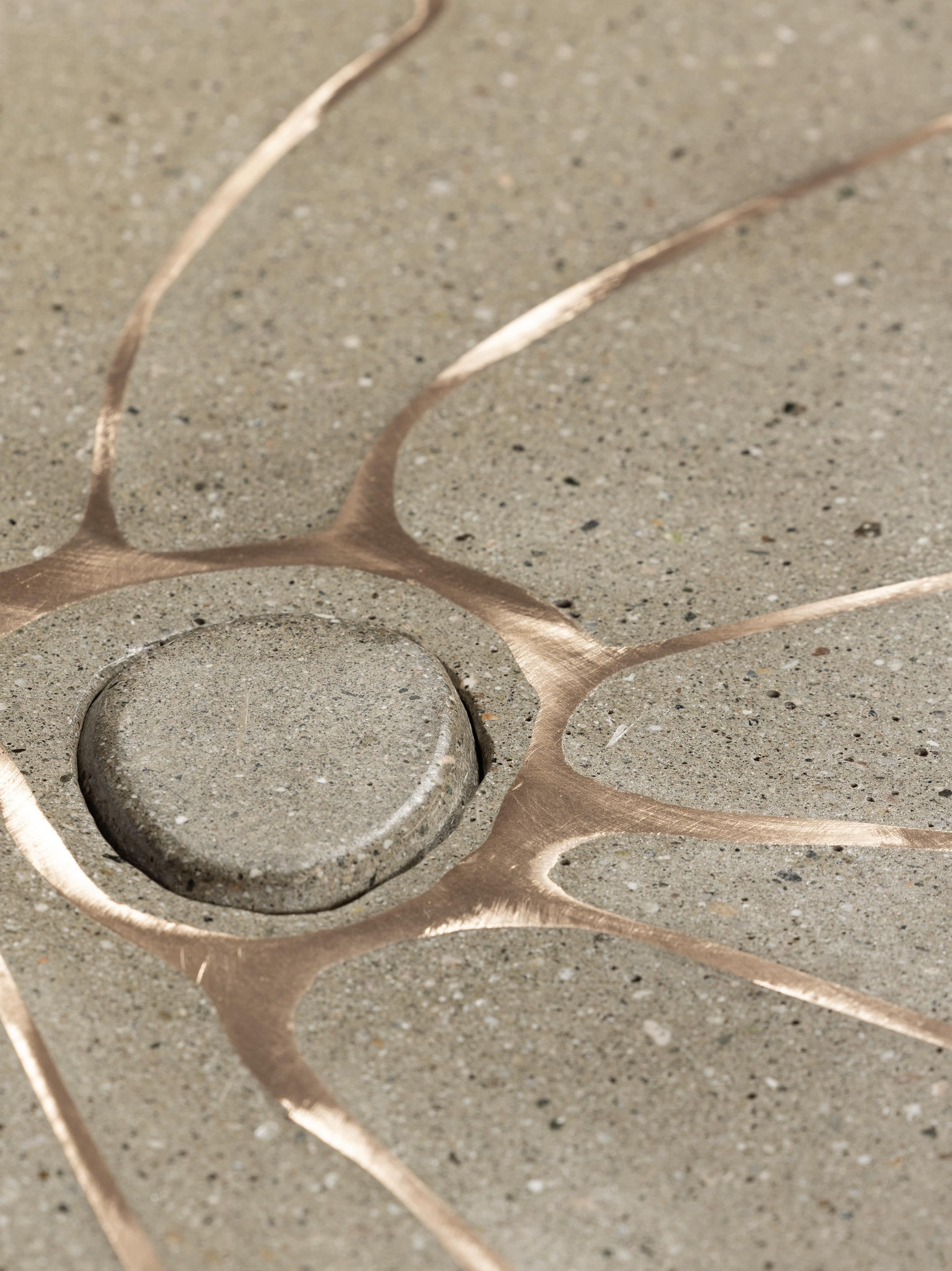
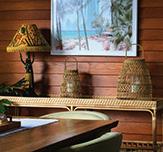
A detail of a table designed by artist James De Wulf, photographed by Rachel Olsson at his Maui home for the feature on page 50.


Matthew Beall owner & ceo
Kahea Zietz
co - owner , vice president
HL1 DIRECTORS
Neal Norman R(B)
Noël Shaw R(S)
Dave Richardson R(B)
Josh Jerman R(B)
HL1 MEMBERS
Kaua‘i
Roni Marley R(B)
Ben Welborn R(B)
Tiffany Spencer R(S)
Amy Frazier R(B)
O‘ahu
Jovanna Giannasio-Fern R(S)
Cedric Choi R(B)
Julianna Garris R(B)
Maui
Tim Stice R(B)
Greg Burns R(S)
Hawai‘i Island
Beth Thoma Robinson R(B)
Jake Chancer R(B)
Steve Hurwitz R(B)
Mika Ono R(S)
Kenneth Springer R(S)
Robert Chancer R(B)
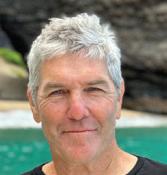

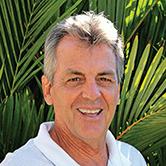

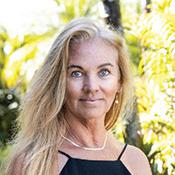



Anthony Arnold creative director
EDITORIAL PARTNERS
Jason Cutinella CEO & Publisher, NMG Network
Joe V. Bock Partner & General Manager, Hawai‘i
Lauren McNally Editorial Director
Taylor Niimoto Managing Designer
Eleazar Herradura Designer
Sabrine Rivera Operations Director

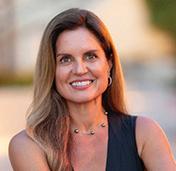





Aloha and welcome to the 10th edition of HL1 Magazine.
What you see in Hawai‘i is only part of the story.
The homes, the places, the experiences. Those are the outcome. What shapes them sits underneath: Decisions made over time. The discipline behind the work. The level of execution required to get it right.
That’s true in the market as well. In this issue’s Market Report, I look at a landscape that continues to recalibrate. Inventory is building in certain segments. Buyers are more measured. The tone has shifted from momentum to discernment. It’s a market where clarity matters and where decisions carry more weight than timing alone.
Across this issue, we spend time with people operating inside that reality.
In Craft, we step into the world behind the homes. On Maui , investment banker turned artist and designer James De Wulf approaches design through material and process, where the final product is shaped as much by experimentation as by environment. On O‘ahu , Lihiwai , the 1929 Spanish Colonial Revival estate commissioned by Territorial Governor George Robert Carter , designed by Bertram Grosvenor Goodhue , and completed by Hardie Phillip, reflects architecture carried forward with intention over time. On Kaua‘i , Randy Weir , one of the builders responsible for many of the properties that define the top end of the market, speaks to what it takes to deliver at that level.
In Discover, the focus shifts to pursuit. On Maui , the nonprofit Treecovery , founded by longtime resort landscaper and conservationist Duane Sparkman , is rebuilding canopy and community after the Lahaina fires, supported by a board that includes waterman Archie Kalepa , entrepreneur Matt Murasko , and Maui Cultural Lands’ Ekolu Lindsey . Work measured in years, not cycles. On O‘ahu , freedivers Daniel Koval and Kristin Kuba, both multi-record holders and world
championship medalists, operate at the edge of human limits, where discipline and composure determine one’s success.
Different contexts. Same reality. What’s visible is the result, but everything that defines it lies beneath the surface. In that spirit, we share a selection of homes from the HL1 Collection that reflect this discipline and level of execution—distinctive, design-forward, and deeply considered. Represented by the people who know this market best.
As always, HL1 reflects the relationships, ideas, and perspectives that continue to shape how we think about real estate in Hawai‘i . We hope this issue offers a clearer view, not just of what’s here, but of what goes into all we value about this place.
Enjoy,

Matthew G. Beall Owner & CEO, Hawai‘i Life
HAWAI‘I LIFE | HL1 LUXURY MARKET REPORT
Sales and trends in Hawai‘i’s high-end real estate market.
INTRODUCTION
Hawai‘i’s luxury real estate market is often discussed as a single entity. It isn’t.
In practice, it behaves as a collection of distinct markets, each shaped by its own balance of supply, demand, and buyer composition. Anyone who’s spent time here knows each island carries its own character, and its own provincial pride. Over the past several years, those differences have become more pronounced at the top tiers, to the point where the statewide narrative has become less useful than it used to be.
The more important point is this: Luxury real estate in Hawai‘i doesn’t respond to the same signals that move the broader housing market.
In most markets, activity follows a familiar cycle. Interest rates rise, buyers retreat. Inventory tightens, prices respond. Consumer sentiment shifts, and transaction volume follows. At the upper end, those relationships don’t hold. Buyers in the luxury and ultra-luxury segments are rarely constrained by financing. They’re responding to liquidity events, capital gains, and longer-term decisions about where to allocate wealth.
In other words, this market is driven by the creation and movement of wealth, not by traditional housing indicators.
Hawai‘i operates within a fixed geographic and regulatory framework. Supply is limited. In most of the submarkets that define the luxury tier, it’s effectively capped. Global wealth, meanwhile, keeps expanding. Demand is shaped externally. Supply is constrained locally. The market is competitive by design, and increasingly selective about who participates and when.
None of which shows up cleanly in the standard metrics.
Pricing trends, days on market, and inventory levels are often treated as definitive signals. They aren’t. A data point that suggests imbalance in one market may just reflect timing in another. A segment that looks quiet may be functioning exactly as it should. Reading this market requires knowing how each island works, who the buyers actually are, and how capital and timing are expressing themselves at the moment.
What follows is that reading, island by island.
MAUI
Inventory in Maui’s luxury and ultra-luxury segments expanded dramatically after the August 2023 wildfires and has remained elevated since. The broader Maui market is showing early signs of renewed activity, but the $3M+ and $10M+ segments are behaving differently. They’re firmly favoring buyers.
The clearest evidence is in the gap between what’s available and what’s actually trading. Active listings have risen significantly. Absorption has been uneven, and at the top of the market, minimal.
What’s interesting is who’s stepping in.
Hawai‘i’s luxury markets are typically defined by out-of-state demand. Maui has recently seen a notable increase in local buyers at the $3M+ level. They’re not buying broadly, but selectively, where they see either rare opportunities or moments of pricing dislocation. That’s not how this segment usually behaves.
And yet, price capitulation at the top tiers has been limited.
The headwinds are real. The downstream effects of the wildfires continue to shape sentiment and policy, including ongoing debates around short-term rental regulation, rising property taxes, and broader fiscal pressure at the County level. Those factors have introduced hesitation, especially among the discretionary, out-of-state buyers who typically drive this segment.
Sellers are still pricing against “
But hesitation hasn’t translated to widespread repricing.
What’s emerged instead is a growing gap between what sellers are asking and what buyers are willing to engage. Properties are sitting longer. Not because they’re mispriced in an absolute sense, but because the pool of aligned buyers is thinner and slower to move than in prior cycles.
At the ultra-luxury level, the dynamic is more pronounced. There were only two recorded trades above $10M on Maui in 2025, and none so far in 2026. Activity at this level is always episodic, but the current pause reflects more than timing. Ultra-luxury sales depend on a small number of highly discretionary buyers whose engagement is shaped as much by sentiment as by any individual property.
a market that no longer exists.
”
Buyers have leverage. The volume of inventory gives them options, and the pace of the market gives them time. Price adjustments have been selective rather than systemic so far, but the pressure is building. Sellers are still pricing against a market that no longer exists.
For now, the defining characteristic of Maui’s luxury market is patience. Inventory is being absorbed slowly, as buyers arrive, engage, and decide on their own timelines. The market isn’t stalled. It’s moving at a different pace.
Longer term, it’s difficult not to remain bullish on Maui. Its global appeal is well established, and its position within the Hawaiian Islands remains unique. The current environment is a period of recalibration, and recalibrations like this one don’t come around often.
“It’s established a new equilibrium. Less frenetic than the pandemic-era surge, but structurally more active than prior cycles.”
HAWAI‘I ISLAND
Hawai‘i Island is, at present, the clear leader in the state’s ultra-luxury market.
In the first quarter of 2026, there were seven residential sales at or above $10M on the Big Island. That’s more than the rest of the state combined. What’s notable isn’t just the volume. It’s the consistency. While other luxury markets across the islands have slowed, the Big Island has continued to transact.
All of those ultra-luxury sales occurred within the resort communities along the Kohala Coast: Mauna Kea, Mauna Lani, and Kūki‘o. These resorts represent a concentrated ecosystem of wealth, where newer construction, comprehensive amenities, and a reliably sunny climate combine to create one of the most compelling offerings in the state.
A meaningful share of these transactions also occurred off-market. In a segment defined by discretion, visibility isn’t always a prerequisite for liquidity.
Inventory on the Big Island has increased, consistent with statewide trends, but the expansion has been more measured. At the ultra-luxury level, active listings remain relatively constrained. Fewer than 20 homes are publicly marketed at any given time, about half of what’s currently available on Maui.
What distinguishes the Big Island is absorption. Unlike Maui, where elevated inventory has outpaced demand, the Big Island
has held a closer alignment between the two. Properties are being introduced, and they’re being absorbed. Sales happen faster than other islands, sometimes before ever reaching the open market.
The pace extends beyond the ultra-luxury tier. At the $3M+ level, the Big Island is one of the most active luxury markets in the state, with transaction volume tracking well above pre-pandemic norms even as the market has moderated from its peak.
In many respects, the Big Island never fully reverted to a pre2020 baseline. It’s established a new equilibrium. Less frenetic than the pandemic-era surge, but structurally more active than prior cycles. Demand is durable, supported by a buyer profile that’s both well-capitalized and well-aligned with the product on offer.
The Kohala Coast resort communities offer a degree of cohesion that’s difficult to replicate elsewhere in Hawai‘i. The architecture is relatively contemporary. The amenities are comprehensive. The overall experience of privacy, climate, service, and access is consistent with what ultra-luxury buyers expect.
The Big Island isn’t simply outperforming the other markets. It’s operating within a more refined and self-reinforcing ecosystem. At the highest levels, liquidity is less a function of exposure, and more a function of alignment.
Kaua‘i is, as usual, off doing its own thing.
Like the rest of the state, Kaua‘i saw a sharp increase in inventory beginning in mid-2022, and that expansion has persisted. Active listings at the $3M+ level reached record highs through 2025 and into 2026, more than doubling from pre-pandemic levels.
Pricing has been surprisingly resilient in the face of that supply, but there are early signs of pressure. In the first quarter of 2026, a meaningful share of listings above $3M reflected price reductions. Not every listing is proving to have been mispriced, but the trend of price reductions is enough to signal that sellers are starting to move. At the ultra-luxury level, Kaua‘i looks different.
Unlike the other islands, where inventory has expanded significantly since 2022, the $10M+ segment on Kaua‘i has stayed constrained. Inventory has held below or near pre-pandemic levels, rarely exceeding a dozen properties. Transaction volume has been correspondingly limited. Six sales above $10M in 2025, and only one in the first quarter of 2026.
Kaua‘i isn’t experiencing the same oversupply seen elsewhere, but activity at the highest price points has remained subdued. The constraint isn’t purely on the supply side. It’s also about the buyer pool, which is narrower and more timing-dependent than on the other islands.
Some of this is structural. Kaua‘i is a smaller, more finite market, and that scale shapes how transactions happen. But there’s a qualitative factor at play too. Ownership at the high
Right Properties Right Buyers
end on Kaua‘i tends to be longer term. Properties get held across multiple cycles. Forced decisions are rare. It’s a market that can feel constrained from both directions: limited supply and a limited number of participants actively engaging at any given time.
Two private club communities have become focal points of activity. The North Shore Preserve, Discovery Land Company’s first and only project on Kaua‘i, and Kukui‘ula on the South Shore continue to attract high-end buyers. Kukui‘ula in particular benefits from newer construction, a full suite of amenities, and an increasing ability to deliver finished product alongside vacant land offerings. Communities like these provide a level of cohesion that’s otherwise difficult to come by on Kaua‘i, where much of the housing stock is older and more heterogeneous.
The North Shore has historically defined the upper end of the market, including the $46.1M sale of an oceanfront estate overlooking Kauapea Beach in 2018. That benchmark was surpassed in early 2025 by a $65M sale in Kāhala on O‘ahu, but it remains a reference point for Kaua‘i’s position within the broader luxury landscape.
Kaua‘i is neither as supply-heavy as Maui nor as transactionally consistent as the Big Island. Selection has improved at the luxury level, and negotiating leverage is starting to shift with it. At the highest price points, the constraint isn’t choice as much as timing. The right properties come to market infrequently, and the right buyers arrive on their own schedules.
KAUA‘I
O‘AHU
O‘ahu is both resilient and highly responsive to price.
The distinction that matters most is the buyer pool. Unlike the neighbor islands, where demand is largely driven by outof-state buyers, O‘ahu has a deep and active local buyer base. That changes how the market behaves.
Inventory at the $3M+ level has increased in line with statewide trends since mid-2022. Transaction volume has remained strong regardless. Residential sales above $3M reached near-record levels in the first quarter of 2026. Demand in this segment is deeper than the headlines would suggest.
O‘ahu’s luxury market continues to transact at a steady pace, but it does so on different terms than the neighbor islands. Because so much of the buyer pool is local, properties are exposed to a more continuous and price-sensitive audience. Listings are evaluated quickly, and the relationship between pricing and demand is more immediate.
Time on market carries more meaning on O‘ahu than on the neighbor islands, where buyer activity is tied more closely to travel patterns.
Well-positioned homes transact efficiently. The ones that aren’t, adjust.
The condominium market is a more nuanced version of the same behavior. At the $3M+ level, inventory has expanded to roughly 70 active listings in early 2026, with relatively modest absorption. But the luxury condominium market on O‘ahu is far from uniform. Quality and liquidity vary widely from development to development. Older properties have faced headwinds, particularly around insurance costs and special assessments. Newer developments continue to attract demand. Projects like Park Lane, Ward Village, and other recently delivered inventory remain aligned with what buyers are actually looking for.
The condominium market looks slower in aggregate. It isn’t. It’s segmented, and the segments aren’t moving together.
At the ultra-luxury level, O‘ahu has been less active than the neighbor islands relative to its size. There have been three transactions above $10M in 2026, including residential sales in Kailua and Portlock, along with a condominium sale at Park Lane. Inventory in this segment rose sharply from mid-2022 through 2025 and, while it has moderated slightly, remains elevated.
At the highest price points, O‘ahu starts to resemble the neighbor island markets. The buyer pool becomes more discretionary and more globally oriented. Activity is more episodic than continuous.
O‘ahu also doesn’t offer the same concentration of resortbased ultra-luxury product as the neighbor islands. At this level, O‘ahu’s inventory is often older homes on tighter lots in established neighborhoods. The value proposition is rarity, not amenity.
What defines O‘ahu across the luxury segments isn’t only resilience. It’s responsiveness. Pricing matters here in a more immediate way, buyers are more continuously engaged, and the market adjusts faster than any of its neighbor island counterparts.
“The value proposition is rarity, not amenity.”
DAYS ON MARKET AND THE OF TIMING
ILLUSION
Days on Market is one of the most widely cited metrics in real estate. It’s also one of the most frequently misread, especially in Hawai‘i’s luxury and ultra-luxury segments.
In most markets on the U.S. continent, DOM functions as a proxy for pricing accuracy. A listing comes on, attracts attention, and, if it lingers, the read is straightforward: probably overpriced. Time becomes a signal. Urgency builds, price adjustments follow.
That logic works when the buyer pool is local, active, and continuously engaged. In Hawai‘i’s top-tier markets, those conditions don’t hold.
The overwhelming majority of buyers for luxury and ultra-luxury properties aren’t based here. They arrive from elsewhere, on pre-existing travel schedules that have little to do with any individual listing. They’re not booking trips to view real estate. They’re on vacation, visiting family, exploring. Even when they’re actively researching listings in advance, they wait until they can physically tour a property before deciding.
Exposure isn’t constant. It’s episodic. A listing isn’t being evaluated continuously by a stable audience—it’s being encountered intermittently, by individuals arriving on their own schedules.
In that context, DOM measures something different. It doesn’t necessarily indicate resistance. It often just indicates that not enough of the right buyers have seen the property yet.
Which is an important distinction, and one the industry tends to forget.
Over the past few years, DOM has been demeaned to the level of
a "NEW" sticker on a used car. Brokers counsel sellers to delist and relist to reset the counter. Agents discourage clients from taking their properties to market at all, for fear of "wasting days." Those are real decisions being made in response to a metric that doesn’t mean what people think it means.
Sellers at this level are, quite literally, waiting for someone to get off a plane. When we’re hired to market a property in the uppermost bracket, we budget our resources and expectations accordingly.
Buyers find the properties that matter to them. When they do, what matters is the offering itself, not how long it’s been sitting there.
Days on Market still matters. But it matters differently. It’s less a measure of market rejection, and more a reflection of timing—of when the right buyer arrives, engages, and recognizes what’s in front of them.
In a market defined by distance, discretion, and seasonality, that timing is rarely linear.
THE ECONOMY OF THE RENTAL MARKET
Hawai‘i’s visitor industry has had an uneven run in 2026. Early in the year, it looked like the broader market was finally on the rebound. Then the conflict in the Middle East pushed fuel prices up, which meant higher airfares and lower airline capacity. A round of Kona low storms in the spring led to cancellations and understandable weather concerns. All of which landed against a persistently slow international market and a news cycle full of horror stories about canceled flights and travel delays.
And yet, at the top of the rental market, none of it has mattered.
The luxury traveler appears undeterred by rising costs, extreme weather, or global instability. If anything, they seem emboldened. We’re seeing significant growth in our top-tier vacation rentals, where it’s now common for families to commit six-figure sums to stays centered around local events— surf seasons, cultural festivals, specific fishing conditions. In a few cases, parents are enrolling their children in local surf competitions during their stays, presumably hoping to groom the next generation of icons.
It’s something closer to a second life than vacation behavior in the usual sense.
There are other forces at play. The cartel-related disruptions in Mexico (and certainly the news coverage about them) will stick in the minds of luxury travelers for a while. Hawai‘i reads as the safer option. Travelers are also giving second thoughts to Europe in a time of global conflict. Hawai‘i benefits, not because anyone is marketing it as an alternative, but because the mental math of travel risk has shifted.
None of this is how the broader vacation rental economy works. That economy runs on algorithmic discovery. Mass-
market platforms optimize for volume, price filtering, and instant booking. They assume the traveler is price-sensitive, time-flexible, and willing to absorb uncertainty in exchange for choice.
The luxury traveler is none of those things. They aren’t scrolling endless listings. They aren’t comparing price per night. For this demographic, the “perfect accommodation” isn’t discovered through an algorithm—it’s curated through exclusive networks and trusted relationships.
A meaningful share of our top-tier bookings come directly from existing clients and from the elite travel advisors who refer us. Our concierge team arranges private chefs, personal trainers, curated excursions—the in-residence services that can’t be standardized because they’re specific to each guest and each property.
What the luxury rental segment is really selling, then, isn’t inventory. It’s access.
That’s also why the segment tends to behave counter-cyclically. When travel gets harder, most of the market slows down. The luxury end often accelerates. Guests who’ve been coming to the same property for years aren’t going to skip a year because fuel prices went up. The friction filters out marginal travelers and concentrates the market on the people who were coming no matter what.
Hawai‘i has always been a place that rewards relationships over transactions. The top of the rental market is just a particularly clear expression of that.
The “revenge travel” narrative of the pandemic has mostly played out. What’s left, at this level, is something steadier.
FORECAST
The broader economic backdrop entering 2026 is more stable than the headlines might suggest. The U.S. economy continues to expand at a modest pace, supported by resilient consumer spending and ongoing wealth creation, even with geopolitical uncertainty and market volatility running high.
Hawai‘i’s local economy tells a different story. Growth has resumed, but slowly. Job creation is modest, population growth is essentially flat, and income gains are expected to remain limited for the next several years. Tourism, while stabilizing, is recovering unevenly, with international demand still lagging and overall visitor volumes unlikely to fully rebound in the near term.
Those conditions provide important context. They don’t fully define the market at the high end.
Luxury real estate in Hawai‘i operates on a different set of inputs. Demand is shaped less by local economic growth and more by the ongoing expansion and movement of global wealth. Spending and activity are increasingly concentrated among higher-income buyers, which reinforces the structural divide between the general market and the top tier.
Supply, meanwhile, remains constrained. New development is limited, regulatory friction persists, and in many of the state’s most desirable submarkets, the inventory that defines “luxury” is inherently finite. These constraints don’t ease in a slower economy. If anything, they become more visible.
The market is active, but it’s increasingly selective.
Well-positioned properties that align with what buyers actually want continue to transact. Everything else is meeting a more patient, more discerning audience, and taking longer to find alignment. Pricing, in many cases, is becoming less a function of broader conditions and more a reflection of how well a property is positioned within a narrow and highly informed buyer pool.
There’s one more dynamic worth naming, less visible in the data but evident across multiple cycles. Periods of uncertainty tend to reshape decision-making at the highest end of the market, not in the direction most people assume.
In times of geopolitical instability or economic volatility, we often see a form of time compression among high-networth buyers. Plans that might have unfolded gradually, whether purchasing a second home, increasing time spent in Hawai‘i, or securing a long-term lifestyle asset, get accelerated instead.
It’s not purely financial, though capital allocation plays a role. Real estate in Hawai‘i, particularly at the highest levels, is viewed as both a durable store of value and a finite, globally recognized asset. But the deeper dynamic is a shift in priorities. The question becomes less about timing the market and more about when, how, and where to live.
We’ve seen variations of this pattern across multiple cycles, from earlier periods of global uncertainty to the more pronounced acceleration during the COVID-era surge. The
current environment is unlikely to produce the same magnitude of response, but the underlying behavior remains relevant.
At the highest end of the market, uncertainty doesn’t always delay decisions. In some cases, it clarifies them.
Uncertainty will continue to influence sentiment, but history suggests it’s often absorbed faster than expected, particularly in markets where buyers aren’t dependent on financing and are responsive to opportunity. As with financial markets, where risk is often priced in well before it becomes visible in economic outcomes, real estate tends to register uncertainty first through behavior. Buyers become more selective. Sellers adjust. All of it happens before it shows up cleanly in pricing or transaction data.
Transaction volume at the high end will likely remain episodic, driven by discrete wealth events and the release of compelling inventory. Pricing will continue to adjust unevenly, with some segments experiencing pressure while others remain stable, or even competitive.
Hawai‘i’s luxury market isn’t responding to the housing cycle. It’s responding to where wealth is moving. That hasn’t changed, and it isn’t going to.
What’s changing isn’t the existence of demand and the terms under which it engages.
TASTE AND THE LANGUAGE OF VALUE
There’s a relatively obscure force that influences real estate decisions at the highest levels of the market. It’s so obscure that it’s almost a cultural taboo to discuss it, perhaps more so now than ever. We tend to think of it as deeply personal, because it involves our own preferences and desires.
It’s taste.
Taste is difficult to talk about. It’s often hard-wired with something even more culturally sensitive: status. And any honest discussion of status introduces questions of hierarchy, which eventually introduces questions of inequality. Hence the obscurity.
But avoidance doesn’t diminish its influence. Taste matters. Its role in decision-making persists, perhaps especially in real estate.
Taste rarely feels learned, however. It feels innate. We experience our preferences as authentic and self-directed—we like this, we don’t like that. But those preferences are formed inside a broader system of signals about what’s valued, what’s scarce, and what’s understood to carry meaning.
Taste is less a personal expression than a form of cultural fluency.
That distinction becomes particularly important in Hawai‘i, where many buyers arrive with their own ideas of what they’re looking for. Most of those ideas are aesthetic—open-air living, contemporary finishes, clean lines, a certain version of “island style.” These ideas aren’t wrong, but they’re often incomplete. They reflect an interpretation of Hawai‘i, usually shaped elsewhere, rather than an understanding of how value actually works here.
The most enduring homes in Hawai‘i ... aren’t chasing novelty. They’re not generic either. They have a recognizable sensibility, with enough distinction to be one of one.
Since the great majority of transactions in the luxury and ultra-luxury markets involve out-of-state principals, those interpretations are constantly being tested against a more complex reality.
The median age of a home in Hawai‘i is 46 years old. Consider the shifts in architecture, design, and even “desirable” locations over that span. The built environment is a lagging expression of taste. It’s difficult to reconcile past design decisions with present preferences. And yet, Hawai‘i remains home to some of the most valuable real estate in the world.
Why?
The number one rule of real estate: location.
Beyond the zero-sum game of available land in Hawai‘i, location within Hawai‘i is the primary signal of value within the local hierarchy of taste.
It’s not uncommon to see a modest plantation-era cottage— undersized, outdated, and architecturally unremarkable by contemporary standards—trade for an eight-figure sum because it sits in the right setting.
In those cases, what’s being acquired isn’t simply a structure. It’s a position. A geographic, social, and symbolic position that can’t be replicated elsewhere.
If location is the clearest expression of taste in Hawai‘i, the built environment is where taste is most often tested.
There are countless instances of people from out-of-state building or renovating properties and approaching the process as an opportunity for self-expression. Understandably, they’re designing for themselves. Optimizing for their own preferences, their own experiences, their own sense of what feels right.
The results can be surprisingly … off. Homes that feel highly specific, however deeply considered, often fail to resonate beyond their original intent. They make sense to whoever built them. They make less sense to the market.
That tension in Hawai‘i is especially visible. The climate itself imposes a kind of discipline. It’s not exactly forgiving. Sun, wind, and rain are constant forces, and the built forms that endure tend to reflect a long process of adaptation.
There are patterns that repeat across generations for a reason. One of the simplest is the roofline. Historic dwellings across the islands consistently emphasized deep overhangs and strong protection from the elements. (Think of those big thatched roofs.) The form wasn’t meant to be aesthetic. It was functional. Over time, it became both.
When those patterns are ignored—when rooflines are minimized, or when protection from the elements is treated as secondary—the result can feel misaligned. The house may still be impressive. Even expensive. But it’s in conflict with the place it’s sitting in.
These moments are rarely ambiguous. The difference between a home that feels inevitable and one that feels imposed is often immediately apparent, even when it’s difficult to articulate.
The most enduring homes in Hawai‘i tend to share a different quality. They exhibit restraint, proportion, and a kind of internal consistency that aligns with both place and precedent. They aren’t chasing novelty. They’re not generic either. They have a recognizable sensibility, with enough distinction to be one of one.
Those homes do more than reflect taste. They help define it. There’s another dynamic that might explain the gap between the home someone builds for themselves and the one the market actually recognizes.
Many buyers at this level have been highly successful in other domains. That success often leads to a well-earned confidence in decision-making. They trust their own judgment, and act decisively.
But the translation isn’t always clean.
Beauty may well be in the eyes of the beholder, but significance requires a lot more context.
Taste, especially in Hawai‘i, isn’t a function of general intelligence or accomplishment. It’s more specific than that. Accumulated, highly contextual, and surprisingly local.
Without that context, it’s easy to overestimate one’s fluency and assume that conviction is a substitute for understanding.
In practice, this can lead to decisions that feel compelling in the moment but prove difficult over time. Not because they lack investment or intention, but because they’re misaligned with the underlying sense of place and the logic of the market.
The signals were there. They were simply interpreted differently—if at all.
Buyers bring their own frameworks for reading these signals. Some adjust quickly. Others don’t. The difference is rarely visible in what they say, but it’s evident in what they pursue, and what they overlook.
Appreciating Hawai‘i is less involved than understanding it. Beauty may well be in the eyes of the beholder, but significance requires a lot more context.
The luxury market, especially, is defined by that context. The buyer who reads the signals correctly acquires a position. The buyer who doesn’t acquires a problem, often without knowing it until the next attempt to sell.
It’s about recognition. And like any language, it rewards those who’ve spent time learning how to read it.
HOUSE OF STONE AND STREAM
TEXT BY LEILANI MARIE LABONG
IMAGES BY JOHN HOOK AND MALIA PEER
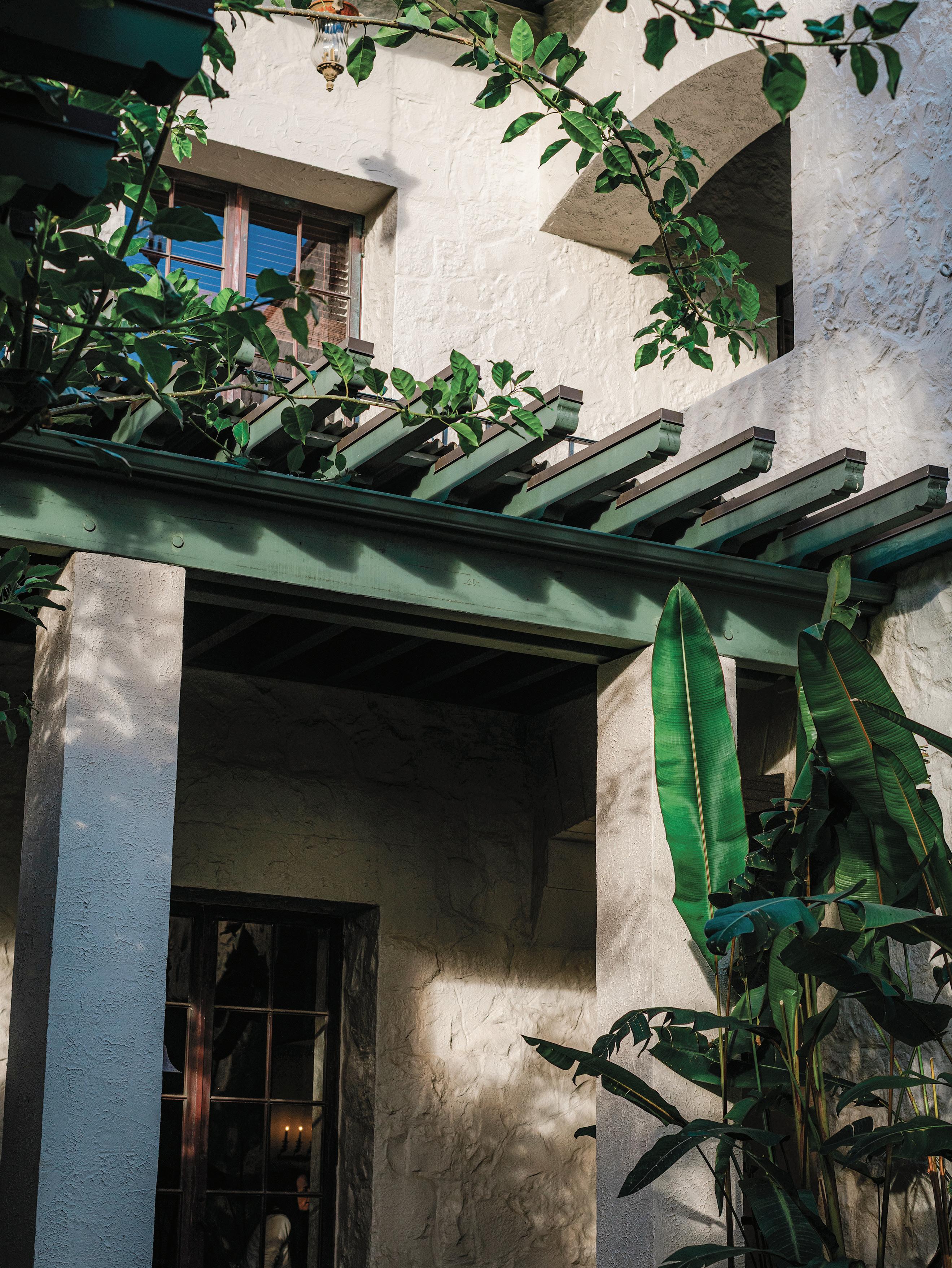
Hidden for decades behind overgrowth and disrepair, a sprawling historic property returns to prominence in Nu‘uanu Valley.
Surveying Lihiwai for the first time in 2010, the palatial estate had been reduced to what then-prospective buyer Richard Ethington calls “a big pile of rocks in a mud hole.”
The woeful sight—“disrepair would be an understatement,” he adds—was almost too much for his wife, Brendan, to bear. Having grown up in Moanalua, where her family home was part of the old Damon estate lands, she could see past the ruin to the grandeur of the 1929 residence.
Commissioned by former territorial governor George Robert Carter and his wife, Helen Strong Carter, daughter of Eastman Kodak founding president Henry A. Strong, Lihiwai was sometimes referred to as Honolulu’s “Kodak House.”
Designed by Bertram Grosvenor Goodhue and completed by Hardie Phillip, it exists within the same civic architectural lineage as the Honolulu Museum of Art, another project completed by the firm. “I like this house,” Brendan told her husband. “Let’s buy it. Let’s bring it back.”
Constructed of steel-reinforced bluestone, a dense Hawaiian volcanic basalt quarried locally for many of Honolulu’s civic buildings and grand estates, including ‘Iolani Palace, the nearly 25,000-square-foot house has walls ranging from
LIHIWAI / CRAFT
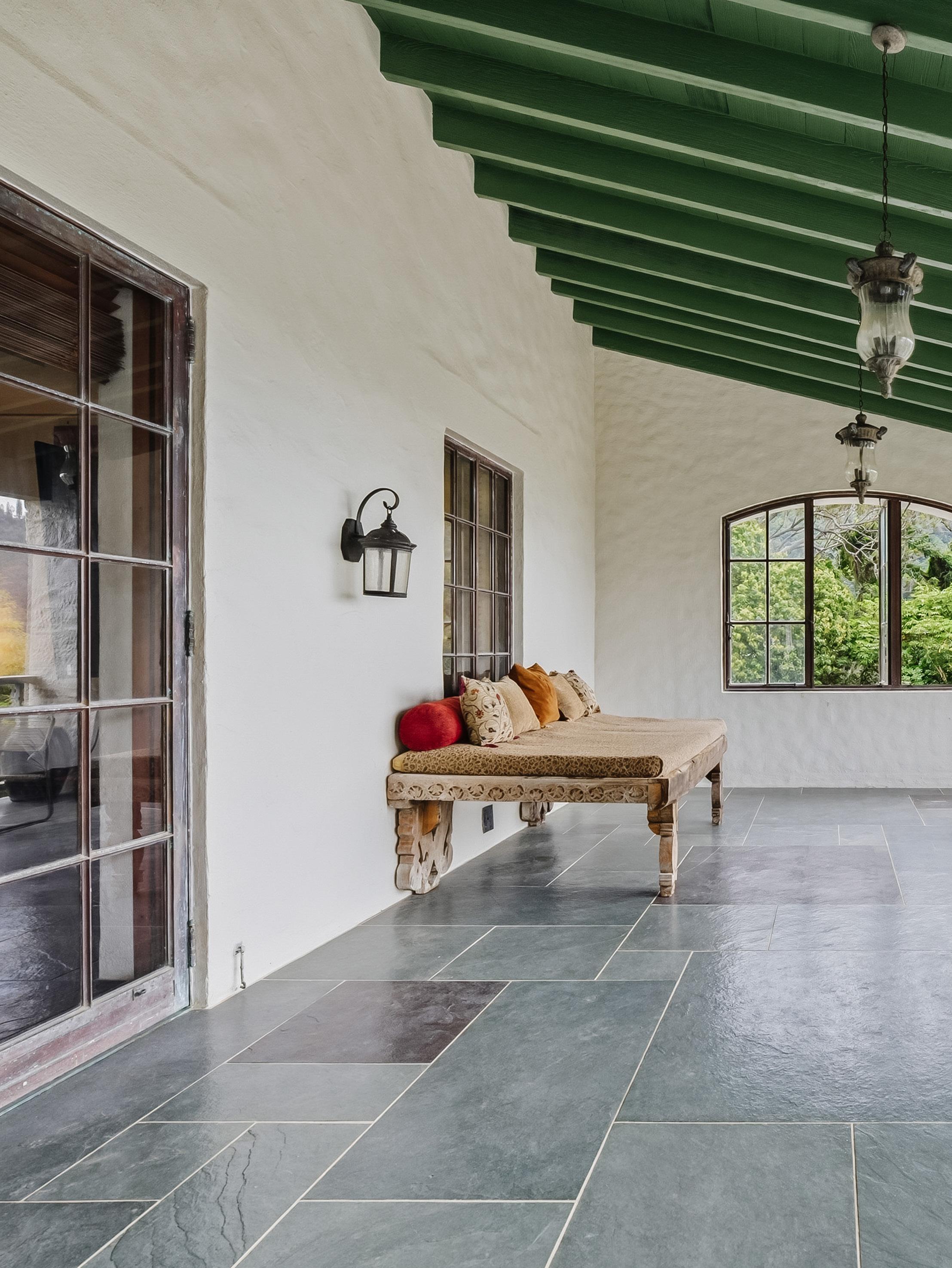
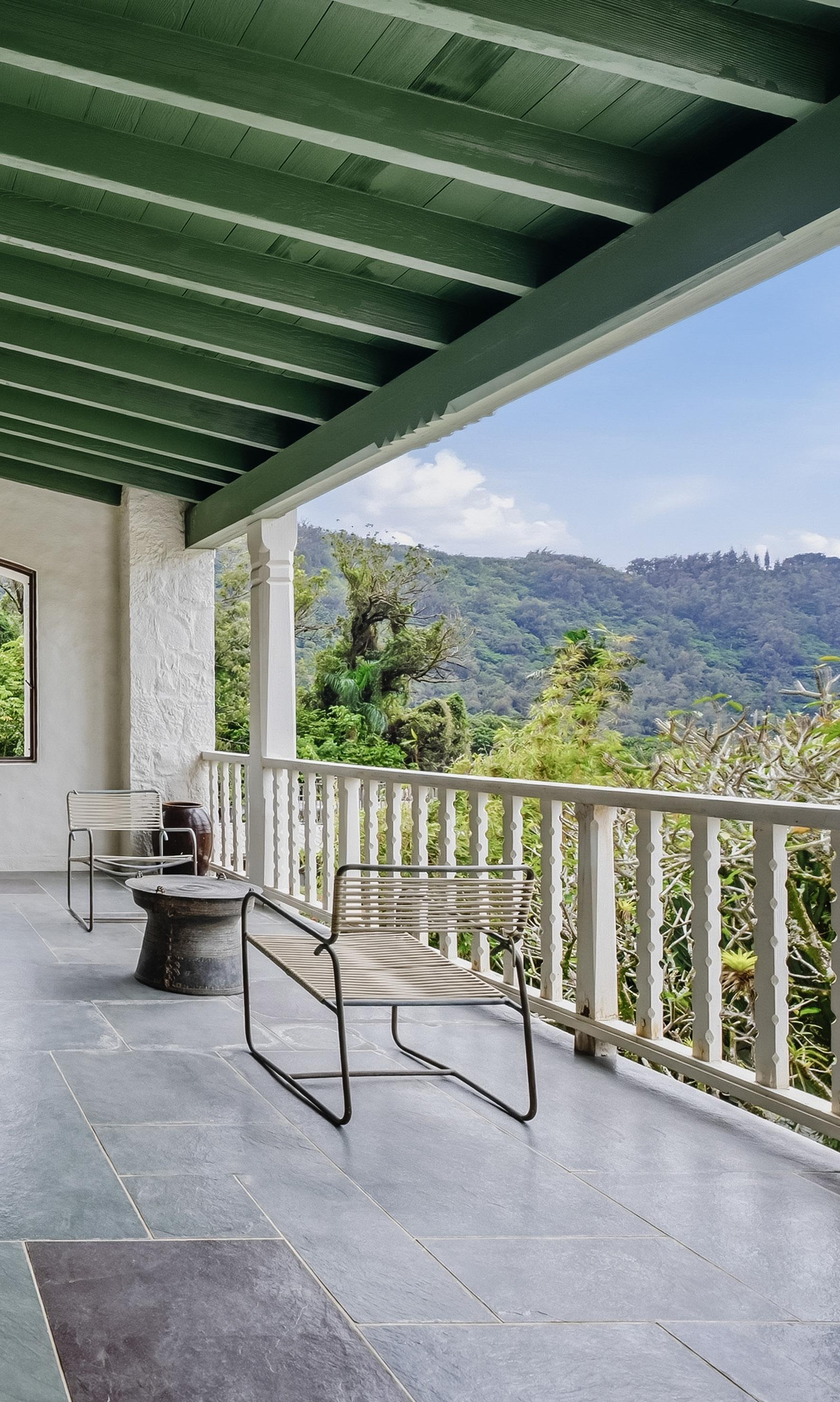
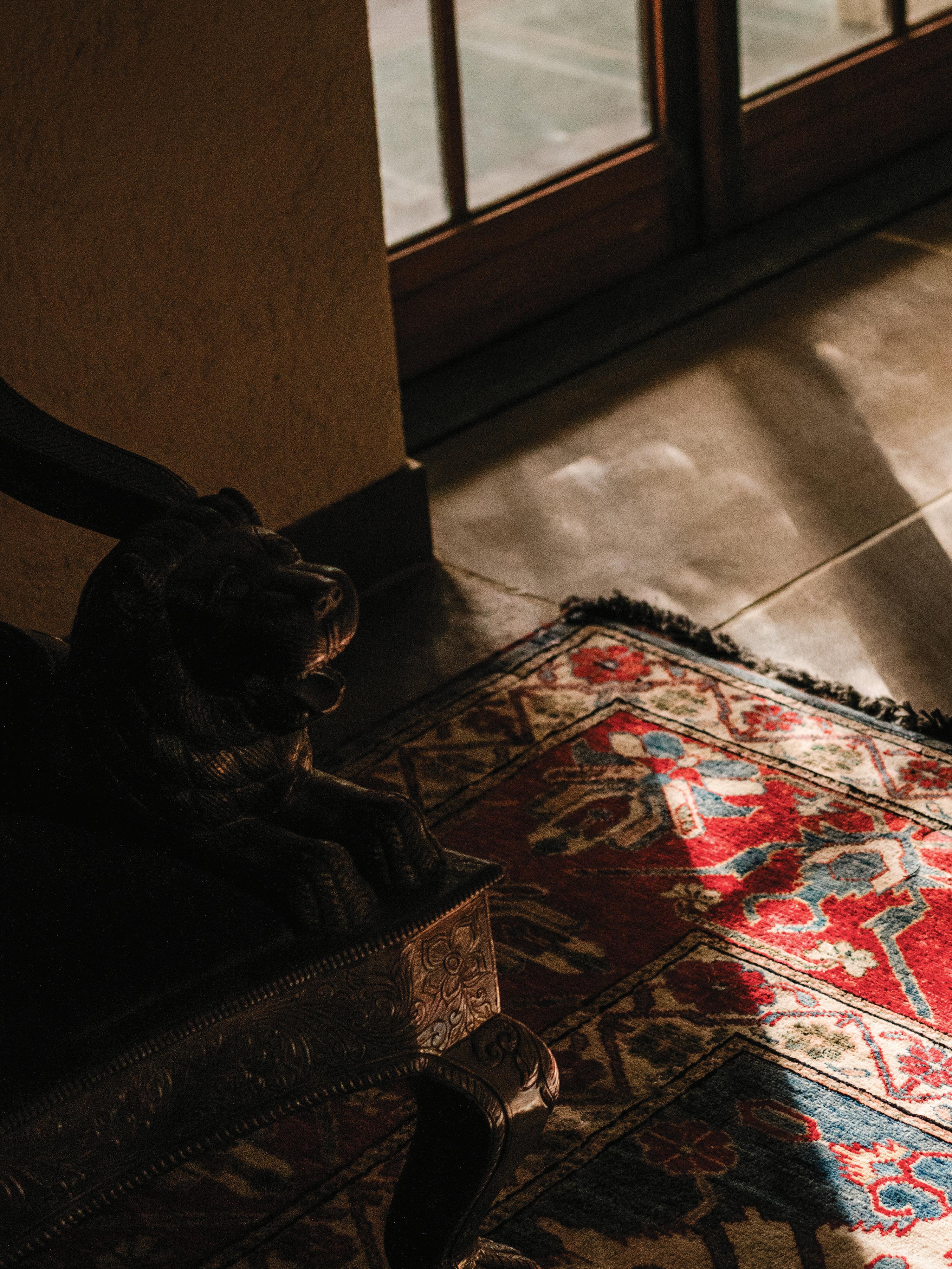
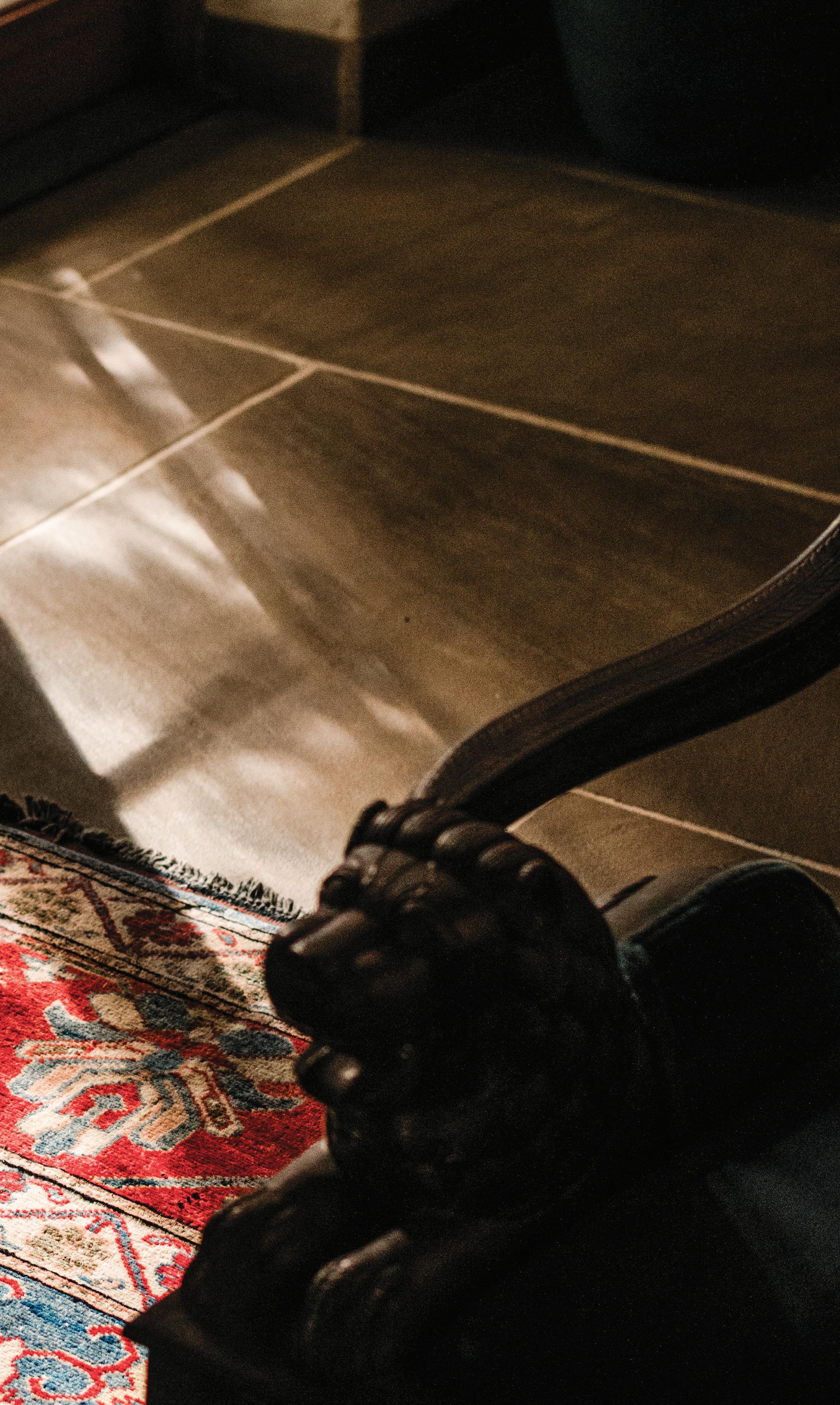
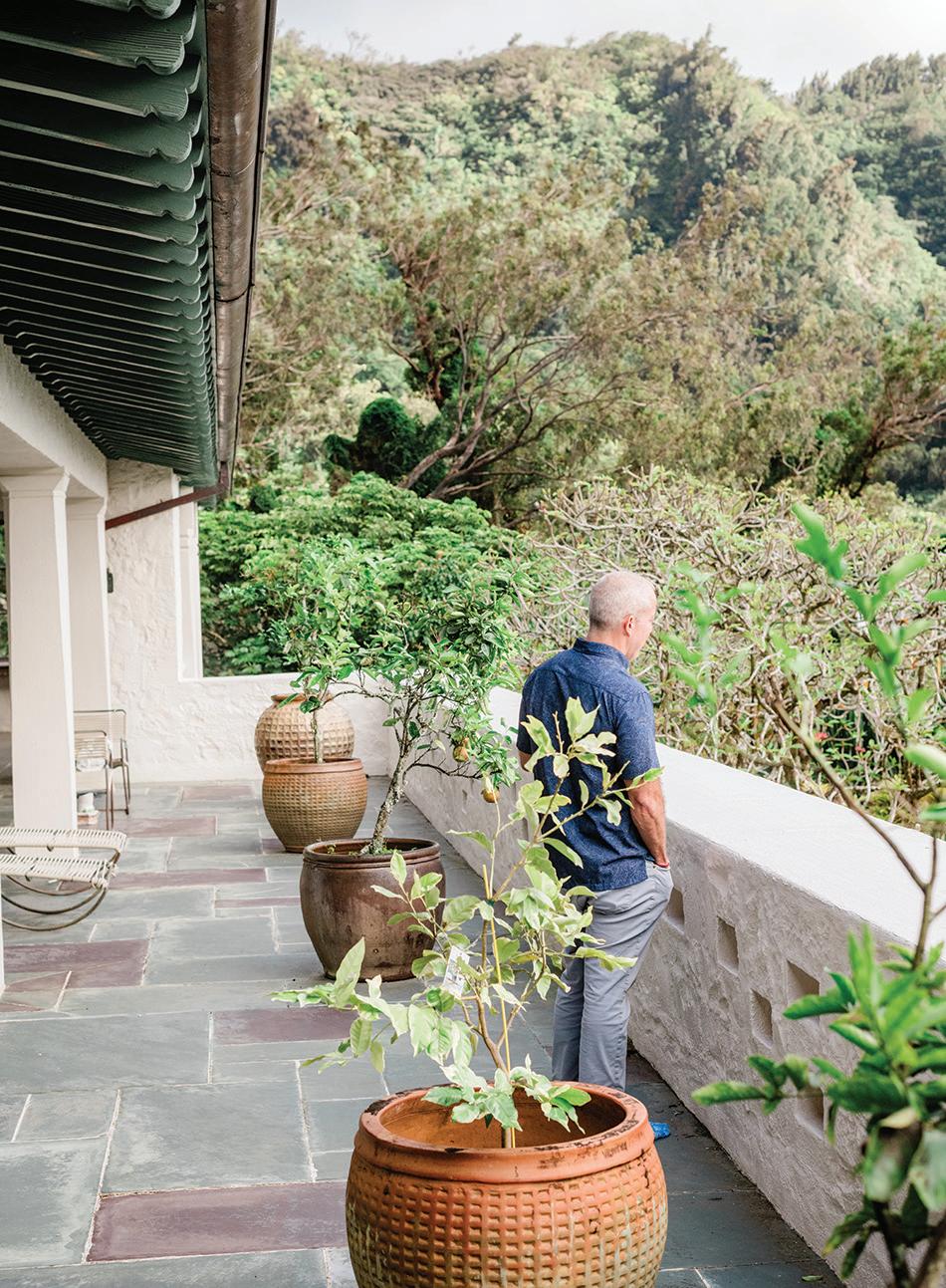
Lihiwai’s architecture is, in owner Richard Ethington’s words, “Mediterranean Revival on the outside, Art Deco on the inside.”
two to six feet thick. Somewhat improbably, it sits on just 1.8 acres in upper Nu‘uanu Valley. Lush forest presses against it, nourished by a cool, misty climate and an ancient ‘auwai (irrigation canal) that empties into Nu‘uanu Stream.
As a general contractor known for restoring historic homes by pioneer of Hawaiian modernism Vladimir Ossipoff, it took Ethington about a month of “looking at the estate through construction eyes” to get his bearings. The grounds had become the neighborhood’s unofficial landfill, and clearing the refuse required a dozen 40-yard dumpsters before restoration could begin on the National Register-listed estate. Part civic monument, part family home, Lihiwai’s architecture is, in Ethington’s words, “Mediterranean Revival on the outside, Art Deco on the inside.” It brims with arches, lanais, courtyards, fountains, ‘ōhi‘a parquet floors, coffered ceilings of old-growth redwood, and solid-bronze doors and windows, elements that soften the heavy volcanic stone
while reflecting the craftsmanship of the 1920s. “They had no forklifts, no cranes, and nothing like contemporary power tools,” Ethington says. “Things were done by eyeball, water level, and just sheer will.”
He took that last part to heart, setting aside most of his professional projects to devote four years and $13 million to this personal one: a family home where he and Brendan would raise their daughter, Chenery, now preparing for college. Longtime collaborator Victor Weeks of Honolulu-based Welch and Weeks Architects saw little need for reinvention. “All we had to do was listen to the language of the house,” says the residential designer.
To that end, the Ethingtons spent time researching Spanish Colonial and Mediterranean Revival architecture in Santa Barbara and Art Deco in New Zealand. (The North Island town of Hastings was rebuilt after the 1931 Hawke’s Bay earthquake, and today it contains one of the world’s
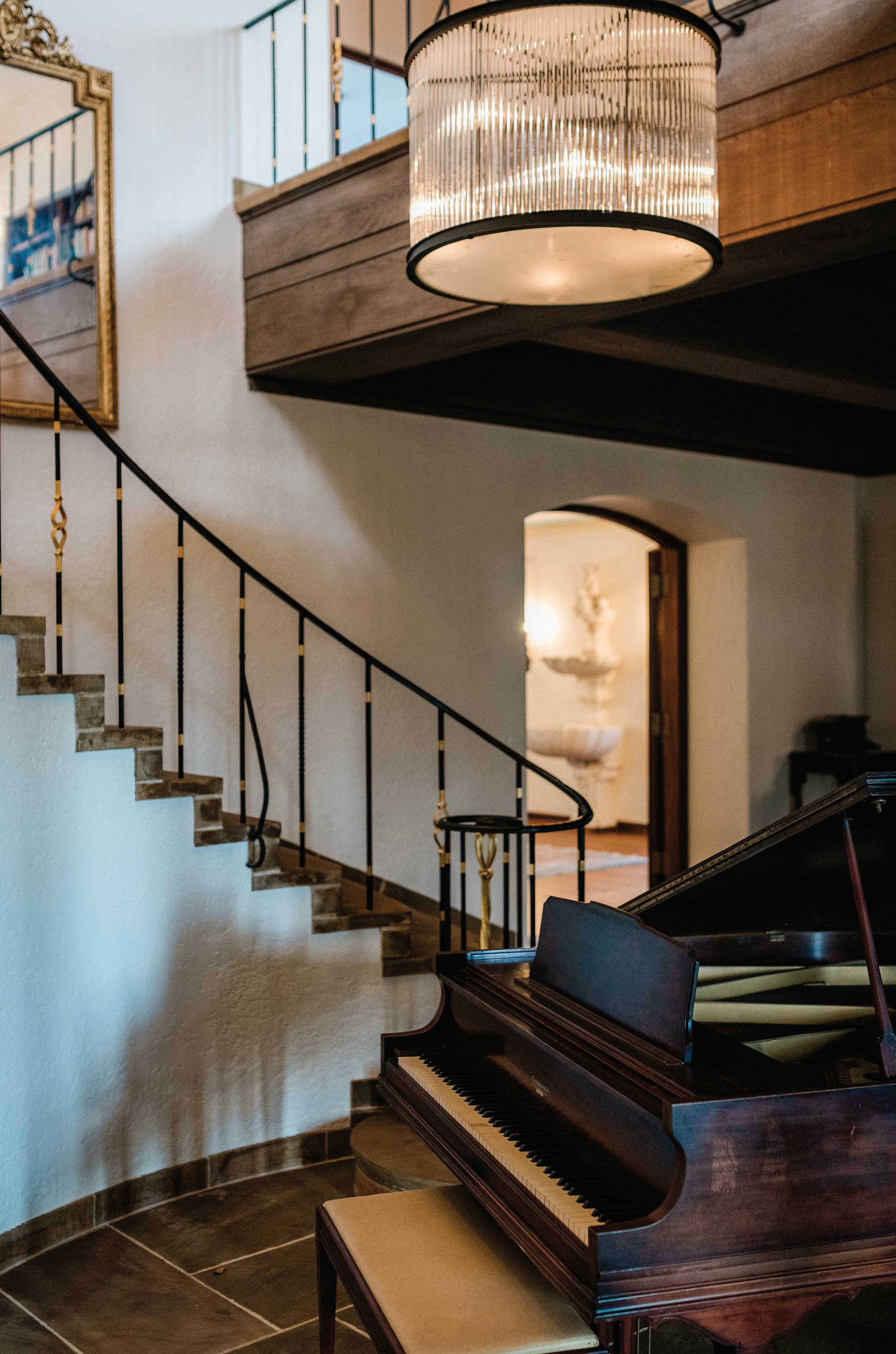
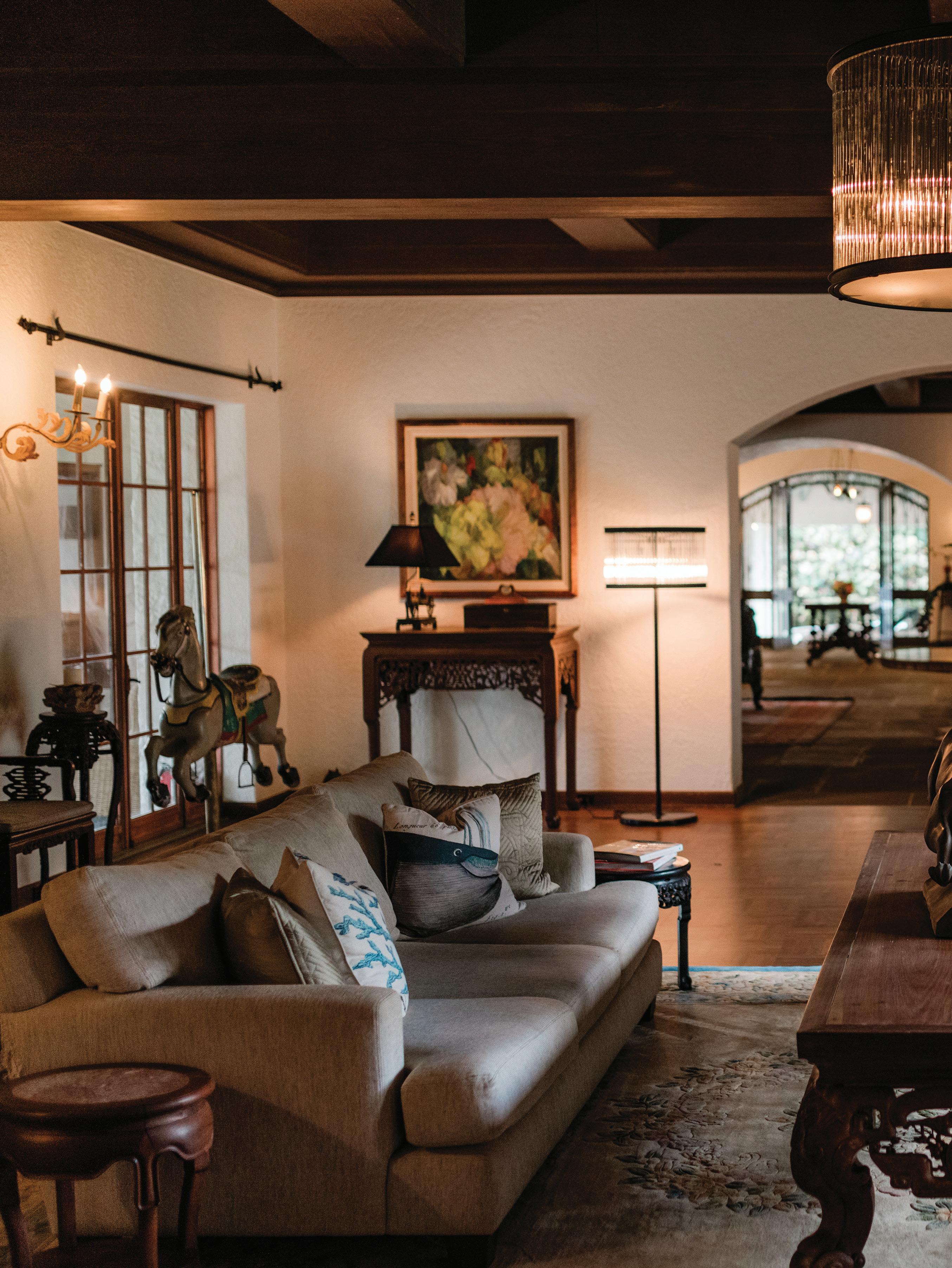
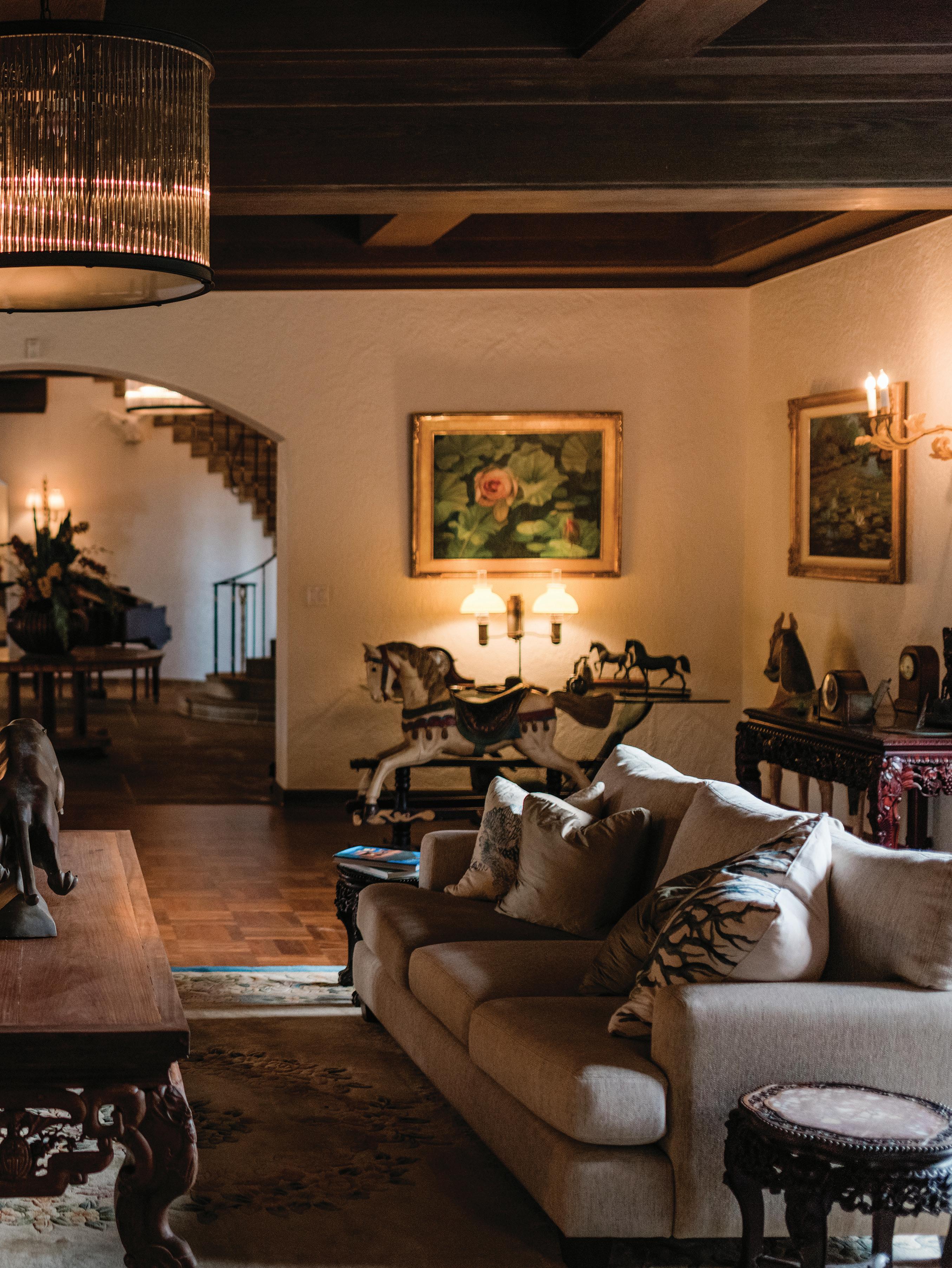
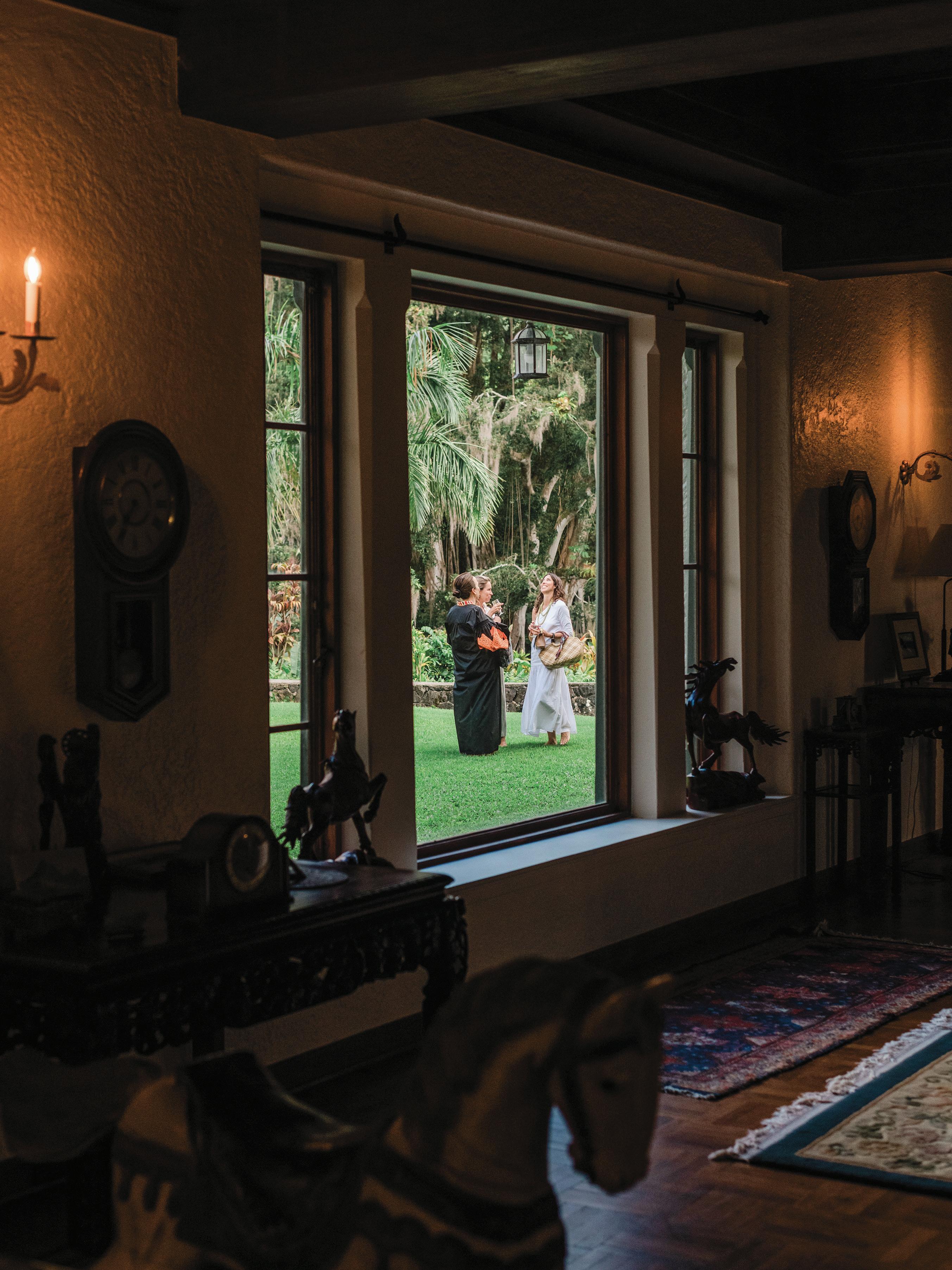
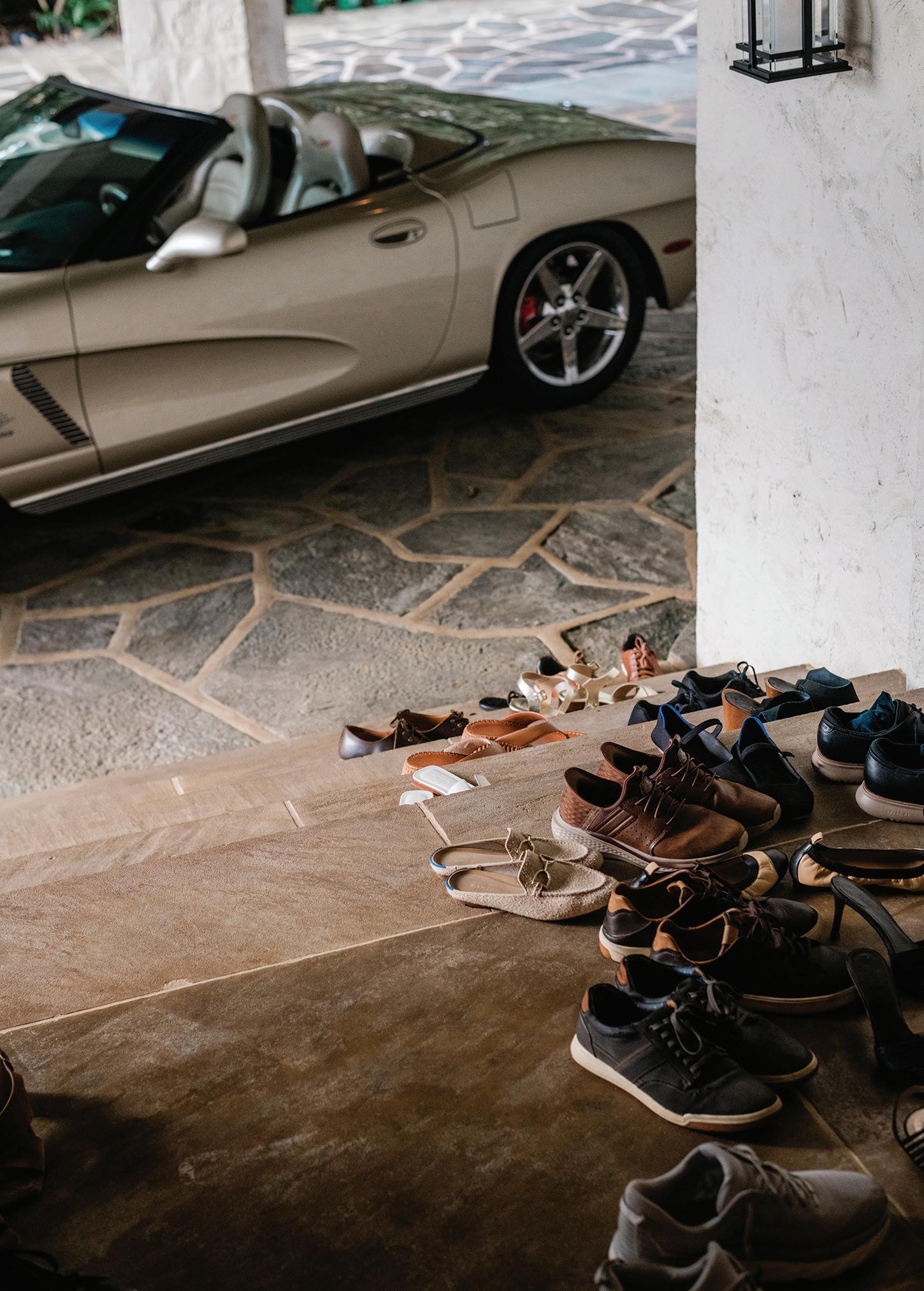
The estate brims with design elements that soften its heavy volcanic stone construction while reflecting the craftsmanship of the 1920s.
best-preserved concentrations of interwar Art Deco architecture.) The couple studied colors, metalwork, and craftsmanship, returning with ideas for lanterns, tilework, and other period details. “This is what we considered a fun vacation,” Ethington laughs.
Weeks worked on renovating the interiors, reconfiguring the fragmented rooms of the Governor’s wing into a more spacious primary suite with a large closet and dressing room for Brendan. “It’s a 1,200-square-foot closet, so I’m thinking, ‘There’s no way she’ll fill that,’” Ethington says. “Well, she did.” The kitchen—formerly another warren of rooms, including separate spaces for butchery and baking—was merged into a single cooking wing containing a family kitchen and a separate professional kitchen for events.
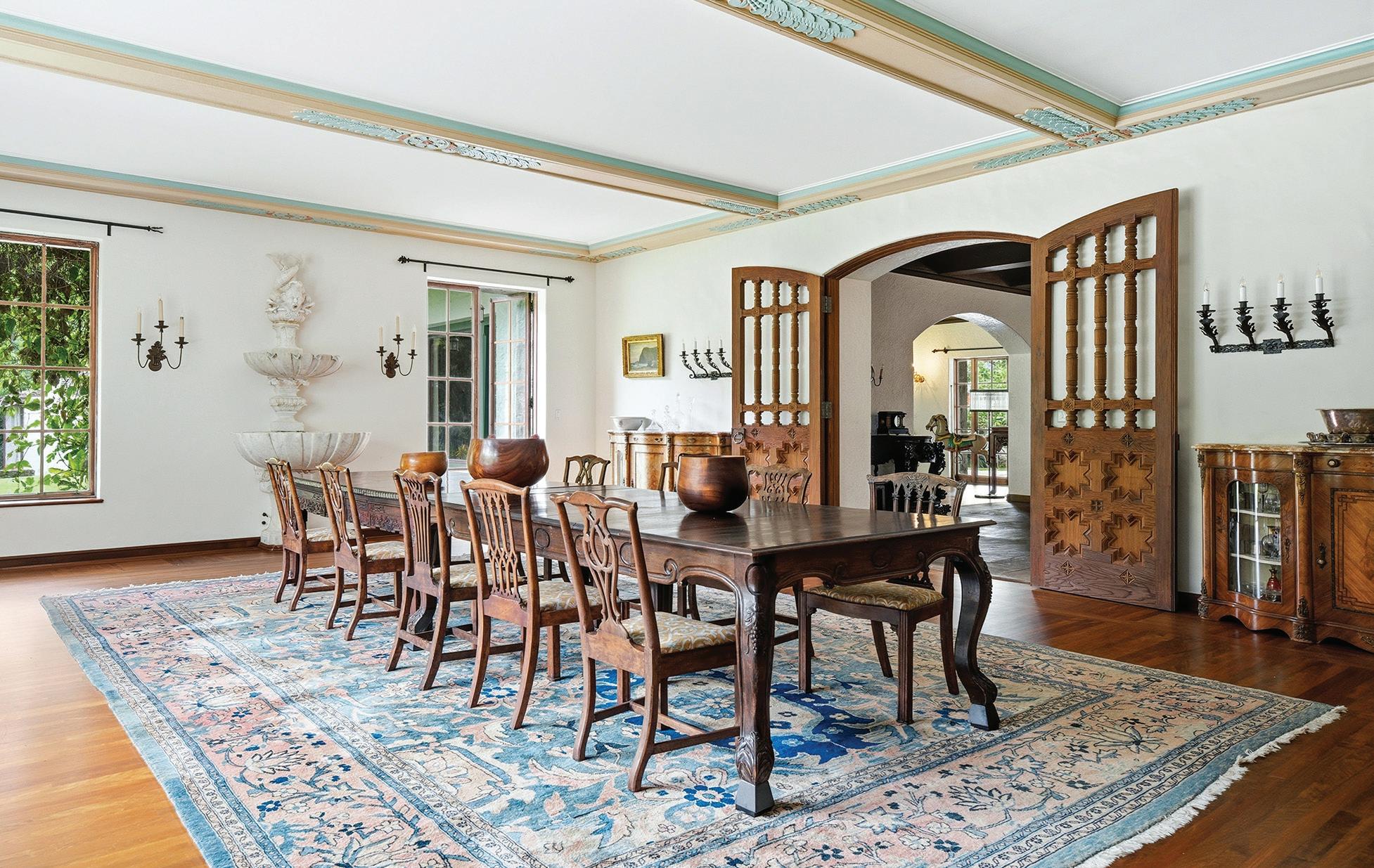
Soon the estate was entertaining again. During the territorial era, the Carters hosted guests tied to the business and governing circles that shaped early 20th-century Hawai‘i, movers and shakers from Bank of Hawai‘i to plantation-era conglomerates like Alexander & Baldwin. The Ethingtons have continued that tradition through philanthropic events benefiting organizations such as Children’s Alliance of Hawai‘i and Big Brothers Big Sisters, often with local chefs like Ed Kenney of Mud Hen Water helming the stoves. Lihiwai has also hosted private corporate events and photo shoots, directing venue fees toward the couple’s charitable causes. In the dining room, a marble fountain once used as a bubbly bowl during parties still anchors the space. “To me, it seems like it would ruin the Champagne,” Ethington says, “but it looks cool.”



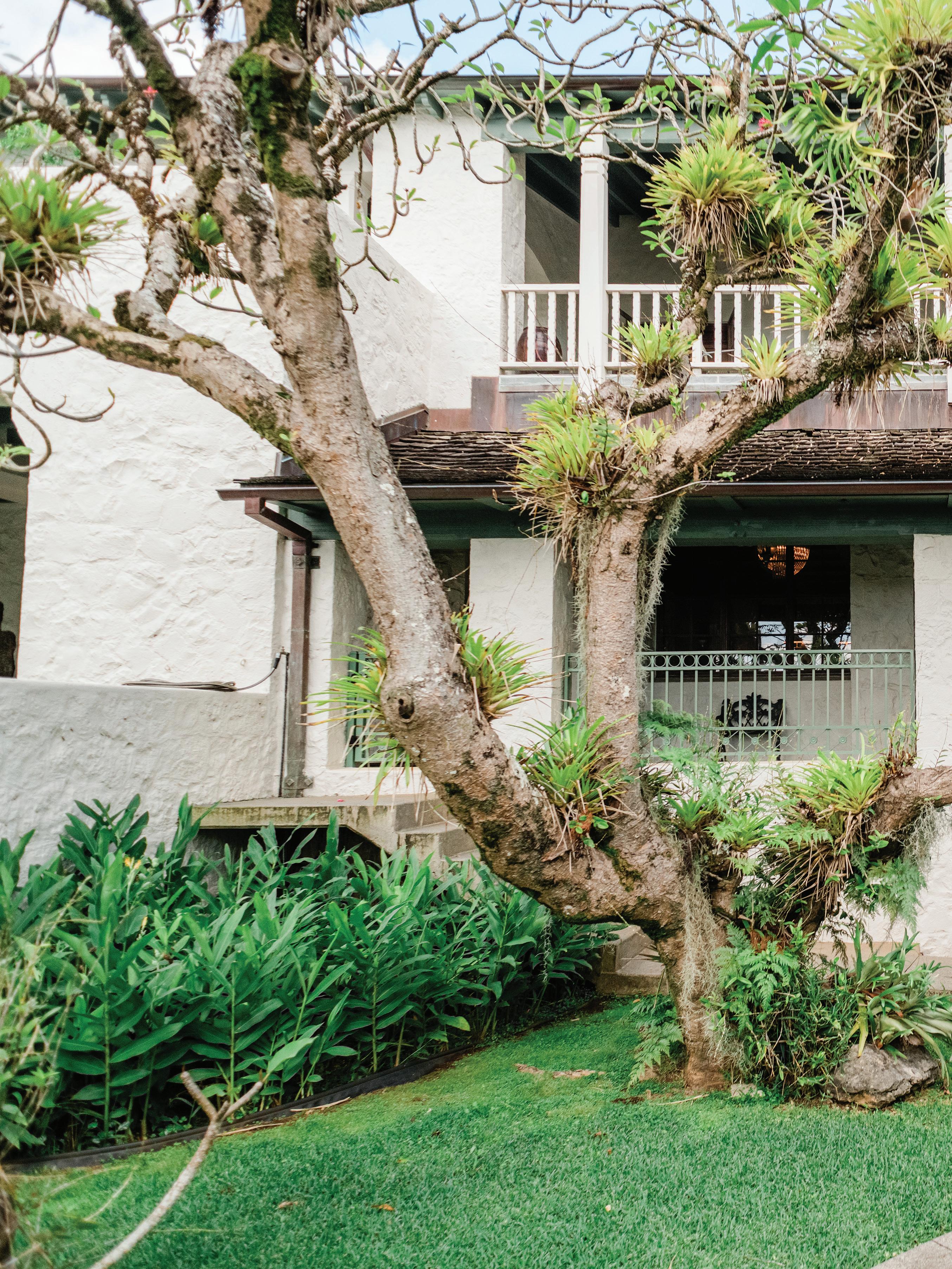
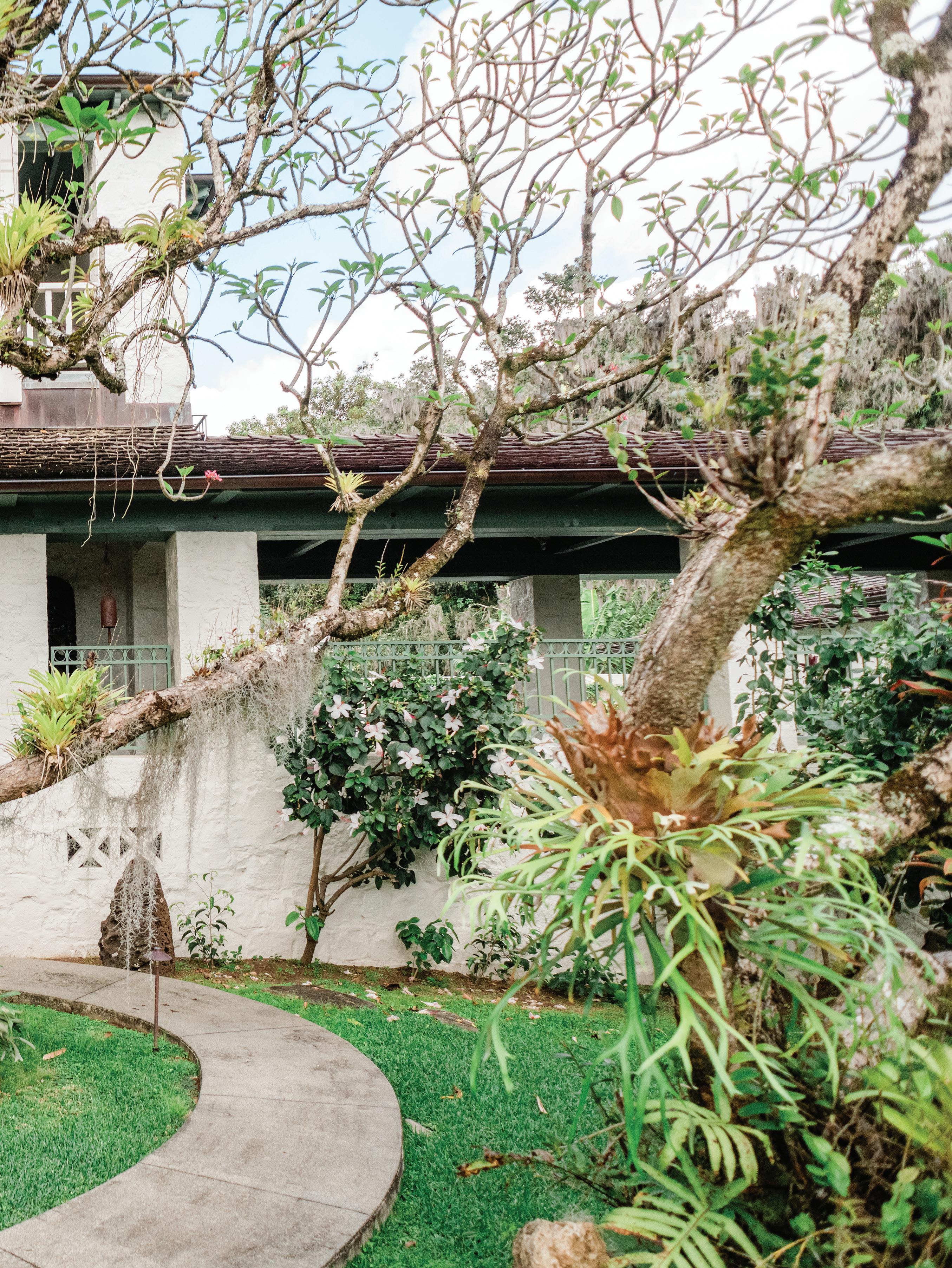
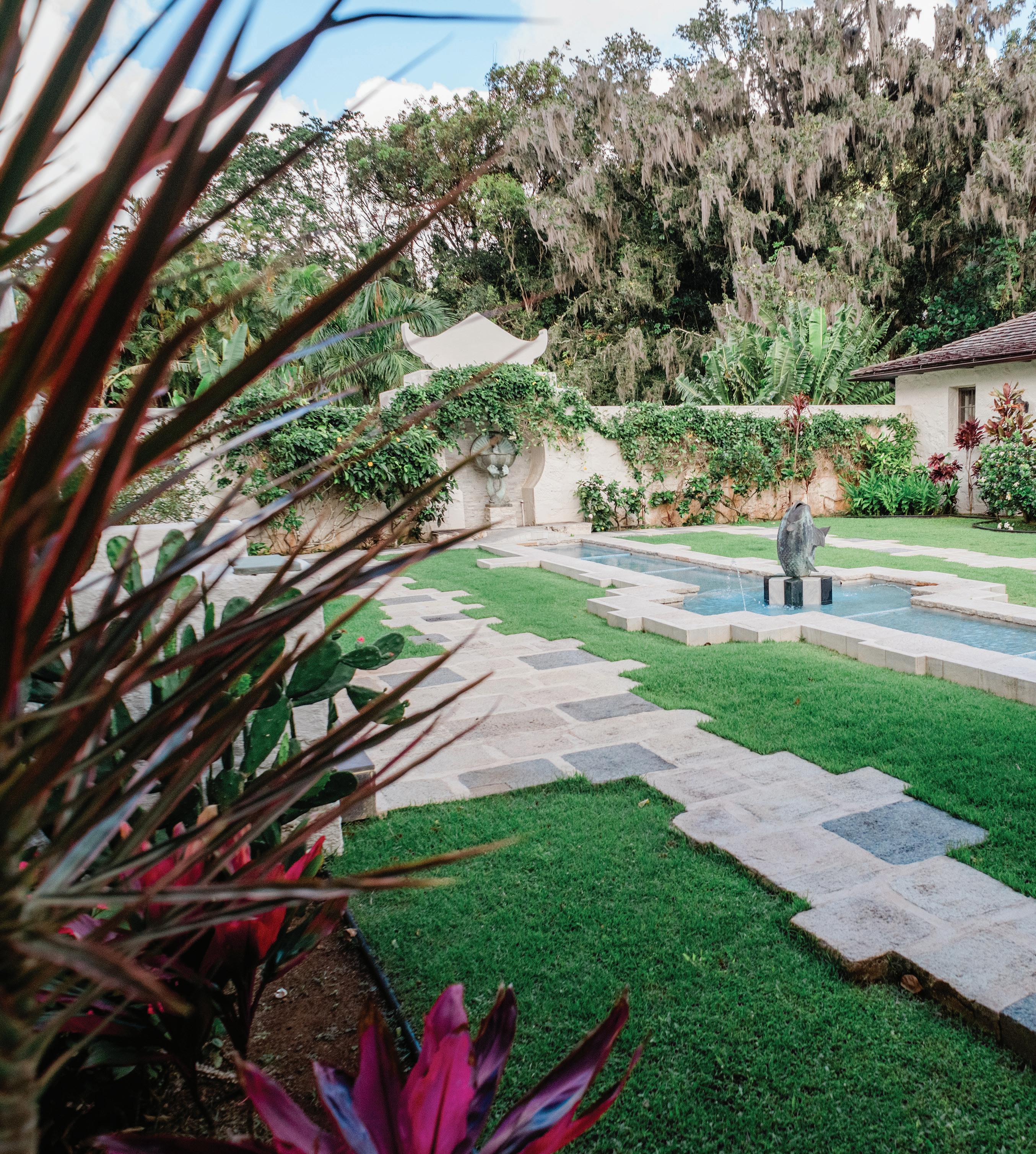
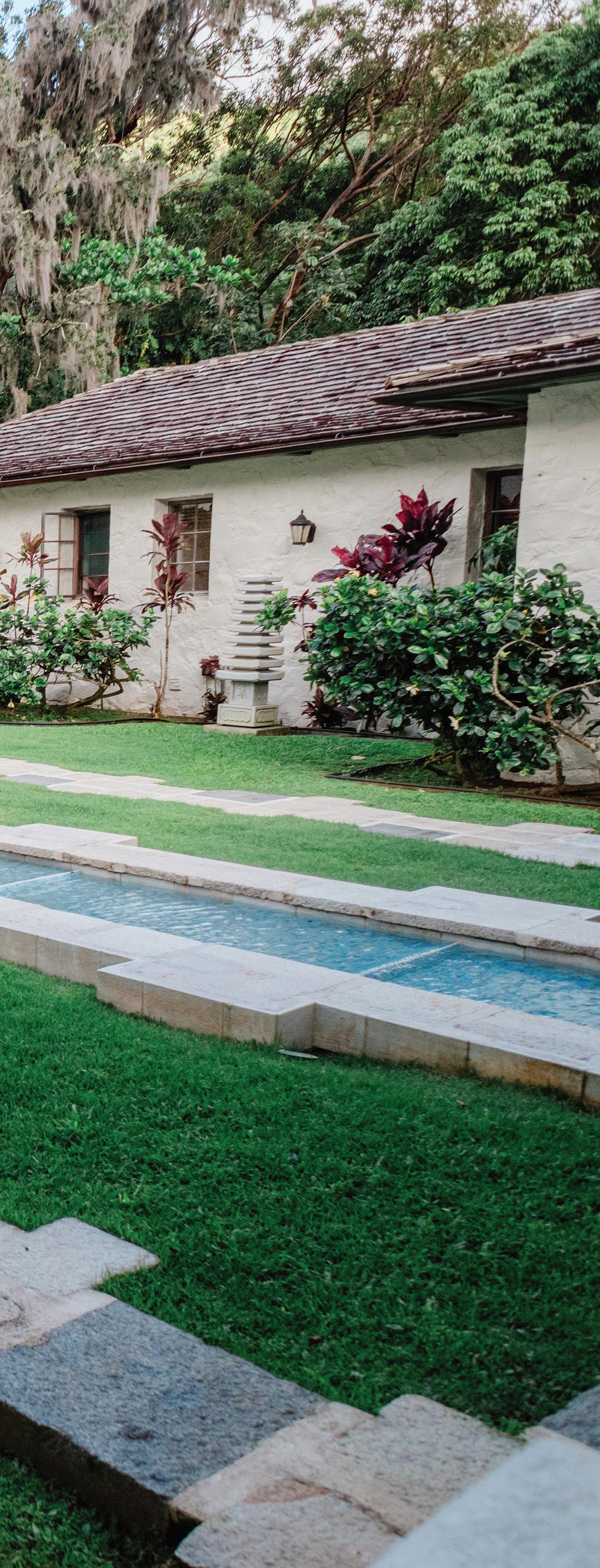
The gatherings spilled across lush gardens where original elements, including quartz walkways, statuary, and fountain pieces, have been restored using fragments recovered from the erstwhile neighborhood dump. Unearthed artifacts visible in old photographs from the 1920s and ’30s included what Ethington calls a “Machu Picchu barrel” that once sat beneath a fountain in the rose garden. Since the carving bears similarities to Incan motifs, he speculates that it came from Hiram Bingham III, the Honolulu-born explorer and friend of George Carter who led the Yale Peruvian Expedition that brought international attention to Machu Picchu between 1911 and 1915.
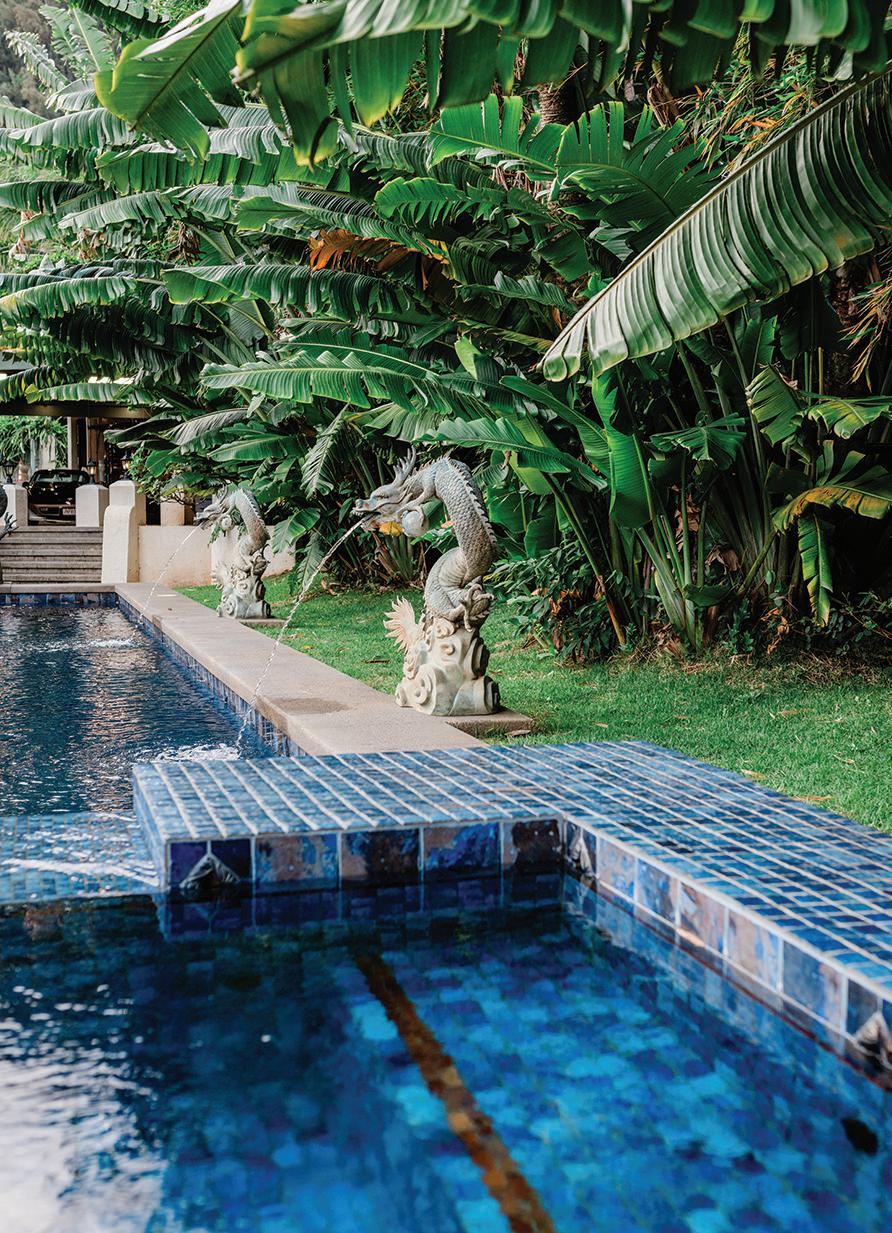
Planted with cacao, coffee, kalo, dragon fruit, papaya, and mango, Lihiwai’s restored gardens nod to the history of Nu‘uanu as a major food-producing corridor within the Honolulu ahupua‘a system. Near the house, a saltwater pool with a bronze dragon fountain sits above waterfalls, spillways, and terraces that descend toward Nu‘uanu Stream. Much as it does today, the ‘auwai that runs through the property once irrigated dryland crops and flooded lo‘i. Water, shade, and windward moisture made the valley both agriculturally abundant and attractive to the prominent families who established estates there, drawn as they were to the town-and-country atmosphere just seven minutes from downtown.
Today, Lihiwai is back on the market for $22 million. Listing agent Jovanna Giannasio-Fern describes it as an increasingly rare offering in Nu‘uanu, where many of the valley’s old family compounds have been subdivided, diminished, or lost altogether. At a moment when historic
homes are often dismissed as burdens rather than assets—“It’s almost ageism with real estate,” she says—Lihiwai arrives intact, fully restored, and ready to enter another chapter of its history.
That transition feels personal for the Ethingtons, too. As Chenery prepares to leave for college on the mainland, her parents are downsizing their empty nest and savoring their final stretch at Lihiwai, especially attentive to the sounds and rhythms of a house they lovingly returned from the brink. “You always hear the wind here,” Ethington says. “The house doesn’t creak. It’s solid rock. But if you just stop and listen, it’s like the house is breathing.” A sure sign of life.
THE ALCHEMIST
TEXT BY JOHN WOGAN
IMAGES BY RACHEL OLSSON AND COURTESY OF JAMES DE WULF
In the hands of designer James De Wulf, everyday objects are transformed into works of art that resonate.
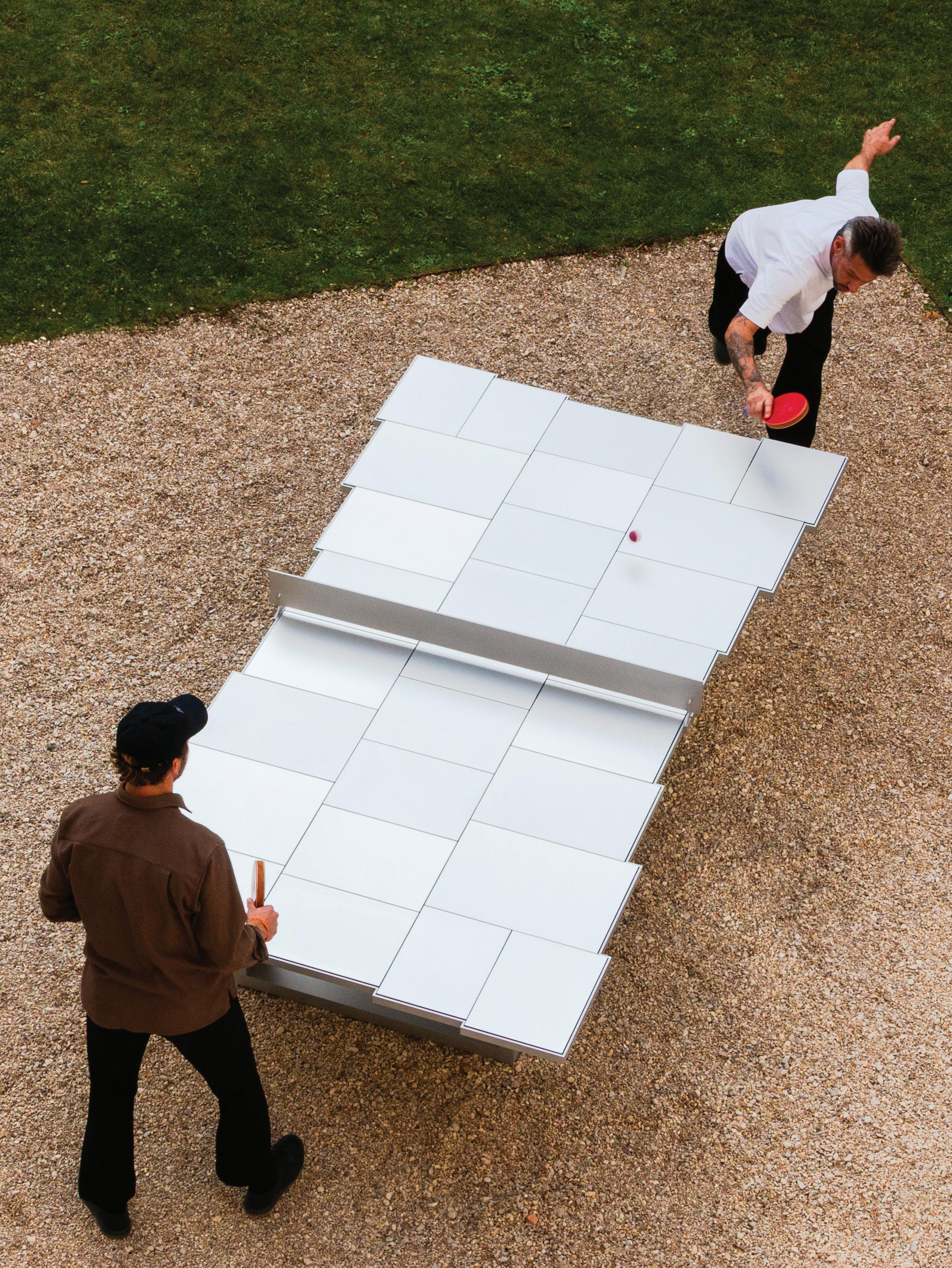
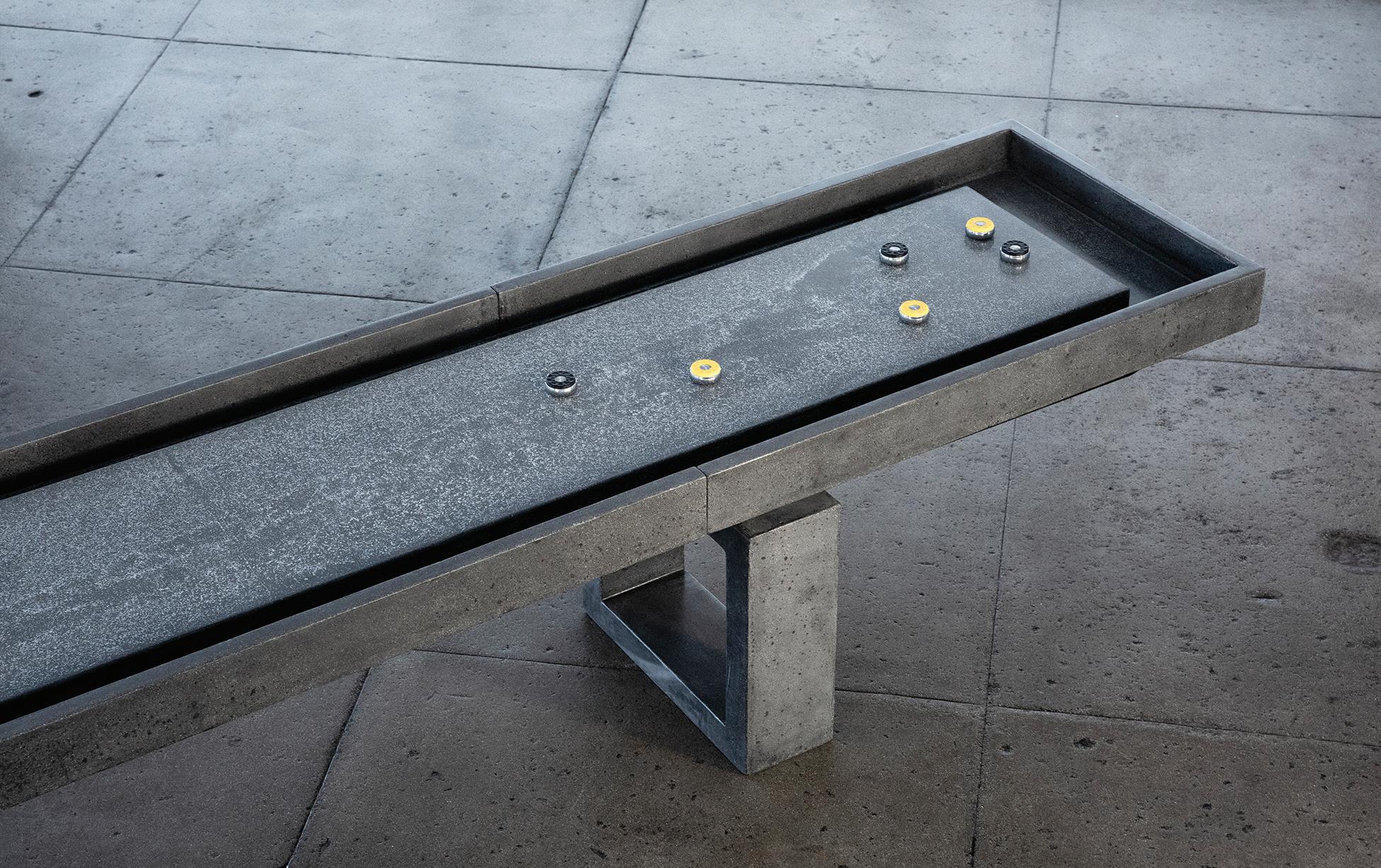
In James De Wulf’s backyard in Pā‘ia is an unusual musical instrument: a ping-pong table. Distinct tones resound from it like a bell when the ball strikes its aluminum surface. De Wulf has been tinkering with the prototype for a while now, calibrating the sound with a Panasonic scale, trying to get the frequencies just right. He unveiled a version at Design Miami. Paris in late 2025, and the response was typical of those encountering his work for the first time: People weren’t quite sure what to make of it, and then they couldn’t keep their hands off it.
That tension between function and feeling, between the starkly utilitarian and the unexpectedly whimsical, is at the center of everything De Wulf makes. His pieces are, on the surface, furniture: tables, chairs, fire pits, game tables. But spend any time around them and you start to understand that their function is almost beside the point. “I see a table as a stage,” he says. “It has weight and it creates a feeling. There is intrigue and beauty when the shape and proportion are done right.” These creative expressions are all the more striking when you consider how the Atlanta native spent the first half of his career— running investment and real estate deals on the U.S. mainland.
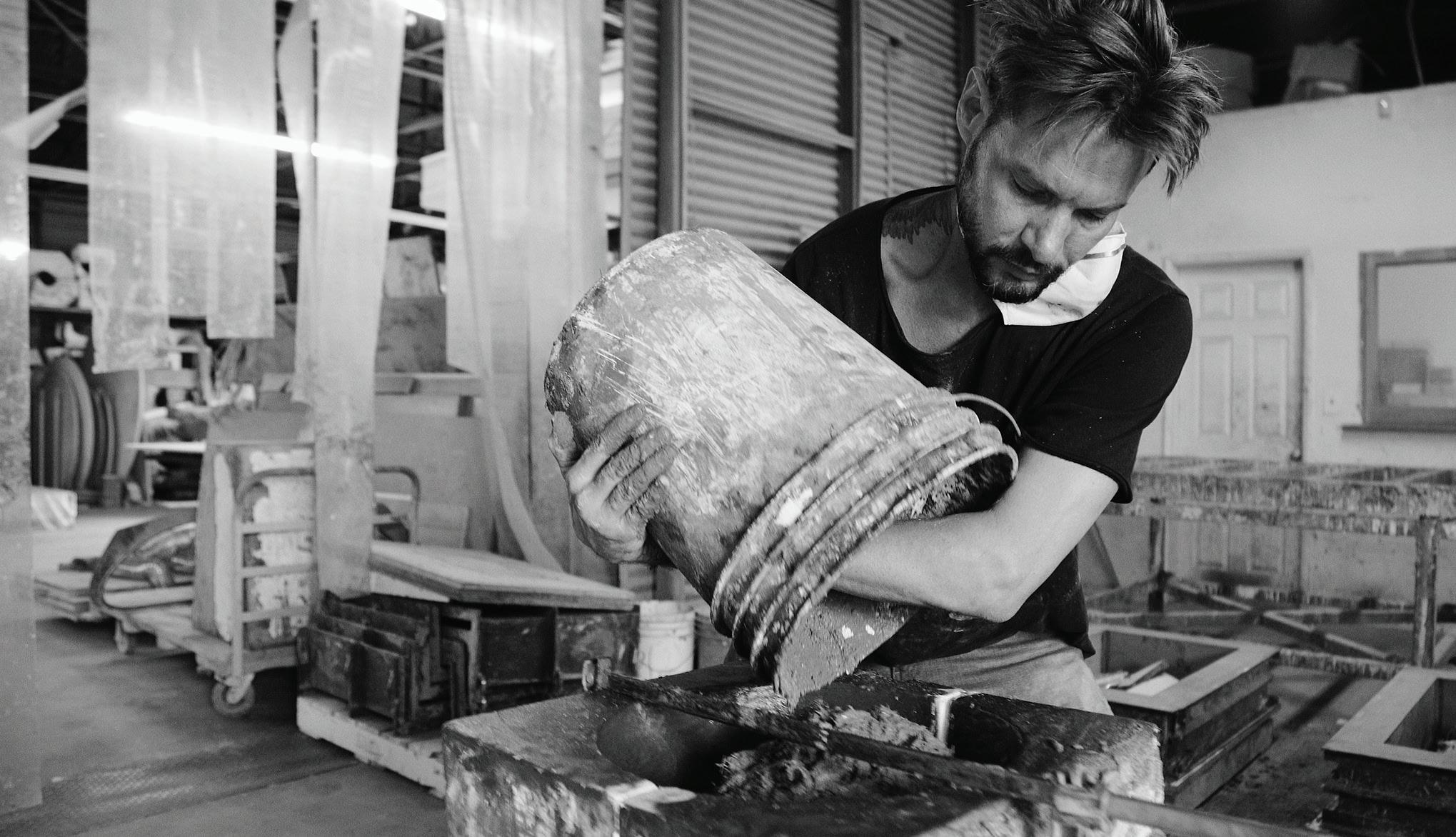
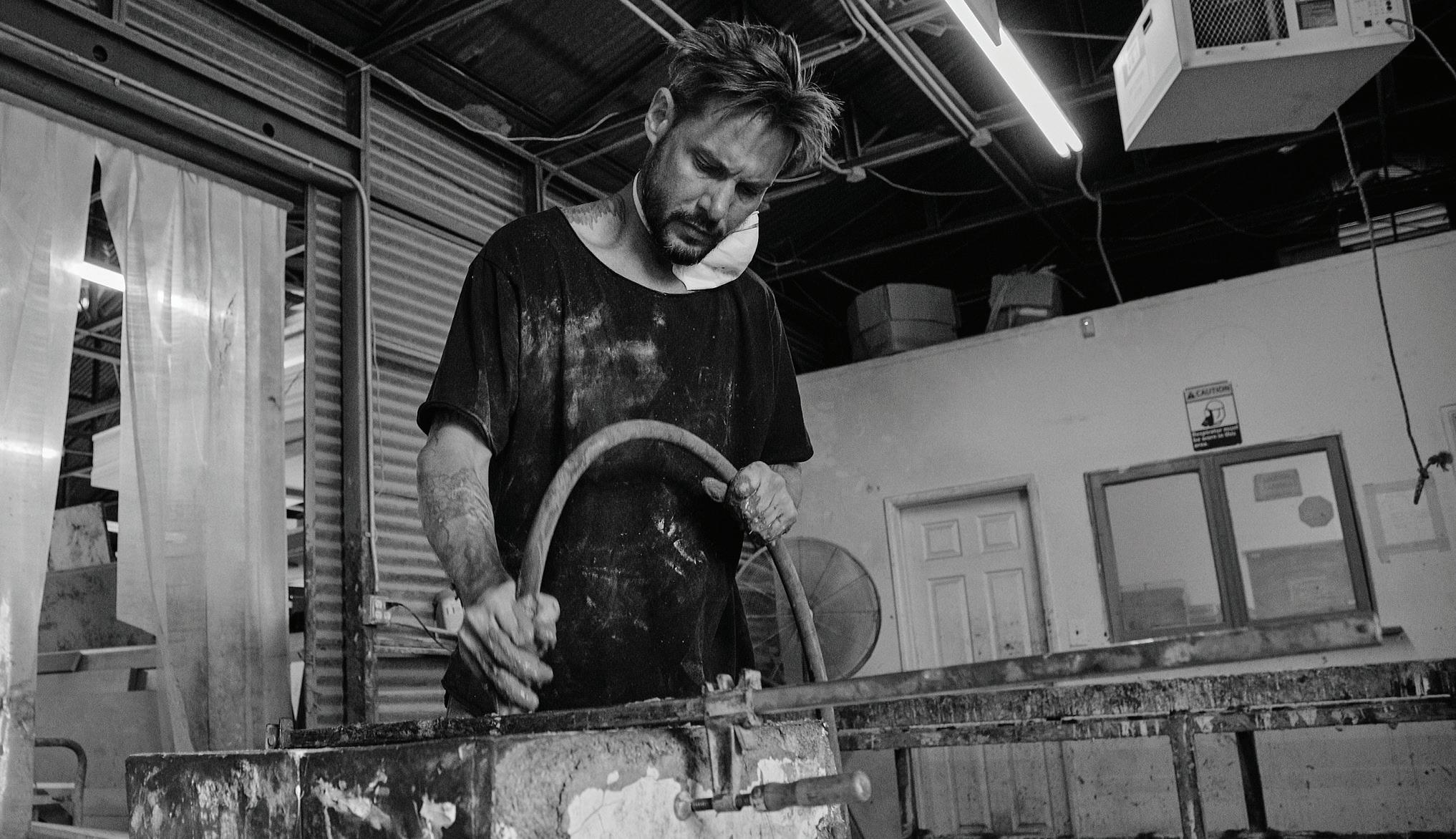
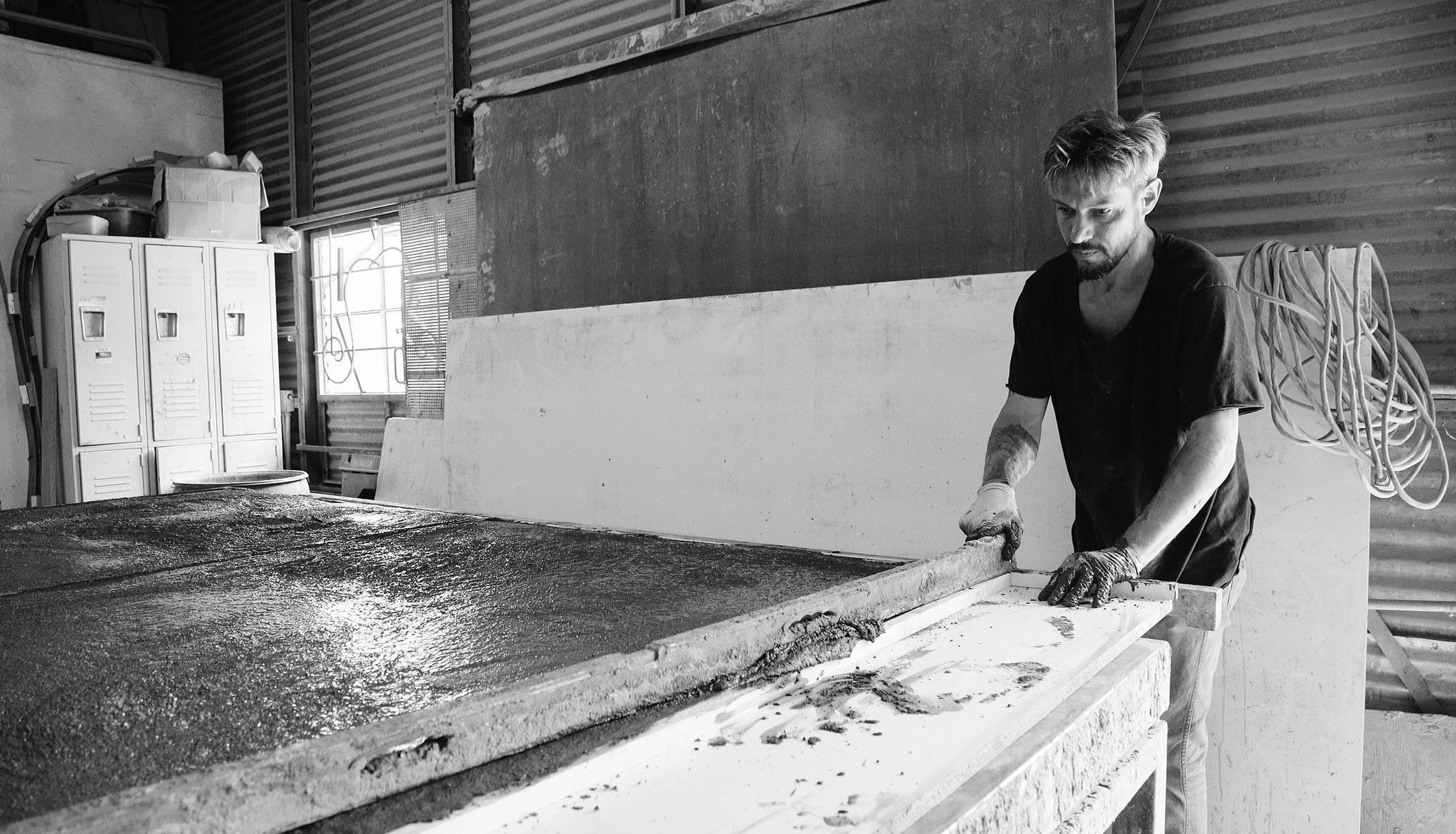
His story as an artist began on September 11, 2001. De Wulf was in his 20s and had money sunk into a development project when the towers came down, taking the markets with them. He lost nearly everything. “It’s interesting what failure can lead to,” he says with the ease of someone who has made peace with the past. In the immediate aftermath, though, he was broke and looking for work in Atlanta, where he was raised and attended college at Emory University. An architect friend took him to a concrete factory one day, and when he walked through the door, a lightbulb went off. “Something about this liquid that turns to stone was really exciting to me,” he recalls of that fateful visit. Concrete, he’ll tell you, is more efficient than other building materials. You don’t cut it from a block like you do with, say, marble; you pour it into a shape, and that simple premise explains why his work has never felt
bound by convention. When your material is as malleable as a liquid, the possibilities seem endless.
Inspired by this first brush with design, De Wulf started producing kitchen countertops to pay rent, later crafting a few tables that drew the attention of interior designers and architects. That momentum led to an Elle Decor story in 2011 about a concrete ping-pong table he’d originally designed as a joke to stand out at a trade show. Orders for the table started pouring in. Eventually, he moved to Los Angeles and built De Wulf Concrete into a boutique design firm with a client list that has included celebrities such as Elton John, Oprah Winfrey, Charlize Theron, and various Kardashians.
His signature ping-pong table, made from a 900pound slab of carbon-fiber-reinforced concrete,
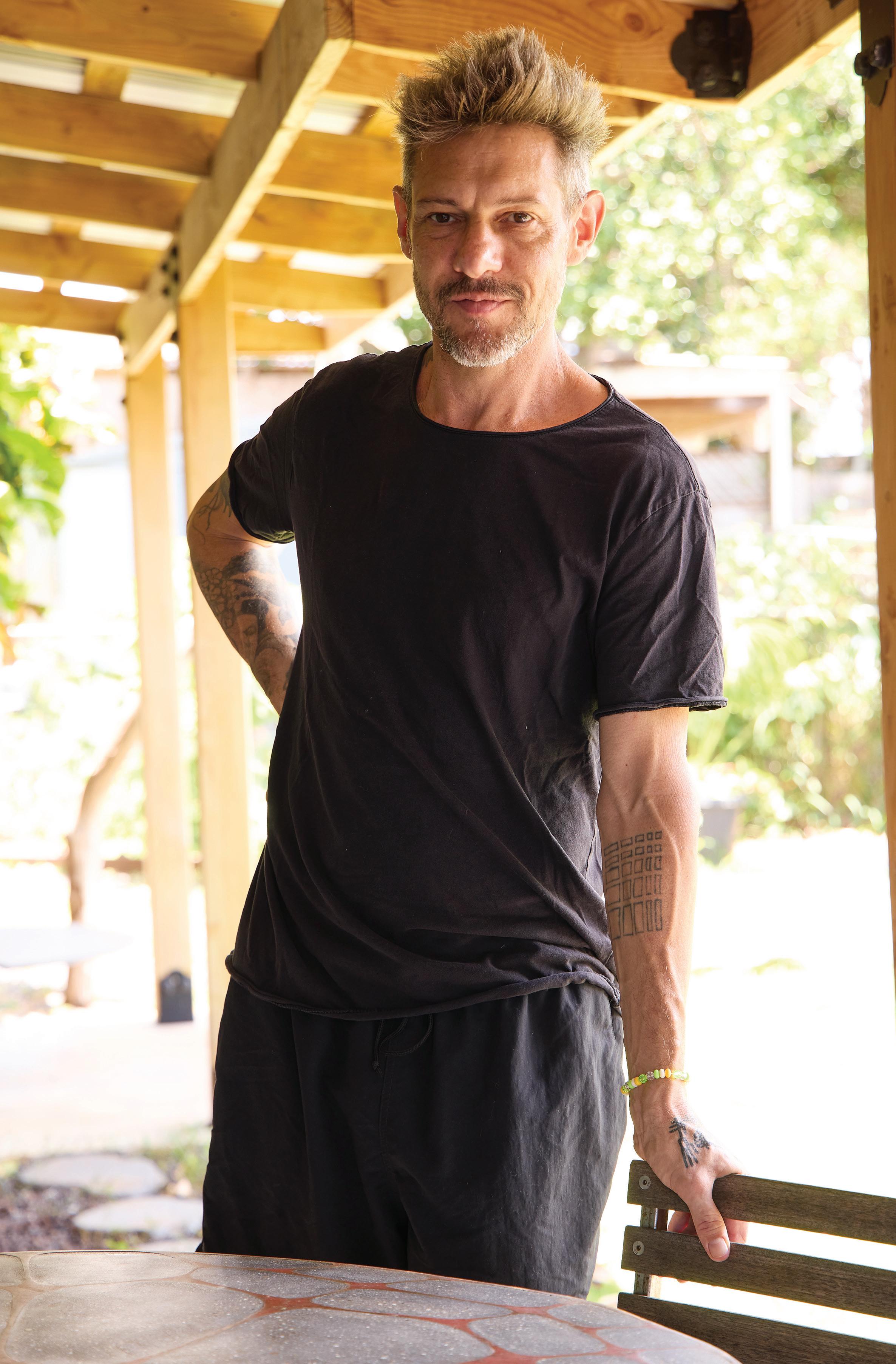
Since moving to Maui, artist James De Wulf has explored designs inspired by the island’s natural environment.
JAMES DE WULF / CRAFT
became something of a calling card. Monolithic and restrained, its proportions are tuned to the same ratios found in the Fibonacci sequence, echoing the patterns seen in a nautilus shell or a breaking wave. Once installed, the table carries a sense of permanence, as if it has always occupied the space. Tennis legends Andre Agassi and Steffi Graf were among its first buyers. Other notable commissions include custom concrete fire logs for fashion designer Tom Ford and large-scale installations for the Waldorf Astoria in New York.
The move to Maui happened somewhat unexpectedly. His wife, Dot, surprised him with a trip to the island in the aftermath of the COVID pandemic, when De Wulf had been feeling restless living in Los Angeles. He had never been much of an L.A. person to begin with, and one visit led to another until the couple decided to stay and put down roots. “I can be rather anxious in a city like L.A.—always in a rush. Maui’s flow slowed me down and made me more present,” he says. “Hawaiian beaches are so clean compared to L.A. Being around this kind of nature made me want to be more organic with my work.”
Hawai‘i’s influence is visible in De Wulf’s more recent endeavors. He had always operated in a more Brutalist style, all clean edges and an almost masculine sense of geometry. But having been on Maui for a few years now, the shapes have loosened and softened. His Exo series, which includes tables and mirrors built to mimic the exoskeletons of deep-sea microorganisms, has edges that seem to undulate in space. The Flowerchild series (which includes backgammon sets, sconces, and a pingpong table surfaced with petal-like forms) has an unlikely playfulness coming from a guy who made
JAMES DE WULF
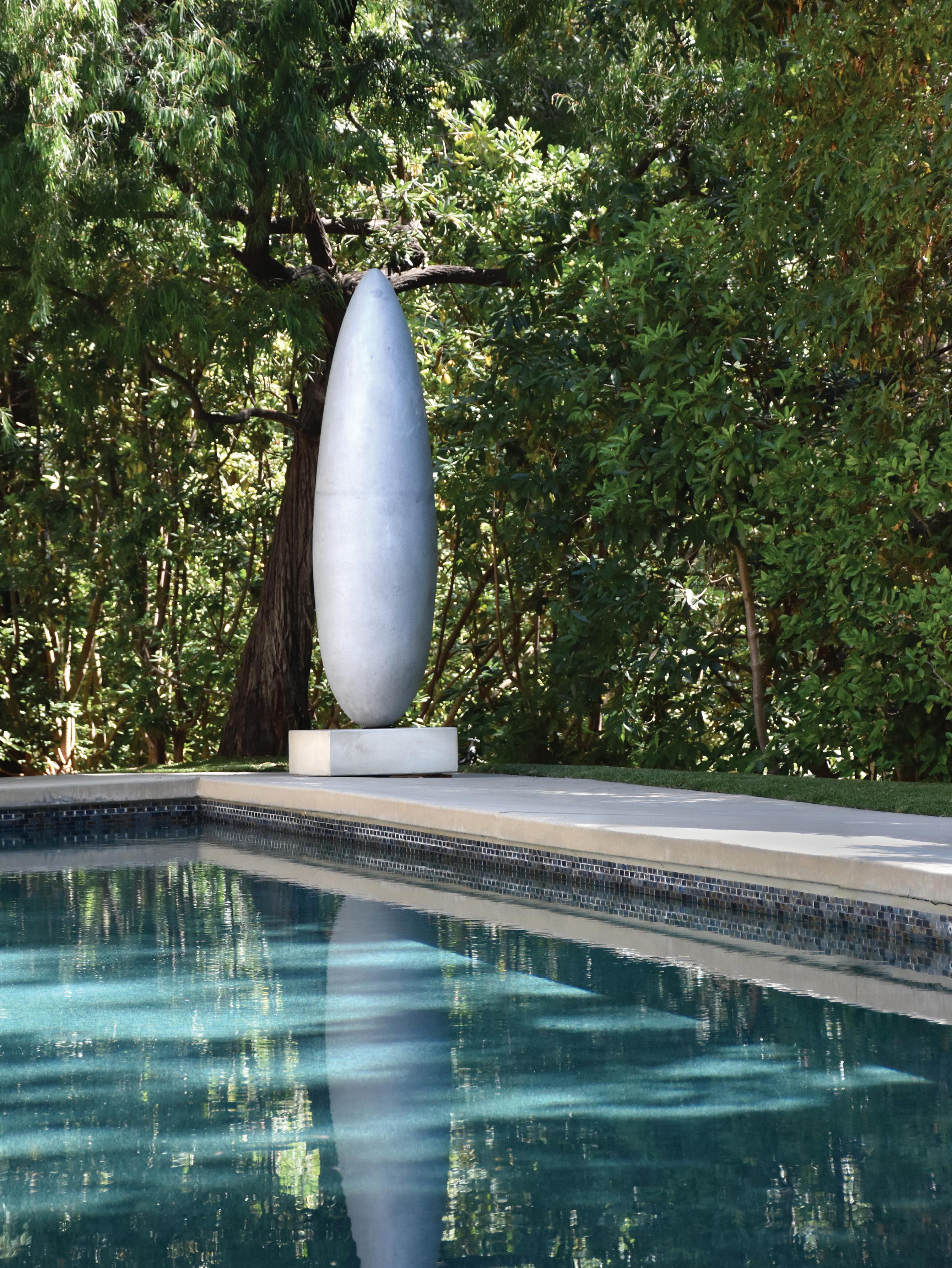
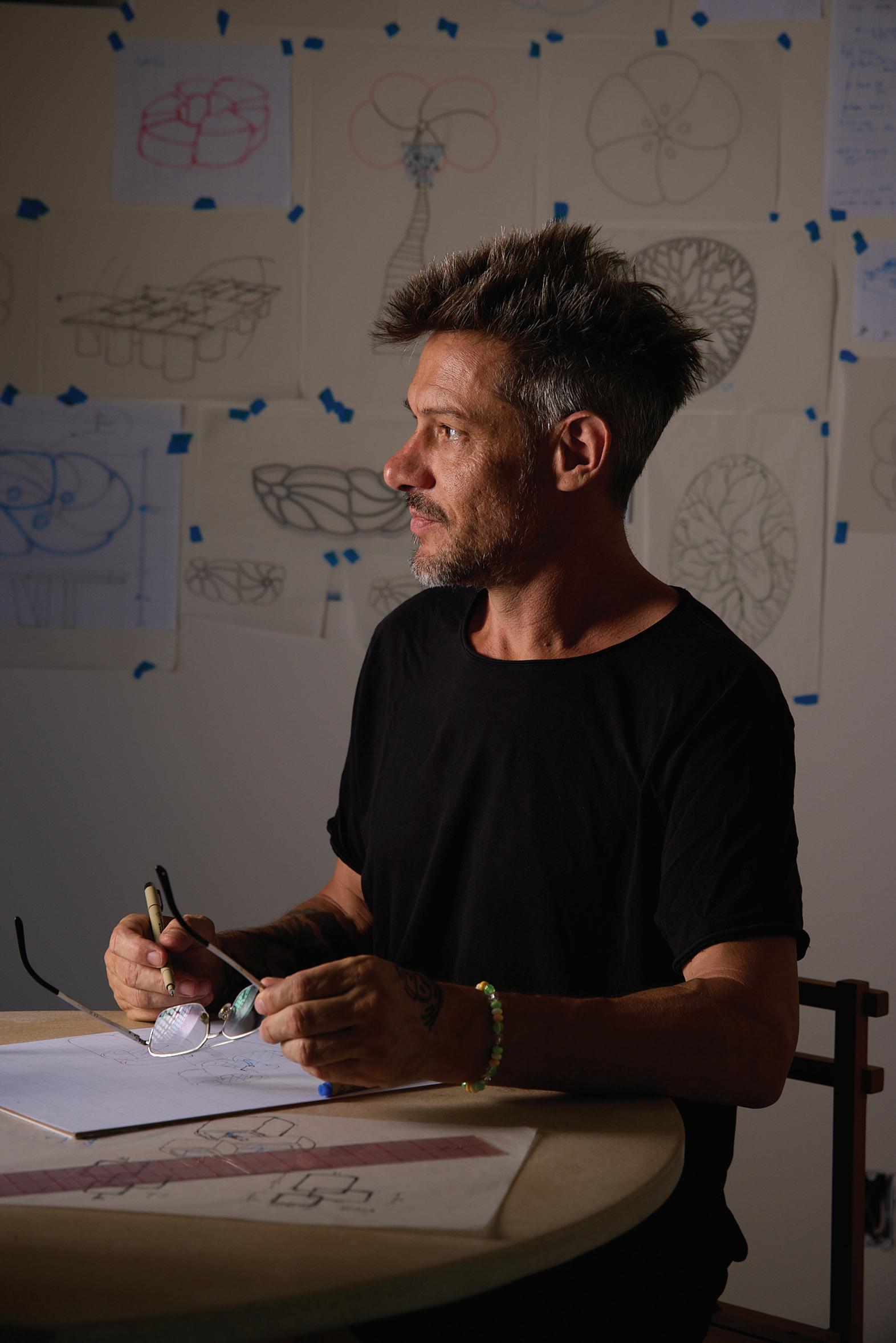
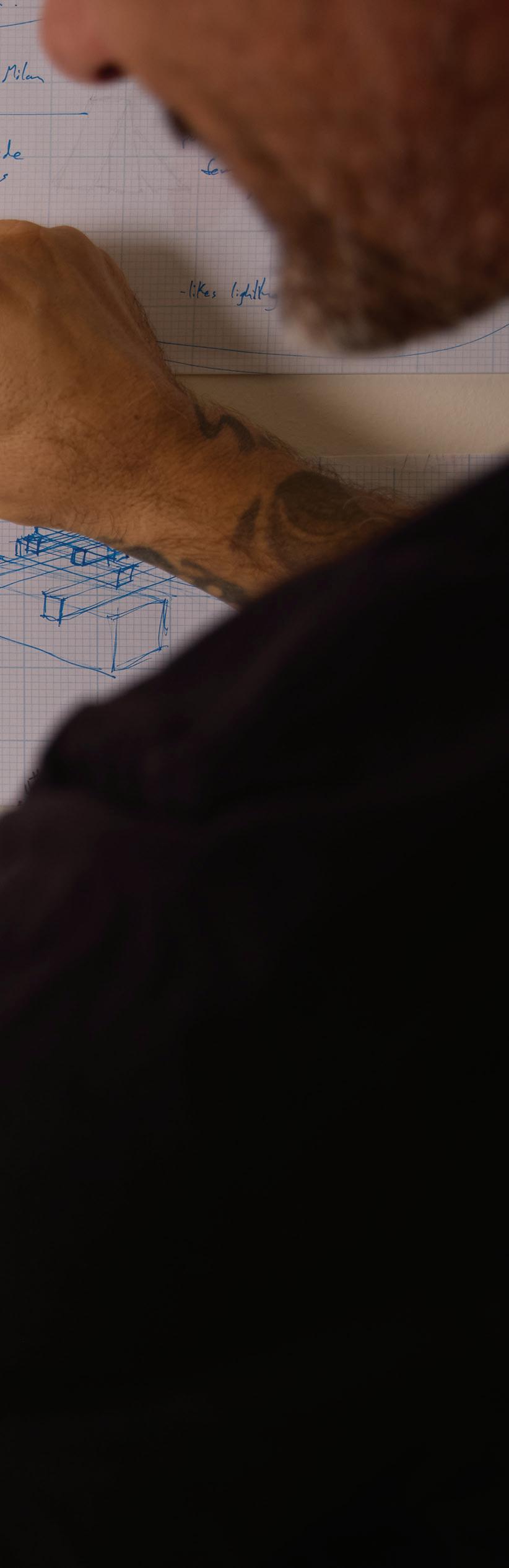
De Wulf’s idiosyncratic designs emerged from an early fascination with concrete.
his name on industrial-weight concrete furniture. It doesn’t announce itself in the form of island tropes like pineapples or palm trees, but Maui’s subtle presence is apparent if you look closely.
De Wulf has a test studio where he experiments, occupying the ‘ohana unit in his backyard. The distance from his Los Angeles shop, a potential hindrance for an in-demand artist, has instead been liberating, and he’s still able to work with fabricators in Italy and Paris, making trips to the mainland and Europe a few times a year. “Because I’m far from everyone, it’s allowed my mind to expand a bit, and I’ve become more open to working with different materials,” he says. Bronze, stainless steel, and aluminum—materials that resist corrosion and hold up against weather and time—are among his materials of choice lately.
The sound work is his newest venture, and the one he seems most energized by. The technical knowledge that once drove his process is no longer in the foreground of his designs. “For the first
15 years or so, I was designing from the perspective of a fabricator,” he says. “Now I’m beginning to approach my work like an artist. First from a feeling, and then the shape takes form.”
Although De Wulf lives five minutes from Ho‘okipa, one of the most celebrated windsurfing beaches in the world, he’s more content to jump in the water with his daughter and build sandcastles than catch waves on his own. “Whenever I land back on Maui, I feel a calm rush over me,” he says. “The way of life here has been a teacher to me. The respect for the land, the way people let each other in on the road. It creeps into every part of your being if you let it.”
IN CONVERSATION: RANDY WEIR
TEXT BY KRISTINE PONTECHA
IMAGES COURTESY OF HAWAI‘I LIFE
An architect sits down with a veteran builder to reflect on his five decades in the industry, from working with Vladimir Ossipoff to navigating the rising complexity of construction in an island environment.
The best design is often the kind that goes unnoticed. The structure performs as intended, the materials endure, the painstaking coordination leaves no trace in the finished product. Randy Weir has spent 50 years working toward that kind of craft.
Over the course of his career, the third-generation contractor has built some of the island’s most technically complex private residences, working alongside esteemed firms such as Olson Kundig and Walker Warner to navigate the demands of an island environment where salt air, heavy rainfall, and geographical isolation shape every decision made on a job site. Much of his most significant work is protected by confidentiality agreements. He has never advertised.
Graham Hart is a Honolulu architect whose practice, Kokomo Studio, draws on the tradition of place-responsive design that Vladimir Ossipoff helped establish in Hawai‘i during the mid-20th century. Hart has spent years studying Ossipoff’s drawings and buildings, documenting his discoveries on his personal Instagram. Weir worked with Ossipoff directly
on three projects early in his career. What Hart knows through Ossipoff’s drawings and built work, Weir knows through firsthand experience on the job site. That difference in perspective is what makes their conversation worth having.
In this exchange, Weir reflects on what it means to build at the highest level in one of the world’s most demanding environments. Here, salt air corrodes less durable materials, a single hour of rain can bring more water than most gutters are designed to handle, and tariffs and supply-chain disruptions can add hundreds of thousands of dollars to a project overnight. He talks about the shift from minimal construction documents to a sometimes years-long approval process for shop drawings, the quiet art of keeping a project—and a relationship— intact through every difficulty, and what Ossipoff taught him that no blueprint could. It is a portrait of a builder who measures his legacy not in awards or press coverage, but in the homes that speak for themselves decades later.
The following interview has been condensed and edited for clarity.
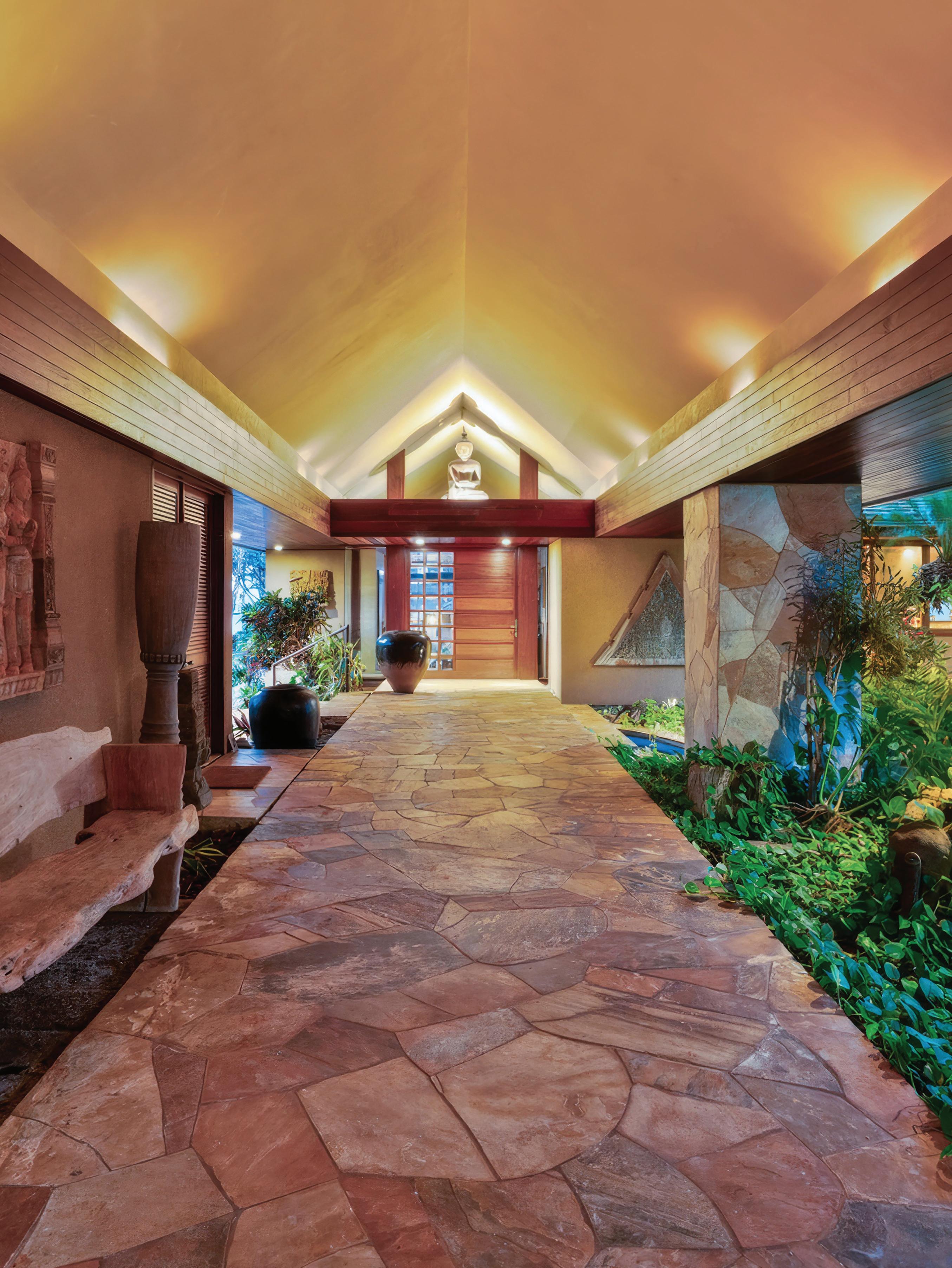
Graham Hart: I’ve spent a lot of time studying Ossipoff’s drawings and visiting his buildings: the cabin at Pālehua, the chapel at Hawai‘i Preparatory Academy, the Liljestrand House. But you actually knew the man and helped bring his visions to life. Can you tell me about working with him?
Randy Weir: I worked with Ossipoff on three projects, but primarily day to day with Ossipoff’s business partners, Sid Snyder and Alan Rowland. Ossipoff would visit the site at various points, but at the end of the project, we would walk around with a color swatch deck, and in two hours, pick out all the colors for the different spaces. Some of them were unusual, like pink paint above the cabinets. When you asked him why, he’d respond, “You’re going to like it when it’s finished.” He was always right.
GH: Back in the day, an Ossipoff house would have five drawings. Now there are dozens of drawings from architects and consultants. How has the relationship between architect and contractor changed over the years and why?
RW: The requirements for structure are greater, mostly due to the hurricanes that passed over the island in 1982 and 1992. Any new building has a lot more Simpson ties, straps, brackets, and steel than ever before. With one particular Ossipoff project, we ran some lag bolts through the four-by rafters, and that’s all we needed.
GH: Well that’s still to code. (both laugh)
RW: It’s not just the structural requirements that made drawing sets more extensive, either, it’s the amount of detail work. It’s great when new design-
ers have so many ideas about how a project could come together, but on a recent project, some shop drawings took over a year to get approved by the interior designer we were working with, which caused delays. While they were being fabricated, the designer went to the millwork shop and requested more changes, which stalled work further. But when the project was completed, the designer wrote me a letter saying they had never worked with a contractor who built a house so well.
GH: It sounds like your approach—staying respectful, absorbing the difficulty, never letting it show in the finished work—is exactly what makes that kind of outcome possible.
RW: I try to take into account what the client wants, what the architect is trying to do, and I find it best to be amicable with homeowners rather than combative. In my 50-year career, there isn’t a house I’ve built that I can’t bring prospective clients to. I’ve maintained these friendships and relationships. If I go to a house 10 years later and see something that needs to be fixed, we often do it, especially if it’s something we could have done better the first time.
GH: That’s a real philosophy, not just about building, but about how you conduct yourself in the industry. And it sounds like it’s paid off, not just in repeat business, but in something more lasting than that. Since three generations of your family are active in the general contracting business, and you come from a legacy of builders, do you want to keep that going forward?
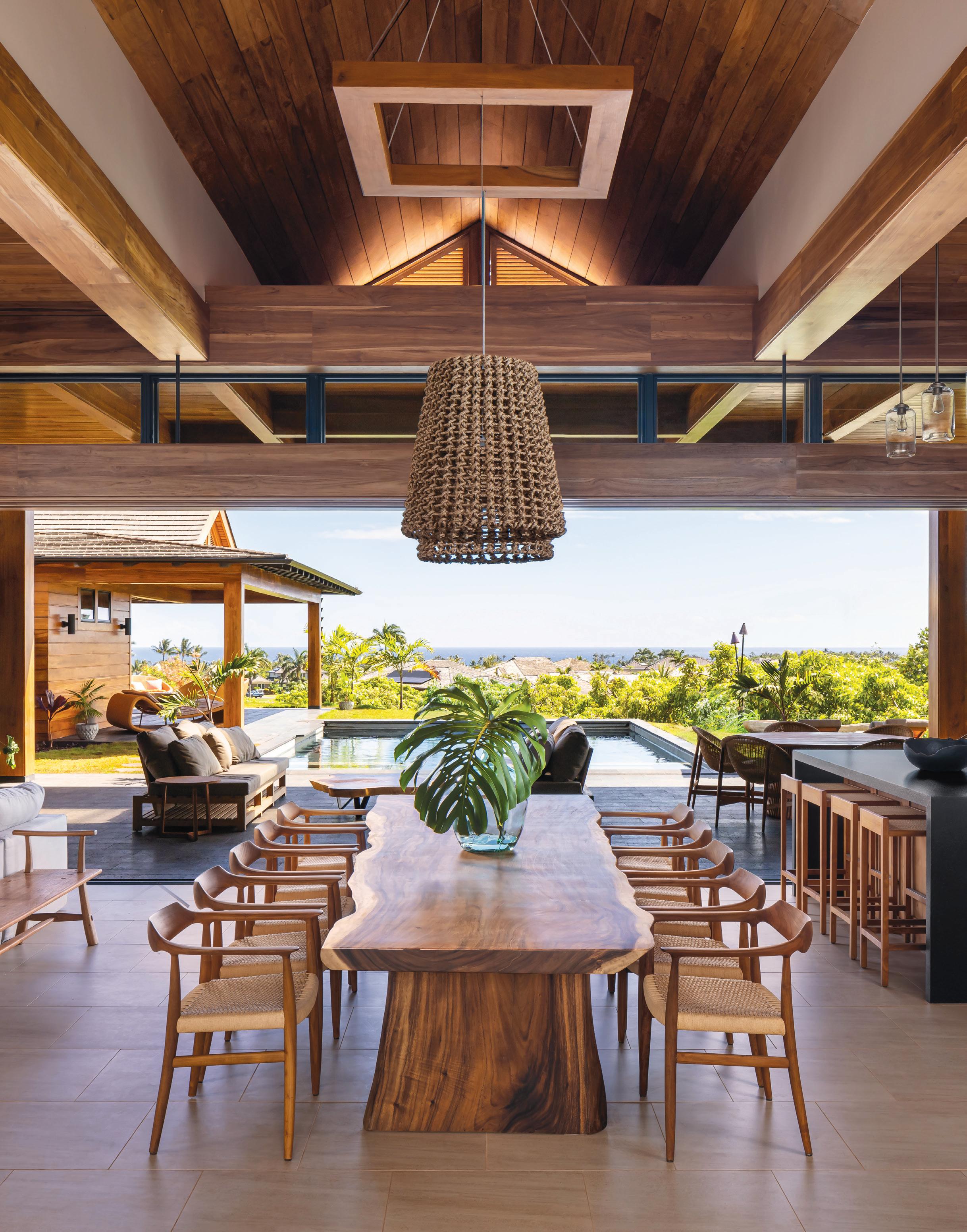
RW: It matters to me, and not just because I want the work to be good. I’m thinking about the future of the company. My partners will outlive me, and these relationships we’ve built are what carries it forward.
GH: Because you often advise on how projects could be built better, or built with long-term maintenance in mind, do you find that you’re brought in during the design phase to help cost the project?
RW: Yes, quite often we do a preconstruction process where we price things from the beginning with a rough order of magnitude, and as the project moves along, we’ll get more specific about how much things are going to cost. Our contract model is not necessarily cost plus, it’s cost plus fixed profit, meaning we have an idea of what it costs at the beginning. It’s itemized and specific, so a client has a detailed understanding of what their costs will be, but the profit margin is specified upfront as a separate line item. If the project is under budget, the fee goes down. If the project is over budget, our profit stays the same. I’ve seen a lot more change orders recently, and it’s often due to scope changes brought on by clients revisiting decisions made with their architect. Things used to be more clearly defined.
GH: That’s a very transparent way to structure a contract. It puts you and the client on the same side rather than in opposition, which seems very consistent with how you describe your relationships generally. What are we talking in terms of cost for your latest projects on Kaua‘i?
RW: Typically it’s somewhere between $2,000 and $5,000 per square foot on some projects. That’s not
made better by the tariffs. As an example, one of my projects was $900,000 worth of structural steel that had over 50 percent tariff on it, so the tariff alone was $450,000. We were worried the project would get canceled before it began due to that cost. Luckily we were able to find alternatives by using American steel, but costs were still incredibly high. I’ve also done projects where there’s so much steel and glass that we had to fabricate special tools to carry glass around on site.
GH: You’ve spent your entire career building relationships on Kaua‘i, along with a reputation for quality that speaks for itself. But you’re often working with architects who are not from the islands. How does that dynamic work? Do they rely on you to be the conduit back to Hawai‘i?
RW: Certainly, not only for advising on materials and methods, but also due to the weather here. I’m thinking specifically about how much rain we can get. Back in 2018, there was a storm where we got five inches of rain per hour. I’ve done calculations recently to figure out how much rain a house is projected to withstand. Because we fabricate the gutters in-house, we decide how many outlets there are and where the overflow goes. That kind of expertise is something I bring to the project that others may not consider.
GH: Are there a lot of details in a project that might appear simple but require a lot of planning and foresight to get right?
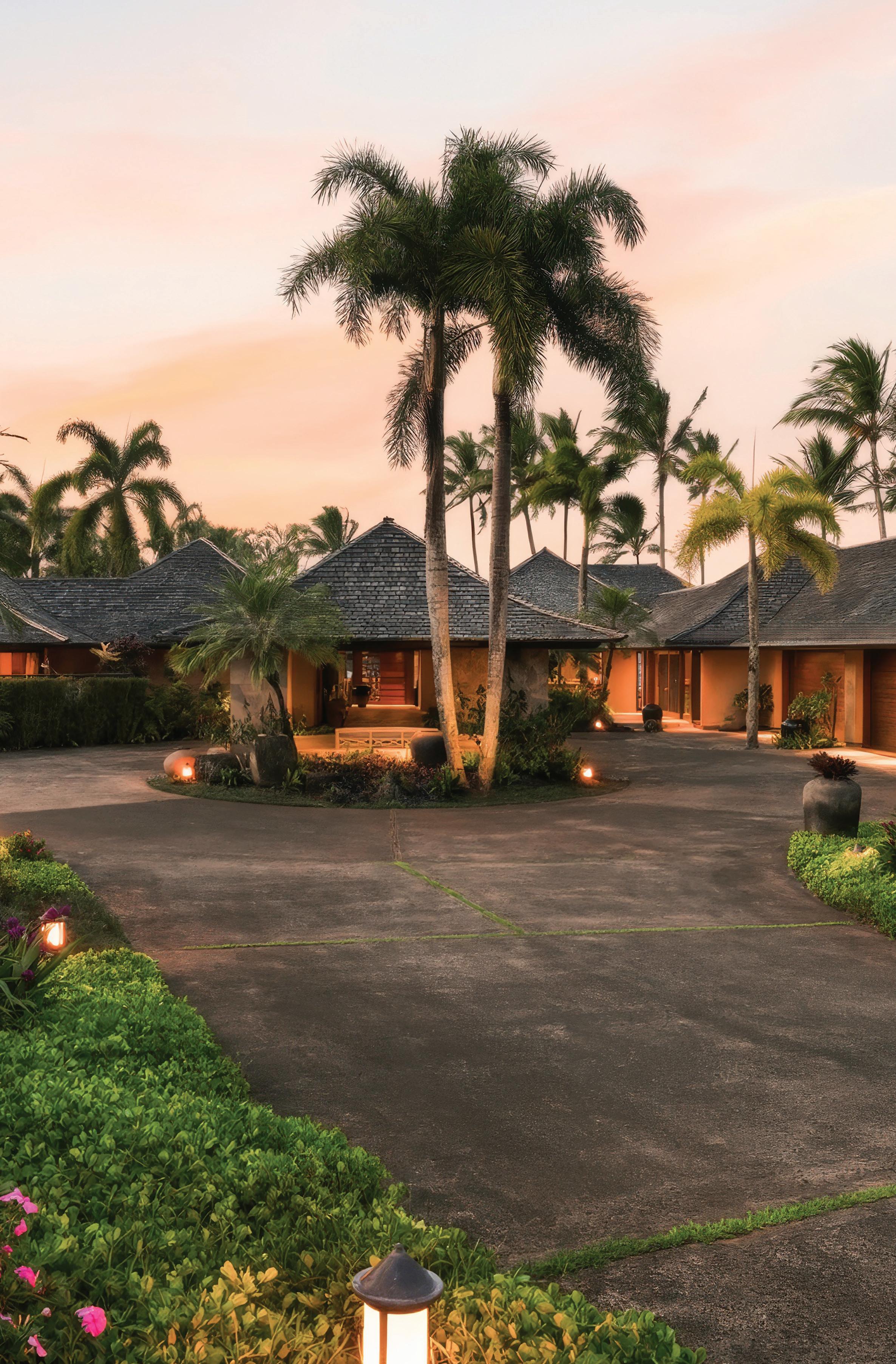
RW: On one of the Ossipoff projects, the interior walls were entirely clear heart redwood. Ossipoff wanted the project to not have any trim, so instead of trim around the doorway, there was a one-eighth reveal around the door. It takes a lot of precision to get that to look right. Clients sometimes assume that because a detail looks simple, it requires less work, but in reality, the simple work is harder because it requires more forethought and coordination. If we had used trim, we could have hidden any tolerances needed in the work.
GH: That’s such an important point. The restraint is the hardest part. Anyone can add trim to cover a mistake. Doing it without trim means every cut has to be right the first time.
RW: Another thing I learned from Ossipoff was material finishes, like the lime wash on the redwood. We’d apply agricultural lime to the re-sawn boards, let that dry, then brush off the excess lime, which gave it a driftwood appearance.
GH: That lime wash recipe must be something of a trade secret at this point! A lot of architects try to replicate that driftwood finish today and never quite get the proportions right.
RW: It’s surprisingly durable. I even used it on my own house. If you get a water stain on it, you can wet the whole board and the water stain will go away.
GH: Any advice for potential homeowners?
RW: It’s important to pick your architect carefully. There are some who I’ve come to work with quite frequently and that I’d recommend, but it comes
down to trust and experience. As for building a new house or embarking on a construction project, I suggest talking to a firm’s previous clients or people who have had homes built. Discuss the costs of building as well as the cost of maintenance. Consider the design and the long-term life of the house.
GH: What do you think the homes you’re building will mean in 50 years?
RW: It depends on what they look like in 50 years. (laughs)
If the homes have been properly maintained, their timelessness will persevere. But if they haven’t been maintained, someone like you, an architect, might be able to come in and say there are good bones in the house and can restore it, but most people won’t know what they have. That’s why I try to make buildings that can last 50, 75, 100 years—so they can be appreciated for generations to come.
The residence featured in this story, located at 4200 Anini Vista Drive and offered at $32.5M, is represented by Roni Marley R(B). It appears in the Collection on pages 108 and 109.
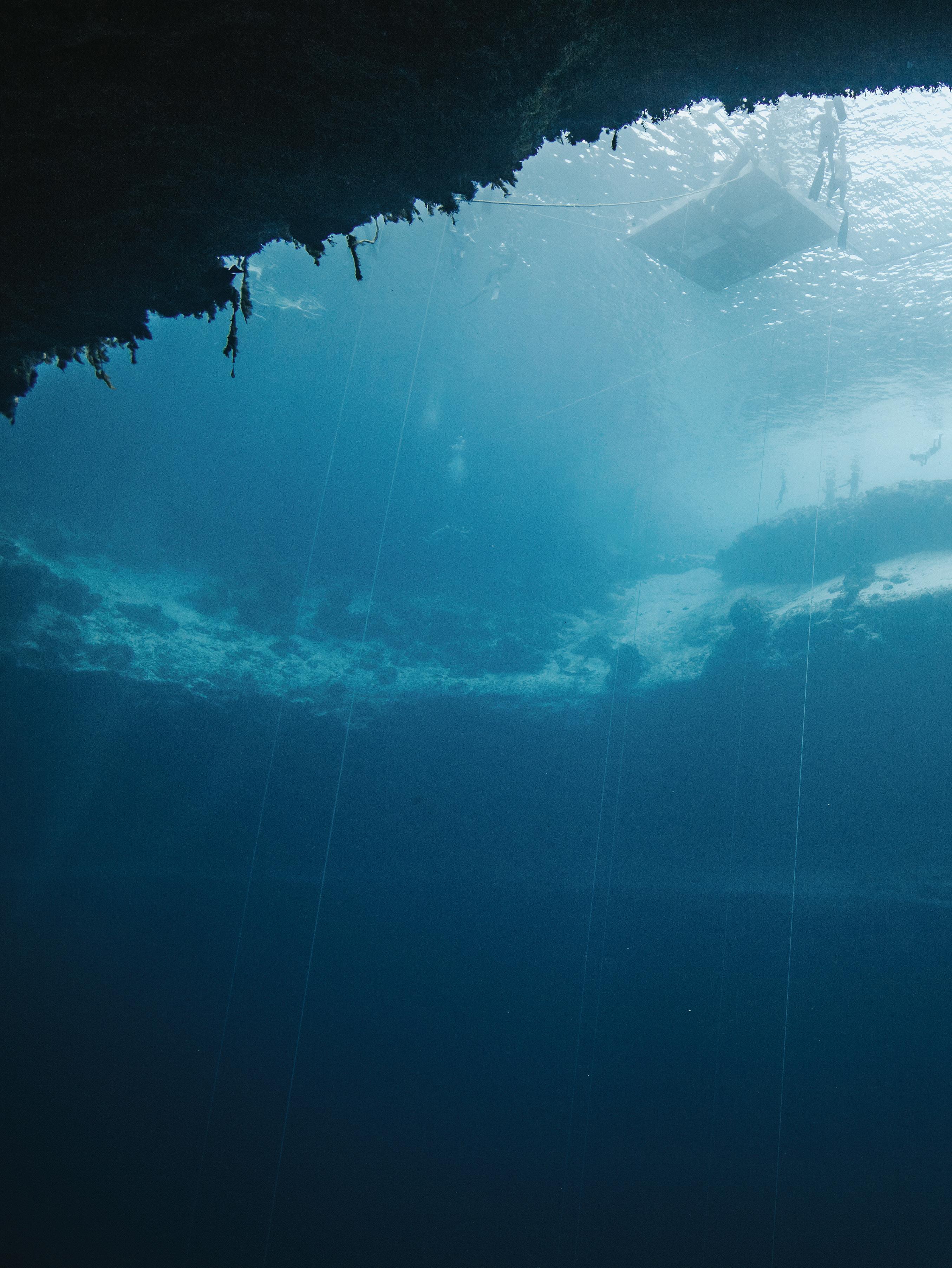
CONNECTED BY WATER
TEXT BY HUNTER HASKINS
IMAGES BY DAAN VERHOEVEN AND DEEP FREEDIVING INSTRUCTION
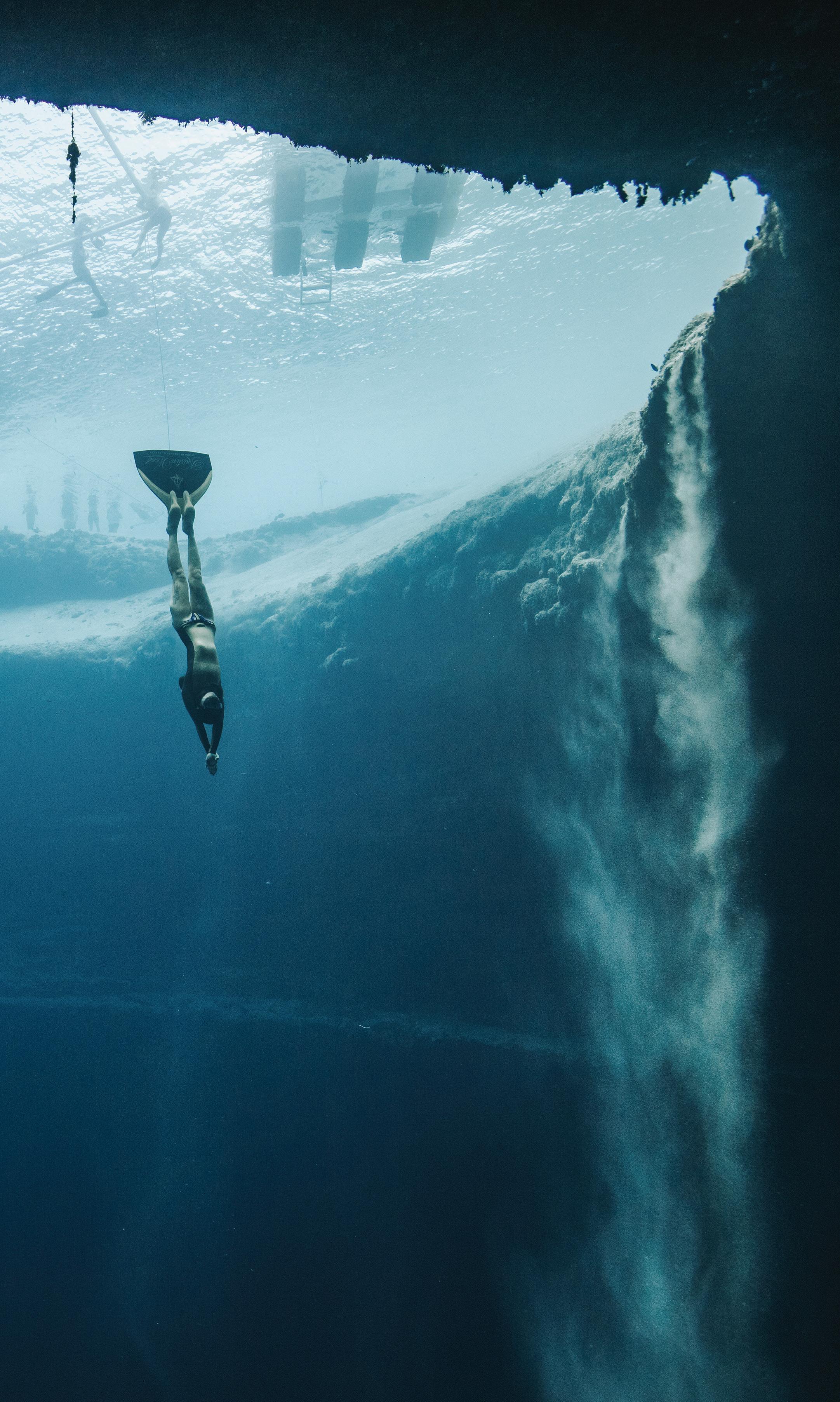
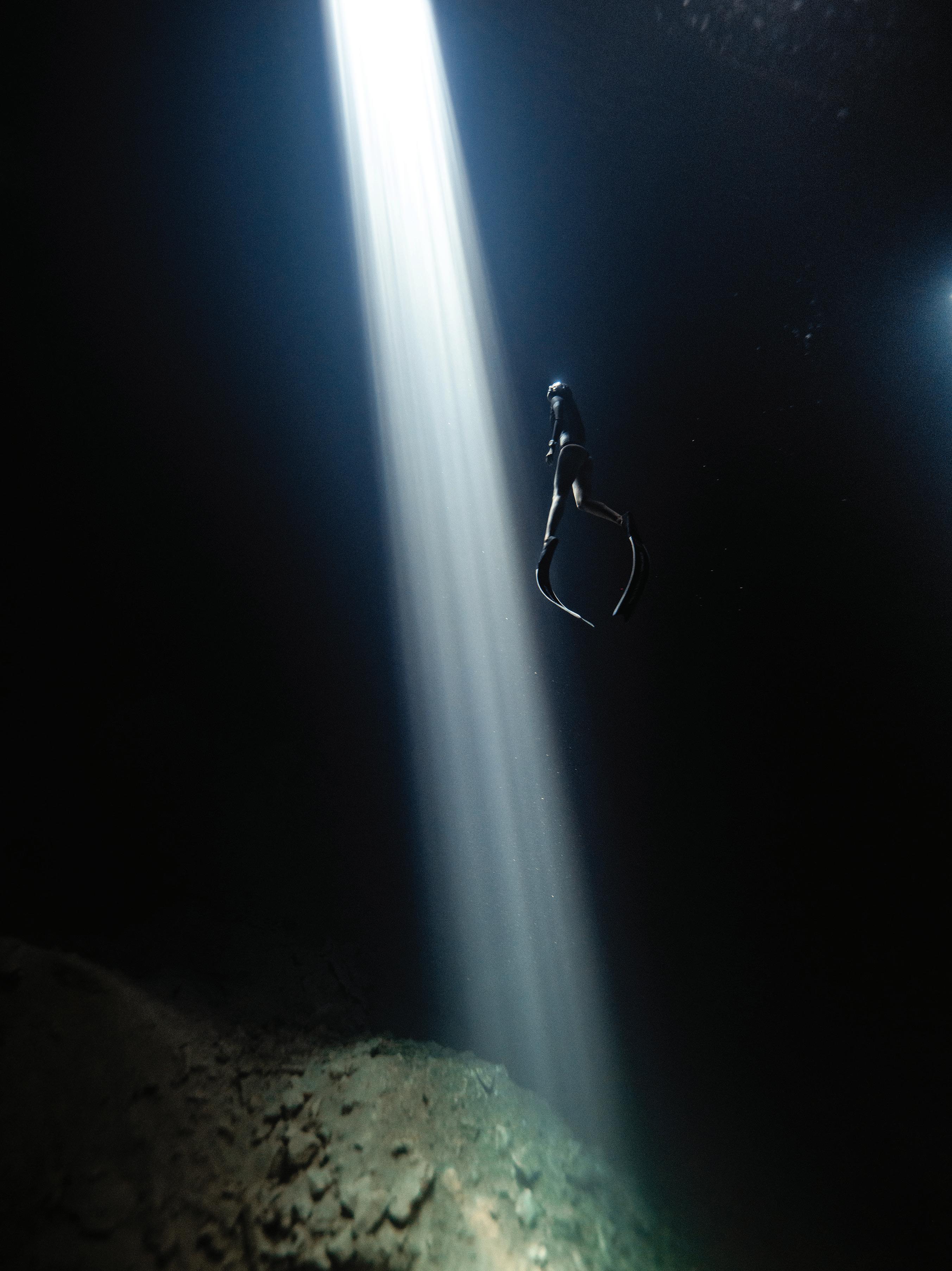
Two elite freedivers navigate life, love, and training at the sport’s highest level.
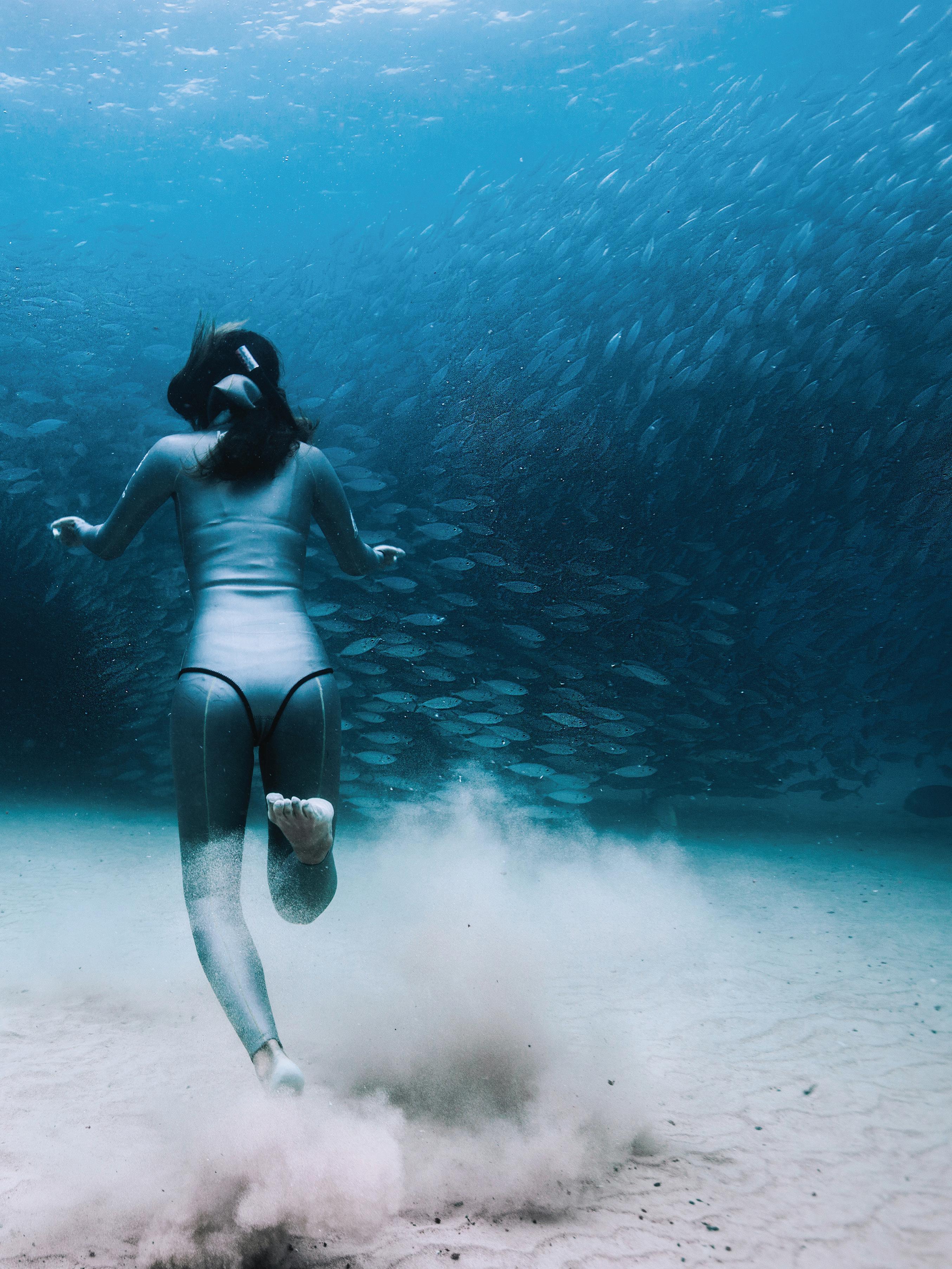
The students are face down, holding their breath, motionless in the pool as Daniel Koval paces poolside and instructs them, “Wait until you really have the urge to breathe, then swim a lap underwater.” It sounds like torture, but this is par for the course during a highlevel freediving clinic with Deep Freediving Instruction. Koval is the head instructor and a top-rated competitive freediver and spearfisherman. The students of this particular clinic are all certified freedivers, and most are capable of diving deeper on a single breath than recreational scuba divers are allowed to dive with air tanks.
The next drill would be fatal to most swimmers. “Blow out all of your air and sink to the bottom of the pool,” Koval directs them. This trains students to relax and focus on equalizing their ears and sinuses as the water pressure squeezes their lungs to a fraction of their normal size, simulating the conditions of a deep dive. The physics and physiology of diving deep may sound unsettling, but progress is steady with the proper training. Like a would-be marathoner starting with a one-mile jog, once the body adapts to the sensations and demands of freediving, an aquatic marathon begins to feel manageable. Koval routinely dives past 200 feet to spearfish. “It’s only one minute down and one minute back up,” he shrugs, with a laugh.
His partner, Kristin Kuba, is on the sidelines, editing photos for Deep Freediving Instruction’s social media posts. Like many, she was initially captivated but intimidated by the ocean. Twelve years ago, she decided to conquer her intimidation by taking one of Koval’s freediving classes. Then another. “Kristin’s journey is a good example of how freediving progress is rarely about finding a single, secret technique,” Koval says. “She came into training focused on depth, performance, and milestones.”
Soon they were training and teaching together, realizing they worked well both professionally and romantically while traveling to freedive competitions around the world. Both have racked up numerous national records, often with the other by their side as a coach and safety diver. “It’s more than convenient to compete with a partner who
knows what you are capable of,” Kuba says. “He’s the best safety buddy.”
When it comes to the mandatory post-dive protocol that freedivers must perform correctly to complete a record attempt, success often hinges on a deeply attuned coach. “I’ve had to scream at him on the surface to keep him focused,” Kuba says, referring to the effects of depth and hypoxia that divers must combat upon resurfacing. Koval agrees that without Kuba’s coaching during those critical moments, several of his national records would not have stood. And likewise, she says, “Seeing him swimming alongside me as I come up from the deep—that’s a good feeling.”
As instructors, their approach isn’t about chasing outcomes but rather removing obstacles. “It’s about removing barriers to performance and giv-
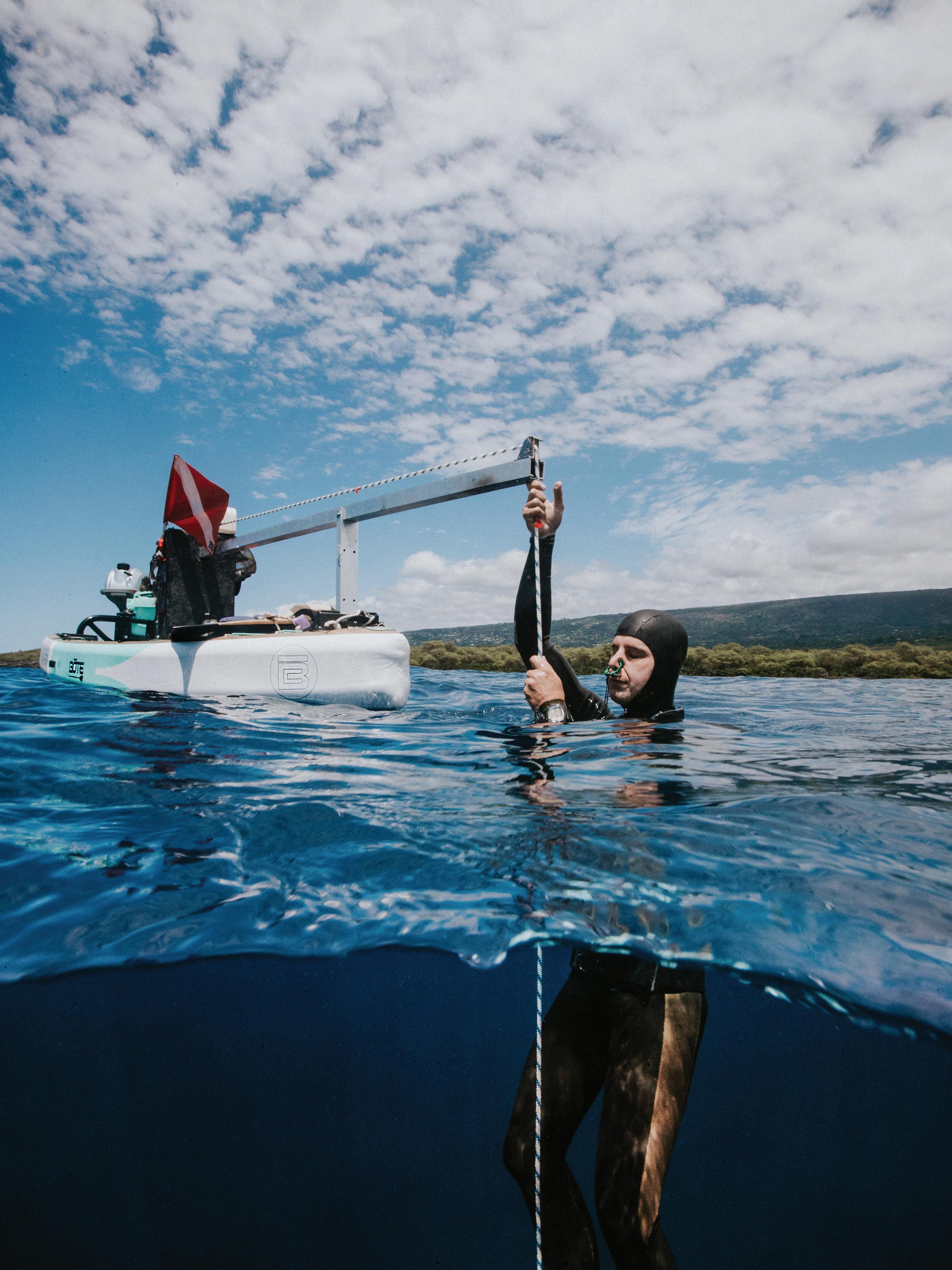
Freediving has taken Kristin Kuba, above, and Daniel Koval, opposite page, to extraordinary places around the world.
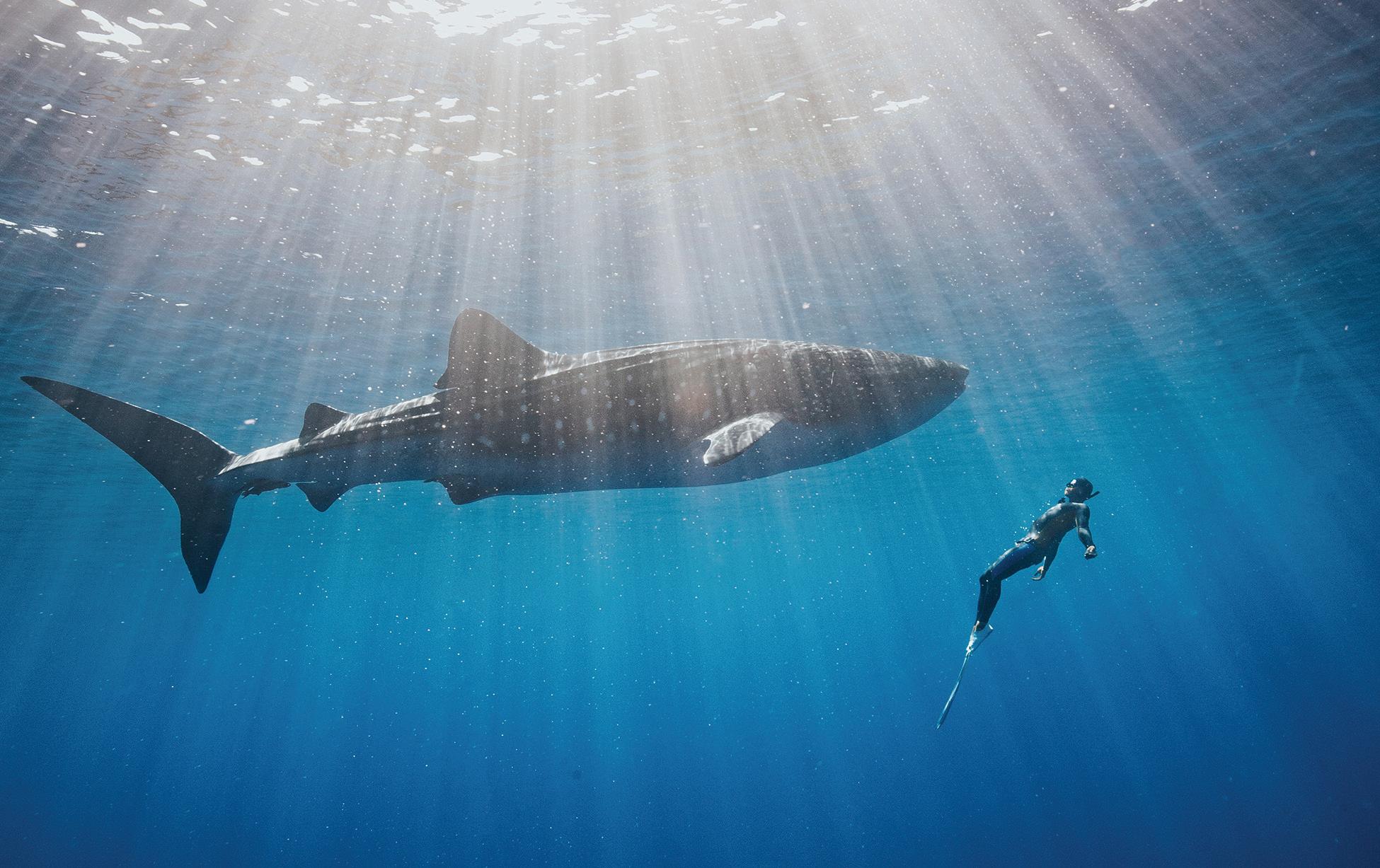
Koval is seen diving with a whale shark in Hawaiian waters.
ing students the right tool at the right time,” Koval says. “Most see the sport as complex and mysterious, but when you break it down, everyone possesses the physical ability to be a great freediver.”
Maintaining composure is key to freediving, and that same sense of ease carries over into the couple’s lives ashore. Laid back and affable, Koval and Kuba create an atmosphere that their students describe with a smile: Working with them feels less like formal instruction than being welcomed into a family. Koval credits his performance, teaching style, and philosophy to his mentor, Martin Štěpánek, a world-record-holding freediver and founder of Freedive Instructors International, the certifying agency for Deep Freediving Instruction and many top-rated schools worldwide.
The competitive freediving lifestyle demands hard work, but the pair has never been short of
the necessary passion or inspiration. Raised in Orange, California, Koval moved to Hawai‘i to spearfish, eventually transitioning to a full-time career teaching freediving, shooting fish for his meals and living lean in a van on O‘ahu’s North Shore. Koval approached Team Beuchat, a prestigious French spearfishing team, and became the first American to make the team. Both he and Kuba are sponsored by the South Korean freediving brand Double K—Kuba cold-called them for a sponsorship—and the couple’s photos adorn the front doors of the company’s main headquarters.
All the travel and hustle, however, took its toll. They both decided to take a break from competition in 2024. Kuba returned to her work as an esthetician and leaned into her passion for underwater photography. As for Koval, “It’s really nice to take a break [from competition] these days, but I’m still teaching full time,” he says. “I’ll probably never stop.”

What does Koval do with his time off from competing? He created KAI Freediving, an online training platform that automates many of the critical coaching and training decisions for elite freedivers. “The sport has advanced so much in terms of performance, but a lot of it is trial-and-error,” he says. “It’s an art right now.” All serious freedivers have a dive computer, so their dive data is downloadable to a device for analysis. He explains that the platform, which he coded himself, uses artificial intelligence to detect patterns across data sources, such as wearable fitness trackers, diet logs, and dive profiles, to drive smart training decisions.
“Data isn’t the problem,” Koval says. “Decisions are.” Although top competitors often work with coaches, most athletes self-coach during their formative years, building psychological stamina as much as physical stamina. KAI, Koval says, is great for data-driven divers that need guidance between advanced courses and coaching sessions.
Koval and Kuba also volunteer at FreediveSafe! Hawaii, a nonprofit founded by Kimi Werner, a fellow competitive spearfisher from O‘ahu. Werner brings in experienced instructors like them to teach fundamental techniques, emphasize sustainable fishing practices, and reinforce safety measures to prevent shallow-water blackout—the leading cause of freediving fatalities. Visitors, locals, and even Navy SEALs have perished in Hawai‘i’s waters during casual spearfishing or freediving trips. It’s why pro freedivers rally around a shared commitment to proper technique and safety. “Always dive with a buddy” is a mantra for all freedivers, and having a trusted buddy makes all the difference. “There’s something special about diving with the person you love,” Koval says. “The bond it builds goes deeper than the ocean itself.”
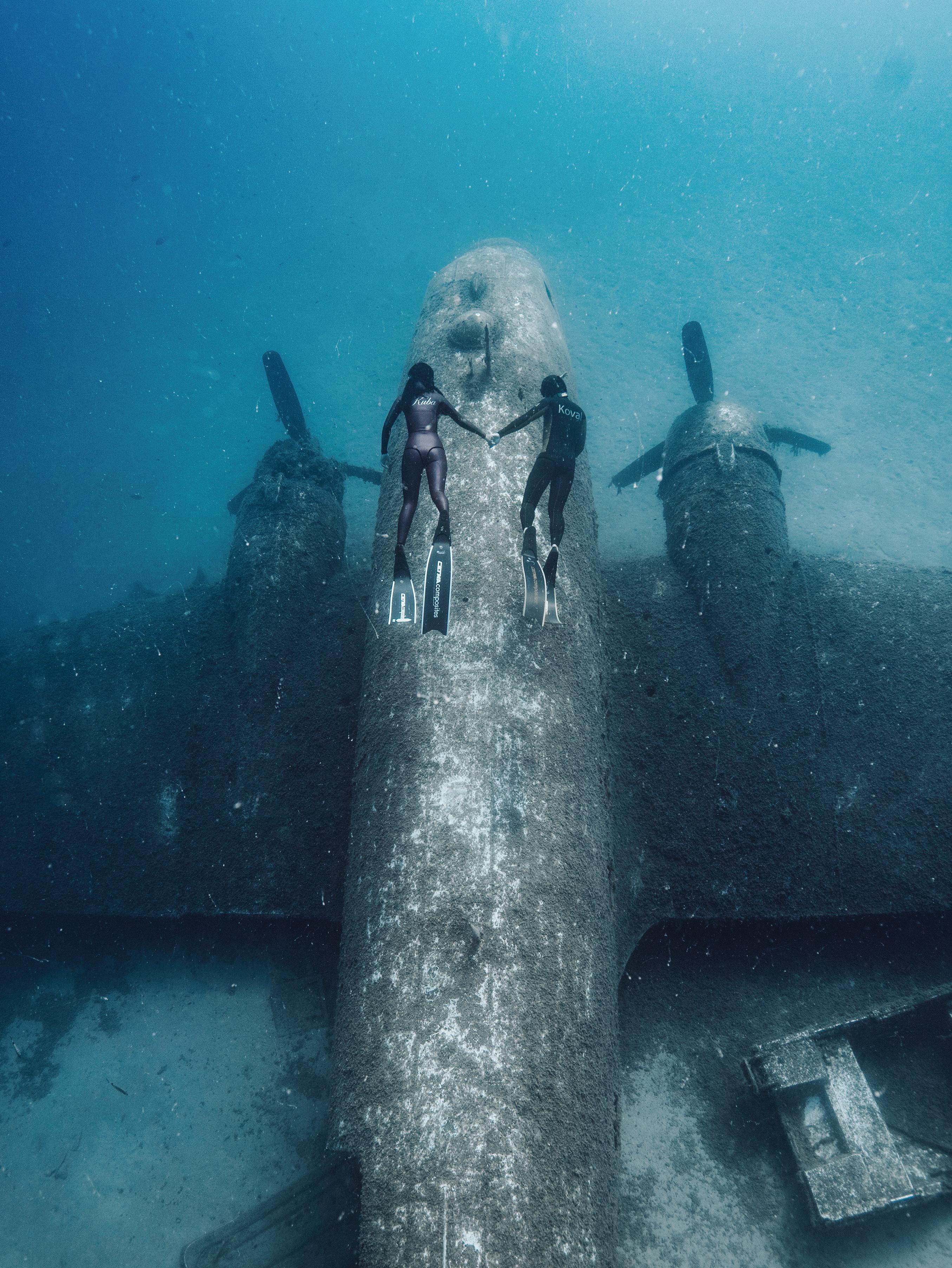
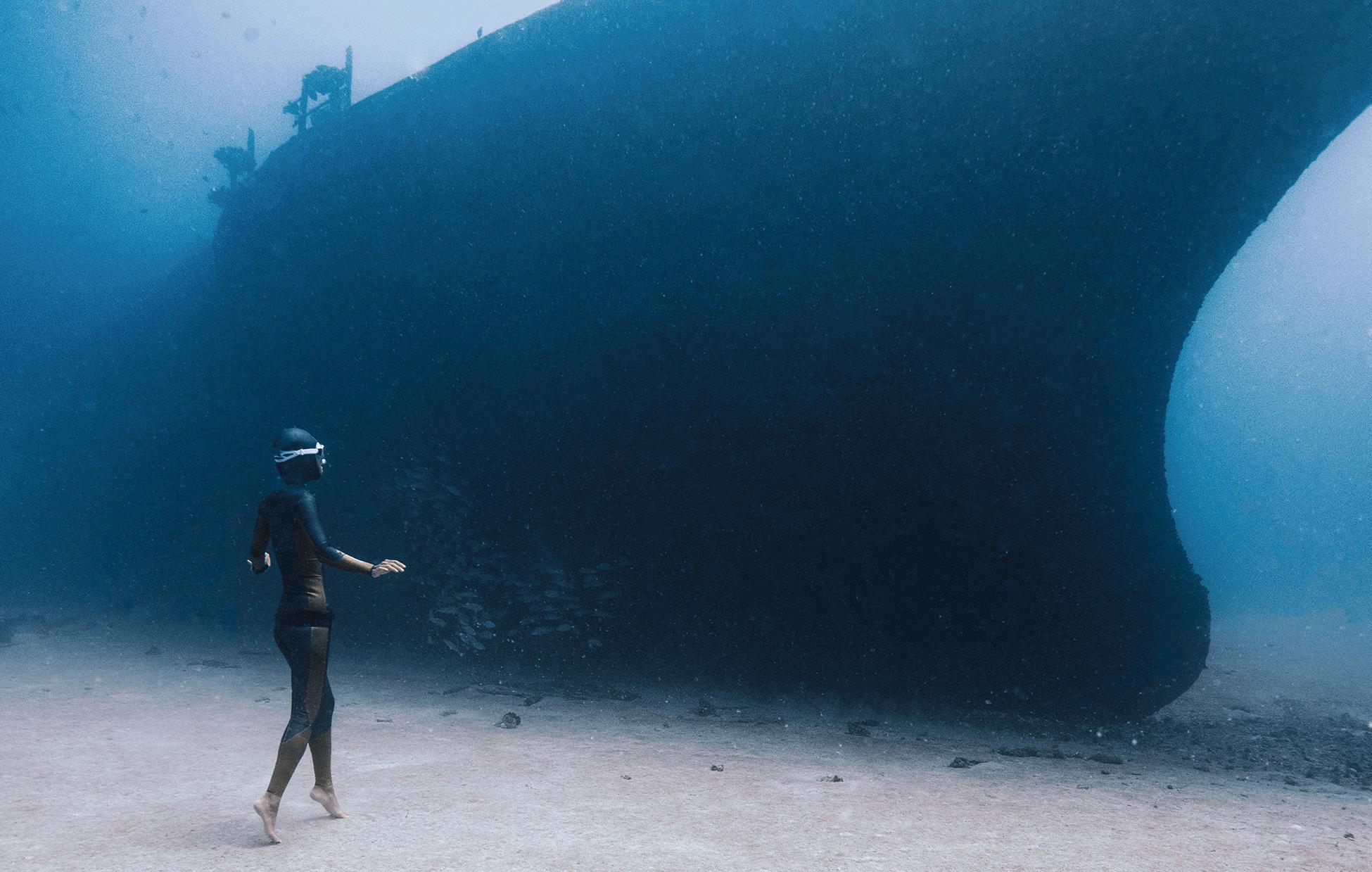
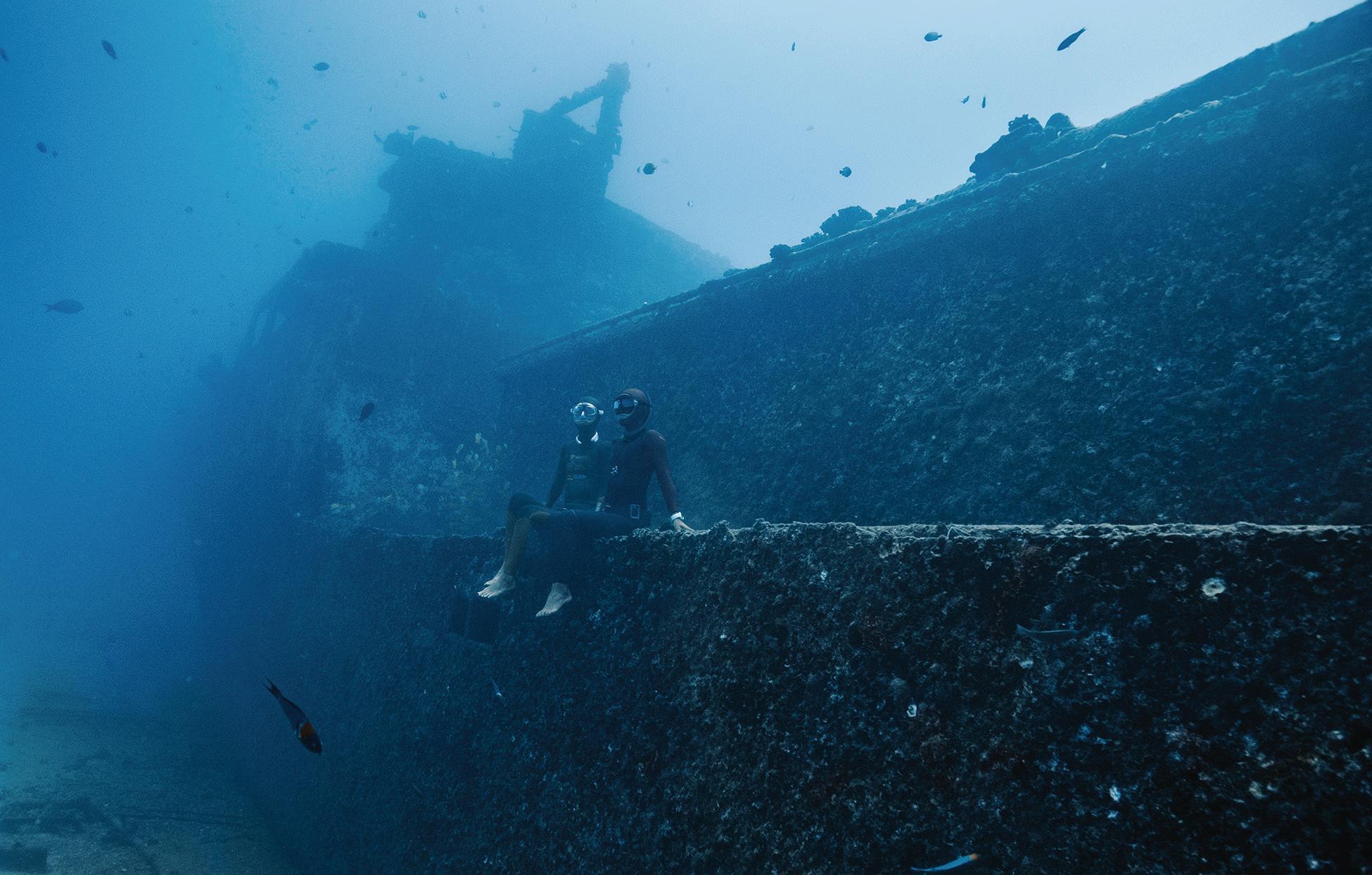
Kuba and fellow record-holder Enchante Gallardo are pictured together at a wreck known as the Sea Tiger off the coast of O‘ahu.


TENDING TO TOMORROW
TEXT BY JEANNE COOPER
IMAGES BY RACHEL OLSSON, MICHELLE MISHINA, AND COURTESY OF FAIRMONT KEA LANI
In the spirit of hope and healing, an island-wide network of growers has replanted thousands of trees lost to wildfire in Lahaina and Kula.
When David Clements isn’t busy tending bar at Andaz Maui at Wailea Resort, his days are shaped by a different kind of tending. Above the resort, on his extended family’s farm on the slopes of Haleakalā, Clements also cares for 1,600 donated trees and plants destined to replace some of the vast greenery lost to Maui’s devastating wildfires in 2023.
“I may not have the ability to make a huge financial contribution to the recovery efforts, but what I do have is time, space, energy, and effort, and lots of Ōma‘opio sunshine,” Clements explains. “We’ve set aside a portion of the farm to foster these trees until they go to their forever homes in Lahaina and in Kula. Or until we can place them in high-visibility areas to encourage more donations, so that we can continue growing the number of trees that we can replace.”
His acreage in Ōma‘opio is part of an island-wide network of “grow sites” coordinated by Treecovery Hawai‘i, a nonprofit founded by Duane Sparkman, Clements’ longtime friend and an esteemed Maui arborist, shortly after the wildfires. Through Treecovery, Maui property owners, who collectively lost some 21,000 trees in the blazes, can request free replacements from a long menu that
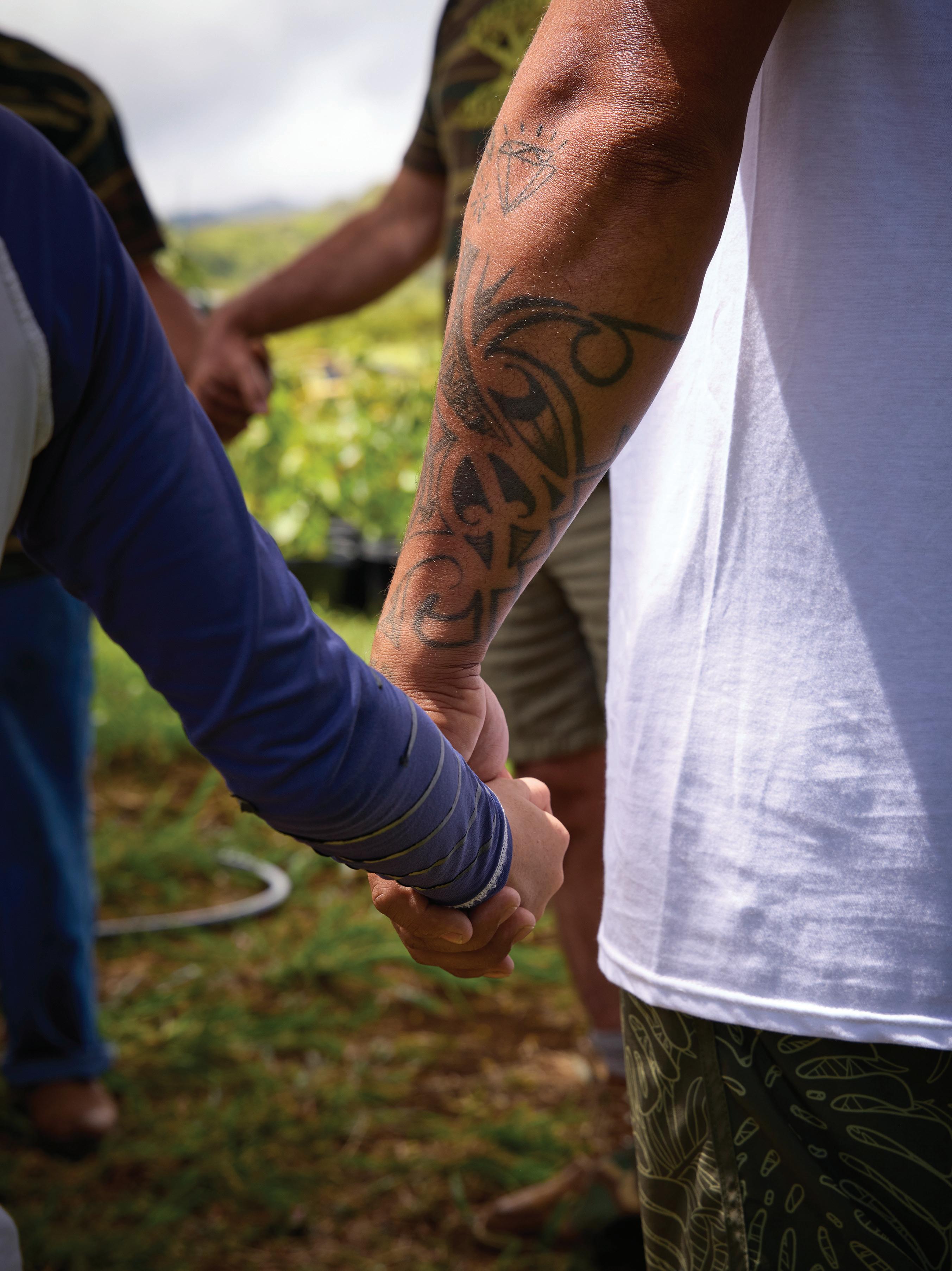
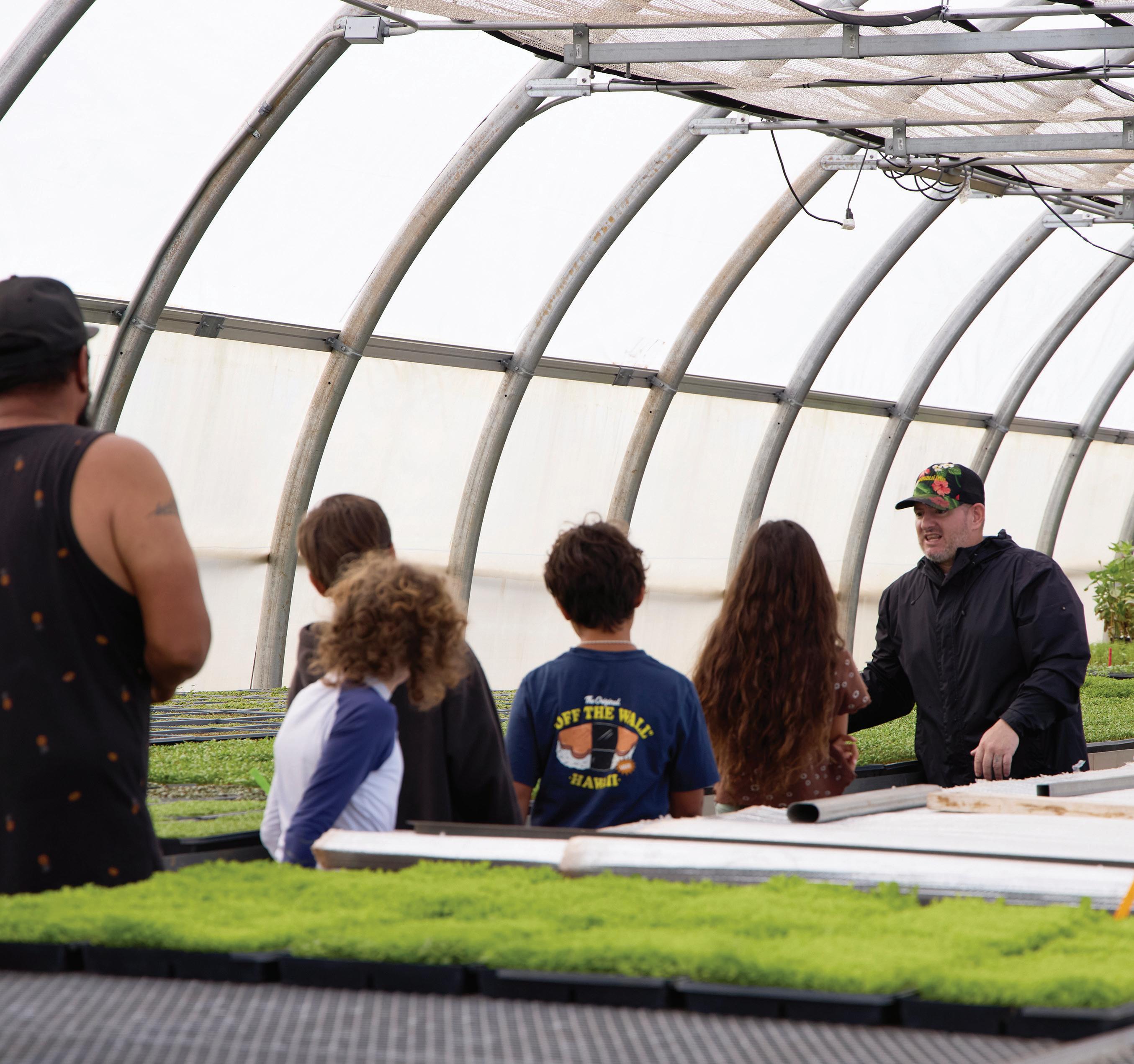
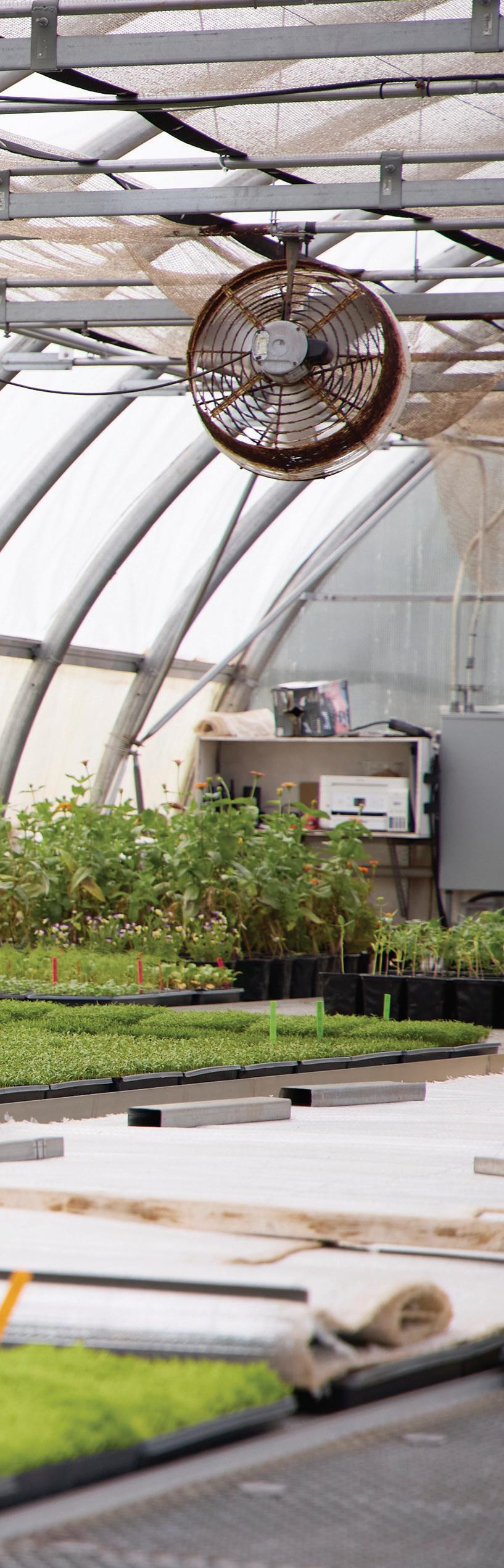
You can go to many places that have beaches and palm trees, but there’s only one place with aloha. That aloha is in the people, but it’s also in the ‘āina.
includes many popular non-native trees, including mango, plumeria, and pua kenikeni, as well as native trees and plants such as wiliwili, kamani, loulu, hau, and ti.
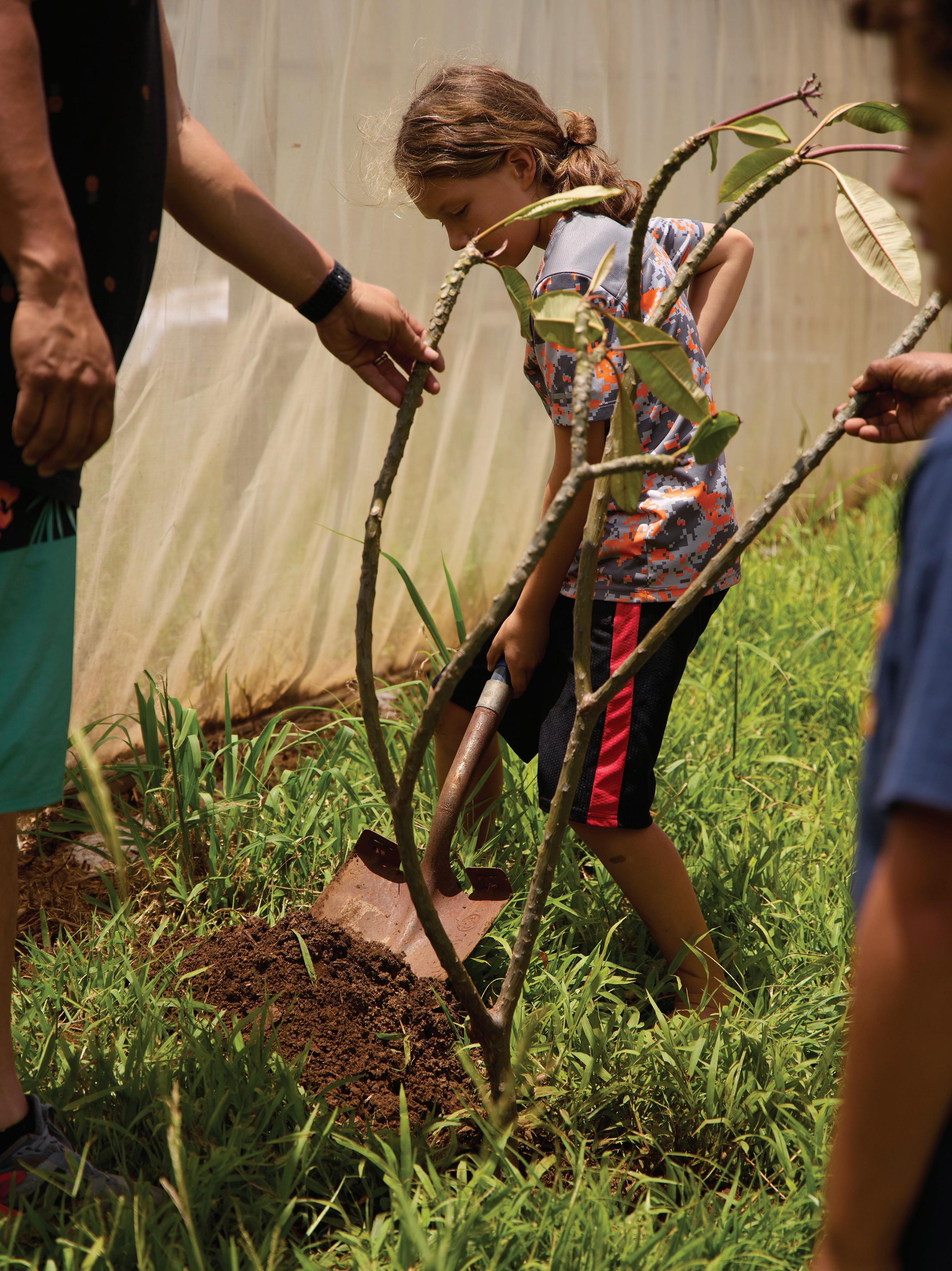
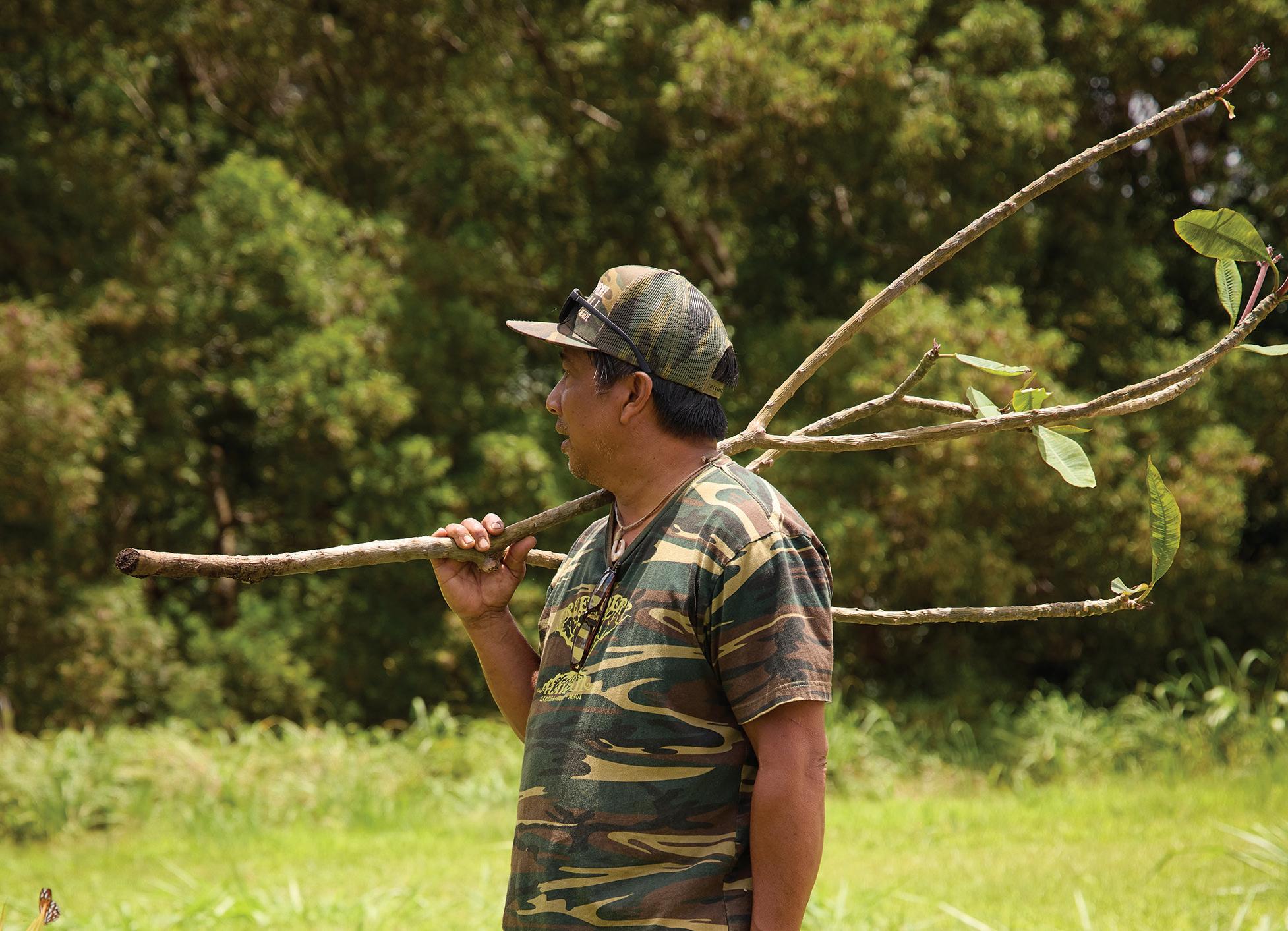
“We only grow what people are asking for, so as soon as we get a list, we try to find growers on the island that have them,” says Clements, who has planted hundreds of native sandalwood trees in his temporary orchard of fruit trees, flowering trees, “and lots and lots of natives” over the last three years. To help support the local economy, Treecovery purchases most of the plants from local farms and nurseries, rather than asking them to donate their wares, and relies on resort employees and volunteers to nurture seedlings until the property owners are ready to replant.
Andaz Maui recently became one of dozens of official grow sites that also include the airport in Kahului, Hua Momona Farms in Kapalua, and numerous resorts in Wailea and Kā‘anapali. Individual guests and groups of visitors have also been able to participate in planting, repotting, and other Treecovery activities. “Everybody wants to be part of giving something back,” notes Sparkman, the nonprofit’s founder. “It’s really amazing how positive this movement has become across this island.”
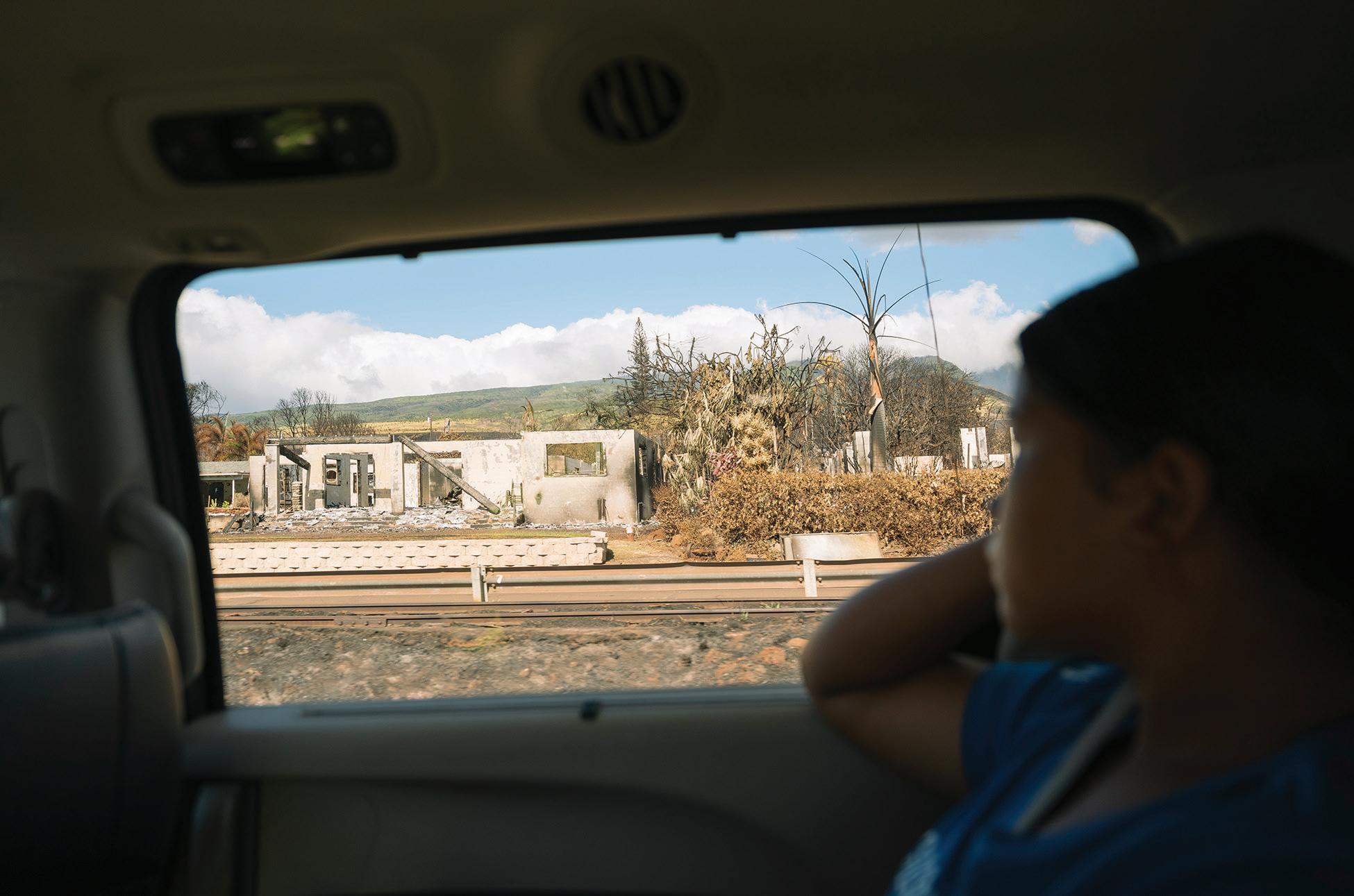
A Maui resident since 1995, Sparkman also works as chief engineer at another grow site, Royal Lahaina Resort; serves as project director of Kīpuka Olowalu, which is restoring Olowalu Valley; and, in his role as chair of the Maui County arborist committee, leads the efforts to preserve Lahaina’s famed banyan tree, including hosting some its offshoots at Treecovery grow sites. He connects the support of Treecovery’s mission to the Hawaiian tradition of hānai, which he defines as “taking care of something for someone else.”
The people who hānai trees for Lahaina and Kula residents “feel good about having contact with something and giving it back to someone who needs it,” Sparkman says. “It’s about ‘āina (the land) and healing.”
Fred Rindlisbacher, landscape manager at the Fairmont Kea Lani for the past 12 years, says he finds special significance in hosting all native spe-
cies at the resort, where the Los Angeles Rams and their families spent a day adding to its stock of Treecovery seedlings. “It reinforces something I feel strongly about: the need to honor and better utilize Hawai‘i’s flora and fauna in our built and natural environments,” Rindlisbacher says.
“Planting trees for people who have lost so much is incredibly meaningful,” he adds. “These native trees carry cultural and ecological significance, and planting them is an act of aloha—of love, healing, and remembrance. You can go to many places that have beaches and palm trees, but there’s only one place with aloha. That aloha is in the people, but it’s also in the ‘āina. Some of the plants here don’t exist anywhere else in the world.”
Restoring non-native plants can also provide healing and stir precious memories. Wildfire destroyed the house on Prison Street that Janal
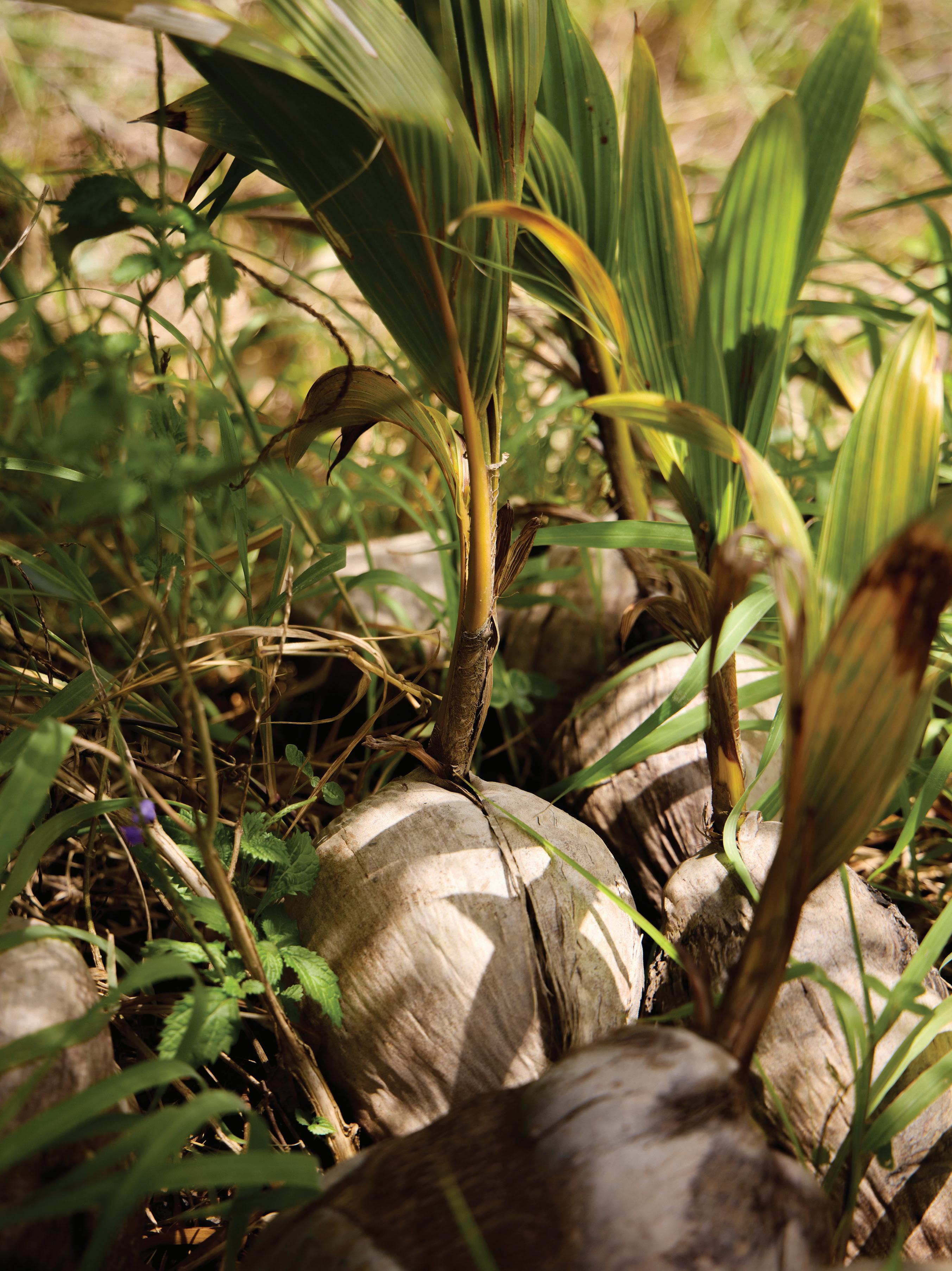
Treecovery aims to replace some of the vast greenery lost to Maui’s devastating wildfires in 2023.
Pagdilao-Bala, her husband, and their two sons were sharing with her husband’s mother, sister, his sister’s fiancé, and their two children, as well as the new house Pagdilao-Bala and husband Lonopele Cathcart-Cabanilla were building behind it. They also lost “mango trees, a grapefruit tree, an avocado tree, a papaya tree, and a whole garden started before the fire,” she says, plus a rose bush whose blooms her late father-in-law, an avid gardener, used to tuck into vases for his wife. In December 2024, a month before PagdilaoBala and her family were finally able to move into their rebuilt home, a Treecovery crew came to plant grapefruit, avocado, pua kenikeni, plumeria, lemon, calamansi, and lychee trees as well as ti, traditionally planted outside homes in Hawai‘i for good luck. “I’m forever grateful for Duane and
the rest of the Treecovery ‘ohana,” says PagdilaoBala, who works as a security officer at The Westin Nanea Ocean Villas. “Because of them, my family and I can start getting back to our gardening and farming again, back home on our property. We’re super grateful and blessed.”
Seedlings are cultivated at grow sites across Maui and then replanted in landscapes affected by wildfire.
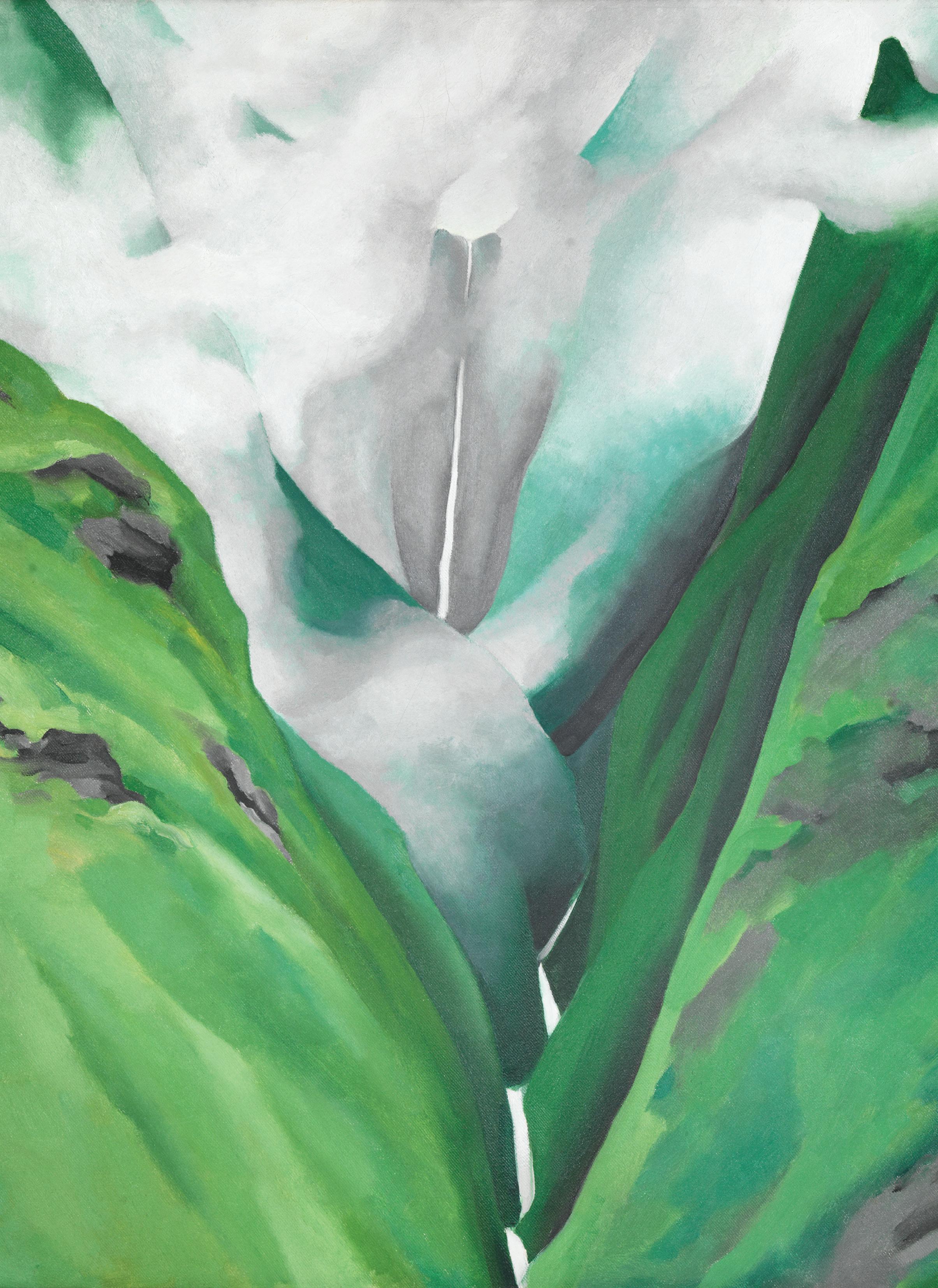
Georgia O’Keeffe (American, 1887–1986). Waterfall—No. III—‘Iao Valley, 1939 (detail). Oil on canvas. Gift of Susan Crawford Tracy, 1996 (8562.1)
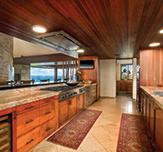
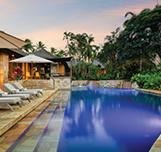
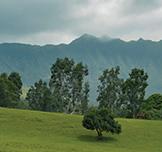
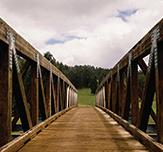
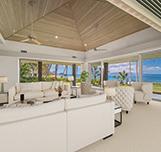
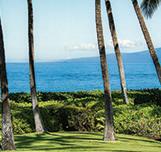
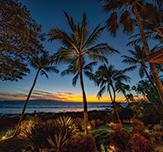
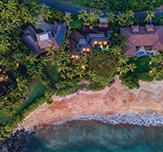
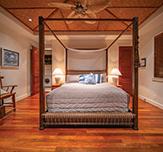
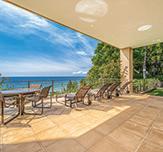
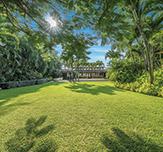
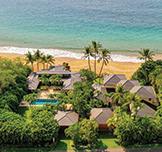
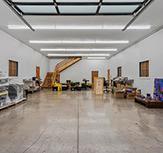
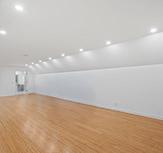
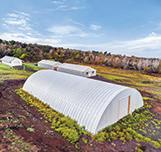
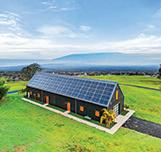
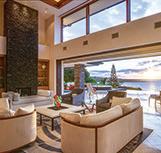
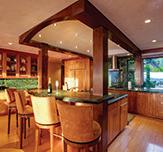
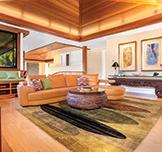
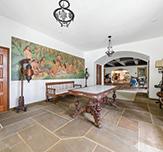
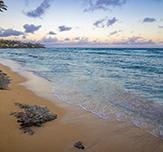
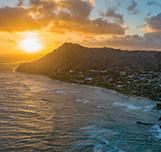
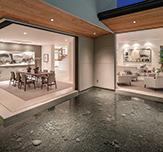
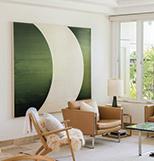
HL1 Collection: a Subjective Compilation...
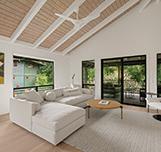
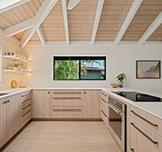
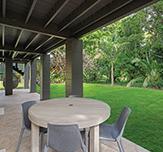
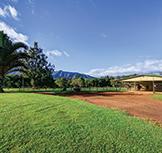
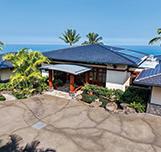
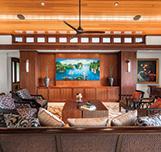
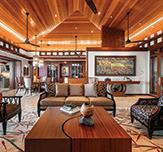
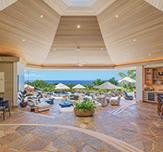
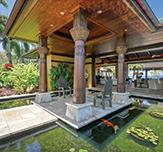
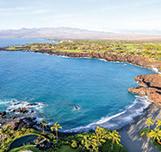
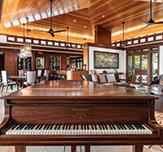
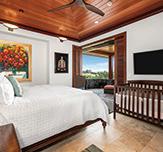
Location, architecture, and emotion are the pillars of our curated HL1 Collection. Each property is meticulously chosen for its merit, style, and substance. While our selection is subjective and confined by this magazine’s pages, the HL1 Collection presents a sampling of Hawai‘i’s most exceptional and diverse living experiences.
Of course, this collection does not encompass all the properties we represent. Our portfolio spans many residences and land offerings across Hawai‘i, many of which are private and not publicly listed.
Chances are, this publication was given to you by an HL1 director, member, or contributor. HL1 is not available for purchase or subscription.
As HL1, a private division of Hawai‘i Life, we embody discretion and local expertise. HL1 is not just about refined real estate; it’s also about fostering community, celebrating arts and culture, and showcasing refined living through the unique lens of Hawai‘i. We invite you to reach out and explore these facets of Hawai‘i living, accessing both private and public real estate along with invaluable market insights.
KAUA‘I
KAUA‘I
$36M | Listed by Neal Norman R(B)
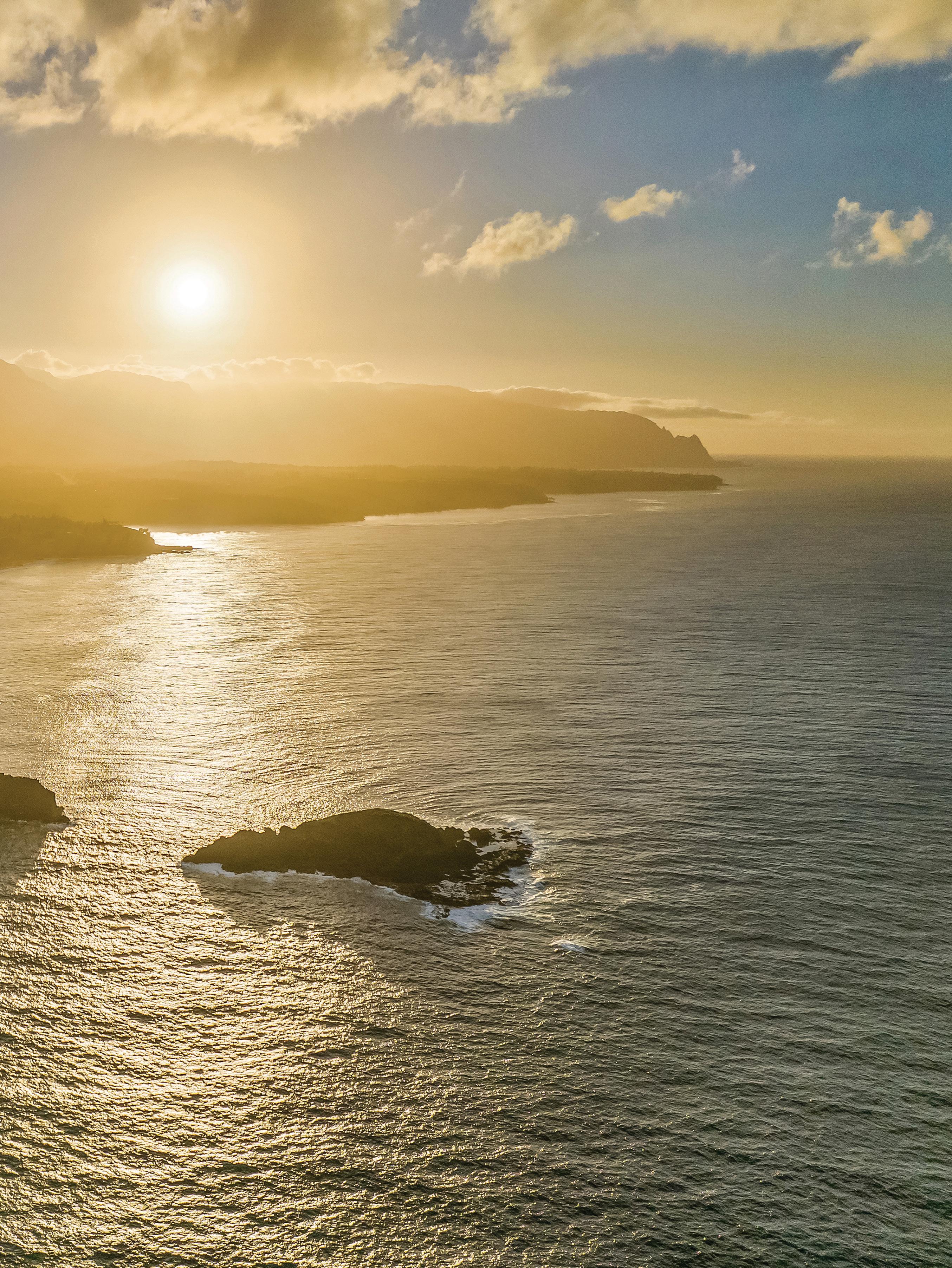
A Crown-Jewel Canvas
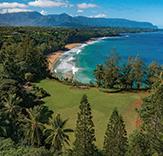
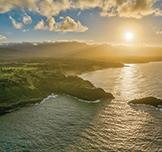
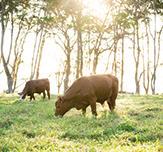
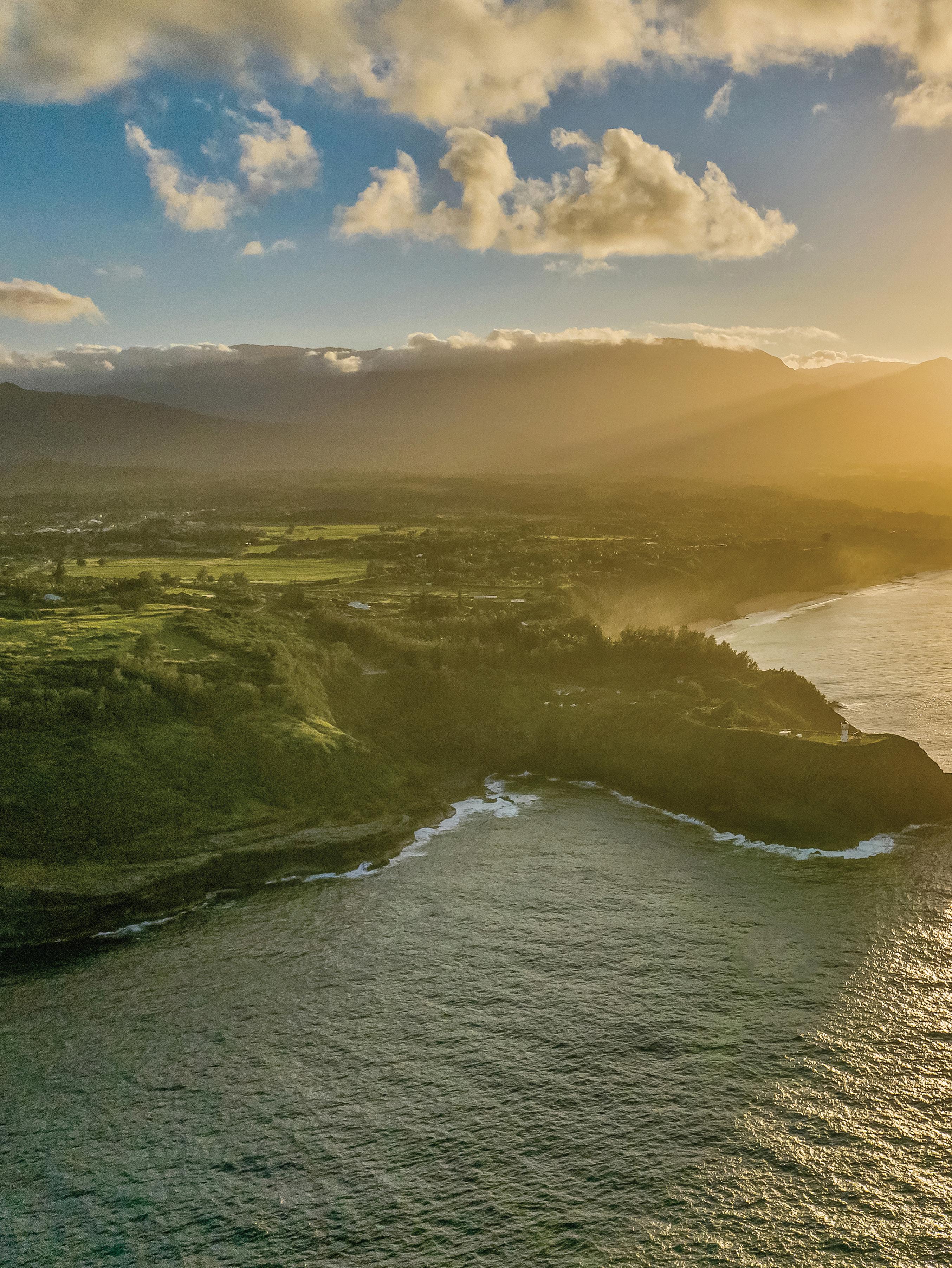
At once serene and dynamic, this eightacre estate is composed of multiple bluff-top homesites set above the sands of Secret Beach, directly across from Kīlauea Point Lighthouse.
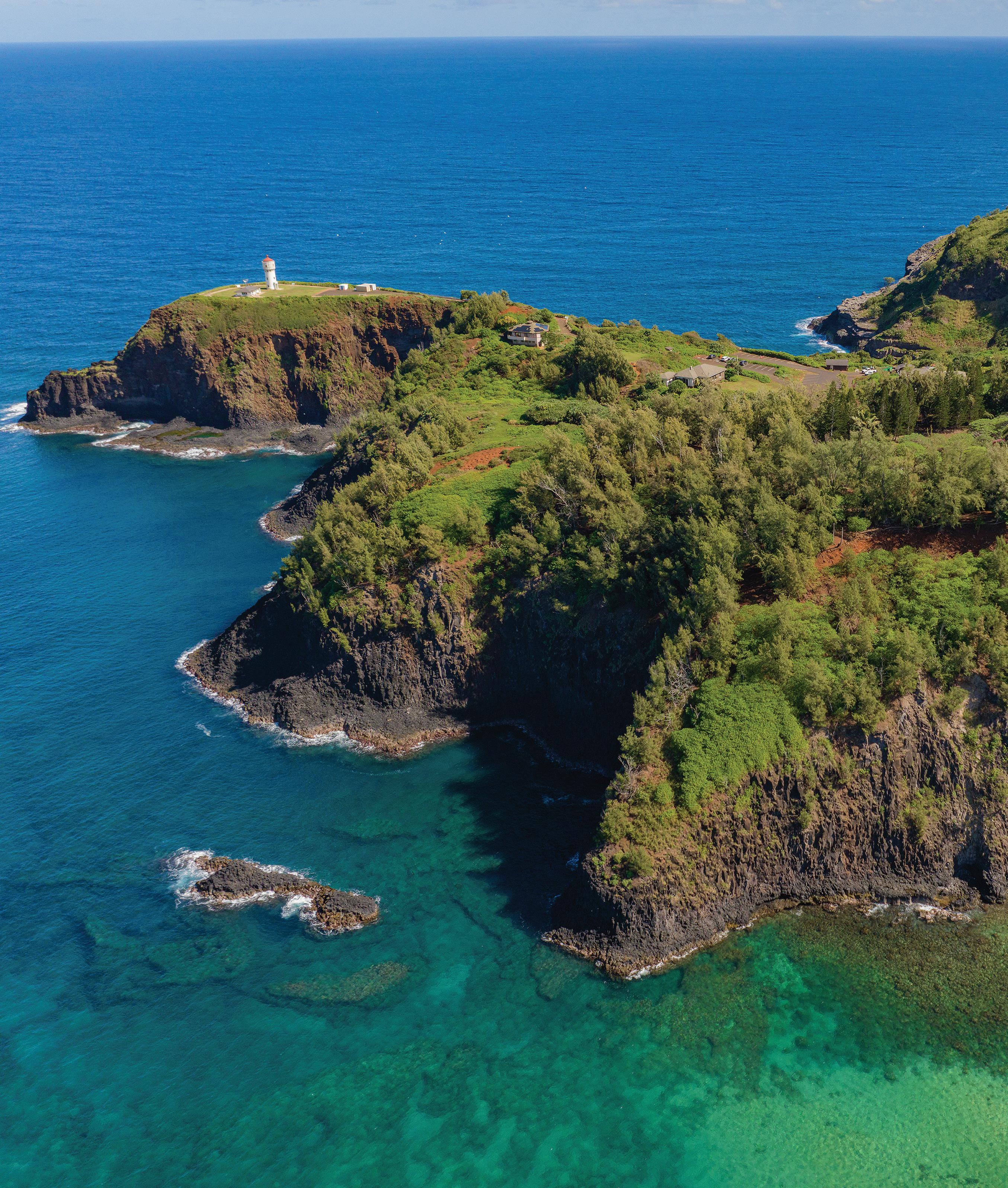
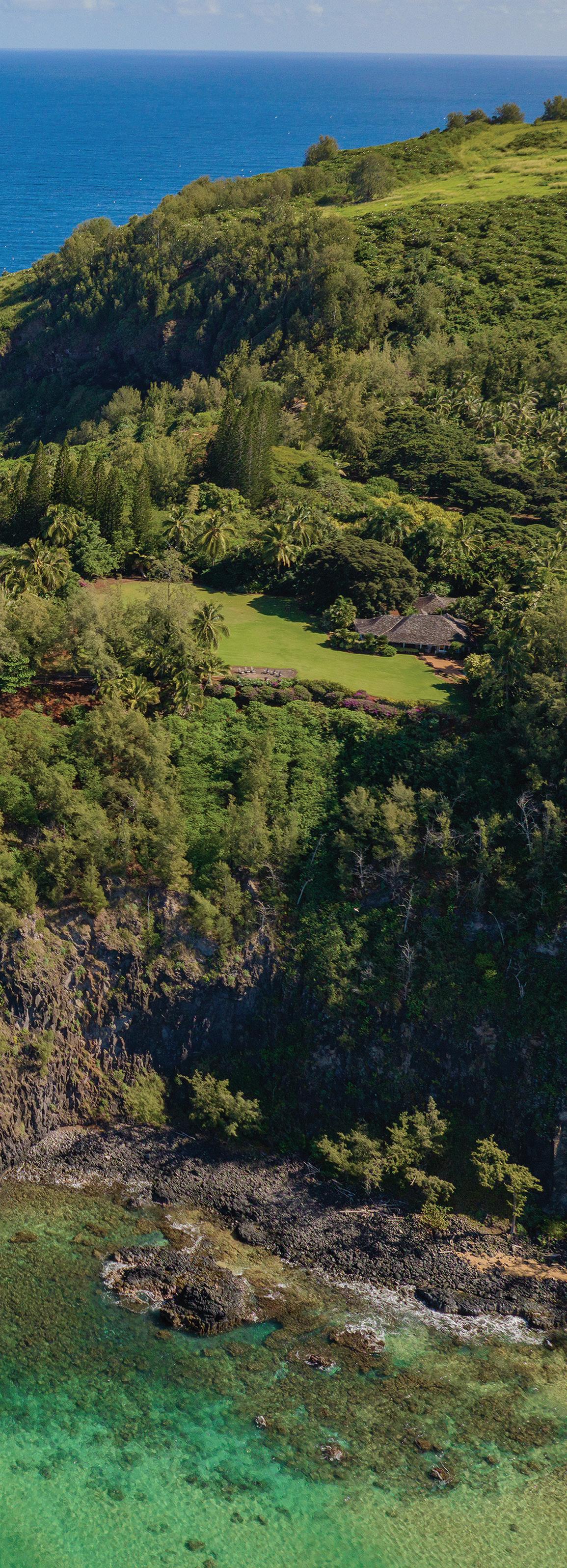
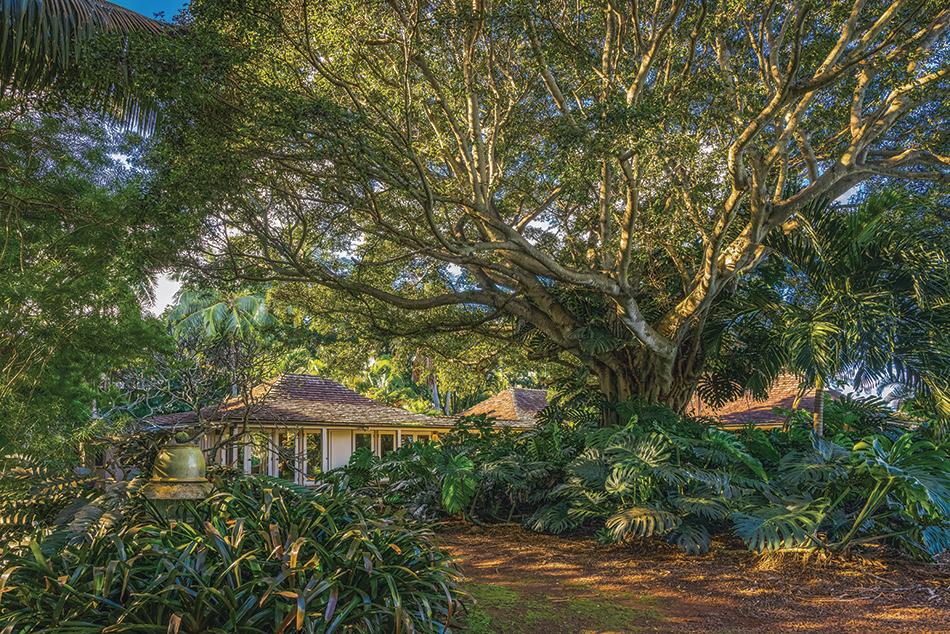
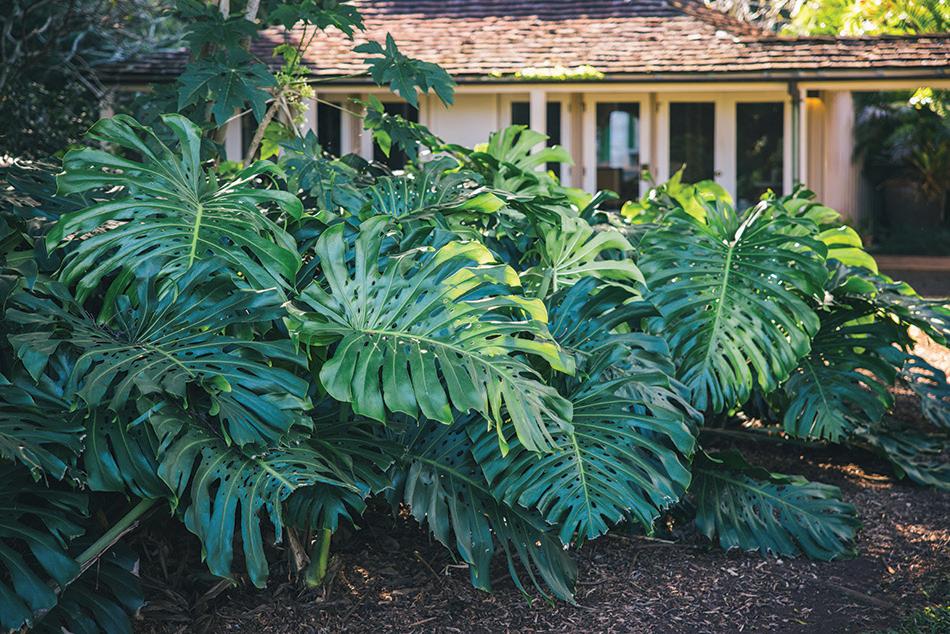
Featuring a residence designed by Vladimir Ossipoff, with entitlements for additional homes, the lush property combines a significant architectural legacy with the potential for a thoughtfully expanded estate.
KAUA‘I
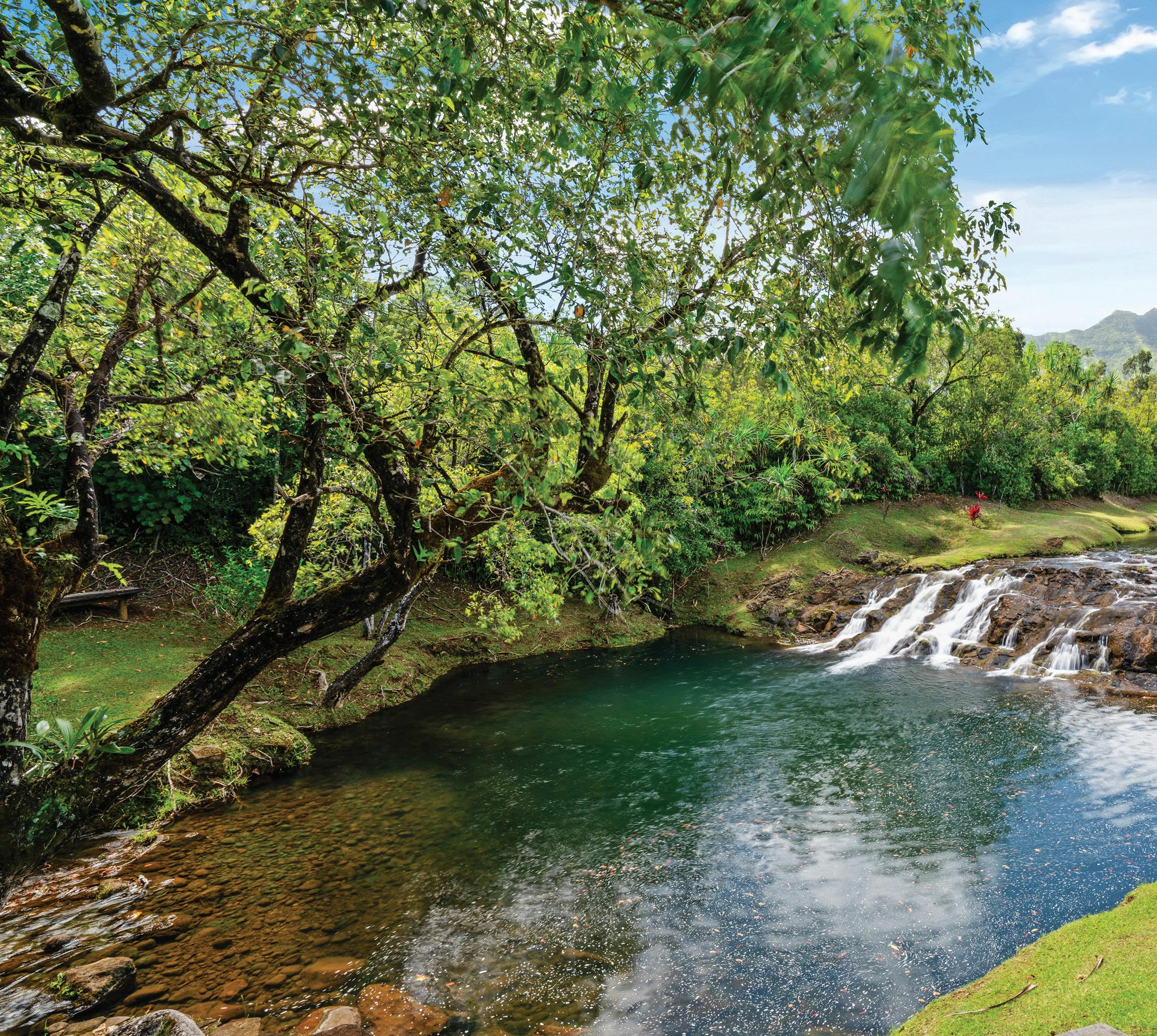
Adventure-Ready Ranchland
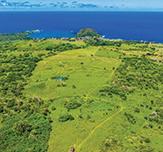
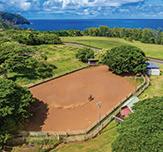
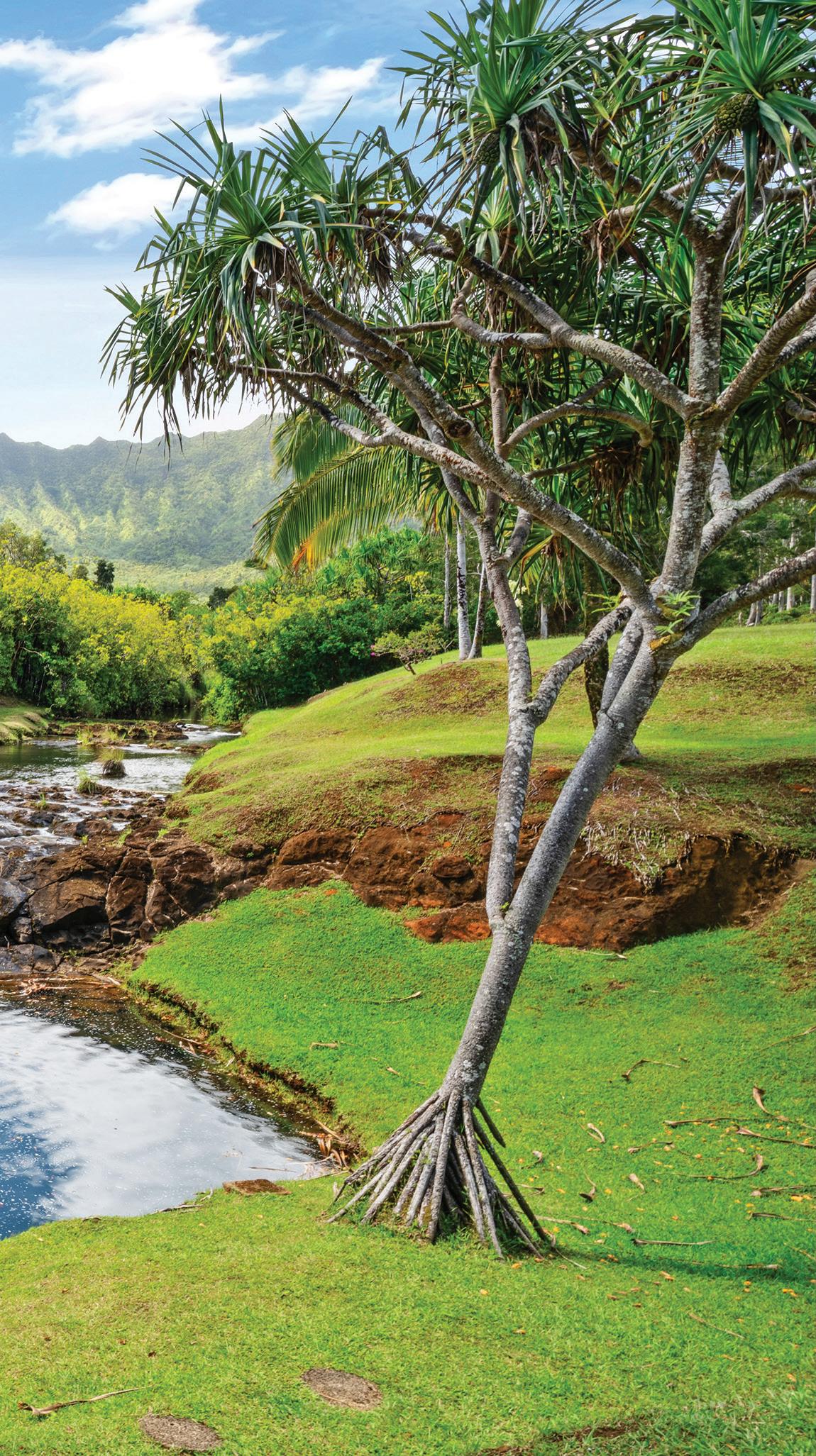
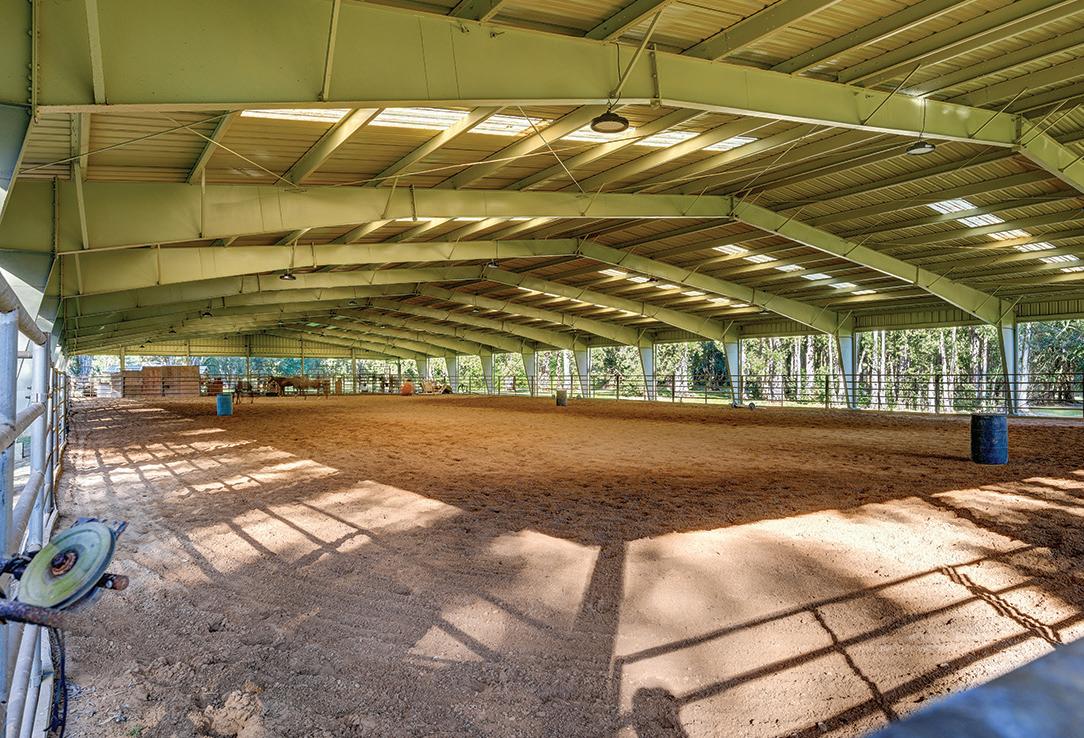
Across 237 interconnected acres, three distinctive parcels trace the foothills of Mount Namahana, traversing waterfalls, swimming holes, grazing pastures, riding trails, and forestland. This extraordinary land holding is outfitted with extensive equestrian and farming facilities, two residences, and the potential to add additional homes, all within easy reach of Kīlauea, Hanalei, and Princeville.
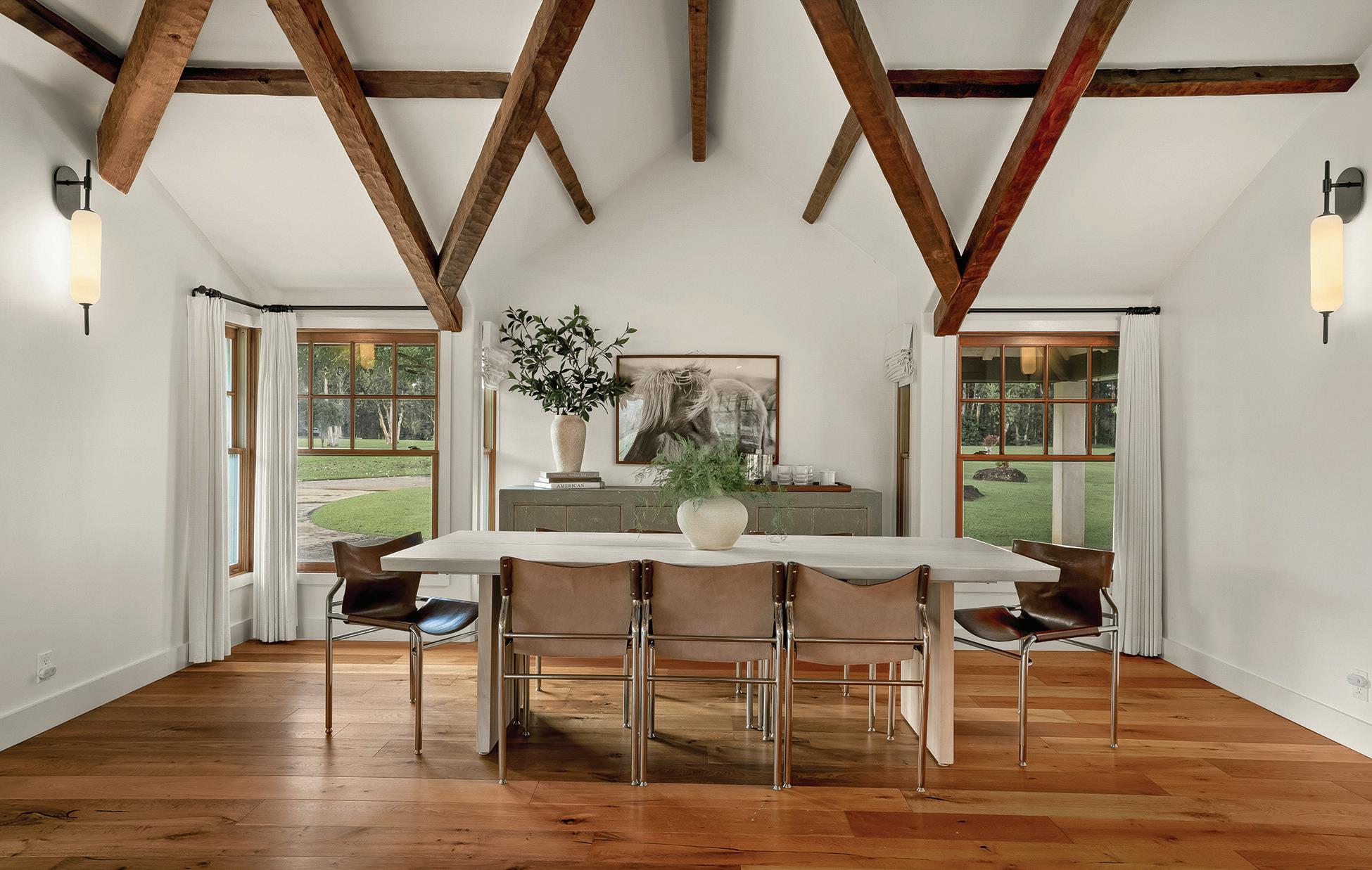
$26.5M | Listed by Roni Marley R(B)
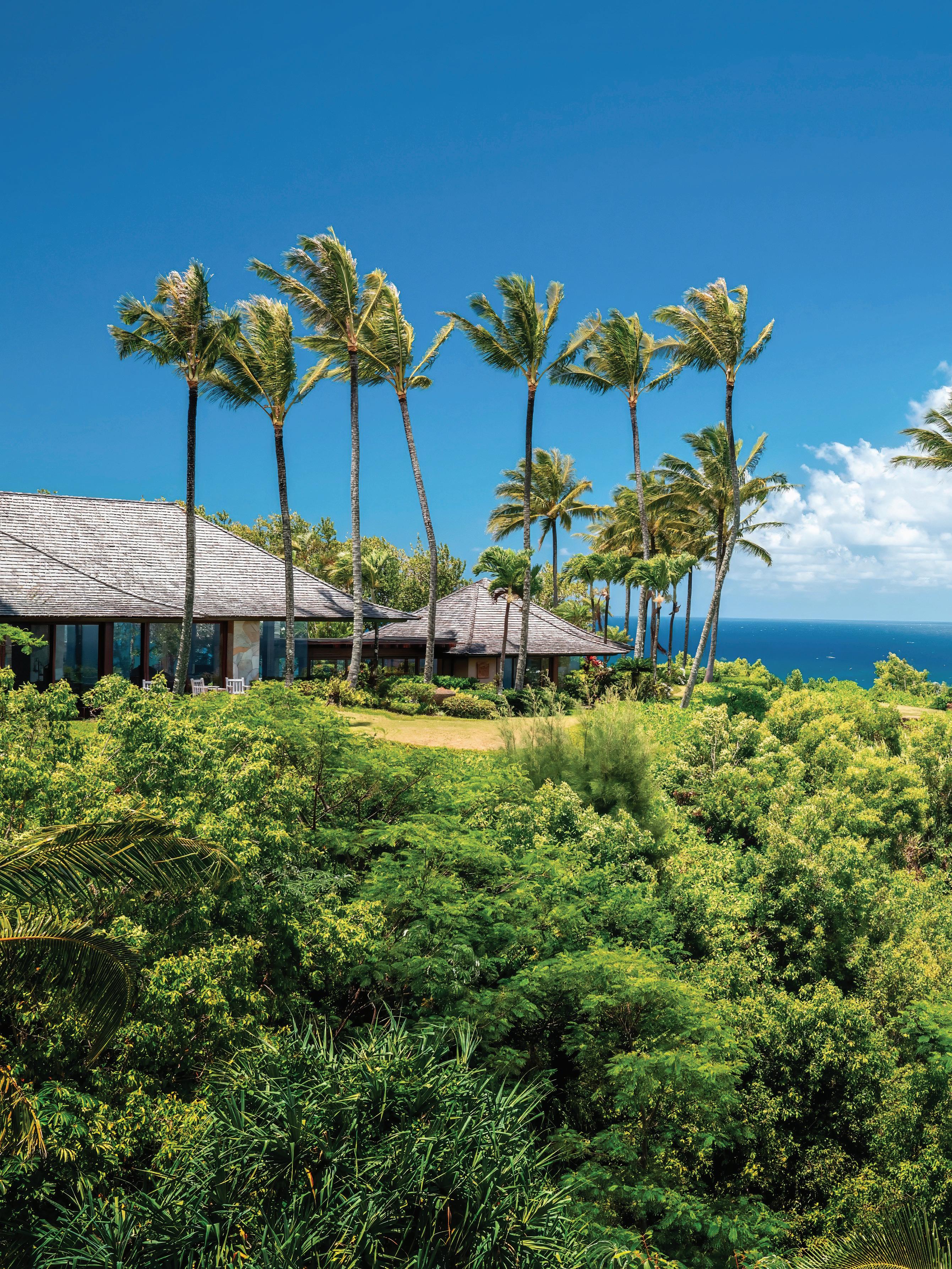
$32.5M | Listed by Roni Marley R(B)
Ridge-Top Retreat
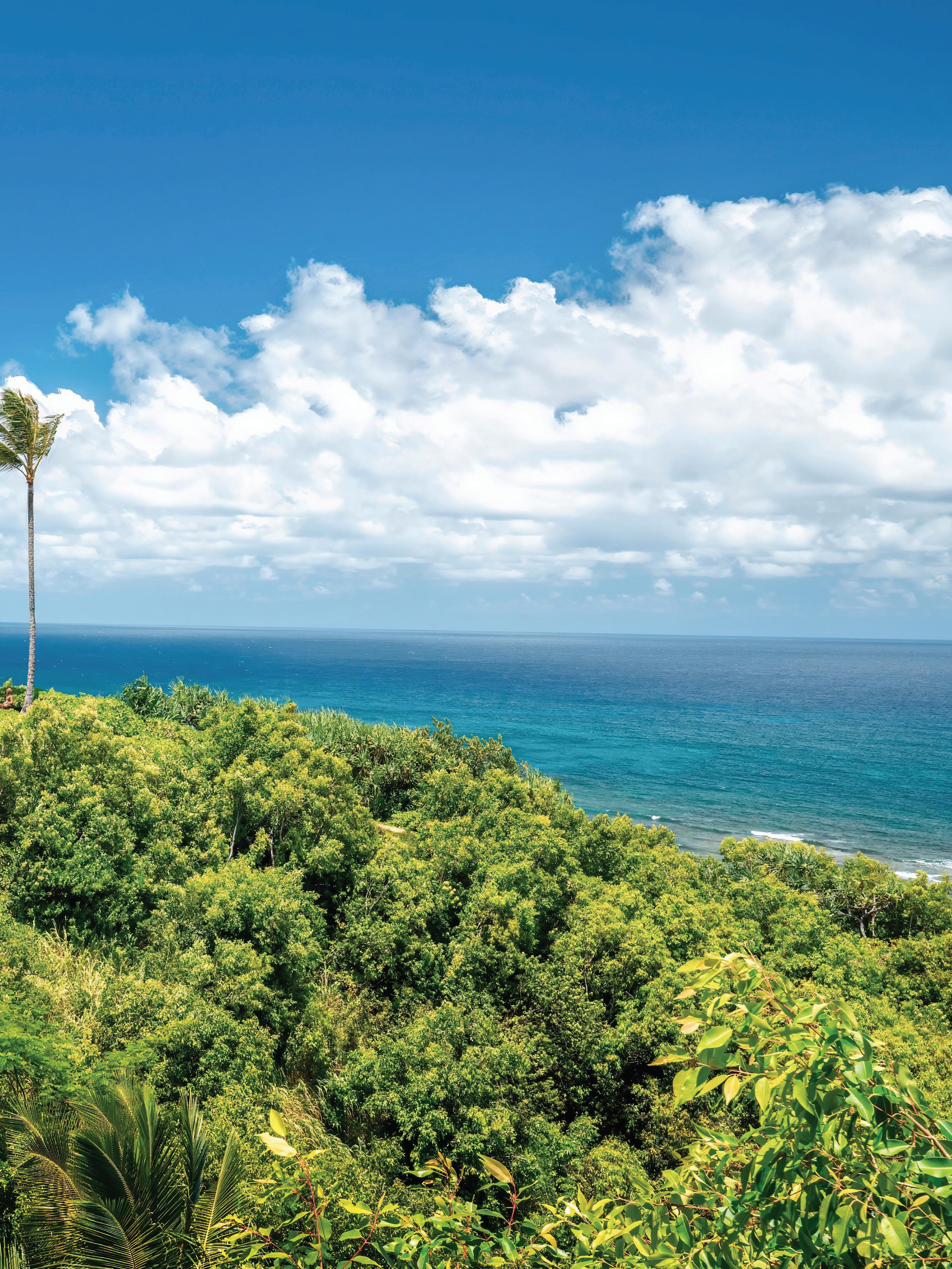
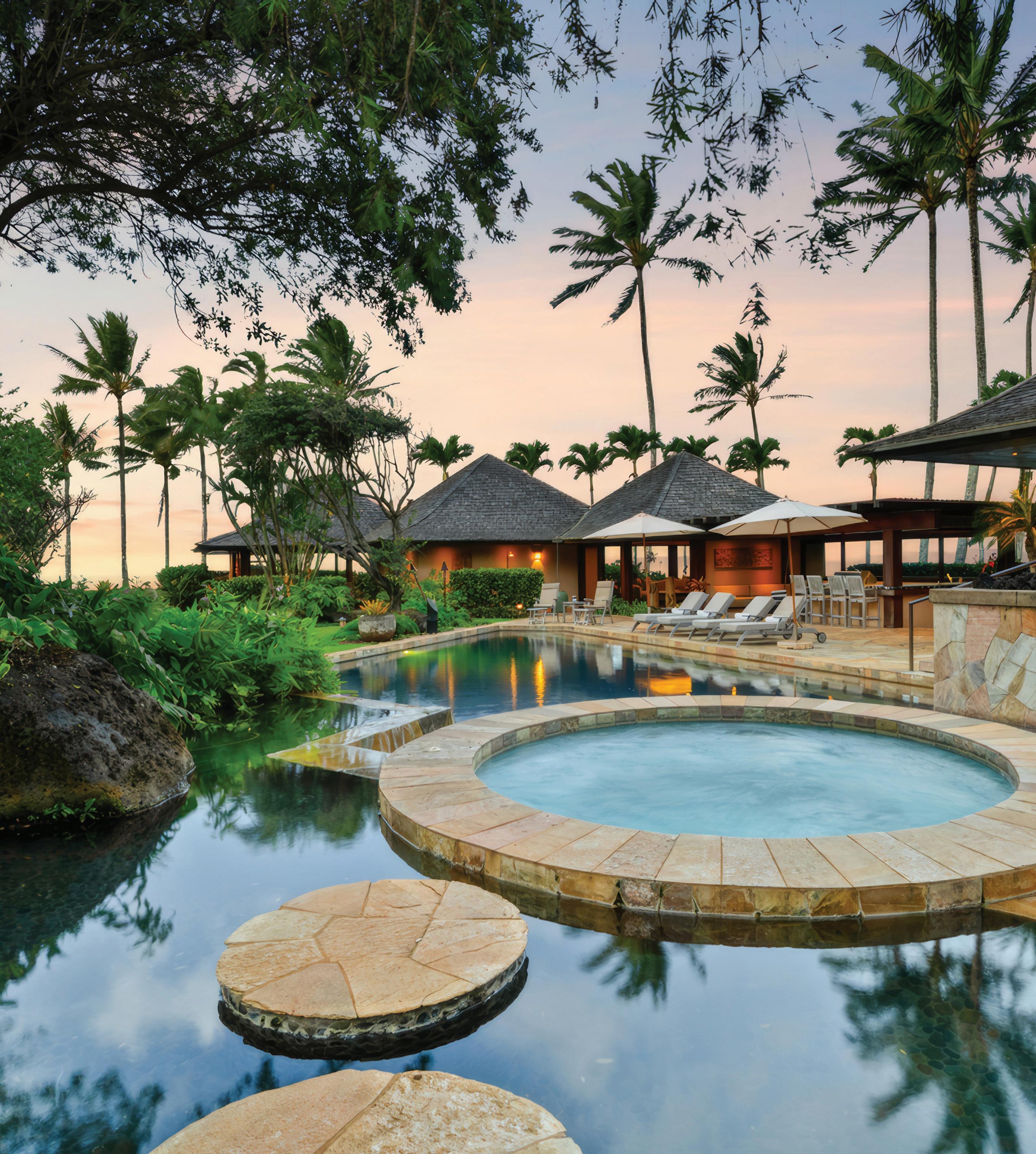
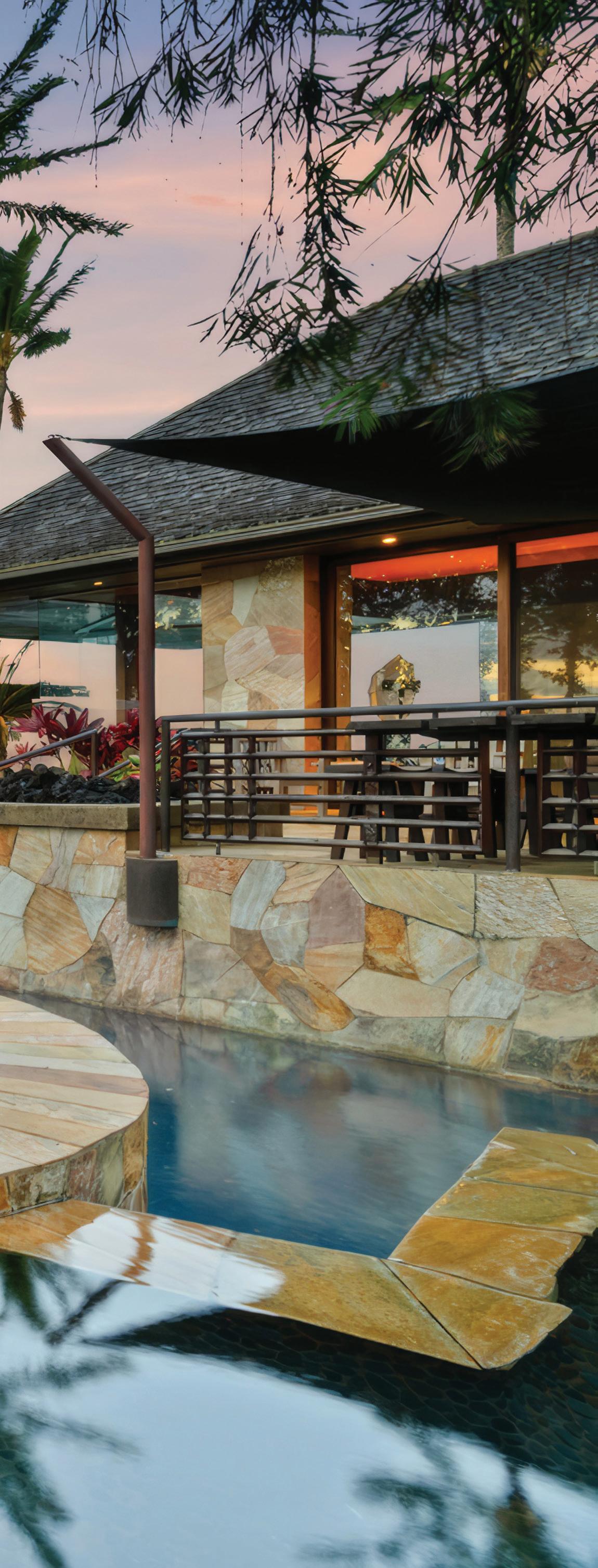
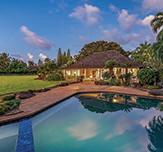
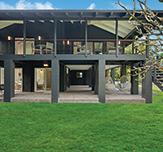
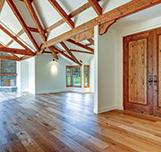
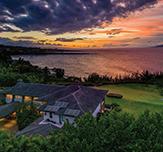
Tucked in a secluded enclave above Anini Reef, this luxurious estate features a spacious contemporary home comprised of connected pavilions oriented to capture natural light, abundant airflow, and vast views of Kīlauea Point Lighthouse, Secret Beach, and Kalihiwai Bay. Highlights include glass walls, a guest residence, and a lagoon-style saltwater pool framed by a waterfall grotto.
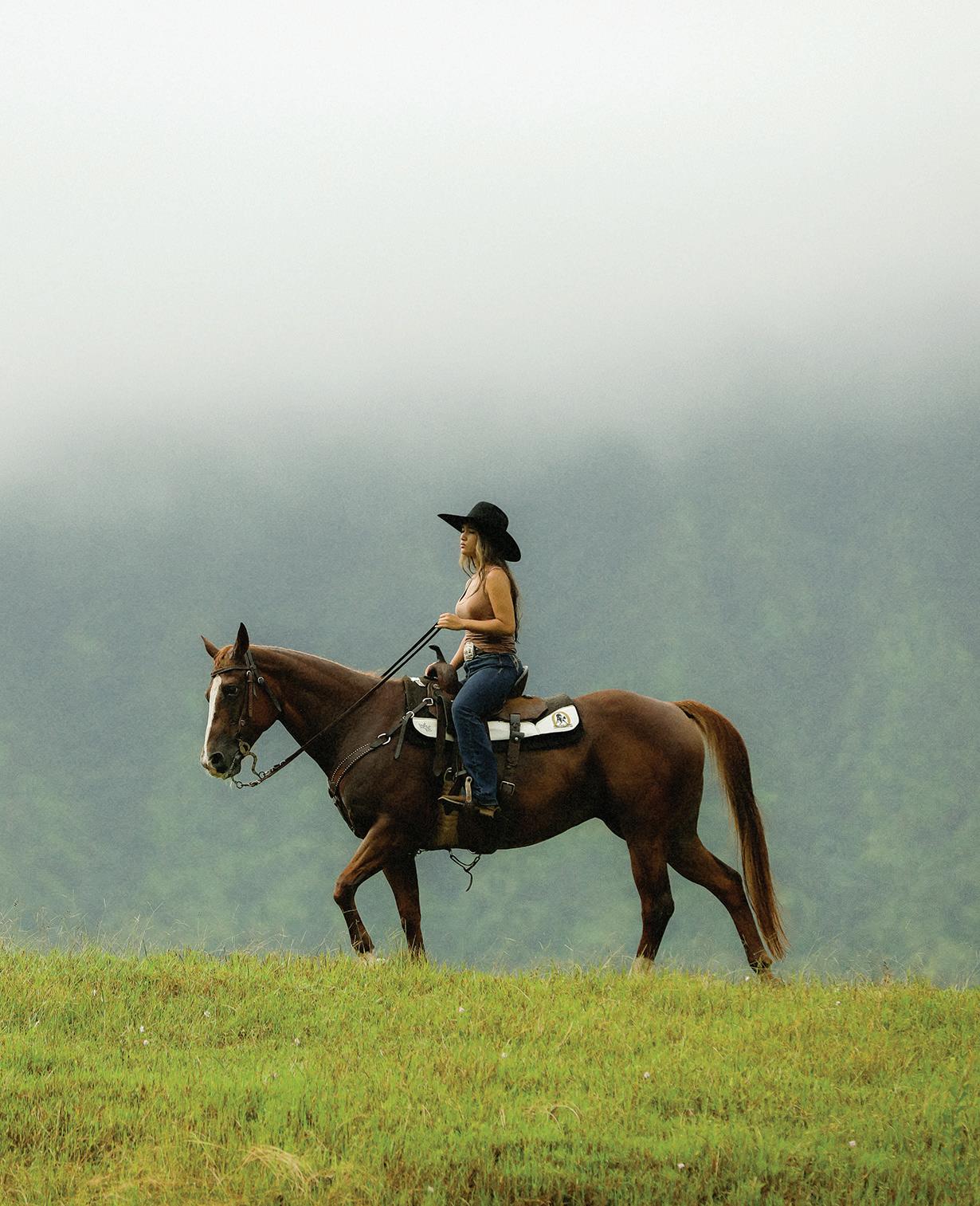
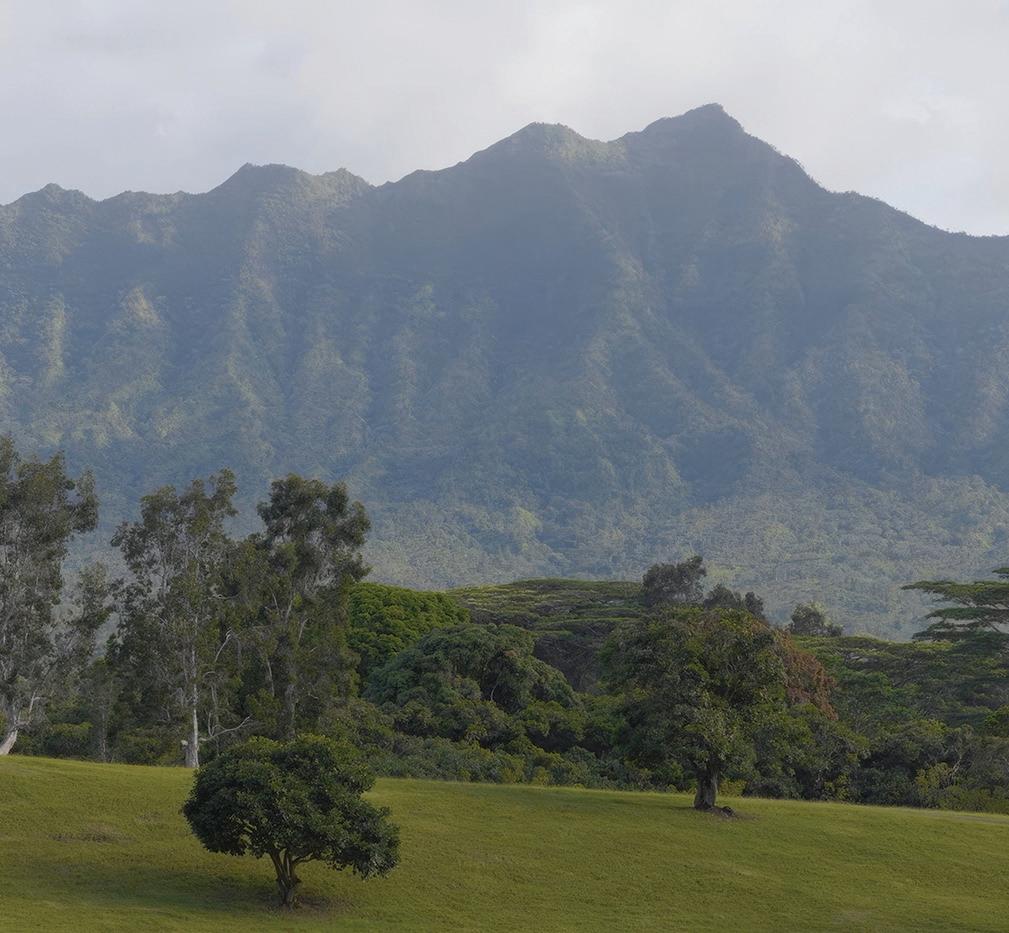
Neighboring Mount Namahana
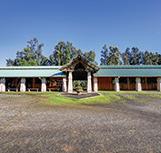
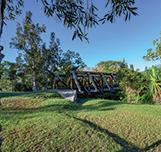
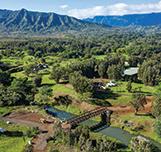
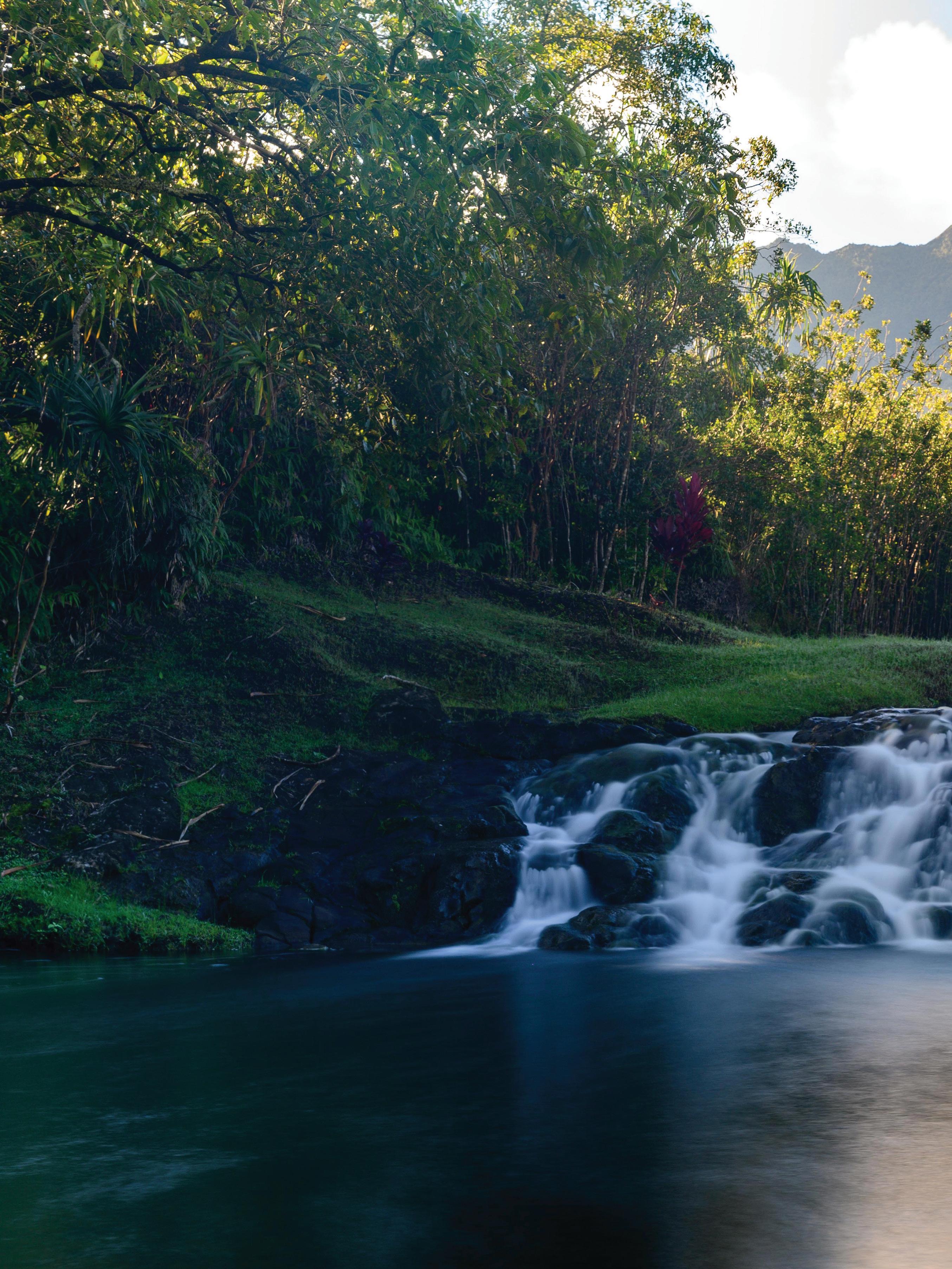
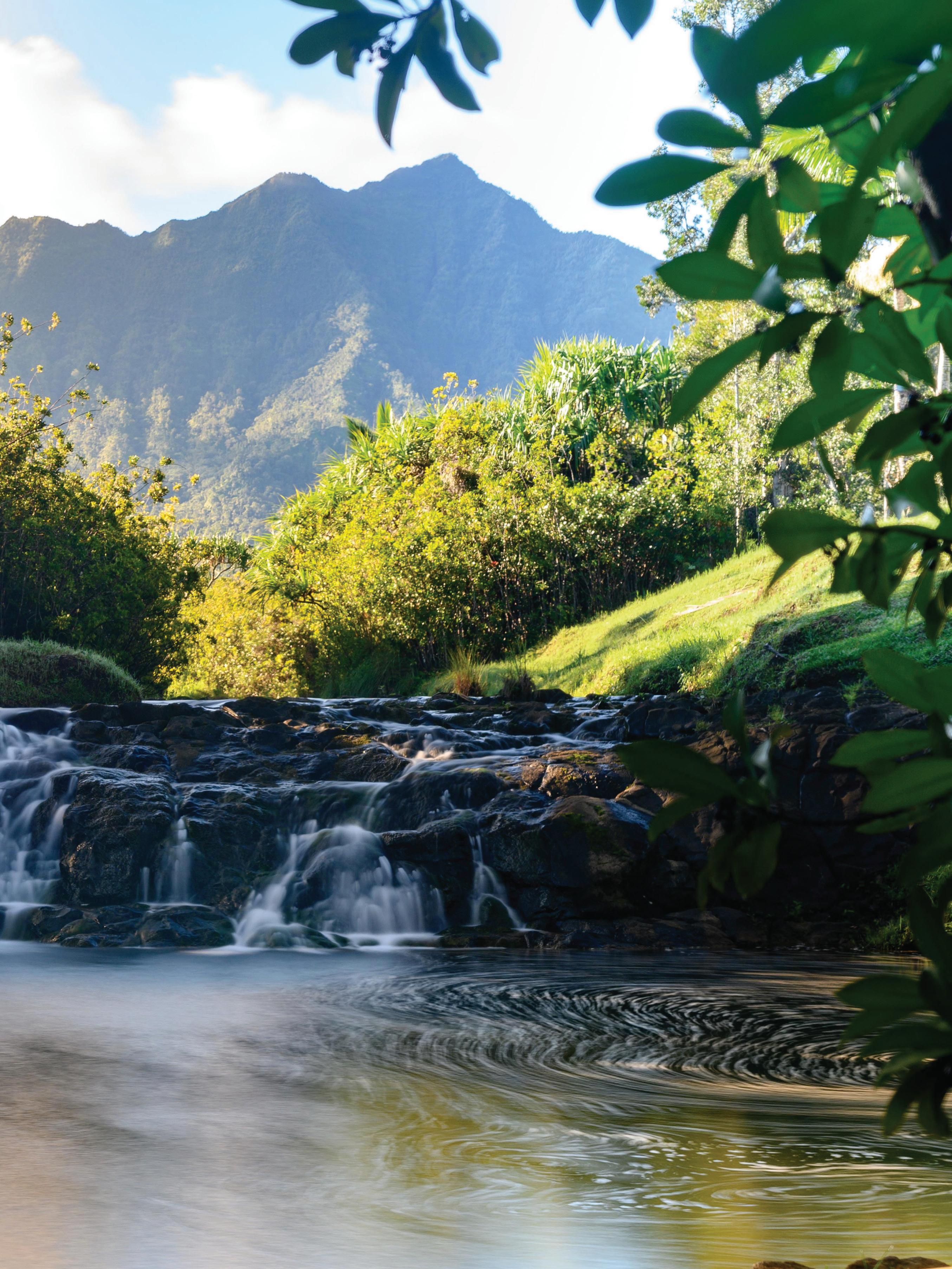
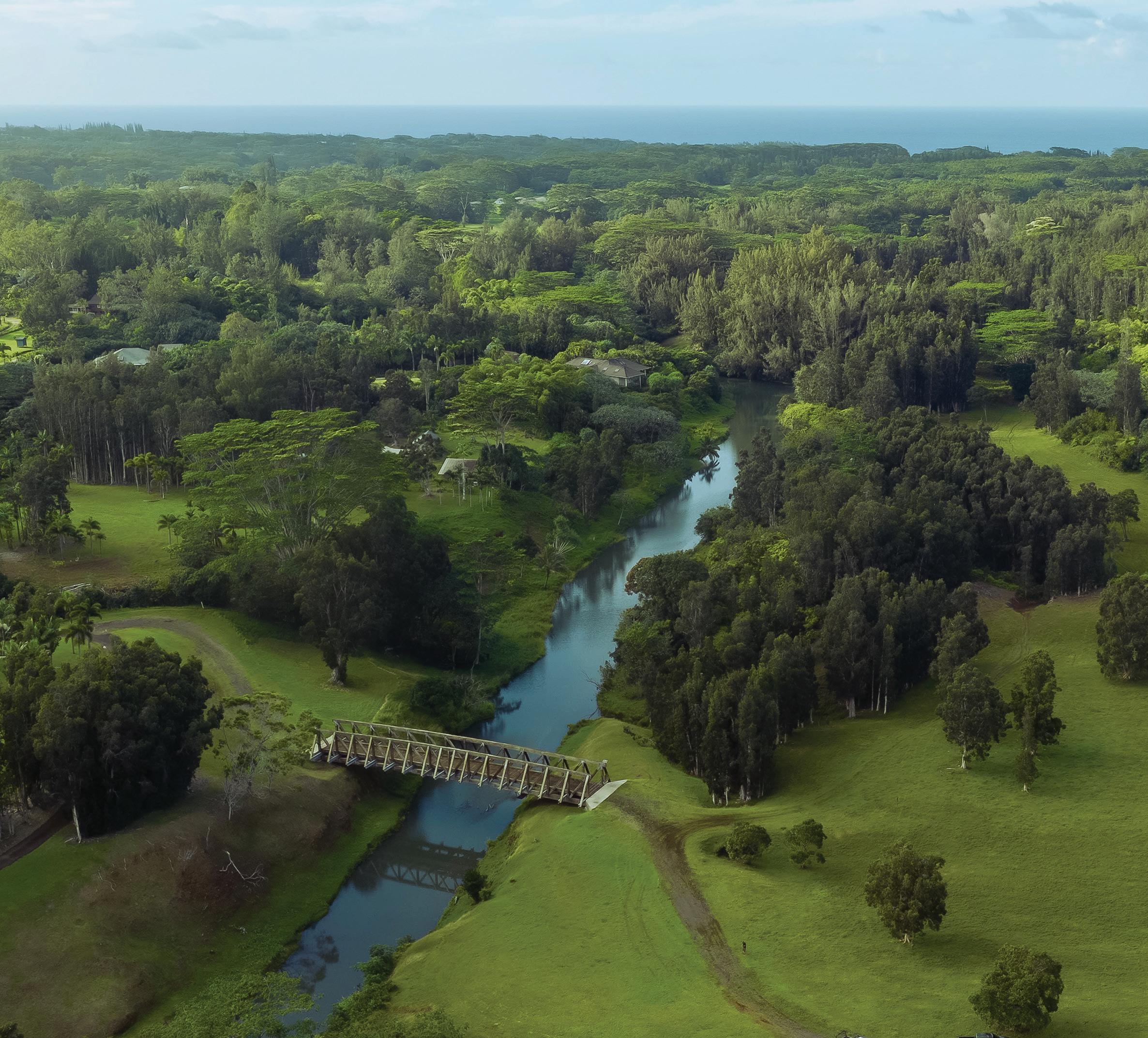
Unfolding across 63 acres in the shadow of Mount Namahana, Halaulani holds a commanding position among Kaua‘i’s wild terrain. Kahiliholo Stream and Mahele Hill ridgeline form natural boundaries that encircle rising knolls, valleys, forested edges, swimmable streams, and a historic stone dam, all accessible across a private truss bridge over rolling water.
$8.75M | Listed by Neal Norman R(B)
$5M | Listed
At the Water’s Edge
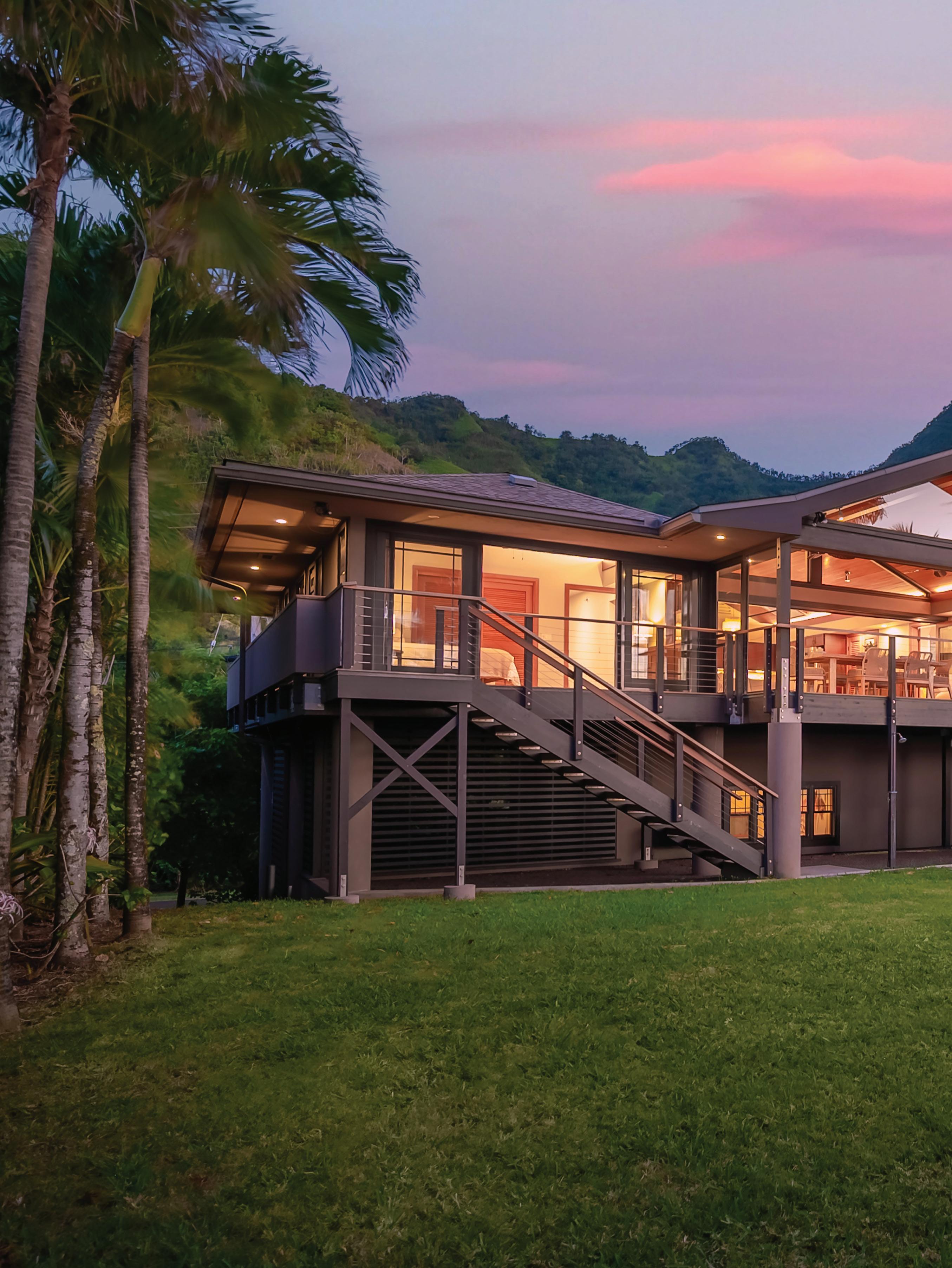
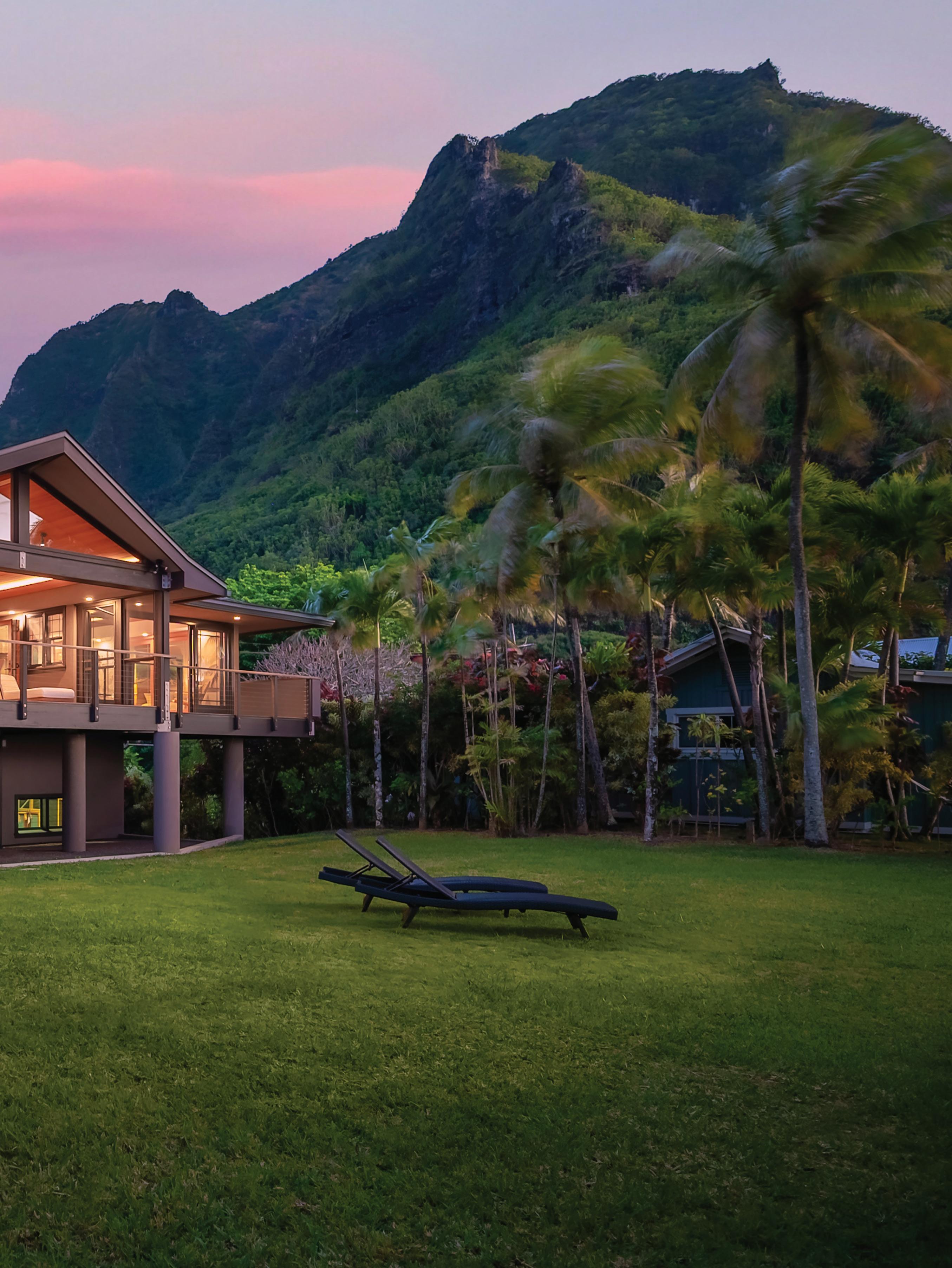
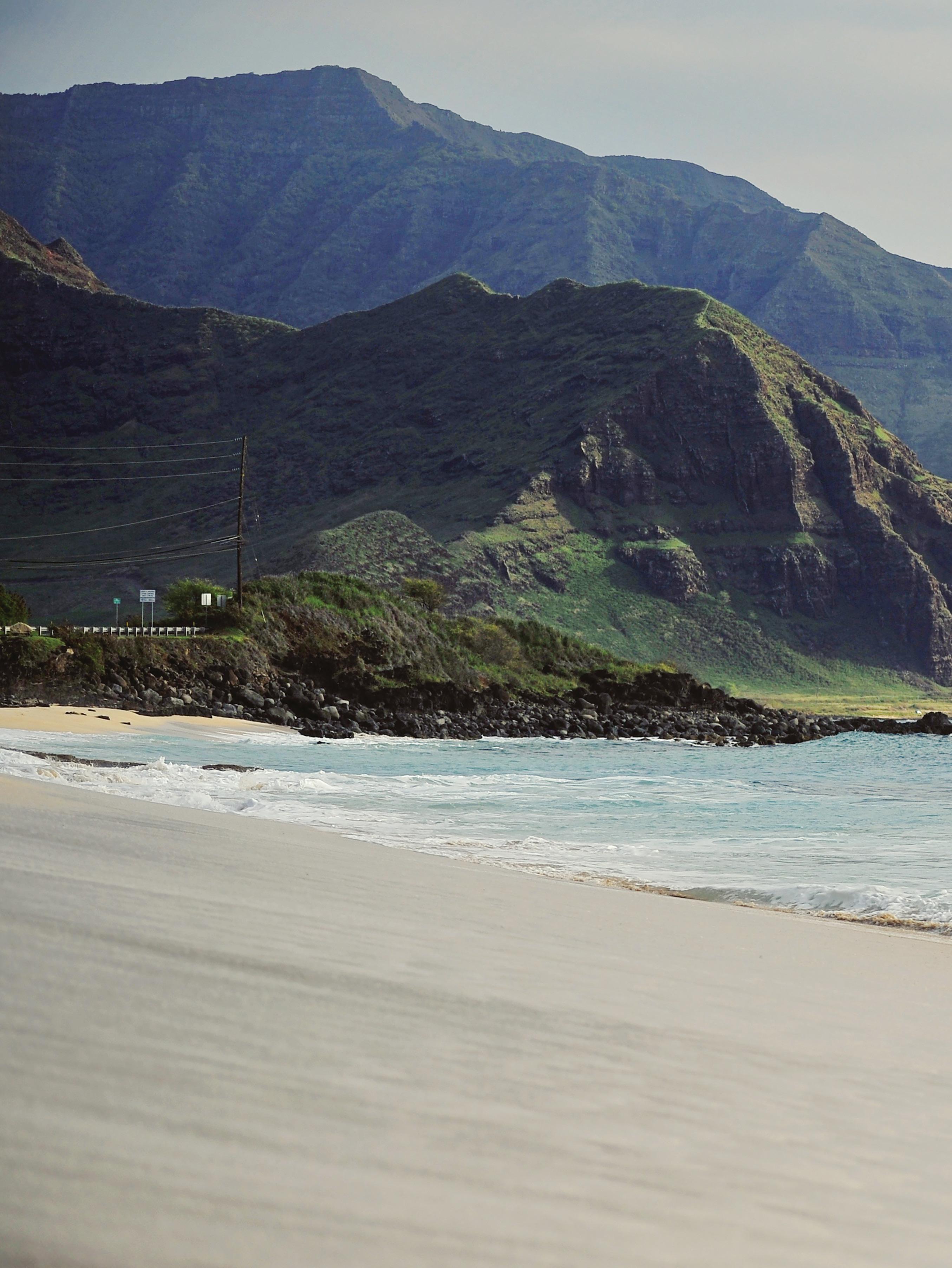
With its dramatic mountain backdrop and dynamic foreground of surf break, this beachfront abode in the wildly scenic Hā‘ena community stands in step with the surrounding landscape. The home’s inviting, airy layout includes a covered lānai overlooking the natural setting and seascape beyond.
by Ben Welborn R(B) and Tiffany Spencer R(S)
In the Heart of Hanalei
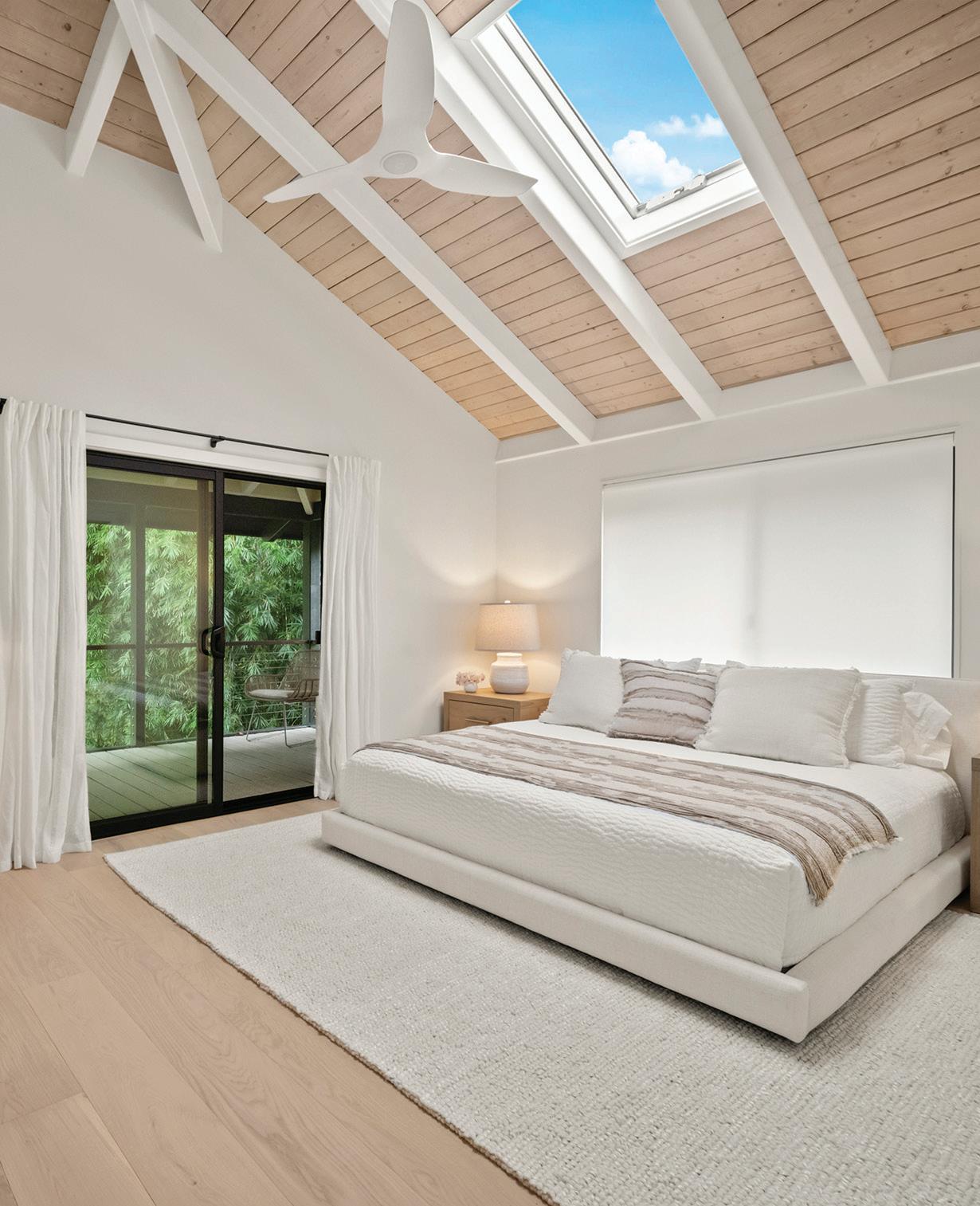
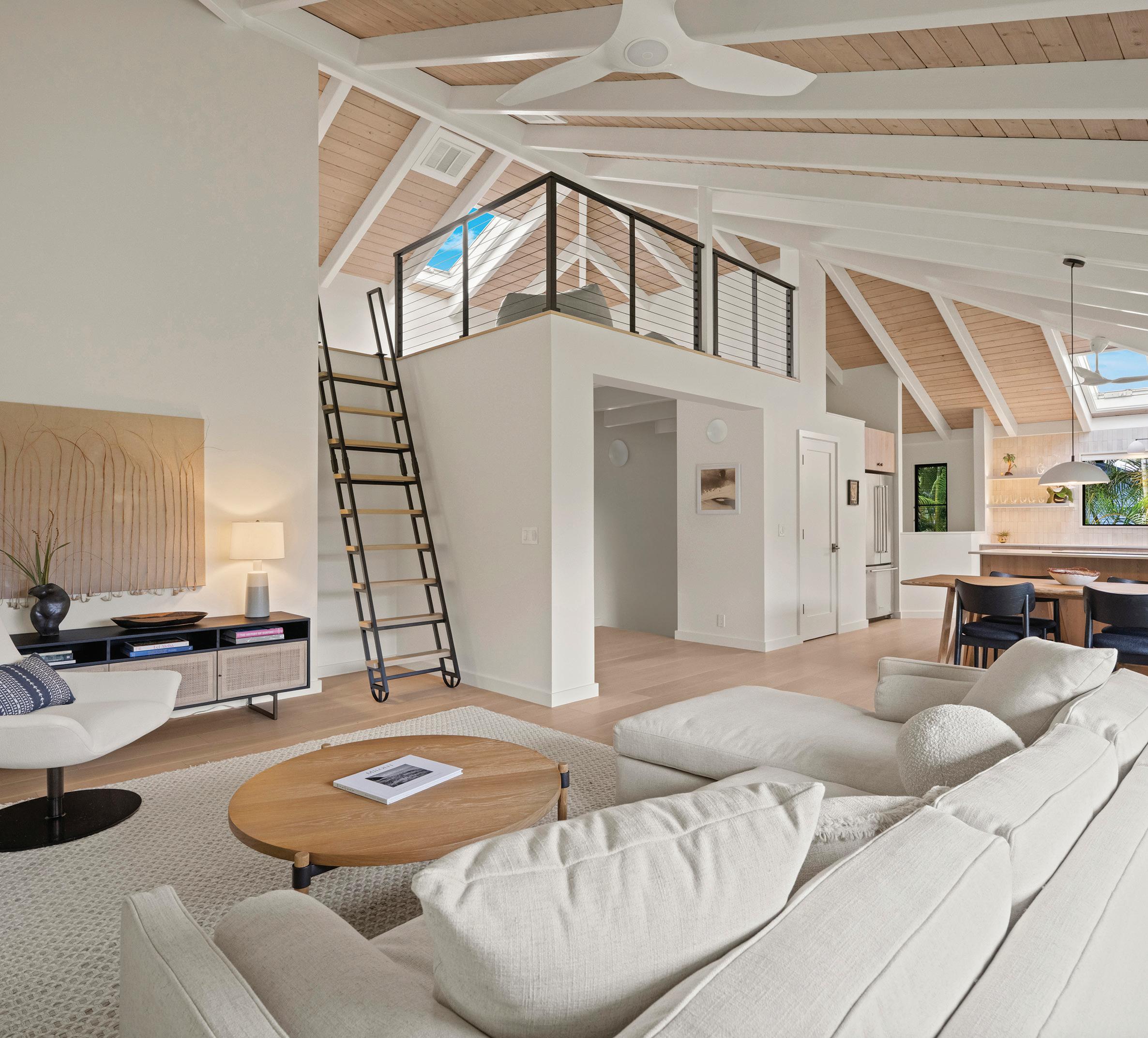
A stone’s throw from the legendary Hanalei Bay, in the eclectic Hanalei Palms neighborhood, this charming two-bedroom bungalow with finished loft and bonus room melds contemporary artistry with island sophistication. Clean lines, organic textures, tropical landscaping, and abundant natural light create a relaxed, modern ambience, while the home’s ideal location places it a short stroll from the beach and Hanalei town.
$6.5M | Listed by Amy Frazier R(B)
Misty Mornings in Nu‘uanu
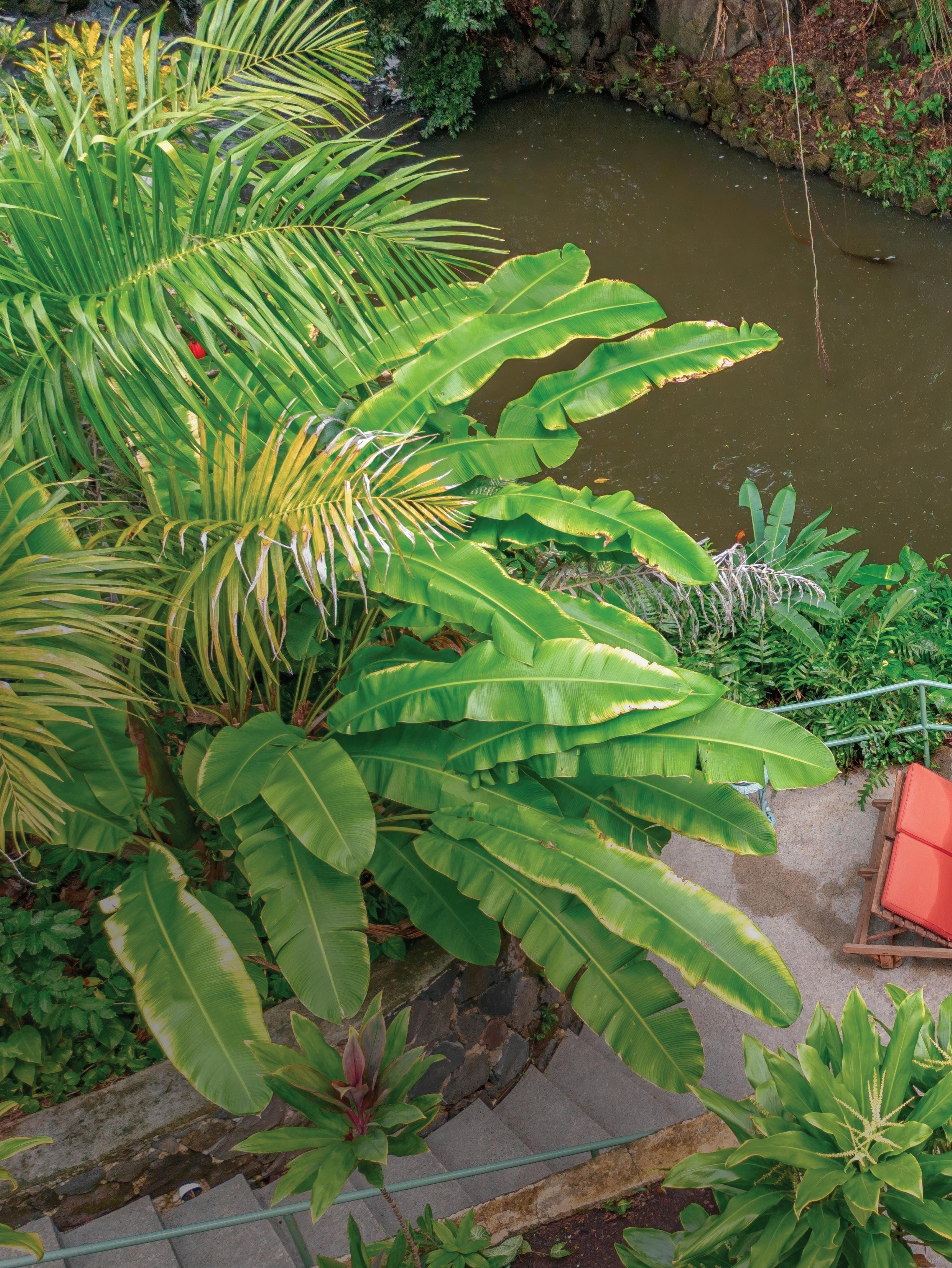
Taking its name from the Hawaiian phrase for “edge of water,” the 1.81-acre Lihiwai estate in the cool reaches of Upper Nu‘uanu sets the scene for one of Hawai‘i’s largest private homes, a nearly 25,000-square-foot architectural marvel constructed from stone in the 1920s in the Spanish Colonial Revival style.
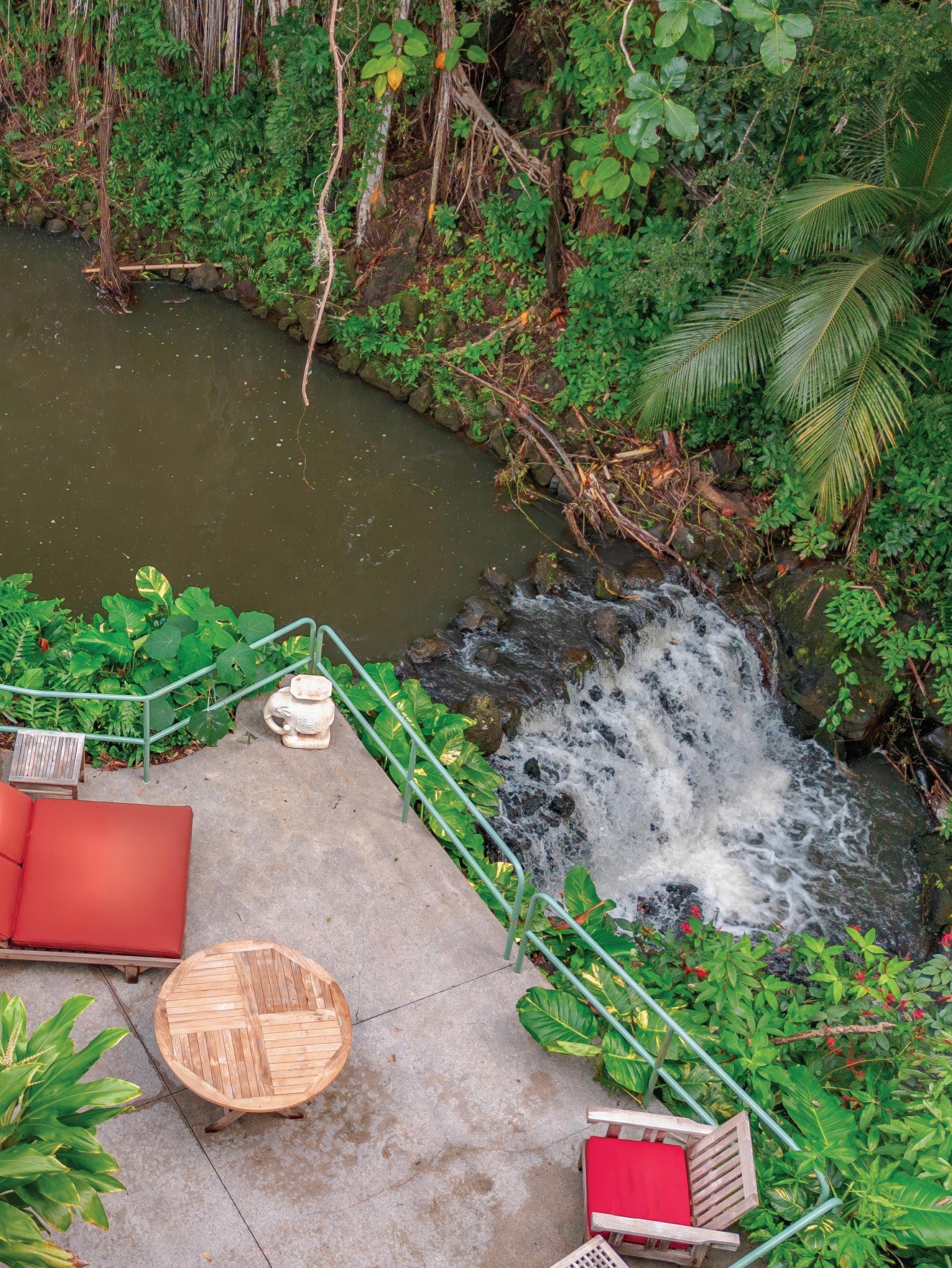
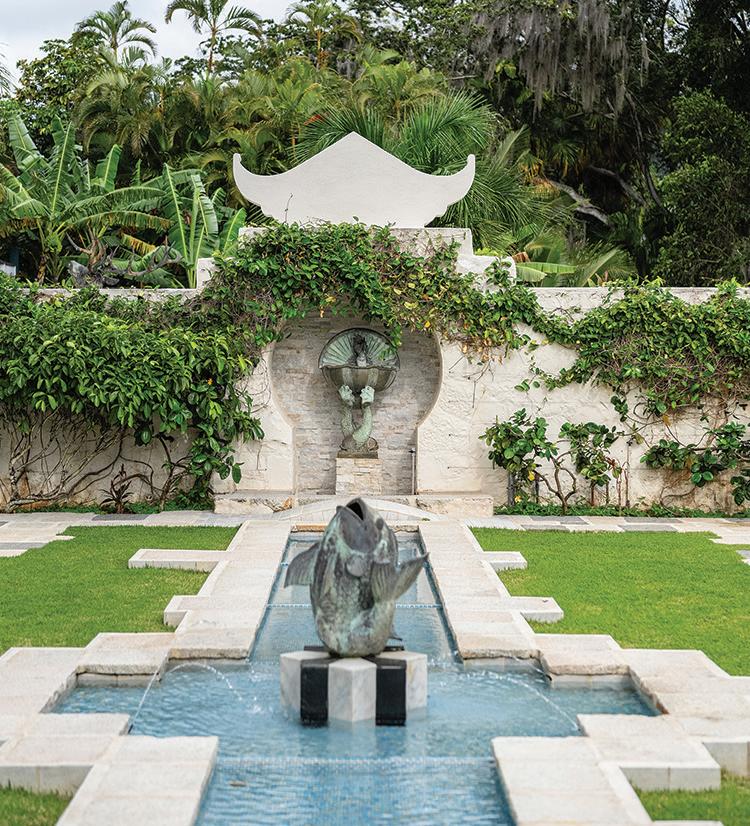
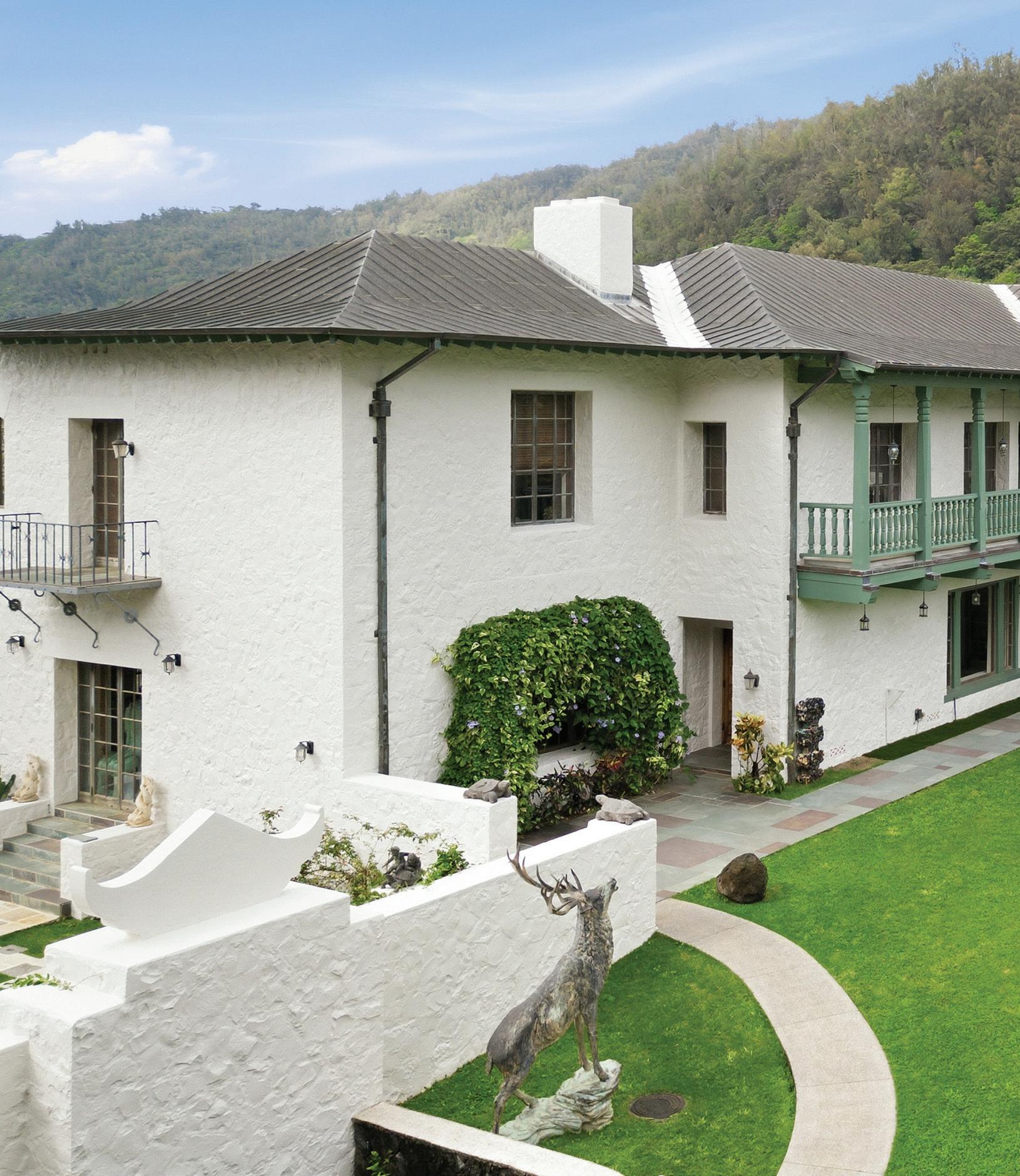
Following a meticulous four-year restoration, the expansive villa and two guest houses showcase classic and contemporary updates alongside original ‘ōhi‘a hardwood flooring, oldgrowth redwood accents, bronze windows, and limestone surfaces. A quiet mystique envelops every room, from the grand salon to the maritimeinspired study and mahogany-lined library. On the verdant grounds, a flowing stream, dramatic waterfalls, reflecting pools, and a heated saltwater pool imbue the setting with a cinematic, transcendental quality.
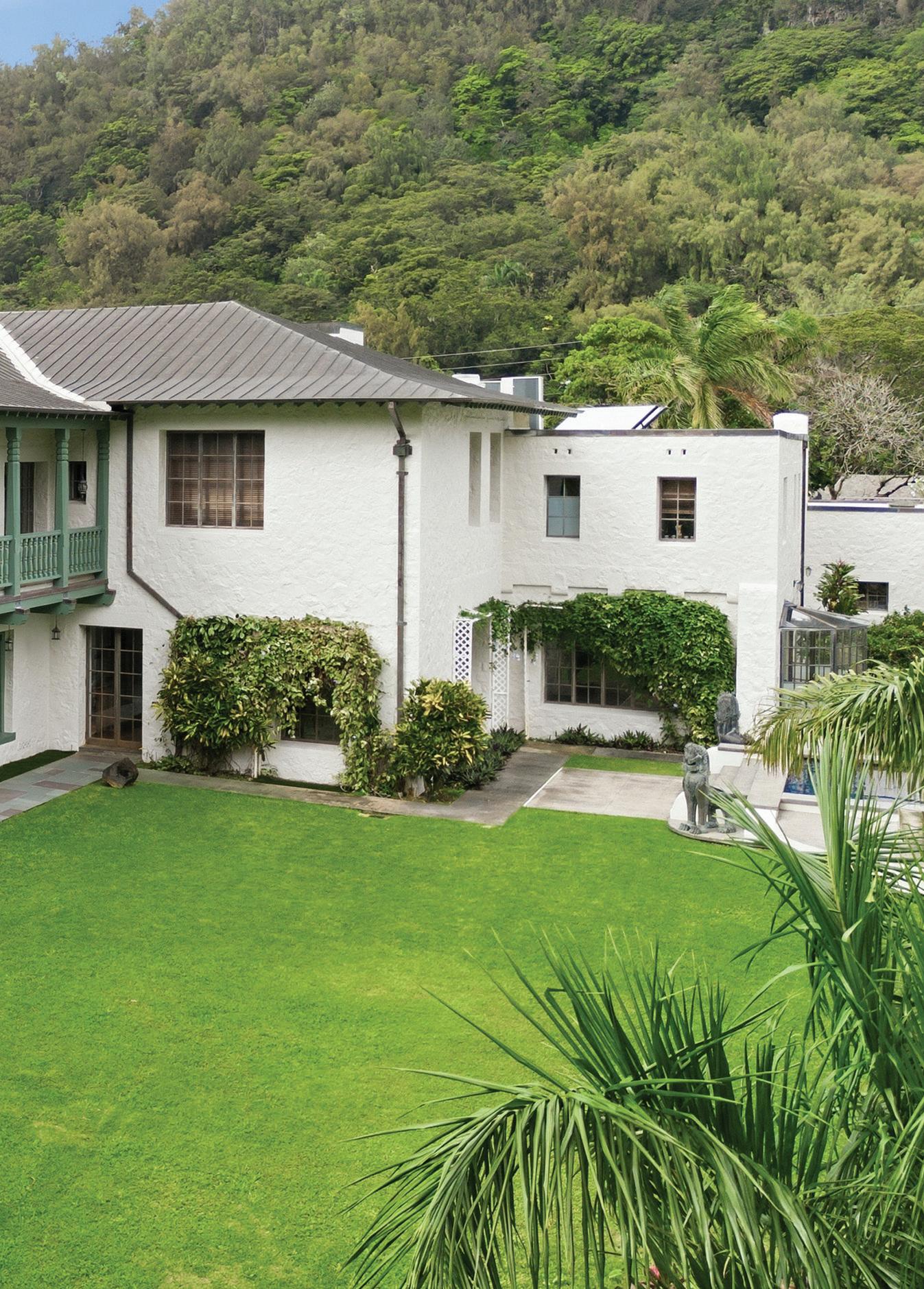
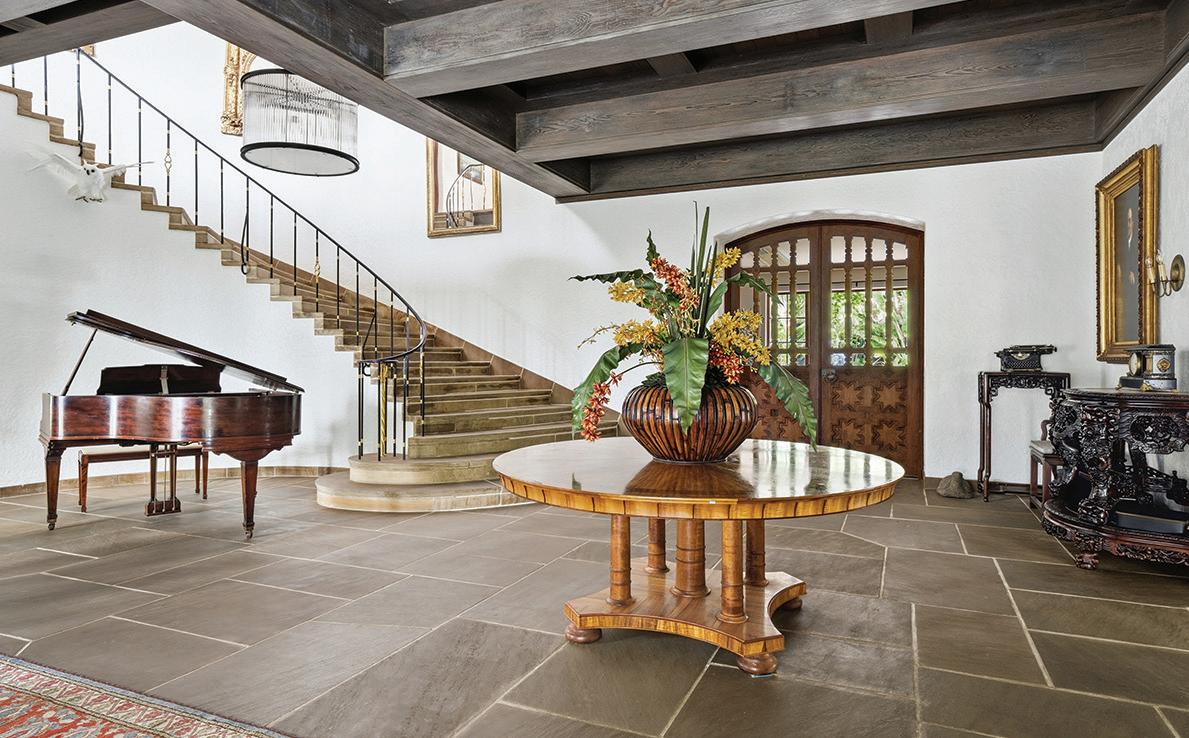
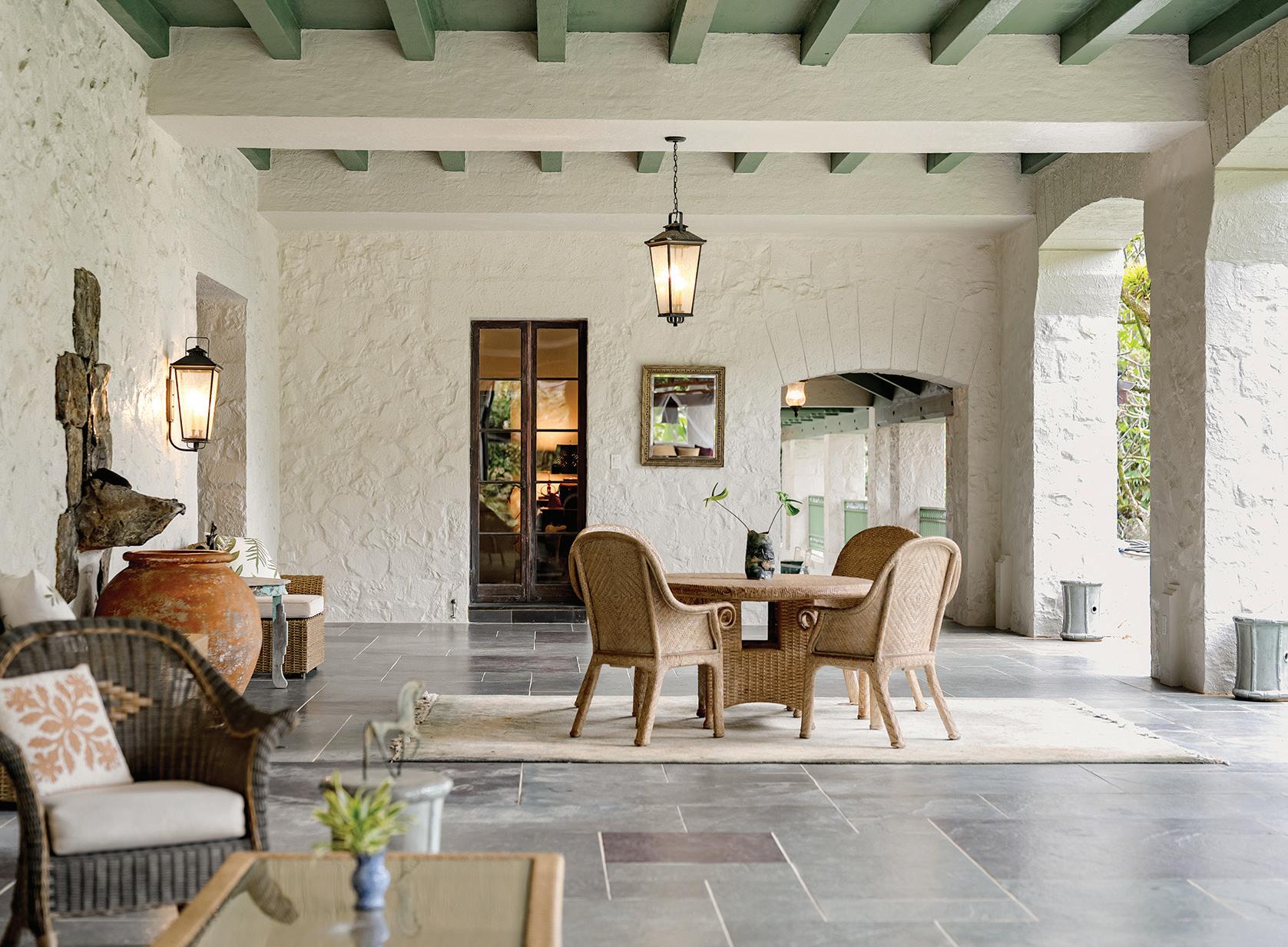
$22M | Listed by Jovanna Giannasio-Fern R(S)
Legacy Dual-Parcel in Diamond Head
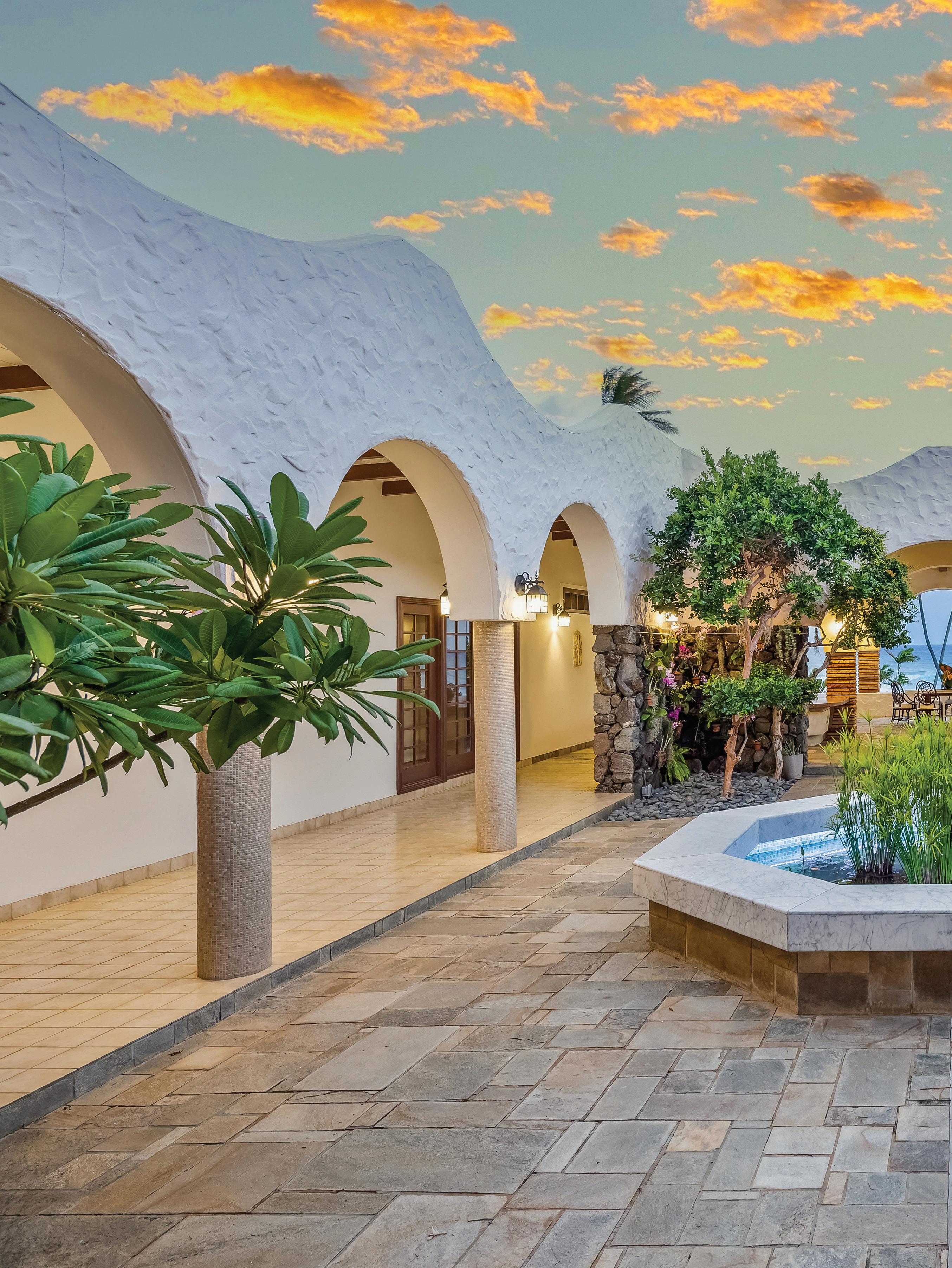
Bridging the prestigious Kāhala area and dynamic Waikīkī, Ho‘oluana is among the last remaining legacy estates in Honolulu. Set across two parcels, this unique acquisition encompasses a stately five-bedroom poolside villa, a rejuvenated vintage beach house with direct ocean access, and a vacant homesite with remarkable development potential.
$55M | Listed by Noël Shaw R(S)
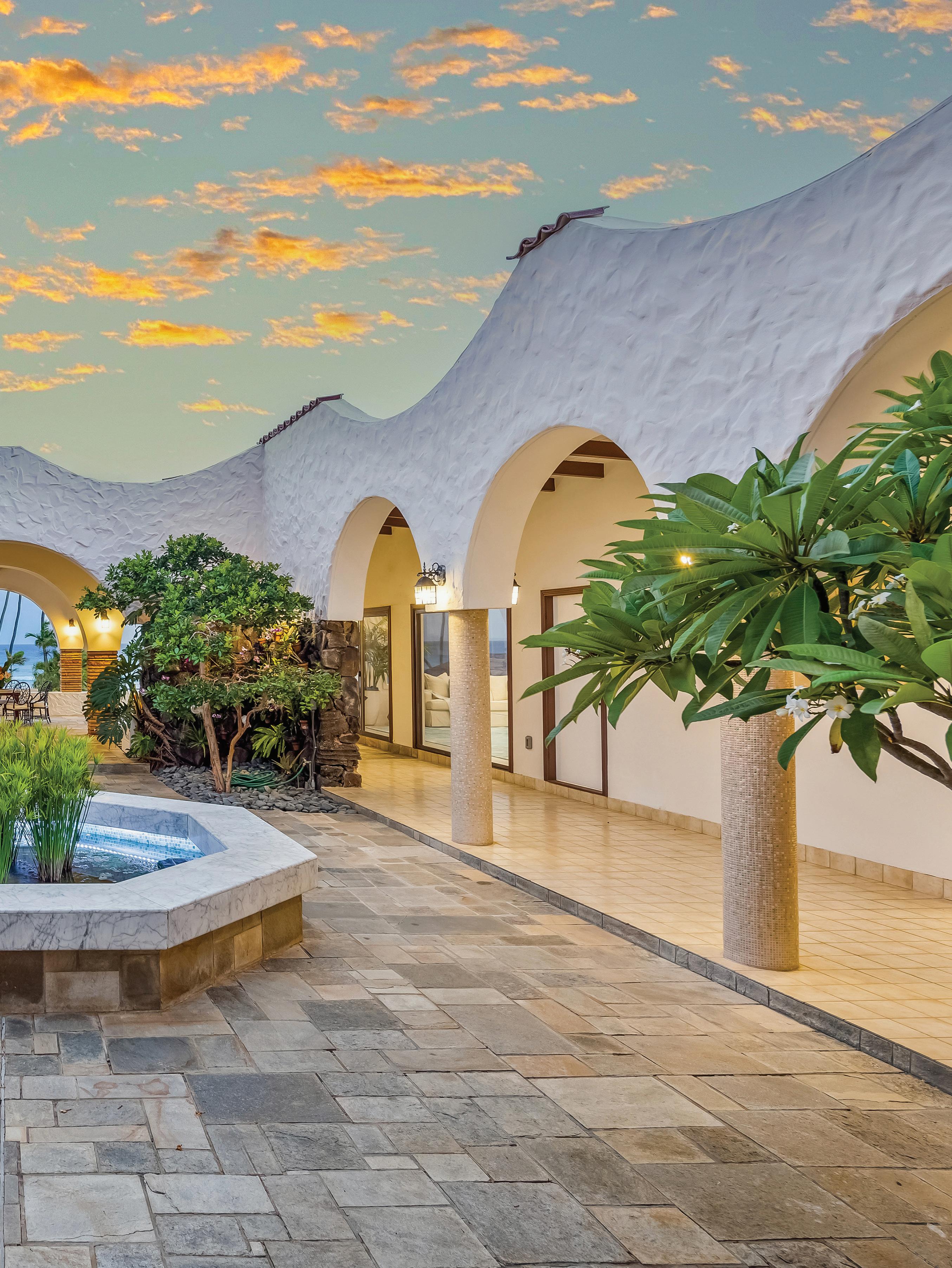
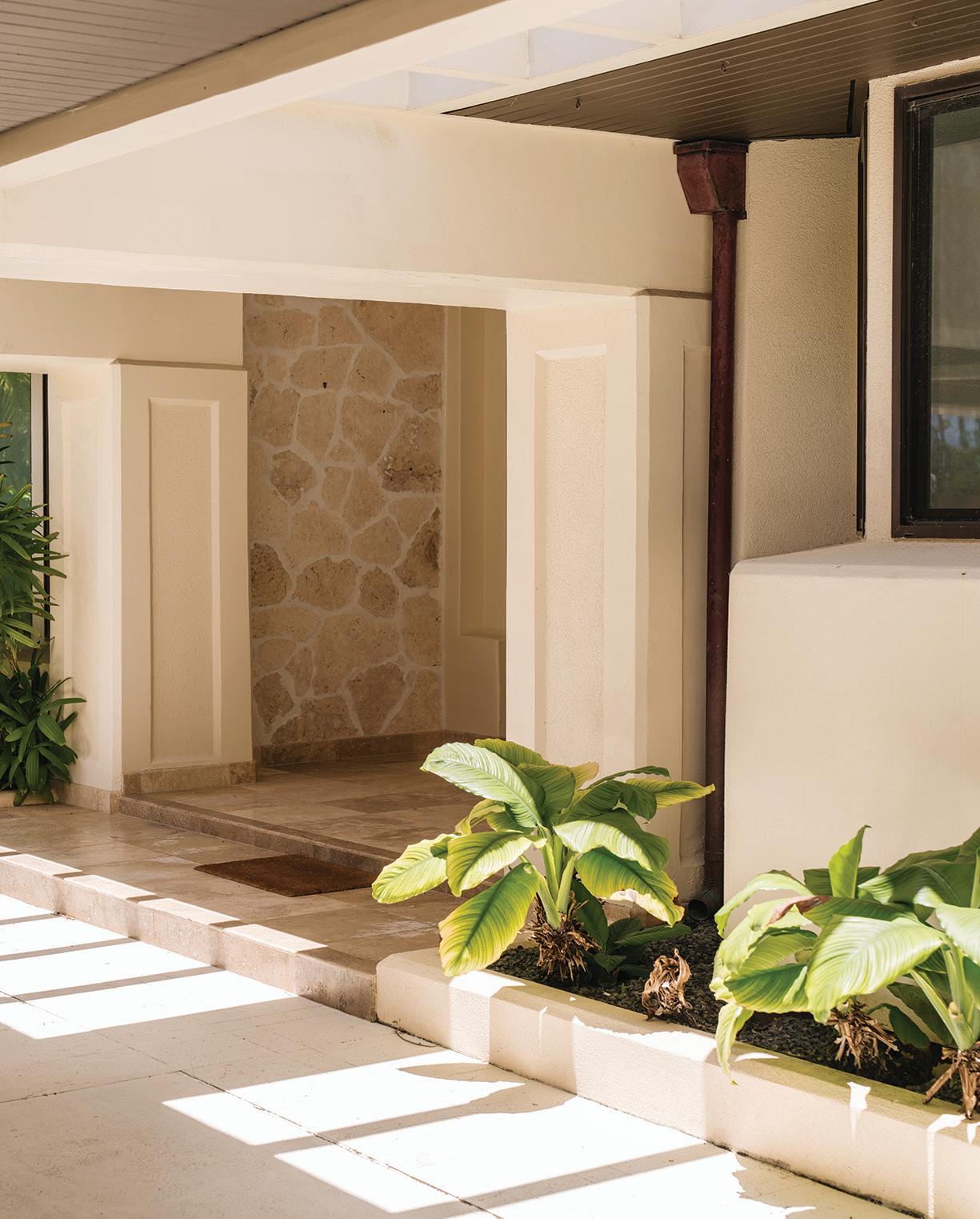
An Urban Oasis
Gracing a 14,000-square-foot parcel across from Kāhala Beach, this five-bedroom home offers a suite of refined touches, including a custom chef’s kitchen with walnut cabinetry and Miele and Wolf appliances, a formal dining room, and travertine flooring in the living areas. The layered tropical landscaping and gated entry impart a sense of privacy and retreat.
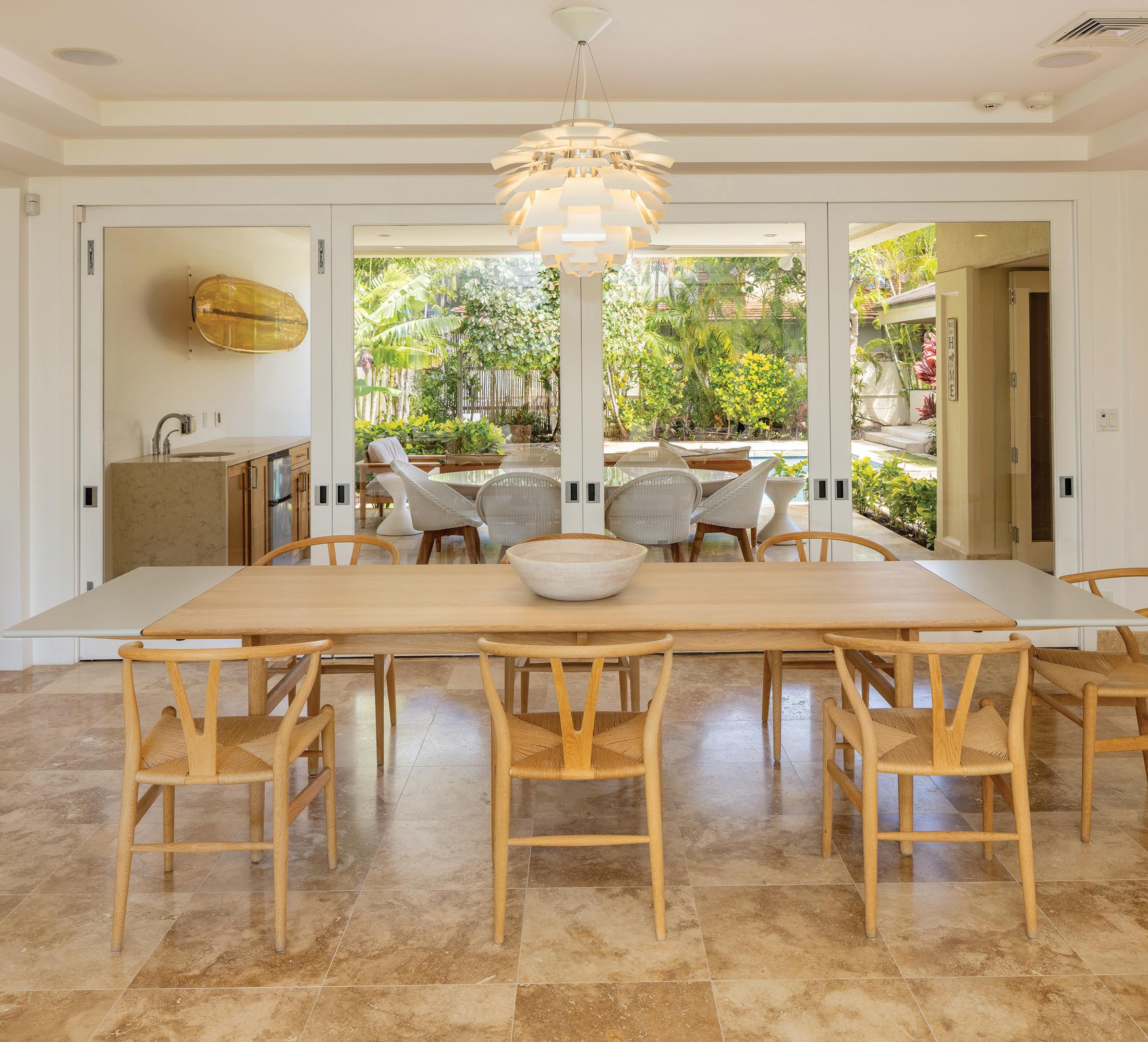
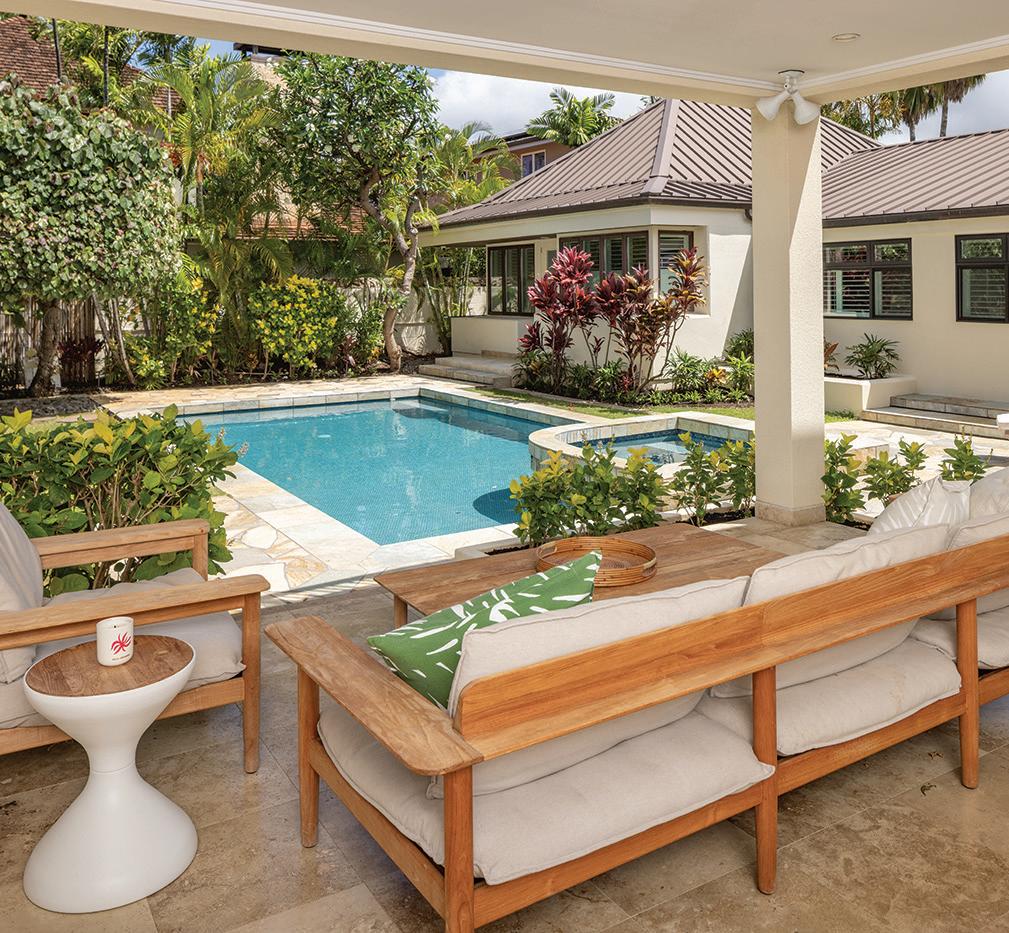
Price Upon Request
Presented by Noël Shaw R(S)
Room to Breathe
The elegant, low-rise urban enclave of Park Lane Ala Moana is in a class of its own, bringing together resort-style amenities, a private residential atmosphere, and a generosity of scale uncommon in the heart of Honolulu, from expansive lānais to park-like grounds with lush courtyards. A resortstyle pool, a movie theater, a wine cellar, and a club lounge with fire pit enrich the all-inclusive appeal.
$8.9M | Listed by
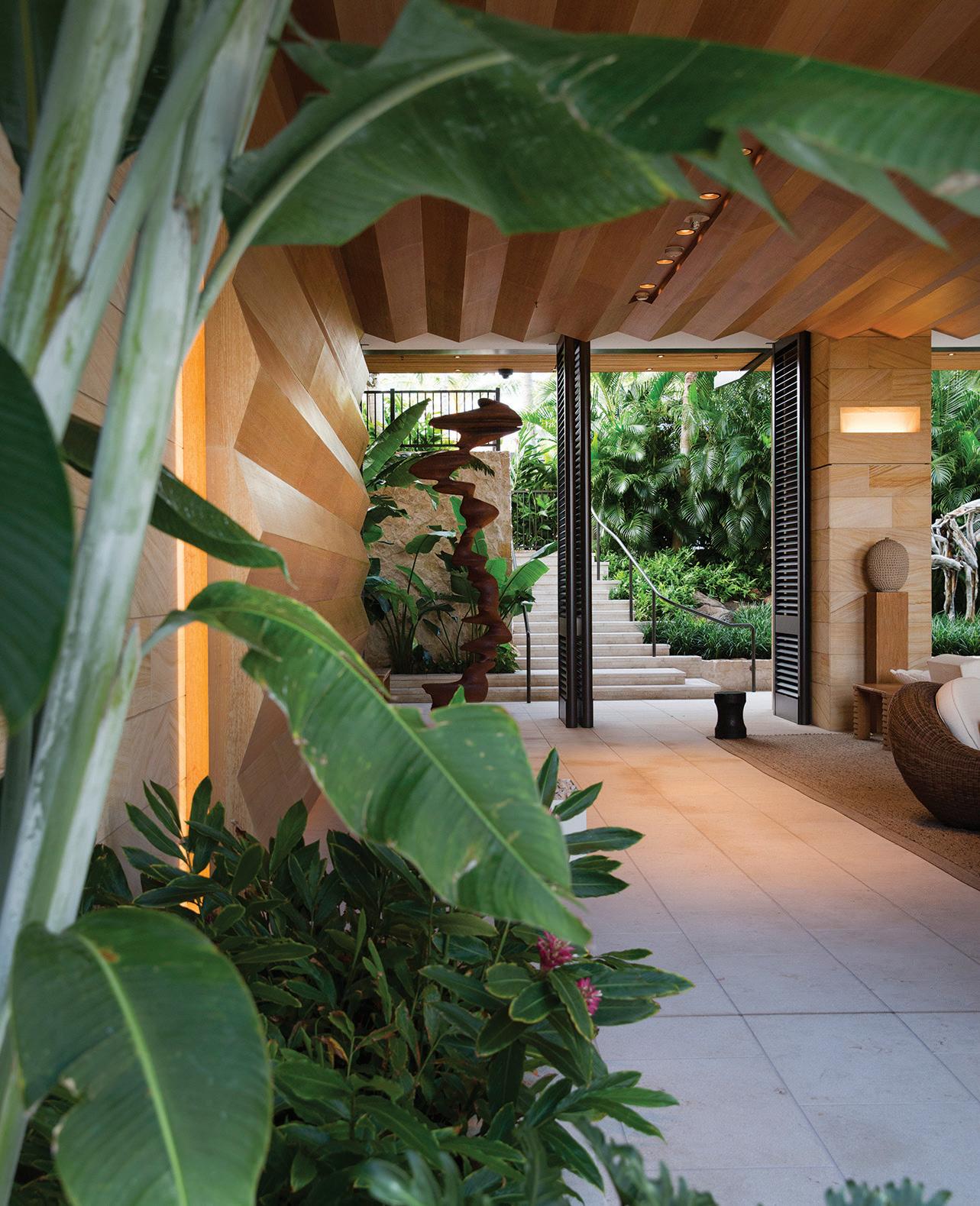
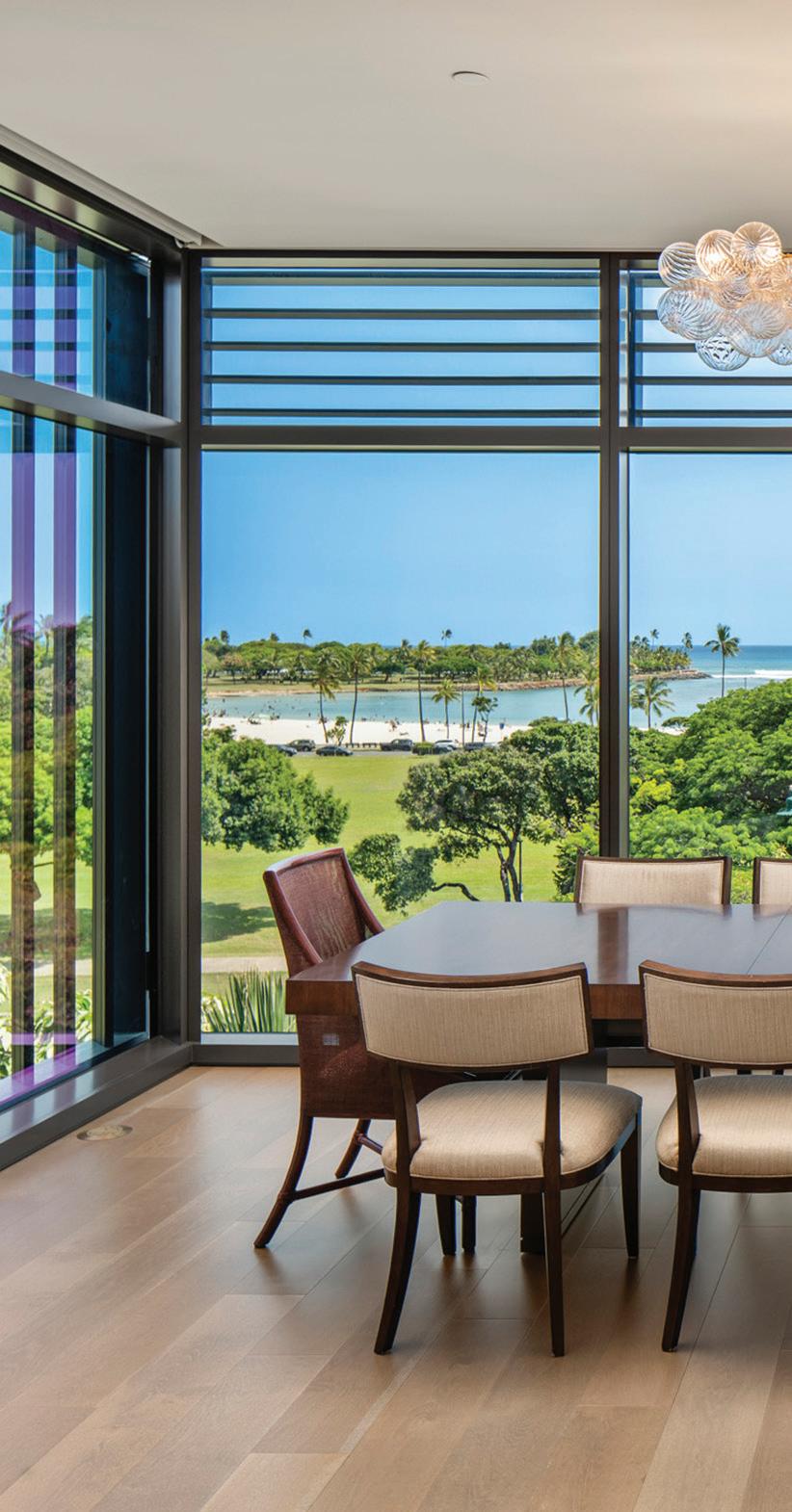
Noël Shaw R(S)
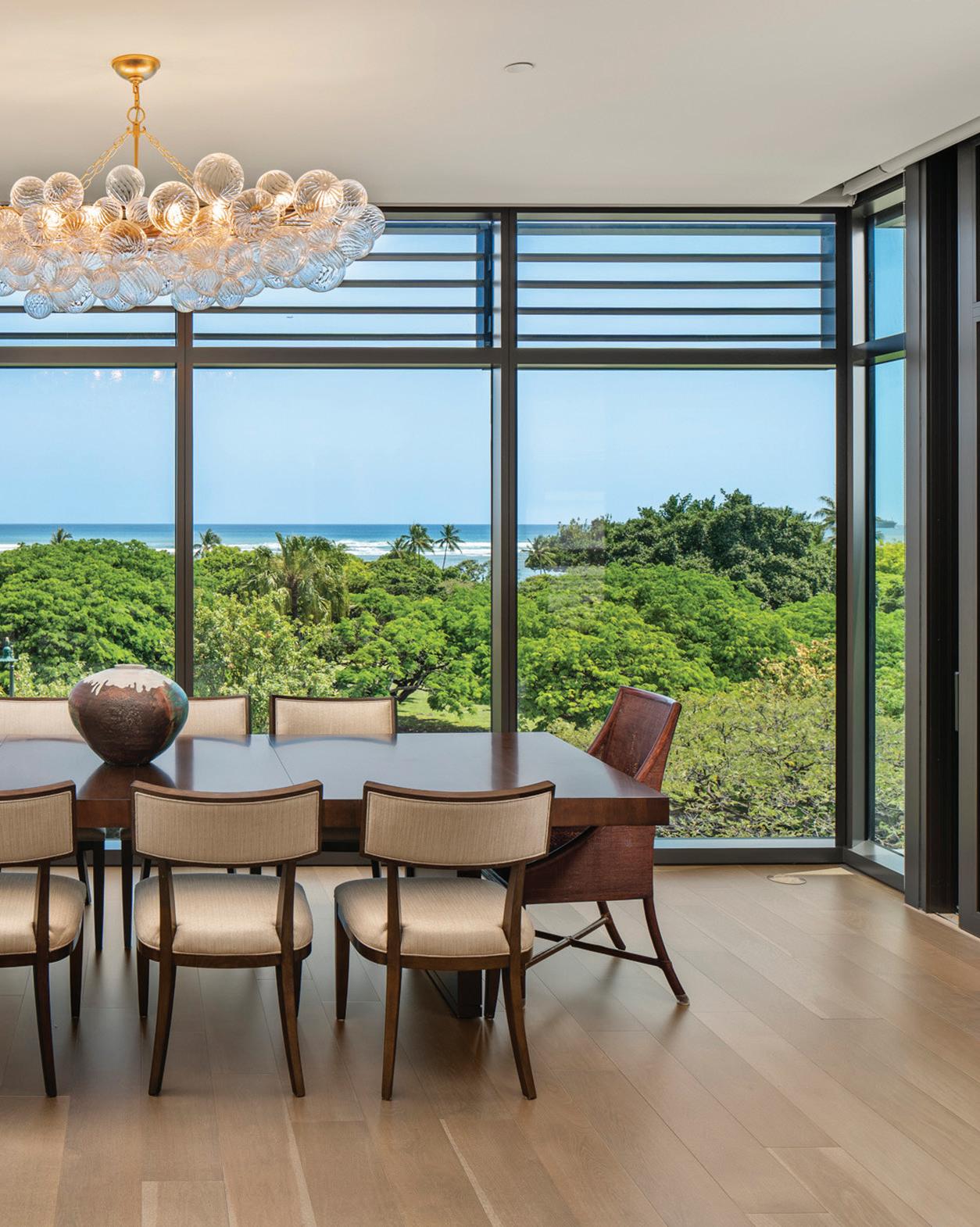
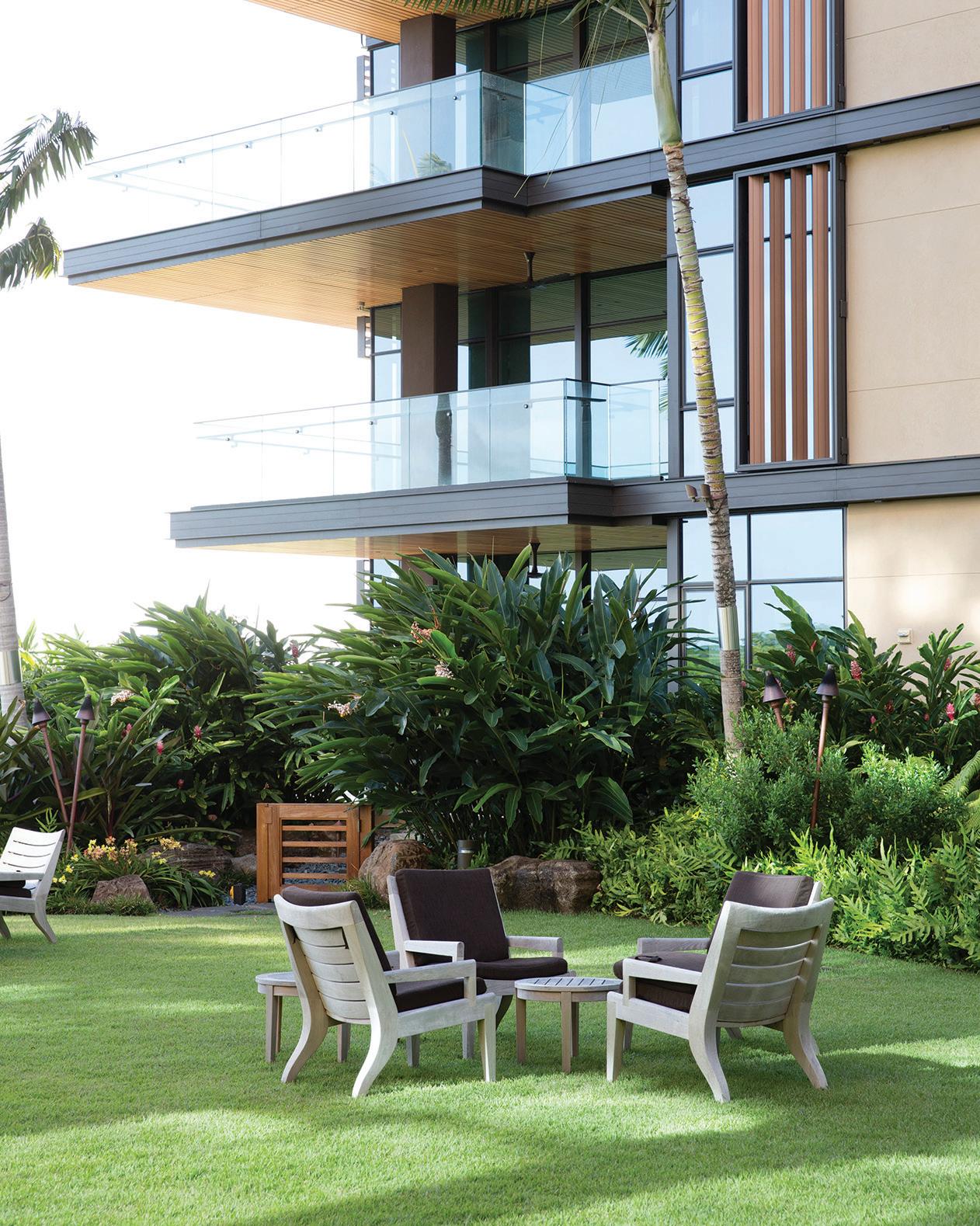
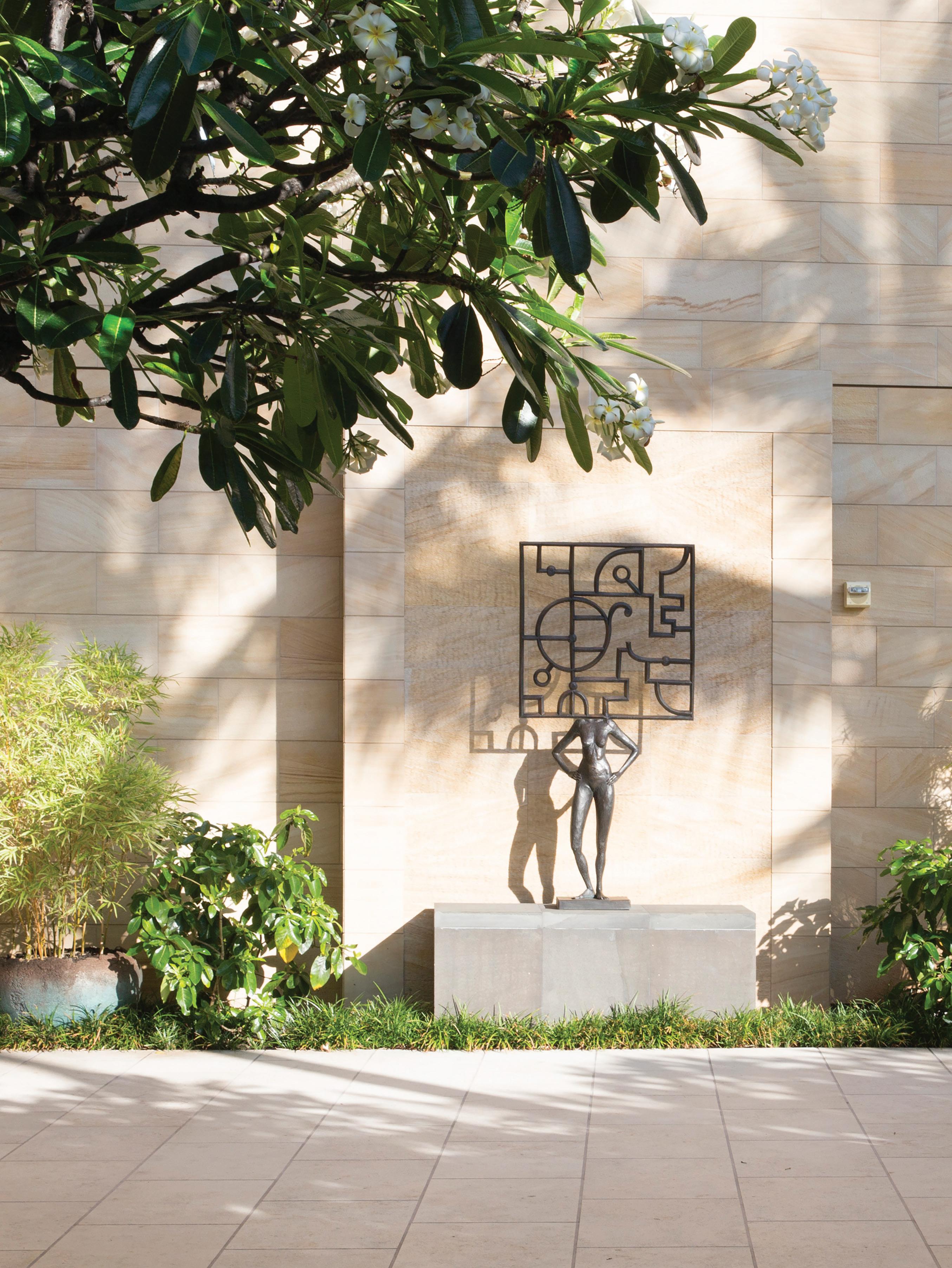
An Architectural Capstone
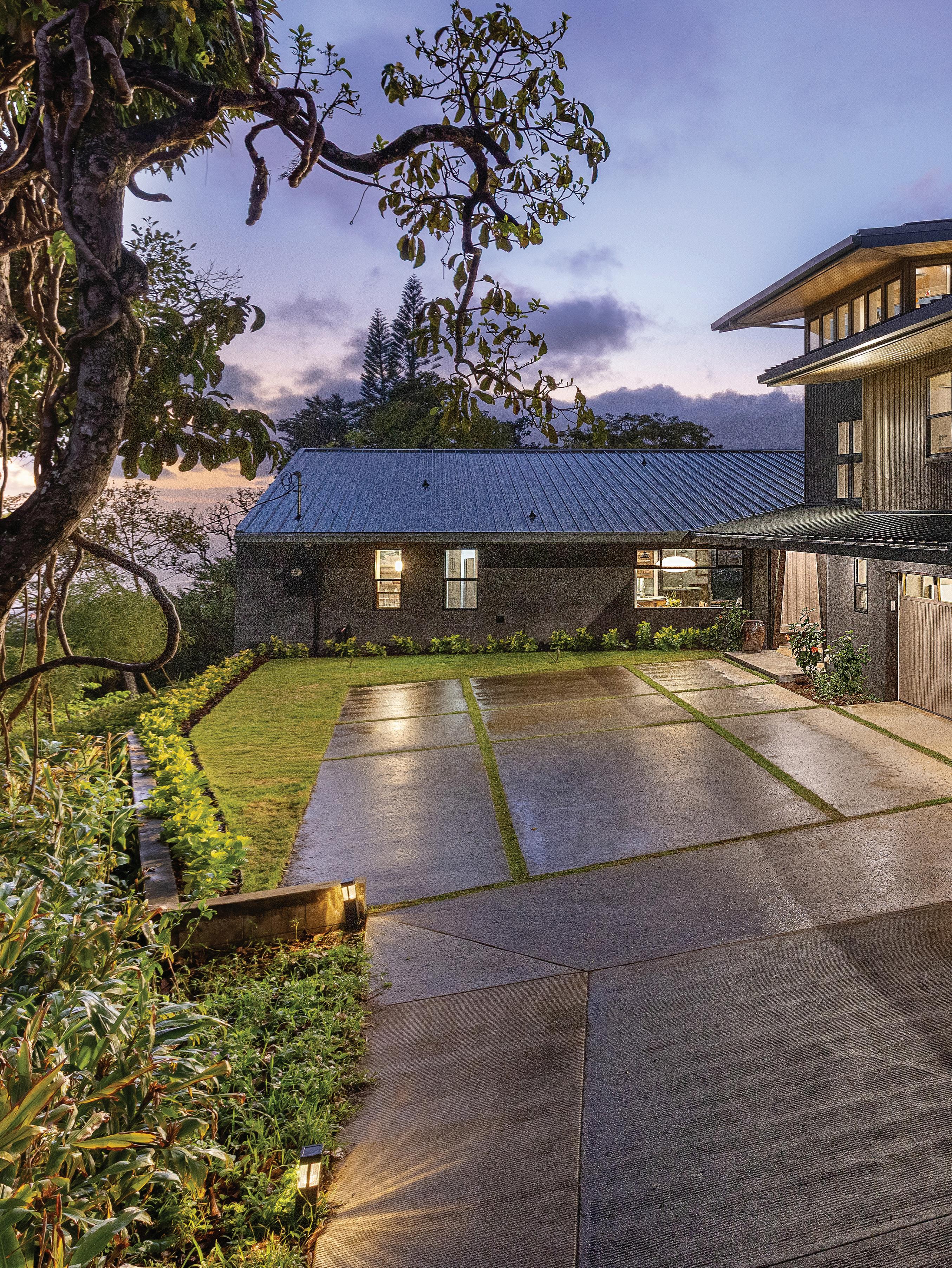
Completed in 2023 as an architect’s final residential project, this contemporary three-story residence is carefully oriented on a one-acre parcel along the Tantalus ridgeline to capture optimal trade winds, sunlight, and broad horizon perspectives. The home celebrates the dynamism of O‘ahu’s island landscape with organic textures of hardwood, slate, and volcanic basalt.
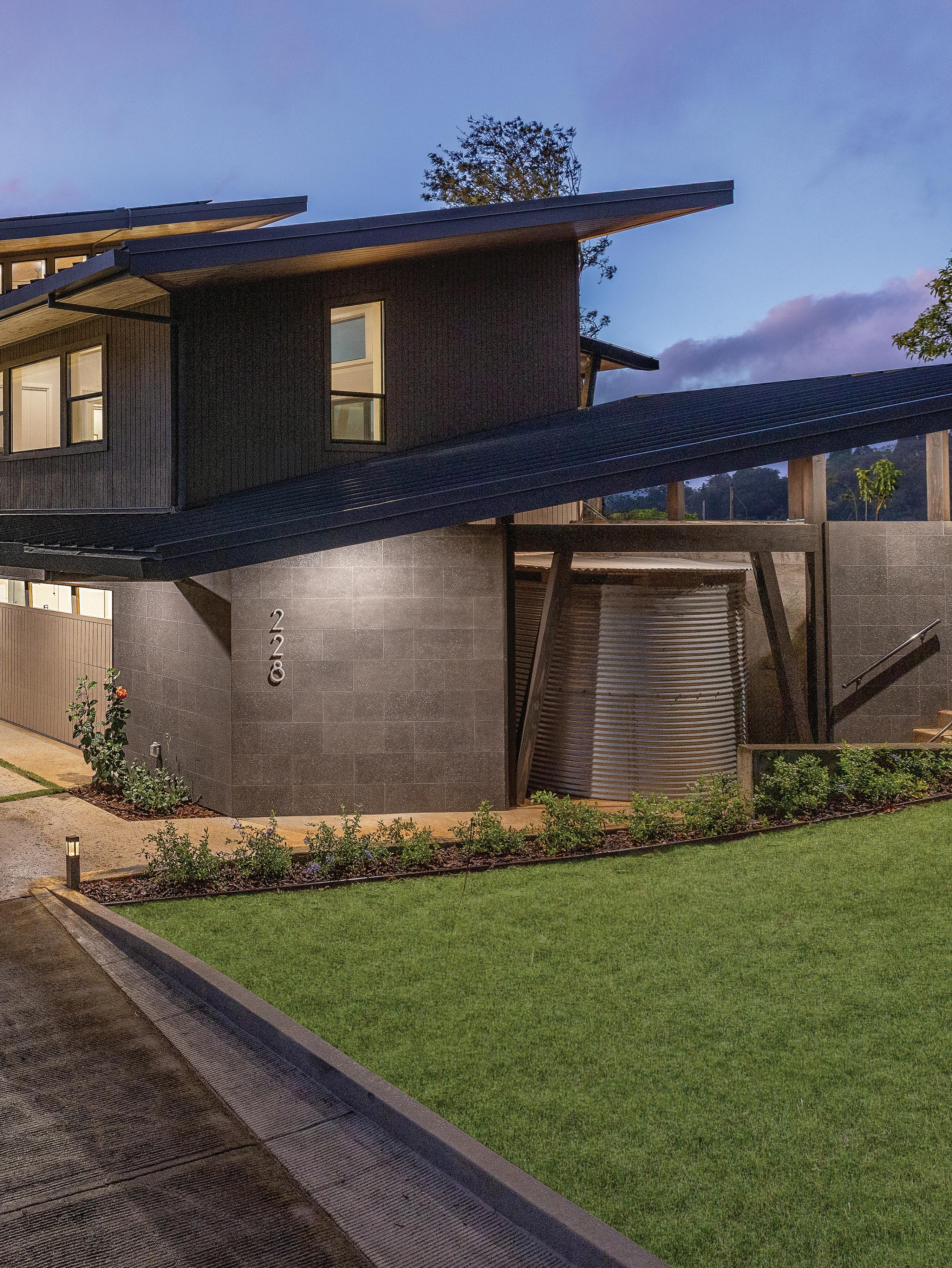
$3.9M | Listed by
Noël Shaw R(S)
Price Upon Request
Presented by Cedric Choi R(B) and Julianna Garris R(B)
The Seat of Serenity
This 13,500-square-foot estate in the upscale neighborhood of Kāhala balances splendor and serenity in rare measure. The modern island home encircled within its solid wall enclosure and impressive courtyard features 10- to 12-foot ceilings, limestone flooring, pocketed sliding glass doors, and a floating staircase in oak. Two garden pavilions, a custom pond, a swimming pool, and a flowing fountain create an ideal setting for unhurried moments.
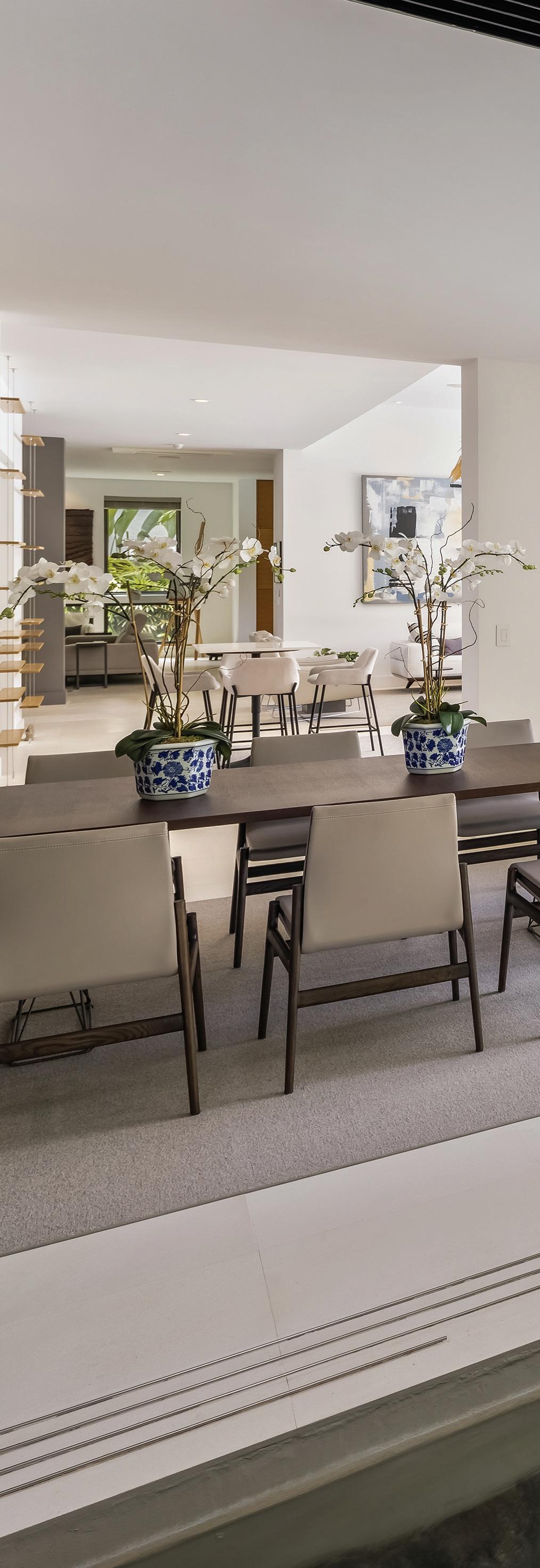
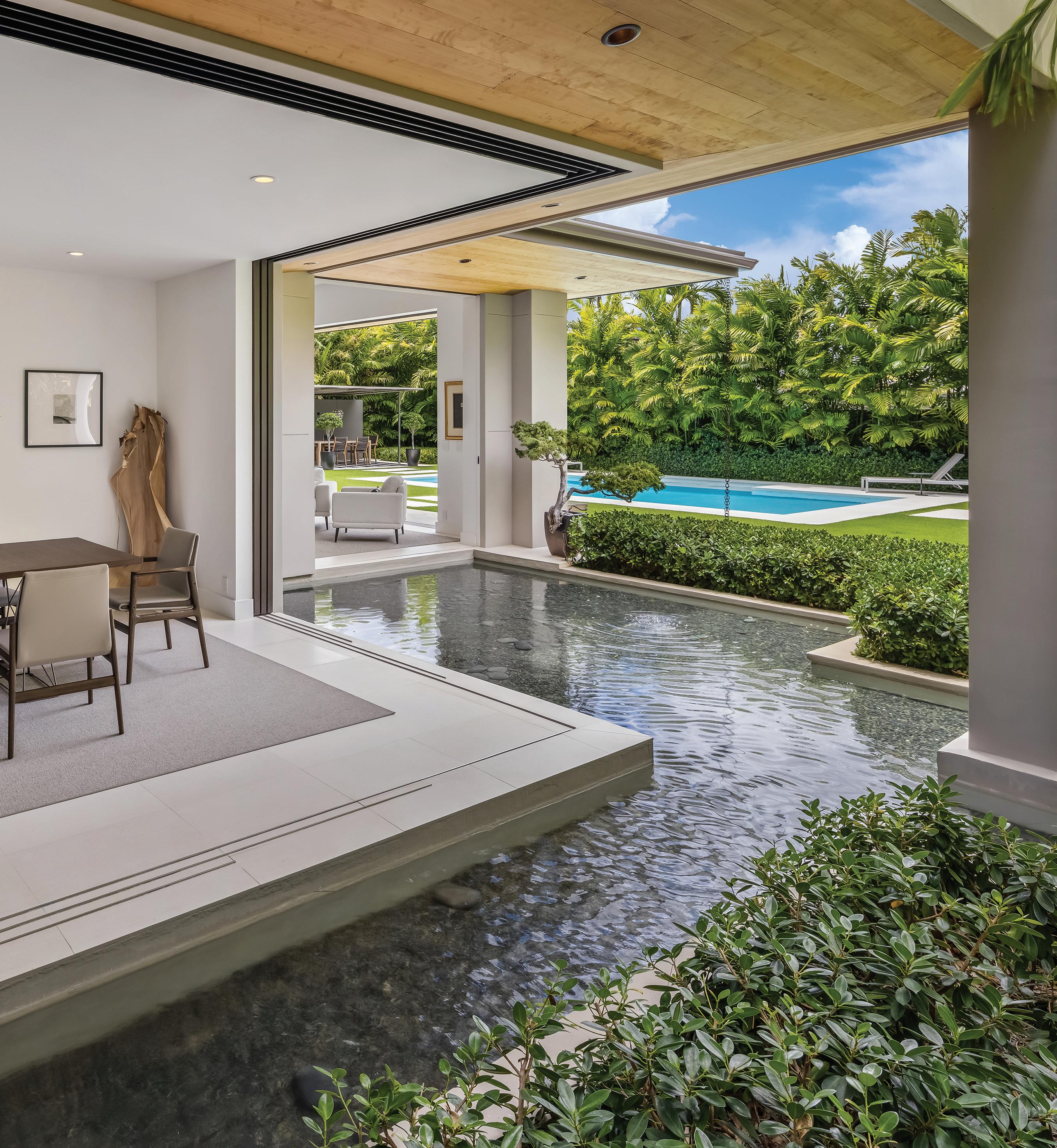
MAUI
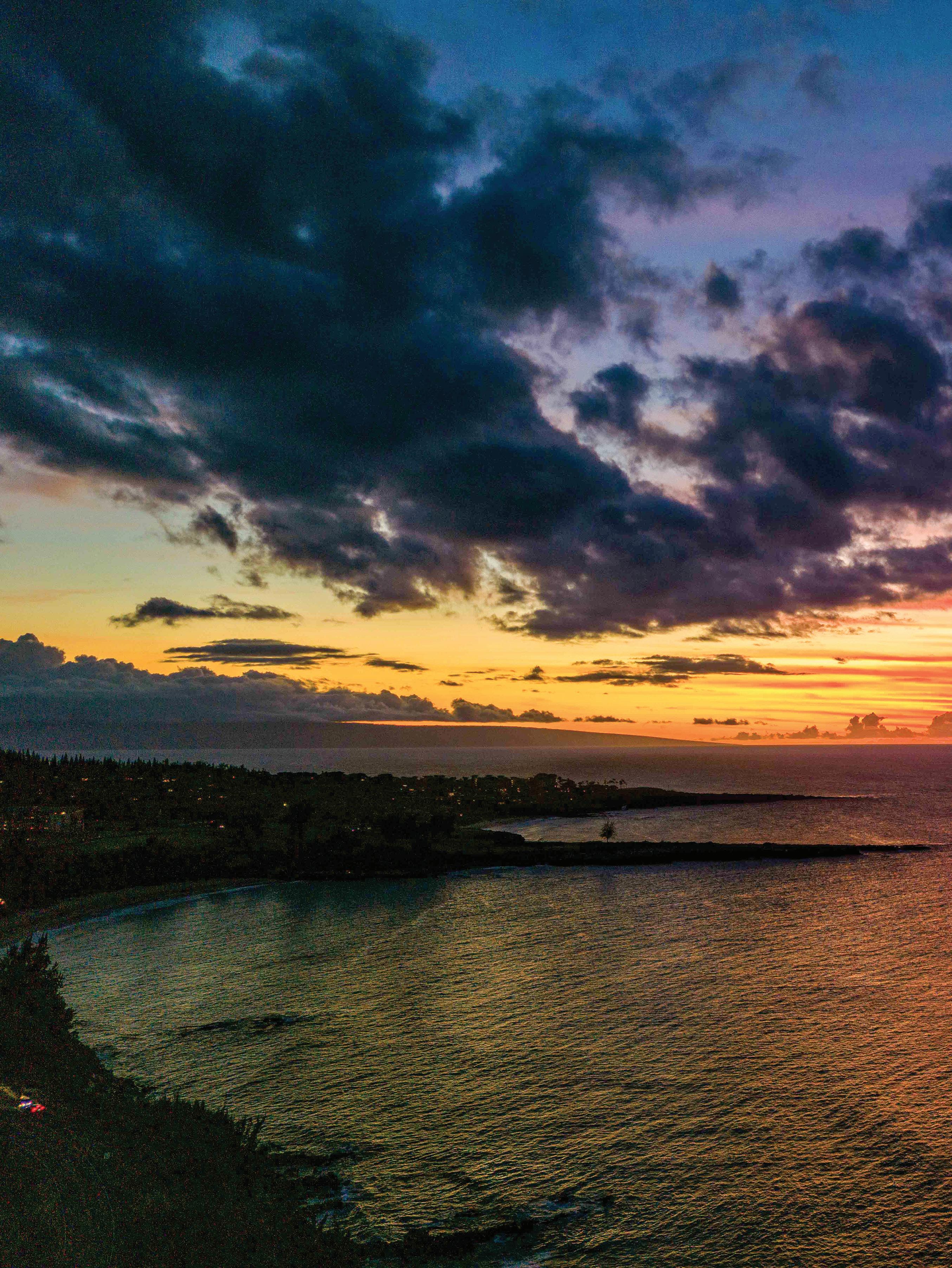
MAUI
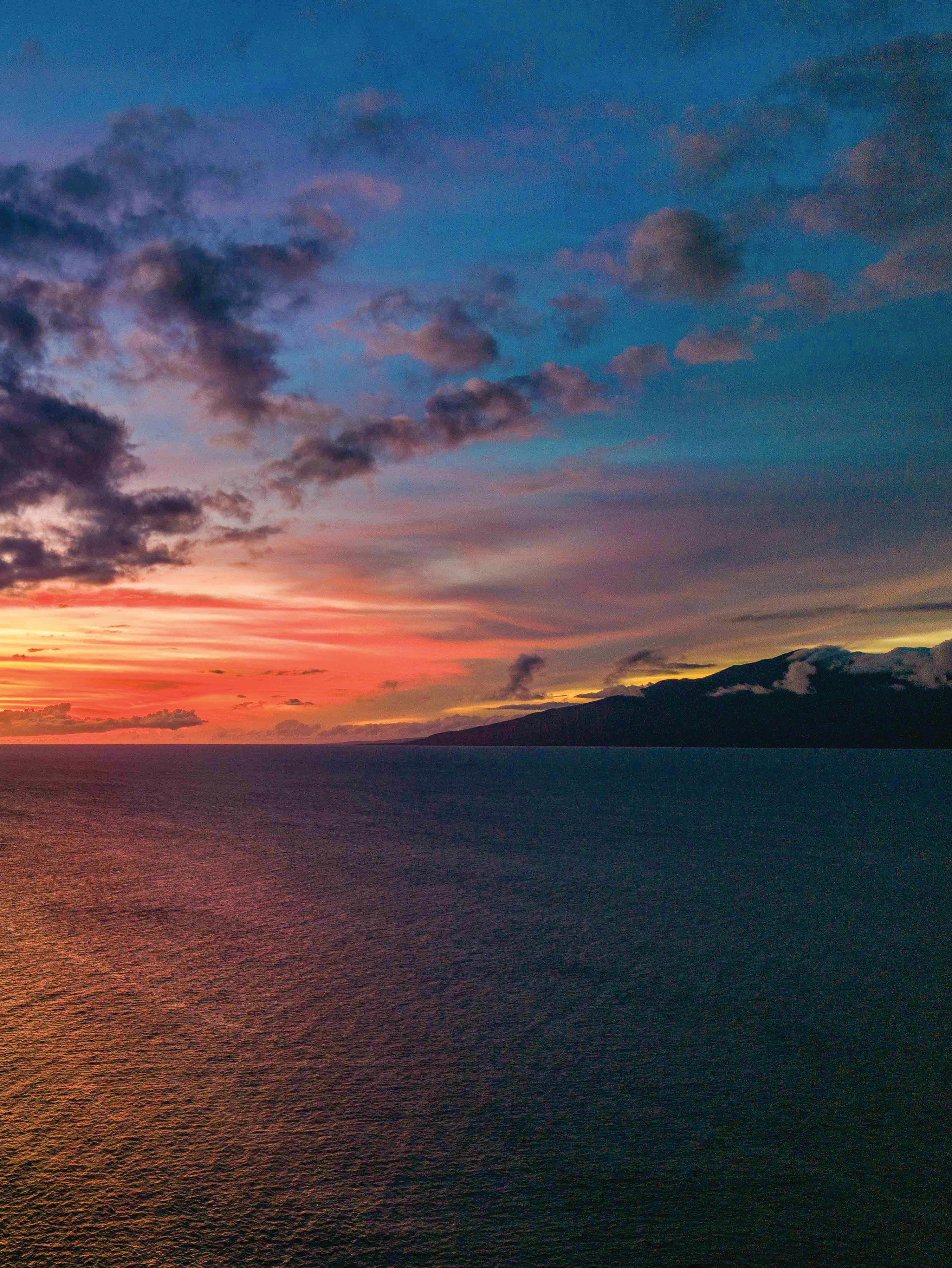
Mākena Beach
Sanctuary
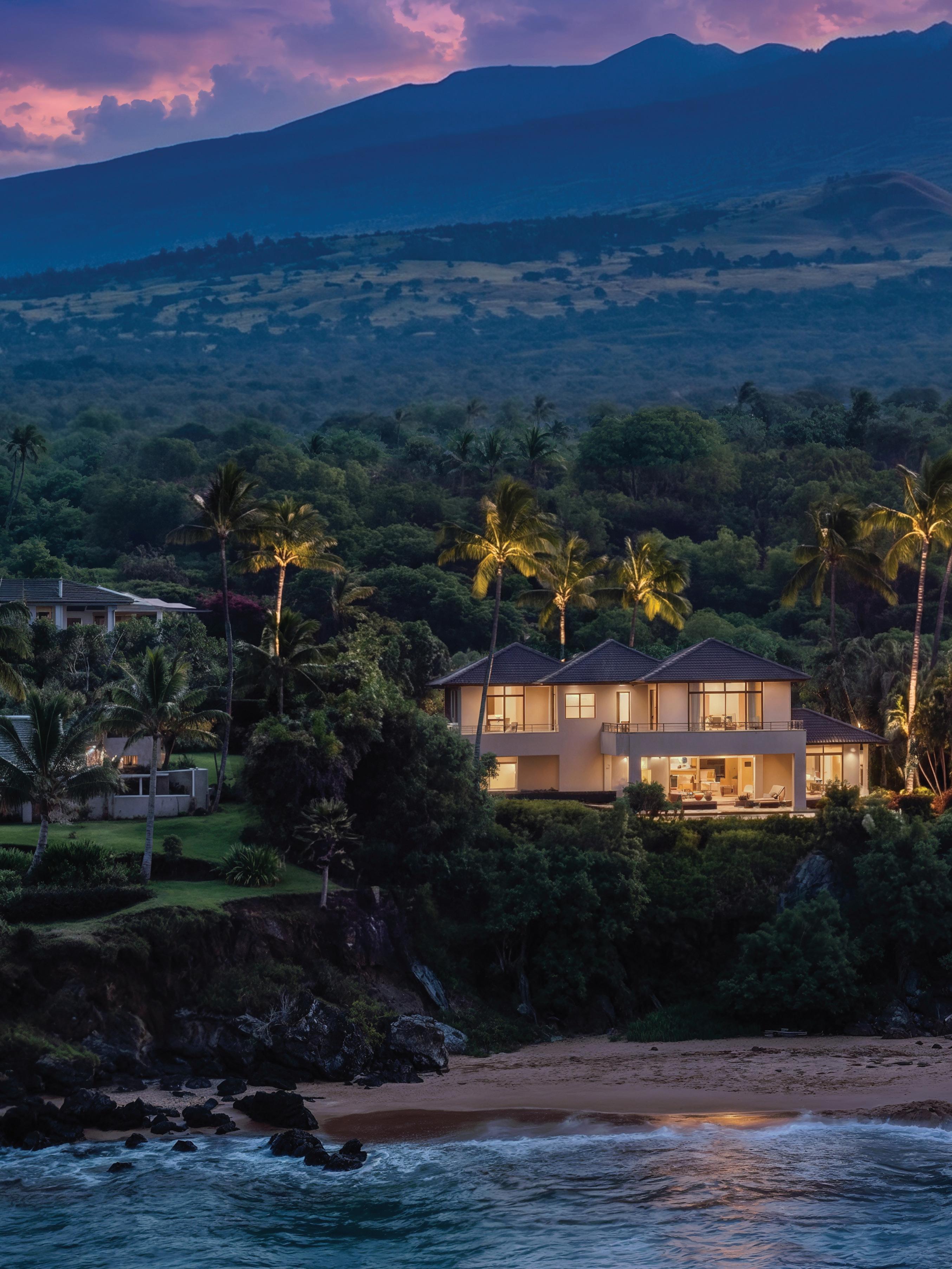
Rising 40 feet above the ivory sands of Secret Beach, this four-bedroom retreat is awash in natural light, featuring an open-concept great room, gourmet kitchen, and formal dining room with soaring 15-foot ceilings.
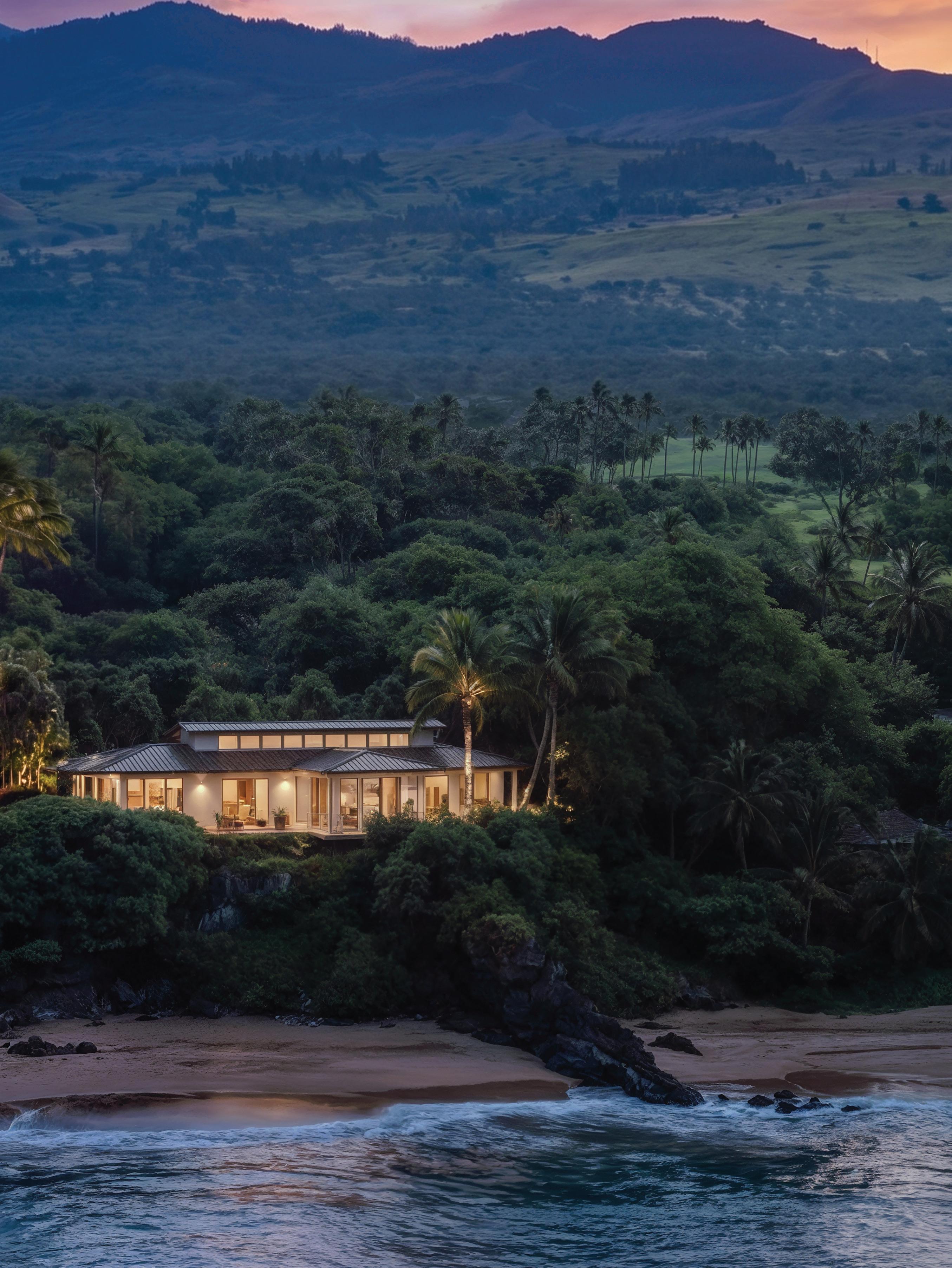
$45M | Listed by Dave Richardson R(B)
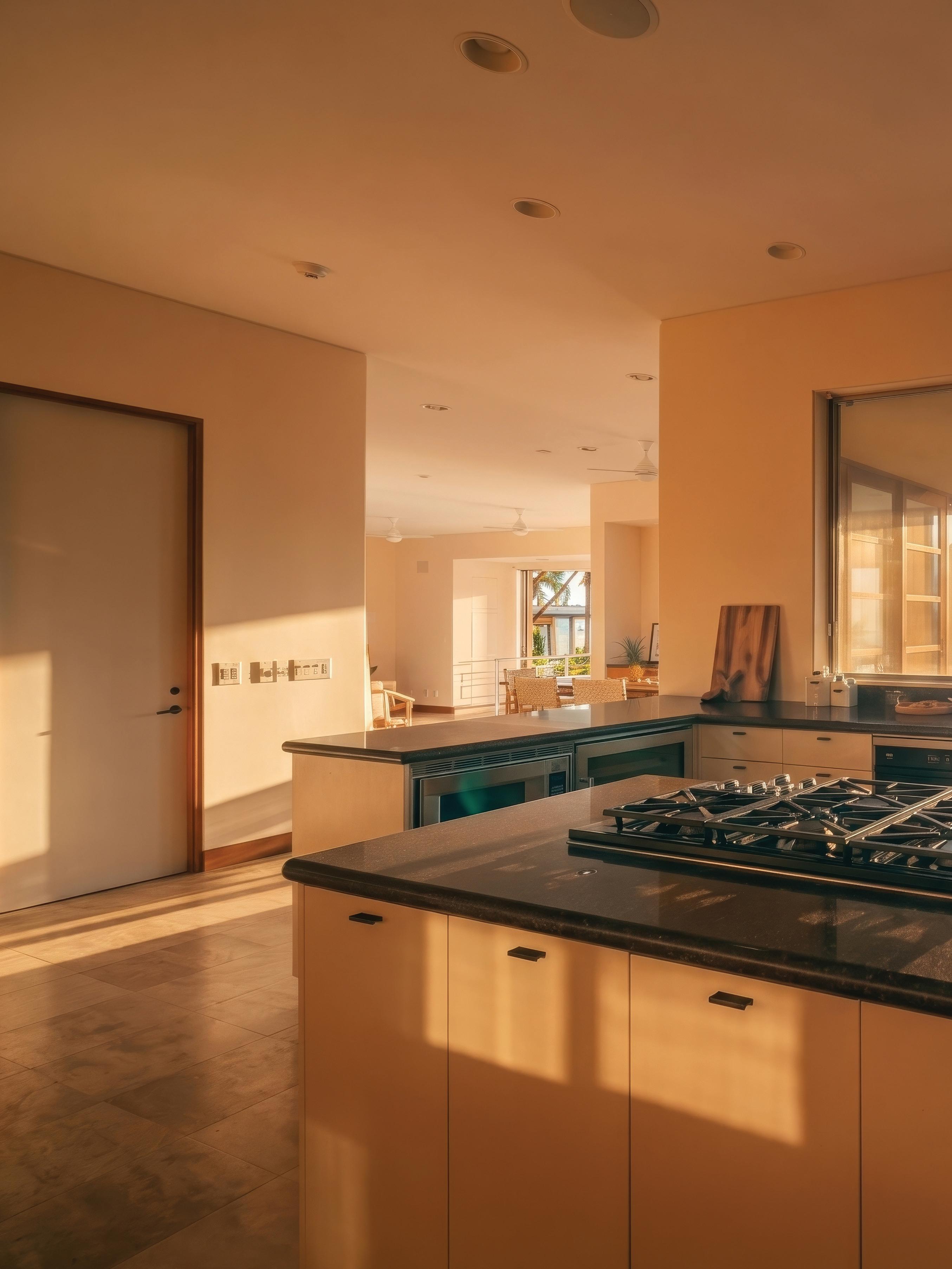
A discreet beach footpath, an outdoor spa, and lānais off the living area and top-level master suite keep the home in constant conversation with the Pacific Ocean. The neighboring single-level home is also available.
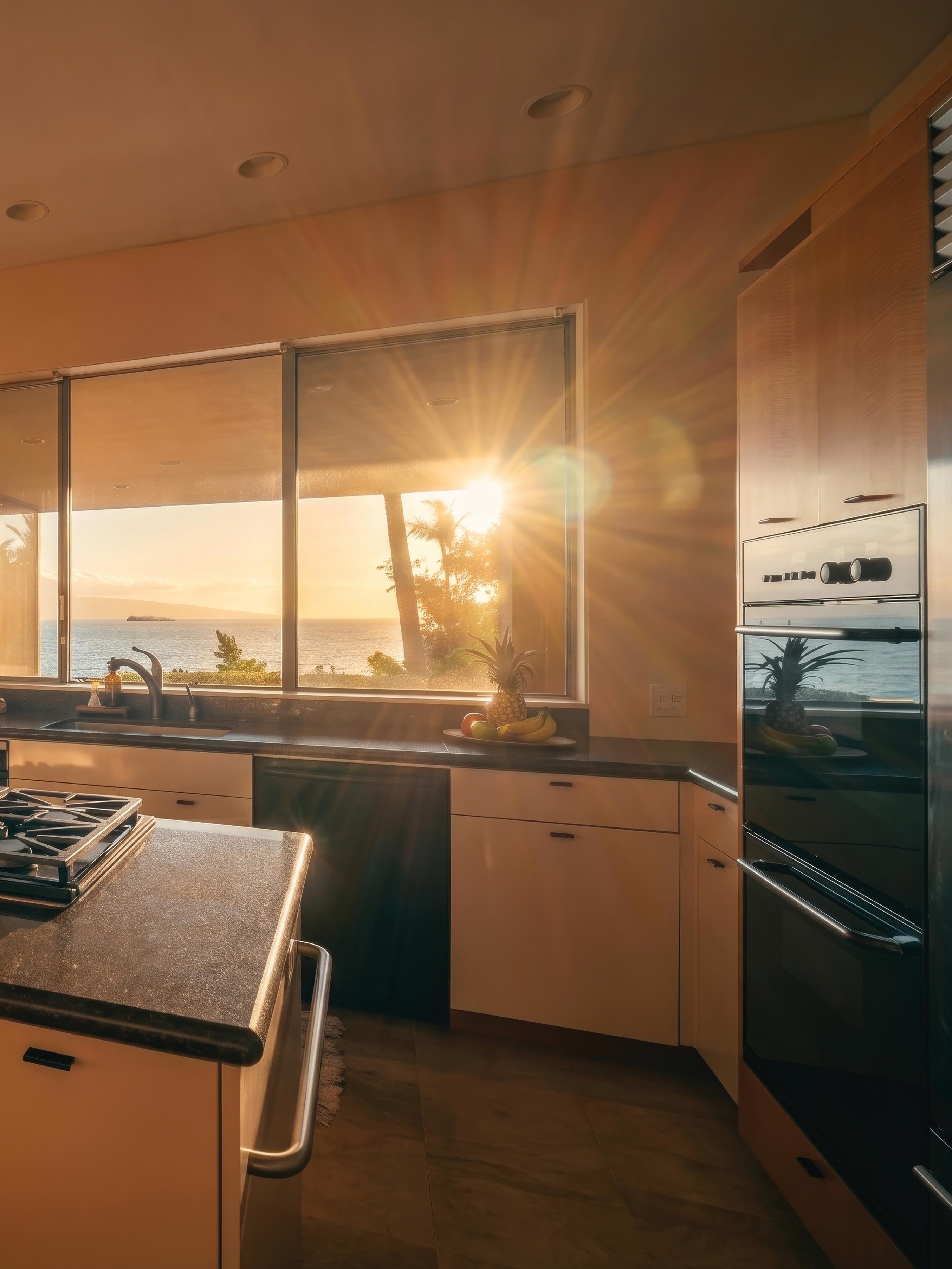
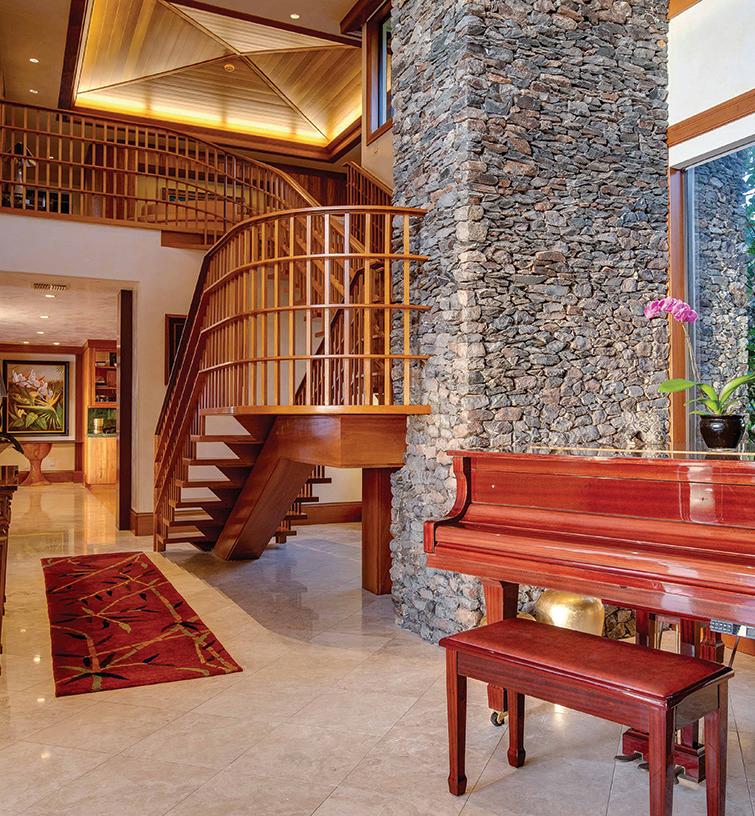
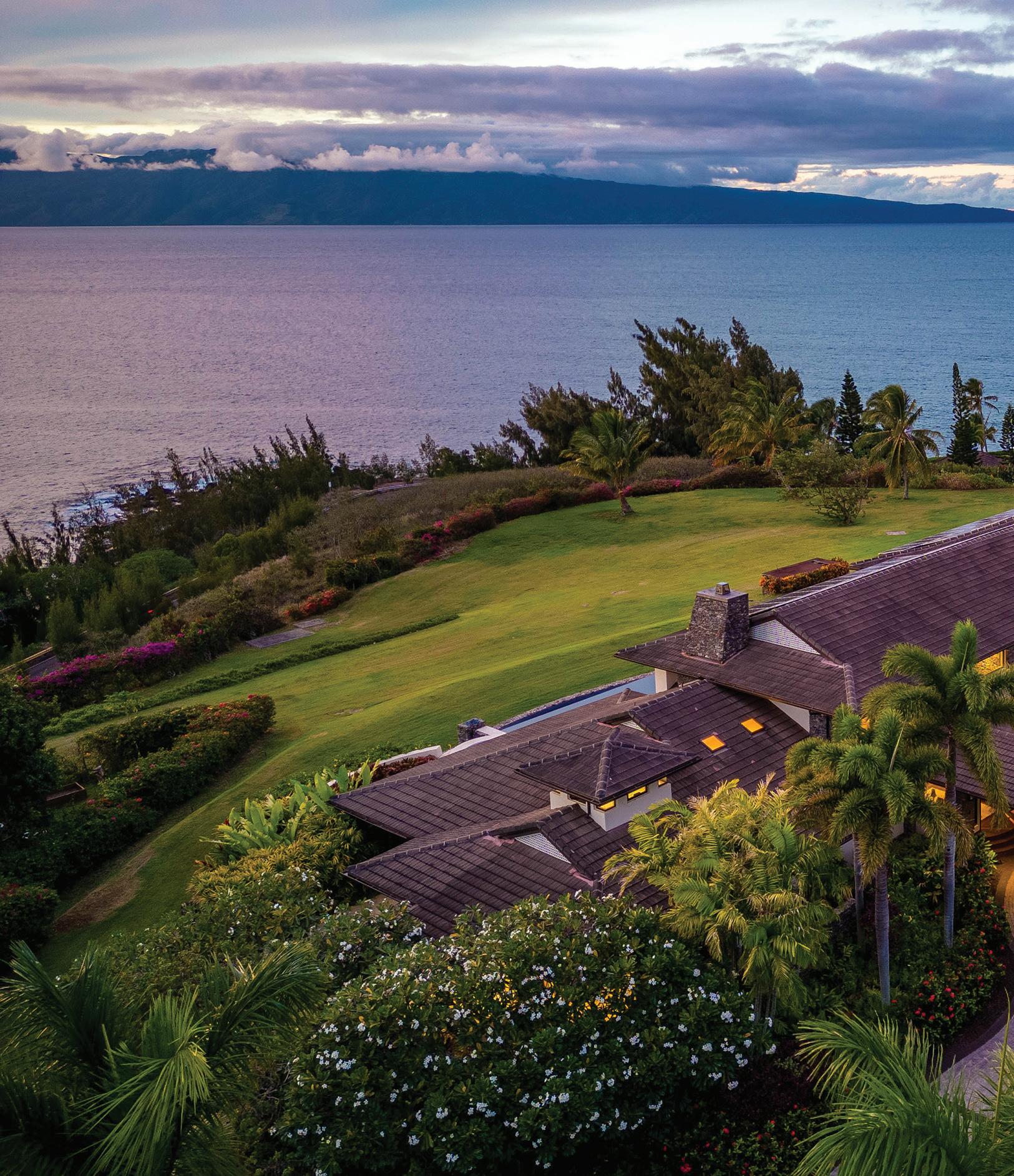
Privacy and Panoramas
Luxury and functionality define this artfully renovated home, offering 8,000 square feet of living space and ocean views from all six ensuite bedrooms. Enhancements like the Control4 whole-home automation platform complement expressions of high-end craftsmanship, including rich koa veneers and artisanal Italian flooring from Berti Pavimenti Legno. A generous lawn, detached ‘ohana home, media and fitness rooms, saltwater pool, and Champagne-style hot tub complete the upscale offerings.
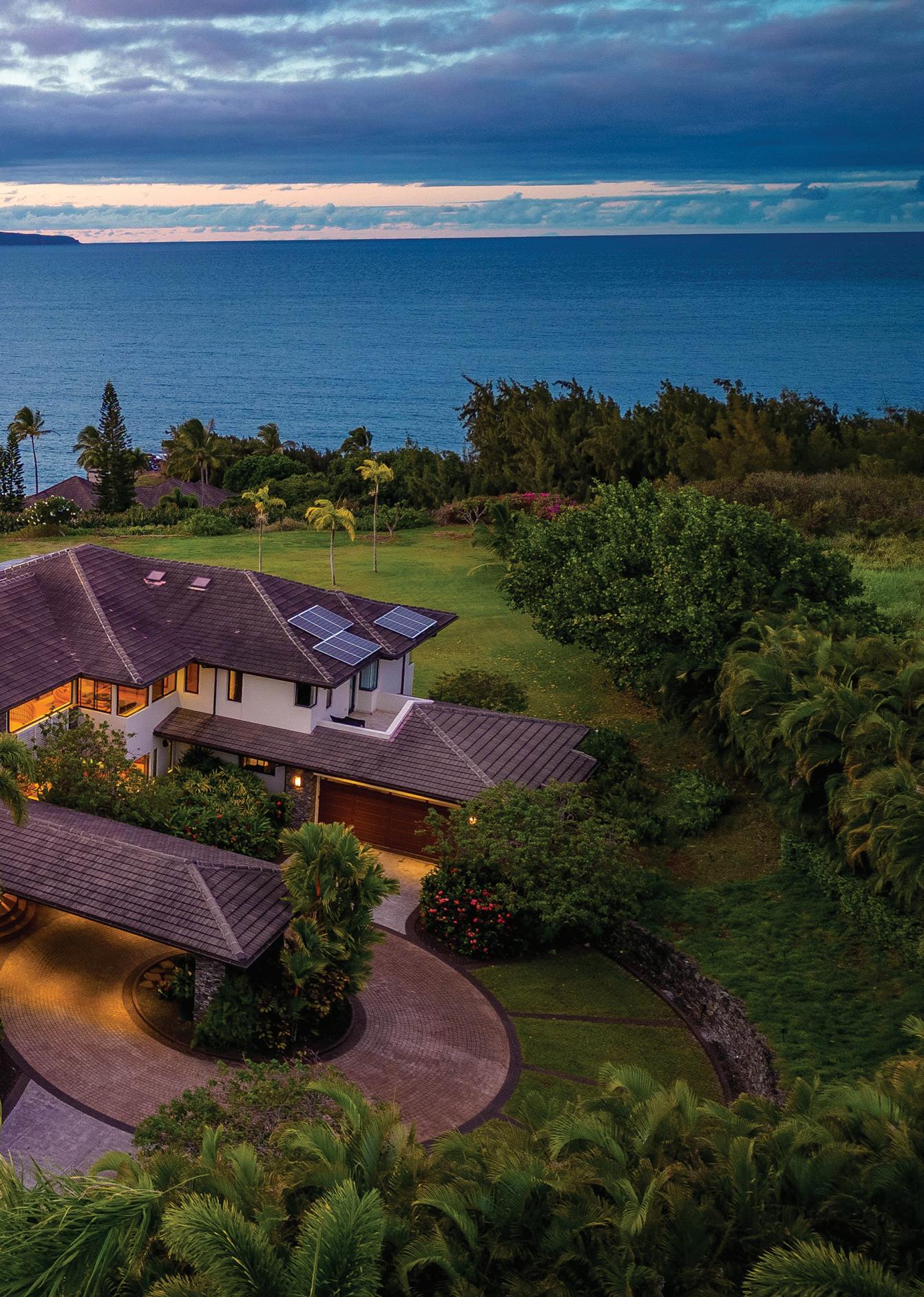
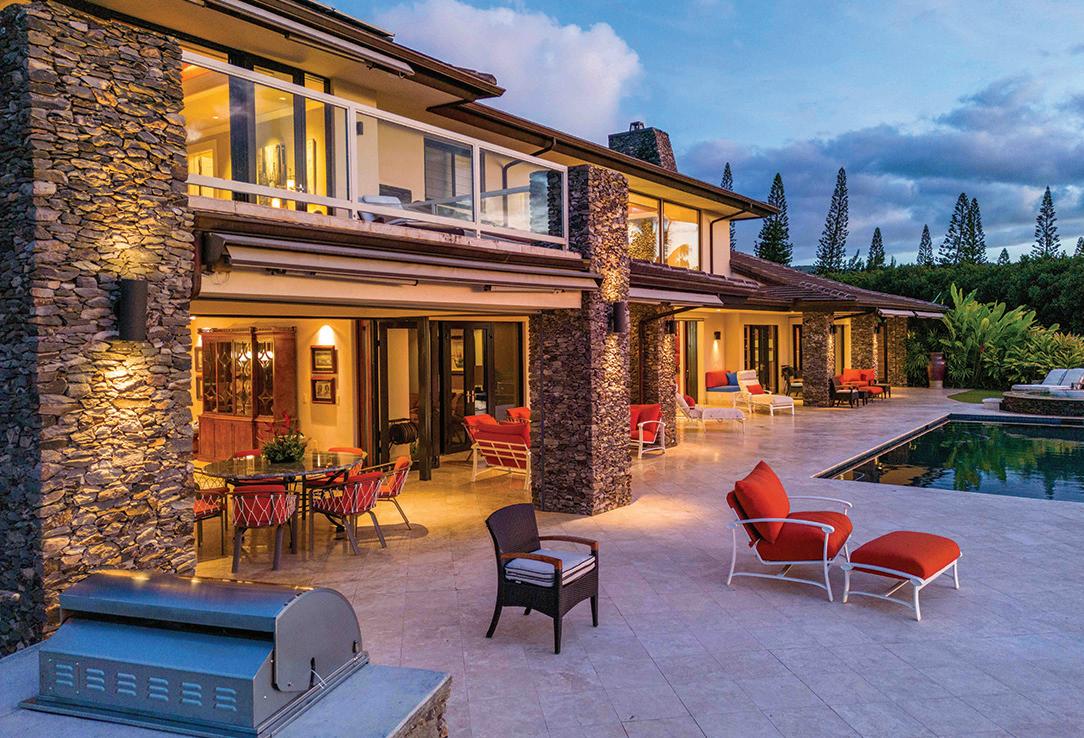
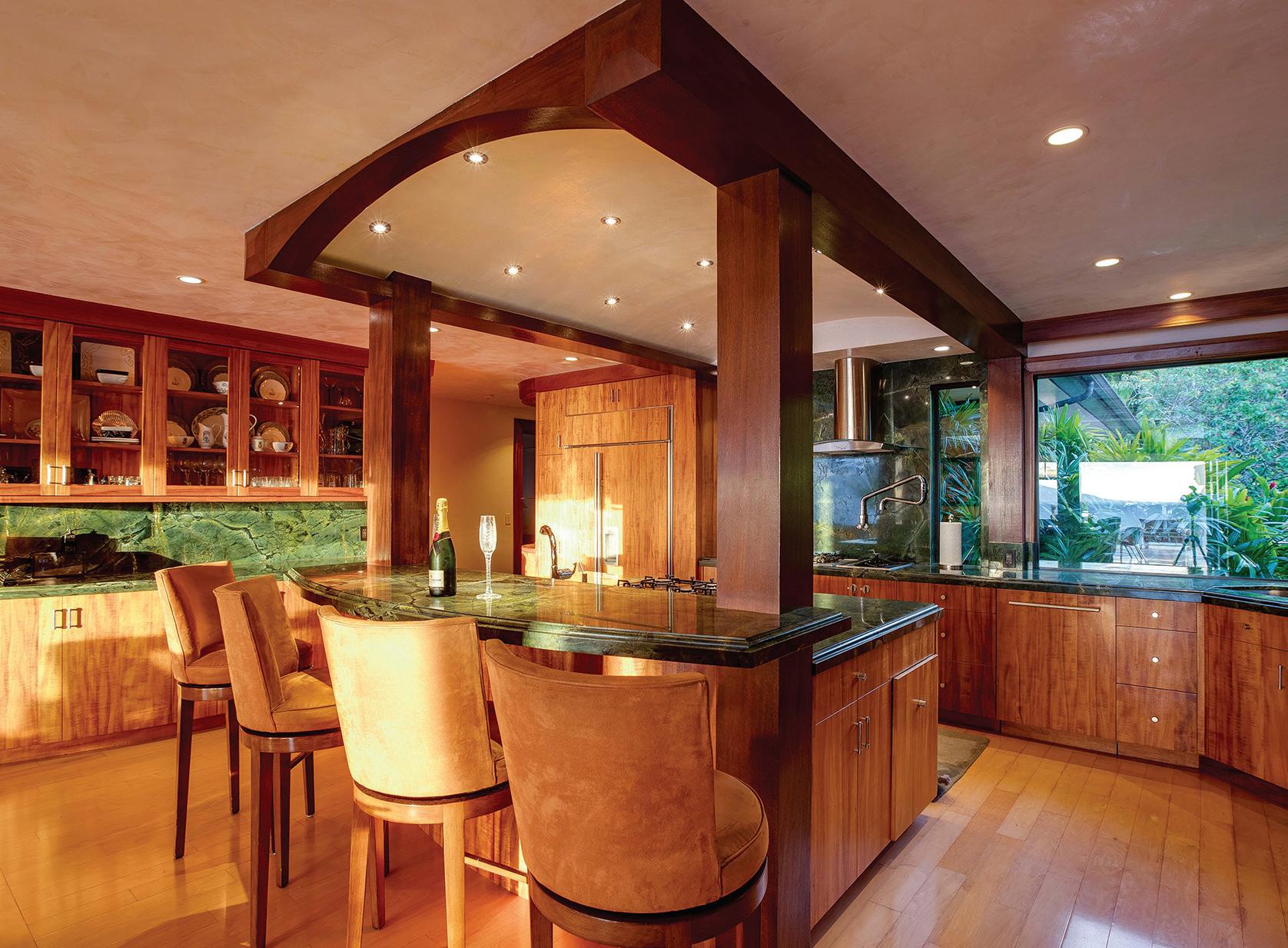
$15.6M | Listed by Josh Jerman R(B)
$50M | Listed by Matt Beall R(B), Josh Jerman R(B), and Beth Thoma Robinson R(B)
A Landscape of Scale and Stewardship
The largest private land holding on Maui, Hāna Ranch is a dynamic confluence of upland forest, rolling pastures, and fertile agricultural land with a legacy of sustainable land use and conscious restoration. Encompassing 3,547 acres across 37 parcels, this former working cattle ranch includes a rodeo arena, picturesque riding trails, water resources, ranch and farm infrastructure, and a team of seasoned ranch hands.
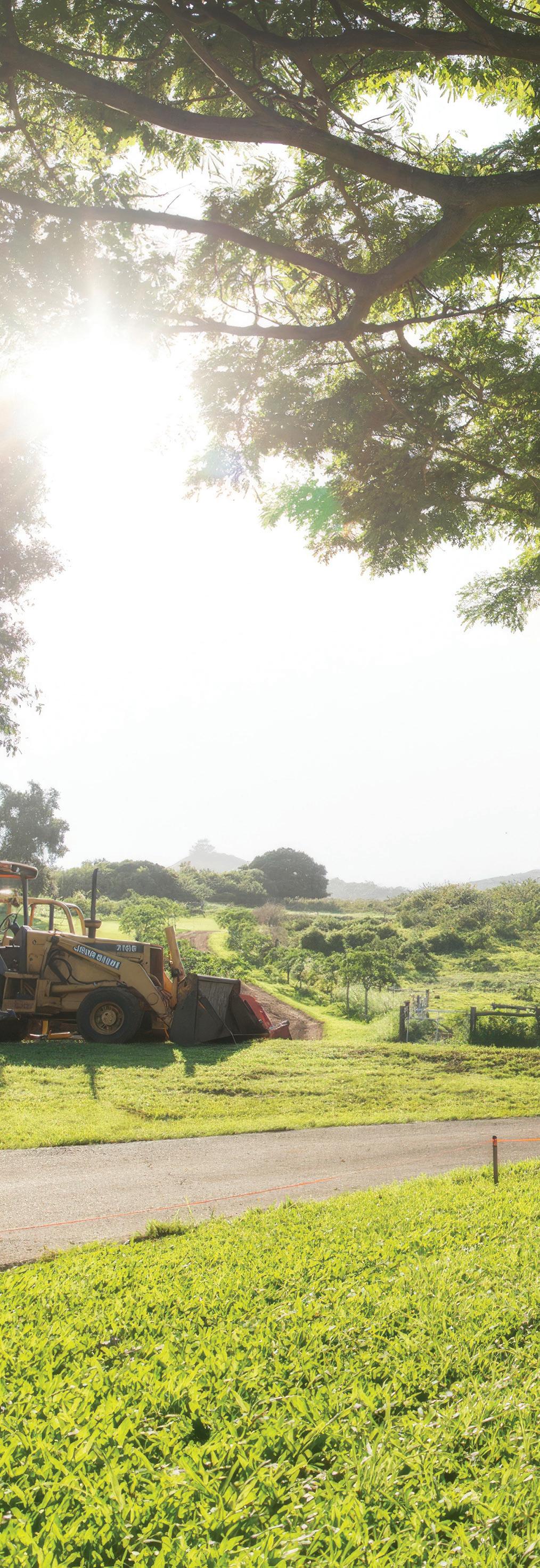
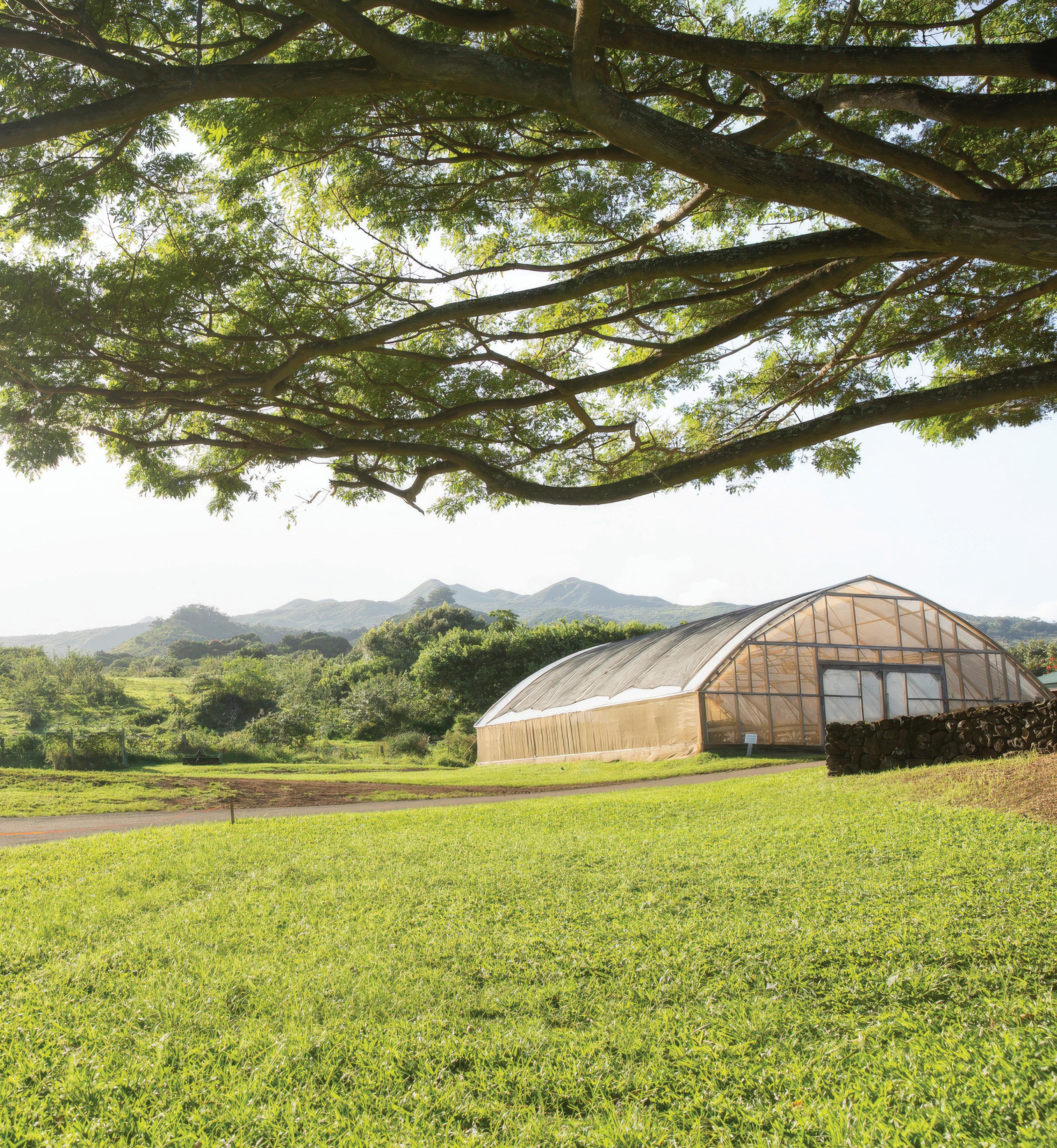
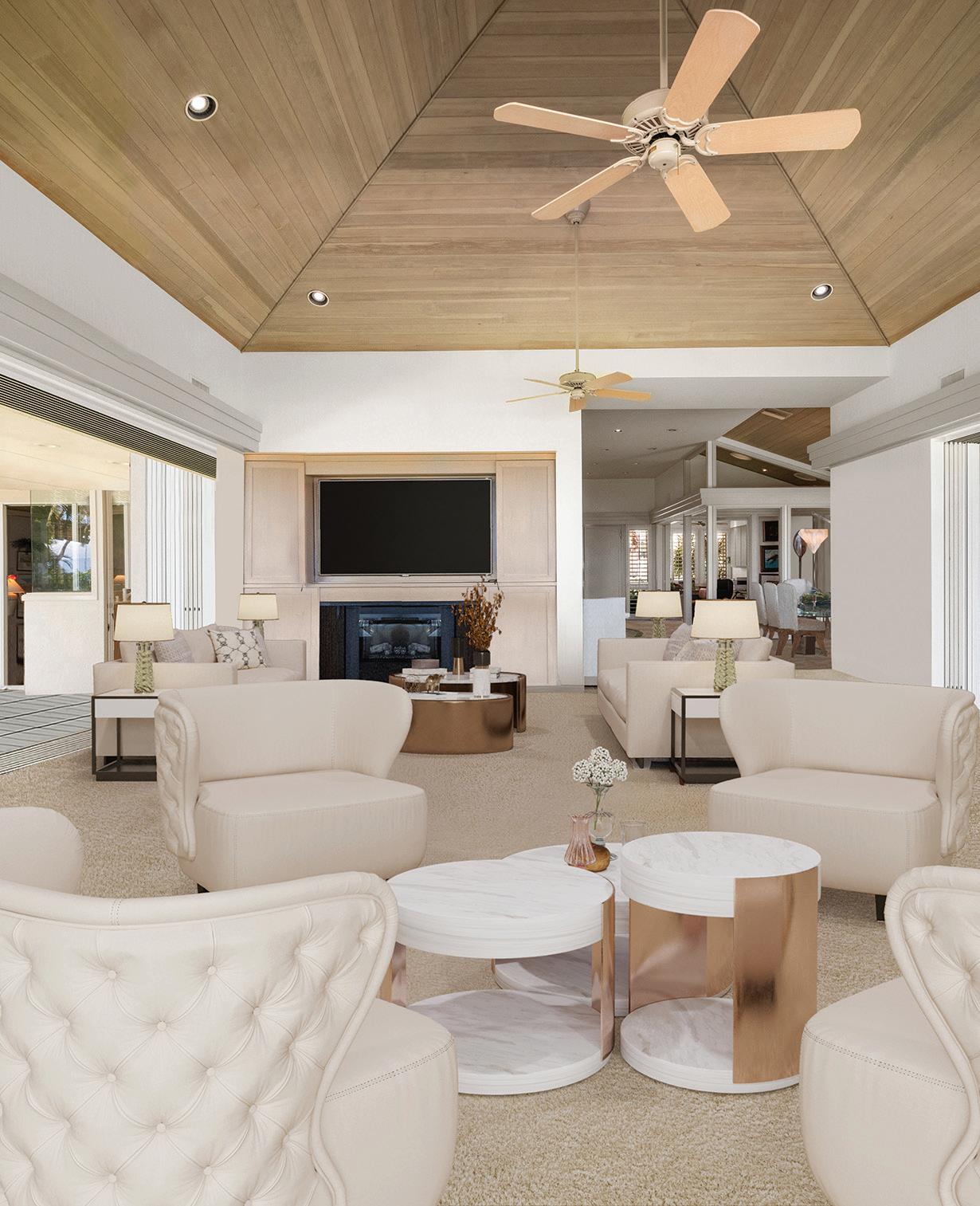
Beauty and the Beach
Fronting Keawakapu Beach’s fabled stretch of sand, elevated on a gentle knoll, this quintessential beach home incorporates a spacious great room with a fireplace, an open-concept kitchen, and sunlit glass walls that invite the ocean in. Complete with a detached ‘ohana cottage, two-car garage and workshop, and landscaped courtyard with pool, the estate is discreetly tucked behind a privacy wall and custom electronic gate.
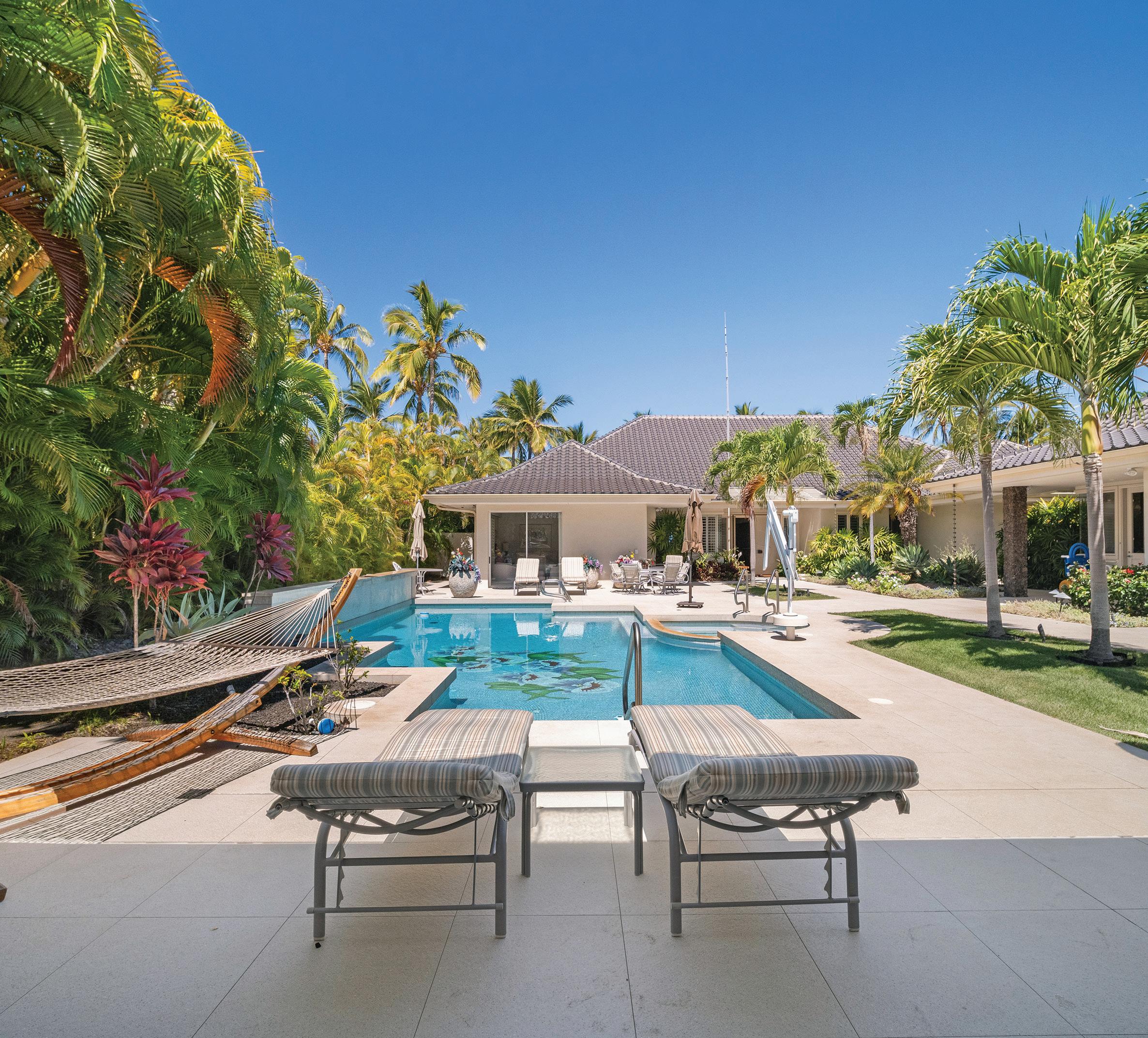
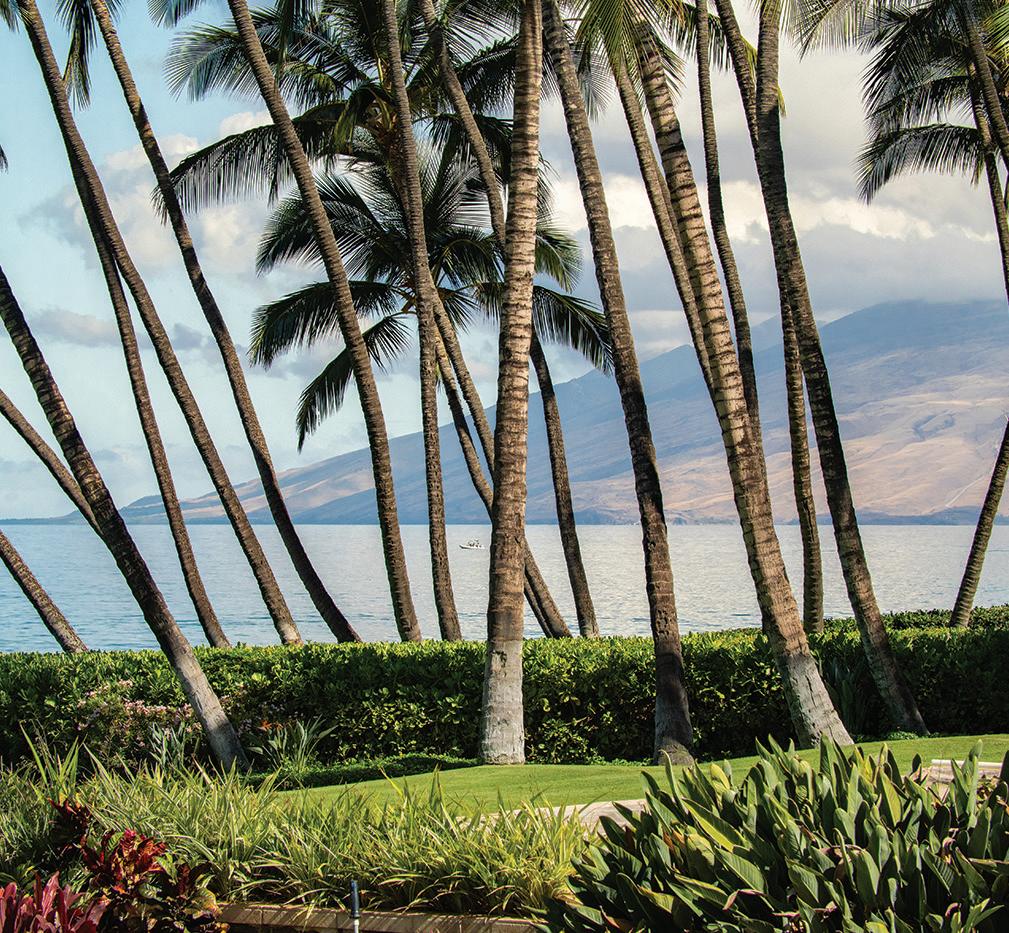
Price Upon Request
Presented by Dave Richardson R(B)
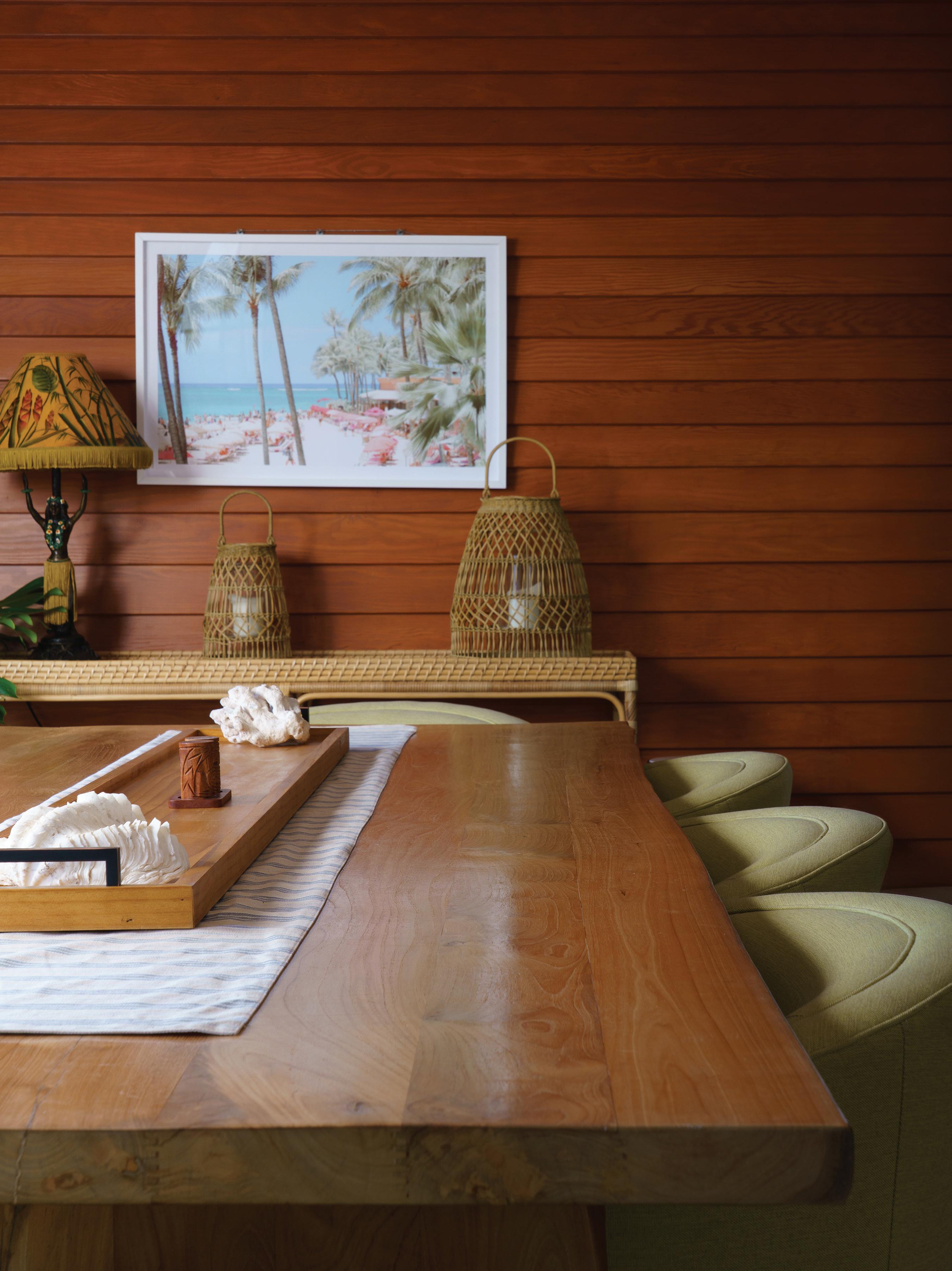
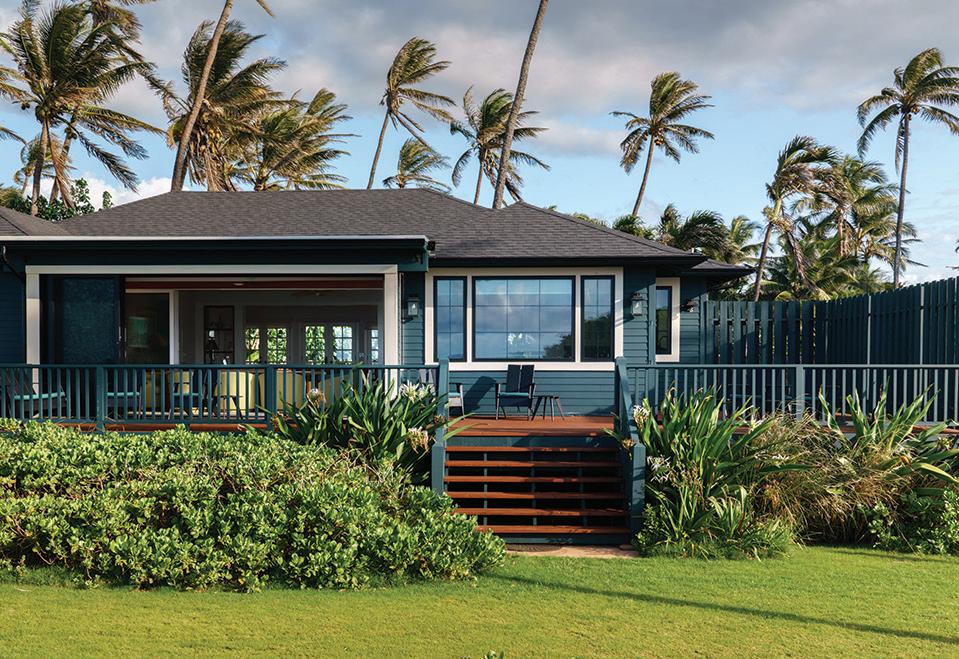
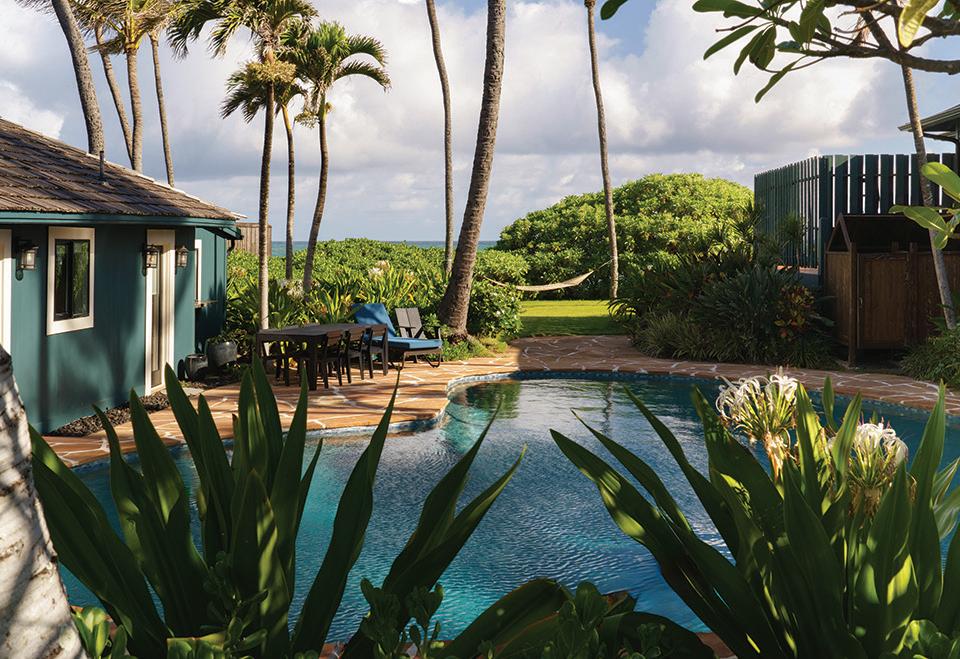
Curated for Convivial Living
The gated upscale estate of Hale Makakehau has it all: ocean-facing front yard, footpath leading to the sand, and beautifully remodeled plantationstyle home designed for comfort and connection. With additions such as the standalone pool cottage and chef’s kitchen, designed as much for gathering as gourmet cooking, hosting family and friends is intuitive and effortless.
$14M | Listed by Josh Jerman R(B)
$14.9M | Listed by Josh Jerman R(B) and Tim Stice R(B)
Ripe for Cultivation
Spread over eight distinct parcels, this 58-acre agricultural estate is an active income-generating investment with the potential to create long-term value. The upgraded infrastructure—including two fully automated Solar-Lite greenhouses, four multi-purpose buildings for workshop, office, or warehouse use, and an off-grid agrivoltaic system—beckons an entrepreneur-owner to grow an ecosystem of flourishing revenue streams.
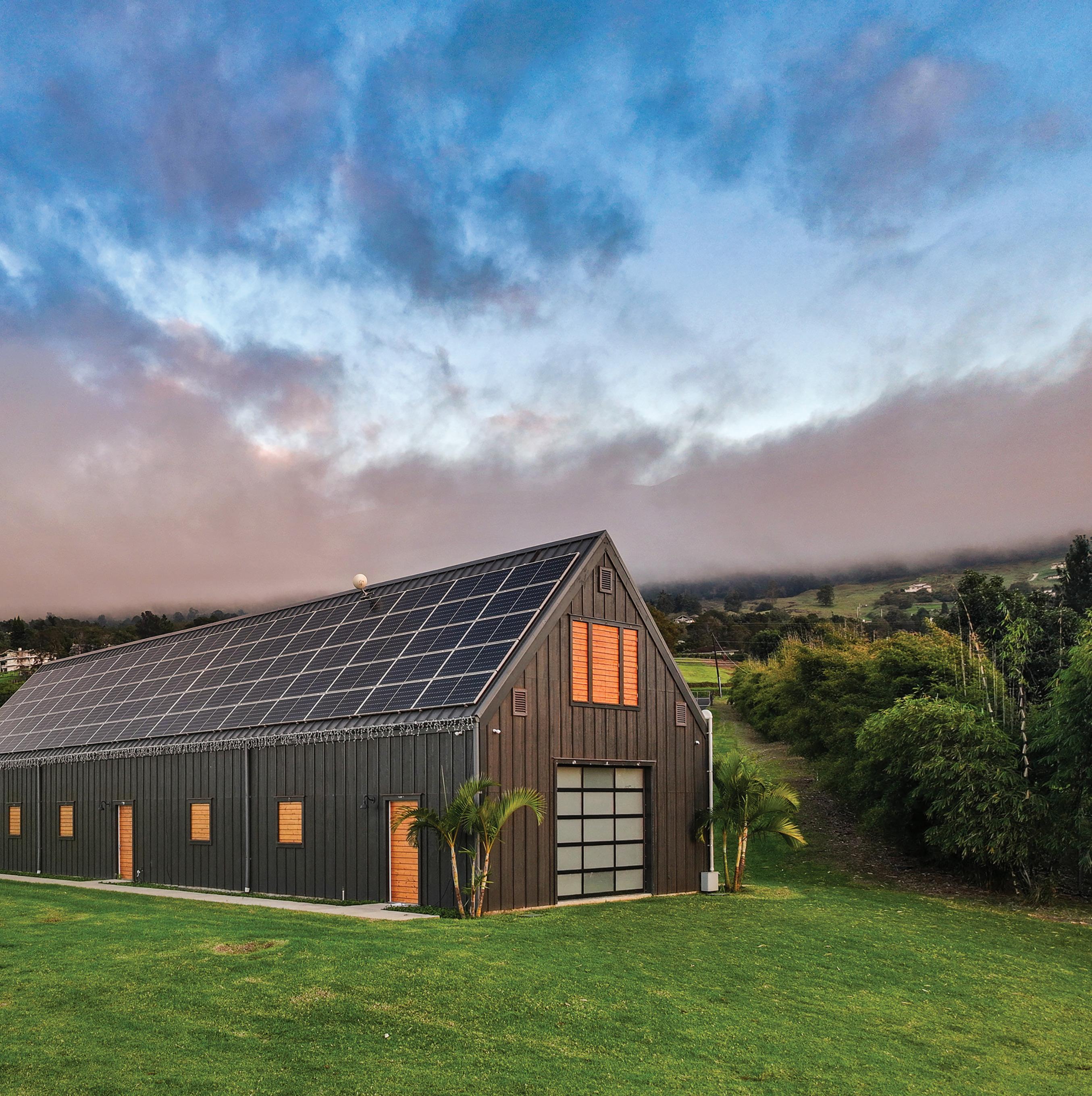
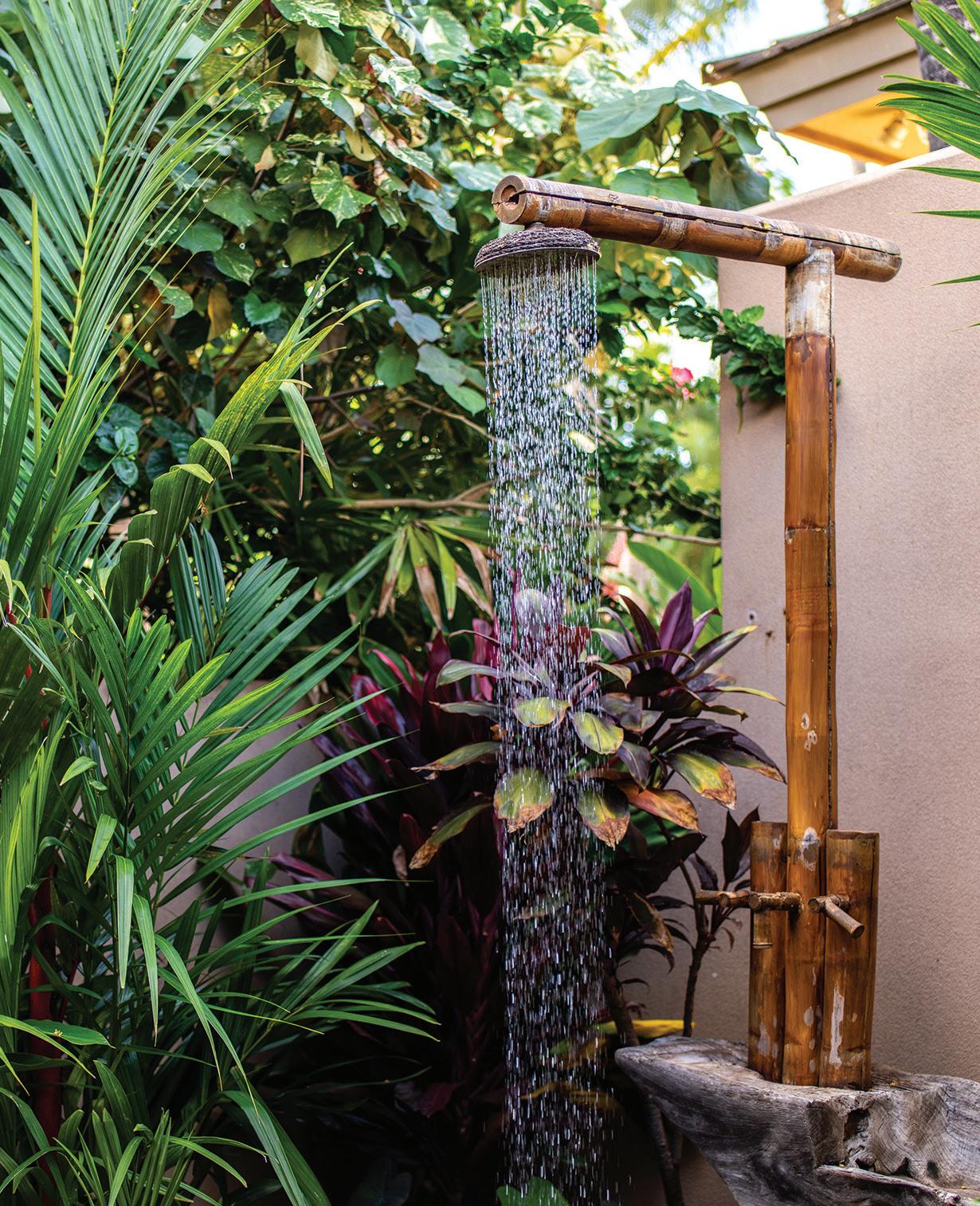
Solace on the South Shore
On Palauea Beach, this modern tropical home showcases Pacific Ocean panoramas, an open floor plan with cherry hardwood flooring, and a chef’s kitchen designed around entertaining. In the primary suite, an ensuite bath and private outdoor shower open to the same expansive seascape.
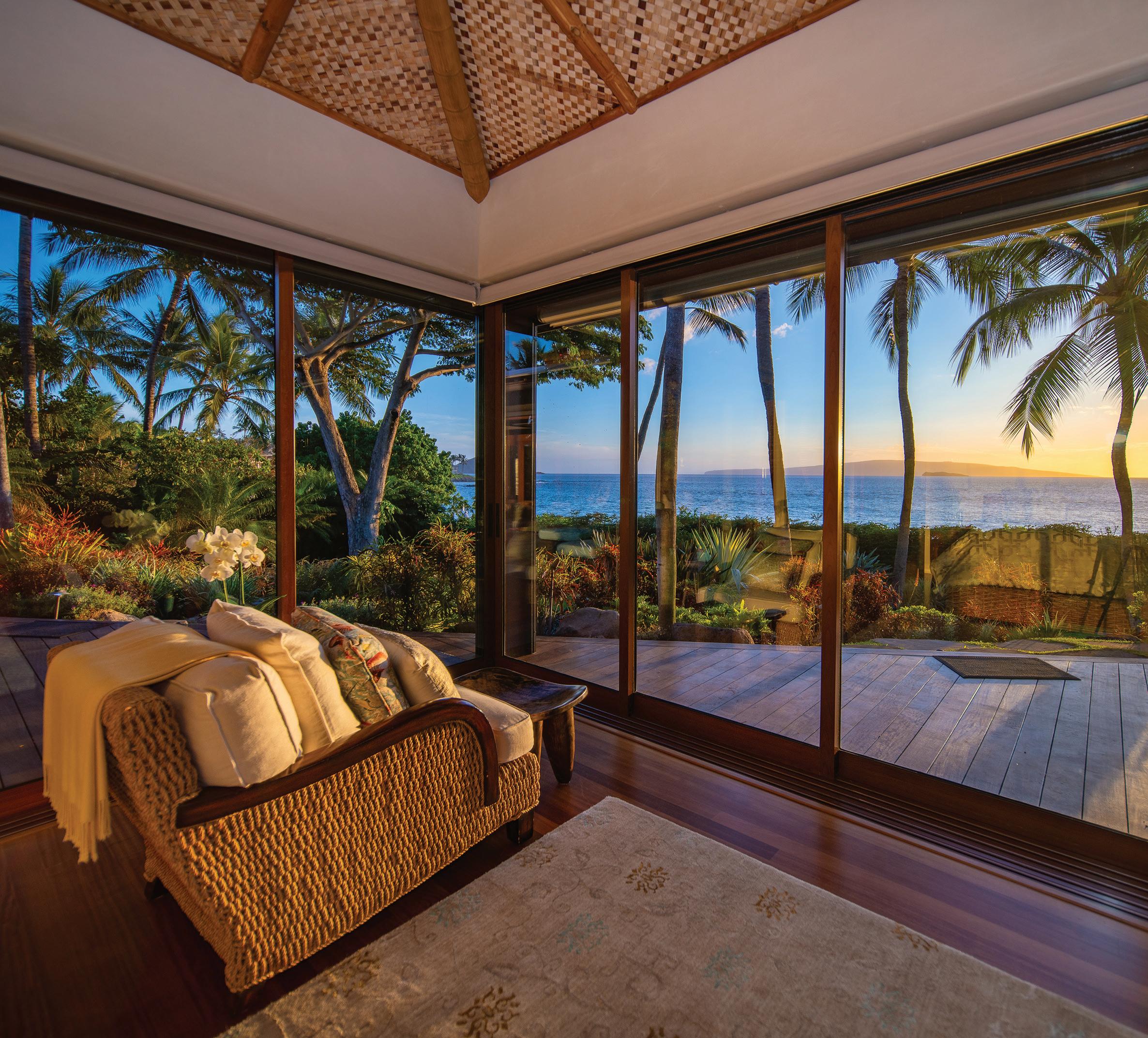
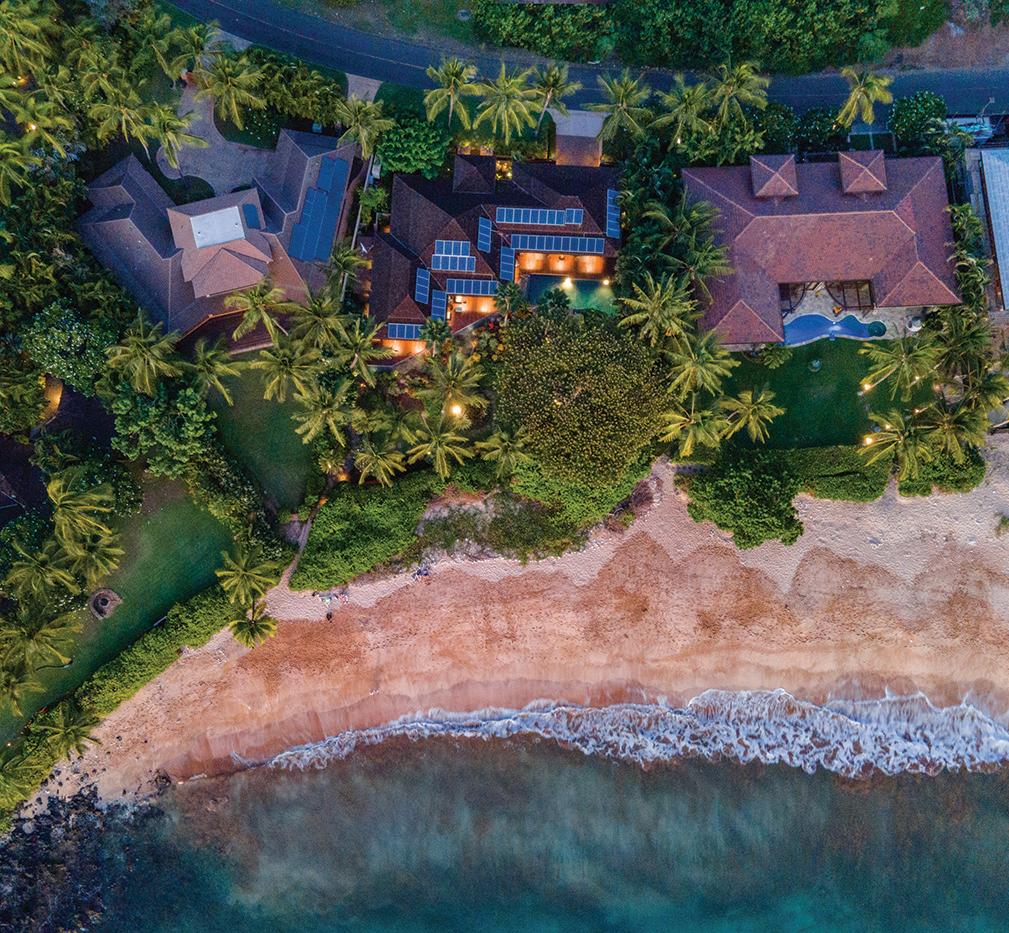
$23M | Listed by Greg Burns R(S)
HAWAI‘I
HAWAI‘I
House of the Sun
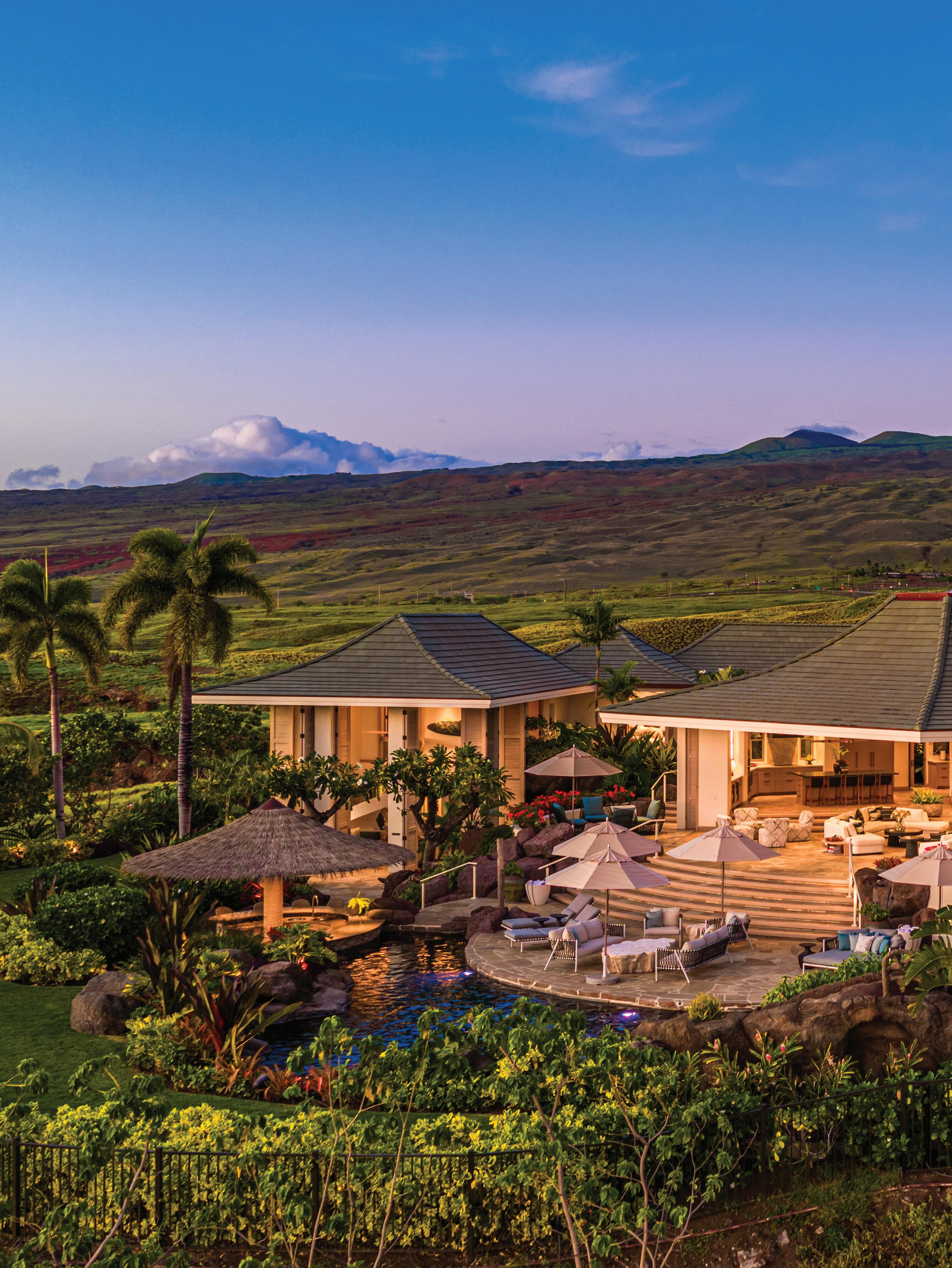
Set within Mauna Kea Resort and bordering 355 acres of protected land, Hale ‘O Ka Lā (House of the Sun) takes an unconventional approach to residential design, creating a deeply immersive experience of space, light, and landscape.
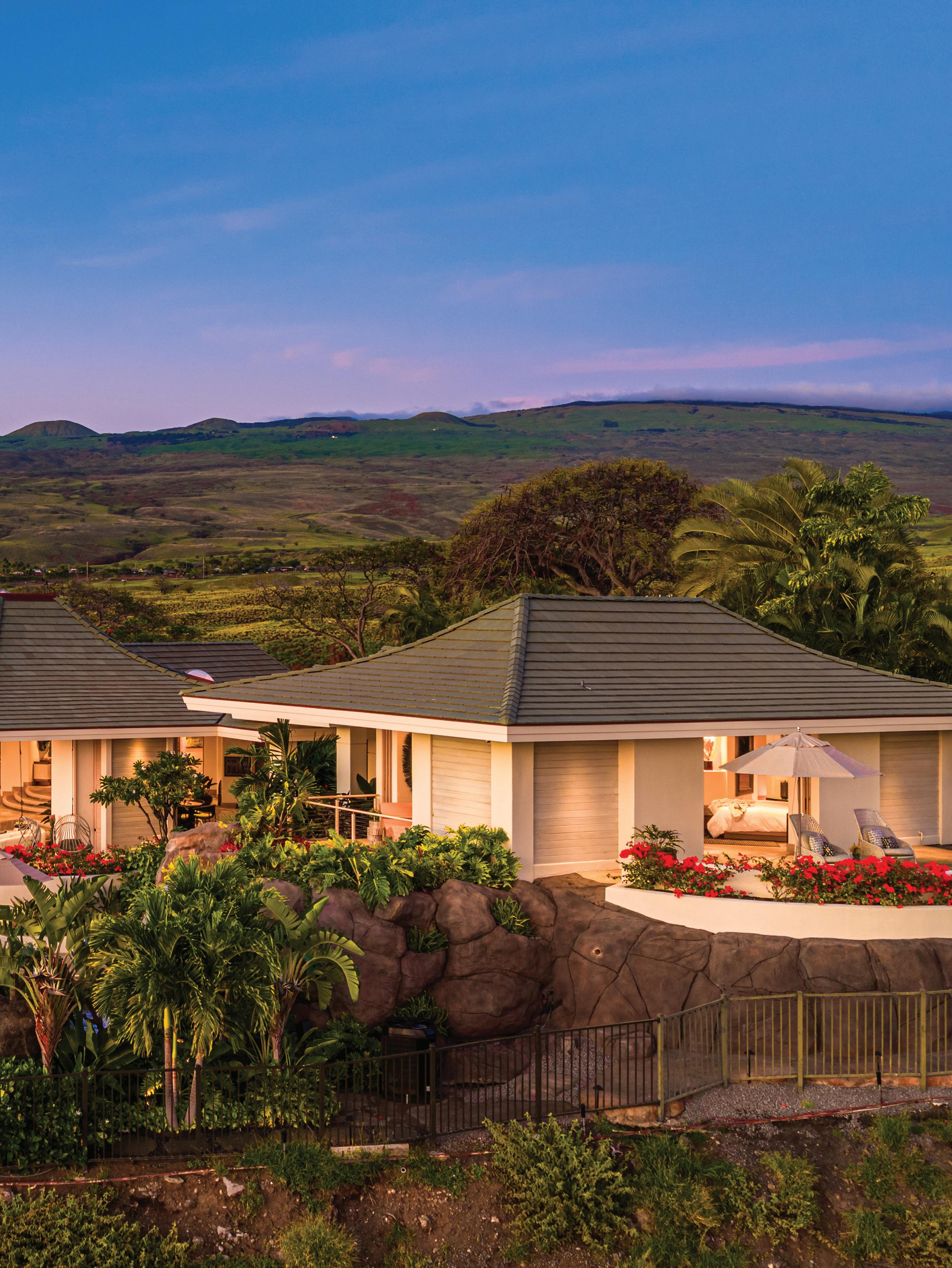
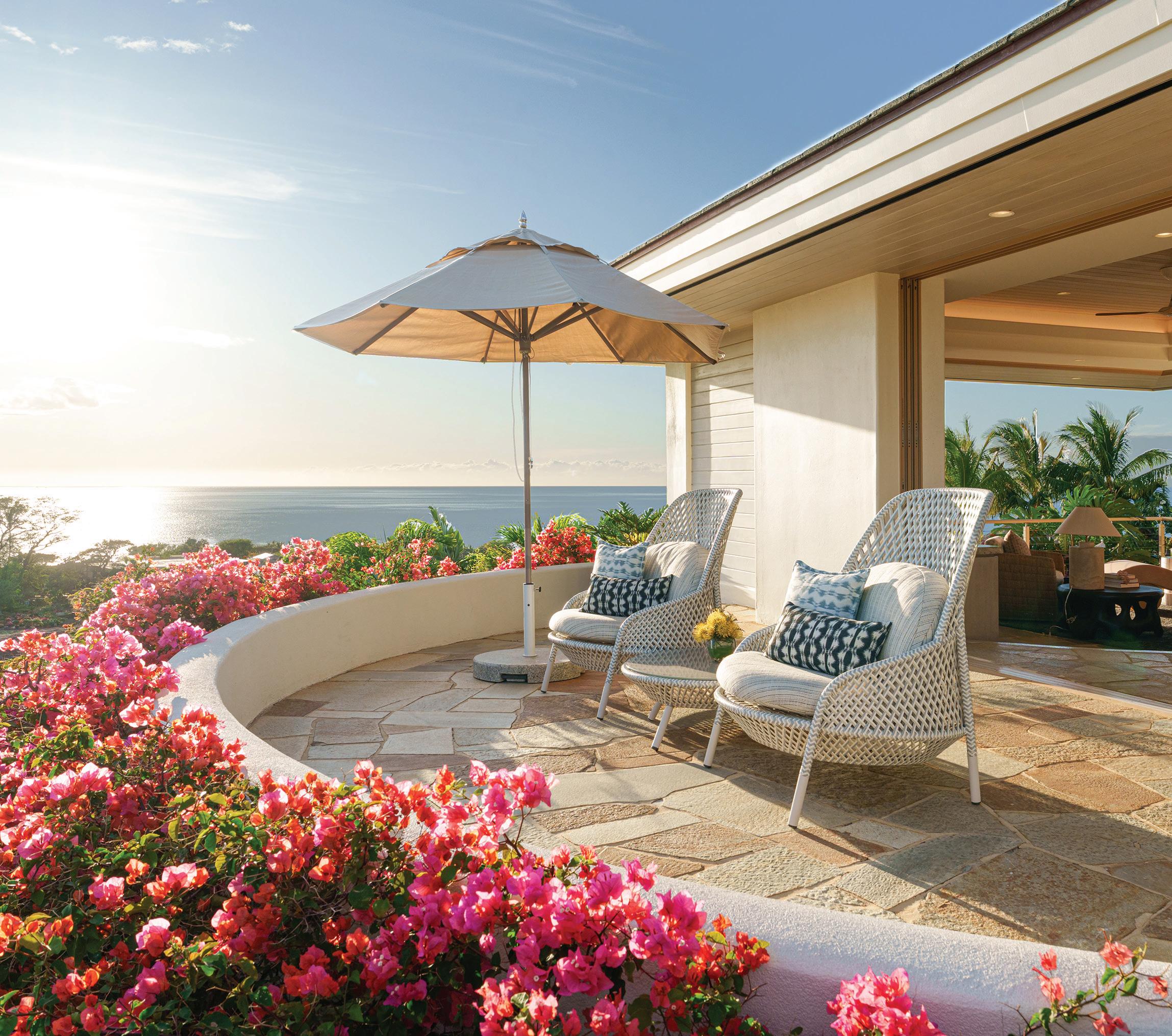
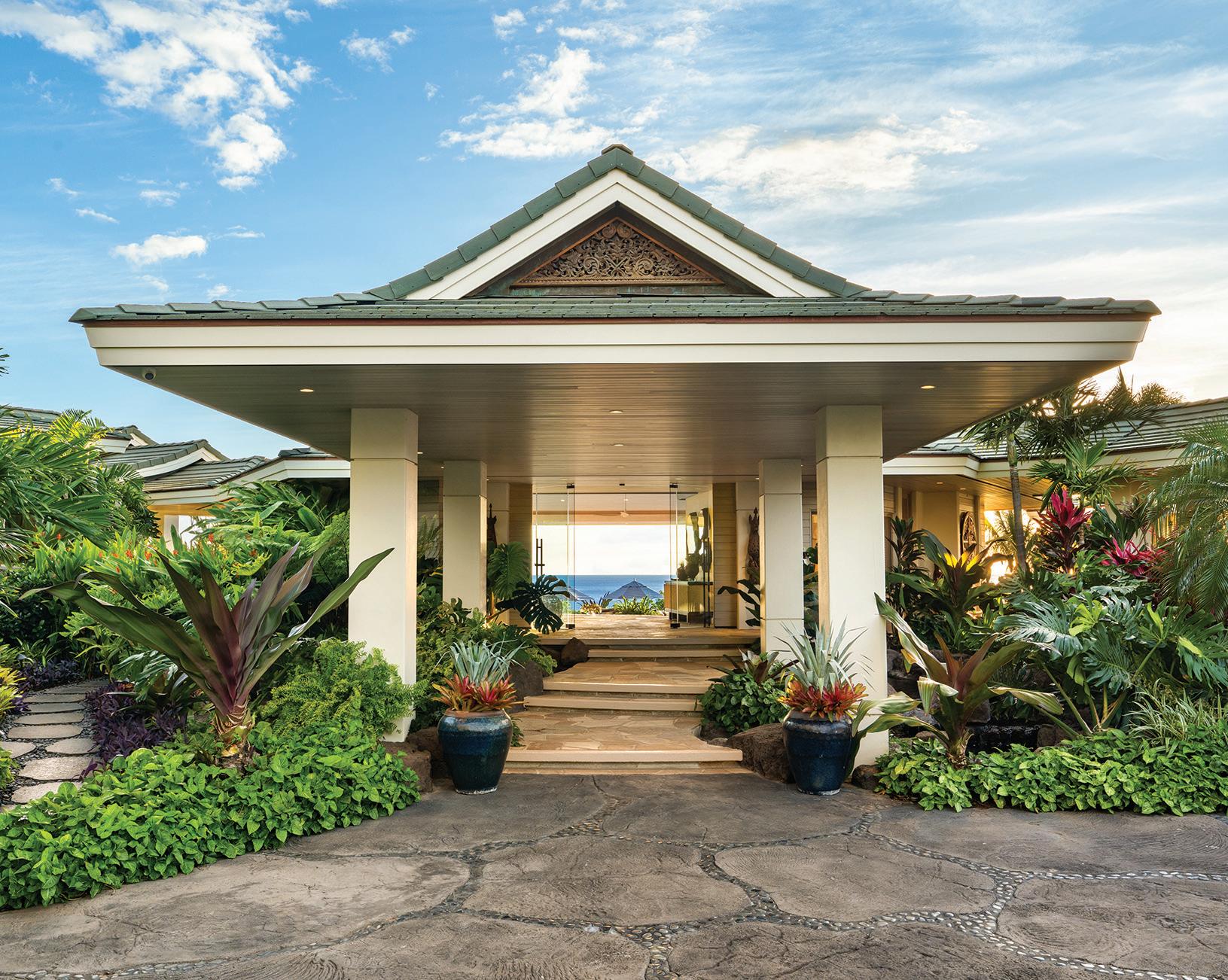
$17.5M | Listed by Jake Chancer R(B) and Neal Norman R(B)
Fresh from an $8 million renovation, Hale ‘O Ka
Lā comprises three connected pavilions bridging five bedrooms, each oriented toward views of the Pacific. Original copper roof elements, dark wood millwork, and preserved open-air breezeways endure alongside modern surfaces of Taj Mahal quartzite, Marmorino Venetian plaster, and Neolith. Dotting the tiered outdoor lounge area, a waterfall grotto, pool, and waterslide evoke endless summer.
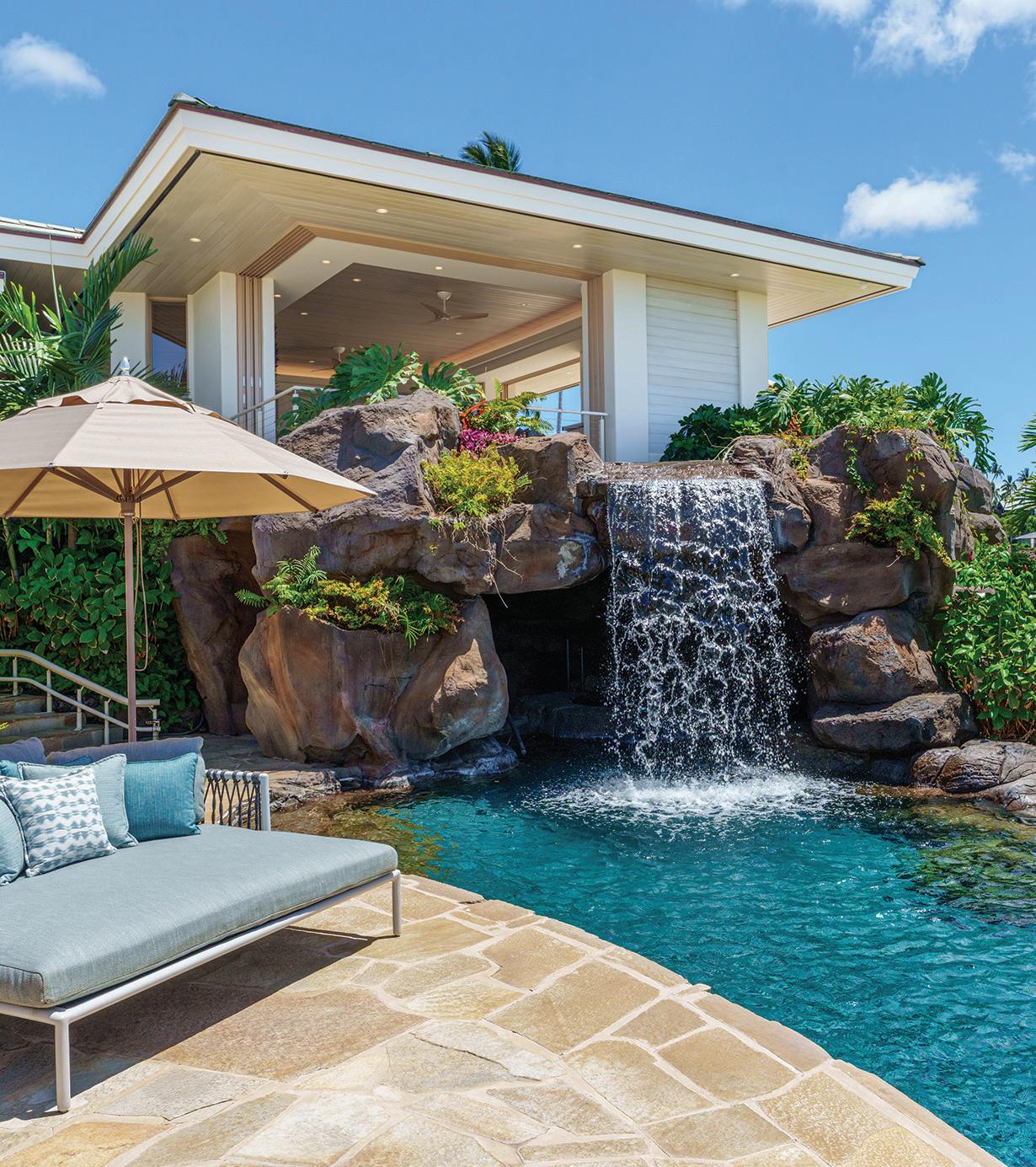
$24.9M | Listed by Steve Hurwitz R(B)
Refinement and Relaxation
Less than a two-minute walk from Honoka‘ope Bay, this Mauna Lani home pairs ocean views with mahogany flooring and pocket doors, vaulted ceilings, custom stone and tile, and a fully outfitted ‘ohana cottage. Tailor made for unwinding, the landscaped grounds combine stone pathways, a personal pitch-and-putt course, and an entertainer’s lānai complete with wet bar, sunken barbecue, smoker, and cooktop.
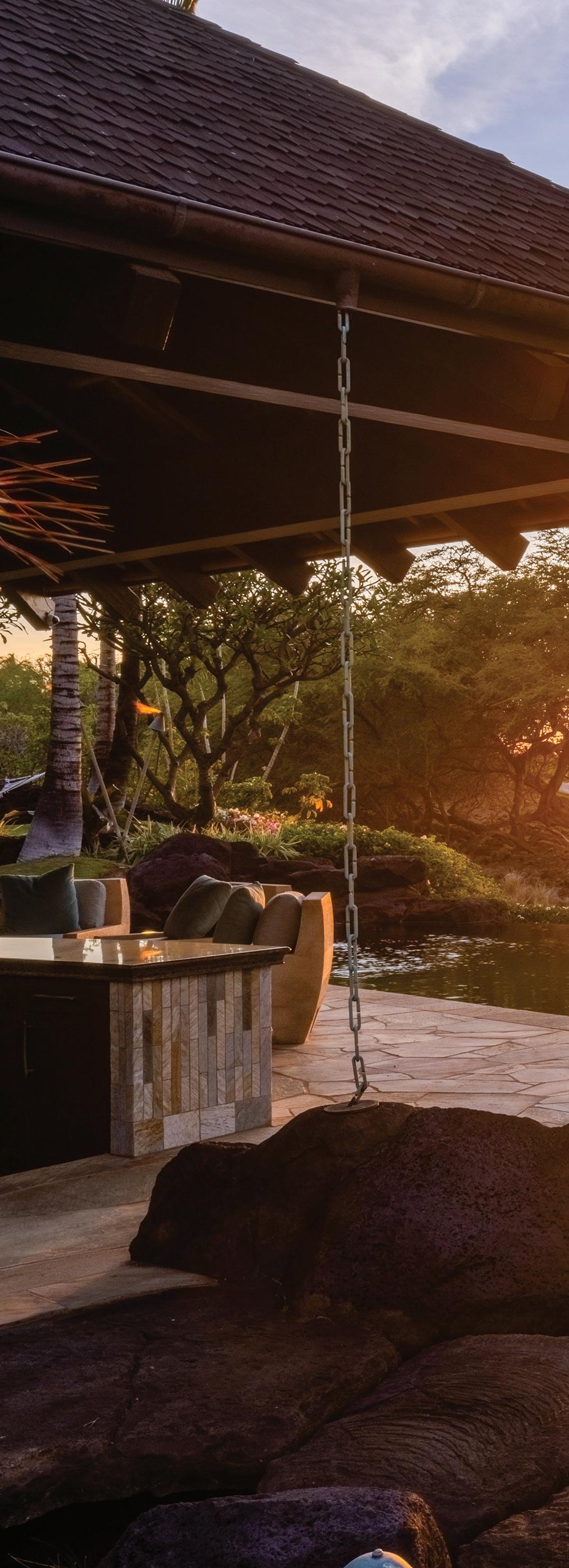
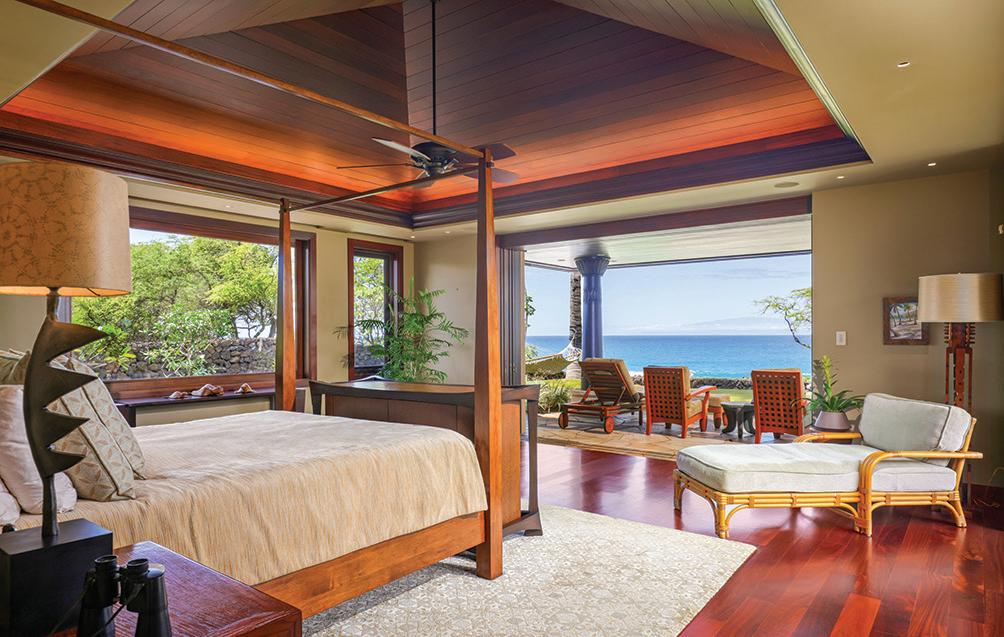
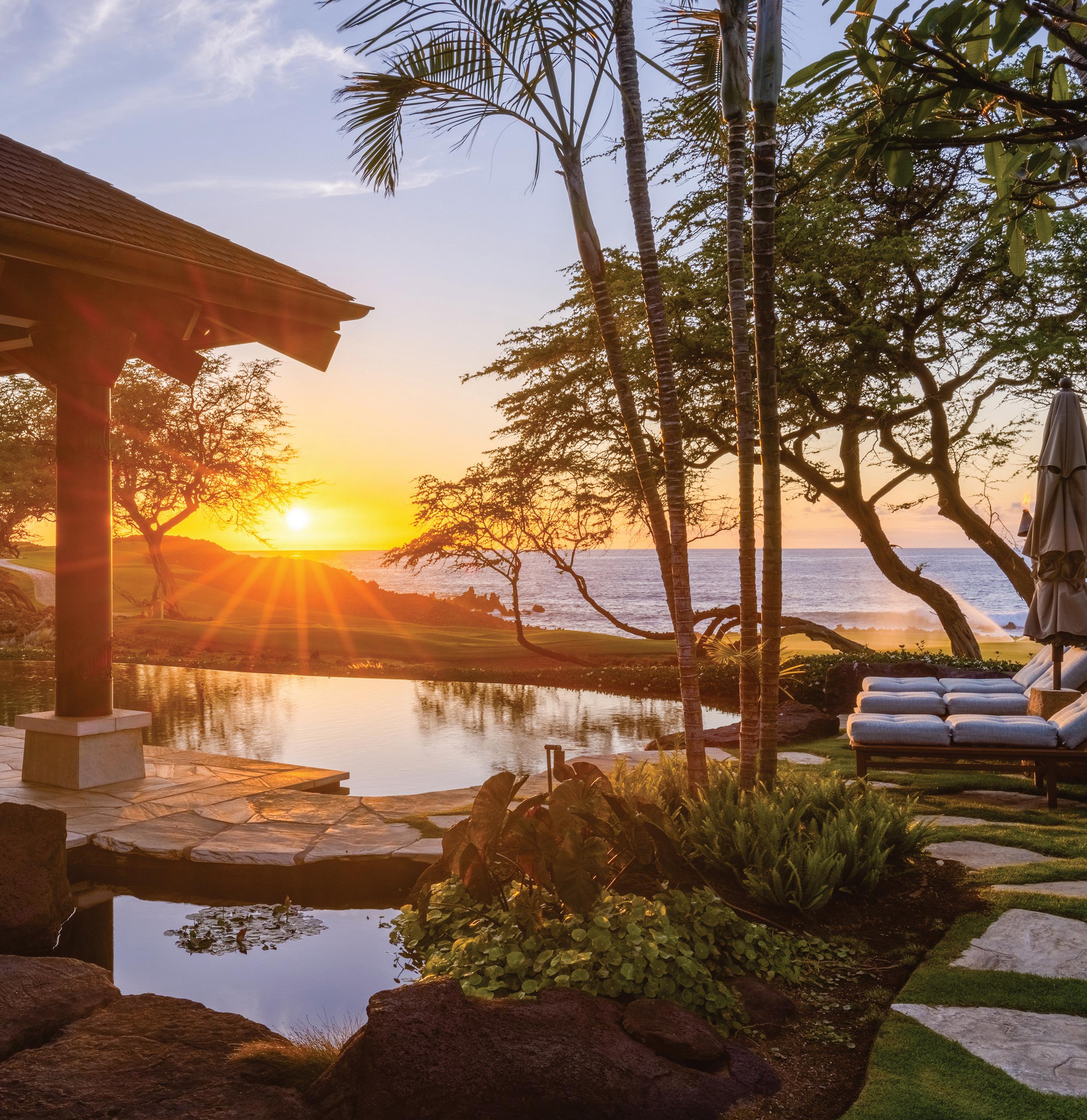
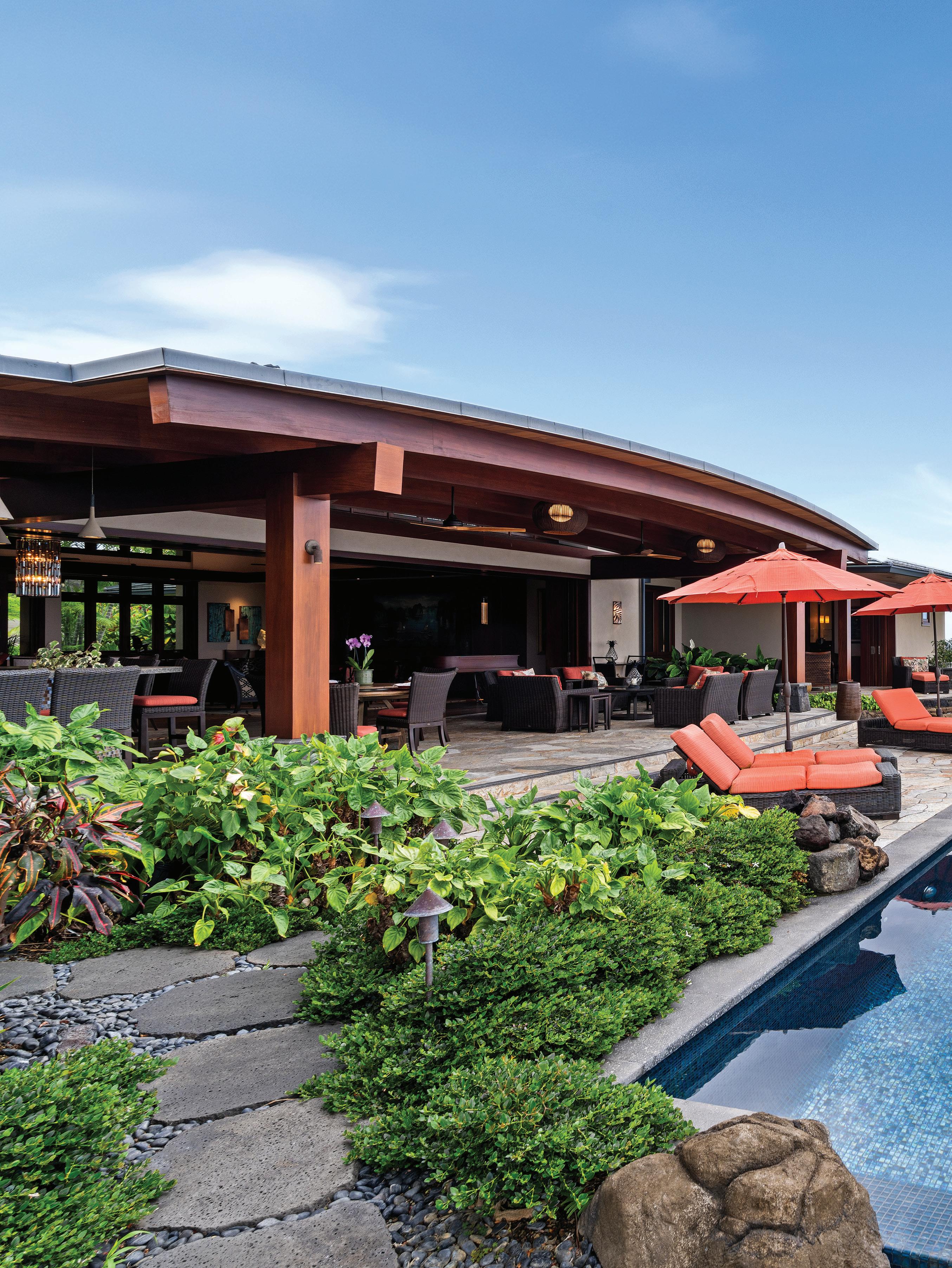
The Nature of Home
Located in the affluent Hōkūli‘a enclave, this residence reflects a refined approach to island living by architecture firm Roth Kimura. Open living spaces frame Pacific Ocean views and encourage a natural transition between indoors and out, while the landscaped grounds extend the experience outdoors with mature citrus orchards, an outdoor kitchen with barbecue, a solar-heated infinity pool, a tranquil pond, and water features throughout.
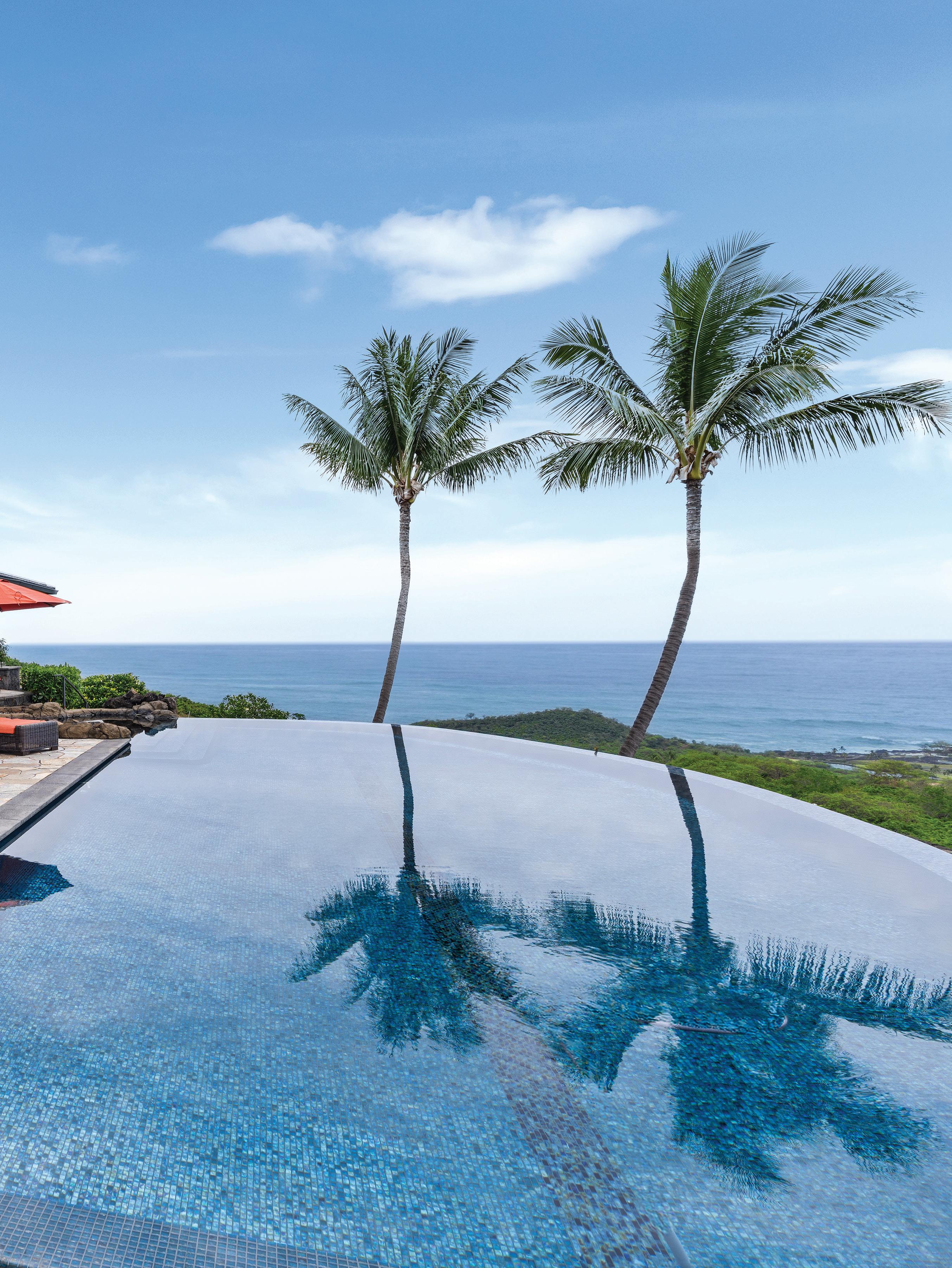
$10.6M | Listed by Mika Ono R(S) and Kenneth Springer R(S)
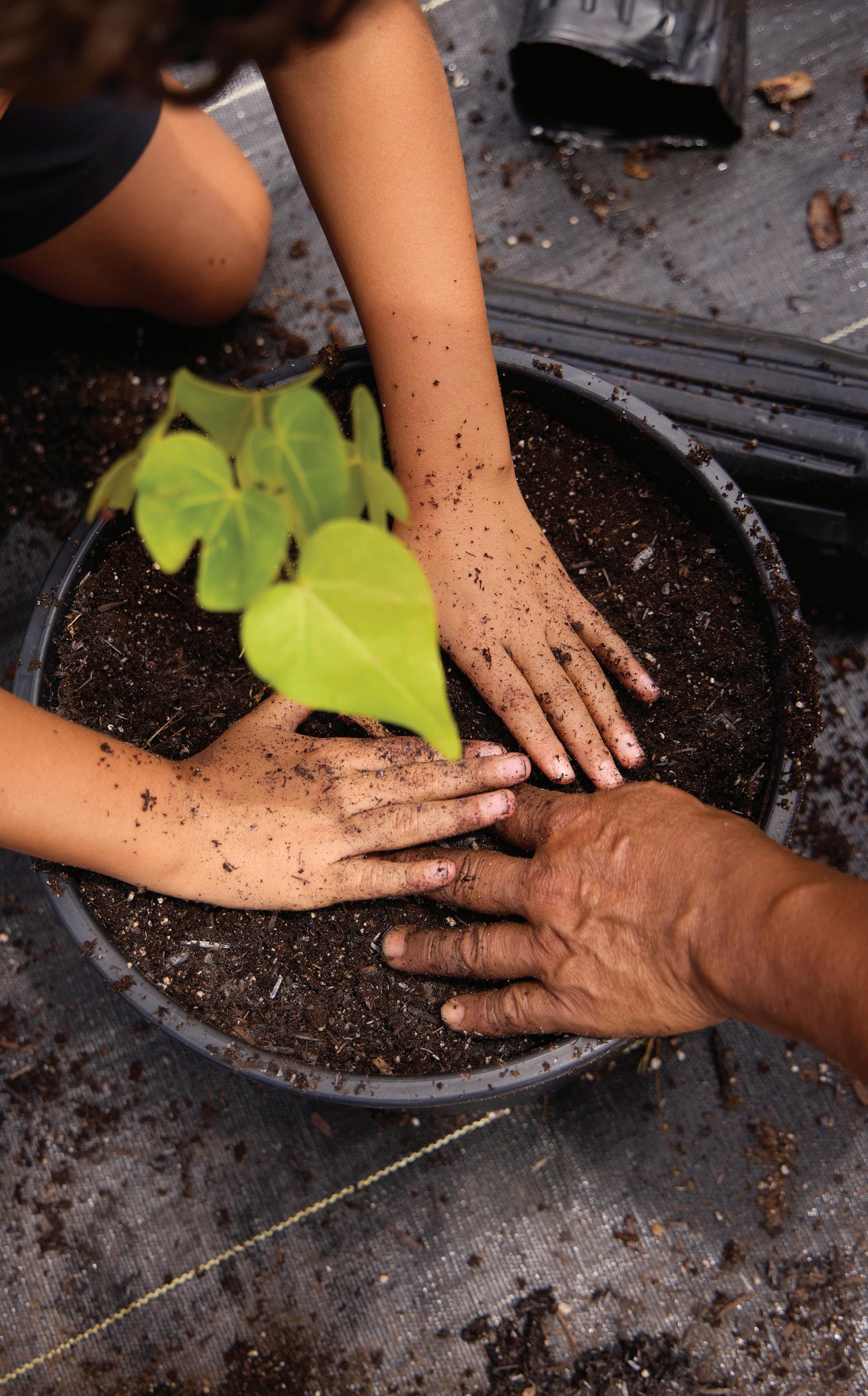
Nānā i ke kumu. Look to the source.
HAWAIIAN PROVERB