Going au naturel

Bank of Mum and Dad: the new property playbook

Bank of Mum and Dad: the new property playbook
Love swimming pools, but hate the maintenance?
Natural pools can offer an attractive compromise.
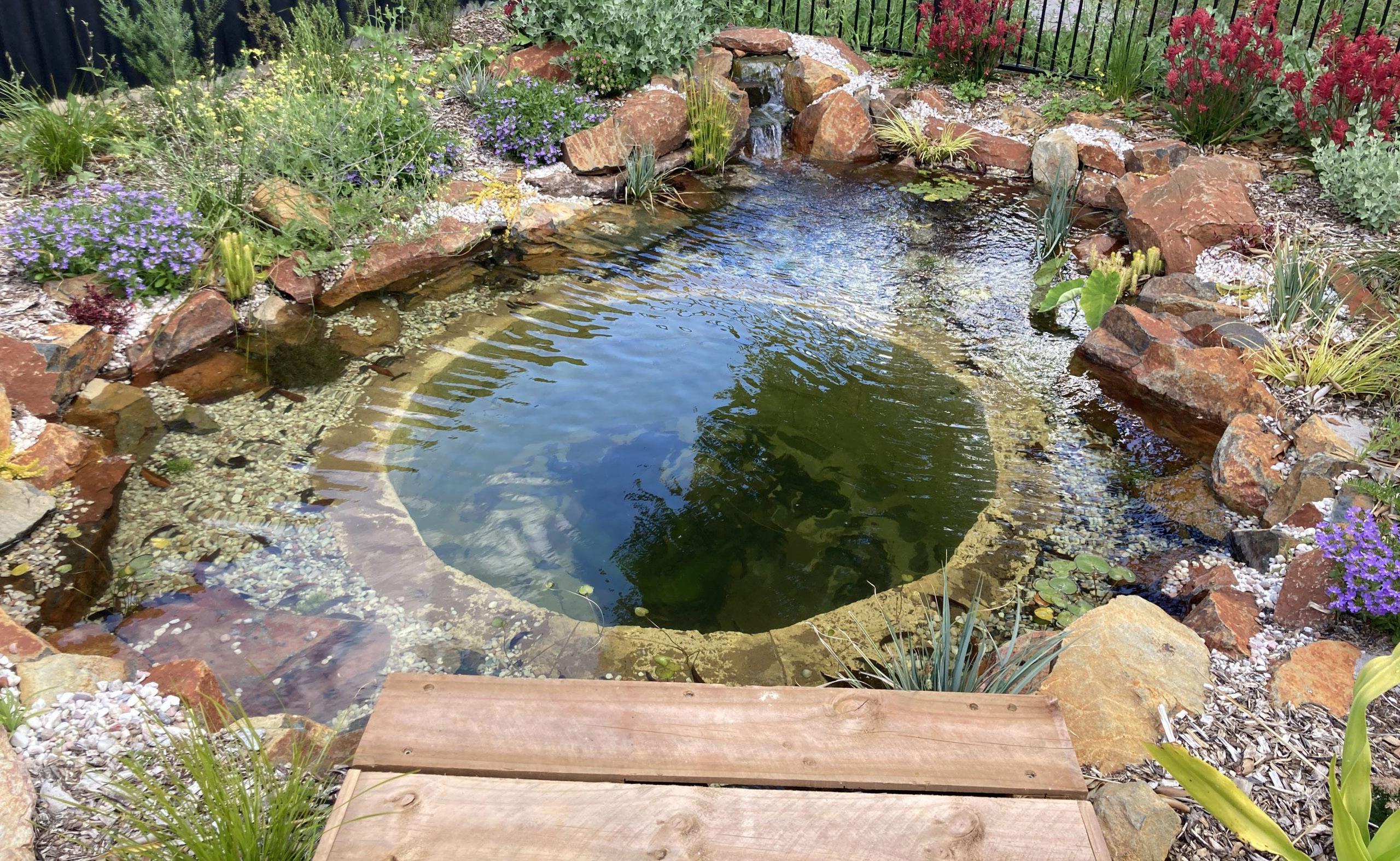
One of the hottest backyard trends of the moment is the natural swimming pool — a chemical-free freshwater oasis where plants and rocks filter the water and fish can share the space with swimmers.
Although build costs can be higher than traditional pools, running costs are lower once established. And maintenance, the main reason many homebuyers say a hard no to pools, is minimised.
Perhaps this will shift the dial on the age-old argument about whether pools add value to a property, over and above the installations cost. While there may be mixed opinions, it’s clearly a must have on some buyers’ lists, with ‘swimming pool’ ranked the number one search term on realestate.com in 2025.
From the alps to Aussie yards
The natural swimming pool trend originated in Germany and Austria in the 1980s, driven by an attempt to recreate the experience of swimming in alpine lakes without needing to climb a mountain. The result was an artificial pond that mimicked nature’s natural filtration methods.
The idea quickly caught on and spread across Europe before making its way to Australia where it has been adapted to the suburban backyard.
Originally requiring a large footprint to accommodate filtration wetlands, the popularity of natural swimming pools has soared as systems have been adapted to fit smaller spaces, with many companies in Australia offering pool conversions to flip standard pools to natural pools.
How does it work?
The system is divided into two parts: the main swimming zone and a wetland filtration area where water is cleaned through a combination of plants, rocks and microbes. The ratio of swimming area to filtration area varies but for suburban builds about 15 per cent of the total footprint is filtration and 85 per cent swimming pond.
To maintain clear water quality without chemicals, water from the main pool is drawn through a skimmer, much like in a conventional pool, where floating debris is captured. Water is
then pumped to the wetland filtration zone where it slowly passes through layers of gravel, which act as a physical filter, and microbes, which breaks down organic matter in the water. Nitrogen and phosphates are consumed by aquatic plants in the wetland zone. This cleaned water is then returned to the swimming area, which is ringed by more plantings that continue to feed on nutrients that could otherwise lead to algal growth that clouds the water.
Water in the main pond is continuously circulated by bubblers and water jets.
Aesthetics: There is little argument over the visual appeal of a natural swimming pool. They can be stocked with aquatic wildlife, from eye-catching fish to turtles.
Chemical-free: For those with skin conditions, or who don’t like the drying effect of chlorine or salt, the soft fresh water experience is key.
Maintenance: Substantially less maintenance is involved, which saves on time and running costs.
Ambient heating: Shallow filtration zones and rocky surrounds means water naturally warms as it circulates through the system.
Cost: There is no question, natural pools come with a higher price tag, although smaller hybrid ‘plunge ponds’ start around $49,000.
Space: Although the footprint of natural systems has been substantially reduced, it does require more space than a conventional pool to accommodate swimming and filtration zones.
Biofilm: While water is completely clear, a `biofilm’ will form on edging. While this is not noticeable on purpose-built rocky pools, it is visible on tiles in swimming pool conversions.
Emilie and Craig Jones Hovea, Western Australia
“Maintaining the pool is quite enjoyable,” said almost no pool owner ever.
Emilie Jones didn’t expect to ever say it herself after many years of maintaining conventional pools, although, to be fair, the lion’s share of the work often fell to her husband Craig.
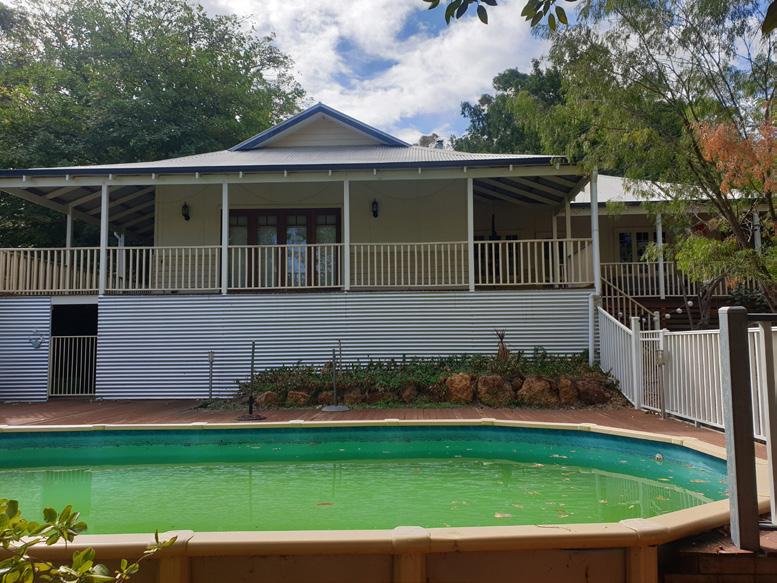
The turning point came when the couple moved to a new property in the Perth Hills that had a particularly troublesome above-ground pool.
“We were throwing a million chemicals into it and we could not keep it clean, so we ended up pulling it out.”
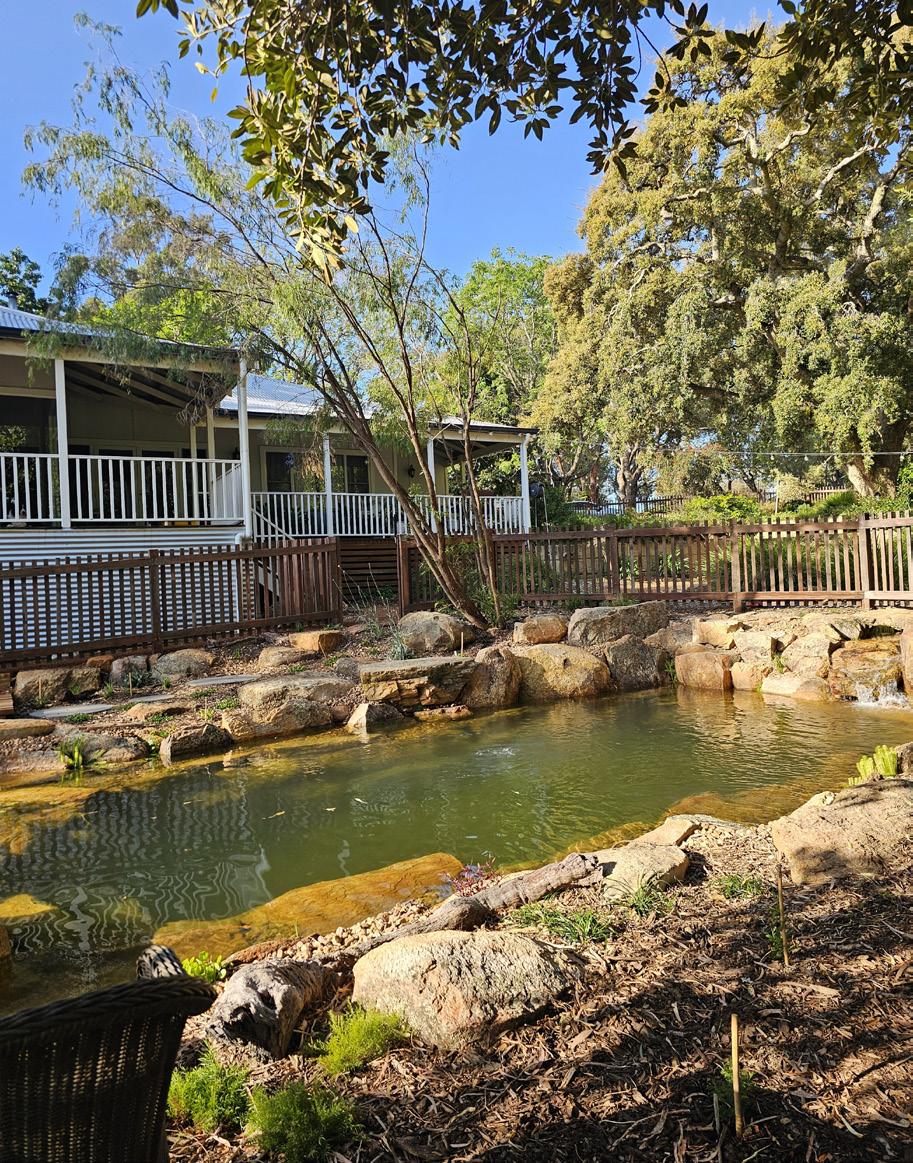
After a friend had a concrete swimming pool converted to a natural pool, the Joneses were intrigued and eventually decided to take the plunge themselves, contracting local firm Think Green Landscapes and Waterscapes.
“It took us a while to make the decision because it’s obviously a big investment,” Emilie says, acknowledging the steeper price tag attached. “But we have never looked back.”
Now the only maintenance required is to throw in dissolvable sachets of phosphate binders once a month, which reduces excess nutrients that can fuel algal growth, and to occasionally thin out water plants on the pool edges when they grow too thick.
“It’s just gardening really, so it’s actually a joy to go and wander around in the water and look after it.”
But over and above the lack of maintenance, Emilie says it is the sheer beauty of their backyard billabong — where they swim among goldfish and silver and pygmy perch — that has transformed not only their home, but their lifestyle.
“It just becomes its own little ecosystem and environment that you are just drawn to. I often feel like it’s our little piece of the Pilbara,” she says, having spent time travelling and swimming in the gorges of north Western Australia.
A fire pit added overlooking a waterfall at one end of the pool also makes it an oasis in winter.
“It’s more than just a pool, you know. It’s a place to be, and we use it all year round. It doesn’t matter whether we’re in the water or we’re out of the water, it’s just such a beautiful space.”
Check out the Jones’s pool on a recent episode of the ABC’s Gardening Australia.

Birdwatching has taken flight across Australia, with a new generation joining longtime enthusiasts in embracing the simple joy of spotting native species.
Once associated with retirees, the hobby is now drawing in teenagers and young adults, thanks to social media, bird-identification apps and a broader shift toward slower, more mindful pastimes.
What was once considered niche is now firmly in the mainstream, playing out everywhere from suburban backyards to bushland trails. Winter is an ideal time to get started, with cooler temperatures and thinner foliage making birds easier to spot, while migratory visitors arrive and native species become more active throughout the day.
Beyond the thrill of a new sighting, birdwatching offers mental health benefits, helping reduce stress and making it a simple, restorative ritual for all ages.
Caught in the act
Rainy days are part and parcel of winter, and for our pets, that often means more time indoors and a little extra mischief. From chewed shoes to couch takeovers and unexpected zoomies, boredom can quickly turn into chaos.
We want to see your pet caught in the act. Share their funniest, cheekiest or most mischievous moments (photo evidence encouraged) for your chance to win $1000.
How: in 350 words or fewer, send your answer to: havencompetitions@afgonline.com.au placing ‘Caught in the act’ in the subject line
Include: your name, address, email, phone number and the name of your mortgage broker.
Dates: opens on May 15 and closes on July 1
Winner: will be decided on July 2 and notified after this time.
T&Cs: visit http://bit.ly/HavenWin
The effortless energy savings most of us miss
When you pick up your energy bill, chances are that, like most people, you just look at the amount and due date. If you do, you’re missing a trick that could save you hundreds without even switching suppliers.
Since 2023, energy retailers — with the exception of those in WA and NT where pricing and supply is government regulated — have been required to tell customers if they are not on the cheapest plan available. This ‘better offer’ statement is calculated on actual usage data and must include an estimate of how much customers could save by switching.
For example, this message flags a potential annual saving of $548:
Could you save money on another plan?
Based on your past usage, our Smart Saver plan may cost you up to $548 less per year (incl. GST) than your current plan.
Better offer information must be printed on the first page of customer bills every 100 days (so, every third bill for those billed monthly).
But here’s the curious thing: despite this requirement, an estimated 81 per cent of consumers are still not on the cheapest plan available from their current supplier, according to research by the Australian Competition and Consumer Commission.
It’s been confounding regulators who found about 40 per cent of customers do not open bills regularly and even those who do, seem to be overlooking the better offer. It’s a particular problem for bills delivered via email, where the total amount owed and due date are contained in the body of the email, with the bill itself an infrequently opened attachment.
So, from December 2026, the Government is upping the ante and requiring best offer details to be included prominently in the body of emails. But why not get ahead of the curve and take a look at your bills now? It’s likely you’re among the majority of Australian households that could be getting a better deal.
For those in WA and NT asking: hey what about us?
The best offer message is not considered necessary because consumers do not experience the same huge price variation that occurs in the deregulated markets of other states. In the NT and WA, the government maintains oversight of pricing and supply to protect residential consumers in remote areas from paying too much to be connected to the grid. Similarly, while the heavily populated South-East Queensland energy market is competitive, the government still regulates regional areas.
With winter approaching and an energy shock reverberating around the world, Australians looking to keep bills to a minimum should perhaps look to their elders for advice. A recent Canstar survey confirmed what many already suspected — that electricity consumption declines with age. The site recently crunched data to produce an average annual electricity bill by age and found the total generally reduced from a high of $1,901 for those aged 18-24 to a low of $1,174 for over 75s.
To further reduce usage, consider a few simple (and some unusual) steps:
Dress appropriately
Heating and cooling is estimated to account for about 40 per cent of electricity costs. Put on a jumper and socks, or grab a blanket rather than flipping the heating on while you walk around in shorts and a T-shirt in July. Equally, in summer, fans costs dramatically less to run than air conditioners, so consider what is really necessary.
Ice baths and cold water swimming is all the rage.
Why not get the same effect by trying cold showers? The late TV GP Dr Michael Mosley often touted the health benefits of starting the day with a cold shower, saying it boosted mood, brain function and the immune system.
We hear it time and again, but leaving appliances on standby can cost households around $170 a year.
Some rarely used electronics can draw a surprising amount of power with a Choice survey revealing multi-function printers cost $32 a year if left on, compared to around $10 for a smart speaker and $8 for a washing machine. Smart plugs make it incredibly easy to monitor electricity usage and program devices to switch off overnight, during the day, or at peak times.
Set dishwashers and washing machines to run overnight, during off-peak hours, which, generally kicks in after 10pm. Smart machines, smart plugs and delayed start buttons can help hit the right time if you go to bed early.
This tip is definitely in the quirky category, but some savers swear by holding a monthly ‘blackout’ night where they play board games by candlelight, bonding on a budget.

What’s better than a warm, soothing bowl of chicken soup in the colder months?
Homemade bone broth delivers the same comfort, along with added nutritional benefits, and it’s surprisingly simple and cost-effective to make.
For a vegetarian option, skip the chicken and use a mix of seasonal vegetables with a spoonful of miso for added depth and flavour.
1.5kg chicken bones (mix of carcasses, nibbles and/or necks)
2 large carrots, chopped
3 celery sticks, chopped
1 brown onion, quartered (unpeeled)
1 tsp black peppercorns
1½ tbsp fresh lemon juice
2 bay leaves
3L (12 cups) water
Preheat oven to 200°C/180°C fan forced.
Arrange chicken bones and vegetables on a large roasting tray and roast for 30 minutes, or until lightly golden.
Transfer to a large pot with peppercorns, lemon juice, bay leaves and water. Bring to the boil then simmer for 4-6 hours, skimming the surface occasionally.
Strain through a fine sieve (and muslin cloth, if you prefer a clearer broth), discarding solids. Cool slightly, then divide between jars and refrigerate.
Makes approx. 2 – 2.5 litres (8–10 cups).
Keeps in the fridge for up to 5 days, or freeze for up to 3 months.
HAVEN MONEY
In our last edition, we invited you to share your stories of kindness. The heartfelt responses we received were moving and fit the brief perfectly.
Our winning entry, submitted by Susan, beautifully captured the spirit of community, reminding us that lending a hand to a neighbour is a timeless act.
“Having recently purchased a property in a regional location because I was priced out of the Sydney market after a relationship ending, I knew nobody where I moved.
I introduced myself to the neighbours either side of my new home and exchanged phone numbers with them. One of the neighbours offered to assist me with anything I needed.
I received delivery of a brand new bedroom suite, which needed to be assembled quickly, as the mattress was being delivered the next day. I reached out to the neighbour, who came over and helped put the bed frame together for me.
He’s since assisted with other furniture projects, fixed a broken screen door, removed the dishwasher when it died and provided advice in relation to issues with the property. His wife keeps an eye and ear out for what my dog is up to when I’m at work.
Peter and Julie have become the community I didn’t know I needed and I don’t know what I’d do without them!”
Parents are becoming go-to lenders in a hot market. But where do you turn when that’s not an option?
It used to be that getting onto the property ladder required a decent job, some compromise, a bit of belt tightening and a tolerance, if not a love, of DIY. These days, a new requirement is upending the game: generational wealth.
The Bank of Mum and Dad continues to be among one of the country’s fastest-growing lenders, and one with particularly generous terms, money need not be repaid.
It’s estimated nearly one in five first-home buyers (17 per cent) rely primarily on parental assistance to fund a deposit, while up to 60 per cent get some sort of help, whether that be through a loan, being allowed to live at home rent-free to save, or parents acting as guarantor.
In 2025, about three-quarters of parents who contributed money towards a child’s home deposit said they had no expectation of being repaid, according to comparison website Mozo’s Bank of Mum and Dad Report. That’s a huge change from 2021, when the report found only one-third of Mum and Dad lenders had the same expectations. And we’re not talking about small contributions either. The report found parents who gifted a deposit contributed, on average, about $70,000.
This head start can really pay dividends, with first-home buyers who receive parental support becoming homeowners about two years ahead of their peers who save a deposit themselves. That represents substantial equity growth: from February 2024 to February 2026 the median home value in Australia jumped by $136,000, according to PropTrack data.
Ironically, it is exactly this kind of equity growth that is also driving the growth of the Bank of Mum and Dad as first-home buyers chase soaring deposits.
In the past five years, the cost of an entry-level house has leapt by 68 per cent, according to Domain’s First Home Buyer Report for 2026. In some boom states, it’s blown out by substantially more, with entry level houses in Adelaide up almost 160 per cent since 2021, and Brisbane and Perth both 106 per cent higher.

During the same period, wages have only risen 21 per cent, making saving a 20 per cent deposit feel like chasing a runaway train.
For the 80 per cent of first-home buyers who can’t count on a cash injection from their parents, it takes, on average, about five years to save a deposit for an entry level house.
But there are other strategies, specialised loans and government assistance schemes to help home-buyers get there sooner.
1 Mate’s Rates
With the average price of a home in Australia sitting just shy of $900,000, buying alone has become unrealistic. But not everyone has a partner, and lenders are recognising growing demand from Aussies who want to buy a home with a friend, or even couples who want to buy dual living homes with another couple. More loans, such as CommBank’s Property Share Loan, are geared towards helping friends buy together with clear expectations, responsibilities and exit strategies. See your broker to find out more about the growing range of options for mates.
2 Essential worker loans
Some niche lenders offer emergency, or essential worker loans that, among other things, allow borrowers to buy with a lower than standard deposit and avoid paying Lender’s Mortgage Insurance. They are usually restricted to police, fire, emergency medical, and defence workers.
3 Super-charge your savings
The Federal Government’s First Home Super Saver (FHSS) is a little-known method to help first-home buyers save a deposit by saving on tax. Under the scheme, workers can choose to
salary sacrifice $15,000 a year (up to $50,000 total) into their superannuation and it will only be taxed at 15 per cent. This represents an annual tax saving of around $2250 for most, considering earnings of more than $45,000 are taxed at 30 per cent or higher. The money can later be withdrawn if it is used as a house deposit. A couple doing this could boost their savings by nearly $13,000 over three years. A recent survey found the FHSS was relatively unknown compared to other government schemes.
In October last year, first home buyers flooded into the market when income caps were removed on this scheme (formerly known as the First Home Guarantee). It allows first home buyers to enter the market with only a 5 per cent deposit, and avoid paying Lender’s Mortgage Insurance. While there are no income caps, there are caps on the value of the properties being purchased, which changes region by region.
Your parents may not want to ‘gift’ you a deposit, but there are a range of loan products that allow them to help without being locked in long-term or putting their own home on the line. Some products allow parents to nominate how much they will lend (often the 20 per cent deposit amount), and nominate an interest rate for this portion of the loan. Others allow parents to put cash in a term deposit which is released once the loan balance falls to 80 per cent of below of the total home value.
The loan market is constantly evolving to meet the changing needs of today’s home buyers. Contact your broker to see what products may suit your circumstances.