

CREDITS
Writers
Joanna Cai
Renee Law
Fiona Chen
Venetia Ho
Silver Wong
Gisele Sze
Katrina So
Katie Mugford
Vanessa Chai
Phoebe Chan

Illustrators
Chise Iwakawa
Sophie Robertson
Lizzie Wong
Editors
Gwendolyn Michel
Flora Hu
Silver Wong
Emily Xu
Holly Han
Po Lam Cai
Rylee Yeo
Phoebe Chan
Chloe Ou
Ethan Lin

CONTENT LIBRARY
Psychology in an Athlete’s Mind
The Fine Line Between Faith and Religious Psychosis
Psychology Behind Self-Sabotage
Dissociative Identity Disorder (DID)
The Desire for Validation and Positive Self-View in the Modern-Day World
Non-Suicidal Self-Injury and its Appeal in Our Society
Eleanor Roosevelt declared, “No one can make you feel inferior without your consent.” Is she right?
Work as a Coping Mechanism
Psychology Behind Diminishing Creativity as We Age
How Has Psychological Understanding of Blind Obedience Changed Nursing?
The Effects of Bullying on a Child’s Development
Katrina So
Silver Wong
Gisele Sze
Renee Law
Abbie Yu
Fiona Chen
Joanna Cai
Vanessa Chai
Venetia H0
Katie Mugford
Phoebe Chan
OUR MESSAGES
As the Editor-in-Chief for this year’s Psychology Perspective, I’m immensely proud of all those who have contributed towards this issue A lot of love and effort has been poured into both the articles and the pieces of art, taking time out of their everyday lives to produce works that have been compiled into this year’s Harrovian. It was a delightful experience overseeing the team and I’m glad to present the Psychology Perspective, Issue 8!

As Head of Art, it's been amazing seeing the creative artworks our artists made for the covers. I hope they're able to keep using that skill in the future! We had a smaller team this year, which allowed me to design many of the covers, which I enjoyed. Overall, it was a great experience and I'm happy with what we made together.
I am proud of the pupils who have been involved in The Psych Perspective publication Our writers, editors, and illustrators have gone far beyond the curriculum, diving deep into the complexities of human behaviour from multiple psychological angles. Each piece reflects genuine passion, exploring topics that truly intrigued them, from cognition to social influence. They have dedicated many hours to research, discussion, and creativity, all outside of regular lessons. The result is a rich, thoughtful collection that showcases not just their talent, but their curiosity and commitment This magazine is a testament to what happens when students pursue what excites them Well done to the entire team


You visualise the moment you take it all. Winning a tournament, a race, a match. Heart pumping, sweat dripping, crowd cheering; you can just taste the victory. This electrifying moment is an example of the art in an athlete’s mind The culmination of discipline and hard work all plays a part in sports psychology and performance Every athlete tries to be the best version of themselves every single day; yet, there is always only one winner, while countless others stay in a battle with themselves However, in this article I will discuss why athletes are more prone to mental health issues and if there really is an ideal mindset for athletes to excel in.
Why are athletes more prone to mental health issues?
All athletes face challenges around expectation, self-identity and the stigma surrounding presentation in sport, which can all lead to increased rates of stress, anxiety, and depression
When an athlete is performing and training every day, a stereotype arises towards the image of being strong and ‘tough’, and disregarding any signs of weakness. This often leads to athletes being discouraged or hesitant to seek help regarding mental health struggles due to the competitive nature of sport The operation of sport under intense pressure through both selfimposed and external expectations also contributes towards why athletes are more prone to mental health issues, as it is also connected to an athlete's identity outside of sport. Identity in an athlete is always linked to performance in their sport. For example, during performance decline, athletes may find themselves discouraged or burnt out and as a consequence, it may also make them feel a loss in their identity through a negative shift in their attitude and a diminished sense of self worth
The phrase ‘The biggest enemy you can face is yourself’ can define why self expectation of an athlete may be the biggest pressure one can find themselves
in. This is because self expectation often creates an unrealistic gap between set goals and reality, leading to disappointment. Being fueled by perfectionism can lead to a desire to prove self value, fear of failure and guilt when underachieving, which can all impact mental health
Is there an ideal mindset for an athlete to excel in?
Researchers over time have proposed various different mindsets for athletes to follow, such as an ‘aggressive mindset’, ‘clear mindset’, ‘calm mindset’, or even just ‘mental toughness’. However, before I answer the question of whether there really is an ideal mindset for athletes to excel in, let’s explore more into what exactly the two main mindsets are, and their influence on athlete mental health
Fixed mindset
A fixed mindset is the belief that our abilities are unchangeable, which can lead to limited personal growth of an individual. For example, a student who believes they are ‘not good at math’, may give up when a problem is difficult, thinking they lack innate mathematical ability Imagine if an athlete had this mindset; they would certainly not be able to reach their goals quickly, or at all
Growth Mindset
A growth mindset is the belief that our abilities can be developed through hard work, dedication, and the willingness to learn from feedback. For example, a student who gets a low grade in math may decide to learn from their mistakes, and practice what they did not understand, instead of giving up An athlete who can make use of a growth mindset is able to not only experience personal growth, but also reach their goals more quickly
To answer the question of whether there is an ideal mindset for athletes to excel in, we would need to consider factors such as the environment and routine they feel most comfortable with, in order to perform best. Although having a mindset of wanting to improve, or be more assertive towards goals can act as guidance for an athlete, it is not suitable for everyone, as we all perform differently in our own ways
Sports can impact one individual enormously in both positive and negative ways It can almost be seen as something life changing The greatest triumphs can bring you unworldly joy, yet pressures which arise from it can become an unavoidable burden Through exploring why athletes experience heightened mental health risks, it provides insight into the culture that surrounds athletes, and the inevitable trap of perfectionism it may bring about. Analysing the ‘ideal mindset’ shows the necessary foundation a mindset can provide, but also the antidote to the identity crisis which follows a loss, and the motivation for long-term development over fleeting perfection By learning this, it becomes clear that protecting an athlete’s mind is just as important as protecting their body

The Fine Line Between
Faith and Religious Psychosis
By: Silver Wong
Art: Sophie Robertson
IINTRODUCTION
Religious faith is a central aspect of shaping the lives of billions worldwide, providing moral guidance and sometimes even serving as a coping mechanism. However, when such faith transcends the bounds of mere belief, it manifests itself as religious psychosis, also known as hyperreligiosity within the psychiatric realm, presenting with a subset of symptoms including but not limited to delusions and hallucinations interwoven with religion The challenge for clinicians and researchers is to discern between varying culturally normative faith and clinically significant psychosis Being able to differentiate from this distinction is essential to ensure faith is not pathologised while psychotic illness is appropriately treated
RELIGIOUS FAITH
Religious faith includes inner convictions in doctrines, rituals, and metaphysical beliefs shared by a cultural or social group Psychologically, faith serves multiple adaptive functions with its primary one being meaning-making and existential security by offering answers to questions about purpose, suffering and mortality, thereby alleviating anxiety and uncertainty which are major contributors to psychological distress Meta-analyses indicate that approximately 5060% of individuals reporting strong religious or spiritual beliefs experience lower levels of depressive or anxious symptoms compared to non-believers. Additionally, faith fosters social cohesion and identity by reinforcing group solidarity and prosocial behaviour, linked to increased activation in brain activity association with social cognition and empathy Religion’s overall association with positive mental health outcomes are when beliefs are flexible and culturally integrated, hence bolstering well-being for many
RELIGIOUS PSYCHOSIS
Religious psychosis represents a clinically significant subtype within the broader umbrella spectrum of schizophrenia and other hallucinogenic-psychotic disorders, wherein the core psychopathology is characterised by delusions and hallucinations embedded in religious content that severely disrupt functional capacities Unlike normative religious beliefs, which are collectively reinforced and culturally shared, religious delusions in this context are highly idiosyncratic, fixed and impervious to
contradictory evidence, often manifesting as grandiose messianic delusions wherein the individual believes they possess a “divine mission” or identity, or even persecutors delusions with themes of divine punishment or cosmic conspiracies. The prevalence of these delusional beliefs illuminate underlying neurocognitive anomalies: aberrant salience attribution (neutral stimuli are imbued with excessive personal significancesignificant) and impaired reality testing, exacerbated by dysregulated dopamine rhis pathways in mesolithic circuits
Hallucinatory experiences accompanying religious psychosis typically involve vivid auditory or visual phenomena, such as hearing the voice of God, seeing angels or perceiving divine commands, linked to the dysfunctional activity in the temporal lobe, particularly the superior temporal gurus and associated auditory processing areas Such perceptual distortions underline the compromised sensory integration and neural connectivity characteristic of psychotic states, and severely compounds the individual’s subject distress while simultaneously contributing to impareiments across social, occupational and personal domains Emotional dysregulation is a prominent concomitant feature, with affected individuals exhibiting heightened anxiety, fear, paranoia, or agitation, often triggered or maintained by the content of the religious delusions.
Despite the apparent rigidity of these beliefs, empirical studies highlight that a subset of individuals with religious psychosis still retain measurable cognitive flexibility, particularly in reasoning and belief updating This residual cognitive plasticity makes them amenable to therapeutic interventions, including but not limited to CBT (cognitive behavioural therapy), which si designed to challenge maldaptive thought patterns and encourage more realitycongruent interpretations. Additionally, pharmacological management targeting dopaminergic dysregulation remains central to symptom control.
DIFFERENTIATION
At its core, religious faith is shaped by a shared cultural and social framework, where beliefs, rituals and symbols align with cultural norms and practices This shared dimension thus fosters a sense of belonging and continuity; believers may entertain metaphorical interpretations, allow for doubt and reinterpret beliefs with flexibility. Importantly, spiritual convictions that conform to culturally accepted narratives generally provide comfort and a stabilizing emotional anchor, reducing distress through enhanced coherence and purpose
Conversely, religious psychosis is characterized by beliefs and experiences that are deeply idiosyncratic, rigid, and detached from the consensual reality of the individual’s cultural context. The hallmark of it is the unshakeable conviction with which these beliefs are held despite clear contradictory evidence. This inflexibility as opposed to pure religious faith starkly separates from pathological belief.
Functionally, while religious faith will promote social integration and psychological coping, religious psychosis leads to marked impairment. Delusions and the attendant hallucinations destroy interpersonal relationships, occupational capacity, and self-care and usually lead to social isolation and distress Furthermore, affective response is qualitatively different: religion usually comes with feelings of security, hope, and existential peace, whereas religious psychosis is usually secondary to intense anxiety, fear, restlessness, or emotional distress, which further complicate the clinical picture The phenomenological equivalent of psychosis is not just abnormal belief content but also heightened anomalous perceptual experience auditory or visual hallucinations of religious figures or commands, that further differentiate it from normal spiritual experience
Psychological mechanisms and neurobiological vulnerabilities act as mediators between religion and psychosis on a continuum. Individuals vary in their thinking styles, ability to regulate emotions, and sensitivity to anomalous perceptions.
Religious content may become part of delusional systems when there are vulnerable neurobiological states: dysregulation of dopaminergic and glutamatergic systems
Excessive anxiety or fear leading to dysregulation of emotions is able to cause and maintain psychotic symptoms.
CONCLUSION
Religion can be both a buffer and an aggravating factor for psychotic disorders In some cases, spirituality that is non-delusional serves as a key coping mechanism, prompting hope, social support, and resilience with attendant improvements in prognosis and social integration For others, however, maladaptive religious coping with fear of punishment from God, guilt, or fatalism worsens psychological distress and symptomatology. Thus, rather than being fixed or binary, the distinction between spirituality and psychosis exists on a dynamic continuum influenced by neurobiological, psychological, and cultural factors.
Psychology Behind SelfSabotage
By: Gisele Sze
Art: Sophie Robertson
In the modern world, self-sabotage - actions or thought patterns (both conscious or subconscious) that interfere with your long-term goals and overall wellbeing - are becoming increasingly common. There are several reasons behind self-sabotage, including fear of failure and a perfectionist mindset. Additionally, there are many different forms of self-sabotage, such as procrastination, negative self-talk, and selfdestructive habits With this said, ways to escape the endless cycle of self-sabotage, such as increasing self-awareness and practicing selfcompassion, will also be covered in this article
Reasons behind self-sabotage
Self-sabotage can be committed consciously or unconsciously It often serves as a coping mechanism that people use to deal with stressful situations and past traumas. Unfortunately, it typically exacerbates problems and limits a person ' s ability to move forward in a healthy way There are endless reasons behind self-sabotage, but the main ones include:
Fear of failure
This is where the fear of failure is so great that they’d choose not to try at all rather than risking disappointing themselves and others They would feel that it’s better to self-sabotage and have a ready excuse than to try their hardest and still not meet their high expectations.
Fear of success
Succeeding can bring consequences you may not want, such as heightened responsibility, greater expectations, or even a fear of eventual failure: reflecting how it is not so much the success they fear but the added pressures that come with it
Low self-esteem & self-worth
People with negative self-image and low selfesteem are especially vulnerable to self-sabotage They behave in ways that confirm negative beliefs about themselves So, if they are close to succeeding, they become uncomfortable. They’ve been told all their lives that they’ll fail: either by themselves or by others. Self-sabotaging behavior helps ensure that this becomes a self-fulfilling prophecy People with low self-esteem often use self-sabotage to make their reality align with their inner beliefs It acts as a defense mechanism – if they fail intentionally, they feel they're in control of the failure, or that it’s just an expected flaw of their character
Early childhood experiences & attachment styles
Being surrounded by a positive family environment is crucial to developing a secure attachment style. Attachment styles are patterns that emerge in our earliest emotional bonds with caregivers. These early attachment styles play an important role in child development and influence attachment patterns in adult relationships.
There are 4 main attachment styles:
Secure: People with a secure attachment style grow to have trusting, lasting relationships with parents & are comfortable with sharing their feelings with partners and friends They also tend to be willing to seek support from others and become more mature than others
· Anxious-ambivalent: People with an anxiousambivalent attachment style grow to be reluctant to form close relationships with others, worry that their significant other does not love them, and become distraught when relationships end They also tend to be clingy and overdependent
Anxious-avoidant: People with an anxiousavoidant attachment style grow to find forming close relationships and intimacy difficult, investing little to no emotion in relationships, leading them to experience little distress when a relationship ends. They also tend to fail to support partners during stressful times and show an inability to comfortably share feelings, thoughts, and emotions with significant others.
Disorganized-disoriented: People with a disorganized - disoriented attachment style grow to be a mix of both the anxious - ambivalent and anxious-avoidant attachment styles: having a strong need for a close connection and a struggle to communicate They also tend to sabotage their relationships and have a hard time trusting their partners, leading to unhealthy relationships linked to toxicity, clinginess, and lack of good communication skills.
Perfectionist mindset
A perfectionist mindset is where you set unattainable standards for yourself and wait for things to be "perfect" before progressing This can halt the project you’re working on, as always finding faults in what you do, which means you might never feel ready
Having a perfectionist mindset is both a reason behind self-sabotage and a form of self-sabotage
Expecting perfection from oneself will lead to procrastination, due to the need to feel that everything must go as planned with no problems. When something inevitably goes wrong, they end up feeling like they let everyone down and are ashamed of themselves.
Forms of self-sabotage & how to overcome them
The best way to overcome self-sabotage is to identify the different forms of self-sabotage and then act correspondingly to it Below are the most common types of self-sabotage
Procrastination
Procrastination is the act of continually delaying or postponing tasks. One way to overcome procrastination is by minimizing your distractions, such as putting your phone in another room or limiting your screen time on certain apps
Negative self-talk & self-destructive habits
Negative self-talk falls into one of many selfdestructive habits Self-destructive habits are defined as a pattern of behavior that causes physical or emotional harm, either intentionally or unintentionally. Negative self-talk would be considered a self-destructive habit as it would cause emotional harm due to the harsh words that would be used to ‘talk’ to yourself. One way to overcome self-destructive habits would be by identifying and challenging those thoughts, replacing them with positive affirmations instead
Introduction to Dissociative Identity Disorder
Dissociative Identity Disorder (DID) is a complex mental health condition that stems from the result of severe, prolonged trauma, typically during childhood. The prevalence of this disorder has been diagnosed in about 1% to 5% of the global population. (Mitra et al., 2023) Being diagnosed with Dissociative Identity Disorder means having a splintered identity, individuals with DID feel as though they have different people within them called alters Each alter encompasses their own personas, thinking patterns, ways of communication and even down to their own physical requirements i e wearing glasses Individuals with DID typically refer to themselves in plural like “we” or sometimes even in third person like “he, she, they”, as they feel like their alternate personality state doesn’t even belong to their own body and is viewed as a separate person. (Spiegel, 2025)
Identity Alteration
The typical number of identities in people with dissociative identity disorder can range from two alters to as many as hundreds however the typical number of identities in people with DID range from 8-13 with the average number being about 10 alters (NAMI Michigan, n d) Each alter has distinct patterns of perception and personality that recur and take control of the individual’s behavior. Typically, personalities are able to communicate to each other with the transition between each alter being sudden. The individual is unable to control which alter is in charge at the moment but certain stressors can trigger a specific alter to emerge
Symptoms of DID
Symptoms of DID consist of anxiety, depression, self-puzzlement, disordered eating, selfdestructive behavior, substance misuse, memory gaps, suicidal thoughts or self harm. Some people with DID can even have seizures that vary in extremity from fainting to something similar to an epileptic seizure. Individuals with DID can even experience dissociative amnesia and recollections of daily and traumatic events, with dissociation being able to last from a few hours to a few months (Mitra et al , 2023) Many patients show stress about not being in control if aware of their condition
Dissociation is an involuntary experience that occurs when you feel disconnected to yourself and the world around them, used as a defense mechanism. Individuals with DID may feel as if they’re floating away or watching themselves from an outside perspective. The world around them may feel hazy with objects changing appearance. The symptoms presented, especially dissociation, show to disrupt everyday life long after trauma has ceased and affected individuals typically use it as a way to cope with all stressful situations later in life
The memory gaps are much more severe than forgetfulness and differ depending on which alter’s present in DID as each alter may hold distinct memories, however memories and knowledge can be shared amongst different alters shows in Huntjens’ study that indicated the transfer of autobiographical information between identities in a large sample of DID patients through reaction time tests (Huntjens et al , 2012)
Etiology
Child abuse is considered the primary etiology of Dissociative Identity Disorder as it causes an individual to use dissociation as a coping mechanism for overwhelming, chronic trauma
DID can be classified as a chronic post-traumatic disorder where stressful events in childhood like abuse, emotional neglect, disturbed attachment and boundary violations are typical etiological factors. Biologically derived traits and epileptic mechanisms are also likely to be factors (Şar et al , 2017) Severe and prolonged abuse experienced in childhood may create feelings of loneliness and isolation with alienation being the only appraisal variable to differentiate DID from PTSD, this contributed to problems of memory and identity common in DID (DePrince et al , 2015)
Dissociative Identity Disorder is a result of a child’s inability to develop and maintain a unified sense of self across various behavioural states, regarding dissociation typically maltreated children showed higher levels of dissociative symptomatology that nonmaltreated children (Valentino et al , 2008) Emotional neglect by biological parents or siblings in childhood was the largest instigator to adult diagnosed DID Milder presentations of DID are sometimes
associated with trauma that is not openly displayed, such as communication issues, relationship styles in family members and emotional neglect.
Development of distinct identities
Over time, dissociated experiences and memories may begin to form separate identity states, or ‘alters’ Each of the alters hold different feelings, memories, names and physical needs Physical manifestations like changes in vision, heart rate, muscle tensions can also vary between alters, further complicating the individual’s experience
In a case report of a patient with DID who presented to have a shocking number of 17 distinct identities, her DID was shown to be linked to traumatic events that occurred during early childhood and triggered the emergence of her first alternate identity. Over time more alters manifested and served as coping mechanisms for the subsequent trauma episodes (Li et al , 2024)
Some of the most common types of alters include the host identity (the main alter that a person may feel is most like them), the opposing attitude (from the host’s identity provides a different perspective of life events), an oppositesex alter (changes memories or perceptions of events), a younger self (may talk in a childlike way and even be unable to talk and typically hold memories of child abuse), a different name or appearance (can denote a switch to the thinking patterns of another alter or change the host’s persona), a change of role (can enable a view of life event from another standpoint) and internal self helpers alters (have extensive understanding of different alters and how they work together)
Diagnostic Tools and Treatment Options
Diagnosing DID can be difficult to diagnose as it’s not caused by substance use, alcohol or medical conditions. It is often misdiagnosed due to its similarities with other personality disorders, most commonly borderline personality disorder (BPD).
The way to diagnose identity disorder is through longitudinal assessments over long periods and history taken by psychiatric practitioners and experienced psychologists The assessment may include questions on the patient’s thoughts, feelings, behaviours and symptoms presented,
signs of self-injurious behaviour should be addressed as part of the psychiatric assessment and treatment plan (Gentile et al , 2013) Neurological examinations such as electroencephalograms (EEG), lumbar punctures and magnetic resonance imaging (MRI) are also taken in order to rule out autoimmune encephalitis. (Mitra et al., 2023)
A proposed criteria for Dissociative Identity Disorder in the Diagnostic and Statistical Manual of Mental Disorders (DSM-5) includes several key elements: A disruption of identity characterized by two or more distinct personality states, inability to recall significant personal information related to everyday or traumatic events, the condition causes clinically significant distress and impairment in social, occupational or other important areas of functioning, the disturbance is not a recognised cultural practice and isn’t due to the effects of substances or medical conditions.
Treatment options include both invasive and noninvasive options
Pharmacological interventions for DID include atypical (second generation) antipsychotic drugs that inhibit dopamine and serotonin receptors may be useful in treating complicated trauma cases with psychotic features as well as opioid antagonists i e naltrexone to treat dissociative symptoms and reduce selfinjurious behaviour (Brand et al., 2012). Antidepressants and anxiolytic medications are often prescribed to help the person cope with comorbid conditions like depression and anxiety but do not reduce dissociation and must be monitored as depressants used to treat anxiety like benzodiazepines can exacerbate dissociation (Sadock et al , 2017) Other options include monoamine oxidase inhibitors, beta blockers, clonidine, anticonvulsants in reducing symptoms of hyperarousal, anxiety and mood instability
Non-invasive treatment options include psychotherapies and dialectical behaviour therapies. Psychotherapies such as cognitive behavioural therapy (CBT) are usually the main approach to DID treatment and is long term to reappraise the trauma and develop psychological flexibility to deconstruct the personalities and reunite them into one Dialecticical behavioural therapy (DBT-PTSD) is another option that aims to treat disassociation, self harming, suicidal behaviours and PTSD that results in DID Results have shown state dissociation during psychotherapy sessions predicted improvement
after DBT-PTSD with patients presenting lower states of dissociation during treatment and had a higher chance to show substantial improvement (Kleindienst et al., 2016).
Conclusion
In conclusion, Dissociative Identity Disorder (DID) is a complex mental health condition rooted in chronic, severe childhood trauma and is characterised by the presence of distinct identities also known as alters Each alter has unique psychological attributes and complicates the individual’s sense of self and disrupts daily functioning DID typically arises as a defense mechanism against overwhelming distress, leading to most significantly memory gaps and persistent dissociative experiences.
Diagnosis requires longitudinal assessments to distinguish DID from other psychiatric conditions, employing both psychological evaluations and neurological tests Treatment involves non-invasive options like CBT, DBTPTSD and more pharmaceutical treatments such as antidepressants, antipsychotic drugs, monoamine oxidase inhibitors etc , these aim to merge the fragmented identities Ongoing research and clinical awareness are essential to improve diagnostic accuracy and treatment efficacy for such a complex medical condition, ultimately enhancing the quality of life for those affected by DID.
What is validation
Validation can be viewed as both external and internal, with external validation being expressed, most commonly, as receiving acknowledgement and acceptance from others. On the other hand, self, or internal validation, is the recognizing and acceptance of your own thoughts and feelings themselves internally. In psychology, validation is defined as ultimately the recognizing and accepting of your own, or someone else’s thoughts, feelings, and behaviors as valid and understandable
However, in modern day society, validation takes on a much different form, where many create an idealized version of themselves, presenting the concept of ideal self This ideal self, presents a version of the individual that encompasses one’s goals, values and traits they desire to embody, often influenced by that of social media, which often causes discrepancies between one’s true reality and self, versus the individual they wish to embody, or a fantasy life they envision themselves in This can be seen through the study by Przybylski and Weinstein (2019) titled "Digital Screens and Psychological Well-Being", which ultimately underscores the importance of managed and adequate amounts of screen time, to not overwhelm an individual with comparison, and ultimately a need of validation
Validation, in this sense, presents an example of external validation, where many yearn for the receiving and and acceptance of other’s approval, as a way to compare themselves to others online, or the ideal version they created of themselves
This can be seen through the science of a human body, where there is an immediate dopamine rush for acceptance and approval, validation in itself, then causes a release of oxytocin, a hormone that provides the individual with safety and comfort
With an increased belief in an idealised life and self, this often causes people to yearn for more validation, driven by dopamine, and the comfort of acceptance, and also, majorly, due to the phenomenon of cognitive dissonance. Individuals require a consistent self perception, where the belief they hold, is a constant, maintained perception of one’s self
Many individuals result in striving to maintain consistency within their own belief, and the feedback of other individuals around them, ultimately, as a way of preventing cognitive dissonance
What this means, is that, by gaining the desired feedback from others , it allows an individual to reinforce security and safety that they are within the ideal position they firmly believe themselves to be in, through the release of oxytocin. Validation is psychologically proven to be essential for all humans, where it helps align external perception with internal belief, overall being important in the building of connection between others, and increase in self worth or value, by reinforcing positive self views
Need rather than want of validation, how does that create a desire for a positive self view?
Self-worth is often intertwined with validation
External validation, in itself, often causes cognitive dissonance on its own Whilst people yearn for validation to rid oneself of cognitive dissonance, at the same time, the more reinforced an idealised image is engraved within an individual’s head, the more pressure one feels to uphold it, creating a cycle of never ending desire for validation
Whilst increase in positive validation has a linear relationship with that of self worth, lack of validation, also causes a massive decrease in self worth, as it shifts, once again, from the once constant positive image an individual had created of themselves initially This can be explained through the prefrontal cortex functions, where lack of validation, can cause the area to be compromised, in turn, damaging an individual’s ability to manage emotion, leading to a greater reliance on validation to make themselves feel better, where the decline in self worth, creates a greater desire for validation once again, to reinforce the positive ideal image one has portrayed in their minds
The contrasting effects of validation on our self worth, emphasises their intertwined relation, where one usually goes with the other Positive self view, is commonly connoted to the conventional high self esteem, and enhanced positive view on an individual’s self, due to reinforcement that they embody their own ideal image. The increased reliance on validation for self esteem with cognitive dissonance, makes it a challenge for the individual to maintain self esteem without constant compliments and reinforcement, creating, ultimately a desire for not only external validation, but a positive self view and internal validation, as a desire to
understand themselves and comfort themselves through times of confusion, where there is no reinforcement of success
Processing information with increased desire for positive self view
Now that it is established that self worth and positive self view is often controlled by the validation an individual receives, the main question is, does it affect the way we process information at all? This can be explored through the psychological concept of conformation bias
Conformation bias, in itself, can be defined as our underlying tendency to notice, focus on, and give greater credence to evidence that aligns with our existing beliefs
Oftentimes, the need for positive self view and external validation as a way to reinforce an existing belief, raises the phenomenon of confirmation bias. When an individual is met with insecurity, and a desire for positive validation, to ensure themselves, they often perceive criticism to be jealousy, and favour what positive things others say about themselves, as a defense mechanism against insecurity itself
This can be seen put into work in the research done by Baumeister, R F , & Hutton, D G (1987), where they explore the relationship between self esteem and their different tendencies to react to failures and success. Within the research, it is observed that high self esteem individuals reacted more positively towards failure, and less negatively towards failure, whilst conversely, individuals with low self esteem, reacted more negatively towards both
What does this tell us about the relationship between positive self view and processing information? Well, it links back to confirmation bias, within the feedback loop, it can be inferred that individuals with a positive self view, reinforce the idea that they are successful, taking less thought to the idea of failure, as it does not align with their thoughts. On the other hand, those lacking validation, and have a desire for positive self view, rather than actual positive self view, take things more to heart, rather than ignoring the presumably, things that don’t align with their belief
Yet, why do people, who yearn for a positive self view, tend to focus on the things that don’t align
with the views they desire? Well, the desire for validation, to create a positive self view, is what causes this Individuals, who begin to experience cognitive dissonance, start to believe they falter in something, often causing them to focus on their flaws that they desire to fix, hoping to get more external validation in return. This can often cause a cycle of negativity bias, and overall, self sabotage, where the focus on flaws, turns into an unconscious confirmation bias towards negative thoughts or words that do not align with the ideal self they desire
Much of this, links back to belief, solid belief in something, often causes an individual to be more confident, as they focus on things that truly align with their belief, on the other hand, an individual who focuses on external validation, often has an unstable relationship with their own belief, where a falter in validation, often crumbles their entire belief system, causing them to create a cycle of negative bias, out of hyper awareness to their flaws

Whilst the majority of us will recoil at the thought of pain, it’s surprising to learn that for some, injury to one’s body could be appealing Throughout the history of our existence, physical suffering has always been something we desperately avoid, and it is often inflicted upon us with negative intentions, such as punishment. Thus why would anyone purposely harm themselves? In this article, I would like to explore the prevalence of self harm, and its appeal
Often, self harm is a much neglected topic, as no one is affected but the person doing it, and it’s just something that people think that only mentally ill people would do I would argue that this would be wrong, and that this issue deserves much more attention. Approximately a startling 17% of teens admitted to have practiced self harm in the past, 15% of college students have reported to be engaging in self harm, and certain groups of people (eg bisexual females) have even higher rates as much as one in two people Furthermore, Suicide risks after self harm can be up to 4 30% , suggesting a strong correlation between the two, further highlighting how severe this issue is, and how it extends beyond just inflicting pain on oneself
According to the south china morning post, nearly thirty percent of Hong Kong students in secondary school have considered self harm, or even suicide in the academic year so far, and around sixty percent of 2,665 students surveyed felt depressed and hopeless in just the past two weeks Five percent of the survey even said that in the past seven days, they had suffered from such thoughts, and another five had reported to think about it daily This is already startling, and it doesn’t take into consideration of the students who don’t want to reveal to others their real feeling and thoughts, so the real threat of self harm could be much greater
So why do people do it? It’s not always the case that they take pleasure in pain, but they feel it is necessary to feel this way. Overwhelming pressure and stress from events in their lives, such as bullying, family issues, exam pressure, relationship problems, can be driving factors This is often said, but why would experiencing pain help cope with this? Sometimes one would do it as a form of self punishment, for something that they did, that they feel guilty for Other reasons include:
Responding to intrusive thoughts
A cry for help
· To get rid of the past, to erase past experiences
· To feel in control of their life
· To prevent suicide
· To manage intense emotions that the brain finds difficult to process, study shows that cutting will decrease
Schizophrenia or other mental disorders often lead to self harm A research conducted on individuals who self harm has shown that almost 90% of the participants of said study had a history of mental/ behavioural disorders, with alcohol disorders making up 51 1%, borderline personality disorder 44% and major depressive disorder 37.8%. This experiment sampled 183 file reviews and conducted 36 semi structured interviews, thus in total there were 219 participants. The participants were all adults who has had a history of five (or more) self harm presentations to ED (emergency department in hospital) These cases are quite severe in my opinion, and not just an impulsive, one time mistake, thus suggesting a strong connection between the “addiction” of self harm and mental illness
One experiment that I find particularly interesting is the Incision and stress regulation in borderline personality disorder: Neurobiological mechanisms of self-injurious behaviour study by the Cambridge university press. This study investigates the neurobiological mechanisms of non suicidal self injury in individuals who are diagnosed with borderline personality disorder The results suggest that the participants with BPD generally have higher levels of amygdala activity, which is when the brain responds to emotionally significant stimuli (especially fear and potential threats) and it will trigger responses from all the other parts of the brain (eg heart rate increases) However, the amygdala activity decreased and there appears to be less aversive tension as the group experienced incision (a very popular form of non suicidal self injury), which shows that self harm is often an unhealthy yet somewhat effective coping mechanism for mentally ill (in this case BPD) individuals to deal with overwhelming negative emotions It also provides an example as to why mental disorders could cause self harm
Now, even if you have the motive, even if you find it appealing, wouldn’t this be just a one time occurrence? What drives one to repeatedly do it? And what causes people to not be able to stop? Self harm triggers the release of natural brain chemicals such as dopamine and serotonin, which are chemicals that you would recognise to be something making you happy, calm, joyful, making this more addicting Furthermore, the process of cutting decreases areas of over activation in your brain, and that may be helpful to managing overwhelming emotions which you often feel in a panic episode This reward process makes self harm a process that is difficult to quit
When self harm is committed, nerves around the area of damage will send signals to the brain, and in response beta endorphins will be released, which is a sort of natural painkiller. It will make you feel alright, but the effects are short termed, however enough for those seeking a momentary relief to feel better for the time being
It was also found that higher pain tolerance is a common factor amount those who commit non suicidal self harm A research sampled 1,125 undergraduates at a large Canadian university, and they were subjected to report the frequency of self harm, versatility, and the pain tolerance that they perceived The pain tolerance was able to predict the versatility and frequency of self harm, and people with high pain tolerance were reported to be at a higher risk of committing self harm, suggesting that individuals who do experience less pain than we would initially expect.
Combining these reasons, it’s easy to see why one would find it hard to withdraw from the habit
To conclude, non suicidal self injury is a highly prevalent issue in society (especially among people our age) and it’s caused due to many factors, and a cycle that many find challenging to break through As a society, I believe that we should recognise this more, and it’s essential to understand this topic, as to prevent such cases in the future.

"NO ONE CAN MAKE YOU FEEL INFERIOR WITHOUT YOUR CONSENT.”
Eleanor Roosevelt declared, Is She Right?
By: Joanna Cai
Art: Chise Iwakawa
One could argue that feeling inferior is something we choose to feel because of insecurities – both mentally and physically The American Psychological Association defines the inferior complex as “the constant feeling of inadequacy” as a consequence of being mentally or physically inferior, no matter if it is the truth or not. In 1907, Alfred Adler introduced the concept of the inferiority complex The question is: can someone force you to feel inferior, and can this feeling be controlled? Eleanor Roosevelt’s questions if self-esteem is based on other’s opinions of yourself In order to look at this question, we have to identify the main factors that affect self-esteem; peer pressure (influence of others), biological factors, mindset, and stress
Peer pressure is a social aspect that impacts the feeling of inferior – self-esteem problems. According to the American Psychological Association definition, self-esteem is the extent one’s characteristics making up their identity are seen as positive This means that self-esteem is something that individuals perceive of themselves, suggesting that it is subjective Selfesteem is often linked to the word “worth” This suggests that if individuals sees their own worth, they would have a higher self-esteem, which means that that individuals would not be inferior
The influence of others is a significant element to consider, as most who feel inferior is through comparing their lives to others who seem more privileged than them. A recent study (Lee & Jamieson, 2020) showed that adolescents had a greater feeling of rejection when they received fewer likes in comparison to receiving more likes This suggests that the lack of validation from other indicates a lower self-esteem, which is what causes people to feel inferior This would imply that the feeling of inferior may not be what individuals consent to, instead is other’s attitude which impacts their own feeling of inferiority The comparisons made by individuals between their peers would cause a lower self-esteem. Becker (2004) found that Fijian children that were exposed to television caused them to be more unhappy with their body This suggests that they are comparing themselves to people on television which caused them to be unsatisfied with their own body image which caused them to have a
lower self-esteem and feel inferior This is supporting Eleanor’s claim, as individuals are consenting to feeling inferior as they are creating the comparison without other’s opinion.
However, this may not be true as there may be suggestive language which causes individuals to create comparison, meaning they are not consenting to feeling inferior People on television may be implying the perfect body and misleading them to view their own body image as inferior
Discrimination often happens between peers due to various reasons The American Psychological Association defines discrimination as “unjust and differential treatment of the members of different age…” and “favor certain groups over others and has the effect of restricting opportunities for other groups”. This suggests that the different treatment of individuals from different groups who are co-existing in the same community can cause lower self-worth, which may cause them to question their own identity, going into a decline Even if individuals may not feel inferior due to higher self-confidence, this may still affect their self-esteem in the long run This supports Eleanor Roosevelt’s claim that individuals feeling inferior is being consented by themselves
Even in the current society, the feeling of inferiority is due to other’s opinion and individuals are subconsciously consenting to feeling inferior. As ethnic minorities believe that race is the reason they experience discrimination, after multiple experiences of discrimination, they would have a lower self-esteem as they start to believe that they are more socially inferior According to Greene et al (2006), he concluded that repeated discrimination in adolescents would cause a decline in self-esteem that could follow into adulthood as individuals consent and believe that they are inferior to others Schmitt et al (2014)’s study “perceiving discrimination was negatively related to psychological well-being” suggesting that discrimination caused a deteriorating mental health which is tightly linked to a decline in self-esteem. This can be explained by classical conditioning, as discrimination is often paired with low self-esteem, which causes a conditioned response in feeling inferior The mind then associates discrimination with a low self-esteem, which affects individuals’ feelings
It can be concluded that occasional discrimination may not lead to a decrease in selfesteem, but long-term discrimination would more often than not lead to a decline in self-esteem, which leads individuals to consent to feeling inferior. Even if individuals does not want to consent, they have already subconsciously accepted the fact that they are more socially inferior to others As both studies support this study, this means that the conclusion on consenting to feeling inferior is reliable, as there is inter-rater reliability
Freud’s (1915) iceberg analogy suggests that the unconscious mind stores feelings, urges, memories that individuals are not consciously recalling This may be able to explain why individuals often feel inferior to others, although they cannot pinpoint a reason. This goes against Roosevelt’s statement as this shows that the feeling of inferiority is not something individuals are in control of, arguing that their feelings are a consequence of other’s actions and their experiences However, this can also be used to support Roosevelt’s statement, as the feeling are often claimed by researchers such as Beck’s cognitive theory (1967) to happen because these feelings are being consciously accepted into the subconscious and is what the individual is truly feeling This would thus be justifying the statement that individuals are consenting to feeling inferior.
The structure of the brain can also be part of the reason for feeling inferior. The prefrontal cortex plays an important role in regulating emotions and decision-making The amygdala’s role is to assess the environment and identify threats and challenges The study done by Yang and Raine (2009) supports that the level of activity in the amygdala and the prefrontal cortex affects self-esteem levels As less activity in the prefrontal cortex means that individuals would make the wrong decision and not be able to regulate their emotions correctly. This would indicate individuals are more likely to feel inferior and have a lower self-esteem since they are misunderstanding social cues and may misread behaviour as unpleasant emotions, even if it is not meant in such a way Similarly, excess activity in the amygdala would cause individuals to misinterpret body language or phrases as threatening and dangerous,
which can affect their logical reasoning and thus act based on impulse and fear This combination would provoke individuals to remain unnecessarily focused on the wrong decisions and affect their self-esteem, which leads back to them feeling inferior. This contradicts Roosevelt’s claim, as individuals are unable to control the level of activity in their brain. Since they are not in control, they are not consenting to feeling inferior
The role of hormones is an alternative theory that causes the feeling of inferiority Eisenegger et al (2011)’s study on level of testosterone in social interactions and the individual’s confidence level The testosterone level impacts the level of confidence of individuals, which affects their perception of their self-image. Low testosterone levels would suggest lower confidence and increase the feeling of inferiority as their social anxiety increase. Similarly, the level of serotonin (Young, 2007) also affects individuals’ own perception Low serotonin levels leads to higher amygdala activity, lower pre-frontal cortex activity and increase the level of insecurity This is supported by fMRIs (Crockett et al , 2008) where lower serotonin reduces the regulation of emotions which causes individuals to be more sensitive to actions, as they would perceive actions as threatening This would suggest that according to biological factors, feeling inferior is not something individuals can control and can consent to as hormones are affecting their perception of actions.
Mindset is a significant factor that should be considered in feeling inferior An important aspect to consider is child abuse Research on childhood maltreatment (Teicher et al , 2016) showed that activity level in the amygdala increased in victims are they are required to remain more sensitive to social cues for survival in their environment This affects their mindset and would view themselves in a socially-inferior position. This is why individuals would view themselves as inferior. Individuals may try to escape their current mindset but without professional help from therapists, it would be futile to try and change their mindset as they would fit things into their schemas However, although this suggests that individuals are not in control of their environment, they are in control of their actions as they could go to seek help and
support to change their mindset to boost their self-confidence Stigmas around mental health may be holding individuals back from receiving treatment to help them would be an example of why some people (especially elderlies) would not understand the idea of therapy and counselling. This would thus criticise the argument above and support Roosevelt’s statement that feeling inferior is only able to happen by individuals consenting to it, as this would argue that in this situation, feeling inferior could be changed by the change of mindset
Stress is the final component to consider, as financial insecurity may be arguably one of the most important factor affecting feeling inferior The study done by Mani et al (2013) would suggest that financial insecurity impacts the optimal functioning of the brain, as low-income households have less activity in the brain and lower their self-confidence. They are more likely to feel incompetent as they compare their lifestyle to other’s lifestyles This shows how the cycle of poverty repeats Stress also induces the release of more cortisol which reduces the activity in the pre-frontal cortex and increase the amygdala activity, which causes individuals to be less likely to think rationally and questions their assumption This would support the statement that feeling inferior is not something individuals consent to, as they are unable to change their financial level even if they are working at their maximum.
Ultimately, I support Eleanor Roosevelt’s statement to a larger extent, as the feeling of inferiority is consenting to others’ opinion affecting individuals’ self perception, thus affecting their self-worth The main focus of the essay is to question Eleanor Roosevelt’s statement in whether feeling inferior is an active or a passive process Inferiority is a feeling that individuals more often consent to than not, as more evidence shows that individuals often have the power to change or improve their self-worth and not feel inferior. Although there are uncontrollable aspects such as the biological factors and the feeling of powerless, feeling inferior is frequently through comparisons and others’ perception of one’s self-image Therefore, even though there are competing the statements suggesting that they are not consenting to feeling inferior, there are more research supporting Eleanor Roosevelt’s statement
Work hard: that’s what everyone says The more you work, the more you gain The more studying you do, the more knowledge you gain and the better grades you get. With this overwhelming societal attitude, it is not surprising that many value work above all else. While we know statistically that rest and play is important, it is often treated as a temporary pause in the linear progression of your life, and that only work can allow success
With this, workaholism arises Many also start using work as a coping mechanism from other stresses and negative emotions, possibly even unknowingly, as it is viewed so highly and in such a positive light
The term workaholism was first coined by psychologist and theologian Wayne E. Oates, and defined by him as “the compulsion or the uncontrollable need to work incessantly”.
What are some signs of workaholism?
Workaholics may work extensively for many more hours than necessary, such as during weekends, at home and in holidays while others may be engaging in celebration or spending time with family and friends They may also make themselves permanently available to tackle any work related tasks, and constantly check their emails and work documents even in their personal time.
But to a certain extent, this just sounds like a hard worker who will probably have a very successful future So where is the line drawn for workaholism and just ‘working hard’?
Workaholism or work addiction is specifically when working extensively leads to the neglection of other parts of life, such as dedicating less time and energy to interpersonal relationships, not being able to enjoy hobbies or non-work activities, ignoring underlying health issues or sacrificing sleep time. They may also find it hard to physically or emotionally detach themselves from work, and want to keep going even when prompted by another person or another activity. This may also mean that their work life and personal life are constantly intertwined and there is a lack of boundaries and balance, which can lead to a lack of enjoyment and sense of fulfilment in both lives
Workaholism may also require attention when it becomes obsessive and addictive, when it is difficult to stop working and there is an overwhelming urge to keep working despite it being unnecessary. While some jobs have a higher workload than others, and some year groups may feel a more pressing need to do more studying, a workaholic mostly disregards the true workload they have This means they may work because they use it as a coping mechanism, because they want to or feel the need to, and not always because they have to work or are being told that they must That being said, some workaholics may intentionally take on more roles or tasks in order to fill their schedules and keep themselves busy, which may distract them from the negative emotions they don’t want to face.
Workaholics themselves are not the only ones affected; they may also impose great pressure on their peers to work longer hours, drive up competitiveness and may even start a chain reaction where more and more people are made to believe that workaholism is a norm and should be expected This could ultimately lead to a large scale increase in workaholics and increase the overall stress levels of the entire workforce
Links with other clinical disorders:
A study by psychological scientists from Norway, the United Kingdom, and the United States in 2016 used a self report questionnaire to test 16,426 adults living in Norway. The results showed a ‘positive and significant’ correlation between psychiatric disorders and workaholism, in which:
32 7% of workaholics met ADHD criteria (compared to 12 7% among non-workaholics)
25 6% of workaholics met OCD criteria (compared to 8 7% among non-workaholics)
33.8% of workaholics met anxiety criteria (compared to 11.9% among non-workaholics).
8.9% of workaholics met depression criteria (compared to 2 6% among non-workaholics)
Studies such as these show that workaholism ‘may be a sign of deeper psychological or emotional issues’ according to the lead author of the study Cecilie Schou Andreassen
Coping mechanism from stress/disorders
How exactly does stress and clinical disorders contribute towards workaholism? As an example, when a person experiences instability or stress in the home such as strain in familial relationships or experiencing parental divorce, they may drown themselves in work as being in the workplace or at school distracts them from worrying about things at home Stress can also lead to workaholism through a compulsive need for control and validation, as they are unable to control their situation and do not feel validated outside of work James L Hartley also proposes in his book “The Relationship Between Emotional Avoidance and Workaholism” that emotional avoidance of other problems in life is strongly associated with compulsive work habits, as workaholics resort to work to ease their psychological pain.
Chronic stress can also increase the chances of anxiety and depression, which we know from the above study can be predicted by workaholism
While we cannot be sure of a causal relationship between disorders and workaholism at this point in time, we can make predictions on why this correlation exists This is because workaholics may be anxious about not working hard enough, not meeting the expectations of their family or organisation, or worrying that they may not be able to reach a desired achievement or reward. If people are depressed, they may be detached from their normal life and instead use a single coping mechanism of work in an attempt to regain self-worth or to avoid excessive guilt.
Perfectionism/type A personality
A Lithuanian study by psychologists found that perfectionism held an indirect positive relationship with workaholism through extrinsic motivation (where perfectionist may strive to meet external expectations or gain rewards which in turn leads to workaholism), while type A personality which is when individuals often display ambition, competitiveness and a sense of urgency, held a direct positive relationship with workaholism.
Accessibility:
With the continuous advancements of mobile technology, work has now become more accessible than ever A click on microsoft teams will lead you to endless assignments Email
notifications from gmail and outlook bombard you Work has moved to everyday messaging apps such as whatsapp to allow for even quicker communication. With this, it becomes so easy to tap into work even when you should be resting or enjoying moments with family and friends, fuelling the lack of boundaries between rest and work that can manifest into workaholism.
Work culture:
Demands on productivity and constant availability may also be a large contributor towards workaholism, especially when people are praised for or even expected to work long hours, be constantly checking their work messages and working outside of their contractual hours The gradually increasing competitiveness of the workforce also means that people may be incentified to appear more hardworking in order to increase their value as an employee which could lead them to experience higher job stability or even increase in pay or position
This is proved in a study where demanding organisation profiles (organisations that imposed harsh productivity expectations on employees) amplified the tendency of personality traits (such as perfectionism and type A personality - see above) to manifest as work addiction
How can workaholism be avoided?
The American Psychological Association suggests that work be replaced by other coping mechanisms, which include leaning on your loved ones, facing your true feelings, prioritising selfcare, and being patient However, these are easier said than done Taking care of your physical and mental wellbeing seems to be a clear first step, and if workaholism still persists, then professional help such as cognitive behavioural therapies can be considered
Finally, perhaps by understanding the causes, symptoms and extensive scientific research done about workaholism and work as a coping mechanism, one can learn to set boundaries with work, and enjoy the many other things life has to offer.

Introduction
Have you ever wondered how children seem to have such wild imaginations? How they can always make up the craziest, most creative tales while nothing comes to your mind? The truth is, there is a science behind our ageing and diminishing creativity. There are 4 main reasons why we lose our creative spark as we age; losing wonder, exploitation over exploration, the prefrontal cortex, and even social pressures
What is creativity?
The dictionary definition of creativity is ‘the use of imagination or original ideas to create something; inventiveness ’ It is the ability to generate original ideas, theories, or works Creativity is so important; without it, we wouldn’t be able to problem solve or fuel innovation. There are 4 main types of creativity; deliberate and cognitive (using knowledge and logic to solve problems and come up with new ideas); deliberate and emotional (combining emotional sensitivity and intentional thought to produce work); spontaneous and cognitive (a sudden spark of insight); and spontaneous and emotional creativity (through instinct and feelings) Mostly, I will be referring to deliberate and cognitive creativity
Childlike Wonder
Childlike wonder is the feeling of excitement and wonder out of pure curiosity and innate joy. This is often why children ask ‘how?’ and ‘why?’ so frequently. It is a neurological state that is triggered by the brain’s response to new and unusual things, and the release of dopamine This fuels creativity and an openness to new perspectives and ideas
Wonder starts with attentional capture; where the brain focuses on one specific stimulus involuntarily, often interrupting their current task, essentially, all of your senses focus on one new thing Then the brain’s ventral tegmental area releases dopamine as a reward to reinforce the connection to the stimulus. The dopamine acts as a ‘teaching signal’ and also marks this stimulus as important. During this, the amygdala (which processes emotions) becomes more active and makes the memory more vivid and real The hippocampus then works it into the long-term memory where it is remembered with extraordinary detail However, the most important part is transient hypofrontality, where
the prefrontal cortex relaxes and softens, shifting us from observing to direct experience Transient hypofrontality can also be induced during deep meditation, high intensity exercise, and artistic flow.
Wonder is vital as it is a root of creativity and encourages us to ask questions and stray from the norm leading to new ideas and theories being formed However, it diminishes with age because we carry out attentional capture less Neural patterns (schema) strengthen with experience and repetition so that we can recognise patterns quickly When the new pattern matches an existing schema, the brain can then conserve energy- making familiarity more efficient Our perception becomes duller, and we stop analysing everything like we did as children. As an adult, the brain tends to stop noticing new things automatically and our creativity decreases as a result.
Prefrontal Cortex
The prefrontal cortex is the region in the brain in charge of memory and attention As we get older, the health of the prefrontal cortex declines and there is a decline in cognitive function; this affects our selective attention, working memory and more This leads to us feeling less wonder, paying less attention to minor details, and having less vivid memories. These are all key to creativity.
The PFC goes through several structural and functional changes. Firstly, it becomes smaller and loses surface area and cortical thickness The shrinkage disrupts neural circuits and weakens their connections and can affect its signals to other parts of the brain and therefore weakens our cognitive function overall The PFC is also our working memory where information is held and manipulated Because of its impaired function and loss of grey matter, our memories lose detail and become less vivid, which dulls our perception of life, making it harder to come up with fresh ideas as our PFC function declines.
Exploitation vs Exploration
Exploitation in creativity is optimising and refining previous knowledge to improve ideas whereas exploration in creativity is thinking outside the box and departing from the norm
Children often will use exploration whilst adults will use exploitation- this is because adults have
so much more experience and knowledge and tend to rely on familiar situations and ideas rather than new ones, whereas children have to experience more of life first. Continuously refining, optimising, and improving ideas is what is called ‘incremental creativity.’ Because you are building onto an already strong foundation, it is less risky and easier to approach, and thus we tend to rely on accumulated knowledge (exploitation) to think creatively instead of using exploration to find new ideas
The lack of new experiences and exploration is what leads us to feel like our creativity is declining
Social Pressures
1) The pressure of being right
We constantly want to appear competent and avoid mistakes; we fear looking foolish. This can be due to societal pressure, human egos and selfesteems. As we grow older, when we get things right, often we are praised and reinforce this pattern of not making mistakes As we grow older, we instinctively inhibit the chaotic and experimental nature of creativity, but as kids, we don’t have this pressure and freely express our creativity and ideas
2) Perspective
We often stick to one set perspective and are ‘locked into old ways of thinking.’ This is due to cognitive fixation (when we get stuck in our thoughts due to past experiences, beliefs, and fears) and how our emotions and expertise control our thinking. This hinders our ability to think outside of the box and be creative
3) Anxiety and Stress
Anxiety and stress can shift the brain to fight or flight and focuses on survival, which narrows our attention and blocks out creative thought It also activates the amygdala, making it overactive and inhibits the PFC from performing divergent thinking As we get older, we increase our stress levels because of the responsibilities we gain and as a result our creativity diminishes.
4) Rushing through life
As we get older, our workload increases and we have more responsibility and roles to perform We commonly rush through life and do not have time to observe our surroundings or wonder which is key for inspiration and creativity
Conclusion
There are many reasons why we were more creative when we were younger, mainly linked to prefrontal cortex health and our lack of attention for the world around us. However, there are ways we can regain our creativity- slowing down and practicing meditation or deep concentration can help us reset our perspectives and trigger transient hypofrontality Actively telling your brain to notice new things can also help your imagination, perception, and creativity Exercise has also been shown to be good for your PFC and can increase your cognitive function and health Psychology explains why our creativity diminishes as we age but also allows us to understand how to gain it back!
Understanding of authority and control has led to shifts in modern psychology, with applications to real-life situations and changes to the workplace Milgram’s explanation of the agency theory suggested that, in the agentic state, people carry out authority orders and completely absolve themselves of responsibility, despite cognitive dissonance at acting against their own ethical reasoning This leads to blind obedience whereby people unquestioningly comply with authority against their personal judgement or without considering the ethical consequences The perceived authority of the figure also increases compliance as individuals are socially conditioned to obey control, leading to a suppression of critical thinking as people stop acting autonomously and begin to shift responsibility for their actions onto the authority figure who gave them the command. And it is this justification of harmful and unethical behaviour that makes blind obedience so dangerous as it leads to the shifting of responsibility and moral disengagement, allowing for even well-meaning people to commit destructive acts This concept of blind obedience has been used to explain atrocities like the holocaust and My Lai Massacre (during the Vietnam war), in which regular soldiers committed killings of innocent civilians under the orders of their generals As whilst the men willingly chose to follow these orders, after the war many were unable to take the blame and instead pushed their responsibility onto the higher-ups who gave the commands.
Hierarchical workplaces, such as in healthcare, experience the most destructive impacts of blind obedience due to the established power imbalances and fear of punishment This is especially significant in healthcare as the power gap between doctors and nurses fosters an authoritative workplace culture where nurses are encouraged to simply follow orders, and that challenging decisions or questioning authority will lead to judgement and punishment. Resulting in the autonomy and critical thinking of nurses being undermined as obedience and compliance are needed for hierarchical workplaces to function
Hofling's hospital experiment in 1966 aimed to study the nurse-physician relationship and see obedience affects the behaviour of nurses He found that out of 22 nurses in 3 different
hospitals across the US, 21 obeyed the commands of an unknown doctor over the phone to administer an overdose of the drug glucose This notably demonstrated how nurses were particularly prone to destructive obedience as 95% were willing to disobey hospital policies in order to comply with direct authority orders. Suggesting that whilst nurses are obligated to professionally advocate for their patients and ‘speak up’ against harmful practises, nurse’s autonomy and critical thinking may be limited by their own obedience and potentially compromise patient safety Additionally, the hierarchical separation between doctors and nurses causes a shift in responsibility for actions as decisionmaking is centralised at the top and only then passed down to nurses, leading to them simply carrying out orders rather than actively questioning or challenging decisions.
However, Rank and Jacobson’s 1977 replication of Hofling’s study found significantly lower obedience levels and suggested destructive obedience was now less apparent As only 2 of 16 nurses obeyed authority orders to administer the overdose of the drug valium, with many directly challenging or questioning the legitimacy of the command This was partially as the nurses were able to communicate with each other and use their collective judgement to resist the order, as this reduced the immediate power imbalance between nurses and doctors. With their collective refusal allowing these nurses to openly voice their concerns and act autonomously.
Over time, greater understanding of blind obedience in the workplace has changed the nursing practice and healthcare, in order to encourage nurses to behave autonomously and use their professional judgement For instance, Orem’s self-care deficit nursing theory supports a nurse’s role to care for patients and help them overcome self-care deficits, occurring when patients can't meet their own self needs, and suggesting that nurses are responsible for meeting patients'self-care needs. The use of these theories in modern nursing have encouraged nurses to behave independently in making informed decisions due to their ethical responsibility over their patients This emphasis on personal responsibility also highlights how modern healthcare ensures nurses are properly trained
and made well aware of their self-accountability to refuse unethical practices and advocate for patients, limiting the destructive impacts of blind obedience.
Additionally, modern nursing education and training mainly focus on critical thinking whereby nurses are encouraged to carefully consider and question protocols rather than simply following orders As well as healthcare workplaces highlighting collaboration and teamwork between doctors, physicians, nurses and others to allow for group judgements whereby team members share expertise and engage in collective accountability This ensures that nurses can more freely challenge authority orders without the fear of reprisal and punishment from higher-ups Overall, the understanding of blind obedience in psychology has raised awareness of its unethical implications in workplaces like healthcare, and led to greater reforms for patient advocacy, critical thinking and collective accountability within the nursing practice!

Bullying has been linked to an enormous amount of developmental issues in children both in those who have been bullied and those who have bullied others. According to the National Institute of Child Health and Human Development (NICHD), bullying has a lifelong impact on the social and emotional development of children that puts them at risk for everything from severe mental health issues to stunted professional growth later in life Bullying can lead to depression and anxiety, low self-esteem and personal drive, trouble focusing and falling grades, behavioral problems, social and relationship issues, substance abuse later in life, self-harming behaviors and much more This shows that bullying not only predispose children for mental disorders but inferring that it can ultimately change and alter our brains.
Bullying can come in many different forms. The most common types of bullying involve being the subject of rumors or lies, being consistently belittled, or called names Some people may also be bullied physically, by being pushed or shoved, for example, or having their property taken or destroyed Cyberbullying is a relatively new type of bullying that takes place digitally People can be bullied over the internet, whether it’s by receiving negative emails, text messages, or online comments or having rumors or lies spread to others via social media. Regardless of the type of bullying, it is something to take seriously, especially when the person being bullied is experiencing increased stress or negative feelings in response.
An ACE, also known as adverse childhood experiences, is a negative or potentially traumatic event that occurs in childhood ACEs can include physical, psychological, or sexual abuse, or neglect It’s any prolonged or repeated experience that could potentially affect the child’s sense of safety and stability and, in doing so, lead to increased feelings of social isolation, stress and discomfort. Bullying can be physical and psychological therefore is one of the leading ACEs.
According to Dana foundation there is a landmark ACEs study, a 1998 epidemiological study, demonstrating that ACEs are directly correlated with mental health issues, substance abuse disorders, and chronic health problems such as obesity and cardiovascular disease
Dana foundation also explains that Chronic bullying, or persistent physical or psychological abuse that may come from a family member or a friend, is considered an ACE. Like other ACEs can lead to overwhelming feelings of stress and isolation. Children who are bullied can develop anxiety, depression, and other mental health issues later in life. Bullying has also been linked to self-harm behaviors and including suicide This has been brought to the attention of many specialists who are responsible for children’s health and education - ie educational systems and psychiatric systems
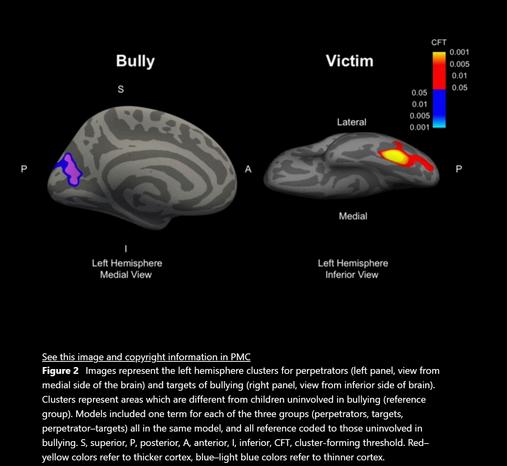
Since the first ACEs study was published, researchers have tried to understand why experiences like bullying can lead to such negative health consequences. Those studies have led to new insights into how bullying can lead to changes to the brain.
For example, the IMAGEN project. The European researchers looked at the effects of bullying on young adults About 30 percent of participants in the study said they had experienced chronic bullying, and they reported higher levels of anxiety than those who hadn’t been bullied When the researchers looked at fMRI scans of the bullied individuals, they discovered structural differences in the brain in areas like the putamen and caudate, both linked to anxiety disorders Other studies have shown that chronic bullying is also linked to white matter changes in the brain, which may make the person more susceptible to depression.
There have been studies that use animal models and human participants, suggesting that chronic bullying leads to an increased release of stress hormones, like cortisol, especially in brain areas involved with reward-processing Not only do
those chemicals make you more reactive to stress, over time, they can change the circuitry in the reward centers, which can put people at higher risk of developing a substance use disorder after trying alcohol, cigarettes, or other drugs. The stress hormones released during bullying can also affect the immune system.
Those hormones can lead to increased inflammation, which has been linked to both depression and anxiety disorders, as well as medical conditions such as hypertension (consistent high blood pressure) and obesity The chronic stress involved with the experience of persistent bullying can lead to structural and functional brain changes that increase the risk of developing both mental and physical health problems into adulthood. The physical health consequences of bullying can be immediate, such as physical injury, or they can involve long-term effects, such as headaches, sleep disturbances, or somatization (including pain, fatigue, headaches, and gastrointestinal issues)
Interestingly, Studies with animals demonstrate that those who are bullied tend to show increased levels of stress hormones, and over time, those bullied animals tend to be more aggressive toward younger, smaller animals In addition to that, a 2013 JAMA Psychiatry study in people found both bullies and their victims showed a higher prevalence of childhood psychiatric disorders, including anxiety and depression. This shows that bullying is not only mentally altering but also physically weakening.
However, the long-term physical consequences of bullying can be difficult to identify and link with past bullying behavior versus being the result of other causes such as anxiety or other adverse childhood events that can also have physical effects into adulthood (Hager and Leadbeater, 2016) In one of the few longitudinal studies on the physical and mental effects of bullying, Bogart and colleagues (2014) studied 4,297 children and their parents from three urban locales: Birmingham, Alabama; 25 contiguous school districts in Los Angeles County, California; and one of the largest school districts in Houston, Texas Bogart and her team were interested in the cumulative effects of bullying on an individual They collected data when the cohort was in fifth grade (2004 to 2006), seventh
grade (2006 to 2008), and tenth grade (2008 to 2010) Data consisted of responses to the Peer Experience Questionnaire, the Pediatric Quality of Life Inventory with its Psychosocial Subscale and Physical Health Subscale, and a SelfPerception Profile. The Physical Health Subscale measured perceptions of physical quality of life. They found that 30% of the youth in the study reported frequent bullying experiences on at least one survey and 44 6% of children with both past and present (chronic) bullying experiences This shows that a high percentage of children experience bullying at a point of their childhood
The study also showed that bullies and not the victims were at a higher risk for developing antisocial personality disorder later in life That said, it is hard to be sure, because the vast majority of children who end up bullying others have been bullied themselves. It is a vicious cycle where it is hard to break especially when bullying is sometimes normalised in today's society
In conclusion, children who have been involved in bullying get affected psychologically and physically This goes to show that bullying is a serious problem schools should prioritise to stop or attempt to reduce This research shows the importance of stopping bullying and shows the true reason why stopping the vicious cycle of bullying should be immediate.
Bibliography
The Fine Line Between Faith and Religious Psychosis
(Delusions with Religious Content in Patients with Psychosis: How They Interact with Spiritual Coping - ProQuest, 2025; Hedrick, 2017; Hyperreligiosity, 2023; Iyassu et al , 2013; Jozef Corveleyn, 2009; Kéri, 2018; Murray et al , 2012; Understanding Religious Psychosis: Symptoms, Causes & Treatment - a Mission for Michael, 2025)
Hedrick, M. (2017, April 19). The Religious Component of Psychosis - OC87 Recovery Diaries. OC87 Recovery Diaries. https://oc87recoverydiaries.org/religious-psychosis/
Hyperreligiosity. (2023, December 3). Wikipedia. https://en.wikipedia.org/wiki/Hyperreligiositypriority high
Iyassu, R., Jolley, S., Bebbington, P., Dunn, G., Emsley, R., Freeman, D., Fowler, D., Hardy, A., Waller, H., Kuipers, E., & Garety, P. (2013). Psychological characteristics of religious delusions. Social Psychiatry and Psychiatric Epidemiology, 49(7), 1051–1061. https://doi.org/10.1007/s00127-013-0811-y
Jozef Corveleyn. (2009). Religious Delusion in Psychosis and Hysteria. Springer EBooks, 85–109. https://doi org/10 1007/978-90-481-2540-1 4
Kéri, S (2018) The controversy of religion and psychosis SRYAHWA PUBLICATIONS, Journal of Religion and Theology Volume 2, Issue 2, 2018, PP 19-25 https://sryahwapublications com/article/download/2637-5907 0202003
Murray, E D , Cunningham, M G , & Price, B H (2012) The Role of Psychotic Disorders in Religious History Considered The Journal of Neuropsychiatry and Clinical Neurosciences, 24(4), 410–426 https://doi org/10 1176/appi neuropsych 11090214
Understanding Religious Psychosis: Symptoms, Causes & Treatment - A Mission For Michael (2025, May 19) AMFM Ment
Dissociative Identity Disorder (DID)
Brand, B. L., Lanius, R., Vermetten, E., Loewenstein, R. J., & Spiegel, D. (2012). Where Are We Going? An Update on Assessment, Treatment, and Neurobiological Research in Dissociative Disorders as We Move Toward theDSM-5. Journal of Trauma & Dissociation, 13(1), 9–31. https://doi.org/10.1080/15299732.2011.620687
DePrince, A. P., Huntjens, R. J. C., & Dorahy, M. J. (2015). Alienation appraisals distinguish adults diagnosed with DID from PTSD. Psychological Trauma: Theory, Research, Practice, and Policy, 7(6), 578–582. https://doi.org/10.1037/tra0000069
Gentile, J. P., Dillon, K. S., & Gillig, P. M. (2013). Psychotherapy and Pharmacotherapy for Patients with Dissociative Identity Disorder. Innovations in Clinical Neuroscience, 10(2), 22. https://pmc ncbi nlm nih gov/articles/PMC3615506/
Huntjens, R J C , Verschuere, B , & McNally, R J (2012) Inter-Identity Autobiographical Amnesia in Patients with Dissociative Identity Disorder PLoS ONE, 7(7), e40580 https://doi org/10 1371/journal pone 0040580
Kleindienst, N , Priebe, K , Görg, N , Dyer, A , Steil, R , Lyssenko, L , Winter, D , Schmahl, C , & Bohus, M (2016) State dissociation moderates response to dialectical behavior therapy for posttraumatic stress disorder in women with and without borderline personality disorder European Journal of Psychotraumatology, 7(1), 30375 https://doi org/10 3402/ejpt v7 30375
Bibliography
The Desire for Validation and Positive Self-View in the Modern-Day World
Bibliography
Eleanor Roosevelt declared No one can make you feel inferior without your consent Is she right?
Bibliography
Work as a Coping Mechanism
Workaholism Tied to Several Psychiatric Disorders (2024) Association for Psychological Science - APS https://www psychologicalscience org/news/minds-business/workaholism-tied-to-several-psychiatricdisorders html
Work Addiction (Workaholism): Causes, Symptoms, and Treatment (2025, May 15) The Cabin Chiang Mai - the Cabin Luxury Drug Rehab and Alcohol Addiction Treatment Center Thailand; The Cabin https://www thecabinchiangmai com/addiction-type/work/
The Link Between Workaholism and Mental Health - Castle Craig (2023, July 31) Castle Craig https://www castlecraig co uk/addiction-resources/workaholism/#treatment-options-for-work-addiction
Williams, N E (2021, August 24) Productivity as a Trauma Response Psych Central https://psychcentral com/health/discover-busy-bee-productivity-as-a-coping-response-to-trauma#What-tryingto-cope-with-trauma-yourself-really-looks-like
Morkevičiūtė, M., & Endriulaitienė, A. (2023). The Role of an Individual and a Situation in Explaining Work Addiction: Disclosing Complex Relations. International Journal of Environmental Research and Public Health, 20(5), 4560. https://doi.org/10.3390/ijerph20054560
Workaholic: Symptoms, diagnosis, and when to get help. (2023, July 26). Www.medicalnewstoday.com. https://www.medicalnewstoday.com/articles/workaholic#causes
How Has Psychological Understanding of Blind Obedience Changed Nursing?
Rank, S. G., & Jacobson, C. K. (1977). Hospital nurses' compliance with orders for lethal doses of diazepam. Journal of Advanced Nursing, 2(2), 181–190.
Hofling, C. K., Brotzman, E., Dalrymple, S., Graves, N., & Pierce, C. M. (1966). An experimental study in nursephysician relationships. The Journal of Nervous and Mental Disease, 143(2), 171-180.
Violato, E., Witschen, B., Violato, E., & King, S. (2022). A behavioural study of obedience in health professional students. Advances in health sciences education : theory and practice, 27(2), 293–321. https://doi.org/10.1007/s10459-021-10085-4
Bibliography
The Effects of Bullying on a Child’s Development
Copeland, W E , Wolke, D , Angold, A , & Costello, E J (2013) Adult Psychiatric Outcomes of Bullying and Being Bullied by Peers in Childhood and Adolescence JAMA Psychiatry, 70(4), 419–426 https://doi org/10 1001/jamapsychiatry 2013 504
Dana Foundation (2023, September 12) Bullying and the Brain Dana Foundation https://dana org/resources/bullying-and-the-brain/
Felitti, V J , Anda, R F , Nordenberg, D , Williamson, D F , Spitz, A M , Edwards, V , Koss, M P , & Marks, J S (1998) Relationship of childhood abuse and household dysfunction to many of the leading causes of death in adults American Journal of Preventive Medicine, 14(4), 245–258 https://doi org/10 1016/S0749-3797(98)00017-8
Kreps, J (2018, December 14) Can Bullying Affect a Child’s Development? Tessa International School https://tessais org/can-bullying-affect-childs-development/
Muetzel, R L , Mulder, R H , Lamballais, S , Cortes Hidalgo, A P , Jansen, P , Güroğlu, B , Vernooiji, M W , Hillegers, M , White, T , El Marroun, H , & Tiemeier, H (2019) Frequent Bullying Involvement and Brain Morphology in Children Frontiers in Psychiatry, 10 https://doi org/10 3389/fpsyt 2019 00696
Palamarchuk, I. S., & Vaillancourt, T. (2022). Integrative Brain Dynamics in Childhood Bullying Victimization: Cognitive and Emotional Convergence Associated With Stress Psychopathology. Frontiers in Integrative Neuroscience, 16. https://doi.org/10.3389/fnint.2022.782154
Rivara, F., Menestrel, S. L., Prevention, C. on the B. and P. E. of P. V. L. for B., Board on Children, Y., Justice, C. on L. and, Education, D. of B. and S. S. and, Division, H. and M., & National Academies of Sciences, E. (2016). Consequences of Bullying Behavior. In www.ncbi.nlm.nih.gov. National Academies Press (US). https://www.ncbi.nlm.nih.gov/books/NBK390414/#