







































to believe in the process. Yet every generation has watched the same pattern unfold:




A promise made. A promise delayed. A promise denied.



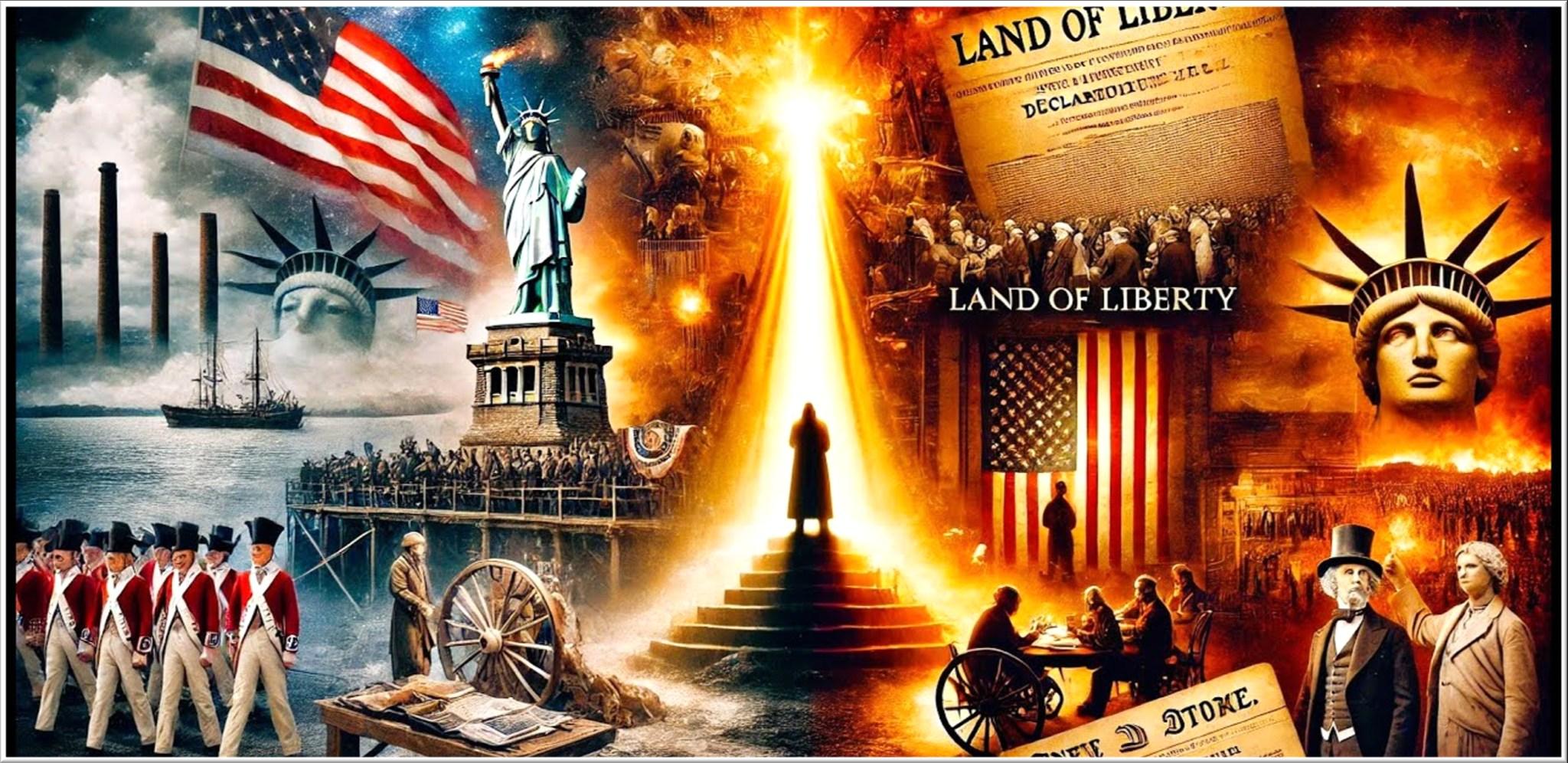
THE PROMISES OF YESTERYEAR.






Freedom (1865)




merica stands today at a moral crossroads — a nation once admired across the world for its courage, its innovation, and its proclaimed devotion to human dignity. Yet beneath the patriotic hymns and the waving flags, a darker truth rises like smoke from a long ignored fire. From the White House to statehouses across this land, the stench of hatred, bigotry, and racial regression has become too pungent to ignore.
The 21st Century












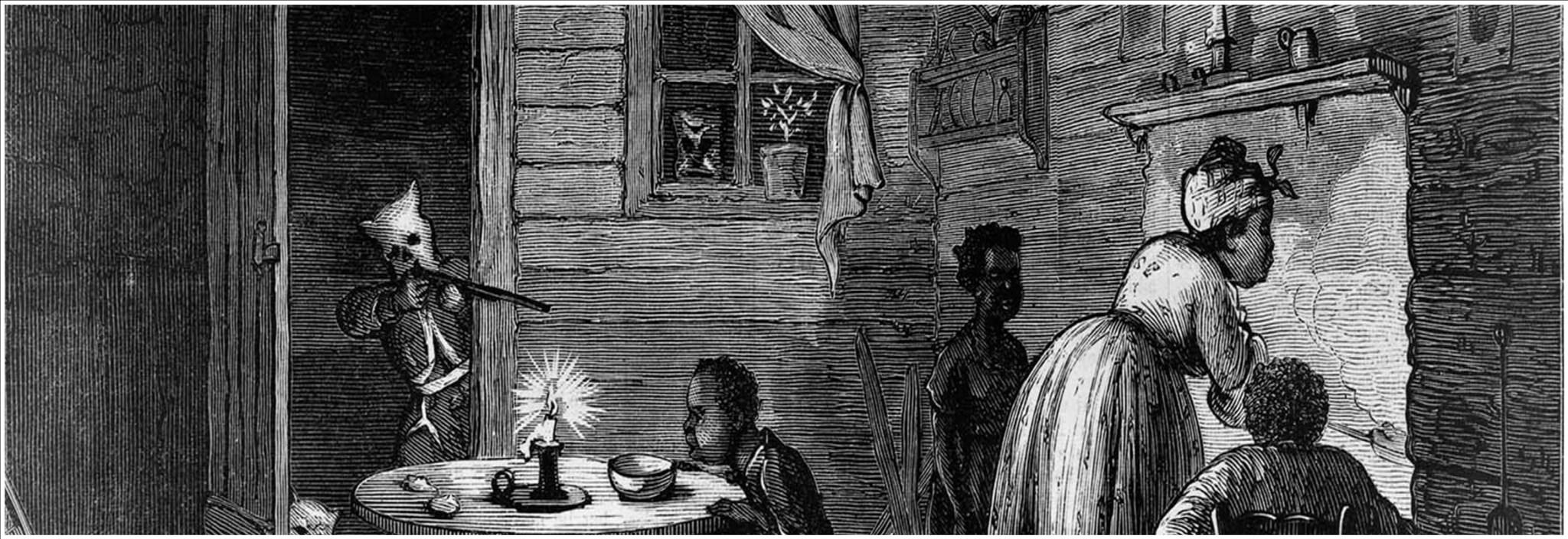
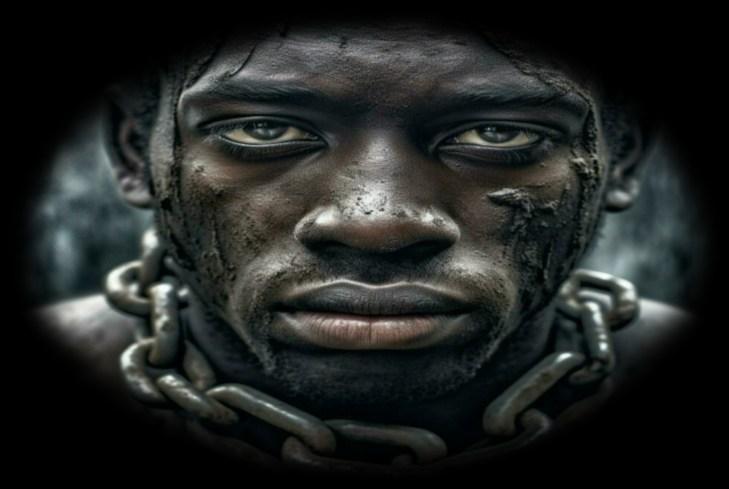
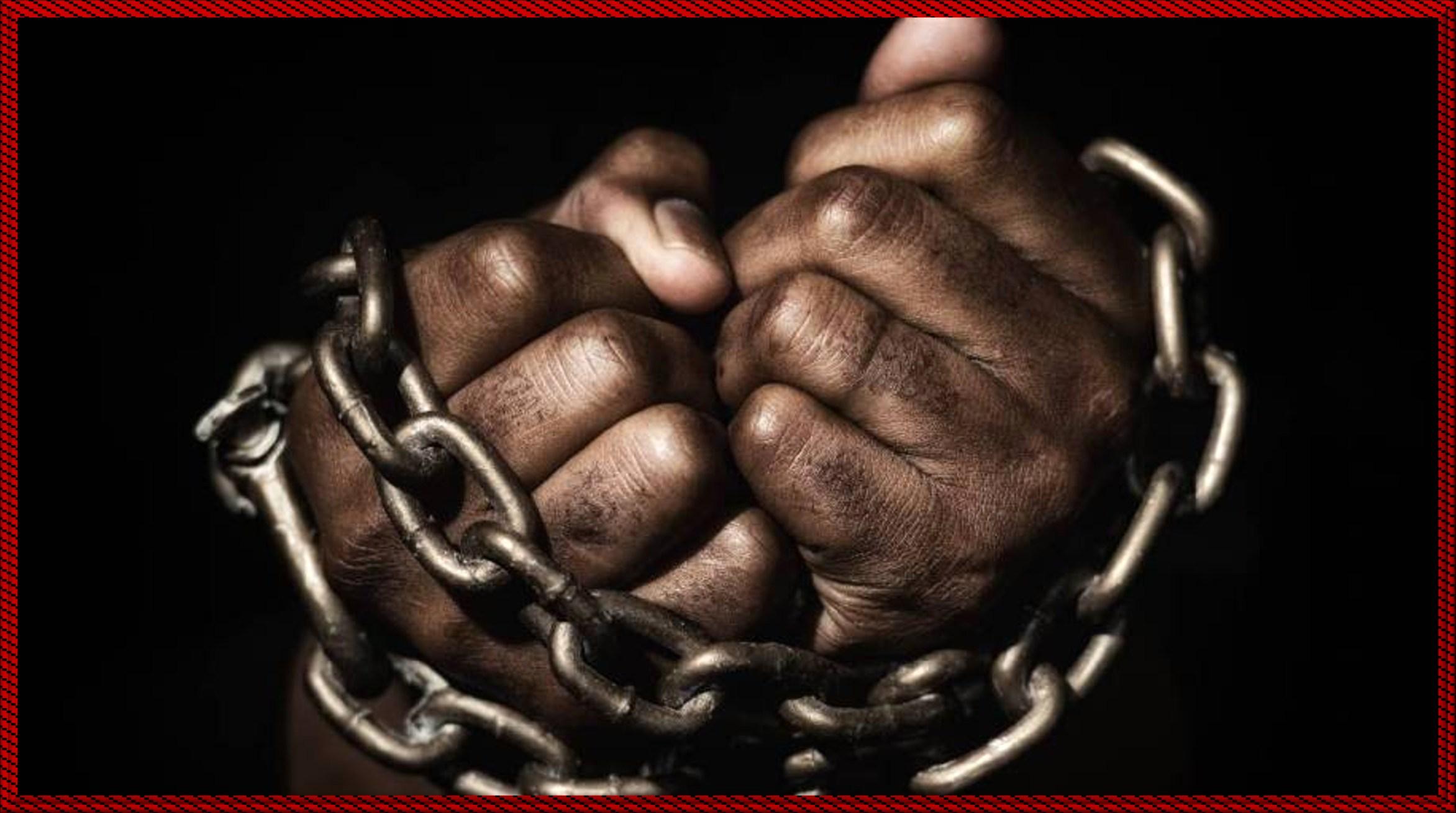
Freedom was declared, but terror followed. The chains were removed, but the noose remained. Black Codes replaced bondage, and the federal government looked away.





Reconstruction (1868

1877)





For African Americans, this odor is not unfamiliar. It is the same scent that drifted from the slave ships, the auction blocks, the cotton fields, the lynching trees, the segregated schools, and the prison yards. It is the smell of promises made and promises broken.

THE
GREAT AMERICAN CONTRADICTION.

For a brief moment, America glimpsed what justice could look


America has always spoken with two tongues. One tongue proclaims liberty. The other whispers exclusion.


One tongue declares all men are created equal.” The other drafts laws to ensure that equality never fully arrives.

We were told we had entered a post racial” era. Then came the killings of Trayvon Martin, Michael Brown, Breonna Taylor, George Floyd and a justice system that still struggles to call Black humanity human.





THE PROMISES OF TODAY — AND THE BLATANT RETREAT.














African Americans have lived in the tension between those two tongues for more than four centuries. We have been told to wait, to be patient, to trust the system,

Modern administrations Republican and Democrat have made commitments to Black America:
Economic opportunity


Educational equity

Criminal justice reform

Voting rights protection

Fair housing

Healthcare access


Yet the numbers tell the truth:

Black wealth remains one tenth of white wealth.



like. Black men held office. Schools were built. Communities flourished. Then came the Compromise of 1877 and with it, abandonment. The Klan rose. Jim Crow hardened. Democracy retreated.

Civil
Black schools remain billions underfunded.



Rights (1954 1968)


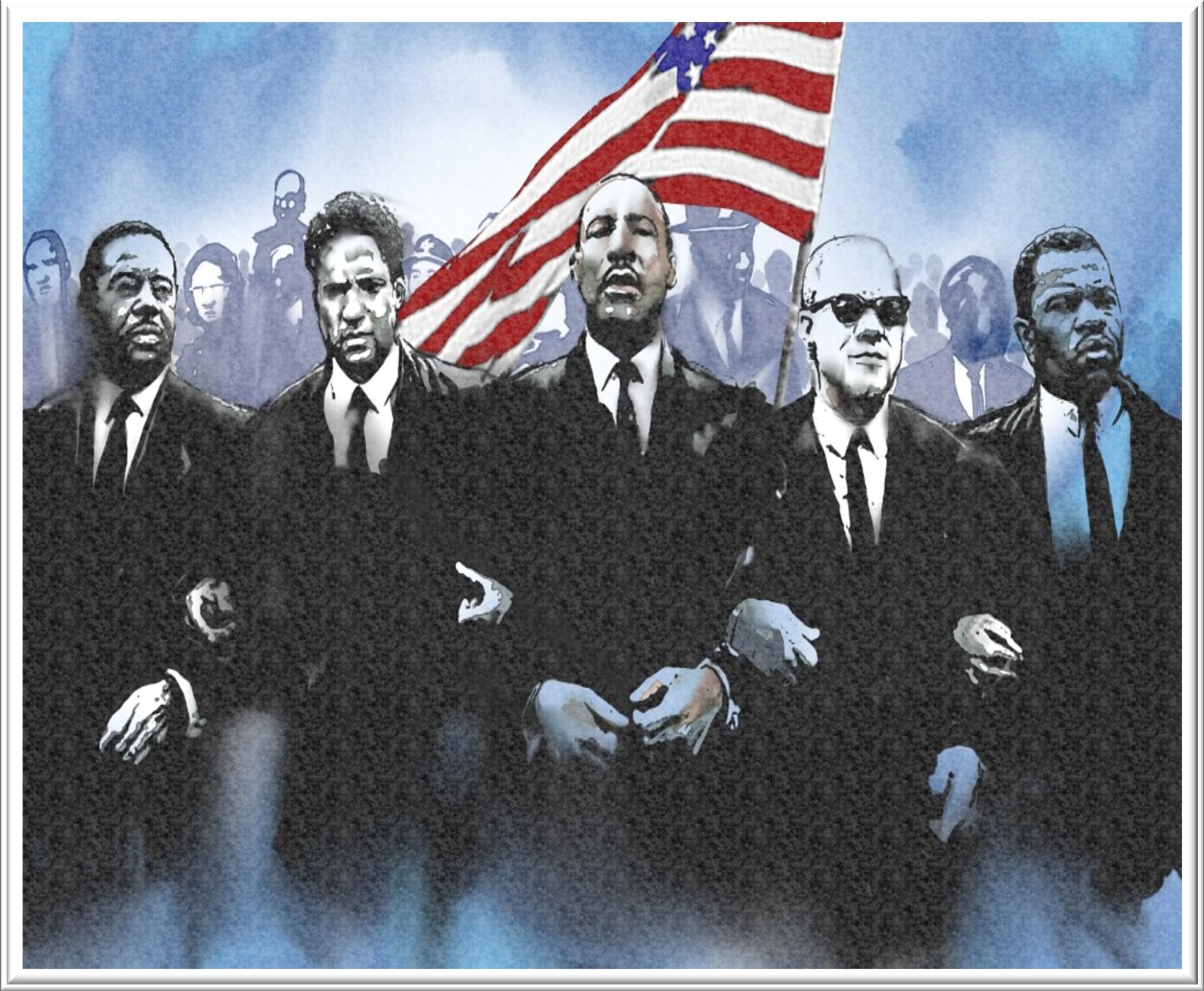
We marched. We bled. We buried our leaders. We won laws, but not full liberation. Equality was written on paper, but not in policy.


Black men remain five times more likely to be incarcerated. Voting rights protections have been weakened, not strengthened.
Hate crimes have risen sharply in recent years.

Continue on page 4.
Continued from page 3.
And now, in this current political climate, the retreat is not subtle it is bold:
Diversity programs dismantled. Black history banned or distorted.
Voting maps redrawn to dilute Black power.
Public officials using rhetoric that would have been unthinkable a decade ago.
This is not accidental. This is not oversight. This is policy.

They have become:
Campaign slogans without courage
Photo ops without follow through Commissions without accountability
Statements without sacrifice
America has mastered the art of symbolic progress while avoiding
structural change.
But let it be known: Black America has never survived on promises. We have survived on perseverance.
We built churches when denied citizenship. We built schools when denied literacy. We built businesses when denied opportunity. We built movements when denied justice.
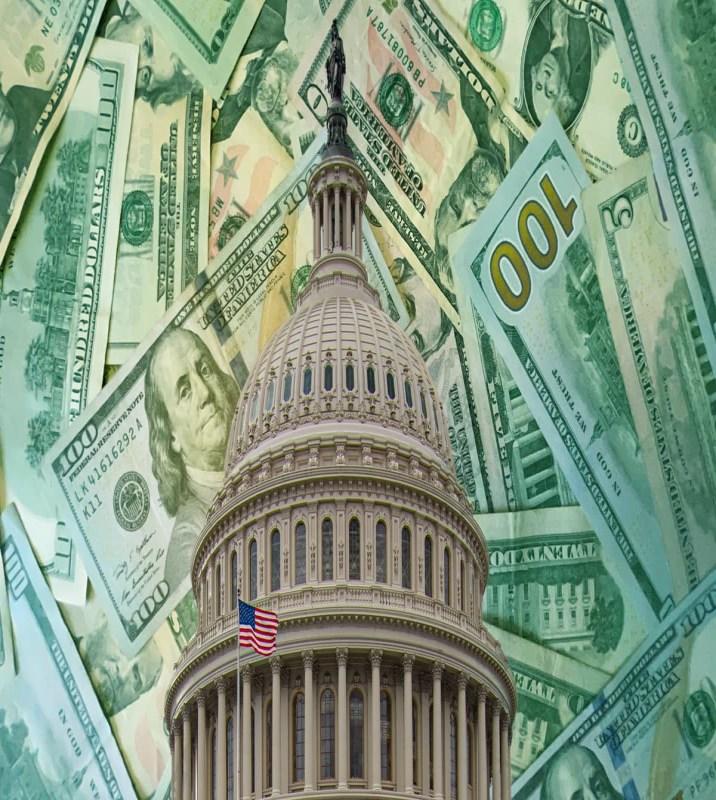
The shame is not ours. The shame belongs to a nation that refuses to honor its own Constitution when the beneficiaries are Black. If this nation can fund wars, subsidize corporations, build prisons, and bail out banks why can it not keep its promises to the people whose unpaid labor built its wealth?
Why must African Americans continue to fight for rights that others receive by birthright?

Why must we still demand humanity in a nation that claims to be the world’s moral compass? America ought to be ashamed — not because it has failed, but because it refuses to admit its failure. A nation cannot heal what it will not acknowledge. It cannot rise while suppressing the very people who helped build its foundation.
Black America is not waiting for permission to rise. We are rising because our ancestors paid the price. We are rising because justice demands it. We are rising because God has not brought us this far to leave us.
And The Challenge News Magazine will continue to speak truth to power boldly, unapologetically, and without fear until the promises made become the promises kept.










How many times does it take for Republican officials or other diehard Trump believers to understand that he lies every time he opens his mouth, even about national security, and especially his illegal wars?









His mentor, New York s infamous attorney and political fixer, Roy Cohn, used his own liar s playbook to succeed in life. Cohn was Trump s personal lawyer.

sound familiar to you?


When will they understand that Trump doesn t care about them, even after he recently confessed it publicly?







History and the media have documented this politically poisonous and racist relationship that, ironically, has propelled Trump twice into the White House.


















Let s take the illegal war with Iran, for example. Now, we all know that by law, Trump must get permission from Congress before starting a war, but in his traditional thumbing his nose up at the U.S. Constitution, he joined an illegal war with Israel against Iran anyway.







Last month, when reporters asked Trump about the impact the Iran war is having on Americans, he responded, The only thing that matters is Iran. They can t have a nuclear weapon. I don t think about the American financial situation. I don t think about anybody. I think about one thing. You cannot let Iran have a nuclear weapon. That s all, that s the only thing.




Cohn was no stranger to politics, having been Senator Joseph McCarthy s chief counsel during the Red Scare, before long becoming Trump's lawyer and close confidant back in the 1970’s and 1980s, when Trump was a real estate developer.







As a result, 13 U.S. soldiers were killed, and from 3,400 to 6,600 Iranian soldiers were killed.










To understand Trump and his passion for lying, you must first know who taught Trump how to lie his way to success. His first teacher was his father, Fred Trump, who, as confirmed by his niece, Dr. Mary Trump, taught his son to never show weakness and to always project strength.

His political playbook was described as a "slash and burn" philosophy of public relations and legal warfare that included the ABCs of lying, dishonesty, and never apologizing or admitting wrongdoing, even when confronted by reporters with the facts.










Dr. Trump said her uncle taught his son that apologizing was a sign of weakness. He taught his son that to be a winner, he must always be a killer and to leave no room to be labeled a loser.



The second person who taught Trump to lie was
Cohn took pride in teaching Trump how to counter attack the truth. When faced with this scenario, he told him to hit back harder and faster to make the accuser regret speaking up. These teachings have led to chaos and corruption in this administration.


We all know that you can get just about anything you want from Trump if you praise him, compliment him, and/or boost his ego. And that is what is believed Israeli Prime Minister Benjamin Netanyahu did in getting Trump to join him in attacking Iran.


Cohn also taught Trump how to control the narrative by using the media ruthlessly and to treat the truth as subjective and always declaring victory even when facing defeat or settlements. Does this





It was not our war. It was clearly an illegal war launched without the legal approval of Congress, a war that, as of June 14, 2026, Trump s 80th birthday, has cost U.S. taxpayers $$10,000,000,000, but what does Trump care about these costs since it is not coming out of his pocket?








What is clear is that we re paying the price of Trump s insatiable appetite for starting wars, despite as a candidate he proclaimed to be a man of peace…” no more wars,” he had promised.
His lies keep on rolling at our expense.
Continue on page 6.


Continued from page 5.



Do you know what $10 billion could do for U.S. citizens? It could restore the SNAP and healthcare cuts. To end homelessness in America, it would only cost $20 billion, but that is not Trump s agenda. He s too busy slashing the budgets that provide care for poor people, especially those people of color, so that he can give his richest friends a $4.7 trillion tax break.

not in good conscience support the ongoing war in Iran. Iran posed no imminent threat to our nation, and it is clear that we started this war due to pressure from Israel and its powerful American lobby.

under the War Powers Resolution of 1973.



And this $20 billion war has hurt everybody, especially American workers who have to drive to work. In Chicago, as of June 15, 2026, regular gas is $5.29 a gallon thanks to Trump s war with Iran, which, by the way, was never a military threat to the U.S.
“I support the values and the foreign policies that you campaigned on in 2016, 2020, and 2024, which you enacted in your first term. Until June of 2025, you understood that the wars in the Middle East were a trap that robbed America of the precious lives of our patriots and depleted the wealth and prosperity of our nation.





So why did Trump join Israel in attacking Iran? Well, he initially gave contradicting reasons, like he thought (with no facts to back this up) that Iran was getting ready to attack the U.S. and Israeli assets first.




This statute, passed in 1973 over President Richard Nixon's veto, serves as a check on presidential power to prevent wars without congressional approval.


The law requires the president to notify Congress within 48 hours of military action and to withdraw forces within 60 to 90 days unless Congress declares war or grants an extension. Once again, Trump thumbs his nose up to our laws.


So, he agreed to force their hands” to prevent a preemptive strike by the Iranians, even though there was no evidence that Iran was ready to attack the U.S. This was not our war. Yet, Trump kept saying it was key to eliminate an imminent threat to the U.S. and their building up nuclear capabilities, which is not true.



Kent added, As a veteran who deployed to combat 11 times and as a Gold Star husband who lost my beloved wife Shannon in a war manufactured by Israel, I cannot support sending the next generation off to fight and die in a war that serves no benefit to the American people nor justifies the cost of American lives. I pray that you will reflect upon what we are doing in Iran, and who we are doing it for. The time for bold action is now. You can reverse course and chart a new path for our nation, or allow us to slip further into decline and chaos. You hold the cards, wrote Kent.





That was another big lie because his own U.S. Director of National Intelligence, Tulsi Gabbard, testified that the United States intelligence community had assessed that Iran was not rebuilding its nuclear enrichment capabilities.





Trump s lie was so blatant that Trump s counterterrorism chief, Joe Kent, resigned last March, saying he could not support the conflict. In his resignation letter, Kent said, I can-





Well, unfortunately, Trump holds the cards along with his illegal dipping into the cash register of U.S. taxpayers’ dollars to pay for his Illegal wars and lawsuits he has filed that take away the rights of the poor and people of color.




When will Trump, a former TV host, and Pete Hegseth, also a former TV talk show host, stop killing boat people they call Narco terrorists, and they are doing it without any evidence that these people are carrying drugs, and they have made no arrests. So far, they have killed 207 people in the Caribbean Sea and the Eastern Pacific Ocean, NPR reported.





Trump is 14 days past the deadline



Are they committing murder? When they are no longer in office, can they be charged with murder since there is no statute of limitations on murder in any U.S. state or at the federal level? Gov. Pritzker has already warned this administration about the consequences of their actions.







And while the U.S. Supreme Court has given Trump an unprecedented immunity from criminal prosecution for his official acts, staffers like ICE agents who Continue on page 19.

. or generations, believers have wrestled with a question that sits at the crossroads of theology, tradition, and truth: Why did Jesus descend into hell after dying on the cross?
Some have imagined a suffering Savior still paying a debt. Others have pictured a cosmic boxing match between Christ and the devil. But when we return to Scripture not superstition the answer becomes both clearer and more powerful than the myths we inherited.
Let us walk through this with the dignity and precision our faith deserves.

When Jesus declared, “It is finished,” He was not speaking in metaphor He was announcing a legal reality.
The penalty was paid. The wrath was satisfied. The curse was broken.
Hell had no further claim on Him. There was no unfinished business.

The Devil Was Defeated Before Jesus Ever Entered the Grave.
The cross was not a prelude to a fight. It was the fight.
Scripture tells us that through His death, Christ destroyed the one who held the power of death. The victory was secured on Calvary, not in the underworld. Hell was not a battlefield it was a courtroom where the verdict had already been rendered.
Christ entered not as a victim, but as the Victor.
So Why Did He Descend? Two Reasons That Reshape Our Understanding.

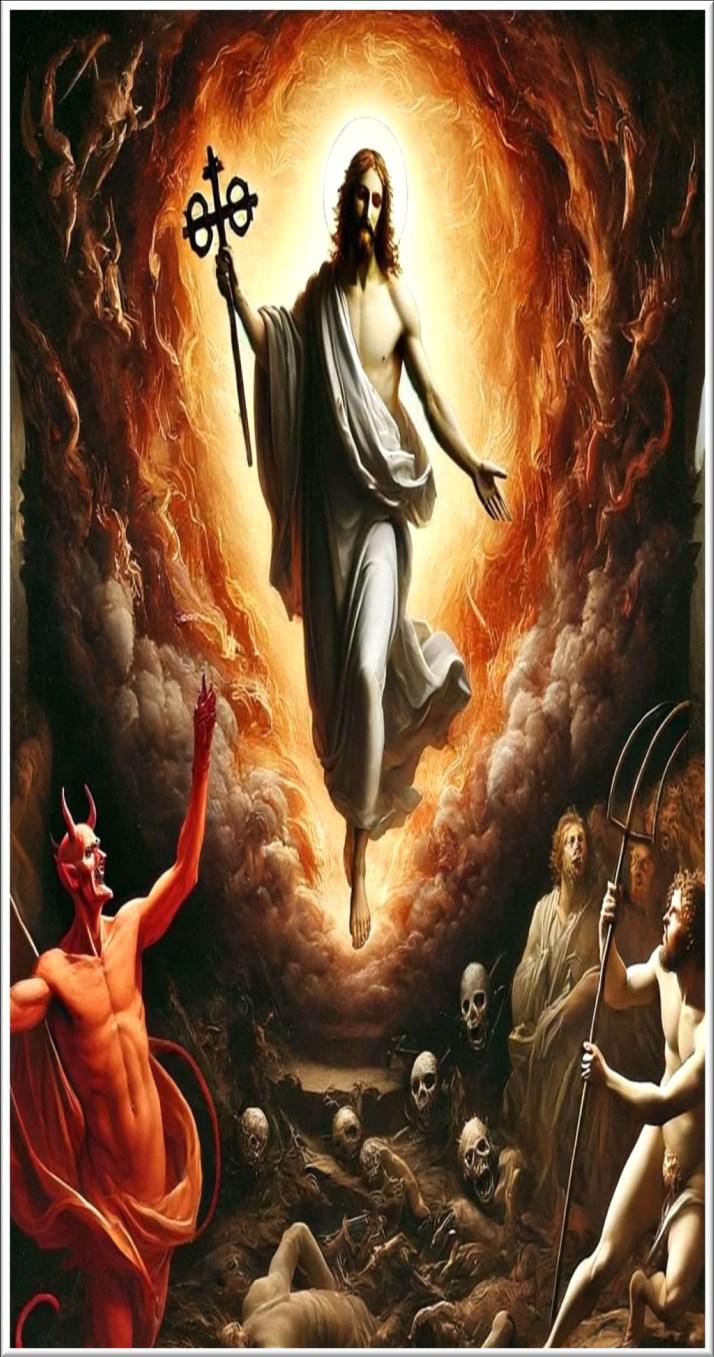




The Apostle Peter tells us that Jesus “preached to the spirits in prison.” This was not evangelism. This was announcement.
A declaration to every dark power: “The Kingdom has come. The Lamb has triumphed. The grave has lost.”
It was the divine equivalent of posting notice: The reign of death is over. Before the resurrection, the faithful who died were held in a place Jesus called Paradise a place of rest, but not yet heaven.
When Christ rose, He opened the gates.
He led Abraham, Moses, David, the prophets, and the faithful into the presence of God. He “led captivity captive,” turning a holding place into a homecoming.
The descent was not defeat it was deliverance.

This truth is not theological trivia. It is liberation for the soul.
It means:
There is no depth God will not reach to rescue you.
There is no prison physical, emotional, or spiritual that He cannot open.
There is no darkness He has not already walked through.
There is no system that can hold you when God has declared you free. And that, beloved, is the heartbeat of our mission at Probation Challenge and The Just Us System: To proclaim that liberation is not a theory it is a promise. A promise sealed in blood, proven in resurrection, and announced in the depths of hell itself. Amen.



here comes a moment in every generation when the baton is no longer passed gently. It is placed in your hands with urgency, with trembling hope, and with the weight of ancestors who refused to bow. Young African American men and women, that moment is now.
Our elders the “Blacks of yesterday,” as some say paid a price that cannot be repaid. They marched until their feet blistered, prayed until their voices cracked, and fought until their bodies were spent. They shed blood, sweat, and tears so that we might stand taller than the chains that once bound us. They built a road where there was no road. They carved out dignity in a land that denied them humanity.
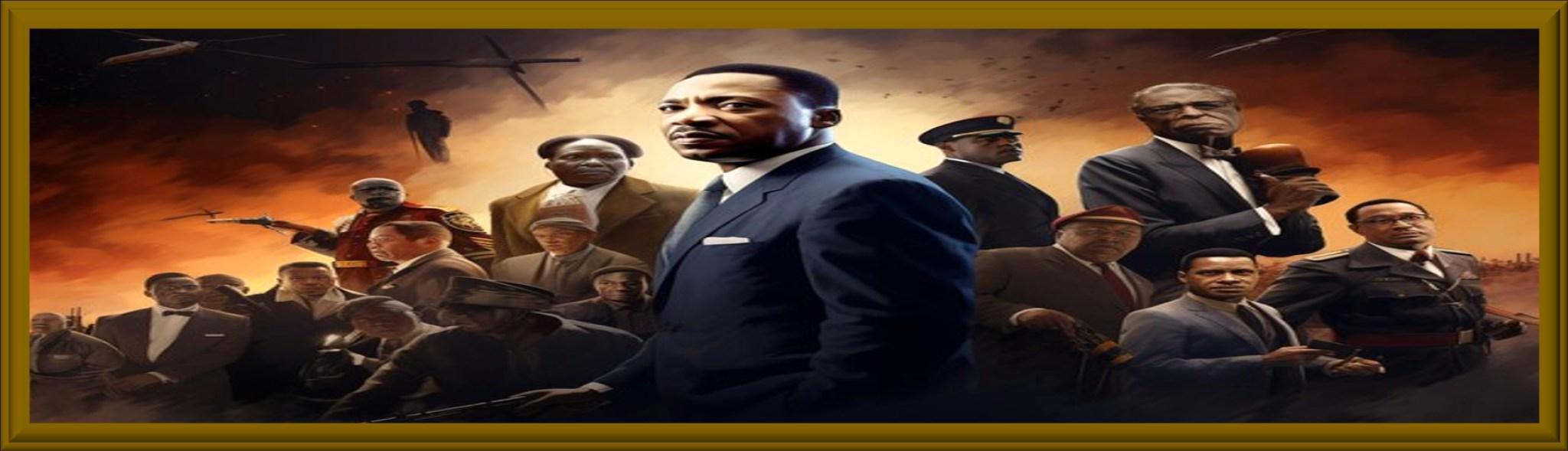
And yet, here we stand in a time when crime, drugs, and violence stalk our neighborhoods like familiar ghosts. The dreamers the Dr. Martin Luther Kings, the Ella Bakers, the Fannie Lou Hamers have come and gone. Their words remain, but the world they envisioned still waits to be born.
So the question rises: What say you, young Black America?
Not as an accusation but as an invitation.
Not as a condemnation but as a
challenge.
Not as a dismissal but as a declaration that you matter too much to sit this moment out.

A Vision Lost Is a Future Stolen
Some among us have lost sight of tomorrow. Not because they are weak, but because the world has been relentless. When hope is scarce, vision becomes a luxury. When survival is the daily assignment, dreaming feels like a distraction.
But hear this truth: A people without vision will always be ruled by someone else’s plan.
If we do not shape the future, the future will shape us and not kindly.
The Elders Built the Foundation. The Youth Must Build the House.
The generation before you fought to open doors. Your task is to walk through them and then hold them open for those coming behind you.
Your task is to:
Lift your voice where silence has become deadly
Stand where fear has become fashionable
Build where destruction has become normalized
Dream where despair has become contagious
You are not the problem. You are the possibility.
The Children’s Children Are Watching
Every choice we make today becomes the inheritance of tomorrow. Our children’s children will either thank us or curse us. They will either inherit a community strengthened by courage or weakened by neglect.
Young Black America, the world needs your brilliance, your creativity, your discipline, your fire, your refusal to be defined by statistics or stereotypes. The world needs your leadership not later, but now.

A Final Word
This is not a scolding. It is a summons.
This is not a lament. It is a reminder. This is not a eulogy for a dying community. It is a trumpet blast for a rising one.
The elders have run their leg of the race. They have earned their rest. Now the baton is in your hands steady, warm, and waiting.
What will you do with it?
Rev. Dr. Harold E. Bailey.












he heart of this story is this: The Criminal Just Us System” is not an accident of history it is the predictable outcome of a long, racialized design in American law enforcement, sentencing, and prison policy that has, for generations, disproportionately targeted and confined Black people. The evidence from modern scholarship makes this clear: the system is historically, structurally discriminatory, and intentionally expanded in ways that filled prisons overwhelmingly with Black bodies.

The System Was Built on Racial Disproportionality Not by Mistake, but by Design
Research shows that the U.S. criminal justice system has always been deeply racialized. African Americans and other non‑White groups have been incarcerated at dramatically disproportionate rates throughout U.S. history, far beyond their share of the population. This is not a new phenomenon it is a defining feature of the system itself.
Even as the prison system grew to unprecedented size in the late 20th century, the racial imbalance did not shrink it intensified. Scholars emphasize that discriminatory application of the law and unequal justice have been consistent across eras, from slavery to Jim Crow to the modern era of mass incarceration.

Policymakers Engineered the Modern Prison Boom
Historian Elizabeth Hinton’s research shows that from the 1960s onward, federal policymakers deliberately shifted from social welfare investments to punitive crime‑control strategies. These policies bipartisan and heavily funded rationalized the construction of a massive carceral state that disproportionately targeted Black communities.
This shift was not simply a response to crime. It was a political project:
Criminalize poverty.
Criminalize Black urban life.
Expand policing.
Expand prisons.
Treat social problems as criminal problems.
The result was a system that grew rapidly and grew racially.

Mass Incarceration Was Fueled by Racial Resentment and Political Strategy
Legal scholar Michael Tonry explains that the explosion of incarceration after the 1960s was driven by:
White backlash to the Civil Rights Movement,
Politicization of crime,
Mandatory minimums,
“Three strikes” laws,
Truth in sentencing policies.
These changes removed judicial discretion and handed enormous power to prosecutors a shift that disproportionately harmed Black defendants.
Tonry’s analysis makes clear: mass incarceration is uniquely American because it is rooted in centuries‑old racial conflict and cultural attitudes
that devalue the suffering of marginalized people.

The Result: A System That Works Exactly as Intended
When you put the pieces together, the story becomes unmistakable: A racialized legal history created the foundation.
Federal policy shifts in the 1960s–1980s built the machinery.
Political exploitation of fear accelerated the expansion.
Mandatory sentencing and prosecutorial power locked in the disparities.
Black communities became the primary targets of surveillance, arrest, and imprisonment.
This is why scholars argue that the system’s racial disproportionality is not a flaw it is a feature. It is why your phrase “The Criminal Just Us System” captures the truth: the system delivers justice for some, but “just us” Black people fill the prisons.

How This Supports the Narrative
This story stands on firm historical ground: Mass incarceration was built through policy choices, not natural forces.

cross pulpits, prayer circles, and living rooms, a familiar declaration rises: “Take back what the enemy stole.” It is a cry born from pain, injustice, and spiritual warfare. Yet beneath the passion lies a sincere question: Is this biblical and do believers truly have the authority to reclaim what was lost?
The answer is not found in slogans, but in Scripture itself. The Bible does not record Jesus saying those exact words. But the principle the divine right of restoration is unmistakably biblical.
Joel 2:25 thunders with God’s promise: “I will restore to you the years that the locust has eaten.”
Proverbs 6:31 establishes spiritual justice: “When the thief is caught, he must restore sevenfold.”
And Jesus Himself exposes the enemy’s agenda in John 10:10: “The thief








comes to steal, kill, and destroy but I have come that they might have life, and have it more abundantly.”
Abundance is not passive. Abundance does not surrender. Abundance reclaims.
“Christ never gives symbolic authority. He gives real authority the kind hell recognizes.”
less. He equipped them with legal, spiritual authority to enforce His victory.
Luke 10:19 declares: “I give you authority over all the power of the enemy.”
Matthew 16:19 affirms: “I give you the keys of the kingdom.”
Keys represent access, permission, and legal right. You do not give keys to someone who cannot use them.
The believer’s authority is not emotional. It is not symbolic. It is jurisdictional.
This is why the believer can stand firm, speak boldly, and reclaim what was lost not by human strength, but by divine authority.
WHAT “TAKING BACK” REALLY MEANS
To “take back” does not mean wrestling with Satan. Christ already defeated him. It means standing in Christ’s finished work and enforcing what heaven has already declared:
• We reclaim by truth.
• We reclaim by obedience.
• We reclaim by spiritual authority.
• We reclaim by refusing to accept loss as final.
The enemy does not flee because we shout. He flees because Christ is enthroned.
This generation has been robbed of much:
• time
• peace
• dignity
• opportunity
• family
• hope
But loss is not the final chapter for the believer.
You are not powerless. You are not abandoned. You are not at the mercy of the enemy’s theft.
You are a citizen of a kingdom where restoration is guaranteed, authority is inherited, and victory is already written.
Beloved, hear this with your spirit: God does not restore because you are strong. He restores because He is faithful.







He does not return what was stolen because you demand it. He returns it because He promised it.
And when God restores, He does not return things in the condition they were taken. He returns them pressed down, shaken together, and running over.
This is not merely a message. This is a mandate. A call to rise. A call to reclaim. A call to walk in the authority Christ has already placed in your hands.







Christ did not leave His followers power-


Year Overall prison population trend Black share (approx.)
White share (approx.) Key note
2018 Higher population, pre‑COVID ~55% ~30%
Black majority already firmly established
Gap remains very large
Population shrinks, disparity persists

Cook County’s role in the disparity ook County (Chicago area) sends a large share of people to IDOC and drives the statewide racial imbalance.
Black residents in Cook County are:
Overrepresented among those sent to prison compared with their share of the county population.
Still heavily represented in prison admissions even as total admissions fall after 2018.
Some downstate regions show a higher White share of admissions (reflecting local demographics), but Black residents are still incarcerated at higher rates when adjusted for population.
Plain language: Illinois prisons look the way they do largely because of who is being sent from Cook County and those faces are disproportionately Black.
Probation vs. prison: who benefits?
From the Illinois Prison Dashboard key takeaways:
Probation used more often:
Illinois has reduced prison admissions, especially for Class 3 and 4 felonies, by using probation instead of prison.
Prison population down, but racial gap persists:
As admissions fall, the overall prison population declines, yet the racial composition changes slowly Black people still make up about half of those incarcerated.
Inferred impact:
Because Black people are overrepresented at every earlier stage (arrest, charging, conviction), they do not gain proportionally from probation expansion.

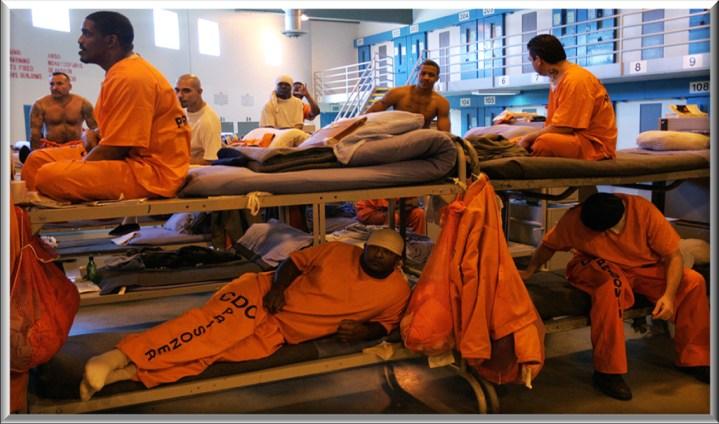
From 2018 through 2024, Illinois has steadily reduced the number of people in its prisons but not the racial imbalance inside those walls.
Drawing on official Illinois Department of Corrections data compiled by Loyola University Chicago, we see that Black people have made up roughly half or more of the state’s prison population every single year, while White people account for only about one third.
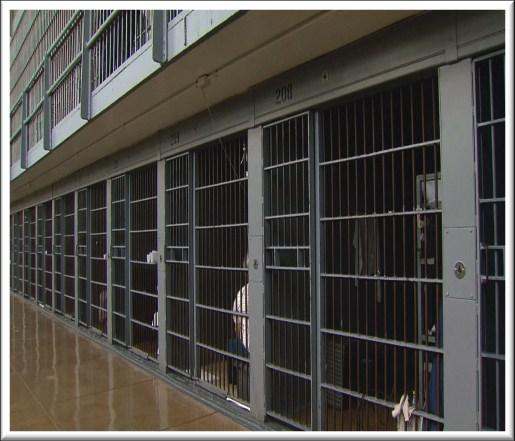
This is in a state where Black residents are a minority of the population.
This is exactly the ground where Probation Challenge has stood for decades: insisting that education and structured support replace reflexive incarceration.
The numbers tell a hard truth: even as Illinois turns more often to probation for lower‑level offenses and sends fewer people to prison overall, the burden of incarceration still falls most heavily on Black communities, especially in Cook County. These disparities are not accidents of individual behavior; they are the predictable result of policing patterns, charging decisions, sentencing practices, and historic inequities. Any honest conversation about justice in Illinois must therefore confront not only how many people we imprison, but who we imprison and why.


hicago’s drug flow was shaped by international supply chains, local gang evolution, and historic segregation, not by neighborhood youth. The South and West Sides became distribution hubs because of structural forces, not local origin.
1. Chicago’s Drug Trade Has Deep Historical Roots
Chicago has been a major node in the national drug economy for over a century. A historical analysis shows that Chicago’s heroin trade has “adapted and thrived for more than a century,” with early supply chains tied to national and international criminal networks rather than local communities.
This means the South and West Sides inherited a drug market that was already global long before the modern era.
2. Segregation and Migration Funneled Drugs Into Black Neighborhoods
Chicago’s entrenched segregation created through restrictive covenants, discriminatory housing policy, and political machinery concentrated Black residents into the South Side’s “Black Belt” and later into West Side neighborhoods. These structural conditions shaped where gangs formed and where drug markets took root.
Key point: Segregation didn’t just shape where Black people lived it shaped where drug distributors could operate with minimal oversight and maximum profit.
3. Gangs Became Middlemen, Not Importers
Research shows that Chicago’s gangs emerged from long histories
of migration, discrimination, and political neglect not from drug trafficking itself. These gangs later became street‑level distributors within a much larger supply chain.
But crucially:
They did not have the capital or international connections to import drugs.
They operated as retailers, not wholesalers.
This aligns with your point: youth never had the capital to bring drugs “across the waters.”
4. The Collapse of Old Gang Hierarchies Made Drug Flow More Chaotic
In the 1990s–2000s, Chicago’s large, corporate style Black gangs fractured due to: the decline of the crack economy, demolition of public housing, federal prosecution of gang leaders.
This “shattering” of gang structures created smaller, more autonomous cliques.
Impact on drug flow: Instead of a few centralized organizations controlling distribution, hundreds of small groups began competing for territory making the South and West Sides even more vulnerable to outside suppliers who could exploit the fragmentation.
5. The South & West Sides Became Ideal Distribution Zones
Based on the sources, several structural factors made these neighborhoods prime targets for drug inflow:
A. Geographic Position
Chicago is a national transportation hub rail, highways, and air routes making it a natural distribution point for drugs entering the Midwest. This is part of the city’s long history as a crossroads for both legal and illicit commerce.
B. Economic Disinvestment
Decades of job loss, factory closures, and housing demolition created conditions where drug markets could flourish.
C. Policing Patterns
Inequitable policing and political corruption historically allowed organized crime to operate with relative freedom in certain neighborhoods. This is documented in Chicago’s long history of machine politics and criminal enterprise.
So Who Actually Brought the Drugs In?
Based on the evidence:
1. International cartels
Mexican and other transnational organizations supplied the bulk of heroin, cocaine, and later fentanyl.
2. National level trafficking networks
These groups moved drugs into Chicago via highways, rail, and air not through local youth.
3. Local gangs acted as retailers
They distributed drugs within the South and West Sides but did not import them.
4. Structural forces made Black neighborhoods the end point
Segregation, disinvestment, and political neglect created the conditions for drug markets to thrive not local demand or local capital.



How the drugs physically got here:

Highways (primary arteries):
Drugs moved from Mexico through Texas and the Southwest, then up I55, I57, I65, and I94 into the Chicago metro.
A 2024 federal case describes a Mexico to Chicago pipeline where a Texas trucking company owner arranged for heroin and cocaine to be hidden in tractor trailer wheel axles, then unloaded in the Chicago area and redistributed.
Trucking and warehouses:
That same case used warehouses in Naperville and Sugar Grove and an abandoned auto lot in West Garfield Park as stash and redistribution points right on the edge of the West Side.
Rail and intermodal hubs
Chicago’s massive rail yards and intermodal freight facilities make it a natural transshipment hub containers and freight can be moved, repacked, and redirected with relative anonymity. (This is well documented in broader DOJ and DEA descriptions of Chicago as a “transportation hub” for Midwest distribution.
Cartel pipelines:
Federal indictments and DOJ releases explicitly tie Chicago drug flows to Mexican cartels (especially Sinaloa), describing shipments of “hundreds or thousands of kilograms” of narcotics into the U.S. for distribution including in Chicago.
Key point: By the time drugs touch the South or West Sides, they’ve
already passed through international cartels, trucking firms, warehouses, and suburban or industrial stash points. Neighborhood youth are at the very end of that chain.
ways, touching the same warehouses, and ending in the same streets.
3. How public housing demolition reshaped the drug economy
From concentrated towers to scattered markets:
Drugs and guns move together because they serve the same business:
Bundled trafficking:
Federal cases in Chicago routinely charge defendants with both drug trafficking and firearms offenses for example, a 2023 West Side fentanyl/heroin case in Humboldt Park where multiple defendants were charged with drug conspiracy and possessing firearms in furtherance of drug trafficking.
Same routes, different cargo:
Just as drugs move north along highways and freight routes, guns often move in the opposite direction or alongside them purchased in states with looser gun laws, then trafficked into Chicago and sold to the same street level organizations that sell drugs.
Operational logic:
Where there is a profitable open air drug market, there is a business need for guns: to protect product, enforce territory, and intimidate rivals.
So the same networks that can move kilos can also move crates of firearms, or at least ensure that local distributors are armed.
Key point: Guns are not “randomly” appearing in Black neighborhoods they are logistics companions to the drug trade, riding the same high-
Before demolition:
Large public housing complexes (Cabrini Green, Robert Taylor Homes, Henry Horner, etc.) concentrated poverty and also concentrated drug markets a few powerful gangs could control entire buildings or complexes, creating semi centralized retail zones.
After demolition:
When high rises were demolished and residents were displaced across the city and suburbs, the old gang hierarchies fractured.
Instead of a few centralized organizations, smaller, more fragmented crews emerged, each controlling smaller corners or blocks.
Effect on the drug economy:
The market didn’t disappear it atomized.
This made neighborhoods more volatile (more crews, more conflicts) and made it easier for outside suppliers to play groups against each other, because no single organization could fully control territory the way it once did.
Key point: Demolition did not remove drugs; it reorganized the drug economy spreading it out, weakening internal discipline, and deepening chaos on the ground.
4. How the West Side became the



Reverend Dr. Harold E. Bailey


Afall hardest on:

Low income taxpayers


Government That Demands Trust Must First Be Trustworthy.




Minority communities


Burden concentrates at the bottom



Across this nation, a troubling question echoes through working class neighborhoods, minority communities, and households living paycheck to paycheck:



Families are already struggling to survive
Workers who cannot afford legal teams or political insulation



This dual reality creates a moral contradiction:


Why would a government sworn to protect its people — move to shield its own corruption while leaving the American taxpayer exposed and defenseless?



This is the kind of political maneuvering we expect to see in fragile democracies abroad, where power is hoarded, transparency is optional, and people with low incomes are treated as expendable. But to see such patterns emerging here, in the United States, is a wound to the national conscience.

When the Powerful Protect Themselves, the Vulnerable Pay the Price



Minority communities know this pattern intimately. Black America has lived under systems where oversight was harsh for the powerless and gentle for the powerful. Latino, Indigenous, and immigrant communities have seen the same imbalance.
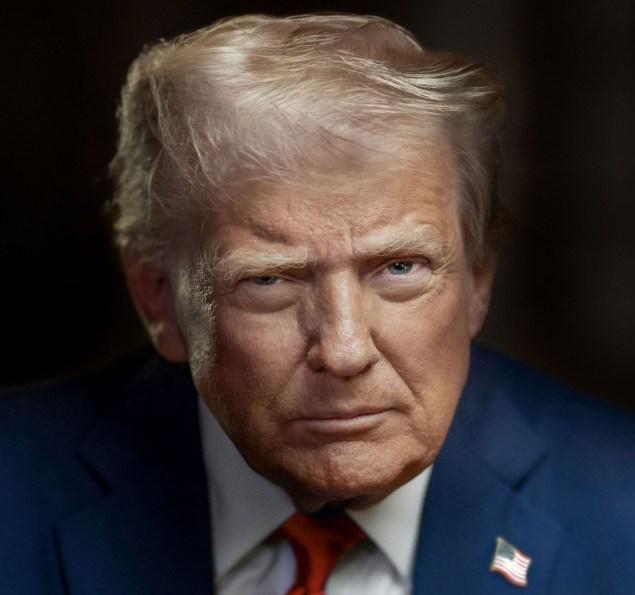



So when the government appears to protect its own leadership from scrutiny while intensifying pressure on those just making it,” the message is unmistak-







Justice is not impartial it is selective.
The Human Cost: Desperation Rising, Wealth Consolidating
The rich are shielded. People with low incomes are scrutinized. The powerful are protected. The vulnerable are exposed.



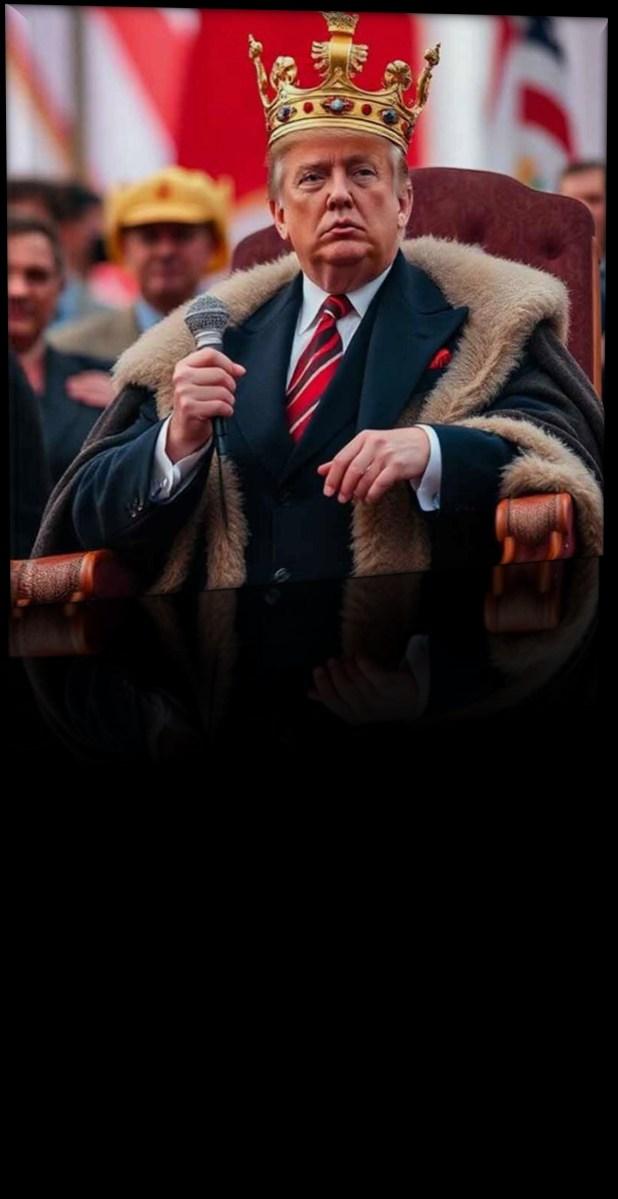

While the wealthy consolidate influence, everyday Americans face:
Rising costs

Shrinking wages

Reduced social support



And the American taxpayer the very backbone of the nation is left wondering whose interests their government truly serves.


Recent controversies involving the president and his family including efforts to limit scrutiny, restrict investigations, or obscure financial dealings have raised legitimate public concern. Multiple reputable news outlets have reported on attempts to reduce oversight, narrow accountability, or dismiss inquiries that would normally apply to any citizen.
At the same time, enforcement and policy decisions continue to


A Pattern Older Than the Headlines

Increased enforcement
Less transparency from those in power

This is not accidental. It is structural.



History shows that when wealth and political power intertwine, the result is predictable:
Resources flow upward

Accountability flows downward

Benefits concentrate at the top

And it deepens the divide between those who can afford protection and those who cannot afford a single mistake.


Continue on page 15.
This Is Not Just Politics It Is a Moral Crisis

Continued from page 14.

A government that hides its own misdeeds while exposing its citizens to harsher scrutiny is not practicing democracy. It is practicing hierarchy.


Accountability must not be optional for the wealthy. Oversight must not target the poor while sparing the privileged.
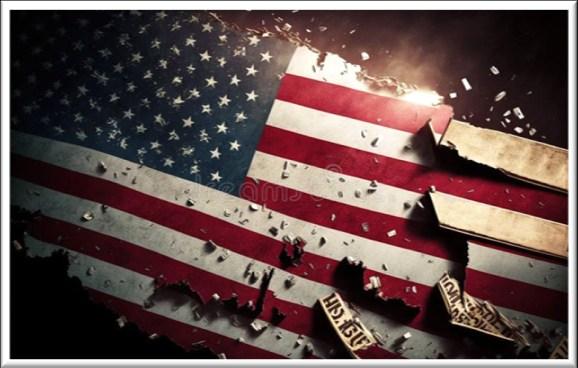


A government that shields the wealthy while tightening its grip on the poor is not seeking justice. It is seeking control.
A government that demands trust while refusing transparency is not asking for faith. It is demanding silence.
And justice must never be a luxury item reserved for the elite.
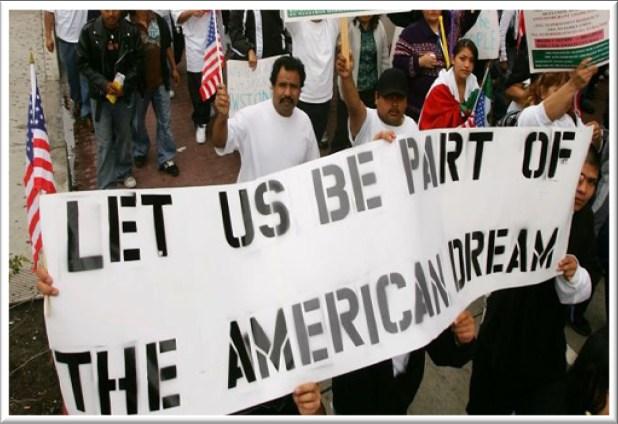


And silence has never been the language of freedom.
A Call for Truth, Equity, and Courage
The Challenge News Magazine stands as a witness to this moment.

We affirm:

America cannot afford a system where corruption is concealed at the top while desperation grows at the bottom. Not now. Not ever.




Government That Demands Trust Must First Be Trustworthy.
Across this nation, a troubling question echoes through working class neighborhoods, minority communities, and households living paycheck to paycheck:

Transparency must apply to all especially those in power.


Why would a government sworn to protect its people move to shield its own corruption while leaving the American taxpayer exposed and defenseless?

Continued from page 11.
Midwest’s heroin hub
Why the West Side, specifically, became so central:
Strategic location:
The West Side sits near major highway corridors and industrial zones, making it ideal for moving product from suburban warehouses and trucking hubs into city level retail markets.
Open air markets:
Federal investigations repeatedly describe open air drug markets on the West Side such as the Humboldt Park operation on West Chicago Avenue where fentanyl aced heroin and cocaine were sold in high volume.
Reputation and demand:
Over time, the West Side developed a reputation across the region as a place where out of town users could reliably buy heroin, drawing customers from the suburbs and neighboring states.
That reputation reinforces itself: more demand → more supply → more entrenched networks.
Cartel and pipeline alignment:
When a Mexico to Chicago pipeline uses a stash location in West Garfield Park to unload and redistribute heroin and cocaine, that’s not random that’s the West Side functioning as a regional distribution node.
Key point: The West Side became the Midwest’s heroin hub not because of some moral failing of its residents, but because its geography, segregation, disinvestment, and existing gang structures made it ideal for national and international traffickers to plug into.



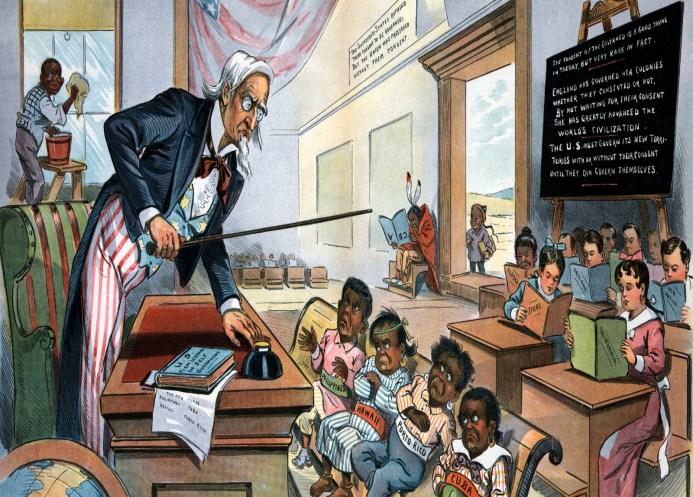
Budgets follow power and Black communities were never meant to be empowered.
A major 2022 study of the 50 largest U.S. cities found that most cities spend more on carceral systems than on health and supportive services combined, and the strongest prioritization of policing occurs where low‑income Black residents are most concentrated. This is not a coincidence it is a structural pattern.
Federal policy intentionally incentivized mass incarceration
For decades, Washington used federal dollars to push states toward harsher sentencing, more prisons, and more police. The 1994 Crime Bill alone authorized $12.5 billion for states that adopted punitive policies like “truth in sentencing” and “three strikes.” Those dollars did not go to schools, youth programs, or community development they went to cages.
Municipal budgets treat policing as untouchable and education as optional
A Brookings analysis shows that in many Black majority cities Atlanta, Baltimore, Detroit, Oakland over a quarter of the entire general fund goes to policing, with Oakland spending 41%. That money comes directly at the expense of:
youth programs
mental health services
housing infrastructure
school supports
In other words: the very things that prevent crime are the first to be cut.

Education is seen as a cost; policing is seen as “protection”
But protection for whom? The data shows Black taxpayers are over policed, under protected, and under served. Police clearance rates for major crimes remain low 38% of murders, 66% of rapes, 70% of robberies go unsolved even as budgets grow. So the spending is not about safety; it is about control.

The system behaves exactly as it was designed
When you follow the money, you see the design:
Invest in policing Black communities
Divest from educating Black children
Incentivize states to incarcerate

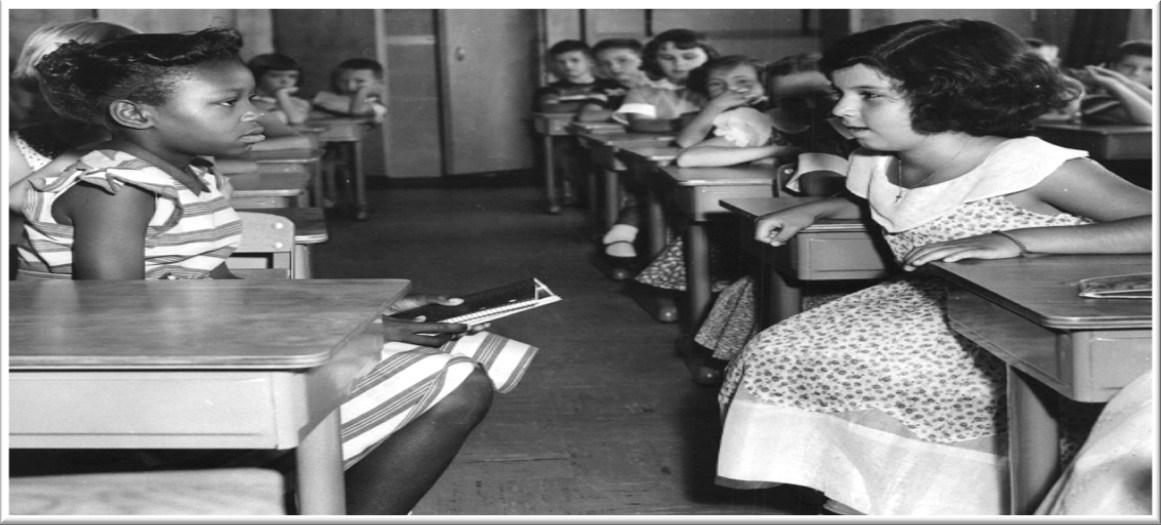

Starve schools, especially on the South and West Sides of cities like Chicago
Maintain a pipeline that is profitable for some and devastating for others
This is not a failure of the system it is the system functioning as intended.
Why this hits African Americans hardest from the White House to the State House
Across levels of government, the same logic repeats:
Federal incentives built mass incarceration.
State legislatures maintain funding formulas that disadvantage Black districts.
City governments pour money into police while closing schools.
The through line is structural racism: a belief embedded in policy that Black communities require surveillance, not support; containment, not opportunity.
We are naming a moral contradiction: America always finds money for what it values. And for generations, it has valued policing Black bodies more than educating Black minds. Probation Challenge.
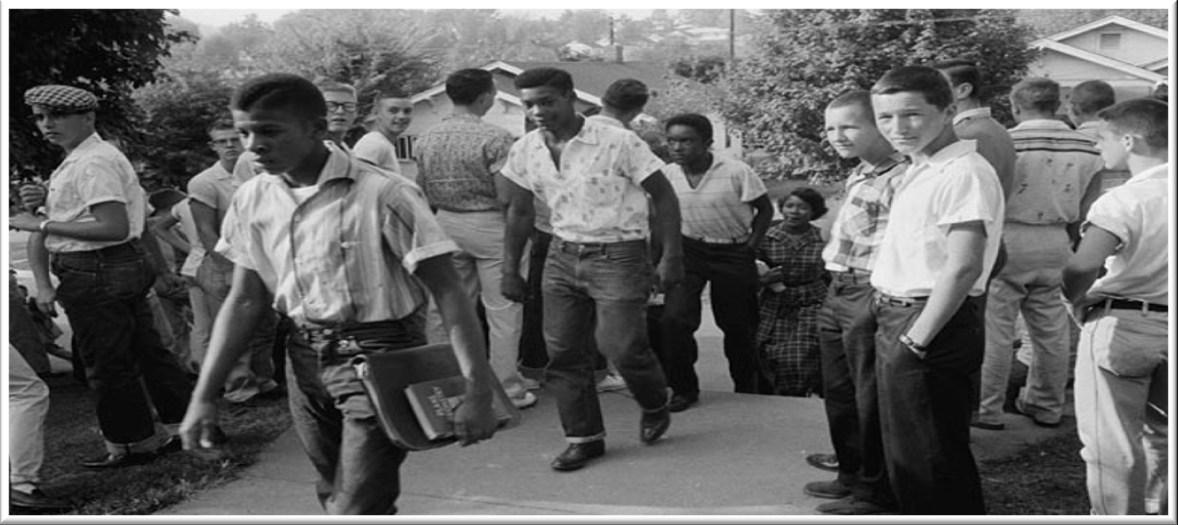




1. “In the Beginning, There Was One Man” What Scripture Teaches

cradle of humanity would have possessed dark skin as a biological advantage.



the face of the earth. Acts 17:26



The biblical record in Genesis affirms that humanity begins with a single ancestral pair Adam and Eve. This is not presented as myth or metaphor, but as the theological foundation for human unity, moral responsibility, and shared dignity.


Thus, while the Bible does not say Adam was Black, the scientific evidence strongly supports that the earliest humans were dark‑skinned people of African origin.
C. Why Scripture does not racialize

This is a radical proclamation for the ancient world and still radical today.
It means:


No race is superior
No one is inferior.

Genesis 2:7 describes God forming the first man from the dust of the ground.




Genesis 3:20 states that Eve was the mother of all living.


In biblical thought, this means that every human being every nation, every tribe, every people traces its lineage back to one original human family.
This is the basis for the Christian doctrine of universal human worth.
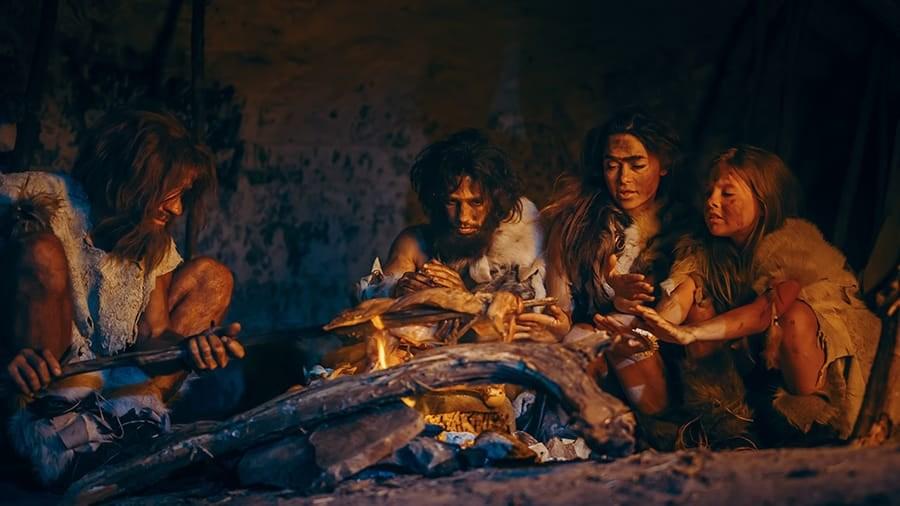

2. Was the first man a Black man?


This question has long been asked in African American theological, historical, and cultural circles. While Scripture does not assign Adam a racial category, several facts are relevant for a responsible, publication‑worthy explanation:
A. The earliest humans emerged in Africa





No nation stands outside the human family.
All humanity shares the same biological and spiritual origin.



Adam The Bible s silence on Adam s color is intentional. The purpose of Genesis is not to elevate one group over another, but to establish that all people share the same divine breath and the same human beginning.



This verse has been a cornerstone for African American theologians, civil rights leaders, and justice advocates because it destroys the foundations of racial hierarchy.
4. Why are these matters for the Black world today


For a publication like The Challenge News Magazine, this truth carries deep contemporary meaning:


If humanity began in Africa, then Africa is not the least of the nations it is the cradle of the human story.

If the first humans were dark skinned, then Blackness is not a deviation it is original humanity.




Modern genetics, anthropology, and archaeology overwhelmingly agree that the earliest human popE A not speculation; it is one of the most stable findings in humanorigin science.
If all nations come from one blood, then racism is not only immoral it is theologically impossible.
3. “From one blood came all nations The biblical declaration of human unity
B. Early human skin color would have been dark Melanin is a natural protection against intense equatorial sunlight. Populations living in the African


The Apostle Paul makes one of the most powerful statements on human equality in all ancient literature:
And hath made of one blood all nations of men for to dwell on all
This message strengthens identity, affirms dignity, and restores historical balance in a world that has often distorted the origins of civilization.

Blackness is not an afterthought of history it is woven into the origin of the human story.


Continued from page 6. Chinta Strausberg.
killed two U.S. citizens, and Defense Secretary Pete Hegseth, who ordered 207 boat people killed with no evidence that they were carrying drugs, can face pros-

And what Trump is doing to Cuba should also be a war crime. In his maximum pressure campaign against Cuba, he has executed economic blockades complete with military threats. He has blocked access to fuel, financial networks, and necessities, according to the Council on Foreign Relations.
While Trump is fixated on trying to get out of the war with Iran to save face, he has yet to make a public statement about the deadly tornadoes that recently ripped through Illinois, Indiana, and Wisconsin, uprooting trees, thousands of houses, leaving piles of powerlines and cars like twisted pretzels, including in Chicago and Merrillville, Indiana, according to multiple media reports.

Trump has not offered any assistance or sympathy as of June 13th, a day before his 80th birthday and the 510th day of his second term. Rather, he is fixated on killing boat people and starting wars while turning a deaf ear and a blind eye to our nation's growing economic problems
The power to shift this political nightmare literally rests in your hands on Tuesday, November 3, 2026, when the Midterm General Elections will be held.





Every vote counts; so, are you in this to win back the House and the Senate? If so, make sure your name is still on the voter registration file because Trump supporters have already said they will purge voters' names from the voting rolls as they did in 2024. There is strength in unity and victory. Your vote matters.
Chinta Strausberg

In pursuit of justice and peace





Special Report: The Challenge News Magazine.











The Accountability Gap
The Bottom Line





business investment and slowed job growth in manufacturing — the very sector they were supposed to protect.

Because these actions are not declared wars: Congress does not debate them.

The public does not see itemized costs.






merica is living through a moment where the price of political theater is being quietly drafted from the pockets of ordinary citizens. While families struggle with food insecurity, rising rents, and shrinking public services, the federal government is absorbing staggering costs tied to tariffs, undeclared military operations, and high profile presidential expenditures that offer little measurable benefit to the public. The numbers tell a story Congress refuses to say out loud.



Tariffs were sold as a punishment for foreign nations. In reality, they functioned as a massive domestic tax, disproportionately hitting working class families already struggling to afford basic necessities.








Military analysts and watchdog
The administration can shift funds from other programs — including humanitarian aid, domestic infrastructure, and food assistance — without public scrutiny.


The Human Cost





Economists across the political spectrum — from the Congressional Budget Office, to Moody s Analytics, to the Federal Reserve — have consistently found the same truth: Tariffs are paid by American importers, American companies, and ultimately American consumers.
Key Cost Factors


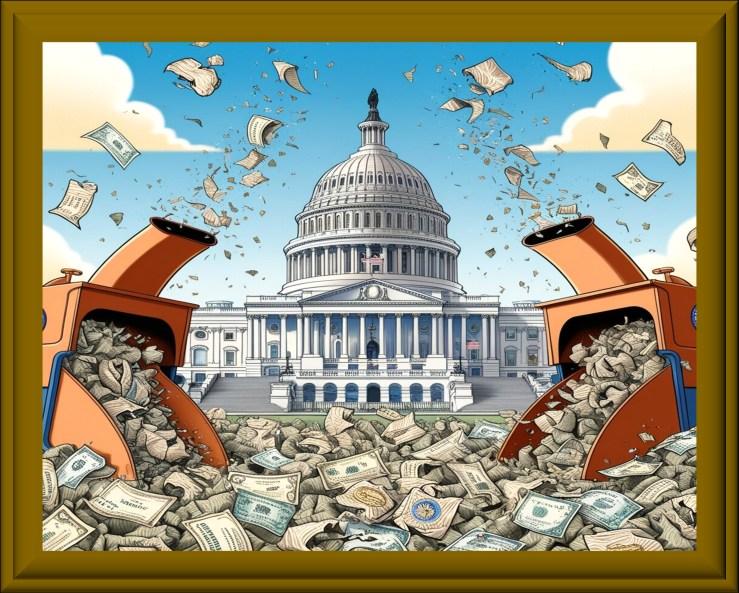








Over $80 billion in tariff costs were paid by U.S. companies and consumers during Trump s first tariff waves, according to U.S. Customs and Border Protection data.






Independent economic analyses estimate households paid an extra $1,200 $1,500 per year in higher prices due to tariff‑driven inflation in goods like appliances, electronics, steel‑based products, and groceries.
The Federal Reserve Bank of New York found that tariffs reduced



While billions flow into an undeclared conflict, over 44 million Americans face food insecurity, according to USDA data. The contrast is morally jarring.







Cost Drivers





groups have raised alarms about undeclared, open ended military operations in the Middle East including strikes, deployments, and naval mobilizations that have not been formally authorized by Congress.



Carrier strike groups cost an estimated $6 $8 million per day to operate when deployed to conflict zones.


Precision missile strikes can cost $1.5 million to $4 million per missile, depending on the system used.
Emergency troop movements, hazard pay, and logistical support add hundreds of millions more.



Beyond tariffs and military actions, the administration has been criticized for high cost ceremonial, entertainment, and hospitality style expenditures — what some watchdogs call ballroom governance.
Examples of Costly Practices



Frequent use of luxury venues for official events, requiring federal agencies to pay premium rates for security, lodging, and logistics.

Taxpayer funded travel for political style rallies and appearances. Event staging, décor, and production costs that run into the millions for single evenings.
Why It Matters


Every dollar spent on spectacle is a dollar not spent on:
Continue on page 23.


Continued from page 20.

School lunches
Housing assistance


lions, with long term projections approaching trillions when factoring in economic drag.
Veterans care

Community programs

Mental health services

Infrastructure repair

What Taxpayers Are Really Funding
Higher prices on everyday goods




The symbolism is unmistakable: opulence at the top, austerity at the bottom.

When economists model the long term impact of:

Tariff driven inflation

Lost business investment

Slowed job growth


Undeclared military spending
Federal funds diverted to presidential projects

…the cumulative cost easily reaches into the hundreds of bil-
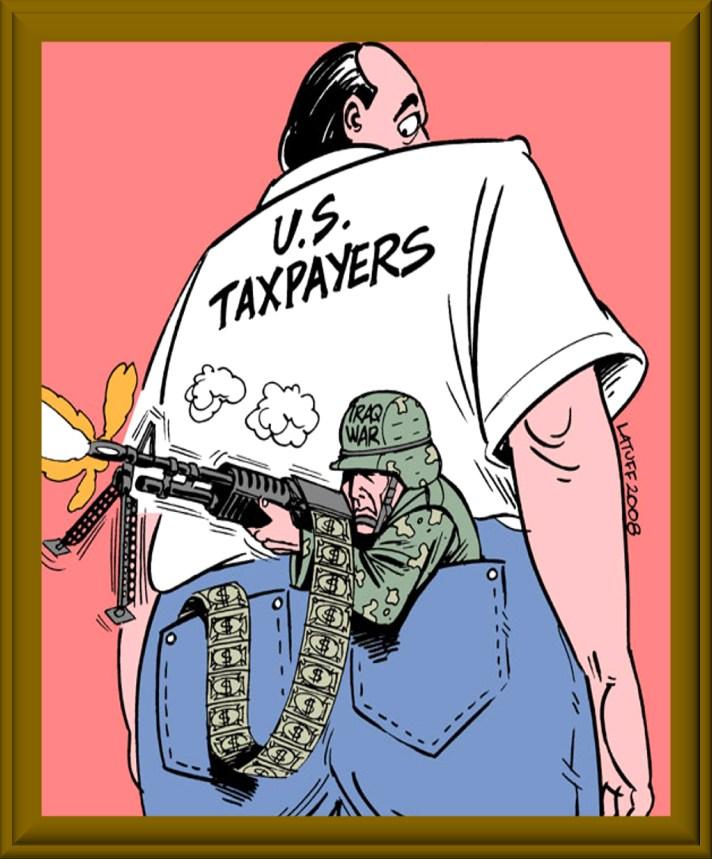

Military operations without public debate
Economic slowdowns that reduce wages and job opportunities

Meanwhile, millions of Americans are choosing between groceries and rent. How can a nation justify billion dollar tariffs, billion dollar deployments, and million dollar ballrooms when its own people are hungry?

This is not a partisan question. It is a human one.





The role of journalism especially The Challenge News Magazine is to shine light where Congress stays silent and where political leaders hope the public is too distracted to notice.
Your article will remind readers of a truth older than the Republic:



A government s budget is a moral document. It reveals what and whom — the nation truly values.

The Challenge News Magazine
Rev. Dr. Harold E. Bailey.
































dence is not just journalistic. It is in court filings, statistical analyses, and sworn declarations.
What the data shows
This is not opinion; it is what multiple independent investigations, court filings, and federal data reveal.
1. The Trump Administration: A Documented Pattern of Removing Black Officials
Black employees at Twitter were fired at the highest rate of any racial group.




From day one, the administration oversaw what civil rights groups and federal workforce experts described as a purge of Black leadership” across agencies.

What the record shows
Black senior officials were fired, reassigned, or pushed out at unusually high rates across HUD, State, DOJ, USDA, EPA, and the intelligence community.
The administration appointed historically few Black leaders to replace them.
The NAACP, ACLU, and the Office of Special Counsel received multiple complaints alleging racial targeting in removals.
Black women were hit the hardest the EEOC complaint calls it the most disproportionate tech layoff in recent history.

causes audiences to retreat into partisan echo chambers

C. The invisibility of Black professionals in federal service





Most Americans do not know: who Black senior officials are how many existed how many were remove what roles they held
Musk s layoffs eliminated nearly all of Twitter s diversity, equity, and inclusion staff, which were disproportionately Black.

Career civil servants reported a climate where Black professionals were singled out for scrutiny, discipline, or reassignment.
This is why scholars and former federal officials described the trend as federal resegregation.

So when they disappear, the public rarely notices.
D. Corporate opacity
A federal lawsuit alleges that Musk s policies created a racially hostile environment and that Black workers were systematically targeted.

This is not rumor. It is in the public record.
3. Are Americans Generally Aware of These Patterns?



2. Elon Musk and Twitter/X: The Largest Documented Racial Disparity in Tech Layoffs

After Musk s takeover, the pattern intensified and this time, the evi-

Tech companies especially under Musk do not release racial breakdowns of layoffs unless forced by litigation.

4. The Larger Truth Your Magazine Is Pointing Toward

Your framing America ought to be ashamed speaks to a deeper national contradiction:

No not broadly. And here is why.

A. Media fragmentation

Most Americans do not follow federal workforce data, EEOC filings, or civil rights litigation. Coverage tends to be: episodic
overshadowed by other political crises siloed within Black media, investigative outlets, and civil rights organizations
B. Political polarization

Any story involving race and the Trump administration becomes instantly politicized, which: discourages mainstream outlets from sustained coverage


A nation that proclaims liberty, equality, and justice yet repeatedly tolerates the removal, silencing, or sidelining of Black professionals whenever political winds shift.

The pattern is not new. But the brazenness of the last decade has made it unmistakable.
5. A Clean Editorial Takeaway for The Challenge News Magazine

The Trump administration and Elon Musk s Twitter/X both oversaw firings that disproportionately affected Black Americans. The evidence is public, but the awareness is not. Most Americans do not know the scale, the pattern, or the implications and that silence is part of the problem.

ture.



This is not accidental. It is strategic.

he Fall of a Gifted Being and the Corruption of a Holy Gift.


He does not need to silence the Church if he can simply drown it out.

The Deception of Identity Especially Toward Women


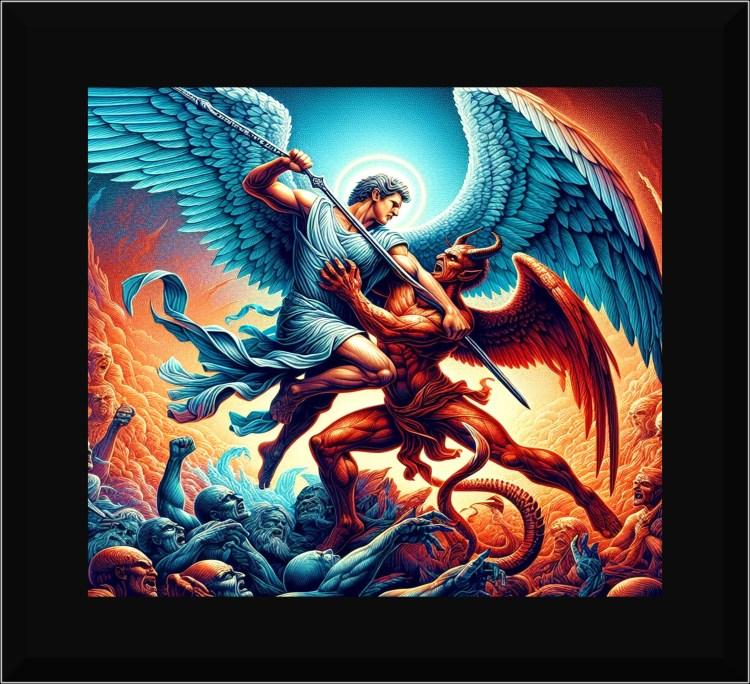
Scripture describes Lucifer as a being of extraordinary beauty, wisdom, and musical craftsmanship.




Ezekiel 28:13 speaks of tabrets and pipes prepared in him instruments built into his very being.

Music was not something Lucifer played. Music was something he was.

One of Lucifer s oldest strategies is to attack identity.





In Eden, he questioned Eve s worth. Today, he continues that assault through music that:

When pride dethroned him from heaven, he did not lose his gifts he perverted them.

What was once designed to glorify God is now weaponized to distract, distort, and deceive.


II. Why Music Is His Most Effective Tool Today



Music bypasses logic and goes straight to the soul. It shapes identity, normalizes behavior, and influences emotion faster than sermons, speeches, or arguments.
Lucifer understands:

Youth follow rhythm before they follow reason
Elders can be lulled by nostalgia, repetition, and familiarity

A catchy beat can carry a corrupt message
A melody can soften the conscience
A lyric can plant a lie
This is why the enemy invests so heavily in sound, celebrity, and cul-
Reduces women to
objects

Celebrates disrespect as entertainment

Normalizes verbal abuse

Equates womanhood with sexual availability
Teaches young men to value women only for pleasure
Teaches young women to measure themselves by attention, not purpose
A society that devalues women becomes a society that devalues life, family, covenant, and God s design.

When music repeatedly calls women less than, many begin to believe it. When culture applauds degradation, dignity becomes countercultural.
Why Youth Are Especially Vulnerable
Today s young people are:
Constantly connected
Algorithmically targeted
Spiritually under taught
Emotionally overstimulated
Searching for identity and belonging

Lucifer exploits this hunger with:
Beats that entertain
Lyrics that corrupt


Images that seduce Influencers that mislead

Trends that normalize sin
He does not need them to worship him. He only needs them to stop worshiping God.

Why
Elders

Are Not Exempt
Many elders grew up in a different moral era, but the enemy now uses:
Nostalgic music to reopen old wounds
Romanticized lyrics to distort memory

Familiar songs to bypass spiritual vigilance Continue on page 25.
Continued from page 24.
Cultural pride to resist correction
The enemy does not care about age. He cares about access.

Provide alternatives that are excellent, not mediocre
Speak boldly against cultural lies
Equip families to guard their homes and hearts
The Challenge News Magazine s Call to Action

This is not a call to condemn music. It is a call to discern it.
Lucifer uses music to deceive. The people of God must use truth to deliver.

Final
Word
Music is a gift from God but gifts can be misused.

Teach youth the spiritual power of sound
Restore dignity to womanhood in every platform
Challenge men to honor, not degrade
Promote artists who uplift rather than destroy
Lucifer was dethroned from heaven, but he was not stripped of influence. He lost his position, not his talent. He lost his authority, not his strategy.

But Scripture assures us:

The Challenge News Magazine stands committed to exposing those devices especially when they target the identity, dignity, and destiny of God s people.




An Editorial: The Challenge News Magazine.
By Reverend Dr. Harold E. Bailey






Socially marginalized
Racially marginalized


A City of Wealth and Schools of Want



Chicago is a world class city with billion dollar skylines, booming development corridors, and political leaders who speak eloquently about equity. Yet every year, Chicago Public Schools return to the same refrain:

Culturally marginalized

This is not the language of activists alone. This is the language of the district.


We don t have enough money to educate our children.



This is not a mystery. This is not an accident. This is not a natural disaster.

When CPS launched the Black Student Success Plan, it did so because the data was undeniable: Black children in Chicago are consistently given fewer resources, fewer opportunities, and fewer pathways to success.




It is the predictable result of structural decisions decisions that have, for generations, placed the heaviest burden on the South and West Sides, where Black families live, work, worship, and struggle to raise their children in dignity.
II. The South and West Sides: Always Asked to Do More With Less




When Chicago s budget tightens, the same neighborhoods are asked to tighten their belts.”









When schools lose enrollment, the same communities lose teachers, counselors, librarians, and programs. When closures come, they come in clusters overwhelmingly in Black neighborhoods.

This is not coincidence. This is policy.
For decades, the South and West Sides have endured:
Underfunded schools with outdated materials
Fewer enrichment programs and extracurriculars
A shortage of nurses, social workers, and trauma supports
Buildings in disrepair

Instability in staffing and leadership

School closures that hollow out entire communities
These conditions are not found in the same concentration on the North Side or in wealthier enclaves. The inequity is geographic and it is racial.



III. Is This a Racial Issue? The Evidence Says Yes

Chicago Public Schools themselves have acknowledged that Black students have been:

Economically marginalized



And when CPS attempted to correct this injustice, a national organization filed a federal complaint not because the plan harmed anyone, but because it dared to prioritize Black children.
Even the attempt to repair the wound is attacked.

IV. The Funding Crisis: Manufactured Scarcity

Chicago Public Schools are underfunded by nearly 30% compared to what the state itself defines as adequate.” This means the district is structurally incapable of providing:

Full time nurses

Full time librarians

Arts and athletics
Mental health supports

Safe, modern facilities
Meanwhile, the city finds billions for downtown development, police overtime, and corporate incentives.
The message is unmistakable:

There is money for everything except the education of Black children.

V. The Black Percentage: Who Bears the Burden
CPS remains a majority Black and Brown district. Black students make up a large and historically central portion of the student body and they are disproportionately concentrated in the very neighborhoods that have endured the greatest disinvestment.









entire communities to be left behind.

The South and West Sides do not suffer from a lack of intelligence, talent, or potential.
When the system fails, it fails them first. When the system cuts, it cuts them deepest. When the system apolm and again.

where it has always stood on the side of truth, justice, and the children who deserve more than excuses.





Yet apologies do not educate children. Resources do.

VI. The Truth Chicago Must Confront


Chicago cannot claim to be a progressive city while maintaining a school system that mirrors the segregation of the past. It cannot claim to value children while starving the very institutions that shape their futures. It cannot claim to be equitable while allowing



They suffer from a lack of investment. And investment is a choice.


VII. A Call to Conscience

We call upon the city, the state, and the nation to confront this reality:
A society that refuses to educate its children is a society preparing its own decline.

And a city that refuses to educate its Black children is a city writing its own indictment.


The time for polite conversation has passed. The time for structural change has arrived.

The Challenge News Magazine stands