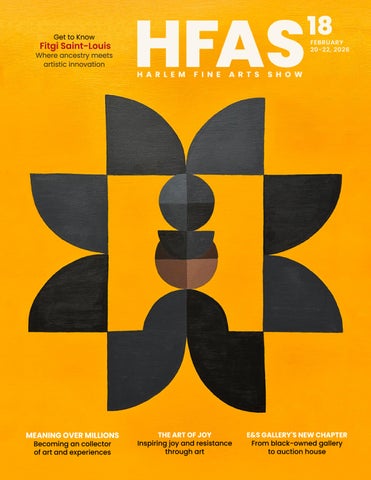
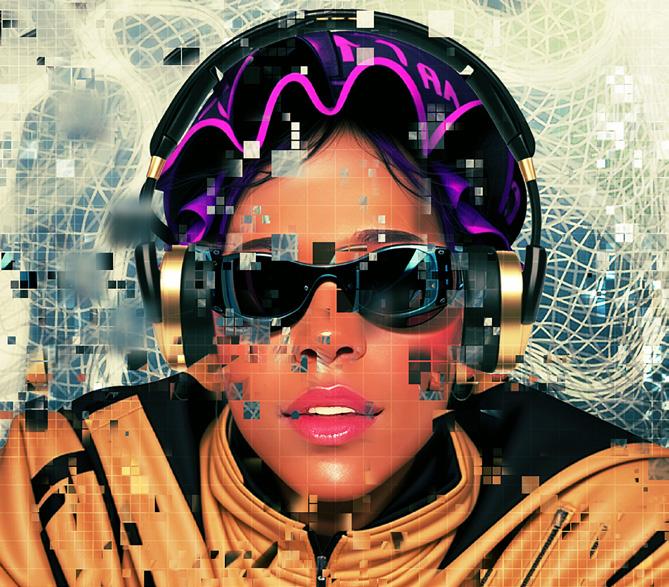
THE ART OF JOY Inspiring joy and resistance through art
E&S GALLERY'S NEW CHAPTER
From black-owned gallery to auction house
HARLEM
Publisher
Chief
Executive
Operations
EDITORIAL Managing
Art
Contributing
P.
Nefertiti
Adrielle
HFAS18
General
CREATIVE
Web
Social
Bernard
Digital
Nala J. Cottingham-McGee
Art
Live
PRODUCTION
Installation
Fractional
Sponsorship
Public
HOSPITALITY
Community
Relations
Helen Notaras
Hospitality
Lorna Haris
Director
Dontae
Community
Kayla
Expanding how we define both “art” and “tech with integrity
“No
-Morgan Lataillade
Room & Board is a 100% employee owned retailer of modern furniture and home decor. More than 90% of their products are made in the U.S. using top-quality domestic materials and imported materials. Founded and based in Minneapolis, Minnesota, they have 21 stores across the United States and deliver their furniture nationally. A steadfast focus on quality, value, and service since 1980 has built their reputation as one of the most respected furniture retailers in the country. Room & Board is proud to be a Certified B Corporation, solidifying their long-standing commitments to sustainability and the community.
Cultural Nutrition
Leaving a Legacy of Creativity
As we gather for the 18th Annual Harlem Fine Art Show at the Glasshouse in New York City, I find myself reflecting on both the moment we’re living in and the movement we have built together. This commentary is, in many ways, a “state of the state”—a call to attention about what is happening to the arts, and specifically how people of color continue to feel the brunt of cultural defunding, shrinking institutional support, and a shifting national climate. What we are witnessing now is not just a budget issue. It is a threat to the cultural nutrition we fought for across generations.
Art has always been our archive, our medicine, and our megaphone. To see support for African-diasporic creative expression diminish in real time is to watch pieces of our future being chipped away. And that is precisely why the Harlem Fine Art Show remains essential. Eighteen years ago we were not a trend—we were a necessity. And today, we remain one.
HFAS has matured from a traveling fair into a cultural institution with its roots planted firmly in the art capital of the world—New York City. For the past four years, our home at the Glasshouse overlooking the Hudson River has allowed us to welcome thousands into a space of beauty, fellowship, and discovery. Here, collectors and first-time buyers stand side-by-side experiencing the depth of African-diasporic creativity—from legendary masters to an electrifying new wave of emerging artists poised to define the next era. HFAS is where you can purchase a classic and also meet the creators who will become classics.
But it’s more than an art show. It’s a three-day cultural ecosystem: lectures, conversations, celebrations, and that unmistakable HFAS energy. You see old friends, make new ones, leave restored, and return year after year because what we offer is community—and community is the foundation of legacy.
Legacy, in fact, is the truest measure of HFAS. We were here when no one else was. Through the good, the bad,
Dion E. Clarke
Best Always, Founder, The Harlem Fine Art Show
and the uncertain, we held the line for Black art, Black artists, and Black collectors. Our audience has always represented the fullness of our community—doctors, lawyers, students, entrepreneurs, creatives, elders, families—and all come with the same purpose: to honor art and uplift the stories it carries.
This year’s show is more personal for me. After facing health challenges, I see life with a renewed clarity. God gave me a second chance, and with it, a responsibility—to strengthen this institution, to guide younger artists, and to secure the future for my granddaughter Kyic’s generation. Part of that future is technological. HFAS is stepping boldly into international and virtual arenas through a new AI-driven platform that will allow collectors worldwide to experience art 24/7. Our partnership with global innovators—from London to Bulgaria—positions HFAS as the first African-diasporic art show of its kind with a true international digital footprint.
But HFAS is not a one-man mission. Our leadership bench is strong. I am proud of Richard Pelzer, Managing Partner | General Manager; and Editor-in-Chief Tyler Michael; Antone Jones, Creative Director; Christine Seuss, Technology Lead.
Eighteen years in, we are still here—and still necessary. And so I extend this invitation to you: Come celebrate, collect, and be renewed at HFAS 2026. The future of our culture depends on us protecting the past, empowering the present, and investing in what comes next.
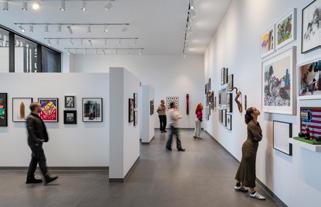
Eighteen years in sharing curated art at: (left) Riverside Church, (left below) The 44th Street Armory, and (below) The Glasshouse
Taylor Made To Preserve Arts & Culture
It’s hard to begin anything these days and not acknowledge that attacks on people, art, cultures, and institutions we all hold dear have become the norm.
Sometimes it’s easy to ask, does art still matter? I find myself falling into this trap. Doom scrolling on Instagram or TikTok only amplifies these negative thoughts. Between traumatic videos and comments sections, a tiny voice whispers, Does anything still matter. I’m exhausted. We’re exhausted. It is all exhausting.
But then, I stood in awe in front of “Night Fall” (2023) by Lorna Simpson at the Metropolitan Museum of Art, or strolled the Guggenheim Museum’s rotunda, pondering Rashid Johnson’s works at his solo exhibition, "A Poem for Deep Thinkers." Or, I dragged all my friends and family to the Whitney five times to see the Edges of Ailey. I added another book to the growing TBR pile because my best friend finally let me join her book club. Friends gathered after work to watch a cheesy holiday movie almost a month after Christmas, just cause. A group of artists
and writers came together to share their wisdom about art, technology, and health throughout these pages.
No matter the medium, art requires that I stop, gather, and share. Art gives me the push I need to get out of my head, rise from my bed, and come back into the world. Art brings me back into community. Art makes me feel human.
Where do you go?
Being able to be immersed in spaces where creativity thrives is a blessing
Growing bodies of research support just this. Art of all kinds makes us happier, more empathetic, and more connected. Want to solve the male loneliness epidemic? Dance on Friday nights at the Whitney. Want to break up with your smartphone this year? Crack open a book. Looking to be a part of a village? Start a conversation series for art collectors. Connecting with new people, cultures, ideas, and histories makes us feel more human.
And when we feel more human, we recognize the humanity in others. That’s probably why book bans, art censorship, and stifling original ideas are often used as go-to methods for suppressing activism and change. When we gather, engage with art, think about new perspectives and ideas, and feel like we matter, we don’t accept anything less than what we deserve. So, my argument is simple. We deserve art because we deserve to feel human. And feeling human is something we must fight to preserve.
Sincerely,
Taylor Michael
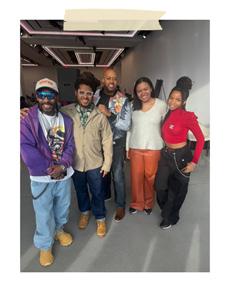
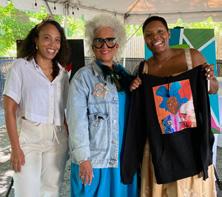
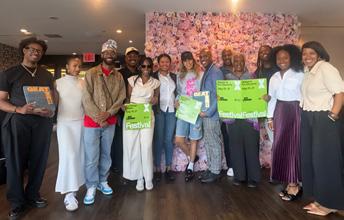
(Above) After HFAS17 Young Professionals Art Talk (L to R): DNTWatchTV, Kamau Ware, Dr. Thoms
Elias Lockhart III, Taylor Michael, and Taléya “Jet” Johnson. (Above right) Taylor Michael and friend in front of "Give Us a Poem" by Glenn Ligon at the Studio Museum in Harlem
Meaning Before Millions
Starting an art collection with intention and intuition
By Adrielle Turner
For generations, the well-connected, inherited white male “art collector” made secret deals at exclusive cocktail parties with carefully curated guest lists. The myth of the collector was built in those secret rooms where only the few were invited. But the world has changed. The market is louder, more colorful, and more visible. Instagram feeds now rival art-fair booths; young collectors buy directly from artists; visibility has become currency. Culture has become an asset class, and as participants in that culture, we have more access to it.
The first time I felt represented on a museum wall, I was in awe. Kerry James Marshall’s towering portraits of Black life filled the gallery at the Museum of Contemporary Art in Los Angeles. His career retrospective, the 2017 exhibition Mastry, included a painting titled “Untitled (Club Couple)” (2014), which depicts a black couple posed together. The gentleman in the painting hides a ring box behind the woman. In that moment, I didn’t just want to look at art—I wanted to live with it. I felt reflected as a standard of beauty for the first time. That museum visit changed everything. I left with a poster, my first purchase as a collector.
Collecting began as an intuitive act—a quiet response to beauty. Profound works should enter your life not because they are guaranteed to appreciate, but because they already inspire your spirit. Before I studied provenance or pricing, I bought pieces couldn’t stop thinking about. I acquired my first original work in 2023: the portrait “Nandi” by Kristen Woollery. When I first came across her work in 2018, I knew I wanted
her work on my wall. But it was out of my budget. So, I set up a payment plan with the artist. Collecting wasn’t about capital but commitment.
Over time, I began to see collecting not just as acquisition, but as a form of authorship. My walls have become an autobiography written in texture and tone, each work contributing to a larger story that merges personal identity with collective narrative. They range from women with deep tones to abstract configurations of what I imagine my aura looks like or the colors of my anatomical heart. I’m particularly drawn to artists who challenge the boundaries between Fine art and Black art, a distinction that has long been used to gatekeep legitimacy.
Now, as a dealer, I now guide new collectors through that same process of seeing. I remind my clients that while the market speaks in numbers, art speaks in feeling. Learning to collect is learning to listen—to artists, to context, to yourself. It’s also about stewardship: recognizing that
each acquisition contributes to an ecosystem of visibility and care. When a collector purchases work by a living artist, they are voting for that artist’s future place in history.
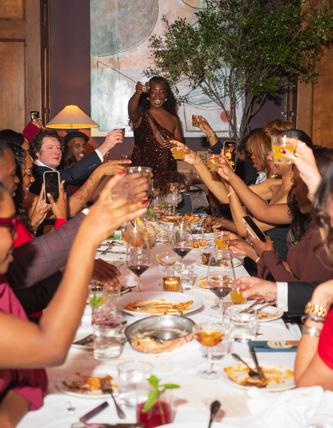
That ethos informs my work with The Collector’s Club, a salon-style series of dinners and cultural gatherings designed to make the act of collecting both accessible and sacred. The Club is not a gallery or an institution; it’s a luxurious third space. One evening might unfold in Manhattan during the US Open, another in Miami during Art Basel, another in Paris or Rio. Wherever we gather, the goal is the same: to turn art appreciation into a shared ritual. Guests come to acquire, yes—but more importantly, to connect, to converse, to see themselves reflected in the art and in one another. In these settings, collecting becomes a social practice. The table becomes a stage for legacy, intimacy, and discussion. To collect art in community is to remember that beauty is not meant to be hoarded— it’s meant to be shared.
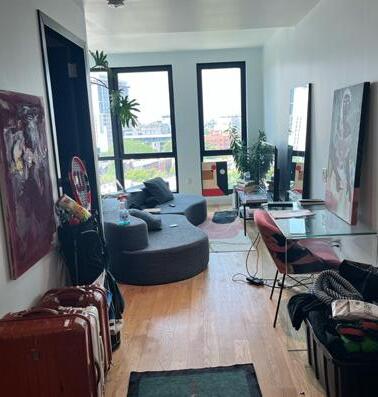
(above) Adrielle Turner's art-filled apartment in Brooklyn, New York". (right) Curated invite only experience for collector's.
This past November the Harlem Fine Arts Show announced a historic partnership with the Alzheimer’s Association. This groundbreaking collaboration will spotlight brain health in communities at highest risk of Alzheimer’s and other dementias. We recently spoke to Carl V. Hill, Ph.D., MPH, chief diversity, equity and inclusion officer, Alzheimer’s Association, to ask him about the partnership and his work at the Alzheimer’s Association.
The recent partnership with HFAS is one of several national partnerships the Alzheimer’s Association has formed with respected organizations in the Black/African American community. How are these partnerships helping in the fight against Alzheimer’s?
These partnerships enable us to share education, awareness, and support in ways that are culturally relevant and effective. By collaborating with organizations that champion health equity, we can better reach Black/African American communities with resources for early detection, care, and risk reduction. Our work with the Harlem Fine Arts Show is a great example—art is a powerful connector
that uplifts memory, legacy, and voice. Together, we’re creating spaces for healing, awareness, and conversations that lead to action and collective care.
In simple terms, what is dementia and why is it important for communities to address it?
Dementia is an umbrella term for cognitive decline severe enough to interfere with daily life. Alzheimer’s disease is the most common cause, accounting for 60–80% of cases. Other types include vascular dementia, Lewy body dementia, and mixed dementia. Older Black/African Americans are twice as likely to develop Alzheimer’s compared to older White adults, yet they are less likely to receive a timely diagnosis. They also experience higher rates of diabetes, stroke, and hypertension, which increase vulnerability to vascular and mixed dementias. Today, more than 7 million Americans live with Alzheimer’s, and that number could rise to nearly 13 million by 2050 unless we advance treatments and reduce risk factors. Dementia affects individuals, families, and entire communities—addressing it is critical to improving health outcomes and quality of life.
-CARL V. HILL PH.D., MPH, CHIEF DIVERSITY, EQUITY AND INCLUSION OFFICER, ALZHEIMER’S ASSOCIATION
What inspired you to focus on dementia
What inspired you to focus on dementia and its impact on different communities?
I draw inspiration from pioneers like Dr. Solomon Carter Fuller—the first known
I’ve always been passionate about advancing understanding and care for Alzheimer’s and other dementias, especially in underserved populations. I draw inspiration from pioneers like Dr. Solomon Carter Fuller—the first known Black psychiatrist—who worked alongside Dr. Alois Alzheimer and published some of the earliest dementia research in America. His legacy highlights the importance of representation and continues to inspire my commitment to health equity.
What challenges do you face in making dementia care accessible everywhere it’s needed?
information, meeting people where they are, and ensuring intentional inclusion. Improving access for all communities is essential to changing health outcomes nationwide.
What keeps you motivated to keep working on this challenging issue of dementia and dementia care within different groups and places?
Association is committed to expanding
Access to high-quality dementia care remains uneven, especially in historically underserved communities. We’re only reaching a fraction of those affected, and that must change. The Alzheimer’s Association is committed to expanding culturally relevant resources and
During the height of the pandemic, I lost my own grandmother to complications related to vascular dementia. Millions of other individuals and families are affected by dementia and need our help, especially in communities disproportionately impacted by Alzheimer’s and other dementias. I’m proud to lead efforts at the Alzheimer’s Association that prioritize health equity so everyone has a fair and just opportunity for early diagnosis, treatment, risk reduction, and quality care. That belief drives me every day.
PROUD SUPPORTER OF THE HARLEM FINE ARTS SHOW
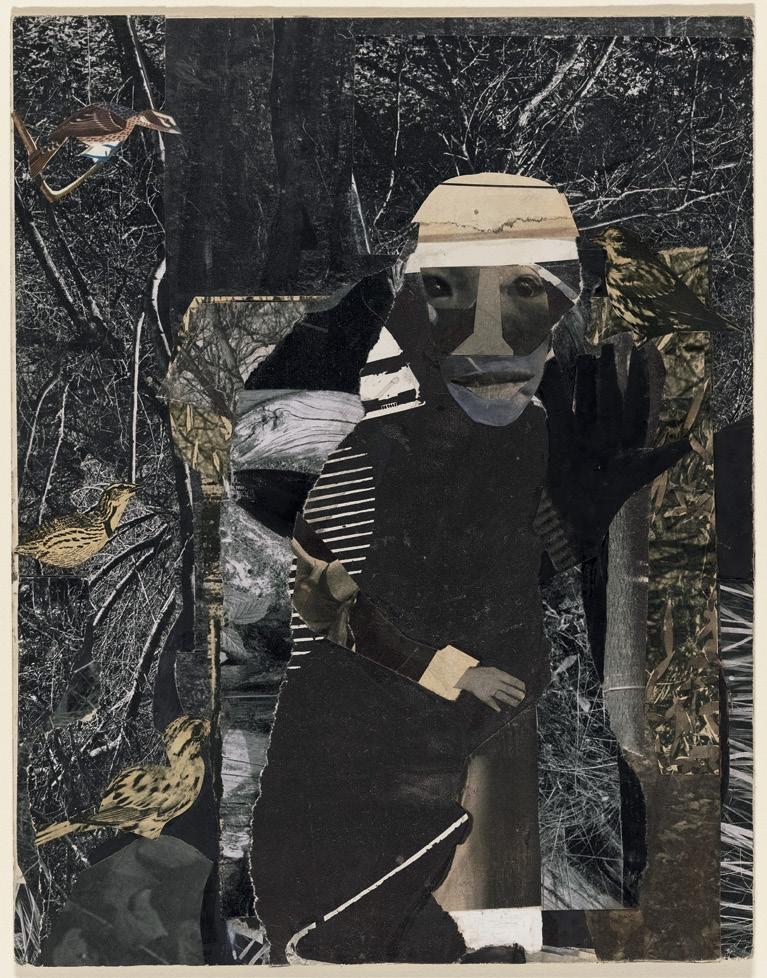
The Romare Bearden Foundation champions the artistic and intellectual legacy of one of America’s most influential artists through exhibitions, research, symposia, and free public and educational programs. See Bearden's art on display now at the Museum of Modern Art, and the Studio Museum in Harlem.
In development with the Wildenstein Plattner Institute: the Romare Bearden Digital Catalogue Raisonné—only the second catalogue raisonné for an African American artist, and among the first fully digital editions to be free and publicly accessible.
As part of the HFAS18 experience, we created Tell Us Who You Are, a storytelling-driven campaign designed to center the voices, journeys, and creative identities of our artists and galleries. The campaign invites our HFAS18 artists to go beyond their works on the wall and share their stories behind their practice. At its core, Tell Us Who You Are is about authenticity and intention. We want our artists to tell you who they are in their own words so that they are seen, heard, and represented with care.
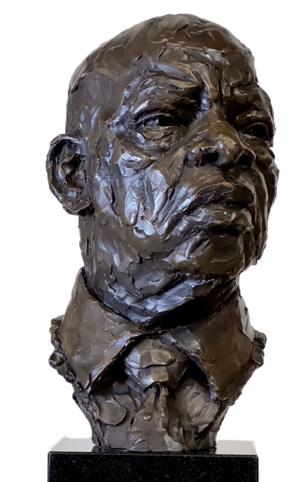
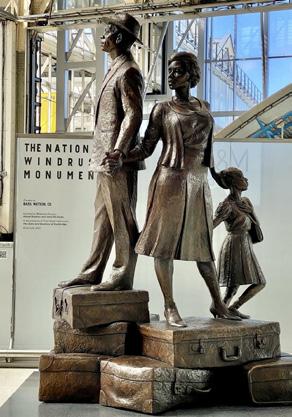
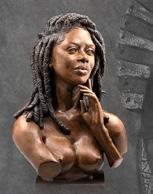
"John Lewis-Good Trouble" by Basil Watson
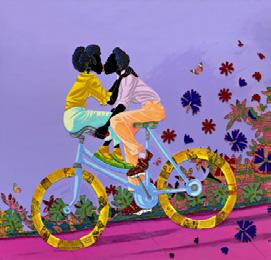
ADEOLUWA JONES
@adea.rt
No one is singular or onedimensional, and it is my aim to communicate this inter-connected complexity through-out my artwork.”
-Morgan Lataillade
Title: (top) “For Free?" (right) “TheDeadHomies”
Medium: Multidisciplinary Graphic Design
A core influence that anchors my practice is, always and will forever be, music. My pieces aren’t simply narrative statements but a conduit to foster emotional connectivity. Therefore, whenever I create, music is always a catalyst for me and helps me transmute feeling onto the canvas. The chords of Akira Senju, the drums of Mobb Deep, the lyrics of Sade,the vocal inflections of Amaarae, or the temperature of a Nujabes record; they all influence my choices of color, composition, image choice, texture, and material.
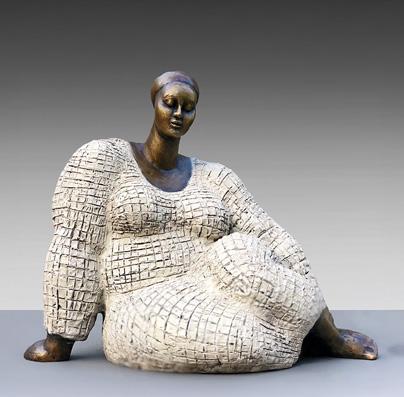
BASIL WATSON
@basil.sculpture
Title: (top, Previous page)
John Lewis-"Good Trouble" (above) “Windrush"
Medium: Bronze, Terracota
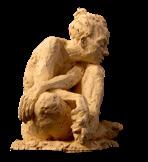
With the realization that going directly to nature is the most profound way of finding truth and understanding, I work extensively from live models. This lays the foundation for the development of my creative compositions, from small sketches through to monumental works. I seek to express truth in nature while engaging symbolism through design and capturing emotion, movement and detail.
My thematic exploration is rooted in my own journey of embracing multidimensionality as a Black woman. We are often conditioned to simplify the world around us, organizing people and experiences into rigid categories that fail to capture the fullness of who we are. I’ve always found this impulse toward simplification to be frustrating. My work challenges this tendency to simplify by examining identity as complex, expansive, and layered. These layers are never isolated; they are shaped by our environments, histories, and shared human experiences. No one is singular or one-dimensional, and it is my aim to communicate this interconnected complexity throughout my artwork.
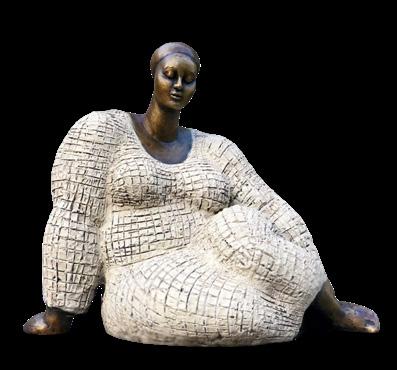
KUMI SAMUEL
@shebaartgh
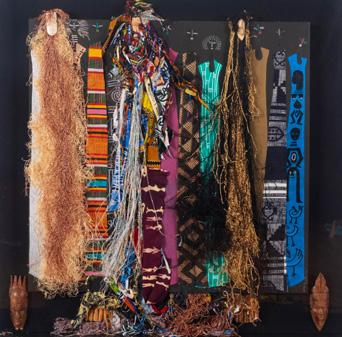
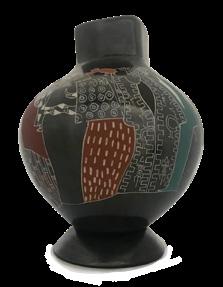
Title: (left) “Akwaaba” (bottom) “Ayeyaa”
Medium: Clay, Resin, Bronze
I work primarily in mixed media because it allows me to speak in multiple visual languages. Each material carries a voice; together they create layered narratives and reflect the complexity and global resonance of African identities. This approach gives me the freedom to explore the tension and harmony between tradition and innovation, and to challenge abstraction by presenting African stories with clarity, dignity, and power.
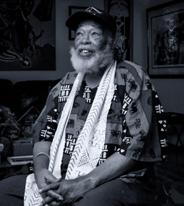
As a statesman of art, Frank has never been “motivated by money” when producing art. Instead, his love for Black history and culture, experiences as a Vietnam War Veteran, and travels through Africa inspire his work. A long-time artist at the Harlem Fine Arts Show, Frazier offered this wisdom back in 2022 during the Washington, D.C. show, “When life gets you down, and you feel no one is helping you achieve your goals, remember this, even when somebody has their foot up your behind, you are still in front. You can still make it.”
MONIK
@artofnaturebymonik
Title: (right) "Chakra 5" (left) "Ibeyi"
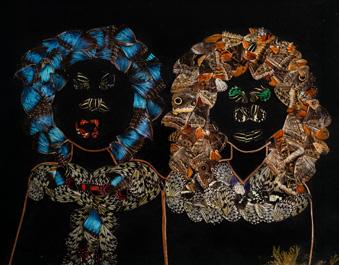
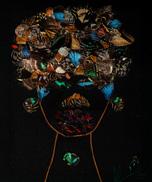
Medium: Ethically-Sourced Butterfly Wings and Mixed Media
Since childhood, butterflies have always put me in a state of wonder. After the death of a close friend (who vowed to return to me as a butterfly), my sorrow led me on an incredible journey where butterfly wings became my medium and dreams of ancestors became my muse. I have come to accept that I am doing the bidding of my ancestors. My work explores the collective histories, sacred knowledge, wisdom, and spirituality of blackness. It is also an invitation to connect with the natural world, to behold the eternal beauty and symbolic power of butterflies, to consider genetic memory, and to give reverence.
By Nefertitti Strong
Nefertiti and Saskia N. Betz Use Art to Open New Portals for Black Futures
Nefertiti and Saskia N. Betz are co-founders of the immersive revealing documentary series BeyondTheCode.ai. Their mission is simple: to make sure all stories (set All stories in bold), memories, and visions don’t just survive this digital era; they shape it
At this year’s Harlem Fine Arts Show, where the theme is Art for Technology, Nefertiti wants us to expand how we define both art and tech. To her, technology isn’t limited to wires and machines; it’s about tools that help us remember, remix, and tell the truth in new ways.
“We’ve always been builders,” she says. “Hip Hop
was a kind of technology. So were braids, quilting, sampling, spirituals, and streetwear. Black culture has always made something out of nothing. This is just the next chapter.”
This next chapter includes augmented reality, where a painting might reveal a whole layered story when seen through a phone. Or Artificial Intelligence-powered voice tools that can take an archive of a grandmother’s stories and turn them into a living audio sculpture. Or NFTs (nonfungible tokens) that don’t just circulate online, but are tied back to real communities, helping artists fund schools, gardens, studios, and legacies.
"Mic Messiah #2" by
“We don’t need to wait for permission... We don’t have to ask Silicon Valley to tell us what’s possible. We’ve always made our own tools and our own codes.”
But this isn’t about the buzzwords. It’s about possibility. And it’s about choice.
“Technology should be democratized,” Saskia adds.
“Technology is the most powerful tool of our times and must be democratized across all of humanity.
Together, the duo builds both physical and virtual spaces where artists, elders, youth, and storytellers can collaborate. They run labs and creative sessions where people don’t need to be tech-savvy to participate. They just need a story, a photo, a voice, or a vision. From there, they explore how today’s tools can lift up yesterday’s wisdom and tomorrow’s dreams.
They call this work “cultural coding.” It’s not about programming in the traditional sense; it’s about building systems rooted in ways of knowing, making, and remembering.
So what does this look like in practice?
Imagine a painted portrait that, when viewed through a phone, speaks to you in the voice of the person it honors, telling stories, poems, or dreams. Imagine a digital quilt made from family photos, stitched together across generations and geographies. Imagine walking into a gallery and hearing layered voices from different parts of the Diaspora, all speaking across time.
This is the kind of expansive creativity Nefertiti and her team(s) bring to BeyondTheCode and XRAgency. co. global production and strategy studio XRAgency. co and have been implemented into projects like the Doc Series Beyondthecode.ai. And it’s what they hope HFAS, and art communities everywhere, will embrace.
“We don’t need to wait for permission,” Nefertiti says. “We don’t have to ask Silicon Valley to tell us what’s possible. We’ve always made our own tools and our own codes.
We’re just continuing that legacy — but now the tools glow, move, respond.” The pair is also intentional about how these tools are used. They’re vocal about the risks: who owns the data? Who controls the platforms? Who benefits from the buzz?
It’s about centering IP ownership, memory, and freedom
When they run workshops, they discuss ethics, agency, and humanity, ensuring the tools don’t erase humans but lift us up. They make it clear: the goal is not to follow trends, but to set direction. Their vision of “art for technology” is not cold or abstract — it’s warm, textured, and rooted. It’s an invitation to dream with your hands, to imagine through sound and image, to build bridges between generations.
As HFAS continues to spotlight artists who move the culture forward, Nefertiti and Xragency.co represent what happens when art and innovation flow from communities. Not in opposition to the past, but in deep conversation with it.
“We want to bring cultural layers into the digital world,” Nefertiti says, “We want people to feel seen, not scanned. Heard, not analyzed. We want tools that carry spirit. In her world, tech doesn’t replace the artist. It becomes another brush, another drum, another call in the age-old tradition of Black expression.
Xragency.co producer of beyondthecode.ai in partnership with HarlemCLX
IA VIBRANT LEGACY INSPIRED BY JOY & RESISTANCE
BY TAYLOR MICHAEL
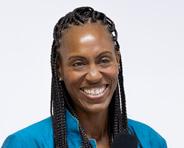
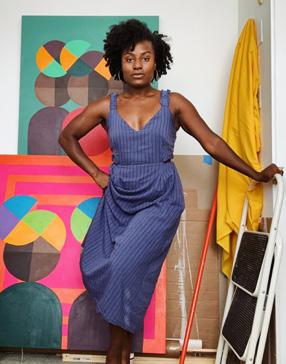
Imagine moving to Harlem as the world contracts. Budgets tighten; people shrink from each other. In these times, art fortifies communities, encourages resilience, and brings about creative solutions; yet, some deem art expendable. Within these realities, experiential designer and multimedia artist Fitgi Saint-Louis deploys community-conscious design. Using her skills and creative vision, she’s able to share stories of the past, build relationships, and design a collective future.
She’s not exactly new to Harlem. Over the last five years, the artist has collaborated with organizations and institutions, such as Art Crawl Harlem, West Harlem Art Fund, The Africa Center, Dance Theatre of Harlem, and Art on the Ave. However, since opening August Studios, Saint-Louis’s design and artistic workspace, in November 2024, she’s worked consciously to reach across the neighborhood as she designs. This
mindset made her an obvious pick for a featured presentation at NYCxDesign, where I first met the Haitian-American designer and artist.
“Fitgi embodies this renaissance of art and design happening in Harlem, her work bridges art and identity, and in doing so, she helps us tell a larger story: that design in Harlem is not isolated from, but intrinsically connected to, the cultural pulse of New York City as a whole,” Cultural producer and NYCxDesign steering committee member Richard E. Pelzer II said.
Saint-Louis found her artistic home in Harlem. Here, her integrated art practice, which explores the “spirit and dynamism” of Caribbean and African diasporic culture, could thrive. The history, culture, and people all pulled the artist to set up shop steps away from the 125th Street corridor.
And so, that spring day in May, instead of starting with her resume and credentials, Saint-Louis regaled us with a story. If we were to become better acquainted quickly, we needed to know those who paved the way for her career.
Patron Saint August
FFor Fitgi Saint-Louis, the Harlem Renaissance sculptor and arts educator, Augusta Savage represents a possibility model. Savage’s activism, community art center, short-lived gallery, and artwork inspired and supported the next generation of African American artists, among them Jacob Lawrence, Norman Lewis, and Gwendolyn Knight. During the Great Depression, Savage, in collaboration with Harlem Artist Guild members, successfully lobbied the WPA Federal Art Project to equally distribute government resources to Black artists, leading to the creation of Harlem Hospital’s historic murals and the Harlem Community Art Center.
However, Savage’s story also served as a cautionary tale. Many of Savage’s community initiatives closed due to a lack of funding and institutional support. After a battle with cancer in 1962, Savage died in relative obscurity. Although her students would go on to great acclaim, her art wouldn’t receive the same care, research, and attention until a 2019 retrospective.
Saint-Louis offered NYCxDesign attendees the lesson in Savage’s career and artistic journey as a testament to the power of community engagement in an artist’s career. Throughout her talk, she emphasized how she uses art to foster connection. “I see us as all the support we need,” Saint-Louis told the crowd. Now that we knew the shoulders she stood upon, we could get to know her work.
SCreating Her Avatar of Resistance
Saint-Louis’ artistic journey began while working in corporate America in the 2010s. A young designer at a midtown agency, she enjoyed collaborating with architects, sustainability experts, and other professionals. But the grays and blues wore on her. She wanted to bring more of herself to work.
At the nascence of the 2010s natural hair movement, she started by embracing her natural coils. In an environment where Black women press and straighten, she rocked curls and texture. As an act of reclamation, each morning she’d take a photo at her desk with her natural texture. These early self-portraits set the foundation for much of the work she makes today.
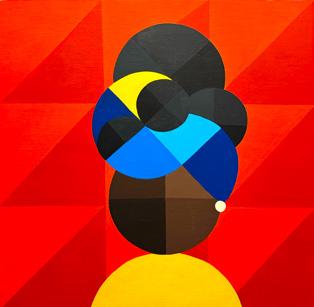
Fitgi Saint-Louis has always been inspired by the vibrant hues and symbolism in Haitian folk art. So, as her portraits evolved over the next decade, transitioning from screen to canvas, they became more colorful and abstract. Today, Saint-Louis uses her avatars as a conduit for stories about beauty, resilience, and determination.
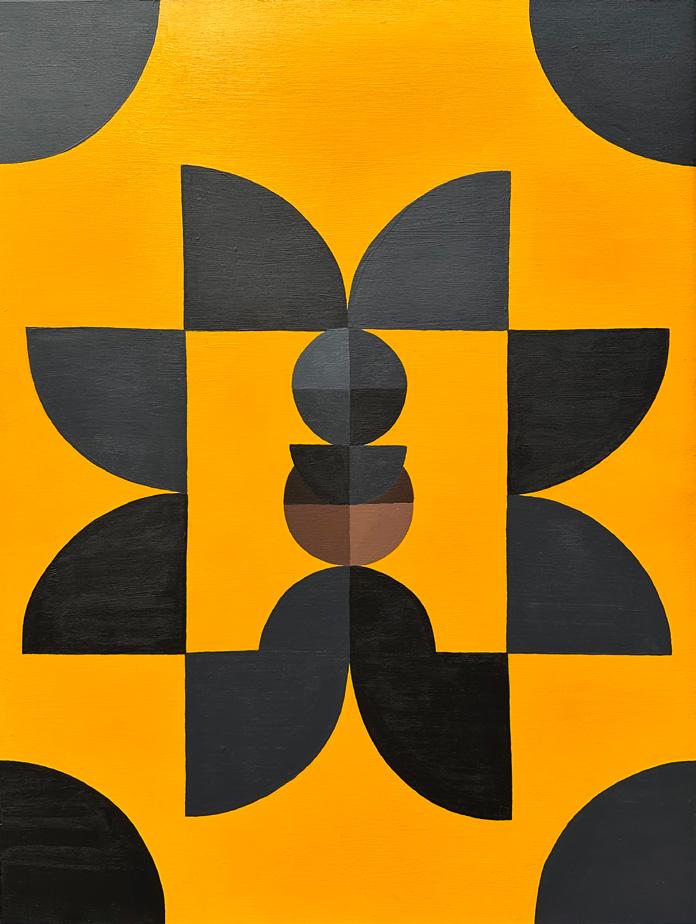
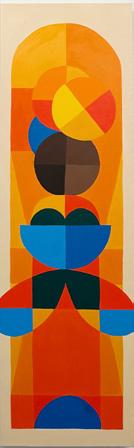
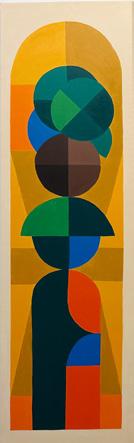
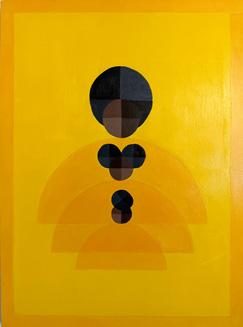
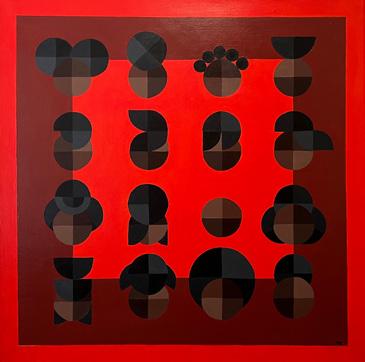
These abstract geometric avatars follow a similar pattern: Bisected circles and other polygonal shapes connected to create a head, hair, and shoulders. Each quadrant of the facial circle features a different shade of brown, representing the diversity of shades across the African diaspora. The hair changes depending on the theme of the piece. Saint-Louis might color the hair blue, brown, black, or orange, depending on the painting’s theme. Because the portraits lack facial features and textures, they become an open canvas for a viewer to project their experiences, dreams, and spirit.
“Kouwon ‘Crown’” (2019) honors late 18th-century women of New Orleans who, under Tignon Laws, were forced to cover their hair. In defiance, many women adorned their headpieces with custom textiles, unique jewels, or colorful feathers, turning a moment of discrimination into an assertion of their humanity. “What is so strong about our legacy throughout time is how we were able to take moments of oppression, moments of harshness or hardness, and then turn that into an opportunity for beauty,” Saint-Louis said.
In her first mural for the Elmont Memorial Community wall, Saint Louis turned her avatar into a celebration of the vibrant Caribbean and immigrant community in Elmont, her hometown on Long Island, New York. “Our Matriarchs” (2022) sought to bring joy and beauty to passersby in the area, but also revealed new meaning in her avatars. “Throughout this process, little kids on tricycles, folks trying to learn how to drive in the parking lot, and other community members said, ‘I see myself in this,’” Saint-Louis shared. As she talked to students, families, and residents, the artist discovered that a growing Muslim population in Elmont also saw their head wrapping practices reflected in her work.
While working in 2024 with the New York City Health + Hospitals Community Mural Project, Saint-Louis collaborated with patients and staff at the Kings County Hospital Wellness and Recovery Center. They developed the mural “We Gon’ Be Alright” to reflect “the grief and joy that finds us all,” as Saint-Louis writes on her website. Not only could her avatars reflect unexpected communities, but they could also facilitate community and show the power of art in healing.
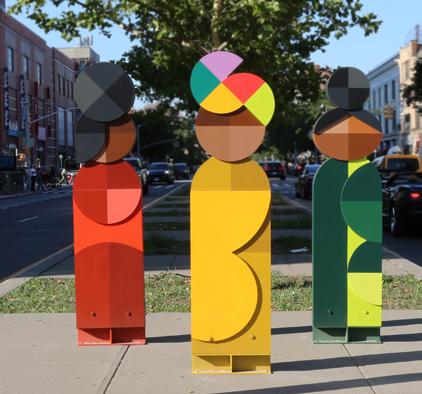
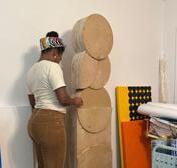
In June 2025, Saint-Louis unveiled “Aunties” on the meridian of 124th and Malcolm X Blvd. Harlem Residents can’t help but notice the 6.5-foot-tall wooden sculpture as they’re resurfacing from the subway. Created in partnership with the New York City Department of Transportation, the sculpture honors the women who nurture our communities.
Most recently, Saint-Louis created a mural for the youth sports organization FC Harlem’s soccer field at Riverbank State Park. For two months, the artist worked with the FC Harlem community to create a mural that reflected their multicultural team. Unveiled in mid-November 2025, the mural shows the power of Saint-Louis’s avatars to be both culturally specific and inclusive. “This mural is about
[The sculpture] sits in dialogue among the past homes, and newly created architecture, while honoring a traditional craft from Haiti.” “
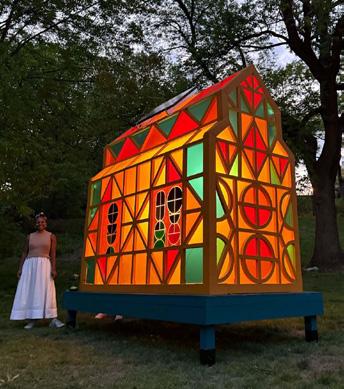
(top) "Aunties" for Dept. of Transportation in Harlem (middle) Fanal lattern workshop at Weeksville center (above) Fanal-Fè Limyè house sculpture at Weeksville
unity and sport…and talks to all the different cultures that celebrate soccer on a global level, but the action happens here in Harlem,” Saint-Louis said at the opening.
Personal yet communal, specific yet accessible, Harlem but global: there’s an energy to her works that can only be experienced in person. Saint-Louis knows this, which is why she often develops public programming, ensuring her art receives the interaction she intends. She organized an art run with the community organization Harlem Run, starting from Marcus Garvey Park, to Aunties, and concluding at her sculpture, “FANAL Fè Limyè,” which was initially located at St. Nicholas Park but relocated to the Weeksville Heritage Center in Fall 2025. It’s an ecosystem she’s created over the course of her career. She’s inspired by the communities around her and works in collaboration with these communities, so that she can share what she’s created and bring the process all over again.
“To have the work on display at this historically Black community is true alignment for the piece,” Saint-Louis said. “[The sculpture] sits in dialogue among the past homes, and newly created architecture, while honoring a traditional craft from Haiti.”
August Studio session
AAugust Studios gets its name not only from Savage but from the other Augusts in the artist’s life. There are three: Grandma Augustine, Aunt Augusto, and Ancestor Augusta Savage. Through these women, Saint-Louis learned to use art to capture the spirit of a community. With this guiding principle, opening a studio within Harlem’s business community just made sense.
Saint-Louis shared this one late-spring morning as we toured her studio. As she visited potential studios, searching for the perfect space, Saint-Louis quickly realized that typical warehouse spaces wouldn’t work for her. Although typical studios have their benefits — freight elevators for transporting large, delicate pieces, open layouts for setting up easels, abundant
natural lighting — they can be lonely. Because so many studios were converted from factories or manufacturing plants in areas like Industry City in Brooklyn or Mott Haven in the Bronx, they can be isolated from main thoroughfares.
August Studios is situated just blocks away from the Apollo, the National Black Theatre, and the Studio Museum of Harlem, among other notable institutions. Not only does Saint-Louis feel connected to the community that’s inspired much of her artistic and professional projects, but she also gets to stay abreast of what’s happening.
“Across the street is the Amsterdam News’s building, and they’re gonna have a museum at some point,” Saint-Louis pointed out. “So, I’m trying to see and talk to who might be around, or if they need support.”
Traditional studios also often did not allow for Saint-Louis’s ideal setup. When she toured these industrial studios, she found many forbade candles, loud music, carpets, couches, among other cozy features SaintLouis planned to use when decorating her space. “I was like, this is not gonna work. We literally take away everything that makes me comfortable in this space.”
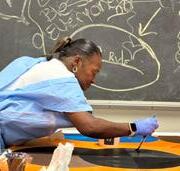
Needless to say, her Harlem studio does not look like the typical artist’s studio. Saint-Louis paints in the back room. Her workspace resembles a work-from-home office, except for the easels, paints, brushes, and mockups around the room.
Towards the front of her office, Saint-Louis outfitted the space for her public artistic life: plush couches, a large table, and, of course, her work hung on the walls. The table has enough space for a nonprofit board meeting or several remote workers to spread out. In the future, the artist hopes her studio can host weekend or afterschool painting courses, just as the Harlem Community Art Center did.
“Art carries a noticeable strength when created in community, and I want to remain connected to that dialogue and sharing of lived experiences,” Saint-Louis said.
Art carries a noticeable strength when created in community, and I want to remain connected to that dialogue and sharing of lived experiences.”
(top) Dance Theatre of Harlem Tote, (middle) At the studio (above) "Lineage", (right) "Aunties", (opposite page) "Open Doors"
Harlem Fine Arts Show Returns to Sag Harbor
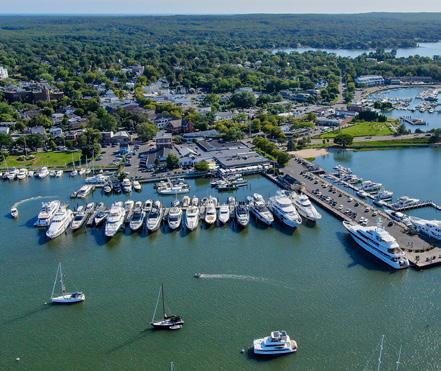
As the longest-running Black art show the longest-running in the United States, The Harlem Fine Arts Show (HFAS), will return to Sag Harbor with an expanded exhibition, deepening a dialogue between black art, place, and history. What began as a pop-up exhibition in 2025 has evolved—at the invitation of the Village of Sag Harbor—into a larger cultural moment that reflects both the town’s storied past and its living creative legacy.
Sag Harbor occupies a singular position in the history of Black leisure and land ownership in America. Alongside historic Black beachfront communities such as Oak Bluffs, Massachusetts; Atlantic Beach, South Carolina; Highland Beach, Maryland; and Bruce’s Beach, California, Sag Harbor functioned as a sanctuary during segregation— spaces where Black families could rest, build wealth, and cultivate culture when exclusion was the norm elsewhere. From the Gullah Geechee roots of Atlantic Beach to the Frederick Douglass lineage that shaped Highland Beach, these
communities preserved autonomy and legacy, often in the face of sustained development pressures. Sag Harbor’s own Sag Harbor Hills, Azurest, and Ninevah communities—collectively known as HBBC— stand as enduring testaments to that resilience.
HFAS’s presence in Sag Harbor is inseparable from the area’s remarkable lineage of Black artists. The East End has been home to pioneers such as abstract painters Frank Wimberley and Al Loving, graphic designer Reynold Ruffins, and collagist Nanette Carter. That legacy continues through contemporary artists including Cullen Washington Jr., Tomashi Jackson, and ceramicist Beverly Granger, whose practices engage culture, identity, and the unique landscape of the region. Together, these artists have helped establish Sag Harbor as an essential node in the Black art ecosystem.
HFAS patron Steve Williams, who was born in a house his grandparents built in Sag Harbor, speaks to this continuity. His support of HFAS is
rooted in what he describes as “cultural nutrition”—the idea that art sustains communities just as profoundly as land and memory. For Williams, HFAS represents stewardship: honoring history while ensuring its transmission to future generations.
It is fitting that HFAS, with its nearly two-decade commitment to amplifying Black artistic excellence, is expanding in a town where Black self-determination, creativity, and refuge have long converged. In Sag Harbor, HFAS is not simply exhibiting art—it is affirming place, legacy, and cultural endurance.
E&S GALLERY SET TO OPEN AUCTION HOUSE
Black Crown Art Auctions
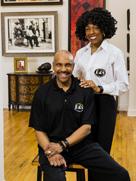
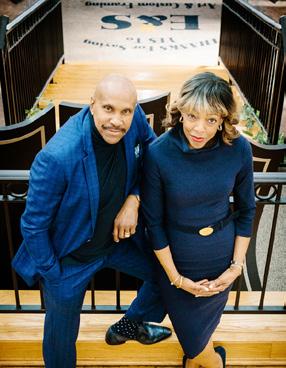
For over three decades, Walter and Cathy Shannon have quietly built one of the most respected Black-owned art enterprises in the country. What began as E&S Gallery has grown into a multifaceted operation encompassing gallery exhibitions, art publishing, wholesale distribution, framing, and long-standing relationships with artists and collectors across generations. In February 2026, the Shannons will add a historic new chapter to that legacy.
During the HFAS18, E&S Gallery announced the launch of Black Crown Art Auctions, the first Blackowned and Black-operated fine art auction house in the United States. The announcement takes place in New York City, in a space long regarded as central to Black cultural exchange and economic visibility.
The symbolism of this moment is intentional. While some advised the Shannons to announce the auction house during Art Basel, Cathy Shannon was resolute. “Harlem Fine Arts Show speaks to us,” she says. “This venture comes from an authentic place, rooted in community. Our goal is to counter the undervaluation of our Black art.”
Black Crown Art Auctions is conceived as a corrective to that imbalance. The name “Black Crown” is itself an acronym—Collectors, Curators, Reclaiming Our Wealth Network—signaling the
“Black Crown” is an acronym— Collectors, Curators, Reclaiming Our Wealth Network—signaling the Shannons’ intention to position the auction house as both marketplace and stewardship model with the ability to scale.
A few of the artists from the Gallery
"Out of the Darkness," Thomas Lockhart
"Belonging," Danny Broadway
"Spirits Watching," David Briskell
SPOTLIGHTGALLERY
Shannons’ intention to position the auction house as both marketplace and stewardship model.
Walter Shannon, a licensed auctioneer who conceived the idea, views the venture as a natural extension of decades of work.
E&S Gallery’s reputation within the Black art ecosystem—earned through scholarship, ethical dealing, and deep personal relationships—has created the trust necessary to support such an undertaking. That trust is particularly critical in a market where undervaluation, misattribution, and outright fraud have too often gone unchecked.
The initial auction opens in late February, with bidding extending into early March. Works will include examples by Black masters and contemporary artists, offering collectors the opportunity to engage with historically grounded material within a transparent and community-centered framework.
"Seraphim," Nnamdi Okonkwo
"Grandpa's Girls," Kevin West
"The Right 2 Revolution," Kevin Williams
"Blazing Together," Leroy Campbell
ARTIST & GALLERY LISTING
In Alphabetical order
A
Adeoluwa Jones of ADE Studios
Ana Shine
Andre Rochester Fine Art
April Tsosie
Art by Devlin
Art by Duane
Art by Romain
Artbunga
Artist With A Purpose
B
Barrington Jordan
Basil Watson
BILATERAL
Black Broadway of Walk Tall Girl Productions
Bernard Hoyes
Bernard Jackson
Brianna Chantel Woodard
Brother Joshua
C
E
COCOHEAD POTTERY
Collage Illusion
D
D'Artist Donna Ladson
Dion J. Pollard
DkDixonDesigns
Dolly Rose Art
Doray Unlimited
Dr. W. Saint-lamar
Dwight B
Dwaylon Lawrence
DID YOU KNOW?
E&S Gallery
Earlene Cox
Eddie King Jones Gallery
Eye of the Beholder
F
Fauntroy
Fitgi Saint-Louis
Frank Frazier
Free Maiden Studio
H
Harlem Arts Aliance and West Harlem Arts Alliance
HerArt
HFAS is the largest traveling African Diasporic art show in the USA
J
ARTIST & GALLERY LISTING
Jahidah Diaab
Janae Henry of 327 Gifted Designs LLC
Jasmine Nikole
Art Collection
JMR Designs
JULIAN KYLE
JUS1O | Justin Ellis
K
Kervin Brisseaux
KTVCreations
L
La'Jasha Champion
Lilo Lee
Lockhart Gallery
Luwanika Mlera of Tama Stonz LLC
M
Mahogany Gallery
Michael Bradley Fine Art
MillerChild of Sanctified Art
Monik Johnson
Morgan Lataillade of Morgiee
O
O'Bannon Studios
Otis Williams Tribal Art
P
Paloma Hostin
Parker Place Arts by Ray
Paul Conliffe
Phoenix Art Studio
DID YOU KNOW?
Since it'ts inception in 2009, HFAS has had over 80,000+ visitors and travled to 10 cities
R
Rivers Rivers
S
Samuel Kumi
Sean G. Qualls
See Shell’s Arts LLC
Sheena Blackwell
Stuart McClean
SwissZimHeritage. Gallery introducing “ArtGal.Online" SympleeTuft T
T.OCustomz
Tash Polynice
TedXeffect Studio
The Draper House of Contemporary Art
TOUCH bbca, Gasby Brown Original Fine Art, and Aleathia's Original Artworks
W
Waverly Mangum
Wayne Alexander Design
Wytchonymous
Quid Nunc Art Gallery
Delivering the best imaginable service and unrivaled rewards is at the core of who we are. As the nation’s largest physician-owned medical malpractice insurer, we understand the value of superior care. Because for us, it’s not just a best practice, it’s in our unique code. Join us at thedoctors.com Scan
Company.
5Ways to Incorporate More Joy This Year
By Avalon Ashley Bellos
As the world contracts, joy can be resistance. Founder of Art, Culture Innovation (ACI) 100 Erich McMillan-McCall believes this tenet should drive 2026 and recalibrate the spirit: And the timing could not be riper.
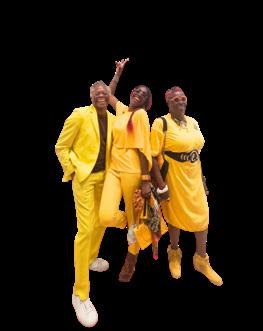
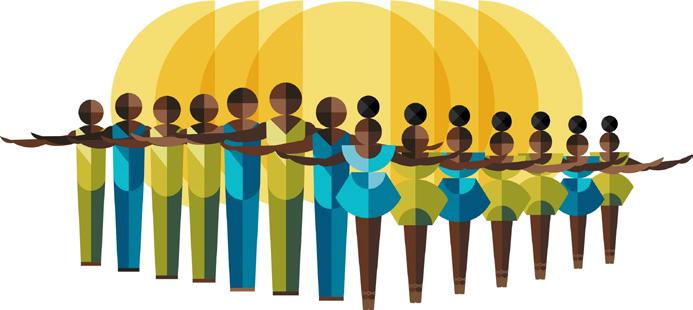
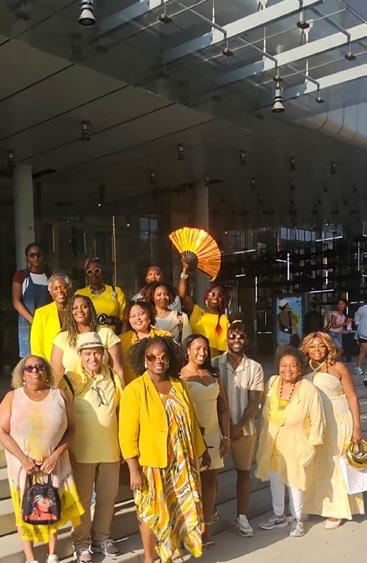
McMillan-McCall’s “The Year of Joy” is a national cultural initiative grounded in scholarship, civic imagination, and the long arc of Black intellectual history. As 2026 marks both the 250th anniversary of the United States and the centennial of Black History Month, the creative and cultural producers wanted to remind Black Americans that joy has always been strategy for survival. Then and now he understands that Black achievement, resistance, culture and creativity are central to American identity and memory. In this framework, joy becomes more than sentiment; it’s a cultural technology. For this Year of joy, the color is yellow. Historically associated with Buddhist enlightenment traditions, medieval manuscripts, and Alma Thomas’s celestial abstract art. Yellow invites us to choose radiance, choose clarity, choose awakening.
The Art ofJOY The Art ofJOY
Here is how you can bring The Year of Joy into your art life:
Court the Work That Electrifies You
Joy is Visceral. When a work stirs your pulse, treat that reaction as scholarship.
Try this: Visit a gallery alone, choose the one piece you cannot forget, and write five sentences on why it haunts you. Follow that artist for a year. Electricity is a compass.
2 Use Curiosity as a Weapon
Curiosity expands the mind’s architecture.
Try this: Choose one artist outside your usual aesthetic lineage and spend a week studying their world—essays, interviews,
influences. Let new knowledge shift your next decision.
3 Invite Creative Disruption
Stability comforts. Disruption transforms.
Try this: Rearrange a wall of your collection, swap mediums for a day, or visit a show in a neighborhood you rarely frequent. Joy thrives in recalibration.
4 Claim Your Cultural Power
Taste is a political instrument. Try this: Support one emerging artist whose work aligns with your values—purchase a piece, attend their events, amplify their voice.
Build a values map for your collection or practice.
5 Leave Evidence for the Future
Documenting what you love is a form of authorship.
Try this: Start an art journal, archive your collection or creations monthly, and preserve your reflections. This is where legacy begins. Joy is not frivolous. Joy is architecture—an intentional structure strong enough to hold imagination, endurance, and cultural power. Let this be the year you practice it with precision and radiance.
AFRICAN AMERICANS IN MEDICINE
HONOREES
Each year HFAS celebrates the outstanding contributions of African Americans in Medicine, spotlighting trailblazing Black doctors and healthcare innovators whose impactful journeys exemplify the transformative influence of art on health and healing. Together, we are improving outcomes for people of color all over the world.
ART OF GOOD MEDICINE 2026 THE
by Barry Mason
Photo
ROGER MITCHELL, MD
As a board certified forensic pathologist with 20 years of experience, Dr. Mitchell is the 126th President of the National Medical Association. He recently served as President of Howard University Hospital as well as Chief Medical Officer and Professor of Pathology. Serving as Washington, DC’s Chief Medical Examiner, he managed thousands of autopsies and later became Interim Deputy Mayor for Public Safety and Justice. Dr. Mitchell co-authored Death in Custody: How America Ignores the Truth and What We Can Do About It, appeared on PBS Frontline, and co-hosts the NAACP Image Awards-nominated podcast Official Ignorance.
TANYA ORIE ROGO, MD, MPH & TM, FAAP, FPIDS
Dr. Rogo is Associate Professor of Pediatrics at Brown University. Board certified in General Pediatrics and Pediatric Infectious Diseases, she advocates for global child health and trains pediatricians in the U.S. and Africa. Her work earned the inaugural Velji Young African Leader Award from the Consortium of Universities for Global Health, and she is recognized as a Top Doctor by the National Medical Association and Rhode Island.
VIRGINIA ALLEN, DHL, LPN
Dr. Allen one of the last living members of the legendary “Black Angels,” a group of nearly 300 African American nurses who courageously cared for patients quarantined with tuberculosis at Sea View Hospital on Staten Island—the largest tuberculosis sanitarium in the world at the time. Now a nonagenarian, Ms. Allen continues to maintain her nursing license. A dedicated lifelong community leader, Ms. Allen has been honored with a Doctor of Humane Letters from the College of Staten Island and numerous prestigious awards
TRACY KATHRYN PAUL, MD
As a Senior Director in the Cardiovascular Therapeutic Area of Global Medical Affairs at Merck she leads the implementation science and healthcare quality. Ms. Paul is also a Clinical Assistant Professor of Medicine in Weill Cornell Medicine’s Division of Cardiology. She has been featured on healthcarerelated podcasts and radio shows, as well as interviewed for print media, including the Washington Post, and is a contributor to digital platform Health in Her Hue. She is on the executive team of the American Heart Association’s STEM Goes Red initiative, which increases NYC HS girls’ exposure to STEM careers.
BELINDA S. MILES, ED.D. SUNY Westchester Community College
President Dr. Belinda S. Miles leads cross-functional teams to serve nearly 20,000 students annually. Under her leadership, the College recently opened a 2,300 square foot, medically supervised Simulated Laboratory for Interprofessional Medical Education to provide onsite clinical training for students preparing for health careers.
SUSAN BEANE, M.D. VICE PRESIDENT AND EXECUTIVE MEDICAL DIRECTOR
Since joining Healthfirst in 2009, Dr. Beane has brought with her extensive professional experience in managed care.
As Vice President and Executive Medical Director at Healthfirst, she focuses on strategies designed to improve the delivery of evidence-based, value driven health care to members and communities.
Dr. Beane is a strong proponent of collaborating with all stakeholders in the health ecosystem to improve longevity and to address the root cause of clinical and social factors that may negatively impact those outcomes.
BARBARA BETHEA, MD
Dr. Barbara Bethea is the first African American Registered Poetry Therapist licensed by NYS as a Creative Arts Therapist. Dr. Bethea is employed by NYCHH Correctional Health Services as the Director of the Creative Arts Therapy program at Rikers Island.
“My six-word story is poetry found me seven years old”.
KIM ALEXANDER GUISHARD, MD
Dr. Guishard has served as a Board Certified Emergency Medicine physician for 40 years before retiring in 2022 as the Vice Chair, Department of Emergency Medicine at Wyckoff Hospital Medical Center in Brooklyn, NY. He dedicated his medical career to serving the health needs of New York City residents. Currently, he is a Physician Emeritus at Wyckoff Hospital. He was instrumental in the development of the Brooklyn Hospital and Wyckoff Hospital Emergency Residency Programs where he led and trained hundreds of Emergency Medicine Physicians and in 2009 was honored by Brooklyn Hospital Center Professional Staff for Outstanding Dedication and Distinguished Service.
4 Great Self-Care Strategies for Caregivers
By Sana Shabazz
Caregivers are special people. While your heart is focused on the person, your own well-being must not be forgotten. Your energy, health, and peace directly shape the environment you create at home. This month’s newsletter offers simple, realistic strategies to help you practice self-care in the middle of everyday responsibilities.
Sana Shabazz is a mother, grandmother and retiree, with 30 years as a Chaplain from the New York State Department of Corrections & Community Supervision. As the author of Stories and Strategies for the Alzheimer’s Caregiver, and Other Interested Parties, Shabazz wrote this book in the hopes that it would reduce some of the stress of caring for a loved one. Shabazz’s mother was diagnosed with dementia in 2001, and passed away six years later. With health care costs rising, daily care is especially hard. Adjusting daily to the different nuances that this disease brings on, Shabazz learned that having a sense of humor is key. She shares these tips to let the many caregivers know that they are seen, heard, things can be easier, and help is here.
1
Begin by gently protecting time for things that bring you joy. Engage in meaningful activities whenever possible—reading, quilting, gardening, journaling, or spending time with people who make you laugh. Even ten minutes of enjoyment can reset your mood and renew your strength.
2
Whenever you can, step outside and spend a few minutes in the sun. Natural light helps regulate sleep, supports vitamin D, and gently improves mood. A brief walk, watering plants or simply sitting by a sunny window can bring a sense of calm and revitalization.
3 Music is another powerful form of self-care. Create a short playlist that soothes or energizes you. Listen while you cook, dance a little, pause between tasks. Music can calm the nervous system, remove heavy feelings, and help you feel more centered before and while returning to caregiving duties. Music also does the same for Alzheimer’s patients.
4 Finally, asking for help is an act of wisdom, not failure. Reach out to family, friends, faith communities, or local support groups to share the load. You deserve rest, encouragement, and understanding. Caring for yourself is not selfish; it is also a necessary part of caring for someone living with Alzheimer’s or other ailments.
Harlem Fine Arts Show Launches Virtual Arts District to Expand Global Reach of Black Art
By P. Andrews-Keenan, Pigment International
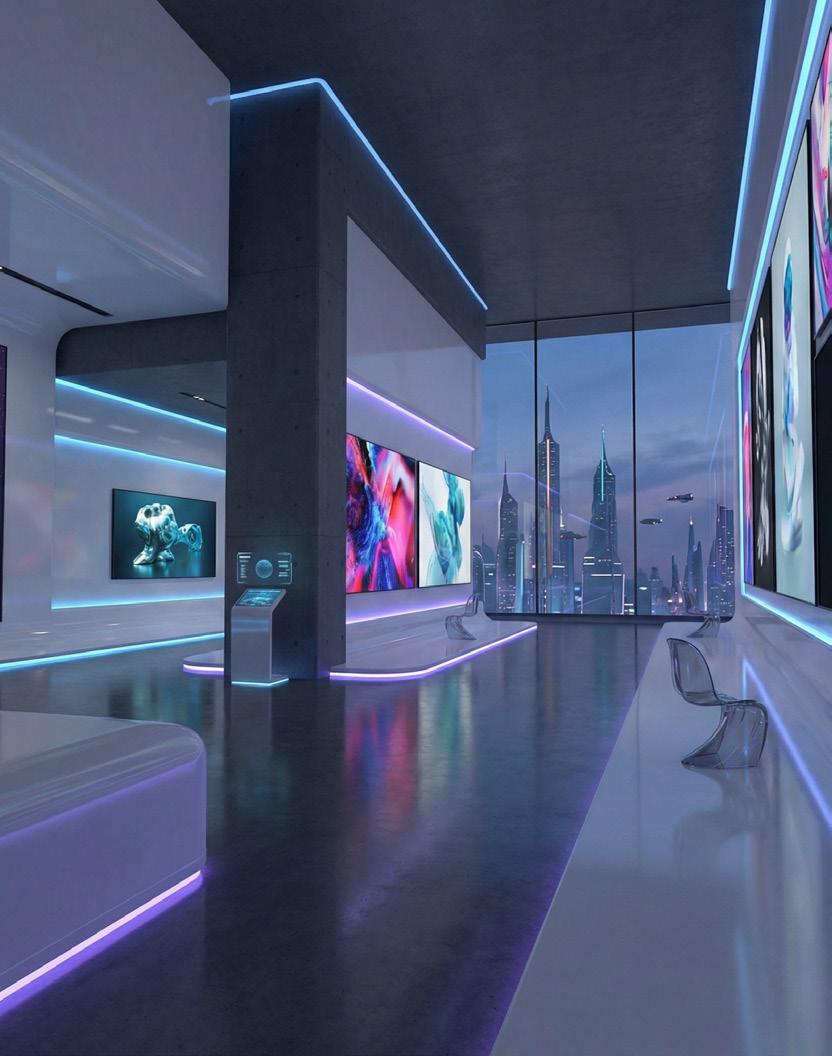
The Harlem Fine Arts Show (HFAS) is ushering in a new chapter with the launch of its Virtual Arts District, a forward-looking digital initiative envisioned by the HFAS brain trust to expand the reach, influence, and longevity of Black artists worldwide. Developed as an extension of the fair’s long-standing mission, the Virtual Arts District reflects HFAS’s commitment to meeting artists and audiences where they are—while preserving the cultural rigor and community grounding that have defined the show for nearly two decades.
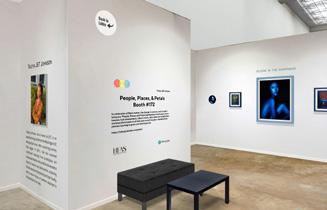
Created as a custom-built 3D gallery environment in partnership with Walter’s Cube, the Virtual Arts District allows visitors to experience exhibitions in immersive digital spaces that mirror the intentionality of a physical fair. Users can navigate curated galleries, engage with artists, and explore works across disciplines, creating new pathways
for discovery, dialogue, and commerce beyond the limitations of geography or time. The platform will debut in beta during the Harlem Fine Arts Show, with a broader public rollout to follow. At its core, the initiative is about access and agency. HFAS leadership recognized that artists increasingly need infrastructure that supports sustained visibility and global engagement, not just episodic exposure tied to a single event. The Virtual Arts District offers artists the opportunity to extend their presence beyond the show floor, deepen relationships with collectors and institutions, and amplify their influence across international audiences.
The project is led by artist and cultural organizer Andre Rochester, whose professional background bridges fine art practice, corporate leadership, and community-based arts development. A Hartford-based painter with nearly two decades of studio experience, Rochester has built a parallel career that includes leading artist fellowships and developing initiatives that support artists of color. His leadership on the Virtual Arts District reflects both a deep understanding
of artists’ needs and a pragmatic approach to building sustainable digital infrastructure that serves creative communities.
The beta phase of the platform features a distinguished group of artists whose practices reflect the breadth and dynamism of Black creativity. Participating artists include painter Thomas Lockhart, internationally renowned sculptor Basil Watson, and multidisciplinary artist Michael Escoffery, among others. Their inclusion underscores HFAS’s curatorial approach, which places equal value on emerging voices and established figures working across media.
HFAS Founder Dion Clarke emphasizes that the Virtual Arts District is not a departure from the fair’s ethos, but a natural evolution of it. “We want to expose people worldwide to the dynamism of work from Black artists, no matter the medium,” Clarke states.
“This platform allows us to do that in a way that is expansive, intentional, and aligned with where the future of art engagement is headed.”
While firmly rooted in digital innovation, HFAS leadership is clear that virtual experiences are meant to complement, not replace, in-person encounters. The Virtual Arts District is designed to extend the life of the fair, reinforce real-world relationships, and provide artists with tools that support long-term career growth.
HFAS
WRAPPED
For the Harlem Fine Arts Show, 2025 was a year of reaching across. This year, especially, our community included a stellar cadre of cultural and community institutions, civic organizations, and media partners.
We’re not simply an event. It is a movement—a gathering where art transcends walls, technology bridges communities, and healing becomes a collective practice. We believe that art is not only necessary but a powerful catalyst. Art can empower communities, spark necessary dialogue, and inspire change.
Harlem Hospital
In September, we kicked off our “Road to the Show” and our longstanding Art Heals campaign, working with Harlem Hospital to celebrate the extraordinary bond between art, medicine, and legacy under the theme: “Celebrating a Legacy: Harlem Fine Arts Show & Harlem Hospital Department of Medicine Residency Alumni Reunion Partnership.”
Studio Museum of Harlem
Back in Harlem, we were excited to see the Studio Museum of Harlem reopen its doors. The museum presents art not just as a part of Black history or American culture but as an ongoing conversation.
Sugar Hill to Sugar Hill
In October, we traveled to Newark for a collaborative event, presented by AARP in partnership with Harlem Fine Arts Show, Newark Arts, Edmond’s Honor Bourbon, and community partners, which highlighted the unbreakable link between Newark and Harlem’s creative movements—a connection textbooks often overlook.
Amy Sherald at the Whitney
When Amy Sherald’s career retrospective, American Sublime, came to New York, we didn’t know it would, in just a few short months, become a model for how art confronts censorship. We simply understood that there’s power in representing our humanity. Now, we know that asserting your humanity can also be an act of political resistance.
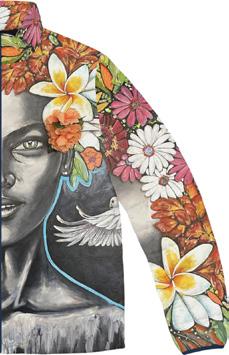
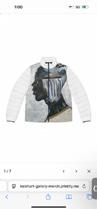
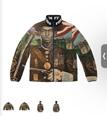
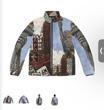
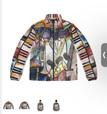
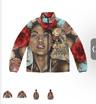
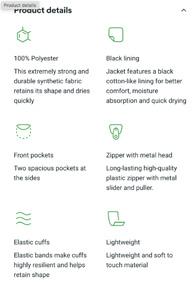
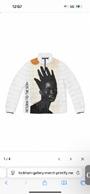
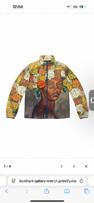
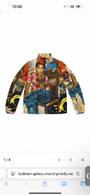
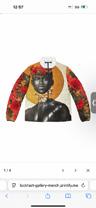
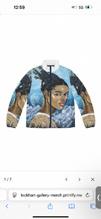
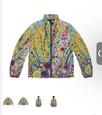
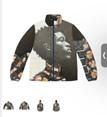
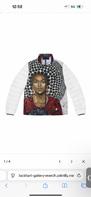
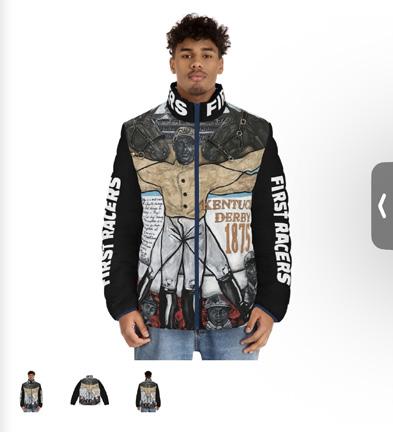
FINE ART PUFFER JACKETS
DESIGNED BY
DR THOMAS ELIAS
LOCKHART III
In
Partne hip with the
All images were originally created as mixed media fine art work. Redesigned with a unique story of life, Black History and resilience.
Dr. Thomas Elias Lockhart III is a Master Artist with mass creativity to style your everyday look.
With the Harlem Fine Art Show. We bring you these new images to celebrate the 18th Anniversary of the vibrant show of the African Diaspora, here and internationally.
DESIGNER JACKET TODAY GRAB YOUR
The Harlem Fine Arts Show Virtual Arts District is a digital extension of the fair you know and trust, expanding the experience beyond the exhibition floor into a globally accessible art ecosystem. Launching this year at HFAS18, the Virtual Arts District reflects the 2026 theme, “Art for Technology”, by using innovation to amplify artistic voices, broaden access, and reimagine how art is experienced and collected. Developed in partnership with Walter’s Cube, the platform features immersive virtual galleries and an AI-powered gallery attendant that guides visitors, answers questions, and enhances discovery.
Bringing together artists, collectors, galleries, and patrons, the District supports connection and engagement year-round without losing the cultural richness that defines HFAS. Experience the Harlem Fine Arts Show online. Built for now. Designed for legacy.
Scan the QR code to access the virtual art district or go to hfas.org for more info.