


yB steven sim chee Keong minister of entrepreneur and cooperatives Development (KUsKop)


















SME Connect is published quarterly by


SME Connect is published quarterly by
PERSATUAN PENGUSAHA KECIL DAN SEDERHANA MALAYSIA PP 19851/07/2025 (035570)
Lot 4-13A & 4-15, Quill City Mall, No. 1018, Jalan Sultan Ismail, 50250 Kuala Lumpur Tel: +603 2602 9654 / 016-350 0177 Email: info@smemalaysia.org Website: smemalaysia.org
NATIoNAL PRESIDENT
Dr. Chin Chee Seong Metita Sdn Bhd
NATIoNAL DEPUTY PRESIDENT
Dato’ Sri Ricky Yaw Chan Choy Eakonmech Sdn Bhd
NATIoNAL VICE PRESIDENT Anpananthan.K
Onspace Solution Sdn Bhd
Dato’ Tan Hock Chye SEATech Ventures Corp
Datuk Ada Poon Yin Hoong Amleisure Group Bhd
Datuk Wira Naina Mohamed Growth Avenue Sdn Bhd
Datuk Wira Richard Lau Chi Chiang Malaysia Cross Border E-Commerce Association
Datuk Miccele Siow Lee Ching Flexevo (M) Sdn Bhd
NATIoNAL VICE PRESIDENT & ASSISTANT TREASURER
Datuk Sam Tsen Mun Ket D.P.T
SBH Corporate Group Sdn Bhd
NATIoNAL SECRETARY GENERAL
Dennix Yeow Wah Fuong
Search Music Sdn Bhd
NATIoNAL ASSISTANT
SECRETARY GENERAL
Dato’ Dr. Danny Mah Che Beng Greenpro Global Capital Sdn Bhd
NATIoNAL TREASURER
Eng Kin Hoong
MyGAP Exhibition and Services Sdn Bhd
NATIoNAL CoUNCIL MEMbERS
Aaron Teh Kok Seong LAS Group Sdn Bhd
Dr. Anthony Dass
Fusion Snacks (Global) Sdn Bhd
Camelia Loh Yoke Cheng Talent In Motion Sdn Bhd
SME Connect is produced for SME Association of Malaysia by Harini Management Services Sdn Bhd
HARINI MANAGEMENT SERVICES
SDN BHD (609031-W)
W-9-12, Menara Melawangi, Amcorp Trade Centre, 18, Persiaran Barat, 46050 Petaling Jaya, Selangor. Tel: 603-7932 3259
Email: harini.mservices@gmail.com Website: www.harini.com.my
Publisher/CEo
V.S. Ganesan
Editor Zalina Mohd Som
Advertising Consultant Faridah Ismail
Marketing Manager Karthik Ganesan
operations Manager G. Revathi
Adj Practice Professor Cheah Kok Hoong ESG Association Of Malaysia
Dato’ Danny Tan Eng Ching Dansonpaek Sdn Bhd
Desmond Anil A/L Raymond Norbert Hernancres Tax Consultancy Sdn Bhd
Jennifer Ong Suu Kiek EAS Advisory Group Sdn Bhd
Niki Lan May Khay NJA Business Soution Sdn Bhd
Masinne Yup Ming Fon Amleisure Media Sdn Bhd
Richard Chee Teck Yoon CSW Marketing Sdn Bhd
Calvinn Tay Chok Hong Calla Batik Sdn Bhd
Teh Gaik Cheong G Life Group Sdn Bhd
Tong Yoke Lean Tong Yoke Lean
PRINTER
UNITED MISSION PRESS SDN BHD (755329-X)
No. 15, Perindustrian BS 9, Jalan BS 9/10, Taman Bukit Serdang, 43300 Seri Kembangan, Selangor. Tel: +603-8958 0186 Fax: +603-8945 5168
Rathakrishnan Arumugam ExPG Engineering Sdn Bhd
Vincent Lim Su Hang Cobroking Technology Sdn Bhd
Harry Tan Hui Ann Pan Kinetics Sdn Bhd
Mak Kum Shi Mak Academy
Alex San Wai Lik Folio Apparel Sdn Bhd
ADVISoRS
1. Datin Dorph Peng Wen Yin
2. Dato’ Jeffrey Low Boon Hing
3. Dato’ Dr. Manjit Singh Sachdev
4. Datuk Chan Mung Bong
5. Mr L ee Yew Chen
6. Datuk Wira (Dr) Calvin Khiu
7. Alvin L ee Kong Loong
8. Keek Seng Bee
9. Dato’ Dr. Goh Kian Seng
10. Datuk Dr. Ting Chung Cheng
11. Dato’ Seri Ivan Teh
SME MALAYSIA
EDIToRIAL CoMMITTEE
1. Datuk Ada Poon Yin Hoong
2. Mak Kum Shi

All rights reserved. Copyright @2025 by SME Association of Malaysia and Harini Management Services Sdn Bhd. No part of this publication may be reproduced in any form without prior written permission from the publisher. The views expressed in the articles are those of the writers and do not necessarily reflect the views of SME Association of Malaysia or Harini Management Services Sdn. Bhd.
Perpustakaan Negara Malaysia Cataloging in Publication Data
Cost to Value: Rewriting the Future of Malaysian SMEs YB Steven Sim is pivoting the nation from “Made in Malaysia” to “Made by Malaysia”. Driven by his ABCD Strategy, the Minister’s RM15 billion roadmap aims to scale 10,000 SMEs into high-value global players.
Esteemed Members and SME Stakeholders,
Welcome to the third issue of SME Connect. As we move further into 2026, the energy within our community is palpable.
This year is not just another chapter in our calendar; it marks a monumental milestone—the 30th Anniversary of the SME Association of Malaysia (SME Malaysia).
Since our humble beginnings in 1995, we have evolved from a local support group into a “connective tissue” that bridges 900,000 MSMEs with national policy.
As I reflect on this journey in our 4-page anniversary feature, I am reminded that our strength has always been our ability to turn ground realities into high-level strategy.

This legacy of impact will culminate in our 30th Anniversary Gala Dinner on 26 May, a night to celebrate three decades of championing the nation’s economic backbone.
In this issue, we also revisit the brilliance of the Platinum Business Awards (PBA) 2025. The Gala at Sunway Pyramid Convention Centre, held in October last year, was a masterclass in SME excellence, proving that Malaysian businesses are not just surviving—they are leading with innovation and grit.
While that night has concluded, the momentum continues as we roll out five key initiatives for 2026, including the National SME Global Acceleration Program and the SME Go Digital Initiative, alongside a strategic collaboration with INSKEN to enhance business scaling.
Our cover story features Dato’ Raymond Ho of Sri Ternak Group, whose “midnight” journey from family collapse to a 24-hour retail empire is a testament to the resilience we advocate for.
His story mirrors the “pivot” I believe every member must make this year: moving from survival decisions to transformation decisions.
As your bridge to the government, our promise remains firm: we will ensure your voices are heard at the highest levels.
Whether through our nationwide economic forums or our upcoming international dialogues, we are here to provide the capital, market access, and bureaucracy reduction you need to thrive.
The nation’s future cannot be built without you. Let us celebrate our past as we architect a digital, talent-ready, and sustainable future for all Malaysian SMEs.
Sincerely,
Dr. Chin Chee Seong National President, SME Association of Malaysia
YB Steven Sim is pivoting the nation from “Made in Malaysia” to “Made by Malaysia”. Driven by his ABCD Strategy, the Minister’s RM15 billion roadmap aims to scale 10,000 SMEs into high-value global players.
For decades, the narrative surrounding Malaysian Small and Medium Enterprises (SMEs) has been one of resilience, yet often confined within a “growth ceiling”.
While they form the backbone of the national economy, many remain trapped in a low-cost, high-volume cycle.
Today, a new leadership philosophy is emerging at the Ministry of Entrepreneur and Cooperatives Development (KUSKOP).
At the helm is YB Steven Sim Chee Keong, a leader whose unique professional trajectory—having served in both the Ministry of Finance and the Ministry of Human Resources — gives him a rare “multi-hat” perspective on the intersection of capital and labour.
Now, as the Minister for entrepreneurs, he is pivoting the national strategy toward a high-value, brand-driven future.
From “Made in Malaysia” to “Made by Malaysia”
Sim’s vision is anchored in a fundamental shift in identity. He argues that the country’s traditional growth model, which relied heavily on attracting foreign investment through low costs, is no longer sufficient in an era of intensifying geopolitical uncertainty and rising trade barriers.
“Continuing to rely on a low-cost advantage will only trap businesses at the lower end of the value chain,” Sim asserts.
“We must move beyond a ‘buy cheap, sell cheap’ approach towards building our own value, innovation, and brands. I call it the 4T model: Talent, Technology, Things (higher-value products), and Trademarks.”
This philosophy underpins his core ABCD Framework, designed to tackle the structural constraints holding MSMEs back:
● Accelerated Productivity: Raising output through technology, automation, and AI.
● Bureaucracy Reduction: Removing friction by simplifying approvals and
digitising systems.
● Capital Accessibility: Ensuring financing is available even in uncertain global conditions.
● Drive Market Access: Expanding reach into new export territories.
While the ABCD framework provides the “how,” the PowerUp 10K plan provides the “how much”.
Sim has set bold targets to shift the focus of the Ministry from mere survival to aggressive scaling.
The plan seeks to mobilise RM15 billion in financing — a significant jump from the previous RM10 billion—with the goal of supporting at least 10,000 Malaysian firms
to move up the value chain. The targets are precisely defined:
● Business Scale-up: Helping 10,000 firms grow.
● Capacity Building: Allocating RM100 million to train 100,000 entrepreneurs in governance and operations.
● Economic Contribution: Pushing SME output toward a target of RM750 billion.
● Future Champions: Nurturing the “100 Madani Club”— a pipeline of 100 Malaysian companies aimed at reaching RM100 million in annual revenue by 2030.
“KUSKOP doesn’t just want to help SMEs stay afloat,” Sim says. “We aim to help them move up, even during a crisis.”
(As of 31 March 2026)
Total Financing Ecosystem: RM15 Billion
Approved Financing: RM2.82 Billion
Beneficiaries:
122,100 Entrepreneurs and Cooperatives
New Approval Standard: 5-15 Days (Sector dependent)
Among the ABCD pillars, Sim admits that Bureaucracy Reduction (B) remains the most resistant to change.
It requires a deep reengineering of internal processes and a shift in the civil service mindset.
However, 2026 has already seen significant “quick wins” in capital accessibility through digitised processes.
The results are visible in the drastic reduction of approval times across KUSKOP agencies:
● TEKUN Nasional: Financing approval and disbursement reduced from 10 days to just 5 days.
● SME Corp. Malaysia: Alternative financing access slashed from 21 days to 7 days.
● SME Bank: Working capital approvals (between RM100,000 to RM1 million) reduced from 30 days to 15 days.
“The focus is to facilitate, not frustrate,” Sim explains. “By shortening these windows, we allow entrepreneurs to seize market opportunities with the speed that the modern economy demands.”

A common criticism of government funding is that it often only reaches “bankable” entities — those who already have strong credit histories. Sim is determined to ensure capital reaches the underserved.
Through agencies like Amanah Ikhtiar Malaysia (AIM) and the Dana Ekonomi Usahawan Wanita (DEWI) initiative, KUSKOP is targeting 300,000 women entrepreneurs with a RM3 billion ecosystem.
“We are moving toward inclusive finance,” says Sim. “Bank Rakyat and TEKUN now use alternative assessments, such as daily cash flow analysis and field verification, rather than just collateral. We want to fund potential, character, and business viability.”
This is paired with capacity building through INSKEN and CEDAR, ensuring that when an entrepreneur receives capital, they also receive the financial literacy and mentorship needed to sustain it.
For many SMEs, the greatest hurdle isn’t making a product — it’s getting it on the shelf.
Through the “Rak Hebatkan Malaysia” initiative, Sim is transforming GLC procurement and retail shelf space from simple promotion into a “market access intervention.”
The Ministry is currently pushing for a minimum shelf space quota for local MSME
products within major retail chains and GLC procurement pipelines.
This ensures that as Malaysian SMEs create higher-value “Things” (from the 4T model), they have a guaranteed lane to reach the consumer.
The ultimate litmus test for Sim’s strategy is the “graduation” of SMEs into mediumsized and global enterprises.
Currently, medium-sized SMEs make up only about 1.6% of the business population. Sim’s goal is to increase this to 5% by 2030.
The 100 Madani Club is the vanguard of this movement. These high-growth firms will receive bespoke support — including international business matching and advanced technological integration — to
Skilled and future-ready workforce
Technology
Rapid adoption of automation and AI Things
Moving from raw commodities to high-value finished products
Building intellectual property and global brand recognition
ensure they reach the RM100 million revenue milestone.
As the Minister looks toward the future, his message to the SME community is one of partnership and ambition.
He believes that the global economy in 2026 — fraught with uncertainty — is actually the perfect time for Malaysia to rebrand itself.
“Malaysia’s SMEs will not break their growth ceiling by staying costcompetitive,” Sim concludes.
“They must become value creators. We are building the infrastructure so that ‘Made by Malaysia’ becomes a global mark of quality, innovation, and trust.”
Moving beyond traditional lending, MBSB Bank’s RM3 billion strategic fund and digital suite provide the resilience and reach Malaysian SMEs need to navigate global volatility and industrial modernisation.
As Malaysian SMEs navigate rising costs, global uncertainty, and rapid technological change, access to the right financing and business ecosystem has become increasingly critical.
Beyond traditional lending, businesses today require integrated support that combines capital access, digitalisation, market expansion, and long-term resilience.
Recognising this shift, MBSB Bank has introduced a comprehensive SME financing and digital ecosystem designed to help businesses scale, modernise, and compete more effectively in both local and international markets.
Central to this effort is a newly announced RM3 billion strategic allocation
targeting high-impact sectors aligned with national economic priorities.
The initiative reflects a broader move towards financing industries that are expected to shape Malaysia’s future growth trajectory.
At the heart of this initiative is a massive capital commitment targeted at industries identified as the future drivers of Malaysia’s economy.
This RM3 billion allocation is meticulously split across three highimpact sectors, ensuring that SMEs within these niches have the “long-term” fuel needed to compete globally.
The Rail Industry (RM1 Billion): In a
strategic partnership with the Malaysia Rail Industry Corporation (MARIC), MBSB Bank is addressing the unique challenges of the rail sector.
Given the high capital intensity and extended project cycles typical of rail infrastructure, this fund provides SMEs with the structured liquidity required to participate in national transport projects.
Solar & Clean Energy (RM1 Billion): Aligning with the National Energy Transition Roadmap (NETR), this facility is a catalyst for solar manufacturers and system integrators.
It allows businesses to scale renewable energy projects, ensuring Malaysia remains a frontrunner in the regional green economy.
The Aerospace Sector (RM1 Billion): This fund supports the precision-heavy
world of Maintenance, Repair, and Overhaul (MRO) providers and OEM suppliers, helping them upgrade facilities to meet global aviation standards.
Stability is the prerequisite for growth. With the BNM SME Stabilisation Relief Facility (SME SRF), MBSB Bank offers a protective shield against the “shocks” of international events, such as the ongoing impacts of the West Asia conflict.
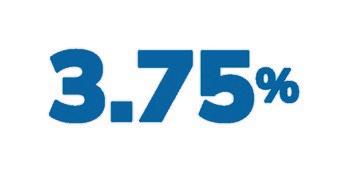
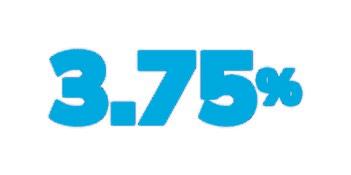
This facility provides immediate working capital of up to RM750,000 at highly affordable rates (up to 3.75% p.a.).
Critically for SMEs with limited collateral, the bank leverages guarantees of up to 80% via CGC or SJPP, ensuring that even underserved businesses can maintain continuity during lean periods.
For manufacturers, the transition to a “Smart Factory” is no longer optional.
Through MIDF Soft Financing, MBSB Bank facilitates high-tech adoption without the burden of high-interest debt.
The SFSAM (Automation & Modernisation) scheme allows for up to RM20 million in funding to automate production lines, while the Future Ready Financing (FRF) program offers an extraordinary 25-year tenure.
This long-term horizon is essential for businesses making the leap into IR 4.0, where ROI is substantial but takes time to realise.
Smaller digital integrations, such as e-commerce shifts, are covered by the SFDT (Digital & Technology) facility, offering up to RM1 million to modernise IT infrastructure.
MBSB Bank’s ecosystem extends beyond Malaysia’s borders.
Through Navigator Global, a partnership with Santander, local SMEs gain “insider” access to over 40 countries, complete with market intelligence and regulatory guidance.
For those ready to export, the GLOMAX Accelerator provides financing up to RM20 million to help local brands scale and compete on the world stage.
Back at home, the MTRADE Mobile App simplifies the complexities of trade finance.
Using biometric security (Fingerprint/ Face ID), business owners can track
Strategic industry Funds
● RM1 billion — Rail Industry Ecosystem
● RM1 billion — Solar & Clean Energy
● RM1 billion — Aerospace Industry
Smart Manufacturing & Digitalisation
● SFSAM: Up to RM20 million for automation
● FRF: Up to RM20 million for IR 4.0 adoption
● SFDT: Up to RM1 million for digital technology
Global Expansion Tools
● MTRADE Mobile App
● Navigator Global (40+ countries)
● GLOMAX Accelerator export financing
Asset & infrastructure Financing
● Property financing up to RM10 million
● Equipment and machinery financing
● Green and sustainable business financing
SME Support & Relief
● SME Stabilisation Relief Facility (SME SRF)
● Financing up to RM750,000
● Rates from 3.75% p.a.
TRATEG i C S ECTOR F UND i NG: Rail, Solar, and Aerospace
transaction statuses and request document pickups on the go — effectively putting a trade finance department in their pocket.
Growth is not just about what you borrow; it is about how you manage what you earn. MBSB Bank offers SMEs high-return investment options to ensure their working capital remains productive.
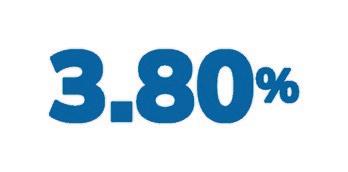
With returns of up to 3.80% p.a. on Term Investment Accounts and a competitive 3.00% p.a. on Current Account-i balances above RM50,001, the bank ensures that even “resting” capital contributes to the bottom line.
The transition from a domestic SME to a global, tech-driven powerhouse requires a banking partner that understands the
App, Navigator Global, and Smart Manufacturing
Stabilisation funds and highreturn deposit accounts
“operational reality” of the ground.
By combining commercial property financing (such as M-Property with up to 150% margin) with digital innovation and strategic sector funding, MBSB Bank is providing the blueprint for that transition.
As digital transformation accelerates and global markets evolve, the goal remains clear: to ensure that Malaysian SMEs are not just participants in the economy, but the very engine that drives it forward.
Contact the Commercial Banking team today: Huzaini Hamdi: +6019-318 0700
Titan Lee: +6016-987 1313 Website: growyourbusiness.com.my
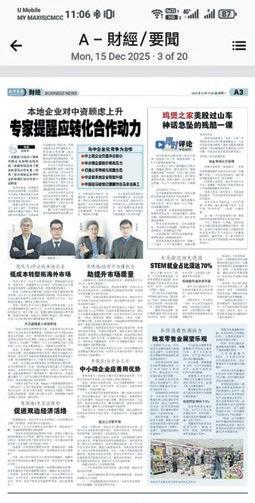
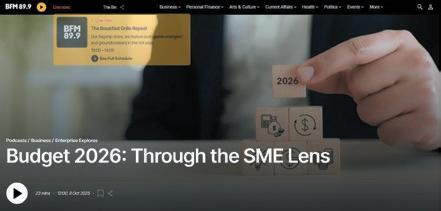
The SME Association of Malaysia (SME Malaysia) and its National President, Dr Chin Chee Seong, have remained at the forefront of the media landscape, serving as a vital bridge between the industry and policymakers. From national print dailies to business podcasts and radio appearances, the Association continues to advocate for a more resilient, digitalised, and sustainable SME ecosystem.
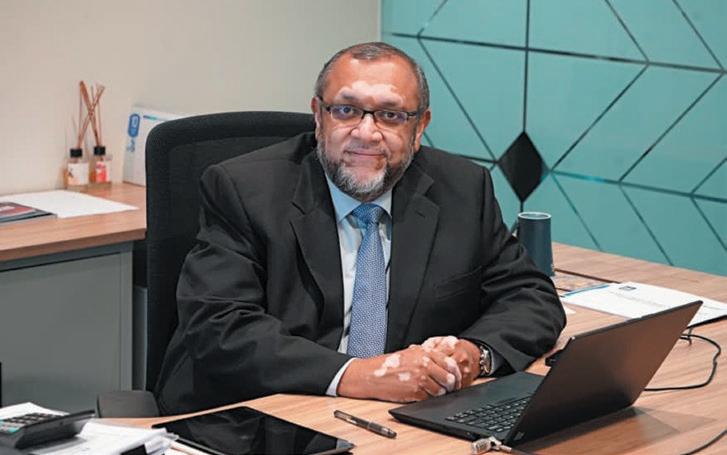
The year kicked off with a major feature in The Star (28/12/2025), where National President Dr Chin Chee Seong shared his vision for the future of the SME community.
Addressing the new youth leadership age cap (18–30), Chin highlighted a potential “development gap” for those in their 30s — the prime age for scaling family businesses and start-ups.
“SMEs often prepare their successors in their late 20s or early 30s,” Chin noted, pointing out that start-ups and family businesses might find their talent pipelines squeezed.
He urged SMEs to strengthen internal mentoring systems to bridge this gap and called for more inclusive government incentives that support founders into their early 30s, when they possess the necessary experience and financial stability.
Chin also urged the government to ensure that incentives for young entrepreneurs do not stop at 30, as many successful businesses only find their footing when founders reach their early 30s.
To bridge this gap, Chin pledged that the Association would continue to provide “spaces for collaboration, incubation, and mid-career upskilling” to ensure innovation remains ageless.
Beyond leadership, the Association’s media presence has been marked by a consistent effort to address the diverse challenges facing the industry today.
A recurring headline throughout December was the Association’s bold call for a dedicated Ministry for MSMEs.
In reports by Free Malaysia Today and Business Today (09/12/2025), SME Malaysia argued that the current fragmented structure across multiple ministries
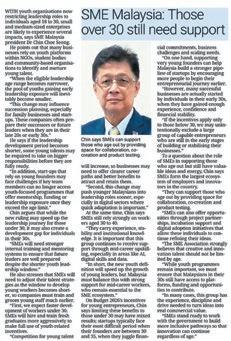
hampers effective policy implementation.
“A central ministry would create a clear command structure capable of responding swiftly to issues like digitalisation and global competition,” Chin noted.
He also stressed that SME Corp. Malaysia should remain the primary implementing body under this new structure to maintain continuity in service.
In interviews with China Press and The Star (08/12/2025), Chin offered a sobering counter-perspective to NGO reports suggesting a 5% average salary increase and two-month bonuses for 2026.
He clarified that SME performance had dropped by roughly 30% this year, with F&B and logistics suffering up to a 50% decline due to rising fuel costs and the expanded Sales and Service Tax (SST).
However, recent government
announcements provided some “breathing space”.
Speaking to Oriental Daily and NST (January 2026), Chin welcomed the Prime Minister’s decision to raise the service tax exemption threshold and reduce rental service tax to 6%.
While noting these as “tangible benefits”, he urged the government to refrain from introducing new taxes or further minimum wage hikes to allow businesses time to recover.
Digital transformation remains a non-negotiable priority. On the Kopiscope podcast (05/12/2025), Chin emphasised that digitalisation is no longer an option but a survival necessity.
This was echoed during his appearance at the launch of eCloudvalley’s AI Centre of Excellence (The Edge, 17/12/2025), where he described AI as the new engine of competitiveness for local firms.
On the regulatory front, the Association has been a key voice on e-invoicing. While welcoming the higher RM1 million turnover threshold for mandatory compliance (The Star, 31/12/2025), Chin encouraged SMEs that have already invested in these systems to proceed.
“E-invoicing is a positive step for data collection and transparency,” he told Buletin TV3, while also praising LHDN’s move to expedite the refund of overpaid taxes as a major boost for SME cash flow.
Whether discussing the Employment Insurance System Act (NST, 08/12/2025) or the new Self-Assessment Stamp Duty System (The Star, 22/12/2025), the Association’s message to the government
has been clear: clarity and engagement must come before enforcement.
Chin highlighted that while SMEs support modernisation, the “worry about penalties” remains a top concern.
He called for clearer timelines and deeper discussions between authorities and industry leaders to ensure compliance does not become a burden that stifles growth.

Founded in 1995 as a community voice, the SME Association of Malaysia (SME Malaysia) enters its fourth decade as a powerhouse of national policy. In this landmark feature, National President Dr Chin Chee Seong reflects on the Association’s evolution from a local support group into the “connective tissue” bridging 900,000 MSMEs with the digital future.
The story of SME Malaysia began on 13 July 1995. Originally established as the SMI Association of Malaysia, it was born out of a necessity to provide a unified voice for the “Small and Medium Industries” (SMIs) of the era.
At that time, Malaysia’s industrial landscape was rapidly expanding, but smaller players often lacked the resources to compete with multinationals or navigate complex government bureaucracies.
The founding objective was straightforward but far-reaching: to promote, support, and provide solutions for the best interests of small and medium industries, enterprises, and businesses across Malaysia.

In its early years, the Association’s work centred on building community, creating networks, and providing a platform for business owners who were often overlooked in larger economic development agendas — firms that collectively make up over 99% of Malaysia’s business landscape and contribute substantially to employment and national economic vitality.
Reflecting on this journey, National President Dr Chin Chee Seong identifies this period as a fundamental shift in the Association’s DNA.
“Among the many milestones in our 30-year history, the most transformative was when SME Malaysia progressed from a networking association to a policy
partner of consequence,” he notes.
“In our first decade, we built community and confidence. As the economy evolved, we professionalised our bureaus, deepened collaboration with ministries and agencies, and brought ground realities from micro and small firms into national rooms where decisions are made.”
That shift — from support to cocreation — is what Dr Chin terms the Association’s most transformative milestone.
Rather than simply advocating from the sidelines, SME Malaysia helped define policy priorities and programmes that responded directly to the lived experiences of its members.
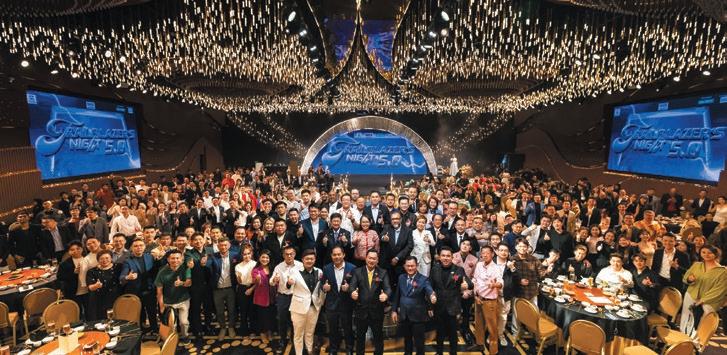
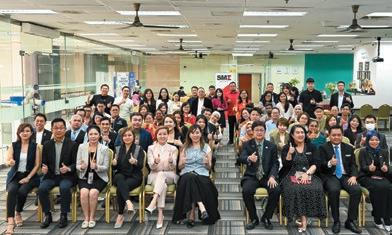
One of SME Malaysia’s most significant contributions is its role as an intermediary and advisor to the government. The Association is a regular participant in pre-budget dialogues with the Ministry of Finance and works closely with the Ministry of Entrepreneur Development and Cooperatives (KUSKOP) and SME Corp. Malaysia.
Dr Chin describes the Association as the essential “connective tissue” between high-level national strategies and the business owner on the street.
“National strategies can feel distant to a small shop. Our role is to translate, connect, and activate,” he explains.
“We translate policy into clear steps SMEs can act on, connect ministries with ground feedback, and activate participation by curating programmes that help SMEs plug into supply chains and new industry incentives.”
As a result, it became a critical policy partner in areas such as financing, digital adoption, talent development, and market access.
This evolution, Dr Chin says, reshaped not only how the government listens, but also how SMEs see themselves: as participants in policy, not just recipients of it.
If the last decade was one of learning and strengthening, 2025 proved to be a year that tested MSMEs on multiple fronts.
Global economic pressures, supplychain disruptions, and rising costs strained cash flows and confidence for many small firms.
Dr Chin acknowledges this, noting:
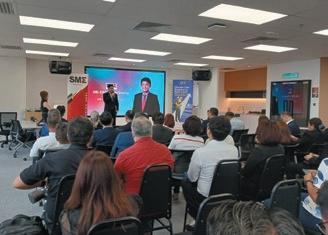
“That year tested cash flows, confidence, and capacity. 2026 must be the pivot — from coping to competing.”
To guide this pivot, SME Malaysia has aligned its advocacy and programmes around three practical levers:
● Demystifying AI for the smallest businesses with practical use cases that lift productivity.
● Lowering barriers to usable digital tools, especially for traditional sectors.
● Ensuring policy support is accessible and achievable, so adoption feels possible rather than risky.
“The signal to members is clear: move from survival decisions to transformation decisions, step by step,” Dr Chin stresses.
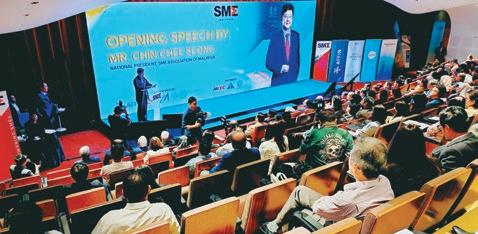
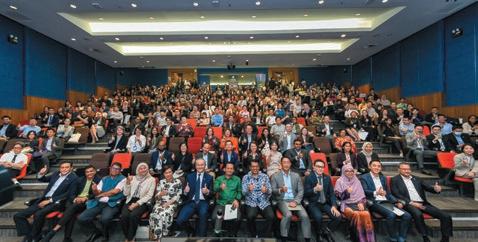
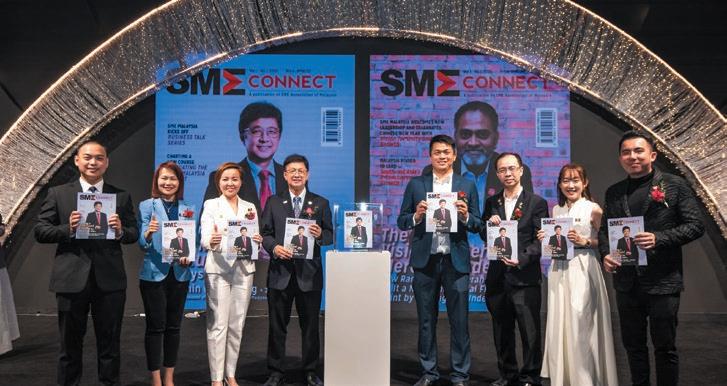
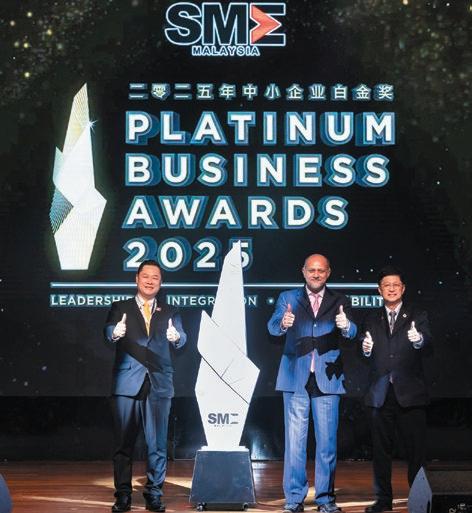
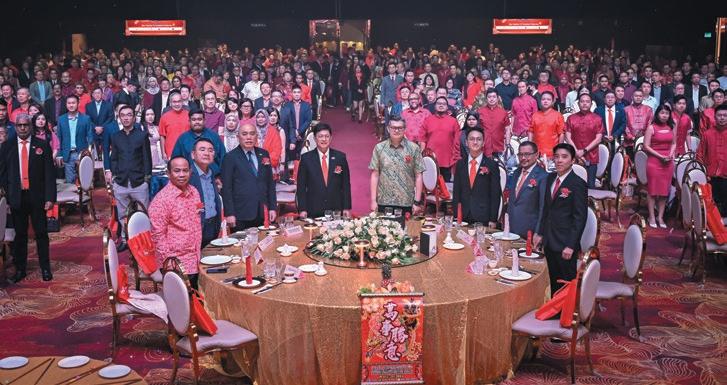
Over the years, SME Malaysia has become known for a suite of flagship initiatives that both celebrate excellence and drive capacity building.
● Platinum Business Awards (PBA): Recognised as one of Malaysia’s most prestigious honours for SMEs, the PBA honours outstanding companies in categories such as Brand Excellence, Innovation, and Sustainability. The 2025 edition, officiated by government ministers, drew hundreds of leaders, reflecting the event’s status as a national stage for entrepreneurial excellence.
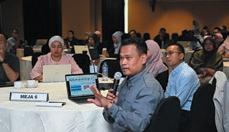
● SME Day and Convenings: SME Malaysia curates workshops, forums, and dialogues that help members connect with stakeholders, discover funding resources, and engage with trends such as digital logistics and AI.
● Trailblazer’s Night: A networking series dedicated to connecting young entrepreneurs with investors and mentors.
The strength of the Association has always been its leadership, from the modernising efforts of Datuk Kang Hua Keong to the current National Council.
For Dr Chin, serving the future means renewing the leadership pipeline.
He emphasises that SME Malaysia must be a home for every generation: long-time business owners who have mastered the fundamentals, founders in their 30s scaling up, and youth with digital fluency ready to innovate.
“My commitment is to keep SME Malaysia as a home for every generation —veterans who mentor, founders in their 30s who scale, and youth who bring digital fluency,” says Dr Chin.
To facilitate this, the Association is strengthening youth pathways and embedding structured mentorship.
“Leadership must be a continuum — this is how we stay inclusive, credible, and ready.”
What is SME Malaysia’s “North Star” as it launches into its fourth decade?
“The answer lies in a bold but grounded vision,” Dr Chin answers. “A Malaysia where every MSME — micro to highgrowth — can thrive in an economy shaped by AI, digital trade, and sustainability.”
This vision comprises three pillars:
● A stronger voice for MSMEs in policy formation.
● A digital and talent-ready ecosystem that uplifts capacity and competitiveness.
● An inclusive association that nurtures leadership across all generations.
Three decades on, SME Malaysia’s impact is visible in the stories of countless entrepreneurs who have found community and opportunity through its network.
As the economy evolves — with digital trade, sustainability, and global integration as defining themes — the role of SME Malaysia will only grow more important.
The upcoming 30th Anniversary Gala Dinner is designed not just as a celebration of history, but as a promise to stand with MSMEs as they transform and scale.
In the words of its National President: “This anniversary is not an endpoint but a milestone on a journey of transformation. The nation’s future cannot be built without you.”
SME Malaysia and KUSKOP forge a new alliance to accelerate productivity and market access for 900,000 MSMEs nationwide.
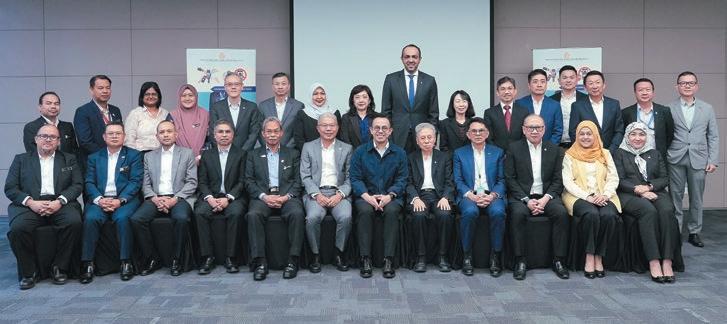
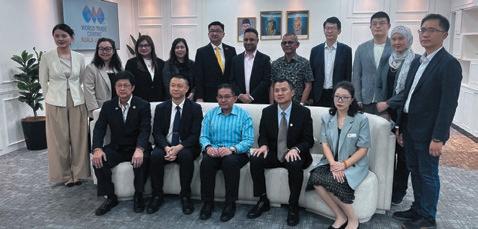
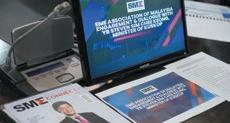
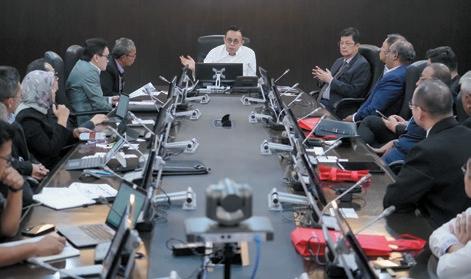
On 10 March, SME Malaysia spearheaded a high-level strategic engagement with the Ministry of Entrepreneur and Cooperatives Development (KUSKOP), aimed at deepening policy alignment and strengthening the resilience of Malaysian small and medium enterprises.
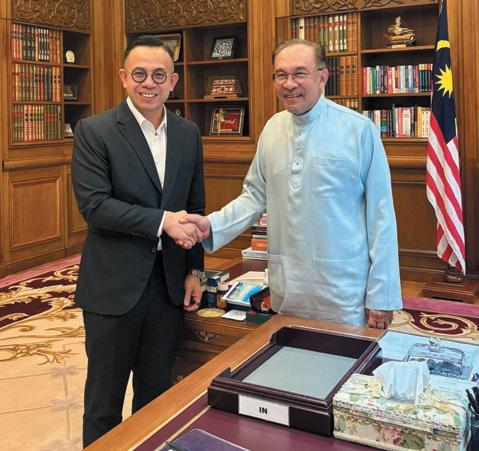
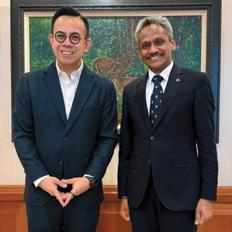
The dialogue, chaired by YB Steven Sim Chee Keong, Minister of Entrepreneur and Cooperatives Development, provided a platform for the Association’s leadership to advocate for structured collaboration in navigating the evolving economic landscape of 2026.
The session featured a strong representation from both sides. The Minister was joined by KUSKOP Deputy SecretaryGeneral, Rahman Mohd Din and SME Corporation Malaysia CEO Rizal Nainy.
The SME Malaysia delegation, led by National President Dr Chin Chee Seong, included National Vice Presidents Anpananthan K, Datuk Wira Naina Mohamed, Datuk Wira Richard Lau Chi Chiang, and Sam Tsen Mun Ket; National Secretary-General Dennix Yeow Wah Fuong; and National Council Members Desmond Anil, Calvinn Tay Chok Hong, Dato’ Danny Tan Eng Ching, and Mak Kum Shi.
Advancing the “AbCD Strategy”
During the session, the Minister reaffirmed KUSKOP’s commitment to his “ABCD Strategy”— a focused framework targeting Accelerated productivity, Bureaucracy
As a KUSKOP agency dedicated to “Growing Tomorrow’s Entrepreneurs,” INSKEN offers structured capabilitybuilding and mentoring programmes that the Association aims to leverage for its high-growth members.
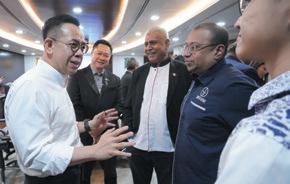
Closing the session, both parties agreed to organise a dedicated nationwide dialogue between the Minister and SME members.
reduction, Capital accessibility, and Developing market access.
The Minister emphasised that sustainable SME growth must be anchored in productivity enhancement, scalability, and competitiveness.
He also encouraged SMEs to leverage the development programmes, financing facilities, and market access initiatives made available through KUSKOP and its agencies.
SME Malaysia, representing over 15,000 businesses through its 11 regional branches, emphasised its role as the critical “bridge” for these policies.
Dr Chin stressed that for national initiatives to succeed on the ground, there must be a seamless delivery mechanism that translates high-level strategy into tangible business outcomes.
The dialogue also opened new pathways for SME Malaysia to explore a strategic partnership with Institut Keusahawanan Negara (INSKEN).
This upcoming engagement will ensure that the ground-level perspectives of the business community remain at the heart of national economic planning.
In conjunction with its landmark 30th Anniversary, SME Malaysia presented its Five Pillar Initiatives, designed to complement the Ministry’s direction:
● Nationwide SME Economic Forums: Structured engagements for direct interaction with local authorities.
● International Economic Forum: Connecting local players with global leaders and B2B matchmaking.
● Platinum Business Awards 2026: Celebrating excellence and innovation within the sector.
● SME Go Digital Initiative: Deploying young digital talent to assist members with automation.
● National SME Global Acceleration Program: Scaling Malaysian brands via cross-border e-commerce.
On 4 April 2026, SME Malaysia issued a formal statement warmly welcoming the proactive measures announced by YB Steven Sim, Minister of Entrepreneur and Cooperatives Development (KUSKOP).
The Association views the Minister’s recent initiatives as a constructive and practical response to the ground-level concerns raised by the small and medium enterprise sector.
Key to this positive reception is the rapid rollout of KUSKOP’s financing packages.
Within just three months of his tenure, the Minister announced a total financing package of RM4 billion, with RM2 billion already channelled to local businesses.
This includes a landmark RM130 million low-interest financing scheme specifically for Malaysian Chinese entrepreneurs — the first of its kind — of
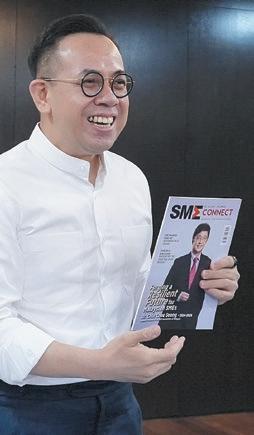
SME Malaysia welcomes YB Steven Sim’s timely interventions, including a RM15 billion market mobilisation, as a vital boost for competitiveness amidst global uncertainty.
which RM90 million was approved within a two-month window.
Furthermore, the Ministry’s “PowerUp10k” programme aims to mobilise up to RM15 billion into the market.
This ambitious consolidation of resources is designed to support at least 10,000 enterprises in scaling operations and enhancing their global competitiveness.
National President Dr Chin Chee Seong emphasised that these initiatives reflect a more responsive approach to policymaking at a critical juncture.
SMEs currently face a “perfect storm” of challenges, including rising operating
costs, manpower shortages, and increasing compliance burdens.
“The Minister’s willingness to listen to industry feedback demonstrates a deep understanding of the operational realities businesses face,” said Dr Chin.
“Policies affecting the business community must be practical, proportionate, and implementable — particularly for the SME segment, which remains the backbone of our national economy.”
The Association noted that immediate policy responsiveness is especially vital as external shocks, such as the ongoing conflict in the Middle East, threaten to drive up energy, logistics, and raw material prices.
Such inflationary pressures risk compressing business margins and weakening investor confidence.
“The Minister’s response reflects meaningful recognition of the SME community’s voice. We hope this dialogue continues to help ease business pressures and strengthen competitiveness.”
– Dr Chin Chee Seong, National President, SME Association of Malaysia
To withstand these shocks, SME Malaysia recommends further targeted programmes focused on:
● Digital Transformation: Accelerating the adoption of technology to improve productivity.
● Global Expansion: Assisting members with export readiness, market access, and cross-border business matching.
● Public-Private Collaboration: Strengthening ties with industry bodies to ensure support reaches the businesses that need it most.
Closing the statement, Dr Chin expressed hope that this level of engagement would continue.
“We look forward to a progressive introduction of business-friendly measures that ease pressure on our members. SME Malaysia remains committed to working closely with KUSKOP to ensure the voice of the entrepreneur is effectively represented in national economic planning.”
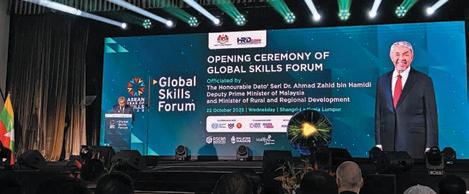
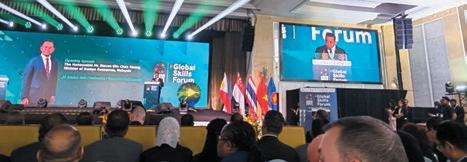
The Global Skills Forum (GSF)
2025 Grand Finale, held in Kuala Lumpur last October, served as a pivotal platform for regional leaders, policymakers, and industry experts to address the critical role of skills development in ASEAN’s economic transformation.
The prestigious gathering was officiated by Deputy Prime Minister Dato’ Seri Dr Ahmad Zahid Hamidi, following an opening speech by Minister of Human Resources Steven Sim Chee Keong.
Representing the voice of Malaysian SMEs, National President Dr Chin See Seong attended the event to advocate for continuous upskilling and workforce resilience.
During the forum, Chin emphasised the necessity of global collaboration to ensure that the SME workforce remains future-ready within the evolving global skills ecosystem.
The Association remains dedicated to strengthening talent development to bolster the region’s competitive standing.
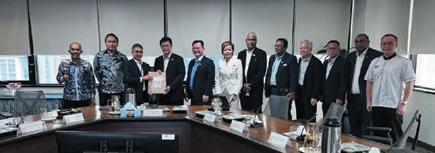

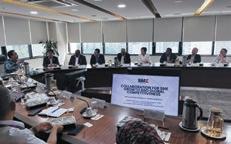
In a move to strengthen the local business ecosystem, SME Malaysia participated in an engagement session with BPMB Group Banks in mid-November 2025.
Hosted by BPMB Group Chief Executive Officer Dato’ Muzaffar Hisham, the session served as a vital platform for exploring collaborative efforts to empower small and medium enterprises.
Discussions during the engagement focused on enhancing financial accessibility, fostering innovation, and building strategic partnerships to ensure long-term sustainability for local businesses.
Both parties highlighted the importance of global competitiveness and resilience, aligning with the national goal of driving inclusive and sustainable economic development.
This dialogue marks a significant step towards deeper synergy between financial institutions and the SME community.


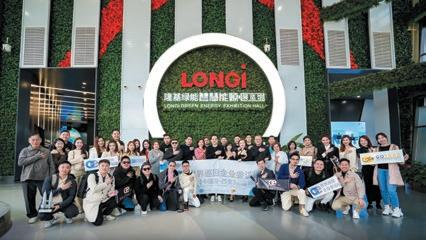



The 2025 China (Guangxi)
Key Industries Promotion Conference was successfully held at the Sheraton Imperial Kuala Lumpur on 24 November 2025.
Co-organised by SME Malaysia and the Department of Industry and Information Technology of Guangxi Zhuang Autonomous Region, the event drew nearly 100 participants and representatives from over 60 enterprises.
Director General of the Guangxi department, Yuan Huang, led the Chinese
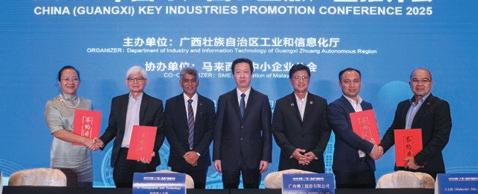
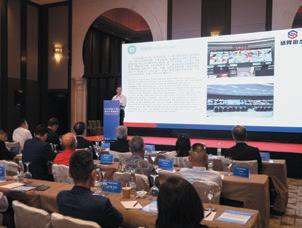

delegation, highlighting vast opportunities for collaboration in artificial intelligence (AI), advanced materials, and new energy vehicles (NEV).
National President Dr Chin Chee Seong emphasised the potential for deeper industrial linkages, urging Malaysian
SMEs to explore strategic alliances with their Chinese counterparts.
The event, witnessed by National Chamber of Commerce and Industry of Malaysia President Dato’ Seri N. Gobalakrishnan, saw the signing of several Memoranda of Understanding, further solidifying bilateral industry connectivity and opening new pathways for economic growth.
National President Dr Chin Chee Seong was recently invited to represent Malaysian SMEs at the “Henan Meets Malaysia” China (Henan) — Malaysia Economic & Trade Cooperation Conference.
Held in Kuala Lumpur in early December 2025, the event brought together government agencies, business associations, and industry leaders from both nations.
The conference focused on highlevel discussions regarding investment, trade, agricultural technology, and green manufacturing.
Chin’s participation underscores the Association’s commitment to elevating
Malaysia–China economic ties.
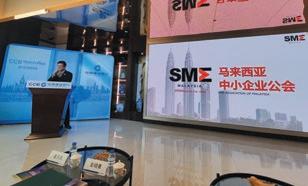
By engaging in these strategic dialogues, the Association aims to open new doors for Malaysian entrepreneurs
in the areas of financial services and technological collaboration, further strengthening the bilateral trade relationship.
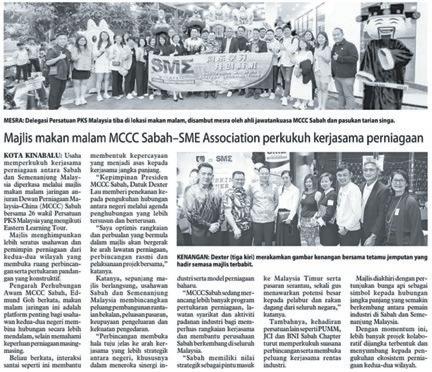
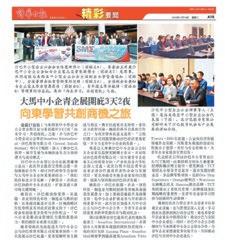
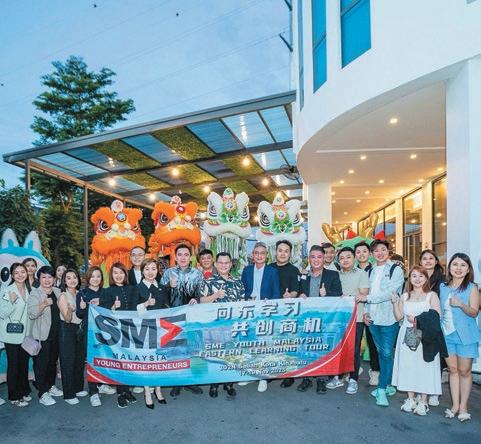
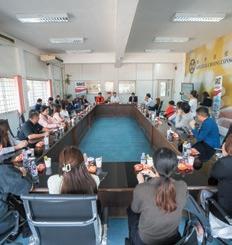
Ahigh-level delegation from SME Malaysia undertook the SME Youth Malaysia Eastern Learning Tour 2025 to Sabah from 17 to 19 November 2025.
Led by National Deputy President Dato’ Sri Ricky Yaw Chan Choy, the study and business exposure tour provided participants with deep insights into the state’s dynamic economic landscape and investment potential.
The delegation included National Vice Presidents Datuk Ada Poon Yin Hoong, Datuk Michelle Siow Lee Ching, and Sam Tsen Mun Ket, as well as Chairman of the SME Youth Entrepreneurs Bureau Teh Gaik Cheong.
The Association expressed its gratitude to the SME Association of Sabah for its warm hospitality, by organising a tour that facilitated direct engagement with key industry players.
The mission culminated in a meaningful networking dinner with the Malaysia-China Chamber of Commerce (MCCC) Sabah, led by President Datuk Dexter Lau.
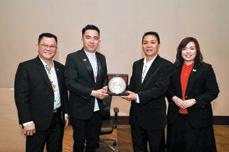
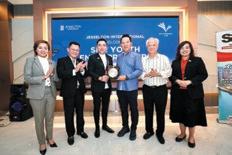
The evening, which featured a symbolic fireworks display, served to strengthen the bonds between entrepreneurs from East and West Malaysia, paving the way for future cross-regional cooperation.



For SMEs, the cost of being overlooked is the lost opportunity of a first impression; to compete, they must evolve from a passive online existence to becoming a credible, discoverable, and trusted authority.
In today’s marketplace, the first interaction between a business and a potential customer almost always happens on a screen.
For small and medium enterprises (SMEs), this means the traditional idea of a digital storefront has shifted — often replaced by search results, listings, and digital impressions formed in seconds.
The challenge is no longer just delivering a quality product or service. It is about overcoming digital invisibility.
To remain competitive, SMEs must transition from being a local secret to establishing a credible and verifiable digital presence.
This progression follows three essential phases: discovery, evaluation, and commitment.
The first step of the journey, discovery, is not accidental. It is built by being present at the exact moment customers begin their search for a solution.
Today, this search is evolving as AI models and “Search Generative Experiences” begin to act as gatekeepers, pulling data from across the web to recommend businesses to users.
Platforms such as Google Business Profile, Bing Places, and industry-specific directories not only serve as the modern-day “Yellow Pages”, but they now also act as the primary data sources for these AI systems.
By maintaining accurate listings, operating hours, and customer reviews, SMEs ensure they are visible not just to human searchers, but to the algorithms that recommend them.
Once the customer discovers your business, they evaluate whether it is capable, reliable, and the right fit for their specific needs.
While a listing provides the introduction, a website serves as the digital home where trust is reinforced and the decision to proceed is made.
This is the primary source where both human visitors and automated assistants look to verify a business’s expertise.
To complete this professional ecosystem, businesses must also address their outward correspondence. One of the most overlooked yet impactful upgrades for SMEs is adopting a custom email domain, moving from @gmail.com to @yourbusiness.com. Replacing a generic email address with one that reflects the business name signals professionalism and credibility from the outset.
It provides the final assurance needed for the customer to step through the door, ready to sign a contract or begin a longterm partnership.
With the foundation of trust established, the final stage of the journey is reached when customers turn their interest into

what the world says about the business.
This is where a business’s reputation management becomes its most powerful conversion tool. Google Reviews serve as the modern- day word-ofmouth, offering transparent, third-party validation that a business delivers on its promises. A visible and active presence on professional like LinkedIn, combined with a strong track record of positive feedback across social media
3THiRDS iNC SDN BHD
No. 53-1, Lagoon Business Centre Jalan PJS 9/1A, Bandar Sunway 47500 Subang Jaya, Selangor
Founded: 1997
Key industry: Digital Marketing, Digital Out-of-Home (DOOH), Communications
Specialty: Google Search, Reputation Management, Email, Website, Screens, Cinema advertising
Website: 3thirds.my
Linkedin: linkedin.com/company/3thirdsinc
and community review platforms, further reinforces this credibility, proving that the business is stable, respected, and real. To bridge the final gap between interest and action, strategic tools like Google Search Ads allow a business to reappear at the exact moment of high intent, ensuring they stay top-of-mind when the customer is ready to sign.
Founded in 1997, 3thirds Inc has evolved alongside the digital landscape, supporting SMEs, government agencies, and multinational corporations in building cohesive digital strategies. By integrating services such as online listings, website development, and reputation management, the company helps businesses bridge the gap between visibility and credibility.3thirds Inc works with businesses to build a clear brand and create the right content to explain their value to customers at every step of the process. As Bimal Prakash, Director of 3thirdsInc, notes, search is the purest form of intent, and that always starts with the customer. “When these fundamentals are in place, SMEs are better positioned to build trust, strengthen their presence, and achieve sustainable growth,” he adds. In a world where the customer journey begins online, being discoverable can make the difference between success and failure.



With Malaysian SMEs losing over RM1.2 billion to cyber fraud in 2025, the humble password is no longer enough. A home-grown, world-certified technology, Neurogine nToken, is offering a powerful new line of defence.
Across Malaysia, SMEs are rapidly digitising.
From online banking and e-invoicing to cloud-based collaboration and digital procurement platforms, the modern Malaysian SME is more connected than ever. However, this connectivity comes with a hidden cost: soaring cyber risk.
The numbers are stark. In 2025, Malaysian SMEs lost more than RM1.22 billion to cyberattacks and fraud, with data breaches jumping by 29%.
A single ransomware attack on a distribution company in Selangor cost over RM1.2 million, while a Penang manufacturer lost RM240,000 to an AIpowered voice scam.
For SMEs with limited IT resources, such attacks are more than just a disruption; they can signal the end of the business. The biggest vulnerability often lies in a familiar tool: the password.
The Password Problem Passwords and SMS one-time passwords (OTPs) are the weakest links in the security chain. They are easily stolen through phishing emails, fake websites, and credential-stealing malware.
Once cybercriminals have a password, they hold the keys to the company’s financial systems, emails, and sensitive data.
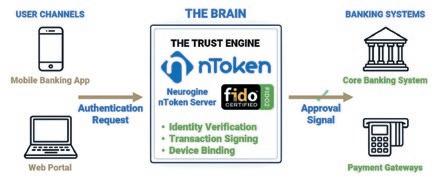
Globally, the cybersecurity industry is moving away from this flawed model towards Fast Identity Online 2 (FIDO2), an open authentication protocol developed by the FIDO Alliance that eliminates passwords entirely.
Instead of typing in a code, FIDO2 uses public-key cryptography. A private key is stored securely on the user’s device (such as a smartphone or security dongle), while a public key is held by the service provider.
To log in, the user simply verifies their identity with a biometric, such as a fingerprint or facial recognition.
“Authentication is the first line of defence. If you secure identity, you secure access.”
– Owen Chen Chee Onn, CEO, Neurogine Sdn Bhd

This makes phishing nearly impossible. Because the authentication is cryptographically tied to the legitimate website’s domain, a fake login page simply will not work; the key refuses to respond.
A Malaysian Solution, Certified for the World Recognising this urgent need, Malaysian fintech company Neurogine Sdn Bhd
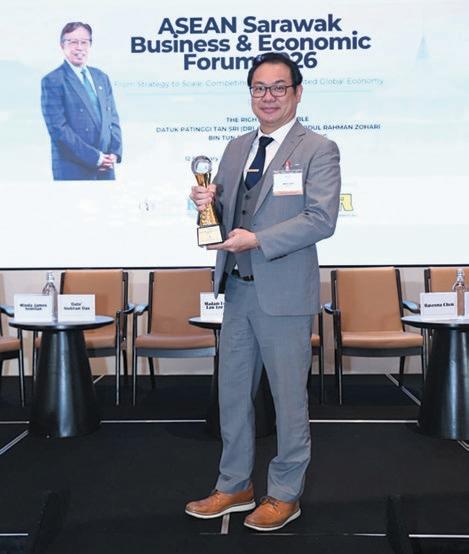
Neurogine was presented the ASEAN Innovation Excellence Award by Sarawak Premier
Datuk Patinggi Tan Sri Abang Johari Tun Openg during the ASEAN Sarawak Business and Economic Forum 2026 in February.

WHy NEUROGiNE NTOKEN MATTERS FOR SMES
● Eliminates Password Risks: Stops phishing and credential theft at the source.
● Protects Critical Data: Secures access to financial and cloud-based systems.
● Simplifies User Experience: Provides fast, biometric logins without the need for password resets.
● Future-Ready: Aligns with Malaysia’s MyDigital ID initiatives.
● Globally Certified: FIDO2 certification ensures universal compatibility.
● ASEAN Cybersecurity Market: Projected to double from US$5.5 billion (RM21.67 billion) in 2025 to over US$14 billion (RM55.19 billion) by 2031.
● Global FiDO2 Market: Expected to surge from US$1.8 billion (RM7.1 billion) in 2024 to nearly US$8 billion (RM31.5 billion) by 2033.
developed Neurogine nToken.
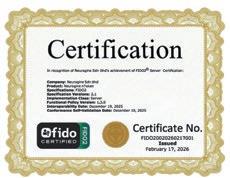
Last February, the solution achieved official FIDO2 certification, confirming it meets the highest global standards for passwordless authentication and works seamlessly with modern web browsers and platforms worldwide.
For SMEs, the technology is simpler than it sounds. Instead of “writing your password on a piece of paper” and handing a copy to every website you visit, Neurogine nToken provides a unique, unbreakable digital key. When you sign up on a website, your device creates two keys: a public one for the site (acting as a secure lock) and a private one that stays secret on your device (the only key that opens that lock).
When you log in, the website challenges you to open the lock using your private key. You confirm your identity with a biometric scan, the site verifies the match, and you are in.
If a hacker creates a fake website, the private key checks the site’s address first. If it is incorrect, it refuses to work, leaving the hacker with nothing.
According to Neurogine CEO Owen Chen Chee Onn, the goal was to make enterprise-grade security accessible to smaller businesses.
“Many SMEs assume advanced cybersecurity is only for large corporations,” says Chen. “But authentication is the first and most important layer of defence. If the identity is secure, then the access is secure. With Neurogine nToken, employees no longer need to manage multiple passwords, and IT teams are freed from constantly resetting accounts.”
Neurogine’s development of technologies such as Neurogine nToken and Neurogine n2Tap — the first mobile payment
technology in Malaysia to meet both PCI MPoC Software and Solution security standards — has earned significant industry acclaim.
On 12 February 2026, Neurogine was awarded the ASEAN Innovation Excellence Award, presented by the Sarawak Premier, Datuk Patinggi Tan Sri (Dr) Abang Haji Abdul Rahman Zohari Tun Datuk Abang Haji Openg, at the ASEAN Sarawak Business and Economic Forum 2026.
This followed the World Digital Transformation Leadership Award received at the Global Chinese Economic and Technology Summit 2025 in Kuala Lumpur last November.
Such accolades highlight Neurogine’s growing role in developing technologies that address global challenges for SMEs.
Malaysia is entering a new phase of digital identity development, and industry experts believe the next two years will be a turning point.
The importance of technology like Neurogine nToken extends beyond individual companies; it aligns with MyDigital ID, Malaysia’s national digital identity framework.
As this ecosystem grows, SMEs interacting with government portals and digital banks will increasingly require phishing-resistant authentication.
Neurogine is among a rare handful of Malaysian companies with technology certified by the FIDO Alliance.
The benefit for SMEs is simple: stronger security without complicated infrastructure.
As digital transformation accelerates, authentication will become the gateway to trust in the digital economy.
For Malaysian businesses, the tools to secure that gateway are already built right here at home.
ToSoul Academy is carving a niche in holistic wellness by combining aesthetic expertise with functional body alignment to improve quality of life.
In an increasingly crowded wellness landscape, ToSoul Academy is taking a more integrated path — one that goes beyond aesthetics to address the body’s structural balance and overall wellbeing.
Founded with a focus on education and therapeutic practice, the academy centres its work on pelvis alignment, a technique it believes plays a critical role in improving posture, mobility, and internal balance.
“At ToSoul Academy, we look at the body as a whole system,” says Founder and Chief Instructor Dr Win Chong.
“When alignment is corrected, the body is better able to function, recover, and heal.”
This philosophy positions the academy not just as a training provider, but as a wellness advocate — bridging the gap between aesthetic care and functional health.
While still growing its footprint, ToSoul Academy has already seen encouraging outcomes from its approach.
Among its notable cases is a stroke patient in Johor Bahru who had been living with the condition for over a decade. Through consistent pelvis alignment therapy, the patient reportedly experienced gradual improvements in mobility and overall comfort — a testament to the potential of targeted, non-invasive techniques in supporting long-term recovery.
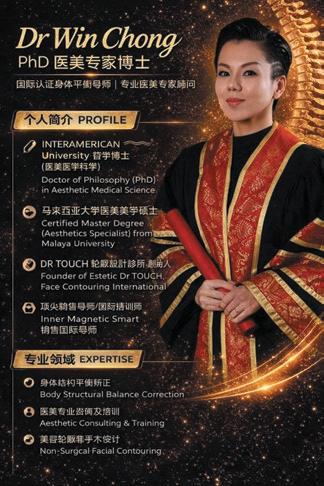
Such cases underscore the academy’s belief that small structural corrections can lead to meaningful changes in quality of life, particularly for individuals managing chronic conditions.
ToSoul Academy’s work is also beginning to gain international attention. The organisation has received an official invitation from the Ministry of Health in Saudi Arabia to introduce its pelvis alignment expertise, marking a significant milestone in its journey.
The opportunity reflects growing interest in alternative and complementary wellness approaches, particularly those that can be integrated into broader
TOSOUL ACADEMy
No 3-2, Jalan E 3/7A, Taman Ehsan, 52100 Kuala Lumpur
Founded: 2020
Key industry: Wellness & Aesthetic Training
Specialty: Pelvis alignment therapy and holistic body alignment techniques
Employees:
65 Professional bone-care specialists
Major Achievements:
● Invited by the Ministry of Health, Saudi Arabia to introduce pelvis alignment expertise internationally
● Growing recognition for non-invasive alignment methods supporting functional recovery and wellbeing
Biggest innovation:
A structured pelvis alignment methodology that integrates aesthetic practice with functional body correction to improve posture, mobility, and overall wellness
Future Plans:
Expand training programmes and international collaborations, bringing ToSoul Academy’s alignment techniques to wider healthcare and wellness communities
Website: https://tosoul-academy.com/
healthcare frameworks.
Looking ahead, ToSoul Academy aims to expand its training programmes and collaborations, bringing its methodology to a wider audience while continuing to refine its practice.
For Chong and her team, the mission remains clear: to help individuals restore balance in their bodies — and, in doing so, improve how they live, move, and feel.
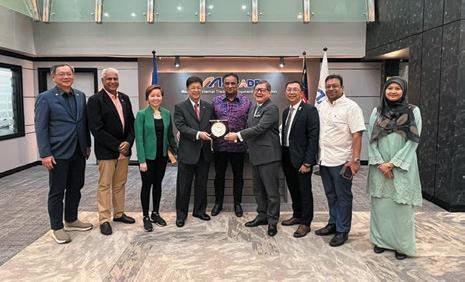
On 3 February 2026, a highlevel delegation from SME Malaysia and the Malaysia Cross-Border E-Commerce Association (MCBEA) conducted a strategic courtesy visit to the Malaysia External Trade Development Corporation (MATRADE).
The meeting, hosted by MATRADE CEO Abu Bakar Yusof, focused on deepening public-private partnerships to accelerate the internationalisation of local enterprises.
National President Dr Chin Chee Seong and MCBEA President Dato’ Dr Danny Tan Eng Ching shared recent success stories, including the China (Luohe) Food Expo and the Alibaba International AI & E-Commerce Study Tour, which have provided members with practical export experience.
The delegation had a chance to meet with MATRADE Chairman Dato’ Seri Reezal Merican Naina Merican, who highlighted the importance of cross-border e-commerce in opening new markets for local entrepreneurs.
A major pillar of the discussion was

the integration of SMEs into the “Madani Digital Trade” platform — an AI-driven initiative by MATRADE that serves as a virtual trade hub.
Dr Chin encouraged members to fully utilise this resource to access global leads and real-time market intelligence.
Additionally, the Association advocated for enhanced government support through the Market Development Grant (MDG) and Services Export Fund (SEF), urging for a strategic allocation of promotional funding across all regions to maximise global impact.
SME Malaysia is pleased to announce a formal strategic partnership with the OBOR Economic and Friendship Association (OBOR), established on 3 February 2026.
This collaboration is designed to strengthen SMEs as the backbone of the regional economy through joint initiatives in technology adoption, talent development, and international trade.
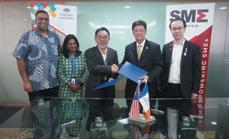
The partnership was formalised with a Memorandum of Understanding (MoU) signed during OBOR Chinese New Year and 10th Anniversary gathering in Kuala Lumpur by National President Dr Chin
Chee Seong and OBOR Secretary General Dr Chiew Kok Peng.
Under this agreement, both organisations will work together to facilitate cross-border trade, develop capacity-building programmes, and promote regional market access for Malaysian businesses.
This alliance reflects a shared commitment to fostering an inclusive and resilient SME ecosystem.
By combining resources and networks, SME Malaysia and OBOR aim to empower local firms to compete more effectively on a global stage while contributing to sustainable regional economic development.
On 5 February, SME Malaysia and the National Institute of Occupational Safety and Health (NIOSH) signed a landmark Memorandum of Understanding (MoU) to elevate the national Occupational Safety and Health (OSH) agenda.
This strategic collaboration is designed to provide SMEs with the professional guidance and resources necessary to build safer, more resilient workplaces.
Under the agreement, NIOSH has launched the OSHA Coordinator Training Programme, offering 3,000 free training slots exclusively for small and medium enterprises.
These slots are available on a firstcome, first-served basis, providing a vital opportunity for businesses to enhance their safety management standards and
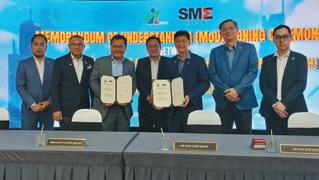
market competitiveness without the burden of additional costs.
The MoU was signed by National President Dr. Chin Chee Seong and NIOSH Executive Director Dato’ Haji Ayop Salleh, witnessed by NIOSH Chairman Chong Chieng Jen.
“Occupational safety is a key pillar
of sustainable business development,” said Dr. Chin. “Through this partnership, SMEs gain direct access to structured training and professional consultancy, ensuring the well-being of their workforce while strengthening their overall operational efficiency.”
The partnership will also involve joint seminars and awareness programmes, focusing on practical expertise and resource sharing.
Chong urged enterprises to seize this early opportunity to register, highlighting that professional safety capabilities are increasingly essential for businesses looking to expand their market reach and comply with modern industrial standards.
The Ministry of Investment, Trade and Industry (MITI) has reaffirmed its commitment to protecting Malaysian exporters and businesses following significant trade policy shifts in the United States.
This follows a landmark U.S. Supreme Court ruling on 20 February, which struck down previous global reciprocal tariffs, prompting an immediate announcement of a new temporary 10% tariff measure by President Donald Trump.
In an official statement released just one day after the US court’s decision, Minister Datuk Seri Johari Abdul Ghani clarified that while Malaysia has signed the Agreement on
Reciprocal Trade (ART), the government has not yet ratified it.
The Ministry is currently conducting a thorough assessment of these legal developments to safeguard the national economy from potential “unilateral tariffs” and other trade measures.

The United States remains one of Malaysia’s most vital and longstanding economic partners. In 2025, total trade between the two nations reached approximately RM367 billion, with Malaysian exports to the U.S. totalling RM233 billion.
Despite the evolving global landscape, the Minister emphasised that Malaysia intends to preserve strong bilateral relations while ensuring a stable and predictable business environment.
To mitigate the impact of
global trade volatility, Datuk Seri Johari outlined a strategy of resilience through diversification:
● Market Diversification: Actively strengthening trade relationships with alternative regional and multilateral partners to ensure economic stability.
● Rules-Based Trade: Maintaining a firm commitment to international standards to protect Malaysian workers and international investors.
● Active Monitoring: MITI is awaiting further clarity on U.S. implementation and potential adjustments — including reports of the temporary rate potentially rising to 15% — to ensure national strategies remain responsive.
“Our position is clear,” stated the Minister. “We will act in Malaysia’s best interests, ensuring our exporters, businesses, and workers remain resilient in an evolving global environment.”