


JOYOUS CNY DINNER & Ushering In PIKOM’s 40th Year DEMOCRATISING
JOYOUS CNY DINNER & Ushering In PIKOM’s 40th Year DEMOCRATISING
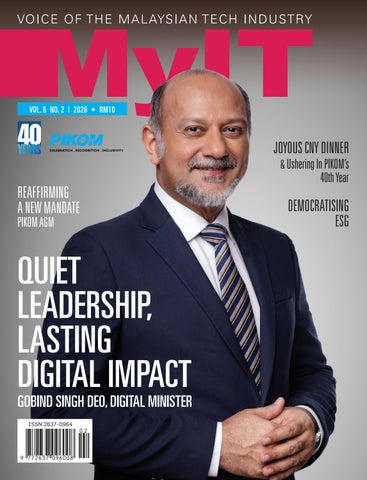
GOBIND SINGH DEO, DIGITAL MINISTER




E1 Empire Damansara, No 2, Jalan PJU 8/8A, Damansara Perdana, 47820 Petaling Jaya, Selangor.
PIKOM COUNCIL
CHAIRMAN
Adjunct Practice Prof Alex Liew
Glocomp Systems (M) Sdn Bhd
DEPUTY CHAIRMAN
Alex Loh
Dynatrace Malaysia Sdn Bhd
SECRETARY
Anthony Raja Devadoss
Agensi Pekerjaan Korn Ferry (M) Sdn Bhd
TREASURER
Ts Abdul Halim bin Md Lassim
Digital Healthcare Solutions Sdn Bhd
COUNCILLORS
Akhil Gupta
Talbotiq Technologies Sdn Bhd
Datuk Alvin Yuen
ISATEC Sdn Bhd
Catherine Lian
IBM Malaysia Sdn Bhd
Desmond Teo
Enzo Plus Sdn Bhd
Johary Mustapha
Forest Interactive Sdn Bhd
Koay Tze Siang
Dell Global Business Centre Sdn Bhd
Millie Yong
Alibaba Cloud (M) Sdn Bhd
Raymond Davadass
Daythree Digital Bhd
Sandy Woo
eCloudvalley Technology Sdn Bhd
Datuk Teoh Eng Kee
EKTECH Communications Sdn Bhd
Vanessa Tan
HT Consulting (Asia) Sdn Bhd
Wing K Lee
YTL Communications Sdn Bhd
APPOINTED COUNCILLOR
Camelia Loh
Talent In Motion Sdn Bhd
Mark Leow
Verity Intelligence Sdn Bhd
Oliver Liu
Huawei Technologies (M) Sdn Bhd
Toh Yung Fei
NTT DATA Business Solutions MSC
Sdn Bhd
Yong Chee Tak
Sarawak ICT Association
Datuk Zainal Amanshah
TIME dotCom Bhd
ADVISORS
Anuar Fariz Fadzil
MDEC Sdn Bhd
Adjunct Practice Prof Cheah Kok Hoong
SteerQuest Sdn Bhd
Dr Chin Chee Seong
Danny Lee
E-Tech IT Sdn Bhd
David Wong Nan Fay
SnT Global Sdn Bhd
Dr Dzaharudin Mansor
Dato Seri Ivan Teh
Ganesh Kumar Bangah
Commerce DotAsia Ventures Sdn Bhd
Ts Ngoh Chee Hung
HELP University
Dato Dr Sean Seah
AngkasaX Innovation Sdn Bhd
Shaifubahrim Saleh
Stan Singh – Jit
IronHorse Asia Sdn Bhd
Woon Tai Hai
Takaful Ikhlas General Bhd
PIKOM EDITORIAL COMMITTEE
Raymond Davadass Chair
Ong Kian Yew
CEO, PIKOM
Nurul Asyiqin Nasir
Head of Strategic Relations and Communications
MY.IT is produced for PIKOM ISSN 2637-0964 by
HARINI MANAGEMENT
SERVICES SDN BHD (609031-W) W-9-12, Menara Melawangi, Amcorp Trade Centre, 18, Persiaran Barat, 46050 Petaling Jaya, Selangor. Tel: +603-7932 3259
Email: harini.mservices@gmail.com www.harini.com.my
Publisher/CEO
V.S. Ganesan
Editor
Khor Hui Min
Creative Designer Goh Wei Lee
Advertising Consultant Faridah Ismail
Marketing Manager Karthik Ganesan
Operations Manager G. Revathi
PRINTER
UNITED MISSION PRESS SDN BHD (755329-X)
No. 15, Perindustrian BS 9, Jalan BS 9/10, Taman Bukit Serdang, 43300 Seri Kembangan, Selangor. Tel: +603-8958 0186
Fax: +603-8945 5168
DISTRIBUTOR
ALLSCRIPT ESTABLISHMENT
(MALAYSIA) SDN BHD (405335-D) No. 16, Jalan TP3, Taman Perindustrian Sime UEP, 47620 Subang Jaya, Selangor. Tel: +603-8020 7112/7122
Fax: +603-8020 7119
Email: allscript@allscript.com Website: http://www.allscript.com

“The AI revolution is transforming every industry, and at the heart of it is computing
In the AI era, data centres are
the factories of the digital economy. Malaysia has a real opportunity to position itself as a regional hub for AI infrastructure if we invest early in digital infrastructure, welcome global investment and nurture strong local entrepreneurs. If these elements come together, Malaysia will not just participate in the AI economy, we will help power the AI revolution.”
— Ong Chin Seong Immediate Past President
As we step into a milestone year, it is a pleasure to welcome you to this special issue of myIT.
PIKOM’s 40th year is a journey defined by progress, partnership and purpose. This year’s theme of Celebration, Recognition and Inclusivity reflects not only how far we have come but also how we intend to shape the future of Malaysia’s digital landscape.
We began 2026 with our annual strategic planning session, setting a clear and ambitious direction for the year ahead.
That spirit carried into our Chinese New Year dinner, where close to 400 industry leaders gathered alongside YB Gobind Singh Deo to also mark the official launch of our anniversary celebrations.
It was an evening filled with warmth and meaning, as we paid tribute to the pioneers and long-standing members whose dedication over four decades has helped build the foundations of our tech ecosystem.
Even as we honoured the past, we kept our focus firmly on the future. The release of the PIKOM TalentGap Survey Report and the upcoming Skills Intelligence Platform, in collaboration with Telekom Malaysia, reflect our ongoing commitment to developing talent that is ready for the demands of a rapidly evolving digital economy.
Our conversations this year have been equally forward-looking. We continue to work closely with the government and partners to ensure alignment with national aspirations.
We also take pride in our role as a bridge between policy and practice.
At the same time, our engagements across borders, from AI collaboration with India to cybersecurity partnerships with Japan and dialogues with global players, highlight the importance of building connections that extend beyond our shores.
Within our own community, initiatives such as Women in Tech remind us that inclusivity is not just a value, but a strength that drives innovation and resilience.
In this issue, we feature perspectives from Malaysia Digital Economy Corporation (MDEC), with insights into national digital priorities under

“… let us remember that technology is more than just an enabler. It is the foundation upon which we build a more resilient, sustainable and inclusive economy.”
ALEX LIEW CHAIRMAN, PIKOM
the leadership of Minister Gobind Singh Deo, who graces our cover.
We also revisit the PIKOM LEAD Conference held last November, where industry voices came together to explore the challenges and opportunities shaping our digital future.
There is a real sense of energy as our 40th year begins to gather pace. While the opening months have already set a strong tone, there is so much more ahead of us – more conversations to spark, more partnerships to forge and more milestones to achieve.
This is a year filled with opportunity and its success will be shaped by all of us. Let us come together with renewed purpose and make this a truly special year for our industry and our nation.
In an era of relentless tech disruption, Digital Minister Gobind Singh Deo is focused not on chasing headlines but on building resilient digital systems, trusted safeguards and lasting opportunities, ensuring Malaysia’s digital future is secure, inclusive and prepared for generations ahead.
By Michael Ang and Frank Chan

When the Ministry of Digital was established in late 2023, it underscored Malaysia’s recognition that advanced technologies like artificial intelligence, data and digital infrastructure would shape not only economic competitiveness but how Malaysia governs, serves the rakyat and positions itself in the region.
Two years after its establishment, that intent is beginning to take shape. The work has been quiet, methodical and largely structural. It has focused less on spectacle and more on building the foundations required for AI Nation 2030 to be credible and achievable.
Much of that approach reflects the leadership style of Digital Minister Gobind Singh Deo: Steady, systems-driven and anchored in long-term national interest rather than short-term headlines.
“AI Nation 2030 carries real responsibility,” Gobind said. “We cannot talk about AI without
first putting governance, trust and capability in place.”
From the outset, Gobind has resisted framing digital transformation as a race. His emphasis has consistently been on order, clarity and coherence. The early months of the ministry were spent aligning agencies, strengthening governance and preparing institutional groundwork for higher-impact initiatives. It was not glamorous work, but essential.
“This ministry was created to bring structure and accountability into how Malaysia approaches digitalisation,” he said. “Without that, ambition remains fragmented and execution becomes uneven.”
That philosophy is rooted in a belief that technology must serve the rakyat from all walks of life.
“Technology only matters if it improves lives,”
he said. “If people cannot access it, cannot trust it, or do not benefit from it, then we have failed.”
That instinct has been evident well before the creation of the Ministry of Digital.
During his first tenure as a minister in 2018, Gobind pushed for lower broadband prices after recognising that connectivity was no longer a luxury but a prerequisite. Lowering prices in 2018 and 2019 widened access and laid foundations that continue to underpin Malaysia’s digital momentum today.
“At the time, broadband was still treated as a commercial issue,” he recalled. “But I saw it as a national one. If connectivity is expensive, you lock people out of opportunity. I am sorry that I had to ruffle a few feathers then, especially with the telcos, but I had to do what was best for the nation, our local businesses and the rakyat.”
That episode captured a defining trait of Gobind’s leadership. He is instinctively attentive to how policy decisions land on the ground, especially for ordinary Malaysians. Whether engaging SMEs, community groups or technology leaders, his concern is consistent: That digital progress must be inclusive, accessible and fair, not abstract or elite-driven.
As Digital Minister, Gobind has carried that same mindset into policy. When the ministry was formed, its first year was defined by a shift from aspiration to architecture. Digital governance was streamlined. Strategic frameworks were prepared. Foundational reforms were put in place to support higher-impact initiatives.
“When the ministry was first formed, our priority was to bring order, clarity and coherence to the digital landscape,” he said. “Today, our responsibility is larger. We are shaping how Malaysia competes, governs and grows in an AIdriven world.”
Trust quickly emerged as a central pillar. Data protection, cybersecurity and governance were elevated from supporting considerations to core infrastructure. Amendments to the Personal Data Protection Act and support for the Cyber Security Act 2024 reinforced a clear message: Digital progress without trust is fragile.
That emphasis has extended beyond legislation into ecosystem development. Under Gobind’s watch, the ministry has prioritised strengthening
“Technology only matters if it improves lives. If people cannot access it, cannot trust it or do not benefit from it, then we have failed.”
– Gobind Singh Deo
local cybersecurity capabilities, encouraging home-grown solutions to protect businesses as digital adoption accelerates.
This has helped create space for madein-Malaysia platforms such as LGMS Bhd’s StarSentry vulnerability management solution, designed to help organisations, particularly SMEs, identify risks and strengthen their cyber defences amid rising threats.
“Cybersecurity is not optional. It is fundamental to confidence, adoption and longterm resilience,” Gobind said.
“You cannot build an AI-driven economy on weak foundations. Trust is what allows adoption, investment and participation to scale.”
The ministry’s second year coincided with a broader regional role. Malaysia’s Asean chairmanship in 2025 placed the ministry at the centre of regional digital policymaking.
Through platforms such as the Asean Digital Ministers’ Meeting, Malaysia moved from learning to contributing, shaping conversations on digital cooperation, emerging technologies and responsible innovation.
“We are no longer just observing what others are doing,” Gobind said. “Malaysia is now contributing ideas, standards and leadership to the regional digital agenda.”
Domestically, the ministry’s work coalesced around three pillars: Digital government, digital economy and digital society. Each pillar was designed to reinforce the others, creating conditions for AI Nation 2030 to pivot from concept to capability.
In digital government, the establishment of GovTech Malaysia signalled a shift towards innovation-led public service delivery. This was supported by the Data Sharing Act 2025 and the formation of a National Data Sharing Committee, enabling agencies to work across silos and deliver more integrated services.
Enhancements to MyGOV Malaysia and the MyGovernment Portal reinforced a single-gateway approach for the rakyat and non-citizens alike.
“Government has to lead by example,” Gobind said. “If we expect the rakyat and businesses to embrace AI and digital tools, public services must be efficient, trusted and interoperable.”
In the digital economy, attention turned to investment readiness and infrastructure. The National Cloud Computing Policy, grants under the 5G Adoption Programme and expanded international cooperation were aimed at accelerating enterprise adoption of advanced technologies, particularly among SMEs with the
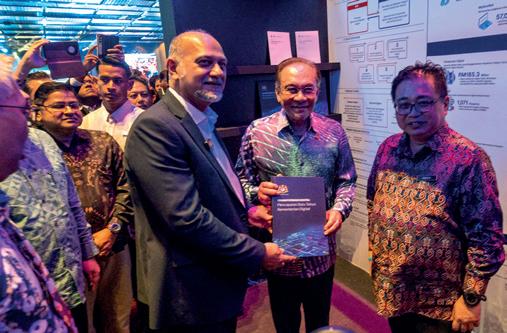
Business Development Initiative spearheaded by the Malaysia Digital Economy Corporation (MDEC).
“Our SMEs are critical to Malaysia’s economy,” Gobind said. “AI and digital tools give them the ability to do more with less, to improve productivity and to reach new markets.”
At the same time, the ministry introduced an AI Code of Ethics and an AI adoption regulatory framework, underscoring its belief that innovation must grow responsibly.
“We want to encourage innovation, but we must also give clarity,” he said. “Businesses and investors need to understand the rules, the risks and the expectations.”
Digital society formed the third pillar. Nationwide outreach through Jelajah Malaysia Digital 2025, leadership and talent initiatives such as the Executive Digital Leadership Programme and Rakyat Digital, and the launch of the National Cyber Ethics Module reflected a clear view that capability and citizenship must advance together.
“You cannot talk about an AI nation if large segments of society are left behind,” Gobind said. “Skills, ethics and inclusion are just as important as infrastructure.”
Running through all three pillars was a unifying idea: Artificial intelligence as a national capability.
The establishment of the National AI Office marked a decisive moment. AI was no longer treated as a niche technology or sectoral add-on. It serves as core infrastructure for productivity, governance and competitiveness.
Meanwhile, PIKOM advisor Ganesh Kumar Bangah said the ultimate measure of success lies in economic impact.
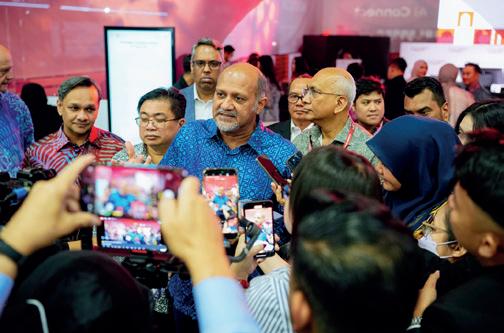


By integrating digital transformation into Malaysia’s broader economic strategy, the Ministry of Digital has helped elevate the digital economy into a strategic growth engine. Ganesh noted that the digital economy contributed about 25.5% of GDP last year, up from 17.8% in 2015, underscoring its shift from a supporting sector to a core driver of national growth.
“AI Nation is steadily taking shape under YB Gobind,” said Ganesh.
“The ministry’s focus on foreign investment and exports, business technology adoption and continuous upskilling and reskilling of the workforce is ensuring that the benefits of AI and digitalisation extend beyond large enterprises, reaching SMEs and the rakyat, and laying the foundations for a resilient and inclusive digital economy.”
The execution aspects now sit at the heart of Malaysia’s forward agenda. As the country embarks on the 13th Malaysia Plan (RMK-13), digital and AI policy is no longer treated as an adjunct to economic planning, but as a core national capability.
Work is underway on a Policy Implementation Plan aligned with the Malaysia Digital Action Plan 2030 Towards an AI Nation, alongside the National AI Action Plan for 2026 to 2030. Together, these initiatives are designed to translate ambition into execution, and vision into durable national capacity.
Crucially, the emphasis is not on chasing
technological breakthroughs for their own sake, but on embedding AI across the economy in a way that strengthens productivity, competitiveness and trust.
“Under RMK-13, AI is being positioned as an enabler across sectors, from public service delivery and manufacturing to healthcare, finance and education, supported by clearer governance structures, investment readiness and a pipeline of local talent,” said Gobind.
“The defining test of AI Nation 2030 is not how quickly technologies are deployed, but how well the ecosystem holds under pressure. Being an AI nation is not simply about infrastructure or talent. It is about governance, ethics and the confidence to compete globally. Readiness must be comprehensive.”
That emphasis on resilience reflects lessons drawn from earlier phases of digitalisation. Rapid adoption without guardrails can expose vulnerabilities, widen inequalities and erode trust. By contrast, a resilient AI ecosystem is one where regulation keeps pace with innovation, data is protected, cybersecurity is strengthened and institutions are capable of adapting as technologies evolve.
This approach has shaped the ministry’s focus on institutional readiness, ensuring that laws, standards, agencies and skills frameworks evolve together. The establishment of the National AI Office, the introduction of an AI Code of Ethics and the strengthening of cybersecurity legislation form part of a broader effort to anchor innovation within a credible and trusted operating environment.

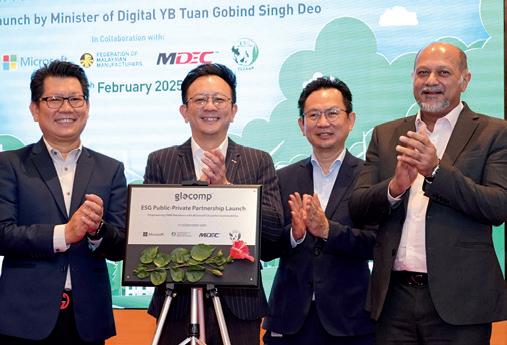
Industry response points to growing confidence in the ministry’s direction and execution. Local corporates cite clearer frameworks and more predictable engagement, while multinationals point to improving regulatory clarity, infrastructure planning and talent development. The common thread is consistency, not spectacle.
That confidence is reflected in industry endorsements. PIKOM Chairman Alex Liew has described Gobind as the tech industry’s “north star”, citing his steady leadership and clarity of vision amid rapid technological change.
“Within the past two years under Gobind’s leadership, a clearer model has taken shape: Government sets the vision and guardrails, while industry translates ambition into realworld outcomes,” said Alex.
“This public–private collaboration has begun turning policy into impact, reflected in more connected services, stronger trust in digital systems and firmer foundations for AI adoption across the economy. Most importantly, the gains are designed to be inclusive, reaching not just policymakers or large enterprises, but the rakyat, government agencies and SMEs that form the backbone of Malaysia’s economy.”
International giants have further amplified similar sentiments. Microsoft Corp has commended Gobind for his “visionary and forward-thinking leadership” in shaping Malaysia’s digital future.
Its Asean President Andrea Della Mattea said the minister and his team have continued
to “chart a progressive course” for Malaysia by shaping policy and fostering partnerships that strengthen the nation’s innovation ecosystem.
“Gobind’s leadership lays the foundation for a strong digital infrastructure that will support Malaysia’s economic ambitions and position the country as a leader in the era of AI.”
That confidence has been reinforced by Microsoft’s long-term commitment to Malaysia. The tech giant has pledged a multi-billion-dollar investment in cloud and AI infrastructure and skilling initiatives over several years, including programmes to train hundreds of thousands of Malaysians in AI, cybersecurity and digital skills.
These investments are intended to support Malaysia’s ambition to become a regional AI hub and underscore industry confidence in the country’s digital and policy direction.
Indeed, two years after its establishment, the Ministry of Digital is positioning itself not as a symbolic institution, but as a long-term architect of Malaysia’s digital future. Under RMK-13, its task is to ensure that AI Nation 2030 is not merely an aspiration, but a sustained national capability.
In an era defined by relentless technological change, Gobind Singh Deo’s approach offers a quieter but more enduring measure of leadership. Not how loudly a vision is proclaimed, but how carefully it is built, and how well it stands as the pace of change accelerates, especially for future generations who will inherit the systems, safeguards and opportunities being put in place today.

For CEO Anuar Fariz Fadzil, MDEC’s 30th anniversary this year is a reminder that the years spent building digital foundations must now produce clearer outcomes.
“When MDEC was established in 1996, the priority was to put Malaysia on the digital map,” Anuar said in an interview with myIT.
“That meant infrastructure, connectivity and basic digital capabilities. Today, the challenge is about translating those foundations into tangible national outcomes for the years and decades ahead.”
MDEC’s long-standing role has been to help create the right environment for digital growth by connecting national priorities with private-sector participation, talent development and policy support. This remains just as important today as Malaysia competes for quality investments and stronger digital capabilities.
Alongside foreign investment, MDEC has also helped nurture Malaysian technology companies through its various initiatives, including the Malaysia Digital framework.
Firms such as Carsome have grown from local ventures into regional names, while companies like Vitrox, Exabytes and TNG Digital reflect the diversity of Malaysian innovation across manufacturing technology, digital services and fintech.
MDEC’s impact can also be seen beyond enterprise technology. The agency has been part of the wider ecosystem supporting Malaysian digital intellectual property with export potential. Upin & Ipin, created by Les’ Copaque Production, stands out as one example of local digital content growing into an internationally recognised franchise across Southeast Asia, the Middle East and other markets.
Under the AI Nation 2030 agenda, Anuar said MDEC’s role is increasingly focused on helping turn national plans into practical implementation in collaboration with the Ministry of Digital, the National AI Office, MyDIGITAL and other stakeholders.
Following the RMK-13 announcement, groundwork under the National AI Action Plan 2026 to 2030 is under way. This includes engagements with state governments to assess readiness for Regional AI Growth Zones ahead of broader implementation from 2026.
Anuar said that MDEC is also stepping up support for AI adoption among micro, small and medium enterprises, where levels of readiness differ widely. As operating pressures increase, he said digitalisation is no longer something businesses can put off.
Beyond AI itself, Anuar said the infrastructure, governance and capability layers being developed now will shape Malaysia’s readiness for other technologies likely to define the next decade, including robotics, the IoT, blockchain, quantum computing and spatial computing.
AI is the base layer that enables broader innovation across the economy.
Recent export figures offer one measure of the momentum already building. MDEC reported RM6.8 billion in digital exports between 2024 and the first half of 2025, with RM4.2 billion recorded in 2024 from 325 companies operating in 27 countries.
In the first half of 2025, the figure reached RM2.6 billion, supported by 350 companies across 39 markets. AI-enabled companies accounted for about half of total digital exports.
“The foundations are in place,” he said. “What matters now is how we execute, collaborate and deliver long-term value for Malaysia, local businesses and the rakyat to realise the vision of AI Nation 2030.”
In today’s technology-driven economy, speed, security and trust are no longer optional but fundamental to good governance.
As organisations scale rapidly and data flows across borders, the need to ensure that every hire, partner and vendor is credible has never been more critical.
This is where Venovox, the Asia Pacific leader in background screening and due diligence, is redefining trust in the digital age by “humanising intelligence”.
For many organisations, background screening has traditionally been a slow and complex process, often delaying key hiring decisions. Venovox is changing this paradigm.
Through its advanced technology platform and global verification network, the company has achieved one of the industry’s fastest turnaround times – delivering screening insights within a day – without compromising on accuracy or integrity.
This transformation comes under the leadership of CEO Sharmila Gunasekaran, who took the helm in January 2026.
With an MBA from Edinburgh Business School and more than 14 years of leadership experience, she is steering Venovox into its next phase of digital innovation.
Her vision centres on the philosophy of humanising intelligence – where artificial intelligence enhances efficiency, but human expertise remains central to interpreting risk and context.
In the technology sector, trust is paramount. Businesses operate in fast-paced environments where data privacy, cybersecurity and regulatory compliance form the backbone of operational resilience.
Safe hiring is therefore the first line of governance. By verifying employment histories, qualifications, criminal records and professional

credentials, Venovox helps organisations mitigate insider threats and safeguard their reputations.
Beyond employment screening, Venovox also supports businesses in conducting Know Your Customer (KYC) and Know Your Business (KYB) checks.
In an increasingly interconnected economy, choosing the right vendor, investment partner or acquisition target is just as critical as hiring the right employee.
Insufficient due diligence can expose organisations to financial fraud, reputational damage or regulatory penalties.
Venovox’s intelligence-led investigations empower companies to make informed, unbiased decisions before entering into business relationships.
Since its founding in 1999, Venovox has grown from a Malaysian startup into a global intelligence partner with operations spanning the United Kingdom, Malaysia, Singapore, and Dubai.
Today, it serves government-linked companies, multinational corporations, technology firms, and high-growth startups seeking to build trustworthy workforces and resilient partnerships.
As the digital economy continues to expand, Venovox remains committed to enabling organisations to move faster – while hiring safer and partnering smarter.
For more information, visit www.venovox.com


In an age overwhelmed by information, the real advantage lies in how knowledge is organised, connected and applied.
By Ts Ngoh Chee Hung
When I was young, my father had an unusual habit: he collected newspaper clippings.
Whenever he found an article worth keeping, he cut it out and filed it carefully. Over time, those clippings became a personal library – categorised, revisited and refined.
At the time, it looked like an old-fashioned routine: scissors, folders and stacks of paper. Only years later did I realise what he was actually doing.
He was building a personal knowledge system.
In fact, what my father was doing with scissors and folders is not very different from what many knowledge workers must learn to do today: build a system that allows ideas to survive long enough to become insight.
One topic fascinated him most – traditional Chinese medicine (TCM). Through years of reading and organising what he collected, he didn’t just gather information but he built a working understanding of the domain. That understanding became practice, and eventually he became a TCM practitioner.
I think about that often in my professional life today, especially in higher education and in industry leadership circles.
We now live in a world where information is abundant but coherent knowledge is increasingly fragile.
In the AI era, that gap is no longer just inconvenient – it becomes a strategic advantage.
As knowledge workers, we consume more information in a week than many people once encountered in months.
We scan research papers, read reports, attend meetings, respond to long email threads and absorb a constant flow of updates from multiple channels.
The result is predictable: we “know” many things, but often cannot trace where we learned them.
In casual conversation, that may not matter. In serious settings – academic work, governance discussions, policy reviews, procurement decisions or risk meetings – it matters a great deal.
When sources cannot be located, arguments weaken.
When reasoning cannot be reconstructed, decision quality drops.
Many people describe personal knowledge systems as building a Second Brain. The concept is useful but in leadership contexts it can sometimes sound like a productivity hobby.
What I am describing is something broader.
A Hybrid Cognitive System is a structured environment where human judgment, organised knowledge and AI synthesis work together.
It combines three elements:
● Human judgement
● Structured knowledge
● AI-assisted synthesis
When insights cannot be reused, teams repeat mistakes.
I have seen this play out repeatedly in governance discussions. Someone recalls a valuable insight from a report or conference, but no one can locate the source. Gradually the point shifts from evidence to opinion.
At the same time, the most valuable ideas are often the easiest to lose. A useful insight appears during a meeting, while reading an article, or during a quiet moment of reflection – then disappears into the noise of the next urgent task.
In the past, we used notebooks, journals and diaries. Later we moved to digital note-taking tools.
Yet many of us still manage knowledge with tools never designed for today’s complexity: email as archive, chat logs as memory or folders as a substitute for thinking systems.
These tools store information. They rarely help us think with it.
The brain excels at intuition, meaning-making and judgment. But it is not designed to manage thousands of references, cross-domain connections and evolving insights over many years.
This is not a personal failure. It is simply biology.
Under pressure, we struggle to:
● recall where a key idea came from
The ability to decide what matters, what is noise and which ideas deserve attention.
Notes that preserve sources, context, summaries and relationships between ideas.
Tools that help summarise, compare, cluster and surface patterns across accumulated knowledge.
The goal is not simply to remember more. The goal is to think better – with reasoning that remains traceable, synthesis that becomes faster and conclusions that are better grounded.
In the AI era, this capability may become a new form of intellectual currency.
● retrieve the right reference at the right moment
● connect distant ideas quickly
● track assumptions across long timeframes
Artificial intelligence, on the other hand, thrives on scale. It can summarise, cluster, compare and detect patterns across large collections of information.
But there is an important caveat leaders should understand clearly.
AI amplifies what you feed it.
Messy inputs produce messy thinking.
Structured inputs produce clarity.
In other words, better knowledge produces better AI.
That is why the real conversation is not just about adopting AI tools. It is about building structured knowledge systems that allow humans and AI to think together.
Traditional information systems organise knowledge linearly:
- folders contain files,
- files contain documents,
- documents sit largely alone. This works for storage. It does not reflect how ideas actually develop.
Real thinking is networked.
A policy decision, for example, might depend simultaneously on:
• a past incident report
• a regulatory guideline
• a financial constraint
• a stakeholder concern raised months earlier Linear document systems rarely reveal these relationships clearly.
Leaders do not need another storage method. We need retrieval and synthesis at the speed of thought.
In a networked knowledge system:
• notes link to other notes
• insights connect to sources
• decisions link to supporting evidence
• themes emerge across time
Once knowledge becomes connected, AI can do something genuinely useful: it can synthesise
across your own accumulated thinking not just across the Internet.
At that point, the system becomes more than a notebook.
It becomes a thinking partner that never forgets.
Consider a familiar scenario: brainstorming meetings.
Ideas emerge in fragments. People speak in half-formed thoughts. Valuable insights hide inside incomplete sentences. Then the meeting ends and the most useful idea quietly disappears. Now imagine those discussions captured into a structured knowledge system.
AI could:
• summarise the discussion
• extract decisions and open questions
• map themes across previous meetings
• surface contradictions and hidden assumptions
• link the conversation to related work Suddenly brainstorming becomes something more powerful: structured sensemaking. Hybrid Cognitive Systems do not merely store information. They convert messy human thinking into durable, reusable knowledge.
Executives do not need more theory. They need a simple standard that can be implemented.
A Hybrid Cognitive System should consistently support three outcomes: Traceability, Synthesis and Quality.
Can you defend the idea under scrutiny?
Minimum practice:
• capture the source (URL, document name, meeting date, person)
• record context (why the idea mattered)
• keep a short excerpt or key point
Can you connect ideas across contexts?
Minimum practice:
• link related notes through backlinks
• tag themes consistently
• write short summaries that are easy to scan
• use AI tools to generate periodic synthesis notes
Does the system improve thinking – not just memory?
Minimum practice:
• record your evaluation (“why I trust this / why I doubt this”)
• capture assumptions
• note counterpoints or alternative interpretations
• label confidence levels (High / Medium / Low) This is the difference between “I saved it” and “I can use it.”
Hybrid Cognitive Systems are powerful, but they introduce new responsibilities.
Leaders must remain aware of several risks:
• Overconfidence
AI-generated summaries can sound convincing even when sources are weak.
• Bias amplification
Biased inputs produce biased outputs— often faster and at larger scale.
• Privacy and confidentiality
Personal knowledge systems may contain sensitive organisational information.
• Boundary confusion
Personal systems can unintentionally absorb organisational knowledge that should remain internal.
Simple guardrails help:
• label source quality and confidence levels
• separate personal learning notes from confidential organisational data
• avoid storing sensitive content in unsecured tools
• treat AI outputs as drafts until verified
The goal is not caution for its own sake but responsible adoption.
One tension will shape the future of knowledge work: ownership.
Knowledge workers increasingly build personal systems that capture their intellectual capital—insights, frameworks, lessons learned. Organisations, meanwhile, require continuity: knowledge that remains even when individuals move on.
This creates a genuine tension.
Individuals want portable intelligence.
Organisations want institutional memory.
In the past, this tension remained largely invisible because most knowledge lived informally in people’s heads. Structured systems make intellectual capital visible – and therefore harder to ignore.
The future may depend on finding balanced approaches where personal knowledge systems can contribute selected insights into organisational knowledge networks, supported by clear governance and mutual trust.
AI capabilities will continue to improve. Tools will evolve. But the real advantage will not come from waiting for the “perfect AI”.
It will come from building the knowledge foundation early – because the benefits compound over time.
If you start now:
• your ideas do not vanish
• your reasoning remains traceable
• your synthesis improves year after year
• your AI tools become more useful as your knowledge base grows
In the end, the AI era will not reward those who merely use AI.
It will reward those who can think with AI, supported by structured knowledge, guided by critical judgment and grounded in traceable sources.
That is what Hybrid Cognitive Systems enable.
And in the economy of the future, that may quietly become one of the most valuable currencies of all.
If you want a practical step you can begin immediately:
1. Start a personal knowledge system in Obsidian or Notion.
2. For every note, capture:
- the source
- a three-line summary
- tags or links to related notes
3. Add one line of evaluation and a confidence rating.
4. Once a week, ask an AI assistant: “Based on these notes, summarise what I learned this week and what I should explore next.”
Over time, the system evolves from a collection of notes into something far more valuable: a structured environment where your thinking can grow, compound, and interact productively with AI.
Ts Ngoh Chee Hung is HELP University’s Director of Corporate Information Centre and PIKOM’s CIO Chapter Chair

A chatbot at the airport taught the writer something about AI.
By Raymond Davadass
Iwas travelling recently during the Chinese New Year holidays, transiting through a large international airport while rushing to catch a connecting flight.
In the middle of the terminal stood a sleek automated concierge kiosk. On its screen was the animated face of a friendly young local woman, designed to resemble a digital customer service assistant.
Curious – and needing a quick caffeine fix before my next flight – I asked a simple question: “Where can I get a cup of coffee?”
The system could not give me an answer.
A few seconds later, out of the corner of my eye, I noticed a global fried chicken chain. I tried again. “Where can I get fried chicken?”
Again, the system struggled to provide a useful response.
The irony was striking. The technology itself
was impressive. The interface was polished. The avatar was engaging. Yet the experience was surprisingly unhelpful.
The problem was not the technology. The problem was the experience behind the technology. Perhaps the system had not been connected to the geolocation data of the shops across the terminal. Perhaps the menus of the food outlets had not been integrated into its knowledge base. Had those datasets been connected, the experience could have been genuinely powerful.
I could have asked: “I am headed toward Gate D3. Where can I get a cup of coffee for less than five dollars on the way to my departure gate?” That would have been useful.
Instead, the technology created an illusion of intelligence without delivering real value.
That moment in an airport illustrates a much larger challenge facing organisations today.
As technology becomes more powerful –and more accessible – the real battleground is shifting. It is moving away from the products companies build and toward the experiences customers have with them.
For decades, companies competed on the strength of their products. Better technology. Better features. Greater scale. If you built a superior product, customers came. That formula is changing.
Across industries, technological advancement is compressing the distance between competitors. Artificial intelligence, cloud infrastructure, automation and advanced analytics are no longer proprietary advantages; they are increasingly accessible capabilities. What once required years of investment can now be deployed in months.
As a result, many products and services that once differentiated companies are converging. Functional capabilities are becoming increasingly similar. Competitive advantages that once lasted years now erode far more quickly. Customers are no longer choosing companies solely for what they sell. Increasingly, they choose them for how they experience them.
In a world of technological parity, experience becomes the real competitive advantage.
Across sectors, we are seeing the same pattern. Banks offer similar digital banking platforms. Telecommunications providers deliver comparable connectivity. Airlines operate similar aircraft and routes. E-commerce platforms sell largely identical products sourced from the same global supply chains. Even enterprise software is converging in functionality.
This convergence is the natural consequence of technology democratisation. Cloud platforms allow companies to scale infrastructure almost instantly. AI models are increasingly available through shared ecosystems. Automation frameworks and analytics engines can be implemented globally.
Technology has accelerated innovation – but it has also shortened the lifespan of differentiation. Capabilities spread faster. Best practices diffuse rapidly. Features that
once distinguished companies quickly become baseline expectations.
Technology has not eliminated competition, but it has made parity far easier to achieve. And when products converge, customers evaluate companies differently. They evaluate the experience.
Ironically, the technologies companies adopt to gain advantage are simultaneously raising customer expectations.
Capabilities that were once innovative are now simply expected. Chatbots are standard in customer service. Personalised recommendations are routine in digital commerce. Real-time notifications are basic features of modern financial platforms.
These capabilities no longer differentiate brands. They define the minimum threshold of service. The real question is no longer whether organisations deploy these technologies. It is how effectively they orchestrate them to create seamless experiences.
When products offer similar functionality, customers shift their decision criteria. They notice how easy it is to engage with a company. They remember whether interactions feel seamless or frustrating. They notice whether organisations anticipate their needs or simply respond to problems.
Customers may not remember the technical features of a product. But they remember the experience.
Apple’s leadership lies not only in its devices but in the ecosystem surrounding them. Amazon’s dominance is built on frictionless purchasing and fulfilment. Disney’s brand power comes from its ability to orchestrate emotional experiences across both physical and digital environments.
In each case, the product matters. But the experience creates loyalty.
One of the most important insights in experience design is this: Customers do not remember every step of a journey. Behavioural science shows that people remember experiences based on key moments—the emotional peaks and the ending.
In other words, organisations are not simply designing customer journeys. They are designing customer memory. Companies that identify and shape the moments that matter create experiences that stay with customers long after the interaction has ended.
Customer experience is sometimes misunderstood as a branding exercise. In reality, it is an economic driver. Experience quality directly influences customer retention, lifetime value, acquisition costs and brand resilience.
Reducing friction lowers cost-to-serve. Building trust increases loyalty. Designing seamless journeys drives growth. Experience excellence is not a soft capability. It is a strategic lever for performance.
Of course, product innovation still matters. In idustries such as semiconductors, biotechnology and advanced manufacturing, technological leadership remains decisive. But history shows that as markets mature, product capabilities inevitably converge. When that happens, experience becomes the defining differentiator.
Another argument is that price, not experience, drives customer choice. Budget airlines, low-cost retailers, and commodity suppliers compete aggressively on price. Yet even these companies invest heavily in experience efficiency. Their experience may not be luxurious, but it is frictionless. Booking processes are
streamlined. Logistics are optimised. Interactions are simplified.
Experience does not necessarily mean premium service. It means removing friction from the customer journey.
Artificial intelligence is transforming how organisations engage with customers. But automation alone does not create great experiences. When poorly implemented, AI produces frustrating chatbots, impersonal interactions and endless automated loops. The organisations that succeed will be those that combine AI efficiency with human empathy. The future of customer engagement lies in intelligent orchestration between technology and people.
In an increasingly digital world, trust has become a core component of customer experience. Customers evaluate companies not only on convenience but also on reliability, transparency and responsible use of data.
Companies that fail to build trust undermine the experiences they seek to design. Trust is no longer just a compliance issue. It is an experience dimension.
This shift also has profound implications for the Global Business Services (GBS) and outsourcing
Organisations competing in this new landscape typically evolve through four stages:
ONE 1 2 3 4
Service Support
Customer experience is reactive and transactional.
TWO
Process Efficiency Companies focus on automation and cost optimisation.
THREE
Journey Design
Organisations begin designing end-to-end customer journeys.
Experience-Led Enterprise Customer experience becomes the organising principle of the business.
At this stage, experience is embedded across technology, operations and culture. It is no longer a department. It is how the company competes.
industry. Traditionally, GBS organisations focused on efficiency and cost optimisation. Shared services centralised processes across finance, HR, IT, and customer support.
Today, expectations are evolving. GBS organisations increasingly operate at the intersection of technology, operations and customer engagement. They are uniquely positioned to orchestrate customer journeys across business units and geographies.
The future of GBS is therefore not simply about process efficiency. It is about experience orchestration at scale.
Another emerging reality is that customers raely interact with a single organisation in isolation. They experience ecosystems. A travel journey involves airlines, airports, mobility platforms and hotels. Digital commerce involves merchants, logistics networks and payment platforms.
Customer experience is increasingly shaped by multiple organisations working together. Companies that succeed will design experiences not only within their own operations but across their ecosystem partnerships.
The shift toward experience-led competition is not merely operational. It is a leadership challenge. Customer experience cannot remain a peripheral function measured only through service metrics. It must become a central pillar of strategy.
The organisations that win in the coming decade will not simply build better products. They will design and orchestrate better experiences around those products.
For the global business services industry, this transformation represents a significant opportunity. GBS organisations possess the scale, operational reach and technological capability required to orchestrate experiences across markets, channels, and industries.
The future of customer engagement lies at the intersection of intelligent automation, human empathy and experience design. As industries move toward technological parity, the organisations that lead will not simply be those

with the most advanced technology.
They will be those that understand how to translate that technology into meaningful human experiences.
This presents a paradox for leaders in the age of AI. The more powerful our technologies become, the more accessible they are to everyone and the faster true technological advantage disappears.
When every organisation can deploy similar platforms, algorithms and automation capabilities, the real question changes. It is no longer who has the technology. It is who can turn that technology into experiences customers remember.
If that paradox holds true, the next era of competition may not be defined by the technologies companies build but by the experiences they design around them. Which leaves leaders with a simple but profound strategic question:
In a world increasingly powered by technology, will the winners be those with the best technology or those who create the best experiences with it?
My guess is customers may choose a product once. But they stay because of the experience.

Raymond Davadass is the Founder and Group Managing Director of Daythree Digital Bhd.

How Malaysia Can Leapfrog into a Top 20 AI Nation.
By Wing K. Lee
Malaysia has never lacked ambition. What we need – at decisive moments – is the infrastructure and execution discipline to match our aspirations.
Today, the defining global race is on: the top countries will be the ones that master the ability to build, deploy, govern, and scale AI across the economy safely and competitively.
For its part, under the leadership of Digital Minister Gobind Singh Deo, Malaysia has laid the foundational framework through the National AI Action Plan, the National Cloud Computing Policy, the Public Sector Data Digitisation Policy and the recently introduced Data Sharing Bill.
The realisation of our grand opportunity and for Malaysia to leapfrog into the Top 20 AI Nation, the private sector must pursue what I call cognitive infrastructure: the integrated foundation of connectivity, compute, data and applications that makes AI accessible for everyone – not just a privileged few.
At YTL Communications, we believe the next chapter of national competitiveness will be written where advanced network meets sovereign AI.

That is why we have taken a deliberate position: investing in 5G-Advanced as the platform for Malaysia to distribute AI everywhere –securely, efficiently and at scale.
AI is often discussed as software. In reality, AI is a system. Models require compute. Compute requires energy and water. National-scale distribution of superintelligence requires low-
latency, high-bandwidth connectivity with proper cybersecurity safeguards.
For Malaysia to be a Top 20 AI Nation, we must stop treating AI in silos and start building it as national infrastructure – like roads and airports.
The countries that win in this global race are those that recognise it is not enough to be a user of AI, but have the determination to be a builder of AI.
And one cannot be a builder of AI without having an integrated sovereign AI stack.
High-performance connectivity is a prerequisite to Malaysia’s AI future.
YTL Communications became the first telco in the country to launch 5G in Dec 2021. Working with Digital Nasional Bhd, 5G coverage has expanded rapidly – reaching 82.4% of Malaysia’s populated areas in only 27 months.
That matters because an AI economy needs to be inclusive by design and accessible to Malaysians across the full spectrum of society.
Last October, YTL launched 5G-Advanced (5GA) commercially, delivering major improvements over conventional 5G networks: 30% higher throughput, 100% lower latency and deeper, broader coverage.
But 5G-A is not just a faster pipe; we invested in 5G-A to enable our country to be an AI nation.
For too long, telcos have been content to be just a transport – valuable but passive. That “dumb pipe” model will not enable Malaysia to be a Top 20 AI nation.
AI workloads are fundamentally different from web surfing: they are sensitive to latency, jitter and congestion; they require not just a purposebuilt network but an integrated architecture that enables robust security, quality of service compliance, while protecting Malaysia’s digital sovereignty.
That is why YTL has made substantial investments to create the most comprehensive 5G-A × AI stack in Malaysia and the region integrated from the ground up:
• YTL AI Cloud hosted in a 100% green, liquidcooled AI data centre, built to deliver worldclass
To become a Top 20 AI nation, we must take into account three strategic moves:
2
3
Make AI diffusion a national KPI AI must reach deeply into MSMEs and SMEs 1
Anchor digital sovereignty
Malaysia must foster the capability to build, host and govern critical AI systems in ways that align with local laws, values and needs.
Foster
Responsible AI
Fresh off hosting the successful Asean AI Summit last year, Malaysia has been named as the Asean AI Safety Network Secretariat, an excellent platform for public-private partnership to ensure trustworthy AI.
GPU-as-a-Service using large-scale Nvidia GB200 NVL72 infrastructure.
• ILMU by YTL AI Labs Malaysia’s native LLM created in partnership with Nvidia. Trained to fully align with the Malaysian context.
• Yes 5G-Advanced as a national-scale network fully capable of distributing AI with a first-inMalaysia AI Network Slicing Service that provides prioritised access to YTL AI Cloud.
Infrastructure only matters if it is used. And our early momentum has been most encouraging:
• RytBank, Malaysia’s first AI-powered digital bank, is leveraging this exciting AI stack to deliver a GenAI-based mobile banking experience.
• In 2025, YTL AI Labs also launched an accelerator programme with MDEC, offering RM2mil in token credits. Over 100 local technology companies have already been qualified and are actively building on ILMU.
Wing K. Lee is the CEO of YTL Communications
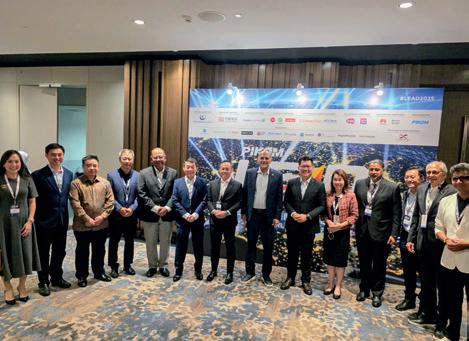
PIKOM LEAD 2025 showcased the latest innovations, trends and insights in digital tech and the digital economy, holding relevant conversations that drive Malaysia’s digital growth.
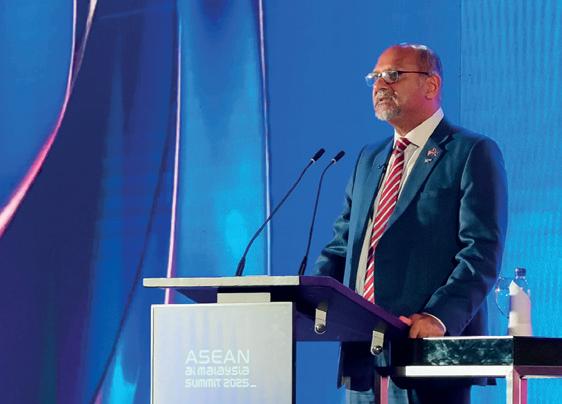
What was once considered optional is now a matter of urgent national priority said Digital Minister Gobind Singh Deo in his opening remarks.
Digital transformation requires a fundamental shift in mindset across government, industry, academia and society, and Malaysia must define where it wants to be in the next five years.
After extensive engagement with industry leaders over the past two years, the Minister observed that Malaysia has strong digital talent and a ready private sector. The real challenge now,
he said, is in ensuring the nation stays competitive in a rapidly evolving global digital economy.
While the country has long aimed to become a smart nation, the Prime Minister’s vision of positioning Malaysia as an AI nation reflects the need for a broader, more ambitious agenda beyond basic digitalisation.
“A key enabler of this transformation is infrastructure. Without robust foundations, particularly in data, computing power and advanced technologies, ambitious discussions around AI and innovation cannot be translated into action,” Gobind said.


“While Malaysia has made significant progress in connectivity, achieving approximately 97% coverage nationwide, more work is needed to support the data-driven economy of the future.”
With cybersecurity, data governance and personal data protection, now becoming key foundations in the ecosystem, businesses must embrace AI-driven transformation. Those who fail to adapt risk being left behind, he said.
Global Computing Consortium (GCC), China’s first international computing standards body, brings together tech providers, manufacturers, system integrators, enterprise users and research institutions. It promotes open innovation and collaboration to support a digital, intelligent society.
Director Roy Hu said the organisation’s mission to build an open, diversified global computing ecosystem.
Hu noted that digitalisation, AI and sustainability are transforming the industry, driving demand for energy-efficient, AI-ready systems.
This shift is moving computing from single-architecture models toward diversified ecosystems, with ARM-based servers emerging as a strong alternative to x86.
He said GCC supports this transition through global standards, certification programmes and international partnerships, including deeper engagement with Malaysia.

Huawei Technologies Malaysia Cyber Security and Privacy Officer Lee Han Ther said digital trust is central to Huawei’s operations and essential in supporting national critical infrastructure.
With over two decades of cybersecurity experience, he highlighted Huawei’s role in critical sectors such as telecommunications, cloud, data centres and intelligent systems, stressing that cybersecurity and privacy are never compromised for commercial gain.
Huawei’s governance framework is comprehensive and globally integrated. Each country has a dedicated Cyber Security and Privacy Officer who works with regulators and clients, while the Global Cyber Security and Privacy Officer reports directly to the Executive Management Committee. This structure embeds accountability across all business units.
Transparency is a key pillar of Huawei’s approach. Through its global Cyber Security and Transparency Centres, including the Global Cyber Security and Privacy Protection Transparency Centre in Dongguan, stakeholders can review architecture, inspect source code and validate security controls independently.
Lee outlined Huawei’s evolution from traditional network security (Cybersecurity 1.0) to supply chain security (2.0), and now toward intelligent ecosystem security, AI security and post-quantum cryptography (3.0).
He also highlighted its “five lines of defence” model and ISO/IEC 27701 certification in
Malaysia. He concluded that strong governance, transparency and collaboration are vital to building long-term digital trust.
China Silk Road Group Vice President Samuel Tang Yang, outlined the vision of the MalaysiaChina Digital Economy Alliance (MCDEA), a joint initiative by PIKOM and China Silk Road Group to deepen digital cooperation between Malaysia and China.
The alliance aims to leverage China’s technological strengths and market scale while positioning Malaysia as a strategic bridge to Asean and the wider RCEP region.
MCDEA seeks to develop Malaysia into a regional digital hub, supporting Malaysian businesses in accessing China and global markets, while enabling Chinese digital enterprises to expand into Southeast Asia. Its strategy focuses on policy coordination, resource mobilisation, industrial collaboration and cross-border capital management.
A key feature is its Full Circle Services System, offering end-to-end support across the value chain, from business matching and project execution to ecosystem development and capital facilitation.
The alliance’s three core missions are to build multilateral cooperation networks, promote two-way investment and innovation, and align Chinese technologies with regional market needs.
MCDEA will also facilitate financing, including compliant digital asset frameworks. Combining AI-driven market intelligence with on-theground support, it aims to reduce risks and costs
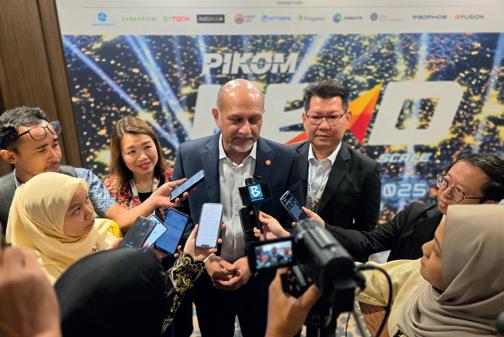
for cross-border expansion while fostering a mutually beneficial digital ecosystem.
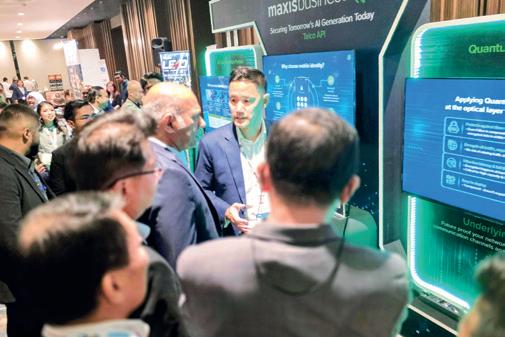
In his keynote, ‘Malaysia’s AI Moment in a Global AI Decade – From Ambition to Activation’, Maxis Bhd Head of Corporate and Mid-Market Fang Qing Lin focused on turning AI strategy into practical execution.
Citing an IDC study commissioned by Maxis involving 140 Malaysian organisations, he highlighted strong momentum in AI adoption.
AI spending is expected to grow 1.6 times faster than overall digital technology investment over the next three years, contributing an estimated US$1.2 trillion in impact across AsiaPacific.
Nearly half of surveyed organisations already have AI use cases in production, while most others are piloting initiatives, reflecting growing national readiness.
AI is being deployed to drive revenue, efficiency and innovation across operations, R&D and customer service, as well as back-office functions such as HR, legal and supply chain.
However, challenges persist, including data security concerns, limited AI expertise, restricted training data and uncertain returns on high upfront investments.
Fang outlined four pillars for successful AI adoption: data, security, sovereignty and connectivity. He introduced a ‘three-layer cake’ model covering infrastructure, private large language models and customised applications. Emphasising sovereign AI and quantum-safe networking, he urged organisations to act decisively to realise Malaysia’s AI potential.
● Cross-Border Collaboration Panel 1, on scaling internationally amid digitalisation, regulatory complexity and the need for trust-based collaboration, brought together diverse regional perspectives on how organisations can expand internationally through strategic partnerships.
Moderated by Talbotiq Technologies CEO Akhil Gupta the panel featured Mongolia’s Golomt Bank CIO Sainbileg Mandakh, Asian-Oceanian Computing Industry Organisation (Asocio) Chairman Stan Singh and Malaysia-Australia Business Council (MABC) Trade and Investment Chair Janith Nirmal Akmeemana.
Stan noted that companies often struggle to enter foreign markets alone due to legal and cultural barriers. Asocio, representing 24 economies, provides a collective platform to reduce risk through shared networks, policy advocacy and frameworks such as its AI ethics roadmap.
Mandakh said that Golomt Bank’s digital growth is supported by fintech and green finance innovation, while partnerships are crucial for specialised expertise.
However, strict data sovereignty rules require careful regulatory alignment and strong cybersecurity safeguards.
Akmeemana highlighted Australia’s growing view of Malaysia as a digital innovation hub, though compliance differences remain a hurdle for SMEs. He recommended partnering with established Australian firms before expanding independently.
The panelists concluded that open data, policy alignment, institutional support and sustained trust are essential to successful cross-border collaboration.
● Intelligent Transformation Panel 2 examined how organisations can progress from digitalisation to ‘intelligent transformation’ by leveraging AI, cloud and data for scalable impact.
Moderated by HELP University Director of Corporate Information Centre Ngoh Chee Hung, the session featured perspectives from Mydin Director of IT, Digital, HR and Loss Prevention and Security Malik Murad Ali, HCLTech Sales Director and Head of AI Lab Mustafa Sabuwala, xFusion Malaysia CEO Dun Shuanbao and H3C Country Manager Zhang Lisong.
The panel agreed that intelligent transformation must deliver practical outcomes, not just technology adoption.
Malik Murad illustrated how AI-powered, appdriven retail experiences rely on strong operational foundations, including standardised systems, accurate data and reliable connectivity.
He stressed that transformation should be incremental, with core infrastructure and data quality established before scaling advanced AI use cases.
Mustafa Sabuwala highlighted the need to balance consolidated insights with compliance to countryspecific data sovereignty laws, ensuring AI platforms can scale responsibly across borders.
The discussion also addressed hybrid cloud strategies, combining public cloud flexibility with on-premise cost predictability and resilience.
Infrastructure leaders underscored the importance of open, future-ready standards and intelligent network management to maintain consistent performance.
Finally, the panel noted that AI development no longer requires large specialist teams, as smaller, agile groups can deliver results.
● Women in Leadership Panel 3 brought together women leaders from across technology, telecommunications, conglomerates and global advocacy to examine how organisations can build resilient, future-ready talent in an era shaped by AI and rapid disruption.
Moderated by HT Consulting CEO Vanessa Tan, the panel featured Women in Tech Global Movement APAC Director Yuki Aizawa, Group MMC DRB Tradewinds Head of Group Technology and Transformation Hasniza Mohamed, Silverlake Group CEO Cassandra Goh and Maxis Bhd CIO Ng May Ching. The discussion centred on whether people, not just technology, are ready for Malaysia’s AI transformation.
The panel emphasised that mindset, culture and leadership determine success. Diversity, particularly women’s leadership, was framed as a strategic advantage in navigating complexity and disruption.
Leaders shared personal insights: embracing calculated risks, building resilience, leading with authenticity and fostering ecosystems that amplify women role models. They stressed that transformation must normalise experimentation and uncertainty, with clear direction but flexible execution.
Culture emerged as the foundation of change. Leaders must communicate consistently across diverse workforces and ensure reskilling so no one is left behind. Investing in young talent was highlighted as a catalyst for curiosity and innovation.
Future-critical skills include AI, automation and software engineering, alongside emotional and cultural intelligence.
While progress has been made in women’s representation, gaps remain in senior leadership. The panel called for inclusive environments, bias reduction and structured pathways to develop
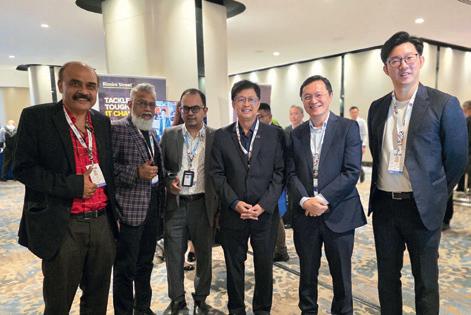
resilient, diverse talent ready for an AI-powered future.
● Emerging Tech Shapes Opportunities Panel 4 explored how AI, agentic AI, cloud computing and data-driven insights are transforming industries and creating new market opportunities in Malaysia and Southeast Asia.
Moderated by Lenovo Malaysia General Manager Varinderjit Singh, the session featured Carsome Chief Business Officer Aaron Kee, Malaysia Aviation Group Head of IT Service Delivery Edward Goh, Huakun Intelligent Technology APAC Sales Director Zach Wu and Rimini Street Regional CTO (SEA and Greater China) Han Law.
Aaron Kee shared how Carsome leverages AI for predictive pricing, maintenance and personalised engagement, stressing the need to move beyond proof-of-concept to scalable solutions with measurable returns.
A notable success was its AI-powered call centre, which improved efficiency while maintaining multilingual service quality.
From the aviation sector, Edward Goh highlighted AI’s role in predictive maintenance, safety and operational reliability, noting that effective adoption depends on proper training and data transformation.
Zach Wu emphasised cloud and hybrid infrastructure as foundations for SMEs, advocating incremental implementation and local partnerships to ensure ROI and contextual relevance.
Han Law discussed agentic AI’s growing role in enterprise automation, underscoring governance, integration and workforce certification.
The panel agreed that robust data governance,
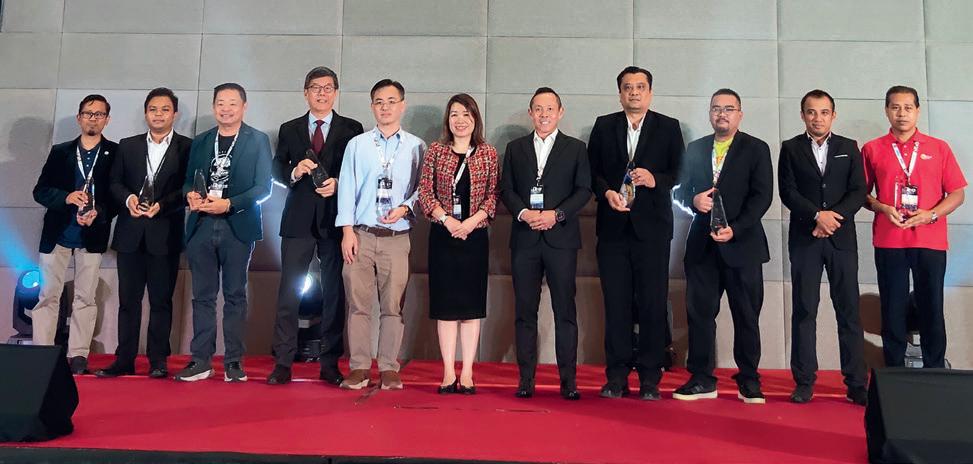
modernisation and sovereignty are critical. Organisations that start small, prioritise scalable solutions and invest in AI capabilities will be best positioned to seize emerging opportunities.
● Entering the Age of Quantum
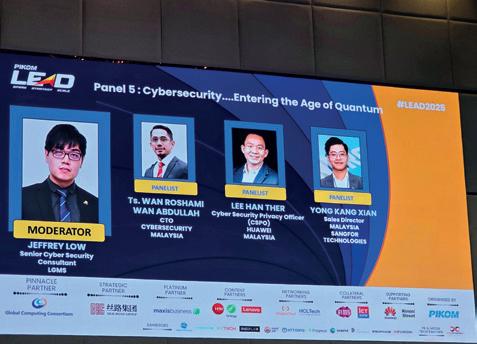
The panel on cybersecurity, moderated by LGMS Senior Cybersecurity Consultant Jeffrey Low and featuring experts Cybersecurity Malaysia CTO Ts Wan Roshami Wan Abdullah, Huawei Malaysia CSPO Lee Han Ther and Sangfor Technologies Sales Director (Malaysia) Yong Kang Xian, focused on emerging technologies, particularly quantum computing and the cybersecurity challenges it presents.
The discussion emphasised that while digitalisation brings numerous opportunities, it also exposes individuals, organisations and critical infrastructure to evolving cyber threats, including misuse of AI and social engineering attacks.
Quantum computing could render current cryptographic systems, such as HTTPS, TLS, SSL certificates and banking encryption, obsolete.
The so-called ‘harvest now, decrypt later’ risk allows adversaries to capture encrypted data today for decryption once quantum capabilities mature, potentially affecting sensitive or longlived information as early as 2030.
Post-quantum cryptography (PQC) was highlighted as the primary mitigation, involving algorithms resistant to quantum attacks.
Malaysia is preparing through frameworks, guidelines and local cryptographic development, with Cybersecurity Malaysia promoting a phased migration approach: assess systems, prioritise critical assets, test solutions and implement PQC gradually.
The panelists stressed the importance of cyber hygiene, crypto-agile infrastructure, and leveraging technology refresh cycles to integrate PQC without excessive costs.
Vendor transparency and government directives, including asset inventory and migration planning for critical information infrastructure, are essential. Collaboration with academia, industry and research institutions is critical to develop talent and maintain competitiveness in cybersecurity and cryptography.
The panel concluded that while quantum-safe threats are not immediate, early preparation is vital.
Organisations should strengthen cyber hygiene, prioritise critical data, adopt crypto-agile systems, engage regulators and vendors, and follow available guidelines.
Strategic planning today will ensure Malaysia’s enterprises and critical systems remain secure and resilient when quantum computing becomes mainstream.
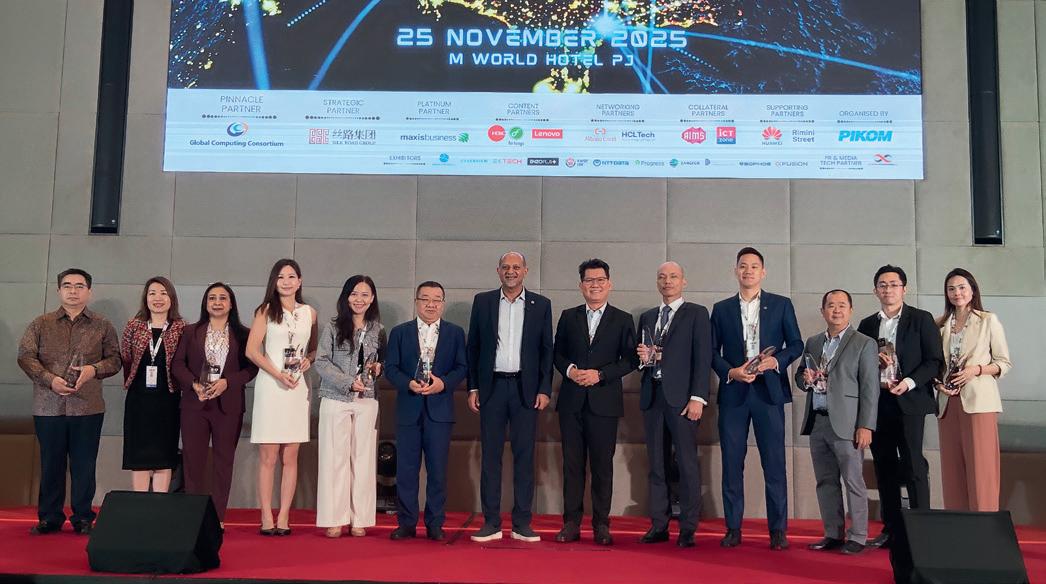
The Fireside Chat between emcee and moderator Freda Liu and Grab Malaysia Director of Commercial and Deliveries Tan Jiong Jian explored how organisations can remain resilient, competitive and human-centred amid rapid tech disruption, particularly AI.
Tan emphasised the importance of having a clear ‘North Star’ guiding purpose. For Grab, this is serving Southeast Asia’s ecosystem, which encompasses consumers, merchants, driver-partners and delivery partners, through continuous innovation.
Leaders must act as explorers, identifying emerging trends and inflection points, with AI representing the most significant current opportunity.
Competitiveness, Tan noted, is measured by user retention rather than acquisition. Grab tracks metrics like Net Promoter Scores and customer feedback to address real customer pain points.
Data insights drive scalable innovation, exemplified by GrabMart, which leveraged food delivery data to anticipate grocery demand during Covid-19.
AI adoption at Grab is embedded across roles, encouraging every employee to engage with AI tools while following a philosophy of continuous 1% improvement.
Trust and ethical governance remain central, with strong data controls, anonymisation and clear accountability ensuring AI enhances, rather than replaces, human decision-making.
On scaling, Tan stressed solving urgent problems, which he called ‘painkillers’ rather than ‘vitamins’, and hyper-localisation. Understanding local behaviours, such as digitising wet markets, enables solutions that can scale regionally.
Tan concluded that in an AI-driven era, the ‘half-life’ of knowledge is shrinking. Future-ready leaders must continuously learn, adapt and model exploration for their teams.
By aligning with purpose, fostering trust and embracing innovation, organisations can remain resilient, competitive and sustainable amid constant disruption.
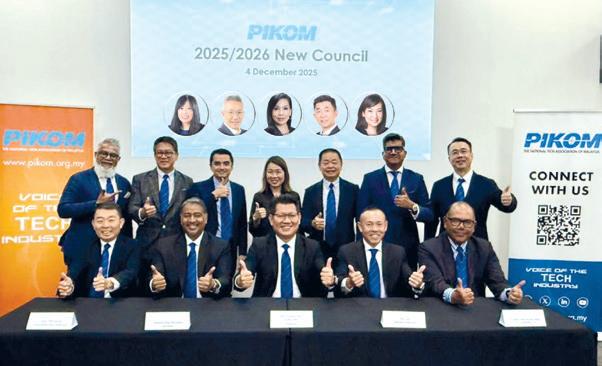
Continuity and renewed strength as council members reaffirm mandate for 2025/2026.
The PIKOM Annual General Meeting, held on Dec 4 2025, concluded with the reelection of its office bearers for a second term, reinforcing confidence in the association’s leadership and direction.
The 2024/2025 team will continue to serve through 2025/2026, providing stability as the industry navigates rapid technological change.
Alongside this continuity, eight newly elected council members join four existing councillors serving their second term, bringing a blend of fresh perspectives and experienced guidance to the leadership team.
At the helm, Adjunct Practice Prof Alex Liew continues as Chairman, supported by Deputy Chairman Alex Loh.
The executive line-up is further strengthened by Secretary Anthony Raja Devadoss and Treasurer Ts Abdul Halim Md Lassim, with Ong Chin Seong serving as Immediate Past Chairman.
The newly constituted council includes industry leaders from across the ICT ecosystem, representing multinational corporations, local enterprises and emerging technology firms.
Their collective expertise is expected to drive
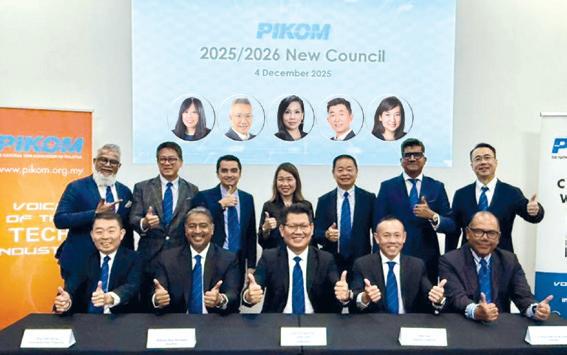
PIKOM’s agenda in advancing Malaysia’s digital economy, fostering innovation and strengthening industry collaboration.
The renewed mandate reflects strong member support and signals confidence in the leadership’s ability to steer PIKOM forward.
As the association continues to play a pivotal role in shaping policy dialogue and industry growth, the 2025/2026 council is well-positioned to champion digital transformation and elevate Malaysia’s standing in the global tech landscape.
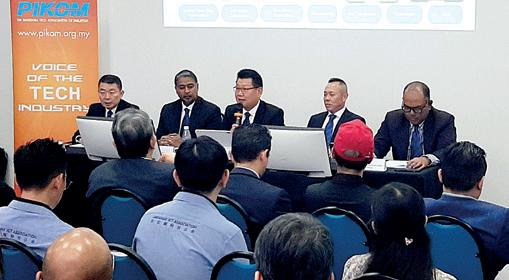
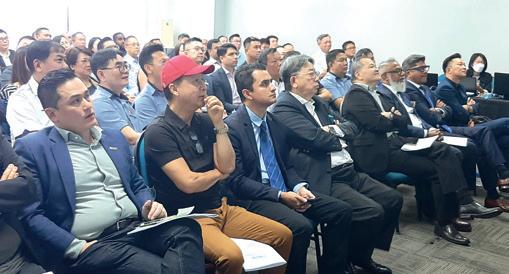
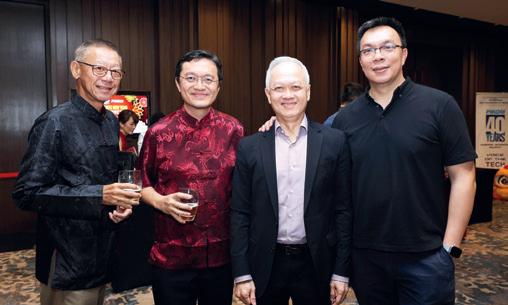
PIKOM ushers in the Lunar New Year with celebration, recognition and forward-looking initiatives that set the tone for its milestone 40th year. while charting a forward-looking path for the industry.
The tech community gathered in full force at the PIKOM Chinese New Year Dinner, marking not just the start of a new lunar year, but the continued momentum of an industry shaping Malaysia’s digital future. We were privileged to be joined by guest of honour Minister of Digital Gobind Singh Deo. His presence underscored the strong and growing partnership between government and industry.
In his address, the Minister highlighted the importance of collective effort in building a resilient, innovative and inclusive digital economy. The evening came alive with the thunderous rhythm of lion drums, symbolising courage, prosperity and bold beginnings.
It was a fitting way to usher in not only the Lunar New Year, but also a significant milestone for PIKOM as it embarks on its 40th anniversary.
Guided by the theme of Celebration, Recognition and Inclusivity, the association is taking this opportunity to reflect on its journey

A key highlight of the evening was the introduction of PIKOM’s 2026 Councillors and Advisers, who will lead the association through this landmark year.
In the spirit of recognition, PIKOM also honoured its long-standing members, namely the individuals whose contributions over the decades have helped shape Malaysia’s technology ecosystem.
Their dedication, resilience and pioneering efforts have laid the foundation upon which the industry continues to grow and thrive today.
Beyond celebration, the evening also reflected PIKOM’s continued focus on addressing critical industry priorities. The official launch of the PIKOM Talent Gap Survey Report marked a significant step towards understanding and tackling the challenges surrounding digital talent.
Complementing this was the announcement of the upcoming Skills Intelligence Platform, a strategic collaboration with Telekom Malaysia.
This initiative aims to strengthen workforce insights, enabling better alignment between industry needs and talent development.
The association also offered a preview of its International Women’s Day 2026 event, reinforcing its commitment to advancing diversity and inclusivity within the tech sector.
As part of its 40th anniversary focus, initiatives such as Women in Tech highlight the importance of empowering more women to participate and lead in the digital economy, recognising that diversity is key to innovation and sustainability.







As Malaysia’s digital economy expands, industry leaders are calling for stronger pathways to ensure women not only participate in technology but also lead its future.
Women currently make up roughly one-third of the workforce in Malaysia’s ICT sector – a figure that shows progress but also highlights the work still to be done.
While women account for about 53% of STEM graduates, this strong educational representation has yet to translate into leadership roles.
Across sectors, women hold only about 25% of managerial positions, short of the national target of 30% women in decision-making roles in both the public and private sectors.
Speaking at the International Women’s Day celebration organised by PIKOM’s Women in Technology Chapter, Deputy Minister of Communications Teo Nie Ching emphasised that greater inclusivity is essential for Malaysia’s digital growth.
With the digital economy contributing more
than 23% to the country’s GDP in recent years, she noted that future progress depends on building a workforce that is both skilled and inclusive.
At the same time, digital participation must also be safe participation.
“Women should not have to choose between visibility and vulnerability,” she said, stressing that women must be able to lead conversations, build brands and participate in public discourse without fear of harassment, manipulation or abuse.
She also highlighted the role of the Malaysian Communications and Multimedia Commission in promoting the ethical and accountable use of artificial intelligence.
Within the industry, PIKOM’s role remains critical. Its Women in Technology Chapter provides networking, advocacy and professional development, while fostering mentorship ecosystems that support women at different stages of their careers.

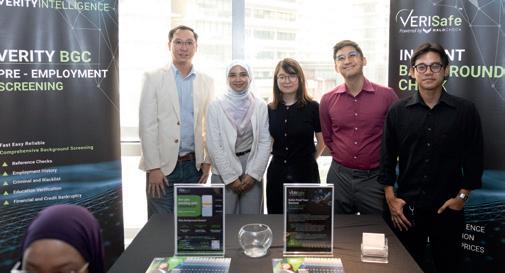
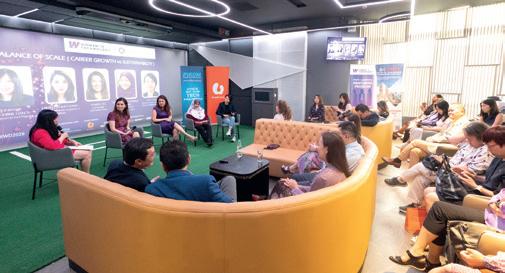


Chapter Chair Sandy Woo noted that support structures are key to helping women succeed in the tech sector.
The Chapter runs mentoring programmes tailored both for entrepreneurs and for women in corporate roles who aspire to greater leadership influence.
It also supports women seeking to return to the workforce through upskilling initiatives.
“In the corporate world, we often talk about ROI or return on investment,” she said.
“But it begins with what we give. In this instance, mentorship, kindness and advice. Remember, technology cannot replace generosity.”
Echoing this message, Alex Liew said the participation and mutual support among women in the industry were inspiring.
As PIKOM marks its 40th anniversary with the theme “Celebration, Recognition and Inclusivity”, he stressed that inclusivity strengthens both industry and nation.
“When women are supported, the entire ecosystem grows,” he said.
“The next phase of Malaysia’s digital journey must be defined not only by technological advancement, but by equitable participation.”


Robotics is gaining momentum in Malaysia as industries adopt automation to boost productivity, address labour gaps and stay competitive.

Robotics is rapidly emerging as one of the defining technologies of the Fourth Industrial Revolution. Around the world, robots are transforming industries ranging from manufacturing and logistics to agriculture, healthcare and public services.
In Malaysia, robotics adoption is gradually gaining momentum as industries seek to improve productivity, address labour shortages and move up the value chain in a competitive global economy.
Automotive assembly, semiconductor production and electronics manufacturing, to maintain high levels of precision and efficiency. However, robotics today is evolving far beyond fixed industrial machines.
A new generation of robots is emerging – mobile robots, collaborative robots, quadrupeds and humanoid robots capable of operating in dynamic environments.
Quadruped robots developed by companies such as Unitree Robotics demonstrate how mobile robotic platforms can traverse uneven terrain, climb stairs and navigate complex spaces.
These capabilities open opportunities in applications such as industrial inspection, security patrols, research and public engagement.
While much of the attention on robotics comes from industrial use cases, robotics is increasingly appearing in public-facing environments.
A notable global example is China’s Chinese New Year gala performances, where synchronised humanoid robots perform choreographed routines alongside human dancers.
These performances demonstrate the remarkable progress in motion control, artificial intelligence and real-time robotics systems.
Similar robotics demonstrations have also begun appearing in Malaysia during festive events.
Shopping and entertainment destinations such as Resorts World Genting, Sunway Pyramid and Pavilion Bukit Jalil have hosted Chinese New Year celebrations where robots perform short shows and interact with visitors during meet-and-greet sessions.
In some of these performances, humanoid robots take the main stage while quadruped robots – sometimes dressed in traditional lion dance costumes – participate as part of the festive choreography.
These creative demonstrations blend cultural celebration with emerging technology, helping introduce robotics to the public in an accessible and engaging way.
Behind these robots lies a sophisticated technology stack combining mechanical engineering, AI and advanced software frameworks.
Many modern robotic platforms are built using the Robot Operating System (ROS), which acts as a middleware layer connecting sensors, perception systems, locomotion controllers and higher-level AI modules. This modular architecture enables developers to rapidly build and deploy complex robotic systems.
AI is also becoming central to modern robotics development. Reinforcement learning techniques allow robots to learn complex locomotion behaviours such as walking, balancing, and recovering from disturbances through large-scale simulation training.
Vision-language-action models are another emerging research direction, enabling robots to combine visual perception with language understanding so they can interpret instructions and interact more naturally with humans.
Teleoperation technologies also remain important, allowing human operators to remotely control robots in hazardous or difficult-to-reach environments.
Malaysia’s robotics ambitions are closely aligned with its national digital transformation agenda. Through the National Robotics Roadmap 2021–2030, the country aims to expand robotics adoption across sectors including manufacturing, agriculture, healthcare and logistics.
These initiatives are part of a broader push toward AI and advanced technologies championed by Prime Minister Datuk Seri Anwar Ibrahim, who has emphasised the importance of innovation and
Robotics is steadily transitioning from a futuristic concept into a practical technology shaping industries and society.

digital capabilities in strengthening Malaysia’s economic competitiveness.
Looking ahead, robotics adoption in Malaysia is expected to accelerate in several areas. Collaborative robots are becoming more accessible to small and medium enterprises, while mobile robots may support applications such as warehouse automation, infrastructure inspection and security monitoring.
New deployment models such as roboticsas-a-service may further reduce the barriers for businesses to adopt automation. Despite the opportunities, challenges remain.
High initial investment costs, limited robotics expertise, and integration with legacy systems continue to slow adoption. Developing skilled talent in robotics, artificial intelligence and system integration will be critical to building a sustainable robotics ecosystem.
Robotics is steadily transitioning from a futuristic concept into a practical technology shaping industries and society.
With the right investments in talent, innovation and collaboration, Malaysia has the potential to strengthen its position in the regional robotics landscape and unlock new opportunities for economic growth in the years ahead.
Founded in 1997, Glocomp Systems (M) Sdn Bhd, part of Keppel Connectivity, is a Malaysia-based value-added ICT infrastructure distributor and solution provider. Glocomp delivers end-to-end digital solutions across high performance computing and storage, data and AI transformation, robotics and automation, cybersecurity, and IP communications.
Fortesys partners Paessler to strengthen local capabilities and advance unified IT monitoring.
Malaysian IT solutions provider
Fortesys Sdn Bhd and Paessler (PRTG) formalised a partnership early April strengthening its local enablement and technical depth, building a strategy for continuity.
Fortesys offers digital networking, cybersecurity, managed services, training and vendor distribution.
According to Managing Director Kevin, the partnership builds on an existing operating model already shaped around proactive service.
“It reflects a broader shift now visible across the monitoring market where IT companies are moving away from fragmented toolsets and toward unified dashboards that bring together network, server, cloud, application and industrial IoT visibility in one place,” said Kevin.
The company’s ForteCare portfolio includes 24×7 monitoring, managed support, preventive maintenance and training and certification services. ForteLEARN are trainings conducted by Fortesys while ForteNOC offerings are designed to deliver real-time monitoring, alerting, incident detection, and infrastructure oversight.
A central challenge for any company in this space is keeping pace with the complexity of modern IT environments while providing responsive, local support.
“With our 24/7 monitoring, a dedicated NOC, preventive maintenance and training support, we do not just distribute products, we help customers deploy, monitor, maintain and improve over time,” said Jeff.
“This is reinforced by the strength and stability of our engineering team. Fortesys’ senior engineers have, on average, more than 12 years of tenure with the company. This translates into greater consistency across projects, stronger technical execution and long-term reliability for partners and clients alike.”

The company’s achievements and milestones stand out. In 2018, it received the Golden Bull Award 2018, the Asia Pacific Entrepreneurship Awards recognition and the Sophos Distributor of the Year for two years in a row.
In 2019, the company opened an office in Indonesia and the following year launched of the 24/7 Network Operating Centre.
With a full range of solutions across networking, cybersecurity, monitoring and managed services, Fortesys is able to support businesses of varying scales – from SMEs to large organisations – across multiple industries.
“Rather than prescribing a one-size-fits-all approach, Fortesys focuses on identifying the most suitable solutions for each environment, ensuring customers invest in what is necessary and effective,” said Kevin.
On its future aspirations and plans, Fortesys is focused on strengthening partner enablement, expanding its channel ecosystem and supporting organisations that are moving toward unified monitoring across IT, OT, cloud and on-premises environments.
“We are also actively positioning ourselves toward the next phase of technology evolution, with a growing emphasis on AI-driven solutions.
Paessler PRTG, a German company founded in 1997, has officially appointed Fortesys as its authorised distributor. With this partnership, Fortesys is set to expand the reach of Paessler’s monitoring solutions and strengthen its presence in the local market.
Looking ahead, Fortesys has also set a strategic target toward a potential IPO by 2027. The formalisation of the partnership with Paessler PRTG is expected to further strengthen this trajectory, providing greater support, broader strategic direction and expanded programme opportunities.
With an outstanding list of achievements, Kevin attributes the success of the company to a basic business principle.
“Build around customer pain points, not internal convenience. Invest in service depth and people, and treat support, training and follow-through as part of the product rather than an afterthought.”
Headquartered in Singapore, Bytecenture is a global software engineering services and solutions company that helps leading organisations transform challenges into lasting business value, operational efficiency and revenue growth through technology.
With over 500 professionals across 10 countries in South Asia, Europe, North America and China, Bytecenture delivers expert solutions in cloud computing, data analytics, embedded software, IoT, AI and other technology domains.
We have partnered with numerous industry leaders and Fortune 500 companies, creating value across diverse sectors including high-tech, internet, automotive and green energy.
“We are delighted to extend our successful partnership to Malaysia, combining the expertise and local market experience of our Distribution partner, Fortesys with Paessler PRTG network monitoring.
Working together with partners who understand customers require, ease of deployment, simplicity in management from a network monitoring solution that is capable of IT, OT and IoT monitoring allows us to help more customers achieve their goals rapidly and rely on the local presence of our partner network.”

By John Andrews VP Global Channel of Paessler PRTG
“Joining
PIKOM allows us to be part of a vibrant digital ecosystem and contribute to the growth of Malaysia’s tech landscape. It opens doors for collaboration, innovation and shared progress across the industry.”
– Bytecenture Consulting CEO Robin Shi

A landmark business matching session and networking dinner reinforced cross-border collaboration between PIKOM and AJCCA.
The PIKOM-AJCCA Cybersecurity Business Matching Session and Networking Dinner, held early February in Kuala Lumpur, marked a significant milestone in advancing global market access for Malaysian technological players.
The event reflects PIKOM’s ongoing commitment to fostering cross-border trade and strengthening Malaysia’s position within the regional digital economy.
A key highlight of the session was a series of 10 high-impact business presentations delivered by leading cybersecurity and tech firms from Malaysia and Japan.
Participating organisations included Hernancres Group Tax Consultancy, Primary Guard, Raddish Technology, Securemi, Verisign MS, Cyber Security Cloud Inc, GMO Cybersecurity by Ierae, NTT TechnoCross, PSCYBER and Sola.com.
The structured business matching platform enabled companies to explore strategic partnerships, tech collaboration and market entry opportunities between both countries.
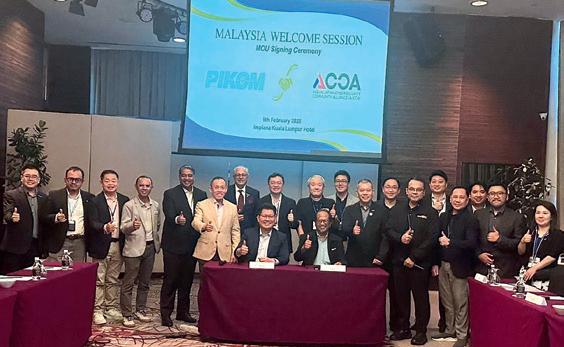

The evening also featured a formal MoU signing ceremony between PIKOM and Asean Japan Cybersecurity Community Alliance (AJCCA).
The agreement underscores a shared commitment to exchange industry trends, develop
joint programmes and organise mutual trade delegations to major regional events.
The signing session was executed by PIKOM Chairman Adj Practice Prof Alex Liew and Dr Rudi Lumanto, symbolising a strengthened partnership aimed at deepening Asean-Japan cybersecurity cooperation.
The programme concluded with a networking dinner, bringing together leaders from rawSEC, AJCCA and PIKOM in an atmosphere conducive to collaboration and forward-looking dialogue.
By connecting ecosystems across borders, the initiative reinforces Malaysia’s role as a regional digital hub while advancing collective cybersecurity resilience within the Asean-Japan space.
NETWORK


PREDICTIVE MAINTENANCE
INDUSTRIAL SWITCH CABINET
Our solutions make it simple for our customers to keep their infrastructure up, running, and optimized. Since 1997, we offer monitoring solutions for businesses of all sizes, from SMB to large enterprises, across all industries. Today, more than 500,000 users in over 170 countries rely on PRTG and other Paessler solutions to monitor their complex.
WATCHING THE WATCHER (SCADA)
WAREHOUSE LOGISTICS FLOW SOFTWARE
INDUSTRIAL EDGE DATA CENTER


IT, OT, and IoT infrastructures. We believe monitoring plays a vital part in reducing humankind’s consumption of resources. Our products help our customers optimize their IT, OT, and IoT infrastructures, and reduce their energy consumption or emissions – for our future and our environment.
The solution that brought the Paessler name into the spotlight. Use it to monitor small and midsize infrastructures.
Awesome maps and dashboards, flexible alerting, multiple user interfaces, in-depth reporting, distributed monitoring, and more.
Our specialized enterprise solution, best for large and very large infrastructures operating across multiple locations.
It’s PRTG, but optimized for larger environments with powerful dashboards and support for monitoring business processes and SLAs.
Focus on your infrastructure and leave the hosting to us. Billed monthly or annually and based on your individual usage.
Everything PRTG has to offer, made available to you from the cloud. There’s no need for dedicated hardware.
Fortesys Sdn Bhd (804378-H)
No. 26, Jalan Puteri 5/5, Bandar Puteri Puchong, 47100 Puchong, Selangor, Malaysia www.fortesys.net | Inquiry@fortesys.net



From prepaid reloads to AI-driven redemption, J&C Pacific continues to shape the nation’s digital payment and retail ecosystem.
Founded in 1997, J&C Pacific Sdn Bhd began with discounted international calling services before evolving into one of Malaysia’s most forward-thinking retail technology solution providers.
Its first major breakthrough came with Woopit, a self-service mobile top-up kiosk that grew into Malaysia’s largest reload kiosk network. The company later collaborated with 99 Speedmart to develop SpeedPoint, a smart terminal service for prepaid top-ups and bill payments.
“As e-wallet use accelerated nationwide, J&C Pacific launched Walletz, a unified e-wallet

acceptance platform enabling retailers to accept multiple QR payments through a single system.” said J&C Pacific CEO CK Lee.
The company was subsequently licensed by Bank Negara Malaysia as a Third-Party Acquirer (TPA), integrating major e-wallets such as Touch ‘n Go, GrabPay, MAE and Boost to power seamless digital payments.
Strategic partnerships further strengthened its ecosystem. Together with Hong Leong Bank, J&C Pacific deployed Android Smart Terminals enabling Visa, Mastercard and MyDebit payments. In collaboration with Maybank, it also became an official American Express acquirer.
“Rather than offering fragmented services, we chose to build a unified ecosystem combining payment infrastructure, hardware, backend systems and campaign platforms.” said Lee.
To support the growth of e-commerce, the company launched JCPG, its proprietary online payment gateway for secure digital transactions.
In 2025, J&C Pacific introduced GiftsMart, Malaysia’s first AI-powered, patent-pending WhatsApp redemption platform developed in partnership with YTL AI Labs.
The same year, it reached a national milestone by being appointed a TPA for DuitNow QR in partnership with PayNet – placing the company at the centre of Malaysia’s cashless ecosystem.
Today, J&C Pacific serves as a digital bridge between payment providers, brands and retailers, offering full-stack retail technology solutions from hardware deployment to AIpowered marketing automation.
Operating for nearly three decades, J&C Pacific’s greatest challenge has been constant adaptation –from telecommunications to digital payments and now AI-driven retail solutions.
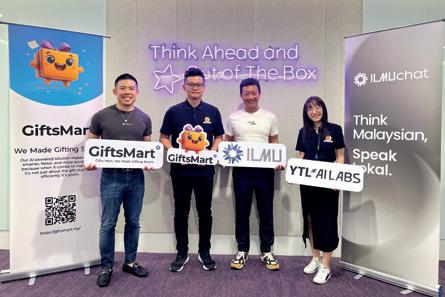
Rather than offering fragmented services, we chose to build a unified ecosystem combining payment infrastructure, hardware, backend systems and campaign platforms.
While J&C Pacific has introduced numerous retail infrastructure innovations, GiftsMart represents a defining leap.
Built entirely on WhatsApp, GiftsMart automates promotional campaigns from receipt verification to instant digital reward delivery.
For brands, GiftsMart functions as a complete campaign command centre with real-time dashboards, compliance-ready reporting and live performance tracking.
For retailers, it drives footfall and sales without staff involvement. For consumers, it delivers instant gratification through a familiar platform – no app download required.
Ultimately, J&C Pacific integrates hardware, payment infrastructure and AI-powered platforms into one proven ecosystem already deployed nationwide. This is what sets the company apart from its competitors.
Backed by regulatory licensing, major banking partnerships and trust from leading retailers, the company positions itself not merely as a participant in the ecosystem – but as a shaper of it.
Looking forward, J&C Pacific aims to:
• Scale innovation across Southeast Asia
• Build a fully integrated retail campaign ecosystem
• Strengthen R&D to anticipate regulatory and consumer shifts
• Expand strategic partnerships
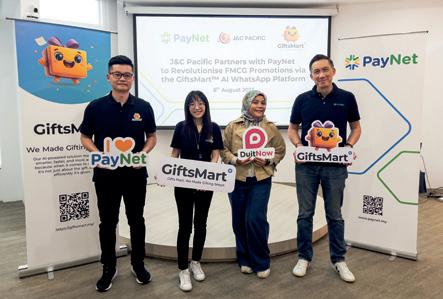
• Continue investing in talent and technology Growth, the company believes, begins with solving real problems – not chasing trends.
Sustainable success requires scalable systems, long-term vision and a culture of ownership.
Company Name: J&C Pacific Sdn Bhd
Founded: 1997
Headquarters: C09-09, Block C, Sunway Nexis, No.1 Jalan PJU 5/1 Kota Damansara, 47810
Petaling Jaya, Selangor
Industry: Retail technology solutions
Specialty: End-to-end retail payment solutions, including kiosks, prepaid platforms, unified e-Wallet acceptance, card terminals and AI-driven redemption systems
Major Achievements:
• Licensed Third-Party Acquirer (TPA) by Bank Negara Malaysia
• TPA for DuitNow QR (PayNet)
• Partnerships with Hong Leong Bank, Maybank and YTL AI Labs
• Trusted provider for 99 Speedmart
• PIKOM Digital Excellence Awards 2025 winner (Software Innovation)
Employees: 21
Future Plans: Regional expansion, integrated retail campaign ecosystem, continued paymenttech and marketing automation innovation
Website: https: //jcpacific.com.my/













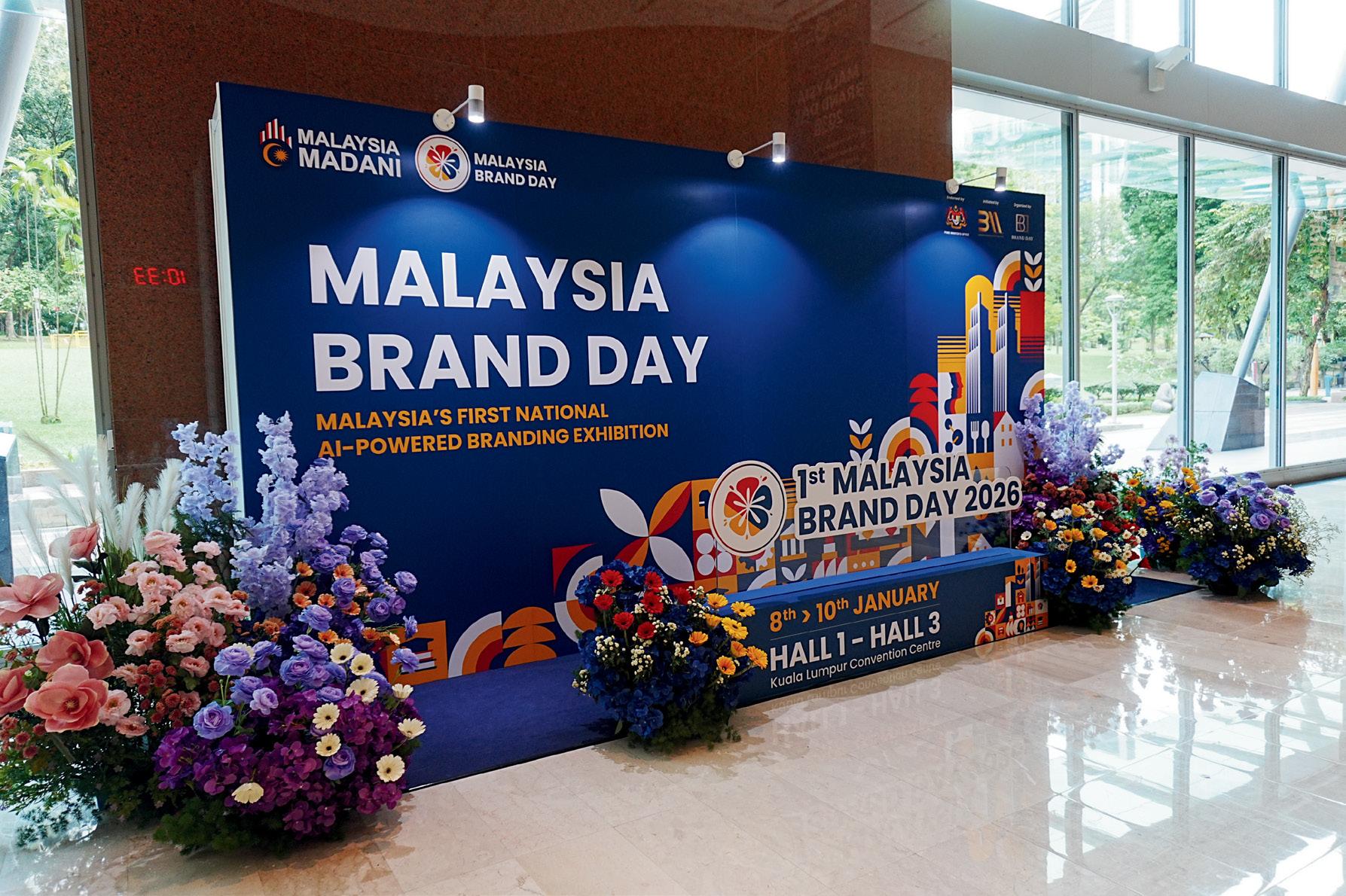






SMEs should not feel burdened by the issue of compliance, rather be empowered through relevant ecosystems and dedicated digital platforms.
By Adjunct Practice Professor Cheah Kok Hoong
Across the world, sustainability is reshaping how businesses operate, compete and grow.
Environmental, social and governance (ESG) considerations are no longer confined to corporate responsibility reports. They now influence investment decisions, supply chains, regulatory expectations and market access.
While large corporations have begun integrating ESG into their strategies, many small and medium enterprises (SMEs) still perceive ESG as complex and costly.
Even so many Malaysian SMEs are already practising sustainability through initiatives such as energy efficiency, responsible sourcing and community engagement, often without recognising these efforts as ESG practices.
The urgency is also increasing. This year is shaping up to be a “compliance crunch” year for sustainability in Malaysia.
Mandatory International Sustainability Standards Board or ISSB-aligned disclosures are being introduced for many listed issuers, while the government’s announced carbon tax framework is becoming an active consideration for emissionsintensive industries.
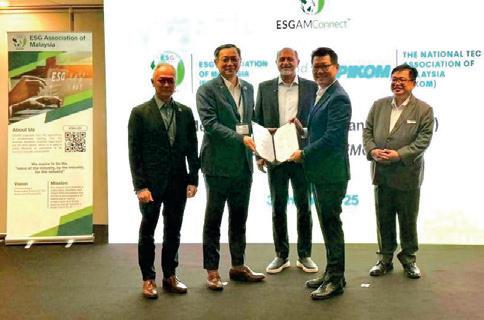
For many businesses, ESG is rapidly moving from a voluntary initiative to a strategic necessity.
The real hurdle is not a lack of action, but a fragmented landscape of global frameworks such as Global Reporting Initiative (GRI) and ISSB that can feel overwhelming.
This is where ecosystems and digital platforms can play a transformative role.
Rather than approaching ESG as a compliance checklist, a new model is emerging where sustainability is supported through collaborative ecosystems that connect businesses with knowledge, tools and trusted solution providers.
Digital platforms can simplify the ESG journey by consolidating resources, facilitating access to expertise and reducing the cost and complexity of implementation.
To address this challenge, ESG adoption must be democratised. The ESG Association of Malaysia (ESGAM) has introduced ESGAMConnect, an AIpowered ESG platform designed to simplify the sustainability journey for SMEs.
Recently launched by Digital Minister Gobind Singh Deo the platform reflects Malaysia’s commitment to leveraging ecosystems and digital platforms as a catalyst for sustainable transformation.
ESGAMConnect integrates intelligent ESG tools, readiness assessments and a digital marketplace that connects businesses with verified consultants, solution providers and carbon management solutions. By lowering the barriers to ESG adoption, the platform helps bridge the gap between the fear of regulation and the ease of execution, enabling organisations to take practical steps towards sustainability.
Through this platform, SMEs can access sustainability expertise, training resources and insights into ESG-linked financing and incentives.
With AI-driven capabilities guiding organisations
through the ESG value chain, sustainability implementation becomes more practical and accessible for businesses at different stages of maturity.
The strength of this transition lies in collaborative ecosystems. ESGAM’s MoU with PIKOM reflects a shared commitment to advancing ESG adoption within the digital economy, bringing together technology and sustainability leaders to develop scalable digital solutions.
PIKOM Chairman Alex Liew stressed that ESG should not be a compliance burden.
“With the right digital ecosystem, it becomes a catalyst for innovation, resilience and long-term value creation,” he said.
Furthermore, recent dialogues between ESGAM and the Malaysian CSO-SDG Alliance highlighted a critical shift in perspective: moving from a narrow




EVOLVING INTO THE FUTURE A CELEBRATION OF EXELLENCE BEEFING UP CYBERSECURITY



focus on Return on Investment to a broader concept of Return on Value.
These dialogues also emphasised the importance of multi-stakeholder collaboration in advancing the Sustainable Development Goals and bridging the gap between global sustainability ambitions and practical implementation within businesses.
Ultimately, ESG should not be viewed as a compliance burden, but as a driver of operational efficiency, innovation and long-term resilience. Sustainability is no longer optional, it is survivability.
Through initiatives such as ESGAMConnect and cross-industry collaborations with partners like PIKOM, Malaysia is positioning its digital ecosystem as a catalyst for inclusive, technologyenabled and sustainable growth.
Adjunct Practice Professor Cheah Kok Hoong is the President of ESG Association of Malaysia.
My.IT is the official publication of PIKOM which has a membership of over 1,000 ICT companies that represents about 80% of the total ICT trade in the country.
My.IT is primarily intended to serve the needs of the dynamic ICT industry in Malaysia, especially when it comes to voicing out the needs and concerns of the ICT industry.
Be a part of this essential and vibrant scene by advertising in My.IT, the voice of the Malaysian ICT industry.
SIMON SUN, CHIEF EXECUTIVE OFFICER HUAWEI TECHNOLOGIES (MALAYSIA) SDN. BHD. COMMITTED TO MALAYSIA’S DIGITAL GOALS
SIMON SUN, CHIEF EXECUTIVE OFFICER HUAWEI TECHNOLOGIES (MALAYSIA) SDN. BHD. COMMITTED TO MALAYSIA’S DIGITAL GOALS




TARGET MARKET & BUSINESS AND IT COMMUNITIES DISTRIBUTION
• Top Management of companies
• Relevant Government Ministries & Agencies
• Relevant Business Organisations
• PIKOM Events
• Sold in all leading bookstores Nationwide
For further information and enquiries Harini Management Services Sdn Bhd (609031-W) W-9-12, Menara Melawangi, Amcorp Trade Centre, 18, Persiaran Barat, 46050 Petaling Jaya, Selangor. Tel: +603-7932 3259
Drones are evolving from aerial platforms into intelligent tools that collect, analyse and deliver actionable insights in near real time.
For many members of the public, drones are still associated with aerial photography or recreational flying.
While these applications helped popularise the technology, professional drones have become essential in sectors where efficiency, safety and actionable intelligence are critical.
Equipped with advanced sensors and AI analytics, drones enable operators to safely gather detailed data, identify potential issues early and make informed decisions.
Surveying and aerial data collection remain the backbone of drone use in Malaysia, generating topographic models, cadastral maps and orthomosaic imagery that support urban planning, regional development and infrastructure projects.
These datasets allow volumetric measurements, track project progress and feed into digital twins – virtual replicas of physical environments that enable planners and project teams to simulate scenarios, monitor assets and manage operations more effectively.
Beyond surveying, drones are increasingly applied to infrastructure monitoring and public safety.
Visual and thermal sensors help detect hotspots, loose components, leaks or structural defects in pipelines, ports, powerlines and other high-value assets before they escalate.
Autonomous systems also play a growing role. Drone-in-a-box deployments by a port operator and, an oil and gas company demonstrate how automated operations can provide continuous oversight in areas that are difficult or hazardous for humans to access.
During emergencies, drones provide rapid aerial overviews that help responders prioritise

resources, assess hazards and reduce human exposure, supporting law enforcement and security operations such as border patrols, crowd monitoring and rapid-response missions. The same aerial capabilities enhance public safety and urban management. During emergencies, drones deliver rapid overviews that help responders prioritise resources, assess hazards and minimise human exposure, supporting law enforcement, border patrols, crowd monitoring and rapid-response missions. These operational benefits extend into smart city applications: when integrated with CCTV networks, ground sensors and city command centres, drones offer real-time perspectives to

Equipped with advanced sensors and AI analytics, drones enable operators to safely gather detailed data, identify potential issues early and make informed decisions.
Together, these initiatives facilitate safe, scalable and integrated manned and unmanned aerial operations nationwide.
Despite growing adoption, operational scaling remains a key challenge. Limited coverage in remote or rugged areas can restrict deployments, particularly where connectivity is sparse.
Managing large volumes of imagery and sensor data requires robust storage, processing and privacy safeguards.
Public perception and acceptance are also critical, as privacy and airspace safety concerns must be addressed for drones to operate smoothly in urban and community environments.
Looking ahead, Malaysia’s drone adoption is becoming increasingly autonomous and datadriven.
GPS-limited drones, capable of operating under dense forest canopies, inside warehouses or beneath urban infrastructure, are expanding opportunities in logistics, industrial inspections, and other complex environments.
Delivery drones could complement traditional transport networks by sending medical supplies, spare parts or essential goods efficiently.
detect illegal construction, monitor traffic and assess building safety.
In major incidents, they can act as first responders, arriving ahead of ground teams, relaying live information and guiding emergency response, demonstrating how drones support proactive, data-driven urban management.
Malaysia’s growing drone ecosystem is reinforced by regulatory and infrastructure initiatives. The Civil Aviation Authority of Malaysia (CAAM) regulates drone operations under the Civil Aviation Regulations 2016 and is developing a UAS Traffic Management System (UAS-TMS) to streamline approvals and operational oversight.
At the same time, the Low-Altitude Economy (LAE) framework supports commercial and public-service activities below 1,000m, including industrial inspections, logistics, rapid-response services, drone light shows and future urban air mobility.
Combined with AI-assisted flight planning, predictive analytics and autonomous drone-ina-box systems, drones are evolving from aerial platforms into intelligent tools that collect, analyse and deliver actionable insights in near real time.
From recreational gadgets to fully integrated professional systems with mature software platforms, drones are transforming how Malaysia monitors landscapes, manages infrastructure and supports public safety.
By combining aerial intelligence, automation and analytics, drones are moving beyond operational tools to become enablers of safer, smarter and more connected industries and cities.
Founded in 1997, Glocomp Systems (M) Sdn Bhd, part of Keppel Connectivity, is a Malaysia-based value-added ICT infrastructure distributor and solution provider. Glocomp delivers end-to-end digital solutions across high performance computing and storage, data and AI transformation, robotics and automation, cybersecurity, and IP communications.
Celebrating 30 years of impact, Sabah Net Sdn Bhd continues to advance the state’s digital transformation by expanding connectivity, strengthening infrastructure and bridging the digital divide across communities.
Celebrating 30 years of impact, Sabah Net Sdn Bhd continues to power Sabah’s digital transformation by expanding statewide connectivity, strengthening resilient infrastructure, and enabling inclusive access to the digital economy across both urban and underserved communities.
Established in 1996, Sabah Net has been instrumental in building and operating secure, reliable network infrastructure for government and enterprise use. Over the years, its role has expanded to delivering last-mile connectivity to rural communities and schools, helping bridge Sabah’s digital divide and unlock greater access to digital opportunities.
Today, Sabah Net plays a critical role in strengthening Sabah’s digital ecosystem through statewide infrastructure, digital platforms, cybersecurity capabilities, and strategic public-private partnerships. Its ongoing efforts support not only
CONNECTIVITY AND INFRASTRUCTURE
Scaling high-quality, resilient network infrastructure across Sabah, supported by data centres and edge capabilities to enable reliable, future-ready connectivity.
Co-investment opportunities in nextgeneration digital infrastructure.
Driving digital adoption, innovation, and market growth through strategic partnerships, digitalisation initiatives, and workforce upskilling.
Enabling businesses to participate in a fast-growing digital economy.
connectivity, but also the development of a more inclusive and digitally enabled society.
Looking ahead, Sabah Net is advancing its capabilities in cloud computing, data analytics, and AI to enhance service delivery and operational efficiency. At the same time, it continues to work closely with public and private sector stakeholders to accelerate digital adoption, empower local communities, and nurture a future-ready digital workforce.
With Sabah’s growing importance within the BIMP-EAGA region, Sabah Net is well-positioned to support cross-border digital collaboration and strengthen Sabah’s role as a strategic digital gateway in ASEAN.
Guided by the belief that Everyone is Connected, Sabah Net remains committed to driving sustainable growth, ensuring no community is left behind, and delivering meaningful digital impact across the state and beyond.
CYBERSECURITY AND TECHNICAL EXCELLENCE
Delivering enterprisegrade, secure, and reliable services through advanced Security Operations Centre (SOC) capabilities and adherence to global best practices.
Building trusted, resilient digital infrastructure.
AI, INNOVATION AND FUTURE GROWTH
Advancing AI-driven solutions, data analytics, and emerging technologies to unlock new opportunities, including regional collaboration within BIMP-EAGA.
Positioned for highgrowth digital expansion across Sabah and beyond.