TheBusinessJournal
Q22026 Real Estate & Infrastructure
Table of Contents
Pages3-4
COUNTY GROWTH: OPPORTUNITY THAT REQUIRES DISCIPLINE Pages7-8
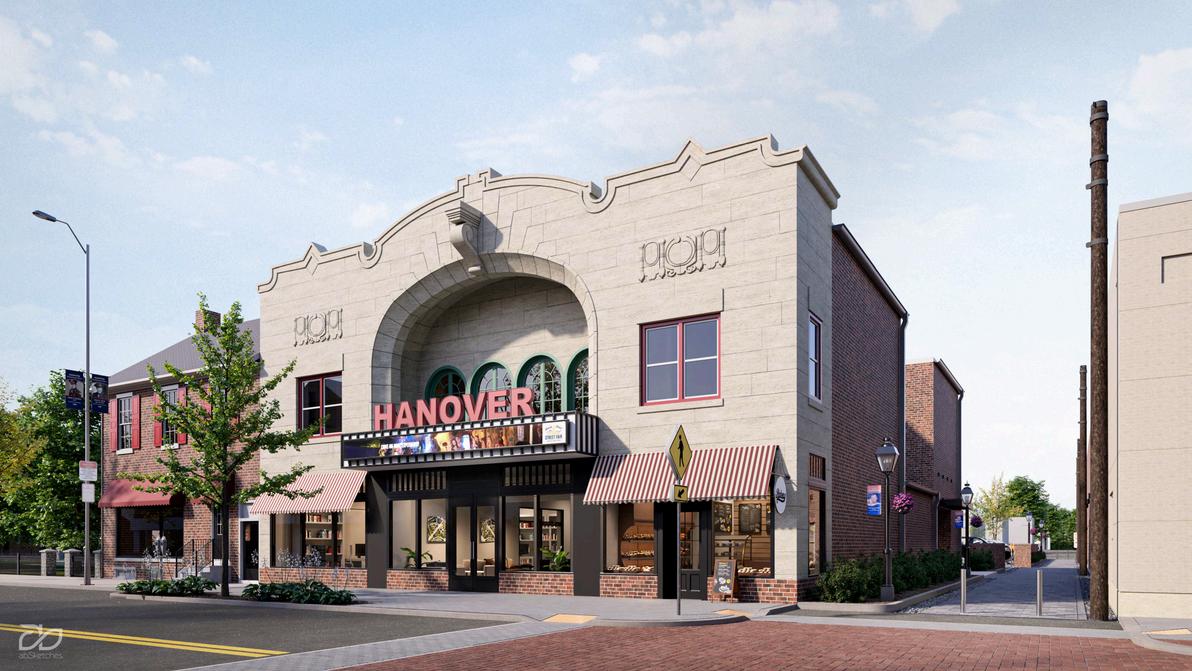
A Transformational local Project: reviving the Hanover State Theater
Once a cornerstone of entertainment in downtown Hanover, the Hanover State Theater now stands as one of the borough’s most talked-about redevelopment opportunities. Located on Frederick Street, the historic venue has stood vacant for 40 years, leaving a lasting imprint on the community and ongoing curiosity about its future.
Efforts to revive the theater have been led by groups such as the Hanover Economic Development Corporation and the Redevelopment Authority of York County, which have worked to attract developers and reimagine the space Conceptual renderings were released outlining a potential Community Commerce & Business Center that would preserve the theater’s historic exterior, while the rear 2/3 of the building would be demolished for parking.






The project remains in early stages and depends on funding and development partnerships. For now, the future of the Hanover State Theater is still uncertain, though renewed interest suggests its story may not be over just yet



Housing Availability is a workforce issue
ByJakeTaylor
In York, Adams, and the Hanover area, housing has become as much a business problem as a real estate one Employers are hiring, but workers need somewhere to live somewhere affordable, available, and close enough to the job sites, offices, schools, and service centers that keep the local economy moving. When housing supply falls behind demand, the effects ripple far beyond the real estate market. They show up in unfilled positions, longer commutes, and businesses that cannot grow because the workforce they need cannotaffordtobehere.
Local homebuilders point to a series of barriers that are slowing construction and making new homes more expensive to deliver. One of the most immediate is the Pennsylvania Building Code. Developers say the 202 code includes green energy requirements that can ad roughly $10,000 to $15,000 to the cost of a new hom In a market already strained by high inte rising material costs, and limited inven increase can be enough to push a first-time of reach or force a builder to abandon altogether In a region trying to remain co everyaddedcostmatters
Energy availability compounds the prob homes cannot be delivered on time if the utility infrastructure is not in place. Build that service delays can hold up projects lon structure itself is ready meaning completed idlewhiledeveloperswaitforthefinalconne makethemlivable.Thesedelaysincreasecarr slow the turnover of inventory, and create u that makes it harder to plan and sched projects.
delay.Developerssaythereviewprocessroutinelyturnsa one-ortwo-weekstepintoamonth-longormulti-month setback, with real consequences for financing, construction schedules, and project completion. Equally frustrating is the lack of consistency. When stormwater requirementsarenotapplieduniformly,theburdenoften falls back on the builder to resolve problems after the fact Creating avoidable costs and adding an additional reasonwhyhousinginventoriesstaystagnant
The cumulative effect of these barriers is significant In York and Adams counties, demand for housing is not going away. Employers are still hiring. Families are still looking. Young workers are still trying to plant roots. But a constrained construction pipeline produces a predictable outcome: fewer options, higher prices, and a i i t h b t th j b il bl d th
hanoverareachamberofcommerce 4
That is why the Chamber views housing as a core economic issue, and not a peripheral one. Businesses cannot recruit talent when housing is scarce. They cannot retain employees when the cost of living outpaces wages. They cannot expand when prospective hires are priced out of the area or forced into commutes that make the job impractical. Housing shortages do not just affect homebuyers. They affect every employer in the region trying to build a stable, productive workforce.
Addressing this will require action on several fronts. The Chamber is committed to advocating for faster, more predictable local review and permitting processes particularly where stormwater approvals, land development reviews, and utility coordination are causing the longest delays. We also recommend a more practical approach to building code implementation, one that preserves safety and efficiency standards without layering costs onto the entry-level homes the market needs most And we strongly support expanding the mix of available housing types Townhomes, duplexes, smaller single-family homes, and multifamily options are not a compromise. They’re what a balanced workforce housing market looks like. Different incomes, life stages, and family situations require different options.
The stormwater delays, the utility holdups, the code costs that price out first-time buyers none of these are unsolvable But solving them requires treating housing supply as what it actually is: economic infrastructure It shapes whether businesses can grow, whether workers can stay, and whether this region can turn its opportunities into lasting prosperity York, Adams, and Hanover do not just need more houses They need a housing pipeline that works.




York County Growth: Opportunity That Requires Discipline
y, pp p p g p p p new amenities, from restaurants to health care services to housing options, that make a county more competitive. In that sense, growth is not the problem Growth is part of the solution that is, if the region is prepared for it But preparation is the key word.
Unchecked growth brings real pressure Schools need space Roads carry more traffic Water, sewer, emergency response, and other public systems must expand to keep pace. Those costs do not disappear; they simply shift to taxpayers, municipalities, and businesses that are trying to grow at the same time When growth arrives faster than the county can plan for it, the result is strain instead of strength.
Housing is the clearest warning sign. As demand rises, prices rise with it. That can be good for property owners, but it quickly becomes a problem for young families, first-time buyers, and the workers local employers need most A community cannot build a healthy economy if the people who keep it running teachers, nurses, mechanics, warehouse workers, and service employees cannot afford to live there. Workforce housing is not a side issue. It is a business issue
This is where York County has to choose balance over reflex. The county should keep welcoming growth, but it should direct that growth into the right places That means more development in established communities, more mixed-use projects in walkable areas, and more housing types that fit modern needs without pushing everything outward Duplexes, townhomes, accessory units, and smaller apartment buildings can add supply without changing the character of every neighborhood into something unrecognizable. Particularly in Hanover, that approach makes sense. Strengthening downtown, reusing underused parcels, and building near existing infrastructure can support employers and residents simultaneously
At the same time, York County cannot afford to treat farmland and open space as expendable. Once productive land is converted to sprawl, it is rarely recovered That is why farmland preservation should remain a front-line strategy. York County’s Agricultural Land Preservation Program has already protected more than 50,000 acres and 363 farms, a major achievement that helps preserve the county’s agricultural economy and rural identity.
hanoverareachamberofcommerce
Preservation alone, however, is not enough. York also needs smart-growth tools that guide development instead of scattering it. Transfer of Development Rights can help move growth away from sensitive farmland and toward areas that are already planned for it. Municipal collaboration can reduce the patchwork effect that comes from 72 separate landuse decisions And strategic infrastructure investments can make it easier for businesses and housing to cluster where roads, utilities, and services already exist.
That is the middle ground York County needs: not anti-growth, not growth-at-any-cost, but growth with a plan. The business community should support that approach because it protects the very assets that
make York County attractive in the first place available workers, affordable homes, productive farms, and a high quality of life.
York County’s momentum is real The task now is to make sure that momentum builds lasting prosperity instead of short-term pressure. If the county preserves farmland, encourages the right kind of housing, and invests in the places that can absorb growth well (including Hanover,) it can expand its economy without losing the character and livability that helped drive the growth in the first place

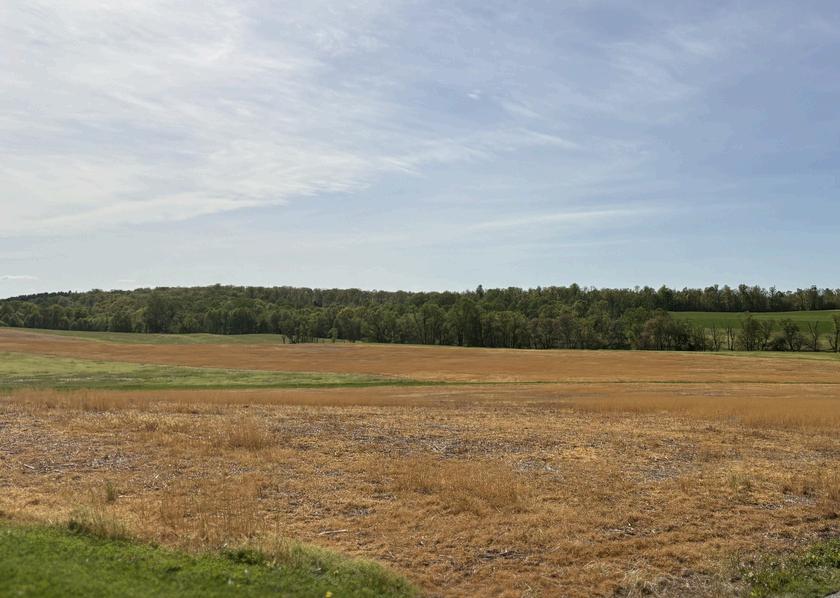
West Manheim Township, Photo by Madisson Sentz



Hanover’s Growth: Past, present, & Progress
Fromitsearlydaysasaruralcrossroadstoitspresent role as a thriving small-town hub, Hanover has experienced steady and meaningful growth shaped by industry,location,andcommunityidentity.
Then: A Crossroads Community
Hanover’s story begins in the 1700s, when German settlersestablishedfarmsinthefertileConewagoCreek valley. Officially laid out in 1763, the town quickly became a key stop along trade routes connecting Baltimore and York Early Hanover was defined by agriculture,smallinns,andmillingoperations,serving bothtravelersandlocalfarmers
By the 1800s, the arrival of the railroad accelerated development, turning Hanover into a growing industrialcenter.HanoverShoe,onceaprominentand successful shoe factory in York County, helped Hanover earn the nickname “Shoe Capital of the World” Historic photos from this era often show bustlingstreets,brickrowbuildings,andsmokestacks: symbols of a town transitioning from farmland to industry
Now: Industry, Innovation, and Community Growth
Today, Hanover is widely known as the “Snack Food Capital of the World,”home to major manufacturers like Utz Brands, Campbell’s Snacks and Snyder’s of Hanover. While manufacturing remains important, the local economy has diversified to include retail, healthcare,andsmallbusinesses,supportingcontinued growth.
Population trends reflect this steady expansion. Hanover has grown from about 14,500 residents in 2000 to over 16,500 today its highest population on record.Modernimagesdepictarevitalized downtown, newhousingdevelopments, andcommercialcorridors
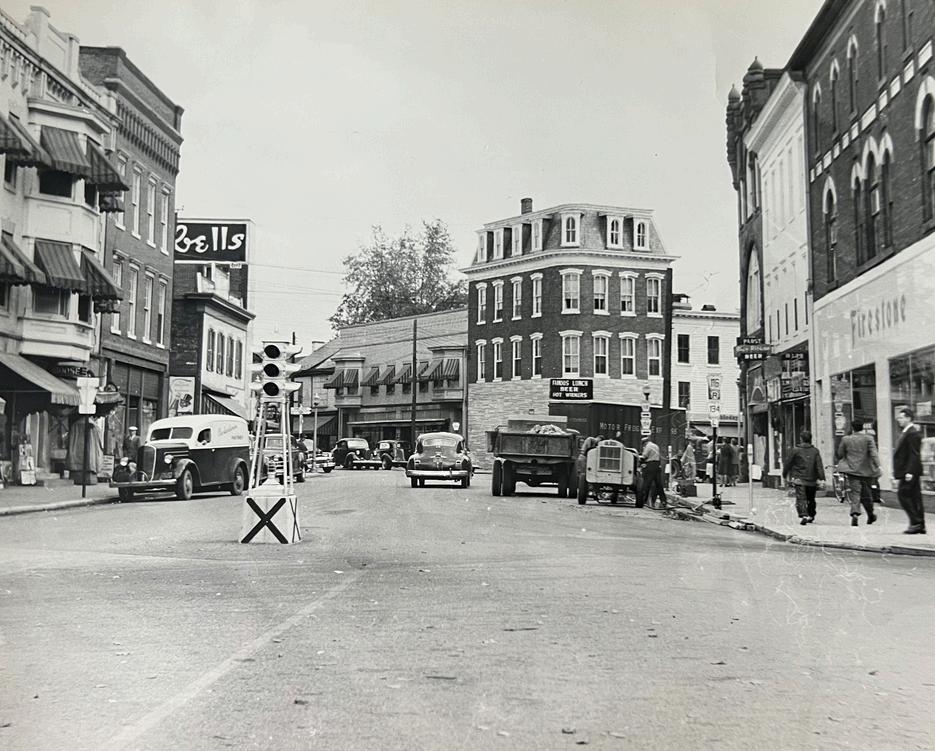
Broadway and York St. intersection, circa 1940s
like the “Golden Mile,” illustrating how the town has adapted to contemporary needs while maintaining its historiccharm.
A Community Bridging Past and Present
What makes Hanover unique is its ability to balance preservation with progress More than 3,000 historic structures remain part of its architectural landscape, whileongoingrevitalizationeffortshaveearnednational recognitionfordowntowndevelopment
Side-by-sidecomparisonsof historicandcurrentphotos reveal this transformation clearly: horse-drawn wagons replaced by modern traffic, factories evolving into diverse businesses, and farmland giving way to neighborhoodsandretailcenters
Looking Ahead
Hanover’sgrowthisnotjustaboutexpansion it’sabout evolution. The community continues to build on its strongindustrialbase,strategiclocation,andsmall-town character. As new residents and businesses arrive, Hanover stands as a clear example of how a town can honoritspastwhileshapingadynamicfuture.



Hanover Area Chamber of Commerce
Aboutus Business. Community. Commitment. Interested in advertising opportunities? Reach out to akidd@hanoverchamber.com to learn how the Hanover Chamber can help you build community connections.
The Hanover Area Chamber of Commerce delivers value to its members and advances the interests of the business community.

ChamberStaff




JACOBTAYLOR
President
2025-2026BoardofDirectors
Cynthia Simpson, Chair of the Board - Utz Quality Foods
Ashley Hershey, Secretary/Treasurer - Brown Plus
Michael Kelly, Past Chair - ACNB Bank
Tom Allison, Allison’s Plumbing, Heating & HVAC
Robin Fitzpatrick, Adams Economic Alliance
Dr. Robert Friel, South Western School District
HOLLYLAPIDUS
AdministrativeCoordinator AVAKIDD
MarketingandEvents Coordinator MADISSONSENTZ
MarketingCoordinator
Jon Harris, M&T Bank
Elizabeth Johnides, Edward Jones
Ken Kirkpatrick, KLK Welding
Dustin Lippy, Leonhardt Manufacturing Co. Inc.
Drew Little, Conewago Valley School District
Kelly McDonald, UPMC Hanover
Aubreyanne Ochs, WellSpan Health
Stacy Pitta, Campbell’s Snacks
Dr. John Scola, Hanover Public School District
Ben Shaw, HCM Wealth Management
Loni Smith, Hanover Auto Team
Jennifer Stetter, Barley Snyder
Chris Watson, Schmuck Lumber Co.
Clair Weigle, Ream Printing
Brandon Wingert, L2 Brands LLC - League & Legacy
MemberNews
Burkentine Home Builders Recognizes Local Fire Departments As Part Of Their Live With Purpose Initiative
On May 4th, in observance of International Firefighters’ Day, Burkentine Builders donated $4,000 to the brave men and women from local fire departments who protect and serve their communities across the East Coast.
Barley Snyder Partner Reilly Noetzel Named Chair of Real Estate Practice Group
Barley Snyder is proud to announce that partner Reilly S. Noetzel has been named chair of the firm’s Real Estate Practice Group.
Main Street Hanover Invites Restaurants to Participate in 2026 Hanover Restaurant Week
Main Street Hanover is officially seeking local restaurants, cafés, and eateries to participate in Hanover Restaurant Week 2026.
Upcoming Chamber Events
June 11 : 57 Annual Chamber Golf Outing July 11 : 6th Annual Snack Town Street Fair
th th th August 7 : Q3 Legislative Lunch August 26 : MegaMixer with YCEA presented by Penn National Insurance th th


40YorkSt Suite2|Hanover,PA17331
RETURNSERVICEREQUESTED