In This Issue...
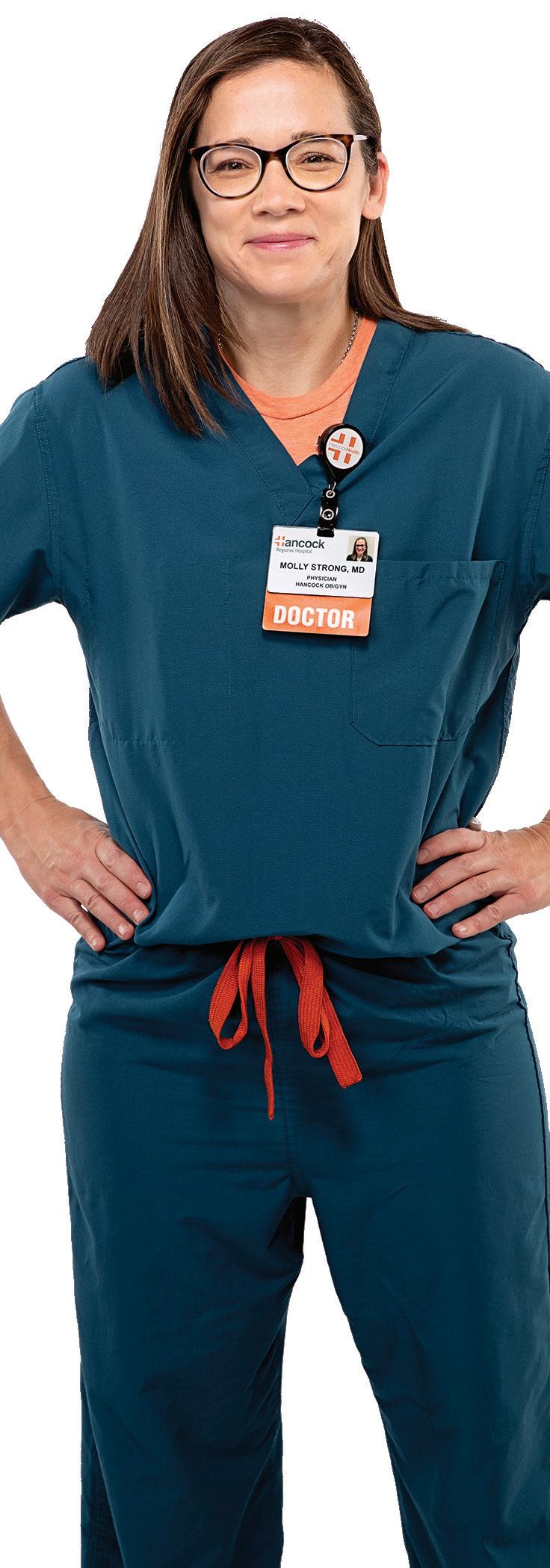
Letter From Dr. Molly Strong
Welcome to BLOOM — a magazine for women in EVERY season of life!
All women experience health changes and challenges as we grow. The truth is that our bodies go through remarkable transitions across every stage of life — from our earliest cycles, fertility, pregnancy, perimenopause, menopause, and beyond. Many women feel like they’re navigating these transitions on their own. Hormone shifts, irregular cycles, unexpected symptoms — these experiences can feel confusing or even isolating.
But they’re also incredibly common.
In a recent conversation on the Just Jenn podcast, we talked about how women often assume they simply must “tough out” many of these challenges. In reality, understanding what’s happening in your body and talking openly about it can make a tremendous difference. These aren’t personal failures or mysteries; they’re part of the biology that connects us all as women.
In this issue of BLOOM, we’re exploring some of the questions I hear most often: understanding hormones, caring for fertility as we age, recognizing endometriosis, and knowing what a healthy menstrual cycle looks like. My hope is that these stories help you feel informed, supported, and empowered to ask questions about your health.
Because when women have the right information, we’re better prepared to care for ourselves and to thrive at every stage of life.
Warmly,
Dr. Molly Strong CHIEF OF OBSTETRICS & GYNECOLOGY, HANCOCK HEALTH
Given the chance, most women would love to interview their providers about all of the many (many, many) changes that take place during midlife and beyond. From irregular menstrual cycles to worrisome symptoms, it is important to know what is considered normal and when to put in the effort to be evaluated.
We took some time to gather the answers to your most burning questions regarding hormones, perimenopause and more by sitting down with Dr. Molly Strong. Dr. Strong is the chief of OB/GYN at Hancock Health and is a Menopause Society Certified Practitioner.
Q: WHAT ARE SOME OF THE MOST COMMON SYMPTOMS WOMEN DISMISS THAT MAY NEED TO BE EVALUATED BY A PROVIDER?
MS: From an OB/GYN perspective, probably the number one thing I want to know about when you come in to see me is if you are having irregular bleeding or a change in your period. Sometimes, this can just be associated with stress or medications, but sometimes it can signal something more serious.
Q: SO MUCH OF THE TIME, WOMEN ARE FEELING EXHAUSTED, ANXIOUS AND NOT LIKE THEMSELVES. THEY MAY GO TO THE DOCTOR AND GET THEIR LABS, BUT THEIR LABS ARE NORMAL. WHAT SHOULD WOMEN DO? WHAT SHOULD WE ASK FOR NEXT?
MS: A lot of hormone levels are erratic. Throughout the day, your hormone levels, especially estrogen, are changing. If you are tested at two o’clock, your provider might see it right in the middle, and that might look normal, but if you are tested an hour later, it may be too high or it may be really low, and those highs and lows are what cause symptoms. Therefore, symptoms are probably just as important, maybe even more important than those lab test results. Don’t be discouraged. Still come back and ask about those symptoms. Dig deeper and look for the cause.
Q: WHAT ABOUT STRESS? WHAT ARE THE BEST WAYS FOR WOMEN TO MANAGE IT AND WHAT SYMPTOMS SHOULD WE LOOK OUT FOR THAT SIGNAL TOO MUCH STRESS AND OVERWHELM?
MS: Stress affects everything, including your hormone levels. Cortisol is the typical stress hormone that we think about when we talk about stress. It impacts sleep, weight gain and many cycles and systems throughout the body. And it does impact women differently than men. Looking at what is causing our stress and how we manage it is a much more difficult question and needs a personalized level of care for each patient.
Q: WHAT ARE THE MOST COMMON RECOMMENDATIONS FOR MAINTAINING BALANCED HORMONES AND OVERALL HEALTH?
MS: All of those things that we think of in a healthy diet are going to help our body to function better. They’re going to control our blood sugar levels, which means that our hormone levels also are under better control. For my patients who have PCOS or are at risk for PCOS, regular exercise does tend to improve their symptoms. What I usually tell women is 30 to 60 minutes of moderate exercise, five days a week, as it is immensely helpful for hormones andstress.
Come join Jenn Wells and her podcast guests as she tackles all things women’s health! From hormones to illness, advocating for yourself and more, Jenn wants to ensure every woman remembers to trust her instincts when it comes to healthcare.
She invites Hancock Health providers to weigh in on important topics and answer burning questions. Check out Season 1 on Substack, Apple Podcasts and Spotify today!
TAKING CARE OF YOUR
AS YOU AGE
With more women conceiving and giving birth later in life, providers are often asked how to keep fertility healthy for longer. Although each woman is different, with varying risk factors, there are still some tried and true methods for ensuring healthy hormone balance and, in turn, healthy fertility.
Here at Hancock Health, we treat the whole patient, which means we also understand how important a healthy lifestyle is in maintaining overall wellbeing. It’s the same for your fertility. The lifestyle habits you choose every day add up to create conditions for hormone balance, reproductive health, and more.
FIRST THING’S FIRST: TALK TOYOUR PROVIDER
Dr. Molly Strong, chief of obstetrics and gynecology at Hancock Health, urges womento schedule a pre-conception visit with their provider. “Part of what we go into,” says Dr. Strong, “is your general health, yourhistory and even your family history to screen for geneticcomplications. We also go over whatmedications you are taking becausenotevery medication is safe while pregnant. We talk aboutvitamins and supplements as well.”
Before getting clearance from their provider, many women may wonder if they will have an easy or difficult time conceiving, especially as they age. “I would say in general, if you are having a monthly period, you probably don’t have an increased risk for infertility,” suggests Dr. Strong, “But that is in general and, again, you need to be very specific about their individual health and family history.” There is good evidence to suggest that staying up to date on annual exams and preventative screenings, as well as pre-conception visits, will help you have a more well-rounded picture of your own health anda better chance for healthy fertility.
LEAN
INTO LIFESTYLE
HABITS
THAT INCREASE FERTILITY & DITCH THE ONES THAT HARM IT
We have a lot more power over our own health and wellbeing than we think we do. Everyday habits add up over time to make
or break your health, especially as a woman. Whether or not they are planning to have a baby, women in their reproductive years and beyond can take steps to ensure a higher quality of health and, therefore, life.
STOP DIETING AND FOCUS ON NUTRIENT DENSITY
We are, thankfully, making our way out of the calorie-counting trends of the last few decades and moving onto something with much more bang for its buck — a focus on nutrient dense foods. This is based on the fact that, biologically, not all calories are equal. Instead of consuming processed, packaged foods that are made with low quality ingredients lacking nutrition, opt for fresh, whole foods.
Fresh fruits and vegetables of all colors, healthy fats, meats, fish, beans, legumes, nuts, seeds and whole grains contain a veritable buffet of nutrients that support your fertility and overall health. Not only that, these nutrient dense foods are packed with the right fats, proteins, carbs, and fiber to help you feel satisfied. There is less of a need to count calories when you ditch the processed foods that can intercept your own feelings of hunger and fullness and focus on real foods that don’t need a label.
PARTICIPATE IN EXERCISE THAT MAKES YOU FEEL GOOD
We are much more likely to stick to an exercise routine if we like what we are doing. Moderate exercise is excellent for fertility, so find things that you enjoy and aim for about 150 minutes per week. Extreme training, on the other hand, can overly stress the body and inhibit ovulation, amenorrhea or causing irregular menstruation. These may lead to fertility obstacles, thus the reason to stick to something
more moderate that gets your heart pumping without taxing your body.
OPTIMIZE EGG HEALTH
Stress and environmental toxins can impact the health of your eggs, an important feature of your fertility. Manage stress by prioritizing 7-9 hours of sleep per night, a practice that balances reproductive hormones and boosts overall health as well. Maintain a practice that helps you decompress, whether that is yoga, meditation, gardening or nature walks.
Start minimizing your exposure to environmental toxins as soon as you can. Compounds such as BPA and others found in plastics are endocrine disruptors. Furthermore, pesticides, industrial run-off and lead can cause fertility issues. Think about reducing your plastic containers and waste and buying organic whenever you can. Not only will it help to keep your fertility and hormones balanced, it will also help to decrease your impact on the planet.
DITCH THE CIGS AND ALCOHOL
High alcohol consumption, smoking and vaping significantly impair egg quality. These habits are also terrible for your overall health, impacting your brain, heart, lungs, liver and other vital organs, and should be stopped as soon as possible.
Consciously caring for your fertility matters, especially as you age. Many of the lifestyle tips we have discussed go a long way in decreasing your risk factors for a variety of illnesses and help you to maintain a healthier overall life. The providers at Hancock Health are here to support you on your journey.
Endometriosis occurs when the tissue inside of the uterus begins to grow outside of the uterus within the pelvic cavity. When the hormones that cause the uterus to contract and bleed also cause this tissue to contract and bleed, it creates severe and debilitating pain, inflammation, a build up of scar tissue and heavy periods.
WHO GETS ENDOMETRIOSIS?
Functioning normally can feel impossible even during a healthy, regular menstrual cycle, let alone one that causes more severe pain and symptoms. Women with endometriosis are often absent from school and work because of the excruciating pain they experience monthly. Some women do have endometriosis without experiencing a lot of pain or symptoms, but it depends on the woman, her cycle and where the endometrial tissue is located.
This condition can develop in any woman and, while it is most commonly diagnosed in women in their 30s and 40s, anyone with a period is susceptible. Some risk factors include having a sister or mother with the disease, giving birth for the first time after 30 and having an abnormal uterus. Caucasian women are more likely to develop endometriosis than other ethnical groups.
Endometriosis is diagnosed by yourprovider using various methods, such aslaparoscopy, ultrasound, biopsy, CT scan or MRI. Schedule an appointment to speak to your provider if you have symptoms such as:
• Severe menstrual cramps
• Chronic pelvic pain
• Painful intercourse
• Fertility issues
• Gastrointestinal or urinary disease
Endometriosis can be a challenge to manage because cycles differ within each woman. However, finding it sooner rather than later can lead to better disease management and results. Furthermore, educating yourself on symptom management and treatment options, such as medications or surgery, will help you feel more empowered.
LIFESTYLE HABITS THAT CAN HELP YOU MANAGE ENDOMETRIOSIS
Because endometriosis can impact your overall health, including energy levels, mental health, hormones, digestion, and more, it is important to understand your
own unique needs when it comes to this condition. As of now, there is no one thing that will work for every woman, because our cycles differ greatly from person to person. However, it is always a good idea to follow these general guidelines and see if they can make a difference:
• Get plenty of rest, relaxation and try a meditation practice to reduce stress
• Warm baths
• Eat plenty of fiber and hydrate to prevent constipation
• Exercise regularly
• Use a heating pad to help with cramps
• Maintain a healthy weight
• Reduce processed foods, as they contribute to inflammation
• Ask your provider about supplementing with magnesium
Endometriosis and other diseases that impact menstruation are difficult to live with because of their monthly recurrence. Furthermore, women may need to advocate for themselves to ensure they are being listened to about their pain levels. At Hancock Health, our providers are passionate listeners, intent on treating the whole patient. We want to make sure women feel seen and heard when they come to us with challenging issues like endometriosis. We know it is something that can be debilitating. With the right treatments and protocols, we can help you get back on track to enjoying a full life.
We know that women can tell a lot about their health based on the health of their menstrual cycle. But what does a “normal” cycle look like? And, if it varies greatly from woman to woman, how can we care for ourselves when things get out of whack?
Your menstrual cycle can be impacted by a number of things, including diet, weight, illness, health history, hormone imbalances, not to mention the many phases of life women may go through: pregnancy, postpartum, perimenopause and menopause. What is normal will vary from woman to woman, but there are still some
general guidelines you can expect your menstrual cycle to follow.
WHAT IS NORMAL, ANYWAY?
Do you know what is “typical” in terms of your menstrual cycle? Most women have cycles that last anywhere from 21-35 days. That may seem like a big range, but it accounts for different age groups. Young girls may have longer cycles that tend to become shorter and more regular over time. Your cycle is measured from the first day of your period to the first day of your following period. Tracking this length is a vital step in understanding your cycle.
YOUR CYCLE INCLUDES FOUR DISTINCT PHASES: MENSTRUATION, FOLLICULAR PHASE, OVULATION AND LUTEAL PHASE.
During menstruation, it is considered normal to have a mild to moderate flow that can range in color from light pink to even dark brown or blackish. What is important is that you begin to track what is normal for you so that you can approach your provider with symptoms regarding irregularities. Most women will enter perimenopause between ages 35-45, which will potentially last for over a decade or more before full menopause or the end of your menstruation and reproductive years. Understanding your cycle, and what is normal for you, is a key component into maintaining your health and wellbeing through this difficult life transition.
SO, WHEN SHOULD YOU TALK TO YOUR PROVIDER?
Your cycle can help you and your provider understand a lot about your health. There are a few different things you can monitor to help you keep track of the health of your reproductive cycle as well as your overall health:
MENSTRUAL FLOW
It is normal to experience some change in flow here and there. However, if there are persistent changes, it is a good idea to speak to your provider. A lighter flow or 2-3 months without a period is a sign to schedule an appointment. A heavierthan-normal-for-you flow can be a sign of hormone imbalance, thyroid issues or other medical conditions and also requires a conversation with your provider.
SPOTTING
Even though spotting after sex or between periods is not always a cause for alarm, you should still speak to your provider to rule out problems. Some common issues that cause spotting include birth control, polyps or fibroids, hormone dysfunction and some cancers.
SHORTENED OR MISSED CYCLES
The length of your cycle may vary, and of course it will all become a moot point once perimenopause kicks down the door. However, you should speak to your provider if your cycles are shorter than two weeks or you skip multiple months of your period in a row with no pregnancy. Medications, hormonal changes or structural changes of your uterus could all be factors contributing to these changes.
SYMPTOMS
THAT INTERFERE WITH
DAILY LIFE
Of course many women suffer from symptoms, ranging from mild to severe, such as cramping, bloating, mood swings, and fatigue. However, if those symptoms worsen or begin to impact your ability to function in daily life, you should schedule an appointment with your provider. Anemia, endometriosis and PMDD are common illnesses in women that can cause severe symptoms and must be treated.
MAINTAINING A HEALTHY MENSTRUAL CYCLE
So, with all of this information, what are the best ways to maintain good
menstrual health and hormone balance? You won’t be surprised to find that it is the same health advice you would put into effect when trying to maintain an overall healthy lifestyle:
• Maintain a healthy weight
• Eat a diet high in fresh, whole foods and low in processed foods
• Drink plenty of water
• Manage stress
• Exercise regularly
• Get plenty of sleep and rest when needed
Tracking your cycle is also a great way to understand your overall health. Our menstrual cycles impact our entire body system, with floods of varying hormones based on each of the four phases. Understanding where you are in your cycle and how that may impact your mood, need for sleep and what activities feel nourishing is a great way to care for yourself and your reproductive system. Tracking your cycle also allows you to notice any signs or symptoms that something is off so you can speak to your provider.
FIND THE OB/GYN THAT IS RIGHT FOR YOU
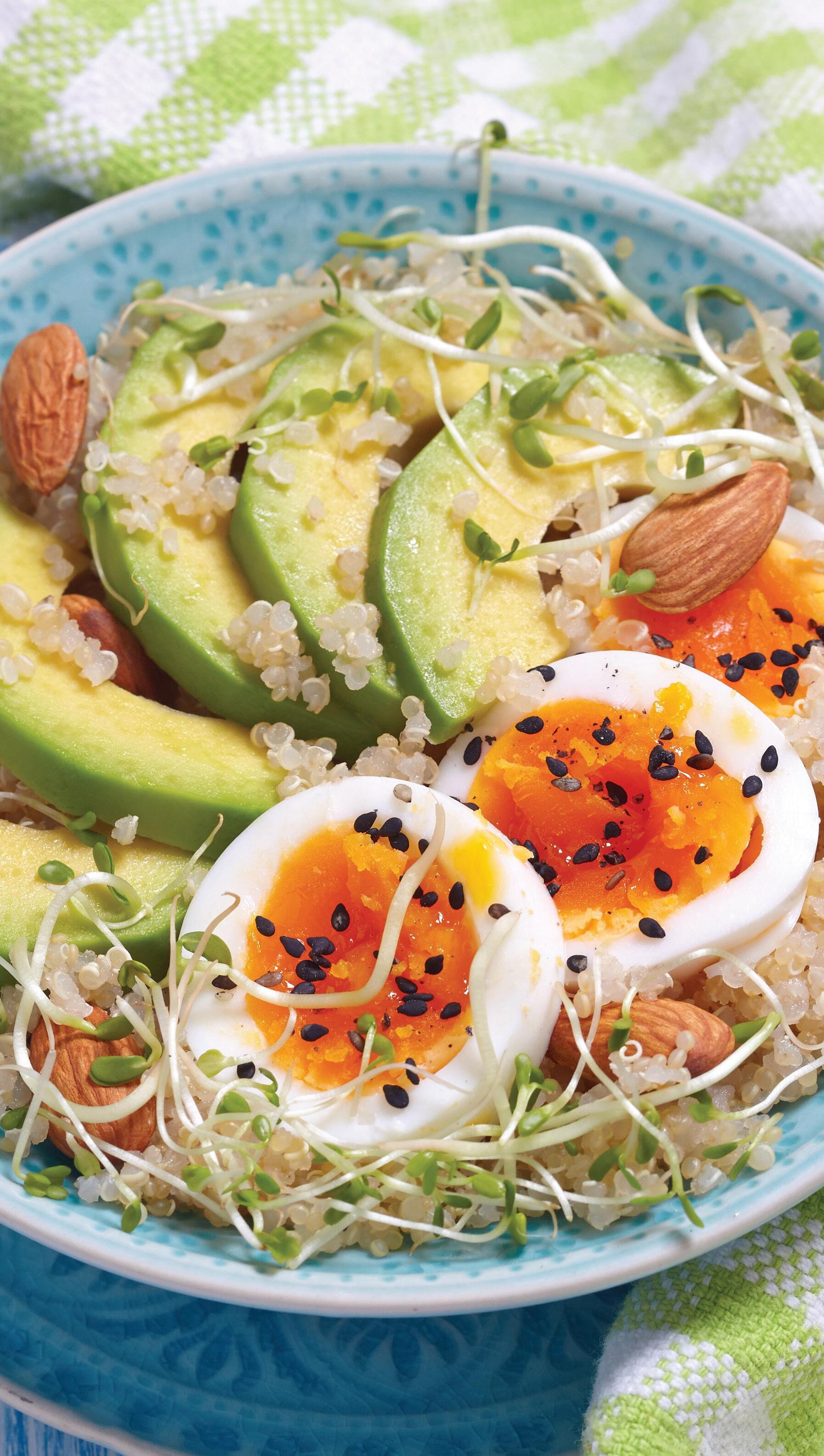
1 avocado, sliced 2 Tbsp crumbled feta cheese
Optional: fresh herbs, omatoes or salsa for toppings
DIRECTIONS:
Heat olive oil in et and cook eggs o desired doneness, easoning with salt and pepper. Combine the cooked quinoa and eggs in wl. Top with ced avocados and feta cheese. Season as desired withmore salt and ground pepper.
Feel free to add more toppings, such as fresh herbs, sliced cherry tomatoes or salsa!
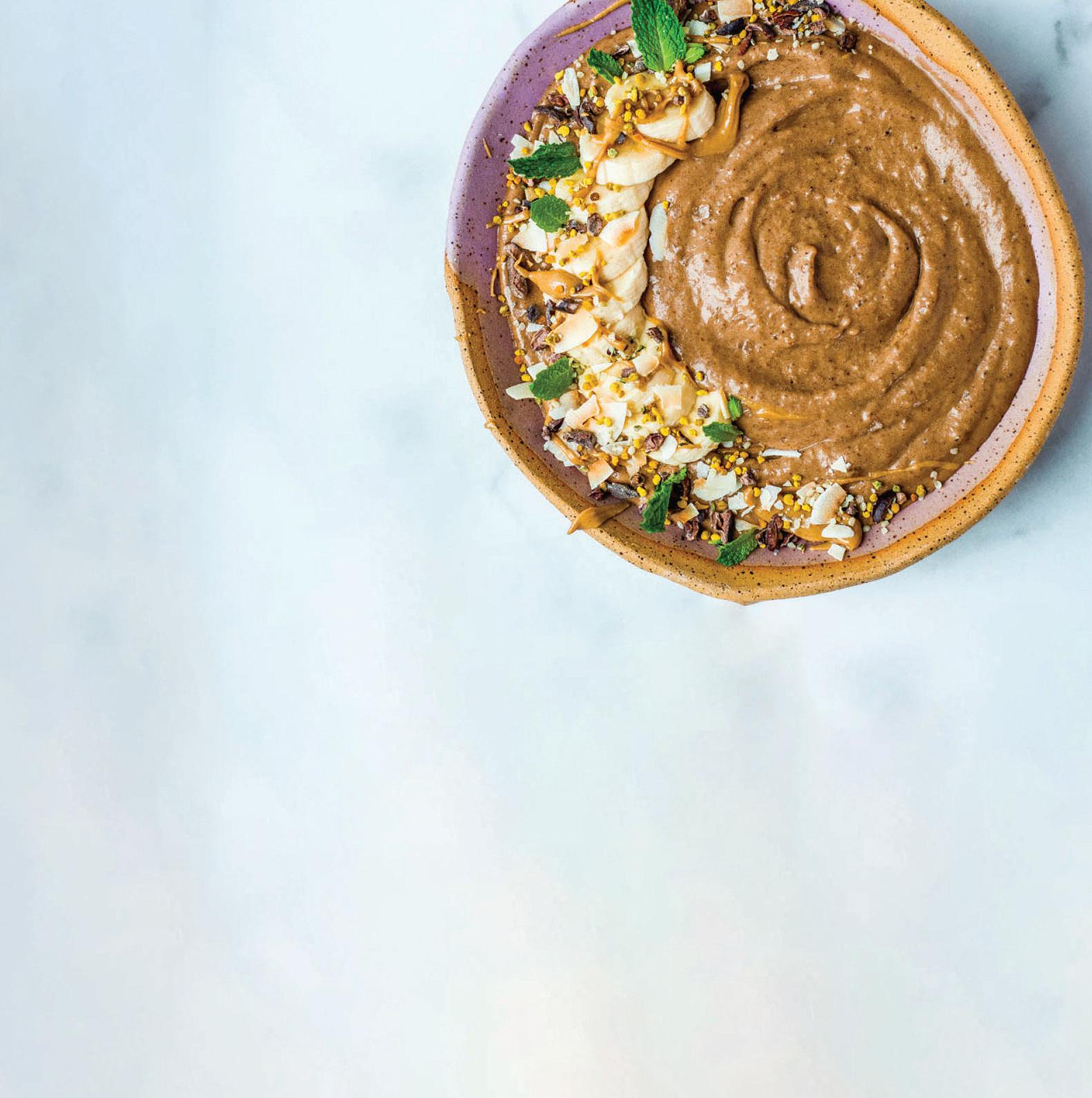
Does your body crave something rich and sweet during your luteal phase (Hello, PMS!)? Make your hormones happy and indulge in this amazing dark chocolate smoothie that is healthy for your overall menstruation, fertility and reproductive health!
HERE IS WHAT YOU WILL NEED:
• 1 cup unsweetened nut milk
• 1 serving chocolate protein powder
• 1 Tbsp ground flax or hemp seed
• 1 Tbsp cacao powder
• 1 tbsp cacao nibs
• 1 tsp cinnamon
• ½ tsp sea salt
• 1-2 dates, pitted (can also swap for 1 Tbsp honey or maple syrup)
• ½ avocado
• 1 Tbsp cashew, almond or favorite
nut butter
• 1 large handful spinach, kale or chard
• ½ banana