DIAGNOSTICS TROUBLESHOOTERS FROM BEN JOHNSON AND ED COCKILL
EDITOR’S PICKS
Hello and welcome to the June issue of Professional Motor Mechanic magazine! We’ve got a couple of really great in-depth interviews to share with you this month. The first is with ZF, about remanufacturing – turn to page 24 for that – and the second is with Pico Technology about their latest product launch – find that on page 46. We’ve got a boatload of technical and diagnostics-led articles in this issue too, of course, but be sure to check out those interviews as there’s always lots of useful things you can pick up from the experts. Enjoy the issue!
PMM’s man of mystery Ben Johnson is back with pen in hand and now he’s turned his attention away from Germany to the East… or has he? Turn to page 12 to find out.
Editor KIERAN NEE
Digital Manager
KELLY NEWSTEAD
Group Manager
ALEX DILLEIGH
Senior Account Manager
MATTHEW BOASE
Magazine Designer
GEMMA WATSON
Group Production Manager
CAROL PADGETT
Production Assistant
CLAIRE SWENDELL
Distribution Manager
KARL CLARK
Subscriptions
PROFESSIONAL MOTOR MECHANIC is a business magazine for firms and individuals involved in all aspects of the motor trade. It is published eleven times a year and is available nationally FREE to the trade through leading motor factors. It is also available through the post at a cost of £30.
Tracing the bass – it’s an unlikely topic for a documentary: Tracking down a budget German bass guitar used only for a few years almost 70 years ago. Is this the bass guitar that will turn your local band into chart-topping legends? Could it be the bass that finally makes women fall over themselves to get at the bassist? Is it made of solid gold? No, is the answer to all three. The bass in question was played by a baby-faced Liverpudlian who happened to be called Paul McCartney and was used to make the first, brilliant, Beatles records.
To Mr McCartney, the bass in question had not been a particularly special instrument. When it was stolen, back in the ‘70s, his response was, reportedly: “It’s OK, I’ve got another!” It sounds unbelievable to us, but at the time, for him it was just a tool for making music. The bass didn’t provide the music, he did. It wasn’t until years later, as nostalgia started to set in, that he began to wonder what ever became of that first bass (he had completely forgotten that it had been stolen). It got me thinking, do we all have tools or instruments that are special to us?
In many, if not all, of the garages I have visited, there is some reminder of the early days when the garage started. Be it an early diagnostic tool, a set of sockets, or maybe an award or two. It’s always nice to keep things close to us that have a sentimental value, but it’s probably unlikely that many technicians attribute the same level of mystique to a spanner as people do to musical instruments.
‘‘ It got me thinking, do we all have tools or instruments that are special to us? ”
That doesn’t mean, however, that old mementos can’t bring a little magic to your work. I think they can. They remind you of how far you’ve come, how much you’ve progressed. On bad days, they can remind you of your youthful enthusiasm and what made you get into the industry in the first place. On good days, they give you a sense of continuity, reminding you of all the other good times you’ve had in those four walls.
So that’s why losing a cherished tool or whatever it may be can be painful, even if you don’t realise it at first. Not everyone will have a team of documentary makers who will set aside months of their lives to help you track down your lost multimeter, but it’s worth reminiscing from time to time. So, did Macca manage to get his hands once more on his hijacked Hofner? Well, you’ll have to watch the documentary to find out, won’t you!
KieranNee Editor
JOIN
PMM NEWS
NEWSIN BRIEF
■ YOUR QUESTIONS ANSWERED
Valeo Service has launched its new omnichannel Help Centre, designed to help workshops navigate modern vehicle repairs.
Going beyond the traditional hotline, the service gives professionals instant access to automotive experts via live chat, email, and phone, providing immediate answers to questions like “does it fit this car?” or “how should it be fitted?”
■ GET SERMI READY
Garage Hive has introduced a new system update designed to help independent workshops manage the compliance demands of the UK’s Security-related Vehicle Repair and Maintenance Information (SERMI) scheme, which recently went live.
Developed in partnership with Mark Webb of Garage Vitals, the update embeds SERMI processes directly into the workshop workflow, addressing what many are describing as the most significant shift in vehicle security access in a generation.
Is a technician shortage challenging garage growth?
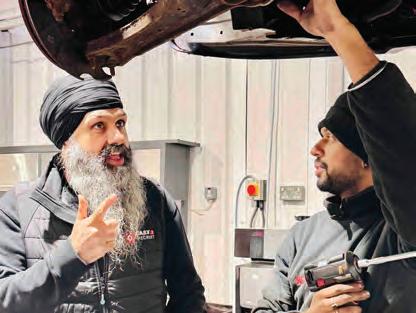
Independent garages are continuing to feel the strain of ongoing recruitment challenges, with Easy2Recruit reporting that three businesses have recently closed after being unable to secure skilled technicians.
The company, which supports UK workshops with the recruitment and relocation of skilled overseas technicians, says the situation reflects a wider issue across the sector. Despite garages seeing strong customer demand, their profitability is being hampered by a lack of access to the right skilled people.
Well-run workshops
Ambi Singh, CEO of Easy2Recruit, said the three garages they spoke to were established, well-run workshops that had ultimately become disheartened. “They were busy, they had work coming in, but they couldn’t get the staff to support it. When that pressure builds over time, it becomes very difficult to sustain the business.
“What stood out is that all three had spoken to us around 18 months ago but decided not to move forward with international recruitment because the idea felt unfamiliar and they thought it would be difficult. In reality, it isn’t. We take care of everything from start to finish.”
The latest industry data continues to underline the issue. Research from the IMI shows recruitment pressure in the motor trades remains around 17 per cent higher than the national average, with approximately 16,000 roles currently unfilled.
Drawing on his own experience running a four-site garage group in Coventry, Singh said the issue is one many workshop owners are dealing with day to day. “When you’re consistently under pressure, trying to manage workload without the right number of technicians, it affects everything from turnaround times to customer experience.”
Easy2Recruit has now placed over 100
technicians into UK workshops through its international recruitment model, working with businesses ranging from single-site independents to national operators. Rather than focusing on one-off placements, the company positions itself as a long-term workforce partner, supporting garages with forward planning and ongoing recruitment.
“With networks like In'n'Out Autocentres, we’re working continuously, placing technicians every six to 12 months as they grow and as natural staff changes happen,” said Singh. “That kind of planning gives businesses far more stability than reacting when a vacancy appears.”
Complimenting local recruiting
The process typically takes around 16 weeks from candidate selection to start date, meaning workshops need to look ahead rather than rely on immediate solutions.
Singh is also keen to stress that international recruitment should be seen as part of a balanced approach to workforce development. “This isn’t about replacing what the UK is doing with training and apprenticeships – that remains essential. It’s about aligning local recruitment with international recruitment in a way that supports the business and keeps workshops operating effectively.”
For more information
WWW.RDR.LINK/ACF001
FOR UP-TO-DATE NEWS, SIGN UP FOR OUR WEEKLY E-NEWSLETTER. SIMPLY SCAN THE QR CODE
BookMyGarage publishes first-ever industry report revealing key trends shaping the UK aftermarket
BookMyGarage has recently published its first-ever industry report, drawing on its own platform data alongside garage market insights to provide a data-led view of how UK motorists are booking MOTs, servicing and repairs – and what this means for garages.
The BookMyGarage 2025 Aftermarket Insights Industry Report combines data from millions of real booking interactions with surveys of garage owners and motorists, delivering a unique snapshot of trends and changing consumer behaviour as well as workshop demand across the UK aftermarket. Key findings from the report include:
● Record breaking 2025 delivering £134m worth of work to garage partners on the platform.
● Independent garages continue to dominate, receiving 92 per cent of all bookings.
● Impact to garages on its successful Accelerate package delivering 8:1 revenue return.
● 79 per cent of garages on the platform said BookMyGarage bookings had a ‘significant’ impact on their business.
● Garage view on MOT pricing with 62 per cent wanting to increase the cost.
● Motorists view on maintaining regular servicing and perceived impact to the value of their cars.
● Patterns in garage pricing for servicing & repairs.
● Out of hours bookings - 27 per cent taking place outside traditional garage opening hours, underlining the growing
importance of the garages ability to take online bookings.
● Trends in the age and types of vehicles being booked in on the platform.
● Business outlook and challenges from its garage partners.
● Status of EV bookings and garage capacity to take on this work.
● Time frames of MOT & service bookings – 35 per cent made within a three-day window, highlighting sustained demand for short-notice availability.
● Search patterns – drivers increasingly prioritising convenience with ‘distance’ being the primary motivator for drivers searching on the platform rather than price
“This report marks an important milestone for us,” said Karen Rotberg, Co Founder of BookMyGarage. “For the first time, we’re sharing our platform data and garage market insight to help the industry better understand how driver behaviour is evolving - and where the real opportunities lie for garages.”
For more information
“The report combines data from millions of real bookings with surveys of garage owners, delivering a snapshot of trends and behaviour as well as workshop demand.”
14,000
The amount of vacancies in the motor trade between Dec-Feb, down from 15,000 in the previous period, according to the IMI. Cause for celebration? No, simply further confirmation that less workshops are hiring.
-9.1 %
The amount used EV prices have gone down between Q4 2025 and Q1 2026, bringing the average price to £15,486 –£241 cheaper than the average for a used petrol vehicle, despite used EVs being younger and having less mileage on average. This is according to Autorola.
40 %
Of all calibration enquiries to a brandneutral ADAS advert for ADAS Line on Google were for VW Group vehicles, despite new registrations for the group sitting around 22 per cent.
PMM NEWS
NEWSIN QUOTES
“ For several years, we’ve seen that stress is the number one health and wellbeing issue affecting people who work in the automotive industry. Over half of automotive workers tell us they are experiencing stress, and many say they are not getting enough time to rest and recover properly. These figures reflect an industry that has been operating at a pace for a long time.”
Rachel Clift, CEO at Ben, the automotive industry charity, on the fallout of last year’s disruption at JLR
“ ACtronics brings deep capability in a highly specialised and fast-growing area of the aftermarket, strengthening our ability to support customers with more sustainable and cost-effective repair solutions. Just as importantly, ACtronics shares our focus on quality, innovation and sustainability. Bringing our capabilities together enhances our remanufacturing proposition and positions us strongly for the future.”
Iwan Schmitz, MD of remanufacturing at LKQ Europe, on the recent acquisition of ACTronics
“ The Middle East situation is a stark reminder that global events can quickly impact everyday operations in the UK. Forward planning, coupled with close collaboration with a trusted supplier, can help mitigate disruption, ensure continuity of supply, and protect critical equipment performance during an increasingly uncertain market period.”
Nigel Bottom, MD of Witham Group on recent oil supply issues
Servicesure, the nationwide network of independent garages powered by GSF and Dingbro, has recognised the UK’s highest-performing independent garages at its annual awards at the Concorde Centre in Manchester, with Ashwell Motors named Best Overall Garage. Bringing together garage owners, supplier partners and industry leaders, the event celebrated excellence across key areas of the modern aftermarket, including customer service, electric vehicle capability, fleet servicing and regional performance. The awards underline the continued evolution of the independent sector, as garages invest in new technologies, expand fleet relationships and raise operational standards to meet changing vehicle parc demands.
2026 award winners:
Customer Service Award: EAC Telford
EV Garage of the Year: EAC Telford
Fleet Garage of the Year: Magnet Autos
The introduction of the Fleet Garage of the Year category for 2026 reflects the growing importance of fleet work within the independent sector, as more garages develop the capability to support high-volume and commercial clients. Adam O’Neill, partnership director at GSF Car Parts, said: “The quality of entries reflects the level of investment and professionalism we’re seeing across the Servicesure network.”
For more information
WWW.RDR.LINK/ACF003
Ben Ball returns for 2026
The countdown has begun, as automotive industry charity, Ben announces that bookings are now open for Ben Ball 2026, supported by headline sponsor, Autotrader.
On Tuesday 15th December, over 600 people will gather at the iconic London Hilton on Park Lane for one of the most anticipated nights in the automotive industry calendar. In the heart of the capital, Ben Ball 2026 promises to be an unforgettable experience that brings the automotive community together.
Hosted at one of London’s most prestigious venues, the evening offers guests awe-inspiring entertainment, exquisite dining and dancing that carries on well into the night. Above all, it’s an opportunity for Ben to show gratitude to the industry for its life-changing and life-saving support of automotive colleagues who are struggling or in crisis.
For more information
WWW.RDR.LINK/ACF004
FOR UP-TO-DATE NEWS, SIGN UP FOR OUR WEEKLY E-NEWSLETTER. SIMPLY SCAN THE QR CODE
Engine oil manufacturer Smith & Allan has paused sales of its Momentum C3 SWTL 5W-30 engine oil following a VLS investigation regarding claims against the Stellantis FPW 9.55535/03 specification.
In 2025, the Verification of Lubricant Specifications, an independent and impartial body which investigates lubricant product complaints, announced a market-wide investigation into engine oils making claims against the Stellantis FPW 9.55535/03 specification.
What it covers
The Stellantis FPW9.55535/03 5W 30 engine oil specification is mandated for a broad range of modern Stellantis vehicles, particularly those with DV5R, DW10F and DW12RU diesel engines, as well as 1.2L PureTech (EB2) petrol engines. It applies to many Peugeot, Citroën, DS, Fiat, Vauxhall, Opel, and Jeep passenger and light commercial vehicle models.
The specification is designed specifically for engines with "wet belts" to prevent premature wear, degradation, and the formation of debris that can clog oil strainers. Stellantis introduced it in 2023/2024 as a mandatory requirement for many vehicles to address reliability issues with wet timing belt systems and with engines fitted with external dry belts. Problems can arise if service intervals are not adhered to.
Case VLS010244 concerned the
allegation that the Stellantis specification FPW9.55535/03 was being claimed for Smith & Allan Momentum C3 SWTL 5W30, despite no widely available approved market general technology being available to support this specification claim.
VLS accepted the case and wrote to Smith & Allan, asking for the technical evidence on which the claim was based. In response, Smith & Allan stated that the claim was made on a ‘Suitable for use’ basis and no formal approval was claimed. The company agreed to pause sales of the product and withdraw it from their catalogue pending the formal approval of the market general package against the Stellantis specification.
Based on their response, VLS was content to close the investigation, subject to a six-month review, in line with its stated process.
“As part of our marketwide investigation into engine oils claiming to meet this Stellantis specification, we have found that the majority of claims are valid. However, in some cases, claims have been removed, or products have been withdrawn.”
Stellantis wet belt oil taken off shelves after VLS investigates
Darren Frogson, VLS Chairman, said, “We thank Smith & Allan for their cooperation in this case and for taking positive, proactive action to pause product sales until general market technology becomes available.
As part of our market-wide investigation into engine oils claiming to meet this Stellantis specification, we have found that the majority of claims are valid. However, in some cases, claims have been removed, or products have been withdrawn.
With the lubricants sector navigating rapid change, we must have a robust, anonymous process that holds lubricant producers and marketers to account and protects end users. Workshops must have confidence that the products they select are suitable for use in the application and can deliver what they claim.”
VLS is an independent organisation that provides a credible and trusted means to verify lubricant specifications, brings transparency to the lubricant marketplace, and protects and educates end users.
If you have any concerns about a lubricant, you can report them to VLS by calling 01442 875922 or emailing admin@ukla-vls.org.uk.
For more information WWW.RDR.LINK/ACF005
Why was the BMW F15 X5 blowing blue smoke every morning?
PMM ’s high-flying fault finder Ben Johnson has recently swapped highblood pressure for high voltage, ditching the Bavarian blue and white for the new eco wagons from the East. As our unwitting optimistic soon found out though, the past is never far behind...
After returning from four months of parental leave, I found myself staring into the professional mirror and realising I was, rather inconveniently, standing still. My time at Schmiedmann had its merits, but the ceiling was about as low as the headroom in an old 3 Series –particularly when it came to anything remotely electrical. High-voltage training? Not a chance. In an era where cars are rapidly turning into rolling laptops with door handles, that’s a bit like trying to become a pilot but refusing to learn what the buttons do. So when the opportunity came along to step into something altogether more… future-facing, I didn’t so much consider it as leap at it with both feet.
Now I spend my days working on the likes of XPeng, Mazda, and GAC Aion –which, depending on your perspective, either sounds like a bold career move or the beginning of a midlife crisis involving far too many high-voltage connectors. Either way, the learning curve has gone from gentle
incline to near-vertical cliff face and for once, that’s exactly the point. Every day there’s something new to get wrong, fix, and then pretend I understood all along – which, frankly, is far more satisfying than doing the same old thing and calling it experience.
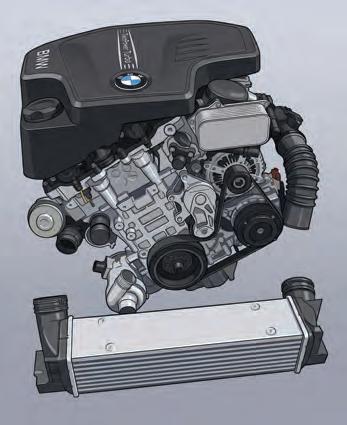
The BMW N20 engine: “Total garbage, in a nutshell”
Warning: This image may be AI-generated (we hope)
Moving to Chinese brands, however, has has not made me completely immune to repairing the odd pain in the neck BMW... Whilst I had assumed this particular chapter in my life was now closed, I was recently provided with an unwelcome reminder of why I had moved on in the first place. I found myself, once again, staring into the engine bay of a BMW F15 X5, housing the ever-charismatic BMW N20 engine. I couldn’t help but think about that line from the Godfather: “Just when I thought I was out… they pull me back in.”
Straight to the issue: The turbo oil feed pipe
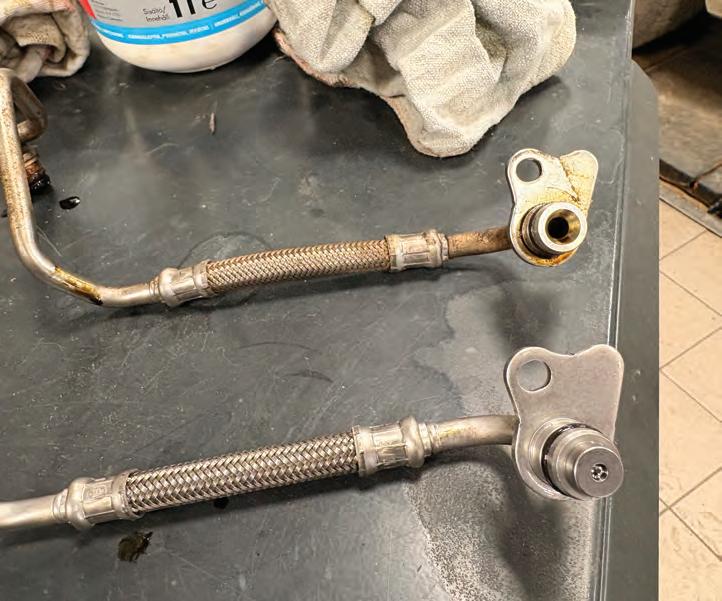
Now here’s the bit that really tickles the funny bone. This wasn’t some early N20 –one of those “we were all young once” efforts where you forgive the odd lapse in judgement. No. This was a 2018 car. By this stage, you’d expect the rough edges to have been sanded down, the enthusiastic oversights corrected and the sort of decisions that seemed perfectly reasonable in a meeting room quietly amended once reality had its say. That’s how progress is meant to work. Except, apparently, not here. Because nestled in that engine bay was the original turbo oil feed pipe – the one without a oneway check valve. A component omission so small you could lose it in your pocket, yet so
Note the lack of a check valve on the old pipe in the upper part of the image. Note the new one below
consequential it might as well have been announced with a brass band. It’s a bit like discovering your “fully renovated” house still has 1970s wiring behind the walls. Technically functional, yes – but only in the same way a garden shed can be considered suitable accommodation.
Blue smoke: A subtle sign
The complaint itself was almost polite. Blue smoke on startup, but only after the vehicle had been left overnight, and gone again within seconds. No warning lights, no tantrums, no dramatic failures – just a shortlived but deeply committed impression of a Cold War-era diesel locomotive. It’s the sort of thing that doesn’t scream catastrophe, more a gentle nudge that something somewhere is making questionable life
I found myself, once again, staring into the engine bay of a BMW F15 X5, housing the ever-charismatic BMW N20 engine. I couldn’t help but think about that line from the Godfather: “Just when I thought I was out… they pull me back in.”
In most engines, oil is delivered under pressure, lubricates the turbocharger and returns neatly to the sump. It’s a system so well understood it barely warrants discussion. But in the N20, someone, somewhere looked at the design and thought, “Do we really need a one-way check valve here?”
choices. Which, as it turns out, is exactly why it causes so much confusion.
At the heart of this little performance is the turbo oil feed system. In most engines, oil is delivered under pressure, lubricates the turbocharger, and returns neatly to the sump. It’s a system so well understood it barely warrants discussion. But in the N20, someone, somewhere, looked at the design and thought, “Do we really need a one-way check valve here?” And, in a moment of quiet optimism – or perhaps a particularly rushed Friday afternoon – that answer came back as “probably not.” Which is automotive engineering’s equivalent of saying, “I’m sure it’ll be fine.” It wasn’t (Fig.2).
Did I ever mention I hate engineers? No? Well, I do – there, I’ve said it. Not all of them, of course. Just the ones who look at a job like this and think, “Yes, that’ll go together nicely,” despite the fact it quite clearly won’t unless you intervene with glue, patience and a strong will to live.
Oil settling in the turbo
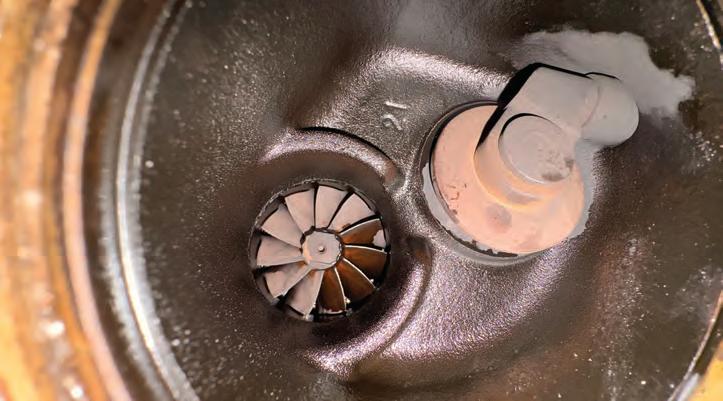
Once the engine is switched off, oil pressure disappears. Without a check valve to keep things in order, gravity takes over –methodically redistributing oil into places it was never invited. Over several hours, oil settles inside the turbocharger, creeps into the intake and exhaust pathways and pools in
After a night of gentle selfmarination, there is nothing quite like firing one of these up at 8am on a Saturday – just as Mrs Jones is out pegging her sheets on the line. Within seconds, the BMW F15 X5 ensures you’re the neighbourhood villain, wreathed in a perfectly timed plume of blue smoke, all through no real fault of your own. You were simply a touch optimistic when you bought into the whole “Ultimate Driving Machine” idea – and now you’re left explaining why it occasionally behaves like a fog machine with leather seats.
the exhaust system itself. All of it happening slowly, quietly, and with the sort of determination usually reserved for damp in a Victorian house. By morning, the engine isn’t just lubricated – it’s been quietly marinating (Fig.3).
Then comes the startup. The engine fires, the turbo spins and all that carefully misplaced oil is suddenly introduced to heat. The result is immediate: a cloud of blue smoke that suggests the vehicle has spent the night experimenting with alternative fuels. It’s dramatic, it’s unmistakable, and then –almost as if nothing happened – it disappears. Which is precisely why it’s such a delightful little diagnostic trap.
Because when this lands at your average independent – let’s call them Joe Smith’s Tyres & Exhausts – things begin to unravel. The customer reports smoke on startup. Joe starts the car. Nothing. Starts it again. Still
Because this is an BMW F15 X5, and access to the turbocharger appears to have been designed by someone with a deep appreciation for inconvenience. Clearances exist more in theory than reality, heat shields cling on with quiet defiance and component placement suggests serviceability was, at best, a passing consideration.
nothing. No fault codes, no obvious issues, no reason to suspect anything particularly sinister. So Joe does what any competent technician would do – he starts thinking. Turbo seals, valve stem seals, crankcase ventilation. All perfectly logical avenues. All about as helpful as a sat-nav in the middle of the ocean. Because the real issue isn’t failure. It’s design. Or, more accurately, the absence of a very small but very important piece of it.
Putting the solution into practice
BMW’s solution, when it eventually arrived, was almost insultingly simple. A revised oil feed pipe, now fitted with a one-way check valve. That’s it. No sweeping redesign, no complex workaround – just a small component quietly doing the job it should have been doing all along. Fit the updated pipe and the transformation is immediate. No overnight oil migration, no morning smoke, no confusion. Which makes the presence of the original pipe on a 2018 vehicle feel less like an oversight and more like a gentle, ongoing joke.
Of course, identifying the issue is one thing. Replacing the pipe is another. Because this is an BMW F15 X5, and access to the turbocharger appears to have been designed by someone with a deep appreciation for inconvenience. Clearances exist more in theory than reality, heat shields cling on with quiet defiance and component placement suggests serviceability was, at best, a passing consideration. It’s not a job you rush. It’s a job
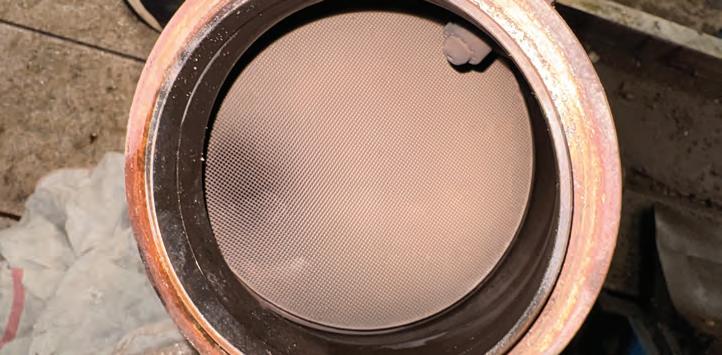
If you thought the catalytic converter had escaped unscathed, think again. It’s been absolutely mullered after a steady, uninvited diet of 5W30, and now resembles something that’s spent far too long on the wrong end of a very oily lifestyle.
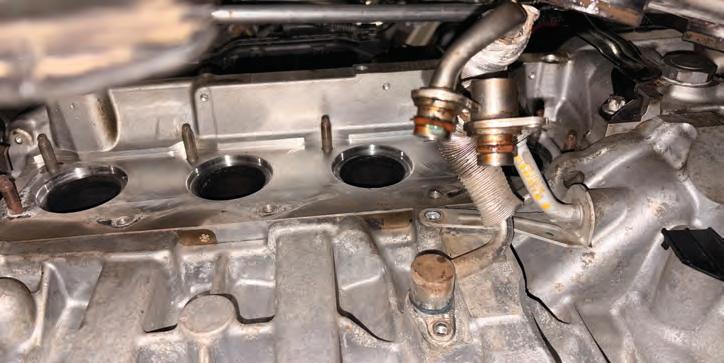
It may not look it but accessing this turbocharger is hell. Once the driveshaft, front diff output flange, suspension arms and engine mounting are removed it is somewhat less painful but still painful. Note the stupid design of the milled exhaust port gasket recesses.
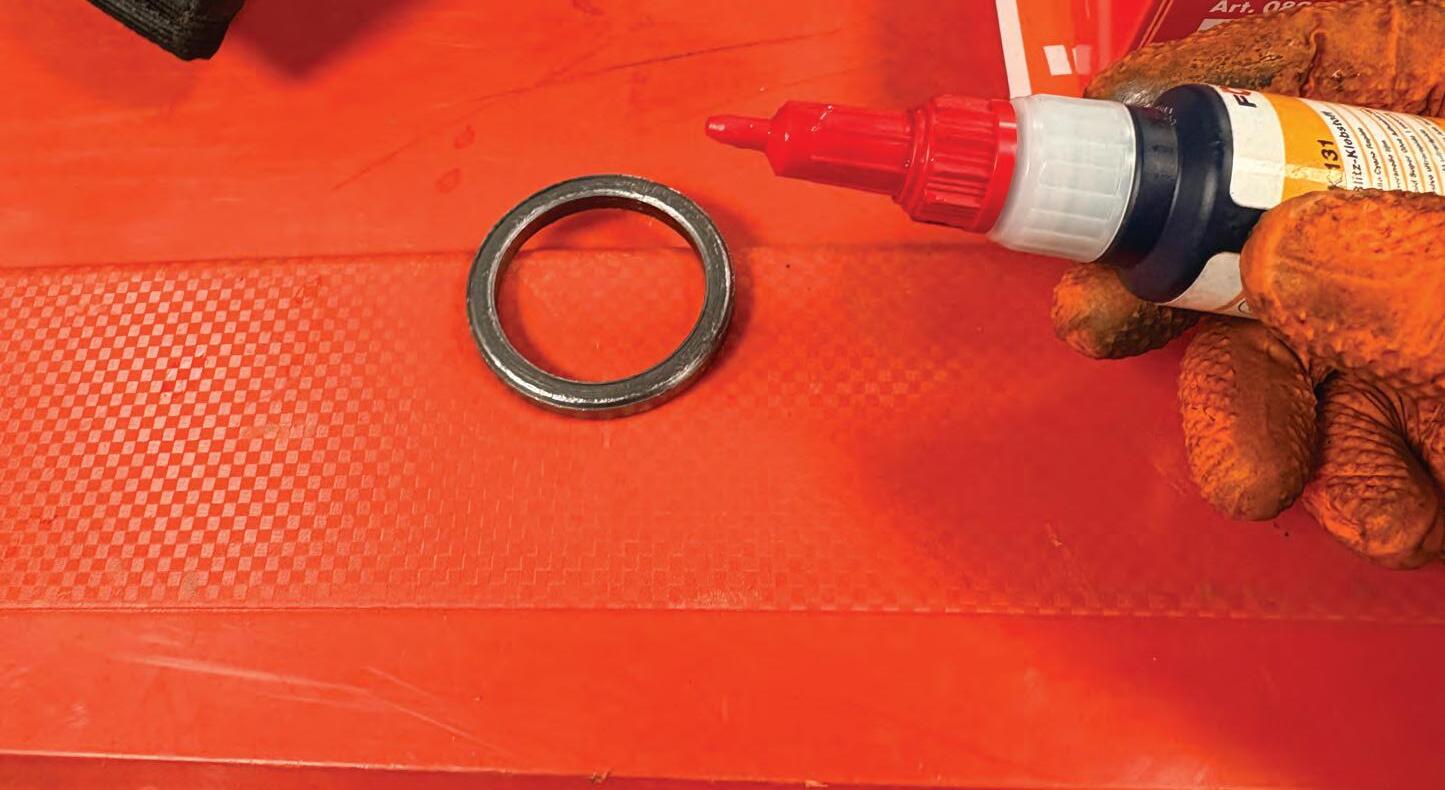
Take it from me: If you don’t glue these utterly pathetic graphite sealing rings to the cylinder head, you’ll be pulling the whole lot apart again. They simply don’t have the backbone to stay put and fitting them to the manifold instead is an act of pure optimism. I’ve seen fully grown men do exactly that only to unravel completely when the engine fires up and delivers that unmistakable chuf chuf of a leaking seal. At that point, you’re not diagnosing anymore; you’re just standing there, contemplating your life choices while the job politely informs you it’s not finished yet.
you endure, one awkward movement at a time (Fig.5). And just to raise the stakes slightly, this wasn’t a customer car in the usual sense. It was a sales vehicle. Which means there’s no room for interpretation, no tolerance for theatrical smoke displays and certainly no
opportunity to explain it away as “a characteristic.” When a car greets a potential buyer by recreating a minor industrial incident, something has to be done. Properly. What makes this whole episode so wonderfully frustrating is its simplicity. There’s
no catastrophic failure here, no dramatic mechanical destruction. Just a missing check valve. And yet that tiny omission leads to confused customers, misguided diagnostics, unnecessary parts replacement and a general sense that something isn’t quite as clever as it thinks it is. All from a component that costs less than a decent sandwich. So there I was, working on newer systems, different manufacturers, quietly convincing myself that things had moved on. Instead, I’m back under the bonnet of an N20, dealing with a problem that should have been resolved years ago. Because these things don’t go away. They linger. They wait. And just when you think you’ve finally left them behind... they pull you back in.
COMMON FAULTS Filters
Blue Print discusses two parts designed to solve two common issues with vehicle filters.
Oil Filter with seal rings
Part number: Blue Print ADB112106
To fit: BMW – 1 series – E81, E82, E87, E88. 3 series –E90, E91, E92, E93. 5 series – E60, E6. Engine: N40 –B16A, N42 – B18A,B20A, N43 –B16A, B16AA, B20A, N45 – B16A, B16AC, B20A, N46 –B18A.
PROBLEM
The engine is very noisy and ‘rattling’ on start-up, with the oil pressure warning light and engine warning lamp illuminated. The engine is in reduced power (‘limp home’) mode. Possible fault code stored in the engine control unit: 30C1 static engine oil pressure control.
CAUSE
The oil filter may have become twisted or broken-up inside the oil filter housing; restricting oil flow.
SOLUTION
Firstly, check if the engine oil is at the correct level and adjust if necessary. Subject to the oil level being correct, carry out a diagnostic test (using a suitable diagnostic tool) to check for fault codes and the pressure of the engine oil. The oil pressure can also be checked at the oil filter housing – using a suitable, external oil pressure gauge. The minimum oil pressure at idle is 1.5 bar (22 PSi) at normal operating temperature. If the oil pressure is found to be below 1.5 bar (22 PSi), drain the engine oil and remove the oil filter. Inspect the oil filter element to check if it is twisted and broken-up inside the oil filter housing. If it is, you will need to replace the engine oil and filter, and re-test. If the oil filter element is complete, replace with a new oil filter – refilling it with the correct grade and quantity of engine oil. Clear the fault codes and re-test. If the problem is still apparent, further investigation of the oil pressure control valve, oil pump and timing chain tensioner and guides will be required.
Cabin Filter Set
Part number: Blue Print ADB112512, ADB112513
To fit: BMW 1 Series (F40), 2 Series (F44, F45, F46), X1 (F48), X3 (F39), MINI (F54, F55, F56, F57, F60)
PROBLEM
Front footwell carpets are wet. On removal of the cabin filter during routine maintenance it is found to be moist and has started to become mouldy, causing odour within the car.
CAUSE
The heater housing evaporator drain is blocked or excessive leaf litter within or near the heater intake is causing an obstruction. Another possible cause is that the air conditioning housing access cover – located next to the cabin filter service cover – is incorrectly fitted and allowing condensation to leak into the vehicle’s interior.
SOLUTION
Remove any leaf litter from the heater intake and check and clear the heater housing drain tube. Take off the air conditioning evaporator housing access cover and check that the mating surfaces will provide a good seal. Refit and apply pressure while tightening the retaining screws. For vehicles equipped with climate control replace the cabin filter with Blue Print part ADB112512 activated charcoal filter. For vehicles without climate control use Blue Print part ADB112513. Blue Print cabin filters ADB112512 and ADB112513 are made to OE-matching quality. From February 2016 the vehicle manufacturer removed spacers on the edge of the filter and Blue Print follows this change in the OE design.
KNOW YOUR PARTS
Oil pressure and level sensors
MS Motorservice introduces oil pressure and level sensors from Pierburg for the aftermarket.
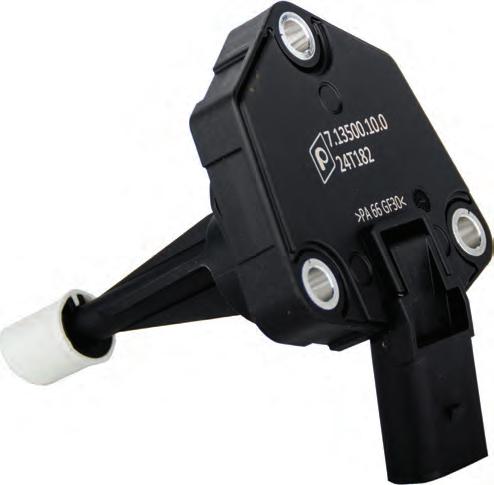
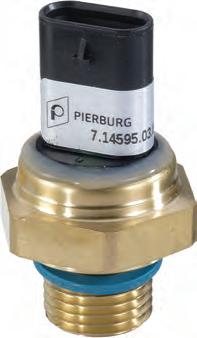
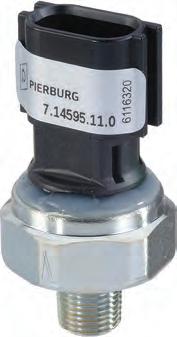
MS Motorservice has added oil pressure sensors and oil level sensors from Pierburg to its product range. The spare parts specialist relies on proven expertise in sensors and oil supply and plans to expand the two sensor groups in the long term. With the oil pressure sensors, Motorservice currently covers over 38 million passenger cars and utility vehicles. The oil level sensors are available for a worldwide fleet of more than 93 million passenger cars.
A reliable supply of the relevant engine oil to the engine is crucial for smooth engine running and durability. Motorservice offers high-quality components including oil coolers, oil pumps, oil filters
Oil pressure sensors
Oil pressure sensors continuously measure the oil pressure in the engine and send the information to the engine control unit. The sensor thereby ensures a sufficient oil supply and prevents consequential damage. Modern vehicles also use the data from the oil pressure sensor for optimum engine performance and optimised fuel consumption. Unlike oil pressure switches, which only trigger an alarm when the oil pressure falls below a certain value, oil pressure sensors provide precise values. If the oil pressure sensor is triggered when the oil pressure is too low, this can indicate oil loss, a defective oil pump or other defects.
Oil level sensors
The oil level sensor records the amount of oil in the engine depending on the operating state, and is a key component of the engine management system. Today, the sensor is often mounted on the bottom of the oil pan and measures the oil level. Depending on the version, the sensor also detects the temperature and the engine oil grade. This information is sent to the control unit.
There are three categories of oil level sensors: float, ultrasound and heat. Motorservice offers the ultrasonic type of oil level
sensors. The ultrasonic sensor is mounted in the oil pan from below and emits ultrasonic waves in the oil. These are reflected by the surface of the oil (air / oil surface). The sensor measures the time from the transmission of the ultrasonic wave to the arrival of the reflected ultrasonic wave. In this way, the fill level can be measured and output precisely. To prevent errors, an average is calculated from several measurements. In addition, the engine control unit detects special situations, such as engine start. The ultrasonic sensors also record the temperature. This also has an influence on the measurement. Special advantages of the sensor are short response times and high accuracy.
Event. Laser Tools
Celebrating the big five-oh!
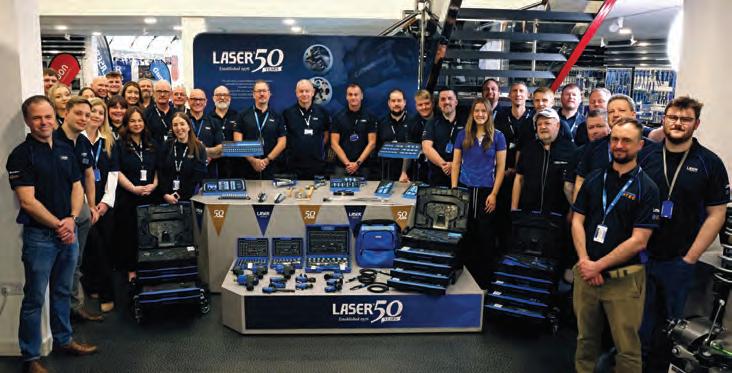
Some people crack open a bottle of bubbly on their fiftieth birthday – the team at Laser Tools decided instead to launch a new apprentice scheme.
Anyone who has been to the Laser Tools premises in Warwickshire will tell you what an impressive array of tools they have on display. Its portfolio is so impressive that it can be hard to know where to begin. It’s the kind of pedigree you can only build up over time and with a dedicated team. That dedication was on full display recently, when the press were welcomed onsite to sit in (off camera, of course) on the filming of their 50th anniversary episode of their ongoing YouTube series, Laser Live. Essentially QVC but for torque wrenches, the show brings viewers closer to the brand and puts a rather charming face on the tool supplier. To celebrate, Laser unveiled 50 new tools, each complete with a 50-year warranty.
Alongside the filming, Laser also launched its Future 50 initiative. This is designed to support aspiring young mechanics in their first steps into the automotive aftermarket. Future 50 will offer garages the opportunity to nominate their apprentices – the qualifying criteria being those already enrolled in training and actively working within a garage – to be part of the new initiative.
The chosen Future 50 will each receive a Laser Tools Apprentice Tool Kit, complete with various high-quality products, to support their development as young mechanics beginning their career journey in the industry.
They will also have the chance to win one of three pairs of VIP racing tickets to a British Touring Car Championship race at Brands Hatch 11th October, with advice, training and accreditation opportunities also to be announced as part of the Laser Future 50 scheme.
Eddie Altham, Laser Tools managing director, said: “We are very proud to celebrate the 50-year anniversary of Laser Tools. It’s a magnificent milestone to achieve and gives us an opportunity to reflect on how far the company has come since Martin Smith founded the business.
wider automotive aftermarket facing a skills gap, it’s a good time to launch the Future 50 as it provides practical support to young people beginning their career journey in the industry.
“We have also launched the 50 new tools range, each with a 50-year warranty. As always, the new products showcase both our commitment to technology and innovation, and support mechanics and technicians with the right tools for their workshop requirements.”
“While it’s a time to reflect, it’s also an opportunity to focus on the years ahead and the Future 50 is designed to do that by supporting the next generation of mechanics and technicians. With the
Laser Tools started as a business in 1976, when its founder, the late Martin Smith, began selling automotive tools from a
market stall in Leamington. From those humble origins, it has grown to become one of the most respected brands in the automotive sector.
Show preview. UK Garage & Body Shop Event
The show is on!
The UK Garage & Bodyshop Event has revealed an expanded and enhanced line-up of features and dedicated hubs for its 2026 show. The programme is designed to support skills development, business growth, networking and future talent for workshops, garages and bodyshop repairers.
The UK Garage and Bodyshop Event is back and this year it’s bringing a packed line-up of live theatres, interactive demonstrations and specialist zones, delivering practical value for garage and bodyshop professionals at every stage of their career.
At the heart of the show is the Workshop Theatre which will host a comprehensive schedule of technical seminars tackling the latest advances and challenges facing the sector. Sessions will cover faults and diagnostics, repairs, MOT, EV servicing and repair, ADAS, and more. Plus, it will offer panel discussions and real-world case studies led by toptier technicians and industry experts.
Business management
Business owners and managers will benefit from the Business Management Theatre, created for forward-thinking operators looking to improve profitability and futureproof their businesses. The programme will address key operational challenges including maximising profits, sustainability, digital transformation, marketing strategies, tackling the talent gap and staying ahead of industry change.
Brand-new for 2026 is the IAAF Garage Den and innovative initiative launched at the end of 2025 by industry
WHERE AND WHEN
UKGBE 2026 takes place at the NEC, Birmingham from 3rd to 4th June 2026. It’s free to register, simply scan the QR at the end of the article!
federation, the IAAF, pairing aftermarket suppliers with independent garages (the "Dragons") to co-develop new commercial products or services for the market, for real-world testing and development, fostering collaboration and future solutions. The new projects will be unveiled at this year’s UK Garage & Bodyshop Event.
Supporting the next generation of talent – and fresh from Automechanika Birmingham 2025’s Motorvate initiative –the Ignite Arena will return to UK Garage & Bodyshop Event 2026 to welcome students and apprentices for interactive talks, live entertainment, competitions and meet-and-greet opportunities. The arena highlights career pathways and
emerging opportunities within the automotive industry, offering invaluable insight for those starting out.
Networking remains central to UK Garage & Bodyshop Event 2026, with the Networking Pit Stop providing a relaxed space for visitors to recharge, connect with peers and build new relationships throughout the event.
Celebrating emerging talent, the show will also host Automechanika Birmingham Thirty Under 30, an awards programme recognising the next generation of talent in the industry. Free to enter, the top 30 finalists will be selected by an expert panel and honoured at an exclusive presentation and networking event during the show.
With its expanded features, hands-on learning and unrivalled networking opportunities, UK Garage & Bodyshop Event 2026 promises to yet again deliver exceptional value for the entire sector.
Inspiring the next generation
Following the success of Motorvate at Automechanika Birmingham 2025, show organisers have confirmed it will return in full at Automechanika Birmingham 2027. In the meantime, visitors to the UK Garage and Bodyshop Event 2026 can look forward to experiencing two of Motorvate’s most popular elements, the Ignite Arena and the Automechanika ‘Thirty Under 30’ awards.
The Ignite Arena, which formed part of Motorvate in 2025, will be a highlight at this year’s event and has been designed with a brand-new, refined interactive format. The dynamic space will help to inspire and connect students, educators, career changers and brands, showcasing the breadth of opportunities in the automotive aftermarket to address and support the growing skills and talent gap.
During the 2025 edition of Automechanika Birmingham, Motorvate and the Ignite Arena saw 1,786 visitors attend over three days of the show, with 91 percent of attendees stating they felt
the arena was important. This highlights the need for features such as Motorvate and the Ignite Arena to support those looking for their next opportunity.
The Ignite Arena will offer a live DJ, interactive talks, competitions and supplier meet-and-greets designed to showcase the vast range of career opportunities across the industry. It will also continue to drive conversations around gender balance, career progression and transferable skills, supporting pathways into the trade from other industries at a time when the skills gap affects workshop productivity and profitability across the UK.
Alongside this, the Ignite Arena will also play host to the return of the Automechanika ‘Thirty Under 30’ programme, designed to celebrate rising stars within the sector. Free to enter, the awards recognise the top 30 young professionals shaping the future of the aftermarket, with finalists selected by an expert panel and honoured at an exclusive networking event during the show.
Exhibitors already signed up to exhibit at UK Garage and Bodyshop Event 2026 include Alliance Automotive Group (AAG), BM Catalysts, Bosch Automotive, Cataclean, Hella, JHM Butt & Co, LKQ Euro Car Parts, Niterra, Pichler Tools, Ring Automotive, SATA, TechMan, The Race Group, Think Car and Toyota Trade Parts.
The present, past and future of remanufacturing
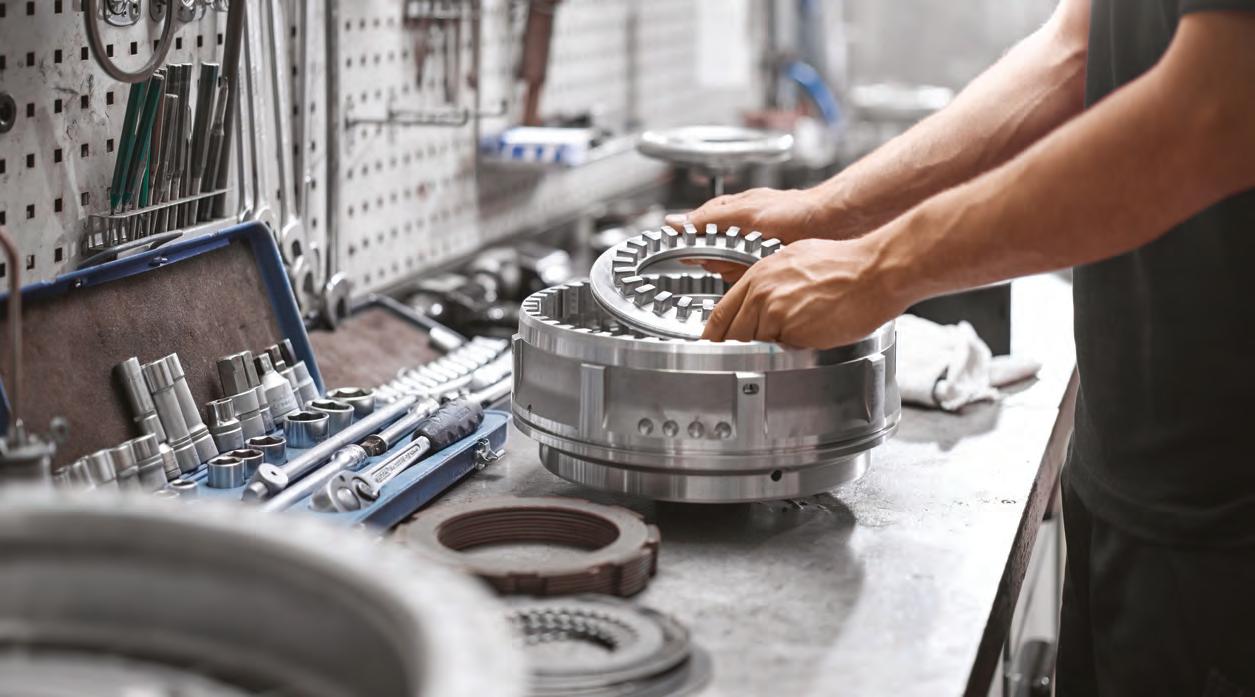
PMM editor Kieran Nee spoke to ZF Aftermarket’s head of global remanufacturing Tomasz Galazka to find out more about remanufacturing in 2026 and beyond.
Hi Tomasz, thanks for speaking with me today. FAAS research shows that when offering remanufactured parts to customers, workshops aren’t necessarily promoting the CO2 savings behind such a product – why do you think that is?
82 per cent of workshops believe in the sustainability of remanufacturing, but only 39 per cent of them are highlighting it to the customer. There is an interesting situation in France, where legally workshops have to offer a sustainable solution, which naturally is the remanufactured product. I can also see in the same FAAS report that around 21 per cent of workshops would like more data on the CO2 savings of reman products. So that’s on us, the manufacturers, to provide that additional information and close that gap.
If garages knew more about the sustainability of remanufacturing, would they pass that information on to customers?
In my opinion, they would and they definitely should because it's an important aspect.
Still from the same survey, garages said that price was far and away the primary reason for choosing reman parts (88 per cent), do you think garages would be less likely to opt for reman if the price difference wasn’t so attractive?
“In France, workshops legally have to offer a sustainable solution, which naturally is the remanufactured product.”
I think price is important, but it's not the only factor in making the decision. Let's imagine you take the cheapest product, it might fail after one month and then you are in a difficult situation. To make a proper decision, normally the workshops and customers need to consider other factors, like who is the supplier, is it a trusted supplier, is the part available? In my opinion, reman is a smart decision because at the end you get a product with the same functional performance as the OE option, with the same warranty.
Reliability issues around sourcing reman parts is a problem for many garages. What can remanufacturers like yourselves do to improve that?
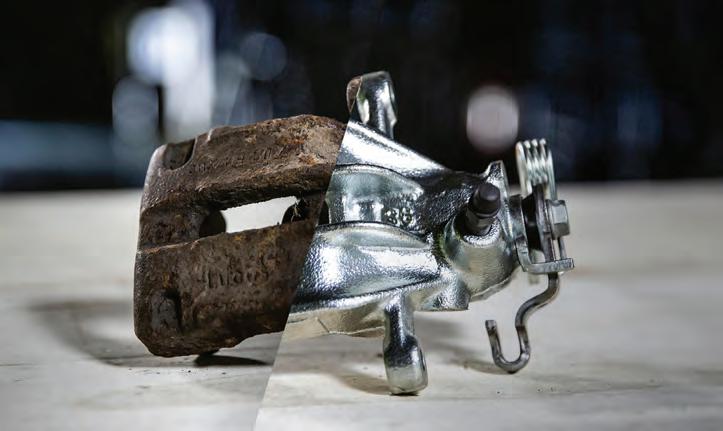
It's mainly because of the cores, the used product which in our world we call “core”. We take the cores from the market and then transform them into the remanufactured product. We see two issues on the market. First of all is the quality of the cores.
Sometimes, if we get the core and the core is not good quality, then we can’t produce a product out of it. We don’t accept heavy rust or a broken body, for example. So this is the first aspect. The second aspect is that we don’t always have a 100 per cent return rate of cores. Sometimes we need to scratch our heads and think how to bring the product back from the market. For this we established the CorExpedia application. This is an IT tool, which helps to collect cores for us and for our distributors.
Our distributors can also name a workshop where we can pick up the cores and deliver to our clients. Inside this application, we normally put all of the documentation, core acceptance criteria and all of the aspects necessary to handle good core. Normally, we take all burden on our side, which means if you show us a pick-up address, wherever it is in Europe, we as ZF will pick it up.
Tomasz, since we first agreed to do this interview we have seen a lot happening on the world stage. In a more general sense, the 21st Century is shaping up to be one of disruption to global supply chains rather than
consolidation. All this to ask, is it going to get harder to produce OE parts going forward, with their high energy and raw materials costs?
Yes, we have already had a couple of crises come up. For the past few years we’ve been living through the crisis which started with COVID. Then there was the Suez Channel blockage, now new disruptions. Every time I see times of crisis I see remanufacturing become more and more popular. Indeed, as you say, OE factories could have potential issues.
Where does the UK stand in terms of uptake for remanufactured parts with respect to the rest of Europe? Does being an island post-brexit hinder the supply of core?
The UK is one of the top three markets for our reman products – it is a very important market for us. When Brexit started, we scratched our heads about what to do because it put some burden on our customers, especially with the import-export documentation. So we set up a collection point in the UK where we bring all of the cores from our customers.
A UK customer doesn’t feel the impact of Brexit, we take the burden.
Are garages buying more remanufactured parts now than, say, 10 years ago?
The rise of remanufactured parts has gone hand-in-hand with the decline of repair kits. More and more, European workshops have prioritised efficiency and speed rather than cost, and so have turned to wholesale replacement rather than repairing parts themselves. What you can also see, is that in different parts of the world, such as Brazil, China and India, where labour is still very cheap, repair kits remain the popular choice instead.
Thinking about the future, however, there is a front wind. Low quality parts coming from outside Europe are a threat to the industry and a problem for remanufacturing as their specification is unknown. Hence, they end up in landfill.
Editor’s note: Well-known UK remanufacturer Shaftec recently went into administration, citing low quality parts imported from the East as a direct cause of their inability to continue trading after 30 years.
Classic cars need CLASSICOIL
Treasured classics deserve a classic oil that their owners can rely on to provide the protection their vehicles need, so says Duckhams Oils.
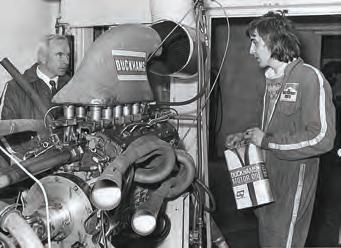
Founded over 125 years ago by British pioneer Alexander Duckham, Duckhams Oils has a rich heritage with great British Classics. From the original Morris Minor to the luxury of Rolls-Royce, Bentley, Jaguar, and more, Great Britain has produced incredible cars over the past century. Duckhams Oils have been at the heart of many of these classic vehicles.
William Morris (later Lord Nuffield), the British pioneer of family car mass production, became a personal friend of Alexander Duckham, the founder of Duckhams Oils. Duckhams collaborated with Morris on suitable lubricants from their earliest days.
By the 1930s, Duckhams’ New Process Oils were specified by the makers of more than 90 per cent of British cars, including all Austin models, Bentley and Invicta; New Process Oils also enjoyed ‘approved’ status from RollsRoyce, Humber and Rover.
In 1959, British Motor Corporation launched its groundbreaking new £500 family car, the Morris Mini-Minor. The car’s radical design placed the transmission beneath the crankcase, with the
gearbox effectively operating in an extension of the sump. While this was fine for spacesaving, it caused problems for the engine oil, which, in addition to suffering the usual contamination from combustion deposits, was suddenly called upon to act as a gear oil as well.
Not surprisingly, there were issues. Probably the greatest of these was the ‘shearing’ effect of the high pressures involved in the gears, which quickly broke down the polymers in ordinary oils, causing loss of viscosity and lubrication properties. Duckhams came to the rescue. While monograde NOL had been the manufacturer’s original recommendation for the Mini, Duckhams Q20-50 proved to be in a class of its own in this type of engine, maintaining viscosity and reducing the oil leaks that had started to plague the Mini.
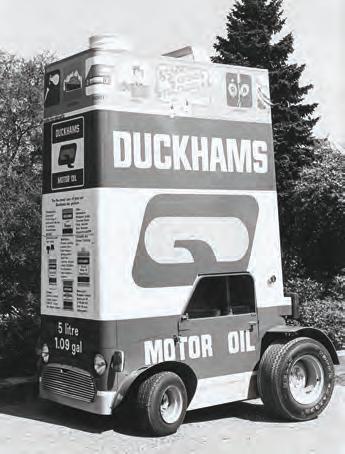
mini became a Duckhams icon itself, with the Duckhams ‘Q car’ proving a big attraction wherever it went. The car was built on mini underpinnings.
Today, Duckhams continues to provide the lubrication needed to keep much-loved great British classics in tip-top condition. Their range includes a 10W40 and 20W50, as well as traditional monograde SAE30 and SAE40 engine oils, specially crafted for vintage and classic vehicles that require a single-grade lubricant. These oils help preserve the authenticity and mechanical integrity of older engines while delivering reliable protection and smooth operation during regular use. Products like Duckhams Classic [Q] 20W-50 – the original green multigrade motor oil – are widely recommended in many original owners’ handbooks and are suitable for use in older, higher mileage petrol and non-turbocharged diesel classic car engines. Using updated additive technology and high-quality virgin base oils, Duckhams Q meets specifications, provides reliable protection for modern cars, and is suitable for classic cars predating 1950.
The
Don’t skip customers’
OIL CHANGES
Independent body, the Verification of Lubricant Specifications is warning motorists not to put off essential oil changes and top-ups, despite the economic impact of the war in Iran.
According to the Government's weekly road fuel prices report, the cost of diesel has risen 35 per cent in nearly two months, while petrol is up 19 per cent. Compared to last year, petrol prices are up 23.4 pence per litre and diesel prices are up 49.8 pence per litre. This rise in fuel prices puts direct pressure on household budgets and this pressure is expected to continue for months to come as prices for energy, food, and flights keep rising.
Darren Frogson, chairman of VLS, said:
“We know that UK households are feeling the impact of the Iran conflict. But postponing or skipping oil changes, ignoring the oil warning light or using an oil beyond its serviceable life is a risk we are asking motorists not to take. Doing so could starve the engine of vital lubricants, risking increased wear, deposit formation and corrosion and, at worst, a catastrophic event such as an engine seizure, which could lead to a much more expensive repair. OEMs set oil change schedules for a reason. They know their engines, how they run on certain fuels and in specific regions and they know how the
or simply scan the QR code
engine oil, as well as other consumables, perform over time and mileage.”
Workshops are the front line and can play an important role in helping customers understand just how vital oil servicing is.
“Customers might think oil change and filter replacement don’t really matter. But sticking to the recommended service interval is crucial for maintaining and protecting the vehicle, which is likely to be worth a lot more than the cost of the oil change.”
DIY? Think twice VLS is also concerned about motorists who are looking to complete an oil top-up and change themselves to save money but lack the necessary skills or information.
“Engine oil is an increasingly complex area, yet it’s more important than ever to select the right lubricant. Modern vehicle engines require sophisticated lubricants using advanced chemistry. Even the slightest change in the formulation can cause engine damage over time. It’s important to look beyond the viscosity to ACEA and OEM specifications as well. If in any doubt, motorists should always refer to the vehicle handbook or consult the OEM.”
A potential influx of lower-priced lubricants could be on the horizon, as
The VLS is motoristsurging not to put off vital oil changes as surging fuel costs bite.
manufacturers seek to manage rising raw material costs and margin pressure.
“If a lubricant sounds or looks too good to be true, it is always worth checking,” adds Darren. “Saving a few pence in the short term could create much more expensive issues in the future. Poor-quality or the wrong oil can damage emission control systems and accelerate wear in gears and bearings, leading to increased maintenance costs. Don’t be afraid to question products and suppliers to ensure they really can deliver what they claim, or report them to VLS for investigation.
If your usual brand is not available, ensure you select an alternative that meets the technical specification, not just matches the viscosity. Always refer to the owner's manual for details and check with the vehicle manufacturer if needed.”
VLS is an independent organisation that provides a credible and trusted means to verify lubricant specifications, brings transparency to the lubricant marketplace, and protects and educates end users.
If you have any concerns about a lubricant, you can report them to VLS by calling 01442 875922 or emailing admin@ukla-vls.org.uk.
Kalimex, the UK distributor of K-Seal, explains why they think K-seal is the coolest kid on the “block”.
Since the early days of combustion engines, motorists have suffered from cooling system leaks. Apart from air-cooled engines, most combustion engines are water cooled so it’s crucial that the cooling system functions efficiently to maintain the correct engine temperature and avoid problems caused by overheating. The smallest coolant leak can rapidly become a major engine problem, especially when coolant levels plummet.
Modern cars naturally have fewer cooling system problems. However, as the average age of vehicles continues to rise, so will coolant leak issues, including radiator leaks, heater matrix leaks, and the dreaded head gasket failure. The workshop costs to repair such leaks run into the thousands, often exceeding the value of the vehicle. At this point, a mechanic or motorist should consider using a cooling system stop leak.
Given the market is awash with these products, choosing the right one is important. Choose on lowest price and the problem is likely to persist. So, what’s your starting point?
Chemical considerations
Coolant Stop Leak technology has come a long way from the days of cracking a raw egg into the radiator or dissolving a pellet of dubious looking powder into the coolant. Modern
Keeping it COOL
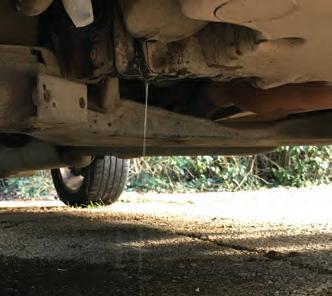
You know what a leak looks like, but just in case you forgot, here are a couple of bad ones!
sometimes just to water. Ironically, Sodium Silicate has in the past been used to permanently disable engines (for example on military vehicles left in the field) by adding it directly to the engine oil.
Ceramic micro fibre technology
stop leak formulas use advanced ceramic technology which is more than a temporary fix to get you home. They can affect permanent repairs in cracked heads and head gaskets.
One option is to use Sodium Silicate (Liquid Glass), a chemical that around the time of the Second World War, was found to seal leaks in the block and head of watercooled engines. The drawback? Sodium Silicate should not be mixed with Ethylene Glycol (antifreeze) as it can cause coagulation, resulting in serious cooling system blockages. Liquid Glass products are usually identifiable as clear liquids and must be added to the coolant in precise ratios and
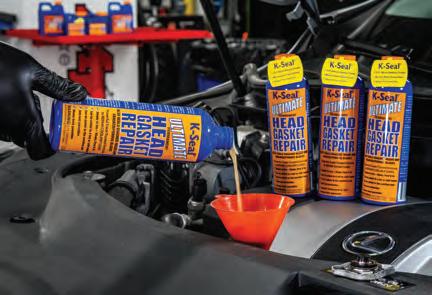
Modern coolant stop leak formulas incorporate ceramic micro fibres in the formula which are strong enough to make permanent repairs – even to blocks, heads, and head gaskets. These ceramic fibres are inert and therefore do not react with the chemicals found in anti-freeze formulas. They can be added safely and directly to any coolant mixture. With 14 million units sold worldwide, K-Seal Permanent Coolant Leak repair pioneered this technology. It is now the best-selling coolant leak repair in the USA. It is also the only product in the UK to have been independently university tested to meet ASTM D3147, the coolant leak repair standard. When selecting a coolant leak repair product for customers, always check the formula and make sure the product meets the standard. You can rest assured that K-Seal Permanent Coolant Lead Repair ticks every box with bells on.
A worrying disconnect is emerging between manufacturer recommendations and real-world driver behaviour when it comes to engine oil maintenance. New research, commissioned by Castrol, suggests that many motorists are delaying essential oil level checks.
Close the OILCHECK gap
According to the nationwide survey, 59 per cent of car owners last checked their vehicle’s oil level up to three months ago, while a further 31 per cent left it for four months or longer.
Castrol recommends that drivers check their engine oil at least once every 1,000 miles, and always before a long trip. Ensuring a vehicle’s oil level is sufficient helps to safeguard an engine’s vital components, including the valvetrain, timing chain, pistons and bearings from damage and wear.
When asked: ‘How often is the oil level of your car checked?’, only 24 per cent of drivers said ‘at least once a month’, compared to 26 per cent ‘once every three months’, 19 per cent ‘once every six months’, and 16 per cent ‘at least once a year’.
Older drivers are most likely to leave a longer period between checks, with 22 per cent of those 65 or older saying the oil level is checked just once per year. Those in London are most likely to conduct a regular check of their vehicle’s oil level, with 49 per cent saying they do so at least once per month, compared to just 9 per cent of those in the South West.
A clear majority (80 per cent) of car owners say they know how to check the oil level in their current car, although that proportion is lower among women (70 per cent) than men (92 per cent). 6 per cent of all car owners admit
to having never checked the oil level on a car.
The survey also found that most respondents (79 per cent) would feel confident in judging how much oil to put in their own car engine if the indicated oil level was low. However, this proportion is also much higher among men (88 per cent) than women (68 per cent).
While many modern cars have oil level sensors that indicate when the levels become dangerously low, early stages of wear and component damage could already be happening by the time the driver is alerted.
How workshops can lend a helping hand
For workshops, this reinforces the importance of proactive maintenance messaging rather than reactive fixes. This is especially important as the survey revealed that many drivers preferred to leave essential oil checks to others.
When asked, ‘Who typically manually checks the oil level in your car’s engine?’, the largest proportion of car owners (64 per cent) check it themselves, compared to those who ask a partner or spouse (16 per cent), or a vehicle workshop (15 per cent). A far greater proportion of men check the oil level themselves (79 per cent) than women (44 per cent). While many check the oil level on their own car, the survey found that over a third (34 per cent) would prefer their technician or mechanic to do so.
This opens the door to positioning oil checks in several ways. Workshops can present oil checks as a complimentary service that helps drive customer footfall and repeat visits, or an entry point into a broader vehicle health inspection, allowing technicians to identify potential issues early. In addition, oil checks can naturally lead to upsell opportunities, including oil and filter changes or further maintenance work identified during the inspection. Simple oil inspections can help build trust, particularly among less confident customers.
There is also scope for workshops to play a more active educational role. Workshops can explain how often oil levels should be checked, helping customers understand appropriate service intervals, as well as highlighting the importance of using manufacturer-approved lubricants to ensure optimal engine performance and longevity. Bridging the knowledge gap not only improves customer outcomes but also strengthens long-term loyalty.
Delayed oil checks are not just a driver habit issue, but also represent a growing maintenance blind spot. For workshops, by taking a more proactive stance on oil checks, they can protect engines, support customers and unlock new business opportunities in the process.
SECOND TIME around
David Valentyne, aftermarket sales manager at TotalEnergies UK discusses the advances in re-refined base oils that have won the confidence of OEMs.
Advances in lubricant recycling technology have enabled TotalEnergies to formulate EV3R – a range of products made from waste oil which meets the stringent requirements of leading OEM specifications.
In the past, there were concerns that lubricant products that used waste oil were of lower quality than those formulated from virgin base oil stocks. However, thanks to cuttingedge R&D and advances in regeneration techniques, manufacturers including Stellantis, Mercedes Benz, Renault and VW have granted approvals to re-refined products, with some even being used for factory fill.
Included for the first time
In a mark of maturity, re-refined base oils (RRBOs) were included, for the first time, by the Technical Association of the European Lubricants Industry in its updated code of practice – issued in and applied from December 2025.
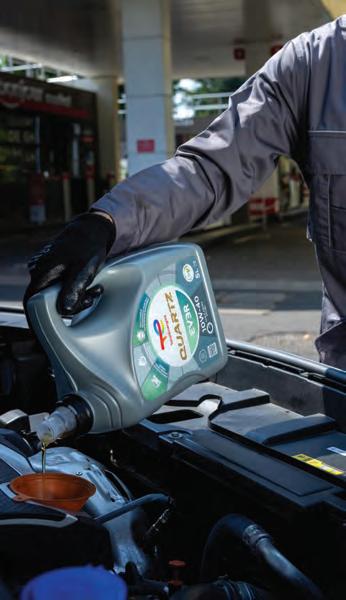
Quartz EV3R is a synthetic motor oil range formulated with regenerated base oils, specially designed for petrol and diesel engines, including those equipped with turbochargers and multi-valve systems.
Quartz EV3R delivers the same trusted performance profile as standard Quartz products made from virgin base oil stocks, now in a cutting‑edge RRBO formulation. The expanding Quartz EV3R range initially launched with the versatile 10W-40 grade made from 100 per cent regenerated base oils, with an advanced, high performance 5W-40 grade being added in 2026 and made from a minimum of 50 per cent regenerated base oils. The range of available RRBO grades continues to expand, with the planned addition of a 5W-30 option – providing even more circular and sustainable alternatives to the market.
or simply scan the QR code
Quartz EV3R 10W-40 meets the requirements of MB229.3, and has been approved by various specifications from Renault, VW and Stellantis.
Stellantis compatibility
that is aligned with the highest technical expectations. The new harmonised framework stands out as one of the most demanding in the automotive industry, providing a trusted signal for engine durability, fuel efficiency and resistance to extreme temperatures.
Taken together, and across its full range of automotive lubricants including EV3R, TotalEnergies is the only supplier on the market offering approved lubricants that cover all six of the specifications which comprise the full spectrum of Stellantis vehicle needs in the UK and Europe.
The EV3R range has proven that products formulated from what is considered to be waste oil can meet even these modern and demanding requirements.
EV3R OEM approvals include compatibility with Stellantis’ latest and market-leading FPW9.55535/XX specifications, which have harmonised nearly 40 legacy specifications inherited from its PSA (Peugeot), FCA (FiatChrysler) and Opel-Vauxhall brand families into a rationalised group of six. This consolidation saw Stellantis comprehensively redesign its testing and approval protocol, resulting in a far more rigorous methodology
Quartz EV3R 10W-40 complies with Stellantis FPW9.55535/04, while Quartz EV3R 5W-40 complies with FPW9.55535/10.
Re-refined products like Quartz EV3R are also helping drivers, technicians and OEMs reach their targets on emissions reduction. For example, Quartz EV3R 5W-40 delivers a 27 per cent reduction in product carbon footprint versus conventional base oil formulations. Quartz EV3R 10W-40 is one of only two lubricants to be offered as part of the Stellantis SustainEra initiative, and the only one to be formulated with 100 per cent regenerated base oils.
With new grades under development, and the trusted hallmark of a wide range of OEM approvals, the EV3R range is continuing to set the standard for RRBO lubricants.
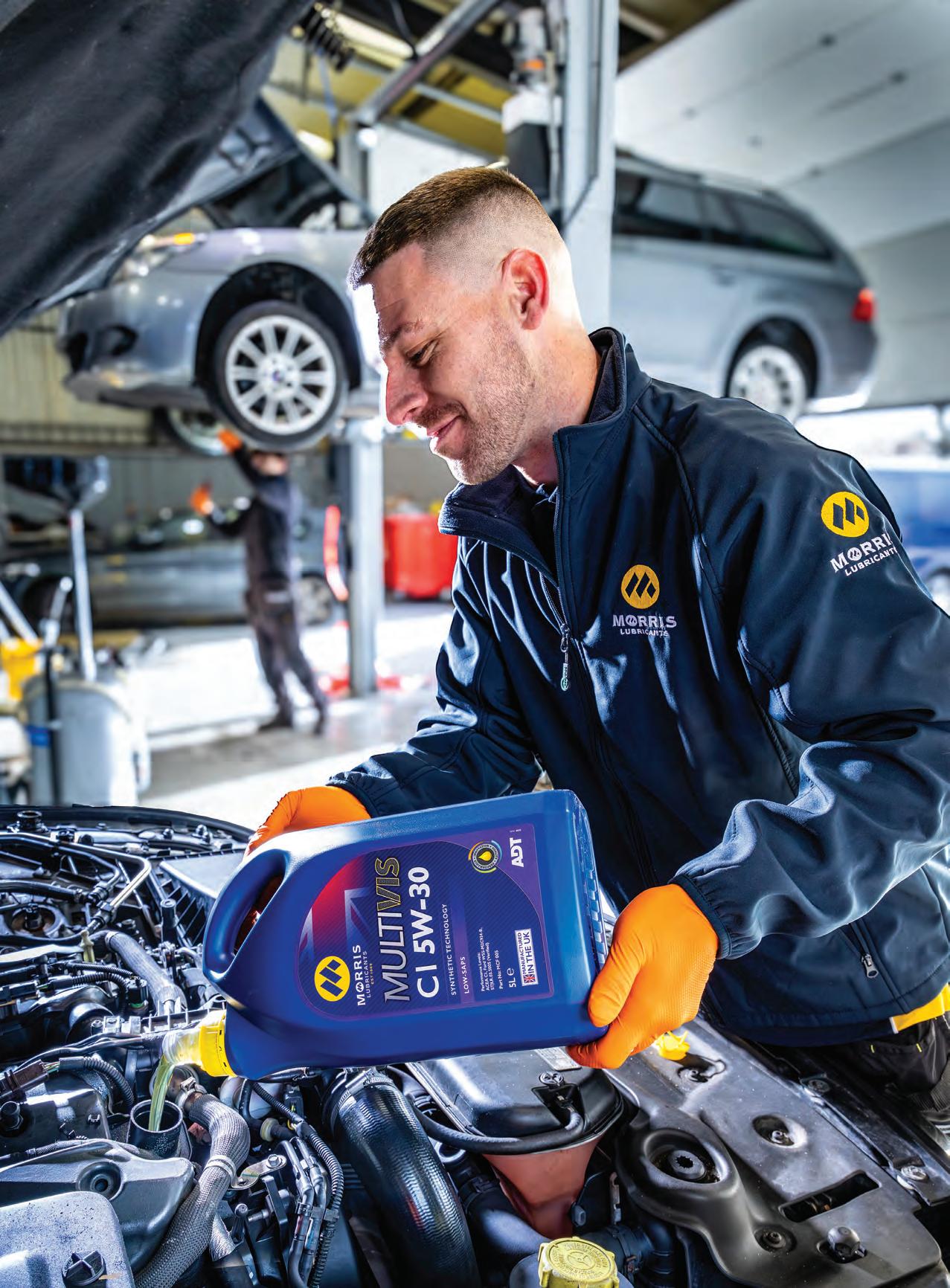
What damage can the WRONG OIL cause in cars?
In case any workshops were wondering whether quality engine oils are really necessary, Morris Lubricants’ technical director Adrian Hill is here to dispel that notion.
The formulations for oils used in passenger cars are continually evolving. The correct oil choice is critical to maintaining the car’s operational efficiency, emissions control and its longevity on the road. Also, the correct oils have a role to play in protecting the engine, any aftertreatment devices, gearbox and driveline.
Let’s focus on engine oil first. So, whether diesel, petrol or hybrid engines are used, one of the biggest challenges for engine oils is to provide maximum engine component protection. Using the wrong engine oil, can have a big impact on engine efficiency, cause poor oil circulation as well as give rise to poor sludge and deposit control. These factors can generate major issues leading to the possibility of the engine overheating, putting the engine into limp home mode and at worse causing severe damage to the engine components.
Corrosion control
For all engine types, the wrong oil can lead to poor corrosion control, and you could soon have sticking valves that can reduce engine efficiency. Furthermore, a critical role of the engine oil is to maintain the integrity of any aftertreatment devices fitted to the exhaust system, whilst protecting engine components and this can be a tricky balance. Aftertreatment devices that are required to control NOx emissions and Particulate Matter (PM) are highly sensitive to engine oil chemistry. Too much sulphur and phosphorous, that are added to the oil formulations for anti-wear performance for example, can poison catalysts used in AdBlue systems. Also, if the engine oil creates too much ash, it can prematurely block diesel and gasoline particulate filters. These are issues which over time may need the aftertreatment device to be replaced. In diesel engines, the use of the wrong engine oil can cause poor soot control that
“Bear in mind, this could be an engine that has to go from 0-70 mph in seconds! There’s a lot that can go.”
can lead to accelerated wear, due to its abrasive nature, as well as oil thickening, that can inhibit oil flow resulting in oil starvation and engine failure. Ring soot compaction is another consequence of using the wrong engine oil, that can prematurely wear piston rings and polish cylinder liners, leading to excessive blow-by and reduced power output.
Hybrid engines
Hybrid engines throw additional challenges for the engine oil to overcome. Rapid engine oil circulation from cold, especially under intermittent operation along with fuel and water contamination cause the biggest issues for hybrid engines. Poorly selected engine oils can lead to camshaft, bearing and piston ring wear. The engine oil needs to protect the oil pump from the effects of fuel and water and have increased corrosion control but the oil formulation must also be balanced to protect aftertreatment devices and make sure they do not fail as well. Bear in mind, this
could be an engine that has to go from 0-70 mph in seconds! There’s a lot that can go wrong if the incorrect engine oil is used.
This may feel like a lot of information to take in, but the important take home is, use the correct engine oil specifications as set by the Original Equipment Manufacturer, as engine oil formulations are tailored to comply with their demands. If you ignore these, you run the risk of the engine not functioning correctly and possibly catastrophic engine failure.
Gearbox and differentials
Of course, gearboxes and differentials shouldn’t be forgotten. Transferring power from the engine to the wheels without energy losses is essential if we want to reduce fuel consumption and reduce harmful emissions. There are of course many options when it comes to transmission types in passenger cars. There are manual, automatic, Dual Clutch Transmissions (DCTs) and Continuously Variable Transmissions (CVTs). Full autos rely on the positive engagement of brake bands and clutch packs. Slippage saps energy and creates faster rates of gearbox component wear, as well as generating higher running temperatures that once again can have a negative impact on operational efficiency. Manual and DCTs require rapid cold start circulation of the gear oil, which is an essential requirement to ensure bearings are protected, especially if they are splash fed. This will also contribute to improved fuel efficiency. The necessary levels of Extreme Pressure (EP) performance are needed in the gear oil to protect the meshing gear sets and reduce wear, under a variety of workloads. If there isn’t enough, there will be excessive wear and tear. Not a desirable outcome. Under prolonged driving conditions there will be a heat soak that may cause the oil to thermally degrade and form deposits. Deposits will have an impact on the integrity of components, once again causing a fuel efficiency deficit. These gear oils must
be stable at high temperatures. In CVTs, protecting the metal belts from wear and minimising any slippage are essential features of the gear oil. Belt wear and slippage affect performance and can lead to power losses and poor fuel efficiency.
The same applies to differentials, that may be part of the gearbox/transmission and that they have the final job of power transfer to the wheels. Differentials also use meshing gear sets and will be subjected to a variety of workloads with the associated heat soak so the correct gear oils should be used.
Online help for choosing
Morris Lubricants understands this level of choice can be a minefield and do provide quick advice via its online oil, lubricant and functional fluid look up tool, WhatOil. This is a fully interrogatable database that provides a full set of oil and antifreeze coolant requirements for a wide range of makes and models of passenger car. Morris Lubricants’ WhatOil can be found on morrislubricants.co.uk
WhatOil takes away the guess work. By either entering the car’s make and model details or a registration number, the exact oils and antifreeze coolants are displayed to avoid these pitfalls of using the wrong product. The data is quick to access and provides peace of mind.
The data contained in WhatOil has been painstakingly collated through liaison with the OEMs and has been vetted and verified to help ensure accuracy. Each of the oil and antifreeze coolants recommendations have been selected against OEM requirements by an experienced technical team, that has thorough understanding of oil technology and car manufacturer specifications.
This information involves real people with real world knowledge. You may be tempted to do a simple internet search or use Artificial Intelligence (AI) tools to find the correct oil to use. But be aware, as these may provide unverified and possibly inaccurate recommendations and may not be fully trusted.
BEST PRACTICE
Strut mounts
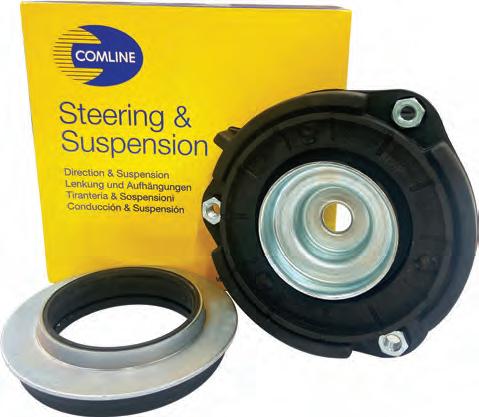
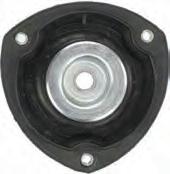
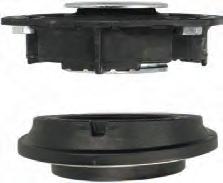
Strut mount replacement should be a routine job for a professional technician; however, it is one that carries safety and performance implications if it is not handled correctly, according to Comline.
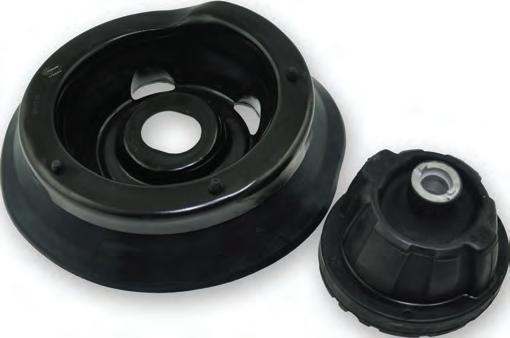
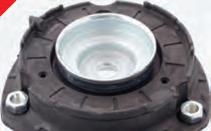
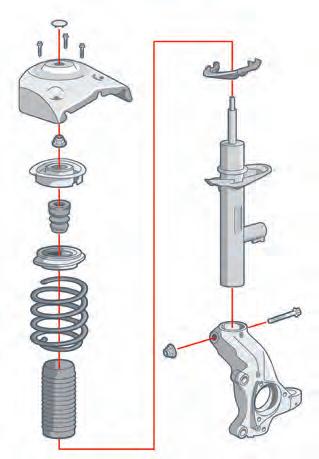
Atop strut mount connects the suspension strut to the vehicle’s body, shielding the cabin from road noise and vibrations while acting as the steering system’s pivot point. It uses rubber to absorb shocks and an integrated bearing (if required) to facilitate smooth rotation.
If fitted incorrectly, it can lead to excessive noise, poor handling and an uncomfortable ride – more importantly, it can also lead to worn or damaged parts that can have a knock-on effect on other parts of the steering and suspension system.
Helpfully, Comline has outlined four useful best-practice guidelines: Use a spring compressor: Always compress the coil spring during assembly
and reassembly. A suspension spring holds a significant amount of stored energy, so if the top mount is removed without correctly compressing the spring, it can release with explosive force. Comline encourages workshops to upsell spring compressors when fitting or replacing strut mounts.
OE standards
Torque to manufacturer specifications: Use a calibrated torque wrench and follow OEM values precisely to avoid premature wear, mount failure, noise complaints and returns. Incorrect torque – irrespective of over or under – can compromise both bearing integrity and suspension geometry. Match the mount to the strut type: Not all mounts are the same: Bearing-type mounts allow rotation with steering input, while non-bearing mounts are a fixed design. Supplying the incorrect type can lead to stiffness, noise or even early failure, so confirming the right one is important.
Replace mounts in pairs: Replacing both sides balances the suspension’s response, should improve ride quality, reduce strain on new components and extend the overall service life of the mounts.
Comline’s top strut mounts are manufactured in Europe using premium raw materials, which make them durable but also resilient against environmental conditions. This helps prevent corrosion.
Furthermore, its offering comprises robust rubber-to-metal bonding which absorbs vibration and reduces noise. Where required, integrated bearings are manufactured to OE standards.
Comline has 212 top strut references in its all-makes range, with a three-year/36,000mile warranty accompanying every one. This complements a rapidly-expanding steering and suspension category that features the trade’s most popular numbers.
In Comline’s latest range update, it includes a new rack end and stabiliser link for the Honda Civic (2016-onwards), tie rod end for the Toyota Hilux (2015-onwards) and suspension arm for several vehicles (Volvo XC90, X40 and V90, Hyundai Accent (2017onwards), BMW 3 Series and X5).
SUSPENSION for all needs
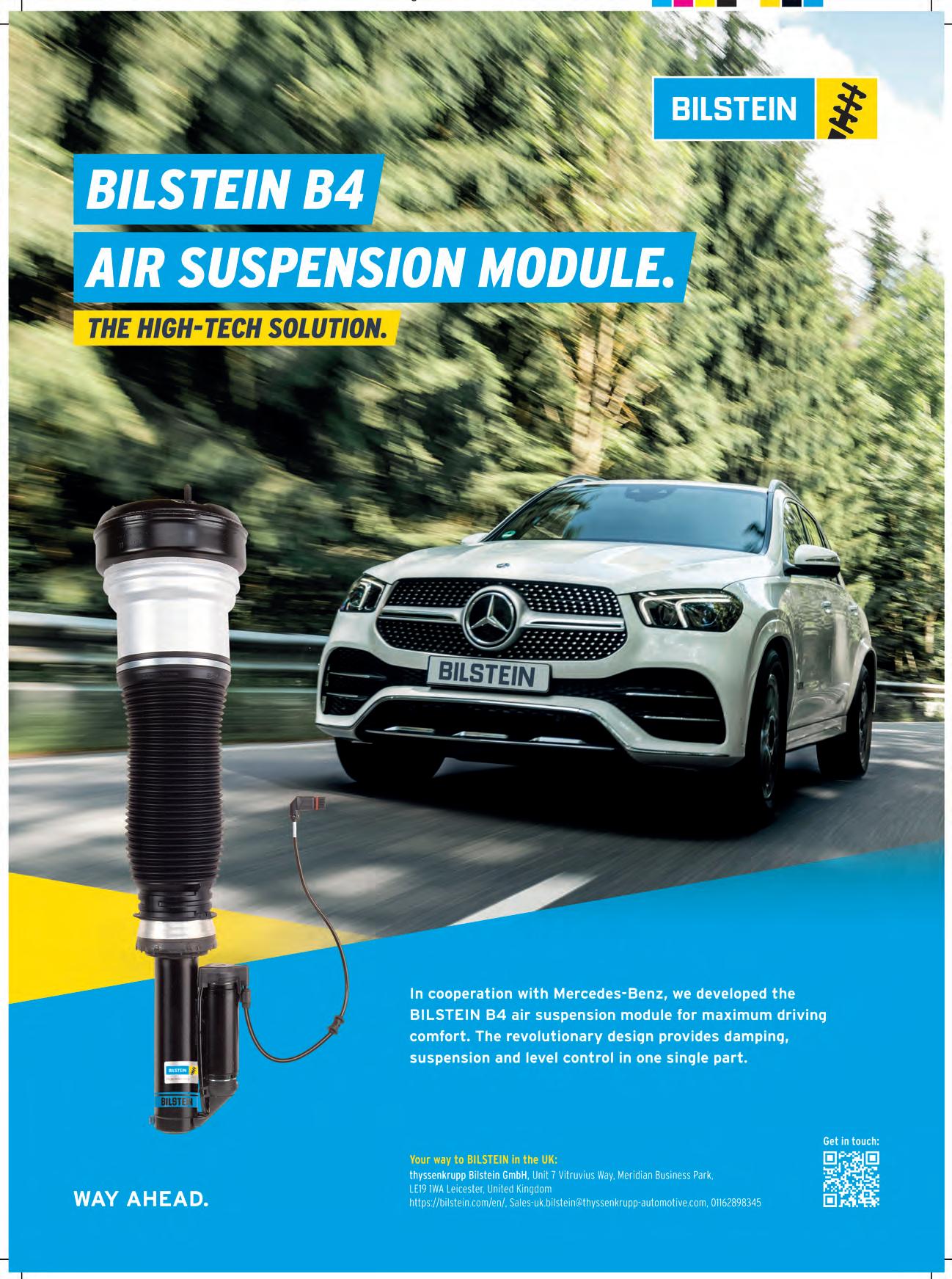
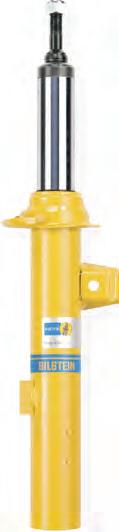
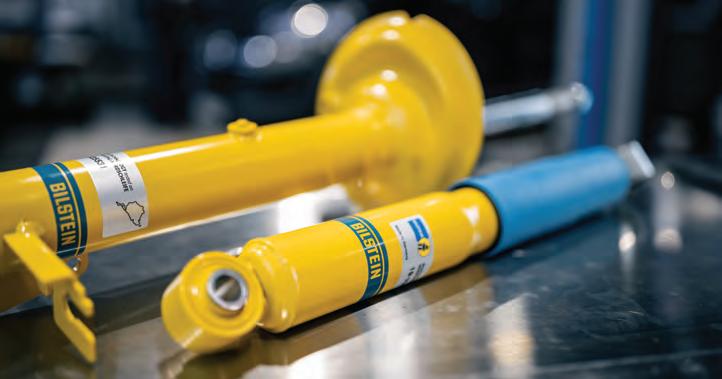
Bilstein outlines its different shock absorber product lines at a glance.
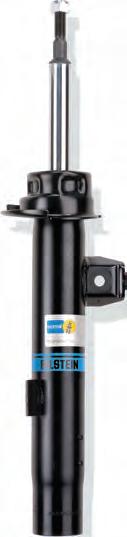
Even for experienced mechanics, the differences between the various shock absorber programs aren't always immediately obvious. That’s why Bilstein has clustered its shock absorber portfolio according to drivers’ preferences: Do they want to replace worn out or defective shock absorbers with ones exactly matching the OEM’s requirements and restore driving experience as if the car comes directly from the assembly line? Then the Bilstein B4 OE replacement range is the right choice.
If the driver wants an upgrade of the OEM-intended driving behaviour or drives with additional loads due to rearmounted bike carriers, for example, the high-performance Bilstein B6 shock absorbers are the corresponding answer. When the driver intends to lower their car, the Bilstein B8 with its shortened design is the ideal shock absorber for them as it is designed for vehicles fitted with lowering springs ensuring the necessary spring preload and precise, agile handling.
shock absorbers are manufactured on the same production lines as the OE products and correspond exactly to original equipment quality. The B4 product range covers more than 90 per cent of all European vehicle models, so, there is a suitable B4 model for almost every car on the market as a monotube and twin-tube gas pressure shock absorber in the specification that corresponds exactly to the standard equipment.
Improving on OEM
A sportier drive
Talking about driver’s preferences is an opportunity for the workshop to deepen customer relations as well as to generate additional business. By recommending corresponding products and offering choices, the workshop can demonstrate know-how while improving customer satisfaction. With Bilstein products, the workshop benefits from a broad vehicle coverage as well as technical support and reliable premium product quality.
OEM replacement
Bilstein supplies many (premium) vehicle manufacturers with the highest quality shock absorber and suspension systems as original equipment and therefore knows exactly what the OEMs require. Its B4 OE replacement
With road tests, Bilstein has developed vehicle-specific damper tuning with its yellow Bilstein B6 shock absorbers leading to a higher performance than the regular OE shock absorbers – even under heavy loads such as rear-mounted bike carriers with heavy e-bikes which put a significant load on the rear axle. The Bilstein B6 high-performance shock absorbers handle such loads much better than the standard equipment. Since they don't compromise ride comfort but significantly improve driving safety, they are an upgrade for drivers who frequently push their vehicle to its limits.
The Bilstein B8 combines the performance of the B6 high-performance shock absorber with a specially shortened design for lowering and sport springs. It is important to also upgrade the shock absorbers when installing lowering springs as their travel is shorter, they have a stiffer spring rate – for which the standard shock absorbers simply aren't designed. The shortened high-performance Bilstein B8 shock absorbers maintain the preload of the lowering springs. This is an important prerequisite for driving comfort and safety, because only a well-sprung suspension can be a fast suspension, as it ensures road contact. The result: optimal and consistent damping force with improved handling, even under heavy loads and stress. Other B8 applications are designed for raised and off-road vehicles, or for challenging use in poor road conditions.
COMMON FAULT
Strut mounting kit with ball bearing
Febi brings another solution to a common problem faced in the garage.
Part number: febi 45529, 45497
To fit: Various Volkswagen, Audi, Škoda, SEAT & Cupra models
PROBLEM
Unstable handling, uneven tyre wear and noisy suspension are all symptoms of defective steering or suspension components.
Unlike most vehicles, the strut top mounts fitted to the Volkswagen Group MQB platform are not symmetrical, and during assembly it is vital the components are aligned precisely with each other.
However, a lack of awareness of this fact has been reported in the market, resulting in installation errors during replacement.
CAUSE
Misalignment of the strut mounting to the chassis: The strut mounting has two small directional arrows that depict the fitting direction, and these can be overlooked when replacing any of the components of the MacPherson strut – e.g. the damper, spring, or strut mounting. These directional arrows indicate the installation position of the strut mount –it is aligned correctly when they are in the axis of travel, i.e. forwards and backwards (Fig.1).
Incorrect alignment of the bearing to the strut mounting: The strut mounting features a groove which the swivel bearing must be aligned with and inserted into during installation. If this process is not followed the two components will be assembled in the incorrect position (Fig.2).
SOLUTION
Prior to assembling the front suspension strut, ensure any components that are being reused are in a good, serviceable condition and that road debris are removed. Compress the road spring using a suitable tool, align it onto the damper, and insert the spring seat into the shock absorber. Next, slide the piston protector and bump stop onto the damper piston and align the bearing and mounting onto the spring and damper piston, ensuring they all line up correctly together. Finally, attach the retaining nut and tighten to 60 Nm, then release the pressure from the compressed road spring. Be sure to inspect the assembly before fitting it to the car.
Once fitted and all fixings are secured it is advisable to carry out a wheel alignment to ensure that the steering and suspension system is within manufacturer tolerances. When working on a car equipped with a vehicle level sensor it is important to also carry out a basic setting for the headlights using a suitable diagnostic tool.
Life can throw the odd curved ball no matter what stage of life you're at: money worries, illness, mental health issues, social isolation. It can create a downward spiral for you and your family. It's why Ben's here. At these moments our support and care services can be life-changing. Ever since there's been an automotive industry Ben has been helping its people and their loved ones keep life on track. Together we’ll tackle the challenges that get in life’s way and make sure they don’t, for life.
BEST PRACTICE
Diagnosing wheel speed sensors
Wheel speed sensors: You have four of them on a vehicle and they connect to various systems on the vehicle: Engine management, airbag, etc. But the main ones are the ABS and traction control units. They can detect what speed each individual wheel is going at, so if you’ve got traction issues, skidding issues, they will do lots of wonderful things to keep you on the road and as safe as possible. ABS sensors are one of the most commonly misdiagnosed things in the workshop. Elta Automotive VXP Pro ABS sensors have a return rate of one in 200 and most of the time there's nothing wrong with them. There are many reasons they are sent back, but the main one is misdiagnosis. If you go off the fault codes alone, you're going to lead yourself down the wrong track.
Diagnosis essentials
Most of the time you have an ABS light on or a traction control light or something along those lines. The first step is to get it in the workshop and carry out a full fault code scan on the vehicle. More than likely it will have some ABS sensor codes in there, but please read them in context – they don’t necessarily mean it's an ABS sensor fault. You need to carry out thorough testing to make sure that
Ed Cockill from Uckfield Motor Services has been back on the PMM YouTube channel recently with Elta Automotive, discussing the importance of following best practice when diagnosing and fitting wheel speed sensors.
item is faulty before firing a pass at it. Before getting deep into diagnostics on wheel speed sensors, you need to know the difference between an active and a passive sensor. Most modern cars have active sensors these days and passive you will see on older vehicles. You can normally tell because they have a proper toothed cog on the pickup. It works by having no voltage to the sensor and it uses the pickup just to create a voltage whereas the active normally has a permanent power source to it. You need to know the difference between them because there's different ways of testing them.
Using the right tools
My second favourite tool in the workshop is my multimeter. These are really good for carrying out basic checks and that’s why you need to know the difference between the sensors because you can resistance check a
passive sensor. You cannot resistance check an active sensor as it will damage the sensor. Obviously with an active sensor, you can carry out voltage checks to make sure there’s voltage down to the sensor. But the best tool to use is an oscilloscope, which is my favourite tool in the workshop.
An oscilloscope is the best thing for testing any sensor, or anything on a vehicle really to be honest with you, but especially for testing wheel speed sensors because you can literally plug it straight in and see the live wave that is coming out and be able to figure out quite easily what sort of sensor you’ve got. So, if you've got a passive sensor, it will be a continuous sine wave, whereas if you’ve got an active sensor, it will be a square waveform.
Fitting it right
So, we've talked about diagnosing wheel speed sensors, but fitting them is obviously just as critical. A lot of times they get broken during fitment. The main thing is you've got to check the gap between the actual sensor and the pickup itself. It's very critical. Make sure it’s not contaminated and clean the area really well. Also torque the sensor up
properly. They’re delicate plastic sensors and so they need to be torqued to the right manufacturer specifications.
Real world example
We’ve got one of my trusty old vans in today. It’s got various lights on the dash. We’re going to ignore the engine management and a DPF light, but it’s also got an ABS traction control light and a hill assist light. So, we're going to plug it in and see what codes we got. We plugged the vehicle in, carried out a code scan on it, and as we can see, we’ve got a full code for the offside front ABS wheel speed sensor. I’m going to skip the multimeter part and I’m going to go straight to a scope because, as I said, it's my favourite tool in the workshop. As you can see on the screen (Fig.1), there is no waveform at all on this. But for a bit of
context, what we're going to do is we’re going to show you the other side so you can see what a waveform should look like on this vehicle. So, the waveform we’ve got here is a square waveform (Fig.2). So, we know this is an active sensor. This is a really good test to see what type of sensor you’ve actually got. We’re doing some non-intrusive testing or any resistance testing so you won’t damage the sensor. We’re now going to get the correct part. We’ve cross referenced it, made sure it is the correct part for the vehicle. We’re going to now fit it using the correct methods.
Verdict
VX Pro, we’ve used them for many years and all their products are really good. We barely have a return rate. That’s probably because we do a correct diagnosis procedure in the workshop. They are OE-quality matching products. They've got a really wide range for all engine management sensors and solenoids or EGR valves, bits and bobs like that. So, yes, I can really vouch for them and say that VX Pro is a good quality product.
Q&A
PMM Talks to Pico’s Barney Donohew
On the eve of Pico’s latest product launch – the PicoBNC+ NVH range – PMM editor Kieran Nee caught up with the oscilloscope maker’s senior product marketing manager Dr Barney Donohew to find out more.
There is a paradox clinging on to the back of the freight train called Progress – at least in the world of automotive. The more advanced cars and their engines become, the smoother and quieter the ride they provide for their drivers, meaning that every minor nuisance becomes amplified far more than before. When the engine whispers like a spring breeze through a willow tree on a village green, the sudden squeal of brakes disrupts the tranquil scene like a drunkard on the next bench shouting at anyone who will listen.
This is what has become known as Noise, Vibration and Harshness and beyond being a nuisance in and of itself, it can be a symptom of something more serious within the vehicle itself. Many workshops have started specialising in this area of work and whilst locating the source of a squeaky brake might
not prove too troublesome, there are many squeaks and rumbles which haunt vehicles like elusive phantoms, requiring technicians truly adept at the dark arts to track down. Well, that is until now. Pico Technology is bringing NVH diagnostics out into the open and making it more accessible to technicians with its new product launch: The PicoBNC+ NVH diagnostics probes and kits, bringing together microphones, three-axis accelerometer and using the same software as the standard PicoScope, meaning the data
“Noise, Vibration and Harshness, beyond being a nuisance itself, can be a symptom of something more serious within the vehicle itself.”
is easier to read than ever before. To really drive home the idea that this is an area of diagnostics they are opening up to less experienced fault-finders, they are launching three separate kits for Starter, Standard and Advanced for automotive and commercial applications.
Hi Barney, how’s the product launch going?
It’s quite a big one for us, actually. We've been waiting on this for quite a while and we're hoping it's really going to make users’ lives a lot easier. With the full four-piece kit you get four microphones, four accelerometers, and also four extension leads, as well as the accessories you need. There’s everything you need in there basically to get going. On the other end of the spectrum, to offer the kit at a lower price point and as a
“One of the big features, and it’s something I haven’t seen on any other oscilloscopes, is providing a three-axis accelerometer on the one channel.”
perfect introduction to technicians unfamiliar with NVH diagnostics, we offer the probe microphone and extension cable without a case, which does offer a significant saving, believe it or not.
You’ve had equipment for measuring NVH available before this, right?
Yes, we had a previous kit with your open standard BNC connector, those kits were very effective, but you had to have an interface box which had a battery in which would run out. It was more hassle and you would have to change which software you were using in accordance with the hardware settings.
How does the BNC+ simplify set-up?
You can plug it straight into your PicoScope and the settings adapt, so people aren't going to make mistakes. When you record a measurement, what you see on the screen is the right thing – you don’t have to go through mental gymnastics, multiplying or adding anything. There’s a lot to learn with NVH, frequency, amplitude, vibration orders... so you want to keep everything as simple as possible. It’s a plug and play set up, really.
Apart from simplifying set-up, what does this kit bring to the table which other NVH kits don’t?
One of the big features, and it’s something I haven’t seen on any other oscilloscopes, is providing a three-axis accelerometer on the one channel. So you can measure the three axes: fore and aft; lateral; and vertical
vibrations on one channel rather than three. This means, with the four channel scope, you can measure all four corners of the car at the same time. So you can hook up the kit, take it for a test drive and get all your measurements in one go. You know how difficult it can be to replicate an intermittent vibration, so this is potentially a huge timesaver for technicians.
How could this change a technician’s approach to diagnostics?
Mechanical faults, by and large, manifest themselves through NVH symptoms. Not always, but usually. So this kit could help a technician locate and diagnose a fault through the NVH symptom. People are very used to using oscilloscopes for electrical diagnosis, sensors and then pressure too. This NVH kit is the leap into the mechanical world, which is two thirds of workshop diagnostics. Electrical faults are actually rarer than simply having a customer coming in and saying, there’s a knock or a vibration, can you sort it out.
Is it a bigger problem now that modern vehicles are so smooth?
Yeah, 100 per cent. So electric vehicles are a key example, with people starting to hear things they never used to hear because suddenly you haven't got the engine masking things, the kind of noises that were always happening. You can chart the rise of interest in NVH and the uptake of EVs and they go hand in hand. One thing to always keep in mind is that cars are designed to vibrate and make noise. Sometimes you have a garage customer who thinks that a perfectly normal noise is an issue. That’s why it’s always advisable to build up a bank of datasets for common vehicles, so you have a standard against which you can compare the same make and model.
Who is going to buy this, do you think?
I think this will open up the market a bit more than before – certainly the “scope-curious” to use a Pico-ism will be intrigued. Traditionally NVH was an intermediate and above area of expertise, you’d be thinking about master technicians and beyond. We’re removing the intimidation with this kit, allowing less experienced techs an easier way in and then they can go into as much depth as they need or want to, all with the same tool.
CASE STUDY
Positioning the balance shaft module on a 2018 SEAT Alhambra
ALLDATA Europe’s Info Centre team recently assisted a customer who needed help identifying the correct positioning of a balance shaft module on a 2018 SEAT Alhambra 2.0 diesel engine.
Agarage recently got in touch with the ALLDATA team for help on a problem positioning the balance shaft module on a customer’s SEAT Alhambra. Because it needed to be aligned with the crankshaft – and incorrect handling can lead to serious engine damage – access to accurate information was essential for a successful repair.
After searching ALLDATA without finding the required details, the customer contacted the Info Centre. One of ALLDATA’s experts, a former master technician, guided them to the relevant OEM repair information, which clearly stated that the balance shaft module must not be loosened.
Factory-set
assembly, meaning reliance on experience, markings or assumptions would have amounted to guesswork. This would have increased the technical risk, labour time and costs, and potentially expose the workshop to liability if the repair led to component failure or engine damage.
Info Centre
The alignment between the crankshaft and balance shaft module cannot be restored using standard workshop tools because it is factory-set using specialised equipment and precise reference points that are not accessible during normal repair procedures. This alignment is critical to ensure the balance shafts rotate in sync with the crankshaft to counteract engine vibrations effectively. If the module is loosened and this link is lost, it cannot be accurately reestablished with standard equipment, which
“The alignment between the crankshaft and balance shaft module can’t be restored using standard workshop tools because it is factory-set using specialised equipment.”
can lead to increased vibration, component wear and potentially serious engine damage – making this guidance essential to completing the repair correctly.
By gaining access to this information, the technician saved time, avoided potential pitfalls and ensured an accurate repair. Without manufacturer-specific references, there was no clear guidance for correct
As an ALLDATA subscriber, the technician received the answer from the Info Centre at no extra cost. While ALLDATA provides access to over 107 million technical articles and more than 9.5 million wiring diagrams and drawings, covering more than 165,000 vehicle combinations – the equivalent of 97 per cent of vehicles on Europe’s roads –certain procedures can be complex, open to interpretation or difficult to locate.
In these scenarios, the Info Centre gives subscribers direct access to experienced inhouse specialists. They can quickly identify the correct guidance, clarify critical details and highlight essential warnings that might otherwise be missed. This not only saves valuable workshop time, but also helps ensure repairs are carried out accurately, reducing the risk of costly errors and potential liability.
What’s new IN THE WORKSHOP?
New caliper carrier range
Manufactured to OE+ specification, each Apec caliper carrier is designed to provide a precise fit and dependable braking performance across a range of vehicles. Developed to meet the demands of modern workshops, the range gives technicians access to “high-quality components they can rely on for consistent and efficient brake repairs”. To support quicker and more convenient installation, the caliper carriers are supplied with a complete fitting kit, including slider pins, mounting bolts and rubber boots.
TO FIND OUT MORE
WWW.RDR.LINK/ACF025
Spare parts
Knipex is highlighting its wide range of spare parts to keep tools in service for longer. The Knipex TwinGrip front and side gripping pliers are designed for tackling worn or damaged screws and fasteners. With a unique combination of front and side gripping along with a push-button adjustment, they are ideal for tight or awkward spaces. With regular use, components such as the
push button can wear over time. Rather than replacing the whole tool, Knipex offers a spare part assortment (82 xxx E01) for the TwinGrip range, meaning the push button can be swapped out in just a few steps using basic tools.
TO FIND OUT MORE
Oil packaging Management software
A new garage management platform has launched in the UK called GarageBooks. The platform covers the full workflow of a modern garage: Job management, customer records, quoting, invoicing, and a public-facing profile that lets garages appear in a searchable UK garage directory with direct customer lead generation built in.
The platform was developed in direct partnership with Quayside Garage in Flintshire and has been tested daily on real jobs, customers and data.
TO FIND OUT MORE
WWW.RDR.LINK/ACF026
An extended range of Fahren engine oil is now available in 1L, 5L, 20L, and 199L packaging options. Each product features a dedicated colour-coded label design for quick and easy identification. Customers can also access technical data sheets and certification details directly through the Fahren website. The 1L and 5L packs are ideal for individual consumers and quickservice automotive centres, while the 20L and 199L options provide cost-effective solutions for workshops.
TO FIND OUT MORE
WWW.RDR.LINK/ACF028
ELTA Automotive has introduced a new range of Lucas spare bulb kits featuring 100 per cent cardboard, fully recyclable packaging: A first for the aftermarket. Designed to eliminate plastic without compromising protection, the kits use precision-cut cardboard inserts to securely hold bulbs in place, ensuring durability for storage in the boot.
TO FIND OUT MORE
Brake disc range extended
New brake disc ranges have been introduced to Aisin’s Advics brand. Around 1,000 references will complete a comprehensive range (of brake pads, brake fluid, master cylinders, wheel cylinders, etc.) that will eventually be compatible with 97 per cent of the European vehicle fleet. The 1,000 references have been designed for use in passenger cars and light commercial vehicles. The range will eventually cover 97 per cent of the European vehicle fleet. The
portfolio is supported by the experience gained by ADVICS, whose products are fitted as original equipment on 50per cent of Japanese models, and in one in ten vehicles worldwide.
In the electric vehicle segment (hybrid, plug-in hybrid and battery electric vehicles), its brake discs already cover more than 50 per cent of the main applications.
TO FIND OUT MORE
Here is a useful summary of all the adverts that appear in this issue of Professional Motor Mechanic Each is listed with its page number and a direct URL that will get you straight to the relevant online information
AC Tronics Ltd ................................................(page 45)
www.rdr.link/ACF100
Arnott Europe ..................................................(page 33)