Professional Motor Factor: Certificate of Average Net Circulation for the issues distributed between July 2025 and December 2025
Net total: 4,977
United Kingdom: 4,977
The publishers and editor do not necessarily agree with the views expressed by contributors, nor do they accept responsibility for any errors of translation in the subject matter in this publication.
As I sit to write my final column before the summer recess, we are in the midst of the latest heatwave. Some love the heat; some despise it. I enjoy the heat; my wife hates it – unless there is a swimming pool directly next to her – so we’ve not enjoyed each other’s company, as this latest surge in warm temperatures grips the nation. At one point, there was speculation that we might hit the hottest day on record – but we appear to have missed out on that milestone this time around.
During these conditions, I always think about those that have it harder than I –construction workers, kitchen staff, agricultural workers, the emergency services, foundry workers –but I also think of the impact the heat has on the trade.
Hot weather can cause surges in vehicle breakdowns, requiring technicians to work harder in environments that amplify temperatures, with enclosed workshops trapping stifling air. Also, there is the potential to wait extended periods for hot engines to cool down before beginning repairs.
For a motor factor, as Leisureways’ Tom Clarke explains in his latest column (page 15) alongside PW Auto Repair’s Diana Whetton, the heat presents challenges – but also opportunities.
He wrote: “One of the biggest opportunities at this time of year comes from increased demand for car care and valeting products. Categories that can be slower moving during winter often see a noticeable pick-up as motorists spend more time on vehicle maintenance. There is also typically an increase in retail customers carrying out DIY maintenance and minor repairs, creating additional demand for accessories and workshop essentials.
“Motor factors are also presented with the opportunity to increase basket spend. Products linked to seasonal maintenance, vehicle appearance, and convenience can generate additional sales. At Leisureways, product displays are regularly updated throughout the year to reflect seasonal demand and help customers more easily identify relevant products.
However, the warmer months come with their challenges: the holiday season often creates staffing pressures across the business, with a large portion of employees wanting to take off time during the summer holidays. This can leave a business with less flexibility to cover sickness, emergencies, and unexpected increases in workload. Maintaining service levels requires strong teamwork and a willingness from staff to adapt when required.”
Do you agree with Tom’s assessment? Get in touch by emailing pmf@hamerville.co.uk
At the outset, I mentioned that this is my last write-up before returning in September. The website and social media channels will continue to be updated – thank you to everyone that engages – so you’ll continue to get your PMF ‘fix’.
In the meantime, stay safe, have a great summer, and see you when – most likely – temperatures will have been turned down.
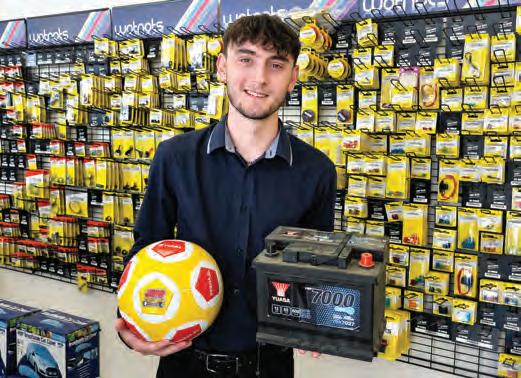
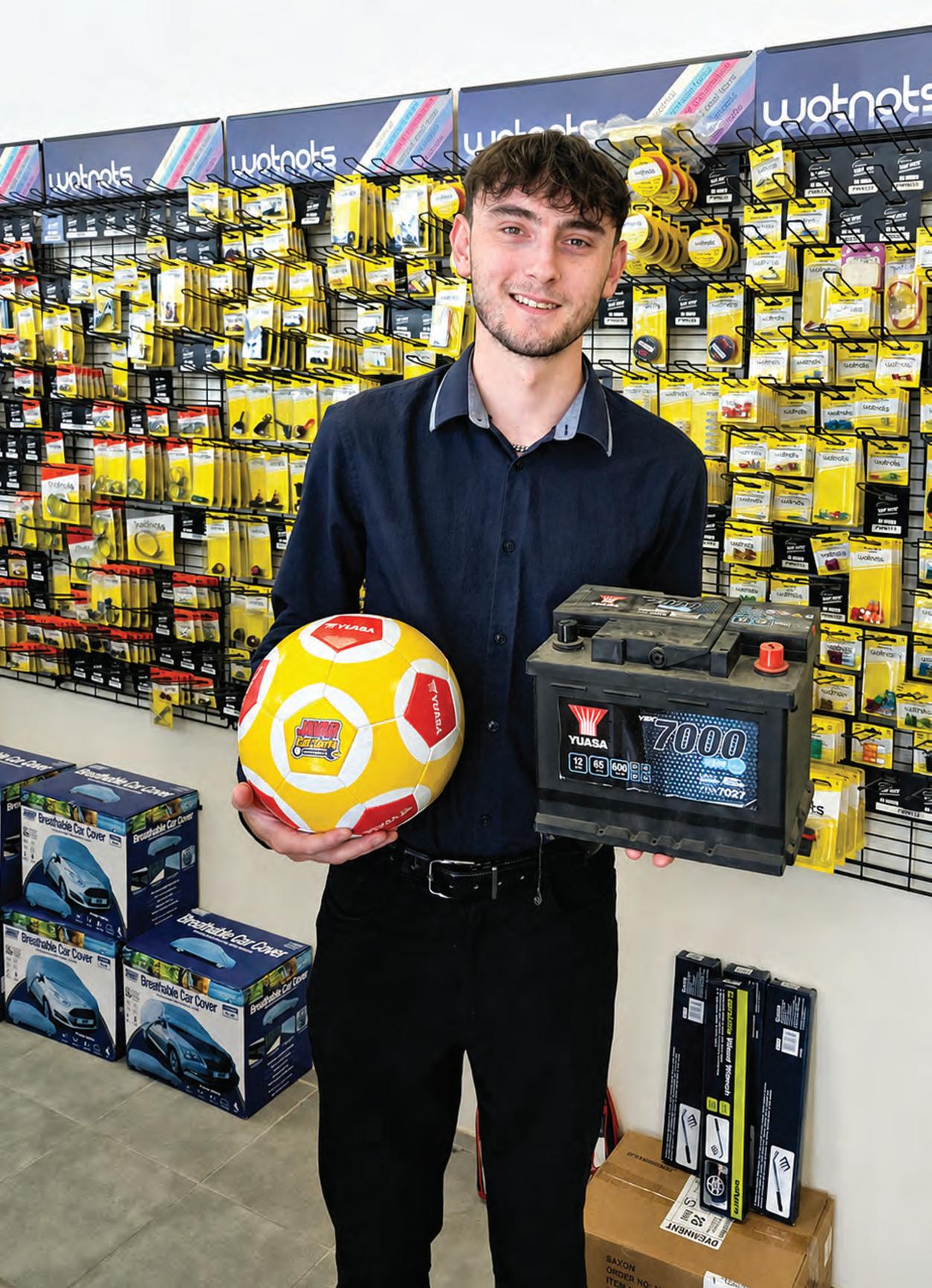
CAR PARTS AND YUASA ARE EMBRACING THIS SUMMER’S FOOTBALL FESTIVAL WITH A PROMOTION –FREE FOOTBALL FOR ANY BATTERY PURCHASE.
JAYAR
NEWS
GSF HAYES MOVES TO BIGGER SITE | NORTHERN IRELAND NETWORK INCREASES TOO
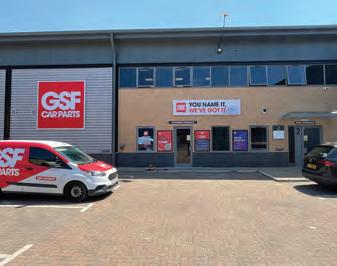
GSF Car Parts has relocated its Hayes branch to a larger premises – with eight vans and 27 members of staff operating from the new site.
This is GSF’s twelfth new site of 2026, with the national distributor revealing more branches are planned for later in the year.
GSF Hayes Branch Manager, Petre Balint, said: “We identified a strategic opportunity to enhance the support we provide to our customers in Hayes and the surrounding areas. This move will strengthen the stock pack to align with local demand. Colleagues are also enjoying a much nicer work environment.”
GSF CEO, Steve Horne, added: “Relocating our Hayes branch into a larger, more capable site is another important step in our expansion strategy. Hayes is a key area
for us, and this investment gives the team the space and resources needed to continue growing its customer base. As we look ahead, 2026 will see us maintain this momentum as we continue working towards becoming the number one in the aftermarket.”
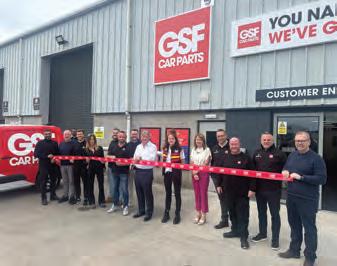
Meanwhile, GSF has also opened its latest Northern Irish store – this one in Portadown, bringing its number of branches in the region to four.
A team of 13 full-time employees are operating the branch, supported by a fleet of six delivery vans.
Steve added: “We’re investing aggressively to support our Northern Irish branches to grow into a huge local opportunity. We won’t let up until we’re the number one aftermarket provider not just in Ireland, but in the UK.”
AAG INCREASES PRESENCE IN REPUBLIC OF IRELAND FOLLOWING LATEST ACQUISITION
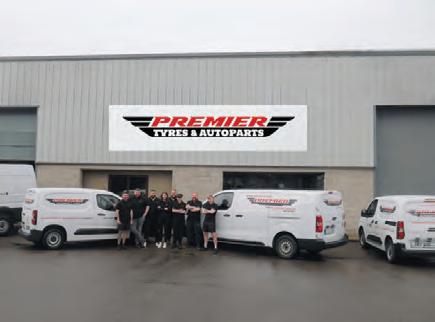
Alliance Automotive Group (AAG) has acquired Premier Auto Parts, with the five branches taking the distributor’s network in the Republic of Ireland to 21 branches.
AAG reports that Premier Auto Parts has 57 members of staff and has an annual turnover of approximately €7.8 million.
KEVAN WOODEN STEPS DOWN AS LKQ UK AND IRELAND CEO | DAVE BROOKFIELD NAMED INTERIM BOSS
LKQ Europe has announced that Kevan Wooden has stepped down as CEO of LKQ UK and Ireland, with Vice President of Human Resources, Dave Brookfield, appointed interim CEO until a permanent successor is recruited.
Kevan joined LKQ UK and Ireland in 2019 before becoming CEO in 2023, taking over from Andy Hamilton who was promoted to the role of senior vice president of LKQ and president of LKQ Europe.
In a statement, Andy thanked Kevan, praising his “significant contribution” to the business.
Andy said: “I’d like to thank Kevan for all that he’s done with us over the last seven years. He made a significant contribution to raising customer and colleague standards and reinforced our leadership positions across the key accounts, garage concepts, workshop solutions, and bodyshop markets. He drove our digital leadership forward and oversaw the integration of our HGV and leisure and marine businesses into a consolidated group of unparalleled reach and scale. We all wish him well for the future.”
Meanwhile, Dave brings nearly two decades of experience in the trade to his interim role. He joined LKQ 16 years ago and previously led the UK and Ireland teams.
Andy added: “David was integral to the growth of our UK and Ireland business during my tenure as CEO. He understands its customers and the local market dynamics. Coupled with his intimate knowledge of our people, culture, and operations, it makes him exactly the right person to lead the business through this transition.”
NEWS
IAAF CALLS FOR MANDATORY MINIMUM MOT FEE
The Independent Automotive Aftermarket Federation (IAAF) is calling on the government to introduce a mandatory minimum MOT fee of £54.85 as part of a wider review of MOT testing and roadworthiness requirements.
Representing a broad cross-section of the UK automotive aftermarket, including independent garages, national chains, motor factors, and parts suppliers, IAAF believes the current approach to MOT pricing is no longer sustainable and risks undermining the longterm viability of the UK’s vehicle testing infrastructure.
With the maximum cost of an MOT test currently £54.85, the IAAF argues that widespread discounting and the use of MOTs as loss leaders have significantly devalued road safety inspections. As vehicle technology becomes increasingly sophisticated, the cost of delivering a thorough and compliant MOT continues to rise.
The IAAF is, therefore, proposing that £54.85 becomes the minimum fee for a Class 4 MOT test.
The IAAF claims vehicle testing stations are facing rising costs in technician recruitment, training, equipment calibration, and regulatory compliance, while also preparing for future testing requirements linked to advanced driver assistance systems, EVs, and emissions
monitoring.
IAAF Chief Executive, Mark Field, claims the fee should be “around £95”, in line with inflation, with the current fee structure “devaluing” the work and services an MOT test station provides.
He added: “To travel internationally, you need a passport; to watch TV, you need a TV licence; and to operate a vehicle over three years of age, you need an MOT certificate. The cost of both a passport and TV licence has increased
since 2010, while the MOT fee has stayed the same.
“The MOT remains one of the most important road safety checks carried out on UK vehicles. It is essential that the testing network is properly funded and that MOT inspections are valued appropriately. A mandatory minimum fee of £54.85 would be a sensible first step towards achieving this, while maintaining the current 3-1-1 MOT testing frequency to protect road safety standards.”
KLIPBOARD REVEALS NEW VERSION OF AUTOCAT
Klipboard has released the latest version of AutoCat, which is described as a “fully reengineered” catalogue platform that combines “intelligent search, embedded AI, and an intuitive user experience” to support faster, consistent product identification across the aftermarket.
Klipboard claims that as vehicle complexity continues to grow and customer expectations rise, identifying the correct part quickly has become increasingly challenging for counter and sales teams – the latest version of AutoCat is the response, bringing together vehicle data, supplier information, and intelligent search within a single workflow.
From vehicle lookup through to part matching and cross-reference confirmation, AutoCat is designed to reduce lookup time and improve accuracy.
A key addition is the AutoCat Intelligent Sales Assistant, an embedded AI-driven capability to help counter and sales teams identify parts more quickly by guiding users through structured, diagnostic questioning, suggesting relevant upsell opportunities.
Klipboard Head of Automotive Account Management, Ben Nicholls, said: “We have rebuilt AutoCat from the ground up with a
clear focus on helping our customers to win more sales, improve efficiency, and deliver a better experience to their own customers in an increasingly competitive market. The latest version reflects both our long-term investment in the platform and the feedback we’ve consistently received from the businesses we support.
“The introduction of the AI Sales Assistant is a significant step forward, bringing contextaware, AI-driven guidance directly into the identification workflow. It helps extend expertise across teams and deliver faster, more consistent service that builds customer confidence and loyalty.”
Klipboard has confirmed that AutoCat V9 will not be supported from this month, so customers are encouraged to upgrade to ensure uninterrupted access.
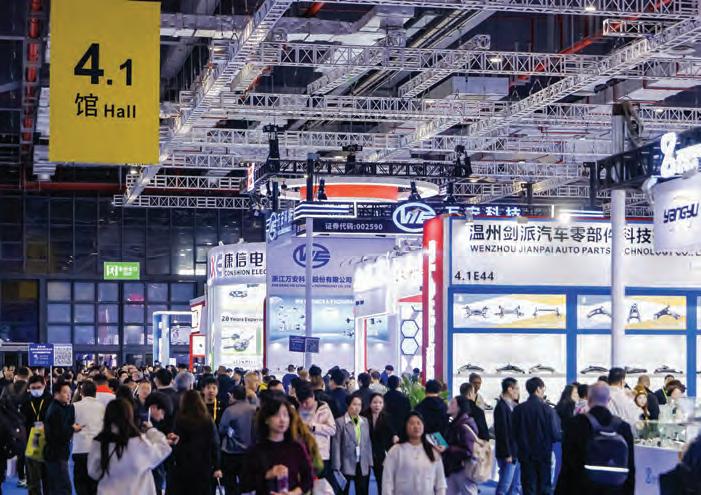
IS ATTENDING AUTOMECHANIKA SHANGHAI WORTH A VISIT?
Chinese car brands are reshaping the UK market, capturing a record market share. Competitive pricing, advanced technology, and high-value equipment have all been credited with contributing factors. In this issue, PMF speaks to the organisers of Automechanika Shanghai from Messe Frankfurt, who assess the Chinese market, how it is impacting the UK sector, and why attending this global trade fair might be worth considering.
customising, diagnostics and repair/body and paint, and tyres and wheels. Special zones feature Innovation4Mobility, Customising x Tech, green repair, digital solutions/services, remanufacturing, and start-ups.
A Q A Q
For those who may be unfamiliar with the scale of the Chinese aftermarket, how would you describe the opportunities for PMF readers available at the trade show?
Historically, the growth of China’s automotive industry was directly tied to new vehicle production and sales. While these remain key pillars, the market’s momentum is shifting toward vehicle ageing, an expanding used-car sector, and surging EV penetration.
Valued at approximately USD 87.4 billion in 2024, according to the 2025 Frost & Sullivan Automotive Aftermarket Market in
China report, the aftermarket is projected to grow steadily at a rate of 9.6 percent through to 2030, a period that will be defined by the evolving products, services, and supply channels for both internal combustion engines and EVs. In fact, entirely new aftermarket service streams are forming around diagnostics, battery balancing, and thermal system maintenance. China’s extensive network of independent repair shops has also triggered a boom in ecommerce and booking apps. Today, drivers can order spare parts and schedule services online with transparent pricing. The digital shift is making vehicle maintenance predictive for car owners to self-monitor and stay ahead of repairs, maximising the lifespan of both electric and traditional combustion engine cars.
Navigating this transitioning ecosystem requires a direct connection to the industry source, which is precisely what Automechanika Shanghai provides by pulling the entire supply chain under one roof, on a national and global level. From 2 to 5 December, the trade fair will fully occupy the National Exhibition and Convention Centre (Shanghai).
The fair covers manufacturing to aftermarket services under parts and components, electrics and electronics, new energy and connectivity, accessories,
What products, technologies or aftermarket trends are emerging in China that readers should be paying close attention to?
The country’s EV adoption is generating new demand patterns with growing markets for EV batteries, specialised automotive electronics, tyres, and specialised diagnostics. This hardware evolution is occurring alongside a broader structural shift, driven largely by AI+, as technology-enabled services become the new industry standard. Ultimately, these advancements are reshaping the automotive landscape, fuelling the expansion of independent aftermarket workshops and franchised repair networks.
Reflecting these industry shifts, Automechanika Shanghai’s new energy and connectivity sector has expanded by 20 percent to showcase advancements in electric powertrains, autonomous driving, embodied AI, charging infrastructure, intelligent chassis, and thermal management. Other traditional sectors are
similarly upgrading to meet current and future demands with smarter, lightweight, and high-performance products.
Additionally, responding to a major industrial push for circularity, the expanded remanufacturing zone focuses on emerging recycling solutions. According to the 2023 Scaling Up Reuse and Recycling of Electric Vehicle Batteries: Assessing Challenges and Policy Approaches report, 14 million EV batteries are projected to retire by 2040. The zone highlights inspection, certification, and processing standards for power batteries, motors, and electronic control systems, alongside recycling for internal combustion engine parts.
How does visiting suppliers in person at the show differ from sourcing products remotely or through existing distribution channels?
Choosing trade fairs, like Automechanika Shanghai, primarily offers advantages in three distinct areas: direct access, operational efficiency, and cost management. The exhibition features a substantial international presence with exhibitors representing more than 40 different markets to comprehensively cover the global supply chain.
Notably, nearly half of exhibitors are set to feature products, services, and solutions for new energy vehicles. This provides early visibility into upcoming technology amidst rapid transformation, offering insight into the latest EV and ADAS diagnostic tools before they become widely available in the UK. By consolidating suppliers from every major automotive sector, the environment optimises procurement timelines as industry professionals can assess product quality in person, diversify their supply networks, and build the relationships necessary to secure longterm partners.
What manufacturers and brands will attendees be able to meet, and how can those connections benefit PMF readers?
Attendees gain direct access to the entire automotive supply chain, spanning parts and components, diagnostics and workshop equipment, electronics and connectivity, accessories and customising, tyres and wheels, digital services, e-commerce, and alternative drive systems and fuels. Exhibitors include Astemo, BIG RED, BMTS, BorgWarner, CARXPERT, ContiTech, Corteco, Dali, Dana, Dayco, EAE, Eagle-Fly, Enoch, Hella,
Hengst, JTC, Knorr-Bremse, Michelin, New SORL, OSRAM, PHINIA, Sensata, Shedrive, TecAlliance, TMD, Toyota Tsusho, Tuopu, Unite, and ZF.
Furthermore, the show strengthens global partnerships by working closely with international associations to support OEMsupplier connectivity. These partnerships include promoting industry standards, testing, and certification to ensure buyers can efficiently source or develop products that are compliant and compatible with overseas markets like the UK.
With increasing pressure on margins, how can attending this global trade exhibition in China help PMF readers improve their competitiveness and profitability?
At a time when macroeconomic pressures are squeezing margins, events like Automechanika Shanghai are potentially more important than ever. It is essential for the industry to collectively address the challenges and opportunities emerging across different regions and markets. While strategies may vary by location, as a solution that succeeds in one market may not be suited to another, the fact that industry leaders from 190 countries and regions can gather and share firsthand experiences is vital for the long-term, sustainable development of the global automotive sector.
In this context, Automechanika Shanghai offers a window into global supply chains, particularly where Asian supply extends to all corners of the world.
Beyond product sourcing, what market intelligence or industry insights can readers gain from spending time in China and attending the event?
For more information about Automechanika Shanghai, www.rdr.link/FBD001 A Q A Q A Q A Q A Q
The fair features an extensive lineup of concurrent events with roughly 100 conferences, technical seminars, forums, and workshops. This programme addresses global tariffs and supply chain disruptions with senior executives analysing supply chain resilience and the integration of Asian components into European markets. Crucially, the show fosters global alignment on product standards by partnering with international testing and certification bodies, allowing buyers to understand the regulatory compliance required for components. Industrial tours also offer a unique chance to go inside China’s leading new energy vehicle production.
This turns the event into a practical research and development trip that previews challenges and opportunities over the next decade. The wider and longterm perspective is balanced by immediate and practical insights. For example, the green repair area offers demonstrations on diagnostics and high-voltage repair, complemented by technical sessions on thermal management, ADAS calibration, and intelligent chassis systems.
If you were speaking directly to a motor factor who is considering the trip, what would you say is the single biggest reason they should invest the time and cost to attend?
Trade fairs act as accelerators for business growth. Automechanika Shanghai has a proven track record as one of the most influential platforms within the global automotive sector, hosting roughly 7,600 exhibitors and an anticipated 100 concurrent events to offer value for every profile of visitor. Based on participation from 2025, approximately 250,000 visitors from 190 countries and regions present a major global meeting point, allowing UK aftermarket professionals to source new products and technologies, broaden international networks, and stay informed.
To help attendees achieve a tangible ROI, navigating this vast scale requires a highly structured environment. The exhibition is therefore meticulously planned and categorised into clear, welldefined product sectors and specialised zones, streamlining the visitor journey and making it highly efficient for professionals to locate the precise products and solutions they need.
VLS: MOTOR FACTORS PLAY A VITAL ROLE IN DISTRIBUTING QUALITY LUBRICANTS
PMF is pleased to interview Alan Outhwaite, head of the Verification of Lubrication Specifications (VLS) Technical Review Panel. In this interview, he provides an update on VLS cases, discusses industry trends and insights, and shares his optimism about the future collaboration between the organisation and motor factors.
Why is the VLS an organisation that motor factors should look for?
VLS was formed in 2013 in response to concerns that some lubricant products were carrying claims that could not be adequately substantiated. In some cases, manufacturers may have misunderstood the technical requirements associated with those claims; in others, VLS considered that additional evidence was required to support the marketing statements being made.
A number of lubricant companies approached UK Trading Standards regarding these concerns. However, the highly technical nature of lubricant specifications and performance claims created challenges for investigation and enforcement. As a result, reputable lubricant manufacturers came together to establish VLS to verify lubricant specifications and help protect and educate end-users.
Motor factors are distributors and, in some cases, marketers of lubricants. They play a vital role in the supply chain and are responsible for sourcing, marketing and distributing quality lubricants that are suitable for their intended applications.
motor factors make informed decisions and support their customers. Motor factors can sign up to receive the VLS newsletter to keep up to date with relevant news and case updates and can view cases on the VLS website.
How can motor factors best utilise the information and cases under review by VLS to support workshops and, ultimately, the end-user?
We would recommend motor factors regularly check the VLS website, so they can see which products have been investigated and, in cases of noncompliance, which products have been escalated to Trading Standards for enforcement action.
Education is key; if motor factors understand the complexities of engine oil and the importance of engine oil selection, then they can better support workshops and end-users. Oil choice really matters; poor quality or the wrong oil can cause damage to emission control systems, accelerate wear in gears and bearings, lead to the formation of piston deposits and sludge, increased maintenance costs, and, if left unchecked, eventual engine failure.
A Q A Q A Q A Q
Motor factors can look to VLS for advice, education on the complex engine oil market, and information about products that are being, or have been, investigated following complaints. In the most serious cases, VLS issues safety warnings to help
VLS’ parent organisation, the United Kingdom Lubricants Association, runs regular lubricants training sessions, and motor factors are welcome to join them to find out more about this complex, changing category.
There is only one national distributor part of the VLS – is membership open to independents too? If so, what are the benefits?
Membership is open to any company in the lubricants supply chain, including lubricant blenders, marketers, distributors, and motor factors. We welcome independent distributors, as well as national distributors, to become members and engage with our work to uphold standards.
By joining VLS, members are joining the lubricants industry’s initiative to bring transparency to the UK lubricant marketplace, to raise awareness in the consumer, and promote the importance of lubricant quality and performance specifications within the UK. VLS members also benefit from lower case charges if they wish to make a complaint about a product.
Members are encouraged to add the VLS membership logo to all customerfacing materials.
What are the main reasons for products being put under review for VLS?
Since 2013, VLS has investigated 146 cases. The majority of cases have related to passenger vehicle engine oils; however, CV engine oils and other oils and fluids have continued to steadily increase in share as this market becomes more complex to meet stringent
vehicle emissions regulations.
Non-compliance with ACEA specifications is the most frequent cause of complaint; however, conflicting or unevidenced OEM approvals, low temperature properties, and noncompliance with industry standards have all increased their share of overall complaints in recent years.
You’re part of VLS’ Technical Review Panel – why is this such an important stage of the verification process?
The VLS Technical Review Panel is made up of experts from across the lubricants industry who have the necessary knowledge to investigate lubricant cases. They donate their time because they share the common goal of upholding standards.
Each case raised is anonymised by the Secretariat before it is passed on to the Supervisory Committee and Technical Review Panel to ensure that it is treated fairly and independently. Only the Secretariat knows who the named party and claimant are in each case during the
A Q A Q
investigation. VLS uses independent sampling and testing to verify complaints and engage with companies to bring products into compliance. All case outcomes are published to the VLS website. Recently, the Technical Review Panel has introduced more stringent guidance on the use of marketing claims on lubricant packaging. The move comes in response to several recent cases, many of which have involved lubricant products making misleading or incorrect claims. The updated guidance sharpens the definition of application recommendations, which should be accurate and able to be substantiated for all the applications detailed, and reinforces the need to register with SAIL if claiming to meet ACEA sequences.
What do factors need to keep a particular eye on over the coming months?
We are expecting to see some disruption due to the Iran conflict, particularly a tightening of the supply of high-quality Group III base oils, widely used in SAE 5W and 0W engine oil
formulations. This may cause price increases, plus supply chain and availability issues.
Factors should also be on alert for lower-cost engine oils that may appear on the market in response to rising fuel costs and engine oil prices. These oils may sound too good to be true and may be made with unapproved components. VLS is expecting a rise in cases.
For more information about VLS, www.rdr.link/FBD002
POINT
SERVING SUMMER SUCCESS
TOM CLARKE
LEISUREWAYS OF ROTHERHAM
CTell us what you think via #PMFCounterView on LinkedIn or e-mail pmf@hamerville co.uk.
ustomer habits evolve throughout the year, and seasonal trends remain an important consideration for motor factors.
Summer brings both opportunities and challenges, with changes in customer behaviour, increased demand for seasonal products, and the impact of annual leave affecting day-to-day operations. For motor factors, success during this period is reflected in good planning, flexibility, and maintaining high customer service levels.
One of the biggest opportunities at this time of year comes from increased demand for car care and valeting products. Categories that can be slower moving during winter often see a noticeable pick-up as motorists spend more time on vehicle maintenance. There is also typically an increase in retail customers carrying out DIY maintenance and minor repairs, creating additional demand for accessories and workshop essentials.
Motor factors are also presented with the opportunity to increase basket spend. Products linked to seasonal maintenance, vehicle appearance, and convenience can generate additional sales. At Leisureways, product displays are regularly updated throughout the year to reflect seasonal demand and help customers more easily identify relevant products.
However, the warmer months come with their challenges: the holiday season often creates staffing pressures across the business, with a large portion of employees wanting to take time off during the summer holidays. This can leave a business with less flexibility to cover sickness, emergencies, and unexpected increases in workload. Maintaining service levels requires strong teamwork and a willingness from staff to adapt when required.
Forecasting and inventory management remain a priority throughout the year, but customer expectations mean motor factors must adjust stock levels accordingly. Ensuring strong availability across retail-focused product lines means they respond effectively to customer needs while maintaining high service levels for both trade and retail customers.
While summer may bring different demands compared to the rest of the year, the fundamentals remain the same. Businesses that can adapt to changing customer behaviour, manage staffing challenges effectively, and respond to seasonal demand can maximise opportunities while continuing to deliver high levels of customer service.
DIANA WHETTON PW AUTO REPAIRS
In an independent garage, summer brings some predictable changes in seasonal workload. Air conditioning enquiries peak, and more customers start preparing for school holidays, airport runs, and road trips. The challenge is managing demand when many of those requests arrive at the last minute. For some customers, an unexpected repair bill just before a holiday can also create additional financial pressure. We’ve all had that phone call: “We’re driving to Cornwall on holiday this Saturday – can you fit us in before we go?”
Although we always try our best to help, these situations can create pressure on a workshop diary that may be planned weeks in advance. It often leaves me wondering how we can better educate and encourage customers to think about vehicle maintenance before the warning light appears, or the holiday is only days away.
For us, the biggest challenge during the summer isn’t generating work – it’s managing capacity. Every workshop only has so many ramps, technicians, and hours available in a day. We want to help a customer with an urgent concern, but we also have commitments to customers who booked ahead and trusted us with their vehicle weeks earlier. We’ve found value in protecting a small amount of diary capacity each week for genuine emergencies. This helps customers without completely derailing other scheduled work.
The summer months also bring staffing considerations. Team members understandably want to take annual leave whilst the weather is good, and for many of us there are children’s sports days, special family events and childcare arrangements to work around. Using a holiday management app, which integrates with our garage management system, has made a positive impact, helping us plan ahead.
Then there are the occasional heatwaves; whilst most of us won’t complain about a bit of sun, a busy workshop can become a very warm place to work. Making sure the team stays hydrated and takes regular breaks becomes vital. Little extras, like ice pops and comfortable uniforms, can help. Running a garage is as much about looking after people as it is repairing vehicles.
Customers are planning exciting journeys, staff are planning well-deserved time off, and we’re striving to maintain high standards while keeping things moving. Longer days and lighter evenings boost morale, and it’s satisfying to help customers leave with confidence in their vehicle.
Movers & Shakers
PMF introduces this month’s movers and shakers, as they begin a new stage of their career.
MOTOR PARTS DIRECT
Motor Parts Direct has announced the appointment of Spencer Bell as its head of digital commerce. The move comes as the company “accelerates” digital growth and aims to deliver an industry-leading online customer experience.
Spencer joins with more than 20 years’ experience in digital trading, e-commerce strategy, customer acquisition, SEO, paid media, conversion rate optimisation, CRM, analytics and commercial performance management.
Spencer said: “The automotive aftermarket is entering an exciting period of change. Customers expect speed, convenience, expertise, and a seamless digital experience. Motor Parts Direct has built a fantastic reputation for service and product availability, and I am excited to help shape the next stage of growth.”
DUCKHAMS
Mike Bewsey is stepping down as CEO of Duckhams –but will continue in a non-executive director role.
Since becoming CEO in 2024, Mike has guided the company through its next stage of global transformation, with engine oils now available across Europe, the Middle East, and Asia.
Mike has worked alongside new investor, Zuber Issa, to oversee the rollout of Duckhams into forecourts across the country with EG On The Move, while leading initiatives to increase the brand’s UK retail and trade footprint through new partnerships, including Tesco, Screwfix, eBay, Amazon, and Rapid.
Mike said: “Leading Duckhams through a period of restructuring and growth has been a privilege. Together with the senior leadership team, we have strengthened the company’s foundations, sharpened our strategic focus, and positioned Duckhams for sustainable longterm success. I am proud of what we have achieved –stabilising operations, enhancing our market presence, and building momentum for the future.”
At the time of writing, Duckhams has not announced a successor.
FIRST LINE
First Line has named Lewis Wykes as its new UK sales manager.
Lewis joins with 22 years of automotive aftermarket experience, gained through a variety of senior sales and account management positions. In his new role, he will lead First Line’s UK sales function, working closely with customers and internal teams to further strengthen partnerships, identify new opportunities, and support the company’s continued growth ambitions.
Commenting on his appointment, Lewis said: “I’m proud to be joining such a well-respected company as First Line at such an exciting time for the business. The company has a fantastic reputation for product quality, service and innovation, and I’m looking forward to working with both the talented team and our customers to build on these strong foundations and deliver continued success.
“The opportunity to lead and develop the UK sales function is incredibly motivating. My focus will be on building strong relationships across our customer base, supporting the sales team, and implementing strategies that deliver measurable growth.”
WHY USING THE CORRECT ENGINE OIL MATTERS!
Should one concern themselves when choosing and then using an engine oil in a passenger car? What will happen if the wrong oil is used? Engine oils can all look the same, so does it really matter what is used? Can different oils be mixed as a top-up? Can some old, unused engine oil be used? What could possibly go wrong? To answer these questions, here’s Morris Lubricants Technical Director, Adrian Hill.
Motor factors need to advise their customers that even though many engine oils may look the same, using the correct oil is a must. Reputations may suffer if, for example, customers experience problems between servicing due to poor engine oil choice and use. Customers may experience unusual smoke from the exhaust, frequent oil top-ups, bizarre noises/rattles, reduced power or unexpected component failure if the wrong engine oils have been used.
The formulations for engine oils used in passenger cars are continually evolving. Using the correct oil, therefore, is critical to maintaining the car’s operational efficiency,
emissions control and its longevity on the road. Also, the correct oils have a role to play in protecting the engine and its components as well as any aftertreatment devices that are fitted to the vehicle.
ENGINE OILS MATTER
So, whether diesel, petrol or hybrid engines are used, one of the biggest challenges for engine oils is to provide maximum engine component protection. Using the wrong engine oil can have a big impact on engine efficiency, cause poor oil circulation as well as give rise to poor sludge and deposit control. These factors can generate major issues leading to the possibility of the engine overheating, putting the engine into ‘limp home’ mode and, at worst, causing severe damage to the engine components.
For all engine types, the wrong oil can lead to poor corrosion control, leading to sticking valves that can reduce engine efficiency. Furthermore, a crucial role of the engine oil is to maintain the integrity of any aftertreatment devices fitted to the exhaust system, whilst protecting engine components, and this can be a tricky balance.
AFTERTREATMENT DEVICE PROTECTION
Aftertreatment devices that are required to control nitrogen oxide emissions and
particulate matter are highly sensitive to engine oil chemistry. Too much sulphur and phosphorus, which are added to the oil formulations for anti-wear performance, for example, can poison catalysts used in AdBlue systems. Also, if the engine oil creates too much ash, it can prematurely block diesel and gasoline particulate filters. These are issues which over time may need the aftertreatment device to be replaced.
WHAT ABOUT DIESEL ENGINES?
In diesel engines, the use of the wrong engine oil can cause poor soot control that can lead to accelerated wear, due to its abrasive nature, as well as oil thickening, that can inhibit oil flow resulting in oil starvation and engine failure. Ring soot compaction is another consequence of using the wrong engine oil, which can prematurely wear piston rings and polish cylinder liners, leading to excessive blowby and reduced power output.
ARE HYBRID ENGINE OILS DIFFERENT?
Hybrid engines throw additional challenges for the engine oil to overcome. Rapid engine oil circulation from cold, especially under intermittent operation, along with fuel and water contamination, cause the biggest issues for hybrid engines. Poorly
selected engine oils can lead to camshaft, bearing, and piston ring wear. The engine oil needs to protect the oil pump from the effects of fuel and water and have increased corrosion control, but the oil formulation must also be balanced to protect aftertreatment devices and make sure they do not fail as well. Also, this could be an engine that has to go from 0-70 mph in seconds! There’s a lot that can go wrong if the incorrect engine oil is used.
It is a must to use the correct engine oil that complies with the specifications as set by the OEM. Using the correct engine oils helps maintain performance, give the best possible level of protection, and keep the vehicle on the road.
WHAT ABOUT ENGINE OIL TOP UPS?
It is also important to take care when topping up engine oils. Mixing different engine oils that have different specifications will have a negative impact on the overall ability of the mixed-up oil in the sump to protect the engine and its components. The OEMs require tailored oil formulations and added chemistry to ensure compliance with their guidelines. Adding different oils with different chemistry will reduce the mixed-up engine oil’s ability to perform effectively. It could also invalidate the vehicle’s warranty should there be an engine issue.
CAN I MIX AND MATCH VISCOSITIES AND FORMULATIONS?
It is important to match the engine oil viscosity grades with the manufacturer’s requirements, so for example, avoid mixing a 0W-20 engine oil with a 5W-30 engine oil. Using the wrong viscosity grades may have an impact on the engine’s fuel efficiency, which could be costly in terms of the amount of fuel used and then additionally the amount of emissions produced. Correct viscosity grade choice becomes even more vital if we are looking at hybrid engines, due to their operational cycle as outlined earlier. Lower viscosity grades, such as 0W-8, 0W-16 and 0W-20, are essential for rapid circulation –otherwise accelerated wear issues can occur.
The other mismatch to consider is engine oil formulation and chemistry. As highlighted earlier, with the advent of aftertreatment devices to control emissions, older-style engine oils that have older chemical profiles can cause damage, even when used as a top-up.
HELP IS ON HAND!
At Morris Lubricants, we understand that choosing the correct engine oil can be a minefield; therefore, we provide help via WhatOil, our online engine oil look-up tool. This is found on www.rdr.link/FBD006. This provides engine oil requirements for a wide range of makes and models of passenger cars.
By entering the car’s make and model or registration number, the exact engine oils are displayed. The data in WhatOil has been collated through liaison with the OEMs and has been vetted.
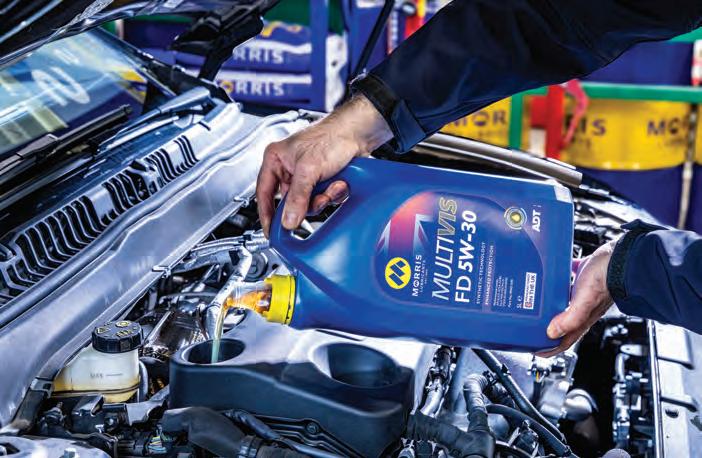
Multivis provides a range of engine oils that are formulated for use in many different brands of diesel, petrol or hybrid engines. Their chemical profiles and precise oil formulations are tailored to OEM specifications and help ensure maximum component protection and aftertreatment device compatibility.
If the engine oil is not the same, don’t mix and match it with something else!
WHAT ABOUT USING OLD UNUSED OIL?
Unused engine oil has a shelf life and does not last forever. Unopened engine oil, if stored in dry conditions away from extremes of temperature, can last several years; however, once the container has been opened, the engine oil’s shelf life will be shortened and should be used within a two-year period. Once the container seal has been broken, oxygen and moisture can enter and can cause the active chemical compounds to slowly break down and reduce the engine oil’s effectiveness. Exposure to significant temperature fluctuations can also make matters worse.
To learn more about Morris Lubricants, www.rdr.link/FBD007
EURO CAR PARTS LAUNCHES NEW GARAGE MANAGEMENT SYSTEM
After LKQ Euro Car Parts unveiled LaunchControl, its new garage management system – developed by Garage Hive’s Alex Lindley
–
PMF wanted to dig a little deeper.
Euro Car Parts explains that the new GMS was introduced to address rising overheads and the ongoing impact of increased competition on margins. This, the national distributor says, has made it more difficult for workshops to grow.
LaunchControl combines core workshop tools – job management, customer communication, and online bookings – with direct integration into Euro Car Parts’ parts catalogue.
Users can search by registration or part number and add parts directly to an estimate, without leaving LaunchControl. Real-time availability and pricing are also available. This integration allows workshops to move from job creation to parts ordering.
LaunchControl also comprises integrated vehicle health checks, AIsupported inspections, and an automatically generated website, including an online realtime booking tool with bookings added directly to LaunchControl’s diary.
Q&A WITH
GAVIN SPARKS, HEAD OF GMS AT LKQ EURO CAR PARTS
A Q
How did the partnership between LKQ and LaunchControl come to be?
LaunchControl came from seeing firsthand how many independent garages were still relying on paper diaries and disconnected systems to run their businesses. As a garage owner, Alex could see an opportunity to make it easier for independent garages to adopt digital tools that help them run their businesses more efficiently.
The vision was to create a platform that garages could discover online, sign up to themselves, and start using immediately. Something that combined workshop management, vehicle health checks, customer communication, online booking, and a professional web
presence in one place.
We wanted the experience to be completely self-serve, allowing garages to start a free trial without needing to speak to anyone or enter credit card details.
Alex pitched the concept, and we immediately saw the opportunity to support independent garages with a simple, accessible digital platform. LKQ Euro Car Parts backed the idea and worked closely with the team to bring LaunchControl to market.
A Q
What are the subscription costs?
LaunchControl includes a free 28-day trial, and garages don’t need to enter any credit card details to get started. After that, it’s £49 per location, per month,
and there are no setup fees or long-term contracts.
The fee includes garage management system, technician app, digital vehicle health checks, customer portal, online booking, customer communications, professional website, Apollo AI assistant, unlimited vehicle registration lookups, free repair times for LKQ customers, and free service schedules for LKQ customers.”
Since Alex is a director of Garage Hive and founded LaunchControl, can you explain the differences between the two platforms?
Garage Hive and LaunchControl have been developed with different goals in mind: LaunchControl focuses on delivering a simple, accessible platform that helps garages manage their day-to-day operation, improve their digital presence, and adopt modern workshop processes; Garage Hive is a highly capable business management platform that provides deeper operational insight, technician efficiency tracking, advanced reporting, business intelligence, coaching, consultancy, and
training.
Both businesses are focused on helping garages succeed, but they support different needs and different stages of a garage’s journey.
A Q A Q
What does an AI-supported inspection look like?
Today, AI in LaunchControl helps garages create inspection forms in seconds. A garage can simply describe the type of inspection they want to carry out, whether that’s a vehicle health check, EV inspection, pre-MOT inspection, or used vehicle appraisal, and the AI will automatically generate the inspection form for technicians to complete. This allows garages to quickly create tailored digital inspections without spending time building templates manually.
Looking ahead, we plan to further develop these capabilities so AI can also assist technicians while they’re carrying out inspections, helping improve consistency and reduce administration. The goal is to make digital inspections as easy and accessible as possible for every garage.
“The vision was to create a platform that garages could discover online, sign up to themselves, and start using immediately. Something that combined workshop management, vehicle health checks, customer communication, online booking, and a professional web presence in one place.”
To learn more about LaunchControl, www.rdr.link/FBD008
SCHAEFFLER EXPLAINS REPXPERT BENEFITS
For free, REPXPERT members are now able to personalise selected clothing and accessories in the REPXPERT Bonus Shop. Schaeffler says members can now add a name or garage name to many of the items within the new GearX clothing range, plus new products, such as retro wall signs and door mats.
Products have been added to the workshop essentials range too, including a Bosch kettle, toaster, and a coffee machine with T-pods to use with it. The electronic range has been updated too with gadgets, speakers, earbuds, and power banks included.
Schaeffler says there are benefits to being a REPXPERT member from a workshop perspective, but what are the advantages to motor factors?
There is a REPXPERT parts distributor membership level, which gives motor factor sales staff instant, free access to Schaeffler’s TecDoc-powered and VRNlinked online parts catalogue. They can also access all of the related TecRMI data, including fitting instructions, technical bulletins, and lots more product information.
How can motor factors be proactive when it comes to REPXPERT and the Bonus Shop?
Schaeffler’s REPXPERT Bonus Shop has been updated – with new features and products the headlines – but what’s in it for motor factors? PMF quizzes Kian Patel, Schaeffler’s marketing executive, to find out. A Q A Q A Q
Factor sales staff can remind workshop customers about the benefits of REPXPERT
membership, including scanning the OneCode label for an instant authenticity check and to collect bonus points.
Members can accrue bonus points quite quickly and exchange them for Laser and DeWalt automotive tools, plus a variety of premium REPXPERT workshop clothing and the new ‘workshop essentials’ range.
They can also remind workshops that they can instantly download all the relevant information required to carry out a
professional replacement with just the one simple scan.
Can Schaeffler provide any milestones about the Bonus Shop since it was launched?
After over 10 years, REPXPERT now boasts well over 20,000 members, with around 8,000 actively using the system to help with dayto-day workshop operations.
After Brexit, the loyalty scheme migrated from Schaeffler in Germany to a UK-based Bonus Shop, relaunching in 2018 with a new range of tools, consumables, clothing, gadgets, and merchandise.
During the REPXPERT Conference, we announced that there would be cost savings applied to all products in the Bonus Shop, meaning members can now get more for their bonus points than ever before!
For more information about Schaeffler, www.rdr.link/FBD009
MOTOR FACTOR REVEALS
VALUE IN ELTA’S APPLICATION DATA TOOL
One year on from launch, ELTA Automotive is marking the launch of its online eCAT platform. The concept is designed to support independent motor factors with quick, correct access to product and application data across ELTA’s brands. PMF hears from one motor factor that explains how eCAT has helped with efficiency and improved customer service.
ELTA says its eCAT platform has become an important tool for customers, particularly smaller independent motor factors looking to compete in an increasingly data-driven aftermarket.
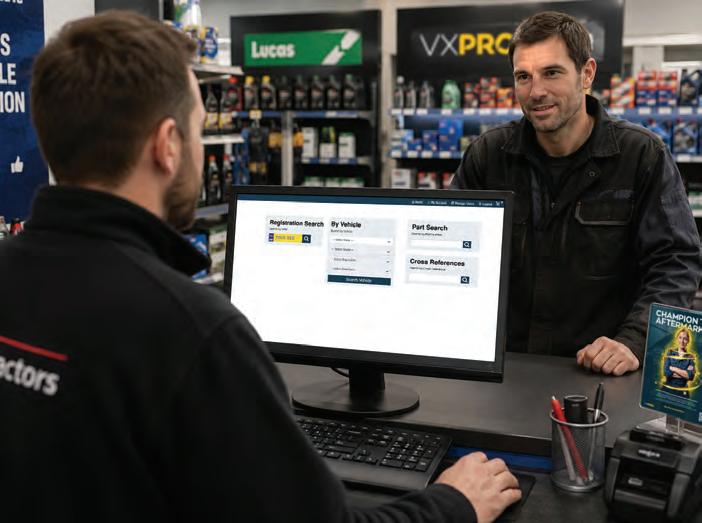
The platform gives users access to ELTA’s catalogue data, helping customers identify the correct parts.
Since its launch, more than 55,000 units have been processed through the system, with ELTA reporting “strong growth” from customers actively using the platform.
MIND THE GAP!
ELTA claims that for many independent motor factors, access to large-scale catalogue systems and integrations can be a significant investment – which is why it launched the eCAT. It helps “bridge that gap” by offering free access to application data and ordering support.
ELTA Marketing Communications Manager, Tim Brotherton, said: “The aftermarket has changed enormously in recent years and access to accurate
catalogue data is now absolutely essential. Whilst over 95% of our orders now arrive digitally through TecCom/PACT integrations, we never lose sight of the remaining independent customers who may not have access to those systems.
“We’ve been extremely encouraged by both the uptake and growth customers are seeing through using the platform. Importantly, this is only the beginning and we’re already looking at how we can continue developing the eCAT further in the months ahead.”
EXCEEDED EXPECTATIONS
In a follow-up interview, PMF asked Tim if the rollout of eCAT had exceeded both his and ELTA’s expectations: “It certainly has; from conversations with customers at trade shows and industry events, we knew there was a gap in the market for smaller motor factors selling application-specific product groups, such as engine management components, without access to recognised platforms.
“However, the level of uptake has been far greater than anticipated. Today, the platform has 272 active registered
“It certainly has (exceeded our expectations); from conversations with customers at trade shows and industry events, we knew there was a gap in the market for smaller motor factors selling applicationspecific product groups, such as engine management components, without access to recognised platforms.”
“As branch manager, I’ve seen firsthand how it improves efficiency for our staff and helps us provide a better service to our customers. I’d happily recommend ELTA eCAT to other motor factors looking to streamline their parts identification process.”
accounts, which is significantly more than we expected in its first year.”
BUILDING A PARTNERSHIP
Tim revealed that many customers “grew their purchases” with ELTA after adopting the platform, while the company has also welcomed new accounts – specifically because of eCAT.
Tim acknowledged: “As a result, the platform paid for itself in its first year of operation.”
Tim confirmed that eCAT will remain free to use because it “aligns with our wider commitment” to supporting independent motor factors. He continued: “The investment is justified by the
additional business generated through improved customer access, greater ordering accuracy, and stronger customer engagement.
“In many cases, it helps smaller customers compete more effectively, which ultimately benefits both them and ELTA.”
The eCAT currently provides access to ELTA’s product offering across VXPRO, Lucas Automotive, and Serck Automotive, with ongoing enhancements planned. Independent motor factors can access the public catalogue immediately, while existing ELTA customers can register for enhanced account functionality directly through the site.
PMF SITS DOWN WITH LAUREN FRANKLIN, ALLPARTS XPS BRANCH MANAGER
Lauren told PMF: “At Allparts XPS, speed and accuracy are essential, and the ELTA eCAT has become a valuable tool for our team. It makes identifying the correct parts much quicker and gives us confidence that we’re supplying the right components first time, helping to reduce delays and returns.
“The platform is intuitive and easy to navigate, with clear vehicle applications and product information that save valuable time at the trade counter.
“As branch manager, I’ve seen firsthand how it improves efficiency for our staff and helps us provide a better service to our customers. I’d happily recommend ELTA eCAT to other motor factors looking to streamline their parts identification process.”
INFOPRO DIGITAL AUTOMOTIVE AIMS TO CONNECT DATA SYSTEMS INTO ONE ECOSYSTEM
How is OE and aftermarket pricing integrated into Infopro?
Where is the data sourced from?
We source OE and aftermarket (AM) data and datasets for parts, tyres, lubricants and service and maintenance plans. We then refine this data using over 300 data experts located within our data hub to restructure and enhance the information, ensuring accurate matching between parts and vehicles.
How does Infopro Digital Automotive support motor factors?
Simply, we help motor factors sell the right parts, to the right customers, at the right price, with the right supporting data.
During the UK Garage and Bodyshop Event in June, Infopro Digital Automotive focused on two major areas: EV and high-voltage data and parts catalogue data and platforms with OE and aftermarket pricing. Both perked the interest of PMF, so some questions were put to Clare Hetherington, the head of marketing – AUKUS. A Q A Q A Q A Q
By combining vehicle identification, technical data, catalogue integration, part matching, vehicle parc insight, pricing intelligence and market data, we help motor factors reduce friction in the ordering process, improve first-time-right-parts selection, grow order value and strengthen long-term customer loyalty.
Motor factors operate in a market where speed, accuracy and trust are critical. Every incorrect part, missed upsell or slow vehicle identification creates cost for the factor and frustration for the customer. We help solve this by connecting technical data, vehicle identification, catalogues, market intelligence and pricing tools into one data-led ecosystem.
Furthermore, with technical data solutions for cars, LCVs and trucks, motor factors can provide their customers with access to repair, maintenance and service information. This helps workshops identify the right work required on the vehicle, order the correct parts first time and make more informed purchasing decisions. For the motor factor, this supports higher order accuracy, fewer returns, stronger customer confidence and the opportunity to expand basket value through related parts, fluids, tyres and service items.
What do factors use Infopro Digital Automotive for most?
Factors use Infopro Digital Automotive most to improve vehicle identification, catalogue accuracy and workshop support. Historically, this has been built around the strength and legacy of HaynesPro technical data, giving factors and their workshop customers access to trusted repair, maintenance, labour time, wiring and diagnostic information.
Vehicle search via VRM has also been central, helping factors identify the correct vehicle quickly and match it to the right parts with greater confidence.
The opportunity is now expanding from lookup and identification into a more connected data proposition. With the introduction of parts, fitment and lubricant data, factors can link vehicle identification, technical repair information, part compatibility and lubricant recommendations directly into their catalogue or ordering journey. Combined with market intelligence tools, this helps factors improve range planning, pricing, availability, conversion and customer retention.
What trends are you seeing from a workshop perspective?
The biggest trend is the growing complexity of the vehicle parc. Workshops are no longer just looking for basic service data; they increasingly need help with diagnostics, electronics, ADAS-related systems, EVs, and hybrids. EV and high voltage data is becoming especially important because technicians need clear safety procedures, model-specific repair information, and confidence when working around highvoltage systems. We highlight the need for detailed EV repair procedures that include high-voltage safety measures.
We are also seeing stronger usage of
VESA, particularly for electrical diagnostics. Instead of using wiring diagrams as static documents, technicians can follow a more guided workflow – from fault code to likely components, to wiring diagram, to component location, and then through replacement or initialisation where applicable. VESA helps reduce nonbillable hours and can process multiple fault codes, while its newer component replacement procedures link VESA workflows with detailed wiring diagrams.
Coverage is another key point; workshops value the ability to work across a broad vehicle mix, not just passenger cars. Our solutions cover cars, motorcycles, LCVs, and trucks, which is important for independent repairers, multisite groups, commercial workshops, and mixed-fleet operators.
How does Infopro Digital Automotive unlock new revenue opportunities for factors?
We help factors unlock new revenue by connecting parts supply, technical data, and digital ordering into one stronger workshop proposition. By providing customers with
repair, service, diagnostic, EV, and highvoltage technical data, factors can become a daily support partner for workshops, increasing loyalty, repeat visits, and parts demand.
Through OneProShop and API/Full Web Services integration, this data can be embedded into the factor’s own catalogue or ordering platform, linking vehicle identification, repair information, OE-to-AM matching, part fitment, and lubricant recommendations directly to the products
workshops need. OE data research further strengthens catalogue accuracy, vehicle-topart matching, and product mapping, helping factors improve conversion, reduce wrong-part orders and returns, drive parts and lubricant sales, and create new valueadded service or subscription opportunities.
To learn more about Infopro Digital
FACTOR SALES ON 2026 SO FAR: VOLUME IS FALLING FASTER THAN VALUE
There’s a phrase you hear a lot in the motor factor trade: “I know my market.”
And for a long time, that was enough. If you’d been running a branch for 10 or 20 years, you knew what moved, what didn’t, who your regulars were, and roughly where you sat on price. That instinct was built on experience – and it worked.
But the market you knew is changing faster than instinct can keep up with. And the data is starting to show just how dangerous it is to rely on feel alone. The market is still falling – but not the way you think.
WHAT DOES FACTOR SALES’ DATA SHOW?
Factor Sales data for January to May 2026 shows the UK aftermarket declined 1.87% in value and 3.54% in units versus the same period last year. On a two-year basis, value is down 4.77% and units have fallen 5.64%.
That headline might not sound dramatic, but here’s the part that should concern every factor owner: volume is falling faster than value. The market-wide average price per unit is up 1.74%. Simply, fewer parts are
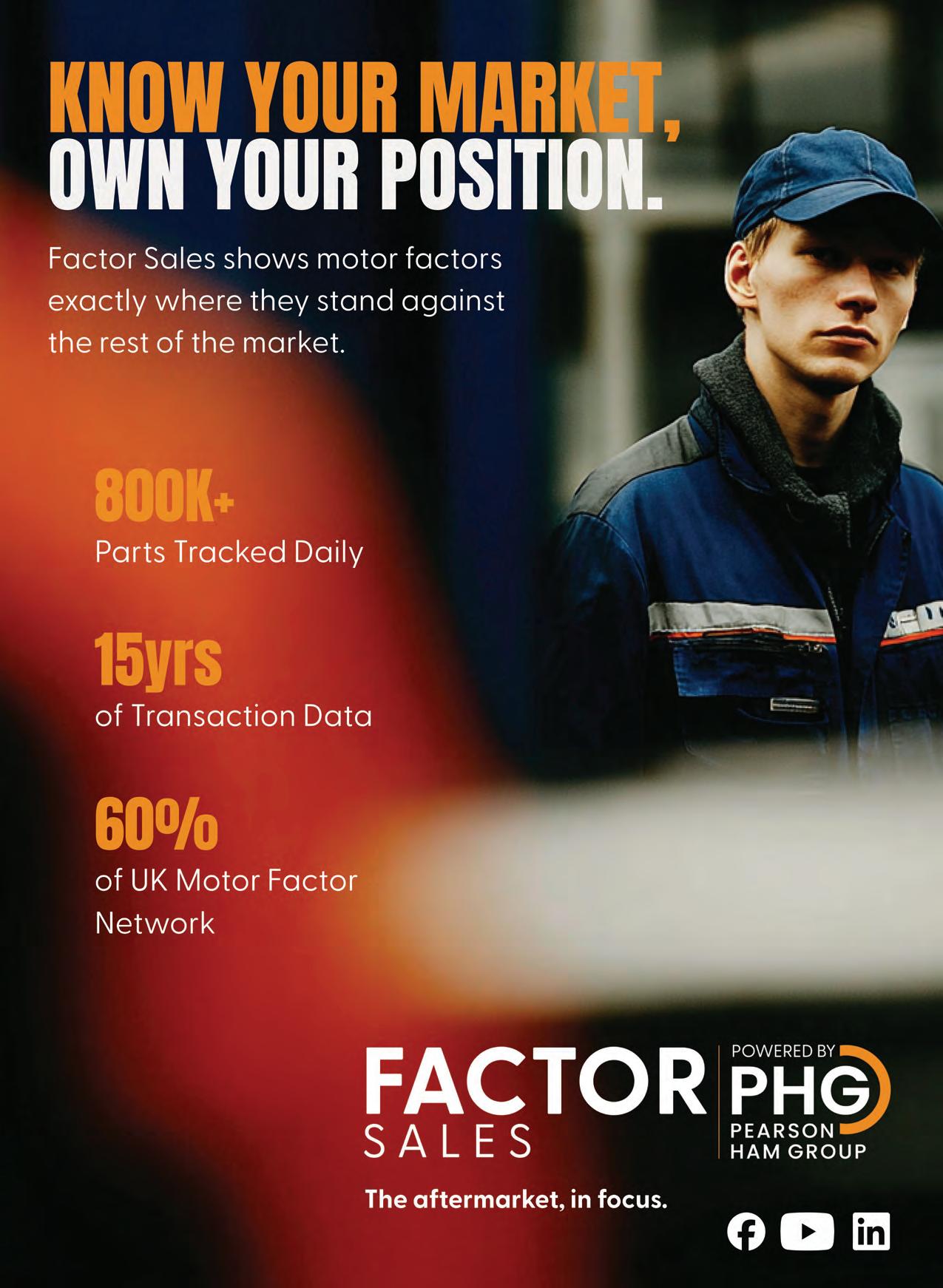
Factor Sales guides its subscribing motor factors, free of charge, by showing where they stand against the rest of the market. To illustrate its market intelligence and what insights it is delivering to factor partners, Seb de Pedro offers an overview of the trade so far in 2026.
being sold, and the ones that are moving cost more.
That’s not growth; that’s inflation masking a shrinking market. And if you’re looking at your revenue and thinking things are holding up, you might be missing the fact that you’re actually selling fewer parts than last year.
THE CATEGORIES TELL THE STORY
Not all categories are equal, and the gap between winners and losers is getting wider.
■ Transmission is struggling: value down 7.95% year on year. Over two years, it’s fallen 14.22%. If you’re still stocking transmission at the same depth you were two years ago, you’re probably sitting on slow-moving inventory.
■ Clutch friction is another area that is falling: units down 17.59% and value down 10.05%. The average price has gone up 9.15%, which means the market is shrinking to a smaller pool of higher-priced jobs. If you’re a factor carrying clutch stock, we advise you need to know whether your branch is even seeing those jobs, or whether they’re going elsewhere.
■ Lubricants tell an interesting story: value is only down 0.52%, but units have dropped 8.56%. Price per unit is up 8.79%. Workshops are buying significantly less volume but paying more per unit – are they switching to ‘premium’ oils? Doing fewer services? Buying elsewhere?
■ Batteries are one of the few bright spots: value up 5.89%, units up 4.44%. This is genuine demand growth, not just price
inflation. If you’re not capitalising on batteries right now, you’re leaving money on the table.
■ Ignition is quietly surging: value up 9.15%, price up 10.93%. Over two years, it’s climbed 10.52% and accelerating – how much of that growth is hitting your counter?
The four categories that have grown two years running:
• Ignition – up 10.52% and increasing
• Maintenance – up 11.66% and increasing
• Cooling and Heating – up 7.95%
• Engine Parts – up 5.01%
If you’re stocking shelf space and supplier conversations aren’t reflecting this, you’re likely over-investing in declining categories or under-investing in the ones that are growing. That’s margin walking out the door.
PRICE SQUEEZE
Average prices are rising across most categories – but they’re not rising evenly. Some categories are seeing double-digit price increases while others are falling.
Maintenance is up 11.87% on price, as is ignition (10.93%), clutch friction (9.15%) and lubricants (8.79%). But consumables are down 8.76%, accessories (6.14%), hydraulics
(5.04%), transmission (4.73%) and engine parts (3.79%).
If you’re pricing based on last year’s margins, you could be overcharging in categories where the market has dropped and undercharging where prices have risen. The only way to know is to see where the market actually sits – not where you think it sits!
THE BIG QUESTION
Do you know how your branch compares to the rest of the market right now? Do you know if you’re selling brake friction above or below the market average price? Do you know if your battery volumes are keeping pace with the 4.44% unit growth the rest of the market is seeing? Do you know if the categories you’re investing in are the ones that are actually growing?
At Factor Sales, we have been tracking real transaction data between motor factors and workshops for 15 years. We currently cover around 65% of the UK motor factor network, and we aggregate that data to give a representative view of the wider market.
The platform has just been rebuilt from the ground up. It provides the ability to
benchmark your performance against the rest of the market across every category, see where you’re ahead, where you’re behind, and where the opportunities are that you might be missing.
Your gut feel got you this far, but will it be enough to get you through what’s coming next?
For more information about Factor Sales or would like a demonstration, www.rdr.link/FBD012
GIPA: CHINESE
VEHICLE MARKET
SHARE SET TO RISE FURTHER
Following the SMMT’s announcement of record-breaking new car sales in the UK since before the COVID pandemic, it emerged that Chinese VMs played a significant role in this growth. They accounted for a 16.3% of new registrations in May 2026 – was this anticipated? What does this mean for the aftermarket? PMF spoke to GiPA’s Quentin Le Hetet to find out.
What’s your take on this latest surge in new car registrations?
The growth was expected.
Chinese VMs have consistently held over 10% of the new car registration market share every month since the start of 2026.
What impact will this have on the automotive aftermarket?
A Q A Q A Q
While this isn’t surprising when viewed monthly, I wouldn’t have believed it in 2022! Looking ahead, with more brands entering the market this year and 2027, we can expect the share of Chinese VMs to rise to 20 to 25 percent relatively soon.
These cars will initially go to dealers. Only independent workshops with fleet business will see a significant volume of Chinese cars relatively quickly. For others, this will be anecdotal for another two to three years.
What are the implications for parts availability technical data access and workshop readiness in the aftermarket?
Independent workshops working with
fleets report difficulties sourcing certain parts and finding the right technical data. This is a potential challenge for the entire industry.
A Q
Is there any evidence that European VMs are ‘fighting back’?
I believe the success of Chinese VMs is largely due to their value for money. European OEMs are now introducing models across different price ranges, but ‘fighting back’ is taking some time.
LABOUR MARKET: WHY HEADLINE FIGURES DON’T TELL THE FULL STORY
Unemployment has edged up towards five percent, while job vacancies have fallen to their lowest level in five years. On the surface, this points to a less competitive hiring environment. For businesses operating within the automotive aftermarket, and particularly motor factors, the reality is far more complex.
While broader labour market trends indicate that more people may be actively seeking work, this does not necessarily make it easier to recruit individuals with the skills, experience, and sector knowledge that automotive businesses rely upon. For many employers, the recruitment challenge remains firmly in place.
THE SKILLS GAP REMAINS
Recruitment in the automotive aftermarket has always operated differently from the wider employment market. Whether hiring branch managers, internal sales advisors, field sales professionals, product specialists, warehouse leaders, or senior operational staff, employers often require a blend of technical understanding, commercial awareness, and industry-specific experience.
These are not skills that suddenly become more readily available simply because unemployment rises.
The latest labour market data from the Office for National Statistics (ONS) suggests the UK employment market may be cooling. Here’s Glen Callum Associates Director, Kerrie Richards, to explain why the numbers need to be scrutinised and what it means in the motor factor space.
As a result, motor factors continue to face a unique recruitment dynamic. Candidate activity may be increasing, and vacancy numbers may be falling, but the individuals businesses most want to attract remain difficult to find.
The strongest candidates are often already employed, highly valued by their current employer, and selective about any potential move. Many are not actively searching job boards and will only consider opportunities that offer genuine career progression, improved working conditions, or a compelling longterm proposition.
“Recruitment
in the automotive aftermarket has always operated differently from the wider employment market. Whether hiring branch managers, internal sales advisors, field sales professionals, product specialists, warehouse leaders, or senior operational staff, employers often require a blend of technical understanding, commercial awareness, and industry-specific experience.”
CAUTIOUS CONFIDENCE ACROSS THE SECTOR
The latest labour market figures reinforce several trends already familiar to aftermarket employers:
• Economic uncertainty continues to influence hiring confidence, with many businesses balancing growth ambitions against rising operating costs, ongoing margin pressures, and wider market unpredictability.
• Recent changes in employment legislation have also encouraged a more measured approach to recruitment. Businesses are taking longer to assess hiring decisions and placing greater emphasis on securing the right individual rather than simply filling vacancies quickly.
CAUTION SHOULD NOT BE MISTAKEN FOR STAGNATION
Across the motor factor sector, many organisations continue to invest in growth, whether through branch expansion, strengthening customer-facing teams, succession planning, improving operational efficiency, or developing specialist product support functions.
The challenge is that a reduction in overall vacancy numbers does not automatically create easier access to suitable talent.
RECRUITMENT REQUIRES A STRATEGIC APPROACH
In specialist sectors, such as automotive aftermarket, successful recruitment increasingly depends on planning rather than reaction.
Motor factors that assume a softer labour market will automatically make hiring easier may find themselves disappointed. Competition for highcalibre individuals with relevant aftermarket experience remains strong, particularly in customerfacing and leadership roles.
Clear workforce planning, realistic salary benchmarking, strong employer branding, and proactive talent engagement are becoming increasingly important in attracting and retaining the right people. The businesses achieving the best hiring outcomes are typically those that view recruitment as a strategic investment that supports long-term business objectives, rather than simply an operational necessity.
LOOKING BEYOND THE HEADLINES
Labour market statistics provide valuable context, but they rarely tell the full story for specialist sectors.
While national figures may point towards a cooling employment market, motor factors continue to operate within a highly selective talent landscape where industry knowledge, technical expertise, and commercial experience remain at a premium. For employers, the message is clear: broader market conditions may shift, but the need for informed, proactive, and strategic recruitment remains as important as ever.
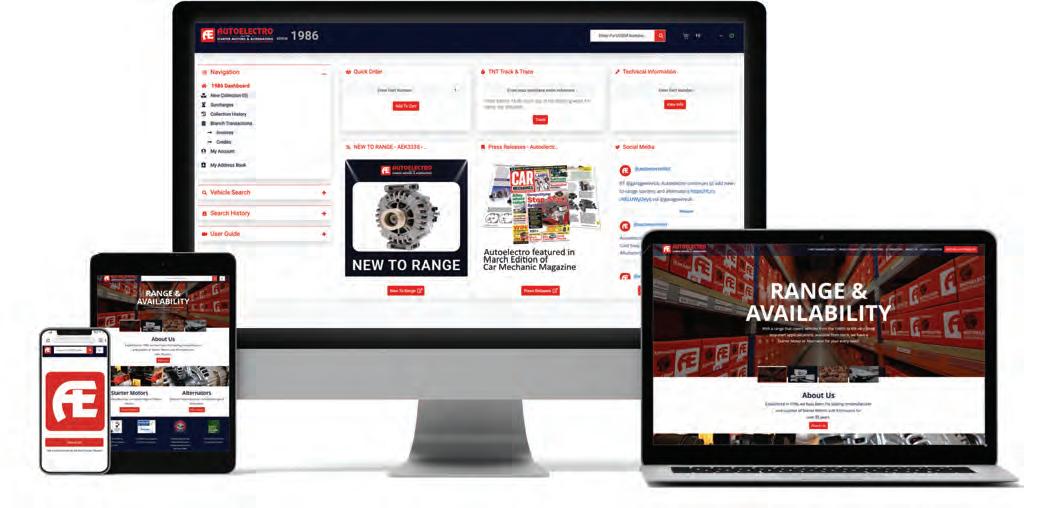
AUTOELECTRO: SUSTAINABILITY ISN’T A BUZZWORD!
Environmental targets are tightening, and vehicle technology is increasing in complexity; therefore, Autoelectro believes the trade must rethink how sustainability is defined. Here’s Harnek Bhogal with his perspective.
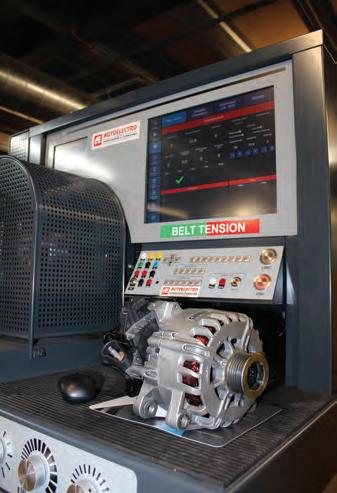
At Autoelectro, we are celebrating 40 years of service in 2026. As a familyowned remanufacturer, we believe sustainability is no longer simply about “going green” but about creating a resilient aftermarket that supports increasingly advanced vehicle systems long into the future.
We believe remanufacturing remains a critical solution, as the trade faces rising complexity in rotating electrics, particularly as the market transitions towards 48V systems with mild-hybrid and plug-in hybrid technology.
People often think sustainability is just an environmental conversation – but for us, it’s broader than that. It’s about longevity, quality, trust, and ensuring there is always an answer for the customer.
FOUR DECADES OF UPHOLDING ENVIRONMENTAL STANDARDS
Our commitment to quality, environmental responsibility, and continual improvement is reflected in our management systems. We have held ISO 9001 certification since 1995 – an internationally recognised quality management standard focused on consistency, traceability, process control, and continual improvement across manufacturing operations.
ISO 9001 underpins everything from testing procedures and production standards through to stock management and customer support.
Alongside this, we maintain ISO 14001 certification, an internationally recognised environmental management standard
designed to help organisations reduce environmental impact, improve resource efficiency, and manage waste responsibly.
Within a remanufacturing environment, ISO 14001 supports material reuse, recycling processes, waste reduction, energy management, and environmental monitoring throughout the production cycle.
These standards require significant commitment to achieve and maintain. ISO 14001, in particular, requires a robust Environmental Management System (EMS) that drives continual improvement across all operations.
This includes identifying and evaluating environmental aspects and impacts, setting measurable objectives to reduce
TRENDS SUSTAINABILITY
environmental effects, ensuring compliance with relevant legislation, and undertaking regular audits and management reviews.
Remanufacturing aligns closely with these principles because our circular business model is built around extending product life, maximising resource efficiency, and reducing waste.
Our remanufacturing model supports many of the objectives underpinning these standards, including material reuse, waste reduction, and resource efficiency, while our management systems ensure these activities are monitored, measured, and continually improved.
SUSTAINABILITY THROUGH AVAILABILITY
While environmental responsibility is increasingly important for larger businesses facing ESG targets and legislation, for us, the biggest commercial value of remanufacturing lies in supply resilience.
Remanufacturing protects the trade from potential supply chain disruptions that could affect imported products.
We’re less vulnerable to external shocks because we remanufacture in Britain and maintain our own component stock. If a shipment is delayed overseas, businesses relying purely on imported products could struggle. We’re different because we can still manufacture, remanufacture, or even rebuild a customer’s own unit if necessary.
As more complex applications appear, this flexibility is becoming even more crucial; some modern 48V MHEV applications can be challenging to manufacture economically overseas due to volume requirements and technical complexity. That’s where remanufacturing can help bridge the gap by supporting the availability of specialist and lower-volume applications.
IF WE SAY NO, WE RISK LOSING THE CUSTOMER
We know that price can be a sensitive subject, but we believe it is important to consider remanufacturing –not just from a cost perspective. We’re confident the real value lies in protecting sales opportunities and customer loyalty.
If a factor says no because its supplier doesn’t have the product, the customer doesn’t disappear – they simply go elsewhere. And once another factor solves that problem, they suddenly have the opportunity to win all the customer’s future business as well.
We are committed to finding a solution wherever possible. That’s the sustainable part of remanufacturing, not just environmentally, but commercially.
TOUGH MARKET CONDITIONS
We also acknowledge that the UK remanufacturing sector has faced considerable challenges in recent years, with a number of established operators reducing their activities or withdrawing from certain areas of the market.
We think this trend reflects the growing complexity and cost of modern vehicle systems rather than declining demand. Everything on vehicles is becoming more expensive, like hybrid systems, batteries, electronics, software. Rotating electrics are just one part of that wider technological shift.
However, remanufacturing will remain essential as vehicle parc complexity increases because the aftermarket still needs remanufacturers to support difficult and specialist applications. Without a strong remanufacturing sector, customers may face fewer sourcing options and higher costs for certain applications.
COMLINE: INCREASED STRAIN ON EV COMPONENTS LIKELY TO GENERATE MORE BUSINESS
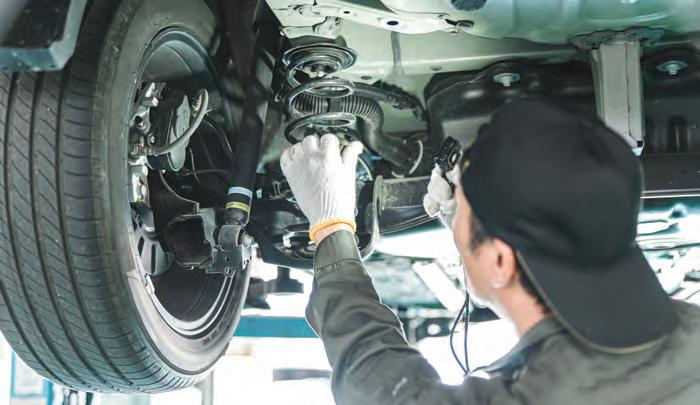
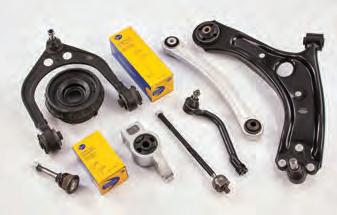
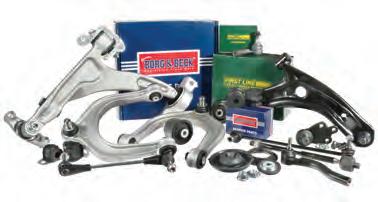
Comline believes there will be a rise in EV steering and suspension work, not just because the EV car parc continues to grow at record rates, but because they place more demand on components.
Comline says the rise in vehicle weight, primarily due to the substantial battery packs in EVs, is a significant contributing factor. These battery packs exert a constant load on steering and suspension components, especially during cornering, braking, or driving on uneven road surfaces. Consequently, there’s increased stress on joints, leading to accelerated wear and tear if the components aren’t adequately designed to withstand the load.
The RAC believes the UK has more than one million potholes – around six per mile on council-controlled roads in England and Wales – with the government holding a pot of £1.6 billion to tackle the issue for the rest of 2026.
ILL-ADVISED DRIVING AND REGENERATIVE BRAKING FACTORS
Comline also believes the way an EV is
“Comline understands that reliable, easy-to-fit parts are important to both motor factors and workshops… Motor factors should be confident of fewer returns, enabling smarter stock management and greater efficiency.”
driven can also affect steering components; for instance, electric motors deliver instant torque, which can generate sudden and repeated forces during acceleration.
In another example, Comline reports regenerative braking, which is used more frequently in an EV than a conventional braking system, creates repeated deceleration forces. These are transferred through the chassis and steering system. Over time, these load patterns can hasten wear on tie rod ends, ball joints, and related components, highlighting the importance of
COMLINE CONTINUES TO EXPAND EV STEERING AND SUSPENSION RANGE
Comline has been developing a range across all of its product groups to support emerging hybrids and EVs. Currently, there are more than 3,700 part numbers for these types of vehicles, with a development team adding new references every month.
Specific to steering and suspension, there are 1,300 hybrid and EV-related references in Comline’s portfolio. These include tie rod ends, ball joints, control arms and bushings, stabiliser mountings and links, and axial joints.
Comline reports that parts are manufactured using quality materials and subjected to a 900-hour salt spray test and 3 & 4 axis testing. This is to ensure that each part performs under pressure. Comline steering and suspension parts are supported by a three-year warranty.
strong materials, accurate tolerances, and robust manufacturing and testing.
REDUCE EARLY COMEBACKS
Comline understands that reliable, easy-tofit parts are important to both motor factors and workshops. By technicians fitting dependable steering and suspension components, the Bedfordshire-company says motorists can expect their vehicle to maintain correct steering geometry and enjoy smooth handling behind the wheel.
Motor factors, meanwhile, should be confident of fewer returns, enabling smarter stock management and greater efficiency.
For more information about Comline, www.rdr.link/FBD016
WHAT CHALLENGES DO STEERING & SYSTEM SUSPENSIONS FACE DURING SUMMER?
As we move through summer, what can go wrong for steering and suspension systems?
While steering and suspension issues are often associated with winter, the impact of poor road conditions continues long into the summer months. Pothole damage sustained during winter can lead to accelerated wear of suspension arms, bushes, stabiliser links, tie rod ends, and top mounts.
As motorists undertake more leisure journeys, holiday travel, and highermileage driving, existing wear becomes more noticeable through increased noise, vibration, uneven tyre wear, and compromised handling. For hybrid and electric vehicles, the additional vehicle weight places even greater strain on steering and suspension components, making preventative maintenance increasingly important.
What upsell opportunities are there?
Steering and suspension repairs naturally create several upsell opportunities. When replacing components, such as suspension arms, tie rod ends, or stabiliser links, we recommend that workshops also inspect related parts, including bushes, rack ends, top mounts, and engine mounts. By promoting a complete system inspection rather than a single component replacement, motor factors can help workshops improve repair quality and safety while increasing average transaction values.
What does First Line’s customer service look like?
At First Line, customer service is built around helping motor factors maximise sales opportunities while minimising downtime. Our dedicated sales teams, technical support specialists, and customer service advisors work closely with factors to ensure quick responses, accurate application data, and reliable product availability.
First Line says the wounds of harsh winter conditions are showing in workshops. Successive years of heavy rainfall, combined with repeated freeze-thaw cycles, have accelerated road surface deterioration, leading to a rise in potholerelated damage. PMF asks Kevin Olds what the challenges are when cold and wet weather makes way for hotter and drier conditions.
With extensive catalogue support, strong vehicle parc coverage, and a focus on first-time-right supply, we aim to make it easy for factors to meet workshop demand and retain customer loyalty.
How does First Line support motor factors with stock management?
Stock management is a key area; we continuously analyse vehicle parc trends, repair data, and market demand to ensure range and availability remain relevant and profitable. Our steering and suspension programme now exceeds 8,700 references. This, alongside our other product lines, enables factors to source a significant proportion of their requirements from a single supplier. Regular new-to-
range introductions, including coverage for emerging EV brands – such as BYD and MG – help factors stay ahead of market developments while reducing the risk of missed sales opportunities.
Steering and suspension is a competitive market – how does First Line stand out?
The combination of range depth, quality, and availability makes us a strong proposition. We offer comprehensive coverage of the UK vehicle parc, while components undergo rigorous dimensional, material, and durability testing to ensure OE-quality performance. A Q A Q A Q A Q A Q
Product Spotlight
CARWOOD EXTENDS PORTFOLIO OF TURBO SOLUTIONS WITH BMTS DISTRIBTUION
Carwood has added BMTS (formally Bosch MAHLE Turbo Systems) to its portfolio of boosting solutions. The company already remanufactures a range of OEequivalent turbochargers and is an authorised distributor for BorgWarner and Mitsubishi. Carwood is confident the Bosch and MAHLE combination will allow it to deliver a “more comprehensive” turbo solution.
“With OE and OE-quality new and reman units, we’re giving workshops and distributors greater choice when sourcing and fitting turbochargers,” explained Carwood Head of Sales – Turbochargers, Will Johnson. “Whether it’s a straight OE swap, or a like-for-like replacement, aftermarket companies can choose from a range of proven-quality parts at different price points, for a rightfirst-time, profitable vehicle repair.”
Carwood says the programme extends beyond BMTS’ own OE turbochargers, spanning close to 400 part numbers for car, CV and off-highway applications. This includes over 75 OE references fitted to popular, latemodel BMW, VW and Vauxhall/Opel applications, plus a broader range of OE-quality units for improved all-makes coverage of BorgWarner, Mitsubishi, IHI and Garrett.
How is Carwood going to manage the increase in stock?
The recent introduction of a mezzanine floor at our Nottingham remanufacturing facility has provided additional warehousing capability for both our new and reman ranges. We’re also continuing to invest in inventory management and forecasting to ensure we can better support demand, whilst maintaining the high service levels our customers expect.
Why has Carwood decided now is the time to add BMTS?
With change happening – and fast – aftermarket companies need access to high-quality parts for an increasingly wide range of vehicle models and ages, plus ever more discerning customers. The turbocharger market is no different.
By offering BMTS OE and OE-quality new units, alongside our existing range of Mitsubishi and BorgWarner OE and Carwood-owned remanufactured units, the aftermarket can access a range of
proven-quality turbos, at different price points. So companies can offer the right solution for their customers, without compromising on the quality of the product or service they offer.
Is remanufacturing still vital to Carwood?
Absolutely. Remanufacturing remains at the heart of Carwood’s business and will continue to do so. The introduction of BMTS complements our existing remanufactured range, rather than replacing it, ensuring we can offer customers the right solution for a wider range of applications.
What research did Carwood undertake to ensure the initial range would be suitable?
A Q A Q A Q A Q A Q A Q
We analysed a combination of market demand, vehicle parc data, customer purchasing trends, and distributor feedback to identify the most appropriate BMTS references for launch. We are confident that the initial range, including both OE and a broader
range of popular all-makes references, is in line with market demand and will deliver value for our customers from launch.
If a motor factor is a Carwood distributor, how will this impact them?
The introduction of BMTS will provide distributors with access to an expanded turbocharger portfolio through a trusted supplier. This creates additional sales opportunities, improves coverage, and allows distributors to meet a wider range of customer requirements. All while continuing to benefit from Carwood’s technical expertise and support.
What’s the warranty period for BMTS compared to Carwood’s remanufactured range?
BMTS new turbochargers are supplied with a manufacturer’s two-year warranty, while our remanufactured turbochargers are backed by our own three-year warranty.
WILL JOHNSON IN PMF HOTSEAT
Did You Know?
TECHNICAL BRIEF
HOW A CATALYTIC CONVERTER WORKS…
A catalytic converter plays a vital role in reducing harmful exhaust emissions and helping vehicles meet increasingly stringent emissions standards – but what happens inside and how does it work? European Exhaust and Catalyst (EEC) Marketing Coordinator, Laura Pashley, tells all.
A catalytic converter transforms toxic exhaust gases, such as carbon monoxide, nitrogen oxides, and hydrocarbons, into less harmful substances, like carbon dioxide, nitrogen, and water vapor.
At the heart of the converter is a honeycomb structure, coated with a wash coat containing precious metals, like platinum, palladium, and rhodium. These metals act as catalysts, triggering chemical reactions that break down pollutants as exhaust gases pass through. The wash coat also incorporates rare earth minerals, such as aluminium oxide, cerium oxide, and zirconium oxide, which enhance efficiency
and durability. This carefully engineered combination ensures a catalytic converter performs optimally under all driving conditions.
IMPORTANCE OF MAINTENANCE AND REGULAR SERVICING
Maintaining a catalytic converter correctly is essential to ensure long-term performance and reliability. Using the correct fuel helps prevent contamination, while addressing engine issues promptly, such as misfiring, can avoid overheating and costly converter damage.
Regular servicing also plays a crucial
role. While unusual smells may not always indicate a serious issue – this could also be down to sulphur in fuel – noticeable dips in performance often do. It is important to ensure that oxygen sensors and the ECU are functioning correctly to maintain the proper fuel-air balance. As these checks require specialist diagnostic tools, motorists should consult a qualified technician.
In addition, monitor dashboard warning lights, such as the “check engine” light, and keeping a detailed log of maintenance and repairs will also help motorists schedule servicing at the right intervals and maintain optimal vehicle efficiency.
DIFFERENT ENGINE TYPES AND VEHICLE APPLICATIONS REQUIRE SPECIFIC EMISSION CONTROL SYSTEMS, EACH DESIGNED TO TARGET HARMFUL EXHAUST GASES AND PARTICULATES.
Three-way catalysts (TWCs) are designed for petrol-powered vehicles and are responsible for reducing three major harmful emissions: nitrogen oxides, carbon monoxide, and hydrocarbons. These pollutants are converted into less harmful substances through carefully controlled chemical reactions. These catalysts typically feature either ceramic or metallic honeycomb substrates, which provide a large surface area to maximise contact between exhaust gases and the catalyst coating.
The substrate is coated with precious metals, such as platinum, palladium, and rhodium, which act as catalysts to accelerate the chemical conversion process. Our petrol catalytic converters are manufactured to meet stringent type approval standards.
Diesel oxidation catalysts (DOCs) are engineered for diesel applications. Unlike TWCs, DOCs primarily focus on oxidising carbon monoxide and hydrocarbons into carbon dioxide and water. They also help reduce visible exhaust smoke and odour.
DOCs use ceramic or metallic substrates coated mainly with platinum and palladium to facilitate oxidation reactions at lower exhaust temperatures. Our diesel oxidation catalysts are developed to provide durable performance under high-load operating conditions typical of diesel engines, particularly in CVs.
LCVs operate under heavier loads and longer duty cycles, meaning their emissions systems must be robust and efficient. LCV catalytic converters are tailored to meet the specific emissions requirements of vans and minibuses, often combining durability with high thermal resistance.
These units use ceramic or metallic substrates coated with platinum, palladium, and rhodium to ensure effective gas conversion under demanding conditions. We provide coverage for LCV applications, supporting workshops with direct fit, type-approved solutions designed for highmileage vehicles.
Diesel particulate filters (DPFs) are designed to capture and remove particulate matter (soot) produced during diesel combustion. These filters use a wall-flow honeycomb structure that traps soot particles within porous channel walls.
DPFs are usually manufactured from robust materials, such as cordierite or silicon carbide, both chosen for their excellent thermal resistance and filtration properties. Many systems include a catalytic coating to assist with regeneration, a process in which trapped soot is burned off at high temperatures to prevent blockage.
Our DPF range is engineered to provide efficient filtration while maintaining correct exhaust back pressure.
With the introduction of gasoline direct injection engines, particulate emissions from petrol vehicles have become a greater focus. Gasoline particulate filters (GPFs) are designed to capture fine particulate matter in a similar way to DPF systems.
GPFs feature a wall-flow honeycomb structure and are commonly manufactured from cordierite ceramic material, offering effective filtration while maintaining exhaust flow. As emissions regulations continue to evolve, we are committed to expanding our GPF range to ensure modern petrol vehicles remain compliant with the latest standards.
Did You Know?
TECHNICAL BRIEF
UNDERCHARGING AND OVERCHARGING: TWO DIFFERENT PROBLEMS BUT SIMILAR CONSEQUENCES
Most of the time, the charging system remains invisible to the driver. The vehicle starts without issues, electronic systems operate normally, and the charging voltage stays within the expected range in the background. Problems only become apparent when those values begin to drift outside normal limits and, as AS-PL explains, even then, the warning signs are not always obvious.
Undercharging and overcharging are opposites, but they often lead to related consequences. In both cases, the battery suffers first, followed by the vehicle’s electrical system. This is one reason why charging system faults are frequently misdiagnosed.
VOLTAGE STARTING POINT OF A DIAGNOSIS
In a functioning charging system, voltage with the engine running will typically fall within a range of approximately 13.8 to 14.5V. In modern vehicles, these values may vary depending on operating conditions and energy management strategies, but sustained operation outside the expected range is a sign of a problem.
In an undercharging condition, voltage is too low to adequately replenish the battery. At first, everything may appear to function normally, but over time starting difficulties begin to develop, particularly in colder weather. The battery remains in a chronically undercharged state, leading to gradual deterioration. Sulfation begins to form on the battery plates, capacity decreases, and the battery’s ability to deliver current is reduced.
Overcharging, on the other hand, causes damage rapidly. Excessive voltage leads to overheating and accelerated wear of the battery’s internal components. The
electrolyte begins to gas excessively, which, in severe cases, can result in electrolyte loss or even damage to the battery housing. In modern AGM and EFB batteries, the effects of overcharging may be less visible than in conventional flooded batteries, but they still result in accelerated degradation and reduced service life.
The impact is not limited to the battery. Other components within the electrical system are affected as well, ranging from consumables, like bulbs, to sensitive electronic control modules.
VULNERABILITY TO CHARGING SYSTEM IRREGULARITIES
Modern vehicles are particularly susceptible to charging system abnormalities. ECUs and onboard modules require a stable power supply, and voltage deviations can lead to fault codes, unpredictable system behaviour, or warning lights appearing on the dashboard. These symptoms often point toward an electronic fault when the root cause actually lies within the charging system.
Undercharging and overcharging can produce similar symptoms; a vehicle with starting problems may have a battery that is either undercharged or damaged by excessive charging voltage. In both situations, replacing the battery is often the first reaction. Without verifying charging
voltage, however, the problem is likely to return.
The source of charging irregularities is not always the alternator itself. Voltage drops in wiring, poor ground connections, or a faulty voltage regulator are equally common causes. In modern vehicles, control strategies add another layer of complexity. The alternator does not always operate independently; its output is often influenced by commands from the vehicle’s control systems.
Therefore, effective diagnosis should not be limited to a simple voltage check at idle. It is essential to evaluate how the charging system behaves under load, how it responds to changing operating conditions, and whether voltage remains stable over time. Only this broader approach allows distinction between normal fluctuations and genuine faults.
Rather than focusing solely on symptoms, diagnostics should begin with the basics – starting with charging voltage. More often than not, it provides the first and most reliable indication that something within the charging system is no longer operating as intended.
AS-PL Sp. Z o.o. ..................................................................................page 29 www.rdr.link/FBD100