PROFESSIONAL HEATING & PLUMBING INSTALLER is a business journal for those involved in the installation, maintenance and repair of heating and plumbing systems. It is available to the trade at leading heating and plumbing merchants and specialist outlets throughout the UK.
The publishers and editor do not necessarily agree with the views expressed by contributors, nor do they accept responsibility for any errors of translation in the subject matter in this publication.
Subscriptions to PHPI are available for 1 year (11 issues) at the following rates:
UK £30 post paid
Airmail £99 post paid
Europe £70 post paid
60,213
(Certificate of Average Distribution for the issues between January and December 2025)
Energy focus
The cost of energy has once again become a major talking-point over the past month: a consequence of the hostilities in the Middle East.
In the UK, unprotected by the energy price cap, heating oil prices rose considerably – moving the government to announce a support package. There are also predictions of significant rises in the price of electricity and gas later in the year. For many across the UK, this will represent a worrying financial challenge.
With issues of energy security and energy efficiency now sharply in focus, many households will be seeking ways to control energy costs. Professional heating engineers remain well-placed to advise customers on how to get the most from existing systems and the options for those wishing to switch to alternative solutions.
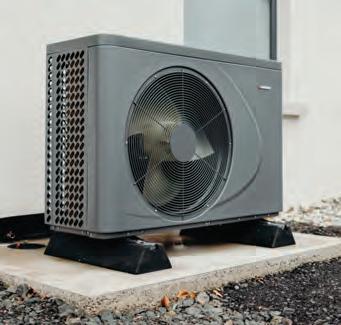
Professionally designed and installed Air Source Heat Pumps can deliver 3-4 units of heat for every unit of electricity used. Both the cost of electricity and the ‘up-front’ cost of Heat Pumps remain issues, although the Government’s Boiler Upgrade Scheme provides grants of £7,500 to help with installations.
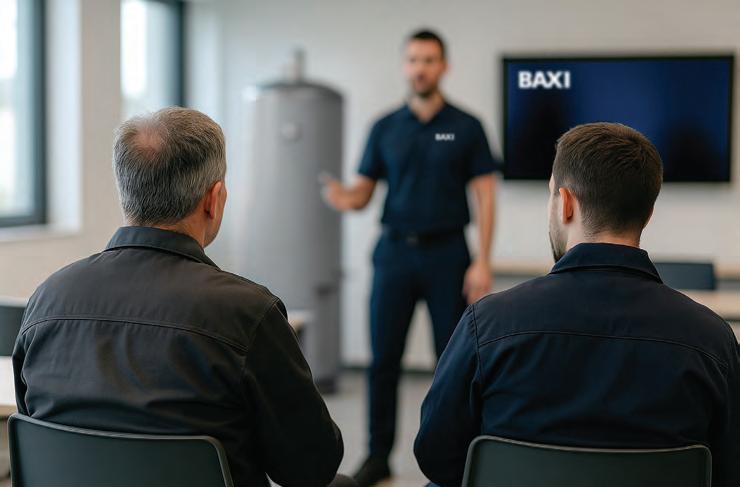
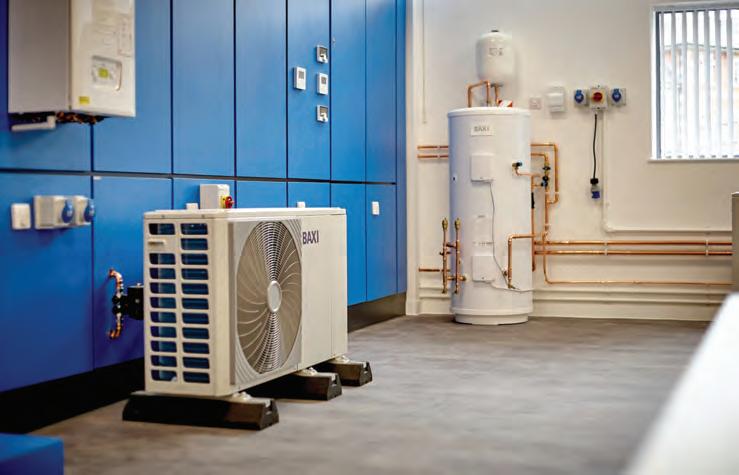
Heat Pump manufacturers continue to grow their product offering and support packages. Many installers have already been trained in the installation of Heat Pumps, and a number of companies offer support to installers considering this option. On page 14 of this issue we hear more about Baxi’s Heat Pump training pathway.
And Heat Pump uptake is rising. HPA UK (the association for the UK’s Heat Pump sector) has reported that in 2025 over 125,000Heat Pumps were sold in the UK (a 27% increase on the previous year) with 36% of heat pump salesmanufactured in the UK.
While switching to a Heat Pump is not an option for everyone, a focus on enhancing efficiency in existing systems could help customers reduce energy usage and costs.
Replacing older gas boilers with modern models can improve efficiency, as can the quality of the water in the heating system, while correct balancing can help with effective heat distribution. For more information about system balancing and how auto-balancing TRVs can help, please turn to page 16
Professional heating engineers provide a valuable service and are well-placed to help customers ensure that the maximum efficiency is being achieved from whichever heating system is fitted in a property, helping to keep energy usage, and costs, down.
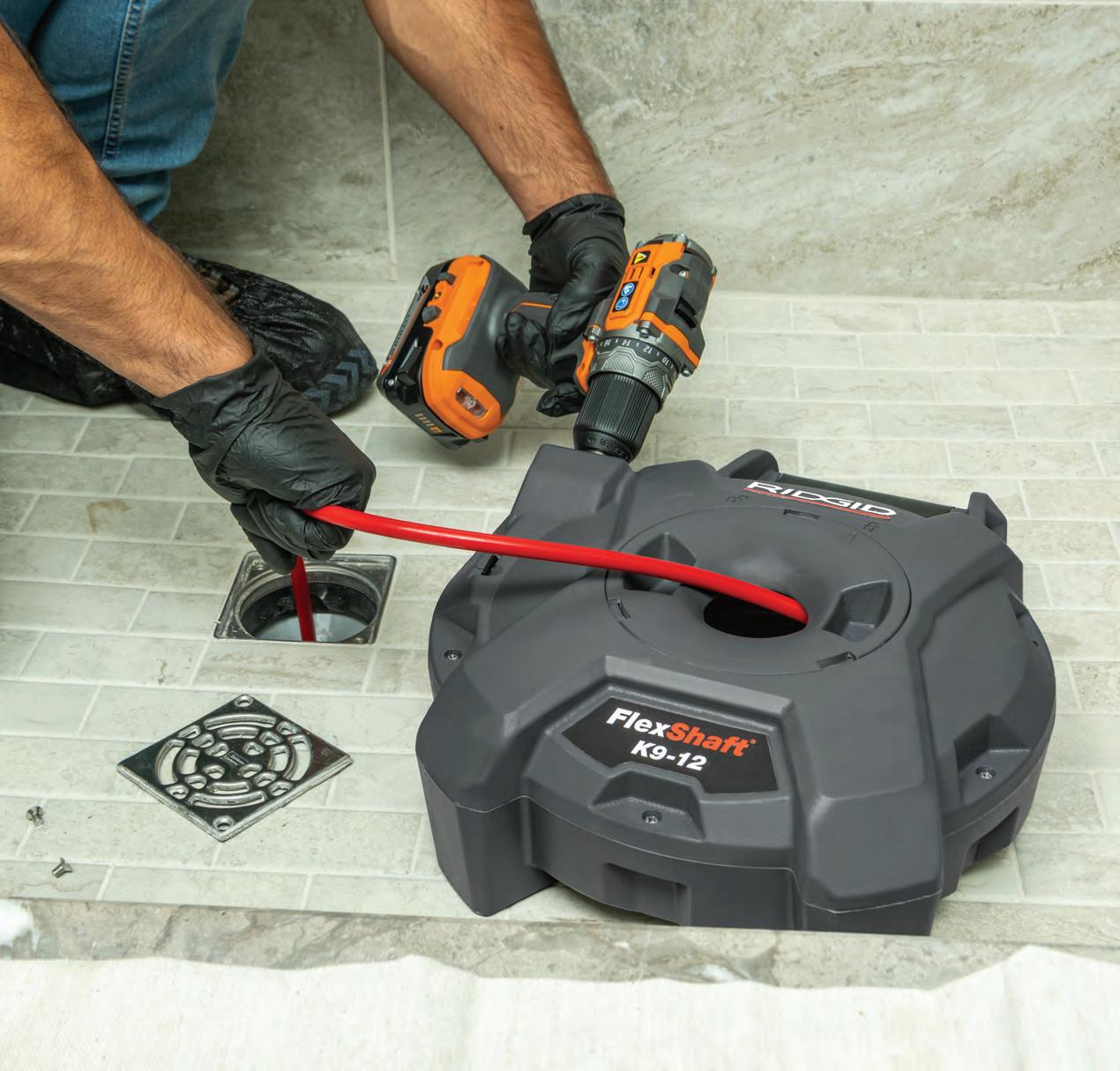
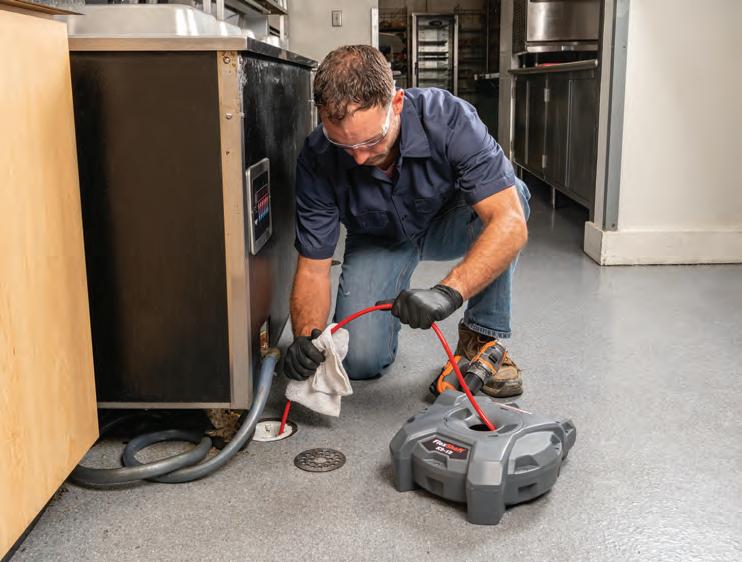
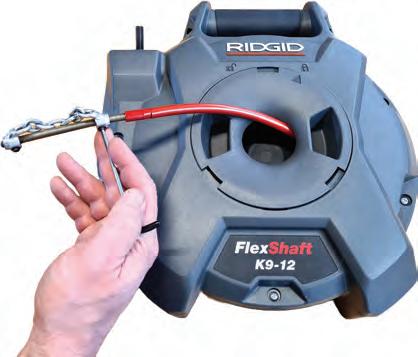
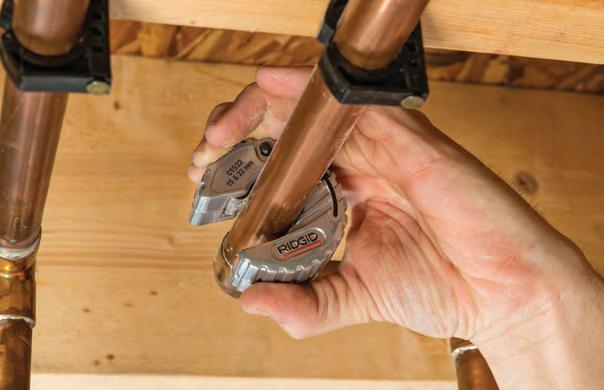
Cover image: Where used, the cover image is of the RIDGID K9-12 Flexshaft Drain Cleaner EDITOR
News
TRADESPEOPLE’S MENTAL HEALTH CONCERNS REVEALED
More than one in three (34%) UK tradespeople say their job is harming their mental health, according to a new survey from Trade Direct Insurance.
Nearly one in five (19%) say their job is directly causing mental health problems. A further 15% report that both work and personal life contribute to their struggles.
Patricia Gardiner, Sales and Marketing Director at Trade Direct Insurance, says the findings highlight the hidden pressures tradespeople face daily, many of which extend far beyond the job itself.
Patricia explained: “Tradespeople often carry enormous responsibility managing customers, materials, cash flow and tight deadlines whilst also dealing with the physical demands of the work. When you layer financial uncertainty and theft risks on top, it’s no surprise many are feeling overwhelmed.”
Material costs
Financial pressure is emerging as the single biggest driver of stress, with tradespeople facing relentless uncertainty around material costs, unpredictable income and volatile demand.
The most commonly reported pressures reported over the past year include the cost of materials (21%) and business cash flow worries (19%).
Patricia added: “Margins are tight, costs fluctuate, and payments aren’t always guaranteed, and this creates constant background stress.”
Share your t houghts with us on the indus tr y v ia Twi tter (@PHPI ), F acebook (@ProfessionalPlumber ), or by e mai li ng phpi@hamerville.co.uk
HHIC URGES UK INSTALLERS TO BE VIGILANT IN SPOTTING
COUNTERFEIT SPARE PARTS
The Heating and Hotwater Industry Council (HHIC) is calling on heating engineers to remain alert to the growing number of counterfeit spare parts entering the UK heating market.
“These fake components are putting household safety at risk, undermining appliance reliability and exposing installers to potential legal and financial consequences”, warned HHIC Director, Stewart Clements.
He continued: “Just because a part fits does not mean it has been tested to withstand the stresses and conditions the manufacturer designed the appliance to handle. Installers must protect themselves and their customers by sourcing parts only from recognised, reputable suppliers.”
He added that HHIC is urging the entire industry to work together to keep fake parts out of the market and says that installers who encounter suspicious components should report them to Trading Standards.
“The safety of consumers and the professional reputation of heating engineers depend on the continued use of genuine, approved parts,” he said. “We need continued vigilance to ensure our industry remains safe, trusted and compliant.”
SONAS BATHROOMS CREATES MIDLANDS
DISTRIBUTION CENTRE
Following three years of trading in the UK, bathroom manufacturer, SONAS Bathrooms, has reinforced its commitment to the UK market with the opening of a distribution centre based in Redditch, West Midlands scheduled for August 2026.
The company says this bricks-and-mortar investment represents the next phase in SONAS’ structured expansion into the UK, following forty years of success in Ireland.
Opening in Summer 2026, SONAS' UK distribution centre will become the central base for the company distribution operations.
Chief Executive Officer of SONAS Bathrooms in Ireland and the UK, Richard Sloan said, “The opening of our UK distribution centre reflects the strength of our UK expansion which has taken place over the past three years. Our growth in the UK has been sustained and consistent, and this investment ensures our infrastructure keeps pace with demand.”
REGIONAL WINNERS OF PLUMBER AWARDS ANNOUNCED
The regional winners of the UK’s first ever Plumber Awards have been announced. Theinaugural awards have been designed to celebrate the best plumbers in the UK.
Winners were selected by a panel of industry experts, professional associations and experienced plumbers.
The 2026 regional winners:
Central London: Louchavan Lemard, PH247 Ltd
East Midlands & East Anglia: Karl Donovan, Independent Water Solutions
Northern Ireland and Scotland: Jack Fenton, Reid Energy Solutions Ltd
North East: James Bell-Taylor, JBT Plumbing and Heating (Alnwick) Ltd
North West: Miroslav Tomcisak, Plumbisimo Ltd
South East: Steve Gray, Steve Gray Gas Services Ltd
South East Highly Commended: Tom Twomey, Gas Tech Heating Ltd
South West: Sally King, Sally’s Pipe Dream
Wales: Jack Ashley, JA Plumbing and Heating Services Ltd
Wales Highly Commended: Zakeer Hafiz, Nova Plumbers Ltd
West Midlands: Ashley Kirby, Kirby and Co. Luxe Renovations Ltd
Yorkshire & Humber: Luke Thomson, Luke The Plumber
All regional winners now face two additional steps in their quest to be crowned the national winner of The Plumber Awards 2026.
Commenting on the standard of award entries this year Jerry Whiteley, Technical Manager at the CIPHE said: “We’ve been blown away by the standard of entries in the first year of the awards. Entrants have demonstrated true commitment and continued determination to doing an amazing job for their customers.”
The awards are supported by brands including CT1, Kingsbridge, Polypipe Building Products, Powered Now, the Chartered Institute of Plumbing and Heating Engineering, Installer and Refresh. The national winner will be crowned at InstallerSHOW 2026, held at the NEC in Birmingham in June 2026.
IDEAL HEATING WELCOMES SCARBOROUGH TEC STUDENTS TO HULL HQ
Ideal Heating has welcomed students from Scarborough TEC to its headquarters in Hull, as part of the company’s ongoing commitment to engaging with further education and inspiring the next generation of heating engineers.
The students, accompanied by teachers, toured several areas of the site on National Avenue in the city, including the main production hall and heat pump manufacturing facility.
They also learned about Ideal Heating’s no-fault production methods and fully functional test processes, and the company’s National Training and Technology Centre at its Bridgehead site near the Humber Bridge, where installers are being re-trained to install, maintain and service heat pumps.
Investing in the future
Ideal Heating Production Director John Cook said: “Visits like this demonstrate that businesses in Hull and East Yorkshire are actively investing in the future of the industry. We have an outstanding story to tell here, and it’s important that students and colleges across the region know what’s available to them.
“Ideal Heating has been part of this community for 120 years, and strengthening relationships with colleges like Scarborough TEC is important in continuing that into the future.”
BRISTAN INTRODUCES LIFETIME GUARANTEE
Bristan is launching a Lifetime Guarantee across its taps, showers and accessories. The company says that the move sets a new benchmark for long-term product support across the industry.
Designed to be clear and comprehensive it covers parts, finishes and working components on products sold from 1st April 2026.
Jen Cassidy, Chief Executive Officer (CEO) of Bristan Group, said: “This Lifetime Guarantee is built on what our customers and partners have told us they truly valueconfidence, reliability and long-term support. We’ve responded with a guarantee that not only gives homeowners lasting peace of mind but also supports installers and channel partners at every stage. It’s about standing behind our quality. We believe this sets a new standard for the industry - one that reflects our commitment to quality products for life.”
Domestic use
The Lifetime guarantee covers customers for normal domestic use (as opposed to commercial) and includes one year’s labour on taps and showers throughout the Bristan range.
By prioritising longevity, repair and ongoing support, Bristan says it is helping to reduce waste and extend the usable life of its products.
For more information please www.rdr.link/pbz002
DAIKIN TRAINED OVER 7,300 INSTALLERS IN HEAT PUMP TECHNOLOGY DURING 2025
Daikin has announced that 7,333 installers completed its specialist heat pump training programmes throughout 2025 – a 20% year-on-year increase.
Daniel Jackson, UK Training Manager commented: “Heat pump technology represents the future of home heating and proper training is essential for both the installer success and customer satisfaction. We’re proud to have supported over 7,300 professionals in 2025 to gain these crucial skills.
“As we look to 2026, there’s never been a better time to upskill. The government’s Heat Pump Training Grant helps to alleviate financial barriers and Daikin will work closely with installers to help them access this funding.
“We’re now accepting registrations for this year’s heat pump training programmes and invite people to experience our industry-leading training facilities that play host to foundation heat pump installation courses, advanced system design and commissioning, intensive bootcamp programmes and specialist refrigerant handling certification courses.”
NEW ONLINE SAFETY CAMPAIGN FOR THE PLUMBING TRADE
There is no better time for plumbers to reflect on their online habits, that’s according to GetSafeOnline, a resource that focuses on online safety and fraud prevention.
Tony Neate, CEO at Get Safe Online comments, “Earning money and keeping your customers happy is often done at the expense of everyday jobs essential to every business, like admin and finances. And keeping yourself safe from fraud is no exception. As you transfer to Making Tax Digital, why not take the opportunity to learn tips and advice on staying safe online too? We have a wealth of expert, easy-to-follow advice at getsafeonline.org”
Get Safe Online has warned of some of the typical online threats facing those in the plumbing trade which include: purchase fraud - where you’re tricked into paying for supplies, sundries or tools that don’t exist when buying online, and payment diversion fraud (aka invoice fraud) - where you’re tricked into paying regular or one-off payments to suppliers into fraudulent bank accounts.
Get Safe Online has a number of tips for staying safe online. For example, it says, if you’re making one-off purchases of supplies, sundries or tools online, always pay by credit card, never by bank transfer. Ask, Does it seem genuine? Does anything seem ‘not quite right’? Is it easy to contact the seller to ask questions?
More information, campaign materials, including a leaflet, poster and social media assets are available on request.
For more information please www.rdr.link/pbz003
GRANT WESTFIELD ENTERS TRAINING PARTNERSHIP WITH FESTOOL
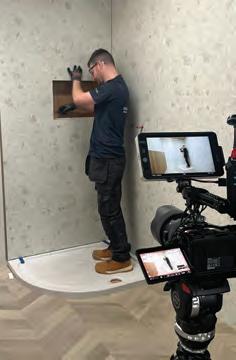
Grant Westfield, the UK manufacturer behind bathroom wall panel brands Multipanel and Naturepanel, has announced a new strategic partnership with professional power tool brand Festool, focused on strengthening installer training, development and engagement.
As part of the partnership, Grant Westfield will be working closely with Festool to produce a series of installer training videos filmed at Festool’s UK headquarters in Bury St Edmunds. The company says the professional training environment will allow Grant Westfield to deliver high-quality, practical content using Festool tools alongside Grant Westfield products, reflecting real-world installation scenarios.
Elliott Fairlie, Product & Marketing Director at Grant Westfield, commented: “This partnership with Festool is about raising standards and delivering meaningful training for installers. Festool shares our focus on quality, precision and professional workmanship, making them a natural partner as we continue to invest in the installer community. Using their facilities and tools allows us to create training content that genuinely reflects how our products are installed on site.”
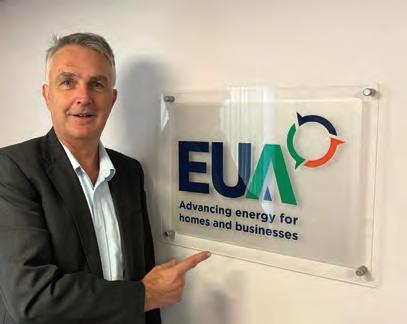
Mike Foster, CEO of EUA
EUA UNVEILS NEW BRANDING
The Energy and Utilities Alliance (EUA), a UK alliance for energy and utilities, has announced an evolved brand identity and clearer brand architecture designed to reflect the accelerating transformation of the nation’s energy system.
The organisation says the refreshed brand emphasises EUA’s role in advancing energy for homes and businesses by uniting specialist groups, amplifying members’ voices and shaping responsible policy.
Andy Vine, EUA President said: “As the UK’s energy landscape evolves faster than ever, our members need clarity, insight and a unified voice. Our evolved identity, and the way we present our specialist groups, reflects who we are: an alliance that connects expertise across technologies to drive affordable, secure and sustainable energy for homes and businesses.
“The new logo helps bring our story to life, conveying both progress and purpose in challenging the energy trilemma. What we do today helps shape tomorrow’s future. Across the full range of technologies, EUA and its members will continue to engage in policy conversations, technical forums and the public arena.”
Mike Foster, CEO of EUA said: “The energy trilemma poses the challenge of our lifetime and there is no single solution to it. That’s why an alliance of specialist groups, bringing together industry expertise, can help policymakers build a platform for genuine carbon reduction, while delivering affordable and secure energy to homes and businesses. Our multi-technology outlook allows us to examine a wide range of options and be open with the public about the pros and cons of each.”
NEW REPORT OUTLINES THE CASE FOR HYBRID HEAT PUMPS
A new report by Stonehavenhas highlighted the role hybrid heat pumps could play in accelerating the UK’s heat transition, showing they could reduce system costs, ease pressure on electricity networks and offer a practical route to decarbonising homes where full electrification is not cost-effective or practical.
The report – The heat decarbonisation two-step – highlights the cost advantage of installing a hybrid heat pump, which, it says, is around £2,700 cheaper than a standalone heat pump in nearly a fifth of all English homes.
The full report is sponsored by Cadent, a gas distribution network.
SANIFLO TO MOVE TO LARGER PREMISES
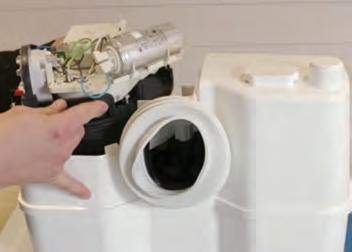
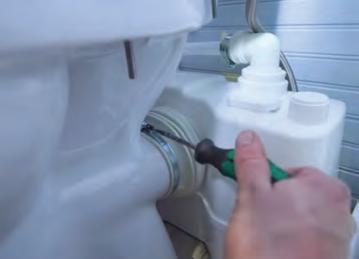
has announced its relocation to larger premises a short distance from its current Watford location. The company says the move marks a major milestone in the company’s continued growth and commitment to customer support.
The new facility provides an additional 10,000 sq ft of warehouse space, increasing stock capacity and strengthening service levels across the UK. In addition, SFA Saniflo has invested in a dedicated on-site training centre, enabling the team to deliver comprehensive product training covering installation, maintenance and fault finding.
SFA Saniflo
STIEBEL ELTRON SWITCHES TO RECYCLED CARBOARD PACKAGING
Stiebel Eltron has announced that the packaging of 147 products world-wide – including instantaneous water heaters and small storage tanks – has now been completely converted to recyclable cardboard packaging.
The company says that, in addition, the box is firmer and therefore more stable than before, so that the devices arrive safely at the customer even during longer transport.
BSIF UPDATES ‘IT’S IN YOUR HANDS’ CAMPAIGN
The British Safety Industry Federation (BSIF) has launched an update of its It’s in your hands campaign, calling on employers and workers to take practical steps to prevent work-related skin disease.
The campaign highlights the scale of the problem and the fact that most cases are avoidable. Work-related skin disease can lead to pain, discomfort and time away from work.
The updated campaign guide sets out advice for employers and employees. It explains how to recognise early signs of dermatitis, including redness, swelling, cracking, itching and blistering of the skin. It also outlines legal duties under health and safety regulations,
A central message of the campaign is the need to reduce skin contact with hazardous substances and wet work.
BSIF is encouraging businesses across the UK to download and use the refreshed materials.
For more information, please www.rdr.link/pbz004
STELRAD RADIATORS HELP PROVIDE THE WARMTH FOR HULL COMMUNITY GYM
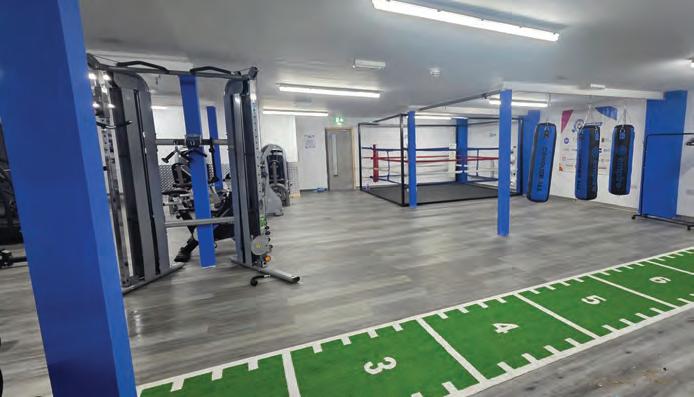
Stelrad Radiators has provided a number of radiators for an enterprising new community gym and youth hub in Hull which officially opened in January.
The Peel Project received £32,000 worth of gym equipment from its national partners, Places Leisure and set about providing a facility in Hull that would lead to increasing physical activity to reduce health inequalities in the city.
Managing Director Jamal Choudhury said: “We hope this facility will lead to people who do not partake in physical activity and have barriers to entry to start all kinds of physical exercise and of course having a hub for people to use as a safe place, to help reduce isolation and to begin to socialise. We are hugely grateful to Stelrad for their support in getting this new facility off the ground.”
Stelrad’s Marketing Director for the UK and Ireland Chris Harvey says: “ We have a good reputation in the industry and in Yorkshire for being supportive of worthy causes and we were delighted to be able to provide a number of our Compact radiators free of charge to this exciting project in Hull, just down the road from our South Yorkshire base in Mexborough.”
WORKS WITH HIVE EXPANDED WITH DAIKIN PARTNERSHIP
Hive has announced a new partnership with Daikin through its Works With Hive programme, expanding smart control compatibility with air source heat pumps. Tom Pakenham, Commercial Director of Hive commented: “The future of low-carbon heating isn’t just about installing a heat pump – it’s about making sure it works brilliantly within the wider home energy system. That’s why bringing Daikin and Hive together is such an important step.
“By expanding compatibility, we’re moving the industry beyond standalone technologies towards genuinely connected homes — where heating, tariffs and smart controls work together to deliver savings and simplicity for customers.”
Pieter Devloo, Key Account Manager for National Utilities at Daikin UK, added: “With the launch of our new API, partnering with Hive was a natural next step. By integrating Daikin heat pumps with the Hive platform, we’re making it easier for households to choose how to control their heating while helping systems run efficiently and deliver the performance customers expect.”
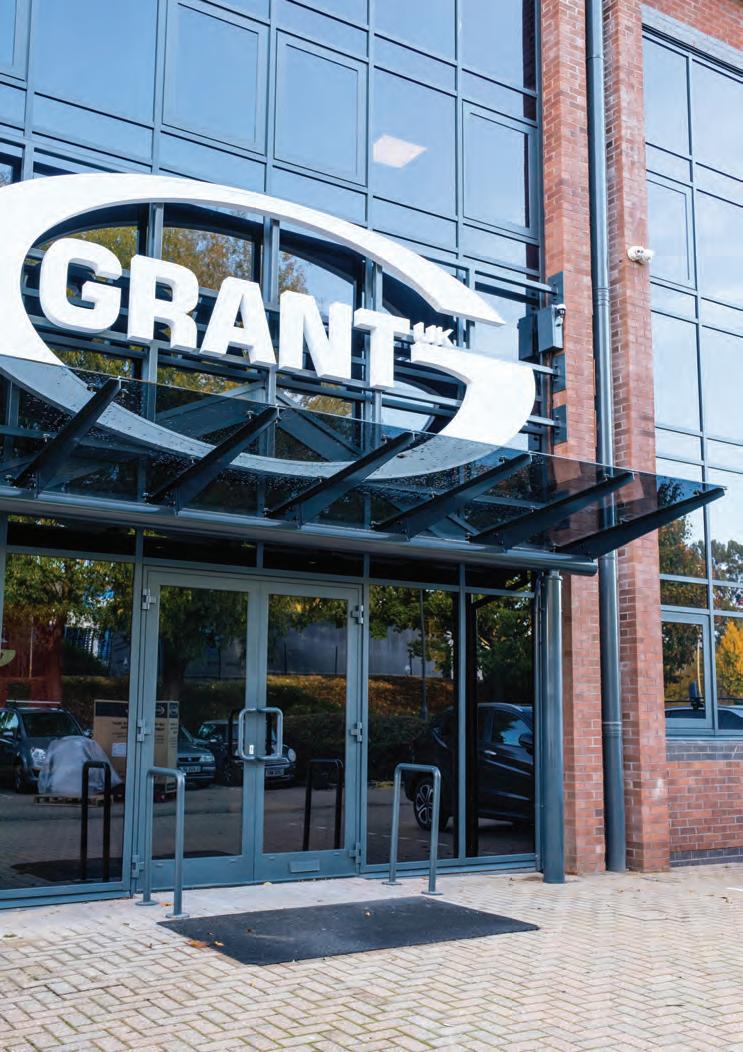
This year Grant UK celebrates its 30th Anniversary. PHPI sits down with Paul Wakefield, Managing Director, to look back on three decades of success and what the future holds.
Paul Wakefield
When Paul Wakefield first met Grant Engineering’s owners, Stephen Grant and John Fay, few could have predicted that a fledgling idea to bring Grant’s oil-fired boilers into the UK would evolve into one of the country’s leading names in oil fired and renewable heating technologies. What began 30 years ago, with Paul traveling the length and breadth of the country carrying a boiler in the boot of his car has today grown into a business at the forefront of the heating industry.
Back in the early 1990s, Paul was working for some of the larger established gas boiler and radiator brands. The experience and knowledge he gained allowed him to join a small group of likeminded individuals to set up a business manufacturing gas combi boilers. When he came across Grant Engineering in Ireland, he spotted an opportunity to bring their products to a wider audience.
There were already some well-established brands selling oil fired boilers in the UK, but Grant had a strong
YEARS YOUNG...
“I bought a few boilers, sold them and quickly realised there was potential,” recalls Paul. “But it needed work. The Irish market was geared towards outdoor and boiler house models, whereas the UK was used to white case, utility room installs and had a growing interest in combination boilers. We therefore set about redesigning the range for UK needs.”
to the official formation of Grant UK in 1996. Like many new businesses, those early years were defined by commitment, long hours and the close-knit spirit of a true family business with Paul’s wife Christine running the sales and distribution operation and daughter Anna stuffing envelopes on work experience.
Grant UK quickly established itself among smaller merchants, training installers and building sales one region at a time. “It was very hands-on,” says Paul. “I’d work closely with an independent merchant and their local installers, get them up and running and then move on to the next.”
Eventually, the larger merchant players took notice with one placing an initial order for 600 boilers, a full week’s worth of production at the time. Other milestones followed, including further partnerships which saw orders of similar scale.
Game changer
Then came a real turning point – the development of the Vortex range, Grant’s first condensing oil fired boiler. It stemmed from a simple conversation; Grant’s owner Stephen Grant was interested in how he could bring his vast experience in the oil sector to developing the condensing concept whilst maintaining the reliability, size and ease of installation associated with the existing range.
“The Grant Vortex changed everything,” Paul recalls. “It was ahead of its time. Condensing technology was still new to oil and many installers were hesitant. But we saw it coming and acted early. We have always been flexible and nimble enough to
when customers visit our HQ, they’re often surprised by our scale, our professionalism and how much we can offer
spot opportunities and make products that are more efficient and bring them to market quickly.”
years...
There were challenges, installer resistance to running condensate pipes among them, but Paulalready understood the importance of training and the offer of technical support helped ease the transition.
Over time, as regulations tightened and condensing became mandatory, Grant UK was well-placed. The Vortex became a defining product for the company, opening doors to wider markets and broader customer bases.
Renewables
But while oil has remained the bedrock, the mid-2000s saw the company expand into solar thermal and PV, later followed by air source heat pumps. Grant UK’s approach was always methodical: understand the market, find the right supplier partnerships and develop products tailored for UK homes backed with installer training, guidance and support.
The 2024 launch of the Aerona 290 air source heat pump range (Grant’s fifth generation) marked another of those pivotal moments. “It’s the best heat pump we’ve ever had,” says Paul. “More efficient, future-proofed with R290 refrigerant and backed by an extensive support network. This is our Vortex moment for the renewable era.”
The company now offers entire system packages, from heat pumps to hot water storage, radiators, underfloor systems and smart controls.
Grant UK is known for its products, but Paul emphasises the heart of the company has always been its people. Individuals like Phil Stanley, who built the training Academy, Neil Sawers who has been instrumental in OEM product sourcing and development for over 20 years, Andy Smith who heads up the external sales operation together with numerous long-serving staff have become part of the company’s identity. Many
employees that moved on, have later returned or remained connected, a testament to Grant UK’s friendly atmosphere and legacy in the industry. This continuity has helped the business maintain a culture of stability and loyalty. “We’ve always grown steadily, not in spikes,” says Paul. “John Fay - one of our original Irish owners once told me, ‘I want growth, but not boom and bust, just steady, reliable progress.’ And that’s exactly what we’ve delivered, year after year.”
Heat pump adoption
Challenges remain, not least around government policy, energy pricing and installation costs, but Paul is optimistic. Heat pump adoption continues to rise and Grant’s installer-focused support, including its dedicated sales engineer team and G1 Installer Scheme, is well-placed to meet future demand.
As Paul puts it: “Not starting out from a gas boiler background has meant that our business was not as recognisable as some of the larger established players but, when customers visit our HQ, they’re often surprised by our scale, our professionalism and how much we can offer. The business is well set for the future. There are so many exciting times ahead for Grant in the coming years that it makes me wish I was just starting out!”
For further information about Grant UK’s products and services, please www.rdr.link/pbz005
Grant UK, through the
Some of Grant UK’s advertising campaigns...
AN ASHP TRAINING JOURNEY
Ian Trott, Head of Training Solutions at Baxi, outlines the routes available to heating installers ready to capitalise on the growing demand for air source heat pumps.
The case for adding air source heat pumps (ASHPs) to an installer’s offering has never been stronger. Baxi’s Installer Skills Survey highlighted that more than half (59%) of UK heating engineers are either already or likely to work towards heat pump competencies. Government incentives, such as the Boiler Upgrade Scheme (BUS), are driving enquiries towards low-carbon heating. Installers who can meet that demand are well-positioned to unlock new revenue streams, diversify their workload and differentiate themselves in a competitive market.
Taking advantage of this opportunity requires both competence and confidence. Customers expect knowledgeable heating engineers to deliver the right solution at the right price. A structured approach to upskilling gives installers the foundation to
deliver on customers’ expectations while broadening the range of projects they can take on.
While the journey to confident ASHP installations can seem daunting, it doesn’t need to be. Some great options are available, including product awareness sessions, training courses and practical on-site support, that allow installers to build knowledge at a pace that suits their business. Together, these options form a
comprehensive framework for entering the heat pump market.
Awareness
Product awareness sessions offer a practical entry point for installers exploring ASHPs. Short and relaxed, these sessions provide hands-on exposure to heat pump units, cylinders and controls alongside an overview of wiring fundamentals and system design principles.
They also flag compliance essentials. Participants learn about how MCS accreditation is a requirement to obtain BUS grant funding – all of which will shape how ASHP projects are quoted and delivered. These sessions serve a dual purpose. They allow installers to become familiar with the practices of ASHP installation, understanding where they could fit in their portfolio and highlighting resources such as technical guidance portals and loyalty programmes that support engineers as their heat pump workload expands.
Building capability
While an awareness session builds familiarity, structured training is necessary to build competence. Dedicated heat pump installer courses are the logical next step, combining design and application content
While the journey to confident ASHP installations can seem daunting, it doesn’t need to be
with hands-on installation and fault-finding modules.
The design element covers sizing, flow-rate considerations, buffer vessel selection and emitter matching, while installation content focuses on site preparation, hydronic and electrical connections, commissioning procedures, and diagnostics. Qualified engineers deliver the training at dedicated academies and venues across the UK, blending discussion with practical experience. Baxi’s Heat Pump Installer course is one such option, starting with design and application, a self-paced e-learning course, followed by a day of hands-on installation and commissioning practice.
As almost every customer installing a heat pump will want to claim available government grants, Baxi also offers the BPEC Accredited ASHP Systems course. This covers the principles of design, installation, commissioning, and servicing of ASHP systems, including water regulations.
Commissioning deserves particular attention. It is the point at which design and installation become a ‘live’ system. Great design and installation are nothing without good commissioning, and the BHPI course is designed to deliver optimum outcomes, with free assisted commissioning on the first installation. Optimal commissioning leads to better heat pump performance, satisfied customers and enhanced warranty eligibility. Manufacturer-led commissioning supervision on early installations gives
newly qualified engineers a safety net, guiding them through control setup and customer handover before they take on projects independently.
MCS support
Technical skill is part of delivering an ASHP project. Being adept at the administrative process is equally important to ensure a smooth handover and maximise available government grants. While many installers will happily undertake this task, for others, keen to concentrate on the installations themselves, MCS Umbrella Schemes will provide a welcome alternative.
Baxi’s MCS Umbrella Scheme is one example, handling design, compliance and paperwork on the installer’s behalf so they can concentrate on the physical installation. As a first step, our team will provide an estimation of the size of the heat pump needed to deliver comfort to the homeowner in readiness for the installer to build their quote.
Once the homeowner is happy to progress further, our engineers then carry out an in-person site survey leading to a comprehensive heat loss report and detailed system design. This includes everything from radiator sizes to pipework calculations, so that the installer can
provide a final project proposal for the customer. We will also provide a complete parts list for installers to source from their preferred merchant. If accepted, we then administer the MCS paperwork on the installer’s behalf, freeing them up to move forward with the installation work itself.
As part of the service, we also check the property’s eligibility for the Boiler Upgrade Scheme (BUS), taking care of the compliance and MCS paperwork needed to access the grant funding.
A defined pathway
The route from ASHP awareness to confident, compliant installation is well established. Awareness sessions provide the foundation, structured courses build technical capability, and Umbrella Services help installers concentrate on the areas in which they excel.
The demand for ASHPs is there, as is the manufacture infrastructure to support new installers. Those who act early will be the ones best placed to build sustainable, future-ready businesses as the sector continues to evolve.
For more information on Baxi’s training offerings, please www.rdr.link/pbz006
BALANCING ACT
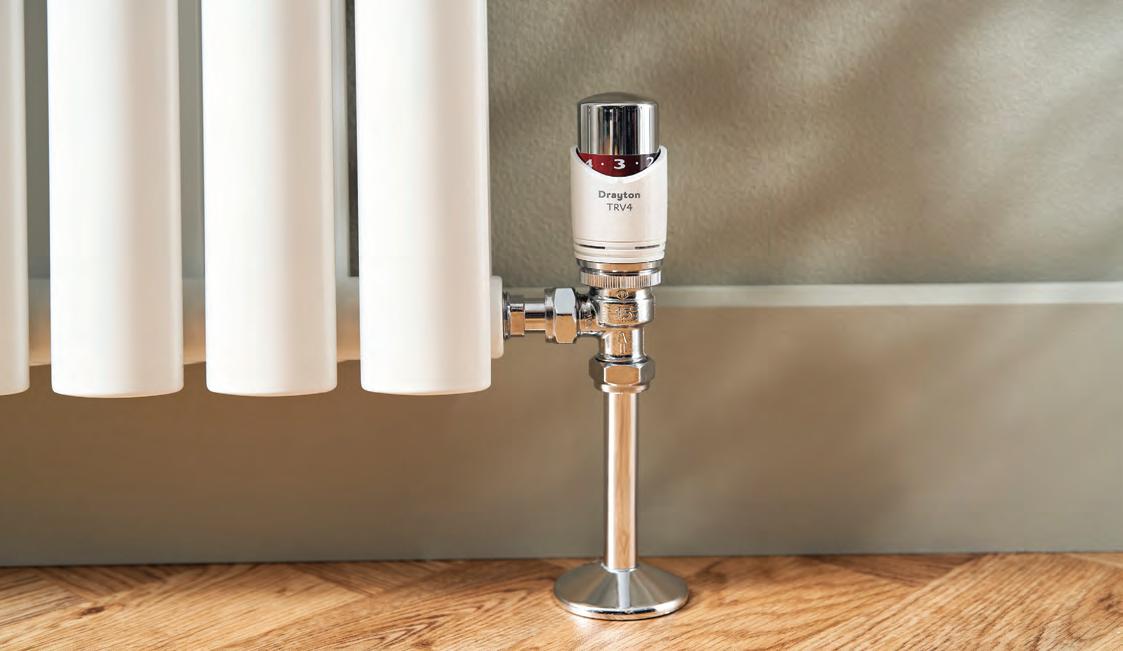
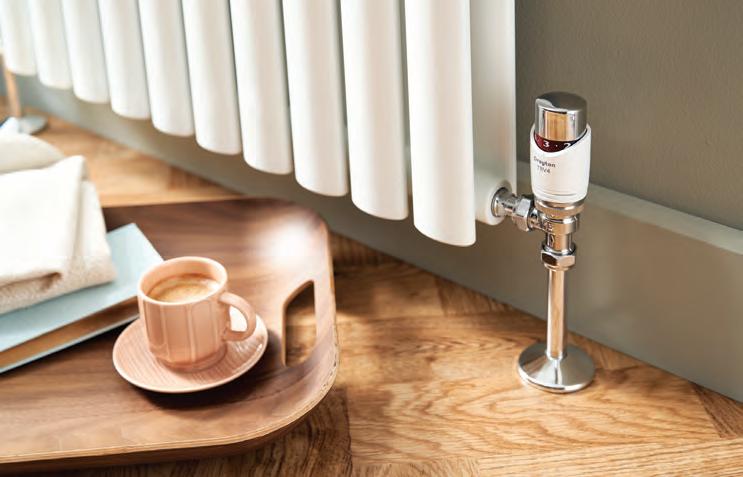
Merlin Milner, Product Owner for Water-based Systems at Drayton, discusses how components such as TRVs play an important role in delivering high-performing, future-ready solutions that are fully aligned with building regulations.
Part L of the Building Regulations in England and Wales aims to reduce energy consumption and carbon emissions of buildings. It states that when working on any replacement or new heating system, the installer must ensure that TRVs are added to every radiator except those in whichever room houses the central thermostat. It also states that the system is commissioned to be as efficient as possible, which can only be achieved through system balancing.
Additionally, the Benchmark scheme is a regulatory checklist that was developed to improve domestic heating standards. As part of this, installers are legally required to carry out a commissioning checklist for every job they complete to ensure each one complies with the appropriate Building Regulations of England and Wales. An update to the scheme in 2019 saw system balancing added to the list of requirements, so it is vital that this is
correctly carried out.
A balanced system enhances the overall health of a heating system, including supporting correct boiler condensing which leads to maximising efficiency and lower energy bills.
Even distribution
System balancing means that hot water is evenly distributed to all radiators within a house. If a system is not correctly balanced, this leads to cold spots in the property as radiators further away from the boiler will heat up slower and struggle to reach temperature in comparison to those closer
Auto-balancing TRVs are key to reducing time spent on balancing heating systems while ensuring that homeowners still enjoy a high-performing, efficient heating system
to the boiler, which would heat up faster. This compromises the comfort of the home and is frustrating for homeowners, particularly when the boiler is functioning properly. Typically, this can lead to homeowners turning up their heating to make their house warmer which consequently leads to using more energy, or lead to call backs.
Therefore, having a balanced system means that there is uniform heating around the entire property – avoiding any cold spots. This reduces call backs for installers as the system performs as expected, as well as improves comfort so that homeowners don’t need to keep increasing the temperature of their heating. Each of these factors lead to savings of time for the installer, and money for the homeowner.
A balanced system
Traditionally, system balancing was a time-consuming procedure that involved using lockshield valves and manually measuring the temperature difference (delta T) across each radiator. Despite being effective, balance could be lost over time due to system changes or TRVs being opened or closed, and therefore meant that maintenance was difficult for installers to achieve and homeowners to maintain.
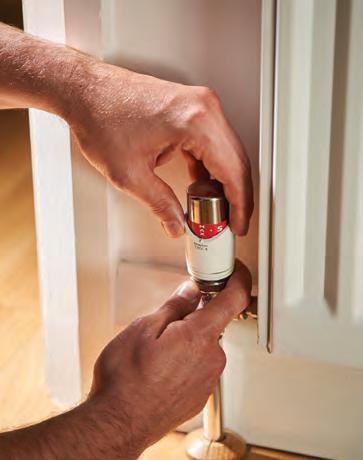
In more recent years, TRVs have helped simplify system balancing by reducing reliance on the traditional lockshield valve. Instead, some models can be adjusted using a unique balancing key, allowing installers to set and fix the flow rate more precisely. Once set, the position can be locked to prevent tampering, to enhance consistency. However, it still requires the installer to work to the 20ºC temperature difference between flow and return.
Auto balancing
Taking this a step further, auto-balancing TRVs, such as those available from Drayton, remove even more manual effort from system balancing. After initial setup, they automatically regulate the flow through each radiator in response to system demand, always ensuring the correct distribution of hot water. This not only eliminates the need for ongoing manual balancing but also maintains system performance regardless of adjustments made elsewhere.
Auto-balancing TRVs are key to reducing time spent on balancing heating systems while ensuring that homeowners still enjoy a high-performing, efficient heating system that is ready for the future and easily complies with Part L and the Benchmark commissioning checklist.
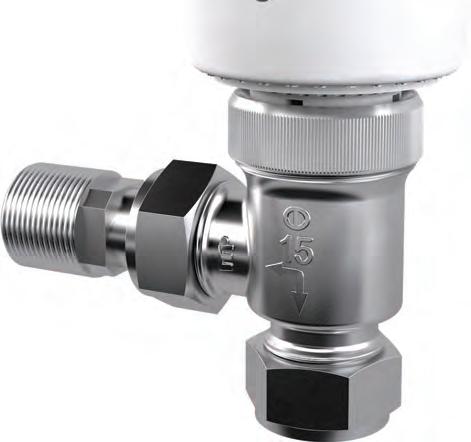
Many auto-balancing TRVs, including those from Drayton, have been designed with the same dimensions as GB-pattern valve bodies to support easy retrofitting, boiler upgrades or full-system replacements. As an example, Drayton’s Auto-balancing RT414 TRVs are specifically designed for UK domestic heating systems, ensuring they can be seamlessly integrated into homes to improve performance,
reliability and compliance, while also being in-keeping with the aesthetics of a property.
By improving the performance of the heating system with auto-balancing TRVs, installers can deliver lower energy bills as well as consistent comfort throughout the property for their customers.
Auto-balancing technology also ensures that the system will remain permanently balanced for years to come, despite the opening and closing of other TRVs or any other changes being made to the system.
Impactful results
Boosting efficiency and keeping energy consumption down remain a priority for many homeowners in the current economy, and installers are playing a key role in achieving this for their customers. Ensuring heating systems are optimised and compliant as we try to make home heating more sustainable not only leads to savings, but also to a reduction in carbon emissions from fossil fuelled gas boilers.
By fitting auto-balancing TRVs instead of traditional TRVs and focusing on system balancing as part of every installation, heating engineers can easily deliver more efficient homes, while simultaneously building trust among their customers.
For more information on Drayton’s range of heating controls and thermostatic radiator valves, including the auto-balancing TRVs, please www.rdr.link/pbz007
Ben Perris, Sales
Director
for Indoor Climate Solutions at Wavin, provides some thoughts on Underfloor Heating along with some installation advice.
QWhat are the main benefits of underfloor heating (UFH)?
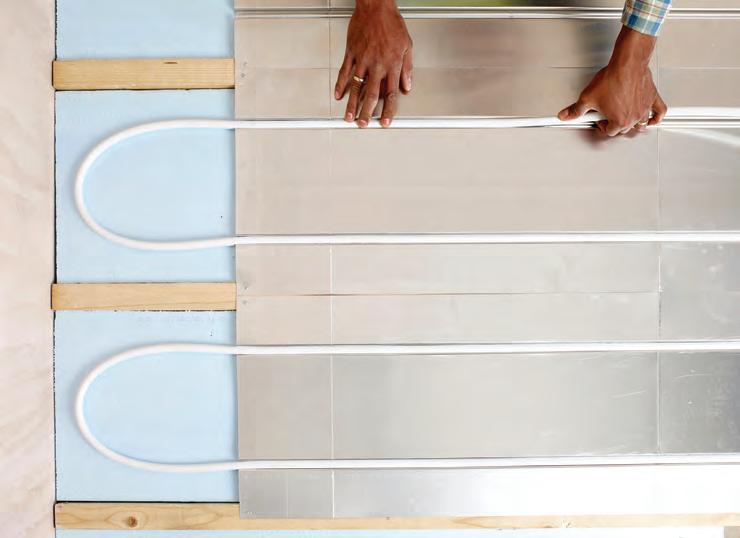
UFH offers homeowners improved comfort and efficiency by delivering uniform heat at lower temperatures. For installers, it’s a reliable, future ready option that helps them guide customers toward smarter, energy efficient heating choices.
For consumers, it delivers consistent, even heat distribution in the room, eliminating cold spots and delivering comfortable temperatures quickly in the home. The addition of controls like Wavin’s Sentio, helps to take this one step further by allowing for zoning control, enabling homeowners to optimise which areas are heated at any given moment, maximising energy efficiency within the home.
UFH systems also operate at much lower temperatures (35˚C – 55˚C) compared to traditional convection radiators (65˚C – 88˚C), making them an efficient choice, well suited to today’s energy-conscious consumer.
QWhat factors should plumbers consider before selecting a system to use?
Before selecting a system to use, installers must have a full understanding of the project ahead. Factors such as property type, available floor build-up height, heat output requirements, floor construction, whether the site is a new build or a retrofit project, and the project timeline itself, can heavily impact decision making when it comes to selecting a system to use.
For example, on projects where floor build-up height must be carefully managed (e.g. upstairs installations) installers select solutions such as Wavin WarmDeck. With Wavin WarmDeck, the heating system is built directly into the structural deck of the floor, housing the
UNDERFLOOR HEATING Q&A
heating pipework within the floor structure – making upstairs UFH possible.
QDo you have any installation advice for installers fitting UFH?
Preparation is key. You should always start by reviewing whether the system design and pipe layout is an appropriate fit for the work you’ll be completing as the type of job you’re undertaking may call for a different UFH system entirely.
For example, installers who are retrofitting systems may benefit from the use of low-build panel systems. This is because these solutions minimise the impact on floor height, reduce disruption, and allow installers to integrate UFH into existing properties without extensive construction work.
Installers should also consider the style of flooring their customer has and ensure it
provides the best match to deliver consistent warmth and energy efficiency throughout the room. Tile flooring, for example, is one of the most efficient surface finishes for UFH thanks to its excellent thermal conductivity, allowing heat to transfer quickly and evenly.
“Installers tasked with newbuild projects may look towards installing staple based UFH systems, which offer flexibility, reliability and suitability for projects where floor construction is being completed from scratch.
QAre there any features that allow for simplified installation?
Wavin’s UFH systems have been designed following consultation with experience installers from across the UK to make installation quicker and easier to handle on site.
Our systems are designed with
lightweight, low-profile pre-engineered components that work seamlessly together – including high-quality, flexible pipework, intuitive manifolds and fixing systems that make pipe placement quick and secure.
QWhat kind of controls should be used with UFH?
Controls play a vital role in getting the most out of an UFH system. Installers should recommend smart, responsive controls that allow homeowners to manage their heating efficiently across different zones of the property. Wavin’s Sentio Controls give homeowners intuitive, room by room temperature control through the Sentio mobile app, allowing quick and easy adjustment of settings.
The system is also designed to minimise the unnecessary cycling of a heat pump, helping it run steadily and efficiently. This not only reduces running costs but also helps prolong the operational lifespan of the heat pump. This level of flexibility and optimisation supports better system performance and helps users meet their energy efficiency goals.
QWhat kind of support is available from Wavin for installers using UFH on a project?
Installers working with Wavin benefit from a strong support network throughout the whole project lifecycle. Through the Wavin Installer Network (WIN), installers can access technical guidance, system design support, training opportunities and practical installation resources. This helps to ensure that every installation is carried out with confidence.
WIN is a completely free to join initiative designed to help ensure that installers have direct access to manufacturer expertise, and that each project is complete with fast problem solving, the most reliable system performance and added confidence when specifying UFH solutions to customers.
QCan UFH be used with both traditional boiler systems and Heat Pumps?
UFH systems are compatible with both traditional boiler systems and modern heat pumps. Though, because UFH operates at lower temperatures (35˚C – 55˚C), it works particularly well with heat pump technology, making it a future-ready and efficient heating solution.
The systems from Wavin are designed to integrate with a wide variety of heat sources, allowing installers to confidently specify UFH in both new build and retrofitted projects.
For installers, the flexibility of UFH means that they can offer a solution that works across different heating setups. This gives them greater versatility, helping them to stay aligned with the demands of a growing market for low-carbon heating systems.
For more information on Wavin’s underfloor heating please www.rdr.link/pbz008
WARMFLOW ZENO HEAT PUMP CASE STUDY
PHPI takes a look at the installation of a Warmflow Zeno Heat Pump in a new-build bungalow in Glenavy, Northern Ireland, and discovers how the company’s free specification service helped complete the project.
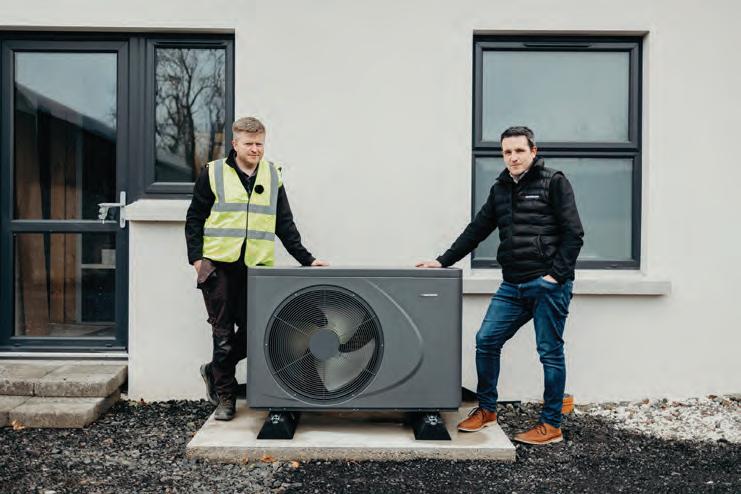
Arecently completed new-build bungalow in Glenavy required a heating system capable of delivering both efficiency and comfort. With a floor area of 140m² and underfloor heating installed throughout, the property needed a solution that could provide consistent low-temperature heat while also supplying reliable domestic hot water for a high-volume shower.
Installer Connor from KPH Renewables submitted the project plans to Warmflow using the company’s free specification service. Following assessment of the property’s heating demand, a Warmflow Zeno R290 9kW Air Source Heat Pump (AS01) was specified. This model was selected to specifically match the heating requirements of the 140m² bungalow, ensuring the system could operate efficiently while maintaining comfortable indoor temperatures all year round.
Hot water
To meet the home’s hot water needs, the system was paired with a Warmflow Nero 240ltr Heat Pump Cylinder. The
larger-capacity cylinder was chosen to ensure a consistent supply of hot water, important given the installation of a large-volume shower. Warmflow says that combined with the heat pump, the cylinder forms a balanced system designed to deliver dependable heating and hot water performance across the whole property.
The installation combines underfloor heating throughout the bungalow with the heat pump. Systems of this type operate efficiently at lower flow temperatures, allowing the Warmflow Zeno R290 AS01 to work effectively with the underfloor pipework to provide steady, even heat throughout the home.
Technical back-up
Warmflow provides accessible support and technical back up when required. The system also incorporates Warmlink technology, enabling installers to monitor multiple heat pumps remotely through the Warmlink app, designed to simplify commissioning and ongoing system management.
Connor highlighted the installation kit as a key benefit. “It has everything I need,” he noted. Designed with installers in mind, the package includes essential components, such as the Flexi hoses, Y strainers, Adey Magnaclean Pro 2 filter and Warmflow Zeno wiring centre.
Warmflow says the completed system delivers a modern, low-carbon heating solution tailored to the exact needs of the property with the Warmflow Zeno AS01 heat pump working in harmony with the Nero HP240UV cylinder and the underfloor heating system.
For more information please www.rdr.link/pbz009
SAFE ISOLATION ELECTRICAL SAFETY
Engineers in HVAC and plumbing environments routinely face electrical hazards, sometimes without being fully aware of the risks. Whether installing control systems, renewable technology, boilers or even just working close to live circuits, a minor slip could lead to injury – explains Martindale Electric MD, Steve Dunning.
Each year, the Health and Safety Executive (HSE) records multiple electrical incidents among construction trades, including shocks, burns and life-threatening injuries - some of which prove fatal.
An effective safe isolation procedure helps prevent accidental contact with live parts, protecting both engineers and anyone else nearby, by ensuring all relevant circuits and equipment are fully de-energised before work begins. Failure to use correct procedures could result in a circuit inadvertently remaining live.
Safe Isolation – 5 key questions answered
QWhy
do I need Safe Isolation?
Safe isolation procedures are necessary to ensure workers on site are not exposed to danger when working on or near live electrical systems. Electrical Safety First, in association with other industry bodies, has produced a document that covers best practice for safe isolation. This includes guidance on proving isolated equipment or circuits are dead, using suitable test lamps and voltage detectors.
QWhat equipment is required for safe isolation?
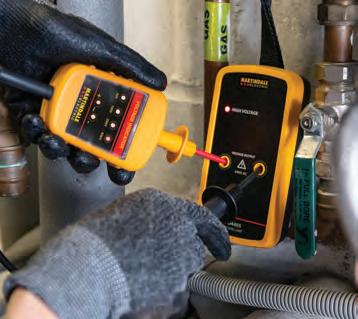
The point of isolation should be locked off using a unique key or combination, retained by the person carrying out the work or appointed person, and a caution notice attached to the point of isolation. Locking off the circuit is just one part of the procedure. Before carrying out any work, it’s essential to verify that the circuit is definitely dead. Circuits are frequently mislabelled, so there is no certainty that the correct circuit is locked off. To do this, you should use a dedicated voltage indicator and a proving unit.
Q What is the correct equipment to use for proving dead?
A dedicated voltage indicator and a proving unit should be used when carrying out this procedure. Equipment must comply with BS EN61243. It is important to note
that the voltage indicator must function without the need for a battery. If you are using a device that needs a battery in order to work and the battery is flat, you will not be able to prove if the circuit is dead or not.
QCan I use a multimeter or non-contact voltage detector to prove dead?
The use of multimeters or non-contact voltage detectors is not advisable. For multimeters, it is very easy to select the wrong range, plus they rely on battery power to function; thus, there is a high risk of making a false “dead” reading on a live circuit. Non-contact voltage detectors also require a battery in order to work and are often sensitive to other signals, such as static electricity. It’s also not possible to prove they are working correctly with a standard proving unit. Whilst these units can be used to detect live cables, they cannot reliably be used to prove dead.
QHow can I find more information?
The above questions have only briefly touched on safe isolation procedures; further information can be found via:
• HSE’s publication Electricity at Work –Safe Working Practices
• Electrical Safety-First Best Practice Guide 2
• Safe Isolation Resources at Martindale Electric – please www.rdr.link/pbz011
Selecting the right equipment
There is a huge range of safe isolation equipment available, and selecting the right combination for your application can be daunting. As previously mentioned, a dedicated Voltage indicator meeting all the relevant standards, is essential. It is always recommended that the indicator be checked on a dedicated proving unit to ensure there is always an appropriate test voltage available. When it comes to lock
out devices there are numerous options.
To simplify the choice, Martindale offer a range of complete kits designed for specific applications and industries. For example, the Martindale TB118A kit helps gas engineers working near electrical systems comply with Gas Safe Register Technical Bulletin 118 (Safe Isolation of gas appliances), the kit includes LOKKITGAS1 set of four key locking-off devices, the VI-13800 voltage indicator and the PD440S proving unit for safe, straightforward proving dead.
With guidelines well established and safe isolation kits readily available, implementing procedures is neither difficult nor expensive and has been proven to save lives and avoid injury. Quite simply, it’s essential for compliance with Electricity at Work Regulations for safe working when installing and maintaining electrical equipment and systems.
For more information please www.rdr.link/pbz012
ALIVE –five steps to safe isolation
Nothing is more important than preventing injuries and protecting lives, so to ensure the critical steps are memorable, Martindale has a created A.L.I.V.E to shine a spotlight on the five vital stages that must be carried out for your own protection and to prevent injury. For more details please www.rdr.link/pbz013
REMS THERMOCAM
Designed for one-handed operation, the REMS ThermoCam is a thermal imaging camera featuring analysis tools and a wide temperature range.
Thermal imaging cameras are versatile professional tools that can assist heating engineers in a variety of tasks including fault finding, energy efficiency, and preventative maintenance.
The REMS ThermoCam makes heat easily visible via its infra-red optics with a high-resolution detector and 8x digital zoom. The hand-held camera features a pistol grip design for ease of use and weighs 600g, making it suited to one-handed operation. The unit features a 3.5” TFT-LCD colour display with touch function and includes an alignment laser and LED lamp for illumination under poor lighting conditions.
The camera includes an integrated microphone and an integrated loudspeaker for audio recording and playback, while a hinged protective cover allows for mechanical protection of the LED lamp, the alignment laser as well as the optical and thermal lenses. The temperature range of the REMS ThermoCam is -20–550°C and it has an IP54 rating.
Display views
The professional tool features a variety of temperature analysis tools and can deliver information in a number of views including: fusion image, image-in-image, superposed image or visual image. The camera includes a MicroSD card slot, a USB-C port and there is a protective cap covering the connections. There is also a connecting thread UNC ¼ for conventional camera stands.
The REMS ThermoCam has a Li Ion 3.7V battery with 5.0Ah capacity, designed for long service life. It comes in a sturdy case and includes a rapid charger and USB cable.
For more information please www.rdr.link/pbz014
RIDGID K9-12 FLEXSHAFT
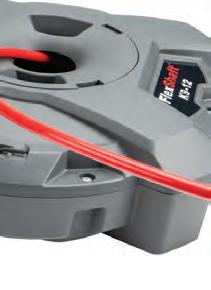
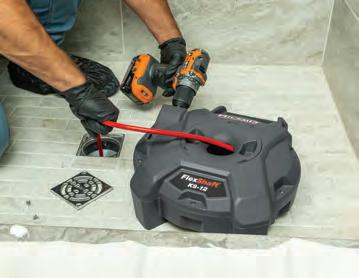
The K9-12 FlexShaft® Drain Cleaning Machine is the latest in a complete line of RIDGID FlexShafts designed to provide wall-to-wall pipe cleaning power at speed. The K9-12 is the smallest of the machines in the range and suited for residential use, eliminating the need to repeatedly unclog the same household drain lines.
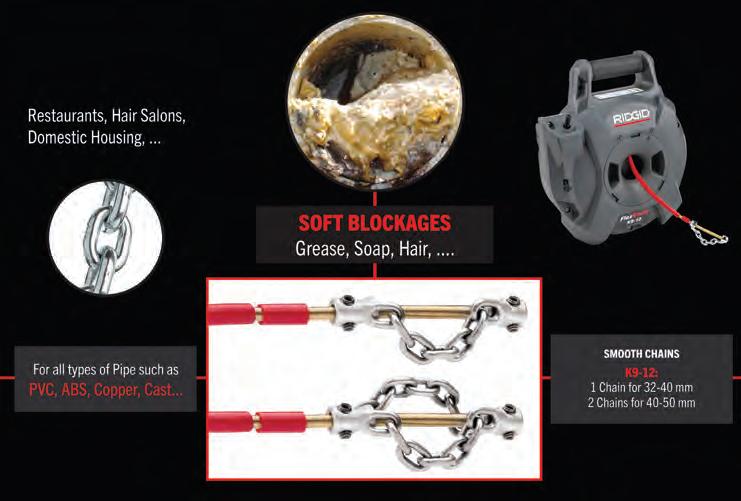
Clearing up to 9m of 1 ¼” to 2” (32 - 50 mm) pipe, the K9-12 breaks up grease, hair and other soft blockages, making it suited to kitchen and bath sinks, as well as tubs and shower drains.
Chain knocker
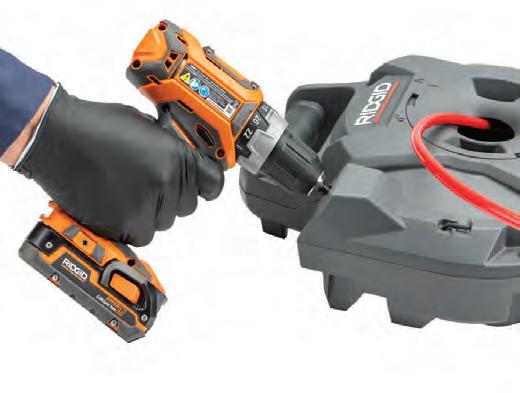
Powered by an 1800 to 2500 RPM cordless drill, the machine’s chain knocker expands inside the pipe to clear the blockage and restore the pipe to full flow. A flexible, protective sheath encapsulates the 9m cable, keeping it fully enclosed for less mess and faster clean up. A built-in clutch design also extends cable life. It weighs 3.8 kg and is compatible with all 6mm cable FlexShaft accessories. The unit comes with a 1.5” single plain chain knocker. FlexShaft machines are backed by
RIDGID’s Anca Jitea, Pipe Tools & Underground Manager, Europe, provides an overview of its K9-12 FlexShaft Drain Cleaning Machine, designed to
the RIDGID Full Lifetime Warranty.
“Our K9-12 FlexShaft Drain Cleaning Machine is a great tool to start with if you have never experienced the cleaning speed and efficacy of a RIDGID FlexShaft Drain Cleaning machine,” said Paul Morrow,
“It will save you time in removing common residential blockages and add value to your work by providing a fully flowing pipe again. FlexShaft machines can also be operated while an inspection camera is in the line letting you see while you clean.”
For more details
www.rdr.link/pbz015
DRAIN CLEARANCE
Paul Morrow, Country Manager UK & Ireland, RIDGID, answers some questions on how plumbers can unblock and descale domestic and commercial drains.
QWhat kind of applications has the K9-12 unit been designed for?
The new Flexshaft has been designed for unblocking and descaling of pipes 1 ¼” to 2” (32 – 50mm) diameter. It’s perfect for both commercial and domestic kitchens where the usual suspects of sinks, dishwashers and washing machines can cause pipes to become blocked with hair, fat, grease and food waste. Plumbers have also reported how great these are at clearing blocked downpipes from the roof gutter to the drain. Just insert it at ground level and it’ll clear the blockage of leaves and small plant growth with ease.
The spinning chain knockers of the new Flexshaft makes light work of soft blockages with only one-pass. There is even a built-in clutch which is great for protecting the cable if you do encounter a harder blockage.
If you find that a slightly more aggressive approach is needed, there are penetrating ball heads available to help break through the initial blockage before the chain knockers do their job. Even Nylon brushes are available also up to 2” diameter for that finishing touch.
QHow do you power the unit?
Q&A WATCH
All you need is a standard 1800-2500 RPM power drill to attach to the 3/8”
(10mm) drive spindle in seconds. The spindle is angled conveniently for attachment to your drill to make operation comfortable and controlled. So, its fully portable with a cordless battery drill meaning no unnecessary trailing leads. This also keeps the overall expense of the unit down and reliability up.
QHow far can the cable reach down a pipe?
The unit has 9m of Flexshaft cable, sheathed in nylon for less mess and easy clean-up. As the inner cable spins the chain knockers, they expand to fill the pipe and provides wall-to-wall cleaning. The outer sheath remains static to prevent any damage to fittings and fixtures. The cable can be pushed easily into the self-coiling housing. The handy outlet cable cap can be removed when you want to access the cable easily for cleaning, maintenance and for storing the chain knocker at the end of a job.
Drain cleaning can be a messy job. Are there any features on this unit that help to minimise the mess.
The unit has been designed with a domestic plumber in mind. The fully enclosed housing ensures that any mess is contained, meaning no drips or mess inside your customer’s house. It’s
always good practise to wipe the sheath with a clean cloth to remove any dirt or debris before you coil it back into the drum – this also helps prevent wear and keeps the job as clean and tidy as possible.
QHow portable is the K9-12 drain cleaner?
The compact design is just 3.8kg (without drill or chain knocker) and has an integrated carrying handle. At just over 1’ x 1’ x 5” (33 x 38 x 12cm) it’s small enough to fit under sinks and standard cupboard units on confined jobs and can be stored on its side meaning it won’t take up much space in your van either. This is a handy and compact solution for every plumber.
To view a short video on the RIDGID FLEXSHAFT K9-12 please www.rdr.link/pbz016
PRESS AHEAD
PHPI discovers how the ACO103 press tool from Novopress can help installers access confined areas while reducing user fatigue.
On today’s job sites, installers rely on tools that deliver consistent performance, ease of use and efficiency. Press technology is becoming an integral part of modern installation work, and manufacturers continue to refine their solutions to meet increasing demands.
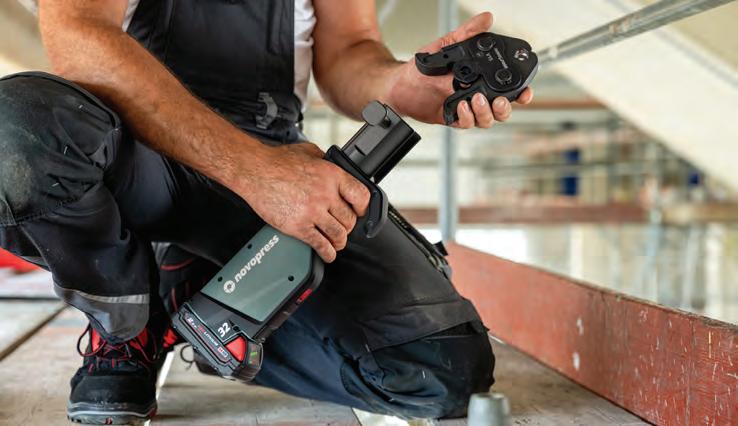
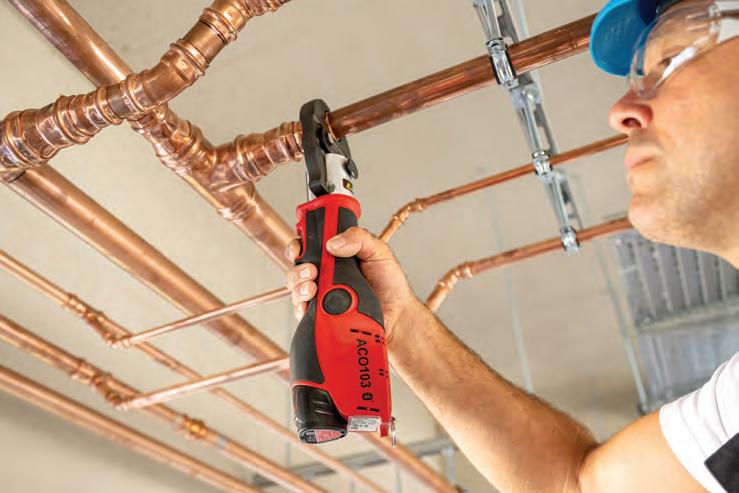
The ACO103 press tool from Novopress, a pioneer of press technology since 1969, is one of the company’s best-selling devices. The company says that its compact and lightweight design makes it particularly suitable for confined spaces, where handling and manoeuvrability are key.
The ACO103 is designed for up to 40mm in multilayer and up to 35mm in metal pipe systems. The company says its ergonomic construction supports comfortable use over longer periods, helping to reduce fatigue.
In combination with Novopress Pivoting Rings, the ACO103 also enables applications in hard-to-reach areas, offering additional flexibility where conventional approaches may be limited.
Smart features
Alongside established solutions, digitalisation and smart features are becoming increasingly relevant. This development is reflected in the Novopress32 press tool, which has been recognised with the German Design Award in Gold.
With a pressing force of 32kN, the company says the tool is suitable for metal systems up to 54mm and, depending on the system, up to 108mm. It has been designed to handle more demanding applications while integrating digital
functionality into everyday workflows. A robust display provides key information such as press status, battery level and maintenance indicators.
In addition, the NovoCheck app allows for direct interaction with the device. Users can adjust settings, access press curves and generate reports, supporting greater transparency and documentation on site.
Safer working
One notable feature is the LED light ring, equipped with 27 LEDs. The company says it provides strong illumination, improving visibility in low-light environments, and contributing to safer working conditions. The coloured light signal also indicates whether the correct pressing force has been achieved. Both intensity and duration
can be customised via the app.
Other features include an integrated press force sensor which ensures consistent output while reducing wear. If maintenance becomes necessary, the device provides a clear indication. Security is addressed through locking functions, which can be activated either directly on the tool or via the app, helping to prevent unauthorised use.
A 180° rotatable head allows flexible positioning, while a second start button supports operation in confined installation situations. A number of personalisation options are included designed to further enhance usability.
For more information please www.rdr.link/pbz017
DRIVING SUSTAINABILITY
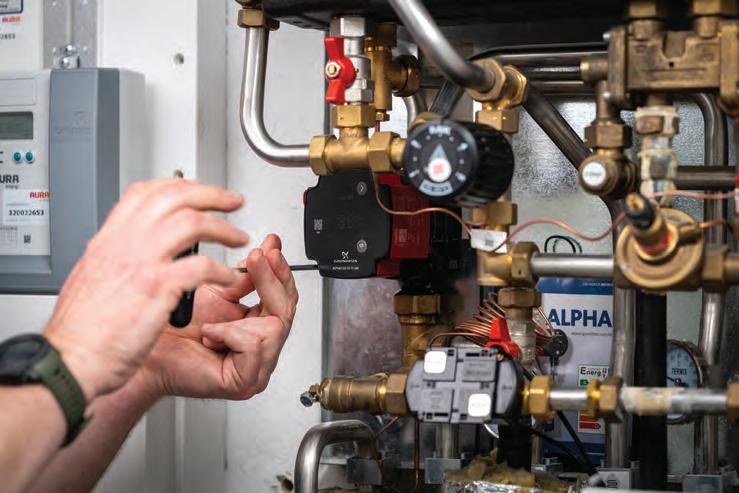
Grundfos explores how its circulating pumps can help drive energy savings and sustainability.
Pumps are a part of many installers’ everyday lives. By selecting and installing appropriate technologies professional tradespeople can enhance energy savings for homeowners and building operators and help the drive towards sustainability.
Grundfos notes that up to 95% of a circulator pump’s total environmental impact comes from its operation, not its production. That means installers play a decisive role in CO₂ reductions in homes and small buildings.
“One of the reasons Grundfos delivers such strong sustainability results is that we offer some of the most energy efficient pumps on the market,” says Neal Saunders, Sales Director DBS at Grundfos. “Installers play an important role in bringing those benefits to life. Their choices, setup and commissioning ensure that the pump performs as intended and that the system achieves the energy savings it was designed for. When a pump is not running optimally, it can use more energy than necessary — even if the technology is highly efficient. So, installers are key in succeeding with CO₂ reductions.”
Correct commissioning
This is where the new ALPHA2 GO circulator comes in. Combined with the Grundfos GO app, installers get a Guided Setup that translates just a few inputs into the right operating mode and setpoint for the specific heating system. The app also supports replacement of both standalone and integrated pumps in heat pumps, gas boilers and district heating units — designed to make commissioning faster, safer and fully documented.
“The easier we make it to get the settings right, the more sustainable the final installation becomes,” Neal Saunders adds. “With ALPHA2 GO, installers can deliver measurable reductions in energy
use and is exactly the kind of practical contribution that makes an impact of the overall sustainability results.”
Sustainability achievements
Grundfos’ sustainability achievements –like a 25% CO₂ reduction since 2020, 93% progress towards halving water use in operations, and maintaining EcoVadis Platinum – are not abstract goals but linked to practical actions in the field.
One of the initiatives installers help bring to life is the Grundfos’ Take Back scheme, where old circulators are collected, dismantled and clean fractions such as copper and aluminium are recycled with selected components remanufactured into new high efficiency circulators.
It gives installers a simple and credible way to bring circular economy into their business and tells customers a clear story: old circulators become new value and support the transition to sustainable, future ready heating systems.
Powered by people
Sustainability at Grundfos is driven not only by technology, but by the actions of its people. All employees worldwide are encouraged to take up to three paid volunteer days each year to support projects that strengthen their local communities — for example improving access to water or restoring nature.
To view a video of a boiler pump replacement using the Grundfos GO range please www.rdr.link/pbz018
“Naturally, advanced technologies like ALPHA2 GO move the sustainability needle in a big way. But it’s just as important that we empower both our customers and our own people to make a difference,” stresses Saunders. He continues: “When colleagues help their local community, it shows that sustainability isn’t just engineered — it’s lived and reinforces Grundfos’ belief that sustainability grows from thousands of small, human contributions.”
For more information please www.rdr.link/pbz019
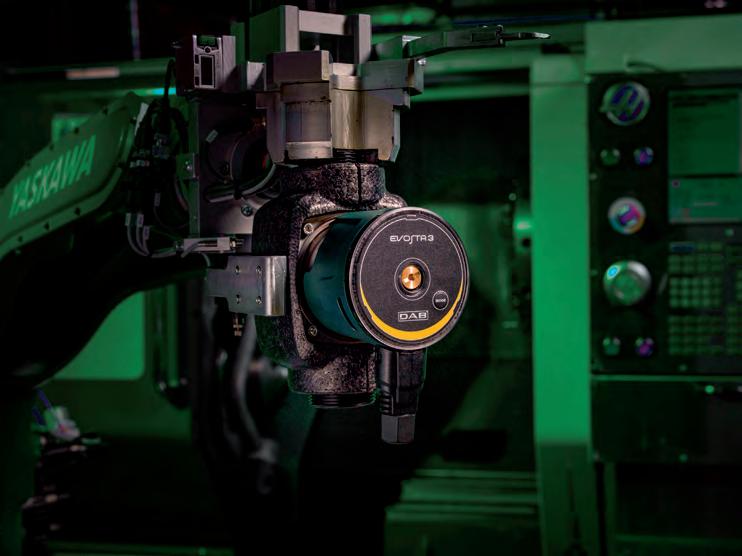
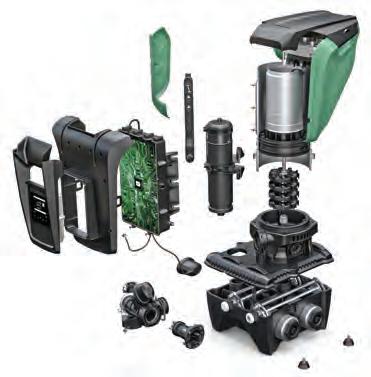
DAB Pumps is urging installers to look more closely at what lies inside the pumps they fit. Adam Ferneyhough, at DAB Pumps explains how quality design, compliance and engineering standards matter more than ever.
Recent warnings about non-compliant pumps entering UK supply chains have raised fresh concerns for installers. While pumps are often viewed as a straightforward piece of kit, the engineering inside them plays a big role in safety, efficiency and long-term reliability.
Often these products arrive at attractive prices, making them tempting options when installers or contractors are under pressure to control costs. But the risks associated with poorly manufactured pumps can create serious hazards.
Low-grade electrical insulation, inadequate sealing and poor internal components can lead to overheating, water ingress and premature failure.
So how do installers identify a properly compliant pump and what should they expect to find inside a well-engineered unit?
The basics
Every circulation pump placed on the UK market should carry a clearly visible nameplate containing essential regulatory information. Four details are particularly important: the Energy Efficiency Index (EEI) must be no greater than 0.23 to meet current efficiency requirements; the product should display a valid CE or UKCA mark confirming conformity with relevant legislation; the country of origin should be identified; and the registered address of the manufacturer must be provided. If any of these elements are missing, alarm bells should ring. Manufacturers selling products in the UK must also provide a Declaration of Conformity alongside clear instructions and safety information written in English.
The materials used inside a pump play a big role in determining both its lifespan and reliability. High-quality pumps typically use corrosion-resistant metals such as stainless steel or bronze alongside advanced technopolymers designed to withstand significant heat. These materials resist scale build-up, corrosion and mechanical
PUMP IT UP
wear, all of which can shorten the life of lower-quality products.
Protective coatings will also shield the pump body against corrosion. For example, each model in DAB’s Evoplus range has a cataphoretic coating, designed to handle high condensation environments. The ‘Small’ version now also includes extra separation between the motor and electronics to reduce the risk of moisture affecting anything sensitive.
Efficiency built in
A pump that operates only at a fixed speed should raise concerns. Fixed-speed pumps run continuously at the same output regardless of system demand, meaning they often consume more energy than necessary during periods of low load. This is an old design and would struggle to
meet current efficiency expectations. Today’s pumps now incorporate variable frequency drive (VFD) technology, allowing the motor to automatically adjust its speed to match the water demand within the system. Instead of running constantly at maximum output, the pump adapts its performance in real time, reducing energy consumption, lowering mechanical stress on components and extending the pump’s life.
The importance of certification
It’s important that any pump being installed meets recognised standards. Independent certification schemes are an excellent way to be confident you are installing a compliant device. For any pump connected directly to the UK mains water supply, the Water Fittings Regulations must be adhered to, so materials don’t contaminate
Today’s pumps now incorporate variable frequency drive (VFD) technology, allowing the motor to automatically adjust its speed to match the water demand within the system
drinking water. WRAS approval is the most widely recognised way of demonstrating this compliance, confirming that components have been independently tested for use with potable water.
Energy performance is also governed by the European Union’s Energy-related Products (ErP) directive, which sets strict requirements for energy efficiency. Beyond regulatory compliance, many leading manufacturers operate under ISO 9001 quality management systems. These systems require strict control over production processes, documentation and testing, ensuring that each product meets consistent standards before it leaves the factory. Leading manufacturers like DAB carry out rigorous factory testing to ensure every unit performs correctly under real operating conditions.
Quiet performance
Noise control is another sign of a
high-quality pump. For decades, homeowners have accepted the hum and vibration of older booster pumps as a normal part of domestic water systems. Expectations today are very different.
Advances in motor cooling, hydraulic design and vibration isolation have enabled manufacturers to produce pumps
that operate far more quietly. Anti-vibration mounts, improved motor balancing and refined cooling systems all contribute to lower noise levels.
In a booster system like the EsyBox range, sound levels can fall low enough that the movement of water through pipework becomes more noticeable than the pump itself. The EsyBox also has a sleep mode that reduces motor activity during periods of low demand, making it even quieter when needed.
Cheap pumps might save money upfront, but the real cost often appears later. The details you can’t see are often the ones that matter most: reliable engineering, proper compliance and rigorous testing ensure the pump does its job quietly, safely and efficiently for years to come.
For more information please www.rdr.link/pbz020
PUMP SELECTION
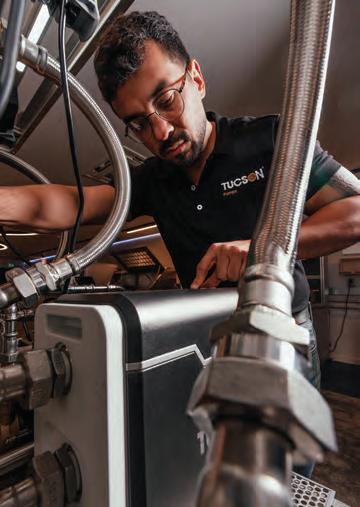
Tucson has introduced new digital tools designed to simplify the process of choosing a pump.
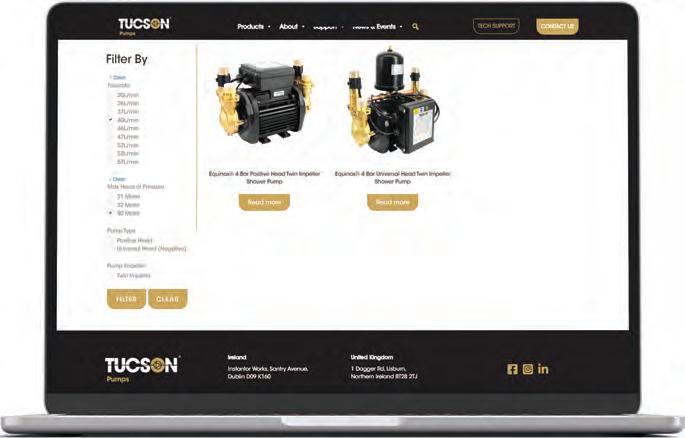
To help installers save time and select the correct pump for the job, Tucson has developed digital tools designed to take the guesswork out of pump selection and make the process faster, clearer and more intuitive.
An advanced filter on the Tucson website allows installers to select key requirements specific to their shower or booster pump installation. The company says that by narrowing results down instantly, based on specific criteria, unsuitable models are removed early in the process.
Performance curves
To support this, interactive performance curves are available across Tucson’s shower and booster pump product pages. Rather than relying on static charts or printed datasheets, installers can view how a pump performs across different flow rates and pressures in real time. By inputting the exact flow (L/min) and head (m) values required for the job, they can immediately see whether a specific model will achieve
the desired operating point.
The company says this instant confirmation helps prevent underperforming pump installations, giving installers clarity before the product is even unpacked.
Neil Wilson, Head of Marketing, Tucson Pumps, says: “Picking up the wrong pump isn’t just frustrating, it can add hours onto
Whether it’s boosting shower performance or tackling low water pressure, installers want to identify the right pump quickly
an already packed schedule, or introduce callbacks at a later stage. Our new filters and interactive performance curves are designed to make selecting the right pump quicker and more straightforward. Whether it’s boosting shower performance or tackling low water pressure, installers want to identify the right pump quickly, fit it confidently and move on to the next job without delays.”
To complement the new digital tools, each shower and booster pump product page on the Tucson website details the product information utilising handy icons and real-life imagery. Technical data, links to supporting literature, certification and warranty information is also marked, so that tradespeople can make informed choices.
To use Tucson’s pump selector tools please www.rdr.link/pbz021
INLET CONTROL GROUP
Stephen Elsmore, Senior Technical Support, Altecnic, takes a look at a safety and performance component in unvented hot water systems, Inlet control groups.
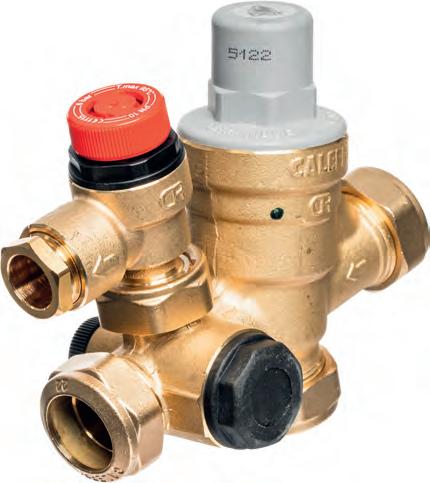
Inlet control groups are a critical safety and performance component in unvented hot water systems. They manage incoming mains water conditions to ensure the system operates within safe pressure limits, complies with regulations, and delivers consistent performance.
Q What is an inlet control group?
An inlet control group is a pre-assembled manifold fitted to the cold water supply of an unvented hot water system. It combines several essential control and safety components into one compact unit, reducing installation complexity and helping ensure compliance with Building Regulations (including G3 in the UK). Its primary role is to regulate, protect, and control the cold water entering the system.
Q What components are typically included?
A standard inlet control group includes:
• Pressure reducing valve (PRV)
• Check valve (non-return valve)
• Safety relief valve (SRV)
• Strainer/filter (on most models) These components are factory-matched to work together at specific pressure settings.
Q What does the pressure reducing valve do?
The pressure reducing valve (PRV) limits and stabilises incoming mains water pressure to a preset level (commonly 3 bar).
Why this matters:
• Mains pressure is often too high or
inconsistent for unvented systems
• Excessive pressure can damage cylinders, valves, and downstream components
• Stable pressure improves appliance performance and reduces wear The PRV ensures the system operates within its designed pressure range regardless of fluctuations in the supply.
Qpressure management sequence:
• The PRV reduces and stabilises incoming mains pressure
What is the role of the check valve?
The check valve prevents water from flowing back from the cylinder into the mains supply.
Key functions:
• Stops expansion water from pushing back into the cold supply
• Protects water quality by preventing contamination
• Maintains correct system operation This component is essential for regulatory compliance and safe system operation.
Q How does the safety relief valve work?
The safety relief valve (SRV) provides final protection if system pressure rises above safe limits (typically 6 bar).
When it operates:
• Failure of the PRV
• Thermal expansion issues
• Blocked pipework or downstream faults If the valve opens, excess pressure is safely discharged to drain via a tundish. Regular discharge indicates a system fault and should never be ignored.
Q How do these components work together?
The inlet control group operates as a
• The check valve prevents reverse flow and maintains system integrity
• The relief valve protects against abnormal pressure rise
Together, they ensure consistent hot water delivery while safeguarding the system and meeting safety regulations.
Q Where should an inlet control group be installed?
The inlet control group must be installed:
• On the cold water supply pipe
• Upstream of the unvented hot water cylinder
• After the main isolation valve
• In the direction of flow indicated on the valve body
Most units can be installed horizontally or vertically, provided access is maintained for inspection and servicing.
Q What are best practices for installation?
Installers should ensure:
• Correct orientation and flow direction
• Relief valve discharge is piped to a safe, visible drain point
• Adequate space is left for servicing and replacement
• Pipework is properly supported to avoid strain on the manifold
Always follow both the inlet control group and cylinder manufacturer’s instructions.
QHow should inlet control groups be tested?
During commissioning and routine servicing:
• Confirm correct downstream pressure after the PRV
• Check for leaks at compression joints
• Inspect the relief valve discharge pipe for signs of operation
• Verify isolation valves function correctly Any unexplained discharge or pressure instability should be investigated immediately.
QWhat maintenance is required?
Although inlet control groups are largely maintenance-free, periodic checks are recommended:
• Inspect the filter/strainer for debris (if serviceable)
• Check relief valve discharge for signs of frequent activation
• Confirm pressure remains within specification
Servicing should be carried out by a qualified engineer as part of regular system maintenance.
QWhat are common faults and how can they be identified?
Reduced flow rate
• Blocked strainer or debris in the PRV
Frequent safety relief valve discharge
• Failed PRV
• Expansion vessel issues, such as:
• Loss of pre-charge in vessel
• Incorrect vessel installation
• Excessive incoming pressure
Noise or vibration
• Incorrect installation orientation
• High flow velocity or pressure fluctuations
Early diagnosis helps prevent component failure and system downtime.
QWhy are inlet control groups essential for compliance?
Inlet control groups help ensure unvented systems meet safety and regulatory requirements by:
• Controlling pressure at the point of entry
• Preventing backflow into the mains
• Providing visible pressure relief in fault conditions
Correct selection, installation, and maintenance are essential to system safety and long-term performance.
For more information please www.rdr.link/pbz022
SOUDAL STAY FRESH SILICONE WATCH
Jay Watters from J. W. Watters Plumbing & Heating uses Stay Fresh, Soudal’s anti-mould sanitary silicone on a bathroom project.
In this video on the PHPI YouTube channel, Jay Watters from J. W. Watters Plumbing & Heating, tries out Soudal’s Stay Fresh silicone designed to prevent mould and offer lifetime colour stability, in bathroom settings.
Jay uses the sealant during a bathroom refurbishment, but before he starts, he explains what marks to look out for on the product, and what they mean. Jay notes: ”When you're looking for a silicone, what
you want to be looking for is the CE or the UKCA mark on the back, just so you know it's a trustworthy product. The other one to look out for is XS1, which means there's no shrinkage and the longest lasting anti-mold resistance.”
Noting the range of colour options, Jay says: “It comes in six different colors, which makes it really good to match whatever installation you are using it on.”
It fills the gaps nicely and with these spatulas makes it an absolute dream to create a nice, neat finish.
Neat finish
After using the silicone on the internal corner of a bathroom and demonstrating how to create a neat finish, Jay says: “So, the product is really, really nice to use. It fills the gaps nicely and with these spatulas makes it an absolute dream to create a nice, neat finish.”
Considering the importance of the finish to any bathroom project Jay says: “A lot of the time in a bathroom, the thing you notice the most is the tiling and the silicone. A lot of people in the past just use their finger, and you see a horrible uneven wiggly line all the way down. But these spatulas from Soudal ensure you get a nice even bead all the way up in the corner.”
To watch the video please www.rdr.link/pbz023
GRUNDFOS SOLOLIFT 2 MACERATOR WATCH
In this video on the PHPI YouTube channel, Karl Hills offers a guide on how to upgrade a macerator by fitting the Grundfos SOLOLIFT 2.
Called in to replace a faulty macerator unit at a rental property in Northamptonshire, Karl examines the problem, discusses the benefits of the replacement unit – a Grundfos SOLOLIFT 2 and demonstrates the replacement process.
Discussing his selection, Karl notes: “It’s really easy to pick which model you need. There’s only five in the range and they’re suited for all different types of scenarios, whether it is depending on different outlets or inlets and where it is in the house. It’s also a really compact design, so it’s really great for fitting in those really tight situations, where it’s up against a bath or behind the loo where you’ve got not much of a gap.”
Assessing the unit further Karl says: “it also comes with a professional grinding system which is made out of hardened stainless steel, which means it’s built to last and it’s engineered properly.”
Discussing some of the maintenance
aspects of the SOLOLIFT 2 Karl notes: “It also comes with a self-cleaning function which minimizes any blockages and also keeps the maintenance really low. So, in the event if it did block, there is a manual unblocking function on this, which is just as simple as taking the cap out, putting a screwdriver in, turning it left and right, which will free the motor. There’s no mess involved.”
Changeable motor
Another feature of the unit that Karl comments on in the changeable motor. He notes: “So, the main luxury about replacing the motor, it means that it’s super cost effective for the customer as we’re only buying the motor rather than a full unit. It also makes my life super easy in that when it’s in those tight cubby holes behind a toilet boxing area or any of those tight areas that we might find ourselves in, I can literally just undo four screws, lift the motor out, and stick a new motor in. It’s also super
sustainable, as we’re not having to throw the whole unit away as we’re only replacing the motor.”
After demonstrating the installation process, Karl concludes: “So, this design was great for this scenario as it is a super compact design. On top of that the outlets and the inlets from the existing basin and the shower matched up with the old macerator, which made it super easy to install.”
To watch the video please www.rdr.link/pbz024
Throughout 2026 plumbers and heating engineers can get closer to the brands you use at SIX venues across the UK. The Toolfair and Professional Builder LIVE events will be coming to a location near you with an enticing mix of products, tools, workwear and solutions to keep professional installers productive every working day.
It is a fantastic opportunity for trades professionals to discover the latest solutions in the sector, get hands-on with equipment, and meet the people behind the products. Best of all, the shows are free to attend for trades professionals.
Demos & deals
Taking place across two days at ‘van-friendly’ venues, each show features hands-on product demos, a huge array of tools and equipment, a chance to meet and quiz manufacturers on the products you use, and the opportunity to grab some special ‘show deals’ on the kit you need.
Co-located with the popular and established electrical sector event ‘Elex’, Toolfair and Professional Builder LIVE will also give visitors the chance to network with fellow industry professionals and discover new products and solutions.
Across two days, at a venue near you, and free-to attend, Toolfair and Professional Builder LIVE is a must-visit event for professionals across the trades.
The Gas App UK Horror Show showcases some of the ‘finest’ work spotted by installers across the country. If you spot any masterpieces to rival these, please submit them to the good people at Gas App UK or email us: phpi@hamerville.co.uk
SUBSCRIBE
SPIROTECH SPIROTRAP HPF
With heat pump installations continuing, installers need to deliver systems that perform efficiently from day one and stay that way. Following the launch of the SpiroTrap HPF, we caught up with Mark Boccetti from Spirotech, to discover more about this new filter.
QWhy do heat pumps need effective filtration?
For installers, protecting the heat pump is non-negotiable—and filtration plays a key role in that. While it’s not about a ‘special’ filter as such, most manufacturers now specify some form of strainer or mesh protection to prevent debris reaching the plate heat exchanger (PHE).
The challenge is that PHEs are built with much narrower waterways than traditional heat exchangers. That means they’re far less forgiving when it comes to contamination. Even small amounts of magnetite, sludge or installation debris can restrict flow, impact efficiency, or in worst cases, cause system faults.
From an installers’ perspective, fitting a robust filter isn’t just ticking a box—it’s about protecting your install, your reputation, and reducing the risk of call-backs.
QHow does the SpiroTrap HPF improve dirt separation?
This is where the SpiroTrap HPF has been designed with installers firmly in mind. Rather than relying on a single method of filtration, it combines three technologies working together:
Powerful magnetic capture: Six 12,000-gauss magnets surround the dirt chamber, pulling out even fine magnetic particles like magnetite
Full-flow mechanical filtration: A 160-micron mesh ensures that all system
water is filtered—there’s no bypass, so nothing slips through Spirotube technology: Reduces turbulence in the chamber, helping particles settle more effectively
What really sets it apart is the self-cleaning internal design. By redirecting some of the system’s kinetic energy, the HPF actively improves how dirt is collected and retained. For installers, that means more effective protection without added complexity.
Q Where should it be installed?
Best practice is to install the SpiroTrap HPF on the return line to the heat pump. This positioning ensures that any circulating debris is captured before it reaches the most sensitive components, particularly the PHE. It’s a simple step that makes a big difference in long-term system reliability.
Q What options are available?
Flexibility on site is key, and the SpiroTrap HPF has been designed with that in mind. It is available in a range of connection sizes, including 22mm, ¾”, 28mm, 1” and 1¼”, making it easy to integrate across a variety of domestic and light commercial heat pump installations. Whether working on a compact residential system or a larger setup, installers have the versatility they
need to fit the unit with confidence.
Q How easy is it to service?
Routine servicing requires only basic tools –an adjustable spanner, a container or hose. The process itself is fast:
• Switch off the heat pump
• Set the valve to service mode
• Remove the magnet
• Open the drain valve and flush for a few seconds
• Reassemble, repressurise, and restart The whole process takes just a matter of minutes, helping keep servicing efficient and hassle-free. For installers offering ongoing maintenance, that’s a real advantage.
Q Any installation tips for engineers?
As with any component, good installation practice makes all the difference. Key points to keep in mind:
• Ensure pipework is properly supported and clipped
• Leave enough clearance around the unit for servicing
Allowing space to access the filter easily will save time during maintenance visits and help avoid unnecessary complications down the line.
For more information please www.rdr.link/pbz025
GREEN DRAIN Q&A
Keld Rindom, Managing Director of Green Drain, runs through some of the benefits of the push-fit solution.
QWhat drainage problems has Green Drain been designed to solve?
In floor drains and other infrequently used outlets, water in the trap seal can evaporate over time, allowing foul air, odours and sewer gases to pass back into the building.
This issue is increasingly common in modern buildings, particularly where occupancy varies, parts of the estate are only used occasionally, or outlets are installed in low-traffic areas.
Green Drain provides a practical alternative by creating a seal that does not rely on standing water. As a result, it helps address not only odour problems, but also associated issues such as pest ingress and the movement of contaminants from the drainage system into occupied areas.
QWhere and how should Green Drain be fitted?
Green Drain is fitted directly into the drain body, just beneath the grate, and is designed as a simple push-fit solution. In most cases, installation is quick: remove the grate, insert the unit, and reinstate the cover – it’s done in a matter of seconds.
It can be fitted in both vertical and horizontal applications and is suitable for a broad range of drain types. This makes it particularly useful for retrofit work, where contractors and maintenance teams want to improve drain performance without replacing the existing drainage assembly.
Q Can it be used in conjunction with an existing trap?
Yes. In many cases, Green Drain can be installed within an existing trap, which is a
major advantage on refurbishment and remedial works. Where the original trap is built into the floor and would be costly or disruptive to remove, Green Drain can be inserted into the drain opening without the need for costly alterations.
Green Drain is not a second conventional water trap; it is a mechanical one-way sealing device. That means it can be used in conjunction with existing drain arrangements without introducing issues associated with double-trapped systems.
across domestic, commercial and industrial applications.
A broad size range also supports standardisation across sites with multiple drain types, simplifying specification and maintenance planning.
Q What are some typical applications?
Q How does the Green Drain work?
Green Drain features a flexible membrane that acts as a one-way valve; it essentially looks like a rubber flap on the seal. When wastewater flows into the drain, the membrane opens to allow discharge to pass through freely. Once flow stops, the membrane closes again, forming a seal against foul air and backflow from the drainage system.
Because the seal is mechanical rather than water-based, it remains effective even where the drain sees little or no use over prolonged periods. This makes it especially well-suited to commercial buildings where intermittent use is now a common operating reality.
Q Are there a variety of sizes available?
Yes. Green Drain is available in 11 sizes, enabling it to suit a wide range of drain diameters. This makes it easier for customers to select an appropriate product
Green Drain can be used in pretty much any application, but some of the most frequent applications include hotels, restaurants, commercial kitchens, washrooms, schools, healthcare environments, leisure facilities, residential basements, plant rooms and other commercial buildings.
Essentially, Green Drain is suitable to use wherever there is a drain that may dry out, smell, attract insects or require repeated maintenance attention.
Q For how long has this solution been available?
The Green Drain solution has been available internationally since we were founded more than 13 years ago, with Green Drain Europe now marking its 10th year. We are an established option for those looking to improve drainage hygiene, control odours and reduce maintenance demands through a simple retrofit intervention, and have recently launched in the UK.
For more information please www.rdr.link/pb z026
ARISTON INTRODUCES NEW R290 ASHP WATER HEATER
Ariston has expanded its range of heat pump water heaters with the launch of its new R290 solution, the Nuos Plus S2 Wi-Fi.
The R290 heat pump water heater is an upgrade of the company’s existing Nuos Plus WiFi. The company says it offers greater efficiency, easier installation and a wider range of features to make it suitable for domestic and light commercial use.
Nuos Plus S2 Wi-Fi uses R290 refrigerant and offers an ultra-low GWP of 3, with an A+ energy rating and a COP of up to 3.51. The company says the Nuos S2 is ideal for new buildings and renovations, without the need for major structural modifications, thanks to the versatile outlet ducting.
The unit features full Ariston Net smart connectivity, offering customisable comfort options for the end user, remote monitoring and optional voice control.
The Nuos Plus S2 Wi-Fi operates at a noise level of 48 dBA, with the optional ‘Night’ function providing further acoustic comfort.
The range includes a sacrificial magnesium anode for maximum protection against corrosion and limescale, with added ‘Titanshield’ technology to prevent tank damage.
Edoardo Pauletta, Country Manager at Ariston commented: “We’re excited to launch the Nuos Plus S2 Wi-Fi, which is the first of our R290 solutions launching this year. As more households shift to renewable sources for hot water generation, Ariston is committed to giving professionals access to a range of sustainable thermal solutions for their customers.”
THE RADIATOR COMPANY 2026 BROCHURE
The Radiator Company has launched its new brochure to showcase its full range of radiators including new products, such as the Ancona® Console Table, which reimagines the Ancona® multi-column radiator as a furniture style design.
Also highlighted in the brochure is the new Poll Towel Rail, offered in 23 RAL colours, 31 special finishes and six feature finishes, which the company says will allow for flexible specification across a range of bathroom schemes.
For more information please www.rdr.link/pbz028
For more information please
www.rdr.link/pbz027
CARHARTT DURABLE WATER REPELLENT (DWR) RANGE
Carhartt’s DWR range has been designed to help installers stay dry during wet weather. Durable Water Repellent (DWR) technology causes light rain to bead up and roll off the fabric, helping wearers stay drier for longer. The Super Dux™ Relaxed Fit Insulated Traditional Coat (105002) is made from lightweight but durable nylon, combining Wind Fighter™ wind resistance, a DWR finish and Rugged Flex™ stretch for freedom of movement.
The women’s Rockford Insulated Jacket (106486) is a quilted jacket that combines insulation with a sherpa fleece-lined upper body for added warmth and comfort. DWR technology helps shrug off light rain, Rugged Flex™ allows for movement while the loose fit makes layering easier.
phpionline.co.uk features the latest industry news, video reviews, technical updates and exclusive competitions, giving you instant access to all things heating and plumbing on your desktop, laptop, tablet or phone.
WIN A RIDGID PIPE CUTTER
5 PHPI readers can win a RIDGID C-style pipe cutter for 15-22mm copper tubing.
Cutting pipe is a near everyday activity for installers, whether working on new-builds, retrofit work, or general maintenance.
RIDGID’s C-Style cutters cut 15/22mm copper tubing and include a snap-on feature, designed for a quick pipe connection and no size adjustment, saving valuable time.
A spring-loaded cutter wheel provides a constant pressure on the pipe, included to provide fast and straight cuts, while the company’s X-CEL® Wheel Pin allows for quick wheel replacement. The company says that no tools or disassembly of the housing is required.
One notable and handy feature is a screwdriver slot in the housing, designed to provide extra leverage for making cuts in tight spaces.
There are five RIDGID 15-22mm C-Style pipe slices available – one per winner.
For a chance to win please www.rdr.link/pbz030
NEW DAB PUMPS VIDEO HIGHLIGHTS ESYBOX POP
A new product video from DAB Pumps is shining a spotlight on the capabilities of its latest pressure boosting solution, the EsyBox Pop.
As the newest and smallest member of DAB’s EsyBox family, EsyBox Pop has been developed to provide installers with a highly compact, integrated boosting solution suited to residential and light commercial applications where space is limited but performance remains critical.
Commenting on the launch of the video and the recognition the product has received, Adam Ferneyhough, Country Director for the UK & Ireland at DAB Pumps, says: “We created this video to give installers and specifiers a clearer look at how EsyBox Pop works in real-world applications. When you’re dealing with compact plant spaces or retrofit situations, seeing how a system fits and operates can be far more useful than simply reading a specification sheet.”
To watch the video visit the DAB Pumps’ You Tube channel. Please www.rdr.link/pbz031
PRODUCTS ROUND UP
ARCTIC HAYES 2026 PRODUCT CATALOGUE
Arctic Hayes (part of DiversiTech) has launched its newly updated product catalogue, with improved product imagery, clearer product organisation and updates across several key ranges. The company says the latest edition has been redesigned to improve usability across the printed catalogue and the digital flipbook version, making it easier for professionals to find the tools and consumables they need quickly and efficiently.
Several core ranges now feature updated product photography and real-world action shots to better demonstrate product use and application including the company’s pipe freeze range, the smoke range, soldering and HVAC.
For more information please www.rdr.link/pbz032
METHVEN MINIMALIST RANGE
Shower and tapware manufacturer Methven has extended its recently launched Minimalist range. The Minimalist handset was launched last year, and the collection has now been expanded to include a concealed shower pack, cool touch bar and cool touch diverter showers, which the company says creates a fully integrated showering solutions with consistent design elements across all components and water saving technology throughout.
Minimalist features Methven’s patented VJet® technology. Two waterways converge in a chamber behind each nozzle to create a spinning vortex that changes speed as you adjust the slider, which the company says results in a smooth transition from a firm invigorating spray, to a gentle spray, and everything in between.
For more information please www.rdr.link/pbz033
AKW Medi-Care ................................(page 52 outside back cover) www.rdr.link/PBZ101
Carl Kammerling International Ltd ....................................(page 45) www.rdr.link/PBZ102
Head over to the PHPI YouTube Channel to view videos on everything plumbing & heating: from fittings to filters – press tools to pumps. The videos have been put together with input from both manufacturers and installers to bring you the latest details. Just type in the rdr.link codes listed to watch... & don’t forget the popcorn!
GRUNDFOS
SOLOLIFT 2 Macerator
SOUDAL
Stay Fresh silicone
In this video Jay Watters, from J. W. Watters Plumbing & Heating, tries out Soudal’s Stay Fresh silicone which prevents mould and offers lifetime colour stability, in bathroom settings.
After using the silicone on the internal corner of a bathroom and demonstrating how to create a neat finish, Jay says: “So, the product is really, really nice to use. It fills the gaps nicely and with these spatulas makes it an absolute dream to create a nice, neat finish.”
Jay concludes: “I’m really impressed with the product. It is really nice to use. It goes on nice and easily.”
To watch the video… www.rdr.link/pbz034
In this video Karl Hills offers a guide on how to upgrade a macerator by fitting the Grundfos SOLOLIFT 2. Called in to replace a faulty macerator unit at a rental property, Karl examines the problem, discusses the benefits of the replacement unit – a Grundfos SOLOLIFT 2 – and demonstrates the replacement process.
Discussing his selection, Karl notes: “It’s really easy to pick which model you need. There’s only five in the range and they’re suited for all different types of scenarios, whether it is depending on different outlets or
inlets and where it is in the house. It’s also a really compact design, so it’s really great for fitting in those really tight situations, where it’s up against a bath or behind the loo where you’ve got not much of a gap.”
To watch the video… www.rdr.link/pbz035
FLAIR SHOWERS Verve Pro Shower Screen
watch
Check out the PHPI YouTube channel for more videos
www.rdr.link/ pbz036
In this new video, Jay from J.W. Watters Plumbing & Heating, fits the Verve Pro shower screen from Flair Showers which features a click-fit design.
Working through the installation, Jay notes: “So this is the new click fit design from Flair. As you can see, that’s as easy as it is. It slots in and this little mechanism here, clicks into the profile. It all fits together seamlessly... just like that. This is, actually, really simple.”
Summing up at the conclusion of the installation, Jay says: “The click fit mechanism is really, really good to use and it makes life so much easier when you fit in a shower door on your own.”