PROFESSIONAL HEATING & PLUMBING INSTALLER is a business journal for those involved in the installation, maintenance and repair of heating and plumbing systems. It is available to the trade at leading heating and plumbing merchants and specialist outlets throughout the UK.
The publishers and editor do not necessarily agree with the views expressed by contributors, nor do they accept responsibility for any errors of translation in the subject matter in this publication.
Subscriptions to PHPI are available for 1 year (11 issues) at the following rates:
UK £30 post paid
Airmail £99 post paid
Europe £70 post paid
60,213
(Certificate of Average Distribution for the issues between January and December 2025)
Juggling act
Running a business is often a juggling act, especially for smaller companies and sole traders. Not only is it important to deliver on customer requirements – servicing boilers, maintaining appliances and installing new ones, fixing leaks and so on – but there is also all the general admin of running a business to keep across: managing day-to-day work, invoicing, staying on top of cashflow, buying products, managing staff etc...
At the same time, with customer requirements and expectations evolving, businesses will also be looking to the future, seeking to benefit from new ways of working and the latest technologies coming into the sector. Delving into these and taking advantage of them may help heating and plumbing businesses work more efficiently and develop new offerings for customers.
Exploring opportunities around low-carbon heating and heat pumps may be one route to further opportunities for business growth. Recent data on the Boiler Upgrade Scheme (BUS), which provides a grant for domestic Heat Pump installations, indicates that despite a slight dip in month-on month applications, there has been a 20% growth in applications for April 2026 compared to the same month in 2025. For more on this story please turn to page 7
Meanwhile, many manufacturers are developing and expanding their heat pump solutions. In this issue there is news of new solutions from both Vaillant and Glow-worm. For details, please turn to pages 20 and 45 respectively.
In a variety of other areas, manufacturers are also developing new solutions, while also creating ways to enhance technical support and deliver training – all designed to support and assist professional plumbers and heating engineers.
On the admin side of things there are also a variety of solutions available to help installers with running a business, invoicing, paying tax etc... designed to take the strain away from small business owners.
Keeping across all these areas – and more – can be a challenge. To help, in each issue of PHPI we look to ensure details of new products and latest initiatives are readily available, together with insights into industry trends and new opportunities to help keep heating engineers and plumbers informed of the latest news and solutions from across the sector.
Jonathan Cole EDITOR
For the latest news, plus video reviews,
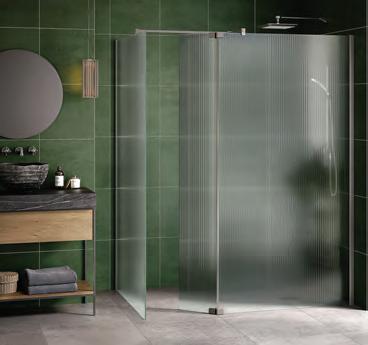
Cover image: Where used, the cover image is Ultimate Reeded Glass from Kudos.
IDEAL HEATING RECEIVES KING’S AWARD FOR ENTERPRISE
Ideal Heating has been named a recipient of The King’s Award for Enterprise in the Innovation category.
Adam Foy CEO Ideal Heating
This is Ideal’s fourth King’s/Queen’s Award, having previously received three Queen’s Awards –for Innovation in 2013, and for both Innovation and International Trade in 2019. CEO Adam Foy (pictured) said: “Receiving The King’s Award for Enterprise is a great honour and an incredibly proud moment for us.
“As a major UK manufacturer with a proud history and heritage, we’re delighted to receive this royal recognition for how we’re shaping the transition to heat pumps across the UK. The King’s Award reflects the scale of ambition and commitment our team has shown in transforming not just our own business, but in leading the evolution of the wider UK heating industry.”
The King’s Awards for Enterprise has honoured more than 8,000 companies since its inception in 1965. Winners hold the award for five years and pass a robust assessment process judged by experts from industry, academia, the voluntary sector and senior Whitehall officials. Recipients are recommended by the Prime Minister and approved by His Majesty The King.
Share your thoughts with us on the industry via X (@PHPI), Facebook (@ProfessionalPlumber), or by emailing phpi@hamerville.co.uk
ZILMETUPDATES THE WAY INSTALLERS ACCESS
TECHNICAL SUPPORT
Zilmet has launched Cal, an AI assistant on its website designed to give installers instant access to technical and product information around the clock.
Installers have always been able to call the company directly and speak to an engineer who knows the products – and that hasn't changed. The company says that ‘Cal’ adds convenience –the ability to get to datasheets, sizing guidance and product details immediately, at any time of day, without a search or a wait.
The company says Cal already has access to everything Zilmet knows about its products. What it is still learning is the language –the different ways that installers ask the same question. Consequently, Zilmet is actively encouraging installers to use it, put questions to it in their own words, and in doing so help shape a tool that gets more useful the more it is used.
Stuart Gizzi, MD of Zilmet, said: “The information has always been there –on the website, in the datasheets, on the end of the phone. Cal doesn't change what we know, it changes how quickly and easily installers can get to it. The more people use it and ask it questions in different ways, the sharper it becomes. We'd encourage installers to give it a proper workout.”
THREE-QUARTERS
OF UK TRADESPEOPLE HAVE BEEN TARGETED BY TOOL THIEVES
New research commissioned by Trade Direct Insurance has revealed that more than three-quarters (76%) of UK tradespeople have been targeted by tool thieves. The study found that tradespeople are most commonly being targeted at their workshop (27%), having their van broken into (27%), or at a worksite (25%). The research also showed that vans with a tradesperson’s branding (17%) are more likely than unbranded vans (10%) to be targeted.
Commenting on the findings, Barry Marsh, insurance expert at Trade Direct Insurance, said: “The ongoing tool theft epidemic is pushing hardworking tradies towards an impossible choice: market their business to attract more customers, or reduce their branding in the hopes of deterring thieves.”
“Neither of these is a sustainable choice for a tradesperson, and both carry significant risks that have the potential to outweigh the benefits.
Barry continued: “Tackling tool theft won’t be easy, but with a concerted effort to increase punishment for tool thieves, protect tradespeople, and raise awareness of the prevalence of stolen tools on the second-hand market, we can ensure that tradespeople can carry out their valuable work free from the risk of costly and traumatic tool theft.”
BUS DATADIPS SLIGHTLY
Boiler Upgrade Scheme (BUS) data for April 2026 shows that the total number of applications in the month across all technology types (4,406) was 2% lower than the previous month (March 2026; 4,517). It is 20% higher than the same month of the previous year (April 2025; 3,673).
Commenting on the statistics Gav Murray, Home Heating Director at Hive, said: “April’s Boiler Upgrade Scheme figures highlight continued interest in low-carbon heating, as households explore alternatives to traditional gas boilers.
“Recent conversations that air conditioning become increasingly common in parts of England due to warmer summers, underline the need to think differently about how we heat and cool our homes. As well as being the future of home heating, heat pumps can also support cooling, making them a practical part of the UK’s response to both decarbonisation and rising temperatures.”
Sachin Vibhute, Technical Consultant and Product Training Manager at LG Electronics said: “We’re seeing progress in the drive for low-carbon energy, but it is nowhere near enough. April saw 20% more applications than the same month last year, highlighting continued growth in renewable adoption. And, while applications dipped slightly from March, it is likely March’s figures were boosted by the government’s Warm Homes Plan announcement and the increase to heat pump grants.”
GRANTUKJOINSSNIPEFASANAFFILIATE
Grant UK has joined the Scottish and Northern Ireland Plumbing Employers’ Federation (SNIPEF) as an Affiliate. Representing businesses in the plumbing and heating profession, SNIPEF works with its members to promote high standards in the industry.
As an Affiliate, Grant UK says it is looking forward to supporting SNIPEF members with the supply of efficient heating solutions for their customers.
As a SNIPEF Affiliate, Grant UK says its regional Sales Team for Scotland will be on hand to support heating engineers and installers with tailored sales support for all Grant products, including their Vortex oil-fired boilers, the latest Aerona air source heat pumps, hybrid heating solutions and more.
“SNIPEF has been at the forefront of the plumbing and heating profession here in Scotland and in Northern Ireland for more than a century,” comments Mike Pryde, Regional Sales Manager for Scotland and Northern England at Grant UK.
“As well as representing their members as a trade association, they also strive to promote high standards of workmanship, encourage innovation and collaboration, and support upskilling in the plumbing and heating industry. All of these goals and values align closely with what we also strive for here at Grant UK so we are pleased to join SNIPEF as an Affiliate and are looking forward to supporting their members with the training, products and services they need for installing efficient heating systems into homes in Scotland.”
Richard Bambridge, Salamander Pumps’ Technical Training Manager
SALAMANDER PUMPS TO HOST FREE TANKBOOST TRAINING WEBINAR
Salamander Pumps is hosting a free training webinar on Wednesday, July 8 at 6pm on boosting mains water using its TankBoost solution.
Hosted by Salamander Pumps’ technical training manager, Richard Bambridge, the training will give practical tips for installing TankBoost, including how to specify and install the solution for different property types and sizes.
The company says the session will provide a detailed look at TankBoost’s features and benefits, with real-world examples of specifying either a 3.0 bar or 5.0 bar model. As part of the webinar, there will also be a competition where installers in attendance have the opportunity to win an England football shirt.
Commenting on the training, Salamander Pumps technical training manager Richard Bambridge, said: “TankBoost provides installers with an effective solution to deliver high pressure and flow rates when the incoming mains water is insufficient to meet demand in the property.
“This webinar will equip installers with the knowledge to accurately specify and install the solution, explore key installation considerations and directly gain practical advice.”
PASSIV SMART THERMOSTAT EXPANDS COMPATIBILITY
Passiv UK has expanded compatibility of its Passiv Smart Thermostat to 17 heat pump manufacturers, which the company says marks a significant step towards making smart controls a standard feature of UK heat pump installations.
The Passiv Smart Thermostat enables heat pumps to respond automatically to time-of-use tariffs and respond to wider electricity network signals by temporarily reducing heat pump demand – while using smart preheating to ensure homes remain comfortable without any noticeable drop in temperature.
Flexibility
Ian Rose, Sales and Strategy Director at Passiv UK, said: “Smart controls and automated flexibility are the missing layer that allows today’s policies and technologies to work together effectively. As heating systems evolve, households are becoming active participants in the energy system, with new opportunities to benefit financially through flexibility and time-of-use tariffs. Smart controls are what makes that possible.”
Passiv also provides a web-based monitoring portal, enabling installers and housing providers to remotely monitor and optimise performance across multiple properties.
Overland Shoes, the company behind Bobcat Safety Footwear, has emphasised the importance of workers choosing the right safety boots or shoes to help them cope with the heat.
The company has asserted the role that the right pair of safety boots or shoes can play in reducing heat, improving comfort and making long hot days feel more manageable.
Peter Lawson, Brand Manager at Overland Shoes, commented: “With the heat, feet tend to swell. That's why for summer, it's essential to wear extra comfortable and spacious shoes. Yet too often, workers stick with the same safety boots year-round, leading to foot fatigue, blisters, overheating and general discomfort – all of which make working in hot conditions even tougher.
“But there is a better approach to summer footwear. With our award-winning Bobcat Safety Footwear range, workers can take advantage of a range of proper summer boots and shoes which balance workplace safety standards with lightweight design, breathable materials and unmatched comfort, ensuring outdoor workers remain agile and protected during long, gruelling shifts.”
TALON LAUNCHES 40 TH ANNIVERSARY SCRATCHCA RD COMPET ITION
Talon has announced the launch of its “Talon 40” Scratch Card Competition. 40,000 scratch cards will be placed in promotional bags of the company’s TS15, TS22, NCW15 and NCW22 products.
Running from 5th May 2026 to 31st July 2026, the company says its ‘Talon 40’ campaign is a gesture of gratitude to the loyal trade professionals who have supported the company over the past four decades. To participate, tradespeople simply need to purchase participating Talon promotional packs from their local merchants across the UK.
Upon opening a participating pack, installers should look for the official Talon 40 Scratch Card. By scratching the designated panel, participants can instantly discover if they are a winner. Any card revealing three matching symbols is a guaranteed winning card. The company says the prize pool includes Apple iPad 11″, Adey MagnaClean Professional 2 Chemical Pack, Greggs £5 E-Vouchers and Limited Edition Talon Merchandise. Mike Morris, Marketing Manager at Talon said: “The Talon 40 Scratch Card Competition is our way of saying a massive thank you to the trade. We are incredibly excited to see our customers winning these fantastic prizes and sharing in our anniversary celebrations.”
Talon says all claims must be submitted by 1st November 2026. For full terms and conditions and to learn more about the Talon 40 competition, please www.rdr.link/pcb002
A poll of 2,000 homeowners found that, despite concerns around the economy, average spending has increased to £3,140 per year on home improvements –up from £2,870 in 2024.
The poll, commissioned by heat pump manufacturer Daikin, found 63% consider investing in energy efficiency to be very important to them, to ‘futureproof’ their home against price volatility. Nearly a third (30%) plan to spend more again on home improvements in 2026 than they did last year, with homeowners sacrificing holiday plans (24%) and buying a new car (14%) in favour of renovations.
Two thirds (67%) are shifting focus to home improvement to prioritise comfort, while 32% want more control over their energy bills.
Lucy Gaby, Residential Marketing Manager from Daikin, said: “Most people spend the majority of their time at home, so it is imperative to make it a comfortable and relaxing space throughout the seasons, to cope with all conditions - from heatwaves to cold snaps. We’re seeing a clear shift in priorities, with homeowners increasingly willing to invest in their living environment rather than more traditional luxuries. This trend towards prioritising home improvements reflects a desire for security, wellbeing and long-term value.”
The research, carried out via OnePoll, found that when buying in the future, 46 per cent would opt for an energy efficient home over just seven per cent who would choose a property in need of these updates. Almost half (44%) went as far as to say they would pay more for a low-energy consumption home.
NATIONALHEAT PUMP WEEKTO LAUNCH IN OCTOBER 2026
The Heat Pump Association UK (HPA UK) and Nineteen Group will launch National Heat Pump Week this October, a new national campaign designed to accelerate the UK’s transition to heat pumps.
Running from 12th October to 16th October 2026, National Heat Pump Week will enable all those in the heat pump sector to share knowledge, insights and expertise. The campaign plans to deliver its impact through a series of webinars, articles, interviews, competitions and market insights from key industry figures.
Commenting on the launch of the week, Olivia Smalley, Head of Policy and Communications at the Heat Pump Association UK said: “National Heat Pump Week is set to be a great opportunity for the sector to unite to celebrate how far it’s come to date and how much further we can go. The week will provide a dedicated moment to share technical insights, policy developments and key learnings as we transition to heat pumps.”
■ IDEAL HEATING has announced the next chapter of its Premier Club trip, with Thailand confirmed as the destination for 2028. Enrolment for Premier Club 2028 is now open, with qualification starting from July Carrie Young, Marketing Director at Ideal Heating, said: “Premier Club continues to stand us apart. The scale, the experience, the detail. It is unrivalled. And with Thailand, we are raising the bar again."
Installers will once again be able to earn points through Ideal’s Connect loyalty scheme, across a wide range of products including boilers, heat pumps and smart controls.
For more information please www.rdr.link/pcb003
■ CLIVET UK has announced the appointment of Nigel Hillier as General Manager. Nigel will lead the business in both the commercial and residential sectors. The company says Nigel will manage the growth of Clivet applied systems, air conditioning and heat pump solutions and services, and further expand into the consultant specification market.
Nigel Hillier commented: “I’m excited to join Clivet at such an important time for the business and the wider industry. The UK heat pump and HVAC market is evolving rapidly and there are huge opportunities ahead.”
■ SALAMANDER PUMPS has appointed a new technical training manager to support in educating and developing installers. The company says Richard Bambridge brings more than 38 years’ experience within plumbing and heating roles to his new position, and previously ran his own heating and plumbing business for 20 years.
In his new role, Richard is tasked with delivering training sessions to help develop, educate and inform installers on best practices when using Salamander Pumps’ solutions. Richard said: “I look forward to delivering practical, high-impact training for installers to help improve product understanding, raise installation standards and enable the right solution to be found first time.”
40 years OF TALON
1986 was the year of the first Comic Relief fundraiser and the introduction of GCSEs into schools. It was also the year a salesman called Mike Dudney, out on the road selling pipe clips to plumbers, noticed that often, after a cold weekend, plumbers would return to site to find pipes had popped out of their clips. It gave Mike the thought that there could be a better way.
Deciding to do something about it was the beginning of Talon Manufacturing. With the help of close friends, Mike, as he happily told everyone, didn’t reinvent the hinged clip, but he refined it.
He had a handful of hinged clip samples produced and took them to a plumbing trade show. Plumbers liked the design and saw the benefit. Encouraged, Mike expanded the sizes and, in May 1986, Talon Manufacturing was officially born.
“Mike just took what existed and made it better,” says Nick Josey, a family friend of Mike from the early days and Talon’s QHSE Manager. “He went to the drawing board, started drawing the first clip and then showed a few people on his rounds. One of his pals was a tool maker, so he gave
him all the drawings and together they created the clip – and people started to show a lot of interest in it.”
From day one, Talon was British made. The first clips were manufactured in Rochester and today production continues in Gillingham. The original logo, an osprey, to symbolise strength and precision. While the osprey may have since gone, the claw remains – that distinctive edge to the ‘T’ in Talon, representing the brand’s ultimate grip.
Founded in 1986 and still manufacturing in Kent today, Talon has spent four decades improving, refining and expanding its range of solutions to help plumbers on site or in the home.
Growing momentum
Momentum gathered and a thousand clips sold soon became 10,000. What set Talon apart wasn’t just the product, it was the mindset. Mike listened. If plumbers were experiencing issues, Talon worked to solve them. Spacers were added to the product list to accommodate lagging. Nail-on clips were tweaked and improved. Each development was incremental, practical and grounded in real-world feedback. As the range expanded, so did the understanding that Talon wasn’t just selling clips but building a business around everyday plumbing solutions.
Quality became a defining feature. Plumbers didn’t want to revisit jobs because a hinge had failed or a clip had loosened. Talon’s engineering focus meant products were designed to last, to hold firm and to give installers confidence that once fitted, they wouldn’t need attention again. Service mattered too and Talon prioritised next-day dispatch.
Business growth
For many years, Talon remained a close-knit operation, run by family and
friends. But as time passed, Mike knew that the company’s future needed careful consideration. When the moment came to sell, he wanted Talon in safe hands, somewhere that would protect its British manufacturing heritage and uphold the standards he’d set. For Mike, the Davidson Group proved to be the right fit. Today, while the team has grown to more than 50 people, seven colleagues remain from those early days – a reminder of the company’s roots.
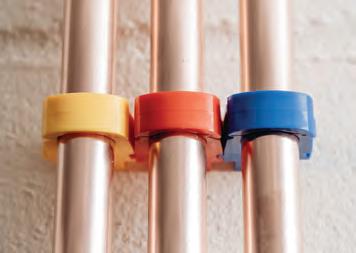
Listening to customers continues to shape the range. One example is Snappit. Developed in response to installer feedback, Snappit pipe covers provide a clean, professional way to conceal exposed copper pipework. Manufactured from high-grade uPVC and UV stabilised to prevent discolouration, chipping or flaking, Snappit offers a long-term, mess-free alternative to paint.
Sealing pipes
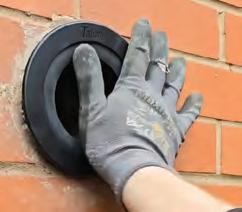
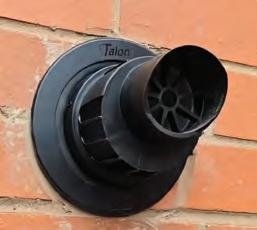
In 2023, Talon expanded its offering with the acquisition of PipeSnug. Designed to create a durable, airtight seal around pipe penetrations without the need for mortar, sealant or tape, PipeSnug can be fitted rapidly and meets the updated Part L of the Building regs.
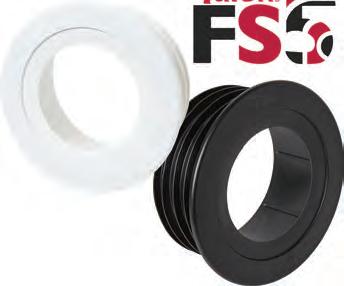
FlueSnug is designed to seal flue penetrations and the company has more recently developed the FS5 to tackle another common frustration – aligning and new flue with an existing core-drilled hole. The FS5 fits directly into a 127mm core-drilled hole, so there’s no need to enlarge openings or pack gaps with additional materials, helping to make boiler swaps quicker and cleaner.
Further development
The recent acquisition of Davidson Holdings by the Genuit Group marks the next chapter, signalling continued investment in product development, technical support and supply chain strength. Looking back over four decades, Talon’s story isn’t one of dramatic success. It’s one of careful listening, thoughtful refinement and steady expansion.
For more information please www.rdr.link/pcb004
Q&A
DIRT & AIR SEPARATION
Ed Morris, Technical Manager, Altecnic, answers some of the more frequently asked questions surrounding dirt and air separation, exploring why it matters, the problems it helps prevent, and what installers and specifiers should consider when designing and maintaining modern systems.
QHow do contaminants form within a system?
Contaminants can build up within a heating or cooling system from several different sources. Air can enter during installation, maintenance work, or through poor sealing over time. Once oxygen enters the system, it reacts with metal components and can begin causing corrosion within radiators, pipework, pumps, and heat exchangers. As corrosion develops, sludge and magnetite begin circulating through the system water, while installation debris such as flux residues, jointing compounds, and pipework dirt can add to the problem. In hard water areas, scale build-up can also restrict flow and reduce efficiency, particularly around heat exchangers and hotter parts of the system.
Q How does dirt impact the system’s performance?
Dirt within the system can cause a wide range of problems over time, particularly within pumps, valves, and heat exchangers. Sludge and magnetite can restrict flow, affect valve operation, and even cause pumps to seize if left untreated. Dirt also reduces heat transfer efficiency, meaning the system must work even harder to achieve the same performance.
QHow can dirt and air be removed from the system?
The best approach is to continuously remove contaminants before they have a chance to circulate around the system and cause damage. Dirt separators remove sludge, debris, and magnetite from the system water, while air separators and de-aerators remove trapped air and microbubbles.
By maintaining cleaner system water, these devices help protect pumps, valves, and heat exchangers while supporting better circulation, improved efficiency, and long-term system reliability.
Q What are the different types of dirt and air separators?
Heat pumps are particularly sensitive to poor water quality because they often contain smaller waterways and operate at lower temperatures for longer periods
There are several different types of dirt and air separation devices available depending on the application and the type of contaminants being targeted.
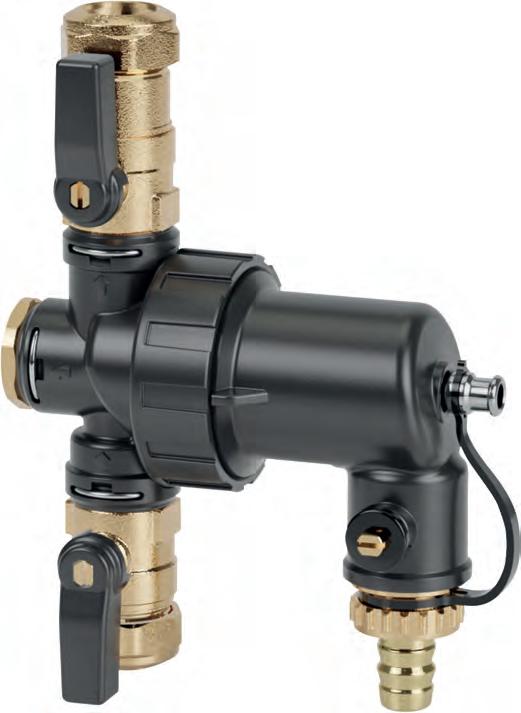
A non-magnetic dirt separator removes circulating dirt and debris by slowing the flow and allowing particles to settle within a collection chamber. Magnetic dirt separators go a step further by also capturing magnetic debris such as magnetite using a powerful internal magnet.
Air vents are designed to automatically release trapped air from the system, helping reduce noise and circulation issues, while de-aerators remove much smaller microbubbles and dissolved air to help improve long-term system performance.
Q What are the benefits of dirt and air separation?
Effective dirt and air separation helps improve overall system efficiency by maintaining cleaner water quality and better heat transfer throughout the installation. It also helps reduce corrosion, wear, and damage within key components such as pumps, valves, and heat exchangers, supporting more reliable long-term system performance.
QDo heat pump systems need dirt and air separation?
Absolutely. Heat pumps are particularly sensitive to poor water quality because they often contain smaller waterways and operate at lower temperatures for longer periods. Any sludge, debris, or trapped air within the system can quickly affect efficiency and performance. Effective dirt and air separation helps protect key components such as heat exchangers and circulating pumps, while also helping maintain reliable long-term operation.
Q Where should a dirt separator be installed?
In most heating systems, dirt separators are typically installed on the return pipework before the boiler or heat pump. This allows the device to capture debris and magnetite before contaminants reach critical components such as pumps and heat exchangers. It is very important that you correctly position a dirt separator, as it helps maximise separation performance and improves the system’s long-term performance.
Q Can dirt and air separators reduce system call-backs?
Yes, they can play a significant role in reducing ongoing maintenance issues and unnecessary call-backs. Many common problems installers encounter, such as noisy systems, poor circulation, blocked components, or inefficient operation, can often be linked back to poor water quality or trapped air within the system. By helping maintain cleaner system water, dirt and air separators support more reliable operation and reduce the likelihood of performance-related issues developing over time.
By helping maintain cleaner system water, dirt and air separators support more reliable operation and reduce the likelihood of performance-related issues developing over time
Q How often should a dirt separator be cleaned or blown down?
There’s no single answer because every system is different, but there are some good general maintenance guidelines installers can follow.
For new systems, I’d recommend carrying out an initial blow down after the first week or two of operation. On retrofit projects or dirtier systems, it’s worth checking and cleaning much sooner. Ongoing maintenance will then depend on overall system condition, although many systems may only need cleaning a few times per year once the water quality has stabilised.
Q How do you clean a magnetic dirt separator?
When cleaning a magnetic dirt separator, the key thing is to remove the magnet before opening the purge valve. This releases any captured magnetite so it can be flushed safely from the system. Once the debris has been discharged and the purge valve closed, the magnet can simply be reattached and the separator returned to normal operation.
Q Any final thoughts?
Maintaining clean system water is essential to the efficiency, reliability, and lifespan of modern heating and cooling systems. As systems become more advanced, particularly with the growth of heat pump technology, water quality is becoming even more important. Effective dirt and air separation helps protect key components, improve circulation, and reduce the risk of ongoing maintenance issues, helping systems operate more efficiently.
For more information please www.rdr.link/pcb005
A LOOK INSIDE
CAL-PRO EXPANSION VESSEL
George Knowles, Project Engineer at Zilmet UK, opens up the CAL-PRO expansion vessel and explains what is happening inside one of the most familiar components in a sealed heating system.
Expansion vessels are often treated a bit like a health check-up: easy to ignore until something feels off, starts making a noise, or refuses to behave as it should. Every time a sealed heating system warms up and cools down, the expansion vessel is there to absorb changes in water volume and keep pressure under control. That is why installers often fit trusted products by default, but reliability is not magic. Inside every effective expansion vessel is a simple piece of engineering doing an important job.
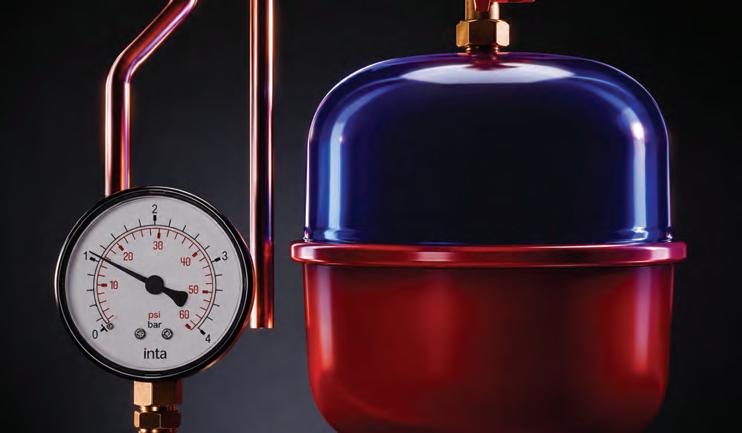
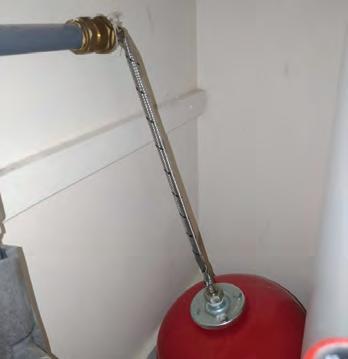
For installers, the expansion vessel usually becomes interesting at the exact moment nobody wants it to. A customer calls because the pressure has climbed too high. The PRV has discharged. The gauge has dropped again. Someone has topped the system up for the third time and is now convinced the boiler is at fault. At that point, the small red vessel in the background is no longer just a familiar fitting on the wall. It becomes part of the investigation.
What’s inside and how it works
There is no wizardry inside a CAL-PRO expansion vessel. Just a steel shell, two separate sides, and a diaphragm doing more work than its simple appearance suggests. The shell is divided into a water side and an air side, separated by a flexible SBR rubber diaphragm. The water side connects to the heating system, whether that is water or a water and glycol mix. The air side contains the pre-charge. The diaphragm
keeps the two separated while allowing controlled movement inside the vessel.
As the system heats up, water expands and enters the vessel, pushing the diaphragm towards the air side. The air compresses, creating a cushion for the extra volume and preventing pressure from rising too sharply. When the system cools, the process reverses. The compressed air pushes the diaphragm back, and water returns to the system.
That cycle happens again and again. The vessel gets very little credit when it is working properly. It simply takes the pressure, gives the system room to breathe, and gets ready for the next heating cycle.
What goes wrong, and why it can be hard to spot
The most common failure mode that is not immediately obvious is waterlogging. If the diaphragm fails or develops a pinhole, water gets into the air side. The vessel becomes a solid mass of water with no air cushion and can no longer absorb expansion at all. The symptoms –rapid pressure rise, PRV discharge and pressure drop –can look the same as an undersized or incorrectly charged vessel, which is why diagnosis matters before replacement.
The quickest check: press the Schrader valve on the air side. If water comes out rather than air, the diaphragm has failed.
The Schrader valve and pre-charge
Most installers know the Schrader valve is there, but its role is worth spelling out. It is how the pre-charge is set and checked, and it works exactly like a tyre valve. Pre-charge should always be checked with the system depressurised and cold. With pressure in the system, the reading is meaningless.
The pre-charge pressure is not a guess. The vessel’s air pre-charge should match the cold fill pressure of the system. Set it too low and the vessel will not engage properly. Set it too high and the diaphragm is already partly compressed before the system fires up. That reduces how much work the vessel can do from the start.
Diaphragm versus bladder, and fluid compatibility
Not all expansion vessels work the same way internally. CAL-PRO uses a fixed diaphragm. Other vessels use a bladder. Both absorb expansion, but they do it differently. A diaphragm separates the air and water. A bladder fills internally with water, like a balloon, and is surrounded by an air jacket. This design difference can also affect maintenance. If the diaphragm fails, the vessel usually needs replacing. With some bladder vessels, the bladder itself may be replaceable.
Getting the vessel size right matters. Too small and it cannot accept the expanded water volume in the system. Too big and it is simply taking up space it does not need
SBR rubber also has a defined working temperature range. Most domestic applications sit comfortably within it, but in higher-temperature systems, or where there is a high level of glycol in the system, it is worth checking if the vessel is suitable for the job.
Sizing matters
Getting the vessel size right matters. Too small and it cannot accept the expanded water volume in the system. Too big and it is simply taking up space it does not need. The Zilmet website has a sizing calculator for any installation, and Cal, the Zilmet chatbot, has access to full technical and sizing information if you need guidance. There is also an engineer available on the phone if you would prefer to talk it through.
Many installers fit CAL-PRO because it is familiar and trusted. On a busy job, that matters. That is why the inside of the vessel is worth understanding. Not to make a familiar product feel more complicated, but to show why the basics matter: correct sizing, correct pre-charge, reliable construction and a diaphragm that can keep doing its job cycle after cycle.
It sits quietly on the system, taking the pressure in the background while everything else gets the attention. No drama, no fuss, and ideally no awkward call-back where everyone stands around looking at the gauge.
For more information please www.rdr.link/pcb006
TAKE CONTROL
Baxi has announced the introduction of a new range of heating controls.
Baxi is introducing a new range of wireless controls compatible with its air source heat pumps, boilers and cylinders. The range is led by the AmbiZen Smart Control, which offers rapid, cable-free installation and advanced features for end users through the My Baxi app. This new smart control is complemented
All the new controls, including the flagship AmbiZen Smart Control are wireless, designed for seamless integration and easy installation. The company says the plug-and-play setup means installers can fit the thermostat in minutes, reducing time on site and call backs.
Energy monitoring
Our AmbiZen smart control has been engineered to facilitate rapid wireless installation, saving engineers valuable time on site. The new range delivers the flexibility and ease of use that modern heating systems demand
heating systems demand.
Through the My Baxi app, the AmbiZen Smart Control option offers seven-day scheduling, holiday mode and real-time energy monitoring. Using weather data, the app automatically adjusts flow temperatures in response to external conditions, meeting customer comfort levels using minimum energy.
For added control options and accessibility, installers can also link the AmbiZen smart control to voice assistants for hands-free control. Andy Speake, Product Manager at Baxi, said: “Our AmbiZen smart control has been engineered to facilitate rapid wireless installation, saving engineers valuable time on site. The new range delivers the flexibility and ease of use that modern
“We know from our market research that wireless controls offered as part of the full heating solution is key to installers making their installations quick and simple while providing convenience and flexibility for homeowners. Our solutions, training and service are all designed with the installer in mind to ensure engineers have everything they need for successful installations and happy customers.”
To aid installation, commissioning and use, Baxi provide a QR code link sticker to a suite of accessible how-to-videos.
For more information please www.rdr.link/pcb007
UNDERSTANDING MANIFOLDS
Sam White, Technical Sales Engineer, at RWC, explains the importance of manifolds and how installers can use them to maximise the potential of UFH systems.
Whether it’s down to shifting homeowner preferences, an increased focus on sustainability, orevolutionsinheatingtechnology, home heating is undergoing a revolution.
In recent years, underfloor heating has secured its place as one of the preferred choices amongst homeowners and housebuilders – and many installers have upskilled to meet rising demand for the installation of these systems. This growth shows no signs of slowing, with UFH now being widely specified across new build developments, and a firm favourite among homeowners undertaking home renovations.
To get the most of our underfloor heating systems and ensure they are fit for purpose for decades to come, manifolds play a critical role. Despite being a pivotal component, manifolds can be overlooked during the design and specification process. However, they can make all the difference when it comes to unlocking performance.
What, why, where
Wet underfloor heating systems are the most widely used in homes across the UK, largely due to their ability to work with a broad range of heat sources, be adaptable to projects of different shapes and sizes, and support straightforward installation.
Manifolds sit behind this functionality, acting as the vital control network that connects the heat source and the underfloor pipework that spans every zone. But they do more than circulate water around the system. They ensure correct distribution to every zone and maintain optimum temperatures to maximise system efficiency. It’s this function that also puts control into the hands of users, allowing them to select different temperatures in different zones, with the manifold making it possible.
To achieve the best results on every underfloor heating system, manifolds must be optimally positioned – which is typically central to the heating zones. As
well as helping to keep pipe lengths to a minimum for each zone, a central location underpins system efficiency by minimising heat loss between the source and the network of pipes.
The location will also support future maintenance of the system. With pipes buried beneath the floor, their longevity is essential, with all other maintenance –including annual services – being carried out via the manifold.
Space considerations
When it comes to choosing the right manifold for the job, installers have to consider a broad range of factors – from how they operate through to what space they’ll occupy once up and running.
For most homeowners, space is essential, as it gives them more interior design freedom and greater flexibility with furniture choices. Maximised space is therefore just one of the factors that have given rise to underfloor heating in recent years, providing a viable way to move away from traditional radiator systems while effectively freeing up wall space and allowing rooms to offer greater functionality. With that in mind, choosing an UFH
manifold – which must remain accessible and occupy a central location – that takes up as little room as possible is essential.
Consistent performance
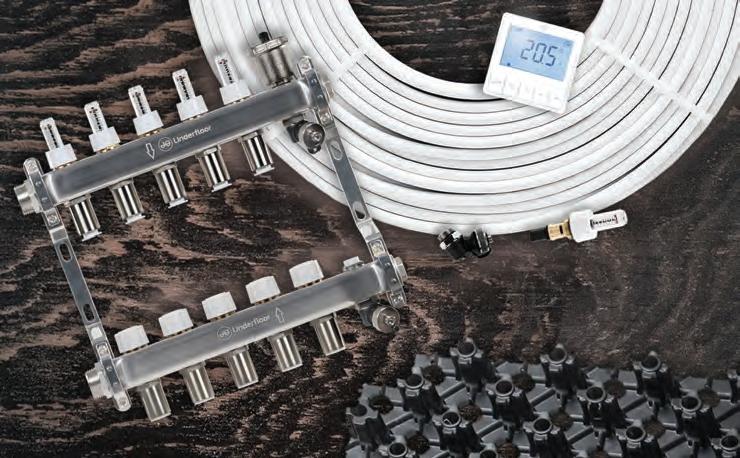
The new Euroconus underfloor heating manifold from JG Underfloor provides a reliable option for installers.
Value-engineered to be more cost-efficient while maintaining the same high-quality as the JG Speedfit push-fit solutions, the Euroconus manifold is a mechanically connected solution for budget-focused projects that require reliable, consistent performance. Based on the same technology as previous manifolds, it is proven to deliver on domestic UFH installations, providing improved performance, flow adjustment, reliability and functionality that modern underfloor heating systems demand.
When used with the Euroconus adaptor, the manifold can also be paired with the new JG 16mm PERT pipe, which makes life easier for installers when fitting or maintaining the manifold.
For more information please www.rdr.link/pcb008
PUMPITUP
Vaillant has revealed its all-new aroTHERM plus – the latest evolution of its R290 air source heat pump. The company says the new aroTHERM plus represents a significant leap forward from its already popular predecessor, noting the new range offers CoP figures of up to 5.39. The new aroTHERM plus includes Vaillant’s Sound Safe System, resulting in an improved sound performance from 44 db(A).
Flexibility
Vaillant has unveiled its latest R290 Air Source Heat Pump, the new aroTHERM plus. We have been committed to leading the market with continuous innovation, and this latest addition to the range demonstrates that we are always looking for those small refinements that will make a real difference to both the installer and the end user
The new model also includes an advanced flexible space function. When activated, the company says it allows installation almost anywhere around the propertybreaking free from the fixed space requirements of the previous generation, designed to deliver installation flexibility and convenience for installers.
There is also a new anthracite colourway and a premium interface with semi-touchscreen control.
Guarantee
When registered through myREWARDS, Vaillant’s loyalty platform, the new aroTHERM plus comes with up to 7-years guarantee when fitted with a Vaillant uniSTOR high recovery cylinder.
Commenting on the launch Mark Wilkins, Technology and Solutions Portfolio Director said: "The aroTHERM plus has always been our most popular model, but we knew we could make it even better. By combining quiet operation, greater installation flexibility, contemporary design, and intuitive controls, we've created a second-generation solution that gives installers a genuine competitive edge.”
He continued: “We have been committed to leading the market with continuous innovation, and this latest addition to the range demonstrates that we are always looking for those small refinements that will make a real difference to both the installer and the end user."
For more information please www.rdr.link/pcb009
DESIGN AND INSTALLATION
The 2026 version of the CIBSE Domestic Heating Design Guide arrives at an important moment for the building services sector. Mark Krull, Director from LCL Awards, explains some of the key areas.
Greater prominence is given to designing systems that can operate efficiently at lower flow temperatures, which is critical for heat pumps
FGuidance
or domestic plumbing and installers, the job is changing fast. Heat pumps, low temperature emitters, improved fabric standards and evolving regulations all mean that traditional rules of thumb are less reliable than they once were.
CIBSE’s updated guide reflects that shift, providing the latest best-practice from initial heat loss assessment through to emitter selection, hot water provision, controls and commissioning. This is especially relevant as schemes like Warm Homes and the Future Homes Standard are driving demand for low carbon systems in-line with wider net zero expectations.
Calculate, assess and ensure efficiency
One of the most important updates in the 2026 guide is the treatment of heat loss. CIBSE has aligned the assessment method more closely with BS EN 12831-1 – the standard for energy performance of buildings – and incorporated the latest weather data, including 28 zones and four outdoor design temperatures.
Heat loss calculations are the starting point for any efficient heating system: if the calculations are wrong, emitter sizing, flow temperatures, plant selection and running performance are likely to be wrong too, which could lead to dissatisfied customers with unnecessarily high bills.
The guide also supports a more measured approach to safety margins. Rather than building extra allowance into multiple stages of the design, the emphasis is on carrying out the assessment properly in the first place and only considering additional tweaks at the end if genuinely
needed. That should help avoid oversizing, which has long been a barrier to efficient low temperature operation.
A fabric-first approach is reinforced too, with updated U-value tables covering modern construction methods and changed guidance on air permeability assessment. Where possible, an air permeability test is the preferred route, while SAP 10 methodology is used as a fallback for retrofit work.
Low
temperature design
The shift to low temperature heating is one of the strongest themes. Greater prominence is given to designing systems that can operate efficiently at lower flow temperatures, which is critical for heat pumps.
The guide expands coverage of heat emitters beyond standard steel panel radiators and gives improved treatment to fundamental fluid dynamics, modern hydraulic arrangements, circulator control options and low-loss headers. It also covers advanced layouts such as four-pipe heat generators and manifold distribution.
Another key update is the stronger integration of space heating and domestic hot water design. Domestic hot water provision has been revised in-line with BS EN 12831-3:2017, with new information on cylinder sizing, including storage of domestic hot water at less than 60°C and the associated thermal disinfection procedure.
Controls also receive dedicated attention, with a section focused on control strategy and extra information around mixed temperature systems. Installers increasingly need to understand how
Mark Krull
different parts of a domestic system interact, particularly in homes where space heating and hot water demands vary, or where legacy emitters sit alongside newer low temperature components. Better control strategy supports comfort, efficiency and system stability, and helps clients get the performance they expect from modern equipment.
Design accountability
A notable addition to the guide is the new System Criteria Document. This is intendedto provide a clear, auditable record of design decisions, system intent and professional responsibility, with scope to support commissioning and client and designer sign-off in-line with the Building Safety Act. Good documentation improves handover, reduces misunderstandings and
make it easier to show that design choices were deliberate.
Better design means fewer compromises on site, more predictable commissioning, improved efficiency and a stronger case for the low carbon systems in general.
Made for installers
CIBSE has continued its focus on usability, ensuring the latest version of its heating design guide remains both practical and technical. The inclusion of worked examples, clearer methodologies, and real-world applications makes it a valuable tool not just for consultants but also for installers actively involved in system design.
The CIBSE Domestic Heating Design Guide is an important influence on the content of related qualifications, such as LCL Awards’ Domestic Heating and Hot
Controls also receive dedicated attention, with a section focused on control strategy and extra information around mixed temperature systems
Water System Design in Dwellings. By aligning learning outcomes with this guidance, training ensures that candidates are capable of applying best practice in real-world scenarios.
For more information please www.rdr.link/pcb010
HIGH LIFE
There quite literally is a Compact for almost every conceivable application and they provide a quality heating solution for any home, modern or traditional in design
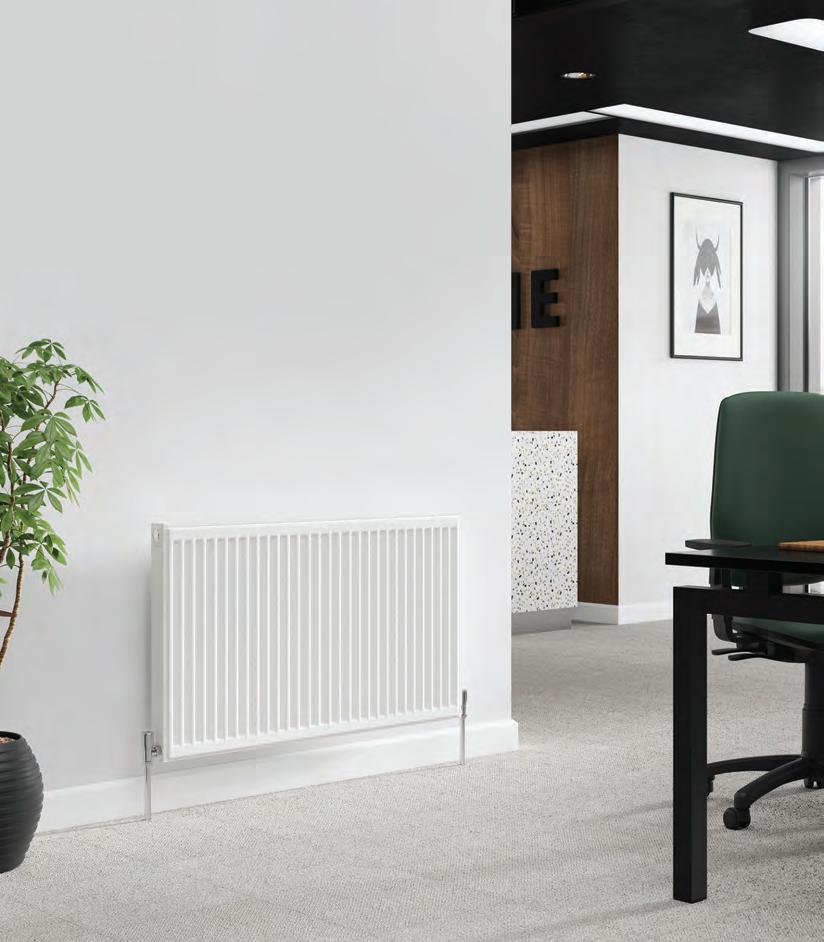
The steel panel Compact radiator range from Stelrad Radiators has just grown even more, with the addition of a further 26 models in its new 500mmm high range – thirteen in K1 format and thirteen in K2 format in sizes. The new additions are from 400mm x 500mm right up to 2000mm x 500mm and from 1137 Btu/hr output up to 10,195 Btu/hr output.
The company says the additions are being made to the range in response to customer feedback with consistent requests for a 500mm height option particularly from installers looking for more flexibility in like-for-like replacement opportunities in heating system replacement projects.
In response to customer feedback, Stelrad has announced a new Compact 500mm high range.
According to Stelrad, extending size and output options also supports decarbonisation – a broader range gives customers more choice when designing low temperature systems, supporting its wider decarbonisation strategy by enabling better system optimisation and improved heat pump compatibility.
Specific dimensions
The company says the addition of the 500mm height range adds strength to its offer for social housing and contract-led projects, where specific dimensions are often required to meet refurbishment specifications.
Marketing Communications Manager
Sarah Baker said: “As we celebrate our 90th anniversary, it’s a good moment to reflect on how the Compact range has grown. Over many years we’ve continued to add new sizes and formats, shaping it into one of the most comprehensive ranges available, offering unmatched choice for specifiers and installers.”
She continued: “There quite literally is a Compact for almost every conceivable application and they provide a quality heating solution for any home, modern or traditional in design. These particular additions are getting plaudits from our contract customers but alongside our 200mm, 900mm and 1200mm high ranges and our K3 offerings the selection available for customers embracing heat pump technology is now pretty much complete.”
For more information please www.rdr.link/pcb011
Q&A
ASHP INSULATION
Insulating the external pipework can help ensure optimum efficiency from an ASHP install. Paul Greengrass, Product Development Director from DiversiTech answers some questions on insulation.
When you consider that the heat being generated by the heat pump is flowing through the pipework, if the pipe being routed is outside, it is critical that all pipework and connections are covered by an external grade weather and UV-stable insulation.
Q Why should installers be fitting insulation when installing Air Source Heat Pumps (ASHP)?
To ensure that 100% of the heat generated by the air source heat pump is transferred into the property, without any loss.
Q What factors do installers need to consider when approaching the installation of insulation for ASHPs?
That all pipework is adequately covered with the correct insulation. No gaps, no exposed joins or hose connection, and any pipework insulation continues through the wall.
QWhat types of insulation are best suited for ASHPs?
The insulation should be UV stable, weather proof, rodent and bird proof.
QDoes the pipework and insulation need protecting?
If the installation is carried out using the correct insulation there is no specific need for further protection. However, if a lower grade insulation must be used, then it would be highly recommended to use external trunking.
Q How else does insulation and protection contribute to an ASHP installation?
It ensures correct performance of the unit. Getting it right at this stage saves time, protects performance and strengthens client confidence.
Q Which accessories should installers also look out for?
Other accessories include antifreeze valves, shut off valves, Diverter valves, mag filters and isolators. For protection, controlling the condensate and mounting the unit – guards, soakaways, feet and brackets are also recommended.
Q Do you have any advice on fitting insulation for ASHPs?
Our advice would be to ensure you have the correct insulation and take extra care to make sure all joints are sealed. In short, all pipework and accessories are covered end-to-end.
To view a video on installing insulation please use the QR code or www.rdr.link/pcb012
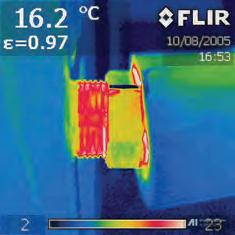
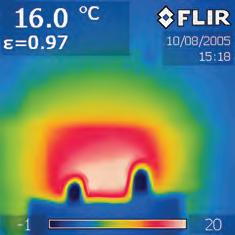
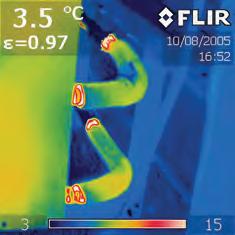
Thermal images showing the heat loss when pipework is not properly insulated
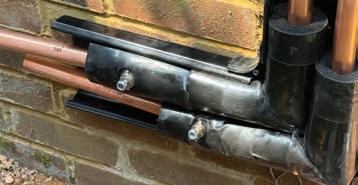
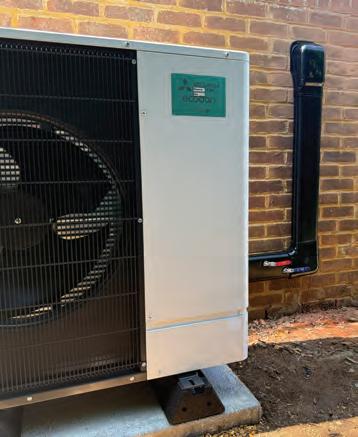
Ensure that all pipework and connections are correctly insulated External trunking
Antifreeze valve
RESHAPING HeatingControl
Tom
Sheppard, Head of Product at IMI Heatmiser, explains the role AI may play in the changing role of heating controls.
Heating today presents a clear challenge for homeowners and self-builders. How do you balance comfort with lower energy use, ensure homes stay warm without overheating, and get the best performance from increasingly low-carbon heating systems?
As more people look to build or retrofit homes that are efficient, future-ready and comfortable to live in, the practical realities of day-to-day heating control are becoming harder to ignore. The demands of heating the right rooms at the right time, maintaining consistent comfort, and doing so as efficiently as possible can become complex.
Against this backdrop, adaptive heating controls are becoming far more than a simple add-on to the wider system. Once seen as little more than a wall thermostat or a timer in an airing cupboard, they are now emerging as a critical layer in overall residential building performance.
Where the market stands today European and UK homes have diverse hydronic systems, varied building fabric and unique compliance requirements that demand deep heating expertise as well as software capability.
Heating control is about understanding how buildings behave in the real world, which comes with a set of practical challenges. Homeowners are increasingly seeking ways to balance comfort and energy efficiency, optimise the performance of low-temperature heating systems, and heat homes more intelligently around changing occupancy patterns.
Regulatory compliance
Part L and the Future Homes Standard are also pushing the market towards greater smart zoning, improved efficiency and more responsive controls. In many refurbishment projects, separate control of living spaces is increasingly expected. That reflects a wider recognition from the Government that smarter control is one of the most effective ways to reduce energy demand without compromising comfort. For installers, that means controls are no longer a secondary consideration.
Connected heating systems remain fundamentally mechanical and hydronic, and it is this underlying system design that has a direct impact on reliability, energy efficiency, comfort, and long-term performance.
Multi-zone control allows homeowners to heat spaces only when required, helping to reduce energy consumption while maintaining comfort where it matters most. In practice, that could mean lowering temperatures in unused bedrooms during the day while keeping living areas at a comfortable level.
The challenge, however, is that comfort and efficiency do not always naturally work together. That is where adaptive and
predictive technologies are beginning to
The role of AI
Traditional smart heating systems have largely been reactive. Features such as pre-heat functions typically rely on historical data, often analysing around 30 days of usage, to estimate how long a property takes to move between temperatures.
However, homes are inherently dynamic environments. Outdoor temperature fluctuations, solar gain, occupancy patterns, floor slab temperatures, heat loss through windows and the thermal mass of a building all influence how a property responds at any given time.
This is where AI-driven adaptive heating offers a step change, helping homeowners better balance comfort and energy efficiency by responding to real-time conditions rather than relying solely on past behaviour.
Research in this area is accelerating. A recent paper from the University of León in Spain, “Efficient Heating System Management Through IoT Smart Devices”, explored how intelligent heating systems can use real-time data and predictive analytics to optimise both comfort and energy performance.* The study identified energy savings of up to 15 per cent, with IoT-enabled systems delivering
Tom Sheppard
measurable reductions in heating demand while maintaining occupant comfort. It also highlighted the potential for machine learning and predictive control to further improve efficiency through the use of weather forecasting, occupancy data and behavioural modelling.
More broadly, emerging research into adaptive comfort suggests that AI-enabled systems are increasingly able to anticipate occupant behaviour, predicting when users are likely to adjust temperatures even before they interact with controls themselves.
The future lies in integrated climate management ecosystems that bring together heating, cooling, ventilation, lighting and energy management into a single intelligent platform
Integrated comfort control
Hydronic expertise still matters There is currently significant industry discussion around AI, smart homes and connected living. Yet one important point is sometimes overlooked. Connected heating systems remain fundamentally mechanical and hydronic, and it is this underlying system design that has a direct
impact on reliability, energy efficiency, comfort, and long-term performance.
Heat pumps, underfloor heating, low-temperature systems and multi-zone properties all require intelligent control strategies grounded in real-world hydronic expertise, which is one reason why heating specialists still play such a critical role.
Looking ahead, the role of heating controls will continue to expand. The future lies in integrated climate management ecosystems that bring together heating, cooling, ventilation, lighting and energy management into a single intelligent platform. Rather than simply adding smart devices, homeowners will increasingly seek joined-up solutions that reduce energy consumption, improve comfort and simplify the management of heating and cooling across the home. AI will undoubtedly have an increasing role to play, but it remains early in its maturity.
*Source: Efficient Heating System Management Through IoT Smart Devices
For more information please www.rdr.link/pcb013
MAXIMISE TANK CAPACITY
Selecting the right float valve can increase usable cold water storage capacity without increasing tank size.
Keraflo’s Richard Braid explains how valve selection can help specifiers avoid tank modifications while preserving WRAS or KIWA approved configurations.
Choosing the correct float valve for a cold water storage tank can have a major impact on usable capacity, plant room layout and overall system efficiency. But in many commercial installations, the valve itself is still treated as a secondary consideration behind tank size and pipework design.
For specifiers working on projects where space is restricted or storage demands are increasing, valve selection can make the difference between needing a larger tank installation and achieving the required storage volume within the same footprint.
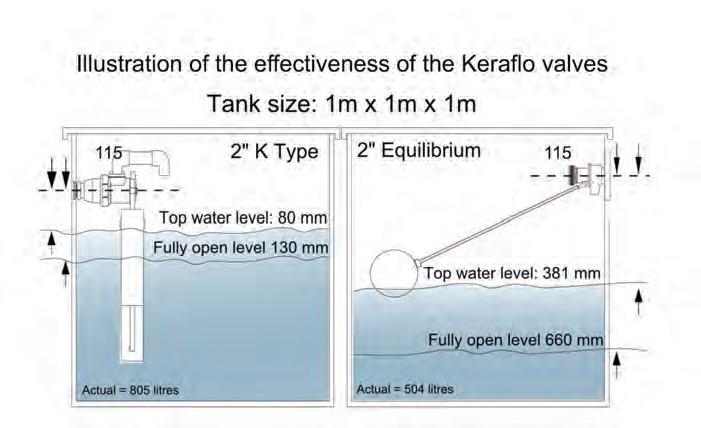
Keraflo’s K Type delayed action valve has been developed specifically to maximise tank capacity by allowing water levels to operate closer to the top of the cistern than equilibrium valves.
Using a standard 1m x 1m x 1m tank as an example, a typical 2” equilibrium valve provides an actual stored volume of around 504litres. A 2” Keraflo K Type valve allows approximately 805litres to be stored within the same tank. That represents an increase of more than 60% in usable storage capacity without increasing the physical tank size. The difference comes from the operating characteristics of the valve itself.
A conventional equilibrium valve requires a relatively low operating water line in order to function correctly. In the example shown, the top water level sits around 381mm below the centre line of the inlet. The Keraflo K Type valve operates differently, allowing the water level to rise to approximately 80mm below the centre line of the inlet while still maintaining stable valve operation. This can significantly increase the amount of usable stored water available within the cistern.Unlike a conventional equilibrium valve, which continuously modulates as the water level changes, the K Type allows the tank to refill to a higher level before closing.
Storage volume
This approach can provide practical advantages for commercial plumbing systems. In plant rooms where available space is limited, increasing the effective storage volume of an existing tank footprint may remove the need for larger sectional tanks or additional storage capacity elsewhere within the system.
Reducing tank size requirements can also help lower associated installation costs including support steelwork, insulation and ancillary pipework, while improving access around equipment for ongoing maintenance.
In some installations, particularly on larger sectional tanks, the float valve may be installed within a raised float valve chamber
TANK MAXIMISATION
rather than mounted directly through the side wall of the tank. In these applications, specifiers may attempt to achieve similar storage gains using a conventional equilibrium valve combined with aftermarket drop arm arrangements. However, modifying the valve assembly in this way can invalidate WRAS or KIWA approvals originally held by the product.
allows specifiers to increase usable storage capacity without relying on improvised modifications or non-approved valve arrangements.
To download the 2026 edition of Keraflo’s Essential Guide to Water Tank Management please www.rdr.link/pcb014
System design
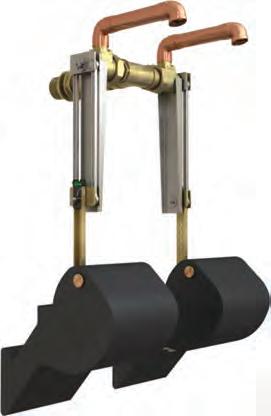
Keraflo developed the KAX valve specifically for raised float valve chamber applications. While the K Type is intended for standard side-mounted tank arrangements, the KAX has been designed to achieve the same high water level benefits in tanks where the float valve chamber sits above the main tank section.
The KAX also incorporates nominal delayed action operation while maintaining the approved valve configuration. This
As with all cold water storage installations, correct system design remains essential. Tanks should comply with all relevant Water Supply (Water Fittings) Regulations and WRAS guidance, with appropriate screened overflows, servicing access and correctly sized pipework to support refill performance.
improving the efficiency of available tank space is becoming increasingly important. While tank dimensions remain a major consideration during design, the float valve itself can have a substantial effect on overall system performance and usable storage volume.
Valve positioning and float arrangements should also be carefully considered during specification to ensure the intended operating water levels are achieved.
As commercial buildings continue to place greater demands on stored water systems,
For many projects, selecting the correct valve arrangement can deliver the equivalent benefit of a significantly larger tank installation without increasing plant room requirements or introducing unnecessary system complexity. For projects where space, performance and compliance all matter, maximising tank capacity through valve selection is becoming an increasingly valuable design consideration.
For more information please www.rdr.link/pcb015
PUMP-UP YOUR TRAINING
As connected pump systems become more common across domestic and commercial buildings, keeping training up to date is becoming just as important as product selection itself, says Edoardo Giacomini, Product Trainer at DAB Pumps.
Training has always been an important part of plumbing and heating, but pump technology is changing quickly.
Connected systems and app-based controls are appearing on more projects while variable speed technology is now widely used across many applications. Engineers are therefore expected to understand more than installation alone, with commissioning, monitoring and ongoing setup increasingly becoming part of the job. As a result, training now plays a much bigger role throughout the entire process, before, during and after installation. For many years, pump selection relied on experience and cautious oversizing. While that approach may once have been viewed as a safe option, the industry is increasingly recognising that overspecification can create unnecessary energy use, additional wear and poor operational efficiency. Oversized systems
the benefits of connected systems can only really be achieved when installers are confident using them. Proper training helps engineers understand setup procedures, connectivity functions and system diagnostics so they can make full use of the technology available
can add to running costs and reduce overall performance, particularly when pumps operate away from their optimal duty point.
System design
As buildings become more energy conscious and plant room space tighter, accurate system design is becoming more important. Understanding system demand, pressure requirements, variable speed operation and control strategies all help installers select the right pump for the application rather than simply choosing the largest option available. Keeping pace with developments in pump technology can also help avoid costly callbacks and support long-term system reliability.
Alongside more accurate system design, digital connectivity is also changing how pumps are installed and managed. Pumps are no longer simply mechanical products operating in the background. Increasingly, they form part of wider connected building systems where installers and end users expect remote visibility, fault monitoring and app-based control.
Smart functionality
Connected operation can already be seen in products such as DAB’s EsyBox and EsyBox Pop systems. Designed for residential water pressurisation, the compact pumps include smart functionality that changes how they are installed and managed. Understanding how these systems communicate and how to configure them correctly is now just as important as pipework layout or electrical connections.
Using the DAB H2D app, engineers can configure pumps quickly, monitor operation remotely and diagnose faults
H2D app
Using the DAB H2D app, engineers can configure pumps, monitor operation remotely and diagnose faults without always needing to attend site.
For more details on the DAB H2D App please www.rdr.link/pcb036
without always needing to attend site. For installers managing multiple properties or maintenance contracts, that can reduce unnecessary visits while helping faults to be identified faster.
However, the benefits of connected systems can only really be achieved when installers are confident using them. Proper training helps engineers understand setup procedures, connectivity functions and system diagnostics so they can make full use of the technology available.
As these technologies become more common, manufacturers are placing greater emphasis on practical installer training. DAB Pumps has invested heavily in both hands-on and online learning, giving installers access to support that works around busy schedules.
Installer training
Its purpose-built training room gives installers direct access to working products and live systems, allowing engineers to familiarise themselves with controls, commissioning procedures and fault scenarios in a practical environment. For many installers, physically working with products remains one of the best ways to build confidence, particularly when dealing with smart systems and integrated controls.
Alongside this, DAB’s D.Learning platform provides installers and specifiers with access to product courses, tutorials, technical documents and videos designed to support ongoing professional development. The platform allows engineers to build knowledge around installation, commissioning and troubleshooting while fitting training around day-to-day workloads.
Engineers can no longer just be experts in installation; they are increasingly expected to provide ongoing support, system optimisation and faster fault diagnosis. Remote monitoring can help installers identify issues earlier and schedule maintenance more effectively so they can respond to customer concerns before they develop into larger problems.
It means more reliability and less disruption for customers. Installers can expect greater efficiency, less travel time and better client relationships. Correct pump selection, proper commissioning and effective system setup and monitoring all rely on installers having access to current technical knowledge. Whether through digital platforms, manufacturer-led courses or practical workshop sessions, investing in training helps installers keep pace with changing technology so they can deliver the best outcomes for their customers.
For more information please www.rdr.link/pcb016
Keeping pace with developments in pump technology can also help avoid costly callbacks and support long-term system reliability
Q&A
SMART THINKING
PHPI speaks with Paul Drew, Director, Smart Energy Training, to discover how training requirements in the sector are changing and how installers can make the most of new opportunities.
QWith over a decade’s experience of providing training in the heating and plumbing sector, how have you seen training requirements alter over the years?
Training in plumbing and heating hasn’t changed as much as it should have over the past decade. At Smart Energy Training, we’re focused on doing things differently and driving that change. The fundamentals of safety, compliance and technical competence remain at the core of the industry – but the landscape around them is shifting rapidly. Traditional systems like gas fires and wet heating are being replaced by low-carbon technologies and that demands completely new skills.
The reality is most residential and commercial properties are still using gas systems, but employers know that is doing to dramatically change in the years to come.
We are determined to lead from the front and to develop training programmes that are fit for the future. From green skills to emerging technologies, we’re ensuring our offering reflects where the sector is going, not where it’s been.
Q Which are your most popular courses?
Apprenticeships remain a cornerstone of training across gas engineering, plumbing and electrical as they are an excellent way for students to enter the workplace – and for small businesses to find workers.
But where we are seeing significant growth is in regulatory and transition training. Engineers need to stay compliant, so Gas ACS reassessments and Managed Learning Programmes are consistently in
demand. Alongside that, we’re seeing a major surge in green skills including air source heat pumps, solar and EV charging. The industry is moving – and training has to keep up.
Q Is there a steady stream of young people approaching you regarding apprenticeship training?
We’re seeing strong interest from young people, driven partly by the scale of opportunity. It’s essential the next generation joins the industry, so the country has the engineers required. Part of our role is to promote the trade as a lucrative, viable option – and then to give young people a faster smarter and more engaging route into the industry.
We’re seeing strong interest from young people, driven partly by the scale of opportunity. It’s essential the next generation joins the industry, so the country has the engineers required.
Q From your interaction with learners, how do you judge heating engineers are adapting to lower carbon heating solutions?
There are some experienced engineers who are reluctant to make the switch to low carbon solutions but, overall, we are seeing a positive shift in attitudes.
Engineers recognise that lower carbon heating is becoming central to the future of the trade, but continued training, practical experience and clearer market signals will be essential to build confidence and accelerate adoption.
Many newer entrants to the industry are embracing low carbon systems such as air source heat pumps, hybrid systems and improved heating controls as a natural part of modern training. They tend to be receptive to the environmental benefits and understand that future regulation and market demand will make these technologies increasingly important.
For existing tradespeople, we do see some concerns and misconceptions about installation complexity and system performance, but others can see the potential for new work that retraining can bring. There is a massive opportunity for those who get ahead of the curve and obtain low carbon qualifications.
Q How would you like to see the heating and plumbing training environment progress in the coming years?
The future of training is about speed, flexibility and real-world impact. Employers don’t want learners who are just qualified on paper – they want people who can add value from day one. That means combining technical skills with practical application and commercial awareness.
We’re investing heavily in eLearning, immersive training environments and
Paul Drew
Our approach is built around a cycle of learn, apply, reflect and embed, using real equipment, real scenarios and repeated practice.
digital platforms to deliver that. But it’s not just about technological understanding and technical ability. Having listened to the employers we work with, we also focus on soft skills such as communication, business understanding and customer interaction which help to make apprentices useful to a business right from the off.
Training needs to reflect the full reality of the job.
QA competent, skilled workforce is vital to ensure installations are safe, compliant with regulations and efficient. How does the Smart Energy Training ensure learners have the best experience and instruction when undertaking training?
Safety and compliance are non-negotiable in the gas and heating industry as mistakes can be deadly. Every learner who comes through Smart Energy Training is trained to operate safely, confidently and competently in real-world environments.
We go beyond traditional classroom-only delivery. Our approach is built around a cycle of learn, apply, reflect and embed, using real equipment, real scenarios and repeated practice. It’s the difference between understanding something once and being able to do it consistently on site.
QThe business is currently centred on the Midlands. Does Smart Energy Training have any plans for further expansion?
Our goal is to build a national training network that genuinely supports the installer sector. At Smart Energy Training, we are committed to delivering the very best learner and employer experience at every touchpoint. It’s important that as we scale, that standard doesn’t change.
Every new centre, every new programme and every partnership has to meet that same benchmark.
Since becoming part of the Realise Training Group in 2025, we’ve accelerated that ambition significantly. The traditional college model of fixed term starts, long breaks and inconsistent delivery isn’t fit for modern trades. We’re replacing it with a model that works for employers: monthly starts, consistent delivery, no downtime and immediate impact.
Our growth is happening fast. We’re progressed from a single centre at the start of 2026 and have plans to scale to 12+ locations by year-end through a combination of new site development and strategic acquisitions.
For more information please www.rdr.link/pcb017
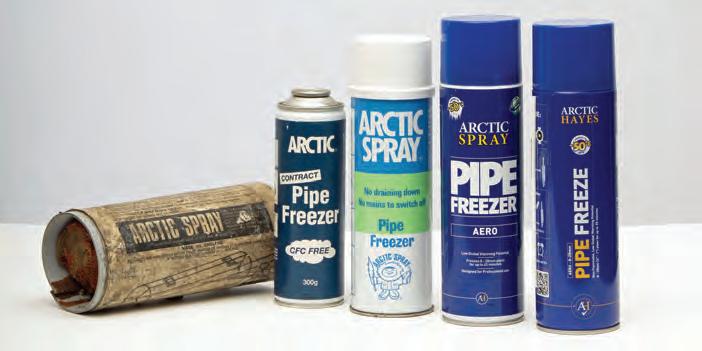
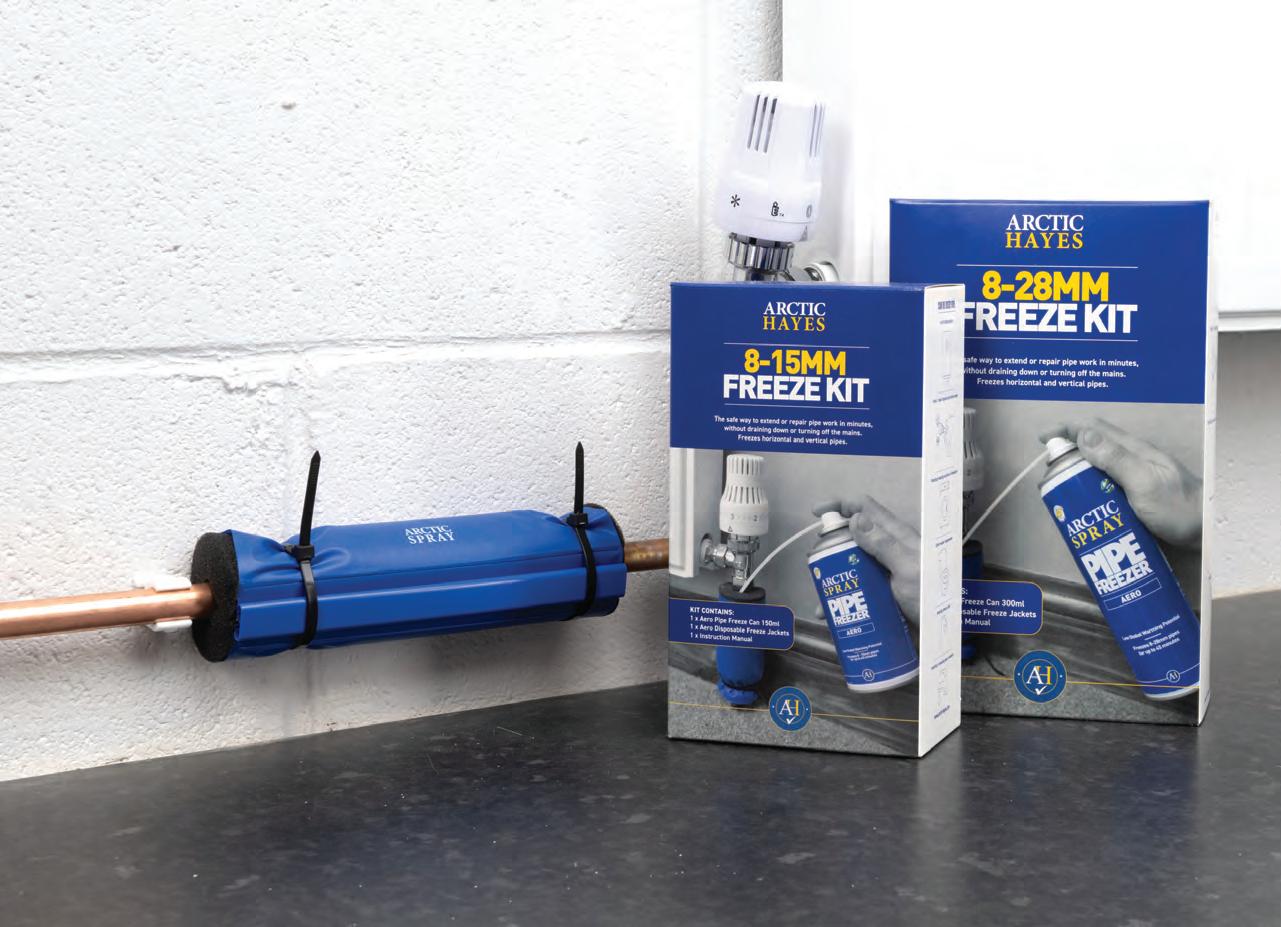
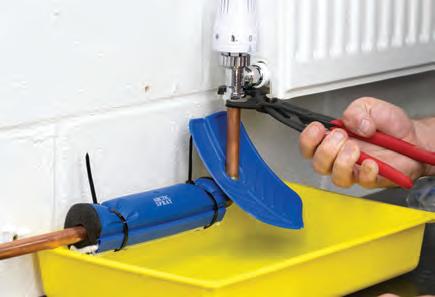
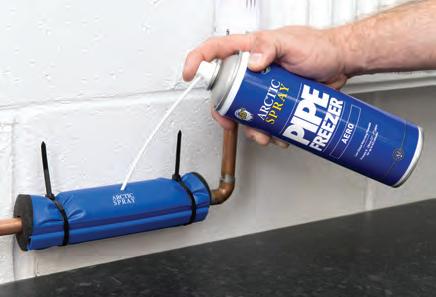
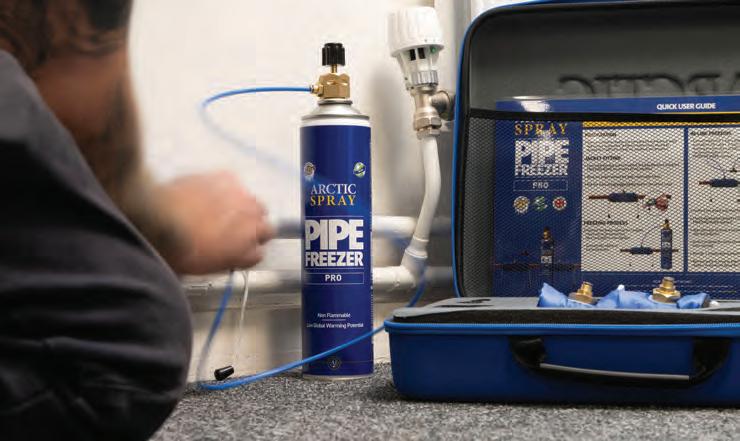
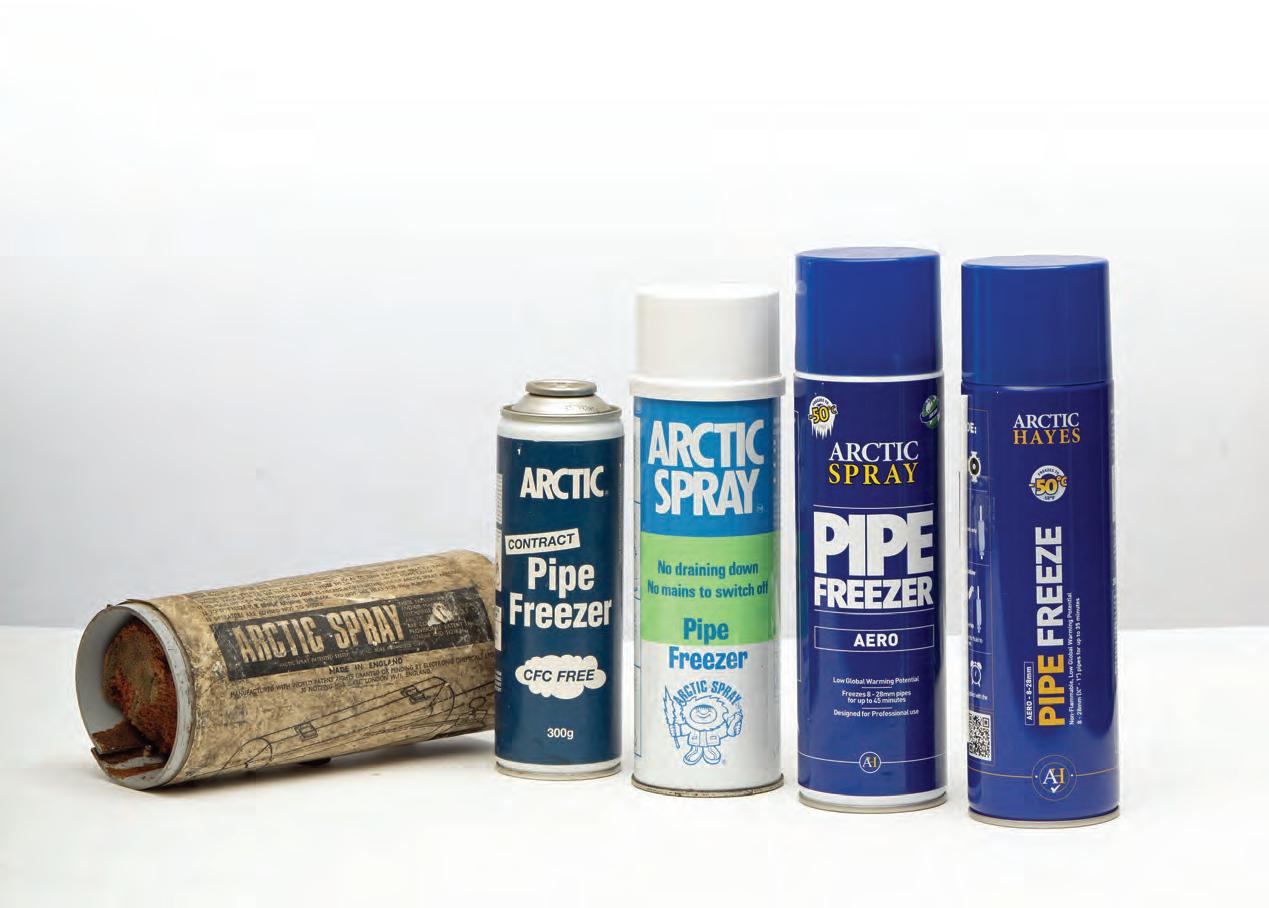
Pipe Freeze from Arctic Hayes by DiversiTech UK is 60 years young for 2026. UK Business Unit Director, Lee Parsons, looks back to its inception and outlines how it can help plumbers across a range of scenarios.
KEEPING COOL
Wplumbers and heating engineers have often had to consider the option of draining an entire heating system.
It’s a process that can be time-consuming, wasteful and disruptive, yet a simple, ingenious and highly effective pipe freezing alternative, which was patented 60 years ago, has long saved them valuable time, money and effort on the job.
keeping works uncomplicated and hassle-free. The principle is straightforward and the benefits haven’t changed, but the reliability of today’s kits reflects decades of refinement. They remain as relevant today as they were when they first arrived.
Isolation
Pipe Freeze kits create a temporary, solid ice plug within a pipe so you can isolate sections of the system without the need to drain it – and no need to locate a stop-cock or service valves either. This ice plug can also withstand pressure, allowing plumbers to work on the pipes without disruption and the risk of thawing and leaks. What might otherwise take half a day can often be completed in a single visit.
Modern pipe freeze kits such as those in the Arctic Hayes portfolio, are far more controlled and predictable than older methods, making them suitable for a wide range of domestic and light commercial applications. When used correctly, they allow plumbers and installers to work
cleanly and confidently on live systems while maintaining control of the job.
These kits can reduce job time’s by an average of 85 per cent, based on a two-hour drain down and refill – also reducing the potential for water spillage and property damage – which is a significant time saving in any working day.
Three kits
There are three different types of kit in the range; ‘Aero’, ‘Professional’ and ‘Electric’ and each caters for a range of pipe sizes and applications, so choosing the right one for the job at hand is really easy.
Pipe Freeze ‘Aero’ is an entry-level disposable kit, containing enough refrigerant to perform a single freeze on small diameter pipework up to 28mm and can be used for jobs such as changing a radiator valve, replacing a stop-cock or other service valves.
The ‘Professional’ range comes with extra features such as re-useable components and dual freeze options, designed for plumbers and engineers who carry out regular pipework repairs and maintenance such as replacing stopcocks, radiator valves, heating pumps, zone valves and installing magnetic filters. Based on a standard 15mm copper pipe, the Professional Pipe Freeze kit can freeze pipes in a matter of minutes.
Designed for professionals engaging in a large-scale contract domestic and commercial plumbing jobs, such as
Pipe Freeze kits create a temporary, solid ice plug within a pipe so you can isolate sections of the system without the need to drain it – and no need to locate a stop-cock or service valves either
university accommodation and social housing, the ‘Electric’ range of Pipe Freeze Kits delivers mains-powered pipe freezing with an indefinite freeze time when used with a continuous power supply. Each kit includes everything you need: appropriately sized head clamps and reducers, freeze cream, gloves, and instructions.
Working on large plumbing contracts, means no consumable or maintenance costs, saving you time and money, plus going ‘Electric’ also means completing jobs without monitoring refrigerant levels.
Repeatable process
Whether replacing a radiator, installing a new tap, repairing a leaking shower or swapping out a stopcock, emptying an entire heating system is time-consuming
and inconvenient and can leave homes or commercial premises without heating and hot water for extended periods.
That’s why for six decades solid, pipe freeze kits continue to hold their place in plumber and heating engineer toolkits and vans, year after year.
Advanced refrigerants, durable freeze jackets and rigorous testing ensure the ice plug remains stable throughout the repair process. The process itself is uncomplicated and repeatable, giving engineers a dependable method for handling routine maintenance and emergency repairs alike.
For more information please www.rdr.link/pcb018
AMARCH
PHPI takes a look at the introduction of Carhartt’s new Women’s Steel Pants.
Following the introduction of Carhartt’s men’s Steel Pants in 2025 the women’s version has now been launched. The company says the range has been carefully and specifically designed to fit women properly, allowing for easy movement but with the toughness and durability tradeswomen expect.
The Carhartt Women’s Steel Pants are made from a stretch ripstop fabric designed to be resistant to tears and abrasions, but flexible enough to give plenty of freedom to climb, crouch, bend and stretch. Cordura™ reinforcement is used in high-wear areas, helping the trousers stand up to tough site conditions. A Flex Cordura™ gusseted crotch allows for a greater range of movement and the Comfortflex waistband is included for a secure but adaptable fit.
Flexible storage
These trousers have a number of pockets: reinforced front ledge pockets, a ruler pocket, a utility band and zippered hanging bag pocket. Kick panels allow for alterations and the Flex Cordura™ kneepad pockets, designed to meet EN 14404-4:2024 dimensions, have cleanout openings and are compatible with Carhartt Interoperable Kneepads 107552, which are designed to adapt to the shape of the knee and give lightweight Level 1 protection.
For more information please www.rdr.link/pcb019
phpionline.co.uk
P R ESS ON
With press fittings gaining interest across the industry, PHPI speaks with Christian Kemper, Head of Marketing, Novopress, to discover more about pressing and the company’s ACO103 press tool.
QWhy are plumbers considering press fittings instead of other pipe jointing methods?
Press fittings have become the preferred choice for many plumbers and heating engineers because they offer a fast, reliable and flame-free alternative to traditional soldering or compression fittings. A single press cycle takes just a few seconds, significantly reducing installation time –particularly on larger projects. Without the need for open flames, press fittings also eliminate fire risks on site, making them safer for working in occupied buildings or near sensitive materials.
The consistent, tool-verified connection also removes the element of human error associated with manual jointing techniques, giving plumbers and building owners greater confidence in the integrity of every joint.
QWhat factors should plumbers look out for when considering the type of press tool to invest in?
There are several key considerations when choosing a press tool. First, compatibility –the tool should support the pipe materials and diameter ranges relevant to the plumber's typical workload, whether that's multilayer, copper or stainless steel systems.
Second, ergonomics and weight matter greatly on longer jobs or in confined spaces; a lighter, more compact tool reduces fatigue and improves access. Third, battery performance and charge time are important for productivity on site. Plumbers should also consider the availability of jaw and ring accessories, the ease of swapping between them, and whether the tool offers digital features such as app connectivity, press logging or maintenance alerts – all of which are increasingly valuable for documentation and quality assurance on commercial projects.
QAccessing tight spaces is required in many installations. How does the ACO103 press tool help?
The ACO103 has been specifically designed with confined spaces in mind. Its compact and lightweight build allows it to be manoeuvred easily. It handles pipe diameters up to 40mm in multilayer systems and up to 35mm in metal pipe systems. When combined with Novopress pivoting rings, the ACO103 can press at virtually any angle, making it ideal for working behind panels, in ceiling voids, or in plant rooms where space is severely restricted. It is consistently one of the best-selling tools in the Novopress range.
QHow is the unit powered and how many press cycles can be completed on a single charge?
The ACO103 is powered by the Milwaukee M12 battery system, offering plumbers the flexibility to use any Milwaukee M12 battery capacity available on the market – making it easy to integrate into an existing tool setup. With a power consumption of 240W, the tool delivers up to 250 press cycles on a single charge, depending on the pipe material, dimension and battery capacity used. Should the battery run low, charging takes between 45 and 75 minutes depending on the battery capacity, ensuring minimal downtime on site.
QWhat are the other benefits of the ACO103?
Beyond its performance in tight spaces, the ACO103 offers a number of additional advantages that make it a versatile choice for everyday installation work. Its compatibility with the full range of Novopress press jaws, pivoting rings and
press slings means plumbers can tackle a wide variety of applications with a single tool. The tool's robust construction is built to withstand the demands of the job site, while its intuitive operation keeps training requirements to a minimum.
The ACO103 is also part of the wider Novopress ecosystem, meaning it is fully supported by Novopress's service network and authorised workshops across the UK and Europe.
QWhat kind of a warranty is available?
Novopress offers comprehensive warranty and guarantee coverage across its product range. All new press tools, accessories and equipment are covered by the full statutory warranty of 24 months from the date of delivery. Batteries and chargers are covered for 12 months from the date of purchase.
In addition, Novopress provides extended guarantee options for customers who commit to regular servicing. Press tools, press jaws with intermediate jaws and press slings that are serviced at least once every 12 months at Novopress or an authorised service centre qualify for a one-year extended guarantee beyond the statutory period. For press jaws, interchangeable jaws and press inserts, this extended guarantee increases to three years, again subject to annual servicing at an authorised workshop.
For more information please www.rdr.link/pcb020
MAKE AN IMPACT
PHPI takes a look at a couple of recent introductions to Makita’s range of tools – a new impact driver and a reciprocating saw.
Impact Driver
Makita has launched a new impact driver, which the company says is the most powerful in its XGT line-up. The TD004G 40VMax XGT Brushless Impact Driver is powered by Makita’s 40VMax XGT Li-Ion battery and offers a maximum fastening torque of 230 Newton metres (Nm), a no-load speed of up to 3,900 rpm and delivers up to 3,900 impacts per minute (ipm).
The TD004G features a variable speed trigger and four power modes that alter the speed, impacts per minute, and torque for easy adjustment to the type of fastener and material. The tool features one-touch tool-less bit change with reduced resistance for easier fitting, and twin led job lights with pre-glow and after-glow functions for visibility of the workpiece.
Kevin Brannigan (Marketing Manager) at Makita commented: “This latest addition to our range of 40VMax XGT impact drivers has been designed to help achieve greater speed and efficiency on the most demanding fixing and fastening tasks.”
Reciprocating Saw
Another new introduction from Makita is a Reciprocating Saw. Equipped with a newly engineered chain vice to securely fix the workpiece, the company says the new JR003GZ 40VMax Reciprocating Saw XGT® enhances stability, safety and helps to improve accuracy in the cut.
The new saw is powered by a 40VMax Li-ion battery and, according to the company, delivers a high cutting capacity making it an option for heavy duty requirements. With a maximum cutting diameter of 220mm, an adjustable stroke rate based on the material as well as constant speed control, the saw can be used for a variety of materials including wood, cast iron, iron and steel pipes.
The pipe clamp style chain vice has a built-in spring that achieves a quick and secure fixing and allows the chain to be temporarily held in place while wrapped around the pipe. This has been designed to enable operators to achieve a parallel cut, for applications where pipes need to be welded together achieving an accurate join. The tool can also be used as a standard recipro saw by attaching the front grip
accessory supplied.
Key safety features include a soft start, an anti-vibration level of 14.9 m/s2 during cutting to reduce operator fatigue as well as the front grip and grip shaft. The saw has also been engineered for improved dust and water resistance for operation in harsh conditions.
“Makita’s new 40VMax Reciprocating Saw is an outstanding addition to our trusted XGT® range,” explained Kevin Brannigan, Marketing Manager at Makita UK. “If you take the example of a steel pipe with a diameter of 114mm – then our new recipro saw would have a cutting speed of just 28 seconds combined with the consistent accuracy professional results demand. The brushless motor also ensures improved efficiency overall, increased power and longer life – it’s an all-round winner.”
The brushless motor also ensures improved efficiency overall, increased power and longer life
PLAYTIME
Head over to the PHPI YouTube Channel to view videos on everything plumbing & heating: from fittings to filters – press tools to pumps. The videos have been put together with input from both manufacturers and installers to bring you the latest details.
Just type in the rdr.link codes listed to watch... & don’t forget the popcorn!
GRUNDFOS
SOLOLIFT 2 Macerator
In this video Karl Hills offers a guide on how to upgrade a macerator by fitting the Grundfos SOLOLIFT 2. Called in to replace a faulty macerator unit at a rental property, Karl examines the problem, discusses the benefits of the replacement unit – a Grundfos SOLOLIFT 2 – and demonstrates the replacement process. Discussing his selection, Karl notes: “It's really easy to pick which model you need. There's only five in the range and they're suited for all different types of scenarios, whether it is depending on different outlets or inlets and where it is in the house. It's also a really compact design, so it's really great for fitting in those really tight situations, where it's up against a bath or behind the loo where you've got not much of a gap.”
To watch the video… www.rdr.link/pcb022
FLAIR SHOWERS Verve Pro Shower Screen
In this new video, Jay from J.W. Watters Plumbing & Heating, fits the Verve Pro shower screen from Flair Showers which features a click-fit design. Working through the installation, Jay notes: “So this is the new click fit design from Flair. As you can see, that's as easy as it is. It slots in and this little mechanism here, clicks into the profile. It all fits together seamlessly... just like that. This is, actually, really simple.”
Summing up at the conclusion of the installation, Jay says: “The click fit mechanism is really, really good to use and it makes life so much easier when you fit in a shower door on your own.”
To watch the video… www.rdr.link/pcb023
SOUDAL Stay Fresh silicone
In this video Jay Watters, from J. W. Watters Plumbing & Heating, tries out Soudal’s Stay Fresh silicone which prevents mould and offers lifetime colour stability, in bathroom settings. After using the silicone on the internal corner of a bathroom and demonstrating how to create a neat finish, Jay says: “So, the product is really, really nice to use. It fills the gaps nicely and with these spatulas makes it an absolute dream to create a nice, neat finish.” Jay concludes: “I’m really impressed with the product. It is really nice to use. It goes on nice and easily.”
To watch the video… www.rdr.link/pcb024
Glow-worm has revealed its latest addition, the GeniaAir Heat Pump, which it describes as a straightforward air source heat pump system that delivers.
GLOW-WORM GENIAAIR HEAT PUMP
According to Glow-worm, GeniaAir embodies a 'Without The Faff' philosophy – the company’s ongoing commitment to stripping out unnecessary complexity and delivering what installers actually need.
Wider system
The launch of the GeniaAir heat pump is also accompanied by wider low carbon heating system solution featuring a new Glow-worm HydraCyl standard non-pre-plumbed cylinder range in sizes from 150 litres to 250 litres, plus the compatible MiPro controls.
The company says that by using the complete Glow-worm system, it means that installers can benefit from working with one manufacturer – ensuring installation support across the whole system and an enhanced guarantee through the myREWARDS loyalty programme. Features include:
● Single fan technology – makes for a more compact heat pump unit
● Three outputs – 5kW, 7kW and 11kW –provides flexibility across a wide varietyof property types
● Flexible Space Function (FSF) – once activated, it means Glow-worm’s GeniaAir only needs a small protection zone, giving flexibility when it comes to choosing where to fit the unit around a property
● Lightweight – the monobloc GeniaAir units weigh between 84kg and 133kg, depending on output
● Backup and support on hand –Glow-worm’s dedicated technical support team is available to help from selection through to installation, troubleshooting and commissioning
● In-depth training – in-person and online and on products and installation are all available at Glow-worm’s Centres of Excellence across the country
‘Keep it simple’
James Fowler, Marketing & Strategy Director at Glow-worm, commented:
“We've built GeniaAir on one principle: keep it simple. Installers don't need more faff, they need products that work. From installers who know and trust the Glow-worm brand to those wanting to make their way in heat pumps or those looking to expand their heat pump offering, all need a product that keeps selection and installation trouble-free and reliable.
“Knowing you have back up and support is also so important in this growing – and still new to many – part of the heating industry. Choosing an established brand like Glow-worm gives installers that bit extra. It means they have the back up of a technical team as and when needed throughout an install. And, as an extra bonus, the chance to build points and rewards through the myREWARDS loyalty scheme.”
For more information please www.rdr.link/pcb025
BAXI LAUNCHES NEW CARE KITS
Baxi has launched new Care Kits designed to make preventative boiler maintenance simpler for installers.
Akey benefit of proactive preventative maintenance is that it supports reliable performance over the lifetime of the boiler. By addressing high-wear components at the right time, Baxi says, installers can help reduce unexpected breakdowns and callouts, minimising disruption for homeowners and maintaining optimal system efficiency.
Planned approach
Baxi’s new kits, while optional and not a warranty requirement, offer a structured, planned approach to maintenance focused on high-wear components. They are available in two types: Care Kits, and Care Kits Plus.
Baxi Care Kits are recommended for use during an annual boiler service as part of routine preventative maintenance. They include a combustion chamber door gasket, a flue adapter test point and O-ring, among other parts. Replacing gaskets and seals is recommended once exposed through routine boiler strip-down during an annual service, to ensure efficient heating and hot water delivery.
Baxi’s Care Kits Plus are designed for key lifecycle points where additional components may benefit from replacement. They are recommended by Baxi to be fitted every three to five years, dependent on system condition and usage. These kits contain everything in the
Baxi Care Kit along with further parts, including an ignition electrode with gasket and screws, an expansion vessel valve core, and a plate-to-plate heat exchanger gasket and screws.
Installer input
Andrew Speake, Portfolio Manager at Baxi, said: “Installer input was an integral part of the development of the Care Kits. The feedback from those engineers taking part in the research was that our Care Kits are reassuring to the homeowner and add value, and that the pre-selected parts, along with the recommended timings for use, removes the guesswork commonly involved in preventative maintenance. Additionally, they commented that having all the parts in one sealed package would remove the need for multiple orders and journeys, while avoiding the need to carry loose spares which can easily become damaged or lost in the engineer’s van.” Andy added: “Our Care Kits offer a straightforward way for installers to carry out best practice preventive maintenance based on the age and condition of the boiler for the benefit of the customer. Providing these identified components in easy-to-access Care Kits means they can be simply replaced before issues occur. In this way, we hope to help installers move from reactive repairs to planned maintenance, supporting reliable performance, homeowner comfort, fewer disruptions, and providing clear value for the customer.”
For more information please www.rdr.link/pcb026
SHOWERWALL INTRODUCES ACRYLIC INSTALLATIONKITS
Showerwall has enhanced support for installers using its range of Acrylic wall panels, with the introduction of supplied-as-standard installation kits.
The company says each Acrylic panel from Showerwall now comes with a kit which equips installers with everything required to achieve a flawless, professional finish, while improving consistency, minimising errors, and ensuring every panel performs exactly as intended.
The Acrylic installation kit includes alcohol wipes to prepare a clean, dust-free surface; enough sealant for full panel bonding and edge sealing; and double-sided pads to hold the panel in place while the sealant cures.
The introduction of the installation kit is supported by an updated installation guide and instructional video for fitting acrylic panels, both of which are available to download from the Showerwall website.
Katie Cope, Head of Showerwall, said: “Developed with professional installers in mind, we’ve introduced the new Acrylic installation kit to make the process of achieving a high-quality finish for customers as straightforward as possible.
“We’ve also refreshed our Acrylic installation instructions to cover best practice and precise, detailed techniques that optimise the end-result.”
For more information please www.rdr.link/pcb027
FERNOX INTRODUCES NEW COMMERCIAL RANGE
Fernox has launched a new range of air and dirt separators, vacuum degassers, side stream filters and additives, engineered for commercial HVAC applications.
Among them is the new CC1 Side Stream Filter Air & Dirt 90. Developed to provide high-performance magnetic and fine particulate filtration, air removal, and a chemical dosing unit, it is suitable for commercial closed-loop systems up to 90,000 litres.
The stainless steel device utilises three different methods to remove contaminants. A magnet captures magnetic debris, and an air vent removes air that would accelerate corrosion.
Its anti-microbial filter cartridges prevent bacterial contamination and capture non-magnetic debris, designed to ensure a robust approach to system protection.
Fernox also offers a range of micron sizes too – down to 0.5 microns depending upon the condition and needs of the system. The integrated 5.5L dosing pot allows chemicals to be introduced without shutting down the system.
Also featuring in the range is the CF1 Magnetic Dirt Separator, designed to magnetically capture ferrous debris and hydraulically separate non-magnetic sludge. The range of devices also includes the CA1 Air Separator, a deaerator that continuously removes air and microbubbles from closed loop systems.
To remove dissolved and free gases from the system water there is also the CA1 Vacuum Degasser, a fully automatic solution that uses controlled vacuum conditions to release entrained gasses.
For more information please www.rdr.link/pcb028
NEW BROCHURE FROM TUCSON
Tucson Pumps has released a new brochure in a compact A5 format, designed to provide a handy guide for installers to keep in their van.
The brochure forms part of Tucson’s installer-first approach to take the guesswork out of pump selection and make the process faster, clearer and more intuitive. Providing a physical guide in addition to the digital pump selection tools that Tucson recently launched, the brochure has been designed to help installers confidently choose the correct pump for the job.
Tucson has incorporated handy icons throughout the brochure that highlight product benefits such as whether accessories are included, if the pump operates quietly and key warranty information. The literature features imagery that showcases the pumps in real-life scenarios to give installers a clearer understanding of how each product fits in typical applications. It also includes information on the company’s in-house technical support service.
Neil Wilson, Head of Marketing, Tucson Pumps, says: “At Tucson, we genuinely value all installer feedback and understand the importance of straightforward, reliable information that can be accessed quickly, whether on-site or at a trade counter. Our new A5 brochure brings everything together in one clear, accessible format, providing reliable support that installers can count on time and time again. Combined with our digital pump selection tools and in-house technical support, the new brochure solidifies our commitment to making the pump installation process easier and more intuitive from start to finish.”
For more information please www.rdr.link/pcb029
SANIFLO’S CLEAR WATER RANGE GETS SMART BOOST
Following the launch of its new range of clear water pumps in 2025, Saniflo has added another product to the Saniflo Clear Water portfolio.
The new Saniboost Smart is a variable speed, mains boosting pump that delivers high pressure and flow rates for mains-fed water systems; providing a solution to restrictive mains water pipes. It is designed to boost water flow up to 97l/min and pressure up to 5.5 Bar in mains fed systems to help overcome issues such as low flow and/or pressure from outlets such as showers, taps, washing machines, dishwashers, toilets etc... and low flow across one or more outlets when multiple outlets are used at the same time.
It can also be used to overcome poor water pressure and/or flow on higher floors, particularly on third and fourth floors, such as a loft conversion with an ensuite.
Designed to be used in conjunction with cold water storage tanks, the company says typical applications for this product are larger dwellings with several floors and bathrooms, including guest houses, HMOs and light commercial properties.
The company says that as well as offering very quiet operation, the variable speed Saniboost Smart is simple to install and enables multiple outlets to run at the same time ensuring sufficient pressure for multiple drench head showers working simultaneously. Features include brushless technology, dry run protection and auto-start.
www.rdr.link/pcb030
DAIKIN STYLISH RANGE
Daikin has announced the expansion of its Stylish air-to-air heat pump range, introducing five new textured finishes. Designed for residential installers and commercial sectors, including boutique retail and luxury hospitality, the company says the new tasteful finishes transform the air conditioning unit into a high-design interior asset. Callum Redpath, Product Specialist DX at Daikin commented: “With these new design options, we are bridging the gap between world-class climate technology and interior design. We want to empower installers to offer a solution that doesn’t just heat and cool a room, but enhances character, authenticity and ambience, catered specifically for the usage of the area.”
For more information please www.rdr.link/pcb032
KNIPEX LIMITED EDITION DIAGONAL CUTTER
higher-capacity units extends the suitability of the Hydrolution EZY range to larger domestic properties and small commercial applications, delivering heating, cooling, and domestic hot water with significantly reduced carbon emissions.
According to the company Hydrolution EZY models can achieve flow temperatures up to 75°C while maintaining reliable performance across ambient conditions from -25°C to +43°C. All models in the range share a sleek all-black finish, accented with a silver vertical detail.
For more information please
www.rdr.link/pcb033
KNIPEX has unveiled a new Limited Edition version of its diagonal cutter. Available for a limited time only, the “We Forge Winners” edition features comfort handles in white, blue, green and red colourways, presented in exclusive promotional packaging. The KNIPEX 70 02160 S8 diagonal cutter is engineered to deliver cutting performance across a wide range of applications. The 160mm cutter incorporates extended induction-hardened precision cutting edges, which the company says enables users to cut soft wire up to 4mm in diameter, medium-hard wire up to 3mm and hard wire up to 2mm.
The model also incorporates two universal KNIPEXtend interfaces, allowing users to attach tethering points for working at height or add ColourCode clips for easier tool identification and organisation.
For more information please www.rdr.link/pcb031
KUDOS ULTIMATE REEDED GLASS
Kudos has introduced an alternative glass option to its showering panel collection. The company says Ultimate Reeded adds vintage charm to the bathroom setting, perfectly balancing privacy and light. The new panels obscure views with their ribbed styling while allowing soft, diffused light to filter through.
Whilst these new 8mm panels create a reeded illusion, they are manufactured with a flat surface to ensure easy cleaning and offer an alternative to the ultimate coloured and clear glass options. Available in five flat panel sizes, all 1950mm in height, with a foldaway deflector panel option to prevent spray outside the enclosure. They are available in eight colour profiles (Chrome, Matt Black, Brushed Brass, Brushed Nickel, Polished Gold, White, Brushed Gun Metal, and Brushed Copper), Lifeshield easy-clean glass coating, and a lifetime guarantee.
For more information please www.rdr.link/pcb034
ALPHA LAUNCHES MAGIS M TOP HEAT PUMP
Alpha has expanded its renewable heating technology range, introducing the Magis M Top, a monobloc air source heat pump designed for new build and retrofit residential properties.
The Magis M Top provides heating, cooling and domestic hot water and can achieve flow temperatures of up to 75°C. Using advanced inverter technology, the company says the system regulates its output in line with real-time demand to achieve maximum performance while minimising electricity consumption.
The air source heat pump uses R290, which has high thermal efficiency and a very low global warming potential.
“The Magis M Top gives installers a genuinely capable heat pump. It’s designed to perform across a wide range of homes and heating set ups, and to make the installer’s job as straightforward as possible. That’s the Alpha approach,” said Darran Smith, Technical Manager, Alpha.
Available in six versions with a range of outputs, the company says the system can be installed as a standalone unit, in a cascade as part of a centralised system or in combination with an Alpha boiler for hybrid solutions, offering installers greater flexibility in system design.
The Gas App UK Horror Show showcases some of the ‘finest’ work spotted by installers across the countr y. If you spot any masterpieces to rival these, please submit them to the good people at Gas App UK or email us: phpi@hamerville.co.uk