Professional Electrician & Installer July/August 2026
Comment & Special Report
What
The team at NAPIT give our reader submissions the ‘Codebreakers’ treatment
Exploring voltage factors and when to apply them to the nominal voltage as part of an electrical calculation
The importance of CO alarms in the home and guidance on how to site them 35 Exploring the specific requirements for special installations and locations under Part 7 of BS 7671 38 The experts at NICEIC answer more frequently asked questions 41 What do the 2025 updates to BS 5266-1 mean for emergency lighting designers and installers?
Test & Measurement
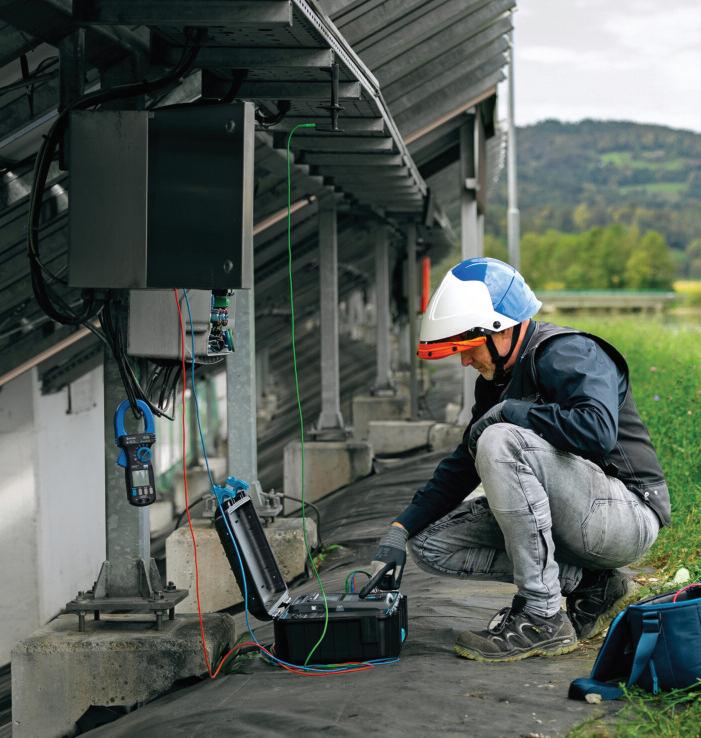
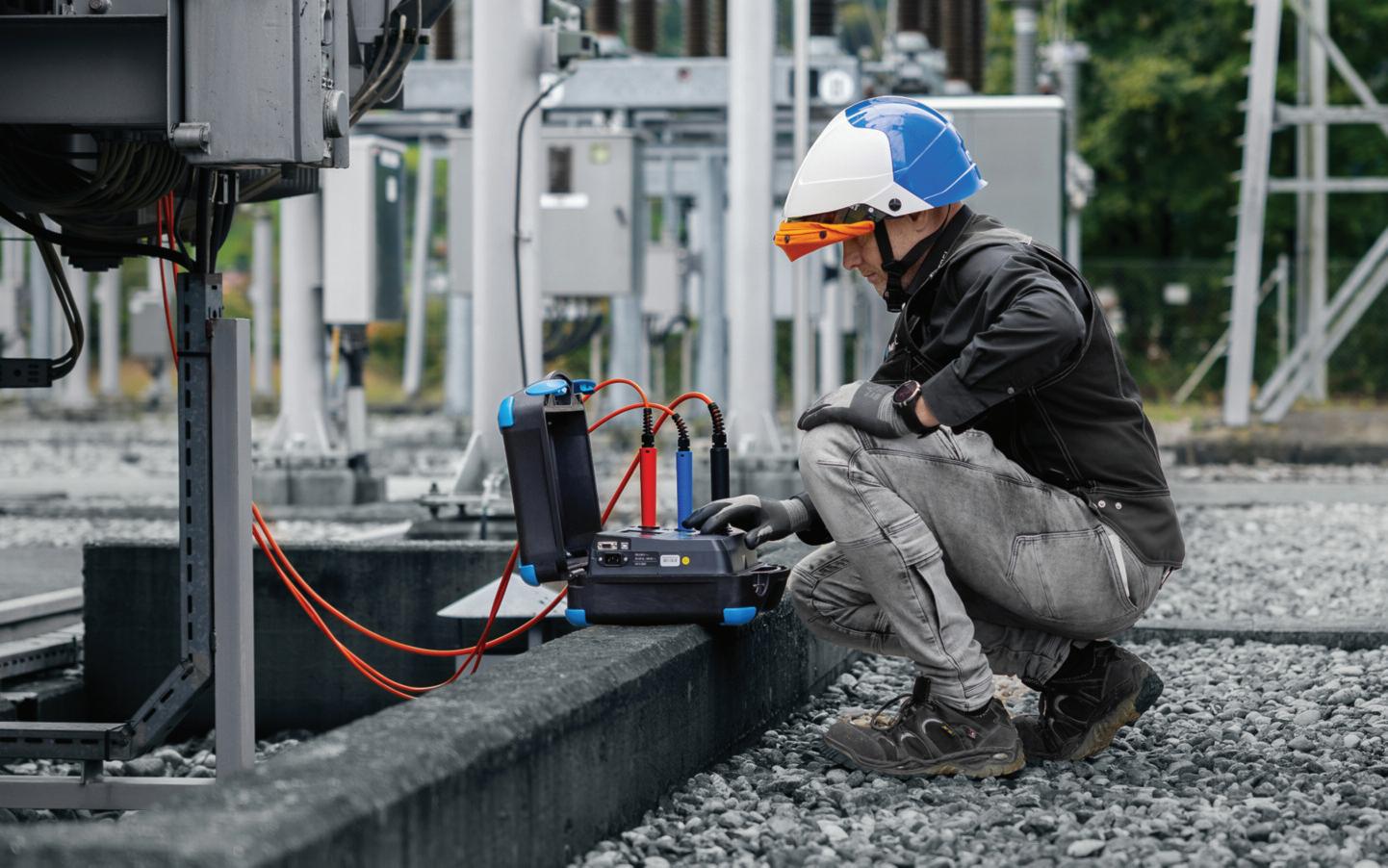
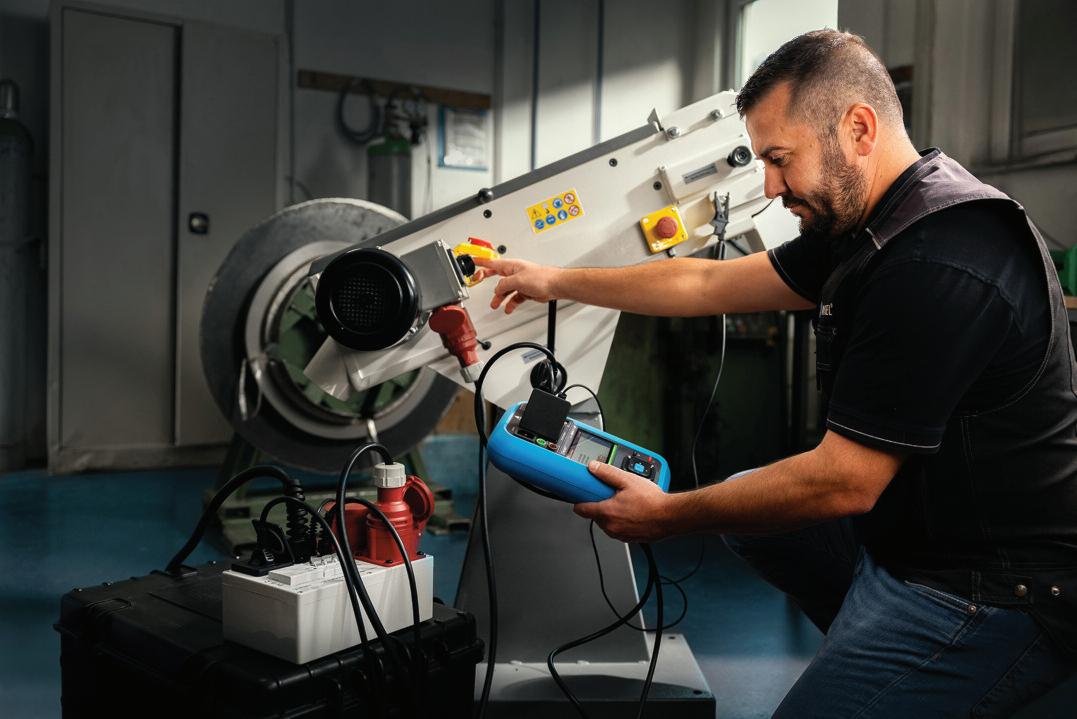
48 Why Metrel’s latest innovations are accelerating the journey from circuit to certificate
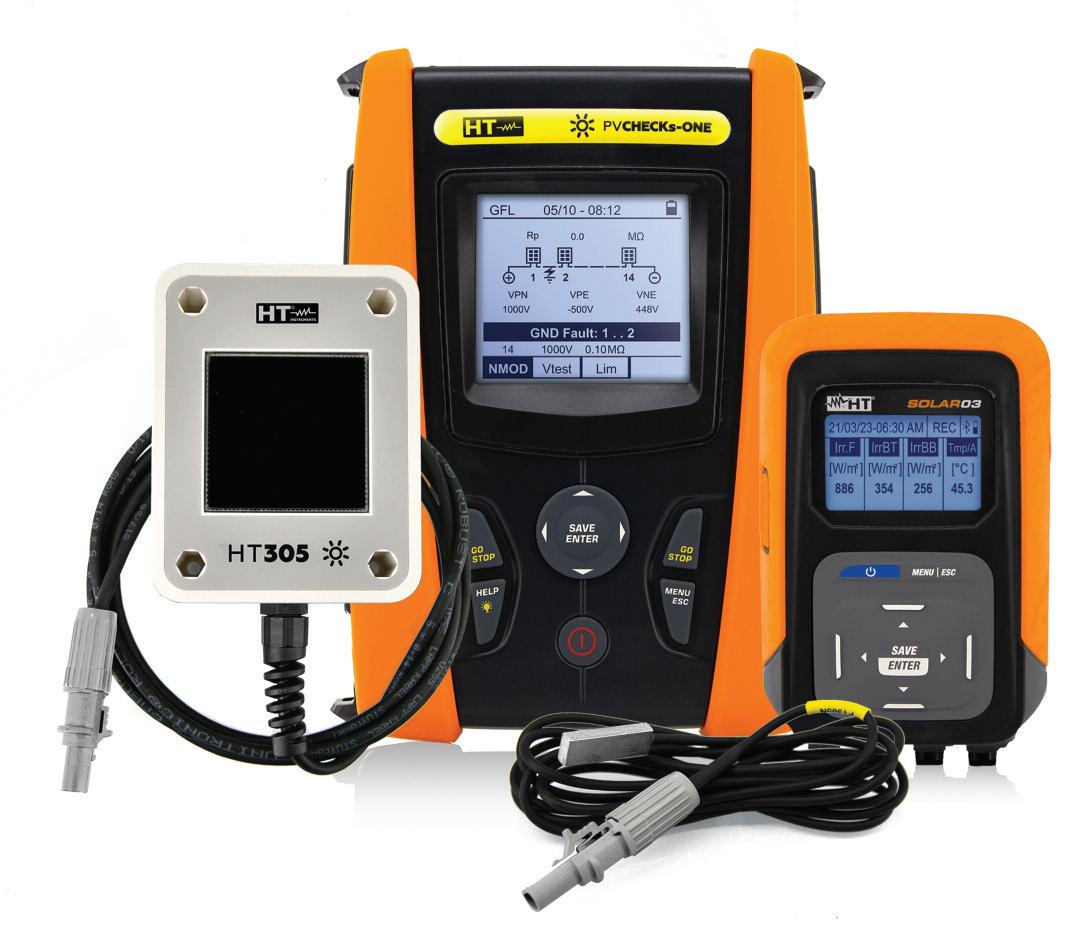
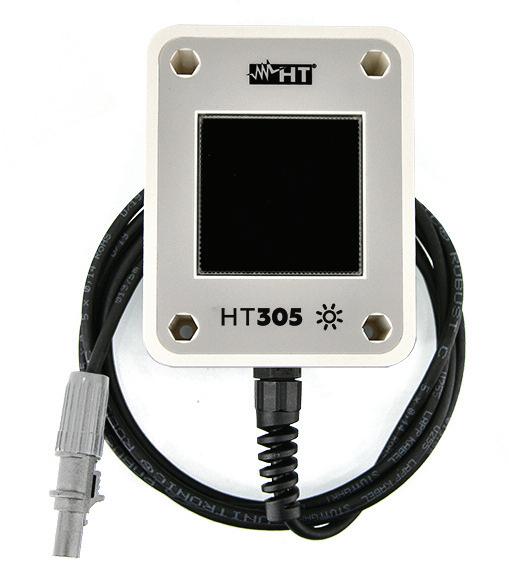
51 How the PVCHECKS ONE tester is helping electricians streamline PV testing, improve accuracy and reduce time on-site
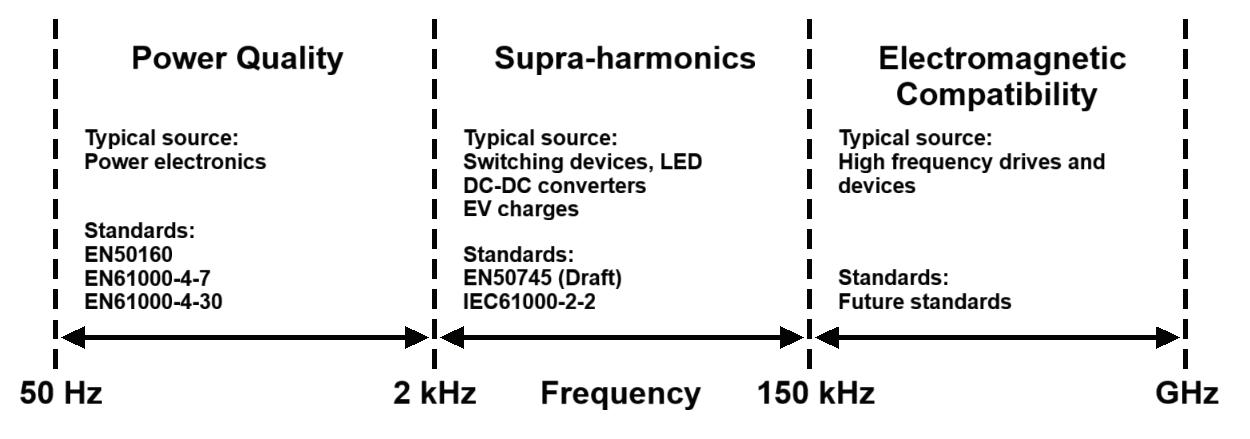
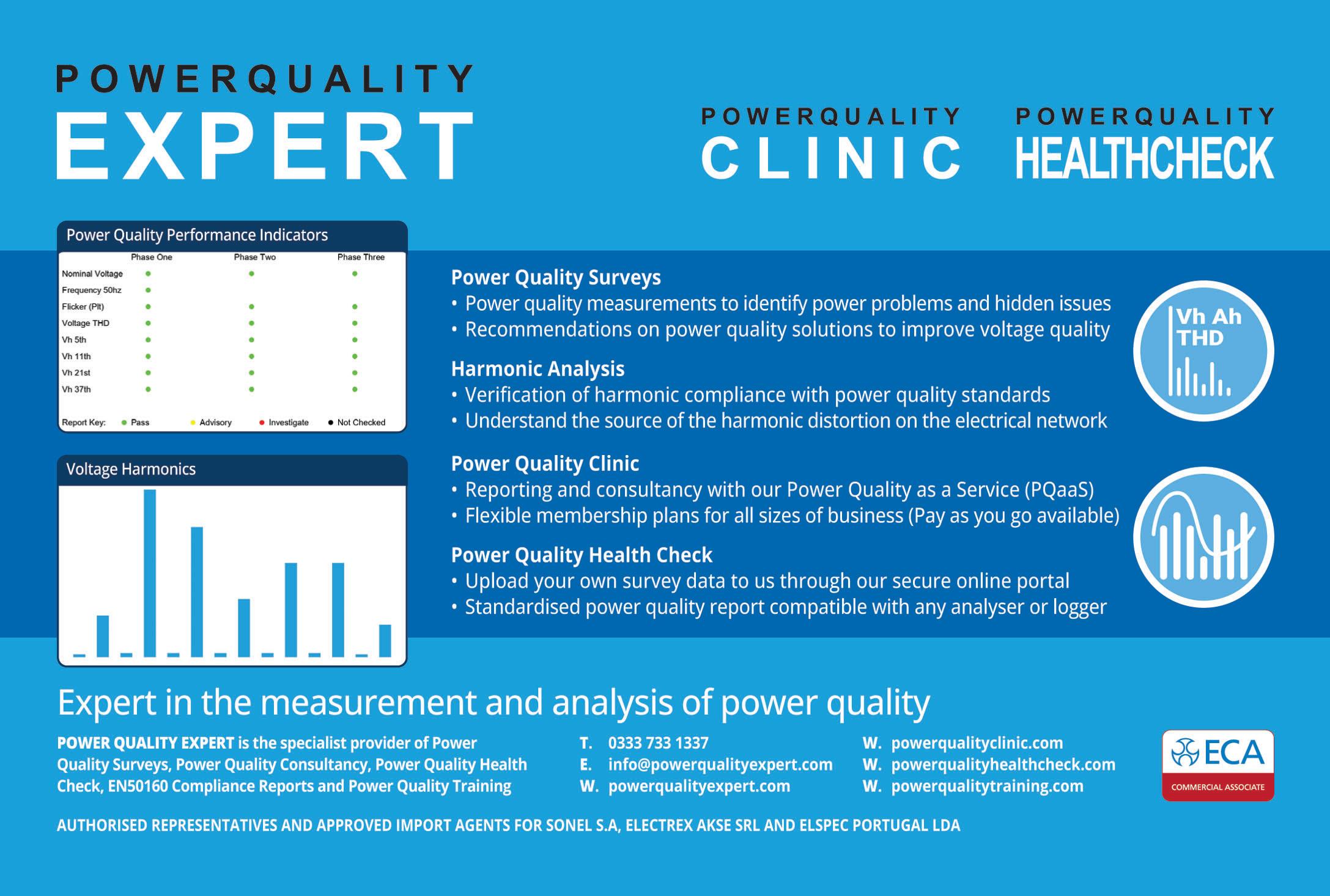
52 Are advances in power electronics reshaping the way harmonic distortion is measured, interpreted and managed?
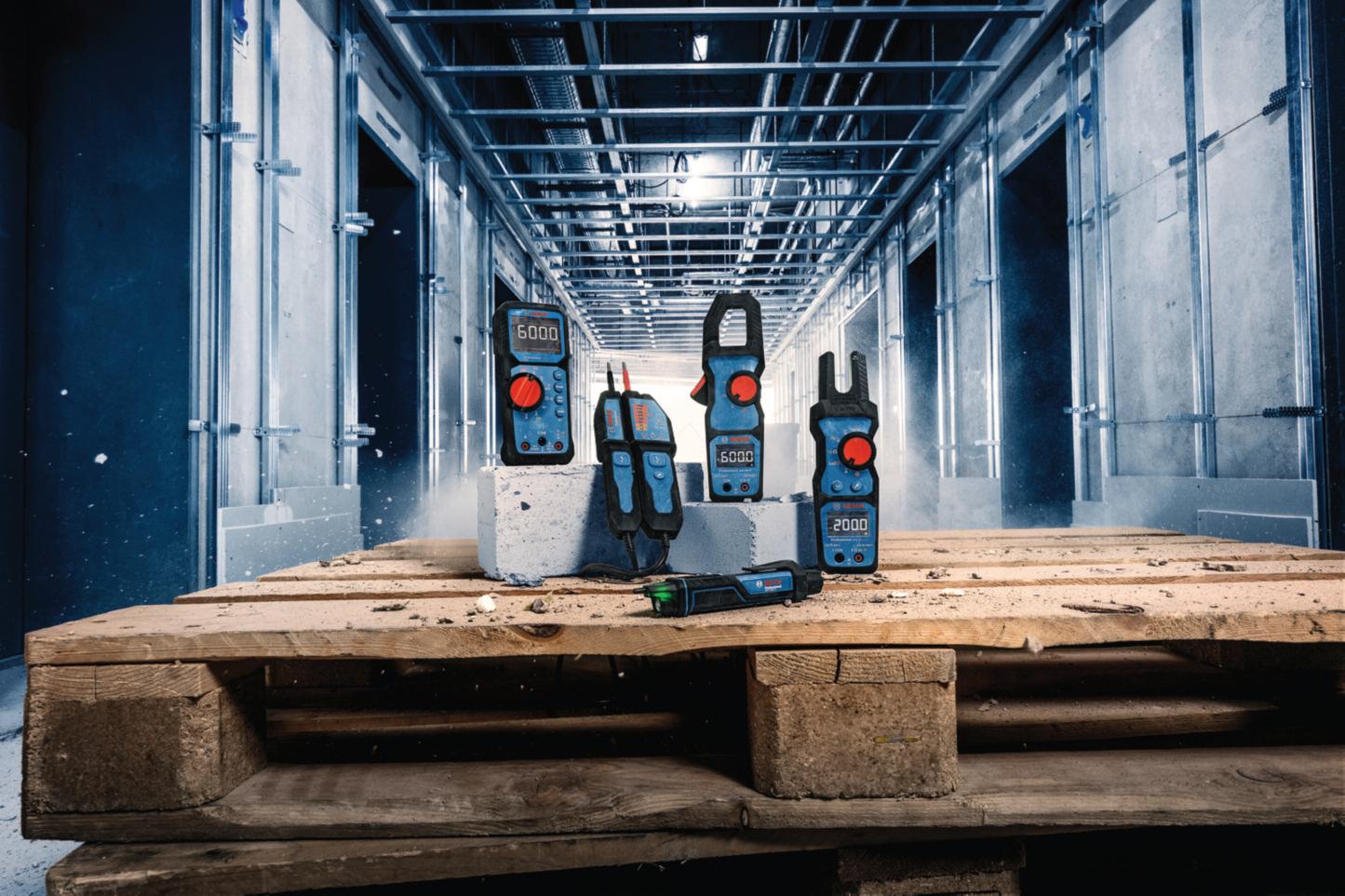
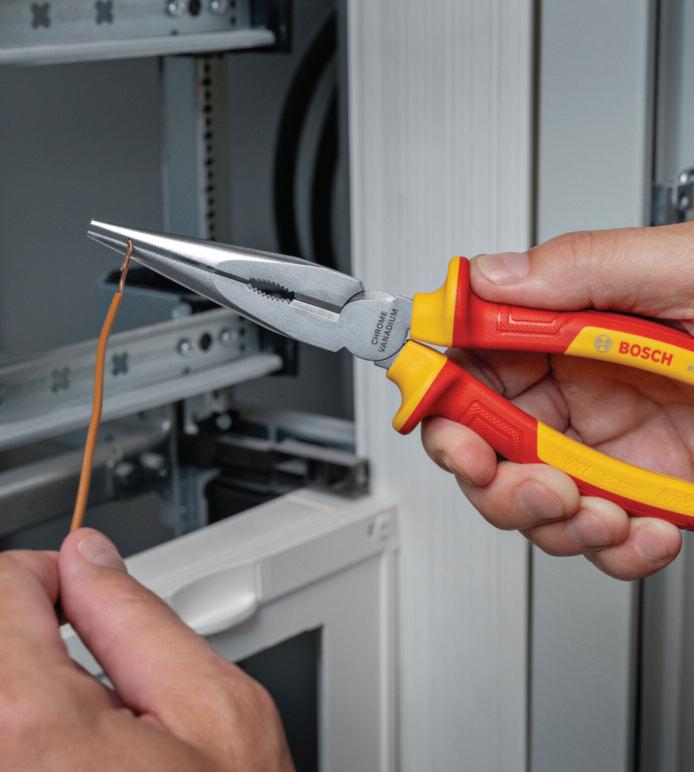
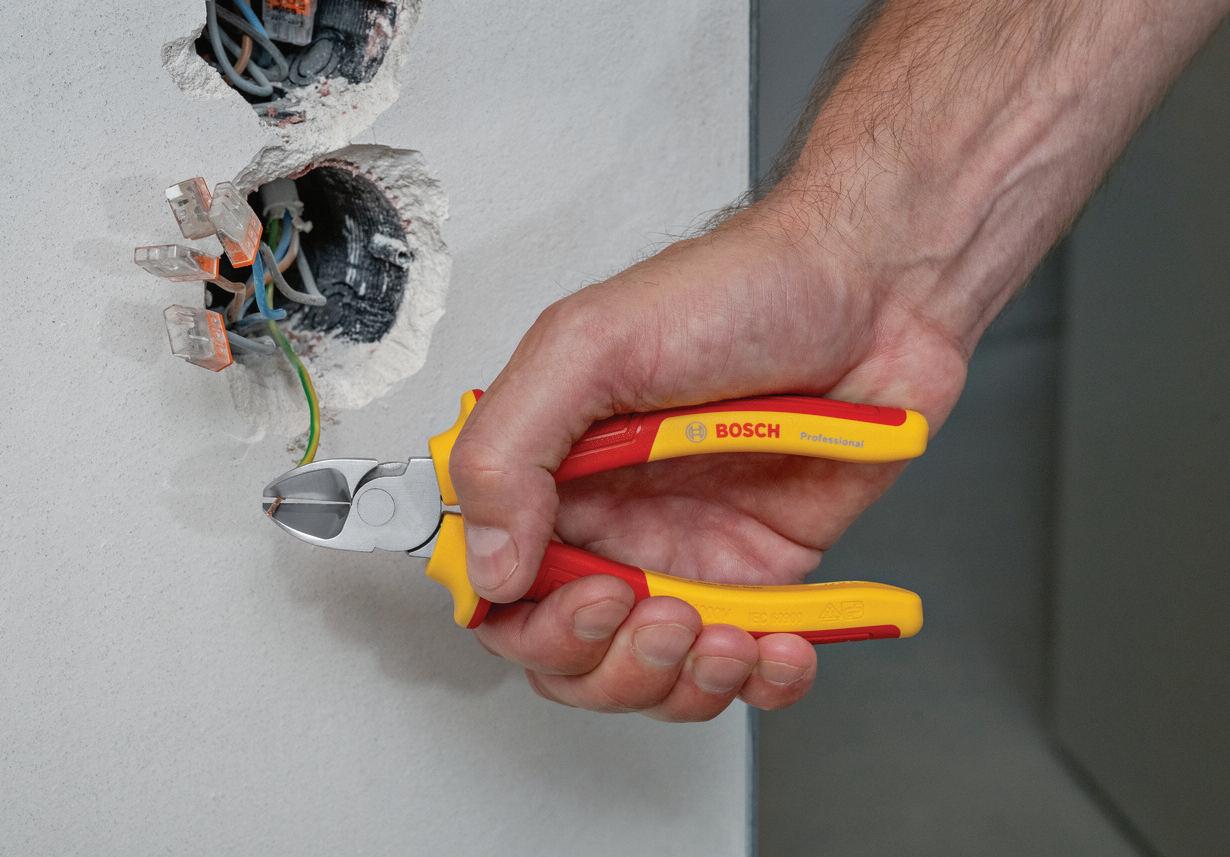
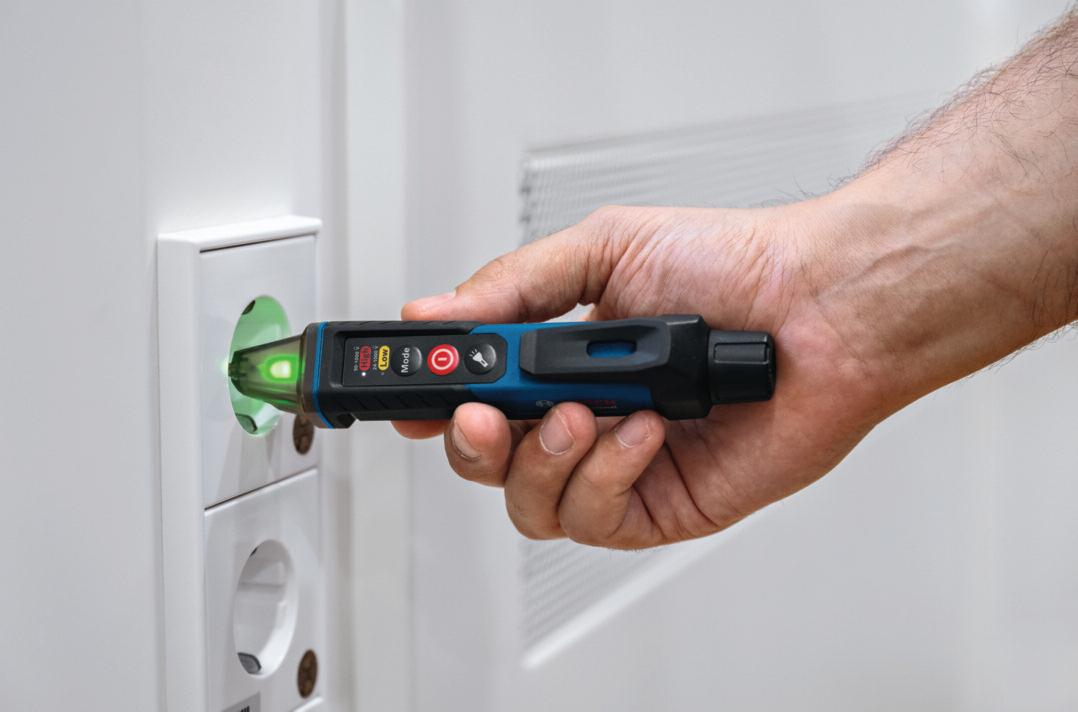
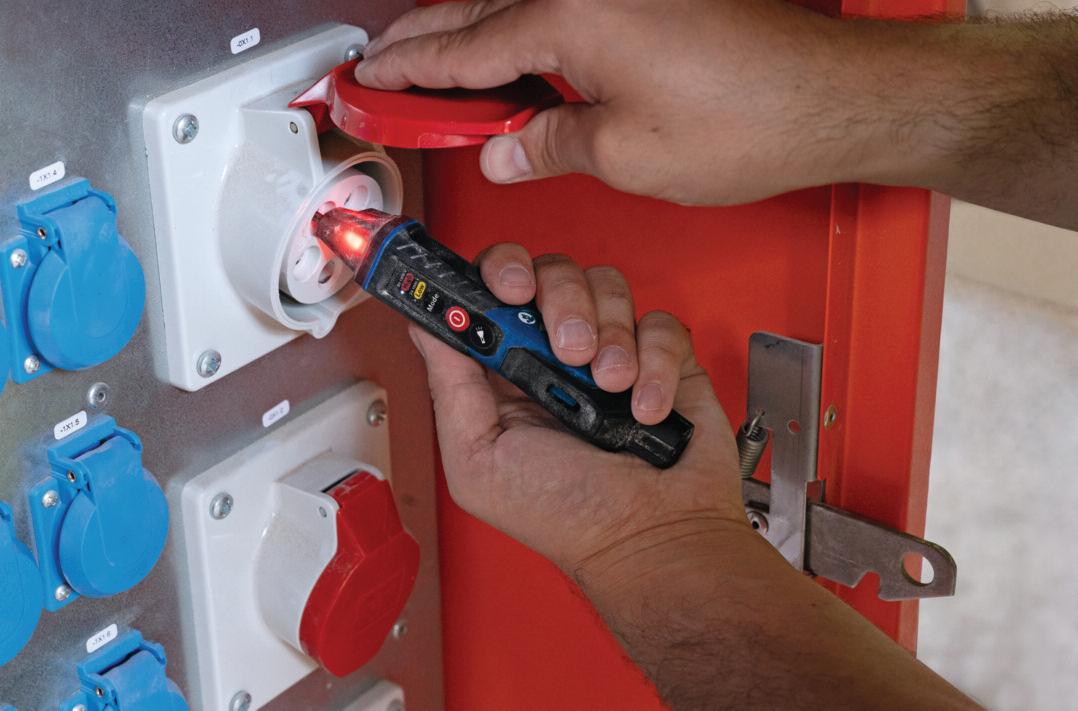
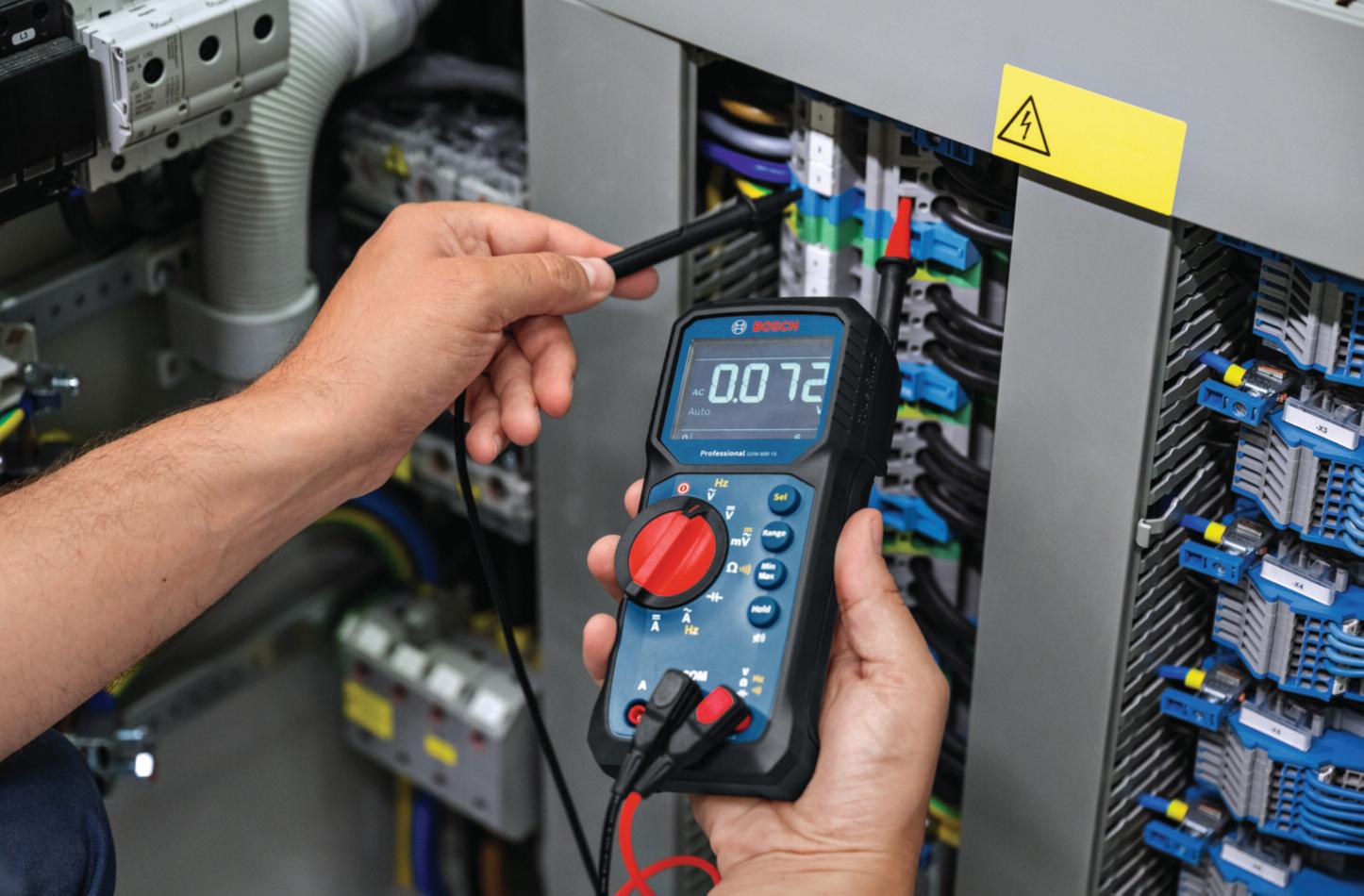
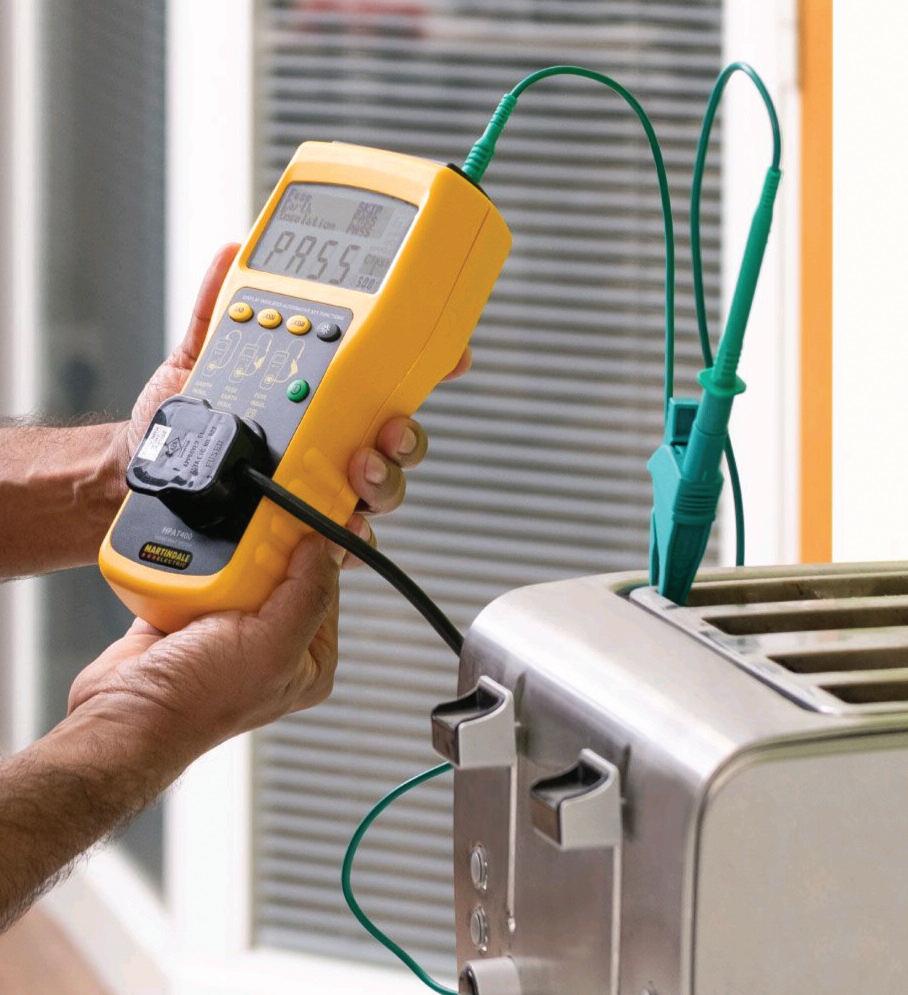
55 We get some expert insight into Bosch’s range of electrical testers and VDE hand tools
58 Why electricians need to consider the other potentially hazardous situations that they might be subjected to, beyond PEN faults
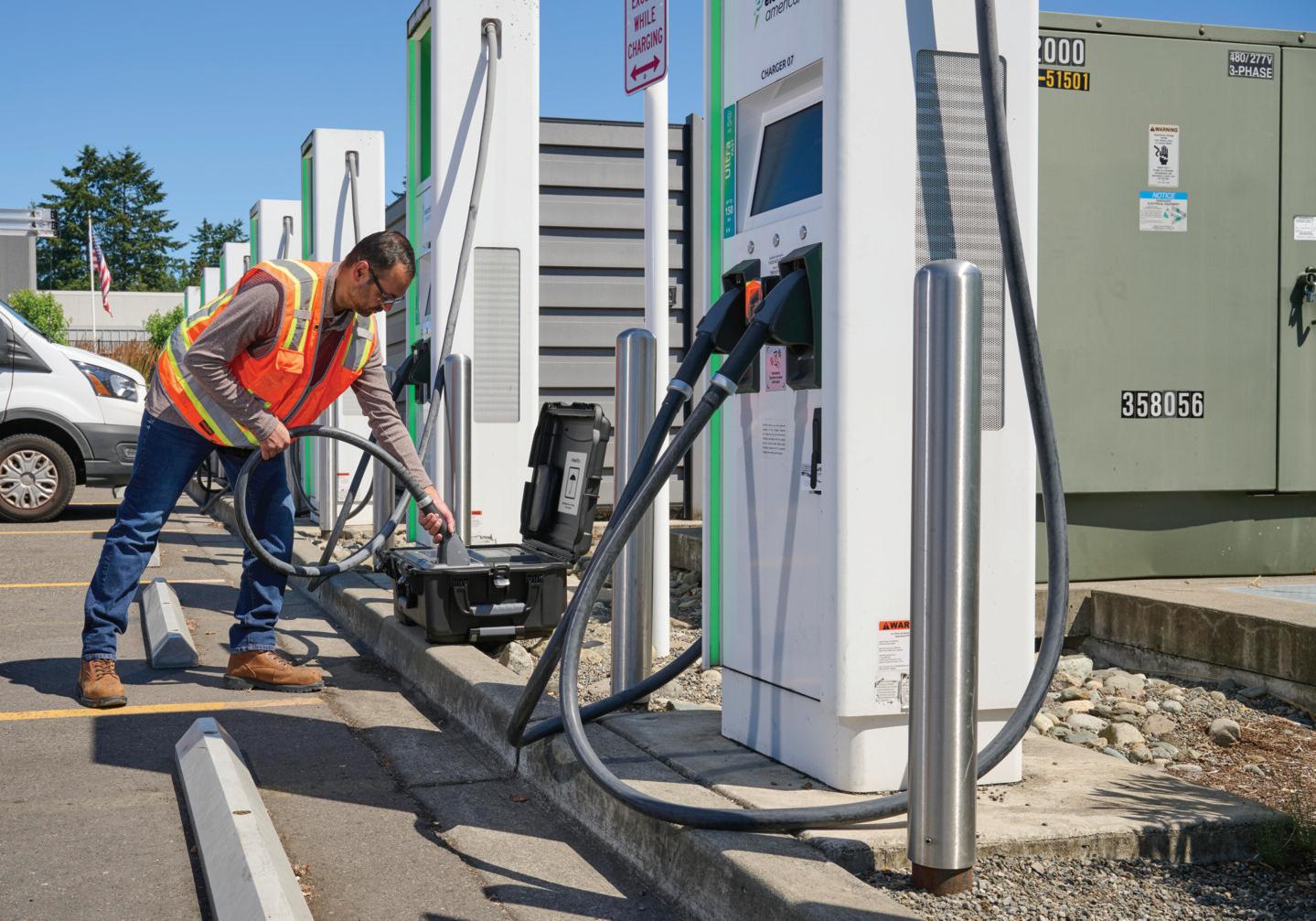
60 Is ‘uptime’ becoming the ultimate EV charging metric?
63 Should sparkies consider taking a more ‘pragmatic’ approach to improving their skills?
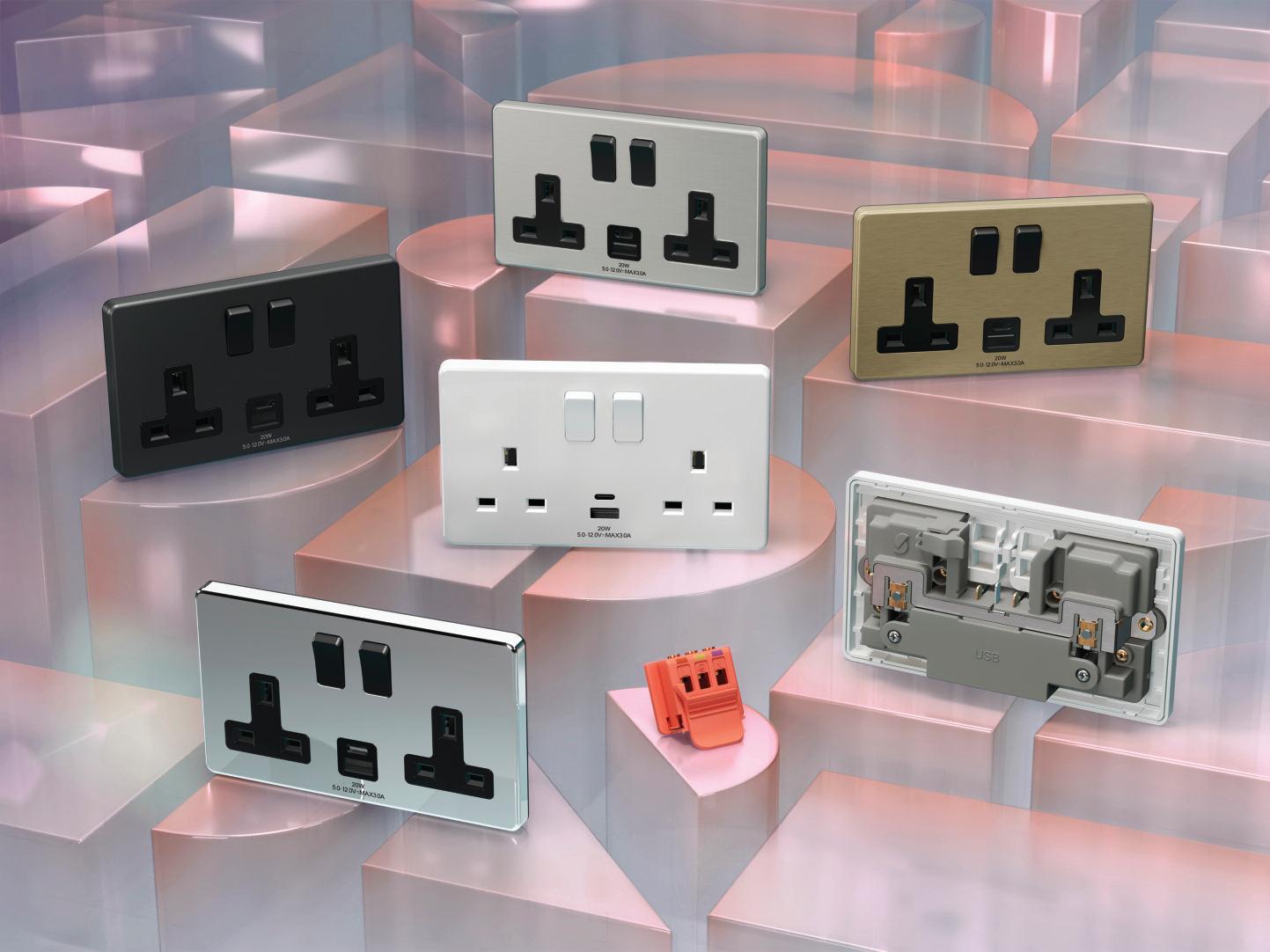
65 Learning more about a patent-pending socket design that aims to make wiring faster, safer and smarter
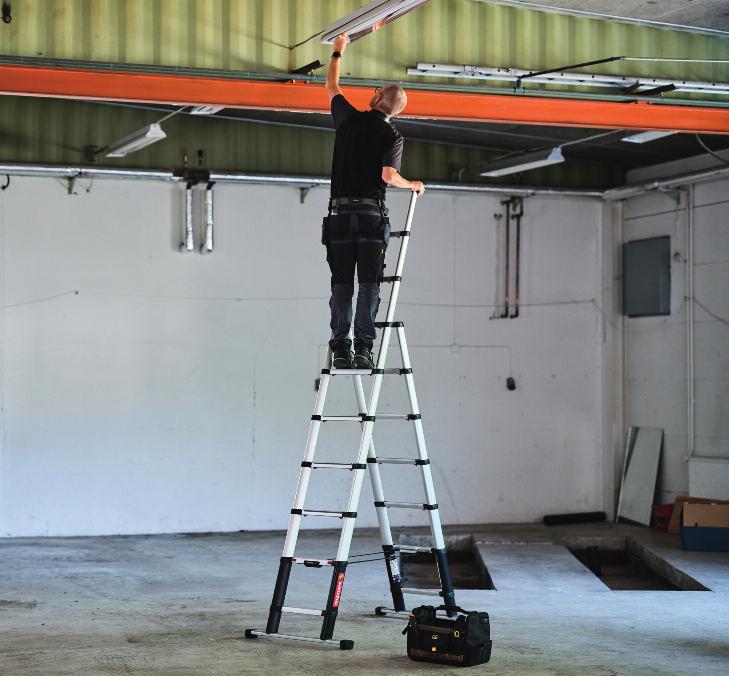
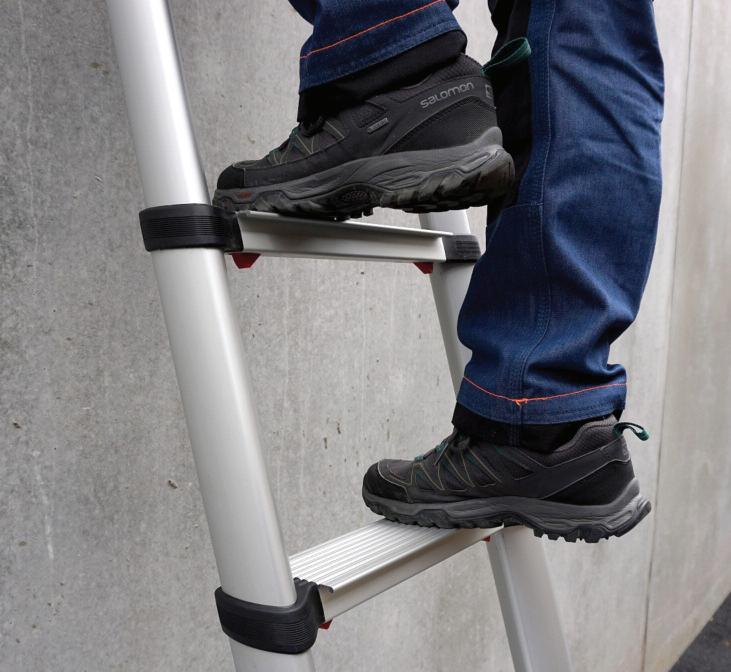
66 Are all telescopic ladders created equal?
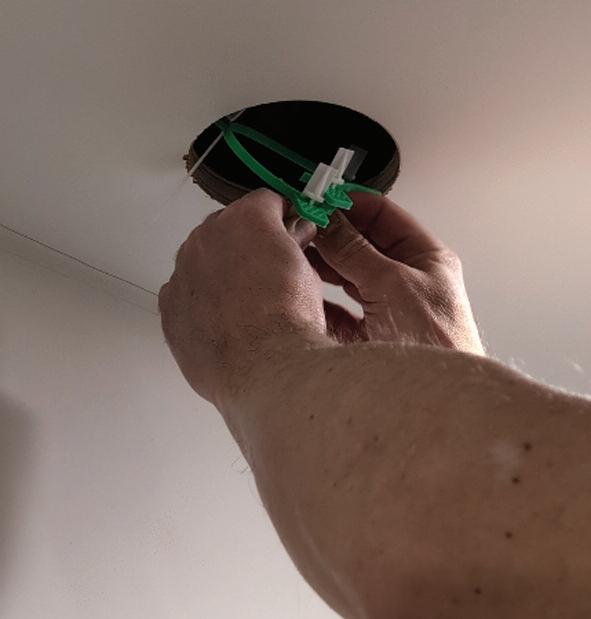
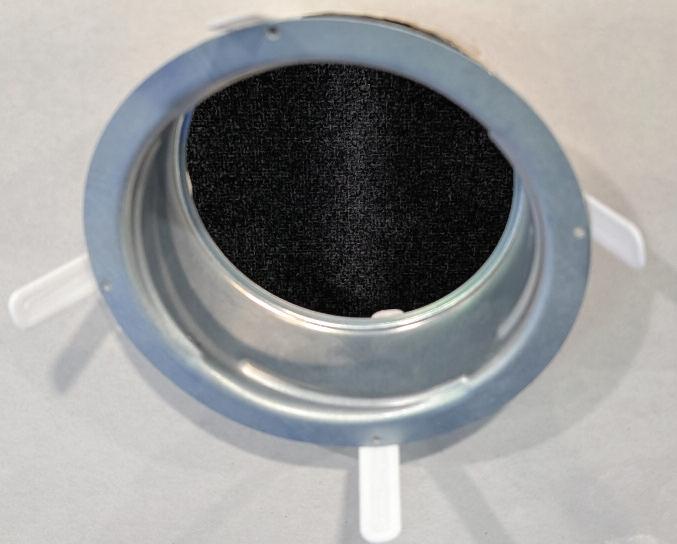
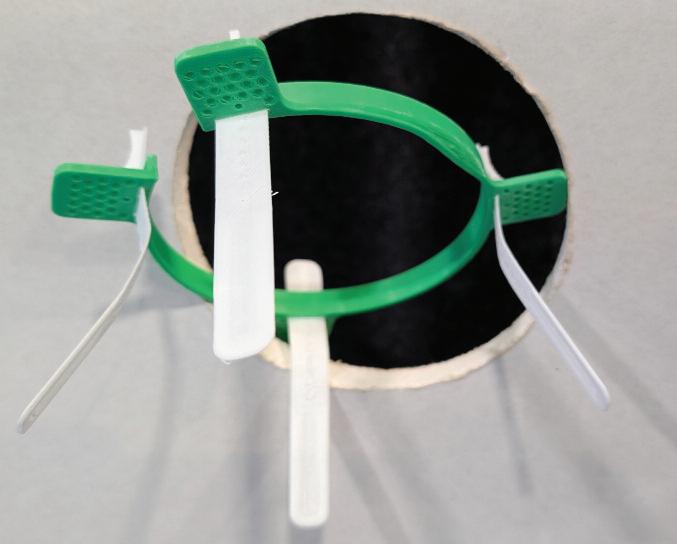
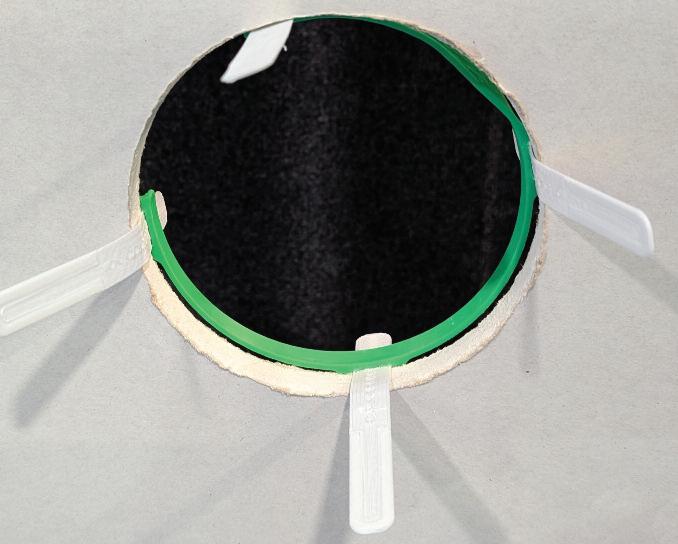
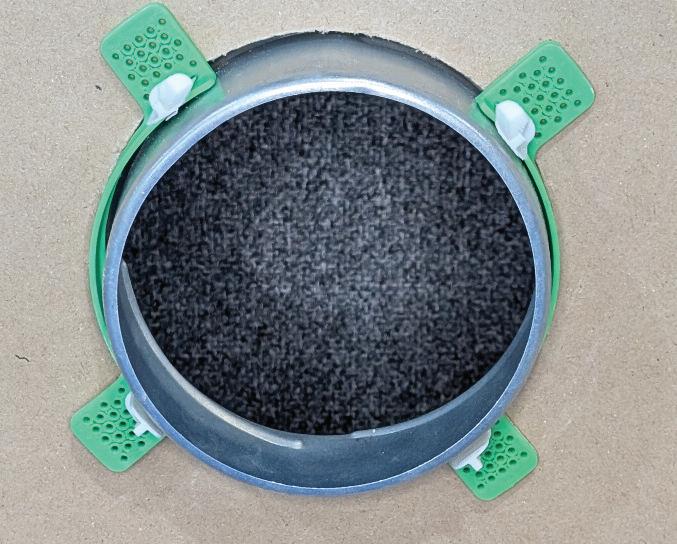
68 Introducing a new product that’s designed to solve a long-standing challenge faced by ventilation installers
71 How is Enkin supporting the next generation of electricians?
72 The key differences between direct-acting electric heaters and High Heat Retention storage heaters
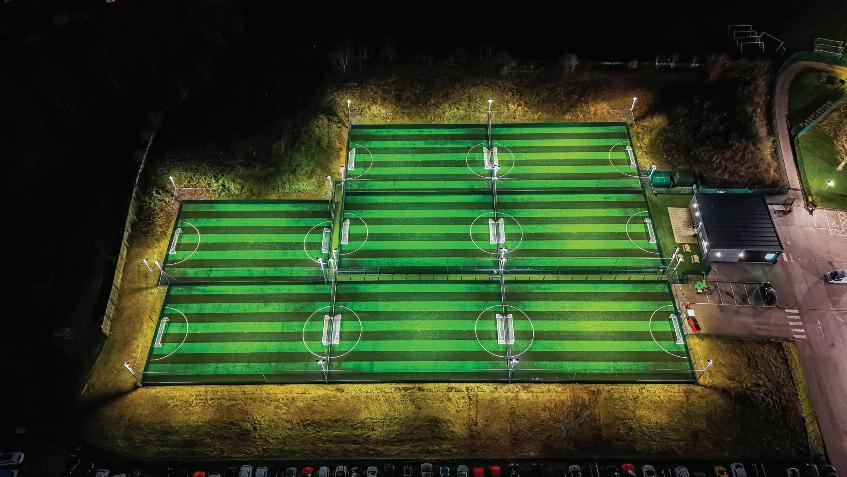
74 Thorn Lighting continues to demonstrate its expertise in delivering high-performance sports lighting solutions
76 Rounding up the newest products, tools and equipment to help you with your work
Artificial Intelligence seems to be everywhere at the moment
From government announcements and investment plans to headlines predicting dramatic changes in the workplace, AI has rapidly moved from a niche technology topic to a mainstream economic priority
Ministers talk about productivity gains, business leaders discuss efficiency, and technology firms promise a future where many everyday tasks can be completed faster, cheaper and with greater accuracy
From the standpoint of everyday electricians, it would be easy to view all of this from a distance and assume it is somebody else’s concern. After all, AI might write reports, analyse data or answer customer queries, but it cannot physically install a consumer unit, wire a distribution board or carry out an EICR
At least not yet
The reality is that AI is likely to affect the electrical sector in ways that are both subtle and significant. While the core practical skills of the trade remain firmly rooted in the real world, many of the surrounding tasks are already beginning to change
Estimating software is becoming more intelligent Administrative systems can automate paperwork. Scheduling tools can optimise workloads Technical support platforms can provide near-instant answers to common installation questions
In theory, all of this could reduce time spent behind a desk and allow electricians to focus on the work that generates income.
For sole traders and small contractors, that could be a genuine benefit Less administration means more productive hours Faster access to information could improve efficiency
Businesses that embrace these tools may find themselves better equipped to compete in an increasingly demanding marketplace.
There’s also a broader argument that AI could help address some of the industry's longstanding challenges Skills shortages, increasing compliance requirements and growing documentation demands all place pressure on contractors.
If technology can remove some of that burden, many would argue it should be
welcomed
But there is another side to the conversation.
Whenever governments and businesses talk enthusiastically about automation, workers inevitably wonder what happens to the jobs currently performed by people
While electricians themselves may be less exposed than office-based professions, many support functions within organisations could change significantly
There’s also a danger of overreliance AI systems can process huge amounts of information, but they’re only as good as the data they’re trained on
An electrician who blindly follows a machine-generated recommendation without applying professional judgement could quickly find themselves facing costly mistakes
The trade has always relied on experience, practical understanding and accountability. Those qualities cannot simply be outsourced to software.
Perhaps the most realistic outcome lies somewhere between the extremes AI is unlikely to replace electricians, but electricians who understand how to use AI effectively may gain an advantage over those who ignore it completely. As with previous technological shifts, the winners are often those who adapt rather than resist
The challenge for the industry will be ensuring that technology enhances human expertise rather than diminishing its value
That debate is only just beginning. Elsewhere in this issue, we explore whether the rapid rise of AI and automation is creating a genuine ‘Jobs Black Hole’ for the electrical sector (see page 18), or whether the fears surrounding employment are being overstated
Wherever you stand on the argument, it’s clear that AI is no longer a future issue. Instead, it is already a big part of the conversation
Have a good summer, enjoy the issue and we’ll look forward to seeing you again in September
Richard B o wler
Research reveals EICR awareness gap among homeowners
New research from NICEIC has highlighted a significant lack of awareness among UK homeowners when it comes to electrical safety and the importance of regular electrical installation condition reports (EICRs).
A survey of 2,000 homeowners, conducted by OnePoll, found that one in seven have ignored potentially dangerous electrical issues such as persistent tripping, flickering lights and broken switches. More than one in five (22%) admitted they take an “I’ll worry about it tomorrow” approach to such faults
The findings also revealed low levels of engagement with electrical inspections
More than a fifth (22%) of respondents said their electrics had not been inspected
and tested for more than 10 years, if at all, while 16% were unsure whether their property had ever been assessed by a qualified electrician
Awareness of EICRs was found to be particularly low Nearly seven in ten (69%) homeowners said they did not know what an EICR is, while almost half (48%) of those familiar with the term were unaware that inspections are recommended at least every 10 years in owner-occupied homes
NICEIC says the findings reinforce the need for continued efforts to improve consumer understanding of electrical safety and the role regular inspection and testing plays in maintaining safe installations
Paul Collins, Technical Director at
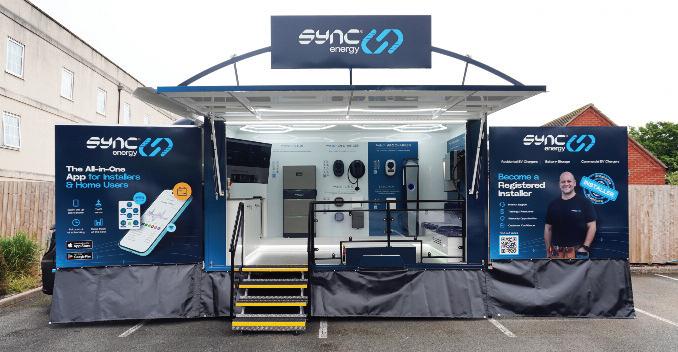
Sync Energy hits the road with
Sync Energy has launched a new all-electric Roadshow Van designed to bring its EV charging and home energy solutions directly to contractors and electrical wholesalers across the UK.
The mobile showroom will visit wholesaler branches, trade counters, customer sites and industry events, giving installers the opportunity to explore products, attend live demonstrations and speak directly with technical experts
NICEIC, said: “These findings highlight a clear gap in awareness when it comes to electrical installation condition reports and their role in maintaining safe electrical installations As electrification accelerates, regular inspection and testing is becoming increasingly important, and improving understanding of EICRs is vital ”
NICEIC is using the research as part of a wider consumer awareness campaign promoting electrical safety and the use of NICEIC-certified businesses
mobile showroom
Products from across the Sync Energy range will be showcased, including domestic and commercial EV charging solutions and home energy technologies The roadshow will also provide technical guidance, CPD sessions and information on the latest developments in the renewable energy sector
Selected roadshow events will also feature product promotions and interactive activities
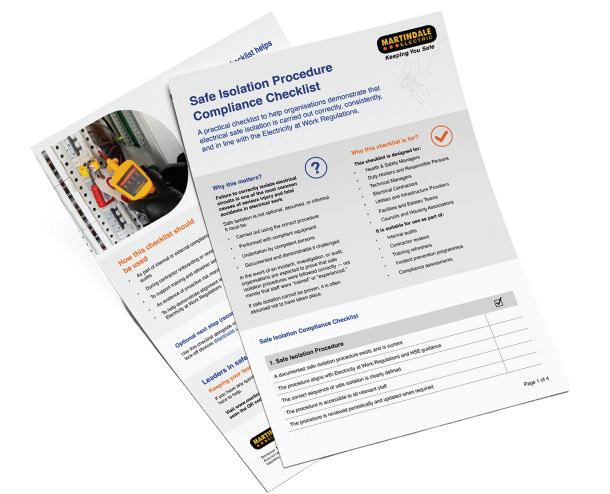
Martindale launches safe isolation checklist
Martindale Electric has developed a Safe Isolation Procedure Checklist to help organisations implement and demonstrate compliant safe isolation practices.
Designed to support compliance with the Electricity at Work Regulations, the checklist covers key areas including identification of supply, lock-off and tagging procedures, voltage indicator compliance, testing for dead, competence and training, equipment condition, record keeping, and ongoing review processes
The resource is aimed at health and safety managers, duty holders,
responsible persons, electrical contractors, facilities teams and utilities providers, while also serving as a useful reference for students and apprentices
Failure to correctly isolate electrical circuits remains one of the leading causes of serious injury and fatalities in electrical work, making robust procedures essential
Steve Dunning, Managing Director at Martindale Electric, explains: “Safe isolation is one of the most critical controls in electrical safety Implemented properly and consistently, it prevents injury and saves lives; however, done
poorly it can expose individuals and organisations to serious risk ”
VIEW AND DOWNLOAD THE CHECKLIST AT:
Entries open for ESR Above and Beyond Awards 2026
The Electrical Safety Roundtable (ESR) has opened entries for its Above and Beyond Awards (ABA) 2026, which recognise individuals and organisations making an outstanding contribution to electrical safety beyond their legal obligations
Free to enter and open to UK-based individuals, businesses, charities and industry stakeholders, the awards celebrate initiatives, products and people helping to improve electrical safety in the workplace Award categories include:
Product of the Year – Open to products launched on or after 1 June 2024 that enable safer working on or near electrical systems
Paul Skyrme Electrical Safety Initiative of the Year – Recognises organisations, charities, individuals and other
stakeholders that have delivered an outstanding electrical safety initiative since 1 June 2024.
Changemaker of the Year – Open to individuals who have made a positive impact on electrical safety within their workplace and can demonstrate meaningful change since 1 June 2024
Derek Thompson Industry Service Award
–
Celebrates an individual or organisation that has made a sustained contribution to electrical safety, typically over a period of more than five years.
Entrants can nominate themselves, another individual or an organisation, and may submit entries across multiple categories
Commenting on the awards, Fraser Herd, Chair of the ESR Workplace Group,
Leadership changes announced at NAPIT
NAPIT has announced a leadership succession plan following the retirement of Managing Director, Frank Bertie, at the end of last month
Frank steps down after two years as Managing Director and more than 30 years as Technical Director He will continue to support the organisation in a consultative role, sharing his extensive technical expertise
Current Commercial and Compliance Director, Stephen Melton
will succeed Frank as Managing Director Since joining NAPIT in 2019, Stephen has overseen significant growth and will continue to work with industry stakeholders to drive standards across the sector
The organisation has also promoted Brett Forster from Head of Training to Technical and Commercial Director Brett joined NAPIT in 2021 and brings more than 25 years of industry experience to the role.
C-TEC’s improves it’s supporting CAST
C-TEC has released a new series of technical help videos designed to support engineers installing and commissioning its CAST XFP fire detection and alarm systems.
The videos provide step-by-step guidance on a range of common tasks, including firmware updates, auto addressing, adding new devices and downloading data from the control panel using a PC
Terry Gordon, C-TEC’s Engineering/Technical Support Manager, said: “Our new help videos are designed to assist anyone installing
CAST XFP As a soft-addressing system, it’s very flexible and can be programmed with our handheld programmer or by using the panel’s auto address function for fast sequential programming of all devices
“Our videos highlight all these options and also share guidance on identifying loop integrity faults, updating firmware and much more ”
The launch forms part of a wider investment in technical support, which has also seen C-TEC introduce a dedicated CAST technical support team, a new
said: “The Above and Beyond Awards are a fantastic opportunity to showcase some of the incredible work organisations and individuals do to enhance electrical safety
We look forward to a great Awards year!”
Entries close on 1st August, with winners set to be announced in the autumn
NAPIT says the appointments will help guide the organisation’s next phase of development while reinforcing its commitment to technical support, training and raising standards across the electrical and building services industries.
technical support telephone number and a cloud-based AI-enabled call logging system
Q Acoustics announces installer training programme
Q Acoustics has launched a new training initiative designed to help electricians expand into the growing home audio market
The free Q Acoustics Certified Installer (QCI) Programme has been developed to give installers the skills, knowledge and confidence needed to specify, sell and install the company’s range of home audio systems and speakers
The initiative is also intended to create new revenue opportunities for electricians while making professionally installed audio solutions more accessible to homeowners
Developed in response to industry feedback, the programme addresses some of the key challenges electricians face when entering the home audio sector, including limited product knowledge, concerns around installation complexity and homeowner perceptions of installed audio systems.
The training consists of three online modules covering home audio fundamentals, product technologies and installation best practice Additional modules are planned for 2026, allowing the programme to evolve in line with installer requirements and market developments
Charlie Henderson, Managing Director at Q Acoustics, said: “Professional electricians told us they want to expand into home audio but feel it is too complex or
challenging to get started.
“The QCI Programme removes that uncertainty by providing the right training, the right products, and the right support to succeed ”
A major focus of the training is Q Acoustics’ Easy Install range, which includes EasyFit speakers and the E60, E120 and E300A audio systems Designed to simplify installation while maintaining high audio performance, the products aim to help electricians deliver premium sound solutions without adding significant time or complexity to projects
Upon completing the programme, installers will receive official QCI certification and gain permission to use the QCI Certified Installer logo on marketing materials and quotations Certified installers will also be featured on the Q Acoustics website and linked through product listings, helping generate new business opportunities
To encourage early adoption, the first 20 newly certified installers will be eligible to purchase a selected Easy Install system bundled with a pair of Qi65CE speakers at 50% off the regular wholesaler trade price,
subject to terms and conditions
Updated BS 7430 code of practice published
A revised edition of BS 7430, the Code of Practice for Protective Earthing of Electrical Installations, has been published and came into effect on 31st May 2026.
The new edition replaces BS 7430:2011+A1:2015, which has now been withdrawn, and includes a number of updates designed to reflect current industry practices and emerging technologies.
Key changes include updated recommendations for the earthing of High Voltage (HV)-derived Low Voltage (LV) supplies, covering public and private transformers, combined HV/LV earthing systems, and HV/LV and LV/LV separation Guidance relating to generators has also been revised, including recommendations for TN-S and IT systems
Additional updates cover the application of Protective Neutral Bonding (PNB) system earthing, installations with more complex or higher-risk earthing requirements, and earth electrode systems Recommendations relating to special installations have been removed to align the document with other relevant standards and guidance.
Protective earthing continues to play a critical role in electrical safety, particularly as installations increasingly incorporate technologies such as EV charging infrastructure, energy storage systems and distributed generation
The revised standard aims to provide greater clarity for complex earthing arrangements, support modern installation design and construction, and help ensure
ongoing compliance with BS 7671 and the Electricity at Work Regulations.
The updated code of practice is available through the ECA BSI Online Standards Library, which provides ECA Members with access to more than 80 British Standards
Scolmore backs youth development partnership
Scolmore Group has announced a new partnership between its community-focused Scolmore Connect platform and the Marc Albrighton Centre of Development (MACOD).
Founded in 2016, MACOD has grown from a small weekly coaching session into a programme supporting more than 1,000 young people through football coaching, holiday camps, after-school clubs and development pathways across the Tamworth area
As part of the partnership, Scolmore Connect will support initiatives aimed at increasing participation in MACOD’s programmes and expanding access to structured coaching opportunities The
collaboration will also see the launch of MACOD’s new 10th anniversary kit featuring the Scolmore Connect logo
Working alongside local schools, the partnership aims to provide safe, inclusive opportunities that support young people’s confidence, wellbeing and personal development
Jon Baker, Headteacher of Woodlands Primary School, said: “The impact is immeasurable. Yes, we see improvements in children’s football skills, but far more importantly, we see the difference it makes in their personal lives
“With positive role models, encouragement and high-quality coaching, we see young girls and
boys develop confidence, resilience and patience ”
Scolmore says the partnership reflects its ongoing commitment to supporting local communities and creating positive social impact beyond the workplace.
Live Electrical’s ‘Got Your Back’
Live Electrical is running a summer promotion which gives electricians the chance to win one of three £300 Amazon vouchers.
The “Jeff ’s Got Your Back” campaign rewards installers who purchase a Live Electrical consumer unit from participating electrical wholesalers While stocks last, each qualifying purchase comes with a free promotional T-shirt.
To enter, electricians simply need to wear the T-shirt while installing the consumer unit, take a photograph of the installation and share it on
social media, tagging Live Electrical Distribution (UK) Limited and using the hashtag #JeffsGotYourBack
The company will award one £300 Amazon voucher winner each month throughout July and August, giving installers a great opportunity to win during the promotion
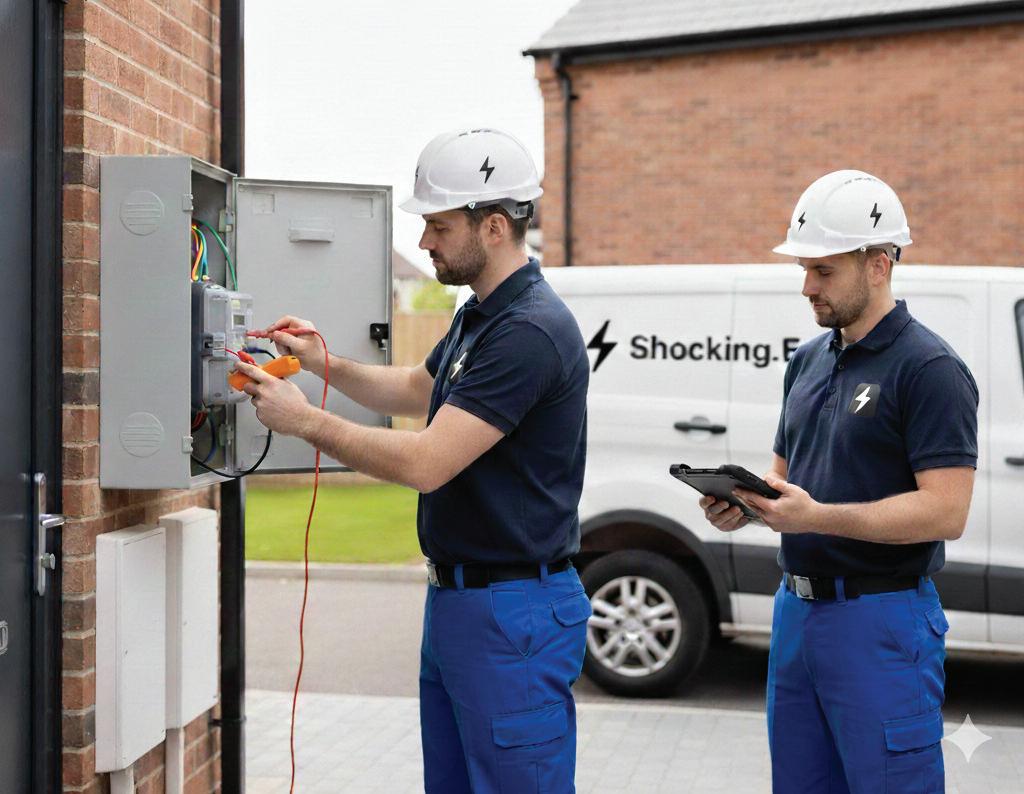
Shocking Energy launches nationwide Install Isolator Network
Shocking Energy has launched a UK-wide Install Isolator Network designed to connect businesses with verified Safe Isolation Provider (SIP) accredited installers for renewable energy projects
Created in response to growing demand for EV chargers, solar PV, battery storage systems and heat pumps, the network aims to help businesses access compliant de-energisation and re-energisation services without needing to secure SIP accreditation themselves.
The initiative addresses increasing concerns around unsafe isolation practices, including the unauthorised removal of service cut-out fuses, as installation volumes continue to rise across the renewables sector
Through the network, businesses can access verified SIP-accredited contractors for essential isolation works, helping to reduce project delays while ensuring compliance with industry regulations Benefits include installer matching based on project requirements, nationwide coverage, faster turnaround times and audit-ready delivery
The network already includes several SIP-accredited contractors and is continuing to expand across the UK.
Kevin Bird of Shocking Energy said: “Safety isn’t optional Too often, electricians are still pulling fuses without the correct authorisation. At best, this could result in fines. At worst, it can lead to serious injury or fatality
“Electric shock accounts for 57% of fatalities and 53% of serious injuries in major electrical incidents. That's why SIP accreditation matters It ensures engineers are trained, compliant, and safe to carry out isolation and re-energisation
“We’ve built a UK-wide network of SIP-accredited electricians to help businesses complete jobs faster, work safely and compliantly, and reduce reliance on third parties ”
PROTECT WHAT MATTERS
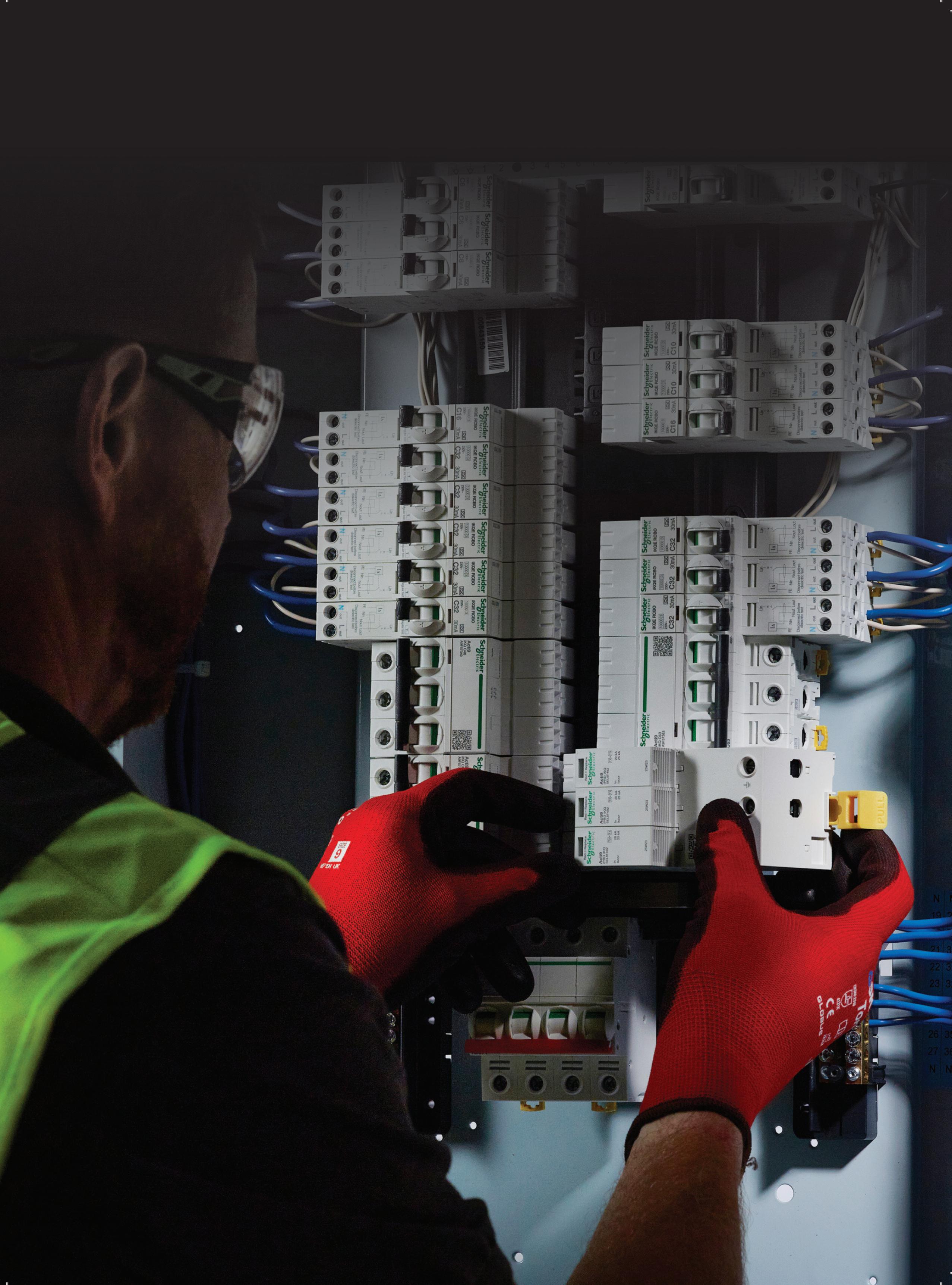
Here, the experts at Schneider Electric introduce the all-in-one surge solution that electrical professionals have been waiting for.
Power surges aren’t rare, they’re inevitable From the growing unpredictability of weather patterns to the increasing demands placed on electrical infrastructure in modern buildings, surges are becoming more frequent and disruptive
Whether triggered by lightning strikes, grid switching, or internal load changes, these events can place huge stress on electrical systems Over time, that stress silently degrades equipment, shortening lifespans, increasing maintenance costs, and creating unexpected downtime
For today’s electrical installers, surge protection is no longer a “nice to have” –it’s an essential part of delivering safe, compliant, and future-ready installations And in 2026, as buildings become smarter and more connected, the need for smarter protection solutions has never been clearer
That’s where Schneider Electric’s latest innovation comes in
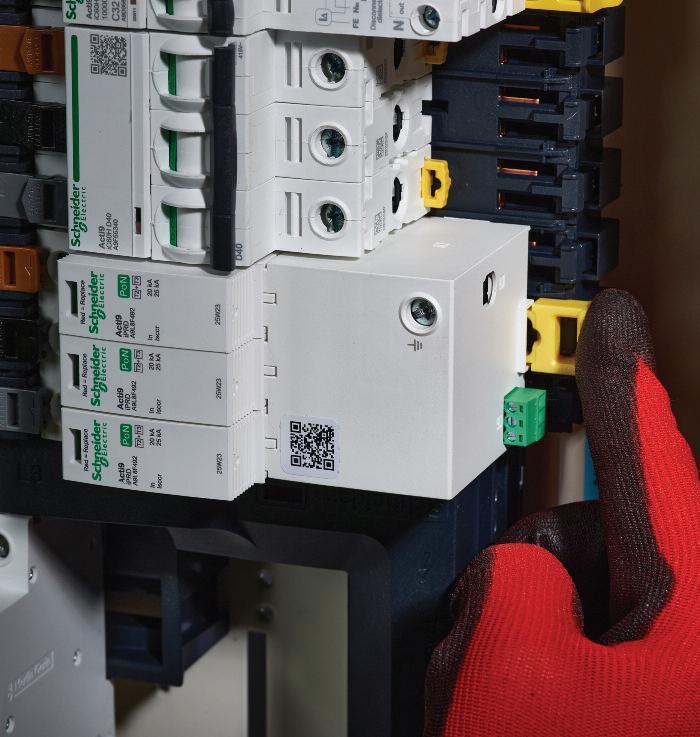
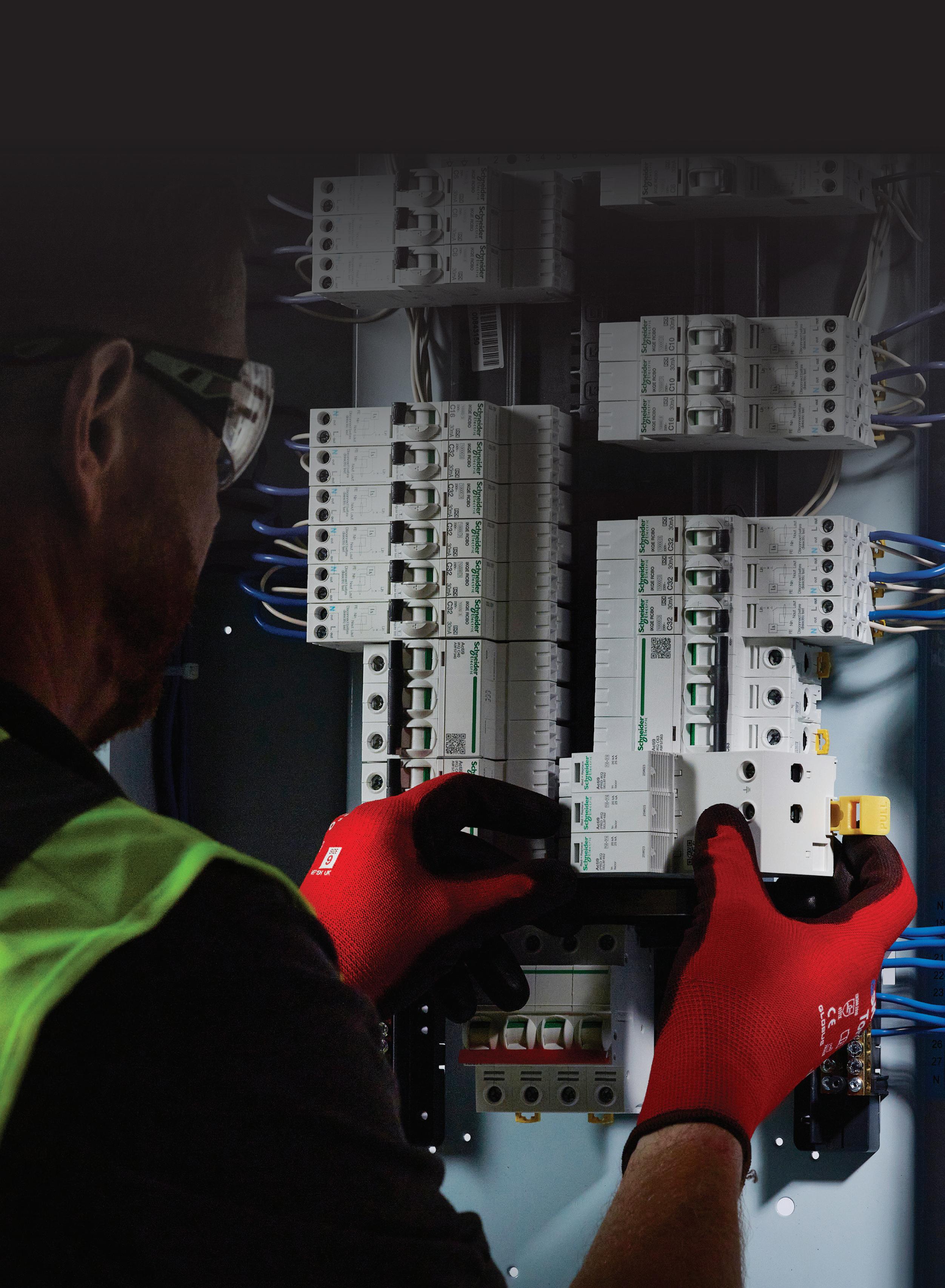
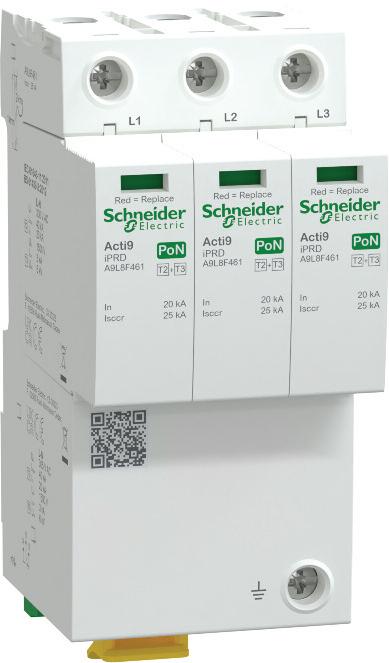
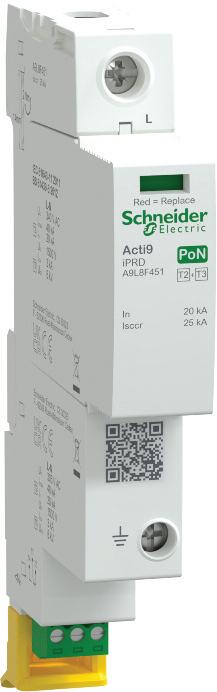
Introducing the Acti9 iPRD Type 2+3
Surge Protection Device
The Acti9 iPRD Type 2+3 is a next-generation surge protection device designed specifically for the realities of modern commercial and industrial environments Built to integrate seamlessly within Schneider Electric’s Acti9 ecosystem, it brings together advanced protection and simplified installation in one compact, efficient solution
This all-in-one SPD is fully adaptable to Acti9 Isobar P distribution boards and Acti9 KQ Loadcentres, making it an ideal choice for professionals who want
to reduce install time while maintaining the highest levels of protection
By integrating Type 2 and Type 3 protection in a single device, it provides co-ordinated, layered defence against conducted surges and induced transient overvoltages, including those resulting from indirect lightning and switching events
The result?
Reliable, end-to-end protection built directly into your distribution system
Speed, simplicity and performance
Time on-site matters The Acti9 iPRD Type 2+3 has been engineered with installers firmly in mind, helping streamline installations without compromising on performance
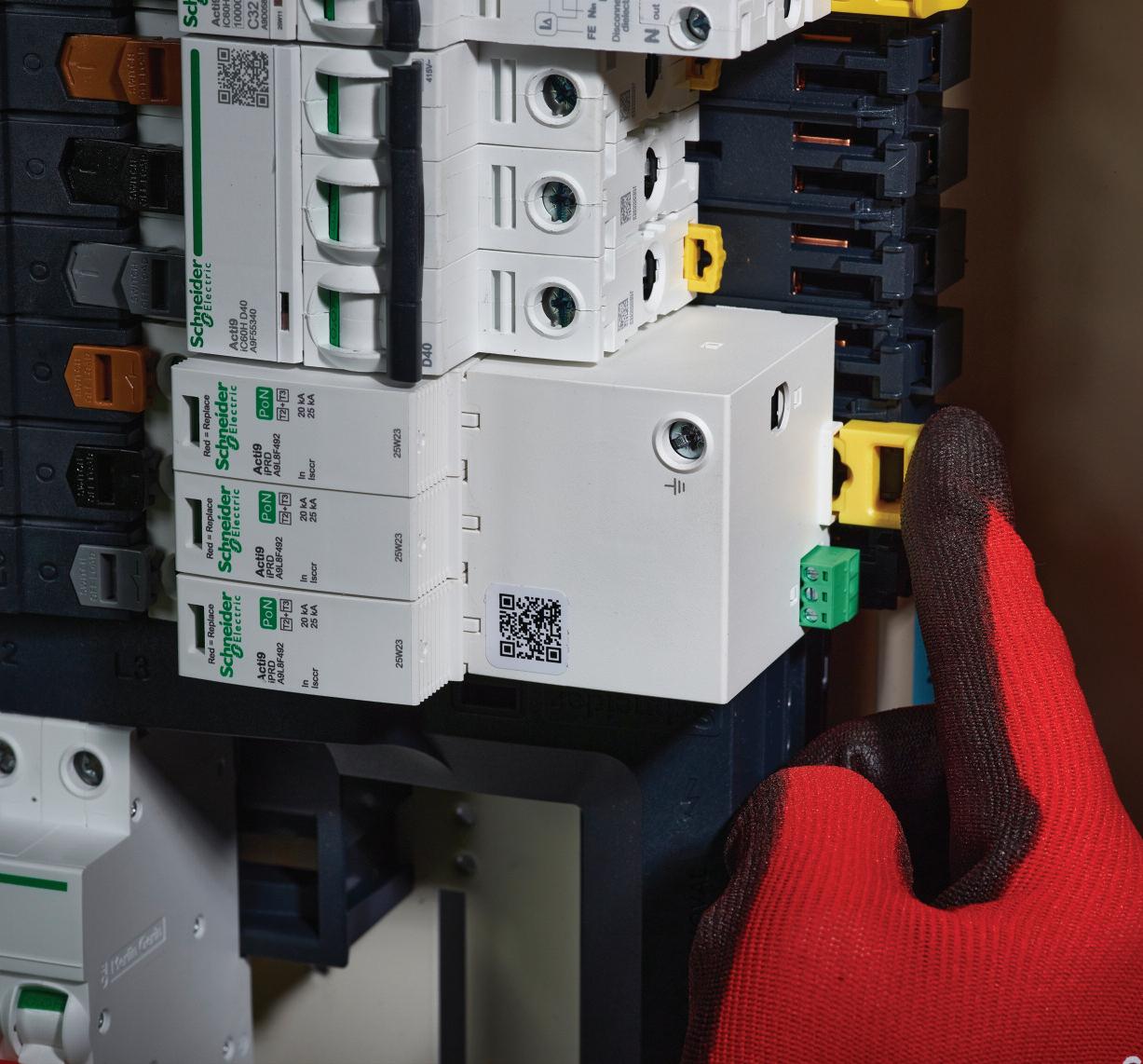
Its integrated design removes the need for additional components such as upstream external disconnect devices or complex wiring arrangements With direct mounting onto the distribution board busbar system, installation becomes faster, cleaner, and more consistent, saving valuable time on every project
Key benefits include:
l Embedded back-up fuse for enhanced self-protection and reduced component count
l Direct, tool-efficient installation on distribution board busbar system
l Compact footprint that integrates neatly into existing board configurations
l Remote end-of-life signalling, enabling proactive monitoring and maintenance
l Replaceable cartridges, making servicing quick and cost-effective
Ready for today’s electrified buildings C
The Acti9 iPRD Type 2+3 provides robust protection for these critical assets, helping minimise risk and maintain uptime. By absorbing and diverting surge energy before it can cause damage, it protects not just the equipment, but also the reputation of the contractor who installed it
Whether you’re working on a new build, retrofit, or system upgrade, this device ensures your installation is equipped to handle real-world conditions with confidence
Trusted innovation, built for the future As part of the Acti9 range, the iPRD Type 2+3 is backed by Schneider Electric’s long-standing reputation for innovation, quality, and reliability It’s designed not just to meet today’s standards, but to support the evolving needs of smarter, more sustainable buildings
For contractors, that means peace of mind. A solution that’s easy to specify, quick to install, and trusted to perform, project after project
GET MORE DETAILS ON THE SCHNEIDER ELECTRIC ACTI9 IPRD TYPE 2+3 SURGE PROTECTION DEVICE BY VISITING: WWW.RDR.LINK/ECA009
BS 7671 Amendment 4: implications for the industry
Kevin Sparrow, EAL’s Industry & Portfolio Manager, casts an eye over some of the key changes that have arrived with the publishing of Amendment 4 to BS 7671, and the ways that electrical professionals can get up-to-speed on it all.
The latest revision to BS 7671, Amendment 4, introduces a series of signifcant changes intended to ensure that electrical installations standards remain aligned with emerging technologies, evolving safety expectations and wider international developments
The amendment was published on 15th April 2026 and may be applied immediately, with a six-month transition period until 15th October 2026, after which the previous version will be withdrawn
current, consistent, and aligned with recognised standards of safety and performance
Among the technical changes are new and revised sections covering medical locations, Power over Ethernet (PoE), information and communication technology (ICT) equipment and systems, including functional earthing and bonding, stationary secondary batteries, and low voltage generating sets
This transitional arrangement provides manufacturers, training providers, and installers with the time needed to update materials, plan training, and get up-to-speed
We recently delivered a webinar in partnership with the IET, highlighting the importance of this amendment
The Wiring Regulations are a living and responsive standard. Periodic revision is essential if the industry is to keep pace with developments in EV charging, electrical energy storage systems, smart technologies and increasingly electrified buildings
The broader purpose of Amendment 4 is therefore not simply to introduce technical amendments, but to help ensure that industry practice remains
There’s also greater clarity in areas such as conductor identification, protection against premature collapse in fire, buried cables, load curtailment and selection of RCD types in series.
In particular, the amendment reflects the growing complexity of installations where electricity can both supply loads and be generated or stored on-site
Our webinar also highlighted revisions aimed at improving safety in particular environments
For battery storage syste highlighted new requireme installation location, partic dwellings, alignment with P as well as ventilation, identification and notices, reflecting the increasing us of domestic energy storag
Within Amendment 4, guidance for cables in
protected escape routes further reinforces life-safety considerations.
For this amendment, EAL has launched a new Wiring Regulations qualification, with free teaching and learning resources available to our centres
Existing holders of a previous 18th Edition qualification aren’t required to undertake the new award, although many may choose to do so as part of their continuing professional development We have also factored this change into a range of qualifications and assessments and updated our Centres
To help learners, contractors, and engineers get up to speed, there’s a range of free resources and webinars available (including our webinar with the IET) www.youtube.com/ user/EALAwards/vid
To find out more about EAL and its services, visit: WWW.RDR.LINK/ECA010
Jamie
Shemie, CEO
and
Founder
at All LED, looks at the potential threats AI automation is presenting to skilled trades.
THE JOBS BLACK HOLE
Ij catching a breather after a long day on-site As electricians, you're used to change – new regulations and technology and better ways of working.
But there's a shift happening right now that goes beyond changes to the Wiring Regs It's the rise of AI and automation and, while it feels like a slow burn today, we're potentially heading towards a cliff edge
At All LED, we've built our business on supporting the trade Looking at the wider landscape, I'm concerned that the ‘efficiency’ everyone is chasing could create a black hole that swallows the foundations of our economy
We've all experienced automation frustration You spend 20 minutes shouting "Speak to an agent" at a robot on the phone just to get a simple answer It's annoying as a consumer, but for our industry it's also a warning sign.
There’s a level of human expertise in the electrical trade that simply cannot be automated You can't train a robot to have the gut feeling required when you open a consumer unit in a 1920s semi and realise nothing is what it seems
Yet as AI accelerates, the pressure to replace human intuition with low-cost automated processes is growing We're
g
realities of a live job
Right now, automation is replacing roles at a manageable pace. Soon, that pace could increase dramatically. This creates what I call the ‘Jobs Black Hole’.
Concerns for society?
Take the huge low-cost internet retailers Their warehouses are increasingly run by robots rather than people On paper, that's efficient In reality, it risks damaging the socio-economic fabric of the UK
When a robot replaces a worker, the National Insurance contributions that help fund public services disappear At the same time, the income that person would have earned – and spent in local communities – vanishes too
We also have an ageing population Our pension system relies on a working-age population paying into the pot If jobs disappear into a black hole of automation, who will fund the retirements of the very people reading this magazine?
With fewer people employed because robots are doing the heavy lifting, there's less money circulating through local economies That means fewer homeowners with the disposable income to hire a professional electrician
y
the drive for lower costs to destroy the value of human labour
When an internet giant uses robots to undercut a local wholesaler or specialist contractor, they aren't just being competitive – they're bypassing some of the social costs that help keep our country running Government needs to rethink its approach If value is moving away from human hours and towards automated output, the way the state captures that value to fund pensions and infrastructure must change.
As a trade, the electrical industry provides a service that requires a brain, a pair of hands and years of hard-earned experience We’re the human element that keeps the country safe and powered up We need to be vocal about the fact that an automated future shouldn't mean a hollowed-out economy
Efficiency is great, but it shouldn't come at the cost of our expertise, our pensions or our future
The best thing we can do is support local businesses, get behind local people and remember that the electrical industry is fundamentally a people-first business
People do business with people –let's keep it that way!
BEHIND THE BADGE THE BUSINESSES
For seven decades, NICEIC certification has been a benchmark of quality across the electrical industry. While schemes, regulations and technologies have evolved, one constant remains: the businesses behind the badge These are the contractors who have chosen to have their work independently assessed year after year, demonstrating their commitment to competence, safety and professionalism
Although NICEIC-certified businesses share common values around technical standards and quality, each has its own story From long-established family firms to ambitious start-ups, certification continues to play a vital role in helping contractors build trust, win work and adapt to an ever-changing marketplace
A mark of professionalism
For many contractors, NICEIC certification represents more than a logo. It provides reassurance to customers, partners and specifiers that work will be completed to recognised standards
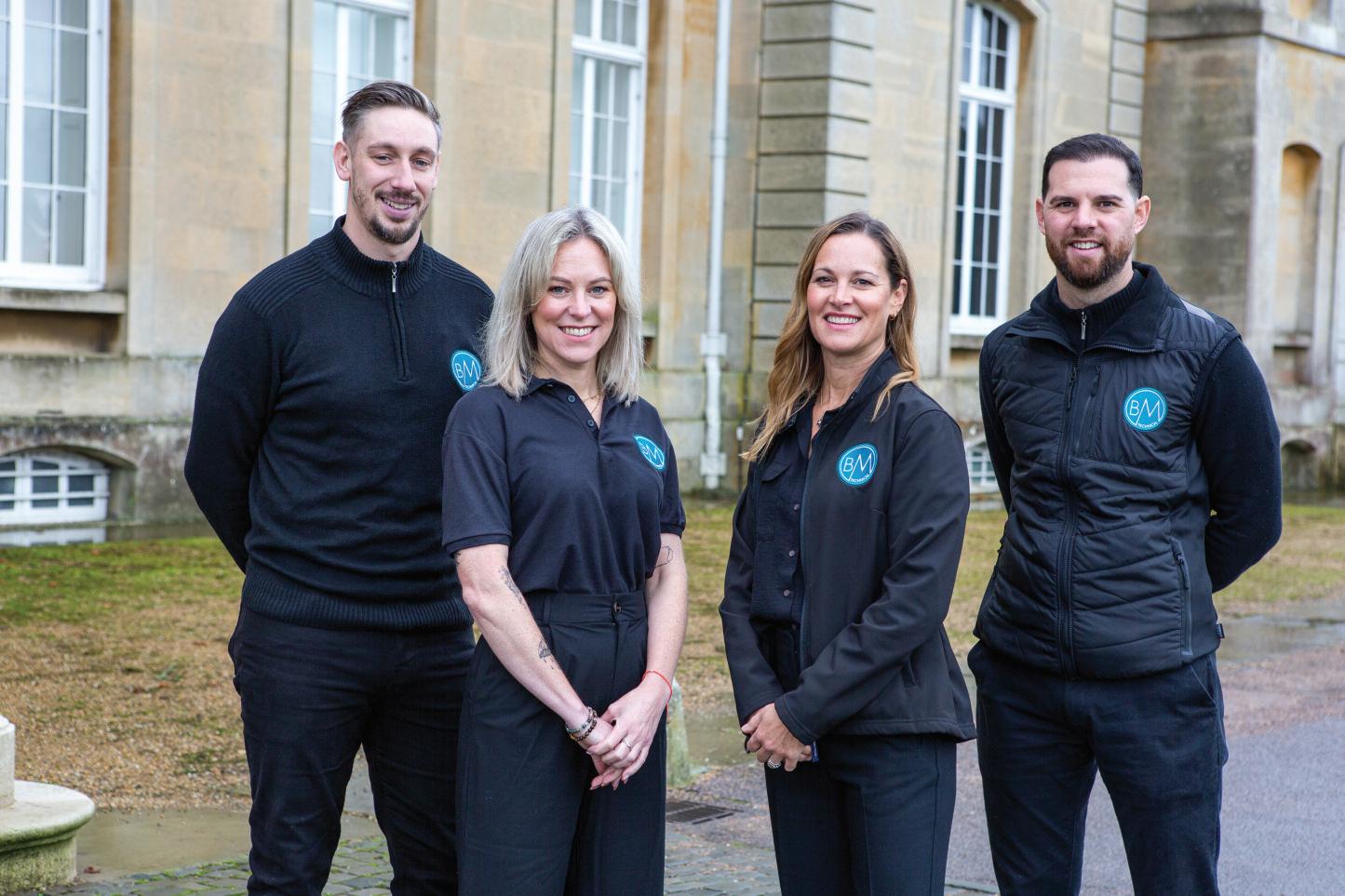
In the case of BM Technical, certification was never viewed as optional As Commercial Director, Danine Maskill, explains: “From the first tender we ever received, certification was always required
“It gave clients confidence and showed we could certify what we installed ” That confidence often translates directly into commercial opportunities. Certification helps businesses demonstrate competence, compete effectively and access projects that would otherwise be out of reach
Robinson & Lawlor, which has been NICEIC-certified for more than 60 years, sees certification as fundamental to its operation QS Peter Robinson, grandson of founder Norman, says: “Our clients expect certification, and rightly so. It demonstrates we’re serious about quality standards ”
rom family-run firms to enewable energy specialists, lectrical contractors give us heir thoughts on how NICEIC certification has helped them build trust, maintain standards and navigate decades of industry change.
“We knew that renewable technology would be a core part of our offering, especially EV chargepoints. As such, certification with NICEIC was kind of a no-brainer.”
According to Paul Collins, NICEIC Technical Director, customer expectations have changed considerably over the years He believes certification helps businesses meet those expectations while giving customers confidence that work is safe and compliant
Sustained quality, proven over time While certification can open doors, its long-term value lies in maintaining standards consistently
“Without it, we couldn’t even tender for some of the projects we’re doing,” he adds
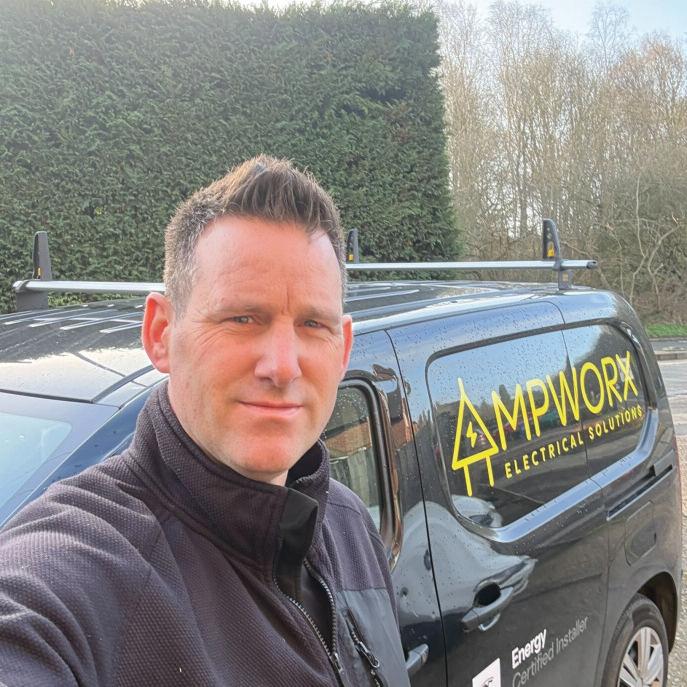
For newer businesses, the impact can be equally significant Edward Amphlett, founder of Ampworx, recognised early on that certification would be essential as renewable technologies became central to the business
For contractors working on complex projects, technical competence is only part of the equation Reliability, coordination and safe delivery are equally important in building a reputation
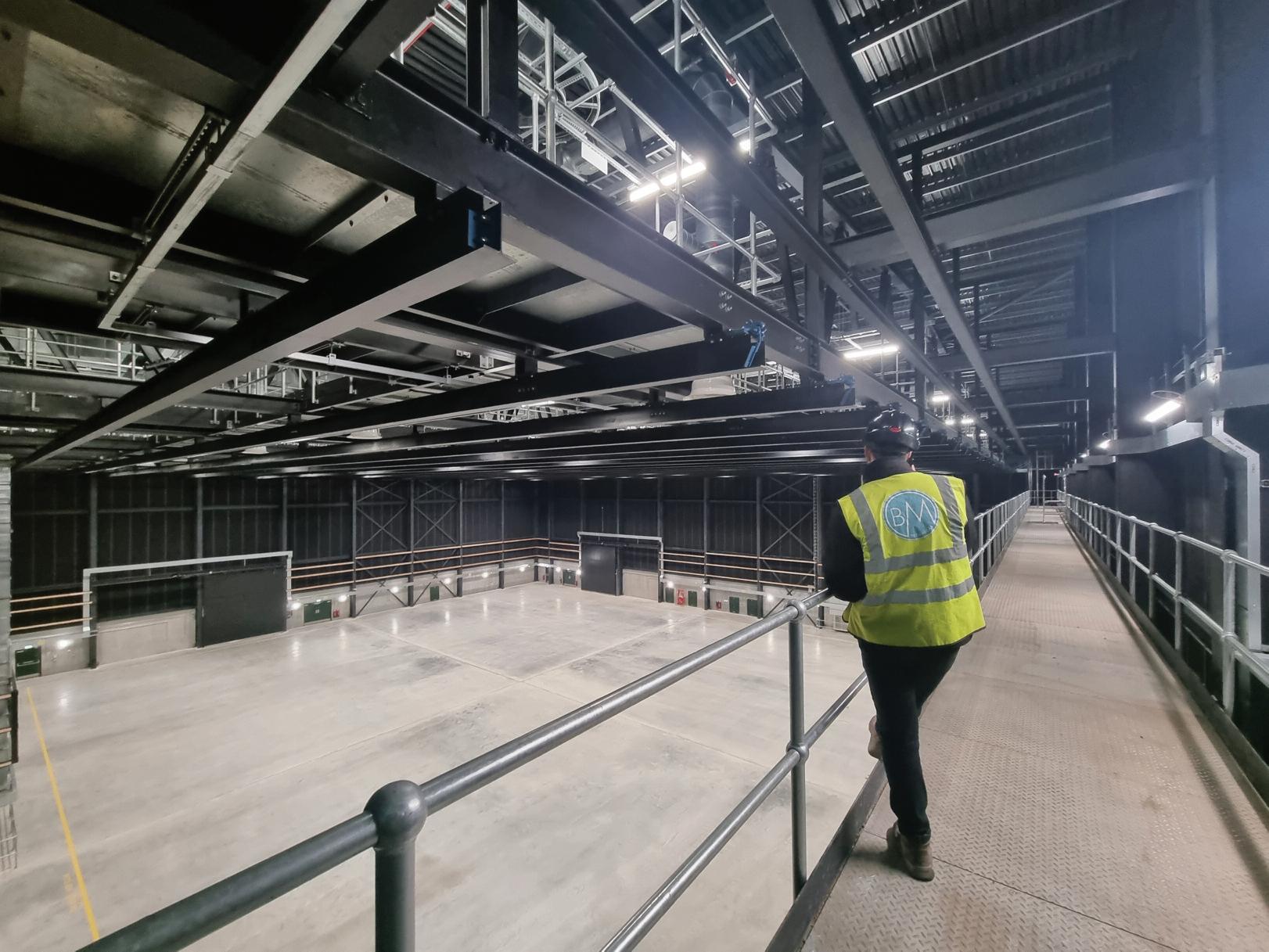
At BM Technical, whose portfolio includes large-scale residential regeneration and commercial developments, quality is embedded throughout project delivery
Danine Maskill explains: “Our forte is in not only fitting out apartments but also coordination – managing power-on dates and establishing a good sequence with other trades is where we can help our clients maximise efficiency ”
In the case of those businesses with decades of history, consistency helps create lasting client relationships WG Wigginton, certified with NICEIC for almost 70 years, works extensively in high-compliance environments where trust is paramount.
“Clients know they can rely on us, and NICEIC helps give them that assurance,” says Projects Director Alex Mitchell “We’ve had to keep evolving, and NICEIC has been part of that journey ”
The company regularly encounters unsafe or poorly executed installations during compliance programmes
Contracts Manager, Scott Draper highlights the responsibility that comes
with putting those issues right, stating: “We always make sure properties are left fully compliant Not just for the sake of ticking a box, but to ensure the safety and peace of mind of the people living there ”
Keeping pace with change
The industry has changed dramatically in recent years Electrification, renewable technologies and the drive towards Net Zero have created new opportunities, but also increased complexity
“The pace of change has been rapid, and it continues to accelerate,” says Paul Collins “That means technical guidance needs to be delivered at greater speed and in more accessible ways.”
For contractors, staying current with regulations, standards and emerging technologies is essential
BM Technical highlights NICEIC’s technical support and content as “a key resource for the team as they work to stay ahead of the latest technical and regulatory updates ”
Others take a similarly proactive approach. Edward Amphlett immersed himself in areas such as solar PV and battery storage from the outset “I just wanted to ensure that I jumped on that early and to make sure that I’ve got the relevant qualifications Given the growth we’re
seeing, I just want to get the technical knowledge in place so we can do more and more ”
Paul Collins believes this commitment to learning will become increasingly important as demand for electrical skills grows.
“There is growing demand for electrical skills, particularly linked to Net Zero and electrification,” he says “NICEIC is focused on helping certified businesses respond to these challenges in a practical way ”
Building teams and creating careers
Behind every certified business is a workforce whose skills and knowledge underpin quality delivery.
For many contractors, NICEIC certification helps attract employees by signalling a commitment to training, professionalism and career development
At BM Technical, investment in apprenticeships and internal progression has been central to growth
Danine Maskill says: “We can mould them into electricians, pair them with the right supervisors, and identify their strengths. Not everyone wants to be a manager. We recognise that and support it.”
Developing talent is particularly important as the industry faces ongoing skills shortages By reinforcing standards of competence and encouraging continuous professional development, certification supports not only individual businesses but also the long-term health of the sector
Looking ahead
Seventy years after its formation, NICEIC continues to provide a trusted framework for electrical businesses operating in an increasingly complex environment
As Paul Collins reflects: “Whether that’s technical guidance, training, raising consumer awareness of electrical safety, or being contractors’ voice when it comes to new regulations, we now act much more as a partner, supporting certified businesses at every stage of their journey ”
The stories of BM Technical, Robinson & Lawlor, WG Wigginton and Ampworx demonstrate that while businesses may differ in size, age and specialism, the reasons they value certification remain consistent
ENTER THE CPD ZONE AND EARN 1 CPD CREDIT
TOWARDS YOUR PROFESSIONAL RECORD!
continuing professional development (CPD) can be broadly defined as any type of learning you undertake which increases your knowledge, understanding and experiences of a subject area or role. To help professionals to better document and prove this process, our CPD Zone contains content and articles that have been checked, verified and accredited by a third-party specialist organisation
Collectively, the content within this section has been deemed worthy of 1 x CPD credit, or one hours’ worth of CPD
Once this content has been consumed, readers will have the opportunity to scan a QR code which will provide a bespoke, downloadable certificate that can be used as part of a
professional’s ongoing CPD record
This means that if you’re a monthly reader of PE, you could earn up to 11 credits, or 11 hours’ worth of CPD, just by reading a regular copy of your favourite independent industry magazine in 2026
DO
NOT SCAN THE QR CODE
UNLESS
YOU HAVE READ ALL OF THE CONTENT WITHIN THIS SECTION!
A large element of CPD involves self-certification and relies on professionals being honest about what they have actually read, consumed and digested A QR code and RDRLink code have been placed with the final article in this month’s CPD Zone and ONLY once you have read ALL of the articles within this section, should you then scan/enter the code to receive your bespoke certificate
By skipping any of these steps, you’re not just cheating the system, but yourself and your fellow professionals at the same time!
NEW USERS – ACCESS YOUR BESPOKE CPD CERTIFICATE IN FIVE STEPS
1. Read ALL of the content and articles included within this month’s CPD Zone
2. Scan the QR code or enter the RDRLink code with the last article in this section
3. Enter your email address.
4. Fill out your details on the contact form.
5 Download your certificate for use as part of your annual CPD record
PREVIOUS USERS – ACCESS YOUR CPD CERTIFICATE IN FOUR STEPS
1. Read ALL of the content and articles included within this month’s CPD Zone
2. Scan the QR code or enter the RDRLink code with the last article in this section.
3. Enter your name and email address.
4. Download your certificate for use as part of your annual CPD record
All certificates are valid for one year from the issue date If you’re having any issues with downloading your certificate or using the system, please email us at: pe@hamerville.co.uk
THE CODEBREAKERS
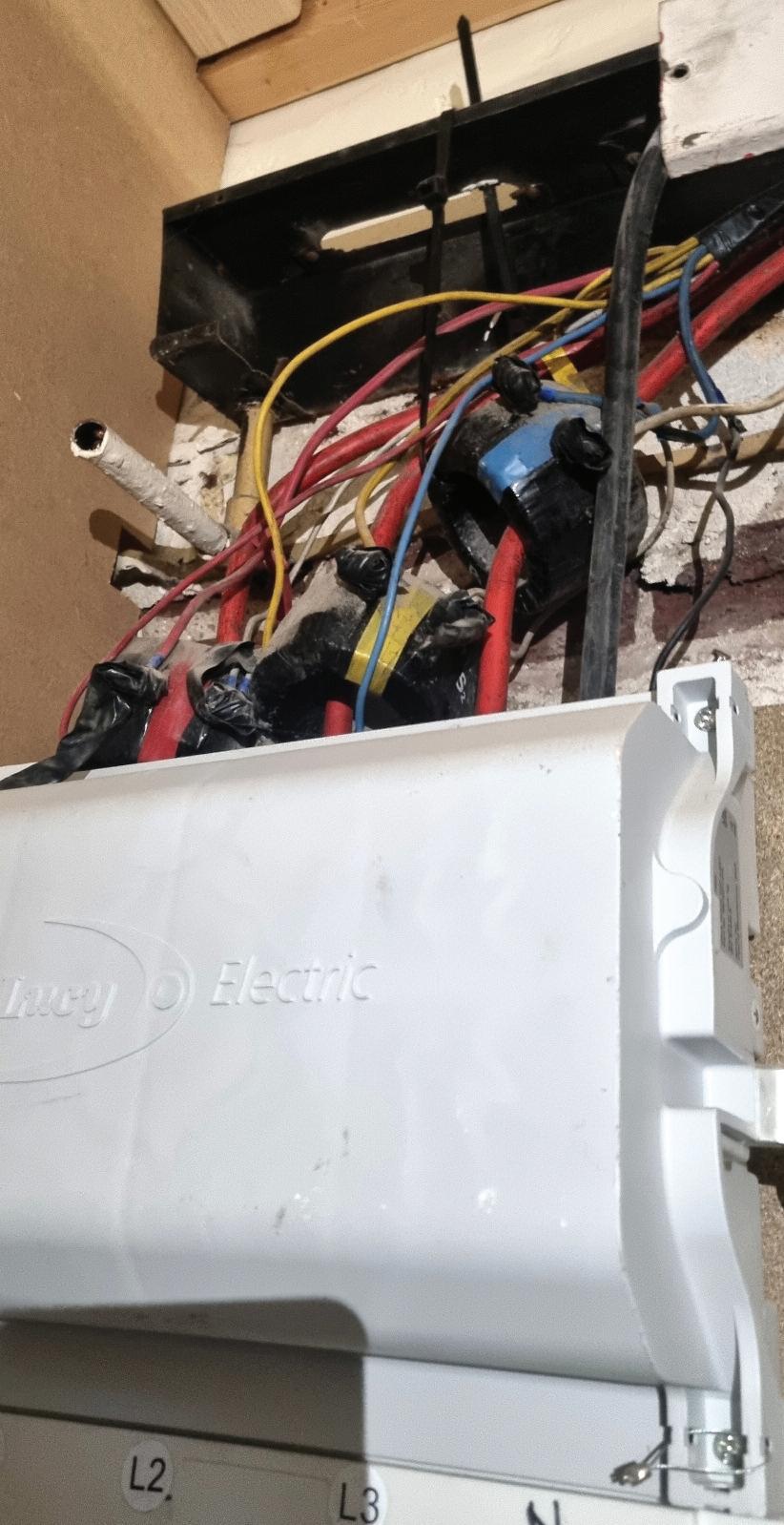
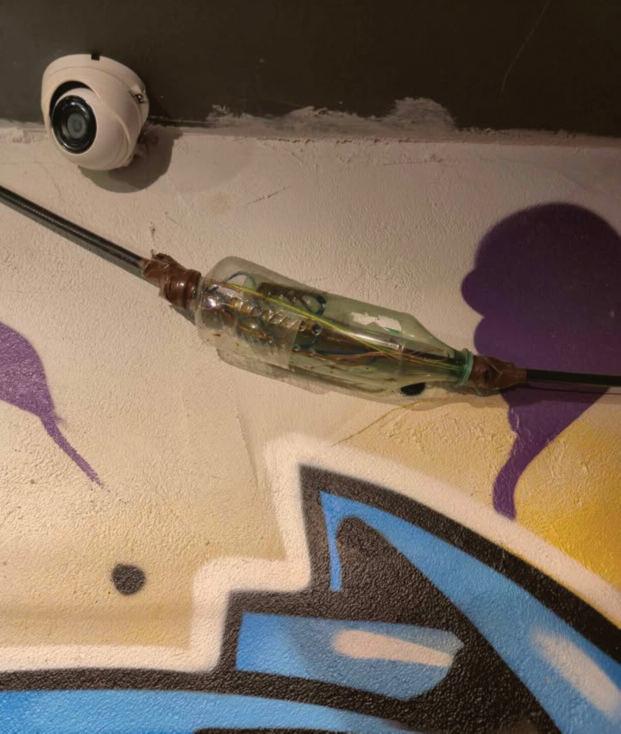
STEVE DENNY: WE CAME ACROSS THIS WHILE AT TENDING A SITE VISIT PRIOR TO TENDERING FOR THE REFURBISHMENT AND YES, IT IS LIVE!!!!
I t isn’t uncommon to come across damaged or missing items from an older electrical installation This is often a result of a lack of maintenance or poor maintenance practices by the owners or users
The removal of the containment system that previously enclosed the DNO cables and metering equipment has resulted in the exposure of single insulated conductors being exposed. The C T terminals, although covered with insulating tape, don’t provide a suitable means of basic insulation.
Access to the internal live par ts of the three -phase ser vice cut- out unit presents an extremely dangerous situation, not only due to the risk of direct contact of live par ts, but also the danger of debris or foreign objects could fall onto live terminals.
During periodic inspection and testing, the Schedule of Inspections for ser vice intake equipment would normally not affect the overall outcome of an EICR However, in this case, the presence of an exposed live par t would result in an unsatisfactor y outcome
The client should be advised to contact the DNO to arrange urgent remedial action to rectify this dangerous condition, typically within a four-hour response period
In this case a Dangerous situation repor t should be issued to the client as the contractor was not under tak ing any work and will be look ing at tendering for a project
Therefore, the appropriate classification code would be a C1, Danger present. Risk of injur y. Immediate remedial action is necessary due to the presence of exposed live par ts
GET THE BOOK AND
CRACK
THOSE CODES! Updated for BS 7671:2018+A2:2022, NAPIT ’s EICR Codebreakers publication is purpose -written to aid contractors, inspectors and clients, and now includes updates to align with Amendment 2 of the IE T 18th Edition Wiring Regulations The book is the per fect technical aid for electrical professionals and their customers
Need help with cracking those all-impor tant EICR codes? Ever y month the technical team at NAPIT will be studying your latest ‘Caught on Camera’ photos and offering advice on the next steps, should you find a similar installation. If you want the team at NAPIT to help crack your codes then send your pic tures through to us at: pe@hamer ville.co.uk
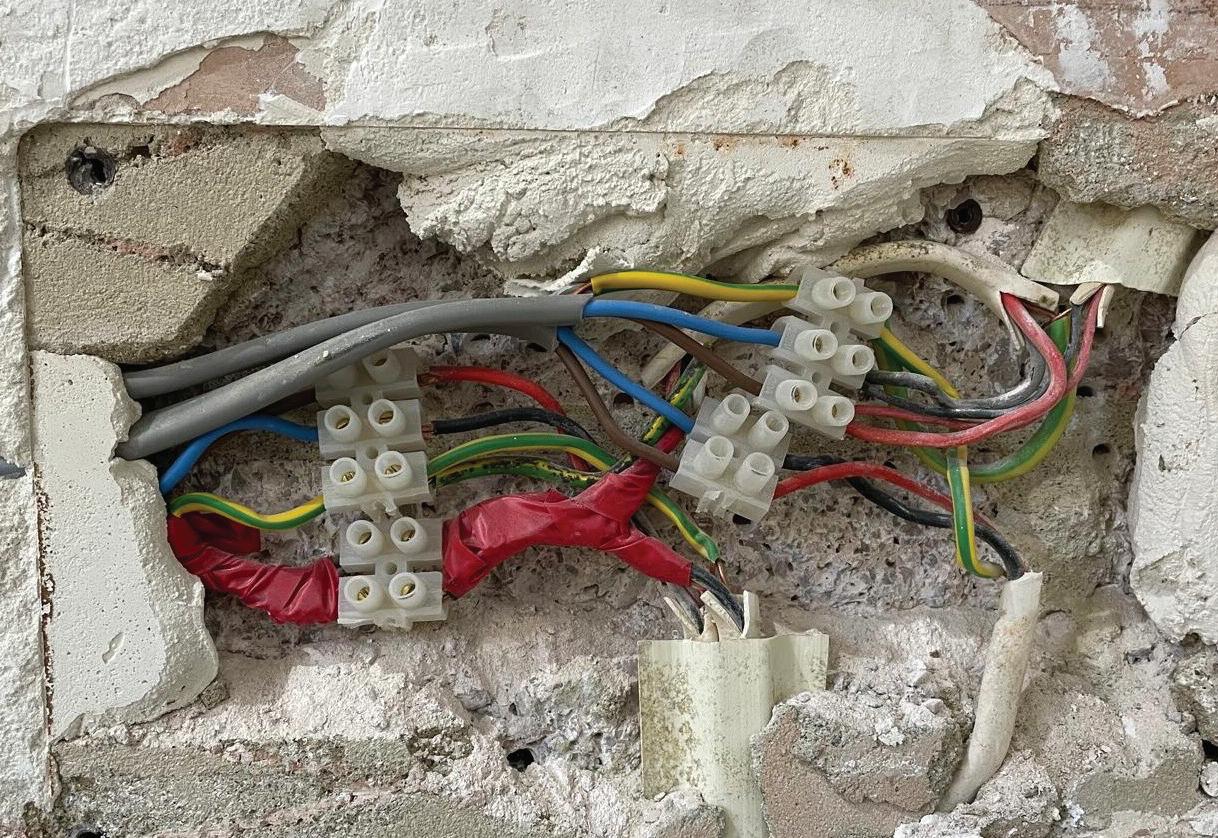
ROBERTS: I FOUND THIS IN A KITCHEN BEHIND A METAL PLATE WHICH WAS COVERED BY TILES!
Alterations to a wir ing
system dur ing a k itchen
refur bishment of ten
requires relocation of
accessor ies to meet the
new k itchen units and
layout
Where this t ype of wor k
is car r ied out, it is essential
that the alteration and
additions to the installation
complies with the
requirements of B S 7 67 1 .
Any joints or
connec tions made
bet ween conduc tors of a
wir ing systems does
require the appropr iate
method of ter mination in accordance with
R egulation Group 526
Par t of the requirements
is for ever y connec tion to
be accessible for
inspec tion, testing and
maintenance with cer tain exceptions The image does not fall
under any of the exceptions within R egulation 526 3
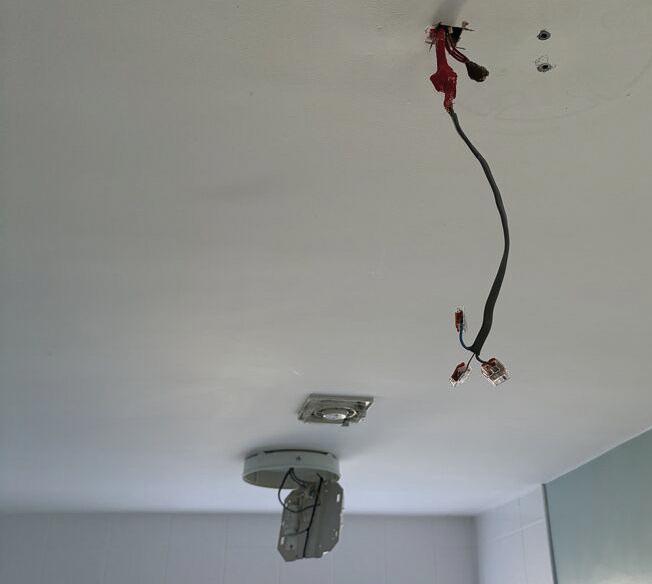
The open connectors may be subject to moisture ingress, bare conductors are visible outside of the connectors, and the conductors wrapped with insulation tape appear to have sustained damaged
As there is an absence of suitable accessor ies or enc
The Observations, Regulation infringements and Codes applicable to this observation would be:
Connections not provided with an enclosure and not accessible for inspection, testing and maintenance
The A2:2022 18th Edition Codebreakers publication is priced at £22.00 (members) and £24.00 (non-members). It is available in both hard copy and digital versions * Price is VAT exempt and excludes postage and packaging.
PETER
IT’S COMING GNOME!
8th June - 19th July 2026
BUY ANY SCOLMORE GROUP PRODUCTS FOR A CHANCE TO WIN
• Upload your proof of purchase to enter the prize draw
• Hundreds of weekly prizes to be won
• 2 x £5,000 Holiday Vouchers to be won
Upload all your receipts for more chances to win!
SCAN
ADJUSTMENT FACTORS TO NOMINAL VOLTAGE
W h e n c a r r y i n g o u t e l e c t r i c a l c a l c u l a t i o n s t h a t u s e t h e s y s t e m’s v o l t a g e , a n a d j u s t m e n t
f a c t o r m a y n e e d t o b e a p p l i e d t o t h e n o m i n a l v o l t a g e a s p a r t o f t h e c a l c u l a t i o n . I n s o m e
c i r c u m s t a n c e s a n a l l o w a n c e m a y b e r e q u i r e d t o c o m p e n s a t e f o r f l u c t u a t i o n s o f v o l t a g e
a t a n i n s t a l l a t i o n , w h i c h m a y b e h i g h e r o r l o w e r t h a n t h e n o m i n a l v o l t a g e . T h i s a r t i c l e ,
f r o m t h e e x p e r t s
m i n a l
Th e n o m i n a l v o l t a g e t o e a r t h
( U 0) i n t h e m a j o r i t y o f U K
e l e c t r i c a l i n s t a l l a t i o n s i s
g i v e n a s 2 3 0 V T h e n o m i n a l
v o l t a g e i s u s e d i n m a n y
c i r c u i t c a l c u l a t i o n s ; t h e s e
c a l c u l a t i o n s i n c l u d e
d e t e r m i n i n g t h e m a x i m u m p e r m i t t e d
i m p e d a n c e o f a c i r c u i t a n d a l s o t h e
p r o s p e c t i v e f a u l t c u r r e n t o f a c i r c u i t
T h e d i s t r i b u t i o n n e t w o r k o p e r a t o r s ( D N O s ) w o r k t o a p e r m i t t e d v o l t a g e
r a n g e o f b e t w e e n 2 1 6 2 V a n d 2 5 3 V
C o r r e c t i o n f a c t o r s s h o u l d b e a p p l i e d
w h e n c a r r y i n g o u t e l e c t r i c a l
c a l c u l a t i o n s w h e n t h e a c t u a l v o l t a g e
d i f f e r s f r o m t h e n o m i n a l v o l t a g e
N o m i n a l v o l t a g e
T h e t e r m ‘ n o m i n a l ’ m e a n s ‘ n a m e d ’ ;
t h e n o m i n a l v o l t a g e i s n o t t h e e x a c t
v o l t a g e o f t h e s y s t e m T h e d e f i n i t i o n
o f n o m i n a l f r o m t h e Oxford English Dictionary i s a s f o l l o w s :
Nominal
Existing in name only: merely named (without reference to fact or reality); not real or actual E xc e r p t f r o m Oxford English Dictionary .
T h e n o m i n a l v o l t a g e t o e a r t h , U 0, i s d e f i n e d i n BS 7671 a s t h e ‘ Vo l t a g e b y w h i c h a n i n s t a l l a t i o n ( o r p a r t o f a n i n s t a l l a t i o n ) i s d e s i g n a t e d ’
T h e a c t u a l m a i n s s u p p l y v o l t a g
n t h e
p e r m i t t e d v o l t a g e r a n g e o f Ta b l e 1
Vo l t a g e f a c t o r s
To t a k e a c c o u n t o f v o l t a g e v a r i a t i o n s
d e p e n d i n g o n t i m e a n d p l a c e,
c h a n g i n g o f t r a n s f o r m e r t a p s a n d
o t h e r c o n s i d e r a t i o n s , v o l t a g e f a c t o r s
a r e i n t r o d u c e d i n t o c a l c u l a t i o n s t o a c c o u n t f o r t h e d i f f e r e n c e i n t h e
n o m i n a l a n d t h e p o s s i b l e v o l t a g e
T h e v o l t a g e f a c t o r s a r e i n d i c a t e d
i n Ta b l e 2 . T h i s i s r e p r o d u c e d f r o m
Ta b l e 7 o f C LC / T R 5 0 4 8 0 : 2 0 1 1
D e t e r m i n a t i o n o f c r o s s - s e c t i o n a l
a r e a o f c o n d u c t o r s a n d s e l e c t i o n o f
p r o t e c t i v e d e v i c e s
N o t e : C min d o e s n o t a l i g n e xa c t l y
w i t h t h e l o w e r p e r m i t t e d v o l t a g e, a s
2 3 0 x 0 9 5 = 2 1 8 5 V ( n o t 2 1 6 2 V ) ,
a l t h o u g h C min i s d e e m e d t o b e
p r a c t i c a l , t a k i n g a c c o u n t o f r e a l m e a s u r e d v o l t a g e s
To u n d e r s t a n d t h e p o s s i b l e
d i f f e r e n c e s i n v o l t a g e, c o n s i d e r t h e
f o l l o w i n g e x p l a n a t i o n : a t r a n s f o r m e r
t h a t s u p p l i e s a n o m i n a l v o l t a g e o f
2 3 0 V t o d w e l l i n g s i s l i k e l y t o h a v e
a n o u t p u t v o l t a g e o f c l o s e t o 2 5 3 V, a l t h o u g h t h i s i s d e p e n d e n t o n t h e
t r a n s f o r m e r ’s t a p s e t t i n g .
I t f o l l o w s t h a t t y p i c a l l y, w h e r e
t h e r e a r e n o s m a l l - s c a l e g e n e r a t o r s
f e e d i n g i n t o t h e s e r v i c e c a b l e,
p r o p e r t i e s c l o s e s t t o t h e t r a n s f o r m e r
w i l l l i k e l y e x p e r i e n c e a v o l t a g e l e v e l
n e a r t h e u p p e r l i m i t t h r e s h o l d , w h i l s t
t h o s e f u r t h e r a w a y w i l l e x p e r i e n c e a
l o w e r v o l t a g e T h i s i s d u e t o a
c o m b i n a t i o n o f t h e c i r c u i t ’s
i m p e d a n c e a n d t h e l o a d o n t h e
f e e d e r
T h e p r o p e r t y a t t h e e n d o f t h e
f e e d e r w i l l l i k e l y h a v e a v o l t a g e
l e v e l t o w a r d s t h e l o w e r l i m i t ,
a l t h o u g h n o t l i k e l y a s l o w a s 2 1 6 2 V
I t s h o u l d a l s o b e n o t e d t h a t t h e
v o l t a g e o n t h e d i s t r i b u t i o n n e t w o r k
v a r i e s t h r o u g h o u t t h e d a y ; t h i s i s
d u e t o c h a n g e s i n c o n n e c t e d l o a d
a n d a l s o t h e a u t o m a t i c t a p c h a n g i n g
o f t r a n s f o r m e r s a t h i g h e r v o l t a g e s
W h e n t o u s e C m i n o r C m a x
I t c a n b e c o n f u s i n g f o r t h e d e s i g n e r
t o k n o w w h e n t o u s e C m i n o r C m a x
D e s i g n e r s s h o u l d a l w a y s c o n s i d e r
t h e w o r s t - c a s e s c e n a r i o w h e n
p e r f o r m i n g c a l c u l a t i o n s T h e m o s t
d e t r i m e n t a l v a l u e d e p e n d s o n t h e
s p e c i f i c c a l c u l a t i o n b e i n g
p e r f o r m e d T h i s i s e x p l o r e d b e l o w
M a x i m u m p e r m i t t e d e a r t h f a u l t
l o o p i m p e d a n c e
W h e n d e t e r m i n i n g t h e m a x i m u m
p e r m i t t e d e a r t h f a u l t l o o p
i m p e d a n c e o f a c i r c u i t t o e n s u r e t h e
d i s c o n n e c t i o n t i m e s o f a p r o t e c t i v e
d e v i c e g i v e n i n C h a p t e r 4 1 o f
B S 7 6 7 1 a r e m e t , C m i n s h o u l d b e
u s e d T h i s i s b e c a u s e t h e c u r r e n t
r e q u i r e d t o o p e r a t e t h e d e v i c e ( I a ) i s
a f i xe d v a l u e F o r i n s t a n c e,
a c c o r d i n g t o A p p e n d i x 3 o f B S 7 6 7 1 ,
t h e c u r r e n t r e q u i r e d t o d i s c o n n e c t a
3 2 A B t y p e c i r c u i t - b r e a k e r i n 0 4 s
i s 1 6 0 A
Ensuring that 160 A can flow under fault conditions depends on the voltage and the earth fault loop impedance of the circuit. Ohm's Law
tells us that with a fixed impedance, a higher voltage will result in a greater current flow, whereas a lower voltage will result in less current flow with the same impedance
D u e t o v o l t a g e v a r i a t i o n s o n t h e
n e t w o r k , C m i n i s u s e d t o t a k e
a c c o u n t o f t h e p o s s i b l e l o w e r t h a n
n o m i n a l v o l t a g e, t h i s g i v e s
3
B S 7 6 7 1
Zs ≤ U0 × Cmin
Ia
W h
m i n a l AC R M S l i n e
v o l t a g e t o e a r t h ;
I a i s t h e c u r r e n t i n a m p e r e s ( A )
c a u s i n g o p e r a t i o n o f t h e
p r o t e c t i v e d e v i c e w i t h i n a
s p e c i f i e d t i m e ; a n d
C m i n i s t h e m i n i m u m v o l t a g e f a c t o r
t o t a k e a c c o u n t o f v o l t a g e
v a r i a t i o n s d e p e n d i n g o n t i m e
a n d p l a c e, c h a n g i n g o f
t r a n s f o r m e r t a p s a n d o t h e r
c o n s i d e r a t i o n s
F o r mu la 1 De te r m in ing t he m a x im um
e a r t h fa u lt lo o p im pe d a nc e f o r th e p r o te c t iv e de v ic e A pp e nd ix 3 o f BS 7671
F a u l t c u r r e n t t o d e t e r m i n e t h e
b r e a k i n g c a p a c i t y o f a p r o t e c t i v e
d e v i c e
W h e n e s t a b l i s h i n g t h e b r e a k i n g
c a p a c i t y o f a p r o t e c t i v e d e v i c e, t h e
h i g h e s t f a u l t c u r r e n t i s t h e m o s t
d e t r i m e n t a l s c e n a r i o C m a x i s
t h e r e f o r e u s e d t o d e t e r m i n e t h e
h i g h e s t p o s s i b l e f a u l t c u r r e n t w i t h i n
t h e i n s t a l l a t i o n w h e n s i z i n g
p r o t e c t i v e d e v i c e s .
F ig 1 Il lu s t r a t io n o f v o l t a g e d r o p o n a r a di a l f e e de r
F a u l t c u r r e n t t o d e t e r m i n e
c o n d u c t o r s i z e
W h e n s i z i n g a c o n d u c t o r u s i n g t h e
a d i a b a t i c m e t h o d , t h e f a u l t c u r r e n t
( I f ) i s a k e y c o m p o n e n t o f t h e
f o r m u l a ( s e e F o r m u l a 2 ) T h i s f a u l t
c u r r e n t i s t h e n u s e d t o d e t e r m i n e
t h e t i m e ( t ) i t t a k e s f o r t h e p r o t e c t i v e
d e v i c e t o o p e r a t e f r o m t h e d e v i c e s
t i m e / c u r r e n t g r a p h K n o w i n g w h e n
t o u s e C m i n o r C m a x d e p e n d s o n t h e
t y p e o f p r o t e c t i v e d e v i c e u s e d
B o t h t h e m i n i m u m a n d m a x i m u m
f a u l t c u r r e n t c o n d i t i o n s a r e r e q u i r e d ,
s o t h e h i g h e s t e n e r g y l e t - t h r o u g h i s
t a k e n i n t o a c c o u n t ( 5 3 3 . 3 ) .
S = I2 × t k √
W h e r e :
S i s t h e n o m i n a l c r o s s - s e c t i o n a l a r e a o f t h e c o n d u c t o r i n m m 2 ;
I i s t h e v a l u e i n a m p e r e s ( R M S f o r
AC ) o f c u r r e n t f o r a f a u l t o f
n e g l i g i b l e i m p e d a n c e, w h i c h c a n
f l o w t h r o u g h t h e a s s o c i a t e d
p r o t e c t i v e d e v i c e, d u e a c c o u n t
b e i n g t a k e n o f t h e c u r r e n t l i m i t i n g
e f f e c t o f t h e c i r c u i t i m p e d a n c e s
a n d t h e l i m i t i n g c a p a b i l i t y ( I 2 t ) o f
t h a t p r o t e c t i v e d e v i c e ;
t i s t h e o p e r a t i n g t i m e o f t h e
p r o t e c t i v e d e v i c e i n s e c o n d s
c o r r e s p o n d i n g t o t h e f a u l t c u r r e n t
( I ) a m p e r e s ; a n d
k i s a f a c t o r t a k i n g a c c o u n t o f t h e
r e s i s t i v i t y, t e m p e r a t u r e c o e f f i c i e n t
a n d h e a t c a p a c i t y o f t h e
c o n d u c t o r m a t e r i a l , a n d t h e
a p p r o p r i a t e i n i t i a l a n d f i n a l
t e m p e r a t u r e s
F o r mu la 2 Siz ing a p r o te c t iv e co n du ct o r, a d ia ba ti c m e t ho d , R e g ula ti o n 5 4 3 1 3 o f BS 7671
T h e r m a l p r o t e c t i v e d e v i c e s
F o r t h e r m a l l y o p e r a t e d p r o t e c t i v e
d e v i c e s , s u c h a s f u s e s o r t h e
t h e r m a l c o m p o n e n t o f a
t h e r m a l - m a g n e t i c d e v i c e, C m i n i s
u s e d t o c a l c u l a t e t h e f a u l t c u r r e n t
T h i s i s b e c a u s e a l o w e r f a u l t c u r r e n t
r e s u l t s i n a s l o w e r o p e r a t i n g t i m e f o r
Ci s a C O
O is a colourless, odourless, and tasteless poisonous gas produced by the incomplete combustion of fuels
C O d e t e c t o r s a r e t h e o n l y
w a y f o r a n o c c u p a n t t o
r e c e i v e a w a r n i n g t h a t t h e r e
l e a k w i t h i n t h e i r h o m e
I t i s , t h e r e f o r e , i m p o r t a n t t o h a v e C O
a l a r m s f i t t e d i n t h e h o m e , a n d t o e n s u r e
t h e y a r e i n t h e r i g h t p l a c e s s o
o c c u p a n t s r e c e i v e t h e e a r l i e s t w a r n i n g .
The number of rooms that require CO alarm coverage differ in the UK due to specific legislative requirements within each nation
England
Applicable to private and social rental properties:
l Alarms can be battery powered or mains powered (type A, not plug-in)
l Alarms must be located in the same room as the appliance
l Excludes gas cookers
Wales
Applicable to private and social rental properties:
l Alarms can be battery powered or
The experts at Aico advise on the importance of CO alarms in the home and provide guidance on how to site them in the correct location.
CO ALARM SITING AND INSTALLATION
mains powered (type A, not plug-in)
l Alarms must be located in the same room as the appliance
l Includes gas cookers
Scotland
Applicable to private and social rental properties as well as owner-occupied premises:
l Alarms can be battery powered or mains powered (type A, not plug-in)
l Alarms to be installed where there is a fuel burning appliance or a flue
l Excludes gas cookers
Northern Ireland
Applicable to privately rented properties only:
l Alarms can be battery powered or mains powered (type A, not plug-in)
l Alarms to be installed where there is a fuel burning appliance or a flue
l Excludes gas cookers
Furthermore, requirements can differ across property types, with new and materially altered properties having to adhere to building regulations
If a property falls within scope of building regulations, the following
requirements will apply:
England/Wales
l Alarms can be battery powered or mains powered (type A, not plug-in)
l CO alarm must be located in the same room as the appliance
Scotland
l Alarms can be battery powered or mains powered (type A, not plug-in)
l CO alarm must installed where there is a fuel burning appliance or a flue
l Excludes cookers
Northern Ireland
l Alarms can be battery powered or mains powered (type A, not plug-in)
l CO alarm to be installed where there is a fuel burning appliance or a flue
l Excludes cookers
Siting of CO alarms
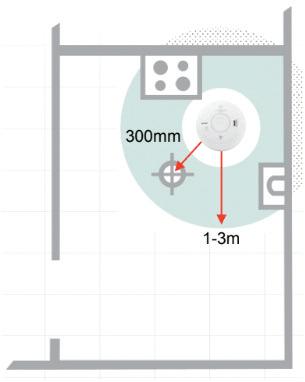
Carbon monoxide alarms should be sited within 1 - 3 metres of the fuel burning
appliance being covered, ideally with 300 mm clearance all the way around to ensure air flow to the alarm is not being obstructed
If siting in a room containing a flue –the location of the flue should be considered i.e – if the flue runs through the ceiling, you should site in the upper part of the room
If the appliance is in a cupboard and you cannot site at least 1 m away, you should site just outside of the cupboard
Within BS 50292:2023 it is referenced that CO alarms should not be sited in damp or humid locations unless manufacturer’s guidance confirms the apparatus’ suitability. Aico’s 200 Series alarms are suitable for these locations, provided that they are sited away from direct splash zones
Lastly, it is recommended to consider adding additional alarms in rooms that occupants spend most of their time and sleeping rooms to ensure early warning
Common siting mistakes to avoid when fitting CO alarms
A few simple errors can affect how well alarms work, so it’s important to keep these in mind during installation:
l Installing CO alarms too close to the appliance they’re covering: alarms should be sited 1-3 m away from the fuel burning appliance for appropriate detection
l Putting alarms too close to walls or light fittings: all alarms need to be at least 300 mm away from obstructions to avoid dead air spaces which may affect the efficiency of detection.
l Fitting alarms in rooms less frequented such as an external garage and not considering audibility throughout the property: i n t h i s c a s e
l Not having a differentiation of alert type in interlinked systems that contain a mixture of fire and CO protection: this can lead to confusion over which device has triggered the system. Devices such as Aico’s Ei450 RadioLINK Alarm Controller can provide a visual alert indicator to help distinguish between activation types
BROWSE AICO’S 200 SERIES
ALARM RANGE IN FULL AT: WWW.RDR.LINK/ECA048
SHOCKING ENVIRONMENTS
Andrew Duffen, Technical Commercial Engineer at NAPIT, explores the specific requirements for special installations and locations under Part 7 of BS 7671. Drawing from his industry experience, he explains why a risk-based, site-specific approach is vital to ensure electrical safety, compliance and reliability in challenging environments.
What is special location or installation?
Having worked across the electrical industry, from hands-on installation through to inspection and testing, education and training, and now as part of the technical team at NAPIT, I’ve come to appreciate that no two electrical installations are ever the same.
From my experiences in designing and installing electrical systems, it’s vital to remember that while the standard external influences outlined in BS 7671 must be considered when selecting and installing equipment, the real-world application often varies from site to site.
Even within the same installation, certain areas can present very different environmental or operational conditions that affect how equipment should be specified and protected
BS 7671 acknowledges that certain areas within an installation may present a higher risk of electric shock due to the specific nature of the location or the type of installation
These variables underline the importance of a risk-based, site-specific approach
BS 7671 names these as ‘special location or installations’ and lists them in Part 7
When planning work in a special location or on a special installation, it’s essential to understand the specific requirements of International Protection (IP) code ratings and any
modifications needed for adequate protection
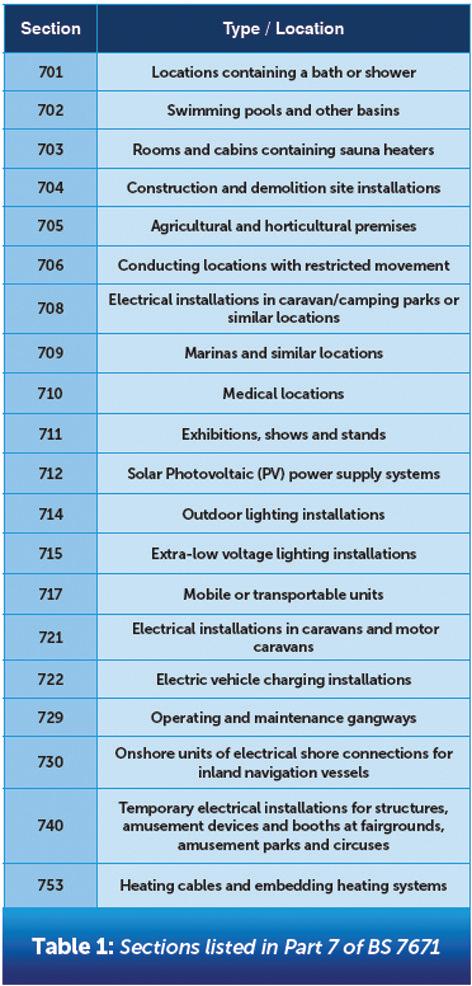
Part 7 of the BS 7671 lists 20 sections in total, these are shown in Table 1
As you can see, each special installation or location requires careful consideration of how that installation is to be designed.
Both the designer and installer must understand the additional requirements outlined in the relevant section of BS 7671
These include higher IP ratings, supplementary equipotential bonding, RCD protection and the use of SELV or PELV.
Section 701: Locations containing a bath or shower
The term ‘bathroom’ does not appear in BS 7671, as baths and showers can be located in various spaces such as wet rooms, shower rooms, bathrooms or even utility areas
Section 701 applies to any location containing a bath or shower and
recognises as areas with an increased risk of electric shock due to:
l Reduced body resistance resulting from either immersion or wet skin l Possible contact of significant portions of the body with earth potential
Accordingly, Section 701 (covering locations with baths or showers) specifies several particular requirements for these areas
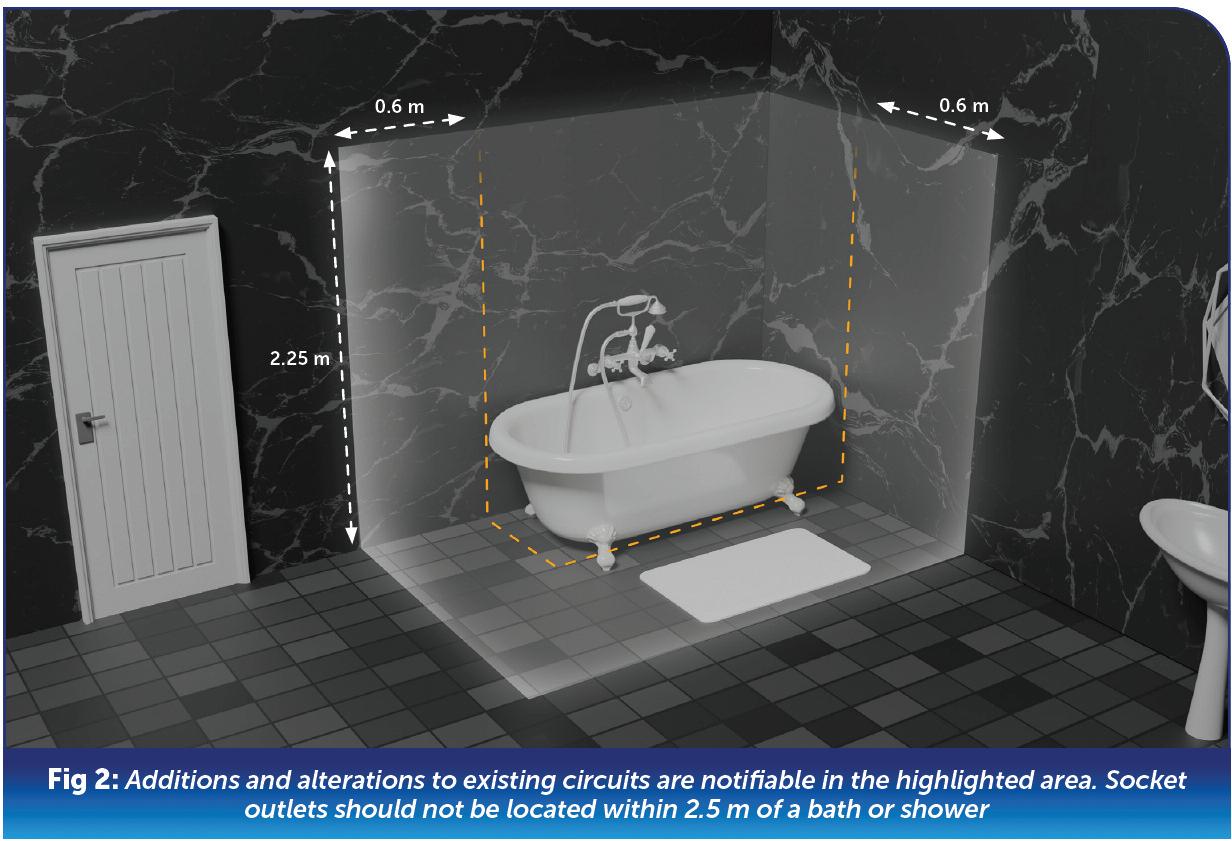
Zonal areas
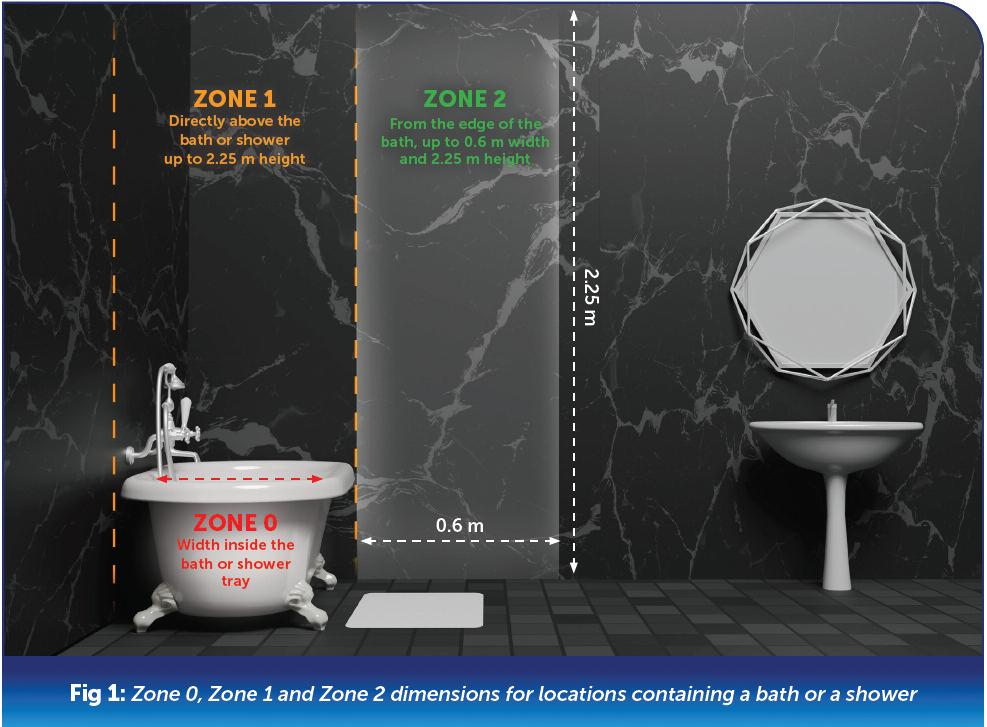
A room which has a bath or shower in it will have different levels of risk of electric shock BS 7671 divides the room into different areas, based on the variety levels of risk These areas are known as zones and are displayed in Fig 1
ZONE 0:
Is the area where water is held, which can be any size or shape, dependant on the size and shape of the bath or basin
ZONE 1:
Is the area of the perimeter of the bath or basin from the floor to a maximum height of 2 25 m This is the area which is occupied by a person if they were standing or sitting in zone 0
ZONE 2:
Is the area directly outside the perimeter of the bath or basin to a distance of 0 6 m away from the bath or basin, with a maximum height of 2 25 m or fixed water outlet whichever is higher (there are different requirements where there is no basin i e a wet room) This area can be reached by extending an arm while standing or sitting in zone 0
Selection of equipment
Due to the zones within the locations with baths or showers, each zone will have different requirements with the type of equipment that can be installed
Focusing on the presence of water, with the IP ratings of the equipment to be used being vitally important See Fig 2
ZONE 0:
No switchgear or accessories are permitted unless incorporated into fixed current-using equipment suitable for use in that zone See Regulation 701 512 3 for full requirements Minimum degree of protection IPX7.
ZONE 1:
Only switches of SELV circuits (12 V AC or 30 V DC maximum) are permitted (provided the safety source is installed outside of the zones). Only permanently connected equipment suitable for zone 1 (according to manufacturer’s instructions) should be installed Minimum degree of protection IPX4 (IPX5 if water jets)
ZONE 2:
Only switches and socket-outlets of SELV circuits are permitted, provided the safety source is installed outside of the zones Shaver units to BS EN 61558-2-5 are also permitted Minimum degree of protection IPX4 (IPX5 if water jets)
Outside zones:
SELV socket-outlets and shaver supply units to BS EN 61558-2-5 are allowed Socket-outlets are also permitted 2 5 m horizontally from the edge of zone 1
The following list of equipment is recognised as suitable for zone 1, if permanently connected, declared suitable by the manufacturer:
l Electric showers
l Shower pumps
l Whirlpool units
l Equipment protected by SELV or PELV (25 V AC or 60 V DC maximum) with safety source outside zones
l Ventilation and extraction equipment
l Towel rails
l Water heaters
l Luminaires
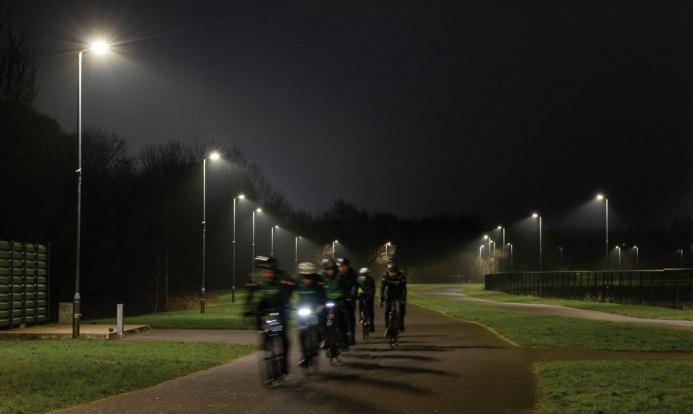
Section 714: outdoor lighting installations
This section applies to outdoor lighting installations, comprising one or more luminaries, a wiring system, accessories and highway power
supplies or street furniture.
Such installations present additional risks due to weather exposure, public access, mechanical damage, so standard indoor wiring rules must be supplemented
The following are included in outdoor lighting installations:
l Car parks
l Sporting areas
l Gardens, spaces open to public
l Bus shelters
l Advertising panels and town plans
The following are excluded:
l Street lighting and traffic signs
l Illumination of monuments
l Platform lighting at rail/bus stations
Access doors and luminaries
In accordance with Regulation 714 411 2 201, a door in street furniture, for example, a lighting column or feeder pillar, must not serve as the barrier or enclosure providing basic protection against electric shock This means that when such a door is opened or removed, any risk of contact with live part must be eliminated by means of appropriate insulation, or by a secondary barrier or enclosure remaining in place within the equipment.
To further mitigate the risk of inadvertent access, Regulation 714 411 2 201 specifies that any door situated less than 2 5 m above ground level and giving access to electrical equipment must be either lockable or require the use of a tool to open.
Basic protection must be maintained when the access door is open This can be achieved by using equipment that, by design or installation, provides a minimum degree of protection of IP2X or IPXXB, or laterality by fitting a barrier or enclosure that offers the same level of protection.
Similarly, where the light source of a luminaire is installed below 2 8 m above ground level, access must be only possible after removal of a protective barrier or enclosure requiring the use of a tool.
This ensures that exposed
conductive or live parts cannot be accessed by the general public or by untrained persons during normal operation or maintenance
Additional protection by RCDs
As set in the requirements of Regulation 714.411.3.4, additional protection shall be provided by means of a Residual Current Device (RCD), having a rated residual operating current (IΔn) not exceeding 30 mA
This requirement applies to lighting installations located in such as, bus shelters, advertising panels and town plans These are environments where members of the public may come into close vicinity with electrical equipment, often damp or outdoor conditions, increasing the risk of electric shock
The inclusion of RCD protection
therefore provides an added layer of safety beyond the basic protective measures required by Chapter 41
Disconnection times
Under Regulation 714 411 202, a disconnection time of 5 seconds is permitted for all circuits supplying fixed equipment, such as lighting columns or distribution boards, used within highway power supplies operating under TN or TT earthing systems
This represents a relaxation of the general disconnection requirement stated in Regulation 411 3 2 4 which limits the maximum disconnection time in TT systems to 1 second It is important to note, however, that this acknowledgement applies exclusively to highway locations, as defined in Part 2 of BS 7671, where the equipment is not normally accessible to the general public
Such flexibility allows designers and installers to achieve a balance between safety and supply reliability, ensuring that essential public lighting remains functional under fault conditions while still maintaining compliance with protective principles
Conclusion
Each special installation or location demands detailed attention during design and installation Both designers and installers must understand the additional requirements in the applicable sections of BS 7671.
Professionals working in these environments must demonstrate competence in maintaining electrical system functionality, prioritising end user safety and ensuring adherence to the regulatory Standards
Drawing on my own experiences, the key message is simple: effective electrical design begins with understanding the environment Applying the principles of BS 7671 with real-world insight bridges the gap between compliance on paper and genuine safety in practice
The aim of this article was to clarify the key requirements of Part 7 of BS 7671, with the emphasis on Sections 701 and 714, and how these areas differ from standard installations, the additional protective measures required, and the importance of a risk-based, site specific approach to ensure safety, compliance and reliability in electrical design and installation
Q & A
NICEIC FAQs
Each month, our team of expert, technical engineers answer essential questions
Each month, our team of expert, technical engineers answer essential questions from NICEIC-certified businesses – here are a few of the latest queries.
Q
A
Q We are working in a domestic apartment block and have been questioned over the types of cable supports that we have installed. Within the communal area where a suspended ceiling is to be installed, we have supported the cables using steel ties to a cable tray system. Within the individual apartments, where a solid plasterboard ceiling is to be installed, we have used cable anchors and plastic ties. Should these also be steel ties?
According to BS 7671, which is the most commonly used protective measure in electrical installations?
Automatic disconnection of supply (ADS)
BS 7671 regulation 410.3.3 states that; In each part of an installation one or more protective measures shall be applied, taking account of the conditions of external influence.
Q We have been asked to install some additional lighting on existing circuits within a school. All of the additional lighting will be installed using surface-mounted conduit. However, the existing circuits that we are extending are wired using thermoplastic insulated and sheathed cables buried in the walls. Do we need to upgrade the circuits to include additional protection?
The protective measures applied in the installation shall be considered in the selection and erection of equipment
For particular installations see Regulations 410.3.4 to 410.3.9.
And the associated note for the regulation states:
The following protective measures are generally permitted:
A Regulation 521.10.202 requires that all wiring systems shall be supported in such a way that, in the
A The alterations/additions that you are undertaking on the existing circuit(s) would need to meet the requirements of BS 7671 (641.5).
In electrical installations the most commonly used protective measure is automatic disconnection of supply
However, this would not necessarily require the existing circuit to be upgraded, provided that there
(i) automatic disconnection of supply (Section 411)
collapse and result in an entanglement risk.
Typically, for cables that are installed above a plasterboard ceiling, it is likely that the means of
(ii) double or reinforced insulation (Section 412)
(iii) electrical separation for the supply to one item of current-using equipment (Section 413)
the cables are contained within the ceiling void, and the plasterboard is intact, they are protected from the
(iv) extra-low voltage (SELV and PELV) (Section 414).
It should also be noted that even in the event of the plasterboards failing, the cables will pass through joists, where this is necessary for their routing, further limiting
Q
For the purpose of conformity with the associated regulations, does BS 7671 consider a luminaire to be an appliance?
A
No
Within Part 2 Definitions of BS 7671, the definition of appliance is as follows:
in accordance with the requirements of regulation
Appliance An item of current using equipment other than a luminaire or an independent motor.
If you are an NICEICfor convenient CPD resources, scan the QR
CHANGES TO BS 5266-1 EMERGENCY CODE OF PRACTICE
Jake Green, Head of Technical Engagement at Scolmore Group – which includes the Orbik emergency lighting range by Ovia – examines what the 2025 updates to BS 5266 1 mean for mergency lighting esigners and installers.
The updating of the emergency lighting code of practice, BS 5266-1: 2016, to the 2025 version has recently been published This update follows the amendments to the related EN standards EN 1838 (Lighting applications Emergency lighting for buildings), and EN 50172 (Emergency escape lighting systems), both of which were published in 2024
This article will highlight some of the changes made to the standard. However, it should be noted in general that some notes have become clauses, and some clauses have become notes
Emergency lighting functions
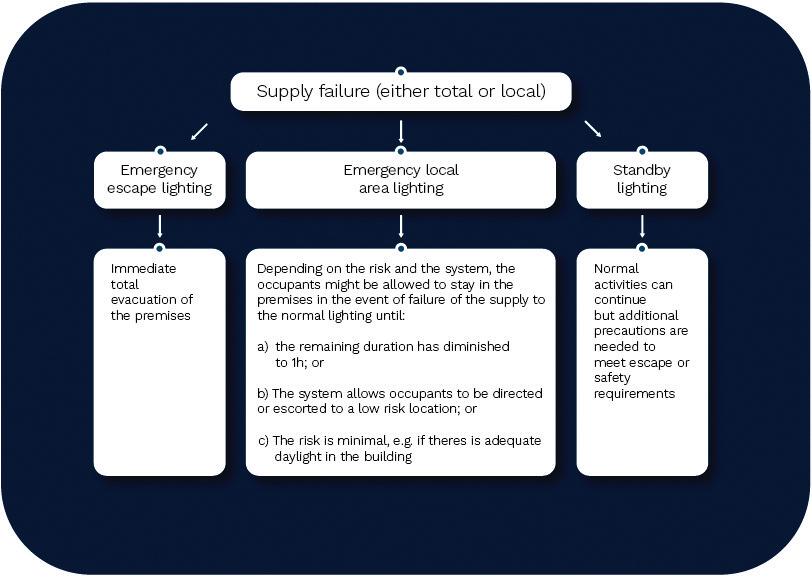
The 2025 edition has added emergency local area lighting (formerly ‘emergency safety lighting) which provides lighting for safe movement in premises when the occupants do not need to evacuate the premises immediately
Figure 1 (pictured on page 43) of the standard has been updated to detail this change
Supply of plans
Clause 4 2 has incorporated the
recommendations in BS EN 50172 for the supply of plans to include escape route signs and special locations.
Defined escape routes (5 2 5)
There has been a slight change to the minimum recommendations regarding the floor level illuminance in defined escape routes The minimum level is now to be 1 lx across the whole escape route width However, the border up to 0 5 m may be excluded. Where the defined escape route is less than 2 m, the borders of ¼ of the escape route width should be excluded
Open areas (5.2.6)
In the 2016 standard, open areas having a floor area in excess of 60 m2 were recommended to have a minimum illuminance of 0 5 lx: this remains the case in the 2025 standard
However, where an escape route passes through an open area which is not clearly defined, the 2025 standard recommends that all of the open area should be treated as an escape route In such a case the emergency escape lighting should be a minimum of 1 lx at floor level BS EN 1838 gives details on illuminance for open areas
High-risk task areas (5.2.7)
The recommendations regarding high-risk task areas to have a minimum illuminance level of 10% remains However, the 2025 standard recommends that the illuminance is never less than 15 lx at the location of the point of risk
Siting of luminaires and special locations (5.2.8.1)
The list detailed in this clause has been amended and added to. Emergency escape lighting must now also be provided in escape routes, open areas, high-risk task areas, and points of emphasis, including:
l externally illuminated escape route signs, escape route direction signs and other safety signs needing to be illuminated under emergency lighting conditions.
l at each change of direction.
l outside a building to a place of ‘ultimate safety’
l near the call point where an alarm call is received from a passenger lift car and the associated lift winding facilities
l corridors from all passenger lift doors to the nearest escape routes
l near each piece of firefighting equipment and call point so that at least 5 lx vertical illuminance is provided at the fire alarm call points, firefighting equipment, panel, also escape and rescue plans as defined in BS ISO 23601.
l near each first aid post so at least 5 lx vertical illuminance is provided at the first aid box
External areas in the immediate vicinity of exits (5.2.8.2)
Reference is now made to places of ultimate safety, and not merely to exits to a place of safety. Furthermore, the performance recommendations for the illumination of those areas and assembly points should be included in the building’s fire risk assessment and evacuation plan
Toilet facilities and changing rooms (5.2.8.5)
There has been an expansion of the recommendations concerning toilet facilities and changing rooms having an area exceeding 8 m2. These locations should be fitted with anti-panic lighting and have emergency escape lighting to levels required for escape routes (1 lx)
For single occupancy toilets with baby changing facilities illuminance of 5 lx should be provided at the height of
the changing mat Where toilet alarms exist, these should also have 5 lx vertical illuminance
In accessible toilets, a minimum level of illumination is 5 lx at floor level Furthermore, accessible toilets and multi-closet facilities should have emergency illumination from at least one luminaire
Public indoor swimming pools (5.2.8.8)
This is a new clause recommending minimum illuminance of 5 lx on the water surface as well as circulation areas and pool surrounds The clause also references BS EN 12193:2018 which covers light and lighting in sports facilities.
Distance factors and viewing distance for sign identification (5 2 9 1 3)
Clause 5 2 9 1 3 has been updated and has had a title change Reference is still made to BS 5499-4:2013 Table 3 and Table 2
Other externally illuminated safety signs (5.2.9.2)
Clause 5.2.9.2 now combines the previous recommendations of 52.9.2.1 and 5 2 9 2 2 and simplified the clause
Power supplies and equipment used as electrical sources for safety services (ESSS) (7)
The commentary to this clause makes it clear that the ESSS is for the exclusive purpose of supplying power to the emergency escape lighting during normal power failure
Clause 7.1.1 makes it clear that the ESSS should remain operational even should a circuit fault occur in a dedicated safety circuit Furthermore, the system designer should apply independent ESSS for each safety service to limit any lack of functionality of the safety service
The system should be designed to deliver the rated output power in both ‘watts’ and ‘volt-amperes (VA)’, taking account of the power factor of the load.
Account should also be given to inrush current or starting load Any change to the load during the life of the system requires the load data to be recalculated and records updated
Central safety power supply systems should be operated, tested and serviced in accordance with manufacturer’s instructions (7 1 2)
Where use is made of an uninterruptible power supply (UPS) similar recommendations re manufacturer’s instructions exist (7 1 3) Reference should also be made to the requirements of Regulations 560 11 of BS 7671 and the referenced BS 8519 standard
The previous clause 7 2 3 has been updated in clause 7 1 4 and now in addition to the existing recommendations, also recommends the power supplies are only accessible to skilled or instructed persons and are also adequately ventilated
Clause 7 2 1 makes general recommendations regarding compliance with manufacturer’s instructions for emergency lighting applications This includes any replacement policy Care should also be given to any end-of-life requirements under current legislation
Wiring
systems and circuits (8)
Section 8 has been significantly rewritten, although much that existed remains
Clause 8 2 1 now details a list, a) to g), for a designer to address as part of his/her responsibilities This includes measures for continuity of supply as well as conditions where it is not possible to loop
in and out of luminaires
Clause 8 2 2 provides greater clarity on the recommendations regarding types of cables and wiring systems However, much of this remains consistent with the 2016 standard.
Reference is made to the requirements regarding premature collapse withing BS 7671 in addition to those detailed in clause 8 2 3
Clause 8 2 5 now details recommendations regarding the impact strength (5 J) as well as the use of cables in conduit for aesthetic purposes and for the conduit to conform to BS EN 61386-1.
Greater clarity is provided where the ambient temperature is either high or low within clause 8 2 10
Clause 8 2 14 recommends that all cables supplying emergency lighting luminaires are identified either by a common colour or at every connection to ensure that they are distinguished from other circuits
Design procedure (10)
In this section a variety of changes have been made, and designers should take particular care to ensure they have addressed the changes For example, clause 10 3 has added a new recommendation regarding the checking of disability glare
Similarly, clause 10 4 now recommends an additional check on the procedures to protect a system in case they are shut down for a prolonged period. Additional notes are also included, providing informative help
Clause 10 7 2 covering the handover
documentation is much more detailed than the 2016 standard and provides a checklist to ensure the correct documentation is included in any handover
Certificates and logbooks (11)
As with clause 10, this section has been amended and enhanced
The commissioning inspections and tests as detailed in BS EN 50172:2024 are to be part of the handover documentation. Any variations from BS 5266 within the specification or design proposal should also be documented and included in the handover documentation
An additional recommendation is now included where photometric verification of the system in accordance with BS EN 50172: 2024, is now to include both initial verification and at intervals not exceeding 5 years. This is to confirm that the emergency lighting system performance remains valid
Conclusion
Any designers, installers, maintainers and those responsible persons should avail themselves of the updated standard
There have been a number of significant changes and particular note should be given to the regularity of the photometric verification as well as the increase in illuminance in escape routes and open areas used as escape routes.
Working on your own? Need some technical advice? Don’t know where to turn? Ask Megger What it doesn’t know about installing and testing electrical systems isn’t worth knowing Every question will be answered by the Megger Technical Team, and the best will be published in Professional Electrician So, take advantage of the ‘ every question answered’ guarantee today Email your questions to: meggermeasures@hamerville co uk
You ask:
ONE OF MY CONTRACTOR FRIENDS HAS JUST BOUGHT A THERMAL CAMERA AND THEY’RE VERY ENTHUSIASTIC ABOUT IT. ARE THEY REALLY AS USEFUL AS THEY SAY AND, IF I WAS THINKING ABOUT BUYING ONE, WHAT WOULD YOU RECOMMEND?
Megger says:
Thermal cameras are a great addition to any contractor’s toolkit They offer a quick, easy way of checking an installation before you start work on it They make it simple to find things like overloaded circuits in a distribution board, terminals that are heating up because they’re not properly tightened and cables that are running hot A thermal camera can save you a lot of time and help you work more safely If you decide to buy one, we suggest you look at the new range from Megger The TC120 and TC256 are good choices for general contractor work Both incorporate IR-Perfclear technology which enhances details and reduces noise so that you get a clear infrared image in real time They also include 2MP visible light cameras with photo and video recording, and convenient sharing via a mobile App The TC120 offers an IR resolution of 120 x 90, while the TC256 offers 256 x 192 If you do a lot of industrial work, you might also want to consider the TC640 with 640 x 480 resolution, laser ranging and other advanced features Whichever model you buy, you’ll wonder how you managed without it!
BROWSE MEGGER’S RANGE OF THERMAL CAMERAS AT: WWW.RDR.LINK/ECA017
ELECT RICIAN & INSTALLER
TEST & MEASUREMENT
DOES YOUR TEST EQUIPMENT MEASURE UP?
A YEAR TO REMEMBER
WHY IT’S BEEN AN EPIC 12 MONTHS FOR METREL’S ENGINEERS
At Metrel, our engineers have had an amazing year They’ve been working hard to rationalise our product range to ensure that all the important instruments, controlled by touch screens, utilise the same operating system.
The benefit to you as a user is that once you’ve become familiar with one of Metrel’s testers you know how the rest work – whether it’s a multi-function tester for testing installations, a PAT tester or a solar/PV analyser Once a circuit schematic is designed it can be transferred between machines for specialised testing and result recording
Bruno Jelencic,
Sales Director at Metrel,
explains how the company's newest innovations are accelerating the journey from circuit to certificate.
ST AND RIOUS THE THE
for certification, saving both time and patience
This project has led to a host of new and more user-friendly products across a number of specialist areas such as solar/PV, vehicle safety, EVSE, HV DC insulation testing, installation safety & electrical equipment safety testing and, most complex of all, power quality
Solar/PV testing
The solar/PV offering from Metrel has seen the introduction of two new analysers – MI3116 and MI3115 – for category 1 and 2 test procedures, and a tester delivering category 1 procedures –
MI3114 All three instruments are designed for work on large 1,500 V PV plants
The analysers can measure the I/U characteristics of high efficiency PV panels and, through the use of remote wireless, the unit monitors cell temperate and irradiation and can calculate STC values for comparison with the nominal data The MI3116 has a HAS current up to 40 A while the MI3115 has a HAS current of 20 A
HV insulation testing
Insulation testing with high voltage DC sees the introduction of 10 kV and 15 kV insulation testers with high immunity to electromagnetic noise, such as those found in HV switchyards
Significant attention has been paid to the test leads The croc clips have an improved design while at the tester end locking connectors are now provided, making the testers safer Additionally, the enormous on-board memory has plenty of space for instantly saving results and test parameters
Electric vehicles
Metrel has maintained its position as a leader in the testing of EV equipment with the introduction of a DC EVSE adapter –A1732 – for use in combination with the MI3155 multi-function tester
The A1732 is a specialised tool for testing the function and electrical safety of EVSE equipment in both Mode 4 (DC
EVSE) and Mode 3 (AC EVSE) configurations It supports CCS2, CHAdeMO and AC EVSE protocols The adapter supports a large range of connections, making it highly versatile
An EV tester (MI3132) is also added to Metrel’s range Like all Metrel testers it has an easy to follow help function This tester is designed to keep vehicle technicians safe when working with electric vehicles, both in the workshop and crash situations It offers both insulation testing according to UN ECE R100 annex 4A and 4B and resistance testing utilising fourwire micro-ohmmeter techniques using up to 2 A test currents The vast on-board memory allows quick and simple recording of the safety measurements
Installation testing
The all new multi-function tester for single-phase systems – MI3136 –
promises to take you from measuring the circuit to producing the certificate faster
Metrel has worked on the measurement methodologies so that the time required to produce test results is shortened
Building on the reliable and repeatable loop impedance algorithm, Metrel has improved the speed and repeatability without displaying RCD uplift There’s also a new Li-ion battery to power the tester too The on-board memory makes a breeze of recording your test results and downloading them, via the USB type C lead or using WiFi or Bluetooth, for fast and efficient certification
Electrical equipment testing
For example, 50 and 100 V insulation tests are added so that delicate equipment can be tested without risking damage The electrical engineer will find they can measure not just the normal measurement of continuity, insulation resistance and leakage but can test devices with floating inputs, and stand-by power assets to understand the effects on power quality
Power quality
The quality of the power supplied from the network has become a major problem with the proliferation of distributed generation, and with large motors and sensitive digital equipment To help monitor this Metrel has released the MI2992 Power Analyser A class A device, it fully complies with power quality standard IEC 61000-4-30 With a 10 inch touch-screen, the MI2992 assists the user, step-by-step, in setting up the tests and to monitor and capture events on the network Furthermore, the powerful, yet easy-to-use software makes analysis and reporting simple.
Conclusion
As you can see, this past year has seen Metrel’s engineers spending their time accelerating the testing process for users. This further builds on their years of experience of taking your test results from the circuit to the certificate in the shortest possible time
BROWSE METREL’S FULL RANGE OF TEST & MEASUREMENT EQUIPMENT BY VISITING:
Setting up a MI2992 power analyser to monitor the quality of the power supply
Safety testing a DC vehicle charge point with an A1732 DC EVSE adapter and MI3155
PV TIMES
PE puts the questions to Steve Hayes, Managing Director at Test Instrument Solutions, to discover how the PVCHECKS ONE tester is helping electricians streamline PV testing, improve accuracy and reduce time on-site.
QT
e AU TO STA RT / AU TO SAV E
QPVCHECKS
ONE is designed around IEC/EN62446-1 Category 1 requirements How does the instrument help electricians ensure they remain compliant while also simplifying the certification and documentation process?
The AUTOSTART/AUTOSAVE feature is an automatic sequential testing process, engineered to maximise throughput by reducing the time needed to test each PV string PVCHECKS ONE can be connected directly h busbars inside the combiner box, to pr seamless operation
Starting with all s fuses or switches o the user simply enables one string a time As soon as PVCHECKS ONE detects voltage at its inputs, it automatically initiates the test sequence –performing the five measurements required by IEC/EN62446-1 and storing all results in its internal memory. When the fuses or switches of the tested string are reopened and those of the next string are closed, PVCHECKS ONE immediately begins the next test cycle No manual input is required, because the instrument handles the entire process autonomously for fast, reliable, and efficient testing
QTheMost users are surprised by how the PVCHECKS ONE takes much of the testing process away from them –utilising the IVCK setting, which runs through the rescribed tests omatically and safely
ability to carry out insulation testing on PV strings with DC optimisers is highlighted as an innovative feature. What challenges does this solve on-site?
Previously, the easiest way to deal with DC optimisers was to simply turn off the Insulation Resistance test within the Auto Sequence process, or manually short out connections so as to not affect them during testing
Now there’s a new setting within the unit which allows the user to define if optimisers are present, including going one step further where rapid shutdown variants can also be selected
QWith more UK installers now working with both monofacial and bifacial modules, are there any differences in testing requirements or common issues that PVCHECKS ONE has been specifically designed to address?
P
If bifacial panels are being tested, irradiance values should be taken from one irradiance cell on top and two cells underneath the array PVCHECKS ONE has the ability to input three irradiance cells for this bifacial testing process using the Solar03 remote transmitting/recording device
PVCHECKS ONE PLUS is a kit which includes the instrument, SOLAR03 transmitting/recording unit, 1 piece of HT305 irradiance cell and a temperature probe Additional HT305 irradiance cells are available as an option for bifacial testing
HARMONICS DON’T EXIST
In today’s power system, where electrical loads are increasingly complex and evolving, so too are the concepts that surround harmonics
We’re seeing the introduction of terms such as inter harmonics and, more recently, supra harmonics Each new term brings with it new questions about measurement, regulation, and the impact on the grid
The traditional concept of harmonics You can consider that harmonics don’t actually exist. One of the favourite things a mentor of mine said to me about power quality is something I still like to use when talking about the subject today: “Harmonics don’t exist; they’re a mathematical calculation used to explain the distortion of a waveform ”
is enough data to use to start making the calculations needed for our power quality measurements.
Sampling and aliasing
A critical point in any harmonic analysis is the sampling rate Because an analog to digital converter (ADC) can only capture frequencies up to half its sampling frequency, we must sample at a frequency of at least twice the highest harmonic we want to measure.
That is a very simplistic way of looking at the concept, but it also captures why we’re so interested in the topic of harmonics because these unknown frequencies can have an impact on the day-to-day electrical measurements we make
In their simplest form, harmonics are sinusoidal components whose frequencies are an integer multiple of the fundamental supply frequency (typically the 50 Hz we have in the UK and Europe).
The EN 61000 4 7 standard defines how to test and measure the harmonics, and where we see the basic idea that the waveform we’re measuring is a repeatable signal over the duration of the measurement window
This sampling window is 200 ms which for a 50Hz supply allows us to capture exactly ten full cycles (20 ms each) This
Most modern power quality analysers that comply with the EN 61000 4 30 standard will sample well above the minimum requirement (usually ≥ 10 kHz) This will give us more than 200 samples per cycle that can then be used for the Fast Fourier Transform (FFT) used to calculate the harmonic content of the signal
The FFT process of transforming these samples produces the “harmonics” that we have all read about in technical literature: the 3rd harmonic (150 Hz), the 5th harmonic (250 Hz), and so on, all the way up to the 40th, 50th or in certain situations higher order harmonics up to the 100th harmonic may also be considered.
In the world of power quality
there’s one topic that captures the imagination of electrical engineers: harmonics. Rob Barker, Director at Power Quality Expert, investigates how advances in power electronics are reshaping the way harmonic distortion is measured, interpreted and managed.
Inter harmonics
We have defined harmonics as integer multiples of the fundamental, however in the real world, the samples we make of our loads aren’t perfectly repeatable over our 200 ms sample window and synchronised to our fundamental frequency of 50 Hz
Because of this we can then introduce the concept of inter harmonics With these harmonics we’re referring to the frequency components that are represented as smaller integer steps between two adjacent traditional harmonic orders.
Why inter harmonics exist
The idea that we have a repeatable signal is there to make the method used for our harmonic calculations easier for the meter to process In reality, variable speed drives, LED lighting, UPS units and other power electronics devices can introduce frequency components that are influenced by other events, such as fault transients, and therefore will not be a repeatable signal in our 200 ms sampling window
For example, a three phase induction motor operating under a variable supply frequency can produce an inter harmonic at 50 Hz plus the motor’s mechanical frequency Or we may have a switched mode power supply that might produce a ripple around 400 Hz which isn’t an integer multiple of 50 Hz.
Grouping inter harmonics
Because inter harmonics are usually at a lower magnitude than our main harmonic frequencies, they are often grouped together to provide a more meaningful measurement indication
One common approach is to create an inter harmonic group that encompasses the frequency band between two adjacent harmonic orders. The group is represented by a single value that reflects the total distortion within that band
Another method used is to find the main harmonic orders and then calculate the frequencies between them to produce a combined harmonic group RMS value This measurement can typically be seen in EMC (Electromagnetic Compatibility) compliance testing, where manufacturers need to demonstrate that their products don’t exceed certain limits across a wide frequency range
At present, there are no defined limits for inter harmonics in standards like EN 50160 which covers voltage characteristics, THD and harmonics up to the 25th order Instead, our interest in any harmonic grouping may be down to what we’re investigating and could differ when looking at a small commercial office as opposed to a larger installation such as a data centre where higher frequency distortion and the potential affect is maybe more of interest
Supra harmonics
As the power industry moves toward converter-based systems with devices such as EV chargers, renewable energy
inverters and high speed DC DC converters, we’re starting to see how supra harmonics are going to become more of an issue. Supra harmonics are frequency components above 2 kHz that have no relationship to the fundamental supply frequency and they can span from 2 kHz all the way up to 150 kHz (or even higher in some power electronics applications)
outside the traditional harmonic spectrum we currently look at
Standards in development
Why supra harmonics matter
Unlike traditional harmonics, supra harmonics are often the result of high frequency switching in power electronics
The presence of these components can:
l Induce additional heating in conductors and electronic components, shortening lifetimes
l Generate audible interference (below 20 kHz) in sensitive environments.
l Trigger false operation of protection devices (relays, fuses) that aren’t designed to ignore high frequency noise
l Interfere with mains signalling or power line communications (PLC), which operate in the 1-2 kHz range
l Cause failure of cable terminations and connections in medium or high voltage installations due to dielectric breakdown.
l Disrupt device specific functions, such as the internal clocks in microcontrollers that can be affected by spikes at 77 5 kHz
These effects show why supra harmonics cannot be ignored, even though they lie
A standard that will address supra-harmonics is EN 50745 which is currently under development It will cover emission limits for harmonics, inter harmonics, and supra harmonics below 9 kHz for low voltage installations While EN 50745 will help set limits for devices and systems, further standards are needed for grid codes (EN 50160) and for specific applications such as EV chargers.
Until such standards are fully adopted, manufacturers and DNOs must rely on best practice guidelines and in-field measurements Modern power quality analysers are beginning to incorporate supra harmonic measurement capabilities, allowing engineers to evaluate the Total Supra Harmonic Distortion (TSHD), similar to the traditional THD measurement
The future of power quality
The transition toward converter based power systems means that the definition of “harmonic” will continue to evolve
While the traditional harmonics (up to the 100th order) remain a regulated and well understood part of power quality, supra harmonics are, like transient events, still largely unregulated
This creates a challenge for engineers who must develop new measurement techniques, tools, and mitigation methods for frequencies that were previously considered outside the scope of power quality analysis BROWSE THE RANGE OF POWER ANALYSERS AVAILABLE FROM POWER QUALITY
FIND IT, FIX IT
It would be fair to say that Bosch wouldn’t be a name you would immediately associate with hand tools As part of its blue professional range, however, the German manufacturer has in actual fact been supplying solutions to this market for the past three years.
The voltage protecting VDE products, for example, come together as an extensive portfolio The inquisitive amongst you might already be wondering what the initials actually stand for; well, the name comes from Verband der Elektrotechnik which is the official German governing body that sets the standard for electrical rated hand tools.
“Thanks to its construction and insulation in the handle, the Bosch VDE range is effective up to 1,000 volts,” explains Daniel “What that offers is a vital additional level of protection should you come into contact with a live cable, and in many applications that makes them an essential piece of kit ”
“They really come into their own in situations where a building has been rewired multiple times, and you're not 100% sure whether the circuits that you're going to be working on or near to are completely switched off or isolated
“Even if you've isolated the circuit –and you've completed all the relevant checks – when it comes to health and safety measures, a VDE hand tool is your last but vital line of defence It's designed
specifically to prevent the energy from a circuit passing through your body and causing injury ”
Strong coverage
In screwdrivers the VDE range covers pretty much every application with Slotted, Phillips, Pozi, Torx, and Socket driver variations available – and with more to be added in the future
That’s just part of the VDE collection, as Daniel reveals: “Whether it’s cable crimpers, multiple cable cutters – both long and short – combination pliers, long nose pliers, and wire strippers, whatever
p , , g expert insight into the brand’s range of electrical testers and VDE hand tools.
job you have on we’ve got a pair of pliers for the occasion ”
The comprehensive collection continues with a dismantling and stripping knife, whilst the spanners currently come in the most common 8, 10, 13, and 17 mm sizes.
For Daniel, the guiding principle for each of these tools should be ergonomics, and it’s a feature that Bosch has prioritised in its VDE hand tools
He says: “I always emphasis in our training that one of the most important things about a tool is how it feels in the hand, and that you’re completely
comfortable when using it That’s why all our VDE tools are equipped with a soft grip and, in the case of our plier range, wider handles.
“That means, if you’re applying pressure, it’s going to reduce strain on your hands, even in extended use ”
He continues: “There are shoulders at the end of the handle to stop your hand sliding forward, and potentially coming into contact with the metal, and the pivot point has been deliberately moved forward to provide more leverage and reduce fatigue.
“Although these are details in the design, they are ultimately very important because they can mitigate against debilitating conditions, such as white finger, and other nerve-related issues ”
Testing, testing
Bosch’s aim is to be seen as a one-stop shop for the trades, and that’s why its VDE
hand tools are complemented by a range of electrical testers Again, it’s an offering that will span most applications.
“We supply a Non-Contact Voltage Detector GVD 1000-17, that has different ways of providing feedback,” Daniel enthuses “There’s a standard audible sound if you’re near a live cable, plus a visual alert through changing lights and haptic feedback (vibration) ”
Whether it’s the display, mounting or their overall user friendliness, Bosch has thought about how these tools are used and what can be improved upon.
Daniel says: “When it comes to the Digital Multimeter GDM 600-15 – along with the Fork Meter GFM 1000-15 and Clamp Meter GMC 600-15 – the inverted LCD display has a black screen with white writing
“That makes it so much easier to see, especially in darker spaces Nor will it pick up as much glare in sunnier conditions ”
Daniel outlines a typical application with the Bosch Non-contact Voltage Tester GVD 1000-17: “If something’s not working in a system, and you have to chase through to find the issue, then our Non-contact Voltage Tester is what you’d reach for It will check if there’s any voltage actually getting to the appliance or the circuit that you're looking at
“When it comes to tracing it back to the fuse board, you can again use the Non-contact Voltage Tester If, for instance, a fuse has gone then the Digital Multimeter is your go-to solution, whilst for overloaded circuits, a Clamp Meter or Fork Meter will do the job ”
Durability has not been neglected either with all Bosch electrical meters featuring a robust rubberised housing that’s been drop tested to two meters They’re IP rated against dust and water splashes, and are provided in separate, sturdy cases
Some of the electrical testers have magnetic hangers that complement the rubber feet, so if you’re working with metal doors or metal casing, you can mount the tools on these and carry out the testing more comfortably
“We’ve given a great deal of consideration to how these tools will be used on-site,” concludes Daniel “The result is multiple features that will improve the end user experience.”
TEST BEFORE TOUCH
Andrew Griffiths from GCS Doncaster, in conjunction with Kewtech, implores electricians to consider the other potentially hazardous situations that they might be subjected to, beyond PEN faults.
In recent years, there has been increasing concern in the industry regarding PEN faults – a specific type of network fault with potentially lethal consequences.
While the rise in PEN faults is being acknowledged and investigated, it’s important to note that these are not the only way that hazardous situations, including touch voltage and diverted current flow, are created
In particular, there has been an increasing number of incidents where engineers have come into contact with live metallic parts (e g, metal casings or equipment) during installation or maintenance activities. These contacts can and have led to fatalities
Touch voltages and diverted currents
Touch voltages: This occurs when there is a fault in the system that results in no return path for current (i e, due to a broken or disconnected earth or neutral, combined with other faulty wiring). As a result, metallic parts (such as a distribution board, boilers or control panel) that are connected to the electrical earth could be raised to a dangerous potential
Diverted current: This is a more complex fault, where the current may flow through unintended paths (e g, through earth or neutral conductors). Even though the circuit might appear to be functioning normally, diverted current can present serious dangers
Let’s have a look at a couple of potential scenarios you may come across
Scenario one
The fault is hidden, and the current
appears to be flowing correctly in the system, as everything is working, but when measured, it is found that the current is flowing through earth conductors
This can be detected only by measuring multiple points across the earthing and neutral conductors in the installation,
(current will always follow resistance) If not detecte cables could break the re present a touch voltage h
Scenario two
When we isolate a circuit dead, everything should at zero potential; howeve multiple cables under ter that isolated circuit, we m current still flowing throu path or via the neutral, ei cross circuits or faulty wir
If proper checks are n performed, engineers co potentially break these re paths when disconnectin cables, creating dangero touch voltages in the sys
Prevention tip: Use a cla meter to check current fl especially when multiple cables are connected to same terminal This can h prevent introducing a ne hazard when disconnecting cables
Kewtech’s KT5 open jaw current and voltage tester is an ideal safe isolation tool equipping you with non-contact voltage indication, single and two pole voltage indication and current measurement all-in-one
Issues with current safe isolation procedures
The current safe isolation procedures in place often do not specifically account for or test for touch voltages and diverted current. Even though the best industry practices for safe isolation and proving dead are followed, these two specific hazards are often overlooked
The proving dead process usually involves opening enclosures or testing electrical terminals to confirm that the equipment is not live However, this step can be potentially lethal if there is already
a touch voltage present
The missing step
The concept of ‘Test Before Touch’ is well-established and often taught to engineers However, it’s usually focused on high-voltage equipment, and not before entering or touching low-voltage equipment like distribution boards, control panels, ipework, and appliance asings (e g, boilers or motor sings)
In practice, engineers may not always adhere to this guideline, especially when dling parts of the installation seem to be disconnected or d ” They may neglect to check e is a touch voltage or d current present.
equipment for hazard n act voltage indicators (such as TICK DUO) and single-pole ectors (like Kewtech’s often used as tools to check nce of dangerous voltages, e only give us an indication voltage may be present. in the case of a PEN fault or nductors may be at the same potential, so when measured using a two-pole BS EN 61243-3 voltage indicator, these tools might not effectively identify the risk In such a scenario, a single-pole device would at least give us that potentially life-saving indication
Will
our industry adapt?
Industry guidance on safe isolation and proving dead circuits do not typically account for checking for these hidden hazards, as part of the safe isolation process
There is the urgent need therefore to improve safety standards and include testing protocols specifically for touch voltages and diverted current, as part of
the standard safe isolation protocol
It is critical that electricians and engineers are equipped with the correct tools designed to detect these issues. The need for a BS EN 61243-3 voltage indicator and proving unit should be accompanied by a single pole detection device and an amp meter as a minimum
With this, it is essential that training programs ensure they’re updated to include awareness of these risks and proper techniques to mitigate them
Summary
The industry’s focus on PEN faults is undoubtedly important, however, it shouldn’t overshadow the fact that deadly electrical hazards like touch voltages and diverted current are present in many installations without PEN faults
These types of faults are often not checked during routine isolation procedures, leaving engineers at risk
By updating safety protocols, ensuring proper training, and using the right test equipment, these risks can be minimised, leading to safer practices in the field
And remember Test Before Touch!
Martijn
Gerlag, Application Engineer
at Fluke Corporation, discusses why uptime is becoming the ultimate EV charging metric.
THE ONLY WAY IS UPTIME
Wdays of EV infrastructure was visibility Governments wanted rapid roll-out, investors demanded growth, and operators focused on putting chargers in as many locations as possible.
The logic seemed straightforward: the more chargers installed, the faster the market would mature
Yet the reality told a different story, with countless public chargers standing partially unusable, whether displaying fault warnings or just being completely offline The industry succeeded in building presence quickly, but reliability lagged behind.
Making reliability visible
That’s now changing For operators, the real challenge is no longer installation, but performance over time A new charger may signal progress, but a charger that remains operational month after month is what delivers real value Technical capability alone is not enough; consistency is now what matters.
The change shows up first in maintenance routines Only a few years ago, a technician went out when something failed Today, every visit demands evidence, test reports, calibration records, and verification of energy transfer
However, not all visits serve the same purpose Maintenance contractors focus on installation, servicing, repairs and
legal-metrology inspectors, typically acting on behalf of government or regulatory bodies, whose sole priority is measurement integrity: ensuring the kilowatt-hour billed matches the kilowatt-hour delivered.
It’s the shift to make reliability visible that has put technicians in the spotlight They no longer operate as background support, but are instead the connection between compliance and customer trust
Tools of the trade
The tools in their hands reflect that Guided workflows, automatic data capture, and live cloud uploads turn a quick field check into a defensible record. A twenty-minute visit can now produce a complete audit trail
The smartest operators are already looking further ahead They use predictive data from fleets of chargers assessing temperature drift, connector wear, and power anomalies, to plan service before anything breaks It’s a mind-set borrowed from aviation, where reliability is scheduled rather than rescued.
Still, clever software means little if it isn’t practical on the ground Engineers need tools that translate analysis into action, often immediately A guided calibration or an automatic diagnostic can shave minutes off each job and remove guesswork With a network of hundreds of chargers, those minutes matter
competitiveness
Regulators are treating charging accuracy like public utilities For many, this shift has meant building entirely new reporting systems – ones that operators are not always as familiar with.
Every charger’s output, communication handshake, and payment record must be verifiable Software logs are stored, firmware changes recorded, and calibration certificates time-stamped
It is rigid and time-consuming, not only in terms of data collection but learning the standards as a whole – yet it is driving maturity across the sector Smaller networks unable to keep up with verification are falling away, leaving a core of stable, data-driven providers
As subsidies fade, the market will reward whoever can make reliability routine For drivers, it’s a simple payoff: a charger that works every single time
Interoperability used to be a selling point; now it’s expected The advantage lies in how efficiently companies can prove compliance. Instruments that run automatic plug-in checks or issue ready-made reports can save many hours in the field
For maintenance crews already stretched thin, that can make or break an SLA And when results feed straight into regulatory dashboards, the line between compliance and competitiveness begins to blur
Entering a new EV charging era
Technology might be steadying, but the economics are changing faster than ever Early investors paid for visibility, the biggest maps, the longest reach. That era is fading Today, the money follows performance data and proof has become the new growth metric
The strongest networks run connected ecosystems that link every charger, sensor, and technician A fault appears; the system identifies it, dispatches a call-out, and records the fix in minutes Each repair adds to the database, sharpening predictive accuracy.
Maintenance has shifted from overhead to the intelligence loop It is the operator who is able to master that feedback cycle who will quietly build barriers to entry that no subsidy can buy
Every technology reaches a point where speed gives way to endurance The
EV industry has arrived there The question is no longer how many chargers can be built, but instead how many can stay running perfectly, hour after hour, day after day
Reliability and trust must be built, one
LIVE AND LEARN
With the UK electrical industry facing increasing scrutiny around safety, competence, and compliance, we learn more about why electricians should consider taking a more ‘pragmatic’ approach to improving their skills.
Recent industry guidance and regulatory expectations are placing greater emphasis on risk-based decision making, particularly in areas such as portable appliance testing (PAT) and the application of the latest Wiring Regulations
For contractors, engineers, and those responsible for electrical safety, this shift highlights a clear requirement for up-to-date, practical training that reflects real-world conditions.
Pragmatic Consulting, a UK-based training provider, is supporting this transition by delivering training that bridges the gap between theory and application – particularly in PAT testing (ISITEE) and the 18th Edition Wiring Regulations (BS 7671)
A changing approach to PAT testing PAT testing – more accurately described as In-service Inspection and Testing of Electrical Equipment (ISITEE) – has evolved significantly in recent years Industry guidance now promotes a risk-based approach, moving away from fixed testing intervals toward more informed decision-making
This means those carrying out testing must understand:
l The classification of equipment (Class I, II, III)
l How environment and usage affect risk
l When visual inspection is sufficient versus formal testing
l How to determine appropriate inspection frequencies
As a result, competence in PAT testing is no longer defined solely by the ability to
operate a tester, but by the ability to interpret risk and apply proportionate controls.
Training courses delivered by Pragmatic Consulting reflect this shift, focusing on practical scenarios and real-world application rather than purely procedural instruction
the sector and increasing expectations around electrical safety, access to relevant and practical training is becoming increasingly important
Maintaining currency in a changing regulatory landscape
The 18th Edition Wiring Regulations (BS 7671) remain the benchmark for electrical installations across the UK However, with ongoing amendments and updates, maintaining current knowledge is essential for anyone involved in design, installation, or inspection
For many in the industry, the challenge is not just gaining the qualification, but ensuring the regulations can be confidently applied on-site.
To support this, Pragmatic Consulting offers multiple pathways for those seeking to achieve or update their 18th Edition qualification, including:
l A full three-day course for those requiring comprehensive coverage
l A one-day update for those already familiar with the regulations
l An exam-only option for experienced electricians and engineers
This flexible approach allows individuals to align training with their existing experience while maintaining the expected industry standards
Supporting industry competence
With skills shortages continuing to affect
Open course dates are available for both PAT testing and 18th Edition training, providing opportunities for individuals and organisations to upskill, refresh knowledge, or formalise existing experience
Courses are delivered by experienced trainers with industry backgrounds, ensuring that learning is grounded in real-world practice and aligned with current legislation and guidance
Raising standards through training
As the industry continues to evolve, the emphasis on competence over compliance is likely to grow Whether carrying out PAT testing in commercial environments or applying the latest Wiring Regulations on-site, the ability to make informed decisions is critical
Training that reflects real working conditions, rather than purely theoretical knowledge, will play a key role in supporting safer installations, better maintenance practices, and improved overall standards across the electrical sector
GET MORE DETAILS ON PRAGMATIC CONSULTING’S PAT TESTING AND 18TH EDITION COURSES BY VISITING: WWW.RDR.LINK/ECA025
SOME SOCKIT SCIENCE
PE catches up with Mike Burdon, Director of Sockits, to learn more about what led him to create a patent-pending socket design that aims to make wiring faster, safer and smarter.
Sockits began with a simple observation from real installers on everyday jobs: the frustrating part of fitting a socket isn’t the fitting, it’s the wiring
I t ’s t h e g u e s s i n g g a m e
b e h i n d t h e f a c e p l a t e T h e c a b l e s t h a t
b a r e l y r e a c h . T h e t e r m i n a l y o u c a n ’ t
q u i t e s e e. T h e s c r a p e d k n u c k l e s a n d
t w i s t e d b a c k s A n d t h e w a s t e d t i m e
s p e n t u n d o i n g a n d r e d o i n g s o m e t h i n g
t h a t s h o u l d b e r e a l l y s i m p l e
“We asked (what was) a pretty obvious question,” says Mike “Yet it’s one the market had somehow overlooked for far too long: ‘Why are we still doing it like this?’ That question provides the answer to where Sockits originated.”
By rethinking the socket from the inside out – not by adding bells and whistles, but by stripping the problem back to its core – Mike arrived at something fundamentally different: the first socket designed around a genuine two-part connection
The concept is simple The terminal separates from the body,
allowing installers to wire with a clear view and proper access before completing the installation
“The result,” Mike says, “is a socket that is faster, safer and smarter to install In fact, in real world scenarios it can be up to ten times faster because visibility and access change everything.”
Not just a pretty pace
It should be noted, however, that this innovation is about more than just speed alone, as Mike explains: “Separating the terminal from the body creates something the industry hasn’t seen before: a socket that is modular, upgradable and replaceable by design
“The concept has been developed using the same circular thinking that’s increasingly shaping the future of the electrical industry, with repairable components, reduced waste and significantly longer product life at its core ”
Every Sockits terminal is engineered to last at least 25 years and can be reused across multiple styles and generations, helping to reduce unnecessary
replacement while extending the lifespan of the installation
“We’re building a brand around respect for craft,” adds Mike “Respect for time, for skill and for the realities of the job That’s why our products were designed to be so simple to understand and fit ”
Rather than introducing complexity for the sake of it, Sockits has focused on the details installers encounter every day
Both the concept and the technology are currently patent-pending, with the newly launched double sockets representing the first products in what Mike says will become a much wider Sockits range over the coming months
For now, the ambition is clear: to bring sockets up to the standard the industry deserves. Not by reinventing what a socket is, but by rethinking how a socket actually works
And, as Mike sees it, ‘a socket isn’t a socket anymore It’s a Sockit’
TAKE THE RIGHT STEPS
Ihave become an increasingly popular solution on-site for trade professionals
Lightweight, compact and easy to transport between jobs, they offer obvious practical advantages, particularly for tradespeople working across multiple locations each day
However, as demand for telescopic ladders grows, so too does the number of cheap imitation products entering the market through online marketplaces and discount retailers
While the lower price point may appear attractive in a challenging economic climate, growing concerns across the industry suggest the true cost of these products can be far greater than the initial saving
Non-compliant ladders on the rise
Recent investigations by The Ladder Association have highlighted serious safety concerns surrounding non-compliant telescopic ladders being sold online Its latest Phase 3 Telescopic Ladder Surveillance Study found that 78% of telescopic ladders tested failed required safety tests and were deemed non-compliant and dangerous
Even more concerning, 100% of the ladders purchased through online marketplaces from third-party sellers failed the required safety tests, while 86% of failed ladders falsely claimed compliance with current product standards
For electricians working at height, that risk simply cannot be ignored Unlike traditional ladders, telescopic models rely on multiple moving parts and locking
time they’re used Poor manufacturing tolerances, weak materials or inadequate testing can all compromise safety and increase the likelihood of accidents on-site
What to look for when buying ladders
When purchasing a telescopic ladder, one of the most important things to look for is certification to EN131 standards. This European regulation governs the design, testing and performance of portable ladders and step ladders, helping ensure products are suitable for professional use
Beyond certification, several design features can significantly improve both safety and usability Wide 80 mm rungs provide greater comfort and stability underfoot, while level rungs and adjustable height functionality help electricians maintain safe working positions on uneven surfaces. Features such as top tube support, triangular tube construction and secure locking systems also contribute to overall ladder rigidity and user confidence
Upfront investment = long-term health
Importantly, the cheapest option is rarely the most economical in the long term A ladder failure can result in injuries, lost earnings, project delays and significant disruption to a business. For tradespeople who rely on their equipment every day, confidence in the safety and quality of their ladder is essential
Telesteps from Hultafors Group
The Telesteps range has been developed with safety, durability and precision engineering at its core
ghtweight and convenient, elescopic ladders are rowing in popularity. Here,
icki
Hickman,
Marketing Manager of Hultafors
Group’s Hardware division, reveals why not all products are created equal.
As the original telescopic ladder manufacturer, Telesteps has spent decades refining its patented designs with product development and production based in Sweden, giving the brand complete control over materials, construction and quality processes Indeed, every Telesteps ladder is assembled by hand and individually tested before leaving the factory
Manufactured using durable aluminium and hard-wearing glass fibre reinforced fittings, all ladders are certified to EN131 standards and independently tested ensuring the products are not just compliant, they’re externally verified
Safety features include a three-in-one locking system, secure rubber feet for improved grip and clear red safety indicators that confirm when the ladder is locked correctly and ready for use Adjustable heights also ensure electricians can always achieve the correct ladder position and angle for the task at hand. While cheap imports may promise short-term savings, reliability and long-term performance remain investments worth making
Many electricians will now be familiar with CHUMPFix and CHUMPFixL, the time-saving fixing solutions that inventor Kieran Pye has developed for the trade. Now, he’s introducing a new product designed specifically to solve a long-standing challenge faced by ventilation installers. Here he reveals more.
COMING FULL CIRCLE
As the inventor of CHUMPFix and CHUMPFixL, I'm always looking for practical ways to solve everyday installation problems That's exactly what led to the development of CHUMPRound.
I genuinely believe this is one of the most innovative, yet simple products to enter the ventilation market since the introduction of backdraft shutters
More importantly, I’m confident it will
Anyone who has installed ventilation equipment will know the struggle Most of us have experienced fixings failing, awkward installations, or have had a few choice words for manufacturers about the location of their screw holes As such, I wanted to create a straightforward solution that allows installers to work faster and with greater ease.
around in a loft space holding timber in place while screws are driven upwards from below
With CHUMPRound, the entire installation can be completed by one person working solely from below the ceiling or wall. Naturally, this becomes
become a very useful product for installers, helping to save time, money and a great deal of frustration
The problem I wanted to solve was simple: how do you securely fix a vent or fan to plasterboard when the manufacturer has positioned the fixing holes so close to the edge of the opening?
Traditionally, we're used to trying to get a fixing close to the edge of a cut-out, balancing pieces of timber above ceilings, or relying on a second person crawling
even more valuable where access to the opposite side of the ceiling or wall s restricted.
One of the key benefits is that damage to ceilings and walls can effectively be eliminated It should also help reduce snagging issues, because installers can achieve a secure first fix with no risk of surveyors reporting vents or
fans that haven't been properly secured to walls or ceilings
The CHUMPRound system consists of two parts. The main component is a split ring featuring four wings. These wings use the same principle as the ends of the CHUMPFix, incorporating multiple holes to receive screws
The second component is a pack of four tabs that simply clip into the ring within each wing
The installation process is actually much simpler than many people expect:
l Squeeze the ring and insert it through the opening in the ceiling or wall Once through, it rests on top of the ceiling or behind the wallboard
l Next, insert the vent or fan into the opening Four thin tabs will remain hanging from the edge of the hole,
allowing you to work both above and below the ceiling through the tabs
l Align the vent's fixing holes with the tabs and pull the tabs to bring the wings firmly against the plasterboard. Once positioned, any screw driven through the vent will find a solid fixing behind the surface Screwing through the tabs also helps hold the CHUMPRound securely in place during installation
l Once the vent or fan has been secured to the wall or ceiling, simply trim off the ends of the tabs before fitting the grille or cover.
At launch, CHUMPRound will be available in 4-inch and 5-inch versions, making it suitable for the majority of ventilation installations
Like all CHUMPTools products, CHUMPRound has been developed
and manufactured to a high standard Every product is manufactured in the UK under ISO9001 quality standards, ensuring consistency and reliability throughout the range.
The product launches this month and can be pre-ordered through the CHUMPTools website Deliveries will begin during the second half of the month
For me, CHUMPRound continues the same philosophy that sits behind every CHUMPTools product: identifying a common problem faced by tradespeople and creating a simple, effective solution that saves time, improves installation quality and makes life easier on-site
OHM GROWN TALENT
Ibegan my own career journey at 16 years-old, leaving school to start an apprenticeship with a local electrician From residential developments to major commercial projects including hospitals and law courts, those early years taught me far more than just technical skills. They built resilience, attention to detail and a strong work ethic
Today's apprentices face new challenges Alongside traditional electrical work, they're expected to understand rapidly advancing technologies while becoming productive quickly in demanding environments
With tight project deadlines and limited time for one-to-one mentoring, hands-on experience remains essential, but so do the tools and systems that help young electricians stay organised and informed so they can build confidence on-site
A changing industry
The electrical industry has transformed rapidly Ten years ago, a single pendant light and a couple of sockets was the norm for most homes. Today, clients expect fully integrated systems, lighting control, smart automation, heating systems and more
On top of that, the industry is expanding into new and exciting areas, which include renewable energy systems and smart home/automation technology
It’s a fast-moving, evolving space that’s attracting more young people The
opportunities are growing, and so is the earning potential
Supporting young electricians
Having started as an apprentice myself, I know how important support is during those early years.
With change happening so quickly, the formal stages of an electrician’s career can feel overwhelming We need to help new entrants to navigate that shift and make sure they’re set up to succeed and build successful careers
Next year marks 20 years since I first entered the trade From apprentice to business owner, I believe my own experience reflects the reality of the trade. That journey ultimately forms the foundation of Enkin today and that’s why we’re so committed to supporting the next generation of electricians
Advice for new apprentices
So, what sort of advice would experienced electricians give to those who are following in their footsteps?
We asked a few of our Enkin trade electricians for their input:
Owen, OM Electrical: “If you’re given the opportunity, make the most of it It’s hard work in the beginning but the rewards outweigh the graft Always ask questions –the more knowledge you acquire, the better an electrician you’ll become Try to forward think and get ahead of your
sparks, so when he needs something you’re ready with it!”
Theo, Theo Webster Electrical: “It’s harder than ever to get an apprenticeship so you need to put yourself out there, show a business that you really want it and that it’s not just a job, but a career instead.
“Being an electrician is the most diverse trade you’ll find, so if you really want it, be prepared to do some unpaid work experience This is the perfect opportunity for you to get hands-on and show your worth to a company ”
Lawrence, Bristol Sparky: “I was taught these three sayings as an apprentice: 1. Consistency over intensity, 2. Fundamentals over fads, and 3 Progress over perfection That advice has really stuck with me during my 20 years in the industry ”
Dean, Corelec Electrical Services: “My advice would be to pay attention to what is being explained to you for each task and if you don’t understand, ask questions until you do understand. Also, do some research yourself
“Most importantly, leave your phone in the van!”
Joshua Hammerton, Co-founder at Enkin, looks at some of the ways the brand is supporting the next generation of electricians.
HEAT OF THE MOMENT
Maximise off-peak tariff value with High Heat Retention storage heaters
Where a property already operates on Economy 7 or a similar time-of-use tariff, or in scenarios when switching to one is possible, High Heat Retention (HHR) storage heaters are an ideal primary heating solution
With this well-established technology, the unit charges the heater overnight on cheaper off-peak electricity, then releases that stored heat gradually and controllably throughout the day. For end users, this can represent a noticeable reduction in running costs compared with alternatives
Storage heaters can also contribute positively to SAP calculations and EPC ratings when the specified products are listed in the SAP Appendix Q database Models not listed cannot be classed as HHR and will not deliver those compliance benefits
The Dimplex Quantum is the definitive answer to this requirement, offering the latest generation of smart HHR technology with responsive, on-demand heat output
Thanks to advances in technology and product development, modern HHR storage heaters bear little resemblance to older generations of the technology
Improved charge and heat release controls, better insulation, and smart connectivity
have made them a solid replacement choice for properties upgrading ageing storage or direct-electric systems.
Instant warmth where and when it's needed with direct-acting heaters
For properties where flexibility and response time are priorities, direct-acting electric heaters are ideal Two separate product types sit within this category and understanding the difference between them is key to a successful specification
Panel heaters are best suited to rooms that are used intermittently – such as spare bedrooms, home offices, utility rooms –where occupants need warmth on demand rather than sustained background heat
The Dimplex Alta Wi-Fi is a great example, as it delivers convected heat almost immediately by circulating warm air around the room quickly and efficiently
By contrast, electric radiators are a great choice for main living spaces and bedrooms, where it’s important to maintain a comfortable temperature for longer periods of time
Thanks to their higher thermal mass, these units heat up more gradually than panel heaters, and hold/distribute that heat more evenly, producing steadier comfort and more predictable energy use
In addition, the appearance and
Helping contractors make the right call on every project, Victoria Crisp, Trade Marketing Manager at Dimplex, explores the key differences between direct-acting electric heaters and High Heat Retention storage heaters.
performance of electric radiators closely mirror those of traditional wet-system radiators, which helps ease the transition for customers moving away from these types of systems
The Dimplex Q-Rad and Dimplex AluRad Wi-Fi both sit in this category, combining familiar radiator aesthetics with contemporary controls and connectivity
When used together across a property – for example, a panel heater in a home office and electric radiators in the main rooms – these two product types provide installers with a flexible toolkit for nearly any residential application
Combining an HHR storage heater in a main living area with electric radiators in bedrooms, is an increasingly common and effective approach, balancing economy with comfort throughout the home
The right tools at your side
Dimplex PRO Installer Club Partners have access to dedicated specification resources, including an Advanced Heating Calculator and direct technical support
GET MORE DETAILS ON THE DIMPLEX PRO INSTALLER CLUB BY VISITING:
PRIZE DRAW
WIN A DIMPLEX 5 STAGE AIR
PURIFIER
Are you getting rewarded for buying and installing Dimplex or Xpelair products? If not, why not? It’s free to join the Dimplex PRO Installer Club where you can unlock access to promotions, rewards and expert resources!
Join the savvy professionals already enjoying membership benefits, including converting points earned on qualifying purchases into vouchers for everything, from top-rated tools and branded workwear to sausage rolls and air fryers Ta
Alongside this powerful tool, Partners can also earn more points on select products such as Quantum HHR storage heaters, Q-Rad electric radiators and Edel domestic hot water heat pumps
More points equals more rewards It’s a win-win for everyone!
HOW TO ENTER
LIGHTING THE BEAUTIFUL GAME
With summer football fever in full swing, Thorn Lighting continues to demonstrate its expertise in delivering high-performance sports lighting solutions. We find out more.
With this summer’s festival of football capturing the imagination of players and supporters alike, quality floodlighting remains essential to ensuring that sport can be played safely, competitively and efficiently From grassroots football facilities to community cycling hubs, Thorn Lighting is helping sports venues across the UK benefit from modern, energy-efficient LED technology
Fast-track floodlighting at Powerleague Arnold
When Powerleague prepared to open its new Arnold club in Nottingham's north-east, time was of the essence
The community football venue, featuring eight five-a-side pitches and a full-size pitch capable of converting into four seven-a-side pitches, required a lighting solution that could meet performance targets while adhering to a demanding project schedule.
SJB Floodlighting selected Thorn Lighting as its lighting partner, with two key objectives shaping the brief: achieve average illuminance levels of 200 lux with 0 60 uniformity on the full-size pitch and 120 lux with 0 60 uniformity on the five-a-side areas, while ensuring all luminaires could be supplied within a 15-working-day window ahead of the facility's launch.
To meet these requirements, Thorn specified its Altis LED floodlights for the playing areas, delivering the output and optical control needed to provide consistent illumination across multiple pitch formats
Complementing this, Areaflood Pro 2 luminaires were installed around approaches and ancillary spaces, creating a cohesive lighting scheme throughout the site
From the outset, product selection was aligned with stock availability and build schedules to minimise risk and keep the project on track. The strategy paid off, enabling the installation to proceed without delay
Gareth Eley of SJB Floodlighting, commented: “Lead time was the make-or-break factor on this project Thorn confirmed Altis and Areaflood Pro 2 within 15 working days and kept us updated all the way The kit met the lux brief first time, installed cleanly, and let us hand over on schedule with a robust, low-maintenance LED solution.”
The completed installation delivers clear visibility for players, coaches and officials across all pitch configurations, helping to support league fixtures, training sessions and casual matches alike
In addition to achieving the required lighting levels, the move to LED technology is expected to reduce energy consumption and maintenance requirements by approximately 50% compared with the previous system
Beyond football: supporting community cycling
While football may be grabbing the headlines this summer, Thorn's expertise extends across a wide range of sporting applications
At the Steven Burke Sports Hub in Nelson, Pendle Borough Council sought to replace ageing HID lighting at its free-to-access cycling circuit and BMX pump track. Named after local Olympic champion Sir Steven Burke, the facility plays a vital role in supporting both recreational riders and competitive cyclists
Working closely with council officers, local cycling club members and installation partners, Thorn supplied Isaro Pro LED lanterns manufactured at its Spennymoor facility The luminaires were carefully specified to deliver uniform, glare-controlled illumination around the 1.1 km circuit while minimising light spill into surrounding wildlife habitats
The resulting installation has reduced energy consumption by approximately 45%, improved rider safety and confidence, and significantly lowered maintenance requirements
Tricia Wilson, Project Manager (Engineering & Cycling), Pendle Borough Council, said: “This wasn’t just a lighting upgrade – it was a community effort to which Club members and Thorn staff all contributed The result is a safer, greener facility that honours Steven Burke’s legacy ”
BROWSE THORN LIGHTING’S RANGE OF PRODUCTS AND SOLUTIONS AT:
Score big with Thorn this summer
Having read about how Thorn Lighting helps illuminate football facilities across the UK, here’s your chance to score a winning reward of your own this summer
The brand has launched its new Order Scan Earn promotion, giving installers the opportunity to turn purchases of THORNECO products into a range of football-themed rewards and prize opportunities
The promotion rewards installers who purchase THORNECO products through their usual wholesaler and upload invoices to the campaign platform
Every invoice scanned not only contributes towards cumulative spend
targets but also offers the potential to win an instant £5 reward, with up to 100 invoice scans permitted per installer
As spend accumulates, participants can unlock a series of rewards:
£500 spend – Football or £25 e-code
£1,000 spend – Boot voucher or £45 e-code
£3,000 spend – Shirt or £95 e-code
£5,000 spend – Entry into a match ticket prize draw
All qualifying spend is tracked automatically through the platform,
making it easy to monitor progress towards the next reward level
Getting involved couldn't be simpler. Installers purchase THORNECO products, register for the promotion, upload or scan their invoices and then track their rewards online
REGISTER AND START EARNING THROUGH THE CAMPAIGN PLATFORM AT:
WWW.RDR.LINK/ECA033
Smarter automation for modern installations
Shelly Group has expanded its smart automation portfolio with the launch of three new products designed to support access control, lighting management and the upgrading of existing electrical systems.
The latest additions are aimed at helping installers and integrators deliver smarter, more efficient environments across residential, hospitality and commercial applications.
The new products comprise the BLU Door/Window ZB sensor, the Dimmer 0/1–10V PM Gen4 lighting controller and the Smart Light Bundle, developed in partnership with V-TAC.
The BLU Door/Window ZB combines a magnetic reed sensor and integrated G-sensor to provide highly accurate door and window monitoring Alongside contact detection, it measures ambient light levels and tilt angle, enabling more advanced automation scenarios based on room occupancy, brightness levels or partially opened windows
Supporting both Bluetooth 5 0 and Zigbee connectivity, the sensor offers secure AES-128 encrypted communication, Bluetooth ranges of up to 10 m indoors and 30 m outdoors, and up to five years of battery life under typical operating conditions
Suitable for homes, offices, hotels and multi-dwelling developments, it can be used to trigger actions such as switching off heating when a window is opened, activating lighting on entry or generating security alerts
For lighting applications, the Dimmer 0/1–10V PM Gen4 provides intelligent control of 0-10 V and 1-10 V drivers used with LED luminaires, LED strips, motor control and ventilation systems
Powered by an ESP32-C6 processor, it supports Wi-Fi 6, Bluetooth 5 0, Zigbee and Matter connectivity, enabling integration into a wide range of smart home and building automation platforms
In addition to precise dimming control, the unit incorporates real-time monitoring of voltage, current and energy consumption to support energy management and cost control Features include schedules, scenes, scripting, Night Mode functionality and compatibility with KNXnet/IP building management systems
Completing the launch is the Smart Light Bundle, which combines three V-TAC A60 4000K LED lamps with a Shelly 1 Mini Gen4 relay
Supporting loads up to 8 A at 240 V AC or 5 A at 30 V DC, the relay adds smart control and automation to existing lighting circuits without requiring extensive
modifications. Matter compatibility enables integration with major smart home ecosystems, while the Shelly Smart Control App supports scheduling, remote operation and voice control
BROWSE THE FULL SHELLY PRODUCT RANGE BY VISITING: WWW.RDR.LINK/ECA034
MAKITA
TD004G 40VMax XGT Impact Driver
Makita has increased its fixing and fastening range with the launch of the TD004G 40VMax XGT Brushless Impact Driver, the most powerful impact driver in its XGT line-up. Designed for demanding applications, the tool delivers up to 230 Nm of fastening torque, with a no-load speed of 3,900 rpm and up to 3,900 impacts per minute Powered by Makita’s 40VMax XGT battery platform, the compact and lightweight impact driver combines high performance with user comfort Four selectable power modes and a variable speed trigger allow users to match output to the application, while a dedicated T mode helps reduce the risk of screw stripping when driving self-drilling screws into metal Additional features include a brushless motor for improved efficiency and runtime, one-touch tool-less bit changes and twin LED job lights with pre-glow and after-glow functions The TD004G offers a powerful and versatile solution for professional fixing and fastening tasks
CENTAUR RAL 7001 Aluminium Trunking
UNICRIMP White Grommet Strip
Unicrimp has expanded its Q-Crimp fixings range with the introduction of a new White Grommet Strip, providing installers with greater flexibility for consumer unit and electrical installations Available in 3, 5 and 10 m lengths, the new addition follows the successful launch of the original black version Designed to protect cables from sharp and abrasive metal edges, the premium grommet strip is manufactured from a flexible yet durable material to support safe and compliant installations It is particularly suited to rewires and consumer unit replacements, where reliable cable protection is essential The heavy-duty strip can be easily cut to the required length, offering a practical and efficient solution for use on-site Retaining the same performance characteristics as the black variant, the white option provides improved aesthetic integration where required, without compromising on durability or protection
ROBUS ULTIMUM EXPRESS
Fire Rated Downlight
ROBUS has developed the ULTIMUM EXPRESS fire rated downlight, combining installer-focused features with flexible lighting performance Designed in response to feedback from electrical contractors, the downlight incorporates a transparent two-part connector, colour-coded lever terminals and loop in, loop out connections to help simplify and speed up installation Offering both 5 and 7 W power settings, the ULTIMUM EXPRESS allows installers to select the most appropriate output for the application A front-access CCT switch provides a choice of 2700K, 3000K, 4000K and 6000K colour temperatures, enabling easy adjustment during installation Delivering efficacy of up to 130 lm/W and lumen outputs of up to 820 lumens, the downlight combines efficiency with versatility It has been tested for fire resistance with metal web joists and is certified for 30, 60 and 90 minutes in solid timber joist constructions, providing a reliable solution for residential and commercial projects
Centaur has updated its aluminium cable management range with the introduction of a new RAL 7001 silver grey finish for its three-compartment dado and skirting trunking systems Designed to combine durability with a contemporary appearance, the new option offers a robust cable containment solution for a variety of commercial, educational and industrial environments. Manufactured from aluminium, the trunking is suited to installations where resistance to mechanical wear is important, including workshops, laboratories, offices and educational facilities Multi-compartment designs support the segregation of power and data cabling and are compatible with Cat 6/6A and Cat 7 compliant accessories The new silver grey finish is available across a range of Centaur trunking profiles, including chamfered and square dado trunking, as well as skirting trunking, allowing a consistent aesthetic throughout a building Manufactured to order, the range provides installers with a flexible and durable cable management solution
The downlight that finally thinks ahead
Most downlights are designed around installation. The new Spartan Pro from All LED has been designed around what happens next.
At the heart of the fitting is patented RotaLens Technology, which allows colour temperature to be adjusted directly from the front of the downlight with a simple twist of the lens
Installers and end users can switch between 3000K, 4000K and 6500K without removing the fitting from the ceiling, eliminating the need to access hidden switches above the plasterboard
Spartan Pro also combines colour temperature selection with dual-wattage functionality, allowing output to be switched between 4 W and 6 W from the same fitting. Delivering up to 755 lumens at up to 126 lm/W, it offers greater flexibility while reducing the need to carry multiple product variants
Designed with installation efficiency in mind, the fitting features a two-part push-fit connector with loop-in, loop-out terminals and enlarged connections for faster, simpler wiring A minimum ceiling void requirement of less than 40 mm makes it suitable for shallow ceiling spaces in both new-build and refurbishment projects
The downlight is IP44 rated for use in bathrooms and kitchens and is fully insulation coverable, supporting modern airtight construction methods
Visually, Spartan Pro features an ultra-slim 0 8 mm bezel for a discreet ceiling finish It is compatible with the same snap-on
bezels used across the Spartan range, with finishes including Polar White, Carbon Black, Satin Nickel, Polished Chrome, Anthracite, Antique Brass, Brushed Brass and Polished Brass.
The fitting is fully fire rated, having been tested for 30, 60 and 90 minutes in timber joists, 30 and 90 minutes in I-joists and 30 minutes in metal web joists. It also meets the requirements of Parts B, C, E and L of the Building Regulations
By allowing colour temperature changes without removing the fitting, Spartan Pro delivers a practical solution that simplifies both installation and future adjustments
Put simply, the All LED Spartan Pro, Powered by RotaLens, is giving two fingers to the CCT switch.
CARHARTT
Women’s Steel Pants
Carhartt’s workwear range has benefited from the introduction of the Women’s Steel Pants, developed specifically to meet the needs of tradeswomen working in demanding environments Designed for comfort, durability and freedom of movement, the trousers are tailored to the female form rather than adapted from existing men’s products. Manufactured from stretch ripstop fabric, the trousers offer resistance to tears and abrasions while maintaining flexibility for climbing, bending and crouching on-site Cordura reinforcement in high-wear areas enhances durability, while a Flex Cordura gusseted crotch and ComfortFlex waistband help maximise comfort throughout the working day. A range of practical storage features include reinforced pockets, a ruler pocket, utility band and zippered hanging bag pocket The trousers also incorporate Flex Cordura kneepad pockets compatible with Carhartt Interoperable Kneepads, providing a practical and hard-wearing workwear solution for professional tradeswomen
CLICK SCOLMORE Aquip66 13 A FCU w/ Passive RCD Protection
Click Scolmore has expanded its Aquip66 outdoor wiring accessories range with the introduction of a new 13 A fused connection unit (FCU) featuring passive RCD protection Designed for external electrical installations, the unit provides safe and reliable power distribution for applications including garden lighting, outdoor equipment and fixed appliances Housed within a robust IP66-rated enclosure, the FCU offers protection against dust and water ingress, making it suitable for demanding outdoor environments Integrated passive RCD technology continuously monitors leakage currents and automatically disconnects the supply in the event of a fault, providing an additional layer of electrical safety Combining durable construction with practical functionality, the waterproof design supports straightforward installation while maintaining enclosure integrity in exposed locations Backed by a five-year warranty, the Aquip66 13 A FCU with passive RCD protection offers a dependable solution for outdoor power applications
BG ELECTRICAL
B+ Heat Pump Protection Range
BG has introduced its new B+ Heat Pump Protection Range, developed to meet the specific protection requi of modern low-carbon heating systems Designed for h applications, the range includes populated consumer u dedicated Type B+ devices engineered to handle AC, D DC and high-frequency currents Supporting operation kHz, the Type B+ technology helps reduce nuisance trip while maintaining reliable system performance The ran suitable for installations where manufacturer specifications call for protection capable of managing higher frequency currents associated with heat pump operation. Available in robust IP65 fire-rated enclosures, the populated consumer units offer 20 A and 32 A circuit protection options Dedicated Type B+ RCDs are also available in a compact double-module DIN rail format, featuring 2-pole isolation, earth leakage protection and integrated surge delay. Backed by a 10-year warranty, the range provides a practical solution for modern heat pump installations
DEXPRO
Panel Heater Range
deXpro has developed a versatile panel heater range designed to provide efficient, reliable heating across a wide variety of residential and commercial applications Suitable for homes, offices, retail environments and holiday accommodation, the heaters combine modern styling with practical performance. Featuring slimline, space-saving designs, the range integrates easily into contemporary interiors while delivering fast and even heat distribution to help maintain comfortable indoor temperatures. Engineered with energy efficiency in mind, the heaters offer an effective electric heating solution for environments where controlling energy consumption is a priority Designed for straightforward installation, the lightweight units help reduce fitting time while providing dependable long-term operation with minimal maintenance requirements Quiet performance and intuitive controls further enhance user comfort, making the heaters well suited to everyday use Combining efficiency, ease of installation and modern aesthetics, the deXpro panel heater range offers a practical heating solution for today's living and working spaces
G
IEC LOCK
Easy Grip Handle
IEC Lock, a company within the Scolmore Group, has furthered its range of lockable power connectivity solutions with the launch of the Easy Grip Handle
Developed as a retrofittable accessory, the new product is designed to work with IEC Lock’s C19 and C21 connector range, enhancing accessibility while maintaining secure locking performance The Easy Grip Handle introduces rear-release functionality, allowing easier connection and disconnection in applications where access may be restricted Multiple gripping points and an ergonomic design help improve handling and support safe, reliable operation in demanding environments Suitable for use in data centres, broadcast facilities and medical applications, the accessory is engineered for dependable performance across a wide operating temperature range of -20°C to +100°C. It can be easily fitted to existing cables, providing a practical upgrade without the need for complete connector replacement The Easy Grip Handle complements IEC Lock’s portfolio of lockable connectors and cables designed to help prevent accidental power disconnection
KNIPEX
Limited Edition Diagonal Cutter
ARMEG
Armeg x Fischer FIXTAINER PRO SET
Armeg has partnered with Fischer to launch the ARMEG x FISCHER FIXTAINER PRO SET, a comprehensive drill, drive and fix solution designed for professional electricians. The kit combines Fischer DuoPower wall plugs with matching Armeg Twister Impact Masonry Drill Bits, providing a co-ordinated system for masonry fixing applications. Manufactured in Sheffield, the drill bits feature Armeg’s SQS Super Quick Spiral flute technology, developed to promote rapid spoil removal and efficient drilling when used with impact drivers Each bit also incorporates a depth stop matched to Fischer DuoPower plug sizes, helping installers achieve consistent drilling depths The set includes a selection of Fischer screws alongside impact-rated driving accessories, including screwdriver bits and a magnetic nut driver Two belt loop bit holders are supplied to keep essential accessories close to hand on-site All components are housed within Fischer’s modular FIXTAINER storage case for convenient organisation and transport
SWITCHTEC SCL RCD Switched Sockets and Spur Outlets
Switchtec has expanded its SCL RCD switched socket and spur outlet range with the introduction of new plastic-clad models, complementing the existing metal-clad versions. The extended range provides installers and specifiers with greater flexibility while maintaining reliable point-of-use protection. The range includes single and double RCD switched socket outlets, as well as RCD switched spur outlets, all rated at 13 A, 240 V AC. Each product incorporates an integrated Type A RCD with a 30 mA trip rating and 40 ms trip speed, providing additional protection alongside local switched isolation Integral test and reset functions support straightforward commissioning and routine maintenance Available in both plastic and metal-clad formats, the products are suitable for a variety of commercial, industrial and maintenance applications The metal-clad versions are supplied with a surface-mount back box featuring multiple M20 knockouts for installation flexibility The range conforms to BS 7288:2016 and BS 1363 and is UKCA and CE approved
KNIPEX has launched a Limited Edition version of its popular 160 mm diagonal cutter, combining professional cutting performance with a distinctive collector’s design Available for a limited time, the “We Forge Winners” edition features multi-coloured comfort handles and exclusive promotional packaging. Designed for electricians, installers and maintenance professionals, the cutter is manufactured from forged vanadium electric steel and undergoes a multi-stage oil-hardening process to enhance durability Induction-hardened precision cutting edges deliver reliable performance when cutting soft, medium-hard and hard wire A slim head design provides improved access in confined working areas, while ergonomic three-component handles help maximise comfort during repetitive tasks The cutter also incorporates KNIPEXtend interfaces, allowing users to add tethering points for working at height or ColourCode clips for easier tool identification
C AM E RA CAUGHT ON
MATTHEW BOWEN: CHECK THIS JOINT OUT… SEEN IN A RESTAURANT IN YORK!
EDWARD BRETHERTON: THEY’VE DONE A LOVELY JOB OF CONCEALING THE 6 MM COOKER SUPPLY – JUST PAINT IT THE COLOUR OF THE WALL AND, OF COURSE, SUSPEND IT ABOVE THE GAS COOKER!
SOCIAL SNAPS!
ADVERTISER INDEX
Here is a useful summary of all the adverts that appear in this issue of Professional Electrician. Each is listed with its page number and a direct URL that will get you straight to the relevant online information.
ALL LED Ltd .........................................inside front cover
www.rdr.link/ECA100
Armour Home Electronics Ltd ...........................page 61