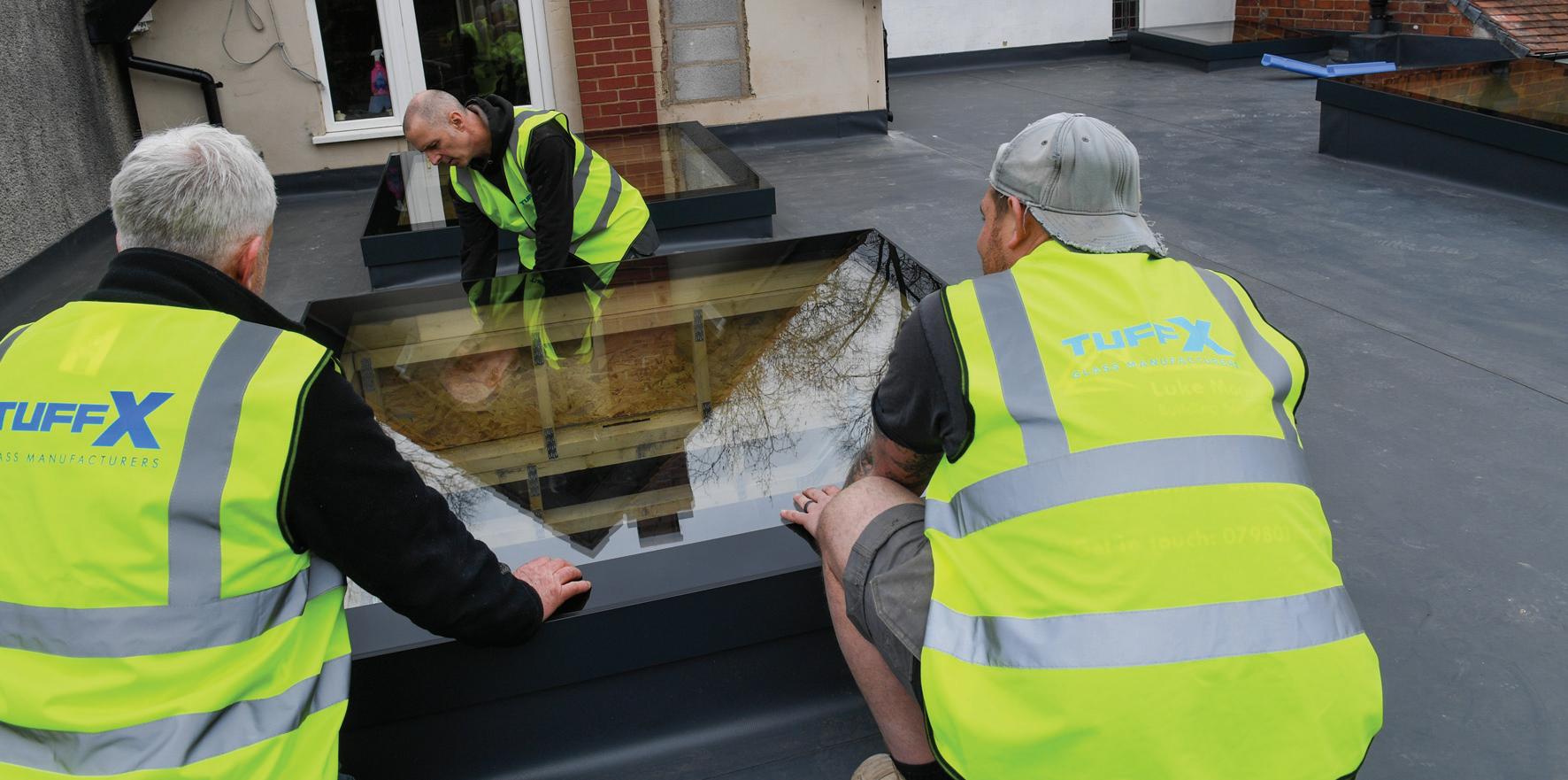
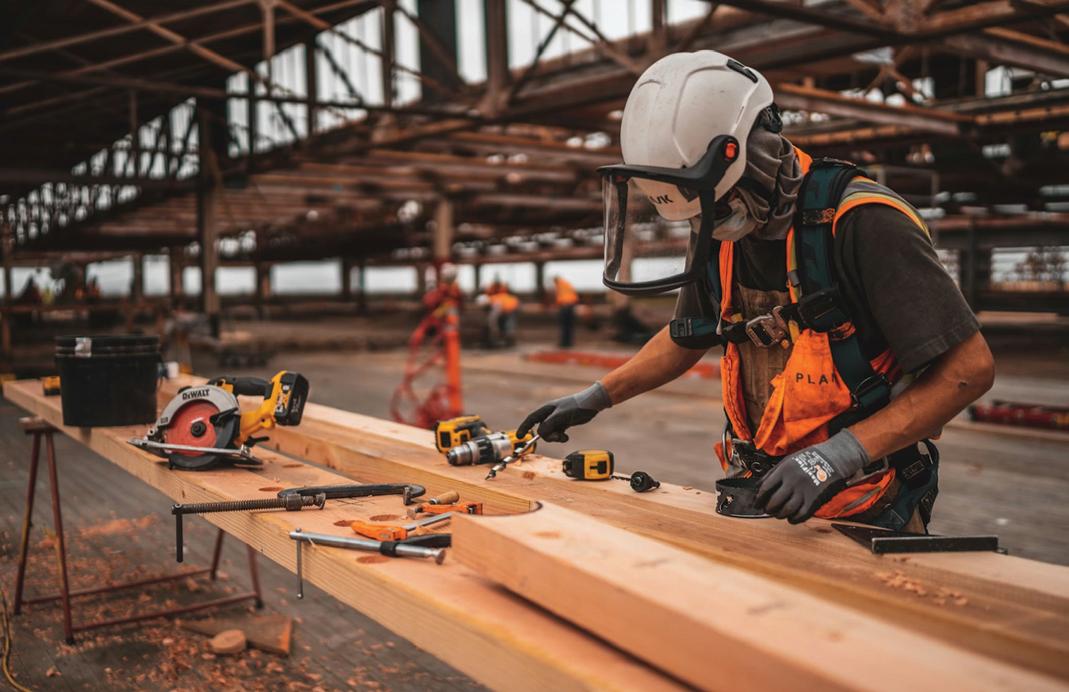
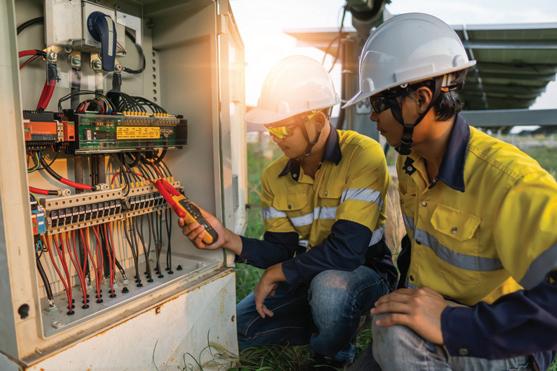
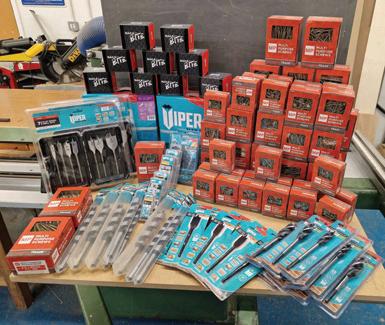
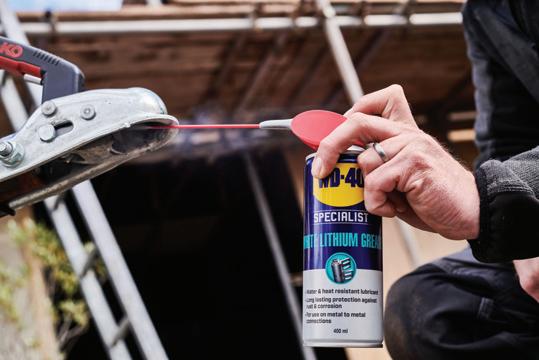
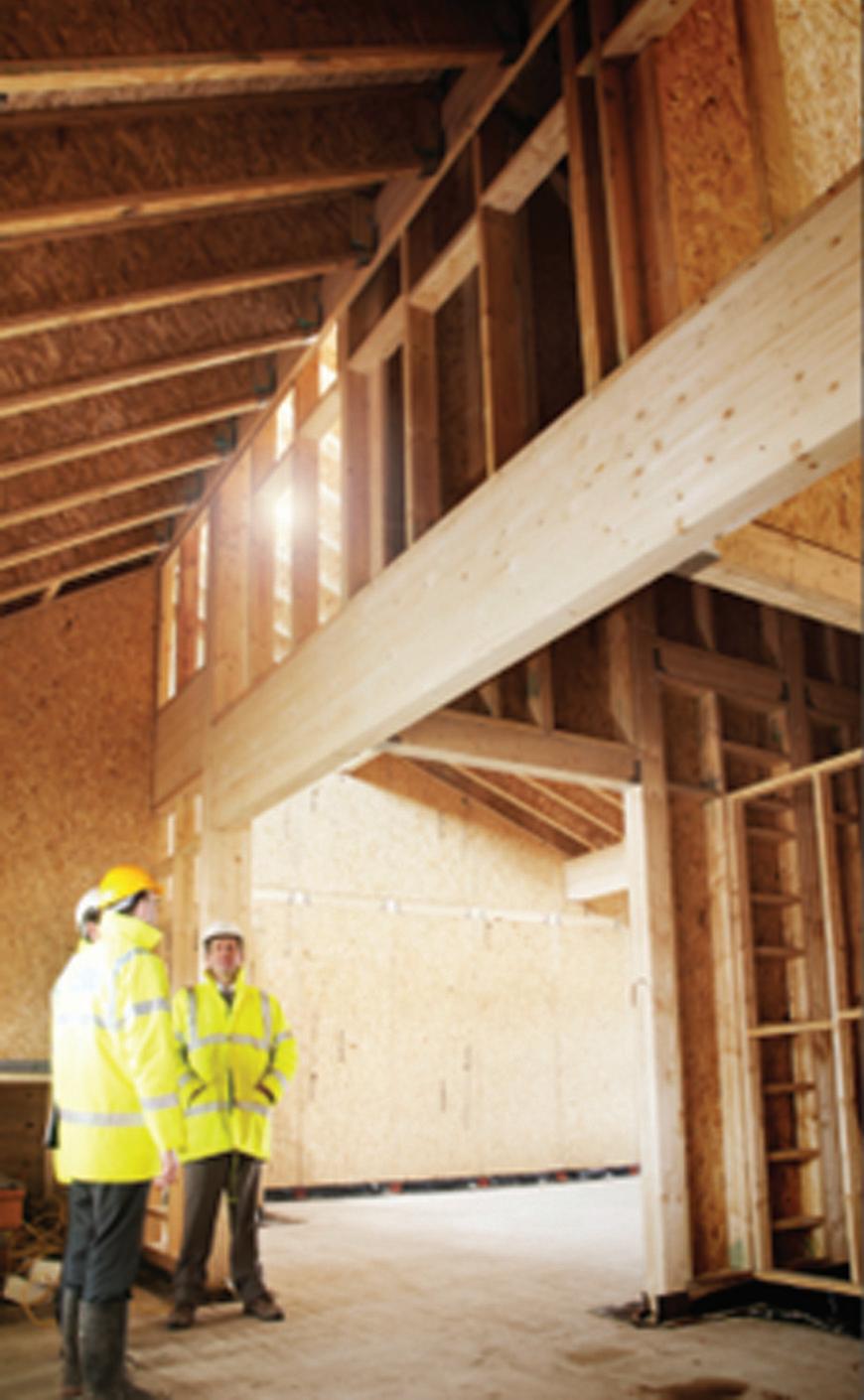
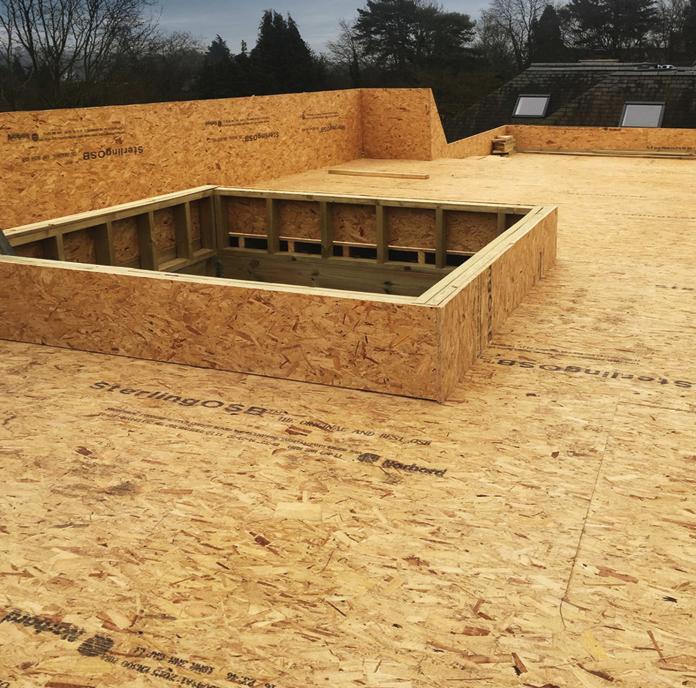
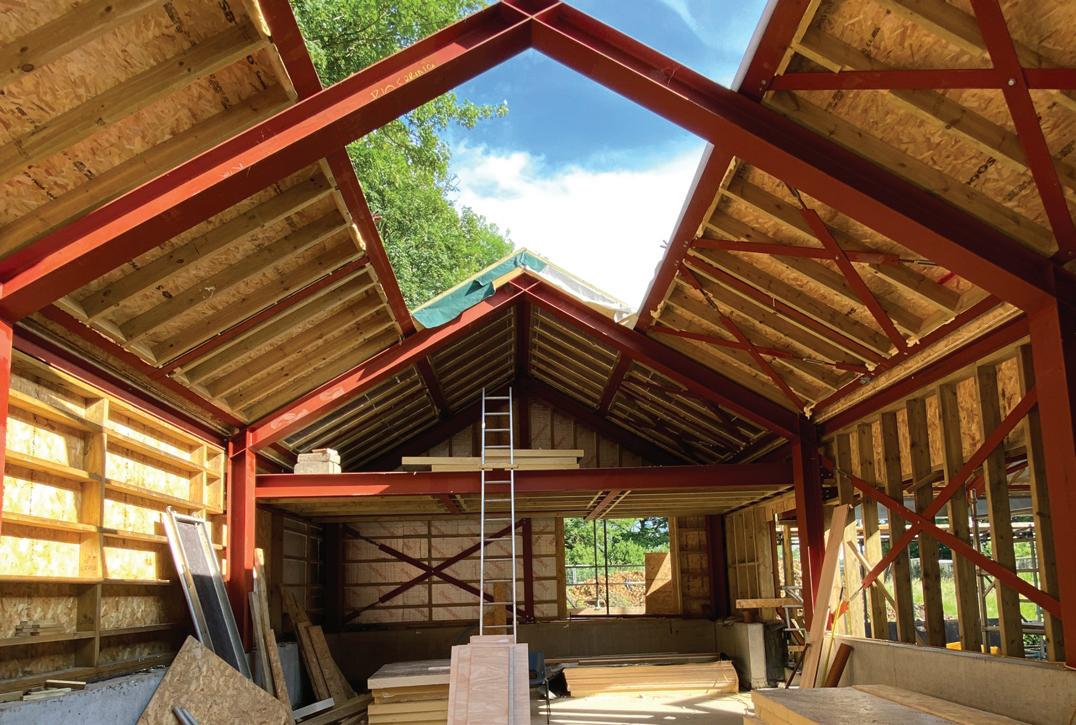
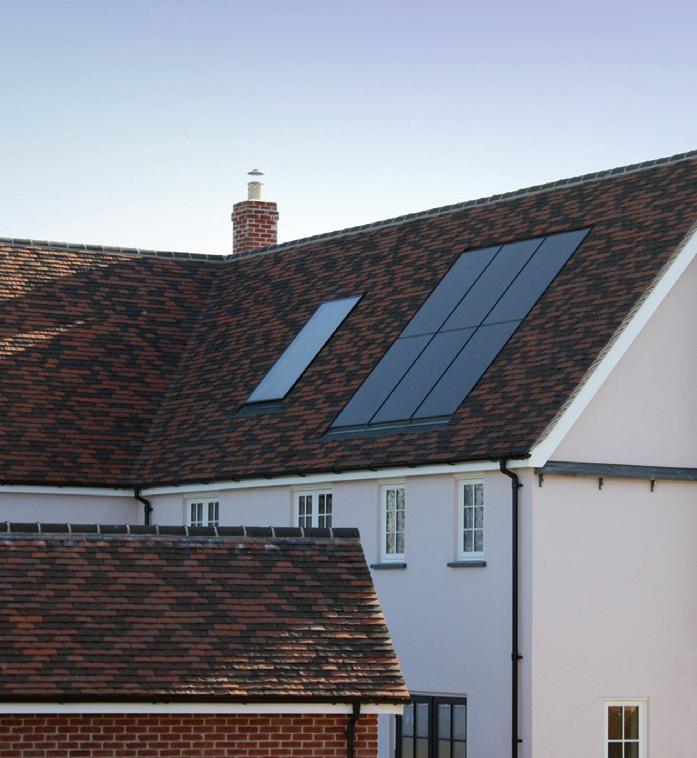
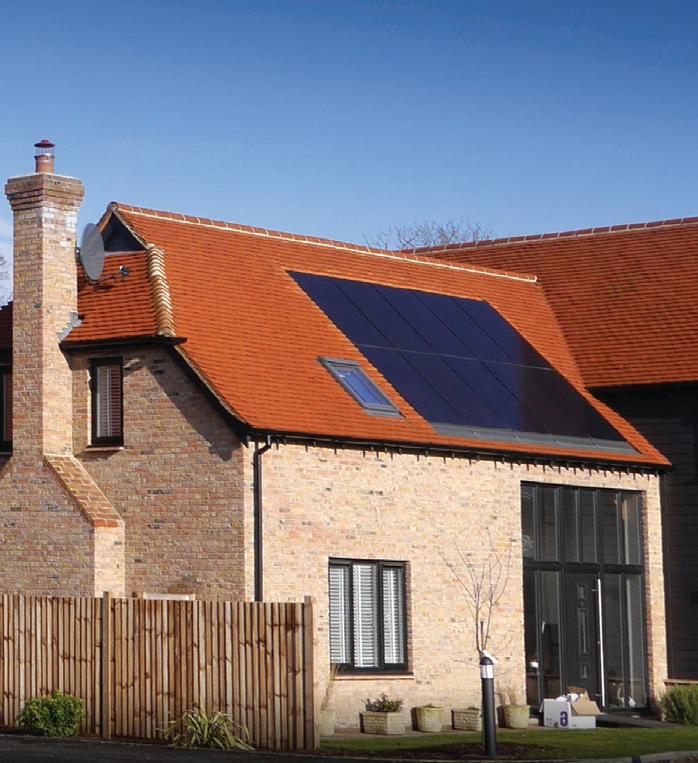
26Factory-assembled roof lights to finish off a coach house conversion
28Why landscaper, Rob Woodhouse, keeps coming back to Azpects products
30Six benefits of residential MVHR systems
33Heat pump retrofit saved by Passiv Smart Thermostat
34Don’t overlook heating manifolds
36The importance of drainage systems in outdoor improvements
38Why extensions should prioritise daylight
40Saving time on site with smart plumbing solutions
42The secret to lasting outdoor improvements? Quality materials
44Our top tips for extensions done right
19Free For All Giveaway 26
46Five key considerations when installing a stair balustrade
BUILDING BOARDS, PLASTERS & RENDER
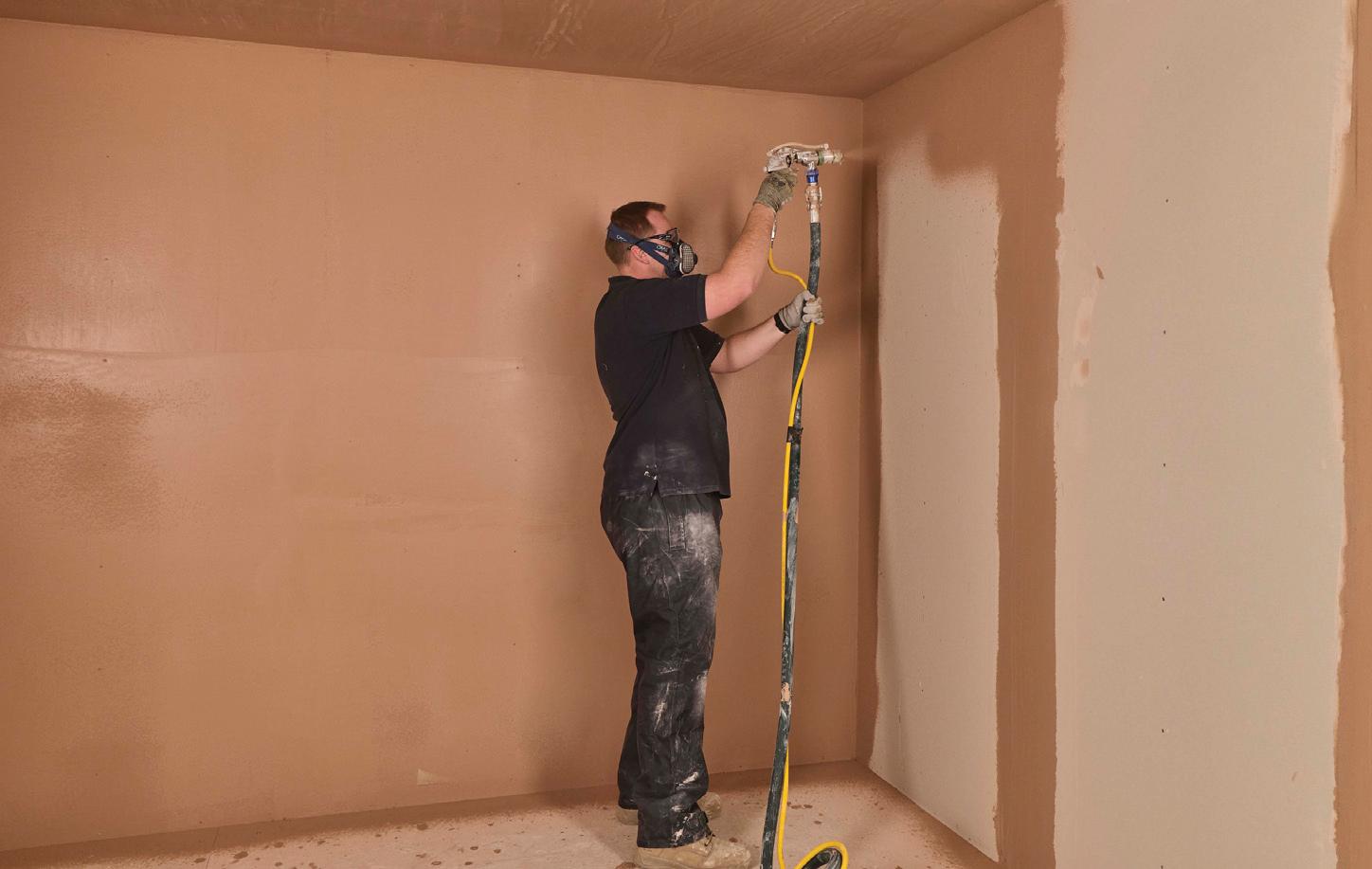
20Spray plaster: the way of the future!
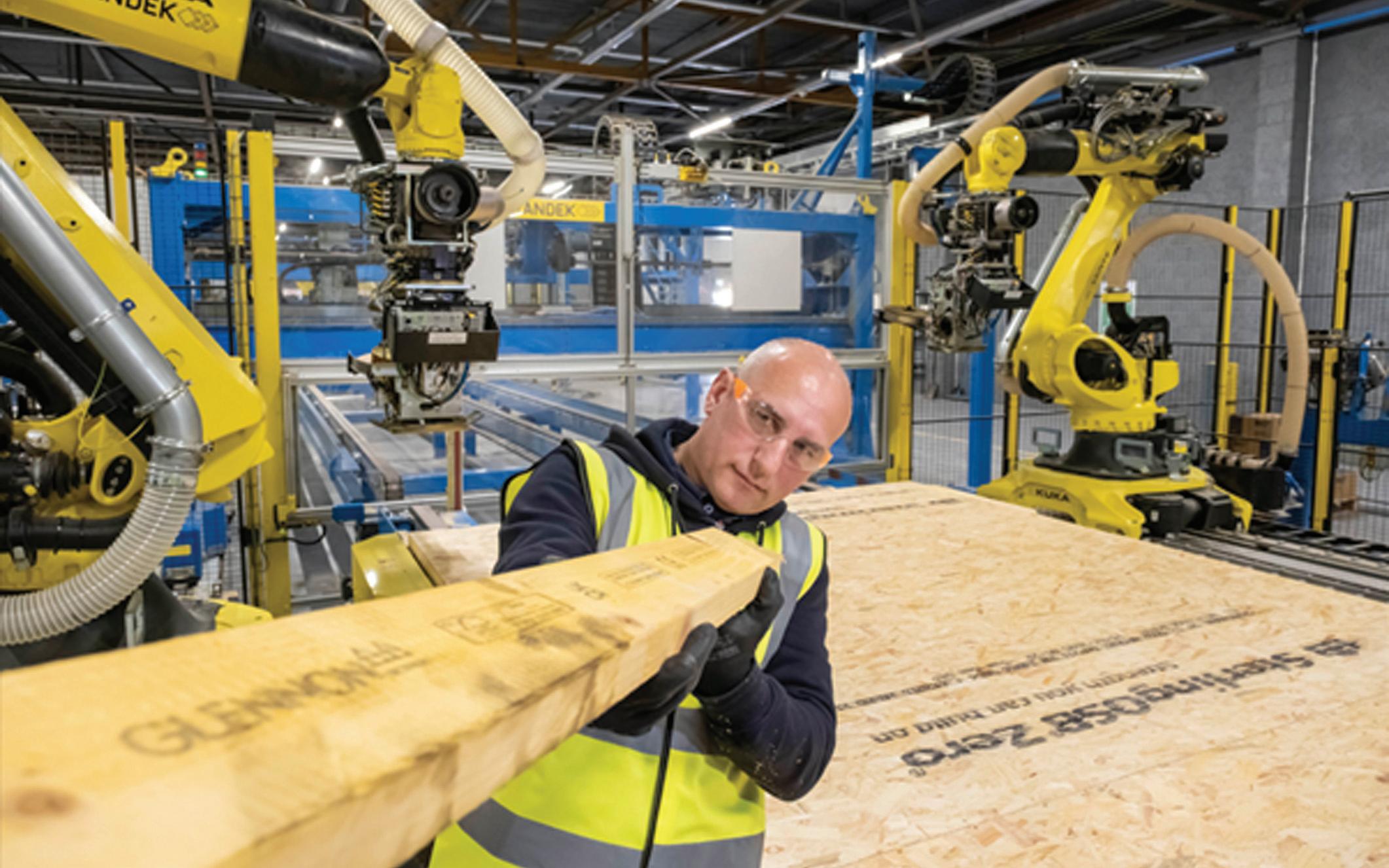
22Using OSB instead of plasterboard
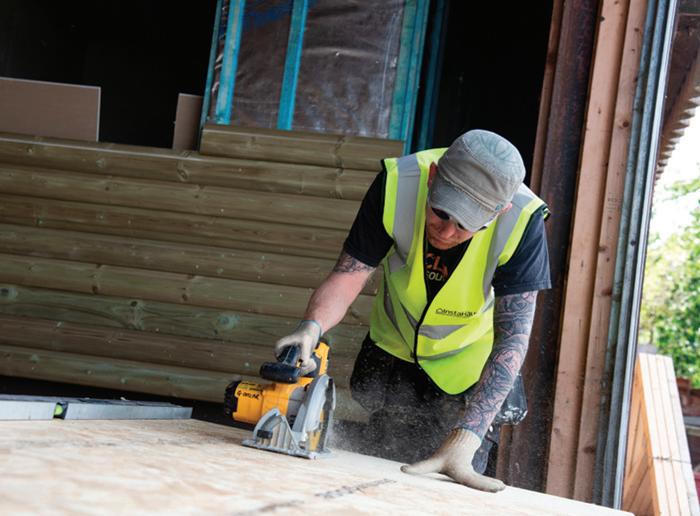
24Timber vs. Fibre cement cladding
VEHICLES & PLANT
48Our life with a Musso series continues
50What’s new with Ford?
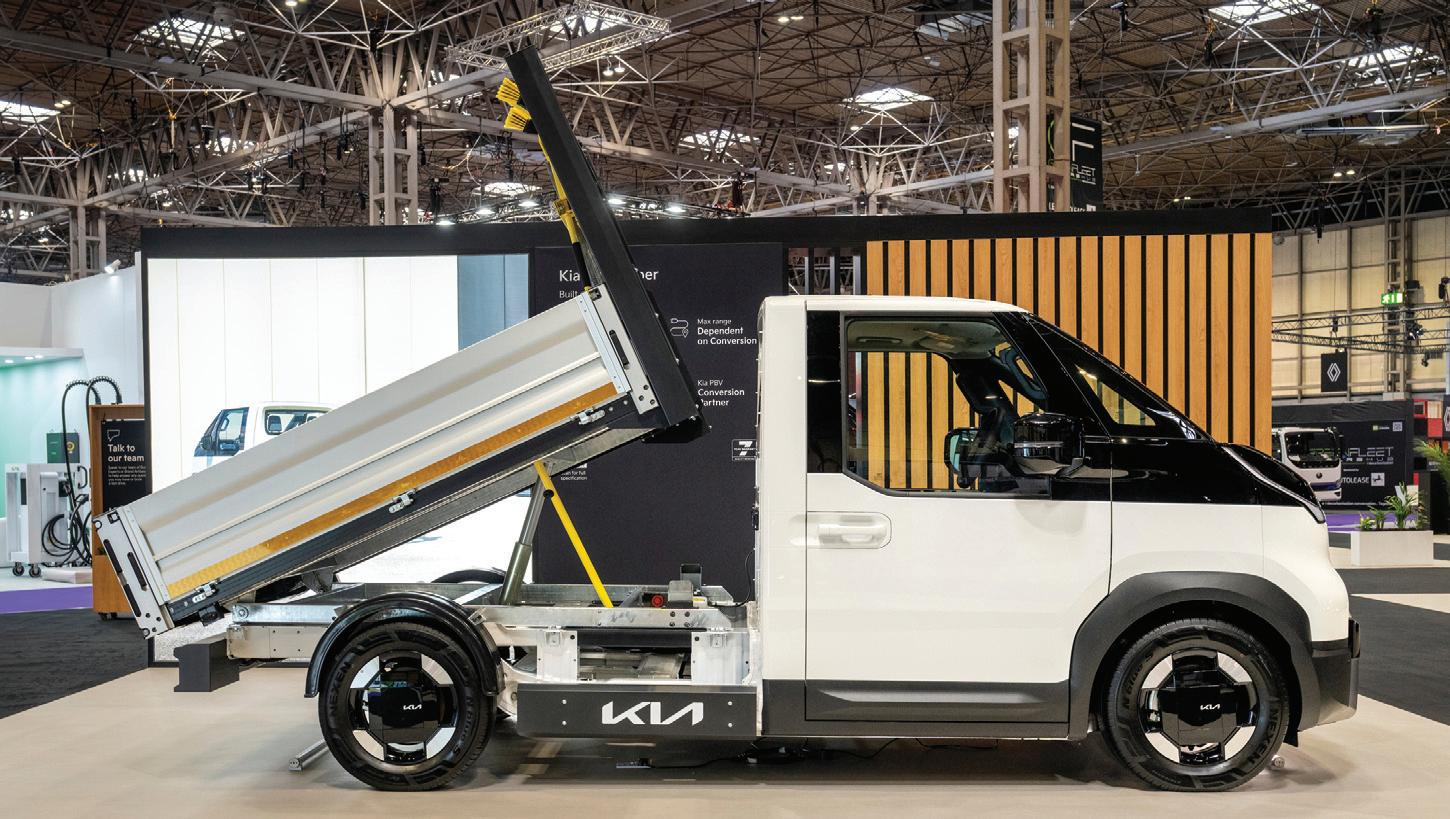
52How Kia is bursting onto the van scene
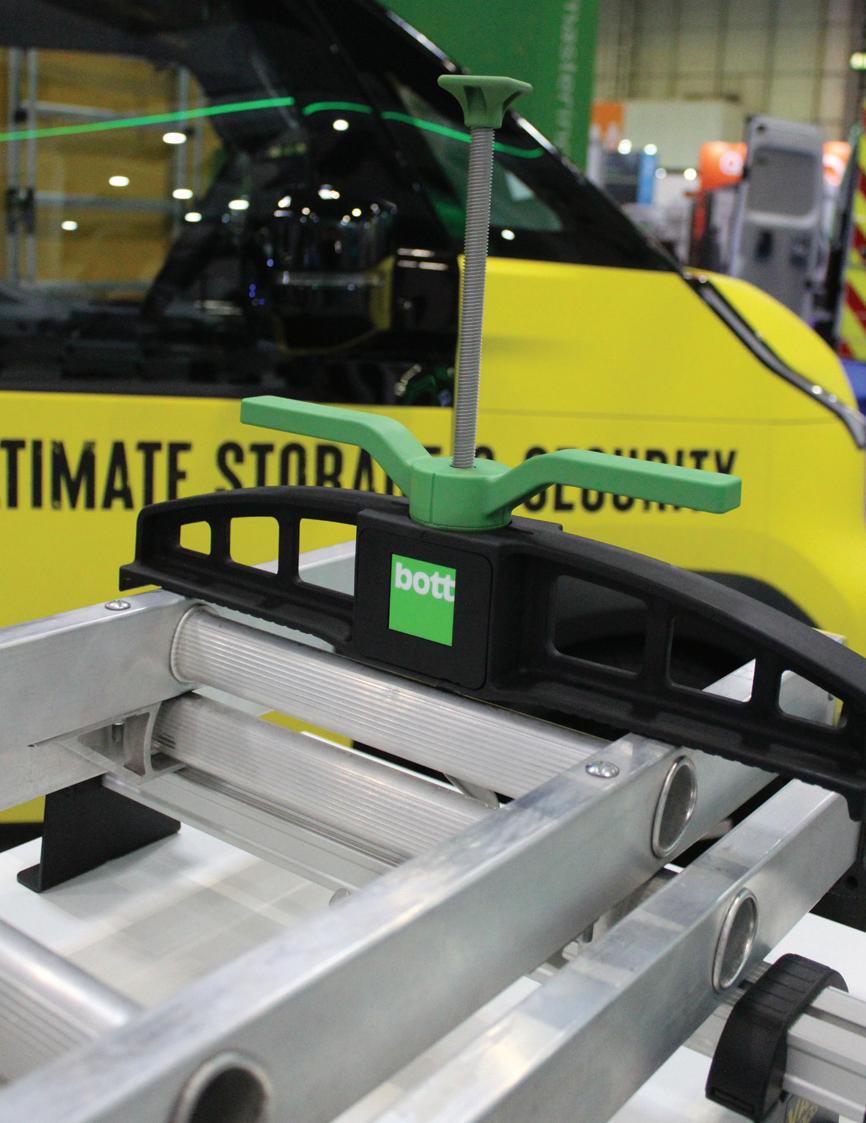
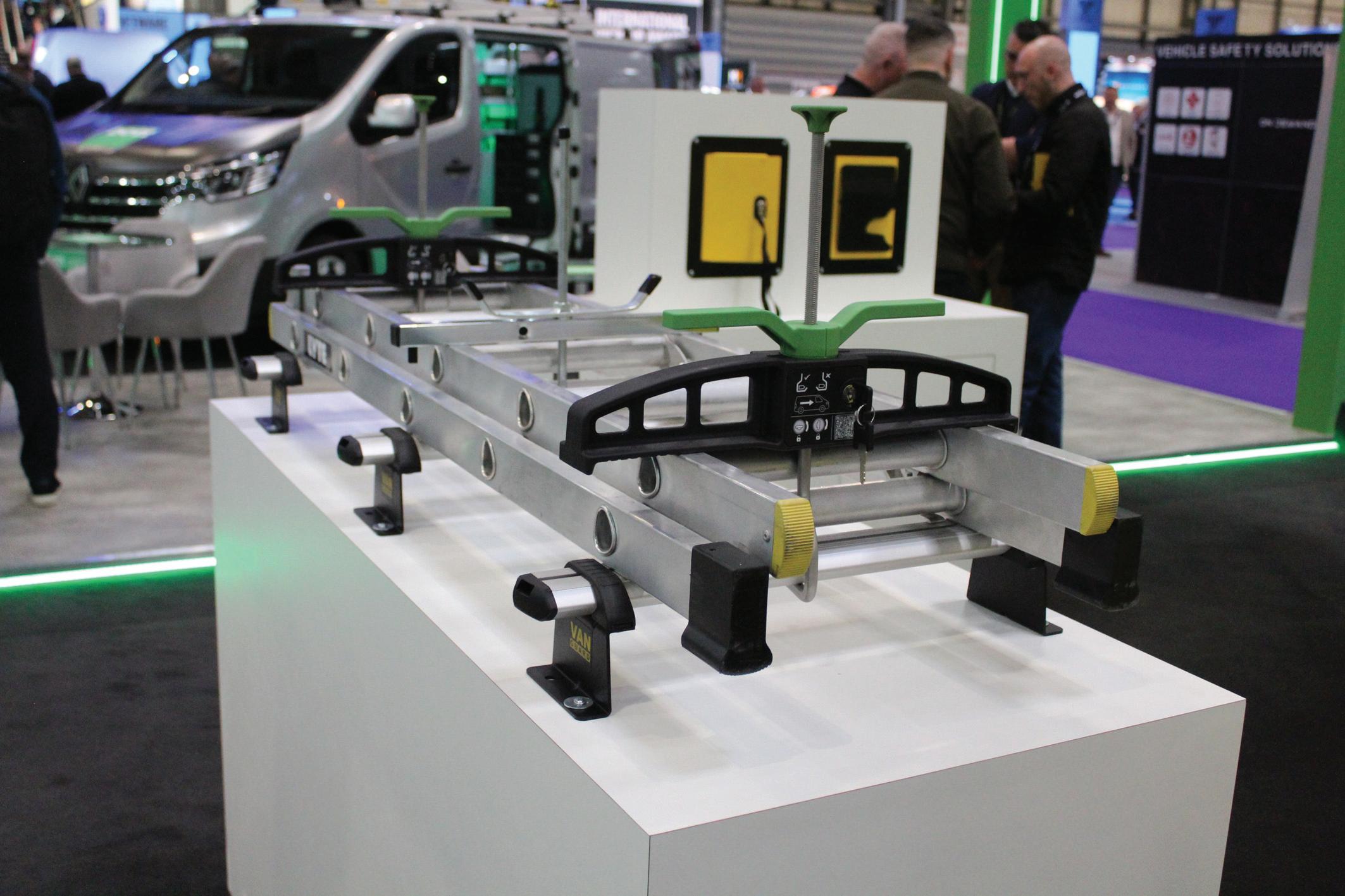
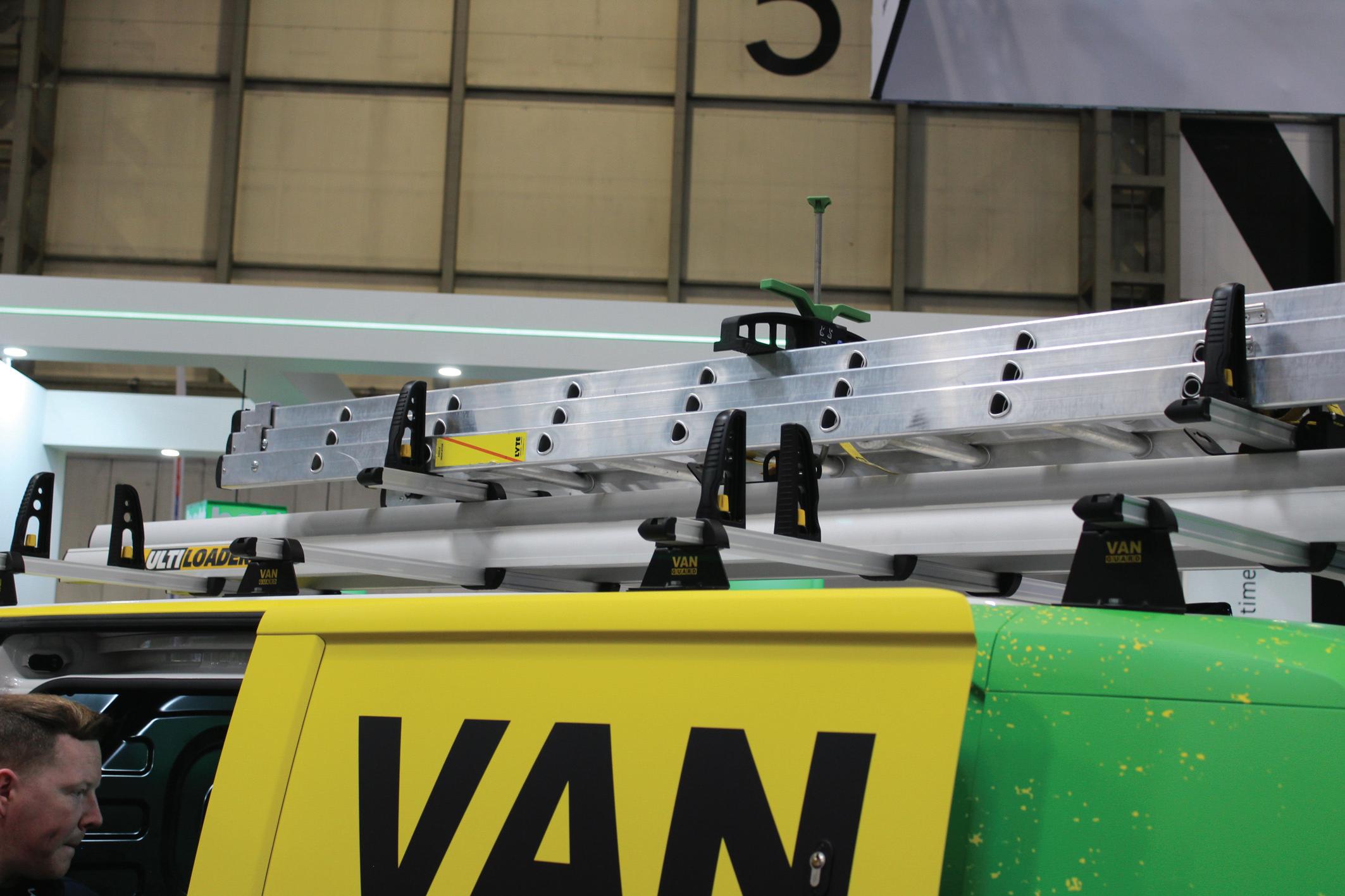
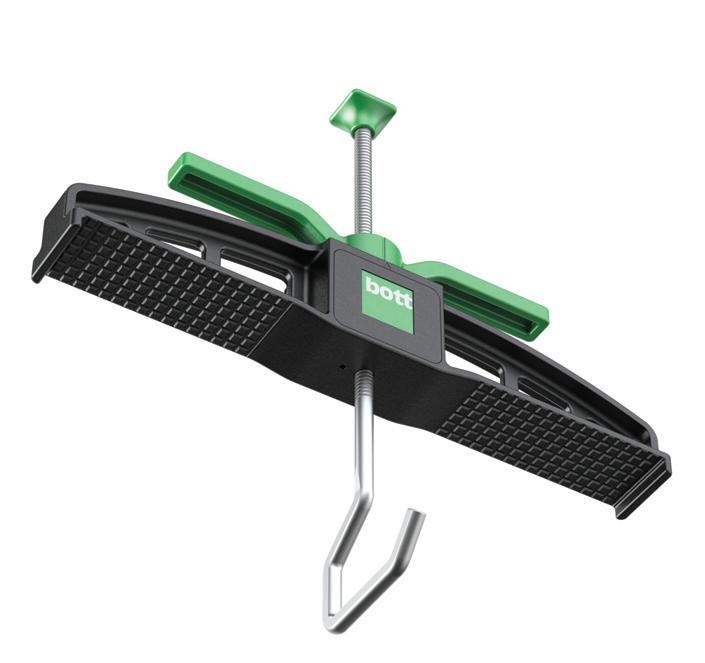
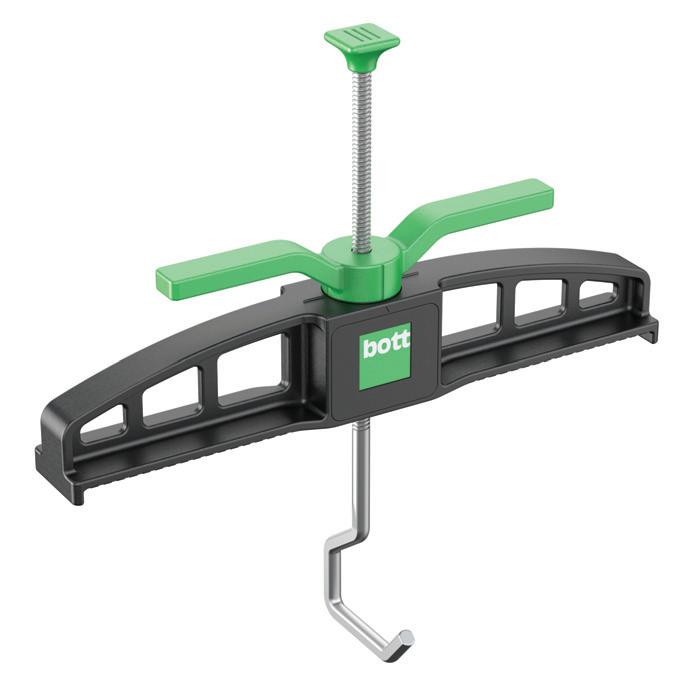
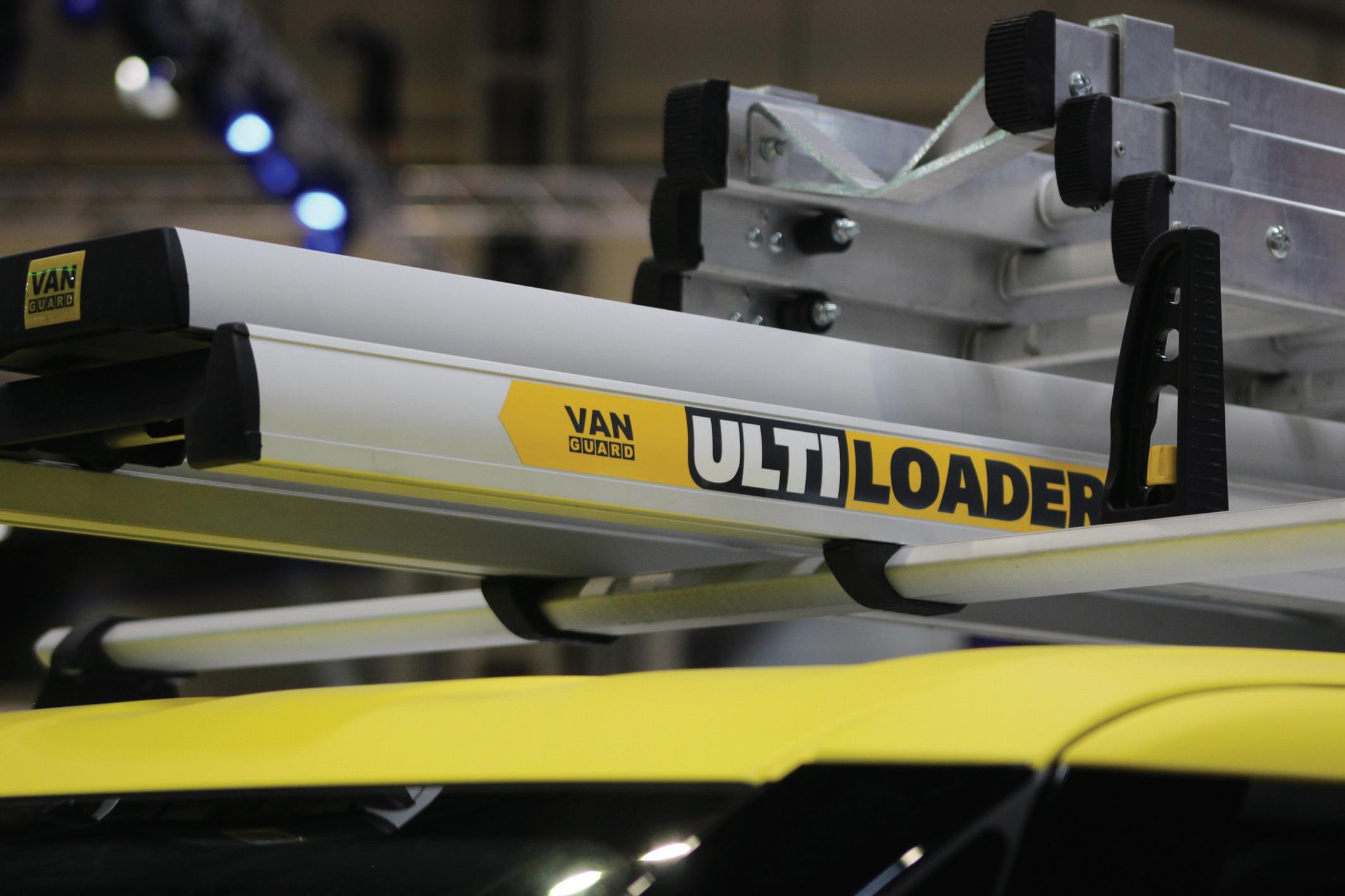
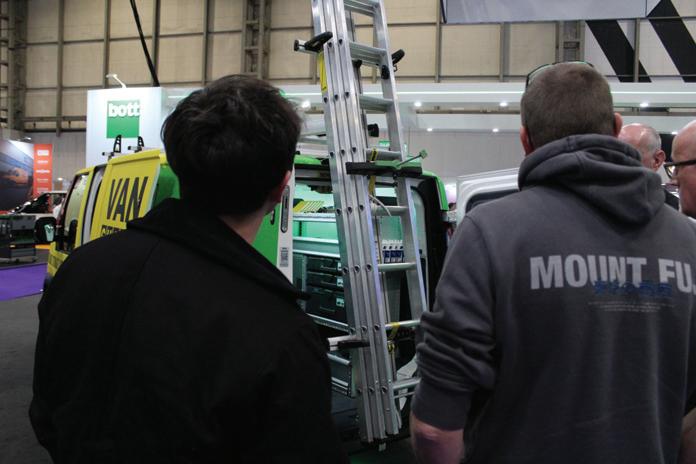
54Fed up of tying down ladders?
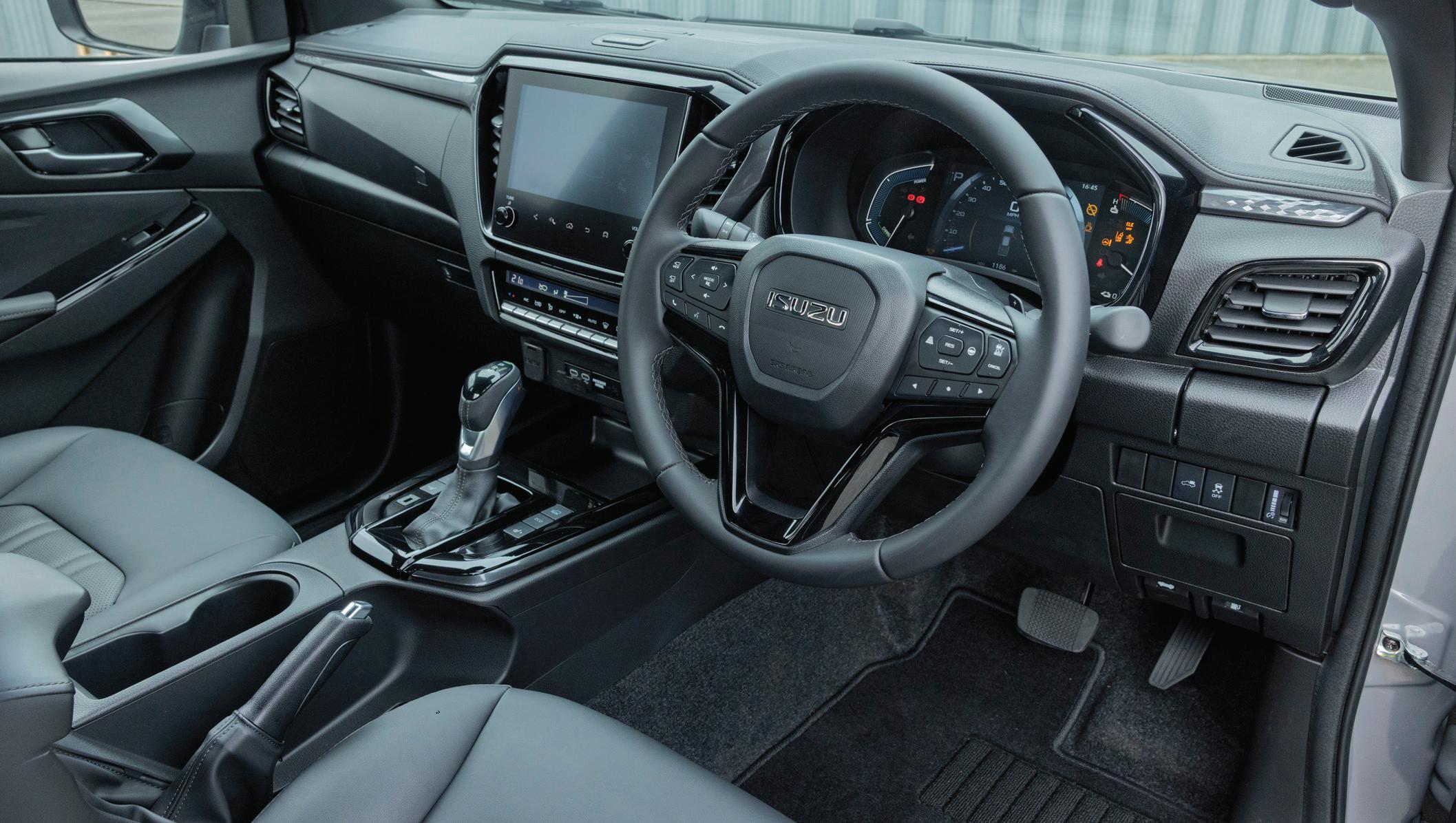
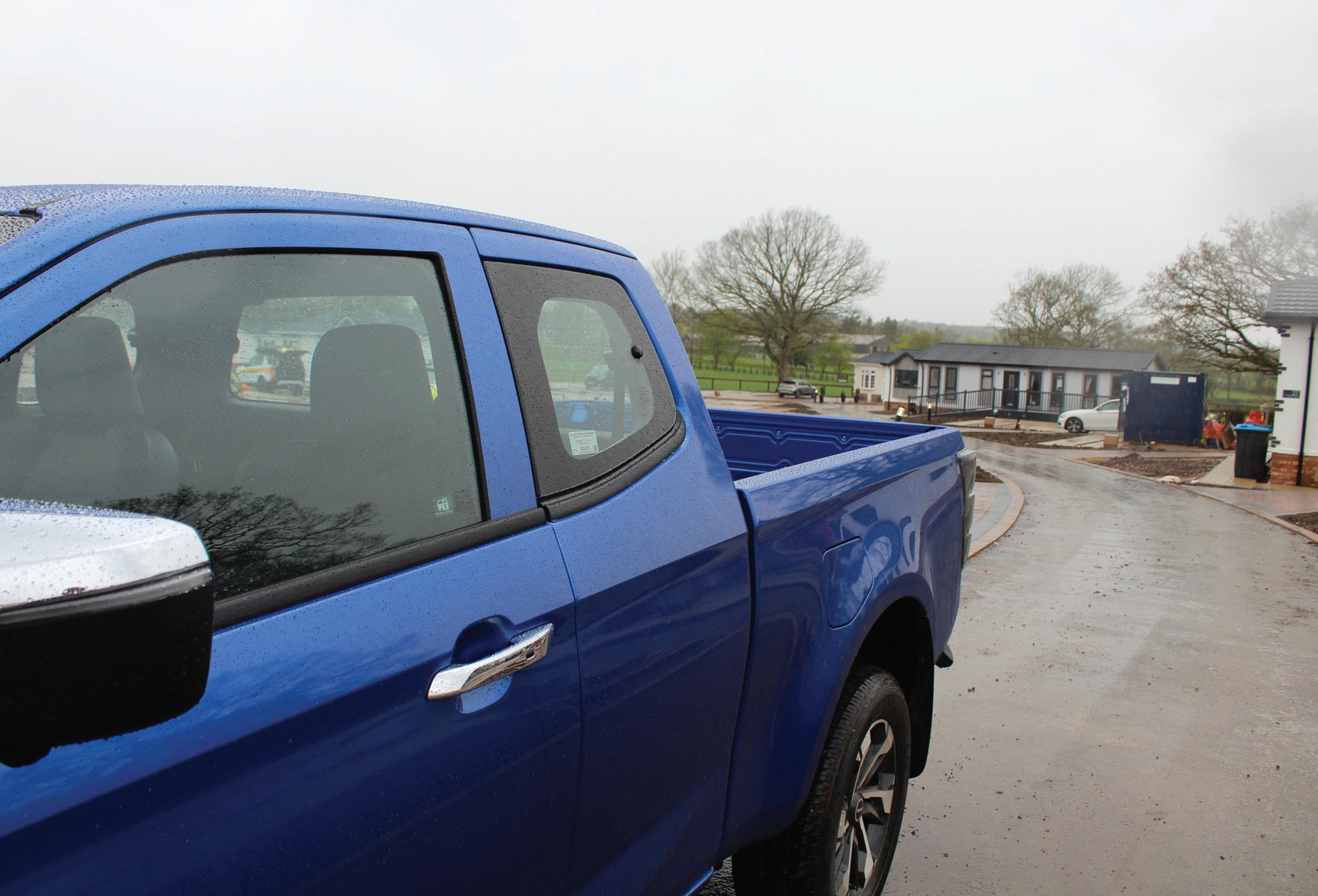
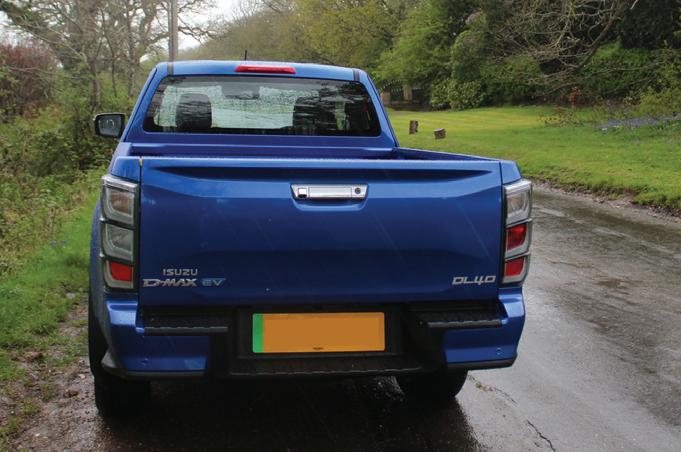
56Test driving Isuzu’s electric pick up
GENERAL BUILDING
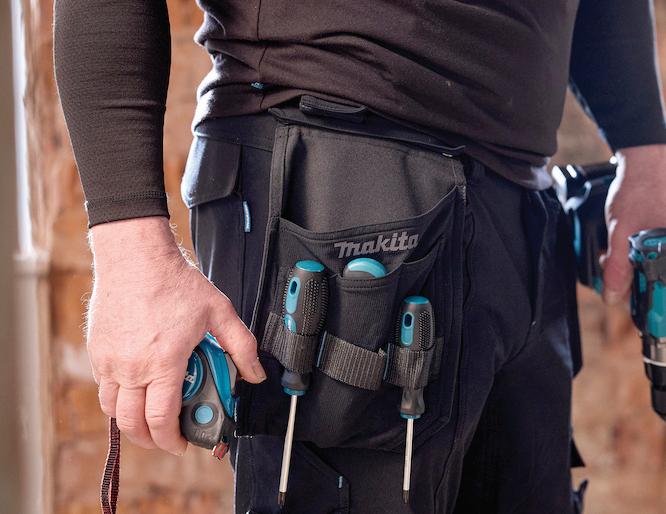
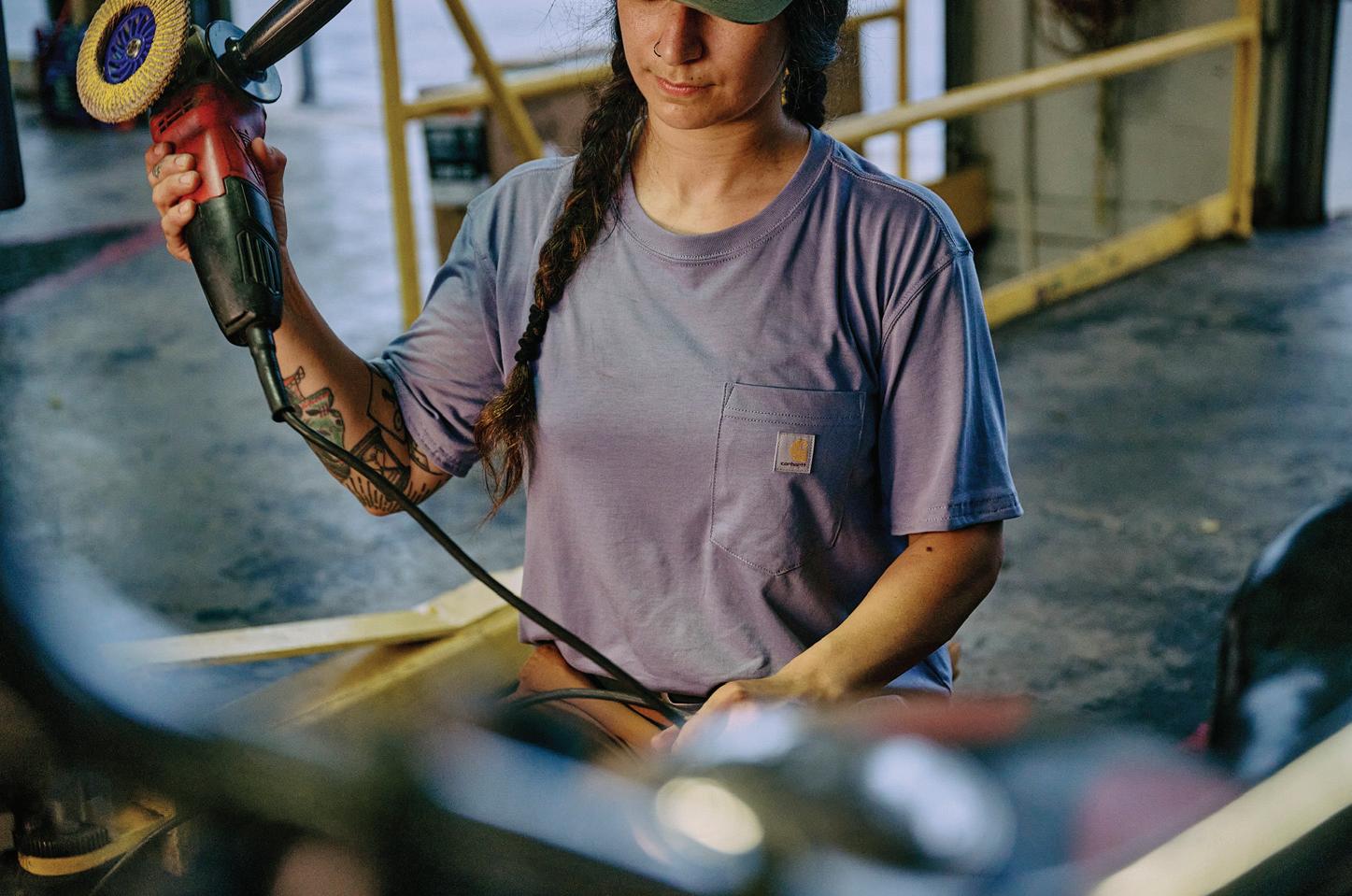
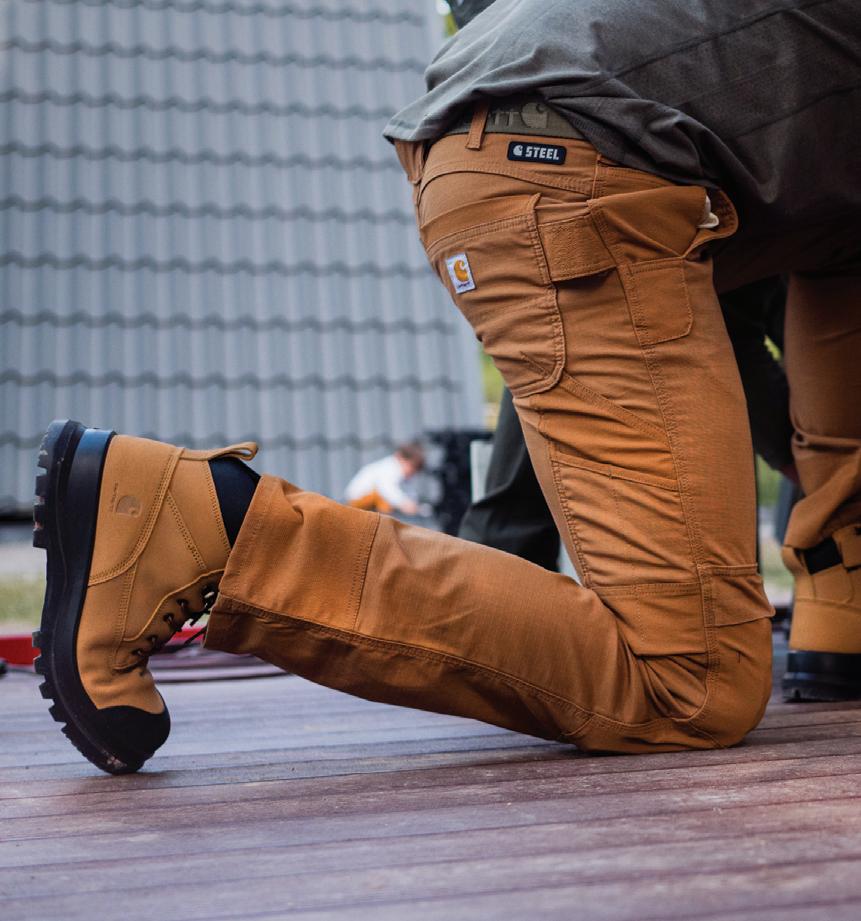
60Beat the heat with Carhartt
62What are leak before pressing fittings?
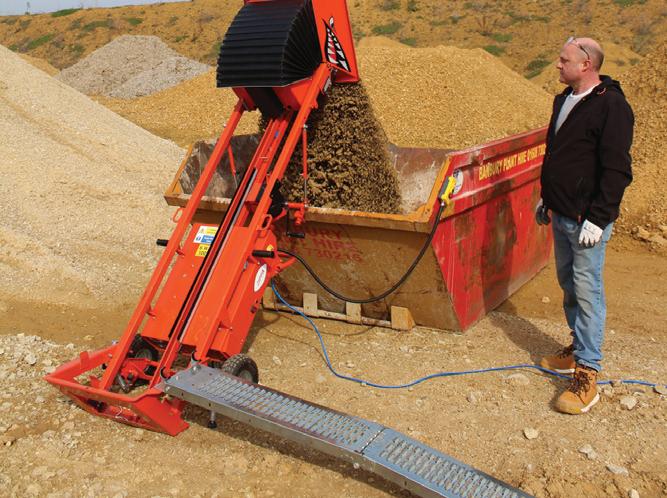
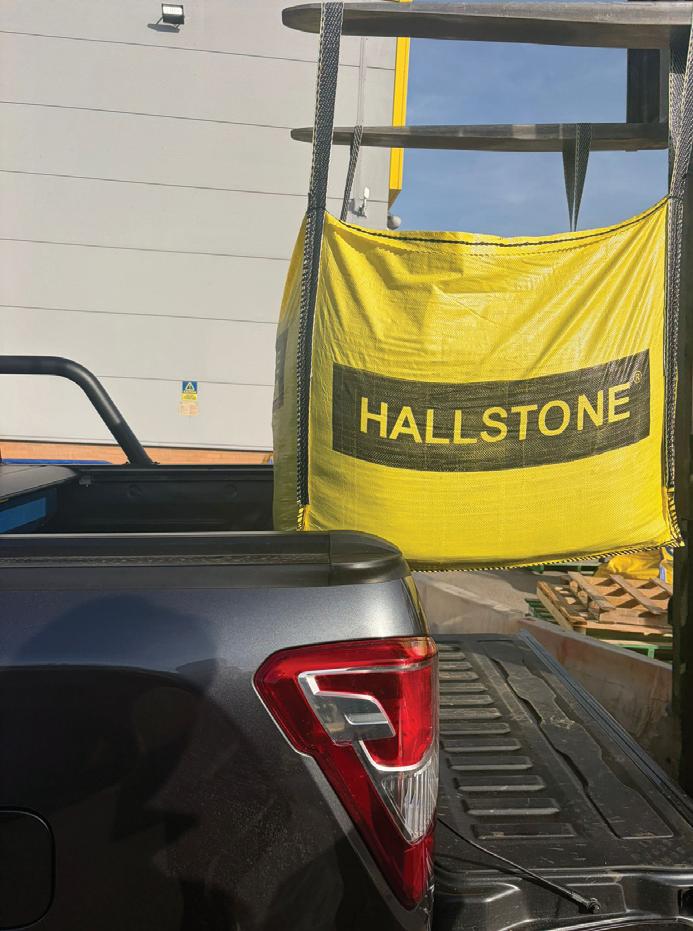
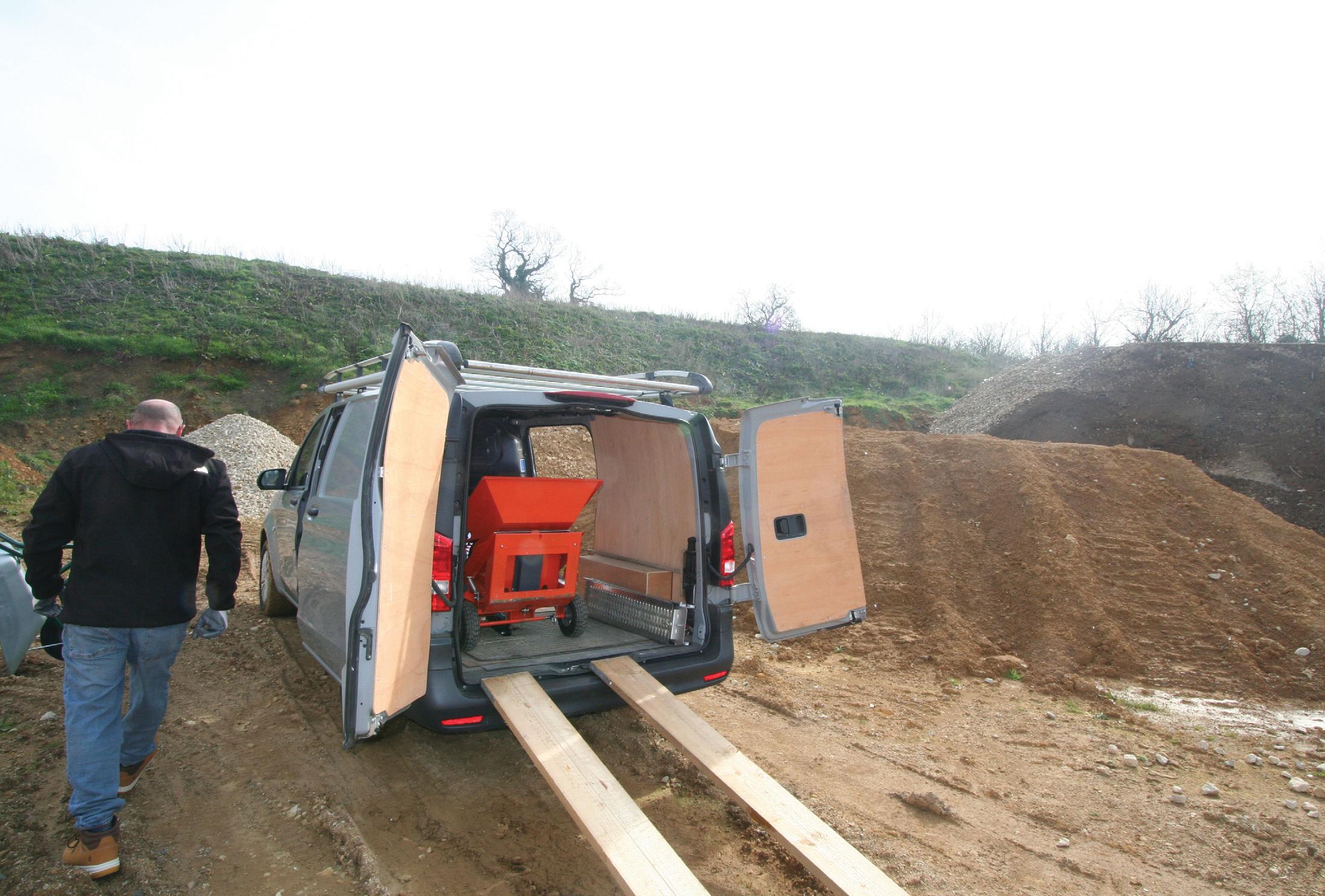
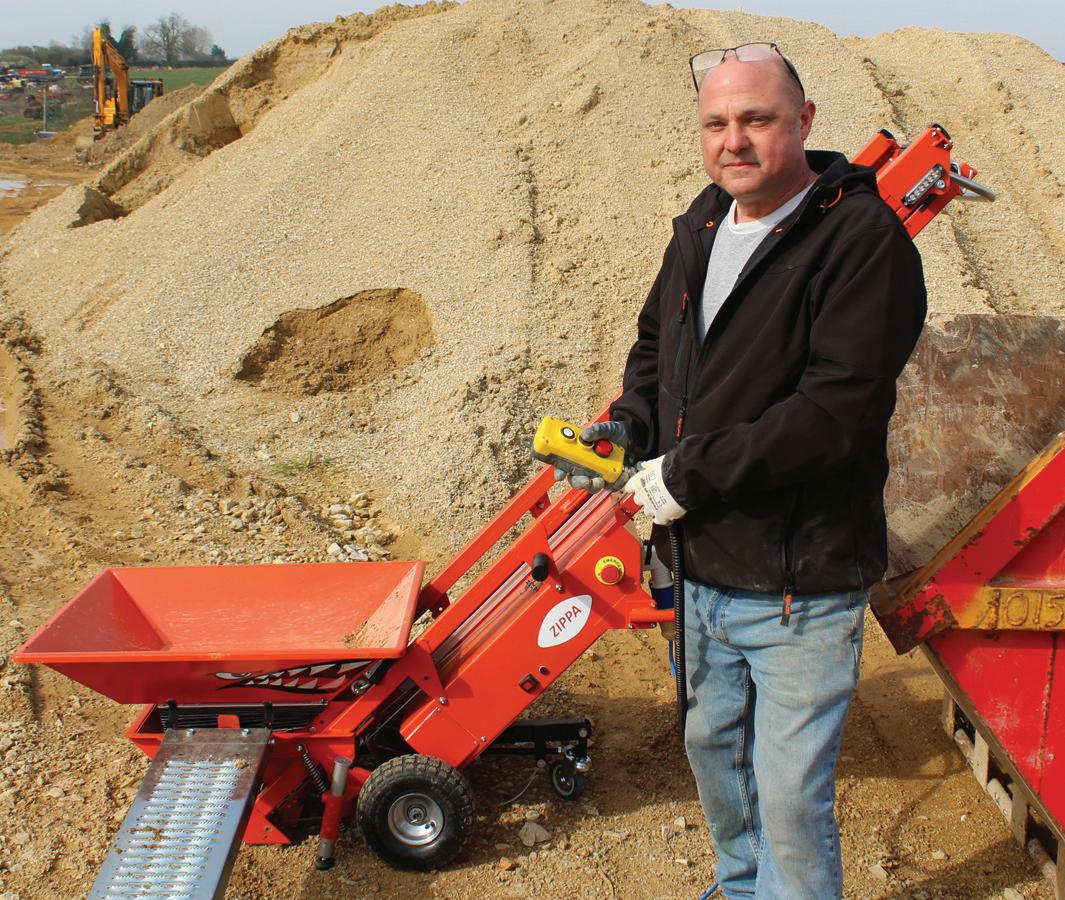
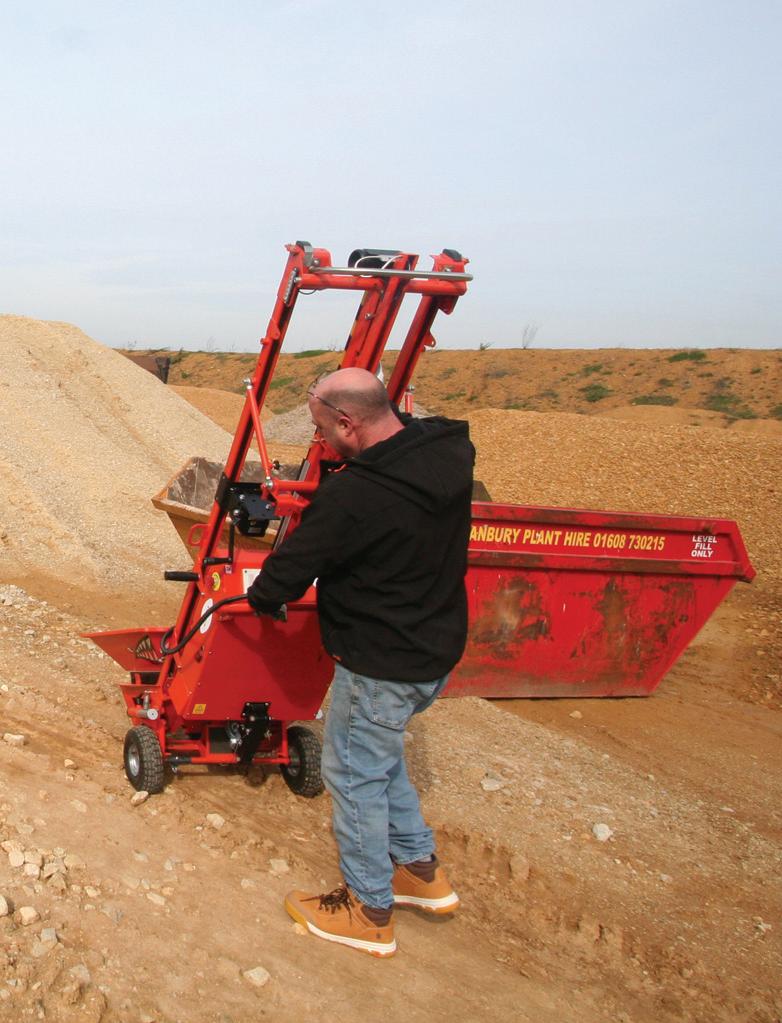
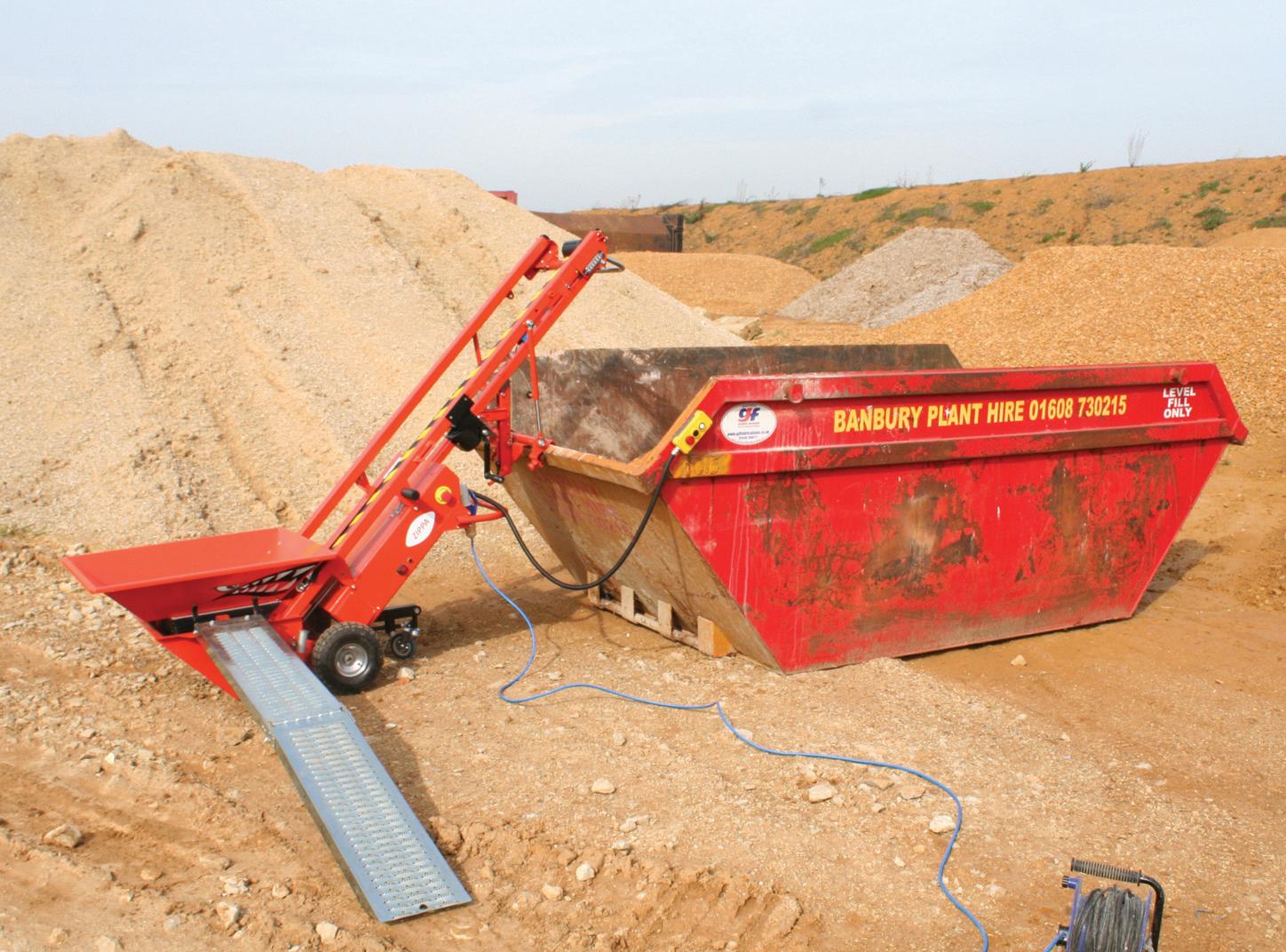
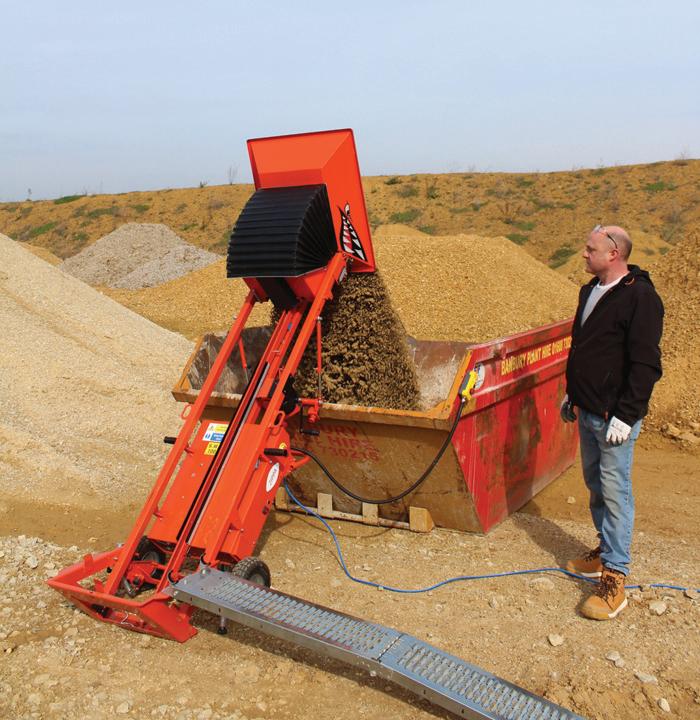
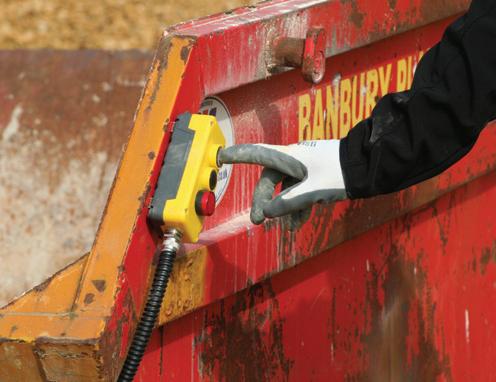
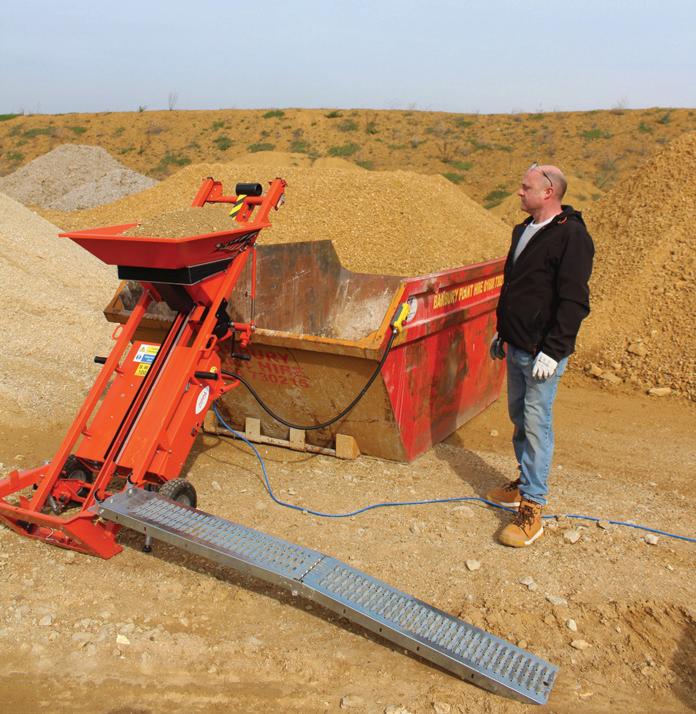
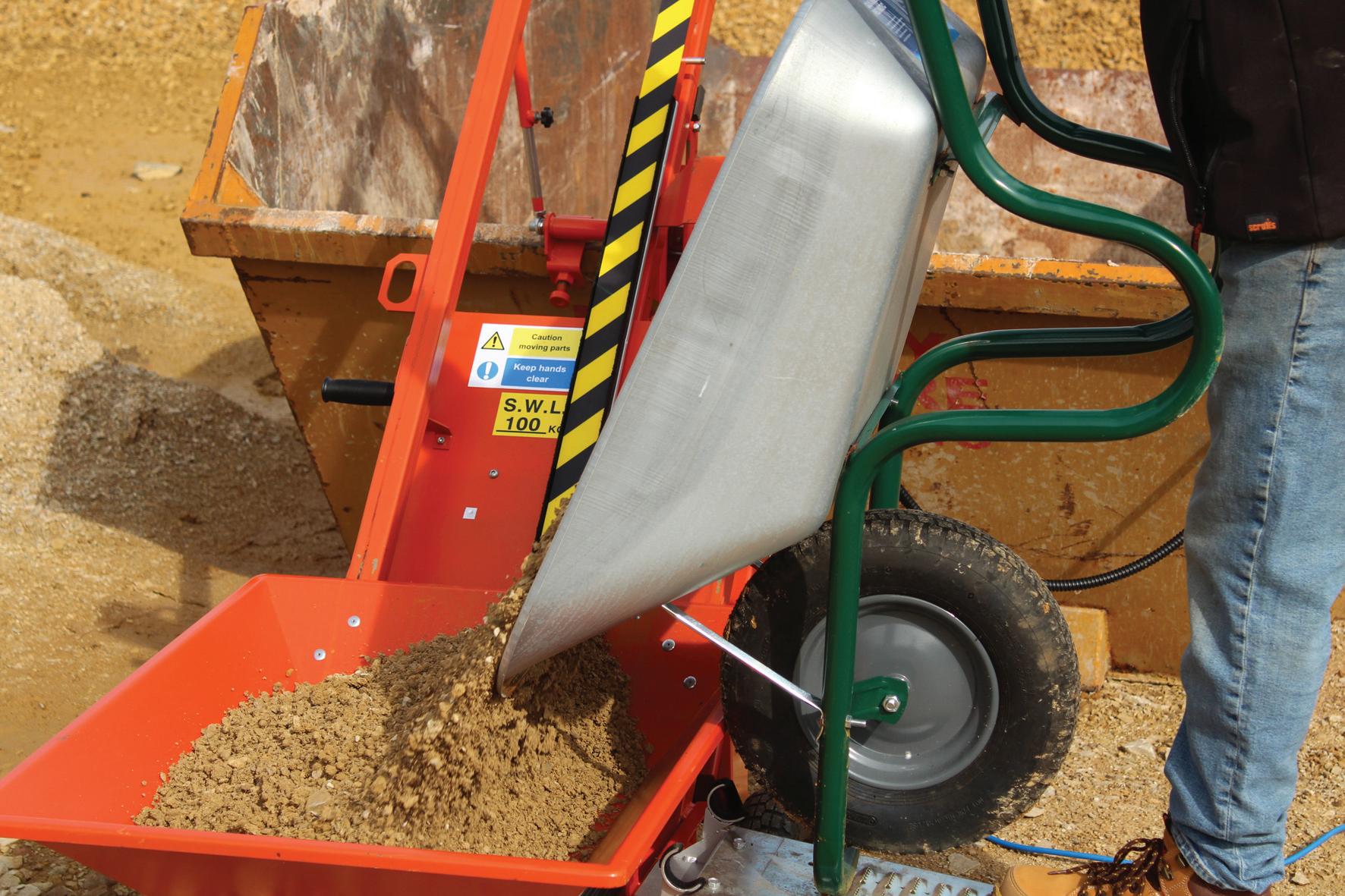
64Check out the Zippa Skip Loader!
Professional Podcast
AND YOU CAN TOO, AS WE CATCH UP WITH SOME OF THE CONSTRUCTION INDUSTRY’S MOST INTERESTING AND KNOWLEDGEABLE CHARACTERS ON THE GROUND BREAKING PROFESSIONAL BUILDER PODCAST WITH LEE JONES, LUKE CUNEEN ANDEDWARD KELLY LEARN A NEW BUSINESS SKILL OR FINE TUNE AN OLD ONE FROM THE GUYS AND GIRLS AT THE SHARP END, WHO HAVE BEEN THERE, DONE IT AND GOT THE PB T-SHIRT TO BOOT!
To be removed from this magazine’s circulation, please call 01923 237799 or email circulation@hamerville.co.uk.
Subscriptions to Professional Builder are available at the following rates: UK: 1 year (11 issues) –£30.00 post paid Europe & Overseas: 1 year (11 issues) –
£70.00 post paid
Airmail: 1 year (11 issues) –
£99.00 post paid
viewpoint
TO drive or not to drive?
As you’ll see towards the back end of this issue, the path to commercial vehicle electrification is most certainly underway. While electric vans are by no means an entirely new concept, it’s hard not to feel like they are any and everywhere now.
With the recent (extortionate) increases in petrol and diesel, thanks to whatever is going on in Iran, it’s one of the first times I’ve genuinely looked out my window at my petrol partner and debated betraying it for something decidedly greener.
We’re fortunate enough here at PB to get to drive a lot of different vehicles, and the difference between driving something electric or combustion is certainly noticeable.
Driving the latter is something we’ve all become very accustomed to. The unmistakable thrum and hum of an engine rumbling beneath you as you make your merry way from A to B feels as natural as driving on the left hand side of the road.
reading an issue of Professional Builder in print or online. While they’re both the same thing on a technicality, the lived experience is something else entirely.
Of course, the experience behind the wheel isn’t the be all and end all to choosing what your mobile office is to be. Your work van must operate as, well, a work van. It’s not just a vehicle of leisure (although it may sometimes double as one) and needs to be capable of standing up to the task required. Personal preference comes around here again and these needs and prerequisites will be different for all. Travel long distances frequently with a heavy payload or towing a digger? An EV may not be for you yet.
“With the added opportunities on the horizon, more and more manufacturers are joining the commercial vehicle fray and bringing their A-game. ”
The experience in charge of an electric vehicle is indeed a strange one, particularly when vans or larger vehicles are concerned. The nimble quiet nature to an electric van feels akin to a big cat stalking around, rather than a charging combustion-powered grizzly bear. Make no mistake, this is by no means me saying that one experience is better than the other. As with driving any vehicle, personal preference really comes into play here. As much as there’s something calming and serene to silently gliding around, there’s equally something comforting to feeling like you’re actually driving something real and tangible. The difference is hard to properly pin down other than simply being a feeling. Really, it’s similar to the difference between, say,
The other factor to consider with EVs is cost of ownership. Done right, EVs are simply cheaper, there’s no two ways about it. If you’re charging at home and making the best of overnight tariffs then you’ll be up rather than down. It may be another story if you’re relying on public charging though.
While petrol and diesel may be eye-wateringly expensive now, who’s not to say that special electric tariffs won’t soon disappear once the masses try and take advantage of them?
One thing’s for certain, it’s never been more exciting to be able to test drive builders’ vehicles. With the added opportunities on the horizon, more and more manufacturers are joining the commercial vehicle fray and bringing their A-game. Something which may be giving the established leaders of the field cause to look back in their rear-view mirror. The result is a market that, diesel or electric, seems more competitive than ever.
In either case, I’m still glad to see we’ve not quite left combustion behind yet.
News
COST TO TRADE
Index reveals a 51% cost increase for construction industry
A report by Dojo has found that the UK construction industry, made up of around 384,000 businesses, has seen running costs increase by around 51% over the last decade. Combined with a 106% rise in training costs and a 91% rise in licensing and mandatory fees, it is easy to see why so many construction businesses are under such immense pressure.
Offering some advice to these businesses, Charlie Ashworth, Head of Research & Insights at Dojo, said: “For business owners, the opportunity lies in control and efficiency. With labour, energy, insurance and technology costs all contributing to long-term structural change, understanding where your exposure sits is now a strategic advantage.
Reviewing supplier contracts, improving operational efficiency, reducing unnecessary overheads, and optimising payment systems
THE TIPPING POINT
How the rise of fly-tipping asbestos waste is actually a major threat to public health
can all help protect margins in a higher-cost environment.”
In England in 2025, there were around 1,257,863 instances of fly-tipping, which statistically equates to one every 25 seconds. But how much of this is actually a public health concern?
In fact, 363 of the London borough of Haringey’s 16,915 fly-tipping incidents in 2024/2025 were asbestos related.
Mark Hall, asbestos removal expert at BusinessWaste.co.uk, commented on the risks these dumpings cause, saying: “Substances such as asbestos are not only more toxic but also often require specialist handling and disposal. When dumped illegally, they can contaminate soil and water, release harmful particles into the air, and create safety risks for both the public and council workers.”
IN THE GUTTER
How one in every ten homeowners has never cleaned their gutter
According to a nationwide study conducted by Wavin, tradespeople are increasingly being called out to deal with issues that could have been prevented through basic homeowner maintenance. Around 41% of homeowners admit to cleaning their gutters only once a year, while 10% say they never do.
Steve Skeldon, Above Ground Product Manager at Wavin, said: “Regular gutter maintenance is one of the easiest ways to prevent avoidable, costly repairs. Unfortunately, many homeowners don’t understand how to carry out basic checks or spot the signs that they need to call out an expert before it’s too late.”
FORD THEFT
Study shows Ford Transit 350 named as UK’s most stolen van
A study by Tempcover has shown that the Ford Transit 350 is the most stolen van type in the UK, with 1,309 thefts over a two-year period between 2024 and 2025. Specific models such as the Ford Transit Custom 300 saw the highest increase in thefts, with around a 60.87% rise in incidents. However, an argument could be made that these are in fact the most popular vans on the road.
To help reduce the risk of van theft, Claire Wills-McKissick, temporary van insurance expert at Tempcover, suggested several security steps van owners should take, ranging from never leaving the engine running unattended to installing security alarms and sensors where possible.
A new study by Tradefix has found that electricians are in the highest demand among skilled trades, with around 10,000 job postings at the start of each year and an average salary of around £45,000. Other trades have been less fortunate, with welding seeing a significant decline due to the rise of automated processes.
Commenting on the study, Paul Kershaw from Tradefix Direct said: “Trades like welding and maintenance fitting are declining because factories are automating. Meanwhile, hands-on work that requires human judgment, like electrical installations or plumbing repairs, can’t be automated. Plus, Britain’s construction sector is ageing faster than young workers are replacing them.”
SCHOOLS STILL IN
LCB to receive over 900k in government funding
Leeds College of Building (LCB) is set to benefit from government funding for essential estates and building improvements. The college is set to receive around £919,871 from the FE College Condition Allocation (FECCA) fund.
Speaking about the funding, LCB Vice Principal Rob Holmes said: “We’re delighted that this funding brings us a step closer to renovating our newly acquired CTEC building, helping us address critical regional skills gaps. This investment is key to creating a specialist training environment in priority areas such as infrastructure, sustainability, and groundwork.”
TRADES UNIVERSITY
Former BBC Apprentice winner Joseph Valente opens ‘world’s first university for trades’ Branded Trade Mastermind University (TMU), it aims to tackle one of the biggest challenges in the UK trades sector: thousands of engineers and tradespeople start businesses every year without formal training in sales, marketing, finance, or leadership.
Speaking about the motivation behind the university, Valente said: “Most tradespeople don’t fail because they’re bad at the job — they fail because they’ve never been taught how to run a business.”
HOME WE STAY
Why millions of UK homeowners are choosing to renovate rather than move
Due to the current cost-of-living crisisand changing lifestyle choices, more UK homeowners are choosing to renovate rather than move. According to a report published by MyBuilder.com, more than a quarter of homeowners (26%) say the current financial climate is making them more likely to renovate, rising to 53% among those aged 18–34.
These results reveal that the demand for skilled tradespeople is likely to be higher than ever.
FIXING THE FUTURE
Samac supports the next generation
As part of an ongoing relationship with the Colchester Institute, Samac Fixings has supported the college’s Wood Occupations Department through a number of donations, including screws, fixings, drill bits and workshop essentials.
Chris Coe, Area Head for Trowel Trades & Wood Occupations at Colchester Institute, said: “We’re very grateful for the continued support from Samac Fixings. Having access to quality products makes a real difference to our learners, helping them build confidence, develop practical understanding and work to the standards expected within the industry.”
A RUSTY FIX
How half of tradespeople face weekly delays caused by seized or rusted parts
This comes from a survey commissioned by WD-40®, where over half of tradespeople (51%) said stuck or rusted parts are one of the most common causes of delays on site.
A spokesperson from WD-40® commented on the findings, saying: “Time is one of the most valuable resources for tradespeople, and these findings show just how often preventable issues like rusted or seized components are getting in the way of getting jobs done efficiently.”
THE CASE FOR TRADESMEN
PB’s
discusses how a now outdated term still has its place in the trades
The term tradesmen has been synonymous with builders and professionals of the trades since time immemorial. Throughout history, it has been used to describe the hard work of individuals who have spent their entire professional lives contributing to the construction and maintenance of civilisation and wider society, from ancient Rome to the present day. It has appeared widely in literature, theatre and film as a way to identify those in the trades, and many older buildings still feature the so-called “tradesman’s entrance”.
Yet despite this legacy, so deeply intertwined with the identity of being a builder, the term has in recent years been increasingly phased out as the trades become more diverse. Its gendered connotations have led to it being replaced with more inclusive alternatives such as tradespeople. The question is, does it deserve to disappear, and could there be a way for it to return to wider usage in the modern era?
A word out of time
For many, the term tradesman is now seen as outdated, a phrase belonging to
a bygone era. The reality is that the trades in 2026 are arguably more diverse than ever before, with more women entering the industry and challenging long-standing stereotypes. It is not just about gender either. The workforce now includes people with a wide range of identities and backgrounds, reflecting broader changes across society.
With this shift has come a growing awareness around language. For some, the term tradesman no longer feels appropriate, as it implies a specifically male identity that does not reflect who they are. As a result, more neutral terms such as tradesperson have gained traction, offering a way to describe the profession without tying it to a particular gender. From this perspective, it is understandable why some see tradesman as no longer fit for purpose.
Taking on new meaning
However, despite this shift, the term has not disappeared entirely. There are still many within the industry who continue to use and embrace it. Construction remains a predominantly male environment, and for some, tradesman is viewed less as a literal gendered label and more as a traditional
badge of professionalism and identity.
Interestingly, there are also women within the trades who do not object to the term and, in some cases, even adopt it themselves. For them, it can represent a sense of belonging to a long-established profession rather than acting as a limitation. In this context, the word begins to take on a broader, more inclusive meaning, shaped more by tradition and pride than by strict definitions.
Ultimately, whether the term tradesman continues to be used comes down to personal preference. The industry today is large and diverse enough to accommodate both viewpoints. While many will choose to adopt more inclusive language such as tradesperson, others will continue to use tradesman as a reflection of tradition and identity.
In the end, it is not necessarily a question of one term replacing the other entirely, but rather whether both can coexist. Language evolves, as does the industry itself, and there is room for both tradition and change within the modern construction landscape.
What’s your view? Can we still use the term tradesman?
Let us know what you think!
Luke Cuneen
ARTIFICIAL APPRENTICE
PB’s Luke Cuneen discusses builders using AI to their benefit and to their disadvantage
AI. That word is probably mentioned now more than any other. Ask your phone what the weather is going to be like and it will use AI to find out. Want to look up a fact while cheating at a pub quiz? Forget Google, ChatGPT has you covered. Even on the telly you now see more AI-generated adverts than real people. If everyone is so on board with it, you might even call it an epidemic because of how widespread it has become in modern society.
Yet AI is now fully here, and it intends to stay and become even more intertwined with every facet of our lives. This is only a small part of the expansion currently happening worldwide. Slowly but surely, it is making its way into every single industry, including construction. However, this is not without its risks or rewards. Like any other piece of technology, there is a duality to AI. It can help your business achieve greater efficiency and success, but if overused or relied upon too heavily, it could also create serious problems. Therefore, here at Professional Builder, we are offering a practical guide on what you should and should not use AI for when on site and managing your business.
A helping hand
For a professional builder who is constantly busy, and perhaps running or
helping manage a construction business, AI can take the pressure off some of the more time-consuming tasks that come with the business side of the trade.
Tasks such as generating quotes and invoices, or helping calculate and predict cash flow, are areas where AI can be particularly effective. These are jobs that can often be repetitive and timeconsuming, but with the use of AI tools, they can be completed quickly and with a high degree of accuracy. What might once have taken hours can now be done in minutes with just a few simple prompts.
AI can also assist in managing client relationships. For example, it can help draft responses to customer enquiries or generate follow-up emails. These can even be tailored to feel personalised, making it appear as though the response has been written manually rather than generated by a machine. For busy tradespeople, this can save valuable time while still maintaining a professional level of communication.
Too much of a good thing
However, while AI is useful for administrative and communication tasks, there are clear risks when it is used beyond its limits. Relying on AI for complex structural decisions, safety measurements, or material recommendations on site is a step too far
and can be dangerous.
Construction is an industry where precision and accountability are critical. If AI makes a small mistake when creating an invoice, it might cost you a bit of money. If it makes a mistake when calculating measurements or advising on safety, the consequences could be far more serious. In the worst-case scenario, it could put lives at risk.
There is also the issue of responsibility. When decisions are made on site, they must be backed by professional knowledge, training and experience. AI does not carry accountability in the same way a qualified tradesperson does. That responsibility will always fall on you.
Final thoughts
Ultimately, when it comes to using AI in construction, it all comes down to judgement. For smaller, less critical tasks, it can be a powerful tool that improves efficiency and saves time. But when it comes to the technical, safety-critical aspects of the job, there is no substitute for human expertise.
Used correctly, AI can support your business and make day-to-day operations easier. Used incorrectly, it can create unnecessary risks. The key is knowing where to draw the line.
Are you using AI in your job?
Let us know!
HEAD-TO-TOE
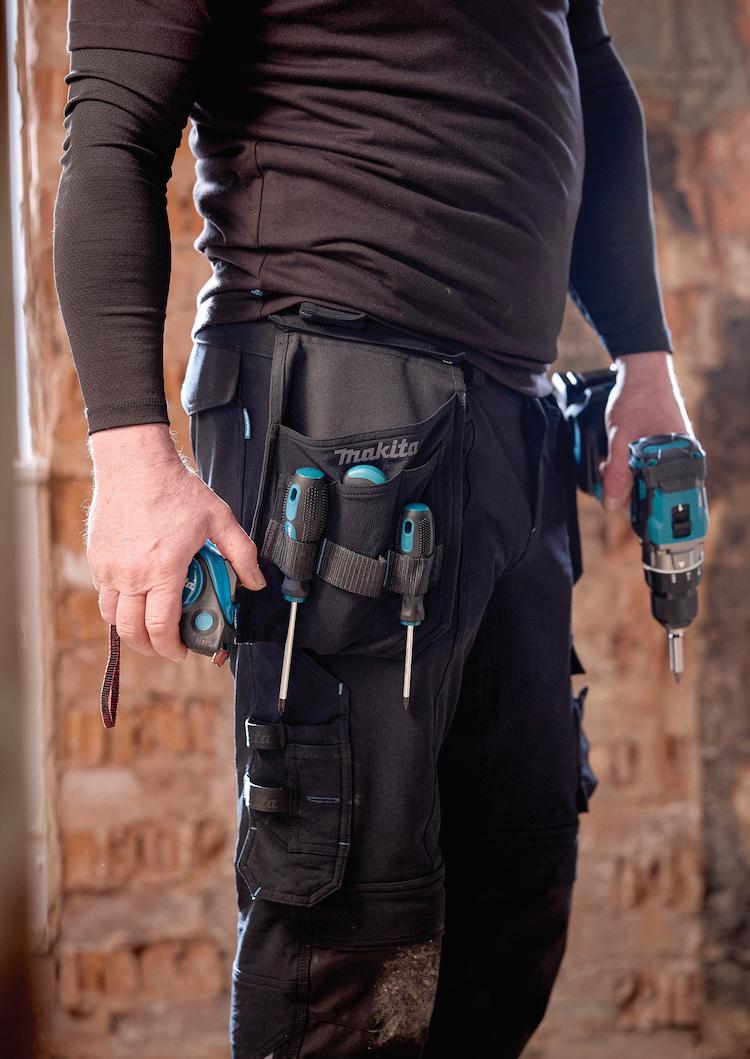
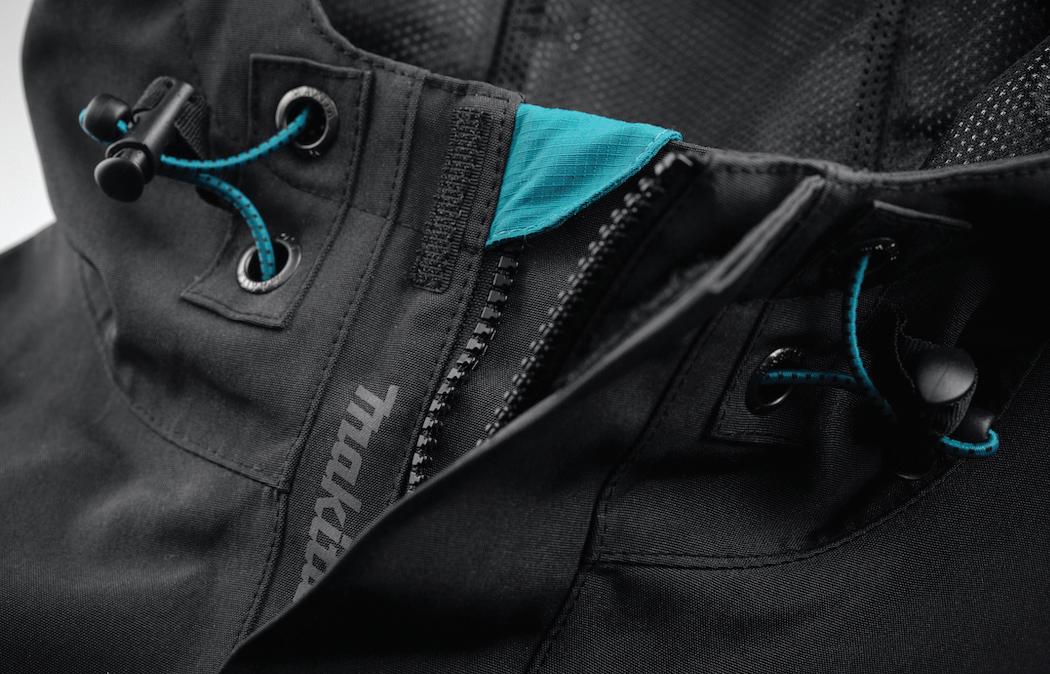
Rob Ansell at Castle Clothing talks through the key features behind the newly launched Makita Workwear range
For tradespeople, the right workwear is far more than a uniform - it’s an essential part of the job. Whether you’re navigating a construction site or working outdoors in unpredictable weather, selecting the appropriate clothing ensures you are prepared for the demands of the role.
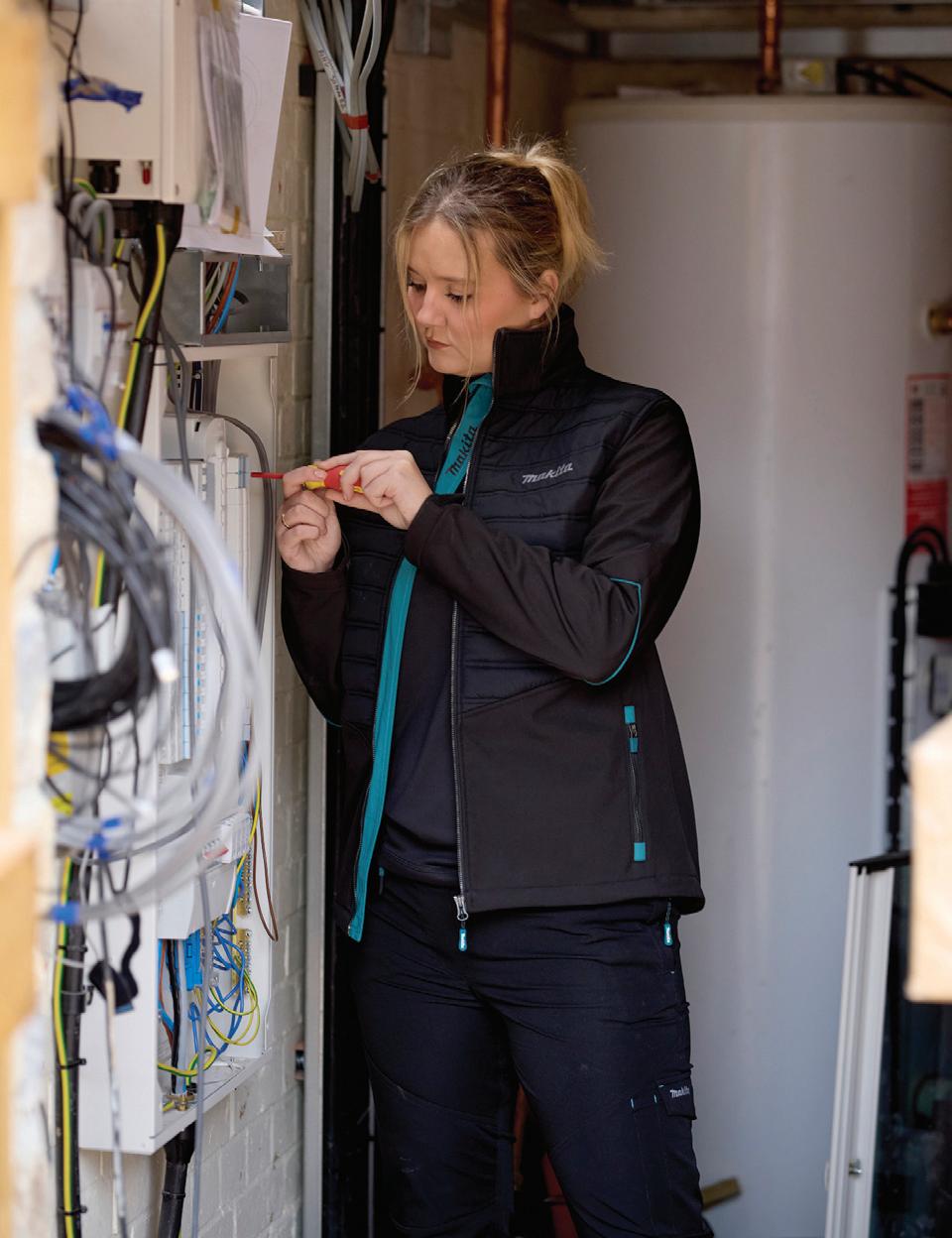
Makita has built a global reputation for tools that perform day in, day out, on demanding work sites. Developed by Castle Clothing (the team behind TuffStuff Workwear), that same practical, performance-first approach now defines the new Makita Workwear range - tough, considered and built for real working environments.
Drawing on over 50 years of industry experience, the head-to-toe collection covers everything from base layers to outerwear, trousers, shorts and safety footwear, including dedicated womenswear sizes. Every piece is designed around the realities of site life: kneeling, climbing, lifting, stretching and working through all conditions.
The difference is in the detail - durable fabrics, high-quality components and smart detailing that improve comfort, flexibility and long-term wearability. Performance features are built in where they matter most.
Designed for durability
Workwear designed for durability is a fundamental investment for anyone in the trades, where clothing is exposed to constant abrasion, heavy use, and challenging environments. High-quality materials, reinforced stitching, and robust construction ensure garments can withstand daily wear without quickly
breaking down. Durable workwear not only reduces the need for frequent replacements, saving time and money, but also provides consistent protection and reliability on the job.
Makita Workwear fabrics are chosen based on the job. For example, Ripstop is used on selected garments to improve tear resistance where it matters. Ripstop fabric is a lightweight, durable woven material featuring a unique crosshatch grid of thicker, reinforced threads with a four-way stretch, which helps to prevent rips and tears.
For high-wear areas, such as knees and pockets, reinforcements are a critical feature of Makita’s durable and reliable workwear. Tradespeople regularly put stress on these specific parts of their clothing. As such, these zones are particularly vulnerable to damage and fabric in these areas can quickly thin, tear, or fail altogether, leading to frequent replacements and potential safety risks.
Reinforced panels, made from tougher materials extend the lifespan of garments while maintaining comfort and flexibility.
Makita Workwear features CORDURA® reinforcements in high-wear areas.
CORDURA® is a brand of high-performing, exceptionally durable nylon fabrics known for superior resistance to abrasions, tears and scuffs. This material is 2 x stronger than standard nylon and 10 x stronger that cotton giving tradespeople peace of mind that the workwear is built to last.
In addition, durable zips are a small but essential detail in high-quality workwear, playing a key role in both functionality and longevity. Tradespeople rely on zips that can withstand constant use, exposure to dust and debris without jamming or breaking. A failed zip can render a jacket or pair of trousers unusable or can compromise on comfort.
Investing in workwear with robust zips reduces the risk of failure and contributes to gear that performs reliably day in, day out. For example, Makita Workwear features YKK® zips, which are renowned as the global standard for durability, reliability, and smooth operation, often lasting longer than the items they secure.
Fits designed for movement and all-day comfort
While tough materials and reinforced construction are vital for withstanding daily wear and tear, they shouldn’t come at the expense of flexibility or ease of movement. Poorly designed, rigid clothing can lead to fatigue, restricted mobility, and even increase the risk of strain or injury over time.
Garments that incorporate ergonomic cuts and stretch fabrics, allow tradespeople to bend, lift, and reach without restriction, making demanding tasks more manageable.
Equally important is the availability of fits specifically designed for women. Makita Workwear offers women’s cuts that account for differences in body shape, helping to prevent issues like excess fabric, or restricted movement. By prioritising inclusive, purpose-built design, the workwear supports a wider range of workers and ensures everyone can perform at their best.
Weather protection
Weather protection is a vital consideration, especially for tradespeople who spend long hours exposed to the elements. From heavy rain and strong winds to extreme heat and cold, changing conditions can quickly impact both comfort and safety on the job.
Well-designed workwear helps regulate body temperature and keeps moisture out while allowing breathability. Features such as waterproof fabrics and insulated linings ensure that workers can stay comfortable, focused and productive regardless of the forecast.
Makita’s Shield Jackets and Bodywarmers, Aero Jackets, Axis Joggers and Shorts, and the Onyx Holster Pocket Trousers feature durable,
Workwear is a key part of a tradesperson’s day, supporting both safety and performance. The right gear protects against hazards, allows for easy movement, and keeps workers comfortable in demanding conditions, helping them stay focused and productive. Every element of Makita’s new workwear range has been developed with trades in mind. They expect their clothing to perform properly on site, and that’s exactly what this range is designed to do.
The range is available exclusively through Castle Clothing Ltd, via selected builders’ merchants, tool dealers and workwear stockists.
We give our verdict on new products in our unique site tests, but now we want to give you the chance to try them – AND KEEP THEM –for yourself! All you have to do to enter the free draws is simply just type in www.rdr.link followed by the unique code.
FREEFOR ALL!
3 X PLIERS
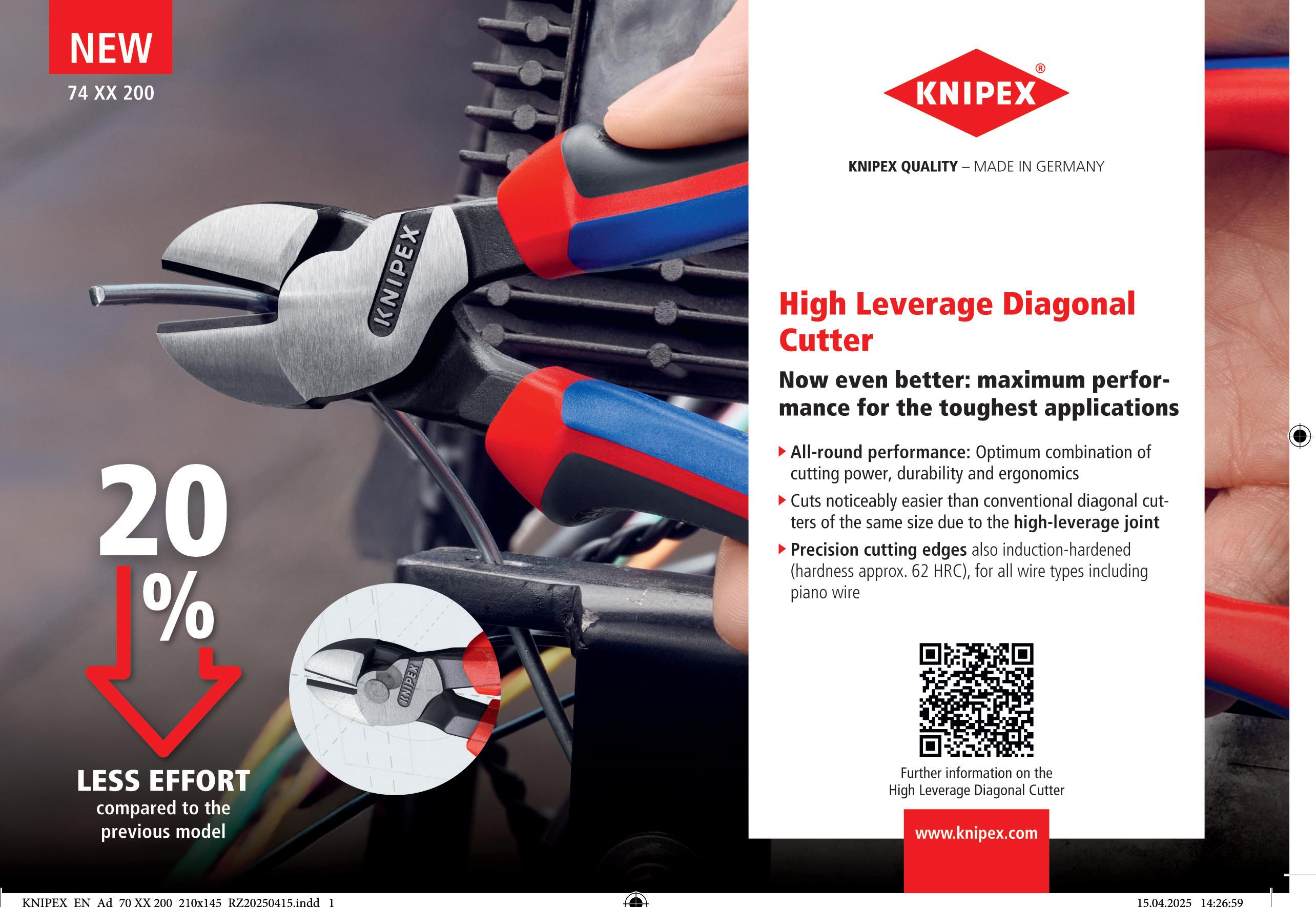
KNIPEX
NEEDLE-NOSE COMBINATION PLIERS
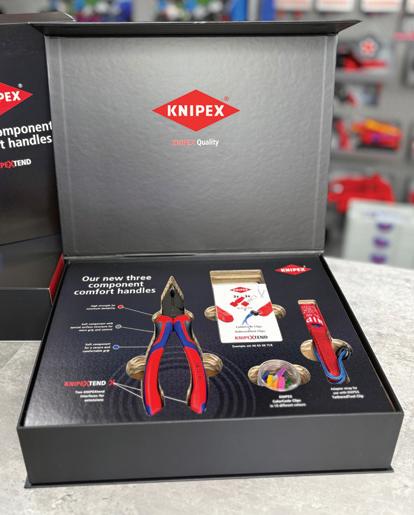
Three lucky PB readers will win a KNIPEX prize bundle built around the Needle-Nose Combination Pliers (08 22 185), designed for all common installation and repair work. With their slim head and pointed jaws, they’re great in confined spaces, have a high leverage joint for easier cutting and come with ergonomic handles for added comfort. The bundle also includes a set of KNIPEXtend TetheredTool Clips with an adapter strap for safer working at height, plus ColourCode clips in a range of colours so you can identify and organise your tools quickly and easily. Who ‘nose’ who our three winners will be?
2 X TOOL CARRIERS
HULTAFORS
ERGONOMIC TOOL CARRIER
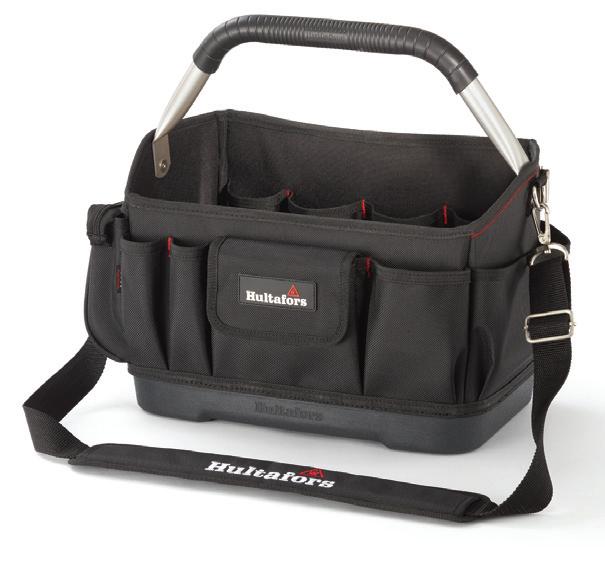
Built for demanding site work, the Hultafors Ergonomic Tool Carrier is designed for all-day comfort. Its curved back keeps weight close to the body to reduce strain, while a tough moulded base protects tools even on wet ground. With 25 pockets and holders, durable 1680-denier fabric and an integrated rain cover, it’s built to perform in real conditions. Trusted by the trade for quality and durability, this is a premium upgrade for any kit. Enter now for the chance to win one of two carriers. You’d be a tool not to enter this competition!
5 X T-SHIRTS
CARHARTT K87 T-SHIRT
Five lucky winners will each receive a Carhartt K87 T-shirt – the iconic heavyweight cotton tee, perfect for summer and built to last.
The K87 debuted in 1992, and its rugged cotton design and clean looks made it a firm favourite amongst workers. This work T-shirt is made with heavyweight cotton, built to handle tough days on the job, and the rib-knit crew neck helps to ensure your comfort even when you’re working at awkward angles. Whether you’re on site, in the van or winding down after work, the K87 delivers the kind of comfort and toughness tradespeople rely on.
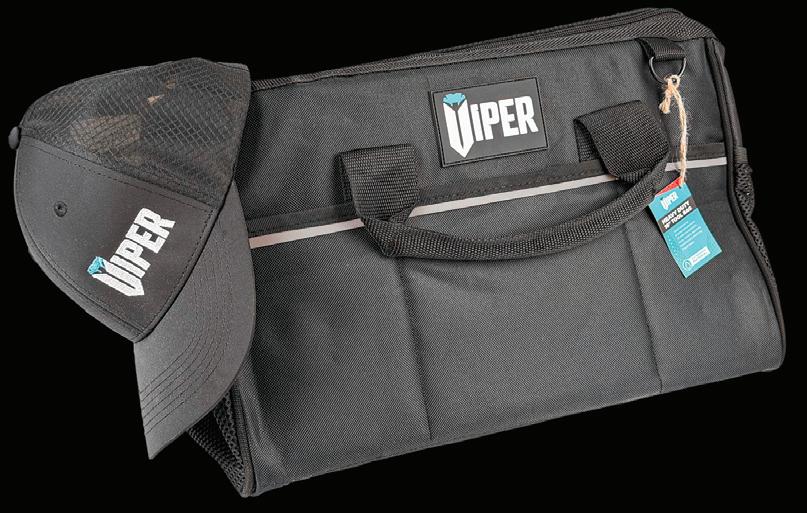
1 x Viper Baseball cap 1 X Viper T-Shirt FOR YOUR CHANCE TO WIN VISIT: WWW.RDR.LINK/BCB016 FOR YOUR CHANCE TO WIN VISIT: WWW.RDR.LINK/BCB015
5 X ACCESSORY PACKS
SAMAC FIXINGS VIPER PACKS
5 lucky winners will get their hands on these amazing Viper packs from Samac Fixings. Each pack contains:
1 x Viper 8 piece Multitool blade set
1 x Viper 8 Piece Multitool Cutting blade set
1 x Viper Multi Purpose Diamond Circular saw blade. 1 x Viper Turbo Diamond Circular saw blade. 1 x 16” heavy duty Viper tool bag
SPRAY TO WIN
How spray application is strengthening the future of plastering
Plastering is one of the most indemand skills and continues to offer strong and rewarding career opportunities for professionals. Despite this, the industry is facing a well-documented skills gap, alongside the pressures of growing expectations and tighter project timelines. Here, Sam Blacknell, Head of Skills Partnerships at British Gypsum, part of Saint-Gobain Interior Solutions, explores how sprayable plaster is building a brighter future for the industry.
There are approximately 40,000 plasterers in the UK, but workforce numbers are in decline. Much like the broader construction industry, which is expected to lose around onethird of its workforce within the next decade, an aging workforce means people – and skills – are being lost. At the same time, there aren’t enough new plasterers entering the market to meet demand.
This shortage could have a far-reaching impact in the years and decades to come. Already, the demand for plasterers is outstripping
supply, which is leading to delayed project starts or even cancellations. As the construction industry responds to overarching ambitions to build 1.5 million new homes by 2029, alongside retrofitting a large proportion of existing homes, the pressures on skilled trades, including plastering, will only get stronger.
A solution to this challenge relies on a joined-up approach, combining education and training with innovation in the tools,
techniques and working practices that shape the day-to-day of the trade.
Spraying the way to the future
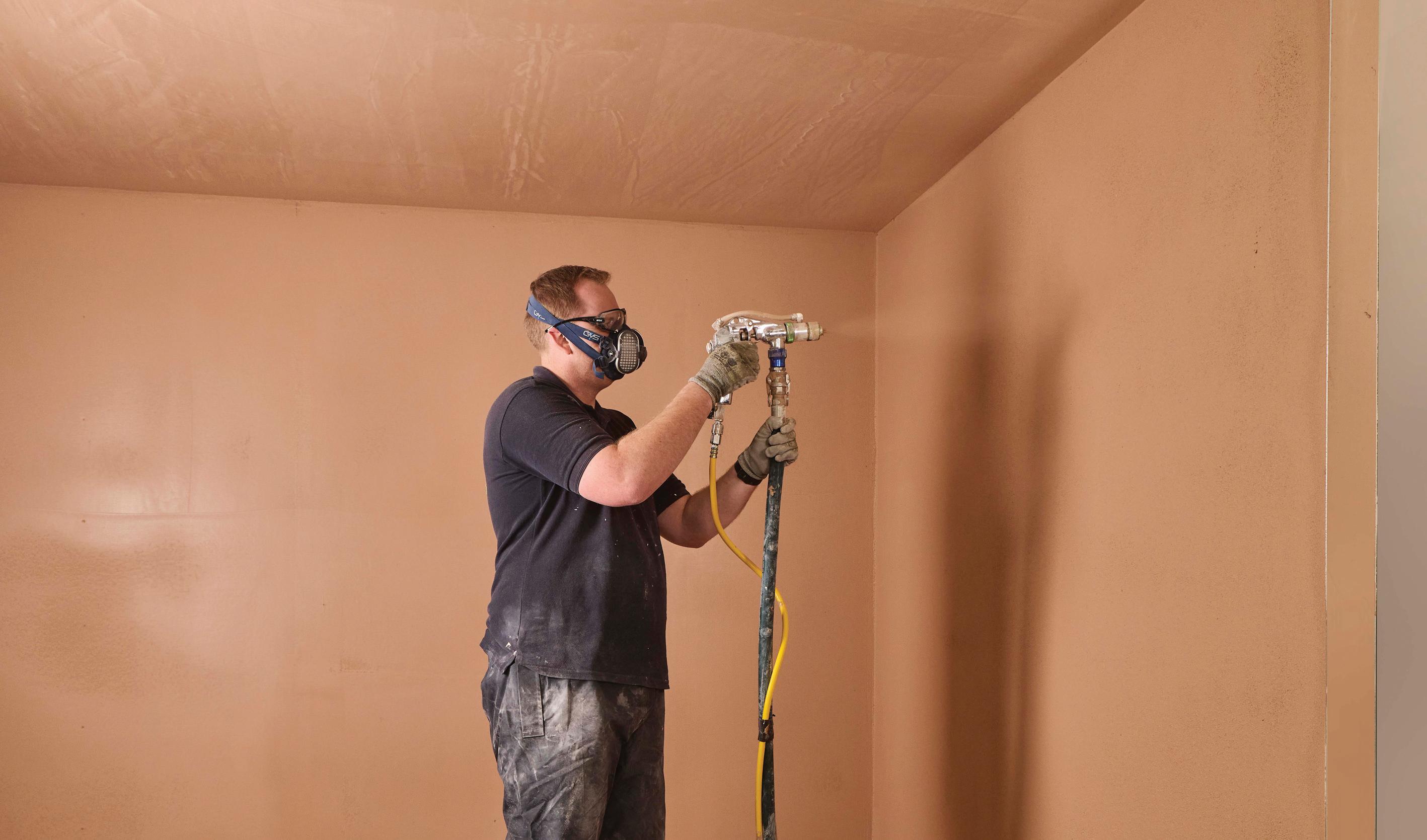
One part of the solution to attracting new talent into the industry, as well as supporting experienced professionals, is innovation in how plaster is applied. Sprayable plaster is a new development for the market which has the potential to open up plastering to the next generation
and provide a win for employers, plasterers and ultimately, customers.
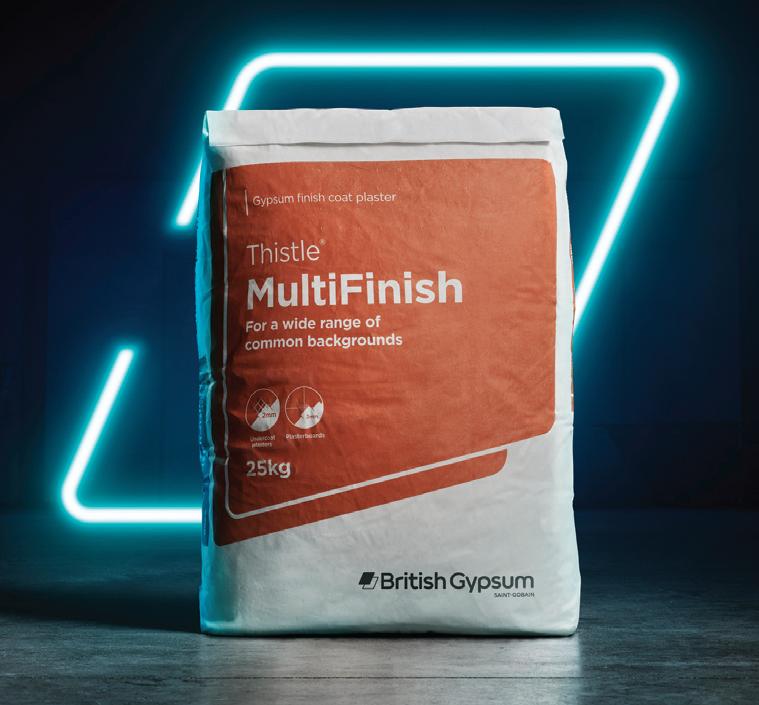
With sprayable plaster, the product itself doesn’t change – just how it is first put on the wall. For instance, Thistle MultiFinish from British Gypsum has been tested with various spray machines and is now suitable for spray application*. That’s the same product that plasterers are familiar with, delivering the same quality and performance. What it now offers is a new method of application, broadening plasterers’ options and adding a new skill to their arsenal that provides greater flexibility on the job.
While sprayable plaster is proven to deliver benefits, particularly on larger projects by helping professionals to get plaster on the wall more easily, it ensures the craft of plastering remains. Once plaster is spray-applied, it is down to the plasterer – together with their experience and trowel technique – to deliver a quality finish.
With that in mind, sprayable plaster is supporting the demands of modern sites, where consistency and quality are key considerations.
New housing developments that span multiple plots, through to individual buildings that feature wide surface areas, all require careful coordination to maintain consistent quality. They can also place additional demands on plasterers over the course of jobs. It’s here where having flexibility in material application can help teams to respond to different demands, conditions and requirements.
Spray application offers a more flexible way of getting Thistle MultiFinish onto walls and ceilings, enabling a more adaptable workflow across projects that allows reliability and quality to be consistently maintained. At the same time, it supports plasterers to stay in control, allowing them to adapt their approach to suit them, even reducing the physical demands of projects.
For experienced plasterers, sprayable plaster can play a role in sustaining their long-term careers in the trade, while for those starting out, it provides a modern, exciting and accessible route into the profession.
Attracting the next generation
At a time when the plastering sector is facing a skills shortage, sprayable plaster
has a role to play in attracting more people into plastering roles. While much effort continues to go into promoting apprenticeships, introducing differences in technique and skillsets can also help to attract new talent.
Introducing techniques such as sprayable plaster demonstrates that the industry continues to progress and evolve. While it’s rooted in tradition, with skill and technique still an essential part of the craft, evolving to reflect modern demands presents younger entrants with a vibrant, future-looking sector where new skills can be developed alongside established ones.
That’s the beauty of sprayable plaster. While it supports professionals in getting plaster on the walls and ceilings, it doesn’t take away from the traditional skills. Apprentices will still need to learn the fundamentals of plastering, from surface preparation through to achieving a high-quality finish with well-honed trowel techniques. The ability to spray plaster simply adds to this skillset, providing the flexibility to respond to the demands of jobs.
A
craft that continues to evolve
It’s easy to think of plastering as a skill that is traditional and unchanged, but innovations such as sprayable plaster demonstrate that’s not the case. So, while the skills gap is a complex challenge to solve, the introduction of new skills and techniques that change how materials are applied can provide a way for the industry
to evolve sustainably.
The spray application of Thistle MultiFinish is part of this evolution, offering plasterers another way to work, without compromising the craftsmanship that defines plastering.
Demonstrating the potential of sprayable plaster, British Gypsum is taking to the road to host demonstrations and offer practical guidance to plasterers who are picking up spray machines for the first time. These roadshows give plasterers the opportunity to explore spray application first-hand, understand best practice and consider how it could compliment their projects.
While spray plaster offers a new approach to plastering, it also ensures that the trade remains grounded in skill and craft. So, while tools may change, quality is still in the hands of the skilled tradespeople behind them.
*Thistle MultiFinish is now sprayable and has been tested for adhesion through specific machines onto plasterboard (British Gypsum, Knauf, Siniat). For other plasterboard manufacturers please check they are compatible with British Gypsum Thistle plasters. British Gypsum does not take responsibility for any spray machines. Customers must make their own decision depending on their needs and ensure the machine chosen is compliant with UK standards. Other machines may be capable of spraying Thistle MultiFinish.
FIND OUT MORE ABOUT SPRAYING THISTLE MULTIFINISH, EXPLORE TESTED EQUIPMENT AND FIND A ROADSHOW LOCATION NEAR YOU BY VISITING THE BRITISH GYPSUM WEBSITE AT WWW.RDR.LINK/BCB021
building boards, plasters and renders
TIMBERTASTIC
help reduce the environmental impact of plasterboard
Plasterboard is almost the do-itall material of modern construction and can generally be used across a wide range of applications. From ceilings to lining partition walls and even existing structures, it is widely praised for being easy to install. It also offers strong insulation with impressive thermal performance, while being generally fire resistant, which is a crucial requirement in most modern buildings.
With all that being said, while plasterboard is incredibly useful, it also carries a hidden environmental concern due to the very materials used in its creation. Gypsum is the main base
material used in plasterboard, with the outer layer typically made from two sheets of lining paper that form the board itself. For many years, plasterboard was considered environmentally friendly because gypsum is a biodegradable material. However, when it is disposed of in landfill sites, it becomes problematic. When mixed with other biodegradable waste, it can produce hydrogen sulphide gas, which is highly toxic. This has led to strict regulations and, in many cases, a ban on plasterboard being disposed of in standard landfill due to the environmental risks it poses.
Considering that millions of tonnes of gypsum are used in the manufacture of plasterboard every year, this creates a significant waste issue. Discarded materials must now be handled and disposed of through specialist processes to minimise environmental harm. Combine this with the wider industry push towards more sustainable and environmentally responsible practices, and plasterboard is no longer seen as the perfect solution it once was. As a result, the demand for viable alternatives is steadily increasing.
Back to the board
One such alternative comes from West Fraser with its SterlingOSB Zero precision timber board. Made from high-quality timber, it is designed with sustainability in mind. The board contains no added formaldehyde, which is a significant environmental and health advantage compared to many traditional engineered wood products. In addition, its precision manufacturing means there are no knots or delamination issues, reducing waste and improving consistency across applications.
SterlingOSB Zero can be used in a wide range of applications that have traditionally been dominated by plasterboard. This includes wall sheathing and structural uses, as well as applications in agricultural and portable buildings. Its durability allows it to perform well in both dry and humid conditions, making it a versatile option for modern construction needs. In many cases, it provides the flexibility that builders require while offering a more sustainable material choice.
That said, it is important to be realistic. This is not about suggesting that plasterboard will suddenly disappear or that timber boards are a perfect, one-size-fits-all solution. Plasterboard remains a highly effective and widely used material for good reason. However, products like SterlingOSB Zero represent a step forward in addressing some of the environmental challenges associated with traditional materials.
From a practical perspective, incorporating alternative materials into your work can be beneficial not just for the environment but for your business as well. Clients are becoming increasingly aware of sustainability and are more likely to favour builders who can offer environmentally responsible solutions. Using products that reduce environmental impact can help set you apart in a competitive market.
Ultimately, while plasterboard is still the go-to material for many applications, the industry is changing. Environmental concerns and regulatory pressures are driving innovation and encouraging the development of new materials. Exploring and experimenting with alternatives such as SterlingOSB Zero is not just about trying something new, it is about preparing for the future of construction and investing in your business.
ATHE CLADDING WARS
s any decent builder knows, having durable, high-quality cladding is vital in a country like ours, where a bright summer’s day can quickly turn into a heavy rainstorm. The truth is that cladding needs to be tough enough to withstand harsh British weather, keep heat in, and still maintain an appearance that homeowners are happy to live with. With that in mind, there are two main types of cladding that fit the bill: timber and fibre cement. Both offer strong protection while also being visually appealing.
The key question, of course, is which one is better. That is exactly what this article aims to explore. By looking at the advantages and drawbacks of each, we can get a clearer idea of which option comes out on top.
A timber taste
For those looking for a more natural and slightly rugged look, timber cladding offers a unique and aesthetically pleasing option. Made from high-quality wood, this type of cladding comes with several advantages. Timber is an effective natural insulator thanks to its structure, helping to retain heat within a property. It also performs well against the elements, providing a solid barrier against rain when properly treated.
Another key benefit is its versatility. Timber can be used across a range of design styles, from traditional homes to more contemporary builds. It is also commonly used in outbuildings such as sheds and garden structures, adding to its appeal. From an environmental perspective, timber is a renewable resource and is biodegradable, making it a more sustainable choice compared to many manufactured materials.
However, timber cladding does have its downsides. Over time, it can fade and deteriorate if not properly maintained. To keep it looking its best and performing effectively, regular treatment is required to prevent issues such as rot, warping
and staining. This ongoing maintenance can add to the overall cost and effort, which may not suit every homeowner.
Artificial enhancement
Fibre cement cladding, made from a combination of cement, sand and cellulose fibres, offers a more modern alternative. While it may not provide the same natural aesthetic as timber, it makes up for this with its strength and durability. It is highly
PB’s Luke Cuneen looks at whether timber or fibre cement is the better cladding
resistant to weathering and, importantly, is non-combustible, offering a level of fire resistance that timber cannot match.
One of its biggest advantages is its versatility in appearance. Fibre cement can be manufactured to replicate materials such as wood or stone, and it is available in a wide range of colours and finishes. This makes it a popular choice for modern developments where a clean, consistent look is desired.
In terms of performance, fibre cement requires far less maintenance than timber. It does not rot, warp or attract pests, which makes it a practical long-term solution for many properties.
That said, there are some drawbacks. Fibre cement cladding is generally more expensive than timber, particularly when customised finishes or colours are specified. It is also heavier and more difficult to install, often requiring specialised tools and expertise, which can increase installation costs.
Final verdict
When it comes to choosing between timber and fibre cement cladding, there is no clear-cut winner. Each material has its own strengths and is better suited to different types of projects.
Timber is ideal for more traditional or rural builds where a natural look is preferred and where homeowners are willing to carry out regular maintenance. Fibre cement, on the other hand, is better suited to modern properties where
durability, low maintenance and a clean finish are the priorities.
Ultimately, the best choice depends on the needs of the client and the demands of the project. As a builder, your role is to understand those requirements and
recommend the option that delivers the best balance of performance, appearance and long-term value.
extensions and home improvements
‘GLAZE’ OF GLORY
We look at a coach house conversion that benefitted from factory-assembled Infinity rooflights for a faster fit
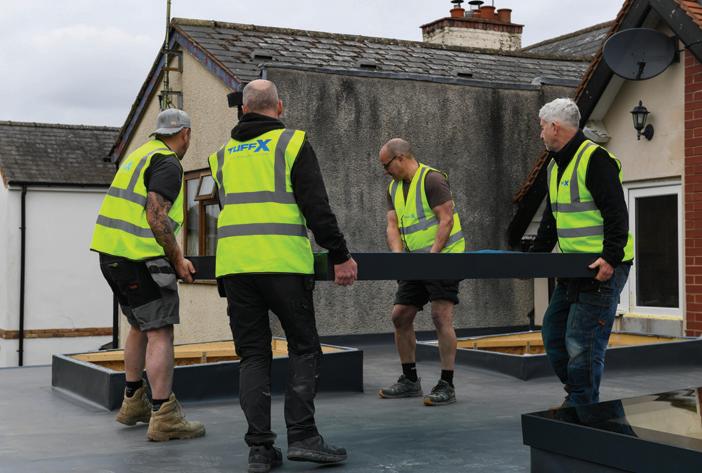
When a characterful coach house in the West Midlands was stripped back as part of a full renovation, one challenge became clear early on for Rich, founder of RHJ Carpentry and Building Ltd, how to bring more daylight into a large ground-floor footprint without major alterations to the existing walls. The solution came from above, as Rich partnered with TuffX to specify and install four Infinity framed rooflights to drive daylight deep into the plan, improving the internal environment while fitting within a tight programme.
This converted coach house is being reworked for multigenerational living, with the ground floor opened up to create two contemporary kitchens, dining and living areas within the main house and the selfcontained annex. In buildings of this type, thick masonry and limited original openings can make adding new vertical glazing disruptive and costly, so rooflights are often the most straightforward route to increase daylight levels.
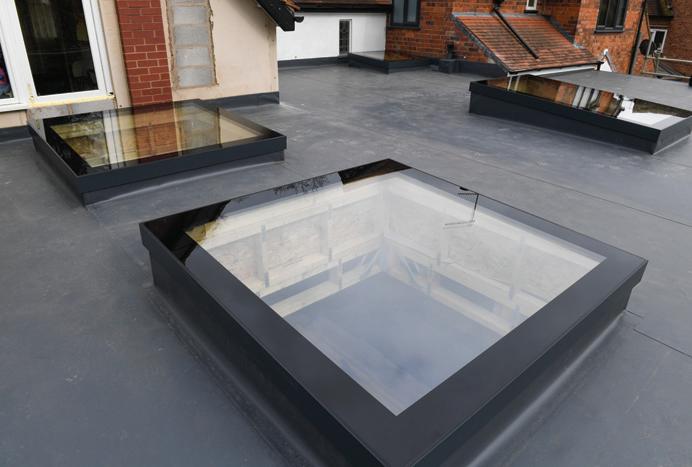
Four rooflights were set out across the flat roof to distribute light evenly throughout the open-plan spaces, while working around the existing structure and the new internal arrangement for the main dwelling and annex.
Keeping the build program on track became critical following prolonged wet weather in early 2026, which delayed roof preparation and pushed back the final waterproofing works. Once the flat roof and openings were ready, the priority was to quickly install the rooflights to protect first-fix and internal trades, making short lead times and reliable delivery essential.
TuffX designed and supplied four bespoke Infinity rooflights for the project, with the largest measuring 2305mm x 1490mm. Supplied factory-assembled as single units, the Infinity system is designed to combine strong thermal
performance with a clean, contemporary finish, while keeping on-site installation time to a minimum.
Manufactured at TuffX’s Merseyside facility, the Infinity units were produced and held ready for dispatch as soon as the weather allowed. The speed of delivery and flexibility supported site logistics and reduced delay risk.
The Infinity system is available in both double and triple-glazed configurations, with an insulated frame supplied as standard to help reduce heat loss and manage solar gain. On refurbishment projects, upgrading the thermal envelope is often as important as the visual uplift and roof glazing can make a measurable difference to comfort and energy performance. Solar control coatings can also be specified on Infinity units when additional performance is required.
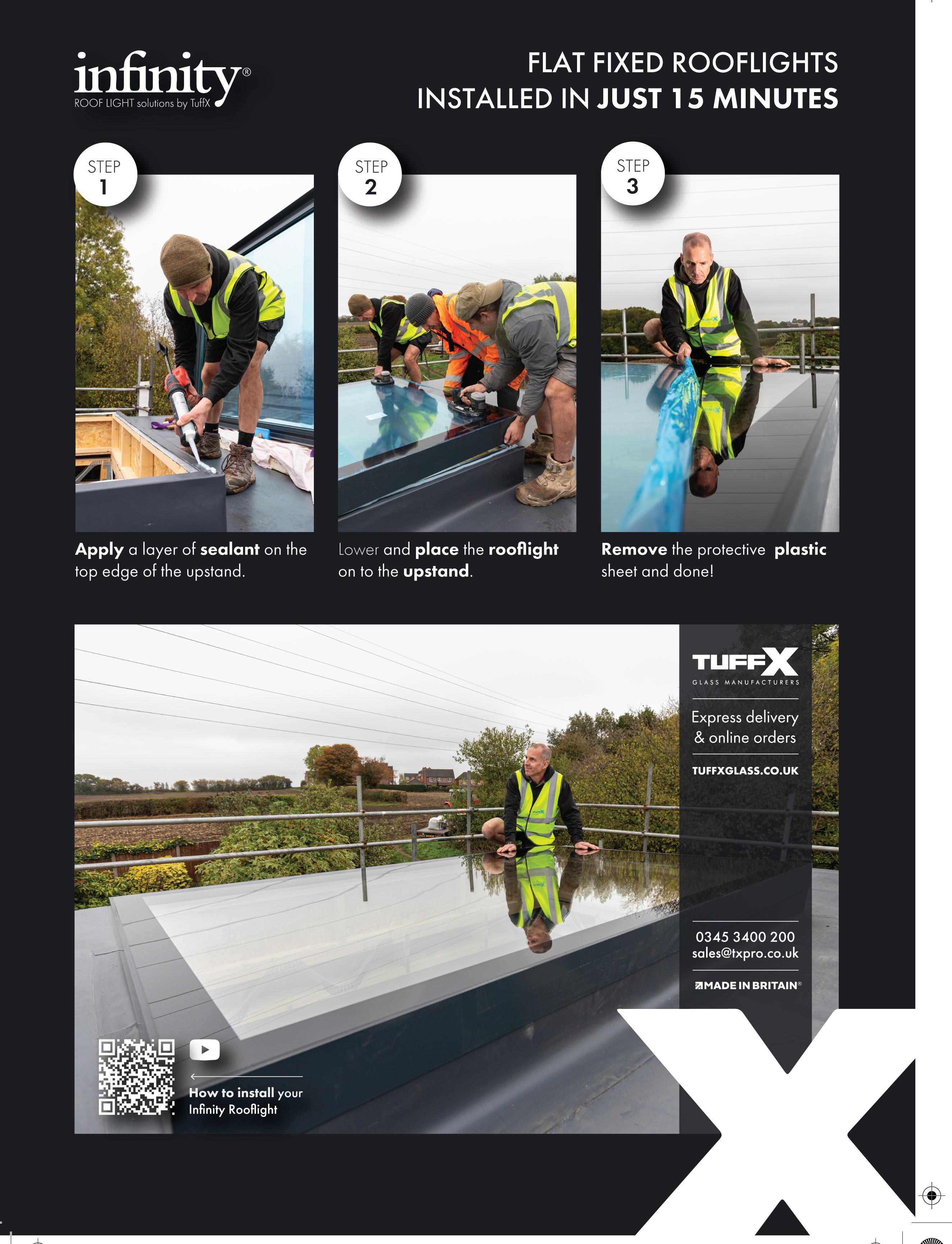
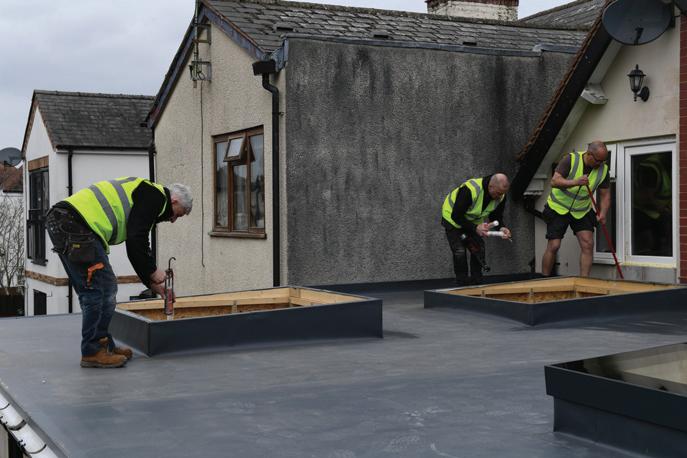
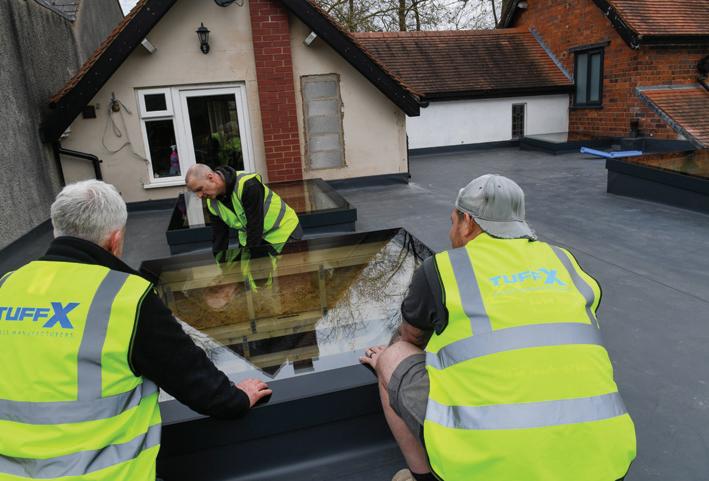
When installation began, four timber upstands were formed to a minimum pitch of 5° to promote effective water runoff. On the day, each rooflight was unpacked, a continuous bead of silicone was applied to the upstand to form a weather-tight seal, and the powder-coated aluminium frame was lowered into position, repeated across all four openings.
With the rooflights in place, the openplan areas are now naturally lit throughout the day and reinforce the link between the indoors and the garden, which was central to the client’s brief.
In performance terms, TuffX’s double-glazed Infinity rooflights achieve centre-pane U-values of 1.2 W/m²K. The triple-glazed option delivers approximately 0.7 W/m²K (around 30% better than standard double glazing), alongside improved acoustic performance.
For builders delivering refurbishment and conversion projects, this coach house scheme shows what a well-specified, factory-assembled rooflight package can
offer: bespoke sizes, dependable lead times and a straightforward installation sequence that helps keep the programme moving.
SCAN THE QR CODE TO LEARN MORE ABOUT THE SPEEDY INSTALLATION PROCESS FOR TUFFX’S INFINITY UNITS. FOR FURTHER PRODUCT INFORMATION VISIT WWW.RDR.LINK/BCB012
A ‘ROB’ WELL DONE!
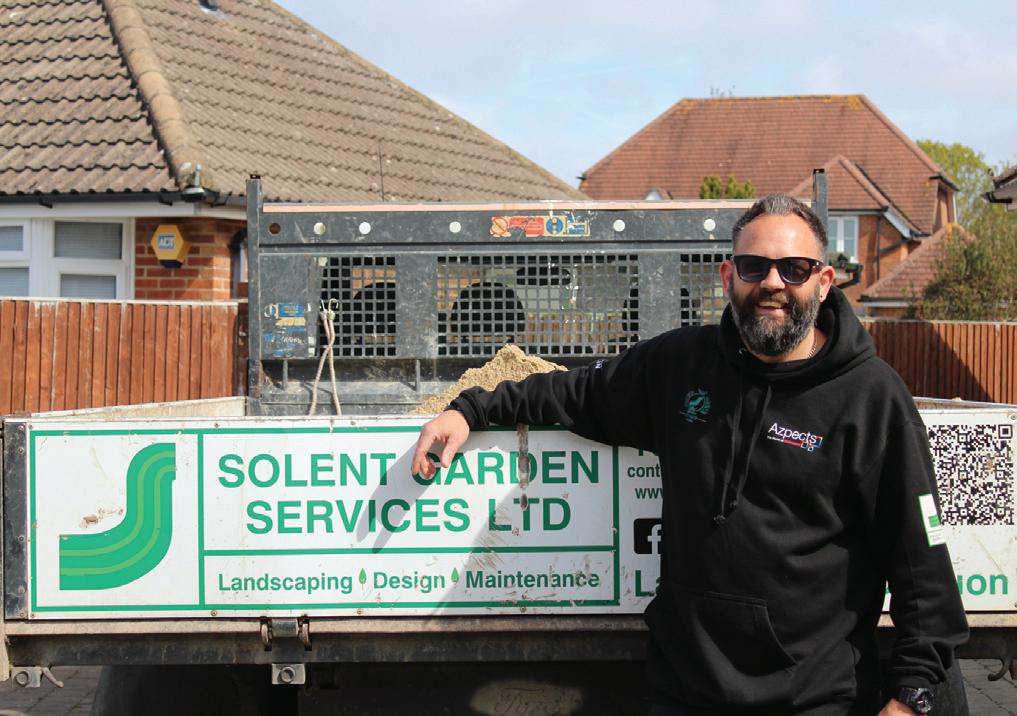
We get on site with landscaper, Rob Woodhouse, to find out why he keeps coming back to Azpects products
With over 21 years helming his father’s firm (and plenty more years on the tools before then), it’s safe to say that Rob Woodhouse, Managing Director of Solent Garden Services, knows a thing or two about landscaping. Indeed, after bagging a Gold Medal at RHS Chelsea & Wentworth in 2025 and winning RHS Best in Show & Best Construction, he’s got the silverware to back it up too.
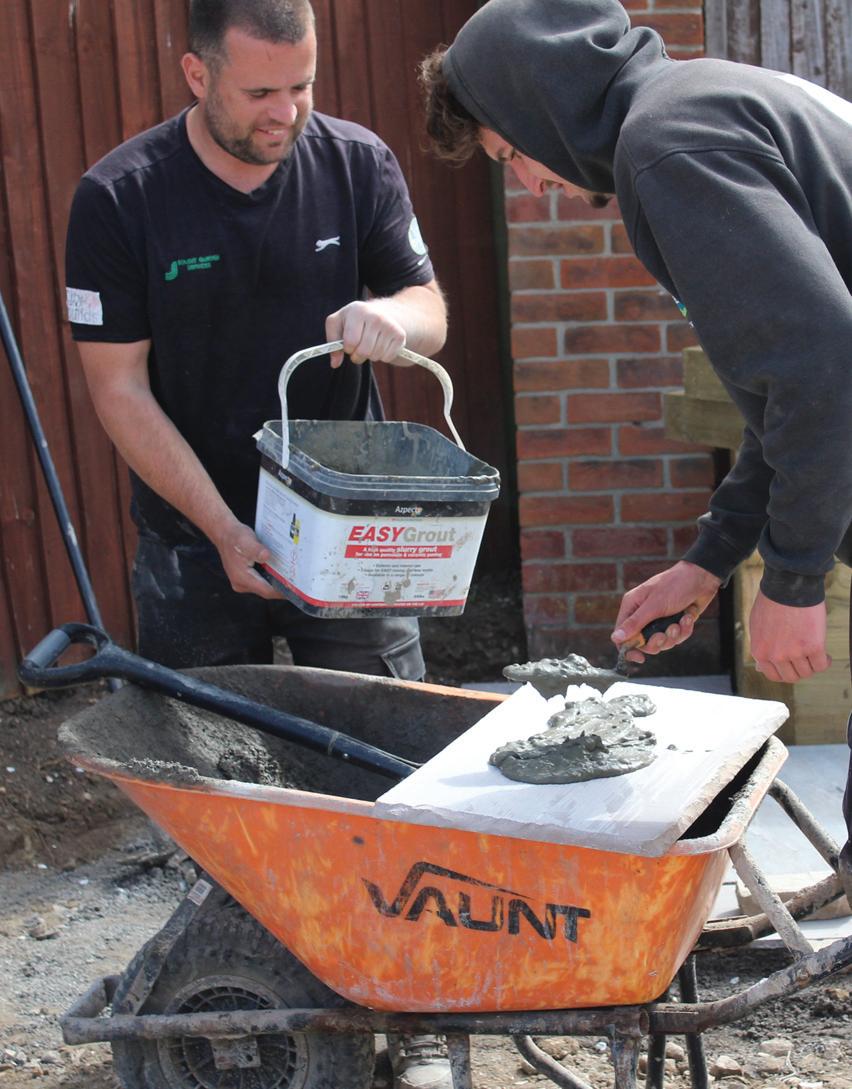
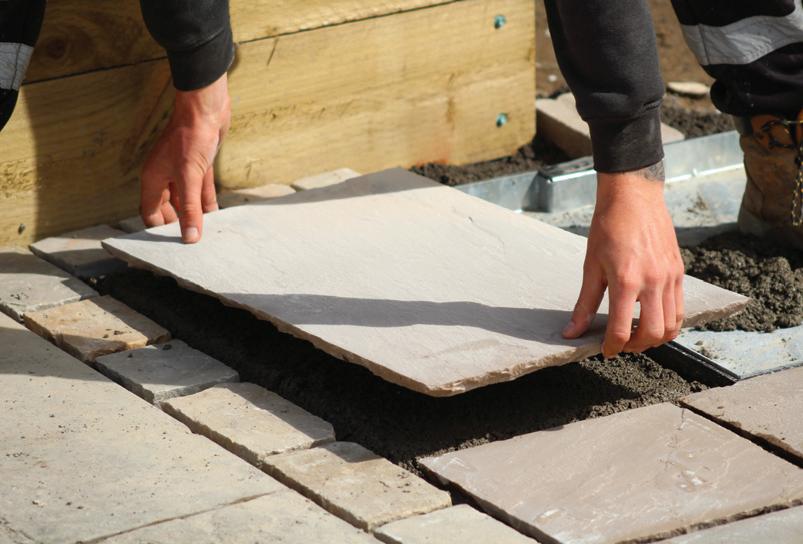
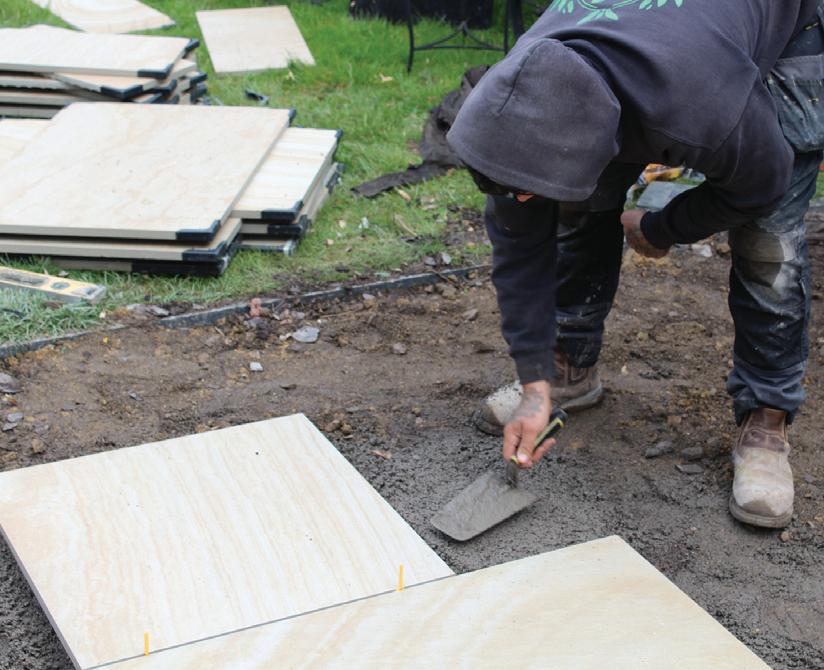
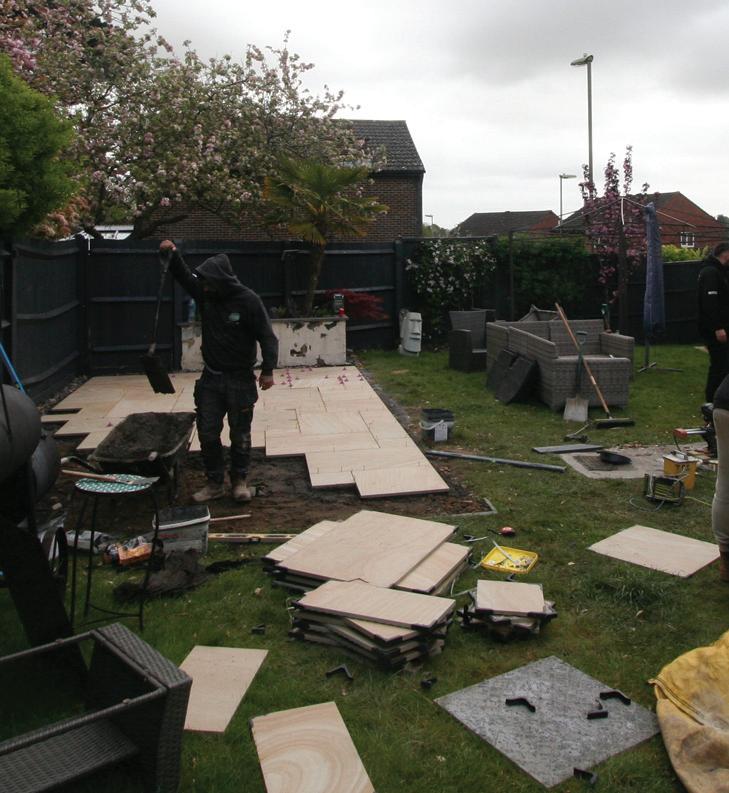
We went and visited Southamptonbased Rob on two sites that he and his sixstrong team were working on just round the corner from each other. The first, a new porcelain patio installation, was just one of many steps in an extensive garden re-vamp for a local homeowner that Rob’s team were undertaking. Half a mile away, the Solent team were extending a sandstone patio and adding a number of raised beds to give the back garden a new lease of life. Being in a wheelchair, the homeowner of this property was looking for an accessible garden update that would allow her to enjoy the space to the fullest.
An extensive range
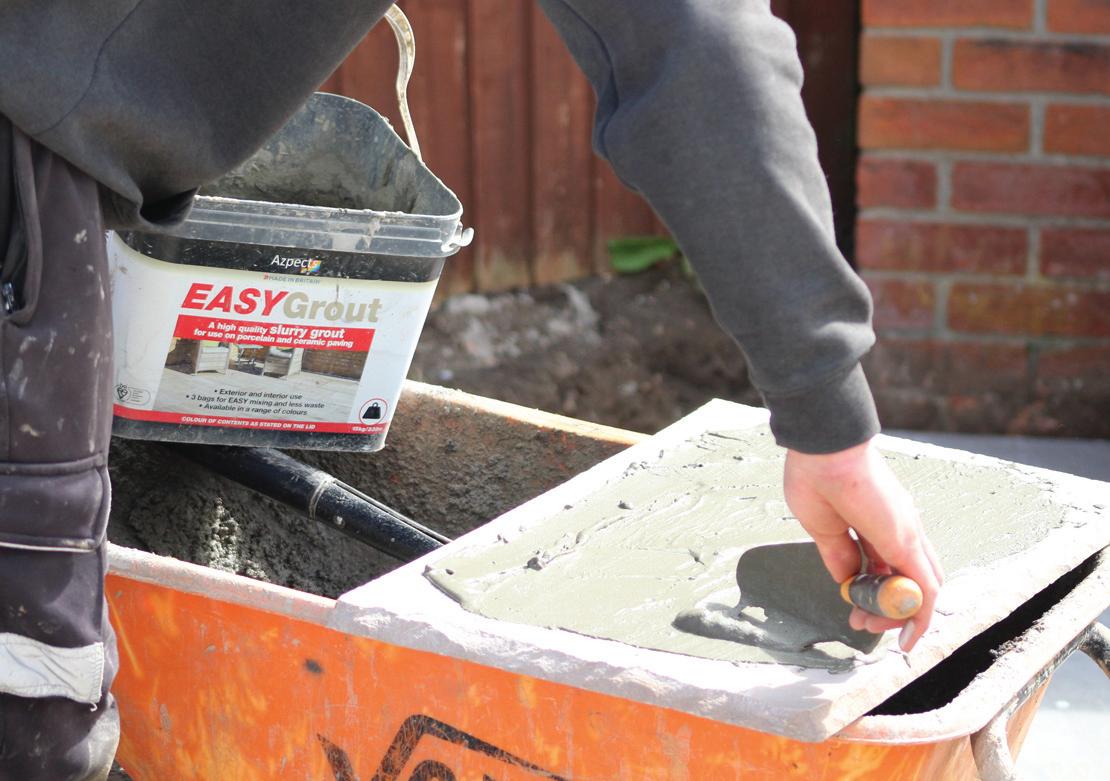
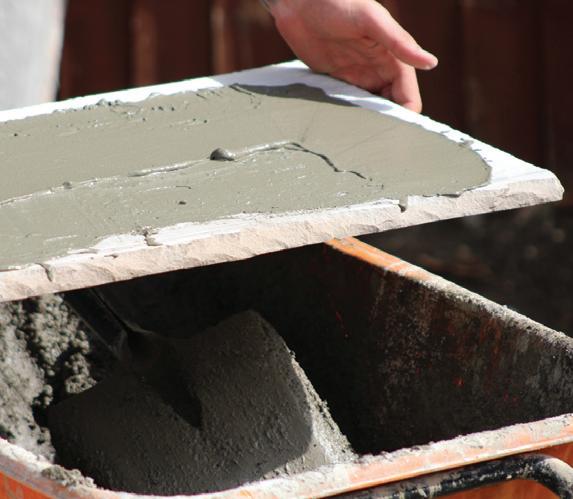
Being on both of these jobs, it’s clear that the vast range of products that Azpects offers comes in handy for patio jobs like this. Rob explains, “The Azpects products make my life easier on site because the range covers the whole project from start to finish; from priming slurry, spacers, pre-grout temporary sealers and grout to cleaning products for the final washdown.
“Weve been using Azpects products for around seven years now and started with using the EASYJoint products on our patios.”
EASYJoint
EasyJoint is one of Azpects’ flagship products. The Original version is an allweather sweep-in joint compound that
works as a very quick, effective and aesthetically pleasing way to fill joints between paving. To make things even easier (and ideally suited to the temperamental British weather), it is best installed in wet conditions.
Suitable for all types of paving material, this easy-to-use product is strong enough to resist the elements and stand the test of time, making it much more effective than traditional jointing methods.
EASYJoint PRO is an impressive addition to this range and is taking the market by storm. Frost and ice resistant, this tough two-part epoxy compound formula can be used on patios, paths and driveways and represents the next step in jointing compounds. It provides extra strength and durability with a smoother finish.
Making things EASY
Before grouting, there’s a number of other Azpects products that Rob’s team regularly make use of. Particularly of note
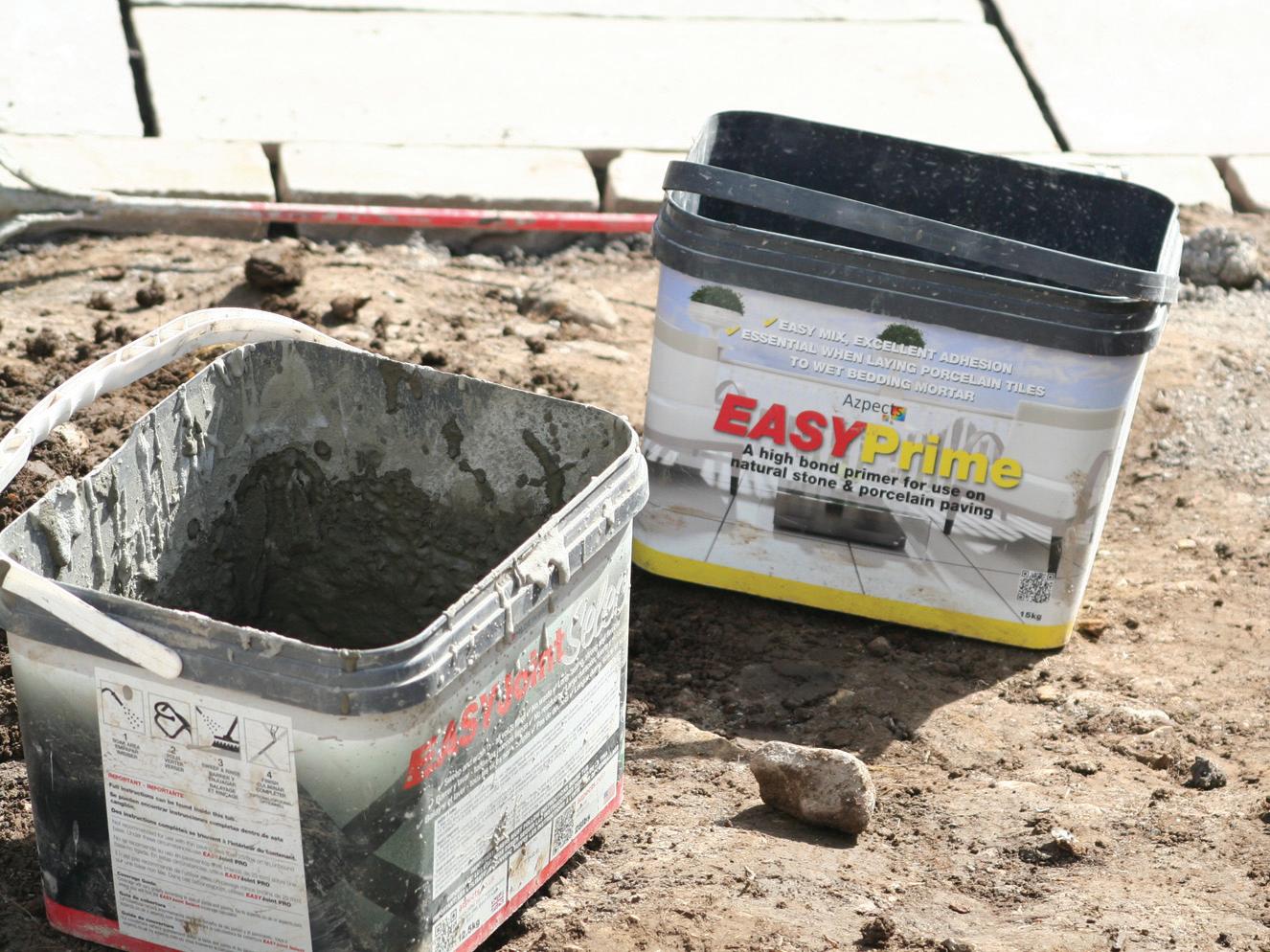
is EASYPrime, a polymer modified cementitious slurry primer. It is an easy to apply high strength bonding agent for use when laying natural stone and porcelain paving. It ensures full and permanent contact is achieved with the aggregated mortar in the bedding layer.
As a guide, a single 15kg bag of EASYPrime will cover a minimum of approximately 24 sq.mtr.
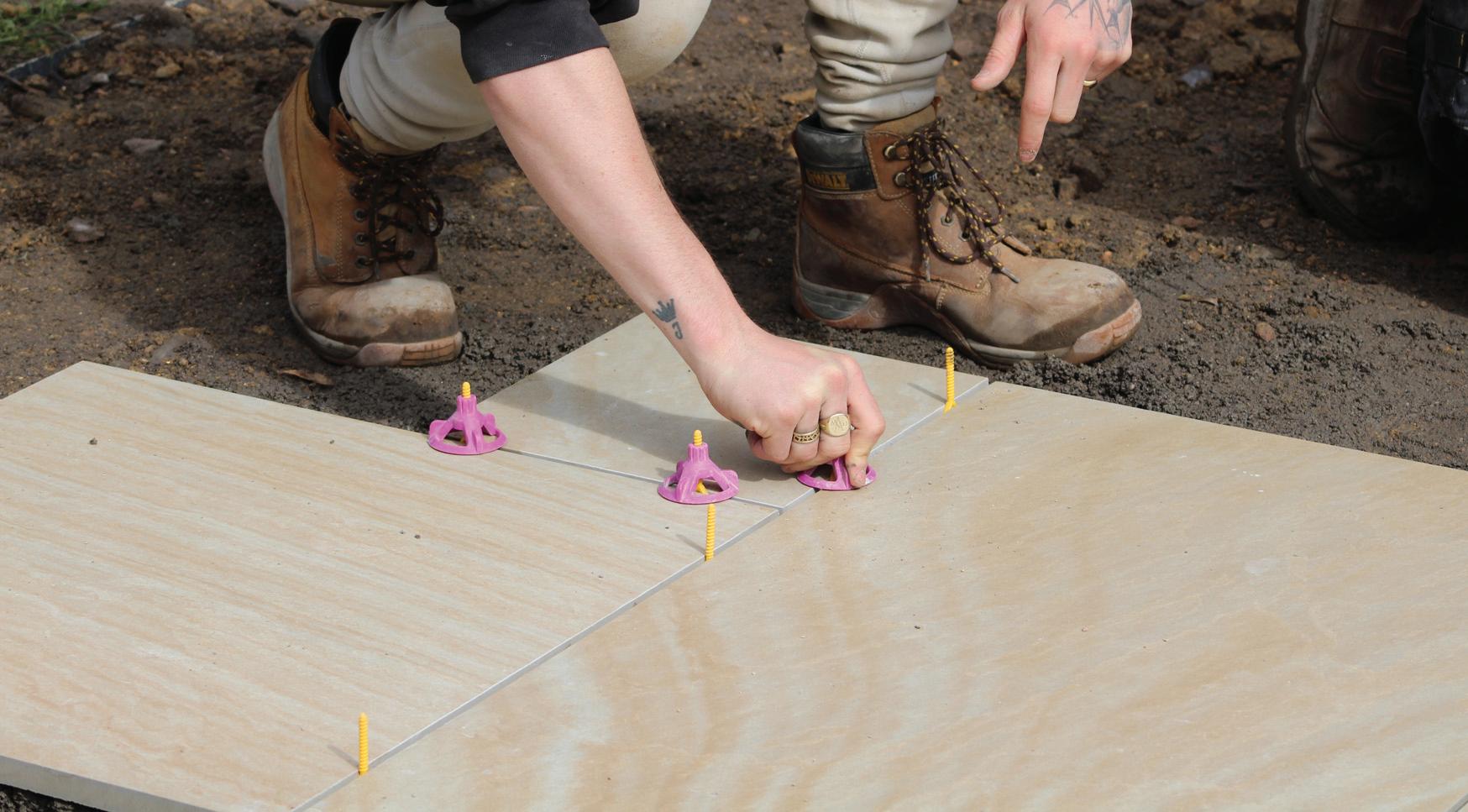
EASYTileAlign is another handy feather in Rob and co’s cap and is suitable for traditional tile installation methods, or for use with Azpects’ EASYGrid system. It works as an easy to use levelling system, that incorporates a tile spacer and levelling cap, plus optional protective shields. Simply fit the spacers and once the slab is down pop the levelling cap on and spin as required. After use, the screw caps and shields can be reused from job to job. For the Porcelain patio project, the team were using 5mm spacers.
The Sandstone patio extension job also made good use of Azpects Deep Clean and Hardscape Cleaner to give the
older sections a new lease of life. Both jobs will make use of Azpects’ Porcelain Sealer and Sandstone Enhancer & Sealer.
The
secret to success
Seen as he’s at the head of a landscaping firm that’s been around since 1973, I asked Rob what his top tips are for a successful landscaping project.
“The key ingredients to a successful project are communication: between yourself, the client and your team. Quality products: working with good materials which are installed correctly is essential to a successful project. Details matter: those little details take a good job and make it a great job.”
What makes him keep coming back to Azpects? “Consistency. Their products are consistently of a high standard, readily available from merchants and always available for advice whenever we’ve needed it.”
extensions and home improvements
TIME TO VENT
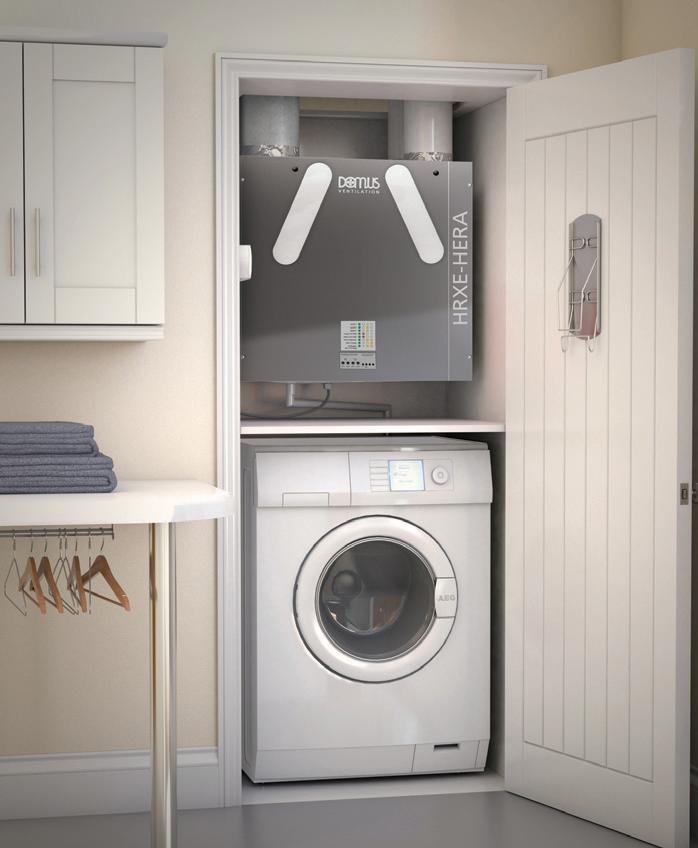
6 benefits of Residential MVHR Systems, by Paul Williams, Product Manager at Domus Ventilation
1. Superior Indoor Air Quality
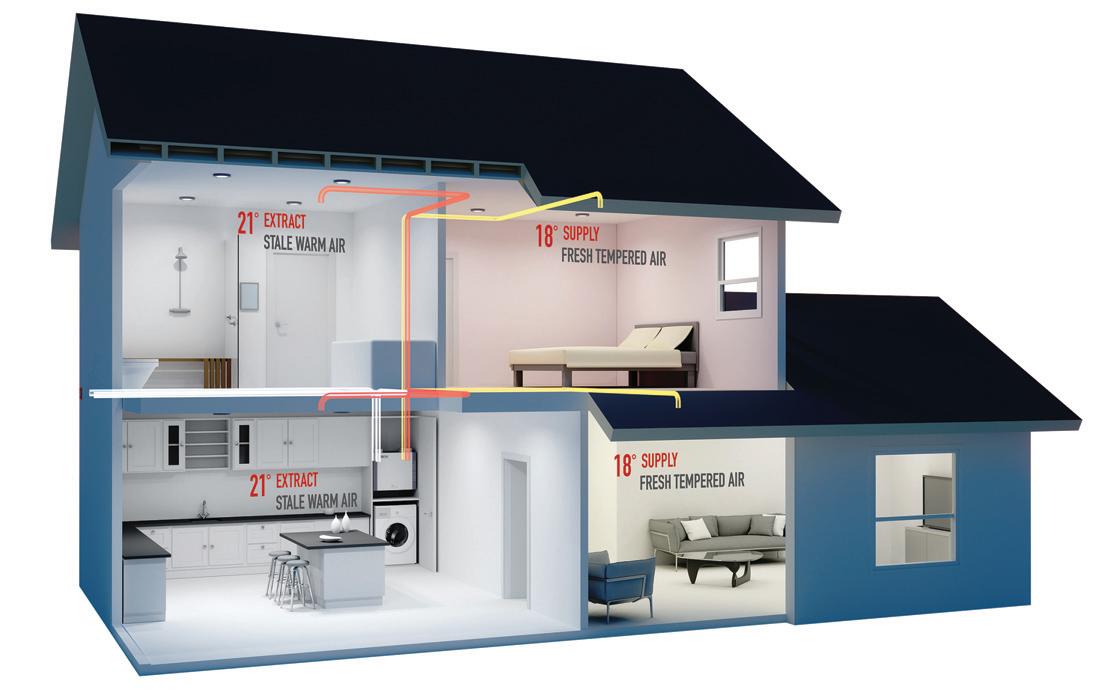
The most immediate and visible benefit of MVHR (Mechanical Ventilation with Heat Recovery) is healthier air. The system continuously extracts stale, moistureladen air from kitchens, bathrooms, and utility rooms while simultaneously supplying fresh, filtered air into living spaces and bedrooms. Unlike extract-only solutions, MVHR provides balanced, whole-house ventilation that ensures every room benefits.
By filtering incoming air, MVHR helps reduce allergens, fine particles, and other airborne pollutants, making it particularly valuable in urban environments or for occupants with respiratory issues.
2. Energy Efficiency and Heat Recovery
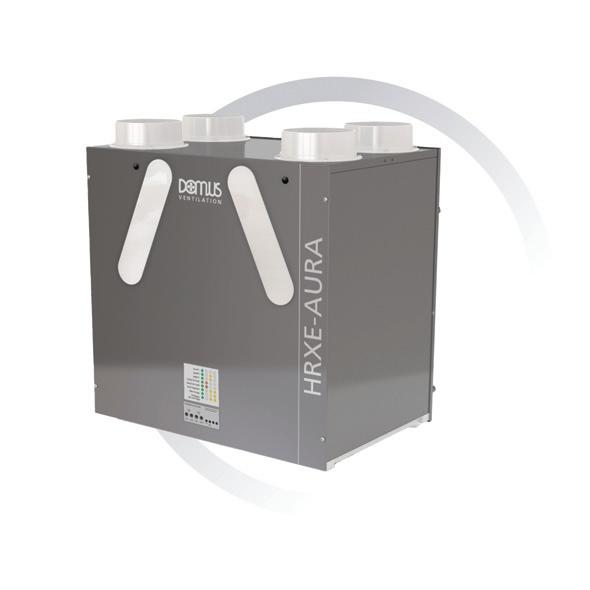
Energy efficiency is a key driver in modern housing design, and MVHR is an important contributor. The technology captures waste heat from extracted air and transfers it to the incoming fresh air via a heat exchanger. In doing so, it significantly reduces the demand on a home’s heating system. Modern systems such as DomusVentilation’s HRXE range are A+ energy rated, with exceptionally low Specific Fan Power (SFP) and high heat exchange
efficiency. They also provide intelligent control options, enabling performance to be optimised for each property type. In practice, this means MVHR can contribute to lowering overall carbon emissions from residential developments, aligning with the industry’s Net Zero ambitions.
3. Quiet Comfort
Noise is a common concern for residents, yet a properly designed and installed MVHR system is virtually silent in operation. Modern systems can readily meet and improve upon the Approved Document F 30dB LAeq,T requirement for noise-sensitive rooms (e.g. bedrooms and living rooms).
Additional options, such as antivibration trays and inline sound attenuators, are available to further minimise background noise.
4. Design Flexibility
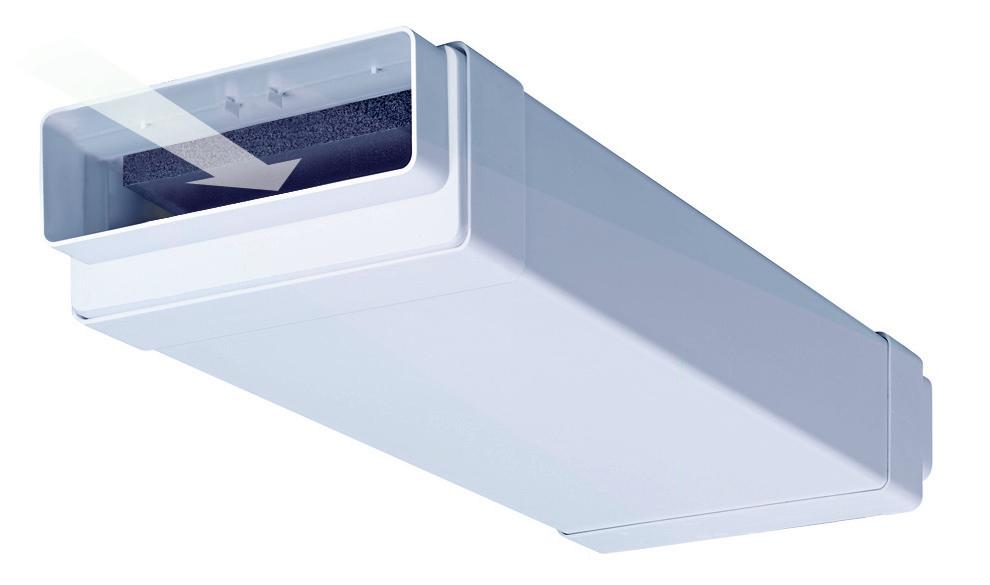
One misconception is that MVHR ducting requires excessive space. In reality, with proper planning at the design stage, duct runs can be accommodated without issue. Both traditional branchbased systems and radial semi-rigid ducting systems are available. Radial systems are particularly useful where space is tight, as they allow each room vent to be served by single or twin duct runs directly connected to the distribution system. By engaging with developers early in the design process, contractors can ensure smooth installation,
reduce costs, and avoid the need for compromises later in the build.
5. Low Maintenance, Long Lifespan
Another key benefit of MVHR that should be explained to customers is its low maintenance requirements as MVHR units typically only need their filters replaced once a year. In the case of Domus HRXE systems, this process is quick and userfriendly thanks to front-access filter panels designed with homeowners in mind.
6. Adding Value to Homes
Buyers and tenants are increasingly seeking homes that are energy-efficient, sustainable, and healthy to live in. A welldesigned MVHR system ticks all of these boxes. If you work for developers then position MVHR systems as more than just a means of achieving compliance - it’s a feature that enhances a property’s marketability. This may not be something they have considered.
Conclusion
As the building industry adapts to stricter regulations, tighter energy targets, and rising consumer expectations, MVHR offers a powerful solution. It improves indoor air quality, reduces energy demand, operates quietly, and requires minimal maintenance - all while adding value for both developers and homeowners.
extensions
ZERO TO HERO
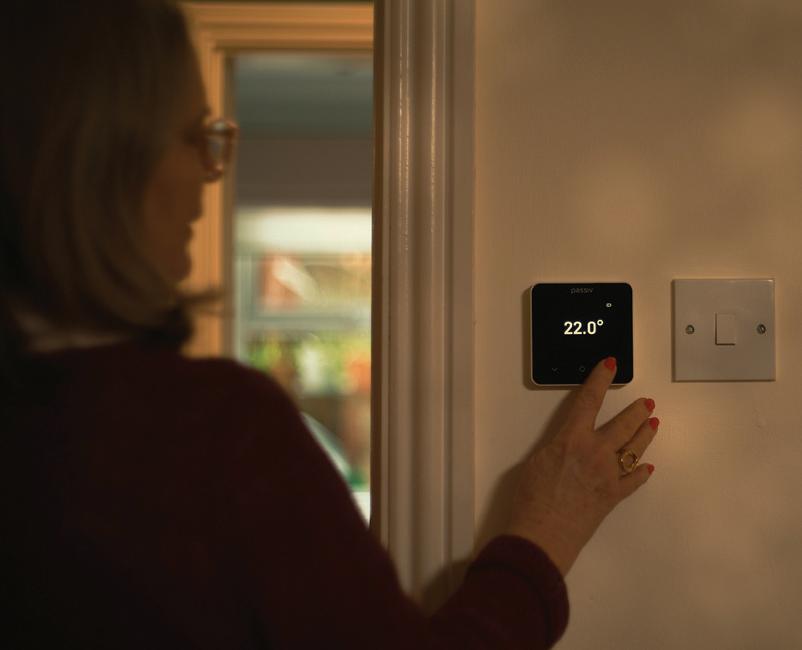
When Carilyn moved into her flat in Tunbridge Wells, she embraced everything that gave the home its classic Georgian style; the high ceilings, the period features and the sense of history. However, it also came with an ageing boiler that was failing to properly heat the home. Carilyn chose to switch to a heat pump, looking to keep her home warm and cosy, and take control of her energy bills while reducing her carbon emissions.
The installation itself went smoothly, but the experience that followed was far from what she expected. The heat pump was installed with a standard thermostat which wasn’t able to run her heating to its best potential. What was expected to be a modern, efficient system quickly saw bills increasing, and lots of time sunk into trying to keep her house warm.
Carilyn found herself spending up to an hour and a half every day adjusting settings on the heat pump in order to make the most of the tariff and ensure the system was operating effectively. “The system was really frustrating and also complex,” she said. “I never knew whether I was doing the right thing or not and it was all trial and error, taking up a lot of personal time.”
Despite her persistence, nothing improved. Her home wasn’t consistently
How a Passiv Smart Thermostat reduced heating bills by 40% in a heat pump retrofit
warm while her energy bills remained out of her control. “My bills weren’t great while I was trying to figure out how to work the system, and I got really frustrated with it. Carilyn explained. “I was questioning whether I’d done the right thing by getting a heat pump because it wasn’t delivering what it had promised.”
After a long back-and-forth with her heat pump and lots of research, Carilyn eventually discovered the Passiv Smart Thermostat and immediately got in touch with the Passiv team. Following preliminary checks and interim support, an installation date was in the diary.
“The Passiv Smart Thermostat has absolutely changed my opinion about whether I did the right thing by getting a heat pump. Now, I can honestly say that I made the right decision.”
A smarter approach to heat pump control
When Carilyn installed the Passiv Smart Thermostat, the change was immediate. The Passiv Smart Thermostat learns how a home heats up and cools down and adjusts the heat pump automatically to maintain comfort at the lowest possible cost. It also integrates seamlessly with smart tariffs, removing the need for constant manual adjustments by shifting heat pump demand to when electricity is cheaper.
Controlling her heat pump became
straightforward and intuitive. “It’s really simple to change a setting or schedule. Adjustments take seconds, and the system quietly manages the rest. The beauty of the Passiv Smart Thermostat is that I don’t use it every day, it just does what it needs to do.” Carilyn’s home is now consistently warm and she has full control of her heating and hot water without the daily effort.
Comfort, consistency and 40% Savings
The results speak for themselves. “The Passiv Smart Thermostat reduced my bills by 40% - I’m watching it really closely!” Her home is now consistently warm, day and night, and her hot water is always ready when she needs it. “It’s effortless warmth in my home, with effortless hot water, and I can actually forget about it. It’s amazing that you can reduce your bills just because it’s being controlled by a clever thermostat.”
Her final reflection captures the experience many homeowners share once they pair their heat pump with the right controls:
“The Passiv Smart Thermostat should be a tool that every installer of a heat pump has to offer their customer.”
extensions and home improvements
MAXIMUM POTENTIAL
Sam White, Technical Sales Engineer, at RWC, explains the importance of manifolds and how installers can use them to maximise the potential of UFH systems.
To get the most of our underfloor heating systems and ensure they are fit for purpose for decades to come, manifolds play a critical role. Despite being a pivotal component, manifolds are often overlooked during the design and specification process, however, they can make all the difference when it comes to unlocking performance.
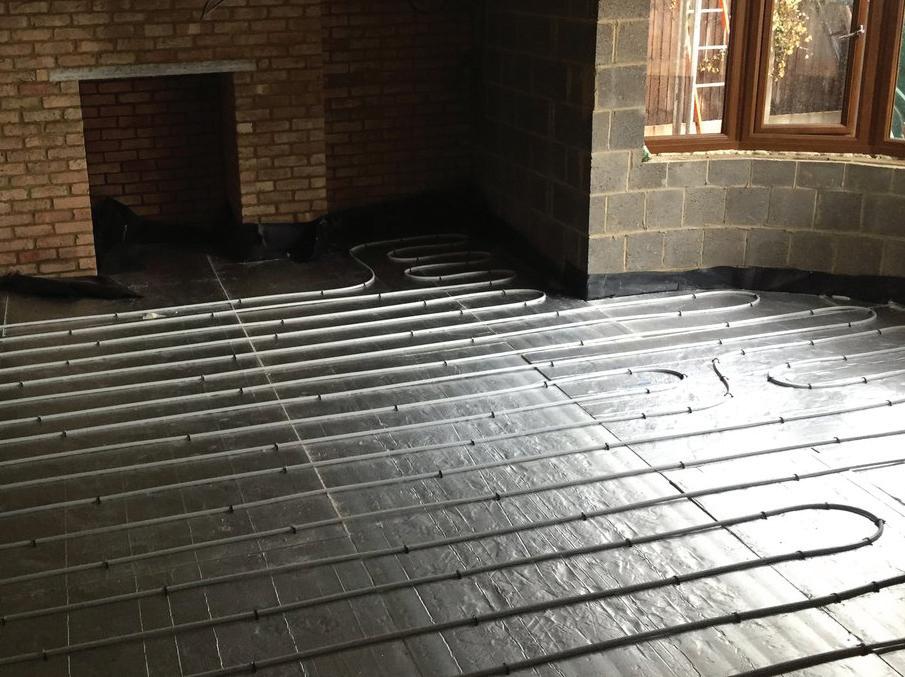
Wet underfloor heating systems are the most widely used in homes across the UK, largely due to their ability to work seamlessly with a broad range of heat sources, be adaptable to projects of different shapes and sizes, and support straightforward installation.
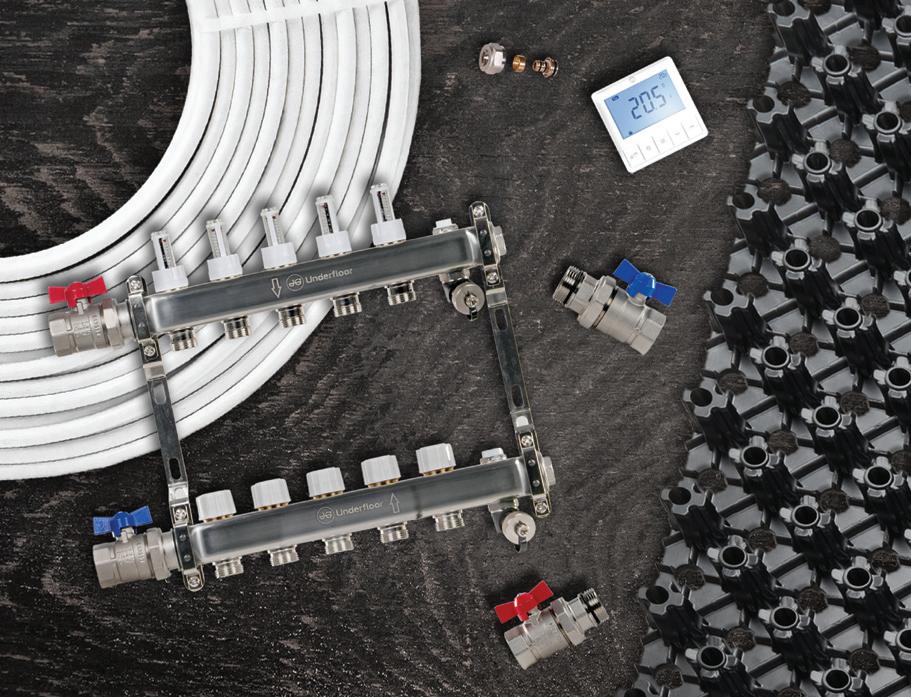
Manifolds sit behind this functionality, acting as the vital control network that connects the heat source and the underfloor pipework that spans every zone. But they do more than circulate water around the system. They ensure correct distribution to every zone and maintain optimum temperatures to maximise system efficiency. It’s this function that also puts control into the hands of users, allowing them to select different temperatures in different zones, with the manifold making it possible.
To achieve the best results on every underfloor heating system, manifolds must be optimally positioned – which is typically central to the heating zones. As well as helping to keep pipe lengths to a minimum for each zone, a central location underpins system efficiency by minimising heat loss between the source and the network of pipes.
The location will also support future maintenance of the system. With pipes
buried beneath the floor, their longevity is essential, with all other maintenance –including annual services – being carried out via the manifold.
When it comes to choosing the right manifold for the job, installers have to consider a broad range of factors, from how they operate through to what space they’ll occupy once up and running.
For most homeowners, space is essential, as it gives them more interior design freedom and greater flexibility with furniture choices. Maximised space is therefore just one of the factors that have given rise to underfloor heating in recent years, providing a viable way to move away from traditional radiator systems while effectively freeing up wall space and allowing rooms to offer greater functionality. With that in mind, choosing an UFH manifold, that takes up as little room as possible is essential.
The new Euroconus underfloor heating manifold from JG Underfloor provides a reliable option for installers. Valueengineered to be more cost-efficient while maintaining the same high-quality as the JG Speedfit push-fit solutions, the Euroconus manifold is a mechanically connected solution ideal for budgetfocused projects that still require reliable, consistent performance. Based on the same technology as previous manifolds, it is proven to deliver on domestic UFH installations, providing improved performance, flow adjustment, reliability and functionality that modern underfloor heating systems demand.
When used with the Euroconus adaptor, the manifold can also be paired with the new JG 16mm PERT pipe, which
makes life easier for installers when fitting or maintaining the manifold.
A typical UFH manifold will have up to 24 pipe connections located closely together, allowing for 12 distribution and return networks, but the smaller the manifold, the trickier it can be to make these connections, unless push-fit technology is used. As installers aren’t required to use tools to make push-fit connections, jobs can be carried out quickly and easily by simply cutting the appropriate pipe lengths and pushing them onto the manifold’s collets.
JG Underfloor, part of the RWC family of brands, has a wide range of systems to suit homes of all shapes and sizes. Behind each of these systems is the manifold technology that underpins longterm performance, efficiency and reliability, and installers can access it all from a single manufacturer.
As a trusted manufacturer of underfloor heating systems, JG Underfloor provides solutions for every application, from new build to retrofit. Whatever the project, JG Underfloor can help every installer to deliver.
extensions and home improvements
DRAIN TRAIN
Why drainage and installation systems matter for outdoor home improvement projects
As demand for high-quality patios, driveways and garden spaces grows, Ollie Janes, Managing Director of DEKS Industries EMEA, explains how the right systems can help deliver durable, efficient and visually stunning landscaping projects.
With summer almost here, attention quickly turns to outdoor projects. For builders and landscapers, that means increased demand for patios, terraces, driveways and garden transformations that not only look impressive on completion but continue to perform over time.
The difference between a project that simply looks good on day one and one that stands the test of time often comes
down to the systems beneath the surface. Smarter drainage, adaptable substructures and accurate installation methods all play a fundamental role in longterm success.
Drainage
Poor water management is one of the most common causes of failure in external works. Standing water can lead
to staining, algae growth, movement in paving and ultimately costly remedial work. For today’s domestic projects, however, drainage needs to be both effective and discreet, working hand-inhand within the overall design. Drainage that compliments paving, not detracts from it, is the name of the game.
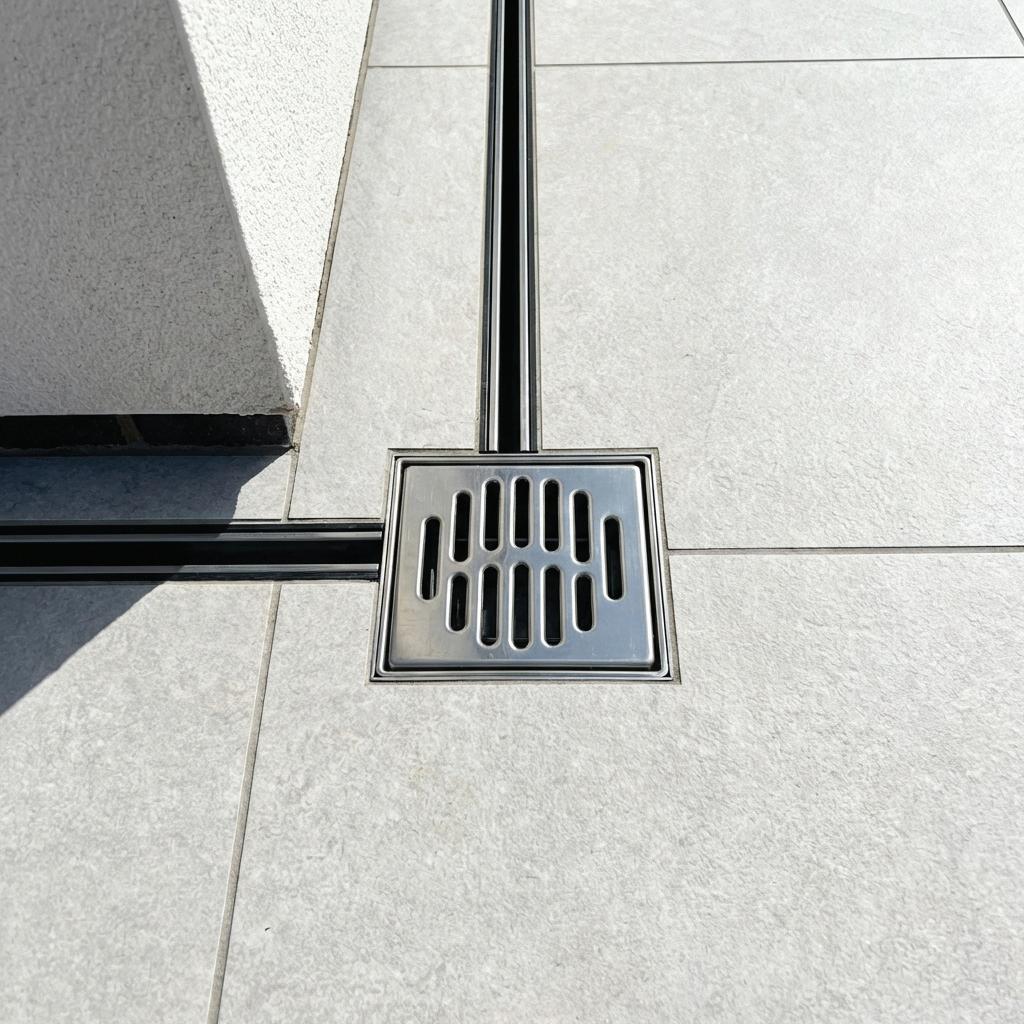
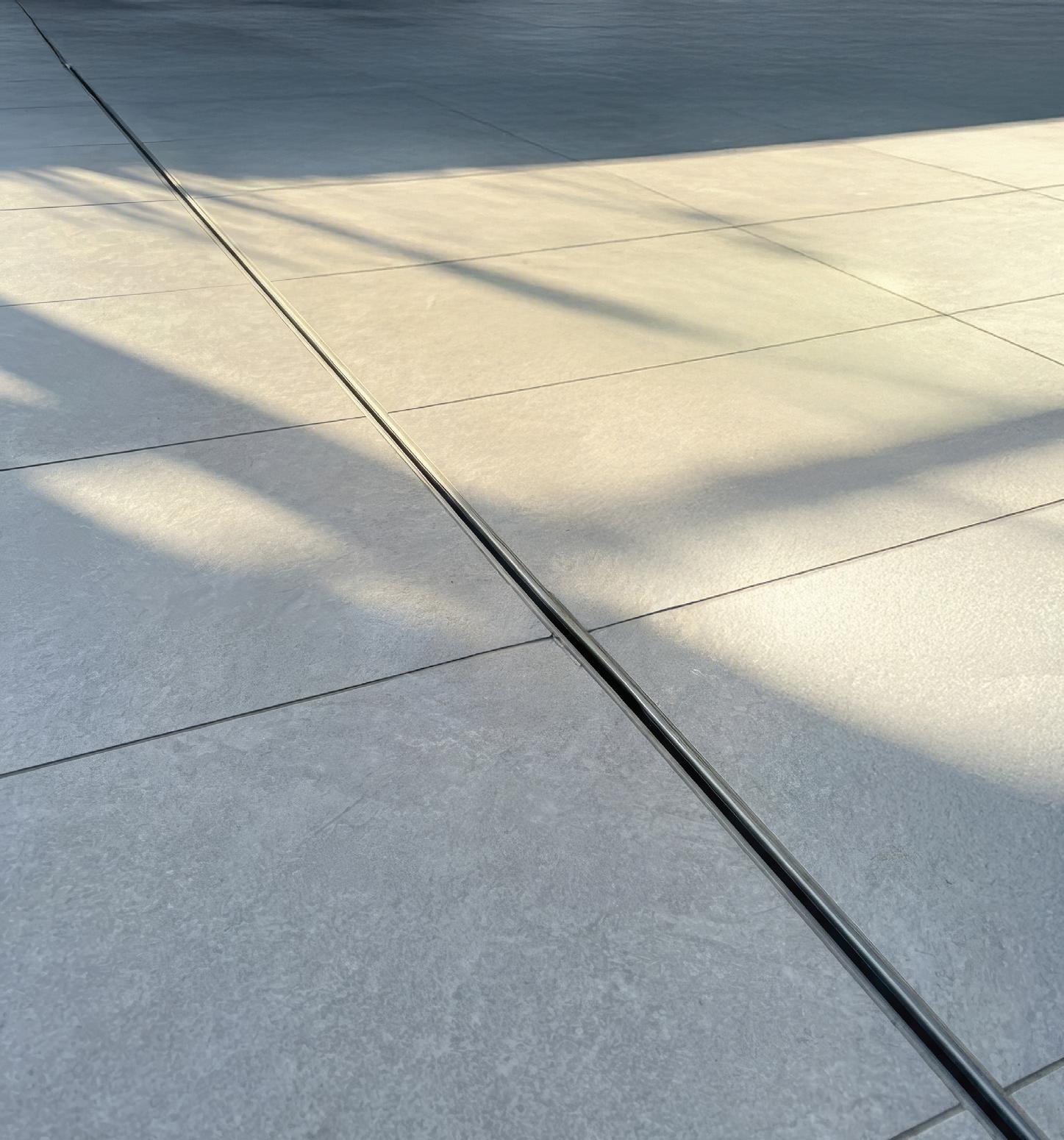
Slot drains have become an increasingly popular solution because they deliver exactly that balance. A narrow, linear inlet positioned along patio edges or thresholds allows surface water to be captured efficiently without interrupting the visual flow of the paving.
For installers, this approach simplifies detailing while giving a high-end, contemporary finish that clients expect.
From a practical perspective, ease of installation is just as important as performance. Systems that allow straightforward connection, flexible layouts and minimal cutting on site can significantly reduce labour time. Features such as low-profile channels also remove the need for deep excavation, which is particularly beneficial when working with porcelain paving where build-up depths are often limited.
Pedestals
Another consideration that’s becoming more relevant across domestic landscaping is flexibility in design and build. Very few sites are perfectly level, and achieving a consistent finish across uneven ground can be time-consuming using traditional methods.
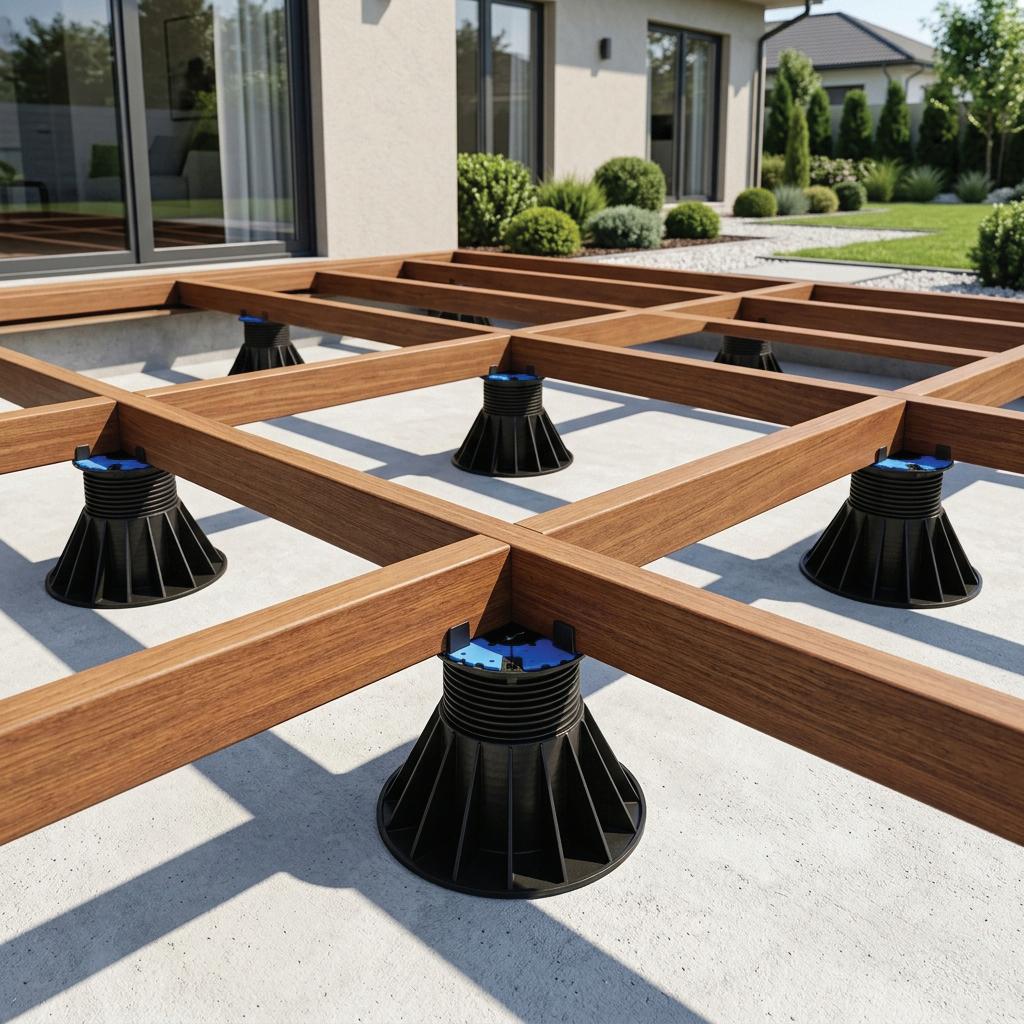
This is where adjustable pedestal systems come into their own. By creating a raised substructure for tiles or decking, pedestals allow installers to compensate
for variations in the substrate quickly and accurately. Heights can be adjusted with precision, ensuring a level finished surface without extensive groundwork.
There are additional benefits too. Services such as drainage outlets, cables or pipework can be concealed beneath the raised surface, maintaining a clean aesthetic while still allowing access if required. From a durability standpoint, keeping tiles or decking off the ground also promotes drainage and airflow, helping to prevent water retention and prolonging the life of the installation.
Tiling
can become noticeable.
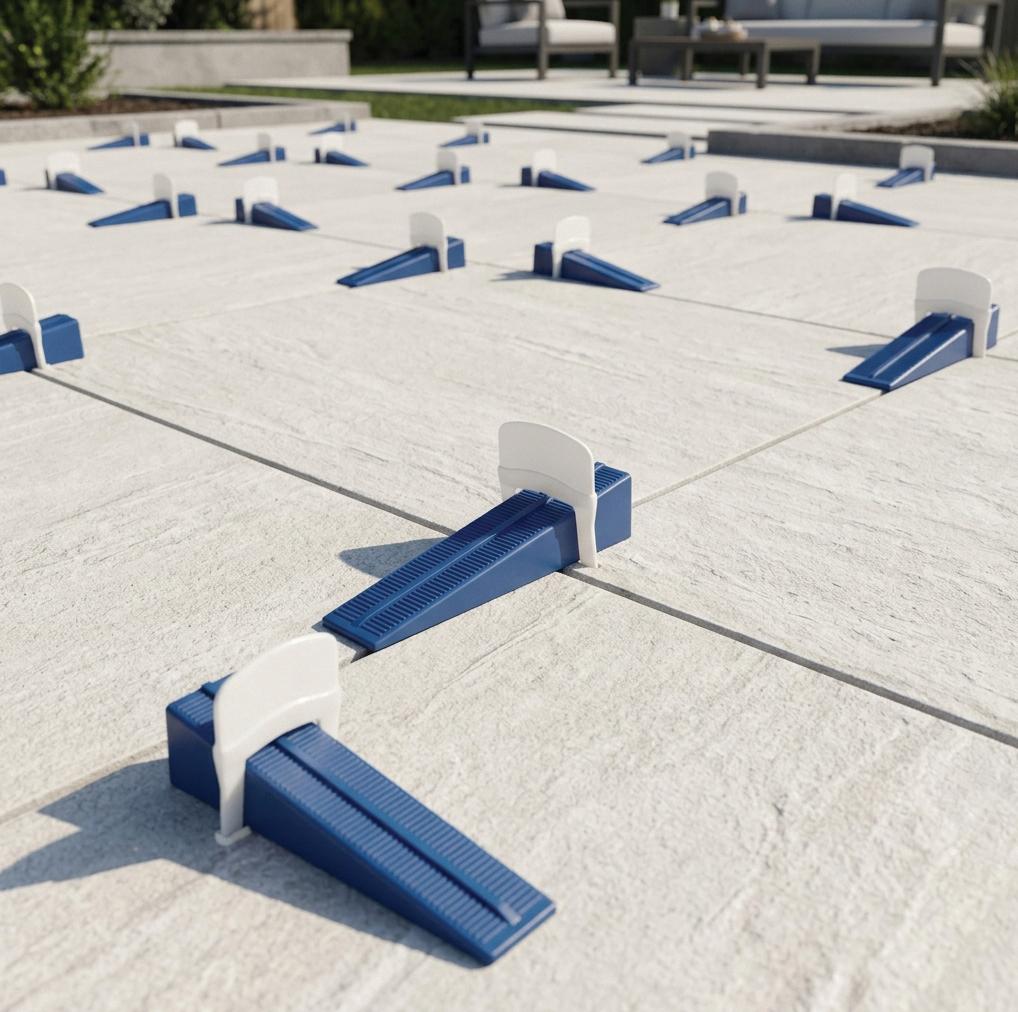
Porcelain and stone tiles remain a popular choice for patios and terraces, but achieving a professional result depends heavily on accuracy during installation. Uneven surfaces or inconsistent spacing can quickly undermine the overall appearance.
A well-designed tiling system can address this by combining levelling and spacing into one process. Speed levelling systems, used alongside reliable spacers, help ensure that each tile sits flush with the next while maintaining uniform joints. This not only improves the visual outcome but also reduces installation time by removing the need for constant adjustment.
Investment in outdoor spaces is rising rapidly, and with that comes higher expectations around performance and longevity. Using products and systems designed specifically for landscaping applications won’t just make installation easier, they’ll help ensure that every patio, driveway or terrace continues to perform long after the job has been signed off.
Of course, the finish itself still matters and consistency is critical, particularly on larger areas where even small variations
extensions and home improvements
LET IT SHINE
Grant
Sneddon, Head of Marketing, VELUX GBI looks at why extensions
should take a more balanced approach
The UK’s appetite for home extensions shows no sign of slowing. For homeowners, the motivation is clear, more space for modern living, whether that’s a sociable kitchen-diner, a multifunctional family room or a seamless connection to the garden. But while the industry has become highly adept at delivering additional square metres, we believe there is still a critical gap in how these spaces are designed and delivered. Too often, daylight, ventilation and heat control are treated as secondary considerations.
From our perspective, this is one of the biggest missed opportunities in residential construction today.
Space alone isn’t enough
Homeowners are more engaged than ever in the design process. They arrive with Pinterest boards, clear ideas on layouts and strong opinions on finishes. However, the focus tends to be on what a space looks like, rather than how it
performs.
The result is that fundamental elements such as how daylight moves through the home, how fresh air circulates, and how heat is managed are frequently overlooked until it’s too late.
One of the most common issues we see is the unintended consequence of pushing existing rooms further back from their original light source. In rear and sidereturn extensions especially, the new structure can leave the centre of the home darker than before, increasing
reliance on artificial lighting even during the day.
For installers, this is a familiar scenario, and one that can be avoided.
Rethinking
glazing strategies
There is no doubt that large-format doors, such as bifold or sliding systems, remain a popular choice. They offer aesthetic appeal and strengthen the visual connection to outdoor spaces. But they are not, on their own, a complete daylighting solution.
Vertical glazing delivers light from the perimeter. What it doesn’t do effectively is carry that light deep into the floorplan.
This is where roof glazing changes the equation.
By introducing daylight from above, roof windows distribute light more evenly and reach areas that vertical glazing cannot. In fact, our research shows that roof windows in sloping extensions can deliver up to twice as much daylight as equivalent vertical glazing, while flat roof windows can provide up to three times as much.
For the trade, this is not just a technical detail, it’s a powerful point of differentiation when advising clients.
A solution for every extension type
Another misconception we encounter is that roof windows are only suitable for certain styles of build. In reality, modern solutions are designed to work across a wide range of applications.
Whether it’s a low-pitch extension (10–15 degrees), a flat roof kitchen addition or a more traditional pitched design, there are options available to bring daylight in through the roof. The key is to consider these solutions early in the design process, rather than as an afterthought.
Early planning allows for better positioning, improved structural integration and ultimately a more effective outcome for the homeowner.
Supporting installers on site
While design intent is critical, practical installation considerations are equally
important.
In many extensions, roof windows will be positioned out of reach. This makes specification decisions crucial. Electric and solar-powered options allow homeowners to operate windows easily, improving ventilation and usability. Increasingly, these systems can also be controlled via smartphone apps, aligning with the growing demand for smart home functionality.
Finish is another factor that shouldn’t be underestimated. Maintenance-free internal finishes, particularly in white, offer a durable and practical solution for hardto-access areas. This is especially relevant in kitchens or spaces with higher humidity, where longevity and ease of cleaning are key.
Ventilation is another area where roof windows can deliver real value. By enabling warm air to escape at high level,
they support natural airflow and contribute to a more comfortable indoor environment, something that is becoming increasingly important as homes become more airtight.
Managing heat and comfort
Of course, increasing glazing, particularly at roof level, must be balanced with effective heat control. This is an area where specification again plays a vital role.
A range of internal blinds can be used to soften or block out light depending on how the space is used, while external anti-heat blinds and shutters are highly effective at reducing solar gain before it enters the home.
For installers, understanding and communicating these options is essential to delivering a complete solution, rather than just a window.
The
role of the installer
At VELUX, we see installers as playing a pivotal role in bridging the gap between design ambition and real-world performance.
Homeowners may not always ask about daylight levels or ventilation strategies—but they will notice when a space feels dark, stuffy or prone to overheating. By raising these considerations early and guiding clients towards more holistic solutions, installers can significantly improve outcomes.
This is not about upselling, it’s about future-proofing the space.
A call for a more balanced approach
As an industry, we have an opportunity to shift the conversation around extensions. Beyond size and style, we should be focusing on how these spaces are being used and ensure they truly perform.
Daylight, fresh air and thermal comfort are not luxuries, they are fundamental to creating spaces that homeowners will enjoy for years to come.
If we can bring these elements to the forefront of every extension project, we won’t just be building bigger homes, we’ll be building better ones.
extensions and home improvements
HUNG UP
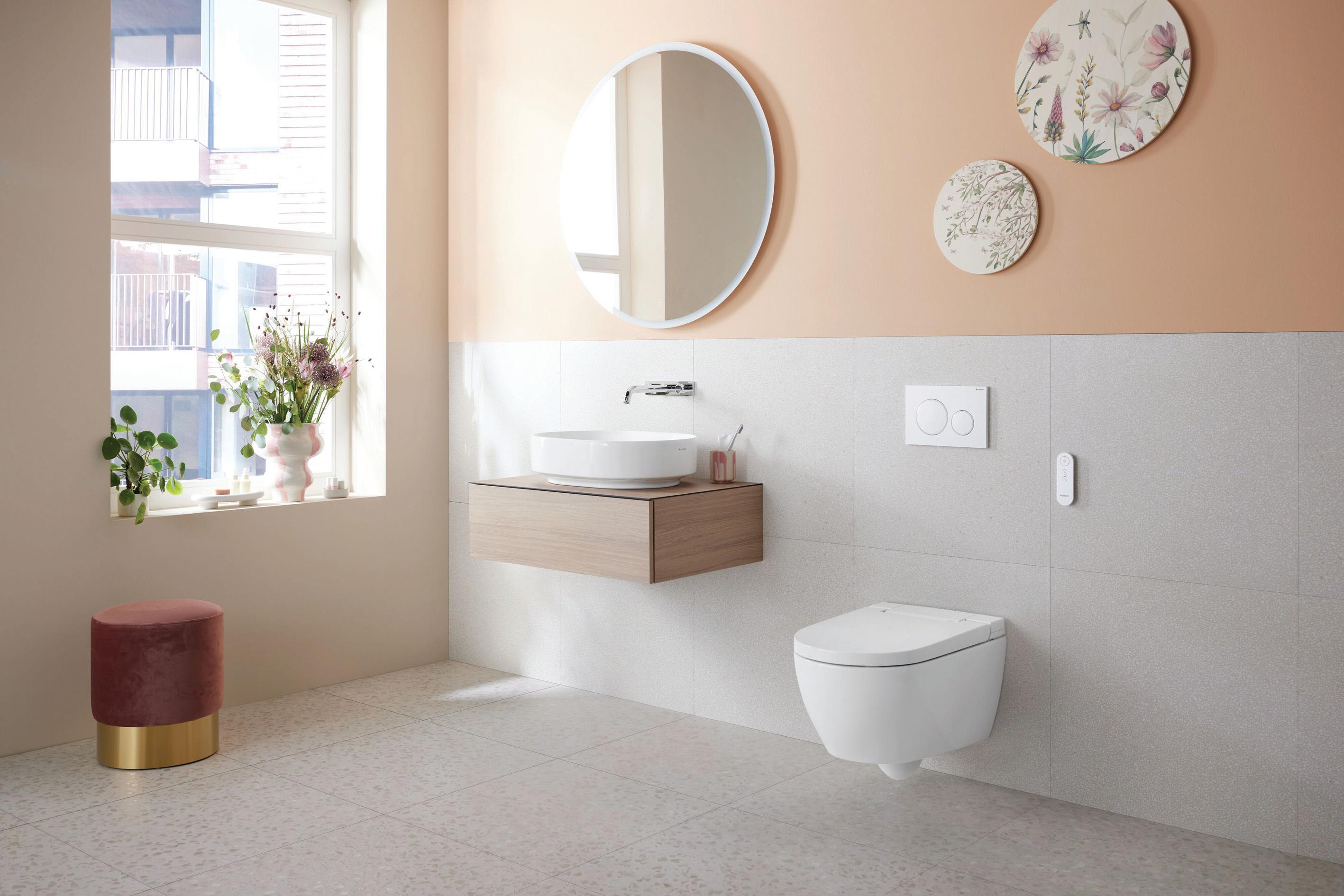
Wall-hung toilets: a straightforward win for builders on site
Wall-hung toilets are becoming a regular feature on modern housing sites, not because they look good on a brochure, but because they make sense to install.
Sonia De Gioia of Geberit explains how concealed cistern systems are helping builders deal with tighter bathroom spaces, quicker installs, and fewer issues at handover.
With housing getting more compactespecially in apartments, terraces and infill developments - bathrooms are often the tightest part of the job. At the same time, clients still expect a clean, modern finish, even on standard builds. That leaves site teams needing solutions that work within small footprints without adding complications.
Wall-hung WC systems have grown in popularity because they solve a few practical problems at once.
Making tight bathrooms easier to work with Space is usually the first issue on site. In small bathrooms or en-suites, a traditional close-coupled toilet can dominate the layout and limit options for positioning
other fittings.
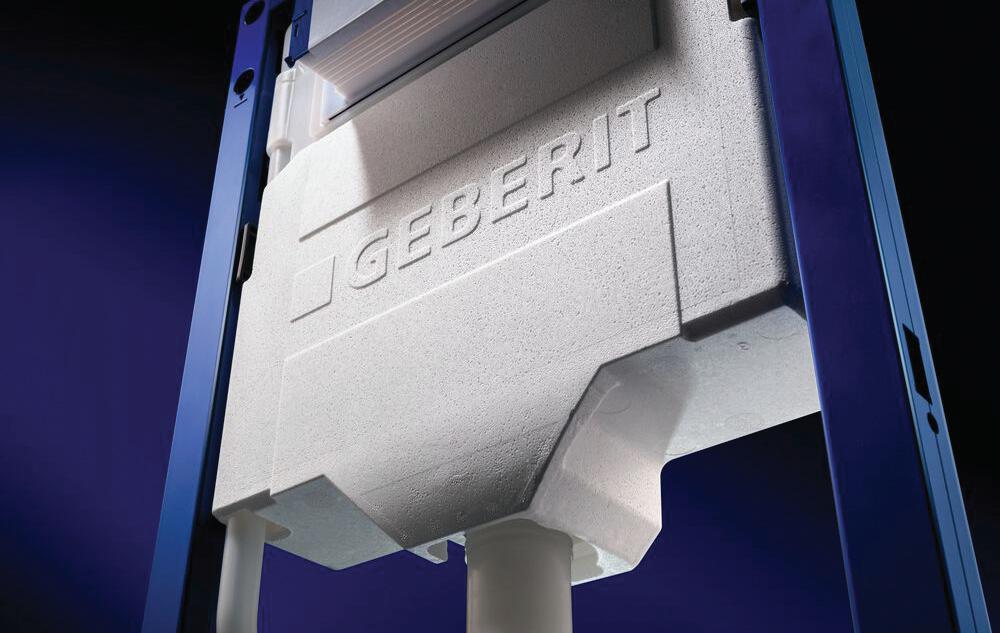
By using a wall-hung system, the cistern is hidden inside a pre-wall frame and the pan is lifted off the floor. That immediately frees up floor space and makes the room easier to work around during both first and second fix.
It also gives more flexibility when working with awkward layouts - under windows, in narrow en-suites, or where pipe routes are restricted. In simple terms,
it helps make difficult rooms easier to finish without redesigning the whole space.
Faster, more controlled installation
For installers, modern wall-hung systems are designed to be straightforward to fit.
Pre-wall frames like Geberit’s Duofix Alpha provide a fixed structure that sets out the WC position clearly, which helps avoid guesswork on site.
In volume housing, that consistency
matters. Once the frame is set, every toilet goes in the same way, which helps reduce variation between plots and keeps installations more predictable across a site.
The cistern and pipework are concealed inside the wall, but importantly they are still accessible through the flush plate if maintenance is ever needed. That means you’re not cutting into finished walls if something does go wrong later.
Fewer cleaning issues, fewer callbacks
From a practical point of view, wall-hung toilets are easier to clean. There’s no contact with the floor, so you remove a common dirt trap straight away.
That might sound like a small thing, but it does matter on handover. Cleanability is one of the first things end users notice, and it can reduce minor complaints or snagging issues after occupation.
The finished look is also simpler, less visible pipework, fewer exposed parts, and a more uniform result across multiple
plots. That helps when you’re trying to maintain consistency across a development.
Flexible enough for different job types
Systems like Geberit’s Duofix Alpha are available in different frame heights and work with a range of flush plates, which makes them easy to adapt across different specifications.
That flexibility is useful for builders working across mixed developments where you might have standard units alongside higher-spec homes, but still want to use the same core installation method.
It also means you’re not having to retrain teams or change installation approaches from plot to plot.
For higher-end units, wall-hung systems can also support upgraded WC options like shower toilets. Products such as Geberit’s AquaClean Alba combine a standard WC with integrated spray functionality. While still a relatively simple
install, it gives developers a way to offer a premium bathroom option without changing the overall system.
A practical choice for modern sites
Wall-hung toilets are being used more because they make life easier on site, not just because they look modern.
They help with tight spaces, reduce clutter, speed up installation once crews are familiar with the system, and give a consistent finish across multiple units. They also reduce some of the minor issues that can lead to callbacks after handover.
As housing continues to get more compact, solutions that are simple to install and reliable in use will keep growing in popularity.
Wall-hung WC systems now sit firmly in that category, a practical option that helps builders get a cleaner finish without adding complexity to the job.
extensions and home improvements
THINK SMART
Why smart material choices matter more than ever in home improvement
Across the UK, home improvement has moved on from simple cosmetic upgrades. Homeowners are taking on bigger projects –revamping gardens, upgrading driveways and adding features that need to last, not just look good.
That shift is putting more focus on one key factor: material choice. However good the design or workmanship, the wrong materials can quickly undo all that effort.
In this article, Garry Gregory, Packed Products Director at Tarmac, looks at why getting material choice right is such an important part of delivering successful home improvement projects.
Why it matters
Every job, big or small, relies on materials that can do what they’re supposed to doday in, day out. Whether it’s a patio, a garden wall or steps, the end result needs to cope with foot traffic, changing weather and general wear over time.
If the wrong products are used, problems tend to show up pretty quickly. Cracking, movement and early wear can all lead to call-backs and unhappy customers. On the other hand, choosing
the right materials from the start helps ensure a solid, long-lasting finish. There’s also the practical side. Builders and landscapers need materials that are easy to work with and behave consistently on-site. Products that mix well, hold together properly and don’t need constant adjustment can save time and make a noticeable difference to the finished job. That’s especially important
on home improvement projects, where schedules are often tight and expectations are high.
Tackling the challenges
One of the biggest challenges right now is balancing performance with sustainability. More homeowners are asking questions about environmental impact, and that’s starting to influence
material choices on site.
For trades, that means looking at options that offer a lower impact without sacrificing reliability. It’s not just about what goes into a product, but how long it lasts. Materials that can stand up to the elements help reduce the need for repairs further down the line.
Consistency is another big factor. Home improvement jobs often involve a mix of different applications, from structural work to finishing touches. Using materials that perform reliably across those tasks helps keep everything running smoothly and avoids unnecessary complications.
Adapting to innovation
There’s been a lot of progress in recent years in terms of products and how they’re used. New solutions are helping speed up jobs, improve finishes and reduce waste.
But with that comes higher expectations. Homeowners want a better finish, quicker turnaround and results that
last. That puts more pressure on getting the basics right, and it starts with material choice.
Versatile, all-round products are becoming more popular for that reason. Being able to use one reliable solution across different parts of a project can make life easier on site, while still delivering the performance needed.
Making the right choice
As home improvement projects continue to grow in scale and complexity, it’s worth taking a step back and thinking about the materials being used. The right choices can save time, improve quality and help avoid problems later on.
Well-established products still have an important role to play here. Options like
Blue Circle Mastercrete are designed to be straightforward to use while delivering consistent results. With good workability, a more cohesive mix and reliable performance in a range of applications, it’s the kind of product that suits both experienced trades and DIY users tackling bigger projects.
Ultimately, getting the materials right from the start makes everything else easier. It helps ensure projects not only look the part when they’re finished, but continue to perform over time - which is what both trades and homeowners are aiming for.
TOP OF THE TIPS
Building an extension is a great way to add to a home without the enormous expense of moving. It allows a homeowner to shape their humble abode into anything they want, as long as they have the budget to do so. It is, of course, also a great opportunity for small building firms and businesses, like many of you reading this own and operate, to get some decent and stable work for a couple of weeks or months without having to compete with larger house-building firms.
The reality is that due to the range of political, social and economic challenges, that not only we but the entire world is facing at the moment, not many homeowners want to build an extension right now or can even afford to do so.
So, this leaves an obvious question. How can you, the professional builder, convince such a homeowner that an extension is truly worth it? It will certainly be more than just a simple handshake and a nice clean smile to do so. Well, here at PB we have a few helpful tips that just might tip the odds in your favour and help you seal the deal.
Licensed
These days, simply turning up to someone’s door or responding to an advertisement in the paper or online and just saying “yeah, I’m a builder and I will do this for such and such” is not enough. While the majority of builders are true professionals who would never go back
on their word or cheat their clients, there are those in the industry who let the side down. The fact is that most homeowners are aware of the many horror stories of builders taking people’s money and leaving the job half done.
Joining a builder’s organisation such as the Federation of Master Builders is a
to build
PB’s Luke Cuneen talks top tips builders should use for RMI work
huge step in helping to convince potentially nervous homeowners to hire you for the job. While it is indeed a lot more paperwork and evaluation for you, the reassurance it gives potential customers far outweighs the minimal inconvenience to yourself. Under current regulations and standards, all members that join must be professionally vetted and independently inspected before they are allowed into the organisation.
Now, I know what you are thinking. It is a lot of added pressure just to get certified as a professional builder, which you clearly are by the very fact you are reading this magazine. But looking at it from a business perspective, it makes complete sense. Not only do you get positive brand association by being a member of a recognised body, but it also helps potential customers trust you because of that association.
“In the end, what will secure you work is presenting yourself in the right way and clearly conveying the fact that you are not just another builder, but a professional one.”
Show and tell
Another tactic that you can use to your advantage is, surprisingly enough, to promote yourself, or in other words, sell your skills as a tradesperson.
Operating a website, online portfolio or even an Instagram page for your business, which you can easily show to potential clients on your phone or laptop, is crucial to convincing them why they should choose you. It gives them a clear picture of what you are capable of delivering and again reassures them that you are the right person for the job. If you do go down the website route, you could even include a section dedicated to customer reviews to highlight how much
people appreciate your craftsmanship.
Ultimately, these simple steps and suggestions are only a few of many that can be used to help boost the level of work builders like yourselves are getting when it comes to extensions. With homeowners facing many external pressures, it is only logical that fewer of them are actively seeking extension work. At the same time, because house prices remain high, many are now looking at extensions as a way of expanding without the stress and cost of moving house.
In the end, what will secure you work is presenting yourself in the right way and clearly conveying the fact that you are not just another builder, but a professional one.
extensions and home improvements
ONE STEP AT A TIME
Five key considerations when installing a stair balustrade
In domestic renovation projects, stair balustrades are often installed towards the end of the build, but they are among the most important elements to get right. Beyond their visual impact, balustrades are a critical safety feature and one of the first aspects assessed during building control inspections. Missteps at this stage can lead to compliance failures, project delays and costly rework.
For joiners and builders, understanding the key principles behind a well-designed and properly installed balustrade can make the difference between a smooth sign-off and a frustrating setback. Regardless of whether the specification calls for timber, metal or glass, the following five considerations should remain front of mind throughout the process.
Compliance Comes First
Meeting the requirements of Approved Document K –Protection from Falling, Collision and Impact –is non-negotiable. Regulations govern everything from minimum guarding heights to handrail continuity and safe spacing between infill components.
One of the most common pitfalls is incorrect measurement. Heights must always be taken from the finished floor level or pitch line, not from subfloors or unfinished surfaces. Even small discrepancies here can result in failed inspections.
Infill selection can also play a role in simplifying compliance. Glass panels, for example, eliminate the risk of overspaced balusters entirely, while systems with pre-drilled rails help ensure consistent spacing without the need for
time-consuming on-site calculations. Choosing a system that inherently supports compliance can significantly reduce margin for error.
Structural Integrity Is Non-Negotiable
A balustrade is not just decorative; it’s a load-bearing safety system. Building control officers may apply force to test its rigidity, so every component must work together as a cohesive structure.
Newel posts need to be firmly anchored and the connection between handrails, posts and infill should be robust enough to withstand everyday use. A common issue in poorly installed systems is movement over time, often caused by weak joints or incompatible components. Modern systems, such as those developed by Richard Burbidge, are increasingly designed and tested as complete assemblies rather than individual parts. This approach ensures consistent performance and removes uncertainty around how different elements will behave once installed. Using engineered components with purpose-designed joints
also helps minimise long-term movement, particularly important in busy family homes.
Accurate Setting-Out Saves Time on Site
Precision at the setting-out stage is essential. Inaccurate marking or uneven spacing can quickly lead to visible inconsistencies, such as misaligned handrails or irregular spindle gaps, issues that are difficult to correct once installation is underway.
Even minor errors tend to compound across the length of a staircase, making early accuracy critical. Traditional methods often rely heavily on manual measuring and cutting, which increases the risk of variation.
To address this, many installers are turning to pre-drilled or modular systems that reduce the need for complex calculations. Newer innovations, such as
the Pürra® range from Richard Burbidge, are designed to streamline installation by allowing components to slot into place with minimal adjustment. This not only improves consistency but can also reduce installation time, a valuable benefit on tight project schedules.
Material Choice Should Reflect Use, Not Just Style
While clients are often driven by aesthetics, material selection has practical implications that extend far beyond appearance. Durability, maintenance requirements and the way a material interacts with light all play a role in longterm satisfaction.
Glass balustrades are particularly effective in darker or more enclosed spaces, as they allow light to flow freely and create a sense of openness. Metal infill options offer a more industrial or architectural look and tend to require minimal upkeep. Timber, meanwhile, remains a versatile choice, especially pre-
primed options like PaintReady stair parts, which can be easily finished to suit evolving interior styles.
Design Style Should Be Considered Early
Balustrades are no longer treated as purely functional additions. For many homeowners, they are a central design feature that contributes significantly to the overall aesthetic of the property.
Whether the brief leans towards traditional detailing, contemporary minimalism or a more transitional style, consistency is key. A mismatched or poorly integrated balustrade can disrupt the visual flow of a space, even if it meets all technical requirements.
Modern stair parts systems increasingly offer flexibility, allowing joiners and builders to mix and match components to achieve a bespoke look without the cost of full custom fabrication. Resources such as “shop by style” brochures can be particularly useful during the planning
phase, helping both professionals and clients visualise the end result.
Crucially, design intent should be established early in the project. Attempting to adapt or retrofit a style late in the build often leads to compromises, both visually and structurally.
Installing a stair balustrade is a task that demands both technical precision and design awareness. By prioritising compliance, ensuring structural integrity, maintaining accuracy in setting out, selecting appropriate materials and planning the design from the outset, joiners and builders can deliver results that are safe, compliant and visually cohesive.
In an industry where small details can have significant consequences, taking a considered and informed approach to balustrade installation is not just good practice –it’s essential.
PICKING IT UP SHARP
Here we are, another month and another update on how I’ve been getting on with my long-term loan of a KGM Musso Saracen. So, what have I been up to?
At the time of writing this, I’ve now got 1,900 miles on the clock and well over 80 hours of drive time. Not bad for a month’s work.
With the weather turning for the better, I thought now would be the perfect time to sort out my garden properly and deal with the much-neglected lawn-shaped patch at the back of my house.
I’ve always struggled getting things delivered. I’m part of a row of terrace houses and pretty much slap bang in the middle. While this does wonders for my heating bills in the winter months, it proves no small obstacle when trying to get anything too big through the door (or even around the back). My front door access has a rather sharp turn to it too, which doesn’t do us any favours either...
Sorting out the back garden has been on my to-do list for quite some time (as I’m often reminded) and I never much
fancied being my street’s public enemy number one, or being a nuisance in general, so had always opted against trying to get a dumpy bag of soil delivered and dropped off on the street. It’s quite a narrow road too, with on-street
parking, so there’d be little to no guarantee that a big wagon could even get down here.
Flash forward to first getting my hands on this Musso and you can imagine my delight at seeing it was capable of having a 1,095kg payload.
A quick dash to my local merchant (picking up the latest issue of PB while I was there of course) and I was soon trundling my way back with a big bag of Hallstone topsoil that was nice and secure in the back bed.
With that all sorted and properly prepped for my lawn patch, the next stop was off to my local garden centre to pick up my turf order.
A happy drive
A few weeks on from that now, I’m certainly rather happy with the results (although the grass is in need of a bit of a trim).
My little trip out and about felt like a good way to see how the Musso would actually perform as intended: Going to the
merchant to pick up materials and taking them back to a site. Getting the back bed mucky and having to wipe it down after. All the while navigating laughably small car park spaces and touch and go onstreet parking. Thankfully, the Musso’s size and visibility really comes into its own here. You’re surrounded by windows that help you check blind spots and squeeze into spaces that’d be a lot harder if just relying on your wing mirrors. The rearview camera is a huge help with this too, as well as the front and rear parking sensors.
having a workhorse you can rely on to not make things worse for you. The forklift operator at the merchants was certainly happy to be loading something that didn’t have a roof for him to avoid!
Dual focus
Working as a tradesman is unpredictable, full of obstacles to navigate, often before you’ve even got to a job. Key to making your life easy is
Work vehicles have to be able to operate as just that, work vehicles. Often times vehicle manufacturers will focus on arbitrary features, that while may be good to know, have no bearing on how something will actually perform for what you need it to.
KGM’s Musso has continued to impress me on this front. While the vehicle itself boasts those extra fun little features, it’s by no means the manufacturer’s main focus. The Musso sits as the best of both worlds. With a big bed, 1,095kg payload capacity and the ability to tow 3.5 tonnes at the same time, the 2.2L engine strength under the bonnet of the Musso (Korean for Rhinoceres) is impressive.
I’ve now done a number of long 3 hour plus trips, as well as countless little trips here and there. Regardless of which, I’m happy to be cruising around in something comfortable and pleasant to drive, while knowing it’s got the ability to perform when needed.
vehicles & plant
LOOKING FORDWARD
The latest selection of Ford vehicles perfect for tradespeople
As the summer months roll on it is important that your equipment is able to withstand the job as much as you are able to withstand the heat. Luckily Ford has you covered thanks to the release of some of their latest vehicles. Ranging from the all-new Transit City to the Explore Van let's take a deeper dive into Ford's latest release.
All new and electric
Since Ford launched the first Transit in 1965, the lineup of its now-legendary van family has continually evolved to help customers deal with all the challenges work throws at them.
The Transit City has continued that legacy, offering a range of advantages for Ford users.
In an electric vehicle, the battery is what determines your cost, weight and range. Transit City delivers a competitive payload (1,085kg in the L1H1 variant) and enough range to comfortably cover a day’s work, all at an attractive price point.
Data from thousands of connected Ford Pro electric vehicles revealed 90 per cent of vans in Transit City’s segment drive under 110 kilometres a day on average. The City’s range of up to 254km more than doubles this with ease. Powered with a LFP battery, it is well suited to regular DC fast charging too
(which will manage 10-80% in 33 minutes)
Ford has tried to keep things simple with the City, with the only choice involved being deciding how big you want it. It’s designed as the perfect stepping stone for those looking to go electric.
The L1H1 variant is capable of carrying three Euro pallets and boasts the aforementioned impressive payload of 1,085kg.
Explore and endure
When you ask someone in Britain to think of a commercial vehicle, they’ll most likely picture a Transit. However, it can take a lot more than a fleet of vans to keep a building site or major infrastructure
project running smoothly.
The Explorer Van is Ford's answer to that question, offering up to 374 miles (602 km) of range, optional all-wheel drive and up to 650 kg of payload for companies who need a long-range electric replacement for company pool cars or paying mileage costs when employees use their own vehicles.
Ford customers can choose between a 210 kW rear-wheel drive system producing 545 Nm of torque, or a 250 kW all-wheel drive system with 679 Nm capable of towing up to 1,200 kg (1,000 kg with RWD). Rapid charging up to 135 kW supports even long days visiting multiple sites as a 10-80 per cent charge takes approximately 25 minutes.
A versatile Ranger
Ford's new two-seat version of its Ranger Double Cab creates versatile extra space and opens more use cases for the UK’s best-selling pick-up.
By installing a bulkhead behind the
front seats and permanently removing the rear seats, the Ranger 2-Seat is engineered for the carrying of goods, meaning that eligible customers should be able to claim 100% plant and machinery allowance and apply the flat rate company van benefit-in-kind (BiK).
The new Ranger 2-Seat also retains the flat-rate road tax for commercial vehicles, providing a significant cost-
saving for customers who need a Ranger to go about their daily work, and for whom a rear row of seats is not needed.
With that, it looks like the double cab pick up as a work vehicle shows no signs of going anywhere.
WWW.RDR.LINK/BCB036
KIA CONVERSION
How Kia has burst onto the commercial vehicle scene
Building on the strong reception of the PV5 since its UK introduction, Kia has strengthened its new footing in the van segment. L2/H2 and L2/H1 join the L1/H1 variant and the Korean manufacturer has also announced the first five approved Kia PBV Conversion Partners for the UK along with a host of updates across its flourishing Platform Beyond Vehicle (PBV) business.
These latest additions further broaden the Kia PV5 line-up with more choice in cargo volume and payload, enabling drivers to select the best configuration for their operational needs. The PV5 Cargo range now consists of L1/H1, L2/H1 and L2/H2, alongside new conversion options across PV5 Cargo, PV5 Passenger and PV5 Chassis. These will provide customers with enhanced flexibility and tools from racking and security to a compact Lightweight Tipper, fridge van, or Wheelchair Accessible Vehicle (WAV) conversion.
Tailored to your needs
With the launch of Kia’s approved Kia PBV Conversion Partners, customers will now be able to benefit from a host of conversion options across the PV5 model. These increase the model’s already substantial appeal and cater for a number of specific and specialist job needs.
Some of these conversion partners include:
• Würth UK is supplying PV5 customers with Cargo Area Solutions, including flooring and lining kits, additional security locks and racking systems, many of which can be fitted at Kia’s Port to significantly speed up delivery times.
• TGS Automotive Group can provide Lightweight Tipper, Dropside and Box solutions fitted to the PV5 Chassis, with a range of modular options
“With
the launch of Kia’s approved KIA PBV Conversion partners, customers will now be able to benefit from a host of conversion options across the PV5 model. These increase the model’s already substantial appeal and cater for a number of specific and specialist job needs.”
including Mesh Cage, Fall Arrest Systems, Chapter 8, and Beacons. The vehicles will offer a claimed best-inclass payload. These conversions are planned for launch in Q4 2026.
• Modul-System provides bespoke racking and workplace solutions for the PV5 Cargo. Whatever the job, Modul-System has a solution to work for customers. The Modul App can also be integrated within the PV5 infotainment system.
The conversions demonstrate the
adaptability of the PV5 to meet the diverse operational needs of businesses across multiple sectors, while benefiting from the expertise from specialist conversion companies.
Paul Philpott, President and CEO of Kia UK, said of the new range of PV5 that “Businesses need electric vans that fit straight into their operations, supported by services that make running them simple and predictable. The Kia PV5 is already proving its value on UK roads, and the additions we are announcing
today give our customers even more flexibility, capability and confidence.
“From new Cargo variants to our growing network of PBV Centres and newly announced approved Kia PBV Conversion Partners, Kia has built a commercial vehicle offering designed around real-world business requirements. We are excited to embark on this new chapter in our PBV story.”
vehicles & plant
THE NEXT STEP
Faster,
stronger and smarter: the ladder clamp reimagined!
When it comes to working on the move, few tools are as essential, or as awkward to manage, as ladders. Securing ladders to a van roof has traditionally relied on ropes, straps or basic clampsmethods that are often timeconsuming and inconsistent. Beyond inefficiency, there are clear risks: a poorly secured ladder can shift, leading to damage to the ladder, the vehicle or even posing a danger to other road users.
Regulations around load security are becoming stricter and businesses must ensure that equipment is transported in a way that meets these standards. Add to that the ever-present issue of tool theft, and it’s clear that ladder security is no longer just a minor operational concern; it’s a critical business priority.
Van Guard is set to raise the bar with the launch of its new ladder clamp, jointly developed under the bott brand, which debuted in April. With a patented design to secure ladders firmly to a vehicle’s roof bars during transit, the new clamp combines speed, strength and intelligent engineering, reflecting the combined expertise of Van Guard and parent company, The Bott Group.
While ladder clamps are nothing new, the clamp has been developed from the ground up with a clear focus on mechanical performance and user
interaction. At its core is a triple start thread system. By allowing the clamp to engage and disengage up to three times faster, this mechanism dramatically reduces the number of turns required to secure or release a ladder.
The clamp’s spring-loaded ball bearings within the clamp body allow for easy operation and the bearings also
maintain constant upward tension on the clamping bar meaning that once secured, the ladder remains firmly in place even with repeated vibration during transit.
The clamp handle itself has also been carefully engineered. By integrating ball bearings into the mechanism, the clamp functions as an indexing handle delivering a distinct clicking action as it is tightened
✔ Triple-start thread for rapid engagement and release
✔ Crash tested to 20G
✔ Lockable design with integrated lock for added theft protection
✔ Holds ladders firmly during transit, even under vibration
✔ Stainless steel and glass-reinforced nylon construction for durability and corrosion resistance
✔ Intuitive design for fast, simple operation
✔ Indexed handle with click feedback to indicate correct orientation
✔ Spring-loaded ball bearings prevent the threaded bar from slipping during fitment
to signal the correct position while an integrated locking mechanism provides additional security.
Durability has been a primary focus in the design. Manufactured from high quality stainless steel and glassreinforced nylon, the clamp is lightweight yet built to withstand the elements, resisting rust and corrosion even under heavy, daily use. It has also been crash tested to 20G for extra peace of mind. As the first product to emerge from
“And for those who have ever wrestled with ropes in the rain or worried about the safety of their load on the road, it may well be a long-overdue solution”
Van Guard under the ownership of The Bott Group, the clamp reflects a new phase of collaboration between two established names in vehicle storage and workspace solutions. The result is a ladder clamp that stands out not just for what it does, but for how it does it. Fast to operate, intuitive in use and built to last, it offers a level of confidence that comes from thoughtful, precision engineering. For tradespeople and fleet operators alike, that translates into the reassurance that their equipment is secured by a system designed to perform under pressure.
The new bott branded ladder clamp is available to order from July through Van Guard. And for those who have ever wrestled with ropes in the rain or worried
about the safety of their load on the road, it may well be a long-overdue solution.
It’s safe to say that the road to electrification is fully underway. The latest commercial vehicle upgrade to hit the ground rolling is Isuzu with an EV version of its incredibly popular D-Max. We were fortunate enough to have an exclusive test drive of this electric pick up on a particularly wet and typically British day.
The D-Max represents the latest in a number of electric pick ups to hit the scene. To say the introduction of this genre of vehicle has been without teething issues, wouldn’t entirely be true. The role of the pick up is a complex one. Whilst it can be used to straddle work and personal life, its commercial prowess is squarely in the court of towing and payload capacity. This immediately causes problems for the electric vehicle, that traditionally excels in neither. Thankfully, Isuzu’s foray into this EV market represents a well measured and calculated move, with a payload capacity over a tonne and a 3.5 tonne towing capacity.
Also on the specs side of things, the D-Max EV boasts a carry-over versatile chassis from the traditional variant, a new De-Dion semi-independent rear suspension system, styling updates. It is powered by a Lithium-ion 66.9 kWh battery using a dual motor, which will get you 163 miles of WLTP range (or 224 of city driving). It produces a total power output of 347.6Nm. On the charging front, AC uses max 11kW and it’ll take 10 hours to go from 0 -100%. For faster DC charging, the max is 50 kW and it'll take 1 hour to go from 20 -80%. The battery itself is warrantied for 8 years / 125,000 miles. Being electric, it also qualifies for a 3% BIK rate, 100% capital allowance and is VAT back qualified.
So, what’s it actually like to drive? As with all EVs the experience of being behind the wheel is an incredibly
MAX POWER!
charming one. It’s a curious juxtaposition to be behind the wheel of a big pick up and not feel like your brain is being rumbled to oblivion. These big workhorses are often characterised by their noise and excess, so it’s surprisingly pleasant to be in control of one that glides along the road like a swan. With a 0-62 mph time of 10.1 Seconds, it’s disarmingly quick and has the handling to back it up. Our test drive featured a route that traversed the wet winding lanes of Warwickshire. It felt like the perfect
proving ground for a vehicle of this capacity and gave ample time to play around with the four levels of regenerative breaking that feeds your momentum back into the battery. To get a good all-round feel, we also zipped up a junction or two on a dual carriageway and even found a boggy new build development for a real on-site feel. Sites really can get mucky in wet weather, so drivers will benefit from a full-time 4x4 drive system with a rough terrain mode. The D-Max EV also has a 600mm wading
We test drive the all-electric Isuzu D-Max EV
depth and 210mm ground clearance.
As with the combustion engine predecessor, there are different versions of the D-Max to pick from. Like previously mentioned, pick ups often straddle the line between commercial and passenger vehicle. The D-Max we drove was the DL40 extended cab that boasts a bigger load bed, that tops out at 1785mm in length. The most economically friendly of the bunch, this won’t have the same level of trim as the DL40 Double Cab or the top of the range V-Cross, but it still provides you with a host of gadgets at your disposal, from Wireless Apple Car Play & Android Auto, to heated front seats and a surround camera for parking. What variant you choose will purely depend on how you use your vehicle and the spread between business and personal life.
What Isuzu has tried to do with this EV variant is to offer a vehicle that is trade ready. Its impressive build quality and payload and towing capabilities present a strong option for pick up users in the
market for an upgrade.
Importantly though, and something that highlights Isuzu’s want to do right by the jobbing builder, the manufacturer has just announced a new 2.2L diesel version of its D-Max to coincide with the launch of the D-Max EV. For those that travel extended distances day in, day out, and find themselves unsuited to EVs as they exist now, Isuzu is by no means leaving them behind. With better environmental credentials and lowered cost of ownership, electric vehicles are the way of the future, but they’re not quite
universally preferred yet. Much like the different trim levels available for the DMax, electric or diesel? You choose what’s right for your business.
WWW.RDR.LINK/BCB039
FRONT AND CENTRE
The recently launched Future Homes Standard sets new, ambitious targets for sustainability in newly built homes in England - meaning an enhanced role for photovoltaic solar panels. Here, Stuart Nicholson, Managing Director at Marley, examines what this means for builders when it comes to roofing installation.
Announced at the end of March, the new Future Homes Standard represents a major shift in focus when it comes to energy use in new homes built from March next year.
While the previous Part L 2021/2023 standard emphasised ‘Conservation of fuel and power’, the new Standard emphasises Energy & greenhouse gas emissions’, placing an onus on individual homes not just to use energy efficiently, but to actually generate their own energy in the first place.
The target is ambitious –overall around a 75% cut in carbon emissions –especially when compared with the figure of 31% in the previous Standard.
This is to be achieved by a number of means, with gas boilers set to be phased out in favour of low -carbon heating systems such as heat pumps.
Meanwhile, a clear path has been laid out for photovoltaic (PV) solar panels in the revised Building Regulations, with the new functional requirement L3Renewable electricity generation, dwellings and buildings containing dwellings, mandating a requirement for on-site renewable energy generation.
The roof as a key energy source
This is a significant change which will see the roof of every new home play a role in generating the sustainable energy which will power and heat that home and so
drive down carbon emissions from England’s housing stock.
The minimum annual target for power generation will be 40% of ground floor area x 0.22kWp/m2, or 720 kWh, if this cannot be achieved.
Either way, the opportunities are significant for professional builders able to supply and install complete roof systems combining durable protection with reliable and efficient energy generation and, of course, strong aesthetics.
Innovation in solar panels has gathered pace in recent years, and current systems are a far cry from the more common bolt-on panels seen on some buildings.
The role of total roofing systems
Concerted investment by companies such as Marley has driven the creation of full roofing systems. These combine all the elements of traditional roofing systems with fully compatible, state-of-the-art solar PV technology, which is integrated into the roof at the time of installation, and so provides an attractive solution able to deliver the required energy generation alongside the traditional protective role of a roof.
Prominent among these systems is Marley SolarTile®, an innovative line-up of roof-integrated solar PV panels which are easily installed using Marley’s patented push-fit connection technology, fitting
seamlessly into the roofline.
The SolarTile® range now includes a 445Wp option. This generates a greater power output from the same area, enabling the requirements of the new Standard to be met using fewer panels. Its innovative glass design delivers optimum durability and resistance to weather and long-term environmental exposure, guaranteeing a robust, sustainable roof with excellent aesthetics.
Easy specification and installation
Marley SolarTile® panels are ideal for both landscape or portrait orientation, meaning a range of configurations are possible, with a high-end finish achieved through a 5mm panel spacing between panels and concealed fixings.
Easily fixable to roof battens, the solar PV panels and flashing kits form a fully integrated part of the finished roof as the surrounding roof covers are simply fixed around them. Installation is equally straightforward for retrofit projects too.
Furthermore, professional builders can also access Marley’s Technical Tools platform, which enables rapid configuration of a solar roof system, listing all products required, based on dimensions and other information entered by the user.
Working under the summer sun can be a challenge. Nick Poulson at Carhartt explains how the right workwear can ease the strain, so you stay comfortable, protected and performing all day
Summer on site can be a slog. Long hours, rising temperatures and nowhere to hide from the heat all add up. You can’t do much about the forecast, but your clothing can make the day a lot more manageable.
It’s easy to underestimate how much what you wear affects your energy levels. But overheating, sweat build-up and poor airflow will slow you down long before the job does. Choosing the right fabrics and fit makes all the difference, helping you stay comfortable through the day without feeling wiped out.
Clothing that protects
You don’t need blazing sunshine to be exposed to UV. Even on overcast days, you’re still at risk and if you’re outside for hours at a time, sun damage is a big concern. It can be immediately obvious like red or blistered skin but over time, sun exposure can cause leathery, wrinkled skin or even skin cancer.
According to the HSE, skin cancer is one of most common forms of cancer in the UK and construction workers are considered a significant ‘at risk’ group.
Sunscreen is a must if you’re working outdoors but clothing plays a big part in protection too. Workwear designed specifically to deal with sun exposure is the best choice. Standard clothing isn’t built with protection in mind, but specialist ranges are tested and rated to block UV properly. Purpose-built sun protection is measured using UPF (ultraviolet protection factor), which shows how much UV actually gets through the fabric. A standard cotton T-shirt might only rate around UPF 5, letting a fair amount of UV through. Carhartt’s Sun Defender™ range, on the other hand, is rated UPF 40+,
FOR THE HEAT
cutting exposure right down while still feeling light and breathable. It covers everything from short and long-sleeved Tshirts to full-length trousers, all designed to protect and keep you comfortable under the sun.
Fabric and fit
Loose fit clothing is better than anything tight, not just because it is often more comfortable but also because movement stretches tight fibres apart, allowing UV through the gaps. Heavier fabrics and darker colours block more UV, but they also trap heat which can get very uncomfortable.
Traditional cotton is, perhaps surprisingly, not the ideal material in the heat of summer. Yes, it’s soft and comfortable, but cotton doesn’t dry quickly so once it gets damp, it stays that way and you can start to feel heavy, sticky and uncomfortable. Modern synthetic blends are a much better option. Carhartt’s Force® range uses a
cotton/polyester mix that pulls moisture away from the skin and dries quickly, helping regulate body temperature. It also has odour control and the t-shirts come with breathable panels to keep air moving when you’re working hard.
Stretch fabrics are another big plus.
Materials like Cordura® stretch give you durability without restricting movement, which is key if you’re constantly bending, reaching or working in awkward positions. Items designed in a ripstop fabric are also worth adding to you summer wardrobe, as ripstop is very strong but still lightweight so you’re not carrying extra heat around with you.
There’s often a trade-off between comfort and toughness, but newer materials are starting to close that gap. Tencel™, for example, has a soft, light feel but is very durable so stands up to the demands of site work. It’s also breathable, quick drying and less restrictive, which makes a noticeable difference over a full shift.
Carhartt has introduced the Tencel™ Fibre women’s range, creating options that are lighter without losing the durability needed on site. The range includes t-shirts, tank tops, joggers and sweatshirts that are all soft, comfortable but sturdy.
Beyond clothing
What you wear on your feet and face matters just as much as what’s on your back. In bright conditions, eye damage can creep up on you. Safety glasses with proper UV protection are a simple fix and lightweight designs are far more comfortable over long periods. Carhartt’s safety glasses use polycarbonate lenses that are tough, flexible and block almost all UV, without feeling bulky.
Footwear is another big factor. Heavy boots can quickly add to fatigue in the heat. Lighter designs with breathable linings improve airflow while features like
fibreglass toe caps reduce weight and don’t retain heat in the same way as steel. You don’t need to replace everything in one go, but a few upgrades in the right areas can make a real difference.
Carefully chosen fabrics, improved fit and purpose-built materials all help take the edge off working in the heat. Because when you’re cooler you’re more comfortable and in the middle of summer, that’s one less thing to worry about.
MAKE IT RAIN
Neil Gaffney, Managing Director, Instantor discusses evolving installation standards with leak before press technology
As the construction sector continues to adapt to tighter project timelines and a persistent skills shortage, installation methods that streamline onsite work and reduce risk are attracting renewed attention.
Instantor, which is marking its centenary in 2026, has played a pivotal role in simplifying plumbing and heating installations over the past 100 years. Innovation remains at the heart of Instantor’s DNA and the company continually improves its product range, championing solutions designed to save installers both time and money.
Instant press
One of Instantor’s core products is the Instantor Press System, which is an all-inone solution combining press fittings and multilayer Pex-Al-Pex pipe. The Instantor Press System is designed to be a quick and easy solution for plumbing projects on any scale; domestic, commercial and industrial, and improves onsite safety by removing the need for heat-based methods such as soldering. Using a press tool, the installer simply crimps the fitting securely on to the pipe in three easy steps: cut, calibrate and press.
One of the latest enhancements to the Instantor Press System saw the launch of a Leak Before Press (LBP) option, which is a smart, fail-safe feature that gives
installers peace of mind on every job. Every installer understands the challenges of working to tight deadlines and the risks posed by missing a single pressed joint. One unsealed fitting can lead to water damage, customer complaints and costly callbacks. With this in mind, in waterbased applications, LBP fittings are designed to visibly leak under low pressure, if they haven’t been pressed.
This creates an immediate visual alert, allowing plumbers to identify and correct any missed fittings before leaving the site. It’s a straightforward yet highly effective safeguard that helps prevent small oversights from becoming costly issues.
This type of fail-safe is gaining relevance at a time when there are everincreasing pressures on productivity. It’s no secret that there is an ongoing skills shortage within the construction industry, including the plumbing and heating sector. According to the UK Trade Skills Index, 73,700 new plumbers are needed by 20321. In addition, SNIPEF’s State of Trade Report for Q4 2025 confirmed that 67 per cent of surveyed firms across Scotland and Northern Ireland reported low availability of skilled plumbing and heating professionals2. With teams stretched, products and systems that reduce the likelihood of installation errors are becoming an essential part of project risk management rather than a convenience feature.
The skills shortage is a key consideration in Instantor’s product development activity. Since 1926, Instantor has been manufacturing high-quality plumbing products, with innovation at the centre of the business. Instantor is heavily focused on designing solutions that streamline and accelerate installation, while reducing callbacks, improving safety, and enabling the existing workforce to complete more projects within shorter timescales and with greater ease.
The new LBP fittings are an alternative option to the original, trusted, Instantor Press fittings, with no compromise on the quality, or durability, expected from an Instantor product. Manufactured from
CW617N brass featuring 304 stainless steel sleeves, these fittings are built to last and deliver a reliable, corrosionresistant seal. The fittings have a TH Profile and are available in sizes up to 32 mm and pair perfectly with the Instantor Pex-Al-Pex pipe.
A reliable choice
Product reliability is a top priority for Instantor. Its portfolio has been developed by installers for installers to provide assured, long-term performance and products are subject to rigorous and exhaustive testing before they are made available. Instantor’s state-of-the-art test facility includes 20 machines that provide testing capabilities that are comparable with those of WRAS, KIWA and other external bodies, helping to optimise product performance and reliability. The new LBP fittings are backed by a 50-year warranty (when used with the Instantor Pex-Al-Pex pipe) and are a perfect example of how Instantor is committed to
delivering smarter, safer, reliable, and efficient plumbing solutions.
In addition, Instantor has developed a comprehensive competency and product training programme designed to help installers achieve best-in-class
“Instantor has developed a comprehensive competency and product training programme designed to help installers achieve best-in-class installations.”
installations. This programme includes training days at the company’s Dublin Head Office and at major trade events, together with an interactive Mobile Trading Academy that visits plumbing merchant trade counters and plumbing colleges. In 2025 alone, training was delivered to almost 600 installers and apprentices.
FULL OF ZIP
Fed up of having to push a wheelbarrow up a plank? We meet Steven Gaal, general builder and inventor of the Zippa Skip Loader
It’s always great to encounter inventions from the trade that are borne out of realworld experience and ingenuity. The Zippa Skip Loader is no different, and we met up with its inventor, Steven Gaal, Owner of Banbury-based SRG Building Services, at Banbury Plant & Skip Hire for a hands-on demo of what this gadget was capable of.
It’s clear from speaking to Steven that he prides himself on his work. He’s been in the industry for over 30 years and carries out anything from new builds to extensions, steelwork and drainage. Often favouring to work alone, and describing himself as a bit of a perfectionist, Steven’s invention comes from a lifelong desire to make things and a personal frustration (with the added opportunity to ease the working lives of others!) The Zippa Skip Loader, works as named; it loads skips. With a background in engineering and motorsport too, the steel building and design of the Skip Loader have all come from Steven, with the electrical elements done by an old
engineering pal. He has also ensured that all safety requirements have been followed in the design, so it’s absolutely site-ready.
Our first communication with Steven came in the form of a comical video montage of tradies unsuccessfully walking a barrow up a skip plank. Failure either came in the form of a slip and fall, or a swift reverse back down their makeshift ramp with a barrow that felt a lot heavier than first assumed. Having to clear out muck or anything with a barrow and using a skip is a situation many can attest to; and one that doesn’t get easier as the day goes on.
yourself. The alternative option, putting down sheets of ply wood, will burn a fair sized hole in your pocket to add to your final quote.
There’s nothing worse than trying to do a job and move a bunch of earth when access is too tight for a digger. While many may turn to a mini tracked dumper in this scenario, the damage this may do to a homeowner’s property is no laughing matter. Churned up grass and damaged paths can cause a future nightmare for
It’s these exact scenarios that Steven has lived through that have inspired him to create the Zippa Skip Loader. The process is simple. Load up a wheelbarrow with whatever material you’re trying to move and empty it into the bucket. Press the button on the remote, which can magnetically stick to the skip, and the bucket will raise itself and empty its contents into the skip. It will then automatically return to its starting position while you get your next barrow load.
The reality is, every builder has a barrow. For some, it’ll be used more than anything else on site. Whilst the common step is just to have a plank leading up to the lip of the skip. This can cause accidents (from funny to serious) but also just amounts to a lot of unnecessary physical effort.
On top of that, if access is even tighter and a bigger skip is required, your plank run becomes an obstacle in itself and has to grow in length. The Zippa Skip Loader sticks just 1.5m out from a skip and negates any access concerns.
Just to hit this easy usability point home, Steven turned up to our meet with the Skip Loader in the back of his small sized van and simply wheeled it out. The frame is then unfolded in a matter of seconds and only weighs around 100kg and is capable of lifting the same.
The production version will be 110 volts and able to run off a portable power unit.
Steven describes his invention well. You can mix cement by hand in the same way you can keep loading a skip with a barrow by hand. But, when there’s an alternative that’ll help you get the job done quicker and safer, why would you? Who knows, with plans to produce enough Zippa Skip Loaders to hire them out for a daily rate, maybe one day they’ll be as common on site as a belle mixer.
general building
HIGH LEVERAGE 200MM DIAGONAL CUTTER
Tougher, sharper and more durable than ever, Knipex’s High Leverage Diagonal Cutter is built to perform. Featuring inductively hardened cutting edges capable of slicing through tough materials, including piano wire up to 2.5mm thick, it also incorporates a new power joint that reduces the effort required by up to 20%. Cutting has never been easier.
CAST IRON RADIATORS
With over 500 options available across sizes, specifications and heat outputs, Stelrad has expanded its offering with a new range of cast iron radiators. Designed to honour the company’s industrial heritage, the range combines a classic, timeless aesthetic with the performance of modern heating technology, delivering both style and efficiency through high-quality manufacturing.
BACKPACK AND BAG RANGE
For those looking for a sturdy and practical way to transport tools and materials, look no further than Carhartt’s backpack and bag range. From the 16-inch 30 Pocket Heavyweight Tool Bag, capable of carrying a cordless drill and all essential accessories, to the 40L Classic Round Duffle built for flexibility on wet and windy sites, the range covers all bases. There’s also the 21L Classic Backpack, designed with comfort in mind and easily adjustable to suit your needs.
SHOWER DRAIN RANGE
Bringing together shower drainage channels, advanced gully solutions and fully configurable modular options, ACO Building Drainage’s shower drain range offers a highly flexible system. Designed for long-term performance in commercial and leisure environments, the Modular 125 system at its core can be linked across multiple communal showers and changing rooms, allowing for continuous runs that maximise efficiency.
This month we are going to recap stress once again. As this is real life, things that cause us stress may come and go at different times or they may be constant. Recognising that our minds and bodies are feeling stressed, identifying triggers, and taking steps to try and de-escalate our bodily response to stress is important for our mental health. Stress is a huge problem in the construction industry – recognising and reducing this is essential to improve the wellbeing of workers. A 2024 study by the University of Cambridge* found that at least 70% of construction workers (both office an on-site) reported feeling stress at work, often related to high workloads, tight deadlines and situations not being under one’s control.
Stress is not always a ‘bad’ thing. It is really a primal survival instinct and is normal. Detecting a threat and responding appropriately had kept mankind safe since the days of cave men! When we feel stress our bodies release a complex mix of hormones and chemicals to prepare the body for ‘fight or flight’ response; this causes increased heart rate, increases blood flow to our muscles, shuts down bodily processes that are not essential at that time (like digestion), and allows increased focus. This response helps us be ready to run away as fast as we can or to be ready to take on the threat. Some people can harness the stress response to their advantage- often the last-minute workers who work best under pressure close to deadlines! Other people work better avoiding unnecessary stress. Stress is a normal response. It should come and go, and it can often be a shortterm issue to manage. Stress is a problem when it is sustained, and our bodies are dealing with stress hormones and chemicals at inappropriate times. This can lead to several common symptoms:
• Sleep disturbances
• Reduced appetite
• Poor concentration or brain fog
• Feeling irritable or angry
THIS MONTH GP ALICE FITZGIBBON LOOKS AT STRESS
speaking about it and connecting with others to share your thoughts is important to build resilience to stress. Taking about it can really help!
Self-care also has a huge roll in stress management. Trying to sleep well, eat well and stay hydrated is important. Managing your time effectively- prioritising what you want to do in terms of activities you enjoy and doing some exercise regularly can help your body and mind reset. Creating boundaries by saying “no” if you do not have capacity to deal with extra work and placing limitations on device use or email checking outwith working hours can also be helpful for creating some breathing space. Practices such as yoga or meditation can also help your body’s nervous system to return to a calmer state.
• Feeling worried most of the time with thoughts running through your head
• Headaches
• Feeling dizzy
• Muscle tension
• Having high blood pressure (which can lead on to long term health conditions like heart or kidney disease)
The symptoms of stress can have a huge impact on home and work life. It is a very common problem and can be related to work, financial worries, family issues, being a carer… the list goes on. Work related stress is estimated to cost the UK £28 billion pounds annually- it leads to decreased productivity, sick leave, and higher employee turnover. It may also be linked with poor mental health and increased levels of anxiety and depression. Everyone reacts differently to stress in our lives, but it is important to recognise when it might be becoming a problem. It is easy to fall into habits that may help you feel better in the short term- like smoking more, drinking alcohol or using drugs- but these will not help in the long term and are poor choices for your overall health. Acknowledging the issue,
A useful resource can be found at www.stress.org.uk. The Stress Management Society is an organisation which has great resources and links to help both individuals and organisations tackle stress and improve wellbeing. Start by trying out their individual stress test for some tools and tips to help your situation.
As a GP, I regularly see people with stress. It can make people feel truly dreadful. Coming in to talk about it can be difficult, but by being open with family and friends, and using their support, can help. Most people who are managing stress need time along with advice about how to manage it; over time the stressful situation often improves and the pressure is relieved. In some other cases, stress can be a long-term problem, and counselling or further therapy/ interventions may be needed to help.
*Winkler R, Middleton C, Remes O. Work-Related Stress and Coping: A Comparative Analysis of On-site and Office-Based Workers in UK Building Construction. Healthcare 2024, 12(21) 2117.