IS PROCESSFOLLOWING KILLING CUSTOMER TRUST? WOULD YOU SELL PART-WORN TYRES ?
EDITOR’S PICKS
Welcome to the combined July and August issue of Professional Motor Mechanic magazine. The staples are popping on this issue, as it is jam-packed with industry news, events and, as ever, technical information. It’s been a busy time in the industry lately and it’s a struggle to fit it all in! First up, we’ve been on the road with our cover star Jordan Kendal to find out what the mobile life is really like – turn to page 20 to find out more. We caught up with the VLS to hear about the work they’re doing dealing with dodgy brake fluid on page 28. And we’ve had a glimpse of the glamorous world of F1 with Motul and McLaren – turn to page 24 to read all about that great partnership. Enjoy the issue!
Editor KIERAN NEE
Digital Manager
KELLY NEWSTEAD
Group Manager
ALEX DILLEIGH
Senior Account Manager
MATTHEW BOASE
Magazine Designer
GEMMA WATSON
Group Production Manager
CAROL PADGETT
Production Assistant
CLAIRE SWENDELL
Distribution Manager
KARL CLARK
Subscriptions
PROFESSIONAL MOTOR MECHANIC is a business magazine for firms and individuals involved in all aspects of the motor trade. It is published eleven times a year and is available nationally FREE to the trade through leading motor factors. It is also available through the post at a cost of £30.
F1 team Mercedes’ no-blame culture under principal Toto Wolff has been well documented by now. It has helped the team pull together, from the driver to the technical team to the pit lane mechanics, and has resulted in fistfuls of Grands Prix –as I write, Kimi Antonelli and George Russell occupy the top two spots, both sporting the three-pointed star.
Running an F1 team is project management at its highest level. There is little to no room for error. Designing and manufacturing the car requires unbelievable amounts of research and testing to reach the optimal shape, weight and measurement for every single part, all with the aim of eking out every last drop of performance. Planning for each race requires knowing each track inside out, changing weather conditions and an obsessive watch over your rivals’ plans, trying to get the better of them in any way you can. And that’s to say nothing of the driving itself, where every slight touch of the steering wheel can have a major affect on a car flying along at 200mph. It requires strength and determination, physical and mental endurance and alertness. And with the current calendar, the stress and strain is unrelenting throughout most of the year. As soon as one hurdle is cleared, another one confronts you.
So there must be a huge temptation, when things go wrong, to seek recompense. Or if not recompense, then at least to mete out a punishment. It’s common sense, if someone makes a mistake, then you need to do everything you can to make sure that mistake doesn’t get repeated. Discipline, therefore, must surely be at the heart of progress. But as we can see from Mercedes’ no-blame approach and the success it has generated, perhaps retribution in the face of setbacks is, well, a bit unhelpful. Toto Wolff explained his approach, saying the issue to settle is the mistake itself, not the person who made the mistake. When problems arise, they take the burden on as a team, rather than heaping pressure onto one member.
It’s a forward-thinking approach: What can we do to make sure the mistake never happens again? What can we learn from that mistake?
It’s also something we can all adopt in our workplaces, especially garages. Every garage will report being under pressure – the time allotted for each job is minimal, reflecting vanishing margins as energy costs rise and customers’ wallets shrink. The technician is caught between the temptation to cut corners to get the car out the door, and the fear that those “time-saving” shortcuts might actually result in a comeback, and more time lost – and an ear bashing from the boss.
Mistakes in garages happen, it’s inevitable. We’re all human, after all. But what if you were able to at least remove one pressure point? What if your techs knew that mistakes would be forgiven and used as a learning opportunity rather than a source of punishment. It might make them just a little bit more relaxed and you might even make the customers happier too.
KieranNee
Editor
PMM NEWS
NEWSIN BRIEF
■
PUMP IT UP
Ring won big recently in the coveted Auto Express Product Awards, bagging Product of the Year for its flat tyre sealant (RTS4502), which won the best tyre sealant earlier in 2025, receiving 4.5 out of 5 stars. With this sealant, drivers can go up to 125 miles at 50 mph before needing professional repair. Congratulations to the team!
■ HIGH FIVE
LKQ Academy and T10 Automotive have signed a new five-year partnership agreement to continue bringing skills and training to the aftermarket. The renewed agreement builds on a successful existing relationship between the two organisations, combining LKQ Academy’s training platform with T10 Automotive’s hands on expertise in garage operations, diagnostics and workforce development.
■ DUN AND DUSTED
Halfords has today officially opened its training centre in Dunstable marking a further step in the business’s investment in apprenticeships, technical skills and the long-term renewal of the automotive workforce.
■ SECOND TIME AROUND
Varta parent company Clarios has acquired three battery recycling centres in Europe, significantly expanding its recycling footprint in Europe and strengthening its closed-loop battery supply chain.
in association with
Automechanika Frankfurt turns to the racetrack for inspiration
This September’s Automechanika Frankfurt (8-12th September), the events organiser’s flagship automotive show, will feature several new components including a racing element for the first time.
Journalists were invited to a roundtable discussion with director Olaf Mußhoff to discuss the direction for this year’s event and what benefit a large-scale event like Automechanika brings to the independent aftermarket across Europe.
First up is the news that the trade fair will be introducing a motorsports section. “Technology goes from the racetrack to the street,” Olaf told us. “There are many technological developments which are being done first for racing, but many of these developments make their way into regular cars and into the aftermarket.”
Olaf if the first to admit, however, that bringing motor racing into the show isn’t merely about the technology: “Motorsport is highly emotional, you can see that emotional
“Motorsport is highly emotional, you can see that emotional connection even on TV. We want to bring a little bit of the feeling of motorsport to Automechanika.”
Olaf Mußhoff, Automechanika
connection even on TV. We want to bring a little bit of the feeling of motorsport to Automechanika. We will create a pit lane with racing cars and drivers. We have 12 participating companies already lined up to show their ideas.”
Turning the other way, the messe will also be home to a classic car section. “This niche is growing” according to Olaf. He continues: “We will have a hall dedicated to the maintaining and repairing of classic cars, a place to share ideas.”
Continuing the trend outwards from the core of aftermarket parts, and mirroring similar trends seen in other Automechanika shows such as the Shanghai event, the trade fair will also feature OE participation. In fact, according to Olaf this is a return to the previous way of things, and it is only in the past 16 years that it has evolved into a purely aftermarket show.
On the lack of a single reference to electrification throughout the presentation, Olaf told PMM that electrification was now so thoroughly integrated into the automotive landscape that it no longer needed standalone status.
When asked whether things were shifting away from Germany and towards the East –Shanghai surpassed Frankfurt in size for the first time last year – Olaf responded that “quality and prestige still sits with Frankfurt”.
For more information on Automechanika WWW.RDR.LINK/ACG001
IAAF report reveals impact of US tariffs
The latest Intelligence Roundup report from the IAAF and GiPA shines a light on the journey that UK suppliers have been on since President Trump announced a wave of tariffs on 2nd April last year, socalled “Liberation Day”.
The report outlines the nine “distinct tariff shocks” that punctuated the 12 months following the announcement that vehicle imports would be subject to a 25 per cent tariff. It wasn’t until the following month that it was made clear that parts would also come under that decision.
The next month again, it was announced that the UK would be given a preferential rate – 10 per cent for vehicles, with parts remaining at 25 per cent. Meanwhile the EU secured a happy medium on both vehicles and parts at 15 per cent.
Relief seemed within sight in November as the Supreme Court debated the legality of the tarrifs. Additional costs to UK businesses dropped to 5.1 per cent, the lowest since the initial announcement in May. The optimism was short-lived, however, as the Supreme Court, three Justices of which were appointed directly by the president, came down on the side of the White House. Additional costs have since surged to a high of 13.8 per cent at the time of writing.
PMM spoke to IAAF chair Mark Field to find out what the additional costs meant for the aftermarket in the UK.
Do you foresee the sharp rise in costs we’ve seen since the Supreme Court ruling to plateau, rise or fall?
I think there’s still a lot of uncertainty on this subject and this coupled with the conflict in the Middle East means costs will most likely increase or stay artificially high. We’ve had to remain extremely resilient as a market as we adopt to new legal landscapes.
“I think it’s inevitable that increases will be passed on to the garage and then the consumer.”
Mark Field, IAAF
Are costs being passed onto garages?
I think it’s inevitable that increases will be passed on to the garage and then the consumer. I don’t think we’re seeing any contractions in volume in the workshops as a result though just yet. It’s important every business in the supply chain is as efficient as possible. We have explored with motor factors and garages the possibility of introducing a delivery charge due to rising fuel costs. These challenges represent opportunities for the supplier and customer to work closer together on areas such as ordering to ensure everyone in the supply chain remains profitable.
How much does trade with the US account for UK aftermarket suppliers’ business?
Exposure to the US varies considerably depending on the product category and individual business. We found that while direct trade with the US can have an impact regarding tariffs, so too can indirect trade, where a product is sent to the US from a different territory for further production before it arrives in the UK. You then are subject to the tariffs imposed on that country as well.
For more information on the IAAF WWW.RDR.LINK/ACG002
14,000
The number of vacancies currently in the motor trades sector, according to the IMI’s Vacancy Rate Tracker. Motor trades largely corresponds to the repair and maintenance sector.
6 in
10
Current automotives roles are expected to require new skills by 2035, according to the LKQ Academy.
42.5 m
The number of vehicles now on UK roads, according to GSF
170
The number of “ghost MOTs” hackers recently issued through an East Yorkshire garage’s system in one week.
PMM NEWS
NEWSIN QUOTES
“
I don't think about confidence, I think it's just about staying committed to what you need to do. It's easy to get sidetracked into stuff that feels like an easy performance gain. The best teams don't just take the low-hanging fruit, they go for the stuff that's harder to achieve as well. So I don't think it's anything to do with confidence or self-belief.”
Rob Marshall, chief designer of McLaren Racing, when asked recently about what role confidence plays in winning a Grand Prix.
Turn to page 24 to read more.
“A good event is not just a day out. Done properly, it gives you ideas, energy and actions you can bring straight back into the business. Whether you are a regular attendee or heading to your first show, having a strategy ensures you and your team come back with something useful.”
Tim Benson on the need for trade shows to be seen as more than just a day out.
in association with
Industry leaders: Make TechSafe mandatory now
A recent IMI-hosted policy panel discussion between industry leaders and the shadow secretary of state for transport, Richard Holden, saw a consensus reached on the need for government to act to mandate TechSafe standards across the UK aftermarket. The group had convened to discuss the future of safety in the automotive workplace.
The meeting produced a clear and unified message: As vehicles become increasingly complex technology platforms, government must act to ensure the people maintaining, repairing, diagnosing and recovering them hold demonstrable, auditable competence for consumer confidence and road safety. The IMI’s TechSafe standard was identified as
the practical mechanism to deliver this, with participants calling on government to mandate its use across four rapidly evolving areas of the automotive sector:
● Connected vehicles – covering data integrity, cybersecurity hygiene, software updates and over-the-air interactions
● Electric vehicles – covering high-voltage isolation, battery health, thermal management and power electronics
● Alternative fuels – hydrogen, gas and other non-conventional energy systems, including storage, containment and emergency response
“The automotive sector is undergoing the most significant period of change in its history with electrification, connected vehicles, autonomous driving, alternative fuels and new digital systems reshaping not only the vehicles on our roads, but the skills, standards and responsibilities required of the workforce,” explained Nick Connor, CEO of the IMI. “It is now a question of public safety, consumer confidence, economic growth and industrial readiness that workforce competence is at the heart of automotive-specific regulation.”
Underlining the urgency for a solution to ensure both the automotive workforce and UK road users remain safe was the current state of EV qualifications in the automotive sector. The latest IMI TechSafe data shows that just over a third of technicians have some level of qualification to work on electric vehicles.
Insurance issues
Mirroring the changing landscape discussed in the panel discussion, news comes that independent garages are being refused insurance cover if they don’t have EVtrained technicians on site. The continued integration of EVs into the car parc have resulted in requirements surrounding highvoltage work being tightened.
The warning follows a real-world case in which an independent garage approached Autotech Training after its insurer declined to offer cover, citing the absence of a qualified EV technician as a significant risk factor. While EV training has traditionally been viewed as a way to futureproof businesses or unlock new revenue streams, this case highlights a critical shift: it is increasingly becoming essential simply to remain operational.
For more information on the IMI WWW.RDR.LINK/ACG003
Oil prices drive EV sales upwards
The Middle East conflict is having a marked positive impact on the popularity of used EVs in the UK according to Indicata’s latest Market Watch report.
Sales have risen to a record 9.8 per cent of all used cars sold in April, up from 7.4 per cent in March, while stock levels have reduced from 10 per cent to 9.1 per cent as drivers turn to electric to combat the rising fuel pump prices of both petrol and diesel.
The Market Days’ Supply of EVs has also fallen to a record low of 41 days which means electric cars are the second fastest selling powertrain behind petrol cars which have an MDS of 39 days. This EV figure is the lowest in the 16 European countries where Indicata publishes its Market Watch report. The MDS of EVs according to Indicata data was 85 days in January which shows just how quickly market sentiment towards used EVs has changed in just a few months.
“We are seeing a clear acceleration in used BEV sales, combined with a contraction in stock levels which is improving market fluidity. It has helped clear the backlog of used EV stock; however, this adjustment has not yet translated into an increase in prices” said Dean Merritt, Indicata’s strategy manager.
EVs are coming to garages, now Not only are more EVs being sold, but they are entering the aftermarket at pace. Data from the BookMyGarage revealed appointments for electric vehicles were up by 105 per cent in 2025 compared to 2024. In 2023, EV bookings increased by 112 per cent compared to 2022 whilst in 2024 the leap over the year before was a massive 136 per cent.
As a proportion of total bookings on the platform, electric vehicles continue to gain ground. In 2022, EV bookings accounted for 0.4 per cent; by 2023, the figure had risen to 0.7 per cent; in 2024 – 1.5 per cent; and last year these vehicles accounted for 1.9 per cent of all bookings.
For more information on BookMyGarage WWW.RDR.LINK/ACG004
KNOW YOUR PARTS
Plant-based filter
Mann-Filter is highlighting the green in the green and yellow with its new plant-based raw material, as it adds lignin-based media to its portfolio.
Following Mann-Filter’s successful introduction of the first CO2reduced filters last year, additional lignin-based air and oil filters are now available as part of the transition to series production. Workshops and trading partners can benefit from renewable, plant-based material in proven original equipment quality.
As a result of the product expansion, the more sustainable Mann-Filter air filters are available for around 120 million passenger cars and vans in the European IAM. Oil filters treated with lignin are used in approximately 35 million vehicles across Europe. In addition, both filter solutions are available worldwide for millions of other vehicles. The number of available products has more than doubled as a result of the expansion.
The transition to the new filter types began in May. As usual, the products are clearly marked with a leaf symbol on the packaging. These new products also embody the same principle: Greater sustainability without sacrificing functionality – and without compromising on performance, quality, or reliability.
Ying Luo, Director of Sustainability and Information Technologies at NEXUS, confirms that this concept also impresses on the customer side: “For us, the key factor was that the ligninbased filters are not only more sustainable, but also offer the same performance and original equipment quality in daily use at the same price. We were particularly impressed by the seamless integration with no changes to part numbers or logistics – a clear advantage for our partners. The fact that Mann-Filter is now systematically expanding its product range to
include additional types of air and oil filters sends a strong signal to us and represents an important step toward establishing more sustainable solutions on a broad scale in the market.” This approach was also taken up at the recent NEXUS Climate Day, where the ligninimpregnated filters were presented as a practical and scalable example of more environmentally friendly product solutions in the aftermarket.
External recognition
As a premium brand of the Mann+Hummel Group, Mann-Filter makes a measurable contribution to the company’s global sustainability goals. In 2026, MANN+HUMMEL was awarded the EcoVadis Gold Medal for the fifth consecutive year, placing it among the top 5 percent of approximately 150,000 companies evaluated. Mann-Filter’s more sustainable filtration
solution with lignin-based technology has also won several awards, including the PARTSLIFE Environmental Award, the CLEPA Innovation Award and the German Design Award.
All of the more resource-efficient MannFilter products are manufactured at the Marklkofen filter plant in Germany, the world’s largest filter plant. The latest expansion of the air and oil filter portfolio is also produced here. State-of-the-art manufacturing technologies and strict quality controls ensure that each filter delivers the proven premium performance.
With the expansion of its portfolio, MannFilter is making a clear statement. Further innovations to improve the ecological footprint of selected series products will be presented at Automechanika in Frankfurt this year.
COMMON FAULTS
Rear brakes
Blue Print outlines a common issue with rear brake hoses and rear brake pads.
Rear Brake Pad Set
This relates to part number DH242101, which fits Honda Civic FC1, FC9, FC8, FK6, FK7, FK8, and FK9 models with electronic parking brake.
PROBLEM
Rear brake failure after replacement of the rear brake pads, or any other repair work involving removal of the rear brake caliper, resulting in the following. Over-extension of the rear brake caliper piston, which can be identified if diagnostic trouble codes have been set. These include C1110-96 (Left Hand Electric Parking Brake Actuator Malfunction) and/or C1111-96 (Right Hand Electric Parking Brake Actuator Malfunction); this could indicate that the piston has been over extended. Please note, if the brake caliper piston is found to be over-extended, replace the caliper. Damage to the wiring harness or connector.
CAUSE
The correct repair procedure has not been followed, leading to a failure of the rear brakes, which has been identified as the brake caliper or harness connector becoming damaged during the repair.
SOLUTION
Before removing the brake caliper, the brake system must be set in the ‘Brake Pad Maintenance’ mode using a suitable diagnostic tool. Then the caliper wiring harness must be disconnected, to prevent accidental operation or damage to the harness during the repair.
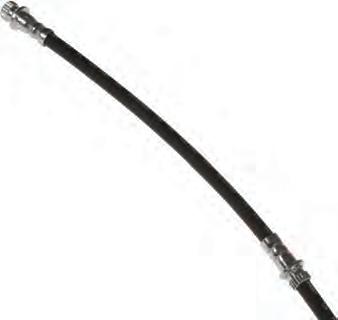
Rear Brake Hose
This relates to part ADC45357, which fits Mitsubishi Colt (VI) 2004-2013, SMART Forfour 1 (454) 2003-2008.
PROBLEM
After applying the parking brake the rear brake caliper becomes seized in operation, which could take 5-10 minutes to move freely again. This problem can affect either side separately or both sides together.
CAUSE
The rear caliper brake hose swells internally, causing a partial blockage. This restricts the flow of brake fluid to the brake caliper, subsequently making the brake operation intermittent.
SOLUTION
Upon inspection, the seized brake caliper will immediately become free in operation when the bleed nipple is released. As a result, the rear brake caliper, brake pads and handbrake mechanism should now be moving freely. Replace with a new brake hose (or hoses) and bleed the brake system using a suitable DOT 4 brake fluid. This should be followed by an operational test of the brake system to check that it is now functioning correctly.
KNOW YOUR PARTS Understanding catalytic converters
European Exhaust and Catalyst goes into depth on how catalytic converters work and what types are in use.
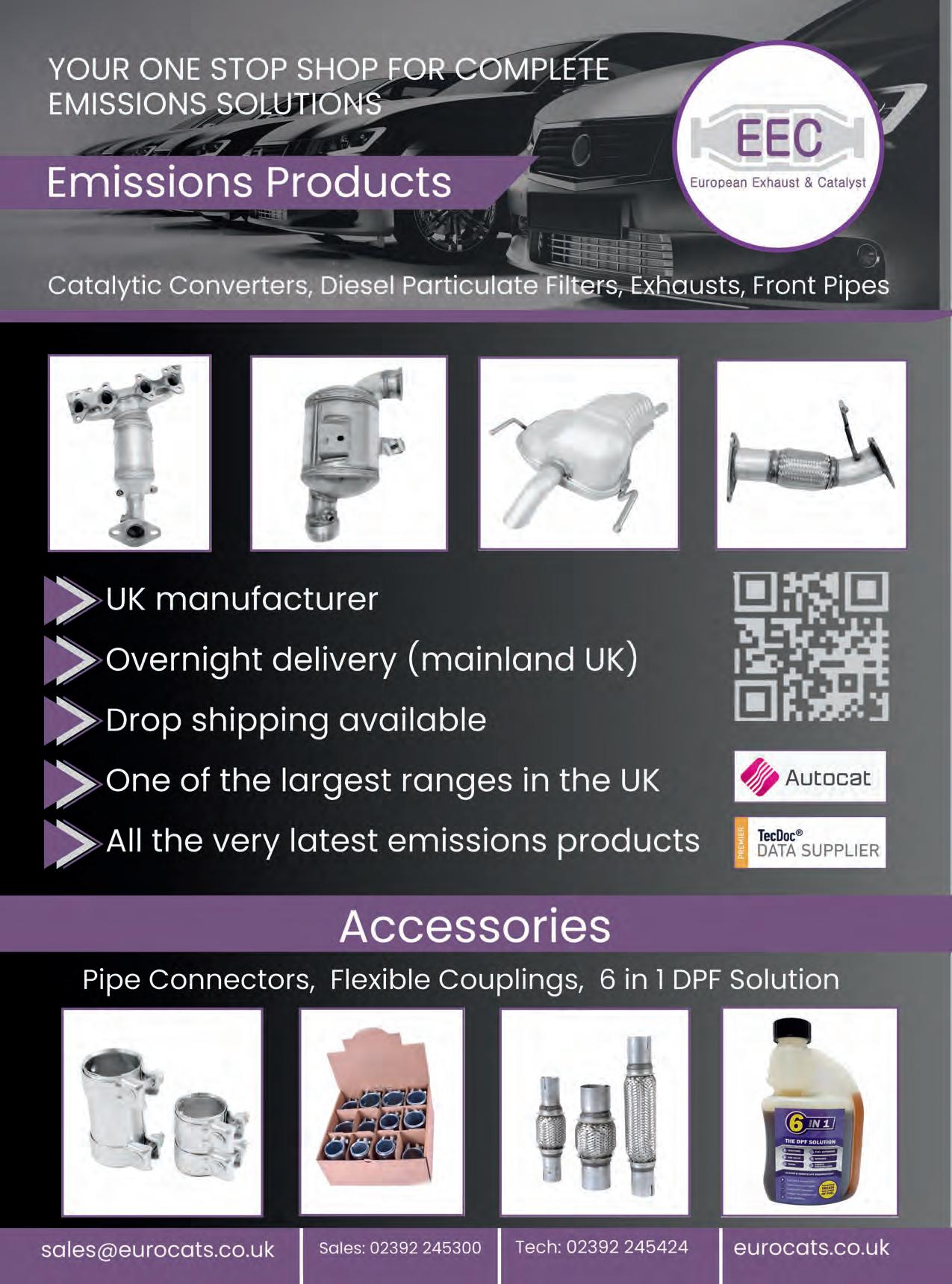
At European Exhaust and Catalyst (EEC), our catalytic converters are engineered to the highest standards, combining durability, performance, and environmental responsibility. Using premium materials and precision engineering, our converters help reduce harmful emissions, ensuring vehicles run efficiently while meeting strict environmental regulations.
A catalytic converter transforms toxic exhaust gases such as carbon monoxide (CO), nitrogen oxides (NOx), and hydrocarbons (HC) into less harmful substances like carbon dioxide (CO2 ), nitrogen (N2 ), and water vapor (H 2O).
At the heart of the converter is a honeycomb structure, coated with a wash coat containing precious metals like platinum, palladium, and rhodium. These metals act as catalysts, triggering chemical reactions that break down pollutants as exhaust gases pass through. The wash coat also incorporates rare earth minerals such as aluminium oxide, cerium oxide and zirconium oxide which enhance efficiency and durability. This carefully engineered combination ensures your catalytic converter performs optimally under all driving conditions.
Maintaining your customers’ catalytic converters properly is essential to ensure
“It is important to ensure that oxygen sensors and the ECU are functioning correctly to maintain the proper fuel air balance.”
long term performance and reliability. Using the correct fuel helps prevent contamination, while addressing engine issues promptly such as misfiring can avoid overheating and costly converter damage.
Regular servicing also plays a crucial role. While unusual smells may not always indicate a serious issue (this could also be down to sulphur in fuel), noticeable dips in performance often do. It is important to ensure that oxygen sensors and the ECU are functioning correctly to maintain the proper fuel air balance. As these checks require specialist diagnostic tools, consulting a qualified mechanic is recommended.
In addition, monitor dashboard warning lights such as the “check engine” light and keeping a detailed log of maintenance and repairs will also help you schedule servicing at the right intervals and maintain optimal vehicle efficiency.
Types of catalytic converters
At EEC catalytic converters and filtration systems are engineered to meet strict emissions standards while delivering long lasting performance for the independent aftermarket. Different engine types and vehicle applications require specific emissions each designed to target harmful exhaust gases and particulates in distinct ways.
Three Way Catalysts (TWC) –Petrol Engines
Three-Way Catalysts are designed for petrol powered vehicles and are responsible for reducing three major harmful emissions: nitrogen oxides (NOx), carbon monoxide (CO), and hydrocarbons (HC). These pollutants are converted into less harmful
substances such as nitrogen (N₂), carbon dioxide (CO₂), and water (H₂O) through carefully controlled chemical reactions. TWCs typically feature either ceramic or metallic honeycomb substrates, which provide a large surface area to maximise contact between exhaust gases and the catalyst coating. The substrate is coated with precious metals such as platinum, palladium, and rhodium, which act as catalysts to accelerate the chemical conversion process. EEC’s petrol catalytic converters are manufactured to meet stringent type approval standards, ensuring reliable emissions compliance and optimal engine efficiency.
Diesel Oxidation Catalysts (DOC) –Diesel Engines
Diesel Oxidation Catalysts are specifically engineered for diesel applications. Unlike TWCs, DOCs primarily focus on oxidising carbon monoxide (CO) and hydrocarbons (HC) into carbon dioxide and water. They also help reduce visible exhaust smoke and odour. DOCs use ceramic or metallic substrates coated mainly with platinum and palladium to facilitate oxidation reactions at lower exhaust temperatures. EEC’s diesel oxidation catalysts are developed to provide durable performance under high-load operating conditions typical of diesel engines, particularly in commercial vehicles.
Diesel Particulate Filters (DPF) –Diesel Engines
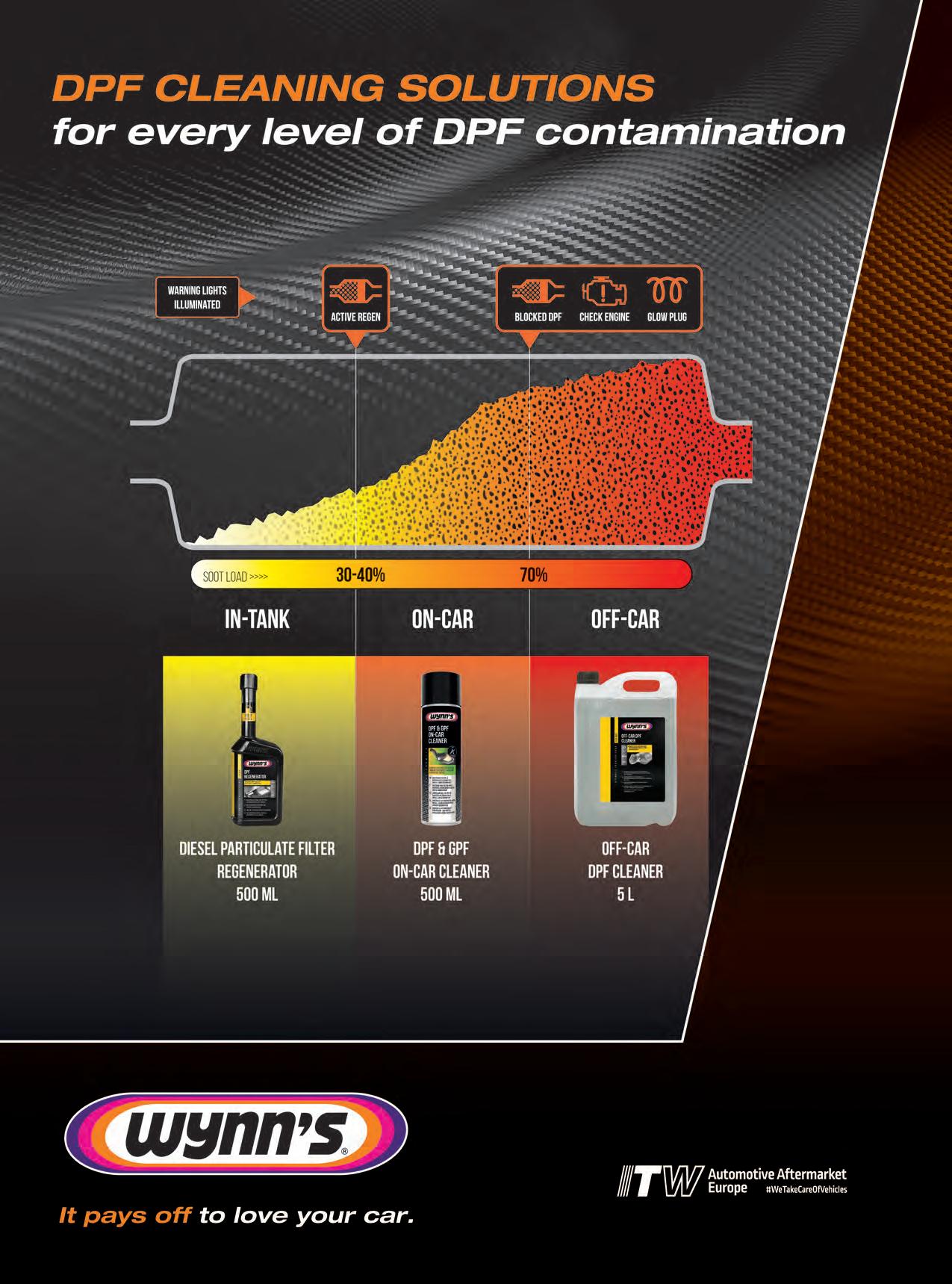
Diesel Particulate Filters are designed to capture and remove particulate matter (soot) produced during diesel combustion. These filters use a wall flow honeycomb structure
that physically traps soot particles within porous channel walls. DPFs are commonly manufactured from advanced materials such as cordierite or silicon carbide, both chosen for their excellent thermal resistance and filtration properties. Many systems include acatalytic coating to assist with regeneration a process in which trapped soot is burned off at high temperatures to prevent blockage. EEC’s DPF range is engineered to provide high filtration efficiency while maintaining correct exhaust back pressure, supporting both emissions compliance and engine longevity.
Light Commercial Vehicle (LCV) Catalysts –Vans and Minibuses
Light Commercial Vehicles operate under heavier loads and longer duty cycles, meaning their emissions systems must be robust and efficient. LCV catalytic converters are tailored to meet the specific emissions requirements of
vans and minibuses, often combining durability with high thermal resistance. These units use ceramic or metallic substrates coated with platinum, palladium, and rhodium to ensure effective gas conversion under demanding conditions. EEC provides dedicated coverage for LCV applications supporting workshops with direct fit, type-approved solutions designed for reliability in high mileage environments.
Gasoline Particulate Filters (GPF) –Petrol Engines with GDI
With the introduction of Gasoline Direct Injection (GDI) engines, particulate emissions from petrol vehicles have become a greater focus. Gasoline Particulate Filters are designed to capture fine particulate matter in a similar way to DPF systems. GPFs feature a wall flow honeycomb structure and are commonly manufactured from cordierite ceramic material, offering effective filtration while maintaining exhaust flow. As emissions
regulations continue to evolve, EEC remains committed to expanding its GPF range to ensure modern petrol vehicles remain compliant with the latest standards. Through continuous product development and investment in advanced materials, EEC supports workshops and distributors with comprehensive emissions control solutions that combine performance, durability, and regulatory compliance across petrol, diesel, and commercial vehicle applications.
Garage initiative.
Playing it by ear
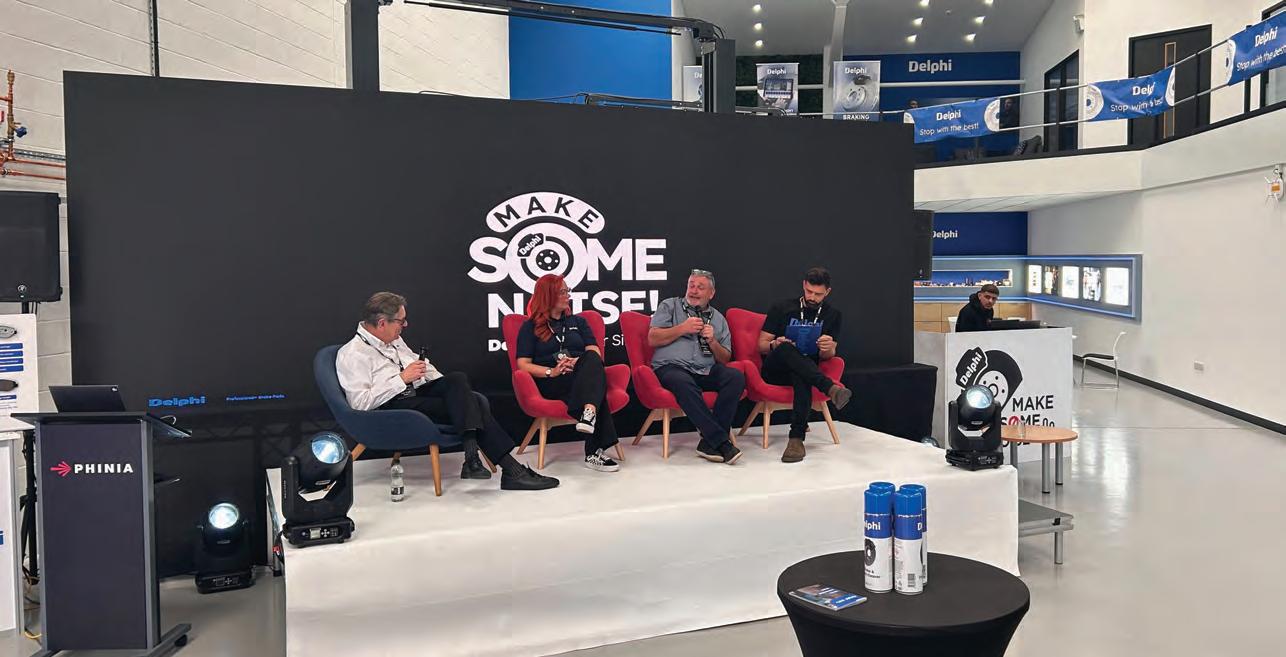
Delphi recently launched its Make Some Noise campaign in partnership with Shaikly Motor Company. PMM went along to the energetic launch event to find out more.
At an event at Delphi’s Warwick-based academy, Delphi announced that the launch of its new campaign entitled Make Some Noise. The launch, which felt more like an event for the latest Apple Watch than what we in the spit and sawdust side of the automotive industry are used to, brought together Delphi heavyweights, TV techs and the man at the centre of it all – Mick Shaikly of Essex-based Shaikly Motor Company.
To understand the campaign, it’s important to go back to the very start –after all, we were there (technically). Last December at the annual IAAF Conference, a new Garage Den initiative was launched. The premise was simple and entertaining: A panel of garage “dragons” would be pitched ideas from suppliers and provide their honest feedback. If a garage liked a supplier’s idea, the two could come together to make it happen. You’ve seen Dargons’ Den, you know how it works. From the audience’s point of view it was a fun way to end the day and spark some conversation.
Five suppliers pitched ideas, including Delphi, whose country director Aliya Lam pitched the Make Some Noise campaign. Mick Shaikly, part of the dragons’ lair, was impressed. I spoke to Aliya and Mick at the launch event to find out more about what we can expect from the campaign…
“For me, this campaign is about highlighting the importance of OE quality brands being sold, about the right part being put on a customer’s car,” Mick tells me. Aliya jumps in, adding: “There is a problem in the market where people are not aware what they’re purchasing. There are over 60 braking brands, so how does the customer know what they’re
choosing. Customers mostly trust their garage and let them choose, but what are garages basing their decisions on? Price, often. Unfortunately. Buying cheap can cost more in the long run as you will need to change the part more often, paying more on parts and labour.”
So, with parts quality under the spotlight, I ask the pair about an issue close to PMM ’s heart – customer supplied parts. Mick replies immediately: “We don’t fit them. There are legal issues around them and there’s a lot of fake product out there. We pick the parts we fit. You also need to trust your supplier. I’ve educated myself and the team on the science behind why high quality parts are essential and I explain that to my customers.”
Aliya gave me a rough idea about what the campaign will entail: “The campaign is about getting out there and talking to garages. We have two tech vans going around the country doing just that. You can only do so much via social media, face to face communication is essential. Events like this today, just being in the same room, are essential.”
A day in the life of a mobile mechanic. Going MOBILE
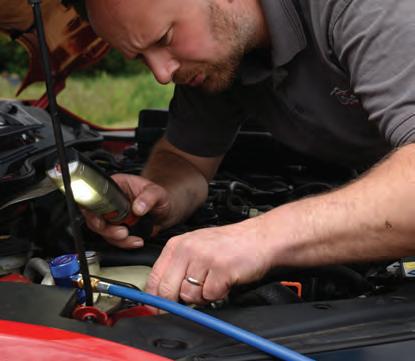
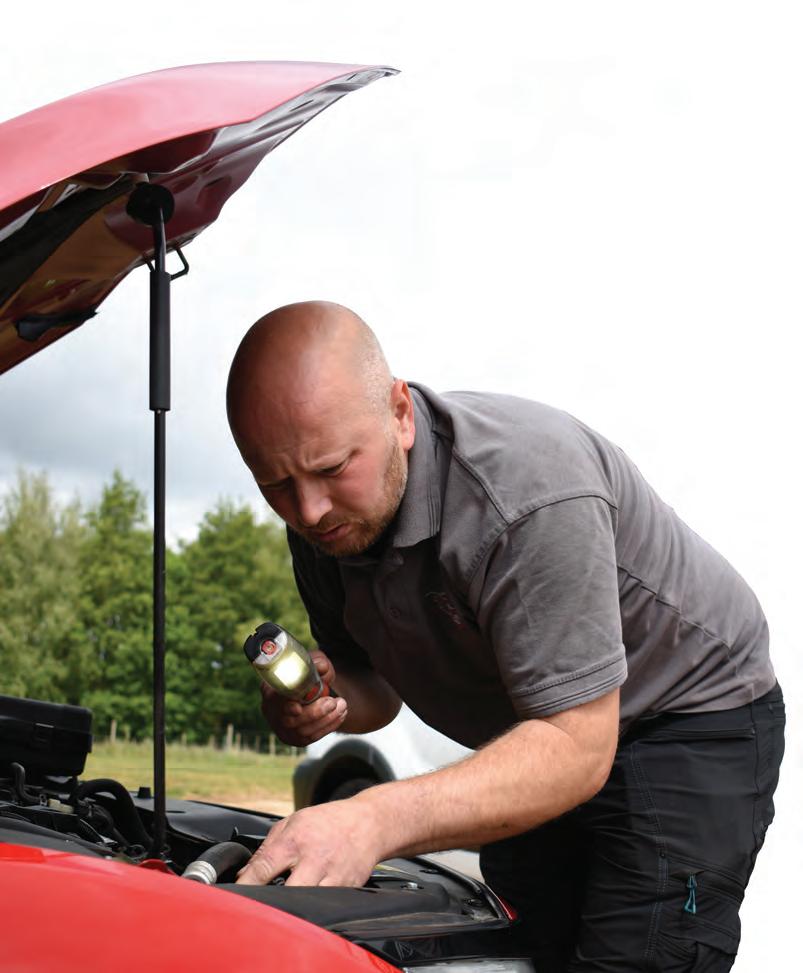
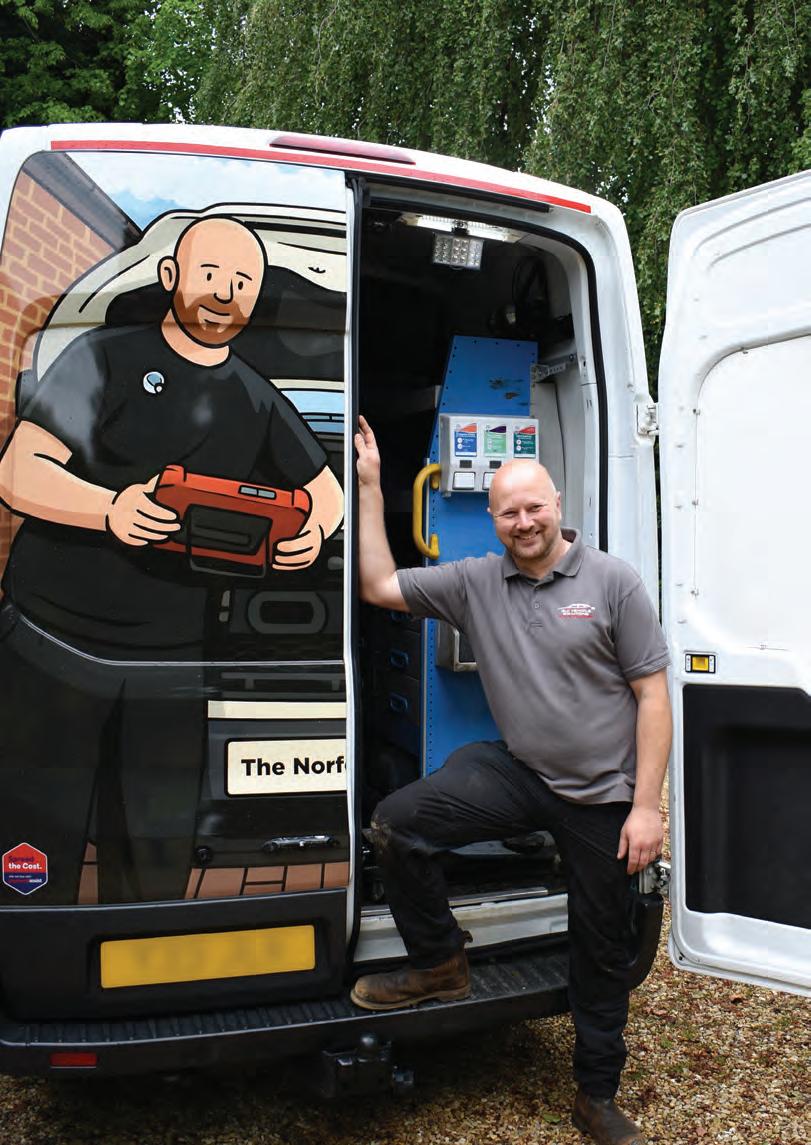
PMM spent the day with Jordan Kendal, aka the Norfolk Tech, a mobile mechanic who has made north Norfolk his workplace.
As unbelievable as it seems as I write this now during the extreme heat wave of May, last Wednesday when I went to meet Jordan Kendal at his place of work – aka, outside – it was meant to be utterly biblical. As it happened, we had not a drop. Besides a deep-seated English love of weather, I mention this because Jordan, the Norfolk Tech, is a mobile mechanic. He is at the mercy of the elements and that’s just the way he likes it. I meet him outside a rather well-heeled customer’s house, surrounded on all sides
by a sea of gravel. As he hops around the vehicle being useful I crunch alongside him with my microphone outstretched. So, I begin, weather aside, what does a typical day as a mobile mechanic look like?
“Well, today I’ve got a fairly busy one. I’ve been around to a customer already this morning to diagnose an air-con fault, and I was up for a couple of hours before that on the computer. Now, as you can see, I’m carrying out a brake change on a Honda Jazz, front discs and pads, rear pads. Next I’ll be going to a customer who has reported a smell… Then another air-con diagnosis and then I’ll finish the day with an emergency repair, which is springs, wishbones and brakes. A twelve hour day minimum is normal for me.”
Local trust
My burning question here is: Are smells a common part of the job? “You do get all sorts, to be honest. You usually have to try and decipher what the customer means. Nine times out of ten they’re not actually there, they just leave the keys by the porch, so you’re working alone. There’s a huge amount of trust, really. That’s something you build over years, it doesn’t happen over night.”
Building that trust is not hurt by the fact that Jordan is a local lad, in fact the job he’s on when I meet him is in his own village. He does have to travel though, sometimes as far as 20 miles away! That’s handy for parts deliveries. His local independent factor A.T. Johnson will deliver to him while he’s on the road, but more often than not they’ll drop parts at his house in the morning and he can grab what he needs as the day goes along: “It’s all about planning well in advance,” Jordan tells me.
Who are these trusting customers? In fact, what does the typical customer of a mobile mechanic look like in general? “I wouldn’t say there is a typical customer,” Jordan admits, “you go to multi-million pound houses and you go to council estates. It’s anyone and everyone. I think the reason they pick up the phone and call a mobile mechanic rather than go to a garage is simply convenience. I think as well if they are coming to your house, there is a level of transparency that you will do and finish the job correctly. Some will even watch me on the doorbell camera… but they’re not spying on me, they’re keeping me company!”
A man’s van is his workhorse
Obviously an essential part of a mobile mechanic’s arsenal is their van. I’m not sure why, but what I had in mind was something like the closed cupboard stuffed full of plates about to fall. As long as the door is closed, the plates are held in position. The minute the door opens, all hell breaks loose. Needless to say, Jordan’s van, like his diary (pen and paper), was the vision of orderliness.
Launch diagnostic tools abound, “they’re my go-to” Jordan tells me, “I use them day in day out”. Also in there are two A/C machines for older and newer gas types, and they’re not just in there for summer either: “They’ve been a big hit, they sell themselves. It’s a great upsell. It started through doing so many timing belts or if you have to have the front end off the vehicle and you have to drain the system. There was no way around it. Going to a local garage to get it done was too much hassle.”
Taking the plunge
Speaking of local garages, Jordan wasn’t always so mobile as he is now. He started his career 20 years ago working for a BMW-Mini specialist in Kings Lynn. “Then the dreaded COVID came and I got put on furlough. To cut a long story short, within a few months I was told there would be no more job for me to come back to. After handing my CV in at a few places, I passed a broken down vehicle on the side of the road and the thought entered my head – I could fix that. I had been considering going self-employed and I had the tools and equipment, so I bought a Transit van, smaller than this one, and got to work. From that point onwards I’ve always had at least a week and half of work ahead of me, now it’s more like three or four weeks.”
Customer loyalty is always the sign of a good garage, but does the same logic hold up for mobile mechanics? It seems so. Jordan recently calculated his retention rate: 87 per cent. In fact, he still has customers today from the very start. This is all well and good, but surely given half the chance, he would prefer to settle himself in bricks and mortar? “Actually I was offered a place recently and turned it down. Don’t get me wrong, I have considered it, but I love the freedom that being a mobile mechanic gives me. A lot of my customers want someone to come to them, so I’m not sure they would switch to a physical garage even if I offered a collection service.”
Support system
Although I and PR woman Tina are “helping” Jordan today (“about as much help as a chocolate teapot in the desert”), usually the job is a pretty solitary one. How does Jordan cope with the isolation? Has he tried to get other people involved? “I did have an apprentice for a while, but to be honest I don’t think I’m the best teacher and when you’re on your own, it’s not fair to the apprentice.
“It can get lonely,” Jordan continues, “but that’s why it’s important to have a good network of people you can tap into. There are WhatsApp groups of fellow mechanics to keep you in contact and up-to-date with what’s going on with everyone else. I probably chat more to other mechanics around the country via social media than I do with my actual friends! If I’ve got a problem, there are 50 people I can pick up the phone and ring.”
The cost of trust
There was a time when a technician’s judgement was one of the most valuable things in a workshop. Experience meant something. If someone had seen a fault ten times before, they were trusted to act on it.
Now, in many garages, that trust is being replaced by process. Step-by-step procedures, mandatory diagnostics and systems designed to remove risk — but in doing so, they often remove the very thing that makes a good technician valuable in the first place.
It’s easy to see how we got here. As garages have grown, so has the need for consistency. Processes protect against mistakes, reduce liability, and make it easier to manage teams. On paper, it makes perfect sense. But in practice, something important is being lost.
A good technician doesn’t just follow a flowchart — they interpret, they recognise patterns, they make decisions based on experience. When that ability is sidelined in favour of rigid process, the job becomes less about skill and more about compliance. That has consequences.
Jobs that could be resolved quickly turn into drawn-out procedures. Customers end up paying for steps that,
in many cases, don’t add value. What should have been a straightforward repair becomes a sequence of checks designed more to protect the system than to solve the problem. Inside the workshop, the impact is just as real.
“The best workshops find a balance. They allow room for judgement.”
Technicians who have spent years building knowledge and instinct can find themselves second-guessing decisions, or worse, being unable to act on them at all. When every action has to be justified through a process rather than trusted on merit, it slowly erodes confidence and pride in the job.
Over time, that changes behaviour. Instead of thinking, technicians start following. Instead of solving, they start processing. And when that happens, the very thing that separates a skilled technician from a parts-fitter begins to disappear.
Going unchallenged
The problem is, once these systems are inplace, they don’t tend to get questioned. They become “the way we do things”, even when they’re clearly not the most efficient approach. Unless someone is willing to step back and challenge that, nothing changes.
This isn’t an argument against process. Good processes have their place. They provide structure, they protect against oversight, and they help maintain standards across a team. But they should support experience — not replace it.
The best workshops find a balance. They allow room for judgement. They trust their technicians to recognise when a process needs to be followed, and when experience can take the lead.
Because ultimately, customers don’t pay for process — they pay for results.
And the fastest, fairest results often come from someone who’s seen it before and knows exactly what they’re looking at. If technicians stop being trusted to think, we shouldn’t be surprised when the best ones stop wanting to stay.
And once that experience walks out the door, no amount of process will replace it.
Longtime workshop professional Dan laments the erosion of trust as garages become more process-led.
Oils partnership.MotulandMcLaren
A winning combination?
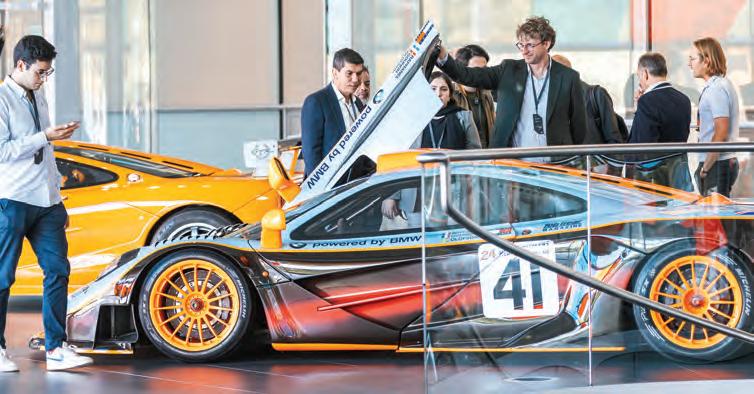
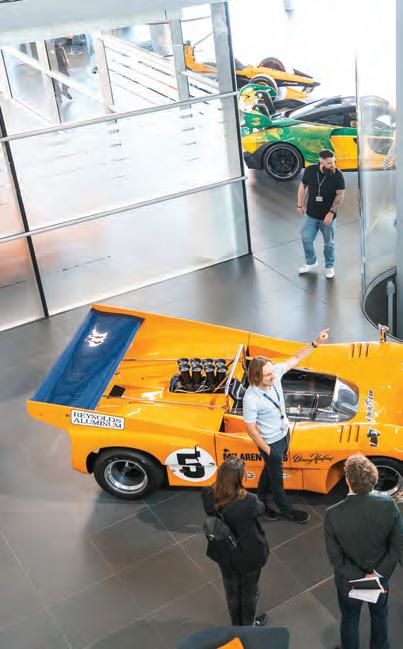
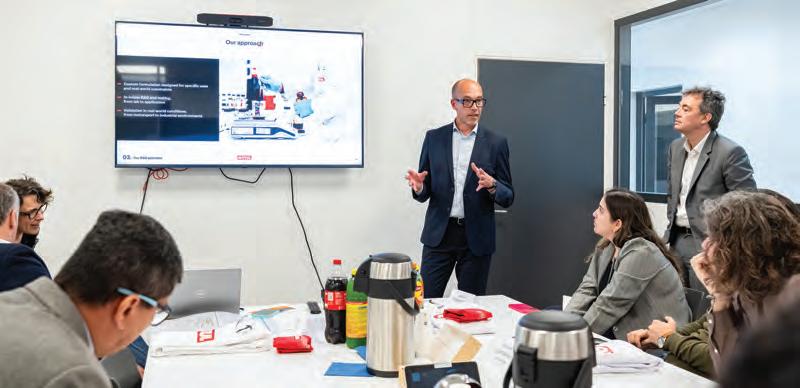
Motul recently threw open its doors to a team of international journalists to find out what’s behind its recent partnership with McLaren and what the more sensibly paced world of road cars can learn from the rubber burners in Formula One.
Those of you who keep up-todate with Formula One will know that there have been a series of controversial changes lately surrounding hybrid engines and how the battery is used and charged throughout each race. Coincidentally, this has a direct impact on the gearbox and the oil within it – which is exactly what Motul is now supplying the McLaren race team with. Call it a cross-channel success story.
“The duty cycle for the gearbox has changed significantly with the new regulations. There are significantly harsher loads going into the gearbox now” McLaren’s chief technical officer and chief designer, Rob Marshall tells us over a quick coffee before we set out on a tour of the car maker’s HQ in Woking. “We see a different wear pattern on the teeth within the gearbox as the wheels get reversed to charge the electric motor. We need more protection for the teeth.”
means to us here,” Rob continues, “is that we have to make sure every bit of energy available to us is used correctly. Where once we could overcome inefficiency by using a bit more fuel, now we’re at the limit, so we need to prevent any unnecessary energy loss. Losing energy out the back of the engine and not on the wheels is bad news for us.”
Add to that, we want an oil which doesn’t generate too much heat. These are the kinds of marginal gains we talk about in F1. They don’t sound like a lot, but when a one per cent difference in performance is enough to put one car ahead of another, the oil we use is a critical choice for us.”
It’s not the only issue thrown up by the rule changes – recovering and deploying energy from the battery now becomes another headache for the team principal to deal with. The racing needs to feel as natural as possible to the drivers. “What it
Critical choice
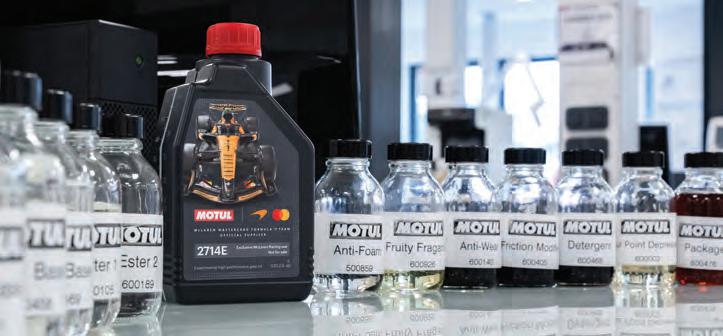
Solving both of these issues is where Motul comes in, as Marshall explains “We seek oils that not only protect our gears and our internals more, but we also need something which lowers frictional losses.
Post tour, we found ourselves in the car park with a brief moment to accost the more than accommodating designer once more with our questions. I asked whether, given that F1 cars now had to take so much care over efficiency rather than pure performance, the new cars weren’t that slightest bit closer to the cars driven by the mere mortals on the M1? “They’re still a bit of a special case, I think. We want the oil to look after the materials in the gearbox, and
we’ve got really expensive materials in our gearbox. We’re cost-capped too, so we don’t want to change the gearbox willynilly, we do want it to last. However, the technology we’re developing with Motul could read across to passenger cars quite well, I think. At the end of the day, we’re just trying to do the same things as passenger cars but better. If oil development allows you to run smaller teeth, use less metal in your gearbox, have a lighter gearbox, lighter cars, then that does translate to road cars being better. If you reduce the efficiency through reducing losses on a road car, that means you burn less fossil fuels in a year.”
Raising the game
Over in France, at the Motul HQ just outside of Paris, we spoke to Julien Plet, head of R&D at Motul, about the partnership and what it meant for the oils company. It’s in keeping with Motul’s racing pedigree, of course, but does this latest partnership bring new challenges in an era of hypersensitive margins? “The compactness of the transmission oil in Formula 1 is extreme. I’ve never seen that before. The weight of the transmission, the components and the volume of the oil inside is minimised as much as possible to reduce the fluid drag of the oil and increase performance. The pressures the oil is under are enormous – Gigapascals of pressure. The new hybrid regulations mean the gearbox can be under instantaneous torque and the oil needs to stand up to this.”
WORD of the day
Tribology is the study of oils. Who knew?
McLaren won the Constructors’ Championship last year and Lando Norris took the Drivers’ Champion award, so Motul had a lot to live up to. Something which must have weighed heavily on the technical team devising the oil to present to the race team: “Yeah, it was daunting for sure!” Laughs Julien, with the tentative ease of an Arsenal fan who has seen his team pass through hell to finally clinch the cup – which, incidentally, also describes the Frenchman after spending
fond years in Islington.
“You’re talking about one of the most iconic F1 teams in the paddock, and the team is full of some of the most talented and innovative engineers I’ve met. They really know what they’re talking about and they have helped us immensely. It’s very much been a collaborative approach.”
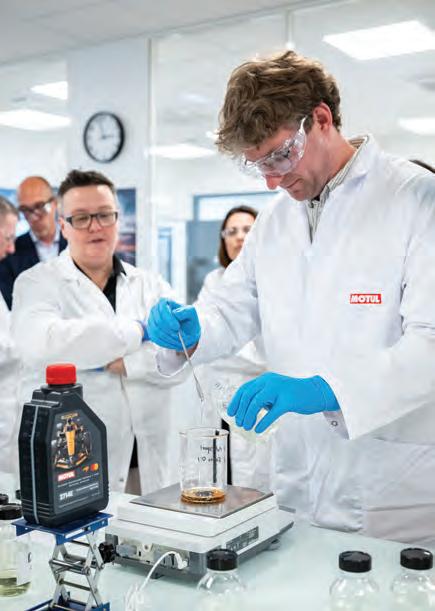
Before we were ushered into the laboratory where we could tinker around with our own oil (don’t worry, we were assured our efforts would never see the inside of any engine-powered vehicle), we just had time to get to the heart of what this was all about. Sure, Motul’s partnership with McLaren is exciting and provides Motul with new technical challenges to overcome, proving the technical expertise that goes into modern oils and lubricants, but what does this mean for garages and drivers? Will any of the F1 oil make its way into factors? “We tried something very innovative and out of the box with this oil, because we didn’t have a baseline to start with for Formula One. We have found some technology that we will reuse in our motorsport line very soon – watch this space!” And with that, we were stuffed into overshoes and lab coats, goggled up and set to work blending. All in a day’s work!
Three top tips for timing belts. YouTube
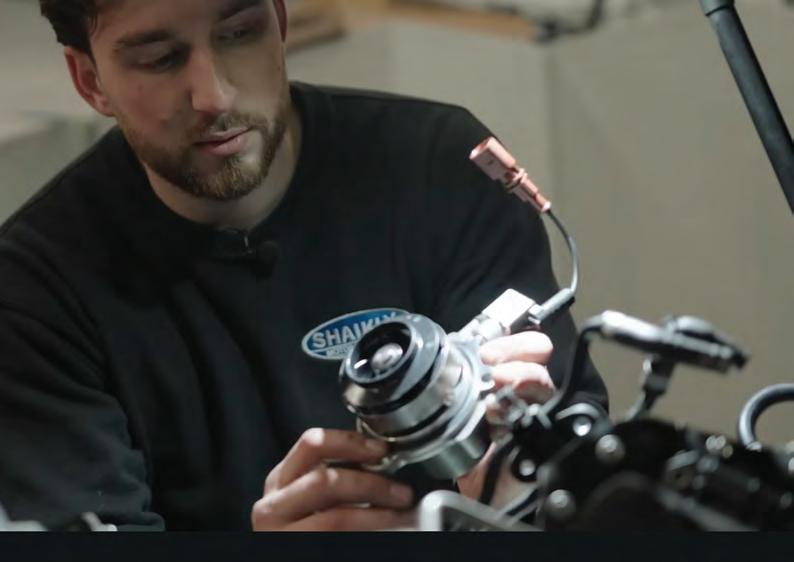
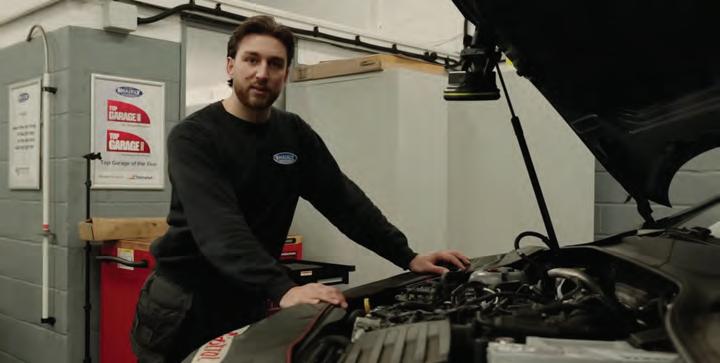
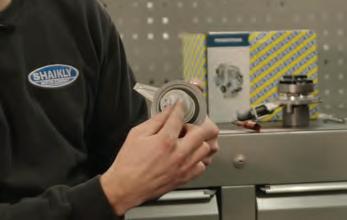
PMM ’s new Youtube reviewer Adam Shaikly is working with NTN to provide PMM ’s Youtube audience with some best practice advice on fitting timing belts.
New kid on the block
Meet Adam, our new Youtube host. Adam works at Colchester’s Shaikly Motor Company, an award-winning garage many of you will already be familiar with. In fact, if you turn to page18 you’ll find Adam’s dad Mick!
Tip #1
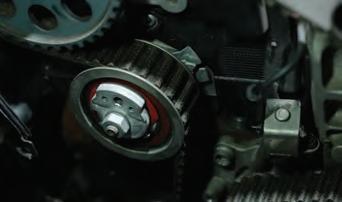
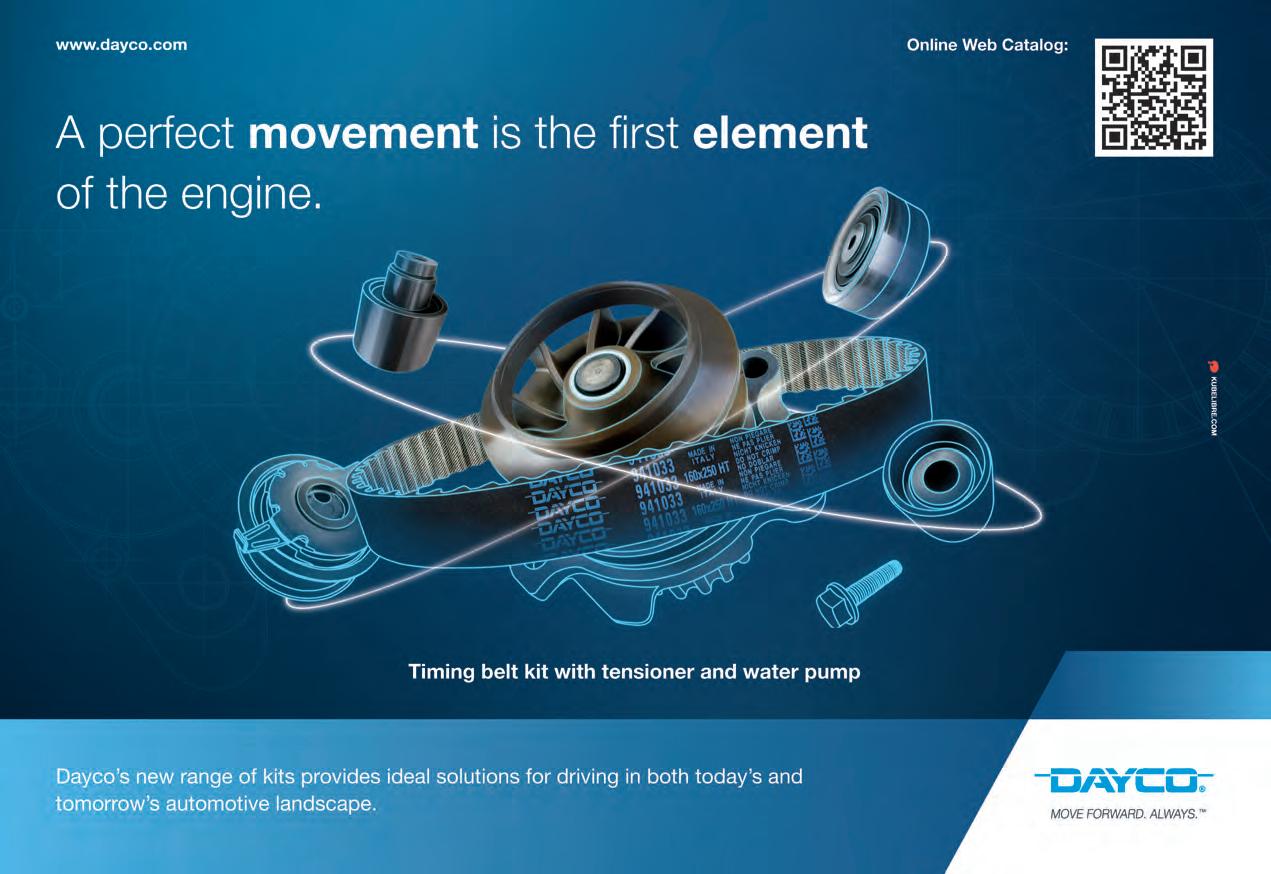
Sealant on the water pump is not required when there is a gasket supplied. So, I'm just switching over the water pumps. And it's great to see that in the SNR kit, it is an OE equivalent switchable water pump. Each SNR timing kit offers true all-in-one convenience, including the timing belt, tensioner, idlers, water pump, and gasket. all perfectly matched to work together.
Tip #2
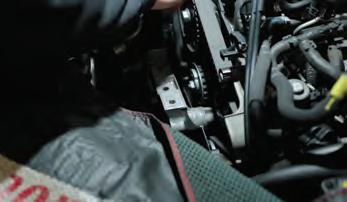
Protect your timing belt. Keep it clean. Make sure there's no spillage of oil or coolant on the belt when fitting. The best thing about these kits is there's no missing parts. There are no compromises and no unexpected future labour costs. As an OEM manufacturer, SNR tests every component, ensuring consistent original equipment matching quality across their entire range.
Tip #3
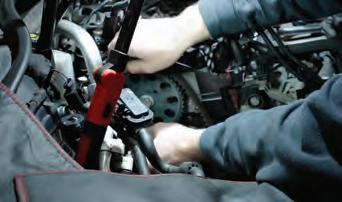
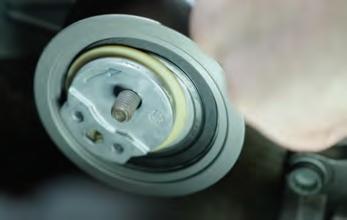
Always follow the manufacturer's torque settings. Make sure your idlers, your tensioners, and all relevant bolts are torqued to the manufacturer's spec. Always look at the tensioner adjustment direction. This is indicated by the arrow on the front of the tensioner. If a timing belt tears, rips, or even stretches slightly, it can cause severe engine damage. That's not what you want for your customers or for your business. When you finish the job off, put the little sticker on the vehicle just to say that it has been done at the correct interval.
How many times does this happen. A customer calls with a noise, a light, or a vague worry. They want a price. You want to help. Somewhere between the two, trust either grows or it leaks away.
Most complaints I hear in garages are not really about price. They are about surprise. Surprise bills. Surprise delays. Surprise phone calls that feel like pressure. The irony is that we create most of those surprises ourselves. Who’d have thought?
At Oldfields Garage we work hard to separate three things: what we know, what we suspect, and what we need to confirm. That sounds simple, but it changes the tone of every call. Instead of trying to sound certain, we sound clear.
Symptom enquiry
When an enquiry comes in, your first job is to set the scope. What symptoms, when it happens, what has already been tried, and what outcome the customer wants. Then set the next step and the expectation.
The real magic is in authorisation. In my previous life in a Volkswagen dealer and later in IT managed services, the best businesses never did extra work on hope. They used simple change control. The customer knows what is included, what is optional, and what triggers a new approval.
Bring that mindset into your workshop. Use photos, videos, and plain English summaries. Offer options
where it is sensible and right for your business. Agree a clear stopping point, then call for authority before you move beyond it. It feels professional, because it is.
Giving customers control
Trust is built when the customer feels in control. Estimates and authorisation are not admin. They are part of the service. Get them right and enquiries turn into work, without anyone feeling sold to.
Industry update. Oils and lubricants.
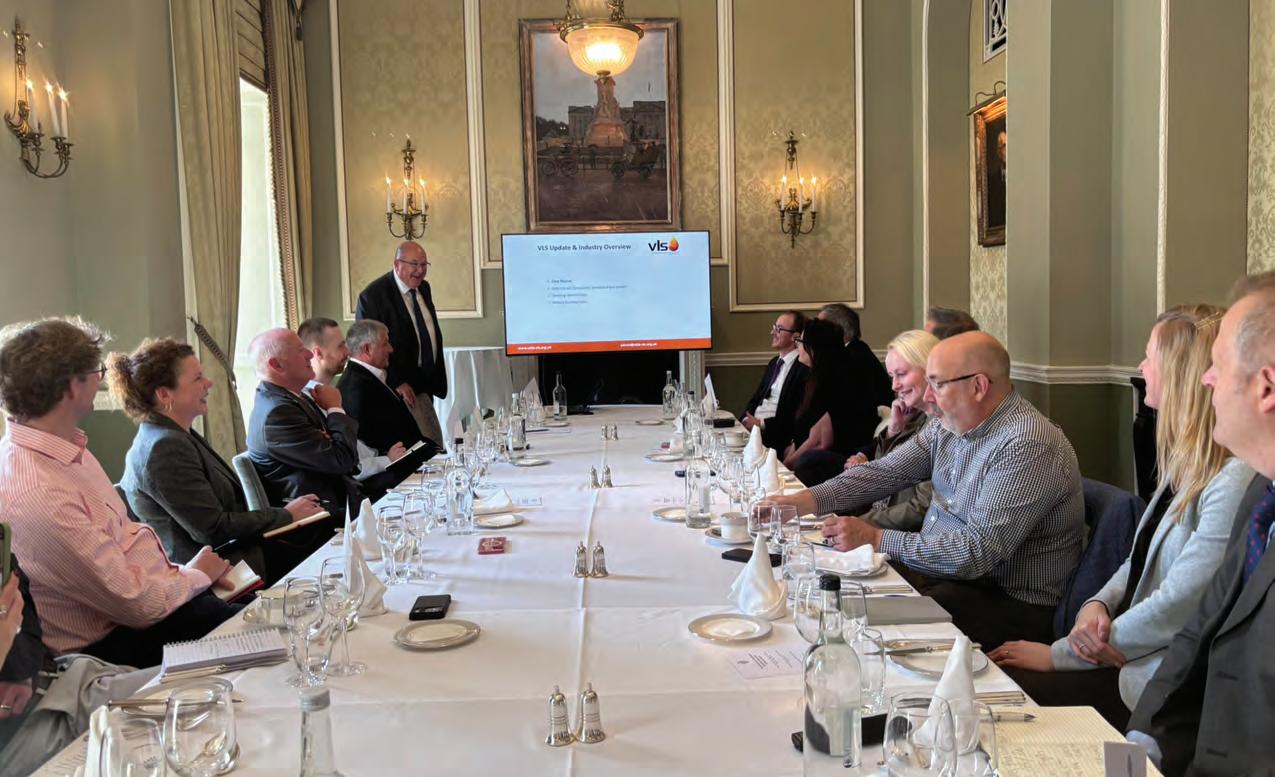
An afternoon with the VLS
VLS’ biennial industry lunch took place recently, as ever at London’s RAC club, the spiritual home of automotive gatherings.
This year’s VLS lunch landed at just the right time to capitalise on a rare moment of general interest in the oil industry, what with prices rising due to the blockade of the Strait of Hormuz. What’s more, the past year has seen more automotive oil related drama than most, as the Trade Remedies Authority found concrete evidence of oil dumping in the UK from Lithuania and the United Arab Emirates, with heavy duties now being levied. What’s more, the EU went one step further and sanctioned several companies for “materially supporting Russia’s military
and industrial complex”. It will perhaps come as no surprise that the companies behind the UK ruling of oil dumping and the companies found by the EU to be supporting Russia’s war against Ukraine are one and the same and mostly, if not all, coalesce around the same people.
Before you get the wrong impression, none of this was discussed at the VLS lunch – although, as wrong-doing seems to come in packages, the company in question did in fact make an appearance. Considering, however, that this overly cheap oil, whose proceeds are being funnelled into Russia, has taken the
aftermarket by storm in recent years and has been paraded on flashy stands at Automechanika Birmingham and Frankfurt, the one clear takeaway from the VLS lunch resonated more strongly than it usually would: If it’s too good to be true, it usually isn’t.
The VLS, or the Verification of Lubrication Specifications is an industry body that sits within the wider UK Lubricants Association. It was set up specifically to provide recourse to engine oil suppliers, garages and members of the public who want to raise an issue regarding the quality or marketing claims of a given motor oil or lubricant. Typically, cases would consist of an oil blender selling an oil for a specification it doesn’t meet, hasn’t been tested for, or hasn’t been updated to meet the current spec. It’s a vital organisation in an area otherwise overlooked. But as the events of the past year have shown, there is a need sometimes for a robust organisation and the VLS has proven itself to be that organisation.
A tale of two cases
On hand on the day was the VLS’ new chairman Darren Frogson, technical director Alan Outhwaite and former chairman, (and vice president of the UKLA), Mike Bewsey. Mike is also the CEO of Duckhams Oil (Stop the press! Since the lunch and the writing of this article, Mike Bewsey has in fact stepped down from his role as CEO of Duckhams!). The team went into some detail on two particular VLS cases from the previous year for the benefit of the assorted journalists. Both were cases that had been covered in the pages of PMM before.
The first concerns a specification for Stellantis oil, specifically designed for belt-in-oil applications. Many of you will throw your hands in the air at the mere mention of belt-in-oil, but there are a lot of them around and it would be better to
keep them going rather than let them get destroyed. Alan described to us the paradox of the design, in which a polymer belt is immersed in hot oil, leading to degradation of the belt. This was known to the manufacturer, but the timeframe in reality turned out to be much shorter than anticipated. Fuel economy is improved by the design, but oil changes need to be more frequent.
An update to the specification came in June, along with updated guidance that the belt be replaced every six years or 62,000 miles. VLS received 15 referrals regarding new oils claiming to meet the Stellantis specification, the concern arising from the fact that there had been very few formal approvals from Stellantis and that there was no market general technology available from the additive companies to make the specification. The fear was that companies were playing “fast and loose and claiming a specification that can’t be supported”. This is all highly technical, of course, but the outcome was that the VLS found that four of the oils on sale were unable to demonstrate that they met the specification and have since been pulled
“Many of you will throw your hands in the air at the mere mention of beltin-oil, but there are a lot of them around and it would be better to keep them going rather than let them get destroyed.”
from shelves. A further seven were meeting an outdated specification. It’s an illustrative case of the typical work the organisation does: Cleaning up the market from an experienced, trained standpoint. After all, garages and drivers are not expected to know what additives specifications are and aren’t available, so it’s good to know the VLS has got them covered.
The second case involved a brake fluid from Mannol which didn’t meet the minimum safety specifications. The brake fluid was referred to the VLS and they did three separate tests on it, resulting in a failure each time. Important to note is
that the testing team at the VLS are never told who produced the sample they are testing. Once Mannol had been notified, they provided an updated sample to show that the fluid had been corrected. This, too, failed. “You’ve got a safety critical component which was obviously been failing for years,” as Alan put it. The brake fluid has been recalled, and PMM put it to the VLS that without their work on the matter, it might still be available to buy? “Yes, it would still be there,” they responded. “It frustrated us how long it was on the shelf and we were looking at what other levers can we pull or push to raise this as a priority because it was quite a frightening product, a safety critical product like that.”
Lastly, to the response of laughter in the room, PMM asked whether the VLS themselves thought they were doing a good job, to which company secretary David Wright responded with what we consider undue humility: “I think we could always do better. I think we can go further, faster and be more influential.” If the cases discussed are anything to go by, they seem to be doing alright so far.
HYBRIDA/CPARTS
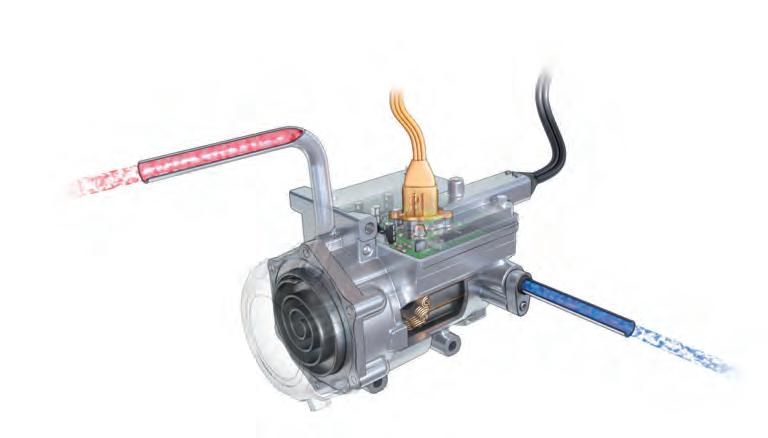
MS Motorservice presents its electric air conditioning compressor in OE quality.
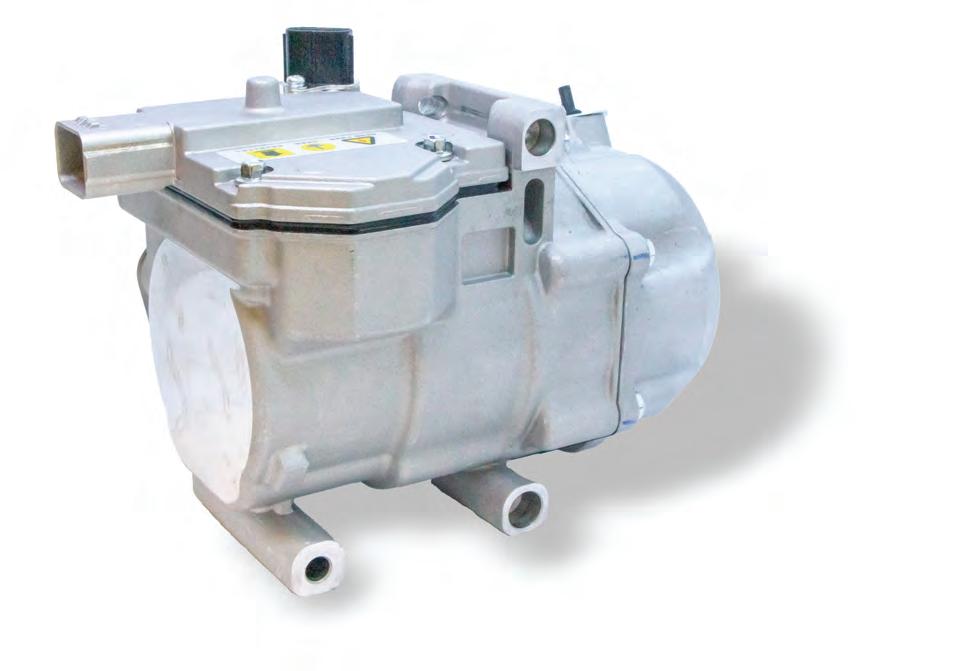
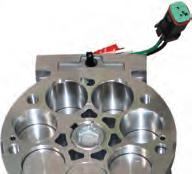
Motorservice is providing another aftermarket solution for hybrid vehicles in the form of the electric air-conditioning compressor (item no. 7.14832.00.0). As a spare part for the Toyota Prius and Auris, the air-conditioning compressor covers more than three million vehicles worldwide. It is supplied with two corresponding O-rings for
the connections and is already filled with refrigerant oil. By July 2026, Motorservice plans to include six more OE-quality airconditioning compressors with a market potential of more than eight million vehicles in its product range.
When replacing the electric air conditioning compressor, the system must be flushed beforehand. In addition, all non-flushable parts, such as the seals, expansion valve and filter dryer, must be replaced, as otherwise contamination will remain in the system and can then damage the newly installed air conditioning compressor. If the non-flushable parts are not replaced, the warranty of the new compressor will be invalidated.
Essential component
The air conditioning compressor is an essential component of air conditioning systems. In contrast to air conditioning compressors in vehicles with a conventional combustion engine, the electric air conditioning compressor for hybrid and electric vehicles is equipped with its own electric motor. For this reason, electric air conditioning compressors also work when the vehicle's engine or motor is switched off. The OE-approved refrigerant must be used for the air conditioning compressor.
COMMON FAULTS Air conditioning compressors
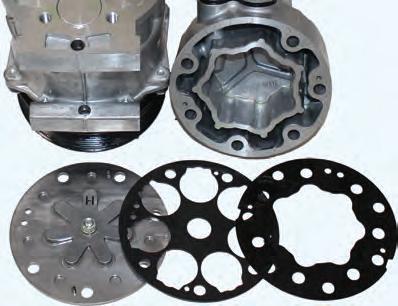
Automotive air conditioning (A/C) compressors play a vitalrole in vehicle climate control systems by compressing and circulating refrigerant through the A/C circuit. Here, Febi outlines some common problems they face.
As one of the most stressed components in the system, the compressor is prone to various failures and damages that can compromise its performance. Understanding these common types of damage is crucial for effective diagnostics, repair, and prevention strategies in automotive maintenance.
Refrigerant oil starvation
PROBLEM
Oil starvation occurs when the compressor does not receive an adequate supply of lubricating oil. Most A/C compressors rely on oil mixed with the refrigerant to lubricate internal components.Caused by:
● Low refrigerant charge
● Blocked or restricted orifice tube/expansion valve
● Improper oil quantity during installation
● Leaks in the system causing oil loss
EFFECTS
● Accelerated wear of pistons and bearings
● Overheating of internal parts
● Noise and eventual seizure of the compressor
SOLUTION
● Use correct refrigerant and oil charge
● Ensure all lines are clear during service
● Replace receiver drier or accumulator during major repairs
Contamination (debris and moisture)
PROBLEM
Contamination includes solid particles (metal shavings, carbon, sludge) or moisture entering the compressor. Caused by:
● Previous compressor failure (especially due to seizure)
● Leaks allowing moisture ingress
● Incomplete system flushing during component replacement
EFFECTS
● Valve and piston scoring
● Blocked expansion valve or orifice tube
● Acid formation leading to corrosion
SOLUTION
● Flush the system thoroughly after compressor failure
● Replace components such as the filter drier or accumulator
● Use a vacuum pump to remove moisture before charging
Electrical Failures
PROBLEM
Modern compressors, particularly variable displacement and electric types, rely on solenoids, clutches and control valves. Electrical issues can disable compressor function or cause erratic behaviour.Caused by:
● Faulty clutch coil or wiring
● Failed control valve
● Defective pressure sensors or control modules
EFFECTS
● No A/C cooling
● Intermittent operation
● DTCs (Diagnostic Trouble Codes) in the HVAC system
Overheating
PROBLEM
SOLUTION
● Verify electrical continuity and signal integrity
● Inspect connectors for corrosion
● Use OEM-specified components
Excessive compressor temperatures can damage seals, valves and internal surfaces.Caused by:
● Insufficient refrigerant
● Blocked condenser
● High ambient temperatures combined with poor airflow
● Excessive engine compartment heat
EFFECTS
● Oil breakdown
● Seal failure leading to refrigerant leaks
● Loss of compressor efficiency
Mechanical Wear and Tear
PROBLEM
SOLUTION
● Ensure proper airflow through the condenser
● Maintain correct refrigerant charge
● Clean debris from cooling fins
Over time, mechanical components within the compressor (pistons, swash plates, bearings) can wear out due to normal usage or abnormal stress.Caused by:
● High mileage
● Poor maintenance
● System imbalances (high head pressures, cycling issues)
EFFECTS
● Reduced cooling capacity
● Noise (knocking, squealing)
● Compressor failure or seizure
SOLUTION
● Regular system inspections
● Avoid running the A/C system with low refrigerant
● Monitor for abnormal compressor noise or vibration
Get SERVICING
AVA argues that more workshops should see A/C servicing as a viable revenue stream.
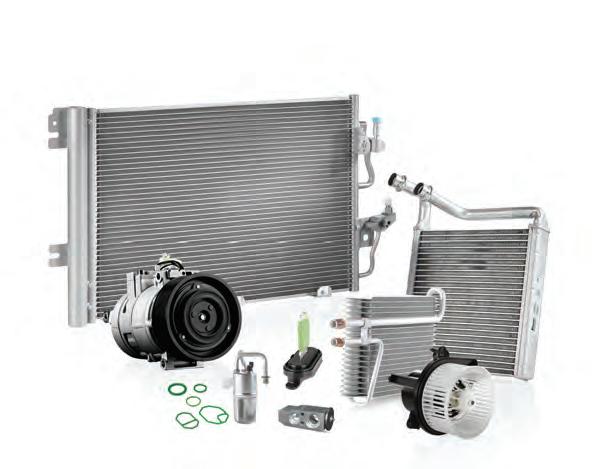
As the air conditioning season comes into view, AVA presents workshops with a great package that provides them with an optimised range that combines performance and value, alongside easy installation.
Sadly, despite its revenue generating potential, A/C remains a somewhat underperforming sector within the aftermarket, but as a thermal management, and subsequently an A/C specialist, AVA is keen to help workshops with a well balanced mix of competitive pricing, good quality and optimised coverage, alongside useful A/C advice and training.
Sound Advice
AVA is keen to remind workshops that most problems within the cooling or A/C circuit can directly influence the performance of the entire system, which means the complete circuit should always be inspected before simply replacing a part, or topping up the system.
If an A/C compressor fails internally, for example, metal particles can spread throughout the whole system and these contaminants may then clog components such as the condenser or expansion valve, leading to repeated failures, if the system is not properly flushed and cleaned.
Reminding them to follow a thorough inspection approach is, therefore, a helpful tip to allow them to complete a reliable and long-lasting A/C repair.
A/C Training
Due to the general lack of A/C knowledge in the market, especially when it comes to making the correct diagnosis, AVA is primarily focused on basic A/C training in order to support its factor customers to provide essential A/C knowledge to their connected workshops, which enables technicians to carry out accurate and efficient analysis, to make a successful repair.
The training covers the fundamental principles of temperature and pressure based diagnostics, helping technicians identify faults in a structured and practical way. Clear explanations and hands on tips ensure that the knowledge can be directly applied in daily workshop activities.
AVA also addresses important topics such as the proper way to flush the A/C system during repairs, which is essential for undertakings like compressor replacement.
The training is offered to workshops via its factor customers and can be provided either onsite or online.
Clever Fit Concept
Another selling point is the fact that alongside its optimised range offering quality, convenience and reliability, AVA recognises that workshops need solutions that provide them with ease of installation and maximum efficiency. As a result, it developed the Clever Fit Concept, which makes lives easier by ensuring seamless and hassle free product installation, because everything required to make the repair is included in the box.
To date there are almost 1,100 Clever Fit Concept A/C products in range, with more on the way, and every product undergoes strict fitment checks to ensure a seamless fit, in a wide range of vehicles. Whether it’s a compressor, condenser or receiver drier, AVA guarantees compatibility and optimal performance, reducing the risk of returns and mismatches. This means that workshops can trust that every product meets the correct industry standards, which is also great news for the end user.
Choosing the RIGHTOIL for modern A/C systems
As A/C compressors become more complicated, the oil you choose when servicing increases in importance. Mahle explains.
Lubricants are fundamental to the reliability and efficiency of modern vehicle systems, yet they are often overlooked during service and repair. Nowhere is this more evident than in air conditioning systems, where compressor oil plays a critical role in protecting components, maintaining performance and ensuring long-term durability.
Just like engine oil, air conditioning compressor oil lubricates moving parts, reduces friction and heat, and helps seal internal components. If the wrong oil is used, or if poor-quality lubricants are introduced, the result can be increased wear, reduced system performance and ultimately premature compressor failure.
With multiple refrigerants and compressor designs now on the market, selecting the correct lubricant has become increasingly important for workshops and motor factors supplying the trade.
Understanding the role of compressor oil
In an A/C system, the compressor oil circulates with the refrigerant throughout the system, lubricating internal components and helping maintain an effective seal between moving parts. This continuous movement means the oil must remain stable under varying pressures and temperatures while maintaining the correct viscosity.
High-quality oils also help reduce energy consumption by minimising internal friction and lowering operating temperatures within the compressor. When the wrong oil is used, however, it can lead to accelerated wear, corrosion, leaks or even system contamination.
For motor factors and technicians alike, understanding the different oil types available is therefore essential.
PAG oils – the industry standard
Polyalkylene glycol (PAG) oils are among the most widely used lubricants in modern automotive air conditioning systems. These fully synthetic oils are commonly specified by vehicle manufacturers for systems operating with the R134a refrigerant and are available in several viscosity grades, typically PAG 46, PAG 100 and PAG 150.
Their main advantage is excellent miscibility with refrigerant, allowing them to circulate efficiently through the system and lubricate the compressor effectively. Because of this compatibility, PAG oils remain the default choice for many passenger cars and commercial vehicles.
“The compressor oil circulates with the refrigerant, lubricating internal components and helping maintain an effective seal between moving parts.”
However, PAG oils are hygroscopic, meaning they absorb moisture from the surrounding air. If moisture levels rise within the system, acids can form which may lead to corrosion and component damage. For this reason, PAG oils must be stored and handled carefully, and containers should always be resealed immediately after use.
Mahle offers a comprehensive range of PAG oils designed to meet strict OEM specifications. For newer R1234yf systems, Mahle provides advanced double end-capped PAG oils, offering greater chemical stability and preventing oil degradation when interacting with the refrigerant while remaining compatible with R134a systems.
PAO
oils
– a flexible
alternative
Polyalphaolefin (PAO) oils offer an alternative approach to compressor lubrication. Unlike PAG (and POE) oils, PAO oils are non-hygroscopic, meaning they do not absorb moisture from the surrounding environment. This simplifies storage and handling in workshop environments.
Another benefit is their ability to retain viscosity even when mixed with refrigerant. Because refrigerant solubility in PAO oils is relatively low, the lubricant remains stable within the compressor and continues to provide effective protection against friction and wear.
PAO oils can often replace several PAG viscosity grades, allowing workshops and factors to reduce the number of oil types they need to stock. They also help improve sealing within the compressor, reduce operating temperatures and contribute to lower energy consumption and noise levels during operation.
Lubricants for hybrid and electric vehicles
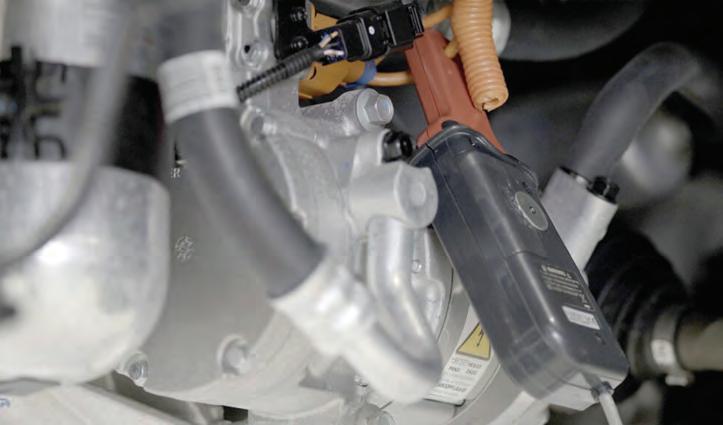
As vehicle electrification continues to accelerate, lubricant requirements are also evolving. Hybrid and electric vehicles frequently use electrically driven air conditioning compressors that contain highvoltage electric motors. In these applications, conventional compressor oils may not be suitable. Instead, polyol ester (POE) oils are typically required. These synthetic oils provide excellent electrical insulation while maintaining effective lubrication.
Because compressor oil may come into direct contact with electric motor windings, it must maintain high dielectric strength to prevent electrical short circuits. Crosscontamination is therefore a major risk. Even a small amount of standard PAG oil entering
an EV system can destroy the oil’s insulating properties and potentially trigger a highvoltage system shutdown.
Mahle’s POE oils are specifically designed to maintain this electrical insulation and can safely be used in hybrid and electric vehicles equipped with compressors originally filled with POE lubricants.
Getting oil filling right
Selecting the correct oil type is only part of the equation. The correct oil quantity is equally critical to system performance and compressor longevity. Technicians can quickly identify the correct PAG oil type and filling quantity using Mahle’s filling quantity tool, ensuring the A/C system is serviced according to manufacturer specifications: mahle-aftermarket.com/filling-quantities
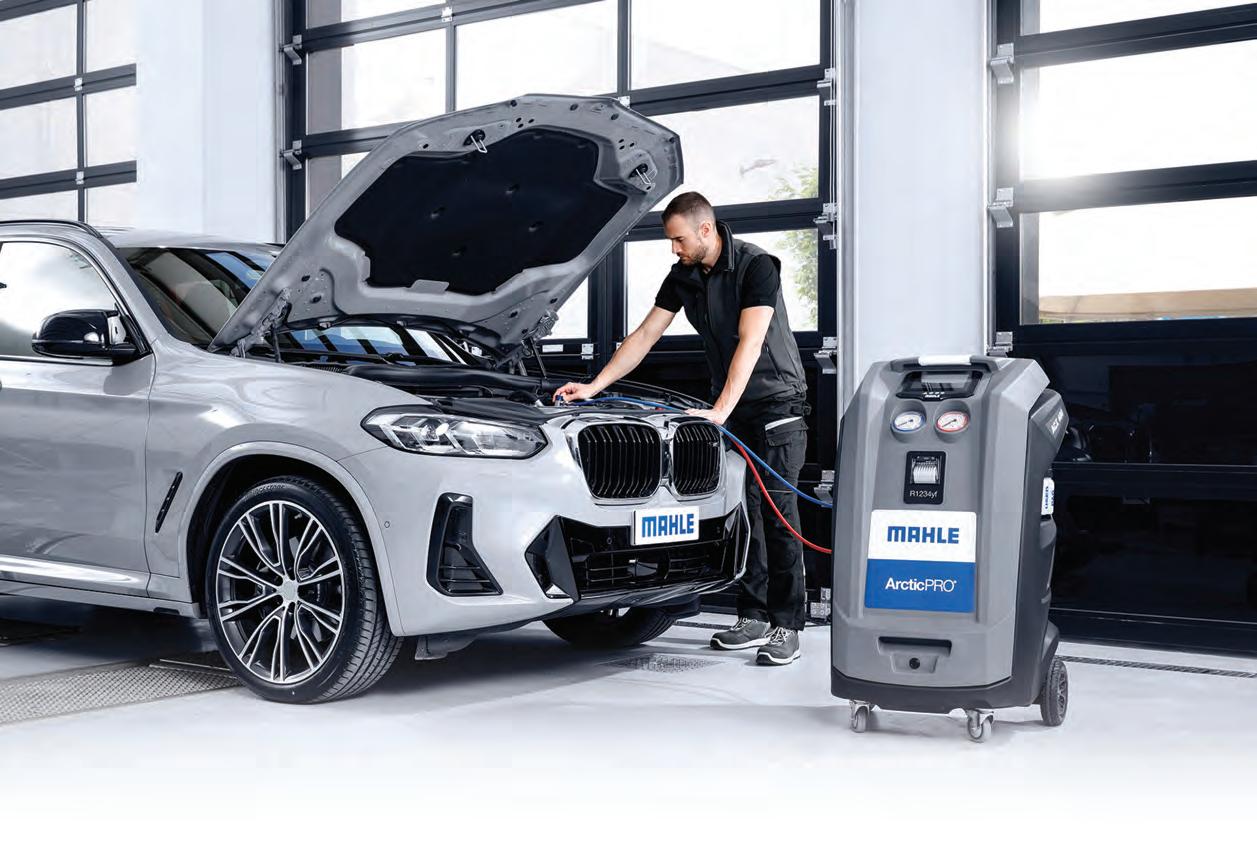
Using the right service equipment also plays an important role in ensuring accuracy. The Mahle ArcticPRO air conditioning service machines are designed to help workshops perform precise and repeatable A/C servicing while ensuring PAG oils are applied correctly.
The machines carry out a fully automatic process including refrigerant recovery, vacuum and refill, helping reduce the risk of
“For workshops, choosing the correct lubricant is not simply a technical detail, it can determine whether a repair lasts or results in repeat failures.”
manual error. A patented coupling system with zero gas loss prevents refrigerant escaping during servicing, helping workshops save money on refrigerant while reducing environmental impact.
Mahle air conditioning service units also feature timed automatic oil injection with an integrated cleaning function, allowing the correct quantity of oil to be introduced into the compressor without manual intervention. In addition, the system incorporates an oil care system using hermetically sealed bottles, which protects fresh oil and UV tracer from moisture contamination and helps preserve lubricant quality.
Together, these features ensure the correct refrigerant and oil quantities are applied consistently, supporting reliable compressor operation and long-term system performance.
The
importance of getting it right
For workshops, choosing the correct lubricant is not simply a technical detail, it can determine whether a repair lasts or results in repeat failures. Best practice also dictates that when replacing a failed compressor or switching oil types, the entire A/C system should be thoroughly flushed to remove contaminated oil and debris.
Different compressor designs, refrigerants and vehicle architectures all require specific lubricant formulations. Motor factors therefore play an increasingly important role in helping technicians select the correct product and ensure reliable A/C system performance.
Mahle’s portfolio of compressor oils reflects this growing complexity, covering PAG, PAO and POE formulations for conventional vehicles, hybrid and electric platforms and a wide range of refrigerants.
As air conditioning systems continue to evolve alongside vehicle technology, the role of lubricants will only become more critical. Understanding the differences between oil types, and using the correct tools to apply them accurately, remains essential to keeping modern A/C systems operating efficiently and reliably.
Whyis AIRCONDITIONING SYSTEM SERVICING so challenging?
Denso’s A/C product specialist Richard Groot takes a look at the state of the A/C repair sector and why workshops aren’t more clued up when it comes to air con.
Despite the fact that air conditioning and climate control systems have been a standard feature on the typical car for a number of years, why does A/C service still present such a challenge for mainstream workshops?
Although technicians generally have a sound knowledge of how most vehicle systems – engine, exhaust, thermal (cooling), ignition, transmission, chassis etc. – actually function, the majority don’t have the same level of understanding of the A/C system, which is the fundamental problem. This lack of knowledge of the basic operating theory means that, in a typical independent workshop anywhere in Europe, A/C service is not carried out to the quality that it should be, and why specialist A/C businesses have thrived. This is a crazy situation for motorists, who should have confidence that the workshops they use can competently undertake all type of service and repair work on their vehicles, but also means that most workshops are losing out on much needed revenue.
Transferring heat
Every A/C system, whether in a traditional combustion engine-powered vehicle, a hybridor a full electric vehicle, operates on the same principle, that is to take heat from point A (generally inside the passenger compartment), and transfer it to point B (outside the vehicle). However, because they don’t have a combustion engine from which to harvest heat, many electric vehicles use a heat pump system, which can also reverse the cycle when the weather is cooler and take heat from the outside and use it to warm up the passenger compartment, as well as being able to cool it when the outside temperature is high. However, while the system is very efficient at using only a small amount of power to warm the passenger compartment, its heating performance is significantly reduced at low ambient temperatures, because it is difficult to collect heat from outside in these conditions. To combat this problem,
some hybrid vehicles, such as the Toyota PRIUS PHV, are equipped with an electric compressor, which has a gas injection function that assists heating by returning a portion of the heat-dissipated refrigerant, back to the heat pump system.
Lack of understanding
Irrespective of whether it’s a traditional or heat pump system, this widespread lack of understanding of how the A/C system works means that mistakes in diagnosis and repair are often made, and sadly, the typical workshop’s response to A/C service is to just re-gas the system, which, without understanding the basics, can often cause more problems than it solves and certainly cannot be described as A/C service!
It is also worth mentioning that the situation can be made even worse if, in addition to not understanding the A/C system, technicians also don’t understand how an A/C refilling machine operates and what it does, and just hope that using it will automatically service the system.
Fundamentally, if they don’t understand the A/C system, they won’t be able to diagnose problems with the refrigerant cycle and the component that’s in the frontline when it comes to the consequences of the most common errors, is the compressor. This is because it does the hard work of pushing the oil/refrigerant mixture around the system and if there is the slightest problem with the ratio of the mixture or it is contaminated with dirt, or debris from a worn part, the compressor will take the brunt, so is the unit most likely to fail.
Finding the root cause
However, going back to the lack of A/C knowledge in the industry, although it’s the compressor that is likely to fail, it’s rarely the compressor itself that’s at fault, it’ll be another underlying issue that needs to be resolved before the compressor is replaced, otherwise a new compressor will simply fail again.
So, referring to the A/C refilling machine, if you do not understand what the machine is doing during an A/C service, especially if it is a fully automatic machine, things can go wrong. For example, it’s easy to add too much oil or too much UV-Dye to the system, because the machine is on the wrong setting. It’s also possible to introduce the incorrect amount of refrigerant because of an uncalibrated scale on the internal tank.
Trial and error
As a result of all these factors, A/C system repair can sometimes become a case of trial and error, instead of real fault finding. As technicians struggle to understand the refrigerant cycle, in many cases their diagnosis is only based on checking the system’s pressure, but as many vehicles now use electronic controlled, variable displacement compressors, it is also important to check the system’s temperatures and live data, for example. Not following the installation instructions when replacing a compressor is another major problem, which can result in a further failure and expensive (warranty) repairs.
So, what options do workshops have to turn these issues into revenue streams?
Across Europe, Denso offers training covering everything from the basic steps of A/C service, through to the analysis of compressor failure, which can be accessed through its distribution partners, viewed on YouTube videos or via the online e-Learning training platform.
Equipped with this knowledge, technicians undertaking the work are able to tackle A/C service and repair with confidence, which also means that workshops will benefit from extra revenue opportunities and offer a right, first time level of service to their customers.
KNOW YOUR PARTS High voltage electrical compressors
Nissens outlines what you need to know about the increasingly common high voltage electrical compressor.
Electrical compressors have now been on the market for a while and they currently power most high voltage air conditioning systems in hybrid and electric vehicles. They have several advantages and there are a couple of special features that differentiate them from a traditional belt driven A/C compressor.
Design and operation
Although still compact in design, electrical compressors circulate refrigerant efficiently around the A/C or heat pump loop using a powerful, high torque electrical motor, employing scroll based technology where the refrigerant is compressed by rotation of a set of spirals. Compared to traditional belt driven units, the design has fewer parts. There are no pistons, wobble plate mechanism or steering valves that traditional compressors have and the only valve in the scroll system is a relatively simple metal valve to steer the refrigerant gas inlet and outlet within the compressor.
Main parts
In short, there are three main parts of the component:
● Scroll/spiral assembly to compress the refrigerant.
● 3-phase electrical motor that rotates the compressing elements at the heart of the system. Typically, this is a brushless electric motor consists of a rotor magnet and coil stator that operates on high voltage currents above 200-volts. The loop’s refrigerant is used to thermally protect the motor unit.
● Integrated power inverter module (PIM) to drive and control the operation of the electric compressor motor. It converts the direct current from the vehicle’s high voltage battery pack to alternating current to run the electric motor. The PIM module also consists of hardware and software electronics designed to control the speed of the motor and the output torque of the high voltage compressor.
Many compressor models have two connectors located on the assembly. The larger socket is for the high voltage connection to the vehicle’s battery. For safety reasons, both the socket and the wiring to the battery are bright orange, which indicates high voltage. The second, smaller socket is for the compressor communication with the HV A/C system’s control unit.
The control unit sends input signals to the PIM module, which translates them and directly runs the compressor via voltage
signals that control the commanded level of electrical current sent to the electrical motor. The level of the electrical current steers the compressor’s output torque and the frequency of the signal controls the speed of the motor.
Advantages
Electrical compressors are designed with a focus on independence, reliability and energy efficiency and there are several reasons why many new energy vehicles use them.
● Stable compression, high speed and torque capabilities.
● Increased efficiency – excellent performance with less energy needed to run the compressor. Precise output control reduces energy consumption and extends the vehicle’s battery life. Operation and speed control of the high voltage compressor occurs through control of the current, which is governed by the PIM.
● No steering valves or speed sensing is needed.
● Reliable operation independent from the vehicle drive – the compressor can run even when the vehicle’s electric motor is turned off and the car is not moving. Besides the outstanding capabilities for the AC, the design also enables the use of the compressor for heat pump and heat generation.
● Quieter and allow for higher speeds –thanks to fewer overall parts, the scroll’s mechanical elements are simpler.
● Small and compact – as there is no need for a drive belt, it can be sympathetically located in the vehicle’s layout.
Common failures
As with any other compressor, HV A/C compressors can equally suffer from malfunctions when exposed to system failures. However, before blaming the compressor as the root cause of the problem, a trained technician should always thoroughly inspect the system because most compressor breakdowns occur due to other, associated issues.
Electricity
Irregular compressor operation may be linked to erratic electrical signals to, or within its electronic control module, for example. Various symptoms may indicate problems like poor system performance, unusual noise generation, or irregular operation, such as when the vehicle works only in some modes, or does not activate at all.
Physical damage
The HV A/C compressor may also suffer from physical damage, which can cause other severe system failures, excessive friction in the inner parts and noise generation may indicate impaired compressor lubrication, for example.
Overheating, moisture in the system or the use of incorrect lubricant are also common causes. Severe defects of the compressor’s inner parts like a breakdown of the scroll mechanism or of the entire compressor are common consequences of an excessive load on the unit.
A lack of lubricant, or its degradation, a liquid refrigerant state or excessive thermal stress can cause some of these defects. Technicians should also be aware that impurities in the system, overdosing on UV dye, or using unauthorised substances like leakstopping agents, can destroy the compressor.
Lubrication
In common with traditional compressors, lubricant is also critical for electric compressors. Besides lubricating the mechanical parts and cooling them down, the lubricant also insulates the electrical components. Low pressure refrigerant cools the high voltage motor windings as it mixes with the oil. Therefore, the electrical insulation between the compressor’s motor windings and the vehicle chassis ground is crucial. The oil must have an appropriate insulation resistance, so only specific oil types with high resistance capacity and prescribed by the car manufacturer can be used.
Replacement
Keep in mind, before blaming the compressor for a system failure, faults need to be diagnosed thoroughly.
So, before installing a replacement, make sure no other part is causing the failure, otherwise the new compressor will simply fail again. If replacement is necessary, the system must be thoroughly and completely flushed prior to installation.
In addition, only qualified technicians who have received specialised training and certification, and follow the safety rules, using HV specific tools and other consumables designed for HV applications, should replace components within the system.
Buying the RIGHT tyres
Kumho Tyre UK delivers economical performance without compromise.
As motorists continue to balance rising household costs against the increasing expense of vehicle ownership, demand is growing for tyres that can deliver genuine long-term value without compromising on safety, refinement or performance. For workshops and tyre specialists, that shift presents an opportunity. Drivers are becoming more informed about where value truly lies, looking beyond headline pricing and focusing instead on durability, fuel efficiency, wet-weather performance and longevity. Increasingly, they want reassurance that a more economical tyre choice still represents a quality investment.
Longer ownership
Kumho believes this is where its expanding product range continues to resonate strongly with both motorists and the aftermarket.
Designed to offer dependable real-world performance across a broad range of vehicle applications, Kumho’s Ecowing and Solus ranges have become increasingly popular with drivers seeking a balanced package of comfort, efficiency and reliability, particularly as vehicle running costs remain under pressure –with Solus being Kumho’s all season choice. Alongside these everyday ranges, Kumho’s well-regarded ECSTA line-up continues to strengthen the brand’s position in the performance tyre sector. 2025 proved to be a year of strong progress for Kumho Tyre UK, with the ECSTA Sport and ECSTA Sport S (PS72) gaining significant traction across the market. Building on the legacy of the highly successful PS71, the latest generation tyres have demonstrated impressive real-world performance, stability and wet-weather capability, while helping reinforce Kumho’s growing reputation across both mainstream and ultra-highperformance applications.
Today’s motorists are keeping vehicles for longer and paying closer attention to ongoing maintenance costs, making tyre choice more important than ever. While budget remains a consideration, it is no longer the sole driver. Customers increasingly understand the relationship between tyre quality, fuel economy, wear rates and overall driving confidence.
Kumho has continued to invest heavily in compound technology and tread design to ensure its products deliver strong mileage performance and reduced rolling resistance, helping drivers improve fuel efficiency while maintaining dependable grip levels in both wet and dry conditions.
For workshops, this creates a valuable conversation around total cost of ownership rather than simply upfront purchase price.
Tyres and alignment working together
As tyre technology continues to evolve, wheel alignment is also becoming a more important part of the customer proposition. Even the highest-quality tyre will struggle to deliver optimal longevity or efficiency if alignment is incorrect. Misalignment is still one of the leading causes of premature tyre wear, increased rolling resistance and poor handling characteristics, all of which can
negatively affect fuel consumption, safety and customer satisfaction.
For garages, pairing replacement tyres with alignment checks offers an opportunity not only to improve customer outcomes but also reinforce professionalism and trust. It allows workshops to show that value is not simply about fitting tyres at the lowest possible price, but ensuring customers achieve the best possible performance and lifespan from their investment.
Supporting the changing vehicle parc
Kumho’s product development also reflects the changing demands of the UK vehicle parc, including the continued growth of hybrid and electric vehicles.
Many products within the range are engineered to cope with the increased load demands and instant torque delivery associated with electrified drivetrains, while also helping to reduce noise and improve refinement, particularly important for quieter EV cabins.
At the same time, the brand’s focus on balanced everyday usability ensures products remain equally suited to conventional petrol and diesel applications across the independent aftermarket.
Commenting on current market trends, Richard Lyons, managing director of Kumho Tyre UK, said: “Drivers today are more conscious than ever about getting genuine value from every aspect of vehicle ownership. What we continue to see is that customers do not simply want the cheapest option, they want confidence that they are buying a quality product which performs well, lasts well and supports lower running costs over time.
WEARINGTHIN
The Motor Ombudsman is teaming up with TyreSafe and Lindley’s garage to raise awareness around part-worn tyres.
The Motor Ombudsman has unveiled its ‘WORN-WARN’ tyre safety campaign at the UK Garage & Bodyshop Event at Birmingham’s National Exhibition Centre. The online and social media awareness drive is designed to shine the spotlight on the risks of motorists buying and fitting part-worn tyres – used tyres from another vehicle which carry an unknown history and potentially hidden structural damage.
The launch of the latest initiative, backed by charity TyreSafe, comes in response to a survey of 2,000 UK adults by The Motor Ombudsman, which found that nearly a third (31 per cent) of those polled would consider buying partworn tyres if their vehicle’s tyres needed replacing – a figure which rises to nearly half (47 per cent) amongst the 25 to 34 age group.
When asked about what the primary motives would be for those who would opt for second-hand tyres, more than two-thirds (67 per cent) explained that saving money compared to when buying new, would be front and centre. The study equally revealed that costof-living pressures have made it more likely for around nine in ten people (88 per cent) to turn to second-hand purchases to make alreadystretched household budgets go even further.
benefit from the convenience of used tyres often being immediately available for fitting.
Sellers of part-worn tyres are subject to strict rules, including that they must be labelled as ‘PART-WORN’ on the sidewall to clearly show their condition. Nevertheless, nearly half of prospective buyers (43 per cent) polled were unaware of this requirement, further reinforcing the dangers of the public buying such a critical safety component without knowing to look out for this crucial stamp. Similarly, for consumers considering buying a part-worn tyre, being able to read the ‘Department of Transport’ (DOT) code on the sidewall – the equivalent of its ‘date of birth’ which shows the age of a tyre, is just as essential, as it may appear in reasonable condition to the untrained eye, but at the same time be beyond its intended lifespan. The research found however, that nearly seven in ten respondents (69 per cent) admitted to not knowing what the DOT code meant, and would likely take what was said by the seller at face value.
A tempting offer
new at a reputable fitter should always be the first choice regardless of budget, meaning consumers are not taking a gamble when it comes to a tyre’s condition.”
Paul added: “The ‘WORN-WARN’ campaign also provides garages and workshops, like ourselves, with a brand-new suite of eye-catching assets and tools to help educate motorists on what to look out for when buying and maintaining tyres – a subject that should not be overlooked.”
Other key motivations cited by respondents for going down the route of part-worns was the fact that they would offer a temporary solution until they could afford brand-new tyres (37 per cent), whilst a similar proportion (36 per cent) explained that they would
Paul Brown, General Manager of the Tyre Division at The Motor Ombudsman-accredited Lindleys Autocentres garage group, and spokesperson for the ‘WORN-WARN’ campaign said: “As motorists continue to face increasing financial pressures, it can be tempting to cut back on vital car maintenance, as the recent Motor Ombudsman study has found. However, spending money on tyres should never be compromised, and buying
Stuart Lovatt, Chair at TyreSafe – an organisation which has championed tyre safety for two decades, explained: “Tyres are the only point of contact between a vehicle and the road, but millions of part-worn tyres enter the market every year with an unknown history, hidden structural damage, or inadequate inspection by either sellers or vehicle owners. They may appear great value on the surface, but they can unfortunately compromise braking performance, increase the chance of blowouts, and put road users at risk of serious harm.”
Stuart added: “We are delighted to be backing this valuable campaign by The Motor Ombudsman, which works perfectly in tandem with our continued work in educating consumers about making informed and safe choices, understanding the risks that used tyres can bring, and ultimately urging them to think twice before cutting corners.”
Lindley’s General Manager of the Tyre Division, Paul Brown
PART-WORNTYRES: Whysell them?
We asked Sophie Lyden, the Tyre Lady, to provide her thoughts on part worn tyres.
Part-worn tyres are one of those topics that always divides opinion. Some people think they should be banned altogether. Others believe they’re a necessary option for motorists who simply can’t afford brand-new tyres. To tell the truth, I’m somewhere in the middle.
I do believe there is a place for part-worn tyres. Not everyone has hundreds of pounds available when they need tyres, and if the choice is between driving on a dangerous tyre or fitting a safe, correctly inspected partworn, then I can understand why some people choose that route. But that’s where my issue starts. The problem isn’t part-worn tyres themselves. The problem is the shocking lack of enforcement around them.
The rules are actually quite clear. Part-worn tyres should be inspected, marked correctly, structurally sound and have a minimum of 2mm tread depth. Yet year after year investigations continue to find illegal and unsafe tyres being sold to unsuspecting motorists.
TyreSafe has found that more than 90 per cent of retailers inspected were breaking the rules and more than 60 per cent of tyres checked were unsafe for sale. Unfortunately, it's the customer who carries the risk.
Potential damage
As tyre professionals we see it all the time. Sidewall damage. Poor repairs. Cracking. Old tyres. Dangerous tyres. Tyres that should never have found their way onto a vehicle in the first place. One case that will always
stick with me involved a customer who came to us believing she had recently purchased brand-new tyres. When we checked them, they turned out to be 35-year-old Pirellis. Let that sink in for a moment.
The scary part wasn’t the age of the tyres. It was that the customer genuinely believed she’d been sold a safe product.
Now, that's an extreme example, but it highlights a much bigger problem. Most motorists don't know how to identify tyre age, previous repairs or hidden damage. They trust that the retailer has done the right checks and supplied a safe product.
False economy
What I struggle with is understanding why some businesses continue to push part-worns when, in many cases, a brand-new budget tyre isn’t much more expensive.
I’ve seen part-worns being sold at prices where a customer could have bought a brand-new tyre with a warranty and known history for similar money. So what are we really offering them? Is it genuinely about helping customers, or is it about profit? That’s probably the uncomfortable question our industry needs to ask itself.
What I find particularly interesting is the difference in scrutiny between new and partworn tyres. As retailers selling new tyres, we’re expected to comply with a huge number of regulations. Something as simple as failing to display the correct tyre label can result in fines of up to £10,000. Yet at the same time,
unsafe part-worn tyres can still find their way onto vehicles with very little oversight.
Responsibility
I’m not against part-worn tyres, and I don’t believe they’re going anywhere overnight. However, I do believe we have a responsibility as an industry to better educate motorists on the true value of buying new. When you consider the warranty, the known history, the safety assurances and the lifespan of the tyre, a new tyre can often be the more cost-effective option. I also think we need to do a far better job of educating motorists. We spend a lot of time talking to each other as an industry, but not enough time talking to the people driving on these tyres every day. If more motorists understood tyre age, tyre condition, legal requirements and the true value of buying the right product, I genuinely believe many would make different choices.
At the end of the day, every tyre we fit carries responsibility.
The question for our industry is not whether they should be available, but whether we are prepared to ensure they are sold legally, inspected properly and held to the standards that motorists deserve.
At the same time, we need to continue educating consumers. If we can help motorists understand the long-term value, safety and performance benefits of buying new tyres, perhaps over time the demand for part-worns will naturally reduce.
What’s new IN THE WORKSHOP?
Carwood launches BMTS turbos
Remanufacturer
Carwood, has added BMTS (formally Bosch Mahle Turbo Systems) to its growing portfolio of boosting solutions. The company already remanufactures an extensive range of OE-equivalent turbochargers and is an authorised distributor for BorgWarner and Mitsubishi. The programme extends beyond BMTS’ own original equipment turbochargers, spanning close on 400 part numbers for car, commercial vehicle and off-highway applications. This includes over 75 OE references fitted to popular, late model BMW, VW and Vauxhall/Opel applications.
Jump starter range extension
Ring Automotive’s new Ultraboost 2000A (RJS040) jump starter is its most powerful Ultraboost yet. The jump starter is capable of jump starting eight litre petrol and four litre diesel engines, making it suitable for the vast majority of the car parc. It also has a boost button that can energise batteries that are completely dead and comes with long cables, making it a convenient piece of equipment for all.
The unit is quick and easy to use, taking just 60 seconds to connect and start the engine effectively, meaning drivers can get back on the road that much quicker. It also has a large colour screen that has a battery indicator and colour status so the health of the battery is easy to determine.
TO FIND OUT MORE
WWW.RDR.LINK/ACG027
Coated brake disc range
TO FIND OUT MORE
WWW.RDR.LINK/ACG025
Bulb display
Hella has unveiled a new single-box programme for its premium 12V and 24V bulb ranges, providing independent garages with a practical solution for fast, reliable bulb replacement. The initiative includes a range of displays, from wall-mounted stands to versatile wire stands that can be positioned on a countertop or mounted to a wall. Hella’s launch promotions for both 12V and 24V ranges mean that qualifying orders of 200 or 300 H7 bulbs include a display stand and refill stock pack completely free.
TO FIND OUT MORE
LKQ Euro Car Parts is bringing Starline’s BlackStar coated discs to UK workshops for the first time, providing technicians with highly durable, corrosion resistant braking products that aim to save on installation time. Using electrophoretic technology – a process where paint is bonded to metal surfaces using an electric current – the coating provides a durable protective layer against corrosion, while removing the need for cleaning before installation. It is applied to withstand over
120 hours of salt spray exposure, supporting longer service life in demanding conditions such as cold and wet UK winters.
TO FIND OUT MORE
WWW.RDR.LINK/ACG028
Welded bottle jack range
Jefferson Tools has announced the launch of its new Nemesis welded bottle jack range. Designed to meet the demanding requirements of modern automotive and industrial workshops, the comprehensive new range offers robust lifting solutions for every vehicle type, from passenger cars to heavy commercial vehicles.
and 32 tonnes, providing a backbone of reliable, heavy-duty lifting equipment for professional mechanics and technicians. The jacks are manufactured and tested to the latest CE standards, ensuring safety and compliance in busy workshop environments.
TO FIND OUT MORE
The Nemesis range spans seven models with lifting capacities of 2, 3, 5, 10, 15, 20,
WWW.RDR.LINK/ACG029
Here is a useful summary of all the adverts that appear in this issue of Professional Motor Mechanic. Each is listed with its page number and a direct URL that will get you straight to the relevant online information