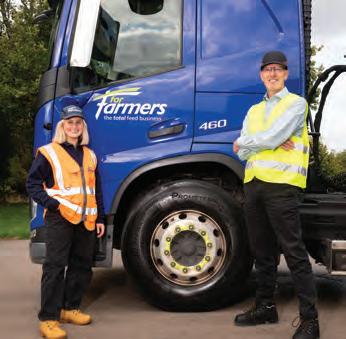
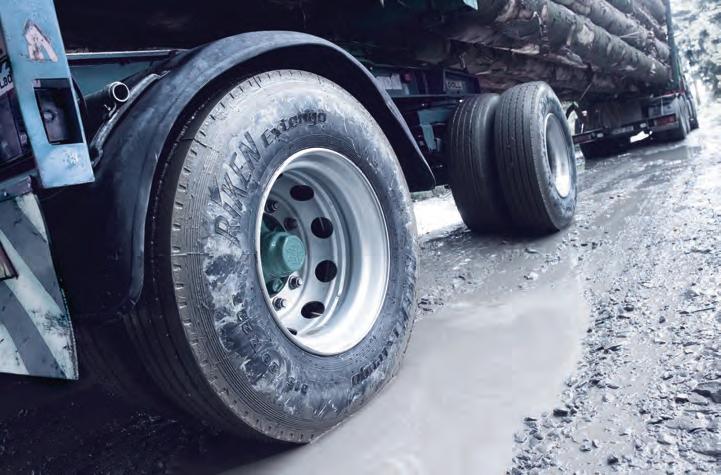
Prometeon Tyre Group says correct application and management of tyres are key to performance, uptime and long-term value.
PCL shows how its products are helping support A Davies Transport in prioritising daily tyre checks with accurate tyre inflation equipment.
20 As fleet pressures grow in 2026, tyres are becoming a strategic asset, with advanced designs helping operators improve efficiency, durability and uptime while reducing costs, argues Kumho Tyre.
23 Bandvulc, part of Continental, has launched the Deliverymaster 5 retread, the newest drive-axle tyre designed for regional LCV fleets. We have the details.
BODY REPAIRS & REFINISHING
24 Nissens Automotive emphasises the critical role of the climate comfort system and the need for high-quality replacement parts in its repair and maintenance.
26 Looking for some solutions to common damages of air condition compressors? Look no further than this article from febi.
29 Solar is becoming vital for temperature-controlled fleets, reducing downtime and strain on key systems, with Genie Insights showing strong reliability through widespread adoption.
30 Rupert Gatty, chief executive officer of CoolKit Ltd, explores how rising costs and infrastructure shortfalls are putting critical supply chains at risk.
32 AP Air is here with a timely reminder about the importance of charging station maintenance.
AXLES & SUSPENSION
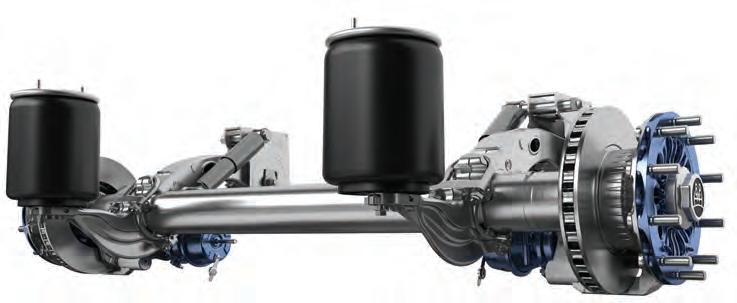
As transport continues to evolve, BPW aims to demonstrate how its innovations continue to meet the needs of its customers and those wanting efficiency, durability and good value.
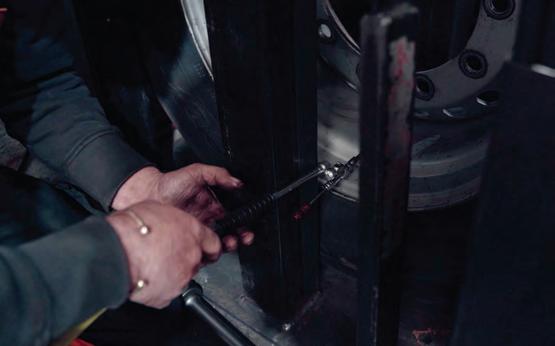
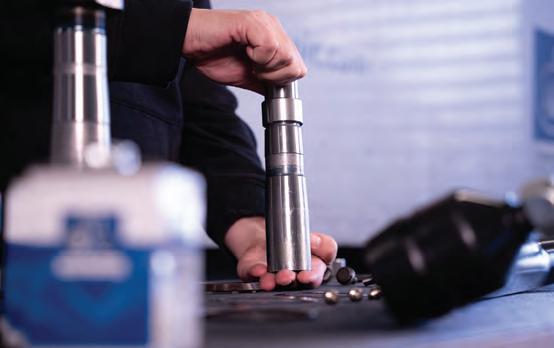
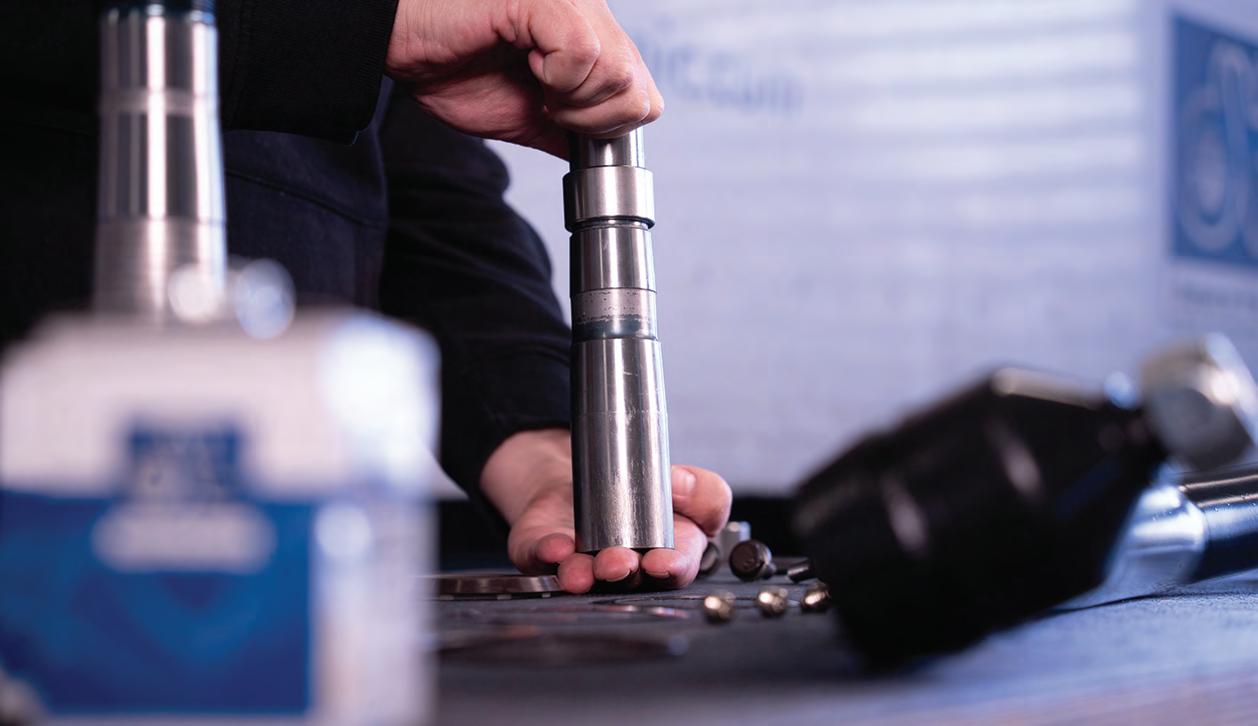
Diesel Technic highlights how material quality, proper shimming and good workshop practice decide whether a king pin rebuild lasts or quickly develops costly play.
39 Accurate diagnostics and repair are vital for safety, profitability and reputation. MAHA UK shows how modern axle play detection systems can prevent misdiagnosis and deliver ROI.
VIEWPOINT
Editor
FREYA COLEMAN
cvw@hamerville.co.uk
Group Editor
KIERAN NEE
Digital Manager
KELLY NEWSTEAD
Digital Assistant
JOE CLARKE
Group Manager
ALEX DILLEIGH
Advertisement Manager
MARCUS HOOPER
Graphic Designer
GEMMA WATSON
Group Production Manager
CAROL PADGETT
Subscriptions
Commercial Vehicle Workshop is a business magazine for companies and individuals involved in all aspects of commercial vehicle servicing.
It is published 11 times a year and is available on free subscription to qualified readers.
Subscription rates:
UK £30 post paid
Airmail £99 post paid
Europe £70 post paid
To be removed from this magazine’s circulation, please call 01923 237799 or email circulation@hamerville.co.uk.
It’s easy, in this industry, to get caught up in the machinery, with new vehicles, new systems, new technology - there’s always something to focus on, something to analyse, something to improve. But in all of that, it sometimes feels like we skip over the most important part of the equation: the people actually doing the work.
Because for all the talk of innovation, the day-to-day reality of keeping commercial vehicles on the road still comes down to technicians, workshop controllers, parts teams, the people on the ground making it happen. They’re the ones dealing with the pressure when a vehicle is off the road. They’re the ones expected to diagnose faster, fix quicker, and somehow stay on top of systems that seem to get more complex by the month.
Moreover, the job isn’t getting any simpler. Modern workshops aren’t just about turning a wrench anymore. They’re juggling diagnostics, software updates, compliance checks, admin, customer expectations and often doing it all under tight time pressure. It’s skilled work, no question about it. But it’s also demanding work, and increasingly so.
What’s interesting is that while expectations have risen, the conversation around the people doing the job hasn’t always kept pace. We still talk about “the skills shortage” as if it’s a headline rather than a lived reality. We talk about training, but not always about time. We talk about recruitment, but not always about retention and we talk a lot about what the industry needs, without always asking what the people in it need to keep doing the job well.
There’s also something to be saidfor how we value the work itself. Commercial vehicle workshops are often described in terms of cost - cost centres, cost pressures, cost control. But that framing misses the bigger picture. The people in those workshops aren’t just fixing vehicles. They’re protecting uptime, keeping operations moving, and, in many cases, acting as the last line of defence when something goes wrong.That’s not just maintenance. That’s critical work. So maybe it’s time the conversation shifted a little.
Less focus on the machines in isolation, and more on the people behind them. Less assumption that the workforce will simply adapt, and more effort to support them as the job continues to evolve. Because at the end of the day, no matter how advanced the vehicles become, no matter how much technology we introduce, this industry still runs on people. And if, and I hope, you’re one of the many people working hard everyday I implore you to give yourselves a big pat on the back!
Editor
CVW NEWS
NEWSIN BRIEF
■ Top reason behind van operator prosecution revealed. New analysis of government data by Dawsongroup vans reveals that overloading is the most common reason van operators are prosecuted, accounting for around 60 per cent of light goods vehicle offences recorded between 2021/22 and the first quarter of 2025/26.
■ Technician shortage continues to impact repair capacity. Ongoing recruitment challenges continue to impact repair capacity across the automotive sector, with Easy2Recruit reporting that three independent workshops have recently closed due to difficulties securing skilled technicians.
■ Servicesure recognises the UK’s top performing garages. Servicesure, the nationwide network of independent garages powered by GSF and Dingbro, has recognised the UK’s highestperforming independent garages at its annual awards including Magnet Autos as Fleet Garage of the Year.
■ Autocom appoints a new UK distributor. A1 Diagnostic Solutions has been appointed as one of a limited number of UK distributors for Autocom’s ICON diagnostic platform, strengthening its diagnostic offering with a system designed to cover both light and heavy vehicles.
Impact of electric HGVs revealed
Hitachi ZeroCarbon and GRIDSERVE have published the fourth report from the Electric Freightway project, revealing the impact a single eHGV can have.
A single eHGV could cut approximately 1,000 tonnes of carbon emissions by 2034, when compared with a diesel equivalent, an amount which would take 50,000 trees a year to absorb. The findings highlight the role electric trucks can play in decarbonising road freight.
The Electric Freightway project is part of the Zero Emission HGV and Infrastructure Demonstrator (ZEHID) programme, funded by the Department for Transport
and delivered in partnership with Innovate UK. The project brings together more than 30 industry partners, led by GRIDSERVE, to accelerate the adoption of electric HGVs and the development of supporting charging infrastructure.
The fourth report highlights the progress made during the programme, with eHGVs now deployed across 25 hauliers and operating on real-world logistics routes across the UK. Participating fleets have collectively tracked over two million zero-emission kilometres, generating insights into how electric trucks perform in day-to-day freight operations.
Road safety focus needs sharpening
New figures suggest improvements in road safety are losing momentum, prompting Webfleet to call for renewed focus on fleet risk management.
Data from the Office of Rail and Road shows that 1,931 people were killed or seriously injured on England’s strategic road network in 2024, up from 1,908 in 2023, while the casualty rate remained unchanged at 19.9 per billion vehicle miles travelled.
Provisional Department for Transport figures for the year to June 2025 put the number of people killed or seriously injured across Great Britain at 29,896, with little change on the previous 12 months.
These figures should prompt fleets to take a more proactive approach to risk, according to Webfleet, Bridgestone’s advanced fleet management solution. Fleets need to manage safety continuously, using fleet data to build a better understanding of incidents and their causes. This may include making better use of data already available through fleet management systems to spot patterns earlier and respond before problems escalate. Patterns such as speeding, harsh braking, fatigue, recurring issues on certain routes and incidents at particular times of day can help fleets spot where risk is developing.
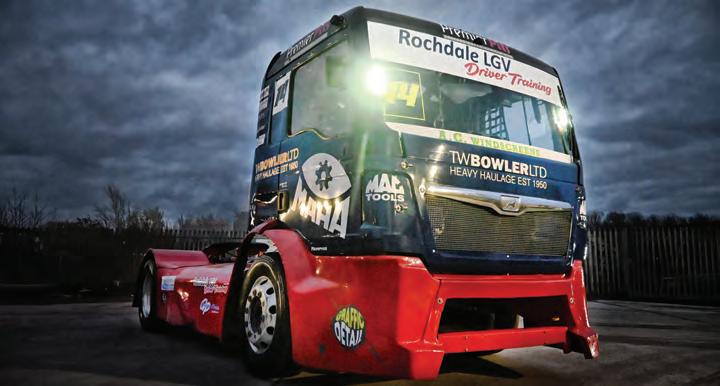
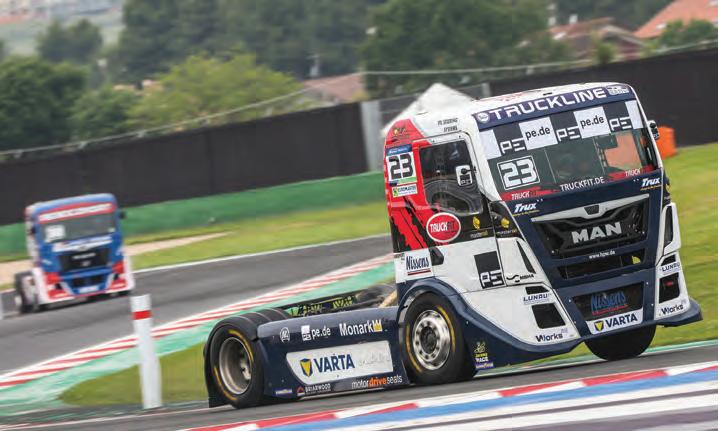
MAHA UK is thrilled to extend its partnership with Bowler Racing for the 2026 British Truck Racing Championship.
Laser Tools celebrates 50
years
Laser Tools has celebrated its 50-year anniversary with the launch of Future 50, an initiative designed to support aspiring young mechanics in their first steps into the automotive aftermarket.
The Future 50 was officially launched at a special anniversary milestone event and Laser Tools also unveiled 50 new tools, each complete with a 50-year warranty.
Laser Tools Future 50 will offer garages the opportunity to nominate their apprentices, the qualifying criteria being those already enrolled in training and actively working within a garage, to be part of the new initiative. The chosen Future 50 will each receive a Laser Tools Apprentice Tool Kit, complete with various products, to support
their development as young mechanics beginning their career journey in the industry.
For the 50 tools launch, there will also be a special edition of Tool Saver, Laser Tools’ dedicated parts catalogue, with 16 additional pages and expert reviews of all the products.
Aviation supplier upgrades workshop
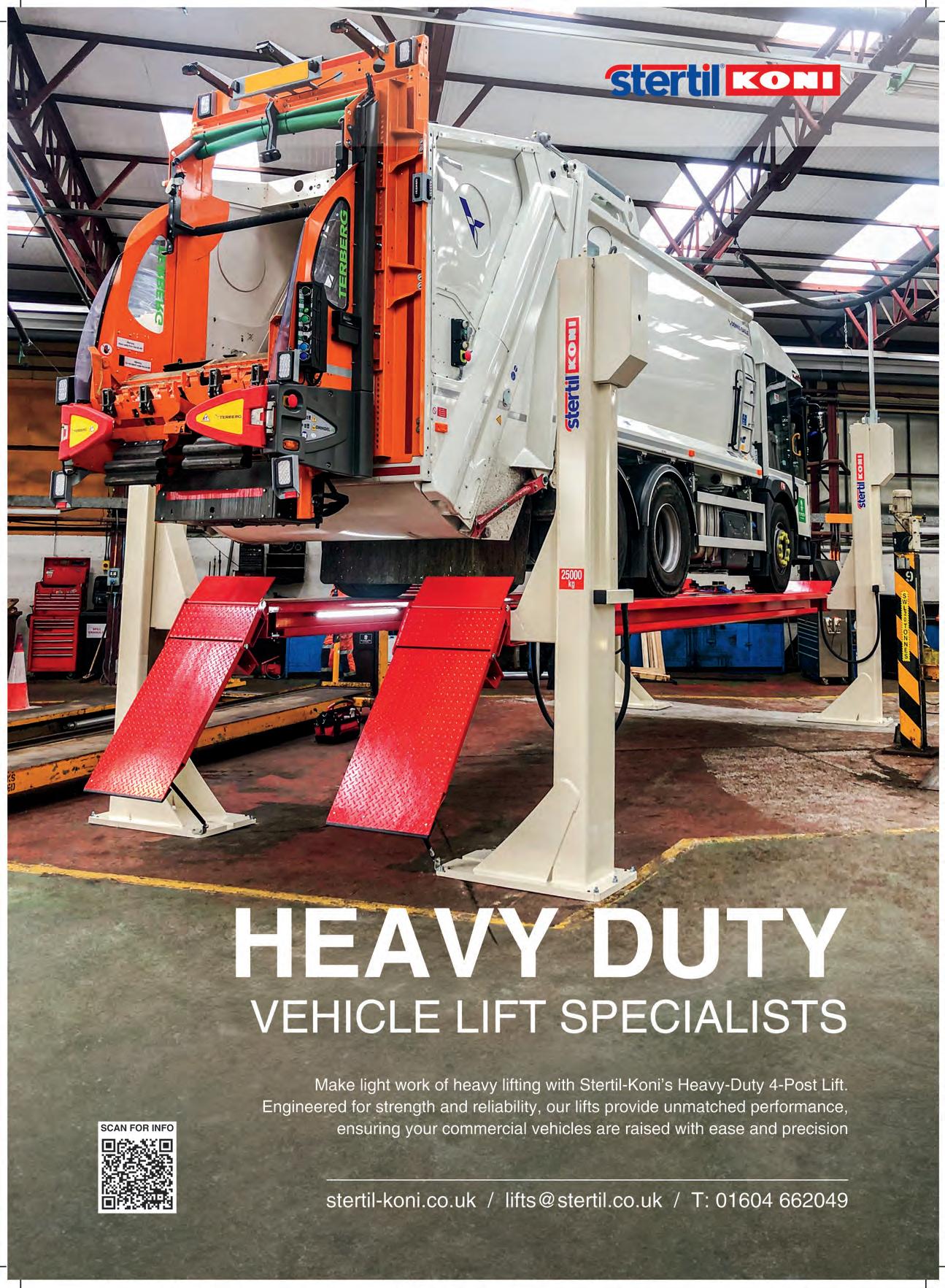
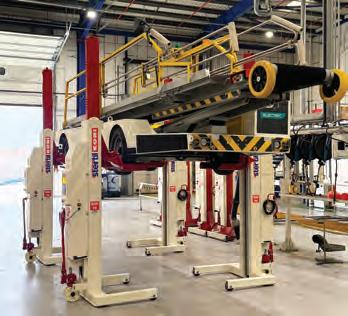
TCR, a leading provider of Ground Support Equipment (GSE), has upgraded its Stockport workshop with new wireless mobile column lifts from Stertil-Koni, adding to existing UK installations.
Four ST1085FWA lifts, each rated at 8.5 tonnes, provide a combined 34-tonne capacity, enabling engineers to service a wide range of vehicles, including tow tractors, pushback trucks and baggage conveyors.
Stertil-Koni’s wireless mesh network ensures reliable communication between columns, overcoming interference common in busy airport environments and maintaining stable synchronisation. The ebright Smart Control System, with a touchscreen interface, allows flexible operation from any column, individually or in sets, improving efficiency. Safety features include mechanical locking and synchronisation controls, while deep-cycle batteries maximise uptime and energy efficiency. This investment supports TCR’s focus on safe, flexible, and efficient GSE maintenance.
DATES FOR THE DIARY
■ MECHANEX NORTH
Taking place in the Yorkshire Events Centre in Harrogate on the 14th and 15th of May, Mechanex PMM Live is well known within the independent aftermarket for offering visitors a hands-on experience, bringing them the latest updates and expertise from across the industry and providing an exciting day away from the workshop. Registration to visit the show is free and so is parking. If you like PMM, you’ll love Mechanex – it’s simply the magazine in a live format.
■ ROAD TRANSPORT EXPO
Road Transport Expo (RTX) returns from 30th June - 2nd July at NAEC Stoneleigh, and this year’s edition is set to be the largest and most ambitious to date. RTX 2026 will bring together leading voices and innovators from across the haulage and road transport sector, offering your readers valuable insight into the latest industry developments, technology, and best practice.
CVW has launched a new LinkedIn page aimed at bringing together professionals from across the commercial vehicle industry. Designed to complement the magazine, the platform will serve as a hub for workshop technicians, engineers, fleet managers, operators, suppliers, and industry leaders to connect and share insights. The page will feature a range of content, including industry news, technical advice, workshop best practices, fleet management perspectives, and product developments. Scan the QR to follow us now!
KNOW YOUR PARTS
Starter motors
MAHLE shares everything you need to know about starter motors, and the common problems that can occur in them.
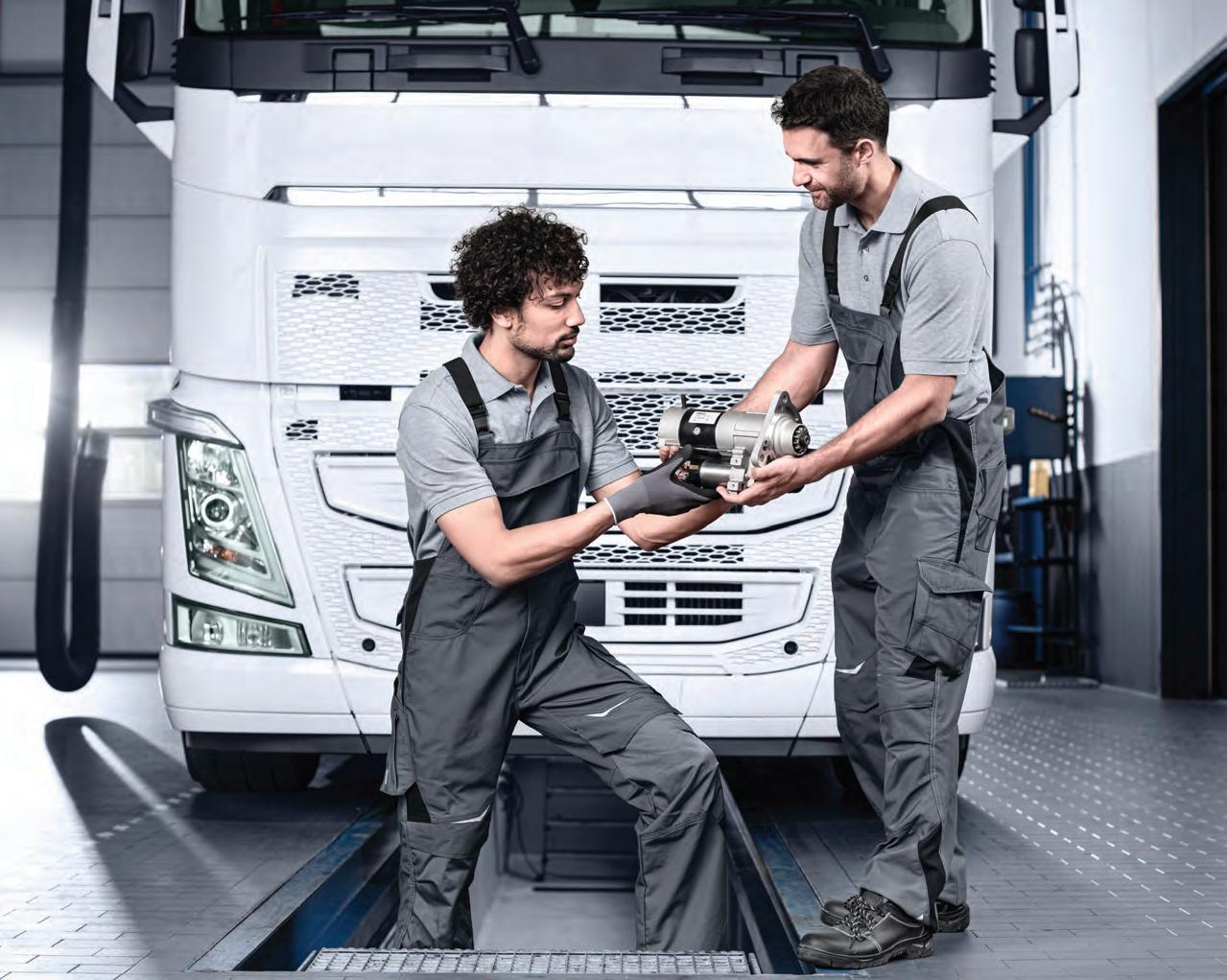
Starter motors are among the hardestworking components in any vehicle’s electrical system. Although they operate for only a few seconds at a time, they are responsible for overcoming engine compression and bringing the combustion engine up to the speed required for self-sustained operation.
During this short process, the starter motor must deliver very high torque while drawing significant electrical current, placing both the electrical and mechanical systems under considerable stress.
As a long-standing OE development partner to vehicle manufacturers, MAHLE has extensive experience in the design and
manufacture of rotating electrics. That experience also provides valuable insight into the damage patterns seen in starter motors in real workshop environments. In many cases, failures are not caused by the component itself, but by issues elsewhere in the engine environment, installation errors or incorrect operating conditions.
How do they work?
Understanding how a starter motor operates helps explain why these failures occur. When the ignition switch is activated, electrical current flows to the solenoid. The solenoid pulls a plunger that pushes the starter pinion into engagement
“Because of the high currents involved, electrical faults are among the most common causes of starter motor damage. Loose or poorly secured connections can increase electrical resistance and lead to local overheating.”
with the flywheel ring gear. At the same time, the contact bridge closes, allowing current to flow to the starter motor. The motor then cranks the engine until it reaches the speed required for combustion. Once the engine starts, the solenoid disengages the pinion and a freewheel clutch prevents the starter motor from over speeding as engine speed increases. Because of the high currents involved, electrical faults are among the most common causes of starter motor damage. Loose or poorly secured connections can increase electrical resistance and lead to local overheating. In these cases, technicians may see charred terminals, melted solenoid housings or burn marks on wiring and connection bolts. These failures often originate from vibration loosening electrical connections or cables being incorrectly routed during installation. Ensuring that connections are tightened to the correct torque and properly secured can prevent many of these issues.
Mechanical damage
Mechanical damage is another frequent cause of failure, particularly in the engagement between the starter pinion and the flywheel ring gear. Worn or broken pinion teeth, cracked shafts or damaged housings can occur if the starter motor is engaged while the engine is still rotating. This can happen if a second starting attempt is made before the engine has come to a complete stop, causing the pinion to collide with the ring gear. Engine misfires or mechanical irregularities can also place
“Electrical system faults, installation issues, contamination or enginerelated problems frequently lead to the damage that technicians observe during inspection.”
excessive loads on the starter mechanism, leading to similar damage patterns.
Thermal overload is also a common issue, particularly during prolonged starting attempts. Starter motors are designed for short periods of operation, and if they are activated for too long the internal current consumption rises dramatically. This generates excessive heat, which can burn insulation on the armature windings, discolour the commutator and ultimately lead to internal short circuits. For this reason, technicians should limit starting attempts to short bursts and allow sufficient cooling time between attempts.
Environmental factors
Environmental factors can also contribute to failures. Dirt, oil, fuel or water entering the starter motor can significantly affect its performance. Fuel or oil contamination, for example, can mix with carbon brush abrasion to create conductive deposits inside the motor. These deposits can bridge the copper segments of the commutator, causing short circuits and reduced starter speed. Identifying and repairing the source of any leaks is therefore an essential part of the repair process.
Overspeed conditions
In some cases, failures are the result of overspeed conditions. If the freewheel clutch fails or the starter motor remains energised after the engine has started, the armature can accelerate far beyond its design limits. The resulting centrifugal forces can destroy internal components such as the commutator and windings, leading to catastrophic damage.
These examples highlight an important principle when diagnosing starter motor failures: the component itself is often not the root cause. Electrical system faults, installation issues, contamination or engine-related problems frequently lead to the damage that technicians observe during inspection.
Best practice
For this reason, best practice is to diagnose
“Using a modern battery and system tester allows technicians to check the battery condition, the charging system, including a ripple test, and the starter motor load before fitting a replacement unit.”
the complete starting and charging system before replacing any component. Using a modern battery and system tester allows technicians to check the battery condition, the charging system, including a ripple test, and the starter motor load before fitting a replacement unit. Test equipment that can print or record the data also provides valuable evidence when analysing the cause of a failure or explaining the issue to the customer. With modern vehicle electrical systems becoming increasingly complex, this level of testing is essential for achieving an accurate diagnosis and preventing repeat failures.
Environmental factors
Due to the complexity, MAHLE emphasises the importance of careful diagnosis and correct installation practices alongside highquality replacement components. MAHLE rotating electrics are developed and tested to meet the same rigorous quality standards applied to original equipment, ensuring reliability and durability in demanding operating conditions.
However, even the most advanced component cannot compensate for faults elsewhere in the vehicle system. By understanding typical damage scenarios and addressing their underlying causes, technicians can prevent repeat failures and ensure reliable engine starting throughout the vehicle’s service life.
COMMON FAULTS
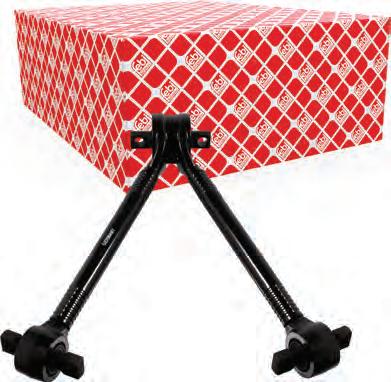
V-stay central bearings
Febi examines a common problem with V-stay central bearings.
The problem is premature wear of the V-stay central bearings.
Cause
The rivets holding the V-stay mounting brackets to the chassis can be subject to excessive stress if the vehicle is overloaded or the vehicle is travelling on bad road surfaces. Play maybe experienced at the bearing mounting brackets caused by wear on the retaining rivets or the rivets missing completely. Even a minimum amount of play will cause central bearing to fail due to the additional stress being transferred.
Solution
Before repairing or fitting a new febi 22350 V-stay, check for missing or loose rivets and replace as required. If rivets are missing, they can be replaced with suitable bolts. febi recommend that 26709/26710 thread lock is used to prevent the bolts from becoming loose.
WANT TO KNOW MORE?
Make sure to scan the QR code!
Dawsongroup
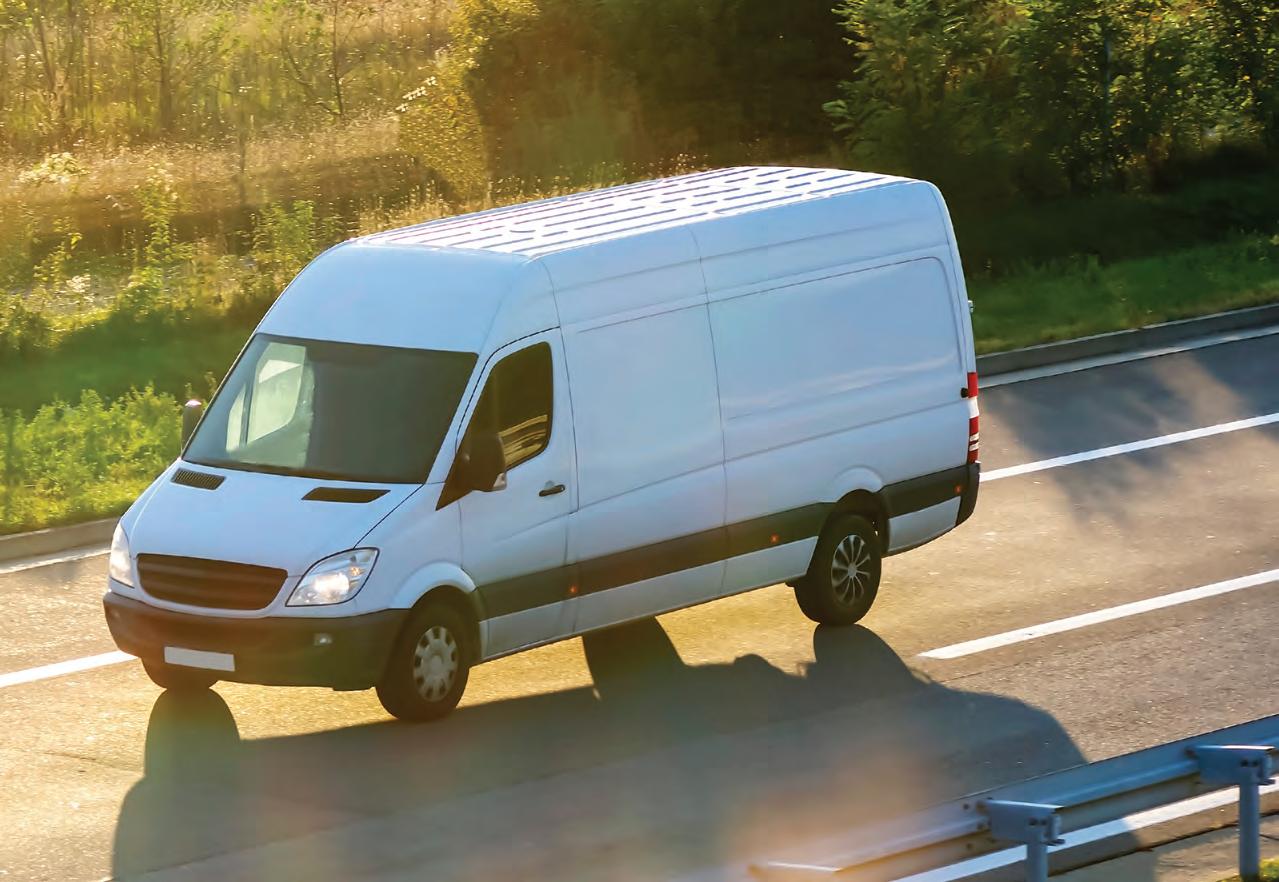
Vans on what fleet managers need to get right before expanding electric van fleets.
BE PREPARED FOR ELECTRIC FLEETS
The nation's van fleets play an important part in the UK's road to net zero. While vans account for 12 per cent of all UK transport emissions, that is set to change with the UK government committed to ending sales of new diesel vans in 2030. However, transitioning to electric vans is not simply a case of swapping keys. It is a strategic operational shift that involves finance, infrastructure, operations and people. When businesses get it right, they stand to make significant savings.
Simon Ridley, managing director at Dawsongroup vans, a nationwide commercial van rental company specialising in long-term fixed-term rental agreements, knows this transition well.
“Access to public charging points is growing, with more than 116,000 across the UK, but businesses need to think beyond this when forming their strategy.”
“The businesses that make a success of going electric are the ones that treat it as a planned programme, not a procurement decision. The van is just one part.”
Here, with experts at Dawsongroup vans, we take a look at the necessary preparation steps to help businesses successfully transition their fleet to electric.
Start with a thorough fleet audit
Before a single electric van arrives on the fleet, managers need a clear picture of how their existing vehicles are used. What are the average daily mileages across different routes? What payloads are typical? How many stops are made, and where do vehicles park overnight?
With the average UK van travelling fewer than 50 miles a day, well within the range of most modern electric models, range anxiety is less of an issue for most fleets. However, exceptions exist and overlooking them can cause serious operational disruption. Route analysis, dwell time data and an honest assessment of exceptional journeys should all inform any purchasing decision.
“Range anxiety is real, but it is often based on assumption rather than data,” says Ridley. “When fleet managers look at
their telematics, they’ll often find that their routes are well within what current electric vans can handle.”
Don’t overlook charging infrastructure
Charging is where many businesses come unstuck. Access to public charging points is growing, with more than 116,000 across the UK, but businesses need to think beyond this when forming their strategy.
Fleet managers need to consider whether depot charging, home charging for drivers, or a hybrid approach best suits their operation. Each option has different cost implications, grid capacity requirements and lead times for installation. For larger fleets, it’s essential to engage facilities and property teams early as waiting until vehicles are on order can cause costly delays.
“Charging infrastructure is not something you retrofit as an afterthought,” says Ridley. “It needs to be planned in parallel with your vehicle selection, not after it.”
Understanding the real cost picture
Electric vans carry a higher upfront price tag than diesel vans and, in some cases, this can be several thousand pounds more.
“Electric vans carry a higher upfront price tag than diesel vans and, in some cases, this can be several thousand pounds more.”
However, the total cost of ownership is about more than the cost of purchasing the vehicles. Recharging costs significantly less than diesel, servicing intervals are longer due to fewer moving parts, and government plug-in van grants of between £2,500 and £5,000 are available to eligible buyers too. For larger fleet operators, bulk purchasing can help unlock further discounts.
“Purchasing EV vans for your fleet is not the only option,” advises Ridley. “Longterm rental might work better for your business, removing barriers such as the high initial outlay and the headache of maintenance and servicing.”
Businesses should also factor in the financial risk of not transitioning. Clean air zones and ultra-low emission zones are expanding across UK cities, and vehicles that fall foul of those restrictions face ongoing daily charges that erode any potential savings from sticking with diesel.
Bring your drivers with you
Driver confidence is one of the most underestimated factors in a successful EV transition. Many drivers have concerns about range, charging etiquette and how electric vans handle differently to diesel, particularly around regenerative braking and one pedal driving techniques.
Providing hands-on training before vehicles go into service can make a big difference to driver satisfaction and to the real-world range achieved by drivers.
“A well briefed driver will consistently get more from an electric van than one that’s left to figure it out alone,” shares Ridley. "Drivers who were sceptical can
quickly become advocates. The combination of ride experience, the quietness and the instant response, can positively change how they feel about their working day.”
Think in phases, not one big switch
A complete overnight transition isn’t practical for most businesses. A phased approach, starting with routes and vehicles that are the strongest fit for electrification, reduces risk and allows the organisation to build operational confidence before scaling.
It’s crucial to monitor performance data closely during the beginning of the transition. Range versus route demands, charging efficiency, maintenance records and driver feedback all provide information that should shape the next wave of EV van purchases.
“The businesses getting this right are not trying to do everything at once,” says Ridley. "They are making smart, methodical decisions, learning as they go and building a transition plan that is grounded in their own operational reality.”
ALL KITTED OUT
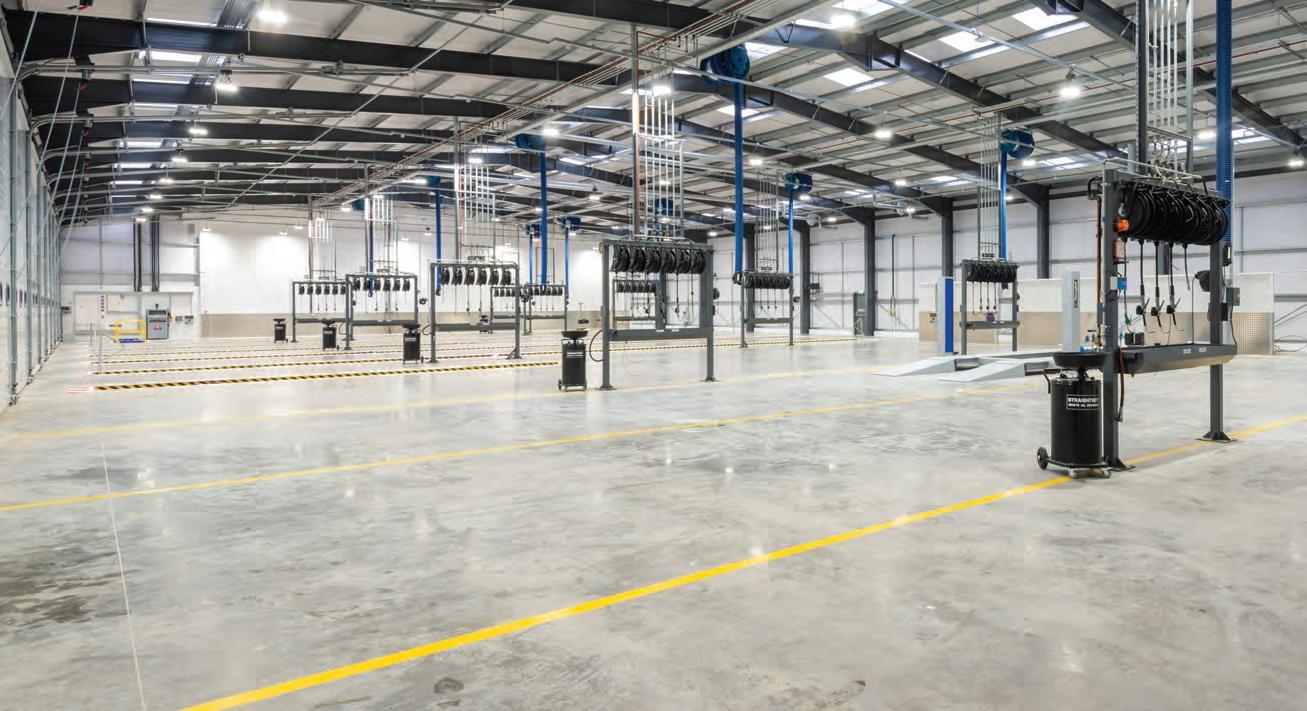
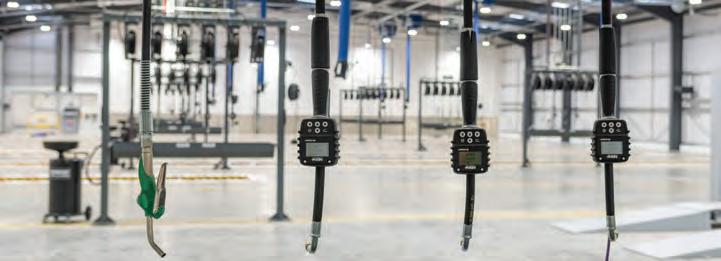
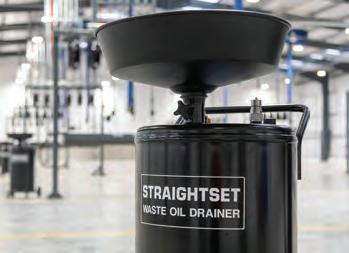
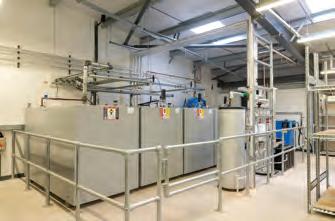
Straightset has helped to deliver the installation of one of the largest commercial vehicle workshops in Scotland, and among the top five in the UK, for Motus Group.
Designed to support modern, highvolume HGV servicing, the fully equipped, heavy-duty facility provides the scale, capability and infrastructure required to meet growing operational demand. Awarded following a competitive tender process, the project further strengthens Straightset’s position as a trusted partner to Motus Group, combining specialist expertise with proven capability across complex, large-scale workshop environments.
The Challenge
Motus Group required a dedicated HGV workshop capable of handling the increasing demands of heavy commercial vehicle maintenance. The brief extended beyond standard installation. The project required:
● A facility designed specifically for heavy-duty vehicle servicing.
● Integration of multiple suppliers and contractors.
● Careful coordination to ensure all elements aligned seamlessly
● A layout that would support current operations and future expansion.
Unlike a single-supplier project, this installation introduced additional complexity, requiring a collaborative, wellmanaged approach to ensure consistent quality across all elements.
Early design and planning
Straightset worked closely with Motus Group from the outset to shape the workshop layout and overall infrastructure.
Early-stage collaboration focused on creating a workshop that would deliver both operational efficiency and long-term value. Key considerations included:
● Efficient workshop layout to support HGV movement.
● Safe and practical working environments for technicians.
● Integration of specialist equipment within the wider facility
● Future-proofing the space to accommodate business growth.
This early planning phase was critical in ensuring the final workshop design aligned fully with Motus Group’s operational requirements.
Heavy-duty lifting capability
To support the demands of commercial vehicle servicing, Straightset installed a 24tonne capacity 4-post HGV lift, providing a safe and reliable solution for inspections, maintenance and repairs.
MOT capability
A dedicated Class VII MOT Bay was installed, enabling Motus Group to carry out compliance testing in-house. This allows every HGV sold to be maintained as roadworthy without reliance on external providers featuring BM Commercial Brake tester and Commercial Hydraulic Check Wear system.
Supporting workshop infrastructure
Straightset supplied and installed a full range of essential workshop systems, including:
● Air distribution systems.
● Lubrication systems.
● Waste oil handling and management.
● Water dispensing systems.
● Oil storage tanks.
● Compressed air generation equipment.
All equipment was installed by Straightset’s in-house engineers, ensuring full quality control and consistent performance across the facility.
Project delivery
The project was delivered over a six-month period, from September 2025 through to March 2026. Despite the complexity of a multi-supplier environment, the installation was completed on time and within budget, supported by strong coordination between all contractors involved. The project was overseen by managing director Andrew Bates, who commented:
“This has been an incredibly exciting project for us. Helping to deliver the largest commercial vehicle workshop in Scotland, and one of the top five in the UK. Complete with industry-leading design and facilities, this is a project we are very proud of, which
demonstrates both the scale of our capability and the quality of our delivery.
The client is delighted with the outcome, and the entire process was straightforward thanks to the strong collaboration between all contractors. We completed the project on time and within budget, and we’re looking forward to seeing the workshop fully operational when it opens in April.”
Results and impact
The completed workshop now provides Motus Group with a high-performance facility designed to support efficient, largescale HGV servicing.
Key outcomes include:
● Increased servicing capacity for commercial vehicles.
● Improved workshop efficiency through optimised layout.
● Reduced downtime between jobs.
● Safer, more productive working environment for technicians.
● Greater control over compliance through in-house MOT capability
Ongoing relationships
This project builds on an established relationship between Straightset and Motus Group, with collaboration across multiple sites. Whether delivering as a sole supplier or as part of a wider contractor team, Straightset continues to provide tailored workshop solutions built on technical expertise.
DECISIONS DECISIONS
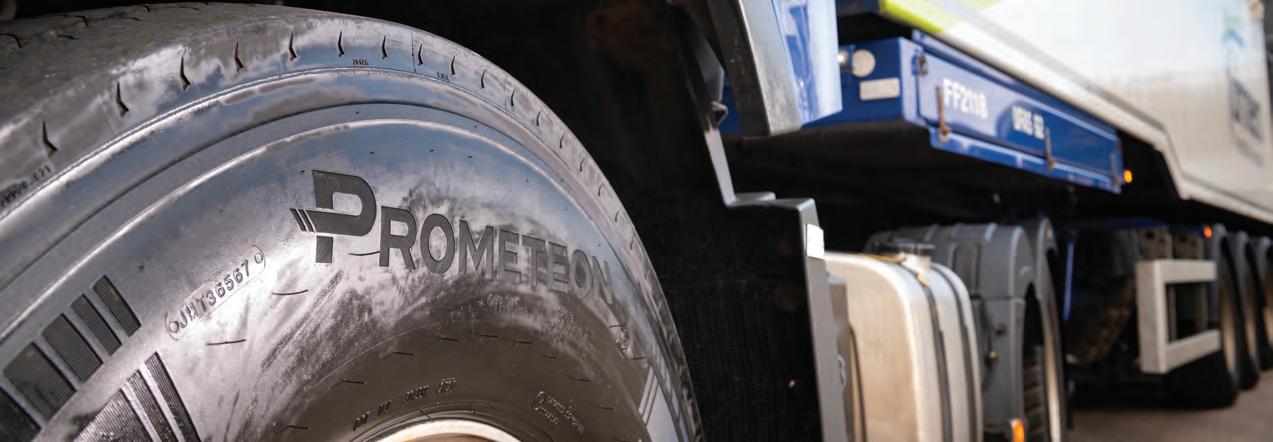
Prometeon Tyres examines the importance of choosing the right tyre for the job and why workshops have a bigger role in fleet uptime.
Tyres are often viewed as a purchasing decision, but their impact is felt in the workshop. Wear patterns, repeated damage and casing condition reveal whether a tyre is right for the job and whether it is being managed properly in service.
That is why tyre choice should start with the application says Prometeon Tyre Group. A truck spending most of its life on long distance and regional road work has very different requirements from one operating in urban stop-start conditions or regularly covering rougher terrain. One may prioritise low rolling resistance and fuel efficiency, while another needs a more robust construction to cope with higher scrub, repeated braking or harsher surfaces. When those demands are not properly understood, the wrong tyre quickly becomes a false economy.
What to consider
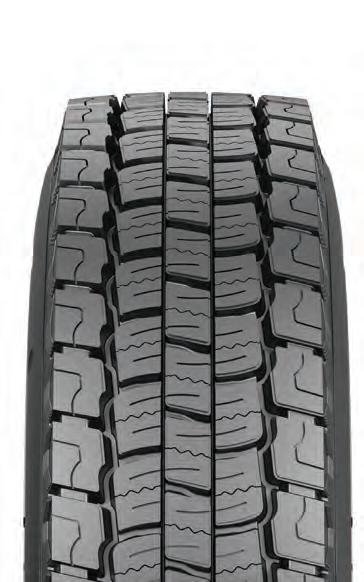
For workshops, that mismatch is often visible long before it is recognised elsewhere. Faster wear on certain wheel positions, repeated shoulder damage or a pattern of early removals can all point to the same problem: the tyre is not well matched to the job. This is where application-led ranges have real value. Products developed for specific operating environments give fleets a better chance of getting the performance they expect in service. For predominantly on-road work, for example, Prometeon’s R02 Proway tyre is designed to support efficiency, mileage and consistent performance in long haul and regional applications where uptime and fuel economy matter.
Price, of course, remains part of the conversation. In a cost-conscious market, fleets will always look closely at upfront spend. But workshops and tyre specialists often see the longer-term picture more clearly. A cheaper tyre that wears quickly, delivers inconsistent performance or leaves little usable casing value behind rarely stays cheap for long. By contrast, a premium product that is correctly specified and properly maintained can offer stronger mileage potential, lower rolling resistance and a casing more suitable for regrooving or retreading later in life.
That broader view matters because rolling resistance has a direct effect on fuel consumption. Lower rolling resistance means less energy is needed to keep the vehicle moving, but those gains are only protected if the tyre remains in good condition throughout its life. Incorrect inflation, poor alignment and delayed intervention on irregular wear can quickly erode the benefit of a well-specified product.
In that sense, uptime is won not just by choosing the right tyre, but by managing it well. Regular inspections remain one of the most effective ways to do that. Pressure anomalies, irregular wear and repeated damage are often early warning signs that something needs attention, whether that sits with the vehicle set-up, the duty cycle or the tyre choice itself. Spotting those trends early allows workshops to move from reacting to failures, to giving more informed advice before downtime occurs.
Structure
One recent Prometeon customer offers an example. Before a more structured tyre strategy was introduced, the fleet had ended up with a mixed spread of brands and patterns being fitted by its service provider with no consistency and little consideration for the work vehicles were actually doing. The result was repeat damage, more tyre-related disruption and less visibility over what had been fitted where. Switching to a more application-led approach advised by Prometeon and its dedicated service provider, supported by better tyre management, helped reduce failures and restore confidence to the transport operator.
Which reinforces a simple point. Help customers fit the right tyre to the right vehicle and they see better value, less downtime and a fleet that performs more consistently. In return, the workshop builds trust, repeat business and a reputation as a service partner that genuinely helps keep customers moving.
‘WHEELY’
GREAT INFLATION
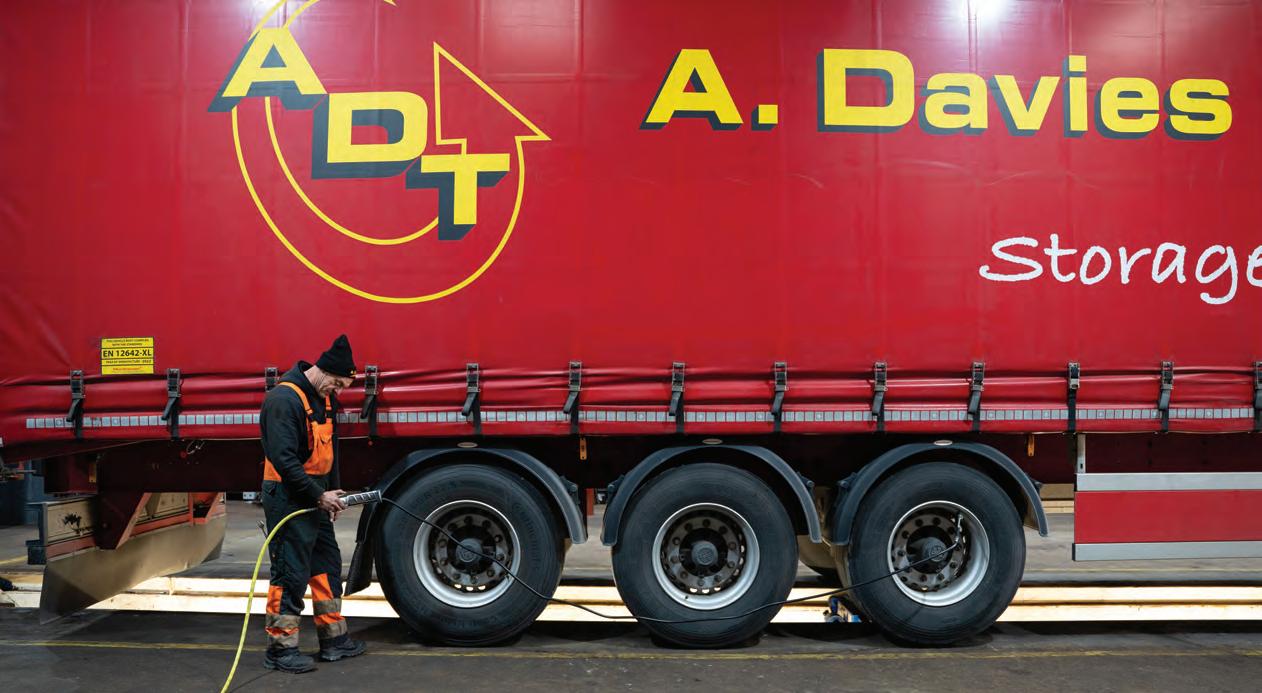
We hear all about how PCL’s products are making light work of logistics for A Davies Transport.
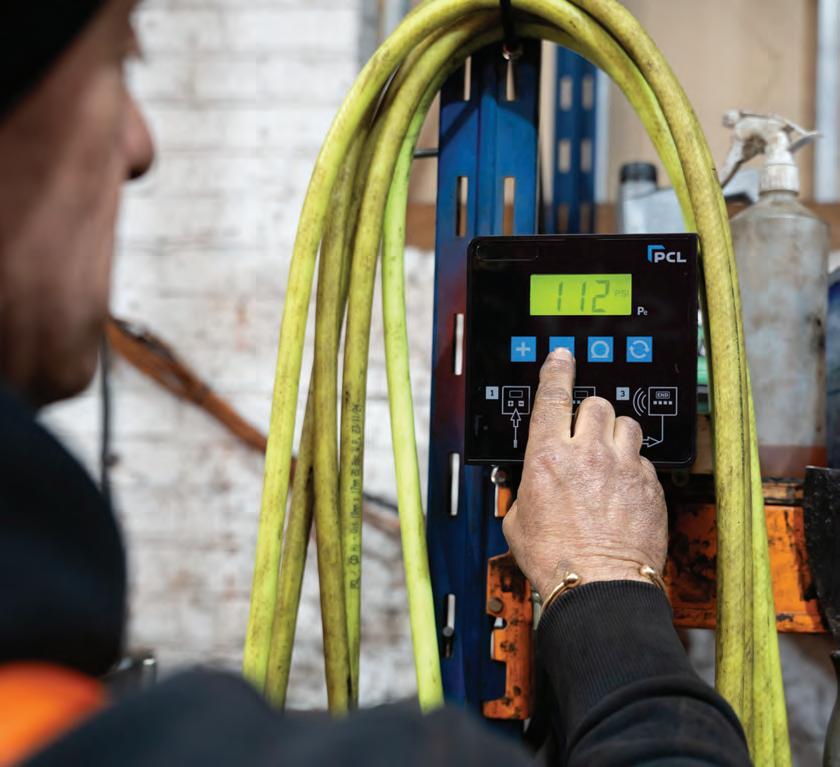
World-leading tyre inflation products and air tools provide guaranteed accuracy, keeping trucks safe on the roads. PCL’s products are known for safety and reliability, which is why they’ve proved such a hit with Wakefield-based A Davies Transport Ltd., whose fleet covers 66,000 miles a week. As a regular campaigner for tyre safety alongside TyreSafe, PCL is the ideal partner to support A Davies as a company
that prioritises daily tyre checks with accurate tyre inflation equipment.
A Davies’ in-house maintenance team ensures tyres are in peak condition at all times, keeping the fleet safe and compliant. Tyre inflation has a direct impact on loadbearing capacity and running costs when driving; therefore, using PCL products for guaranteed inflation accuracy means trucks can be operated safe in the knowledge that fuel consumption will be reduced and tyre life extended.
Owner Andy Davies originally established his business with just one truck in 2007. Today the company boasts a wide range of vehicles, ranging from 3.5, 7.5, 18, 26 up to 44 tonne Articulated Vehicles, and a wide variety of trailers. He cites A Davies’ ability to provide a first-class transport service at the most competitive prices as the basis for its long-lasting relationship with clients, from small businesses to multinational 'blue-chip' companies.
“PCL’s products are a huge factor in our ability to be so reliable whilst keeping costs down,” said Andy. He explained: “The drag on a truck is influenced by tyre pressure because if its incorrect it can lead to increased rolling resistance, which in turn leads to increased fuel consumption.
“Pre-2024 we inflated tyres by running a closed end connector straight from the compressor until the pressure was in the correct ballpark, checking with a calibrated pressure gauge for accuracy. This was extremely time-consuming.”
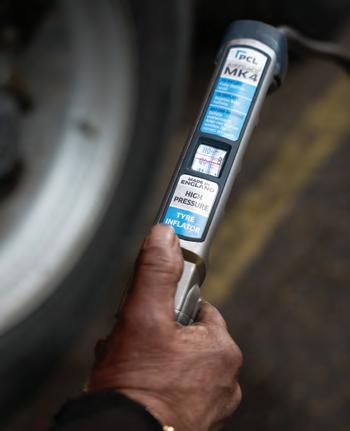
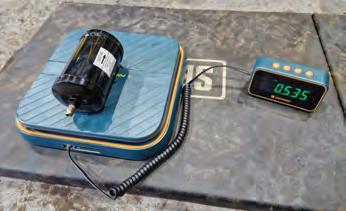
A Davies Transport trialled both the AIRFORCE MK4 Truck Handheld Tyre Inflator and the Standard ACCURA QUBE Automatic Tyre Inflator. Both saved time immediately, removing the need to doublecheck pressures and giving confidence that every tyre was inflated accurately.
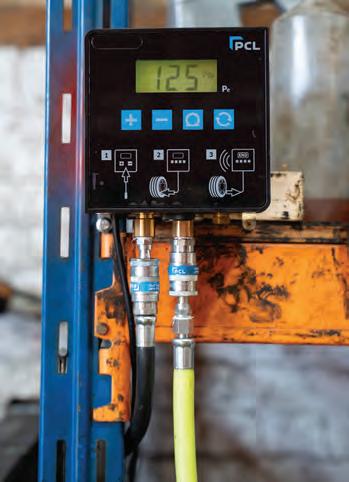
PCL’s products have become a firm favourite with the company’s technicians, who are impressed with their user-friendly, trouble-free and reliable design, and with the simplicity of the ACCURA QUBE in particular. All the operator has to do is set the required pressure, attach the connector, and the unit inflates and deflates to achieve the exact level needed. It also offers three inflation modes in one inflator: Mode 1 Standard inflate/deflate, Mode 2 Tyreshop mode with overpressure, and Mode 3 N2 fill and air to N2 conversion.
Andy confirmed: “The compact ACCURA QUBE stood out. Its automatic, plug-and-play operation made it an instant workshop fit, improving labour efficiency, productivity and consistency while ensuring accurate inflation every time.
“For example, new trucks have super sensitive TPMS, and when we were preparing a new Volvo for the fleet the QUBE was fantastic. This unit has saved the maintenance team so much time with its accuracy.
“Plus the cost-savings have been substantial. We would never go back to our previous inflation method now.”
Other PCL products given the thumbsup by A Davies’ technicians, include:
● The new Quick Change Tyre Vale Core Removal Tool – enables attachment of the inflator’s valve connector to the inlet for fast, on-demand use. Ideal for highvolume tyres, making tyre maintenance quick, safe, and effortless. “We were more than impressed with the core
removal tool. Makes a huge difference to inflation speeds. Reduced from 13.05 minutes to 5.14 to reach 125 psi.”
● PCL’s Hi Vis hose. “Love the flexibility Much better than the standard hose and easier to manage and store.”
● The CH3A02 Connector “We thought Christmas had come early when we received the CH3A02 connector. Saves time and makes inflation much easier on the back dual trailer wheels.”
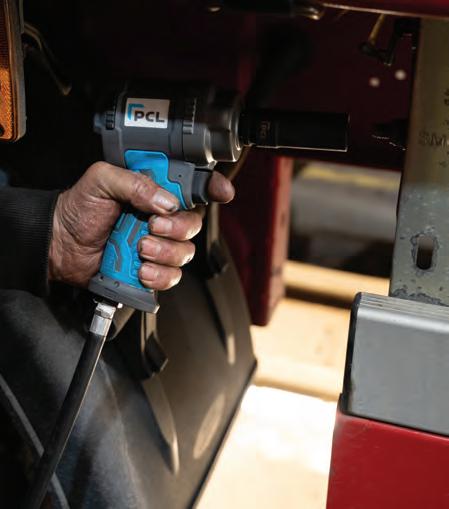
● The new APP220S Stubby Impact Wrench and two new impact wrenches coming soon. “The APP220S is powerful, which you wouldn’t think by looking at how small it is. Lightweight yet great performance and low vibration levels.
We also tested the two “coming soon”: The Flexi Impact Wrench - we’ve never seen anything like it before. It gets into all the nuts and crannies whilst still delivering strong power, making our job much easier. The other, a 1-inch Impact Wrench, is surprisingly lightweight for its power and it’s excellent for tight spaces.”
PCL’s technical sales manager, Owen McCaughey, said: “We are delighted to be working with such a forward-thinking, safety-conscious company as A Davies Transport Ltd. Their ethos reflects the same
high values as we do at PCL, especially when it comes to providing a first-class service to our customers. It makes us proud to see them reap such huge rewards from the costs savings and sustainability that can be achieved through using our high-quality products for precision and preventative tyre maintenance.”
DRIVING EFFICIENCY
With the role of tyres becoming more complex, Kumho Tyre argues that the right tyre could improve fuel efficiency, enhance safety and increase downtime.
As the commercial vehicle sector moves deeper into 2026, the pressure on fleets has never been greater. Rising operating costs, tighter environmental targets and the ongoing demand for uptime are forcing operators to scrutinise every aspect of vehicle performance, and increasingly, that starts where the vehicle meets the road.
Tyres are no longer viewed as a consumable. They are a strategic asset.
With UK truck registrations continuing to grow and fleet utilisation remaining high, tyre performance has become central to reducing total cost of ownership, improving fuel efficiency and maintaining operational reliability. For manufacturers like Kumho Tyre, this shift has driven a renewed focus on innovation, durability and application-specific design.
Richard Lyons, managing director of Kumho Tyre UK, believes the perception of truck tyres is changing: “Truck tyres are about so much more than just mileage,” he explains. “They play a critical role in fuel efficiency, safety and overall vehicle performance. The challenge for manufacturers is to balance all those factors while delivering consistent reliability in demanding conditions.”
That balance is increasingly being achieved through advances in tyre design and materials. Kumho continues to invest in development technologies such as finite element modelling and advanced compound engineering, allowing tyres to be optimised for specific applications, from long-haul motorway use to mixed service and urban delivery.
A new generation
This is reflected in Kumho’s latest commercial vehicle tyre range, including the multi-performance KXA31, KXD31 and KXT31, developed to meet the evolving demands of modern fleets. Designed with efficiency, durability and versatility in mind, and perfectly suited to UK operators, these next-generation patterns respond directly to the challenges operators face today.
The KXA31 is engineered as a highperformance all-position tyre, offering balanced wear, strong mileage and reliable handling across a range of applications. Its design supports fleets looking for flexibility without compromising on performance.
The KXD31, developed for drive axle applications, focuses on delivering consistent traction and durability. With an advanced tread pattern and compound design, it is
built to perform in demanding conditions while supporting long service life.
Completing the range, the KXT31 is designed for trailer applications, where stability, even wear and resistance to damage are critical. Its construction supports predictable performance and reduced downtime, particularly in highutilisation fleets. Together, these tyres help fleets match tyre performance with realworld operating conditions.
Existing ranges
Alongside this new generation, Kumho’s established commercial tyre portfolio continues to support a wide range of fleet requirements. Multi-position tyres like the KXA11 provide flexibility across varied operations. Trailer patterns including the KLT03 and KRT03 and mixed service options such as the KMA12, KMD41 and KMD51 remain key choices for fleets operating across diverse environments.
Fleet demands
For operators, durability remains a critical factor, particularly in mixed service and demanding environments where tyres must cope with uneven terrain, debris and variable loads.
This focus on durability feeds directly into one of the biggest concerns for fleet operators: uptime. Every unexpected tyre failure represents not just a replacement cost, but lost time, disrupted schedules and potential reputational damage.
By designing tyres that are better suited to their operating environment, Kumho is helping fleets reduce these risks while improving operational consistency.
Light commercial vehicles
With many fleets operating a mix of trucks and vans, there is growing demand for tyre solutions that deliver consistent performance across operating conditions.
Kumho’s van range reflects this need, with products designed to balance load capacity, handling, safety, and efficiency.
The KC53, for example, is engineered to handle the demands of daily commercial
use, offering stability under load and reliable performance on the highway. Its tread design supports precise handling, while features aimed at reducing rolling resistance contribute to improved fuel economy, an increasingly important factor as operators look to control costs.
All-season capability is another area gaining traction. The PorTran 4S CX11 combines year-round performance with commercial durability, reducing the need for seasonal tyre changes while maintaining safety. For more extreme conditions, dedicated winter options such as the PorTran CW51 provide additional traction and control.
The evolving role of the tyre
As fleets continue to evolve, the role of the tyre will only become more significant. Electrification, increased vehicle weights
WANT TO KNOW MORE? Make sure to scan the QR code!
and changing duty cycles are all set to place new demands on tyre performance.
For Kumho this means continued investment in materials, design and testing. For operators, it reinforces the importance of selecting the right tyre for the job.
Ultimately, the conversation is shifting. Tyres are no longer just a maintenance consideration; they are a key part of fleet strategy. From improving fuel efficiency to supporting uptime and enhancing safety, the right choice can deliver measurable benefits across the operation.
As MD Richard Lyons puts it: “When you look at the pressures fleets are under today, every component must work harder. Tyres are no exception and getting that choice right can make a real difference.”
A RETREAD HIGHLIGHT
Bandvulc, a brand of Continental, has unveiled the Deliverymaster 5 retread, the latest generation of its drive-axle tyre developed for regional LGV fleets.
fleets, the Deliverymaster 5 aims to offer dependable performance across regional applications and demanding stop-start environments. Its 3PMSF-accredited tread pattern supports reliable grip across all seasons, while its tread geometry is developed to maximise surface contact and aid water dispersion on wet road surfaces.
Development
Tony Mailling, head of hot retread production EMEA and ContiLifeCycle plant manager, said: “When developing the Deliverymaster 5, we worked closely with our customers to understand the operational pressures they face –particularly the increased risk of sidewall damage during intensive kerbside activity. The tyre has been developed as a response to these insights, incorporating reinforced sidewall elements and design features intended to support fleets operating in stop-start delivery environments.”
“All tyres produced at our plant in Ivybridge are an important part of Continental’s circular lifecycle approach, helping operators make continued use of quality casings within the retreading
“The Deliverymaster 5 aims to offer dependable performance across regional applications and demanding stop-start environments.”
Respect for retreads
As highlighted in Continental’s Respect for Retreads campaign, many fleets still overlook the potential of retreading to maximise casing value before disposal. By adopting a circular approach, operators can optimise their tyre assets over time and contribute to more resource-efficient fleet operations.
Depending on casing condition and operational use, premium retreads such as the Deliverymaster 5 can also form part of further retreading cycles, supporting extended mileage potential within a managed tyre lifecycle.
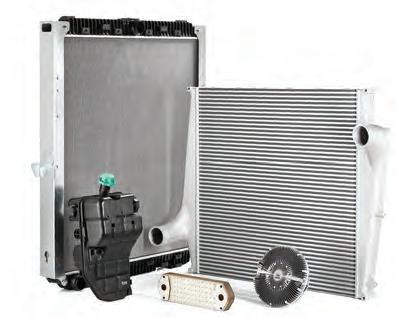
Nissens Automotive highlights the importance of the climate comfort system and the necessity to use premium quality replacement parts for its repair and maintenance.
QUALITY IS KEY
To function correctly and operate at its optimum efficiency, all of the elements within every vehicle system need to be in good condition and working in harmony with all the others. This is particularly true of the air conditioning, which, although it utilises certain common properties, such as electrical power from the battery and drive from the engine, in many ways is a stand alone system that works independently of many of the vehicle’s other systems.
Due to its central role within the A/C system, the compressor is often referred to as its heart, but the entire system needs to be in good health for it to keep the climate in the cabin at the correct levels, when it comes to both its temperature and air quality. It’s always worth thinking about how the A/C system works when considering its maintenance or repair, as it
helps to come to logical conclusions and then to make the correct decisions.
Starting with the compressor, as its name suggests, this component compresses and circulates the refrigerant and lubricant mixture around the system’s sealed loop, from its low pressure side, after flowing through the thermal expansion valve (TXV), once it’s been cooled down by the evaporator. When compressed, as well as entering the high pressure side of the system, the temperature of the mixture increases and turns from liquid to gas. It then goes through the condenser, where its temperature falls and it condenses back to a
liquid, to go through the receiver drier/accumulator and on to the evaporator, which is the heat exchanger that actually provides the cool air that enters the cabin through the vehicle’s heater. It then returns through the TXV to the compressor, for the cycle to begin again.
Annually checking the condition of the A/C system is an important job for the commercial vehicle workshop and to enable them to carry out the work proficiently and to use premium quality replacement components, aftermarket specialist Nissens Automotive, is on hand to help them with both expert instruction and the required parts.
Important to know
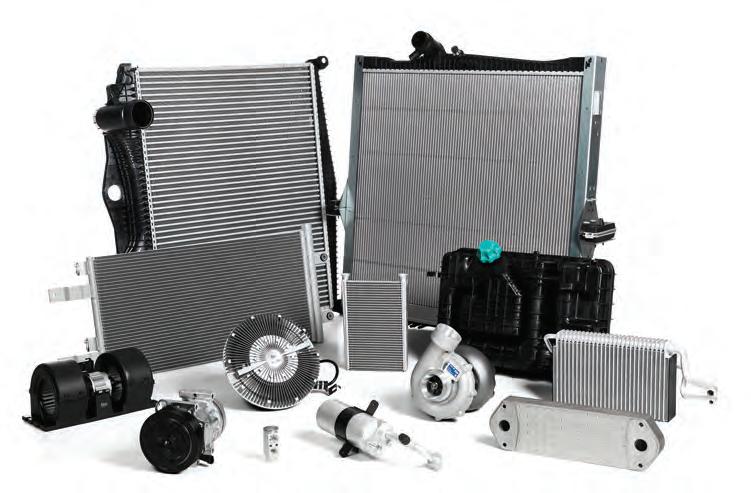
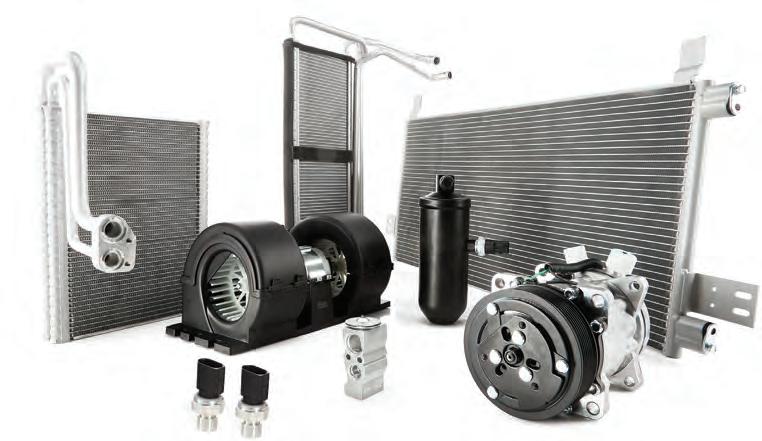
As a leader in thermal management solutions, Nissens has the specialist knowledge required to understand the requirements of the A/C system and therefore the quality of the components needed to support its correct operation. As the following points make clear, it is also able to help technicians keep their eyes open to potential issues with the system’s key components.
Compressor – obviously the correct specification and quantity of lubricant is is crutial to ensure peak performance and lifespan, but following the right installation procedure, including flushing the system, is also vital when fitting a replacement.
Condenser – this component is particularly exposed to impacts from stones and debris, as well as rain and road salt, so is particularly prone to corrosion, which can quickly weaken its mechanical construction and subsequently, its performance. Corroded or missing fins significantly reduce its effectiveness and that of the entire system, putting excessive load on the other components within the A/C loop.
Receiver drier/accumulator – it is recommended that this is replaced periodically, in line with the vehicle manufacturer’s stipulations, or whenever the A/C loop has been opened. This is because the hydroscopic/desicant drying layers within it can wear, and reduce its ability to properly extract the moisture and filter the refrigerant and oil mixture, threatening the condition of the compressor. Unfiltered particles, debris, or metal fragments etc., or a high level of moisture in the system, can significantly
restrict the flow of lubricant or cause corrosion, both of which can lead to the failure of the compressor.
Evaporator – a poor performing interior blower can reduce its functionality, which will also threaten the compressor. Even a dirty cabin air filter, or a contaminated evaporator surface, will significantly limit the evaporator’s operational ability. Furthermore, internal contamination, mechanical damage or corrosion cannot be repaired, so in these instances, the component must always be replaced, which will also require the installation of a new TXV.
TXV – a malfunction leads to the reduced performance of the system and exposes the compressor to abnormal load, potentially causing problems such as overheating, which could lead to its seizure. Getting stuck open or closed is one of the most common
issues, which naturally affects the flow of the oil and refrigerant mixture, and pushes the system’s parameters out of balance. Contamination within the system is another reason for its failure. In addition, should the compressor need to be replaced, it is highly recommended that the TXV be changed also.
Blowers – for the A/C system to work effectively requires unrestricted cabin air flow, whether that’s to clear the windscreen on frosty mornings or cool the driver during a hot summer. So, in addition to a clean cabin air filter, the blower needs to be working properly. In fact, a faulty blower can significantly increase the compressor’s workload, which could eventually lead to its complete seizure.
Range and support
The Nissens offering is designed to provide a reliable yet cost effective, A/C solution for popular European models. The range, which encompasses eight product lines, includes 230 part numbers that cater for 914 OE references. Focusing on compressors, the programme covers an impressive 89 per cent of the European CV parc.
In addition to premium quality products with high levels of availability, Nissens also offers business solutions to support daily operations, such as cost effective logistics and technical training.
KEEPING COOL
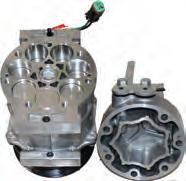
Febi shares some common damages of air conditioning compressors and how to fix them.
Automotive air conditioning compressors play a vital role in vehicle climate control systems by compressing and circulating refrigerant through the A/C circuit. As one of the most stressed components in the system, the compressor is prone to various failures and damages that can compromise its performance. Understanding these common types of damage is crucial for effective diagnostics, repair, and prevention strategies in automotive maintenance.
REFRIGERANT OIL STARVATION
Oil starvation occurs when the compressor does not receive an adequate supply of lubricating oil. Most A/C compressors rely on oil mixed with the refrigerant to lubricate internal components.
Causes
● Low refrigerant charge.
● Blocked or restricted orifice tube/ expansion valve.
● Improper oil quantity during installation.
● Leakers in the system causing oil loss
Effects
● Accelerated wear of pistols and bearings.
● Overheating of internal parts.
● Noise and eventual seizure of compressor.
Solution
● Use correct refrigerant and oil charge,
● Ensure all lines are clear during service.
● Replace receiver drier or accumulator during major repairs.
CONTAMINATION (DEBRIS AND MOISTURE)
Contamination includes solid particles (metal shavings, carbon, sludge) or moisture entering the compressor.
Causes
● Previous compressor failure (especially due to seizure).
● Leaks allowing moisture ingress.
● Incomplete system flushing during component replacement.
Effects
● Valve and piston scoring.
● Blocked expansion valve or orifice tube.
● Acid formation leading to corrosion.
Solution
● Flush the system thoroughly after compressor failure.
● Replace components such as the filter drier or accumulator.
● Use a vacuum pump to remove moisture before charging.
ELECTRICAL FAILURES
Modern compressors. Particularly variable displacement and electric types, reply on solenoids, clutches and control valves. Electrical issues can disable compressor function or cause erratic behaviour.
Causes
● Faulty clutch coil or wiring.
● Failed control valve.
● Defective pressure sensors or control modules
Effects
● No A/C cooling.
● Intermittent operation.
● Diagnostic trouble codes in the HVAC system.
Solution
● Verify electrical continuity and signal integrity.
● Inspect connectors for corrosion.
● Use OEM-specified components.
MECHANICAL WEAR AND TEAR
Over time, mechanical components within the compressor (pistons, swash plates, bearings) can wear out due to normal usage or abnormal stress.
Causes
● High mileage.
● Poor maintenance.
● System imbalances (high head pressures, cycling issues).
Effects
● Reduced cooling capacity.
● Noise (knocking, squealing).
● Compressor failure or seizure.
Solution
● Regular system inspections.
● Avoid running the A/C system with low refrigerant.
● Monitor for abnormal compressor noise or vibration.
OVERHEATING
Excessive compressor temperatures can damage seals, valves and internal surfaces.
Causes
● Insufficient refrigerant.
● Blocked condenser.
● High ambient temperatures combined with poor airflow.
● Excessive engine compartment heat.
Effects
● Oil breakdown.
● Seal failure leading to refrigerant leaks.
● Loss of compressor efficiency.
Solution
● Ensure proper airflow through the condenser.
● Maintain correct refrigerant charge.
● Clean debris from cooling fins.
The automotive A/C compressor is a robust but sensitive component, and its failure can result from a combination of mechanical, electrical and environmental factors. Preventative maintenance including regular inspections and proper refrigerant handling plays a key role in extending compressor life and ensuring optimal system performance. When damage occurs, accurate diagnosis supported by system flushing, component replacement and adherence to service protocols are essential for reliable repair outcomes.
SOLAR POWER
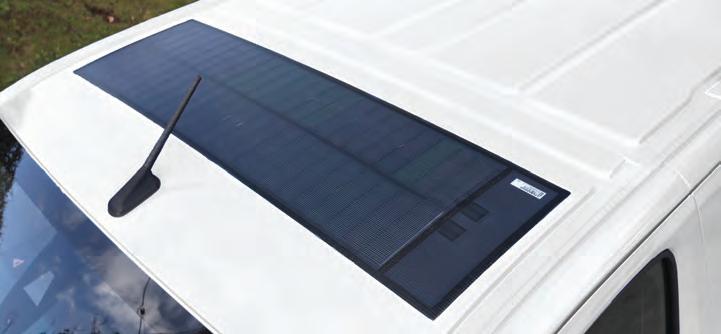
Solar panels on the roof of refrigerated trailers (reefers) are now a common sight on UK roads. Operators are fitting them to reduce their reliance on diesel-powered transport refrigeration units and extend the life of fridge batteries as they cope with increased parasitic draw from telematics, temperature monitoring systems and fridge controllers.
Solar power and reefer trailers work hand in hand with each other as the more power they need to keep goods cool in the summer, the more power panels can generate from longer daylight hours.
Genie Insights has supplied and installed over 7,000 solar panels on reefer trailers including some the UK’s leading refrigerated transport operators and supermarkets. Operators go for the high
voltage 50W panels, and this approach is working as Genie reported a zero percent fridge battery fail rate in vehicles fitted with its panels in 2025.
For the cost of a service callout solar panels can be supplied and installed on a reefer trailer roof and once in place they look after themselves. In line with the trailer’s three or six-month servicing schedules a technician simply hooks up to the solar panel controller via Bluetooth to check performance and health.
Solar charge controllers and inverters use a technique called Maximum Power Point Tracking (MPPT) to extract maximum power from solar panels by dynamically adjusting the electrical operating point as sunlight conditions vary. MPPT optimises voltage and current particularly in cloudy or
Solar is rapidly becoming essential for temperaturecontrolled fleets, helping operators cut downtime and ease pressure on critical systems. With over 7,000 panels installed and a reported zero fridge battery failure rate in 2025, Genie Insights is demonstrating how rooftop solar can deliver reliable, low-maintenance performance for refrigerated transport.
shaded conditions and by doubling the cells on panels by increasing surface area, Genie has further boosted panel productivity to cope with low light conditions.
Two big solar growth areas currently are on electric trucks and rigid trucks working in the catering and food service industries. Modern eLCVs rely on a 12V auxiliary battery to power critical systems such as locking, safety features and infotainment and if this battery fails, the entire vehicle becomes inoperable. Solar panels provide a trickle charge to keep the battery topped up to provide operators with extra peace of mind.
Genie is fitting larger solar arrays of up to 300W to 18-tonne rigid trucks in the food service sector for companies such as Reynolds Catering and Sysco, as their 24V batteries come under increased stress from ancillary equipment such as tail lifts and air curtains drawing power from the vehicle battery. These vans and trucks operate on short stop start journeys which puts increased stress on the fridge motor, the vehicle battery and alternator which is where solar energy comes into its own by keeping vehicle downtime to a minimum.
THE FUEL CRISIS
Rupert Gatty, chief executive officer, CoolKit Ltd examines how rising costs and infrastructure gaps threaten the supply chains we depend on most.
When diesel prices spiked by almost forty pence a litre in March 2026, the national debate focused on what it costs to fill a car. But there is a more urgent question almost nobody is asking: what does it cost to keep your medicines safe and your food fresh?
The pharmaceutical and healthcare cold chains – the temperature-controlled networks that deliver insulin, biologics and vaccines from warehouse to patient – run substantially on diesel. So does the refrigerated food chain that keeps milk, meat and fresh produce safe from depot to shelf.
According to the Road Haulage Association, ninety-eight per cent of the food on Britain's shelves arrives by truck, leaving the entire food ecosystem vulnerable to oil price volatility. The food that requires refrigeration burns even more fuel, because maintaining a constant two to eight degrees Celsius demands continuous power drawn directly from the
“Refrigeration can represent up to forty-five per cent of cold-chain operating costs.”
vehicle's engine. These are not deliveries that can be paused or deferred. Medicines must move. Food must stay cold. The cold chain either holds, or it does not.
Yet the system that underpins all of this remains structurally exposed to global fuel markets – and faces additional cost pressure from planned duty rises.
A policy position under growing pressure
Keir Starmer's address in April was unequivocal: the temporary five pence per litre fuel duty cut ends this autumn. From September, duty rises by one penny, then two pence in December, then a further two pence in March 2027 – the first increase in fifteen years. From 2027–28, annual inflation-linked rises resume.
The Prime Minister told MPs fuel duty is frozen until September and that the government would “look carefully at the situation” – but committed to nothing beyond that. Every opposition party has called for the rise to be scrapped. The Petrol Retailers Association has urged a delay. The RHA has called it “an inflationary timebomb.”
A planned tax increase landing on top of a geopolitical price shock raises a
legitimate question for the industry: at what point does additional cost pressure tip essential supply chains from strained to unsustainable?
What forty pence a litre means
In one month, UK diesel rose from around 142 pence to over 182 pence per litre – a twenty-seven per cent increase. Refrigeration can represent up to forty-five per cent of cold-chain operating costs. For fleet operators already on tight margins, that is a material threat to the economics of keeping medicines and food safe.
And the pressure does not stop at the pharmacy. The Institute of Grocery Distribution has warned that food inflation could exceed eight per cent by June 2026, adding over one hundred and fifty pounds to the average household grocery bill per annum. The same diesel that keeps your insulin cold keeps your milk cold.
The pattern is obvious. Russia's invasion of Ukraine in 2022. The HGV crisis in 2021, when medicine deliveries to pharmacies
were missed nationwide. Iran in 2026. Each time, the cold chain absorbed the blow because it had no alternative. Each time, the structural vulnerability remained exactly where it was. The question is why that dependency persists – when a proven alternative exists.
The gap – and the opportunity
Forty-three per cent of UK public charging devices are concentrated in London and the South East. For a distributor in Lancashire or the North East, the proposition looks fundamentally different. The government's billion-pound funding package and Depot Charging Scheme are welcome steps, but charging bays remain too small for commercial vehicles at many sites, grid connections take months (if not years, depending on your DNO and your specific power needs), and the regional imbalance
“The medicines your family depends on should not be at the mercy of events three thousand miles away. Neither should the food on your table.”
means operators who would benefit most are furthest from adequate provision.
The pharmaceutical and food cold chains are essential infrastructure. Accelerating the shift to electric fleets would reduce their exposure to global fuel shocks permanently – but operators cannot close that gap alone. It requires genuine partnership between industry and government to get the charging network, the grid connections and
the regional balance right.
At their Decarbonisation Forum in London, Logistics UK called for a decarbonisation roadmap to be developed between industry and government.
A shared ambition
The medicines your family depends on should not be at the mercy of events three thousand miles away. Neither should the food on your table. The technology to change that is ready. The industry is willing.
Logistics UK's call for a joint roadmap shows there is a clear path forward – one that protects essential supply chains, supports decarbonisation, and gives operators the certainty they need to invest. What is needed now is for government and industry to walk that path together, and at pace.
DON’T GAMBLE WITH YOUR GEAR
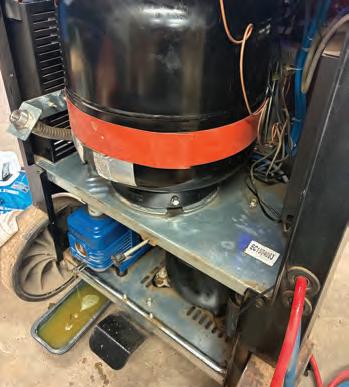
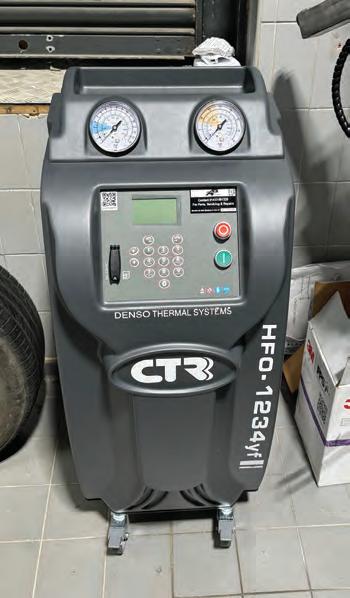
A timely reminder by air-conditioning specialist, AP Air about the importance of charging station maintenance.
Whilst most technicians will agree if you look after your equipment, it’ll look after you, day to day pressures, changing priorities and human error can mean that routine maintenance gets overlooked.
Seasonal equipment is particularly vulnerable to neglect and air-conditioning charging stations are a prime example. A cool cab is a necessity both in terms of safety and comfort for drivers spending long hours behind the wheel, when temperatures rise so does demand for a re-gas. Fully automatic R134a, R1234yf and dual gas service machines provide a great solution for workshops as they free up technicians to keep other jobs flowing. The problem arises when, after putting in a heavy shift over the warm months, these charging stations drop out of regular use and get forgotten.
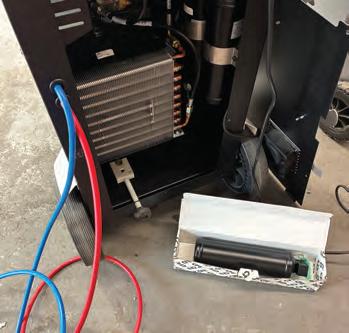
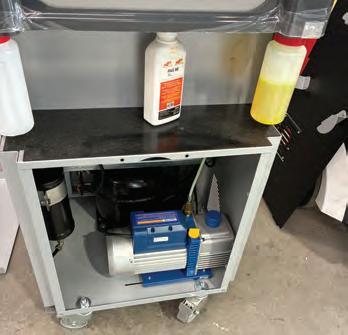
Why can’t you just pick up where you left off? Well, you can – but there’s a good chance you’ll end up with a costly and inconvenient machine breakdown during peak demand. Just like a mobile A/C system, a charging station has a receiver drier and regular replacement is essential. As well as putting increased wear on other machine components, including the pump, a saturated or clogged drier will also result in reduced refrigerant flow and long recovery and recharge cycles. Drier replacement is also a sensible precaution against contaminated refrigerant, which poses a corrosion hazard to charging stations and vehicle A/C systems alike.
Keep it regular
Left unmaintained, time will also take its toll on other aircon machine components. The scales, valves and sensors can all drift
out of calibration, compromising the unit’s performance and leading to under/over charged systems and recovery inaccuracies.
Aside from the warranty consideration, regular machine servicing is also a safety issue. Compliancy with regulations relating to refrigerant handling is already expected and the mildly flammable nature of the new R1234YF gas highlights the importance of regularly inspected hoses, seals and valves for leaks.
To best ensure against poor performance, intermittent faults and ultimately a breakdown, AP Air strongly recommend that all aircon machines are serviced annually. As well as offering mobile servicing and repairs across the UK for most major brand charging stations, they also supply service kits and parts to buy.
STRONG SUSPENSION CHOICES
BPW demonstrates why it’s the smart choice for efficiency and reliability in suspension for commercial vehicles.
High performance, low maintenance, and reduced whole-life costs define BPW suspension systems, making them a top choice for fleet operators who demand reliability and efficiency. BPW aims to set industry standards by delivering products that claim to maximise vehicle uptime without compromising safety or durability.
Tailored for every application
BPW offers a wide range of air suspension systems for different transport needs. For long-haul or heavy-duty operations, BPW delivers solutions that keep trailers performing optimally and maintaining low maintenance costs.
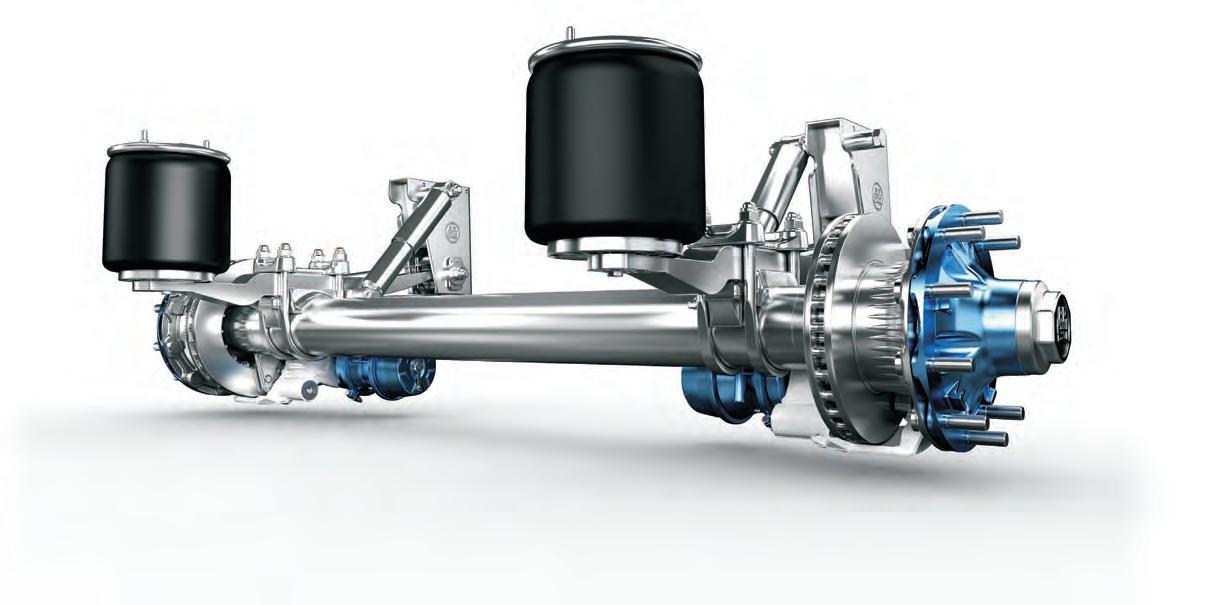
For 9-tonne axles, BPW offers three suspension types. The latest Airlight II Round (AL II-R), an advancement of the proven Airlight II (AL-II), features a conventional sprung steel trailing arm for
reliable trailer performance. The ECO Air, with its cast trailing arm design, offers the same properties as the Airlight II and accommodates a variety of trailer designs and operating conditions. For more demanding requirements, the Airlight Heavy Duty (AL-HD) incorporates reinforced components to withstand higher stresses. For even greater loads, the SL Suspension supports up to 14 tonnes. All suspension products come with the flexibility of drum or disc brake options, depending on the customer’s preference or the trailer’s use.
These solutions aim to ensure maximum strength, stability, and efficiency across a range of operational applications.
Airlight II Round
The Airlight II Round (AL II-R) suspension is among the lightest axle and suspension systems on the market. It delivers
outstanding performance and reliability for trailers with axle loads up to 9 tonnes. Its modular design uses a round axle beam and state-of-the-art laser processing technology. This design enhances stability and significantly reduces overall weight.
Optimising the design of the trailing arms, hanger brackets, and axle clamping can reduce a tri-axle trailer's weight by up to 93kg, thereby improving efficiency. A lighter unladen weight means lower fuel consumption and larger payloads, resulting in increased revenue.
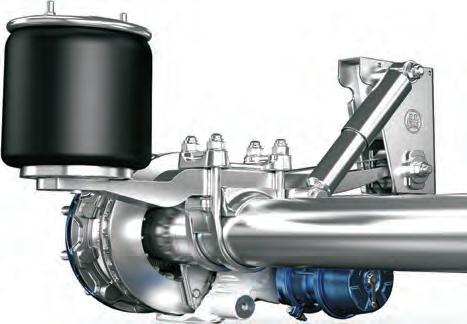
The suspension’s modular design allows easy, low-cost replacement of individual parts and components, reducing repair costs by requiring only the replacement of damaged or worn-out parts. The Airlight II Round also features flexible trailing-arm technology that can be precisely tailored to a particular vehicle and its application. The sprung steel trailing arm absorbs the strongest vibrations from the running gear and uneven road surfaces, reducing stress on the tyres, frame, vehicle body, and the load itself, which extends the lifespan of the trailer.
Light tube
Building on the lightweight efficiency of the AL II-R, the BPW LightTube is among the lightest 9-tonne chassis solutions on the market, with a total module weight from under 370kg. Designed for Airlight II running gear, its high-strength, hollowsection leaf spring connects chassis and axle in a robust, lightweight configuration.
The result is increased payload capacity and reduced fuel consumption. Lower CO2 emissions drive both environmental and operational savings and long-term sustainability. Its clamped-spring seat arrangement also reduces the risk of cracking, a common issue with welded alternatives. This ensures a long service life with reduced maintenance. By combining a lightweight design with performance and reliability, LightTube underscores BPW’s promise to deliver efficiency and durability.
ECO Air
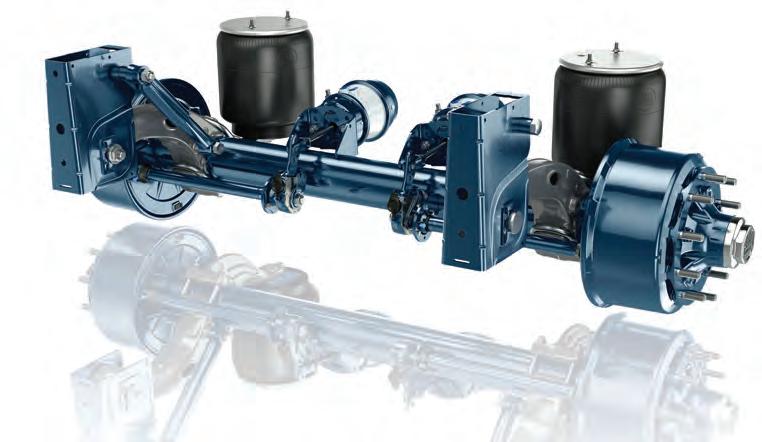
ECO Air is a robust and modular air suspension system engineered for versatility. It performs well across a range of road conditions. Its two-part cast trailing arm, combined with BPW’s precision-engineered steel rubber bush, ensures long-term durability and ease of maintenance. Unlike welded alternatives, the BPW ECO Air’s modular design allows quick replacement of individual components. This reduces downtime and lowers repair costs.
A key feature of ECO Air is BPW’s patented high-tech laser production process. It combines BPW's typical clamped modular air suspension mounting with round-axle beams. By integrating the threedimensional laser profile, etched on the
bottom of the casting interface, the system creates a positive location with less clamping force. This technology ensures a secure fit with minimal clamping force, improving overall durability and stability.
The asymmetrical steel-rubber bush enhances load absorption and guidance while reducing tyre wear and improving ride comfort. With its optimised design, ECO Air offers a cost-effective option for fleet operators needing efficient air suspension.
Heavy duty
For transport operations requiring higher load capacity, the Airlight Heavy Duty (ALHD) suspension system is engineered to handle axle loads of up to 12 tonnes. It includes reinforced components, such as thicker springs, welded spring seats, and robust M24 U-bolts. The AL-HD delivers superior strength and stability in the most demanding conditions.
This system also features clamped connections, allowing you to replace individual components as needed without
requiring a complete axle replacement. By minimising maintenance time and costs, the AL-HD ensures continuous fleet productivity. It also provides the durability required for demanding applications such as heavy haulage, construction logistics, and logging.
SL Suspension
Designed for the heaviest loads and extreme conditions, the SL suspension system supports axle loads up to 14 tonnes. Featuring a low-maintenance U-bolt clamping arrangement, it allows for straightforward component replacement, helping to minimise operational downtime.
With a 100mm-wide spring-steel trailing arm, available in single- or twin-leaf configurations, BPW SL suspension delivers durability for off-road or specialist transport applications. The combination of axle, connection, and trailing arm forms a robust unit that can handle the toughest loads while remaining stable.
BPW suspension systems give operators the flexibility to select solutions tailored to their transport requirements. Whether prioritising lightweight efficiency, modular maintenance, or heavy-duty strength, BPW delivers technology that reduces costs and maximises vehicle lifetime.
As transport evolves, BPW innovations continue to meet the needs of its customers. With proven excellence, BPW suspension systems are the smart choice for operators wanting efficiency, durability, and value.
KING PIN REBUILDS
Often overlooked until failure, king pins are central to steering performance and safety.
Diesel Technic explains how material quality, correct shimming and disciplined workshop practice determine whether a rebuild lasts –or quickly returns with costly play.
The axle assembly is one of the hardest-working systems on any commercial vehicle, but at the heart of its steering function sits a component that is easy to overlook until something goes wrong. King pins connect the steering knuckle to the axle, translating every driver input into controlled wheel movement. When they’re in good shape, they’re invisible. When they’re not, the consequences show up quickly: in steering feel, in tyre wear, and eventually in safety.
Diesel Technic’s Parts Specialists work with workshops across Europe on exactly these issues. Drawing on their expertise and guidance from the company’s PS Tips video series, we look at what a highquality king pin rebuild actually requires –
from the steel in the component itself, to the final play check before the vehicle goes back into service.
It starts with the component
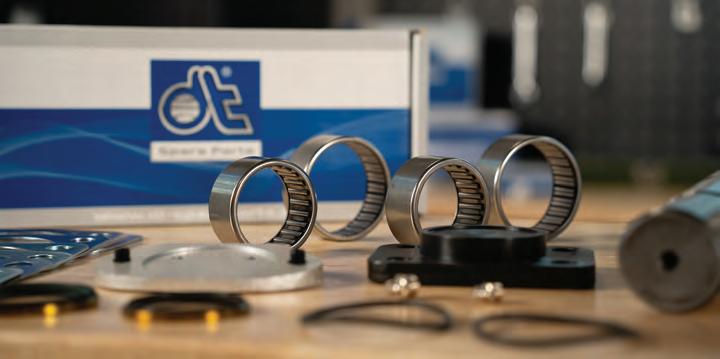
Diesel Technic’s king pins are manufactured from high-strength, hardened steel and subjected to a carefully controlled heat treatment process. The result is a component built to handle heavy loads, high axle pressures and frequent full steering lock without succumbing to wear or fatigue. The full king pin range can be found on the Diesel Technic Partner Portal.
Each king pin’s bearing surface is precision-ground to ensure optimal sliding properties in the bearing area. Dimensional accuracy, surface structure and hardness
are all subject to quality checks because in an application like this, tight tolerances translate directly into how long a rebuild lasts before play develops again.
Prepare the assembly before you start dismantling
A key recommendation from Diesel Technic’s Parts Specialists is one that saves time later: remove all steering rods before beginning disassembly. With the steering components clear, the axle assembly can be assessed on its own, making it much easier to spot secondary damage or heavy running before the main teardown is underway. Problems found at this stage are far easier to deal with than problems discovered halfway through a job. Where the steering knuckle bolt is seized or stubborn, carefully applying gentle heat to the knuckle can make removal considerably easier. The emphasis is on being gentle. Overheating risks altering the material properties of the knuckle itself, turning a straightforward removal into a component replacement.
Shims: the detail that determines the outcome
Shimming is one of the most consequential steps in any king pin rebuild, and one of the most frequently underestimated. The spacer washers fitted between the hub and the steering knuckle bolt control axial preload,
while the correct selection and positioning of those shims is what eliminates play and keeps it eliminated over time.
Too little preload and play develops in service. Too much and the assembly runs stiff, with the driver feeling it at the wheel. The right shim, installed correctly and verified against manufacturer specifications, is what separates a rebuild that performs from one that merely passes the initial check.
Cleanliness and lubrication: two rules that cannot be cut
Retaining ring grooves must be cleaned fully before reassembly, not just wiped over. Grease, debris and corrosion left in the groove prevent the retaining ring from seating correctly, and a ring that isn’t properly seated will eventually work loose. It is a small step that takes minutes but does prevent a significant failure.
Lubrication matters equally. Unapproved greases can be chemically incompatible with bearing materials, break down under operating temperatures, or lack the film strength the assembly needs under load. Any of these failures leads to the same outcome: premature wear, and a vehicle that will show it. Only approved lubricants should be used.
Kit-based repairs and the packaging that protects them
A king pin rebuild is a system overhaul, not a single-component swap. Diesel Technic’s king pin kits include bearing mounts, pressure discs, sealing rings and grease nipples alongside the pin itself, covering the full range of axle configurations across DAF, Iveco, MAN, Mercedes-Benz, Renault, SAF, Scania, Volvo and others. Using a matched kit eliminates the risk of reinstalling worn ancillaries alongside a new pin – a common cause of premature callbacks.
Packaging is something Diesel Technic takes seriously for this product category. Each component is individually packaged, with protective honeycomb fabric around the king pin bolt to guard against surface damage in storage and transit. It’s a detail that reflects a broader point: for precisionground parts, condition on arrival matters as much as specification.
Precision
in the axle bay
King pins sit within one of the most critical interfaces in the axle assembly – the point where chassis structure, suspension geometry and steering response all meet. Getting the rebuild right requires quality components, disciplined preparation and attention to the details that are easy to rush. Done well, the results show in vehicle stability, tyre longevity and driver confidence.
GUESSWORK TO PRECISION
Traditional, manual techniques were relied upon; levering components or rocking wheels by hand were common sights in a workshop. These are now outdated, inconsistent and may not replicate real-world conditions.
Different components can present similar symptoms:
● Worn wheel bearings and suspension bushes can both cause excessive noise and sharp vibration.
● Steering rack issues may be mistaken for track rod end wear.
● Intermittent faults may only appear under load.
Therefore, the more accurate, in-depth the testing equipment, the stronger the possibility of an accurate diagnosis and, ultimately, repair.
Axles play detection
Modern axle play detection systems provide a suitable solution by applying controlled, directional forces to the vehicle – allowing the tiniest of movements or wear to be correctly identified. As a result, workshops can accurately spot faulty or worn components, detect issues that appear under load, and they don’t have to rely on subjective judgement – as good or reliable as it may be.
By mirroring real-world stresses and scenarios, in a controlled environment, today’s axle play detection systems help workshops diagnose correctly, first time.
Impact of misdiagnosis
While there are technical consequences to misdiagnosis, there could be reputational and financial impacts too. Repeat repairs are likely to frustrate customers, particularly those whose downtime needs to be minimal, so there is a risk of them looking for alternative repairers if frustration grows and the opportunity arises.
There are the cost implications too; unnecessary part replacements increase costs and reduce margins.
All of these factors add up to an unwanted scenario for both workshop and customer, so why take the chance?
Return on investment visible
Investing in axle play detections, like MAHA UK’s LMS 20.0, pushes workshops past basic compliance. It also allows them to unlock tangible business benefits, like improved first-time fix rates, increased workshop efficiency and productivity, reduced parts wastage and stronger customer trust. MAHA UK managing director, Neil Ebbs, said: “Axle play
detection systems are not just a tool for compliance but a consistent, reliable method to bolster diagnostic accuracy, commercial performance and customer satisfaction.
“Workshops are under pressure to work quickly and accurately. To achieve both regularly, axle play detection systems are a sensible investment.”
MAHA’s offering revealed DVSA-approved, MAHA UK’s axle play detectors feature a built-in hydraulic drive, providing a powerful but smooth and quiet movement of the test plates. They can handle a maximum axle load of 20,000kg, wheel load of 10,000kg, and the plates can move up to 50mm per second.
Furthermore, because they are manufactured in-house in Germany, MAHA UK’s team of experts can confidently maintain and repair from the point of installation. This should provide customers total piece of mind.
STERTIL-KONI HEAVY DUTY LIFTING TABLE
Designed for EV batteries and heavy vehicle components, Stertil Koni has launched the HDLT-20. With a lifting capacity of up to 2,000 kg and a maximum lifting height of 1950 mm, the HDLT-20 is a robust electro-hydraulic lift table designed for continuous workshop use. A centred scissor mechanism aims to ensure perfect balance under load, while a wide base frame and optimised weight distribution minimise tipping forces. The finger-safe scissor construction further enhances operator protection.
With 17 mechanical locking positions, an emergency stop, and a strong foot brake, technicians maintain full control at every working height. Fine adjustment mechanisms for roll and pitch allow millimetre accurate positioning, even when handling components up to 2,000 kg.
The HDLT-20 is designed as a fully mobile scissor lift, operating cable-free to minimise trip risks. Integrated forklift pockets facilitate safe internal relocation within the workshop. Designed in accordance with EN 1570 1, the Stertil Koni HDLT 20 is compatible with dedicated EV battery support frames, ensuring flexibility for a wide variety of battery systems and commercial vehicle components.
WANT TO KNOW MORE?
WWW.RDR.LINK/VCF017 GOTO
SEALEY TOOL PROMOTION
Packed with exclusive discounts across the Sealey range, the latest Tool Promotion brings exceptional value on dependable workshop essentials and specialist equipment. Designed to help customers prepare for spring, it features a wide selection of pressure washers, hose reels and garden equipment. Alongside these seasonal highlights, more than 200 brand-new additions further enhance an already extensive and diverse product line-up.
New professional workshop tool cabinets
Available in green (AP1080HVG) or grey (AP1080GR), the heavy-duty tool cabinets combine a spacious topchest with a mobile rollcab. Twelve drawers and a cupboard help keep tools organised, accessible and protected in demanding workshop environments. With strong construction, smooth drawer action and secure locking, the Sealey topchest and rollcab combination delivers reliable professional tool storage backed by a five-year guarantee. Deals from the new Tool Promotion are available until the 30 th June.
WANT TO KNOW MORE?
WWW.RDR.LINK/VCF018 GOTO
POWER-TEC
LATERAL TENSION PULLER RANGE
New to the Power-TEC range of glue-pulling PDR equipment is this lateral tension puller range, designed to make lateral (sideways) gluepulling and PDR work cleaner, quicker and less likely to overstretch metal. The range includes three lengths to suit different repair scenarios: the 250 mm (part no. 92733), 450 mm (part no. 92734) and 900 mm (part no. 92735) lateral tension pullers. The Power-TEC lateral tension pullers apply a spreading (sideways) force that relieves locked-in tension in dented metal so the panel can be coaxed back to its original shape more naturally. Used alongside high-strength PDR glue and the correct glue pads, lateral tension pulling reduces the resistance in the metal, allowing technicians to make finer, controlled corrections rather than forcing the panel with direct pulls or heavy pushing.
● Available sizes: 250 mm (92733), 450 mm (92734) and 900 mm (92735).
● Strong aluminium construction for light weight and durability.
● Screw adjuster knob with 3/8 inch drive — fits a ratchet for rapid, repeatable application of lateral tension.
● Quick-change puller arms allow legs to be reversed so the bridge can be used for inward as well as outward pulling.
● Designed for use with Power-TEC high-strength hot-melt PDR glue (part no. 92760) and the lateral tension glue pad set (part no. 92736). To remove adhesive after repair use Power-TEC solvent spray for hot-melt glue (part no. 92341).
KNIPEX SPARE PART RANGE
Tools take a fair amount of punishment, especially if they’re used daily. But when a part wears out, replacing the whole tool isn’t always necessary. Knipex offers a wide range of spare parts to keep essential tools in service for longer.
For example, the TwinGrip front and side gripping pliers are designed for tackling worn or damaged screws and fasteners. With a unique combination of front and side gripping along with a push-button adjustment, they are ideal for tight or awkward spaces.With regular use, components such as the push button can wear over time. Rather than replacing the whole tool, the company offers a simple solution. A spare part assortment (82 xxx E01) for the TwinGrip range means the push button can be swapped out in just a few steps using basic tools, getting the pliers back up and running in minutes. It’s a straightforward process that keeps downtime to a minimum and extends the working life of a trusted tool.
WANT TO KNOW MORE?
Noteworthy highlights from the new Apec Red lineup include rear brake pads for the 2023 and newer Ford Ranger, rear brake discs for the 2018 and newer Lexus ES, and rear brake calipers for the 2020 and newer Mercedes Benz Sprinter. Apec Red braking components are meticulously engineered and tested to meet or exceed OEM standards for excellent stopping power straight out of the box. The range boasts a vehicle coverage of 99 per cent.
WANT TO KNOW MORE?
WWW.RDR.LINK/VCF021
DIGITAL DIGEST
3 5 1
APRIL’S TOPFIVE
2
business tips, it’s a great source of information right at your fingertips. If you’re not already convinced, this month, CVW takes a look back at the most popular articles on the website from the past month.
1 READ OIL ABOUT IT
Kicking off this month’s list of popular online articles is Castrol with the announcement of its new range of top-tier VECTON Long Drain engine oils that meet the latest commercial vehicle diesel-engine technical specification set out by OEMs.
WWW.RDR.LINK/ VCF022
2
DIAGNOSTICS TOOL
Next up is Bosch, sharing details of its modular diagnostic solutions for fast repairs with the aim of helping workshops reduce downtime and keep their customers happy. This includes the ESI[Tronic] truck package and KTS Truck.
WWW.RDR.LINK/ VCF023
3
SPRING CLEANING
Cold-weather operation often prevents engines from reaching consistent operating temperatures. So, Cataclean details how its fuel and exhaust system cleaner can help prepare you for the warmer spring weather.
WWW.RDR.LINK/ VCF024
4
PICKING THE RIGHT OIL
In another popular seasonal article, Exol Lubricants argues how reassessing oil selection is a straightforward but impactful way for fleets to keep vehicles productive, compliant, and prepared for the road ahead.
WWW.RDR.LINK/ VCF025
4
5 ICE BAN PLANS
Rounding off this month’s list is the VLS’ Darren Frogson, examining how the commercial vehicle parc will change over the next decade and the vital role lubricants will play in the transition as the EU waters down its ICE ban plans.
WWW.RDR.LINK/ VCF026
Here is a useful summary of all the adverts that appear in this issue of Commercial Vehicle