001_CVW_APR22_Layout 1 23/03/2022 15:50 Page 1
The trade magazine for servicing and repair professionals
COMMERCIAL
VEHICLE WORKSHOP APRIL 2022
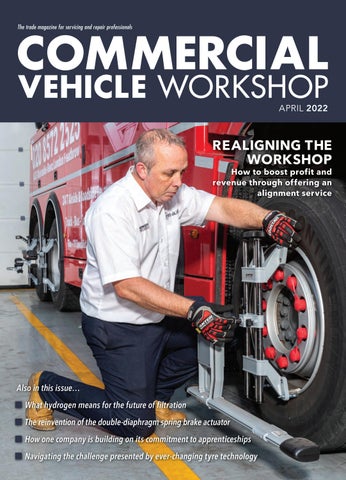
REALIGNING THE WORKSHOP How to boost profit and revenue through offering an alignment ser vice
Also in this issue…
■ What hydrogen means for the future of filtration ■ The reinvention of the double-diaphragm spring brake actuator ■ How one company is building on its commitment to apprenticeships ■ Navigating the challenge presented by ever-changing tyre technology
036_dayco_Layout 1 21/04/2021 10:03 Page 1
003_CVW_APR22_Layout 1 24/03/2022 11:37 Page 3
CONTENTS
Volume 19
Issue 4
REGULARS 7
Viewpoint
14 Business & Training
8
News
56 What’s New?
12 Tech Tips
57 Digital Digest
BRAKES 20 How to keep vehicles on the road instead of in the workshop 23 A technical guide to the reinvention of the doublediaphragm spring brake actuator
26
24 Identifying issues that stem from different braking systems 26 Why roller brake tests can provide valuable diagnostic clues
28
TYRES & WHEELS 28 Navigating the challenge presented by ever-changing tyre technology 32 Boosting profit and revenue through offering a professional alignment service 34 Continental Tyres explains how it’s building on its commitment to apprenticeships 35 Discussing the tell-tale signs of wheel defects 36 Where fleet managers should focus when considering tyre management programmes
FILTERS 38 What hydrogen means for the future of filtration 40 How opting for low quality ends up costing more in the long run 42 Mitigating the impact of Clean Air Zones on the CV sector 44 One company’s filter offering and how it strives to deliver the best results
BODY REPAIR & MAINTENANCE 41 Outlining one company’s tools and equipment offering
53
48 Tips on how digital colour measurement works 51 Exploring the new generation of topcoat 53 A comprehensive three-stage guide to efficient CV body repair APRIL 2022 CVW 3
CPN/CVW page grid_Layout 1 21/03/2022 14:26 Page 1
CPN/CVW page grid_Layout 1 21/03/2022 14:26 Page 2
CPN/CVW page grid_Layout 1 22/03/2022 08:08 Page 1
007_CVW_APR22_Layout 1 24/03/2022 11:43 Page 7
VIEWPOINT
www.cvwmagazine.co.uk
CVWmagazine
@CVWmagazine
YEAR OF CHANGE
Editor CIAN BRITTLE Editorial Assistant
I
FREYA COLEMAN Group Editor KIERAN NEE Digital Manager KELLY NEWSTEAD Senior Account Manager ALEX DILLEIGH Group Manager ROBERT GILHAM Graphic Designer GEMMA WATSON Group Production Manager CAROL PADGETT Subscriptions Commercial Vehicle Workshop is a business magazine for companies and individuals involved in all aspects of commercial vehicle servicing. It is published 11 times a year and is available on free subscription to qualified readers. Subscription rates: UK £30 To be removed from this magazine’s circulation, please call 01923 237799 or email circulation@hamerville.co.uk. Printed by Walstead Peterborough Published by HAMERVILLE MEDIA GROUP Regal House, Regal Way, Watford, Herts WD24 4YF Tel: (01923) 237799 Website: www.hamerville.co.uk Copyright © 2022
n more ways than one, the hope is that – as we move deeper into 2022 – the indelible mark of positive change will be left on the commercial vehicle industry. This is, after all, an industry that has repeatedly persevered in the face of numerous challenges. The sun may be peeking through the clouds of the COVID pandemic, but the clouds remain – Formula 1 fans will have seen both Daniel Ricciardo and Sebastian Vettel test positive in the space of a week before the season-opening race in Bahrain. There is also the small matter of the parts supply issues still permeating the industry, something that will only get worse as the Russia-Ukraine conflict continues. In addition to this, the Institute of the Motor Industry (IMI) recently voiced concern on the lack of HGV technicians trained to work on vehicles with high voltage systems. As a result of the Government’s recent announcement, the UK is set to be the world’s first country to phase out new, non-zero emission heavy goods vehicles weighing 26 tonnes and under by 2035. Plus, all new HGVs sold in the UK are set to be zero emission by 2040. While this is certainly a positive change for our environment, the lack of infrastructure in place to facilitate a change on this scale is well-known already. What’s more, the IMI has stated that just 3% of current technicians have the necessary training and/or qualifications to carry out electrical work on HGVs. Steve Nash, CEO of the IMI, explained: “This ambition [to strive for zero emission HGVs] could be severely undermined unless focus is put on EV training for those who will need to work on these vehicles – and other HGVs. [The IMI] is already lobbying government for more funding to support the necessary training.” We are also set to finally find out what the Euro VII emissions standards will look like. Having initially expected the first news to be released in Q4 2021, the European Commission delayed the adoption date to 20th July 2022. However, there is still no information on what shape this proposal will take. These standards will be pertinent to the statistics released by the IMI, and it will determine how quickly this deficiency of qualified technicians needs to be acted upon. As always, it feels like this industry is left to pick up the pieces of events out of its control; something it’s proven capable of time and time again. Here’s to 2022 being the year in which we get some steps taken in the right direction. The final change I will mention is on a much more personal level, as this is my last issue as Editor of CVW. I have greatly enjoyed my two years on this magazine, and I hope that the upcoming CV Show at the NEC, Birmingham, proves to be the event that brings our industry back together again under the same roof. Signing off, I hope you enjoy the issue,
Cian B rittle Editor
8,459 From 1 July 2020 to 30 June 2021
Associate member
The publishers and editor do not necessarily agree with the views expressed by contributors, nor do they accept responsibility for any errors of translation in the subject matter in this publication
APRIL 2022 CVW 7
008_CVW_APR22_Layout 1 24/03/2022 11:47 Page 8
NEWS “Apprenticeships essential to tackling skills shortage” Logistics UK says that apprenticeships are essential to tackling industry skills shortage.
3% of HGV technicians trained for electrical work On top of the HGV driver shortage, current IMI analysis suggests just 3% of HGV technicians are trained to work on vehicles with high voltage systems. The shortage of drivers in the HGV sector has been well documented over the past two years, but the Institute of the Motor Industry (IMI) is raising concerns about another challenge for the market; EV training heavy vehicle technicians. Steve Nash, CEO of the IMI commented: “We have long championed for the Government and the automotive industry to collaborate to overcome the financial, administrative and skills difficulties that EV technology is bringing to the vehicle repair industry. And there are certainly signs that employers are stepping up the pace to support the UK’s rapid EV transition. “However, our latest analysis reveals that the shortfall in qualified EV technicians in the HGV sector is of even greater concern than that faced by the passenger vehicle and light commercial vehicle (LCV) markets. “With the need to meet the Government’s HGV decarbonisation pledge – and a big ramp-up in EV adoption already occurring in the public transport space – there is a huge risk that there simply won’t be the skilled workforce to work on high voltage vehicle systems.” According to figures from Logistics UK, there are nationally about 30,000 mechanics, technicians and fitters working on HGVs, trailers and PSVs, with over 4,000 vacancies currently waiting to be filled, which is 35% higher than before the pandemic. Add this to the IMI's analysis outlined here, and the scale of the challenges the HGV sector face are beyond worrying.
8 CVW APRIL 2022
At the start of National Apprenticeship Week 2022, Logistics UK is urging its members to take advantage of the apprenticeship schemes available to develop the next generation of talent the industry needs to keep the UK’s supply chains operating effectively. Alex Veitch, Deputy Director – Public Policy at Logistics UK, said: “With more than half of decision makers reporting that apprenticeships and work-based learning will be vital for the future of their organisation – according to Logistics UK’s 2021 Skills and Employment Report – maximising the opportunities afforded by apprenticeship schemes will be essential in
overcoming the skills shortage faced in the logistics industry. The government recognises the value of these schemes and has shown a commitment to growing the opportunities for apprenticeships in the industry. In 2021 it increased the available funding to £7,000 for a Category C + E licence HGV Driver apprenticeship and created a new “Urban Driver” Apprenticeship for Cat C only with funding of £5,000. With these and many other apprenticeships in place, it is the perfect time for logistics companies to take advantage of these opportunities.”
“Maximising the opportunities afforded by apprenticeship schemes will be essential.”
LC V values remain above £10k for third consecutive month LCV values remained at near record levels in February 2022, with average values staying above £10,000 for the third consecutive month. Following on from the record value of £10,812 seen in January, February maintained the consistent run of strong values seen throughout recent months, averaging £10,441 – the second highest monthly value ever recorded. Values averaged 101.2% of guide price across the board during February. Yearon-year values for February 2022 were ahead by £1,015 (10.8%) compared to February 2021 when the country remained in lockdown. With demand continuing for good
quality light commercial stock, BCA staged its first online Sunday LCV Sale in early February, attracting hundreds of buyers and selling nearly every vehicle on offer. BCA’s commercial vehicle auctions offer up to 700 vehicles each day and attract up to 2,000 different buyers each week. Despite this outwardly strong performance, it is apparent that the external pressures affecting the wider economy are starting to be felt in the LCV sector. Demand remains robust for vehicles in the best condition, although professional buyers are much less enthusiastic about vehicles with cosmetic or mechanical issues, and these vehicles are becoming very price sensitive.
008_CVW_APR22_Layout 1 24/03/2022 11:51 Page 9
www.cvwmagazine.co.uk
CVWmagazine
@CVWmagazine
Renault Trucks expands all-electric range Renault Trucks is expanding its allelectric range, announcing the start of sales for 2023 of two new models of up to 44 tonnes.
Krone supports fleet expansion for KBC Logistics KBC Logistics has added more than 50 trailers to its fleet as its deep-sea operations continue to expand. KBC Logistics has taken delivery of 51 Box Liner FS10 skeletal trailers from Krone UK to support rapid growth in its deep-sea business. David Ashford, who is a company director and its Transport and Compliance Manager, said: “Previously, we predominantly operated fixed chassis trailers. However, our presence at London Gateway has enabled us to win some substantial new deep-sea contracts, which required investment in more sliding skeletal trailers.”
The company invested in Krone trailers following feedback from its in-house workshop team. “The workshop really like the Krone kit as the build quality is excellent – they are robust and extremely easy to maintain,” added David. “Krone was also competitive on price, which made it a very straightforward decision.” The FS10 has a flat chassis configuration with a sliding bogie for carrying 20ft, 30ft, 40ft, and 45ft containers. Krone container chassis are designed to be durable and versatile, with features including fold-out and retractable container locks, as well as extendable underrun protection. They come with a 10-year guarantee against corrosion perforation.
Since 2020, the manufacturer has been producing a range of all-electric vehicles from 3.1 to 26 tonnes, manufactured in France. From the beginning of 2023, Renault Trucks will release the two new models of up to 44 tonnes in its range: the Renault Trucks T E-Tech for regional transport and the Renault Trucks C ETech for construction. These new models in this heavyduty range will be fitted with two or three electric motors providing a combined power of up to 490 kW (equivalent to 666 hp) and will be also equipped with an Optidriver gearbox. The Renault Trucks T and C E-Tech will have two to six lithium-ion battery packs with a capacity of 180 to 540 kWh. The vehicles' batteries can be fully charged in 9.5 hours by alternating current (AC) up to 43 kW, or in 2.5 hours by direct current (DC) up to 250 kW. These trucks will be able to travel up to 300 km on a single charge and up to 500 km with a one-hour intermediate fast charge (250 kW).
008_CVW_APR22_Layout 1 24/03/2022 11:53 Page 10
NEWS
Cummins to acquire Meritor Cummins has announced that it has entered into a definitive agreement under which the company will acquire Meritor.
Biomethane refuelling station opens CNG Fuels, has announced the opening of the world’s largest public access biomethane refuelling station in Avonmouth which can refuel up to 80 HGVs per hour. When fully utilised, the station will cut 70,000 tonnes of greenhouse gas emissions per year by taking diesel HGVs off the road. The site is part of CNG Fuels’ nationwide network of eight renewable biomethane refuelling stations which covers the length and breadth of the country, enabling low carbon deliveries from Inverness all the way down to Cornwall. The company is aiming to build 12 additional stations each year to cater for growing demand.
“The demand is predicted to increase five-fold over the next five years as the UK’s 2040 ban on the sale of new diesel HGVs approaches.” This is in response to the demand for renewable biomethane increasing by 1,000% over the last five years as brands across the country urgently seek to cut haulage emissions in line with the UK’s net zero strategy. The demand is predicted to increase five-fold over the next five years as the UK’s 2040 ban on the sale of new diesel HGVs approaches. The site joins eight existing refuelling stations already operated by CNG Fuels and by 2023, the company will have 20 large public access stations in operation to meet the exponential growth in demand.
10 CVW APRIL 2022
The move aims to strengthen Cummins' range of powertrain components and accelerate development of electrified power solutions. Meritor is a global leader of drivetrain, mobility, braking, aftermarket and electric powertrain solutions for commercial vehicle and industrial markets. Under the terms of the agreement, Cummins will pay $36.50 in cash per Meritor share, for a total transaction value of approximately $3.7 billion, including assumed debt and net of acquired cash. “The acquisition of Meritor is an important milestone for Cummins. Meritor is an industry leader, and the addition of their complementary strengths will help us address one of the most critical technology challenges of our age: developing economically viable zero carbon solutions for commercial and industrial applications,” said Tom Linebarger, Chairman and CEO, Cummins. “Climate change is the existential crisis of our time and this acquisition accelerates our ability to address it. Our customers need economically viable decarbonized solutions.”
“This agreement with Cummins builds on Meritor’s track-record of outstanding performance and service to our customers. Our offerings will continue to play an important, strategic role as commercial vehicles transform to become electric and autonomous,” said Chris Villavarayan, CEO and President of Meritor. “At closing, Meritor shareholders will receive immediate value at a compelling 48% premium to the Meritor trading price as of Feb. 18, 2022, and customers will benefit from enhanced capabilities in technology and the ability to accelerate investment in axle and brake development and EV adoption. Our global team members and their commitment to excellence helped make this transaction possible and will fuel our innovations as we embark on this next chapter in our longstanding legacy.”
Manufacturing increase According to figures released by the Society of Motor Manufacturers and Traders (SMMT), UK commercial vehicle output has began 2022 with an increase of 22.2%, driven by export markets. This increase has been seen with 6,860 vans, trucks, taxis, buses and coaches leaving factory lines. Despite January’s output being a significant improvement on the same period in 2021 – when lockdowns affected demand at home and across Europe – it
“This January’s growth was driven largely by an increase in overseas demand as international markets started to get back to business, with production for export up by a third (32.1%).”
remained more than a quarter (-25.3%) down on the same period in pre-pandemic 2019. This January’s growth was driven largely by an increase in overseas demand as international markets started to get back to business, with production for export up by a third (32.1%). More than half of all CVs built in the UK last month were shipped abroad with the majority (57.5%) destined for the EU. Meanwhile, output for UK customers also rose, up 10.9%, reflecting the shift to online deliveries and broader economic recovery.
008_CVW_APR22_Layout 1 24/03/2022 11:55 Page 11
www.cvwmagazine.co.uk
CVWmagazine
South Street Motors gets MOT ready MAHA UK has outfitted Somerset-based South Street Motors with its testing and lifting equipment. MAHA UK Regional Sales Executive, Luke Fuller, knew the customer – South Street Motors Group Managing Director, Jonathan a’Court-Wills – had done his research and been impressed by what he had found in terms of quality of equipment, company history and reputation. As a result, Luke was keen to continue that impressive start! He said: “Jon and I discussed South Street Motors’ needs and what the company was looking to achieve from the installation, at which point we provided Jon with a bespoke quotation for what we felt met the business’s needs, after which I offered to travel down to complete a site survey and initial sketch of the site.” The results were as follows: ■ Boston Class 7 – 6.1m, 6T four-post lift, with LED under vehicle lighting and Majorlift 2.8T jacking beam ■ MAHA MBT 2250 Class 7 connected brake tester with dynamic weighing ■ MAHA MLT 1000 headlight beam tester with stainless steel rails ■ MAHA full MOT pack, including boards, tools and convex mirrors for ATL testing
“Communication was excellent; Luke was always available on the phone. I would most certainly recommend MAHA to anybody thinking of installing this type of equipment.”
@CVWmagazine
UK sees first hydrogenpowered refuse vehicle A fully automatic transmission has been specified for the UK’s first refuse collection vehicle (RCV) with a hydrogen fuel cell powertrain by Allison Transmission.
Luke continued: “I then produced a full CAD drawing of the building and positioned the quoted equipment discussed to meet the DVSA Class 7 regulations. At that point, Jon could make his VT01 application with the DVSA, where some alterations were made, such as extra dimensions and customer viewing areas.”. To ensure a smooth process from start to finish, emphasising MAHA UK’s dedication to the customer and desire to see the job through to the end, Luke was always on-hand, whether it be on the phone, e-mail or, indeed, travelling down to the site in Somerset. “Communication was excellent; Luke was always available on the phone. I would most certainly recommend MAHA to anybody thinking of installing this type of equipment,” concluded Jon.
The pioneering new hydrogen-powered RCV is based on the 4200mm wheelbase HH-Mercedes-Benz Econic Hydrogen chassis and has a 15kg tank capacity at 350 bar and 140 kWh batteries at 700V. The RCV, which will be fuelled via Aberdeen City Council’s own green hydrogen infrastructure, will have a range of 155 miles (250 km), enabling it to travel greater distances than an electric vehicle. The vehicle is the latest step in the “H2 Aberdeen” initiative, which aims to bring about a hydrogen economy in the city’s region. The RCV is also part of the European Union’s Interreg HECTOR project, in which seven European regions aim to demonstrate that fuel cell wastecollection trucks can help reduce emissions from road transport. Green hydrogen, produced from renewable energy sources via the electrolysis of water, is completely carbon free. Hyzon produces the highest power density hydrogen fuel cell modules in the world.
012_CVW_APR22_Layout 1 23/03/2022 16:39 Page 12
TECH TIPS
CLUTCH AND DMF REPL ACEMENT ON A NISSAN NAVARA This month, REPXPERT Alistair Mason replaced the clutch and dual mass flywheel (DMF) on a Nissan Navara 2.5 DDTI, which had covered more than 103,000 miles.
F
ollowing complaints of the clutch ‘slipping’, Alistair’s assessment confirmed the cause, and a clutch and DMF replacement was advised. For this repair, Alistair used a four-post ramp, transmission jack, and a self-adjusting clutch installation tool.
Step-by-step procedure With the vehicle placed on the ramp, open the bonnet and disconnect the negative battery terminal. From inside the vehicle,
���
12 CVW APRIL 2022
remove the centre console from around the gearstick (Fig. 1), the six bolts that retain it, and the gearstick itself. Raise the ramp to gain access to the underside of the vehicle; start by disconnecting the prop shafts from the gearbox – it is always best practice to mark the flange positions before removing them to eliminate any balance issues when the repair is completed. The front prop shaft can be removed from the gearbox flange then stowed and secured to the chassis. Switching to the rear, unbolt the rear prop shaft at the rear flange, disconnecting from the rear axle, then remove the centre bearing fixing bolts. Slide the front joint out of the gearbox and remove the rear prop shaft. Now disconnect the exhaust, which can be achieved by removing the two nuts on the centre joint (Fig. 2), part the exhaust and ease the rear section off its mountings. The rear section can then be stowed against the O/S chassis to give clearance for removing the gearbox.
���
Support the gearbox using a transmission jack and remove the gearbox cross member by taking away the four retaining bolts (Fig. 3) and three gearbox mounting bolts. Work the cross member out of the chassis – this is a tight fit – and stow to the side or support against the O/S chassis. With the cross member removed, disconnect the gearbox wiring loom from the gearbox, remove the two fixing bolts for the clutch slave cylinder, disconnect from the gearbox and stow in a safe area.
012_CVW_APR22_Layout 1 23/03/2022 16:40 Page 13
���
Next, remove the lower bell housing bolts, lower the gearbox on the transmission jack to gain access to the upper bell housing bolts, then remove them – there is one bell housing bolt behind the starter motor inserted in the opposite direction. Once all the bell housing bolts have been cleared, ease the gearbox away from the engine and, when clear, lower the transmission jack and place the gearbox in a safe area. With the gearbox away, remove the old clutch assembly (Fig. 4) and DMF. Clean and inspect the back of the engine for any leaks and rectify if required, so not to contaminate the new clutch components.
���
“Torque specifications are available on the REPXPERT platform and on Schaeffler’s DMF Checkpoint app.” manufacturer’s specification. Torque specifications are available on the REPXPERT platform and on Schaeffler’s DMF Checkpoint app. Now, remove the release bearing and arm assembly from the gearbox bell housing and clean the inside of it, removing the old clutch dust. Once cleaned, inspect the release bearing guide tube for any wear and replace if required. Place a light smear of high-melting point grease on the gearbox input shaft splines, mount the new clutch plate onto the input shaft and guarantee that it moves back and forth freely. This will help confirm the clutch plate is correct for application and it will also evenly distribute the grease. Remove the clutch plate and wipe off any excess. The release bearing centre boss needs to be pressed out of the old release bearing and carefully pressed into the new one (Fig. 6 & 7). Once complete, check the release arm for any wear and replace if required, and then refit to the bell housing and input shaft (Fig. 8).
��� Ensure the new flywheel is correct and mount onto the crankshaft, checking that the alignment pin locates correctly (Fig. 5) – there is a bulletin in the box advising this. Using new flywheel bolts, tighten in an evenly and sequentially, and torque to the
���
���
���
Fit the new clutch assembly, which can easily be identified as self-adjusting, as it has the three small yellow springs in the centre and a red information sticker on the outside of the clutch box, advising the use of a self-adjusting clutch mounting tool. Mount the clutch plate using a clutch alignment tool and ensure ‘Gearbox Side’ or ‘Getriebe Seite’ marked in the centre of the clutch plate is facing the gearbox. Plate the clutch pressure plate, checking that it aligns on the flywheel dowels, then attach three long studs from the tool kit. Fix the tool onto the studs and secure in place with three large retaining nuts from the tool kit, ensuring the studs come level with the large nuts, but do not protrude. When in position, tighten the tool, which will ease the new clutch pressure plate into position, with no risk of damage to the new clutch or flywheel (Fig. 9).
���
When the clutch pressure plate/cover is in the home position, secure it using three bolts and remove the self-adjusting clutch tool. Insert the remaining three bolts and torque to the manufacturer’s specification. This is a great example of how Schaeffler aids aftermarket installation. Check to make sure everything is fitted correctly, the gearbox alignment dowels are installed, the back plate is in position and that nothing is restricting the gearbox fitting. Using the transmission jack, ease the gearbox into position and align onto the dowels. When the gearbox is in, secure it into place using the bell housing bolts and reinstall in reverse order of removal. After the battery has been reconnected, reset all electrical systems as required.
FOR MORE INFORMATION ON SCHAEFFLER PRODUCTS, FITTING INSTRUCTIONS, LABOUR TIMES, AND MUCH MORE, WWW.RDR.LINK/VAM001
APRIL 2022 CVW 13
014_CVW_APR22_Layout 1 24/03/2022 11:41 Page 14
BUSINESS & TRAINING
Neil Ebbs
PEACE OF MIND MAHA UK Managing Director Neil Ebbs explains how the company is best-placed to maintain its own equipment, offering after-sales support and warranty packages to suit any requirements.
M
AHA UK calibrates the equipment at the point of installation and concludes the deal with a twoyear warranty. It also offers the customer an additional three years extended warranty – essentially covering the equipment for five years all in, which includes parts and labour. That’s not all either, as MAHA UK Managing Director, Neil Ebbs, explains: “We can simply offer a calibration contract or a service & maintenance contract – there are three options to explore. “All are viable and worthy options, considering all of our engineers are experienced, factory-trained and are responsible for the upkeep of our equipment – there’s nothing worse than an engineer turning up to replace a piece of equipment that they’ve never seen before or have no idea what it’s about.” Should the customer elect for the threeyear extended warranty, they then have the choice of an additional five-year warranty or go onto a rolling annual contract at the conclusion of that initial agreement.
14 CVW APRIL 2022
Neil adds: “It’s peace of mind for the customer – that’s the key to this – they will know where they stand in terms of how much they’ve got to pay every month, so, in the unlikely event there is a problem, they know one of our trained engineers will pay them a visit as quickly as possible – it’s that simple.” What’s more, should a brake tester require attention, for example, MAHA UK has genuine like-for-like components in stock and ready to go. Currently, around 40% of customers choose the five-year warranty term, and Neil acknowledged that some have their equipment calibrated ‘as and when’, before adding: “If it's not a test station, in theory, customers don't have to have their equipment calibrated every six months – there's no legality – but if they’re using it for compliance, for the six and eight weekly brake checks, then they would have to prove that they have a calibrated brake tester and that calibration was carried out by a certified person, such as a MAHA UK engineer,” explains Neil.
“It’s peace of mind for the customer – that’s the key to this – they will know where they stand in terms of how much they’ve got to pay every month.” Too good to turn down? Neil empathises with customers that are nervous about either putting money upfront or don’t want to increase their monthly payments, but he compared that scenario with a personal choice. He says: “If I was to lease a car – a lot of our brake testers are leased – I would want to make sure my vehicle is covered for the entire lease period, so I wouldn’t have to worry about failures, tyres, etc.”
014_CVW_APR22_Layout 1 23/03/2022 16:49 Page 15
About MAHA MAHA stands for high-tech vehicle inspection and workshop fittings. A manufacturer, the company supplies the likes of test benches and vehicle lifts to various inspection devices for cars, utility vehicles, motorbikes and specialpurpose vehicles.
Another roadblock for customers is actually the self-explanatory nature of MAHA UK equipment; for example, the MBT 7250 EuroSystem brake tester comprises a program that talks the user through the entire set-up, one step at a time, offering plenty of convenience. It will ask if it’s a truck or trailer – perhaps a combination of both – that’s being tested, before wanting a DTp number. That data will then generate a configuration of the brakes that are being checked. It could be the front brake is just a foot brake, the second brake could have a secondary park brake on
it and so could the third axle, for instance, so it gives the user that crucial combination. Where things become complex, it increases the room for error and may need assistance from MAHA UK’s knowledgeable and professional after-sales team is if the vehicle is obscure, as Neil concludes: “Users can enter the relevant information manually, or they can conduct a brake test and evaluate it themselves. If they put a DTp number in – that's how DVSA test vehicles – that will then give a pass/fail criteria, depending on what happens during the brake test – and that's incredibly complex.”
With the option of linking individual test devices to form universal test lanes, MAHA has become a skilled technical partner to companies all over the world. MAHA products meet the highest quality standards, represent reliability and a long service life and satisfy the most demanding requirements.
FOR MORE INFORMATION ON THE SERVICES AVAILABLE FROM MAHA UK, WWW.RDR.LINK/VAM002
016_CVW_APR22_Layout 1 23/03/2022 16:59 Page 16
BUSINESS & TRAINING
MANAGE YOUR BAT TERIES
F
irst things first, we need to make sure that you are getting the best performance and value from what you already have; in most cases, battery testers and chargers simply need a bit of TLC to get into peak condition. If you are grappling with dirty clamps and tatty cables, your technology will be far from operational. Rotronics is the UK’s CTEK and Midtronics partner and is the industry leader in battery maintenance and service solutions. Its service and repair specialists care for all Midtronics and Professional CTEK technology, which includes the CXPRO 50/2 and the EXP1000 FHD. Ken Clark, Managing Director of Rotronics, says: “I would challenge CVW readers to have a good look around their workshop once they have read this article and see what unused essential equipment is lying around getting dusty. Our team of experts can bring it all back to life, providing a full repair, with warranty, if it lies within the warranty period.” So, the challenge is on, take a few minutes and find that equipment that needs to be repaired. Do not throw it out. If you think that your readings are no longer reliable, it could be a good time for a service. Some testers and chargers need to be serviced annually, to ensure that you are still able to care for and manage AGM, EFB, and Lithium batteries. Ken Clark advises: “To always get correct readings, your technology needs a regular service and calibration. This also helps verify warranty claims and audit conformance. Check the cables for any obvious wear and tear. Are the clamps clean? All the components may need to be broken down and for a full repair; obviously you don’t want to be without your kit for
16 CVW APRIL 2022
Costs are rising and – currently – there seems no end to that. However, we can control unnecessary spend in the workshop. Rotronics talks to CVW about getting the most out of your battery management programme. long periods of time, so our 24-hour turnaround suits customers very well.” “It’s important to have the most up-todate software on your workshop testers, to be able to care for your customer batteries, start/stop applications and EFBs and support all battery technologies for vehicles arriving at your workshop.” Even with the advent of electrification, the 12V battery still needs to be maintained in the same way. Electrification has not made any battery management processes disappear. Without the correct equipment or equipment that is in poor condition, you will end up with misdiagnosis, lost revenue streams, and dissatisfied customers. 53% of vehicles (an increase of 3% on the same period last year) entering a workshop will have a battery that requires charging, and you will need a plan to ensure that every vehicle leaves the workshop in optimal condition. That plan will involve an excellent battery management programme and CVW asked Ken Clark to outline for us what that should look like. Rotronics has a great check list of simple actions that will make
the world of difference to workshop efficiencies and budgets: ■ One charger per bay. All Rotronics
customers who do this achieve the best battery performance improvements ■ Test and charge every vehicle that arrives at your workshop for routine servicing ■ Charge all your battery stock as batteries on the shelves will discharge over time. Check the voltage every month “Workshop managers need to have eyes and ears open 24/7/365 when looking after a busy fleet. The Rotronics ROBIS data portal will certainly give advanced warning of any issues or charging required and help closely manage your processes and budgets,” explains Ken Clark.
What will ROBIS do for your business? A bit like an on-call technician who never sleeps, ROBIS provides full visibility regarding what condition your fleet batteries are actually in, what remedial action is required, and shows clearly how your technicians are caring for your batteries. ROBIS really provides under-themicroscope data regarding battery performance, and this will help you reduce lost miles and any delivery penalties for late deliveries. You can also get impartial warranty proof and evidence for claims.
TO HELP BRING YOUR WORKSHOP EQUIPMENT BACK TO LIFE, WWW.RDR.LINK/VAM003 OR FOR CALIBRATION ASSISTANCE, WWW.RDR.LINK/VAM032
CPN/CVW page grid_Layout 1 21/03/2022 14:29 Page 1
CPN/CVW page grid_Layout 1 21/03/2022 15:27 Page 1
019_CVW_APR22_Layout 1 23/03/2022 17:01 Page 19
BUSINESS & TRAINING
A SAFER WAY Have you ever caused damage with a torch in the workshop? Does removing problem parts take up a lot of time and a new solution would make your job easier? Do you want to improve safety in the workshop? Induction Innovations outlines the advantages of using induction heat vs the traditional approach of an oxy-acetylene torch.
INDUCTION HEAT VS OPEN FLAMES The use of a torch in a confined space increases the consequential fire risk – plastics, wiring, trim, etc. – around the part being removed can catch fire. This has the potential to cause costly damage. By contrast, induction heating is a safe, reliable and flameless heat which is created by high-frequency magnetic fields. Induction Innovations’ tools remove adhesives bonded to metal and release seized hardware from corrosion or threat lock compounds all without collateral damage normally associated with open flames.
INCREASE PRODUCTIVITY, PROFITS, AND SAFETY Induction heat only heats the part within the coil, so the heat is localised. This minimizes the damage to the surrounding area and parts can be re-used. Induction Innovations’ products can heat nuts and bolts in seconds for fast and easy removal which can save technicians repair time. For example, a 19mm nut is heated red hot in just 15 seconds with its MiniDuctor series. Most importantly, using induction heating as an alternative to a naked flame means technicians are safer in the workshop.
MINI-DUCTOR PRODUCT LINE & APPLICATIONS Induction Innovations product lines include the Mini-Ductor handheld units. These units are available in 240V, 110V, and 12V versions. The Mini-Ductors are perfect for removing corroded exhausts, exhaust manifold bolts, inline connectors, lug and wheel nuts, O2 sensors, and more.
The Mini-Ductor Venom is the latest in the Mini-Ductor Series. The Venom features an angled pistol grip design, an LED work light, and a coil twist-lock that locks coils in place. Their variety of coil accessories can help you get to those hard-to-reach areas. The Venom kit includes a custom fit storage case, three basic coils, an instruction manual, and a two-year warranty.
INDUCTOR PRO-MAX & APPLICATIONS If you are looking for more power, Induction Innovations offers the Inductor Pro-Max CE. This 2kW induction heating system is an ideal shop tool that includes the Pro-Max inverter, three attachments, an instruction manual, and one-year warranty. The attachments include the Concentrator, which instantly heats hardware to red-hot in seconds and removes body caulking, seam sealers and hail dents. The next attachment is the Glass Blaster for removing bonded glass, SMC panels, metal bond adhesives, and spray-on bedliners. Windshields can be removed in less than 15 minutes from outside the vehicle. Lastly, the Fast-Off Pad which removes vinyl graphics, body side moldings, sound pads, and more. The Fast-Off pad provides a solvent-free removal process. The adhesive remains on graphic, leaving a clean surface behind.
THESE CE-MARKED, EASY-TO-USE TOOLS CAN COPE WITH A VARIETY OF HEATING NEEDS. TO FIND OUT MORE, CALL 01953 859138, EMAIL INFO@THEINDUCTOR.CO.UK, OR WWW.RDR.LINK/VAM004
APRIL 2022 CVW 19
020_CVW_APR22_Layout 1 23/03/2022 17:07 Page 20
BRAKES
DRUM OR DISC? W
hen choosing your braking system, trailer/tractor compatibility, together with a vehicle’s working environment, are vital factors to performance and should be considered when choosing the brake for your operation. Here are some pointers to help you make the right decision. But remember, if you’re debating whether to go drum or disc, there is no clear, black and white answer. Everyone has their opinion. We’ve highlighted some key points, so you are better informed when making that decision.
Cost Cost is a major factor when buying, and in most cases it is one of the first considerations in deciding to fit drum or disc brakes. As well as the purchase price, you should consider the cost of replacement parts, maintenance costs and labour time, i.e. long term cost effectiveness.
Keeping vehicles on the road and not unnecessarily in the workshop is key to a successful operation. BPW explains how investing heavily in its braking systems results in high performance, low maintenance equipment designed to keep downtime to an absolute minimum and customer’s vehicles on the road for longer. Whilst a disc brake has fewer replaceable components when compared with the drum brake, the cost when first purchasing the disc brake set-up is on average, higher. The long-term advantage is that with modular components, there is less to replace, therefore servicing time is reduced. The cost of replacing modular parts for a disc brake is much higher when compared with a drum equivalent, with the calliper and disc accounting for the large majority of the cost. When comparing the BPW standard times for replacing equivalent components, the difference is negligible and, of course, the standard times are just a guide. Experience would be the deciding factor when comparing
the labour time to change components. As a result of disc brake components being higher in cost, the drum brake residual value is deemed higher, particularly when fitted with BPW axles. At the end of the desired life of the trailer the owner may want to sell it on, and with the market more favoured towards drum brakes it will be easier to sell. Another purchasing consideration when buying second hand trailers is the cost to renew components that have had a long service life and as mentioned previously, drum brake components cost less to replace.
Operational decisions Choosing the right brake is dependent on the day-to-day operation of the trailer. The disc brake has a better braking efficiency at higher temperatures and is less likely to be subjected to brake-fade issues. This is because as the disc increases in temperature it expands towards the pads. When the drum becomes excessively hot it expands away from the shoes, and on rare occasions can expand to the point where no matter how far you press the brake pedal, the shoe will not make good enough contact with the drum to stop the vehicle in good time. However,
20 CVW APRIL 2022
020_CVW_APR22_Layout 1 23/03/2022 17:18 Page 21
with the fitment of retarders/exhaust brakes, this issue is very rare in the UK. The disc brake set-up is fairly exposed to the elements and dirt, grime and water ingress from the road surface will have a bearing on braking efficiency and the maintenance intervals required. If a disc brake is used on muddy roads or tracks, the vent holes on the disc rotor can become blocked, causing the disc to become hotter much quicker and for longer periods of time. Drum brakes, on the other hand, are better protected from outside elements, blocking the majority of moisture and dirt, which is why they are a preferable choice when it comes to certain applications such as forestry and site work. If a trailer is part of a rental fleet and under-utilised, it’s not uncommon for the brake disc to become rusty. This is because a trailer can be stored for long periods waiting to be leased, therefore out-of-use maintenance is required to ensure the integrity of the disc and pads are not compromised, whereas for drums this is not an issue. Also, when leasing trailers, the towing vehicle make and model will vary, and discs are more sensitive than drums when it comes to the issue of trailer / tractor combinations. Most modern tractor units have Coupling Force Control (CFC) integrated into the EBS system. This is designed to
give the optimum braking performance and compatibility between tractor and trailer. From our experience, and research, the CFC tends to be more sensitive and in some cases the trailer was found to take on more of the braking load than the tractor unit. This can result in the brakes running hotter and the discs and pads wearing more quickly. The drum brakes’ operating temperatures are also considerably lower, and this results in less thermal loading upon adjacent components such as tyres, camshafts, hubs, and hub bearings.
Maintenance comparison Brake shoes are often sent for re-line at the end of their lining life which can bring down the cost of replacing the friction material in brakes. A disadvantage when sending the shoes away is that you may not get your shoes back. It is advisable to mark your own shoes, so you know the ones you are sent are the ones returned, not someone else’s heavily aged shoe with no prior knowledge of its historical workload. Better still, fit new shoes for continued safety and longevity. It is very simple to replace the pads on disc brakes and the back plate can be disposed of accordingly. The disc brake is much easier to configure during initial setup and also after maintenance periods and pad renewals. There are more step and
component checks on the drum brake when refitting new shoes compared to the disc.
Summary It has been highlighted that the disc brake is the more expensive option i.e., initial purchase and the cost of replacement parts, yet it requires less maintenance time if the brakes are used regularly. However, the drum brake has proven to be the more resilient as it is better protected from the outside elements and the life of the shoes and drum seem to extend beyond that of disc and pads. Whilst drum brake components cost less, remember there are more components to replace. Ultimately, it depends on the conditions the brakes will be subjected to, and the workloads encountered. There is no definitive answer when asking which brake set-up to use and opinions will always be divided.
FOR MORE INFORMATION, WWW.RDR.LINK/VAM005
“The disc brake set-up is fairly exposed to the elements and dirt, grime and water ingress from the road surface will have a bearing on braking efficiency and the maintenance intervals required.” APRIL 2022 CVW 21
CPN/CVW page grid_Layout 1 13/12/2021 11:46 Page 1
023_CVW_APR22_Layout 1 23/03/2022 17:22 Page 23
BRAKES
D
ouble-diaphragm spring brakes offer simple mechanical brake actuation, and an emergency failsafe. The units, also known as foundation brakes, consist of two chambers. Each one is divided in two by a large rubber diaphragm, behind which sits a coiled spring. On the other side of the diaphragm is a pressure chamber with air inlet and outlet. When compressed air enters the pressure chamber, it pushes on the surface of the diaphragm and overcomes the spring’s force, compressing it. That also drives the brake pushrod backward, releasing the brake.
Haldex provides a technical overview of its reinvention of the double-diaphragm spring brake actuator: LifeSeal+. To apply the brakes, the compressed air is released out of the chamber, allowing the tensioned spring – and pushrod - to extend, applying the brakes. In event of a pneumatic system failure, such as a cut or leaking line, the chamber also empties, applying the brakes: this is a failsafe. Conventional actuators contain vent holes on the chambers’ spring sides, to expel air forced out when the spring is compressed. But that also means that when the spring is released, a vacuum is created in the spring side, which draws air in. As the actuators are mounted at or near wheel-end, (in rainy conditions) moisture can enter the spring chamber either directly, or entrained in incoming air. Over time, that means the spring will rust and, as it is constantly under high tension, can lead to failures. By contrast, the parking brake chamber of the LifeSeal+ has no vent holes but one-
way check valve. When the brake is released, air is exhausted out of the spring chamber into the air side of the service brake chamber. Installation also differs from conventional spring brakes, because the caging tool is permanently integrated; technicians simply wind it down to apply the parking brake. As the tool remains in place, a plug is no longer needed, and technicians can release the brakes in case of a pneumatic air failure by turning the caging nut with a normal spanner, without needing a special tool. Having been launched in 2018 at the IAA exhibition, LifeSeal+ is a proved product for the trucks and trailers in North America, but the actuator has not been sold in Europe, until now.
TO WATCH A VIDEO EXPLAINING THE INFORMATION OUTLINED IN THIS ARTICLE, WWW.RDR.LINK/VAM006
APRIL 2022 CVW 23
©Kadmy/AdobeStock
REINVENTING THE BRAKE
024_CVW_APR22_Layout 1 23/03/2022 17:26 Page 24
BRAKES
IDENTIFYING THE PROBLEM
T
he IMS Service Engineering Team regularly gets asked by customers to help with the identification of trailer braking system-related problems experienced when the vehicle is in service on the road. The case below is commonly reported across a range of different braking systems. The checks outlined are appropriate for a number of problems, such as overheating brakes, poor braking performance and excessive lining/pad wear. This simple guide is designed to help technicians troubleshoot some of the problems they are most likely to come across.
24 CVW APRIL 2022
IMS, the exclusive distributor of SAF-Holland products in the UK, runs us through a step-by-step guide on how technicians can identify issues that stem from different braking systems. Modern tractor/trailer combinations have advanced braking electronics. Real-life dynamic testing helps to provide a clearer picture of the harmonisation between tractor and trailer. Brake temperature testing is an easy way of determining just how effectively the tractor and trailer are working together. It is recommended that
tractor/trailer synchronisation/brake adjustment tests are undertaken on a regular basis to ensure that the combination operates safely and efficiently. For the results to be meaningful, the vehicle should be tested under normal, dayto-day operating conditions. Run the tractor/trailer combination on the road for no less than 30 minutes before commencing tests. Temperature measurement should be taken as soon as possible after the vehicle arrives at the workshop. The parking brake should not be applied, but most importantly, full safety procedures must be observed to secure the vehicle by chocking the wheels. Record the temperatures.
024_CVW_APR22_Layout 1 23/03/2022 17:27 Page 25
Make sure that the configuration of the foundation brakes complies fully with the brake calculation, referring to manufacturers’ specifications as necessary.
Next, connect up to the EBS unit.
The manufacturer’s recommendations can also be obtained by reviewing the axle specifications. Locate and note the relevant information on the axle serial plate.
Conduct a rolling brake test and record the findings.
Access the EBS data parameters, and check to make sure that these are in line with the brake calculation and foundation brake specifications.
Once all of the necessary data has been gathered, share it with both the EBS supplier and axle manufacturer to help identify the cause of the problem and to determine the best course of action to resolve it.
TO FIND OUT MORE WWW.RDR.LINK/VAM007
APRIL 2022 CVW 25
026_CVW_APR22_Layout 1 23/03/2022 17:29 Page 26
BRAKES
Roller brake test results can provide some valuable diagnostic clues on the state of a vehicle’s braking components. Chris Manby, UK Sales Manager for V L Test Systems, explains.
R
BR AKING TIMES
egular brake testing is a very important tool to demonstrate an operator is doing their best to comply with DVSA requirements in maintaining the roadworthiness of the vehicles in the fleet. However, once you have invested in a roller brake tester, making greater use of it in the workshops can also highlight some potential problems and allow you to rectify them. It makes sense to invest in a brake tester with the DVSA-approved software so the test is the same as if the vehicle was undergoing its annual test. VLT’s VLT16733 HGV brake tester, for example, evaluates the vehicle brake performance and calculates the pass/fail criteria according to the latest DVSA regulations.
Ovality
Bind
Imbalance
Bind is a measurement of rolling resistance or drag. On the test, the permitted amount of drag is 4% of the axle weight per wheel when the rollers are started. However, if tested vehicles regularly fail the bind test by exceeding this figure, do investigate further. Too high a reading can mean faulty wheel bearings, too little tyre pressure and/or incorrectly adjusted brakes causing excessive wear of brake components.
Braking imbalance is a test on the service brake and to pass the brake effort on each axle wheel must be no greater than 30% difference between opposite wheels, the % imbalance is not considered, provided both wheels achieve locking on the same axle. Imbalance can be a particular problem on 13- and 15-seater minibuses. Although imbalance is a routine part of the annual brake test, it is usually done on
26 CVW APRIL 2022
On the annual test, brake ovality is measured mainly on the front steered axles and indicates that although the brake pedal force is steady, the brake force at the wheel is not. If you measure it on all the axles as part of a routine inspection, it can help with preventative maintenance because a fail on the ovality test can be an early warning sign that a component is failing. A crack within the drum, for example, could show up as a poor result. The technician then has the opportunity to carry out further checks on the drum or disc. If it is indeed cracked, it can then be replaced before it starts to split and cause brake failure or damage to other components.
And no matter what the reason for high Bind reading in any case will cause excessive fuel consumption to overcome this artificial braking whilst driving and additionally have an impact of the handling /steering of the vehicle.
026_CVW_APR22_Layout 1 23/03/2022 17:30 Page 27
one side of the axle. Checking the imbalance by running both wheels together will give a more realistic indication of the on-road performance of the brakes performance. You will get a visual indication of which wheel is the greatest amount out of balance on the display of all VLT16733 brake testers.
Load simulation If you test a vehicle unladen, and then again laden or partly laden, it will produce a different result. That, of course, is because the amount of braking effort required is greater the heavier the axle load. V L Test Systems recommends doing any brake test either with a laden vehicle of minimum 65% design axle load for a meaningful test result and if that is not practicable, then our advice is to invest in a load simulator. V L Test Systems load simulator is electronically controlled by the brake tester program and counteracts modulation and any kickback from the suspension system. The VLT chassis load simulator is particularly efficient for testing Semi trailers to a laden condition instead of
ULTAST “Un-Laden Tri-Axle Semi Trailer”, as the VLT Chassis load simulation system is able to add sufficient load to the vehicle according to the DVSA requirements without damaging the axles or chassis.
FOR MORE INFORMATION, WWW.RDR.LINK/VAM008
028_CVW_APR22_Layout 1 23/03/2022 17:38 Page 28
TYRES & WHEELS
TYRE CHANGE B
ridgestone’s mission is to ‘Serve Society with Superior Quality’ and, with this in mind, the tyre designers and engineers use the latest technology, equipment, and the best quality materials to produce its premium Bridgestone tyre products. So, Bridgestone produces a wide range of products suitable for many of the daily requirements necessary for today’s busy fleet operators. Used in the correct application and with proper maintenance (e.g. correct tyre pressure, correct wheel position, turning on rim, regrooving, retreading, etc.), then the Bridgestone tyre will produce a good return in performance. However, whether it’s a truck or bus tyre, each one of them will need to perform the four basic functions:
Bridgestone discusses the everchanging world of tyre technology
■ To contain a volume of pressurised air to support the load ■ To supplement the vehicle’s suspension (e.g. absorbing shocks from the road surface) ■ To provide directional stability while changing or maintaining the direction of travel ■ To transmit traction and braking forces to the road surface And, without optimum air pressure, the three remaining functions will not deliver optimum tyre performance and it’s this item, tyre inflation pressure, which is often neglected. It is the air within the tyre which carries the load, not the tyre itself. Air to a tyre is what petrol/diesel is to an engine. It is estimated that over 80% of tyres which fail prematurely have been incorrectly inflated. Both over-inflated and underinflated tyres are potentially dangerous and reduce tyre life. The worst possible combination causing premature tyre failure is under-inflation and overloading. Always remember that it is the air within the tyre that supports the load; the tyre is just a vessel to contain the air – the air is the tyre’s ‘fuel’.
Optimum air pressure In general, the larger the volume of air the higher the load carrying capacity of the tyre. Therefore, a bigger tyre will contain more air and therefore carry more weight. As
28 CVW APRIL 2022
vehicles are designed to carry a wide variety of goods, then the tyres must be designed to support the load at maximum condition. For this reason, tyres are available in a wide variety of sizes. In addition, with growing numbers of Euro VI vehicles and engines that have bigger exhaust systems, AdBlue, and additional vehicle safety features, then Bridgestone is applying extra load tyres on front axle (e.g. 315/70R22.5 has moved from 152/148M to 156/150L). Front axle loads have increased from 7,100kg to +8000kg front axle load. Therefore, requiring higher inflation pressures (IP) than in the past (e.g. 125PSI or 8.6 Bar to 131PSI or 9 Bar). Bridgestone also find that many fleet operators or dealers have old compressors that cannot reach these optimum pressure recommendations. Remember that tyre inflation pressure can impact negatively on tyre life and fuel consumption, if pressures are not maintained. Therefore, good tyre IP husbandry can save a fleet thousands of pounds in both tyres and fuel. Therefore,
always check the pressures when the tyres are cold and ideally first thing in the morning and check on a regular basis, ideally when the vehicles come in for their periodic servicing (note: Bridgestone recommends the fitting of High Pressure (HP) valve caps, or the use of Double-Check valves). Finally, truck tyres may also be given a unique point on top of the standard Load Index (LI) & Speed Symbol (SS). This is a load/speed rating under increased load or speed. E.g. for a 385/65R22.5 160K the unique point may be 158L – the tyre can perform at increased speed, but decreasing the load. Important point to look out for, especially when fitting replacement steer tyres on Euro VI Vehicles, as the standard LI/SS may not be suitable for the vehicle plated front axle load.
Turning a tyre on its axle The second most common maintenance failure is not turning a tyre on its rim or moving across an axle or on a different axle(s) where feasible. Because of operational factors (e.g. driver behaviour on
028_CVW_APR22_Layout 1 23/03/2022 17:38 Page 29
braking & acceleration, topography of roads, loads carried, vehicle trailer heights, etc.) then there will be a tendency for mechanical wear to develop. This is more common with high centre of gravity loads seen on higher trailers fitted with 60 Series tyres, where the vehicle movement has a rolling effect over the tyres. In addition to the effects of roundabouts, road conditions and drivers (e.g. harsh braking and acceleration). With reference to roundabouts, Bridgestone sees tyre wear particularly on the left front tyre for the UK and Ireland markets, which take enormous dynamic loads when the vehicle goes around the roundabout. Pulling a trailer and axles that are not aligned correctly can also induce mechanical wear. Therefore, deployment of tyre rotation is essential in order to maximise tyre life (e.g. rotation on rim, across axle, moving to another axle position, etc.). In addition, many modern trucks are fitted with engine brakes (ref: retarders/intarders) that interrupt the cycle of the drive axle, and in effect tries to put the drive tyres into reverse (note: whilst the vehicle is going forwards). This can dramatically affect the tyres wear pattern and reduce wear life (ref: all of the engine braking is being done through the drive axle). Therefore, todays drive patterns are generally directional in nature, which are not so susceptible to the effects of mechanical wear, due to the angling of the tread blocks. It is for the above reason why ‘heel and toe’ wear (ref: a type of mechanical wear) can be seen on deep treaded block-type drive tyres which have an open tread design (e.g. On/Off road tyres). Usually, the edge of the
block that touches the road first (the heel) wears slowly, while the edge that touches it last (the toe) wears much faster. The result can be blocks that are worn at an angle. Heel and toe wear is rarely a problem in itself, but can lead to more serious alternate block or “pumping” wear, and an increase in tyre generated noise – a good reason for taking corrective tyre rotation action. By reversing the direction of the tyres normal rotation, the forces involved are reversed, and the faster wear is transferred to the other side of the block. The mechanical wear forces are still there, but the overall wear is more equalized. In addition, ensuring that the tyre pressures are correct and that the tyres are properly twinned will also help to reduce the effects of heel and toe. As mentioned above, modern drive tyre patterns are directional in nature and therefore these tyres are designed to be initially fitted in the direction of the arrow symbol (note: direction arrow can be found on the tyre sidewall or high up in the shoulder area/edge of the tread blocks). However, if heel and toe wear develops due to mechanical or operational conditions (ref: at approximately half worn stage) then the tyres can be turned without any real detriment to performance but it enables the tyre to wear more evenly. In summary, its good practice to turn tyres on their rim and, therefore, extend its service life (e.g. steer tyres to counter operational shoulder wear, and drive tyres to alleviate mechanical heel and toe wear). In addition to turning tyres on its rim, tyres should also be rotated around the vehicle. This is all good tyre husbandry!
Incorrect ‘tyre twinning’ The third most common maintenance failure is incorrect ‘tyre twinning’ on drive axles. The overall diameter of twin tyres must be as near equal as practically possible. A tyre with a diameter of more than 8mm difference to its twin will wear unevenly and more rapid. It is also equally important for tyre pressures to be the same for both twin tyres. Unequal pressures will also lead to rapid and uneven wear. Also never mix new and retread within a twinned tyre arrangement, as again this can lead to uneven and rapid wear due to overall diameter and potential casing stiffness differences. It’s recommend that all tyres across an axle are of the same type (ref: either new or retread & not mixed). The fourth most common maintenance failure is regrooving. Bridgestone truck tyres (ref: 17.5” and above) are generally suitable for regrooving. All Bridgestone tyres on which regrooving is permitted have on both sidewalls, in accordance with ECE regulation 54 the word ‘Regroovable’. Regrooving should take place when the remaining tread depth is between 3.0 mm and 4.0 mm, and should be done by a qualified and trained tyre technician. At least 2.0 mm of base rubber should remain in the grooves following a recut. In some instances (e.g. harsh applications, etc.) it is often better to have a ‘No Recut’ policy, as this better preserves the casing value and saves time and money in not having to recut. Finally, it’s illegal to recut a tyre if you do not have an official regroove pattern, with depth and width to regroove from the tyre manufacturer, in addition to the words ‘Regroovable’ on the tyre sidewall.
028_CVW_APR22_Layout 1 23/03/2022 17:39 Page 30
TYRES & WHEELS
Tyre choice
buying new vehicles or replacing tyres the end user selects the correct tyre for the application. So when replacing tyres they need to think about:
In addition to maintenance failures, tyre choice can also lead to early removal and disposal. All premium tyre manufacturers provide a comprehensive portfolio of tyre types for different types of operation (e.g. Highway, Regional, Mild On/Off, Severe On/Off, Urban, etc.). It’s extremely important when buying new vehicles or replacing tyres that you fit the correct tyre type for your operation. It’s like wearing shoes; you wouldn’t wear flipflops to climb a mountain. It’s the same for tyres and the operation to be applied. Within Bridgestone, it has multiple different products but I just wish to focus on a few:Highway: It must be remembered that in general, Low Rolling Resistance (LRR) tyres have a much reduced Original Tread Depth (OTD) in comparison to Standard tyres. Therefore, their potential mileage performance may be less, but generally the loss in any tyre mileage is compensated by positive savings made in fuel. Used in the correct application – long haul trunking/highway/continental runs – and with the correct pressures maintained, the Bridgestone Ecopia 002 tyres will return a competitive mileage performance with good mpg saving and a reduction in CO2 emissions. Generally not recommended for Regional and Urban applications where you have constant and regular stop/start operation. In addition, for Low Rolling Resistance (LRR) tyres like Ecopia 002 to work 100% effectively, you need to ensure that you at least comply to three of the points highlighted below: ■ You operate either a national or international service ■ You measures fuel usage (note: a must have requirement) ■ You have a driver training and monitoring system ■ That your fleet operates ‘five star’ inflation pressure tyre husbandry ■ That your fleet fits Low Rolling Resistance (LRR) on all axles including trailers Regional: It must be remembered that in general, Regional (e.g. Bridgestone Versatility Duravis 002) tyres have a deeper original tread depth (OTD) in comparison to Highway tyres. Therefore, their potential mileage performance would be much higher.
30 CVW APRIL 2022
■ ■ ■ ■ ■
New Regional tyre designs also offer a degree of low RRC, so in some operations fuel benefits can also be observed (e.g. Duravis B/C for RRC). Generally used for national and local (urban) operations. Also suitable for heavy & light operations, including minimal on/off usage. Designed for longer & even wear life to minimise cost per kilometre. On/Off Road: On/Off tyres also have a deeper original tread depth (OTD) to cope with an off road environment (e.g. Bridgestone M-Series 001). The deep tread design provides long tyre life and high traction on rough surfaces. Tyre pattern and tread compound is also designed for excellent resistance to cutting and chipping. Generally used for national and local on/off road operations. Suitable for waste, refuse & tipper type vehicles. Tyres have a deep and robust tread giving good traction on rough surfaces. However, wear life can be compromised when compared to a regional product due reduced pattern/block stiffness (ref: due to deeper OTD), in addition to on/off compound applied (ref: targeted for excellent resistance to cutting, tearing and chipping). Unfortunately, there are often instances where the vehicle Original Equipment Manufacturer (OEM) fits a pattern that only suits their design needs (e.g. Low Rolling Resistance (LRR) tyres for Euro VI compliance and optimum fuel efficiency, plus low CO2 emissions). Also more often than not the end-user does not consider the tyres to be fitted when ordering new vehicles. Incorrect tyre selection leads to a poor performance return, either through a lower than expected mileage or from service damages, but in virtually all of these cases the end-user always considers the tyres to be at fault. So it’s imperative that when
What type of operation do I run? What type of goods do I carry? What are my average running distances? Is my key priority fuel saving or mileage? Do I monitor fuel vs mileage performance?
By considering the above and selecting the correct tyre product for the application, with proper maintenance (e.g. correct tyre pressure, correct wheel position, turning on rim, regrooving, retreading, etc.), then the tyre will produce a good return in performance.
Tyre storage Finally, while it is important to consider tyre maintenance, husbandry, and tyre choice, tyre storage is also critical in order to deliver a good return in performance. Therefore, when storing tyres for prolonged periods never store the tyres in direct sunlight or near heat sources. Keep tyres away from motors and generators which yield ozone (note: aid accelerated tyre ageing). Keep tyres away from oils and chemicals. Prevent permanent deformation of tyres when stacking horizontally, so limit each stack to a maximum height of approx. 1.5m. Therefore, Bridgestone recommends the following methods: store unmounted tyres indoors in a dry location away from moisture. Before mounting a tyre on a rim or a wheel, be sure that the tyre’s inside surface and the inside surface of the rim are dry and clean. Keep compressed air sources for tyre inflation free of moisture. It should be noted that tyres are complex vehicle products with many technological features and come in a wide variety of sizes to suit the design and operational needs of a vehicle/end user. In addition, tyres come in different patterns to suit the vehicle/trailer axle position and type of operation. Therefore, maintaining a robust tyre policy with regards to tyre selection, maintenance and husbandry will ensure maximum tyre performance and service life. A win, win for all!
FOR MORE INFORMATION ON BRIDGESTONE’S TYRE SOLUTIONS, WWW.RDR.LINK/VAM009
CPN/CVW page grid_Layout 1 21/03/2022 14:30 Page 1
032_CVW_APR22_Layout 1 23/03/2022 17:41 Page 32
TYRES & WHEELS
Clive Seabrook, CEO at ProAlign, explains how many businesses – despite knowing the impact that misalignment can have on the management of tyres and fuel consumption – do not take the opportunity to boost profit and revenue to their workshop.
R
emarkably, workshop owners have not yet grasped the mighty revenue and profit opportunities that professional alignment servicing can have, especially those working in the commercial vehicle sectors. Pro-Align regularly speaks with its workshop customers around the UK, who say time and time again just how much profit they are making by offering a free alignment check to their customers. There are a number of different ways vehicles can be misaligned, from general wear and tear through rough terrain and potholes, and kerbing issues resulting from loading and unloading, a common issue multidrop delivery vans encounter. With many commercial vehicles often accumulating big miles, it’s important that an alignment check is completed regularly to ensure that any negative impacts are minimised or avoided completely.
THE ULTIMATE
DIAGNOSIS 32 CVW APRIL 2022
032_CVW_APR22_Layout 1 23/03/2022 17:42 Page 33
Hunter efficiency In a direct attempt to overcome the time challenges, workshops equipped with the Hunter WinAlign HD alignment system can carry out fast and accurate wheel alignment diagnostics for multi-axle trucks in just four minutes, meaning it’s now quicker than ever to highlight a potential paying work opportunity to workshop customers. Standard wheel alignment procedures require technicians to carry out 17 different operations, taking around 15 minutes. With the Hunter system, the much simpler and slicker process requires only seven steps, which can all be completed in just four minutes. Indeed, given the financial and service benefits to operators of regular wheel alignment checks, both Pro-Align and its commercial vehicle workshop customers are noticing an increased demand for the service.
Hunter difference Gavin Hewitt, Aftersales Director at Northside Truck and Van, comments: “With the addition of the dedicated Hunter commercial vehicle aligner in our workshops, we are able to identify wheel alignment issues for our customers in a fraction of the time we have before. Not only is it more efficient for our workshop, saving in time and labour, but it also gives our customers incredibly accurate results, every time. “The system’s customer friendly printouts allow us to illustrate any alignment issues that have been identified on the vehicle and have since allowed us to hugely increase our alignment job sales, all the while giving our customers peace of mind of a job well done. “Having already reaped the benefits of the aligner at our Immingham site, we have now invested in further units at our workshops in Sheffield, Doncaster, Hull and Leeds.”
TO FIND OUT MORE ABOUT HUNTER’S DEDICATED COMMERCIAL VEHICLE EQUIPMENT, CALL 01327 323007 OR WWW.RDR.LINK/VAM010
034_CVW_APR22_Layout 1 23/03/2022 19:23 Page 34
INVESTING IN THE FUTURE Continental Tyres is building on last year’s successful apprenticeship programme launch by seeking applicants to join the scheme throughout 2022.
O
pen to individuals of all ages and with no prior experience required, Continental’s full-time Tyre Technician apprenticeship is delivered by Continental subsidiary Tyre Maintenance (TM) at its sites in Leeds, Washington, Nottingham, Luton, and Lutterworth. The two-year programme includes online learning provided by the ContiAcademy and strategic partner Oxford Applied Training. Recruits are paid the national living wage for the duration of their apprenticeship – a practice that is not standard across schemes nationally. Modules include car and van tyre fitting, truck tyre maintenance and customer service. Apprentices are also heavily involved in the day-to-day delivery of TM’s exceptional service from the outset. “The tyre fitting industry is crying out for a much-needed injection of enthusiastic talent to help secure the future of the profession,” comments Julian Stretton, Operations Manager at TM. “Continental’s Tyre Technician apprenticeship is providing a practical and rewarding opportunity for people to take their first steps towards securing a fruitful career in the automotive sector. Though our apprentices are typically in their late teens or early 20s, age is no
34 CVW APRIL 2022
barrier to success. We’re keen to hear from anyone with an enthusiasm to learn and a desire to be the best.” TM currently supports nine apprentices across three of their sites, with each a few months into their training. Apprentice Dylan Cook explains: “I chose an apprenticeship because I felt like it was the best way to learn the trade and I’m able to get paid while I train. My colleagues have really helped me to fit in and I feel like a part of the team.” “The apprenticeship is challenging, with different problems to solve daily,” Michael Yule adds. “I’m hoping to be able to finish my training and get a full-time job at TM.” Elsewhere, Continental is continuing to grow its ‘ContiAcademy’ customer training centre following exceptional demand throughout 2021. The Leicestershire-based Academy is benefiting from a larger and newly refurbished classroom and additional breakout room to accommodate larger groups. Last year saw the ContiAcademy team deliver more than 100 training sessions through a combination of on-site, virtual and hybrid delivery methods. Courses range from fitting and maintenance to tyre life management, health and safety and wheel security. To help meet any specific customer
needs, the ContiAcadamy can also design and deliver bespoke training courses that cover a broad range of applications. The academy caters for a wide range of companies, including tyre fitters, fleet operators and the Health & Safety Executive. “We continuously review our training programmes and look to the industry to identify new courses that could be of benefit to customers,” concludes Gwyn Fennell, Technical Service and Training Manager at Continental. “The past year has also shown us that there is a desire for hybrid and virtual classroom training to remain available, as it provides a considerable time-based cost saving for many of our clients.”
To find out more about the Apprenticeship scheme and to get in contact with a member of the team, WWW.RDR.LINK/VAM011, or to see how a ContiAcademy training course could help your business, WWW.RDR.LINK/VAM012.
035_CVW_APR22_Layout 1 23/03/2022 17:46 Page 35
TYRES & WHEELS
WHAT CAUSES WHEEL LOSS? Wheel safety specialist Checkpoint discusses the tell-tale signs of wheel defects and the resulting safety responsibilities for both drivers and fleet operators.
D
id you know that each year, on average, there are 11,000 road incidents involving wheel defects? The results of which include 400 wheel detachments. With only 68% of drivers operating daily safety checks and 5% never checking their wheels, the dangers surrounding wheel safety are very real. The common causes of wheel defects include: Excess vibrations – Poor road conditions or overloaded vehicles can lead to movement between the mating faces, this can gradually work a wheel nut loose. Worn/damaged studs – Studs can be damaged over time and need to be inspected and replaced. Damage to studs can lead to stresses, resulting in the shearing of the stud. Stud hole elongation – This is caused by the poor fitment of the wheel. This can be enhanced by excessive acceleration, braking, and cornering forces. Incorrect torqueing – Under- or overtorqueing and the incorrect torqueing sequence can result in a loss of clamping force. Over-torqueing can result in stretched threads and potentially the shearing of studs. Inaccurately-calibrated torque wrench – Torque wrenches need regular calibration
around them, but the detached wheel can also accelerate up to around 150km/h and collide with other vehicles or road users at an equivalent force of 10 tonnes.
The importance of daily checks
to avoid false values of torque being applied to a nut. Incorrect use of air impact tools – Torque is not measurable using these tools and is often excessive, causing damage to the studs, nuts, and washers. Inconsistent safety inspections – A lack of regular visual checks for wheel damage or loose wheel nuts can lead to a vehicle being operated with unknown defects. This can present a serious safety risk and lead to further damage of the vehicle components. Designed to promote wheel safety, the Best Practice Guide helps readers identify the telltale signs of poor wheel safety, wheel loss and more. Encouraging roadworthiness, instructions are also given on how to apply products from the Checkpoint Safety range to maximise wheel safety. The dangers of ignoring these signs are very real, and can often lead to fatal consequences. In fact, it is estimated that the 400 wheel detachments happening each year result in 134 causing damage, 27 leading to injury, and seven resulting in fatalities. Once a wheel has been lost, not only does the dramatic loss of vehicle control pose a serious risk to the driver and those
It is a legal requirement for drivers to ensure their vehicles are free from visible defects. For those that see frequent use, this often means performing daily checks to ensure the integrity of the vehicle. Despite all this, it was found that 32% of drivers admit to not checking the wheel nuts of their vehicle, risking the possibility of wheel loss and more. Sharing this responsibility, it is also the duty of the fleet operator to guarantee the roadworthiness of every vehicle. This highlights the importance of having a robust procedure in place to prevent wheel loss. A very real financial risk for businesses exists too, whilst Traffic Officers and the DVSA have the power to carry out roadside checks and issue fixed penalty notices. The Checkpoint Safety range encompasses a range of solutions, all with the common theme of visual safety and preventative maintenance, providing businesses with increased safety awareness, reduced maintenance costs, decreased vehicle and equipment downtime, simple and efficient tools to install, and highly visible heat detection and defects.
FOR MORE DETAILS ON CHECKPOINT’S RANGE OF SOLUTIONS AND CATALOGUE OF SUPPORTING MATERIALS, WWW.RDR.LINK/VAM013
APRIL 2022 CVW 35
036_CVW_APR22_Layout 1 23/03/2022 17:54 Page 36
TYRES & WHEELS
MANAGE YOUR TYRES Goodyear outlines the areas which fleet managers should focus on when considering their fleet’s overall tyre management programmes.
W
e know that hauliers often have to juggle many things in a short period of time. Optimising uptime, mileage, and fuel efficiency are simultaneously their main objectives and primary challenges. Every minute – and pound – counts. As the only point of contact between the vehicle and the road, tyres have a significant role to play. For instance, maintaining the correct pressure will have a
noticeable impact on a tyre’s rolling resistance. This, in turn, impacts fuel consumption, meaning that trucks with under-inflated tyres will consume more fuel. Tyres with greater rolling resistance have also been found to wear through their tread more quickly, meaning that they are likely to need changing more regularly than those that are properly maintained. So what should fleet managers focus on?
“Maintaining the correct pressure will have a noticeable impact on a tyre's rolling resistance. This, in turn, impacts the fuel consumption, meaning that trucks with under-inflated tyres will consume more fuel." Carry out regular inspections It’s vital that fleet managers keep a constant eye on their vehicles’ tyres, checking that they’re properly inflated, have plenty of tread, and that there are no cuts in the sidewall. However, this can take a lot of time, especially in the case of a larger fleet. One customer told Goodyear that inspecting the tyres on 50 of their vehicles ordinarily took around 20 hours of continuous work. On top of the recommended walkaround inspection, which should be performed by the vehicle’s driver before operating, there are smart solutions available to get more precise and real-time data. Goodyear’s own Tyre Pressure Monitoring System (TPMS), DrivePoint
36 CVW APRIL 2022
036_CVW_APR22_Layout 1 23/03/2022 17:55 Page 37
system and Drive-Over Reader (DOR) can all be helpful in this regard, not only allowing fleets to keep a constant eye on their tyre pressures but also to save a huge amount of time. But by using the DOR, the customer who told Goodyear that they were struggling to find time for tyre maintenance was actually able to monitor all 50 of their vehicles’ pressures within an hour. The maintenance doesn’t end there, though. Once those vehicles are on the road, the fleet manager can use a dedicated app to receive daily updates regarding the condition of the tyres, plan maintenance proactively while minimising the impact on daily operations and change the tyres at the right time – not too soon and not too late. As a result of solutions like these, it’s never been easier to make sure that a fleet’s tyres are running as efficiently and sustainably as possible.
The benefits of retreading Beyond the impact that running poorly maintained tyres will have on fuel efficiency and treadwear, there are other pitfalls to consider. For one thing, there’s the question of uptime. Goodyear’s own research has
“It’s vital that fleet managers keep a constant eye on their vehicles’ tyres, checking that they’re properly inflated, have plenty of tread, and that there are no cuts in the sidewall.” found that fleets using TPMS can prevent up to 90% of tyre-related breakdowns. Another consideration, though, is retreading. Upon receiving a worn tyre casing, Goodyear experts thoroughly inspect it and only prepare those that pass strict acceptance criteria for retreading. If a tyre isn’t properly cared for while it’s on the road, it’s possible that it might not be deemed suitable for retreading. As retreading is essential for commercial vehicle operators to get the maximum economic benefit from their tyres, whilst also reducing CO2 emissions per km, this adds yet another layer to the argument that proper tyre maintenance is good for efficiency. When it comes to managing fleets, tyre maintenance is essential. Focusing on these areas can go a long way towards helping to save both money and time.
TO SEE MORE ON GOODYEAR’S DEDICATED APP FOR TYRE MANAGEMENT, WWW.RDR.LINK/VAM014
038_CVW_APR22_Layout 1 23/03/2022 18:06 Page 38
©biela.design/AdobeStock
FILTERS
THE FUTURE IS HYDROGEN With hydrogen proving to be a valid solution for the decarbonisation of transport, Gian Luca Gamba, UFI Filters Group Innovation Director, examines how it will affect the future of filtration.
W
hen it comes to heavy vehicles, large tonnages and long distances, the use of hydrogen to power fuel cells appears to be one of the best solutions in order to drastically reduce air pollution. Hydrogen has also proved to be a valid solution for the decarbonisation of transport; indeed, a great deal of attention is devoted to this source of power both in the PNRR (the National Plan for Recovery and Resilience for Italy) and in the 2020 European energy plan. UFI Filters, a leading company in filtration solutions and in the production of heat exchangers for internal combustion, hybrid, and electric vehicles, began analysing the possible future scenarios related to the various different forms of power back in 2017. As part of this, the company started to look into the new challenges connected to the use of hydrogen in fuel cells and the issues relating to filtration. Studies focused particularly on the air filter fuel cell cathode, an element that plays a strategic and fundamental role in purifying the air fed into the system. This filtered air operates as a combustive agent within the cell, with the oxygen present reacting with hydrogen through an electrochemical process that is capable of producing electricity.
38 CVW APRIL 2022
Gian Luca Gamba
Filtering the air Before arriving at the compressor and then being delivered to the cell, the air fed into the system must be efficiently filtered, not only to remove particulate matter, but also to get rid of harmful gases such as SOx, NOx, H 2 S, CO, O3 and NH3, along with VOCs (Volatile Organic Compounds), such as benzene and toluene. These gases, which are harmful to the fuel cell, are generally anthropogenic compounds that are derived from human
activities (products of traditional combustion and those derived from oil); the air concentration of these varies in accordance with the geographical context. Air filtration in fuel cells plays an even more important role than it does in traditional endothermic engines with regard to engine air filtration. Why? A number of studies conducted over the years have demonstrated that even extremely low quantities of gaseous particles (this is not just talking about PPM — parts per million, but even PPB — parts per billion) can dramatically reduce the performance and life of a cell. This is due to several factors, including the contamination of the catalyst, which is decisive - this is what triggers the reaction necessary to convert hydrogen and oxygen into electrical energy and water. The catalyst, a fundamental component of the fuel cell, effectively consists of costly platinum (or other precious metals). The presence of impurities can compromise its performance and functionality with irreversible effects, and can lead to progressive deterioration over time that affects the life of the cell. In the air circuit, the compressor is also a key element; this part is very sensitive to solid air contaminants, which can compromise its performance.
038_CVW_APR22_Layout 1 23/03/2022 18:06 Page 39
©biela.design/AdobeStock
“The cells use ambient air that supplies the oxygen necessary to trigger the electrochemical reaction with the hydrogen.” But there’s air and air... The cells use ambient air that supplies the oxygen necessary to trigger the electrochemical reaction with the hydrogen. But air, as we know, is not the same everywhere, and its characteristics depend on a host of factors such as temperature, altitude, local pollution, etc. As such, the quality of this air, and where it will be used in the vehicle, must therefore be taken into account when developing a cathode air filter, because an effective solution in one region will not necessarily work in another.
salt particles. Indeed, salt, which is used in winter to defrost roads and is present in coastal areas, is harmful to the fuel cell. The positioning of the first layer – upstream of the second layer – is strategic, as it serves to protect the activated carbon present in the second layer, which is very sensitive to the presence of particulates that limit its capacity to absorb gases.
The solution
The second layer
The cathode air filter developed by UFI Filters and designed for OE applications with fuel cells has a dual function (solid particulate filtration and absorption of gaseous contaminants) and features a double layer, with the two layers contained within a single box; the shape and positioning of this inside the vehicle varies in accordance with the requirements of the OEM. This configuration enables each layer of the air cathode filter to be specialised or customised in accordance with a given vehicle, the region in which it will be used and/or the distance to be travelled and the expected useful life of the filter, thus guaranteeing optimal performance.
The second layer, meanwhile, serves a chemical function; removing gaseous contaminants by adsorption. It is made from filtering media with a non-woven matrix (non-woven fabric), which blends various types of active carbon. Thanks to the experience of UFI Filters in the production of filter materials, the activated carbons used for this specific application are not those employed traditionally; rather, these have been modified via specific heat treatments and chemical reactions with inorganic salts. In this way, in addition to having different physical hole sizes (as a result of the surface treatment), the activated carbons acquire the ability to absorb the gases, coupling with these via chemical bonds of various kinds. Accordingly, UFI Filters can offer the customer a diverse range of options for the same filter for a given application; in this instance, the different activated carbon mixes are the element that varies, enabling the different regions where the vehicle will be sold to be taken into account.
The first layer The first layer works as a physical barrier; i.e., it separates solid particles, and is similar in structure to that used in engine air filtration systems for internal combustion vehicles. It is made using synthetic media that is distinguished by the fact that it has a different matrix and thickness compared to traditional filters, providing different accumulation characteristics and low system load losses. It works to capture all types of dust, including extremely fine particles, as well as
Advanced technology The thing that sets UFI Filters apart in terms of the innovative cathode air filter solutions
it offers is the company’s consolidated expertise in filtering media, which is researched and produced inhouse. This knowledge lies both in the materials used for the filtering media and in the application of different geometries, as well as in the way the filters themselves are machined in order to improve the performance of the product. Pleating is an example of this: the performance offered by a pleated filter is closely linked to how the pleats themselves are created. At UFI Filters, a highly specialised department is dedicated to researching and finding the optimal parameters, which are then passed on to the various global plants of the company, to ensure that the same high levels of performance are achieved across the board. For some applications, in addition to the two layers, UFI Filters also offers pre-separation elements for the preliminary treatment of air. In very dusty regions, for example, this can contain large quantities of solid particulate matter, which must be removed before it reaches the cathode air filter.
First functional prototypes A number of functional UFI Filters prototypes, intended for global OEM applications in trucks, buses and light commercial vehicles, are already being tested in various regions of the world, and the materials for these are close to being finalised. Mass production is scheduled to begin in a few months. Thanks to its expertise, its OE pedigree and its global industrial footprint, UFI Filters is ready for the future of sustainable mobility.
FOR MORE INFORMATION ON THE PRODUCTS AND SOLUTIONS AVAILABLE FROM UFI FILTERS, WWW.RDR.LINK/VAM015
APRIL 2022 CVW 39
040_CVW_APR21_Layout 1 23/03/2022 18:58 Page 40
FILTERS
CABIN FILTERS IN COMPARISON: QUALITY PAYS OFF Bosch goes into detail on its filters offering and why opting for low-quality products will end up costing you in the long-run.
Bosch cabin filters for commercial vehicles
BE SAFE Commercial vehicle drivers often pass their working hours behind the steering wheel – including their breaks and even the nights. For their health, clean cabin air is thus indispensable. Bosch activated-carbon filters ensure the cleanest air possible as they protect against pollen and fine dusts as well as foul-smelling and harmful gases. This increases the driver’s power of concentration on the roads. But this filtration also increases the vision inside the vehicle as it reduces the deposits on the windows and windshield. Bosch cabin filters are specifically geared to the high demands commercial vehicles place on them. They meet two or three times the vibration resistance, dust retention capacity and service life of passenger-car cabin filters. This is also reflected by their replacement intervals: depending on the vehicle manufacturer’s
40 CVW APRIL 2022
IN COMPARISON: BOSCH FILTERS AND LOW-QUALITY FILTERS BOSCH FILTERS
LOW-QUALITY FILTERS
Pure air through several wellcoordinated filter layers
Poorly coordinated and too thin filter layers
Reliable filtration thanks to high-quality fibers
Low-quality fibers, insufficient fibers
Stability and increased filter surface through special embossing of the filter medium
Low-quality filter medium without embossing
Reliable absorption of harmful gases and odors through high-quality activated carbon enough activated carbon firm connection with the carrier fleece
Usage of low-quality activated carbon insufficient activated carbon uneven distribution
Stable pleat geometry – even when exposed to humidity
Unstable pleat geometry
specifications, Bosch recommends replacing them every 200,000-300,000km.
QUALITY PAYS OFF For professional applications, high quality is of particular importance. Bosch cabin filters clean the air by means of several well-matched layers. High-quality fibers and a large filter surface ensure high reliability and stability. Harmful gases and smells are absorbed by high-quality activated carbon. The shape and size perfectly geared to the respective application prevents unfiltered air from bypassing the filter. Therefore, relying on Bosch quality pays off for professionals.
FOR MORE INFORMATION ON THE AVAILABLE FILTERS OFFERING FROM BOSCH, WWW.RDR.LINK/VAM016
CPN/CVW page grid_Layout 1 21/03/2022 14:33 Page 1
042_CVW_APR22_Layout 1 23/03/2022 18:23 Page 42
©Eminox DPF in production
FILTERS
THE ‘CAZ’ CHALLENGE
E
Carlos Vicente
Carlos Vicente, Aftermarket and Retrofit Sales Director, Eminox, looks at the challenges faced in the commercial vehicle sector and the solutions available to help mitigate the impact these zones pose.
42 CVW APRIL 2022
uro VI is not a new set of legislative standards; however, as more and more Clean Air Zones and Low Emission Zones are established, the challenges non-compliant commercial vehicles face will be ever increasing. It seems a long time since the first Euro I standard was introduced, 1992 to be exact, and it’s fair to say things have come a long way since. The latest standard, Euro VI, which became mandatory in 2016, outlined the tightest regulations yet regarding emissions levels and how these were controlled, and paid particular attention to the management of NOx (Nitrogen Oxides) which had been proven to have a negative impact on respiratory systems. It required diesel engine manufacturers to reduce a vehicle’s output of NOx by 55%. The NOx limit for Euro V diesel engines was 180mg/km whereas for Euro VI diesel engines the limit was just 80mg/km. For comparison purposes, Euro I NOx emission limits were 780mg/km for diesel engines, and this highlights just how far we have come. However, there is still much we can do to drive standards higher and emissions lower.
Since the introduction of Euro VI, all new commercial vehicles including buses, trucks and RCVs have had to be manufactured to meet this standard. But what about vehicles manufactured before that date and are now facing the challenges of being noncompliant across Europe, as the tightening of emissions regulations and the drive for zero carbon gathers pace?
Meeting emission regulations Pleasingly, the challenges faced are surmountable. Diesel Particulate Filters (DPFs) are a key component of a vehicles exhaust and emissions management system and provide an effective and economical solution that can transform the compliance of a vehicle. There to reduce harmful pollutants from diesel powered vehicles, in effect making diesel clean, it captures and stores the particulate matter (PM) and prevents this from passing through the exhaust. Proven to be damaging to public health, a Euro VI compliant DPF can remove as much as 98-99% of PM2.5. Whilst many on road vehicles are striving to be Euro VI compliant, it is also worth noting the shift in the construction
042_CVW_APR22_Layout 1 23/03/2022 18:25 Page 43
n
sector towards declaring projects as Low Emission or Clean Air Zones meaning that all commercial vehicles on the site would have to be Euro VI compliant, where applicable. One example is HS2. Whilst it may seem a little overzealous to create such strict demands, the desire to make Europe’s largest infrastructure project, mirror the requirements of a CAZ, is admirable; and sets the benchmark for other projects and operators of vehicles and equipment on those projects to accept only the highest standards in emission regulations and improve the surrounding air quality.
Choosing a DPF As fleet operators and fleet managers, indeed anyone with responsibility to ensure vehicles are running efficiently, are compliant and meet all legislative requirements, choosing solutions that deliver what you need in a timely, reliable manner is imperative to maximising cost efficiencies and revenue from a vehicle or fleet. Choosing a quality DPF that is Euro VI compliant can also enhance the performance of a vehicle and its emission system. It can form part of an efficient Exhaust After Treatment System (EATS) and this system should be certified under the Clean Vehicle Retrofit Accreditation Scheme (CVRAS) a scheme from the Energy Saving Trust that certifies retrofit technologies which meet UK Government standards created to address air pollution from commercial vehicles. Managing emission solutions to comply with Euro VI standards can also have a positive impact on business operations. By ensuring fleets are compliant, charges for
using non-Euro VI compliant vehicles can be eradicated, journey planning is simplified – in that consideration for using non-compliant vehicles in CAZs is removed – and a subliminal message of responsibility and environmental ethics of that company or fleet is something which can be major consideration in many decision making processes.
As more CAZs are introduced, both in the UK and across Europe, and emissions regulations are upscaled further, a quality, Type Approved, DPF which forms part of an exhaust after treatment system (EATS) will remain imperative to commercial vehicle operators. Eminox continues to develop pioneering emissions solutions technologies which will support changes to legislation, and compliance thereof, across the globe. It is a key strategic partner in the delivery of its technologies to ensure fleet compliance, and its product range is now supported by an ecommerce site which allows fleet managers to source replacement DPFs in a few simple steps. It has been an intrinsic part in the ongoing delivery of Bus Emission Abatement Retrofit (BEAR) fund in Scotland, which helps use technology to reduce emissions of NOx gases and particulate matter in Air Quality Management Areas and is working on several other similar schemes across the globe. With Euro VII regulations expected to be introduced in 2025, the Eminox team is already way ahead in developing innovative, solutions driven technologies to support commercial vehicle operators in achieving ongoing compliance through OE specification, aftermarket solutions.
What does the future look like? The move to electric will not be a fix-all solution, so it is likely alternative fuel solutions will also require emissions control systems to ensure they remain compliant with the latest legislation.
FOR MORE INFORMATION ON THE PRODUCTS AND SOLUTIONS AVAILABLE FROM UFI FILTERS, WWW.RDR.LINK/VAM017
APRIL 2022 CVW 43
044_CVW_APR21_Layout 1 23/03/2022 18:29 Page 44
FILTERS
OPTIMAL PERFORMANCE Knorr-Bremse outlines its filters offering and how it strives to use the best quality materials to deliver optimal filtering results.
W
ith more than 20 years’ field experience in air drying and filtration and more than 30 million air dryer cartridges produced, Knorr-Bremse is one of the top names when it comes to providing commercial vehicles throughout the world with premium quality air dryer cartridges. Drawing on its wealth of experience and extensive expertise in developing products for air treatment and drivetrain, KnorrBremse expanded its filter program into a comprehensive premium product range. Since 2019, Knorr-Bremse delivered thousands of filters proving the high
quality of every product. The current portfolio of air, cabin, fuel, and oil filters will be now extended not only with new applications but also new types: AdBlue and cooling liquid filters. An attractive price-performance ratio reduces vehicle operating costs without compromising functionality, quality, or safety. The complete portfolio and application list can be found in the filter catalogue (Y345147). Quality comparable to OE products – according to benchmark testing by external laboratories and assessment by external filter experts.
The best material for the best performance Knorr-Bremse only uses high quality filter media to deliver optimal filtering results: ■ Using the latest filter materials, e.g. melt blown media to deliver excellent filter performance, optimal air permeability, and efficient contamination separation ■ A special impregnation provides high water resistance, thus ensuring that the filter material remains stable and does not tear even under damp conditions ■ Special paper embossing techniques ensure the stability of the pleats and filter ■ Uniform pleat structure for optimal filter efficiency ■ Excellent chemical resistance
The pictures above show the obvious differences between a Knorr-Bremse filter and that of a competitor with substantially inferior pleat stability. The pleat geometry has a major impact on the performance of the filter: the more exactly spaced the individual pleats, the better the performance and longer the service life of the filter.
44 CVW APRIL 2022
FOR MORE INFORMATION ON THE FILTER OFFERING FROM KNORR-BREMSE, WWW.RDR.LINK/VAM018
CPN/CVW page grid_Layout 1 21/03/2022 14:35 Page 1
VLT QXD_Layout 1 09/03/2022 14:14 Page 1
Worldwide solution providers of vehicle safety and emissions testing systems FEATURES AND OPTIONS: DVSA Database approval STGO (Special Types General Order) Pass/fail softwear DVSA connectivity approval for class 4 & 7 Ruggedised WIFI tough book for CAB operation Mechanical roller locking system for easy drive out
ADVANTAGES:
BENEFITS:
* Liftime roller warranty * 5 year waranty on motor gearboxes * One man operation * More than 3000 current active UK customers * Up to 24 Ton axle weight (Model depending)
* Manufacture - Sales - Service in one call * In house nationwide aftersales service * Dedicated installation and delivery service * ATF and ADR specialist salesteam
047_CVW_APR22_Layout 1 23/03/2022 18:33 Page 47
BODY REPAIR & MAINTENANCE
12V LED PDR LINE BOARD The 12V LED PDR Line Board (Model No. RE025LED) offers increased accuracy when used in conjunction with other dent repair tools. The suction cup and flexible neck provides precise positioning, whilst the light box creates bold lines that distort when aligned over the damaged area, providing a visual aid when dressing the panel.
DUST-FREE SANDING KIT Sealey also offer a complete Dust-Free Sanding Kit in their Bodyshop range (Model No. DFSK01). The high-powered unit, suitable for use with air power tools and standard power tools, is supplied with a Ø150mm Dust-Free Air Palm Random Orbital Sander and two Dust-Free Sanding Blocks. In accordance with EU directives, the operator is protected from hazardous dust particles via the certified M Class dust extraction. The system can be set to continuous suction or in synchronisation with a pneumatic tool via the air outlet or power tool via a 2,000W rated, electronically controlled outlet.
To assist with your body repair and maintenance requirements, CVW walks through the latest tools and equipment available from Sealey.
PRODUC T FOCUS HEAVY-DUTY 2-IN-1 COMPACT RIVETER New to Sealey’s Bodyshop range, is the Heavy-Duty 2-in-1 Compact Riveter (Model No. AK3989) suitable for hand and threaded nut rivets in aluminium, steel and stainless steel. The tool includes 11 nozzles to accept blind rivets up to 6.4mm and rivet nuts up to M10, whilst the short arms provide effortless functionality and access to restricted spaces. Ergonomic grips and a nozzle spanner ensure the tool is comfortable and easy to use, whilst the lifetime guarantee* provides you with confidence in your purchase.
TO VIEW THE FULL RANGE AND BROWSE SEALEY’S LATEST PROMOTIONS, WWW.RDR.LINK/VAM019. HERE, YOU CAN ALSO ENTER THEIR LATEST COMPETITIONS, REGISTER WARRANTIES, REQUEST A COPY OF THEIR CATALOGUE AND BE THE FIRST TO HEAR ABOUT NEW PRODUCTS AND OFFERS BY SIGNING UP TO THEIR NEWSLETTERS.
APRIL 2022 CVW 47
048_CVW_APR22_Layout 1 23/03/2022 18:38 Page 48
BODY REPAIR & MAINTENANCE
Spies Hecker's digital colour measuring devices, like ColorDialog Phoenix, are claimed to simplify and speed up work processes in the bodyshop. Kevin Welling, Training Academy Manager for Axalta Coating Systems, talks through six practical tips on how digital colour measurement can work even better.
TRUE COLOURS
��� MEASURE INSIDE
Prolonged exposure to intense sunshine will significantly increase a substrate’s temperature. This can cause some shades that contain thermochromatic pigments to change, which can lead to incorrect colour measurement. Kevin Welling's advice is simple: "In the summer months, do not carry out colour measurements outside; do it in the workshop where the object temperature should be between at least 15°C, and up to a maximum of 35°C."
��� KEEP CALIBRATION TILES CLEAN The Spies Hecker spectrophotometer, ColorDialog Phoenix, includes two calibration tiles, one white and one a metallic blue, which are used for standard calibration of the device. These tiles must always be kept clean, which is why they are also protected in the box. However, if they get dirty, they must be cleaned only with warm water and a soft, microfibre cloth. Soap or solvents must never be used on them.
��� COLOUR MEASUREMENT DIRECTLY
AT THE POINT OF DAMAGE
Refinish professionals know that even in the case of original OEM coatings, slight colour variations can occur on the same vehicle
48 CVW APRIL 2022
due to different OEM applications and finishing. Welling recommends always measuring the colour close to the point of damage.
��� POLISH BEFORE MEASURING Even high-tech devices can be affected by dirt and very minor surface scratches in the paintwork. As a result, colour measurement precision can be reduced, especially in dark colours like black and blue, and in some extreme cases, the device may interpret surface scratches as a phantom metallic effect for dark solid colours. Welling says: "Not only should you clean and polish the paintwork at the measuring point, but you may also need to sand it gently with 3,000 grit paper and polish on well-worn paint finishes. This only takes a few minutes but ensures that you get a highly accurate measurement result."
��� INPUT MANUFACTURER DATA ColorDialog Phoenix measures a colour and can send the measurement results over WiFi to a PC or other device using the Phoenix formula software. "I recommend specifying manufacturer information, colour code and paint quality in the software," says Welling. “That's just a small thing, but it increases
the accuracy and speed of finding the right mixing formula."
��� BUILD UP YOUR OWN COLOUR
DATABASE
After each colour measurement on a customer vehicle, the formula should be saved in the Phoenix software as a customer formula once it has been corrected by the system. Additional customer-specific data can be saved alongside it. Welling says: “This is how you gradually build up your bodyshop’s colour database with customerspecific formulas and sample spray out cards that will be useful, not only for you but also for your colleagues, because it will make subsequent paint repairs on the same colour much easier."
FOR AN OVERVIEW OF ALL SPIES HECKER COLOUR TOOLS AND FOR USEFUL COLOUR MATCHING VIDEOS, WWW.RDR.LINK/VAM020
When life changes we're life changing.
Life can throw the odd curved ball no matter what stage of life you're at: money worries, illness, mental health issues, social isolation. It can create a downward spiral for you and your family. It's why Ben's here. At these moments our support and care services can be life-changing. Ever since there's been an automotive industry Ben has been helping its people and their loved ones keep life on track. Together we’ll tackle the challenges that get in life’s way and make sure they don’t, for life.
Always here for you www.ben.org.uk Helpline 08081 311 333
Find plenty of advice, online chat and self-help tools on our website, or talk to us on the helpline, free and in complete confidence, Monday-Thursday 8am-8pm, Friday 8am–5pm
Here for the automotive industry
CPN ad grid_Layout 1 23/03/2022 10:15 Page 50
051_CVW_APR22_Layout 1 23/03/2022 18:40 Page 51
BODY REPAIR & MAINTENANCE
VISION STATEMENT PPG Refinish UK introduced its commercial transport platform Turbo Vision within the Nexa Autocolor brand this year. CVW caught up with the company to understand what the new generation of topcoat is all about.
D
escribed as a new generation of commercial transport topcoat, PPG has launched Nexa Autocolor’s Turbo Vision. Developing upon the highly regarded Nexa Autocolor EHS Turbo Plus paint line, the company has invested extensive research and development into the Turbo Vision platform to deliver technology designed to address future requirements and expectations of a CT coating system. The new commercial transport offering has been available in the premium refinish brand Nexa Autocolor since March 2018 and offers significant enhancements through innovation, process optimisation and colour excellence; whilst also being fast-drying, easy to apply and achieving a durable gloss and finish. Turbo Vision is using a new generation of technologies and has been designed to reach improved levels of performance, process optimisation and colour excellence. Covering all the needs of the commercial vehicle industry – from repairers, to special manufacturers – the easy application and
fast drying times deliver a premium finish for customers. The flow and colour matching has been at the centre of research when developing the platform, and with different types of vehicles and parts demanding different performance characteristics, a comprehensive range of binders (High Flow, Matt, Structured, Medium Solid and Direct-to-Metal) have been developed to combine with the new premium toners. Using Turbo Vision’s Premium High Flow Binder results in enhanced coverage and improved opacity, according to the company. Ease of application and lower material consumption both contribute towards a 10-15% reduction in VOC emissions, resulting in healthier working conditions for painters, whilst lowering the environmental footprint for workshops. As an easy-to-use paint process combined with accurate mixing and efficient colour matching, Turbo Vision offers shorter baking times and less re-work for technicians. Both experienced painters and trainees alike will benefit from faster,
“Ease of application and lower material consumption both contribute towards a 10-15% reduction in VOC emissions, resulting in healthier working conditions for technicians, whilst lowering the environmental footprint for workshops.” accurate and reliable results. The covering properties means that on average, a 10-15% material saving and a 25% bake time reduction. Turbo Vision’s general appearance and long-term durability exceeds other coating systems, says PPG. Its colour stability allows painters to confidently and consistently achieve colour mixing and perfect results every time. David Heal, UK & Ireland Market Director for PPG Refinish, comments: “This new generation of commercial transport coatings is a truly exceptional and exciting platform. Turbo Vision supports PPG’s goal to be the customer’s first choice every time and significantly improves the value we deliver to our customers. The feedback we have received from early users of the system is exceptional, we are very excited for the entire commercial transport market to experience all the benefits this revolutionary platform can offer.”
FOR MORE INFORMATION ON TURBO VISION, WWW.RDR.LINK/VAM021
APRIL 2022 CVW 51
CPN ad grid_Layout 1 23/03/2022 10:17 Page 52
053_CVW_APR22_Layout 1 23/03/2022 18:50 Page 53
BODY REPAIR & MAINTENANCE
REPAIR & RESTORE Mirka reveals its comprehensive three-stage guide to panel repair, paint shop preparation, and – finally – paint rectification. STAGE 1: PANEL REPAIR ���
Surface preparation is key. Degrease surface prior to sanding with both a water borne and solvent degreaser.
���
ACTION: Block sand filler area. USE: Abranet P80 or P120 or P180 strip, dependant on repair size.
���
ACTION: Remove paint from repair area and feather out edges. USE: P80 or P120 disc.
���
ACTION: If required, apply additional filler to imperfections in repair.
���
ACTION: Pre-clean repair area and apply relevant filler.
���
ACTION: Re-apply Mirka Dry Guide Coat and block sand. USE: Abranet P120 or P180 strip.
���
ACTION: Apply Dry Guide Coat. USE: Use either Mirka black/white powder guide coat, depending on filler colour.
���
ACTION: Clean and inspect repair and move to Stage 2.
STAGE 2: PAINT SHOP PREPARATION ���
ACTION: Sand repair area. Further feathering out of paint edges from panel repair. USE: P320 disc and Gold Flex Soft P320 for awakward areas.
���
ACTION: Prepare around repaired area for primer using P500 disc. De-grease and inspect repair area.
���
ACTION: Apply Dry Guide Coat to primed area. USE: Use either Mirka black or white powder guide coat, depending on primer colour.
���
ACTION: Block sand primed area to the shape and curvature of the panel. USE: Abranet P240 or P320 strip.
APRIL 2022 CVW 53
053_CVW_APR22_Layout 1 23/03/2022 18:54 Page 54
BODY REPAIR & MAINTENANCE
STAGE 2: PAINT SHOP PREPARATION CONTINUED.... ���
���
ACTION: Sand awkward areas. USE: Mirka Gold Flex Soft P500 P800.
ACTION: Re-apply Mirka Dry Guide Coat and machine sand primer. USE: P400 or P500 disc with interface pad.
���
���
ACTION: Blend panels can be prepared by hand or machine. USE: Mirlon Grey UF with water for hand sanding. For machine sanding, use P800 - P1000 Gold, Abralon or Polarstar.
ACTION: De-grease and inspect repair and move to paint.
STAGE 3: PAINT RECTIFICATION ���
���
��� WIPE CLEAN
ACTION: De-nib surface. USE: Mirka DEROS 325CV with P1500/P2000 Microstar (dry) or Mirka AOS-B 130NV with P1500/P2000 WPF discs (with soapy water).
���
ACTION: Further reduce scratch pattern. USE: Mirka DEROS 325CV Abralon J3 3000 disc and soapy water.
���
��� ACTION: Apply compound to surface of lambswool pad and polish until sctratches have been removed. USE: Mirka PS1437 with Polarshine 10 with Lambswool Pro polishing pad
ACTION: Apply compound to yellow waffle polishing pad to further improve gloss level. USE: Mirka PS1437 with Polarshine 10 with Mirka yellow waffle pad
WIPE CLEAN ���
WIPE CLEAN ACTION: Sand large defected area USE: Mirka DEROS 625CV with Microstar P1200 followed by P1500.
ACTION: Further reduce scratch pattern. USE: Mirka DEROS 625CV with Abralon J3 3000 disc.
FOR MORE INFORMATION ON MIRKA’S OFFERING,
54 CVW APRIL 2022
WWW.RDR.LINK/VAM022
ACTION: Remove holograms and clean off any residue. USE: Mirka PS1437 with Mirka black waffle pad and Polarshine 5 and Mirka yellow microfibre cloth.
CPN ad grid_Layout 1 23/03/2022 10:21 Page 55
056_CVW_APR22_Layout 1 23/03/2022 19:09 Page 56
WHAT’S NEW? CTEK WALL HANGER & BATTERY SUPPORT UNIT CTEK has launched the Wall Hanger Pro60/Pro120, for better cable and clamp storage, as well as a more permanent storage solution for their Pro60 and Pro120 battery support units. Made of black powder coated metal, this product allows their battery units to be mounted on the wall or ramppost for quick and easy access to the product. The Pro60 and Pro120 battery support units, are designed to meet the most extreme power demands in any workshop, aiming to be perfect for procedures that require the vehicle’s ignition to be switched on for long periods of time. Providing up to 120A of clean and constant current, these units have selectable voltage output to exactly meet the specifications of individual vehicle manufacturers – as well as being able to work with both lead-acid and lithium (LiFePO4) batteries. They also have a stable output, to prevent battery failure during diagnostic/re-programming work. Due to inherently low voltage ripple, low current ripple, and a range of integrated safety features, the Pro60 and Pro120 units are safe for the battery and the vehicle’s delicate electronic systems too. GO TO WWW.RDR.LINK/VAM023
FAG BEARINGS, HUB REPAIR KITS & COMPLETE HUBS FAG truck and trailer hub repair solutions are designed to help fleet managers save time, effort and money by keeping vehicles out of the workshop and on the road for longer. From traditional tapered roller bearings through to pre-lubricated and sealed-for-life press in solutions that take less time to repair but can also last longer. The latest addition is a comprehensive range of complete hubs that come pre-installed with a genuine FAG bearing or hub bearing unit for the simplest and quickest bolt-on repair. It contains 10 hardened steel pressure plates (without Chrome-VI) ranging from 75175mm, making it suitable for all RIU applications. Each RIU is a pre-assembled, prelubricated (sealed for life) time and cost efficient replacement that is a breakthrough for economy and convenience – without sacrificing quality. GO TO WWW.RDR.LINK/VAM024
SNICKERS WORKING CLOTHES
LASER TOOLS RATCHET RING SPANNER
Clothes change as the seasons do and that’s why Snickers Workwear’s LITEWork working clothes combine superior comfort and protection for working in spring and summer on site. With sustainability at the core of every garment, this new range aims to combine all the features of high-performance sportswear. Its 37.5 Technology fabric technology is said to be quick-drying and functional as well providing UPF 40+sun protection. It’s also longer-lasting – and more sustainable - than other comparable workwear. There’s new Trousers, Shirts, Shorts, and Jackets, and a High-Vis range with new styles and stretch features for enhanced freedom of movement plus trousers that feature the biobased Sorona fibre for a more sustainable approach. So, to make sure you get the right comfort, durability and ventilation, check out these garments for precisely the right clothes to fit your workday and your carbon footprint!
This new ratchet ring spanner features an innovative design, accommodating eight different bi-hex sizes in one spanner, from 8mm through to 19mm (part number 8143). It’s a reversible ring spanner which features a smooth 90-tooth ratchet mechanism with a simple thumb-lever to change direction as required. Two ring sizes at each end — turn round for another two sizes — eight different sizes altogether: 8, 10, 12, 13, 14, 15, 17 and 19mm. Manufactured from chromevanadium steel and fully polished, it provides both space and weight savings (overall length 242mm), and is the ideal tool for emergency tool kits in the car or motorcycle.
GO TO WWW.RDR.LINK/VAM025
GO TO WWW.RDR.LINK/VAM026
56 CVW APRIL 2022
057_CVW_APR22_Layout 1 23/03/2022 19:11 Page 57
DIGITAL DIGEST
5
2
MARCH’S
1
TOP FIVE
4 3
Don’t have a paper copy of CVW to hand? Our website is a great way to get your questions answered effectively and efficiently. We continue to look at the best-performing articles on our website, this time in March.
3 ECLIPSE DIAGNOSTICS DELVES INTO EMISSION FAULTS
ZF Aftermarket provides a best practice step-by-step guide to replacing an HGV brake caliper
Liqui Moly discusses how its Super Diesel Additive can restore original fuel consumption levels and reduce maintenance costs.
Commercial vehicles are more technologically advanced than ever before, but with that comes challenges for workshops. Brett Edkins, Technical Manager at Eclipse Diagnostics, explains how to identify and correct an emission fault on a Wrightbus Streetlite Euro VI.
Regular brake condition inspections can ensure a long-life and trouble-free operation. Here is part one to KnorrBremse’s step-by-step guide.
BPW runs through its guide to the correct lubrication of automatic slack adjusters and camshaft bearings.
WWW.RDR.LINK/ VAM027
WWW.RDR.LINK/ VAM028
WWW.RDR.LINK/ VAM029
WWW.RDR.LINK/ VAM030
WWW.RDR.LINK/ VAM031
2 1 REPLACING AN HGV CALIPER
LIQUI MOLY DISCUSSES ITS SUPER DIESEL ADDITIVE
4 KNORR-BREMSE PROVIDES BRAKE INSPECTION GUIDE
5 BPW ADVISES ON SLACK ADJUSTER LUBRICATION
APRIL 2022 CVW 57
058_CVW_APR22_Layout 1 24/03/2022 12:00 Page 58
ADVERTISEMENT INDEX Here is a useful summary of all the adverts that appear in this issue of Commercial Vehicle Workshop. Each is listed with its page number and a direct URL that will get you straight to the relevant online information. Autolift Limited ............................................................ (page 50)
Maha UK .................................................................... (page 22)
www.rdr.link/VAM100
www.rdr.link/VAM113
Ben .............................................................................. (page 49)
Mann & Hummel UK Limited ...................................... (page 17)
www.rdr.link/VAM101
www.rdr.link/VAM114
Bowmonk Limited ...................................................... (page 55)
Mannol UK .................................................................. (page 41)
www.rdr.link/VAM102
www.rdr.link/VAM115
Castrol UK Limited .................................................. (pages 4,5)
Mirka (UK) Limited ...................................................... (page 50)
www.rdr.link/VAM103
www.rdr.link/VAM116
Checkpoint Safety ...................................................... (page 33)
Norbar Torque Tools Limited ...................................... (page 52)
www.rdr.link/VAM104
www.rdr.link/VAM117
CPN Online .................................................. (inside back cover)
Premier Pits .................................................................. (page 9)
www.rdr.link/VAM105
www.rdr.link/VAM118
CV Show .................................................................... (page 18)
Robert Bosch Ltd ........................................................ (page 31)
www.rdr.link/VAM106
www.rdr.link/VAM119
Eminox Limited .......................................................... (page 55)
Schaeffler Automotive Aftermarket (UK) Ltd .............. (page 15)
www.rdr.link/VAM107
www.rdr.link/VAM120
Garage Equipment Association .................................. (page 11)
Stertil UK Limited ........................................ (inside front cover)
www.rdr.link/VAM108
www.rdr.link/VAM121
Group Tyre .................................................................. (page 45)
TMD Friction UK Limited .............................................. (page 6)
www.rdr.link/VAM109
www.rdr.link/VAM122
Haldex Europe ............................................................ (page 27)
Totalkare Heavy Duty Workshops .......................... (back cover)
www.rdr.link/VAM110
www.rdr.link/VAM123
Knorr Bremse Truck Services .................................... (page 37)
UFI Filters .................................................................... (page 50)
www.rdr.link/VAM111
www.rdr.link/VAM124
Liftmaster Limited ...................................................... (page 52)
VL Test Systems Limited ............................................ (page 46)
www.rdr.link/VAM112
www.rdr.link/VAM125
KEEP UP TO DATE WITH CV W
A
B
FOLLOW US ON TWITTER
LIKE US ON FACEBOOK
VISIT OUR WEBSITE
@CVWMAGAZINE
@CVWMAGAZINE
WWW.CVWMAGAZINE.CO.UK
58 CVW APRIL 2022
Web Ad_Layout 1 23/01/2020 12:15 Page 33
For all the latest industry news, business advice and technical guides from the trade magazine for CV servicing and repair professionals
w ww.cvwmagazine.co.uk CV Wmagazine
@CV Wmagazine
CPN/CVW page grid_Layout 1 21/03/2022 14:36 Page 1