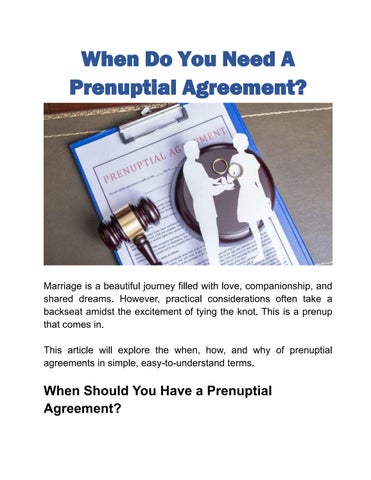
When Do You Need A Prenuptial Agreement?
Marriage is a beautiful journey filled with love, companionship, and shared dreams. However, practical considerations often take a backseat amidst the excitement of tying the knot. This is a prenup that comes in. This article will explore the when, how, and why of prenuptial agreements in simple, easy-to-understand terms.
When Should You Have a Prenuptial Agreement?
A prenuptial agreement is a legal document detailing how assets and liabilities will be divided if a divorce occurs. While it may not be the most romantic aspect of planning a wedding, it can be a crucial step for some couples. Here's when you should consider having a prenuptial agreement:
1. You Have Significant Assets or Debts A prenup can provide clarity and protection if you or your partner have substantial assets or significant debts. It helps prevent disputes over the division of property and finances if the marriage doesn't work out. This is especially important if one or both of you own real estate, investments, or businesses.
2. Unequal Income Levels Couples with significant income disparities may also benefit from a prenuptial agreement. It can specify spousal support or maintenance arrangements, ensuring that the financially disadvantaged spouse is provided for, even after divorce.
3. Protecting Family Inheritances If you or your partner expect to receive a substantial inheritance or have received one already, a prenup can safeguard these assets from becoming marital property. This can be particularly important if you wish to keep inherited assets within your family.
4. Business Ownership If one or both partners own a business, a prenup can protect the business from becoming part of the marital property subject to
division. Without a prenuptial agreement, a divorce could potentially lead to the sale or division of the business, which may not be in the best interest of either party.
5. Previous Marriages or Children from Prior Relationships Couples who have children from previous marriages or relationships may want to ensure that their assets are allocated as intended, especially for the benefit of their children. A prenuptial agreement can help clarify these arrangements.
How Does a Prenuptial Agreement Work? Now that we've discussed when you might need a prenuptial agreement, let's explore how these agreements function:
1. Consultation with Legal Professionals Creating a prenuptial agreement is not a DIY project. It's crucial to engage legal professionals, such as family law solicitors, to ensure that the agreement complies with state laws and is fair to both parties. Each party should have their legal representation to avoid conflicts of interest.
2. Full Financial Disclosure Both partners must provide complete and honest financial disclosure. This includes assets, debts, income, and expenses. Failure to disclose assets or liabilities can invalidate the agreement in court.
3. Customised Agreement
Prenuptial agreements are not one-size-fits-all. They can be tailored to meet each couple's specific needs and concerns. The agreement may cover various aspects of financial matters, property division, spousal support, and more.
4. Execution and Notarisation Once both parties agree to the terms and conditions, the prenuptial agreement should be executed in writing and signed before a notary public. This adds a layer of legal formality to the agreement.
5. Registration Depending on your jurisdiction, you may need to register the prenuptial agreement with a court or government office. This step helps ensure that the agreement is legally enforceable.
What Does a Prenup Protect You From? A prenuptial agreement serves as a safeguard, offering protection in various scenarios:
1. Asset Protection One of the primary purposes of a prenuptial agreement is to protect assets acquired before marriage. Without a prenup, these assets may become subject to division in the event of divorce.
2. Debt Protection Just as it protects assets, a prenuptial agreement can shield you from your partner's pre-existing debts. It specifies who is responsible for what debts, helping to avoid financial surprises down the road.
3. Clarity in Divorce Divorce can be emotionally charged, but a prenuptial agreement can provide clarity and minimise conflicts during this challenging time. It outlines the division of assets and potential spousal support, reducing the uncertainty and legal battles often accompanying divorce proceedings.
4. Protecting Family Interests For those who wish to maintain family assets, such as businesses or inheritances, within their lineage, a prenup can ensure that these assets are not subject to division during a divorce.
5. Alimony Arrangements Prenuptial agreements can set forth spousal support or maintenance arrangements, preventing disputes and lengthy court battles over financial support during separation.
Prenuptial Agreement Misconceptions Before delving deeper into the topic, addressing some common misconceptions and myths surrounding prenuptial agreements is important. Clearing these up can help you better understand the purpose and benefits of a prenup:
1. It's Only for the Wealthy One of the most pervasive myths about prenuptial agreements is that they are only for the wealthy. In reality, prenups can be beneficial for couples of all financial backgrounds. They provide protection and clarity regardless of the size of your bank account.
2. Prenups Are a Sign of Distrust Another misconception is that having a prenuptial agreement signifies a lack of trust in your partner. While it may involve discussions about financial matters, it's not about mistrust. Instead, it's a proactive step to ensure that both parties are on the same page and prevent future misunderstandings.
3. Prenups Lead to Divorce Contrary to the belief that prenuptial agreements are bad omens for a marriage, studies have shown that having a prenup doesn't increase the likelihood of divorce. Instead, it can make the divorce process smoother and less contentious if needed.
4. You Can Include Anything in a Prenup While prenuptial agreements are customisable to a certain extent, there are limits to what you can include. For instance, you can't include child custody or child support provisions. The agreement should primarily focus on financial and property matters.
5. Prenups Are Forever Prenuptial agreements are not set in stone. Couples can amend or revoke them during marriage, provided both parties agree. Life circumstances change, and a prenup can adapt to these changes with proper legal procedures.
When to Discuss a Prenuptial Agreement Timing is crucial when it comes to discussing and drafting a prenuptial agreement. Here are some considerations regarding when to broach the subject:
1. Early in the Engagement Bringing up the topic of a prenup early in your engagement is advisable. This allows both parties ample time to discuss and negotiate terms without feeling rushed.
2. Before Wedding Planning Ideally, prenuptial discussions should occur before extensive wedding planning begins. This ensures that both partners know the agreement's terms before committing significant time and resources to the wedding preparations.
3. With Transparency and Respect Approaching the subject of a prenup should be done with transparency and respect. It's not about blindsiding your partner but about having an open and honest conversation about financial expectations and how assets and debts will be handled in the marriage.
Do You Always Need a Lawyer? While it's highly recommended to have legal representation when creating a prenuptial agreement, it's not always mandatory. However, here are some situations where having an attorney is essential:
1. Complex Financial Situations If you or your partner have complex financial situations, such as multiple properties, businesses, or international assets, involving
lawyers is crucial to ensure that all legal aspects are covered adequately.
2. Protecting Your Rights An attorney ensures that your rights and interests are protected during negotiation and drafting. They can help you understand the legal implications of the agreement and whether it's in your best interest.
3. Compliance with State Laws Prenuptial agreements are subject to state laws, which can vary. An attorney familiar with your state's family law regulations can ensure that the agreement complies with these laws, making it legally enforceable. Prenuptial agreements are not just for the wealthy or those with trust issues. They are a valuable tool for protecting your financial interests, providing clarity in the event of divorce, and preventing potential conflicts. When considering a prenup, it's essential to have open and respectful communication with your partner and seek legal advice when necessary. Remember that a prenuptial agreement can be a proactive step towards a secure and harmonious marriage. For more information about prenuptial agreements, visit check out Hamblin Family Law LLP. © Hamblin Family Law LLP