This edition of Hall News celebrates the helping hands that quietly support everyday life across the Matcham–Holgate Valley.
From neighbours checking in and volunteers answering the call to local businesses sharing their expertise, these everyday acts help keep our community strong.
As ANZAC Day approaches, we’re reminded that helping others has long been part of our shared story and continues through the many ways people lend a hand today.
Across the Valley Lois
Fire prep & safe pile burns
The sweet work of Valley bees
Buying property: what to know
Holgate School News
Remembering our ANZAC story
Solar power questions answered
Vaccinating your puppy
In the Wild: local wildlife plus more local hints, tips and stories.
ANZAC DAY @ HALL 10AM BRUNCH 11AM SERVICE
AT THE HEART OF THE HALL Hall President Ingrid
And just like that it’s 2026! Each and every year that I live in our Valley I’m continually delighted with the ongoing strength of community support. Whether it be help during extreme weather events, loaning of items, articles of interest, trade recommendations or simply sharing photos of our beautiful flora and fauna. All these things make it special. I’m sure you all feel it too.
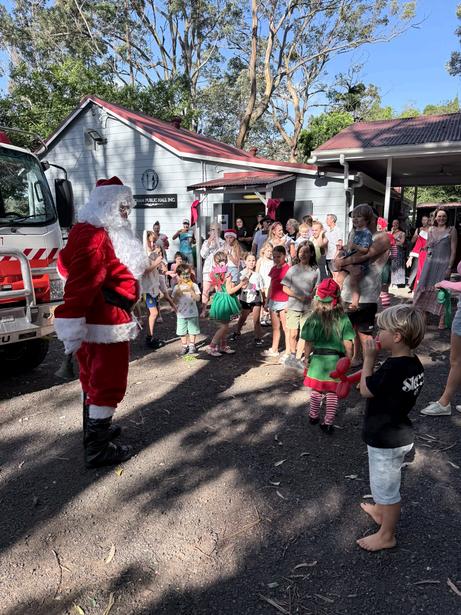
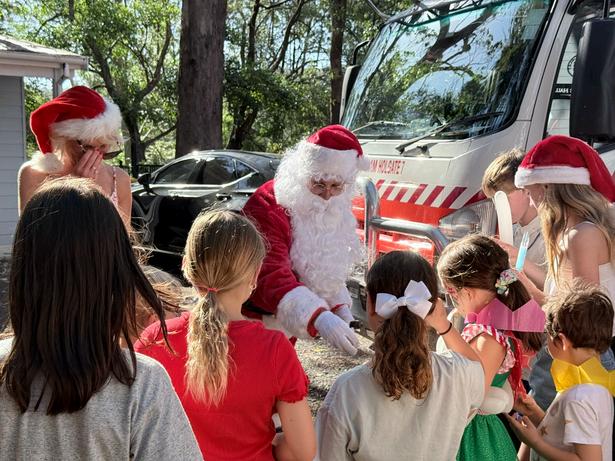
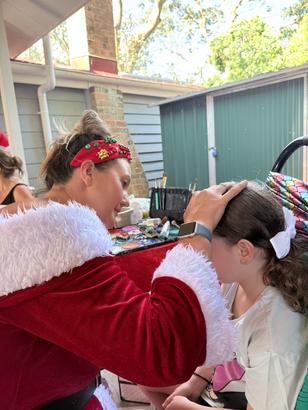
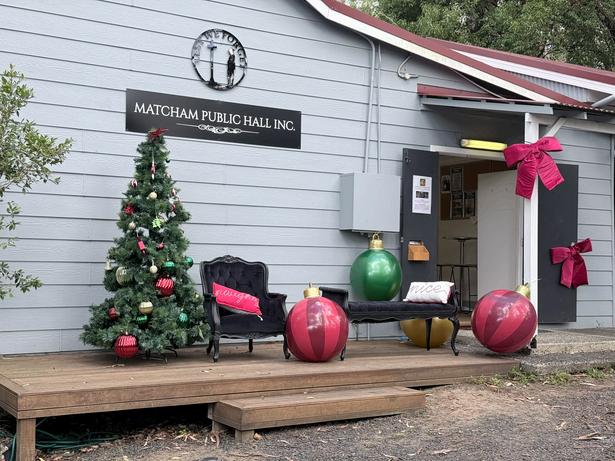
As you’ll see in the coming pages, the Community Christmas event has been refined to meet the changing dynamics in the area. We are grateful as always to the RFS for delivering Santa on his big red sleigh, and our Elves keep the children entertained with face painting and games. We had family Santa photos on the Matcham Hall throne outside for the first time last year, thanks to a beautiful sunny day.
Our new floor is looking fantastic and we are forever thankful to the community for helping to raise the funds to fix it. During the floor replacement, some walls had to be removed and replaced. Rather than just painting one wall, we took the opportunity to paint the entire interior of the hall - with a fresh coat, it looks much younger than its 110 years! We have also been successful in receiving a small grant to bring to life the ANZAC history of the Hall through a display on the walls, so it will be fresh and new when developed over the next few months. Thanks to painter Peter from Painless Painter for doing such a great job.
For those staying local for Anzac Day, please join us for a community brunch at 10am, followed by the service at 11 am. As has become customary, we will hold our silent auction, the annual fundraiser to keep our Historic Hall maintained and preserved for future generations. If any individuals or businesses would like to support the event either through sponsorship, donated or discounted goods and services, it would be greatly appreciated. Connect with me on 0428 372 953. Ingrid
HELPING HANDS OF MATCHAM
Then & Now
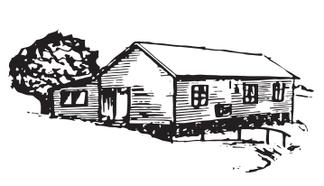
Matcham Hall was built in 1915 by locals who donated land, timber and labour to create a place where the Valley could gather to farewell the young men heading off to WW1.
Thanks to a successful grant application from the Saluting Their Service Commemorative Grants Program through the Department of Veterans’ Affairs, the Hall’s wartime stories will soon be shared through a permanent commemorative plaque and a curated historical display.
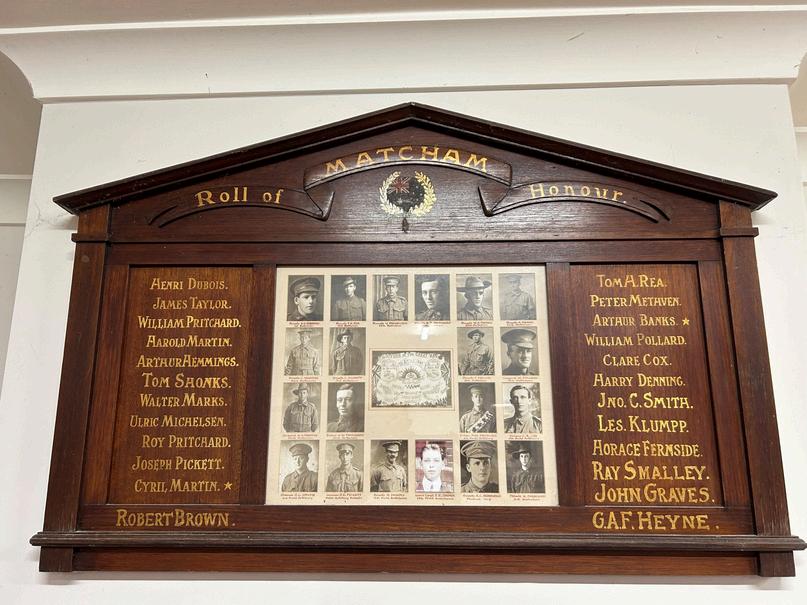
The Honour Roll above the Hall fireplace honours 24 locals who enlisted in WW1. Now, drawing on original photographs and local records, we’ll share the fuller story, not only of those who enlisted, but of the families and neighbours who supported them.
We look forward to sharing updates as this important project takes shape
HIRE THE MATCHAM HALL
Available for celebrations, meetings, workshops and special events The Hall offers a charming space with timber floors, stage and kitchen facilities. It’s air conditioned and freshly painted inside
COME TOGETHER THIS ANZAC DAY APRIL 25TH
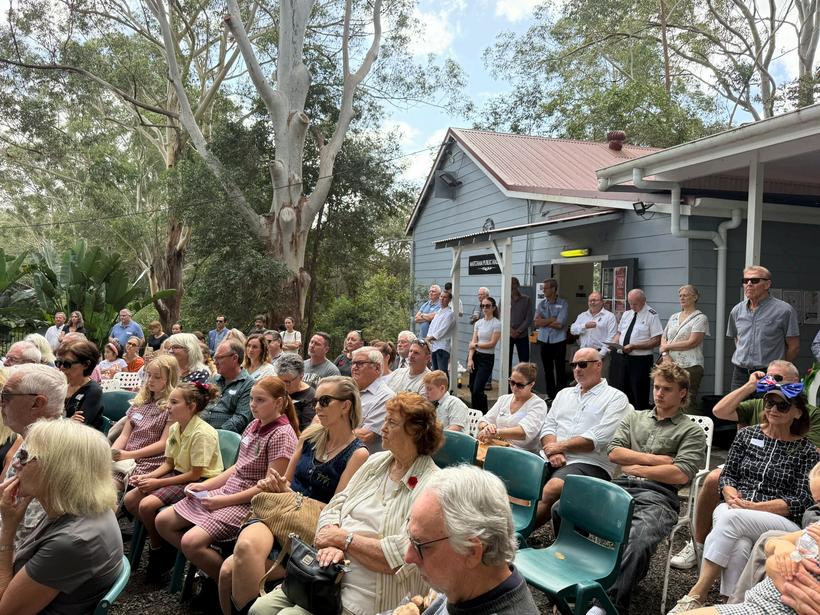
As ANZAC Day approaches, we invite everyone to gather at Matcham Hall to pause, reflect and remember together at our annual Anzac Day Service
From 10am, come along for free bacon and egg sandwiches prepared by local catering co VIP Private Chef. Share a cuppa, catch up with neighbours and connect before the service. We also have a silent auction to help raise funds for the ongoing upkeep of The Hall with generous donations from local businesses. The ANZAC Day service starts at 11am
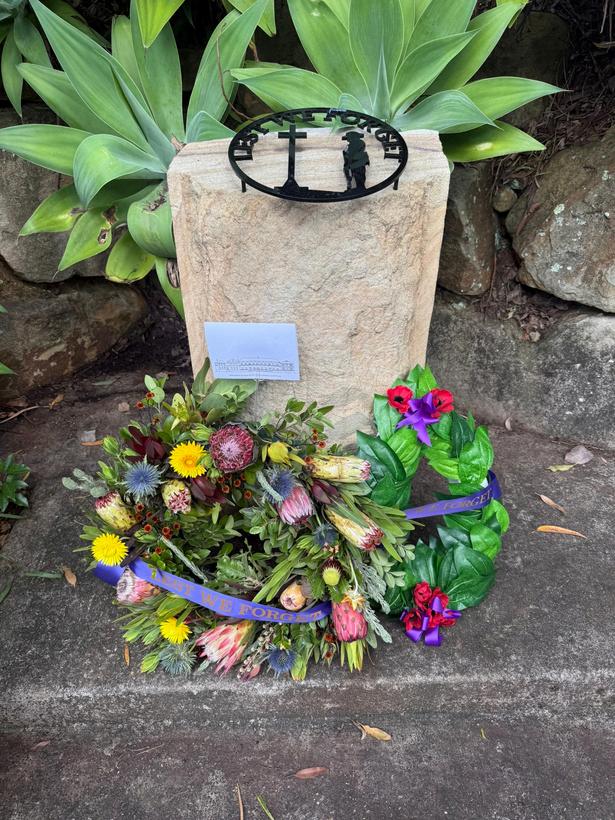
For more than a century, this hall has been a place of farewell, welcome, and shared remembrance for soldiers. It is where generations of locals have stood side by side to honour those who served, including the young men from our Valley whose names are recorded on the Honour Roll above the fireplace.
Attending the service is a simple but meaningful act. It’s a chance to acknowledge sacrifice, reflect quietly, and show respect.
This ANZAC Day, join your neighbours at Matcham Hall and be part of a long tradition of remembrance.
Lest we forget
MAKING SENSE OF THE FINE PRINT
A Local Conveyancer’s Helpful Hand
Buying or selling a home can feel overwhelming, especially when you’re navigating contracts, deadlines and legal detail. To help locals feel more confident at every step, we sat down with local conveyancer Daniel from Oak Legal & Conveyancing to talk through what people really need to know. From when to engage a conveyancer to common pitfalls and the value of local knowledge.
What information or documents can people prepare early?
For sellers: While a lot of the information needed to complete your conveyance can be accessed by the conveyancer without your input, if you have recently constructed or renovated on your property, you should gather relevant approvals and certificates
For buyers: It’s a good idea to get your finance pre-approval in place as soon as you start looking to buy property. Without a pre-approval, you’re flying blind, and you may find your dream home but not be ready to make an offer.
Tip for first home buyers: if you’re planning to utilise any of the government incentives for first time buyers, your mortgage broker and conveyancer will need a copy of your birth certificate, so dust off your files now!
A good conveyancer protects buyers and sellers — not just processes paperwork
The process of conveyancing itself is simply the transfer of property ownership, but a good conveyancer goes beyond that. They’ll assist you through the transaction from start to finish, from negotiating with the agent, to co-ordinating your bank/mortgage broker for settlement. So yes, the conveyancer handles the paperwork, but the real job is identifying risks early, managing stakeholders, and protecting you from risks you probably didn’t even know existed!
One tip for buying acreages
In NSW, buyers of residential property get a 5 business day cooling off period, during which they can back out of a contract (forfeiting only 0.25% of the purchase price, rather than risking their full 5-10% deposit). But did you know this doesn’t automatically apply to acreage?
The standard cooling off right does not apply to land over 2.5 hectares (a little over 6 acres) in size. Many properties in Matcham & Holgate exceed this size, & so if you need that extra time for inspections or to organise your finance, your conveyancer can help you to negotiate the appropriate rights in the contract
NATURE’S LITTLE HELPERS
The Sweet Work of Bees
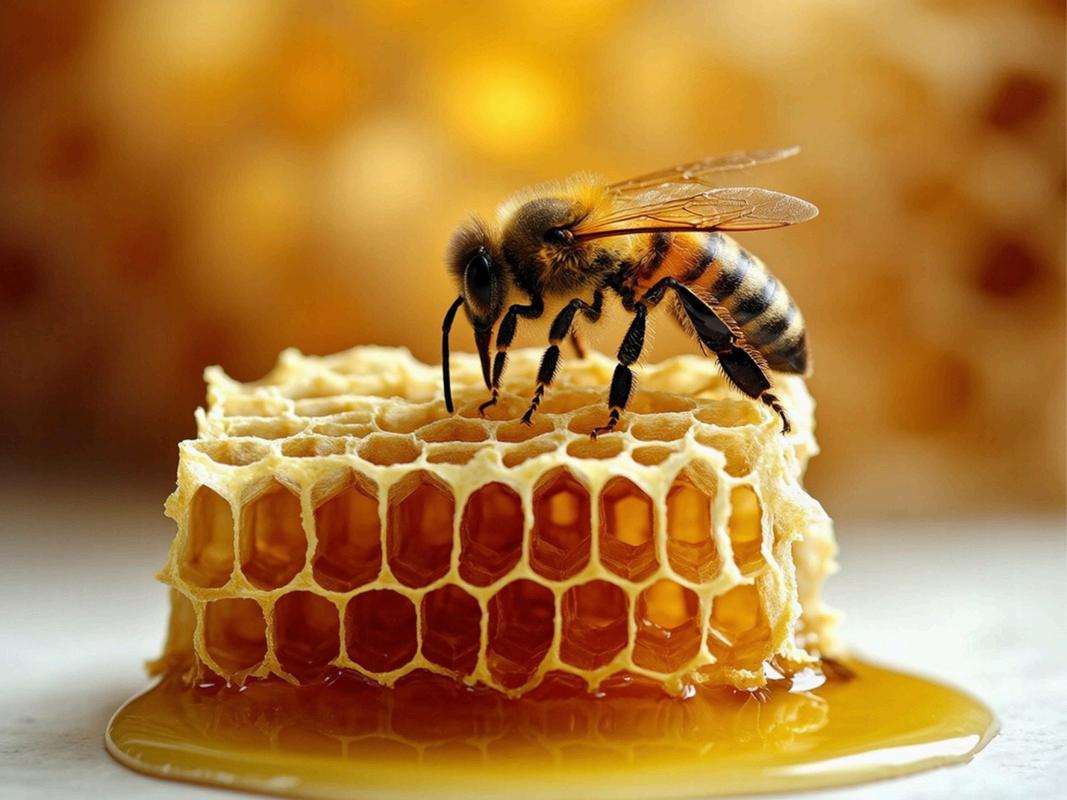
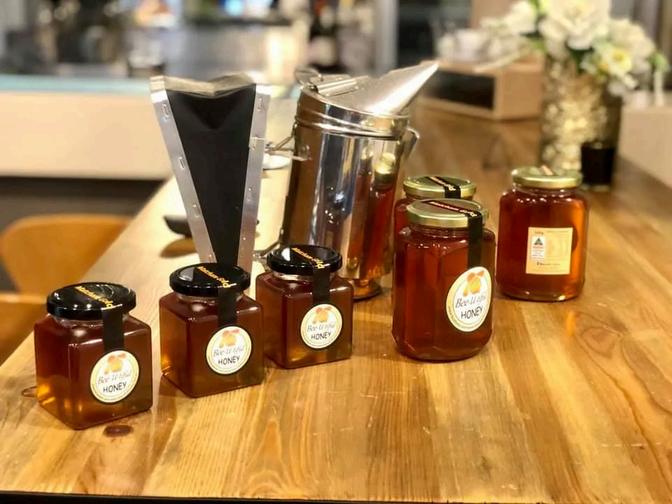
Helping hands come in all shapes and sizes and sometimes they have wings. Honey bees are among the smallest yet most powerful contributors to our community, pollinating plants, supporting local agriculture and producing one of nature’s most extraordinary foods. Local bee experts Sandra and Max Rae of BeeUtiful Honey in Matcham explain what makes raw local honey special, why flavours change with the seasons, and why supporting Australian beekeepers helps our whole valley thrive.
What is Honey?
Honey is a thick, sugary liquid produced by honeybees from plant nectar, serving as their energy source and food storage. Bees collect nectar, process it enzymatically, and dehydrate it within the hive, resulting in a sweet substance composed primarily of fructose and glucose.
Bees then store this mixture in hexagonal wax cells called honeycombs, where water evaporates to thicken the liquid into honey. Once concentrated, the cells are sealed with wax to preserve it for future use by the colony.
Honey is mainly composed of fructose and glucose, giving it a sweetness similar to table sugar. It contains about 18% water, making it resistant to spoilage due to its high sugar concentration and acidic pH. Honey is calorie-dense, with roughly 21 calories per teaspoon, and contains trace amounts of vitamins, minerals, and antioxidants. Its thickness and chemical properties make it useful as a natural sweetener and it also has medicinal, antibacterial properties.
It has been 200 years since the honey bee came to our shores; it’s hard to imagine an Australia without it. The honey bee's journey to Australia began with the introduction of the European honey bee in
1822. This species quickly adapted to the local climate and flora, establishing thriving colonies across the country. Over the years, other bee species were introduced from Italy, Yugoslavia, and North America, leading to the development of a diverse honey bee genetic population in Australia
The honey bee's role in pollination and honey production has been crucial for the agricultural sector, contributing significantly to the economy and biodiversity of the region. Despite the introduction of native bees, the European honey bee remains the most significant species for honey production in Australia
Honey in Australia is a significant product with a rich history, playing an important role from Indigenous uses to modern beekeeping practices. Australia is known for its unique varieties of honey, such as Leatherwood honey from Tasmania and Ironbark honey from Queensland, each reflecting the diverse flora of the region. The honey produced captures the essence of over 700 native flowering plants, contributing to its distinct flavours and characteristics.
What makes honey from your local beekeeper different from supermarket honey?
Most local beekeepers supply raw honey; Raw honey is different from supermarket honey in several ways:
1. Processing: Raw honey is never heated or pasteurised, preserving its natural enzymes, vitamins, and antioxidants In contrast, supermarket honey is heated to high temperatures, which strips away beneficial nutrients and enzymes.
2. Nutritional Content: Raw honey retains a wide array of nutrients, including amino acids, minerals, vitamins, and polyphenols, which are antioxidants. These nutrients are often lost during hightemperature processing.
3. Flavour and Texture: Raw honey should have a richer flavour and a more complex aroma due to its natural components, while supermarket honey is uniform in flavour and aroma and although it smells like honey it can be bland in flavour.
4. Health Benefits: Raw honey is known for its antimicrobial properties and potential health benefits, such as boosting the immune system and alleviating allergy symptoms. Many studies have been done to show that by consuming local honey 1 tsp per day, you will be able to withstand the histamine reaction of the local allergens, such as privet.
5. Purity: Raw honey is considered purer and more natural, as it is never heated beyond what's necessary for bottling.
Choosing raw local honey over supermarket honey can be a healthier choice, but it's also important to ensure that the raw honey is of high quality and produced by reputable beekeepers.
Why is supporting local beekeepers important for the community?
The honey is Australian. Choose 100% Australian Honey. A healthy planet relies on bees and beekeepers to help pollinate food, flowers, and plant life. Look for the Australian Country of Origin label. Learn more about how to choose the right honey. Your choice matters!
Not denigrating any supermarket honey, however just to be aware the biggest honey company in Australia is now Chinese owned and often imports honey to keep up with demand. Foreign honey is very often a mixture of corn and rice syrups which look like honey but have absolutely no health benefits to the consumer. BeeUtiful Honey strongly advocates and acts for an industry that supplies pure, unadulterated Australian honey.
Does local honey change throughout the year, and why?
The flavour of honey changes throughout the year due to the different flowers that bees collect nectar from Each flower contributes unique sugars, aromas,
minerals, and compounds to the honey, which directly affects its taste, color, texture, and aroma. As the seasons change, the nectar sources available to bees shift, resulting in honey with distinct flavours and characteristics.
The weather, bee activity, and available nectar all influence these differences, making seasonal honey a unique and delightful experience.
Australia has the largest collection of single-varietal honey in the world. Single varietal honeys are a true reflection of nature, with each plant species creating distinctly different colours, tastes and textures of honey.
Every batch of honey is different and directly linked to the nectar source and the proportions of nectar from the floral diversity of the site. This is part of the magic of natural honey. Honey is like a time capsule of the flowers in bloom when it was made no two batches are ever exactly the same! As each plant has a different flowering sequence, so does the honey flavour.
On each trip to gather nectar the foraging bee will only visit one type of flower. This ‘floral fidelity’ is one of the endearing characteristics of the honeybee, and helps us to identify and produce a honey that will reflect one unique source
However here on the Central Coast where BeeUtiful Honey has its bee hives, we get a variety and mixture of floral sources and thus cannot say the honey is “Red Gum” or Paper Bark” etc. The colour and flavour will change depending on the floral source and the season. We call it postcode honey!
What does it mean when honey crystallises — is it still good to eat?
If you’ve ever opened a jar of honey only to find it’s turned thick and grainy instead of golden and runny, don’t panic. Your honey hasn’t gone bad in fact, crystallisation is a natural sign that your honey is raw and unprocessed.
Let’s explore why honey crystallises. Honey is a supersaturated sugar solution. This means it contains more sugar (mainly glucose and fructose) than water can naturally hold Over time, the glucose in
Honey wants to return to a solid state, forming tiny crystals. This is completely natural and happens faster in some honeys than others, depending on:
Floral source: Canola honey tends to crystallise more quickly than orange blossom or eucalyptus.
Storage time: The longer the honey sits, the more likely it is to crystallise.
In short, crystallisation is nature’s way of saying, “This honey is real and raw.” For consumers, crystallised honey is still perfectly edible — but if you want it liquid again, here are your options:
Gently reheat it in a warm water bath, the sunshine or a double boiler until smooth. (Never microwave honey it can overheat, kill all the enzymes and ruin the flavour.)
Embrace it as-is: crystallised honey is spreadable and perfect for toast, biscuits, or stirring into tea. Either way, the honey is still just as good for you and just as sweet
FLOODS, STORMS AND 2AM CALL-OUTS
The helping hand of the SES
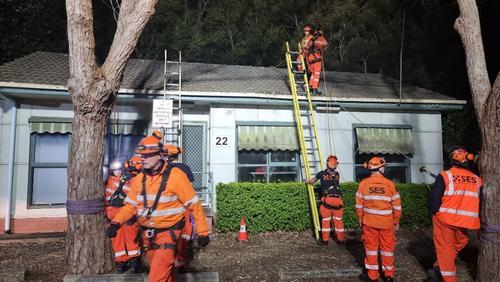
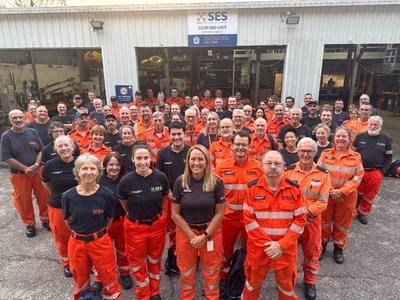
When severe weather hits the Valley, one the community’s most important help hands comes from the volunteers of State Emergency Service Matcham resid and Gosford SES volunteer Neil Rec shares what really happens behind scenes from training and flood rescues to the everyday calls that help keep local residents safe.
The SES was founded in 1955 – in part due to the huge floods in the Hunter Valley that year that claimed 25 lives and impacted so many more.
A volunteer organisation – the SES is the responsible (or combat agency) for floods, storms and tsunamis. Whilst tsunamis are rare here in NSW we have recorded over 50 in the last 200 years – mostly minor but the risk is still real! If one of the above is the primary cause of risk to life or
property – the SES get the call and leads the response!
Here in Gosford, we have approximately 120 active volunteers with applications in the pipeline for a further 30 or so! Gosford and Wyong are typically the two busiest NSW SES units, with around 2,000 requests for assistance each year. In the January storm this year, there were 687 requests for assistance, including 9 flood rescues, just for the Gosford unit. One of the busier Januarys in the last few years!!
Most people don’t realise quite how much goes on behind the scenes at an SES unit like Gosford! Every Monday night, there are 2 hours of training for every team member, and weekends for the more intensive programs. We don’t just let people climb onto a roof and give it their best shot!!! A volunteer will likely have completed around 100 hours of training before they are deemed competent and safe to play on roofs!!
The same applies to the flood rescue training. Before you are allowed to ‘play in the water’, you will have been through rigorous training at the Penrith White Water Centre. It’s not for the faint-hearted! Trust me – heading down the rapids just with a wetsuit and lifejacket is quite different to doing it in a kayak What shocks most people about these training programs is just how little fast-flowing water is needed to sweep you off your feet. A little over the ankles is enough to knock over a person; over the knees will sweep a car away!
The same goes for using chainsaws and driving vehicles under lights and sirens –days and days of training.
Being one of the larger units, we are regularly called upon to support other
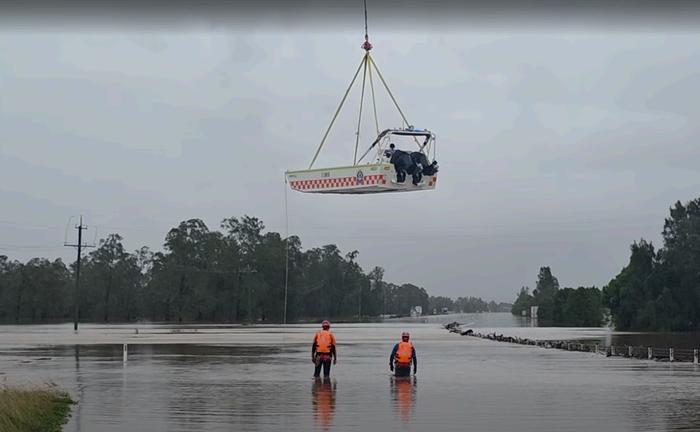
units when things get bad. All of the recent floods in NSW will have seen Gosford unit members working out of area (Lismore, Taree, Broken Hill etc). Recent deployments include being dropped into flood zones by Blackhawk helicopter with rescue boats to get to places simply not accessible by other emergency services, at night. We are extremely proud to have the depth and breadth of skill to make a difference when things get bad out West or up North.
When should you call the SES on 132 500?
Here in the valley the two primary risks are floods and trees!
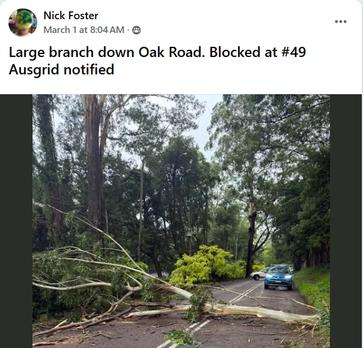
Part of the beauty of living here is the rural nature of the valleys – this provides plenty of opportunities for trees and branches to come down in storms. In the past 5 years, there have been around 300 SES storm damage call-outs for Matcham, Holgate and Mount Elliot! The majority for trees misbehaving!! If the tree or branch is on your house, your car, blocking your drive or generally presenting a safety hazard – the SES as a minimum will come and look at it and likely sort it out. If the tree is down in your paddock, safely on the ground and not a risk to people then it’s likely the responsibility of the local arborists.
If your roof has been damaged by a falling branch or has broken tiles – SES will, where possible, tarp it up to keep water out until proper repairs can be completed. Flooding is a consistent risk for us in the valley with hot spots in Oak Road, Carlton Road, Milina Road and Wattle Tree Road. Carlton and Milina are regular SES haunts, with cars often actively choosing to drive around ‘road closed’ signs. In the last 5 years, there have been 16 flood rescues on those two roads alone!
Remember, you can also always get sandbags ahead of likely storms or floods from Gosford SES in Pateman Road –prevention is always better than a cure!!
It is difficult to know when it is ‘safe’ to drive through water over a road. A couple of simple rules – if water is moving and you can’t see the road surface, give it a miss! All too often, we see road damage after floods subside – depending on the erosion, you might just find yourself stuck when driving into a washout or hitting a submerged log.
Ask yourself the question – is it that urgent that I should take the risk? Not the end of the world if kids miss a day of school or the shopping doesn’t get done! Here in the Valley flooded roads generally come and go pretty quickly – often as soon as the
next low tide! When it gets particularly bad there are always local residents offering a warm cuppa and a bed if you can’t get home!
Check the local Matcham/holgate Facebook page for updates and both the Council and SES pages as well that regularly update flooded roads on the Coast. It is also worth installing the ‘Hazards Near Me NSW’ app on your phone – it will ping your phone when there is a hazard in the vicinity – be that floods or bushfire.
So, if it's flooded, leaking through the roof or blocked with a tree, give the SES a call on 132 500! Our local unit below!
WHAT’S FACEBOOK GOT TO DO WITH IT?
Meg’s Permaculture
Perspective on Building Community
Many people equate permaculture with organic gardening, and there is a huge overlap.
What is less well known is that, as a design model, permaculture can be used to improve anything. I’ve seen it applied to business planning, personal development and, significantly for this issue of the Hall News, to growing connected communities.
To qualify as permaculture, the design needs to align with the three core permaculture ethics of earth care, people care and fair share.
Some years back I offered to take on the active administration of our local Facebook community page At the time it looked set to fold. As so often happens within the landscape of social media, the poor behaviour of a few people had made it a very unpleasant place.
My professional background is in policing, and I was one of the people that helped to launch “Neighbourhood Watch”. Ultimately, the data showed that the people turning up to neighbourhood watch meetings were the least likely to be victimised, and the insurance company sponsorship of the program meant there was a lot of emphasis on “target hardening” (installing locks and alarm systems) rather than community building, but the experience taught me that there are huge benefits in building community connection The best strategy for preventing crime is to build community.
So, when the Facebook group looked set to fold, I put up my hand and applied permaculture principles to the redesign of the rules, and the way it operates. I included plenty of local people in the redesign process and the result is a group that is notably positive, generous and that contributes to community connection,
most of the time. When it doesn’t, a lovely group of volunteer moderators help me to remove unfriendly posts and comments.
I thought this month’s theme was a great opportunity to look at how the group provides a helping hand to so many in our community, and how it reflects permaculture’s earth care, people care and fair share.
The first fair share example is an obvious one; the group regularly gets used to give away items that people no longer need. We don’t allow sales within the group because the format and rules for selling sites give them a different structure and focus, so there’s a sister site called Matcham Holgate Classifieds for anyone with things to sell, but we do encourage anyone with items of value to give them away to others in the community. There’s an earth care aspect to this, as many of these items would otherwise go to landfill. The people care aspect is not just the money saved by the recipient, or the convenience to the gifter, but the connections these exchanges build between people and the overall sense of a generous community that we all share.
The Facebook group proves invaluable when the weather turns nasty, allowing local people to stay updated on flooding and road closures, and it has also been a great way for people in need to ask for help I remember when, shortly after Graham’s heart surgery, we had a fallen tree block our driveway. A quick post to the community page and there were three different offers of support.
Perhaps some of my favourite experiences with the group have been those times when we have used it to support people in need. I can recall a time when a young woman escaping family violence with her baby received a free cot and mattress, a bundle of baby clothes and toys, and vouchers for groceries, all in response to a single request. We’ve also used it to set up meal trains for new mothers and people going through medical treatment, ensuring they get healthy meals donated and delivered while they get back on their feet.
It’s always sad when local animals are
killed on our roads, but the Facebook group can, at least, raise awareness of the need to drive carefully, and it has also helped newer residents to learn that rat poison will kill our beautiful owls, that diamond pythons are great for keeping rodent populations under control and that many mice and rats are native species and an important part of our ecosystem.
The group thrives thanks to the dedicated group of volunteers that keep an eye on content when I’m offline, with special mention to Ingrid Medlicott for managing membership applications. I suppose it’s a testament to our success that so many out-of-area people want to join!
HELPING HANDS IN ACTION
Learn. Prepare. Protect.
By Fire Captain Ian Goodman
2025-26 Bushfire Season
From a bushfire risk perspective, the initial seasonal outlook for the 2025–26 Bushfire Season was for a fairly standard spring/summer. However, shortly after the forecast was published, the rain stopped and conditions became very dry. As the water carts got busier in the valley, so did Matcham-Holgate Rural Fire Brigade.
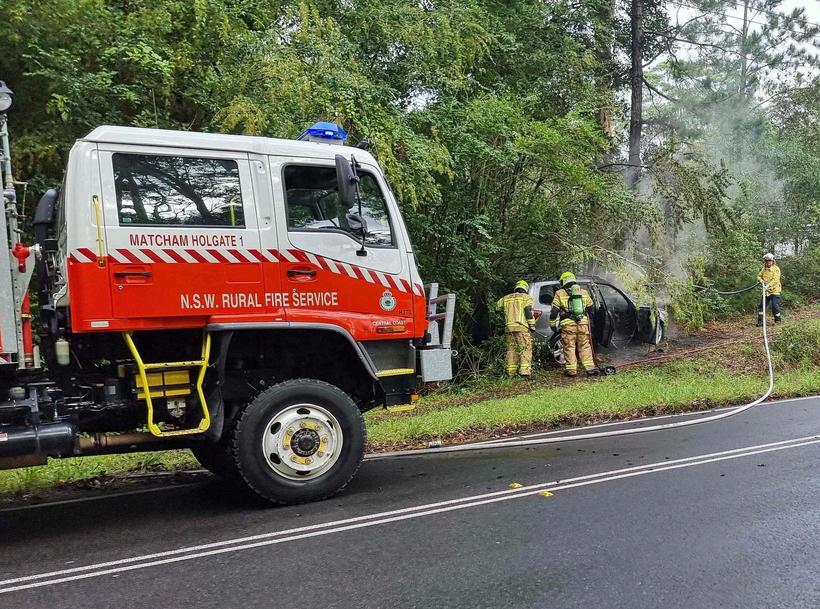
Over the Bushfire Season, MatchamHolgate Brigade responded to more than 30 calls. Most were fire-related incidents, either locally or within the Central Coast region. We also regularly attended motor vehicle accidents to provide emergency assistance and manage the potential danger of fuel-related fires. In addition, we assisted other agencies, including the SES with storm recovery, Police with search and rescue operations, and Ambulance crews when an extra pair of hands was needed.
Fortunately, the rain returned after Christmas and bushfire risk reduced to more comfortable levels.
Koolewong Fires – What Can We Learn?
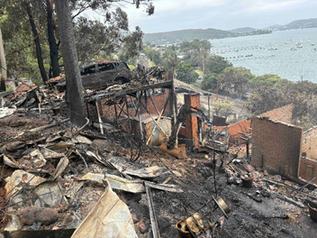
By far the most significant bushfire event of the 2025/26 summer was the Koolewong fire. The fire was intense, and our hearts go out to the families who were significantly affected. Matcham-Holgate Brigade was involved in the emergency response both on the day the fire flared up and on shifts most days during the week following the initial ignition.
The weather forecast for 6 December predicted temperatures of 38–40 degrees, very low humidity, and north-westerly winds gusting up to 45 km/h. Any fire that starts in those conditions is going to be difficult to manage. The Fire Danger Rating forecast published by the Bureau of Meteorology was Extreme, with a Total Fire Ban in place. This triggered the RFS to prepare several pre-allocated strike teams
of five to six brigades/appliances, ready to be deployed to any emergency, along with crewed aircraft on standby at local airbases
When the fire at Koolewong started, given the extreme weather conditions and the steep topography of the landscape, there was very little that fire crews could do to stop it from racing up the hill. Crews initially deployed to the ridgeline behind Koolewong were forced to make an emergency retreat as the fire front rapidly advanced uphill. Firefighters concentrated their efforts on defending homes and containing the fire wherever
If we consider the location and topography of the Matcham-Holgate valleys, in a similar way, our most likely propertydamaging fire risk is from ember attack. As we move into the slower-growing months of autumn and winter, now is an ideal time to undertake vegetation and garden maintenance and prepare your property for summer.
Of course, once you have cleared your property, the next question is how best to deal with the excess vegetation collected. Many people choose to burn dead vegetation. However, we encourage everyone to consider whether burning is the most appropriate method of managing green waste. Alternative methods such as mulching and composting may be better for the environment and can also provide useful by-products for your garden.
If you choose to burn, when are you allowed to burn and what do you need to do?
HELPFUL TIPS FOR PILE BURNS
APRIL 1 TO 30 SEPT
When can you conduct a pile burn?
During the statutory Bushfire Danger Period (1 Oct - 31 Mar), burning activities are only allowed with a Permit. Requests for Permits can lodged via the NSW RFS website: www.rfs.nsw.gov.au/notify Outside of the statutory Bushfire Danger Period (1 Apr – 30 Sep), burning activities are allowed if they are conducted in line with Central Coast Council Open Pile Burning Policy.
What is a safe pile for burning?
Pile burns are not bonfires, or rubbish disposal tools. Pile burns can only include natural dry, dead, vegetation.
Make sure the pile is no larger than 2m wide and 1.5m tall. Vegetation diameter should be no larger than 150mm. If you have a significant amount to burn, start with a small fire and feed it once ignited, rather than lighting it all up at once on a large pile.
Never construct piles under or near power poles. Smoke and embers can cause power lines to arc, and the heat will damage the lines. Give power lines a wide berth – at least 8-10m is recommended.
Don’t pile vegetation around the base of trees, directly under a low canopy or near other combustible material. Choose a space with an open canopy away from the base of trees or from the neighbours.
At least 24hrs before you intend to burn
1. Notify NSW RFS of your intent to burn via the NSW RFS website: www.rfs.nsw.gov.au/notify
i. Navigate to ‘Notify us’
ii. Enter your details, or log in for your information to be prefilled
iii. Complete & Submit the Burn Notification Form
2. Advise your neighbours of when you intend to burn. Notification via: In person conversation, OR Phone call or text sent to the neighbour OR A note or letter delivered to the neighbour’s residence/letterbox
Please note, a social media post on Facebook or similar may be helpful in addition to the methods above but is NOT recognised as neighbour notification.
On the day of your burn
1.Check the Fire Danger Rating. If High or above, burning is not recommended. Fire Danger Ratings can be checked using most Weather Apps or the NSW RFS website https://www.rfs.nsw.gov.au/fireinformation/fdr-and-tobans
2.Consider the weather forecast. Only ignite the pile if the forecasted weather conditions are calm.
Before lighting the pile
Ensure that your burn is safe and within guidelines
Have tools on hand (rakes & shovels). Ensure that there is a sufficient water supply & that you have a hose with appropriate water pressure to extinguish the fire and contain any spot fires.
Wear protective clothing such as heavy cotton pants, a long-sleeved shirt, leather boots and gloves. Supervise the burn constantly and ensure no spot fires flare up in the surrounding vegetation. Completely extinguish the pile immediately after the burn is finished.
Have a safe burn. If you get in trouble, call 000 immediately
REMEMBERING MATCHAM’S CYRIL HENRY MARTIN
A promise kept
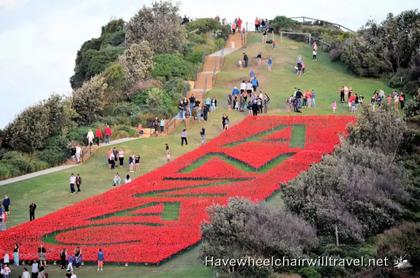
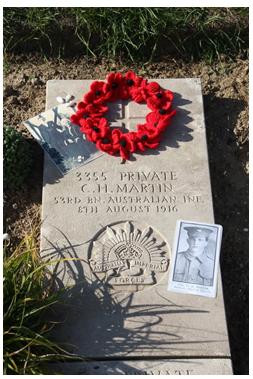
As we approach ANZAC Day a time fo remembrance it’s worth knowing that one o the names on the Honour Roll at Matcham Hall belongs to Cyril Henry Martin, a youn man from our valley whose story went on t inspire the Central Coast Poppy Projec Created by the community as a sea o poppies at The Haven in Terrigal, the proje touched hearts well beyond the Coast. This the story that inspired it
0418 433 959
and several teammates. Of the sixteen members of the Matcham Football Club, nine volunteered for the front It was a decision shaped by mateship, duty, and the powerful pull of community expectation.
While researching local World War I stories, Merril encountered Cyril’s photograph and story. His youthful face , blue-eyed, solemn, and heartbreakingly young, became the inspiration for her Poppy Project: Never Forgetting the Sacrifices. Though she had no family connection to Cyril, his story compelled her to act.
“With this verse came the motivation to create something significant for the Central Coast, something that was community-led and grassroots for the Centenary year of Anzac” said Merril
Matcham local Cyril Henry came to represent not just one life lost, but the many Australian families forever changed by the Great War.
Thousands of handmade poppies were crafted by locals — schools, families, veterans and community groups and brought together in a moving public installation at Terrigal Haven in 2016 and later in Gosford in following years. Each poppy represented remembrance, sacrifice and the simple idea that when a community comes together, small acts can create something deeply meaningful.
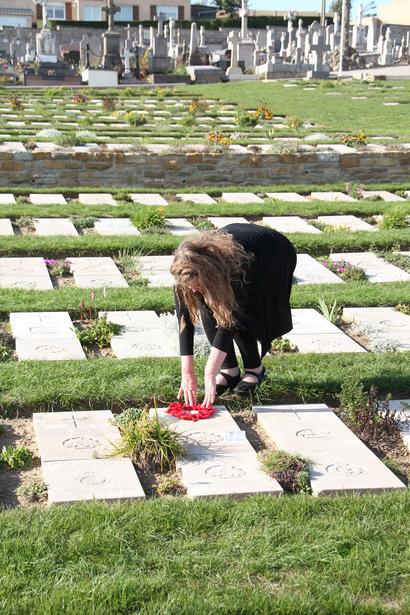
Eventually, Merril travelled to France Wimereux Communal Cemetery in 2018, she stood at Cyril Henry Martin’s grave and did what his mother had once asked of the world.
She planted a flower.
In that simple act, across time and distance, a mother’s wish was finally honoured. As Merril shares,
“before I went to France I visited Cyril’s mothers grave and took three stones to place on Cyril’s grave, one for his parents James and Ellen as well as for his brother Sno. I was also able to place a handmade poppy wreath on his grave from the Gosford legacy ladies”
Today, Cyril’s name appears on local memorials, including Matcham’s, reminding us that the history of our valley is written not just in buildings and landscapes, but in people ordinary young men who did extraordinary things.
His story also reminds us that remembrance is not finished with a ceremony. Sometimes, it is carried quietly by those who choose to remember, to tell the story again, and to keep a promise made more than a hundred years ago.
Lest we forget
THE MANY HANDS BEHIND THE HALL NEWS
Each edition of the Hall News arrives in letterboxes thanks to a quiet army of volunteers.
From the editor pulling stories together late at night, to the advertising coordinator working with local businesses to help fund it, this publication is truly a labour of love. No one is paid everyone gives their time because they care about this place and the people in it.
Our contributors are neighbours too: historians, gardeners, teachers, emergency volunteers and business owners who share their knowledge and stories, often squeezed in around work and family life. There are also the unseen helpers who proofread, deliver copies, suggest ideas or simply offer encouragement.
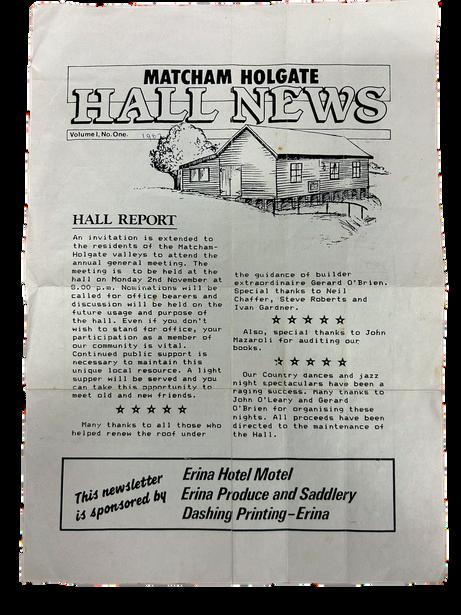
Hall News exists because people step up and lend a hand. And they’ve been doing so since 1987. For nearly four decades, each edition has been shaped by the same generous community spirit now preserved on the shelves of Gosford Library for future generations. Thank you to everyone who has helped keep it going
HELPFUL VACCINATION ADVICE FOR HEALTHY PUPPIES
With Dr Tom @ Vet
on the Road
Bringing a new puppy into your home is an exciting and rewarding experience, but ensuring their long-term health starts with proper vaccinations. Puppies are vulnerable to serious, life-threatening diseases, many of which are highly contagious. Vaccination is a simple yet essential step in protecting your puppy from these risks and giving them the best start in life.
In Australia, vaccinations are divided into two categories: core and non-core. Core vaccines are mandatory for all puppies as they protect against widespread and severe diseases like canine distemper, hepatitis, and parvovirus. Non-core vaccines, on the other hand, are recommended based on a puppy’s lifestyle and environment, such as exposure to other dogs or wildlife.
For pet owners on the Central Coast NSW, vaccinations are particularly important due to the region’s mix of urban and natural environments Local wildlife, shared dog parks, and access to beaches increase the likelihood of exposure to certain infections. Ensuring your puppy follows the correct vaccination schedule helps keep them safe while allowing them to enjoy all the benefits of an active and social life in the region.
Why Are Puppy Vaccinations
How Vaccines Prevent Serious Diseases
Vaccines work by stimulating a puppy’s immune system to recognize and fight off harmful viruses and bacteria before they cause illness. By introducing a safe, inactive form of a pathogen, vaccinations prepare the immune system to respond quickly if the puppy is ever exposed to the real disease.
This significantly reduces the severity of symptoms or prevents the disease altogether.
Vaccinating your puppy doesn’t just protect them it also helps safeguard the broader dog population. Herd immunity occurs when a high percentage of pets in a community are vaccinated, reducing the overall spread of disease. This is particularly important for puppies who have not yet completed their full vaccination schedule, as well as for older or immunocompromised dogs that may be more vulnerable to infection.
Choosing not to vaccinate a puppy puts them at risk of contracting deadly diseases, some of which have no cure. Conditions like parvovirus can be fatal, especially in young puppies, and treatment can be expensive and intensive. Additionally, unvaccinated dogs contribute to the spread of preventable diseases within the community, putting other pets at risk.
By keeping up with recommended vaccinations, you are providing your puppy with vital protection against serious health threats while also ensuring a safer environment for all dogs on the Central Coast
Core Vaccinations: The Must-Have Protection Core vaccines are essential for all puppies, as they protect against some of the most dangerous and highly contagious diseases. These diseases can cause severe illness, long-term health complications, and even death. Ensuring your puppy receives the
Necessary core vaccinations provide them with strong immunity and reduce the risk of outbreaks in the wider dog population.
Breakdown of Core Diseases:
Canine Distemper is a highly contagious viral disease that affects multiple systems in a dog’s body
Respiratory system: Causes coughing, nasal discharge, and difficulty breathing.
Gastrointestinal system: Leads to vomiting, diarrhea, and dehydration.
Nervous system: In severe cases, the virus can cause seizures, tremors, paralysis, and even death.
Distemper is often fatal, and those that survive may suffer from permanent neurological damage. Vaccination is the only reliable protection against this devastating disease.
Canine Hepatitis (Adenovirus) is caused by canine adenovirus type 1 (CAV-1), which targets a dog’s vital organs.
Liver damage: The virus can cause inflammation and failure, leading to jaundice and lethargy.
Kidney complications: Infection can spread to the kidneys, potentially
resulting in long-term damage.
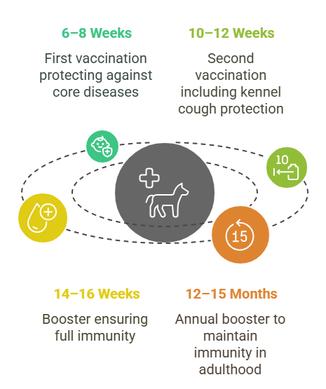
Eye issues: A symptom known as “blue eye” (corneal clouding) may develop due to immune system reactions. While some dogs recover, others suffer from chronic health problems The C3 vaccine (given at 6–8 weeks) provides strong immunity against this virus.
Canine Parvovirus (“parvo”) is one of the most severe threats to puppies, with a high mortality rate. It primarily affects the gastrointestinal system, leading to:
Severe, bloody diarrhea
Vomiting and dehydration
Extreme lethargy and loss of appetite
Parvo spreads easily through contaminated surfaces, dog feces, and soil. Puppies are especially vulnerable, and treatment can be intensive and costly. Vaccination is the best defense, as survival rates.
Non-Core Vaccinations: Based on Lifestyle & Environment
Unlike core vaccines, non-core vaccinations are recommended based on your puppy’s lifestyle, environment, and risk of exposure. While not mandatory, these vaccines can provide essential protection, especially for dogs that frequently interact with other pets or explore outdoor areas on the Central Coast NSW.
Your veterinarian may suggest non-core vaccines depending on factors such as:
Frequent visits to dog parks, beaches, or boarding facilities (higher exposure to contagious diseases).
Interaction with wildlife (increased risk of bacterial infections).
Living in areas with stagnant water or rodent populations (higher chance of leptospirosis exposure).
Travel plans (some destinations require specific vaccinations)
Common Non-Core Vaccines
While not core they are essential for attending boarding facilities and most training institutions
Bordetella bronchiseptica – is a bacterial infection that causes kennel cough, a highly contagious respiratory disease. It spreads quickly in places where dogs gather - boarding kennels, dog day care, training calsses and grooming salons. If your puppy will be spending time around other dogs, this vaccine is strongly recommended.
Canine parainfluenza is another major cause of kennel cough, often working alongside Bordetella to worsen symptoms. It spreads through airborne droplets and can cause: Coughing and sneezing, Fever and lethargy, Mild respiratory distress
The C5 vaccine (given at 10–12 weeks) includes both Bordetella and parainfluenza, providing broader protection against kennel cough.
Leptospirosis is a bacterial infection transmitted through contaminated water, soil, or urine from infected animals. It poses a higher risk in:
Areas with standing water (e.g., lakes, ponds, or flood zones).
Places with high rodnt or wildlife populations
This disease can cause severe kidney and liver damage and may be transmissible to humans. While leptospirosis is not common everywhere, your vet may recommend vaccination if your puppy has a high exposure risk.
Puppy Vaccination Schedule in Australia
To ensure your puppy develops strong immunity against serious diseases, they must receive vaccinations at key stages of early life.
Ongoing Booster Vaccinations for Adult Dogs
Once your puppy has completed their primary vaccinations, they will need booster shots throughout their life to stay protected.
Core Vaccine Boosters (C3)
Given every 3 years to maintain protection against Canine Distemper, Hepatitis, and Parvovirus.
Non-Core Vaccine Boosters
Kennel Cough (Bordetella & Parainfluenza): Annual booster recommended for dogs who frequently interact with others (e.g., dog parks, boarding, grooming).
Leptospirosis: May require yearly boosters, depending on exposure risk.
Rabies: Only needed if travelling internationally, based on destination requirements.
Your veterinarian will assess your dog’s health, lifestyle, and risk factors to determine the best vaccination plan as your dog ages.
Important Considerations for Puppy Owners on the Central Coast, NSW
Wildlife Exposure: Native wildlife, such as possums and rodents, can carry diseases like Leptospirosis, which spreads through contaminated water and soil.
Coastal & Bushland Areas: If your dog loves outdoor adventures, they may be exposed to bacteria, parasites, and infectious diseases in natural environments.
High-Density Dog Areas: Popular offleash beaches, parks, and boarding facilities can increase the risk of kennel cough transmission.
When Can Puppies Go Outside
Safely?
It’s crucial to wait at least two weeks after their final C5 booster (at 14–16 weeks) before allowing them in public spaces.
Before this time, avoid dog parks, beaches, and areas with unknown dogs to reduce the risk of disease exposure. You can still socialise your puppy safely by arranging playdates with fully vaccinated dogs in controlled environments.
Consulting a Local Veterinarian
ELECTRICAL SERVICES
Every puppy is different, and a local vet will provide the best advice on a customised vaccination plan based on your dog’s breed, lifestyle, and health status. They can also guide you on tick and flea prevention, diet, and general puppy care specific to the Central Coast region
By staying up to date with your puppy’s vaccinations, you are giving them the best possible start in life, helping them stay happy, healthy, and protected for years to come!
matt@mses.net.au
@bigpond.com jcautoerina.com.au
MAKING SENSE OF SOLAR POWER
Some helpful advice from Brett @ EnergyVolt
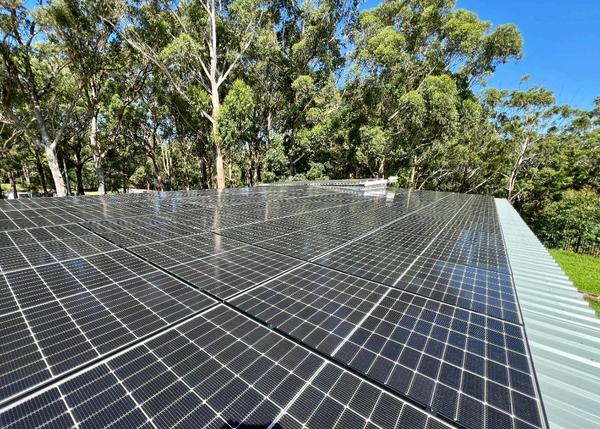
Solar panels are becoming an increasingly common sight across our valley. But with so many options and opinions out there, it can be hard to know where to start. We asked local Brett Macey, founder of EnergyVolt, to answer some of the most common questions local homeowners have about solar power.
Is solar worth considering in our area? Yes especially in Australia. We have some of the highest solar radiation levels in the world, which makes solar extremely effective.
With rising electricity prices and strong sun exposure across NSW, solar can significantly reduce power bills and increase energy independence. It’s also a long-term investment that can add value to your property
Look at:
• How much power you use (kWh per day)
• When you use it (day vs night)
• Your current power bills
Solar works best when electricity is used during the day when the panels are producing energy.
How do you know if your roof is suitable?
A good installer will assess this properly, but generally:
North-facing roofs are ideal
East or west-facing roofs can still perform very well
Minimal shading from trees or neighbouring buildings is important
You need sufficient roof space for the required system size
Even homes that aren’t perfectly positioned or shaded can still benefit from solar.
What’s a common mistake people make when starting their solar journey?
Choosing the cheapest quote without understanding the quality of the system.
Not all panels, inverters and installation standards are equal. A cheaper system may cost more in the long run due to poor performance, shorter lifespan or failures. Always focus on value, reliability and installer reputation not just price.
How much can solar realistically help with power bills?
It depends on your energy usage, but many households reduce their electricity bills by 50–80%.
If you are home during the day and can use most of the power your system generates, the savings can be even greater.
Do you need batteries straight away?
You don’t necessarily need a battery straight away. However, with current STC battery incentives, it may be worth considering during the initial installation.
Many homeowners install solar first and add a battery later when:
• Budget allows
• Electricity tariffs change
• Battery prices decrease
If you plan to add a battery later, ensure your solar system is battery-ready.
Are there any government rebates or incentives people should know about?
Yes. The main incentive is the Small-scale Renewable Energy Scheme (SRES), which provides Small-scale Technology Certificates (STCs).
These certificates help reduce the upfront cost of installing solar. The rebate amount decreases slightly each year, which means installing sooner can often result in greater savings.
Some states may also offer additional incentives for batteries or feed-in tariffs depending on current programs.
What questions should homeowners ask before choosing a solar installer?
Are you CEC accredited? What panel and inverter brands do you install?
What warranties are included? Who handles warranty claims and support?
Is the system designed for my usage? What after-sales service do you provide?
0438 277 421
We offer an extensive range of residential pest control services and/or packaged programs for all common household pests & rodents
Timber pest inspection services, termite removal and prevention strategies
Choosing a reputable installer with strong reviews and local experience is essential.
How long does a typical system last and what maintenance is involved?
Solar panels typically last 25+ years
Inverters generally last 10–15 years
Maintenance is minimal and may include:
Occasional cleaning if panels are dirty
Monitoring system performance through an app or inverter display
Periodic electrical checks if required
One simple tip for getting the most out of an existing solar system?
Run major appliances during the day whenever possible.
Dishwashers, washing machines, pool pumps and EV chargers should ideally operate when the sun is shining. This maximises your use of solar energy and reduces reliance on the grid.
Do I need a battery?
It depends on your goals. A battery may be beneficial if:
Simply Foliage
Landscaping
You use most of your electricity at night You want protection during outages
You want to reduce reliance on the grid
Your feed-in tariff is low
If you already use most of your solar power during the day, a battery may not deliver immediate financial returns, but it can provide energy security and futureproof your system
Battery size depends on: Your average daily energy usage (kWh) How much excess solar you export to the grid
Whether you want partial or full home backup
Your available budget
As a general guide:
Small households: 8–10 kWh
Medium households: 10–16 kWh
Larger homes or high-usage households: 16–32+ kWh
The best battery size should always be based on real consumption data rather than estimates.
How do I choose the right battery?
Things to consider:
Battery capacity (kWh)
Scalability can additional batteries be added later?
Backup capability
Warranty (10 years is standard)
Monitoring and smart energy management
Compatibility with your solar inverter
Many modern battery systems are modular, allowing households to start smaller and expand as energy needs grow.
Can I get full home backup during a blackout?
Yes — but the system must be designed for it There are two common options:
Essential circuits backup
Only key appliances run during a blackout (fridge, lights, internet and selected power points). This option requires a smaller inverter and battery.
Full home backup
The entire house can operate during an outage depending on battery capacity and total load. This requires:
A larger battery system
A compatible hybrid inverter
Proper backup configuration
Keep in mind that the more appliances running during a blackout, the faster the battery will discharge.
Is a battery financially worth it right now?
Financial returns depend on:
Your electricity tariff
Your feed-in tariff
Night-time energy usage
The value you place on blackout protection
For many households, batteries are about energy independence and reliability, not just savings With rising electricity costs, falling feed-in tariffs and current federal STC battery incentives, battery systems are becoming increasingly attractive.
However, these rebates are expected to reduce for larger systems after April 2026, so households considering a battery solution should start researching their options now
HOLGATE PUBLIC Building Bright Futures in Our Valley
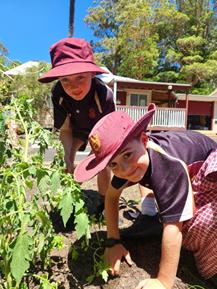
Dear Families and Friends of our beautiful valley, Welcome back to 2026 at Holgate Public School. We would like to share a few photos from the end of Term 4 Our students had the best time at our End of Year Rewards Day with an Inflatable Obstacle Course with Water Slide; the ‘from farm to plate’ science lessons were a huge hit as our students planted, tended to and then harvested their crops of basil, tomatoes and oregano to make Margherita Pizza; our school hall was transformed into a Hollywood Awards Night for our Year 6 Farewell where our Year 5 students came dressed in black and white to look like security or photographers.
We must thank our local community for supporting last year’s We Care Connect toy drive. Your donations helped make a huge difference to families in need.
We are pleased to let you know that the Department of Education has updated its Enrolment Availability Policy. Holgate
Public School is currently below our local enrolment buffer, so we are able to accommodate non local enrolments into our school. If you know of any families that are interested in joining our fabulous school community please contact us.
Congratulations to Bella, in Year 6, who has been selected for the Intermediate Regional Dance Ensemble 2026. Congratulations to Neiko, in Year 4, who won the Bronze Medal at the BMX Oceania Competition, only narrowly missing out on two New Zealand competitors. On day two of the competition, she placed 4th against international competitors but placed 2nd in the National series.
And last, but certainly not least, congratulations to Knox, in Year 6, who was selected to be part of the Australian Mighty 11’s Team. This is an international BMX competition featuring the top 4 male and female 11-year-old riders from Australia and New Zealand. We are SO proud of Knox for earning this incredible opportunity to represent Australia!
We look forward to sharing with you throughout the year what’s going on in wonderful school
LOCAL WILDLIFE
Antechinus of the Valley (Various
species)
This is the next in a series exploring some of our more special local wildlife residents, and what we can do to ensure they flourish in this wonderful area by Matt Barnett, local wildlife enthusiast.
Who are we?
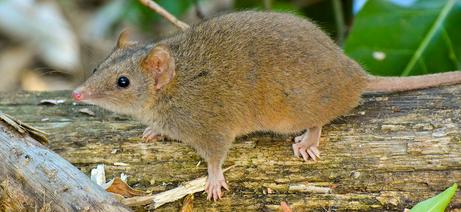
Often mistaken for mice or rats, Antechinus are neither. They are small carnivorous marsupials, more closely related to quolls and Tasmanian devils than rodents.
Australia has around 15 species of Antechinus, and here in the Matcham valley we are likely home to at least two: the Yellow-footed Antechinus and the Brown Antechinus. Both are small, sharpfaced insect hunters that live quietly in our bushland, creek corridors and forest edges.
At first glance they look rodent-like, with pointed noses and rounded ears, but unlike introduced rats they have a longer snout, fine insect-hunting teeth and a more delicate build.
What makes Antechinus truly remarkable is their breeding strategy. Each year, usually in late winter, males enter a short but intense mating period lasting only a few weeks. During this time, stress hormones surge, they stop feeding properly, their immune systems collapse, and most males die soon after the breeding season ends. It is one of the most extreme life histories of any Australian mammal.
The females survive to raise their young in well-hidden nests within logs, tree hollows or dense ground cover, quietly continuing the cycle.
Where can you find me?
Antechinus favour areas with dense undergrowth, fallen timber, leaf litter and natural hollows. Creek lines, moist gullies and remnant forest patches around Matcham provide ideal habitat.
They sleep in the day and become active at night, darting through leaf litter hunting insects, spiders and other small invertebrates. Wildlife motion cameras are often the best way to detect them, and though they generally live in the forests, they will also come into garages, basements and attics; they are excellent climbers, which is where many of you may have seen or found them.
Late winter is an especially interesting time, as males roam more widely searching for females By spring, most of those males are gone, leaving the females to raise the next generation alone.
4367 4066 Mon-Fri 9-5pm Sat 9-1pm
0401 164 787
4321 0990 Mon-Fri 9-5pm Sat 9-1pm
LOCALLY OWNED & OPERATED BY RESIDENTS IN THE MATCHAM VALLEY
How can I protect and encourage them near me?
Antechinus rely heavily on intact ground habitat To help them thrive: Keep leaf litter and fallen timber. Logs, branches and thick ground cover provide shelter, nesting sites and hunting grounds. Avoid over-tidying bush areas.
Protect hollow-bearing trees. Even small hollows in older trees can provide critical nesting space.
Put up nest boxes close to the ground
Small hollow nest boxes are an ideal home for these curious creatures.
Avoid rodent bait. Secondary poisoning is a real risk. Native marsupials can die after eating poisoned prey.
Keep cats indoors at night. Domestic and feral cats are a major threat to small native mammals.
Maintain connected bush corridors. Even narrow strips of vegetation along creeks or fence lines allow safe movement between habitat patches.
These small marsupials play an important role in controlling insects and maintaining ecological balance. Though rarely seen, they are part of the quiet web of life in our valley.
If you have dense bush, fallen logs and a healthy layer of leaf litter, chances are you have Antechinus nearby. Not every small shadow in the dark is a rat. Sometimes, it’s one of our most fascinating native mammals living out its brief but extraordinary life right here in Matcham
HELPFUL LOCAL ADVICE
Wildlife Worries
If you find an injured animal there are a couple of options
WIRES 1300 094 737 or wires.org.au Australia’s largest rescue agency
WILDLIFE ARC 4325 0666
For help with sick, orphaned, or injured native animals found on the Central Coast of NSW. Call them on 4325 0666 and they will also tell you how to help until a trained Wildlife A.R.C rescuer arrives.
SNAKECATCHER 0404 765 286
Call Matt at Central Coast Snake Catchers 6
FOX PROBLEMS 0438 654 778
Call Barrie at Feral Animal Controller Feralcontroller.com.au
Will the Council help?
Council Rangers may attend to stray livestock on public land. They will secure the animal and organise transport to one of the Council’s Animal Care Facilities for holding while efforts to contact the owners are made. Council Rangers will not collect small domestic animals such as rabbits, guinea pigs, ferrets, chickens, or roosters. Rangers will not respond to animals straying from private property to private property. This is a civil matter and/or a fencing issue.
What about Dead animals?
The council suggests that if you find a deceased animal on public land, to report it to their Customer Service Centre. If a deceased cat or dog is found, it will be taken to a local vet or the nearest Animal Care Facility for scanning for a microchip. If identified, the owner will be notified. It is the property owner's responsibility to dispose of deceased animals on their property.
If you find a native animal dead on your property, it is your responsibility to dispose of it. The council very clearly takes absolutely no responsibility for helping out in this area. Valley residents recommend burying it on your land. If you let it decompose, while the smell won’t be good, it will quickly become part of the garden.
LOCAL KNOW-HOW Rubbish Removal
You can obtain additional bins for a fee added to your council rates. Costs range from $130 - $640 per annum, depending on the size and type. They also have incentives to reduce the size of your bin.
If your bin has been damaged, is missing a wheel or has a missing or broken lid, you can arrange to have it repaired by the council for free. Contact council Customer Service Centre on 1300 126 278 or register on their website.
What colour bin is it tonight?
Just pop in your address and you can download a schedule for the full year. https://1coast.com.au/bin-collection/bincollection-day/
Residents can book up to 6 general or green waste bulk kerbside collections per year, with a 2m cubic allocation per collection. Additional ones can be booked for a fee
Items unsuitable for your rubbish bin or kerbside collection include electronic goods and chemicals. Council holds regular collection days for these items.
There are bigger waste facilities at Both Woy Woy and Jiliby that take household quantities of different materials. As a guide, this is a max container of 20l or 20 kg for each waste type. Check the council website for details of what materials are taken at each facility.
If you have things that are too big for your bin that you no longer require but others might find useful, please offer it for free via our community Facebook page. You’ll help to reduce landfill.
Curby: Recycling Soft Plastics from Home
Curby allows residents to recycle soft plastics through their regular yellow-lid recycling bin. Items like bread bags, chip packets and cling wrap are collected, placed in a bag and tagged with a special CurbyTag. At the recycling facility, tagged bags are identified & separated. Soft plastics normally can’t go loose in recycling because they tangle sorting machines. Curby is free.
1.Fill any soft plastic bag with clean, scrunchable plastics ( www.curbyit.com to check what’s accepted).
2. Attach a CurbyTag – completely free for Central Coast residents and available from Council libraries, Customer Service Centres or online).
3.Scan the tag using the Curby app 4.Place bag in your yellow recycling bin
HELPING THE VALLEY KEEP TRACK
30 years of rainfall data collection in the Valley
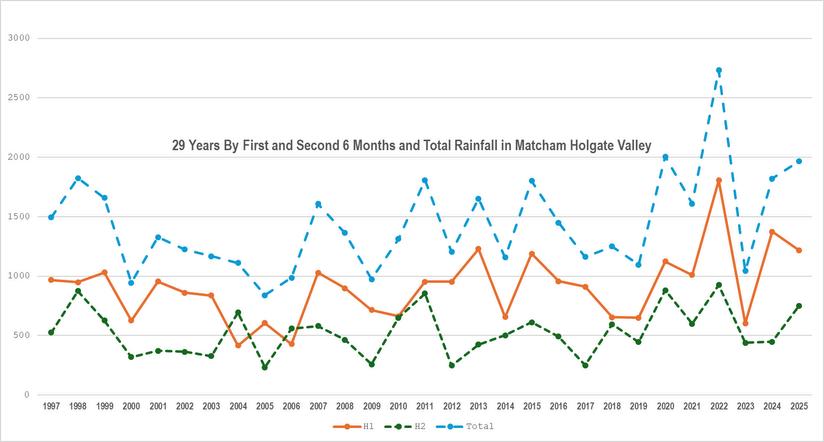
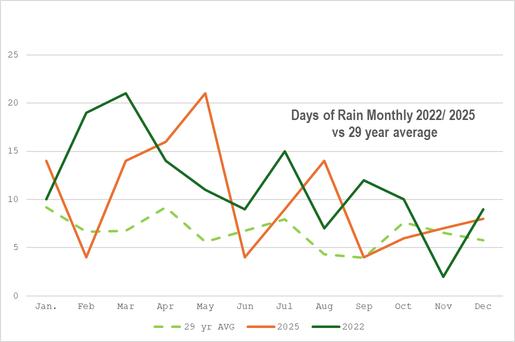
George Slennett started recording daily rainfall records for the Valley at the RFS site in Wattle Tree Road almost 30 years ago (with some checking at his property in Bandalong Road). He passed that responsibility on in 2016 to two humble recorders on the ridge high above Patterson Close and at the end of Oak Road (one remains). The results can be seen in the following two charts: the first showing the yearly split of first (H1) and second six-month (H2) rainfall; the second showing the number of days it rains each month. Both show dramatic volatility and general increase in rainfall since 2021.
Over the last decade (2016–2026), the weather patterns affecting Matcham Holgate have been defined by 3 issues.
1.Extreme swings between intense wet periods (Triple La Niña (2020–2022) driving consecutive summers of above-average rainfall, intense storms, and increased flooding and blackout risks,
2 A significant drought period (2017-2020) caused our roads to fill with water tanker movements, including the blanket of smoke at the end of 2019
3.An overall long-term trend of rising temperatures. On 6.12.25 (Koolewong fires) and 10.1.26, we experienced temperatures over 41degrees even in our “coastal valley”. The Central Coast is particularly vulnerable to "East Coast Lows"; intense low-pressure systems that cause sudden, massive rainfall events, such as the 140mm+ this year on the 17th January (2026), 40mm+ in an hour on the 21st February (2026), let alone the 1200mm that fell in February and March 2022. Sadly, we’re not seeing any overall flood mitigation strategy for the Erina Creek drainage basin as yet, and the prospects of increasing the height of the “two bridges” on Wattle Tree Road and the Milina Road bridge or Oak Road getting any bridges at all seem as distant as ever. JDW
This ANZAC Day, join the community at Matcham Hall and be part of a long tradition of remembrance. Lest we forget.