An independent review exploring the Haileybury approach to the use of digital to support learning & teaching
Dr Fiona Aubrey-Smith
October 2025
EXECUTIVE SUMMARY
This report presents an independent review of Haileybury’s approach to using digital technology to support learning and teaching. Conducted between November 2024 and July 2025, the review aims to articulate the impact of Haileybury’s digital approach in order to inform future strategic planning. The review utilised a mixed-methods methodology, including interviews with leaders, teachers, and pupils, classroom visits, surveys, and document analysis.
Haileybury's digital vision is deeply embedded in its overarching pedagogical approach, led by the Director of Digital Innovation and Enterprise. This pedagogy-first approach is integrated across teaching, learning, special educational needs (SEND), pastoral support, and staff professional development. As part of a broader learning toolkit, every pupil has access to an iPad, headphones, and a stylus on-demand, in order to support, extend, and enhance classroom learning, teaching, and prep activities. The School utilises a single, consistent Google Workspace ecosystem, streamlining processes and minimising training needs for both staff and pupils. Pupils appreciate focusing on subject-specific knowledge rather than recalibrating to different toolsets as they move between different subjects and disciplines. Viewing teaching materials on their own personal devices rather than a single front-of-class board provides clarity, comfort, reduced distractions, and the ability to interact with materials through a range of accessibility and annotation features. This frees up working memory to prioritise new information and synthesise links between prior and new knowledge. Digital resource banks, automated formative assessment, and production tools like Canva and Gemini have made teaching more creative, prompting teachers to think deeper about where pupils focus. Digital capture of direct instruction allows pupils to replay teacher input immediately. Pupils highly valued the ability to rewind segments for better understanding, self-check processes, and work through techniques step-by-step at their own pace. This increased pupil autonomy has strengthened their learner identity, with pupils often rewatching sections multiple times to solidify understanding, something they would be less likely to ask a teacher to repeat in person. This frees up teacher time for targeted, precise intervention, which leads to greater in-lesson progression, coverage and collaborative or socialised learning opportunities.
Pupils value the ability to draft and edit work multiple times digitally in a format more aligned with contemporary workplace settings. This appears to encourage stronger self-assessment and self-regulation skills, particularly for essay writing, diagrams, and reports. In Haileybury classrooms, digital tools brought efficiency to note-taking and revision, with a majority of pupils finding typed notes and digitally annotated resources more effective for understanding and revision than traditional methods. Comparison of handwriting, typing, digital inking and oral capture alongside typical speeds of teacher talk and pupil cognition raised a range of findings including the need to further consider the relationship between pace of input (e.g. teacher talk), with pace of recording (e.g. note-taking), and the pace of thinking (i.e. cognition, creativity), with the pace of output (e.g. writing or typing).
Clear behavioural expectations for digital activity and etiquette are set for all pupils and staff at Haileybury, promoting a healthy and balanced digital lifestyle. Digital skills and behaviours are explicitly taught as part of an annual induction program, with a focus on teaching and learning materials, note-taking and revision, the use of accessibility features to support learning, and digital safety. Artificial Intelligence (AI) tools are thoughtfully adopted across the curriculum, with pupils from Year 9 to Year 13 taught to use AI impactfully with clear guidelines for safe and appropriate use. Hailebury’s Digital Innovations course further develops contemporary and future-ready digital skills, combining practical application with ethical and human-oriented discussions.
Haileybury pupils value cognitively active and challenging uses of digital tools, (including AI) in lessons. Pastoral care at Haileybury - as a boarding school - extends to considering digital technology's role throughout a pupil's entire day, fostering a deep and ethical focus on a broader healthy lifestyle including a range of physical environments, eye-focal distances, bodily postures, social and independent activities.
There are a range of findings set out in further detail in the full report, highlighting Haileybury’s approach as high-impact and pathfinding in nature. These findings should be viewed alongside a range of suggested recommendations for further pedagogical consideration, and future practice.
1.0 CONTEXT
Haileybury is a co-educational independent school located in Hertfordshire, with its origins dating back to 1806. At the time of writing, there were 925 pupils attending Haileybury aged 11-18, with approximately 60% boarding and 40% being day pupils. By the time pupils are in sixth form, approximately 78% become boarders, living across 12 on-site boarding houses.
Pupils are organised into year groups known as Lower School (Year 7 and 8), Removes (Year 9), Middles (Year 10), Fifths (Year 11), Lower Sixth (Year 12) and Upper Sixth (Year 13), with boarding houses being vertically grouped in order to encourage a greater sense of community across age groups. The 150 teaching staff live largely on-site with roles that combine both teaching, leadership, pastoral and boarding responsibilities.
Haileybury describes its mission as that,
“the most rewarding education stems from happiness and fulfillment. Our inclusive and comprehensive approach ensures that pupils thrive academically while benefiting from outstanding pastoral support, exciting opportunities, and excellent facilities. We are committed to helping every child develop their unique strengths and personalities within a framework of resilience, mutual respect, and community spirit… We are committed to equipping our pupils with the skills, knowledge, and values they need to thrive in an everchanging world. Our focus on innovation, coupled with respect for tradition, ensures that Haileyburians leave as confident, well-rounded individuals ready to make a positive impact on society.” 1
1 Haileybury (2025) About Haileybury https://www.haileybury.com/ about-haileybury/
4 Haileybury (2025) Co-curricular https://www.haileybury.com/ about-haileybury/co-curricular/ 5IB Schools (2025) International Baccalaureate Results: Top IB schools in the UK https://www.ib-schools.com/ league-tables/uk-top-ib-schools 6ISI (2022) Educational Quality Inspection Report - Haileybury https://www.isi.net/institutions/ school/haileybury-college-6500
The School publish a range of evidence about the extent to which the mission is achieved in practice, including whole school Examination Results and Destination Data 2, Pupil Journey Case Studies 3, and Co-curricular insights about Sports, Music, Drama and Charitable/ Voluntary work.4 Haileybury are very proud of the excellent A level results achieved in 2025 where 51% of A level grades were awarded at A*/A and 83% of grades were awarded at A*-B.
In 2025, Haileybury achieved their highest ever GCSE results with over 61% of grades were awarded at 9/8/A* level. Furthermore, a number of pupils work towards the International Baccalaureate, where the Haileybury average sits at 37.2, which is 2 points higher than the national average co-ed boarding school.5 Of these outcomes, 22 pupils scored 40 points or more, whilst 10 scored 43 points or more. This is particularly notable given that 1 in 7 pupils at Haileybury benefits from some form of Learning Support.
At Haileybury, the approach to teaching and learning centres around the development and application of knowledge alongside an emphasis on the role of speaking and listening such that pupils benefit from the perspectives of others (both peers and adults).
The leadership team refers to a distinctive education which encourages pupils to see themselves as subject specialists who have a responsibility to both themselves and their subject. Haileybury’s most recent ISI Inspection report highlighted the positive impact of this approach.6
Leadership at Haileybury recognise the strength of current teaching and have nurtured a staff body which is committed to professional development and learning together - within and across departments. Heads of Departments are considered to be strong leaders with significant strengths across both new and established teaching staff. Leaders at all levels talk about a teaching body which is passionate about subject specialisms as well as the nurturing of young people both academically and pastorally. Many teachers talk passionately about their own personal learning goals and academic curiosity.
PATHFINDING
EXCELLENCE. PATHFINDING FUTURES | 1.0 CONTEXT
Over the last 2 years at Haileybury there has been a particular focus on developing pupils’ executive functions. Strengthening the cognitive flexibility, working memory, and sustained attention of young people at Haileybury has been prioritised, including training for staff and the development of staff communities of practice (Lave & Wenger, 1991).7 Notably, the leadership team at Haileybury encouraged staff to work in small crossdepartmental research groups to investigate
and share findings - nurturing a holistic and multidisciplinary approach to thinking about supporting pupil executive function. This work, embedded across both pastoral and academic provision, has encouraged teaching staff (most of whom also hold pastoral roles), to think ever deeper about their provision and how they talk to pupils, and could be seen permeating many classrooms.
7Lave, J., and Wenger, E., (1991) Situated Learning: Legitimate Peripheral Participation Cambridge University Press: Cambridge.
PATHFINDING EXCELLENCE. PATHFINDING FUTURES | 2.0 RESEARCH AIM & DEFINITIONS
2.0 RESEARCH AIM & DEFINITIONS
The purpose of this research was to identify and articulate the impact of the Haileybury approach for supporting learning through the use of digital technology.
The intention of the report is to offer a summary of the impact of existing practice, in order to inform future strategic planning across Haileybury.
This research focuses specifically on the ways in which pupils experience the use of digital tools within classroom activities and how they responded to those experiences - academically and pastorally.
This research did not seek to evaluate the overall quality of teaching and learning, but specifically the ways in which the presence, role and purpose of digital tools within that affected it.
It should also be noted that this report does not seek to argue the case for or against more or less digital technology. This is because the purpose of the research centres around the supporting of pupil learning (i.e. human behaviour as affected by the use of digital tools), rather than the efficacy of digital technology in and of itself (i.e. viewing technology as independent of the human being who uses it).
For clarity, this report uses the following definitions:
• Pedagogy: The structural systems and support for learning. This is understood through four domains of pedagogy; (i) views on the role of a teacher and the process of teaching; (ii) views on the role of a learner and learning; (iii) views on the nature and formation of knowledge; (iv) views on the goals of education and the purpose of schooling.
• Learning: Experiences that are internalised by an individual learner, and which result in the development of their skills, knowledge or character. Learning will manifest differently depending on the prior experiences, cultural and social capital, characteristics and attributes of each individual learner, as well as environmental and point-in-time influences.
• Teaching: Actions which are conducted by an individual teacher, in order to operationalise a specific educational intention. Intentions are based upon a combination of school policies and curriculum, professional training and experiences, alongside the cultural and social capital of the individual teacher.
• Impact: A material change to previous or alternative practice. This may be articulated
There has been a great deal written and spoken - both published and informal - about the role of digital tools in relation to schools. The scope of this report excludes a full literature review, but it is relevant to highlight that there are some permeating issues which affect the related literature.
First is that research methodologies of studies in this space are historically dominated by the use of quantitative data (e.g. statistics), or positivistic reductionism applied to qualitative data (e.g. sentiment analysis). These methodologies tend to be favoured by (a) those who are time-poor or non-specialist, or (b) concerned with the return on investment of supply, policy or procurement. This tends to over-simplify some very complex variables (e.g. human behaviour over time) and mobilise misuse of research findings (i.e. surface level reporting or use by non-specialists).9 This can be particularly seen with contemporary literature surrounding the so-called screentime debate - where the combination of correlational studies and non-specialist definitions of variables has led to over-generalised claims even in studies that are otherwise methodologically sound.
Alongside this, research addressing the use of EdTech within schools has tended to report on (a) the implementation process of digital tools and systems (often from the perspective of operational colleagues within a school or organisation or a particular supplier or system), or (b) particular elements of use (e.g. engagement levels, specific tools or features).
PATHFINDING EXCELLENCE. PATHFINDING
FUTURES | 4.0 BACKGROUND OF RESEARCH IN THIS SPACE
Some studies examine particular school improvement considerations (e.g. role of oracy, metacognition, retrieval of knowledge, assessment systems, productivity etc.) and many studies depend upon isolated data generation approaches (e.g. self-reporting surveys as sole data collection tool, one-off or third party observations). These approaches create distance between the data and the researcher, often
creating a wide range of ethical issues and injecting complex biases into the dataset.
From a specialist perspective, the most useful way to understand the complex interaction between a young person in a classroom and the digital tools that they are experiencing, requires time spent in their classrooms, triangulated by insights directly from the pupil, their peers, their teacher
PATHFINDING EXCELLENCE. PATHFINDING FUTURES | 4.0 BACKGROUND OF RESEARCH IN THIS SPACE
and their family. Small scale studies such as this are often conducted by practitioner researchers (e.g. teachers and leaders and those studying towards postgraduate qualifications). However, considering policy and finance, schools are often wary of such studies.
The gold standard is therefore arguably a combination of practitioner research - with its insider-awareness - in conjunction with outsiderresearcher critique and analysis (Hammersley, 2006).10 Studies such as these are time consuming, but yield findings that are detailed, contextual, balanced and triangulated.
10Hammersley, M., (2006) “On the teacher as researcher” Education Action Research 1(3). pp.425-445.
11Department for Education (2025) Special Educational Needs in England 2024/25 [link]
12Department for Education (2025) Schools, pupils and their characteristics 2024/25 [link]
13See about the author section of this report for further background
14Lincoln, Y. S. and Guba, E. G. (1985) Naturalistic inquiry. London: Sage Publications.
5.0 METHODOLOGY
The data generation for this research was conducted November 2024 - July 2025 and largely focused on pupils attending Haileybury in the academic year 2024-2025.
Approximately 12% of pupils have a formal recognition of a Special Educational Need or Disability which is broadly in line with national averages,11 and approximately 21% of pupils speak English as an additional language which mirrors national averages.12
The focus of this research centred upon how pupils experience the use of digital tools within their classroom experiences. There were a number of data collection and data generation mechanisms used to explore this from a range of angles.
During the period November - July 2025, this included:
21 LEADERSHIP INTERVIEWS
31 CLASSROOM VISITS
12 FOCUS GROUPS (PUPILS, TEACHERS)
2 SURVEYS (PUPILS, TEACHERS, FAMILIES)
53 DOCUMENTS (E.G. POLICIES, PLANNING, STRATEGY)
All of the data collection and data generation was conducted by an independent researcher13 and took place through a number of phases, summarised as follows:
1. Interviews with Haileybury’s Master and Deputy Head (Academic)
2. Document analysis (e.g. policies, strategy and vision)
3. Interviews with Haileybury’s Director of Digital Innovation and Enterprise, Assistant Head for Professional Development, and Director of Teaching & Learning
4. Document analysis (e.g. curriculum planning)
5. Classroom observations (including in-class research interviews)
6. In-class and out-of-class focus groups with pupils and teaching staff
7. Further document analysis (e.g. learning resources)
8. Existing data sources (e.g. photocopying records and digital usage records)
9. Surveys to teachers
10. Surveys to pupils
For academic clarity, observations, focus groups and interviews were all semi-structured, utilising stimulus questions or exploratory lines of inquiry in order to balance both scoping and efficacy (Lincoln and Guba 1985).14
Class visits were purposively sampled in order to ensure breadth and depth across year groups, subject domains, background and experience of teaching staff and diversity of pupil characteristics and intake. A range of approaches to semistructured observation were undertaken, including whole-lesson observation, observing specific parts of a lesson, observing pre-identified activities or transitions, tracking individual pupils through sequences of events and periods of time and unstructured observation which allowed for unexpected or unanticipated lines of inquiry to develop.
All of the classroom observations utilised some form of pre and post observation discourse with a leader or teacher who was able to provide specific insight and context around the relationship of what was being observed with wider practice. This typically included discussion of tasks or activities and how they fit within sequences or planned learning. It also covered the characteristics and context of specific learners or teachers being observed, as well as background information on lesson planning, tools or features (digital or otherwise) and relevant policies and procedures.
Thematic analysis was used to analyse data from interviews, focus groups and open-ended survey questions. This approach, drawing on the guidance set out by Braun & Clarke (2021),15 involved data familiarisation, identifying patterns and themes within the data, reviewing those themes in order to surface elements of significance and then collating themes of significance in order to contribute towards a deeper understanding of the dataset.
Contributing towards the thematic analysis were a number of specific analytical techniques which help to draw meaning out of small scale
datasets. For example, aspects of discourse analysis were used in order to identify embedded meaning within language and communication used by participants in interviews and focus groups. This approach involved identifying the language used to construct and convey meaning specific to the researcher and respondent. For example, Hammersley (2006)16 reminds us that specialist researchers benefit from an assumed shared meaning in specialist domains which can be both beneficial in terms of directing attention to salient aspects of data, whilst simultaneously risking familiarisation bias. Thus, to mitigate for this, it is pertinent to utilise elements of discourse analysis that unpack particular forms of embedded meaning such as dialogic undertones - where meaning accumulates as a result of a developing response or discussion (Tannen, 2015),17 and intertextuality - where particular meaning emerges from one source only as a result of insight from another source (Hodges, 2015).18 Furthermore, analysis drew upon a number of related theories which help to elicit meaning from interview, observation and focus group data.
For example, Centering Theory (Walker et al., 1998),19 posits that when we speak we utilise a
15Braun, V., & Clarke, V., (2021) Thematic Analysis: A practical guide. SAGE: London. 16Hammersley, M., (2006) “On the teacher as researcher” Education Action Research 1(3). pp.425-445.
17Tannen, D. et al. (2015) The Handbook of Discourse Analysis. 2nd edn. Chichester: Blackwell.
18Hodges, A. (2015) ‘Intertextuality in Discourse’, in Tannen, D., Hamilton, H. E., and Schiffrin, D. (eds) The Handbook of Discourse Analysis. 2nd edn. US: Wiley-Blackwell.
19Walker, M. A., Joshi, A. K. and Prince, E. F. (eds) (1998) Centering theory in discourse. Oxford: Clarendon Press.
20Gordon, P., Grosz, B., Gilliom, A., (1993) “Pronouns, Names and the Centreing of Names in Discourse”. Cognitive Science 17(3). pp.311-347.
21Stutchbury, K. and Fox, A. (2009) ‘Ethics in Educational Research: introducing a methodological tool for effective ethical analysis’, Cambridge Journal of Education, 39(4), pp. 489–504.
22Hart, R., (1992) Children’s participation: From tokenism to citizenship. Innocenti Essays No.4. UNICEF: Florence.
number of specific linguistic tools to direct the attention of our audience towards particular embedded meaning. In a school context this is often most apparent with the choice of “I” or “we” when referring to different aspects of policy or practice - conveying embedded meaning about the relationship between the person communicating and the organisation itself (Gordon et al., 1993).20
Within this research, specific consideration was given to the ethical domains highlighted by Stutchbury & Fox (2009)21 about the inferred consequences and impact on those involved. In particular, ensuring balanced, critical and objective planning, sampling, analysis and representation. This approach ensures that the research enters the domain neither biased for or against particular forms of practice, but instead surfaces and articulates the impact of specific practices being implemented on those affected
by them. As part of the analysis process it was important to consider any variance between stakeholder perception - particularly in terms of meaningfully valuing the voice and insights of pupils themselves (Hart, 1992).22 When seeking insights from young people, it is helpful to understand some embedded issues in this specific space. For example, research addressing the uses of digital technology in schools often conflates adult perception with pupil opinions, resulting in adults who advocate for technology believing pupils similarly advocate, and those who argue for less technology believing pupils to share their cautious views.
These confirmation biases are common and often mask subtle nuances and insights that young people can offer - when given the opportunity to do so authentically.
This impact study therefore deliberately triangulates insights from pupils, families, teachers and leaders and presents findings only when supported by multiple sources and formats of evidence. The voice and perceptions of Haileybury pupils sits at the heart of this research and great care was taken to offer pupils the time and space to share what they were doing, how they were doing it, why they were doing it, and to understand the depth and breadth of
their perception and internalisation of their learning experiences. This is best achieved when young people are immersed in [classroom] activities, and able to talk in-situ about their experiences in relation to their broader holistic education and wider life.
Every pupil brings a unique set of prior experiences, characteristics and needs into their classroom, and every teacher has a range of pupil needs that they
seek to meet through their provision. Therefore, a detailed understanding of the complexity of pupil experiences and internalisation, alongside an empathy for a teacher who seeks to meet a highly diverse range of needs is essential if this research is to reveal meaningful insights that inform future school strategic planning.
Safeguarding and data security considerations have
been addressed by the anonymisation of all pupils, teachers and leaders. The report refers to pupils only by year group rather than name or gender in order to minimise identifiable participants whilst maintaining data integrity. Staff are referred to by role for similar reasons although for some senior roles this means that participants are identifiable. Products are referred to by their colloquial product name not to infer product promotion but in order to maintain data integrity.
6.0 HAILEYBURY'S DIGITAL LANDSCAPE
The digital landscape in 2025 across Haileybury has a number of components:
• The vision for the use of digital technology at Haileybury forms an embedded part of the overarching pedagogical vision (i.e. approach to teaching and learning). A highly effective and pathfinding Director of Digital Innovation and Enterprise leads the bidirectional relationship between pedagogy and digital.
• The pedagogy-first approach to thinking about digital technology has become embedded
across the leadership of teaching and learning, special educational needs and disability (SEND), pastoral support and staff professional development.
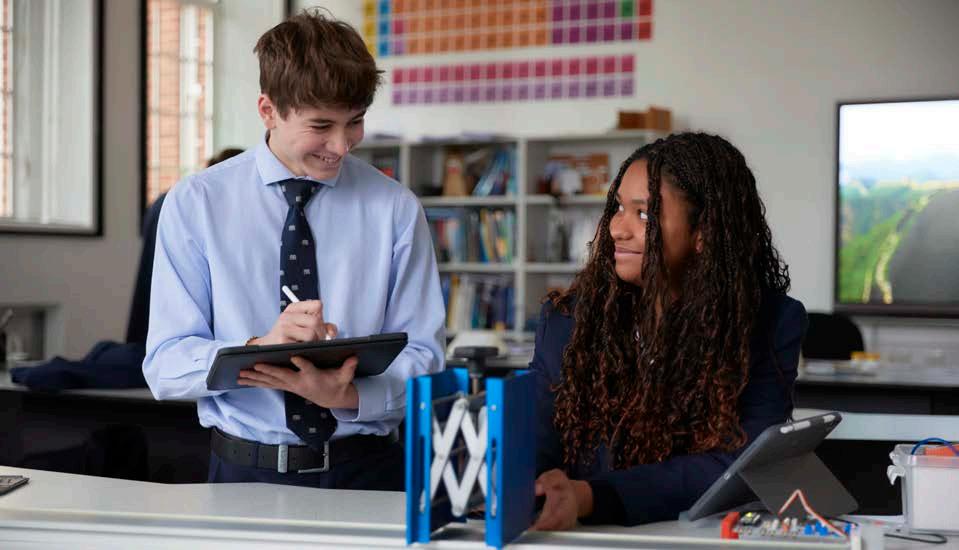
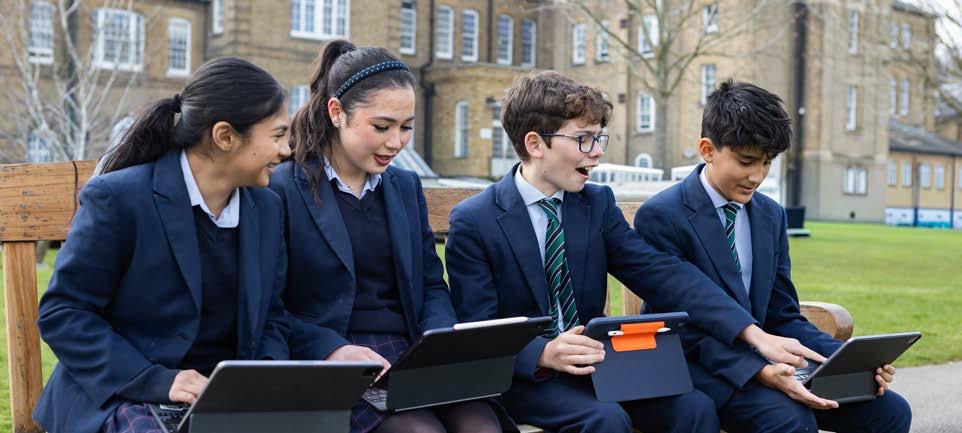
• As one part of their broader learning toolkit,23 since 2020, every pupil has an iPad, along with headphones and a stylus. The digital provision is intended to explicitly support, extend and enhance classroom learning, teaching and prep activities (for detail about how these are used, see Section 7).
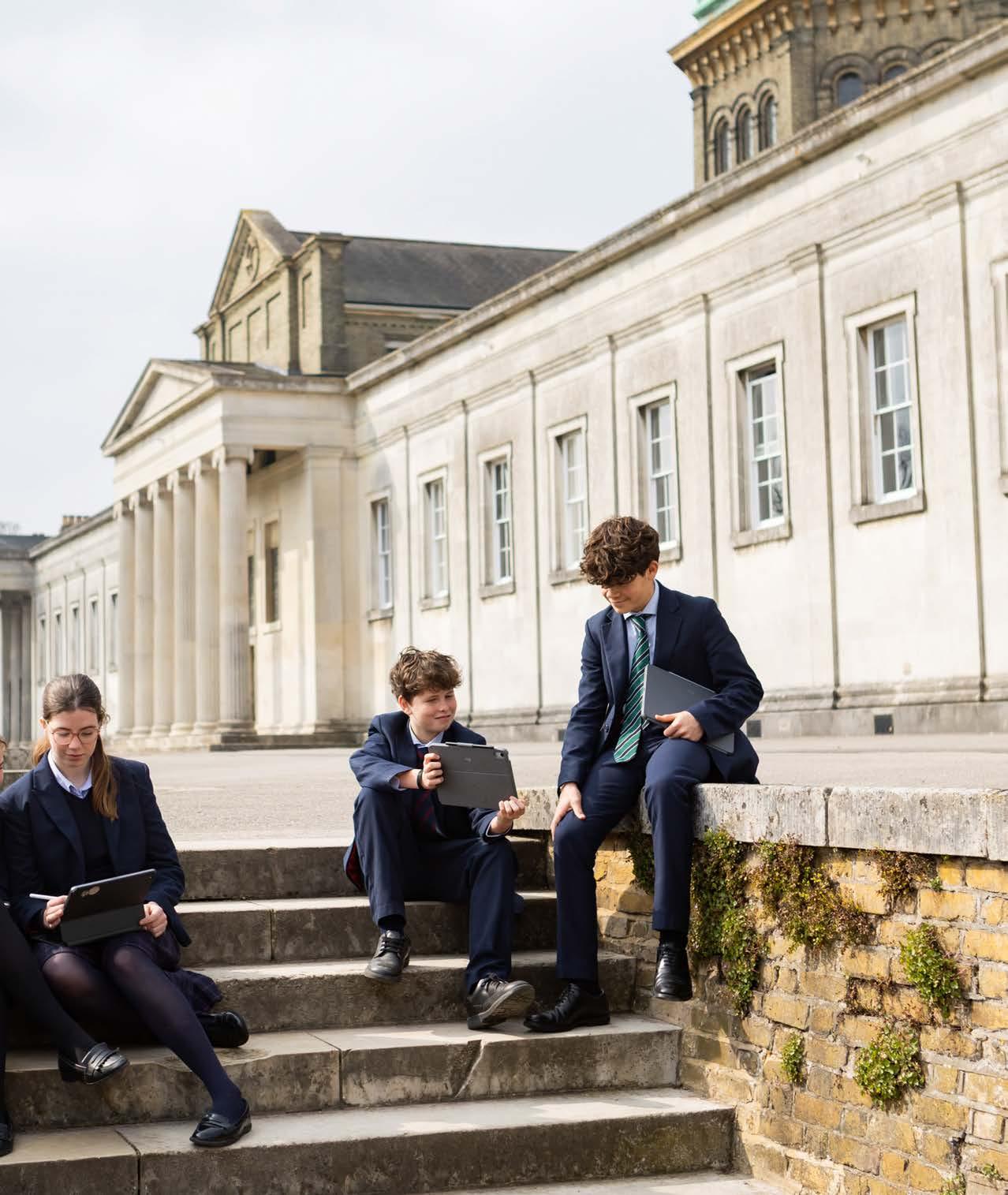
• Reflecting the value that Haileybury places on learning taking place in a range of physical spaces and environments, strong wireless access has been established both indoors and outdoors across the Haileybury site.
• Reflecting the importance of oracy and group working in the Haileybury curriculum, digital use is explicitly designed to be portable - with iPads chosen in part for their portability (e.g. so that using a digital device does not automatically require a pupil to be seated at a desk each time). Typical use includes presentational work, recall and quiz activities and recording pupils talking through their work.
• Most apps used by teachers and pupils are all accessed via Google Workspace to ensure one single and consistent ecosystem. This streamlines training, communications, sharing of impactful practice and collective troubleshooting. It also minimises cognitive load for pupils moving between subjects, departments and year groups.
• In 2025, Haileybury was recognised as a Google Reference School for their exemplary use of this ecosystem24 and as an Apple Distinguished School for their use of Apple devices.25
• Expectations about structures and systems within this ecosystem have been set to ensure consistency and to minimise the demand on working memory when pupils move between subjects and teachers.
HAILEYBURY'S DIGITAL LANDSCAPE
• Class teachers have access to Apple classroom management tools which enable teachers to see what pupils are doing individually on their iPads at any point during a lesson.
• Pupil and staff access to apps happens through a comprehensive and robust opt-in process which takes account of data security and privacy, age and context appropriateness, and intended purpose or outcome. This also minimises duplication and forefronts educational and pastoral quality assurance over anecdotal recommendations.
• Devices provided to both staff and pupils have safeguarding filters, monitoring and management software in place which provides alerts and reports aligned with school safeguarding policies and procedures. Pupil devices are managed during the day with removal of non-educational apps and email (tiered appropriately for each year group) via a central management system.
• Digital provision is managed by a close partnership between strong technical leadership with an on-site support team and strong pedagogical leadership. This is demonstrably pupil oriented and highly productive.27
24Haileybury (2025) Haileybury named as an official Google Reference School https://www.haileybury.com/ haileybury-named-an-official-googlereference-school/
25Haileybury (2025) Haileybury named as an official Apple Distinguished School https://www. haileybury.com/hailebury-named-apple-distinguished-school/
26Haileybury (2025) Google Classroom set up 27Haileybury (2025) Overview: Two-Year pupil and teaching staff devices review 28Haileybury (2025) Apps for Tasks: A pedagogy-first list of apps available to staff.
• In order to maximise time for both pupils and teachers on subject specialism, digital skills are explicitly taught as part of an induction programme at the start of every academic year. This provides a set of core skills (e.g. navigation around the device, basic functions and features, protocols for organisation of files, protocols for creating, storing and retrieving notes, touch typing skills, drawing and annotation skills).
• Clear behavioural expectations have been set out to all pupils and staff regarding appropriate digital activity, alongside appropriate digital behaviours. This goes beyond traditional acceptable use and safeguarding policies and refers to digital
etiquette (e.g. devices facing down when listening to a teacher/peer), healthy digital lifestyles (e.g. ensuring that digital activities are not all desk-bound or passive), human oriented uses of digital (e.g. digital tasks that stimulate debate and discussion).28
• There are thoughtful and scalable solutions to common practical issues surrounding 1:1 device provision. For example, whilst pupils are expected to bring a charged device, stylus and headphones to each lesson, sometimes teenagers forget to do so and so there are accessible plug sockets available for charge and spare stylus in classrooms to prevent barriers to learning.
PATHFINDING EXCELLENCE. PATHFINDING FUTURES | 6.0 HAILEYBURY'S DIGITAL LANDSCAPE / 6.1 DIGITAL EXPECTATIONS
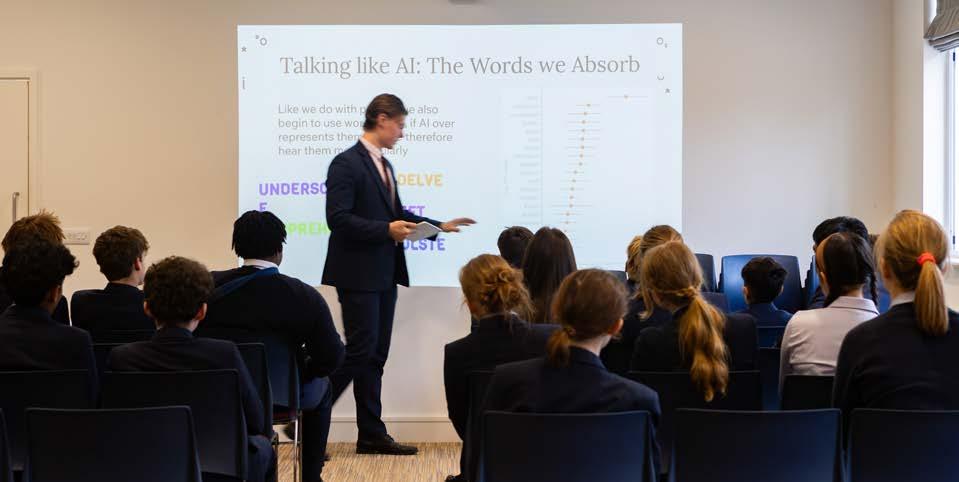
• Artificial Intelligence (AI) tools and, in particular, Generative AI (e.g. Gemini, Brisk, Perplexity, Canva) have been thoughtfully adopted such that pupils from Removes (Year 9) to Upper Sixth (Year 13), are taught how to use AI impactfully29 and have clear guidelines around safe and appropriate use.30
In October 2024, Haileybury's leadership conducted its own internal research in order to better understand the impact of digital technology on pupil learning.31 The full data set from that internal review comprised a range of surveys and focus groups across staff and pupils and a range of class visits. A number of key findings were identified, including that digital tools have made content location easier for pupils, teacher feedback has become more frequent and timely, collaboration has become easier and productivity higher.32 Those findings are consistent with the findings of this independent report.
There were a number of additional findings in the 2024 internal report which have been probed in further depth in this independent study. For example, pupil perceptions about their digital experiences and how these affect peer and teacher relationships, gamification, attention and cognitive focus, handwriting efficacy and digital skills. This independent review also incorporated a number of lines of inquiry which emerged from specific leadership discussions early in the review planning process. For example, the relationship between pedagogical aspirations and the current uses of digital technology, the balancing of digital productivity with meaningful human experiences, and the contemporary relevance of what is being taught in both the explicit and hidden curriculum across Haileybury.
6.1 DIGITAL EXPECTATIONS
The leadership at Haileybury have set out clear expectations for pupils using iPads in lessons to ensure purposeful and well-mannered learning environments.33 This complementary approach - teaching both practical digital skill and social etiquette - is critical both in terms of successful classroom management, as well as adhering to the school vision - preparing young people for successful lives in the wider world.
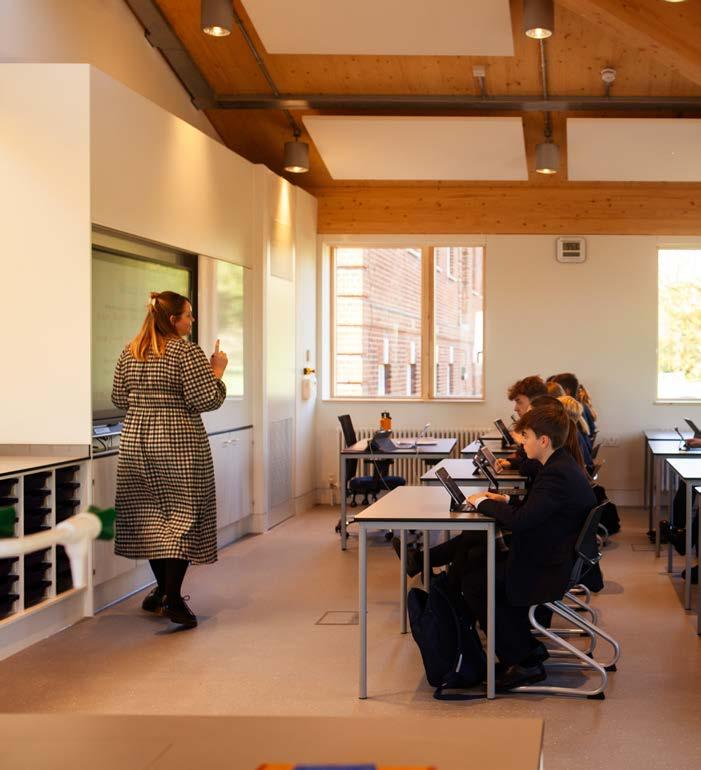
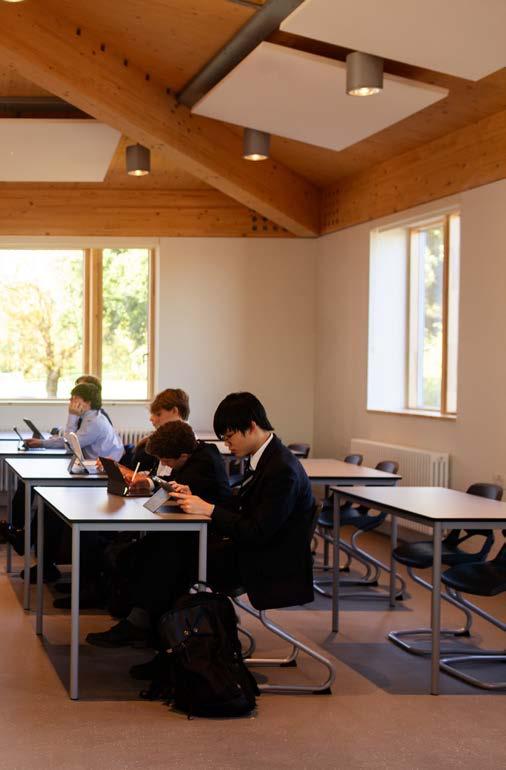
For example, in 2024-2025, pupils were expected to bring a fully charged iPad and stylus to each lesson and upon arrival in class to place it closed, upon their desk with Bluetooth turned on.34 Across the 31 lessons observed at Haileybury in
PATHFINDING EXCELLENCE. PATHFINDING FUTURES | 6.1 DIGITAL EXPECTATIONS / 6.2 DIGITAL SKILL DEVELOPMENT
January-July 2025, not one pupil had forgotten to bring their iPad to a lesson.
Pupils spoke about the iPad provision as reducing the number and weight of resources that were required to be transported between lessons - particularly in relation to folders of notes. On a site such as Haileybury, where lessons can be some distance apart, this reduction in weight was seen as a significant benefit by pupils.
In terms of class behaviours, pupils are expected to only use the iPad when instructed or permitted by the teacher,35 closing it during parts of the lesson where the teacher or peers are speaking to them in order to ensure eye contact and concentration on the speaker. This was similarly observed as consistent and embedded across subjects and year groups.
6.2 DIGITAL SKILL DEVELOPMENT
There are a number of practical ways in which Haileybury sets pupils up for purposeful, impactful and positive experiences when using digital technology. Upon entry into the School, and at critical intervention points thereafter, pupils benefit from a highly structured and thoughtful ‘digital induction’. This training offers pupils a bespoke guide through their iPad and its accessories (e.g. stylus, charging and connectivity, app management), Google Drive (e.g. file storage, organisation, search and access), Google Workspace (e.g. calendar, email, documents, spreadsheets, presentation slides), Google Classroom and Assignments, Note-taking (e.g. Noteability). Vitally, the Haileybury digital induction also includes training relating to accessibility tools (e.g. talk-totext, magnification, typing, screen light and colour adjustments, split-screen, shortcuts etc.), and physical wellbeing (e.g. hand positioning when using a stylus or typing, screen angle to support neck health, screen brightness to support eye health etc.). This holistic and exceptionally thoughtful approach has been instrumental in providing the young people at Haileybury with both the practical skills to benefit from digital tools as part of everyday practice, as well as the broader training and support so that they do this in a healthy and sustainable way.
29Haileybury (2025) Artificial Intelligence Policy, January 2025
30Haileybury (2025) ICT Acceptable Use Policy (September 2024)
31Haileybury (2025) HODS Digital learning discussion
32Haileybury (2025) Impact of digital technology on pupils learning review October 2024
33Haileybury (2025) Pupil iPad Expectations
34Classroom management software requires Bluetooth connection
35Permitted use may be for specific tasks in a lesson, and/or ongoing individual support
or EAL) provision
PATHFINDING EXCELLENCE. PATHFINDING FUTURES | 6.2 DIGITAL
SKILL
DEVELOPMENT / 6.3 SCREENTIME
Reflecting the pathfinding approach to leading digitally supported learning at Haileybury, an excellent Digital Innovations programme has also been established. Taught by teachers from a range of subject specialisms, and led by the Director of Digital Innovation and Enterprise this programme provides a range of contemporary skills which address the digital experiences that this generation of pupils will encounter, as well as growing future-ready skills that are likely to empower pupils entering the workplace in the coming years. Critically, the Digital Innovations programme combines practical skills (e.g. how to use contemporary digital tools) as well as ethical considerations (e.g. misinformation, deepfakes, bias). The programme has been introduced for Removes (Year 9) and Lower Sixth (Year 12) in 2024-25 with additional year groups beginning to benefit in consequent years.
6.3 SCREENTIME
At Haileybury, pupils generally have their own smartphones with different year groups having different time allowances. All day pupils must hand their phones in on arrival to the School and can collect them when they leave. For boarding pupils, Removes (Year 9), Middles (Year 10) and Fifths (Year 11) are allowed to collect their phone after school at 5.15 pm, or at 11.30 am on Saturday but they may not be used or visible during prep time. Sixth Formers can collect their phones at 4.30pm. Phones must then be handed in for the evening at different times between 8.30pm and 10.00pm. Smartphones are not permitted in lessons - setting clear demarcation between work-focused digital tools (e.g. iPads, laptops), and leisure-oriented digital tools (i.e. smartphone, digital watch, wearables).
Leaders spoke about a small number of parents who express concern about screentime given the presence of smartphones and 1:1 iPad provision, with queries raised generally relating to online safety and volume of time spent looking at digitised screens. This research study did not source data directly from parents (e.g. parent survey or parental interviews). However, data from comparable studies may be helpful to consider. For example, a similar study exploring four independent schools using 1:1 iPad provision, (Aubrey-Smith, 2025),36 found two key trends which may be applicable at Haileybury. The first being that parent concern about classroom screentime is often based on their associating iPad use with the sedentary, social and passive use seen in the home environment. This is generally compounded by a low level of parental awareness about how digital tools are used to support, extend or enhance learning or teaching in a school environment. The combination of these two trends generally creates some mistaken assumptions about the amount of time their children spend looking at a digital screen, and the nature of their experience and interaction with it.
From an academic perspective, it is also helpful to be aware that there are (at least) two permeating issues embedded within narratives about screentime. The first is that current mainstream terminology (e.g. words like screentime or device use), conflates positive and productive uses of digital tools with damaging and destructive uses.
36Aubrey-Smith, F., (2025) Be Informed, Be Precise, Be Contemporary: An independent review exploring the Thomas’s Day Schools Approach to the use of digital to support learning and teaching. London.
This is an unhelpful over-simplification which often encourages polarised and emotive debates ‘for’ or ‘against’ screen or device use. In a fastmoving landscape, polarised debates risk diverting attention away from what matters most within an educational context - supporting young people who live in 2025 to live healthy, purposeful and fulfilling lives. The other permeating issue is a focus on the object (device) - falsely separating the physical item from the human being whose behaviours define its use.
In an attempt to meaningfully classify variance across experiences referred to by the term screentime, three categories are suggested;
• passive or low demand consumption or exchange (e.g. watching TV, film or videos, games on mobile phones or tablets, short messaging or video calls, social sites and newsfeeds, taking photos or making videos)this tends to be what is referred to as harmful by those who campaign against screentime.
• cognitively active use (e.g. creating and editing documents or artefacts, productivity tasks, researching interests or topics, taking part in creative or interactive challenges, sourcing a video or guide in order to learn and practice a new skill) - these tend to be associated with ‘work’ by young people and adults.
• cognitively challenging purposes (e.g. group or collaborative creation projects that span multiple days/sessions, editing/improving a tangible artefact over multiple interactions and timelines, interactive discussion that tangibly and meaningfully extends thinking beyond that which is possible individually or in isolation) - these tend to be viewed as complex digital interactions and associated with higher order thinking.
Pupils at Haileybury consistently referenced how much they valued cognitively active and cognitively challenging uses of digital tools as part of their everyday learning experiences. However, whilst they might find it engaging or entertaining, pupils were also clear that they did not see the value in low-demand or passive uses of digital during lessons (e.g. low stakes games). Video content in lessons was seen as valuable when used as ~5-10 minutes stimulus to demonstrate or illustrate something that was not otherwise possible in a classroom environment, but video was seen otherwise as a distraction that encouraged sedentary ‘zoning out’. Similarly, pupils spoke about not wishing to spend long periods of time looking at any single point of visual focus (e.g. front-of-class board whether it was digital or whiteboard, a display, a textbook, a demonstration, etc.). Pupils instinctively appreciated a variance in focal distance and in the format of the stimulus or task they were being asked to engage with.
There are some other more nuanced issues relating to common perceptions around screentime. In the many articles, reports, books and presentations about criticisms of screentime, it is common to find that a domain specialist (e.g. ophthalmologist), has undertaken detailed
research specific to their specialism (e.g. eye health), but that the bounds and limitations of their study preclude multi-disciplinary specialist definitions specific to digital terminology (i.e. all on-screen uses are considered equal). This creates common myths (e.g. that eyesight is worsened simply through the use of a digital screen, rather than being the result of lack of variance in usage, through focal distance, and balancing ultraviolet exposure and movement as part of a broader healthy lifestyle).37
In short, ophthalmologists and eye health care specialists advise that all of us - both young people and adults - should ensure regular variance between close-up work, near focus and far distance focus.38 This is to avoid over-straining our eyes by sustained periods of focusing on a single object or at a set distance.39 Sustained focus on a single object tends to correlate with less frequent blinking, leading to dry eyes,40 eye strain, fatigue and disengagement.
The relationship between screen use and eye sight is therefore more about the amount of time focused on close-up, indoor, seated behaviour - which could equally be offline reading a book or online using a digital device (Ku et al., 2019,41 Huang et al., 2015).42
37Duarte, I. A., Hafner, M.deF., & Malvestiti, A. A. (2015) ‘Ultraviolet radiation emitted by lamps, TVs, tablets and computers: are there risks for the population?’. Anais brasileiros de dermatologia, 90(4), pp.595–597 [link]
38Ku, P., et al., (2019) ‘The associations between near visual activity and incident myopia in children: A nationwide 4 year follow-up study’
41Ku, P., et al., (2019) ‘The associations between near visual activity and incident myopia in children: A nationwide 4 year follow-up study’ Ophthalmology 126(2) p. 214-220
42Huang et al., (2015) ‘The association between near work activities and myopia in children -a systematic review and meta-analysis’ PlosOne 10(10).
PATHFINDING
Across Haileybury departments, variance in focal distance was seen in the majority of classrooms as part of embedded everyday high quality provision. This was usually achieved through a balance of activities and avoiding long periods focused on front-of-class boards, or exercise books, worksheets or iPads. Furthermore, pupils at Haileybury benefit from their eye health and wider wellbeing being supported with a range of indoor and outdoor physical activities to encourage physical variance and to counterbalance seated activities. This strong pedagogy is a typical example of the Haileybury leadership team’s approach to utilising holistic research about young people’s wellbeing to inform exemplary provision and practice.
There is one other concern raised by a very small number of adults and pupils at Haileybury which related to fears about blue light emissions and screen brightness. However, contemporary research has revealed some permeating myths in historical discussions about these issues. For example, the American Academy of Ophthalmology, in 2025, state that:
“There is no scientific evidence that the light coming from computer screens is damaging to the eyes”.43
That said, ophthalmological specialists highlight that both over-exposure and under-exposure to ultraviolet light (e.g. sunlight) can lead to poor eye development in young people,44 with the global increase in myopia relating largely to people being indoors too much (even if they are not exposed to screens or LED/fluorescent lights whilst indoors),45 rather than directly attributable to a specific activity. Methodological nuance is therefore noted as important when considering digital devices and the link with physical wellbeing. This is perhaps best characterised as:
“effects are caused by how people use their screens, not by anything coming from the screens”.46
With the majority of pupils at Haileybury boarding on-site during term time, pastoral attention relating to the use of digital technology is sharper than typically seen in most schools. Leaders spoke about their consideration of the role of digital technology in context of a young person’s holistic experience: waking up in the morning, before school, lessons during the day, social breaks and mealtimes, co-curricular activities, prep, evening social time and pre-sleep activities.
43Ibid
44Chen et al., (2025) ‘The whole life cycle myopia management’ Asia-Pacific Journal of Ophthalmology [link]
45Eppenberger, L., et al (2025) ‘Key strategies to reduce the global burden of myopia: consensus from the international myopia summit’ British Journal of Ophthalmology (109) pp.535-542.
46Duarte, I. A., Hafner, M.deF., & Malvestiti, A. A. (2015) ‘Ultraviolet radiation emitted by lamps, TVs, tablets and computers: are there risks for the population?’. Anais brasileiros de dermatologia, 90(4), pp.595–597 [link]
47American Academy of Ophthalmology (2023) Vision Development: Childhood
48Dautovich, N., et al., (2020) ‘A systematic review of the amount and timing of light in association with objective and subjective sleep outcomes in community-dwelling adults’ Sleep Health 5(1). Pp.31-48. [link]
This lens has nurtured staff thinking about pupil’s wellbeing throughout their waking hours rather than just limited to specific lesson times or during the school day - stimulating a deep and ethical focus around digital policies and protocols. The general advice for developing healthy development tends to be to encourage active, healthy lifestyles with a range of indoor and outdoor activity, and a mixture of eye focus on both near and far objects whether those are digital or non digital 47 and importantly, the removal of stimulus near to planned rest or sleep times.48 These points were all seen as applied and embedded across both academic and pastoral provision at Haileybury.
PATHFINDING EXCELLENCE. PATHFINDING FUTURES
| 7.0 IMPACT OF DIGITAL USE
7.0 IMPACT OF DIGITAL USE
As set out in Section 4, research concerned with the use of digital tools in classroom contexts have historically had an over-dependence upon quantitative data and traditional accountability metrics which often focus on crude macro level measures rather than the incremental influences which affect experiences and consequent personal impact at individual human level. This is important in order to consider the holistic implications - beyond single year school improvement planning, 2-3 year qualification cycles, and 3-5 year policy cycles - all arguably short termist views in the context of young people’s lifelong educational journey.
What follows is therefore a deeper, more comprehensive view on impact - addressing considerations which affect a learner’s lifelong learning identity and trajectory. However, for reader reassurance, it may be helpful to provide some headline metrics, demonstrating that the high level of qualitative impact seen across Haileybury sits within a broader landscape of similarly high performing quantitative measures.49
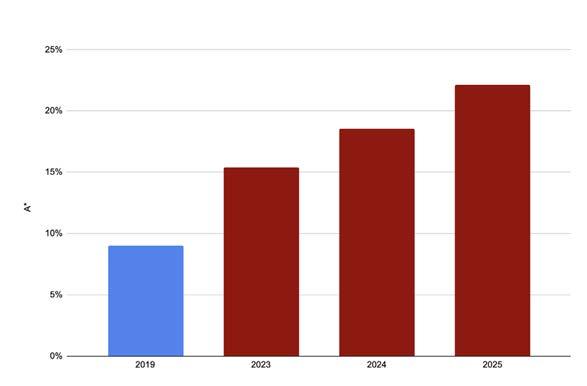
Figure 1: Proportion of Haileybury pupils achieving A* grades at A-level pre and post Haileybury’s strategic approach to the use of digital technology.50
The impact of the Haileybury approach to the use of digital to support learning and teaching was viewed through a combination of class visits, leadership and teacher interviews, detailed discussion with pupils individually and in focus groups about their experiences and internalisation of learning, surveys, documents and additional datasets (e.g. reports, plans, outcome data).
Across subjects and year groups visited, the overwhelming majority of digital use is purposeful, thoughtful, well managed, beneficial and appropriate to the pedagogical intentions in place.
A range of evidence was seen through this study which demonstrated the use of digital tools as supporting, extending or enhancing clear pedagogical intentions.
7.1 CONTEMPORARY V TRADITIONAL
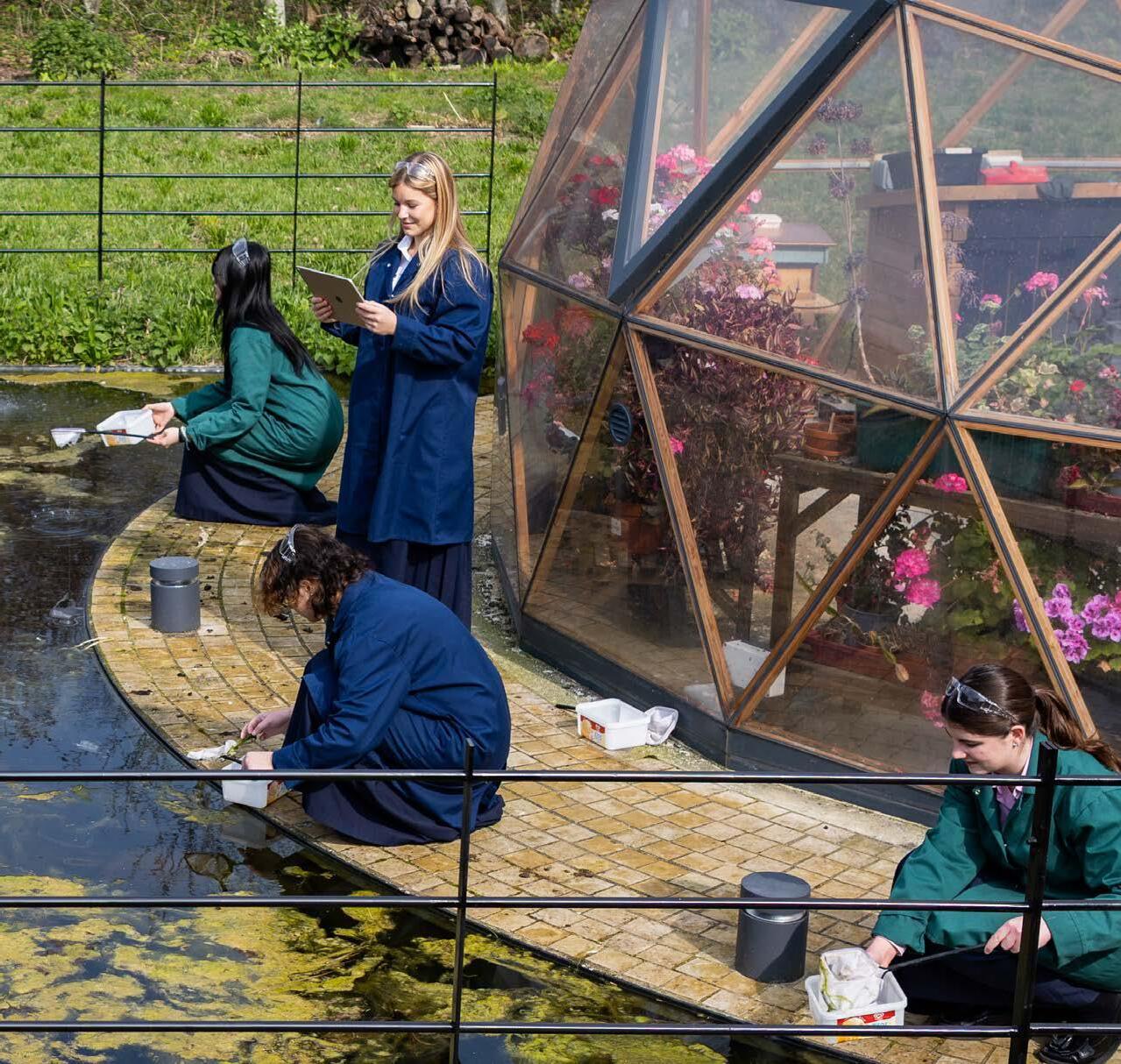
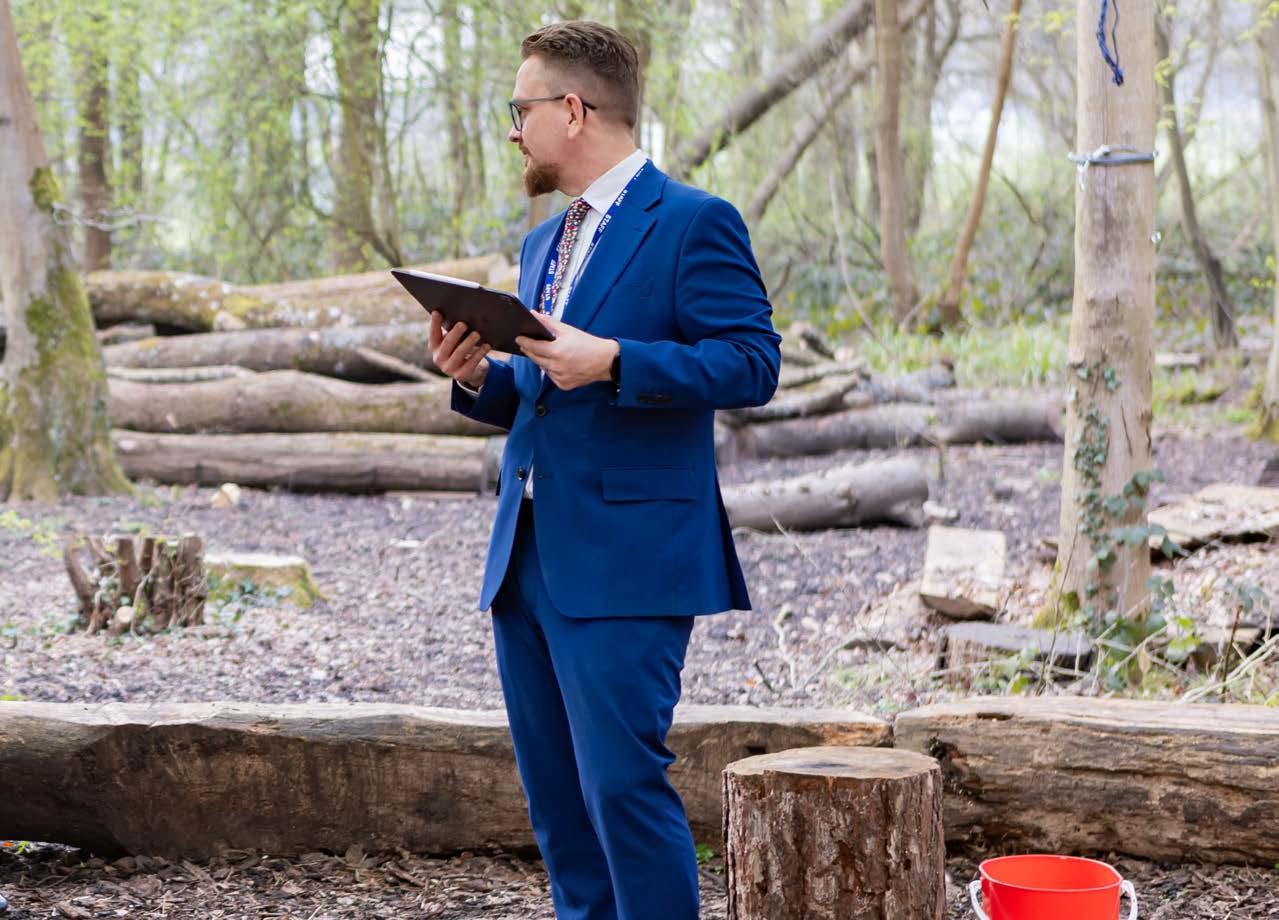
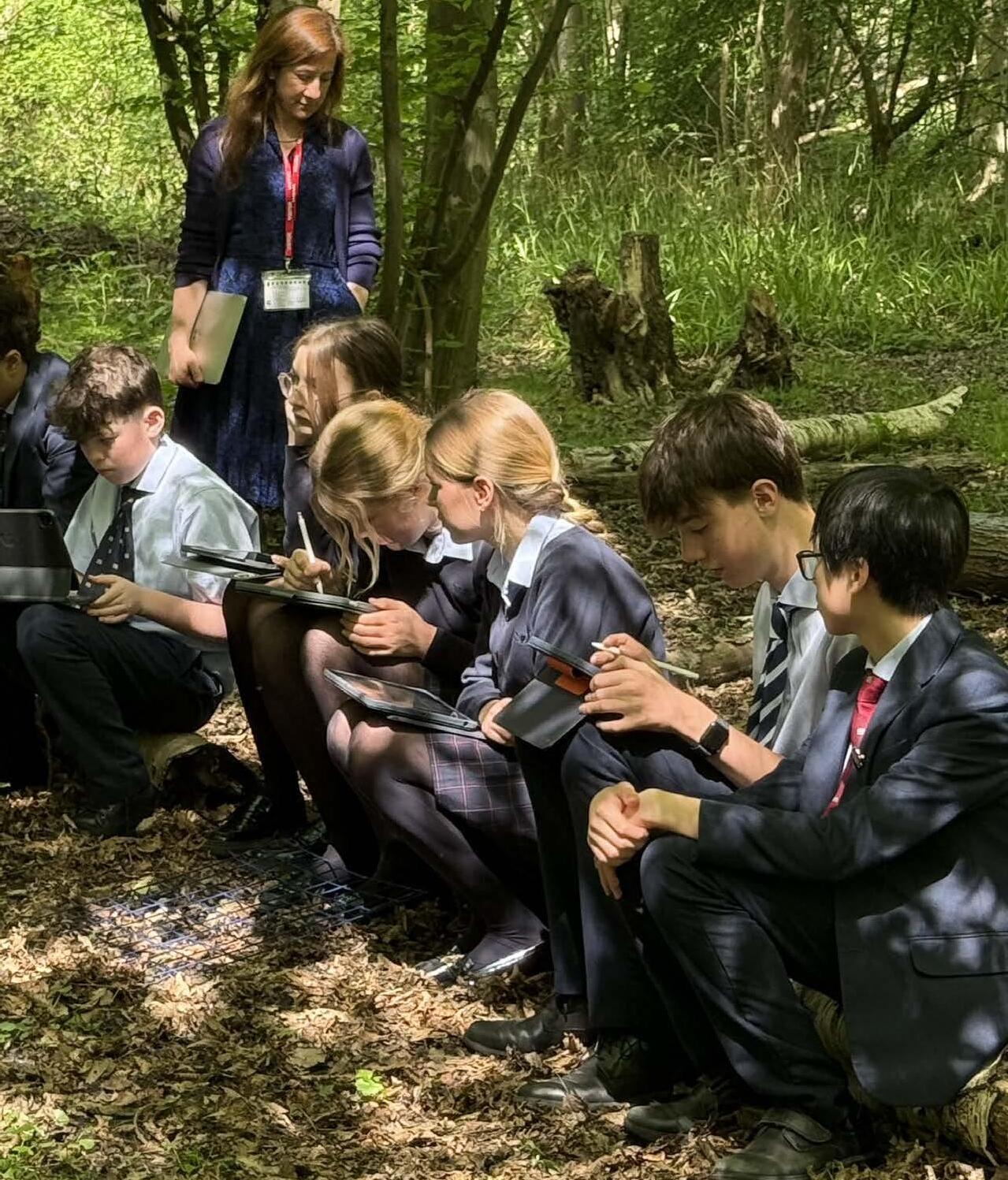
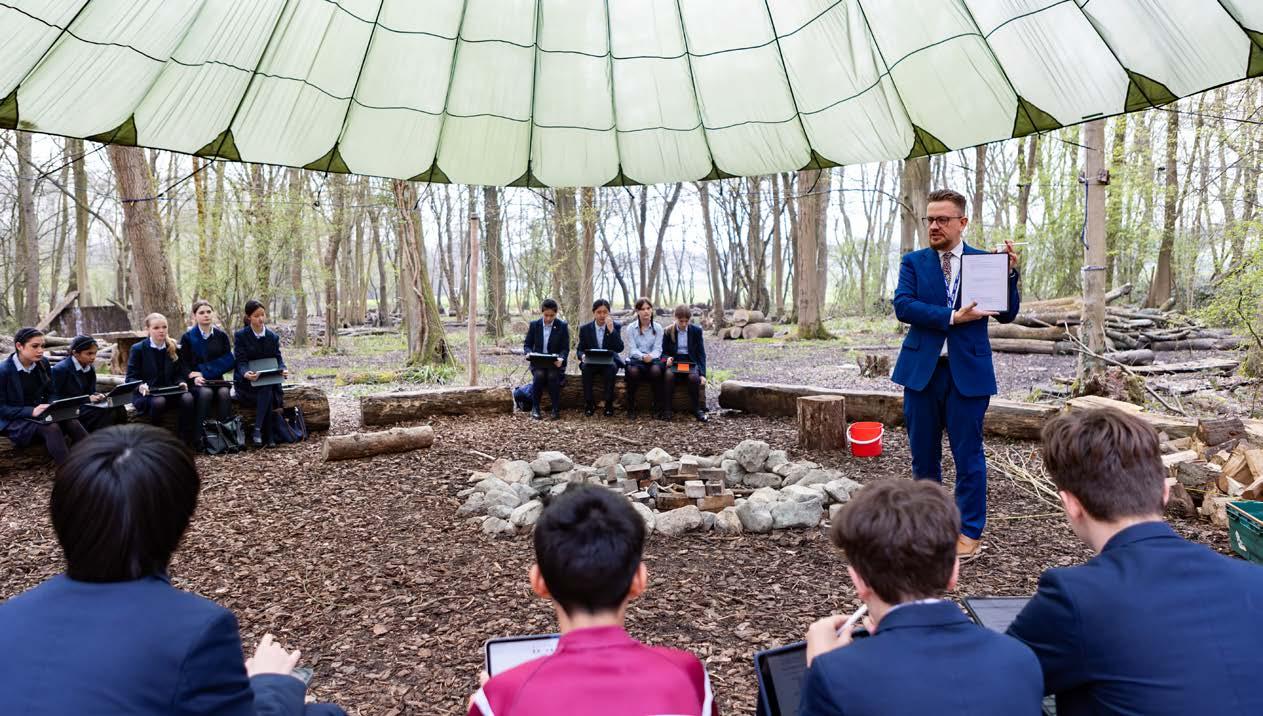
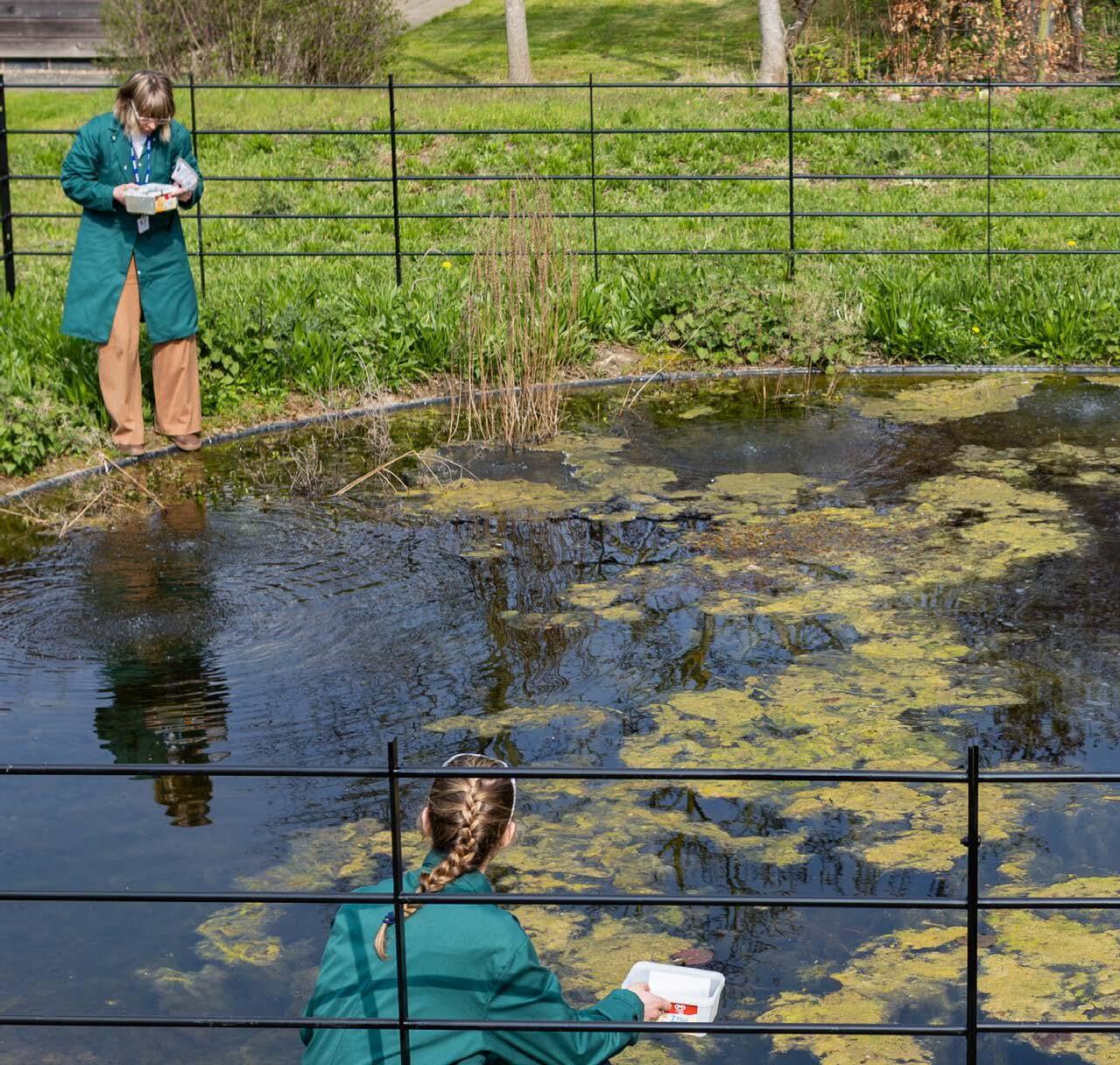
Throughout the 31 class visits, a diverse range of pupils were asked about their views on the use of digital tools when compared to traditional ways of working (e.g. practical tasks, handwritten tasks, oral tasks). Pupils were observed conducting a wide range of activities in classrooms (including drama, art and music studios, science and computing labs), and outdoors in a range of locations across the school site (e.g. in the forest, by the pond, sports grounds, in breakout areas and study spaces). Many of these activities utilised group tasks which forefronted the role of oracy and social interaction, and practical use of resources (e.g. science equipment). In terms of comparing contemporary and traditional ways of working, two themes permeated throughout - the role of recording (mainly through handwritten
using lesson notes for revision).
Recording work
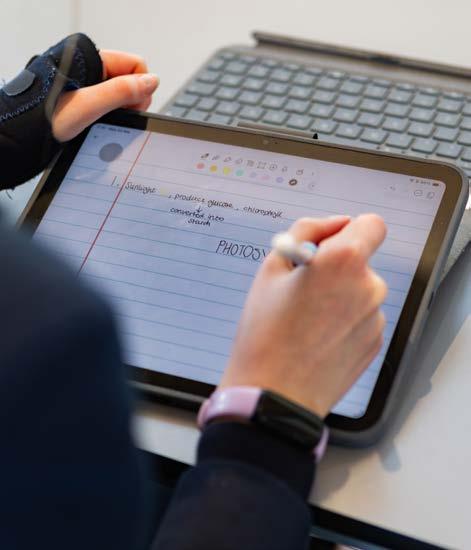
In Haileybury classrooms, there tended to be two overarching contexts for pupils recording work: (1) completing activities, typically during post-input parts of the lesson, and (2) note-taking, typically during a teacher input.
Traditional handwritten tasks (e.g. note-taking, essay writing) are perceived by pupils as slower to complete. This correlates with broader research which reports an average handwriting speed of 25-50wpm for pupils aged 11-16 (Downing and Caravolas, 2024).51Notably, this average was found to rise with age for girls more than boys, and for
PATHFINDING EXCELLENCE. PATHFINDING FUTURES
51Downing, C. and Caravolas, M. (2024)
‘Evaluating the Spelling and Handwriting Legibility Test (SaHLT): a tool for the concurrent assessment of spelling and handwriting’, Reading & writing, 37(1), pp. 147–172.
52Yekeler, D. et al. (2022)
‘Handwriting Speeds of 4th–8th Grade Pupils’, International electronic journal of elementary education, 15(2), pp. 123–136.
53Graham, S., Berninger, V., Weintraub, N., & Schafer, W., (1998) ‘Development of Handwriting Speed and Legibility in Grades 1–9’, The Journal of Educational Research, 92:1, pp.42-52.
54Roaf, C. (1998) ‘Slow Hand: A Secondary School Survey of Handwriting Speed and Legibility’, Support for learning, 13(1), pp.39–42.
55Dhakal, V. et al. (2018)
‘Observations on Typing from 136 Million Keystrokes’, in Proceedings of the 2018 CHI Conference on Human Factors in Computing Systems. New York, NY, USA: ACM, pp. 1–12.
right-handed writers more than left-handed writers (Wekeler, 2022;52 Graham et al., 1998).53 In addition, Roaf (1998)54 reports that many senior school aged pupils write at a speed of less than 15wpm (20% of Year 9s rising to 25% of Year 11s), with only a small number writing at a speed of over 30wpm (3% of Year 9s rising to 8% of Year 11s).
Conversely, pupils reported digital tasks as quicker to complete. A small sample of pupils at Haileybury completed a touch typing speed test in May 2025 which revealed an average typing speed of 60-80wpm. This correlates with broader research which reports an average typing speed for pupils aged 11-16 to be 60-75 wpm, with speeds tending to be slower on touch-screen keyboards and faster on physical keyboards with girls tending to type faster than boys (Dhakal, 2018).55
At surface level, some pupils raised their observation that if typing is quicker than handwriting (very roughly, by about double the speed), then they ought to default to typing most or all of their classroom tasks. If viewed purely through the lens of speed efficiency and productivity, then this is a logical conclusion.
However, viewed through a pedagogical lens, not all classroom tasks could or should be undertaken with a fast pace. Sometimes being quick is preferable (e.g. instant recall of facts for test preparation, copy typing), sometimes being slower is beneficial (e.g. idea generation, creative language). Often, fast-paced classroom tasks are encouraged as a default, simply because of the pressures of curriculum timetables and syllabus coverage. However, the appropriateness of fast-pace all depends on the pedagogical intention that underpins the task itself, rather than an overt focus on the process or product used to achieve the task.
Some pupils countered the speed-efficiency argument by saying that they would not want to type most or all of their work because they find that handwriting helps them to digest and retain key information. If taken at face value, this argument is also a logical conclusion, with due respect to preferences that learners have for working in different formats. However, it is helpful to probe deeper into pupil understanding about the relationship between handwriting and the digestion and recall of content. When asked to reflect on why they felt that handwriting aided their relationship with content, all pupils reached the same conclusion, albeit via different routes, which was ultimately about matching the pace of cognition with the pace of physical activity.
V TRADITIONAL
In other words, the habits that they had formed around handwriting allowed them to slow their thinking down. It appears to be the peripheral habits around handwriting, rather than the physical act of handwriting itself, which determine cognitive behaviour.
For example, many pupils spoke about their ability to type and read quickly, but those speeds being faster than their thinking speed - resulting in their disengaging with the content because their fingers or eyes were moving faster than their conscious thoughts. These pupils had made an assumption that because they could type quickly, they had to do so continually, rather than draft, pause, review, edit and then continue. None of the pupils reported an
awareness that they could choose to slow down or pause periodically, allowing themselves time to think. This assumption tends not to happen with handwritten work because most people tend to pause naturally when they reach the end of a line, when their hands ache, if their pen runs out, or they need to move a piece of paper, so they have a natural momentary break which allows their thinking to catch up with their eyes and fingers. Consequently, pupils assumed that it was the format (typing v handwriting) that determined their cognitive strengths rather than the habits that they had formed around those formats. Similar arguments have been made in broader research about pupil reading and writing. For example, historical arguments about pupils benefitting from
a greater depth and understanding when reading physical books rather than on-screen material (e.g. Delgardo, 2018).56 However, contemporary studies (e.g. Peras et al., 2023)57 are increasingly beginning to suggest that differences are about surrounding habits (e.g. fluency in reading, cognitive skill, skill in specific reading techniques, physical comfort, prior attainment, broader exposure to text) rather than the format (e.g. a simplistic printed page versus on-screen page of exactly the same text). As more research is carried out, findings in this space are likely to become more precise and therefore meaningful. Until that time, it may be diligent to exercise caution with generic claims about digital v paper comparisons.
Recommendation 1:
When planning tasks and activities for pupils to carry out, it may be helpful for teachers to consider an optimal pace for the task to be completed based on underpinning pedagogical intent. To aid teachers with this process, it may be helpful to use an existing document (e.g. Haileybury’s Apps for Tasks), to recommend an ideal pace per pedagogical process, and expand to (a) suggest which tools - digital or traditional - might be best suited to that pace, and (b) set out how teachers might help pupils to understand the implications of both pace and process.
56Delgado, P., Vargas, C., Ackerman, R., and Salmeron, L., (2018)
‘Don’t throw away your printed books: A meta-analysis on the effects of reading media on reading comprehension’ Educational Research Review 25 pp.23-38.
57 Peras, I., Klemenčič Mirazchiyski, E., Japelj Pavešić, B., & Mekiš Recek, Ž. (2023). ‘Digital versus Paper Reading: A Systematic Literature Review on Contemporary Gaps According to Gender, Socioeconomic Status, and Rurality’. European journal of investigation in health, psychology and education, 13(10), pp.1986–2005.
For teenage pupils, there are a number of influences which affect the habits that are formed around handwriting and typing. Historically, across the schools sector, young people are taught a number of skills and habits as part of learning the process of handwriting itself. For example, preparatory school kindergartens typically teach finger exercises to develop and rest specific muscles, and teachers across year groups tend to remind pupils to sit up straight to the desk when handwriting. However, with typing being in its relative infancy in relation to mainstream classroom pedagogy, most classroom teachers mistakenly assume that young people have a corresponding underpinning skillset (or have not thought about it). For example, assuming that pupils have a cognitive rest equivalent of moving a piece of paper on their desk or turning a page in an exercise book. It may be pertinent to be mindful that techniques for neat handwriting or touch typing are not in themselves sufficient preparation to equip young people to be able to align their thinking (about content) with their recording (handwriting or typing their work). Broader skills and habits underpin successful practice - seen at Haileybury as well as further afield.
Presentation versus Process
Another core finding reported by a wide range of pupils was the emphasis in handwritten work on neatness and presentation (both text based and other forms of traditional recording such as drawings, wipeboards, mindmaps, annotations etc.). Pupils consistently reported their appreciation of being able to choose digital formats over handproduced formats with this in mind as it allowed them the opportunity to attempt something multiple times without leaving what might be paraphrased as ‘a messy audit trail’.
Pupils often felt that historically (e.g. at prep schools or schools they had attended previously), if they wrote something in their exercise books or on worksheets and then changed it, they would be viewed unfavourably by teachers and often peers - seen as less able, or criticised for poor presentation. However, at Haileybury, pupils valued the option to draft and edit multiple times until they were pleased with both content and presentation. This was particularly valued in essaystyle work, diagrams, mindmaps and chronological or sequential reports where pupils often wanted to move chunks of content around after they had captured it - something that is easily achieved digitally, but requires a full re-write (and therefore significant additional capacity) when using traditional formats. Pupils across subjects and year
groups felt that this had a notable positive impact on the quality of their consequent work - and encouraged the development and application of stronger self-assessment and self-regulation skills.
Revisiting work
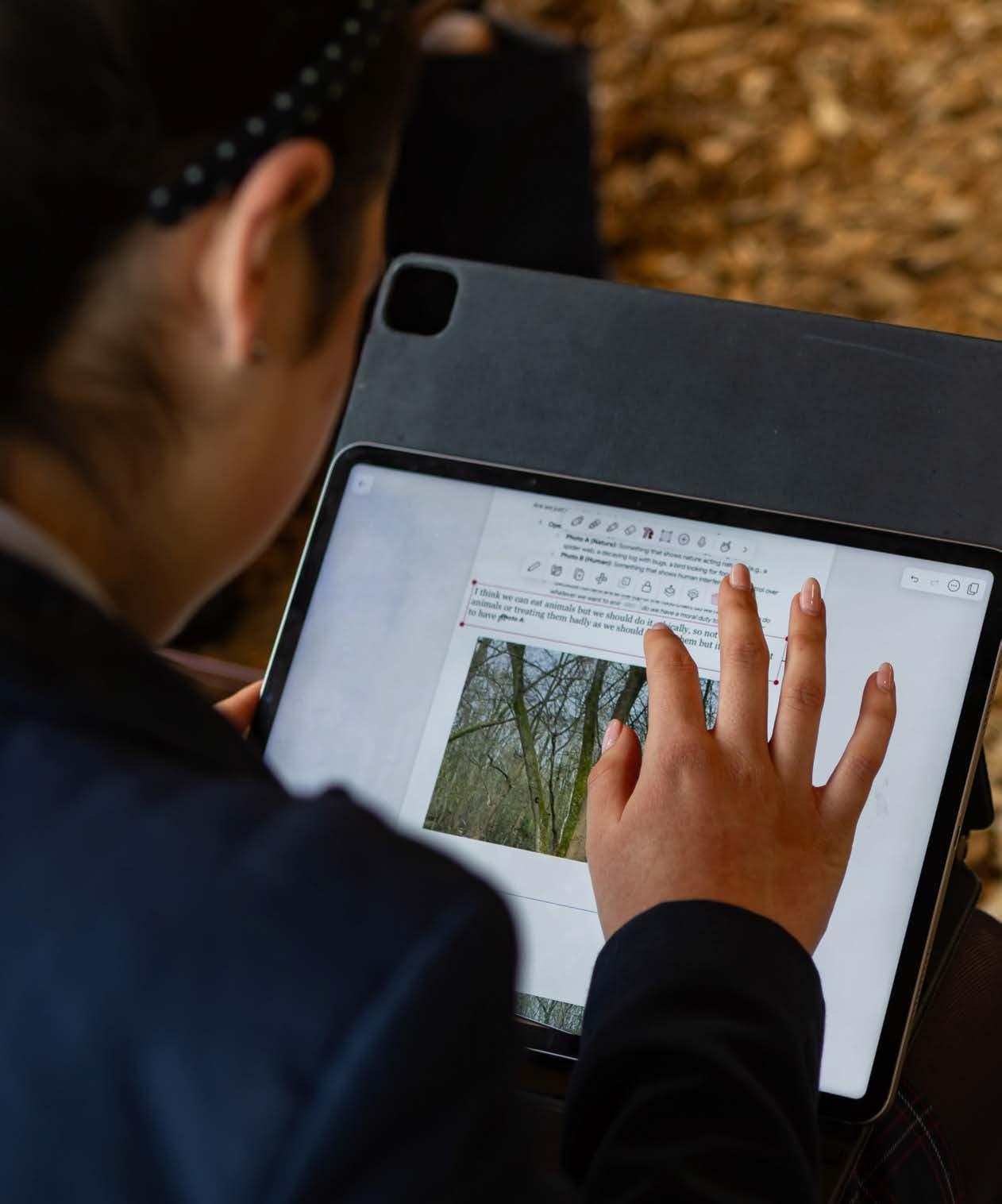
Haileybury have experimented with a number of ways of supporting pupils to capture, store, organise and retrieve lesson notes such that they can be later used for examination revision. During the 31 class visits and through a range of focus groups and research interviews with pupils, there was widespread consensus that the use of digital tools brought welcome efficiency to note taking and to revision (see also Section 7.7).
Through survey data, 58% of pupils studying for formal qualifications reported that typing notes and digitally annotating lesson resources helped them to understand lesson content more effectively than traditional handwritten notes or annotations, and when it came to revision, there were 22% more pupils who expressed a preference to revise from digital notes or digitally annotated materials - suggesting that access and retrieval is perceived differently to capturing and recording.
58Clinton, J. and Hattie, J. and Cairns, K. and Dabrowski, A. and Brcan, S. and Abrahams, T. (2014) Visionary Feedback: The use of real-tine captioning and teaching analytics to make teaching and learning visible. Proceedings from the 7th International Conference of Education, Research and Innovation. Seville, Spain. pp.157-164
PATHFINDING EXCELLENCE. PATHFINDING FUTURES | 7.1 CONTEMPORARY V TRADITIONAL
Pupils in younger year groups (e.g. Removes / Year 9s) were more evenly distributed, with 56% who reported that typing notes and digitally annotating lesson resources helped them to understand lesson content more effectively than traditional handwritten notes or annotations. There are some caveats around this data however, in that this is self-reported, and therefore based on pupil perception about their level of understanding rather than triangulated with attainment or progression data.
Speed of teacher talk
Another consideration in relation to the efficacy and appropriateness of handwriting and typing in classrooms relates to the speed of teacher talk. This is because in a typical classroom, a teacher will talk at approximately 120-140wpm Hattie58, which exceeds the average typing speed (60-80wpm), and is significantly faster than the average handwriting speed (25-50wpm). It is not necessarily helpful to compare these figures directly because it would be rare that a pupil would be asked to copytype what a teacher says aloud verbatim. However, if a pupil is note-taking based upon what a teacher says to the class, then it may be helpful to consider how best to give pupils the cognitive capacity to listen, digest, interpret, synthesise and summarise into note-form in real-time.
Pupil survey data sheds some light on this, with 75% of Haileybury pupils reporting that they generally find that they capture everything that they need through note-taking. Approximately 25% of pupils report that they find it hard to keep up with the pace of the lesson when note-taking, which may benefit from further investigation (i.e. whether this relates to concentration, duration, handwriting/typing speeds, general behaviour, subject-specific etc.).
PATHFINDING EXCELLENCE. PATHFINDING FUTURES | 7.1 CONTEMPORARY V TRADITIONAL / 7.2 SUSTAINED ATTENTION AND INFLUENCES TO CONCENTRATION
During class visits, pupils were asked about this disparity and it was generally felt that pupil skills in touch-typing, and protocols around editing, would significantly close the gap. For example, when note-taking, pupils sometimes observed red lines underneath subject-specific vocabulary (e.g. tier 3 words) that they had written. They either paused their typing to correct them (and then felt that they fell behind with real-time note-taking), or they returned to them later when the class had moved on to another part of the lesson (and therefore felt that they fell behind at that point). Pupil thinking around this point was probed further by means of comparison with traditional pen and paper based notes which would not create the same problem. However, as pupils identified, with traditional pen and paper note taking, they would not know that the spelling was incorrect and would therefore not have the opportunity to learn the correct spelling, or would have to wait for teachers to review their notes and indicate that a spelling was correct - usually some time after the lesson itself (see also Section 7.10).59
Recommendation 2:
It may be helpful for teachers to consider the speed at which they speak during direct instruction or lesson input. Teachers may then wish to compare the speed of their spoken words with the average typing or handwriting speed of pupils in their classes (e.g. this may vary by year group, SEND demographic or subject), in order to consider implications for effective note-taking.
7.2 SUSTAINED ATTENTION AND INFLUENCES TO CONCENTRATION
The role of on-demand access to lesson materials, combined with the agency to use accessibility features on a personal device was seen by most pupils as a significant benefit to concentration. Personal access to front-of-class materials were seen as reducing potential distractions from peers or objects that prohibit a clear view (e.g. the head of another pupil in front), and enabled a purposeful physical interaction which was seen by a large number of pupils as critical for classroom concentration and sustained attention. For example, 52% of pupils reported that they found some form of fine motor skill or small gross motor movement aided their concentration (e.g. sensory tools, tapping fingers or feet, fidget object), and therefore being able to annotate front-ofclass materials in real time was seen as a way of channeling this need purposefully.
This is consistent with broader research which highlights the relationship between fine motor movement and cognitive benefit (e.g. Shi and Feng, 2022).60 It also highlights the importance of thinking about the many different elements that pupils' brains and bodies are asked to process in class. In most classroom tasks there will be a degree of concentration and focus, content digestion and interpretation, production (e.g. talking, handwriting or typing) and movement (task specific or personal choice).
During this research, pupils were asked about how they felt their concentration in class compared to their peers, with 30% of pupils reporting that they perceived themselves as finding it harder to concentrate than their peers (22% report
PATHFINDING EXCELLENCE. PATHFINDING FUTURES | 7.2 SUSTAINED ATTENTION AND INFLUENCES TO CONCENTRATION / 7.3 NURTURING SUBJECT EXPERTISE
themselves as better able to concentrate than peers and the remaining 48% reporting themselves as comparable with peers). It is helpful to contextualise this with further data, where pupils were asked how long they felt able to concentrate for in a typical lesson. Pupils self-reported responses were a mean average of 44 minutes (range 5-240 minutes), with a modal average of 30 minutes. However, there was a notable correlation between the 22% of pupils who reported themselves as able to concentrate for long periods of time (>50 minutes) and those who reported silence or very quiet classrooms as conducive to their concentration.
59Most subjects did not routinely mark/review notes taken in lessons, only marking tasks or activities, and so reviews of notes were less frequent than other book-based work.
60Shi, P., & Feng, X. (2022).
Motor skills and cognitive benefits in children and adolescents: Relationship, mechanism and perspectives. Frontiers in psychology, 13, 1017825.
61Aubrey-Smith, F., and Hand, S., (2025) Impact on Learning, Impact on Futures: An independent impact study about the role of 1:1 provision across IFtL schools. Milton Keynes.
Conversely, there was a strong correlation between the 30% of pupils who reported themselves as finding it harder to concentrate (<30 minutes) finding listening to music, fidget toys/ fidgeting, movement, and typing conducive. The concentration skills, concentration strategies and role of digital support may be helpful to investigate further - with studies similar to this review suggesting that on-demand digital tools can play a vital role in pupil self-regulation and re-regulation and support concentration (through white noise or specific music in headphones).61
7.3 NURTURING SUBJECT EXPERTISE
Leaders and teachers at Haileybury consistently spoke about their determination to encourage subject specialist expertise within pupilsextending beyond qualification syllabus coverage and assessment oriented experiences. This is an admirable, yet complex and challenging, aspiration within an economically oriented education system.
PATHFINDING
EXCELLENCE. PATHFINDING FUTURES
/ 7.4 REWINDING
TEACHING
|
7.3 NUTURING SUBJECT EXPERTISE
Throughout class visits, a wide range of examples of the use of digital to nurture subject expertise were observed. For example, digital resource banks are routinely offered in many subjects - not just providing lesson materials on demand but offering support and challenge for pupils with diverse needs and working styles. The on-demand access was deeply appreciated by pupils who were routinely observed accessing materials as and when they felt them to be necessary or helpful throughout lessons. When pupils were asked about the benefits of this on-demand access, pupils across subjects and year groups spoke about the ways in which it encouraged them to think more critically and/or precisely about what materials or resources they need in order to most effectively complete a particular task. Pupils referred to the use of materials from previous lessons (and sometimes previous years) in order to revisit aspects of knowledge that had since been forgotten, and the benefits of Google Drive’s ‘search’ function as enabling them to quickly find previous work, notes, lesson materials and teacher feedback. Pupils widely commented on the benefits of the shift from paper based equivalents to this digital storage approach as meaning that they were far more likely to connect prior learning with current learning (i.e. they generally wouldn’t go back to a previous exercise book or folder in hard copy, but would go back further in a digital version). Teachers commented on the impact that this had on their capacity - reducing the amount of time spent repeating different elements of prior lesson material for different pupils, and increasing inlesson capacity to build knowledge forwards.
Across subjects and year groups, pupil subject specific knowledge and cultural capital was being expanded beyond that which would have been
accessible to them through text books, practical resources or teacher subject knowledge (i.e. by access to on-demand, searchable, high quality multimodal materials). Teachers across subjects spoke about the enhancement and augmentation of lesson materials to include digital resources (e.g. images, videos, sound, examples sourced online, and AI generated or adapted material). Many teachers spoke about their reflections that the use of digital tools - particularly digital resource banks (e.g. Google Drive Folders), automated formative assessment, Google Workspace (e.g. docs, slides) and production tools (e.g. Canva and Gemini) had made their teaching more creative - nudging them towards thinking deeper about what they wanted pupils to focus most upon and how best that might be achieved.
7.4 REWINDING TEACHING
Most lessons at Haileybury include a proportion of direct instruction, with the subject specialist teacher introducing a concept, technique or stimulus to pupils. Pupils then take part in a range of activities as a response to the direct instruction (e.g. application of a technique, responding to the stimulus or exploring a concept). During this phase of a lesson, pupil needs vary. Some pupils benefit from further instruction, stretch and challenge. Some pupils benefit from revisiting elements of the direct instruction, or require further clarifications or examples. In most schools, this is a demanding time for classroom teachers, where they need to balance wholeclass visibility with targeted intervention for the wide range of individual pupil needs. At Haileybury, digital technology has been used to support, extend and enhance what is possible. For example, during the teaching of mathematics, the
PATHFINDING
teacher’s direct instruction was digitally captured through a Google Meet recording of a Notability screenshare. As soon as the direct instruction was complete, the recording was available to pupils via Google Workspace, meaning that pupils had the ability to replay part or all of the teacher input immediately.
Pupils in the classroom spoke about how helpful this was to them, with a number of key trends including (a) the ability to rewind small segments of the direct instruction that they had not understood or remembered, (b) the ability to attempt the technique and then self-check the process for reassurance, and, (c) the ability to work through a technique step-by-step, pausing the recording at each stage whilst they applied it in practice.
The overarching benefit perceived by pupils was that they were able to proceed more independently with their activity without requiring additional teacher time - increasing their sense of autonomy and consequently strengthening their sense of learner identity. A number of pupils additionally reflected on the number of times that they would rewatch a part of direct instruction, observing that they might replay a particular section multiple times to solidify their understanding, whereas they would generally only want to ask a teacher for in-person repeated demonstrations once. This suggests that in such scenarios, a pupil may be more likely to secure knowledge when offered on-demand and replayable access to direct instruction.
Whilst the ability to ‘rewind the teacher’ and watch direct instruction multiple times has many benefits, there are some potential
counter arguments. For example, that pupils defer to video-based content, or lose access to explanations being varied or personalised. This is where the nature of the direct instruction recording is critical. In successful examples seen at Haileybury, the recordings captured the exact practice demonstrated through direct instruction (i.e. a real time screen recording of the teacher), and were of existing (not adapted) classroom practice. This meant that pupils were not being offered generic ‘off the shelf’ direct instruction, but simply being able to rewind their normal subject specialist, familiar teacher, on demand. This freed up teacher time from having to repeat the direct instruction multiple times to multiple pupils, bringing additional teacher capacity to the classroom. In turn, that meant that the teacher was able to provide highly targeted intervention with greater precision (i.e. adding value to individual pupils based on their personal academic and pastoral needs). The technology was enabling the teacher to bring greater human value to the classroom.
In classrooms elsewhere, video-based stimulus was used as a part of direct instruction (e.g. science experiment demonstrations, realworld events as debate stimulus), and/or pupils spoke about using video-based content as part of task introduction for their prep work (e.g. research tasks). These are very different types of experiences based on drawing stimulus from beyond the classroom into the learning space - extending cultural capital beyond what might otherwise be available based on traditional teaching methods.
ASSESSMENT
This approach to equipping teachers with contemporary teaching tools has a particular impact on activities such as the quality of formative assessment - a critical component for precise and effective classroom teaching. For example, traditionally, a teacher might stand at the front of a classroom and ask pupils to raise their hands or show a response on a wipeboard in order to gather real-time assessment insights. However, in practice, these strategies tend to have an averaging effect in a classroom whereby a teacher ‘reads’ the room in seconds and thus captures a majority view rather than every pupil, thus missing vitally important progression insights (Wiliam, 2010).62 PATHFINDING EXCELLENCE.
7.5 FORMATIVE ASSESSMENT
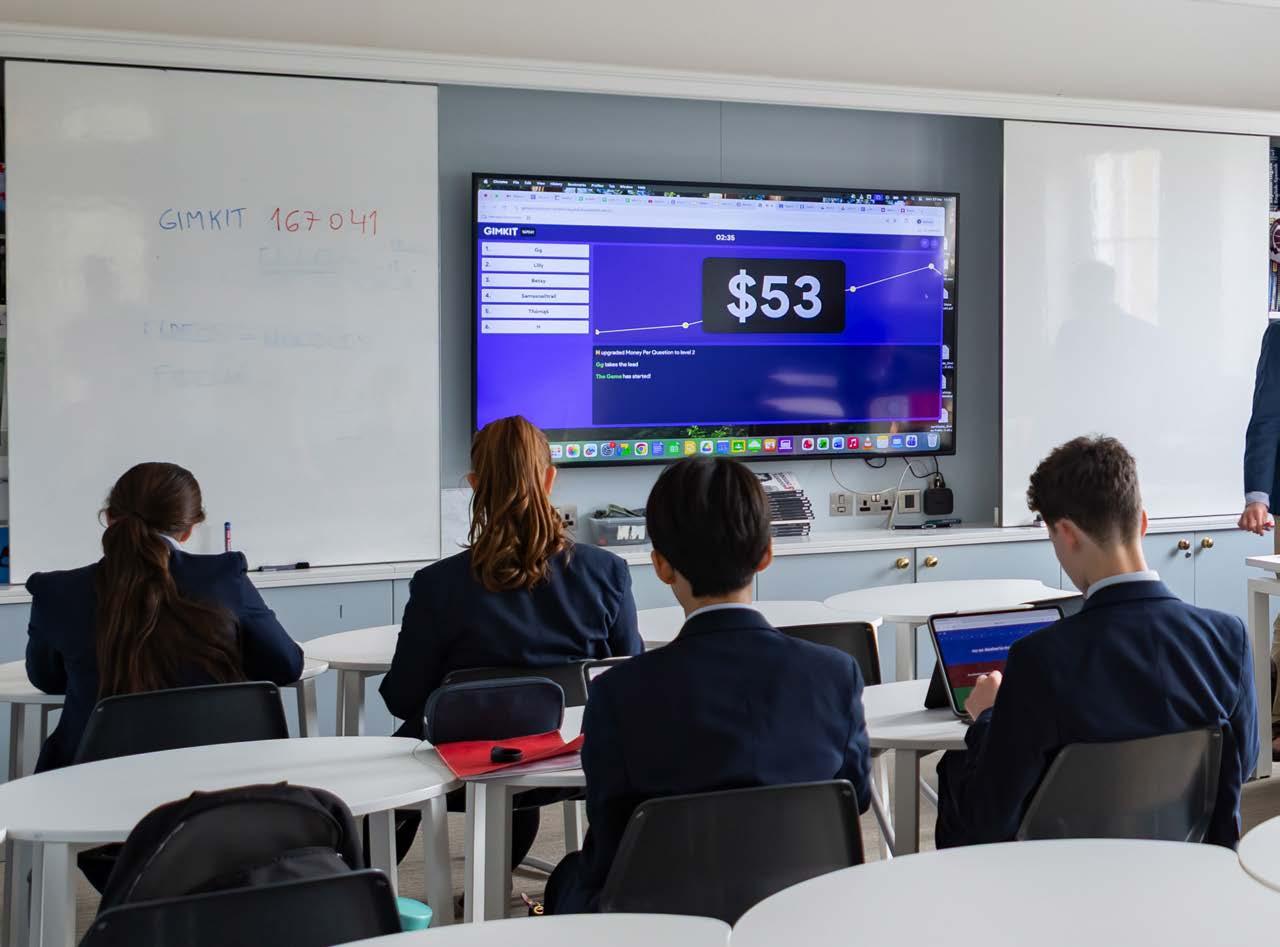
There were a wide range of examples where real-time formative assessment had been made scalable through the use of digital tools. For example, the use of digital tools such as Google Forms and Practice Sets, Wayground (formerly Quizziz), Dr Frost, Sparx and Century - each used to enable whole-class formative assessment tasks which (a) provide instant auto-marked feedback to pupils, and (b) provide teachers with an ata-glance dashboard which indicates responses to individual questions for each pupil as well as trends across the whole class in that moment and over time.
62Wiliam, D. (2010)
‘An integrative summary of the research literature and implications for a new theory of formative assessment’. In H. L. Andrade & G. J. Cizek (Eds.), Handbook of formative assessment (pp. 18-40).
New York, NY: Taylor & Francis. 63Cigdem, H. et al., (2024)Unlocking pupil engagement and a chievement: The impact of leaderboard gamification in online formative assessment for engineering education. Education and Information Technologies (29), pp.24835–24860.
64Li, G., Li, Z., Wu, X., & Zhen, R. (2022) ‘Relations Between Class Competition and Primary School Pupils' Academic Achievement: Learning Anxiety and Learning Engagement as Mediators’. Frontiers in psychology (13).
Even the very best of teachers is unlikely to be able to source an assessment response from every single pupil (e.g. answer to a question), ascertain confidence level (e.g. facial expression) and maintain a well paced and managed lesson consistently using traditional methods for every question raised.
However, contemporary approaches seen at Haileybury which utilise digitised whole-class, real-time, formative assessment tools automate and differentiate questions, auto-mark and autoanalyse answers, provide the teacher with a realtime heatmap displaying holistic and individual pupil responses and confidence intervals, and allow for whole-room visibility in-the-moment as well as over-time. In particular, digital assessment tools allow for whole-class discussion about anonymised responses to questions - nurturing a focus on content rather than ‘who’ responded.
Where these tools were observed in action during class visits, there were clear correlations with excellent lesson pace and learning progression, as well as effective wellbeing and behaviour management. Teachers and leaders consistently reported that these tools created a capacity to target learning and teaching more precisely - both academically and in terms of pastoral support.
Pupils spoke about their enjoyment of engaging with real-time response tools, particularly valuing the instant and personal feedback (e.g. right/ wrong, with explanations where applicable). In addition, some pupils spoke about the appeal of activities which were perceived as gamifying
learning. There are potential risks with the perception of gamification - sometimes inferring an informality or encouraging a focus on scores over accuracy. However, teachers and leaders spoke about their own understanding of these potential risks and the mitigation that had been thoughtfully implemented. For example, removing timers and leaderboards in order to remove the inference of peer-competition. This is one of many examples of Haileybury’s research-informed digital leadership - drawing upon research that identifies the gamification process as known to: (a) motivate existing high prior attainers and engage young people in tasks (particularly boys), but (b) reduce motivation in pupils whose prior attainment is below average, (c) tend not to improve overarching attainment, and (d) increase classroom anxiety (Cigdem, 202463; Li, 202264).
Dignity in Formative Assessment
Throughout observations in classrooms - across year groups and subjects, pupils were seen to experience greater dignity within their learning as a result of contemporary real-time individual response tools (e.g. where the classroom teacher can see every pupil’s answer to front-of-class questions through real-time dashboards but pupils see only their own answers and results, with benchmarking as appropriate to the pupil and context). Pupils often spoke about their appreciation of this dignified approach to formative assessment. As part of this research, pupils were observed in class using real-time formative assessment tools (e.g. the use of Dr Frost in Maths). Specific pupils were monitored and asked about the psychosocial elements of their experience.
Pupils across year groups consistently highlighted that they valued the confidential nature of these tools (i.e. that peers could not see which questions they got right or wrong). There were a number of trends within this as set out below.
Higher attaining pupils - particularly boys - often did not wish other pupils to realise that they had got all or most questions right if they perceived the majority of the class to have averaged lower results (i.e. they did not want to be perceived as an outlier/over achiever in front of peers). This was particularly notable in core curriculum subjects and for pupils aged 13-15.
Lower attaining pupils often felt self-conscious about getting questions wrong where they perceived the majority of the class to have got the same question right (i.e. they did not want to be identified as an outlier/low achiever in front of peers). Pupils who got more than two or more questions in a row wrong, where they perceived the majority of the class to have got the same questions right (i.e. where whole class anonymised results were presented on the front-of-class board), recognised that they needed additional help.
Teachers were observed sensitively moving to these pupils to provide targeted, individual intervention without the pupil needing to request it by putting their hand up. Pupils described their appreciation of this approach - both in terms of the teacher’s subject specific intervention and support, but also in terms of maintaining the pupil’s dignity in front of their teenage peer group.
In many classrooms, teachers had taken a thoughtful approach to valuing both the process and outcome of a task, alongside providing a carefully balanced blended learning experience. For example, in maths lessons, pupils were signposted to work through Google Classroom with personalised or prior-attainment based task assignments linking to specific activities within Dr Frost.65 Pupils therefore benefitted from the same shared route into work, but with more personalised content and tasks thereafter. Google Classroom was also used to capture photographs of a pupil’s exercise book based calculations and workings out. This meant that when pupils were calculating or working out problems they were doing so using traditional handwritten annotation - reflecting what they will need to do in current exam conditions, but when they completed a question, they were able to submit answers online - thus benefitting from instant marking and feedback (e.g. praise and recognition for a correct answer, or triggering a help intervention for an incorrect answer).
The teacher was also therefore able to benefit from a heatmap (via Dr Frost), of which questions individual pupils or groups of pupils got right or wrong - empowering them to provide targeted verbal or modelled intervention, whilst also giving teachers visibility on how and why the pupils got those questions wrong (i.e. visibility on their workings-out, via Google Classroom). PATHFINDING EXCELLENCE.
PATHFINDING EXCELLENCE. PATHFINDING FUTURES | 7.5 FORMATIVE ASSESSMENT / 7.6 WORKING MEMORY AND COGNITIVE LOAD
The deliberate use of blended approaches to learning valued the benefits that contemporary digital tools offer, whilst also recognising the role and value of traditional methods. Pupils valued this, unanimously referring to their appreciation of working in blended formats.
7.6 WORKING MEMORY AND COGNITIVE LOAD
Through the strategic use of Google Classroom and Google Workspace tools to provide consistency across subjects, pupils' working memory and cognitive load are supported. Pupils across year groups spoke about their appreciation of using consistent tools across their many and varied subjects. In particular, pupils spoke about the importance of being able to focus on subject specific knowledge development rather than
needing to recalibrate their thinking to different toolsets and expectations each time they enter a different department.
There were a wide range of examples of this in practice, including pupils' ability to view teaching materials on their own device and therefore with clarity from their own desk rather than needing to view teaching materials solely on a front-ofclass board. Pupils described this difference as critical in terms of both comfort (i.e. not needing to twist body position to view the board or see around someone else’s head in front of them); focal distance (i.e. being able to see smaller diagrams, font sized text and worked examples); reduction in potential distractions (i.e. focal zone being smaller due to looking just at an iPad rather than across a classroom with a range of potential other objects/people in view); and importantly, the ability to interact with the teaching materials (e.g. through annotation, highlighting, zooming in/out, linking to other materials etc.).
Pupils consistently described the impact of being able to access and interact with teaching materials in real time as the teacher introduced them in a number of ways. For example, being able to augment teaching materials with pupils’ own annotations, links, diagrams, highlights and explanations was perceived by pupils across year groups to aid both working memory and depth of understanding. Pupils explained that traditional listening to front of class teaching instruction, or traditional note taking tended to require them to listen and digest for periods of time, either simultaneously capturing notes (a skill in itself), or recalling information post-explanation (e.g. application or summarisation).
PATHFINDING EXCELLENCE. PATHFINDING FUTURES | 7.6 WORKING MEMORY AND COGNITIVE LOAD
Both of those traditional methods were felt by many pupils to dilute their concentration during instruction as they sought to both focus on spoken instruction and summarise internally at the same time. Having the ability instead to see the same materials on their own iPad whilst hearing the teacher instruct or explain was perceived to free up working memory to instead prioritise the digestion of new information and the synthesising of links between prior knowledge and newly introduced ideas.
Another example of the use of digital tools to support cognitive load was the simple yet effective use of split screen. In a number of lessons, pupils were observed using this feature to simultaneously view stimulus (e.g. an English lesson text) and an activity (e.g. a set of comprehension questions to answer). The traditional version of this would be a worksheet or exercise book on a desk alongside a printed copy of a book or photocopied extract, and so pupils were asked about the perceived benefits and challenges of a digitised version. Across a range of subjects and year groups, pupils spoke about the simplicity of seeing both sets of materials side-by-side and the reduced distractions that they felt as a result, and the reduction on working memory where they were able to highlight and annotate a resource onscreen and then search back to find it quickly. Many pupils spoke about their appreciation of the wide range of digital annotation tools (e.g. multiple highlighter colours, adding comment boxes, underlining or circling), and the ability to remove and edit those annotations due to the digitisation. In particular, pupils spoke about this in subjects such as English where the coloured
highlights might refer to particular forms or types of vocabulary, and so incorrect colouring (on a paper based version) would make it difficult to correct.
7.7 NOTE TAKING
In most lessons, pupils were observed note-taking. At the time of this research there were four main vehicles for note taking: (1) GoodNotes, (2) Notability, (3) Handwritten notes, and (4) Notes taken on objects such as individual wipeboards and then (usually) copied out or photographed. Strategically, most departments are due to move to a single note-taking app to reduce pupils being expected to use different apps and systems across different subjects. This consistency (and reduction on pupil cognitive load) enables teachers to have deeper conversations with pupils about the most efficient and effective approaches to setting up, structuring, creating, storing, editing, retrieving and revising from lesson notes.
Pupils' self-reflection and self-organisation skills were clearly being enhanced through their ability to move back and forth between materials from previous lessons, topics and year groups (e.g. going back to lesson materials from prior coverage of a particular topic domain, by means of supporting current learning or activities). The critical difference between an iPad based approach and a traditional exercise book or card folder based approach to this pivots around (1) the speed at which pupils can search for, find, and access relevant materials at the point of need in a lesson or during their prep, and (2) the
timeline over which pupils can access materialssometimes reaching back further than a term or year (i.e. further back than the material in their current exercise book or folder). In addition, many pupils referred to the amount of objects that they have historically been required to carry in their bags between lessons (and in some lessons, are still expected to carry), particularly referencing heavy text books and multiple exercise books, or study support materials. Pupils spoke with appreciation about being able to access lesson materials for all subjects on one device (iPad) and their preference for this meaning that they were more likely to have what they needed in lessons, as well as having access to what they might need to help them in the lesson itself (i.e. previous
notes, or the ability to look something up, or an accessibility tool).
Many pupils spoke about how much they valued being able to take notes and then edit them without reducing the presentation (and therefore the readability) of their notes in later revision. Pupils particularly valued the teacher's ability to distribute a skeleton structure that included teacher or lesson materials which the pupils could then annotate with their own personal enhancements. Leaders spoke about the benefits for teachers of this approach - minimising lesson time spent on low level administration (e.g. titles, dates, copy-writing), and increasing capacity for greater depth thinking (e.g. synthesising ideas, summarising core concepts).
In addition, leaders spoke about the use of specific note-taking apps allowing teachers to view pupil notes and thereby identify any misconceptions, ineffective note-taking techniques, or gaps in learning - offering a formative assessment lens on the note-taking process. This teacher visibility also set out clear expectations to pupils - that notetaking is a core part of lesson work and thereby monitored by the classroom teacher.
There were some issues within note-taking that may benefit from further investigation. For example, some teachers spoke about pupils' digital
work tending to rely on automated Spelling, Punctuation and Grammar (SPAG) features (e.g auto-correct, auto-predict, grammar-check, spellcheck). English teachers spoke about the potential for pupil skills to diminish in these areas as a result. This research did not test pupil SPAG skills, and so is not able to comment on the extent to which SPAG skills have changed over time and whether SPAG standards correlate with pupils' use of digital tools, or whether there are other confounding factors. However, there are some small insights that were surfaced through class visits.
66Dhakal, V. et al. (2018) ‘Observations on Typing from 136 Million Keystrokes’, in Proceedings of the 2018 CHI Conference on Human Factors in Computing Systems. New York, NY, USA: ACM, pp. 1–12.
For example, when pupils were asked about their uses of digital SPAG tools (e.g auto-correct, autopredict, grammar-check, spell-check, searching for definitions), they tended to refer to a ‘click and check’ approach whereby pupils viewed the automated suggestion and chose whether to accept or reject it. In these scenarios, pupils perceived themselves to be making an informed (often instant) decision based on their prior SPAG knowledge, rather than defaulting to accepting any changes. Whilst there is likely to be variance across pupils in their uses of these digital tools, it is possible that for some the automated suggestions raise awareness about misuses or mistakessomething that would be unlikely to happen in real-time in paper-based work. However, it is also possible that pupils may become overly reliant on automated support in a similar way to pupils historically being overly reliant on waiting for teacher corrections or feedback.
Recommendation 3:
It may be helpful to consider whether explicit teaching of how to self-review typed notes for SPAG might be a worthwhile inclusion in the digital induction course as well as through English class teaching.
There was widespread agreement that pupils require a minimum touch typing speed to be able to capture digital notes effectively, and/or submit work digitally within reasonable periods of time. Pupils across the school unanimously spoke about their aspiration that all pupils would be taught to touch type at the earliest opportunity (either in prep school, or upon arrival at Haileybury).
Recommendation 4:
It may be helpful to include touch typing in transition conversations and pre-arrival material for families and pupils, with recommendations around ideal touch typing speeds66 to ensure efficacy in classroom environments.
7.8 DIGNITY IN LEARNING
The use of digital tools to support dignity in learning has been referenced in a range of sections above (e.g. within real-time formative assessment). However, dignity in learning at Haileybury goes far beyond this - enabling and encouraging individual pupils to choose, access, and benefit from tools that provide personal support in a public space.
At Haileybury, every pupil has access to an iPad or Macbook with a physical keyboard and stylus. Combined with their exercise books and text books, this enables pupils to move fluidly between traditional and contemporary toolsets. A range of benefits of prescribed tool usage have been set out in earlier sections of this report, but there is an additional component which many pupils cited as important to them - the ability to use specific digital tools as on-demand personal support, and having the agency and autonomy to do so. For example, a quick Google search to look up a definition or spelling of an unfamiliar word, the use of translation tools to support conversion of a subject-specific term in English into the pupil’s first language, the use of Gemini to create a personal revision planner.
PATHFINDING EXCELLENCE. PATHFINDING FUTURES | 7.8 DIGNITY IN LEARNING / 7.9 CENTRAL
ROLL OF ORACY
These personal uses, often supporting understanding or productivity were deeply valued by pupils - embedding a strong sense of independence and learner identity, and helping them to develop what they saw as workplace and real-world skills in a safe school environment.
In many schools, the vital role of accessibility features are often overlooked, or considered only in relation to pupils with specific Special Educational Needs (e.g. dyslexia, visual or hearing impairment). However, what often happens in schools with 1:1 digital provision is that when accessibility tools are introduced, offered and encouraged in all classrooms, pupils both with and without SEND choose to use them and do so with confidence (e.g. Aubrey-Smith, 202467). This benefits those who need to use accessibility tools in order to access the same high quality learning opportunities as their peers and those who prefer to use accessibility tools. At Haileybury, there were many classrooms where teachers made explicit reference to particular accessibility features which pupils may find beneficial in that particular lesson - highlighting, encouraging and normalising their use. All pupils who were asked about this valued this approach - articulating their view that where accessibility tools were normalised and encouraged, they no longer felt self-conscious about using them and spoke avidly about the benefits they experienced as a result. These were simple features which required little (if any) training. For example, screen magnification, screen filters, brightness or contrast or default font adjustments.
Recommendation 5:
In the most inclusive classrooms at Haileybury, teachers explicitly reference opportunities for using different accessibility features appropriate to the lesson tasks and pupil needs. Teachers do this by referring to a particular action that any pupil might undertake, and an accessibility tool or feature which would make that task more achievable - rather than by naming specific pupils or disabilities. This ‘relevant for all’ approach positions the use of accessibilities features as a cultural norm - maintaining the dignity of those who ‘need’ to use them as well as encouraging use by those who might ‘prefer’ to use them. It may therefore be beneficial for Haileybury leaders to deliberately encourage this approach to become consistent across all classrooms. A guide similar to the Apps for Tasks document, or an interactive ‘how to’ equivalent, may support teachers with increasing their familiarity with the most relevant accessibility tools - for their own use and for their pupils.
7.9 CENTRAL ROLE OF ORACY
The role of digital tools in supporting the teaching, practice and embedding of oracy skills at Haileybury was observed across a wide range of subjects, year groups and pupil characteristics. Classrooms commonly combine collaborative digital tasks (e.g. idea generation, or coconstructed documents) with structured grouptalk.
PATHFINDING EXCELLENCE. PATHFINDING FUTURES | 7.9 CENTRAL ROLE OF ORACY
These tasks routinely encouraged specific oracy techniques, including debate, challenge, synthesis of ideas, extending peer thinking, questioning and presentation. Digital tools were used to support a range of elements of oral work. For example, collating and editing ideas before sharing orally (i.e. planning and rehearsal), allowing pupils to record and self-review speaking skills (i.e. self-assessment and improvement), and increasing the pace of moving between stimulus materials and spoken tasks (i.e. digital efficiencies).
67Aubrey-Smith, F., (2024) Changing Learning, Changing Lives: What happens when EdTech becomes PedTech? An independent review of LEO Academy Trust. London.
68Haileybury (2025) Apps for Tasks: A pedagogy-first list of apps available to staff. Apps for Tasks
Recommendation 6:
One of the common fears amongst teachers within and beyond Haileybury who are cautious about the role of digital tools in schools relates to a concern that digital experiences will reduce or replace social and oral interaction. Haileybury have a wide range of teacher expertise which successfully nurtures the development of oracy skills in harmony with the use of digital tools. Therefore, it may be advantageous to codify and share this expertise internally, as well as offering this expertise out to other schools more broadly as part of a wider system leadership role.
7.10 USE OF THE PHYSICAL ENVIRONMENT FOR PHYSICAL WELLBEING
Haileybury benefits from extensive school grounds (approximately 500 acres), with subject specific classrooms, laboratories, studios and sports facilities made available to pupils for discipline specific use and purpose. During this research, pupils were observed working in a wide range of indoor and outdoor environments reflecting the pedagogical intention of particular lessons. Pupils spoke about their appreciation of the subject-specific facilities available to them, as well as valuing the physical movement between
lessons - often walking considerable distances as they transition from one lesson to the next.
Many subjects took advantage of the opportunities made available by means of the extensive and mature school grounds, and digital leadership played a key role in what was made possible through this. Widespread and reliable connectivity meant that pupil devices could be taken out of classrooms and buildings and used across the campus in different locations. For example, in a Classics lesson, pupils undertook a ‘treasure hunt’ around the site to find examples of
Greek, Roman and Egyptian inspired architecturelooking carefully at archways, windows and pillars. Pupils were prompted to utilise iPad tools to (a) find, (b) capture, (c) verify and (d) research the architectural examples - making use of productivity tools (e.g. camera to take photos and Google assignment to store and submit their evidence), research tools (e.g. Google search, ChatGPT), (Starting in September 2025, access to ChatGPT was revoked for Haileybury staff and pupils, with Gemini being the only allowed language model), recording tools (e.g. digital annotation), and personal responsibility tools (e.g. timer/alarm and iPad clock
PATHFINDING EXCELLENCE. PATHFINDING FUTURES
| 7.10 USE OF THE PHYSICAL ENVIRONMENT FOR PHYSICAL WELLBEING
to manage their time and return to the classroom on schedule for the final part of the lesson).
During another session, a geography field work lesson took place by the school pondphotographing a small scale natural ecosystem and then digitally annotating with specific geographical features. The combination of real-world field work, a photograph of what was seen in person and then annotations to augment the photograph into personalised notes and outcomes celebrated the fusion of digital tools with physical environment. Pupils spoke about the real-world example grounding their understanding (of content) and enabling greater concentration (due to the fresh air and physically active format of the experience).
Fifths and Sixth Formers were often observed working in study spaces beyond classrooms due to the flexibility that iPads offered them. For example, during a period of GCSE revision on a warm summer day, pupils used revision lesson periods to work outdoors on shaded picnic benches in pairs or groups, in break out study spaces indoors in the cool, and in the classroom itself - all in physical view of the science teacher and with devices monitored through Apple Classroom tools. Pupils spoke about their gratitude for the choice to work individually, in pairs or in groups, and for the freedom to choose location, climate and temperature (e.g. indoors or outdoors), body position (e.g. sitting upright at a desk or more informally on the grass), and noise levels (e.g. quiet location or near to group discussions).
Reflecting the typically thoughtful approach seen across Haileybury, the use of the physical environment was considered indoors as well as outdoors.
PATHFINDING EXCELLENCE. PATHFINDING FUTURES | 7.10 USE OF THE PHYSICAL ENVIRONMENT FOR PHYSICAL WELLBEING
For example, in a significant majority of the 31 lessons observed, teachers ensured that pupils moved around multiple times during lessons, and did not spend the majority of the lesson in a sedentary position. This was often a result of paired or group work which pupils were encouraged to do standing up next to wallmounted whiteboards, stood in groups utilising their iPads as notepads, sat on beanbags or in breakout spaces. The overarching trend was of teachers who did not simply default to lessons being seated and desk-bound, but deliberately planned for flexible use of classroom furniture, utilised the benefits of standing conversations, considered the development of social and oral skills as a core part of the learning experience, and who made use of every surface in a classroom
(with write-on walls or tables used in a significant number of lessons).
The role of digital tools in the classroom was interwoven with the use and impact of the physical environment itself. Pupil iPad provision enabled them to move to any space and still access lesson input stimulus, activity materials and support resources, accessibility tools, options to record audio, visual and video, to draw or type and to collaborate with others both within their group and beyond. Digital class management meant that the teacher could maintain visibility on pupil activity and progress throughout the lesson regardless of where they were located, keeping pupils accountable at all times. The combination of provision and accountability through strategic and
PATHFINDING EXCELLENCE. PATHFINDING FUTURES | 7.10 USE OF THE PHYSICAL ENVIRONMENT FOR PHYSICAL WELLBEING
thoughtful digital tool provisioning has made an aspiration into a practical reality.
This untethering of pupils from desks opened up a wide range of possibilities for learning which aligns with the overarching Haileybury mission69building real-world confidence and independence. For example, as one sixth form pupil described, the ability to stand in a group, utilising digital tools and resources to take part in deep learning and meaningful debate with a group of peers is arguably a contemporary professional workplace skill. Pupils valued their experiences of working in ways that they perceived as ‘real and relevant’ to their wider lives and future employmentrecognising the impact both short term (during their education) as well as longer term (in their future lives).
Alongside pupil movement within classrooms, Haileybury have also untethered teachers from the front of the room by removing static teacher desks and replacing them with movable lecterns. Leaders have encouraged teachers to use this shift to think deeper about where they position themselves at different points of each lesson, and then how and why their positioning affects learner perceptions, actions and behaviours.
69Haileybury (2024) About Haileybury: Mission www.haileybury.com/about-haileybury/
71Aubrey-Smith, F., (2025) ‘Whose values and beliefs are shaping the conversation?’ Impact: The Journal of the Chartered College of Teaching. London. [link]
72Haileybury (2025) Pupil AI Survey (link)
A critical component of pupils being able to move flexibly around spaces within classrooms as well as within buildings and across the wider campus relates to the infrastructure in place at Haileybury - namely reliable and widespread connectivity and vitally, Apple Classroom - giving teachers visibility on pupil iPad use at all times. Teacher visibility on pupil devices - through their own teacher iPad - has untethered the teacher from their desk (typically at the front of a classroom). Whilst some teachers described this as a challenging shift (i.e. the teacher not being tethered to a teacher desk or front-of-class board), most described the positive impact that it had on classroom behaviour (i.e. being able to sit amongst pupils - encouraging greater conformity and enabling more direct and instant intervention), and on real-time adaptive teaching (i.e. responding to individual and specific pupil need in the moment of learning).70
Recommendation 7:
It may be helpful for Haileybury leadership to codify the thought processes and considerations that enabled teachers to create ‘untethered learning’ - auditing the potential and aspirations across all subjects and year groups. A wide range of underpinning skills are required (e.g. digital skills, behavioural expectations, individual and peer accountability, and teacher-learner relationships), which may be helpful to make explicit. This codification process may then serve to offer support for strategic planning (e.g. subject specific and whole school), budgetary decisions (e.g. about classroom furnishings, decor and infrastructure), staff development (e.g. training, research groups), and pupil skill progression.
PATHFINDING
7.11 PATHFINDING APPROACH TO ARTIFICIAL INTELLIGENCE
The ways in which Haileybury leadership have approached Artificial Intelligence (AI) should be considered to be pathfinding in a 2025 landscape.
A clear set of policies and protocols have been established, reflecting Haileybury’s aspirations for preparing young people for the contemporary world, alongside recognition of the operational realities of working with adolescents. For example, tasks which were historically essay based prep work are no longer provided to pupils - minimising the risk of AI generated prep essays. This has forefronted the value of teacher intervention and peer collaboration within class based tasks, reflecting an underlying socially oriented pedagogy (Aubrey-Smith, 202571).
Through a range of surveys, focus groups and class visits, pupils were asked about their experiences and perspectives around the use of AI. There were a number of key findings, including that in 2025, 89% of pupils at Haileybury (age 11-18) had used AI to support an aspect of their school work, with 46% reporting that they regularly used AI to help their learning process.72 Examples given included providing a suggested structure for a task, giving instant feedback, shortening class notes, or clarifying concepts. Commonly used tools included ChatGPT, PI, Perplexity, Gemini, Grammarly and Canva (i.e. those allowed by school policy). At the time a very small number of pupils had experimented with additional tools. Throughout survey data and focus groups pupils widely and
consistently argued the case for the use of AIwith 91% of pupils wishing to use AI as a regular part of the learning process. Probing deeper, the rationale behind this was typically (a) based on a sense of equity - that pupils in other schools worldwide would be sitting the same qualifications and applying for the same jobs, many of whom would be pro-actively utilising AI to support them - particularly so for pupils in countries with high profile national AI strategies (i.e. Fear of Missing Out - FOMO); (b) that purposeful and thoughtful uses of AI enabled pupils to be more productive with their time and therefore create greater capacity for deeper focus on content, and (c) that the informed, purposeful and effective use of AI is now seen as a critical life skill both for formal work or employment as well as for leisure and societal purposes.
When asked about their current experiences, pupils cited a range of sophisticated uses of AI tools - often combining tools and sequencing tasks, suggesting metacognitive application within AI use. For example, AI can be used to summarise lesson notes and convert them into a mind map, multiple-choice questions and a set of flashcards suitable for revision, as well as to generate sample exam questions from a syllabus for pupils to practise. It can then be used to assess responses using a rubric and provide personalised feedback, as well as to explain complex subject-specific concepts using simple vocabulary and real-world examples.
In both surveys and focus groups, however, pupils demonstrated thoughtful and balanced sets of considerations around the issues relating to AI.
For example, 29% of pupils reported that tools such as ChatGPT make it more tempting to submit work which had not been fully written by themselves73. When probed about this potential, most pupils explained that the temptation related to how relevant or motivating they perceived a task to be. For example, if they were given an assignment which was a generic research and essay writing style task then they felt it may be quite tempting to ‘short cut’ the process with the use of AI to minimise their workload. However, if they were asked to complete a more creative or innovative style of task with clear real-world application, then pupils reported themselves as far less likely to take short cuts.
73Haileybury (2025) Pupil AI Survey (link)
74Haileybury (2025) Apps for Tasks
Recommendation 8:
With pupils routinely using Artificial Intelligence (AI) to support their learning in a range of ways, and as a result of Haileybury’s pathfinding approach to leadership in this space, it may be helpful to consider subjectspecific guidance for teaching staff to support further professional development and to raise aspirational outcomes. For example, AI leaders and Head of Departments co-constructing new forms of prep and class based activity which embraces the range of stimulus, personalisation, productivity and creativity that AI offers, whilst simultaneously addressing contemporary risks (e.g. bias and misinformation, plagiarism or shortcut processes, depth of critical thinking, precision in prompting, and content engagement). An approach similar to the Apps for Tasks document74 may be useful as a starting point.
pro-active approach towards enabling pupils to understand where AI tools can support, extend or enhance learning. Complementing this, the leadership have also been very clear about where AI poses a risk to pupil understanding, progression, attainment and wellbeing. For example, during this research project, a whole school assembly (Lists) was provided for pupils setting out contemporary research findings about the impact of AI on learning. Observing the body language and eye contact of pupils across the hall, it was notable that pupils paid significant attention to key findings including reference to an MIT study (Kosmyna, 202575), where pupil overdependency upon AI led to lower attainment outcomes. When asked afterwards about this, many pupils reflected earnestly that it had been an ‘eye opening moment’ - helping them to see the important difference between purposeful and productive uses of AI, and the risks of over-dependence and lazy uses.
Many classrooms were observed embracing the contributions offered by AI tools. For example, in several class visits pupils had been asked to research particular topics using Perplexity prior to the lesson such that they would use the lesson time to orally discuss their findings with peers and the teacher. In other examples, pupils were asked to conduct research on a particular point during the lesson in groups, with groups then debating and presenting their findings to each otherfocusing on critical thinking, critical reading of Gen-AI produced material and discussion about bias and trustworthiness. These pupils clearly understood the ways in which they were allowed to use AI as part of their learning76 and spoke
about a much deeper appreciation of classroom tasks that embraced what AI has to offer, whilst simultaneously valuing the socialisation of learning and the critical intervention role of their teacher.
Teachers also spoke about their uses of Generative AI, including the use of ChatGPT to produce exemplars and model texts that aligned with the topic, context and needs of their class, and to personalise materials to match specific pupil needs. The bespoke materials seen in action during a range of class visits appeared to provide a much greater level of personalised provision than would be otherwise possible within existing teacher capacity. Some teachers spoke about the use of Brisk to provide real-time feedback for pupil work, and others spoke about the use of Canva to prepare and deliver engaging front-of-class lesson materials and learning activities. Examples of the use of Perplexity and Gemini to create initial drafts of materials (e.g. playscripts) which were then adapted by both teachers and pupils were common.
75 Kosmyna, N., Hauptmann, E., Yuan, Y.T., Situ, J., Liao, X., Beresnitzky, A.V., Braunstein, I., & Maes, P. (2025). Your Brain on ChatGPT: Accumulation of Cognitive Debt when Using an AI Assistant for Essay Writing Task. https://arxiv.org/ pdf/2506.08872
76Haileybury (2025) Artificial Intelligence Policy: January 2025 [link]
Haileybury’s Digital Innovation programme tackles some of the contemporary knowledge and life skills that this generation of young people need as they navigate a world immersed in Artificial Intelligence (AI). For example, pupils are taught about deepfakes by watching deepfake videos of teachers that they knowchallenging assumptions about how realistic AI generated material can be. However, in typical Haileybury style, the practicalities of teaching concepts and content is complemented with a consideration for consequent wellbeing implications. For example, pupils were given the opportunity to reflect on their emotional responses to viewing deepfake content and
offered reassurance if they felt shocked by the revelations. Similarly, in lessons where frontof-class stimulus was used for provocation (e.g. A Level psychology ethical issues), pupils were observed asking if the emotionally provocative material that they had viewed was genuine or AI generated. In that scenario the teacher responded with a thoughtful and supportive set of questions to encourage pupils to take that opportunity to consider how to identify the trustworthiness of images and videos that they see - embedding a cross-departmental approach to navigating contemporary real-world issues.
Across the dataset gathered as part of this research study, there are a number of permeating themes which have led to digital technology being used not just effectively, but impactfully. It is important to separate digital technology being used effectively (i.e. a task being achieved in the way it was intended to be achieved), and impactfully (i.e. a task being better than it might otherwise have been).
In most schools, these examples of effective use of digital technology are generally achieved through clear expectations and/or policy (i.e. all lesson resources will be accessed through Google Classroom), in partnership with clear and relevant training for both staff and pupils (i.e. how to use Google Classroom). As set out in Sections 6 and 7, Haileybury have set out a range of protocols for both implementing and sustaining these key ingredients. This is underpinned by reliable connectivity and devices, accessible troubleshooting support and a culture where this practice is both normalised and expected. This allows staff and pupils to shift their attention from if or how they create effective digital practice, towards what is possible as a result of effective practice.
This is where Haileybury’s pathfinding approach is striking. With effective practice normalised and embedded, staff have been encouraged and supported to look deeper - taking a more intellectual and pedagogically impactful approach to the use of digital technology.
The word impact can mean many different things depending on the context of its use. In many schools, the word impact is often (unhelpfully) used interchangeably with in-year summative attainment increases. This has a reductionist effect on the way that educators think about practice - often diluting attention down to syllabus content and recall skills. However, at Haileybury, the leadership sets out a distinctly different tone - for example, talking about impact more in terms of pupils' ability to challenge ideas, to discuss concepts orally and to transfer learning outside of the classroom.
Consequently, attention becomes focused on critical thinking, critical discourse, use of the physical environment and development of core human skills such as oracy, collaboration and innovation.
When individual class teachers were asked about the influences that shaped their use of digital tools, there were a number of trends which in order of magnitude are broadly summarised as (1) the whole school strategic direction - led by the Director of Digital Innovation and Enterprise; (2) the direction of their Head of Department and that HoD’s personal preferences, and (3) their own digital skills, knowledge and confidence. For the most part, these issues are addressed in Section 6. However, it is helpful to additionally forefront the pivotal influence of subject Heads of Department on how, why, where and when digital tools are used as this may be a helpful next-step for Haileybury in terms of strategic direction.
At Haileybury, Heads of Department (HoDs) have significant autonomy to set the tone and direction for their subject - potentially more so than a typical school. In forming their departmental direction, leaders draw upon their own implicit views around the role of schooling and ultimate goals of an education system; their views on what constitutes knowledge and what is valued; their views on teaching and the role of a teacher; and their views on learning and the nature of being a learner - i.e. the four domains of pedagogy. Each HoD will hold a set of pedagogical beliefs (which may be implicit or explicit) which permeate their decision making, language and communication, actions and interpretations. Whilst these pedagogical beliefs were not explicitly investigated in this review (i.e.
surveyed or interviewed), wider research sets out a series of correlations which are helpful to draw upon. For example, STEM specialists are more likely to align with Traditional or Individual Constructivist pedagogical models and therefore more likely to use digital tools and features aligned with those pedagogical approaches (see Chapter 7 in Aubrey-Smith & Twining, 2024 for examples)77
The personal pedagogical beliefs of the HoDs (whether consciously or not), are therefore likely to set the tone not just for the subject approach but for the digital approach of the teaching staff across their department.
Elements of this can be seen in some of the data generated through this study. For example, in Theology and Philosophy (T&P), pupils work nearly entirely from digital workbooks78 - combining material that would have historically been found in a high quality text book with activities which would traditionally have been worksheet based. Accessing the digital workbook through their iPad has allowed pupils to benefit from the use of accessibility tools - creating greater inclusive practice and enabling pupils and teachers to augment material in real-time in response to formative assessment and pupil curiosity. T&P teachers referred to a greater consequent focus on oracy - with pupils able to share ideas and examples digitally, encouraging real-time discussion in class and shifting towards stronger debate skills - markers of a socially oriented form of pedagogy.
Conversely, photocopying and printing figures at Haileybury identify sciences as printing more paper based resources than other departments across the school (with the sciences accounting from more
than 1/3 of the whole school’s photocopying, at 338,000 pages in one school year - the equivalent of 34 trees (1/5 of an acre) and representing printing costs of just over £8,000 (excluding any oncosts associated with staff time, and cutting, sticking or collating the pages). Other core subjects with similar pupil numbers saw significantly lower photocopying figures with rough correlation between lower photocopying numbers and higher uses of technology.
Strategically, given the financial and environmental costs involved, it may be helpful to consider where school budget is operationally best directed. However, teacher and subject leadership choices around the use of photocopied materials or digital use is rarely motivated by cost. The underlying influence is likely to be the pedagogical belief system of the HoD and whether they see the traditional or contemporary toolsets available to them as aligned with implementing that pedagogical belief system. A more strategic and professionally respectful strategy may therefore be to invest time in ascertaining the pedagogical beliefs of teachers and leaders in each department and enabling them to work through what a digitally supported vision for their subjectspecific leadership should look like in 2025-2026 - acknowledging a landscape infused with global influence, Artificial Intelligence, on-demand mindsets and a generation of young people who are markedly different from previous cohorts.
77Aubrey-Smith, F., and Twining, P., (2024) From EdTech to PedTech: Changing the way we think about digital technology. Routledge: Abingdon.
78E.g. Theology and Philosophy Workbook: Bible and Authority, iGCSE
It may be helpful to map individual teachers to the pedagogical beliefs that underpin their work, then to collate these per department, and to consider the vision for digitally supported learning and teaching specific to each subject specialism, and segmented by Lower School, Lower Sixth, Upper Sixth etc. PATHFINDING EXCELLENCE. PATHFINDING FUTURES | 8.0 CONCLUSION
As part of this process, it may also be helpful for Heads of Departments to be aware that pupil perception about subjects may be influenced by the nature of digital tool usage. For example, 38% of pupils reporting that the classes they enjoyed the most tended to use digital tools more than other classes (with 9% of pupils reporting their favourite subjects to use digital tools less, and 52% reporting no significant differences). Conversely, 51% of pupils felt that the subjects that they enjoyed the least tended to use digital tools less than other subjects (with 14% of pupils reporting their least favourite subject to use more digital tools than other subjects, and 35% reporting no significant difference). These figures are a crude approximation however as they do not segment by age or breadth of timetable (e.g. a pupil aged 11 will be compelled to experience a wide range of curriculum subjects, whereas an Upper Sixth pupil will experience only a few subjects - each of which they have opted to study). However, 35% of pupils surveyed did report that the way that a teacher uses (or encourages pupils to use) would affect whether they would choose that subject for GCSE/A level study which may be relevant for departmental leaders to consider.
Recommendation 9:
PATHFINDING EXCELLENCE. PATHFINDING FUTURES | 9.0 SUMMARY OF RECOMMENDATIONS
9.0 SUMMARY OF RECOMMENDATIONS
Recommendation 1: When planning tasks and activities for pupils to carry out, it may be helpful for teachers to consider an optimal pace for the task to be completed based on underpinning pedagogical intent. To aid teachers with this process, it may be helpful to use an existing document (e.g. Haileybury’s Apps for Tasks), to recommend an ideal pace per pedagogical process, and expand to (a) suggest which tools - digital or traditional - might be best suited to that pace, and (b) set out how teachers might help pupils to understand the implications of both pace and process.
Recommendation 2: It may be helpful for teachers to consider the speed at which they speak during direct instruction or lesson input. Teachers may then wish to compare the speed of their spoken words with the average typing or handwriting speed of pupils in their classes (e.g. this may vary by year group, SEND demographic or subject), in order to consider implications for effective notetaking.
Recommendation 3: It may be helpful to consider whether explicit teaching of how to self-review typed notes for SPAG might be a worthwhile inclusion in the digital induction course as well as through English class teaching.
Recommendation 4: It may be helpful to include touch typing in transition conversations and pre-arrival material for families and pupils, with recommendations around ideal touch typing speeds to ensure efficacy in classroom environments.
Recommendation 5: In the most inclusive classrooms at Haileybury, teachers explicitly reference opportunities for using different accessibility features appropriate to the lesson tasks and pupil needs. Teachers do this by referring to a particular action that any pupil might undertake and an accessibility tool or feature which would make that task more achievable - rather than by naming specific pupils or disabilities. This ‘relevant for all’ approach positions the use of accessibilities features as a cultural norm - maintaining the dignity of those who ‘need’ to use them as well as encouraging use by those who might ‘prefer’ to use them. It may therefore be beneficial for Haileybury leaders to deliberately encourage this approach to become consistent across all classrooms. A guide similar to the Apps for Tasks document, or an interactive ‘how to’ equivalent, may support teachers with increasing their familiarity with the most relevant accessibility tools - for their own use and for their pupils.
Recommendation 6: One of the common fears amongst teachers within and beyond Haileybury who are cautious about the role of digital tools in schools relates to a concern that digital experiences will reduce or replace social and oral interaction. Haileybury have a wide range of teacher expertise which successfully nurtures the development of oracy skills in harmony with the use of digital tools. Therefore, it may be advantageous to codify and share this expertise internally, as well as offering this expertise out to other schools more broadly as part of a wider system leadership role.
Recommendation 7: It may be helpful for Haileybury leadership to codify the thought processes and considerations that enabled teachers to create ‘untethered learning’ - auditing the potential and aspirations across all subjects and year groups. A wide range of underpinning skills are required (e.g. digital skills, behavioural expectations, individual and peer accountability, and teacher-learner relationships), which may be helpful to make explicit. This codification process may then serve to offer support for strategic planning (e.g. subject specific and whole school), budgetary decisions (e.g. about classroom furnishings, decor and infrastructure), staff development (e.g. training, research groups), and pupil skill progression.
Recommendation 8: With pupils routinely using Artificial Intelligence (AI) to support their learning in a range of ways, and as a result of Haileybury’s pathfinding approach to leadership in this space, it may be helpful to consider subject-specific
guidance for teaching staff to support further professional development and to raise aspirational outcomes. For example, AI leaders and Heads of Department co-constructing new forms of prep and class based activity which embraces the range of stimulus, personalisation, productivity and creativity that AI offers, whilst simultaneously addressing contemporary risks (e.g. bias and misinformation, plagiarism or short-cut processes, depth of critical thinking, precision in prompting, and content engagement). An approach similar to the Apps for Tasks document may be useful as a starting point.
Recommendation 9: It may be helpful to map individual teachers to the pedagogical beliefs that underpin their work, then to collate these per department, and to consider the vision for digitally supported learning and teaching specific to each subject specialism, and segmented by Lower School, Lower Sixth, Upper Sixth etc.
American Academy of Ophthalmology (2023) Vision Development: Childhood
Aubrey-Smith, F., (2024) Changing Learning, Changing Lives: What happens when EdTech becomes PedTech? An independent review of LEO Academy Trust. London.
Aubrey-Smith, F., and Twining, P., (2024) From EdTech to PedTech: Changing the way we think about digital technology. Routledge: Abingdon.
Aubrey-Smith, F., (2025) Contemporary Adaptive Teaching: A discussion paper London.
Aubrey-Smith, F., (2025) ‘Whose values and beliefs are shaping the conversation?’ Impact: The Journal of the Chartered College of Teaching. London.
Aubrey-Smith, F., (2025) Be Informed, Be Precise, Be Contemporary: An independent review exploring the Thomas’s Day Schools Approach to the use of digital to support learning and teaching. London.
Aubrey-Smith, F., and Hand, S., (2025) Impact on Learning, Impact on Futures: An independent impact study about the role of 1:1 provision across IFtL schools. Milton Keynes.
Chen et al., (2025) ‘The whole life cycle myopia management’ Asia-Pacific Journal of Ophthalmology
Cigdem, H. et al., (2024)Unlocking pupil engagement and achievement: The impact of leaderboard gamification in online formative assessment for engineering education. Education and Information Technologies (29), pp.24835–24860.
Clinton, J. and Hattie, J. and Cairns, K. and Dabrowski, A. and Brcan, S. and Abrahams, T. (2014) Visionary Feedback: The use of real-tine captioning and teaching analytics to make teaching and learning visible. Proceedings from the 7th International Conference of Education, Research and Innovation. Seville, Spain. pp.157-164
Dautovich, N., et al., (2020) ‘A systematic review of the amount and timing of light in association with objective and subjective sleep outcomes in community-dwelling adults’ Sleep Health 5(1). pp.31-48.
Delgado, P., Vargas, C., Ackerman, R., and Salmeron, L., (2018) ‘Don’t throw away your printed books: A metaanalysis on the effects of reading media on reading comprehension’ Educational Research Review 25 pp.23-38.
Department for Education (2014)
National Curriculum in England: Computing Programmes of Study, Key Stages 1-4
Department for Education (2025) Schools, pupils and their characteristics 2024/25
Department for Education (2025)
Special Educational Needs in England 2024/25
Dhakal, V. et al. (2018) ‘Observations on Typing from 136 Million Keystrokes’, in Proceedings of the 2018 CHI Conference on Human Factors in Computing Systems. New York, NY, USA: ACM, pp. 1–12.
Downing, C. and Caravolas, M. (2024) ‘Evaluating the Spelling and Handwriting Legibility Test (SaHLT): a tool for the concurrent assessment of spelling and handwriting’, Reading & writing, 37(1), pp. 147–172.
Duarte, I. A., Hafner, M.deF., & Malvestiti, A. A. (2015) ‘Ultraviolet radiation emitted by lamps, TVs, tablets and computers: are there risks for the population?’. Anais brasileiros de dermatologia, 90(4), pp.595–597
Eppenberger, L., et al (2025) ‘Key strategies to reduce the global burden of myopia: consensus from the international myopia summit’ British Journal of Ophthalmology (109) pp.535542.
Gordon, P., Grosz, B., Gilliom, A., (1993) “Pronouns, Names and the Centreing of Names in Discourse”. Cognitive Science 17(3). pp.311-347. Graham, S., Berninger, V., Weintraub, N., & Schafer, W., (1998) ‘Development of Handwriting Speed and Legibility in Grades 1–9’, The Journal of Educational Research, 92:1, pp.42-52.
Hammersley, M., (2006) “On the teacher as researcher” Education Action Research 1(3). Pp.425-445.
Hart, R., (1992) Children’s participation: From tokenism to citizenship. Innocenti Essays No.4. UNICEF: Florence.
Hodges, A. (2015) ‘Intertextuality in Discourse’, in Tannen, D., Hamilton, H. E., and Schiffrin, D. (eds) The Handbook of Discourse Analysis. 2nd edn. US: Wiley-Blackwell.
Huang et al., (2015) ‘The association between near work activities and myopia in children - a systematic review and meta-analysis’ PlosOne 10(10).
Kosmyna, N., Hauptmann, E., Yuan, Y.T., Situ, J., Liao, X., Beresnitzky, A.V., Braunstein, I., & Maes, P. (2025). Your Brain on ChatGPT: Accumulation of Cognitive Debt when Using an AI Assistant for Essay Writing Task. https://arxiv.org/pdf/2506.08872
Ku, P., et al., (2019) ‘The associations between near visual activity and incident myopia in children: A nationwide 4 year follow-up study’ Ophthalmology 126(2) p. 214-220
Lave, J., and Wenger, E., (1991) Situated Learning: Legitimate Peripheral Participation Cambridge University Press: Cambridge.
Li, G., Li, Z., Wu, X., & Zhen, R. (2022) ‘Relations Between Class Competition and Primary School Pupils' Academic Achievement: Learning Anxiety and Learning Engagement as Mediators’. Frontiers in psychology (13).
Lincoln, Y. S. and Guba, E. G. (1985) Naturalistic inquiry. London: Sage Publications.
Peras, I., Klemenčič Mirazchiyski, E., Japelj Pavešić, B., & Mekiš Recek, Ž. (2023). ‘Digital versus Paper Reading: A Systematic Literature Review on Contemporary Gaps According to Gender, Socioeconomic Status, and Rurality’. European journal of investigation in health, psychology and education, 13(10), pp.1986–2005.
Roaf, C. (1998) ‘Slow Hand: A Secondary School Survey of Handwriting Speed and Legibility’, Support for learning, 13(1), pp. 39–42.
Shi, P., & Feng, X. (2022). Motor skills and cognitive benefits in children and adolescents: Relationship, mechanism and perspectives. Frontiers in psychology, 13, 1017825.
Stutchbury, K. and Fox, A. (2009) ‘Ethics in Educational Research: introducing a methodological tool for effective ethical analysis’, Cambridge Journal of Education, 39(4), pp. 489–504.
Tannen, D. et al. (2015) The Handbook of Discourse Analysis. 2nd edn. Chichester: Blackwell.
Walker, M. A., Joshi, A. K. and Prince, E. F. (eds) (1998) Centering theory in discourse. Oxford: Clarendon Press.
Wiliam, D. (2010) ‘An integrative summary of the research literature and implications for a new theory of formative assessment’. In H. L. Andrade & G. J. Cizek (Eds.), Handbook of formative assessment (pp. 18-40). New York, NY: Taylor & Francis.
Yekeler, D. et al. (2022) ‘Handwriting Speeds of 4th–8th Grade Pupils’, International electronic journal of elementary education, 15(2), pp. 123–136.
PATHFINDING
11.0 ABOUT THE AUTHOR
Dr Fiona Aubrey-Smith EdD MA(Ed) MMus PGCE BA(Hons)
FCCT FRSA FHEA
Named by Education Business as one of the 50 most influential people in education (2025), Dr Fiona Aubrey-Smith is an award-winning teacher, leader and academic with a passion for supporting those who advocate for children and young people.
Fiona is the Founder of One Life Learning - an independent strategic research consultancy that focuses on the experiences and internalisations of learners in today’s schools. She works closely with schools, professional learning providers and those providing resources and support to schools - championing the case for a pedagogy-first approach to thinking about contemporary classrooms. Alongside this, Fiona is a PhD and EdD research supervisor and examiner, working across a number of universities. She also sits on the board of a number of multi academy and charitable trusts.
Co-author of the best selling book From EdTech to PedTech: Changing the way we think about digital technology, Fiona is a Founding Fellow of the Chartered College of Teaching, has been awarded Fellowships by RSA, NAACE and the HEA. In 2023, Fiona was granted Freedom of the Worshipful Company of Educators and in 2024 granted Freedom of the City of London. In 2025, Fiona was named Edufuturist of the Year, and recognised internationally by Higher Education Research and Development (HERD) for co-leading research concerned with deepening understanding about the development of knowledge.
Contact: fiona@onelifelearning.co.uk
Cite this report as Aubrey-Smith, F., (2025) Pathfinding Excellence, Pathfinding Futures: An independent review exploring the Haileybury Approach to the use of digital to support learning and teaching. London. 75pp.
12.0 CONTRIBUTORS
Independent Research Lead
Dr Fiona Aubrey-Smith, Independent Consultant Researcher
Co-Research Leads
Tom Wade, Director of Digital Innovations and Enterprise
Contact: t.wade@haileybury.com
Sam Koon, Director of Teaching and Learning Contact:
s.koon@haileybury.com
With grateful thanks to Eugene du Toit, Master of Haileybury
Dr Laura Pugsley, Deputy Master of Haileybury Miles Tomkins, Deputy Head Academic Duncan Spooner-Wells, Director of Digital & Data Georgina Collicutt, Director of Marketing and Admissions
Emma Millo, Assistant Head (Professional Development and EDI) Lucy Siegert, Designer Benedicte Hunt, Marketing Manager Ashley Klowes, Photography Members of the Executive and Senior Leadership team. Haileybury Members of the IT Team, Haileybury
With grateful thanks to Academia for generously supporting the printing of this report.