
Haileybury Hypothesis
The Haileybury STEM Magazine | VI Edition | 2026
A Message From Your Editors
In a time of change, science at Haileybury has continued to be defined not only by achievement, but also by ambition, curiosity, and innovation, with pupils taking initiative on countless projects throughout the year. For this edition, we want to introduce an overarching theme of AI, of which the development and anticipation behind such a concept are reflected through some of the pupil articles contained below.
We present interviews with many experts on their views of artificial intelligence, providing information on the impacts of AI outside of Haileybury. The interviews showcase the advantages of such an appliance, whilst further mentioning the issues at present. These must be addressed in order to facilitate modern development.
Curiosity is a key virtue here at Haileybury. Pupils show curiosity through eager participation in writing their own articles, ranging from topics such as aliens in space to cancer treatments. Other than written work, attendance in lectures shows keen interest in science beyond the classroom. We have had many guest speakers come to Haileybury to share their work, kindling the passion and curiosity mentioned above.
From ideas to impact, sustainability is another central focus amongst innovators. Haileybury pupils have had the opportunity to participate in the Polytunnels project, aspiring for a greener future.
The final section allows readers to learn about the many routes that one can take to pursue science outside Haileybury.
We are exceedingly thankful to those who have contributed, and encourage all pupils to follow their passions with persistence and momentum.

Sincerely,
The Haileybury Hypothesis Editors
Chief Editor: Hailey
Deputy editors: Ava, Max
Lead Graphic Designer: Oscar
Table of Contents
What’s Happening at Haileybury
Pupil Articles
StanX
VEX Robotics
The Space Economy Society
Haileybury Soap Box Science
CubeSat
Pupil Articles AI: Friend or Foe?
What’s Happening at Haileybury
Interview with Mr Wade
Anina Ho, Founder of FutureOneMENA
Christoph Belke, Senior Systems
Engineer at CMR Surgical
Pupil Articles
Physics and Space
Metamaterials & Invisibility
Cloaks
Schrödinger’s Cat
Gravity: Force or Entropy?
The Aliens are out there…Right?
Moon Base
Wave-Particle Duality
The Art and Science of Stealth
Sport Science
The New way to Win: Doping
The Truth to Maximising
Performance
AI and Sustainability
The AI Bubble
Is AI Bad for the Environment?
The Impacts of Fast Fashion
Biology & Human Behaviour
Which came first: the chicken or the egg?
Radioprotection of Healthy Tissue with the help of Tardigrades
Why is Pancreatic Cancer so difficult to treat?
Why do we Sleep?
The Science of Curiosity
The Tragedy of Gros Michel CRISPR: Rewriting Evolution
Mind of a Serial Killer
Engineering for a Sustainable Future
What’s Happening at Haileybury Pupil Articles
Polytunnels Greenpower
What’s Happening at Haileybury Pupil Articles
Science myths debunked
Science fun facts Truth in Theory
Tomorrow in the Making
What’s Happening at Haileybury Pupil Articles
The Sanger Institute
The Arkwright Scholarship
An Introduction to Engineering
Melanie Scarisbrick, Brand Manager at Stryker
Haileybury Lectures
What’s Happening at Haileybury?
Charlotte (L6) and Ava (L6)
Stan-X is a course that enables pupils to genetically modify Drosophila melanogaster, more commonly known as the fruit fly. In the A-level Stan-X course, we have had the opportunity to create a novel fruit fly line using the StanEx1 P-element, generated by Sangbin Park at Stanford University. The P-element system allows us to control when and where a gene is active in a fly without modifying the gene itself. The aim is to activate certain genes by “trapping” enhancers that are already present in the fly’s genome. The activity of these enhancers can then be categorised and used in research all over the world.
Creating our lines
To generate these novel lines, we undertook an intense six-week process, carrying out four genetic crosses, from the F0 to F4 generations, to ensure that our flies had a desired phenotype. We had to cross specific flies that are very rare, sometimes only available for an eight-hour window. If the crosses were successful, we were left with a stable stock of genetically identical flies that were ready to be sequenced. Each line of flies contained the P-element inserted somewhere in their genome, which could be identified by the flies’ red eyes; we just needed to determine where.
j
Sequencing and Imaging
Once our lines were established, we imaged the flies' brains and sequenced their DNA to find the P-element insertion site. We initially had to learn how to dissect sample larval brains for a total of 40 hours, ensuring that dissection of our own larval brains would not go wrong, in order not to waste our stock. Then, we were able to image the brain and make it glow in certain conditions, showing us where the enhancers were active. We further learnt how to sequence DNA using gel electrophoresis and inverse PCR, allowing us to obtain the DNA sequence surrounding the P-element, which we could compare to the fly’s completed genome and identify the P-element’s location.
Presenting our results
Once we received and analysed all our data, we produced a scientific poster to present our findings to researchers at a Drosophila research conference in New Jersey. Our lines can then be stored, possibly to be used in medical research and referenced in scientific papers.
The IB course
Towards the beginning of the programme in September, IB pupils focused primarily on refining their dissection techniques and learning the basic anatomy of Drosophila larvae. Our goal was to extract the brains and carefully remove the surrounding cuticle so that, when imaged, we could obtain a clean and crisp result.
Dissection presented a number of challenges, and it quickly became clear that practice was essential to achieving a successful extraction. Throughout the lengthy process of obtaining usable images, we lost specimens, damaged others, and at times struggled to locate the brains altogether. Although frustrating, these setbacks taught us resilience and emphasised the importance of teamwork, as we supported one another by sharing techniques and advice that we had developed ourselves.
Challenges and Setbacks
We also attempted what is known as “virgin hunting,” a process previously described to us by A-Level pupils. This involves identifying virgin female Drosophila within a large population of flies. What initially sounded straightforward soon proved to be one of the more tedious tasks of the course. To identify a virgin female, one must look for a dark spot (meconium) on the abdomen, which fades within a few hours of hatching. In practice, this meant that arriving at the lab at the wrong time even as early as seven in the morning could render the entire effort futile. While it may seem that this process offered little reward, it taught us an important lesson: not everything in science goes according to plan, and persistence is essential. Even after successfully collecting what we believed to be virgin flies, mistakes such as transferring the wrong specimens into test tubes resulted in them maturing, undoing our efforts. As we learned, it is certainly not a simple task.
Stan X Trip to America
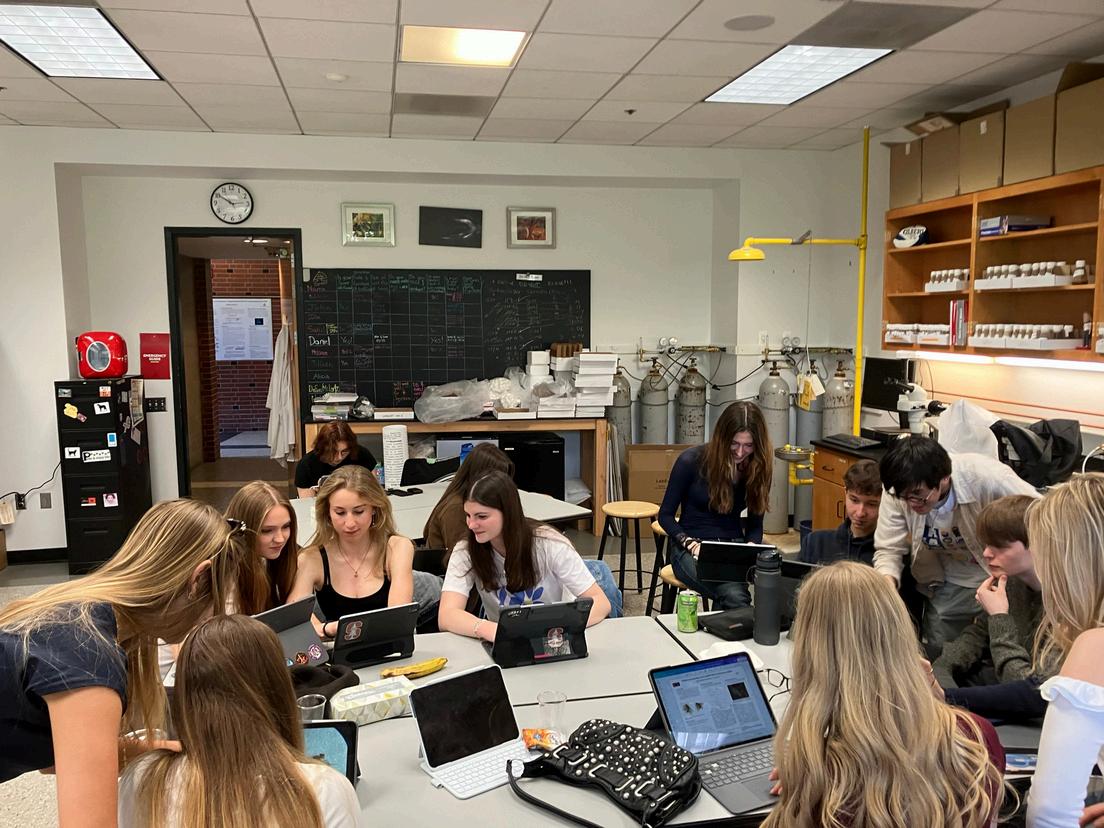
Taken in Lawrenceville, New Jersey
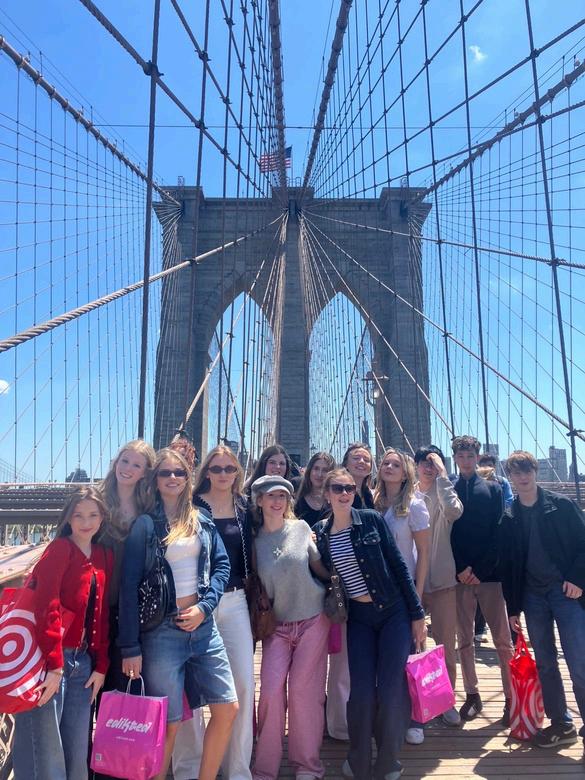
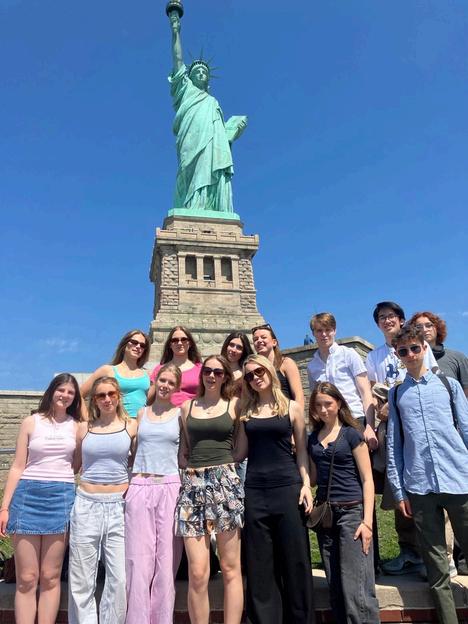
A short visit to New York provided a much-needed break, allowing us to explore some of the city’s most iconic landmarks and enjoy a change of pace. Visiting the 9/11 Memorial Museum was particularly impactful, offering a deeply moving experience that changed many of our perspectives on the city. It is something we would strongly recommend to
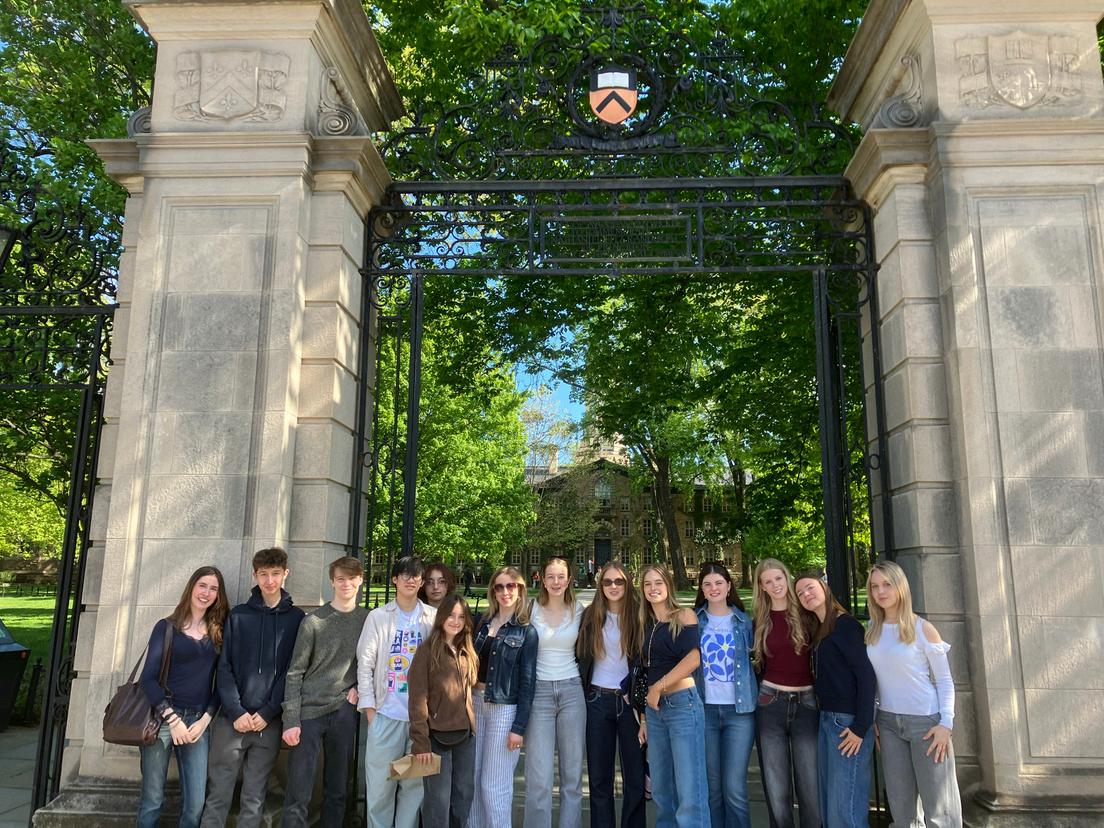
Taken at Princeton University, New Jersey
Taken at Brooklyn Bridge, New York
Taken on Liberty Island, New York
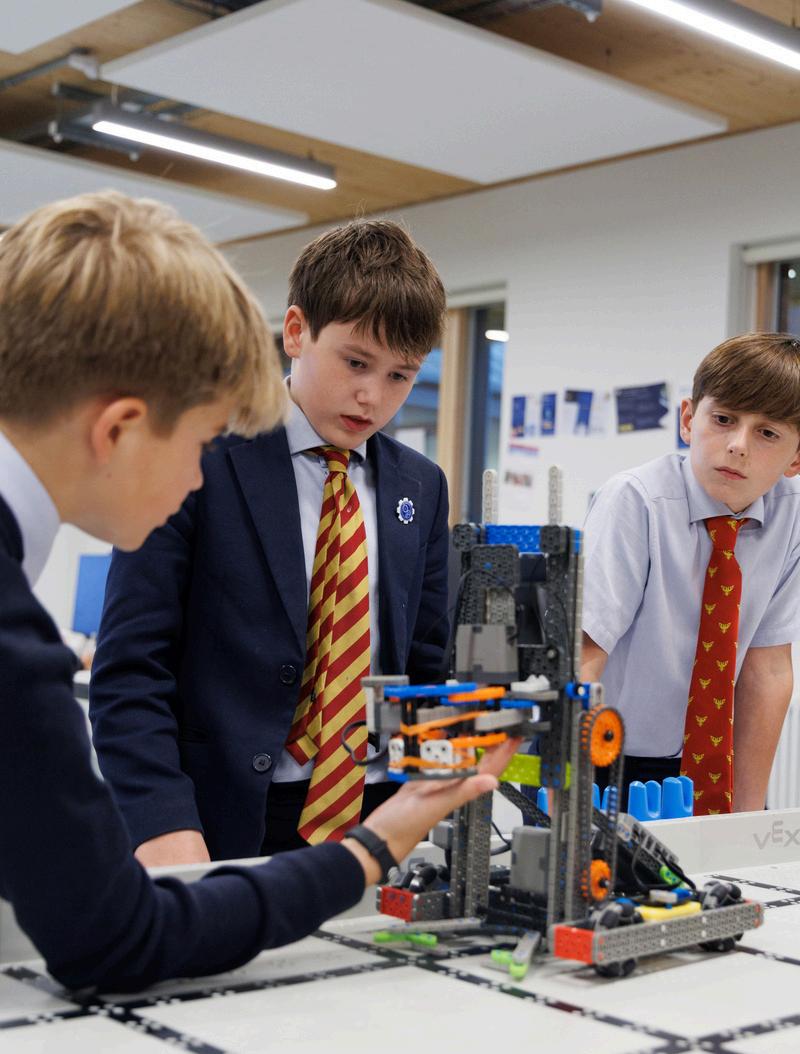
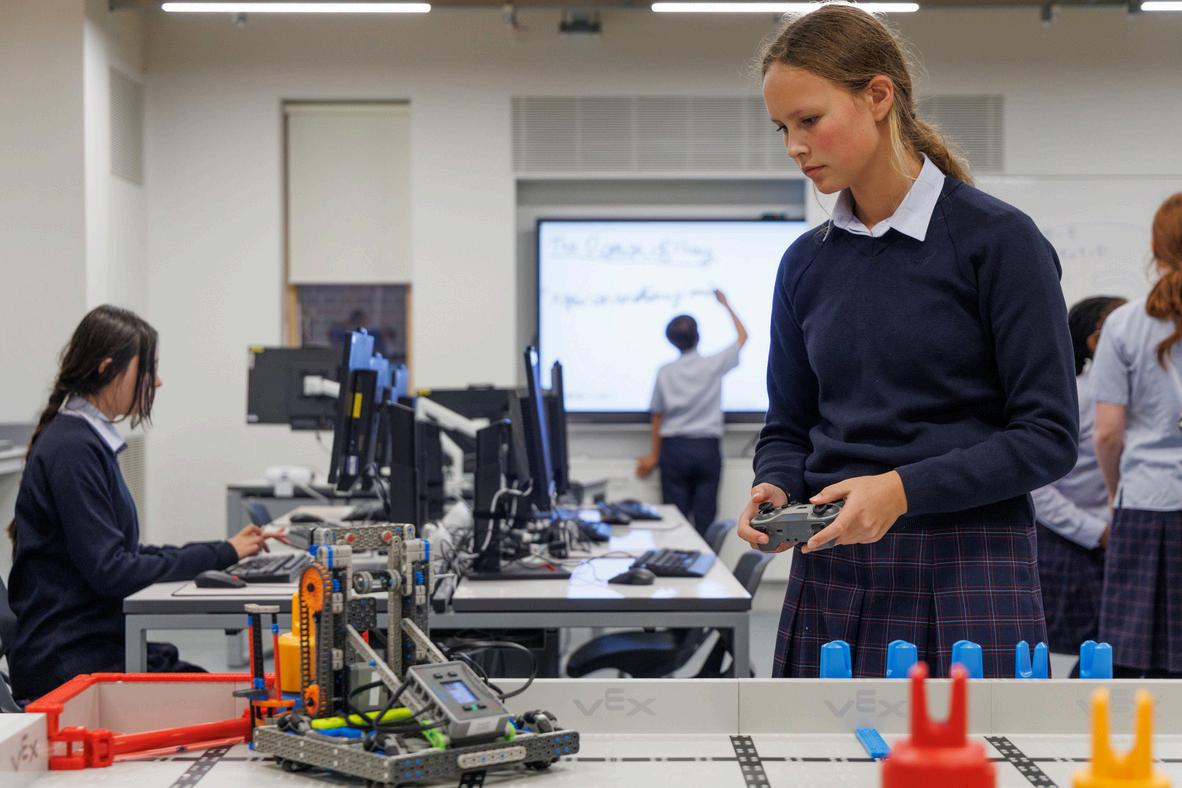
VEX Robotics Wilfred (R)
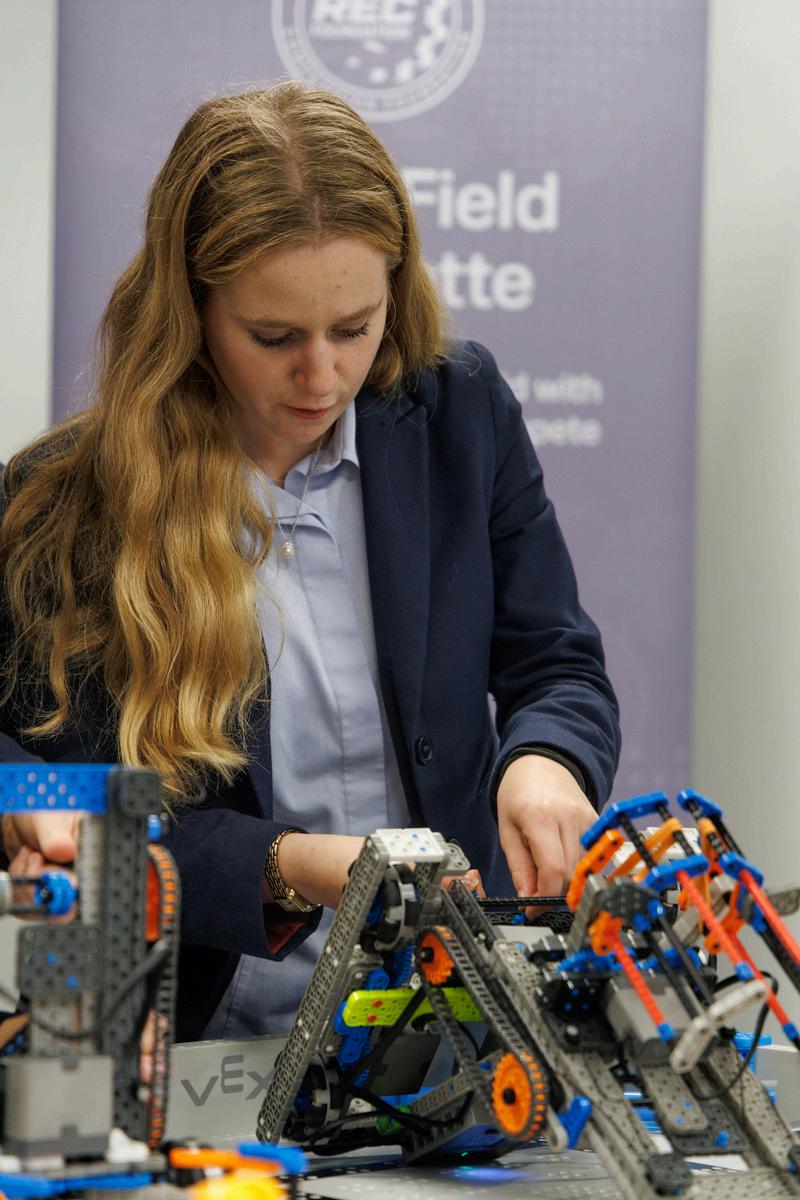
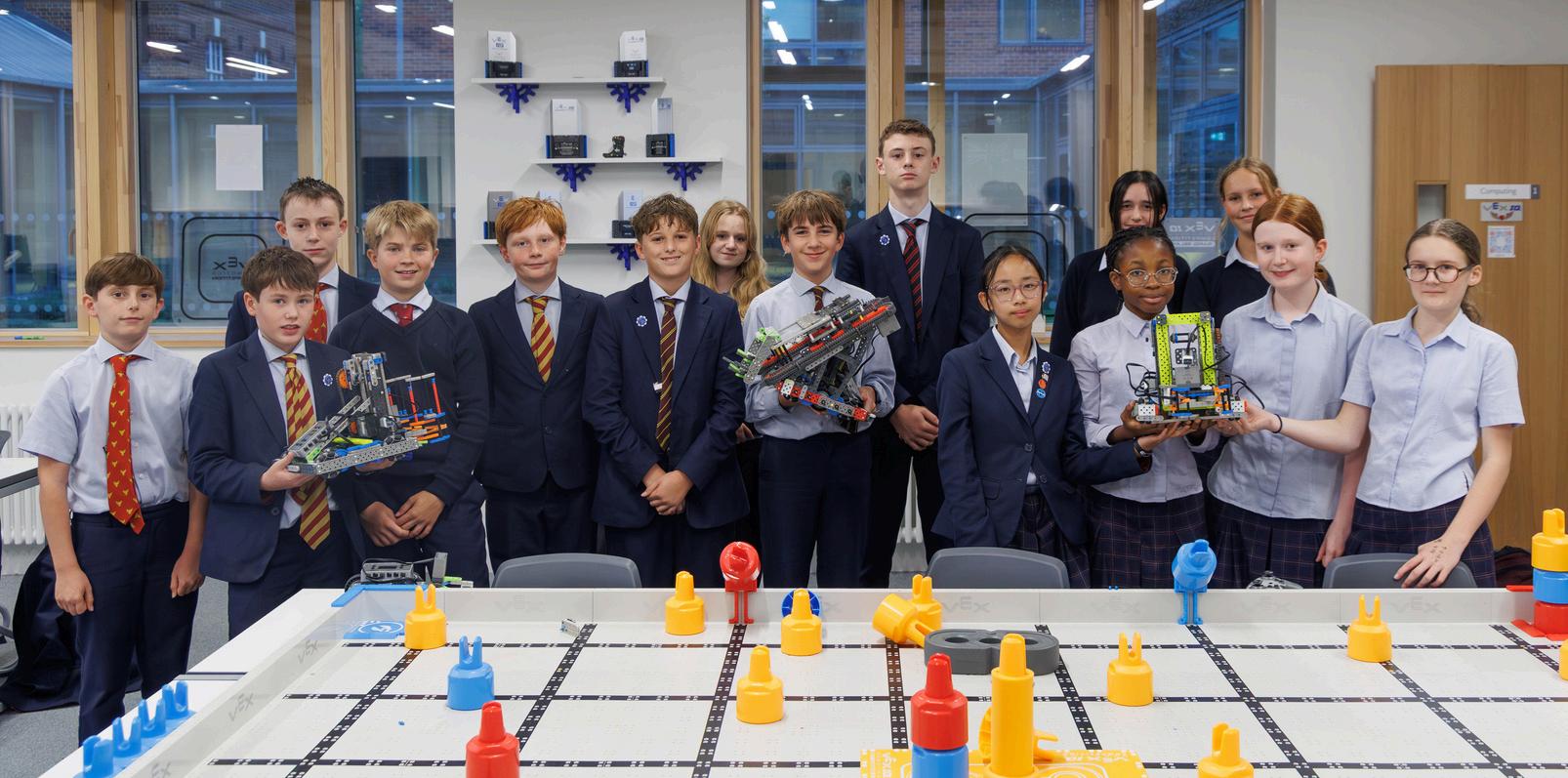
In a world increasingly shaped by AI, it is ever more crucial that we understand the growing role of robots and automation in our daily lives - according to AI. Robotics is designed to challenge pupils, whether they are accomplished engineers or newcomers, to develop coding, creativity, problem-solving, driving and teamwork. In Haileybury VEX Robotics we have learnt skills that many of us may not have considered before we joined the club. At Haileybury, there are six teams, two each in LS2, Removes and Middles, with all teams from Middles upwards doing ‘metals’, a more challenging and thought-provoking experience. Our numbers are steadily increasing with another two new Lower School teams added every year until we will have reached six generations of engineers across the e students, with the roles including builders,
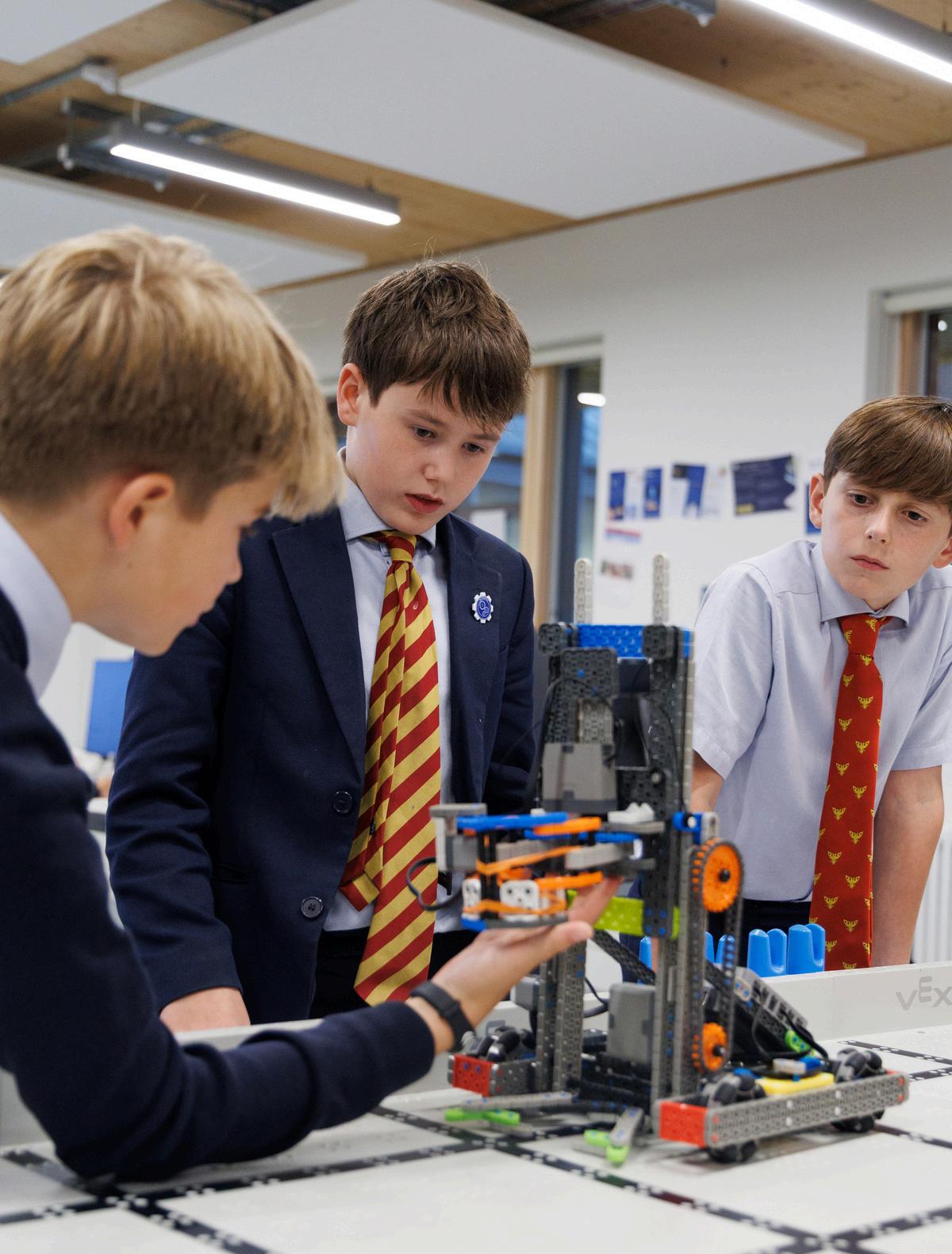
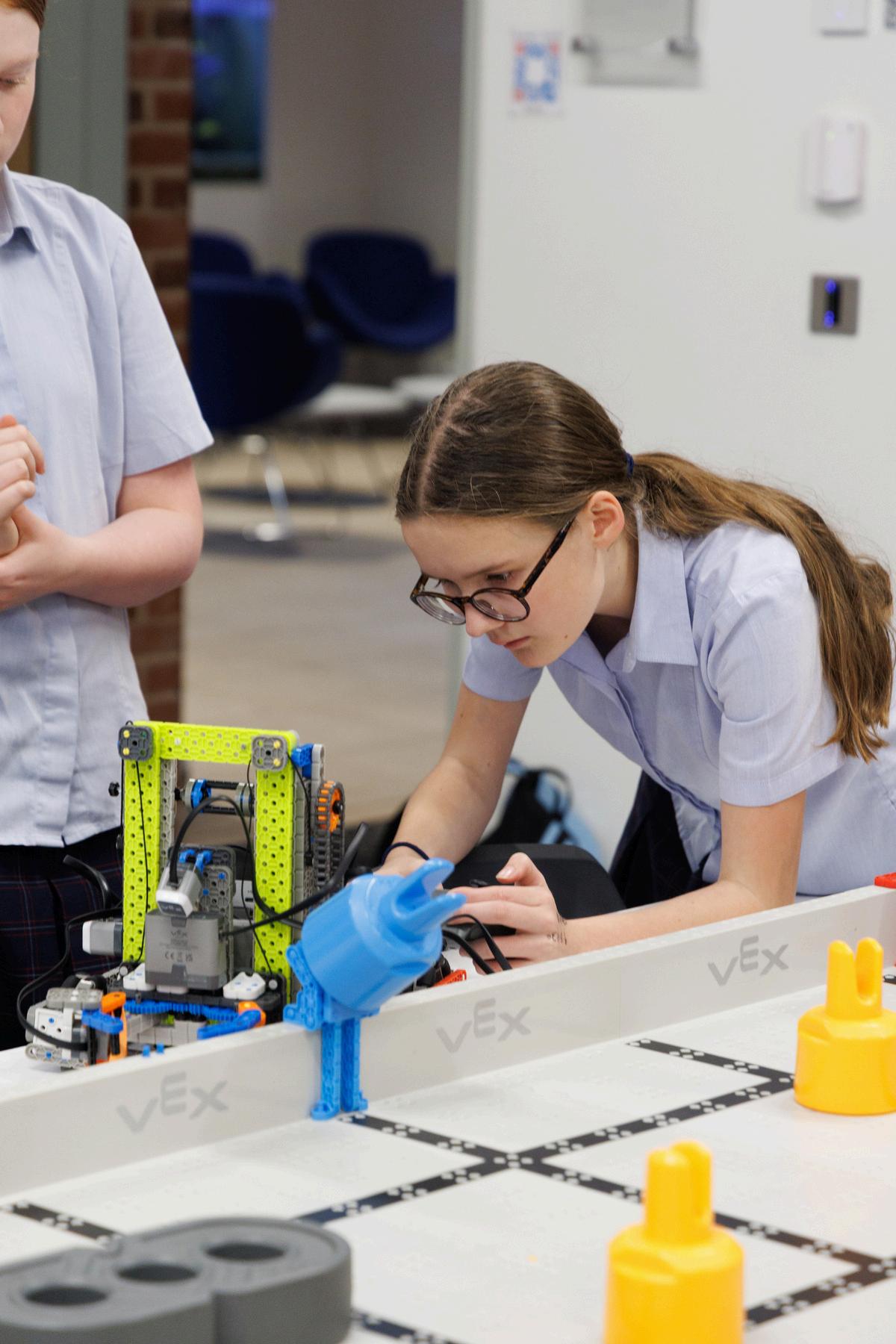
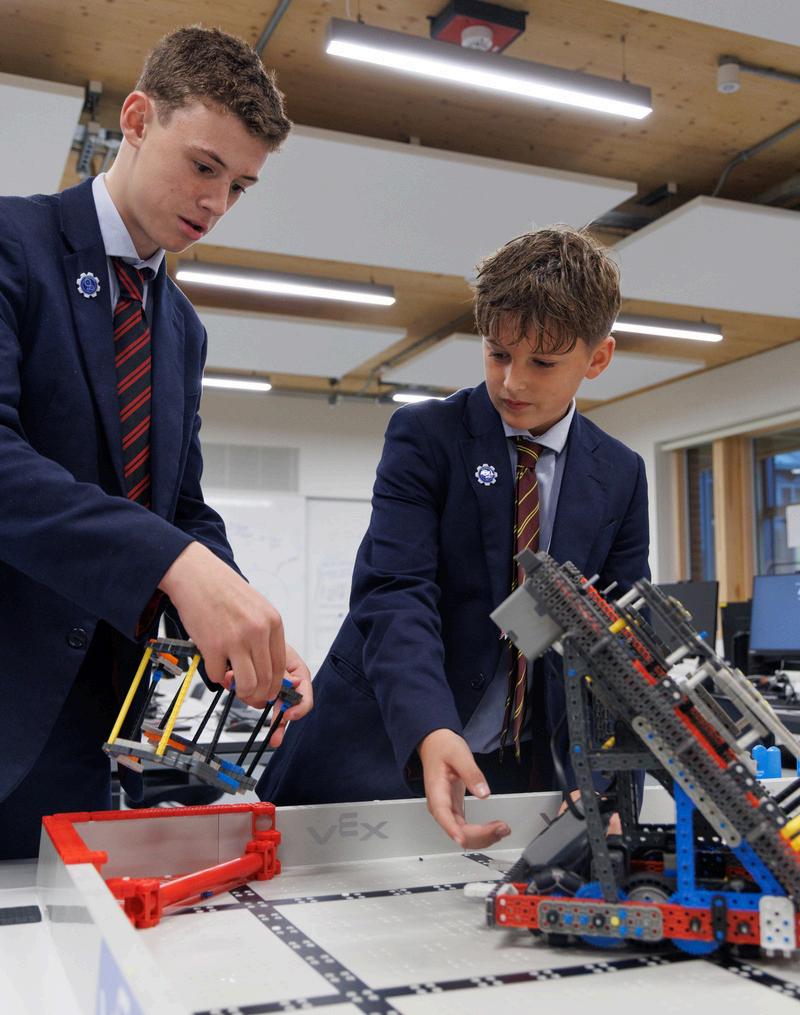
One important point to note is that although, we are grateful for guidance from teachers, a key principle of VEX is that it is student-led and no adults are allowed to help with the engineering side. Mr Perrin goes a step further, however, and encourages us to book our own competitions, or at least see which ones we want to go to and we ask him to book them. Competitions are usually held at schools, though sometimes at unique venues, like the Oval cricket ground. Each event includes several one-minute matches where teams are paired differently each time to collaborate and score points. All match scores are averaged to determine partnerships in the finals, and the two highest-scoring teams earn a spot at Nationals.
When I was submitting my entry to join VEX, I dug through my brain, trying to come up with a reason why I should be given one of the coveted places, beyond the mountains of LEGO at home. However, I soon learnt that I would gain a level of knowledge and experience from VEX that touches on elements of A-level DT. Whilst many people assume the building we do is similar to LEGO Technic, the reality is far more challenging. In VEX, we not only build a robot to complete a specific task, but also must work as a team to create the design and problem-solve.
Another challenge in VEX comes after the building and coding is complete, as the drivers need to find time to train and test the robot. At Haileybury, we are luckier than many schools around the world in having dedicated VEX facilities, plenty of spare parts, and passionate and experienced teachers, particularly Mr Perrin and Mr Stark who guide us when appropriate.
The Vex Dome
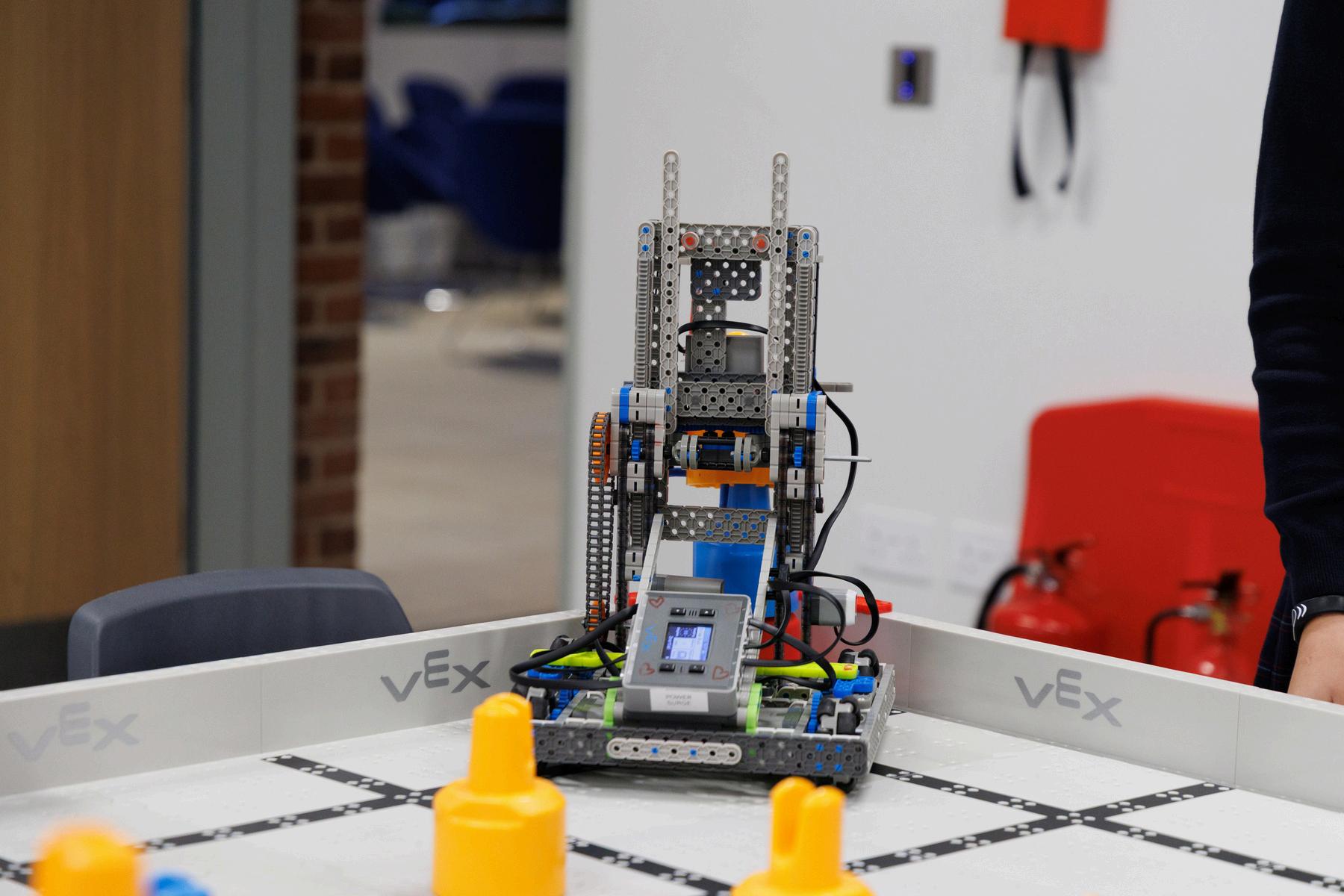
Just over two years ago, five Lower School boys formed a team called ‘Power Surge’ which, along with Harros, the boys team from the year above, went on to attend Nationals in Shropshire.
After a tense two days, Power Surge came 2nd and earned a spot in the World Championships in Dallas, Texas. On the 3rd of March 2025, our team was one of the seven VEX IQ teams to represent the UK, along with 420 teams out of a total VEX community of 8,500 around the world. After our transatlantic flight, we went and had our first look inside the Dallas Convention Center, which was huge and it was unlike anything we before.
However, this was only the series of shocks as we started best young robotics engine their skills. We did not ha around before we were su opening ceremony in the ‘VE audience of 10,000 people and watching on big screens. The with the Parade of Na representative from each t country walked on stage beh member of our team, Charlie honour of being selected to be United Kingdom.
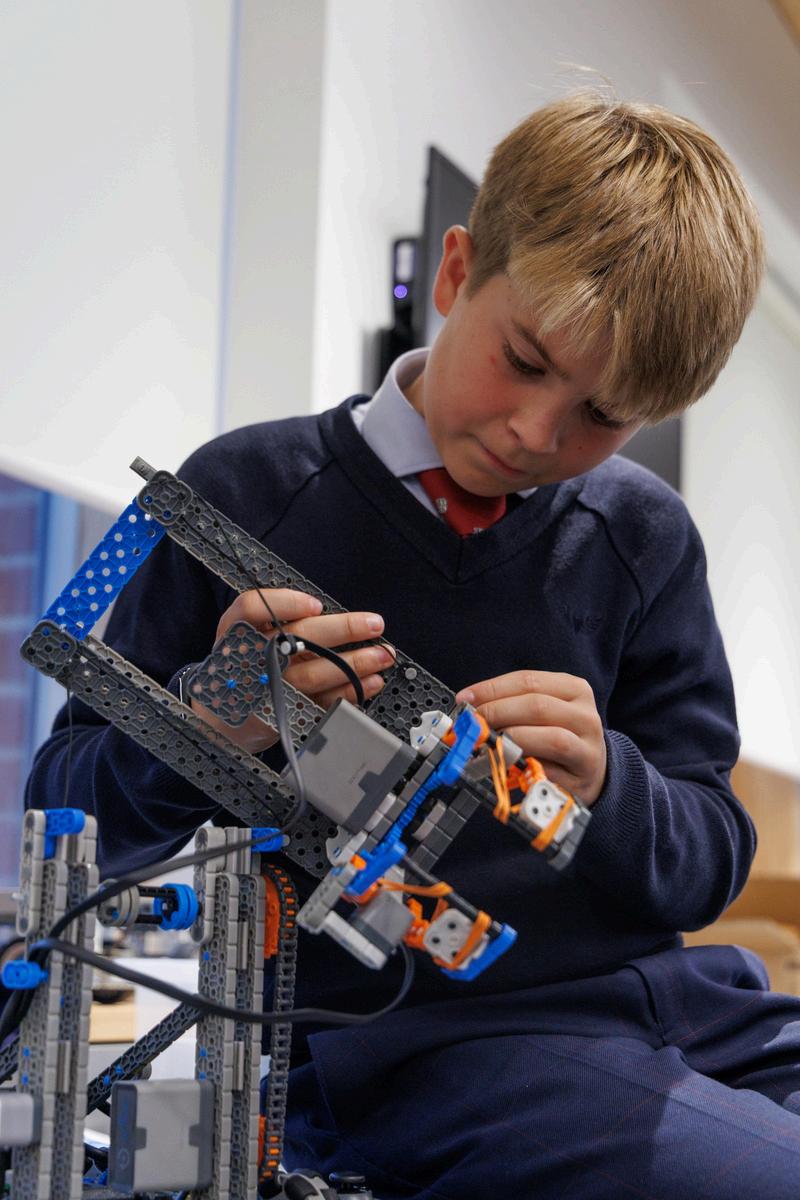
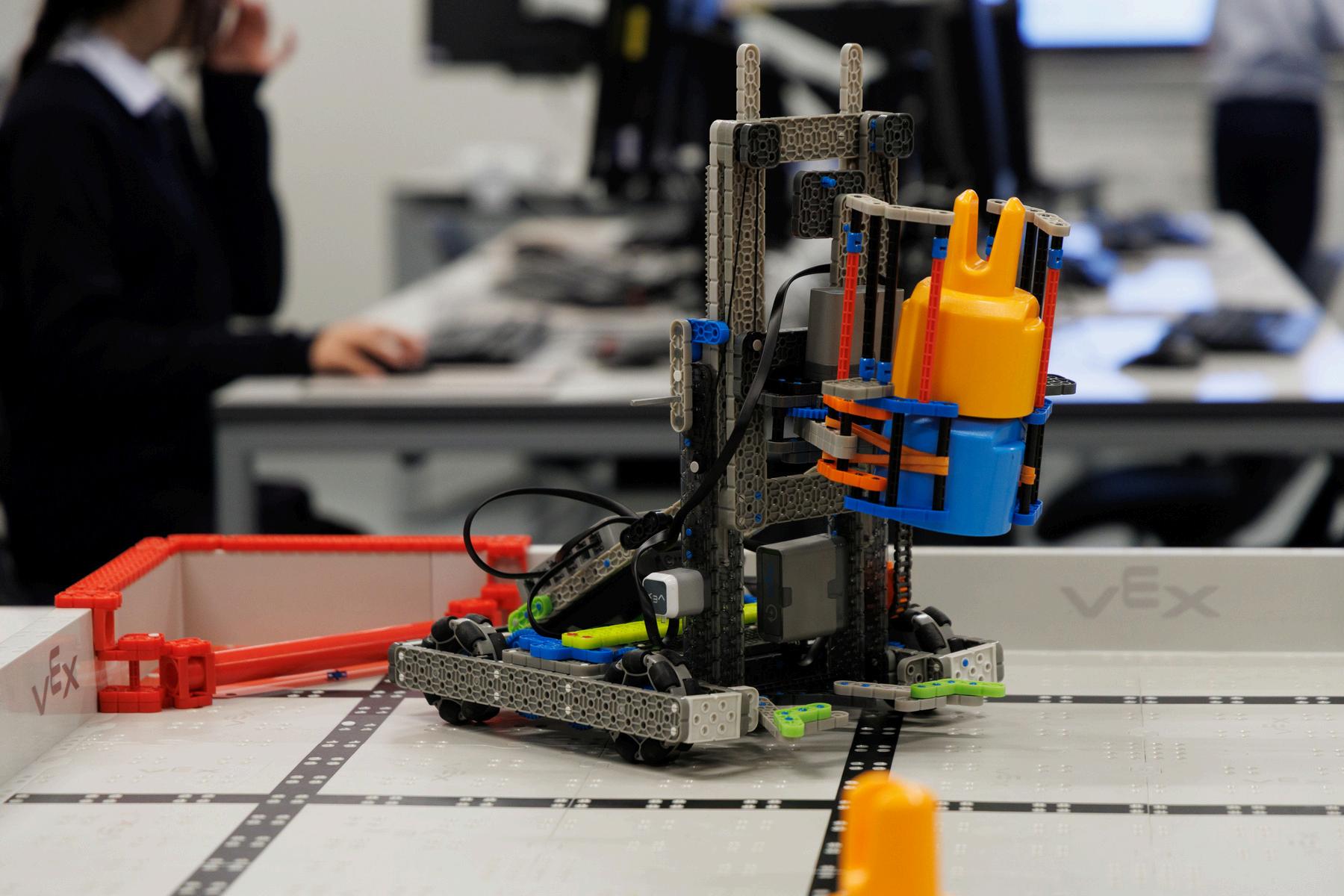
Beatrice (LS2): “Throughout my first term in VEX, there have been several encounters with hardships, but also various successes. With only two weeks before our first competition, we had to start with the Hero Bot (a standardised starting robot), because logically, no-one can fully construct their own robot without at least a month’s worth of time. During our first two competitions, our robot faced a problem with its lifting mechanism, resulting in us adding a bumper to the bottom, ensuring it would not become jammed. I personally enjoy the self-led aspect of VEX, as it encourages us to be more self-reliant and improve our problem-solving skills, rather than consistently wondering what to do when the teacher aspect is removed. Overall, VEX Robotics academic aspect of Haileybury, and is an activity
It was a truly amazing experience where we had the opportunity to meet people from all corners of the globe to test ourselves against the very best from Chile to China, from Turkey to Taiwan. Even far smaller countries like Andorra and Azerbaijan were present in Dallas. As well as meeting people from all over the world, it has shown us what we need to do to compete with the very best. The Power Surge team has had an amazing two years, including attending both the Nationals and the Worlds in our first season
j
Big School in November. Perrin went a step further
led’ and had the teams in e the competition. We had teams attend, including a urkey. I think that all our ery thankful to all who rin, Mr Stark and the Events nising it all, as well as the for refereeing.
The Space Economy Society Lyla (V)
Haileybury’s Space Economy Society continues to build momentum as one of the school’s most dynamic academic societies. Founded to explore the intersection of space with fields such as law, medicine, technology, and economics, it has grown into a thriving platform that reaches well beyond campus. Last year saw record attendance, international expansion, and remarkable speaker engagements. This year promises to be just as ambitious, with new events designed to make the space economy more tangible, inclusive, and exciting than ever.
The society’s impact over the past year has been significant. It hosted global leaders including Helene Huby of The Exploration Company, international space lawyer Dr. Upasana Dasgupta, and Jim Cantrell, cofounder of SpaceX, whose talk evolved into a full Haileybury Lecture. Heather Bulk, CEO of Special Aerospace Services, offered a powerful reminder that the future of space is open to everyone, not just astronauts or engineers. Alongside these, the society became a key part of Haileybury’s CubeSat programme, positioning the school to be among the first in the UK to launch a student-built satellite. Its international chapters in Oman and Dubai grew steadily, creating a global network of students inspired by the same vision.


This year began with a movie night screening Home, bringing students together in an informal and creative way to spark curiosity about space. In November, the society welcomed Josh Dahn from Astra Nova School, who will share his insights on reimagining education in a world increasingly shaped by space and technology. In the spring term, Harvey Castro will join us for a talk on innovation and AI in the space industry. These events reflect the society’s commitment to making the space economy accessible to students of all academic backgrounds
A growing focus of the society this year is understanding how AI is reshaping the space economy. From autonomous spacecraft and satellite image analysis to predictive maintenance of launch systems, AI is becoming an essential part of how humans explore, operate, and build in space. It is transforming everything from mission design to resource mapping, creating opportunities for new careers and research directions far beyond traditional engineering roles.
As Haileybury continues to lead with the first Space Economy Society of its kind in the country, this year’s programme invites students to engage with some of the most exciting developments of our time. With a mix of guest speakers, global collaborations, and cutting-edge conversations about AI and space, the society is helping shape the next generation of thinkers, builders, and dreamers
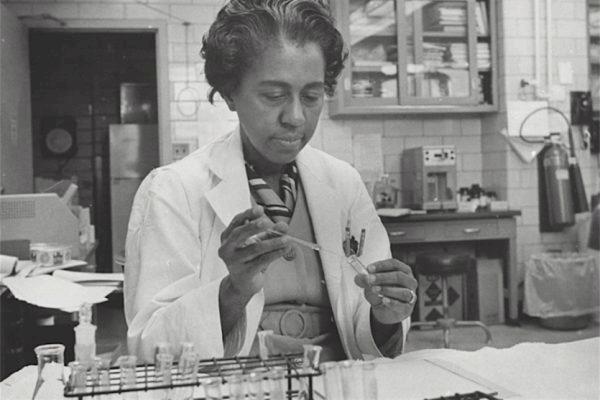
The Science Soap Box event featured a number of pupils delivering engaging presentations on scientific figures who have inspired them. As part of Black History Month and LGBTQ+ History Month, these events aimed to celebrate the remarkable contributions of these extraordinary individuals.
Congratulations to the winner of the Black History Month event, Kyrah - your speech was a heartfelt and inspiring tribute that truly honoured the legacy of Marie Maynard Daly.
Black History Month
Stella (Dr Gladys West)
Born in 1930 in rural Virginia, Dr. Gladys West grew up in poverty but believed education was her way out. After earning degrees in maths from Virginia State College, she taught in local schools before joining the U S Navy base at Dahlgren in 1956 one of only a few Black women there.
Her mathematical skills and early computer work helped create models of the Earth’s shape, which later became the foundation of GPS technology She also led satellite projects that mapped the oceans and refined navigation systems. Even after retiring in 1998, she earned a PhD at 70 and continued to inspire others.

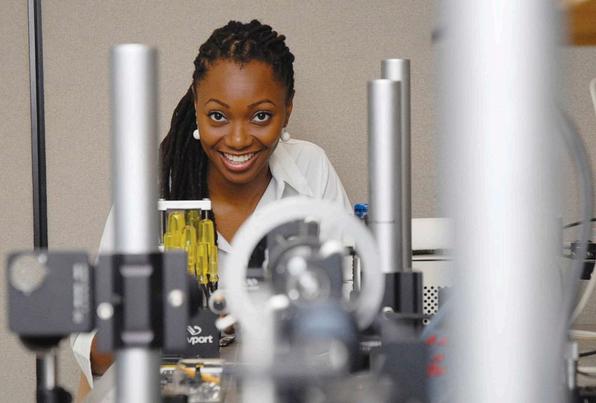
(Dr Hadiya-Nicole Green)
Hadiyah-Nicole Green is a medical physicist n for developing a laser-based cancer treatment avoids the harsh effects of chemotherapy. After g her aunt and uncle to cancer, she set out to find der alternative. research uses tiny nanoparticles coated with al molecules that stick to tumour cells. When hit low-intensity infrared radiation, the particles up and destroy only the cancer cells without ging healthy ones Though still in testing, her ts in animals are very promising. of just 66 Black women in the U.S. to earn a cs PhD, Dr. Green also founded the Ora Lee Smith er Research Foundation, aiming to make treatment affordable for everyone
www amightygirl com (2019) Dr Gladys West: The ‘Hidden Figure’ Who Pioneered GPS Technology [online]
Mediaplanet (2025) Physicist Dr Hadiyah-Nicole Green Uses Nonprofit to Raise Funds for Cancer-Killing Technology [online] Los Angeles Times
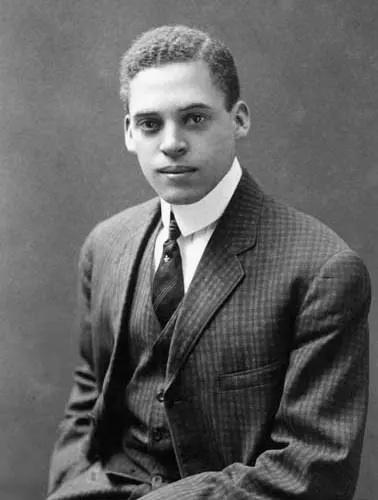
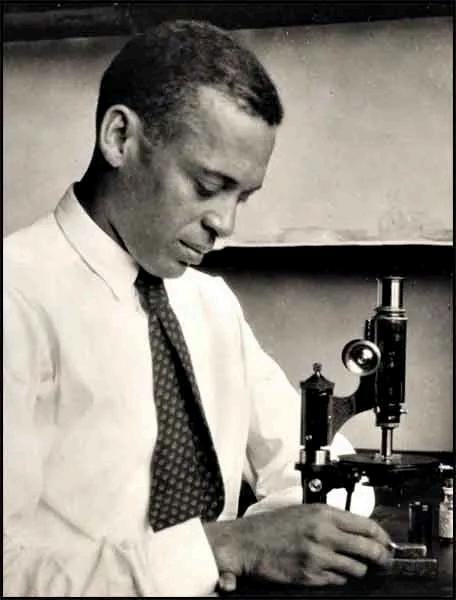
Oliver (Ernest Everett Just)
(Marie Maynard Daly)
rie Maynard Daly (1921–2003) was the ack woman in America to earn a PhD mistry. Growing up in New York, she science books and had parents who raged her curiosity.
umbia University, she studied how ules like proteins and DNA work in Her research helped link cholesterol gh blood pressure to heart disease hat shaped modern medicine. d the lab, she supported minority ts in science, creating scholarships to thers follow in her footsteps Dr Daly d that determination and curiosity can oors that once seemed impossible.
j
Ernest Everett Just was an African American biologist known for his research on cell development and fertilisation. Born in Charleston, South Carolina, he overcame racial barriers to earn a degree from Dartmouth College and later a Ph D in zoology from the University of Chicago He taught at Howard University and conducted most of his research at the Marine Biological Laboratory in Massachusetts, where he studied marine organisms like sea urchins. His experiments revealed that the cell surface plays a key role in controlling development, challenging scientists who focused only on the cell’s nucleus. In 1939, he published The Biology of the Cell Surface, his most important work. Despite facing discrimination, Just left a lasting legacy as a pioneer in cell biology and a role model for future generations of Black scientists.
Spartanburg Science Center, 2020
Selassie, G and Selassie, G (2007) Ernest Everett Just (1883-1941) [online] BlackPast org
LGBTQ+ History Month
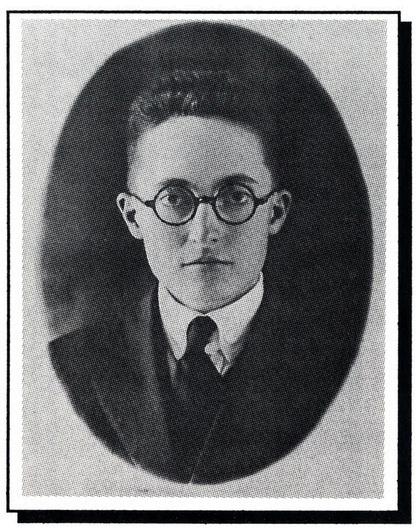
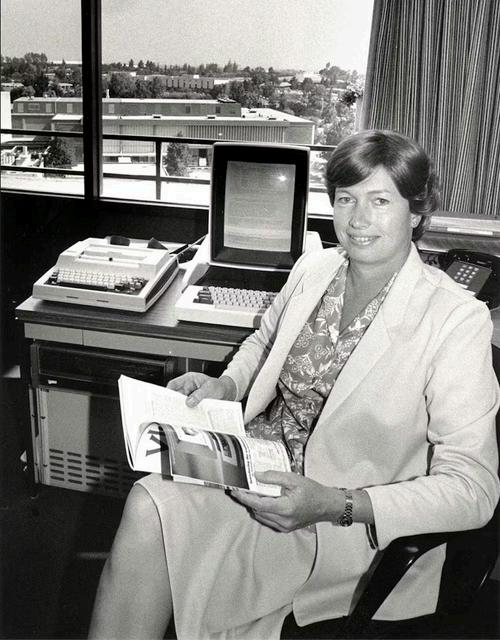
Kyrah (Lynn Conway)
Lynn Conway was a pioneering computer scientist and engineer whose groundbreaking work in the 1960s transformed modern computing At IBM, she invented ‘generalised dynamic instruction handling’, foundational to nearly all computer processors used today However, after publicly transitioning, Conway was fired from IBM, hinting at the restrictive social barriers of her time
Soon after, she went on to redefine computer engineering, becoming a contract programmer, a computer architect, and later a visiting associate professor at MIT Her work on VLSI (Very-Large-Scale Integration) chip design revolutionized microchip architecture and reshaped how engineers design computers. Conway received 29 major honors and awards, and in 2023 was inducted into the National Inventors Hall of Fame for her contributions and courage in breaking transgender barriers.
Her legacy continues to inspire both computer scientists and LGBTQ+ activists around the world. Lynn Conway’s life reminds us that acceptance should never be difficult, it should always be met with joy and respect for those with such undeniable courage.
ju
Zahira (Alan L. Hart)
In 1930s America, tuberculosis had been solidified as one of the worst diseases to even contract. Surrounded by stigma and with no cure in sight, people possibly infected with this disease were shamed and isolated. However, one brilliant radiologist living in Idaho decided to change the game and bring forth new ideas that would save millions of lives all over the globe. His name was Alan L. Hart, often cited as a pioneer in the use of X-ray photography in tuberculosis detection, a process still used to this day, and was also notably one of the first transgender men in America to go through gender affirming surgeries.
Before Hart came around, doctors had trouble understanding what TB was and how it spread. They also had little knowledge of how to use X-rays in disease detection. Hart was able to change all of this. Using a combination of Hart's ideas and newly discovered antibiotics, doctors in the 1940s were able to cut down the tuberculosis death toll by about 98%!
Hart died of congestive heart failure on July 1st, 1962. His wife went on to establish a fund for leukemia research, which Hart’s mother had died from earlier. His legacy is defined by not only the countless lives he saved with his crucial scientific research, but also by his pioneering advances for transgender rights in America and all over the world. He will forever be remembered as a hero, a mentor and a role model.
Carolyn (Alan Turing)
Alan Turing was a British mathematician, computer scientist, and codebreaker whose work had a profound impact on modern technology and World War II. Turing was born in 1912 in London, England. He studied mathematics at the University of Cambridge, where he began developing ideas that would become foundational to computer science. In 1936, Turing published a paper describing a theoretical device now known as the Turing Machine. This concept established the basic principles of how computers process information and remains central to computer science today
During World War II, Turing helped design machines that could decode encrypted messages produced by the German Enigma machine. By successfully breaking the code, Turing and his colleagues provided the Allies with crucial intelligence.
Historians estimate that this work shortened the war by up to two years and saved millions of lives, making it one of the most significant intelligence achievements of the war. Despite his contributions, Alan Turing’s life was deeply affected by social prejudice. In 1952, he was arrested and convicted for homosexual acts, which were illegal in the United Kingdom at the time. Turing was given the choice between imprisonment and chemical castration through hormone treatment. He chose the latter, which caused severe physical and psychological harm.
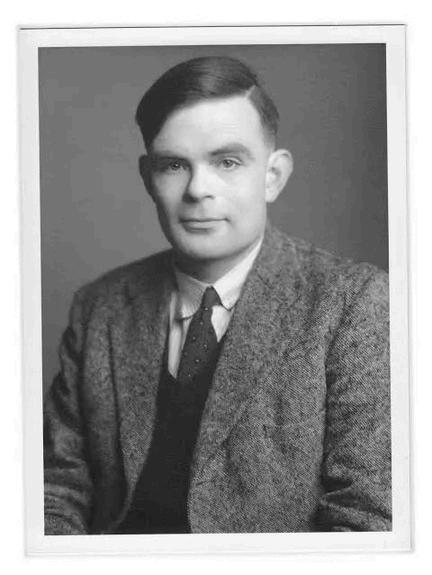
As a result of his conviction, he lost his security clearance and was excluded from further government research. In 1954, at the age of 41, Alan Turing died. His death is widely believed to have been a suicide. His life also reveals how discrimination can erase and silence even the greatest minds. Turing’s story remains a reminder that scientific progress must be matched by social justice.
j
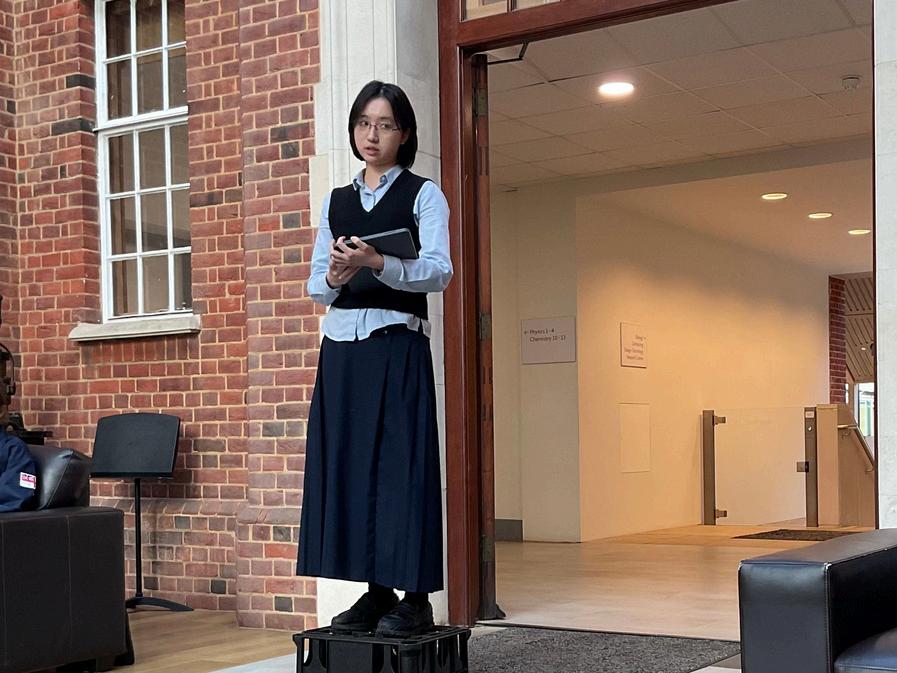

We thank all the pupils mentioned for their contributions to this event, and remember these scientists as figures of courage, innovation and brilliance We hope that these stories offer insight into how far we have come, and the journey which must continue, in terms of facing prejudice and bigotry.
Photos in Science Atrium, Haileybury
Philip (L6)
What is Haileybury CubeSat?
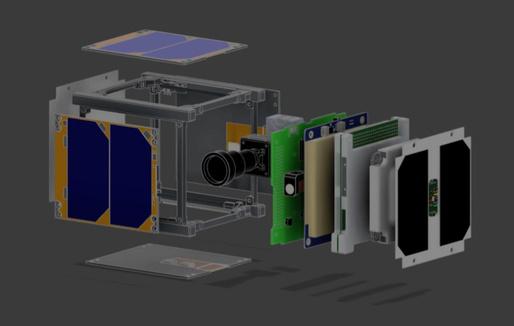
The CubeSat programme is open to all pupils from Lower School 1 to Upper Sixth and aims to design, build and operate a small (nano)satellite. A CubeSat is a classification of nanosatellites designed to reduce costs and complexity by standardising satellite specifications, making space more accessible We are building our satellite according to these specifications, aiming to produce a 1U (10x10x10cm) CubeSat to be launched in space on a SpaceX Falcon 9, or similar rocket, as a rideshare payload. Our mission is then to take a picture of the Earth using the optical payload (camera) that our CubeSat is equipped with. If successful, we would be the first secondary school in Europe to do so. To achieve this goal, we are working together with BAE Systems, a leading UK Aerospace and Defence company, who are giving us professional assistance and advice.
What exactly do we do?
We recently received feedback from BAE on our Preliminary Design Review, a document outlining and justifying our component choices. We are now working to improve our PDR to adhere to professional industry standards and will continue to do so until BAE deems our design suitable for space and lets us progress to the next phase. To assist us in this, BAE regularly sends experts from their company to give lectures on specific subsystems, help with the evaluation of components or other aspects of importance to our mission.
Alongside this, we are using Arduino boards to simulate each of the satellite’s components and produce a FlatSat. FlatSats contain all functional electronic components of the satellite, laid out flatly on a table and are commonly used in industry to simulate full size satellites. Using a FlatSat allows us to gain experience in the programming of components and the handling of dataflow between them, including between the satellite and the ground station we will be controlling the satellite from.
How does AI impact our work?
Despite the current popularity of Artificial Intelligence, its role in our CubeSat Programme, and in fact in scientific research more widely, is very limited.
Space is a very dangerous and difficult environment to work in, so every design choice must be justified through rigorous research and calculations. This results in many stages of reviews and careful evaluation of our work before the satellite is eventually ready for launch.
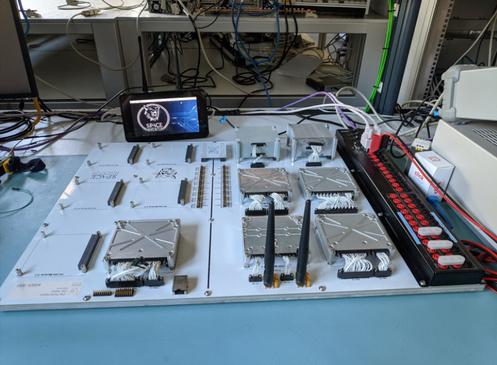
While AI can be a very useful tool, it can never be relied upon or used autonomously for such tasks, as it works on predictive algorithms that give answers which may look correct, but have not been fact checked or critically evaluated. The risk of hallucinations is too high, and it would often take longer to verify if AI work is actually correct than simply doing the research and writing yourself. In addition to this, AI does not cite its sources, something that is required for any proper academic research, as LLMs (Large Language Models) have been trained on millions of different sources and cannot differentiate between them.
As a result, AI cannot be responsibly used for subsystem design or requirement verification in our current phase of the CubeSat mission. The only safe application of AI in our work, and in any academic research, is as a research aid AI can gather information, summarise concepts or assist in exploring different perspectives. However, even in this case all information must be independently and carefully checked for accuracy. Additionally, while the CubeSat is operating in space, some machine learning algorithms may be used to automate attitude control. However, this also brings its own suite of issues and is not in our current focus.
What's next for CubeSat?
We are now working on refining and completing our documentation to eventually create a full PDR, which will then be approved by BAE Systems. The PDR will feature extensive justification for each chosen component, but also include things such as more general mission criteria and risk assessment. The next step forward is then a refinement of our knowledge of the components using what we learnt from the FlatSat. This will lead us to the CDR (Critical Design Review) where the full finalised design of the cubesat will be presented and once again evaluated. Only at this point are
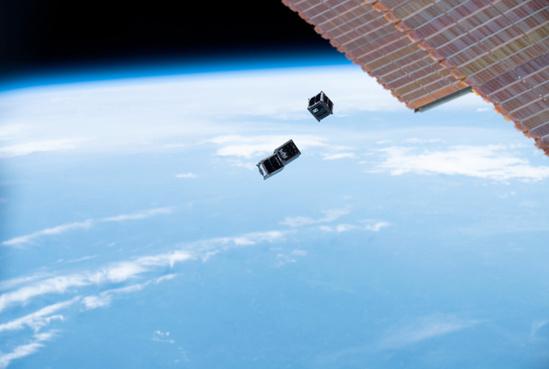
the final components purchased and assembled into our satellite. A second set of components, which is not to be used in space, is also acquired to go through rigorous testing, both individually and as a full satellite. These include functional tests as well as the resistance to vibration, radiation and thermal vacuum. We must then secure a slot on a rocket.
Besides this, we have recently secured an opportunity to select an optical payload to be used in a much larger, full size satellite. This is excellent, as it gives us more practice with selecting components and justifying choices while also having to adapt to a predetermined environment. We are in the process of selecting a camera, and hope to soon present our choices to BAE, who are operating the mission.
Bibliography:
[1] What we do (2026) Baesystems.com. Available at: https://www.baesystems.com/en/what-we-do (Accessed: 15 January 2026)
[2] Alexandrov, N.M. (2024) AI: What's New for Design? Available at: https://ntrs.nasa.gov/api/citations/20230018660/downloads/Scitech%20DETC%20panel%20final%20Alexa ndrov.pdf (Accessed: 15 January 2026).
ai: friend or foe?
In this interview with Mr Wade, the leader of technology and AI at Haileybury, he will be explaining his thoughts and ideas on the development of AI and how it will progress and affect society in the future, especially within science. He has been interested in technology for all his life, especially in technology innovations and how technology changes.
As he is also a philosophy teacher, he discusses whether technology is "value-neutral”, asking whether AI has the ability to impact and change us as humans.
With the emergence of AI, we have to think more critically Artificial Intelligence is not a new term, in fact, it's been around for many years, but has previously existed either through science fiction stories or on a more algorithmic basis, such as your Spotify playlist being edited by AI. This tool is not unique to stories, or the individual person, and the impact it will have on education is going to be profou d ll
How is AI reshaping how scientists discover and how is it changing how science is done?
I think academia is now infused with AI throughout, whether it's research papers or people using support their research. In particular, the field is really interesting. Sam Altman, the head recently claimed that there have been thousands scientific discoveries thanks to the advent of used within science. He is very keen to stress much AI is advancing scientific discovery.
For me, at the academic level, what AI can scientists is augment research practices, content, draw together different concepts and summarise them for you, spark creative ideas, suggest next steps. I think AI insinuates itself at levels; at the highest level, it's potentially whole new concepts we haven't even considered.

When you say AI is unlocking new discoveries, what do you call a "true" discovery, because AI is mainly about pattern recognition?
When I say new discoveries, I guess it is the ability to test at a rapid rate and discover those things that potentially have been lying there that we have not yet discovered. As you say, it is simply pattern recognition, but the ability for it to relentlessly work through a process to come to a new concept quicker than a human can is where I think the opportunities are.
Do you think there are areas of science where AI shouldn’t play a big role, or is human intuition still irreplaceable?
Oh, yes, absolutely, I do. Let's talk about what it could do first, which is very cool: when you're looking at things like the science of vaccines and cures. There are some really exciting opportunities there. AI could think about the incurable things we've had for hundreds of thousands of years that we've never been able to get close to; there could be breakthroughs in that sense. For me, AI is useful as a tool, but the human still needs to be a driving force behind that, especially when it comes to ethics. I'm very keen that the human is in charge of the ethical side of things, especially when it comes to testing and scientific advancements. The human part is the part asking those ethical questions.
An interview by Hailey and Ava (L6)
A lot of people are saying AI is replacing jobs and robots are going to replace people. What are your opinions on that, and should we rethink traditional career paths in science and tech? Is it having an impact on work? Absolutely, 100%. First of all, 65% of children currently in primary school will go on to work in jobs that have not yet been created. This statistic comes from the World Economic Forum, based on projections of the job market and shifting approaches to it. The "Big Four" accounting firms posted 44% fewer jobs for graduates this year compared to 2023. Generally, across the board, there are 30% fewer graduate job postings. We are seeing graduate entry jobs being the most under threat at the moment from AI.
From a scientist's perspective, where you may enter at a junior position and then work your way up, that would be a concerning action point for me because there may be fewer opportunities out there. I don't have a happy answer to that question, I'm afraid; it's a genuine concern in the jobs market for the future.
The optimistic side is that we will see new roles created. Actually, depending on what reports you read, you could be heading to a total collapse in the jobs market, or we could be heading towards just finding new roles and new jobs. Therefore, as a teacher, one of the best things we can teach people now is what we're trying to do here: being aware of the thinking process, the creative process, and being adaptable and flexible to new concepts.
The Telegraph published an article about robots recently, talking about the impact of robotics on the Chinese market in particular, and how we don't realise how advanced it is. They have factories in complete darkness because there is no need to turn the lights on because they are entirely operated by robots. The overall number of robots added in China last year was 295,000, compared to the UK, which was 2,500. What do you want from a robot? Do you think a robot would benefit you or the community as a wider picture?
Philosophically, there's an interesting discussion because this is where the capitalist model begins to eat itself a little bit. Yes, robots automating jobs is great for big businesses, but if you take away people's jobs, people can't afford to buy the things they need. There is an issue in businesses going big on robotics because a lot of human labor will collapse the jobs market. Have you seen the Amazon robot taxis they are about to release? There is no steering wheel in them; they are fully automated. Ethically, how does a car decide what decisions to make? That for me is interesting.
j
Robotics is the next area businesses will try to crack because, would you pay for someone to work in your warehouse, which costs around £30,000 a year, when they get tired, emotional, or want to go on holiday? Or do you spend the same amount on a robot who works 24 hours a day without a lunch break? There are difficult decisions for business makers to make.
How do you think AI and robots could deepen inequality if only wealthy schools or companies have access to these systems?
That is the problem you will see across the board. We're already seeing a gap growing in education. If you are in the independent sector, you're much more likely to be utilising AI in your education than if you're part of the state sector. That is going to create a gap in learning across those two divides. When you get to university, it levels out a bit; last year, 88% of people at university said they'd used AI as part of an assessment. To put a positive spin on it, I think that AI might open up a more entrepreneurial future. Before, if you wanted to create your own business or app, you would look to scale up and hire a team. AI potentially could unlock those capabilities for you to operate on a much smaller basis for yourself.
How do you see AI transforming STEM over the next 10 to 20 years?
We should talk about Artificial Super-intelligence (ASI). At the moment, I would describe AI as an excitable, stupid waiter in a restaurant: you have to be very specific in what you want, it's very keen to please, but it's prone to "hallucinating”. But many companies are aiming for Super-intelligence, so where AI passes the intelligence of humans. Some people, like Mo Gawdat, talk about how this would create almost a new species. It could lead to a utopia or the end of the world, with no in-between. Scientists were predicting Super-intelligence by 2050, but many have brought that forward to 2030. At that point, you're talking about significant scientific breakthroughs because you're talking about something that will relentlessly find new patterns we haven't considered.
Real World Applications of AI - Data Science: Anina Ho, Founder of FutureOneMENA
An interview by Hailey (L6)
Anina Ho is a technology entrepreneur winning awards such as GBA Outstanding Women Entrepreneur Awards 2024 and Greater Bay Area Young Entrepreneur Technology Innovation Award 2025, and is the founder of Future One MENA (FOM), a company specialising in leveraging AI and big data to help offices make informed decisions and spot new investment opportunities in rapidly changing global markets, particularly focusing on markets in the Middle East and North Africa (MENA), as well as Asia and the United States.
Anina Ho has an extensive background in computer science, economics, and management from universities such as USC, Harvard, UAL, and UOT, and she has held leadership roles in several other companies, including being COO a QonBay.io and Qonnet.ai, and director at Trinity Global Investment Limited. She is recognised for her forward-thinking approach, especially in applying blockchain and AI to investment analysis and connecting international markets

Can you explain the data science behind FutureOneMENA’s investment platform?

In Hong Kong we have covered more than 60% of POS (point of sale) terminals (e.g. card readers, cash registers), giving us large-scale, real-time data on merchant revenues and transactions. We leverage AI to analyse this data and collaborate with banks to assess credit risk, identifying high-performing merchants for lending With over a decade in tech and more than two decades in investment, I created FutureOneMENA to combine proprietary AI infrastructure with our investment strategy and improve returns It's specifically more like focussing on FinTech: finance and technology As an investor, I always find ways to increase the return of my investment, that’s why we built an AI tool to allow the investors to query markets, gain insights and rebalance portfolios dynamically.
How do you collect the data?
There are many different ways First, through our payment technology infrastructure By providing POS terminals and other IoT (Internet of Things) devices to merchants, we capture anonymised transactions from those systems, including sales volumes and transaction patterns Second, we license premium datasets from a lot of big firms like Bloomberg or Reuters, which offer detailed financial and market data not freely available to the public.
Beyond generating market insights, does the platform use AI in other ways?
Yes, the AI does more than answer trend questions. We’re building a system based on specialised AI agents. A single large model of AI uses a lot of money, electricity, my GPU, infrastructure etc, but if I try to break up everything into smaller models with different AI agents, then the training model would just jump into the specific most relevant AI agents such as for sentiment analysis, pattern recognition or portfolio optimisation So in this sense, I can accelerate the entire process. You have a plethora of data, but at the same time, you have to think of ways to control the cost and make it more efficient.
Could you explain what Quantum AI is and how could this change the world of investment?
Right now we work with quantum simulations offered by providers such as IBM and AWS to test optimisation models in a hybrid setup alongside classical AI However not every task needs quantum Ordinary AI can be leveraged for routine analysis But in areas like high-frequency or high-volume trading, where vast amounts of of real-time data needs to be processed in a very short period of time, classical systems face limits.
Quantum-inspired algorithms could significantly accelerate complex optimisation problems across thousands of rapidly changing variables. AI and quantum tools can allow processes to be accelerated. Using the old-fashioned way may take a lot of time but now I can just get what I want in a very short period of time and so I think it is quite exciting to get more information from this way.
Beyond finance like in fields of biotech or medicine, where researchers analyse decades of data and enormous molecular combinations, quantum-enhanced AI could dramatically reduce computational time In short, quantum AI isn’t about replacing existing systems but about augmenting them for problems where scale, speed and complexity exceeds traditional computing
Do you think AI would eventually operate by itself or do you think there still would be need of human assistance?
We have built our platform with both short and long term memory in our AI platform Whenever it comes out with unsatisfactory results, we would instruct it to do the calculation again based on the memory that it possesses. It is quite similar to a human, you learn from iteration and failure. This is how we are trying to improve the entire platform So that is why we definitely need human help People are better at spotting the problem, reframing them, and applying judgement in ambiguous situations This is especially true in investment. Markets are affected by sentiments. Machines do not have these kinds of feelings. They cannot understand fear, optimism, or panic. So that's why we really need to have human collaboration
Many people worry that AI will lead to widespread job losses According to the World Economic Forum, “66% of students will work in jobs that don't exist yet”. How do you see this unfolding as AI develops and especially in the world of finance which overlaps heavily with automation.
In the future, AI may be able to replace a lot of positions, certainly in routine and analytical work such as basic accounting or data processing However, AI still has limitations. For example, it does not fully capture human instinct, context or nuance. Markets are influenced by psychology, trust and shifting expectations, areas where human judgment remains critical. I expect roles to shift rather than disappear Professionals who are able to deliver high level strategy or creative problem solving, though AI can support these roles, they are unable to be substituted.
Ethics is another key factor. Algorithms reflect the data and design choices behind them. Without human oversight, biases or unintended consequences can scale quickly Responsible governance will become even more important as systems grow more powerful I also think transparency is very important since AI does have the ability to create harm to the next generation. I'm willing to be more transparent about my tech company such as telling you how we really build this AI, where I get the data etc
Many industries are built on relationships Trust, confidence and long-term partnerships, cannot be replaced. While routine analytical work maybe substituted, human judgement, ethics and relationships will continue to define leadership in the field and will still take a lot of time to be replaced It also depends on education
If the education system itself is still unable to catch up or to realise the shift in reality, this will cause a lot of problems for graduating students The jobs created will not necessarily outweigh the jobs lost, but since humans create AI, our creativity also allows us to have the capability to create new opportunities in emerging industries.
Especially in the area of FinTech, what are the most exciting breakthroughs you have seen that AI has helped with in that area?
Lately in Hong Kong, I have seen drones that can help with logistic or delivery firms. This sparked an idea in me, if I have to invest in something, just by looking at the data provided by the company or the news may not be sufficient. Just imagine if I'm able to blend drones or satellite imagery, I could use the actual image together with the company data and AI to do further analysis for verification This will enhance my confidence of that company rather than just by looking at the math, giving me a more objective view of the company rather than their own data.
j
Can you share a scientific challenge that has influenced how you think/work in your area?
I think the most tedious part for me, even up to my age, is that I still have to learn continuously because everything changes so rapidly. If I stop right now, even for a bit, a lot of new tools or techniques or things will be coming out in the market and I will be unable to catch up with it.
I remember returning back to school after university to work on programming, I have already seen a lot of change in programming language from when I was in university So I think my challenge is having the motivation and dedication to keep updating different skills. To combat challenges from adapting, the best way is teamwork. By having a lot of great team members with different proficiencies in different fields, we are able to contribute our knowledge for excellence
What advice would you give to young scientists or engineers who want to build technology, like you, have that connects science for society?
When I participated in the Hong Kong FinTech Week, I was truly inspired by Geoffrey Hinton - the “AI Godfather’s” seminar He encouraged the students to adopt a liberal arts approach to learning Of course, you need to be focused on the field you’re interested in but don't forget that you also have to learn the information from other fields. Take me for example, I blend finance and tech together to implement something useful. Try to learn more from different fields to blend innovative solutions Being creative requires to be well-rounded in different areas
Surgical Intelligence
Ava (L6)
From Haileybury to CMR Surgical
Christoph Belke is a Senior Systems Engineer and Product Design Lead at CMR Surgical, a British medical technology company based in Cambridge that develops and sells the Versius Surgical Robotic System. He graduated from Haileybury in 2010 and went on to study Engineering at Imperial College London. After obtaining a PhD, he started working at CMR Surgical. “I always knew I was going to end up doing something along the lines of engineering.”, says Belke who has always been a very practical person. That’s why, originally, he didn’t want to go down the PhD, thinking he wasn’t well-suited to the theoretical approach, but he eventually found a PhD programme that connected theory with hands-on, real-world engineering problems, which suited him far better. He enjoys working at CMR Surgical and is especially enthusiastic about the early development of systems. He works directly with surgeons to learn from their day-to-day experiences in the operating theatre to create the best tools possible. Learning from users is crucial, says Belke, who works mostly on the user interface, meaning the way surgeons and the wider surgical team interact with the system: the controls they use, the information they see during the operation, and how the robotic arms respond to their input.
Insights into Robotic Surgery
j
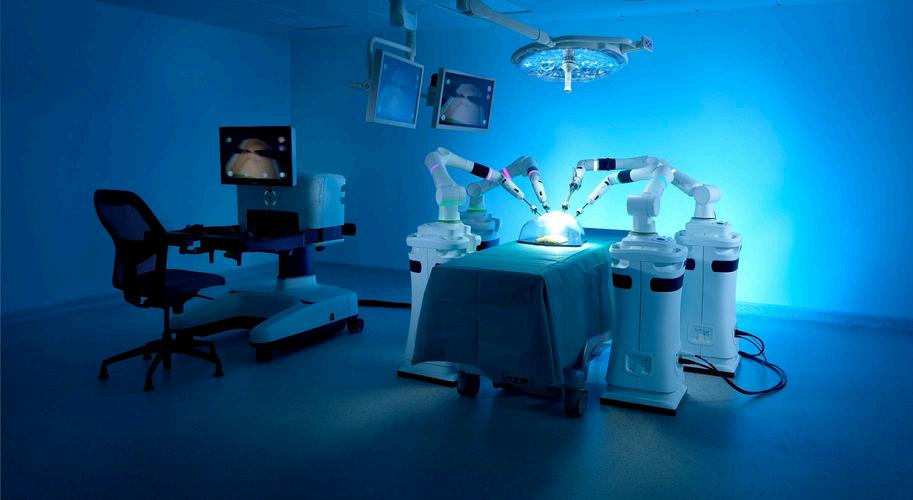
But what exactly is it that Belke and his team design at CMR Surgical, and what does their system actually do in the operating theatre? Versius, the system CMR Surgical develops, is a modular robotic platform for minimal-access (keyhole) soft-tissue surgery in the abdomen. It is made up of several slim robotic arms positioned around the operating table, a high-definition 3D camera (an endoscope) that is inserted through a small incision, and a surgeon’s console where the surgeon controls everything. “It is important to know, first of all, that our robot doesn't currently do anything by itself - the surgeon is always in control. The surgeon sits or stands at the console and uses hand and foot controls; every movement is translated into precise motion of the instruments attached to the robotic arms inside the patient’s body, while the surgeon looks at a magnified 3D view of the surgical field on a screen.
CMR Surgical currently manufactures mostly soft-tissue surgical robots, which work on the abdomen and enable the surgeon to carry out minimally invasive surgery, where only small keyholes are created. Through these keyholes, a camera is inserted and small surgical tools are introduced that replace the surgeon’s hands inside the body. The instruments on the robotic arms can bend and rotate in several directions, mimicking the motion of a human wrist while filtering out hand tremors and allowing very fine movements in tight spaces. “Minimally invasive surgery lowers the risk of infection and complications, which, of course, is very beneficial to the patient," explains Belke. Patients often experience less pain, shorter hospital stays, and faster recovery compared with traditional open surgery, while surgeons benefit from better vision and more ergonomic working conditions.
CMR Surgical’s Vision of Futuristic Surgery
However, the development of surgical systems is nowhere near finished and engineers such as Belke are still trying to make innovations every day. A big focus of this is AI. “Healthcare”, says Belke, “has huge potential applications for robotics and AI and there is so much to be gained from it.” According to CMR Surgical and other experts in the field, there are many developments underway that could give surgeons much more detailed insight into their work. For example, recording operations in a structured way so that surgeons can review precise analyses of their procedure and use that information to improve their skills. Real-time feedback for surgeons is also an area that may see huge improvements in the future. As Belke explains, AI and advanced technologies could help surgeons identify anatomy more quickly than ever, potentially analysing the area to be operated on to set in place ‘no-go zones’ where surgeons may not operate, in order to prevent extensive organ damage. Belke compares the possible trajectory for robotic surgery to the development that was seen with cars, where designs went from autopilot functions that assist the driver, to autonomous cars that can safely get you from one place to another. While autonomously operating robots are still a thing of the far future, Belke says development has already started in small areas of a surgeon’s work. For example, he does not think it improbable to soon see robots do closing sutures on patients – a repetitive, highly standardised task that lends itself more easily to automation. Robots taking over parts of the surgery could take a lot of pressure off the surgeons, who can consequently focus on the more complex and tricky parts of a surgery.
A Cautiously Hopeful Future
j
What you always have to consider with autonomous robotic procedures, however, is the question of responsibility. Risk management is also a significant aspect of Belke’s work. He explains that his team constantly assesses the likelihood and severity of potential risks, which are then mitigated during the design process. In the case of sutures, for instance, engineers can design systems that monitor the pressure applied and compare it to a minimum threshold required for a successful closure, so the robot does not pull too hard or too little on the tissue. Having a surgeon in the room who checks the suture once it is done is also a way of reducing risks even further. The “no-go zones” mentioned earlier could likewise help lower the risk of serious injuries or complications by preventing instruments from entering sensitive areas in the first place.
Critics argue that the development of such high-tech surgical tools could potentially widen already existing healthcare inequalities, as they are very expensive and may not be accessible to everyone. Belke, while acknowledging that this may be a potential problem, also manages to appease the critics: “Our robots make surgery more efficient and faster, and the more efficient surgery is, the cheaper it gets”. The hope at CMR Surgical and across the field is that, as robotic platforms become more compact, modular and easier to integrate into existing hospitals, the cost per procedure will fall and access will improve over time. Of course, this is still an area of development, but Belke is hopeful when looking into the future. He closes with a word of advice to all aspiring engineers: “Ask as many questions as you can, never take anything for granted and question everything you see.” He is excited about the future and can’t wait to see what the next generation of engineers will do.

Thank you so much to Chris Belke for taking the time to interview and provide us with an insight into the future of surgery.
PUPIL ARTICLES: physics & space
Metamaterials and Invisibility Cloaks
Carolyn (L6)
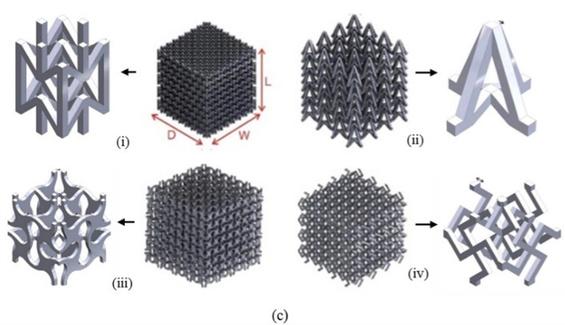
Metamaterials are artificially structured materials which manipulate mechanical and electromagnetic waves to behave in unconventional ways. These materials possess entirely new optical properties which are no longer dependent on chemical composition unlike their natural counterparts.
Negative Index Metamaterials:
Negative-Index Metamaterials (NIMs) were first proposed by Soviet physicist Victor Veselago in 1967. He explored the theoretical possibility of materials that simultaneously possess a negative electric permittivity (ϵ<0) and negative magnetic permittivity (μ<0). Electric permittivity (ε) describes how a material responds to an electric field, specifically, how easily electric charges within the material rearrange (polarize) in response to that field. When permittivity is negative, the induced electric polarization opposes the applied electric field in an unusual way
This causes electromagnetic waves to behave abnormally inside the material. Magnetic permeability (μ) describes how a material responds to a magnetic field, how easily it becomes magnetized. When permeability is negative, the material’s magnetic response is opposite to what occurs in ordinary materials, meaning the magnetic field inside the material behaves in a reversed manner.
When both ε and μ are negative, the material exhibits a negative refractive index, meaning light bends in the opposite direction compared to normal materials. Such material subverted all electromagnetic phenomena:
The Doppler effect: normally observed as a change in frequency when a source moves relative to an observer (for example, a siren sounding higher in pitch as it approaches and lower as it moves away) is reversed in negative-index materials.
The Cherenkov effect: the emission of blue light when a charged particle moves through a medium faster than light travels in that medium, is also reversed, meaning the emitted radiation propagates backward relative to the particle’s motion.
In such materials, converging lenses become diverging lenses and most importantly, light is refracted on the same side of the normal.
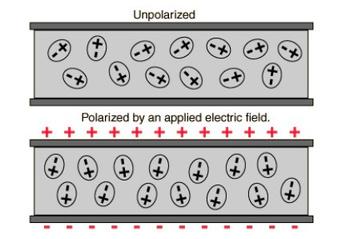
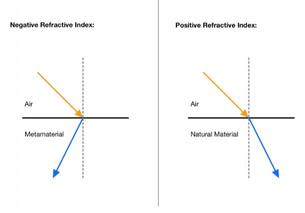
In 2001, negative refraction was experimentally demonstrated by American physicist Robert Shelby and his colleagues at microwave wavelengths. The phenomenon was subsequently extended to optical wavelengths. This was a pivotal point in the development of meta materials as negative-index behaviour allowed for the extreme ε and μ values needed to bend light “backwards” within a material.
Metamaterials and Invisibility:
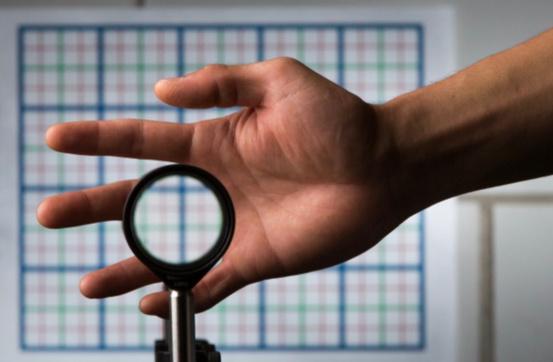
The idea of invisibility has been a staple of science fiction and fantasy for centuries, from the cloaks in Harry Potter to the stealth technology seen in sci-fi films. With metamaterials, the concept once confined by fiction can become reality Invisibility is stemmed in the manipulation of light through and around an object. Normally, objects are visible as they reflect, absorb, or scatter light. The human eye detects these changes and interprets them as shape, colour, and position. Maxwell’s equations, which describe how electric and magnetic fields propagate as light, show that light does not have to travel in straight lines but are dependent on the properties of the medium it travels through. By carefully designing those properties, scientists can engineer light to warp around the object or pass through them undisturbed.
Conclusion:
The exploration of metamaterials and their potential to achieve invisibility represents a significant leap in theoretical and applied physics. As scientists continue to refine and expand on these technologies, metamaterials could play a pivotal role in shaping the future of modern science and engineering, offering solutions to challenges that were previously insurmountable.
Bibliography
Chalmers (2016) Metamaterials open up entirely new possibilities in optics [online] Phys org Available at: https://phys org/news/2016-11-metamaterials-possibilities-optics html Duke edu (2024) David R Smith Group [online] Available at: https://people ee duke edu/ drsmith/metamaterials htm
Encyclopedia Britannica (n d ) Metamaterial [online] Available at: https://www britannica com/topic/metamaterial
Shuaibu, A S , Deng, J , Xu, C , Ade-Oke, V P, Aliyu, A and Momoh, D (2024) Advancing auxetic materials: Emerging development and innovative applications REVIEWS ON ADVANCED MATERIALS SCIENCE, 63(1) doi:https://doi org/10 1515/rams-2024-0021
Wikipedia Contributors (2019) Permittivity [online] Wikipedia Available at: https://en wikipedia org/wiki/Permittivity
https://bigthink com/starts-with-a-bang/invisibility-cloak-183582/
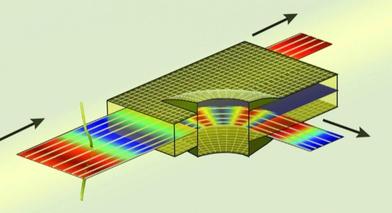
Metamaterials consist of periodically or randomly distributed structures at the micro and nano scale, considerably smaller than the wavelengths of electromagnetic radiation. This property of metamaterials allows light to propagate through them resulting in the optical illusion of invisibility.
Applications of Metamaterials:
Metamaterials offer significant advantages over conventional materials, which contribute to their growing interest and application across a wide range of industries. Some applications include vibration control, telecommunication, superlenses, energy harvesting and medical devices.
Vibration control: Metamaterials can be used to create soundproof barriers or focus sound waves which could revolutionize the acoustics industry. Metamaterials are also being explored for applications in noise control and medical imaging.
Telecommunications: Metamaterials are being used to create antennas that are smaller, more efficient, and capable of handling wider bandwidths with stronger signals. These advantages play an important role in improving wireless communication systems, including the development of 5G technology and future generations of networks.
Superlenses: Metamaterials have made it possible to design superlenses that focus light beyond the usual diffraction limit. This breakthrough allows imaging systems to capture much finer details, leading to higherresolution images in areas like medical diagnostics and microscopic research.
Riccardo (L6)
Introduction:
Schrödinger’s Cat paradox, formulated in 1935, has become a key concept of the counterintuitive and probabilistic nature of quantum mechanics. Quantum mechanics, or quantum physics, is the branch of mechanics that deals with the mathematical description of the motion and interaction of subatomic particles, including the concepts of quantisation of energy, wave-particle duality, the uncertainty principle, and the correspondence principle In this paradox, a cat placed in a sealed box with a device that contains a poison, triggered by the decay of a radioactive atom, is considered simultaneously alive and dead according to the quantum superposition of a microscopic system
The paradox was created originally to describe that a microscopic event can affect a macroscopic event, however this should be prevented by decoherence, a phenomenon that explains the limit between Classical physics and Quantum physics, for instance, two particles in the quantum world can be in two different places at the same time but in the macroscopic world this will not happen In this article, I will explore Schrödinger's equation, the Uncertainty principle of Heisenberg, the entanglement phenomenon and how these are applied to the Schrödinger’s cat paradox and why this is a paradox
Schrödinger's equation:
Schrödinger's equation is the foundational law that governs the quantum world. This law describes how a system’s wave function evolves over time in a predictable manner The equation doesn’t track a single definite outcome but describes a predictable flow of “amplitudes” for every possible state a particle could be in. In this way, the law creates a reality where a single system exists in a superposition of multiple states. The term superposition means that a system can exist in multiple potential states simultaneously
j
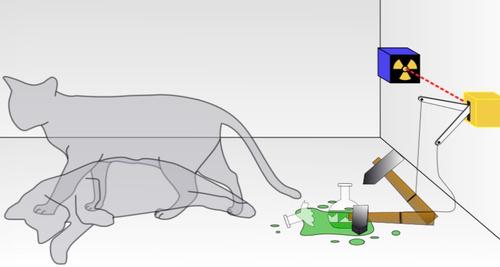
It remains in this superposition until the moment of measurement that forces the system to abandon its overlapping states and collapse into a single reality that we perceive in our daily lives Schrödinger highlights this absurdity by applying this law to the macroscopic world; therefore he created the cat paradox He imagined a cat inside a box where the cat’s life is entangled with a quantum event. As a result, the quantum event is in superposition and since the cat’s life is strictly connected with the quantum event, one can’t know if the cat is alive or not, without measuring, symbolically opening the box, and seeing the state of the cat.
However, modern physics “resolves” this paradox by stating the decoherence between quantum physics and classical physics Modern physics explains that “large” objects or macroscopic bodies are constantly interacting with the environment and thus the wave of possibilities collapses almost instantaneously into the reality that we can perceive and so macroscopic objects follow classical physics. However, the cat analogy has its limits; unlike a subatomic particle, a living organism is far too complex to remain truly isolated, making a state of biological superposition practically impossible to maintain, therefore the cat itself acts as the environment with which the cat interacts. However, some scientists think that this was only a way to avoid the possible connection between the quantum realm and our world. Schrödinger’s cat still remains a paradox for which humans have yet to reach a complete logical conclusion Ultimately, Schrödinger’s cat serves as more than just a paradox; it marks the boundary of our understanding, reminding us that our interpretation of reality is still evolving
Uncertainty principle of Heisenberg:
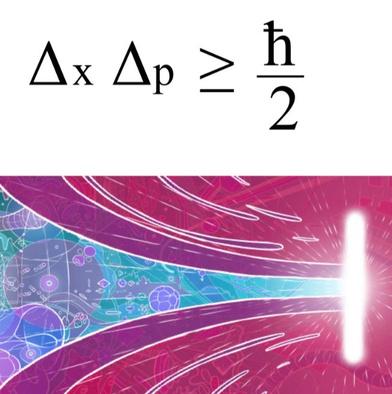
For a long time, scientific progress was tied to the belief that better measurements would eventually lead to a better understanding of reality and a perfectly predictable universe. However, in 1927, Werner Heisenberg shattered this idea by discovering that nature possesses an inherent “fuzziness” at the subatomic level. His Uncertainty Principle states that one cannot simultaneously know certain pairs of properties, such as a particle’s position (x) and its velocity (v) with absolute precision.
Entanglement:
This is not a limitation of the technology, but a fundamental law of quantum physics. The more accurately we pin down where a particle is, the less certain we become of its speed and direction. Mathematically expressed as the inequality that you can see in the picture This principle explains why atoms don’t collapse onto themselves and how the sun manages to shine through a process called quantum tunnelling While this uncertainty may seem a limitation or a barrier to knowledge, modern researchers in quantum metrology are now finding ways to harness it. By using advanced techniques which involve filtering photons to concentrate information. Scientists are turning Heisenberg’s principle into a tool. This fundamental uncertainty leads directly to the concept of quantum superposition, illustrated by Schrödinger’s Cat If a particle’s state is not determined until it is measured, as Heisenberg suggested, then a system can theoretically exist in multiple states at once, like a cat being both alive and dead simultaneously, until an observer measures the system, at which point the system will collapse into a single reality.
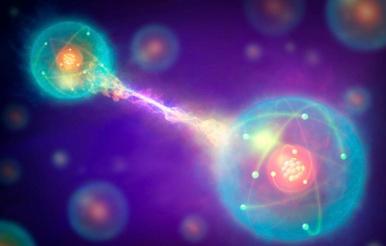
While the Uncertainty Principle defines the limits of what we can know about a single particle, Quantum Entanglement reveals a profound and strong connection between multiple particles Erwin Schrödinger, in 1935, stated that entanglement occurs when two particles, such as photons or electrons, become so deeply linked that they effectively act as a single unified object, regardless of the distance separating them. When particles are entangled, their individual properties, such as the spin, exist in a state of superposition. For instance, if we look at the spin property the particles are both “up” and “down” simultaneously However, the moment one particle is measured, its partner’s state is instantly determined Albert Einstein famously resisted this idea, labelling it “Spooky action at a distance” and suggesting that hidden variables must pre-determine these results.
j
Yet, decades of experiments have ruled out these hidden theories, proving that the correlation arises not from hidden information, but from the quantum connection itself This does not violate the speed of light, as no actual communication travels between the particles; rather, they share a form of quantum information that defies classical logic. This shift in perspective transforms entanglement from a “spooky” mystery into a fundamental tool for future technologies like quantum computers.
This interconnectedness brings us back to the quantum paradox: Schrödinger’s Cat Just as entangled particles remain in a blur of possibilities until observed, Schrödinger’s thought experiment suggests that if a cat’s fate is linked to a quantum event, the cat itself enters a state of entanglement with that event. Until the “box” of the system is opened by an observer, the cat remains both alive and dead, illustrating that in the quantum world, reality is not a collection of isolated objects, but a web of entangled information waiting to collapse into a single truth
Bibliography:
Conclusion:
Schrödinger’s cat remains a powerful symbol of the boundary between the quantum and classical worlds Through Schrödinger’s equation, one understands that reality is fundamentally a superposition of possibilities, where a system exists in multiple states until it is measured Heisenberg’s Uncertainty Principle reinforces this by proving that an inherent “fuzziness” exists at the subatomic level, preventing us from ever knowing every property of a particle with absolute precision. Finally, the phenomenon of entanglement demonstrates that the universe is not made of isolated objects, but of deeply linked information that can act as a single unified entity across space The cat paradox illustrates the absurdity that arises when the quantum laws are applied to the macroscopic world. While the theory of decoherence explains why we do not see dead and alive cats in our daily lives due to environmental interaction Ultimately, the paradox of the cat serves as a reminder that our understanding of reality is still evolving.
Oxford (no date) Oxford English Dictionary, OED Available at: http://OED com (Accessed: 20 December 2025)
Carroll, S et al (2020) Where quantum probability comes from, Quanta Magazine Available at: https://www quantamagazine org/where-quantum-probability-comes-from-20190909/ (Accessed: 20 December 2025) Ball, P et al (2018) Real-life schrödinger’s cats probe the boundary of the Quantum World, Quanta Magazine Available at: https://www quantamagazine org/real-life-schrodingers-cats-probe-the-boundary-of-the-quantum-world20180625/ (Accessed: 20 December 2025)
Image: Dhatfield, D (2008) Available at: https://commons wikimedia org/wiki/File:Schrodingers cat svg#mw-jump-to-license (Accessed: 20 December 2025)
What is Heisenberg’s uncertainty principle? (2013) The Guardian Available at: https://www theguardian com/science/2013/nov/10/what-is-heisenbergs-uncertainty-principle (Accessed: 20 December 2025)
Info+image: Brubaker, B et al (2022) Physicists show how quantum uncertainty sharpens measurements, Quanta Magazine Available at: https://www quantamagazine org/physicists-show-how-quantum-uncertainty-sharpensmeasurements-20220503/ (Accessed: 21 December 2025)
Image: Lea, R (2021) Available at: https://www azoquantum com/Article aspx?ArticleID=261 (Accessed: 21 December 2025)
Caltech’s faculty (no date) What is entanglement and why is it important?, Caltech Science Exchange Available at: https://scienceexchange caltech edu/topics/quantum-science-explained/entanglement (Accessed: 22 December 2025) Info+image: Ferrie, C (2024) Quantum entanglement isn’t all that spooky after all, Scientific American Available at: https://www scientificamerican com/article/quantum-entanglement-isnt-all-that-spooky-after-all1/ (Accessed: 22 December 2025)
Gravity: Force or Entropy?
Clara (V)
Gravity is one of the most famous forces in nature. It keeps our feet on the ground, shapes planets and controls the evolution of the universe. For the past centuries, gravity has been known as the fundamental interaction or the force acting between objects The scientist Einstein himself later showed that gravity works differently than Newton described it Massive objects bend spacetime, and other objects move along this curve, which is why time moves slower next to bigger objects (curvature of spacetime) Spacetime can be imagined as a flexible fabric, where heavy objects create dents that affect how other objects move. This theory has been successfully confirmed by many big names in physics.
However, recent research led to a new and surprising perspective: that gravity is directly connected to thermodynamics. For example, black holes behave like thermal objects with temperature and entropy (because it captures information). This shows the link between gravity and thermodynamics It can now be argued that gravity is, not like we assumed, a fundamental force, but rather an effect that emerges from deeper microscopic processes In physics, many quantities that seem fundamental at larger scales are actually collective effects of tiny particles, such as temperature and pressure If this is true, it would not only change how we understand spacetime, but also how we understand the general laws of physics, making it extremely significant for us to ask the question: Is gravity a fundamental interaction, or an emergent thermodynamic?
Gravity
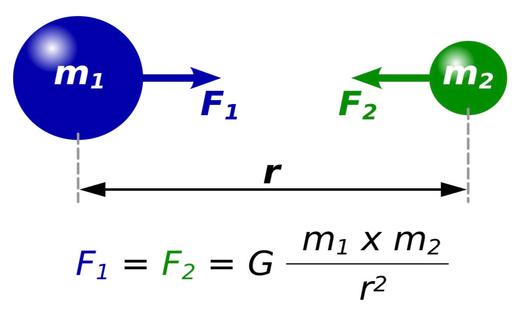
Gravity is the force of fundamental attraction between all things that have mass or energy Gravity is what keeps all planets in orbit around the sun Especially interesting is Newtonian gravity, which in its simplest form describes gravity as two spherical, symmetric masses. Newton’s law of gravitation states that any particle of matter in the universe attracts any other with a force varying directly as the product of the masses and inversely as the square of the distance between them. This means that heavier objects attract each other more and objects that are further apart attract each other less.
Years after Isaac Newton found these laws, the physicist Albert Einstein released the Theory of Relativity, which interpreted Newton's law of gravitation new This law stated that concentrations of mass and energy curve the structure of spacetime, affecting the motion of anything passing by (including light). General relativity predicted many things, such as the existence of black holes (objects with gravity so intense that nothing getting close can escape again), gravitational waves, gravitational lensing, the expansion of the universe, and the different rates at which clocks run in a gravitational field It also showed that gravitation has a speed, which is the same speed as light, which automatically means that changes in gravity don’t happen instantly, but travel through as waves.
Black holes and the thermodynamics of gravity
j
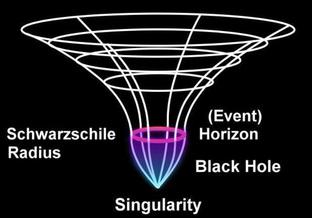
At first glance, black holes appear to be a purely gravitational object. Black holes, characterised by their extreme gravitational fields, which makes it impossible for quantities to pass by without being sucked in. Not even light can escape this region of spacetime called the event horizon. Therefore the event horizon acts like a boundary between what we can see and what we will never be able to observe.
But the work of Bekenstein in the 1970s revealed that black holes behave like a thermodynamic system and because of that they must have an entropy, proportional to the surface of the event horizon. Entropy is a measure of how much information is hidden or inaccessible inside a system.
This theory was then confirmed by Stephen Hawking as he proved that black holes emit thermal radiation (light and other particles). And where light is also energy and heat, giving the black hole a temperature; when a black hole possesses temperature, it also has entropy. This was really surprising, because it was originally thought that black holes are completely black and cold.
This thermodynamic behaviour revealed an unexpected link between gravity, quantum mechanics and information, suggesting that black holes may possess microscopic degrees of freedom (tiny details inside a system that we cannot see), whose collective behaviour gives rise to gravitational phenomena (the observable effects of gravity on matter, light, space, and time) This can show that gravity is not fundamental and rather emerges from underlying microscopic processes, much like temperature emerges from the motion of atoms Black holes therefore are one of the greatest examples to show that gravity is not a basic force, but an emergent phenomenon
Emergent Gravity: From entropy to Einstein’s Equations
The surprising link between gravity and thermodynamics has led physicists to believe that gravity is not a fundamental force, but to believe that it is an emergent phenomenon (emergent gravity) was also quite uncommon. To make this idea clearer the example of temperature was given. Temperature does not come from fundamental properties of individual atoms, it emerges from collective motion of many particles Gravity may also emerge from collective behaviour of microscopic degrees of freedom of spacetime, which suggests that spacetime might be made out of tiny building blocks, similar to how matter is made of atoms.
Overall, if gravity is emergent, that could mean that spacetime has a hidden microscopic structure, we cannot yet fully see And when many of these microscopic degrees of freedom act together, this collective behaviour could be forming the smooth structure
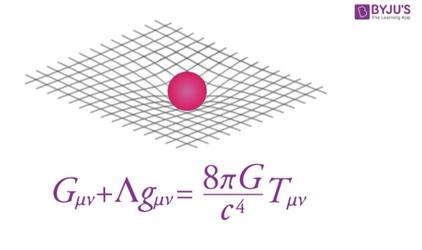
which was described by Einstein’s theory of Relativity This shows that the spacetime curvature is not fundamental, but a large-scale effect (Large-scale effects are things we observe at human or cosmic scales, not at the level of tiny particles)
j
Really significant for this concept is entropy, which measures how much information is needed to describe a physical system. For example if we have marbles arranged in a grid, it needs less information to describe, than if we have marbles scattered randomly. Entropy is especially important if an event horizon (as in a black hole) is involved, because it limits what information an observer has access to. This led Bekenstein to conclude that a black hole must have entropy proportional to the surface of the event horizon, not its volume This is strange because in most systems, entropy depends on volume, not surface
Hawking later proved that black holes have temperature, demonstrating that black holes behave like a thermodynamic system (as we already know)
This led to physicists believing that Einstein’s field equation can be derived from thermodynamic principles, which would mean that his equation acts like an equation of state (thermodynamic formula that links a substance’s pressure, volume, and temperature to describe its physical state).
Emergent gravity, therefore, suggests that gravity is not a fundamental force, but a macroscopic equation describing microscopic information flow This is not proven and research about it is still going, but it opens a new idea of thinking and understanding gravity.
Bibliography:
https://www esa int/ESA Multimedia/Images/2015/09/Spacetime curvature
https://www einstein-online info
https://science nasa gov/astrophysics/focus-areas/what-is-general-relativity
https://www cfa harvard edu/research/science-field/einsteins-theory-gravitation
https://academic oup com/ptep/ article/2025/8/083E02/8233174
https://phys org/news/2014-09-black-hole-thermodynamics html
https://arxiv org/abs/gr-qc/9504004
https://arxiv org/abs/1611 02269
https://www reddit com/r/AskPhysics/comments/1e6j2fk/is gravity an emergent force/
https://spsweb fltops jpl nasa gov/portaldataops/mpg/MPG Docs/Source%20Docs/Einstein%27s%20Field%20Equations
https://www space com/what-is-emergent-gravity
Why it matters
Overall, emergent gravity shows us a different picture of gravity rather than being a basic force of nature, it is a collective effect coming from fundamental microscopic processes It reveals the deep connection between gravity, thermodynamics, and information. One reason why it is so important for us to question gravity, which is often highly misunderstood, is that it can also lead to our understanding other areas of physics better Many major breakthroughs in physics happened because someone questioned something that was once considered unquestionable. A strong example for this is that it can offer a possible alternative to dark matter, suggesting that motion of stars and galaxies might result from gravity on larger scales, rather than an unseen, assumed substance Although the dark matter model explained things from galaxy rotation to the growth of cosmic structure, dark matter particles have never been found. Therefore, emergent gravity contributes to all types of physics, challenging open problems about matter, the structure of the universe and the microscopic origin of spacetime, making it highly significant for all further research in physics
The aliens are out there… Right?
Zahira (L6)
As countless movies and TV shows have probably already shown you, there is a huge chance that we might not be the only life forms out here. But even though we’re not expecting an E.T. to show up on our doorstep, scientists have begun to explore the question that has puzzled both Hollywood directors and experienced astronomers for years: if there really is extraterrestrial life out there, then where is it, and why haven’t we seen any yet? This question is more commonly known as the Fermi Paradox.

j
The obvious and simplest answer is that there simply isn’t anything. Earth is a one-in-a-gajillion phenomenon that happened once and isn’t happening again. The issue with this solution is that there is such a high probability of extraterrestrial life; it is almost impossible that we are the only ones in the universe. Astronomers have reported that there could be as many as 40 billion Earth-sized planets in the Goldilocks Zone (the region around a star where liquid water can exist) in the Milky Way alone. This means there are billions of planets surrounding us with nearly the same capabilities for life. That number is so high that it renders this solution redundant.
The next logical step can be to think, ‘Okay, aliens do exist, but they’re all microscopic bacteria, and we are the most intelligent life forms in the universe.’ This reasoning might seem sound at first, but upon closer examination, it fails to consider a vital piece of information: life on Earth is relatively recent in the universe. Life on Earth is estimated to have started 3.5-4 billion years ago, while our universe has existed for 13.8 billion years. This gives any other possible civilisations a 10 billion-year head start, more than enough time to develop into far more advanced beings than we can ever imagine. Scientists often insist that beings of this level should have complete control over their solar system, or even their galaxies at this point, which further emphasises the question of why we have seen no trace of these hypothetical goliaths. There must be something deeper. Something more… sinister.
This brings us to another popular solution: The Great Filter. This idea proposes that several steps of development propel a species towards galactic conquest, namely:
1.The right star system
2.Reproductive molecules
3.Simple single-cell life
4.Complex single-cell life
5.Sexual reproduction
6.Multi-cell life
7.Tool-using animals with intelligence
8.A civilisation advancing towards the potential for a colonisation explosion
9 Colonisation explosion
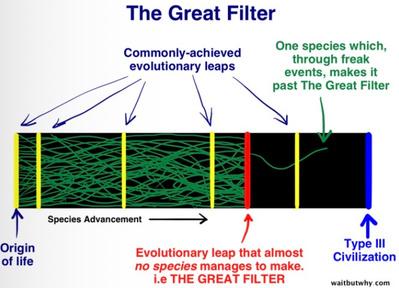
And that at least one of these steps must be improbable to explain the lack of visible extraterrestrial life. Step 9 immediately sticks out; it’s the only one we haven’t reached yet. However, any one of the steps could be the ‘filter’ that we somehow managed to overcome. If steps 1-8 are the filters, then it explains why our feeble radio communication attempts within the Milky Way haven’t amounted to much, and also brings about the sad reality that we just may be alone in the universe. If step 9 is the filter, then it prophesies a rather bleak future for humanity and our interstellar ideals, and ties into another theory that it is simply the nature of life to destroy itself. This idea does read as scientifically plausible to most, but one major criticism is that we have no clue how life and intelligence on other planets may manifest and therefore can’t draw such broad conclusions.
However, this isn’t the only possible solution. Other scientists have brought up an entirely different idea: The Dark Forest hypothesis. This hypothesis has sparked many sci-fi movies and books because of its philosophical nature. Simply put, it is the concept of eat or be eaten No other space-faring civilisations have been found because they’ve either already been destroyed, are too scared of being destroyed, or are the destroyers themselves. As fantastical as it sounds, this idea is an actual dilemma scientists have to consider when searching for extraterrestrial life: what if space research is too dangerous for us to pursue? Of course, danger has never stopped our ‘indomitable human spirit’ in the past, but it does make for a good film.
On the whole other side of things, we have a group of ideas that I like to call ‘Crazy Conspiracies wearing a labcoat.’ These ideas generally differ, but most of them have some concept of ‘the aliens are already here’ and ‘the aliens have influence over us in some way’. For example, the Zoo hypothesis states that extraterrestrial life forms have already become aware of our existence, but simply refrain from interfering in our affairs, like people watching animals in a zoo. A variant of this, called the Laboratory hypothesis, says aliens are actively observing and interfering in our society, the same way we do with rats in a lab. Then there's the philosopher's favourite suggestion: life is all a simulation run by exotic aliens with never-seen-before technology, and nothing really matters. All of these ideas do hold some scientific merit, but they are also held together with very little evidence and can’t really be explored in any significant way.
j
In addition, we have another collective group of theories that, in summary, claim ‘we haven’t looked hard enough’. Some say our technology is not developed enough, others assert our range of exploration is too small. A few more inspired scientists denounce our knowledge of the universe as a whole by claiming our ideas of maths and physics are simply a human invention, not native to the rest of the universe; other species use different systems that may be too different for us to understand. Alien tech might be too incomprehensible for us to even detect. Other viewpoints use a more sociological approach to suggest that maybe alien civilisations have no intention of space exploration and colonisation. Our human ideal may taint our perspective on this issue; in reality, we have no idea whether or not aliens will even be willing to respond to our signals and messages. This theory is particularly interesting to me as it poses the question whether certain things are the nature of life itself, or merely the nature of the limited exposure to life we have had on earth.
To close this discussion, consider this quote from the man Enrico Fermi himself: ‘Whatever Nature has in store for mankind, unpleasant as it may be, men must accept, for ignorance is never better than knowledge.’ No matter what is out there in the universe, whether it really is nothing but floating rocks or giant galaxyspanning spacelords with technology that could fry our planet in seconds, the important thing is that we are looking. We are asking questions, we are making theories and we are trying our hardest to understand the circumstances of our vague existence in our minuscule corner of the universe. Maybe that's the answer to the Fermi Paradox.
Bibliography:
Krauthammer, C (2011) Are we alone in the universe? Washington Post [online] 29 Dec Available at: https://www.washingtonpost.com/opinions/are-we-alone-in-the-universe/2011/12/29/gIQA2wSOPP story.html.
Howell, E (2018) Fermi Paradox: Where Are the Aliens? [online] Space com Available at: https://www space com/25325-fermi-paradox html
Science Time (2025) Brian Cox Explains The Fermi Paradox [online] YouTube Available at: https://www youtube com/watch?v=NbNPBcUgDTs
Darling, D (2007) Life Everywhere Basic Books Gmu edu (2026) The Great Filter [online] Available at: http://hanson gmu edu/greatfilter html [Accessed 21 Jan 2026]
Shostak, S (2019) ‘Zoo hypothesis’ may explain why we haven’t seen any space aliens [online] NBC News Available at: https://www nbcnews com/mach/science/zoo-hypothesis-may-explain-why-we-haven-t-seen-any-ncna988946
Moon Base
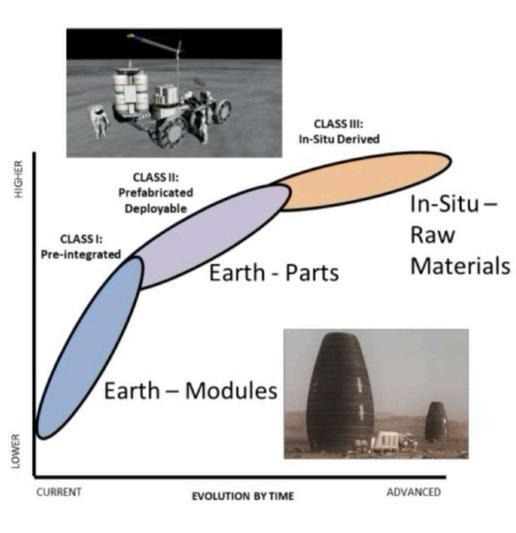
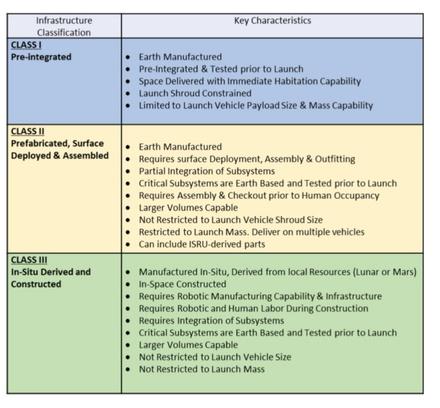
Figure 1: Different types of lunar construction (Kennedy 2002)
The biggest factor in the success of a moon base is its position, as it informs everything else Due to the high cost of transporting material from the earth to the moon, it is necessary to minimise the weight of any equipment we do send Because of this crew habitats will have to be inflatable, to reduce weight and size, and the crew will have to be as self sufficient as possible to minimise the amount of supplies that need to be sent from earth This means getting their own water, making their own oxygen, growing their own food and generating their own power This is called In Situ Resource Utilization or ISRU and it is the key to a successful Moon base The hypothetical colony can make harvest its own water and make its own oxygen by harvesting ice from “cold traps” which are the bottoms of craters which haven’t seen the sun in billions of years leading to vast ice deposits to be trapped down their, which our colonists could harvest and either drink or, using electrolysis, split into hydrogen and oxygen, using the oxygen to breath and the hydrogen can be turned into rocket fuel making the moon an ideal refueling hub for future missions to other planets. To grow food the crew can use aquaponics, which is where plants are grown without soil, in nutrient rich water, called hydroponics and within that water there are fish which sustain themselves off of the roots of the plants and supply nutrients to the plants in return. The use of aquaponics would give the crew a balanced diet of both fish and various vegetables greatly improving morale. However a system of aquaponics is incredibly energy intensive and would require a lot of electricity, luckily the rims of these craters where the “Cold Traps” are, are referred to as “Peaks of Eternal Lights” as they remain lit by sunlight almost constantly making them ideal places to place solar panels. Alternatively a SMR (Small Modular Reactor) could be used, providing a larger and more concistant source of energy, at the cost of having to transport the nuclear fuel from earth.
The inflatability of crew habitats makes them vulnerable to both meteorites and radiation, there are 2 ways in which this could be resolved These inflatable bases could be covered in a 3d printed shell made out of harvested regolith which would insulate the base from both meteors and cosmic rays. However this process is time and energy consuming, taking about 3 months, and has only been proven possible in laboratory conditions . The other option is to place our habitat in lunar lava tunnels, which are large tunnels which are just below the lunar surface, left over from when the moon was made of magma over 3 billion years ago. These tunnels would have the same effect as the shell but without having to build it ourselves, and as a bonus many of them keep a fairly consistent temperature of between 17 degrees and minus 20 making keeping our astronauts warm a lot easier. However, as a drawback it would require equipment to get in and out of the lava tunnels so that our colonists could both enter and exit the colony to return to earth and it would greatly restrict where we could set up our base
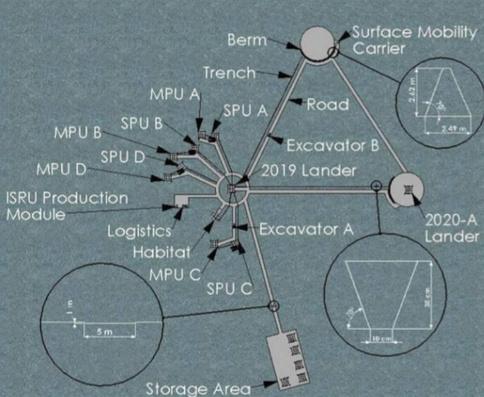
I hope this article has shown you that a Moon Base is not only possible but that it could be done today It is estimated that establishing a Moon Base would cost about $20bn - $40bn spread out over 10 years, which in the grand scheme of things is relatively cheap for the massive pay off a Moon Base would offer The Moon is our first step into both the solar system and the wider galaxy, if we ever want to land on Mars or see distant worlds we need to start with the Moon
Figure 2: Example of a Potential Moon Base (Mueller 2008)
Wave-Particle Duality
Zar (L6)
Look around you, you aren’t seeing things but rather the light reflecting off of things and into your eyes. Your brain then processes this information as an image. For years we have thought of light as being waves that can be reflected, refracted and diffracted and so we’ve made models that simplify these concepts and explain them easily. However, sometimes light acts as particles rather than waves. As previously mentioned, the wave model suggests that light moves as waves. It is not just light however, sound, water and electromagnetic waves also travel as waves. There are longitudinal and transverse waves. Longitudinal waves travel parallel to the direction of vibration and transverse waves travel perpendicular to vibration. These waves can be refracted, reflected and diffracted. For the purpose of this article, I will focus on diffraction. Diffraction occurs when waves spread out after passing through a gap. The ‘spread’ depends on the gap size, with a gap of similar size to the wavelength —the distance between successive maximum or minimum intensities of a wave— leading to the most ‘spread’.
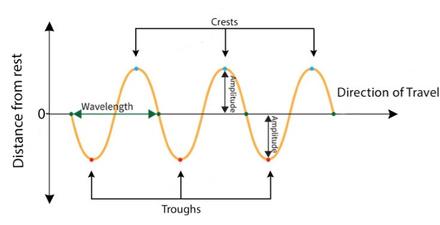
j
To contrast, the particle model describes electromagnetic radiation (includes light) as discrete packets of energy called photons. This corpuscular theory cannot explain diffraction how can light bend around corners if it is a stream of particles? For years physicists disagreed on which model is accurate but what if both were true simultaneously? In the 17th century Sir Isaac Newton attempted to reconcile both theories of light. 19th century Hertz discovered that ultraviolet light shining on metal electrodes changed the voltage at which high voltage sparks jump across a gap.
Waves can also interfere with one another when they meet on the same ‘line’ i.e. medium. This is superposition and it could lead to constructive or destructive interference. Constructive interference occurs when the two waves overlap (crest to crest) causing the amplitudes to add together and destructive interference occurs when the two waves are out of phase (crest to trough) therefore the amplitudes cancel out. Stationary waves are produced when two waves of the same frequency, wavelength and similar amplitude travel in opposite directions. Constructive interference results in points of maximum amplitude (antinodes) and destructive interference results in points of zero amplitude (nodes).
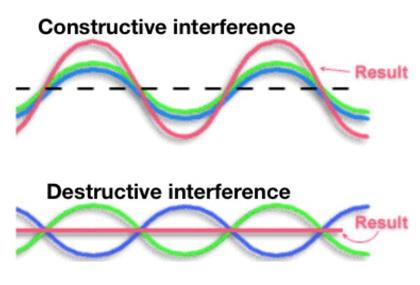
Figure
Types of wave interference
Interference can create interference patterns. For example, Young’s double slit experiment where a light source passed two slits (gaps) and the following ‘curved’ waves interact with each other therefore causing a pattern of constructive and destructive interference seen by bright and dark fringes. Note, a diffraction grating is just multiple slits.
2:
Figure 1: Characteristics of waves
To put it simply, the photoelectric effect is when ultraviolet light shines on a metal causing the emission of electrons called photoelectrons and this contradicts the wave theory that suggests continuous waves of light transfer energy to electrons which would ‘escape’ once they accumulated enough energy therefore a change in the intensity of light would change the (kinetic) energy of emitted electrons However, it was found that electrons are only emitted once the light exceeds a certain frequency (the frequency threshold) regardless of the intensity Albert Einstein later interpreted this as discrete energies rather than a continuous stream. The minimum energy required for an electron to ‘escape’ is calculated via E = hf where h is Planck’s constant which is a fundamental constant that defines the scale at which quantum effects become significant and f is the threshold frequency.
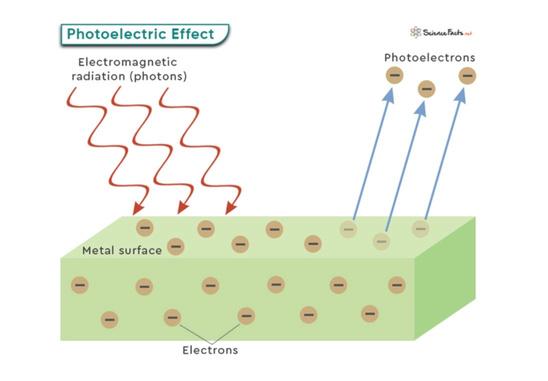
If we take this concept further, in 1924 Louis de Broglie introduced the idea of electron waves whereby electrons around the nucleus acts as a stationary wave and that all matter could be considered as waves He proposed that particles are packets of waves that move with a group velocity and have mass The de Broglie relation: λ = h/p relates momentum and wavelength Lambda is the de Broglie wavelength representing the wave-like nature of an object, h is Planck’s constant and p is momentum
Conversely, electron diffraction shows that particles can act as waves When beams of electrons are fired through a crystal lattice, the electrons undergo diffraction This is because the gaps between the crystal lattice are of similar length to the electron’s wavelength according to de Broglie’s equation An interference pattern of concentric rings is formed on the screen This result is similar to the pattern of visible light passing through a diffraction grating proving matter has wave-like properties.
j
An even more striking example is the single-electron diffraction experiment whereby electrons are fired towards two slits individually and then are detected by a detector. This results in discrete localised points but as more electrons are fired individually, an interference pattern emerges. This suggests each electron exists as a wave of probability that passes through both slits simultaneously. This bridges the two theories by demonstrating the particle is a result of a wave collapsing upon measurement.
This breakthrough suggests that the universe is not definite but rather subject to quantum probability. Instead of an electron having an exact position, it is rather a wave function (ψ) with probabilities of where an electron may be upon measurement. This leads to the observer effect: when we are not looking, an electron is both a wave and particle but once we check, the wave function collapses. Wave-particle duality shows us that an observer does not merely observe but interacts with the quantum system causing the wave function to ‘choose’ a definite state.
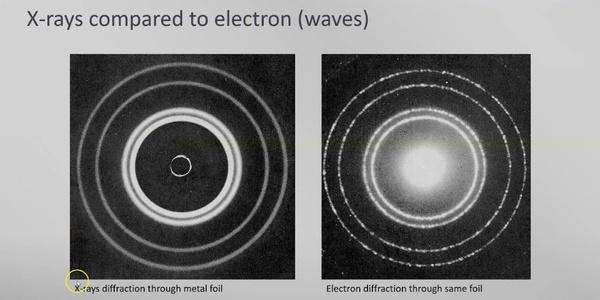
Bibliography
Characteristics of waves - produced by GBH - https://lsintspl3.wgbh.org/enus/lesson/buac20-int-explorewave/5
Diffraction of life - Bernard Burchellhttps://alternativephysics org/book/Diffraction htm
Interference of waves - fuzzing org
https://www savemyexams com/a-level/physics/aqa/17/revision-notes/3-waves/33-interference/3
https://www sciencefacts net/photoelectric-effect html
This caused a significant disagreement between 20th century physicists because it went against the classical assumption that the universe exists independently of the observer. This led to the rift between Albert Einstein “God does not play dice” and Niels Bohr who concluded wave-particle duality is true but the experiment determines which ‘side of the coin’ is shown. The conflict forces us to wonder if physical reality truly exists when no one is watching. Modern technology is based on this peculiarity such as flash memory data is saved even when your phone is turned off works via quantum tunnelling whereby an electron ‘waves’ through an insulator that would be impassable by a usual particle In conclusion, wave-particle duality defines the quantum world and it reminds us that the universe is stranger than originally imagined
Figure 4: X-ray diffraction through metal foil (left)Electron diffraction through same foil (right)
Figure 3: The photoelectric effect (Hertz - 1887)
The Art and Science of Stealth
Demetrios
(M)
Introduction
Stealth is the science of avoiding detection It combines physics, materials science, geometry, and engineering to reduce how easily objects can be observed by radar, sonar, infrared sensors, or even the human eye True invisibility being completely unseen by the human eye is currently impossible for large objects Instead, engineers use stealth technology to manipulate how waves behave, making objects harder to detect. Stealth is now central to all modern and future military equipment such as aircraft, ships, submarines, ground vehicles, drones, and camouflage systems. Modern conflicts, such as the Russia–Ukraine war, show how stealth and detection technologies are constantly competing. This article explains the physics behind stealth, the main techniques, real-world applications, and how it is being challenged today
The Physics of Detection
Radar
Cross Section (RCS)
A key measure of how easily an object can be detected by radar is its radar cross section (RCS). RCS describes how much radar signal bounces back from the object toward the radar receiver. Objects with a large RCS reflect more energy and are easier to detect, while objects with a small RCS reflect less energy and are harder to detect

Wave Interaction
j
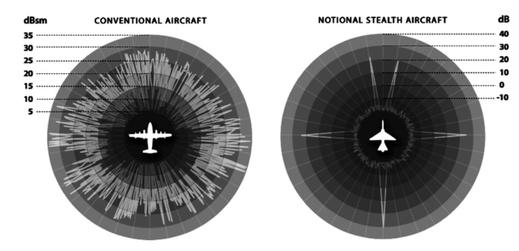
RCS depends on several factors, including the size and shape of the object, the materials it is made from, and the radar frequency Smooth, angled surfaces deflect radar waves away from the source, while materials that absorb radar energy reduce reflections. Low RCS design is a fundamental principle in stealth technology.
Radar Range
The distance at which a radar can detect an object depends on its RCS as well as the strength of the radar signal, the sensitivity of the radar receiver, and environmental conditions. By reducing RCS, engineers can make objects harder to detect from far away.
Stealth relies on controlling how waves, like radar signals, interact with an object. When a wave hits a surface, it can:
Reflect – bounce directly back to the radar
Absorb – energy converted into heat inside the material
Scatter – redirected in multiple directions
Stealth designs aim to minimise reflection and scattering that would return energy to detection systems
Stealth Techniques
Geometry and Shape
The shape of an object is crucial for stealth. Angled surf can deflect radar waves away from the source, while sm curves scatter waves in multiple directions. Sharp edges corners produce strong reflections, so designers mini these whenever possible
Wave scattering: Smoothing surfaces reduces st radar echoes
Diffraction: Minimising gaps and edges prev detectable bending of waves
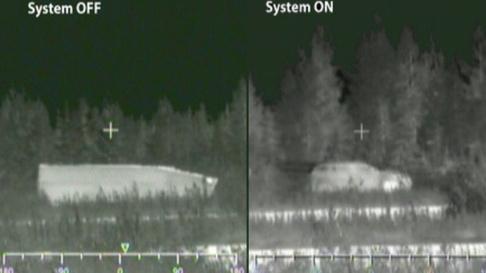
Alignment: Surfaces are aligned so reflected waves miss likely radar positions
Radar-Absorbing Materials (RAM)
Special materials, called radar-absorbing materials (RAM), reduce radar reflections by converting some of the radar energy into heat. Modern stealth aircraft, ships, and some ground vehicles use coatings or composites for this purpose.
Principle: Radar waves induce small currents in the material, which dissipate as heat.
Frequency dependence: Some materials work better at specific radar frequencies; multi-layered materials can cover a broad range
Properties: The composition of RAM determines how much energy it can absorb while remaining lightweight RAM is often combined with careful shaping to minimise detectability
Infrared (IR) Suppression
Infrared sensors detect heat, so reducing thermal signatures is important for stealth. Techniques include:
Engine placement: Hiding hot surfaces inside the body of the vehicle
Exhaust mixing: Mixing hot engine gases with cooler air before they are expelled
Adaptive camouflage: Systems like Adaptiv tank panels mimic the temperature of the surrounding environment Reducing heat output or covering hot areas makes detection by IR sensors much harder
j
Internal Storage
External weapons, fuel tanks, and sensors increase radar reflections. Stealth designs store these internally in weapon bays or recesses, which smooths the overall shape and lowers the radar signature.
Stealth in Different Domains
Stealth techniques are applied across multiple domains, including aircraft, naval vessels, submarines, drones, and even ground vehicles. The principles of geometry, radar-absorbing materials, infrared suppression, and internal storage are adapted to each type of vehicle to minimise detectability.
In the air, the United Kingdom has been at the forefront of integrating these principles. The BAE Systems Taranis a demonstrator unmanned combat aerial vehicle (UCAV), shows how low-observable design is implemented in practice. Its engines are embedded, and it carries no external protrusions, which dramatically reduces radar reflection Similarly, the Future Combat Air System, or Tempest, represents the next generation of British fighter aircraft, planned for the 2030s Tempest is designed with stealthy shapes and internal weapon storage, building on lessons from the 1990s Replica Programme, which allowed UK engineers to develop expertise in low-observable aircraft . Globally, stealth aircraft such as the F-22 Raptor, F-35 Lightning II, and Russia’s Su-57 employ combinations of low radar cross-section, radar-absorbing coatings, infrared suppression, and internal storage to remain difficult to detect [8][9][15].
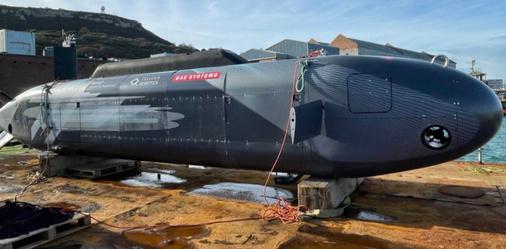
Even drones, such as the Bayraktar TB2 operating in Ukraine, demonstrate that low-observable design can have a significant impact on modern conflicts, where the ability to strike without being seen provides a tactical advantage
Stealth is equally important at sea. The USS Zumwalt is an example of how naval vessels use stealth principles: its hull is angled, it is coated with radar-absorbing materials, and acoustic suppression technology is used to minimise sonar detection. The UK has also explored underwater stealth with projects like the Talisman unmanned underwater vehicle and the Herne underwater drone, which uses a carbon-fibre hull shaped to reduce reflections and echoes in sonar detection Submarines employ similar principles, relying on quiet propulsion systems and anechoic coatings to remain hidden beneath the waves
On land, vehicles like adaptive tanks incorporate panels that mimic the thermal profile of their surroundings, reducing infrared visibility. Low-profile, angled armour designs minimise both radar and thermal signatures, allowing vehicles to move more stealthily in contested environments.
Across all these domains, the core stealth principles are consistent: control how waves interact with the object, reduce reflections through shape and materials, suppress emissions, and store equipment internally By applying these ideas, engineers make it harder for adversaries to detect, track, and target these systems, whether in the air, on land, or at sea Table 1 summarises the RCS of various objects, depicting the advantages of Stealth technology
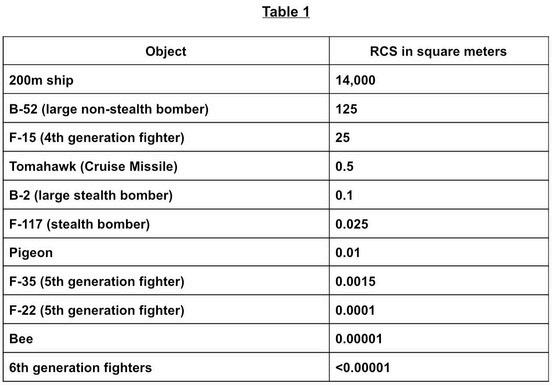
j
Counter-Stealth Technology
Even the most advanced stealth designs are not completely invisible Detection technology has continued to evolve, creating a constant race between stealth and counter-stealth. Low-frequency radar, for example, uses longer wavelengths that interact differently with surfaces designed for high-frequency stealth, making otherwise hidden aircraft detectable. Passive radar systems take a different approach, detecting objects by observing reflections of ambient radio or television signals, without emitting any energy themselves.
Some of the most effective counter-stealth methods rely on bistatic and multistatic radar systems, which use separate transmitters and receivers These systems can pick up radar energy scattered in unexpected directions, revealing aircraft that were designed to deflect radar signals A historical example of this was the 1999 shootdown of an F-117 Nighthawk over Kosovo, where low-frequency bistatic radar detected the aircraft despite its advanced stealth design. The United Kingdom has also invested in counter-stealth technology. Naval radars such as the S1850M, an AESA longrange system, are capable of detecting low-observable aircraft at extended distances, showing how modern radars can overcome some stealth features . Looking further ahead, space-based detection systems offer a new frontier in counter-stealth China has publicly announced satellites that can detect stealth aircraft by analyzing disturbances in the electromagnetic environment between satellites and the ground, potentially bypassing traditional stealth protections Experimental technologies, such as quantum radar, may also one day identify stealth objects by detecting minute changes in single photons. Together, these counter-stealth technologies demonstrate that while stealth can greatly reduce detection, it is not foolproof. As detection methods become more sophisticated, stealth designs must continuously adapt, making the interplay between stealth and counter-stealth a dynamic and ongoing challenge in modern defence systems.
Conclusion
Stealth is the science of controlling waves to reduce detectability By carefully designing geometry, radar-absorbing materials, infrared suppression, and internal storage, engineers can lower radar, thermal, and acoustic signatures for air, naval, ground, and unmanned systems.
Modern conflicts, such as Ukraine, and historical examples like the F-117 shootdown demonstrate that stealth can be defeated with the right counter-technologies. UK projects such as Taranis and Tempest highlight Britain’s innovation in low-observable systems, while radars like S1850M illustrate counter-stealth capabilities China’s space-based detection announcement shows the challenges stealth will face in the future
A simple Haileybury experiment could use a small metal object and a microwave or sound wave to show how shape affects reflection, demonstrating the core physics behind stealth.
Bibliography
D K Barton and S A Leonov, Eds : Radar Technology Encyclopedia, Artech House, 199 D Richardson: Stealth Warplanes, Zenith Pres, 2001 http://www users globalnet co uk/~dheb/2300/Articles/PG/PGSA htmhttp://www ae metu edu tr/~ae451/signature SO pdf
M I Skolnik:Introduction to Radar Systems (2nd edition),McGraw Hill Book Company, 1981https://www independent co uk/news/uk/home-news/raf-tempest-new-fighter-jet-farnborough-b2583615 html //defensereview com/bae-systems-introduces-taranis-jet-powered-low-observable-unmanned-combat-air-vehicle-ucav-meet-the-new-god-of-thunder/https://euro-sd com/2025/03/articles/43315/growing-affordable-mass-in-theunderwater-battlespace/ https://www researchgate net/publication/308781073
PUPIL ARTICLES: sport science
The new way to win: What is doping and how is it detected?
Clara (L6)
Introduction
Doping is the use of banned performance enhancing drugs or techniques by athletes as a way of cheating. With the Winter Olympics in Milano Cortina, the spotlight once again turns to the best of what the world has to offer in terms of sports. But with the number of record breaking achievements, one question always remains in the back of your mind: are these solely the result of years of training or was there some unauthorized help involved? The biggest sporting event of the year thus raises the ever pending question: Why would athletes take performance enhancing drugs? Is it worth the risks? And how can they be detected to ensure fair sport?
What are the kinds of doping?
There are many substances with performance enhancing features. The most common ones: Anabolic Androgenic Steroids like testosterone, growth hormones, stimulants and narcotics. This article will focus on substance doping although there are many other ways to dope like blood and technology doping.
How does it help an athlete?
As previously described, performance enhancing drugs like the name suggests, have a significant impact on the athletes performance. The different kinds have different effects:
Anabolic androgenic Steroids (AAS):They work like testosterone. They increase muscle size by hypertrophy (enlargement) and formation of new muscle fiber through the increase of gene transcription and protein synthesis. There is also an increase in aerobic performance-endurance and anaerobic performancestrength
Growth hormones: They increase lean body mass which is mainly relevant for sports that rely on low fat to muscle ratio like running, diving, gymnastics
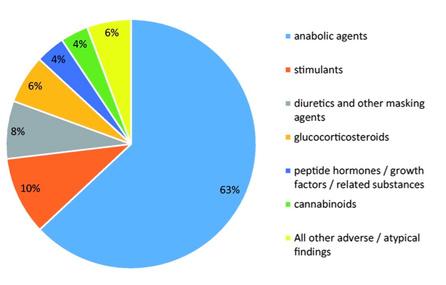
Stimulants: They increase the levels of excitatory neurotransmitters like dopamine in the brain. The fight or flight response is activated, leading to an increase in physiological reaction. The amount of time that can be exercised as well as alertness is increased and fatigue is decreased.
Narcotics: They bind to opioid receptors in the brain, spinal cord and other organs to block pain signals. This allows athletes to continue through injury and pain
Diuretics: These mainly have the task to flush other substances out of the system before testing.
How do you detect doping?
If asked to provide a sample for testing, this would most likely be a urine sample that will be separated into an A and B sample: one for current testing, one to have the opportunity to retest later. For many substances, there is no clear way known for determining if it is present since with the detection method you can find a way to circumvent it. Since AAS is the most commonly used substance there is a lot of information on the identification process and it can be assumed that other processes are similar. So the process will be explained on the basis of AAS testing.
The process can be explained in four steps.
Step 1: Sample preparation
The sample is buffered to near optimal pH for the next steps. Β-glucuronidase is added to split the sample into unconjugated steroids which with the next step are more volatile and less polar. Volatility is the tendency of a substance to vaporise. Increased volatility is necessary since the sample needs to easily evaporate in the third step. The sample is then extracted by liquid to liquid extraction. The aqueous urine and an organic solvent are mixed and then let to separate. The steroids move to the organic layer that is then evaporated leaving the residue of steroids which is more practical for the following steps. The decreased polarity through the preparation is important as it will dissolve better in the organic solvent since like dissolves in like.
Step 2: Derivatization
Polar Groups like hydroxyl groups (OH-) in the sample are replaced with nonpolar groups to increase volatility through lower boiling points. This happens because of weaker intermolecular forces, the electrostatic attraction between molecules, and less thermal stability With weaker intermolecular forces it needs less energy to overcome them. The sample is now vaporised.
Step 3: Gas chromatography (figure 1)
A gas chromatograph is made mainly of the column, a long tube through which the vaporised steroid sample and a carrier gas (often helium) pass. The different components of the sample pass through at different rates due to attractions with the inner coating of the column (the stationary phase). This leads to different retention times, the time they stay in the column. Each component of the sample has a characteristic retention time.
Step 4: Mass spectrometry (MS)
There are many different types of MS. This example uses Time of Flight mass spectrometry (TOFMS). In a chamber the gas molecules from the gas chromatography are ionized (turned into a charged molecule through an electron impact). The ions are now accelerated into an electrical field and the time that it takes for them to reach the detector is measured. The time it takes to reach the detector depends on the velocity (speed) of the ion, which depends on the mass to charge ratio. Therefore, the measured time can be converted through calculations into a mass to charge ratio from which you produce a mass spectrum.
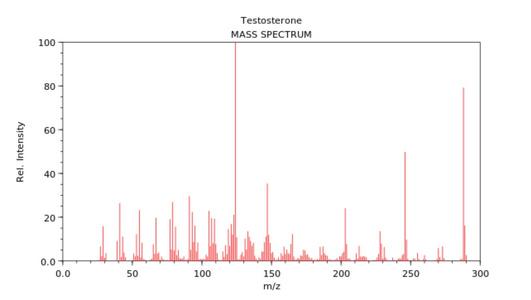
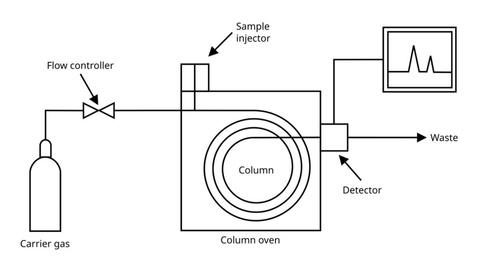
Using the retention time (RT) from the gas chromatography and the mass spectrum patterns, like the one above, it is compared to steroid libraries that have the times and patterns for different steroids. A match requires an RT within ±0.5% of the registered time and about 85% similarity of mass spectrum patterns to the reference. If a match is found and it exceeds the specific WADA thresholds and there is no medical reason for it to be so, it is considered a positive test that will be followed up with disciplinary action. RT and mass spectrometry patterns work well in combination since it provides highly accurate identification and false positives using both are highly unlikely.
Figure 2: Diagram of a gas chromatograph (2015) Wikipedia
Figure 3: NIST Mass Spectrometry Data Center on behalf of the United States of America (2014)
What are the physical consequences of doping?
Taking performance enhancing drugs is known to have many side effects although they vary by type of substance used. Many substances, especially newer ones, have many unknown side effects and risks involved. Since Anabolic Androgenic Steroids have been researched the most they have the most known side effects. These include high blood pressure, blood clots, heart attacks, strokes and artery damage. These cardiovascular issues are mainly caused by increasing levels of low and high density lipoproteins known as “bad and good cholesterol” respectively. They are deposited in the arteries and disrupt blood flow. Steroids also influence the hormonal system with the main side effects in men being an increased risk of testicular cancer and in women excessive growth of body hair and coarse skin. It also causes damage to the liver that causes jaundice and in teenagers that take these substances it causes premature growth stops. Other substances in addition to these may cause: diabetes, vision problems, joint pain, dehydration, low mineral concentrations, tremors and sleep disorders.
What are the psychological consequences of doping?
Not only does it have consequences on the body and health of an athlete but also on the image and mental wellbeing. When caught, athletes face sanctions like the loss of medals and titles and bans up to lifetime. This leads to a big financial loss since they lose sponsors, government funding, and have to return prize money. Athletes also have their image damaged. In the public eye they are considered cheaters and that can have a huge strain not only on their reputation but also on their private life, since people might cut ties with them. This all has a huge impact on the athletes mental wellbeing as they will feel isolated and all that emotion might trigger other mental health issues.
Why would an athlete dope after all?
All the consequences and the likelihood of being detected raise the question: why risk it? Many athletes link their sense of self worth to their success and achievements. If they perform poorly this can lead to an identity crisis. They see doping as the opportunity to regain their confidence and self worth since it promises the opportunity for success that is their personal validation. Another important factor is cognitive dissonance. This is when actions contradict beliefs and values. Most athletes know of all the risks and consequences but will downplay them to avoid having to acknowledge all the negative aspects that they are willingly taking on. The one goal of most athletes is to create a legacy and many will try to do just that whatever the cost. This includes all the consequences of doping.
With growing anticipation surrounding one of the biggest sporting events of the year, the question of fair play remains as relevant as ever. Even though the detection and identification of doping is very advanced and every year many athletes get disciplined for doping, there are still some trying to game the system. Detection techniques try to ensure that victory is the true reflection of human excellence and not just of the best that science has to offer, but this is not always possible. Doping control is an ongoing chase of new ways to cheat in sport and new ways to detect them, and there will always be people trying to get an unfair advantage. With detection methods always one step behind sport will never be fair.
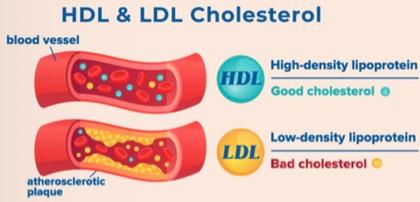
Figure 4: Low-Density Lipoprotein (LDL) (2024). Dr Stemcells Thailand
Bibliography
Opioids (narcotics): Types and risks (2025) Cleveland Clinic Available at: https://my clevelandclinic org/health/drugs/21127-opioids (Accessed: 14 January 2026)
Learn about the risks of performance-enhancing drugs (2023) Mayo Clinic Available at: https://www mayoclinic org/healthy-lifestyle/fitness/in-depth/performance-enhancing-drugs/art-20046134 (Accessed: 14 January 2026)
World anti-doping code (2021) World Anti-Doping agency Available at: https://www wada-ama org/sites/default/files/2025-02/Redline - 2021 Code - 2027 Code v2 pdf (Accessed: 14 January 2026) Steroids know the effects (2025) NHS choices Available at: https://www awp nhs uk/patients-and-carers/leaflets-and-resources/patient-and-carer-information-leaflets/conditions-andtreatments/steroids-know-effects#: :text=What%20are%20steroids?,failure%2C%20stroke%20or%20heart%20attack (Accessed: 14 January 2026)
Anabolic steroids and other appearance and performance enhancing drugs (apeds) (2024a) National Institutes of Health Available at: https://nida nih gov/research-topics/anabolic-steroids#references (Accessed: 14 January 2026) Time-of-flight mass spectrometry (2025) Wikipedia Available at: https://en wikipedia org/wiki/Time-of-flight mass spectrometry (Accessed: 14 January 2026) Gas chromatography (2025) Wikipedia Available at: https://en wikipedia org/wiki/Gas chromatography#Methods (Accessed: 14 January 2026) Raising the game for Clean Sport (2026) World Anti Doping Agency Available at: https://www wada-ama org/en (Accessed: 14 January 2026)
The Truth To Maximising Performance Lujza (L6)
Introduction
Athletes are always trying to enhance their performance but do they take everything into account? While athletes often focus on the physiological aspect, unless needed, small amounts of athletes focus on the biomechanical and psychological aspect which is what makes them become a better and well-rounded athlete. Not only that, understanding all the factors that go into their sport is the difference between 1st and 4th place.
Pillar I: Physiological
Overreaching within training:
To truly ensure the most comes out of training, there needs to be balance between resting and recovering - both essential to making you a better athlete. However, during the training period, there may be times where a hard workout takes place and that can impair the following day's performance leading to overreaching. It can be beneficial, when executed properly.
Functional overreaching -
This type of overreaching purposefully places the athlete into this state. However, athletes manage their recovery in a way that allows them to reach a state of super compensation, where performance increases. (Goom, 2017) Super compensation is the end result, it is when the body adapts to the load of training and regenerates its muscle fibres to be able to become stronger for future training. (Fitebo Authors, 2023) An example of this is attending a training camp and then following it with a period of rest and recovery to maximise the effects of the training. (Goom, 2017) Studies have proven that, while initially this method decreases performance, it ends up boosting it, once the super compensation phase is hit (lasting roughly 1-3 days). (Luke, 2020)
Non-functional overreaching -
This is the negative type of overreaching, occurring when excess training is done with inadequate recovery and an imbalance with mental health, where it could potentially result in injury and illness (Overtraining Syndrome), however it will definitely result in continual fatigue and a decrease in performance. (Physiopedia contributors, 2024) This starts to break your body down, as it is working to try and minimise the harmful effects of overreaching. (Hammer Athletic, 2015) Unluckily, changing your training load may not get you out of this stage as there are many possible causes such as but not limited to: stressors including personal life and occupational, previous illness, altitude exposure. (Goom, 2017)
The two superpowers that help you achieve great performance: To ensure you perform well, VO2 max and lactate threshold both come in play They bridge together to help you hold a higher performance such as pace for a longer period of time without suffering such great physical consequences.
VO2 max -
VO2 max is the maximum amount of oxygen your body can absorb during exercise, and is measured in millilitres of oxygen per kilogram of body weight per minute (mL/kg/min). It contains three main components which are heart volume and lung capacity, capillary delivery, and muscle efficiency and is a measure of how hard your body can work. It’s represented by a number and the higher the number, the better cardiometabolic health you have. This is luckily something that can be trained through endurance training, interval training, and sprint interval training. (Baird, 2024) An example of a group of athletes that greatly benefit from this is runners, as the higher their VO2 max they have the faster paces they can run at for longer.
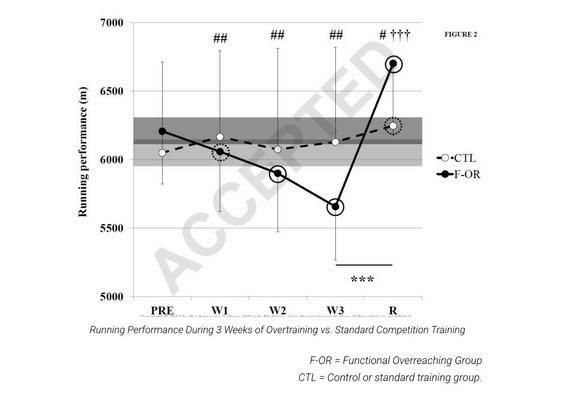
Lactate thresholdLactate threshold is the point at which lactate builds up in the bloodstream faster than the body can take it. Lactate is a byproduct of anaerobic metabolism after pyruvate is produced quicker than it can be used aerobically Then the unused pyruvate splits into lactate which is what causes nausea, as our brain is trying to get us to stop. (Physiopedia contributors, 2022) However, once the correct measures are taken to improve lactate threshold, there can be an increase in metabolic efficiency, bone strength, and improved oxygen utilization - all beneficial for athletes, however more for endurance athletes. (Physiopedia contributors, 2025) Some ways to improve this is by training at threshold as they will teach the body how to dispose of lactate more efficiently, and high-intensity interval training (HIIT) which will help the body adapt to higher lactate levels. (Performance Medicine Institute Authors)
Muscle types and their advantages:
There is no ‘one type that fits all’ muscle fibre as different sports need different types of adaptations. There are 3 different types of muscle fibres and they’re all prevalent in elite athletes: Type 1a, Type 2a, and Type 2x. A person will not only have one type of muscle fibre, rather they will have a ratio that will stay roughly the same. There is currently research happening to see whether changing muscle fibres is possible, however trying to train the muscle fibre they would want most prevalent, can help show a slight change in the ratio. (Golden)
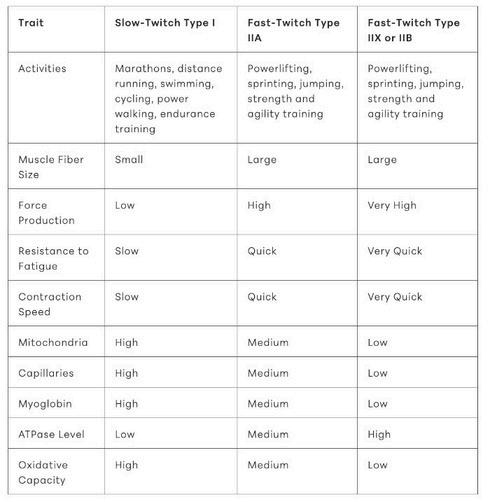
Pillar II: Biomechanical
Biomechanics:
Type 1a: These fibres are more resistant to fatigue and most seen in distance runners, swimmers, cyclists, walkers, and more. These get their energy from aerobic respiration, meaning they receive more blood flow which makes them look red. Compared to other types of muscle fibres, these have a high concentration of mitochondria where aerobic respiration takes place. (Golden)
Type 2a: This is the fibre in between type 1a and type 2x. They use both aerobic and anaerobic pathways to create medium power for a medium amount of time. They are mostly seen in sports like powerlifting, strength and agility training. (Golden)
Type 2x: This is the fibre that helps make Usain Bolt quick. They have a large force production and contraction speed which allows for athletes to hit top speeds needed. They only use anaerobic pathways, meaning they receive less blood flow and oxygen which only allows them to produce force for a short period of time. (Golden)
Biomechanics is what applies the laws of mechanics and physics to the movement of living things, such as athletes. This specific field helps the whole sports world understand how to optimize performance without risking the health of the athlete. There are two sub-sections of biomechanics: kinetics and kinematics. Kinetics is the investigation of the forces that cause motion like muscular force and gravity, while kinematics quantifies the properties of movement like velocity and acceleration. (Wilcox, 2024) Through this there are many optimizations that can be made to help athletes, such as technique refinement, personalized training, and identifying risk factors. (Uplift Editorial Team, 2024) For example, a swimmer can look at butterfly technique, or a rugby player can look at how to pass the ball more efficiently.
First law:
Newton's laws:
Understanding how Newton’s laws occur in sports can help athletes use it to their advantage rather than combat against it
The law of inertia helps maintain stability and control during a movement. In a sport that needs to overcome inertia, understanding it will make the athlete and coaching team create plans that can help minimise the effect. An example of this law is during an athletics sprinting race, as the athletes need to overcome inertia to start running, so that’s why they start in a position where they almost fall forward. (Thi Thu Ha, 2025)
Second law:
This law is more specific to explosive activities like sprinting and weightlifting. This is because it depends on the athlete’s ability to generate force through their muscles, to determine how fast they will be. Training programs often rely on strength, technique, and force application to improve their acceleration efficiency. (Thi Thu Ha, 2025)
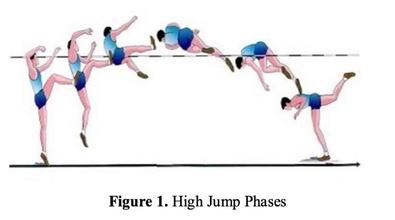
Third law:
The law of action and reaction helps athletes like swimmers or jumpers. Understanding this law helps jumpers get the most out of their force pushing into the ground or swimmers get the most out of their stroke when they pull in the water. The success of using this law heavily relies on having correct form. (Thi Thu Ha, 2025)
Pillar III: Psychological
Mental techniques:
Success in athletic performance doesn’t only depend on the physical work that’s put in, your actual performance can depend on your psychological strength. From setting realistic goals, to knowing how to overcome a hurdle in the moment, differentiates a good athlete from a great one. While visualizing is a great way to prepare yourself for a race, the toughest mental moments come when injured. Instead of being mad at yourself for not performing, celebrating the little things can both motivate you and help you return safer. (Anna Duggan, 2024)
OCEAN5:
The big five model is an assessment which shows what type of person you are, specifically measuring openness, conscientiousness, extroversion, agreeableness, neuroticism. While there isn’t a proven personality linked with elite performance, understanding what yours is can help you achieve your potential. There are two that have statistically great positives on athletes and those are conscientiousness and extroversion. This means that the athlete is organised and social. However for other aspects like agreeableness and openness, they depended on sport and the sex of the athlete. Working to develop skills of the one that benefits your sport can help you stand out from the crowd. (Yang et al., 2024)
Conclusion
All of these are interlinked, you may not be able to do workouts as well because of poor psychological health, or maybe not be able to hit top speeds because of bad biomechanics. Overall by perfecting these areas, not only can you match first place, you can set new records all while using your body sustainably
Bibliography:
Anna Duggan, D PT (2024) Mental training for sports success, Mayo Clinic Health System Available at: https://www mayoclinichealthsystem org/hometown-health/speaking-of-health/train-your-mind-for-raceday#: :text Mental%20approaches%2C%20such%20as%20relaxation,negative%20thoughts%20if%20they%20develop (Accessed: 28 December 2025)
Baird, K (2024) Vo2 Max: What it is and how to improve it, Hospital for Special Surgery Available at: https://www hss edu/health-library/move-better/vo2max#:~:text=To%20go%20back%20to%20biology,the%20better%20your%20cardiometabolic%20health (Accessed: 28 December 2025)
Fitebo Authors (2023) What is supercompensation?, Fitebo Available at: https://fitebo com/en/blog/what-issupercompensation#: :text=Supercompensation%20is%20the%20result%20of,and%20nutrition%20of%20the%20muscles (Accessed: 28 December 2025)
Golden, N (no date) Understanding fast twitch vs slow twitch muscle fibers: NASM, Become a Certified Fitness and Wellness Professional Available at: https://www nasm org/resource-center/blog/understanding-fasttwitch-vs-slow-twitch-muscle-fibers#: :text=Think%20of%20the%20story%20of,responsible%20for%20short%2C%20powerful%20movements (Accessed: 28 December 2025)
Goom, T (2017) Key training concepts: Stress-recovery balance, overreaching and overtraining , RunningPhysio Available at: https://www running-physio com/stress-recoverybalance/#: :text=Intimately%20linked%20to%20stress%2Drecovery,loss%20of%20stress%2Drecovery%20balance (Accessed: 28 December 2025)
Hammer Athletic (2015) Functional vs non-functional overreaching, Hammer Athletic Available at: https://www hammerathletic com au/functional-vs-non-functionaloverreaching/#: :text Non%2Dfunctional%20Overreaching%20*%20Persisting%20decreases%20in%20performance,causes%20of%20underperformance%20(previous%20injury%20or%20illness) (Accessed: 28 December 2025)
Luke, H (2020) WHAT IS SUPERCOMPENSATION? [online] CMS Fitness Courses Available at: https://www cmsfitnesscourses co uk/blog/what-is-supercompensation/ Performance Medicine Institute Authors (no date) Lactate threshold and Exercise Performance Phoenix, AZ: Athletic Performance Phoenix, AZ, Picture of Performance Medicine Institute Available at: https://www performancemedinst com/edu/ltep/?pl 1678&plp 54832#: :text Athletes%20who%20can%20push%20their,density%2C%20and%20improved%20oxygen%20utilization (Accessed: 28 December 2025)
Physiopedia contributors (2022) Lactate threshold - physiopedia, Lactate Threshold Available at: https://www physio-pedia com/Lactate Threshold (Accessed: 28 December 2025)
Physiopedia contributors (2024) Overtraining Syndrome [online] Physiopedia Available at: https://www physio-pedia com/Overtraining Syndrome
Physiopedia contributors (2025) Anaerobic exercise - physiopedia, Anaerobic Exercise Available at: https://www physio-pedia com/Anaerobic Exercise (Accessed: 28 December 2025)
Thi Thu Ha, N (2025) Application of the laws of dynamics in physics for sports performance analysis, SPORT TK-EuroAmerican Journal of Sport Sciences Available at: https://digitum um es/server/api/core/bitstreams/c4e2c5ee-16cd-45c0-9a35-3e395fc769ce/content (Accessed: 28 December 2025)
Uplift Editorial Team (2024) How sports biomechanics helps athletes: Enhancing performance and preventing injuries, Uplift Available at: https://www uplift ai/blog/how-sports-biomechanics-helps-athletes-enhancingperformance-and-preventing-injuries (Accessed: 28 December 2025)
Wilcox, B (2024) Sport Biomechanics, Mass General Brigham Available at: https://www massgeneralbrigham org/en/about/newsroom/articles/biomechanics-in-sports (Accessed: 28 December 2025)
Yang, J -H et al (2024) Relationship between athletes’ big five model of personality and athletic performance: Meta-analysis, National Library of Medicine Available at: https://pmc ncbi nlm nih gov/articles/PMC10813302/#: :text=The%20results%20of%20this%20study%20demonstrate%20that,athletes%20in%20various%20sports%20was%20statistically%20significant (Accessed: 28 December 2025)
PUPIL ARTICLES: ai &
Bérenger (L6)
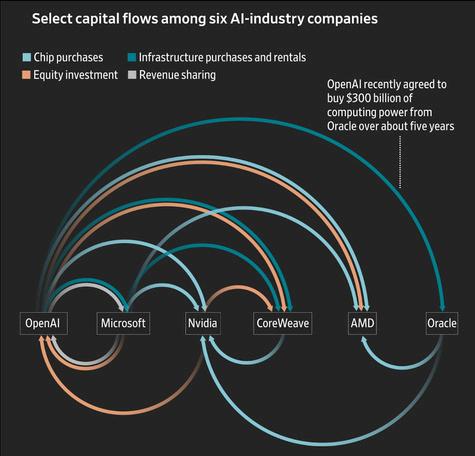
A figure to show the dense capital flows among OpenAI, Microsoft, Nvidia, CoreWeave, AMD, and Oracle, spanning chip purchases, infrastructure deals, equity stakes, and revenue sharing The overlapping loops show how money circulates within a tightly interconnected AI ecosystem, fuelling rapid growth while concentrating risk
are paying customers Revenue projections for the industry fall short of what analysts estimate is required for profitability Bottlenecks like electricity supply, hardware replacement costs, and concentrated market share in a small number of firms amplify the risk.
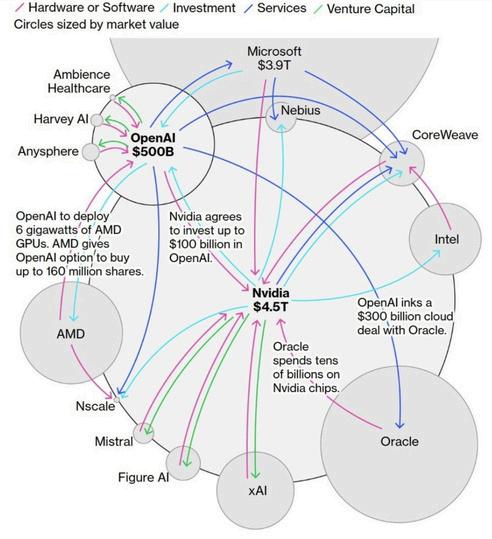
This chart shows the tight web of multibillion-dollar investments and supply deals linking Nvidia, Microsoft, OpenAI, and other AI firms. The concentration of capital and interdependence highlights how much the AI boom rests on a small group of dominant players.
Compared to the dotcom bubble, however, there are key differences:
Valuations, while high, are not yet at the extreme levels of 2000 The trailing P/E ratio (Price to Earning Ratio) for the S&P 500 is roughly 30, compared to 46 during the dotcom peak
o
Many public tech companies have strong financials, minimal debt, and significant cash reserves Loss-making startups like OpenAI are backed by financially strong firms
Vendor financing (suppliers lending money to buy the suppliers’ product), while present, represents a fraction of total AI spending Reporting standards have improved since 2000, and the macroeconomic environment is different
There is a bubble of some sort High valuations leave little room for error and can lead to lower expected returns. The current investment activity is unsustainable, layoffs are ongoing, and market liquidity may be strained. Consolidation in the AI space is likely, as not all 500+ AI companies can survive. Technological revolutions historically generate boom and bust cycles, with only a few companies emerging as long-term winners.
Ultimately, we cannot predict how this will play out. AI could be highly profitable, or demand might never meet expectations. Timing a bubble is nearly impossible; Alan Greenspan called out "irrational exuberance" in 1996, more than three years before the dotcom crash. While the AI space has risk, it also has potential. Investors must balance optimism with caution.
Simran (LS2)
What is AI, and how does it work?
AI (Artificial intelligence) is rapidly increasing in popularity. As every day goes by, it has become increasingly involved in everyday life for the past decade Primarily, AI was used for spotting family and friends in smartphone photos, personalising social media feeds and helping in medical breakthroughs. But now, chatbots (eg ChatGPT, Meta AI and Google Gemini) are being used in many more situations like voice assistants and analysing data for fraud detection. However, there are now some raised concerns about whether or not AI is beneficial for the environment.
AI is enabled through a vast amount of data to search for patterns, algorithms and stimulate real human intelligence, undertaking tasks such as recognizing images and understanding different languages. It involves supervised and unsupervised training models on data in order to process information mathematically, as well as acting on feedback and slowly developing skills over time.
The AI Cooling System
In recent years, the expeditious growth of AI has significantly altered how we live our lives and do our jobs However, most of the concerns about AI are focused specifically on its electricity consumption of data centres. What people don’t know is that there is a less visible environmental concern about AI’s water usage to cool down.
AI ‘needs’ all of this water for three main reasons:
Keeping computers cool directly at data centres
Electricity generation (indirect)
During their hardware’s manufacturing
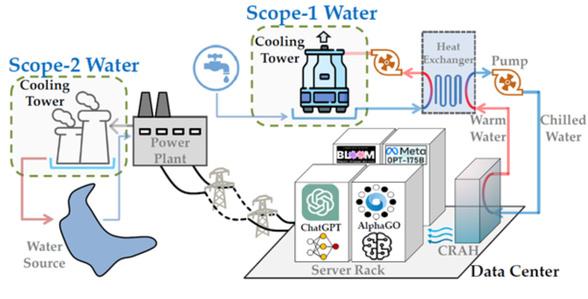
A picture explaining operational water usage for data https://oecd.ai/en/wonk/how-much-water-does-ai-consume
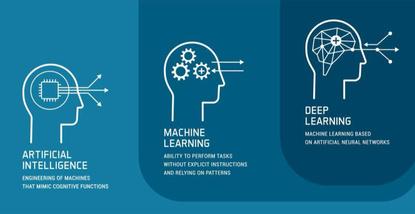
An image showing how AI is developing.
https://www.sesotec.com/na /en-US/resources/blog/whatis-artificial-intelligence
AI primarily uses water for cooling large data centres where AI workloads run. The employing systems (like evaporative cooling systems and direct-to-chip liquid cooling) are where the water absorbs the heat from the chips. After this, it gets transferred to a loop and then dissipates externally Through evaporation, there is significant water loss, impacting the local water supply
How does AI affect the environment?
Behind the scenes of AI’s brilliance lies an energy-intensive process with a shocking carbon footprint. Did you know that three years ago, during ChatGPT’s ‘pre-training’, 700,000 litres of water was used? Every single interaction with an AI chatbot or system requires water as a necessity in order to keep the technology running. According to the reports from the Government Digital Sustainability Alliance’s (GDSA), AI is predicted to conduct an increase in the usage of water globally from 1.1bn to a staggering 6.6bn cubic metres (which is the same as more than half of the UK’s water usage) by 2027!
However, AI doesn’t just affect Earth’s water supply. As AI is developing, new models and data sets are becoming increasingly complex The energy which is needed to run as well as train AI models is becoming enormous. This significant increase in the usage of energy is directly affecting greenhouse gas emissions, aggravating climate change. According to most of the OpenAIresearchers, ever since 2012, the amount of computing power which is needed to train AI models has doubled every 3.4 months. It is expected that by 2040, the emissions produced from the Information and Communications Technology (ICT) industry will reach 14% of the global emissions as a whole. The majority of the emissions produced is coming from the ICT infrastructure, data centres in particular, and communication networks. This data highlights the urgent need to address AI’s increasing carbon footprint, and its role in environmental deterioration. Researchers at the University of Massachusetts carried out a study in order to determine how energy is needed to train large AI models According to their results, AI training can produce around 626,000 pounds of CO2 (carbon dioxide), which is the equivalent of about 300 round-trip flights between New York and San Francisco. As well as this, this number is nearly five times the amount of lifetime emissions of an average car.
Because AI is so popular, what will happen to the Earth’s Water supply?
AI’s enlarging growth in data centres is increasing the demand for water significantly. Furthermore, AI is straining the water supply on Earth primarily in dryer areas. All of this is leading to greater competition with the drinking water industry. Nevertheless, the AI industry is trying to explore more water-efficient ways of cooling technologies in order to mitigate impacts. The water which is used for cooling isn’t easily reusable The fresh water that is not able to evaporate becomes contaminated with things like minerals, dust or chemicals. This makes it unsuitable to reuse for cooling purposes. The wastewater can sometimes be treated to meet environmental standards. It is then released into local bodies of water or reused for toilet flushing and irrigation. In addition, new technologies (such as free cooling and liquid immersion cooling) are tackling the use of direct water to help reduce the need for fresh water in AI. Overall, in its current practices for cooling, AI is bad for the environment, but it will not use up all of Earth’s water supply.
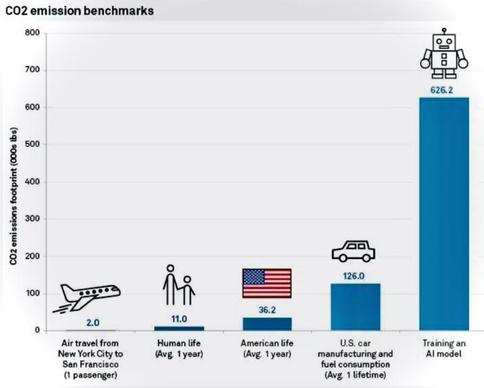
The contrast between the carbon footprint produced by training an AI model and the average life of people and automobiles. https://libguides.ecu.edu/c.php?g=1395131&p=10318505
Natural Resource: Water [online] Forbes Available at: https://www forbes com/sites/cindygordon/2024/02/25/ai-is-acceleratingthe-loss-of-our-scarcest-natural-resource-water/ Kanungo, A (2023) The Green Dilemma: Can AI Fulfil Its Potential without Harming the Environment? [online] Earth org Available at: https://earth org/the-green-dilemma-can-ai-fulfilits-potential-without-harming-the-environment/ Kenny, R (2025) AI’s thirst for water – UK Government Sustainable ICT [online] Blog gov uk Available at: https://sustainableict blog gov uk/2025/09/17/ais-thirst-for-water/ UNEP (2024) AI Has an Environmental problem Here’s What the World Can Do about that [online] UNEP Available at: https://www unep org/news-and-stories/story/ai-has-environmentalproblem-heres-what-world-can-do-about
Grace (LS2)
An Introduction to Fast Fashion
Fast fashion is a term we’ve all heard before, but what does it actually mean? Fast fashion is inexpensive clothing produced rapidly by mass-market retailers in response to the latest fashion trends. We probably all own at least one piece of clothing from a retailer who uses this method to make their products. But there are problems that are often overlooked in this industry that need to be addressed, such as the conditions that the workers who make the clothes have to endure, and how it affects the climate.
Fast fashion has been around since the 1990s, when companies like Zara and H&M rose in popularity, as they spewed out hundreds of new designs every week for new ‘trends’ that consumers wanted to follow. Not only did they create lots of new clothes, the garments they created were cheap and easily replaceable, as the average price for a piece of clothing in America went down from $67 in the 1980s, to around $50 by the 2000s. People ditched traditional, more expensive shops for ones like these, as they were more affordable and fashionable. And the industry’s overall revenue was estimated between $1.7 trillion and $2.5 trillion in 2021.
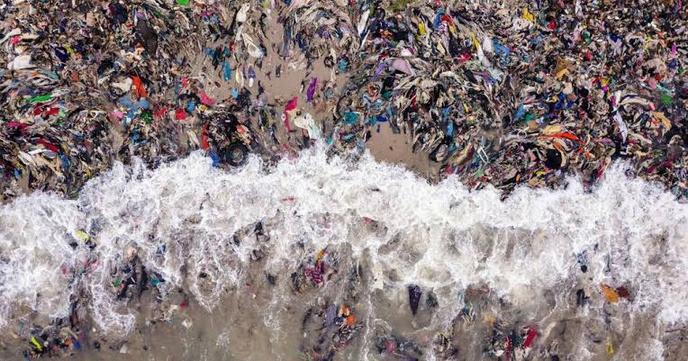
From a moral point of view as well, the people toiling for these giant corporations mostly live in developing countries, and are impoverished and uneducated. They get paid poorly, work illegal hours up to 17 hours a day, and a lot of these workers aren’t even adults, but children as young as 8 who have to work to support their families. Working in the poor conditions of these factories additionally can affect their health negatively, even to the point of lowering life span.
This sounds great, and fast fashion shops have only risen in popularity since then, with brands like Uniqlo and Shein becoming huge names in the industry, but fast fashion has a lot of consequences for our planet and the people working to actually make these clothes. The annual water footprint of clothing used in the UK is an unbelievable 90 billion cubic metres. In addition, 85% of our items end up in landfill or get burnt, which is an issue that requires action

How are the materials dangerous?
The fabrics that they use are embedded with chemicals, including anti-microbial agents that have bacterial resistance. The synthetic fibers also release microplastics, and the dyes used to colour the cloth contain heavy metals. These contribute to chronic skin conditions, hormonal disruptions, and even have carcinogenic risks. In the cotton fields, labourers are often exposed to pesticides and herbicides, and they can suffer from acute poisoning and chronic illnesses. Workers in the factories who work in processing textiles face similar problems while handling the synthetic dyes, formaldehyde, and flame retardants that can cause lung and respiratory problems, skin irritation and cancer These chemicals do not vanish after production, instead they remain embedded in the fabrics, presenting further health risks to consumers after purchase through skin contact.
Another issue with fast fashion, although this one is more well known, is how it contributes to climate change. The same dyes that cause health issues for workers create waste that end up in rivers and oceans without any treatment, resulting in serious consequences for aquatic ecosystems and local communities. Copious amounts of fossil fuels are also released into the atmosphere during the process of making fabrics In fact, the fashion industry is responsible for 8-10% of global fossil fuel emissions. Moreover, the industry generates an estimated 92 million tons of textile waste per year, a figure expected to rise to 134 million tons annually by 2030.
Luckily, governments across t trying to take action against thes already. In France, the gov introduced a climate bill tha penalties on fast fashion gi created a surcharge for lowbeginning at €5, which will rise t capped at 50% of the retail price biggest policy moves yet, sen message that the era of uncheck fashion needs to come to an end.
To finish, fashion causes imme for people and our climate, and harm that it creates, you can bu business instead of huge corpo secondhand clothing. Attention drawn to this subject, as in the , clothes we discarded into the ocean will still be there, and the future generations will have to deal with the consequences.

PUPIL ARTICLES: biology & human behaviour
Hailey (L6)
Evolutionary biology and genetics holds the answer to the age-old paradox: “Which came first? The chicken or the egg?” Famously, philosopher Aristotle concluded that neither the chicken nor the egg came first, but rather they exist in an infinite, eternal cycle with no true beginning. He viewed this conundrum as a logical casual loop where the chicken must lay the egg and the egg must produce a chicken, to represent an infinite sequence which was later used in theories on how the world was created through both religious and secular perspectives. However, as a scientist I refuse to leave this chicken problem unanswered or so to say answered with an open-ended “its neither of them”. In this article, I will be diving into phylogenetics (the study of evolutionary relationships) and proteomic (cellular functions from the proteome) perspectives on chickens, the domesticated subspecies Gallus gallus domesticus.
Surely, evolution occurs at the level of the genome during fertilisation, meaning the first “true” chicken must have emerged from an egg laid by a non-chicken ancestor. Now you’ve probably heard that chickens evolved from dinosaurs, this can be traced back to the Amniotic Revolution and the Avian Branch.
Did the egg come first?
There were studies of different kinds of amniote eggs in vertebrates and they were compared with each other in regards to morphological features e.g. yolk sac size, egg shells, extra embryonic membranes etc. These features vary among fish, amphibians, reptiles, birds, and mammals. They used methods such as character mapping and reconstruction of ancestral states to figure out how egg features evolved over time. From this study, many traits we think of as ‘amniote features’ (large yolk sacs, delayed egg laying, reproduction on land) have evolved multiple times separately in different groups, not just once. This shows that similar solutions evolved independently due to similar environmental factors. The amnion and other membranes (chorioallantois membrane and amniote-type eggshell) are likely ancestral. This development was a major evolutionary change that allowed vertebrates to reproduce successfully on land by laying the amniote egg, which was a key step in vertebrate diversification.
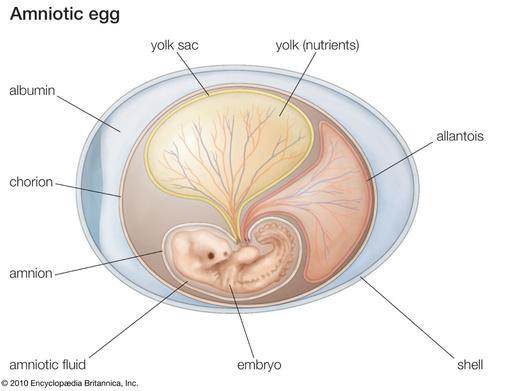
A diagram showing the features of an amniotic egg
Now we know, eggs existed long before chickens as eggs were laid hundreds of millions of years ago and then the amniote eggs appeared later - biologically the egg came before the chicken. Birds, including chickens, evolved from a group of 2-legged dinosaurs called theropods, a lineage of dinosaurs that survived and diversified.
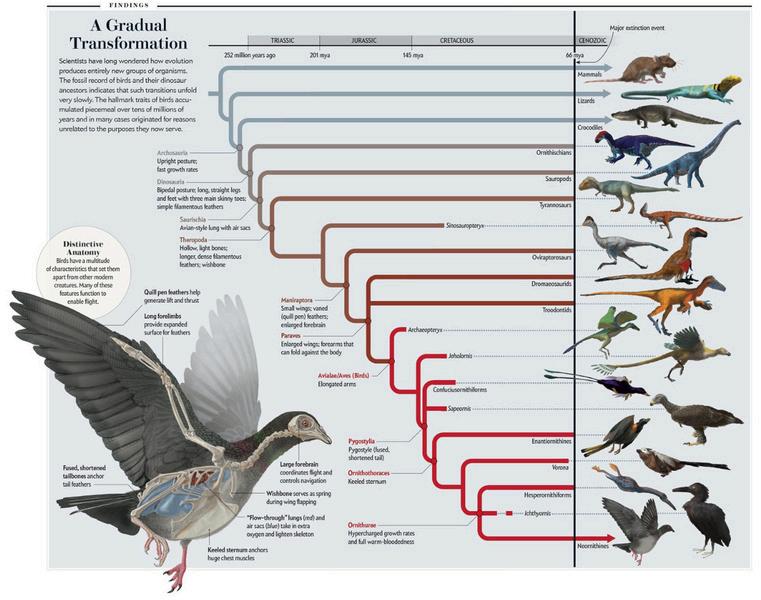
At the individual level, the moment a sperm fertilises an egg, that single zygote contains the complete genetic blueprint that determines that organism’s species identity and traits however lineage evolves slowly by the genome of a dinosaur gradually shifting to what we call birds today
In fossil studies, it was shown that early feathers were simple filaments for insulation or display and later became complex and capable of enabling flight.
This is an example of the fact that ‘bird traits’ have evolved over tens of millions of years in dinosaurs, there was no single ‘first bird’ movement but a gradual transition.
Did the chicken come first?
With all this compelling evidence, there is also research to support that the chicken did in fact come first. Researchers have discovered a protein called ovocleidin-17 (OC-17) that plays a key role in mineralisation which is the process by which calcium carbonate becomes the hard calcite crystalline structure of the cell They used metadynamics to show how OC-17 binds to tiny amorphous calcium carbonate particles and promotes their transformation into calcite crystal nuclei, then detaches to grow on its own. The OC-17 acts as a catalyst to egg formation. The OC-17 represents a chicken-specific protein (as it is made by the bird's reproductive system) for a proper chicken egg shell to form. Technically, without an organism expressing that protein, the fully formed chicken egg shell couldn’t be made. In that sense, the production of eggshells like those of chickens does depend on the biochemistry that exists in the bird’s uterus before the shell forms.
However, the ability to make an eggshell and even proteins like OC-17 gradually evolved over time. Birds evolved from theropods and these lineages already laid eggs long before Gallus gallus domesticus existed, meaning that the capacity to form mineralised eggshells existed well before chickens and they even had shell-forming proteins similar to OC-17. These various proteins appear in multiple bird and reptile species, showing evolutionary conservation and function. Just because modern chickens need OC-17 to make their specific eggshells, that doesn’t mean no egglike structure could exist before chickens and that single chicken with perfect OC-17 suddenly popped into existence and laid the first chicken egg. In fact, this transition likely occurred via sympatric speciation, where a sub-population diverges from its parent species through localised adaptive pressures. In this model, the ‘first’ chicken egg was simply a point on a genetic continuum where a specific mutation became fixed within a population that was still in direct contact with its wild ancestors, eventually leading to the domestic subspecies we recognise today.
Why would some people argue the chicken came first?
As human beings, it is common for us to categorise things and it is something we constantly do and often without noticing such as sorting toys or even to stereotypes. It is a chain of cognitive decisions in which the mind compares features of new objects or experience to those of known categories to decide where it fits. This process helps us make sense of the world by organising information efficiently.
Psychologists describe various models on how this happens.
1.Exemplar Theory
a.Comparing new things to many specific examples stored in memory. The more similar it is, the more we associate it to each other
2.Prototype Theory
a.Comparing new things to a single ‘ideal’ example of the category. For example, if it is more like the prototype of ‘dogs’ than ‘cats’, we call it a dog.
3.Rule-Based Theory
a.Categories are defined by explicit rules such as all squares having equal sides.
Although these models don’t fully capture real-world categorisation, human thinking is flexible and often mixes these approaches By categorising things, they help us reduce information overload so the world wouldn’t feel like an “unorganised blur”. They also help generalise and predict things such as danger.
The mind needs order, so it imposes boundaries and then treats what falls inside as ‘the same’, even when reality is more of a spectrum. The categorisation versus spectrum reality can apply to evolution. By categorising things into chicken vs non-chicken, we can explain why people may think that the chicken came first, as there must have been a chicken to lay the chicken egg first when in reality evolution is a gradient, not a step and nature is a slow transition. The egg is hundreds of millions of years older. The first ‘chicken egg’ was laid by a bird that was 99.9% chicken
Genetics provide the definitive answer that the egg came first. Because an organism’s genomic identity is fixed at fertilisation, the first Gallus gallus domesticus existed as a zygote within an egg laid by an ancestor. This is the logic of evolutionary biology, speciation occurs at the molecular level of the DNA long before the physical bird matures. However, modern proteomics enriches this narrative by showing that the ‘chicken egg’ as we recognise it today was not a sudden invention. The discovery of proteins like OC-17 demonstrates that evolution is a process of extreme specialisation. While the capacity to lay mineralised eggs predates chickens by millions of years, the domestic chicken refined this process using specific protein catalysts to optimize shell formation for its own environmental niche.
Ultimately, genetics and proteomics prove the chicken and the egg are not a circular loop, but a linear progression of survival, mutation, and evolution.
Bibliography:
Anne-Amalia “Prejudices & Stereotypes: Why the Brain Loves to Think in Boxes - Teamfit” Teamfit, 28 Feb 2025, www teamfit eu/en/prejudices-stereotypes-why-the-brain-loves-to-think-in-boxes/ Accessed 13 Feb 2026 “Breakthrough Shows Protein’s “Elegant” Eggshell Construction | the Institute for Creation Research” Icr org, 2026, www icr org/content/breakthrough-shows-proteins-elegant-eggshell-construction Accessed 13 Feb 2026 Brusatte, Stephen “How Birds Evolved from Dinosaurs” Scientific American, 2017, www scientificamerican com/article/how-birds-evolved-from-dinosaurs/? Accessed 13 Feb 2026
Glushko, Robert J “The What and Why of Categories” Berkeley pressbooks pub, 1 Apr 2020, berkeley pressbooks pub/tdo4p/chapter/the-what-and-why-of-categories/ Accessed 13 Feb 2026 Freeman, Colin L , et al “Structural Control of Crystal Nuclei by an Eggshell Protein” Angewandte Chemie International Edition, vol 49, no 30, 10 June 2010, pp 5135–5137, https://doi org/10 1002/anie 201000679 Accessed 13 Feb 2026
Hu, Mingjia “The Cognitive Process behind Categorizing Objects” ScIU, 13 May 2023, blogs iu edu/sciu/2023/05/13/process-of-categorizing/ Accessed 13 Feb 2026
Starck, J Matthias, et al “Phylogeny and Evolutionary History of the Amniote Egg” Journal of Morphology, vol 282, no 7, 26 May 2021, https://doi org/10 1002/jmor 21380 Accessed 13 Feb 2026 Zug, George R “Amniota | Animal Group” Encyclopedia Britannica, www britannica com/animal/Amniota Accesse 13 Feb 2026
Tissue with the he Tardigrades
Sofiia (L6)
Abstract
Radiation therapy is a cornerstone of modern cancer treatment, used in more than half of all cancer patients. Its ability to disrupt genetic information in rapidly multiplying tumour cells makes it an effective tool for tumour eradication. However, its effectiveness is limited by damage to surrounding healthy tissue, mostly caused by DNA double-strand breaks in healthy cells (Kirtane et al., 2025). Patients receiving radiotherapy as part of head-and-neck and prostate cancer treatment often suffer side effects that can be so severe that many decline this type of therapy, consequently increasing their risk of dying from that cancer.
Introduction
Inspired by tardigrades - microscopic organisms that possess the ability to withstand extreme radiation - researchers from MIT and Harvard have investigated whether the tardigrade damage-suppressor protein (Dsup) has potential to be used for the radioprotection of healthy mammalian tissue during radiation therapy (Hashimoto et al., 2016). The revolutionary study, published in Nature Biomedical Engineering 2025, demonstrates an innovative strategy to address the problem by examining the delivery of mRNA encoding the Dsup to normal tissues using lipid nanoparticle systems (Kirtane et al., 2025). By enabling transient expression of a DNA-shielding protein in healthy cells, this method successfully reduces radiation-induced DNA breaks while maintaining tumour sensitivity.
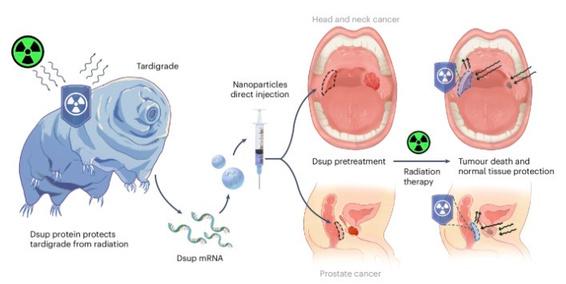
Figure 1. Kirtane, A.R. et al. (2025a) Radioprotection of healthy tissue via nanoparticle-delivered mrna encoding for a damagesuppressor protein found in Tardigrades, Nature News.
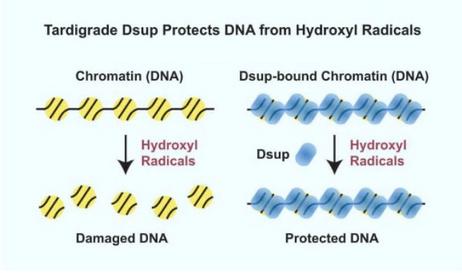
Staff, N. (2019) Study: Tardigrades’ unique protein forms protective cloud against extreme survival threats, Sci.News: Breaking Science News.
Dsup -- a brief introduction
Tardigrades are able to survive nearly a thousand times as much radiation as humans can, owing to their high-level production of the ‘damage-suppressing protein’ (Dsup). It is a tardigrade-specific protein first discovered in the species Ramazzottius varieornatus; it is absent from humans and most other animals and is known for its contribution to creating radiation and oxidative stress resistance (Hashimoto et al., 2016). Unlike usual DNA repair pathways, Dsup functions by binding directly to DNA and chromatin inside the nuclei of cells and therefore acting like a physical shield, not a repair mechanism. The formation of a protective layer around the DNA strands reduces the chance that radiationinduced free radicals can break them (Hashimoto et al., 2016; Yoshida et al., 2017)
How Dsup functions:
1.DNA binding: Dsup adheres to DNA and nucleosomes (DNA wrapped around histones) using its positively charged regions that facilitate overall electrostatic attraction to the negatively charged DNA backbone. This process, while shielding the DNA, does not terminate vital cell functions.
2.Shielding from reactive species: Dsup protects DNA from damage induced by ionising radiation and reactive oxygen species (e.g. hydroxyl radicals) (Hashimoto et al., 2016). Experiments have shown that human cells engineered to express Dsup have exhibited fewer markers of double-strand breaks following radiation exposure (Hashimoto et al., 2016), indicating that Dsup forms a physical protective barrier against reactive molecules and can function outside of tardigrades, making it a promising candidate for applications like protecting healthy tissue during radiation therapy in humans.
3 Mechanism: due to Dsup forming a direct physical association with DNA and chromatin before radiation exposure, the access of damaging reactive species to the DNA backbone is limited at the very start, without requiring a traditional repair protein (Yoshida et al., 2016).
The use of mRNA to deliver Dsup
The 2025 study elaborates on these observations by asking whether transient expression of Dsup in healthy mammalian tissues can be used to reduce DNA damage as a result of radiation exposure. The scientists developed an mRNA construction that encodes a Dsup fusion protein and encapsulated it within an ionisable lipid nanoparticle (LNPs), then supplemented it with biodegradable cationic polymers to improve cellular uptake of the nanoparticles (Kirtane et al., 2025). To avoid permanent genetic modification, the mRNA is translated into the protein before naturally degrading (Kirtane et al., 2025).
In simple terms, the damage-suppressing protein is taken from the tardigrade, an mRNA sequence that codes for its production is created, and the result is inserted into a “delivery vehicle” (the LNP) to be transported to the exact tissues which are going to be exposed to the damaging radiation.
Experimental outcomes
The composition and timing of the LNPs released were carefully controlled so that Dsup expression reached its peak during radiation exposure and dropped immediately afterwards. This was done in order to avoid protecting tumour cells (Kirtane et al., 2025). The main marker used to signify double-strand DNA breaks is γ-H2AX; Dsup-expressing tissues in mice exhibited much lower γ-H2AX levels, along with other results, such as better tissue integrity and reduced inflammation of the cells, after being exposed to radiation (Kirtane et al., 2025). The effects of radiation on tumour cells, however, remained the same (Kirtane et al., 2025).
Bibliography
Chavez, C et al (2019) The tardigrade damage suppressor protein binds to nucleosomes and protects DNA from hydroxyl radicals, eLife Available at: https://elifesciences org/articles/47682
Hashimoto, T et al (2016) Extremotolerant tardigrade genome and improved radiotolerance of human cultured cells by tardigrade-unique protein, Nature News Available at: https://www nature com/articles/ncomms12808
Hou, X et al (2021) Lipid nanoparticles for mrna delivery, Nature News Available at: https://www nature com/articles/s41578-021-00358-0
Kirtane, A R et al (2025) Radioprotection of healthy tissue via nanoparticle-delivered mrna encoding for a damagesuppressor protein found in Tardigrades, Nature News Available at: https://www nature com/articles/s41551-025-01360-5
Lipid nanoparticles
Lipid nanoparticles are already used in vaccines to deliver mRNA (e.g. in the COVID-19 mRNA vaccines) and consist mostly of ionisable lipids, cholesterol, phospholipids and PEG-lipids (Hou et al., 2021). However, the main issue with LNPs is that delivering mRNA to a specific tissue, rather than throughout the whole body, is far more complex. The inclusion of biodegradable polymers is meant to enhance the efficiency of mRNA delivery in epithelial tissues, which are resistant to standard LNP transfection (Kirtane et al., 2025). Once inside the cell, the mRNA is translated, leading to the temporary production of Dsup.
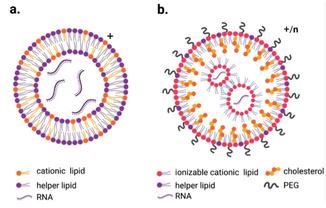
Conclusion
mRNA-based delivery of the tardigrade damage-suppressor protein Dsup represents an important step towards safer, more efficient radiation therapy. By combining a naturally-occurring DNA-shielding protein with nanomedical technologies, this method optimises the effects of radiation therapy, reducing radiation-induced damage and still destroying tumour cells at the same time.
Max (L6)
Introduction
Pancreatic cancer is a widespread disease and is one of the most challenging cancers to treat, along with some brain and lung cancers All of these have low survival rates, and the difficulty in treating them is due to them being diagnosed at an advanced stage, when the cancer has already spread throughout the body. This makes treatment much less effective. However, exciting new treatments and ongoing clinical trials are in place for pancreatic cancer, including types of chemotherapy and immunotherapies, aiming to block tumour growth or make them more vulnerable to the immune system.
Location and functions
The pancreas is an organ located in the upper abdomen, behind the stomach and surrounded by other vital organs like the small intestine, liver and spleen. It is spongy and is about six to ten inches long. There are four major regions of the pancreas: the head, neck, body and tail. The head is located at the point where the stomach conveys partially digested food into the small intestine, ese contents also.
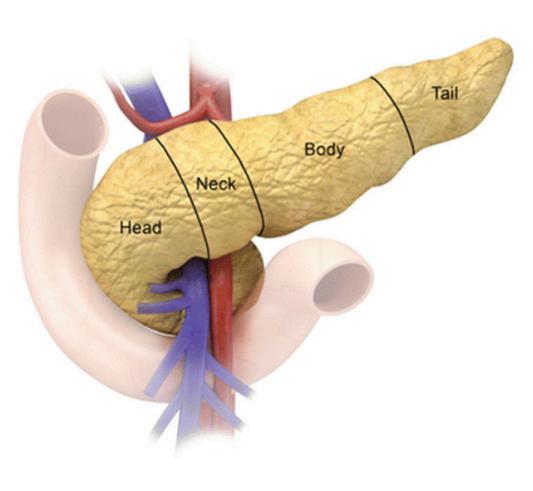
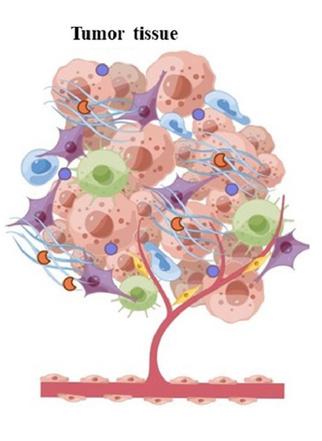
Fig.1. (Left)sciencedirect comimage showing how fibrotic tissue can make up to 90% of the tumours mass (accessed on 10th January 2026)
Fig 2 (right) - science direct.com - image showing how fibrotic tissue can make up to 90% of the tumours mass (accessed on 10th January 2026)
The staging is determined by the TNM system, considering the tumours size (T), involvement of lymph nodes (N), and metastasis to other parts of the body (M). It is also categorised by how operable it is: if the cancer is contained, it can be surgically removed, if the tumor is close to major blood vessels, surgery is challenging but chemotherapy is still possible, and if the tumour has grown into nearby major blood vessels or to other organs, it is unresectable (cannot be surgically removed). We can use CT Scans to see the tumours size and how much it has spread, ultrasounds to get images of masses on the pancreas, and, amongst others, biopsies to collect small samples of cells for close examination.
Diseases of the pancreas
The pancreas can also be subject to other diseases: pancreatitis (inflammation of the pancreas when enzyme secretions build up and begin to digest the organ itself), and Type 1 diabetes (an autoimmune disease where the immune system attacks healthy insulin-producing cells). However, pancreatic cancer is considered to be the worst type of disease in the pancreas, due to its extremely high mortality rate, late-stage diagnosis (due to lack of noticeable symptoms), rapid progression and resistance to treatments. Statistics show that less than 7% of patients with pancreatic cancer live five years after their diagnosis, and 80% of those diagnosed are already at stage three or four.
But why is this cancer so difficult to treat, and why do symptoms show so late after initial stages? Some cancers can only be treated surgically, by removals of part or whole aspects of the organ that the cancer is in, but cancer in the pancreas is deep and very challenging to reach. Due to this, it is also difficult to detect through physical exams, as it is hidden by other organs like the stomach. In this way, symptoms often don’t appear until the cancer is large or has spread to other organs surrounding it, making early detection exceedingly challenging.
Furthermore, when a pancreatic tumour develops, it doesn’t just grow as a clump of cancerous cells, it becomes surrounded by dense ‘fibrous’ tissue (desmoplasia) The tissue is made mostly of collagen, fibroblasts and other components like extracellular matrix (ECM), which blocks the delivery of drugs involved in chemotherapy. This fibrotic wall is thick and impenetrable, suppressing the immune response, as cells involved like T-cells and cytokines struggle to reach the core, so the body’s natural defences are inhibited.
The process of building this ‘protective shield’ of fibrotic tissue is due to the interactions between cancer cells and their environment Firstly, pancreatic cancer cells release signaling molecules that activate nearby stromal cells (tissue cells that provide structural support for organs), which then start producing large amounts of collagen and other proteins that stimulate desmoplasia. This benefits the tumour as it supplies nutrients and growth factors, helping it to survive and grow. In this way, the cancerous cells ‘trick’ the stromal cells into helping them survive.
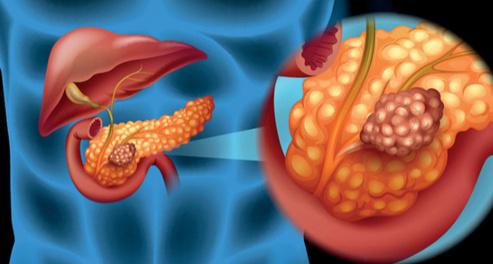
Fig 3. ISTOCK.COM / BLUERINGMEDIA - position of the pancreas and visible effects of mutation (accessed on 10th January 2026)
Treatment
Although pancreatic cancer can be difficult to treat, medical treatment can still influence it. This may include radiotherapy, chemotherapy, and if caught early enough, surgical removal through pancreatectomy Only about 10% of patients receive surgery, with chemotherapy given to roughly 20-25% of all patients,
Bibliography:
Physicians of Columbia’s Pancreatic Surgery Team, October 2024- the pancreas and its functions-https:/columbiasurgery org/pancreas/pancreas-and-its-functions Campazzi Jr , Dr Earl James-living with pancreatic cancer-https://www pancreaticcancertoday com Imaging diagnosis of pancreatic cancer: A state-of-the-art review-Eun Sun Lee+Jeong Min Lee-https://pmc ncbi nlm nih gov/articles/PMC4069314/ Stages, types and grades of pancreatic cancer-Natalie Adams-https://www cancerresearchuk org/about-cancer/pancreatic-cancer/stages-types-grades NHS physicians-treating pancreatic cancer-https://www nhs uk/conditions
Why do we Sleep?
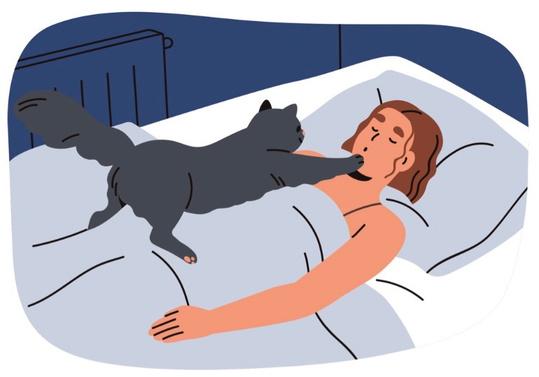
Sleep is a universal behaviour across mammals and most animals, suggesting how common it is to be curious about it. It is regulated by the homeostatic sleep drive, which increases the longer we are awake, and pushes the body toward sleep to recover from our daily activities When we are awake, synaptic strength in the brain increases as we learn and experience new things, which uses energy and can cause cellular stress. Sleep helps restore cellular homeostasis by spontaneously downscaling or renormalising synaptic strength to a sustainable level which saves energy, prevents overload, and balances brain cell activity (QIAGEN, n.d.). Especially during our deep sleep, particularly slow-wave sleep, our body engages in both cellular and tissue repair.
Every day at least for most people, sleep is a crucial part of our lives, and one can say we cannot survive without sleep However, it is still something that over two-thirds of adults in the UK struggle with. This raises as to why questions why humans actually need to sleep. We often wonder why we can’t pull several all-nighters, or why we have under eye bags, or why we actually need to sleep. Sleep, though seems like a simple part of our lives, plays a massive role in maintaining our physical health, mental stability, and overall well-being. Scientists have long studied its purpose, discovering that it allows the brain to process memories, the body to repair tissues, and the mind to reset for the day ahead (Freigberg, 2025). Without sufficient rest, our concentration, mood, and even immune systems suffer, showing how sleep is a vital biological necessity.
Humans also need sleep in order for our brains to process, store, and recall information. Research has shown that learning relies heavily on sleep for memory consolidation, which means without sleep, anyone learning new material will remember less. While you sleep, your brain cycles through different phases of sleep, including
light sleep, deep sleep, and rapid eye movement (REM) sleep, when dreaming usually occurs (Wein, Ph.D., 2013). The non-REM stages of sleep seem to prime the brain for good learning the next day, and without sleep, your ability to learn new things could drop by up to 40% (Wein, Ph D , 2013) With this, many researchers demonstrate how our REM cycles in our sleep help strengthen and organise our memories.
The importance of sleep can also be seen when you do not get enough. Chronic sleep deprivation can lead to many risks, including slowed reflexes, anxiety, decreased immune system effectiveness, and the development of Type 2 diabetes(Cleveland Clinic, 2023) To ensure that we are getting enough quality sleep, we can do things like creating a sleep schedule or a bedtime routine, avoiding bright lights or electronics, and occasionally sleeping medications like melatonin or antidepressants.
In our lives, the amount of sleep we need varies depending on our ages. An average teenager from the age of 13 to 18 would need at least 8 hours of deep sleep (Leavitt, 2019)
We often wonder why we cannot pull more than one all-nighter to either finish our assignments, or continue playing a game. However, it is scientifically proven that humans cannot ‘adapt’ to less sleep. Some people believe that they can ‘train’ themselves to function on fewer hours of sleep, but research has shown that this belief is a myth The human brain and body rely on sleep to restore energy, consolidate memories, and regulate mood When sleep is constantly reduced, concentration, judgement, and reaction times all decline, even if a person feels like they have adjusted (Summer and Singh, 2023). Rather than trying to adapt to less sleep, maintaining a regular sleep schedule instead would boost both physical and mental performance.
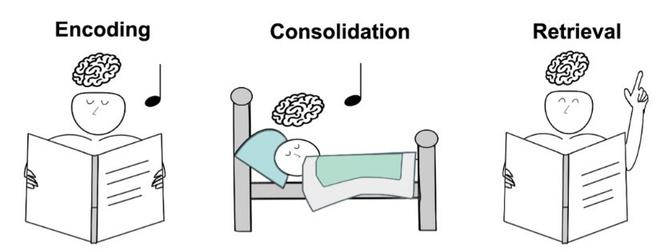
In conclusion, sleep is a fundamental biological necessity, equally important as our daily essentials like food, water, and oxygen. It sustains our bodies through repair and immune strengthening, refreshes our brain through memory consolidation, maintains our emotional stability, and prevents a large number of health risks.
In our modern society, we face many challenges to healthy sleeping schedules, but by providing easily accessible resources to healthy sleeping habits, we can help raise awareness to promote the benefits of sleep. Neglecting sleep leads to serious consequences both physically and mentally, proving that no aspect of human functioning can truly be optimal without it. Sleep, overall, is one of the simplest yet most powerful gifts we can give ourselves because, in the end, when we rest well, we give both our minds and bodies a chance to function at their best

Bibliography:
Freiberg, Andrew S ‘Why We Sleep: A Hypothesis for an Ultimate or Evolutionary Origin for Sleep and Other Physiological Rhythms’ Journal of Circadian Rhythms, vol 18, p 2 PubMed Central,https://doi org/10 5334/jcr 189 Accessed 6 Oct 2025
QIAGEN Cellular Homeostasis | GeneGlobe https://geneglobe qiagen com/us/knowledge/pathways/cellularactivity-metabolism-and-homeostasis-pathways/cellular-homeostasis Accessed 10 Oct 2025
Wein, Ph D , H (2013) Sleep On It [online] NIH News in Health Available at: https://newsinhealth nih gov/2013/04/sleep-it
Cleveland Clinic (2023) Sleep [online] Cleveland Clinic Available at: https://my clevelandclinic org/health/body/12148-sleep-basics
Sejnowski, Terrence J , and Alain Destexhe ‘Why Do We Sleep?1’ Brain Research, Towards 2010, A brain Odyssey, The 3rd Brain Research Interactive, vol 886, no 1, Dec 2000, pp 208–23 ScienceDirect, https://doi org/10 1016/S0006-8993(00)03007-9
Leavitt, J (2019) How Much Deep, Light, and REM Sleep Do You Need? [online] Healthline Available at: https://www healthline com/health/how-much-deep-sleep-do-you-need#deep-sleep
Summer, J and Singh, A (2023) Sleep Deprivation: Understanding the Hidden Consequences [online] Sleep Foundation Available at: https://www sleepfoundation org/sleep-deprivation
Have you ever wondered why you enjoy learning to play an instrument, even if you do not want to become a professional musician? Or why do you take time to have a long chat with a friend instead of doing your homework? Or why do you read a book that is not in the syllabus even if it makes your answers to a test more convoluted and complex? All these might appear as dysfunctional ways to use your energy Forms of distraction, procrastination, or overwork that provide little reward However, they are all manifestations of a singular trait that many animals show and humans demonstrate most of all, especially when young: curiosity (see Figure 1).
A New Topic of Inquiry
Curiosity is an intrinsic motivation to seek novelty and gain knowledge. It has become a subject of scientific inquiry only in recent years In the last century, scientists were not very curious about curiosity for two reasons The first is the lack of a clear and agreed-upon definition The second is that most research involves putting a subject (a person, an animal, a cell) in front of a stimulus, usually in a lab, and studying how it reacts. But curiosity is spontaneous, it is not a reaction, hence it is easier to witness it in the wild than to bring into the lab.
In the past two decades, neuroscientists have started to overcome these challenges, borrowing two theories from psychology The first is that curiosity is a motivation like hunger, making us seek information that we have ‘tasted.’ The second is that there are different kinds of curiosity. Perceptual curiosity is an immediate hunger for novel stimuli that may reduce our uncertainty in the moment Epistemic curiosity is a more sustained taste for a certain type of knowledge
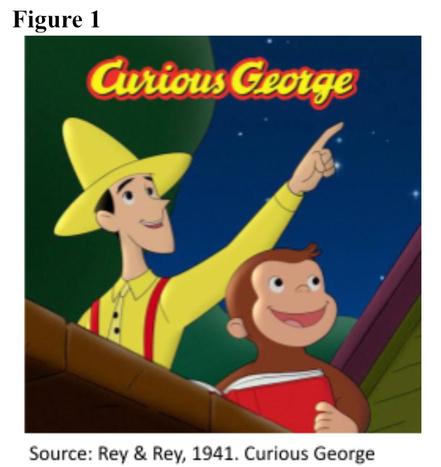
The evolutionary value of perceptual curiosity is easier to understand A motivation to seek or attend to novel information can have immediate value For example, a driver approaching a crossroad will benefit from being curious about the colour of a traffic light. The light reduces uncertainty (should I cross?) and facilitates the choice that fits the situation (accelerate or brake). Epistemic curiosity is harder to explain. Why do we invest energy “going down a rabbit hole” as we say? For example, writing and reading a scientific article is interesting but it is also demanding. And no one gets run over by a car if they do not pay attention to it
The scientific question about perceptual curiosity is how novelty becomes rewarding The question about epistemic curiosity is why we keep seeking knowledge even when it does not have immediate value In the next two sections, I review studies that address these questions.
The Science of Perceptual Curiosity.
A study of mice identified the brain circuits that underpin the preferential treatment of novel stimuli It found that neurons in a subthalamic brain region called the Zona Incerta were involved in determining the treatment of an object (See Figure 2) These neurons received information from perception centers, and computed the novelty of the object If the stimulus was familiar, the mouse engaged in surface exploration, giving it only a sniff If it was novel, the neurons sent a signal to the Periaqueductal Gray, which triggered deep exploration. The mouse took more time and bit the object. This study shows the neural mechanism that makes a new object “interesting,” making the organism invest in learning, and realising an opportunity or avoiding a threat.
Another study showed that the preference for stimuli that provide new information endures even when we cannot use that information immediately. Scientists gave monkeys a reward, a sip of juice, randomly. Then they provided information that helped the monkeys predict if they would get the reward or not. The monkeys attended to the information even if it did not change how much juice they received or when. This study showed that uncertainty reduction is rewarding in itself. The reason, scientists theorize, is that the information helps us form beliefs and theories of the world. A study of young children, for example, showed that given the choice of equally novel toys, they played more with the toy that let them discover a causal effect.
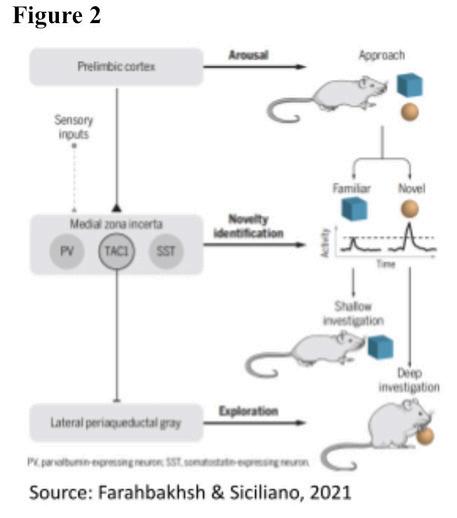
A human study showed that the brain treats information as a primary reward just like food or drinks. The scientists scanned people’s brains with fMRIs while they answered trivia questions, and asked them how curious they were about finding the answer to each question. They found that people were more curious about answers that they were unsure about, and less curious about answers that they had no idea about or that they knew well. When subjects were curious, their brain showed activity in the Caudate Nucleus and Inferior Frontal Gyrus (IFG), regions associated with the anticipation of rewards (see Figure 4). And when they found the answer, the Parahippocampal Gyrus and Hippocampus became activated. These regions are involved in memory. The activation was stronger when the subjects had answered incorrectly. The study’s author concluded that curiosity is the “wick in the candle of learning,” because it strengthens and accelerates the encoding and retention of new information.
The Science of Epistemic Curiosity.
While many animals, even some worms, show perceptual curiosity, epistemic curiosity is distinctive of humans and harder to explain. Scientific theories have focused on its long-term benefit of helping us refine the theories that we begin to build with perceptual curiosity. For example, many hunter gatherers may have noticed that plants came from seeds. Some became fascinated with trying to make seeds grow and invented agriculture. But was it their intention?
Scientists have used computer simulations to answer that question. The theory that epistemic curiosity refines our cognitive models suggests that a little knowledge (plants comes from seeds) motivates us to set a big goal (I want to build a farm), and acquire knowledge that helps us achieve that goal. But the simulations that resemble the human brain the most have a “learning progress architecture.” They show that enjoying new knowledge makes us want more. As we keep learning, we understand and can do things that we had not imagined at first. This theory suggests that epistemic curiosity has immediate value. It allows us to enjoy working to improve every day, and that is the best way of learning hard things. This theory does not require assuming that everyone has an ambitious goal. It is enough that individual brains enjoy getting better at something every day, for the human species to get better at a lot of things over the centuries.
Cultivating Curiosity
Curiosity is driven by brain mechanisms shaped by evolution, but it is not purely the product of genetic factors While genetically determined personality traits make some people more open to novelty than others, human curiosity is “multi-determined.” That means that it varies between people, and within people over time, for a variety of reasons. It is obvious not only to scientists that the most curious humans are children, constantly seeking novel information and learning about the world, and often showing little shame or fear. Scientists argue that in species where the youth are looked after by adults in their early years, children can “outsource” the seeking of rewards and avoidance of threats and dedicate most of their energy to learning about the world. How caretakers treat a child’s exploration, however, has lasting effects on their curiosity.
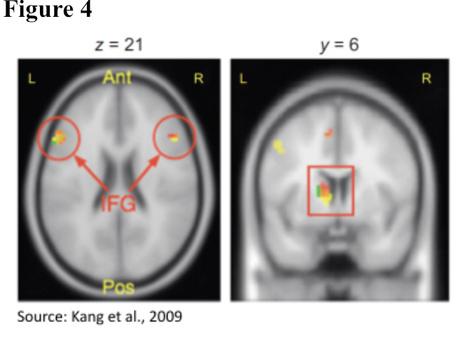
Landmark research in social psychology, for example, showed that when children are praised for their efforts, they are more likely to keep learning in the face of challenges than if they are praised for their talent. In a series of experiments, for example, scientists took Year 5 students and gave them an easy math problem. A ‘teacher’ then told one group of children, “You must have worked hard,” and the other group, “You must be very smart.” Following that feedback, the teacher gave the students a hard problem. The first group was more successful than the second.
The experiment showed that they worked harder and were not discouraged by the challenge, because they saw it as part of learning The group that had been called smart, conversely, worried that they could lose the teacher’s approval, and became less curious and more ashamed. They persevered less. They preferred getting information on others’ performance rather than information on how to solve the problem, and even lied about their own performance in the test.
Conclusion
Science supports the idea that choosing to learn, and finding joy in it, makes us learn more and faster Becoming anxious about our intelligence, and ashamed to be compared to others, conversely, erodes our curiosity. Therefore it is important to cultivate the choice and joy of learning in a supportive environment.
Bibliography:
Physicians of Columbia’s Pancreatic Surgery Team, October 2024- the pancreas and its functions-https:/columbiasurgery org/pancreas/pancreas-andits-functions
Campazzi Jr , Dr Earl James-living with pancreatic cancer-https://www pancreaticcancertoday com Imaging diagnosis of pancreatic cancer: A state-of-the-art review-Eun Sun Lee+Jeong Min Lee-https://pmc ncbi nlm nih gov/articles/PMC4069314/ Stages, types and grades of pancreatic cancer-Natalie Adams-https://www cancerresearchuk org/about-cancer/pancreatic-cancer/stages-types-grades NHS physicians-treating pancreatic cancer-https://www.nhs.uk/conditions
The banana is a beloved fruit by everyone, with over 100 billion eaten annually. Many cultivars exist, including the Cavendish subgroup, the dominant type found in the UK. However, before the Cavendish dominated, a sweeter, tastier cultivar of banana, known as the Gros Michel (French for “Big Mike”), dominated the banana market in the 1950s. But how did this banana fade into obscurity?
The Rise of Gros Michel
Wild bananas originated in South-East Asia, and contained seeds. These were domesticated and spread around the world via migration and trade. However, the Gros Michel cultivar was discovered by French naturalist Nicolas Baudin during an expedition to South East Asia, and was brought to Martinique botanical gardens. Botanist Jean François Pouyat brought it to the Caribbean where it was cloned from planting suckers (shoots that separated from the main plant) into the ground.
Gros Michel bananas were preferred for many reasons. They were particularly thick skinned, which meant they resisted bruising when transported, maintaining quality during shipping. The banana was also bright yellow, had a more pronounced banana flavour, and was sweeter, which appealed to shoppers. Because of this, farmers cloned and grew Gros Michels, becoming the dominant export of bananas to the US in the early 20th century.
Fun fact: Artificial banana flavouring tastes different because of Gros Michel. Gros Michels contained a higher concentration of a compound, isoamyl acetate (an ester), compared to the Cavendish, and it made up a majority of the flavour profile of the Gros Michel. When trying to create artificial banana flavouring in the 19th century, chemists only discovered the ester, only a part of the flavour of the Gros Michel, and marketed it as banana flavouring.
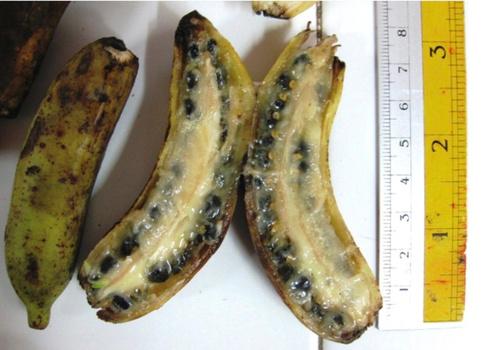
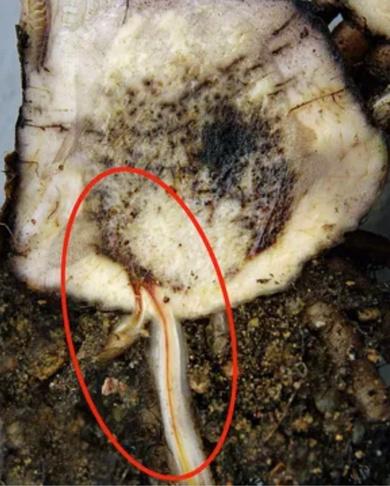
A Nemesis to the Gros Michel
Panama disease, also known as Fusarium wilt, the fungi enters the plant via natural wounds in the roots, after which it spreads within and colonises the xylem of the plant, creating a blockade that stops water from reaching the top of the plant. The lack of water causes the plant to eventually wilt. Panama disease also remains indefinitely in soil, compromising it from successfully growing banana plants. Furthermore, the disease could also infect suckers, so when the suckers were planted in other plantations, the disease could spread to uninfected soils. Worst of all, Panama disease had a long incubation period, where it exhibited no symptoms, so it was hard to tell whether a plant was infected. Once infected, Panama disease was incurable, and was fatal to the plant.
Figure 1: An infected banana plant, with brown discolouration of vascular system - O’Neill, W (2019)
Figure 2: Wild variant of banana found in Laos Bowel obstruction from wild bananas: a neglected health problem in Laos (2011)
Normally, plants have two methods of detecting foreign pathogens: Basal resistance & R genes. Basal resistance detects general microbial properties, such as chitin (a compound that makes up the cell wall of fungi); this is similar to phagocytes, used to fend off general diseases. On the other hand, R genes detect effectors, specific proteins secreted by pathogens, which helps the plant identify which specific disease the pathogen is, similar to lymphocytes, where diseases can be more effectively dealt with.
The Fall of Gros Michel
However, the Gros Michel cultivar had insufficient that detected effectors from Panama disease, led to action by the plant, letting Panama disease take over plant. The fact that all Gros Michels were cloned, meant they were genetically uniform, meant all Gros had the same vulnerability towards Panama Combined with the disease’s very infectious nature, disease infected and wiped out Gros Michel commercially Within a decade, the Cavendish replaced Gros Michels the globe as they had resistance towards the R1 variant Panama disease. The shift towards Cavendish made most commercially available banana in the world, but the Gros Michel was left behind in the spotlight.
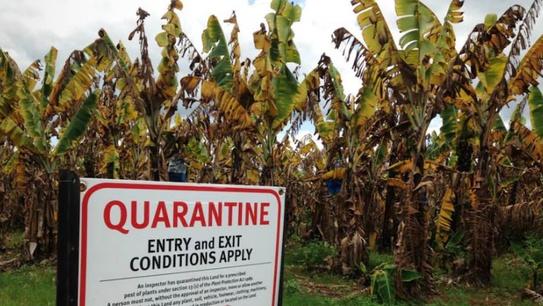
An Old Nemesis Returns, but We’re Fighting Back
The story does not have a good ending. A new variant of Panama disease, known as TR4 (Tropical Race 4), first detected in Taiwan, it has now spread as far as Colombia and Peru, and has destroyed an estimated 200,000 hectares of banana farmlands, severely impacting banana production. But unlike last time, we’re fighting back.
With gene modification, researchers at Queensland University of Technology have taken the RGA2 gene from wild bananas, which are resistant to TR4, and inserted them into Cavendish bananas. Through field trials in TR4 infested soil, 4 lines showed robust resistance, with one completely free of TR4 contamination, which showed very promising results, and has been approved by Australia and New Zealand. However, tight regulations around the world and consumer resistance towards GM crops prevents the modified cavendish variant from reaching global markets.
On a note
Beyond bananas, many monocultures are constantly under threat. Another more well known of monoculture collapsing are potatoes, which were wiped out by blight, causing the Irish famine. With this, a pattern emerges: Mother nature always bats last. Hopefully, the importance of genetic diversity can be learnt, and monoculture incidents can be prevented in the future.
Bibliography:
Banana (no date) CBAN. Available at: https://cban.ca/gmos/products/not-on-themarket/banana/ (Accessed: 26 December 2025)
Banana sucker (no date) Promusa Available at: https://www promusa org/banana+sucker (Accessed: 26 December 2025) Fusarium wilt (no date) Promusa. Available at: https://www promusa org/Fusarium%20wilt (Accessed: 26 December 2025) Gros Michel (no date) Promusa Available at: https://www promusa org/Gros%2BMichel (Accessed: 26 December 2025) Houterman, P., Cornelissen, B. and Rep, M. (2008) Suppression of plant resistance gene-based immunity by a fungal effector, PubMed Available at: https://pubmed ncbi nlm nih gov/18464895/ (Accessed: 26 December 2025) Jackson, G (2014) Fusarium wilt of banana, FAO Available at:
Figure 3: Banana plantation affected by Panama Disease McKillop, C (2023)
Clara (V)
It is estimated that around 6% of global births, approximately 7.9 million babies annually, are born with a genetic defect, such as haemoglobinopathies (thalassemias and sickle cell), Trisomy 21 (Down syndrome) or heart diseases. For centuries, scientists have tried to find cures for diseases caused by genetic defects. It seems impossible to cure something which you were born with, rather than something that you developed over night; it is a part of yourself and your genetic code, which is the base to your existence and the life that was given to you. You were born with a mutation, something that is not caused by bacteria, fungi, protoctists or viruses. No one has ever found a remedy for something, which you were born with. However, what if I tell you that, thanks to the breakthrough of biochemist Jennifer Doudna and microbiologist Emmanuelle Charpentier, we can now correct faulty DNA. They invented a technology to rewrite our own life, revolutionising biology and medicine forever, and making it possible to correct genetic defects. However, being able to change the DNA of a human can also bring dangers, such as the desire for perfection. If we now have the possibility to change our genetics, why not make us smarter, more attractive and more suited for the society we live in?
The origin of CRISPR
The technology which changed medicine and many other areas of life forever is called CRISPR. The discovery of CRISPR started with research in microbiology, which showed that bacteria might have an adaptive immune system to provide protection against viral infections. This adaptive immune system protects cells from bacteriophages (viruses that inject their DNA into bacteria) with the help of a recording system in the bacterial genome called CRISPR (Clustered Regularly Interspaced Short Palindromic Repeats).
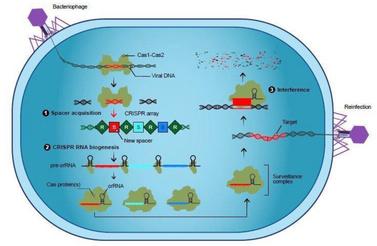
The viral bacteriophage injects its DNA into the bacterial cell. The cell responds by integrating small pieces of that foreign DNA into its genome at a site called CRISPR, which consists of alternating sequences: a repeating pattern. A CRISPR RNA molecule (cRNA) makes a copy of the viral DNA that is passed on to the Cas protein (will be explained later) so that the enzyme can detect the viral genome to destroy it by cleaving it. This process also gives bacteria immunity against future infections.
Over time many different CRISPR immune systems have developed, but a particularly interesting one is the CRISPR-Cas, which uses Cas9. This protein has been implicated in the protection of cells against invasive DNA, particularly in streptococcus pyogenes.
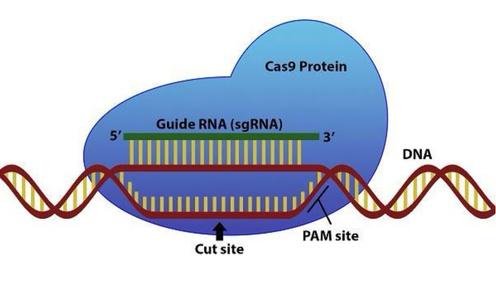
The process of CRISPR-Cas9
Cas9 is in nature a dual RNA-guided protein, which uses two RNAs to recognise and cut specific DNA sequences, making it a powerful genome editing tool.
In its natural form, Cas9, uses a CRISPR-RNA (cRNA) to direct it to a target sequence of the viral DNA, because they are complementary to each other. In the process, a second RNA molecule is required, named tracer RNA (tracrRNA), which joins to the cRNA to guide the Cas9. It is essential for the binding of the Cas9 to the complex.
Once it reaches the target, Cas9 is able to make a cut in the double helix of the viral DNA.
It is a simple two component-system for cutting DNA, originally observed in prokaryotic cells. The question is, does it also work on eukaryotic cells, which confine DNA in the nucleus?
CRISPR-Cas9 on eukaryotic cells
In eukaryotic cells, when the cell receives or detects a double-stranded break in its DNA, the break is repaired before it causes the death of the cell. The process of repairing involves either a non-homologous end-joining event, where the broken DNA ends are directly stuck together without needing a template, or the integration of new genetic information into the genome at the site of the original break.
Through this, we realised that the Cas9 protein could make a cut in the genome at a specific location. This cut creates a break in both strands of the DNA, triggering the cell's natural repair system. Scientists then developed a method to guide the Cas9 protein into the nucleus of the eukaryotic cell using a guide-RNA, which matches a specific DNA sequence, to cut both strands of the DNA. While the cell's repair system fixes the break, meaning precise changes can be made in the DNA sequence. This ability to change the DNA at an exact location is defined as genome engineering.
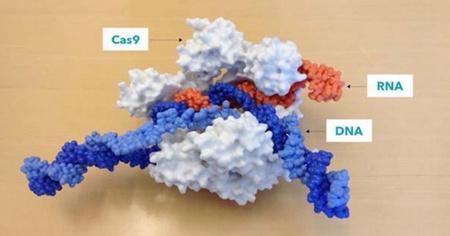
Cas9 Protein
We now know the process in which Cas9 acts, but not exactly what the protein Cas9 is. The orange and the blue crystals represent the real interaction between the guide RNA and the single strand of the target DNA in the process, where they are in the Cas9 protein (here in the form of the white crystals).
It was found that Cas9 is a highly flexible protein. To unwind and cut DNA, it needs to change shape. Therefore, the Cas9 first changes shape when binding to the guide RNA. This Cas9 structure is then able to search for the cell by looking for a matching sequence. When found, there is another structural change in the protein, as it can then accommodate the DNA molecule so that the RNA-DNA Leix can form inside the Cas9. Finally, the Cas9 can cleave the DNA strand that is attached to the guide RNA.
The Cas9 protein needs to move really quickly so it can scan vast regions of DNA efficiently The Cas9 moves along DNA, checking all the sequences to see if it matches the guide RNA. When CAs9 and its guide RNA interact with DNA, the protein starts to pull apart the two strands of the helix, making it possible to check if the sequence is complementary for bringing to the CRISPR-RNA. If a matching sequence is found, the two DNA strands separate further, making it possible for RNA-DNA to form in the Cas9 protein. When the match is perfect, the DNA is cut.
All of this shows that the Cas9 protein is not a rigid structure, but a highly dynamic structure, which can change its shape during the process.
Opportunity and Danger
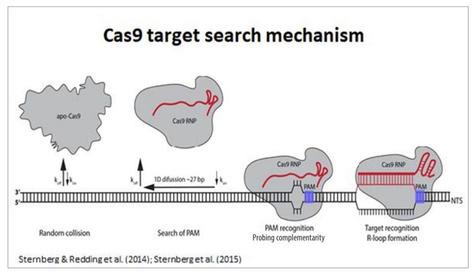
Genome editing can be conducted in many different kinds of cells, including the fundamental cells: germ cells and somatic cells. A germ cell is pluripotent, allowing it to differentiate into many different cell types. This also means that the genome edit has the potential to be heritable and the DNA change not only becomes part of not only an individual but also all of that individual’s progeny. The heritability makes genome editing of germs cells a very powerful tool. Before CRISPR, it took thousands of years for an evolution to happen, but now we can directly create one. This brings along enormous ethical and societal issues, because of the possibility of using germline editing in humans. The other type of cell is the somatic cell, which is fully differentiated and does not have the ability to create an organism with the shared DNA. This prevents DNA changes from being heritable, because it affects only one cell, tissue or individual organism. Editing the genome in a somatic cell is an extraordinary opportunity that we will be developing in the near future.
CRISPR as cure/treatment
CRISPR can hold a primary role in gene therapy. It can be used as a macromolecule drug to either fix a mutated gene or regulate a defective one to treat a disease. However, we are only looking at the simplest genetic diseases, but many more diseases are caused by widespread mutations, which is not able to be cured with CRISPR yet. In cell therapy, CRISPR can be used to make your body’s cells attack toxic cells or regenerate healthy cells. As an example, chemotherapy drugs sometimes can’t completely get rid of a tumour, but it was found that, by retrieving the patient’s T-cells (which fight infection), the body can fight on its own again. However, these cells can also get out of control and start killing healthy cells.
The first patient of CRISPR
In July 2019, Victoria Gray became the first patient with sickle cell disease to receive a CRISPR-based cell therapy. The doctors removed some of the bone marrow cells, genetically modified them with CRISPR and infused billions of modified cells back into her body The genetic changes should help the cell through the production of fetal haemoglobin, which can replace the faulty haemoglobin that caused the disease. Today, she is completely healed and lives a healthy life.
Conclusion
CRISPR represents a breathtaking revolution in science, unlocking the power to rewrite genetic codes with precision and speed. The tool ignites hope for a healthier life in many people, and has the potential to increase the life expectancy of future generations. However, we still have a lot to learn about this new method, because it could also have many negative aspects. CRISPR can either make our life better or destroy genetic diversity, by giving us the possibility of making the changes we always wanted to make.
Bibliography:
https://my clevelandclinic org/health/diseases/21751-genetic-disorders https://www broadinstitute org/what-broad/areas-focus/project-spotlight/questions-and-answers-about-crispr https://www nobelprize org/uploads/2024/03/doudna-lecture pdf https://www cell com/cell/fulltext/S0092-86742100225-7 https://www nature com/articles/nrm 2017 48 https://news stanford edu/stories/2024/06/stanford-explainer-crispr-gene-editing-and-beyond https://pubmed ncbi nlm nih gov/39436279/ https://www npr org/sections/healthshots/2023/03/16/1163104822/crispr-gene-editing-sickle-cell-success-cost-ethics The code breaker, Jennifer Doudna: Gene editing and the future of human race
Melody (V)
Introduction: what is a serial killer
Serial killers are people who kill three or more victims in separate incidents, often over long periods of time They usually have breaks between crimes, and their motives tend to come from personal gratification such as wanting control or getting a thrill rather than just money
Biologically, there isn’t one single cause Instead it is a mix of factors like differences in brain structure, many small genetic risks and chemical imbalances in the brain combined with harmful or traumatic environments These factors don’t guarantee someone will become violent but studies show that many people with similar traits never commit crimes so the causes are more about increasing risk than directly determining behaviour
The Violent Brain: structure and function
Scientists have found that some serial killers shows difference in parts of the brain responsible for self control, emotions and moral decision making. Two major areas involved are the Prefrontal cortex (PFC) and the amygdala. The PFC helps you think ahead, control impulses and make moral judgement, while the amygdala helps you feel fear and understand people’s emotions. In some individuals these areas may have slightly less brain tissue, many not activate normally during emotional situations and may not communicate with each other as strongly as they do in typical brains. When these systems don’t work well together, it can separate emotional reactions from logical thinking.
In a normal brain, parts of the PFC work closely with the amygdala to create normal feelings of empathy, fear, guilt and hesitation before doing something harmful. These strong connections help guide and regulate behavior. In contrast, some serial killers have a less active or smaller amygdala, which can weaken feelings of fear and empathy. Their PFC may also be underactive, making it harder for them to control impulse or think through consequences of their actions because the connection between the emotional parts of the brain and the logical parts is weaker, feelings like guilt or fear may not influence their choices the way they would in most people. Therefore, traits like fearlessness, poor impulse control and difficulty understanding others’ emotions can emerge.
Large studies of prisoners show that people who commit homicide sometimes have additional reduction in areas of the brain linked to social understanding and moral reasoning People who commit other kinds of violent crimes usually don’t show these traits, which indicates that the brain differences are unique to certain offenders rather than linked to overall aggression. Still, these brain patterns don’t necessarily cause violent behavior as many peaceful individuals share similar brain characteristics.
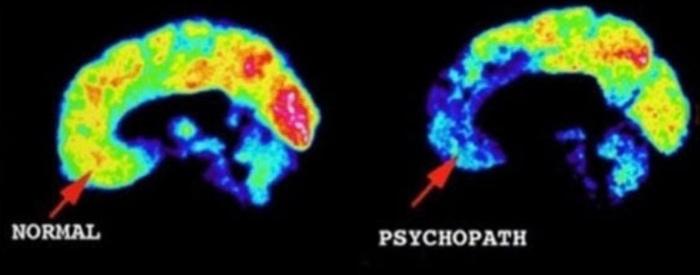
This picture shows In the normal brain, this area shows more activity (shown by yellow and red), while in the psychopathy-labelled brain it shows much lower activity (shown by blue) Scientists use images like this to show that some people who commit extreme acts of violence may have reduced activity in the parts of the brain that regulate emotions and impulses
Brain chemicals behind killer rage
Serotonin, dopamine and norepinephrine are brain chemicals (neurotransmitters) that regulate mood and aggression. They work by soothing impulses and stabilising emotions during daily activities. Serotonin acts like a break on anger, dopamine motivates rewards without access to seeking, and norepinephrine keeps alertness and vigilance to avoid reactions especially during stress or the fight or flight response.
Imbalances of these brain chemicals can cause irregular activities. Low serotonin levels are linked directly to impulsive aggression and humans and animals. Violent offenders often have 20 to 40% less serotonin by-product in spinal fluid, raising attacks by 2 to 3 times, as seen in the studies of prisoners and aggressive monkeys and balances and dopamine and norepinephrine fuel this. Too much dopamine drives violent thrill seeking while norepinephrine surges spark sudden rage with odds of aggression jumping 2.5 times in affected people.
In serial killers, these chemical flaws weaken emotional brakes making remorsefulness, repeated violence easier. Low serotonin reduces guilt during kills, and a dopamine high turns murder into a twisted reward explaining their cold planning and escalation beyond normal aggression.
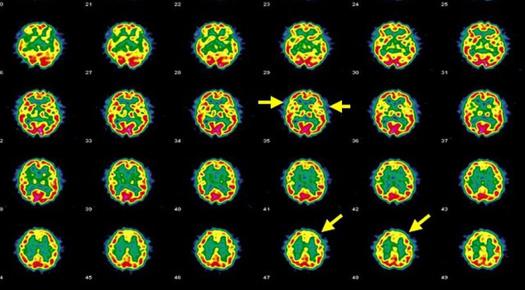
Therapists employ aggression replacement training, social skills development and family therapy to harness the brain’s ability to rewire itself (neuroplasticity) which strengthens the PFC connections for better impulse control and emotional regulation. Cognitive exercise help at risk teens recognise triggers and build empathy helping fight a giant amygdala deficits linked to violence.
Long-term studies reveal striking success. Result show MJTC participants show 50% lower rates of violent recidivism, with only 20% reoffending violently within two years compared to 50% in standard programs and six times fewer felony assaults overall These results demonstrate that early biological interventions can reduce the path to serial violence
Can Biology stop serial killers?
The Mendota Juvenile treatment center (MJTC) in Wisconsin targets highly violent, treatment resistant youth aged 12-17, many of them with psychopathic traits similar to those seen in adult serial killers, such as low empathy and impulsivity. The program uses “decompression” therapy in a secure setting to interrupt cycle of defiance and aggressions through intensive behavioural interventions.
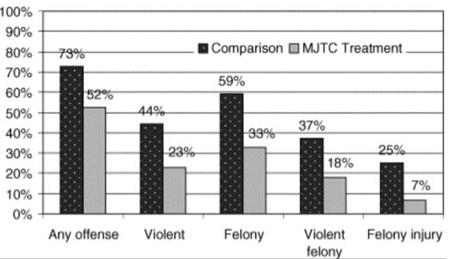
Caldwell, M.F. and Van Rybroek, G.J. (2005). Reducing violence in serious juvenile offenders using intensive treatment. International Journal of Law and Psychiatry, 28(6), pp.622–636.
Bibliography
https://www facebook com/profile php?id=61572900064602 (2025) The Brains of Serial Killers: What Differences Have Scientists Discovered? - Psychology
https://psychologytimes co uk/the-brains-of-serial-killers-what-differences-have-scientists-discovered/ Cooper, E (2019) Neurology of Violence [online] Ellison Cooper Available at: https://ellisoncooper com/neurology-of-violence/ Sajous-Turner, A , Anderson, N E , Widdows, M , Nyalakanti, P, Harenski, K , Harenski, C , Koenigs, M , Decety, J and Kiehl, K A (2019) Aberrant brain gray matter in murderers Brain Imaging and Behavior, [online] 14(5) doi:https://doi org/10 1007/s11682-019-00155-y Renfrew, J W (1996) Neurotransmitters and Drugs Oxford University Press eBooks, [online] pp 82–100 doi:https://doi org/10 1093/acprof:oso/9780195082302 003 0005
Siegel, A and Douard, J (2011) Who’s flying the plane: Serotonin levels, aggression and free will International Journal of Law and Psychiatry, 34(1), pp 20–29 doi:https://doi org/10 1016/j ijlp 2010 11 004 Seo, D , Patrick, C J and Kennealy, PJ (2008) Role of serotonin and dopamine system interactions in the neurobiology of impulsive aggression and its comorbidity with other clinical disorders Aggression and Violent Behavior, [online] 13(5), pp 383–395 Available at: https://www ncbi nlm nih gov/pmc/articles/PMC2612120/ Fanning, J R and Coccaro, E F (2016) Neurobiology of Impulsive Aggression doi:https://doi org/10 1093/oxfordhb/9780199352722 013 24
CrimeSolutions, National Institute of Justice (2012) Program Profile: Mendota Juvenile Treatment Center [online] Available at: https://crimesolutions ojp gov/ratedprograms/mendota-juvenile-treatment-center
Today, P. (2020). Psychology Today UK: Health, Help, Happiness + Find Counselling UK [online] Psychology Today
ENGINEERING A SUSTAINABLE FUTURE
Polytunnels Kris (U6)
The Haileybury Horticultural Society (HHS) and polytunnels project is an exciting new initiative within Haileybury — originating from Service At Lunch Time (SALT) on a Friday lunch — which allows pupils to work with Mudlarks volunteers and gardeners on Monday, Wednesday, and Friday half, get involved in learning about and participating in horticulture, and helping the planet at the same time. But what is a polytunnel? What exactly do we do with regards to them here in school, where are we going with the project, and how exactly does our having two polytunnels make such an impact on our environment? To answer these questions, one first needs to know what exactly a polytunnel is. A polytunnel— defined as an elongated polythene-covered frame under which seedlings or other plants are grown outdoors— is essentially a semi-circular tube, covered in plastic, that acts somewhat like a greenhouse, making homegrown food more available to more people, for a longer period of time throughout the year.
Personally, I have hugely enjoyed both working in the polytunnels and now running and organising the Horticultural Society as a Service Coordinator, a role which will be passed on to one of the Lower Sixth working the polytunnels each year. First of all, attending the polytunnels regularly during summer term of last year, when the project first took off, watering the plants in the hot summer months before we broke up, and seeing the plants shoot up from mere seedlings to climbing up and coating the walls of the polytunnels was a great to see, and a rewarding experience seeing something you cultivated so thoroughly flourish so completely. Hence, having now become leader of the society, and Polytunnels organiser, I have had the privilege of arranging these experiences for others: organising rotas and overseeing the initiation of new Lower Sixth into the society. The polytunnels provide an opportunity for not just plants, but people to grow too, and it has been terrific seeing this happen firsthand.
We have learnt, and are still learning, a lot within Haileybury Horticultural Society, both by trial and error by ourselves, working together to complete the tasks we need to do for the plants growing there, and helped out by the wonderful Holly, who works with the Mudlarks Gardeners at Haileybury. It has been a steep but enjoyable learning curve; a journey that has been fun every muddy step of the way We have learnt just how much water a seedling needs to blossom, that the more you water chilli peppers the less spicy they get, and how to prick plants, sow seeds, and transplant seedlings. The amount of care and affection needed for seedlings to flourish is vast, but our volunteers have been providing that every step of the way, as well as interacting admirably with the Mudlarks gardeners Holly brings along. Furthermore, the Haileybury Horticultural Society has big plans (and bigger plants) in store for the future. We are in the process of ordering the very first seeds

of our own to grow: a journey just beginning. Before now, during the initiation of the Society and the polytunnels project, we had only helped Mudlarks grow food for their Café in Hertford— in collaboration with Service on Saturdays, another SALT-started project, where a few select students have the opportunity to volunteer as waiters at Mudlarks Café on a Saturday around sport— but now we are beginning the journey of buying our own winter crops such as: broad beans, elephant and Wight garlic, winter spinach, giant leeks, white onion, and savoy cabbage, to sow, germinate, and raise in our polytunnels here on-site which we will hopefully eventually transfer to our very own Haileybury allotments.
We are also hoping to grow the society beyond just sixth form involvement. Currently it is only possible for Lower Sixth to contribute, but we intend to begin to include younger years too: Fifths, Middles, and Removes possibly
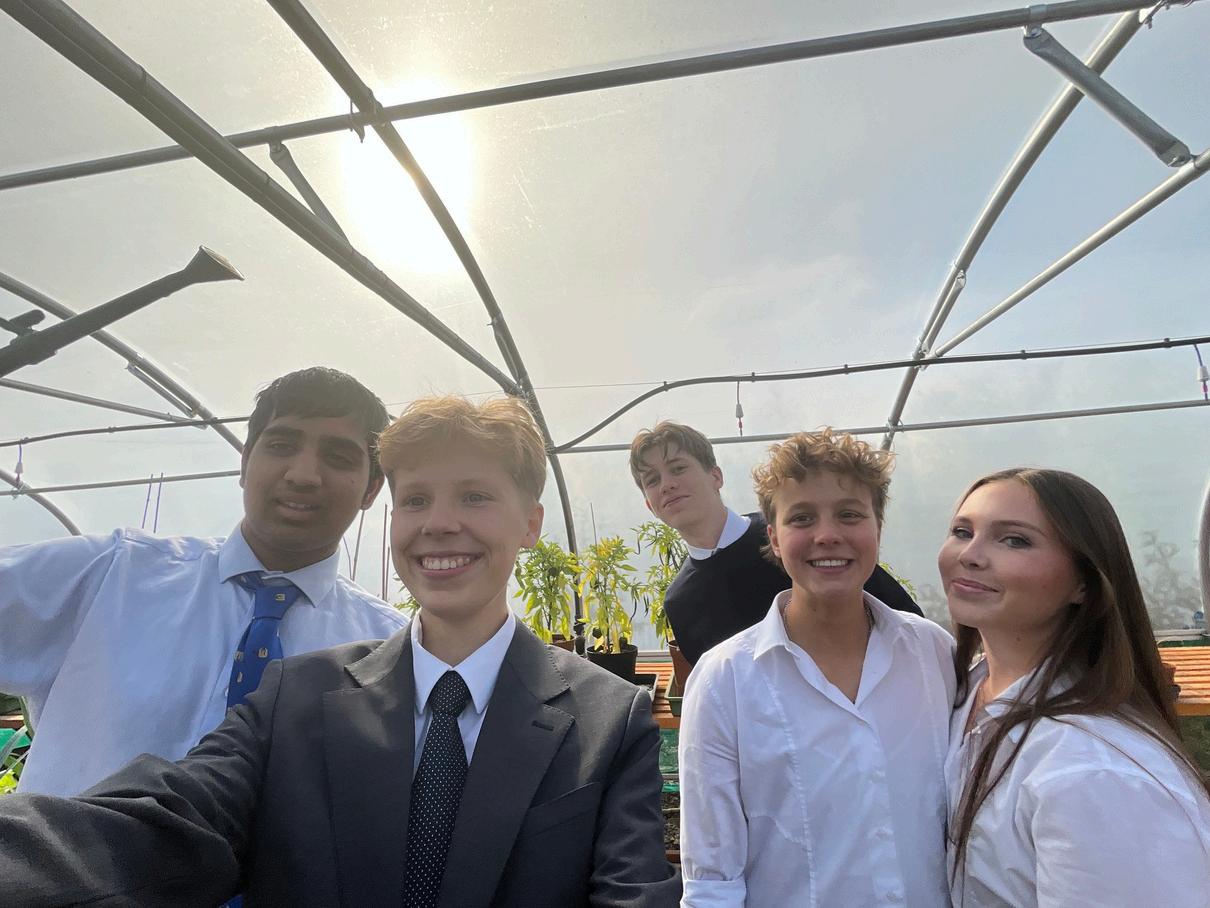
with Sixth Form teaching/supervision to introduce and initiate them. Another possibility for the future we have been strongly considering is launching the Haileybury Horticultural Society as a Lower School activity also, to allow pupils to immerse themselves in learning about horticulture, and possibly even agriculture, from a young age, educating them on sustainable cultivation practices and how to grow their own food,
which would then be cooked in our very own dining hall for them to eat. Even further on, likely at least another few years in the future, we are hoping to possibly even branch out into becoming a Wednesday activity, given enough support, potentially something in between Beekeeping and Conservation, and the Community Action Volunteering activities currently open to Sixth Formers.
Both for individuals and for institutions such as Haileybury, a polytunnel can help greatly in the transition to a greener and more sustainable way of life. Although polytunnels have a carbon cost at the point of manufacture and a carbon cost associated with transporting the polytunnel, this is offset by the carbon reduction over its lifetime. By allowing one to grow food throughout the whole year, increasing yields of produce, and by reducing losses to pests, disease or weather, a polytunnel can allow individuals to reduce, or even eliminate, the need to buy food. Fossil fuels are used to grow much of the food available to buy in supermarkets, and additional carbon costs are involved in transporting food around the world. A polytunnel not only makes it easier to do this, for more of the year; it also makes it possible to grow foods that it would not be possible to grow outdoors where we live. Moreover, pesticides, herbicides and synthetic fertilisers used on crops make their way into water and degrade topsoils. They make their way into food chains and disrupt the world’s ecosystems and cycles. Cultivating polytunnels means buying less food from these damaging agricultural systems, thereby helping to reduce environmental pollution.
Although some people may be concerned about the environmental impact of the plastic used to make polytunnels, which they are worried might end up in our oceans and waterways, the plastic from a polytunnel can be recycled, and the benefits to the environment during the lifetime of the polytunnel far outweigh the negatives of the materials used. Growing organic food in a polytunnel also allows us to reduce the amount of food that we have to buy in supermarkets and other major shops.
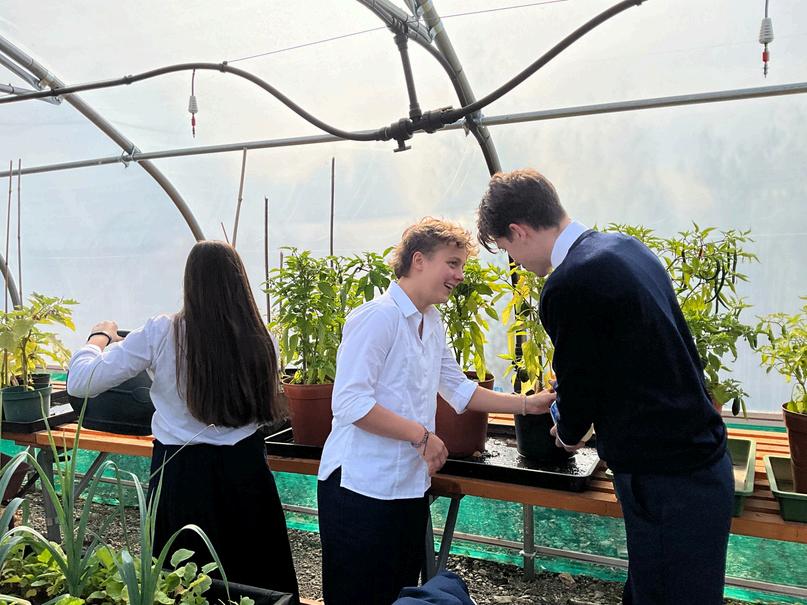
Since we will not have to buy as much food a polytunnel can allow us to reduce the amount of plastic packaging that we use, which inevitably ends up in landfill. Finally, owning a polytunnel allows one to implement organic gardening practices which make it easier to reduce waste even further: using compost, food scraps, and other organic waste both improves yield and reduces waste while waste such as plastic food packaging can also be put to use. There are a range of ways to reclaim and re-use items in a polytunnel which would otherwise end up in landfill which we plan to explore within the development of our Horticultural Society.
To conclude, the Haileybury Horticultural Society is the beginning of a fantastic project which has the potential to enrich the hearts, hands, and minds of Haileyburians for many years to come, perpetuating the sustainable ideals of our school and allowing pupils to gain valuable life skills. The project is still in its infancy, but has grown unprecedentedly over the last year, and I very much look forward to seeing where I, and my successors will be able to take it next. There is always room for enthusiasm in the polytunnels so if you are interested, get involved in a brilliant opportunity that melds charity, service, community, and horticulture into one great experience.
Austin (L6)
Greenpower is a national engineering competition run by the Greenpower Education Trust, a UK-based charity with an outstanding record of inspiring students to pursue careers in engineering, with the goal of unlocking students’ potential and sparking enthusiasm for Science, Technology, Engineering, and Maths through the challenge and excitement of motorsport. The competition is divided into three different age categories: Formula Goblin (9–11), Formula 24 (11–16), and Formula 24+ (16–25), and invites teams to build, design, and race a fully electric car. By incorporating teamwork, creativity, and real-world engineering, Greenpower creates an inspiring platform for students to experience the full engineering process from initial design to testing and competition.
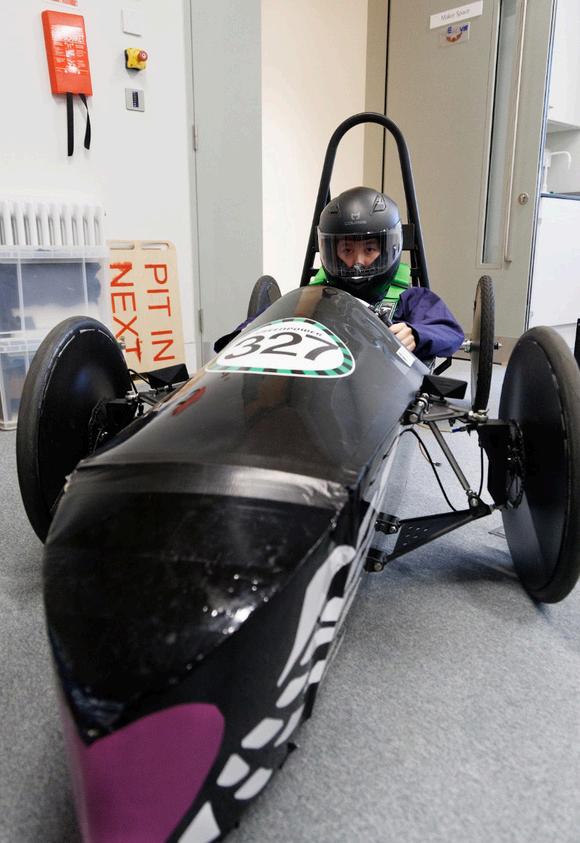
Our current Greenpower team consists of four members, each assigned with a key area of the car’s design. These four areas include the framework, steering, body and electrical systems with each member leading their own area while working closely with the rest of the team, ensuring that all components and aspects of the vehicle work effectively together. Apart from collaborating to maintain the current car, the team also meets every Wednesday afternoon to discuss different design ideas, mechanisms, and materials in hopes of developing a new vehicle for racing in another age category in the future. These weekly sessions enable clear communication, problemsolving, and effective teamwork, simulating the structure of realworld engineering projects.
The current car has participated in several events throughout the previous year, creating valuable racing experiences and also allowing the team to identify areas for improvement. Notable recent events include the Mallory Park Test at Mallory Park Circuit on 25th March 2025, followed by the Mallory Park Heat on 7th May 2025 in which the car achieved the fifth fastest lap time during the race. By engaging with other teams in the event, the team learnt that reducing aerodynamic drag to increase speed was crucial as all teams used the standard 240W, 24V electric motor. Therefore, this allowed the team to conclude that improving the car’s shape and weight is key for achieving a competitive advantage.
As previously mentioned, the team is also actively working, alongside maintaining the current car, towards the development of a new vehicle. One of the aims of the new car is to allow the team to participate in two different age categories in which the seniors will race the new car, whilst the juniors will race the old one, allowing both teams to gain valuable racing experience simultaneously. The new car is also aimed at having improved efficiency and better overall performance with the team already looking at potential ideas of development including implementing a dual-axis steering system which is adapted to Greenpower regulations to reduce drag and also increase the handling and stability of the car.
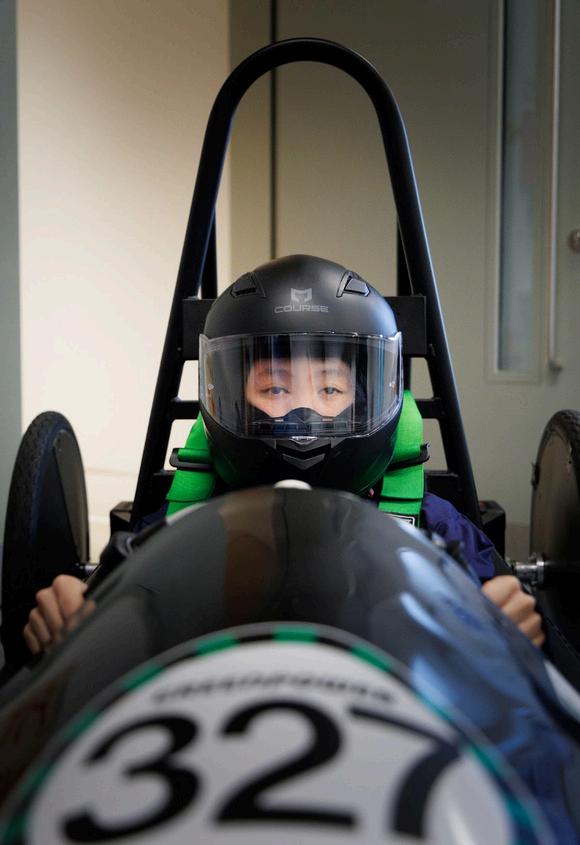
j
oving forward, events for the upcoming ason include races from March onwards, such Mallory Park on 6th May 2026 and the odwood Heat on 24th May 2026. In addition, e team plans to organise fixtures against other hools like The Leys to gain further competitive perience and the opportunity to refine the am’s performance in a competitive setting.
conclusion, Greenpower creates an traordinary opportunity for students to gage with engineering in a practical and allenging environment through designing, ilding, and racing an electric car. The idance and support of staff including Mrs. etorius and Mr. Lapidge also play a crucial e in enabling this activity, providing valuable sight, resources and encouragement roughout the process. Looking ahead, the am’s goals include the continued success with e current car alongside the completion of a w and improved vehicle, and the team looks rward to the exciting opportunities and strong rformances that Greenpower has to offer.
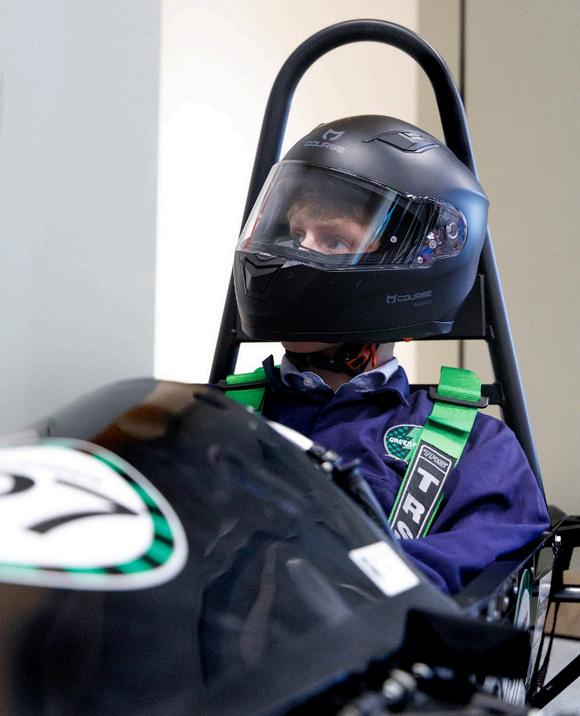
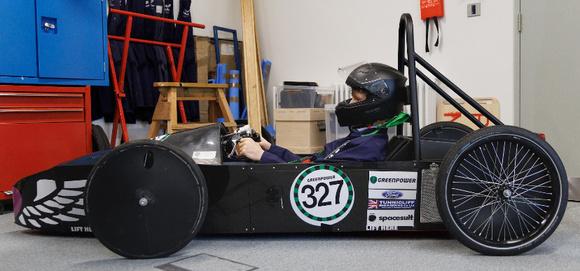
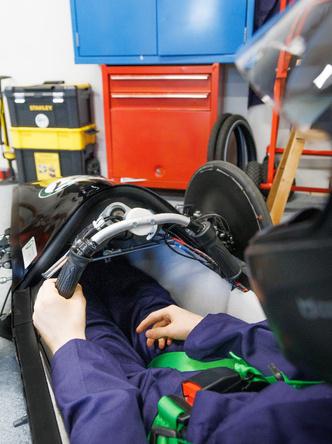
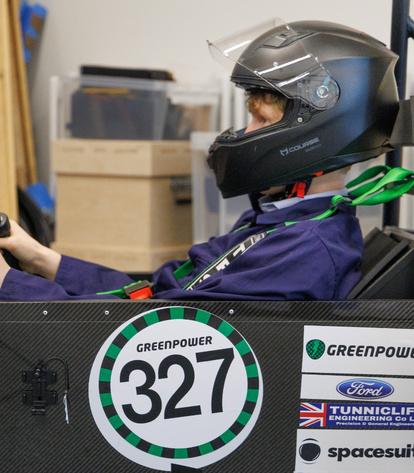
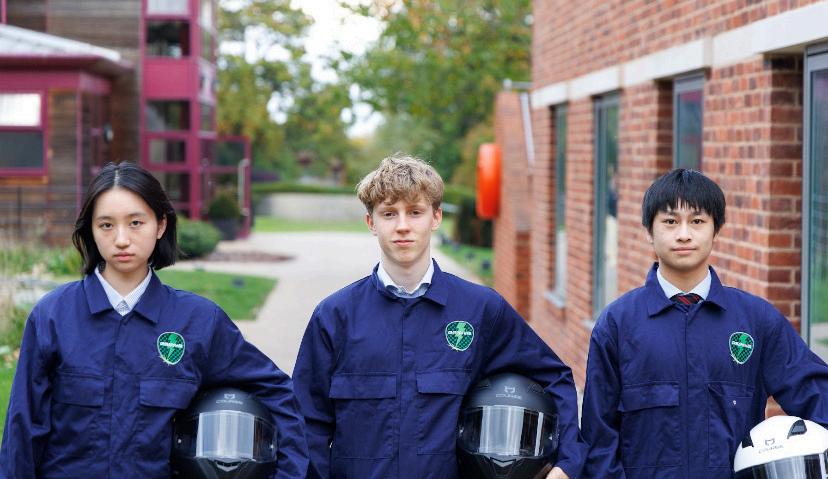
TRUTH IN THEORY
References:
Marissa L and 2020 (2023) 17 Science ‘Facts’ That Are Actually Not True [online] Reader’s Digest Available at: https://www rd com/list/science-myths/ Osc org (2024) Available at: https://www osc org/popular-science-myths-debunkedclearing-up-misconceptions/#el-5f80a875
TOMORROW IN THE MAKING
of Science
Dr Sandeep Rajan PhD (Technical Specialist at Sanger Institute)
The Wellcome Sanger Institute is internationally renowned for its large-scale, high-impact approach to genomics and biological research. The Institute played a historic role in modern biology by contributing to the sequencing of the first complete human genome, a milestone achieved in 2003, when it was then known as the Sanger Institute. This achievement fundamentally transformed the understanding of human biology and laid the foundation for contemporary genomics-driven medicine.
Today the Wellcome Sanger Institute operates at the intersection of discovery science, technology development, and data-driven biology. Research is carried out across multiple state-of-the-art research and operational facilities, enabling projects that range from focused experimental studies to population-scale and whole-genome analyses.
Operational and Core Facilities
The scientific programmes are supported by a robust ecosystem of operational and core facilities, including:
Next-generation sequencing platforms
Flow cytometry services
Automation and high-throughput screening systems
Computational biology and data infrastructure
These facilities enable researchers to pilot, scale, optimise workflows that move seamlessly from small experimental cohorts to population-level and wholegenome analyses. Through this integrated infrastructure, the Wellcome Sanger Institute continues to redefine what is possible in large-scale biological research.
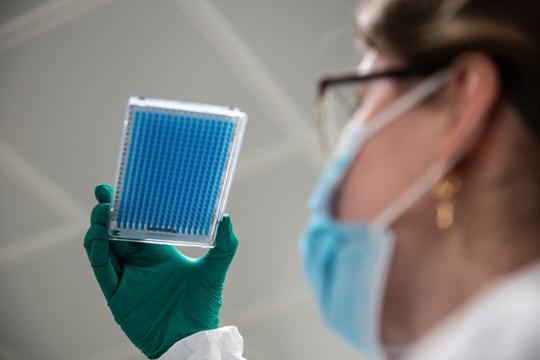
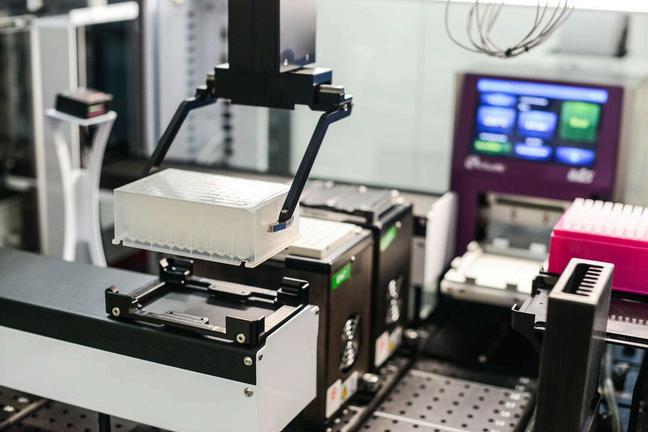
Gene Editing and the CRISPR–Cas9 Revolution
With the advent of novel technologies—most notably in the field of gene editing—researchers at Wellcome Sanger Institute have played a key in establishing the groundwork for functional genomics at scale. The most widely used geneediting technology today is the CRISPR–Cas9 system. This system allows scientists to precisely virtually any part of the genome. Using CRISPR–Cas9, researchers can break, cut, insert or replace specific DNA sequences with high accuracy, enabling systematic interrogation of gene function across the entire genome. This transformative capability has opened up unprecedented opportunities to study biology in a comprehensive and scalable manner.
Scientific Programmes at the Wellcome Sanger Institute
Research at the Institute is currently organised into six major scientific programmes, each addressing fundamental questions in biology, health, and evolution:
1. Cancer Genomics
This programme focuses on understanding the genetic basis of cancer, including how mutations accumulate with ageing and how genomic instability drives tumour development and progression. Large-scale mutation screening and comparative analyses are used to uncover the mechanisms that underlie cancer initiation, evolution, and therapeutic resistance.
2. Cellular Genomics
Cellular genomics aims to understand how individual cells function and interact within tissues and organs. By studying gene expression, cell identity, and cell-to-cell communication, this programme provides insights into tissue organisation, development, and disease at single-cell resolution
3 Generative and Synthetic Genomics
This programme focuses on large-scale data generation, integration, and interpretation, with a strong emphasis on artificial intelligence (AI) and computational modelling By combining synthetic biology approaches with systems biology, researchers aim to predict, design, and engineer biological systems in a rational and scalable manner
4 Human Genetics
Human genetics research at Sanger seeks to uncover the genetic causes of human diseases at the whole-genome scale This includes identifying rare and common variants associated with disease, understanding genotype–phenotype relationships, and translating genomic discoveries into clinical and diagnostic applications
5 Parasites and Microbes
This programme focuses on the genomics of microbes and parasites, their interactions with hosts and environments, and their impact on human health. Research includes pathogen evolution, antimicrobial resistance, and the development of novel therapeutic and preventive strategies.
6. Tree of Life
The Tree of Life programme is an ambitious, large-scale initiative aimed at sequencing and analysing the genomes of organisms across the planet. By doing so, it seeks to deepen the understanding of evolution, biodiversity, and the genetic relationships that connect all living organisms on a global scale.
Applications of Gene Editing in Research and Medicine
Some key applications of CRISPR-based gene editing include:
1.Understanding Disease Mechanisms
By disrupting or modifying specific genes, researchers can model genetic diseases in cells and organisms. This has been particularly valuable for studying inherited disorders such as sickle cell anaemia and other monogenic diseases.
2.Epigenetics and Gene Regulation
Gene editing tools provide insights into epigenetic regulation—how genes are turned on or off in response to developmental cues, environmental changes, or cellular stress.
3 Therapeutic Genome Editing
Gene editing offers new possibilities in medical science, where defective or mutated DNA sequences may be corrected or replaced with functional ones, paving the way for next-generation genetic therapies.
4.Cancer Biology
CRISPR-based approaches help unravel how mutations affect cell survival, proliferation, and resistance, providing a deeper understanding of cancer biology and identifying potential therapeutic targets.
5.Pathogen Biology and Therapeutics
Gene editing is used to study pathogen genomes and host–pathogen interactions, accelerating the development of therapeutics and vaccines—for example, informing strategies behind mRNA vaccine development, such as those used against COVID-19.
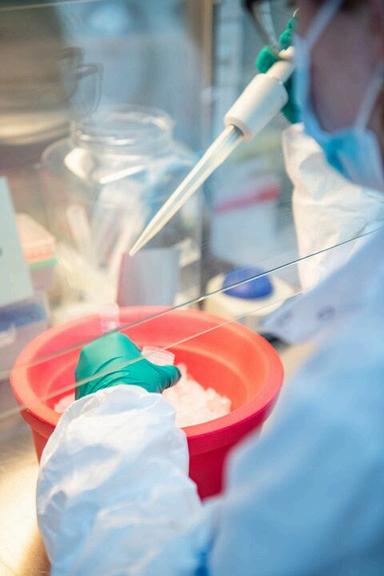
How the Wellcome Sanger Institute Promotes Learning and Capacity Building
In a rapidly evolving field such as genomics and genome editing, continuous learning and skills development are essential. The Wellcome Sanger Institute is deeply committed to training the next generation of scientists and ensuring that cutting-edge knowledge and technologies are accessible to researchers at all career stages.
The Institute provides a wide range of learning opportunities for scientists, postdoctoral researchers, PhD candidates, Master’s and undergraduate students, as well as early-career and pre-university learners. Through structured placements, internships, fellowships, and research training programmes, participants gain hands-on experience with state-of-the-art genomic technologies, large-scale data analysis, and experimental design in real-world research settings.
A central role in this mission is played by the Wellcome Connecting Science programme at the Sanger Institute. This initiative ensures that advances in genomics, computational biology, and genome editing have a global educational impact, inspiring and empowering scientists both within the UK and internationally The
Through a combination of hands-on laboratory training, computational workshops, short courses, and extended training programmes, the Connecting Science team delivers high-quality education to thousands of participants each year. These programmes are designed to bridge the gap between theory and practice, enabling learners to directly apply advanced methods in their own research environments. Some flagship training programmes and courses include:
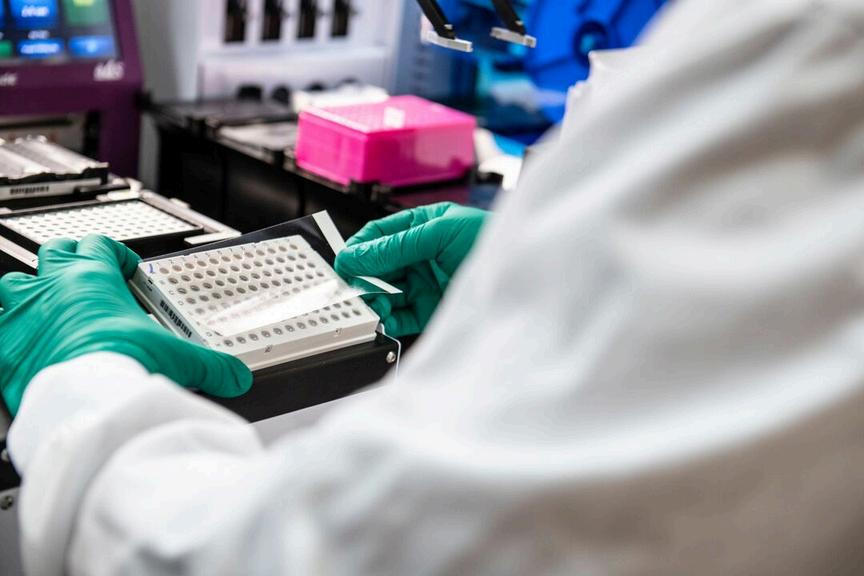
Advanced Genome Editing in Mammalian Cells – practical and theoretical training in CRISPR-based genome engineering and functional genomics.
Human Gut Microbiome Metagenomics – methods for studying microbial communities, host–microbe interactions, and microbiome-associated health and disease.
Genome Sequence Analysis – foundational and advanced approaches to analysing large-scale genomic data.
Cancer Genomics and Epidemiology – population-scale analyses to understand cancer risk, progression, and outcomes.
Multiplexed Assays for Variant Effects (MAVE) – high-throughput approaches to interpret genetic variation and its functional consequences.
Public Engagement and Outreach Programmes – interactive sessions and workshops aimed at undergraduate students and the wider public to promote genomic literacy and scientific curiosity.
Together, these initiatives ensure that the Wellcome Sanger Institute is not only a leader in genomic discovery but also a global hub for education, training, and knowledge exchange, shaping the future of genomics research worldwide.
By combining large-scale genomics, and interdisciplinary collabor Institute continues to shape biomedical research. Its work technology development, enhancing the understanding while driving innovation in global biodiversity research.
Beyond discovery science, the training and knowledge advances in genomics and widely and responsibly programmes, hands-on tr initiatives such as Wellcome supports the development career stages and geographical regions.
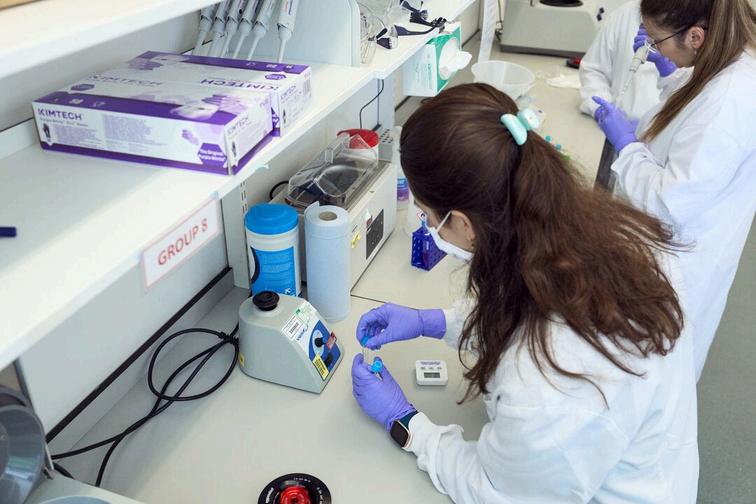

Together, this integration of world-leading research with education and capacity-building positions the Wellcome Sanger Institute not only as a leader in genomics but also as a catalyst for sustainable scientific progress and international collaboration.
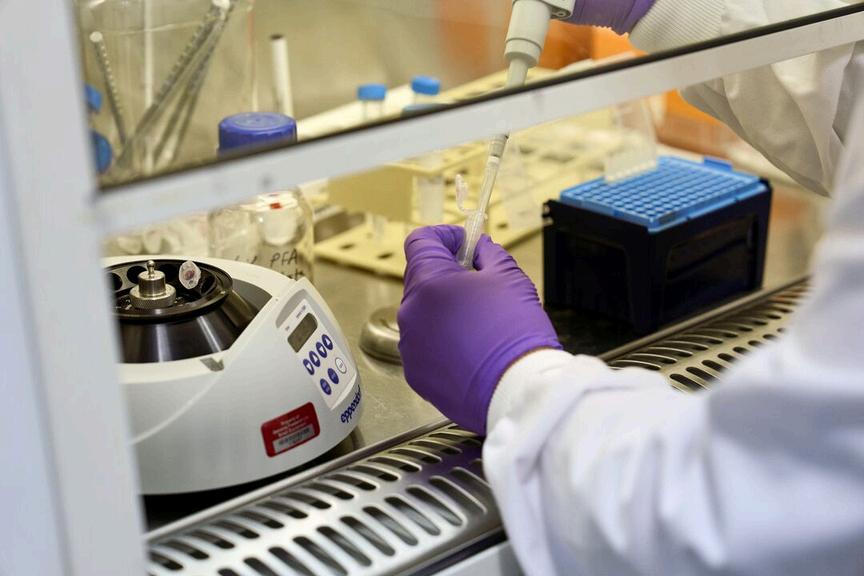
The Arkwright Scholarship Matthew (L6)
The Arkwright scholarship is an extremely rewarding but challenging experience. It requires not only academic ability but also technical aptitude, practical application, and the ability to communicate your ideas effectively. To screen for these qualities, there is a two-stage application process, including a series of technical and reasoning tests along with evidence of a high quality technical project, followed by an inquisitive two-on-one interview where the breadth and depth of your engineering knowledge is stretched to its full extent; you will face questions you cannot answer, and that is exactly the point.
Features of the project
My project involved developing an Electroaerodynamic propulsion system, an ionic wind generator, which uses high voltage to ionise atoms in the air creating a flow of ions that collide with neutral air molecules to generate thrust. This has two major benefits; having no moving parts and theoretically being extremely efficient. Because of this, ion thrusters, a vacuum-based relative of Electroaerodynamic propulsion, have been used in NASA’s Dawn and Deep Space One missions, among countless other applications such as keeping satellites in orbit. However, as these engines generate low thrust, they are generally restricted to applications in space where the lack of atmospheric resistance allows for gradual acceleration over time.
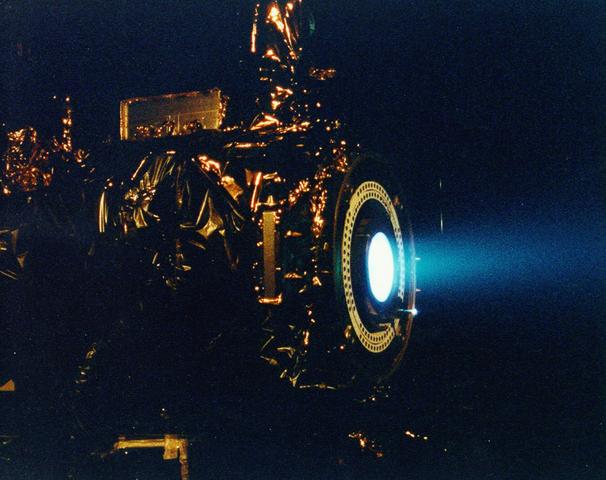
My project addressed this, involving several prototypes with the aim to increase the thrustto-weight ratio of the engine. I started using a screw and can; however, through many prototyping phases it evolved into a 3D printed skeleton which I electroplated with copper, using electrolysis having learnt about it in GCSE Chemistry, to provide a thin but conductive coat on top of the skeleton. Throughout this iterative design process I failed many times, for example I experienced a catastrophic component failure due to a direct short circuit while electroplating causing the power supply to have a rapid, unplanned disassembly of its internal components (it blew up). However, I discovered the cause (the anode and cathode touching). Thankfully Mrs Mughal was kind enough to let me try again, this time successfully. Everyone
experiences failure of a similar nature; however, these reinforce a skill central to the Arkwright scholarship, engineering, and life in general, problem solving. The ability to dissect a seemingly insurmountable problem into its constituent parts and tackle them one by one.
Benefits of the scholarship
The Arkwright scholarship is extremely beneficial to be awarded, being one of 300 scholars nationwide provides several opportunities such as £500 of funding intended for use in STEM projects, a mentor who will guide you during your scholarship years, and Arkwright-exclusive work experience and university open days. However, receiving the scholarship alone, being such a challenge, is significantly valuable in university applications and the opportunities that you receive can put you on an impressive trajectory. I strongly urge any aspiring engineers or design enthusiasts to pursue an Arkwright scholarship, I have had an amazing experience and it has provided me with a great platform to launch my career.

Engineering is often thought of as just building bridges or designing machines, but it is so much more than that.
At its core, engineering is about solving problems, creating innovative solutions, and improving the world around us. From designing skyscrapers and transportation systems to developing software, medical devices, and sustainable energy solutions, engineers work in countless fields that touch nearly every aspect of modern life. Mechanical, civil, electrical, chemical, aerospace, biomedical, and software engineering are just a few examples of the diverse disciplines where engineers apply science, technology, and creativity to tackle real-world challenges.
This page explores the many types of engineering and shows how these problem-solvers shape the world we live in.
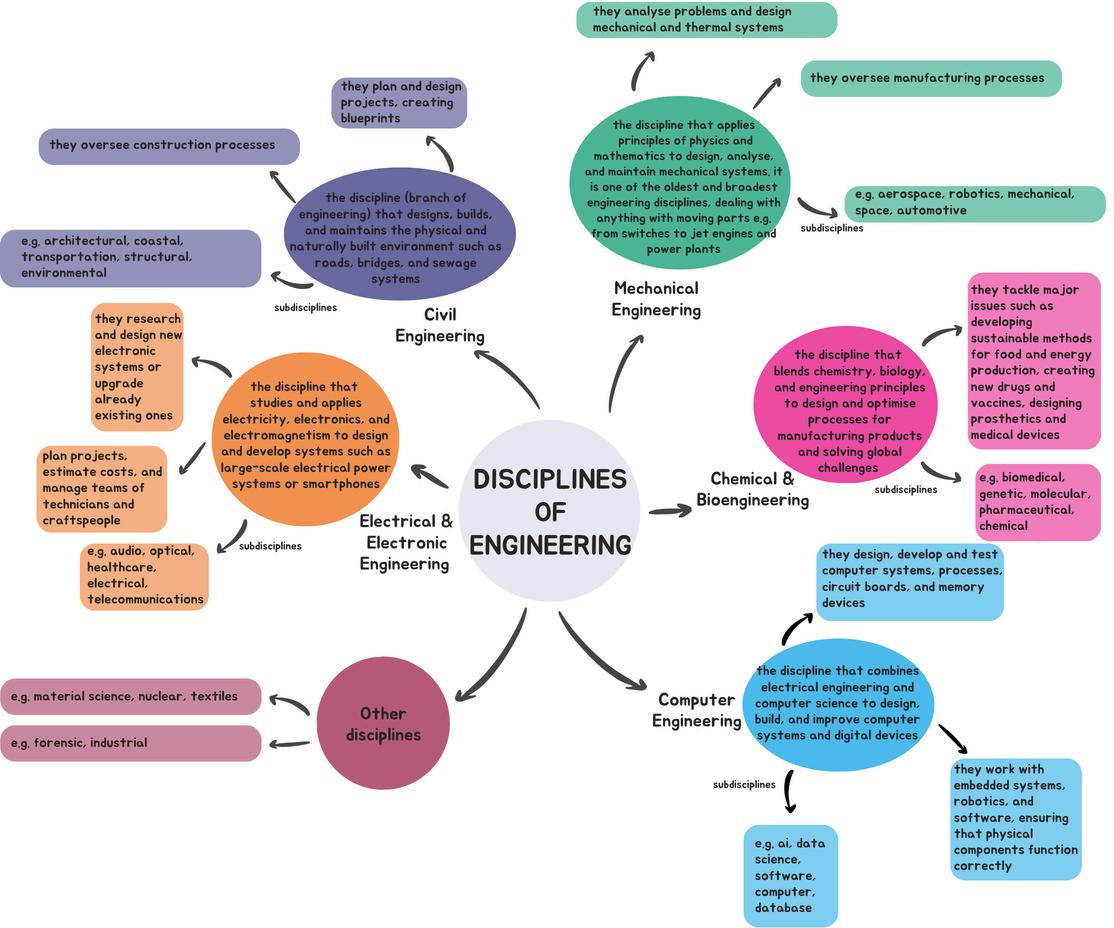

Could you tell me a little bit abo ld?
“Med tech is what they call our in t for 12 years, is greatly involved in the development of new medical technologies. There’s a lot of research and investment into the next technology that needs to be designed and created to enhance and improve surgery. This is for patient benefit, for efficiency during surgery, and sometimes staff safety as well. Stryker invests in researching and developing the product; manufacturing it and also selling it. Stryker may also purchase another company’s products that they like the look of, and want to sell, so there’s also a bit of acquisition involved I’m very much at the selling/marketing end of it, so the customer-facing roles I was in sales, but I’ve moved to marketing now, so the product I am promoting to the surgeons and the hospital has already been through regulation and testing in order to make sure it is safe to use in surgery ”
How close do you work with other branches in the company?
“There’s so many different roles in Stryker, it’s a huge entity We are a divisional structure, and as European Brand Manager, I am responsible for the European marketing strategy of one of the divisions We have an end product, but as we are constantly evolving and wanting to improve our offering towards the hospital, we are always wanting to get healthcare professionals’ (our customers) feedback, which is called ‘voice of customer’ One of my roles is to get customer feedback on the product, then convey it to the researchers and developers, so our customer input is considered during the design of the next generation product.Sales and marketing work together a lot, where sales is the customer-facing branch and marketing supports sales by raising awareness of the product.”
How did you go from studying biochemistry at Univeristy u are now?
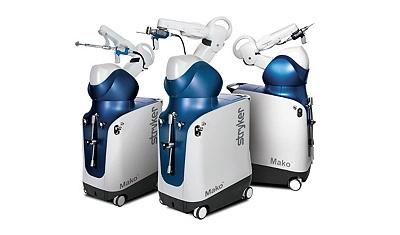
ckground does help in my field, but if e I work with often don’t have a science when I came out of university, I went uld very much expect, working in a nerative STEM cell company. I realised at I had expected and I was alone for wever, I went to see my cousin who e med tech companies, and I did a day’s th him, soon realising that he got to k to the surgeons and do other things s worthwhile. I basically started from my way up from the bottom. I’d love to ar map of what I wanted to do in my ber going to uni and feeling stressed, my degree would decide my career. I lf open, picking a degree that included science, but didn’t restrict my access to now know that it hasn’t. If I hadn’t experienced what my cousin does, going to hospitals and pitching ideas to surgeons, some during surgeries themselves, I would never have realised that there was a job like this It’s a bizarre world, but it’s a cool one ”
Does Stryker deal with robotic appliances, and are there any products that you are particularly excited about?
“Stryker has a robotics division (used for hip and knee replacements), and the technology is called MAKO” (the system is number one in the world for robotic orthopaedic joint replacement surgery) “In terms of projects that I am currently excited about, there’s one that I am brand manager for is called Neptune, and the product was designed to protect staff during manual handling and splashes from fluid It focuses a lot on sustainability, and things like reducing CO2 output and plastic waste, which is quite a hot topic at the moment ”
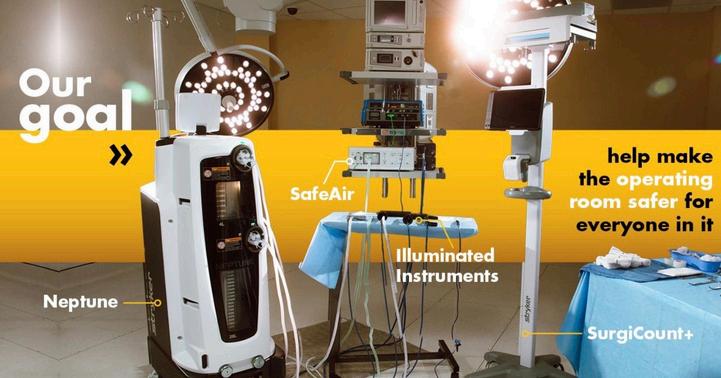
How widespread is Stryker as a whole?
“Stryker is global, so we sell in Asia, Europe, Australia, Canada, and North America is the biggest market. In Europe, we sell to 16 different countries, so the NHS is just one healthcare system among many. There are so many varying healthcare systems for us to wrap our heads around, and to do different marketing strategies with. As a European Brand Manager, I set a European marketing strategy for my brand, and it’s up to country marketing teams to then adopt it and make it specific to the region and its healthcare system.”
What makes Stryker different from other companies?
“I will of course say that the products are great, and there is a lot of investment in Stryker for good quality products, but it is the people and the service that sets us apart The sales teams are on time, reliable, supporting others and the products We also have a great next day service, so if the appliance fails, we will send a temporary replacement until we can get their appliance fixed It’s those added services which are important ”
Are there any challenges that Stryker faces as a multinational corporation?
“Cost of parts has gone up considerably, especially the cost of major parts involved in the products But you can’t just increase the price of the product to the customer, so your margins will reduce over time That has become a big issue for most companies, as they then need to reinvest the profit into research and development; even having all these sales reps is expensive They have a field based role, do a lot of driving, and need support in terms of IT and transport. They are a big cost, especially if your margins are getting narrower. That’s why we have to innovate and promote the next best product.”
Does your job require you to travel a lot?
“When I was a sales rep, my home was my car, and I would get up in the morning and go straight to the hospital, trying to catch a surgeon before they started their surgery or before their lunch break. For the first year of my role as European Brand Manager, once a month I would try to go to a European country to learn how the healthcare system works there, and maybe why they aren’t using our product. I would say thirty percent of my job is travel.”
Do you notice any differences between European regions in terms of their response and usage of Stryker?
“With my brand, the UK and France are the biggest markets, and some of the Nordic countries have very low usage. But then, in other divisions such as PPE (personal protective equipment), the Nordics are big users of Stryker’s products. If there’s a competitor company that’s based within a country, sometimes hospitals like that sense of stability, as they may think their supply is more reliable as they don’t have to ship overseas. There’s so many things like that which determine the usage of our products.’”
Haileybury Lectures
At Haileybury, we have been fortunate enough to accom were documented, some of the lectures are shown belo about certain fields of specialty, and learn about the w grateful to those who have offered their time and ener events await us next year.
Dr Joseph Huang - Robotics in Surgery
Dr Huang came to Haileybury to give a lecture o the use of robotics in surgery, with an emphasis o colorectal cancer. Dr Huang works in both Kin George’s Hospital and Queen’s Hospital, where he the senior consultant surgeon and Associate Medic Director. His lecture provided real footage surgeries that he performed, primarily regardin the removal of cancers or polyps. The even educated students on the surgical process malignant cancer removal, and opened their eyes the abundance of growing research an development in the surgical field. Dr Huang furthe expressed his views on the advancement of robo in theatre, and the potential for them in the future.


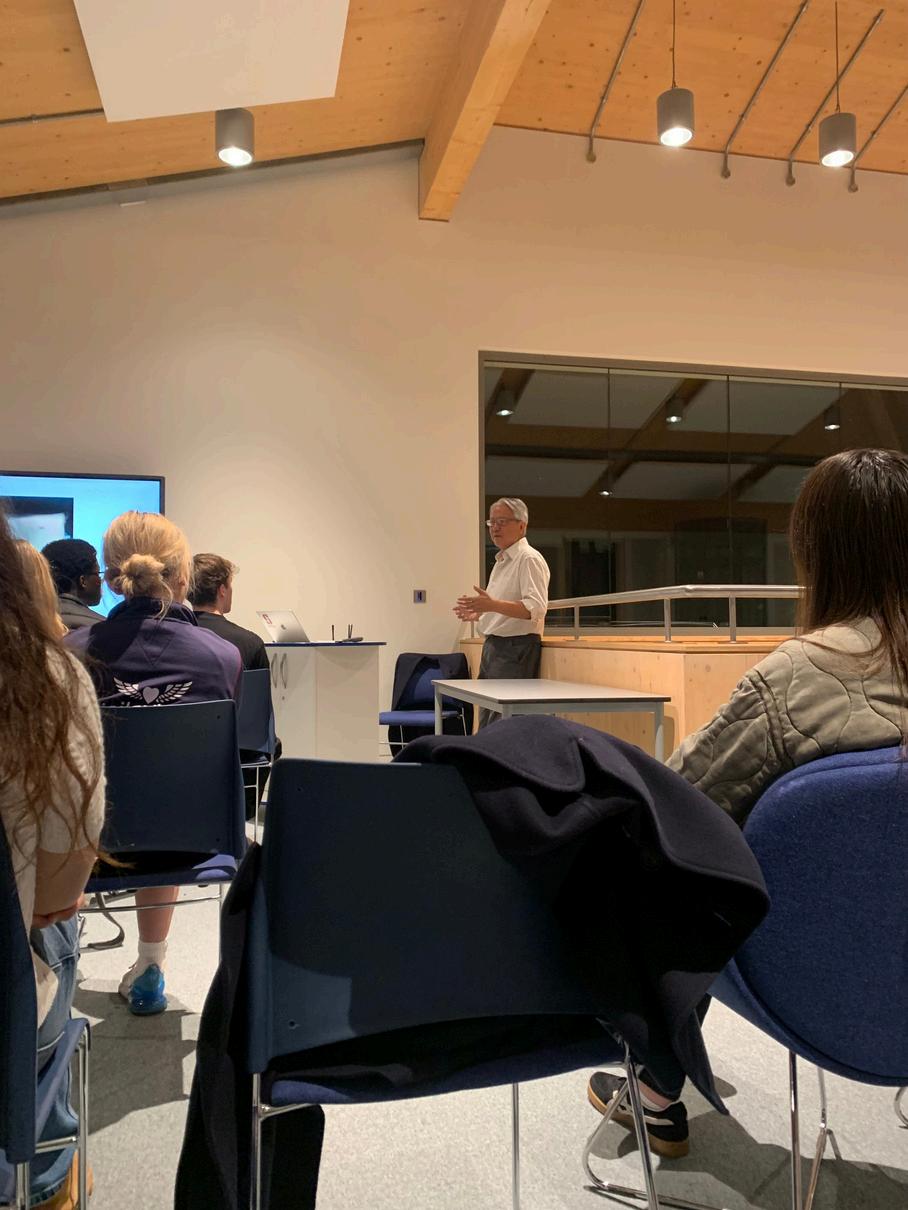
how economics and anthropology together can give a clearer picture of what happened. The presentation encouraged students to think beyond one subject and consider how different areas of study can work together to provide better answers to big questions, framing social sciences and interdisciplinary research. Science isn’t only natural sciences; it also includes the study of human behaviour, society, and economic systems. Dr. Zwisterloot also showcased Utrecht University’s flexible and interdisciplinary approach to higher education, giving students a good idea of the kind of opportunities available there.
Professor Paul Bowden - Legacies of Trans-Atlantic Slavery
Professor Bowden is an Honorary Professor of Law at the Nottingham Law School and Chair of the National Justice Museum. He is a member of the Advisory Council of the UK Policy and Evidence Centre on Modern Slavery and Human Rights Professor Bowden’s talk, a vital lecture on social sciences and applied research, focused on his current work exploring how historic TransAtlantic slavery and the plantation economies of the West Indies in the 18th and early 19th centuries were shaped by the City of London For those considering pursuing Law in the future, this was a great opportunity to hear from a prominent lawyer from one of the world's leading international law firms
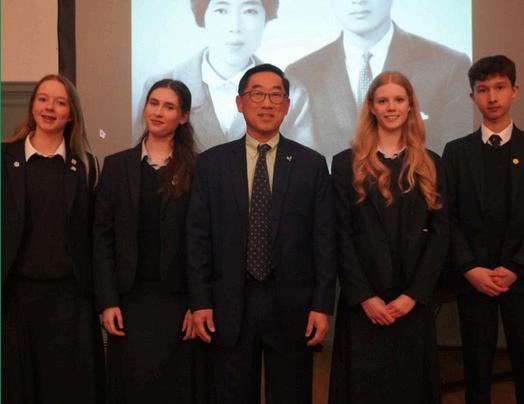


Professor Seung Kim - Research at Stanford
Professor Kim is a world-renowned researcher in diabetes and islet cell biology. He holds positions as a prominent professor at the Stanford University School of Medicine, as well as Director of the Stanford Diabetes Research Centre. Professor Kim also founded our own Stan-X course at Haileybury, spreading his interest in genetics and fruit fly biology worldwide. As such, we were very fortunate to welcome the Professor to his annual lecture in the Attlee Room. During the event, he discussed his journey from South Korea to the United States and his distinguished academic path, including earning his A.B. at Harvard College followed by an MD and PhD from Stanford University
So this is the last page of the magazine! We hope you enjoyed reading it just as much as we enjoyed producing it. We would like to extend our thanks to two key figures in the magazine’s developtment: Mr Lewis and Mr Kattavenos. As the kingpins of Haileybury science, they are involved in managing events, societies and maintaining their own bustling schedules, so we are perpetually grateful to you both for making this happen.


This year, we wanted our cover to reflect the growing prevalence of AI, and the importance of its development in certain fields of study. By combining a real image with an AI-created one, the cover highlights the importance of being critical and thoughtful about the media we consume in a world where technology can easily blur the line between reality and fabrication.