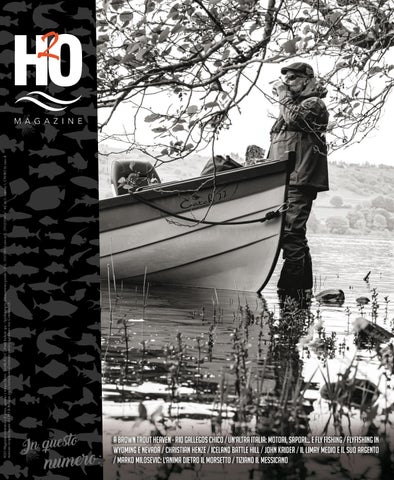
H2O Magazine-trimestrale di pesca, turismo e tempo libero. Tariffa R.O.C.: Poste Italiane spa - Spedizione in abbonamento postale - D.L. 353/2003 (conv.in L. 27/02/2004 n° 46) art.1, comma 1, CN/BO In caso di mancato recapito inviare al CPO di Bologna per la restituzione al mittente previo pagamento resi. Contiene I.P..
In questo
numero:
A BROWN TROUT HEAVEN - RIO GALLEGOS CHICO / UN'ALTRA ITALIA: MOTORI, SAPORI... E FLY FISHING / FLYFISHING IN WYOMING E NEVADA / CHRISTIAN HENZE / ICELAND BATTLE HILL / JOHN KRIDER / IL LIMAY MEDIO E IL SUO ARGENTO / MARKO MILOSEVIC: L'ANIMA DIETRO IL MORSETTO / TIZIANO IL MESSICANO
IN USCITA IL NUOVO LIBRO DI GIORGIO CAVATORTI
Q
ualcuno parla di “mal di Patagonia”, forse. Eppure, dopo oltre trenta viaggi in queste terre, qualcosa sembra essersi scolpito nell’anima, indelebile. Non sono solo le trote gigantesche a lasciare il segno, ma il legame profondo che si costruisce negli anni con gli amici e con ogni istante condiviso lungo fiumi e montagne. Forse è per questo che, ogni anno, il richiamo di questo angolo sperduto del mondo diventa irresistibile.
H2O anno XIX • NUMERO 3 • AUTUNNO 2026 Direttore Responsabile Sara Ballotta Direttore Editoriale Giorgio Cavatorti Redazione Giorgio Cavatorti Via Verdi, 30 42027 Montecchio Emilia (RE) e-mail: info@cavatortigiorgio.it FOTO COPERTINA ALBERTO ZANGHIERI Hanno collaborato a questo numero: OMAR GADE, FEDERICO ANGHINOLFI, Aleksandar Vrtaric, CHRISTIAN HENZE, BRICE ZACHAREWICZ, RICCARDO DE STABILE, PAOLO FRONDUTI, MARKO MILOSEVIC, RAIMONDA LANZA DI TRABIA Art Director E GRAFICA: OMAR GADE, VALENTINA SCARABELLI, ANGLINGCONSULTING.ONE Stampa: “Tipografifia Bertani” Cavriago (RE) Fotografi di Redazione: Alessandro Seletti, ALBERTO ZANGHIERI Social Media Manager: Fulvio Oliva Traduzioni: Rossella Catellani, Elisabetta Longhi Autorizzazione Tribunale di Bologna n°8157 del 01/02/2011 Poste Italiane spa- Spedizione in Abbonamento Postale - 70% - aut. Roc N°20825 del 10/03/2011 - DCB Bologna Una copia € 14, 00 Arretrato € 14,00 Copyright © 2008 Tutti i diritti sono riservati, è vietata la riproduzione anche parziale senza l’autorizzazione della Redazione. Fotografie e manoscritti non richiesti non vengono restituiti. Per qualsiasi informazione inerente i viaggi trattati nel magazine, vi invitiamo a contattare la Redazione: INFO@ h2oflyfishing.com info@cavatortigiorgio.it
Editor note
I
n the Autumn issue of H2O Magazine, travel, art, and collecting once again take center stage, featuring exclusive interviews with leading figures in the field. The journey begins in the Messico region, at the lodge of our friend Tiziano, as told by Countess Raimonda Lanza di Trabia, before continuing through Iceland, Wyoming, and the renowned Río Limay in Paolo’s feature article. There is also space for Italy and the Gallegos Chico, a spectacular location in the heart of Argentine Patagonia. Art comes to life through Christian Henze, exploring both personal history and a passion for collecting. Meanwhile, we are already working on planning the spring 2027 events, with new gatherings and encounters dedicated to our community. A continuously evolving journey, designed to offer increasingly engaging experiences. Enjoy the reading.
N
Giorgio
el numero autunnale di H2O Magazine tornano protagonisti i viaggi, l’arte e il collezionismo, con interviste esclusive ai grandi nomi del settore. Si parte dal Messico, nel lodge dell’amico Tiziano, raccontato dalla contessa Raimonda Lanza di Trabia, per poi proseguire tra Islanda, Wyoming e il celebre Río Limay, nell’articolo di Paolo. Spazio anche all’Italia e al Gallegos Chico, luogo spettacolare nel cuore della Patagonia argentina. L’arte prende vita attraverso la figura di Christian Henze, tra storia personale e passione collezionistica. Nel frattempo, siamo già al lavoro per pianificare le manifestazioni della primavera 2027, con nuovi eventi e incontri dedicati alla nostra community. Un percorso in continua evoluzione, pensato per offrire esperienze sempre più coinvolgenti. Buona lettura.
let's keep in touch: www.h2oflyfishing.com info@h2oflyfishing.com • info@cavatortigiorgio.it
5
8
18
30
40
48
58
82
94
68
Contents 8
... A BROWN TROUT HEAVEN- RIO GALLEGOS CHICO ....A BROWN TROUT HEAVEN – RIO GALLEGOS CHICO
18
UN'ALTRA ITALIA: MOTORI, SAPORI... E FLY FISHING ANOTHER SIDE OF ITALY: MOTORS, FLAVOURS… AND FLY FISHING
30
FLYFISHING IN WYOMING E NEVADA FLY FISHING IN WYOMING AND NEVADA
40
ARTE NELLA PESCA: CHRISTIAN HENZE ART IN THE FISHING: CHRISTIAN HENZE
48
ICELAND - BATTLE HILL ICELAND – BATTLE HILL LODGE
58
..JOHN KRIDER JOHN KRIDER
68
IL LIMAY MEDIO E IL SUO ARGENTO THE MIDDLE LIMAY AND ITS SILVER
82
MARKO MILOSEVIC: L'ANIMA DIETRO IL MORSETTO MARKO MILOSEVIC: THE SOUL BEHIND THE VICE
94
TIZIANO IL MESSICANO TIZIANO THE MEXICAN
8
GIORGIO CAVATORTI
A Brown Trout Heaven
Rio Gallegos Chico
9
S
e esiste un paradiso delle trote fario, dove possono trascorrere l’intera vita senza essere quasi mai disturbate da pescatori o anche solo da passanti, questo è senza dubbio il Rio Gallegos Chico, all’interno della proprietà dell’Estancia Bella Sofia, in Patagonia argentina. Dico “quasi mai disturbate” perché, in uno degli ultimi viaggi in Patagonia, abbiamo pescato in questa vallata deserta e l’impressione è stata quella di trovarsi in un sogno: grandi trote ovunque, che bollavano e si lanciavano su qualsiasi cosa ricordasse del cibo. Onestamente mi è capitato altre volte di trovarmi in situazioni splendide, ma questo piccolo fiume, con una portata esigua d’acqua in una valle completamente remota, ci ha lasciati senza parole. Anche se il viaggio all’Estancia Bella Sofia era nato per pescare nel Rio Gallegos le grandi sea-run brown trout che risalgono dal mare, un giorno era già stato pianificato per dedicarsi a questa meraviglia di fiume. Dopo una sola giornata di pesca in questa sorgente delle meraviglie, tutti i partecipanti del viaggio hanno voluto tornarci, io per primo,
If there is such a thing as a paradise for brown trout, where they can live their entire lives with almost no disturbance from anglers or even occasional passers-by, it is undoubtedly the Rio Gallegos Chico, located on the Estancia Bella Sofia property in Argentine Patagonia. I say “almost no disturbance” because, on one of my recent trips to Patagonia, we fished this remote valley and the impression was that of being inside a dream: large trout everywhere, rising and smashing anything that resembled food. Honestly, I have experienced many beautiful fisheries before, but this small river—with its modest flow running through an entirely isolated valley—left us speechless. Although the trip to Estancia Bella Sofia was originally planned for fishing the Rio Gallegos and its large sea-run brown trout migrating from the ocean, one day had already been reserved to explore this remarkable stream. After just one day of fishing this magical spring creek, everyone in the group wanted to return— myself included—even though the fishing for the larger Gallegos trout was already very good. This small river runs for about 20 kilometers through the private lands of Estancia Bella Sofia
10
11
nonostante la pesca alle grandi trote del Gallegos fosse comunque molto buona. Questo piccolo corso d’acqua si snoda per circa 20 chilometri all’interno delle terre private dell’Estancia Bella Sofia e dell’Estancia Bella Vista, in una vallata incontaminata a circa un’ora di auto
12
dall’aeroporto di Río Gallegos. Le rive erbose rendono la camminata estremamente agevole e vedere fario di oltre 2 kg uscire dai sottoriva per salire a prendere la vostra cavalletta in superficie è un’esperienza indescrivibile. La qualità e i colori di queste trote sono spettacolari: non è
raro osservare pesci oltre i 3 kg salire a galla con decisione. Le due estancias confinanti, parte della stessa proprietà, contano un patrimonio di oltre centomila pecore e sono organizzate con numerosi gauchos per la gestione dell’allevamento. Il lodge Bella Sofia può
and Estancia Bella Vista, in an untouched valley roughly one hour’s drive from Río Gallegos airport. The grassy banks make walking extremely easy, and seeing 2+ kg brown trout move from the undercut banks to rise and take your dry fly is an indescribable experience. The
quality and colors of these trout are spectacular: it is not uncommon to see fish exceeding 3 kg confidently rising to the surface. The two neighbouring estancias, part of the same property, manage a livestock operation of more than one hundred thousand sheep and are staffed
by numerous gauchos responsible for their care. The Bella Sofia lodge can accommodate a maximum of 4–5 anglers in single rooms. The service level is extremely high, both in terms of cuisine and all fishing-related aspects, including guiding. This low-pressure fishing policy has
13
ospitare al massimo 5,6 pescatori, in camere singole. Il servizio è di livello altissimo, sia per quanto riguarda la ristorazione sia per tutti gli aspetti legati alla pesca, guide comprese. Questa politica di bassa pressione di pesca ha permesso di raggiungere un livello straordinario della risorsa ittica. Solo il tratto del Rio Gallegos offre molti più chilometri di quelli che si possono affrontare in una settimana. La zona è completamente recintata e l’accesso è consentito esclusivamente con le guide del lodge: si tratta di un’area enorme, ricca di guanachi, condor e aquile. Puzzole, armadilli, gnu, lepri e volpi si incontrano quotidianamente lungo il percorso. Normalmente si forniscono indicazioni sull’attrezzatura consigliata per una destinazione del genere, ma credo che in questo caso sia quasi inutile consigliare canne, code o mosche per il Rio Gallegos Chico. L’unico consiglio che mi sento di dare è di fare di tutto per andarci almeno una volta, prima che questo paradiso vada perduto.
14
resulted in an extraordinary fishery. Even just the Rio Gallegos system offers far more water than can realistically be covered in a single week. The area is completely fenced and access is only permitted with lodge guides. It is an immense wilderness rich in guanacos, condors and eagles. Skunks, armadillos, rheas, hares and foxes are commonly seen along the way. Normally one would include recommendations for rods, lines and flies for a destination like this, but in this case I believe it is almost unnecessary to suggest specific tackle for the Rio Gallegos Chico. The only advice I can offer is simple: do everything you can to visit it at least once, before this paradise is lost.
“...fare di tutto per andarci almeno una volta, prima che questo paradiso vada perduto..."
15
Sean H. & Omar G
MAURO BARBACCI
Un'altra Italia:
ANOTHER SIDE OF ITALY: MOTORS, FLAVOURS… AND FLY FISHING 18
OMAR GADE
MOTORI, SAPORI… E FLY FISHING
19
U
na fuga di 3-4 giorni fuori dagli schemi, dove Ferrari, Parmigiano Reggiano, Aceto Balsamico Tradizionale ed un'esclusiva esperienza di pesca a mosca si fondono in un'unica, autentica esperienza italiana. Quando si pensa all'Italia, la mente corre naturalmente a Roma, Venezia, Firenze o forse ai celebri paesaggi della Toscana. Sono destinazioni che si sono guadagnate la loro fama nel corso dei secoli e che continuano ad attirare milioni di visitatori
20
ogni anno. Ma tra le mete più conosciute esiste un'altra Italia. Un'Italia fatta di piccoli borghi, tradizioni familiari, gastronomia d'eccellenza, dolci colline ed esperienze autentiche che spesso rimangono sconosciute ai visitatori stranieri. Uno di questi luoghi è il territorio che circonda Modena, nel Nord Italia. Situata a soli trenta minuti di auto dall'Aeroporto Internazionale di Bologna, questa zona offre una straordinaria concentrazione di eccellenze ed esperienze difficili da trovare altrove in
Europa. E, per gli appassionati di pesca a mosca, tra le colline circostanti si cela anche una piacevole sorpresa. Non perché questa sia una destinazione rinomata per la pesca: anzi, non lo è, e per ottime ragioni! In quest'area la pesca a mosca è praticamente assente, soprattutto se confrontata con località italiane come le Alpi, il Piemonte o il Trentino. In effetti, nessuno sceglierebbe questa parte d'Italia come meta di viaggio esclusivamente per pescare, poiché non esistono grandi corsi d'acqua dedicati
“....piccoli borghi, tradizioni familiari, gastronomia d'eccellenza..."
A
n unexpected 3-4 day escape where Ferrari, Parmigiano Reggiano, traditional balsamic vinegar and exclusive fly fishing come together in one unique Italian experience. When people think about Italy, their minds naturally travel to Rome, Venice, Florence or perhaps the famous landscapes of Tuscany. These destinations have earned their reputation over centuries and continue to attract millions of visitors every year.
But between the tourist hotspots lies another Italy. An Italy of small villages, family traditions, exceptional food, rolling countryside and local experiences that often remain unknown to foreign visitors. One of these places is the area surrounding Modena, in northern Italy. Located just thirty minutes' drive from Bologna International Airport, this area offers an extraordinary concentration of experiences and excellences that are difficult to find anywhere else in Europe.
And, for those who enjoy fly fishing, there is an additional surprise hidden among the nearby hills. Not because this is a recognized fishing destination: in fact, it is not and for good reasons, don’t get me wrong! There is actually no fly fishing in this area, especially compared to other parts of Italy such as the Alps, Piemonte or Trentino. In fact, and for godo reasons, no one would ever think about traveling to this part of Italy specifically to fish, as there are no major fly-
21
alla pesca a mosca. C'è però un dettaglio che fa la differenza: italianflyfishingtours.com ha sviluppato un programma locale che unisce questo autentico territorio italiano a una piccola ed esclusiva esperienza di pesca a mosca, difficilmente organizzabile in autonomia. Un pezzo d'Italia autentica La campagna che circonda Modena ha un carattere molto diverso dall'immagine che
tradizionali acetaie, i locali sottotetto dove il celebre Aceto Balsamico Tradizionale della regione matura lentamente in botti di legno per decenni. Passeggiare all'interno di una di queste acetaie è un'esperienza affascinante. File di botti di diverse dimensioni riposano silenziosamente sotto il tetto, custodendo aceti che possono avere venti, trenta, cinquanta o persino oltre
22
molti visitatori associano all'Italia. Qui non ci sono interminabili file di turisti. Non ci sono negozi di souvenir ad ogni angolo. E non si ha la sensazione che le tradizioni locali esistano soltanto per i visitatori. La vita conserva ancora una straordinaria autenticità. Il paesaggio alterna campi coltivati, vigneti, frutteti e dolci colline che salgono gradualmente verso l'Appennino settentrionale. Antichi casali punteggiano la campagna e molti appartengono
ancora alle stesse famiglie che li possiedono da generazioni. Per chi visita la zona, soggiornare in un agriturismo tradizionale rappresenta spesso uno dei momenti più memorabili del viaggio. A differenza di un hotel tradizionale, un agriturismo permette di vivere la vera quotidianità della campagna italiana, senza rinunciare al comfort e alla qualità dell'ospitalità. Molti producono il proprio vino, ortaggi o aceto balsamico. Alcuni ospitano persino le
cento anni di invecchiamento. Non si tratta di una produzione industriale, ma di una storia viva tramandata nel tempo.
celebri al mondo. Visitare un caseificio nelle prime ore del mattino permette di apprezzare un livello di maestria difficile da immaginare osservando una forma sugli scaffali di un supermercato. Ogni giorno vengono prodotte enormi forme seguendo metodi rimasti quasi immutati da secoli. Poco distante, produttori a conduzione familiare continuano a realizzare l'Aceto
Una regione che ruota intorno al cibo In Emilia-Romagna il cibo non è semplicemente qualcosa che si mangia: è parte integrante dell'identità del territorio. Qui nasce il Parmigiano Reggiano, uno dei formaggi più
fishing waters. But—and there is a "but"—a small opportunity exists because italianflyfishingtours. com has developed a local program that connects this authentic Italian territory with a small, exclusive fly-fishing experience that would otherwise be very difficult to arrange independently. The heart of authentic Italy The countryside surrounding Modena has a
wine, vegetables or balsamic vinegar. Some are in fact home to traditional "acetaie", the attic spaces where the region's famous balsamic vinegar slowly matures in wooden barrels over decades. Walking through one of these vinegar lofts is a fascinating experience. Rows of barrels of different sizes sit quietly beneath the roof, each containing vinegar that may have been ageing
character that differs significantly from the image many visitors associate with Italy. There are no endless queues of tourists. No souvenir shops on every corner. No feeling that local traditions exist primarily for visitors. Life here remains remarkably authentic. The landscape alternates between cultivated fields, vineyards, orchards and gently rolling hills that gradually rise toward the northern Apennine Mountains. Historic farmhouses are
scattered throughout the countryside, many of them still operated by the same families who have owned them for generations. For visitors, staying in one of these traditional agriturismi is often one of the highlights of the trip. Unlike a standard hotel, an agriturismo allows guests to experience rural Italian life from the inside, while still enjoying comfort and quality accommodation. Many produce their own
for twenty, thirty, fifty or even more than one hundred years. This is not industrial production; it is living history.
one of the world's most famous cheeses. Visiting a dairy in the early morning reveals a level of craftsmanship that is difficult to appreciate from a supermarket shelf. Huge wheels are produced every day following methods that have remained largely unchanged for centuries. Nearby, family-owned producers continue to make traditional balsamic vinegar according to strict regulations, transforming grape must
A region built on food Food is not simply something people consume in Emilia-Romagna. It is part of the region's identity. This is the birthplace of Parmigiano Reggiano,
23
Balsamico Tradizionale nel pieno rispetto di rigidi disciplinari, trasformando il mosto d'uva in uno dei prodotti più preziosi della gastronomia italiana grazie a lunghi anni di paziente invecchiamento. Questa è anche la terra dei tortellini, dei tortelloni, delle lasagne e del ragù. Molti dei piatti italiani diventati famosi nel mondo sono nati proprio qui, in Emilia. Per chi desidera immergersi ancora di più nella cultura italiana, i corsi di pasta fresca rappresentano un'esperienza imperdibile. Imparare direttamente dalle sfogline locali a preparare i tortellini a mano e poi gustarli insieme attorno alla tavola è un piacere difficile da dimenticare. Qui ogni pasto diventa un evento. Le conversazioni continuano a lungo
24
anche dopo il dessert. È l'Italia più autentica. Dove è nata la Ferrari Se il cibo rappresenta l'anima di questa terra, i motori ne sono senza dubbio il cuore pulsante. L'area di Modena costituisce il centro della celebre Motor Valley italiana, patria di alcuni dei marchi automobilistici più iconici del mondo. Ferrari, Maserati, Lamborghini, Ducati e Pagani hanno tutte le proprie radici in questo territorio. Visitare il Museo Ferrari di Maranello è già di per sé un motivo sufficiente per organizzare un viaggio. Per gli appassionati di automobili è difficile immaginare un'esperienza più emozionante. Eppure uno degli aspetti più sorprendenti di questa regione è il modo in cui
queste attrazioni di fama mondiale convivono armoniosamente con tranquille campagne e tradizioni secolari. Un piccolo torrente da trote sull'Appennino A sud di Modena il paesaggio cambia gradualmente. Le strade iniziano a salire, i paesi diventano sempre più piccoli e le colline si ricoprono di vigneti che producono il celebre Lambrusco, vino simbolo della regione. La realtà è che questa non può essere considerata una destinazione dedicata esclusivamente alla pesca a mosca. Semplicemente non esiste un numero sufficiente di corsi d'acqua adatti a giustificare una classica vacanza di pesca di più giorni. Tuttavia, grazie alla conoscenza del
into one of Italy's most prized products through years of patient ageing. This area is also the home of tortellini, tortelloni, lasagne and meat sauce ragout. Many of the Italian dishes that have become famous throughout the world originated here in Emilia. For travellers wishing to immerse themselves further into Italian culture, pasta-making classes offer the opportunity to learn directly from local experts. Few experiences are more satisfying than preparing fresh tortellini by hand and then enjoying it together around the table. Meals become an event in themselves. Conversations continue long after dessert has been served. This is Italy at its most genuine.
Where Ferrari was born Food may be the soul of the region, but engines are undoubtedly its heartbeat. The area around Modena forms the centre of Italy's famous Motor Valley, home to some of the most iconic automotive brands in the world. Ferrari, Maserati, Lamborghini, Ducati and Pagani all are from this territory. Exploring the Ferrari Museum in nearby Maranello is reason enough to visit. For car enthusiasts, it is difficult to imagine a more memorable experience. Yet one of the most surprising aspects of the region is how naturally these world-famous attractions coexist with quiet rural landscapes and centuries-old traditions.
A small trout stream in the Apennines South of Modena, the landscape gradually changes. The roads begin to climb, the villages become smaller, and the hillsides become increasingly covered with vineyards producing the famous Lambrusco wines for which the region is known. The reality is that this region should not be considered a dedicated fly-fishing destination. There simply is not enough suitable water to justify a traditional multi-day fishing holiday. However, thanks to local knowledge italianflyfishingtours.com has identified a unique opportunity that allows visitors to include one or two fly-fishing short sessions as part of their stay.
25
territorio, italianflyfishingtours.com ha individuato un'opportunità unica che consente ai visitatori di inserire una o due brevi sessioni di pesca a mosca all'interno del proprio soggiorno. Un piccolo torrente privato ricco di trote, nascosto tra gli Appennini, offre la possibilità di trascorrere alcune piacevoli ore con la canna da mosca in mano, insidiando trote e, con un po' di fortuna, anche esemplari di dimensioni sorprendenti. L'ambiente è tranquillo e raccolto: attrezzatura leggera, presentazioni accurate, acque limpide e nessuna folla. Il torrente è relativamente breve e non è adatto a gruppi numerosi, né pensato per offrire diversi giorni consecutivi di pesca. Una o due uscite di mezza giornata per una o due persone possono però essere facilmente inserite nel programma, spesso nel tardo pomeriggio o nelle ore serali, quando l'attività delle trote e le schiuse degli insetti raggiungono generalmente il momento migliore. Non si tratta del classico
viaggio di pesca, ma di un breve soggiorno in Italia nel quale la pesca a mosca rappresenta uno degli elementi di un'esperienza molto più ampia. Il risultato è qualcosa di completamente diverso da una tradizionale vacanza di pesca: poche ore trascorse lungo un torrente nascosto possono essere seguite da un test drive Ferrari, dalla visita a una storica acetaia tradizionale e da una cena che rimarrà impressa nella memoria molto tempo dopo il ritorno a casa. Un'esperienza ideale anche per coppie e famiglie: un viaggio di 3-4 giorni con una logistica semplice, distanze ridotte e un'organizzazione curata nei dettagli.
A small privately managed trout stream hidden within the Apennines offers the possibility of spending a few enjoyable hours with a fly rod in hand, targeting trout and some surprisingly good-sized fish as well! The setting is peaceful and intimate: light tackle, careful presentations, clear water and no crowds. The stream is relatively short and not suitable for large groups, nor is it intended to provide several consecutive days of fishing. But one or two half-day sessions for 1 or 2 people can easily be incorporated into the program, often during the late afternoon and evening hours when trout activity and insect hatches are typically at their best. This is not a standard fishing trip, but rather an Italian short break package arranged where fly fishing becomes one carefully arranged element
within a wider experience. The result is something very different from a traditional fishing holiday: a place where a few hours on a hidden trout stream can be followed by a Ferrari test drive, a visit to a traditional balsamic vinegar producer, and a dinner that will remain in your memory long after returning home. Perfect escape for couples and families as well! A 3-4 day trip where logistics is simple and everything is within easy reach and well arranged.
26
Per maggiori informazioni: info@italianflyfishingtours.com www.italianflyfishingtours.com
For more information: info@italianflyfishingtours.com www.italianflyfishingtours.com
27
FlyfIshing in Wyoming & Nevada 30
Federico Anghinolfi
31
32
T
ra le vaste distese del West americano, il Wyoming e il Nevada offrono scenari unici per gli appassionati di pesca a mosca, dove natura selvaggia e acque cristalline si fondono in un’esperienza autentica e spesso solitaria. Il Wyoming è, senza
A
cross the vast expanses of the American West, Wyoming and Nevada offer unique settings for fly fishing enthusiasts, where wild nature and crystal-clear waters merge into an authentic and often solitary experience.
dubbio, uno degli stati simbolo del fly fishing negli Stati Uniti. Qui scorrono fiumi leggendari come lo Snake River, il Green River e il North Platte, che attraversano vallate spettacolari e territori ancora incontaminati. Lo Snake River, nella zona di Jackson
Hole, è famoso per la sua incredibile popolazione di cutthroat trout e per la possibilità di pescare da drift boat lungo ampi tratti caratterizzati da correnti regolari e numerosi spot produttivi. Il Green River, in particolare nel tratto a valle del Flaming Gorge, è considerato
Wyoming is undoubtedly one of the emblematic fly fishing states in the United States. Legendary rivers such as the Snake River, the Green River, and the North Platte flow through spectacular valleys and still-pristine landscapes.
The Snake River, in the Jackson Hole area, is famous for its incredible population of cutthroat trout and for the opportunity to fish from drift boats along long stretches characterized by steady currents and numerous productive spots.
33
uno dei tailwater più costanti degli Stati Uniti: acque fredde e limpide tutto l’anno garantiscono una pesca tecnica e continua, con trote spesso selettive e di ottima taglia. Il North Platte River, soprattutto nei tratti del Miracle Mile e del Grey Reef, è rinomato per le alte densità di pesce e per la varietà di tecniche utilizzabili, dalla ninfa alla streamer fino alla pesca a secca durante le schiuse. Accanto a questi grandi nomi, il Wyoming
34
nasconde una miriade di acque minori altrettanto affascinanti. Torrenti di montagna, piccoli affluenti e creek che scorrono all’interno di vallate remote offrono una pesca più intima, spesso a vista, con trote aggressive e poco pressate. In molte di queste acque, la precisione del lancio e l’approccio discreto fanno la differenza, regalando momenti di grande soddisfazione. La qualità della pesca è altissima, con popolazioni abbondanti di trote fario, trote iridee e cutthroat
trout, quest’ultima specie iconica della regione. Le acque del Wyoming variano da ampi fiumi a lenta corrente a piccoli torrenti di montagna, offrendo opportunità tecniche per ogni livello di pescatore. La stagione migliore va dalla tarda primavera all’inizio dell’autunno, quando le schiuse di insetti rendono la pesca a secca particolarmente emozionante. Efemerotteri, tricotteri e stonefly scandiscono il ritmo delle giornate, richiedendo osservazione e precisione.
The Green River, particularly in the section downstream of Flaming Gorge, is considered one of the most consistent tailwaters in the United States: cold, clear water year-round ensures technical, steady fishing, with often selective and high-quality trout. The North Platte River, especially in the Miracle Mile and Grey Reef sections, is renowned for its high fish density and the variety of techniques it allows, from nymphing to streamer fishing and
even dry fly fishing during hatches. Alongside these famous rivers, Wyoming hides a multitude of equally fascinating lesser-known waters. Mountain streams, small tributaries, and creeks running through remote valleys offer more intimate, often sight-fishing opportunities, with aggressive and lightly pressured trout. In many of these waters, precise casting and a discreet approach make all the difference, rewarding anglers
with highly satisfying moments. The quality of fishing is extremely high, with abundant populations of brown trout, rainbow trout, and cutthroat trout—the iconic species of the region. Wyoming’s waters range from broad, slow-moving rivers to small mountain creeks, offering technical opportunities for anglers of all levels. The best season runs from late spring to early autumn, when insect hatches make dry fly fishing particularly exciting. Mayflies,
35
In estate, le lunghe giornate permettono di pescare fino a tardi, immersi in paesaggi dominati da montagne, praterie e una fauna incredibilmente ricca. Il Nevada, spesso meno considerato, sorprende invece per la sua offerta più intima e meno battuta. In uno stato prevalentemente desertico, la pesca a mosca si concentra in alcune aree montane e nei corsi d’acqua alimentati da sorgenti. Il Truckee River è uno dei fiumi più noti, con tratti tecnici dove nuotano trote di taglia importante, spesso molto selettive. Qui la pesca richiede approcci raffinati, ninfe ben presentate e una grande capacità di lettura dell’acqua. Oltre al Truckee, il Nevada offre piccoli corsi d’acqua remoti, spesso difficili da raggiungere, ma capaci di regalare esperienze uniche. In questi ambienti,
36
la pesca diventa quasi un’esplorazione: sentieri polverosi, canyon isolati e silenzio assoluto accompagnano ogni uscita. Le trote, meno pressate rispetto ad altre zone più famose, risultano comunque estremamente diffidenti, rendendo ogni cattura ancora più gratificante. Un aspetto affascinante della pesca in questi due stati è il contrasto tra ambienti. Dal verde intenso delle vallate del Wyoming alle tonalità aride e rocciose del Nevada, il pescatore si trova a vivere due anime completamente diverse del West. In entrambi i casi, però, la connessione con la natura è totale. Dal punto di vista tecnico, è consigliabile avere un’attrezzatura versatile: canne per code 4 e 6 galleggianti e una buona selezione di artificiali, dalle secche classiche alle ninfe più moderne. Infine,
pescare in Wyoming e Nevada significa anche confrontarsi con una cultura profondamente legata alla conservazione. Catch & release, rispetto degli habitat e regolamentazioni rigorose sono parte integrante dell’esperienza, contribuendo a mantenere questi ambienti straordinari per le generazioni future. Per chi cerca una pesca autentica, lontana dalle folle e immersa in paesaggi grandiosi, questi due stati rappresentano una destinazione di assoluto valore, capace di lasciare un segno profondo nella memoria di ogni pescatore a mosca.
caddisflies, and stoneflies set the rhythm of the days, demanding observation and precision. In summer, long daylight hours allow fishing well into the evening, surrounded by landscapes dominated by mountains, prairies, and an incredibly rich wildlife. Nevada, often less considered, instead surprises with a more intimate and less pressured fishery. In a predominantly desert state, fly fishing is concentrated in mountainous areas and springfed waterways. The Truckee River is one of the best-known rivers, with technical sections where large, often highly selective trout can be found. Here, fishing requires refined approaches, wellpresented nymphs, and a strong ability to read the water.
Beyond the Truckee, Nevada offers small, remote streams, often difficult to access but capable of delivering unique experiences. In these environments, fishing becomes almost an exploration: dusty trails, isolated canyons, and absolute silence accompany every outing. The trout, less pressured than in more famous regions, are nonetheless extremely wary, making each catch even more rewarding. One of the most fascinating aspects of fishing in these two states is the contrast between environments. From the deep greens of Wyoming’s valleys to the dry, rocky tones of Nevada, anglers experience two completely different faces of the West. In both cases, however, the connection with nature is total. From a technical standpoint, a versatile setup is
recommended: 4 to 6 weight rods, floating lines, and a good selection of flies ranging from classic dry flies to modern nymphs. The importance of stealth should not be underestimated, especially in shallow, clear waters. Finally, fishing in Wyoming and Nevada also means engaging with a culture deeply rooted in conservation. Catch and release practices, habitat respect, and strict regulations are an integral part of the experience, helping preserve these extraordinary environments for future generations. For those seeking authentic fly fishing, far from crowds and immersed in grand landscapes, these two states represent a destination of absolute value, capable of leaving a lasting impression on every fly angler.
37
40
ARTE NELLA PESCA
41
P
ittore contemporaneo italiano di origine tedesca, nato l’8 novembre 1975 sul Lago di Garda, dove vive e lavora tuttora. Origini e formazione Figlio del noto artista postimpressionista Ingfried HenzeMorró, Christian cresce immerso nell’arte sin dall’infanzia. Il padre riconosce presto il suo talento e lo forma direttamente nel proprio atelier, trasmettendogli una forte sensibilità per il colore e la composizione La sua formazione accademica si svolge a Verona, dove frequenta l’Istituto d’Arte “N. Nani”, ottenendo il titolo di Maestro d’Arte. Successivamente studia pittura e architettura
42
all’Accademia di Belle Arti della città. Un ruolo fondamentale nella sua crescita artistica è svolto dal professor Guido Biroli, che contribuisce a raffinare il suo linguaggio espressivo. Le opere di Henze si distinguono per: • Uso intenso e vibrante del colore • Forte senso compositivo • Equilibrio tra figurazione e interpretazione personale I suoi soggetti principali includono: • Paesaggi urbani (Venezia, Milano, Roma, ecc.) • Scorci mediterranei • Ritratti di personalità contemporanee
C
hristian Henze is an Italian contemporary painter of German descent, born on November 8, 1975, on Lake Garda, where he continues to live and work. Early Life and Education The son of renowned PostImpressionist artist Ingfried Henze-Morró, Christian was immersed in the world of art from an early age. Recognizing his son's talent, his father personally trained him in his studio, instilling in him a profound sensitivity to color and composition. Henze completed his formal artistic education in Verona, where he attended the N. Nani
Institute of Art, earning the title of Maestro d'Arte (Master of Art). He later studied Painting and Architecture at the Academy of Fine Arts of Verona. A pivotal figure in his artistic development was Professor Guido Biroli, whose guidance helped refine Henze's expressive language and artistic vision. Artistic Style Henze's work is distinguished by: • A rich, vibrant use of color • Strong compositional balance • A harmonious blend of figurative painting and personal interpretatio His principal subjects include: • Urban landscapes, including
43
La sua pittura fonde l’eredità impressionista paterna con una visione moderna e dinamica, creando immagini cariche di energia ed emozione. Nel corso della sua carriera, Henze ha compiuto numerosi viaggi di studio in Italia, Spagna, Grecia, Tunisia e Stati Uniti. Queste esperienze hanno ampliato il suo linguaggio artistico, arricchendolo di suggestioni mediterranee e
44
internazionali. Attività espositiva Le sue opere sono state esposte in importanti città europee e internazionali, tra cui: Verona, Milano, Venezia, Roma, Vienna, Monaco, New York. Oggi è considerato un artista affermato nel panorama contemporaneo, con una crescente presenza nel mercato dell’arte internazionale.
Venice, Milan, Rome, and other Italian cities • Mediterranean coastal scenes • Portraits of contemporary figures His painting combines the Impressionist legacy inherited from his father with a modern, dynamic vision, resulting in works that are both energetic and emotionally engaging. Throughout his career, Henze has undertaken numerous study trips across Italy, Spain, Greece, Tunisia, and the United States. These experiences
have broadened his artistic language, enriching it with both Mediterranean influences and an international perspective. Exhibitions Henze's works have been exhibited in major European and international cities, including: Verona, Milan, Venice, Rome, Vienna, Munich, New York. Today, Christian Henze is regarded as an established contemporary artist, with an expanding presence in the international art market.
45
Brice Zacharewicz
Iceland Battle Hill 48
49
A
tterro all’aeroporto di Keflavik, dove Alex mi aspetta con entusiasmo. Da lì partiamo verso il sud dell’Islanda, direzione Battle Hill Lodge, una struttura di pesca fly-fishing esclusiva gestita da FishPartner situata in una delle zone più selvagge e scenografiche dell’isola. Il paesaggio fuori dal finestrino sembra uscito da un quadro: distese
50
di lava nera antica, fumarole che si insinuano tra terreni brulli, ghiacciai immensi e vulcani imponenti all’orizzonte. È un’introduzione perfetta a ciò che mi aspetta. Arrivati al Lodge – una vecchia casa colonica rinnovata con vista sulla vallata e sulle valli fluviali – il mio cuore trema dalla voglia di pescare, nonostante un vento forte da 90 km/h che scuote tutto
intorno. Non perdo tempo: preparo la mia attrezzatura con una coda #6 e vado subito sul fiume. Dopo pochi lanci… BOOM! Qualcosa di enorme attacca lo streamer: è una trota di mare spettacolare, 81 cm di pura potenza. Fughe da brivido, salti fuori dall’acqua e una lotta che non dimenticherò. Nel pomeriggio ne seguiranno altre, circa una decina, tutte
... distese di lava nera antica, fumarole che si insinuano tra terreni brulli, ghiacciai immensi...
51
52
I
landed at Keflavík Airport, where Alex was waiting to welcome me with great enthusiasm. From there, we headed south toward Battle Hill Lodge, an exclusive flyfishing destination operated by FishPartner, located in one of Iceland's wildest and most spectacular regions. The scenery outside the window looked like something out of a painting: vast stretches of
ancient black lava, steam rising from geothermal vents across the barren landscape, immense glaciers, and towering volcanoes dominating the horizon. It was the perfect introduction to what lay ahead. When we arrived at the lodge—a beautifully renovated old farmhouse overlooking the valley and its winding rivers—I could hardly contain my excitement. Despite gale-force
winds reaching nearly 90 km/h (55 mph), I couldn't wait to fish. I quickly rigged my 6-weight outfit and headed straight to the river. After only a few casts... BOOM! Something enormous smashed my streamer. It was a magnificent sea-run brown trout measuring 81 cm (32 inches) of pure power. Heart-stopping runs, spectacular jumps, and an unforgettable fight followed. During the
combattive e splendide. Torno al Lodge con lo sguardo che luccica, stanco ma felice oltre ogni limite. Nei giorni successivi la pesca prosegue con un’organizzazione impeccabile. Le giornate sono pianificate insieme alle guide locali, professionisti di livello internazionale – in particolare Jérôme Saunders, head guide, eccezionale per la sua competenza e pazienza.
La pesca si concentra non solo sugli streamer, ma soprattutto a ninfa. Anche se ho usato meno lo Spey, ogni lancio ha regalato emozioni. Le catture continuano, con esemplari che arrivano fino a 85 cm e oltre – qualcosa che, prima di partire, avrei considerato quasi impossibile. È incredibile vedere questi pesci selvatici, ricchi di storia e forza dopo il lungo viaggio nei fiumi
islandesi. Il Lodge e l’esperienza oltre la pesca La gestione del Lodge è di altissimo livello: accogliente, confortevole e perfettamente integrata con l’ambiente. La cucina è curata dalla chef argentina Fabi, che ogni sera prepara piatti deliziosi che ci ricaricano dopo lunghe giornate
53
sulle rive dei fiumi. I paesaggi che circondano il Lodge sono incredibili: canyon profondi, acqua cristallina, buche ampie e profonde, fiumi che si gettano tra sabbia nera vulcanica e cascate fragorose. Ogni uscita di pesca è anche un’immersione nella natura più selvaggia e pura dell’Islanda. Le acque in cui si pesca qui non sono comuni: sono parte di un sistema di fiumi collegati al grande flusso glaciale del Skaftá, noto per la presenza di trote di mare (sea-run brown trout) di taglia eccezionale. Questi fiumi – come Vatnamót, Fossálar e Geirlandsá – offrono paesaggi incontaminati, pesca di livello mondiale e un’esperienza memorabile per ogni appassionato di fly fishing. Trote come quelle che ho visto e catturato qui tornano nei fiumi anno dopo anno, sviluppando livree rare e combattività senza pari. Pescare in questi posti è un privilegio che va oltre la semplice attività: è un incontro autentico con una natura selvaggia e potente. In sintesi, questa avventura al Battle Hill Lodge è stata molto più di una vacanza di pesca: è stata un’esperienza intensa, profonda e indimenticabile, fatta di paesaggi straordinari, guide preparatissime, pesci potenti e momenti che resteranno impressi nella memoria. Chi ama la pesca e la natura selvaggia islandese dovrebbe assolutamente scoprire questo luogo.
afternoon I landed about ten more fish, all strong, beautifully conditioned, and incredibly hard-fighting. I returned to the lodge exhausted, smiling from ear to ear, and happier than I could have imagined. Over the following days, the fishing continued under flawless organization. Each day was carefully planned together with the local guides, true professionals of international calibre— especially Head Guide Jérôme Saunders, whose knowledge, patience, and dedication were simply outstanding. Most of the fishing focused on nymphing, although streamers also produced excellent results. While I didn't use my Spey rod as much as I had expected, every cast brought excitement. The catches kept coming, including fish measuring 85 cm (33½ inches) and even larger—something I would have
54
considered almost unbelievable before arriving. Seeing these magnificent wild trout, shaped by years of migration through Iceland's rivers, was an extraordinary experience. Every fish seemed to carry the strength and history of the waters it had travelled. Beyond the Fishing The lodge itself is exceptional. Comfortable, welcoming, and beautifully integrated into its surroundings, it provides the perfect base for exploring this remarkable fishery. The kitchen is overseen by the talented Argentine chef Fabi, whose delicious dinners were exactly what we needed after long days spent on the river. The landscape surrounding Battle Hill Lodge is simply breathtaking: deep canyons, crystalclear water, long emerald pools, rivers flowing across black volcanic sand, and thunderous waterfalls. Every day on the water is also an immersion into Iceland's raw and untouched wilderness. The rivers fished here are truly unique. They belong to the vast watershed connected to the glacial Skaftá River, renowned for producing exceptionally large sea-run brown trout. Waters such as Vatnamót, Fossálar, and Geirlandsá offer pristine environments, world-class fly fishing, and unforgettable experiences for anglers from around the world. The trout found here return to these rivers year after year, developing magnificent colours and extraordinary fighting spirit. Fishing these waters is much more than simply catching fish—it is a genuine encounter with one of the last truly wild places on Earth. In the end, my stay at Battle Hill Lodge was far more than a fishing trip. It was an intense, inspiring, and unforgettable adventure filled with spectacular scenery, world-class guides, magnificent fish, and moments that will remain with me forever. Anyone who loves fly fishing and Iceland's untamed wilderness should make it a priority to experience this extraordinary place.
55
56
58
Riccardo De Stabile
JOHN KRIDER
59
Q
uando William Penn mise piede per la prima volta in quella che oggi è Philadelphia, la sua imbarcazione presumibilmente approdò in prossimità della foce del Dock Creek, dove questo entra nel fiume Delaware. A lato del torrente, giusto prima che questo sparisse nei boschi, era situato il Drinker cottage, uno dei 20 cottage situati in un’area che in seguito sarebbe stata occupata da una delle città più importanti degli Stati Uniti. Qui, alla vigilia di Natale del 1680, nacque Edward Drinker, due anni prima dell’arrivo di Penn. All’età di dodici anni Drinker fu collocato come apprendista presso un ebanista di Boston. Tornato a Philadelphia nel 1745, ci sarebbe
W
hen William Penn first set foot in what is now Philadelphia, his vessel is believed to have landed near the mouth of Dock Creek, where it flows into the Delaware River. Alongside the creek, just before it disappeared into the woods, stood the Drinker cottage, one of about twenty cottages in an area that would later be occupied by one of the most important cities in the United States. Here, on Christmas Eve of 1680, Edward Drinker was born, two years before Penn’s arrival. At the age of twelve, Drinker was apprenticed to a cabinetmaker in Boston.
60
rimasto fino alla sua morte, avvenuta all’età di 102 anni. Tra il 1816 e il 1820, un appassionato di caccia di nome Prosper Vallee impiantò un’armeria, che all’epoca aveva l’indirizzo ufficioso di 101 S. Second St. Si presume che fosse il 1826 quando Vallee assunse un apprendista di nome John Krider. Nato nella parte occidentale di Philadelphia nel 1813, Krider sviluppò un precoce amore per quella zona boscosa ad ovest del fiume Schuylkill. Egli si trasferì coi suoi genitori nel distretto Southwark della città a poche miglia da Second e Walnut. Giovane intraprendente, Krider era incluso nell’elenco cittadino di McElroy del 1837 come armaiolo operante a Washington S.
sotto la 6ª Strada. L’annuario di Desilver dello stesso anno menzionava solo 581 S. 2nd come suo indirizzo. Nello stesso posto, in Washington Str., lavorava William Robinson, armaiolo che, come Krider, compariva per la prima volta negli annuari cittadini. Un annuncio pubblicitario di “Robinson & Krider, Shotgun, Pistol & Rifle Manufacturers” (Robinson & Krider, produttori di fucili da caccia, carabine e canne da pesca) apparve nella Philadelphia Circulating Business Directory del 1838. La società, tuttavia, si rivelò di breve durata, poiché Krider veniva elencato da solo come armaiolo nell’annuario del 1839 di McElroy. Krider aveva rilevato l’attività del suo mentore, Prosper
Returning to Philadelphia in 1745, he remained there until his death at the age of 102. Between 1816 and 1820, a hunting enthusiast named Prosper Vallee established a gun shop, which at the time had the unofficial address of 101 S. Second St. It is assumed that around 1826 Vallee took on an apprentice named John Krider. Born in the western part of Philadelphia in 1813, Krider developed an early love for the wooded areas west of the Schuylkill River. He later moved with his parents to the Southwark district of the city, just a few miles from Second and Walnut Streets.
An ambitious young man, Krider was listed in McElroy’s city directory of 1837 as a gunsmith operating on Washington Street below Sixth Street. Desilver’s directory of the same year listed only 581 S. 2nd as his address. At the same location on Washington Street worked William Robinson, a gunsmith who, like Krider, appeared for the first time in the city directories. An advertisement for “Robinson & Krider, Shotgun, Pistol & Rifle Manufacturers” appeared in the Philadelphia Circulating Business Directory of 1838. However, the partnership proved short-lived, as Krider was
Vallee, che continuò a produrre armi da fuoco altrove fino al 1846. Fu così che Krider fondò quella che sarebbe diventata, entro pochi anni, una delle più prosperose case produttrici di attrezzature sportive ed in particolare di attrezzature da pesca degli Stati Uniti orientali. La qualità dei prodotti di Krider fu presto riconosciuta in tutto il circondario. Nel 1840 ricevette la prima di 13 onorificenze al Franklin Institute’s Exhibition of American Manufactures. Sembra che Krider, amante dell’aria aperta, avesse un sacco di tempo libero, gran parte del quale dedicato alla caccia e alla pesca. La saggezza raccolta qua e là dalle sue esperienze e i suoi consigli su come allevare e
addestrare i cani vennero riassunti nei Krider’s Sporting Anecdotes (aneddoti sportivi di Krider), un libro-intervista edito da H. Milnor Klapp e pubblicato nel 1853. Anche se privo di una formazione scientifica, Krider nutriva un profondo interesse per l’ornitologia, non dissimile da quello del suo contemporaneo più anziano John James Audubon. Un indice del successo e della crescente influenza del negozio di Krider fu la creazione del Philadelphia Sporting Club all’inizio del 1840. Scioltosi entro il 1853, i membri del club erano tutti clienti di Krider. L’armaiolo cominciò a dedicarsi ad attività non legate alla caccia, prestò servizio come direttore scolastico nel suo
distretto prima del 1854 e rappresentò il suo quartiere al Consiglio Municipale della città nel 1858. Nel corso degli anni entrò a far parte di un certo numero di società, sia segrete sia non, compresi i Frammassoni e l’Ordine Internazionale dei tipi eccentrici (International Order of Odd Fellows). Nel 1860 compariva negli elenchi degli annuari cittadini come tesoriere e amministratore fiduciario della “Progress Manuf. Mech. Loan and Build. Asso.”, 148 S. 4th St. Even, allorché produceva carabine per il Commonwealth of Pennsylvania nelle prime fasi della Guerra Civile e prestava servizio nel Committee of Gentlemen of the Union Volunteer Refreshment Saloon, una
listed alone as a gunsmith in McElroy’s 1839 directory. Krider had taken over the business of his mentor, Prosper Vallee, who continued manufacturing firearms elsewhere until 1846. Thus, Krider founded what would soon become one of the most prosperous manufacturers of sporting goods, and particularly fishing equipment, in the eastern United States. The quality of Krider’s products was soon recognized throughout the region. In 1840 he received the first of thirteen awards at the Franklin Institute’s Exhibition of American Manufactures. Krider, an outdoorsman at heart,
apparently had plenty of leisure time, much of which he devoted to hunting and fishing. The knowledge gathered through his experiences, along with his advice on raising and training dogs, was compiled in Krider’s Sporting Anecdotes, an interview-based book edited by H. Milnor Klapp and published in 1853. Although lacking formal scientific training, Krider developed a deep interest in ornithology, not unlike that of his older contemporary John James Audubon. An indication of the success and growing influence of Krider’s shop was the establishment
of the Philadelphia Sporting Club in the early 1840s. Dissolved by 1853, the club’s members were all customers of Krider. The gunsmith also became involved in activities beyond hunting. He served as school director in his district prior to 1854 and represented his ward on the city council in 1858. Over the years he joined several societies, both secret and otherwise, including the Freemasons and the International Order of Odd Fellows. By 1860 he was listed in city directories as treasurer and trustee of the “Progress Manuf. Mech. Loan and Build. Asso.” at 148 S. 4th St.
61
delle due organizzazioni simili all’U.S.O.,(organizzazioni per i servizi sociali degli Stati Uniti), con sede a Southwark, per il ristoro dei soldati dell’Unione e la cura dei feriti. Nel suo catalogo del 1853, Krider si definiva come “produttore di fucili da caccia, carabine e pistole, oltre che importatore di armi da fuoco, attrezzatura da pesca ed eccellente coltelleria”. Il catalogo del 1853 includeva un’intera linea di ami, sia semplici sia montati, mulinelli da pesca in ottone, sia moltiplicati che semplici, varie esche artificiali, lenze ed attrezzature varie. L’assortimento di canne da pesca era imponente: tre linee di canne da viaggio, canne in nocciolo con estremità in stecca di balena, canne di bambù pieno ed una vasta scelta di canne comuni sempre disponibili. È da notare che Krider si definiva “importatore” di attrezzature da pesca e non ne rivendicava la produzione. Si pensa che le importazioni non provenissero da paesi stranieri ma che alcune attrezzature fossero “importate” da produttori americani. La dicitura “sempre disponibili” implica che le “canne comuni” presentate in catalogo fossero disponibili in loco. Nel 1859 il negozio di Krider era diventato John Krider & Co. e il suo domicilio era identificato con 304 Wharton dopo la fusione cittadina del 1854. Quest’azienda comprendeva John T. Siner, armaiolo, che lavorava presso la sua abitazione al 1038 Lawrence St. Nel giro di un anno John Krider Jr., che pare fosse un figlio che morì prima del padre o che fu omesso dal testamento, per qualche ragione unì le due attività. L’annuario del 1860 di McElroy collocava John Krider & Co., magazzino di attrezzatura sportiva in generale e di armi da fuoco, al 135 Walnut, che era l’ultimo numero della strada, all’angolo “nord-orientale di Second e Walnut”, indicato solitamente negli annunci pubblicitari di Krider. Krider Jr. venne messo in elenco in vari modi, come armaiolo, impiegato, contabile e commesso a quell’indirizzo per tutto il 1871. Il suo domicilio era lo stesso di quello di Krider Sr. nel 1860 e 1871, ma si sa che in quel periodo egli visse
62
altrove. Il suo nome non apparve di nuovo negli annuari successivi, anche se un John Krider, fabbricante di fucili, 709 Christian, compariva in un elenco del 1881. Nel 1873 sul Norristown Herald and Free Press fu pubblicato un annuncio dello “Sportsmen’s Depot” di Krider, che pubblicizzava attrezzatura da pesca, pistole
e munizioni. Non si sa esattamente quando il nome è stato adottato, ma i collezionisti fino ai giorni nostri l’hanno considerato sinonimo del negozio di Krider. Nel 1875 quando sia Siner che William H. Brooks erano soci dell’azienda, Krider si trasferì al 4407 Spruce St., dove avrebbe vissuto per il resto dei suoi giorni. Si presume che Brooks fosse un apprendista, poiché viveva a casa di Krider prima di trasferirsi al 1033 S. 4th l’anno seguente. Nel 1876 Siner già dirigeva l’azienda. “Attrezzatura da pesca” fu aggiunto per la prima volta agli elenchi degli
annuari che riportavano l’attività di Krider nel 1875, ma “Sportsmen’s Depot” non fece la sua comparsa fino al 1879. Un annuncio pubblicitario sul numero del 6 dicembre 1877 della rivista Forest and Stream sosteneva che fosse stato fondato nel 1836, che può essere stato l’anno in cui Krider e Robinson avevano deciso di entrare in affari. Il raffinato biglietto da visita dell’azienda, stampato anch’esso durante gli anni Settanta dell’Ottocento, riportava il 1826 come data di fondazione. A meno che non fosse un errore di stampa, questa si riferisce all’anno in cui Krider cominciò il suo apprendistato. Ad un certo momento, all’inizio della sua carriera, John Krider cominciò ad occuparsi di tassidermia. Nel suo libro Forty Years Notes of a Field Ornithologist, registrato nel 1878, Krider descriveva “solo quelle specie di uccelli degli Stati Uniti che io stesso ho collezionato e montato su cavalletto”. Pubblicò anche Ornithological and Oological List of North America (lista ornitologica del Nord America), un opuscolo senza data di “John Krider, un tassidermista”. Joseph C. Krider, figlio dell’armaiolo, debuttò in un annuario del 1876 come tassidermista domiciliato all’indirizzo del padre e attivo in negozio. Così, la responsabilità degli uccelli impagliati entrati all’Esposizione del Franklin Institute del 1856 può essere stata del padre o del figlio. Nel suo catalogo di attrezzatura da pesca del 1878, Krider si presentava sia come produttore sia come importatore di attrezzatura, contrariamente al suo catalogo di venticinque anni prima. Annunci pubblicitari facevano riferimento a mosche costruite su ordinazione e a canne da pesca. La pubblicità di Krider del 1877 menzionava le sue canne da pesca e quello del 1878 elencava un’ampia varietà di canne probabilmente prodotte altrove, ma offriva anche parecchie linee delle “rinomate canne in vari pezzi in bambù di Krider”. Queste erano disponibili in nocciolo, lancewood, greenhearth, frassino ed altri materiali e accessori come portamulinelli e passanti in
Even during the early stages of the Civil War, when he was producing carbines for the Commonwealth of Pennsylvania and serving on the Committee of Gentlemen of the Union Volunteer Refreshment Saloon—one of two USO-like organizations based in Southwark providing refreshments for Union soldiers and care for the wounded—Krider remained active in both industry and civic life. In his 1853 catalogue, Krider described himself as: “manufacturer of shotguns, carbines and pistols, as well as importer of firearms, fishing tackle and fine
in stock locally. By 1859, Krider’s shop had become John Krider & Co., and his residence was listed at 304 Wharton following the city consolidation of 1854. The company included John T. Siner, a gunsmith who worked from his home at 1038 Lawrence Street. Within a year, John Krider Jr.—apparently a son who either predeceased his father or was omitted from the will—somehow joined the two operations. McElroy’s 1860 city directory listed John Krider & Co., a sporting goods and firearms store, at 135 Walnut Street, the last
have long regarded it as synonymous with Krider’s shop. In 1875, when both Siner and William H. Brooks were partners in the firm, Krider moved to 4407 Spruce Street, where he would remain for the rest of his life. Brooks is believed to have been an apprentice, as he lived in Krider’s household before moving to 1033 S. 4th Street the following year. By 1876, Siner was already managing the business. The term “fishing tackle” first appeared in Krider’s directory listings in 1875, while “Sportsmen’s Depot” did not appear until
cutlery.” The catalogue included a full line of hooks, both plain and mounted, brass fishing reels (multiplying and single-action), artificial flies, lines, and various fishing accessories. The selection of fishing rods was extensive: three lines of travel rods, hazel rods with whalebone tips, solid bamboo rods, and a wide range of standard rods always available. It is noteworthy that Krider referred to himself as an “importer” of fishing tackle rather than a manufacturer. It is believed that these imports did not come from foreign countries but were instead items “imported” from American manufacturers. The phrase “always available” suggests that the standard rods listed in the catalogue were kept
number on the street at the “northeast corner of Second and Walnut,” the address commonly used in Krider’s advertisements. Krider Jr. appeared in various listings— as gunsmith, clerk, accountant, and shop assistant—through 1871. His residence matched that of Krider Sr. in 1860 and 1871, though it is known that he lived elsewhere during that period. His name disappears from later directories, although a John Krider, gunmaker at 709 Christian Street, appears in an 1881 listing. In 1873, the Norristown Herald and Free Press published an advertisement for Krider’s “Sportsmen’s Depot,” promoting fishing tackle, firearms, and ammunition. The exact date of the name’s adoption is uncertain, but collectors
1879. A 1877 advertisement in Forest and Stream claimed the business had been founded in 1836, possibly marking the year Krider and Robinson entered partnership. A finely printed business card from the 1870s, however, listed 1826 as the founding date. Unless a printing error, this likely refers to the year Krider began his apprenticeship. At some point early in his career, John Krider also became involved in taxidermy. In his 1878 book Forty Years’ Notes of a Field Ornithologist, Krider wrote of “only those species of birds of the United States that I myself have collected and mounted.” He also published Ornithological and Oological List of North America, an undated pamphlet
63
ottone. Inoltre, l’inventario delle sue giacenze di magazzino comprendeva quattro canne Krider finite ed un vasto assortimento di pezzi di ricambio. Si pensa che Krider, circa all’età di 60 anni, ridiede la responsabilità della conduzione dell’azienda a Siner, tenendosi così libero per cominciare a produrre canne da pesca. Per quel che ne sappiamo, questo cambiamento può essergli stato ispirato da George Burgess, che aveva cominciato a produrre canne più o meno alla stessa età, ma la cui produzione fu indubbiamente minima nei suoi ultimi anni di vita. Anche se il catalogo del 1878 di Krider pubblicizzava una canna da 3 & 4 pezzi, la lunghezza minima descritta per qualsiasi canna era di 12’. John Krider morì il 12 novembre 1886 di quel che probabilmente fu un colpo apoplettico, che pose fine a tre anni di salute malferma. I suoi beni furono lasciati alla moglie, Elizabeth W. Krider, o, alla sua morte, alle sue quattro figlie e a suo figlio Joseph. John Siner continuò a dirigere l’azienda acquistandola nel 1898 e proseguendo l’attività fino al ventesimo secolo. Anche lui produsse canne da pesca, firmandone alcune col proprio nome. Per quasi 50 anni Krider fornì alcune delle migliori attrezzature sportive della costa orientale provenienti dal suo negozio a Second e Walnut. Come attesta la lista degli effetti esigibili nell’inventario dei suoi beni, la sua clientela comprendeva membri di molte delle famiglie più ricche di Philadelphia. È un peccato che non sarà mai pienamente documentato quanto Krider influenzò la produzione di attrezzatura da pesca negli Stati Uniti.
64
identifying him as “John Krider, taxidermist.” Joseph C. Krider, the gunsmith’s son, appeared in a 1876 directory as a taxidermist operating from his father’s address and working in the shop. Thus, responsibility for the stuffed birds exhibited at the Franklin Institute Exhibition of 1856 may have belonged either to the father or the son. In his 1878 fishing tackle catalogue, Krider presented himself both as a manufacturer and importer of equipment, in contrast to his catalogue of twenty-five years earlier. Advertisements referred to custom-tied flies and fishing rods. Krider’s 1877 advertising mentioned fishing rods, and the 1878 catalogue listed a wide variety of rods likely produced elsewhere, as well as several lines of his “renowned multipiece bamboo rods.” These were available in hazel, lancewood, greenheart, ash, and other materials, along with accessories such as brass reel seats and guides. His warehouse inventory also included four finished Krider rods and a large assortment of spare parts. It is believed that around the age of sixty, Krider delegated the management of the business to Siner, freeing himself to begin producing fishing rods. This shift may have been inspired by George Burgess, who began making rods at approximately the same age, although his production in later life was likely minimal. Although Krider’s 1878 catalogue advertised a three- and four-piece rod, the shortest length listed for any rod was twelve feet.
John Krider died on November 12, 1886, likely from a stroke, which followed three years of declining health. His estate was left to his wife, Elizabeth W. Krider, or, upon her death, to their four daughters and his son Joseph. John Siner continued to run the business, purchasing it in 1898 and carrying it into the twentieth century. He also produced fishing rods, some of which were signed with his own name. For nearly fifty years, Krider supplied some of the finest sporting goods on the East Coast from his shop at Second and Walnut. As evidenced by the list of accounts receivable in his estate inventory, his clientele included members of many of Philadelphia’s wealthiest families. It is unfortunate that the full extent of Krider’s influence on the development of fishing tackle in the United States will never be completely documented.
66
Paolo Fronduti
IL LIMAY MEDIO E
68
IL SUO ARGENTO
THE MIDDLE LIMAY AND ITS SILVER 69
Q
uesta è stata la mia prima volta in Patagonia sul fiume Limay e, appena ho lanciato la mosca, l’ho capito subito: non sarà un viaggio di pesca come gli altri. L’acqua scorre davanti a te con una potenza che non ammette improvvisazioni. Il grande letto del fiume lascia lo sguardo stupito, le rive disegnate da un deserto di arbusti bassi e le imponenti rocce stratificate dai toni rossastri te lo dicono con autorevolezza: qui sei ospite. Il Río Limay nasce all’estremità orientale del Lago Nahuel Huapi, nel cuore della Patagonia
T
his was my first time in Patagonia, on the Limay River, and the moment I made my first cast, I knew it immediately: this would not be just another fishing trip. The water flows before you with a power that leaves no room for improvisation. The immense riverbed is breathtaking, while the banks, shaped by a desert of low shrubs and imposing reddish layered rock formations, quietly but authoritatively remind you of one thing: here, you are only a guest.
70
nordoccidentale. Da qui prende forma e costruisce la sua lunga strada verso nord-est. Il viaggio si è svolto in piena estate australe, nei primi giorni di gennaio, quando le decorazioni natalizie sono ancora ovunque e appaiono quasi fuori posto agli occhi di chi arriva dal nord del mondo. La mia esperienza si è concentrata nel Limay medio, un’area che racchiude l’essenza del fiume: corrente costante, profondità variabili spesso importanti, vento quasi sempre presente e una sensazione continua di confronto con qualcosa di più grande di te. Il suo carattere è
chiaro fin da subito: forte, selettivo, mai scontato. Un luogo dove ogni cattura va guadagnata. Le trote non sono originarie della Patagonia. Introdotte all’inizio del Novecento, oggi fanno parte dell’identità di questi corsi d’acqua. Dal mese di dicembre fino a maggio accade qualcosa di particolare. Le grosse fario che stanziano nell’invaso Ezequiel Ramos Mexía iniziano a risalire il fiume, mantenendo per un certo periodo un colore argentato molto intenso. È da qui che nasce il nome con cui vengono comunemente chiamate: trucha plateada (trota
The Río Limay rises from the eastern end of Lake Nahuel Huapi, in the heart of northwestern Patagonia. From there, it begins its long journey toward the northeast. My trip took place during the height of the Southern Hemisphere summer, in the first days of January, when Christmas decorations are still everywhere, looking strangely out of place to anyone arriving from the Northern Hemisphere. My experience focused on the Middle Limay, a stretch that embodies the very essence of
the river: relentless current, often considerable depths, wind that is almost always present, and the constant feeling of measuring yourself against something far greater than you. Its character reveals itself immediately—powerful, demanding, and never predictable. Every fish here has to be earned. Trout are not native to Patagonia. Introduced in the early twentieth century, they have since become an integral part of the identity of these waters. From December through May,
71
argentata). Pesci potenti, massicci, ancora “di lago”, che affrontano la corrente del Limay portandosi dietro tutta la forza accumulata. Combatterle significa misurarsi con un animale che non concede nulla e che sfrutta ogni metro d’acqua a proprio favore. Nei giorni di pesca io e i miei due compagni abbiamo pescato prevalentemente dalla barca, avvalendoci di guide locali. L’attrezzatura che ci era stata consigliata si è rivelata non solo adeguata, ma indispensabile. Per la pesca a streamer abbiamo utilizzato canne 9′ #8, abbinate a mulinelli caricati con running line in monofilo, collegate a shooting head affondanti. Un setup pensato per affrontare profondità importanti, correnti intense e pesci rabbiosi, dove la distanza e la gestione del mending diventano fondamentali. Per la secca abbiamo usato canne 9′ #6, con code capaci di gestire mosche voluminose anche in condizioni di vento sostenuto. La Patagonia non era la prima meta nei piani. L’idea iniziale era inseguire i dorado nel nord dell’Argentina, ma un’alluvione improvvisa ci ha costretti a riorganizzare tutto in pochi
72
giorni. L’atterraggio è stato a Córdoba di prima mattina, ideale per la destinazione precedente ma decisamente fuori mano per la nuova rotta. Così è iniziata una lunga traversata, di quelle che ti fanno capire davvero quanto stai andando lontano. Armati di entusiasmo rinnovato, siamo partiti verso sud, fino a raggiungere, dopo 1.400 chilometri e a notte fonda, Piedra del Águila, porta d’ingresso al regno del Limay medio. Alle otto del mattino successivo eravamo già pronti a salire in barca, con la stanchezza ancora addosso e l’adrenalina che iniziava a prendere il sopravvento. Il primo giorno di pesca cominciava quasi di fretta, catapultati dentro un’esperienza che si sarebbe rivelata molto più intensa di quanto potessimo immaginare. Ci dividiamo su due barche: io da solo con Nano alla guida, Marco e Stefano in coppia sulla barca di Seba. Si parte. L’acqua è cristallina e fredda, in netto contrasto con il paesaggio. Si contano le rocce sul fondo anche quando la profondità aumenta. Ai miei occhi sembra paradossale trovare una tale trasparenza e freschezza in un contesto desertico come quello. Ascolto i consigli di Nano, che
mi suggerisce di cominciare a streamer. Ne monto uno di circa otto centimetri, non troppo voluminoso e costruito in strip di coniglio verde oliva. Non serve che sia pesante: sarà la head a portarlo in profondità. Nano approva. Mi dice che il colore che ho appena scelto è tra i più catturanti perché imita un giovane esemplare di Perca criolla, l’unica specie autoctona rimasta nel fiume dopo l’introduzione della trota. Dopo i primi lanci esplorativi capisco il meccanismo: lancio lungo dai trenta ai quarantacinque gradi a scendere, mending profondi finché si percepisce che la mosca ha raggiunto la giusta profondità. Poi si mantiene la tensione per accompagnare lo swing e portare la mosca in pesca. Solo a quel punto si inizia a strippare. È così che si cerca la marrón, il termine argentino per indicare la trota fario, in quella enorme e inizialmente indecifrabile massa d’acqua. Dopo poco Nano mi dice: «Este spot está muy bueno, tirá bien largo a tu derecha.» Eseguo e, alla seconda o terza strippata, sento una botta sulla canna che dal braccio rimbalza fino al cervello, cancellando in un attimo tutta la stanchezza.
something remarkable takes place. Large brown trout that inhabit the Ezequiel Ramos Mexía Reservoir begin their upstream migration, retaining for a time an exceptionally bright silver coloration. This is why they are commonly known as trucha plateada—the silver trout. These fish are powerful and heavy-bodied, still carrying the strength and habits of lake fish as they push into the current of the Limay. Fighting one means matching yourself against an animal that gives away nothing, exploiting every inch of current to its advantage. Throughout the trip, my two companions and I fished mainly from drift boats, guided by experienced local guides. The equipment we had been advised to bring proved not only appropriate but essential. For streamer fishing, we used 9-foot, 8-weight rods paired with reels loaded with monofilament running lines connected to sinking shooting heads. It was a setup designed for deep water, heavy currents, and exceptionally strong fish, where long casts and effective mending become crucial.For dryfly fishing, we relied on 9-foot, 6-weight rods
equipped with lines capable of turning over large flies even in persistent wind. Patagonia had not been our original destination. Our first plan had been to chase golden dorado in northern Argentina, but sudden flooding forced us to reorganize the entire trip within a matter of days. We landed in Córdoba early in the morning, perfect for our original destination but decidedly inconvenient for our new route. So began one of those long road journeys that truly makes you realize just how far from home you are. Armed with renewed enthusiasm, we headed south, covering nearly 1,400 kilometers before finally reaching Piedra del Águila late that night—the gateway to the kingdom of the Middle Limay. By eight o'clock the following morning we were already climbing into the boats, still carrying the fatigue of the journey but with adrenaline steadily taking over. Our first day on the river began almost in a rush, throwing us headfirst into an experience that would prove far more intense than we could have imagined. We split into two boats. I fished alone with Nano at
the oars, while Marco and Stefano teamed up with Seba. We were off. The water was crystal clear and icy cold, standing in sharp contrast to the surrounding landscape. Even as the river deepened, the rocks on the bottom remained perfectly visible. To me, it felt almost paradoxical to find such transparency and freshness within such an arid, desert-like environment. Listening carefully to Nano's advice, I started with a streamer. I tied on an olive-green rabbit-strip pattern about eight centimeters long—not overly bulky. It didn't need to be weighted; the shooting head would carry it down.Nano nodded approvingly. He explained that olive was one of the most productive colors because it closely imitates a juvenile Perca criolla, the only native fish species that remained in the river after trout were introduced. After a few exploratory casts, I began to understand the rhythm: cast long, about thirty to forty-five degrees downstream, mend deeply until you feel the fly has reached the proper depth, then maintain tension throughout the swing to keep the fly fishing
73
effectively. Only then do you begin stripping. That is how you search for marrón—the Argentine name for brown trout—in what initially appears to be an immense, unreadable mass of water. Not long afterward, Nano said, "Este spot está muy bueno, tirá bien largo a tu derecha." I followed his advice. On the second or third strip, I felt a violent jolt that shot from my rod hand straight to my brain, instantly erasing every trace of fatigue. The 9-foot 8-weight bent deeply under the weight of a fish driving hard toward the bottom."¡Marrón seguro!" Nano shouted. We quickly reached the bank, and after a spectacular fight, a magnificent silver trout slid into the landing net.Pure adrenaline. Every ounce of exhaustion from the previous day's journey simply vanished. Once you've caught your first few fish, the differences become unmistakable. Brown trout strike with explosive violence, digging relentlessly toward the bottom. Rainbow trout, on the other hand, take more delicately, stay higher in the water, and shake their heads frantically during the fight. The morning passed smoothly, with a few more fish keeping our excitement alive until it was time for a mate break—a true Patagonian ritual that I came to appreciate deeply and soon began to anticipate almost as a good-luck ceremony. Yerba mate, similar in many ways to green tea, is placed inside a calabaza, a cup traditionally made from a gourd but now available in many materials. A bombilla, the characteristic metal straw with its built-in filter, is inserted among the leaves. Hot water, kept in the thermos that I had already noticed everyone carrying long before reaching the river, is poured in. The drink is then shared in silence or with only a few words, its pleasantly bitter taste and stimulating effect restoring both body and concentration. The day continued, but the hours leading up to lunch—an authentic barbecue prepared over a fire lit on the spot—offered few memorable fishing moments beyond the discovery of breathtaking scenery. After lunch, I decided to switch to a larger white rabbit-strip streamer, noticeably bigger than the flies I had been fishing until then. Barely ten minutes later, after placing a precise cast along a deeper channel running close to the left bank, I was met with a savage take.
74
La 9’ #8 si piega e resta sotto la potenza di un pesce che cerca il fondo con decisione. «¡Marrón seguro!» esclama Nano. Raggiungiamo la riva e, dopo una lotta spettacolare, finisce nel guadino una splendida plateada. Adrenalina pura, che aveva completamente annullato la stanchezza accumulata. Dopo aver preso i primi pesci, lo capisci subito: le fario attaccano con violenza, spingono verso il fondo senza tregua. Le iridee hanno una mangiata più timida, restano in superficie e sbattono la testa freneticamente. La mattinata scorre liscia, con qualche altra cattura che tiene alta l’attenzione fino alla pausa mate: un vero e proprio mantra patagonico, un’abitudine che ho apprezzato profondamente e che nei giorni successivi ho atteso come un rito propiziatorio. La yerba mate, simile al tè verde, viene messa nella calabaza, una coppa che può essere realizzata in vari materiali, con al centro la bombilla, una cannuccia metallica che resta piantata tra le foglie. Si versa l’acqua calda, conservata nel termos che, adesso iniziavo a capirne il motivo, avevo già notato in mano a chiunque incontrassi prima di raggiungere il fiume. Si beve a turno, tra poche parole, lasciando che quell’amarognolo e l’effetto stimolante riaccendano corpo e concentrazione. La giornata prosegue, ma il tempo che intercorre fino al pranzo, fatto di carne grigliata su un fuoco acceso al momento, non regala particolari emozioni di pesca, se non quelle legate alla scoperta di scorci incantati. Ripartiamo dopo la pausa e decido di montare una mosca sempre in strip di coniglio, ma bianca, più grande di quelle usate fino a quel momento. Non passano nemmeno dieci minuti quando, dopo un passaggio preciso su un canale più profondo che corre vicino alla riva sinistra, arriva una mangiata sconcertante. La vicinanza alla sponda rende immediato l’approdo: scendo dalla barca quasi d’istinto, mentre il pesce parte in una fuga furiosa, deciso a non concedere tregua. La frizione canta senza sosta e ogni tentativo di avvicinarlo viene respinto con forza. Si esibisce in salti spettacolari, pesanti, che mostrano un pesce massiccio e vigoroso, con quel colore metallico che brilla al sole come argento vivo. Uno di quei momenti che ogni pescatore cerca per tutta la vita. La guido con fatica verso Nano ed è fatta: un esemplare spettacolare di trucha plateada finisce nel guadino. Sono al settimo cielo, quasi non ci
credo. Sto vivendo uno di quei rari momenti che restano nitidi nel tempo, in ogni dettaglio, in ogni emozione. Un capolavoro vivo e fiero che, dopo qualche scatto di rito, torna libero nel suo fiume. Ora però il vento si è alzato: da brezza leggera è diventato forte, costante, con frequenti raffiche intense. La giornata si complica. Lanciare correttamente diventa sempre più difficile e le catture diminuiscono. Un paio di iridee non fanno perdere la speranza, ma c’è troppo vento, troppo forte. La fortuna tuttavia non si è ancora esaurita e, quando la giornata sta per giungere al termine, un’altra plateada finisce nel guadino. Sono ormai le otto e trenta. I pick-up ci aspettano sulla riva. Sfiniti, torniamo alla base e, dopo un pasto veloce, ci catapultiamo nei letti, lasciando che il sonno riordini la giornata appena trascorsa. Chi sceglie luoghi estremi come questo lo sa già prima di partire. Il meteo non lo prevedi, lo subisci. Alcuni giorni ti regalano finestre perfette, altri ti mettono davanti una sola domanda, semplice e brutale: quanto sei disposto a insistere? I due giorni successivi sono stati infatti dominati dal vento. Abbiamo continuato a pescare spostandoci tra il fiume e il bacino della diga di Piedra del Águila, cercando di sfruttare ogni finestra utile. La novità è stata Marcos, che si è alternato a Nano nella guida, aggiungendosi al gruppo di persone straordinarie incontrate in questo viaggio. Le catture non sono mancate, anche se in numero inferiore rispetto al primo giorno. Siamo riusciti tuttavia a ingannare anche alcuni esemplari di perca criolla, predatori combattivi che aggiungono varietà a questo sistema straordinario. I riti del mate e del pranzo si sono ripetuti puntuali, come ancore nella giornata. La pesca a secca, invece, è rimasta un desiderio: impossibile. Eppure i segnali erano ovunque: caddis grigiastre nei rari momenti di tregua, libellule che sfioravano l’acqua, trote che ogni tanto rompevano la superficie con salti spettacolari per cibarsene. Il fiume mostrava il suo potenziale. Il giorno successivo il vento si fa più gentile. Torniamo sul fiume per una lunga discesa che ci porta a esplorare nuovi tratti, che sembrano disegnati apposta per la tecnica che amo di più: la secca. Fino a quel momento l’avevo messa in secondo piano. Volevo imparare il fiume a streamer, capire le sue profondità,
75
le sue correnti, il suo ritmo. E in parte perché, oggettivamente, il Limay medio è un fiume che si presta in modo straordinario a questa tecnica. Ma ora le condizioni lo permettono, e sento che è il momento giusto. Fat Albert soprattutto, lanciate in caccia lungo i sottoriva più bassi, dove la corrente cambia velocità e crea linee che agli occhi di un secchista diventano spot. Ogni lancio va pensato in quel grande spazio fuorviante. Ed è quando fai tutto giusto che succede la magia. Le trote salgono esplosive, con attacchi che ti fanno sobbalzare il cuore in gola. Ne catturiamo diverse così, soprattutto arcoíris e marrón stanziali, ed è una gioia pura, viscerale, quella che solo la pesca a secca sa regalare. Ma il Limay vuole ricordarti chi comanda. Una grossa fario divora la mia mosca rompendo l’acqua con violenza. La sento piena, pesante, quasi indomabile con la mia 9’ #6. La tengo, la recupero, ci credo, ma con un ultimo scatto prepotente spezza il filo e scompare nel fiume. Resta solo il silenzio. Non rabbia, non delusione. Solo rispetto. Perché certi pesci, in certi luoghi,
76
non si perdono: si incontrano ed è giusto che a volte vincano. La giornata si allunga fino alle nove di sera, intensa, completa, una di quelle che ti svuotano fisicamente ma ti riempiono dentro. L’ultimo giorno, spesso, è quello che ti mette alla prova sul serio. Programmiamo di ripercorrere il tratto del primo giorno. Le catture arrivano: diverse iridee, un paio di perca e due marrón nella prima parte della mattinata. Sembra una giornata buona. Poi, però, la realtà bussa alla porta con due schiaffi che arrivano a poca distanza l’uno dall’altro: due grosse plateade perse entrambe sotto riva. La frustrazione è intensa perché la testa inizia a raccontarti la cosa peggiore: oggi non è giornata, forse era l’ultima possibilità. E invece no. Nel momento in cui stai già facendo i conti arriva una mangiata piena, definitiva. Mentre la canna si piega e la frizione canta, capisci che questo è un risarcimento emotivo: l’ultima emozione del viaggio sotto forma di un pesce di settanta centimetri. Un appagamento che rimette al loro posto i fallimenti. Perché il Limay, quando si concede, te lo ricordi per sempre.
A fare la differenza, in tutto questo, sono state le guide: Nano, Seba, Marcos. Ti tengono dentro l’esperienza, anche quando le condizioni cercano di buttarti fuori. Ti insegnano e ti correggono senza spegnerti, ti fanno sentire al posto giusto anche quando sbagli. E alla fine capisci che un viaggio del genere non è fatto solo di pesci e fotografie. È fatto di esperienze condivise davanti a un mate e di quella strana forma di gratitudine che provi quando sai di aver vissuto qualcosa di vero. Il Limay, con il suo argento, mi ha lasciato la certezza che la pesca non è una conquista, ma una misura di pazienza e passione. In Patagonia non vinci nulla ma, per un attimo, ti è concesso farne parte.
Because the fish struck so close to shore, landing immediately became the obvious strategy. I instinctively stepped out of the boat as the trout tore off in a blistering run, determined not to surrender an inch. The reel's drag sang continuously, and every attempt to gain line was answered with another burst of raw power. Then it launched into a series of spectacular, heavy jumps, revealing a thick, muscular fish whose metallic silver sides flashed brilliantly in the sunlight. It was one of those moments every angler spends a lifetime chasing. With considerable effort I guided the fish toward Nano, and moments later an extraordinary trucha plateada lay safely in the net. I was overwhelmed. It hardly seemed real. I was living one of those rare experiences that remain forever vivid, every detail and every emotion etched into memory. A magnificent, wild creature, proud and powerful, which after a few photographs was released back into its river. By then, however, the wind had risen. What
had begun as a light breeze became a strong, relentless force, punctuated by powerful gusts. Suddenly the day became much more demanding. Accurate casting grew increasingly difficult, and the number of fish declined. A couple of rainbow trout kept our hopes alive, but the wind was simply too strong. Fortunately, our luck had not completely run out. As the day drew to a close, another silver trout found its way into the net. It was already half past eight in the evening when we reached the take-out, where the pickup trucks were waiting on the bank. Exhausted, we returned to camp, grabbed a quick dinner, and collapsed into bed, letting sleep put the day back into order. Anyone who chooses destinations like this already knows the truth before leaving home. You don't predict the weather—you endure it. Some days offer perfect windows of opportunity; others confront you with one simple, brutal question: how badly do you want it? The next two days were indeed dominated by the wind.We continued fishing, moving
between the river and the reservoir behind the Piedra del Águila Dam, taking advantage of every fishable window the weather allowed. The only novelty was Marcos, who alternated with Nano as our guide and quickly joined the remarkable group of people who had made this trip so memorable.The fishing remained productive, although catches were fewer than on the opening day. We also managed to fool several perca criolla, spirited native predators that add yet another fascinating dimension to this remarkable ecosystem. The rituals of mate and lunch continued without fail, serving as reassuring anchors throughout each day. Dryfly fishing, however, remained only a hope. The wind made it virtually impossible. And yet, the signs were everywhere. Gray caddis fluttered across the water during the rare moments of calm. Dragonflies skimmed the surface. Every now and then trout shattered the water with spectacular rises as they fed.The river was revealing its potential. The following day the wind finally eased. We
77
returned to the river for a long drift through entirely new water—water that seemed designed specifically for the technique I love most: dryfly fishing.Until then, I had deliberately put it aside. I wanted first to understand the river with streamers, to learn its depths, its currents, its rhythm. And, objectively speaking, the Middle Limay is an extraordinary streamer river. But now conditions had changed, and I knew the time had come. Fat Alberts became my fly of choice, cast tight against the shallower banks where changes in current speed created seams that immediately catch the eye of any dry-fly angler.Every cast demanded careful thought in that deceptively vast river. And when everything came together, magic happened. The trout rose explosively, attacking the fly with a violence that sent your heart racing into your throat. We caught several fish that way, mostly resident rainbow and brown trout, and it was the kind of pure, visceral joy that only dry-fly fishing can deliver.But the Limay always finds a way to remind you who is truly in charge. A large brown trout exploded on my fly, smashing through the surface with astonishing force. I could feel its full weight and power, almost too much for my 9-foot 6-weight rod. I held on, regained line, convinced I could land it—but with one final, violent surge it snapped the tippet
and disappeared into the river.Only silence remained. Not anger. Not disappointment. Only respect. Because some fish, in places like this, are never truly lost. You simply meet them— and sometimes, it is only right that they win. The day stretched on until nine o'clock in the evening, intense and complete, the kind of day that leaves your body exhausted but your spirit completely fulfilled. The final day is often the one that tests you the most. We planned to float the same stretch we had fished on the very first day. The action started well: several rainbow trout, a couple of perca criolla, and two brown trout during the early hours of the morning. It looked as though we were in for another productive dayThen reality knocked—twice. Within a short span, I lost two large silver trout, both right near the bank. The frustration was intense because your mind immediately begins telling you the worst possible story: today just isn't your day... perhaps that was your last chance. But the Limay wasn't finished with me. Just as I was beginning to accept that thought, another unmistakable take stopped everything. The rod buckled deeply and the drag began to sing. Instantly, I knew this fish was more than just another catch—it was the emotional reward that
every angler hopes for but can never expect. A magnificent seventy-centimeter trout.One final gift from the river. In a single moment, every disappointment faded away. That's the thing about the Limay: when it decides to reward you, the memory stays with you forever. Throughout the entire trip, one element made all the difference: our guides—Nano, Seba, and Marcos. They keep you immersed in the experience even when the conditions seem determined to push you out of it. They teach, encourage, and quietly correct your mistakes without ever discouraging you. Even when things aren't going your way, they somehow make you feel exactly where you're supposed to be. In the end, you realize that a journey like this is never just about fish or photographs. It is about shared experiences over a cup of mate. It is about conversations carried by the current, long days shaped by wind and water, and that peculiar sense of gratitude that comes only when you know you have experienced something genuine. The Limay, with its silver trout, left me with one lasting certainty: fishing is not about conquest. It is a measure of patience, humility, and passion. In Patagonia, you don't conquer anything. For a brief moment, you are simply allowed to belong.
"...In Patagonia non vinci nulla ma, per un attimo, ti è concesso farne parte..."
78
Aleksandar Vrtaric
MARKO MILOSEVIC: THE SOUL BEHIND THE VICE 82
Interview
MARKO MILOSEVIC L'ANIMA DIETRO IL MORSETTO 83
E
siste un dialogo silenzioso, quasi sacro, tra il costruttore di mosche artificiali e l'acqua. È una ricerca che vive nel delicato equilibrio tra l'istinto del predatore e la più pura espressione artistica. Per chi non conosce questo mondo, una mosca artificiale è semplicemente uno strumento d'inganno: una sapiente combinazione di peli e piume progettata per imitare la vita. Ma per chi si è spinto oltre il morsetto da costruzione, essa diventa il veicolo di una particolare forma di quiete, la manifestazione concreta della pazienza e un modo per decifrare il ritmo stesso del fiume. È il luogo in cui il caos del mondo si trasforma nel gesto preciso di un filo che si avvolge. Al centro di questa arte troviamo Marko Milosevic, mente creativa del marchio Fur Flies. Marko non si limita a costruire mosche: infonde a ogni sua creazione un'identità ben precisa. Il suo lavoro è diventato un punto di riferimento nel mondo della pesca a mosca, soprattutto grazie alla celebre serie BT (Big Trout), streamer che hanno ridefinito il modo di insidiare i grandi predatori. Ciò che distingue Marko è un'attenzione ai dettagli che sfiora l'ossessione. Possiede la rara capacità di coniugare le esigenze pratiche della pesca con un'estetica raffinata, tanto che le sue mosche sembrano trovarsi a proprio agio sia nella teca di un collezionista sia nella bocca di una trota da trofeo. Ogni materiale è scelto con uno scopo preciso, ogni profilo è modellato con una profonda conoscenza dell'idrodinamica, ogni amo è il risultato di anni di esperienza. Nelle sue mani, la costruzione delle mosche si eleva da semplice hobby a vera forma d'arte, dove innovazione e tradizione convivono in un linguaggio assolutamente personale. In questa intervista abbiamo incontrato Marko per conoscere il pensiero che si cela dietro i materiali e la filosofia che animano uno dei fly tyer più apprezzati della sua generazione.
Ogni costruttore di mosche ricorda la prima mosca "sgangherata" che è riuscita a
84
ingannare un pesce. Ci riporti ai tuoi inizi? Qual è stato il momento in cui hai capito che costruire mosche ti affascinava quanto, o forse più, della pesca stessa? E come si è evoluto il tuo stile fino alla creazione di FurFlies? Era una specie di streamer generico: troppo carico di materiali, con fili flash che spuntavano in ogni direzione e una testa in filo talmente grande da sembrare un tentativo di nascondere tutti i miei errori. Probabilmente non molto diversa da quella che oggi potrebbe costruire mia figlia di cinque anni, solo con meno
rosa. L'avevo realizzata una sera tardi perché non avevo niente di meglio con cui andare a pescare. Le proporzioni erano sbagliate, l'equilibrio discutibile, i materiali sembravano competere tra loro invece di lavorare insieme. Eppure, qualche giorno dopo, una trota l'ha attaccata. È stato allora che qualcosa è cambiato. Non perché quella mosca avesse funzionato, ma perché ho capito che potevo controllarne ogni dettaglio. Se quella versione, così imperfetta, aveva ingannato un pesce, allora una mosca più pulita, meglio bilanciata e meglio proporzionata avrebbe funzionato ancora meglio.Ho iniziato
a vedere le mosche non più come semplici modelli da copiare, ma come vere e proprie costruzioni: distribuzione dei pesi, baricentro, comportamento dei materiali nella corrente, quando il flash rappresenta un segnale efficace e quando invece diventa solo rumore. Con il tempo il mio modo di costruire è diventato sempre più essenziale: linee pulite, meno eccessi, più struttura e meno volume inutile. Voglio che una mosca nuoti diritta, mantenga il proprio profilo e si muova con uno scopo preciso. È proprio questa filosofia che ha dato vita a FurFlies. Fin dall'inizio, Fur Flies ha rappresentato tre valori fondamentali: Friendship, Unity, Respect — amicizia, unità e rispetto. Le mosche sono importanti, ma le persone che ho conosciuto grazie a loro lo sono ancora di più. Se dovessi scegliere un solo elemento a cui presti la massima attenzione durante la costruzione di una mosca — proporzioni, equilibrio, colore o durata — quale sarebbe? E perché ritieni che sia così determinante durante la pesca? Se dovessi sceglierne uno, direi il movimento. Ma il movimento esiste solo quando c'è equilibrio. Una mosca può apparire perfetta sul morsetto, ma se in acqua non si comporta in modo naturale ha già fallito. Uno streamer deve prendere vita durante la pausa del recupero. Una ninfa deve respirare nella corrente. Una secca deve appoggiarsi sulla pellicola superficiale con naturalezza e discrezione. I pesci non analizzano i materiali: reagiscono alla presentazione, alla silhouette, all'assetto e al movimento. Ma un movimento privo di equilibrio genera solo caos. Se il peso è distribuito male o il baricentro è errato, la mosca non si comporterà come avevi immaginato, e il pesce lo percepisce immediatamente. Per me conta il movimento controllato. Non cerco un'azione casuale, ma intenzionale. Voglio materiali che pulsino senza collassare, profili che mantengano la loro forma pur reagendo alla corrente. Con gli anni ho imparato soprattutto a togliere,
T
here is a silent, almost sacred dialogue that occurs between a fly tyer and the water. It is a pursuit that exists in the delicate space between predatory instinct and pure artistic expression. To the uninitiated, a fly is merely a tool of deception – a clever arrangement of fur and feather designed to mimic life. But for those who have peered deeper into the vice, it is a vessel for a specific kind of quietude, a physical manifestation of patience, and a way to decode the very rhythm of the river. It is where the chaos of the world is distilled into the precise turn of a thread. In the heart of this craft stands Marko Milosevic, the visionary behind the Fur Flies brand. Marko does not merely tie flies; he breathes a distinct identity into every creation that leaves his bench. His work has become a benchmark for excellence in the fly fishing community, particularly known for his legendary BT (Big Trout) series – streamers that have redefined the hunt for apex predators. What sets Marko apart is an extraordinary eye for detail that borders on the obsessive. He possesses the rare skill to balance the rugged requirements of the river with a refined aesthetic that makes his flies look as at home in a collector’s frame as they do in the jaw of a trophy trout. Every material is chosen with intent, every silhouette sculpted with a deep understanding of hydraulic dynamics, and every hook sharpened by years of experience. Through his hands, the craft is elevated from a hobby to an art form, where innovation meets tradition in a way that is uniquely, and undeniably, his own. In the following interview, we sit down with Marko to explore the mind behind the materials and the philosophy that fuels a well respected tyers of our time. You can check more of Marko’s work on his webiste at: https://www. furflies.com or his Instagram page: https:// www.instagram.com/fur_flies Every tyer remembers their first “scruffy” fly that fooled a fish. Can you take us back to your
beginnings – what was that pivotal moment when you realized that tying attracted you as much as, or perhaps even more than, fishing itself? How has your style evolved from those first steps to today’s Fur Flies identity? It was some kind of generic streamer; overdressed, flash sticking out in every direction and a thread head so overbuilt it looked like I was trying to hide my mistakes under it. Probably not far from what my five-year-old daughter would tie today, just with less pink. I had tied it late one evening because I didn’t
have anything better to fish. The proportions were off, the balance questionable, materials competing instead of working together – and still, a trout ate it a couple of days later. That’s when something shifted. Not because it worked, but because I realized I could control the details. If that version fooled a fish, then a cleaner, better-balanced one would do it more consistently. I started seeing flies as constructions rather than patterns – weight distribution, center of gravity, how materials compress in current, when flash is signal and when it turns into noise. Over time my tying
became more deliberate – cleaner lines, less excess, structure over fluff. I want a fly to track straight, hold its shape and move with purpose. That mindset eventually shaped what became Fur Flies. From the beginning, Fur Flies stood for Friendship, Unity, Respect. The flies matter, but the people I’ve met because of them matter more. If you had to single out just one element you pay the most attention to when tying (proportions, balance, color, or perhaps durability), what would it be and why is that specific element crucial for success on the water? If I had to choose one element, it would be movement – but movement only works when balance is right. A fly can look perfect in the vise, but if it doesn’t behave naturally in the water, it fails. A streamer must come alive on the pause. A nymph must breathe in the current. A dry must sit quietly yet convincingly in the surface film. Fish don’t analyze materials – they respond to presentation, silhouette, posture and movement. But movement without balance is chaos. If the weight is wrong or the center of gravity is off, the fly won’t behave the way you intended – and fish sense that instantly. For me, it’s about controlled movement. I don’t want random action. I want intention. Materials that pulse without collapsing. Profiles that hold their silhouette while still reacting to current. Over time, I’ve learned to remove rather than add – cleaner construction, fewer materials, better control. If I can achieve the same behavior with less, I will. When a fly moves exactly the way I imagined it at the vise – whether below the surface or in it – that’s when I know it’s right. Everything else is just detail. It seems that you meticulously select premium materials. When you hold a piece of hide, fur, or synthetic in your hands, what is it that you are actually looking for? Is it a specific texture, the way
85
più che ad aggiungere: costruzioni più pulite, meno materiali e maggiore controllo. Se riesco a ottenere lo stesso comportamento utilizzando meno elementi, lo faccio senza esitazione. Quando una mosca si muove esattamente come l'avevo immaginata mentre la costruivo al morsetto, sia sotto la superficie sia sulla superficie dell'acqua, allora so di aver raggiunto il risultato desiderato. Tutto il resto sono soltanto dettagli. Sembra che tu scelga con estrema cura materiali di altissima qualità. Quando hai tra le mani una pelle, un ciuffo di pelo o una fibra sintetica, che cosa stai realmente cercando? La consistenza, il comportamento in acqua o la capacità di mantenere la silhouette nella colonna d'acqua? Quello che mi interessa più di ogni altra cosa è capire se un materiale merita davvero un posto nella mosca. Molte delle miscele di dubbing che utilizzo, per esempio, le preparo personalmente oppure vengono realizzate da amici con cui condivido questa passione. Alcune delle pelli migliori che possiedo mi sono state regalate da amici o acquistate direttamente da cacciatori. Quei materiali, spesso, hanno per me un valore molto più grande di qualsiasi prodotto confezionato con cura e acquistato in negozio. Sugli ami, invece, non transigo: rappresentano le fondamenta della mosca. Capacità di penetrazione, geometria, robustezza del filo... tutto parte da lì. Se l'amo non è quello giusto, la mosca nasce già con un limite. Per quanto riguarda gli altri materiali, ho commesso molti più errori di quanti vorrei ammettere. Pellicce che sotto le luci del negozio sembravano magnifiche e che in acqua diventavano completamente inerti. Piume dai colori splendidi ma prive di struttura. Dubbing che in mano apparivano vivaci e che, una volta immersi, perdevano completamente vita. Non c'è maestro migliore dell'acqua. Basta osservare una mosca perdere ogni movimento nella corrente per capire immediatamente di aver sbagliato scelta. Ed è proprio per questo che considero così prezioso il confronto con
86
altri costruttori esperti. Parlare apertamente dei materiali permette di risparmiare tempo, denaro e molta frustrazione. A volte si scoprono prodotti straordinari; altre volte si impara semplicemente cosa evitare .Alla fine, non scelgo un materiale perché è costoso o di prestigio, ma perché funziona davvero quando conta. Per molti la costruzione delle mosche è un modo per allontanarsi dal rumore del mondo moderno. Per te il morsetto è un luogo di silenzio e di terapia oppure un'arena dove confrontarti con il
tuo perfezionismo? Cosa succede nella tua mente quando entri completamente nel processo creativo? L'inverno norvegese insegna la pazienza. Ci sono mesi in cui pescare è impossibile ed è proprio allora che il morsetto mi permette di restare connesso alla pesca. Durante le lunghe sere d'inverno mi siedo al tavolo e lascio che la mente ritorni all'acqua: una baia poco profonda all'inizio della primavera, un fiume freddo al crepuscolo, la prima mangiata dopo mesi di attesa. Non la definirei una terapia. È piuttosto una forma di attesa. Quando entro davvero nella costruzione, rivivo mentalmente
gli episodi della stagione precedente: i pesci persi, quelli che hanno seguito la mosca senza attaccarla, le piccole decisioni che avrei potuto prendere diversamente. Costruire mosche dà una direzione a questi pensieri e li trasforma in qualcosa di concreto su cui posso lavorare. Sì, c'è del perfezionismo in tutto questo, ma nasce dal rispetto. Rispetto per il pesce. Rispetto per questa arte. E desidero che quel rispetto si percepisca in ogni mosca che realizzo. A volte regna il silenzio. Altre volte in sottofondo suona dell'hardcore. Qualche volta tutta la casa dorme. Ma ogni volta che sono al morsetto mi sento profondamente connesso, non perché stia fuggendo dalla vita, ma perché mi sto preparando, con calma, a ciò che mi aspetta sull'acqua. Come nasce una nuova mosca nel tuo laboratorio? È la soluzione a un problema osservato sul fiume oppure tutto comincia davanti al morsetto, guidato dall'ispirazione estetica? Alcune idee nascono direttamente sull'acqua. All'inizio della stagione pesco quasi sempre con modelli collaudati. Dopo mesi di inattività si ha semplicemente voglia di ritrovare quel contatto: una mangiata pulita, la canna che si piega. Con il passare delle settimane, però, comincio a sperimentare. Ed è proprio allora che curiosità e dubbio iniziano a camminare insieme. Un pesce segue la mosca ma si gira all'ultimo momento. Una deriva sembra perfetta eppure qualcosa non convince. Sono proprio questi episodi, molto più delle catture riuscite, a rimanermi impressi. Tornato al tavolo, inizio ad analizzare quello che ho visto. Posso costruire la stessa mosca molte volte, modificando un solo dettaglio: un materiale diverso, un corpo più sottile, meno flash. Ci sono ancora modelli che continuano a tormentarmi. Uno di questi è l'imitazione del verme marino (ragworm). Ne avrò costruite almeno una ventina di versioni e continuo ancora oggi a cercare quella che mi convinca davvero. Ogni nuova prova mi avvicina
the material behaves in the water, or its ability to maintain a silhouette within the water columns? What I care about most is whether a material earns its place in the fly. In fact, many of my dubbing blends are homemade – either mixed by me or by close friends. Some of my best hides were gifts from friends or bought directly from hunters. Those pieces often mean more to me than anything that comes in polished packaging. Hooks are non-negotiable for me – they are the foundation of the fly. Penetration, geometry, wire strength – everything starts there. If the hook isn’t right, the fly is already compromised. When it comes to materials, I’ve made more wrong purchases than I’d like to admit. Fur that looked incredible under shop lighting but went limp in the water. Feathers with beautiful color but no structure. Dubbing that seemed lively in hand but died completely once submerged. Nothing teaches you faster than watching a fly lose its life in the current. Out there, there’s nowhere to hide. That’s why conversations with experienced tyers matter so much. Honest discussions about materials save time, money and frustration. Sometimes you discover something exceptional. Other times you simply learn what to avoid. In the end, I don’t choose materials because they are premium – I choose them because they perform when it counts. For many, fly tying is a way to escape the noise of the modern world. For you, is the vise a place of silence and a form of therapy, or is it an arena where you wrestle with your own perfectionism? What actually goes through your mind when you are “in the zone” and creating? Winter in Norway forces patience. There are months when fishing feels far away and that’s when the vise keeps me in the game. On winter evenings, I sit down and let my mind drift toward water I know well – a shallow bay in early spring, a cold river in low light, the first take after months of waiting. It’s not therapy. It’s more like anticipation. When I’m in the zone,
I replay moments from the past season. Fish I lost. Fish that followed but never committed. Small decisions I could have made differently. Tying gives those thoughts direction and turns them into something I can actually work on. There’s perfectionism in it, yes – but it comes from respect. Respect for the fish and for the craft itself. I want that respect to live in the fly. Sometimes it’s quiet. Sometimes there’s hardcore music playing in the background. Sometimes the house is asleep. But when I’m tying, I feel connected – not escaping life, but
quietly preparing for what lies ahead. How does a new creation come to life in your studio? Is it a matter of solving a specific problem you observed on the water (e.g., fish not reacting to standard models), or does the process begin strictly at the bench through pure aesthetic inspiration? Some ideas start on the water. Early in the season, I’ll often fish proven patterns. After months away from the water, you simply want to feel that connection again – a clean take, a bend in the rod. As the season progresses, I
begin to experiment more. That’s when doubt and curiosity appear at the same time. A fish follows but turns away. A fly drifts perfectly, yet something feels slightly off. Those are the moments that stay with me longer than the successful ones. Back at the bench, I start questioning what I saw. I might tie the same pattern several times, changing only one detail – a different material, a slimmer body, less flash. Some patterns still bother me – big time. Ragworm is one of them. I’ve tied at least twenty versions and I’m still searching for the one that truly feels right. Every version gets closer – but never quite there. I’m not sure whether I’m refining the pattern or the pattern is refining my patience. Maybe that’s the point. Some flies aren’t meant to be solved quickly. They demand patience. Persistence becomes the real pattern behind them. I rarely feel I can call a fly “mine.” There’s too much history in this craft, too many skilled tyers who came before. What I do is rarely invention. It’s interpretation – shaped by time on the water. In your experience, what is the biggest misconception anglers have regarding the presentation and movement of flies, whether they be nymphs or streamers? I still get it wrong. But over time, I’ve learned that my role isn’t to force behavior into the fly. It’s to build it in – and then allow the water to complete the equation. One misconception I had to unlearn was believing that I control the fly’s movement. We like to think we animate it, guide it, dictate how it behaves. But once the fly enters the water, physics take over. Current shifts, micro-drag, leader tension, weight distribution – small imbalances that seem insignificant in air become amplified instantly once in the water. That doesn’t mean line management isn’t important – it absolutely is. Contact, angle and controlled tension are critical. But they should support the fly’s natural behavior, not overpower it. The deeper I go into tying and
87
all'obiettivo, ma non abbastanza. A volte mi chiedo se sia io a perfezionare la mosca oppure se sia la mosca a insegnarmi la pazienza. Forse è proprio questo il senso. Ci sono artificiali che non possono essere risolti in fretta. Richiedono pazienza. Perseveranza. Ed è proprio la perseveranza a diventare il vero modello da seguire. Raramente mi sento di definire una mosca completamente "mia". Questa disciplina ha una storia troppo lunga e troppi grandi costruttori mi hanno preceduto. Quello che faccio difficilmente è un'invenzione. È piuttosto un'interpretazione, modellata dal tempo trascorso sull'acqua. Qual è, secondo la tua esperienza, la più grande idea sbagliata che gli angler hanno riguardo alla presentazione e al movimento delle mosche, siano esse ninfe o streamer? Continuo ancora a sbagliare. Ma con il tempo ho capito che il mio ruolo non è forzare un comportamento nella mosca, bensì costruirlo al suo interno e poi lasciare che sia l’acqua a completare l’equazione. Una delle convinzioni che ho dovuto abbandonare è l’idea di controllare realmente il movimento della mosca. Ci piace pensare di animarla, guidarla, dettare il suo comportamento. Ma una volta che entra in acqua, è la fisica a prendere il sopravvento. La corrente cambia tutto: micro-drag, tensione del terminale, distribuzione del peso. Piccoli squilibri che in aria sembrano irrilevanti, in acqua diventano immediatamente amplificati. Questo non significa che il controllo della linea non sia importante— lo è, eccome. Contatto, angolo e tensione sono fondamentali. Ma devono sostenere il comportamento naturale della mosca, non dominarlo. Più approfondisco questo mondo, più mi rendo conto che la presentazione è una forma di trasferimento controllato di energia. Non si tratta di aggiungere movimento, ma di definire come la mosca reagisce alla pressione dell’acqua. E l’acqua, alla fine, ha sempre l’ultima parola. Più collaboro con essa invece di oppormi, più tutto diventa coerente.
88
Ogni costruttore sviluppa una propria “calligrafia” nelle mosche che crea. Cosa ha influenzato maggiormente la tua? Le tue acque, le prime esperienze al morsetto o qualcos’altro? Non credo che la mia “calligrafia” si riconosca immediatamente da una scelta di colore o da una silhouette particolare. È qualcosa di più sottile. Crescere pescando in luoghi dove nulla era garantito mi ha formato profondamente, anche se allora non lo capivo. Ogni pesce andava guadagnato. Ogni errore veniva immediatamente punito. Questa mentalità si
è trasferita nel modo in cui costruisco. Non mi siedo al morsetto per produrre mosche in serie. Deve esserci sempre un motivo dietro ogni costruzione. Forse è anche per questo che la costruzione delle mosche è rimasta per me qualcosa di profondamente personale, più che un prodotto. Un’altra influenza importante è arrivata dallo sport. Anni di pallavolo da professionista—prima come giocatore, poi come allenatore—mi hanno insegnato la ripetizione, gli aggiustamenti graduali e il rispetto per le fondamenta. Col tempo, questo modo di pensare è diventato parte del mio approccio al
tying: affinare, ripetere, affinare ancora. E poi c’è la comunità. FurFlies non è mai nata per essere un brand tradizionale. Rappresenta Friendship, Unity, Respect. Questa idea influenza il mio lavoro tanto quanto qualsiasi fiume in cui abbia mai pescato. Le mosche viaggiano. Passano di mano in mano. Generano conversazioni. Creano connessioni tra persone che altrimenti non si sarebbero mai incontrate. Che consiglio daresti che non si può trovare su Google? Oggi il web è pieno di tutorial, ma cosa non si può imparare guardando un video e va invece “sentito” tra le dita al morsetto? Non si può cercare su Google come si comporta davvero una mosca in acqua. Puoi copiare la misura. Puoi copiare il colore. Puoi replicare un modello alla perfezione. Ma i materiali cambiano tutto. Assorbe acqua o la respinge? La coda sostiene il profilo o collassa? Il corpo è troppo spesso o troppo sottile? Tutto influisce sul peso, e il peso determina il movimento reale della mosca. Due artificiali identici al morsetto possono comportarsi in modo completamente diverso una volta in corrente. Questo lo impari solo pescando. Un’altra cosa che non si può imparare online è capire quando una mosca è giusta per un determinato momento e luogo. Luce, profondità, corrente, temperatura: tutto cambia continuamente l’equilibrio. E poi c’è il modello naturale. Come l’insetto vero deriva, come sale, come si muove in difficoltà .A volte una mosca “tecnicamente brutta” è quella che funziona meglio. Non perché è realistica, ma perché si comporta nel modo giusto. Questo tipo di comprensione non si guarda. Si vive. Dove finisce, secondo te, il confine tra imitazione e innovazione? Esiste un momento in cui una mosca smette di essere uno strumento di pesca e diventa qualcos’altro—magari un’opera d’arte troppo complessa per essere realmente utilizzata? Non sono particolarmente attratto dalle
fishing, the more I realize presentation is about controlled energy transfer. Not adding motion, but shaping how the fly responds to water pressure. Water always has the final say. The closer I get to working with it instead of against it, the more consistent everything becomes. Every tyer has a distinctive “handwriting” they leave in every creation. What would you say has influenced yours the most? Was it your favorite waters, your earliest tying experiences, or something else entirely? I don’t think my handwriting is something you immediately recognize in a color choice or a specific silhouette. It’s probably more subtle than that. Growing up fishing where nothing was guaranteed shaped me in ways I didn’t understand at the time. You worked for every fish. Sloppy execution showed quickly. That mentality carried into tying. I don’t sit down at the vise just to produce flies. There has to be purpose behind it. It’s probably one of the reasons tying has remained personal for me, rather than something I turn into a product. Sport influenced me deeply as well. Years of professional volleyball – first as a player, later as a coach – taught me repetition, incremental adjustments and respect for fundamentals. Over time, that way of thinking became part of how I tie: refine, repeat, refine again. And then there’s community. Fur Flies was never meant to be a brand in the traditional sense. It stands for Friendship, Unity, Respect. That idea shapes my tying as much as any water I’ve fished. Flies travel. They pass between hands. They start conversations. They connect people who might otherwise never meet. Advice that cannot be “Googled” today, the internet is flooded with tutorials. However, what is the one thing that, in your opinion, cannot be learned by watching a video, but must be “felt” exclusively through your fingers and years of sitting at the vise? You can’t Google how a fly will behave in real
water. You can copy the size. You can copy the color. You can tie the exact same pattern as someone else. But materials change everything. Does it absorb water or shed it? Does the tail support the profile or collapse? Is the body too thick? Too slim? All of it affects weight – and weight affects how the fly actually moves. Two flies can look identical in the vise and act completely differently in the current. That’s something you only learn by fishing them. Understanding when a fly is right for a specific moment and place is another thing you can’t
download. Light, depth, flow, temperature – they all shift the balance. And then there’s the natural model. How the real insect drifts. How it rises. How it struggles. Sometimes a technically “ugly” fly is the one that works. Not because it looks right – but because it behaves right. That kind of understanding doesn’t come from watching. It comes from time on the water – and from paying attention.
else – perhaps a work of art that has become too complex for practical use? I’m not particularly drawn to hyper-realistic flies. I have enormous respect for the tyers who master that level of detail – it’s fascinating work, and I’ve fallen into that rabbit hole myself more than once. But I’ve learned that if I start feeling protective of a fly because of the hours behind it, I’ve crossed a line. The moment I hesitate to drive a fly into a tight pocket between two rocks, I know it doesn’t belong in my box. A fly can absolutely be art – and I admire that. But when detail begins to dominate function, it shifts category. It may be beautiful. It may be impressive. But it’s not something I want to fish without hesitation. And in my experience, hesitation is often what costs you fish – not a lack of realism. There is something profound about investing hours of effort into creating something so fragile, only to cast it into rocks, branches, and the teeth of predators. How do you perceive that moment when your “art” leaves the vise and becomes a consumable – do you believe a fly only reaches its full purpose and beauty at the moment it is destroyed in a fish’s mouth? I won’t pretend I enjoy losing flies. I don’t. There’s always a small sting when one breaks off on a rock or gets mangled by pliers while digging it out of a fish’s jaw – especially if it’s the last one of that pattern in my box. But that’s the deal. A fly sitting in foam hasn’t proven anything yet. Once it hits the water, it’s exposed – to current, structure, pressure. The moment it’s tied to my leader, it no longer belongs to me. It belongs to the realm of the water and the fish that inhabit it.
Where do you see the line between imitation and innovation? Is there a point where a fly ceases to be a fishing tool and becomes something
89
mosche iper-realistiche. Ho enorme rispetto per chi riesce a raggiungere quel livello di dettaglio: è un lavoro affascinante e, più di una volta, ci sono caduto anch’io. Ma ho imparato una cosa: se inizio a sentirmi “protettivo” nei confronti di una mosca per via delle ore che ci ho dedicato, allora ho già superato una soglia pericolosa. Nel momento in cui esito a lanciare un artificiale in un buco stretto tra due rocce, so che quella mosca non appartiene più alla mia scatola da pesca. Una mosca può essere arte—e lo riconosco senza esitazione. Ma quando il dettaglio diventa più importante della funzione, cambia categoria. Può essere bellissima. Può essere impressionante. Ma non è più qualcosa che voglio usare senza pensarci. E l’esitazione, nella pesca, è spesso ciò che fa perdere i pesci, più della mancanza di realismo. C’è qualcosa di profondamente paradossale nel dedicare ore alla creazione di qualcosa di fragile, sapendo che verrà lanciato tra rocce, rami e denti di predatori. Come vivi il momento in cui la tua “arte” lascia il morsetto e diventa qualcosa di consumabile? Credi che una mosca raggiunga la sua vera funzione solo quando viene distrutta in bocca a un pesce? Non direi che mi piaccia perdere le mosche. Non è così. C’è sempre un piccolo dispiacere quando una si spezza su una roccia o viene strappata via durante l’estrazione da una bocca, soprattutto se era l’ultima rimasta di quel modello. Ma questo fa parte del gioco. Una mosca ferma nella foam box non ha ancora dimostrato nulla. Nel momento in cui entra in acqua, diventa esposta: alla corrente, alla struttura, alla pressione. E nel momento in cui la lego al terminale, non appartiene più a me. Appartiene al mondo dell’acqua e ai pesci che lo abitano.
90
91
Raimonda Lanza di Trabia
TIZIANO IL MESSICANO 94
95
96
C
'erano una volta i lodge con i proprietari fondatori: personalità autentiche e interessanti, che rendevano ogni soggiorno un'esperienza unica. Ricordo, in Nuova Zelanda, un bellissimo lodge nell'Isola del Sud. Il proprietario era un intrattenitore straordinario: raccontava storielle esilaranti a ritmo continuo e faceva ridere tutti gli ospiti. In British Columbia, sulla
T
here was a time when fishing lodges were run by their founders— remarkable characters whose personalities were as memorable as the places they had created. I remember a beautiful lodge on New Zealand's South Island, where the owner was a born entertainer. He kept his guests laughing with
costa occidentale del Canada, immerso nelle foreste, ricordo invece un piccolo lodge con poche cabine affacciate sul fiume, letteralmente costruito "in the middle of nowhere". Il proprietario veniva a prendermi con il suo minuscolo aereo e aveva persino costruito un trenino per percorrere l'ultimo tratto e raggiungere quel piccolo angolo di paradiso. Oggi, purtroppo, questi alberghi per pescatori e
cacciatori sono diventati strutture professionali, forse più redditizie, ma nella maggior parte dei casi gestite da impersonali manager: una parola, del resto, abusata nel tentativo di conferire un'aura di carriera anche al più classico dei controllori ferroviari, che oggi si presenta come train manager. Il risultato è poco incoraggiante per chi, come noi, ama l'avventura, dove natura e umanità
an endless stream of hilarious stories. In the forests of British Columbia, on Canada's west coast, I also remember a small riverside lodge with only a handful of cabins, literally built in the middle of nowhere. The owner would fly out to collect me in his tiny airplane and had even built a miniature railway to cover the last stretch to that hidden little paradise.
Sadly, most of these hunting and fishing lodges have now become highly professional operations—perhaps more profitable—but are generally managed by anonymous "managers." The term itself has become so overused that even the traditional ticket inspector on a train is now called a "train manager." For those of us who love genuine adventure,
97
convivono in perfetta armonia. Spesso i lodge che abbiamo tanto amato hanno perso l'anima per strada, con uno staff che cambia continuamente, poco motivato, e con la percepibile assenza di quella straordinaria forza motrice che è la passione. Devo quindi parlarvi di una perla rara, dove ho trascorso una magnifica settimana primaverile: il Punta Allen Lodge, in Messico, vicino a Cancún. Qui anima e passione sono ancora il vero motore di tutto e hanno un nome, anzi due: Tiziano e Pascale. Gestiscono il Punta Allen Lodge con professionalità, grazia, simpatia e, vivaddio, tanta passione. Appena si arriva si respira un senso di casa. Un grande patio accoglie gli ospiti, la spaziosa sala da pranzo è fresca e ventilata, le camere sono ampie e confortevoli. Il cibo è squisito, perché Tiziano è un grande cuoco: un menù semplice, fantasioso e sempre delizioso. Arturo, invece, prepara cocktail eccellenti, capaci di mettere tutti di buon umore. L'area di pesca è letteralmente immensa. Ci
troviamo nella Riserva della Biosfera di Sian Ka'an, all'estremità della lunghissima laguna che da Boca Paila conduce all'imbocco della celebre Ascension Bay. La pesca è talmente varia che è impossibile annoiarsi. Ci sono gli elusivi permit, i trasparenti bonefish, i giganteschi tarpon, i jack crevalle e gli insoliti snook. Si pesca dalla barca oppure sui flats, che regalano una sensazione di spazio infinito, tra colori da cartolina e un silenzio rotto soltanto dal vento. È facile imbattersi in tartarughe marine, razze, piccoli squali, barracuda e perfino delfini con i loro piccoli. Insomma, uno spettacolo della natura. Il bello è che non si pesca mai negli stessi luoghi, perché il territorio a disposizione è davvero sconfinato. Le guide — Elian, Roger, Miguel, Alex e Juanito — sono ragazzi tranquilli, gentili e pazienti. Parlano un buon inglese, qualità tutt'altro che scontata, e accompagnano ogni uscita con grande competenza e discrezione. Come ho già detto, qui ci si sente davvero
where nature and humanity exist in perfect harmony, the result is rather disappointing. Many of the lodges we once loved have lost their soul. Staff come and go, motivation is often lacking, and above all, one senses the absence of that extraordinary driving force: passion. That is why I want to tell you about a rare gem where I spent a wonderful week last spring: Punta Allen Lodge, on Mexico's Caribbean coast, south of Cancún. Here, soul and passion are still the heart of everything—and they have two names: Tiziano and Pascale. Together they run Punta Allen Lodge with professionalism, grace, warmth and, thank goodness, genuine passion. From the moment you arrive, you feel at home. A spacious patio welcomes guests, the airy dining room is cool and inviting, and the rooms are large and comfortable. Then there is the food. Tiziano is an outstanding chef, serving simple, imaginative cuisine that is consistently delicious. Arturo, meanwhile, mixes excellent cocktails that somehow manage to put everyone in an even better mood. The fishing grounds are simply immense. We
are in the Sian Ka'an Biosphere Reserve, at the southern end of the long lagoon that stretches from Boca Paila to the entrance of the legendary Ascension Bay. The variety of fishing is extraordinary. There are elusive permit, translucent bonefish, giant tarpon, hard-fighting jack crevalle and the ever-challenging snook. You can fish from the skiff or wade endless flats that seem to disappear into the horizon, surrounded by postcardperfect colours and a silence broken only by the wind. Along the way you encounter sea turtles, stingrays, small sharks, barracuda and even dolphins swimming with their calves. It is a breathtaking spectacle. Best of all, you rarely fish the same water twice, because the available territory is simply enormous. The guides—Elian, Roger, Miguel, Alex and Juanito—are calm, kind and endlessly patient. They also speak good English, something that should never be taken for granted, and their knowledge of these waters is exceptional. As I said, this is a place where you truly feel at home. The lodge retains the charm of an
98
“...Qui anima e passione sono ancora il vero motore di tutto e hanno un nome, anzi due..." 99
a casa. Il lodge conserva uno stile coloniale d'altri tempi, con il tetto in vegetazione intrecciata e una splendida area relax dove le amache invitano al riposo. Tiziano ci mette il tocco del bravo architetto, mentre Pascale aggiunge la sua raffinata sensibilità femminile, curando ogni dettaglio con quel piccolo magic touch che fa la differenza. I gatti sono quattro, vanitosi e socievoli, e contribuiscono a creare un'atmosfera calda, accogliente e senza tempo. Provare per credere.
100
old colonial residence, with its traditional thatched roofs and a peaceful relaxation area where wonderfully comfortable hammocks invite you to unwind after a day on the water. Tiziano's eye as an architect is evident throughout the property, while Pascale adds the feminine touch, taking care of every detail with effortless elegance and that indefinable magic that transforms a beautiful lodge into a memorable one. Then there are the four cats—vain, friendly and thoroughly charming— who complete the warm, welcoming atmosphere of this timeless place. Don't just take my word for it. Go and experience it for yourself.
101
102