




B y D mitri A llicock
It seems that since humankind first stood up to see over the tall savannah grasses, we’ve been looking for a place to sit back and relax. The historical record is not quite so concise but when early migratory peoples first settled into a domesticated lifestyle, it appears one mark of the civilized person was a seat that elevated the body “away from the cold, damp floor”. By the simple act of constructing an artificial place to sit, humans began the long tradition of distinguishing themselves from the animal world.
History of the chair
The earliest known form of the Greek chair dates back to six or seven centuries B.C. On the frieze of the Parthenon Zeus occupies a square seat with a bar-back and thick turned legs; it is ornamented with winged sphinxes and the feet of beasts. The characteristic Roman chairs were of marble, also adorned with sphinxes. The most famous of the very few chairs which have come down from a remote antiquity is the reputed chair of Saint Peter in St Peter’s Basilica in Rome.
Ancient Egyptian’s chairs
appear to have been of great richness and splendour. Fashioned of ebony and ivory, or of carved and gilded wood, they were covered with costly materials and supported upon representations of the legs of beasts or the figures of captives. Egyptians believed that the chairs need to represent natural forms to avoid creating chaos in the universe, by creating an artificial object.
The Berbice Chair for the plantation elite
It is with this backdrop of such rich antiquity and splendour that the ‘Berbice Chair’ of Guyana distinguishes itself in status and affiliation. The Berbice Chair, named, of course after the county of Berbice, is also referred to as a ‘Plantation Chair’ and dates back to early slave plantation days. There is some reference in the historical records of the early Dutch planters to this invaluable piece of Guyana’s heritage.
The plantation furniture of the colonies inspired the dramatic shape and clean silhouette of this chair. Crafted and framed by Guyana’s hardwood, it is reinforced with stretcher bars for decades of wear. As comfortable as it is handsome, this is an

exotic work of furniture art at its best. This large armchair is fitted with a variety of matting or decorative cover and adorned with splendid fasteners. The long arms of the chair have the ability to be folded inward to act as a leg rest. This handsomely styled chair with deep laid

exhausted workers on the plantations would have used the other great piece of antiquity, the hammock, for sitting and resting. There remains a bit of mystery revolving around the origin of hammocks, but one fact is incontestable: hammocks have been a commonplace tool for both survival and burial since as early as 450 B.C.
This is the earliest recorded date of the swinging bed, said to have been developed by an unassuming student of Socrates named Alcibiades. However, the native people of South America would dispute that finding since they have been using this device since the Bering Strait crossing. The natives of the wilds in what would later be known as the Amazon Basin had an extremely difficult time surviving the gruelling, thick, sticky climates born of their region.
back relaxing look adapts to the natural contours of your body to reduce pressure points giving long lasting comfort. A chair associated with such prestige and relaxation in our time yet belongs to that dark age of such repulsion and suffering. The chair would have been a prime piece of furniture for the ‘Plantation Great House’, providing comfort and as a showpiece of status.
The hammock for workers
The overworked and
The origin of the hammock lay here, in this uncertain and miserable environment, when getting off the ground and covering up every body part meant the difference between survival and death. Hammocks are easy to carry. There’s a wide price and quality range. There are mass-produced striped cotton hammocks from Brazil. Arawaks from coastal districts of Guyana make hammocks from Tibisiri, a fibre made from the immature leaves of the eté palm. Local hand-made cotton hammocks are top of the
line in style and quality. Some of the finest are made by the Wapishana Amerindians of the southern Rupununi.
The privileged chairs
The homes in Guyana have as many doors and windows as possible to keep interiors cool. Balcony with awnings or overhangs, louvers to keep rooms cool, draperies to filter sunlight and an openly fashioned “downstairs” where it is always the coolest.
The Berbice Chair, due to its elegancy, is generally displayed in a prime location of the house while the hammock is more suited to a breezy balcony or downstairs. The Morris chair, coffee table, sideboard, cabinet with the treasured dishes- cutlery and other fine furnishing, usually enhance the Berbice chair, sitting graciously on a cedar polished hardwood floor.
It wasn’t Christmas when I was a child without the smell of black cake, pepper pot, garlic pork, ginger beer, sorrel, Christmas cards, and all wooden furniture scraped, sanded and polished with a new coat of lacquer. The elegant Berbice Chair was delicately prepared with new expensive matting, glistening polish of renewal and ready to serve another year.
The distinguished Berbice Chair remains part of Guyana’s rich cultural and living history.

Anational hero, Dr Cheddi Jagan had a profound association with biodiversity, preservation of the eco-system and sustainable development. He personally took care of his garden at his home, which he reaped vegetables and fruits.
He once said, “... the natural resources of our planet must be utilised for the benefit of mankind in such a way that they remain available for future generations, and that in the process of utilisation, fullest measures are taken to prevent environmental degradation.”
In memory of his years of work as an activist in preserving our rich biodiversity, the Cheddi Jagan Biodiversity Park was identified in September 2001 and officially opened 23 March 2002.
The idea of identifying an appropriate park consistent with Dr Jagan’s concept and likeness and love for nature came from Isahak Basir, CCH, a personality who has had 40 years of very close political relations with the late president.
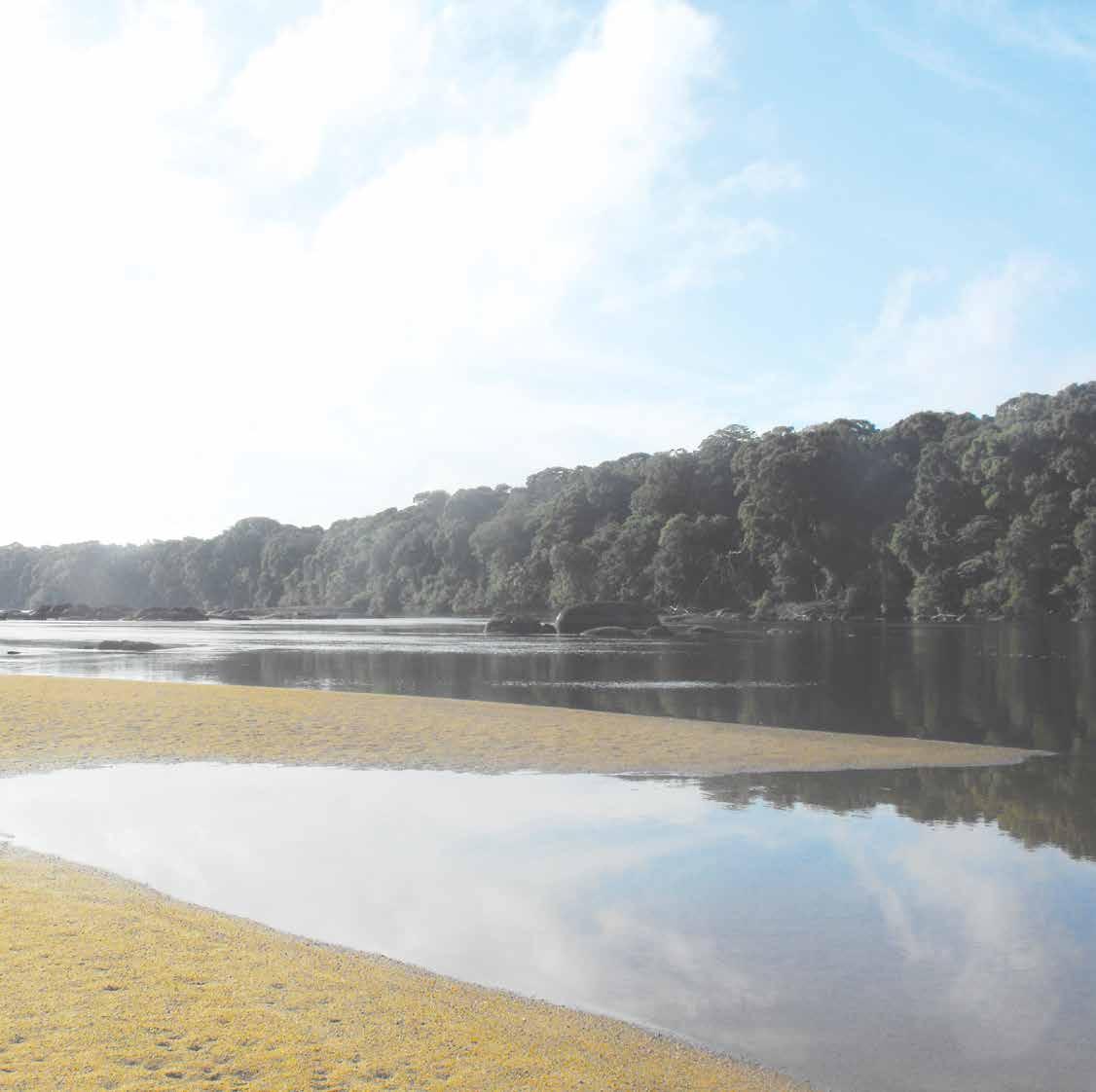
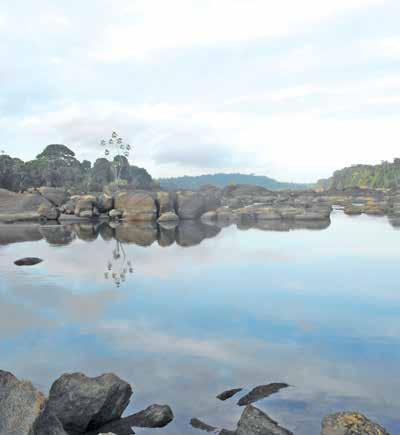
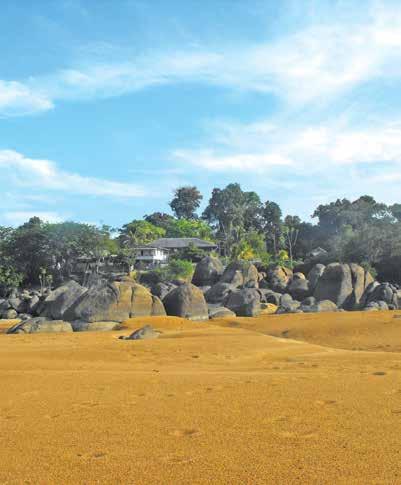
Lima Sands, located in
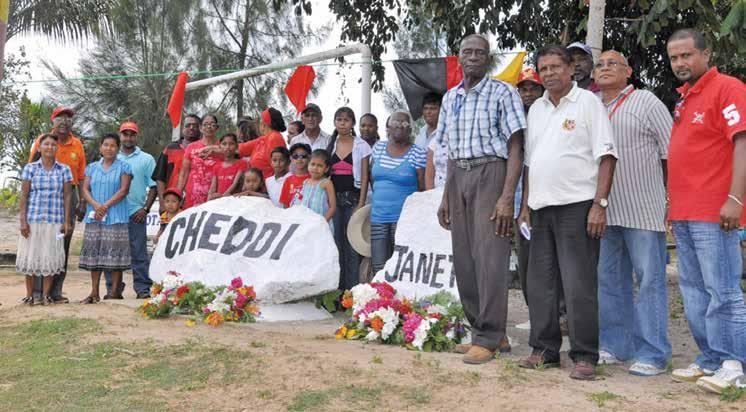
Essequibo, Region Two, was identified for the park, which now nurtures a variety of flora, fauna and subordinating savannahs.
Access to the site is by road, west of Anna Regina, parallel to the Tapacooma main canals.
History of the area
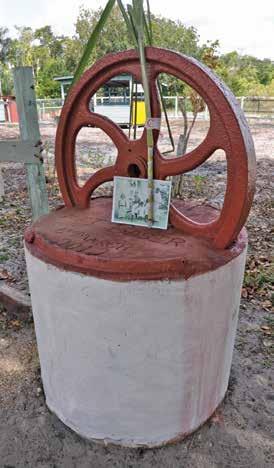
The entire sea coast from the Corentyne to the Barima River in the North West District was occupied by rival Spanish, French and Dutch interests, even though the Dutch paid for their final occupation.
The Essequibo Coast was no exception; from Supenaam to Better Success each estate owner had his own landing, police and control system. Cotton, coffee and sugar dominate the produc-
tion, with thirty four sugar mills on the Essequibo Coast lands.
The areas between Reliance and Paradise were dependent on water supply from Tapacooma Lake; the main supply canal was under the control of the Dutch planters of the Anna Regina estate.
The plutocracy, from Richmond to Paradise, consisting of eleven estate owners, decided in 1788 to engage about 150 slaves to dig a canal North West of the Tapacooma Lake landing to the back of Lima estate, to avoid the high charges and sabotage of water supply from Anna Regina owners and slave masters. This effort was met with armed opposition that forced the location of the canal further inland.
However, the canal was completed about eight miles, cutting through the Lima Sands. A wooden koker structure, built in the 1920 is still noticeable. The Lima sand was an escape route for runaway slaves, who were easily captured by Amerindians in the Dredge Creek water way, now known as 'Manicuri' Canal. The word 'Manicuri' is of Locono origin, meaning “hiding place”.

The British, who took control in the 1810 and 1860 periods, brought mules and bison to help on the sugar plantation. Lima Sand became a heaven for escaped bison, and some eventually migrated to Troolie Island. A person named Sernauth Ally is said to have killed the last bison in 1954 in Danielstown.
The three counties, Essequibo, Demerara and Berbice merged in 1831 under British occupation, but each county had their elect-
ed representative in control.
By mid 1930, the main contestants for the Demerara court of policy, from Essequibo were Dodds of Affiance, Seymour of Reliance and Brashington of Hampton Court. It was a heated election in 1930 and Brashington lost the majority.
He became enraged and immediately closed down the Hampton Court estate allegedly saying, “Essequibo coolie must perish and wear jute bags for clothing.”
He damaged many infrastructures, demolished many logies and destroyed one of the most beautiful chimneys built by the Dutch in Hampton Court. His final assault was to damage a waterwheel that prevented Hampton Court from flooding, and instructed his remaining disciples to pull a huge iron cane punt and block the supply canal of Lima that led to the Tapacooma Lake and one that led to the Anna Regina hinterland. The iron punts can still be located about 500 meters west of Lima Sands, now submerged under savannah vegetation.
The site for the park was chosen because this was where the hard work of building a huge dam by slaves was done. It is where one can ponder about what our ancestors went through using baskets, shovels and spades, enduring the slave masters' whip to build such a landmark.
The memory of the late President Jagan, this great, teacher, father and leader, must be preserved and immortalised – the Dr Cheddi Jagan Biodiversity Park definitely serves this purpose. (Information by Cheddi Jagan Research Centre; Photos by Marco Basir)

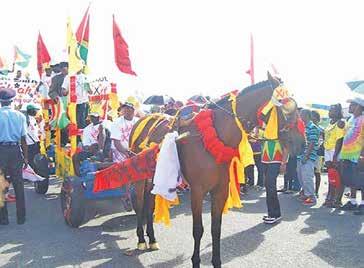
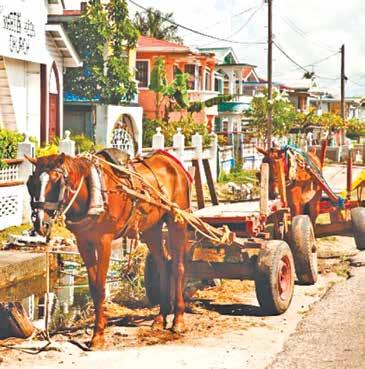
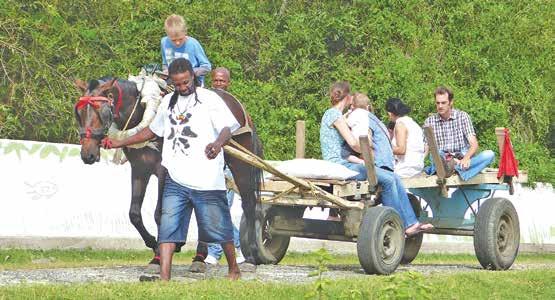
The horse drawn cart has been a common sight along Guyana’s roadways for as long as most Guyanese can remember. They remain part of a Guyanese heritage; something most overseas-based Guyanese and tourists can always recollect.
Used especially to transport goods like lumber, zinc sheets, bags of grass or grains, the horse cart also hauls away garbage for those affected by unreliable garbage services or those who want to get rid of old vehicle and machine parts or appliances like refrigerators.
The horse cart has also had a tradition of carrying Christmas carollers
around – not so popular these days however. Again, at Christmas time, they can be seen in parades as well. Additionally, in some instances, grooms have been known to arrive at their wedding in a horse cart. Persons, including children, often hitch rides to close destinations on horse carts also. However, not everyone finds favour with this traditional mode of transport, citing animal cruelty among the various reasons the practice should be stopped. The aesthetics of horse carts on our roads have also found disfavour among some citizens who, in addition, feel this traditional transport is archaic and suggests underdevelopment in the country.
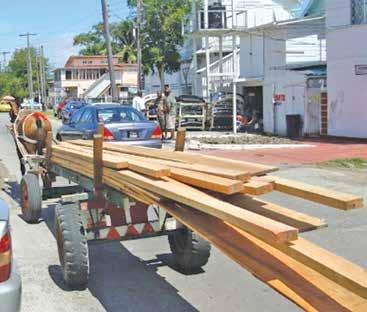
In fact, there is little public knowledge about the horse carting community, though the Guyana Revenue Authority does have a “4 Wheelded Cart (Horse and Mule) Licence” requirement for this form of transportation.The licence requirement though, makes no mention of the horse, stating only that the applicant should have a TIN, valid ID and receipt of purchase (of horse and of cart).
It has been suggested that the Guyanese horse cart evolved to that of the so-called modern societies where it is used as a novelty in parks, fairs or parades.

the
for them and their families, and in some areas





One of the integral aims of staging the first-ever Miss Global International Guyana is to promote tourism, hence the pageant’s theme: “Uniting the world through beauty and tourism”.
According to the pageant’s PR Melicia Partab, the winner will be revealed on 2 August at the Pegasus Hotel Poolside. “Our ambassador would have the honour of representing our rich tourism at the 10th annual Miss Global International, which will be held in Jamaica’s prestigious resort capital, Montego Bay from 2-7 December 2014. With an anticipation of having a contestant base of over 50 beautiful and talented beauties, the pageant is fully endorsed by the Jamaica Tourist Board and blessed by the Governor General and Prime Minister,” Partab noted.
Four finalists are selected and will undergo an audition against a panel of qualified judges both in pageantry and tourism and will be awarded a maximum of 70 points. The additional 30 points will be received via texts voting from the public. Commencing 31 July at 1pm and concluding on 2 August at 12pm, Guyana will have the opportunity to vote for their favourite contestant via text.
Top four finalists
Onesha Hutson is a natural charmer and is a third year medical student at the University of Guyana and model. This 22-year-old is no stranger to the glitz and glamour of pageantry. She was a contestant in the Miss Guyana Universe pageant 2012 and the Miss Jamzone Guyana pageant where she placed as first runner-up. Notably, she has walked the runway numerous times locally and regionally. The beauty is also currently one of five Guyanese models chosen to take part in the Music and Fashion Battle (MAFB) in Suriname and the Netherlands.
Apart from Hutson’s life as a runway model, she has been actively involved in various health programmes with the Ministry of Health and private entities. She is a trained Phlebotomist and volunteers at the St Anne's Orphanage. She enjoys reminiscing on her school days, which were spent at St Gabriel's Primary and St Rose's High School, where she graduated as an honour student in 2009.
A well-rounded individual, Hutson formed and directed the first drama club at her high school and also played basketball and badminton in her fifth year. Hutson also managed, directed and edited the Daily Rose, her high school's newspaper.
The 5’9” beauty is the first daughter for her parents, and puts her family first at all times because they are her biggest supporters.
The Miss Global international will give her the opportunity to showcase her country on a regional stage and be that ambassador for her nation.
She is inspired and encouraged by her mother and other young women she refers to as her "chicas".
Next on the list is the effervescent Ayana Harris, who has been modelling since the age of 12. Her first pageant was at her high school, Central High, where she won the junior category. As soon as she became a teenager, Miss Guyana Talented Teen was her next pageant where she secured the best gown and platform portfolio along with the Miss Intelligence prizes.
Modelling comes naturally to Harris and refers to it as “the love of my life”. In the year 2003, Harris competed in her third consecutive pageant and was the first and only Miss Guyana Junior queen. When she turned 18, Harris entered the Miss Guyana Universe 2007 pageant and was awarded third runner-up. Subsequently,
she entered the inaugural Guyana Model Search competition, placing second.
At age 22, she decided to compete in the Miss Guyana Universe 2011 and gained third runner-up. In 2012, she entered the Miss Jamzone Guyana pageant and was crowned queen, representing Guyana at the Jamzone International Pageant. There again placing third runner-up.
“Representing Guyana is a great honour; an empowering experience that lets me express the many faucets of our heritage. That feeling of pride extends to my consciousness as a Caribbean citizen. It’s a privilege to be born in this part of the world. We as a region express in colour, warmth, cuisine, music, and I’m glad to be a part of that. I believe that education can get a person anything and anywhere. However, we cannot all be lawyers, doctors, CEOs etc, so I have great respect for the guy that collects the garbage, the lady that cleans an office or the man or woman that sells on the corner,” Harris declared.
She added, “I also believe that life is what you make it, change is inevitable, and respect is always due.”
Hailing from the West Coast district to settling in the capital city, Rashawna Alleyne is an ambitious 25-year-old who holds a degree in Biology from the University of Guyana and a diploma in Project Management from the Institute of Commercial ManagementUK, passing both fields of study with honours.
Alleyne currently holds the position of the youngest female managers within her workplace. However, she wants to contribute her time to make the Caribbean a more appetising tourists’ haven by preserving its natural beauty. Consequently, she aspires to become a diplomat in the field of Management Sciences.
Alleyne is truly a dynamic young woman who is working diligently to achieve her goals despite challenges. Additionally, she believes that “hard work will give you what you want but making time to do what you
love gives you a priceless gift called peace of mind and that there is a joy forever”.
The resplendent beauty enjoys travelling, embracing different cultures, boosting her peers’ self-esteem, the night life, and the arts.
Ashley Andrea Cameron is not your typical girl. With poise and charisma, her body language commands attention whenever she steps into a room. Standing 5' 9", Cameron is an astounding representation of what an allrounded Guyanese pageant contestant is. With the figure of a model and the graceful movements of a dancer, singing and dramatic poetry are just a few of her hidden talents.
Cameron holds a prestigious degree in International Relations and Psychology from the University of Guyana. Her ambition in life is to be an ambassador of her country in the hopes of working with young children in and around the Caribbean region. She enjoys volunteer work and is a very active member with the Every Wish Foundation - a charitable organisation founded by her and other friends.
Presently, she is employed as a Revenue Officer at the Guyana Revenue Authority and a member of the National Youth Council. She is no stranger to the camera. From the year 2007 to present, Cameron has taken part in Facts 2, a designing competition for young people; the Guyana Model Search; and the Miss Guyana Jamzone 2013 pageant, where she placed first runner-up and was awarded the prize of most intelligent delegate. She also competed in the Hugh Ross Classic Body Building Competition 2014. She has worked as a model with various companies such as Digicel and GT&T and continues to excel in all endeavours.
Cameron believes that “whatsoever thy hand findeth to do, do it with thy might. For there is no work, or might, or service, in the grave thou goeth”. This is a quote she feels deeply about and was taught it throughout her high school years at the Bishops' High School.

By PetamBer Persaud
There are many parts to a theatre, some parts serving more than one function, others used for specific purposes, all playing a major role in society. There are many aspects to a theatre, but the more important aspect is the people who make up the theatre, some playing many parts in their lifetime.
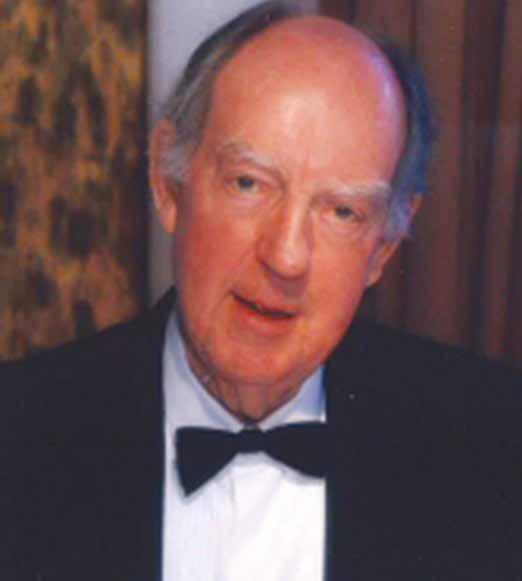
Frank Thomasson was one such person who played many parts in the Theatre Guild of Guyana. Thomasson was like a founder member of the Theatre Guild due to the fact that he was there from the beginning and he was the Guild’s first secretary. The founding members were Lloyd Searwar, Bertie Martin and Arthur Hemstock. Thomasson was also an actor and the Guild’s director from its opening in 1960 to 1965. But his greatest contribution to Theatre Guild and theatre in Guyana was his book, A History of Theatre in Guyana, 1800-2000 (Hansib Publications). This book was launched at the Theatre Guild in 2008 to coincide with the resuscitation of the playhouse.
The blurb of the book reads: “Frank Thomasson’s study of 200 years of theatre
in Guyana is a fascinating work which includes a compilation of related articles extracted from local journals dating back to the early 19th century. His survey establishes itself as a pioneering and

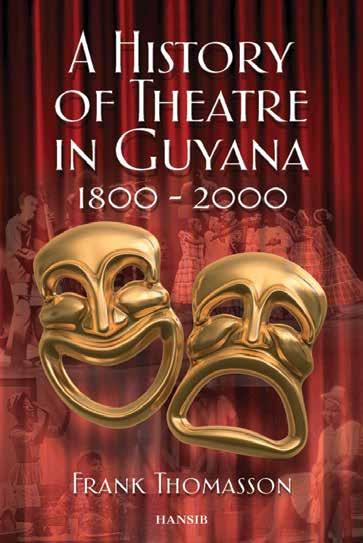
indispensable segment in the history of Guyana. It makes a case for the importance of the theatre in the diverse culture of the Guyanese people, in helping them to understand and appreciate the lives and concerns of each other.”
This valuable study encompasses the performing arts, which the different ethnic groups brought with them. Added to this was the beginning of the European theatre in 19th century Georgetown, which gave rise to the emergence of theatre organised by the East Indian and African
Guyanese middle classes in the early 20th century, to the vibrancy of a diverse and socially committed theatre in the 1950s, leading up to independence.
Thomasson’s extensive definition of theatre embraces not only the emergence of serious repertory theatre, but also all forms of entertainment and state-run public extravaganzas. He explores the national and regional examples of encouragement of theatre, from the Booker Company’s sponsorship and support of theatre groups
and competitions on the sugar estates, to the inclusion of drama in the extra-curricular activities of the leading schools, the birth of the National Cultural Centre and Carifesta. The longest section of his history is dedicated to a detailed study of the Theatre Guild of Guyana, the longest existing and most ‘professional’ of the repertory groups in the country.
Thomasson was born in Manchester, England, and was always involved in some aspects the theatre. He was a Business Psychologist by profession. In 1956, he came to Guyana to take up employment with the Bookers Sugar Estates. Between 1956 and 1965, he served the company as Deputy and Chief Personnel Officer, later Personnel Director.
Dr Ian McDonald, in his foreword to the book, wrote that in those ten years “Guyana entered his bloodstream, his mental make-up and, I dare say, his soul… And ties to his adopted land were doubly secured by his marriage first’… to Carlotta Croal and then to Aileen Morgan – both Carlotta and Aileen springing from famous Guyanese families and themselves celebrated in the theatre”.
In 2006, the Guyana Cultural Association honoured him with the Exemplary Award for a lifetime of service to the theatre in Guyana.
Frank Thomasson passed away in 2012 in the United Kingdom.
Responses to this author telephone (592) 2260065 or email: oraltradition2002@yahoo.com

Young people these days are wired differently. And that’s a good thing, according to Dr. Vera Cordeiro, founder of the award-winning Saúde Criança Association in Rio de Janeiro.
“Through my contact with a significant number of young people not only in Brazil but also in many different countries around the world, I’ve perceived a shift in values that is clearly reflected in the life choices they want to make or have already made. This behavior is very different from past generations,” she said.
“In fact, for many of them, it doesn’t make sense to only work to promote the well-being of their families. They want to use their talents to advance society on a grand scale—to transform the reality we live in.”
Young people know what’s going on around the world. They’re aware of the problems. And, more than ever before (it seems), they’re doing something about them. It’s a change that, for Cordeiro and others, is now discernible on a global scale for everyone’s benefit.
Below are a handful of social change pros with their advice they’d give to young social entrepreneurs.
Habiba Cooper Diallo, Founder of Women’s Health Organization International
“The key for young people who are interested in starting an organization is persistence. Always be on the lookout for opportunities to help grow your organization or to increase your knowledge base in order to extend your impact in your area of innovation. For me that’s meant pursuing study abroad and academic summer programs, reaching out to individuals and organizations for networking purposes, and, most recently, participating in a boot camp for emerging innovators. Being persistent in starting or in growing an organization is especially important when you’re young, given the many other commitments you have to take on—school, part-time jobs, extracurricular activities—whilst being devoted to your organization at the same time.
“But the most important piece of advice that I would give to a young social entrepreneur is: strike a balance between the work you do for your organization and the time spent on school or other activities. Be clear as to how you will achieve that balance. Write out a plan on paper, put it up on your wall and make sure to stick to it.”
Lisa Smith, Director at Unilever Ventures
Know where you’re good. Know where you can learn, so that you fill your own knowledge gaps. But then go out and seek experts.
“And get some people with the been-there-done-that scars that can help you through some of the very depressing moments that you’ll have when you think, ‘I just can’t do this anymore, it’s overwhelming.’ It isn’t. You just need to pick yourself back up.”
Ken Banks, Founder of FrontlineSMS
“1. Don’t be in a hurry. Change doesn’t happen quickly. Generally speaking, it’s a long game.
2. Don’t assume you need money to grow, either. That’s a very commonly-made mistake. Money is helpful but, sometimes, money can be a hindrance.
3. Avoid politics. Don’t get dragged down by the politics of the sector that you’re working in. There are politics everywhere. I’ve met many people who spend the majority of their time justifying their work and fighting politics than actually doing the work. Stay focused and let other people do the talking.
4. Learn to do things you can’t afford to pay other people to do.
5. Remind yourself precisely what it is you’re looking to solve or fix—and stick with it. Say ‘no’ to things that might detract you from your path. Sometimes it’s difficult to do that because you feel you’re losing opportunities, but you’re better off doing one thing incredibly well rather than doing 10 things averagely well. …Remember the bigger picture.”
Nicky Dee, University of Cambridge
“People are the most important aspect of [changing the world]. It’s always a danger when you have an individual entrepreneur making it about their own ego… Some of the successful entrepreneurs I know, they’ve certainly not made it all about themselves. Instead, they’ve done everything that they can to really support and help their company thrive as almost a separate individual. In that sense, it’s almost your goal to remove yourself from being a critical part in the equation.
“And never be afraid to talk about your idea. I know people worry about patenting and those kinds of things, but actually, in general, the only way to refine your idea is to talk about it.”
Curt Bowen, Executive Director of Semilla Nueva
“The world will give you lots of cheerleaders. But find a few people that you can tell absolutely everything to. Find a couple people you can really trust to guide you through the process.
“As a young social entrepreneur you’ll want to make the most amount of good possible and you’ll want it to be now. But you also have to balance that with a process that can fix a deeper problem. Balancing immediate impact vs. the systematic problem is really the space of a social entrepreneur.
“A lot of people I know go one way or the other. To have those both in your head at the same point is really hard, but that’s what it takes.” (Forbes)


Sooklall is a proud third form student of the prestigious Queen's College. The 14-yearold currently resides in Mon Repos on the East Coast of Demerara with her parents and only elder sister. Sooklall was born on 8 October 1999 at the Prashad's Hospital to two loving parents who made her the outgoing, compassionate, vibrant, talented and down to earth young lady she is today. Before secondary school, she attended the Starter's Nursery School and Graham's Hall Primary. Growing up, Sooklall was passionate to become a model, and with the support of her parents, she is fulfilling her dreams. As the newly crowned Miss Guyana Talented Teen 2014, Sooklall hopes to create a positive impact on other teenagers and is willing to inspire others to help them in whatever way possible. Since her platform in the pageant was about global warming and education, Sooklall’s wish is to educate persons on global warming and its effects. She would also like to urge persons to share their knowledge on global warming since it is a major earth crisis in the world. The teenager will use the opportunity she has received from the pageant to improve herself in the field of pageantry because she would like to be crowned Miss Guyana Universe in the future. Her dream is to one day become an Obstetrician/ Gynaecologist. During her spare time, the young, resplendent beauty enjoys playing the guitar, dancing, skating, painting, playing with her pets or playing outdoor sports. Her favourite outdoor sport is cricket. She also has special interests in photography and making bracelets. Her advice to other teens, who wish to become a model, is to always remember that “they don't have to be great to start but have to start to be great. Be confident in yourself and never doubt your potential. Beauty isn't only about having a pretty face; it’s about having a pretty mind, a pretty heart and a pretty soul”.
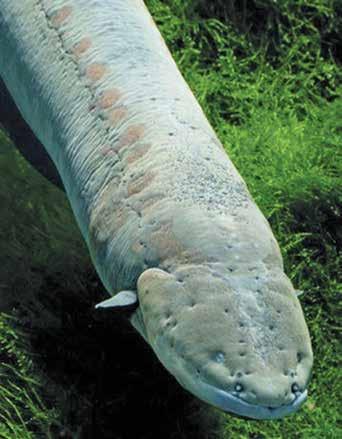
Despite their serpentine appearance, electric eels, Electrophorus electricus, are not actually eels. Their scientific classification is closer to carp and catfish.
These famous freshwater predators get their name from the enormous electrical charge they can generate to stun prey and dissuade predators. Their bodies contain electric organs with about 6,000 specialised cells called electrocytes that store power like tiny batteries. When threatened or attacking prey, these cells will discharge simultaneously, emitting a burst of at least 600 volts, five times the power of a standard US wall socket.
They live in the murky streams and ponds of the Amazon and Orinoco basins of South America, feeding mainly on fish, but also amphibians and even birds and small mammals. As air-breathers, they must come to the surface frequently. They also have poor eyesight, but can emit a low-level charge, less than 10 volts, which they use like radar to navigate and locate prey.

There are so many things out there that we deal with or see every day, but have no idea what they are called. Here are a few:
1. Tines - The prongs on a fork.
2. Box tent - The table in the middle of a pizza box.
3. Barm - The foam on a beer.
4. Overmorrow - The day after tomorrow.
5. Rasceta - The lines on the inside of your wrist.
6. Minimus - Your little toe or finger.
7.
TThe objective of the game is to fill all the blank squares in a game with the correct numbers. Every row of 9 numbers must include all digits 1 through 9 in any order. Every column of 9 numbers must include all digits 1 through 9 in any order. Every 3 by 3 subsection of the 9 by 9 square must include all digits 1 through 9.




The name Mississippi comes from the French translation “Messipi,” a version of the Native American name “Misi-ziibi,” which means the great or big river.
People who live in Mississippi or who come from Mississippi are called Mississippians
Mississippi is sometimes called “The Bayou State” for its streams and marshes. The state’s large catfish has given rise to the name “The Mud-cat State.” Mississippi has also been called “The Groundhog State” probably because the state had a lot of them. The nicknames “Eagle State” and “Border Eagle State” are attributed to the symbol on the state’s coat of arms.
People have been living in the Mississippi region for more than 12,000 years. Around A.D. 950, a distinct Mississippian culture began to build mounds and highly populated villages. The Chickasaw and Choctaw are thought to be the descendants of these ancient people. The first European to enter the Mississippi region was the Spanish explorer and conquistador Hernando de Soto in 1540.
Mississippi became the 20th state on December 10, 1817. Mississippi seceded from the Union in 1861 and was readmitted in 1870.
In 1964, U.S. atomic scientists detonated an underground nuclear device in Baxterville, Lamar County, in south Mississippi.
Named for the mighty river that runs along its western border, Mississippi lies in the Deep South of the United States. No longer a land reliant on cotton plantations and farming, today the state’s economy is based largely on the service and manufacturing industries. Visitors to the state enjoy its mild climate, rivers and lakes, forested hills and historic towns.
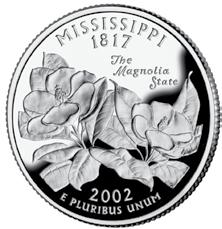
Just the facts
Total
elevation
Mountain, 806 ft. (246 m)
Agriculture Cattle, chicken eggs, corn, cotton, rice, soybeans Fishing Crabs, clams
Manufacturing Chemicals, food products, furniture, plastics and rubber products, refined petroleum, transportation equipment
Mining Clays, coal, natural gas, petroleum, sand and gravel
How about that!
The first human heart transplant was attempted at the University of Mississippi Medical Center in 1964. A human heart was replaced with the heart of a chimpanzee; it beat for 90 minutes.
The Pascagoula River is known as the Singing River because of the soft humming sound it makes.
Coca-Cola was first bottled in 1894 in Vicksburg.
More than half of Mississippi is covered by forests.
The Natchez Trace Parkway is a 444-mile-long (714 km) national park that crosses three states. It is valued for its history and beauty.
The city of Jackson was named for Andrew Jackson.
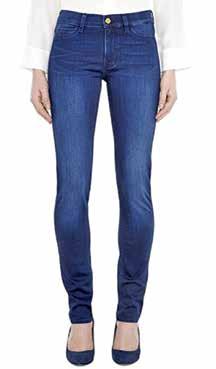
Yourcloset has seen trends come and go, but the basics—that perfectly worn-in white tee, your trusty blue jeans, and go-to nude flats—are forever. You can rest assured that these key pieces will never go out of style or lose their street-chic appeal. Simply put: they’re the building blocks to the perfect wardrobe.
It
Perfect White Tee Skinny Jeans Bright Cross-Body Bag
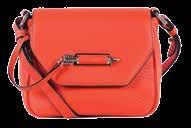
For all those times when a tote bag is too big and a clutch is too small, the cross-body bag is just right. In an attention-grabbing colour, the portable handbag packs a (stylish) punch.

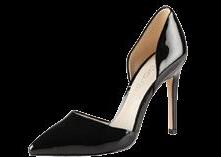
When it comes to shoes, black pumps are perhaps the most reliable and versatile option. At once sophisticated and sexy, they’re perfectly suited for almost any outfit and occasion.
The good news about the pencil skirt is that it’s moving out of office-only territory. Many love the piece after-hours paired with a slinky silk cami or t-shirt.


Go ahead and splurge for this outerwear essential: the investment will be worth it. For one, you can wear it year round, and two, leather jackets only get better with age.

Bright frames are inherently cool and offer a playful touch, no matter the season.

When you need a break from your heels, a nude flat serves as the ideal substitute. Straddling the line between dressy and casual, this functional footwear style is just at home with a pair of tailored trousers as it is a floral sundress.
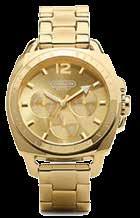
An oversised, masculine watch adds interest to pared-down pieces at the office and can double as a bracelet when layered with additional jewellery.

You can be sure this is a silhouette that will stand the test of time.



irls' Generation, also known as SNSD or So Nyeo Shi Dae, is a South Korean girl group formed by S M Entertainment in 2007. The nine-member group consists of Taeyeon, Jessica, Sunny, Tiffany, Hyoyeon, Yuri, Sooyoung, Yoona and Seohyun. The group gained attention at the beginning of their career with songs such as "Into the New World" and "Kissing You" but it was not until 2009 when they gained significant popularity with their hit single "Gee", which was classified by the online music store MelOn as the most popular song of the decade in South Korea (ranking based on chart performance). The group solidified their place in the Korean music industry with follow-up singles "Tell Me Your Wish", "Run Devil Run", and "Oh!" from late 2009 to early 2010. In 2011, after a series of activities in Japan, the group returned to the Korean music scene with "The Boys", which was released in three languages: Korean, Japanese, and for the first time, English. In 2010 alone, the group sold more than 11,730,000 digital albums and singles collectively. The group topped Forbes's Korea Power Celebrity 40 list for the years of 2010, 2011 and 2013. They have expanded their reach in the Korean industry through their first sub-unit, Girls' Generation-TTS, composed of members Taeyeon, Tiffany, and Seohyun. The sub-unit debuted on 2012 with their mini album “Twinkle” which became the highest charting K-Pop act on the Billboard 200—at No. 126 on Billboard 200.
Beyoncé fans, get excited - a selection of the singer's most iconic looks are going on display in a special exhibition at the Rock and Roll Hall of Fame. This is the first time that an artist that has not yet been inducted into the Rock and Roll Hall of Fame is being featured in the Legends of Rock exhibit.
The museum announced the fashion exhibition this morning, which will show memorable looks ranging from the singer's Super Bowl outfit, to the Thierry Mugler dress she wore in her Sweet Dreams video - as well as the sexy but laid-back summer look she sported in the video for ‘Crazy in Love’.
Bey's stylist Ty Hunter, who may helped curate the selection of outfits, also gives some great quotes to accompany the lookssuch as how Bey's mum Tina Knowles was heavily involved in the look for ‘Single Ladies’.
The outfits will be shown from July 22 in the Ahmet Ertegun Main Exhibit Hall in the Legends of Rock section, next to iconic pieces from David Bowie and Michael Jackson. (Glamour)

Prince William offered his heartfelt condolences on Friday, July 18, after a Malaysia Airlines flight carrying 298 passengers, including several Britons, was shot down over the Ukraine on Thursday. Speaking at an event at Australia House in London, the Duke of Cambridge, 32, expressed his grief at the loss of so many lives.
"I know that I speak for all of us here when I acknowledge our deep sadness following yesterday's disaster in the Ukraine," he began. "For all of us who've lost fellow countrymen and women in the tragedy, words cannot do justice to our sense of loss."
He went on to note the especially brutal timing of the crash, which occurred just a few months after the disappearance of Malaysia Airlines Flight 370. "For Australians and for our Malaysian brothers and sisters in the Commonwealth, the crash is a particularly cruel tragedy, coming so soon after the loss of MH370," he said. "Please be assured of my family's thoughts and prayers at this time."
Australian High Commissioner Alexander Downer appeared at the event, too, leading the crowd in a moment of silence in memory of

the crash victims.
"As you all know, Australia and Great Britain have been together through centuries by huge events, some triumphant, others tragic," he said. "And today we acknowledge that we're yet again bound together, this time by tragedy—27 Australians and nine Britons have reportedly died as a result of the destruction of the Malaysian aircraft over Ukraine. Let us take a moment of silence to reflect on this tragedy." (US Magazine)


Dine and dash! Britney Spears got into an awkward situation recently when she and her boyfriend David Lucado grabbed a bite to eat at a Cheesecake Factory in Thousand Oaks, Calif. The couple left (with a doggie bag!) without paying the bill, TMZ reports.
Spears, 32, and her beau reportedly had lunch at the chain restaurant, but forgot to pay the $30 bill for an appetizer and salad. It turned out to be a simple mix up though—the "Ooh La La" singer and her bodyguard both thought that the other had paid.
Spears' people told TMZ she felt "horrible" about the mistake—but quickly made up for it. Instead of the typical 15 percent or 20 percent tip, the waitress received $100 for all the trouble.
As previously reported, the former X Factor judge seems to have a soft spot for food chains. According to documents, some of the $6.8 million she spent in 2012 went toward meals at Subway, Domino's Pizza, Coffee Bean & Tea Leaf, McDonald's, Starbucks, IHOP, Romano's Macaroni Grill and In-N-Out Burger. (US Magazine)


Akshay Oberoi is an Indian-American actor of Punjabi origin who made his Bollywood debut in the Rajshri Productions film “Isi Life Mein” (2010). He attended Newark Academy and pursued a bachelor's degree in Theatre Arts and Economics at The Johns Hopkins University in Baltimore, U.S.A. He also completed acting training in Stella Adler in New York City and then Playhouse West in Los Angeles, where he learned the Meisner technique. During his education, he studied acting under John Astin from “The Addams Family”. He also studied ballet, jazz and hip-hop dance at Broadway Dance Center. He moved to India and did plays at the famous Prithvi Theatre and received training from Kishore Namit Kapoor. Oberoi appeared in the 2002 released film “American Chai”. He is the cousin of Bollywood actor Vivek Oberoi.
Salman Khan: 'I like Shah Rukh though we do not get along'
Salman Khan has spoken out about his relationship with Shah Rukh Khan.
In an interview with The Times of India , the actor said that while the two are no longer friends, there are many things he admires about the star.
"I like Shah Rukh though we do not get along and don't talk," Salman explained. "Upar wale ne use itni izzat aur shohrat di hai (God has given him such respect and acclaim) and then there are people who will come and bitch him out to me that I can't stand at all.
"We are not best friends any more, but are normal and cordial. He thinks. He plans. God has given him a mind and he uses that and is a hardworking man."
The “Kick” star said that he respects Shah Rukh for his close bond with his family.
"Sometimes I seriously think that the way he thinks is far more correct than the way I think. As in, the way he is and the way he thinks for his family is 100% correct.
"I know he is correct when it comes to his family and stuff like that, but I can't get myself to do that."
The actor said that there are those in the industry

who use the differences between the two stars for their own advantage.
"People come and bitch him out, given that they know that there is a distance. They will come and tell me, you are a different guy and he is a different guy. I ask them what is the difference?
"The fact that you can make a fool of me and you can't make a fool of him? I may allow you to use me and I let it go as I feel the person will get exposed or it will spoil relationships. But I always know.
"But if Shah Rukh is not allowing it, he is 100% correct and that is his personal-
ity. My personality is different and I let things go.
"We are totally different kind of people. It won't be a compliment to God if we were alike. Two brothers are not alike. He is correct in his life and I am correct in mine."
The relationship between the two stars is the constant focus of speculation after they had a public falling out following an alleged altercation at Katrina Kaif's birthday party six years ago.
The former friends and co-stars were recently seen hugging at an Iftaar party, sparking rumours of a reconciliation. (Digital Spy)

At least two top floors of a 22-storeyed commercial building here were gutted in a major fire Friday, officials said.
There were no casualties in the blaze on the 21st floor that later spread to the 22nd floor of the building in suburban Andheri West, officials of the Brihanmumbai Municipal Corporation Disaster Control said.
The fire - the cause of which is not clear yet - broke out around 10am when a majority of the office complexes in the building had not yet opened for the day's work.
Over two dozen fire-tenders battled the flames and a few people on the lower floors were evacuated.
The building houses offices of sever-

Bipasha Basu has said she connects to the horror film genre.
The actress, who has starred in films including “Raaz”, “Raaz 3” and “Aatma”, will be seen next in Vikram Bhatt's “Creature”.
Speaking to PTI she said: "Everyone keeps asking me why I do horror films. I don't know what it is but there is some kind of connect. I feel the genre is not so important the story telling is.
"In a film like Creature, where I have a fantastic role then why shouldn't I do it. In real life, I still get scared soon. Nothing has changed on that front," she explained.
"You can call me whatever you want 'horror queen', 'fear goddess' or anything

I am happy with it. I have done lot of supernatural films and all kind of films have that element of fear, horror. Creature is different from ghost, spirit and super-
natural films. It has an element of fear," Basu added.
“Creature 3D” is India's first 3D monster thriller film. The “Humshakals” actress said the film was demanding due to the technical elements involved.
"It was very difficult film for me to shoot as I had to imagine the Creature. But Vikram's guidance helped me a lot.
"We used to do every shot at least three times due to technical reasons. It was quite an exhausting film for everyone. I have not done a film like this before," she said.
Directed by Vikram Bhatt, the film stars Basu and Pakistani actor Imran Abbas in the lead roles. (PTI)

Metabolism is the process your body uses to convert food into energy. If your weight loss has plateaued, it could be a sign that your metabolism is in need of a boost. Learn what to eat and drink to turbo charge your metabolism and shed unwanted pounds fast.
Greek Yogurt and Lemon

This indulgently flavoured dynamic duo will help you start your day with a mega metabolism boost. The vitamin C in the lemon can help your body absorb the metabolismboosting calcium in the Greek yogurt.

Cooking with vinegar can slow the absorption of carbohydrates and help prevent sudden surges in your blood sugar. It may also slow the passage of food through your stomach, keeping you fuller for longer.
Water

Drinking ice water forces your body to burn calories by bringing your body temperature back to normal. Drinking eight glass-
es of ice water a day could work off almost 70 calories! Additionally, drinking a full glass of ice water before a meal will help you feel fuller quicker, helping to keep you from overeating.
Black Pepper

Black pepper contains the alkaloid piperine, which can help speed up metabolism. Try reaching for the pepper mill when you'd normally use salt; you'll boost your metabolism and reduce your sodium intake. If you want to multiply black pepper's metabolism-boosting effect, try adding it to tomato juice. Tomatoes contain lycopene, an antioxidant that helps protect your mitochondria.
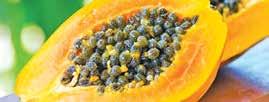
Papaya contains an enzyme called papain, which improves protein digestion and absorption, which is key to boosting metabolism and burning fat.

For a metabolism-boosting meal, slice fresh ginger and stir-fry it with vegetables. Ginger not only aids in digestion but can also increase metabolic rates as much as 20 percent after eating.

Fish oil is touted as a magical potion that boosts fertility, heart health, weight loss, and a clear complexion, while less ening the effects of depression, ulcers, diabe tes and many more conditions. But there’s an other benefit to these glossy little capsules: They may prevent Alzheimer’s Disease.
A new study of 819 peo ple published in the journal Alzheimer’s & Dementia found that taking fish oil supplements on a dai ly basis is associated with significant de crease in cognitive decline (as measured by the Alzheimer’s Disease Assessment Scale and the Mini State Exam) and brain atrophy — important findings in light of statistics which show that one person per minute is diagnosed with Alzheimer’s Disease.
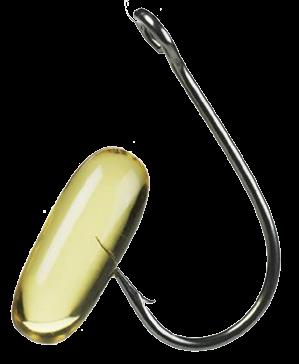
“We found that fish oil use was associated with better performance on standard tests of memory and thinking abilities over time, compared to those who didn’t take supplements,” lead study author Lori Daiello, a research scientist at the Alzheimer’s Disease and Memory Disorders Center at Rhode Island Hospital, tells Yahoo Health. “They also experienced less brain shrinkage in areas of the brain important for healthy cognitive aging — the cerebral cortex and hippocampus, the portion of the brain responsible for forming and retaining memories.”
For this study, researchers analyzed information from neuropsychological tests and MRI brain imaging performed at regular intervals for up to four years during the Alzheimer’s Disease Neuro-imaging Initiative, a longitudinal study of brain aging and Alzheimer’s Disease. The population consisted of a group of older adults with normal cognitive function, mild cognitive impairment, and Alzheimer’s Disease. The benefit of fish oil appeared stron-
gest in the group with normal cognitive functioning. “Retrospective studies cannot establish cause and effect, so we can’t make a global recommendation that everyone should start taking fish oil supplements. But the findings highlight the need for additional research on the effects of long term fish oil use on brain health in later life,” says Daiello.
The main ingredient in fish oil is DHA, omega-3 fatty acids found in cold water fatty fish such as salmon, swordfish, trout, yellow fin tuna, mackerel, and more. (Non fish-lovers can find it in eggs, milk, and algae-derived supplements). According to Daiello, there is no definitive evidence that eating fish daily is better than taking fish-oil supplements. But some people dislike the fishy breath that lingers after taking the supplements. “In that case, you could always store the capsules in the freezer, which seems to diminish the scent,” suggests Daiello.
And while the effects of fish oil have been well documented, they also carry a “buyer beware” element. One study, conducted by a testing company called LabDoor, found that what’s advertised on the label of many supplements may not live up to their promise. When the company analyzed 30 top-selling brands, they found that six products exaggerated the amount of omega-3’s on their labels by 30 percent. And at least a dozen products contained DHA levels that were 14 percent less than advertised. “Mislabeling is a big problem because the FDA considers fish oil supplements food, not drugs, so they aren’t regulated,” says Daiello. “So it’s tough to verify the purity of what you buy.”
To select the best supplement, talk to your doctor, who may be able to recommend a pill that’s right for your needs. (Yahoo)







Ingredients:
1 avocado
1 papaya
1 lime
1/4 cup extra-virgin olive oil
1/8 tsp black pepper
1/8 tsp salt
Method:
Pit the avocado and slice it lengthwise into 1/2inch thick pieces. Do the same with the papaya and then place all pieces in a small bowl. Combine the remaining ingredients and stir to combine. Spoon the dressing over the avocado and papaya. Serve immediately.
Ingredients:
6 eggs, beaten
1 -ounce Parmesan, grated
1/2 teaspoon black pepper
Pinch salt
Method:
Preheat oven to broil setting. In medium size bowl, using a fork, blend together eggs, Parmesan, pepper, and salt. Heat 12-inch non-stick, oven safe sauté pan over medium high heat. Add butter to pan and melt. Add broccoli and ham to pan and sauté for 2 to 3 minutes. Pour egg mixture into pan and stir with rubber spatula. Cook for 4 to 5 minutes or until the egg mixture has set on the bottom and begins to set up on top. Sprinkle with parsley.
Place pan into oven and broil for 3 to 4 minutes, until lightly browned and fluffy. Remove from pan and cut into 6 servings. Serve immediately.

1 teaspoon butter
2 cups chopped cooked broccoli
1/2 cup chopped ham
1 tablespoon chopped parsley leaves

If your bananas are black, spotty and on the verge of turning from ripe to rotten, put them in the freezer so you can keep them on hand for a batch of banana bread on a rainy afternoon.
Always keep dough covered with a moist cloth to avoid a dry crust from forming on it. Never refrigerate tomatoes and citrus fruits. Refrigeration kills their flavours, nutrients, and textures.
Knock on a watermelon to check for signs of hollowness. It is sounds hollow, its ripe. If it doesn't sound hollow, it's unripe.
Pour some vinegar over defrosting meat to accelerate the thawing process as well as tenderize the meat.
To keep cookies fresh, toss a piece of bread in the cookie jar. The cookies will extract moisture from the bread and retain their softness.
Use leftovers as cleaning supplies. If you have half a lemon leftover, use it to clean stainless steel fixtures and faucets. Rub it over the areas you want to clean, then wipe them down with a microfiber cloth.
Get grime off your grill. While the grill is still warm, use a wire brush to scrub down the grates. If you’re dealing with major mess, take the grate off the grill, and use oven cleaner to attack the stuck-on food and grime. Just make sure to do this in a well-ventilated area, wearing rubber gloves to protect any exposed skin.
Fight water rings with an unexpected superhero. No matter how vigilant you are about keeping coasters available to guests, inevitably someone will put a glass right on your new wood coffee table. Don’t sweat it. Instead, apply full-fat mayonnaise to the water ring, let it sit for an hour, and then gently wipe it off with a cloth.
Don't let sweaty hands get the best of your appliances. Keep the kids’ (or your own) sticky fingerprints off the fridge using a citrus-based furniture polish. It does a great job cleaning and leaves a slightly oily surface which helps repel future marks.
Don't let unsuspecting items get grimy. Plastic pool toys, floaties, or rafts need to be cleaned too. Use vinegar applied to a paper towel to wipe them down. It disinfects and you don’t have to worry about harsh chemicals touching you or your child’s skin.
These seemingly "nonsense" words have pairs of opposites in them. For example: lshoorntg would be "Long /Short" (LshOorNtG). If you've noticed, the letters in the words are always in the same order. Get the idea? Great! Now try these!
1) Wfateirer
2) Grsokuynd
3) Rpoiocrh
4) Frbeoiezle
5) Ppenecinl
6) Wmaomnan
7) Ldaigrhkt 8) Ounvderer 9) Cdilreatny 10) Riwrgohngt






Zeus, the king of Mt. Olympus, came down to visit the country folk disguised as a beggar. People turned him away until he came to the house of a poor elderly couple, Baucis and Philemon. Baucis and Philemon shared their simple meal of bread and wine with their guest. Oddly enough, the wine jug never emptied and there was more bread after each slice was cut. It was then that Baucis and Philemon realised that this was no ordinary visitor, but a god from
Mt. Olympus.
They bowed low and apologised for the simple food they had to offer. Zeus replied, "When you have shared your best, there is never a need to apologise."
In return for their generosity, Zeus granted them their only wish: to remain together always. And so when Baucis and Philemon died, an oak and a linden tree grew with their trunks entwined around each other, on the spot where the couple was buried. (A tale from Greece)

The crocodile originally had a smooth golden skin, and it stayed that way because the crocodile would spend all day in the muddy waters and only come out at night. All the other animals would come and admire its beautiful golden skin.
The crocodile became very proud of its skin and started coming out of the water to bask in the other animals' admiration, even while the sun was
shining. He started to think he was bet ter than the other animals and started bossing them around.
The other African ani mals became bored with his change in attitude and fewer and fewer started showing up to look at his skin. But each day that the crocodile exposed his skin to

(To Walter Raleigh)
You, spread out below, in a green silk dress, No longer needy. Regathered a new shape. Water. Volumes of it come.

it would get uglier and bumpier and thicker, and was soon transformed into what looked like bulging armour.

Crocodile never recovered from the humiliating shame and even today will disappear from view when others approach, with only his eyes and nostrils above the surface of the water. (An African tale)
Clytie was a sea nymph who wore beautiful green gowns woven of seaweed. Her long, golden hair floated about her at the bottom of the sea. One day a mermaid sang her a song about a golden light above the water. Clytie wanted to see it!
She swam to the surface and climbed onto the shore. She saw the golden light described in the song... It was the sun! She stood happily gazing at it all day. When she at last turned to the water, she saw her reflection. Her golden hair had become yellow petals; her green gown had become leaves. Her tiny feet had become roots. She had become a sunflower, a small image of the sun she loved.
To this day, the sunflowers turn on their stems all through the day so that they can gaze upon the sun as it travels the sky. (A tale from Greece)
Flowing curls of stained glass. Silver eels enrolled, Ribbon-like, run naked across your neck.
Breathing hard pressed to pane, I feel the heat Of your green sprouting flames. Far, far below, I Smell flat fertile skin, see paired elbows of hills Laced with islands. Firm mounds, nippled. Twisting and turning. Mouth moaning.
Metal tube snakes up and onwards. Strains, drops Soars again, racing towards a goal. Pale clouds peel beneath us, parting like rags. They will gather too, and form a shape.
Little known jewel who lives your fullest I come heavily laden to hear song in the beat Of your heart, to study old signposts, touch gently Your new milestones. Landing. Plane blows A wide ring all over you.
Ground swells, night Howls and days open slowly, Allowing daylight to glide out.
Head down with pity or anger, it occurs To him that she’d metamorphose into lit Coal. Stiff. White, frost-like at first, Before joining an ashen community.
With scalded heart, he looks to a sea Of sky, sees fog banks and curls surfing. Nalini’s death gave him facts to ponder Makes him write himself open. Rips Exposing intimate things and the … way Beyond the reach of words … images. Bone.
In the aloneness, he now owns an island Of tragedy where clocks stop, and old trees Are metal still. Food hardens to lead in gullets. He enters with gullible Heart and eyes carrying Their bitter-sweet last day Embalming it in his mind.
Who’ll catch the drips Empty the buckets
Offer a box of tissues While he listens for The silence of a new world
That no longer breathes?
Who’ll blow his dust
That settles on her urn?
(Poems from Guyanese poet Elly Niland’s East of Centre)
African elephants in captivity are packing on the pounds, and experts warn that the rise in
measure body fat on the already huge animals.
Just like humans, elephants with excess fat are
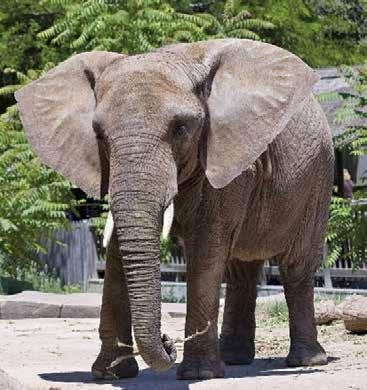
obesity is contributing to infertility, which could be detrimental to the survival of the species in zoos.
To get a handle on the problem, one group of researchers in Alabama is looking for a better way to
more likely to develop heart disease, arthritis and infertility, Daniella Chusyd, a graduate student at the University of Alabama at Birmingham, said in a statement. Previous studies have shown an alarming number
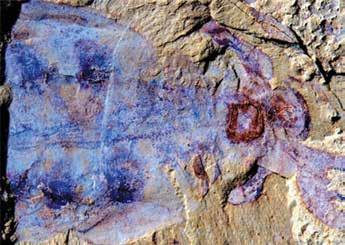
Aspectacularly well-preserved sea monster that once prowled the oceans during the Cambrian Period has been unearthed in China.
The 520-million-year-old creature, one of the first predators of its day, sported compound eyes, body armor and two spiky claws for grabbing prey.
The fossils of the new species were so well preserved that the nervous system and parts of the brain were still clearly defined.
Before the Cambrian Period, which lasted between 543 million and 493 million years ago, most life resembled simple algae and stationary jelly fish like creatures, but during the Cambrian explosion, a period of rapid evolution when biodiversity exploded, swimming sea creatures with compound eyes, jointed legs and hard exoskeletons emerged.
The period also saw the rise of an iconic group of shrimplike creatures known as anomalocaridids. These ancient sea monsters were the top predators of the Cambrian seas, and sported bladed body armor and a cone-shaped mouth made of concentric plates. Some of the biggest of these bizarre creatures could grow to be up to 6 feet (1.8 meters) long.
But most anomalocaridid specimens paleontologists found have been poorly preserved, making it difficult to know precisely where they fit in the tree of life, said study co-author Peiyun Cong, a researcher at Yunnan University in China.
Some scientists thought anomalocaridids belonged to a group that split off before the most recent common ancestor of all living arthropods, while others thought the animals were part of a group called chelicerates that includes spiders and scorpions. Still others thought anomalocaridids had converged upon similar features to those of modern arthropods but didn't evolve from the same lineage, Cong said in an email. (Discovery News)
of African elephants in zoos have irregular or no ovarian cycles.
Elephants in the wild are threatened by habitat loss and poaching, the illegal ivory trade that continues
despite international efforts to shut it down. Zoos may be one of the few remaining ways to protect the species.
The Lincoln Park Zoo in Chicago issued a report in 2011 predicting that if the
abnormal ovarian cycles and resulting low birthrates continue, then African elephants could disappear from zoos in the next 50 years.
Zoos in the United States need to average about six
births per year to maintain the population, but the current birthrate is only about three births per year. Obesity is suspected to be a major part of the problem.
(Discovery News)

onto the back of an iPhone
One of the neat things about smartphones
is the fact that when gadgets are designed to be used with them, those devices can make use of the phone's sensors and other electronics instead of incorporating their own. This, of course, means that those devices can thus be smaller and cheaper than would otherwise be possible. The Elephant Steady is a new motorized iPhone camerastabilizing rig that takes this approach.
4S or higher (or 5th-gen iPod touch) using a built-in holder. It also has a hard-wired 3.5-mm plug, that goes into the phone's headphone jack.
Designed by Japanese tech firm Adplus, the Elephant Steady latches
Once the Elephant Steady is powered up and its accompanying app is launched, the iPhone's own
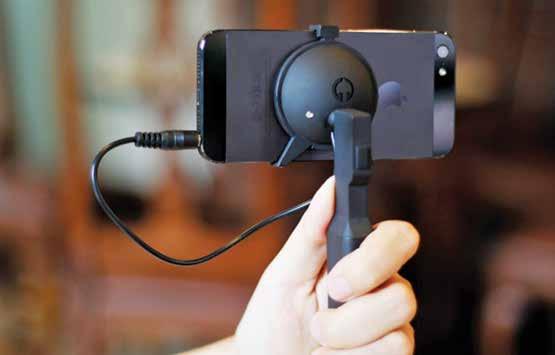
Gprocessor and gyroscope come into play. As soon as any slight tilts or side-toside movements of the phone are detected by the gyro, the processor instantaneously responds by triggering the Elephant's motor to move the phone corresponding-
ly in the opposite direction, thus canceling out the initial movement.
Should users want to tilt the phone up or down, they can do so via a trigger on the Elephant Steady's handle.
The device is powered by its own rechargeable lithiumion battery, not by the phone.
Adplus is now raising production funds for the Elephant Steady, on Kickstarter. A pledge of US$79 will get you one, when and if they're ready to go. The estimated retail price is $99.

enerating renewable electricity at home or in commercial buildings is becoming increasingly viable. WindStream Technologies has installed what it says is the world's largest windsolar hybrid array on an office roof in Kingston, Jamaica. The array is expected to generate over 106,000 kWh annually.
The increasing trends towards renewable and distributed energy generation are reflected by other recent "world's largest" projects. In January, the world's largest solar bridge was completed in London, the world's largest solar-thermal plant became fully operational the following month, and Jaguar finished installing the world's largest rooftop solar array in April.
WindStream Technologies produces wind and sun generation equipment aimed at municipalities, commercial buildings and homeowners. It was suc-
Tech
ByTe

Scessful in competing for the contract, tendered by law firm Myers, Fletcher & Gordon, having been able to demonstrate
oon, your car may know your heart rate—and may take control from you if it doesn’t like what it sees.
A new project from Nottingham Trent University in the UK is working on an electrocardiogram (ECG) built into the driver’s seat to detect heart rate and determine when the driver is too fatigued — or worse, falling asleep — in order to improve road safety.
The technology uses circuits integrated into the seats, called Electric Potential Integrated Circuits, or EPIC. Developed by Plessey Semiconductors, the EPIC circuit can measure heart rate, respiration, and more to monitor alertness and health.
Plessey business development director Steve Cliffe told industry trade publication Innovation in Textiles, "We are extremely excited to be working with Nottingham Trent University on this TSB funded program. For the first time it will be possible to reliably and robustly extract electrophysiology signals using Plessey EPIC sensors in an automotive environment without direct contact with the body."
Ideally, the system could be integrated with active cruise control, lane-keeping functions, and more, to take
an ability to maximize energy production and return on investment, whilst working with limited roof space.
over if a driver ignores or fails to respond to the car’s warnings about alertness.
The result? Accident mitigation or avoidance in cases of driver fatigue, and potentially other situations, such as heart attack, as well. There's a certain element of discomfort for some when thinking about their car knowing so many intimate details of their biology, especially if it has the ability to take control from the driver, but at the same time, the EPIC sensors, applied in this fashion, could save lives.
The technology is still in a nascent phase, with materials challenges like conductive textile technology required for the ECG electrodes woven into the seat backs. This is the area of research being investigated by researches at NTU.
Due to complexity and cost, the initial applications are expected to come in the commercial driving arena, helping to ensure truck drivers stay safe behind the wheel.
Eventually, it could expand into the private automobile market, likely starting at the high-end luxury realm as so many other new technologies do. (Discovery News)
The installation incorporates 50 of WindStream's SolarMill devices. The different SolarMill models each comprise one or more solar panels and three or more turbines. As explained on the WindStream website, "the daily and seasonal trends of wind and solar resources are all mitigated by capturing both at any time of the day or year."
The array is expected to generate 25kW of wind power and 55kW of solar power. Windstream says it will return its investment within four years and will produce savings of around US$2 million over the course of its estimated 25-year lifespan.
MFG's installation is a part of an effort by Jamaica's sole energy provider, Jamaica Public Service, to make the capability for producing renewable energy more widely available. The electricity generated can either be used and stored off-grid or fed back into the grid. (Gizmag)

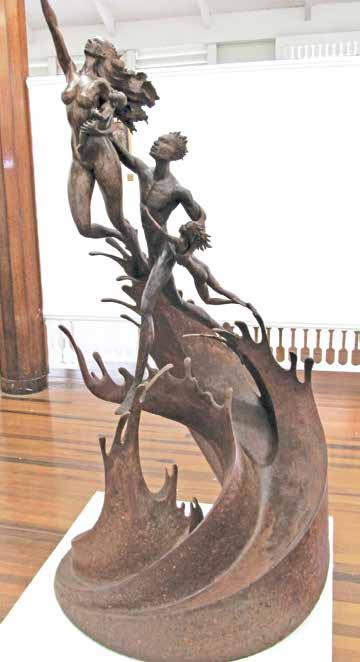
The recently opened art exhibition, ‘Saving Seeds’, at Castellani House, Vlissengen Road, is being held in observance of the University of Guyana’s 50th anniversary.
This is an exhibition of works by veteran Guyanese artists and lecturers Philbert Gajadhar and Winslow Craig, as well as Studio Assistant Dwayne Alexander. The collaboration for this art exhibition presents a significant body of work from each for the first time in a number of years.
‘Saving Seeds’ seeks to address the artists’ concerns for the loss of the functional family unity by proposing and celebrating traditional structures, practices and values. Each uses personal experience as a point of ref-
erence notably those resulting from fathering and partnering. These experiences inform the values inculcated in their work. Together they celebrate fatherhood and the man as an equal partner and presence in the family unit.
While Gajadhar proposes a model steeped in tradition intended to safeguard against counter-productivity in womanhood, Craig proposes a model for sons in meeting the responsibilities of manhood.
‘Saving Seeds’ will continue until 2 August and is opened to the public. Admission is free. Gallery hours are 10 a.m. to 5 p.m. Monday to Friday and 2 to 6 p.m. on Saturday; the gallery is closed Sundays and holidays.


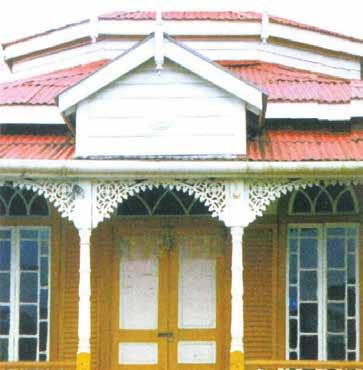
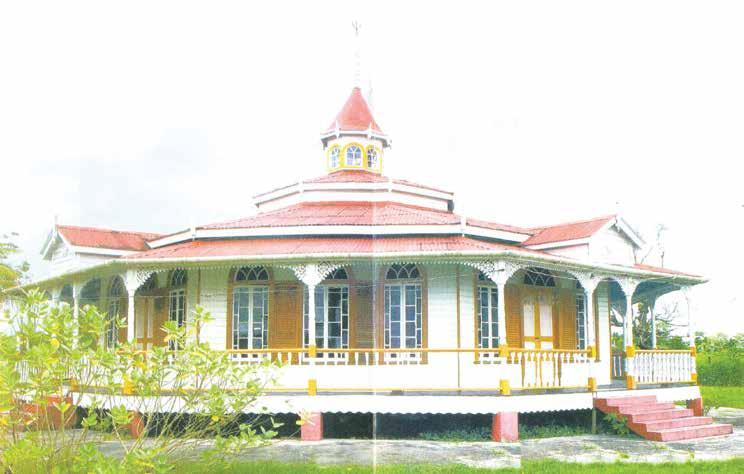

Described as an eloquent reminder of our Eastern heritage, the Providence Mandir, built in 1932, is a fine example of timber craftsmanship and localized architecture that employs traditional Indian elements and features alongside Christian and western influences.
Decorative and intricate fretwork can be seen on panels, doors, and open areas; there are also stained glass, turned columns, jalousies, and ornate fenestration (window design).
Another prominent ornamental feature is the decorative railings or balustrades encircling the structure. This is evidenced in the turned supports of the handrails of staircases and along the galleries and porches.
The centrally placed tower or sikhara is the focal point of this octagonal mandir. Such eight-faced parts represent the regents of the four cardinal points of the compass, and the ninth panel or segment in the centre of the ceiling is topped by a sikhara that represents Brahma, the creator deity of the Supreme Hindu Triad. (National Trust of Guyana)


1) Water/Fire: WfATEireR
2) Ground/Sky: GRsOkUyND
3) Rich/Poor: RpoIoCrH
4) Freeze/Boil: FRbEoiEZlE
5) Pen/Pencil: PpENeCInL
6) Woman/Man:

WmaOMnAN
7) Light/Dark: LdaIGrHkT
8) Over/Under: OunVdERer
9) Clean/Dirty: CdiLrEAtNy
10) Right/Wrong: RIwrGoHngT



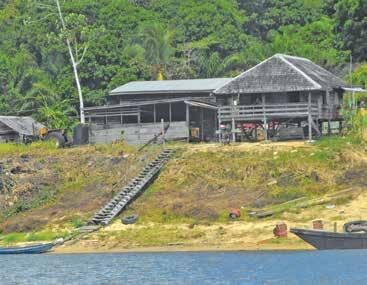
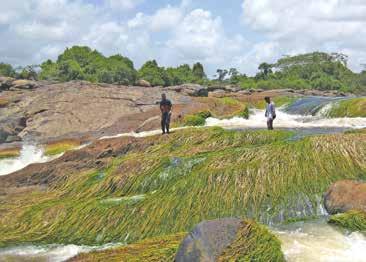
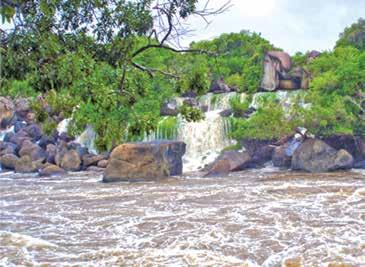
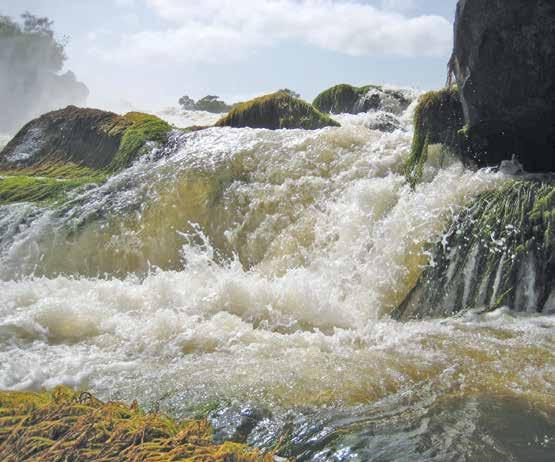
The Corentyne River has been the pathway to many tourists’ destinations such as Orealla, Cow Falls and Wonotbo Falls, and is sought after by vacationers who want to get away from the monotony of the concrete jungle.
The Corentyne River forms the whole of the eastern border with Suriname, and is said to be the second longest river in Guyana. It flows northward from its source for approximately 724 km (450 miles) between Guyana and Suriname, emptying into the Atlantic Ocean near Corriverton in Guyana and Nieuw Nickerie, Suriname.
When choosing to go further to Cow Falls or Wonotobo Falls for a getaway, be sure to expect just that. No signal for cell phones or electricity; just you and nature. Fishing for your dinner, waking up to a breathtaking sunset or just observing the incredible scenes along the river make the hours travelling to the desired vacation spot oh so worthwhile.
During the nights, get lost in the starry heavens with the multitude of stars embroidering the night sky. Be lulled by the cool breezy evenings and feel the fresh wind as it kisses your cheeks and erases all the stresses of life, even if it’s just for a moment.
For the time needed to find yourself or just a getaway from a sometimes stressful technology age, Corentyne River is the ideal destination.

B y M elvin D urai
Sachin Tendulkar is one of the greatest cricket players ever, a titan of his sport.
But poor Maria Sharapova had never heard of him, never heard of a man who is so beloved in India, he could endorse a brand of darkness cream and millions of people would buy it.
The Russian tennis star had just lost a match at Wimbledon and was asked about Tendulkar, who happened to be in a star-studded gallery watching her. Sharapova made the mistake of admitting that she didn’t recognize the recently retired batsman. The legend’s fans were aghast at this indignity to their hero and lashed out at Sharapova on Facebook, Twitter and other social media. “No wonder you lost your match,” one fan wrote. “That’s what happens when you don’t recognize God!”
Another fan’s message was more ominous: “Apologize immediately, Miss Sharapova, or I will write to Narendra Modi to invade Russia.”
Thanks to angry tweets from Tendulkar fans, the hashtag #WhoIsMariaSharapova was soon trending on the SachinInternet, prompting Sharapova fans to respond with hashtags of their own: #FiveGrandSlamTitles and #HotterThanSaniaMirza
Millions of young Indian men who had decorated their bedrooms with posters of both Tendulkar and Sharapova felt compelled to take down the images of the leggy blonde. “I put mine in a drawer,” said one aggrieved fan. “If she apologizes, I will put her poster back up. If not, I have vowed to look at it just once a day.”
Another fan was less forgiving: “Apology or not, she is not going back on my wall. I am so upset that I am seriously considering putting my wife back as my computer background.”
It’s hard to fault Sharapova for not recognizing Tendulkar, as magnificent as he is. Cricket, after all, isn’t quite as popular as tennis or soccer around the world. Tendulkar is surely as accomplished in cricket as Roger Federer in tennis or Lionel Messi in soccer, but he’s virtually unknown in dozens of countries,
including the two countries where Sharapova has spent most of her life, the United States and Russia. Among recognized sports in America, cricket falls somewhere between the hot dogeating contest and the egg-and-spoon race.
When Tendulkar is mobbed by autograph seekers while visiting New York City, you can bet at least half of them are immigrants from India, Sri Lanka, Guyana and other cricketplaying nations, while the other half aren’t quite sure who he is.
Man: “Hey, that guy must be famous. Everyone’s going crazy. Let’s get his autograph!”
Woman: “Who do you think he is?”
Man: “I’m not sure, but I think he’s that guy from Slumdog Millionaire, Anil Kapoor.”
None of this diminishes Tendulkar’s greatness, of course. And if you ask me, Tendulkar has the best kind of fame. If he wants to be a god, he can stay in India; if he wants to be a legend, he can visit England, Australia and South Africa; and if he wants to be just an ordinary guy, he can visit the United States (as long as he stays away from motels, 7-Elevens, and the entire state of New Jersey).
Most celebrities don’t like to be recognized everywhere they go. Sometimes they want a little privacy, a day or two without someone screaming, “Sachin! I love you! Please take a photo with me, so I can post it on Facebook and get one million ‘likes.’”
As for Sharapova, hopefully she has learned her lesson. In the future, if she’s asked about an Indian cricketer or movie star, she’d be wise to give “safe” answers that don’t reveal her ignorance.
Reporter: “Did you know that Sachin Tendulkar was watching you?”
Sharapova: “Sachin? Really? That’s amazing. I’m so honored. I love him.”
Reporter: “So you know who he is?”
Sharapova: “Are you kidding? Doesn’t everybody?”
Reporter: “What do you think of his career?”
Sharapova: “It’s been amazing. He’s accomplished so much. I loved him in Slumdog Millionaire.”


Feeding Shamu
At Sea World, a young boy absolutely refused to see the show featuring Shamu the killer whale, but he wouldn't tell his parents why. No amount of discussion could get him to change his mind.
Later, when they got home, the parents discovered the reason for his reluctance.
An aunt had told him how exciting the show would be because "They choose children from the audience to feed Shamu."
The high-jump
A kangaroo kept getting out of his enclosure at the zoo. Knowing that he could hop very high, the zoo officials put up a ten-foot fence.
He was out the next morning, just wandering around the zoo. A twenty-foot fence was put up. Again he got out.
When the fence was forty feet high, a camel in the next enclosure asked the kangaroo, "How high do you think they'll go?"
The kangaroo said, "Pretty high, unless somebody figures out to lock the gate at night!"
Small town sheriff
In one small rural town the sheriff also fulfilled the role of the town's veterinarian.
One night the phone rang, and the sheriff's wife answered.
An agitated voice inquired, "Is your husband there?"
"Well, do you need him as the sheriff or the vet?" the wife asked.
"Both," came the reply. "We can't get our dog's mouth open, and there's a burglar in it!"
A needed raise
"I need a raise," the secretary said to her boss. "There are three other companies after me."
"Is that so?" asked the boss. "What other companies are after you?"
"The electric company, the telephone company, and the gas company."
Hard work
Frank was the manager of an upscale men's wear store in a wealthy section of town and was interviewing Larry for the recently advertised salesman role.
Frank looked at Larry's resume and noticed that Larry had never worked in retail before.
Frank mused, "For someone with no retail experience, you are certainly asking for a high salary."
"Well I suppose I am," Larry replied, "but you must understand that the work is so much harder when you don't know what you're doing."
A better excuse
Toby came into the office an hour late for the third time in one week and found his boss waiting for him.
"What's the story this time, Toby?" his boss asked sarcastically. "Let's hear a good excuse for a change."
Toby sighed, "Everything went wrong this morning. My wife decided to drive me to the harbour. She got ready in ten minutes, but then the ferry didn't turn up."
"Rather than let you down, I swam across the river, ran over the mountain, borrowed a bicycle and cycled the 20 miles through the field to this office. "
"You'll have to do better than that, Toby," said his boss, disappointed. "No woman can be ready in ten minutes."
Coffee un-creamer
A man set down in a cafe and a waitress approached him: "Can I get you something to drink, sir?"
The man replied, "Yes, I'd like a cup of coffee with sugar, but no cream".
Nodding agreement, the waitress walked off to fill the order and the man read the paper while waiting.
A few minutes later, however, the waitress returned and said, "I'm sorry, sir, we are all out of cream -- how about with no milk?"
Choose your cheese
Sean stopped by a sandwich shop one afternoon and placed his order with the girl at the counter. She rattled off a list of condiments, but he stopped her when she asked if he wanted white cheese or yellow.
"What's the difference?" Sean asked.
"Hello?" replied the girl, sighing and rolling her eyes. "The COLOUR is different!"
Saddle up
A city couple went for horse riding lessons while on holidays. The cowboy preparing the horses asked the wife whether she wanted a Western or English saddle, and she asked what the difference was.
He told her one had a horn and one didn't.
She replied, "The one without the horn is fine. I don't expect we'll run into too much traffic."
Adopted language
The couple was delighted when their long wait to adopt a baby ended. The adoption centre called and told them that there was a wonderful Russian baby boy available. The couple accepted him without hesitation.
On the way home from the adoption centre, they stopped by the local college so they each could enrol in night courses.
After they filled out the forms, the registration clerk inquired, "Whatever possessed you to study Russian?
The couple said proudly, "We just adopted a Russian baby. In a year or so, when he begins to talk, we want to be able to understand him."
Choosing sides
When the family was moving crosscountry the Mom and Dad each needed to drive one of their two cars. Their eightyear-old son worriedly asked, "How will we keep from getting separated?"
"We'll drive slowly so that one car can follow the other," the Dad reassured him.
"Yes, but what if we DO get separated?" the son persisted.
"Well, then I guess we'll never see each other again," the Dad answered back jokingly.
"Okay," the boy said. "I'm riding with Mom."