

By IndrawattIe natram
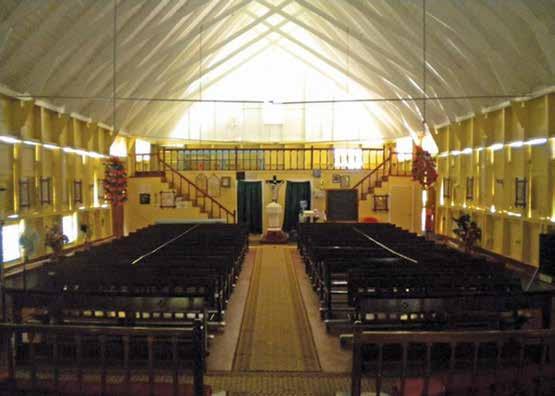
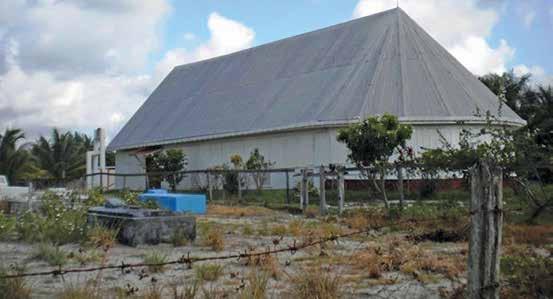
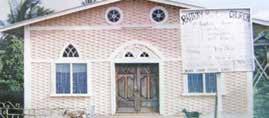
Queenstown, the historical village on the Essequibo Coast, is the home of the 'slave-ship'; not one fitted with sails and oars, but a building symbolising the struggles, sacrifices and achievements of our African foreparents who huddled on slave ships while packed like cargo on gruelling voyages across the Middle Passage to work on European-owned plantations in what was then Guiana.
Called the 'Slave Ship' Church but named St Bartholomew Church, the building itself is 165 years old. Come September 25, this year will mark the 173rd anniversary for the Queenstown village within which it is located. Residents living in Queenstown believe that their African ancestors have left a rich, tangible legacy in their village in the form of the ship that functions as a church.
The Africans were the first builders here, and the ‘slave ship’ in Queenstown is considered a message left by them in a building shaped
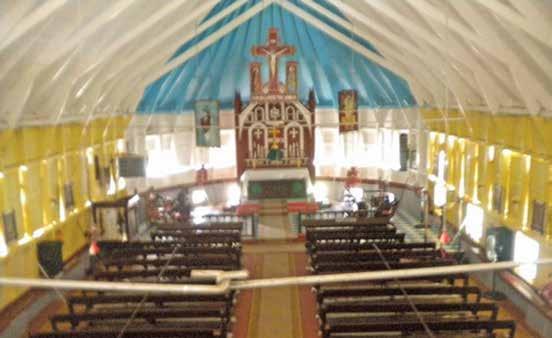
like an upturned ship. It was designed and constructed to remind all Africans, in not only Queenstown, but also the entire Guyana, about the trials their ancestors faced. The building was constructed soon after the 1838 abolition of slavery.
The freed Africans constructed the building in the form of a ‘slave ship’ so that the present generation could comprehend those ‘doom burdened caravels’ that brought their ancestors to
Guyana. The ‘slave ship’, it is suggested, “represents not only the notion of a physical journey from Africa to Guyana, it can also be read as other things also: a journey from freedom to captivity, from cultural and psychological security to the constant trauma inherent in the violence that distorted and even erased identity and threatened to subvert self-confidence and development; from humanized communities in Africa to the prospect of inhumanity”.
In 1840, Mr Carberry, a planter, purchased three adjoining estates on the Essequibo coast, Dageraad, Mocha and Westfield and created a small town. He put in streets, divided the front lands into half acre lots which he sold for $100, $150 and $220 each depending on their location in the town. These were quickly bought by other freed Africans.
On 25 September 1841, at the request of the villagers, it was christened

one third of an acre in size.
As expected, the ex-apprentices continued to work on the nearby estates.
Location
In the northern third of Queenstown Village on the Essequibo Coast, just about midway in a section named West Field, stands, since 1849, a building that is presently used as an Anglican Church called St Bartholomew. It is set on a sand reef that rises gently before the lands that occupy the western or backdam sec-

profusion of portholes normally found on such a ship is a continuous band of windows that runs right around the entire building except for the back, which is served by three small ones. The windows form themselves into another very important architectural feature of the structure.
Queenstown youths are taught that it is sacred placed, a space from which the devil is banned and to which all must come to perform sacred ceremonies to
was the beginning of the proprietary village system under which each villager held title to his individual plot of land. This initial success led other planters to follow suit. By the end of 1841, about 18 plantations were offering land for sale or lease on the Essequibo coast and the practice soon spread to the counties of Demerara and Berbice.
Not all of the planters agreed with that policy. The shrewder among them recognised that if the ex-apprentices could live on land on or near the plantation, enough to satisfy their desire for a home but not enough to grow food to support their families, then they would have to continue to work on the nearby plantation.
By the end of the first year, after apprenticeship, about 267 cottages had been constructed on plots half to
tion of the village.
These lands were planned primarily for crops, and stretch another mile and more down to the eastern shores and black waters of Lake Capoey.
The building is said to be aligned in harmony with the village, on an east-west grid, facing the rising sun. Many persons who traverse the village of Queenstown would look at the building as "unusual" but one is convinced that it has something to do with its African legacy.
Architecture
The entire roof is described as a hull, (that part of a ship that is normally below the water line); the keel is the spine of the roof, rounded in front and sloped at a forty-five degree angle or so to become a rounded front that could only be the imitation of a stern or bow that once cut through Atlantic waters to bring Africans to Guyana. The
banish their personal devils.
The startling architectural similarities achieved with the ‘slave ship’ do not end with the outside of the building, nor should these be confined to the edifice alone either. The regular activities that were undertaken inside this building were part of the design for the enslavement of Africans, and the rituals and ceremonies practiced within the building were rooted in the perceived need of Europeans to control and dominate them.
The physical arrangement inside the building amounts to the stunningly exact representation of the arrangement inside the bowels of a ‘slave ship’. These uses of height within a confined space for the purposes of domination and control are the same within the church as it’s was within the ‘slave ship’. The church ‘ship’ reflected the often enforced social order.
The existing collection exhibited at the Museum of African Heritage includes many examples of African art mostly from West Africa, and they help to educate Guyanese as to the meaning and reasons behind African art traditions.
The museum was created by the government of Guyana to collect, preserve, exhibit and research arts and artefacts relating to Africa and the African experience in Guyana. It was known as the Museum of Arts and Ethnology founded in 1985, with the purchase of collections of African art from anthropologist Hubert Nicholson.
The artefacts, featured in this article, were brought mainly from West Africa and are invaluable and of fascinating historical significance.
The Dance Spoon (Wunkermian) Dan Tribe, Liberia
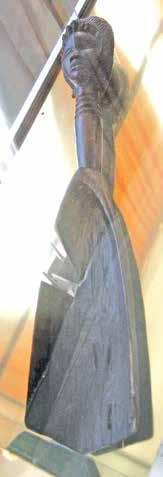
The Dan Tribe produced elaborate, beautifully carved spoons. Though these are occasionally used to distribute food at large feasts, the spoons serve primarily as symbols of a woman’s respected position in her community. The carved head of a woman on the handle sometimes depicts the owner but more often is a stylized image of the Dan ideal of feminine beauty such as the pointed oval face, high forehead, narrow eyes, thin nose ridge with flaring nostrils, and full mouth. The hairstyle refers to the special grooming of persons high status. The face on this spoon has a ridge in the middle of the forehead which represents a tattoo traditionally used by the Dan people.
Neckrest from Shona, Zimbabwe
Neckrests are used throughout much of eastern and Southern Africa. They are used when sleeping to keep the head elevated and protect the elaborate hairdos. Shona are best known for their beautifully adorned
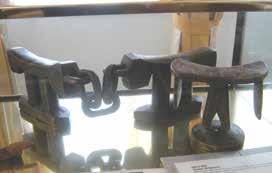
wooden neckrests. Most of the art associated with Shona is either personal or utilitarian.
Although they produce no figurative sculpture, they do have a rich tradition of metalworking and woodcarving.
Game-board known as Oware or Mankala from Akan People, Ghana
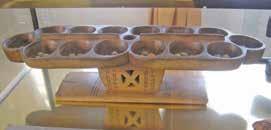
In Ghana, Oware has always occupied a prominent role in society, being regarded as a game of the Kings of Asante and Denkyira. It was played on beautifully carved ivory boards in the shape of a stool embellished with gold. So engrained was it in society that it even had its own social taboos. At times it was used in the coronation ceremony of the kings of some African communities. There exists an Ashanti legend, which explains the origin of Oware. It says that in order for a man and a woman to have more time to play the game, they decided to get married. This game is still played by many in Africa and various Caribbean countries.
African hut door, Senufo Tribe, Mali (Ivory Coast, Burkina Faso)
In Senufo, country doors to houses are frequently carved from a buttress root of a large tree. Normal house doors are usually plain or decorated only with geometric designs. More elaborate designs are usually reserved for the doors of the houses used as meeting places for the secret societies. Such societies have a variety of purposes. Some exist as anti-witchcraft associations. Others exist to train young men and women separately in their respective roles in the community. The symbols on this door include lizards, crocodiles and hornbill birds which are all thought of as among the first animals created before man cam into existence. The horse, seen on the door, does not breed south of the Sahara Desert and thus must be im-

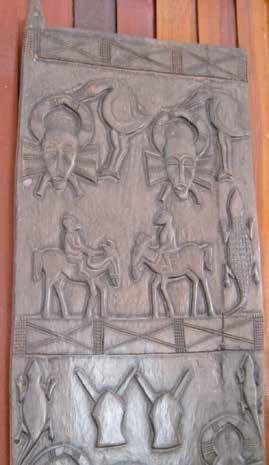
ported at great costs. A horse rider, therefore, represents a man of great wealth and power. The masks on the door are Kpelige masks associated with the Poro society.
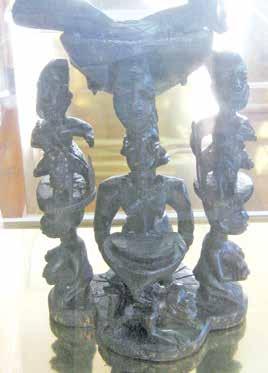
Nut Bowl, Yoruba tribe, Nigeria Bowls like this one were used to hold Kola nuts which were cast on the ground as part of a divination ritual. One of the figures is a female worshiper holding her breasts which is a sign of respect. The other is a male figure holding a double-bladed axe carried by priests and worshipers of Shango, the ruler of thunder and lightning and is much feared in West Africa. The central figure is a kneeling woman with a child on her back. Carved above them is a figure of Shango horse’s back. In front of the central female figure is a man lying on his stomach with his arms and knees on the ground, his feet in the air. On his back stands the body of a chicken whose head, neck, back and tail are detached. Two heads on the bowl probably represent the Orisha or God Eshu/Elegba.
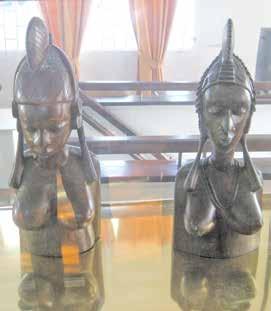
These are an artistic representation of a Fulani woman. The Fulani are pastoralists who migrate with their cattle all across the Savannah regions of West Africa. The women are famous for their beauty. They wear distinctive hairstyles and jewellery. This figure is a modern carving made for the commercial trade. It is made from a very hard, dense, red, Mahogany-type wood. It does not grow in the area where the Fulani live, but closer to the Coast. The carvers are likely to be from an ethnic group other than the Fulani since they rarely carve.
The Museum of African Heritage is located on Barima Avenue, Bel Air Park. For more information call 226-5519.

The African slaves were of the view that they had no economic future if they continued to reside on the sugar plantations. As slaves began buying up the abandoned cotton plantations, others felt that they too must acquire their own land.
During the period of the strike, 65 of them pooled their savings and purchased Plaisance for $39,000. The estates of Peter’s Hall, Farm and Garden of Eden on the East Bank Demerara, and Daniels town and Bush Lot on the Essequibo Coast, were also acquired in 1840 by groups of slaves. Another strike in December 1847 to protest another cut in wages, forced more slaves to abandon the sugar estates. Some of them moved to the existing villages, while others who had no savings, squatted on Crown Lands.
The moving away of slaves from the estates placed added pressures on sugar production, and planters used devious means to force them to return to work there. One of these included to releasing water from the estate canals to flood the nearby freed slave villages. The planters, no doubt, felt that if the former slaves’ farms were damaged, they would return to the estates to work.
But the villages also faced administrative problems during the 1840s. The shareholders, or proprietors, possessed no experience in cooperative management, and since they used up their savings to purchase land, they had nothing left for maintaining roads, bridges, sluice gates and drainage canals. As a result, the conditions of the villages and the communal plantations deteriorated.
The land buying continued until 1852. There were at this period over 82,000 freed slaves of working age, and roughly half of them lived in villages and worked from time to time on the estates. By that time, too, the former slaves had established 25 villages on lands that they purchased for more than one million dollars. They also owned
over 2000 freehold properties.
Not many of us know of the more than 100 villages in Guyana bought by freed slaves after emancipation. This week Guyana Times Sunday Magazine highlights some of these villages and their resourceful buyers.
This is possibly one of the largest villages on the East Bank of Demerara. The date of purchase of this village is unavailable and so are the names of its purchasers. In modern times, Friendship village has become a developed area, equipped with modern facilities, and has become populated by many Guyanese of various ethnicities.
This village is known for its successful cultivation of ground provision and fruits, and would have been commonly referred to as the “bread-basket” of the Corentyne Coast, Berbice. Gibraltar now comes under the name Fyrish/Gibraltar. Since the colonial era this area has always had drainage concerns, with farmland being flooded and residents having to travel about the village in boats.
Located on the East Bank of Demerara, Agricola is known to have been bought from
Seeing that there was no economic future for them if they continued to reside on the sugar plantations of Guyana, freed slaves began buying abandoned estates, transforming them into villages
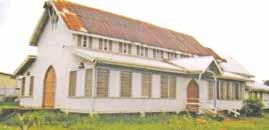
the colonial planters by three ex-slaves: Figaro, Chandlier and Hercules, in 1842. The name is Latin for agriculture. The first church to be erected was the St Ann’s Anglican Church, to be followed later by St Ann’s Primary school. It was mainly a cashcrop farming community that later adopted rice farming.
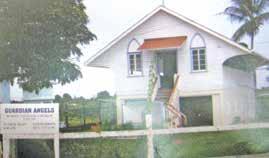
Hopetown village was bought by 11 freed slaves. Now it has very active youth groups and centres. One such active youth development project is called the Sapodilla Learning Centre operated by Edwin Joseph a son of the soil who served in the British Army for 30 years. This centre was awarded the PanCommonwealth Award for 2002 and the Regional Award in 2001. The first church in the village was the Smith’s Congregational Church, built in 1849 in honour of Rev. John Smith.
Lichfield
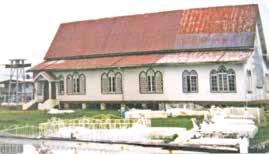
The distinguishing feature in this village is the St Jude’s Anglican Church, the first to be established. To this day there is the historical plaque in the churchyard to commemorate the founding of Lichfield. The main production was ground provision, coconut and rice. There was also a small percent of cattle rearing done in the area.
Belladrum
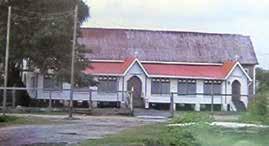
Another village bought by slaves following emancipation, Belladrum’s outstanding feature is its church. The St Alban’s Anglican Church and school are the largest buildings in a community, where unfortunately, many of the village’s African traditions have been lost due to death and migration of villagers.
Well-known for housing President’s College, one of the highest learning institutions in Guyana, Golden Grove was bought

by freed slaves and later became the prime supplier of vegetables and ground provisions sold to other villages. It has one market and has now been transformed due to the establishment of modern homes and a diversification of economic activities. It is located on the East Coast of Demerara. Locally familiar persons such as former judge Donald Trotman and Keith Booker, permanent secretary in the Ministry of Culture, Youth and Sport are from this village.
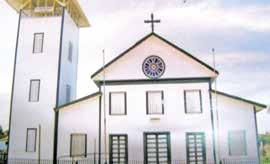
Plaisance village was bought by 65 freed men. The St John the Baptist Catholic Church along with the Congregational Church and the St Paul’s Parish Church are two landmarks in the village. The history of the St Paul’s Parish Church goes back to the 1830s.
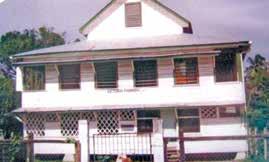
The village of Victoria was originally called Northbrook before it was re-named Victoria by ex-slaves who thought it best to name it after Queen Victoria for the part she played in the abolition of slavery. These freed slaves purchased the plantation from the original owners for 30,000 guilders in November 1839. The northern side of the village was set aside for houses, while farming was done elsewhere. Villagers were at first forced to go to Le Ressouvenir, west of Victoria for church services. However, later in 1845 the Congregationalists built the first place of worship for that community, the Wilberforce Congregational Church, after the Englishman who fought for freedom of the slaves. Other churches built were the Methodist Church in August 1, 1864, the Collier Brethren Church, and the Roman Catholic Church in December 9, 1866.
By Dr Dhanpaul narine
Mohan
Ramsamooj
and his loving wife
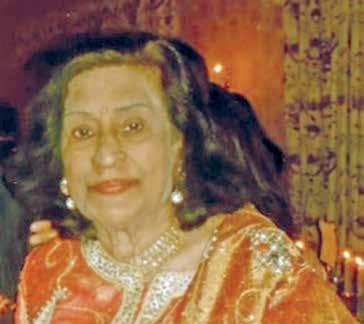
Soorsati were happily married for 67 years and this beautiful bond was broken when God took Soorsati to be beside Him. Soorsatie’s passing created a void in our community. She was an icon in her own right having raised eight children and created a business that set high standards for others. Soorsatie combined the roles of wife, mother and entrepreneur admirably and set new paths for others to follow.
Soorsati was born on March 26, 1928, in the village of Golden Grove on the East Bank of Demerara in Guyana. Her father was Jugram Cheddi and he was
nounced his arrival. Bharat grew up to be a warm and caring young man who was always helpful to his parents. Mohan and Soorsati soon found themselves busy parents and in a short space of time seven other children were born. Mohan and Soorsati were doting parents and they instilled in the children love for others and a respect for all living things.
They stressed the importance of a sound education and the children went on to become successful in their respective careers. Mala Ramsamooj, for instance, attended school in Georgetown before migrating to New York. She then went to Queens College in New York where she successfully completed her Master’s Degree. Mala went on to estab-
a bookkeeper at Diamond Estate on the East Bank of Demerara. Soorsati’s mother, Sumintra, was a hardworking woman that cared for the family. Sumintra and Jugram had three sons and three daughters and like most parents they wanted the best for the children.
Soorsati attended Diamond Government School and was a classmate of prominent business mogul Dr Yesu Persaud. As most of us know parents in those days were strict and seldom let their children out of their eyes. When it came for Soorsati to be married, a suitable young man was identified from a neighbouring village and a marriage was arranged. The person that was responsible for the arranged marriage was Pandit Sookdeo Maraj. He knew both families and felt that Mohan was not only a nice young man but he had the qualities to make Soorsati happy. On a bright and sunny day on January 26, 1947, marriage vows were exchanged between Mohan and Soorsati Ramsamooj. Thus began their journey on the long road to life’s richness and happiness.
The first major event in their lives happened on December 24, 1947. It was a Christmas to remember as their first-born child Bharat Chandranauth an-
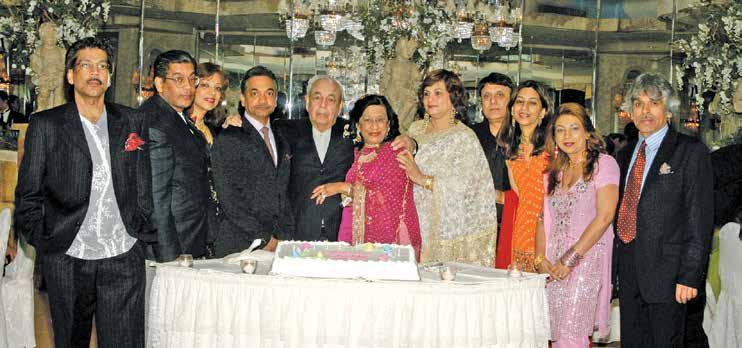
They were able to get Shashi Kapoor to visit New York for a concert at Queens College and Mala and Prabhu became pioneers in their own right on the social circuit. But before all this happened there was the enterprising spirit of their mom Soorsati. She was not content just to be a housewife. Soorsati had a sense of style and fashion at an early age. She also had a keen sense of business. She decided to attend the Carnegie School to acquire knowledge about fashion and pattern and dressmaking.
ness when the eldest child Bharat passed away in 1974 but the family persevered and strived to do well in his memory. Mohan in the meantime was quickly making a name for himself in the business world. He became a salesman at Sandbach Parker in Georgetown. Mohan was responsible for the sales of combines and tractors to countless farmers and he proudly stated that he never turned away a customer. He always found a way for them to realize their dreams to become successful farmers.
lish a top modeling agency, Working Models, and she involved herself in a number of charitable causes. At one point Mala had her own television show and she landed exclusive interviews with legends Amitabh Bachchan and Rajesh Khanna, and the late President Cheddi Jagan, among others.
Mala teamed up with her brother Prabhu and they became a formidable team.
After graduation, Soorsati put her training to good use. In 1971, she established Carnaby Boutique in Georgetown. This meant that Guyanese could have access to international fashions and could compete with the rest of the world. By 1974, Carnaby Boutique became one of the finest in the Caribbean. Today, the Carnaby name continues in the U.S.A. Her daughter, Geeta, owns The Carnaby House - an interior designing company and an importer of fine home accessories and furnishings.
Soorsati and her family experienced great sad-
Indeed, Mohan worked his way to a position in the company where he was known as Mr Sandbach Parker. He was sent on a training course to London representing Massey
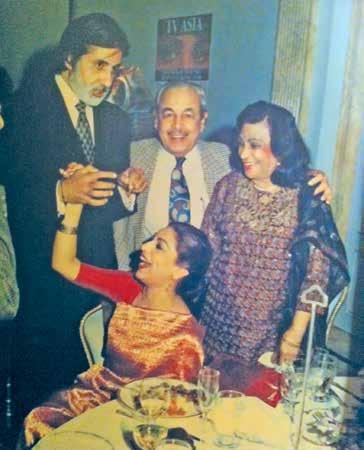
Ferguson. While in London, both Mohan and Soorsati had the pleasure of attending a dinner hosted by the Indian High Commission in London. At that dinner they met Lady Mountbatten and they chatted about culture and society. Those years were indeed memorable and Soorsati and Mohan were overjoyed to meet with Prime Minister Indira Gandhi when she visited Guyana. Mohan and his family duly migrated to New York but their deep involvement continued with the community. One of Soorsati s memorable moments was to have dinner with the legendary Amitabh Bachchan in New York, an event that was arranged and managed by her children Mala and Prabhu.
Soorsati was an active member in the Maha Saba and the Gandhi Youth Organization in the 60s and 70s. She came a long way from Guyana but she never lost the common touch. She cared deeply for others. She was an avid sports fan and her favorite sport was cricket. She also loved her Lord and the Bhagavad Gita was her constant companion. Soorsati was described as the “golden girl with the diamond touch”! She brought happiness and joy to her family. Soorsati’s love and devotion to her family and care for others remain unparalleled. She will always live in the hearts of those that cherish and value love, tolerance and respect for others.

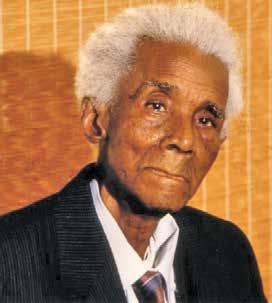
By PetamBer Persaud
Extract of an interview with David Hinds, Georgetown, Guyana, 2013. Professor Hinds lectures at Arizona State University and is a rights activist.
PP: A few years ago, the whole year of 2011 was dedicated to the peoples of African descent, then a whole decade 2014-2024 was named in acknowledgment the people of African descent, why? Is it because we are now waking up to the realities – the effects of slavery? Is it because only now we are waking up to the humanity of enslaved peoples?
DH: Petamber, I think you have hit the nail on the head because since slavery ended in the 19th century, I think the world has been in denial about the tremendous negative impact slavery have had on African people, in particular, and a spinoff of that to rest of the world.
I think that… years later, we are coming to realise that something that penetrated the psyche of the world as slavery did could not be thrown off, swept under the carpet, that as a world we have to deal with it, that the impact was not only on the former slaves but also on the former slave masters and those who inherited and have to participate in a world that was shaped by it.
PP: Who is carrying ‘the fight’ now? We know from documented materials and fictionalized accounts of those who remonstrated and rebelled, some succeeding while oth-

ers served as inspiration to go on - we are celebrating 250th anniversary of the 1763 Berbice Slave Rebellion, we’re poised to mark the 1823 Demerara Uprising and other issues.
Those rebellions showed that the people knew they were being wronged and more importantly those displays of dissent showed the people’s humanity. They were fighting for themselves. Who is carrying the fight now?
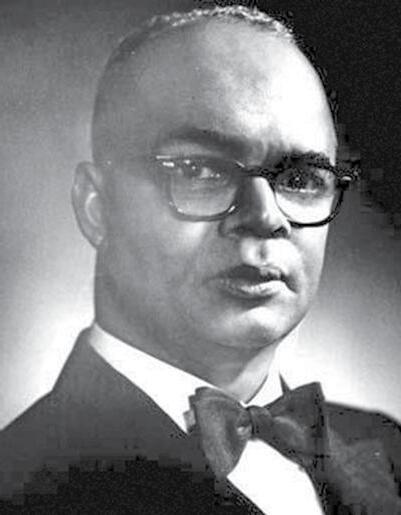
DH: I think there is a new generation of Africans all over the world who after a lull of the last two or three decades are discovering some of the works done: Walter Rodney’s “How Europe Underdeveloped Africa” – those who have the opportunity to go to university and others are reading that; Ivan Van Sertima’s “They Came Before Columbus”;
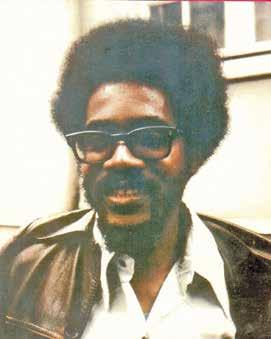
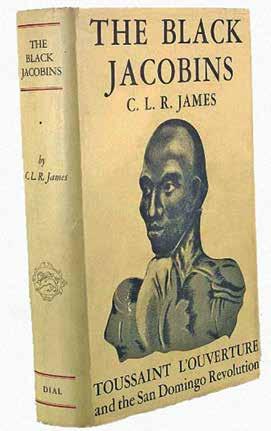
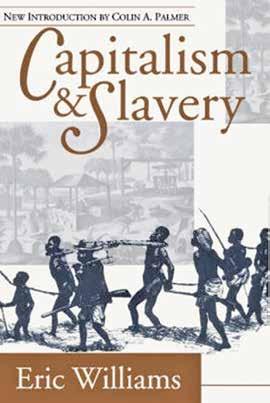
they are reading “The Souls of Black Folk” by W E B Du Bois; they are reading Eric Williams’ “Capitalism and Slavery”; they are reading C L R James’ “Black Jacobins” –they are reading these classics that speak to the experience of Africans people but speaking particularly to the issue of resistance and gaining new perspectives on the world and on their own ‘Africanness’.
So there is that but I also think that the practical day to day experiences of African peoples all over the world whether it is in relationship to economics, whether it is in relationship to lack of education, whether it is in relationship against all forms of violence, they are beginning to make the connection between those and a larger post-slavery society that has inherited a whole bunch of these things from slavery itself. Slavery was about violence and the violence we experience today all over the world is really a spinoff of that.
PP: Interestingly, four of the five books you mentioned were written by West Indians - two by Guyanese, two by Trinidadians. And let’s not diminish the import of Norman Cameron’s “Evolution of the Negro”, which I have credited as a contributing factor leading to the first black man to be elected to the
presidency of America.
DH: Yes, yes, good point that!
PP: So the books you mentioned, the type of books we are reading can be labelled the heavyweights of this fight. The question remains – who is carrying the fight now? Answering this question, we must be mindful of the movements such as Black Power, Rastafarian, Pan-African-ism and of leaders thereof like Marcus Garvey and others.
DH: Yes, the point is once people are subjugated, they throw up their own movements and their own leaders. Walter Rodney called it self-activity for self-emancipation. So all

these mass movements arose out of the bowels of people’s resistance; as people resist, they created organisations, they created civilisation and so forth. And it was that which was responsible for the wave of movements in the 20th century.
Now as we turn into the 21th century, there was somewhat a lull in terms of African mass movements, part of it had to do with the success of the civil rights movements all over the world. African people have begun to move into echelons of the society from which they were formerly debarred.
PP: Let’s take a closer look at what you describe as “a lull”. Why the lull if we are now better placed in society to influence change?
DH: Because this was exactly what Du Bois meant when he talked about “the talented tenth”...
To be continued
Responses to this author telephone (592) 226-0065 or email: oraltradition2002@yahoo. com


By Michael BlooMBerg
Bloomberg is an entrepreneur, philanthropist, and threeterm mayor of New York City.
The following are some tips for becoming a successful entrepreneur based on my experience of building a company from the ground up, leading New York City as mayor, and founding a philanthropic organization.
Take risks
Life is too short to spend your time avoiding failure.
In 1981, at the age of 39, I was fired from the only fulltime job I'd ever had - a job I loved.
But I never let myself look back, and the very next day I took a big risk and began my own company based on an unproven idea that nearly everyone thought would fail: making financial information available to people, right on their desktops. Remember, this was before people had desktops.
In 2001, when I was debating whether to run for mayor, most people advised me against it. They all were afraid I’d fail. But one person said: “If you can picture yourself giving a concession speech, then why not go for it?” That was the best advice I received – and I followed it.
In order to succeed, you must first be willing to fail – and you must have the courage to go for it anyway.
Make your own luck
Luck plays a part in success, but the harder you work, the luckier you get.
Whatever you choose to do, even if it’s not the job of your dreams, always work hard at it. Be the first person at work in the morning and the last to leave at night. Hard work creates opportunities where your resume cannot. Be persistent
Persistence really does pay off.
When starting my company, I would go downtown and buy cups of coffee. Then I’d take the coffee up to Merrill Lynch – our target audience – and walk the hallways.
“Hi,” I would say. “I’m Mike Bloomberg and I brought you a cup of coffee. Can I talk to you?”
Even if people were wondering who I was or where I came from, they still took the coffee.
And I kept coming back, day after day, working to build relationships with potential customers. I learned about the audience for our product and what they could really use.
Three years after starting Bloomberg LP, Merrill Lynch purchased 20 terminals and became our first customer.
Never stop learning
The most powerful word in the English language is “Why.” There is nothing so powerful as an open, inquiring mind. Whatever field you choose for starting a business – be a lifelong student.
The world is full of people who have stopped learning and who think they’ve got it all figured out. You’ve no doubt met some of them already – and you’ll meet plenty more.
Their favorite word is “No.” They will give you a million reasons why something can’t be done or shouldn’t be done. Don’t listen to them, don’t be deterred by them, and don’t become one of them. Not if you want to fulfill your potential – and not if you want to change the world for the better.
Give back
You are ultimately responsible for your success and failure, but you only succeed if you share the reward with others.
At the end of the day, ask yourself: “Am I making a difference in the lives of others?”
My first charitable donation was a US$5 cheque to my alma mater, Johns Hopkins, not long after I graduated. I was just scraping by back then, but I continued to give. And while the checks may be bigger today, they come with the same spirit. You don’t have to be wealthy to give back. You can give back by getting involved and giving your time and talents. You just have to be committed to opening doors for others.

Onesha Hutson is a natural charmer. She is a third year medical student at the University of Guyana and a model. This 22-year-old is no stranger to the glitz and glamour of pageantry. She was a contestant in the Miss Guyana Universe pageant 2012, and the Miss Jamzone Guyana pageant where she placed first runner-up. Notably, she has walked the runway numerous times locally and regionally. The beauty is also currently one of five Guyanese models chosen to take part in the Music and Fashion Battle (MAFB) in Suriname and the Netherlands. Apart from Hutson’s life as a runway model, she has been actively involved in various health programmes with the Ministry of Health and private entities. She is a trained Phlebotomist and volunteers at the St Anne's Orphanage. She enjoys reminiscing on her school days, which were spent at St Gabriel's Primary and St Rose's High School, where she graduated as an honour student in 2009. A well-rounded individual, Hutson formed and directed the first drama club at her high school and also played basketball and badminton in her fifth year. Hutson also managed, directed and edited the Daily Ros, her high school's newspaper. The beauty is the first daughter for her parents, and puts her family first at all times because they are her biggest supporters. She is inspired and encouraged by her mother and other young women she refers to as her “chicas”.
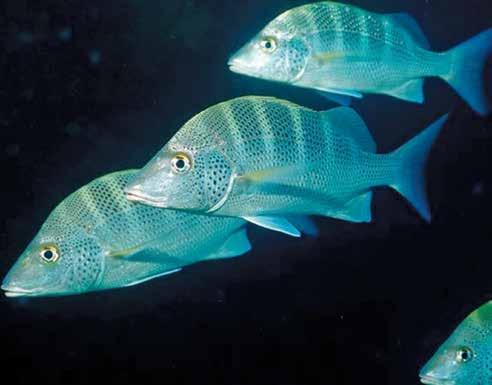
These tough-looking fish boast large canine teeth, set in their upper jaws, which are visible even when their mouths are closed. Smaller fish often fall victim to the dog snapper's powerful bite, as do shrimp, crabs, and other bottom-dwelling creatures.
Adult dog snappers prowl rocky seafloors and reefs at average depths of about 100 feet (30 meters). Their turf includes the western Atlantic Ocean from Brazil to Florida and, more rarely, north to Massachusetts.
The dog snapper is a bit of a lone wolf and tends to keep to itself most of the year. All that changes in March, however, when the fish gather in large groups to reproduce at spawning sites in the north-eastern Caribbean and near the island of Jamaica.
Snappers may travel large distances to reach these spots. Once there they mingle en masse to release sperm (males) and eggs (females) into the sea. The eggs, and later the hatched larvae, are left to drift, and many individuals are devoured—but good numbers survive to eventual adulthood. Vulnerable young dog snappers tend to stay closer to shore and are often found swimming in estuaries.
Several things still puzzle scientists studying spawning aggregations, including how the fish choose these special sites and find their way back to them year after year. The fish do return, however, with amazing attention to both time and place.

If you have ever taken an air-filled ball into the pool you may have noticed that it popped up to the top of the water and floated. That’s because air is lighter than water. Even when you add the weight of the ball itself, it is lighter than the amount of water that would fit in the same space. This is called buoyancy.
Helium is even lighter than air. A liter (about a quart) of air weighs about 1.25 grams (much less than an ounce) — that’s not very much. But a liter of helium weighs even less — only 0.18 grams (a tiny fraction of an ounce). A balloon that’s 1 foot (30 centimeters) in diameter holds about half a cubic foot of helium, which is the same as 14 liters. This means the balloon will weigh about half an ounce (14 grams) less than the same sized balloon
filled with air. So buoyancy goes to work, and just like the ball in the pool, the balloon floats upward.

The objective of the game is to fill all the blank squares in a game with the correct numbers. Every row of 9 numbers must include all digits 1 through 9 in any order. Every column of 9 numbers must include all digits 1 through 9 in any order. Every 3 by 3 subsection of the 9 by 9 square must include all digits 1 through 9.
Though dog snapper is formidable it’s not the top dog in the neighbourhood. Adults fall victim to larger hunters like sharks and groupers, while tiny larvae are far more vulnerable and consumed with relish by all manner of marine creatures. Humans also prey on dog snappers because they are considered a quality meal—though one that sometimes requires caution. Some diners have experienced mild poisonings from the consumption of dog snapper. The fish produce no poison but may build up harmful levels of ciguatera as that toxin works its way up the marine food chain. Ciguatera is created by dinoflagellates, tiny microalgae that reside on dead corals or algae. When smaller, herbivorous fish snap up the coral and algae they also ingest this toxin and pass it along in turn to any dog snappers, which prey upon them.
But dog snappers and other aggregating reef fish have far more to fear from humans than vice versa. Because fishermen know exactly where and when to find huge numbers of these fish, the snappers are vulnerable to overharvesting—at the exact time of year when the survival of a new generation hangs in the balance.

Panther chameleons are native to Madagascar.
The Australian frilled lizard is a large, harmless lizard. It can grow to more than 3 feet (90 cm) long. Its tail makes up about two-thirds of that length. These reptiles use camouflage for protection.
The black-bearded gliding lizard is found in rainforests. This lizard eats small insects, such as ants and termites.
lay eggs. Also known as flying dragons, they live
Asia.
The horned lizard is covered in spines and is sometimes called a horned toad or horny toad.
The green anole inflates a rust-colored throat sack (sometimes for hours) to attract a mate.
Closely related to snakes, lizards are cold-blooded reptiles. They have dry, scaly skin, and those with feet have clawed toes. There are more than 4,600 known species, including iguanas, chameleons, geckos, Gila monsters, monitors and skinks. Salamanders may look like lizards, but they are amphibians, more closely related to frogs and toads.
Most lizards have eyelids, and many have excellent color vision.
Lizards smell with their tongues, which are forked like a snake’s. They have tiny ear openings, and their hearing is average to poor.
Lizards are found on every continent except Antarctica. Most lizards live on the ground and enjoy basking in warm sunshine. Some have adapted to living in trees, caves, underground burrows or in water. Lizards that make their homes in regions with cold seasons hibernate during the winter to survive. Those that live in the desert use sand and underground retreats to shade themselves from intense sun and heat. Tree dwellers have developed special toes, and some have prehensile tails.
Baby lizards hatch fully formed and are self reliant, requiring no help from the mother to survive.
These lizards live in Africa, Asia and Australia.
Flying lizards have been seen gliding distances of 196 feet (60 m) between trees without losing significant altitude.
The Gila monster (pronounced hee-la) is shy and slow, but very venomous. It lives primarily underground and is the largest lizard found in the U.S.
Not all lizards have legs. The glass lizard is found in southeastern North America. It has no legs, but unlike snakes, it has moveable eyelids. It grows up to 41 inches long (105 cm).
There are about 60 species of dwarf geckos. Discovered in 2001, the Jaragua Sphaero of South America is the smallest reptile on Earth. It is less than 0.75 inches (2 cm) long.
Gila monster grows up to 22 inches (56 cm) long.
is a living fossil found in New Zealand.
and
This is your guide on how to wear the hottest trends right now and look fashionable for any occasion.

Printed Pants
How To Wear Them: Printed pants have been really popular in women's fashion for the last few years, and now they're inching into the men's market. Use the same rules as printed jackets and keep things minimal. Also make sure your pants are well-tailored so they don't end up looking like you wore PJs to the office.
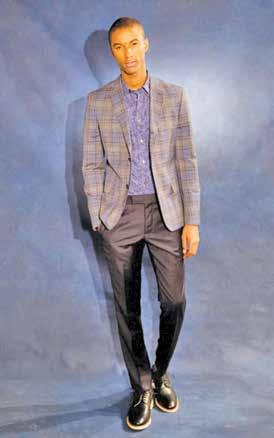
Patterned Jackets How To Wear Them: Expect to see lots of different printed jackets this year, from plaid to floral. Pair a patterned jacket with solid-coloured shorts or pants. If you're style savvy, throw a contrasting print in the mix with a button-down shirt.

High-Rise or Rolled Pants
How To Wear Them: Choose a pair of pants that fit you well, put on some awesome sneakers, and just go for it. Of course, this style works better with casual pants like chinos and jeans than with suit attire, so keep that in mind.

Colour-Blocked shirts
How To Wear Them: Whether horizontal, vertical or diagonal, colourblocked patterns are a casual and preppy look. Treat these like your new classic black t-shirt and wear them with all your favourite pants and shorts.
Shorts season is raging right now. From fun-time prints and distressed denim to crisp, tailored pairs, the style options are endless... and maybe a little overwhelming. You just want to find the most flattering styles for your shape. Check out these shorts for every body!

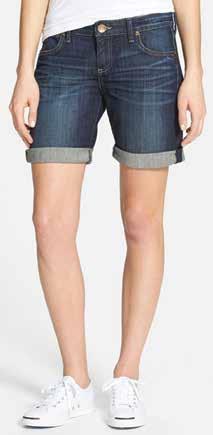
For girls With Curves (Dressed up and Casual)
Flirty A-line skirts work for you, and these modern printed shorts have a similar silhouette. The cut defines your waistline but allows for movement in the hips and thighs. For casual, instead of itty-bitty cutoffs, try longer boyfriend shorts in a relaxed but streamlined fit. A structured, tucked-in top is great for adding a little definition to your body elsewhere.
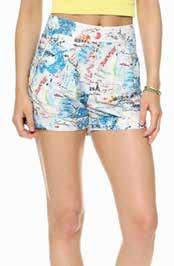
and

For super-slim girls
If you're more slim-hipped and lanky, create curves and a defined waistline with shape-making pleated shorts. The paper-bagwaist cinch is especially on-trend (and slimming).
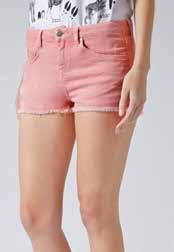
For shorter girls
If you're on the "less-tall" side or have short legs and a long torso, you have total carte blanche to rock shorty-shorts. Avoid chunky cuffs, which break up the elongating effect.

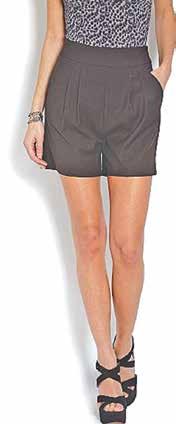
For slim Legs If you're broader on top and blessed with slender legs, try wide-waistband shorts with a tucked-in blousy top to define your waist. And go short, girl— you have the legs, so show them off!

For the true Petites in the House Add inches to your frame with a high-waisted silhouette and super-sleek vertical stripes.
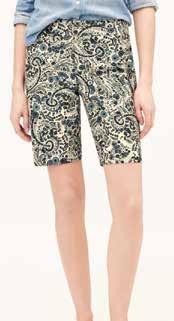
For tall girls ...or what some refer to as a "ruler" shape—you have a streamlined frame, so feel free to rock a definition-creating crazy print and abbreviated, leg-baring shorts. shorts that Are Perfect for Everyone Yes, there is a flattering fit that you can wear, no matter what shape you are—mid-length shorts. Just make sure the hemline hits right at the middle of your thigh (the narrowest part), and avoid a cuff, which visually adds width.

ictoria Justice is an American actress and singer-songwriter. She debuted as an actress at the age of 10 and has since appeared in several films and television series including the Nickelodeon series “Zoey 101” and “Victorious”. She has made appearances in several theatrical releases, including “Unknown” as well as the 2006 thriller “The Garden”. She has appeared in several Nickelodeon series, including “True Jackson”, “VP”, “The Troop’,
V“The Penguins of Madagascar” and “iCarly’, as well as on the Nickelodeon game shows BrainSurge and Figure It Out as a contestant. In 2010, she starred in the Nickelodeon film “The Boy Who Cried Werewolf”. Aside from acting, Justice is involved in her musical career. She has performed several songs for the soundtrack to the Nickelodeon musical “Spectacular!”, in which she starred. She has recorded a number of songs for the “Victorious” series. Justice has announced the release of her debut album, which is expected to be released sometime during 2014.

Alicia Keys is getting ready for baby No. 2.
The “Girl on Fire” singer, 33, made the announcement with an adorable photo on Instagram, posing in a flowing white dress next to husband Swizz Beatz and showing off quite the baby bump — and also noting that Thursday happens to be the couple’s wedding anniversary.
“Happy anniversary to the love of my life,” Keys wrote. “And to make it even sweeter we’ve been blessed with another angel on the way!! You make me happier than I have ever known! Here’s to many many more years of the best parts of life!”
Swizz Beatz (real name: Kasseem Dean), 35, posted another photo from the same shoot, and wrote: “Love is life & life is love and we’re so excited for another GIFT from up above Happy Anniversary my Goddess 4 years of greatness & cheers to 100 plus more inshallah.”
The couple married in 2010 and welcomed son Egypt Daoud Dean, now 3½, in October of that year. Dean is also father to three other children from previous relationships.
In 2012, Keys reflected on the eye-opening experience of motherhood.
“Being a parent has
t wasn't the cheating. As painful as that was, it happens all the time in relationships between young people.
No, Robert Pattinson says the hardest part of his breakup with Kristen Stewart was the aftermath, when he was asked to talk about his “Twilight” costar's cheating scandal in public.
"S––– happens, you know?" Pattinson tells British Esquire's September issue about Stewart's fling with director Rupert Sanders. "It's just young people … it's normal! And honestly, who gives a s–––?"
Well, lots of people did. And that, says Pattinson, was indeed difficult. (PEOPLE )

made me more open, more connected to myself, more happy and more creative,” she said. “I’m more discerning in what I do and how I do it. It’s just made me a better person all the way around.”
She added: “What’s been surprisingly easy is just how natural parenthood feels. I feel great about how easily I’ve fallen into the role. I love it!”
Before announcing her pregnancy, Keys told PEOPLE that having Egpt also inspired her to switch up her style, chopping offer her long locks.
“You just feel empowered,” she said. “You find there’s this whole empowered side to you and you’ll be like, ‘I’ll do whatever. Anything I want! I’ll do it!”
(PEOPLE )
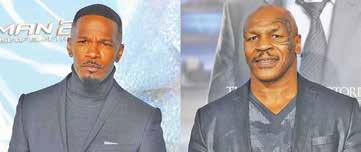
Jamie Foxx lands a lead role in a biopic about Mike Tyson, Variety learns. The feature film is scripted by Terence Winter who got an Oscar nomination for penning "The Wolf of Wall Street". Rick Yorn, who is Foxx's manager, will serve as a producer.
It's unclear which part of Tyson's life the movie will focus on, but Winter
has a lot of materials to explore since the former boxing champ has quite an eventful life over the past 30 years. He once served six years in jail for rape after losing his title. One of Tyson's most controversial fights was a rematch against Evander Holyfied where he bit off his opponent's ear.
After retiring from box-
ABoston man was arrested for allegedly raping a 17-year-old girl at Keith Urban's concert at the Xfinity Center in Mansfield, Massachusetts on July 26. According to report by The Sun Chronicle, the incident occurred in the lawn area of the venue.
Other concertgoers just watched and even took videos with their cell phones as the assault happened in front of their eyes. The rape ended when a woman in the crowd intervened. The man, 18-year-old Sean Murphy, was arrested shortly after and was then charged with rape.
According to police, Murphy and the girl first met at the concert and both of them consumed alcohol during the event. They began kissing near a concession stand before moving to the lawn area. Murphy has pleaded not guilty the charge of rape, claiming the sex was consensual. He was released on $10,000 bond.
In a statement issued on Tuesday, July 29, Murphy's lawyer insisted that his client did not rape the girl. "This was a consensual act, not a sexual assault. There are no allegations of force or violence put against him,"

a public place. Mr. Murphy deeply regrets this incident and I'm sure the young woman does as well."
In addition to the alleged rape, Urban's July 26 concert saw dozens of concertgoers treated for alcohol poisoning and more than 50 people taken into custody for unspecified reasons. (AceShowbiz)

Justin Bieber fuels reports of his alleged feud with Orlando Bloom with an Instagram photo featuring the ex-husband of Miranda Kerr weeping as if he's crying. The Canadian superstar posted the picture on Wednesday, July 30 without any caption after a video of Bloom confronting him surfaced on Internet.
According to eyewitnesses, Bloom threw a punch at Bieber when the two stars bumped into each other at Cipriani restaurant Ibiza, Spain on early Wednesday morning. The singer reportedly ducked the punch and screamed, "What's up b***h?" He later left the club and his departure was met with applause.
A source now claims that Bieber was protecting his on-again/off-again girl-
ing, he made a cameo in "The Hangover" and did a one-man show in Las Vegas in 2012. He also tried out Broadway with the help from director Spike Lee. His memoir "Undisputed Truth" was on the New York Times bestseller list.
Although there was never a feature film depicting Tyson's life story before, HBO once made a TV movie about the retired athlete with Michael Jai White playing the lead role. After playing the main baddie in "The Amazing Spider-Man 2" and making a cameo in "A Million Ways to Die in the West", Foxx will next be seen in "Annie" remake.
(AceShowbiz)
friend Selena Gomez during the scuffle. "Orlando has been talking smack about Justin to everyone for the past couple of years, so this was pretty much going to happen eventually, this is just the first time they've been in the same room," the source tells HollywoodLife. com.
The source continues, "Justin hates him because he heard that Orlando has been telling people he got with Selena as a payback to Justin, that really pissed Justin off. Whatever he's done to Selena, Justin's very protective of her. He doesn't like the thought of Orlando using her in some sick game." The source adds that Bieber's "still in love with her and he's been trying to get her to talk to him again."
Gomez and Bloom were spotted hanging out togeth-
er in Los Angeles back in April. Meanwhile, Bieber reportedly got very close to Kerr, who was still married to Bloom at the time, after a Victoria's Secret fashion show in NYC in 2012. Despite a picture of the "Boyfriend" singer kissing the model on her cheek, her lawyer was adamant that she did not hook up with the 20-year-old idol, calling the rumors "false and defamatory."
Fellow celebrities have reacted to the alleged brawl.
Alyssa Milano and Candice Accola showed which side they're on as the former simply wrote on Twitter, "#TeamOrlando," and the latter tweeted, "I'm glad Orlando Bloom smashed that weiner Justin Bieber. #smashedweiner."
"Arrow" star Stephen Amell chimed in, "Orlando Bloom didn't try to punch Bieber. It looks like he tried to flick him in the head. That's way, WAY better," while "Scandal" actor Joshua Malina posted on his Twitter, "This Justin Bieber/Orlando Bloom thing is the first time I've been interested in a featherweight match." (AceShowbiz)
Somebody should tell Rihanna that she keeps wearing clothes that are meant for inside outside.
The 26-year-old "Diamonds" singer went to a New York City nightclub on Wednesday wearing a small black bra top and roomy white boxer shorts. Yep, it was pretty much underwear that she uniquely paired with high-heeled sandals, an oversized dark denim jacket, and deep purple lipstick.
The Barbadian beauty — who is back from Detroit,
where she had been rehearsing with Eminem for their upcoming Monster tour — wore the ensemble to Manhattan's VIP Room, where she attended R&B singer Jeremih's "Don't Tell Em" single release party. And, despite recent brushes with a stalker in NYC, she seemed to be in a good mood as she arrived, even snapping a selfie with an excited fan.
While a report said that "temperatures soared" in NYC Wednesday night, necessitating the barely-there outfit, it was actually a high
of 80 degrees and dropped down to 62 at night, when this photo was taken. So, basically, Rihanna just wanted to wear underwear out to a club, and that's her prerogative. This isn't the first time the songstress has made a fashion statement like this. Earlier this month, she wore lingerie as a dress while out in downtown NYC. She paired the bright pink, floor-length negligee, which had a lace neckline, with a different jean jacket and black Converse sneakers. (Yahoo)

Ali Fazal is an Indian actor and model who is famous for his performance in films “3 Idiots” and “Fukrey”. His career on television started with appearances in TV commercials. In 2013, Fazal got a taste of success when his film “Fukrey” became a surprise hit of the year. Consequently, Fazal was approached for many projects such as “Bobby Jasoos” opposite Vidya Balan and “Murder 3”. He also raised many eyebrows when he secured a role in Hollywood action flick “Fast & Furious 7”.
“Heropanti” star Tiger Shroff has been honoured with a 5th degree black belt from the official taekwondo organisation of South Korea.
The 24-year-old son of Bollywood actor Jackie Shroff, who received the black belt from Kukkiwon World Taekwondo headquarters, took to Facebook to express his happiness.
"I am so honoured to have received a 5th degree honorary black belt from the Kukkiwon World Taekwondo headquarters! I am most grateful to the Association and the Korean Government!
"This is far more than I deserve and I will work even harder to live up to this hon-

he wrote

After signing a French film opposite Irrfan Khan, now Italy is on the radar for Kangana Ranaut.
According to a source close to the actor, she was recently approached by director Edoardo De Angelis to play the lead role in an Italian film opposite Massimiliano Gallo. Although excited at the
prospect, she is yet to decide on whether she will accept the offer.
The source adds that Kangana will begin Nikhil Advani’s film in September, followed by the “Tanu Weds Manu” (2011) sequel and the film with Irrfan. Thus, she is unable to decide whether she should take up this film.
"She’s sceptical about taking the signing amount
for the Italian film because she isn’t sure she can start working on it at least till 2015-end," says the source.
When contacted, Kangana said she considered it unethical to reveal the name of the film, but she confirms the development, saying, "I was offered the lead role opposite Massimiliano. I am still contemplating it because I have almost six projects lined up, and that has me booked till the beginning of 2016."
The actor is overwhelmed by the interest that European film-makers are showing in her. "It feels nice that after Queen (she is shown travelling across the continent in the film), people, such as the producers of my film with Irrfan, are offering projects to me. I think the European market has opened up for me," she says.
(Hindustan Times)
Kareena Kapoor has admitted that it was a mistake for Saif Ali Khan to star in “Humshakals”.
Khan took on a triple role in Sajid Khan's slapstick comedy, which was panned by critics for its regressive humour.
In an interview with PTI Kapoor said: "I haven't seen the film ‘Humshakals’ yet. Of course he made a mistake and he feels that, because people don't like to see him in that space as he has given such wonderful performances in films like ‘Omkara, Parineeta’ and others.
"He has done films that have been path breaking. Saif is one actor who has taken cinema ahead," she added.
"He is such a brilliant actor. So, may be some people thought they did not want to see him in this kind of genre. You can see another
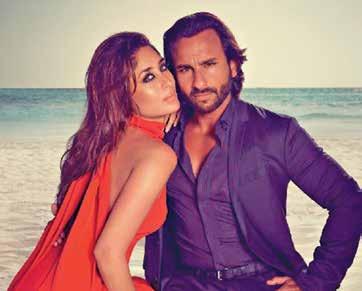
actor in this genre, but not see someone like Saif. So in that sense he thought it was a mistake."
Khan too recently said it was a mistake to accept the role and after seeing the final cut of the film and questioned why he had ever agreed to be part of such a "regressive" movie.
Other members of the “Humshakals” cast had also expressed their doubts about the project. Esha Gupta revealed she had warned her father against watching the film, while Bipasha Basu disassociated herself from the film and refused to participate in the film's promotions. (PTI)
Salman Khan has announced that his Being Human charitable organisation will help "100 genuine patients" suffering from a heart condition by providing them free treatment.
The actor, who is celebrating the festival of Eid as well as the success of his latest release “Kick”, took to Twitter to make the announcement.
He tweeted the message: "If any kids on F B ya twitter who has a heart condition n can't afford to get it treated, B H vil get 100 genuine patients treated."
A month earlier, Khan had used the microblogging site to help his fans and others find jobs through his
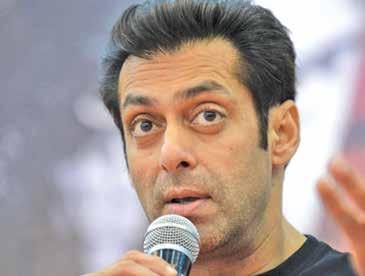
site beinghumanworkshop. com.
The actor has said that Being Human will be his greatest achievement.
Being Human is a non-
Aishwarya: 'Every new
Aishwarya Rai Bachchan has highlighted the importance of stem cell banking by mothers.
The actress said that she herself was prompted to subscribe to stem cell banking for her daughter Aaradhya.
She told PTI: "The decision to bank umbilical cord cell had to be taken at a time when I was taking baby steps to parenthood. And on our part, we did some research, spoke to friends and our families, of course. We were informed about it.
"Knowledge can be very, very useful and once we were aware of the potential of stem cell banking, the decision was natural, and we recognised how stem cells are such a precious gift that can be given to our children.
"I think that every ex-

“Dpecting parent in our country should become aware of stem cell banking. Stem cells from the umbilical cord is a nature-given resource. That needs to be preserved."
The 41-year-old star was attending an event to mark the milestone achievement of LifeCell's preservation of 100,000 umbilical cord stem cell units. In an interview with Digital Spy last year, Rai Bachchan said that motherhood has not changed her professional aspirations. (Digital Spy)
hoom: 3” is on target to become the biggest Indian film in China.
The movie, starring Aamir Khan, Abhishek Bachchan and Uday Chopra, opened on 2,000 screens in 400 Chinese cities, becoming the first Indian film to get the widest release ever in China.
According to IANS, the film entered the charts at number 9, making $1.35 million in a three-day weekend, beating the local Chinese romance “No Zuo No Die”.
A poster was created especially for the Chinese audience.
The third instalment in the popular franchise earlier stormed the Turkish box office, becoming the only Indian film to get to the Turkish Top 10. It also broke box office records in Pakistan and became the biggest release of 2013 in India, raking in Rs 500 crores.
Directed by Vijay Krishna Acharya, the film was released on July 25. (IANS)
Amitabh Bachchan has been appointed as Maharashtra's horticulture ambassador.
The 71-year-old actor, who is also the face of Gujarat tourism, will be promoting the horticulture sector in the Indian state.
Tweeting about the role he said: "T 1158 - I never knew Maharashtra was the No 1 state in fruit production of many varieties .. happy promoting it for Horticulture Ministry!"
The “Yudh” star also posted pictures of himself dressed in traditional Maharashtrian attire, holding a basket of mangoes.
Last month, the “Bhoothnath Returns” star met Cabinet Minister Jitendra Awhad to discuss the promotion of horticulture in
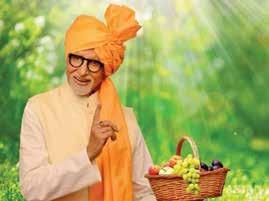
the state. Maharashtra is India's largest fruit-producing state with an area of around two million hectares covered in fruit orchards. (Digital Spy)
Social stigma aside, experts say gnawing on your nails could lead to some scary health issues
You do it while you’re reading emails or watching television; the tip of a finger creeps up between your teeth, and you nibble away for a few minutes before catching yourself. Your mom always told you it was a bad habit, and you worry about co-workers eye-balling your shredded digits. But is biting your fingernails actually dangerous?
“Yes, and for a number of different reasons,” says Richard Scher, M.D., an expert on nail disorders at Weill Cornell Medical College and a member of the American Academy of Dermatology. (And while we’re on the topic of gross: is it safe to eat food that fell on the floor if you pick it up really quickly?)
To begin with, your nails harbour all sorts of germs. In particular, a family of bacteria called enterobacteriaceae— which includes salmonella and E. coli—tends to thrive in
Looking for a natural or alternative treatment for your cold or flu symptoms? Here are 12 tips that may help relieve your symptoms.
Know
Believe it or not, those annoying symptoms you're experiencing are part of the natural healing process -- evidence that the immune system is battling illness. For instance, a fever is your body's way of trying to kill viruses by creating a hotter-thannormal environment. Also, a fever's hot environment makes germ-killing proteins in your blood circulate more quickly and effectively. Thus, if you endure a moderate fever for a day or two, you may actually get well faster. Coughing is another productive symptom; it clears your breathing passages of thick mucus that can carry germs to your lungs and the rest of your body. Even that stuffy nose is best treated mildly or not at all. A decongestant, like Sudafed, restricts flow to the blood vessels in your nose and throat. But often you want the increase blood flow because it warms the infected area and helps secretions carry germs out of your body.
Blow Your Nose Often
(and the Right Way)
It's important to blow your nose regularly when you have a cold rather than sniffling mucus back into your head. But when you blow hard, pressure can carry germcarrying phlegm back into your ear passages, causing earache. The best way to blow your nose: Press a finger over one nostril while you blow gently to clear the other.
Treat That Stuffy Nose
With Warm Salt Water
Salt-water rinsing helps break nasal congestion, while also removing virus particles and bacteria from your nose. Here's a popular recipe:
the cozy crevice beneath the tips of your nails, Scher explains. When you bite your nails, those bacteria end up in your mouth and gut, where they can cause gastro-intestinal infections that lead to diarrhoea and abdominal pain.
The wart virus HPV is also a common infection among nail biters, says Chris Adigun, M.D., a dermatologist at NYU Langone Medical Center. After infecting the fingers, these warts can then spread to your mouth and lips, Adigun adds.
The perils of nail biting also extend to your teeth. “Constant biting can lead to poor dental occlusion, so the biter’s teeth shift out of position or become oddly shaped,” Scher says. Biters also suffer from higher rates of gum disease and infection, he adds.
So how do you quit the habit? For a lot of people, nail bit-

Mix 1/4 teaspoon salt and 1/4 teaspoon baking soda in 8 ounces of warm water. Use a bulb syringe or nasal irrigation kit to squirt water into the nose. Hold one nostril closed by applying light finger pressure while squirting the salt mixture into the other nostril. Let it drain. Repeat two to three times, then treat the other nostril.
Stay Warm and Rested
Staying warm and resting when you first come down with a cold or the flu helps your body direct its energy toward the immune battle. This battle taxes the body. So give it a little help by resting.
Gargle
Gargling can moisten a sore throat and bring temporary relief. Gargle with half a teaspoon of salt dissolved in eight ounces warm water, four times daily.
To reduce the tickle in your throat, try an astringent gargle to tighten the membranes. Or use a thick, viscous gargle made with honey or honey and apple cider vinegar.
Drink Hot Liquids
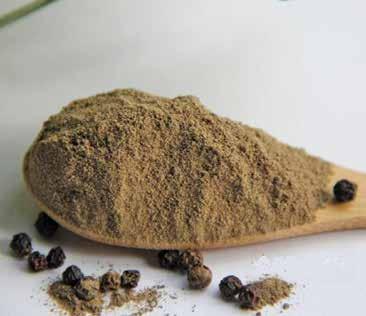
Bblack pepper is low in calories. Eating black pepper also increas -
es your mineral and phytonutrient intake and might reduce your risk of disease. Source of Manganese
Using black pepper in your cooking helps you con -
sume more manganese. A teaspoon of black pepper contains 370 micrograms of manganese, which is 21 percent of the daily intake for women recommended by the Institute of Medicine, and 16 percent for men.
Black pepper's manganese content activates enzymes your cells need to metabolize nutrients, including proteins and fats. Getting enough manganese in your diet also supports healthy bone development, and manganese helps you make collagen required for wound healing. The black pepper in your cooking might also help you lose weight. Black pepper -- along with other spic-

ing is a manifestation of stress or psychological disorders. “Both tend to cause teeth grinding, and your fingernails are a handy buffer.” You’ll have a hard time stopping without help from a psychiatrist or mental-health professional, he says. If your habit is mild, Scher says there are over-thecounter products you can spread on your nails that have a bitter taste. “The taste reminds you not to bite,” he explains.
(TIME)
Hot liquids relieve nasal congestion, prevent dehydration, and soothe the uncomfortably inflamed membranes that line your nose and throat. If you're so congested that you can't sleep at night, try a hot toddy, an age-old remedy. Make a cup of hot herbal tea. Add one teaspoon of honey and one small shot (about 1 ounce) of whiskey or bourbon. Limit yourself to one. Too much alcohol will inflame the membranes and make you feel worse.
Take a Steamy Shower
Steamy showers moisturize your nasal passages and may help you relax. If you're dizzy from the flu, run a steamy shower while you sit on a chair nearby and take a sponge bath.
Use a Salve Under Your Nose
A small dab of mentholated salve under your nose can help to open breathing passages and restore the irritated skin at the base of the nose. Menthol, eucalyptus, and camphor all have mild numbing ingredients that may help relieve the pain of a nose rubbed raw. However, only put it on the outside, under your nose, not inside your nose.
Apply
Either temperature works. You can buy reusable hot or cold packs at a drugstore or make your own. You can apply heat by taking a damp washcloth and heating it for 55 seconds in a microwave (test the temperature first to make sure it's not too hot.) A small bag of frozen peas works well as a cold pack.
Elevating your head will help relieve congested nasal passages. If the angle is too awkward, try placing the pillows between the mattress and the box springs to
es, such as ginger -- acts as a thermogenic, according to a study published in "Physiology and Behavior" in 2006. This means it increases your metabolic rate. Another study, published in the "Journal of Agricultural and Food Chemistry" in 2012, found that piperine -- a chemical in black pepper -- suppresses genes needed for new fat cell growth, and, as a result, it fights the development of new fat cells. While more research is needed to find out just how well black pepper aids in weight loss, it might help you achieve or maintain a healthy weight.
Cancer-Fighting Benefits
create a more gradual slope.
There's no point adding stress to your already stressed-out upper respiratory system, and that's what the change in air pressure will do. Flying with cold or flu congestion can temporarily damage your eardrums as a result of pressure changes during takeoff and landing. If you must fly, use a decongestant and carry a nasal spray with you to use just before takeoff and landing. Chewing gum and swallowing frequently can also help relieve pressure.
Here are some good foods to eat when you're battling a cold or flu: Bananas and rice to soothe an upset stomach and curb diarrhea.
Vitamin C-containing foods like bell peppers.
Blueberries curb diarrhea and are high in natural aspirin, which may lower fevers and help with aches and pains. Carrots, which contain beta-carotene.
Cranberries may help prevent bacteria from sticking to cells lining the bladder and urinary tract.
Mustard or horseradish may help break up mucus in air passages.
Onions contain phytochemicals purported to help the body clear bronchitis and other infections.
Black and green tea contain catechin, a phytochemical purported to have natural antibiotic and anti-diarrhea effects.
Remember, serious conditions, such as sinus infections, bronchitis, meningitis, strep throat, and asthma, can look like the common cold. If you have severe symptoms, or don't seem to be getting better, call your doctor. (WebMD)
Adding black pepper to your diet might also help stave off cancer. The piperine in black pepper affects your cells' proliferation, and fights the proliferation of rectal cancer cells, according to a study published in "Experimental and Molecular Pathology" in 2013. The study also found that piperine exposes rectal cancer cells to reactive oxygen species -- toxic chemicals that kill the cancer cells. An additional study, from the January 2013 issue of the "Journal of Nutritional Biochemistry," reports that the piperine in black pepper hinders new blood vessel growth within tumors,
stunting their growth. Cardiovascular Benefits
Black pepper contributes to a heart-healthy diet and promotes cardiovascular health. An animal study, published in the November 2013 issue of "Cell Biochemistry and Biophysics," found that piperine helps regulate blood pressure and reduces inflammation, which would otherwise contribute to cardiovascular disease.
Black pepper is also low in sodium. Using black pepper to season your meals in place of table salt or sodium-laden seasonings benefits your cardiovascular health. (LiveStrong)


From chinoiserie to Zen, Asian style is influencing modern home designs worldwide. Here are a few Asian-inspired spaces you can incorporate into your home and slip into a state of peace and tranquility.

Cultural Flair
Mix traditional and Asian elements into your design scheme for an elegant yet eclectic look. Oriental blue and white wares were developed in China in the 14th century, and by the 17th century the pieces were considered prized possessions and collected by European royalty. These porcelain pieces, along with the bamboo shade, Japanese tatami mat and bronze accessories, pull in familiar Asian elements while adding some unexpected cultural flair.
Sweet Feng Shui
The art of feng shui has been practiced in ancient Chinese cultures for centuries but is now being integrated into interior design and architecture. According to feng shui, everything has a positive or negative energy. In order to balance these energies, designs must be carefully thought out to create an overall feeling of harmony in a room. In this room, the designer incorporated natural feng shui elements, including the colour scheme, bamboo platform bed, hand-forged drum side tables and traditional Japanese shoji screens.


To create a subtle Asian design, integrate calming hues of sage and beige while combining modern and antique-inspired accessories. The most eyecatching piece in this living room is the stone art trio depicting different Chinese warriors, which immediately emits strength and power. Offset in the room, a stone statue of Kuan Yin, the bodhisattva of great compassion, serves as a calm and comforting symbol of Buddhism, while adding a strong, cultural element to the space.

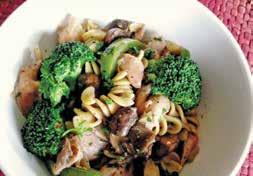
Ingredients About 4 cups cooked chicken shredded
onion, chopped
Method:
In a large pan heat olive oil until hot, add onions. Sauté until translucent, add garlic and stir for 1 minute. Add mushrooms, sliced bell pepper, oregano and red pepper flakes and cook until tender, about 10 minutes. Add wine, chicken and broccoli; cook for 5 minutes. Add pasta and stir well, cook for an additional 3-5 minutes. Add Parmesan cheese and stir well. Sprinkle with parsley and serve.
Ingredients 1 cup granulated sugar 1/4 cup water 1/2 cup salted peanuts or dry roasted
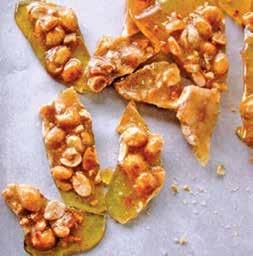
tsp cinnamon Place a silicon mat or greased parchment paper on a baking sheet; set aside
Method: Mix peanuts and cinnamon in a small bowl and set aside. Over medium heat add sugar and water to a heavy saucepan. Stir occasionally until sugar is dissolved. Cook without stirring, let mixture come to a boil. Do not stir. Using a wet brush, brush the sides of the pot to prevent sugar crystals from forming. Boil until sugar turns amber or until it reaches a temperature of 340-350 degrees if using a candy thermometer. Remove from heat and add nuts. Stir quickly to combine. Pour onto prepared pan and spread to form a single layer of peanuts. Cool completely, then break into pieces. Note: It is important not to stir this mixture after it has dissolved. This will cause the mixture to crystallize and will result in a gritty, cloudy product. When the nuts are added to the sugar mixture this will lower the temperature, so work quickly when spreading the nuts.
Soakalmonds in hot water for 20 minutes to make removing their skins easy. Is the salt in your shaker clumping? Put a few grains of rice into the shaker to absorb excess moisture.
To spread icing more easily on a cake is to sprinkle the top with flour as soon as the cake is removed from the oven.
To make rice as white and fluffy as possible, add approximately 1 teaspoon of lemon juice or vinegar per quart of water while cooking.
Avoid storing onions near potatoes. Doing so will cause the potatoes to spoil sooner. Dust raisins, berries, or chocolate chips with flour to prevent them from sinking in while baking in a cake.
To prevent egg shells from cracking, add a pinch of salt to the water before hard-boiling. Place a slice of apple in hardened brown sugar to soften it back up.
If you have stains on your microfibre couch or chair, regular rubbing alcohol will remove those stains and leave your furniture looking new again. You will need a white sponge and a white bristle brush (note that coloured brushes and sponges could transfer colours to your furniture). You simply pour the alcohol into a spray bottle, spray the area that is stained down well and then rub the stain off with your sponge. Once the alcohol dries, you will need the bristle brush to smooth the fibres back where they belong.
If you have had a nasty oil spill on your carpet, ensure you get all of the liquid off the carpet before you begin. Start by sprinkling baking soda on the stain and leave it for about 10 minutes. After that, vacuum it up. Next, mix a tablespoon of vinegar, two cups of warm water and a tablespoon of dishwashing liquid (note it needs to be a clear liquid) and apply to the stain with a sponge. Leave it for just a few minutes and then remove with a clean sponge dampened with cold water. Instead of scrubbing relentlessly to remove soap and scum build-up on showerheads, there is a trick that will allow you to clean it while you sleep. Just have to pour plain white vinegar into a plastic bag and tie it around the shower head. Just leave this sitting overnight and when you wake up, run cool water through the shower and all the build-up and gunk will drain away. If you do see residue left on, you can remove it with a toothbrush dipped in vinegar. Just run the toothbrush over the showerhead to remove those stubborn deposits.
I am the world's greatest traveller. I have been transported by camel, dog sled, pony express, bicycle, train, steamship, automobile/car, airplane, airship, and rocket. I have portraits of presidents, kings, queens, princes, princesses, shahs, sultans, tribal chiefs, adventurers, explorers, patriots, martyrs, inventors, pioneers, artists, musicians, architects, poets, aviators, dramatists, novelists, painters, athletes, cardinals, and saints.
I have pictures of foreign beaches, rivers, lakes, sounds, waterfalls, geysers, mountains, monuments, castles, temples and ruins of temples, missions, bridges, harbours, docks, locks, locomotives/trains, balloons, rockets, zeppelins, windjammers, native canoes, modern seaplanes, and the world.
What am I?



see solution on page 22 see solution on page 22
There was once a man who had a beautiful cat. She was so loving that one day he wished out loud, "Dear Cat, if you were only a woman, I'd marry you!"
Aphrodite, the goddess of love, heard his wish and changed the cat into a beautiful woman. The man and the cat woman were married and lived quite happily together until one night . . .
The beautiful woman was sitting on her bed and into the room came a mouse. She crouched on her hands and knees, pounced on the mouse, and began to eat it, much to her husband's alarm!
Aphrodite looked down from the clouds and, seeing this, turned the woman back into a cat. Aphrodite chuckled, "I can change the outer appearance of a creature, but to truly make a difference, I guess I must change its inner character first!" (A tale from Greece)
Long ago, when animals were still new on earth, the weather was very hot, and what little water there was remained in pools and pans. One of these was guarded by a boisterous baboon, who claimed that he was the “lord of the water” and forbade anyone from drinking at his pool.
When a zebra and his son came down to have a drink, the baboon, who was sitting by his fire, jumped up. “Go away, intruders,” he barked. “This is my pool and I am the lord of the water.”
“The water is for everyone, not just for you, monkey-face,” shouted back the zebra's son.
“If you want it, you must fight for it,” returned the baboon in a fine fury, and in a moment the two were locked
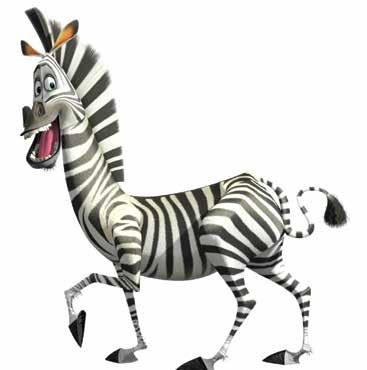
in combat. Back and forth they went, until with a mighty kick, the zebra sent the baboon flying high up among the rocks of the cliff behind them. The baboon landed with a smack on his seat, and to this day he carries the bare patch where he landed.
The zebra staggered back through the baboon's fire, which scorched him, leaving stripes across his white fur. The shock sent the zebra galloping away to the plains, where he has stayed ever since. The baboon and his family, however, remain high up among the rocks where they bark defiance at all strangers, and hold up their tails to ease the smarting rock-burn of their bald patched bottoms. (A tale from Africa)
In the story of how the snake lost his legs, the moon is portrayed as a sympathetic deity who looked into the future, and saw that a terrible drought was impending. She called to Mantis, “You must take your wives and children and all the birds and animals and move from this area, for soon there will be nothing here but a desert,” she warned him.
So Mantis told everybody, and all the animals packed up and trekked away to places. All but the snake, which in those days had legs like other animals. He was lazy, and did not
believe Mantis. “No, I will stay here. Your drought will not worry me,” he said. But soon, when no rain fell and the grass shrivelled and all the little fat frogs hopped away, the snake grew thin and hungry and decided to follow the others.
By then, however, the land had become a desert, and each wea ry foot the snake put be fore him sank in the hot sand. At last, in despera tion, he cried, “Oh Moon, I am ashamed of myself. Save me from the sun and I will change my ways.”

The moon took pity on and on his gleaming skin
he could glide easily across (A tale from Africa)
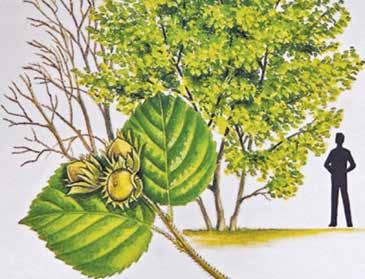
Atraveller who stopped to rest under a nut tree noticed a huge pumpkin growing on a thin vine. "How foolish are the ways of nature," the traveller muttered. "If things were as they should be, this big, strong tree would hold the large pumpkins, and the spindly vine would hold the nuts. Now if I made the world, that is
how I'd have done it!"
At that moment, from high up in the tree, a small nut fell and hit him squarely on the head. Startled, he looked up into the branches and thought, "Forgive my arrogance! If it were a big pumpkin that fell out of the tree onto my head, it most certainly would have killed me!" (A Tale from India)

I will bury you in the darkest corners of my mind, And love you, timelessly with all the pieces of my heart. I will keep you in my secrets thoughts, echoing forever, And forever the world will never see my black heart; the creation of your soulless love.
I must ask you if once, even for a second, our hearts did intertwine Or was I just a friend, our hearts light years apart? My darling, were you scared that your fragile heart I would sever? I care, I care for you. Set my soul ablaze and me as free as a dove.
Admit you love me and hide me from the light. Keep me in darkness; lock me in your callous soul Hug me every day and let me drown in your eyes like it was meant to be, But you will never do that, will you?
And the sad part of it all, I love you, even if it isn’t right, As always, I’m as left out in the harsh cold. I can hear the light, the logic; calling me, But I want to stay in the darkness never to be engulfed by rue
My friend, my love, I’ll bury you in my heart, Love you, forever, Until that’s over.
And then yet again, forever more, I’ll love you...
Black is the colour of my true love’s sanity
As he stares in the mirror full of vanity
Black is the colour of my true love’s booze
Beating, shouting, slapping, another unique bruise
Black is the colour of my true love’s heart
Bleeding steadily from love’s failed dart
Black is the colour of my true love’s blood
As it rushes downwards to sink in the mud
Black is the colour of my true love’s soul
Buried deep in that dark hole
Black is the colour of my true love’s coffin
As I dance on his grave; back to my own origin Poems by R. M. Hayles

As anticipated, Apple has boosted both the memory and processing power of its professional laptop range and has also cut the price of its one remaining non-Retina display model.
the latest iteration of Intel’s Haswell processor, so performance and battery life will also get an upward push.
However, Apple is keeping prices the same. That means that an entry-level 13-inch MacBook Pro with
with Retina display boasting 16 GB of memory, 256 GB of flash storage, and Intel Iris Pro graphics.
If the spec bumps weren’t sufficiently appealing, Apple has also cut the price of the flagship 15-inch model —

Now, all models with a Retina display come with double the memory and improved battery life. So for 13-inch models, that means 8 GB instead of 4 GB of RAM as standard and 16 GB in the 15-inch models.
All 13- or 15-inch notebooks also get upgraded to
Retina Display will cost US$1,299 with a 2.6 GHz dual-core Intel Core i5 processor with Turbo Boost speeds up to 3.1 GHz, 8 GB of memory, 128 GB of flash storage, and Intel Iris graphics.
For an extra $700, consumers will be able to snap up a 15-inch MacBook Pro
which comes with a 2.5 GHz quad-core Intel Core i7 processor with Turbo Boost speeds up to 3.7 GHz, 16 GB of memory, 512 GB of flash storage, and Intel Iris Pro and NVIDIA GeForce GT 750M graphics — to $2,499.
“People love their MacBook Pro because of the
thin and light, aluminum unibody design, beautiful Retina display, all-day battery life and deep integration with OS X,” said Philip Schiller, Apple’s senior vice president of worldwide marketing. “The MacBook Pro with Retina display gets even better with faster processors, more memory, more affordable configurations and a free upgrade to OS X
Yosemite this fall.”
On Tuesday, the company also confirmed that its last remaining notebook with an optical drive, the 13-inch MacBook Pro, which is slightly thicker than the Retina display models thanks to its CD/DVD combo drive and which has a lower-resolution screen, will remain in production.
Describing it as an at-
tractive option for consumers considering making their initial jump from a PC to a Mac, the laptop has a 2.5 GHz quad-core Intel Core i5 processor with Turbo Boost speeds up to 3.1 GHz and a 500 GB spinning hard drive and while it hasn’t had its RAM upgraded (it’s stuck on 4 GB), it has had $100 cut from its price tag. It will now cost just $1,099. (Yahoo)

It’s been a little over 10 months since Apple released the iPhone 5s. This means that more than enough time has passed to start demanding: When’s the next one coming out already?!
Well, calm yourself down, eager iShopper. If the latest prominent rumors prove reliable, we could be seeing the iPhone 6 in less than two months.
Mark Gurman of Apple specialty site 9to5Mac reported that Apple is tentatively planning an iPhone 6 unveiling event for the second or third week in September. This isn’t something Apple officially told him, of course; the secretive company would never divulge its future plans. Gurman’s report comes from his anonymous sources.
That might ring a little sketchy to you, but there are plenty of reasons to put faith in the rumor. First: Gurman is generally trustworthy when it comes to Apple rumors. He’s not batting 1.000, but he gets way more right than he gets wrong. He has earned a reputation as one of the most reliable Apple reporters going. On stature alone, you could put stock in the mid-September rumor.
But there is supporting evidence beyond reputation to buttress that ru-

mor, too. As I’ve written many times before, Apple tends to release its iPhone in predictable one-year cycles. The new
iPhone comes out one year after the last. A year passes; the next iPhone arrives. For the past three years, the up-
dated iPhone has debuted in the fall. It stands to reason that this one will, too.
And Gurman isn’t singing the September rumor alone: Other reputable sources have pegged it as the month we’ll see the iPhone 6, too. KGI Securities analyst Ming-Chi Kuo, who has been impressive with his Apple predictions in the past several years, has written that the “consensus" indicates a September-October release for the next iPhone. The Wall Street Journal also expects a mid-September debut.
The other major rumor surrounding the next iPhone concerns its screen size –– or screen sizes. Bloomberg and the Wall Street Journal both recently reported that Apple plans to unveil two new iPhones. One of the iPhones will have a 4.6-inch screen, they say; one will have a huge 5.5-inch screen. Both would be substantially larger than the iPhone 5s, which features a 4.0-inch display. The thinking is that a larger iPhone would better appeal to smartphone shoppers in China, who have been more drawn to large-display phones from Samsung and LG than they have been to the relatively svelte iPhone 5s. (Excerpted from Yahoo)
ByTe
Plants make our life bearable. They inhale the carbon dioxide we breathe out and exhale oxygen. But in space there are no plants and growing them on distant planets or moons may be a challenge.
A synthetic biological leaf made from silk protein could offer a solution. It’s embedded with chloroplasts, the structures in plant cells responsible for photosynthesis, and absorbs water and carbon dioxide to produce oxygen — just like a real leaf.
Think of the Silk Leaf as a lightweight, low-power oxygen factory for space. Like a real plant, all this one
needs is light and little bit of water to function.
It was designed by Royal College of Art Julian Melchiorri, who was looking for a way to convert unbreathable carbon dioxide exhaled by astronauts into the stuff made for our lungs.
Melchiorri says that his synthetic leaf has purpose on Earth, too. Large sheets of it could be used on buildings facades or as wallpaper to create more fresh air both indoors and out.
He developed the leaf in collaboration with Tufts University’s silk lab as part of a design-engineering course at Royal College of Art. (Discovery News)

Fuelled by the similarities he observed between the traditional African practices described to him by Dr Doris Rogers (based on her experiences in Africa) and those he observed among Hindus in Guyana, Gajadhar began a gradual intellectual interrogation of his works’ content and its specificity to a singular ethno-cultural group within a multi-cultural context. However, his interrogation, which began in the 1980s, did not materialise in his art of the period; the germination had only begun. Gajadhar’s musuku tree (a Bemba symbol of fertility) did not burst forth from the soil and bear fruit until his time in Botswana (2003-2006) led him to Zambia and a personal journey, which resulted in a deep familiarising with Bemba culture, deepened by a further five months spent between 2012 and 2013.
Gajadhar approaches his reference to Bemba culture from lived reality. His is not an artificial study of a culture of fascination for a superficial transplantation of its symbols, lore and beliefs. Gajadhar has integrated Bemba with his
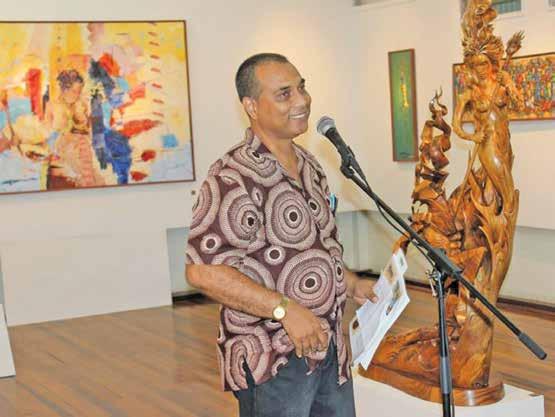
Hindu identity and multicultural situation of nurture. Consequently, while the paintings are largely instructive on an aspect of Bemba culture and belief, they reinforce the points of synchronicity with Guyanese culture, even offering in some instances traditional symbolism and, by extension, memory for
quotidian objects whose symbolism was lost to the agonies of the impositions on the African in South American space. For instance, the hoe has significance in relation to the hut and the pestle in relation to the mortar. These find presence in Gajadhar’s imagery.
Gajadhar’s paintings are largely based on the chisun-
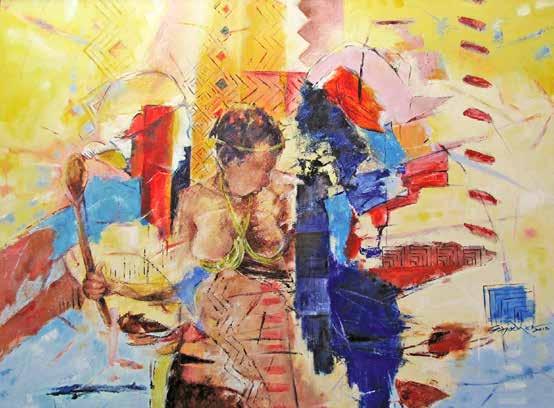
gu ceremony of the Bemba. Through the ceremony a girl is initiated into womanhood as she is instructed on her duties as a wife and a mother. Within the ceremony, ceremony-specific wall and floor paintings are made, and special pottery are dug up from secret hiding places and are used. These objects of ceremonial
art are called Mbusa. Each Mbusa has an associated didactic song and dance and through their use reflect the Bemba belief that by seeing rather than hearing one is better able to learn.
In like manner to Caribbean song, the songs of the Bemba have double meanings so they can be sung among children and their true meaning not be discerned. As in Guyanese queh queh the dances/mimetic acts are performed and the initiated girl is expected to mimic the actions of the performers; this mimicry is a demonstration of learning. If she successfully performs her mimetic acts, she performs a special closing action as she says, “With me, I have grown, I have just picked the beads.” These beads would have been used to bless the ceremony and the ceremony’s matron with right words to inspire the young lady to be a good wife and a good mother.
While Gajadhar’s content is informed by the Bemba, his aesthetic is a culmination of stages in his journey exploring the technical nuances of his medium and the synthesising of influences from artists as
diverse as Dudley Charles, Bernadette Persaud, Wifredo Lam and Picasso. From Charles he claims influence on his use of colour, the layering of paint in washes, and the manner of “breaking up” of figures and the space within the picture plane. These influences from Charles are evident and not surprisingly as he claims Charles as his most significant artist-influence. Mwansa cembe – the white eagle and Mafwasa – the heart stones, the most recent of the paintings, show Gajadhar returning to his early aesthetics source –Dudley Charles (and by extension Wifredo Lam). As with songs, Gajadhar’s paintings read differently depending on one’s situation of initiation.
“My paintings discuss the iconography of the Bemba figuratively or abstractly. [To] some things I react abstractly [and to others] figuratively. The primitive flatness of the figure reflect the folk art tradition of Zambia and the colours [are] of the African sunset with each [...] carefully contained within its own space.”
(Text by Akima McPherson, Lecturer, Division of Arts, University of Guyana)
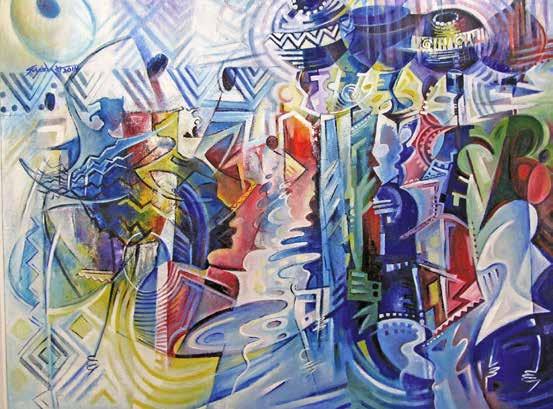
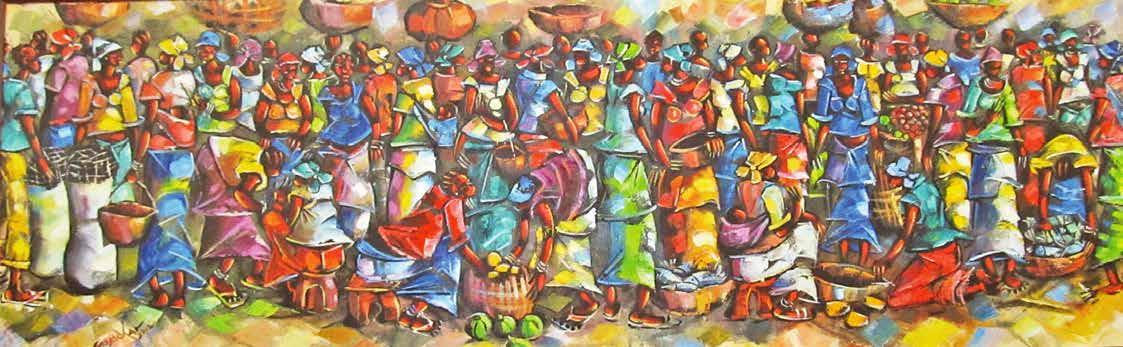
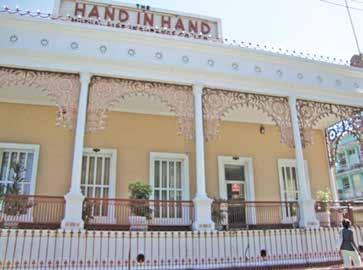
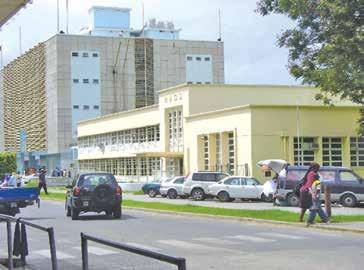
While persons may be familiar with the ward names of Bourda, Queenstown, Kingston and Stabroek, some may not have heard about Robbstown. But the Robbstown ward in Georgetown is also a historic area in the city that accommodates several well-known and historic buildings. This section was rented to John Robb in 1792 by Joseph Bourda, who
first leased the area. Robb arranged the building lots and landscape.
Robbstown is said to have been originally named Bridgetown since many Barbadians settled there, but when John Robb began establishing a housing scheme, the area became known as Robb’s Town.
In 1864, the entire area was destroyed by a fire. Under the guidance of Mayor Edward John Barr, the area was rearranged and streets
were widened, giving this ward of the city of Georgetown its present urban layout.
Like many other parts of the city, the streets of this ward were named after prominent and affluent members of Guyanese society. Robb Street is named after John Robb, and Hincks Street is named after former Governor (1862-1868) Sir Francis Hincks. (Source: National Trust of Guyana; Guyana.org)
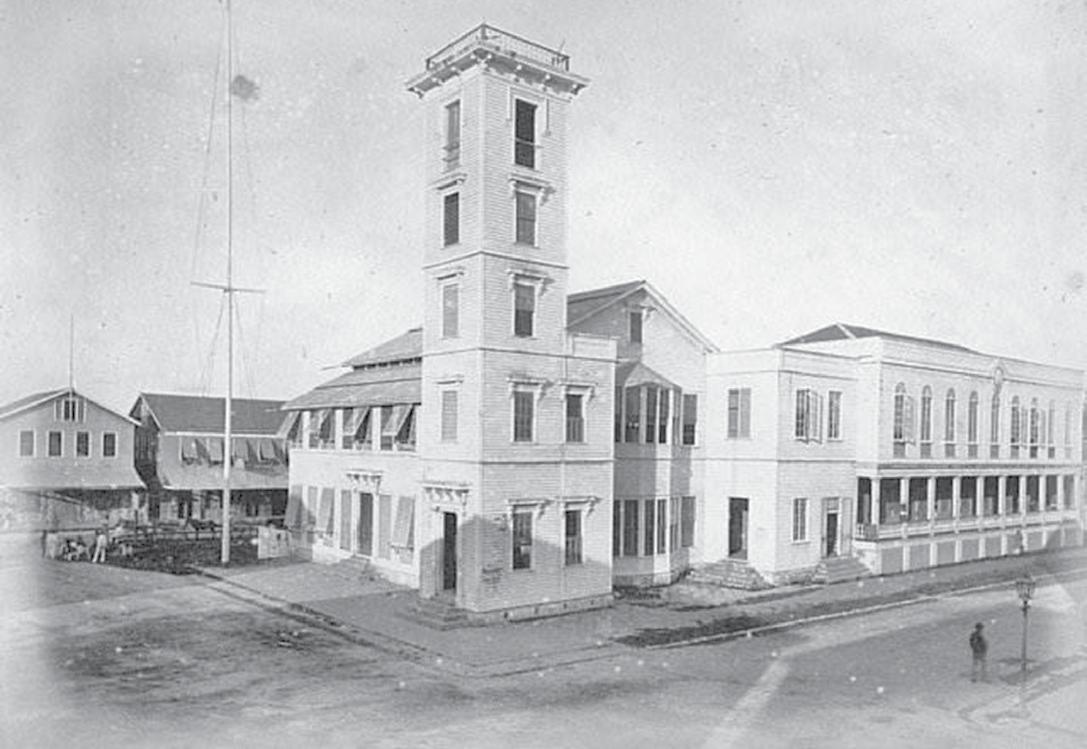
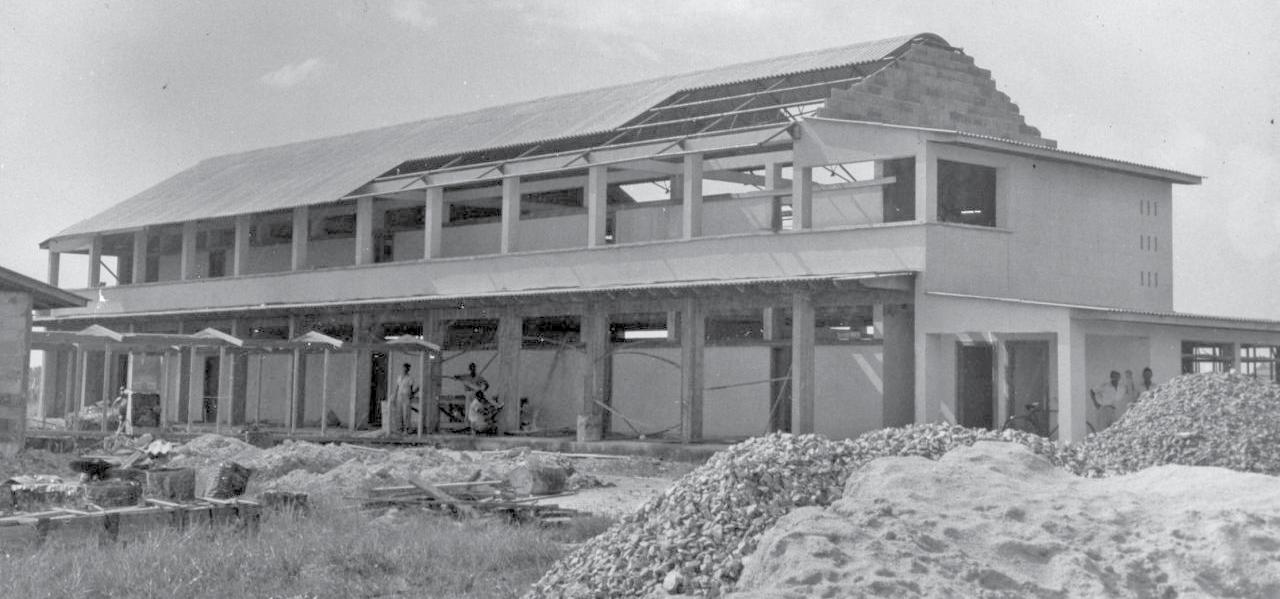
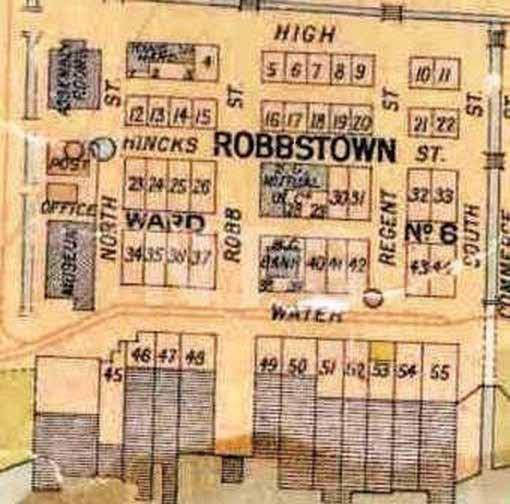
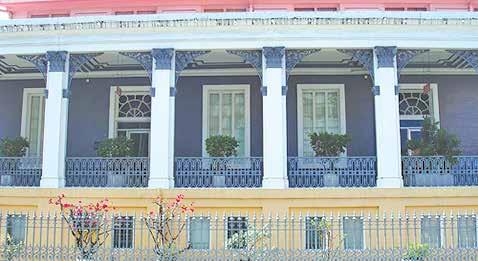


Guyana boasts an irresistible combination of fascinating and breathtaking natural beauty, pristine rainforests, immense waterfalls, and amazing wildlife, blended with a vibrant indigenous culture and diverse rich heritages.
Matt Hallett, an overseas researcher who has been living in the Rupununi for several years, considers himself very honoured to see this natural beauty on a daily basis. Matt is continuously researching and exploring Guyana’s biodiversity. He is also an affiliate of the Rupununi Learners Inc. and has been volunteering his time and knowledge towards returning the favour
to the communities of the region’s indigenous villages. One of his recent projects is to document the number of jaguars in the richly diverse Kanuku Mountains Protected Area, by setting up remotely triggered cameras in Guyana’s deep jungle.
Matt has also been photographing scenic areas, rarely visited, in the Rupununi region. Guyana Times Sunday Magazine features this week a few of his breathtaking photos taken on his trips into Guyana’s jungle. For more amazing photos, visit Rupununi Learners on Facebook. (Cover photo: Cascading waterfall deep in Guyana's jungle)



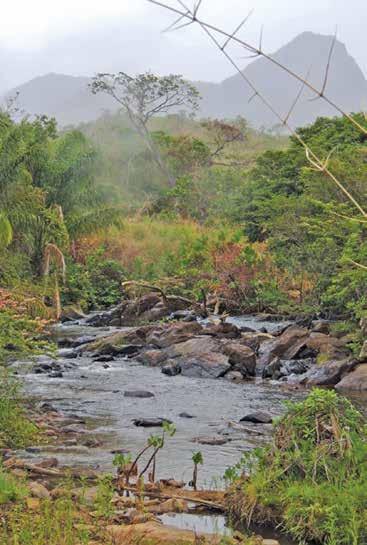
By Sheila MoSS
Facebook is the most visited site on the internet. Over 400 million people are regular users and half of them visit every day to post, network, socialize, or play games. Have you become addicted to Facebook? Can you really stop using Facebook any time you want or have you traded social networking for social dysfunction?
Are You Addicted?
If Facebook is the homepage on your computer, you might be addicted to Facebook.
If you know the difference between Top News and Recent News, you might be addicted to Facebook.
If you think social networking is a good way to make friends, you might be addicted to Facebook.
If you frequently check your smart phone for Facebook updates, you might be addicted.
If you think 5000 friends are not enough, you might be addicted to Facebook.
If you play Farmville, Cafe World, CityVille, or FrontierVille, you might be addicted to Facebook.
If you "like" your own posts, you might be addicted to Facebook.
If you have an app that posts your blog to Facebook, you might be addicted.
If you know the difference between a Profile page and a Facebook page, you might be addicted.
If you feel hurt when your friends don't tag you in photos, you might be addicted to Facebook.
If you know what it means to be poked on Facebook, you might be addicted.
If you read every one of the email notifications from Facebook, you might be addicted.
If anyone has unfriend-

ed you for excessive posting, you might be addicted to Facebook.
If you have invited friends you don't know personally, you might be addicted to Facebook.
If you think Facebook friends are actually real friends, you might be addicted.
If you have ever said, "Not right now, I'm on Facebook, you might be addicted.
If you think about Facebook even when you are not logged in, you might be addicted.
If you actually send birthday wishes to all your Facebook friends, you might be addicted.
If you spend more than one hour a day on Facebook, you might be addicted.
If you try to find old classmates from high school
on Facebook, you might be addicted.
If you use Facebook to invite people to your social events and expect them to come, you might be addicted.
If you are frequently late because you are on Facebook, you might be addicted.
If you take pictures of your food at a restaurant and post it on Facebook, you might be addicted.
If you update your status more than several times a day, you might be addicted to Facebook.
If you understand what all of this stuff is, you might be addicted to Facebook.
If only a few of these are true, you are probably okay and don't have to worry. On the other hand, if you are like the rest of us, better get on the wagon to recovery.


FBI K-9
A police dog responds to an ad for work with the FBI.
"Well," says the personnel director, "you'll have to meet some strict requirements. First, you must type at least 60 words per minute.
Sitting down at the typewriter, the dog types out 80 words per minute.
"Also," says the director, "you must pass a physical and complete the obstacle course."
This perfect canine specimen finishes the course in record time.
"There's one last requirement," the director continues; "you must be bilingual."
With confidence, the dog looks up at him and says, "Meow!"
Worlds Smartest Man
A pilot, Michael Jordon, Bill Gates, the Pope, and a pizza delivery man were all in a plane together travelling through stormy conditions.
Suddenly, the pilot ran back to the passengers and announced that lightning had hit the plane, and they were going to crash in a matter of minutes. "There are only enough parachutes for four of the five of us," he announced. "Since I'm the pilot, I get one!" After saying this, the pilot grabbed a parachute and jumped out of the plane.
"I'm the world's greatest athlete," proclaimed Michael Jordon. "This world needs great athletes, so I must live." Michael Jordon then grabbed a parachute and leaped out of the plane.
"I'm the smartest man in the world," bragged Bill Gates. "The world needs smart men, so I must also live!" Bill Gates grabbed a parachute and jumped out of the plane.
At this point, the Pope began to speak to the pizza delivery boy. "I have lived a long life compared to you, and you may take the last parachute. I will go down with the plane."
"You don't have to do that,” replied the pizza delivery guy. “Bill Gates just jumped out with my backpack!"
30 more years
A middle-aged woman has a heart attack and is taken to the hospital. While on the operating table she has a near death experience. During that experience she sees God and asks if this is it. God says no and explains that she has another 30 years to live.
Upon her recovery she decides to just stay in the hospital and have a face lift, liposuction, breast augmentation, tummy tuck, etc. She even has someone come in and change her hair colour. She figures since she's got another 30 years she might as well make the most of it.
She walks out of the hospital after the last operation and is killed by an ambulance speeding by. She arrives in front of God and complains, "I thought you said I had another 30 years." God replies, "I didn't recognize you."
The 6 Right Foot
How Smart Is Your Right Foot? Try this, it takes only few seconds. This is so funny. And, you will keep trying it at least 50 more times to see if you can out-
smart your foot.
1. While sitting at your desk, lift your right foot off the floor and make clockwise circles with it.
2. Now, while doing this, draw the number "6" in the air with your right hand... Your foot will change direction.
A wife's cat
A man absolutely hated his wife's cat and decided to get rid of him one day by driving him 20 blocks from his home and leaving him at the park. As he arrived home, the cat was walking up the driveway. The next day he decided to drive the cat 40 blocks away. He put the beast out and headed home. Driving back up his driveway, there was the cat!
He kept taking the cat further and further, and the cat would always beat him home. At last he decided to drive a few miles away, turn right, then left, past the bridge, then right again and another right until he reached what he thought was a safe distance from his home and left the cat there.
Hours later the man calls home to his wife: "Jen, is the cat there?"
"Yes,” the wife answers, "Why do you ask?"
Frustrated, the man answered, "Put him on the phone, I'm lost and need directions."
Before it starts
A man comes home from an exhausting day at work, plops down on the couch in front of the television, and tells his wife, "Get me a beer before it starts."
The wife sighs and gets him a beer.
Fifteen minutes later, he says, "Get me another beer before it starts." She looks cross, but fetches another beer and slams it down next to him. He finishes that beer and a few minutes later says, "Quick, get me another beer, it's going to start any minute."
The wife is furious. She yells at him "Is that all you're going to do tonight? Drink beer and sit in front of that TV? You're nothing but a lazy, drunken, fat slob, and furthermore ..." The man sighs and says, "It's started ..."
Are you stupid?
One day a college professor of Psychology was greeting his new college class.
He stood up in front of the class and said, "Would everyone who thinks he or she is stupid please stand up?"
After a minute or so of silence, a young man stood up.
"Well, hello there sir. So you actually think you're a moron?" the professor asked.
The kid replied, "No sir, I just didn't want to see you standing there all by yourself."
Have you tried...?
A lady on a commuter train was reading a newspaper article about life and death statistics. Fascinated, she turned to the man next to her and asked, "Did you know that every time I breathe somebody dies?" "Really," he said, "have you tried mouthwash?"