Times Magazine






When we look at the economy of Guyana at the time of independence there are a few facts that the modern reader must bear in mind. The first is that most economic activity was geared to produce primary products for the "home" colonial power or its proxies - generally foreign, for further processing. The result is that the economy was classically "underdeveloped", that is, our natural resources and manpower remained un-utilised or under-utilised on account of lack of economic development fostered by the colonial power.
It must be understood, however, that while the general economy might have been underdeveloped, the facilities to produce the primary products were quite highly developed. The economy was therefore no very diversified.
The second was that the PPP government that had regained power in 1957, after being ousted in 1953, in addition to governing under colonial tutelage, faced the additional burden of being considered too 'radical'.
After winning the 1961 elections, the PPP earned the ire of the new US president Kennedy who had been humiliated by the Cuban Bay of Pigs defeat. Between 1961 and 1964 when the government was ousted, the US waged a CIA covert operation that brought the economy to its knees. Quest for development funds Back in 1953, the World
Bank, which was supposed to be providing development funds for the poor nations, recommended the development of "more agricultural land through D&I and the improvement of the transportation system." When Jagan applied for a loan on these recommendations in 1958, while in London, he was rebuffed. A visiting World Bank expert repeated the recommendations and Jagan applied again.

rebuff. He'd also asked the British for a loan but was rebuffed. When he secured a Swiss bank commitment for a loan of £6 m, the British refused to stand guarantor. Passing through Washington, he was told to wait. The following year a US economic team did visit but nothing materialised. Ditto with West Germany and a second request for the US to include BG in its agriculture surplus program. A request for loans to establish a flour and feed mill also fell on deaf ears.
Finally, the British did agree to a five-year $110m
Jagan but he was denied access to friendly socialist countries since he had no control over foreign relations.
Hobbled as he was, Jagan left a country to the PNC/UF coalition, granted power by the US/UK combined, which was in as good a shape as any of the neighbouring Caribbean countries and other British colonies in Asia and Africa. Sugar was still dominant in the Caribbean, and in fact, Barbados was even more dependent on that crop than Guyana. In literacy rates especially Guyana with its 83 percent was poised for take-

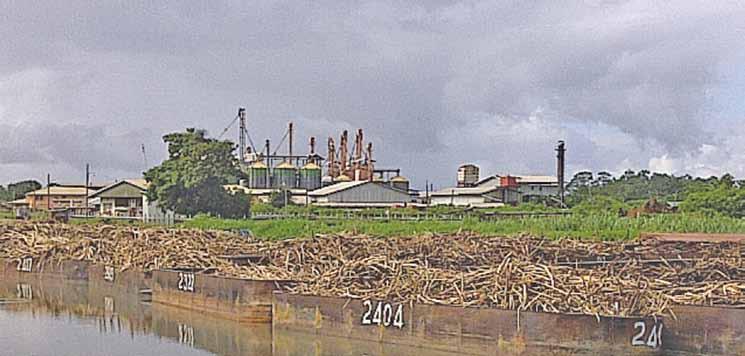
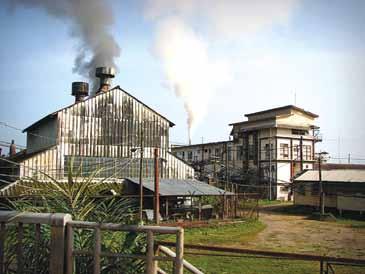
two companies: Bookers and Demerara Sugar Ltd- which consistently produced over 300,000 tonnes of brown sugar annually, which was shipped to Britain for refining.
The sugar companies did not mechanise the field operations of sugar cultivation beyond tillage, and employed almost 28,000 workers for tasks such as cutting and loading canes, which were consequently extremely labour intensive. They were the largest employers in the country and their labourers were the most ill paid. The struggle of sugar workers for better wages and working conditions were the dominant feature of industrial relations in the colony.
The companies used molasses, the by-product of sugar, to produce rum, which was another import product, for export. Bookers were also involved in a wide range of commercial activities ranging from pharmaceuticals car imports, department stores and travel agencies, to shipping and stock feeds.
Bauxite
1960-64 development plan....but came up with only $5 million of the $24 million for the first year. In 1961 Kennedy succeeded Eisenhower in the White House and the destabilisation of the PPP government was set into motion. Jagan's visit to Canada after his US visit yielded no loans. The west had shut the door on
off on the solid foundations of its basic industries, especially in sugar, rice and bauxite, even though they were in private hands.
Sugar
At independence, sugar was still "king" as it had been from the formation of the colony three centuries before. Most of the arable prime coastal land was owned by
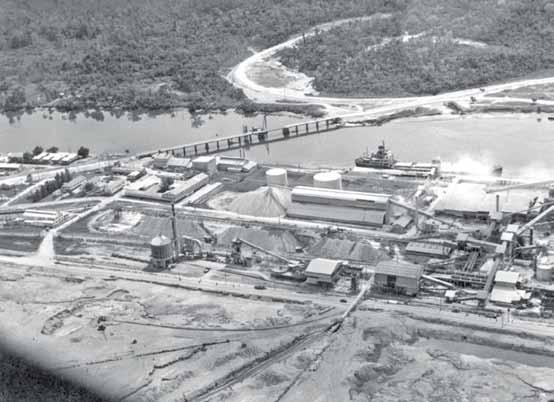
The second most important product was bauxite, mined by the Canadian company Alcan through its local subsidiary DEMBA at McKenzie, Christianburg and Wismar (now Linden) in the Upper Demerara Region, and the US company Reynolds in the upper Berbice region. Bauxite production reached 3 million tons annually in the 1960's. Bauxite was the most capital intensive industry in Guyana. By then, Guyana
“The Guyana Story: From earliest times to independence” by Odeen Ishmael traces the country’s history from thousands of years ago when the first indigenous groups began their settlement in the Guiana territory to our independence in 1966.
In an exclusive interview with Guyana Times Sunday Magazine Dr Odeen Ishmael, recalled how “The Guyana Story”, started: “It all came about when I realised that very little was known of our history of the many years before 1950,” he said.
“When I began writing short essays on our history, I concentrated at first on the period of Dutch colonisation of Guyana. After these were posted on the web, I received numerous email requests from students – Guyanese and non-Guyanese – for other aspects of our history.”
The essays he speaks of form a serialised edition on a webpage, also called The Guyana Story (From Earliest Times to Independence) on the website guyana.org, copyrighted in 2005 that features a collection of short essays which, according to the site, the author hopes would “build an awareness among young Guyanese in particular, of the rich heritage of the people of Guyana.”
It appears to have done just that, and “[t]he result,” Odeen continues,
“was that after a period of almost seven years, I managed to put together more than 180 chapters from the earliest period of our history to the attainment of Independence. In doing my research, I was able to examine thousands of documents housed in Spanish, Dutch, and British archives as well as the Library of Congress.”
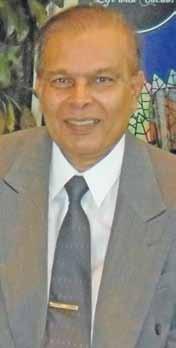
Ishmael is described as a veteran Guyanese diplomat, and is currently Guyana’s ambassador to the State of Kuwait and the State of Qatar, having previously served as ambassador to Venezuela (2003–2011) and to the United States of America (1993–2003), where he was also Guyana’s permanent representative to the
had become one of the largest producers in the world and the highest producer of calcined bauxite that was used to build industrial kilns.
From 1961, a new plant to convert bauxite to alumina was built at a cost of $57 million, and in 1962 started production, which soon reached 300,000 tons. An additional $8 million was spent on housing for bauxite workers who now received electricity free of cost from the excess capacity of the alumina plant. Bauxite workers averaged about 6,000 and were the most highly paid workers in Guyana.
Rice
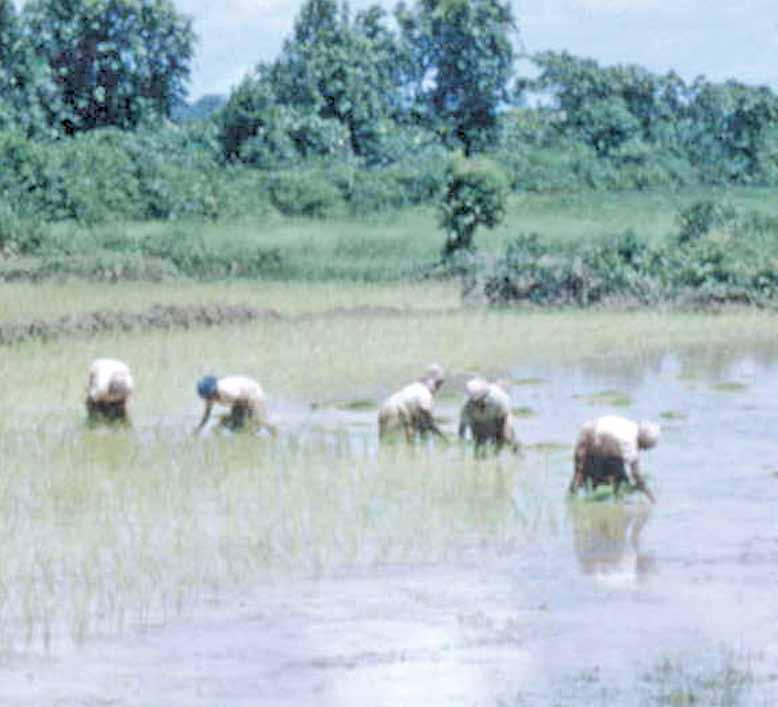
Rice was one of the brightest spots in the pre-independence economy. The mission from the UN had reaffirmed that agriculture should be the foundation of developing Guyana. A five-year development programme of 1956-1960 was launched, and the government initiated two of the most ambitious rice farming schemes up to that point: the Black Bush Polder scheme in Berbice and Tapacuma in Essequibo. The Boeraserie project in East Bank Essequibo was also launched. The total acreage under rice was doubled between 1957 and 1964, with producing also doubling to 155,000 tonnes.
The traditional West Indian Markets
Organization of American States, and was dean of the diplomatic corps for Latin America and the Caribbean in Washington DC.
He has written extensively on Guyanese history, education, and culture as well as political developments in Latin America and the Caribbean, and particularly on the political integration movement in South America. He was decorated with the Cacique Crown of Honour in 1997, and honoured with the Martin Luther King Legacy Award for international service in the USA in 2002.
Divided into six parts, “The Guyana Story” first examines the “earliest inhabitants”, before leading to the period of early European exploration and Dutch colonization and the forcible introduction of African slaves to work on cotton and sugar plantations.
In a March review, the book was described as also scrutinizing the effects of European wars, and the final ceding of the territory to the British who ruled it as their colony until they finally granted it independence in 1966. It includes the Indian, Chinese, and Portuguese indentured immigration, showing how the cultural interrelationships among the various ethnic groups introduced newer forms of conflict but at the same time, brought about cooperation in the strug-
gles of the workers for better working and living conditions.
The final part describes the roles of the political leaders who arose from among these ethnic groups from the late 1940s and began the political struggle against colonialism and the demand for independence. This struggle led to political turbulence in the 1950s and early 1960s when the country was caught in the crosshairs of the cold war resulting in joint British-American devious actions that undermined a democratically elected prosocialist government and deliberately delayed independence for the country until a government friendly to their international interests came to power.
“As I point out in the book's introduction, I make no claim to perfection and urge others to do research and their own writing of our history,” Dr Ishmael noted, which recalls the always contentious issue of recording Guyana’s history and the fact that there is always more research to be done of our past, and the need for more researches to take up the cause.
The picture on the book cover, Odeen revealed, is a depiction of Fort Nassau on the Berbice River during the 18th century. It is a reproduction from an oil painting done by his wife, Evangeline, with whom he has two children: a daughter, Nadeeza
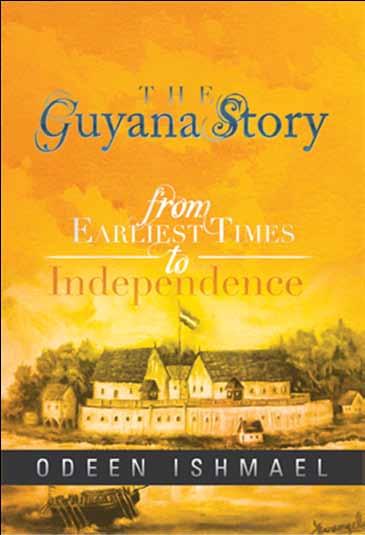
Ishmael and a son, Safraz Waseem Ishmael.
Ishmael is also the editor of the book, “Cheddi Jagan - My Struggle for Guyana's Freedom” and has written the foreword to the book “From Bondage to Deliverance - Indentured Labour in Mauritius and British Guiana”, (2006) authored by Indian historian Dr Saroja Sundararajan.
Additionally, Ishmael is editor of the online GNI Publications, and has published a series of documents on Guyanese history, including “The Campaign for Socialism and Democracy in Guyana (1965-1992)”. “The Guyana Story” (2013) has 688 pages and is fully illustrated. A two-volume British edition will be published later this year.
could not absorb this increased production, and Jagan secured a more lucrative market in Cuba in 1961 - the year of the Bay of Pigs. This was one of the red flags to the US.
The PNC in opposition at this time dubbed the PPP government a "coolie rice government".
In the post-slavery era, Guyana established a very entrenched peasantry that was augmented by the East Indian immigrants for the sugar industry who decided to exchange their return passages for small plots of land. The farmers have always kept the population supplied with ground provisions and vegetables, a small amount of which was exported to the Caribbean islands.
The Rupununi was famous for its massive cattle ranches that rivalled those of Texas, and cattle brought up to the coastland on an overland cattle trail, but increasingly by air after being slaughtered at Lethem. On the coastland, farmers reared cattle, sheep and goats that kept the country self-sufficient in meats.
Small fishing boats went out to sea and kept the populace well supplied with protein from fish and shrimp.
By the time of independence, Guyana was self sufficient in the supply of lumber to
Ruimveldt Industrial Estate in an effort to spark local investors to increase the manufacturing capabilities of the country. Several contacts were made with eastern bloc countries to assist but these were soon aborted in the polarised ideological climate set adrift. It was intended that the entrenched mentality of the local business class to only engage in commerce in imitation of the British import agents be broken, and they could appreciate that they could make quite healthy returns from manufacturing. from page 2
build homes. Some timber, especially greenheart, which was world famous for piles for wharves, was exported.
While Bookers had established several light manufacturing ventures successfully, by the time of independence, Peter D'Aguiar, who was to become the leader of the UF, has launched the very successful Banks Brewery, with some ancillary industries. The PPP government set up the
To evaluate the tragedy that befell the Guyanese economy after the PNC/UF coalition took over in 1964, one cannot look at it in isolation but rather in comparison with its Caribbean neighbours such as Barbados, which also became independent in 1966. At independence, by all social and economic indicators, the Caribbean countries were roughly similar. This is not surprising in light of the fact they were all formed and run as "sugar economies".
But by the end of the PNC rule, scholars could only compare Guyana's economy with sub-Saharan Africa or Haiti, while the cohorts for Barbados were the developed nations. What had happened in the intervening twenty-eight years?
It all boiled down to the megalomaniacal visions of one man: Linden Forbes Sampson Burnham. In the beginning, Burnham followed an orthodox path of development in line with the wishes of his US and British sponsors who had backed him to replace the PPP government of Cheddi Jagan. In coalition with the fiercely capitalist oriented UF of Peter D'Aguiar, Burnham embarked on infrastructural development such as highway from Georgetown to Linden in the south, to the Corentyne in the east and Parika in the west.
One of the early actions was to cancel the rice
contract with Cuba in line with the US embargo on trade with that country. A US company took over the marketing of rice and encouraged the production of long grained and extra long grained varieties that would satisfy the European market. The price for rice and paddy was reduced in 1966, the year of independence, as farmers were caught in a pincer movement as prices for inputs rose sharply and duty free concessions on fuel were removed.
In a move that spelt the crippling of the rice industry, the Rice Board sold the rice on a booming world market but did not pass on these profits to the farmers. Not surprisingly, production began to fall.
However the PNC government was unable to attract the foreign direct investment in the "industrialisation" by invitation model followed by most of the Caribbean.
By 1968, the PNC had ditched its erstwhile partner and in 1970 declared that it
was not only a republic but a "cooperative" republic. It was announced that rather than "private businesses" the cooperative would be the unit of production in all areas of economic life:
• state control of most of the economy (including the nationalization of the sugar and bauxite industries and most foreign banks; centralized allocation of bank credit, foreign exchange, and imports; and price controls)
• the development of a state-owned manufacturing sector
• state control of education
• The creation of an “executive presidency” with broad powers, including immunity from prosecution and authority to dismiss parliament.
Bauxite
The upper Demerara River settlements of Mc Kenzie, Wismar and Christianburg were renamed "Linden" in honour of Burnham. Burnham returned the honour, so to speak, by choosing to seize

control of "the commanding heights of the economy" by nationalising the bauxite industry in 1970. DEMBA became GuyBau and Reynolds became Bermine. As we have said, this was controlled by Canadian and US corporations, and must have surprised the latter country especially in view of their installation of Burnham into power to counter the "communist" Jagan.
The management of the industry was passed on to its supporters and reorganised to reflect the new "cooperative socialist" ethos. Employment rose from 6,000 in 1971 to 7,335 by 1979. Production initially rose rapidly in the midseventies commodity boom, but it was discovered by the end of the decade that much of the profits was on account of very little re-invested into the physical plant. Production plummeted from the eighties so from a high of contributing almost 15 percent of the GGP in 1980" it was less than 5 percent in
Nothing more illustrates the course the economy took during the PNC era than the 1972 "Feed, House and Clothe" development plan the PNC declared would be fulfilled by 1976. On the "feeding" part, the PNC tried to make a virtue out of a necessity by declaring a "buy local" programme on basic food items that had been banned. Flour, yellow split peas and Irish potatoes, for instance, had become staples in the Guyanese diet, and their absence caused severe hardships among the ordinary people.
The elite continued to find ways to obtain these goods through their own channels. Smuggling of these foods from neighbouring countries introduced a whole new form of economic activity that entire communities from Berbice to
King’s own words, the targets were specified, thus: “As is well known the target that we have set is 65,000 housing units. We have already built 5,000 of these in 1972, and our plan is to increase the tempo of building activity to 8,000 in 1973; 13,000 in 1974; 17,000 in 1975; and 22,000 in 1976.” From its inception, this housing plan was sharply criticised by the opposition, who raised questions about how it would be financed, considering that the government had announced that it would seek funding from multilateral agencies. Actually, the PNC administration was unable to garner any such funding, and the whole housing plan was a colossal failure. Burnham himself was forced to admit this fact in his “address to the nation” on December 14, 1976 when he declared: “We promised to house the nation. . . . We have not done so.
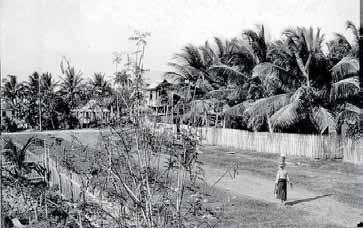
1992. By then employment had been slashed to less than 3,000 with more in the offing. From being the most lucrative source of employment in the country Linden was reduced to penury.
The socialist ethos also backfired in Guyana losing its position as the world's number one supplier of calcined bauxite, a premium product used for making kilns for producing steel etc. while the product was superior, Linden just could not deliver in time. Customers would rather have the "inferior" Chinese product that was delivered promptly. It is ironic that today, the largest Chinese supplier of calcined bauxite has control of Linden operations.
Essequibo plunged into. Food stuffs had to be imported through the government agency and distributed through the oddly named Knowledge Sharing Institute (KSI). Long lines to wait to purchase these foods became a degrading feature of Guyanese life. They were dubbed "guy-lines" by local wags.
The housing the nation promise was well summarised by historian Odeen Ishmael:
"But when 1976 ended, this national goal was not achieved. In the area of housing, for example, the plan called for the building of 65,000 “housing units” at a cost of G$250 million. In
. . . Our statistics show, however that we have built 33,000 units. The rest of the nation is still to be housed.” However, Burnham’s statistics were badly flawed. Using the government’s own statistics, the PPP showed that only 1,061 units were built in 1972; 1,128 in 1973; 1,037 in 1974; and 941 in 1975. This gave a grand total of 4,167 or only 6.5 percent of the target set in the FCH plan. And even this small amount was concentrated in Georgetown or in rural Afro-Guyanese communities from which the PNC drew political support."
“Clothe” The less we talk about clothing, the better. The PNC attempt to grow cotton by the National Service in the intermediate savannahs was an astounding failure. A weaving and dyeing operation brought in by the Chinese government had to resort to importing cotton which could only produce fabric at twice the world market price. The Sanata Complex was closed down
Athen 20-year-old report-
er Claudette Earle, now a retired newspaper editor, pens her firsthand experience of the festivities during HRH Queen Elizabeth’s visit in the monumental year of 1966 just prior to Guyana gaining independence. With her permission, Guyana Times Sunday Magazine reprints a now historic event.
“The little child and his mother were among the hundreds who had walked miles down the East Bank road before 7 o’clock that morning in order to secure positions of vantage along the streets the queen was scheduled to pass. They had stood behind the police cordon for more than 90 minutes.
They presented a lively picture of colour in their bright holiday attire. The morning was warm, and dozens of multi-coloured umbrellas brought slight respite from the
increasing heat.
Guyanese were in a state of suppressed excitement for this was the first time a reigning sovereign had deigned to visit this country.
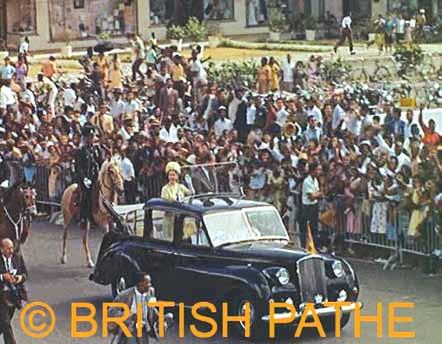
Seasoned with long waiting, the people suddenly heard the muffled roar of the outriders’ motor cycles, and they strained their necks to see her as she came into sight, seemingly gliding by in the Austin Princess.
To the hundreds of Guyanese assembled so orderly on the streets, she was all they had read about and much more. Her complexion was an exceptional asset, and her deportment, though regal, was void of haughtiness.
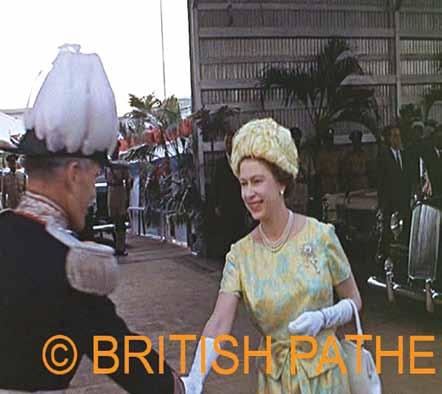
Fetchingly attired in a day dress of jade and primrose yellow with a fluffy white hat, she had alighted earlier from the plush luxury of the Royal Yacht Britannia on to the solid greenheart wharf of
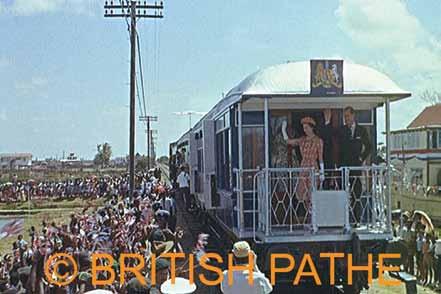
Sproston’s to begin a two-day tour of the country.
Guyana was the first stop of her Caribbean itinerary and, significantly enough, 1966 was the year of our Independence which occurred four months after her visit. Many felt that her royal presence in this country was England’s manner of making a tacit and graceful seal to the 152 years of colonial rule of British Guiana– a grand exit to the old era.
It was also a time of searching and preparation for the average native, for at that time Guyanese were being urged to assume the independence of spirit. And if the visit was meant to be goodbye, we could not have excelled ourselves.
Indeed, the 40-year-old sovereign actually voiced our thoughts and aspirations when, in replying to the Prime Minister’s speech of welcome on the balcony of Parliament Building, she exhorted us: “Now is time to look forward with hope and resolution that all of this land, of whatever ancestry or creed, shall enjoy a shared prosperity and happiness as citizens of Guyana.”
Eclipsed only by the independence celebrations, which was the event of the year, Queen Elizabeth’s visit was a most momentous national event in the country. Day and night, wherever she travelled, the streets were heavily lined with people all eager to cheer tumultuously. They came not only from

Georgetown and its suburbs, but from the sprawling coastal belt and the far-flung areas in the hinterland.
For days prior to the visit, the city has assumed a gay and holiday appearance. Thousands of multi-coloured bulbs traced sparklingly the definitions of business places at night, while during the day, flags and buntings in a riot of colours fluttered noisily in the breeze.
The Guyanese government had proclaimed Friday, February 2 a holiday in honour of the visit, enabling thousands of the working population the opportunity of seeing the sovereign. And, true to Guyanese style, she was accorded a fantastic and thoroughly warmhearted welcome. Waiting to greet her were Governor Sir Richard and Lady Luyt, Prime Minister
Mr Forbes Burnham, and the Chief Justice Sir Joseph Luckhoo. After replying to the speech by the prime minister she visited the emblematically ornate and sombre chamber of the house.
The queen was welcomed by the speaker, Mr. A. P. Alleyne, after which she and Prince Phillip unveiled full-length portraits of themselves, each on either side of the speaker’s chair. Thence the royal party glided slowly through the lined streets to the civic reception at the Promenade Gardens where a section of Georgetown’s citizens waited.
Coolly confident of carriage, and grateful of person, the queen met and chatted lightly with councillors both of the Georgetown and New Amsterdam Town Councils. Her sincere interest never lags in Continued

By PetamBer Persaud
To gain a fuller appreciation of Guyanese literature after Independence, it would be useful to bear in mind that our literature was hitched in a close relationship over a long period to the British literary tradition.
This is not a censure against such a fine literary tradition that continues to entertain, educate and influence us in many ways; a tradition that allowed us a foothold in world literature and continues to sustain some of our more accomplished and recognised writers like Wilson Harris, David Dabydeen, John Agard, Grace Nichols, Jan Lo Shinebourne, Pauline Melville, just to name a few.
Coming out of that British literary tradition was Edgar Mittelholzer, the father of the Guyanese novel. When Mittelholzer died in 1965, he had to his name twentythree novels published over a short span of time; at least one book a year.
Writing by Guyanese during the colonial time was useful apprenticeship – learning the basics (according to Western view), preparing writers to handle universal themes and themes foreign to their own concern, preparing writers to reach various audiences, local and foreign, and generally helping to hone the skills of our writers.
That pervading colonial influence lost some ground with the rise of Guyanese intellectualism and birth of political awareness, both movements feeding off each other, sometimes betrothing each other to produce defining literature. And the imaginative writers at that time were
treating those new impulses of self-discovery, identity, and social revolt, the quest for freedom, self-respect and self-rule with a passion. So a Guyanese literature really started in the 1930s and 1940s, and was consolidated and validated through the 1950s and 1960s.
Poems (of resistance, of succession, and of affinity) by Martin Carter encapsulate that shift more than the work of any other writer of that time. Poems of pride in people, place and country from the pens of A. J. Seymour, Wilson Harris and Ivan VanSertima, and of others, formed part of the equation of giving validity to a Guyanese identity and sovereignty.
There can be no doubt that after Independence there was a marked increase in publications by Guyanese writers, both from the established and the emerging ones, both from the locals and those in the diaspora.
Self-publishing was a notable feature at that time. Sheik Sadeek was a pioneer in this field, printing his own numerous works and the material of other writers. And throughout the post-independence period writers continue to pay to publish their own work with some assistance from corporate Guyana and other local organisations.
Other enabling features could be found in writing workshops sponsored by the National History and Arts Council. That council also encouraged the flourishing of ideas by offering competitions and affording writers a chance to be published in its journal, Kaie. That journal was responsible for launching the career of many writers who have gone on to in-
ternational recognition.
The commendable work of Kaie in marketing our writers was ably supported by other literary periodicals like New World, Dawn, Heritage, Plexus, Expression and The Guyana Annual. String those periodicals together and find they have kept the flame of our literature alive, in good and bad times, with each succeeding generation of writers benefiting from our recorded literary heritage and building
on it in no uncertain manner.
A recent and welcomed addition to our journals is the Arts Journal offering critical perspective to our literature.
The Guyana Annual magazine deserves special mention, mainly because it has outlived all the other periodicals. It is currently the only avenue offering writers, especially emerging writers, a chance to hone their skill; it is currently the only platform encouraging writers by publishing their work. It is a boost for a writer to see his or her name in print.
The magazine is currently offering eight liter-

ary competitions, namely ‘Open Short Story’ and ‘Open Poetry’, ‘Youth Short Story’ and ‘Youth Poetry’, the ‘Martin Carter Essay Prize’, the ‘Egbert Martin Poetry Prize’, the ‘Rajkumari Singh Writing Poetry for Children’ and the ‘Henry Josiah Writing Story for Children’.
In due time, the liberation of the imagination in our writers was harnessed and streamlined with the formation of organisations like the PEN - Guyana Writers
Group, the Annandale Group of Writers, the Pavement Group and the Messenger Group. Later, many other literary organisations were to pop up on the landscape and also fade away. The Culture Corps of the Guyana National Service also played a role in producing writers imbued with political and nationalistic fervour; much of what was published did not stand the test of time.
Mahadai Das was perhaps the GNS’ best known poetess. At the time of her death in 2003, she was the most prolific resident poetess with three volumes of poetry. “They Came in Ships”, her most performed piece, even-
tually gravitated to the title of an imposing and invaluable anthology of writings by Guyanese of Indian descent.
As time went by, the convergence of writers through those organisations extended the debate/discussion on current issues, to include a wide cross section of society for whom the writers were supplying new words/phrases to address new experiences.
New experiences of this era included restricted press freedom and political paramountcy, racial division and the quest for harmony; class discrimination, ethnic closures, questionable elections and estrangement, which were dealt with by writers like Jan Shinebourne, Sasenarine Persaud, Harischandra Khemraj, Grace Nichols, Roy Heath and Narmala Shewcharan, among others.
The indigenous voice was supplying new nuances to mainstream literature as it became “A Merry Indian No More”. See the encroachment of the forest, its beauty and its destruction, in the poetry of David Campbell, Basil Rodrigues and Edwina Melville.
A glorious manifestation of this post-independence period was the emergence of women writing, enriching the literary landscape from a different perspective as women were able to ‘tease out the truth’ in many instances. Our women writers also grabbed world attention. In poetry, Grace Nichols won the Commonwealth Prize; in fiction, Pauline Melville the Whitbread Prize; Karen King-Aribisala the Commonwealth Prize, and in drama, Paloma Mohamed the National Drama Association Caribbean Award.
The Guyana Prize for
Literature, initiated by the late Desmond Hoyte in 1987, was another defining moment in our literary heritage. The aim of this crucial project was to ‘provide a focus for the recognition of the creative writing of Guyanese at home and abroad’ and to ‘stimulate interest in, and provide encouragement for, the development of good creative writing among Guyanese…’ Academics from around the world, as far as India, have and are continuing to do, dissertations on Guyanese literature, namely on the work of Martin Carter, Wilson Harris, Jan Carew, Edgar Mittelholzer, David Dabydeen, Cyril Dabydeen, Sasenarine Persaud, among others. And I am sure in the near future, local resident academics will take such pride in our literature and do us proud. Now more than ever, it is imperative to have the scholarship alongside the creative literature. We must not diminish the import of literary criticism. And we must not diminish the other enabling factors that helped to shape this literature like publishing houses with a focus on Caribbean and Guyanese literature.
Forty-seven years in the life of a nation’s literature is not a very long time, but we have achieved much, far too much to do justice to in this short paper. And when we string these bits and pieces together, we would find, without a doubt, that we have indeed produced a solid core of writing that we can proudly call Guyanese literature.
Responses to this author telephone (592) 226-0065 or email: oraltradition2002@ yahoo.com



Achampion of the karts, 19-year-old Alexander Fiedtkou has already competed in the national, international and Caribbean ‘Race of Champions’, all held at South Dakota Circuit (2009-2012). In the shifter kart category, Alexander has become famous for his winning techniques. In 2010, he was champion driver for the Caribbean ‘Race of Champions’- an much lauded feat. It all started at the age of 5 when Alexander developed a passion for driving karts. When his father observed his son’s growing enthusiasm for the machine, he decided when Alexander was older and was able to race, he would purchase a kart for him. His father stayed true to his words and bought a kart for Alexander when he was 14 years old. Alexander’s love for kart racing also stemmed from seeing his uncle, Marcus Fiedtkou, racing and working with karts. The young champion’s uncle was also his karting mentor. As a major “adrenaline fanatic”, Alexander loves the speed and danger of the sport. When the karting pro is racing, all he could think about is doing his best to cross the line with the checkered flag. Apart from karting, Alexander also enjoys other sporting activities. He was a former Guyanese under 9-11 table tennis champion; he played field hockey for GCC and likes drawing and computer graphics. Additionally, he is currently a private pilot and is studying to get his commercial pilot license in Canada. Alexander’s plan for racing is to become the first Guyanese athlete and eventually champion, in the Formula 1 arena. Moreover, he wants to compete in karting leagues internationally, making a name for himself and to show to the world that Guyanese are talented people.
and was in ruins by 1990. Shortage of foreign currency to import clothes and fabric left the nation almost naked.
Even though the economy was collapsing on all fronts because of the heavyhanded political interference, the government kept up its elevated level of public spending. Internally it began to print money and externally it began to borrow heavily.
In 1978 it accepted an IMF loan but soon defaulted and was deemed "uncredit worthy" and effectively blacklisted from external borrowing. The first policy led to runaway inflation that saw the black market rate for the US dollar rising to at least fifty times the official, controlled, rate. The second policy decision pushed the total public 'debt-to-GDP' stood at an unsustainable 500 percent by 1988.
In 1974, the price of sugar surged to record highs, and the PNC imposed a levy on the profits that saw the government pocketing $475 million. Unlike Barbados, which placed half of its levy into housing for sugar workers, the PNC embarked on grandiose public projects such as a Hydro Project on the Mazaruni which eventually collapsed, and the nationalisation of the industry. In 1976, the PNC nationalised the sugar industry and embarked on the same politicisation of its management structure and operations that it had introduced into bauxite.
Not surprisingly, the industry collapsed and by 1990, when the PNC was forced to bring back foreign management, production had dropped to 130,000 tonnes down from the 395,000 production of 1971.
By 1985 when Burnham died on the operating table in a run-down Georgetown Hospital, the economy had collapsed to such an extent that basic infrastructure such as roads and bridges
were in complete disrepair. Blackout periods in the electrical grid exceeded periods of electricity supply. Wages had fallen by 40 percent, and 40 percent of the workers were earning the minimum wage: less than 50 US cents daily. Since 1976 the GDP had shrunk by 31 percent. Inflation of 50 percent eroded the already shrunken wages: the GDP per capita figures were now lower than sub-Saharan Africa, which is usually cited as examples of failed states. Education and health facilities, once on par with the Caribbean, were in shambles, with rats gnawing the feet of babies. Guyana was saved from being a complete disaster by three factors: the flourishing illegal economy, the cash remittances that Guyanese citizens received from relatives living abroad and the country's near self-sufficiency in food production.
Hoyte's gambit
In 1988, Desmond Hoyte, Burnham's successor decided to reverse gear: he abandoned the cooperative socialist experiment and signed an agreement with the IMF. A donor country group arranged for a US$180 million loan for Guyana to pay off its arrears on the country's debt that had now swelled to US$2.1 billion. He agreed to the IMF conditionalities and initiated an Economic Recovery Program starting in 1989.
The programme involved massive devaluations of the Guyana dollar; privatisation of 14 of the 51 companies owned by the government; eventually floating the dollar, which settled by 1992 to GY$125 to US$1-a ten-to-one decrease in value. Private companies were brought in to run the sugar and bauxite industries. After an initial dip in the GDP, the economy started to expand.
By 1992, Guyana had only returned economically to where the PPP had left it in 1964.

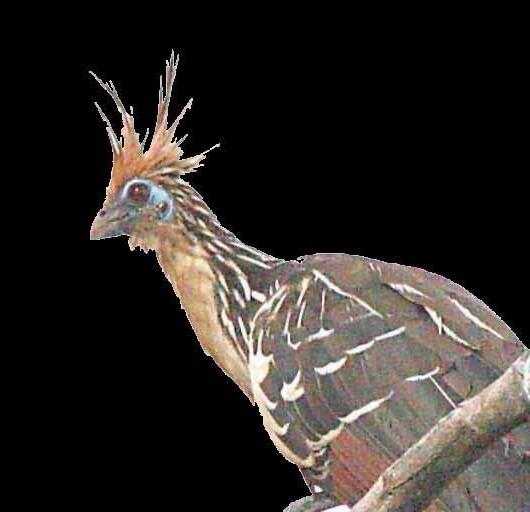
The Canje Pheasant or Hoatzin (Opisthocomus hoazin) , also known as the Stinkbird, is a leaf-eater, primarily consuming the leaves of swamp plants, including mangrove trees. Hoatzins live in South America, from Guyana and Ecuador to Brazil, Bolivia and the Orinoco, in trees and branches above rivers and marshy areas.
Although they can fly awkwardly over short distances, they spend much of their lives perched, hopping from branch to branch when they need to move. One unique physical feature of the Canje Pheasant is its clawed wings. While these are indistinguishable in an adult bird, the Hoatzin chick has prominent dual claws on each wing, which helps it to grip and pull itself up onto branches.
Young hoatzins can also dive into water and swim underneath to escape airborne predators, but lose this ability when they reach adulthood.
The Canje Pheasant is the national bird of Guyana, and can be found in the Upper Demerara-Berbice area: Mahaica Creek, which has healthy populations, and along the Berbice River, the Canje Creek (a tributary of the Berbice River), and to a lesser extent near the Abary River in the North and the Takatu River in the South.




The presence of the spiky crest at the top of its head has conferred the word "Opisthocomus" in the bird's scientific name. Opisthocomus means "wearing long hair behind" in Ancient Greek.
The Hoatzin remains in a unique scientific class of its own, as the sole member of the genus Opisthocomus
The Canje Pheasant is the only bird to digest vegetation by fermentation, much like a cow. The bird is known for its terrible odour, which scientists are unsure of its cause or causes, but believe it has something to do with their feeding. It has an unusually large crop, which allows the vegetation to ferment, and it is the fermenting leaves that cause the odour that led its other name, Stinkbird
The objective of the game is to fill all the blank squares in a game with the correct numbers. Every row of 9 numbers must include all digits 1 through 9 in any order. Every column of 9 numbers must include all digits 1 through 9 in any order. Every 3 by 3 subsection of the 9 by 9 square must include all digits 1 through 9.



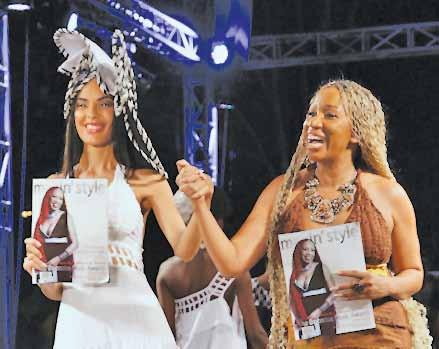
The new stylish resort collection from fashion doyenne Sonia Noel, which was recently presented in St Lucia at the enchanting Bay Gardens Resort, and the Tobago Fashion Weekend, left many fans and critics captivated.
Noel, who was in St Lucia to launch and promote her quarterly fashion magazine, Makin’ Style, made the decision to showcase the new collection at the same time. During the two-week annual celebration, two shows were held, and both Mariska’s Designs and First Resort had significant presence at all of the events by renowned Caribbean personalities and fashion divas of the island.
The collection was also the highlight of the evening at the recently held Tobago Fashion Week.
First Resort depicts the easy, carefree, uninhibited nature of Caribbean lifestyle presented in breathing, ecofriendly, caressing textiles that capture the attitude of leisure.
Noel infuses her signature latticing, kaftan silhouettes and versatile wraps, to come up with this irresistible collection for an urbane, winning look.
The designer plans on continuing displaying her collection in the U.S.A.
For more information on the collection call 226-3099.
(Photos by Inken Janning and David Wears)





An imposter posing as Psy tricked celebrities and organisers in Cannes into thinking he was the Korean megastar yesterday.
Actors and actressesincluding Naomi Harris and Adrien Brody - posed for pictures and quaffed Champagne at parties with who they thought was the singer and shared them on Instagram and Twitter.
The pretend Psy was even welcomed into the exclusive Chopard party, where he convincingly taught a French radio host how to do the famous Gangnam Style dance.
The lookalike was only rumbled when the real Psy took to Twitter to reveal that he was nowhere near the French Riviera, and was actually hundreds of miles away holed up in a hotel in Singapore.
Psy tweeted: "Seems like there is another ME in cannes… say HI to him.[sic]"
Organisers later conceded: "We've been duped. I had a conversation with the label… it [wasn't] him, just a lookalike." (Glamour)
Taylor Swift may disapprove of Selena Gomez's relationship with Justin Bieber. When asked about what she was whispering to Selena at Billboard Music Awards when Justin collected his trophies, during one of which he got booed, Taylor said, "Ohhh, you do not want to know!"
"You do not want to open that can of worms. Especially tonight," the country/pop singer continued, without giving any further details. When her in-

terview suggested that she writes a song about it, the 23-year-old chart-topping artist said with a laugh, "No, it's not [me] ... I'm fine!"
Taylor made headline earlier this week when she was caught on camera making a grossed-out face when Selena and Justin were kissing backstage at the BMAs. She was seen sticking her tongue out at their PDA. In the press room, she also refused to answer a question about Bieber's Milestone Award win. (AceShowbiz)
Lindsay Lohan is apparently being sued by the clothing manufacturer that released her line of leggings.
According to E! News, the actress is being asked to pay
$5million to DNAM Apparel Industries after they felt her recent troubles damaged sales of the leggings from her 6126 collection.
The company is apparently stating that "no-one

would touch" Lohan's fashion line, and that retailers were refusing to stock the items because they "did not want to be associated" with the star.
Lohan's business partner, Kristi Kaylor, has countered to DNAM's claims, saying it was them who breached the agreement.
Kaylor said: "The DNAM countersuit against 6126 is frivolous and misrepresents the facts. DNAM knows that it is in breach of the 6126 licensee agreement, and this suit is clearly nothing more than a transparent defence manoeuvre.
"Lindsay and I worked for over three years to build the 6126 brand and ensure its success; DNAM is merely trying to get out of honour-

ing its financial obligations." Lohan is currently undergoing a 90-day stint at the Betty Ford Centre under the terms of a recent plea deal. (Glamour)

In the midst of Backstreet Boys' comeback as group, one of the members, Nick Carter will release a memoir. Carter's upcoming book "Facing the Music and Living to Talk About It" is going to be released on September 24, via Bird Street Books.
According to Associated Press, the autobiography will reveal Carter's teenage days with Backstreet Boys and his family matters. The book will reveal his problems with drugs and alcoholic drinks as well. Carter has two siblings, Aaron Carter and Leslie Carter. However, Leslie died last year following a struggle with substance abuse.
A description of the book posted by Amazon reads, "From his battle with addiction to serious health complications and the pain of his younger sister's tragic death." The book is also said to provide Carter's advice to overcome the situation.
Carter, who is engaged to Lauren Kitt, is also reported to have his own reality show. The show reportedly will revolve around preparation for their wedding. However, a representative for the singer tells E! News that there will be "no reality show."
Last month, Backstreet Boys received a star on Hollywood Walk of Fame as they celebrated their 20th anniversary. The group will release their 8th album "In a World Like This" on July 30. (AceShowbiz)
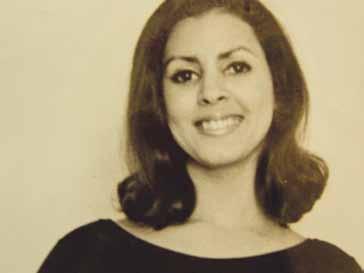
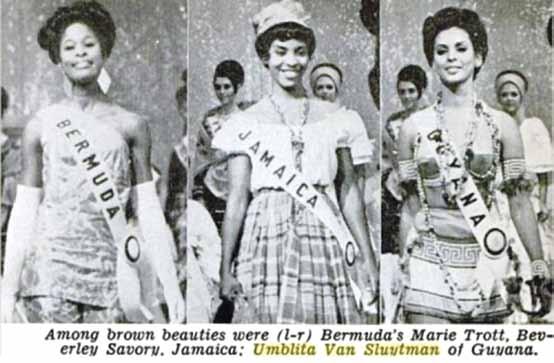
Umblita Claire Van Sluytman, crowned Miss Guyana World 1966, was Guyana’s very first national pageantry contestant to have represented the country since gaining its independence. She also competed in the Miss Universe pageant in 1966 and was in the finals of both pageants.
Hailing from Pomeroon, Umblita was regarded as “one of the most beautiful women of colour” in both pageants. She made a big
splash in her national costume in London for the Miss Universe pageant. Due to her beauty and poise, she was cast in a staged play in Las Vegas in which she played a beautiful queen.
A piece written by international writer Alejandro Guevara Onofre in 1966 covering the Miss Universe pageant, reported, “Like Guam, the new South American Republic of Guyana- ex British colony- sends its first national contestant to Miss
Universe…Subsequently, in November, the exotic young [beauty] became one of 15 semi-finalists in London, United Kingdom, beginning a new era for Guyana's exotic beauties...”
According to her sister Rose Marie Knowles, on her Myspace account profile, “Umblita was Indian, Portuguese and Dutch, and became Miss Guyana at 19 years of age. She was quiet and poised and beautiful. A gentle and beautiful girl. She was the first Miss Guyana to go to the Miss World and Miss Universe contests, and was loved by all who saw her. She was placed in the semi-finals and received letters from all over the world telling her she was one the most beautiful and graceful women they saw in the contest. She was a pleasure to know and a great honour for all who met her. Umblita passed away in 2004.”
Knowles added, “The judges said she glided like a swan on stage and had noone to help her to prepare for her competition. She
was the most gracious and poised woman I ever saw. She is greatly missed and was very brave as she faced
fection. She was perfection.”
Although not much is known about Umblita’s life in Guyana, the gracious
pageantry
her death. We love her dearly and there will never be another like her. She was everything beautiful and good that walked among us. She did everything to per-
words of her sister and admirers from abroad attest to the fact that Umblita significantly placed her newly independent country on the international map in the
the face of any pressure of exhaustion. This commendable aspect of her personality was unfolded before the curious and wondering eyes of the public during her brief stay. She always appeared fresh and interested in everything about her.
Later that day, when the sunshine was hottest, the queen – ardent racing fan that she is – was the cynosure of all eyes when she and her entourage attended the special meeting of the Demerara Turf Club at D’Urban Park. Thousands had borne the heat of the sun and were converged on the Park to see her. She rewarded them with friendly smiles and waves.
And yet her official engagements were not done for that day.
After knighting Sir Lionel Luckhoo at Guyana House during the afternoon, she boarded the yacht for a brief respite before leaving to attend the prime minister’s reception at The Residence.
On the way, she viewed Georgetown, now a fairy city. The beautifully illuminated Town Hall was the most outstanding of them all. The lofty edifice, with its tall spire, was studded with hundreds of white bulbs; here, it seemed to us, was a precious gem of gigantic proportions artistically cut and set in the heart of the city.
More than 2,000 people were entertained at the reception. And Queen Elizabeth, elaborately begowned and wearing a diamond tiara in her hair, heard for the first time the thrilling staccato rhythm of the masquerade band, while she gazed, and marvelled, at the tall lady on the stilts.
The night, bewitched with glitter and magic, presented a most suitable background for such
an auspicious social function. Guyanese talent and culture in their varied forms impressed deeply all those present. Seven-yearold Pulmattie Gobin Ram proved herself to be an artist with remarkable promise a she danced her way into the hearts of all. Present also at the function was the 100-strong National Symphony Choir, and the Silvertones Steel Orchestra, which panned the story of “Uncle Joe”, while choreographer Pat Anderson led the Theatre Guild Dance Troupe in some exotic contortions.
If Friday’s schedule was considered tight, Saturday’s was even tighter. In the morning the queen attended the spectacular Children’s Rally which was without argument, the highlight of the festive activities surrounding the Royal visit.
Never before was such a display of channelled inborn grace and rhythm of the Guyanese giv-
en. A mass choir of 10,000 voices drawn from 32 schools in and around Georgetown told the stories in songs of “A Coloured Girl in the Ring”, “Bessie Down” and “Hear Auntie Bess”, accompanied by the skilful arrangements of the Police Force Band. And, in the while, these spirited little imps, 210 of them, cutely attired in short white dresses with coloured frilled panels matching the lovely hibiscus crowns on their heads, danced surely with perfect precision to the delight of the royal party. The queen leaned forward on her chair, her face mirroring pure rapture at the spectacular performance.
The popular Indian song, “Sohani Rhaat”, to which the girls danced beautifully in a slower tempo, was a wonderful example of cultural integration…the theme of the nation since. Other displays by the youths of Guyana followed, and songs in blessing of the queen were sung. Presentations to the
queen by three children were made before the royal couple drove around the ground to acknowledge the tumultuous ovation of the children.
Then, in the dazzling heat of the approaching midday sun, Queen Elizabeth travelled up by railway coach eight miles to La Bonne Intention where she viewed a rural display. She was presented with a map of Guyana in gold. Dance groups, including comfa and masquerade bands, performed.
Later that afternoon she was again bound for another engagement, this time to open the Queen Elizabeth National Park on Thomas Lands. And it was an exceptionally fashionable turnout of Guyana’s fairer sex. They excelled themselves in the interpretation of current dress trends. Exquisite creations of chiffon, floral nylon fabrics, and embroidered linens, matched with absurdly fitted picture hats and impossible stiletto heeled shoes, made many men turn for a second glance. The queen herself looked charming in blue silk intricately cut to give a split level effect.
Her other immediate engagement was to open the Industrial Fair at the B.G.C.C. ground. So genuinely interested was she in the display of Guyana’s products that the spent 40 minutes more than her allotted touring time. And while a popular steel orchestra proposed “A unto Her Majesty” in calypso song styling, the queen visited the Amerindian village and evinced keen interest in the making of cassava bread and cotton spinning.
Thus ended the official visit of the sovereign. And, as the car finally conveyed the royal party to Sproston’s wharf, thousands of
from page 5
Guyanese, jam-packed behind the police cordons, strained their bodies in an effort to catch a last look.
“Captain, Captain put me ashore. I doan want to go anymore! Itanami gon drownded me…” caroused hundreds of Guyanese in mock-mournful tones while they swayed rhythmically to the slow tempo of this time-honoured folk song, bidding, as they sang, goodbye to the queen. Her Majesty stood on the deck of the Britannia, visibly affected by the compelling undercurrent of Wet Indian beat.
All the tension and strain of preparation for this brief tour were released in this gay free-forall sing-song. In fact this was the culmination of the warmth of sincere Guyanese hospitality accorded their monarch.
Yes it was truly the most relaxed period of the visit. We were happy because everything –every event – had moved smoothly and efficiently. And, as we said goodbye, we tried to convey the message of our culture to the heart of the queen.
Fifty persons, including the governor and the prime minister, had been her guest for dinner. They all stood leaning against the rails, their faces alight with pleasure and excitement as they looked upon the swirling joy-makers. Drumming her fingers lightly on the rail, the queen kept time to the sultry interpretation of “Lilli Gal”, “Wata Wash a Sea”, and the farewell bidding “Goodnight aye, Good night O”.
And on this note the thrilling tour ended.
Guyana had done herself proud on the two days and had, indeed, showed the rest of the world what she was capable of doing with the utmost ease and grace.”
Aishwarya Rai Bachchan will join international singing stars Madonna and Beyoncé at the Chime for Change concert.
The actress, who will be accompanied by husband Abhishek Bachchan, has been confirmed as a celebrity presenter at the Chime for Change event on June 1, aimed at raising funds and awareness for women's rights and empowerment around the world, PTI reports.
Concert director and co-founder of Chime for Change, Beyoncé said: "I am really happy that so many amazing artists and presenters have come together to support Chime for Change. Our goal is to have a great time together while we unite and strengthen the voices of girls and women around the world."
Underwritten by inter -

national luxury fashion brand Gucci, the Sound of Change Live concert is guaranteed to fund at least 120 projects supporting girls and women globally.
"Sixty per cent of the children in the world not in school are girls! Two-thirds of the world's illiterate are women! I do not accept this. We need to change this and we will change this," said
The singer is one of the celebrity presenters alongside Indian actresses Rai Bachchan and Freida Pinto, as well as Archbishop Desmond Tutu, former British Prime Minister Gordon Brown and wife Sarah Brown, and Hollywood star Jessica Chastain.
UK promoter Harvey
Goldsmith will produce the four-hour concert, which will be staged in Twickenham Stadium.
"We are thrilled that these amazing people are giving their time and support. The stature of our artists and presenters proves just how important this campaign is and we hope that the concert will galvanise the public to support the many important projects," said Goldsmith.
In a world first, each ticket buyer will personally be able to choose which of the many projects Chime for Change supports will benefit from their ticket money.
The Chime for Change initiative is led by Marianne Pearl, the wife of former Wall Street Journal reporter Daniel Pearl - held captive in Pakistan and beheaded by Al Qaeda in 2002. Rai Bachchan is currently in Cannes for the 66th Film Festival. (Digital Spy)

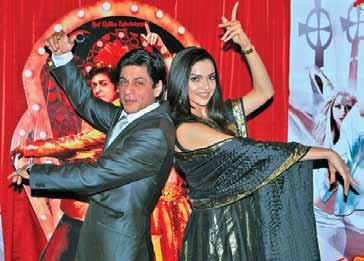
Deepika Padukone has refuted reports that Shah Rukh Khan asked her not to go on the promotional tours for ‘Yeh Jawaani Hai Deewani’.
Speaking to The Hindustan Times, the 27-year-old actress said: "That's not true at all.
"Shah Rukh is the most encouraging person I have worked with. He is extremely proud of me and my achievements and he would never do something like that."
The actress, who made her debut with Khan in the 2007 film ‘Om Shanti Om’, said: "Today, I am a lot more confident and a lot more comfortable around him. In
the first film, I was just too shocked and too surprised about the fact that I have even got such a debut.
"[Shah Rukh] is definitely a friend. He has always been someone who I can rely on or call on any point in the daytime or whatever. He is just somebody to talk to and he has been that person for me in ‘Chennai Express’ as well."
The release date for ‘Ram Leela’, in which Padukone stars with Ranveer Singh, was reportedly delayed to avoid a clash with ‘Chennai Express’.
Directed by Rohit Shetty, ‘Chennai Express’ is scheduled for release in August this year. (Digital Spy)
The much awaited movie, ‘Raanjhanaa’ trailer was launched online and the trailer shows Sonam Kapoor in the role of a high school going girl.
She wore a school uniform and tied her hair neatly.

It is heard that Sonam has taken the inspiration for depicting the role from veteran actress Jaya Bachchan. If we remember Jaya Bachchan enacted a school girl in the blockbuster ‘Guddi’. In Hrishikesh Mukherjee's film, Jaya enacted a lively school girl and in 'Raanjhnaa', Sonam also plays a middle-class student from Varanasi.
“The spunkiness that Jayaji's character had in 'Guddi'... We needed that. I needed an inspiration as in real life my schooling was conservative and different. So I needed a starting point... I did watch that film again. It was quite amazing to play this role," Sonam told reporters here at the promotional event of 'Raanjhanaa'.
"Jayaji's performance inspired me to do better. It was perfect for the character I was going to portray," she said.
In real life, Sonam went to Arya Vidya Mandir which according to her used to be quite conservative.
"We used to wear Nehru style salwar kameez. I was never able to wear a short skirt in school. We girls used to talk about other school girls wearing short uniforms. We had to tie plaits, hair band and oil our hair etc, we never looked pretty. It was not a nice look," Sonam said.
"But in this film I removed all my frustration, wore short uniforms, gave attitude to boys etc", she said.
In ‘Raanjhanaa’, Sonam is paired opposite South actor Dhanush. Dhanush recently dubbed for his debut Hindi movie.
He said: "I give credit to the director of the film, Anand. He prepared me to play the Banarasi guy. I have dubbed myself for the film. It's a wonderful feeling."
This romantic flick is slated to hit theatres on June 28. (Bollywood Mantra)
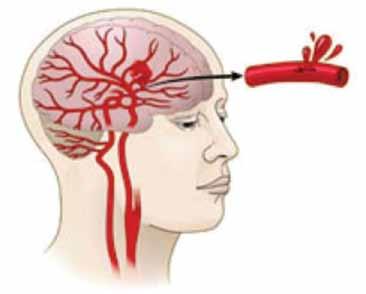
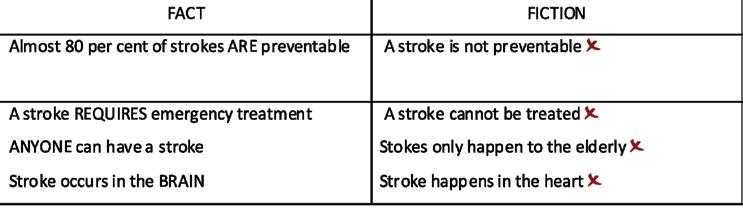
Astroke occurs when there is a stop of blood flow to the brain. A stroke is sometimes referred to as a “brain attack,” because it deprives the brain of oxygen, causing brain cells to die and resulting in the loss of abilities that are controlled by that affected area. A stroke can have disastrous consequences such as paralysis, speech and vision loss and death. However, a stroke is highly preventable and, with proper awareness and action, the risk for a stroke significantly decreases.
Types of Stroke
There are two kinds of stroke: ischemic stroke and hemorrhagic stroke.
Ischemic stroke, which is the more common type of stroke, occurs when a blood clot prohibits entry of blood to the brain by blocking an artery. This can be caused a number of factors such as the accumulation of cholesterol in the walls of arteries, which causes them to become narrow allowing the formation of blood clots. It can also be caused by a blood clot in brain tissue or from a blood clot that breaks apart from another part of the body and travels to the brain.
Hemorrhagic stroke occurs when a weak blood vessel in the brain bursts open.
Symptoms and Warning Signs---SUBHEAD
Sudden numbness of the face, arm, leg or one side
of the body
• Trouble seeing in one or both eyes
Confusion, difficulty speaking or understanding
Trouble walking, feeling dizzy or loss of balance
• Severe headache without a cause
Less common symptoms are sudden nausea, fever, vomiting and a brief loss of consciousness (fainting, confusion, coma, convulsions) *(Taken from National Stroke Association)
If any of the above symptoms are experienced, seek medical attention immediately to reduce the risk of serious damages.
Risk Factors
• Diabetes
• High cholesterol
Atherosclerosis (build-up of plaque in artery walls)
• Family history
Increasing Age (55 or older)
Being overweight
• Cardiovascular disease
Large amounts of alcohol consumption
Smoking


*More women tend to have strokes than men and, in the U.S., African Americans are more likely to have strokes.
Methods of Prevention
• Eat healthy - Fruits, vegetables, food with fibre, fish, beans, and legumes are great choices.
• Avoid saturated fat choose low fat dairy products (1 per cent milk) and reduce the intake of animal products that have eggs, cream or cheese.
• Lower your blood pressure (reduce salt intake)
• Exercise daily (30 minutes)
Stop smoking
Limit the amount of alcohol consumed.
Changing the perception of Stroke (From the National Stroke Association)



With the advent of the washing machine and clothes dryer, (though the latter is not common here), a laundry room is often part of most home plans if the budget provides. But laundry rooms can also be eked out of small spaces if necessary, and sometimes can be found in garages, kitchens or near bedrooms. Here’s a look at beautiful yet practical laundry rooms for all budgets.



Ingredients:
2 tbsps olive oil

2 medium brown onions, finely chopped
3 garlic cloves, crushed
1 large carrot, finely chopped 1 large red capsicum, finely chopped
Method:
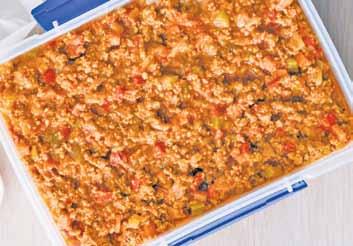
Heat oil in a large saucepan over medium heat. Add onion, garlic, carrot, capsicum and celery. Cook, stirring, for 5 minutes or until onion has softened. Add mince. Cook, stirring with a wooden spoon to break up mince, for 5 minutes or until browned. Add tomatoes, stock and paste. Bring to the boil. Reduce heat to low. Simmer, covered, for 30 minutes. Remove cover. Simmer for 20 to 25 minutes or until thickened.
A dash of ginger added to chocolate icing gives a delicious, unusual flavour.
For a variation in meat balls, add chopped apple to ground meat along with other seasoning, roll into small balls and simmer in tomato puree, seasoned with sage.
Pastry will be flakier if you include 1 tbsp orange or lemon juice as part of your liquid.
If you have problems with the cake sticking to the tin, place a thick, clean towel in the kitchen sink and pour a kettle of boiling hot water over the towel to heat it (don’t plug the sink to retain the water, allow it to drain out). Set the pan on the hot towel and leave it for a minute or two, the cake should turn out easily.
To keep ants out of the house, find where the ants are entering the house and sprinkle a "barrier" of cinnamon or any type of ground pepper to block their way. The spices are too hot for the ants to cross.
Smelly Shoes: Fill a tube sock with baking soda or tea leaves; tie the end closed and place the filled socks in the shoes when you're not wearing them. These sachets can be used over and over in any kind of shoe.
Glasses that are stuck together may be separated by putting cold water in the top one and setting the bottom one in warm water. They will come apart without danger of breaking.
Insects in earth can be killed with a spoonful of mustard in a gallon of water. This is effective with potted plants. Paint may be removed from glass by using strong hot vinegar.

Welcome back to another DIY…this time around we will look at some electrical troubleshooting again: bulbs and fixtures –ceiling mounted, recessed, wall mounted, and the switches to go with them.
Basic bulb troubleshooting is quite simple. A friend used to say that electrical problems are hard to find and easy to fix, whereas mechanical ones are easy to find and hard to fix. I think he is right…
Aside from the obvious safety rules we have to follow, these fixes are a piece of cake. So…as a reminder: make sure you turn off the breakers to whatever circuit you are working on, use well-insulated tools and use them properly. Work smart…you know the drill.
Here’s a neat little table you can clip out and paste or file somewhere…this is very handy when you have to do a quick fix …
The checks are in a good order to follow; it’s a smart move to troubleshoot, eliminating the simple, obvious things first and then work your way down to the harder, more technical stuff.

If you can use a digital multimeter, then you can check for continuity in the circuit, which means that you will be checking if the circuit has any breaks in it. You should read a high resistance when the switch is off and a very low resistance when it is on. If the resistance is high when the switch is on then that means that a wire is loose/burnt out/cut somewhere in the circuit and needs to be replaced.
A farmer and his neighbour once went to Indian Emperor Akbar's court with a complaint.
"Your Majesty, I bought a well from him," said the farmer pointing to his neighbour, "and now he wants me to pay for the water."
"That's right, your Majesty," said the neighbour. "I sold him the well but not the water!"
The Emperor asked Birbal, one of his nine advisors known for his wit and wisdom, to settle the dispute.
How did Birbal solve the dispute?





By Maureen raMpertaB
The young man stood at the water’s edge looking across to the far horizon, trying to create in his mind an image of the 16th century: of restless waters, ships with sails and the desolate beach.
“Why did they land here?” he wondered. “What did they do?”
It was in the 1500s – such a long, long time ago – when a lone ship landed on this tropical island and the first person from India, in the east, whose naked feet touched this land. That man from centuries ago was the ancestral uncle of the young man standing at the beach, today.
Shrikar, an engineering student at college in Mumbai, would not have known much of this ancestor’s existence had his great grandmother not just die. Among her few precious things was a broken amulet in a small tin box dented and rusted with age. There was a story attached to the amulet, passed down from generations –the story of a young man who, fed up at having to live in the dust of poverty, had left home with a few rupees in his pocket to seek his fortunes somewhere in the world. He had said to his sad mother, “I hear at the docks that in far-off lands there are many riches; riches I will seek and return to lie at your feet, I promise you, so we can have a
good life.”
He had broken the amulet, a family heirloom, in two, leaving one half with his mother for her to remember him by, and the other half he kept as something he could be recognized by should he get lost.
He had left one misty morn ing and no-one ever saw him again. Centuries had passed until a research published in a journal in the West Indies docu mented him as a stow-away who, after the ship land ed, had disappeared on the island peopled only by natives.
The story had so intrigued Shrikar that he de veloped a deep inter est in the island, now a tourist destina tion, and felt like it was his calling to fix the broken link left by his ancestor from India to the West Indies. He was here now in the 21st century, not sure what to
do, how to trace that link.
The locals were peoples of different races, and each day he spent there was something new and refreshing. A life to live in the and sand: the chutney soca music, the food, and freedom – a life

The friendliness of the people was amazing, and Shrikar felt he had found a new family and new home, after all, his ancestral uncle was the first East Indian who had set foot on those sh ores.
The media featured his story, but he was no closer to knowing more about his ancestor until two days before he was scheduled to return home. An early morning knock on his hotel room that revealed a tall, strange native with a stony expression and one half of the amulet around his neck sent Shrikar heart racing.
“Who are you?” he asked, somewhat apprehensive.

But before the man could answer, Shrikar, noticing a slight family’s resemblance, said, “You are related to my ancestor.”
“Yes, from a long line of descendants,” the man replied, and his own expression now relaxed.
Shrikar sighed in deep relief, “All I need is something that identifies his existence here, something I can take back to his family.”
“We have been waiting a long time for someone. Follow me,” the man urged.
They drove for miles out of town into the rural areas, far up the trails until they came to an old native settlement that time seemed to have forgotten. They continued on rougher trails thick with wild shrubs, and along the way Shrikar saw the images of Shiva, the Hindu deity etched on scattered rocks. An art work that underlined the ancestor’s religion, not to be lost, so someday someone will find it and know he had been here.
“He lived here among the natives and worked the land to take back riches for his family,” the man said. “But no ships came back for a long time. He had many children and he grew into an old man, still holding on to a small hand-crafted chest with gold and diamonds to take back home. One morning he did not awake, falling into eternal sleep, and late that afternoon a ship stopped by, too late.”
That story brought tears to
Shrikar’s eyes, and later he cried openly at what he saw in a small cave obscured by wild orchids. His ancestral uncle lay on an elevated rock floor in mummified form, the chest with riches by his side.
Shrikar sank down on his knees, and it took him a long time to compose himself. He couldn’t believe that after 400 plus years he would be seeing something so extraordinary.
“Why has no one removed the chest?” he asked.
“Because it had been passed down from the generations that the chest had to be taken to his home in India,” was the reply.
Shrikar shook his head in wonder, “This is so unbelievable; that a man’s promise has been kept alive even after centuries by his children from a native woman.”
The detached link was now tied together as his riches crossed the seas to home. A promise from the 16th century fulfilled this day in the 21st century.

In America’s infamous Salem Witch Trials of 1692, more than 150 people were jailed for witchcraft. And Tituba, the woman who set off this witch hunt, may have been an Amerindian from Guyana. Debbie Jacob, [a contributing writer for Caribbean Beat] was spellbound by her story
She admitted to flying on a “sticke” with witches, and her confession sparked a witch-hunt whose memory still hangs like a spell over the New England town of Salem, Massachusetts.
Tituba’s testimony in 1692, at a specially convened court, condemned 19 women to death by hanging. Nearly 150 women (and some men) were imprisoned for witchcraft. One person was pressed to death and four others died in prison.
No one has ever been able to explain exactly how an enslaved West Indian woman named Tituba set those macabre events in motion. Three centuries after the Salem Witch Trials, Tituba remains a controversial figure. Everything about her –including her race and birthplace – remains shrouded in mystery. And most of what is known about her can be found in courtroom transcripts.
It all started on a late December day in 1691, when 9-yearold Elizabeth Parris and her 11-year-old cousin Abigail Williams engaged in a common adolescent game: telling fortunes by dropping an egg white into a glass.
On a good day, this old English custom provided the girls with a taste of rebellion from their austere Puritan life. On this day, to their horror, the egg white took the shape of a coffin. The girls panicked.
Soon they began suffering horrific pain, a phantom illness no doctor could diagnose. Rumour had it they were involved in blood rituals and had danced naked in the woods. Distraught over the girls’ suffering, Tituba and a neighbour, Mary Sibley, concocted a witchcake, a mixture of rye meal and the girls’ urine. It was baked in ashes and fed to a dog, which they thought was probably harbouring the witch.
Events now spiralled out of control. Acting crazy and sometimes even possessed, the girls began to accuse Tituba of being a witch. She confessed when confronted and pressured by Elizabeth’s father, the Reverend Samuel Parris. She began to name other women as witches, and fingered Sarah Good and Sarah Osbourne, claiming they had threatened to kill her if she didn’t join forces with them to hurt the children.
But if Tituba thought confessing to witchcraft was the end of her ordeal, she was dead wrong.
In her book “Tituba, Reluctant Witch of Salem”, the historian Elaine G. Breslaw writes, “large-scale witch hunts played no role in American history until 1692...when Tituba’s confession gave substance and shape to amorphous fears about diabolical invasion.”
Tituba’s cultural experiences did not include a European concept of witchcraft. She would have come into contact with obeah or voodoo practices among some of the enslaved Africans in Barbados, where she was a slave herself before the Reverend Parris took her to Boston then to Salem.
But Tituba’s knowledge of witchcraft did not harbour the sinister vision of a broom-riding witch wreaking havoc on innocent Christian girls.
Still, she was a West Indian who loved telling a good tale. Caught up in the drama of struggling to save her own life, and quite possibly relishing her unforeseen powers, Tituba began to spin stories of midnight trips with witches flying on sticks from Salem to Boston, where they plotted the demise of Salem’s young souls.
She captured the imagination of the court, but no one realised the double entendre of Tituba’s stories, which, in hindsight, seem to represent her own capture and oppression under the evil force of slavery.
Tituba put on quite a performance, even going into silent trances during her testimony. By the time the judges got a grip on reason, it was too late. Innocent people had been executed.
The Salem Witch Trials never faded into oblivion, but whatever information there was on Tituba vanished or became distorted.
Then she re-emerged in 20th century literature as a Barbadian slave with African roots. She appeared in “The Crucible” by renowned playwright Arthur Miller. When Anne Petry wrote “Tituba of Salem Village” in 1964, Tituba appeared on the cover of the novel as a slave of African descent. Guadeloupian writer Maryse Condé conjured up images of Tituba as a black woman in her “I, Tituba, Black Witch of Salem”.
But later historians resurrecting her story began to set the record straight about Tituba’s identity. She was neither a witch nor an enslaved African. There had been no complaints about her engaging in witchcraft before the Parris girl and her cousin dabbled in predicting the future. Trial transcripts refer to her as “Tituba Indian” and “that Indian woman”.
The stereotypical image of slaves being solely of African descent comes from the 18th and 19th centuries. But not all slaves were black or African.
In Barbados, where Tituba lived before the Parris family took her to Massachusetts, there was a small population of indentured white servants and enslaved Amerindians, who had been brought to the deserted island by the English shortly after they colonised it in 1627.
“Within a few years,” writes Breslaw, “a small group of Arawaks had been persuaded to move to Barbados from the Guiana coast of South America to teach the islanders how to grow appropriate crops.” Once there, Breslaw says, they were enslaved.
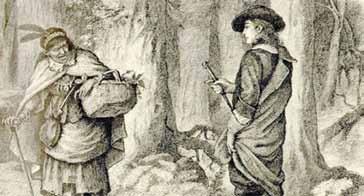
"I am Tituba the Witch." Scene in Longfellow's play "Giles Corey of Salem Farms" showing Rev. Cotton mather encountering Tituba in the woods, as mather travels to Salem Village to investigate the witchcraft accusations. Source Henry Wadsworth Longfellow, in “The Poetical Works of Longfellow.” Houghton Mifflin Boston, 1902. Artist John W. Ehninger, 1880, p. 723. (http://salem.lib.virginia.edu/)
They were not suited to hard labour, and most died quickly, but some settlers preferred Amerindian women to work with their children and in the house.
The surviving records suggest Tituba was an Arawak woman kidnapped from the Guiana coast. [See page 22] She was somewhere between 13 and 18 when Parris left Barbados in 1680. At the time of the trials, 12 years later, Tituba was said to be between 25 and 30.
Tituba’s upbringing was vastly different from the culture she experienced in Barbados or Salem. There were no witch-
es and no obeah among the Amerindians, but there were concepts of evil forces.
“The Arawak world,” writes Breslaw, “was also inhabited by a variety of malevolent spirits...that wandered in the bush after dark causing evil.” Tituba had come from a culture that had a rich history of storytelling, in which dreams had a purpose.
She used her dreams – or stories about her dreams – during the trial. She was able to get a reaction from the judges and defendants as she testified how she was forced to do the work of witches. Tituba told a better story that the other women defendants. She relied on her own cultural experiences to save herself.
Her life was not easy after that. Unwilling to see his daughter as mischievous, let alone conniving or deceitful, the Reverend Parris attempted to save face by placing full blame for the girls’ strange behaviour on Tituba. She confessed because her master required her to do so.
For that, she languished in jail for 13 months. “To dispose of his reluctant witch, Parris simply refused to pay her jail fees,” write Breslaw. “An unidentified person paid [her] fees and took her away in April 1693. Her fate after that day is unknown.”
After the trials, Tituba seems to have vanished off the face of the earth. But her name is forever etched in history as the West Indian woman responsible for the mass hysteria that led to the infamous event.
Three hundred years later, it’s still an unbelievable story that only a West Indian could have concocted. (Source: May/ June 2013 Caribbean Beat)

With more than 40 courses and 10 subject areas to choose from, Global Technology’s Summer School has something for everyone. Spend your summer learning from the largest computer training facility in Guyana, with classes focused to fulfil academic and technological skill requirements.
Get ahead and keep your momentum in the upcoming school year. The small, intensive classes will help you enhance your academic skills, as well as allow you to pursue and develop professional areas of interest.
At Global Technology’s summer school, academic classes from Forms 1 to 5 will be available. The academic program will consist of a 2-week review of the previous term’s work and a 3-week head-start for the upcoming term. Additionally, there will be one week of summer activ ities such as sports and games, debates and quizzes, organized field trips and multimedia presentations. Students from Forms 1 to 3 can participate in one or all of the courses following:
• Mathematics
• English
• Integrated Science
• Spanish
• Social Studies
For students preparing for CXC; Forms 4 and 5, the following subjects will be avail able:
• Mathematics
• English
• Integrated Science
• Spanish
• Social Studies
• Biology
• Physics
• Chemistry
• Economics
• Office Administration
• Principles of Business
• Principles of Accounts
• Human & Social Biology
Of course we have catered for the young ones. Kids between the ages of 5 to 12 will be allowed to be a part of the Computer for Kids courses. These classes are specially designed for kids within the 5 to 12 age group, and will guarantee maximum learning and fun.
For the first time, Global Technology will be offering all-day classes for kids from 9 to 12. The all-day package for ages 9 – 12 will stimulate you child’s mind with the latest technology in mobile communication and apple infrastructure.


Courses include:
• Introduction to EDPM
• Introduction to IT
• Mathematics
• English
Global Technology’s computer classes for summer school are geared to move users from having basic skills to having advanced skills in computing. Our packages are structured to allow maximum development of talent in many different areas.
Packages that will be offered for Summer School 2013 are:
• Peachtree Accounting
Desktop Package ($30,000)
Create amazing graphics, brochures, advertisements, websites, greeting cards, business cards and newsletters using advanced graphics editing software.
• CorelDraw
• Core Photo PAINT
• Adobe Photoshop
Web Designers Package ($40,000)
Introduces basic web development and graduates to creating fully functional website and web graphics.

The Foundation Package ($30,000) will introduce computers to you clearly and systematically.
• Introduction to Computers
• Windows 7
• MS Word 2010
• MS Excel 2010
• Internet & Email
Microsoft Office Specialist (MOS)
Certification 2010 ($60,000)
A MOS certificate is valuable credential recognized worldwide. This certification is proof that you have the desktop computing skills necessary to efficiently perform in any local or international organization.
• MS Access 2010
• MS Outlook 2010
• MS Publisher 2010
• MS SharePoint 2010
• MS PowerPoint 2010
• MS Word 2010 Expert
• MS Excel 2010 Expert
Computerised Accounting Package ($35,000)
Two of the acclaimed accounting software allows students to understand elementary and advanced accounting principles using specialized software.
• QuickBooks Accounting
• QuickBooks Point of Sale
NASA has given a six-month grant to a company developing what could be the world’s first 3-D food printer. And the project’s developer, reports Quartz, an online digital news site, believes the invention could be used to end world hunger.
Quartz explains that the printer is the brainchild of mechanical engineer Anjan Contractor. Being developed by Contractor’s company, Systems & Materials Research Corp., it will use proteins, carbohydrates and sugars to create edible food products.
Contractor says one of his primary motivations is a belief that food will become exponentially more expensive in the near future. The average consumer, he told Quartz, will need a more economically viable option.
Some alternative food source
options that may be used with the printer include algae, duckweed, grass, lupine seeds, beet leaves and even insects, according to TNO Research, which is working with Contractor on the project.
“I think, and many economists think, that current food systems can’t supply 12 billion people sufficiently,” said Contractor. “So we eventually have to change our perception of what we see as food.”
One of Contractor’s first prototypes will be a 3-D pizza printer, and he hopes to begin building it over the next couple of weeks.
Contractor, reports Quartz, explained that it will print "a layer of dough, which is baked at the same time it’s printed, by a heated plate at the bottom of the printer. Then it lays down a tomato base, 'which is also stored in a powdered form, and then mixed with
• Foundation Website Design
• Web design using Adobe Dreamweaver
• Web Animation using Adobe Flash
• Web Graphics using Adobe Fireworks Technician Package ($40,000)
A package designed to provide participants with the tools to install, configure, upgrade, troubleshoot and repair personal computers. It also provides a sound understanding of computer networks
• PC Repairs & Maintenance
• Operating Systems
• Networking Essentials
Visit our office today and find out more about the exciting opportunities that await you. Register now.

water and oil.'" Lastly comes the "protein layer."
Contractor also hopes that people will be able to share reci-
pes via an open source coding system.
“One of the major advantages of a 3-D printer is that it pro-
vides personalized nutrition,” Contractor told Quartz. “If you’re male, female, someone is sick— they all have different dietary needs. If you can program your needs into a 3-D printer, it can print exactly the nutrients that person requires.”
NASA is certainly a believer: The six-month grant comes to $125,000. The agency specifically interested in using the 3-D printer to feed astronauts on long space voyages.
“Long distance space travel requires 15-plus years of shelf life,” Contractor said to Quartz. “The way we are working on it is, all the carbs, proteins and macro and micro nutrients are in powder form. We take moisture out, and in that form it will last maybe 30 years.” (By Eric Pfeiffer, Yahoo! News. May 21, 2013)
The National Gallery marks its twenty years since its beginnings with the opening of ‘An Anniversary Exhibition’, at Castellani House.
A press release from Castellani House stated that more than 90 paintings, sculptures, ceramics and drawings from the National Collection of Art will be on show in the gallery’s ground floor and main first floor, showing the range of styles, techniques and media, and the outstanding quality of works which represent Guyana’s culture, landscapes and way of life, as expressed by many of the country’s leading artists.
The release added that the National Gallery was inaugurated on May 24, 1993, with Janet Jagan its first Chairman of the Board (the gallery’s Management Committee) for fourteen years until her death in 2009- this period broken only by her service as President of Guyana between 1998 and1999. Founding member of the board, leading architect Albert Rodrigues, now serves as Chairman.
The gallery’s May exhibition, the press released noted, also marks Guyana’s 47th independence anniversary, as well as International Museum Day (IMD), founded by the International Council of Museums in 1977 in order to highlight museums and galleries, their collections and their role in society. This year’s theme is “Museums (Memory + Creativity) = Social Change”.
The exhibition was opened to the public from May 24 and will continue until August 3. Gallery hours are Monday to Friday from 10am to 5pm, and Saturday from 2pm to 6pm. The gallery closes on Sundays and holidays. Admission is free.
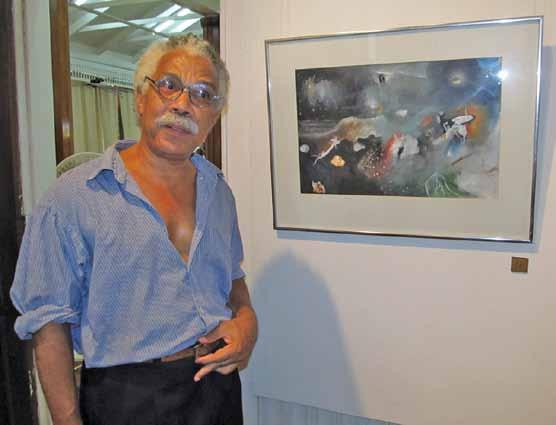

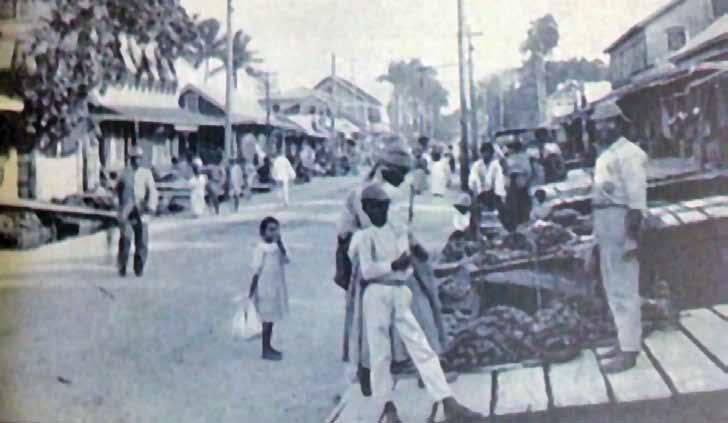

(See page 19)
When the English took possession of the island of Barbados in 1625, they established a settlement there but the new settlers had no food or food-producing plants or crops suitable for the climate of their new home; nor did they know how to cultivate what if anything, was on the island.
The leader of the English, Captain John Powell, sent his son Thomas to his colleague in Essequibo, a man called Gromweagle, [or Groenewegen] with a request “for such things as were proper to plant for food and for trade.”
Eager to assist an old friend, Gromweagle is said to have “persuaded a family of Arawacoes, consisting of forty persons, to attend Powell to Barbados” to teach the newcomers “to plant and to carry with them cassava, yams, Indian corn and other pulses, plantains, bananas, oranges, lemons, limes, the pineapple, melons etc., and, for to produce a trade, they carried over tobacco, cotton, and annatta, a rich dye...to all which Barbados was naturally a stranger.
The Indians fell to planting soon after their
arrival in Barbados, and all things grew well and came to great perfection, agreeing with the soil and clime, and they soon had all things necessary for life...
Captain Gromweagle had undertaken...that at the expiration of two years, if they did not like the country, or should upon any other occasion desire to go back to Dissekeeb, they should be transported with their reward, which was to be fifty pounds sterling in axes, bills, hoes, knives, looking-glasses and beades...”
Unfortunately, though Powell remained appreciative of the efforts of the Indians and Gromweagle, he kept his authority in Barbados for only three years; his successors –other English governors, reneged on the agreements between Powell and Gromweagle and the Indians, and when the Indians in Barbados objected to this, the English “made slaves of them, separating the husbands and wives of some, parents and children of others, one from another...” : (Source: Timehri: being the journal of the Royal Agricultural and Commercial Society of British Guiana’ Edited by E.F.Im Thurn. Vol 11:1883)
"Didn't you say that you sold your well to this farmer?" Birbal asked the neighbour. "So, the well belongs to him now, but you have kept your water in his well. Is that right? Well, in that case you will have to pay him a rent or take your water out at once."
The neighbour realized that he was outwitted. He quickly apologised and gave up his claim.
SUDOKU KID SUDOKU



The annual independence anniversary exhibition is currently on show at the National Museum. It is a venture being undertaken by the Ministry of Culture, Youth and Sports and the National Archives in coordination with the National Museum, to exhibit Guyana’s rich history of gaining independence.
Minister of Culture, Youth and Sport Dr Frank Anthony stated at the opening of the exhibition on Thursday that as Guyana celebrates its 47th independence anniversary, Guyanese need to draw lessons from their ancestors.
“Our forefathers did not fight and sacrifice, because they wanted to see us fall as a nation, they did so because they wanted to see us grow and develop.”
The minister remarked that that Guyana’s ancestors had an array of dreams for their offspring which have not yet been fulfilled; hence the nation was obliged to work towards accomplishing those dreams.
At the exhibition there are age-old documents on Guyana’s independence, and the Ministry of Culture is moving towards making all information available in the national archives become technologically accessible. These documents will be

digitized and microfilmed.
The ministry, along with staff of the National Archives, is hoping that the database project will put less strain on the already fragile records.
Some of the hardcopy records, including some key independence materials, have deteriorated over the years, despite being housed in suitable conditions. However, with the digital version, the information can be easily stored and put on back-up files. It can also be easily duplicated.
The exhibition is one of the many events planned
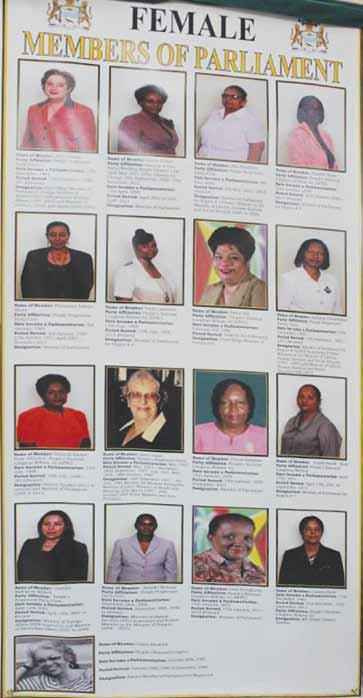
to commemorate Guyana’s independence, which was achieved May 26, 1966.
The Independence Day exhibition is being held under the theme “Guyanese Womanhood and the Struggle for Development”. The exhibition recognises the contributions of Guyanese women pre and post independence.
It highlights the role of women in the sugar industry and trade unions, focusing on their economic contribution. It also celebrates the female members of parliament beginning with the three Js – Janet Jagan, Jessie Burnham and Jane Phillip-Gray – who paved the way for present-day female MPs.
The exhibition runs until June 8 and is open to the public.
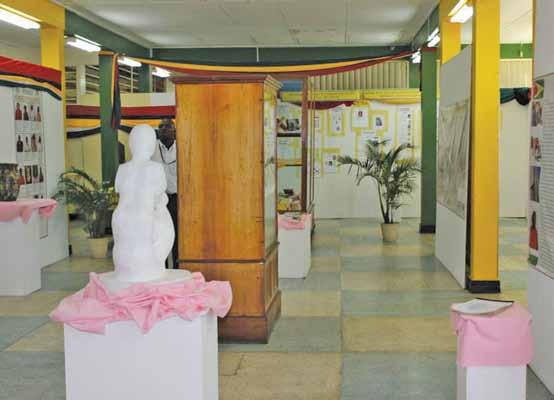

By Melvin Durai
The U.S. Congress is debating an immigration reform bill that would not only offer a path to citizenship for millions of undocumented immigrants; it would also allow more people to immigrate based on their skills rather than their family relationships. To give everyone a better understanding of the bipartisan bill, well-known immigration attorney Kyle Ganguly agreed to take questions during a chat session at HelloGreenCard. com. Here is an edited transcript:
Question: I work at a flower shop, cutting stems of roses and other flowers. I heard that the new immigration bill will offer green cards to workers in stem fields. It sounds too good to be true. Is it? — Maria, Los Angeles.
Answer: The immigration bill does make it easier for STEM workers to get green cards, but STEM stands for science, technology, engineering and mathematics. Do you count the stems after you cut them? If so, you may qualify under ‘mathematics.’ Do you have an advanced stem degree? If not, I’d advise you to acquire one right away. You may do so at our affiliated website HelloPhD.com. Act quickly. For a limited time, all degrees are ‘buy one, get one free.’
Q: I have been illegal since 1992, when I came from Guatemala. My friend says the immigration bill will allow me to become a citizen in 13 years. So I want to ask you this: why did they pick an unlucky number like 13? Why not 12 or 11? I am afraid that after 13 years, they will say, “April Fool! This is just a joke. Now go back to where you came from.” — Manuel, Chicago.
A: I wish I could tell you why they picked the number 13. Maybe the Democrats wanted 6 and the Republicans wanted 20, so they compromised at 13. But if you don’t like the number 13, do you want them to postpone the immigration bill until 2014? I didn’t think so.
Q: I am in America for last 8 years. I am hear that to become citizen I needing to pass English test and
Civic test. Can I take Civic test on any Honda Civic or do I needing my own? — Hideo, New York City.
A: It is actually a Civics test, not a Civic test. That means you need to take the test on two different Honda Civics. One should be automatic, the other manual or stick shift. The government wants to make sure that all immigrants can drive safely in Japanese cars.
Q: I heard that the new immigration bill allows illegal immigrants to get “registered provisional” status if they have a job and haven’t committed a felony. I once dated a woman named Felony. Could that be held against me? — Robert, Salt Lake City.
A: As long as you weren’t committed to Felony, you probably have nothing to worry about. But just in case, I would advise you to begin dating a woman named Angel, Innocent or Purity.
Q: The immigration bill says that, as an undocumented immigrant, if I become a “registered provisional,” I cannot get any “means-tested public benefits.” What does “means-tested” mean? Are they just trying to be mean to us? — Haroon, Atlanta.
A: Here’s what it means: if you don’t have the means to support yourself, the legislators don’t mean for the government to give you even a mean amount of help. By no means should you take this to mean that the government is being mean.
Q: I came to America in 2002 on a student visa, but dropped out of college and have been working on a farm. Then, in good faith, I married an American citizen to get a green card, but after we were married, I found out that she wasn’t American – she was Armenian. She was marrying me to get a green card (I had told her I was African-American, which was only half-true). We are both illegal now. Will the immigration bill help us? — Goodwell, Nebraska.
A: Yes, you may be able to qualify for “provisional status” under a relatively unknown section of the immigration bill entitled “Amnesty for Agricultural workers from Africa married to Armenians.” It is in Section 4 on Page 565 of the 844-page bill, part of an article titled “Stuff to Make This Bill Look Big and Impressive.”


A turtle was walking down an alley in New York when he was mugged by a gang of snails. A police detective came to investigate and asked the turtle if he could explain what happened. The turtle looked at the detective with a confused look on his face and replied “I don't know. It all happened so fast.”
Questions for kids
What do you call a bee that is having a bad hair day?
A Frisbee!
What do you get when you cross a sheep and a bee?
A bah-humbug.
Why did the elephants get kicked out of the public pool?
They kept dropping their trunks.
Snake's New Glasses
An old snake goes to see his doctor. "Doc, I need something for my eyes. Can't see well these days."
The doc fixes him up with a pair of glasses and tells him to return in two weeks.
The snake comes back two weeks later and tells the doctor he's very depressed.
Doc says, "What's the problem -- didn't the glasses help you?"
"The glasses are fine, Doc. I just discovered I've been living with a water hose the past two years!"
Interesting Facts
Q. What do bulletproof vests, fire escapes, windshield wipers, and laser printers all have in common?
A. All invented by women.
Q. What is the only food that doesn't spoil?
A. Honey
Q. There are more col lect calls on this day than any other day of the year?
A. Father's Day
Q. What trivia fact about Mel Blanc (voice of Bugs Bunny) is the most ironic?
A. He was allergic to car rots.
A young guy from Texas moved to California and went to one of those big "everything under one roof" stores looking for a job. The manag er asked, "Do you have any sales ex perience?"
The kid said, "Sure, I was a sales man back home in Texas."
The boss liked the kid so he gave him the job. "You start tomorrow. I'll come down after we close and see how you did."
His first day on the job was rough, but he got through it. After the store was locked up, the boss came down to see how things went.
"How many sales did you make to day?"
The young man replied without hesitating, "One."
The boss said, "Just one? Our sales people average 20 or 30 sales a day. How much was the sale for?"
The kid said, "$101,237.64."
The boss said, "$101,237.64! What did you sell?"
The kid said, "First I sold him a small fish hook. Then I sold him a medium fish hook. Then I sold him a larger fish hook. Then I sold him a new fishing rod. Then I asked him where he was going fishing, and he said down at the coast, so I told him he was gonna need a boat, so we went down to the boat department and I sold him that twin-engine Chris Craft. Then he said he didn't think his Honda Civic would pull it, so I took him down to the automotive department and sold him that 4x4 Blazer."
Amazed, the boss said, "A guy came in here to buy a fish hook and you sold him a boat and a truck?"
"No, he came here to buy a box of necessaries for his wife and I said, 'Well, your weekend's shot; you might as well go fishing.'"
(A paraprosdokian is a figure of speech in which the latter part of a sentence or phrase is surprising or unexpected in a way that causes the reader or listener to reframe or reinterpret the first part.)
The early bird might get the worm, but the second mouse always gets the cheese. Time flies like an arrow, fruit flies like a banana.
I wondered why the baseball was getting bigger. Then it hit me.
I try to watch what I eat and yet my eyes just aren't quick enough.