

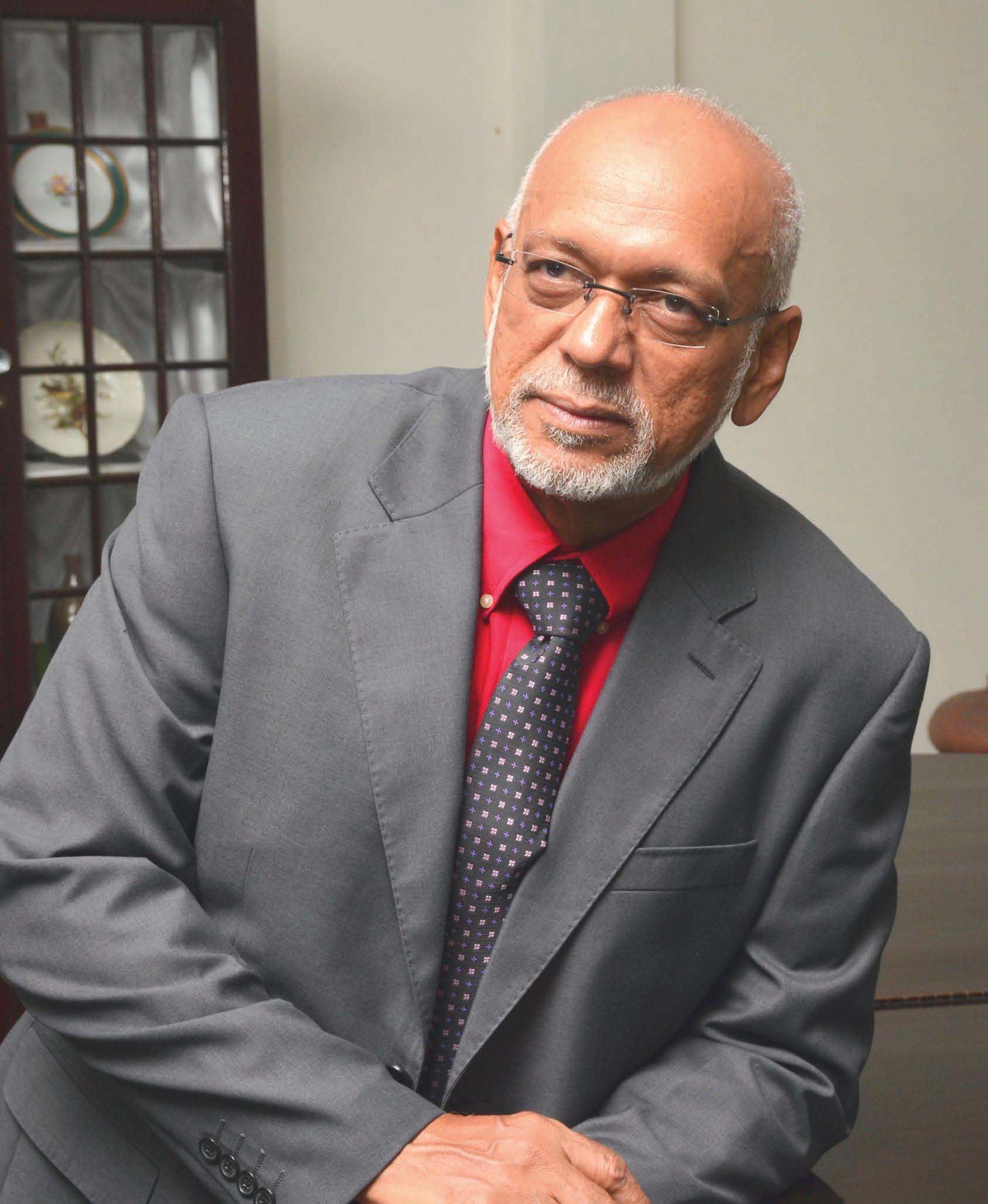

GTimes: Mr President, I would like to thank you on behalf of the Guyana Times for consenting to this interview for our Supplement that will be reviewing your Presidency.
President Donald Ramotar: Thank you for the offer very much.
GT: Could you use one word to characterise your experience in your first term of office, since November 2011?
PDR: Challenging. I would say that the last three years have been “challenging”.
GT: Could you elaborate?
PDR: When the electorate took us into “uncharted waters”, in the words of Ashni (Singh), following the last elections, rather than accept my olive branch to work together to develop our country, the APNU and AFC instead went on an offensive to seize my Executive powers that were conferred by the Constitution.
TRIPARTITE OLIVE BRANCH
GT: What was that “olive branch”?
PDR: With the APNU and AFC together having one seat more than the PPP/C in the National Assembly, I felt it best to create a mechanism whereby I would have discussions with them outside of the Assembly to ensure that we did not end up with gridlock. This was the first Tripartite Talks, where the leaders of the three Parliamentary parties would meet to reach consensus.
GT: What happened?
PDR: The Opposition went against all conventions and seized all power in Parliament – the Speaker and Deputy Speaker, the heads of all Committees. They totally blanked the PPP/C.
GT: Did you abandon the Tripartite Talks then?
PDR: No. We continued to meet – until Granger reneged on his word. In the Budget we were going to gradually increase the electricity tariffs in Linden to match the rest of the country. Granger promised to go along if we would raise the Old Age Pension rate. We agreed. But before you knew it, the AFC went down to Linden, told the people the PPP/C was “spiteful” and Granger was selling them out.
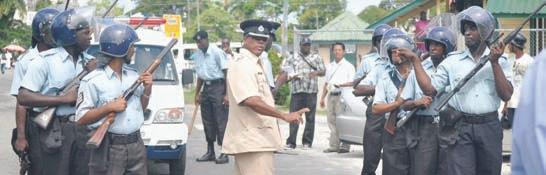
We all know what happened: the APNU and AFC blocked the Bridge, burnt down buildings and schools, stopped all traffic into the interior - and most horrifyingly caused three persons to be shot to death. That was the last straw. When a leader will break his solemn word just to play politics, you cannot trust them. Granger and Nagamootoo cannot be trusted.
GT: What were some of the other challenges?
PDR: Very quickly we realised that it was part of a larger plan when Granger rejected Nagamootoo as the AFC candidate for the Speaker and picked Trotman on their own. With the connivance of Trotman, the APNU and the AFC were allowed to unconstitutionally chop the Budget. When we went to the Courts to stop them imagine Trotman had the nerve to say the courts didn’t have jurisdiction.
The CJ handed down an interim decision which allowed us to submit Supplementaries for the $20 billion they had chopped. And two years later he affirmed his decision. But by then the damage had been done with programmes delayed and some having to be abandoned. Especially the LCDS programmes benefitting the Amerindian people.
GT: But why would the APNU and AFC do this?
PDR: For the simple reason that they are only interested in power to get their hands of the Treasury. With their one-seat majority, they were willing to trample on the Constitution through which we won the Executive. Spending can only be done by the Executive. They were never interested in Guyana’s welfare.
GT: Could you give an example to show what you mean?
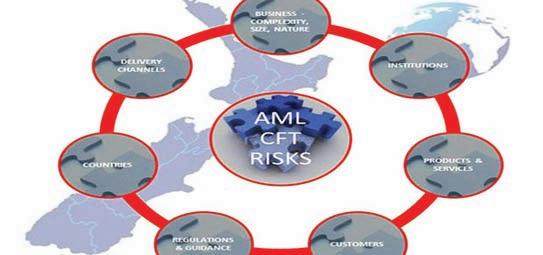
PDR: Nothing exposes their anti-Guyana bent than what they did on the Anti Money Laundering/Countering
the Financing of Terrorism (AML/CTF) Bill. In this seamlessly integrated modern financialised world, no country can afford to be blacklisted by the FATF, which is established by G-20. What it means is that our finances will be scrutinised so closely that our dealings with the rest of the world will grind to a halt.
At no time did either APNU or AFC say they had a problem with the details of the Bill that had been requested by the entire financial community and all our friends in Caricom and the developed nations. But they just held us to ransom to get what they wanted for themselves.
GT: Mr President, for a change of pace, you have been heavily criticised for the performance of the sugar industry because you had been on the board of GuySuCo when the Skeldon Modernisation including the troubled Skeldon Factory was implemented.
PDR: Let me tell you that the Skeldon Modernisation was part of the 1998 Sugar Strategic Expansion Plan that was agreed to by all stakeholders. The goal was to reduce the cost of production by expanding production in the most agriculturally suitable Berbice Region to exploit efficiencies of scale. The Plan was solid...that is irrefutable and as a member of the Board, that is what we were responsible for. The Skeldon Factory has definitely been a disappointment in terms of its performance but everyone has 20/20 vision in hindsight.
GT: The charges of “corruption” have also been made against your Government.
PDR: I have always said that there is corruption which we have to root out. You have to understand that we inherited a system that was corrupted through and through by the PNC. It had become a deeply ingrained habit in people to offer bribes for anything – even a driver’s licence – and for officials to accept.
We have been trying to address this over the years and we will set up a Special Investigation of Corruption body with powers to investigate corruption and prosecute crimes of corruption. We will also introduce a confidential complaints body to encourage people to report incidents of corruption – both those that offer bribes and those that take bribes. For this government officials that take bribes there will be a code of conduct that if violated will result in dismissal.

GT: The rice farmers have been complaining about poor prices. How can that be addressed?
PDR: This is party due to our own success in improving production. Firstly, we have improved the yields tre-
mendously by introducing several high yielding varieties such as GRDB 9,10,11 and up. Combined with the improved Drainage and Irrigation (D&I) that we have extended –yields of paddy has increased tremendously.
But with the end of the Rice Marketing Board arrangement and the introduction of private enterprise mechanisms, marketing the increased production - this year it will be more than 600,000 tons - is a challenge. But let it not be forgotten that it was the PPP administration, my predecessor President Jagdeo, who brought in the Venezuelan market which is now our largest.
We are actively seeking new markets. And let me say this, I will be instituting a permanent Marketing Unit (MU) in the GRDB that will be solely concerned with opening up markets and giving us feedback of market demands. Some may say that we will now be competing with the private exporters but so be it: competition was always good for private enterprise.
Secondly, we will be also introducing a fund to ensure stability of rice and paddy prices as well as ensuring that farmers are paid expeditiously – the RICE PRICE SUPPORT FUND (RPSF).
GT: But where will this money to service this RPSF come from?
PDR: This will be primarily from allocation from the Consolidated Fund. We will start by providing annual allocation to the RPSF. Further, after almost seven decades we finally have the petroleum potential of Essequibo being exploited. As you know, it had long been known that there are huge reserves of oil in the deep waters off the coast of Region Two – some say it amounts to over 13 billion barrels. This is one of the largest deposits in the world. But because of the Venezuelan controversy over our border, the oil companies stayed away.
Back in 2000 when the Surinamese seized CGX rig in the East, Exxon which was supposed to start drilling in the West, walked away. But now they’re back and announced last week that they are certain of success.
Well, you may ask, what this has to do with rice? Everything. We plan to place our oil revenues into a Sovereign Wealth Fund that will underwrite our development plans. Our RPSF can be further financed from our Oil Sovereign Wealth Fund. The Jubilee Field off Ghana took just three years from location of oil to production.
Between now and then we propose setting up the RPSF on the modest side with our own funds.
CAPITALISM WITH A HUMAN FACE
GT: This sounds revolutionary and somewhat socialistic.
PDR: But it is absolutely not so. The very capitalistic US, EU and S Korea have schemes in which there are implicit subsidies to stabilise their farm output. It is capitalism with a human face! We support the private enterprise system but it must be regulated to benefit all society
GT: Last but not least Mr President, what about the security question?
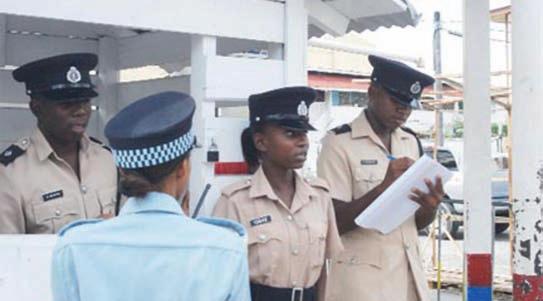
PDR: No that is certainly not least. Security has always been extremely high on our agenda. And it’s not just the ordinary banditry and crime against which we have spent untold billions on completely revamping our Guyana Police Force to confront. Some people have forgotten that between 1998 and 2008 – a whole decade – we faced an armed insurrection against the state by gunmen linked to the Opposition. Dozens of Policemen and hundreds of civilians were killed. Even a Minister of Government, my good friend Sash Sawh was gunned down along with his family. But our professionalised force destroyed the gangs and brought stability to the country.
As for other types of crimes, we have crafted a Strategic Plan being implemented by the Police and overseen by a civilian team, we have created a SWAT unit, we have provided extra training, refurbished stations, provided hundreds of vehicles, etc to the force. We will add another 1500 police ranks.
The Minister of Home Affairs cannot interfere with operations. He can only set policy. We expect the Police will do their job or they will have to be replaced.
GT: Thank you, Mr President
PDR: You’re welcome.
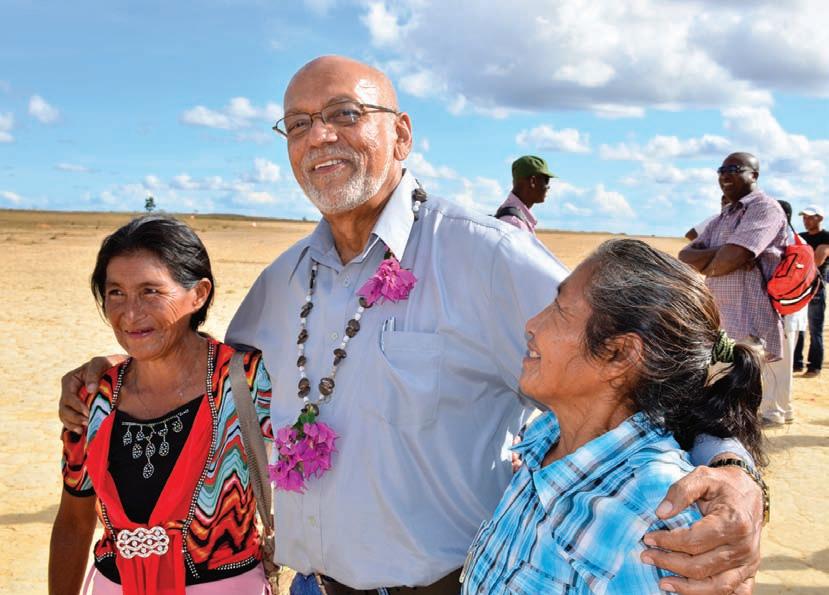
Donald Ramotar is no newcomer to the Guyanese political scene. Joining the PPP in 1967 at the age of seventeen and then employed at the party’s commercial venture GIMPEX in Georgetown, he would have been in the thick of politics by the 1968 elections. To be appointed manager of Freedom House by 1975 at the age of 25 meant that he had earned the confidence of Cheddi Jagan and the other senior leaders, over most of his peers, two of whom are bitterly resentful of him today. He was in the eye of the storm during the fateful 1973 elections.
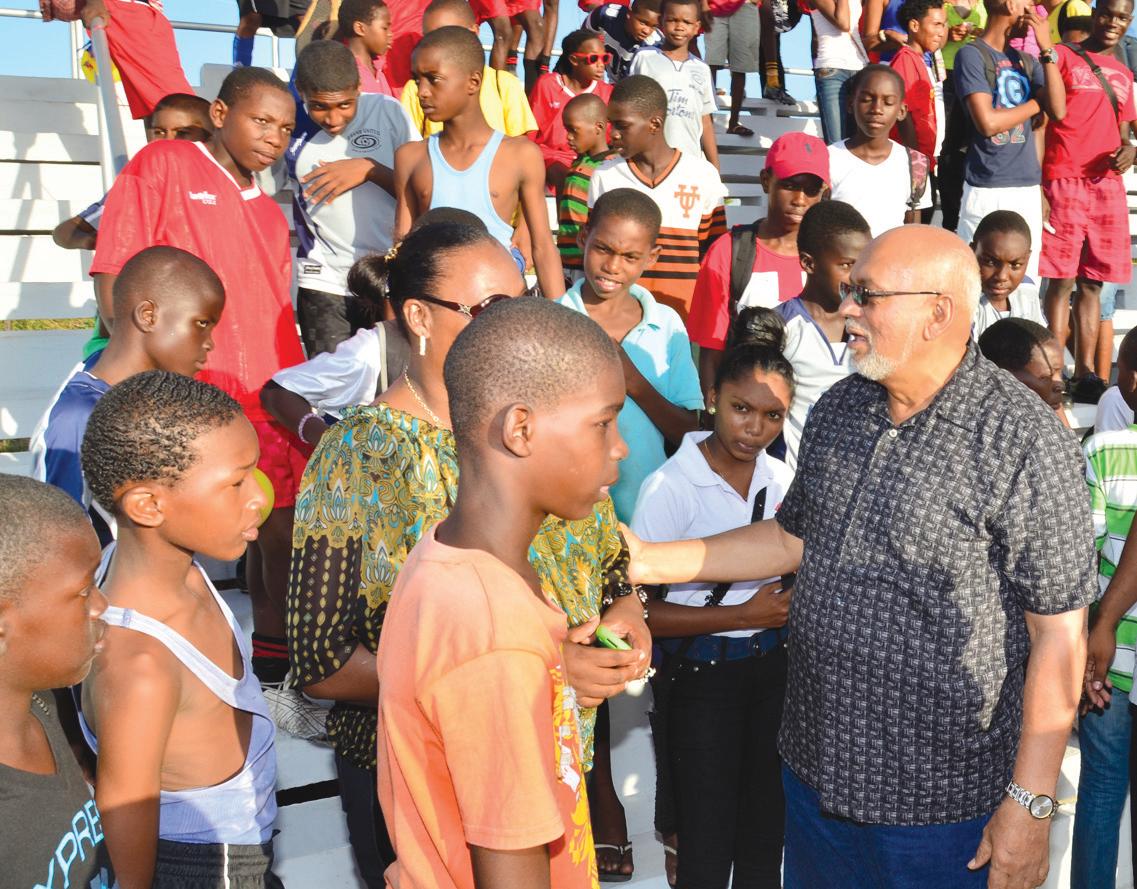
In 1977, when a wide swath of the party crossed the floor and joined the PNC, Ramotar remained with the PPP and in fact in 1979, was elected to the party’s Central Committee and then to the Executive Committee in 1983. These were tumultuous times in the history of the country and treacherous years for the PPP. A time of bannings; a time of jailings and a time of protests. A time for moulding young leaders.
In the PPP’s internal program of leadership development, Ramotar was then
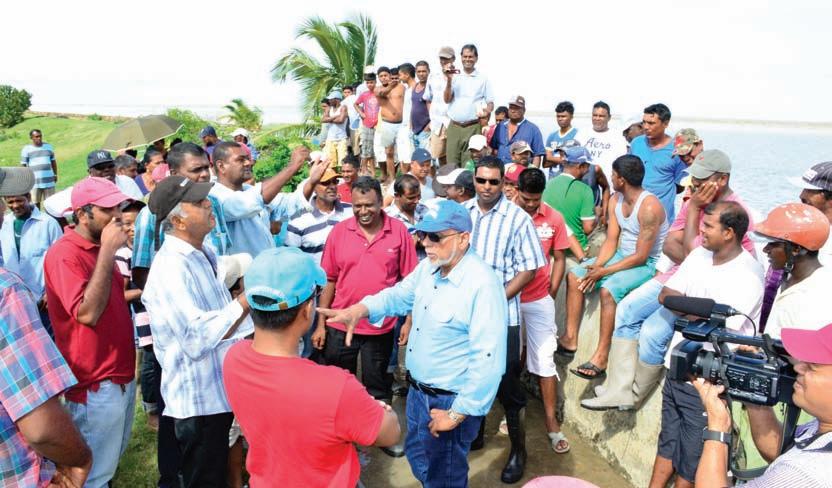
given exposure to the international scene. Not as a student buried in classrooms and books but as a member of the Editorial Council of the magazine ‘Problems of Peace and Socialism’ in the eastern bloc for five years to 1988. He understands how the international order functions. That hard-earned perspective was harnessed to the local cause when he served as the International Secretary of GAWU) between 1988 and 1993.
It was during this period when the struggle for free and fair elections was intensified and eventually won, that Ramotar’s internationalist outlook proved invaluable, as was his groundings with the sugar workers. Once the party prevailed in 1992 and returned to government, Ramotar was appointed as Executive Secretary of the PPP. It is vital to understand the thinking behind this move by Dr. Cheddi Jagan and the later one by his successors in 1997, when Ramotar was made General Secretary of the party.
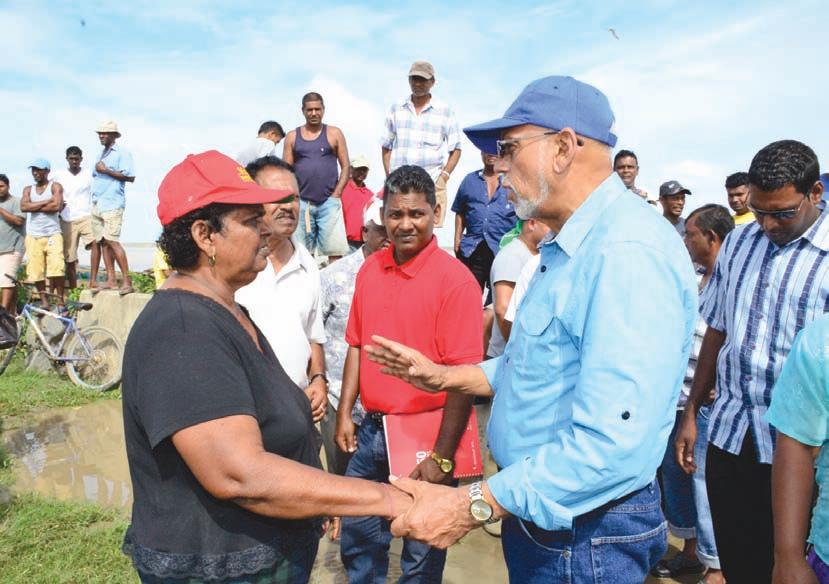
In the world-view of Dr Jagan, the party, its work and its relationship with the people – the responsibility of Ramotar - were as important as the party’s overseeing governance of the state. The success in the latter was impossible without the solidification of the former. Ramotar’s parliamentary experience is emblematic and offers some possible insight into his style and substance, not only in the upcoming hustings but in his presidency if, as widely predicted, the PPP wins the next elections. His presentations have always been cogent but never doctrinaire: laced with facts that betray his training in economics but grounded in the concerns of the average Guyanese for whom he has struggled for so long. However, it has been his good-natured banter with the opposition that suggests while he can be a formidable political opponent, the level of vitriol might be lowered so as to encourage better relations across the benches. As a member of the key Economic Relations Committee in the reformed Parliament, he would bring a unique perspective based on experience, in working with the opposition for the development of Guyana. (Sadly he was rebuffed by Granger and Ramjattan.)
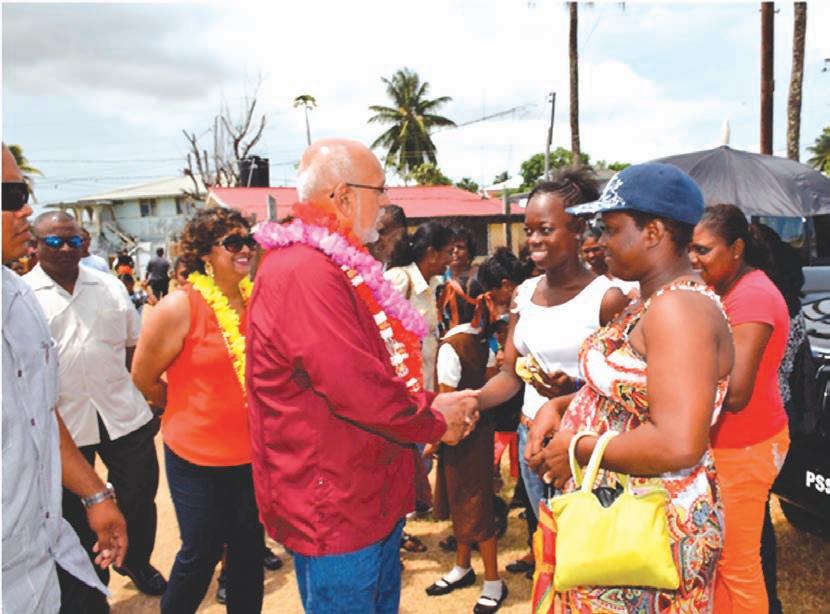
The success of the PPP under the Jagdeo regime in stabilising the economy and bringing it to the cusp of exponential growth needs a particular style of leadership at this moment: one that can inspire all Guyanese to put their shoulders to the wheel and move ahead. Ramotar’s humble beginning from the Essequibo River, out of a family that combines all the peoples of this land, can stimulate that unity of purpose not through fancy rhetoric but through who he is. A man of the people.
President Donald Ramotar told Alexander Village residents, “I do not want to be President if I cannot do things to uplift the welfare of my people. Speaking to the very large crowd that gathered at Third and Cross Streets in the village, he said over the last three years the Opposition had stifled development in the country. “Some $89 billion was cut from the budget in very important areas that were allocated to be spent to improve the welfare of the people. They set out to deliberately damage Guyana,” he said.
He continued to list benefits to be had from the Amaila Falls Hydro Project, and declared that this project was vital for the rapid growth of our economy and further development of Guyana. He said that with the return of the People’s Progressive Party/Civic (PPP/C) Government, the hydro project would be high on the Administration’s agenda.
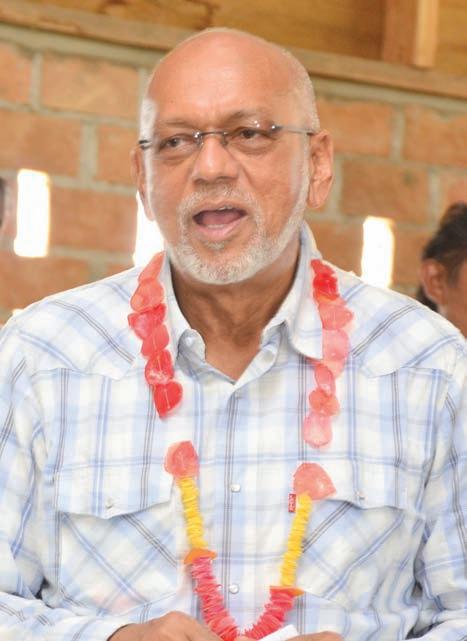
The Head of State noted that in all aspects of this project, “We will create new jobs. we will not be a Third World country that is short of investments, where we will have cheap labour; but we will be able to attract the high-end investments because we will have a highly educated population (that is) capable of handling sophisticated equipment.”
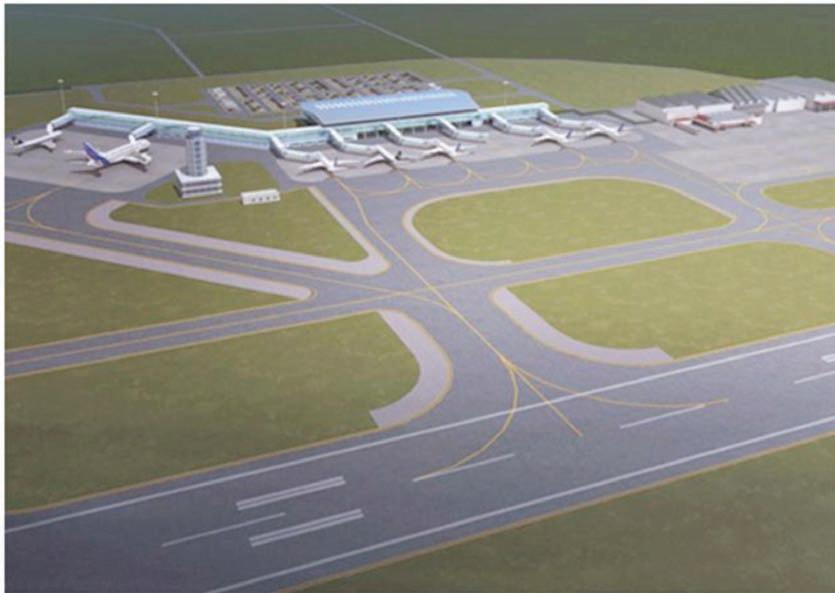
President Ramotar noted that one major project that seeks to improve further the lifestyle of Guyanese through the development of the Tourism Sector is the expansion of the Cheddi Jagan International Airport.
“In the 2013 budget, the Opposition voted for the new airport and we started to build; and in 2014 they voted against giving the money for airport expansion” he noted. The President also spoke at length on the consequences the country will face because of the non-passage of the Anti-Money Laundering (AML) Bill; he explained that the only people set to benefit from the non-passage of the bill were the criminals who are friends of the Opposition.
“The international community can blacklist your financial institutions. It is not accidental that they voted against the AML Bill because they have long standing relationship with criminals. These people do not care for development they only seek power. I do not want to be President if I cannot do things to uplift the welfare of my people,” he said.
President Ramotar noted that this is why “we have been investing in our people! We are the only country in the Region where more than 30 per cent of our budget goes to the social sector — to education, health, housing and water.”
President Ramotar highlighted all the achievements of the education sector, noting the recent $10,000 per child programme and the ongoing hot meals programme. He also noted the free textbook and exercise book distribution and the school uniform vouchers. These programmes, he said, were all implemented to assist parents in having their children remain in school so that Guyana’s population would be an educated one. He reassured farmers too that, under this Government, they will continue to benefit from a higher quality of life.
President Ramotar also disclosed plans for the rice industry. He noted: “We have not forgotten you, but have been fighting for you all along. We will continue to search for higher paying markets for our rice; we will work to create a system of price support to ensure our farmers have a more predictable and better standard of living,” he said.
He also spoke on the critical importance and absolute imperative of the Specialty Hospital, and how vital it is for the Guyanese people.
The President noted too that “very soon I will be visiting the rig on our shores and Guyana will very soon be an oil and gas producing country. We are preparing our people for this by providing them with access to technical education.”
“We in the PPP/C have been standing by you all these years, Stand by the PPP/C, and stand by me and let’s return the PPP/C to a majority Government,” President Ramotar urged his supporters.
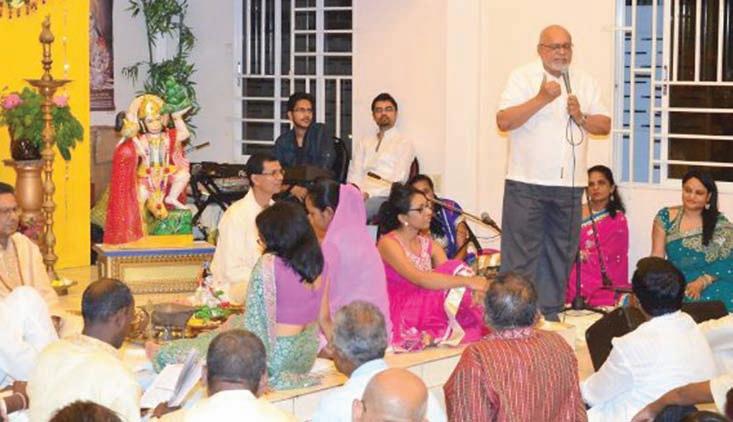
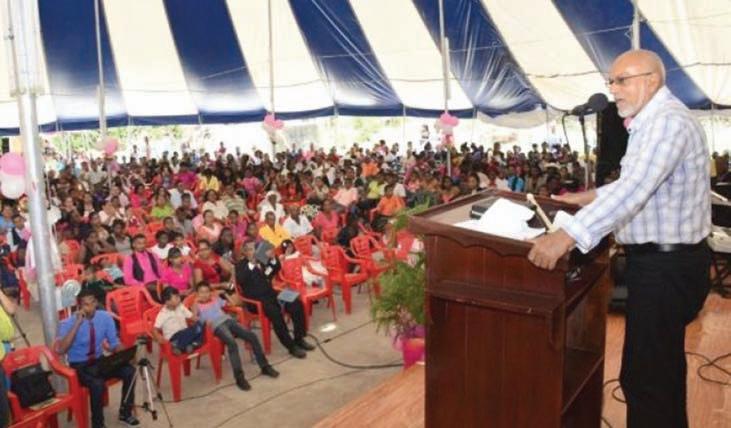
“Not only will we continue to provide the social services for you and your children, but for the sugar industry as well — the industry that has been responsible for having all our people here. We will ensure the survival of this industry, and, over the next five years, we will invest a minimum of $20 billion for its survival.”
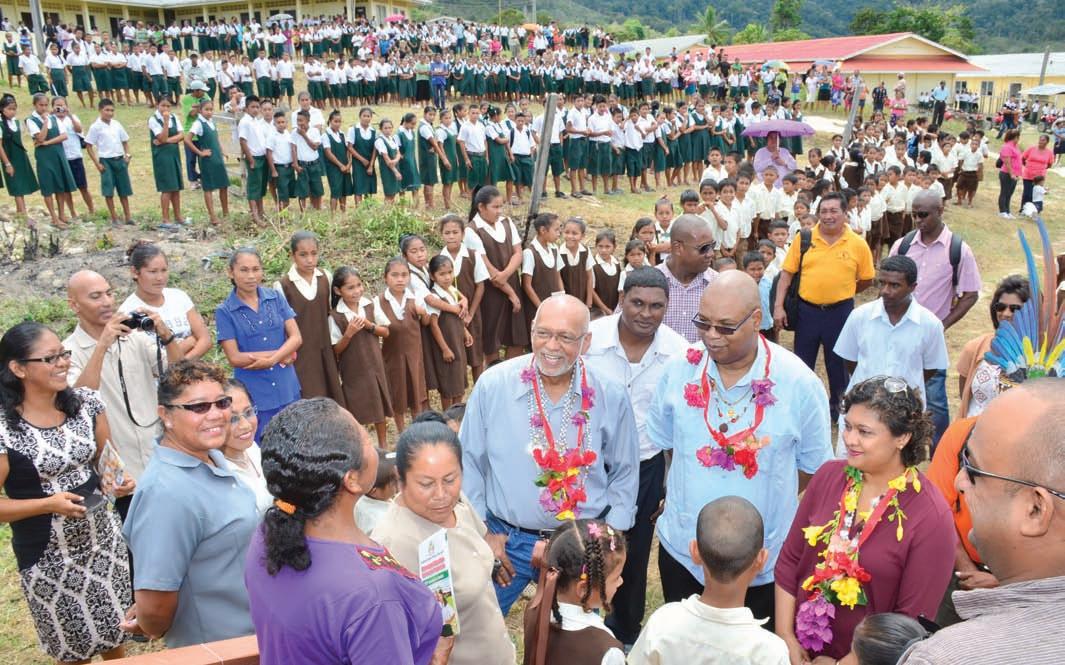
Guyana has had much success in the field of education. This is evidenced by the tangible improvements we have seen in: infrastructure, the percentage of trained teachers, high enrolment ratios across all levels, results at national and international exams, increased interest and attainment in the sciences, and access to technical, vocational, and tertiary facilities.
Our boys and girls from all across Guyana have been celebrated as the most outstanding CXC students in the region over the last few years. We intend to build on these gains, inclusive of ensuring that we sustain the high levels of investment in the education sector, which increased by 14.7 percent in the national budget for 2014.
In this New Year, we intend to pass a new Education Act that has already been tabled in the National Assembly but sadly, has been delayed by the destructive, unprogressive politics of the opposition.
In this new bold piece of legislation, the first we have endeavoured to pass in the sector since Guyana gained her independence, we shall set the outlook for the future in education.
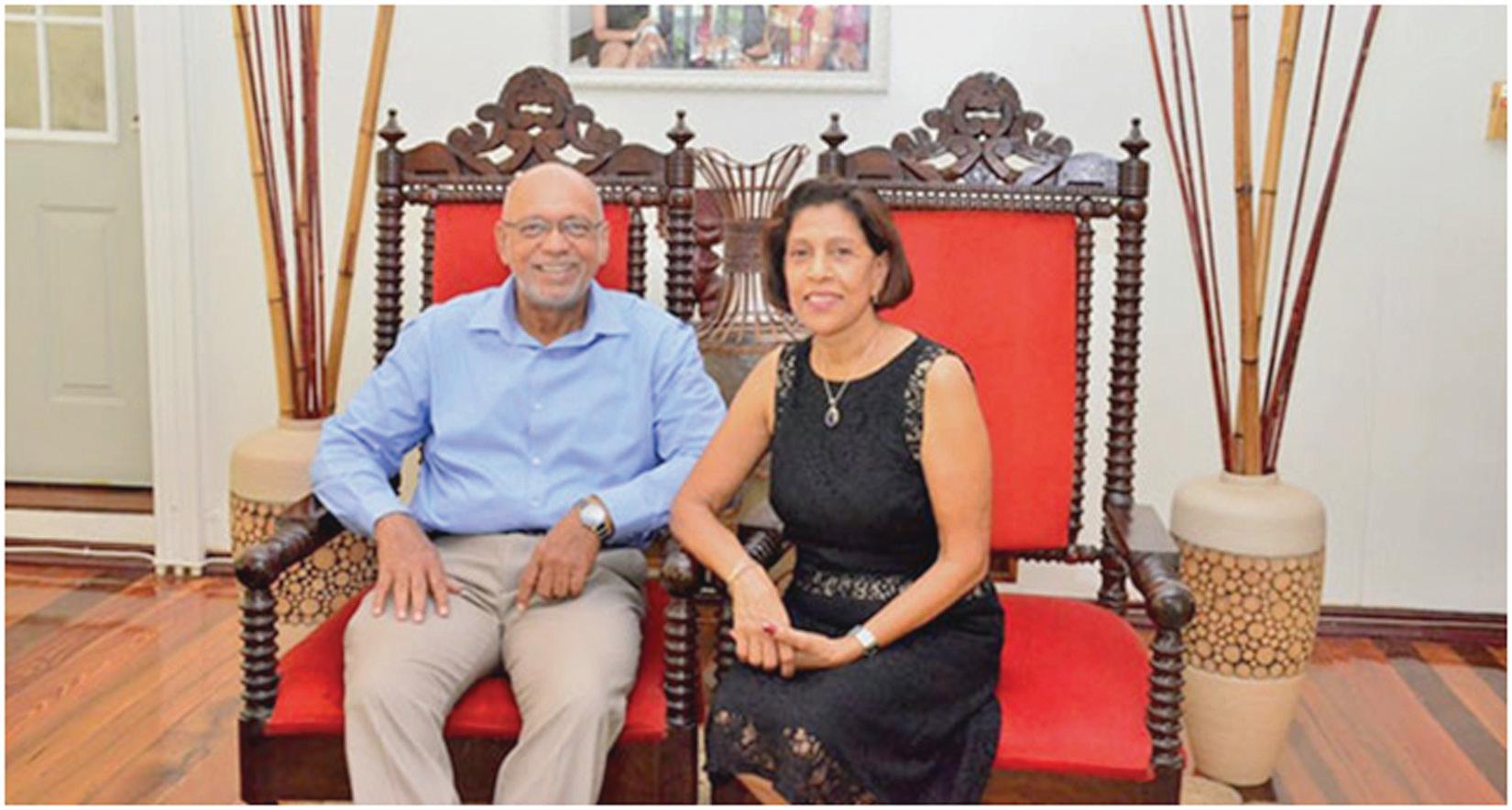
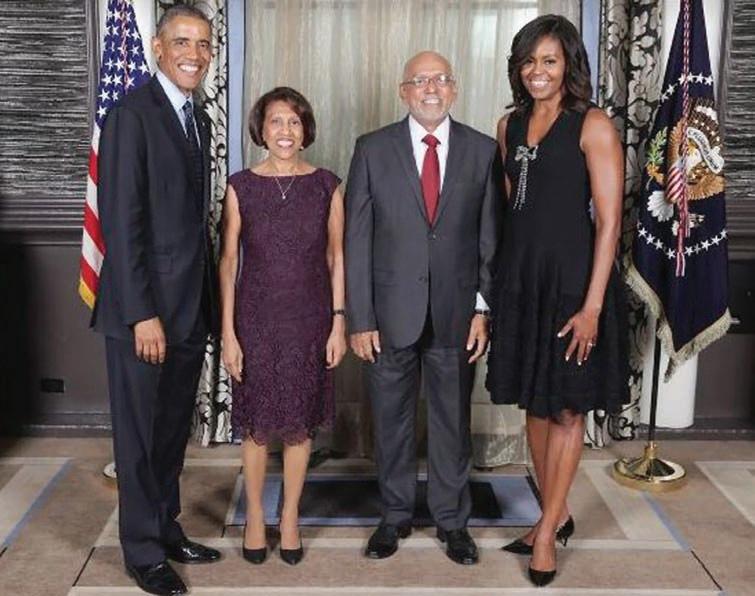
First Lady, Deolatchmie Ramotar extols her husband, President Donald Ramotar, for his humane, humble, considerate, caring attitude towards people, recalling his role as father singing their baby children to sleep while she worked as a nurse at a city hospita
President Ramotar played a hands-on role raising their three children, staying up late at nights to baby sit, singing the children to sleep when they were babies, Mrs. Ramotar said, and taking care of the home while she worked as a nurse. The three children - the eldest being daughter Lisaveta Valantina, and sons Alexei and Alvaro Mario - are all now adult professionals.
He knew she disliked being in the kitchen alone, and so he joined her, working along with her to cook meals and do kitchen chores.
She described the President as an outstanding family man, with a character built on the rocks of humility, compassion and thoughtfulness.
These days, when he returns home at State House from the Office of President at night, after she would have retired to bed, he washes his own dishes that he used for his lunch, and puts them away.
The First lady revealed a side to President Ramotar that’s full of humanity and excellence of temperament.
Looking relaxed, at peace and comfortable with each other, with Mrs. Ramotar glowing and holding the hands of President Ramotar as they sat side by side for the television interview, the First Couple said when they got married 40 years ago they could not have envisioned becoming Guyana’s First Family.
They focused on building a life together, and in loving each other. Today, they both say that their love is intact and strong, with President Ramotar noting that they have become great friends and share “everything” with each other.
Not only are they the First Family of the nation, but their marriage is a role model for the Guyanese people, although President Ramotar said he would not want to uphold any particular way as the formula to achieve success in marriage and life. Everyone, he said, has their unique circumstances to deal with in life.
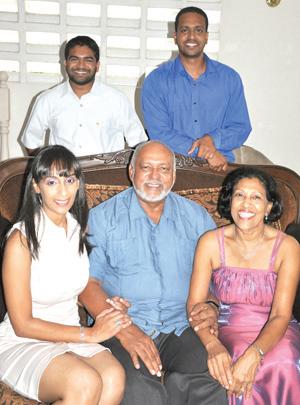
But they both underlined certain core values that work together to build a successful marriage and life. Some of these include absolute trust for each other, tolerating each other’s shortcomings, always communicating, remaining humble, and most importantly, allowing each other space to grow individually and to pursue individual careers and dreams.
To this end, Mrs. Ramotar understood what would constitute a life in politics, and so when her husband came home late or had to dedicate time to political work, she understood, and supported him.
However, there were times when she felt “angry” at him, but, instead of fuelling a fight, the President simply communicated with her, telling her about his day and engaging her in conversation.
She said President Ramotar is an excellent communica-
tor, and always shows deep consideration for the feelings of others.
Her praise for him as an adoring father and outstanding husband flowed from her heart of gratitude and contentment for a life well-lived.
As the First Couple celebrated their 40th marriage anniversary, President Ramotar said “in reflection” he has a lot to be grateful for, and praised Mrs. Ramotar for her understanding nature, and for standing by him through long years of poor pay and long nights out on the political field.
The couple got married on November 5, 1974, and remembers riding their bikes through the streets of Georgetown looking for an apartment. They eventually found one in Alberttown, ordered furniture, and embarked on their journey of life together.
However, the first night they lived in the apartment, they had to sleep on the floor, on cloth bags that their friends provided, because the furniture was not yet delivered. The bed arrived a few days later, and their amazing voyage from humble Essequibo kids falling in love on the ferry traversing the Demerara River in 1973 to State House and the Presidential Office got underway.
Today, the nation’s destiny lies in the hands of their character of personal humility and humble service, their inner values and principles, and the First Lady, in a sombre voice, with an authentic tone of belief, said she knows that her husband would succeed as President of their country, just as he succeeded as father, husband and family man.
She said President Ramotar’s care and consideration for people, his humility and humanity, his constant reaching out to understand and lend a helping hand, would serve Guyana well.
President Ramotar said he is contented and thankful for achieving the milestone of their 40th wedding anniversary, and noted with his usual humble attitude that this achievement is not “unique” in Guyana, as many couples in the country celebrate long marriages. He agreed with Mrs. Ramotar that they achieved everything they ever wanted to, all their dreams, and now look forward to grandchildren and “another 40 years together.”
The President said his focus now is on his contributions to the nation.
The one who knows him best, who has been his constant companion and knows his heartbeat, Mrs. Ramotar, said she has full confidence that he will use the same qualities that made him such an outstanding family man to govern Guyana with success and amazing, inspiring results.
President Donald Ramotar supports the World Bank, the IDB and the example of every economy that transformed themselves in the 20th and 21st century that infrastructural expansion is a prerequisite for engendering double digit growth rates in the economy.
Public Works Minister reiterates need for CJIA expansion
Minister with responsibility for the country’s transportation sector, Robeson Benn has once again reaffirmed the importance for the upgrade of the Cheddi Jagan International Airport (CJIA).
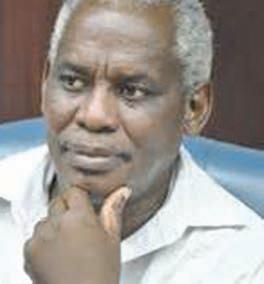
Speaking on the National Communications Network’s “Political Scope” Minister Benn yet again underscored that the upgrade is in response to the growth in international air travel.
With this rapid growth in the international aviation sector, the Minister pointed out that there is need for an expanded runway, more terminals and other structures.
He added that with larger aircraft now tapping into the local market, there is the need for a longer runway, as he pointed to the incident, when a Caribbean Airlines plane overshot the runway at the CJIA in July 2011.
“Even though we spend monies on expanding outgoing areas that are now too small and inefficient, when you have two or more aircraft on the ground, we have to expand … it is important.”
Speaking of instances, when members of the Opposition were criticising the project, he said their proposed idea was still not feasible.
Former Alliance For Change (AFC) Member Gerhard Ramsaroop, while criticising the initiative had suggested that the Government altogether abandon the CJIA project and begin construction on a new state-of-the-art airport, on the West Bank of the Demerara River.
But the Minister rubbished this suggestion, stating that it would cost the Government more to start a new airport.
Minister Benn explained that given the location that Ramsaroop suggested, a new bridge would have to be constructed across the Demerara River.
Speaking of financing for the project, Minister Benn said the question of the loan revolved around those who were willing to grant Guyana ‘lines of credit’ at advantageous rates in terms of interest for the project.
“We had, just about that time in 2012, a China-Caricom Summit, which was a time-bounded event, having to put project towards the delegation, to be able to access funds for projects – the level of financing required for this project only existed under the line of credit, which we were getting from China”.
With the sums of money and the timing of great urgency, Minister Benn said the source of the funding from China was the best option.
Further, he said that it is ironic that the parliamentary combined Opposition parties are not lending their support to the project, given the fact that in 2013, they voted to release funding for initial works. A Partnership for National Unity (APNU) Member of Parliament and General Secretary Joseph Harmon recently acknowledged that Guyana needs an expanded CJIA, contrary to his party’s position.
Minister Benn also dismissed claims that details about the project have not been made available to the Opposition parties.
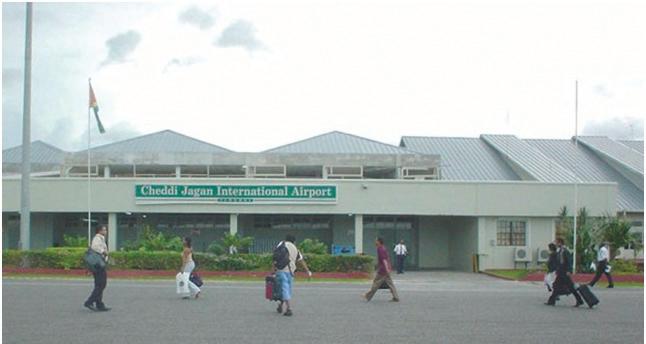
Aviators urge speedy completion of CJIA Expansion Project
Leading agencies in the aviation industry are pushing for the US$155 million CJIA Expansion Project to be completed without further hindrance.
The Opposition in the National Assembly, primarily APNU, has been up in arms against Government’s decision to proceed with the Project.
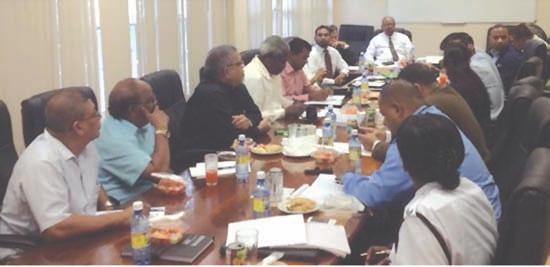
However, during a high-profile meeting with Public Works Minister Robeson Ben, key stakeholders within the aviation sector reaffirmed their commitment to the expansion of the industry, but said the airport must be expanded to mitigate the challenges currently faced.
“We recognise that the Expansion Project is the appropriate response to the dire safety, security and efficiency chal-
lenges faced at the existing facility and pledge to fully lend our support and expertise to advance the progress of the multimillion-dollar national endeavour,” the stakeholders said in a joint statement.
It was explained that the existing runway creates many limitations in safety due to the absence of the Runway Extension Safety Area (RESA) and its inability to accommodate larger widebody aircraft such as the Boeing 747 and 777 aircraft.
The congested terminal and parking space constraints for aircraft were among other issues laid on the table when the meeting was convened.
The airlines said that insufficient parking space for aircraft adversely affects their on-time performance.
“International air travel plays a critical role in the economic and social development of Guyana; hence, there is an urgent need for the continued expansion of the Cheddi Jagan International Airport facility,” the stakeholders posited.
As partners in the industry, the stakeholders have pledged to maintain close ties with the Public Works Ministry and CJIA’s Board and Management.
Caribbean Airlines, Roraima Airways, Insel Air, Dynamic Airways, CONVIASA, Copa, Fly Jamaica, LIAT, Surinam Airways and TravelSpan were the airlines present during the meeting. Other agencies included the Customs AntiNarcotics Unit (CANU); New Timehri Handling Service; Guyana Tourism Authority; GUYOIL; Guyana Civil Aviation Authority; and CJIA.
According to the Government, CJIA’s expansion is a national project engineered to modernise the CJIA into a hub for international and regional travel. This is in keeping with its vision to develop the CJIA into a world-class airport with high standards of hospitality and service.
In June, Finance Minister, Dr Ashni Singh presented to the National Assembly a “Statement of Excess on the Current and Capital Estimates” totalling $4.5 billion for the period ending June 16, 2014. The sum included $1.5 billion which was spent on CJIA’s Expansion Project despite strong objections by Opposition during the consideration of the 2014 National Budget. In response, the Opposition had said that the “controversial project” continues to be funded using taxpayers’ monies although the initial $6.7 billion al-
located was disapproved by the House. 11 countries ready to land flights in Guyana …awaiting completion of CJIA expansion — GCAA Director
Guyana is actively pursuing international airlines to enter the local market, either as a transit point or a destination, said Guyana Civil Aviation Authority (GCAA) Director Zulficar Mohamed. But flights coming from Europe and further afield are ‘long-haul flights’, and given the limited length of the runway at the Cheddi Jagan International Airport (CJIA), such ventures are currently not possible. Mohamed made this disclosure recently whilst giving a performance review of the GCAA in the presence of Works Minister Robeson Benn, department heads, and those in attendance at the Ministry’s Kingston Office in Georgetown. He elaborated that while many countries have expressed an interest in operating in Guyana, the existing length of the runway deters such operations.
He said Guyana attended the International Civil Aviation Organisation (ICAO) Air Services Negotiation event in Bali, Indonesia, and met and held talks with representatives from 13 countries across the world. He reported that Guyana entered into agreements with Canada, China, Curaçao (Kingdom of the Netherlands), Ghana, Iceland, Kenya, Netherlands, Nigeria, Norway, Qatar, Singapore and the United Kingdom, 11 of which can be brought into force if a significant bugbear were removed.
Mohamed said also that, while in Indonesia, the Guyanese team “did presentations which highlighted Guyana, and (we) showed them the development that we are about to undertake.”
He cautioned, however, that “when you talk about airlines operating from Europe and further east, you are talking about long-haul aircraft; without the runway capacity to handle those aircraft, it’s going to be a no-no.”
The GCAA Director reported that while many countries across the world have expressed an interest in operating in Guyana, “we have to ensure that we have the facilities to accommodate them when they’re ready to come…. What we are doing here is that we are laying the groundwork for that.”
With the Agreements in place, he said, the way is paved for those countries to begin operating flights into Guyana when the CJIA Expansion Project is completed.
Substantive Minister Benn, during the course of the performance review, was also asked about the US$150 million CJIA Expansion Project and its funding, since there was no Opposition support for the 2014 allocations. He responded by pointing to the Chief Justice’s recent ruling, which he said guides Government.
“As far as I am aware, the Chief Justice pronounced that they (political Opposition) could not cut the money; that is what I recall,” Minister Benn said.
He was making reference to the budget cuts where, from 2012 to 2014, the political Opposition has denied support for large chunks of the annual estimates that were provided by Finance Minister Dr Ashni Singh.
Benn said all monies expended on the project during the course of last year will be reflected on the requisite documentation for the National Assembly, namely the Statement of Excesses.
“These are funds which are given to us, and we have to use…it has to be used or you lose it…it absolutely has to be spent for the national good,” Benn said.
CJIA Chief Executive Officer (CEO) Ramesh Ghir, in his performance review, lauded the fact that, for the third year, CJIA operations have seen revenue in excess of $1 billion.
Ghir said that the local aviation sector also saw a modest increase in operations, with Caribbean Airlines being responsible for the transit of the bulk of passengers entering and leaving Guyana’s jurisdiction. Caribbean Airlines flew 366,880 passengers in and out of Guyana last year.
TravelSpan, which commenced flights out of the CJIA in December 2013 with a Boeing 767 aircraft, had flown in excess of 32,000 passengers before it suspended operations in September last, citing expenses incurred from the numerous cancelled flights and increased operational costs as the reason for its decision to cease operations.
Fly Jamaica also topped the 30,000 mark in terms of the number of passengers brought in and taken out of Guyana. That airline commenced operating in August 2013.
Other operators landing flights in and out of Guyana include Insel Air and Dynamic Airways, which commenced operations in June 2014; as well as COPA Airlines, Conviasa and LIAT.
Jet aircraft landings in Guyana, according to Ghir, increased from 2,523 to 2,933 last year, due mainly to the introduction of additional flights from COPA, CONVIASA, Fly Jamaica, Insel Air And Dynamic Airways.
On the domestic front, it was reported that during the past year, several local operators were granted permission to expand their capacity with an additional 17 aircraft.
In September 2012, closing in on his first year in office, President Ramotar announced that Sithe Global, the developers of the Amaila Falls Hydro Electric Project (AFHEP), had signed an Engineering, Procurement & Construction (EPC) agreement with China Railway First Group (CRFG). The US$840 million project would be the largest in Guyana’s history, but would reduce the country’s dependence on fossil fuel and its concomitant demand for foreign funds.
When President Ramotar entered office, he was faced with criticism from the Opposition APNU and the AFC that the previous administration had not been forthcoming with the details – financial and otherwise – on AFHEP. The President immediately shared the details with them early in 2013 but no matter what he did the Opposition eventually rejected the project:
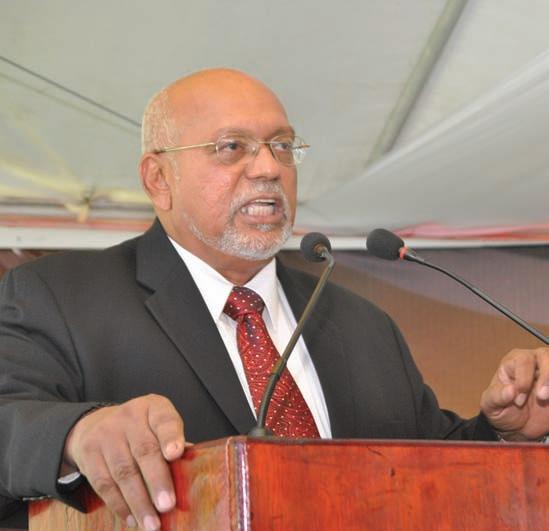
On August 19, President Ramotar made one last unsuccessful plea to David Granger as head of the Opposition.
Earlier this week, I spoke of how I was urging a national consensus in support of the Amaila Falls Hydropower project, and of how it was time to put partisan politics aside in the interests of Guyanese for generations to come.
Towards that end, I spoke with the Leader of the Opposition, Mr. Granger, who said that APNU would only be able to change their position on Amaila if their outstanding issues were resolved.
Mr. Granger said – privately and publicly – that APNU would be stating those issues publicly through a definitive Press Statement on Monday.
APNU have now issued their definitive statement.
APNU’s statement identifies the two main issues which are currently preventing them from supporting the Amaila Falls project:
– APNU’s belief that the Amaila Falls project is likely to ”condemn Guyanese to excessive indebtedness”
– APNU’s belief that the Amaila Falls project will not “provide assurance that the final cost of power to the consumer will be appreciably lower than the current tariff”
I agree with APNU that these two issues are the most important ones.
They are easy to resolve
Therefore, to help build consensus on these two outstanding points, I suggest that Mr. Granger’s team and a team from the Government meet to once and for all settle these issues, and to publicly communicate the meeting’s outcomes.
I hope that it will be possible to jointly agree that:
– On indebtedness, Guyana is incurring no debt from the Amaila Falls Hydro project. That is one of its strongest benefits for the taxpayer.
– On the consumer tariff, Amaila Falls will reduce the tariff paid by GPL for electricity by 40 per cent for the first twelve years after operations begin, by over 70 per cent for the eight years after that and by over 90 per cent for the eighty years after that. This reduction in the GPL tariff will allow two things to happen:
* Removal of the subsidy that the taxpayer has to give GPL today (which is mainly used to offset the cost of GPL’s electricity) – this will save over US$30 million per year, or US$600 million over twenty years, to be invested in other areas such as education, health and roads.
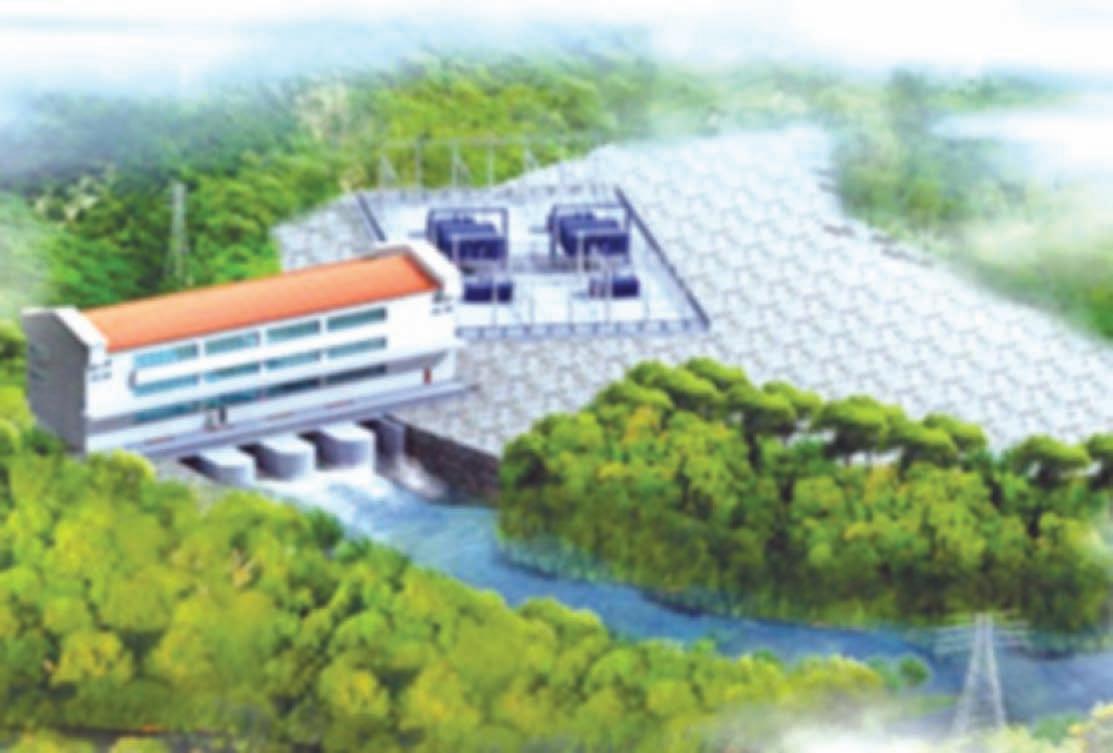
* A pass-through of the remaining savings to the consumer, which will result in a reduction of over 20 per cent in the electricity bills of Guyanese businesses and consumers within two years of the start of Amaila’s operations – and significantly more in the years ahead as GPL’s tariff gets progressively cheaper (unlike with oil and diesel, Amaila’s electricity price decreases dramatically over time). The pass-through of GPL’s progressively cheaper tariff can lead to reductions in the consumer tariff well in excess of 50 per cent of today’s price after twelve years.
After the meeting, if Mr. Granger and his team agree that both their stated concerns are being met, then Guyana can put the rancour of recent weeks behind us, and forge a strong, unified, national consensus in favour of the Amaila Falls project. Because there is still work to be done.
Most importantly, once there is national consensus behind the Amaila Falls project based on the costs and benefits already communicated publicly, then the IDB will be able to complete their due diligence to publicly validate those costs and benefits.
The Government of Guyana invited the IDB to carry out due diligence on the Amaila Falls project some years ago, based on the reality that the IDB possesses technical capacity which is not available in Guyana. All of their work is carried out in accordance with their internationally accepted financial, social and environmental safeguards.
Currently, despite years of work, the due diligence cannot be completed because the developer (who is the one spending the vast majority of the money to do the tasks required by the IDB) cannot proceed without national consensus in Guyana.
Yet, completion of the IDB’s due diligence – and a conclusion that the details underpinning the project are sound – would enable the Amaila Falls project to go to the IDB Board in October.
This in turn would trigger the six-week public GRIF process to release most of the remainder of the taxpayer’s equity contribution to Amaila.
Unlocking the Triple Lock
To summarise: by the end of the year we can open the triple lock that currently stands in the way of the best chance of realising Guyana’s development potential in decades.
Opening the triple lock means:
– Demonstrating national consensus that the people of Guyana want this project;
– IDB Board approval that the project is financially, socially and environmentally viable;
– GRIF Steering Committee validation that the project is in line with Guyana’s Low Carbon Development Strategy and its provisions
These steps in turn will enable final contracts to be signed – at the price agreed for the construction of the Amaila Falls project, which expires on December 31, 2013.
Realising Guyana’s Potential
Unlocking the triple lock would mean that in 2017, Guyana can have clean, affordable, reliable energy. This can transform our economy, and bring benefits to all Guyanese.
To repeat what I said on Monday, the facts are clear: Today, GPL incurs an electricity generating cost of US$19c per kw/h. With Amaila Falls Hydro, GPL’s cost of electricity can be dramatically reduced, to:
– 11c per kw/h in the first twelve years, 40 per cent less than today
– 5.6c per kw/h in the next eight years, 71 per cent less than today
– 1.8 c per kw/h for the following eighty years, 91 per
cent less than today
As a result, the Amaila project can:
– Reduce electricity bills for Guyanese consumers and businesses – average tariffs for consumers will come down by at least 20 per cent within two years of commercial operation of the hydro
– Eliminate the need for Guyanese taxpayers to subsidise GPL. In 2012, the subsidy cost taxpayers over 6 billion dollars. This will no longer be needed, and the money can be invested in other important national priorities, such as roads, schools and hospitals
– Greatly reduce Guyana’s dependence on foreign oil, and insulate the economy from the risk of rising oil prices. Unlike oil, the price of Amaila’s electricity will go down over the next twenty years.
– Reduce black-outs. To avoid outages, the plant has:
* Four individual units and full redundancy in the auxiliary systems
* Two transmission lines, each capable of transmitting 100 per cent of the plant’s output
– Transform Guyana’s electricity sector from being fully oil-dependent to one built on clean, renewable energy. As the flagship of the Low Carbon Development Strategy, Amaila will enable reductions in Guyana’s greenhouse gases from electricity generation by approximately 90 per cent
– Support business growth in the processing and manufacturing industries, and create new jobs
– Send a positive message to large global investors that Guyana is open for investment and set a new standard for the size of investment possible in Guyana
– Be constructed without any debt being incurred by the citizens of Guyana. The plant will be fully paid for by the sale of electricity – at prices far cheaper than today
– Be fully owned by the people of Guyana twenty years after operations begin
– Last for at least a hundred years – providing affordable, reliable energy for generations to come
These benefits can transform our nation, and the life opportunities of generations of our people.
History can record these weeks in August 2013 as the time when all our politicians put the interests of our nation and our people first.
I hope we will not let them down.
Office of the President, Georgetown August 16, 2013
But President Ramotar never gave up on a Project that would be so beneficial to Guyana.
Govt closing in on financial deal for Amaila Falls Hydro Project
President Donald Ramotar has assured Guyanese that his Government will deliver the Amaila Falls Hydropower Project along with all its attendant benefits and that within months they are expected to achieve financial closure on the administration’s flagship project.
“…We expect to achieve financial close and commence construction, and this project will come into operation during our new term in office,” Ramotar told the nation in his New Year’s address. The project had hit a snag when the opposition derailed the passage of a critical piece of legislation back in 2012 causing a major investor to walk away. However, the administration has pursued other avenues. President Ramotar said with an opposition that has displayed a “remarkable anti-developmental tendency” it is important that “we regain the majority in the National Assembly to ensure continued social and economic prog-
ress.” Ramotar reiterated that the foundation has been laid for a brighter tomorrow for all Guyanese. “With a renewed mandate, my Government pledges to sustain and build on the gains we have already made as a country. We will continue to invest heavily in the physical infrastructure that is so critical to creating jobs and improving livelihoods. High amongst our priorities will be to ensure the achievement of more affordable and more reliable energy. For too long, Guyanese have looked forward to harnessing our country’s vast hydropower potential. The time for realising this dream is long overdue. Unreliable and unaffordable electricity continues to be the biggest impediment to investment and job creation in Guyana.”
However, despite no hints at a date for general elections, President Ramotar said that his Government needs a fresh mandate to move this country forward in the face of Opposition obstructions. “Indeed, the year was very eventful and marked with both significant gains and major challenges. Many of the events that occurred in the just concluded year will impact on developments in this New Year. I have no doubt in my mind that we will overcome the challenges, and we will continue to advance our all round gains and improve the quality of life of our people.”
He said, however, that his optimism is grounded in the history of this country. “Our people have always displayed remarkable strength and resilience in the face of major chal-
Turning his attention locally Ramotar explained that on November 10th, he was forced to prorogue the National Assembly because of the attempt by the Opposition to close it down.
“I did this for two reasons mainly. First, I had hoped, as I still do, that we can have dialogue on many important issues that I would like to see resolved by this 10th Parliament. I have already highlighted the education and AML/CFT Bills that are pending before the Assembly. In addition to these, we have the important Telecommunications Bill which will liberalise the sector, promote competition, reduce telecom cost to consumers, create conditions for more job creation and improve our competitiveness as an investment destination.”
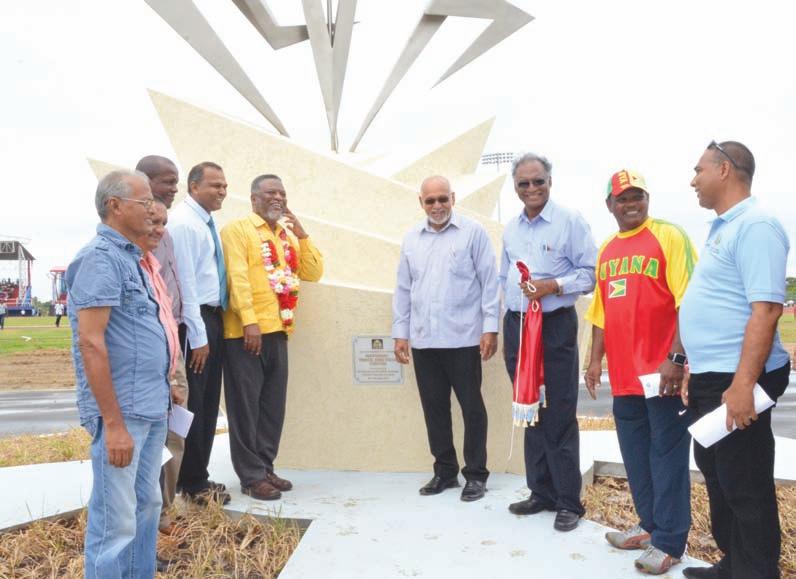
lenges. It is this history that has moulded our character. We must now use this eternal optimism and strength that our foreparents displayed to continue to forge ahead in the face of the many challenges that are posed due to both international and local events.”
He said that it is significant that 2014 saw Guyana growing economically for the ninth successive year. “This is the longest period of continuous economic growth in the recent history of our country. It is even more noteworthy that this growth was achieved in the most testing of circumstances. Over just the two and a half years to mid-year 2014, the size of our economy has increased by 25 per cent to $650 billion, our country has attracted more than US$629 million in foreign direct investment, credit to the Private Sector has grown by 41.5 per cent to $190.5 billion, and total deposits in the commercial banks has grown by 22.1 per cent to $334.6 billion.” Ramotar said all of this was achieved despite the fact that the international environment was not favourable for some of the important sectors of our economy.
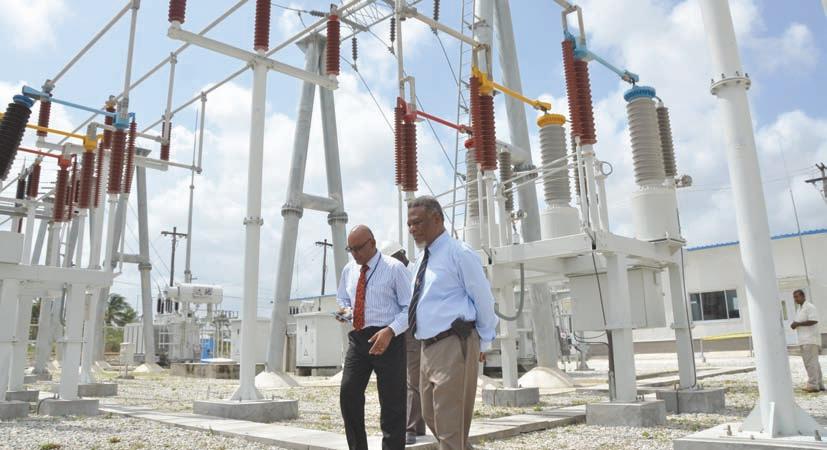
Ramotar said he thought that these were important enough to get through without delay. Secondly, he said it is important to note that, had the Opposition proceeded with their intended No Confidence Motion, thousands of Guyanese voters would have been disenfranchised “given where we were in the voter registration process.”
He said thus far the Opposition has spurned his attempts to discuss these issues and in their customary manner have rejected his invitation to dialogue. “Clearly, we can’t continue in this way. We need a mandate to continue the progress that we have started that has brought our country such a far way from what it was two decades ago.”
The President said his Government will continue to expand roads and bridges network, including ensuring greater access to “our geographic neighbours.”
He said during the next term of office, “my Government will work with our partners to bridge the Corentyne River and to complete the road from Brazil along with the accompanying deepwater harbour. We will also improve ease of movement within our borders by upgrading the major hinterland arteries and widening our major coastal highways. Within our towns and villages, rehabilitation and upgrading our urban and community roads will continue apace, all with the aim of improving access.”
The housing sector has seen impressive growth over the past five years. From 2009 to 2014, the budget allocated to the sector grew by 400%. In 2009, the Ministry was implementing 51 projects and now in 2014, there are 170 projects under,implementation. The sector has been a significant source for job creation, creating 3,500 jobs in 2014, a figure that is projected to grow to 4,250 in 2015. We have launched a “one thousand” home initiative for working class families. The young professionals pilot programme was also successfully completed, and a new era in urban planning is beckoning. To accommodate the new housing schemes, the feasibility study for the East Coast – East Bank bypass road has been completed and we are discussing the next steps to advance this project. This will catalyse US$65 million in investment, the building of 20 km of roads and supporting infrastructure. Furthermore, in the first half of 2015, we will be constructing an alternative link between Diamond and Eccles that will greatly relieve traffic congestion for commuters on the East Bank of Demerara.
The previous company, Sithe Global pulled out in August 2013 after the National Assembly failed to meet consensus on the necessary legislative arrangements to move the project forward. Sithe Global had already expended approximately US$16 million on preparatory works.
The Government has identified a new company to build the Amaila Falls Hydropower Project. President Donald Ramotar, who made the announcement, added that construction will start before the year’s end.
“We are working towards trying to start to build Amaila before the end of this year. A lot of work has already gone into it. Norway has already transferred US$80 million to the IDB [Inter-Development Bank]. We have already identified another company to step into the shoe of Blackstone and Sithe Global,” he disclosed.
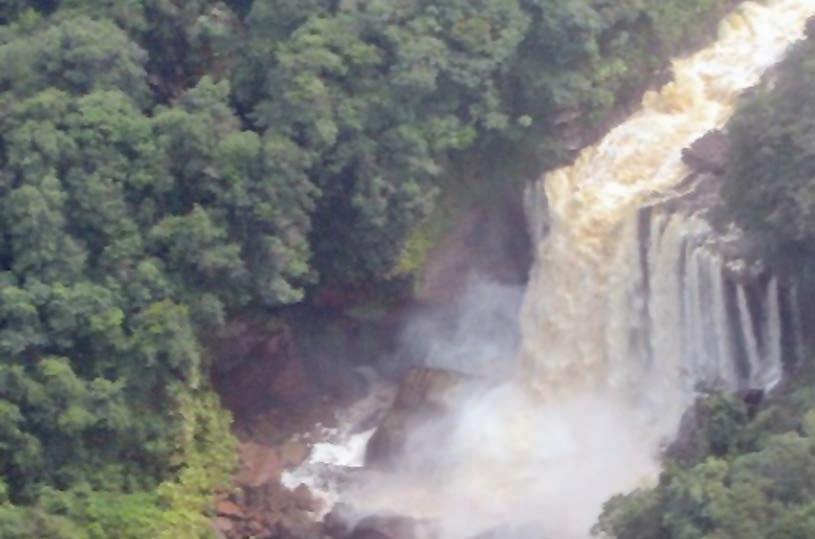
Ramotar, who was at the time addressing the gathering at the commissioning of the Guyana Power and Light Inc (GPL) Power Plant in Vreed-en-Hoop, West Coast Demerara, did not give details of the new company.
The President has pointed to the importance of cheaper energy in the face of growing demands, noting that the low fuel prices will not remain stable. “We don’t control that, we cannot build on expecting that this will last forever…we need to try to ensure we have power at cheap prices,” he said.
The Amaila Falls Access Road is already approximately 95 per cent completed and is currently in a usable condition. The road is constructed in seven sections that cover a total of 162 kilometres of road, most of which had to be constructed from scratch. Each section was awarded to a different contracting firm and with the exception of China Railway; the others are all local contractors. Moreover, President Ramotar stated that the Administration has the necessary resources to go ahead with the project, noting that it has already received US$150 million from Norway.
Meanwhile, the Head of State said Guyana will be exploring other forms of renewable energy. According to him Guyana has huge possibilities to explore the various kinds of renewable energy such as using bagasse, rice husk and other waste material to generate power.
In fact, he revealed that the Government is working towards purchasing a gasifier to generate electricity from the abundant agricultural waste and wood waste in the country. A gasifier is a chemical reactor that converts wood, or other biomass substances, into a combustible gas that can be burned for heating, cooking, or for running an internal combustion engine.
Furthermore, the President explored the idea of wind power and solar energy, noting that Guyana’s climate is well suited for those options. “I think we also have to look beyond our own needs and see the energy sector of having the possibility and potential to be an important revenue earner of this country,” he expressed
Ramotar noted that Guyana has enough capacity to start an industry to export electricity. “We can become a powerhouse in exporting electricity to our neighbours… There is even talk now of building an arch linking the electricity sectors from Brazil, Roraima state, through Guyana through Suriname through French Guiana and back again.”
The LCDS has been recognised by the entire world as a model for all economic development going forward if the world is to have sustainable development. President Ramotar has continued the innovation of his predecessor to make the LCDS the linchpin of his plan for developing Guyana.
Why Low Carbon Development?
From September 2012, Conservation International Guyana, with support from the Inter-American Development Bank, began working on the three year project ‘Improving Livelihoods through Low-Carbon Economic Development in the Rupununi’.
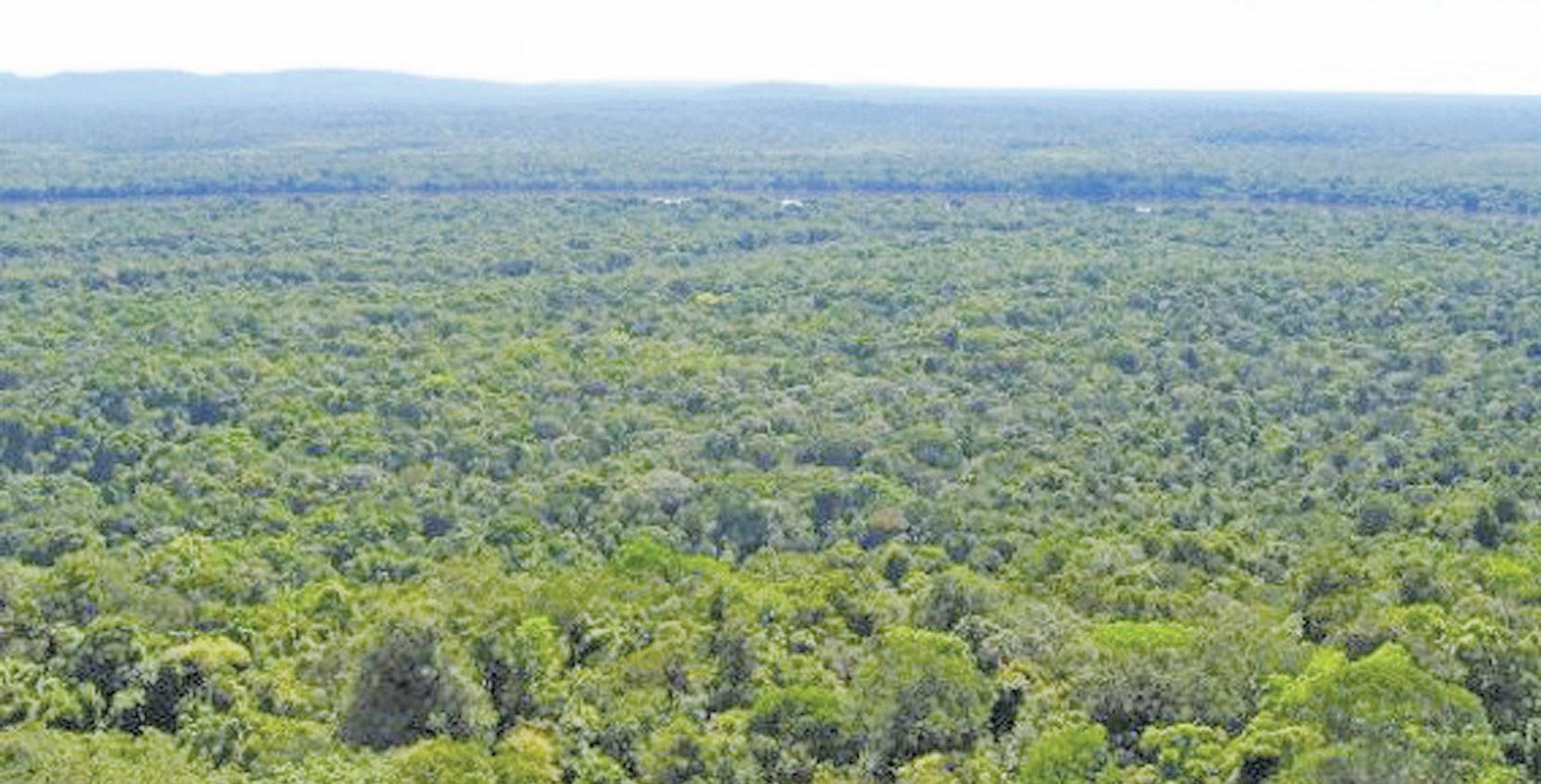
A few years ago, Guyana came up with an idea to make its rainforests worth more alive than dead. A ‘Low-Carbon Development Strategy’ (LCDS) means a plan for the development of Guyana in a way that is not harmful for our rainforests. It is almost impossible not to release any carbon at all, therefore the plan is to develop in a ‘low-carbon’ way: a way that is as least harmful as possible.
Carbon’ is a chemical substance that trees store. When trees are cut, the carbon they store is released into the air. A large amount of carbon in the air is harmful to the earth and living things, for example, it changes climate. Rainy seasons begin to come earlier or later than before and become shorter or longer than they used to be. This can affect your daily life, making you do things differently. So, if Guyana’s rainforest is lost, it may bring income to some people in the short term, but it will affect many more here in Guyana and around the world?
Development of Guyana
In 2009, Guyana signed an agreement with the country of Norway. It was agreed that, from 2010 until 2015, Norway would pay Guyana if we leave our rainforests standing. This is the first time in history that such an agreement was made. As part of the LCDS, the Government of Guyana, in collaboration with the United Nations Development Programme has established the Amerindian Development Fund (ADF). This fund will fund community based economic development through sustainable use of Guyana’s natural resources. This project will support community based enterprises to make the best use of funds from the ADF.
tives will receive support in the preparation and implementation of business plans. These plans help to access finance and markets and also to increase bargaining power. The project will focus on, but will not be limited to, communitybased agriculture and tourism, the areas local communities have identified as being the most important for local sustainable development. (ci)
LCDS priority projects
In 2009, the LCDS identified a number of priority projects to support Guyana’s transition to a low carbon economy. Since that time to now, many of these projects have been developed and implementation commenced. These are identified below:
Amerindian development
Hinterland renewable energy: To support the energy needs of households without access to the national electricity grid, solar photovoltaic systems were distributed to Amerindian and other hinterland households.
As of March 2013, approximately 11,000 solar panels were installed in almost 200 communities. Investments are also being made into small-scale hydropower resources in the hinterland.
Socio-economic development:
An Amerindian Development Fund (ADF) has been setup to support the socio-economic and livelihood development of Amerindian communities through the implementation of their Community Development Plans (CDPs), which identify the communities’ own priorities to meet social and economic development objectives.
Amerindian land titling (ALT):
In excess of 14 per cent of Guyana’s territory is owned by Amerindians. This project aims to facilitate and fast track the ALT process.
Expanding the digital economy and avoiding a digital divide
Fibre-optic cable:
Investments are being made into enhancing broadband connectivity between the coast and the hinterland, as well as connections to Brazil’s telecommunications network.
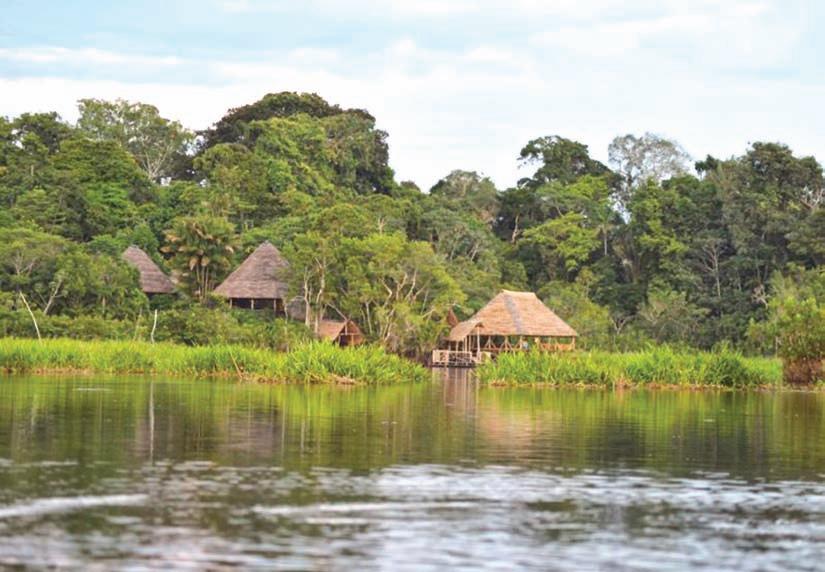
This project will test ways for the implementation of Guyana’s Low-Carbon Development Strategy. Can low-carbon businesses in the Rupununi, through working in and maintaining our rainforests, savannahs and other ecosystems, really receive more value for their products? We will work with communities and other partners to encourage and set up local business initiatives to contribute to the economic development of the Rupununi. The business initia-
One Laptop Per Family (OLPF) Project:
The project is providing Internet-connected mobile computers to families throughout Guyana who otherwise might be excluded from the opportunities presented by the modern Information Communication Technology sector. As of March 2013, 26,832 laptops were distributed, supported by on-going training.
Telecommunications liberalisation:
In an effort to modernise the sector, several pieces of legislation have been tabled in the National Assembly including a Telecommunications Bill.
Support for Micro and Small Enterprises (MSE), and vulnerable groups low-carbon livelihoods
This project aims to address two of the major bottlenecks that constrain the development of MSEs and the ability of vulnerable groups to build alternative livelihoods in Guyana, which are (i) limited access to finance and (ii) limited technical and business skills.
Access to finance will be addressed through a credit guarantee facility which will be used to guarantee part of the collateral of a loan, thereby enabling an MSE to obtain a loan at an affordable rate. In addition, an interest support facility will help with interest payments and a low carbon grant scheme will be established to assist vulnerable persons with
viable business propositions.
The lack of skills will be addressed through a training voucher scheme which will enable MSEs to obtain the skills they require at existing training institutions. Sector specific training will also be provided.
for biodiversity research and curriculum development
Centre for Biodiversity Research: The international Centre for Biodiversity Research and Low Carbon Development will be dedicated to researching Guyana’s biodiversity and assessing its economic value and how this can be maximised.
Curriculum development: Steps are being taken to integrate low carbon development concepts into the primary school curriculum.
Several initiatives have been targeted to improve Guyana’s resilience to climate change and its capacity to adapt. One of the first priorities addressed was the rehabilitation of canals to improve the management of water in the East Demerara Water Conservancy (EDWC).
The next stage in the low
During this period to the end of 2015, the priority projects are expected to continue utilising resources already allocated. In parallel, and subject to revenues from climate services and other sources continuing as planned, the Government of Guyana intends to address a further five priorities in the period to 2015.
This will include initiatives to improve Guyana’s ability to cope with climate change and will likely include some or all of the following measures:
Upgrading infrastructure and assets to protect against flooding through urgent, near-term measures: This will include maintaining and upgrading Guyana’s drainage and irrigation (D&I) system, empoldering as well as dredging and de-silting major rivers, expansion of the use of mangroves as natural sea defences, and significant upgrades to the East Demerara Water Conservancy. Hinterland adaptation: This will include the development, reproduction and distribution of plant varieties and crop management techniques that are suitable for hinterland communities, thereby ensuring the sustainability and further development of their livelihoods. In addition, all-weather roads and bridges and new D&I systems will be constructed, with a focus on particularly vulnerable areas.
Adaptation readiness programme: This could include significantly revamping Guyana’s early warning system and improving the timely and accurate collection and dissemination of data and information on weather-related events and their impacts on the ground.

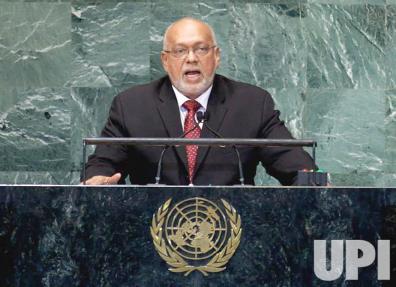
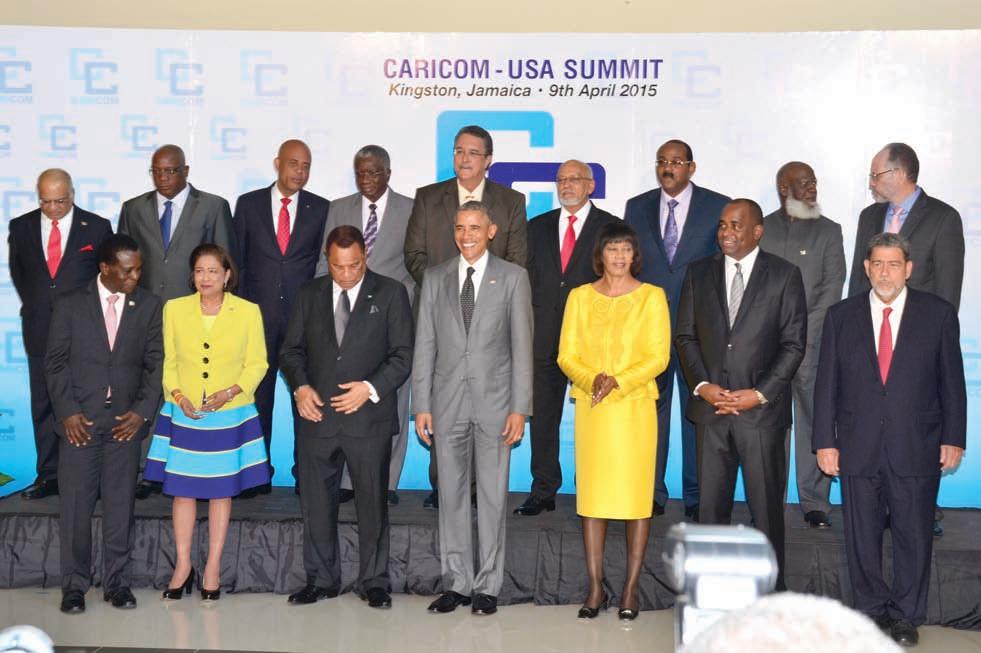
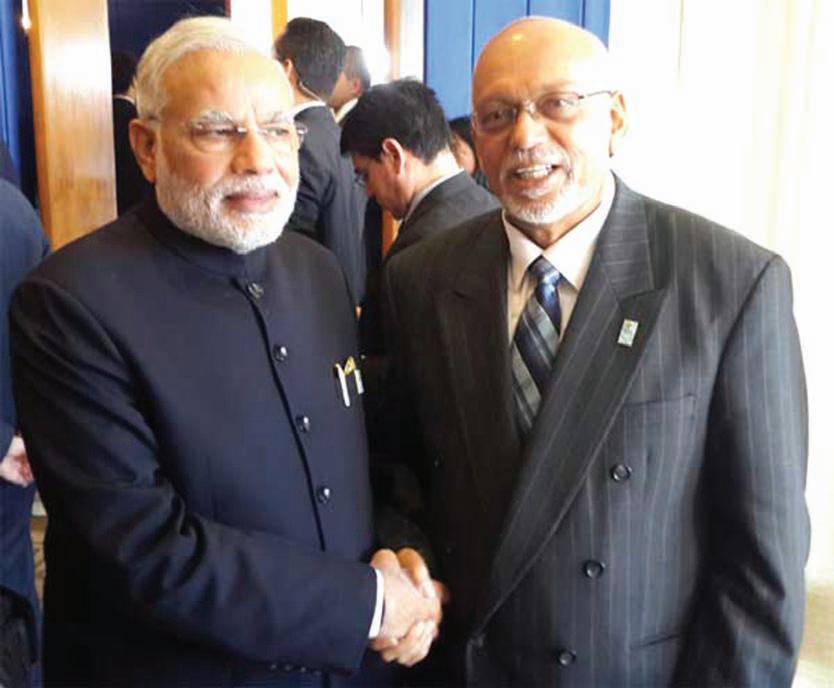
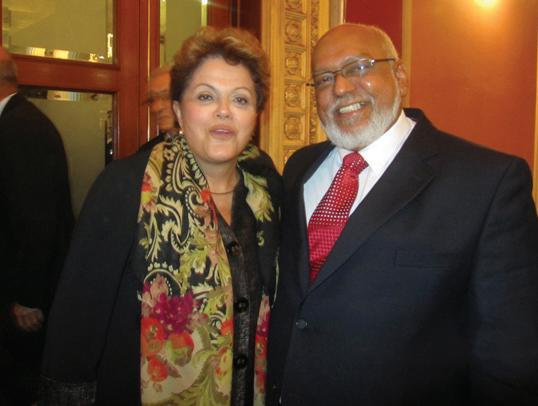
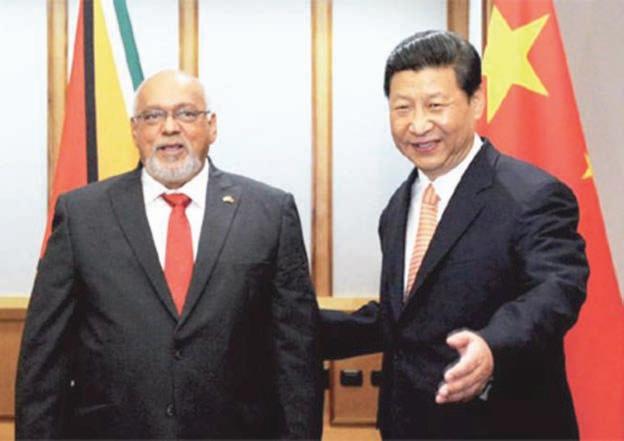
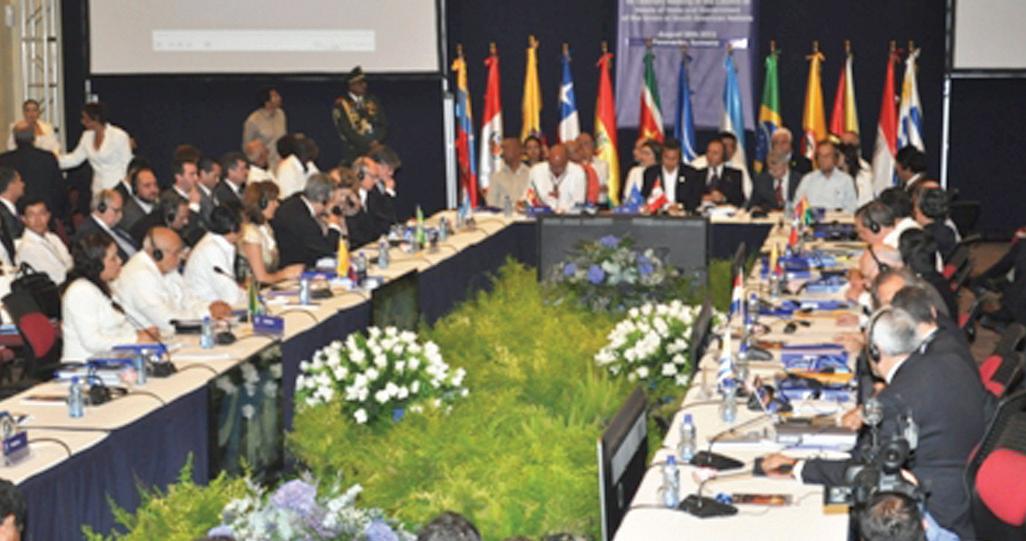
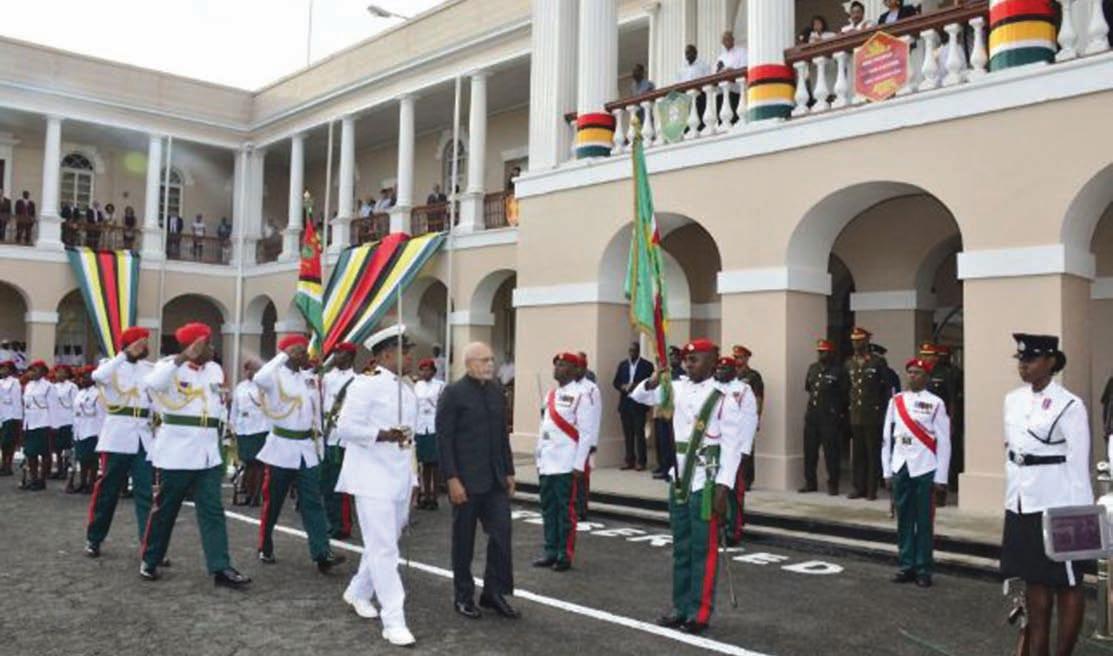
With Donald Ramotar as the Presidential Candidate of the PPP/C in November 28, 2011, his Party had already been in power for 19 years. As such, he was faced even more pointedly, with the challenges of incumbency: the Opposition having had to do nothing for two decades could simply take potshots at the concrete projects initiated by the Government.
Even before the elections results were out, the PNC-led APNU signalled that its core confrontational value was unchanged: its youth arm “Youth Coalition for Transformation” broke all protocols and protested the delay in elections results in front of the homes of GECOM’s Chairman and CEO.
After it was announced that that Donald Ramotar had secured the Presidency but not a majority in the Assembly, on December 6 the APNU launched protests in Geoegetown. They claimed the elections were flawed even though it had been certified as accurate by a host of foreign and domestic observers. They claimed the Statements of Poll (SOPs) were breached and referred to their presidential candidate as “President Granger”.
Donald Ramotar was being tested as his predecessor
Bharrat Jagdeo had been back in 2001. There was going to be no “honeymoon”. The YCT called for boycott of named businesses that they claimed were identified with the PPP. Then with former Chief of Staff of the Disciplined Forces Brigadier Edward Collins (hardly a youth at 55+) they defied police orders on a march into Georgetown and forced the police to use rubber pellets to break up the procession. But Donald Ramotar was trained from his early youth in politics by a party that insisted on training by doing. This President was the first leader of Guyana who has, in the most literal sense of the word, specialised in politics. To those who suggested that he has no experience when he assumed the office of the presidency, he can proudly proclaim that as a matter of fact he is the most qualified.
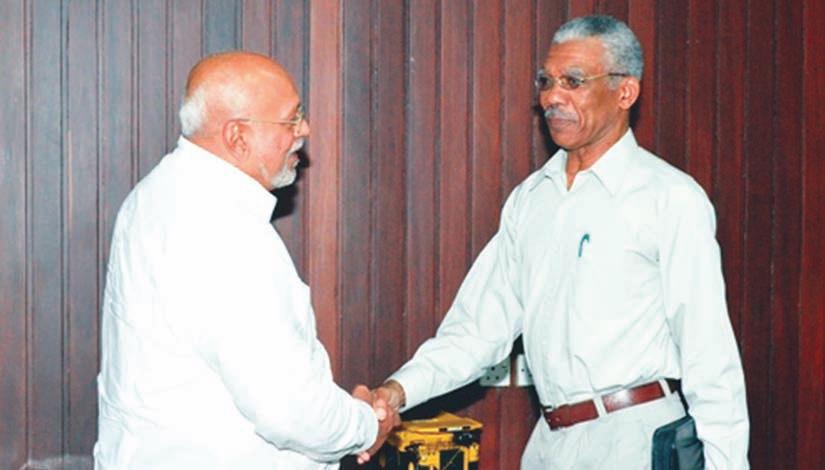
Calling for calm, President elect Ramotar attended the meeting of presidential candidates at Parliament to take note of the claims by David Granger of APNU. And most importantly, he committed himself and his party to working with the other parties for the development of Guyana. These are all signs that the easy demeanour and open leadership style exhibited by the President in his long years in Parliament still define his persona.
In the selection of his Cabinet, President Donald Ramotar clearly opted for continuity: there were only a few new faces and most of these had served in other capacities in the previous administration. While President Ramotar has tremendous political experience and knowledge, in his first stint in the national Executive, he is to be complimented for going with experience over experimentation. The President noted that the experienced Ministers will provide guidance to their less experienced colleagues. The Americans have a quaint but salutary bit of advice in these matters, which President Ramotar evidently observed: “Don’t fix it if it ain’t broken.” President Ramotar’s Cabinet represented an institutional memory on the practicalities of governance that is unmatched in the region.
The Tripartite Committees
In light of Guyana entering what Finance Minister Ashni Singh was to label “uncharted waters”, the newly appointed President Donald Ramotar the very next week (December 15) convened “Tripartite Talks”’ to discuss the way forward. This was a groundbreaking innovation in Guyanese politics and reflected the President’s desire to consult with the Opposition. There would be a “Tripartite Committee” in which plenipotentiaries of the three parties in Parliament –the PPP/C, APNU and AFC – would meet to discuss policy perspectives on governance under the unique configuration the elections had delivered.
In December, the President met with the leaders of the two other Parliamentary Parties –APNU (David Granger) and AFC (Khemraj Ramjattan) He was sharing a prerogative of the Executive with the Opposition. The President then went on to establish two other tripartite committees to specifically discuss security and economic matters while inviting the Opposition to make inputs to the Ministry of Finance’s budget drafting process. He also acceded to the Opposition’s request to nominate individuals to the Committee of Tax Review that he had earlier established.
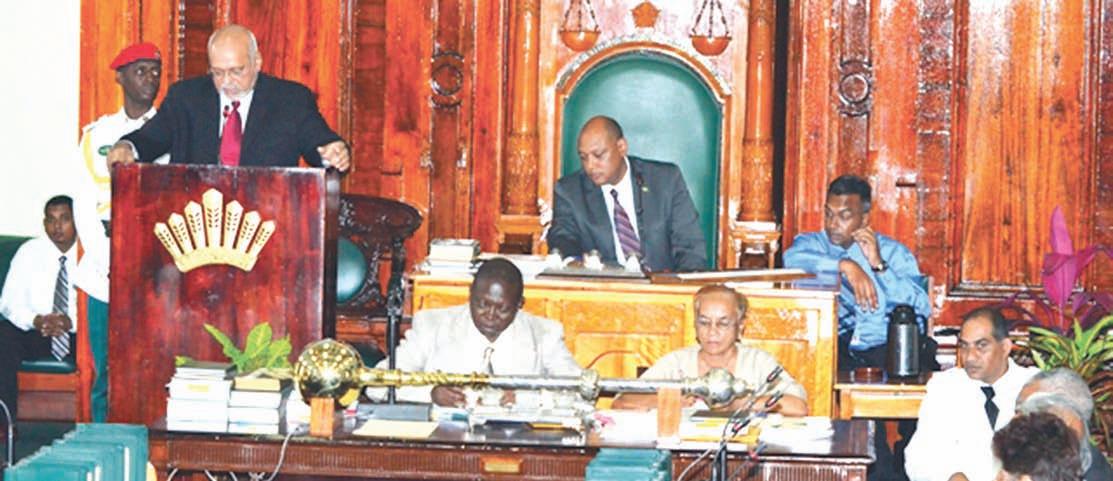
In Guyana, the Parliament consists of the National Assembly and the President. but the ceremonial opening of Parliament is the only time the Executive President is actually in the National Assembly. President Ramotar outlined his hopes of working with the Opposition for a better Guyana.
President Ramotar’s inaugural address to the National Assembly was salutary for several reasons. There was first of all the need to remind the leadership of this country – not just the political elite present in Parliament – of what is at stake at this crucial juncture in our nation’s history. There is the choice between gridlock and stagnation versus progress and growth.
There was the choice between placing the needs of the
nation in the forefront versus narrow partisan interests. As the President said, “Today we are on another open path. I believe that we are at the threshold of a rapid development that can take us to great heights. I urge that we must not miss this opportunity and allow our country to traverse the narrow and difficult roads again.”
The gist of the speech was to remind everyone of the ‘state of the state’ that has been delivered by the administration of ex-President Jagdeo, which makes the attainment of ‘great heights’ possible. President Ramotar first placed Guyana within its international environment that has played and will continue to play such a key role in our development.
The major point was the opportunity presented to us by our geographical proximity to Brazil and the rest of South America. Major initiatives that include infrastructural integration, trade linkages and political cooperation have already been launched and they must be maintained and intensified. Appropriate credit was given to ex-President Jagdeo for the role he played in creating an international space for Guyana in the major global initiative of Climate Change alleviation.
Even though the naysayers in and out of parliament would have it otherwise, the gains that our economy has undergone since 1992 are nothing less than startling. A tripling of the Gross National Product, an eightfold increase in per capita income; a halving in the crippling external debt; a comfortable position in external reserves – all achieved with inflation kept in single digits is exemplary in any part of the world.
But especially so in a country where internal political and criminal elements spent most of the last decade in waging a vicious armed struggle to destabilise the state. The latter insurrection was decapitated by the previous administration and makes it possible for us to achieve “great heights”. Looking forward, the President highlighted the role that a secure and affordable energy source is for the future growth of our economy. Just before his speech, the President had acceded to the request of the Opposition to be briefed on the Amaila Falls Hydro Project and it is our hope that they will not oppose for the sake of opposing, this project.
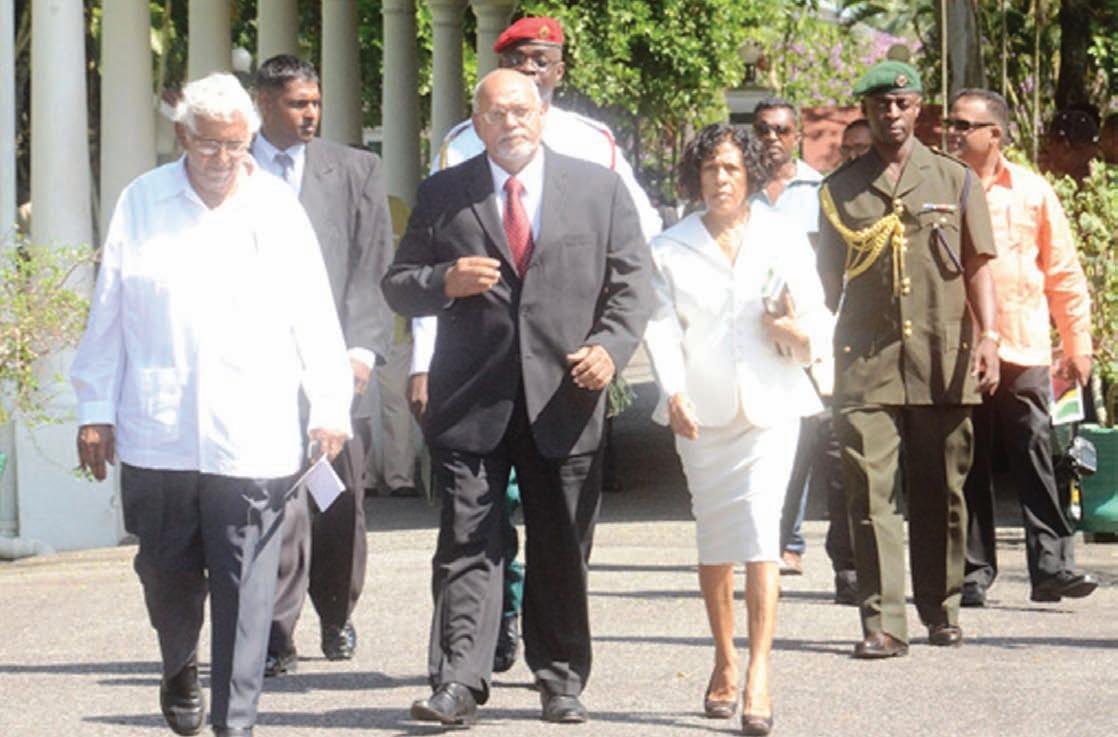
While locating himself firmly in the tradition of his party – always unabashedly oriented towards the ‘working class” – President Ramotar was just as vociferous in his support for business to remain as the engine of growth for the economy. He accepted that at this juncture the working class can best be served by providing them with high paying jobs. The President was refreshingly non-doctrinaire in the exact business model: “We must not rule out any forms of organisation of production of goods and services. We will embrace large and small companies, public and privately owned firms. All have advantages.”
Accepting the need for both foreign and domestic investments, the President stressed the need for our ‘human capital’ to be developed. This approach, of course, centres our developmental efforts around people and not goods but simultaneously ensure the most efficient production and delivery of the latter. He highlighted the structural changes that have been made in the educational system and with the potential for a quantum leap through integration of the OLPF initiative. While the President did not mention it, institutions such as UG will have to change with the times or risk being left behind
The grab for power in Parliament
With the President setting the tone with his Tripartite Talks Initiative, and in his expansive Address to Parliament, it was hoped that the Opposition in the National Assembly which they now controlled with a one-seat majority, would also reciprocate so that trust could be engendered between the Government and the Opposition benches for the development of Guyana.
The Americans have an expression – borrowed from their character-defining sport, baseball: “three strikes and you’re out!” In the contest between (round) bat and ball, the hitter is given two free chances (“strikes”) if he misses the ball. A third miss and he’s out. In the so-called ‘new dispensation’ of ‘consensus and cooperation’ ushered in at the last elections, the Opposition that secured a majority in Parliament was allowed two “strikes” at building trust with the executive.
The first strike occurred during the selection of the Speaker of the Assembly which is the first order of business by the new MPs. Even though it was the Westminster tradition to appoint the immediate past Speaker if he sought re-election, this option was not even given short shrift by the Opposition. It was not even considered. Furthermore as the party with the largest number of seats as a bloc, the PPP/C’s candidate should have been accepted as a nominee. However, breaking with the spirit of the Tripartite Talks, the APNU and AFC had initiated talks between themselves on their nominees for the Speaker’s chair.
The PNC put up Debra Backer, the AFC Moses Nagamootoo and the PPP/C, the immediate past Speaker. Granger rejected Nagamootoo for being still tainted by the “PPP” association but accepted Raphael Trotman while insisting that Debra Badker become his deputy. In the hundreds of years of parliamentary history, the Speaker and the Deputy had always come from opposite sides of the House.
As the Economist noted, “The bitter public debate over Mr Trotman’s appointment has set the tone for subsequent Government-Opposition dialogue in and out of Parliament. The combined Opposition moved swiftly to have all parliamentary committees reflect its majority status, proposing that committees should have nine members (four from Government and five from the Opposition) instead of ten (five each from Government and Opposition), on the basis that these uneven numbers would prevent GovernmentOpposition deadlock and frustration of parliamentary business.
Arguing that the principle of proportionality was being breached, the Government has requested a court ruling on the matter.”
Acknowledging the unique political ‘dispensation’ into which the country had been delivered – which he had memorably earlier described as unchartered waters – Finance Minister Dr Ashni Singh presented the 2012 budget. Earlier, of course, there had been some skirmishing by the Opposition to become part and parcel of the Budget team, but that had been firmly rebuffed by the Government. This budget is, therefore, the Government’s considered plans for dealing with the economic needs of the country in 2012.
The declared theme of “Remaining on Course, United in Purpose, Prosperity for ll”, summarises the Government’s formulation of its budgetary aims: how it will spend its revenues in 2012. The “Remaining on course” subset reminds the nation that over the past half decade and more, the economy has been guided firmly on an upwards trajectory. This is not fortuitous since our partners in Caricom have been headed in the opposite direction, even though they did not have to rebuild their economies from rubble such as bequeathed by the previous PNC administration.
The Minister predicted that if all goes as planned, the economy should grow by 4.1 per cent – in line with the 4.4 per cent average growth rate achieved over the past five years. The greatest unknown for our economy has been political instability. It was hoped that the Opposition would see it fit not to encourage reckless behaviour in the populace that would reverse our hard earned gains. In the sugar in-
dustry, for instance, while the Minister announced an increase in production last year from the previous year, he candidly acknowledged these figures showed that the industry still was far from its optimum production.
While the Opposition continued with their insistence on ‘opposing for opposing’ sake, they had to strain at the bit to suggest that the budget, in its redistributional function, did not address the problems of the poor. While, of course, governments can always do better in this area – even in the most developed economies – the point is to continue to continue with and not reverse, previous gains. And this is what the Government has achieved.
With the income tax threshold increased by $10,000 monthly, individuals earning up to $50,000 would pay no taxes and have this $10,000 available for their own consumption. While modest, pensions are slowly inching upwards. The $6 billion subsidy to GPL must be seen as a subsidy to the populace, since in its absence, they would have been paying a higher rate for their electricity.
Similarly, the solid and disciplined macro-economic fundamentals that the Government has maintained will ensure that the low inflation rate – predicted at 4.6 per cent this year – will be maintained. Older Guyanese would remember that persistent inflation during past administrations made their wages seem like ‘monopoly’ money.
Finally, in each of the social sectors, especially education and health, which benefit mainly the poor, spending has increased. Let’s not stifle our consciences.
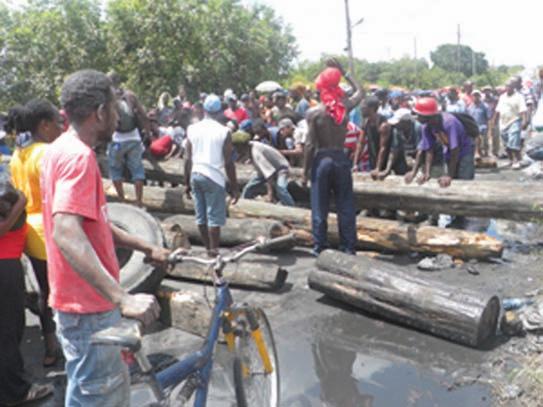
With the budget debate having commenced, we would like to highlight a clear and present danger that is being posed to the survival of our country because of inflammatory and opportunistic positions being taken on certain budgetary items. In most countries, budgets are considered as dry and recondite matters. However, in our country because of our cleavages they can be literally incendiary because there are politicians willing to exacerbate those cleavages by claiming budgetary initiatives favour one group while sanctioning others.
We will illustrate our concern with references to statements made by two officers of the AFC – Khemraj Ramjattan and Moses Nagamootoo – but point out that they are unfortunately typical of the entire Opposition’s rhetoric. In his Budget Speech Finance Minister Ashni Singh flagged the parlous state of GPL. He indicated the Government was forced to allocate $6 billion to the corporation so as not raise its $64 K/hr tariff to its customers for Berbice to Essequibo.
Simultaneously, he noted that the government would be forced to begin phasing out the subsidy (making the rate of US 2.5 cents per K/hr, the cheapest in the entire world) for electricity to Lindeners.
Ramjattan and Nagamootoo immediately rushed to Linden and told the residents the ‘spiteful’ PPP government had always treated them as ‘step children’. The proposed rise in electricity was a ‘vengeful’ act by the Government, according to the AFC, because the PPP had been rebuffed by
Lindeners. To ensure the latter got the message of discrimination vs favouritism another AFC executive promised that they would ensure Lindeners, “get what every other area in Guyana is getting”.
But what exactly was ‘every other area’ getting? The regular rate of $64/K hr. The AFC leaders, even more insidiously did not confine their remarks to the electricity subsidy –this, they claimed was only the tip of the iceberg. Ramjattam claimed that the PPP/C Administration had subjected the people of Linden to “years of economic starvation”.
And it is this kind of demagoguery that has tipped Guyana over the edge into interethnic violence on more than one occasion.
After Linmine was privatised, the Government paid up to $2 billion in separation costs. The Government took over the subsidization of the power costs which since 2006 amounted to $13.7 billion. Last year the average Linden household was subsidised at $20,000 per month – way above the national average. Lindeners have no incentive to conserve.

In April 2012, the combined opposition used their oneseat majority to slash $21.9 billion from the proposed $192.8 billion 2012 budget after they felt that enough explanation was not provided to them by the administration.
Cuts were made to allocations for the State Planning Secretariat, the Ethnic Relations Commission, Low Carbon Development Strategy, the National Communications Network and Government Information Agency (GINA) among other entities. The Government then took to the courts to block the National Assembly from cutting the budget, and Justice Chang in a preliminary ruling said the Opposition could only approve or disapprove of the budget in its entirety. However this year, the opposition refused to abide by the preliminary ruling handed down by Justice Chang, arguing that it was not binding or final. As a result, the combined Opposition with the Speaker’s blessings shaved more than $31.4 billion off the $208.8 billion budget presented by Government.
Chaos reigned when the Speaker also proclaimed that the courts had no oversight responsibility or powers over the legislature.
On April 30, 2012, the National Assembly approved the Estimates of Expenditure for 2012 of $172 billion against the Government’s request of $192.8 billion, a reduction of $20.8 billion. Accordingly, the Minister of Finance amended the Appropriation Bill to reflect the downward adjustment, the Assembly approved the amended Bill, and the President gave his assent to it.
The Government did in fact went to the courts and challenged the Assembly’s decision on the grounds that: (a) it acted unconstitutionally; and (b) the Assembly could either approve the budget or reject it, but not reduce it.
Eighteen months later, on January 29, 2014, the Chief Justice confirmed his preliminary ruling that the decision of the Assembly to amend the Estimates of Expenditure for 2012 was unconstitutional and that the Standing Orders permitting this had no legal effect. In the meantime, the government had made the right decision to restore the original budget by authorising withdrawals from the Consolidated Fund as well as advances from the Contingencies Fund. But in the meantime, the Opposition kept up the pressure against the Donald Ramotar Administration by continuing to cut out projects crucial to its development plans.
Being right next door to Venezuela with the largest petroleum reserves in the world, it was long suspected that Guyana also shared in those reserves. Exploration for oil has been going on for decades, starting in the Takatu Basin at the southern end of Guyana abutting Brazil. The coastal and off coast Essequibo region next to Venezuela was left untouched by the oil exploration companies, primarily because of Venezuela’s claim to the area to be explored, ignoring an 1899 Arbitral Tribunal Award, which was declared as the full and final settlement of the boundary between the two South American nations.
However, all this changed at the turn of the millennium when the US State Department in its fact sheet on Guyana stated that “The United States Geological Survey (USGS) has identified the Guyana-Suriname basin as having the second highest resource potential among unexplored oil basins in the world and estimates indicate recoverable oil reserves of 15 billion barrels of oil and gas reserves of 42 trillion cubic feet. Under the Energy Governance and Capacity Initiative (EGCI), the United Stated Government provides a range of technical and capacity building assistance as Guyana seeks to develop financial and regulatory regimes and address capacity issues that would maximise the development potential from prospective offshore oil and gas resources.”
In 2000, a small Canadian Company CGX, while drilling in the eastern portion of Guyana’s off shore reserves had its rig seized by the Surinamese authorities.
In mid-1999, Exxon Corporatio, the largest oil producer in the world, through its Guyana affiliate Esso Exploration and Production (Guyana Ltd), had signed a Production Sharing Contract (PSC) with the Government of Guyana for the deepwater “Stabroek Block” which it had been awarded a year before. However the following year, it informed the Government that it was “unable to reform further obligations” under the agreement because of “developments concerning Guyana’s maritime boundaries with Suriname and Venezuela”.
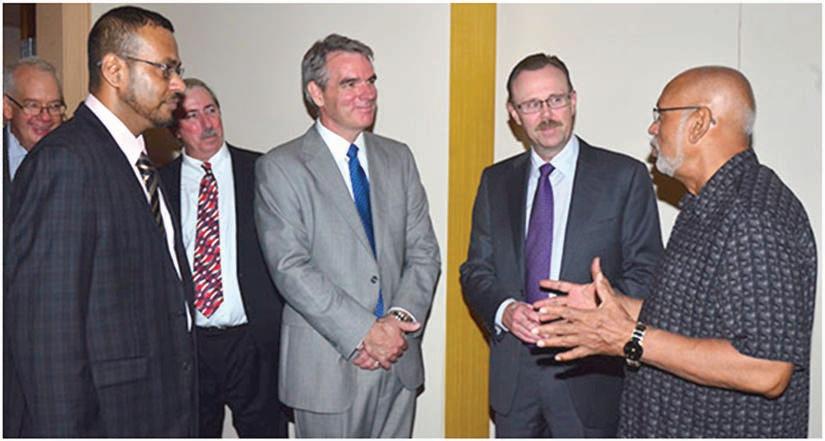
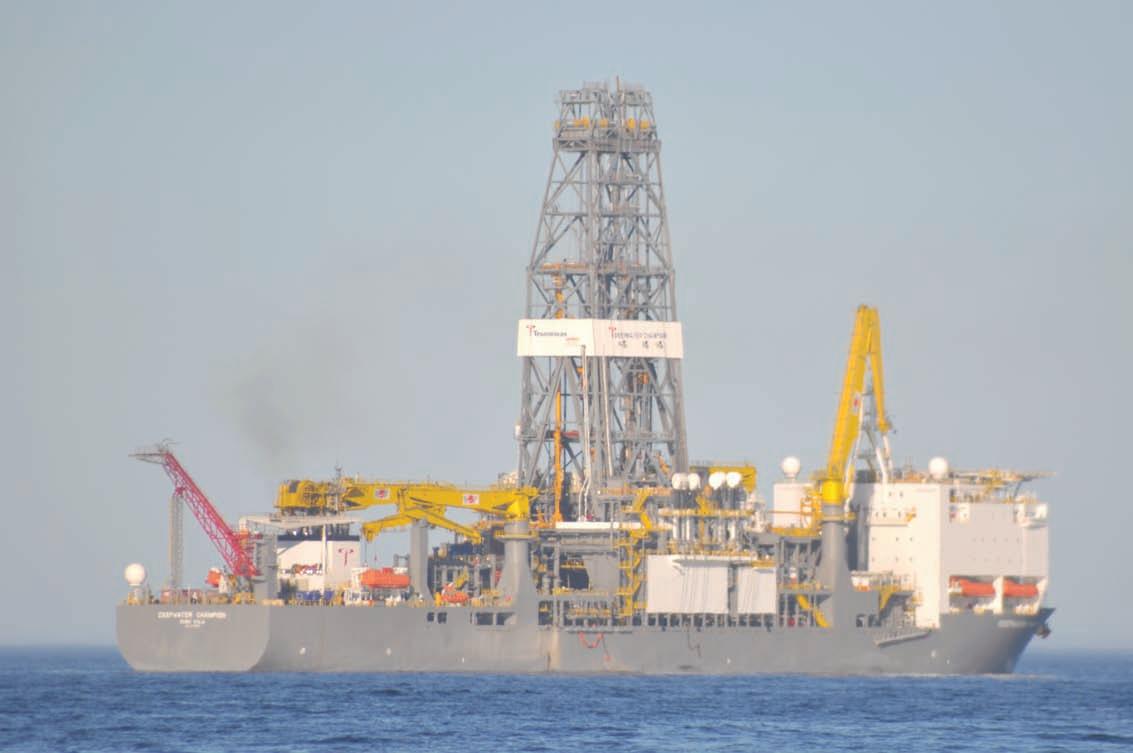
Production Guyana Limited – the local arm of the company, said that the drilling was currently midway.
Simmons explained that it was expected that the team would conclude the initial stages of drilling shortly. At which time the project, valued some US$200 million, is expected to produce promising results.
The scope of operations spans a drillship, with approximately 200 crew and contractors; helicopter support flying out of Ogle International Airport a utility as well as a search-and-rescue craft, which is always on standby; four support vessels and two shore bases – Georgetown and Trinidad, as well as a waste treatment facility at the John Fernandes Site at Houston, Greater Georgetown.
In 2007, Guyana, which had taken the dispute on its maritime border with Suriname on which the latter had based its seizure of CGX’s rig, to the World Court, was vindicated. CGX had in the meantime gone into several partnership agreements with some larger companies and resumed drilling but had to abandon the well, not due to lack of fossil fuel reserves but because of excess pressure making their well dangerous.
In October 2013, Research Vessel Teknik Perdana, of Anadarko Petroleum Corp, the third-largest independent US oil and natural gas producer which was surveying the seafloor for signs of oil on a Guyanese contract, was detained by Venezuelan authorities, who claimed the ship was in its waters. The ship and crew were later released.
But in 2014, the largest oil company in the world, the US Based ExxonMobil Corporation, renewed its agreement with the Government of Guyana on the Stabroek Block. It sent a large ship-cum rig into the waters off Essequibo in early March to start drilling. The Venezuelans made a protest to
Exxon’s Guyana subsidiary, but a firm Note Verbale was sent from the Guyana Foreign Ministry to its Venezuelan counterpart. ExxonMobil, for their part, insisted they are operating offshore “under license from the Government of Guyana.” And did not budge.
To be very blunt about it, against a background of the US’s toughening stand against Venezuela at present, it is certain that Exxon will proceed without any interruption. Guyana in general and Essequibo will at last be exploiting its petroleum and gas reserves.
ExxonMobil optimistic about striking oil
Oil major ExxonMobil’s exploration activities in the Stabroek Block off Guyana’s Essequibo Coast are proceeding according to schedule, with results from current exploratory drilling expected soon.
The company’s massive rig dubbed the “Deep Water Champion” commenced operations more than a month ago on March 5. With the total area allotted to Exxon covering 26,806 square kilometres, the company has a target depth of 1750 metres.
Country Manager Jeff Simmons of Esso Exploration and
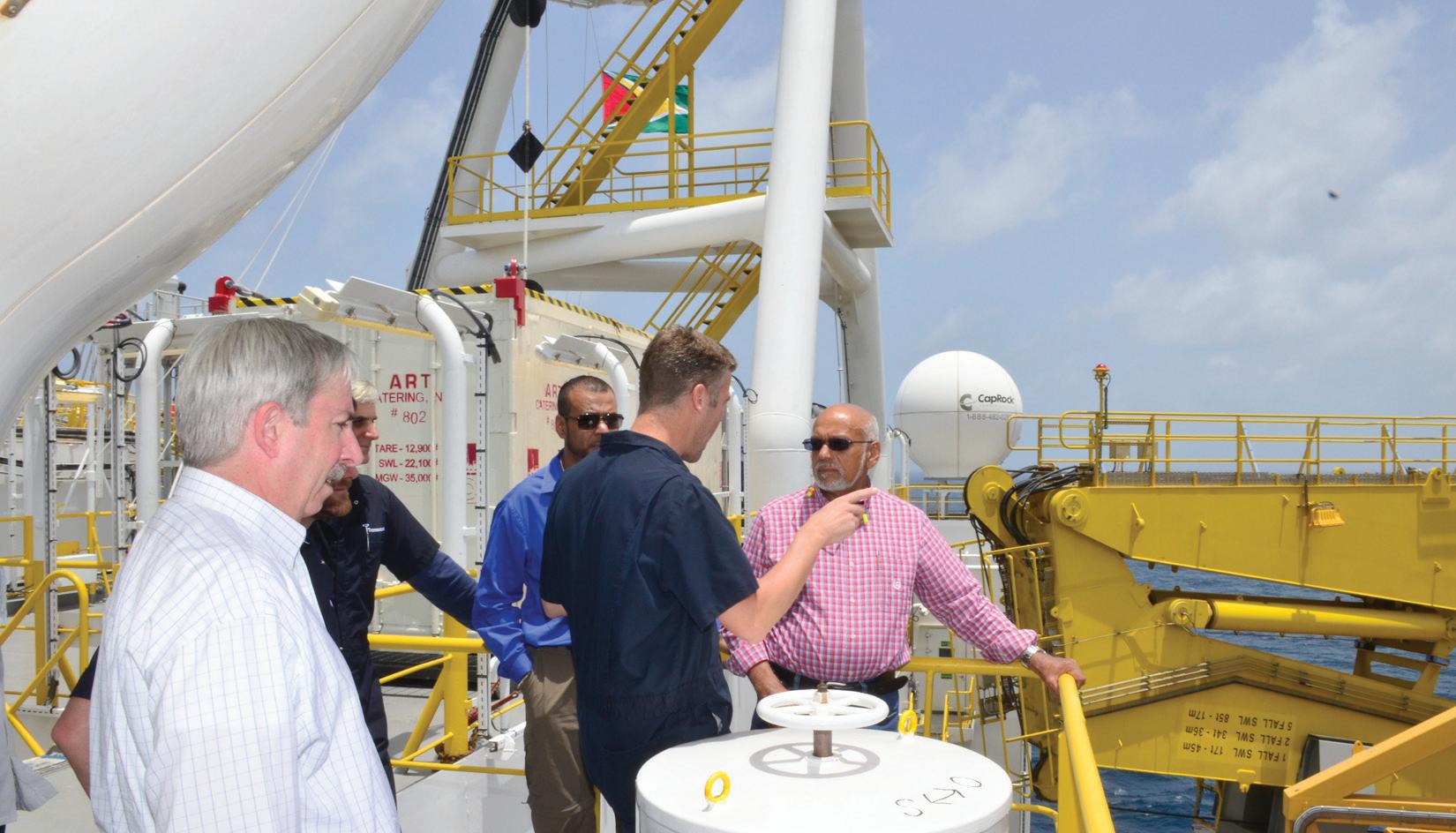
Further, Simmons said that the work has proceeded without any interference from Venezuela, which had initially raised some concerns about the rig’s operation in the Essequibo basin, to which it has laid claim along with the entire county.
The company, which intends to pursue exploration activities over a 10-year period, remains leery of a possible showdown with Venezuelan authorities, who had issued a warning for it not to proceed with the drilling, which was sanctioned by the Guyana Government.
With Venezuela’s insistence on its position, Guyana is considering judicial settlement of the boundary.
Guyana has been receiving sustained international attention from huge companies, especially in the oil sector, particularly since the US Geological Survey said in 2000 that the Guyana-Suriname Basin has the second largest unexplored oil potential in the world after Greenland. ExxonMobil, the largest public traded international company in the world, is an industry giant that has the leading inventory of oil and gas projects, and the world’s largest refiner of petroleum products.
ExxonMobil to invest over US$200M in oil exploration
- Guyana lives up to image as attractive investment location
There are high expectations of Guyana becoming a petroleum-producing nation as ExxonMobil formally announced its exploratory offshore drilling plans.
The investment, which will see the company investing US$200 million was welcomed by President Donald Ramotar.
Expressing optimism, the Head of State said: “We’d rather prefer to have investments in our productive sector, and this investment in that regard is very important. Hopefully, they will be successful very quickly, and Guyana will join the ranks of oil-producing countries.”
He said according to information reaching him, the possibilities are good and to have a company of Exxon’s reputation investing in Guyana adds to his optimism. “I think it is an exciting time, not only in our political history, but also in our economics and our investments,” the President noted.
The investment was also welcomed by Minister of Natural Resources and the Environment, Mr. Robert Persaud, who described it as a milestone by Esso Exploration and Production (Guyana) Ltd.
“The vision of Guyana’s upstream oil and gas sector is of a strong, vibrant and sustainable private sector-driven oil and gas industry which will contribute significantly to its socio-economic development.”
“It is important that we manage expectations; this is a risky undertaking, and the results cannot be predicted. Even when there is a significant commercial discovery, it will take several years for the development and production of our hydrocarbons,” Minister Persaud added.
For the Government of Guyana, the 18 million plus hectares of pristine, tropical rain forests is “hallowed territory” and no action will be taken to jeopardise its many values that others may take for granted, President Donald Ramotar has said.The President gave the assurances while delivering a feature address at a commemorative ceremony for International Day of Forests and the Tree 2015 yesterday.
The venue was the Guyana International Conference Centre at Liliendaal. Those in attendance included Minister of Natural Resources and the Environment, Robert Persaud, Prime Ministerial Candidate for the People’s Progressive Party/Civic, Elisabeth Harper; members of the Diplomatic Corps, representatives of local and international organisations including the Foundation for Forest Management and Production Control of Suriname; the Food and Agricultural Organisation (FAO) and the International Tropical Timber Organisation (ITTO) for Latin America and the Caribbean; saw-millers, loggers, foresters, secondary school children, staffers of the Guyana Forestry Commission and other stakeholders in the forest sector.
HAVEN
During his feature address President Ramotar stressed that Guyana’s forests are an untapped haven of rich and varied biodiversity which provides innumerable environ-
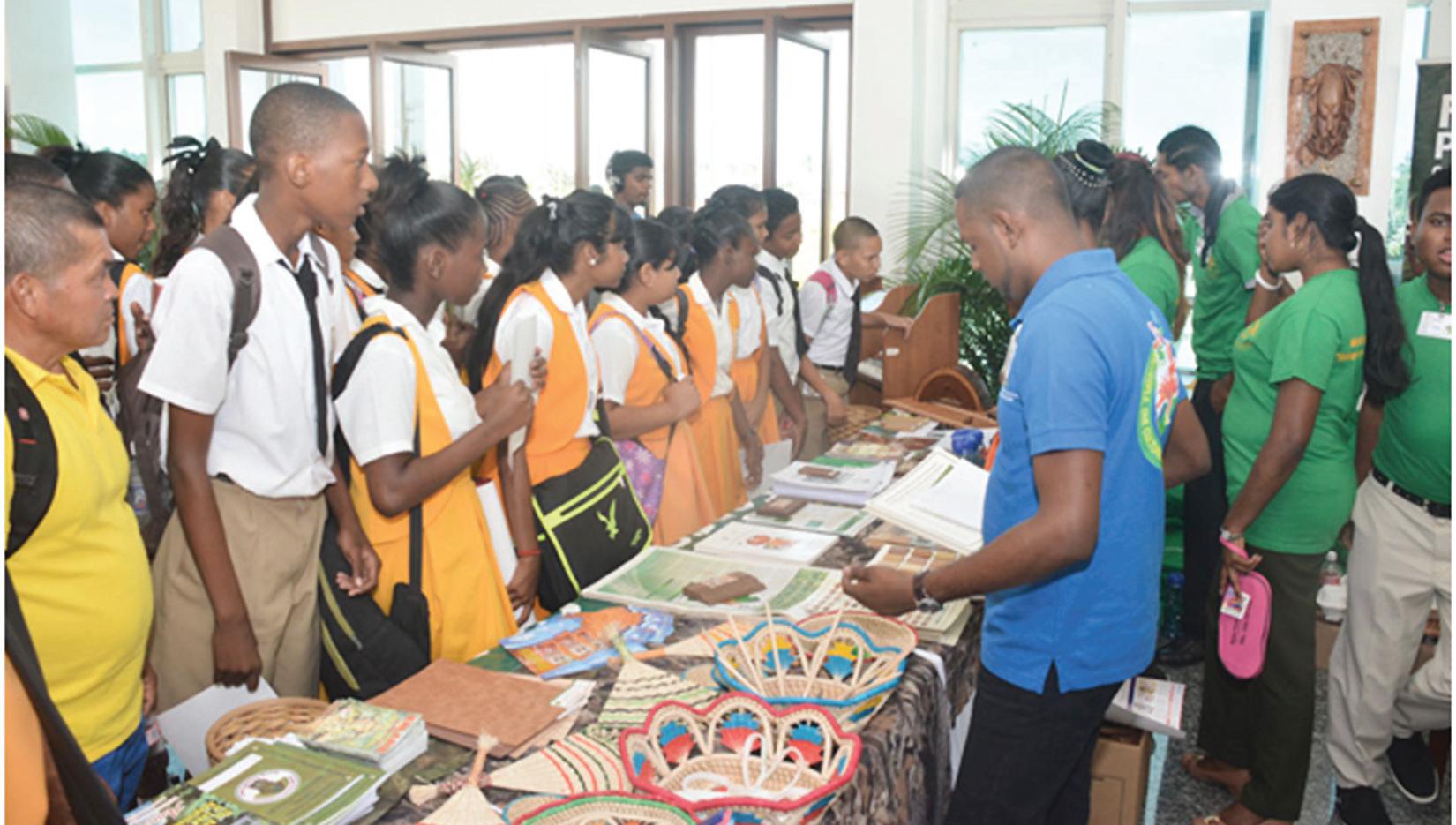
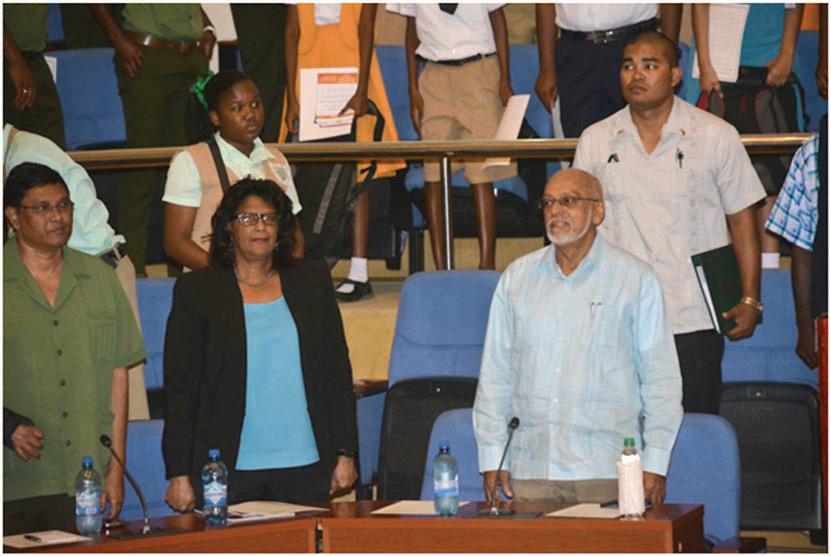
mental services that contribute to the maintenance of not only the national ecosystem but regional and global ecosystems as well.
He said: “The value of our forests is therefore unimaginable, particularly for our indigenous brothers and sisters.”
He said that even though the Government is constantly bombarded by financially sound investors to access forest land for oil palm plantations, large scale agriculture and other lucrative projects, this will not happen.
Not if it entails large scale savannah clearing of forest lands, he said.
He said that Guyana will continue to show its unwavering commitment to good
He concluded by reassuring of “our continued commitment to make this venture a successful one and that Guyana remains an attractive place for investment”.
ExxonMobil’s Vice President for exploration, Dr Eric Oswald, said the company, which is described as the largest refiner of petroleum products in the world, had a long history of using science and innovation to bring forth energy. He emphasised that Exxon’s commitment to safety is unequalled, noting: “How we get results is just as important as the results we get” with a motto of “Nobody gets hurt.”
The company is partnering with strategic organisations such as Youth Challenge and the Volunteer Youth Corps as part of its corporate responsibility push.
The company’s local headquarters is located at 99 New Market Street, Georgetown. Mobilisation will begin in the first quarter of 2015, and drilling and exploration, initially at the Liza location, will commence in the second quarter of 2015. (GINA)
Exxon begins drilling
…ignores Venezuelan sword rattling
United States-based oil company ExxonMobil’s oil exploration ship, the Deep Water Champion is in position in the Stabroek Block off Guyana’s Essequibo Coast and will commence its US$200 million exploration project (March 5), Country Manager Jeff Simons has said.
The company is locked in what could be a possible showdown with Venezuelan authorities who have warned it not to proceed with the drilling, which was sanctioned by the Guyana Government.
Venezuela has repeatedly laid claim to the area to be explored, ignoring an 1899 Arbitral Tribunal Award, which was declared as the full and final settlement of the boundary between the two South American nations. With Venezuela’s obdurate insistence on its position, Guyana is considering judicial settlement of the boundary.
Following Venezuela’s warning to the oil company, Guyana’s Foreign Affairs Minister, Carolyn RodriguesBirkett, dispatched a diplomatic note to her Venezuelan counterpart, warning against any action to prevent the oil rig from carrying out its work in an area of the Stabroek Block known as Liza.
Her note was in response to Venezuela’s Foreign Minister, Delcy Rodriguez Gomez, saying to ExxonMobil:
“The Government of the Bolivarian Republic of Venezuela wishes to express its strongest protest against this serious situation and, accordingly, I take this opportunity to request the cessation of such activities as they will not be acknowledged or accepted under any such circumstances, since this will constitute, moreover, a hostile violation of the Venezuela territorial space,” Gomez told Simon in her letter.
She also cautioned that Venezuela would not recognise any law or contractual obligations by third states, agencies, international financial institutions or private corporations that engages “Guyana over the sovereignty or existing resources on the seafront of the Essequibo”.
Gomez also expressed concerns that the drilling of oil at such depths could cause untold environmental damage.
“The drilling in the mentioned sea area involves a major impact on the environment, given that the intervention in such significant depths could cause unacceptable environmental disturbances, which are prohibited by our legal framework and international agreements on environmental protection,” the Venezuela Foreign Minister stated. “Guyana has no valid land titles on the territory of Essequibo, including the seafront, which entitles such country to carry out projects of this magnitude.”
Guyana has asked Venezuela to desist from taking any actions that would stymie this country’s development.
“The Ministry of Foreign Affairs has requested that the Government of the Bolivarian Republic of Venezuela desist
forest governance as it practises sustainable, multiple use forest activities.
He said that in this vein the Government has demanded, and will continue to demand, that all large scale forest utilisation projects be done in keeping with the relevant legislation, inclusive of the requirement of a publicly transparent Environmental and Social Impact Assessment.
He added: “As we celebrate International Day of the Forests 2015, my Government pledges that Guyana will continue being a responsible nation both nationally and globally. We will however, continue to promote the sustainable use of these forests because that is unavoidable for the socio-economic development of Guyana, and the empowerment of our peoples.”
He said that the future of forests in Guyana is therefore very bright.
“Government will continue to work with our local forest industry, and other stakeholders; along with international partners, such as the Government of Norway to advance common goals regarding forests, climate change and development.”
He stressed: “As an environmentally responsible Government and people, we simply will not add to the estimated 32M hectares that are lost every year.
from taking any actions that could only result in the stymieing of the development of Guyana and its people and that would be in contravention of international law,” the Foreign Affairs Ministry said.
According to a Government Information Agency (GINA) release, ExxonMobil, the largest public traded international company in the world, is an industry giant that has the leading inventory of oil and gas projects, and the world’s largest refiner of petroleum products. It has a long history of using science and innovation to find safer and cleaner ways of bringing energy to the world.
The total area allotted to Exxon for exploration (the Liza Area of the Stabroek Block) covers 26, 806 square kilometres. The company intends to drill at a depth of 1750 metres.
According to GINA, President Ramotar, who was impressed with the size of the company’s operations, described the exploratory staging area as a “small village”, noting that it ought to take a lot of effort to manage and execute all logistics. “I’m quite impressed with what is taking place, and looking forward to going out myself,” the President noted.
Additionally, Minister Persaud urged the company to ensure that the activities envisioned are within the specified timeframe. Persaud also stated that “all Government agencies are fully mobilised for an efficient and effective exploration”.
The project is expected to be executed over a 10-year period divided into three sections including two phases in each section which lasts for one to two years. The scope of operations include a drillship, with approximately 200 crew and contractors; helicopter support, with two from Ogle including a utility and a Search and Rescue at all times; four support vessels and two shore bases running from Georgetown and Trinidad, and a waste treatment facility at the John Fernandes Site at Houston, Greater Georgetown.
Guyana has been receiving sustained international attention from huge companies, especially in the oil sector.

The President supports the Speciality Hospital because it will boost our medical infrastructure for our own citizens as well as forming the nucleus of a Medical Tourism industry.
Govt seeks ways to honour Specialty Hospital contract
Government has found itself in “a legal conundrum”, according to Legal Affairs Minister Anil Nandlall, who has described the Opposition parties as anti-national and unpatriotic, following their move to cut the $1.2 billion that was allocated for the Specialty Hospital.
He said Government will have to seek alternatives in a timely manner to avoid breaching the legally-binding contract between India and Guyana on the hospital.
Nandlall, who was at the time speaking about cuts made to core projects of the national budget during a People’s Progressive Party press conference at Freedom House, said around the world citizens have the right to proper modern medical care.
He said this is regarded as a basic human right, and governments are encouraged to construct facilities and to establish initiatives to build infrastructure that will enable their people to enjoy the best possible health care.
“Any responsible opposition ought to encourage, to support, and even to pressure a government to ensure that these facilities are encouraged in this day and age, especially to sections of the population that, because of their financial and economic standing, would be unable to enjoy any comparable such facilities,” Nandlall argued.
The Minister said he has no doubts that the opposition parties have the financial wherewithal to access the type and quality of health care that the Specialty Hospital is intended to provide. So, perhaps the importance of this facility has not yet dawned upon them, but the hospital presents an opportunity for care that the ordinary Guyanese may never have otherwise.
Nandlall said it is from this perspective that the Administration finds the cut to this facility incomprehensible with no bearing on common sense and even politics. The Attorney General stressed that at the end of the day, the facility is not intended to benefit supporters of the Government or the ruling party but every single Guyanese who requires the type of medical treatment it is intended to provide.
“It is, therefore, quite shocking that this is a project of all that should have been identified for decimation by the joint Opposition,” he stated.
He said there are many opportunities for the Opposition to seek clarifications on any matter: “the Public Accounts Committee, the very Committee of Supply and they utilise that to extract from both the Health and Finance Ministers a number of clarifications”, Nandlall pointed out.
He explained that the Opposition parties have the right to oversee the expenditure of public funds and that is a responsibility which the Government will continue to encourage them to discharge.
He said the opposition even had the opportunity to question Health Minister Dr Bheri Ramsaran in Parliament.
Nandlall said to strike a blow that has the effect of rendering the project impossible to materialise is one that really cannot be supported in any form or fashion.
While pointing out his understanding of the issues and concerns raised by the Opposition on the project, he said it was still not clear why they would want to cut the monies after voting in favour of them last year.
“One cannot discount the fact that last year the very hospital was part of the budgetary process and indecipherably, this year they withdraw that support,” he said. The minister commented that from last year to now, the government, having assumed that the Opposition will continue to support the project, proceeded to conclude financial arrangements with contractors in India and the EXIM Bank of India.
“We are now in a precarious legal position where we have a binding contract with the contractor, we have in fact endorsed the disbursement of an advance payment towards this project to a contractor, to the tune of some US$3 million and now we are in this extremely invidious legal position where we are unable to discharge the contractual obligations which devolve upon us under this contract,” Nandlall explained.
He said that this must be considered against the background of the repeated allegations made by the opposition against the government that it is uncaring and not addressing the concerns of the poor people of this country.
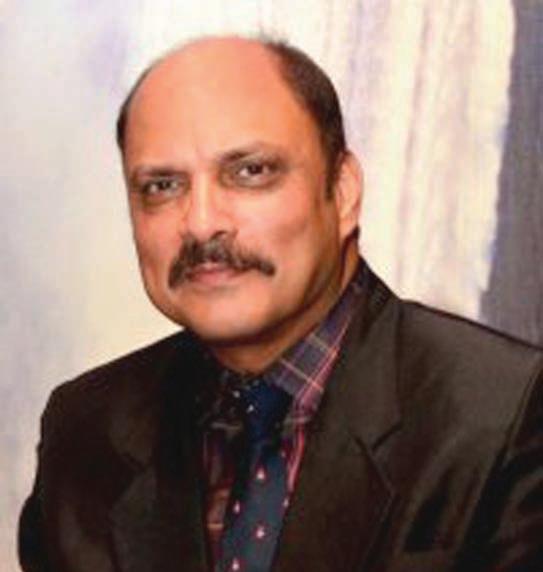
He emphasised that the Specialty Hospital is an initiative that is intended to benefit the health of the nation in the most fundamental way and one that will allow health care of the highest quality to be afforded to persons of all walks of life.
The accusations of the Opposition, he said, are hollow, because this is an initiative that is specifically designed to provide a world-class medical facility to address the concerns of poor people and the Opposition parties have taken a position that can only be described as anti-nationalistic and unpatriotic.
Government continues to try to understand the rationale behind the budget cuts. The cuts by the parliamentary Opposition began with the stripping of monies allocated under Budget 2013.
The hospital is one of the many projects to further enhance health care in Guyana. Once completed, this institution would be expected to provide specialised medical services at an affordable cost.
During the consideration of the estimates of expenditure for the health sector, both the Alliance For Change (AFC) and A Partnership for National Unity (APNU) Members of Parliament questioned the quantity of work done and monies paid out for such work. The Opposition members remained unconvinced that the project was a transparent one, but did not provide any supporting evidence.
Hospital
Government allocated some $910 million for the Specialty Hospital Project in Budget 2014
Finance Minister, Dr Ashni Singh has announced that some $910 million is allocated for the Specialty Hospital
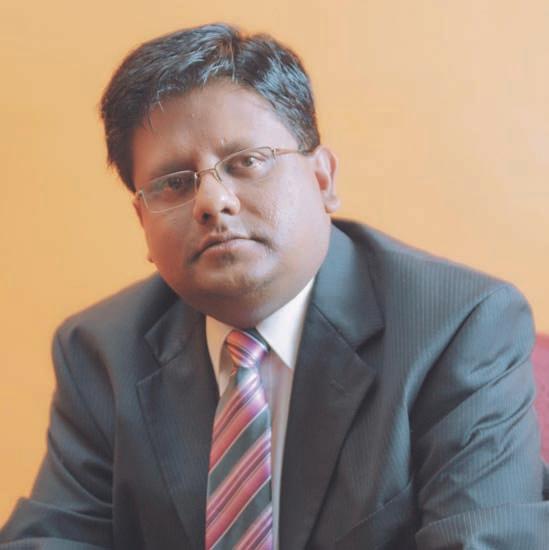
Project, which has previously incurred the wrath of the combined parliamentary Opposition.
In December 2013 when Health Minister, Dr Bheri Ramsaran requested supplementary funding for the hospital, he did not receive the support of the Opposition, but the $34.4 million he was asking for was approved, after A Partnership for National Unity (APNU) Member of Parliament (MP) Volda Lawrence was absent from the House when a vote was taken on the matter.
Preparatory work on the construction of the multimillion-dollar hospital has since commenced and the Health Minister said that Donald Ramotar Administration is very passionate about seeing the project to fruition.
During the 2013 budget debate, the $1.25 billion provision for the controversial hospital was cut by the combined Opposition, using their one-seat majority in the House. APNU had contended that the formulation of the project was not transparent, a view rejected by the Government.
The construction of the hospital is part of an agreement between the Government of Guyana and India, for Guyana to use US$18 million through a line of credit to build the hospital. The hospital is being built to cater for complicated surgeries, ranging from heart operations, organ transplants to cosmetic surgery.
Dr Singh in his budget presentation said efforts will continue to advance the construction of Guyana’s first Specialty Hospital, which aims to deliver tertiary level health care not previously available to Guyanese.
Meanwhile, Dr Singh speaking on the health sector as a whole, lauded the developments made in 2013, and announced that some $21.5 billion has been allocated for the sector to meet its strategic goals.
Some $2.4 billion of this amount will be spent on construction and rehabilitation of health care facilities countrywide.
Dr Singh said among the facilities to benefit from the physical infrastructure works are the Port Kaituma District Hospital, the Linden Hospital Complex, the Kwakwani Hospital, the acute care facility at the National Psychiatric Hospital, and the Georgetown School of Nursing.
In addition, $382.7 million has been allocated for the purchase of medical equipment and $117 million for the purchase of 12 ambulances, which represents a 40 per cent increase in the national fleet.
The Minister explained that Government in its effort to continue both primary and specialised health training, over $428 million has been allocated to train 20 additional postgraduate residents and upgrade over 4000 providers.

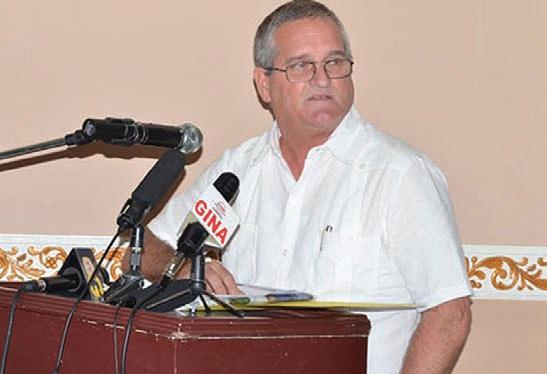
“In keeping with Government’s focus on maternal and child health, Government will continue to prioritise resource mobilisation for improving maternal health and efforts will be made to accelerate the achievement of this goal in collaboration with our developmental partners,” he said.
As such, in 2014, the sum of $50 million was allocated to commence the extension of the maternal facility at the Georgetown Public Hospital to ensure increased bed capacity while $22.6 million was allocated for the establishment of maternity waiting homes in Lethem and Bartica to cater for antenatal high-risk mothers.
Recognising the growing incidence of personal and domestic violence, the Minister disclosed that the provision of services in mental health will focus on the prevention and management of suicidal behaviours.
In 2011, a cost of illness assessment for non-communicable diseases (NCDs) in Guyana was conducted and found that total annual direct and indirect costs accruing from NCDs were estimated at over $40 billion. With this in mind, a national commission is soon to be established to oversee the accelerated implementation of the national plan for prevention and control of NCDs. Some $50 million has been allocated to launch a public education and outreach programme, Dr Singh said.
“Government remains unwavering in our commitment to securing access for all to appropriate, promotive, preventive, curative and rehabilitative services without suffering financial hardship,” the Finance Minister said, pointing out that the sector expended in excess of $17.7 billion in 2013. Dr Singh said of this amount, over $1.2 billion was on construction and upgrade of health infrastructure countrywide and $257.8 million on medical equipment.
In 2013, the human capital of the health sector was strengthened by the return of 278 Cuban-trained doctors, and according to Dr Singh, significant progress was made in delivering post-graduate programmes in gynaecology, orthopaedics, internal medicine, paediatrics, emergency medicine, anaesthesiology and surgery.
He said some 44 government medical officers benefited from these programmes, which also increased the number of skilled operating room technicians and enhanced capability in neonatal intensive care and emergency obstetrics.
Together, these interventions reflected over $364 million in health training, Dr Singh disclosed.
Also, in keeping with the need to combat the spread of vector-borne diseases such as malaria, the Finance Minister said over 78,000 long-lasting insecticide treated bed nets were distributed to mining communities which contributed to a reduction of over
Our health services too have improved both in terms of quality and in terms of quantity, despite many challenges. We now provide services at a more technical level, including heart by-pass operations, dialysis services, improved cancer treatment, better facilities for burn victims, etc. In every region of our country, we have built new hospitals or upgraded health facilities. Even in the remotest of areas, we have established and staffed health facilities. Today, our public health care system has more qualified doctors than ever before. Our housing programme continues to provide our citizens with their own homes, giving them great comfort and security. Entire new communities have emerged where once the land lay wasted and unoccupied. Tens of thousands of Guyanese families have realised the cherished dream of home ownership.
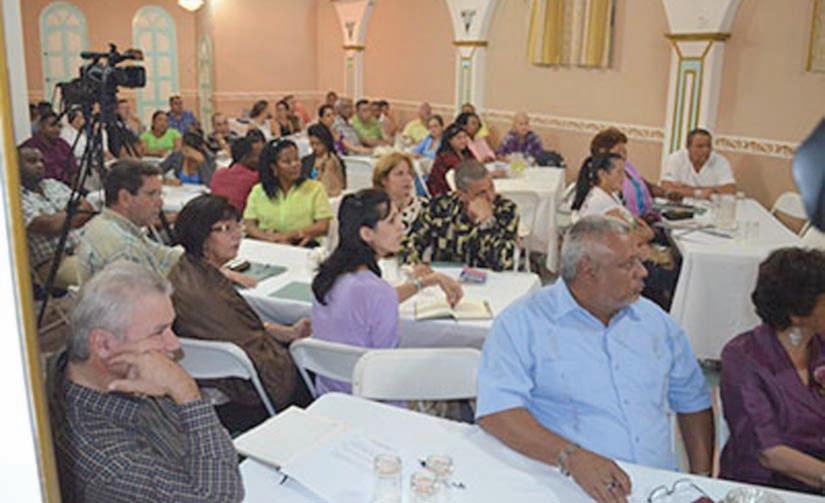
Government recently launched the updated National Health Strategy, Health Vision 2020, for the period from 2013 to 2020. The strategy seeks to integrate the delivery of quality, effective and responsive health services and prevention measures to improve the nation’s physical, mental and social well-being.
1000 malaria cases nationally.
In the area of improving maternal health, Guyana completed a Millennium Development Goal (MDG) Acceleration Framework, which focuses on the MDG Goal to improve maternal health.
The framework is intended to harmonise strategies to leverage resources for achieving sustainable improvements in

the quality of maternal care offered nationally and which focus on solutions for the reduction of maternal mortality.
Govt keen on completing Specialty
Government is still very keen on seeing the completion of the US$18 million Specialty Hospital and has built a stronger alliance with the provider of the concessionary loan financing to see it become a reality.
Construction on the state-of-the-art medical facility was halted last September after Government took the contract from Surendra Engineering Company Limited (SECL), following the discovery of major discrepancies.
A month after yanking the contract, Government, through the Attorney General’s Chambers, had also filed a lawsuit against the India-based company for in excess of US$100 million for alleged fraud, breach of contract, and delays in works done. All this was done while the company strongly contended that it had done nothing wrong.
Head of the Presidential Secretariat and Cabinet Secretary, Dr Roger Luncheon said, while he could not give an insightful comment on the legal proceedings, Government was confident that it would be able to recover the $4 billion that was unlawfully used up by Surendra.
Meanwhile, Luncheon told the Guyana Times that subsequent to the termination of the contract, Central Government had moved to inform both the Government of India and the funding agency, the Exim bank, of its determination to see the hospital to completion.
“It is in that regard that Government has reached out to the Indian Government with certain proposals with regard to the future, how specific concessionary loan financing can continue to be provided and utilised for the completion of this project,” Luncheon told this publication when asked for an update.
He said Government was awaiting a response from the Indian Government before the next step is taken.
The Surendra Engineering Company was contracted by Guyana’s Government back in September 2012 to design, build, equip, test, deliver, install, complete and commission a Surgical Specialty Hospital located at Turkeyen, Greater Georgetown. The contract was signed to the tune of US$18,180,000.
But according to Government, the company had failed to perform its obligations under the terms of the contract and give an account for the advance payment of US$4,285,440.
Instead, the company submitted fabricated, unsigned and sometimes inflated invoices with no evidence of actual payments made or any documents supporting the expenditure claimed.
A letter was also produced and purported to be signed by a D Singh, Director of Financial Institutions, Central Bank of Trinidad and Tobago, confirming that it has “more than five years in the reinsurance and coinsurance business” and had been authorised for those operations since 1988.
In the wake of rumours that the Indian firm might have been liquidated, Attorney General and Legal Affairs Minister Anil Nandlall had said that Government was continuing with its lawsuit against the company.
Nandlall said that while he would be making enquiries about the claim, Government will not be backing out of the fight. In the legal document filed by the Attorney General Chambers, Government said that the company was found guilty of fraudulent practices and breach of the terms, conditions and warranties of the contract it had signed.
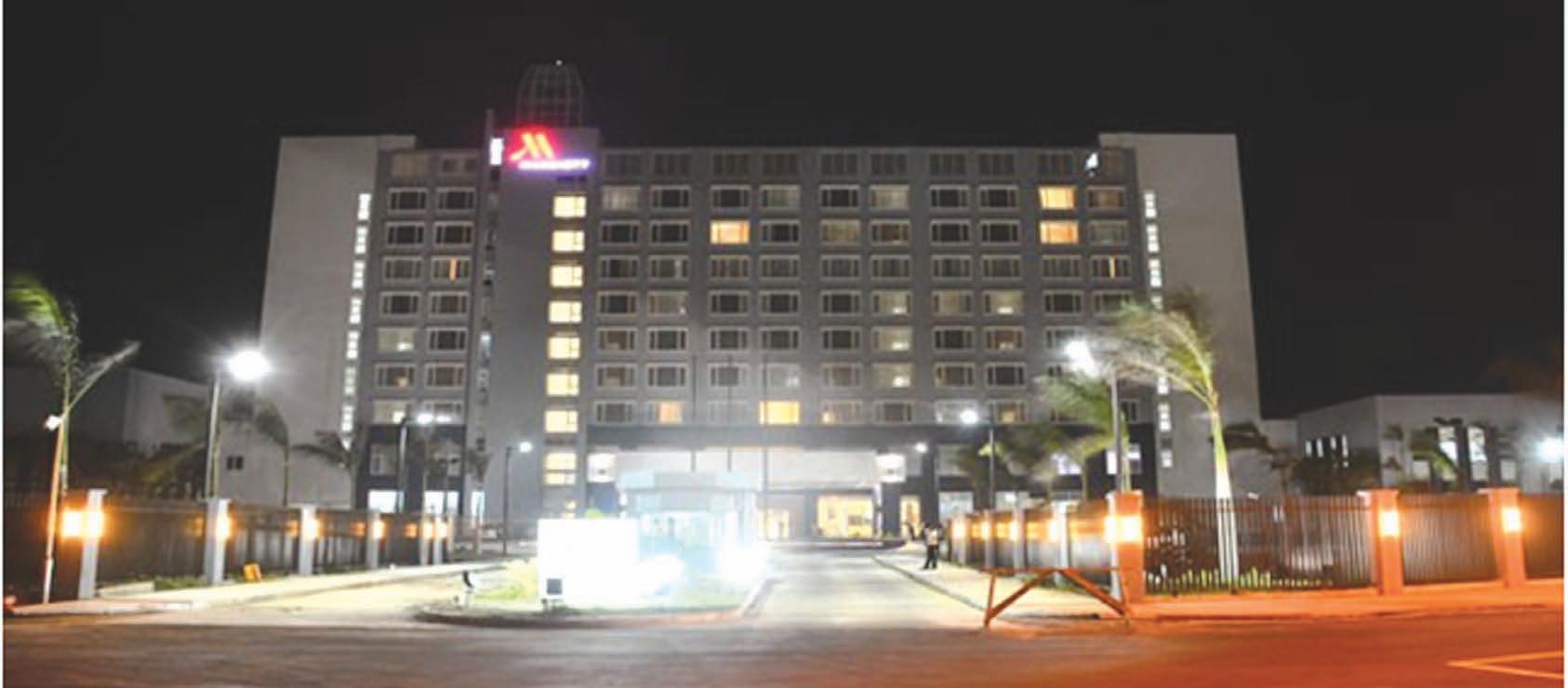
President Ramotar: I have always supported the need for a top-class, internationally branded hotel in Guyana. And the Marriott Brand fits the bill. Whenever I am interacting with international business persons to invest in Guyana, one of the first thing they ask when I invite them to visit is “What hotels you have down there?”
Let’s face it. While we may have many rooms...these are not of the reputation that would entice the international investor to visit. The third world reputation created by the PNC still lingers.
I supported the Private Public Partnership (PPP) approach because I really have faith that this will have a demonstrator effect on other investment, where the risk might seem to be too high for the new investor. Guyanese will be pleasantly surprised when the Private Equity partner comes aboard that we will have a world class hotel in our country without having any debt on our hands. Or over our head.
Guyana has open the doors to the first ever internationally branded Marriott Hotel – the realisation of one of Government’s flagship development projects – accomplished despite Opposition efforts in cohort with a pliable media.
The Marriott Hotel was officially declared opened on Thursday, April 16, 2015 by Head of State, Donald Ramotar, after which there was a grand ribboncutting ceremony to mark the occasion.
The Guyana Chronicle understands a number of Marriott executives and VIPs were at the grand opening ceremony.
Conceived during the mid-2000s, the project will serve as a catalyst for the evolving Tourism Industry, now seen as another pillar of the modern Guyanese economy.
pearl-white petals that seem to make their virtual ascension downwards to their life-preserving translucent visitors. At nights, the petals are illuminated to provide a sublime, nocturnal terrestrial ambience.
With the Marriott signage and lighting in place, a visitor to the facility is greeted in the lobby by the expansive Great Room in the yonder.
Envisioned as one of the social hubs of the facility, the Great Room has as its backdrop the Atlantic Ocean behind the massive pool area, complete with the accompanying
available, could be made using your cell phone. Yes, there is an app for that too.
The hotel’s General Manager also used the opportunity to disclose that The Marriott is looking to fully immerse the facility into Guyana’s culture.
Apart from the large conference rooms which have been named after Guyanese landmarks such as the Mazaruni and Potaro, Guyanese artwork is on display throughout the facility – even in the Executive Lounge alongside a strong brew of coffee and truffles.
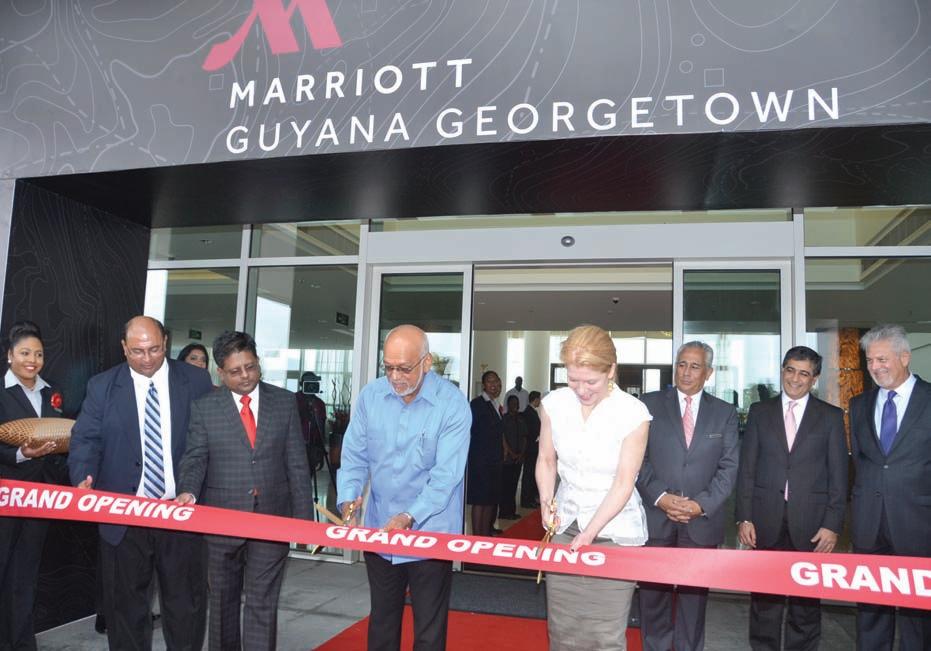
Speaking with the Guyana Chronicle ahead of Thursday’s opening, the Marriott General Manager, Mr. Roberto Grisi said he is very confident, more-so in the staff that has been trained.
He recalled that one of the key challenges faced was employment. According to Grisi, the majority of the more than 3,000 persons interviewed did not have any experience in the hospitality industry neither were they qualified in the field.
A decision, he said, was taken to employ and train the young Guyanese – a decision which now bears validation.
Ahead of the grand opening, Grisi told the media that already the facility was put through what is called a “pressure test.”
Some 100 of the hotel’s rooms were put into full operation, utilising the trained staff to test the facility.
The 10-storey edifice which sits on seven acres of oceanfront property was a hive of activity yesterday.
Employees from Shanghai Construction Group (SCG) and a number of local sub-contractors in addition to the more than 220 were trained in anticipation of the hotel’s opening and were all engaged in some aspect of preparation.
All perimeter lights had been installed with a number of tests being undertaken. Employees by the droves were observed cleaning, polishing and putting final touches to some of the intricate designs ornately adorning the building.
This includes the golden rotunda rigs floating on the ceiling of the lobby, hovering above the uncontaminated
A huge international bar beckons in plain view in the Great Room, promising drinks of a higher quality and flair from around the world.
Boasting the largest and most elite of its kind in the country, the hotel’s general manager was quick to point out that in addition to the Presidential Suite, Family Suites or Standard Rooms, guests of the hotel have at their disposal the state-of-the-art Fitness Centre, again with the accompanying ambience of the Atlantic Ocean, Conference Rooms, Pool Facilities and a number of dining restaurants.
Technology is a big feature of the Marriott Hotel, according to Grisi. The hotel features a number of digital display screens across the property and according to the General Manager, these will be used to complement a varying number of services right down to advertising promotional activities at the facility.
Even the television experience has been customised by Marriott. All feeds have been consolidated before being bunched and delivered to its customers. In addition, each television in each room of the Marriott Hotel is programmed to interact with guests, again making all services and facilities available at the touch of a button.
Key cards for hotels and digital orders may be a common feature of hotels across the world, and at the Marriott checking in, checking out and ordering almost any service
According to Grisi, in the future, The Marriott will be looking to host art exhibitions at its facilities for local sculptors and artists.
He said too that another aspect of Guyanese culture that will be incorporated into The Marriott experience is music.
Grisi told this publication that already a number of local performers have been auditioned and Marriott is actively looking to see how they will be incorporated into the live entertainment routine.
The Marriott, he said, has also been looking to partner with local farmers and producers where all of its supplies, in terms of food, can be sourced locally. According to Grisi, seafood and meat such as pork and beef, whatever can be sourced locally will be a priority.
The General Manager said too, in future the hotel will be looking to supply farmers with the seeds of what it will require, but is not grown locally. This, he said, would allow The Marriott to inherently aid in the creation of new local industries for Guyanese, while at the same time addressing its needs.
The Marriott, he said too, is also taking its corporate social responsibilities seriously. According to Grisi, while the hotel will not just hand out cash grants hoping it would be spent getting some value, the hotel itself will take on projects.
According to Grisi, very shortly The Marriott will be looking to have some work done at a local orphanage as part of its Community Outreach.
There are currently 221 staff employed with The Marriott Hotel, each having received just about 300 hours of training thus far and according to Grisi, by the time the Entertainment Complex comes on stream the hotel will employ another 250 persons.
In recent months, he said that close to 100 additional staffers were recruited daily, but this was primarily to forge ahead with the finishing of the construction of the hotel.
Perfectly blended into the serene background that is Guyana’s tropical, turquoise-blue skyline dotted with puffs of white, floating cotton cumulus, visitors and guests are greeted at the entrance of this edifice with a palm-lined driveway with parking on the seven- acre property expected to cater for at least 200 vehicles.
The Marriott, this publication was told, will be targeting primarily the business clientele and according to Grisi, the facility has already been booked to host an event to cater for about three hundred persons.
This, he said, is in addition to the numerous bookings already confirmed for the firsat week on opening. (chronicle)
The fight against corruption will be taken wherever it exists. The assurance came from President Donald Ramotar, who was upfront in acknowledging the issue as a problem.
“I would not say that there is no corruption in society. I will be the first to say that there is and it is a fight that must go on to fight corruption,” he said in an interview, In Perspective, with the Berbice-based National Communications Network (NCN).
According to him, his administration has “carried the torch” when it comes to the fight against corruption, a track record that speaks volumes when compared to that of the Government’s critics.
“Mr. Greenidge (Finance spokesman for A Partnership for National Unity) in his entire period as Finance Minister never submitted audited statements,” he said.
Mr. Ramotar added that the People’s Progressive Party/Civic (PPP/C) Administration, on the other hand, has presented audited reports of Government’s accounts since it took office and added an additional tier of transparency and accountability by having the Auditor General report to the National Assembly, as opposed to the Finance Minister, which was the case under the former People’s National Congress (PNC) Administration.
Also, the Public Accounts Committee (PAC) of the National Assembly scrutinises the Auditor General’s report and identifies areas for additional investigation to move towards prosecution.
In addition to this, he touted the efforts made in procurement, which sees public bidding being done, as well as the fact that his Cabinet merely offers its no-objection to contracts above $15 million, as opposed to the status quo in many other nations where Cabinet awards contracts.
“We have been the ones who have been at the forefront of the fight against corruption,” the President stressed.
He also recognised the existence of the perception that there is corruption even at the lower levels of government’s business, such as the Neighbourhood Democratic Councils (NCDs).
“The perception is that things are not being done according to the books,” Ramotar said, adding that his “impression” is that there are complaints relative to ensuring that operations at these levels are above board.
The President said, “We are ready and willing to put additional measures in place to fight corruption…we have to fight corruption
“…it is not enough for us to say it is hap-

pening in other places…we must fight it. … our goal and aim must be to eradicate corruption altogether.”
Good governance, according to him, has supported these efforts, which is underscored by real efforts that have been made by his Administration.
Noteworthy too is the fact that Guyana is signatory to two significant anti-corruption conventions: the Inter-American Convention Against Corruption, and the United Nations Convention Against Corruption (UNCAC), ratified in 2000 and 2008 respectively.
Guyana is also one of 31 countries that signed onto and ratified the Inter-American Convention against Corruption in 2001.
The President maintains that support in tackling corruption is welcomed by his administration.
Last year the Caribbean Development Bank (CDB) offered technical assistance to the current administration to tackle corruption – an offer President Ramotar made clear that his Government is open to.
CDB Head Warren Smith, at the time of making the offer, said, “We certainly recognise and insist that good governance is part and parcel of the development of a country. We want to see and ensure that the persons we elect exercise good judgment and also good governance. I think that there is sufficient evidence out there that when these principles are not observed it hampers the growth and development of a country.
“…there is no country in this world, and I dare say, that has not had issues with corruption. It is important that countries continuously adopt measures that will reduce the incidents of corruption in their domain… certainly if they (borrowing member countries) request that kind of assistance, the CDB would be more than happy to help.”
“We are not sitting on our hands,” the President stressed.
“…it is not enough for us to say it is happening in other places…we must fight it. …

our goal and aim must be to eradicate corruption altogether.” – President Donald Ramotar (Chronicle)
Special corruption investigation body to comprise part of PPP/C’s ‘Guyana 2.0’
The incumbent People’s Progressive Party/Civic (PPP/C) has committed itself to taking several measures that will up the ante in the fight against corruption.These measures, representing continued efforts to fight corruption at all levels of government and society, were among the major highlights in excerpts of ‘Guyana 2.0’, the People’s Progressive Party/Civic (PPP/C) manifesto which was made public on Sunday.
“The PPP/C will continue the fight against corruption, and (will take measures) for strong standards of transparency and accountability,” the party assured.
Among these measures are: establishment of a Special Investigation of Corruption body with powers to investigate corruption and prosecute crimes of corruption; establishment of confidential complaints mechanisms to encourage people to report incidents of corruption; establishment of codes of conduct for public officials at all levels; strengthening laws and regulations with regard to bribery of public officers and officials; and support for and strengthening of the Human Rights Commission, Police Complaints Authority, Office of the Ombudsman, and the Integrity Commission.
Improved functioning of Parliament and the Judiciary, and appointment of the Public Procurement Commission (PPC) with the requisite parliamentary support, whilst retaining Cabinet’s oversight role through its ‘no objection’ function, were also listed as other undertakings envisioned over the next five years of a PPP/C administration.
Additionally, a report compiled by the Vanderbilt University’s Latin American Public Opinion Project (LAPOP), a premier academic institution that is a large, cross-regional research project which undertakes surveys in the Americas and has over 30 years of experience, was released on December 3, 2014. It addresses ‘The Political Culture of Democracy in the Americas’, and speaks to the incidence of corruption in Guyana. That report finds, between actual incidence of corruption and mere perception of corruption, a huge gap measuring a whopping 84 per cent.
That 2014 Americas
Barometer study is based on interviews with 49,738 respondents in over 20 countries. Nationally representative surveys of

voting age adults were conducted in all major languages using face-to-face interviews in Latin America and the Caribbean, and Internet surveys were used in the United States and Canada. The sample size was over 1500 Guyanese.
Other concrete action by the current administration has been viewed in a favourable light in sections of society.
Guyana signed the Inter-American Convention against Corruption in 1996, and ratified it in 2000. As recently as June 16, 2011, Guyana has designated the Ministry of Foreign Affairs as its central authority to deal with matters related to the InterAmerican Convention against Corruption. Under its obligation, Guyana has had its first review in 2006; its second in 2008, and its third in 2011. In September 2011, when the third-round review of all the countries was completed, the committee decided that the fourth round would include visits to countries as well as a follow-up on implementation of the recommendations that were made during the first-cycle review in 2006.
As it relates to the United Nations Convention against Corruption, the areas addressed include prevention, criminalisation, international cooperation, and asset recovery.
Guyana signed on to that Convention in 2003, and ratified it in 2008. Guyana has also taken steps to address the issue of corruption.
By becoming party to the two anti-corruption conventions, the country has undertaken obligations and expectations for enactment of the standards and rules that are central to both conventions. (Chronicle)
We have also remained attentive to the needs of our most vulnerable citizens, including the elderly. We have continued to alleviate the various problems experienced by our senior citizens by improving their Old Age Pension. Over the past three years, we have increased pension by 75 percent to $13,125. This is light years from where we came from when it was a paltry few hundred dollars and our seniors were subjected to the humiliating means test. Today we stand proud as one of the few countries in the world with a universal non- contributory pension paid to every elderly person who has met the sole eligibility criterion of attaining the qualifying age. Every month some 42,500 senior citizens benefit from this programme at a total annual cost of $6.6 billion. We also subsidise water rates and provide an electricity subsidy to old age pensioners.
Good Morning!
Let me once more congratulate our new Commissioner of Police and to remind him of the tremendous responsibility he has and the need to meet the expectations of our citizens. At this important juncture I have decided: to reinforce the important role the Guyana Police Force plays in ensuring the safety and security of citizens; to stress the importance of a strong and professional Guyana Police Force for maintenance of social order, for the protection of people from crime, and to act as a visible deterrent to crime and disorder, and most importantly to lay out the reforms that I believe are necessary to bring Guyana’s Police Force in line with the needs of all Guyanese. But to me that is only the starting point and not the end point.
The vision of the Police Force is one that not only meets the needs of our citizens but that sets the standards that other nations wish to copy. It is time for Guyana to stop wishing to be like other countries and to create a country that others want to emulate.
So what is the starting point? Where does the journey begin to a better, more respected Police Force that serves and protects ALL Guyanese regardless of race, regardless of political party affiliation, regardless of their financial status? Let’s first review the basic guidelines for policing, the Peelian Principles, which, though originating during colonial times and issued by Sir Robert Peel as British Home Secretary and Founder of the Metropolitan Police Force, would have been adopted by colonial police forces but still have an application in our modern era.
Every Police Officer should bear visibly an Identification Number to ensure accountability for his or her actions;
Whether the police are effective or not is not measured in the number of arrests, but on the lack of crime; Trust and accountability are paramount;
Preventive policing to deter crime; and the most important and essential police work is accomplished on patrol in which officers become acquainted with their beats, prevent crime and by their mere presence, respond to crimes in progress, manage crises, and practice their skills.
I posit that these Peelian Principles are even more relevant today and particularly where the aspects of trust and accountability are concerned.
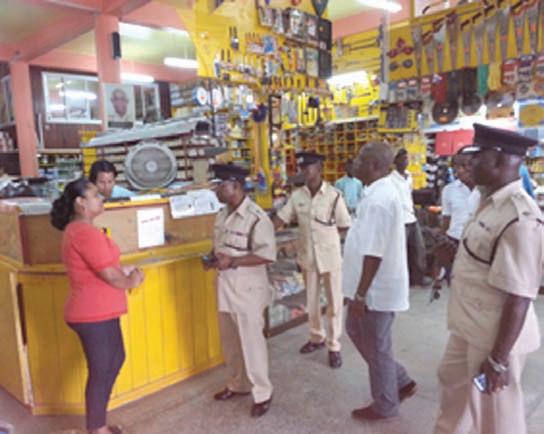
Like many of you, I noted recently in the media, the survey findings of the recent Latin American Public Opinion Project (LAPOP) which found that Guyana has the lowest level of trust in the police in the region and this trust has decreased over time. We may have our views of the survey, its methodology and its analysis. The reality is that LAPOP has published its findings and these have been widely disseminated and therefore must be addressed objectively.
The survey found that between 2012 and 2014, the Guyanese public’s trust in the Guyana Police Force decreased by 10 points on a 0 to 100 scale – from 45.8 in 2012 to 35.4 in 2014. This is a worrying finding and during your deliberations at this Conference I expect that you will discuss the perceived decrease in trust, what may have fueled such views, and what can be done to turn this decrease in trust to an increase in confidence by the citizens in their Police Force. Let me be clear on this point. This perception is not acceptable to me nor any Guyanese and should not be acceptable to any of you here today and we MUST take steps to change these perceptions. But before any step forward can occur, there must be a desire to move forward and I challenge each of you to find that desire, to not only look back at the Peelian Principles as the motivation to take that step, but to think about the importance of keeping your friends safe, your families safe and your country safe. If this doesn’t motivate you to take that step forward then I would argue that nothing will.
Responsibilities of Leadership
You, the leadership of this Guyana Police Force must lead, must show all members of the Police Force the path forward. Each of you has national responsibilities that have to be executed with a high degree of efficiency, professionalism and effectiveness within the ambit of the law and due process. These functions include:
* Protecting life and property;
* Enforcing criminal law;
* Regulating traffic;
* Crowd control and other public safety duties;
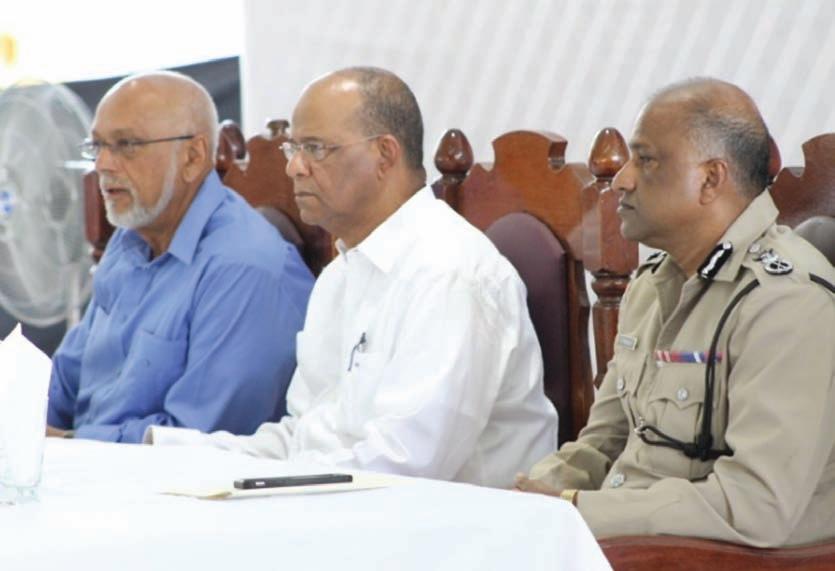
* Investigations and detective work;
* Countering organised crime and the trade in narcotics in collaboration with Financial Intelligence & Investigative Task Forces, CANU, and the Joint Services as a whole;
* Being the example that guides all Police Officers in this country
* Your Mission and its Implementation
Your Mission requires that the Guyana Police Force has its fingers on the pulse in all areas of Guyana where citizens reside, have their businesses, where investors – local and foreign have their assets, where vehicles, aircraft and boats operate and where persons enter and leave our borders and are expected to satisfy all requirements of our laws and regulations.
Applying the Peelian Principles in the execution of your mission is a sine qua non. Professionalism, knowledge, people skills, firmness and fairness, must be the hallmarks of Officers and Ranks of the Guyana Police Force in the discharge of their duties. In so doing you will inspire public confidence and trust and be looked upon as role models who are career oriented and patriotic.
As leaders, you are also expected to look after the ranks under your command, ensuring that as far as organisationally possible, they are well trained, resourced, motivated and career-oriented and that their welfare and the wellbeing of their dependents, particularly of those personnel who are killed or injured in the line of duty, are attended to with concern and due consideration.
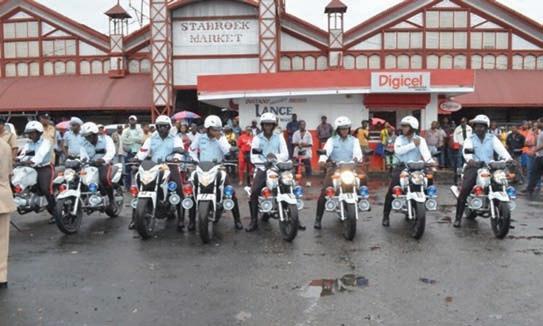
My Government has ensured the availability and allocation of substantial support and resources and these have been complemented by collaboration with external training and capacity building to deal with transnational crime and criminal syndicates. Much of what is required is being provided incrementally and in the context of the Guyana Police Force Strategic Reform Process.
I can point to major capital projects such as the Forensic Laboratory and the Police Floating Base. Also, the SWAT teams, additional vehicles, boats, Information Technology and enhanced real-time communication systems, refurbished police stations and training institutions and a substantial increase in the strength of Officers and Ranks. These are but a few examples of the incremental growth and development in building a well equipped and responsive Guyana Police Force.
While the Government allocations have been providing you with the assets – to whom much has been given, much is expected in return. Almost on a daily basis, the media will report on the far too frequent traffic accidents resulting in deaths and injuries, instances of domestic abuse, child abuse, violence against women, suicides, armed thugs with stolen or smuggled weapons, spiriting away of precious met-
als, and the illegal harvesting of exotic wildlife and even persons being harassed by a wayward few in your midst who seek out and harass law abiding citizens.
In a comparatively small population such as ours, with the speed of communication and networking of the social media, news, particularly bad news, will get around very quickly. This can have a demoralising effect on people and especially so if it involves the deaths of innocent citizens, injuries to others including victims of sexual assault, and traumatic experiences to relatives and persons near and far.
It is particularly galling when women, children and the indigent are the victims. Equally unacceptable, are instances when members of the Police Force or the Joint Services are either the perpetrators or are perceived to be in league with the perpetrators.
The population, and those elected to lead, whether in Government or the Opposition, will hold you the leadership accountable for the indiscretions of those among you, or those whom you lead, if they are culpable of indiscretions, sullying the good name of this organization, and betraying the trust vested in you by those whom you serve – the Guyanese people.
I am aware that while the majority of the Officers and Ranks are committed, patriotic servicemen and women, intent on carrying out your duties and responsibilities without fear or favour, affection or ill-will, there is a minority, the few rotten oranges that would spoil the whole basket.
I expect you to exercise zero tolerance in identifying the corrupt, the social deviants, the misfits who have infiltrated your ranks and then take appropriate action. I also expect you the leadership, to set the example and if, after self-assessment, you are found wanting, to take corrective action.
A Police Officer cannot be a walking contradiction – on the one hand pretending to be a paragon of virtue, but, on the other clandestinely, lining his/her pockets. I am optimistic that those here today can address this corruption. But make no mistake if you fail to perform your duties and fail to honour the oath that you took to protect and serve the Guyanese people then I will do what I have to do to ensure that the Guyanese people have proper service by the Police Force.
Integrity of Community Policing Groups
Officers let me turn my attention to the Community Policing Groups. These Groups which are selected trained and resourced to be the first responders and to augment the work of the regular Force are, in the main, doing a commendable job based on the feedback I have received from citizens in different parts of the country. But equally true are the reports of individuals using their membership of the Community Policing Group as leverage for their individual agendas. This must not be tolerated. Citizens must also have confidence and trust in the Community Policing
Groups because more than the Police Ranks, they are in direct contact with the villagers of every ethnicity and religious persuasion, teachers and schoolchildren, nurses and the elderly and differently-abled, businessmen and women, market vendors, taxi drivers and fishermen, in the communities where they actually reside.
Betrayal of their code of ethics by any member of a Community Policing Group is cowardly and unacceptable social behaviour. It must not be allowed to fester.
Tangible steps to be taken
We all know that we have the resources to address crime and the perception of our Police Force. We have the leadership to address these issues as well. But it is time to change how we do things and how we address these problems. Resources and leadership don’t matter if you have nowhere to put those resources and nothing to lead. So I am proposing a “15 in 2015” programme that is designed to restore confidence in our nation’s police force:
1) Establish a “neighbourhood watch” program. The goal of this programme is to increase surveillance by residents and community members of their own neighbourhoods.
2) Introduce a problem oriented approach to addressing crime called POP (problem-oriented policing). POP means police taking a proactive role in identifying, understanding, and responding to problems – not just incidents in their communities. If police were to take a more “problem-oriented focus” they could be more effective in impacting crime and disorderly problems. At the same time the police must take a new, more systematic approach that demands they collect new data, develop new methods of analysis, identify innovative solutions, and apply measures for assessing the success of their ef-
3) Increase the number of Police Officers on the streets and in our neighbourhoods.
4) Address our 911 system and turn it into a true rapid response system. Too often we have heard of the length of time or the fact that people do not answer the 911 calls when they are made. This must stop! Our response times are the worst among all Caribbean nations. The shorter the police travel time from notification to arrival at a crime scene, the more likely it is that police can arrest offenders before they flee. This rapid response will produce three crime prevention effects. One is a reduction in harm from crimes interrupted in progress by police intervention. Another, more general benefit of rapid response time is a greater deterrent effect from the threat of punishment reinforced by response-related arrests. The third prevention effect comes from the incapacitation through imprisonment of offenders prosecuted more effectively with evidence from response-related arrests. Creating a state-of-the-art rapid response centre will require hiring and training of new officers, improved technology and infrastructure and whatever else is needed to have this rapid response more effective.
5) Establish directed patrols. With the advent of computerised crime analysis, a far greater precision in the identification of crime patterns has become possible.
6) Establish a proactive arrest model. The high certainty of arrest for a narrowly defined set of offences or offenders will accomplish more than low arrest certainty for a broad range of targets.
7) Increase the number of covert patrols to take advantage of the element of surprise in apprehending criminals with evidence.
8) Establish a more aggressive road policing and traffic law enforcement system to reduce the influence of criminals on the public transport sector, curtail breaches of
the law in every way.
9) Ensure Police Officers work closely with our schools to reduce school violence, or drug abuse and the influence of criminal gangs in our schools.
10) Establish drugs and weapons free zones. If a person is caught with drugs or weapons near a school they must be dealt with condignly in accordance with our laws
11) Re-open cold cases and unsolved crimes aimed at improving cleared up rates for homicides, shootings, robbery, break-ins, larceny and sexual offences. If criminals don’t think they will get caught they will continue to commit crimes.
12) Establish a targeted policing programme to secure and boost confidence in critical sectors such as Tourism, Agriculture, Construction, Commerce and Transport.
13) Expand the Police Youth Clubs and Mentorship.
14) Establish nuisance abatement programmes aimed at curbing illegal noise nuisance, this is a grievous situation for many people in our country and this must be dealt with.
15) Expand our intelligence abilities to achieve greater focus on the critical crime targets such as gangs; trafficking syndicates, groups at risks and crime hotspots.
This “15 for 2015” program is the next step in the journey to bring greater security, safety and stability to Guyana and I am committed to seeing that it becomes a reality. I look forward to working with each of you it in its implementation.
Deliberations at your Conference
As you deliberate at your conference, you will no doubt look at where you have done well and build on those advances, you will identify weaknesses and determine how to correct these in a systemic way and in the context of your Reform process.
Equally important is your anticipation of future tasks and to interpret what are the trends at the regional and international levels that can have a negative impact on Guyana’s citizens’ security and the development and well-
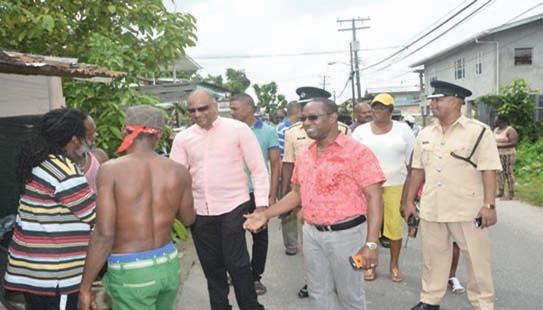
being of our society.
In this context, your initiatives to build relationships at the neighborhood and community level, with religious leaders, sports personalities and clubs, the vendors and business sector, with the miners, loggers, tourism operators and our hinterland communities, have been noted and deserving of kudos. Your outreach must be reciprocated by your partner organisations and those whom they represent.
Similarly, the opportunities for strengthening of bilateral and multilateral relationships with your counterparts in neighbouring and regional states, and with intelligence and operational units internationally must be considered in your agenda for this conference.
Annual conferences are important instruments for keeping track of your performances and plans and making the necessary decisions to streamline your activities, raise the levels of professionalism, efficiency and effectiveness, to enhance the public image and credibility of the organisation, to inculcate pride and boost morale. These are not matters to be glossed over in our haste to conclude the conference. These must be seen as ‘works in progress’, moving from one deliverable to another in a focused manner and sustaining the momentum for change, reform and progress
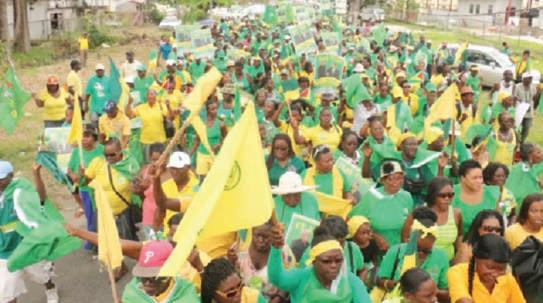
on all fronts.
Importance of a Peaceful, Enabling Environment before and after General and Regional Elections
I know that the focus of attention over the next few weeks would be to ensure that citizens can exercise their right to listen to political parties on the campaign trail without being subjected to threats, intimidation or physical abuse, and that come May 11th, they will be able to exercise their franchise at polling stations where they are registered within an enabling environment of peace and stability.
In that regard, allow me to comment on what took place recently in Diamond, when we witnessed the shooting of one of our citizens. I wish from this forum to outrightly condemn that action and call on the Police Force to leave no stone unturned in finding those who perpetuated this crime, if necessary and if it exists to find the intellectual authors of this act that was committed. I say this because already I see people making statements such – the first political assassination for the season. If they have information they should come forward and give that information to the police. And the police must deal with this matter; otherwise what they are saying could be construed as being instigation, and may want to instigate violence in our country. They must come to the authority that is responsible for that investigation and deal with this issue.
I also want to take the opportunity to also appeal to everyone, whether they are in Government or the opposition to
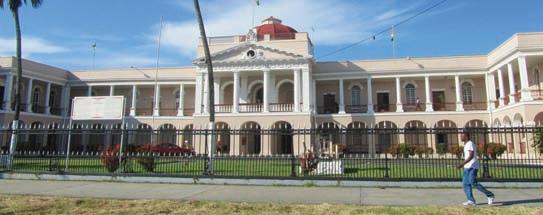

strengthen our security in this country. We cannot continue to have opposition for the sake of having opposition. How else can we explain the voting down on two occasions of the Anti-Money Laundering and Countering the Financing of Terrorism Bill? How else can we explain that when the citizens and the country are put in danger and at the same time creating the perception that you want to turn this country into a haven for international criminal activities. That is unacceptable. That cannot be politics as usual. That is creating a terrible situation for the people of our country. And secondly how can you explain the attempt by the Opposition to publicly calling on the IDB to prevent money for the Citizen Security strengthening project from coming to the security forces to strengthen its capacity. US$15 million is threatened and this is to strengthen the Police force and the Prison Service and community based initiatives to deal with the root cause of crime. This cannot be politics and we must do our best to ensure that our security forces have both the laws and the wherewithal to fight crimes both internal and trans-border. I appeal for good sense.
Equally, I want to ensure that on election night and after the results of the General and Regional Elections are known, that the environment must be sustained and all political parties contesting the elections must pledge their support for the Guyana Police Force and the Joint Services. They must appeal to their constituencies and their staff to display maturity and patriotism to demonstrate to the world that we are a progressive and responsible people.
As you commence your conference, I extend to you my best wishes for full participation, objective debate and fruitful discussions in order to achieve the objectives you have set, and to arrive at a successful Conference outcome. But I want to stress that the time to act is now. The future waits on no one and the future of Guyana shall not wait any longer. There is nothing more basic in a civilised society than law and order and we must give that to all Guyanese but not only all Guyanese, but to everyone who visits, invests and moves in our nation. The future of Guyana demands it, needs it and deserves it and I am hopeful that each of you will remember this during your deliberations.
Once more thank you for your invitation and I wish you very fruitful deliberations.
Amid calls for the bauxite industry to be shut down, the People’s Progressive Party/Civic (PPP/C) Administration refused to go that route, and today, President Donald Ramotar says the industry is
President Donald Ramotar and Chief Executive Officer of RUSAL Vladislav Soloviev, Ministers Juan Edghill, Robeson Benn and Robert Persaud, and other officials during a tour of the facility
President Donald Ramotar and Chief Executive Officer of RUSAL Vladislav Soloviev, Ministers Juan Edghill, Robeson Benn and Robert Persaud, and other officials during a tour of the facility standing firmly on its own feet.
The comments were made as the Head of State and other senior members of his Cabinet were at the commissioning ceremony for the Bauxite Company of Guyana Inc, Kurubuka Mining and Production Complex in Region 10. The Kurubuka mine is located immediately adjoining to the Berbice River.
Among those who were present for the opening ceremony were Works Minister Robeson Benn, Minister within the Ministry of Finance Juan Edghill, Minister of Natural Resources and Environment, Robert Persaud, and others.
The President said the event marks another milestone in the project of saving Guyana’s bauxite industry.
“When we came to Government, many of you will recall that the industry was in a very bad state. At the time there were a lot of predictions from pundits and others that the industry was uneconomical, it should have been closed.”
Amid these predictions and calls from various sections of society, President Ramotar said his administration insisted that it will not be closed. It was however, after a long and hard struggle, President Ramotar said, that Minister Robeson Benn and National Industrial and Commercial and Investment Limited’s (NICIL’s) Winston Brassington and others did all they could to save the industry and restore it to its glory.
“Indeed it was these two gentlemen who journeyed to Russia to open discussion and to stimulate the interest of RUSAL in Guyana, and today we can say that the first part of the mission has been accomplished.”
President Ramotar also expressed his pleasure of having RUSAL in Guyana as this also represents the strength and determination of the Russians.
The President also spoke of Guyana being a small country, but still being able to make contribution to ensuring that history does not repeat itself. “… And one of the ways in which we see we can do this is by improving the economy, making life more prosperous and developing the different aspects of our life, we want to see that the wealth that
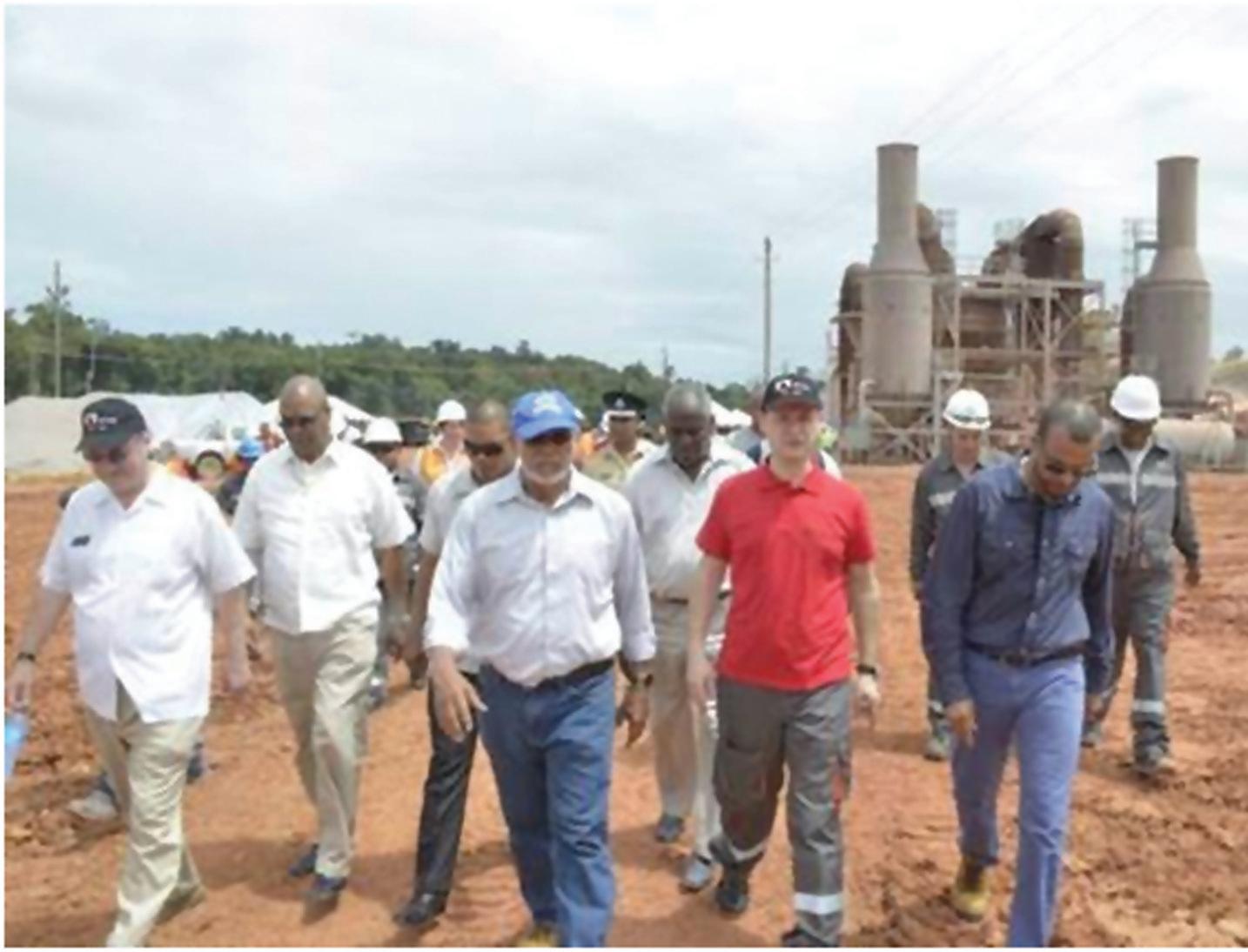
is created in the country is shared by all the people of our country.”
The Head of State added that this investment would certainly benefit riverain communities of Region 10 including Hururu, Kwakwani and others as the foundation is being set for a better life for all Guyanese. He also pointed out the importance of being able to sustain the quality of life for years to come.
The possibility of adding value to bauxite was a topic of discussion between Government officials and RUSAL and the President noted that it is his hope that this can be further explored.
“I hope it will continue, that we can add value to the bauxite right here in Guyana that we can begin to think about moving once again to the production of aluminum. It has benefits for all of us, all of us will benefit – the investors and our country.”
This move, the President said, will also allow the Government to offer more goods and services to its people. RUSAL was lauded by the Head of State for this bold step, having shown such confidence in Guyana’s economy. He stated that he will be looking forward to working closely with Russia in other areas.
He noted that the country has great potential and other areas which can be further explored including, technology, hydro and micro hydro.
Meanwhile, Minister Robert Persaud also took the time to hail the company for the initiative as it had been several years in the making. This investment, Minister Persaud said, truly reflects confidence on the part of the company as they have expended $4.6 billion on it. He too noted that the surrounding communities stand to benefit as hundreds of Guyanese are currently employed by the company.
“We have always ensured that when foreign investors come that they are given the necessary support, that there is an enabling environment, but we also ensure that they adhere to our national laws, and at the same time ensure that they give back to the community to ensure that the contribution to the country especially in the development in the utilisation of our natural resource.”
BCGI, a subsidiary of RUSAL (successor to AMC/ Bermine), was founded in December 2004 under an agreement between RUSAL and the Government of Guyana, and started its operational activities in 2005. RUSAL owns a 90 per cent stake in the company while the remaining 10 per cent belongs to the Government of Guyana.
In 2013, BCGI commenced a project to develop a new deposit Kurubuka-22, located in Aroaima which encompasses the construction of the mine, service road and comprehensive production complex to crush, dry and on-load commercial bauxite.
Government has expressed its assurances to continue its support to the gold mining sector through ongoing collaboration at various levels.
This commitment was expressed by President Donald Ramotar and Minister of Natural Resources and the Environment Robert Persaud following a meeting with executives of the Guyana Gold and Diamond Miners Association (GGDMA) and other stakeholders to explore initiatives and interventions for the sector.
The meeting which was held on Thursday at the Guyana International Conference Centre explored several areas of support which are at various stages of implementation or under review.
The Government reiterated its collaboration with all stakeholders within the mining sector towards the viability and sustainability of the mining sector.
The GGDMA sought government’s intervention following fluctuating global gold prices.
However, it was stated that the challenges facing the sector can be collectively addressed through continued collaboration and engagements between all stakeholders.
Meanwhile, the GGDMA has again expressed appreciation for the support provided by the government for the issuance of a fuel import licence, waivers on spares and equipment for the mining sector, access to foreign currency and tax waiver on double cab pick-ups.
In a previous release, the GGDMA had said that operational costs remain the same despite the extended drop in the price of gold on the international market and recommended that Government offer concessions on fuel and certain vehicles to bring some relief to them during this period.
The drop in the price of gold has its many spin-off effects, but a steady dip in price can have very negative effects on mining operations and has been having such effects, the
GGDMA said.
Guyana Times had spoken to several small miners who all related that the drop in gold prices has severely affected their operations, especially since the cost of operations remains the same.
“Even though the price is down, you still have to keep producing to keep in the game. And if you are not finding good grounds to mine, then it is even worst. Where I am working, we pay $80,000 to $90,000 for a drum of fuel and an ounce of gold is $220,000.
“It is really difficult because in some areas if you produce 10 ounces of gold it costs you 10 ounces,” related miner Mark Defreitas.
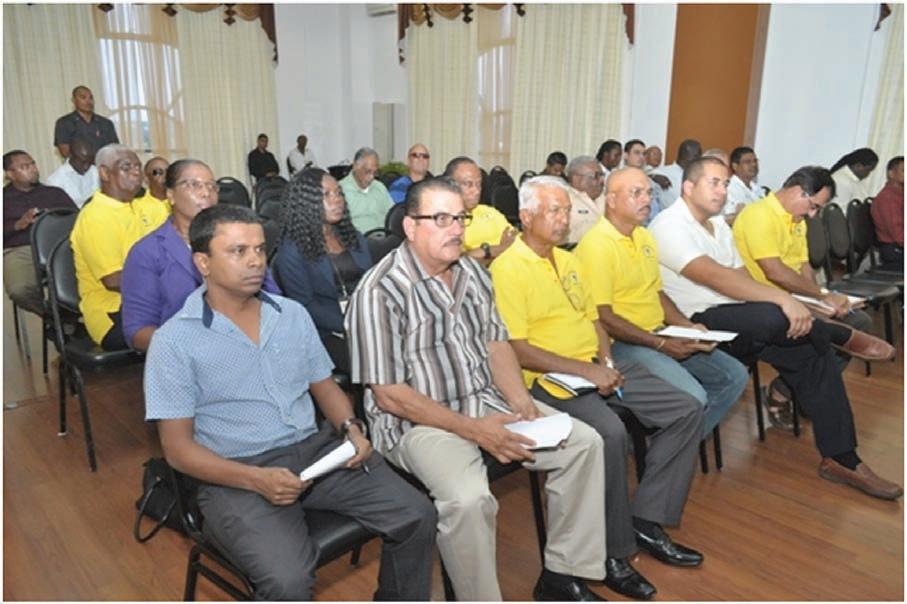
The young miner’s view that Government should offer some concession on fuel tax was supported by other miners, since they believe it would make a big difference on operating costs.
get
THE role that science and technology has played in the growth and development of Guyana’s rice industry is significant, and President Donald Ramotar yesterday pledged Government’s continued support for the industry’s advancement using knowledge and expertise.Rice is a vital contributor to the nation’s economy, and over 120,000 Guyanese have their livelihood rooted in the industry.
Though there are tremendous gains in the industry, in terms of production and productivity, President Ramotar said that, “We have to recognise that we are a small player on the international market, and we are price takers…and we don’t determine international prices, and therefore it means that we have to do things in order to make sure our viability, we have to do things more efficiently.”
no compromise on the quality of production.
“Quality is what will ensure that our market share internationally can go up and quality will give those who bargain for us strength, so that they can bargain successfully for higher prices. Quality must not be compromised for any reason,” he said.
He assured the audience of Government‘s unwavering commitment to continue to take the rice industry to greater heights.
Dr. Mahendra Persaud, Chief Scientist / Plant Breeder at the (BRRS) said that developing new varieties was a continuous process, because variety determined the final quality and quantity of the product since no plant could produce in excess of its built- in genetic capabilities.
He said: “If a variety can give you only six tonnes per hectare regardless of what we do or what the farmers do, it is not going to
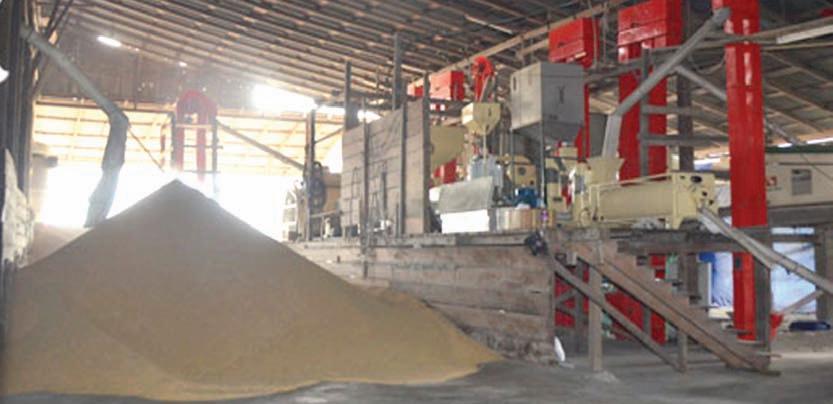
Speaking at the launch of two improved rice varieties by the Guyana Rice Development Board (GRDB), yesterday, President Ramotar assured rice farmers of the Government’s unwavering support for the continued growth, development and prosperity of the rice industry.
He said that value added production, plus forms of cooperation which will help keep production costs down and a total commitment to quality assurance, are the three main directions in which the local rice industry has to go to ensure optimal development.
The varieties launched for use by rice farmers were the GRDB 14 and a first for Guyana, namely, the Maria’s Delight Aromatic Rice.
They had been developed by the GRDB’s Burma Rice Research Centre (BRRS) located in the back-lands of Burma, Mahaicony, East Coast Demerara and the formal launch took place at the Guyana International Conference Centre (GICC), Liliendaal, in the presence of senior officials in the agricultural sector, a large number of rice farmers from the rice-growing administrative regions and members of the Diplomatic Corps.
The GRDB 14 variety was bred to be resistant to lodging, sometimes a major source of loss to rice farmers as well as higher yields per acre than any existing variety; while the Maria’s Delight is an aromatic variety with a distinctive, pleasant aroma and is very popular on international markets.
The higher yields are intended to boost productivity and value for rice farmers, while the aromatic rice is in almost unlimited demand worldwide, the GRDB scientists said.
Speaking on the importance of valueadded production, President Ramotar said that rice makes excellent breakfast cereal and the rice husk which is normally disposed of by burning can be used for energy generation, thereby bringing in new streams of revenue and reduction in operational costs, even when international market prices are depressed.
He told the audience that there should be
give you seven tonnes per hectare.”
Hence, apart from market preferences and changing pests and diseases, higher yields per acre were the prime reason for the development of newer and better varieties.
The GRDB 14 and the Maria’s Delight had been field -tested by farmers and both had received favourable comments.
They found that the GRDB 14 was an excellent grower in terms of germination and establishment in the field; it was a very good emerger from standing water as much as six inches deep; it tillers very quickly covering the field and thereby killing weeds; it has over 200 grains per panicle, making it very high- yielding. It is also blast- resistant and does not lodge.
Additionally, the milling recovery and cooking qualities are excellent.
The Maria’s Delight Aromatic Rice Plant, he said, was also high- yielding, giving up to 45 bags per acre; the plant type was robust and resistant to blast as well as lodging; it had excellent milling and cooking qualities and there was uniform expression of the aroma.
Most importantly, it was a high- priced item.
He said: “We can very well say that the progress that we are going to make in aromatic breeding and how well we are going to market it internationally could be the crucial factor in how the industry performs in the coming years, since the price of aromatic rice is usually more than double that paid for other varieties.”
Popular Bush Lot, West Coast Berbice rice farmer, Mohamed Zrafeeoodeen, one of the farmers who participated in the fieldtesting of the varieties, said they had performed well.
He thanked the BRRS for developing the two varieties and for making them available to the nation’s rice farmers.
Madanlall Ramraj, Deputy General Manager of the GRDB, spoke on marketing of the aromatic rice while Minister within the Ministry of Agriculture, Ali Baksh, spoke about the continuous growth of the industry over the past 20 years.
President Ramotar secures 5000 tonnes of rice per month market in Panama
The Government of Guyana and Panama have signed an agreement that will see Panama purchasing approximately 5000 tonnes of rice per month from Guyana, following a recent meeting between delegations from both countries.
Minister of Agriculture, Dr Leslie Ramsammy along with Head of the Guyana Rice Producers Association, Dharamkumar Seeraj and Head of the Guyana Rice Development Board, Jagnarine Singh visited Panama during which, the agreement was concluded.
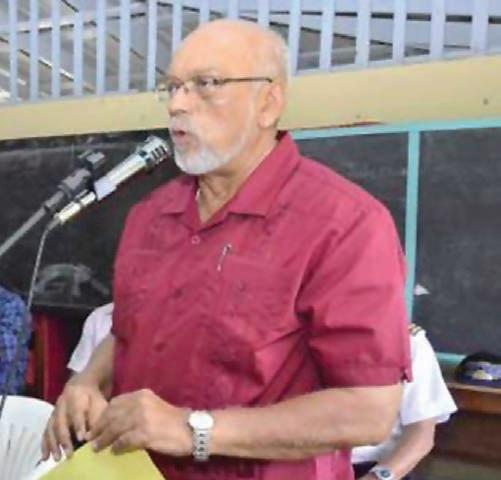
European Union’s decision to unilaterally inflict a 36 per cent price cut on the commodity and abandon the “Sugar Protocol” which was supposed to last “in perpetuity”.
“On August 6 in Colombia, President Donald Ramotar and the President of Panama, Juan Carlos Verela were having a meeting and President Ramotar suggested that Guyana’s rice be exported in a meaningful way to Panama. I need to say ‘meaningful way’ because we have always sent paddy and rice to Panama, but in small amounts because it was difficult to get into that market,” Minister Ramsammy said
He added that it was via this meeting, the agreement between Guyana and Panama was formed. “The President did not wait until he returned home, he called me from Colombia and suggested I lead the team to Panama and I proceeded before the President’s return to put arrangements in place, thus shortly after we concluded that the rice trade between Guyana and Panama should start immediately.”
President stands by sugar industry
...to inject $20 billion to ensure survival People’s Progressive Party/Civic (PPP/C) Presidential Candidate Donald Ramotar has promised to expend $20 billion in the country’s sugar industry to ensure that it survives the spate of challenges that are delivering several blows to its viability and profitability.
Ramotar, addressing a mammoth crowd at Bush Lot, Berbice, Region Five (East Berbice-Corentyne) on Sunday said that if re-elected to the presidency on May 11, his Government would continue to subsidise the industry with a view of strengthening existing plans and policies to bring back the sweetness to the industry.
“I promise you today that if re-elected, I would put $20 billion into the sugar industry because the industry must survive. The industry has a future,” he said to thunderous applause from the crowd. Ramotar argued that his Government despite the ongoing criticisms would never close the industry or neglect it because things were bad there. He said that the $20 billion would go to critical areas such as diversification of the resources of the Guyana Sugar Corporation (GuySuCo), boosting its mechanisation plan and creating new revenue streams for the Corporation.
He said passionately that the monies would also go towards boosting the industrial value of the sugar being sold by Guyana, while special attention would be focused on seeking more alternative markets.
Ramotar took a swipe at former People’s National Congress Reform stalwart – and one time Prime Ministerial Candidate –Stanley Ming, for the comments he made which sought to promote the idea that Guyana should abandon sugar cane cultivation and try new agricultural products. The President recalled that the hardships faced by the industry were caused in part by the
But he said that Ming, like the PNC and now A Partnership for National Unity/Alliance For Change (APNU/AFC) Opposition coalition seemed not to understand the importance of the industry and its link to Guyana’s future development. He warned Berbicians that they could not trust the PNC-led APNU with their votes as they have always being hostile towards the industry. Recently, leader of the PNCR and of the recently formed coalition with the AFC, David Granger said that he would consider privatising the sugar industry if he became President and would revamp the composition of the GuySuCo board.
If the industry is privatised, Government would not be able to save it if it meets in crisis again which in turn could mean thousands of sugar workers being displaced and facing all forms of hardship. But Ramotar reiterated the PPP/C’s position that sugar is too important to fail as it was “the first industry and is the great grandfather of industry in our country”. “All of the other industries got their managers and engineers from the sugar industry,” he said before outlining some of the other challenges being faced.
“But sugar is still standing. The best days of sugar are still ahead. We will not give up on the sugar industry. We will not do as the PNC did,” the President said to an obviously emotionally charged audience. That aside, Ramotar asked Berbicians to support his Party, explaining that it was really the only choice when one looked at the players involved in the electoral race. He told them that Berbicians have now started to accept that they made a mistake when they supported the AFC at the 2011 elections, but encouraged them to correct that mistake by voting for the PPP/C so that progress can continue. “Do not take what you have for granted…it could be reversed…think about your own future…we can stop them this time…we must learn from our past… we must learn from our history…all of you must come out and vote…our country cannot afford to be held back,” he said, again to a sustained round of applause.
Ramotar told the Bush Lot gathering that Guyana must wage a war against the Opposition whom he described as the most “politically dishonest” set of leaders in the country’s history, saying they were desperate and hungry for more legislative and Executive power. “It’s not only your policies that matter but character matters in politics….For them, development in our country does not matter, it’s incidental…they want power…,” he said. Arguing that “clearly we are seeing the nature of the beast… They can’t put their record next to us…so what they do?..They lie…slander and exaggerate….They have not changed; they have not apologised for their past,” the PPP/C Presidential Candidate told the crowd.
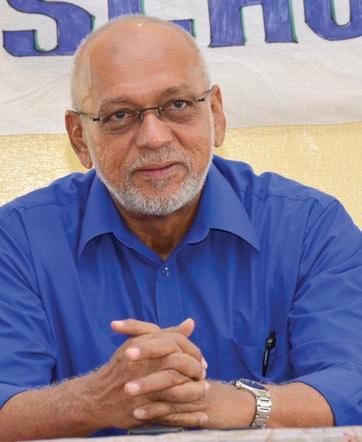
- President Donald Ramotar
y fellow Guyanese, the foundation has been laid for all of us to build a country for the 21st Century, for a brighter tomorrow for all Guyanese. With a renewed mandate, my Government pledges to sustain and build on the gains we have already made as a country. We will continue to invest heavily in the physical infrastructure that is so critical to creating jobs and improving livelihoods.
We will have to make the critical choices that we can achieve the double digit growth rates to ensure that we not only hold our own but join the developed countries in the world. But just as crucial to this effort will be to ensure that we have growth with development. Towards this focus we will be focusing on jobs - not just jobs in the traditional sectors but in new areas like ICT in which our youths will be facilitated into this brave new world.
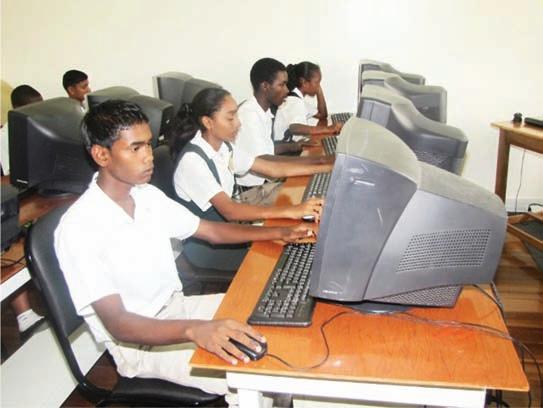
High amongst our priorities will be to ensure the achievement of more affordable and more reliable energy. For too long, Guyanese have looked forward to harnessing our country’s vast hydropower potential. The time for realising this dream is long overdue. Unreliable and unaffordable electricity continues to be the biggest impediment to investment and job creation in Guyana. My Government will deliver the Amaila Falls Hydropower Project to the Guyanese people, along with all its attendant benefits. Within months, we expect to achieve financial closure and commencement of construction. This project will come into operation during our new term in office.
We will also continue to expand our roads and bridges network, inclusive of ensuring greater access to our geographic neighbours. During the next term of office, my Government will work with our partners to bridge the Corentyne River and to complete the road to Brazil along with the accompanying deep-water harbour. We will also improve and facilitate movement within our borders by upgrading the major hinterland arteries and widening our major coastal highways. In addition, we will rehabilitate and upgrade our urban and community roads.
In the social sector, along with achieving universal access, my Government will focus on service quality. Every
Guyanese citizen will enjoy access to world-class primary health care, and our young people will receive an education that will prepare them to compete with the best in the rest of the world. Every Guyanese family will be able to afford their own home and have access to all the ancillary services that are normally available in residential communities.
We will work hard and invest heavily to ensure that our communities are safer and that our crime fighting and prevention capabilities are strengthened. Relevant initiatives will include legislative reform in support of crime fighting, upgrading of capacity in the Police Force, stronger use of technology and forensic science, and tackling the root causes of crime.
At the heart of all these developments will be our aim to improve the quality of life enjoyed by every Guyanese citizen. Opportunities will be created for every person to find gainful employment, and to acquire the skills necessary to take up those opportunities. Amongst the initiatives we will pursue, is the aim of achieving universal computer literacy, ensuring that everyone can assume his or her rightful place in the modem technology-driven world.
We will continue to improve the economic environment, working harder to make Guyana an even more attractive place for doing business, and to incentivise investors to establish and expand operations here. This will help to achieve long-term economic growth, broaden our revenue base, improve our fiscal capacity to meet the needs of our people, and reinforce our economic resilience.
Fellow Guyanese, we need a mandate to continue the progress that we have started and which has brought our country such a far way from what it was two decades ago.
With an opposition that has displayed a remarkable anti-developmental tendency, it is important that we regain the majority in the National Assembly to ensure continued social and economic progress.
To say that youths are the future of our country might sound like a truism. But we have done what it takes to make that future very bright. The 21st century will be one where the race will not go to the fastest but to the most technologically proficient. Technology will allow us to leapfrog development. In addition to refurbishing all our schools from Nursery to Secondary and Tertiary we have gone beyond the traditional mode of imparting an education to incorporate the Information And Communication Technologies that are now available. We have handed out over 90,000 internetready laptops through the OLPF initiative and with the connectivity in place our youths can directly plug into the World Wide Web to benefit from the unimaginable amount of information available on every possible subject.
Building on the base the President noted that several bills were in the 10th Parliament including for the liberalisation of the telecommunication sector, which would have given ICT a further push.
Nonetheless, he noted that persons pursuing careers in this field have much to look forward to as the Government has made an agreement with the Indian Government for the establishment of an ICT Park. This agreement evolved during a visit by the President to India and meeting with that country’s president, Narendra Modi in January.
The President explained that the facility will more or less become the headquarter for the whole of South America and the Caribbean.
“…And this has great possibilities in creating a lot of jobs, right now Qualfon is in Eccles, they are putting down a campus that will employ about 4000 persons when it is at its maximum going, so ICT has huge possibilities in creating employment and allowing our people to have better paying jobs and better employment all over.”
For all this to happen, a clear mandate will be needed. The future of our country will be decided by the manner in which that choice is made, whether our country is to contin-
ue to progress in the way it has in recent years or whether it is to regress to the dark days of the past. I have every confidence that the Guyanese people will choose the path of progress.