Amitabh Bachchan: ‘My



Amitabh Bachchan: ‘My
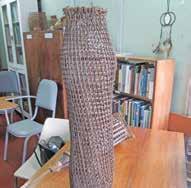
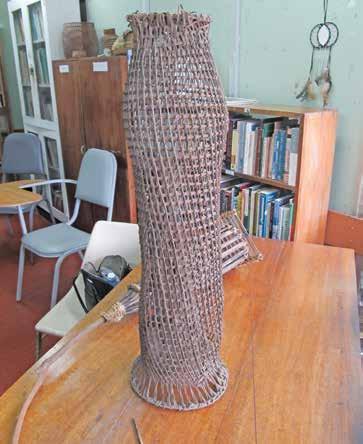
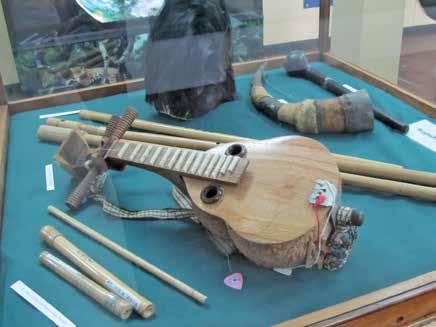
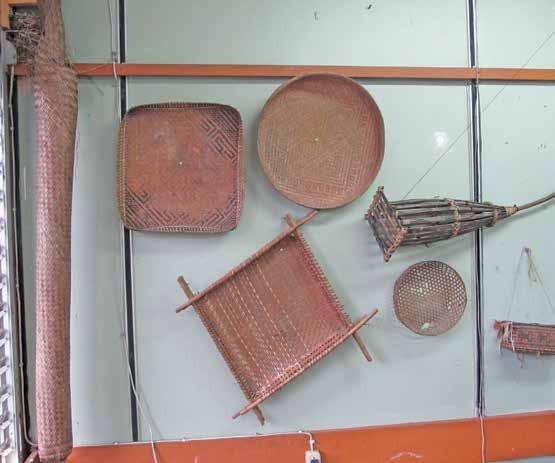
Before the fishing rod, the indigenous people created ingenious fishing traps to sustain their daily life.
Some of these traps are extremely complex with one-way valves, bait chambers and floats, while others were primitively basic. Nevertheless, all fishing traps had one common trait - all evidently adapted to specific functions and ultimately different species of fish.
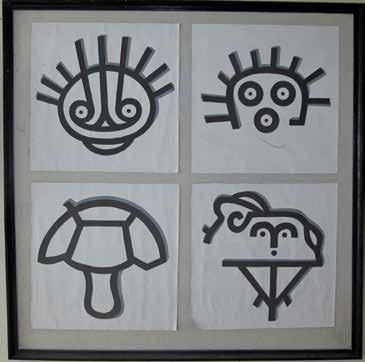
According to Denis Williams’ book Prehistoric Guyana, “the second great petroglyph tradition of the Northern Amazonia is represented by the Fish Trap Series…”, which shows the frequency and importance of fishing in indigenous communities.
Fishing was good in those early times. As early as 2000BC, small bands of “hunter-gatherers”, as Williams described them, would fish in pools, rivers and streams in the “productive rainforest” to trap their next meal.
The stratification of food refuse at the Pedra Pintada rock shelter on the Parima River, Region Nine, shows occupation there to have lasted between 2000BC and1000BC. This ‘refuse’ was said to indicate the heavy reliance on fish, fresh water snails and various small reptiles and mammals. This is further exemplified by the exploitation of the Kassikaityu River (Upper Takutu-Upper Essequibo), as illustrated by the Kassikaityu petroglyphs, which indicated “four kinds of fish traps: the Maswah, Box Trap, Cylindrical Fall Trap and the Spring Basket Trap”.
Aside from selective harvesting, the different types of traps indicated location, design, and baiting procedure utilised by the indigenous community.
Fish trap locations also differed in accordance with various habitats. Certain traps were anchored on the river bed, while others were supported on the platform of the water current or just below the surface, and sometimes barriers across waterfalls.
mention, the indigenous
Resourceful tools showcase the expertise of the indigenous people of Guyana
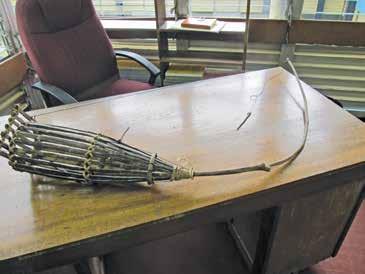
fish traps and baiting procedure “evidenced by petrographic data” implies a “wide knowledge of the habits and haunts of various fish species and of their respective food preferences”.
Notably, the Amerindian community was monitored in their fishing exhibitions to limit exploitation. According to Williams, “selective extraction was guaranteed by the imposition on a nearby rock exposure of a range of fish traps known to [be effective] in taking particular species of a given pool”.
Hence, choosing a fish trap for fishing was crucial to the hunt, the species caught and the amount taken home at the end of a given fishing trip. (Information taken from Denis Williams’ Prehistoric Guiana)
An international project geared at cultural dissemination and capacity building from the north, east, south and west, En-compass, a travelling exhibition, is currently being hosted in Guyana - one of the few destinations in its 36-month travel itinerary.
In collaboration with Iwokrama and the North Rupununi District Development Board (NRDDB), En-compass, a project established by the University of Newcastle in the United Kingdom, is conducting a series of activities under the theme, ‘Heritage Management and Preservation’.
With the aim to strengthen cultural expressions, productions and services, improve cultural access and dissemination, while maintaining the protection of cultural heritage, the travelling exhibition, after stopping in Kenya (Mombasa), is scheduled to remain in Guyana for three weeks before heading to University of Newcastle and then China (Hainan Province).
“En-compass took three cultural practitioners from Guyana on exchange visits to China, Kenya and Newcastle, and then three persons came to Guyana and visited in the North Rupununi. On these exchanges they looked for similarities differences, concerns, how they can deal with
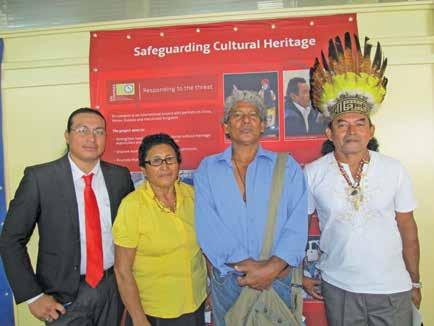
their concerns, and so forth. Of course they also did research to put together this exhibition,” Dr Raquel Thomas-Caesar, Director for Research Management at Iwokrama, told Guyana Times Sunday Magazine
The three cultural practitioners from Guyana who participated in the exhibition were Benita Roberts, a coordinator from the Makushi Research Unit; Glenn Allicock, the leader of the Ceramics Culture Group; and Oswald Hussein, an Arawak sculptor from St Cuthbert’s
Mission.
The three participants noted some similarities in the indigenous tribes of Africa with their own, which they shared at the opening ceremony. Additionally, they shared their experiences, comparisons between the tribes and a display of the cultural items they were exposed to, such as food, artefacts, clothes, music and much more.
In a highly globalised world where cultural heritage is rarely celebrated, En-compass seeks to strengthen local indigenous culture through increasing access to intangible and tangible cultural heritage, expressions, products and services in China, Kenya (and Anglophone Africa) and Guyana. The project is geared to encourage improved management and protection of these resources by linking shared cultural information at all levels to ensure the protection of threatened cultural heritage and to combat discrimination.
Special emphasis is continuously placed on the training and professionalization of cultural
and heritage practitioners in each country or territory. The project saw the participation of the Li Miao and other ethnic minority groups in Hainan Province (China), indigenous African peoples in Kenya and Anglophone Africa and the Makushi of Guyana, among others.
The key stakeholder groups in Guyana involved included Iwokrama and NRDDB, representing the 16 communities of the Amerindian people living in or adjacent to the Iwokrama rainforest reserve.
The entire 36 months will not be spent only travelling with the exhibition - although the travelling exhibition takes up much of the time - there will also be cultural exchanges, country workshops, research on each group and supported master’s studies to empower both the participants and the general public of each country.
The staff and partners of International Centre for Cultural and Heritage Studies (ICCHS), of the University of Newcastle, will conduct a short in-country training and facilitation on the protection, management and interpreta-
tion of cultural heritage resources and expressions. Representatives of each territory would have the opportunity to complete one ICCHS postgraduate programme, which provides training in heritage education and interpretation and cultural management and dissemination.
The ICCHS is a leading international centre for research and training on cultural heritage. It seeks to give special attention as well as tackle the vulnerability of local cultural expressions that has emerged during the last few years. This will be done by creating a platform for cultural minorities to strengthen their cultural expression and products, while simultaneously encouraging international exchange, and providing a foundation for ongoing capacity building through in-country training and opportunities for community members to obtain appropriate and desirable postgraduate qualifications at a leading UK university.
The travelling exhibition is being hosted at the Guyana National Museum through the Ministry of Culture, Youth and Sport from 26 November to 13 December 2014.
By IndrawattIe natram
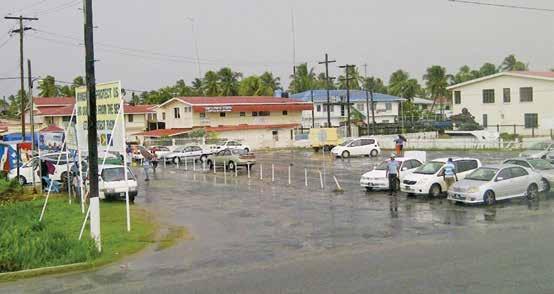
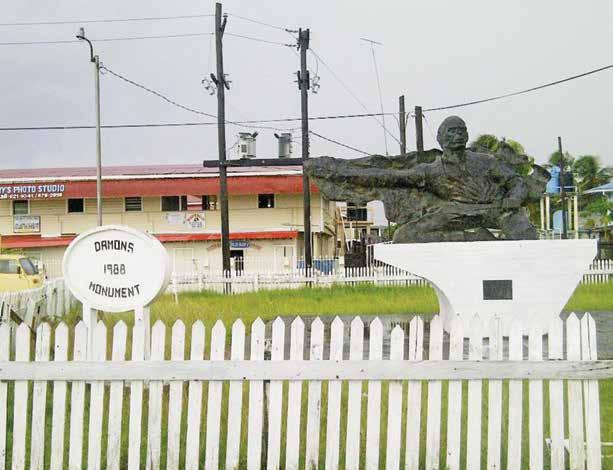
If you are visiting Region Two (PomeroonSupenaam) for the first time, then one of the historic locations you must visit is the town, Anna Regina.
Anna Regina has a population of approximately 3,000 persons. It is bordered by east of the Atlantic, west to the Main Canal and south of Aberdeen - part of Aberdeen\Zorg-en-Vlygt Neighbourhood Democratic Council, and north to the village of Paradise - part of Evergreen\Paradise NDC.
Anna Regina has an area of 78.8km.
According to records, on 1 August 1990 Anna Regina became a town. The town was named after Anna and Regina, the daughters of a Dutch plantation owner.
Anna and Regina drowned in the ‘punt trench’ under the High Bridge. The bridge is now regarded as a historical site.
Anna Regina is managed by a municipality, which is managed by the Interim Management Committee (IMC). The Chairman of the IMC is Toolsie Narine. Those with delegated duties report to the Minister of Local Government through the Permanent Secretary, whose primary focus is to ensure the efficient management and proper execution of his duties.
A large percentage of the town's population comprises of youths. Employment opportunity within the town is limited, resulting in a high unemployment rate among youths.
The Anna Regina vil-
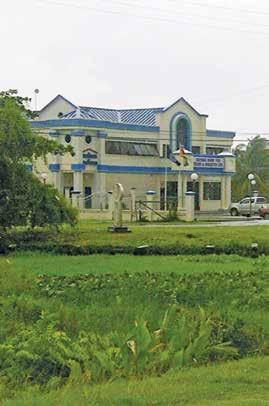
lage is developing as well as transforming. With the vital input from the municipality, the RDC and the private sector, the town has experienced a boom in its development. This is evident with the construction of the new Town Hall; Citizen Park; improvements of the Community Centre Ground; maintenance of a clean, healthy and peaceful environment; good roads; kokers; clearing of expansive land for housing schemes and also the waterways as a means of transportation.
Prior to October 2012, the town was under the administration of a 15-member council headed by Mayor Sammy Rampersaud.
The Regional Democratic Council; a market; schools (primary and secondary); commercial banks; fire sta-




Emphasizing research, the study of different cultures and the way people interact, the Amerindian Research Unit (ARU), previously known as the Amerindian Language Project, provides vital information on the local indigenous culture.
As an integral part of the division of the Faculty of Education and Humanities at the University of Guyana, the ARU evolved from the Amerindian Languages Project which was started in the 1970s with an interest in linguistic research.
It began small in 1977 as the Amerindian Language Project, created by Dr Walter Edwards, to document indigenous languages spoken in Guyana; this enabled him to complete three Amerindian Language Dictionaries.
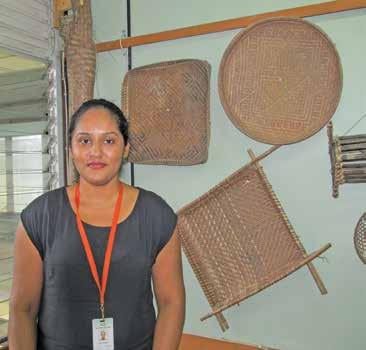
“Dr Edwards had researchers go into the fields to collect information on the different Amerindian languages…affording them the opportunity to complete dictionaries for the Akawaio, Arecunas and Warau languages – all of which is available in the Unit today,” stated Jennifer Wishart, a founding member and currently a researcher at ARU.
Today, ARU is a multidisciplinary unit providing an academic programme, general and specific information, archival documentation, publications, research assistance, consultancy and promotion of the interests of the indigenous peoples of Guyana in several areas.
“Janette Bulkan was the coordinator of the Unit when it became the Amerindian Research Unit which evolved out of the Language Project. She, along with the late Dr Desrey Fox [et al], expanded the research area from just language to other fields of Amerindian Life,” Wishart added.
ARU is continuously involved in collaborative research in the field of anthropology and archaeology, providing guest lecturers for interested groups, collecting artefacts and offering a service course - Introduction to Indigenous Peoples of Guyana (AST 1102).
AST 1102 is a course that introduces students to the field of anthropology and archaeology and “captures the way of life of indigenous people both of the past and the present”.
“We review a lot of literature on previous documentation for ethnographic work for anthropology in the 1970s and 1980s. Today, we have field sessions where
Tourism and Forestry students], during the semester interested persons also have the opportunity to apply for the Denis Williams Summer School of Anthropology, for a more hands-on, shorter version [of the course],” noted Daggers.
students get to look at videos, interact with indigenous people and actually visit these indigenous communities,” ,” Louisa Daggers, the course lecturer and coordinator of ARU, explained.
Catering for over 60 students from the faculties of Environmental Studies, Tourism and Forestry, the course covers the indigenous ways of life: past and present, myths, legends, languages and much more are covered for Guyana, the Caribbean and South America.
“Although the AST course is just tailored for three categories [Environmental,

Daggers eagerly pointed out the importance of the course. “Sometimes we overlook the significance
or importance of things we may call simple. I think…we learn to appreciate the simple things in life and also gain a chance to appreciate other cultures [through this course].”
The research unit produces a newsletter, ARU egarei (‘ARU’, the Warau word for bitter cassava as well as the acronym for the research unit, and ‘egarei’, the Akawaio word for news), where reports on excavations, current activities and achievements of ARU and factual tidbits in the field are published.
Prior to the newsletter, the Unit “worked with medicinal plants and foods, a variety of things all of which were either published on its bulletin or in an occasional paper”. Moreover, ARU boasts a library where a copy of all these documents can be found as well as numerous books on archaeology and anthropology.
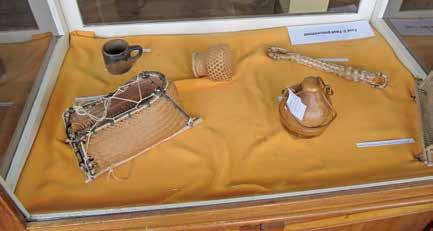
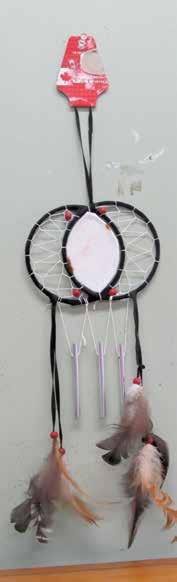
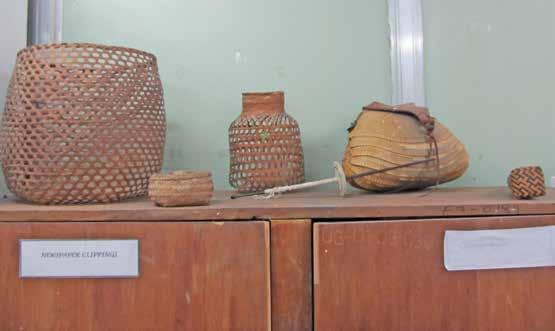
“We collect artefacts and items, which are used for display as much as it is used to enhance the course, so when you talk about the matapee, for instance, the students can see one,” Wishart explained.
According to the mem-
bers of ARU, they are working towards establishing an Associate Degree in Anthropology; a course not based on the indigenous way of life alone but anthropology on the whole, including various cultures, languages, bio anthropology – just to name a few.
“It is a wonderful field. It changes your view on daily life because it is the study of people; it is not a big field in Guyana but it is around the world. Particularly in human resources and analysis or any field where you work with people and understanding human behaviours and attitudes,” mentioned Daggers.
Anthropology helps in understanding cultures and cultural influence, what is culture, where it comes from and how it develops. The applicability for anthropology is vast, encompassing the health sector, public sector, marketing, human resources, and other areas.
ARU is currently working in collaboration with Iwokrama and the University of Newcastle’s Encompass project by making meaningful contributions to a travelling exhibition being hosted in Guyana.
At-home manicures are great—but they're also more likely to chip, smudge, or suffer from other mistakes that make them less-than-Instagram-worthy. Instead of starting from scratch when one of these mishaps occurs, use these genius tricks from notable manicurists in the US, all of whom are backstage staples at fashion week—so obviously they know how to fix a nick in a hurry.
Chipped Polish
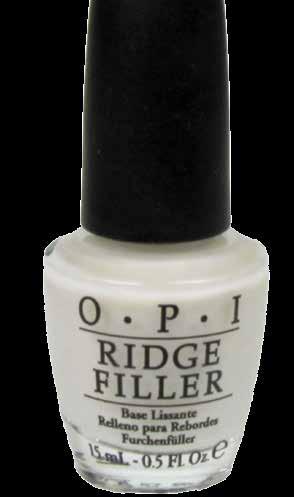
“If you see a few nails slightly chipping at the tip within a few days after the manicure, take a white nail buffer and smooth out the chipped area. Next, add a ridge filling base coat, another coat of color, and a thin layer of topcoat. This will ensure your manicure can last for almost another week.”
—Michelle Saunders, Essie manicurist
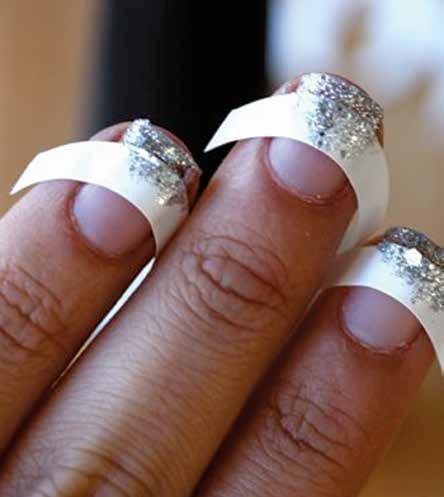
“Using sparkly nail polish is the best idea to camouflage a chipped nail.
crack, and carefully add a dot of nail glue. The material will act like a cast for your damaged nail. If you’re worried about the texture, you can always smooth it down with a soft buffer.”
—Katie Jane Hughes, Butter London global colour ambassador
Sheet Marks
“If you have 'sheet marks' on your nails upon waking—after a late-night polish change—add a ridge filler on top, another coat of color, and a thin top coat.”
—Saunders
Polish on Skin
“To clean up polish around the nail, use a thin angled eye liner brush dipped in remover. Or dip an orange wood stick in remover without any cotton wrapped around the tip since the typical orange stick wrapped in cotton will leave fuzz.”
—Choi
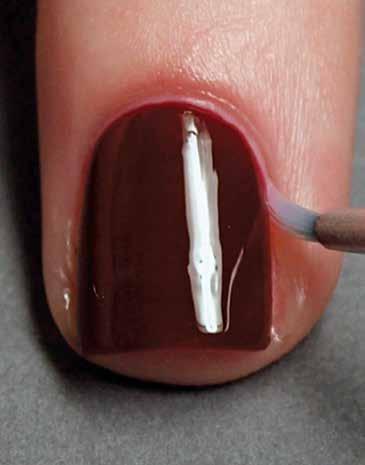
You can simply add a basic nail design to the chipped area, such as a French line or diagonal line—or use a piece of sponge and create sponge nail art.”
—Jin Soon Choi, celebrity and fashion manicurist and founder of JINsoon Nails
“For larger nicks, take your color, and lightly dab into the chip—resist the temptation to smooth it over the nail. Typically this amplifies the appearance of the chip.”
—Deborah Lippmann, celebrity manicurist and founder of Deborah Lippmann
Nail Breaks
“Make a nail Band-Aid for nails that break just past the nail bed. Place a small corner of a tea bag or paper towel on the
Smudges
“After every manicure, I finish with a swipe of cuticle oil around the cuticle. This creates a slick barrier over the wet polish, which helps prevent smudges.”
—Saunders
“To fix a smudge if the color is still wet, dab your fingertip into a drop of remover, and then gently touch the smudged area to smooth it out.”
—Choi
Layer Mishaps
“If you make a mistake on a nail look with multiple layers, simply dip a small brush into acetone, and skim the unwanted layer away. Work quickly, and be careful not to apply too much pressure to ensure that you only remove the top layer.”
—Hughes


By PetamBer Persaud
On Wednesday 19
November, Dr Juanita
Cox, the contemporary authority on Edgar Mittelholzer, delivered the 2014 Edgar Mittelholzer Memorial Lecture at the Theatre Guild Playhouse, Parade Street, Kingston, Guyana. The novel title of Cox’s talk read: ‘Edgar Mittelholzer’s Creative Genes(is) and the Geni(us) behind it’. The substance and delivery of that lecture has ensured it a place in a series of publications by the Caribbean Press labelled ‘Beacons of Excellence’ edited by Andrew O Lindsay.
The Caribbean Press recently published two volumes of the Edgar Mittelholzer Memorial Lecture Series. ‘Beacons of Excellence’: Volume 1 covered the period 1967 –1971 which comprised four lecture series while Volume 2 covered the period 1975 – 1984 comprising an additional four lecture series.
In Volume 1, the first series of four lectures was delivered by AJ Seymour in 1967 under the theme, ‘Edgar Mittelholzer – The Man and his Work’.
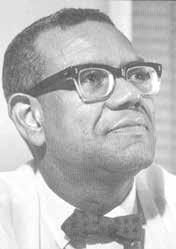
AJ Seymour was an exceptional man of letters with numerous publications to his name. He knew Mittelholzer very well.
The second series of four lectures was delivered by Denis Williams in 1969 under the theme, ‘Image and Idea in the Arts of Guyana’. The lectures were namely ‘The Concept of the Ancestor’, ‘The Complex Womb’, ‘Image and Idea in African and Caribbean Literature’, and ‘Image and Idea in the Arts of Guyana’.
Denis Williams was an artist, art historian, archaeologist, anthropologist, biographer and
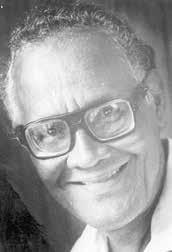
novelist. He is better known for his novel, Other Leopards.
The third series of lectures was delivered by Wilson Harris in 1970 under the theme, ‘History, Fable and Myth in the Caribbean and Guianas’. The three talks in that series were namely ‘History, Fable and Myth in the Caribbean and Guianas’, ‘The Amerindian Legacy’, and ‘Continuity and Discontinuity’.
Wilson Harris is a novelist, poet, short fiction writer and essayist. Harris and Mittelholzer were born in New Amsterdam, Berbice.
The fourth series of lectures
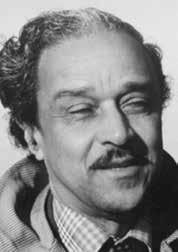
was delivered by Martin Carter in 1971 under the theme, ‘Man and Making – Victim and Vehicle’. There were three talks in this series namely ‘The Question of Identity’, ‘The Victim Identified’ and ‘Victim as Vehicle’.
Martin Carter was an exceptional poet and gifted essayist. He is better known for his ‘Poems of Resistance’, ‘Poems of Succession’, and ‘Poems of Affinity’.
Edgar Mittelholzer was Guyana’s first internationally acknowledged novelist. Mittelholzer was born on 16 December 1909, in the town
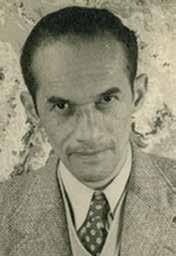
of New Amsterdam, British Guiana. He went on to live in Trinidad, Barbados, Canada and the UK. When Mittelholzer committed suicide in England on 5 May 1965, he had already published 25 books, including 23 novels. Mittelholzer was also a poet, painter and writer of short fiction.
The Edgar Mittelholzer Lecture Series was started by Arthur James Seymour to “provide an apparatus whereby Guyanese writers and intellectuals abroad could be invited to come back home at a level of honour in order to serve the country by bringing new ideas
to bear upon the community’s inquiring minds”.
Juanita Cox has done extensive studies on Mittelholzer and she has also written and lectured on the man and his work. Cox recently completed her thesis, ‘Edgar Mittelholzer and the Shaping of his Novels’. All presenters of the Edgar Mittelholzer have distinguished themselves in one or more than one discipline of the arts.
Responses to this author: telephone (592) 226-0065 or email: oraltradition2002@yahoo.com
What’s Happening:
• ‘The Voice and the Vision of Robert J. Fernandes’ (poems) will be launched on 1 December 2014 at Moray House.
• The book, From Ashes to Ferro-Concrete: A History of the Cathedral of the Immaculate Conception, 1914 -2014 by Joanne CollinsGonsalves, published by the Guyana Heritage Society, will be launched on 8 December 2014, at 18:00 in the Church.
• Look out FOR Sharon Maas’ new novel, The Small Fortune of Dorothea Q; and Ryhaan Shah's third novel, A Death in the Family.
The legendary great white shark is far more fearsome in our imaginations than in reality. As scientific research on these elusive predators increases, their image as mindless killing machines is beginning to fade.
Of the 100-plus annual shark attacks worldwide, fully one-third to one-half are attributable to great whites. However, most of these are not fatal, and new research finds that great whites, who are naturally curious, are "sample biting" then releasing their victims rather than preying on humans. It's not a terribly comforting distinction, but it does indicate that humans are not actually on the great white's menu.
Great whites are the largest predatory fish on Earth. They grow to an average of 15 feet (4.6 meters) in length, though specimens exceeding 20 feet (6 meters) and weighing up to 5,000 pounds (2,268 kilograms) have been recorded.
They have slate-gray upper bodies to blend in with the rocky coastal sea floor, but get their name from their universally white underbellies. They are streamlined, torpedo-shaped swimmers with powerful tails that can propel them through the water at speeds of up to 15 miles (24 kilometers) per hour. They can even leave the water completely, breaching like whales when attacking prey from underneath.
Great whites can detect one drop of blood in 25 gal (100 L) of water and can sense even tiny amounts of blood in the water up to 3 mi (5 km) away.
Highly adapted predators, their mouths are lined with up to 300 serrated, triangular teeth arranged in several rows, and they have an exceptional sense of smell to detect prey. They even have organs that can sense the tiny electromagnetic fields generated by animals. Their main prey items include sea lions, seals, small toothed whales, and even sea turtles, and carrion.
Found in cool, coastal waters throughout the world, there is no reliable data on the great white's population. However, scientists agree that their number are decreasing precipitously due to overfishing and accidental catching in gill nets, among other factors, and they are listed as an endangered species. (National Geographic)

Bats’ eyes are small and sometimes poorly developed, but they work just fine. Megabats—larger bats that include fruit bats—search for food using sight and smell. Micro-bats—which include the smaller, familiar snub-nosed bats—mainly hunt by echolocation. Using this system, bats send out sound waves and listen for the echo to bounce off insects and other objects.
A little brown bat can eat up to a thousand mosquito-size insects in an hour.
According to the U.S. Centers for Disease Control and Prevention, only 5 to 6 percent of bats captured for testing have rabies. That said, as with any wild animal,
don't handle bats unless it's necessary.
While vampire bats have been known to bite people, they primarily feed on cattle. These bats actually only weigh two ounces and will take just a small amount of blood when they bite the cattle. The bats’ saliva has special anti-blood-clotting properties and is being used to develop a medication called draculin.
Like bees, bats are pollinators. According to the U.S. Forest Service, bats are responsible for dispersing seeds that grow into bananas, avocados, and nearly 300 other plant species. By chowing down on thousands of bugs each night, bats also act as a natural pest control for plants. (National Geographic)
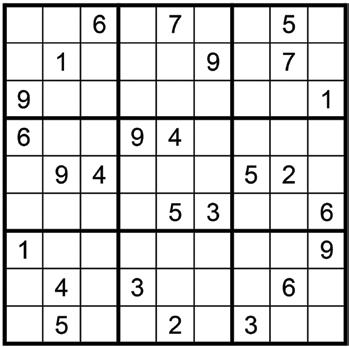
The objective of the game is to fill all the blank squares in a game with the correct numbers. Every row of 9 numbers must include all digits 1 through 9 in any order. Every column of 9 numbers must include all digits 1 through 9 in any order. Every 3 by 3 subsection of the 9 by 9 square must include all digits 1 through 9.


Many insects hibernate as adults. Ladybugs, wasps, honeybees and some butterflies like the mourning cloak butterfly are good examples.
Hibernation or dormancy in insects is called diapause
hibernate
A bat’s resting heart rate drops from 400 beats per minute to just 25, and some bats only take a breath every 2 hours.
By Laurie Triefeldt
It can be very difficult for many animals to find food in the winter. In order to survive, some animals migrate to warmer regions or adapt to harsh conditions; others hibernate. Hibernation is a deep sleep or “torpor” that allows a creature to conserve energy while eating little or no food. Many hibernators prepare for winter by storing food in their burrows or dens. They also eat as much as they can before winter sets in, storing body fat to be used as energy later. Can you identify the two animals on this page that you might think are hibernators, but are not?
Groundhogs, also called woodchucks, are true hibernators. They dig deep dens where they sleep away the winter, and they are not easily awakened. A groundhog’s body temperature can drop to as low as 37 degrees Fahrenheit, and its heart rate slows to about 5 beats per minute. It is not uncommon for the European hedgehog to wake up during its hibernation and move to another nest.
When a hamster gets too cold, it can slip into a dormant state of hibernation.
Raccoons do not hibernate, but they do sleep for days during cold winters.
Many people think that squirrels hibernate, but these rodents can’t maintain the high levels of body fat needed for hibernation.
Turtles hibernate in different ways. Water turtles dive to the bottom of a pond and snuggle into some mud and leaves. Their hearts slow down, and they stop breathing through their lungs. Box turtles don’t hibernate under water; they dig burrows. Their metabolism slows, and they stop eating.
Bears are not considered true hibernators because their body temperature only drops a bit, and they can wake up. Like true hibernators, the bear’s heartbeat slows down, and it can go without food for long periods. During hibernation, a black bear’s heart can drop from 40 or 50 down to 8 beats per minute, and it can survive for up to 100 days without eating or drinking.
In winter, American badgers may spend up to 70 days underground, and they do sleep a lot, but they do not enter full hibernation as their heartbeat does not slow by much.
Reptile hibernation is called brumation
Garter snakes hibernate in groups. Where winters are very cold, hundreds or even thousands of these snakes winter together in dens.
Frogs that hibernate need more oxygen than turtles. They do not bury themselves in the mud, but go to sleep on top of the mud. Some toads and terrestrial frogs dig burrows for their winter sleep.
Bats are some of the longest hibernators around; some hibernate for 64 to 66 days.
waking periods.
groups,
times sharing a den with up to 20 others.
Just as certain men's grooming missteps make us cringe—think frosty guylights and overplucked eyebrows—we (sometimes) make hair, makeup, and skin-care choices guys hate. Here are 13 beauty buzzkills to avoid.
Fragrance Overload
Here are the numbers you need to know: No more than three sprays for an eau de parfum, four for an eau de toilette.
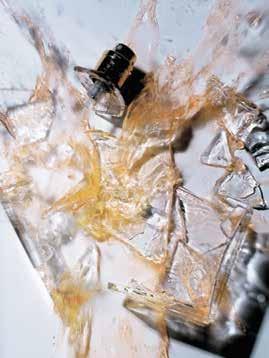
Caked-On Base
Painting layers of foundation, tinted moisturizer, concealer, and powder on your face will rub off on your collar...and his. Stick with a lightweight foundation, remove any obvious makeup with a damp sponge, and dab concealer just over blemishes or redness.
Overdone Eyelashes
When poorly done, the Kardashian effect can turn into the spidery effect. We're

talking clumpy, flaky, and otherwise arachnid-esque. A few falsies applied to the outer corners make your eyes look wide, innocent, and sexy, without looking like they could walk on their own.
Dry Skin
There may be nothing less sexy than dry legs, rough elbows, and chapped everything. Fake hot, humid, summery skin by slathering on body lotion (Lubriderm Advanced Therapy Moisturizing Lotion with SPF 30 is a good remedy) as soon as you step out of the shower. He won't be able to keep his hands off you.


Nothing says "I've given up" as succinctly as leg stubble. Shave at night for the most precise finish (your legs swell as you sleep, so you'll miss hairs if you shave in the morning) and use a new blade. Doing so will also help you avoid those annoying red razor bumps.
Yellow-Tinged Teeth
Who wants to kiss someone with graying or yellowing teeth? For a bright, white, healthy-looking smile, use a treatment.


There are lip glosses that moisturize with a subtle sheen, and there are those that are so sticky they could glue together broken glass. A total turn off!
Stiff Hair
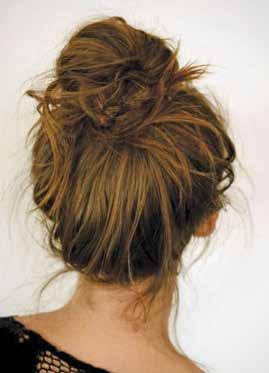
No man is going to be able to run his fingers through your hair if it's knotted in a bun, pulled into a twist, or otherwise highmaintenance-looking. Go for a more approachable hairstyle, like easy waves, half up, or a pretty ponytail.
Smoky-Eye Overload
It starts off innocently enough: It's just you, an eye-shadow palette, and a mirror.

But things can get ugly fast when heavy, dark shadows are piled on top of each other. Create a subtle, sexy smoky eye by slightly smudging black eyeliner along the rims of your eyes.
Bold Lipstick
That one's too bright, that one's too dark—when it comes to lipstick shades, men are like Goldilocks. And it's hard to blame

when every kiss carries the
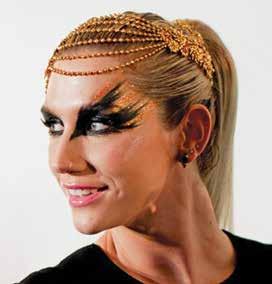
Guys like to keep things pretty simple. Keep accessories on your handbag and jewellery, and leave the feathers, extensions, tinsel, bells, and whistles to Ke$ha and reality-TV celebrities.
Neon, Dark, and Patterned Manicures
If your manicure is black, glittery, glows in the dark, or is any combination thereof, men are intimidated. Or just kind of freaked out. Play it safe with a timeless red or a pale neutral.


Pharrell Williams angered some people with his response to the decision made by a grand jury in Ferguson, Missouri not to indict Officer Darren Wilson. The "Happy" hitmaker said in a new interview with Ebony that the cop shouldn't have shot and killed Mike Brown. However, he argued that the teen's "buly-ish" behavior was also to blame for the shooting.
Before being shot to death, Brown was caught on surveillance camera stealing cigarillos from a convenience store and intimidating the shop owner. Pharrell then told Ebony what he thought of the footage, "It looked very bullyish; that in itself I had a problem with."
"Not with the kid, but with whatever happened in his life for him to arrive at a place where that behaviour

is OK. Why aren't we talking about that?" he continued.
"The boy was walking in the middle of the street when the police supposedly told him to 'get the f**k on the sidewalk,' " he added. "If you don't listen to that, after just having pushed a storeowner, you're asking for trouble."
After the interview was published, numerous peo-
ple blasted Pharrell on social media. One Twitter user wrote, "Mike Brown was a bully says Pharrell Williams. So do we get a pass to shoot bullies in society? Way to go Pharrell."
Another added, "Did y'all read what silly & idiotic @Pharrell said to Ebony about Ferguson? Y'all have to learn that most of these Black celebs don't care."
(AceShowbiz)

Debuting at number one on Billboard Hot 200, One Direction's "FOUR" scored a history for its artist. The U.K. pop quintet become the first band to have all four of their releases on the top of the chart on the first week of sale.
"FOUR", which was released on November 17, sold 387,000 copies, according to Nielsen SoundScan data ending November 23. The album dethroned Taylor
Swift's "1989" which scored its own record by selling 1.287 million units last month and became 2014's second-biggest selling album after the soundtrack of "Frozen (2013)".
As an overall act, One Direction is only one of the six acts to have reached No. 1 with their first four studio releases. The others being Beyonce Knowles, Britney Spears, DMX, The Kingston Trio and The Monkees. Swift's latest album
settles in at the second place after slipping 32% to 214,000 copies. It has passed the 2 million mark, scoring a total of 2.21 million units. At the third place is Pentatonix with their Christmas album that pulled in 99,000 copies this week. Nickelback's "No Fixed Address" bows at No. 4 with 80,000 copies sold, followed by Garth Brooks' "Man Against Machine" at the fifth place with 62,000 copies. (AceShowbiz)
'Tis the season to stay amicable with your sort of ex. Despite their marital woes, Nick Cannon and Mariah Carey will be spending Christmas together with their 3-year-old twins, Monroe and Moroccan.
"Gotta keep that going. I want to make sure we have a wonderful holiday together," Cannon told In Touch Weekly. As for where they'll be celebrating, the America's Got Talent host replied, “Somewhere cold and snowy, like Aspen [Colorado].”
Aspen has been a regular holiday destination for Carey, 44, and Cannon, 34. Who can forget last year's trip when the "All I Want for Christmas" singer walked her dogs in the snow while sporting a festive red bikini?
After months of speculation, Mariah and Nick's relationship turmoil came to head over the summer. Although no divorce papers have been filed yet, the couple — married for six years — has been living apart.
Transformers actor Shia LaBeouf has claimed that he was raped on Valentine's Day during his week-long #IAMSORRY performance art installation.
Back in February of this year, the 28-year-old actor took up residency in a small room of the Stephen Cohen Gallery in Los Angeles. The public were invited to visit him one-on-one and tell them exactly what they thought of him as he sat with a brown paper bag over his head, which had the words: 'I AM NOT FAMOUS ANYMORE,' written on it.
Talking to Dazed Digital (in an email interview), Shia LaBeouf alleges that on the third day, 14 February 2014, he was stripped and raped, while both the woman's boyfriend and his own girlfriend also stood in-line to see him.
"One woman came with her boyfriend, who was outside the door when this happened. [She] whipped my legs for 10 minutes and then stripped my clothing and proceeded to rape me.
"There were hundreds of people in line when she walked out with dishevelled hair and smudged lipstick. It was no good, not just for me but her man as well."
Shia described the incident as "painful," and said that his girlfriend Mia Goth - who he has been with for two years - was aware.
"It was Valentine's Day and I was living in the gallery for the duration of the event. We [he and Goth] were separated for five

days, no communication. So it really hurt her as well, as I guess the news of it travelled through the line. When she came in she asked for an explanation, and I couldn't speak, so we both sat with this unexplained trauma silently. It was painful." (Glamour)

Is there anything Jennifer Lawrence can't do?
The Hunger Games actress has en-
tered the UK single chart at number 29. Don't worry, she hasn't released her own version of Chumbawamba's I Get Knocked Down (but I get up again), it's a song from her latest film The Hunger Games: Mockingjay - Part 1.
If you've seen the movie, you'll know that Jennifer's character sings a haunting folk song called The Hanging Tree. It was written by The Lumineers and also appears on the film's soundtrack.
As beautiful as her voice is, J-Law has said that she didn't like having to sing on set.
Mockingjay director Francis Lawrence told Radio Times that he thought she was "great".
"She'd probably tell you it was her least favourite day" he said.
"She was horrified to sing, she cried a little bit in the morning before she had to sing. But she did it and she did it all day - and she hated me for making her do it all day - but she did and it's great." (Glamour)
"We talk and text every day," Nick told the mag. "My children are my No. 1 priority. Everything I do is for them. I just want to be the best father I can possibly be."
Neither Nick nor Mariah has formally announced that they have split. However, the DJ has been very open about his marriage troubles (much to the Grammy winner's dismay).
"That was a lot of people's advice, 'Lay low.' Being a public figure, of course you don't ever want to deal with your personal life in the public, but I'm the type of dude I deal with everything head-on," Cannon told E! News last month. "I'm not a hider, I never hold punches, hold my tongue. I'm as candid as I can possibly be, but I try and be as respectful, as classy and the best human being I possibly can be."
Multiple outlets have reported a divorce is imminent, but who knows? Maybe Santa will bring Nick and Mariah reconciliation this Christmas. (Yahoo)
Kanye West's music is loved around the world - but he may be ditching the musical world to branch out into fashion, saying that there is more money in fashion than in music.
According to Page Six, "after his next [collaboration] with Paul McCartney comes out, he's going to step away from music and concentrate on clothing."
The shoes Kanye designed for Nike have become collectors' items, selling for thousands of dollars, but Kanye apparently left Nike because he wasn't making enough cash.
"He got a $15 million signing bonus from Adidas, but his line has been pushed back four times because he hasn't had enough time to work on it," Page Six claimed.
(Glamour)



Amitabh Bachchan has paid tribute to his father on the 107th birth anniversary of Harivansh Rai Bachchan.
The Bollywood actor called him a "unique genius", describing his humble beginnings and literary works, which continue to be celebrated in India.
Writing on his blog, the actor said: "Babuji, my Father born on November 27, 1907, tomorrow his birthday! A unique genius.
"A man of immense letters, words, thoughts and several unknown deeds, born and brought up in extreme poverty, earning his living with Rs 20 per month and then creating some of the most extraordinary writings in literary India."
He added: "My Father, who dedicated one of his comments to me - 'Amitabh is my best poetry'."

The 72-year-old star continues to honour his father, often reciting his popular works Madhushala and Madhukalash.
"A man of immense will power, stories of which I have narrated earlier, a man who designed his own tunes to his poems and sang them himself to
lakhs of captivated audiences the world over," he posted.
Amitabh had earlier revealed plans to establish an institute dedicated to the work of his late father.
The actor has described both his parents as his "greatest inspiration".
(Digital Spy)

Sonakshi
Arjun Kapoor.
The two actors star together for the first time in the Amit Sharma-directed remake of Telugu blockbuster Okkadu.
Responding to the dating rumours, Sinha told IANS: "I don't react to these rumours. You should ask people who write about it.
"If we work together and if we watch a film together, it doesn't mean you are in a relationship," she added.
The 26-year-old was previously linked to Shahid Kapoor, after they starred together in R...Rajkumar.
Tevar is produced by Arjun's father Boney Kapoor and uncle Sanjay Kapoor.
The film is scheduled for release on January 9, 2015. (IANS)
Veena Malik sentenced to 26 years in jail after blasphemous programme
Veena Malik has expressed her shock after being charged with blasphemy and sentenced to 26 years in prison for her part in a celebrity TV programme.
The actress and her husband, Asad Bashir, along with one of the biggest Pakistani media groups, were accused in a petition of using "derogatory language for committing blasphemy by airing objectionable contents" against the family of the Prophet Hazrat Muhammad, after a religious song was played over their mock wedding ceremony on a TV show.
Malik told The Times of India: "It is shocking news for me. We did not have any control over any television content that was aired. We were just a part of the show, where our mock marriage was organised.
"Later, footage was made out of it and circulated. And some 100 FIRs have been registered against us now. We did not decide the content. The organisers had to decide it and we were not involved in it in any way. Since, we were given the content, we performed it accordingly."
The actress and her husband will visit Pakistan in the first week of December to attend the hearings.
"I have been recovering from C-section and the doctors have asked me to rest for three months. So, we will be visiting Pakistan in December, once I am fit," she said.
"We are born Muslims and all I can say is that we have not done any mistakes. We

are innocent and that is why I am going to Pakistan to face it. It is not a blasphemy in any way. There is no truth to it.
"And the moment you attach Veena Malik's name to anything, it becomes international. Thus, these people have tried to create a controversy out of the whole thing."
Malik has frequently been at the centre of controversy and faced criticism for appearing naked on the cover of FHM magazine. (Digital Spy)
Emraan Hashmi may have said recently that he doesn't watch Bollywood films, but he does make an exception for his cousin, Alia Bhatt.
Ask him what he thinks of the young breed of actors and he says, "They're all very good. Actually, on my cousin's (Alia) insistence I saw Student Of The Year (2012) and loved it. And I loved all three of them (Varun Dhawan and Sidharth Malhotra were Alia's co-stars), as well as Karan's (Johar, filmmaker) work. Alia was very upset, and she said, 'I go watch all your films, you better watch my film.' So I got a DVD when it was out, watched it and then called her and praised her for it. And I saw 2 States, and it is fantastic, but I haven't told her about that yet. All her films have been great. It's fantastic that she's doing well in such a short span of time."
Bring up Alia's spoof video from a few months back, and Emraan jokes, "Our entire family would make for a great spoof video. If you observe us, we seem very dysfunction-

Bipasha Basu is continuing her support of breast cancer awareness charity Pinkathon.
The actress said the charity offers an important platform for women to share their experiences battling against cancer.
Basu told IANS: "It's a pleasure to be associated with Pinkathon for consecutively three years now.
"I feel that Pinkathon is an important platform that encourages women to come out of their shell and talk about their fight with

Times)
cancer. It gives them a chance to show the world how tough they are to stand against all odds and truly be winners."
The aim of the international running event is to promote an active lifestyle and better overall fitness for women, as well as raising awareness of breast cancer. Over 10,000 runners are expected to participate in the event.
Basu added: "I hope more than 10,000 women come forward and support this cause. I will be part of this cause and will run as much as I can."
Various big-name Bollywood stars such as Lisa Haydon, Karisma Kapoor, Gul Panag and Bipasha have also lent their support to the run in Mumbai, which was previously held in Bengaluru, Chennai, Delhi, Ahmedabad and Pune.
Milind Soman announced the launch of this year's event at a press conference in Asilo.
In 2009, Bollywood/Hollywood star Lisa Ray was diagnosed with multiple myeloma, a rare cancer of the plasma cells, and in April 2010 she was declared cancer free following a stem-cell transplant.
Manisha Koirala was diagnosed with ovarian cancer in 2012 and is now cancer free after undergoing a successful surgery in the US.
Pinkathon will take place in Mumbai on December 14. (IANS)
Aamir Khan: 'There should be ten other Khans in the industry'
Aamir Khan has said there should be more Khans in Bollywood. The actor was speaking on a panel at The Hindustan Times Leadership summit along with Deepika Padukone, which was hosted by Karan Johar, The Hindustan Times reports.
Speaking of the triumvirate of Khans who have dominated Indian cinema, Johar said: "Any conversation with a Khan can't be complete without reference to the complete domination for the three Khans in the industry.
Describing himself, Salman and Shah Rukh as the 'trimurti' of Bollywood "only because of our surnames", the PK star said: "There should be ten other Khans who're equally good.
"For me, I would want more stars. There should be ten of us who should be popular. As creative people we should encourage young people to come forward. Three is less, we should have more of us."

The actor recently commented that he "respects" his relationship with Shah Rukh Khan, but shares a closer relationship with Salman.
"I respect my relations with Shah Rukh. I keep in mind that I don't cross the boundary. It is different with Salman."
He revealed that Shah Rukh and Salman called him on Face Time to share the news that they had reconciled after a feud that had lasted several years.
By Zenica DaBichan
Alcoholism can be considered a disease that includes problems controlling your drinking, being preoccupied with alcohol, continuing to use alcohol even when it causes problems in your life, having to drink more to get the same effect(dependence), or having withdrawal symptoms when you decrease or stop drinking.
Signs of alcoholism
Answering “yes” to two of the following questions indicates that the possibility of you suffering from alcoholism is high.
1. Have you ever felt you needed to cut down on
Iyour drinking?
2. Have people annoyed you by criticizing your drinking?
3. Have you ever felt guilty about drinking?
4. Have you ever felt you needed a drink first thing in the morning (eyeopener) to steady your nerves or to get rid of a hangover?
Other signs of alcoholism include: Being unable to limit the amount of alcohol you drink.
Feeling a strong need or compulsion to drink. Develop tolerance to alcohol so that you need more to feel its effects.
Drink alone or hide your drinking.
f your child suddenly has an attack of diarrhea and vomiting, and he complains of a stomach ache, you may think to yourself, "stomach flu."
No, not really. What's often called "stomach flu" is gastroenteritis, an infection of the stomach and intestines. The flu, or influenza, is different. It causes sore throats, runny noses, and general aches and pains. It rarely causes stomach problems.
Viral infections are the usual cause of gastroenteritis. Bacteria can sometimes bring it on.
The sickness usually passes in about 10 days without medication. The first few days tend to be the worst, but you can take steps to help your child get through this tough time.
Treatment
Give lots of fluid. The biggest danger from gastroenteritis is dehydration. Your child's body loses more fluids than it takes in. So, the most important thing you can do is keep your child hydrated, says Andrew Nowalk, MD, PhD. He's an assistant professor of pediatrics at Children's Hospital of Pittsburgh, US.
Not just any fluid will do. Water is good, but in some cases, it may
SExperience physical withdrawal symptoms such as nausea, sweating and shaking when you don't drink.
Forgetting conversations or commitments, which is sometimes referred to as a "black out".
• Keeping alcohol in unlikely places at home, at work or in your car.
Having legal problems or problems with relationships, employment or finances due to drinking.
The following are just some of the negative health effects of alcoholism:
• High blood pressure and Heart disease
not be enough. It won't replace the important electrolytes (salt and minerals) your child's body loses when it's dehydrated.
Drinks that do replace salt and minerals are called electrolyte solutions, or oral rehydration solutions. You can buy them at your local drug store. They can even be bottle-fed to infants.
Some sports drinks promise to replace electrolytes as well. They have a lot of sugar, but are okay for most school-age children and teenagers. They're not a good idea for very young children, though, says Peggy Pelish, PhD. She's a pediatric nurse practitioner with the University of Nebraska Medical Center College of Nursing.
Keep children away from milk. It can make stomach problems worse. If you're the parent of a young baby, talk with your doctor about breastfeeding or formula.
Drinks that have a lot of acid (orange juice) or caffeine can also cause belly problems.
Too much of even the right kind of liquid can make vomiting worse, so take it slow at first. Try 1 teaspoon every 4 to 5 minutes, Nowalk says.
Introduce food slowly. Once your child can drink liquid and
cientists believe they have discovered why people who work nightshifts are more prone to weight gain and obesity. Rather than eating more, night workers burn off fewer calories, their research suggests.
The scientists told the journal PNAS eating at night messed with our body's natural metabolism.
The researchers set up a small trial where volunteers ate identical amounts as they switched between working days and nights.
For the first two days, the volunteers followed a normal schedule - sleeping at night, staying awake during the day, and eating breakfast, lunch and an evening meal.
For the next three, they stayed awake and ate their meals at night and slept dur-

Liver disease
• Stomach ulcers, cancer of the mouth, throat and esophagus
• Stroke
Learning and memory problems, anxiety and depression
keep it down, you can start adding food. But keep it bland. Try bread, potatoes, plain yogurt, crackers, rice, toast, and bananas first. Once you know those are going down okay, you can try lean meat and cooked vegetables.
Don't give your sick child foods that are fried, spicy, fatty, or have a lot of acid. They can make stomach problems worse.
Skip over-the-counter meds. With gastroenteritis, time really is the best medicine. Watching your child suffer may tempt you to give him over-the-counter medicines. As hard as it is, don't do it. Not only will most medications not help, they may even make it worse.
Ibuprofen can upset your child's stomach even more, and acetaminophen can cause liver problems. Antibiotics don't help against viruses (although they do against bacteria). And anti-diarrhea medicines can make the infection last longer. They can also be dangerous for very young children.
There is one exception: If your child has a fever, you can give them acetaminophen or Ibuprofen to bring it down. Other than that, stick with fluids and bland foods. When to See Your Doctor
Most cases of gastroenteritis
• Sexual dysfunction
If you feel that you sometimes drink too much or
go away on their own. See the doctor if the vomiting and diarrhea continues more than a few days, or if you notice any signs of dehydration like:
• Not urinating
• Dry mouth
Crying without tears
Fever over 102F
• Lack of energy
Crankiness
Soft spot on the top of the ba by's head is sunken.
Blood or pus in stool, or dark tarry stool
Your child may need to get checked sooner if they have other conditions, such as diabetes, that put them at higher risk for fluid loss.
family members are concerned about your drinking, talk with your doctor or visit your health centre where you can get advice and see a social worker.

Prevention Is the Best Medicine
Follow these easy steps:
Get your child vaccinated against rotavirus, which is the most common cause of gastroenteritis.
Wash hands often with warm soap and water, especially when you use the bathroom, change diapers, and before and after you handle food. "Good soap and water hand-washing is probably our best protection," Nowalk says.

ing the day.
Although the timing of the meals changed, the calorie content remained the same.
Total energy expenditure - how much energy (calories) the volunteers burned - went down when they switched to the nightshift
Wash all fruits and vegetables before eating them. Cook meat all the way through. This may prevent gastroenteritis caused by bacteria. (WebMD)
pattern.
Even though participants initially burned more fat - possibly because they slept less during the transition to nights, say the researchers from the University of Coloradothe energy expenditure over the three days of shift work was lower overall.
Lead investigator Prof Kenneth Wright says this is because shift work goes against our fundamental biology.
Our internal body clock makes us better suited to eating during daylight hours.
"Shift work requires our biological day to occur at night and our biological night to occur during the day, and that's very difficult to achieve because the Sun is such a powerful cue.
"We can have some change in our clock - a couple of hours - but then on days off, it goes right back. Shift workers never adapt." (BBC)



white



Method:
Peel, wash and grate the pumpkin and coconut. Add the cornmeal and work the margarine in with a fork. Add the sugar and water to make a soft dropping consistency. Add the essence, salt, cinnamon and nutmeg, mixing well. Pour into a greased dripping pan. The mixture should be 1-1½ inches thick. Bake in a moderate oven until crisp and brown. Cool, and cut into 2 inch squares before serving.

Method:
In a bowl, combine the chicken with freshly ground seasonings and spices (salt, ginger powder, all purpose seasonings, tomato cubes). Stir to coat the chicken evenly. Let sit for 15 minutes at room temperature or overnight in the refrigerator.
In the meantime, whisk together the pineapple juice, vinegar, ketchup/Chinese sauce, salt, and brown sugar (sweet and sour sauce).
In a large baking pan, pour in the 1 tablespoon of cooking oil and swirl to coat. Add the chicken and spread the chicken out in one layer. Allow to bake for 10mins at 350°C.
Add the pineapple chunks, peppers and the sweet and sour sauce. Let bake for an additional 25mins minutes, until the chicken is cooked
Uthrough. Timing depends on how thick you've cut your chicken. The best way to tell if the chicken is done is to take a piece out and cut into it.
Taste the sauce and add more brown sugar if you'd like.

se red wine to rinse fruits. The alcohol and resveratrol, a phytochemical in red wine, can kill off bacteria that cause food-borne illness such as salmonella and E. coli. Just run a little wine over your fruit after rinsing it off with water, dry it off and enjoy!
Swapping red wine for heavy sauces or oil is a healthy, lighter alternative. A half a cup of oil has 950 calories, but the same amount of red wine only has 98 calories–saving you more than 850 calories!
Minimise waste and mess when cutting corn from the cob by mounting the cob in the hollow centre of a Bundt cake pan, where it will be secure. When you run a knife down the cob, kernels will collect in the pan.
A butcher's trick for breaking down poultry: First, separate the legs from the body. Next, separate the drumsticks from the thighs. Then, separate the wings from the body. Place the chicken breast-side down and cut along each side of the spine to remove the backbone. Finally, cut the breast in half.
Flies are attracted to rotting things, and since wine is fermented, the flies smell it and are automatically attracted to it. Simply pour red wine in a small bowl or glass and place it in the problem area, such as near a kitchen window.
Pour leftover red wine into a compost bin to activate the bacteria that’ll turn the compost into fertilizer for your garden.
There’s nothing grosser than a couch that looks like you pulled it out of the alley. Use a spray bottle to cover your couch with rubbing alcohol, then use a clean white sponge to rub the couch. Fluff the fibres with a hard bristle brush when done, and it’ll look good as new.
Instead of scrubbing, spray cooking spray on your glass shower door and/ or walls. Give it about 5 minutes and wash it off with soapy water and dry it. The oil in cooking spray will dissolve the soap build-up and lime deposits.
What do the following words have in common?
Vermont Statuesque
Swedish Arthur's Africa
Sensation
Misunderstood


Atown mouse once visited a relative who lived in the country. For lunch the country mouse served wheat stalks, roots, and acorns, with a dash of cold water for drink.
The town mouse ate very sparingly, nibbling a little of this and a little of that, and by her manner making it very plain that she ate the simple food only to be polite.
After the meal the friends had a long talk, or rather the town mouse talked about her life in the city while the country mouse listened. They then went to bed in a cosy nest in the hedgerow and slept in quiet and comfort until morning. In her sleep the country mouse dreamed she was a town mouse with all the luxuries and delights of city life that her friend had described for her. So the next day when the town mouse asked the country mouse to go home with her to the city, she gladly said yes.
When they reached the mansion in which the town
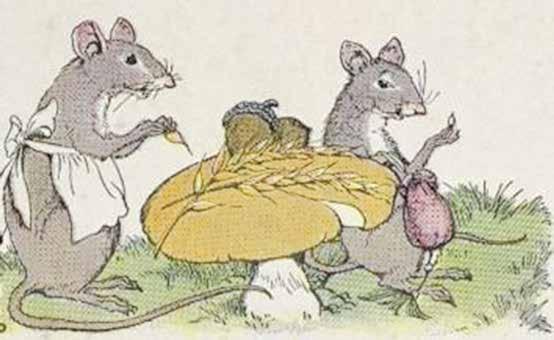
mouse lived, they found on the table in the dining room the leavings of a very fine banquet. There were sweetmeats and jellies, pastries, delicious cheeses, indeed, the most tempting foods that a mouse can imagine. But just as the country mouse was about to nibble a dainty bit of pastry, she heard a cat meow loudly and scratch at the door.
In great fear the mice scurried to a hiding place, where they lay quite still for a long time, hardly daring to breathe. When at last they ventured back to the feast, the door opened suddenly and in came the servants to clear the table, followed by the house dog.
The country mouse stopped in the town mouse's den only long enough to
pick up her carpet bag and umbrella.
"You may have luxuries and dainties that I have not, but I prefer my plain food and simple life in the country with the peace and security that go with it," said the country mouse.
Moral of the story: Poverty with security is better than plenty in the midst of fear and uncertainty.
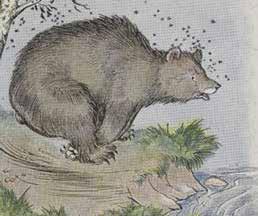
Abear roaming the woods in search of berries happened on a fallen tree in which a swarm of bees had stored their honey. The bear began to nose around the log very carefully to find out if the bees were at home. Just then one of the swarm came home from the clover field with a load of sweets.
Guessing what the bear was after, the bee flew at him, stung him sharply and then disappeared into the hollow log.
The bear lost his temper in an instant, and sprang upon the log tooth and claw, to destroy the nest. But this only brought out the whole swarm. The poor bear had to take to his heels, and he was able to save himself only by diving into a pool of water.
Moral of the story: It is wiser to bear a single injury in silence than to provoke a thousand by flying into a rage.
Some boys were playing one day at the edge of a pond in which lived a family of frogs. The boys amused themselves by throwing stones into the pond so as to make them skip on top of the water.
The stones were flying thick and fast and the boys were enjoying themselves very much; but the poor frogs in the pond were trembling with fear.
At last one of the frogs, the oldest and bravest, put his head out
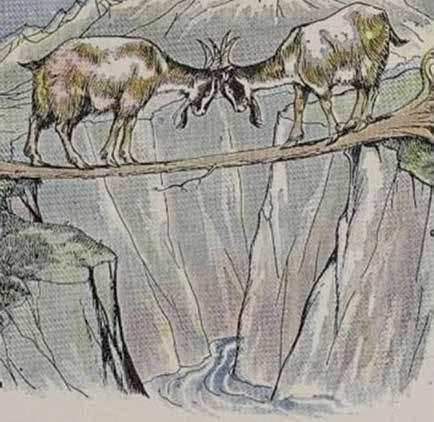
Two goats, frisking gaily on the rocky steeps of a mountain valley, chanced to meet, one on each side of a deep chasm through which poured a mighty mountain torrent. The trunk of a fallen tree formed the only means of crossing the chasm, and on this not even two squirrels could have passed each other in safety. The narrow path would have made the bravest tremble. Not so our goats. Their pride would not permit either to stand aside for the other.
One set her foot on the log. The other did likewise. In the middle they met horn to horn. Neither would give way, and so they both fell, to be swept away by the roaring torrent below.
Moral of the story: It is better to yield than to come to misfortune through stubbornness.
(All stories are by Aesop, a Greek fabulist credited with a collection of stories known as Aesop's Fables.)
of the water, and said, "Oh, please, dear children, stop your cruel play! Though it may be fun for you, it means death to us!"
Moral of the story: Always stop to think whether your fun may not be the cause of another's unhappiness.

As citizen of the English tongue I say remember the ship in citizenship for language is the baggage we bring - a weight of words to ground and give us wing - as millennial waters beckon wide and love's anchor waiting to be cast will the ghost of race become the albatross we shoot at our cost?
I'm here to navigate - not flagellate with a whip of the past for is not each member of the human race a ship on two legs charting life's tidal rise and fall as the ship of the sun unloads its light and the ship of night its cargo of stars again I say remember the ship in citizenship and diversity shall sound its trumpet outside the bigot's wall and citizenship shall be a call to kinship that knows no boundary of skin and the heart offer its wide harbours for Europe's new voyage to begin
John Agard
Bone-trip, he called it, his brutal name for dying:
“The bone-trip is always hard.” I remember his face lit by fire, cracked into a thousand creases as he bent over, hardening nails: he repaired boots for working men in Gentle Street.
One day his smiling partner wasn’t there.
“Well, bruds gone to make his bone-trip now.”
Wiped his sweaty face with rag, went on nailing the rough, strong boots. Cruel, I remember thinking, fifty years ago. And it is now, my God, now, it is now.
Ian McDonald





TAURUS (April 20May 20)






Be truthful. You can avoid a misunderstanding if you stick to the facts. The more you try to embellish the truth, the worse off you will be.
Don't be too free with your cash. You can make a greater impression with your personality than your wallet. If you have to buy someone's love, it's not worth it.
(May 21June 20)
Don't offer more than you are prepared to give. Be candid regarding your personal and professional dealings. Boastfulness or exaggeration will come back to haunt you.


(June 21July 22)
If you are open and accepting, you will reap the benefits of an unexpected opportunity. Good fortune is headed your way. Enjoy the moment and the popularity that will come with it.

VIRGO (Aug. 23Sept. 22) ARIES (March 21April 19) LIBRA (Sept. 23Oct. 23)

LEO (July 23Aug. 22)
Don't take risks with your hard-earned cash. Impulse purchases and overindulgence will deplete your bank account and increase your stress level. Think before you spend or act out.
Don't wait for someone else to make the first move. The choice you make will influence your emotional and personal well-being, so step up and be the one who makes a decision.
Once issues are out in the open, you will be able to resolve any problems that have been bedeviling you. Refusing to discuss what's going on will not lead to happiness. Stop waffling.


SCORPIO (Oct. 24Nov. 22)
You will impress someone special if you do something out of the ordinary. Show your fun side and use your imagination; you won't be disappointed at the results you get.
SAGITTARIUS
(Nov. 23Dec. 21)




(Jan. 20Feb. 19) (Dec. 22Jan. 19)


PISCES
(Feb. 20March 20)

Financial losses will plague you if your records aren't up-to-date. Revisit financial contracts and agreements in order to ensure that you haven't overlooked an important detail.
Someone will reach out to you for help. Your other responsibilities will suffer if you don't make arrangements to ensure that nothing is neglected. Your diligence will be impressive.
Consistency is key. Indecision will confuse and annoy those around you. Decide what is best for you and act accordingly. Timing is crucial.
Mistakes are likely if you don't keep your emotions in check. Take time to rationally think matters through before you make a rash move that could be costly. Don't make a financial commitment.
Siri, Apple’s voice-controlled virtual assistant, is not just useful for hands-free texting, dictation and pizza place recommendations – it turns
London-based producers Skeewiff, aka Alex Rizzo and Elliot Ireland, have uploaded a remix of Young
Angel Haze; and a potty mouth worthy of Azealia Banks.
As well as name-checking Spotify and Google, Siri’s enunciation of Young’s

out she is also a skilled rapper.
MC’s Know How that features Siri.
Siri’s flow is reminiscent of Nicki Minaj’s best work on Monster; she has cadence just as smooth as
Last month, Judith Newman wrote in the New York Times how Siri had befriended her autistic son, and now it seems that Siri’s talents go even further.
Arapid-fire lyrics are nearperfect.
The producers who worked with Siri said they were thrilled with her performance. Rizzo told the
Guardian how the collaboration came about:
“She’s set to British Female. I asked her to dial up the lyrics of one of my favourite boasting hip hop tracks of all time, Young MC’s Know How.
“When I asked her to read them out, well that
was when the real ROFLing started. Tears and everything. Something about that posh English, mechanical accent busting rhymes was just irresistible.
At that moment I knew what needed to be done, the rest was just recording, replaying and a whole lot of editing.”
This is not the first time Siri has taken to the mic though. She has previously covered Eminem’s Lose Yourself (not a great effort), and, to better effect, Notorious BIG’s Hypnotize. X Factor, watch out. (The Guardian)

pple set a record by becoming the first company to be valued at $700bn (£446bn). The iPhone maker was already the world’s most valuable business, but in early trading its shares rose nearly 1% to $119.75, giving it a market capitalisation of $701.7bn. This is higher than the GDP of all but the top 19 countries in the world.
Apple’s shares have risen around 60% this year, with the success of its iPhone 6 and iPhone 6 Plus one of the main reasons behind the surge. Last month it announced that it had sold a record 39.3m iPhones in its third quarter, and predicted that its latest products would help it boost sales by at least 10% over the forthcoming holiday period. It expects to sell more in the Christmas quarter this year than it did in the whole of 2010.
Tim Cook, who succeeded Steve Jobs as chief executive in August 2011, said at the results presentation that demand for the new phones had been “staggering”.
AHe said: “At this point we are selling everything we’ve made” and added that 2014 was “one for the record books”.
The success of the iPhone 6 gave a boost to the company’s shares after they had hovered at around the $100 mark for much of the summer.
Apple has been vying with oil company Exxon Mobil for the accolade of the world’s largest company for a number of years, first overtaking its rival in August 2011 before falling back after concerns that its future products may not live up to past glories.
It regained the top spot in August 2013 after Exxon suffered from falling oil prices and weak earnings. Exxon is now worth around $405bn, while Apple’s technology rivals Microsoft and Google are valued at $392bn and $368bn respectively.
Analysts believe Apple could go even higher, with Michael Corcelli, head of US fund Alexander Alternative Capital, saying he expected its market capitalisation to reach $1trn next year.
group of Boston techies is taking smartphone gloves to a new level by turning them into a remote control for your phone.
They’re calling the technology the GoGlove. It’s is a way to control your smartphone with the tap of a finger.
Ben Harris, co-founder of Easier to Use, which developed the GoGlove, said the idea came to him while he was out on the slopes with some friends. The time it took to take his phone out of his pocket, take off his gloves, change the song or adjust the volume, and then put everything back, put him way behind the rest of the group, who he said were already to the bottom of the hill. Harris knew he wanted to come up with an easier way to use his phone without needing to touch the screen.
"We're finding people love being able to control their phone remotely. They’re leaving their phone in their pocket or purse and are really able to have the same control of their phone as if it were in their hand,” he said.
The GoGlove is designed to allow people running, biking, walking or hitting the slopes to use their music, camera, GoPro, or listen to texts by tapping their fingers rather than taking the phone out and manually using it.
“Whatever your phone can do, you can control with GoGlove,” said Harris.
A Bluetooth module in the glove is connected to sensors in the fingertips, according to GoGlove Designer Eric

Ely. Each sensor controls different functions on the phone when it’s tapped.
"It’s all based on the magnet in your thumb and the sensor on your finger tip," he said. "You just tap the magnet to the individual finger… as well as one at the base of your index finger."
Ely said that GoGlove’s main purpose is to give users
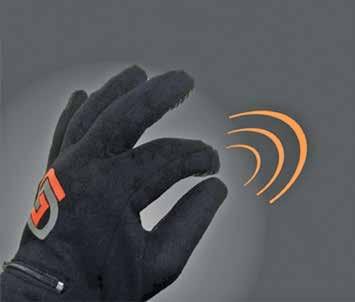
more control over their devices. By connecting the gloves to the GoGlove app, the user can set the function that each finger controls.
“It's a great concept when you’re flying down the mountain and a good song comes on and you kind of get in that moment and that makes everything better," he explained. "Really we are just trying to make that experience easier to control.”
The gloves are meant to be lightweight so they can fit inside thicker gloves in the winter. Harris said that, in testing, bigger gloves haven’t interfered with the magnets. Ely said that the GoGlove was also designed to be easily hand washed and with an active user in mind. He said the material is resistant to sweat and light moisture.
Harris added that the GoGlove’s Bluetooth module can be removed from the glove and used in warmer weather. The module can be clipped onto a shirt or bike and can still control the smartphone.
GoGlove is on Kickstarter where Harris and his team are trying to get funding to take the gloves into production. Right now the GoGlove can be preordered for US$79, about 40 percent cheaper than it will retail for next year.
However, Harris said that, once the project is funded on Kickstarter, the price will bump up to about $129. The goal is to get the gloves into production by summer and onto shelves by ski season 2015. (Discovery)
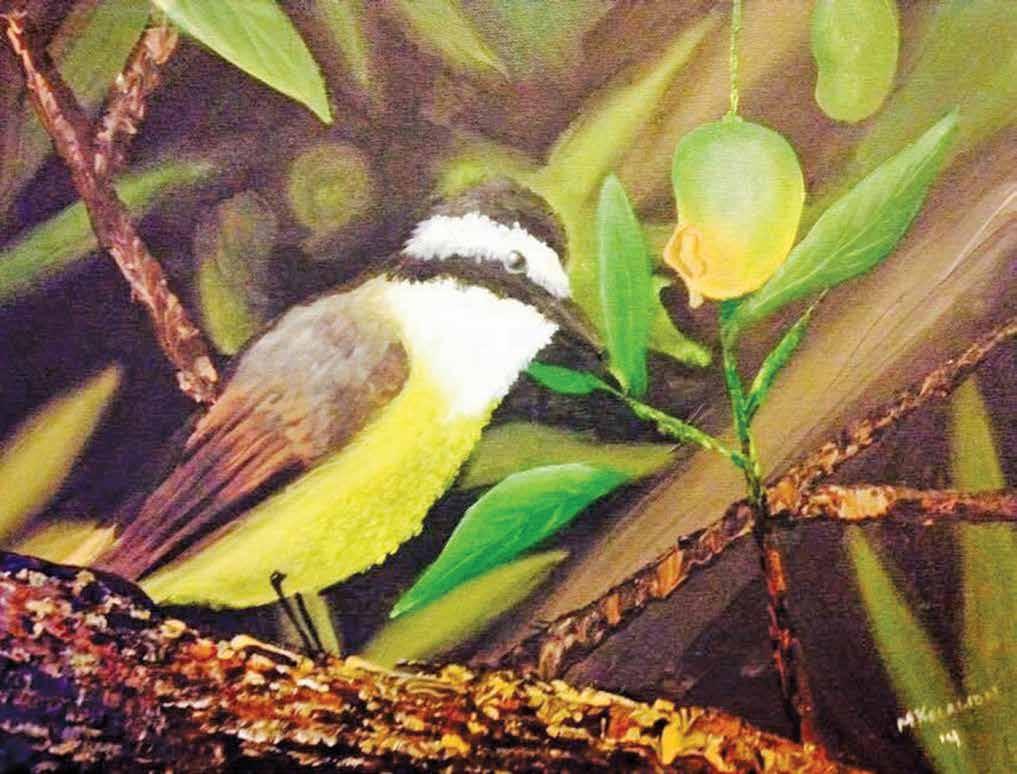
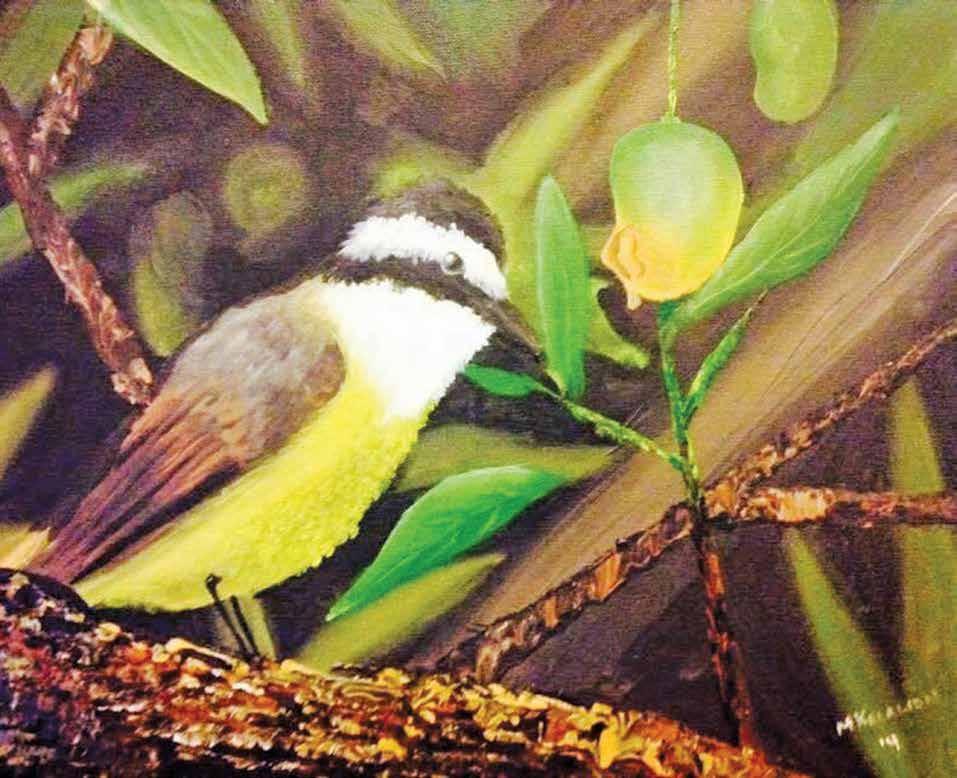
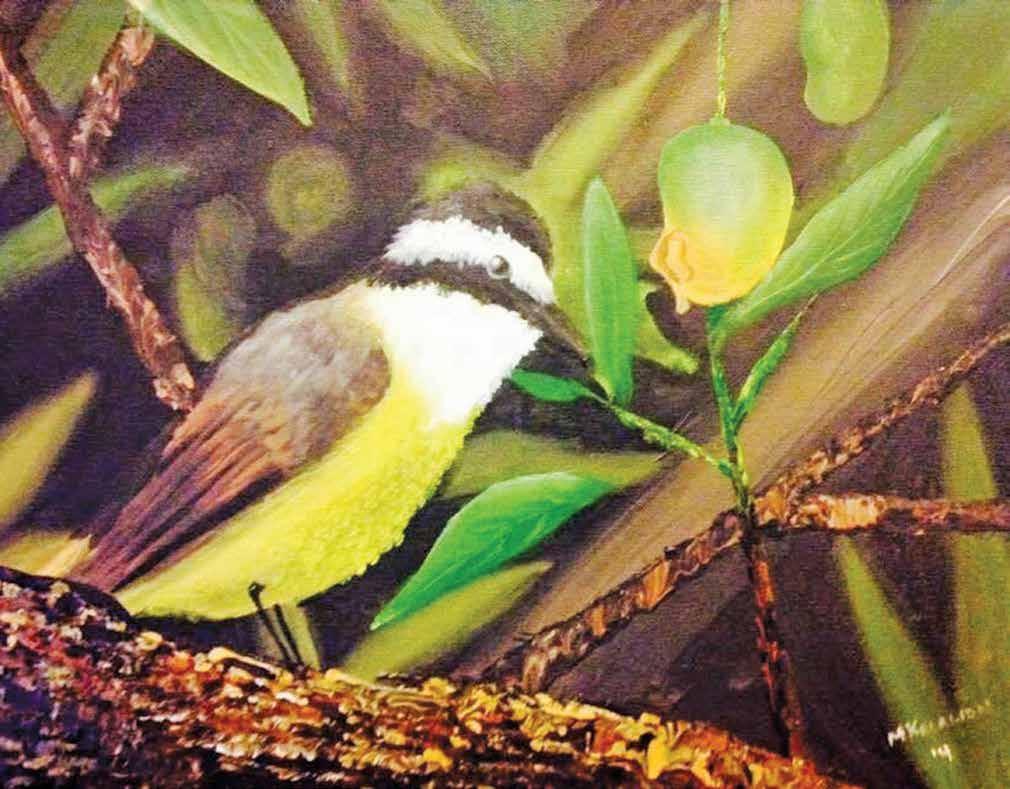
US-based Guyanese artist Marina Kelawon uses art as a means of self-expression and escape, while capturing the beauty of nature.
Born and raised in Enmore, East Coast Demerara, Kelawon migrated to Passaic, New Jersey, US, in 2010.
“Adapting to a new environment was very hard. I was accustomed to interacting with my neighbours and hanging out with my friends, but was unable to practice that since Passaic is Latino populated,” Kelawon recalled in an interview with Guyana Times Sunday Magazine
Growing up, Kelawon would draw a lot but she did not try her hand at painting until 2012.
“I have never received any formal training nor attended any art classes or have any qualifications whatsoever. I am self-

taught through many books and many sessions of trials and errors,” she disclosed.
The self-taught artist

mentioned that creativity is a prominent feature in her family, as her uncles would draw a lot.
Inspired by the work
of veteran Guyanese artist Bernadette Persaud, Kelawon decided to seriously take up painting.
“Every time I hold a

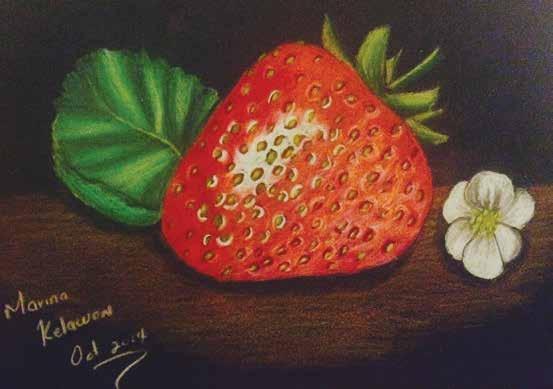


brush to the canvas, I strive to invoke a sense of calm, peace and realism. My favourite subjects to paint are landscapes, beachscapes, birds, still life and Lord Krishna. There is a multitude of emotions that surge through when painting, especially the joy of seeing my visions being translated through my hands. When I paint, I try to show a bit of my soul. It is a way try to connect with my inner self; it is an escape for me,” expressed Kelawon.
As for now, art is a hobby which Kelawon hope will soon transform into a profession.
“One of my biggest dreams is to someday go to an art institute to fur-


Austin House on High Street, Kingston in Georgetown was built in 1894, and is the official house of the Anglican Bishop
of Guyana.
The current edifice stands on the site of what was once known as “Kingston House”, a building which the then
newly appointed Bishop Swaby reportedly considered “not at all to his liking” upon his arrival in 1893 to replace Bishop William Austin who

died 9 November 1892.
After determining the state of Kingston House, it was decided that it had become “old and in a state of
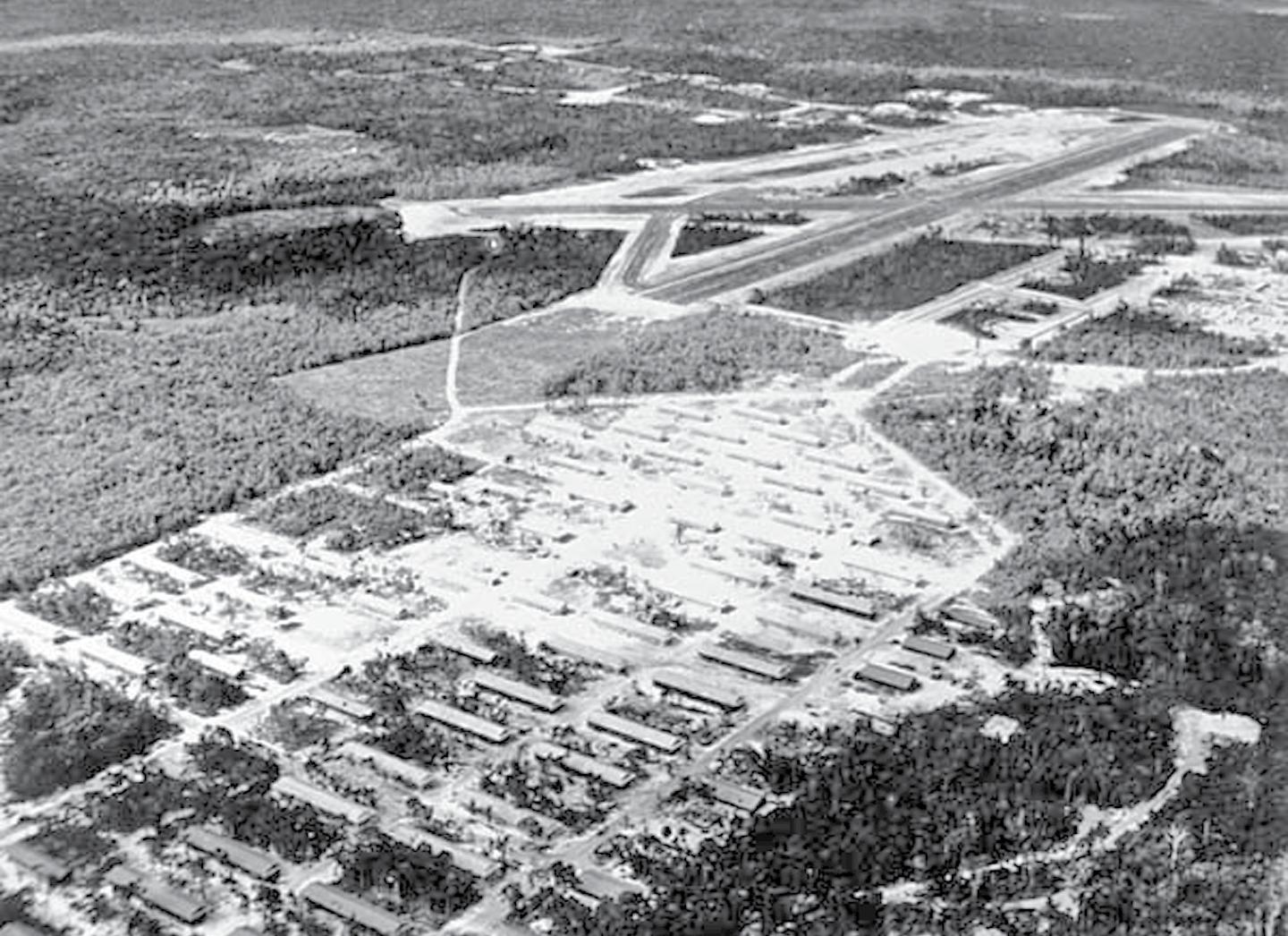
Atkinson Field -now Cheddi Jagan International Airport (n.d.)
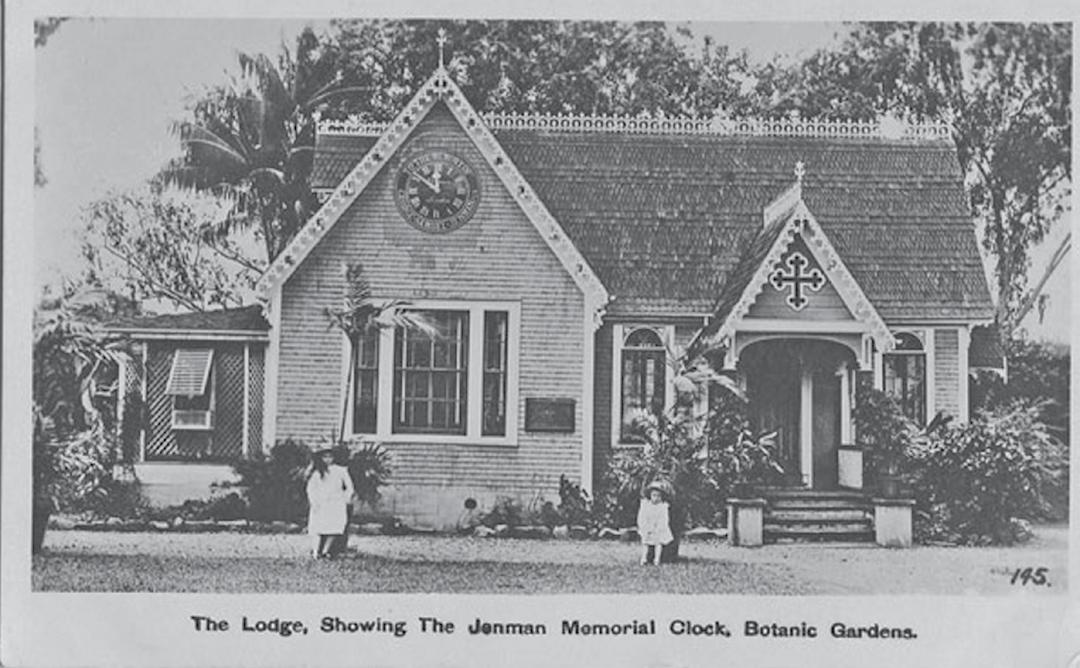
The Lodge, showing the Jenman Memorial Clock, Botanical Gardens (n.d.)
disrepair”, and a new building should be erected. So on 7 July 1894, Kingston House was duly demolished, and construction for the current building began 17 July of that year.
(However, as happens often in Guyana, local rumours claimed that Austin House was relocated west of its present site because Bishop Austin’s children would pelt passersby from the residence as it was close to the street...)
Austin House was designed and constructed by engineer Mr Joseph Bradshaw Sharples, who was also contracted for the design and construction of some train stations in the country, the current Walter Roth Museum building, and the former Queenstown
residence of the current Guyanese president, among others in the city. On 5 October 1894 the L-shaped building was officially presented to the Bishop and the Diocesan Council and is the residence of The Venerable Cornell Jerome Moss who succeeded the Right Rev. Randolph George who retired 31 December 2008.
Austin House’s facade and grounds remain testament of a bygone colonial era with its cobblestones and hitching posts (once used to secure horses and their buggy) at the main entrance, its expansive main staircase, and its traditional Victorian architecture and timber construction. (National
They each contain an abbreviation of a weekday:
verMONt staTUESque sWEDish arTHUR'S aFRIca senSATion miSUNderstood


Located at the Iwokrama River Lodge, the Fred Allicock building tells a story of a notable man
Your visit to Iwokrama directly contributes to the communities in and surrounding the Iwokrama forest. Tourism there supports the development of an eco-friendly sustainable model which is being shared locally, nationally and internationally.
Located at the Iwokrama River Lodge is the Fred Allicock building, which was built in the years 2000 to 2001.
Upstairs of the building, the restaurant and bar, dining hall for both staff and tourists are found. The building is also used for meetings, conferences and workshops. The offices are housed downstairs: tourism office, administration office, monitoring office, conference room, medical centre, shop and patio.
In an interview with Guyana Times Sunday Magazine, Kevin Edwards, Tourism Coordinator at Iwokrama River Lodge,
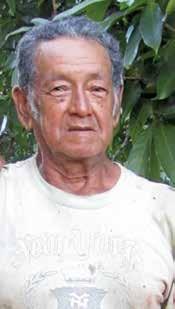
edge on managing natural environment who presently resides in Surama. Edwards also mentioned that Allicock served as the first Field Station Manager with Iwokrama International Centre for Rainforest Conservation and Development and was successful in accomplishing all of his tasks in the field.

From the building, tourists enjoy a scenic view of the Essequibo River. It is where, after an exciting day of discovery and explo-

stated that Fred Allicock is an Amerindian expert who shares his local knowl-
at Iwokrama.

puter with internet access is available in the tourism office, and the entire building is covered by WiFi internet access. A gift shop and a shop selling cold drinks, snacks and general items, such as toiletries, are available in the lower level. Not
far away are two science laboratories and a conference room with air conditioning and which is wired for digital equipment such as computers and LCD projectors.
There is also a beautiful

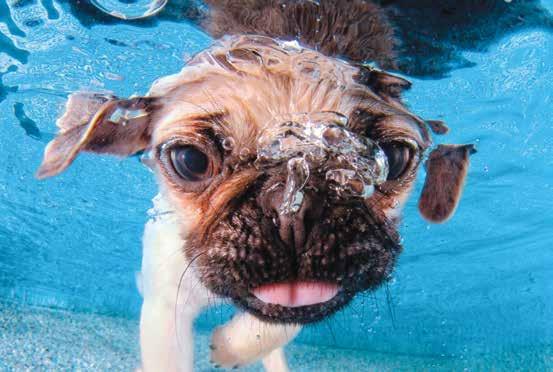
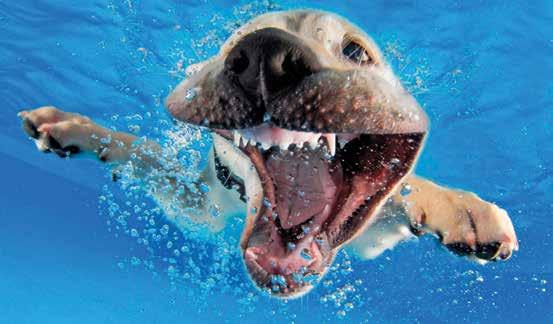
In his new book, Underwater Puppies, photographer Seth Casteel shows his passion for (wet) pooches.



A missionary recruit goes to Venezuela for the first time, struggling with the language. He visits one of the local churches and sits in the front row.
So as not to make a fool of himself, he decides to pick someone out of the crowd to imitate. He decides to follow the man sitting next to him in the front pew. As they sing, the man claps his hands, so the missionary recruit claps, too. When the man stands up to pray, the missionary recruit stands up, too. When the man sits down, the missionary sits down.
Later in the service, the man next to him stands up again, so the missionary stands up, too.
Suddenly a hush falls over the entire congregation. A few people gasp. The missionary looks around and sees that no one else is standing. So he sits down.
After the service ends, the missionary recruit greets the preacher. "I take it you don't speak Spanish," the preacher says.
The missionary replies, "No, I don't. It's that obvious?"
"Well yes," the preacher says. "I announced that the Acosta family had a new-born baby boy, and I asked the proud father to please stand up."
When the usher noticed a man stretched across three seats in the movie theatre, he walked over and whispered, "Sorry sir, but you are allowed only one seat."
The man moaned but didn't budge.
"Sir," the usher said more loudly, "if you don't move, I'll have to call the manager."
The man moaned again but stayed where he was.
The usher left and returned with the manager, who, after several attempts at dislodging the fellow, called the police.
The cop looked at the reclining man and said, "All right, what's your name, joker?"
"Joe", he mumbled.
"And where are you from, Joe?"
Joe responds painfully, "The balcony!"
Better late
A newly appointed young preacher was contacted by the local funeral director to hold a graveside committal service at a small country cemetery.
There was to be no funeral, just the committal, because the deceased had no family or friends left in Iowa. The young pastor started early to the cemetery, but soon lost his way.
After making several wrong turns, he finally arrived a half-hour late.
The hearse was nowhere in sight, and the workmen were relaxing under a nearby tree, eating their lunch.
The pastor went to the open grave and found that the vault lid was already in place. He took out his book and read the service in its entirety.
As he returned to his car, he overheard one of the workmen say: "Maybe we'd better tell him that's the septic tank."
Moses
Nine-year-old Joey was asked by his mother what he had learned in Sunday School.
"Well, Mom, our teacher told us how God sent Moses behind enemy lines on a rescue mission to lead the Israelites out of Egypt. When he got to the Red Sea, he had his engineers build a pontoon bridge, and all the people walked across safely. He used his walkie-talkie to radio headquarters and call in an air strike. They sent in bombers to blow up the bridge and all the Israelites were saved."
"Now, Joey, is that REALLY what your teacher taught you?" his mother asked.
"Well, no, Mom, but if I told it the way the teacher did, you'd NEVER believe it!"
The Cowboy
This printed in a Texas newspaper :
The oldest cowboy in Texas died this week at the age of 106. On his birthday he was asked his secret to longevity and he said that for the past 50 years he has sprinkled a little gunpowder on his cereal each morning. He left behind 8 children, 21 grandchildren, 32 great-grandchildren, and a 15-foot hole in the crematorium.
One day a man ran into an old friend and asked him if he was still dating the same girl. "No," replied the friend. "She wasn't the brightest bulb in the chandelier. Just the other day she decided to ride a horse for the first time.
Without any instruction she hopped on and took off at full gallop. Everything was fine for a minute until she started losing her grip and began sliding down the side of the horse. She started grasping desperately at the reigns and the horse's mane. The horse kept its pace up as she bounced up and down on the ground with the horse's hooves pounding away inches from her head.
The horse might have killed her if it were not for an alert Wal-mart greeter who ran over and unplugged the thing!"
Made in America
A three-year-old boy went with his dad to see a litter of puppies.
On returning home, he breathlessly informed his mother, "There were 2 boy puppies and 2 girl puppies."
"How did you know?" his mother asked.
"Daddy picked them up and looked underneath," he replied. "I think it's printed on the bottom."