Times Magazine

“Enhancing agriculture through family farming and the use of sustainable technologies”



“Enhancing agriculture through family farming and the use of sustainable technologies”
By Jomo Paul
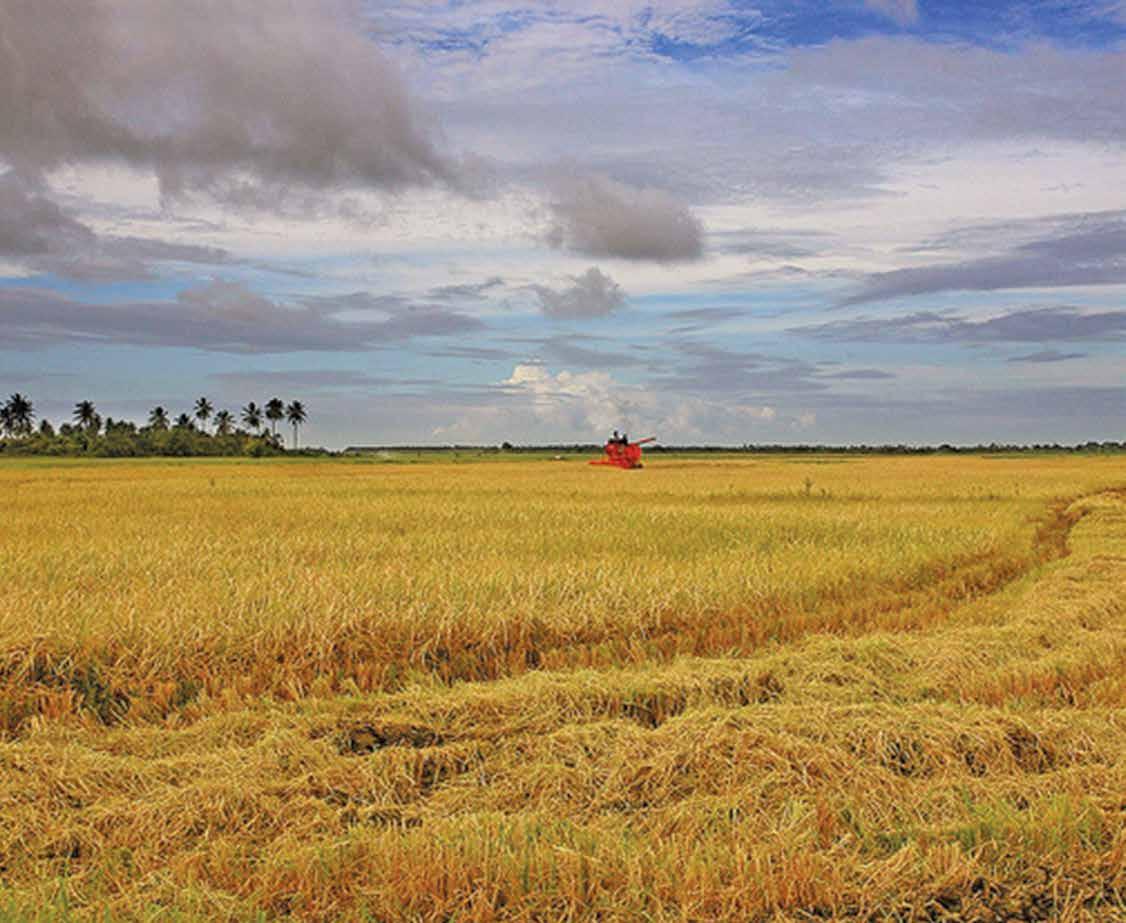
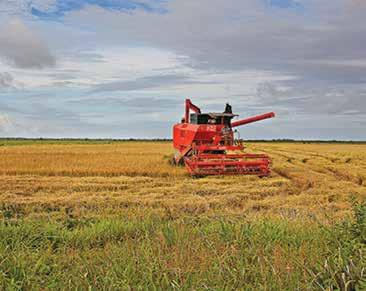
Rice farmers across the country continue to be concerned about the low prices for their rice, saying that other than the lucrative Venezuela market, the other options are not profitable.
Rice Producers Association (RPA) President Leekah Rambrich speaking to Guyana Times Sunday Magazine disclosed that there are “more than enough” markets available for Guyana to sell its produce. He, however, cautioned that the prices being paid for rice on other markets are not as lucrative. Rambrich explained that Venezuela pays well for Guyana’s high quality rice and paddy, but other countries are not doing the same.
“The millers are worried, the paddy was purchased at a high price from the farmers, prices have been declining for the past two crops on the global scale…they are going to be running at a loss if they sell at certain prices,” Rambrich explained.
One rice miller, in a recent interview, opined that the market for Guyana’s rice is available, but the private sector has to be more proactive
in acquiring these markets.
Another miller, Abdool Hakh, from Mahaicony, agreed that sufficient market is available for the exportation of Guyana’s rice.
“The market is there, but the prices are low, the international price, the European prices for that matter, those are low… we can sell rice but we have to sell it at a low price,” Hakh said. According to Hakh, this was due to large amounts of rice on the international market from other countries that have also had bumper crops.
Additionally, Hakh stated that if millers were to accede to the pressures of the supply and demand principles of business, then they would be operating at a loss since they were asked to pay farmers a certain amount of money for the paddy when the spring season had begun earlier this year.
Nand Persaud Rice Mill General Manager, Mohindra Persaud expressed similar sentiments, but noted that the millers must come to terms with the state of affairs and sell at lower prices.
“There are a lot of markets, but you got to sell at market price…Guyana sells rice at a special price, there is
market, you just have to accept the price or don’t accept the price,” noted Persaud.
Another rice miller, Rayaadul Persaud said: “The markets are available; the markets are there but all of this negative news is going to have an effect on us as millers.” Persaud also pointed out that other countries are experiencing the same issues as Guyana.
It was reported that the European Union would have imported in excess of 10,000 tonnes of rice and paddy; Jamaica 4000 tonnes; Trinidad 3000 tonnes; Portugal 6400 tonnes; and
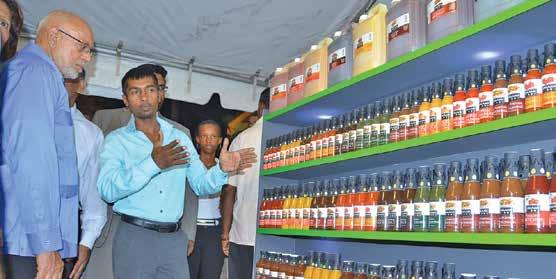
Fairly new to the Guyanese market, Umami Incorporated has already managed to make its mark in the local agro-processing market with its line of food condiments.
The company was established in November 2013 by remigrants, Chris Persaud and Chanchal Persaud.
According to Chris, while living abroad, he and his partner saw the niche market and returned to Guyana with the aim of giving back to the country.
“We wanted give back to the country, something that is truly owned by Guyanese, something to be proud of. That was the driving force behind the establishment of Umami Incorporated,” Chris explained.
Umami, a Japanese word meaning “pleasant taste”, specialises in the production of food condiments such as pepper and hot sauces, seasonings, bar-b-que sauce, ketchup, Chinese sauce and vinegar,
among others.
Chris, a chemist by profession, mentioned that he and his partner observed that the agricultural produce from local farmers is diverse. With their scientific and marketing knowhow, Chris and Chanchal decided to tap into the market.
“In Guyana, we noticed that there is a void in the shelf space and packing was lacking appeal. We sought to fill that void by providing goods whereby the packaging could stand against any of the international giants, so we can sit on a shelf in New York, London, France, Germany,” Chris mentioned.
The businessman said the response Umami Incorporated has gotten over the months has been phenomenal and experienced an average growth of 25% monthly since its launch last year.
While the management of the company has been focusing on branding, they have caught the attention of international businesses. Umami has been approached by major supermarket chains and distributors
and London.
“Their agents have identified our products as having scope in their market so we are having negotiations with these parties with anticipation of start supplying early in the next fiscal year. We do not want to be in a case whereby we have lost focus on the branding, so our first priority launching the brand was to ensure we had 70-80% brand equity on the local market before we began exporting and I think we have successfully achieved this. There is no sense in us exporting a product and Guyanese do not know it, that is why for the first year we committed all our resources towards marketing the brand right in Guyana,” Chris revealed.
Chris believes that his factory has the capacity to begin exporting after just one year in business. He explained that in establishing Umami Incorporated, they have equipped the factory with adequate technology and machinery that can facilitate
Venezuela, which is one of Guyana’s most important rice markets, 18,000 tonnes of paddy and approximately 6000 tonnes of premium rice.
Agriculture Minister, Dr Leslie Ramsammy disclosed that the Governments of Panama and Guyana are committed to the continued shipment of rice for the remainder of 2014. The two governments, in early August, signed the agreement which will see Panama purchasing approximately 5000 tonnes of rice per month from Guyana for the rest of 2014, following a recent meeting between del-
egations from both countries.
Ramsammy said the success of the new deal has opened the door for private millers to have direct access to the private sector in Panama.
“The engagement has opened the door for Guyanese private sector to compete with the Americans in Panama who will be supplying these to the government. We have at least three private millers who have separate contracts with the private sector in Panama onboard,” the minister revealed.
The Agriculture Minister, along with RPA General
Secretary Dharamkumar Seeraj and Guyana Rice Development Board General Manager Jagnarine Singh, visited Panama in August during which time the agreement was concluded. There will be further discussions for a contract renewal in 2015, but it is expected that the contract will continue throughout 2015, provided that the terms of the agreement are met to the satisfaction of the two countries, which will see 50,000 to 60,000 tonnes of rice being exported to Panama annually. In addition, since Panama imports about 150,000 tonnes of rice annually – although it produces rice, the country is not able to meet demand –the remaining 100,000 tonnes required by Panama will be purchased through bidders, of whom Guyanese suppliers (the private sector) will have the opportunity to be part. The rice exportation agreement is one aspect of a larger agreement. Ramsammy told media operatives recently that the Panamanians have engaged themselves in an agriculture and trade partnership with Guyana for which a Memorandum of Agreement was signed.
large-scale and long-term production.
The factory is semi-automated in order to ensure that there is a human element and employment is provided for citizens. Umami Incorporation currently employs 15 fulltime staff and an additional 10 on a part-time basis.
As it relates to production, the process is highly automated. “It’s an enclosed process, that is, when it (production) starts, the product goes straight to bottling.”
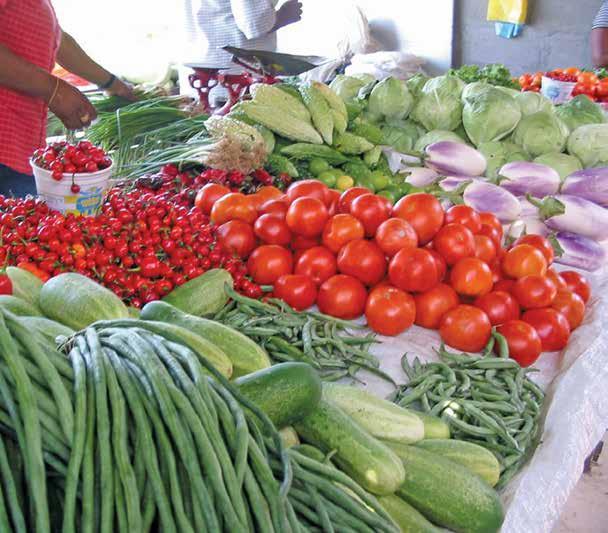
The company is in a contractual agreement with farmers who would supply ingredients, such as pepper, which
will be of certain quality. This type of agreement was adopted to ensure that the company would be locked into relationships with farmers in order to guarantee a consistent supply of quality produce.
Additionally, the factory operates on a batch level and has flexibility in terms of changing production within one hour. Umami has prided itself in the fact that it is producing high quality products that have met international standards and can be able to compete with other products that have been on the local market for years.
“It’s because of the very same competition that has al-
lowed our customers to realise what makes us different. You go to the supermarket and we all have pepper sauces, families even make their own, and we all think it’s the best... what makes us different is the quality our product,” Chris declared. The company is proud of its packaging style, which the owners explained is unique to the designs that are prevalent on Caribbean products. Rather than adopting a carnival of colours or a loud design, the local company opted for a modern layout that made practical use of the “white space”.

Energy sources and energy producers have always been a ‘hot topic’ for the world, particularly since modern society (Industrial Revolution to present) consumes large amounts of fuel, making the energy industry a crucial part of the infrastructure and maintenance of society in almost all countries.
Consequently, alternative energy, any energy source that is an alternative to fossil fuel, and alternative energy sources have become significant for all countries especially developing ones. Over


the years, the race to find alternative sources of energy has proven futile for some and successful for others.
Ramesh Ramlakhan, an Essequibo miller from Region Two, is one of those successful individuals who have found an alternative source of energy. Ramlakhan, a simple Guyanese rice miller, seeks to convert paddy husk into energy.
After 14 years of farming, Ramlakhan, who said he “grew up in rice”, decided to purchase a Rice Husk Gasifier. The machine produces combustible gases from rice husks. The rice husk are
According to Ramlakhan, who inherited his mill from his father, within six months to a year, after receiving the machine, he should be able to remake what he spent to purchase the machine – a very significant accomplishment for the miller.
“I use 70% of my income to purchase fuel; instead of letting the husk go to waste, we can use it to make energy and use that 70% to push the generator, saving 100% in the end,” he explained.
Based on a survey conducted earlier this year, Ramlakhan realised that his dispos -
ready been shipped,” Ramlakhan disclosed.
Earlier this year, Abrams Zuil Secondary School, on the Essequibo Coast, emerged as the winner at the National Science, Mathematics and Technology Fair 2014 for its project “Husk particle board factory” in the Industrial Category.
Science teachers and students from the school designed a factory, converting paddy husk (paddy waste product) into solid wood.
One of the students, Athina Indar noted that “when rice factories burn their paddy husk, large amounts of carbon diox -

burned which produces carbon and when the carbon gas reacts with air, it then produces combustible gases that are rich in carbon monoxide and hydrogen.
“We are spending too much on energy and fuel. When we burn paddy husk we lose more than we gain according to the calculations,” Ramlakhan disclosed in an interview with Guyana Times Sunday Magazine.
al methods of the paddy husk were “wasteful”, so he sought out measures for improvements; this led to his purchase of a Rice Husk Gasifier for US$100,000, which will enable him to reduce the wastage of rice by-products.
“I was able to make my first down payment in March and another in August. In two weeks I will receive the machine…it has al -
ide is emitted in the atmosphere, which is environmentally unfriendly”. She mentioned that “instead of burning the paddy husk, it can be used to manufacture low cost, durable particle board, suitable for construction in Guyana and the Caribbean”.
The school subsequently recommended that rice millers diversify their businesses by investing in this project.

For over three decades, Major’s Products have found its way into the pots and plates of Guyanese locally and abroad. Current owner Denise Major-Gopple aims to continue this tradition by ensuring that it remains the same products that persons have come to know and love.
Major's was established by Edna Major, a popular businesswoman in Victoria Village, East Coast Demerara. She began her trade with starched clothing, which she did using cassava. She immediately plunged into the food seasoning business with her famous cassareep, before going into mak-
cused on recapturing the prestige Major Products once had by regaining the confidence of supermarkets and other major buyers.
Noting that such a business would not find many markets in its surrounding, especially in the countryside where most households would make their own products, Denise said they have been trying to break into new markets.
“There has been a bit of a problem with the company since my father died and so now I’m trying to reverse this and put Major’s Products back on the scene. I know a lot of new compet-
ing coconut oil and tarts.
The business died with her a few years later, but after sometime, her son, Allan Major, reopened and expanded the product range.
“My dad had learnt the trade from his mother so after sometime, he wanted to continue the business and also wanted to enter the manufacturing sector so he began making pepper sauce then green seasoning...but he also died about three years ago and his wife took over the business,” Denise recalled.
Following Allan Major's death, Denise sought the help of the legal system to gain possession of the business, which was established by her paternal grandmother.
It has been two years now since 52-year-old Denise has been managing Major's Products and the production line has expanded to include hot sauce, mustard sauce, Chinese sauce, achar and cake colouring.
While business is doing well, Denise said she is fo-
itors out there, but we have a brand that most Guyanese know and love, it’s just about getting it back out there.”
In Guyana, Major's Products have a steady market in Georgetown and in Linden and would see increased sales during the Christmas season.
Denise explained that while Major’s is known worldwide for its casareep, its other products continue to be of high quality and standard.
“We always try to maintain a certain standard with our products because other companies will make the products, and we can’t stop them, so it’s all about standard and that’s what sets us apart from them,” Denise pointed out.
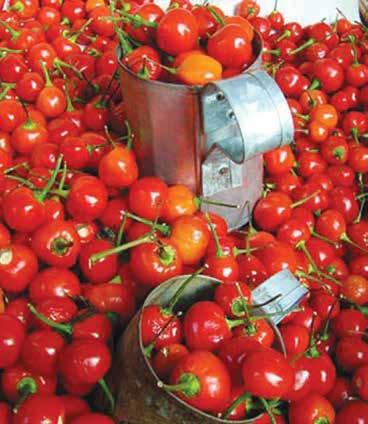
Major’s acquires its ingredients through supporting local farmers along the coastal areas. The peppers are sourced from farmers in Berbice and the seasonings from those along the East Coast.
At present, Major’s
Products is looking to expand its production line and is currently conducting
Denise explained that while they currently manufacturing their products using traditional methods, Major’s is trying to upgrade its facilities and in doing so has been invited by the
United States Embassy to attend a fair in Chicago.
“It is with the intention of expanding that Major’s will be taking advantage of this opportunity because one of the biggest problem we face is acquiring materials and machinery locally and the high cost so by going to the fair,
we will be meeting directly with the suppliers which will work out best for us, besides you get better profits when you have more products to offer,” Denise mentioned.
Despite these challenges, Denise is confident that Major’s will remain on the market for a very long time,
noting that she will work relentlessly to ensure it does.
“When my father restarted this business, his intention was for it to go on, so that’s what I’m doing and will be working to achieve. It’s my father’s wish and desire and I will fulfil it,” Denise declared.

The Ministry of Agriculture
is currently promoting initiatives in keeping with the government’s aim to add value to Guyana’s produce as part of its development strategy.
Minister of Agriculture, Dr Leslie Ramsammy recently said, “… I am in a position to say that a miller has procured equipment to convert paddy husk into energy to meet the energy needs of the mill, making use of all the by-products of rice.”
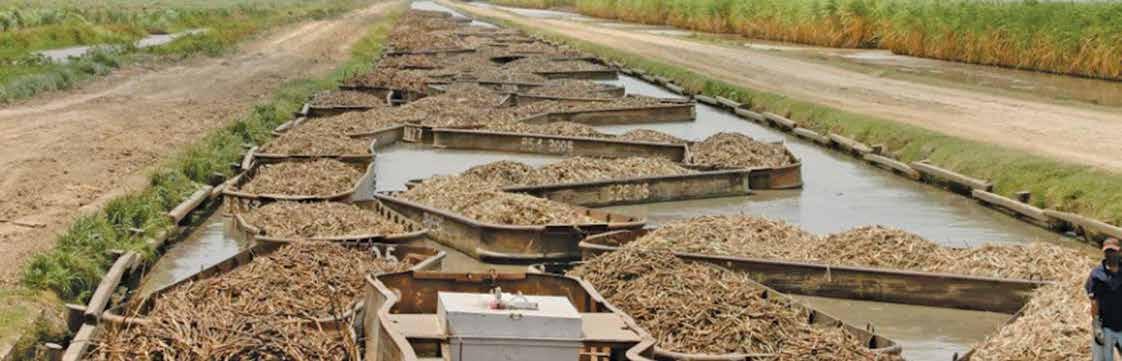
This sort of investment is to ensure that the remains of rice harvest do not create an environmental problem, and are converted into cleaner energy. Cooking gas is also being produced on a small scale locally and Ramsammy said agriculture could contribute more to such initiatives.
In the last couple of years, rice has gone from just being a producer of paddy for mills in other countries to utilising every bit of the rice plant and its product. Ramsammy said he recently had discussions with a group that wants to produce healthy cooking oil using the paddy husk, shell and other by-products. He added that there are many opportunities for this kind of research.
“We would like to see our university, National Agricultural

Research Extension Institute (NAREI), Guyana Livestock Development Authority (GLDA) and other organisations coming together with an active research programme,” the Minister urged.
Ramsammy commended the work being done at the Rice
Research Centre and by young agriculturalists at NAREI and GLDA to improve the varieties of crops and the breeds of animals. Earlier this year, a farmer saw his cow gave birth to twin calves through artificial insemination.
Though the Agriculture
Ministry seeks to find ways of expanding diversity in agriculture crops, Ramsammy said the issue of climate change must be taken into consideration.
“Guyana stands ready to take on the challenges of agriculture production. While the focus has
Head of the National Agricultural Research and Extension Institute (NAREI), Dr Oudho Homenauth said the recently launched “Eat What We Produce” campaign will help push locally grown foods.
Enhancing agriculture through family farming and the use of sustainable technology was stressed during the launch of the “Eat What We Produce” campaign, which will help the Agriculture Ministry in getting “Guyana branded” products into the kitchens of the populace.
Homenauth observed that family farming includes crops, livestock, fisheries and aquaculture producers. He noted that while these enterprises are being done by small and medium scale farmers, they account for 80% of agricultural production and generates more than 50% employment.
The Head of NAREI added that while family farming produces products for healthy and nutritional diets, it also “provides employment opportunities, preserves and enhances the culture, skills and traditions of local communities, and
contributes to the conservation of plant and animal species”.
Irrespective of where and what kind of family farming occurs, there is need to ensure it succeeds.
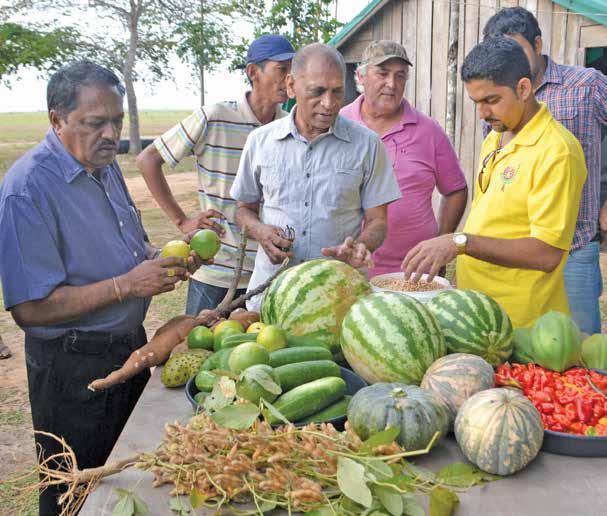
Homenauth pointed out that NAREI is poised to do just, which was evident in the Open Day exhibition. The exhibition displayed drip irrigation methods along with compost production, hydroponic farming and aquaculture, among other things needed to educate and enlighten family farmers. Crops on display were all grown in Guyana with most

from NAREI and its affiliated entities.
Inter-American Institute for Cooperation on Agriculture (IICA) representative, Wilmot Garnett said that family farming should be “technological, institutional and social” so that the 90% of Guyanese farms that are owned by families can survive the progress of the world. He added that while it can contribute to productivity, it can also contribute to the adaptation and mitigation of climate change. Garnett observed that while family farming increases wealth, it also ensures a safe and nutritious diet.
The “Eat What We Produce” project encourages persons to utilise local products, which are grown in Guyana, substituting them
been food and nutrition security, we have begun to diversify into areas of fuel production, medicine and cosmetics etc,” the Minister explained.
He urged that each investment be looked at to determine ways to maximise the investment potential to further benefit Guyanese, as is done in other countries.
“We must ensure that the agriculture we practice today in Guyana is very different in 2020, one that will ensure Guyana overcomes the key binding constraint that affects agriculture in the Caribbean,” Ramsammy declared.
The Agriculture Ministry anticipates that by year 2020, some of items/commodities imported will be produced in Guyana; members of the Caribbean will purchase items produced locally, and that farmers will become leading entrepreneurs.
Ministry of Agriculture's Annual Research Conference is part of a strategy that is intended to change agriculture to continue to lead sustainable development goals in Guyana. In the first week of November, a forum will be held on coconut in Guyana.
Guyana has been making major strides in fulfilling its mandate of adding value to products despite the lack of availability of cheap energy.

for imported items. This is an effort to reduce the food import bill in Guyana while pushing Guyanese to focus on more reliable nutritious diets.

“Enhancing agriculture through family farming and the use of sustainable technologies”, this year’s Agriculture Month theme, is what the adorable munchkins at the Providence Nursery School were taught via a colourful exhibition held at the institution.
Being serious is somewhat unknown among playful nursery students, but
the Providence Nursery School students were immensely engrossed and very serious about Agriculture Month 2014.
When Guyana Times Sunday Magazine visited the school on 20 October, the date of the exhibition, the students were being briefed, by their respective class teachers, on what Agriculture Month is and the importance of eating
healthy.
In an interview with this publication, the headmistress, Parbatie Ramballi, stated that this is the second year the school is celebrating Agriculture Month. She noted that the aim of the exhibition, which involved parents’ participation, was to encourage family farming; this was in keeping with the Ministry of Agriculture’s “Eat What
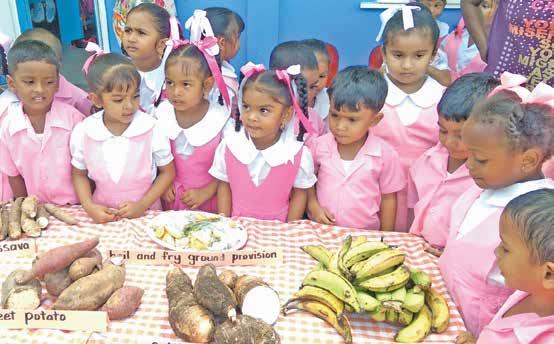

We Produce” drive.
“Parents were encouraged to bring plants, which also included medicinal ones, vegetables and fruits to display for their children. A variety of dishes, using local produce, were prepared to encourage parents and students to eat healthy. The day also included parents and students planting in the school yard and tasting the various dishes,” the headmistress outlined.
Ramballi mentioned that the exhibition gave the nursery students a firsthand experience of what Agriculture Month entails. According to Ramballi, visual presentation is retained
Asplash of colour, the pungent scent of incense and the melodious sound of traditional Indian music are just a few things one experiences at a Diwali Nagar, an exposition in celebration of Diwali.
The Diwali Nagar, held at the City Centre located on Water Street, was a heavenly “village of lights”.
“Nagar means ‘village’ and a Diwali Nagar is the display of everything Diwali - lights, food, decorations and so forth,” Pradeep Samtani outlined in an interview with Guyana Times Sunday Magazine
Samtani, a man with a vision, transformed an entire room of his store to create a Diwali village, where persons learnt about the ‘festival of lights’, enjoying a day of music, shopping
and food.
Although a commercial activity, Samtani emphasized the educational and entertaining aspect of the Nagar. “The idea is to give Guyanese a taste of their culture, where everyone can respect and see what Diwali is about. It is educational plus it’s entertaining, I call it ‘edu-taining’ - educate and entertain,” Samtani noted.
The opening of City Centre’s Diwali Nagar saw the attendance of the First Lady, Deolatchmee Ramotar, who cut the ceremonial ribbon and lit a diya to declare the village officially opened. “This is admirable of Mr Samtani, it is nice to know that we can participate in activities like this,” The First Lady stated at the opening of the event. Upon entering the Nagar, customers are treated to a

play of Indian decor, ornaments in marble and
longer in their minds. The effectiveness of the visual presentation was evident throughout the event as students recalled the health benefits of various fruits and vegetables - taught by their teachers when they were observing the exhibition.
The Agriculture Month exhibition at the institution is one of the many events held to encourage parents and community involvement. Notably, Ramballi pointed out that parents’ involvement is vital because children are more receptive to school work when they see their parents personally involved in school activities.
Although the school
Kashmir (walnut wood) among other things, jewellery, musical instruments, furniture and, of course, an array of lights and diyas. Customers were also allowed to take pictures and were treated to the world renowned Ashoka brand foods.
Ashoka, an ADF Foods Ltd., is a brand of Indian foods, which includes a range of ready-to-eat curries and pickles. It was a featured product at the Nagar, distributed by Continental Group.
“Ashoka products are very well-known in the US and all over the world. It is from India and 100% vegetarian. Not very heavy on the stomach, you can add to it as you like and its takes two and a half minutes to microwave and it’s ready to eat,” Samtani declared.
strategically utilises its resources to produce future scholars, Ramballi disclosed the institution faces challenges. “It is difficult to gather educational resources from some students who come from poverty-stricken background and single-parent families. However, all the teachers, utilising what we have, help every student to be the best they can be academically.”
The headmistress outlined the school’s future plans to incorporate in its curriculum a programme to enhance numeracy and literacy; to build a sandbox and a dollhouse, focusing on teaching students the fundamentals on measurements and encouraging interaction; a music corner; and a water play area. These, she posited, are essential to provide a complete nursery school experience for the students.
To help make its future plans a reality, the school welcomes any donations of stationery supplies and items. For more information on how you can donate, call 265-6051.
He added that the products are “for everyone not just Indians”.
City Centre’s Diwali Nagar was opened on Monday 20 October and is planned to run until the 31 October, upon which the store will once again be transformed, this time to a ‘Christmas Village’.
“Well I’m not going to give you the details, but there will be fun things for the kids and adults. The store will be transformed monthly for the various holidays and seasons. From the 15 November it will be converted to a Christmas Village, in February there will be something for Mashramani, then for Phagwah in March, Indian Arrival in May, an African Village in August, and in September something Amerindian will be done.”

Bats are the only mammals that can fly, but vampire bats have an even more interesting distinction—they are the only mammals that feed entirely on blood.
These notorious bats sleep during the day in total darkness, suspended upside down from the roofs of caves. They typically gather in colonies of about 100 animals, but sometimes live in groups of 1,000 or more. In one year, a 100-bat colony can drink the blood of 25 cows.
During the darkest part of the night, common vampire bats emerge to hunt. Sleeping cattle and horses are their usual victims, but they have been known to feed on people as well. The bats drink their victim's blood for about 30 minutes. They don't remove enough blood to harm their host, but their bites can cause nasty infections and disease.
Vampire bats strike their victims from the ground. They land near their prey and approach it on all fours. The bats have few teeth because of their liquid diet, but those they have are razor sharp. Each bat has a heat sensor on its nose that points it toward a spot where warm blood is flowing just beneath its victim's skin. After putting the bite on an animal, the vampire bat laps up the flowing blood with its tongue. Its saliva prevents the blood from clotting.
Young vampire bats feed not on blood but on milk. They cling tightly to their mothers, even in flight, and consume nothing but her milk for about three months.
The common vampire bat is found in the tropics of Mexico, Central America, and South America. (National Geographic)

Greek myths mention many animals, but they’re quite different from the animals you know and love. In fact, the creatures in Greek mythology are different from anything you’ve ever imagined. They’re amazing and even a little terrifying.
Here are some of the wildest beings in Greek legends:
Centaurs were part human, part horse. Their head and upper body were human, but from the waist down, they had the bodies of stallions.
Cerberus was a vicious three-headed dog that stood guard at the entrance to the underworld so no one could enter or escape.
Hydra was a swamp monster with nine heads. The god Heracles fought this creature and won, but it wasn’t easy. Each time he was able to cut off one of the Hydra’s heads, two more grew back! Medusa was a human woman with living snakes on her head instead of hair. These snakes could bite, and they were poisonous. If you looked into her eyes, you would turn to stone.
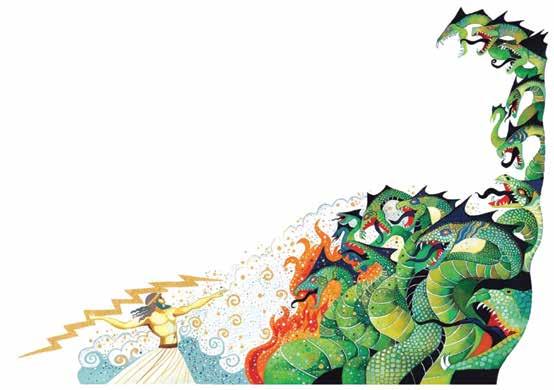
Typhon was a fierce monster with a hundred serpentine heads. This creature was horrifying to many, but not to the god Zeus. With his powerful lightning he was able to defeat the beast.
The objective of the game is to fill all the blank squares in a game with the correct numbers. Every row of 9 numbers must include all digits 1 through 9 in any order. Every column of 9 numbers must include all digits 1 through 9 in any order. Every 3 by 3 subsection of the 9 by 9 square must include all digits 1 through 9.



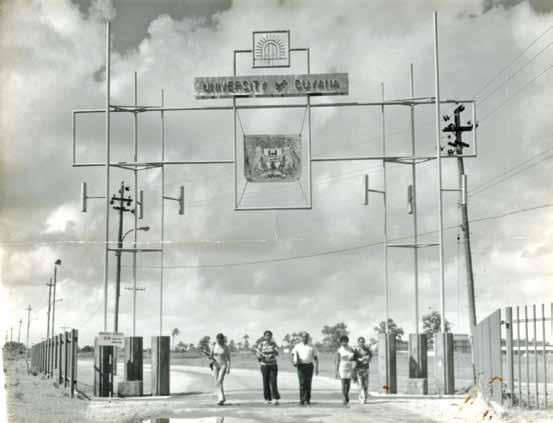
From its humble beginnings in 1963 within a temporary campus in the Queens College Compound and no more than 179 students, three faculties and minimal resources, the University of Guyana (UG) has come a long way - 51 years to be exact.
“The fact that this University predates even Guyana’s independence should not escape us. Imagine what it means to have aspired to mental freedom even as one aspired to nationhood – and not only to aspire but also to achieve it,” Dr Paloma Mohamed stated in her speech at an Interfaith Thanksgiving Service held for the beginning of a year of celebrations to mark the University’s 50th year, culminating at the end of October this year.
UG’s 50 years included ups and downs; challenges and victories; outlasting economic, political and social trends, financial issues and burdens; accomplishing regional and international accreditation; recruitment and retention of the best students and faculty; and of course its evolution and expansion.
The University of Guyana now boasts six faculties, one institute, and four schools, including the School of Distance and Continuing Education with no less than 5,000 students enrolling on two campuses and offering

more than 60 programmes at the undergraduate and graduate levels.
Through a special committee, formed in September 2010, the University celebrated these momentous achievements as well as its 50th year of existence with an 18-month of calendar events, which began in April 2013 and is about to come to a close in November 2014.
The committee, which was tasked by the University’s Council with the ‘work of consultative and inclusive planning and coordination’ for the 18-month of
events, has tirelessly worked for nearly two years to commemorate the University’s Golden Jubilee and achieve four main goals.
According to Mohamed, the Chairperson of the 50th Commemoration Committee, these goals includes the demonstration and documentation of output and the value of UG over the 50 years; galvanising of widespread support for the university through the establishment and refinement of various institutional mechanisms; fundraising at least GYD$500m (2.5 m USD) for a UG endow-

ment fund that will be used to fund some of the pressing needs for expansion at the University; and the reimage, revision and reposition the University as a top notch national institution.
The Commemorative Committee has also planned several events, which began with the launch of the 50th Anniversary Logo and Motto Competition and will end with the documentation of the University’s achievements, the ‘UG at 50’ publication, the UG Endowment Fund and finalisation of nominees for Honourary Degrees. All of which is expected to be completed by the end of October 2014, which was designated the official end of the 50th year celebrations.
“The year was adequately commemorated with a continuous stream of memorable events on a monthly basis,” Mohamed explained. Some of the highlights include a campus wide clean-up, an Interfaith Church Service, a Commemorative Walk from Queens College to UG and Fundraising Breakfast, the
launch of the UG Toronto Guild of Graduates Book, UG talent on the Seawall bandstand and the launch of the ‘I love UG’ campaign.
The Turkeyen campus was beautified for the launch of the commemorative year as the university’s Art Department painted ‘50’ in gold on trees on the campus, and the Hindu Society created a rangoli design at the front gate.
The Vice Chancellor’s stamp initiative was also completed and the launch of the four stamps was completed on 3 October 2014, as well as the creation and sale of Commemorative t-shirts, pens, cups and so forth.
Currently, arrangements for the handing over and winding up of the work of the Committee to end the commemorative year are being finalised, as all memorabilia held by the Committee was handed over to the University of Guyana Bursary for continuous sale in “the absence of capacity of the committee to conduct continuous sales while carrying the full load of their substantive appointments”.
“This event would not be possible if it wasn’t for a few persons who have really, really worked on the Committee and are still doing so. These individ-

uals are the Librarian, Gwyenth George, Public Relations Officer, Paulette Paul, Sharon Roopchand, Eric Phillips, Melcita Bovell and Odinga Lumumba,” Mohamed outlined.
The University of Guyana spent six years operating out of its temporary site at the Queens College Compound until it was eventually moved to Turkeyen, an old coconut estate with 1450 acres of land, on which its permanent buildings were erected and later another campus, located at Johns and Tain, was opened to meet the needs of persons in Berbice.


Alfred Enoch is an English actor. In 2014, Enoch began starring as Wes Gibbins in the ABC legal drama series, “How to Get Away with Murder”. He is also known for his portrayal of Dean Thomas, one of the supporting students, in the “Harry Potter” films. Enoch was born in Westminster, London, to English actor William Russell and his second wife, a Brazilian physician, Balbina Gutierrez. He is fluent in Portuguese, and is pursuing a degree in Portuguese and Spanish at the Queen's College, Oxford.
JK Rowling is writing a brand new Harry Potter story - just in time for Halloween!
The 1,700-word tale will focus on Dolores Umbridge, and will be published for free on Pottermore.com.
In a statement on the website, the tale was described as a "rich, 1700word back story about Umbridge's life, filled with many new details, as well as Rowling's revealing firstperson thoughts and reflections about the character".
It will be released on 31 October - here's hoping it doesn't crash the website like the last story did!
(Glamour)
Usher:

‘I'm not happy with Justin Bieber's choices, I’ll punch him when I need to’

Usher has some serious tough love for Justin Bieber. The "Good Kisser" singer, 36, spoke out on his protege, 20, in the new issue of Billboard magazine, voicing his opinions on Bieber's boundarypushing behavior.
"I can say I'm not happy with all the choices my friend has made, but I'm supportive of him," Usher told the mag. "He's making his own decisions and it's important to show support."
From punching paparazzi, to dragging out a dramatic on-again, off-again relationship with Selena Gomez, to his multiple arrests, Bieber has strayed from his family-friendly, role model image that made him a star. He started his career with Usher when he was just 13 years old, auditioning for the chart-topper to score a record deal with Usher and Scooter Braun's Raymond Braun Media Group.
"Our relationship is
more man-to-man now," Usher explained. "I try my hardest to give as much positive reinforcement as I can. I'll punch him in the f--ing chest when I need to, and give him a hug and kiss when I need to."
Usher previously came to Bieber's defense when a video made its way online showing the "Confident" singer using the N-word.
"As I have watched Justin Bieber navigate difficult waters as a young man, I can tell you that he hasn't always chosen the path of his greatest potential, but he is unequivocally not a racist," Usher said this past June. "What he is now is a young man faced with an opportunity to become his best self, an example to the millions of kids that follow him to not make the same mistakes."
Usher has worked with Bieber on his studio albums, even lending his voice to Biebs' 2009 single "First Dance."
"It's more than just mentoring," Usher told Billboard. "I love the kid."
(US Magazine)

Christian Bale, known for his role in “The Dark Knight” movies and “American Psycho”, is set to star in the Steve Jobs biopic movie, Jobs, directed by Danny Boyle.
The film's writer, Aaron Sorkin, has confirmed Bale's appointment on Thursday in an interview with Bloomberg, in which he revealed Christian didn't even have to audition for the role.
According to Sorkin, who wrote the screenplay for Jobs based on the officially endorsed autobiography by Walter Isaacson, every frame of the film will feature Bale.
According to the film's imdb page, David Fincher (him of Gone Girl-fame)
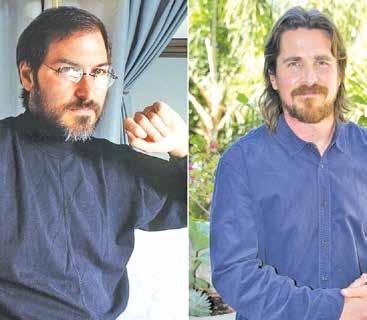
but was dropped from the film after he demand
The music a person listens to is related to their intelligence, according to a study. For the past few years, software application writer Virgil Griffith has been tracking musical tastes based on the average SAT scores of several colleges throughout the country. Griffith compares students' scores with the artists they "liked" on Facebook.
The result shows that students who achieved above-average scores prefer music by Beethoven or Radiohead. Sufjan Stevens, Bob Dylan, The Shins, Counting Crows and U2 are other acts favorited by smart people. Meanwhile, folks with lower scores will prefer Beyonce Knowles, Lil Wayne, T.I. , The Used and gospel music.
There are plenty of other interesting revelations from Griffith's findings, including smarter people will choose John Mayer over Pink Floyd and the music of huge rock bands like Tool, System of a Down or Pearl Jam is for people with average intelligence.
(AceShowbiz)

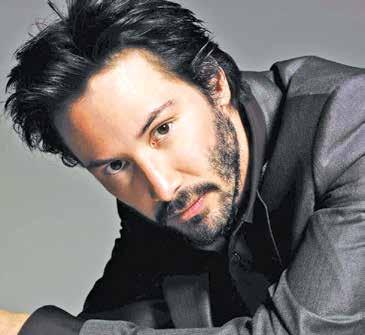
Keanu Reeves was asked by Jimmy Kimmel some random questions during an appearance on "Jimmy Kimmel Live!" on Wednesday night, October 22 and revealed in the session that he once saw a ghost. The actor, who is currently promoting his latest flick "John Wick", shared that he saw the ghost when
he was a kid. "Yeah, when I was a kid," Reeves replied when asked if he'd ever seen a ghost. "It was in New York. It was cool. So I'm like a little kid. I'm probably like 6, 7 years old, [in] a new apartment. ... We'd come from Australia. Renata, nanny, was in the bedroom. ... There was a doorway and, all of a sud-
den, we're looking over there and this jacket comes waving through the doorway, just empty - there's no head, there's no body, there's no legs. It's just there and then it disappears," he told Kimmel.
"I was a little a kid, so I thought, 'That's interesting.' And then I looked over at the nanny," he continued, adding that the nanny had a shocked face. "And I'm like, 'Oh wow, so that was real.' "
"Was that a ghost? Or just some weird floating jacket?" the Neo depicter in "The Matrix" asked the show's host. "That's a reason to move, to me," Kimmel told him.
On Wednesday, the 50-year-old actor was seen attending Summit Entertainment's premiere of "John Wick" at the ArcLight in Hollywood, Calif. Adrianne Palicki, Dean Winters, director Chad Stahelski and producer/director David Leitch and Jason Statham also joined him. (AceShowbiz)

onali
Raut is an Indian model and actress. Raut starred in the Bollywood film
S“The Xposé”, playing the role of a movie star who is murdered. In 2010, Raut won a modelling assignment in the acclaimed annual Kingfisher calendar. In 2014, she modelled for Maxim magazine with Ranveer Singh. She’s a popular face in Bollywood’s reality television show Bigg Boss –a take on reality game show, Big Brother.
Deepika Padukone has spoken of her chemistry with Shah Rukh Khan.
The actress made her Bollywood debut alongside the actor in director Farah Khan's “Om Shanti Om” and later starred with him in Rohit Shetty's “Chennai Express”.
Reuniting with Shah Rukh for “Happy New Year”, Padukone told Digital Spy: "There's a certain ease, comfort, chemistry. These things you can't create. You can't dissect why it does or doesn't happen. I don't think that you can create chemistry.
"Even in Om Shanti Om I believe we looked magical together. Farah just saw it. She didn't even screen test or audition me for that role."
The actress, who has scored four consecutive hits winning widespread praise for her performances, also revealed to DS that she has grown as an actress since her first film.
"On my first film Farah literally had to say to me 'Baby

say this line, sit here, look this way, on this word you look over there, then you finish, then after one second you turn.' Literally that's how she had to tell me."
Describing her character in “Happy New Year”, a bar dancer named Mohini, Padukone said she was initially apprehensive about taking on the role.
"One of my fears about coming in so late was, would I be able
to do justice to this character because I've never really played a hardcore Maharashtrian role. She can't speak English, but she really gets turned on by people who do speak good English.
"She's a bar dancer. I've never met a bar dancer before. So you know it's not just one of those films where you can just walk in and kind of manage. It definitely needed some kind of
work and some kind of prep."
The actress revealed that she relied heavily on Farah Khan's support as she got to grips with the character.
"I chewed her brains. For the first two weeks when we were in Dubai for every shot I would go to her and say 'was it ok, was it ok?' because obviously no-one knows the character better than the director. She's lived with it, she's been through all of it.
"So right from the body language, the diction, the accent. You also see in the film that there's a transformation that the character goes through. So to be able to define the first look and the second look. Things like that had to be worked on. I'm going to say that it wasn't easy, because to undo certain things that you know and the way you speak and to kind of make it sound a little local was tough."
Described as a musical heist, the eagerly-anticipated movie is expected to create a new box office record. (Digital Spy)

Salman Khan has leant his support to PM Narendra Modi's Swachh Bharat campaign.
The actor accepted Modi's invitation for the 'Clean India Campaign' and was photographed cleaning the streets with a broom.
Sharing the images on Facebook he wrote: "I nominate the following for Swachh Bharat campaign and request them to further nominate 9 more people. First, I nominate my fans on Facebook and followers on Twitter.
"Each one of us can make a difference. And I nominate Aamir Khan, Azim Premji, Chanda Kochhar, Omar Abdullah, Pradeep Dhoot, Rajat Sharma, Rajinikanth & Vineet Jain."
The Swachh Bharat

After the event, Aamir Khan said he would be glad to be a brand ambassador for the Clean India campaign. (Digital Spy)
Abhishek Bachchan: 'We are proud to be ambassadors for our country'

Abhishek Bachchan has described his sense of pride as a member of the Indian film industry.
In an interview with Digital Spy, the actor said that representing his country and its cinema on an international arena is "a matter of great pride".
"What does it mean to us to represent our cinema? I'm so glad you asked that," he said. "Film actors especially from our industry are the greatest ambassadors to our country and our culture and we take that role very seriously and it's a matter of great pride."
Described as a musical heist, the actor revealed that Happy New Year features a patriotic theme at its core.
"Is there an undertone of patriotism in Happy New Year? Most definitely. There's a scene in the film which is my favourite scene," he explained.
"We were all shooting
our first schedule in Dubai and there's this huge dancing fountain which dances to music and they were actually playing one of Farah's songs from one of her earlier films.
"We were shooting that and the colours of the tricolour were projected on the fountain. And at that point I don't think there was one dry eye amongst us.
"So it's something that means a lot to us and we take very seriously and we take huge pride in representing our country, in representing our film industry."
Bachchan who portrays Nandu the 'baap of all taporis' in “Happy New Year” is winning widespread praise for his comic performance.
The Farah Khan film stars an ensemble cast including Shah Rukh Khan, Deepika Padukone, Boman Irani, Sonu Sood and Vivaan Shah.
“Happy New Year” is currently showing at cinemas. (Digital Spy)
Emraan Hashmi, Kangana Ranaut promote the
Emraan Hashmi, Kangna Ranaut and the team of “Ungli” have been encouraging people to practice their right to vote.
As the film focuses on a group of friends who take matters in their own hands to change the system, a campaign was started on social media to get people to vote in India's recent state elections.
Facebook, Twitter and Instagram users were asked
to send in images of themselves after they had cast their vote.
Celebrities including “Dostana” director Tarun Mansukhani and actor Neha Dhupia also posted their images using a specially created hashtag.
The Dharma Productions movie also stars Sanjay Dutt, Randeep Hooda, Angad Bedi and Neil Bhoopalam.
The project hits cinemas on November 28. (Digital Spy)
Use this chart below to help you know if you're drinking enough liquids throughout the day.

Dengue (pronounced DENG-gay) fever is a painful and debilitating disease caused by the dengue virus. More than one-third of the world’s population lives in areas at risk for infection making dengue virus a leading cause of illness and death in the tropics and subtropics. As many as 400 million people are infected yearly. The virus is spread by the Aedes aegypti mosquito and cannot be transmitted directly from person-to-person.
Symptoms
• Fever
• Headache
• Pain behind the eyes
• Muscle and joint pains
• Rash
• Vomiting
A severe form of the disease is more likely to affect children causing severe blood loss from internal and external bleeding.
Prevention
There is no vaccine available against dengue, this makes prevention by other means the most important step, and prevention means avoiding mosquito bites. Eliminate the
By Zenica DaBichan
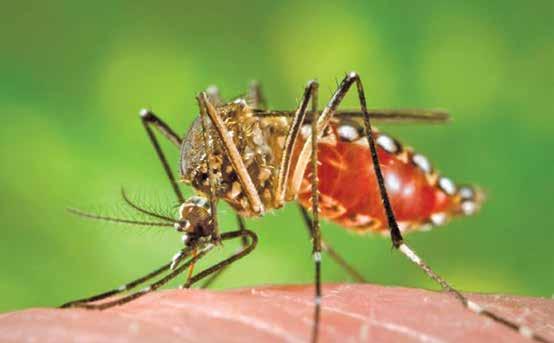
places where the mosquito lays eggs, like artificial containers that hold water in and around the home.
Outdoors, clear drains to prevent stagnant water, empty pet and animal water containers when not in
use and cover water storage barrels. Look for standing water indoors such as in vases with fresh flowers and clean at least once a week. To protect yourself, sleep under a mosquito net and use mosquito repellent
on your skin. When possible, wear long sleeves and pants for additional protection.
If you experience the above listed symptoms contact your doctor as soon as possible.




Maximize a room's style with a well-placed mirror. Here are some tips on decorating with mirrors throughout your home from top interior designers.




Ingredients:
1 cup (2 sticks) unsalted butter, softened
1 cup white sugar
1 cup light brown sugar
2 large eggs
1 teaspoon vanilla extract
1 cup pumpkin puree
3 cups all-purpose flour
2 teaspoons baking soda
Method:
Heat the oven to 350 degrees F. Spray cookie sheets with non-stick spray or line them with parchment paper. Using a mixer, beat the butter until smooth. Beat in the white and brown sugars, a little at a time, until the mixture is light and fluffy. Beat in the eggs one at a time, then mix in the vanilla and pumpkin puree.
In a large bowl, whisk together the flour, baking soda, salt, cinnamon, ginger, nutmeg, and cloves. Slowly beat the flour mixture into the batter in thirds. Stir in the chips. Scoop the cookie dough by heaping tablespoons onto the prepared cookie sheets and bake for 15 to 20 minutes, or until the cookies are browned around the edges.
Ingredients: 1 cup butter, softened 1 cup confectioners' sugar
1 egg 1 teaspoon almond extract 1 teaspoon vanilla extract
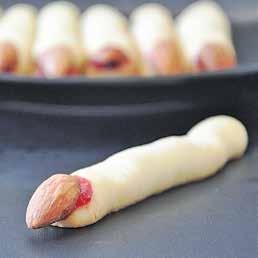
Method:
Combine the butter, sugar, egg, almond extract, and vanilla extract in a mixing bowl. Beat together with an electric mixer; gradually add
1/2 teaspoon salt
1 teaspoon ground cinnamon
1/2 teaspoon ground ginger
1/4 teaspoon ground nutmeg
1/4 teaspoon ground cloves
2 cups (12-ounce bag) milk chocolate chips, not semisweet
Non-stick cooking spray or parchment paper
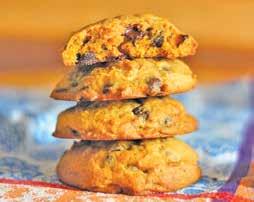
Remove the cookie sheets from the oven and let them rest for 2 minutes. Take the cookies off with a spatula and cool them on wire racks.
2 2/3 cups all-purpose flour
1 teaspoon baking powder
1 teaspoon salt
3/4 cup whole almonds
1 tube red decorating gel
the flour, baking powder, and salt, continually beating; refrigerate 20 to 30 minutes.
Preheat oven to 325 degrees F (165 degrees C). Lightly grease baking sheets. Remove dough from refrigerator in small amounts. Scoop 1 heaping teaspoon at a time onto a piece of waxed paper. Use the waxed paper to roll the dough into a thin fingershaped cookie. Press one almond into one end of each cookie to give the appearance of a long fingernail. Squeeze cookie near the tip and again near the centre of each to give the impression of knuckles. You can also cut into the dough with a sharp knife at the same points to help give a more finger-like appearance. Arrange the shaped cookies on the baking sheets. Bake in the preheated oven until the cookies are slightly golden in colour, 20 to 25 minutes. Remove the almond from the end of each cookie; squeeze a small amount of red decorating gel into the cavity; replace the almond to cause the gel to ooze out around the tip of the cookie.
Sometimes all your dish needs is a little more salt (but don't go crazy). However, if you think you’ve added enough salt but something is still off, try a small splash of vinegar or lemon (any acid) to brighten the flavour. If the food is dry or sticky, try adding a touch of olive oil. These three things can fix almost any lackluster meal.
For most everyday cooking, milder onions will enhance your dish and give it more nuance. Big, strong onions certainly have their place in cooking (soups, roasts, etc.), but most kitchen experiments will be improved by more subtle onion flavour.
Don't get too lazy with your herbs. While we all know it's easy to purchase dry, the fresh ones are so much more flavourful and easy to grow too.
Spices go off quickly, and when their colour starts to dull they’ve lost a lot of their flavour. There are several dried spices that are invaluable in the kitchen (cinnamon, cloves, curry powder, cumin, coriander, chili pepper, etc.), but you should purchase them as you need them, and in small quantities unless you use them frequently.
If two drinking glasses become stuck together after stacking, it’s not impossible to un-stick them. Just put ice in the inner glass and dunk the outer glass in warm water. The warm glass will expand and the cold glass will contract, making the glasses separate easily. To help old wooden drawers (without runners) open and close smoothly, rub a candle on the tracks.
When you clean your fish tank, the water you drain can also be used to water your house plants. The nitrogen and phosphorus in fish droppings make aquarium water a great fertilizer.
When storing empty airtight containers, throw in a pinch of salt to keep them from getting stinky.








ARIES (March 21April 19)


TAURUS (April 20May 20)



(May 21June 20)

(June 21July 22)



LEO (July 23Aug. 22)

VIRGO (Aug. 23Sept. 22)



LIBRA (Sept. 23Oct. 23)

SCORPIO (Oct. 24Nov. 22)


SAGITTARIUS (Nov. 23Dec. 21)




(Jan. 20Feb. 19) (Dec. 22Jan. 19)


PISCES
(Feb. 20March 20)

Get past problems out in the open. You will have the patience and understanding needed to remedy a recent disagreement. Making amends will bring you closer to a special someone.
Love and money won’t mix today. A joint financial venture involving a loved one will lead to trouble and loss. Don’t make any financial commitments that leave you in a dependent position.
Your emotions will play tricks on your mind. Don’t overreact if someone you like turns out not to feel the same way you do. Smile and move on.
Rather than succumb to meaningless arguments, follow your own schedule. Your creativity is high, and you will be able to accomplish a lot if you don’t get sidetracked.
You will have trouble with friends and relatives if you exaggerate. Tell your side of the story without embellishing the facts, and people will take your side.
There is a way to streamline your chores. A new appliance or cleaning service can pay for itself quickly, if used properly, and will give you more time to spend doing the things you enjoy.
If you don’t have faith in your abilities, neither will anyone else. Be brave and confident, and put your ideas into play. Show everyone what’s important to you.
You will have trouble saying no today. Before you sign up for added responsibilities, be realistic about what you can handle. Don’t make promises you can’t keep.
Make sure you treat others with respect. Something that has been entrusted to you in secrecy should be kept that way if you want to keep the confidence of friends and loved ones.
The information you need will not readily be made available. Wait for a more opportune time to ferret out the facts. Don’t expect the truth from someone harboring ulterior motives.
Money can be made right now. If you are willing to make a firm commitment, you will get the opportunity to spend time with someone quite special to you.
If your game plan isn’t working out to your satisfaction, don’t be afraid to try something new. You can accomplish anything once you find a method that works for you.
The new iPad Air 2 and iPad Mini 3 are overshadowed by continued demand for the new iPhone 6 and iPhone 6 Plus. With two new iPad tablets on sale, hundreds of customers braved the rain and wind Thursday morning, patiently lining up outside Apple's flagship Fifth Avenue store in Manhattan, US. Here's the thing: those folks were buying iPhones.
its debut in select cities.
The new iPad Air 2 and iPad Mini 3 became available in some Apple stores Wednesday. But, for the first time since its tablet line launched in 2010, Apple opted to forgo a specific launch date, vaguely referencing its launch this week before it quietly made

LThe Fifth Avenue scene underscores the opposite paths that the iPhone and iPad franchises have taken in regard to demand. While the iPhone 6 and iPhone 6 Plus remain hot sellers, there was a noticeable lack of excitement with the recent unveiling of the iPad Air 2 and iPad Mini 3. It's a further illustration of the slackening demand for tablets, which are starting to see slowing sales growth.
Apple may have kept the iPad launch date vague because its stores have been inundated with buyers of its new iPhone 6 and 6 Plus smartphones since it started selling the devices on September 19. Juggling lines for both the iPhone and iPad at stores may have been too much to handle.
aunched earlier last week at a conference in London, PhotoMath is already shooting to the top of the app charts. The software uses optical character recognition technology to read printed equations on a page, then pops up an augmented-reality display that works through captured equations in real time.
You can point your phone at a problem and PhotoMath can solve it for you, most of the time. (The character recognition only works with printed materials — no handwriting.)
But that’s just the baseline tech. Where PhotoMath gets genuinely awesome is in the image capture options. Once you’ve captured a particular equation, PhotoMath can save the image, then generate detailed instructions on how you ac-

tually solve the math problem. In other words, with PhotoMath, you can show your work.
PhotoMath can handle arithmetic expressions, fractions and decimals, powers and roots, and simple linear equations. The creators say the app’s sweet spot is in the general area of middle school math, but they hope to ramp up the
technology in future iterations.
The app is free for iOS and Windows Phone (Android is en route) and parent company Microblink isn’t looking to make money off PhotoMath directly. Instead, the company hopes to generate interest in its other products and its core real-time optical character recognition technology.
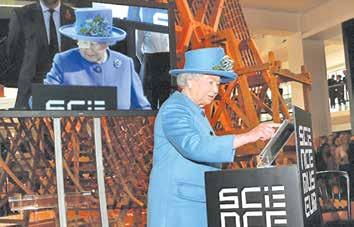
"It is a pleasure to open the Information Age exhibition today at the @ ScienceMuseum and I hope
people will enjoy visiting. Elizabeth R."
That was the Queen's first tweet - sent through the @BritishMonarchy

Apple recently rolled out Apple Pay for the iPhone 6 and 6 Plus.
Instead of swiping a credit card, users will be able to tap their phones to a device at the register and then verify their identity with the phone’s fingerprint sensor. The extra layer of security makes it doubly difficult for thieves to steal and use payment information.
No longer will your credit card number be transmitted across a network or stored on a merchant’s computer. Instead, a data security method called tokenization will be used. Essentially, your number will be replaced with a token, a bit of benign digital data that serves as a reference that’s used to map back to the data. Not even Apple has your credit card information.
At the moment, not every merchant has the compatible device at their registers supporting Apple Pay. Those systems use a nearfield communication chip (NFC) that’s able to read a small radio signal coming from the phone, which contains the payment information. It’s similar to the technology already
Google is revamping its email service with a new mobile app it is simply calling Inbox.
account - heralding the launch of a major new exhibition at London's Science Museum.
Three years in the planning, the exhibition is one of the most ambitious projects the museum has undertaken.
Alongside historic objects, visitors can enjoy interactive experiences.
The Information Age gallery, opened by the Queen on Friday morning, takes visitors on a journey through the history of modern communications from the telegraph to the smartphone. (BBC)
It is an attempt to reorganise overcrowded inboxes and ensure important emails are not overlooked.
Currently the tech giant has invited a select group of Gmail users to try out the new service. Some experts believe it will eventually replace Gmail.
"Our biggest rethink of email since Gmail, really excited about Inbox," wrote one Google executive on Google+.
Among the main changes, Inbox will highlight key information from important messages, such as flight itineraries, event information and photographs; let users add their own remind-
used for “tap and pay” systems common at gas stations.
A new law going into effect in October 2015 mandates that all retailers in the United States support chip-based credit card payments. So-called smart credit cards that have a microchip inside give users the ability to tie a personal identification number with their cards. When entered at the time of purchase, the PIN offers yet another layer of verification.
Many devices that support chip-based credit cards purchases can also support the tap-and-pay function of the iPhone 6 and 6 Plus.
There’s also an “app-based” version of Apple Pay that lets shoppers make purchases from inside the App Store. This app is available for the iPhone 5s, iPad Mini 3 and iPad Air 2, which all have the Touch ID sensor. But it’s not for making purchase at a retail shop. Apple fans still on the 5, 5c and 5s will have to wait until next year for a solution. (Excerpted from Forbes)

ers - to pick up dry-cleaning or give parents a call, for example; categorise messages - clustering together receipts or bank statements for instance.
"We get more email now than ever, important information is buried inside messages, and our most important tasks can slip through the cracks - especially when we're working on
our phones," wrote Sundar Pichai, senior vice-president of Android, Chrome and apps.
"For many of us, dealing with email has become a daily chore that distracts from what we really need to do - rather than helping us get those things done," he added.
Reaction from the technology press appeared to be mixed.
The Verge described it as the future of email. "It's perfectly happy to have you use your email as a to-do list," it said.
But Mashable pointed out that other apps such as Mailbox and Box do similar things, and Engadget questioned whether it would really signal the end of Gmail. (BBC)






While not a holiday in Guyana, Halloween has become one of the major events many Guyanese look forward to.
Celebrated locally by keeping up parties for adults and children, Halloween is a time when creative costumes are worn and artistic body painting is displayed.
Bravo Arts, a local art company, is famously known for its production of scary and ghoulish costumes and body painting. With depictions of bloody faces, torn flesh and ghostly body paint, Bravo Arts has become the go-to company for Halloween costumes.
What makes them the best of the rest? Bravo Arts comprises of a fun loving team of young people who enjoy putting smiles on people's faces even if it means painting them on. It offers its clients an opportunity to transform their body through the medium of body painting, nail art, hair art, makeup, temporary tattoos, and glitter art. Bravo Arts customises its services to meet the unique needs of its clients. Its team of young, talented and dedicated artists and entertainers add to the youthful energy and creativity of the group.
Bravo Arts, which was launched in 2009, is the brainchild of local artist, Steve Douglas.


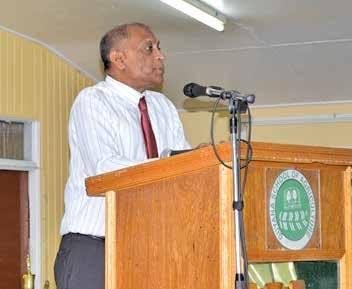
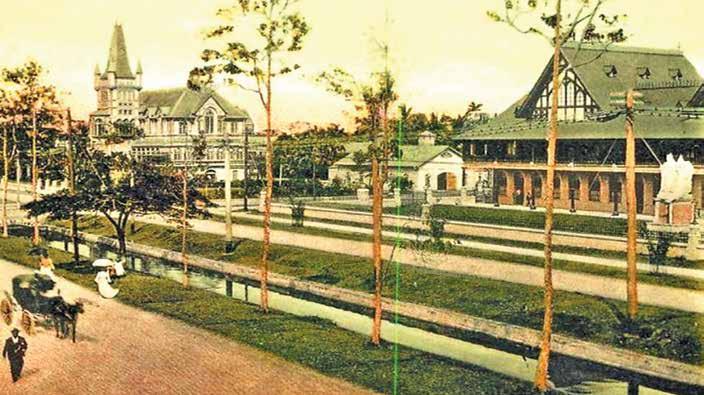
The Guyana School of Agriculture (GSA) was conceived to satisfy a need for a national agricultural training institution in Guyana. This idea was the brainchild of the late former president, Dr Cheddi Jagan.
The school began on 9 September 1963 at Mon Repos, East Coast Demerara. The first enrolment comprised of 25 male
students. Five dwelling houses provided facilities for classrooms, dormitories and cafeteria, in the then Central Agriculture Station compound.
The first principal was Harry Madramootoo, Director of Research of the British Guiana Rice Board. Lecturers were supplied by the Ministry of Agriculture on a part-time basis.
In 1964, the school be-
came a state institution and a board was appointed by the then Minister of Agriculture to formulate policies to direct operations.
The objectives of the school are to offer theoretical and practical training in agriculture and to develop, manage and operate farms and undertakings of an agricultural nature, that is to operate commercial farms and undertakings in accordance with good farming practice.
Its mission statement is: “To promote and support agricultural development through education and training of young men and women interested in an agricultural career”.
For Agriculture Month 2014, the Guyana School of Agriculture hosted a number of activities focusing on the “Promotion of Youths in Agriculture”, with the aim of not only creating job opportunities for young people but to further expand the industry.
Recently, a batch of 120 students, including 55 females, graduated from

GSA. At the graduation, Minister of Agriculture, Dr Lesile Ramsammy noted that GSA has been playing a fundamental role in agriculture education in Guyana and in the wider Caribbean, in building capacity. One of the graduates is in fact a scholarship student from St Vincent and The Grenadines.
Ramsammy added that

the Government of Guyana is investing annually $1.2M per student at the Guyana School of Agriculture. The government is also investing approximately $600M to GSA and the Guyana Sugar Corporation (GuySuCo) for the training of young people to participate in the development of agriculture and the country.
With the transformation of the agriculture sector, GSA has introduced a new course, the theoretical and practical aspects of the operation of the tractor as well as other courses. In addition, to cater for the agro-
processing sector and to give students the opportunity to establish their own agro-processing ventures, a new one-year Certificate in Agro-Processing was introduced for the academic year 2013/2014.
At the graduation, the Agriculture Minister pointed out that GSA has done its part in ensuring that students are well-rounded and ready to meet the challenges of agriculture and encouraged the students to be steadfast in their approach and proactive in confronting these challenges.





For those living in Linden, swimming at Bamia creek, which is along theLinden/Soesdyke Highway, is a regular fun feature on weekends, where friends and families get together for drinks and a cool swim. It is lesser known among residents of Georgetown, who are more familiar with the creeks closer to the highway junction nearer to the city.
Bamia Creek is the last creek before meeting the Linden junction: about 10 minutes before the bauxite-mining town.
Bamia itself is a quiet community surrounded by lush nature.The few households live closely and are self-sufficient. Everyone depends on the rich black water creek, which divides the community from the main road, for cooking, drinking and washing.
The next time you are travelling along the highway or visiting Linden, ensure you visit this little oasis and indulge in a revitalising swim. For more information on Bamia and other tourists’ sites in Linden, visit www.guymine.com

B y : M elvin D urai
Halloween has always been somewhat of a mystery to me. Perhaps that's because I grew up in Africa, where you'd have to be a little crazy to leave your pumpkins outside. Folks there never have trouble distinguishing between decorations and food. And leaving food on your porch is not a good idea. Especially during a famine. When people are starving, there is nothing more arrogant than decorating your house with food.
Actually, the condi tions were never that bad in Zambia, the coun try I grew up in. We never felt the need to go door to door, begging for candy.
My mom would have been so embarrassed if I had asked a neighbor for food. Especially after giv ing the neighbor a threat. Trick or treat? A quick call to my mother and the trick would have been saving my butt from a whipping.
If we were guests at someone's house and they offered me a second helping of dessert, the correct response was "No, thank you." Mom was always watching and I didn't want it to be my last dessert.
ily, especially early in the morning, when I look in the mirror.
Seeing so many people wearing masks made me wonder whether Halloween is a special day to honor bank robbers.
I often mixed up American holidays. Once, on a Sunday afternoon, a female friend who was planning to visit me asked if I had a carving knife. I thought she was going to bake a turkey or some other tasty bird for me. After I had built an immense appetite, she showed up with a pumpkin. And it wasn't even I wanted to carve pumpkin to pieces.

Mom was concerned that people would think she wasn't feeding her son well. It didn't help that I was built like a bamboo. She would have thrown a fit if I had wanted to wander the entire neighborhood, begging strangers for candy. But she might have liked the idea of me wearing a costume and mask, so no one would identify me as her son.
Of course, trick-or-treating would never work in Zambia, because few people know about Halloween. If you knocked on their doors dressed as a werewolf, they might throw something at you, but it probably won't be candy.
After coming to America, it took me several years to get used to Halloween. No one explained it to me. They were too busy trying to scare me.
Though I'm a grown man, I scare eas -
In later years, I still found myself unprepared for Halloween. I hardly ever stocked up with candy. And I quickly learned that those ghouls, goblins and other creatures do not appreciate my closest substitute:
I guess those creatures never get sick. Halloween seems to be the best time of the year for some children. It even beats Christmas. They believe in the spirit of giving, but not as much as they believe in the spirit of scaring.
It must be fun to frighten your neighbors, pretending to be Dracula, Freddy Krueger or Steve Forbes.
It makes me wish I had grown up in this country. I would have had a great time trick-or-treating, especially after convincing my mother that ignoring Halloween in America is against the law.
Maybe it's not too late. I don't think anyone can stop me from trick-or-treating. That would be age discrimination -and I'm prepared to sue.
So if you happen to see a rather big creature at your door, give him lots of candy. He has to make up for lost years. He likes mints, peanut butter cups and malt balls. If you're nice to him, he promises not to run off with your pumpkins.


Michael: What treat do eye doctors give out on Halloween?
Matthew: I don’t know. What?
Michael: Candy corneas.
Once a captain on his ship was disturbed by his assistant telling him, “Sir! Sir! There are 5 enemy ships on the horizon.”
The captain tells the man,” Get my red coat and prepare for battle!”
The assistant runs without question to get the captains red coat and prepares for battle.
After their victory the assistant asks the captain why he wanted his red coat.
The captain tells the assistant “If I was shot you would not be able to tell I’m bleeding and you would keep fighting.”
The assistant thought this was a great idea. The next day the assistant came to the captain, “Sir! Sir! There are twenty enemy ships on the horizon!”
The captain was stunned. He looked at the assistant and told him “Get me my brown pants!”
Q. What do mummies like listening to?
A. Wrap music!
Q. What are a ghost’s favourite rides at the fair?
A. The scary-go-round and roller-ghoster!
Q. What would you find on a haunted beach?
A. A sand-witch!
Q. Why couldn’t the ghost see its mom and dad?
A. Because they were trans-parents!
Q. Which ghost is the best dancer?
A. The Boogie Man!
Q. Why are there fences around cemeteries?
A. Because people are dying to get in.
Two men waiting at the pearly gates strike up a conversation. "How'd you die?" the first man asks the second.
"I froze to death," says the second.
"That's awful, how does it feel to freeze to death?" says the first.
"It's very uncomfortable at first, you get the shakes, and you get pains in all your fingers and toes. But eventually, it's a very calm way to go. You get numb and you kind of drift off, as if you're sleeping.
How did you die?" says the second.
"I had a heart attack", says the first guy. "You see, I knew my wife was cheating on me, so one day I showed up at home unexpectedly. I ran up to the bedroom, and found her alone, knitting. I ran down to the basement, but no one was hiding there. I ran up to the second floor, but no one was hiding there either. I ran as fast as I could to the attic, and just as I got there, I had a massive heart attack and died."
The second man shakes his head. "That’s so ironic," he says.
"What do you mean?"
asks the first man.
"If you had only stopped to look in the freezer, we'd both still be alive."
Croaking grandpa
Bobby was sitting on the porch talking to his grandpa when he innocently asked, “Grandpa, do you know how to make animal sounds?”
“I sure do,” grandpa replied. “What sort of animal sound would you like to hear?”
“How about a toad? Do you know how to sound like a toad?” Bobby asked.
“Sure!” said grandpa, cupping his hand to his mouth. “Croaaak croaaak, how did you like that?!”
“Yipee!” screamed Bobby jumping up and down. “We are going to Miami!”
“Huh?” questioned grandpa. “Why’s that?”
“Because grandma said so,” Bobby patiently explained. “She said that after you croak we’ll all go to Miami!”