


According to Ban Kimoon, the United Nations Secretary General, World Day of Remembrance for Road Traffic Victims is a day for “us [to] re-commit to making roads that are safe for all”.
“This Day is about compassion and prevention. We mourn those who have perished on the roads. We console grieving families and friends. We raise awareness of the economic hardship so often faced by the bereaved,” expressed the United Nations Secretary General.
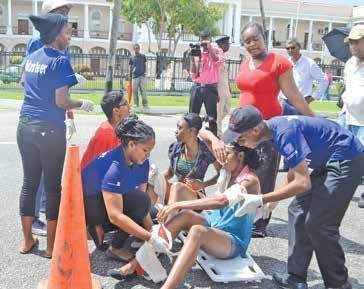
The focus of this year’s World Day of Remembrance for Road Traffic Victims, commemorated 16 November, is “Speed Kills”. Consequently, a number of governments have moved to address the problem of speeding in the context of the United Nations Decade of Action for Road Safety (2011-2020).
“The United Nations Decade of Action for Road Safety challenges each country to reduce road fatalities by 50% in 10 years and Guyana have signed on to this initiative. The United Nations recognised that
humans make errors and human errors cause accidents…so they are challenging us to make the roads so safe that regardless of accidents they will be no fatalities. [Hence] as the advocacy body of Guyana we are doing everything in our power

to save lives by establishing safer roadways,” Ramona Doorgen, the coordinator for the Guyana National Road Safety Council (GNRS) explained in an interview with Guyana Times Sunday Magazine
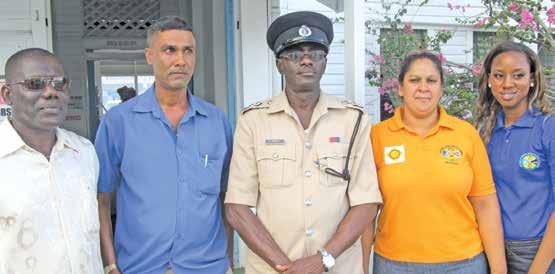
In keeping with the theme, “Speed Kills”, GNRS and numerous other entities, including governmental, non-governmental and faith-based organisations, as well as businesses and youth groups/associations, have planned a month of events for November. This month of events will be executed at both the community and the national level across Guyana. Each event will be held under the theme, “The time is now don’t drink and drive; Stay
Guyana,” Doorgen posited.
The Council has held massive revival and construction campaigns inviting different organisations and associations to paint pedestrians and erect road signs.
“Because we believe that everyone needs to come on board…with 120 deaths to date due to road traffic accidents, we need to move away from whose fault it is and come up with solutions to avoid more fatalities…,” stated Doorgen.
Whether big or small, the Council has a continuous stream of activities, from the launch of the National Road Safety Month to distribution of fliers, school lectures, radio and television programmes and hospital
15:00 since we will be giving out t-shirts to all participants…we are also asking persons to walk with pictures of road traffic victims they know, whether the person were injured or died [if they have any]. The event is planned to give recognition and spread awareness to all persons related to accidents; whether health care professional, taxi drivers, victims and the like,” outlined Doorgen.
attentive drive defensive”.
“The theme 2012-2013 was alcohol speed and inattentiveness caused accidents; drive wise and save lives, which shows a pattern that focuses on attentiveness or inattentiveness as well as speeding, drinking and driving; the number one cause of accidents in

visits to road traffic victims.
Nonetheless, the Council works throughout the year to accomplish its goal, leading to many recurring activities merging each year such as training for all road users, driver seminars and the like.
On the other hand, according to Doorgen most persons are more driven by the cause during the month of awareness, hence the council seeks to utilise this advantage to beef up activities, particularly closer to the holiday season when accidents are more prevalent.
Therefore, several major activities are planned for the month of November including a live talk on NCN, a road safety awareness walk, a symposium for school children in the National Park on 28 November and a barbeque event on 30 November.
The major event targeting the general public is the Road Safety Awareness Walk being held today, 16 November. The walk is planned to begin at the Kitty Junction (Pump Station) at 16:00, move along Carifesta Avenue on to the seawall and end at the Seawall Bandstand with a short presentation and skit.
“Even though the walk starts at 16:00 we would like everyone to assemble at
Hoping to keep the fatalities stagnant for the remainder of the year - particularly with the usual surge of accidents in the months of October, November and December - the Guyana National Road Safety Council is working tirelessly to educate persons on the safe usage of roadways. Doorgen stated the need to remember that road safety accidents often have three times more causalities than fatalities, some even resulting in lifelong injuries.
“Most people don’t even take this into consideration so we try to highlight these things as well,” Doorgen pointed out.
Meanwhile the Chairman of the West Demerara Road Safety Association, Shahab Hack, has made a call to the general public to observe the Five Cs of road safety: Care, Courtesy, Common Sense, Consideration and Caution, as well as the Curve Drill (“look left then right then left again and when the road is clear cross briskly”).
“I think if we go back to these little things it can make a big difference,” Hack noted. He encourages the public to join him in tackling the frequency of road traffic accidents and fatalities.
The chairman pointed out that the main causes of accidents are speeding, driving under the influence of alcohol, irresponsible use of the roadways by pedestrians, poor or no lighting along a number of roads, and the need for pedestrians to move away from wearing dark colours at night.
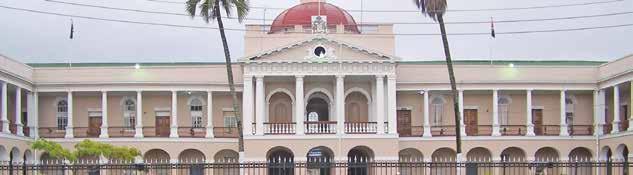
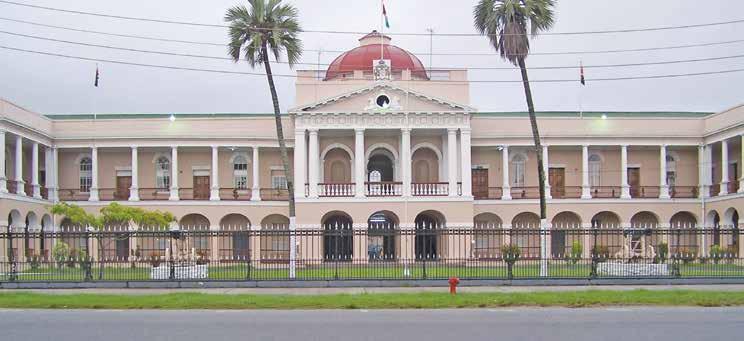
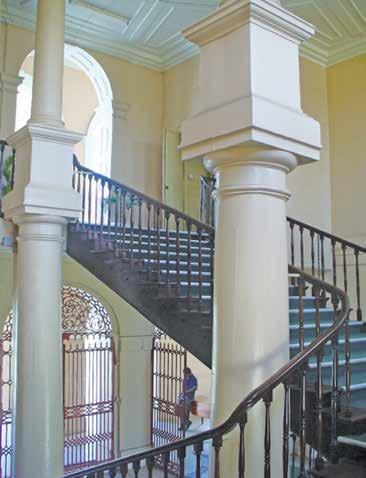
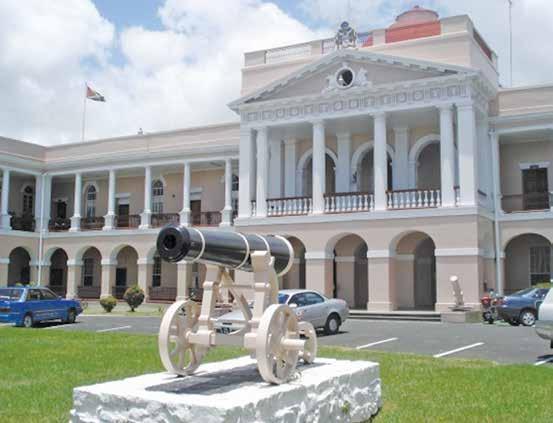
The Public Buildings, commonly referred to as the Parliament Building, is the building in which the National Assembly of the Parliament of Guyana and its Committees meet.
The Public Buildings is considered to be one of the finest architectural structures in Guyana. Located in the heart of the capital city of Georgetown, close to Stabroek Market and the Demerara River, the twostoried brick building features a low dome, two wings and a portico. The building was constructed in 1832 according to the plan of architect Joseph Hadfield and was formally handed over to the British colonial legislature on 5 August 1834.
the Government of India; a table and three chairs for the clerks; and a Sergeantat-Arms’ chair, an independence gift from the British House of Commons; two paintings of Arthur Chung, Guyana’s first ceremonial President (1970-1980) and of Linden Forbes Sampson Burnham, Guyana’s first executive President (19801985); and a gilded clock, depicting the rays of the sun, a gift from the Demerara company Limited (1954). The Members of Parliament lounge area which formerly housed the Registry
Over the years, the building housed the Parliament Chamber and various public administration offices and ministries.
However, there are still limited facilities for Members of Parliament.
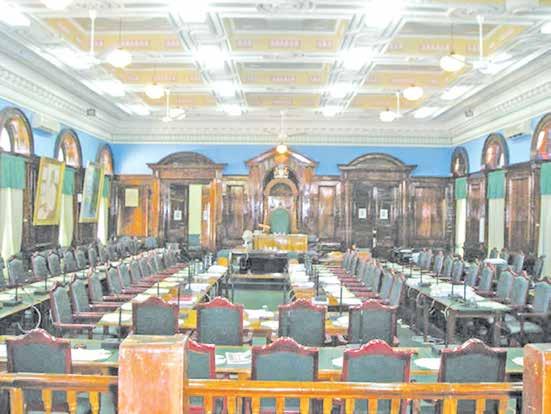
The Parliament Chamber, the room in which debates of the National Assembly takes
Today, most offices in the Public Buildings relate to parliamentary matters and are directed by the Clerk of the National Assembly.
place, is located on the top floor of the eastern wing of the building. The Chamber is arranged according to the Westminster tradition, with
government and opposition members facing each other across wooden tables.
Members of the party obtaining the most votes in a general election form the government and sit to the right of the Speaker. Members of the opposition parties sit to the left of the Speaker. Members of Parliament sit in assigned seats, which reflect to some extent the party’s hierarchy. There is a public gallery behind a rail, opposite the Speaker’s chair, with a seating capacity for 72 persons. Seating is also available for the media and for special guests.
Adjacent to the Parliament Chamber is a Lobby where Members of Parliament can discuss matters privately and make telephone calls. Behind the Lobby, there is a Committee Room where Parliamentary Committees meet and where refreshments are served to Members during a suspension of a National Assembly Sitting. In the centre of the Committee Room is a large table made of the local greenheart wood, a gift from Willems Timber and Trading Company Limited. The table was in the centre of the Parliament Chamber when it was used by the British Colonial State Council in 1953 and then by the Senate from 1961 to 1964. It was moved to the Committee Room when
Guyana’s Legislature again became unicameral (consisting of a single legislative chamber) in 1964.

of the most striking features of the Chamber is the ceiling, coffered and painted
rately carved Speaker’s chair made of teak wood, an independence (1966) gift from
Department has been converted to a modernized lobby, kitchenette and offices for Members of Parliament. The renovation commenced in 2004 and was completed in 2005. On the upper floor, four new rooms were constructed for use by Chairpersons of Committees and two large offices for use by the Minister of Parliamentary Affairs and the Leader of the Opposition Party, respectively. On the lower floor, a large lobby was created for Members of Parliament dining room and a kitchenette for the preparation of meals and snacks during sittings of the National Assembly and Committee Meetings. (Information from Parliament of Guyana Facebook page)
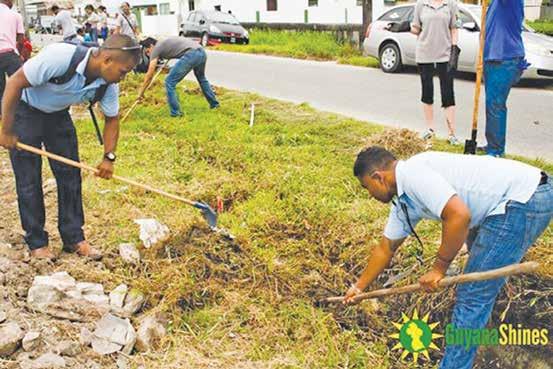
Acollaboration borne out of the innovative chapter of the United States embassy’s environmental project in conjunction with the Youths for Guyana, Guyana Shines: Keep Guyana Beautiful “encourages and mobilises Guyanese communities to maintain a clean environment to address the serious littering problem through education and action”.
According to Orin Phillips,
[this] problem. It [requires] a collective effort that involves government, [the] private sector and citizens.”
Phillips continued, “… [when] the last piece of garbage is removed from our country’s roadways and drainage system, then [will] the need for organisations or projects similar to Guyana Shines cease to exist.”
In an effort to keep Guyana clean, Guyana Shines seeks “to educate Guyanese about
strategic workshops hosted by US environmental experts - using examples of American success stories.
“Guyana Shines seeks to help sway public opinion and behaviour against pollution, through continuous messaging, positive examples and concrete results,” Phillips explained to the Guyana Times Sunday Magazine
The US embassy started the initiative by leading two community clean-up proj-
the project manager, “The litter problem we face today is a much bigger problem than we make it out to be [and the] government alone cannot fix
the detrimental effects of litter” through a combination of STEM education, public service announcements, documentaries, its website and
ects, which evolved into an environmental documentary that was presented across the country to numerous stu-

dents and the general public. “These clean-up projects generated three other community initiatives in which the embassy participated,” Phillips pointed out.
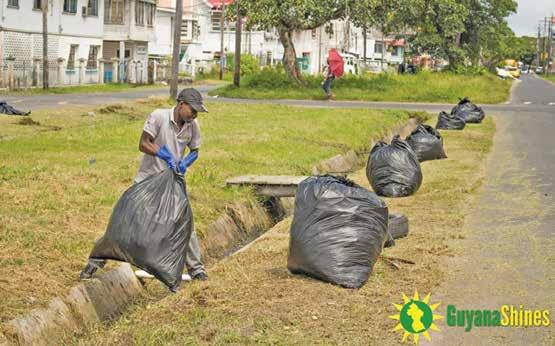
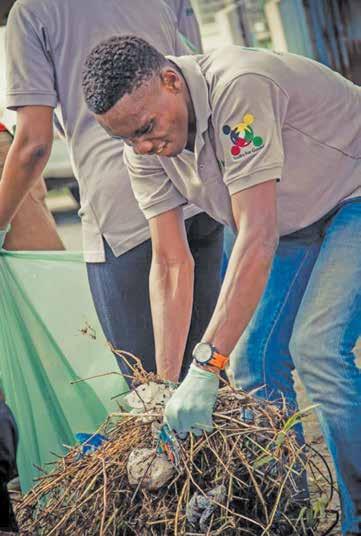
Today, Guyana Shines has generated over 70 members who have assisted in continuing the group’s efforts through weekly neighbourhood clean-up projects to motivate Guyanese citizens, set a positive example, creating protected, green spaces that are litter-free zones in three neighbourhoods (Festival City, East La Penitence and Retrieve), and bringing recycling to targeted areas by providing information, training and bins (for cardboard, paper and plastic).
“Guyana Shines has established recycling initiatives among the diplomatic community (UN, OAS, CARICOM, IDB, PAHO); five schools with strong environmental clubs (Marian Academy, New Guyana School, Georgetown International Academy, Green Acres); and several businesses (banks, department stores),” Phillips revealed.
Encouraging collective efforts, Guyana Shines is constantly looking at new ways to reach out to others to join their campaign. This was exemplified by their most re-

cent initiative with St Rose’s High School.
“[St Rose’s mural painting] was the starting point of our school outreach initiative…[as] one of the schools [St Rose’s High] we will be working with for the duration of Guyana Shines was chosen to remove the graffiti [on the walls] and have the students artistically install a mural depicting youth empowerment through positive choices,” Phillips explained.
Moreover, a few businesses of the Church Street area also supported the initiative, “which brings us back to the idea that in order to effect real change we need everyone to play their part”. This demonstrates Guyana Shines’ mandate to “demonstrate how attitudes can be transformed through ideas, action, and persistence”.
The Guyana Shines was started in 2012 at the “grassroots” level “to educate Guyanese, especially students, about the effects of littering and why it’s important to maintain
a healthy environment”. It has now evolved into a nationwide initiative encompassing the efforts of the non-governmental organisations, governmental entities, youth organisations and the diplomatic corps among others. The project is funded by the United States Department of State in partnership with Republic Bank Ltd, Caribbean Containers, ExxonMobil and the Humanitarian Assistance Programme. The overall directives were outlined by the US embassy, while the Youths for Guyana is the primary partner.
“We manage the resources under the grant, take the lead on programme planning, and conduct project implementation,” Phillips outlined.
Currently, Guyana Shines is planning to host a recycling contest among the schools of Guyana. To find out more about this project, visit Guyana Shines: Keep Guyana Beautiful on Facebook.
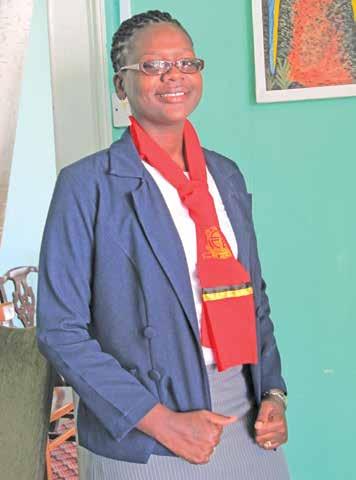
Often times the words ‘nun’ or ‘sister’ is used interchangeably to describe a member of a religious community of women who has voluntarily decided to dedicate their life to serving all other living beings. These women voluntarily choose to leave mainstream society and live their lives in prayer and contemplation in a monastery or convent; typically one living under vows of poverty, chastity, and obedience.
This life might either be a contemplative and cloistered life of meditation and prayer for the salvation of others or an active vocation of both prayer and service, often to the needy, the ill, the poor and or the uneducated.
In an effort to understand the life of a nun, the Guyana Times Sunday Magazine spoke to a young Sister of Mercy, Sister Roslyn Bacchus, who recently took her first vows and is well on her way to fulfilling her dream of becoming a nun.
In defining a nun, Bacchus stated it is “…someone who gives their all to God and the people of God, whether it be the community or the environment…to show love, compassion and mercy to all”.
On an average day Bacchus wakes up at 5:45 to conduct personal prayers asking God to continue guiding her on the right path, as well as prayers for family and friends. After personal prayers, Bacchus would then join Sister Julie at 6:30 among others for community prayers.
“At 6:30, we have our community prayers where we pray for a better world, especially better leaders in our communities, country and the world – this is including the poor, the ill and the afflicted. And finally at 7:00 we attend mass,” Bacchus outlined.
Thereafter, all nuns will conduct their individual tasks or “ministries” whether it is school, studying, service and so forth.
“Morning activities depend on the duties of the nun, for me I am studying [so] it would be different for me. After mass I help where ever help is needed [with the boys of the Bosco Orphanage], but since I am attending Cyril Potter College of Education to become a professional teacher I would prepare to attend school. So my mornings are basically routine,” she disclosed.
Hence, the average week day of a nun entails greetings, prayers, mass, the execution of their respective ministries, and helping each other as best as they can.
“Weekends, particularly Saturdays, begins probably a half hour later but involves a lot more work with the boys of the Bosco Orphanage, since I administer money to them for their daily activities and travels. Also, I usually take the younger boys to the convent to keep them entertained whether is it’s with a movie or games,” she pointed out.
On Sundays there is mass after which Bacchus spends a little more time with the boys of the Bosco Academy.
“I enjoy their company, because during the week there is not much time with my studying, research and projects…I think Sunday is a day of quiet and recollection on how the week went for me; to reflect on all the positives and a little of the negative things, to better it in the [next] week,” she disclosed.
Bacchus, a young, pretty woman, revealed that persons constantly question her choice of becoming a nun, but it is something she always wanted to be.
“Being a nun is joyous. I enjoy working with God’s people. My life as a nun is filled with love and compassion for God and his people… I enjoy being myself wherever God takes me. It’s like a marriage. Sometimes you may feel a little lonely, a little bored, but this happens because we are all human beings and we experience human emotions,” expressed
Bacchus.
After attending Saturday lessons held by the Sisters of Mercy Convent in Plaisance for the less fortunate in the neighbourhood, Bacchus was inspired by the nuns’ “actions and love for the people”.
“So at a young age I always wanted this, but I was too young when I approached them the first time. I remember one of the sisters keeping a composition I wrote when I was younger outlining why I wanted to be a nun…there are a few sisters who really inspired me, including Sister Julie Matthews, Sister Mary and Sister Judith,” she recalled. Bacchus approached the sisters of the convent at the tender age of eight.
Currently, Bacchus is in her second year of ‘discerning’ as a ‘temporary professed’. After entering the convent in 2009, where she became a candidate, she took her first vows in September 2013 becoming temporarily professed, upon which three years of discerning are necessary to ensure this is the path she wants, and only then will she be allowed to take her final vows.
“I was involved in sports,

but gave that up. I represented Guyana with other national players, but my desire to become a nun is stronger than my love for sports,” she declared.
To completely become a nun, Bacchus will have to take three vows: one of chastity, poverty, and obedience. Then for the Sisters of Mercy, a religious community of nuns, she will take a fourth - the vow of service to the poor, sick, and the uneducated.
“Prayers have been
my steady diet, especially praying for change with all the chaos of our country and around the world. As a nun I try to do my best in whatever I do…and I try to reach out in areas of need,” Bacchus mentioned.
The Sisters of Mercy responds to a call to serve people in need and commit themselves to follow Jesus Christ; they profess lifelong religious vows of chastity, poverty, obedience and service to people who are poor, sick and uneducated.
They serve through education, health care, social services and ministries that further social, political, economic and spiritual wellbeing. Within these ministries they, together with their co-workers and those they serve, endeavour to model mercy and justice and to promote systemic change according to their ideals.
The Community of Mercy includes Sisters of Mercy, Mercy Associates, Mercy Corps Volunteers, and Mercy Companions.


By PetamBer Persaud
xpressions’ is a new poetry forum. This new platform for poetry aims to extend the landscape of Guyanese literature and to heighten the appreciation of poetry. What started tentatively in May has now become a smooth mechanism of poetry excellence. And most of the credit must go to the producer, Gem Mahdoo-Nascimento, whose work could be bet-
ter understood through the sentiments expressed in the poem, ‘The touch of master’s hand’ by Myra Brooks Welch. The poem tells the story of how an old battered violin on auction couldn’t raise three dollars, but after


a tune was played on it by a master, it went for 3,000 dollars.
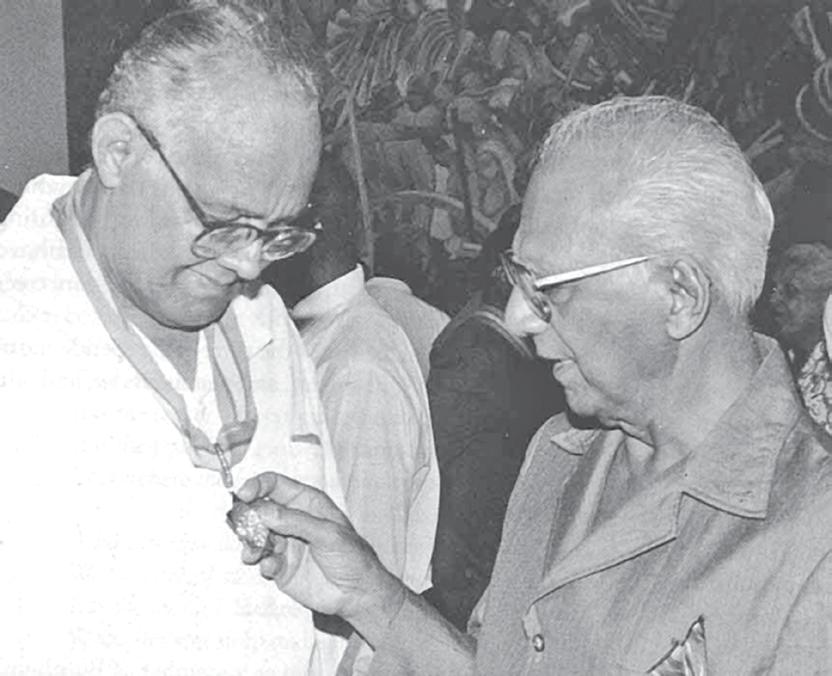
‘Expressions 2’ was staged at the Theatre Guild on 9 November 2014, where a number of poems written by writers who have passed came alive in the performances. One such poet was Martin Carter, who was the poet ‘laureate’ of Guyana.
Carter initiated a number of issues and started an ongoing dialogue by way of his prose and poetry in the manner and with a purpose of a consummate artist, going further than most writers of merely acting as a mirror of or a barometer of the society. In a letter introducing the first issue of the ‘New World Quarterly’, Carter harped on the need for “serious examination of ideas and objectivity”.
Many of those socio-political issues relevant locally and universally revolved around a central theme of “all are involved”. This ‘all are involved’ theme is married to the essential Martin Carter - his conjunctions.
found a right word or phrase to insert in his writing. His ‘Poems of Resistance’ (1954), some pieces which he wrote while incarcerated by the British for his radical political affiliation, established his Caribbean and international reputation.
In 1989, ‘Selected Poems’ won the Guyana Prize for Literature in the category of best book of poetry. Twice he was honoured by the government of the day: in 1970 he received the
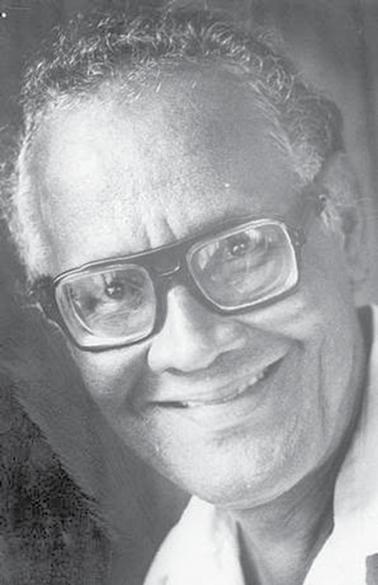
Cacique Crown of Honour and in 1994 the Order of Roraima.
Martin Carter was born on 7 June 1927, in Georgetown, British Guiana. His father, Victor Emmanuel, was an avid reader and his mother, Violet Eugene Wylde, loved books and enjoyed reciting verses.
In 1953 he married Phyllis Howard, a union lasting some four decades, even though many times during a night he would disturb their sleep because he
Martin Wylde Carter died at his home in Lamaha Street on 13 December 1997, amid political turmoil. On the evening of ‘Expressions 2’, two poems were performed in tribute to Carter’s contribution to poetry, keeping his work alive in our consciousness.
Responses to this author: telephone (592) 226-0065 or email: oraltradition2002@ yahoo.com

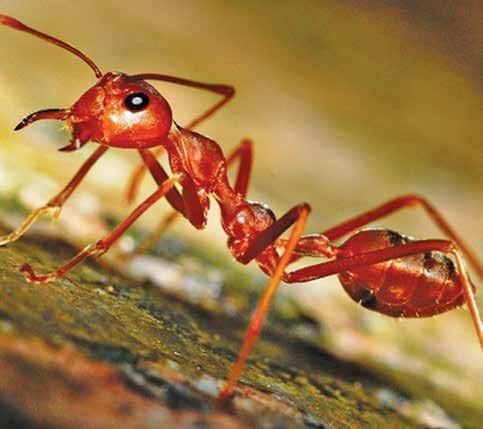
Ants (scientific name: Formicidae) are common insects, but they have some unique capabilities. More than 10,000 known ant species occur around the world. They are especially prevalent in tropical forests, where they may be up to half of all the insects living in some locations.
Ants look much like termites, and the two are often confused—especially by nervous homeowners. However, ants have a narrow "waist" between the abdomen and thorax, which termites do not. Ants also have large heads, elbowed antennae, and powerful jaws. These insects belong to the order Hymenoptera, which includes wasps and bees.
Enthusiastically social insects, ants typically live in structured nest communities that may be located underground, in groundlevel mounds, or in trees. Carpenter ants nest in wood and can be destructive to buildings. Some species, such as army ants, defy the norm and do not have permanent homes, instead seeking out food for their enormous colonies during periods of migration.
Ant communities are headed by a queen or queens, whose function in life is to lay thousands of eggs that will ensure the survival of the colony. Workers (the ants typically seen by humans) are wingless females that never reproduce, but instead forage for food, care for the queen's offspring, work on the nest, protect the community, and perform many other duties.
Male ants often have only one role—mating with the queen. After they have performed this function, they may die. (National Geographic)
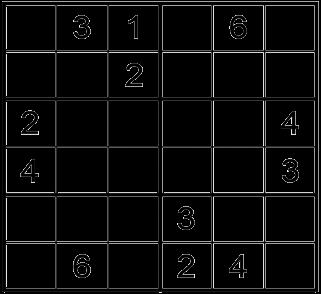
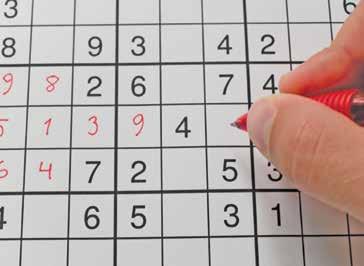
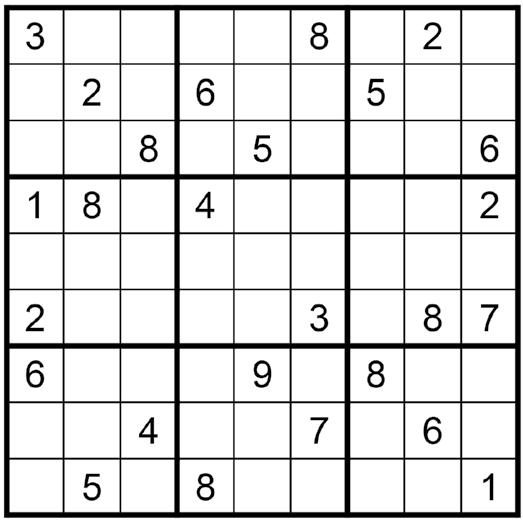
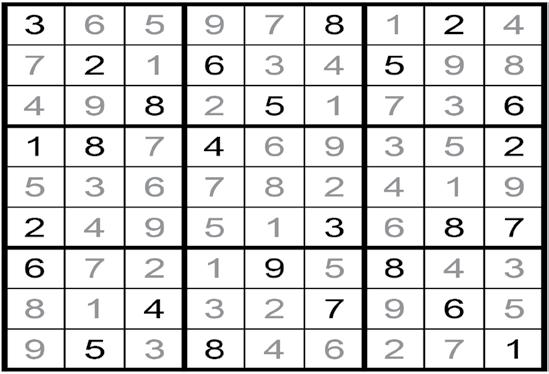
The objective of the game is to fill all the blank squares in a game with the correct numbers. Every row of 9 numbers must include all digits 1 through 9 in any order. Every column of 9 numbers must include all digits 1 through 9 in any order. Every 3 by 3 subsection of the 9 by 9 square must include all digits 1 through 9.
Ants can lift and carry more than three times their own weight. They communicate and cooperate by using chemicals that can alert others to danger or lead them to a promising food source. They typically eat nectar, seeds, fungus, or insects. However, some species have diets that are more unusual. Army ants may prey on reptiles, birds, or even small mammals. One Amazon species (Allomerus decemarticulatus) cooperatively builds extensive traps from plant fiber. These traps have many holes and, when an insect steps on one, hundreds of ants inside use the openings to seize it with their jaws.
Another species, the yellow crazy ant (Anoplolepis gracilipes), is capable of forming socalled supercolonies that house multiple queens. On Australia’s Christmas Island, the accidental introduction of yellow crazy ants in the early 20th century has led to a destructive infestation. The ants are a significant threat to the island’s endemic population of red crabs, which are displaced by the ants from their burrows or killed as they pass through ant nest sites during the crabs' large-scale annual migration from the forest to the coast.
1. The largest pumpkin pie weighed 2,020 pounds.
2. Only male turkeys gobble, female turkeys click.
3. In the Chronicles of Narnia, Aslan’s name is Turkish for lion.
4. You can tell lions apart by the spots at the base of their whiskers.
5. Cats were considered to be a sacred animal by the ancient Egyptians. It's thought that most families kept a cat as a pet, which they believed would bring the household good luck!
6. It’s thought that if you build up carbon dioxide in your body (by not exhaling) it will help stop your diaphragm from spasming, which is what causes the hiccups. When your diaphragm contracts involuntarily, it forces a quick intake of breath that’s suddenly stopped by the epiglottis—a flap of cartilage located in the throat behind the tongue. That closure is what causes the hiccup sound.
7. What makes the stomach growl? It can be the sound of your digestive juices churning and stomach muscles contracting as they get prepped for food. To avoid those often poorly timed and embarrassing sounds, eat smaller meals more frequently.
8. Why does armpit sweat smell worse than sweat from other places? Your body has two kinds of sweat glands. Most of those on your arms and legs secrete a mix of water and salt. But the glands in your armpits (as well as your groin) release an oily substance, which bacteria love. It’s actually the bacteria eating the oil that releases the telltale stench.
is the official state bird. This protected

The name Oklahoma is from the Choctaw Indian words “okla,” meaning “people,” and “humma," meaning “red.”
The official state motto is “Labor omnia vincit,” Latin for “Labor conquers all things.”
People who live in this state are called Oklahomans or, more casually, “Okies.”
Oklahoma’s nickname, “The Sooner State,” was earned in 1889, when thousands of nonnative settlers raced into the Indian Territory to claim land. People who tried to claim land too early were called “Sooners.”
Originally, the state of Oklahoma was set aside for the exclusive use of the Indians and was called the Indian Territory. In the 1830s, large numbers of Native Americans from the Southeast were forced west to live in the Indian Territory. Many of the nearly 75,000 native people who traveled the Trail of Tears into Oklahoma died of hunger, exposure and disease along the way. Today, Oklahoma has the largest American Indian population of any state.
On November 16, 1907, Oklahoma became the 46th state to join the Union. It was at this time that part of the Indian Territory merged with the Oklahoma Territory, becoming the state of Oklahoma.
By Laurie Triefeldt
Located midway between the Atlantic and Pacific coasts, this state is a major transportation and distribution hub for the United States. It is famous for its oil wells, cattle and golden wheat fields. Long before non-native settlers arrived in the late 1880s, Oklahoma was home to the Plains Apache, Caddo, Cheyenne, Comanche, Kiowa, Osage, Pawnee and Wichita peoples.
The 2008 state quarter is engraved with a scissor-tailed flycatcher and Indian blanket flowers. The honeybee is the state
The state flower is
is
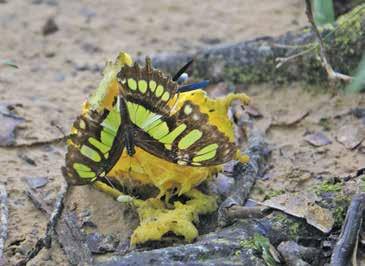
for its deep, almost black color. Oklahoma is home to many butterflies, but the black swallowtail was chosen to officially represent the state.

are vegetables. And while some may argue that watermelon is a fruit, it is the official state
The bullfrog is the official state amphibian. The largest frog in North America, it can be found in lakes, ponds and streams across the region.


Total area 69,899 sq. mi. (181,038 sq. km)
3,846,956 Capital city Oklahoma City
Highest elevation Black Mesa
4,973 ft. (1,516 m)
Lowest elevation along the Little River in McCurtain County 287 ft. (87 m)
Agriculture Beef cattle, broilers, dairy products, greenhouse and nursery products, hay, hogs, wheat Manufacturing Fabricated metal products, food products, machinery, petroleum products, transportation equipment
Mining Natural gas, petroleum
The Oklahoma State Capitol is the nation’s only statehouse with oil wells on its grounds.
The world’s first automatic parking meter, known as Park-O-Meter No. 1, was installed in Oklahoma City on July 16, 1935.
Oklahoma is home to more than 60 different Native American tribes. Will Rogers, the famous Broadway and movie star, was born in 1879 on a ranch in the Cherokee Nation. He was also a noted radio broadcaster and wrote more than 4,000 syndicated newspaper columns. The National Cowboy Hall of Fame is located in Oklahoma City.
Oklahoma has four mountain ranges: the Ouachitas, the Arbuckles, the Wichitas and the Kiamichis. Oklahoma has more man-made lakes than any other state.
In 1935, Musician Bob Dunn from Beggs, Oklahoma, invented the first electric guitar.
Oklahoma lies in “Tornado Alley.”
This region, which also includes Kansas, Nebraska and Texas, is known for its frequent tornadoes in spring and early summer.
The town of Quapaw, Oklahoma, often experiences a mysterious bouncing ball of light, sometimes called the “Spooklight.”
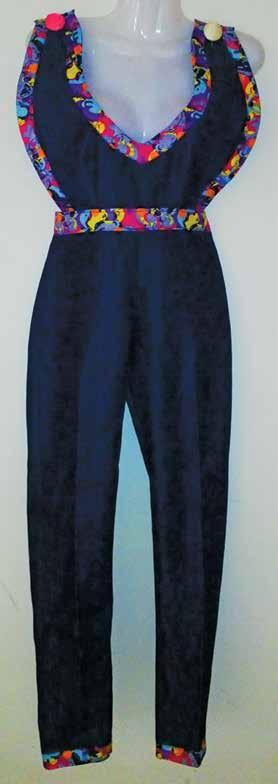
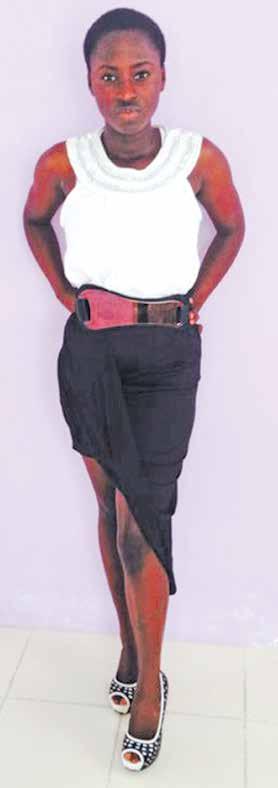
Under her label Rhoda Doxa, designer Deborah Kehinde aims to add a fresh flair to the fashion industry.
A third year medical student at the Texila American University, Kehinde mentioned that her designs were inspired by her African heritage.
“My inspiration to design and create a line of my own came from a vacation I had during the summer holiday. I went to Germany and while shopping there I was inspired by the different designer shops and the pieces on display. Many persons would also compliment my combinations and my style of dressing… So I decided it was time for me to pursue my dream of designing and start my own clothing line,” she recalled in an interview with Guyana Times Sunday Magazine
Kehinde strives “to bring African heritage to mod -

ern fashion” not only through clothing but art and craft as well.
“I have always loved designing. As a young child, I remember cutting polythene bags and making them into little outfits,” the young designer reminisced.
Through her new line, Fumilayo, named after Fumilayo Kuti, the first woman to drive in Nigeria and a “strong, powerful woman”, Kehinde wishes to demonstrate that women can and should show their strength through their clothing.
Kehinde plans to work on other collections, which will fulfil her dream to “design all types of clothing and become a worldwide brand”. Additionally, she hopes to create an entire African-inspired line of items including clothing, bags, shoes and much more.
Check out Rhoda Doxa on Facebook for more information.








By Zenica DaBichan
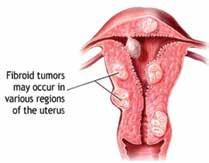
Fibroids are growths occurring in or around the uterus (womb) of a woman most commonly in her childbearing years.
Fibroids do not cause an increased risk of cancer and almost never develop into cancer. Fibroids are common, with more than 40% of women developing them at some
point in their life.
They most often occur in women aged 30 to 50 years. Fibroids are thought to develop more frequently in women of African Caribbean origin. They also tend to be larger, occur at an earlier age and are more likely to cause symptoms in AfroCaribbean women. They can range in size from as small as a pea to as large as a watermelon. Causes
The exact reason why fibroids
develop is unclear. However, it is an overgrowth of the muscle that is present in the womb. Fibroids are sensitive to the female hormone estrogen and tend to grow at times when estrogen is high, for example, during pregnancy. They also shrink at menopause when estrogen is low. Symptoms
Many women who have fibroids are unaware since they show no symptoms. Others who experience symptoms may have:
• Heavy or more painful periods
• Bloating or swelling in the abdomen
• Pain during sexual intercourse
• Miscarriage or infertility
• Constipation and frequent urination
Seeing your doctor
Since many patients with fi-
broids show no symptoms, it is often found in patients at a routine check-up. If you experience the symptoms above you should visit your doctor so he can investigate to find the cause.
Treatment options
If fibroids do not cause symptoms, treatment is not needed. They will often shrink and disappear without any treatment over time, particularly after menopause. If you do have symptoms caused by fibroids, medication to help relieve the symptoms will usually be recommended first. If these medications are ineffective surgery may be recommended.



Garage doors can make up a large portion of your home's exterior design, and if facing the street, they may be the first thing visitors see. Here are some tips on how your doors can enhance your home's style.

or modern



Ingredients: Kosher salt
12 ounces spaghetti
3 tablespoons extra-virgin olive oil, plus more for drizzling 12 ounces turkey sausage
Method:
6 cloves garlic, sliced
1 small head cauliflower, broken into small florets
1 bunch scallions, chopped
1 cup grated pecorino romano or parmesan cheese
Bring a large pot of salted water to a boil. Add the spaghetti and cook as the label directs. Reserve 2 cups cooking water, then drain. Meanwhile, heat the olive oil in a large skillet over medium-high heat. Crumble the sausage into the skillet and cook, breaking it up with a wooden spoon, until lightly browned and no longer pink, 4 to 5 minutes. Clear a space in the pan, add the garlic and cook until just golden, 2 to 3 minutes. Add the cauliflower and cook until the edges are browned, about 2 minutes. Add 1 cup of the reserved cooking water, cover and reduce the heat to medium. Cook until the cauliflower is tender, about 8 more minutes. Uncover and boil over high heat until the liquid is almost evaporated, about 2 more minutes.
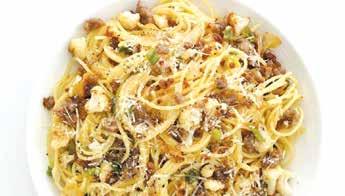
Add the spaghetti to the skillet along with the scallions. Drizzle with olive oil and season with salt. Toss for a minute or two to wilt the scallions and coat the pasta with the sauce, adding up to 1 cup cooking water, if needed, to loosen. Remove from the heat, sprinkle with the cheese and toss. Divide among shallow bowls and drizzle with more olive oil, if desired.
Ingredients: Cooking spray
1 cup chopped onion
2 garlic cloves, minced
3 cups fat-free, less-sodium chicken broth
Method:
Heat a large nonstick saucepan coated with cooking spray over mediumhigh heat. Add onion and garlic; sauté 3 minutes or until tender. Add broth and broccoli. Bring broccoli mixture to a boil over medium-high heat. Reduce heat to medium; cook 10 minutes.
Combine milk and flour, stirring with a whisk until well blended. Add milk mixture to broccoli mixture. Cook 5 minutes or until slightly thick, stirring constantly. Stir in pepper. Remove from heat; add cheese, stirring until
1 (16-ounce) package broccoli florets
2 1/2 cups 2% reduced-fat milk
1/3 cup all-purpose flour
1/4 teaspoon black pepper 8 ounces light processed cheese, cubed

vegetables freshen up right before your eyes!
In order to make sour cream last longer, place the container upside down in the fridge. Inverting the tub creates vacuum that inhibits the growth of bacteria that causes food to spoil. Keep brown sugar in the freezer will stop it from hardening. But if you already have hardened sugar on your shelf, soften it by sealing in a bag with a slice of fresh bread or an apple or by microwaving on high for 30 seconds.
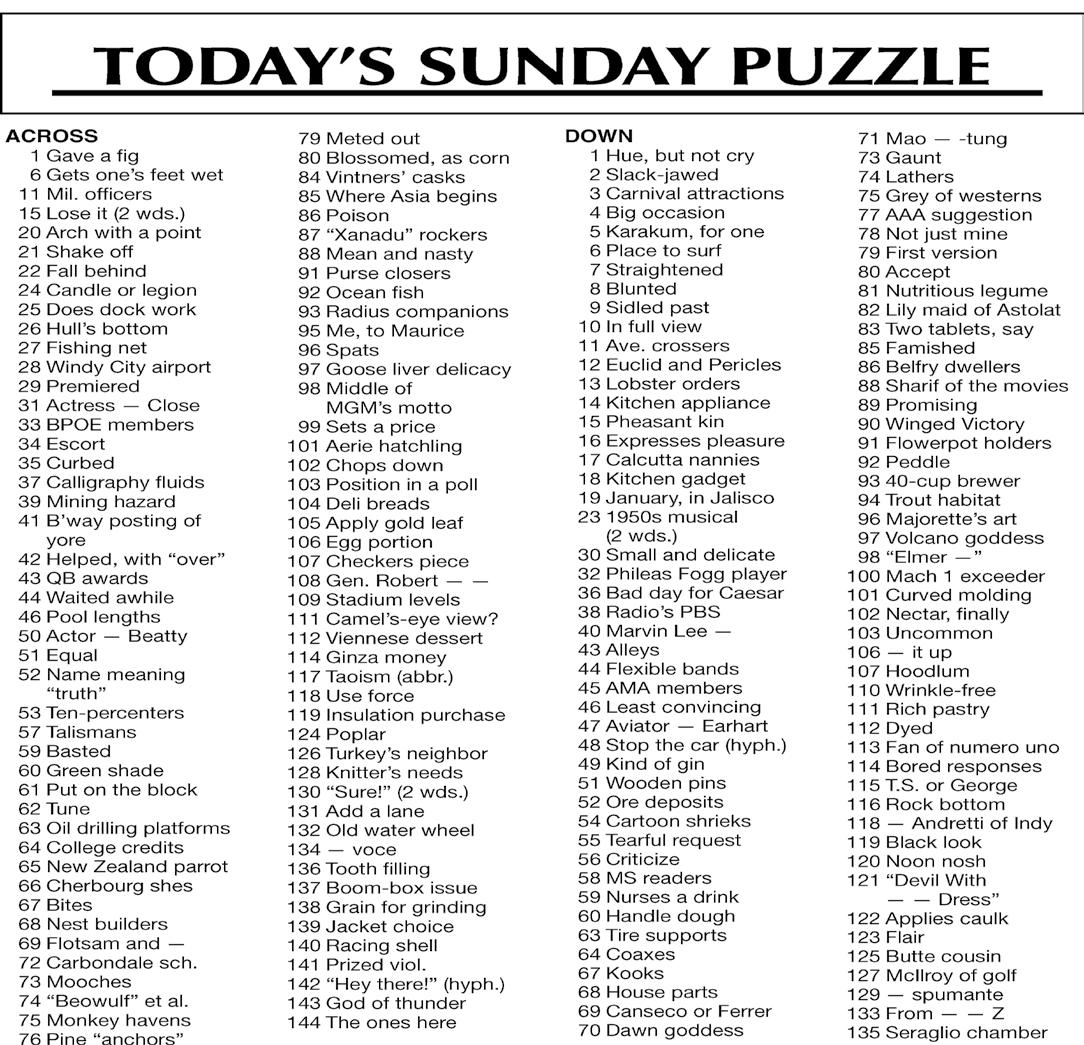
Each statement describes two words that when fused together create a new unrelated word (not a compound word). The clues do not necessarily indicate in which order the two words are attached. Example: This is the average oldness of a tablet (pill + age = pillage).
1) This is an automobile's domesticated animal.
2) This is a group of wolves, much like stone or bronze.
3) This is an alcoholic beverage that is made from a part of a fish.
4) This is a volume's military partner.
solution on page 22
solution on page 22


Two pots, one of brass and the other of clay, stood together on the hearthstone. One day the brass pot proposed to the earthen pot that they go out into the world together. But the earthen pot excused himself, saying that it would be wiser for him to stay in the corner by the fire.
"It would take so little to break me," he said. "You know how fragile I am. The least shock is sure to shatter me!"
"Don't let that keep you at home," urged the brass pot. "I shall take very good care of you. If we should

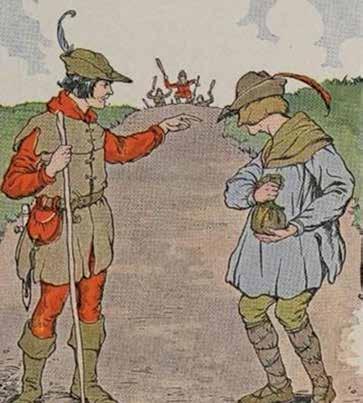
Two men were travelling in company along the road when one of them picked up a well-filled purse.
"How lucky I am!" he said. "I have found a purse. Judging by its weight it must be full of gold."
"Do not say 'I have found a purse,'" said his companion. "Say rather 'we have found a purse' and 'how lucky we are.' Travellers ought to share alike the fortunes or misfortunes of the road."
"No, no," replied the other angrily. "I found it and I am going to keep it."
Just then they heard a shout of "Stop, thief!" and looking around, saw a mob of people armed with clubs coming down the road.
The man who had found the purse fell into a panic.
"We are lost if they find the purse on us," he cried.
"No, no," replied the other, "You would not say 'we' before, so now stick to your 'I'. Say 'I am lost.'"
Moral of the story: We cannot expect anyone to share our misfortunes unless we are willing to share our good fortune also.
happen to meet anything hard I will step between and save you."
So the earthen pot at last consented, and the two set out side by side, jolting along on three stubby legs first to this side, then to that, and bumping into each other at every step.
The earthen pot could not survive that sort of companionship very long. They had not gone ten paces before the earthen pot cracked, and at the next jolt he flew into a thousand pieces.
Moral of the story: Equals make the best friends
Aman who lived a long time ago believed that he could read the future in the stars. He called himself an astrologer, and spent his time at night gazing at the sky.
One evening he was walking along the open road outside the village. His eyes were fixed on the stars. He thought he saw the end of the world was at hand, when all at once, down he went into a hole full of mud and water.
There he stood up to his ears, in the muddy water, and madly clawing at the slippery sides of the hole in his effort to climb out.
His cries for help soon brought the villagers running. As they pulled him out of the mud, one of them said: "You pretend to read the future in the stars, and yet you fail to see what is at your feet! This may teach you to pay more attention to what is right in front of you, and let the future take care of itself."
"What use is it to read the stars, when you can't see what's right here on the earth?" asked another.
Moral of the story: Take care of the little things and the big things will take care of themselves.
(All stories are by Aesop, a Greek fabulist credited with a collection of stories known as Aesop's Fables.)
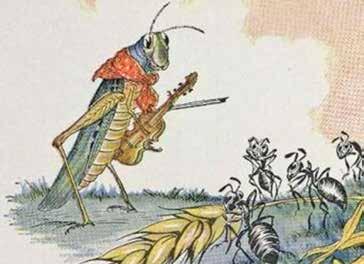
One bright day, a family of ants was bustling about in the warm sunshine, drying out the grain they had stored up during the summer, when a starving grasshopper, his fiddle under his arm, came up and humbly begged for a bite to eat.
"What!" cried the ants in surprise, "Haven't you stored anything away for the winter? What in the world were you doing all last summer?"
"I didn't have time to store up any food," whined the grasshopper; "I was so busy making music that before I knew it the summer was gone."
The ants shrugged their shoulders in disgust.
"Making music, were you?" they cried. "Very well; now dance!" And they turned their backs on the grasshopper and went on with their work.
Moral of the story: There's a time for work and a time for play.


With much to do I tire my little hands, Many things in life I’m yet to understand. Twenty-four hours on the clock’s face, Through each day of life I rapidly pace.
The people I meet as I embark each day, Leave me pondering with things they say. And I learn, as older I grow, But never enough will I ever know.
I recollect the lessons I was taught in the past, For those are the ones that would make me last. If my determined mind can dream and believe, Then no goal is too large for me to achieve.
Life is the violin while I am the bow, The seed of hope for tomorrow I now sow. I celebrate each day, cherish the memories made The sweetness of The Dance of Life shall never fade.
Cindya Khellawan
Up the street I look to see
If any traffic is coming to me. Down the street I look as well, And listen for a horn or bell. There is something coming, wait a bit! If I run across, I may be hit. But now the road is nice and clear No car or bus is near. I'll hurry across the road so wide And get safely to the other side.
Anonymous (Recited by Keiara Hazel)



ARIES (March 21April 19)


TAURUS (April 20May 20)


(May 21June 20)

(June 21July 22)



LEO (July 23Aug. 22)

VIRGO (Aug. 23Sept. 22)



LIBRA (Sept. 23Oct. 23)

SCORPIO (Oct. 24Nov. 22)


SAGITTARIUS (Nov. 23Dec. 21)




(Jan. 20Feb. 19) (Dec. 22Jan. 19)


PISCES
(Feb. 20March 20)

It’s a good day to take trips that will provide you with adventure and cultural knowledge. Social gatherings will open doors to love connections. Now is the time to make a positive move.
Your refusal to listen to advice given by friends or relatives could be your downfall. Try to see your situation in terms of possibilities rather than limitations. Remain open.
Friends may be unhappy if you allow a new love to monopolise your time. Try to maintain balance in your life. Don’t be too eager to get involved in joint financial ventures.
Heated arguments with loved ones may lead to changes in your home. Drastic reactions toward others will be detrimental. Keep your feelings to yourself. Be careful to whom you lend money.
Your dramatic approach to emotional matters may alienate you from the ones you love. Adopt a more practical outlook with less melodrama. Be clear about your role in the situation.
Problems will surface if you have to deal with institutions. Put off meetings with your superiors until a more suitable time. Focus on detail and satisfying your needs first.
You can make major improvements if you set your mind to it. Someone you live with appears to be confused. Your ability to see situations from all sides and your need for balance and fairness should help.
Your mental agility will be at an all-time high. Your ability to communicate with others and articulate your ideas will be noticed. Pursue your professional goals.
Your need for excitement and adventure will be satisfied if you travel or get involved in forward-thinking groups. New places and ideas will prove very stimulating, and will inspire a change in your professional direction. Tension will cause confrontations with your mate. Get the trouble out in the open and have a frank, airclearing discussion. Secret activities could damage your reputation. Be forewarned.
You may be forced to deal with the affairs of your elders. If you haven’t left yourself enough time, your partner may be disgruntled. Somehow, you must find balance.
One-sided romantic connections will only lead you astray. Keep your thoughts to yourself. This is not the time to rock the boat. Respect the politics that surround you at work.

Camera phones can be limiting but they can also be liberating, and they are always to hand. Follow these six simple tips to get better results from your iPhone's camera. Use the camera grid
The "rule of thirds" is a theory that images are more aesthetically appealing when the main subject lies one third of the way across, and down, your image - it makes an image more interesting than if you put the subject square in the middle. To help you
Awith this there is an option to place a grid of thirds over your viewfinder screen. The button to turn this on isn’t found in the camera app itself but rather the “Photos & Camera” tab in the settings app. Boost the contrast
High Dynamic Range (HDR) is a feature that quickly takes three photos with different settings and combines them in order to get better contrast. This prevents parts of your image being over and under exposed.
It gets an unfair reputation for producing overly dramatic shots that look digitally manipulated, but the iPhone does a relatively subtle job. Turn it on by tapping the "HDR on" option in the camera app. After you press the shutter you'll have to wait a second or two for the processor to combine the images into one.
Don’t zoom
Often you'll find yourself some distance from what you want to photograph, and it's tempting to
use the zoom. Don't. The iPhone comes with a digital zoom only, meaning that all you do when you zoom in is crop your image - no extra information is recorded. So while the subject that was filling only a tiny fraction of your image is now filling the whole photo, it'll be grainy and washed-out.
While phone cameras are limiting in some ways, they're liberating in others. Their small size allows you to easily get creative shots. Most images are taken at shoulder height sim-
ply because that's where it feels most natural to hold a camera. Get inventive with your angles: shoot from low down or high up. The results can be much more interesting. Take a few shots
A lot of phone photography comes down to luck, and you're three or four times more likely to get lucky if you take three or four photographs. Once you've got your phone out and composed a picture, you may as well press the shutter button a few times. Maybe in one of them all your sub-
jects will even have their eyes open at the same time. Wipe the lens
Unlike an expensive camera, which gets treated with kid gloves and placed in its own padded bag with a proper lens cover, your phone just gets shoved in a pocket or handbag. Consequently, the lens is likely to get a bit mucky. Get in the habit of giving it a wipe with a tie, soft corner of clothing or napkin before you take a shot and you'll find your photographs much clearer.
(Telegraph)

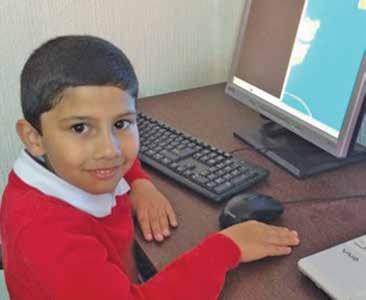
boy from Coventry, UK, has become the youngest computer specialist in the world.
Ayan Qureshi is now a Microsoft Certified Professional after passing the tech giant's exam when he was just five years old.
Ayan, now six, whose father is an IT consultant, has set up his own computer network at home.
He told the BBC he found the exam difficult but enjoyable, and hopes to set up a UK-based tech hub one day.
"There were multiple choice questions, drag and drop questions, hotspot questions and scenario-based questions," he told the BBC Asian Network.
"The hardest challenge was explaining the language of the test to a five-year-old. But he seemed to pick it up and has a very good memory," explained Ayan's father Asim.
Mr Qureshi introduced his son to computers when he was three years old. He let him play with his old computers, so he could understand hard drives and motherboards.
"I found whatever I was telling him, the next day he'd remember everything I said, so I started to feed him more information," he explained.
ByTe
T"Too
hose who like to be prepared for any scenario — lost in the woods, stranded at sea, hiding from zombie hordes — may want to check this out.
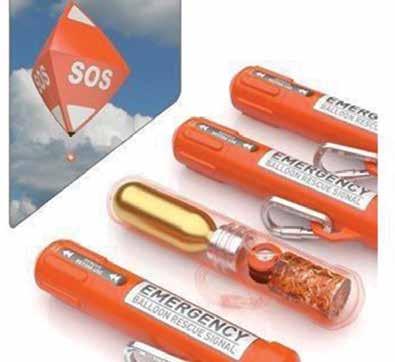
The Rescue Me Balloon, an emergency signaling device currently in development, aims to replace the flare gun as the go-to option for desperate situations. Designed to take up about the same amount of space as a traditional flare, the RMB shoots a self-inflating helium balloon into the air that can stay aloft for up to seven days.
The balloon, made of durable plastic, is stored in a small canister with a clip for attaching to your belt, backpack or anti-zombie crossbow. When deployed, the balloon rises up to 150 feet in the air, tethered by a
lightweight cord.
The RMB also has a built-in flashing LED signal, which developers say is visible up to two miles away. The LED flashes an SOS signal, and the balloon is also designed to show up on radar.
Early backers can pre-order the balloons for $40 each, with estimated delivery in March 2015.
“It’s a story we’re all familiar with — a lone hiker trapped in a rockslide, a recreational fisherman lost at sea,” says Tristan Hendy, COO of Rescue Me Balloon, in the company’s press materials. “Many of these stories end in tragedy — Rescue Me Balloon wants to eliminate every possibility of not being found.”
Got to www.rescuemeballoon.org for more info.
effect, but in Ayan's case he has cached this opportunity."
Ayan has his own computer lab at his home in Coventry, containing a computer network which he built.
He spends around two hours a day learning about the operating system and how to install programmes.
When the boy arrived to take the Microsoft exam, the invigilators were concerned that he was too young to be a candidate.
His father reassured them that Ayan would be all right on his own.
The test is usually taken by people who want to become IT technicians.
Ayan's mother Mamoona is training to be a GP.
The family moved to England from Pakistan in 2009.
"I'm very happy and very proud, I don't want to see him set a world record every day. But I want him to do his best whatever he does in his life," she said.
Ayan says he hopes to launch a UK-based IT hub similar to America's Silicon Valley one day, which he intends to call E-Valley.
He also wants to start his own company. (BBC)
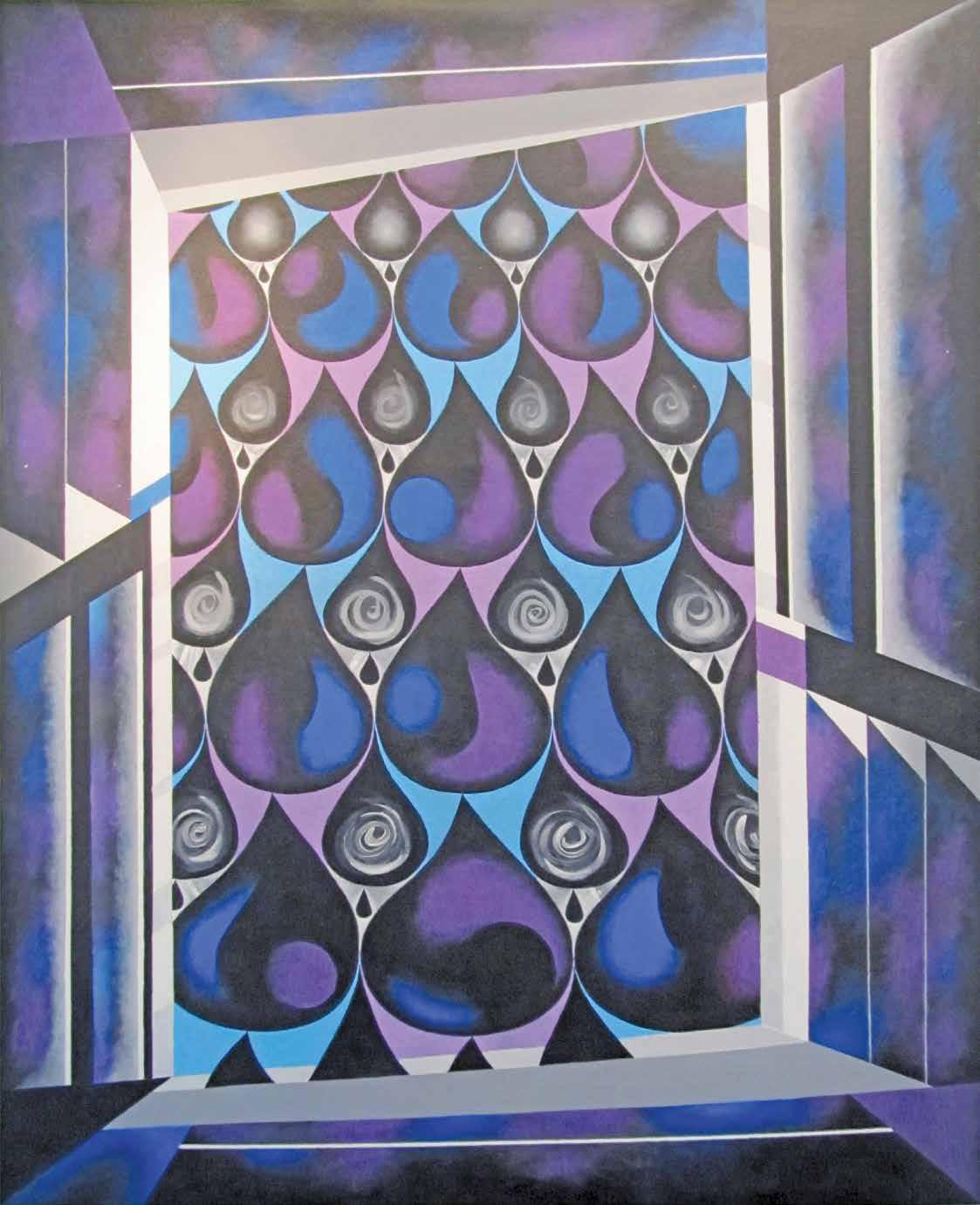
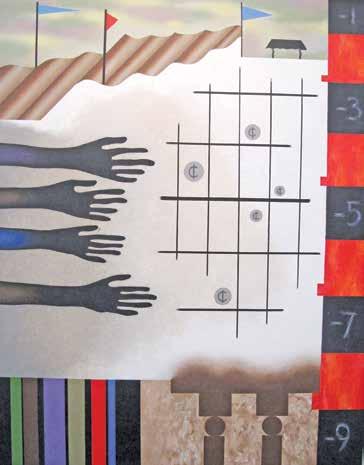
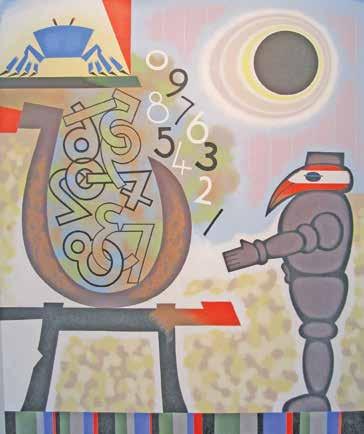
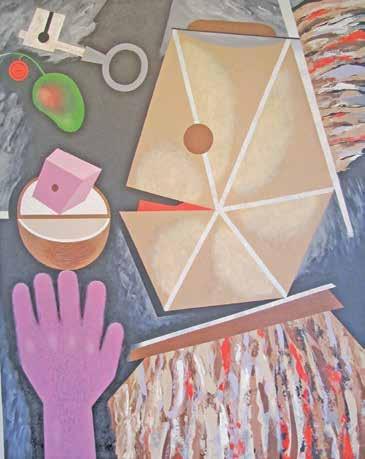
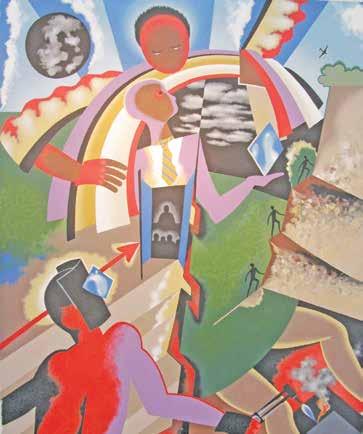
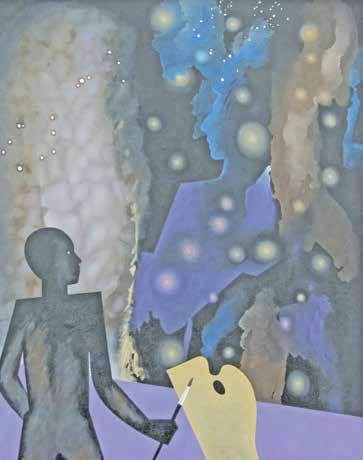
A“case of visual and verbal imagery engaged in dialogue” is the description of Stanley Greaves’, AA, latest series of 24 paintings being exhibited at Castellani House.
A mirror of the literary mind viewed from Greaves’s prospective, the series proves a complex one as described by the artist: “The paintings showed the evolution of visual language where visual complexity, illustrative mode in the earlier series was shunned in favour of presenting a single dramatic moment or image as symbolic interpretation.”
In a drive to connect with his surroundings by committing visual memory and experience of colours, textures, shapes and forms in images created in his paintings and sculptures, Greaves sought to “create paintings based on reading novels to deepen” his experiences. According to Greaves, novels written by Sir Wilson Harris, a Guyanese author, have “provided [him] with a link to understanding the nature of the impact of the landscape on life forms and its impact on [his] own way of seeing/sensing the place of things/events in [his] work and by extension in [his] cosmos”.
The series was accomplished by reading novels and in reacting to “text painting until the end”. While reading, Greaves would make notes about possible themes, themes that presented him with an image (but not a complete composition) which would develop as he painted.
A semi-abstract approach was thus utilised moving away from “detailed planning to a more organic” style where “intuition provided direction and drive”.
“I [would] begin with an
image, which as it developed, provided clues for composing the rest…,” Greaves explained.
Work on Dialogue with Wilson Harris originated in the 1960s, however, intensive work was not done until 2011 while reading the several novels and relating events, which allowed for the completion of the series in 2014.
Very talented in several areas, Greaves studied art in the Working Peoples’ Art Class led by E R Burrowes, after which Greaves taught for a few years at the Sacred Heart Primary and St Stanislaus Secondary Schools.
Greaves later left to study art at the University of Newcastle-on-Tyne, where he graduated with a BA (Hons) in Art and a Diploma in Art Education. Greaves also attended Howard University where he gained a MFA and helped design the first Arts and Craft Syllabus for the Caribbean Exam Council.
Notably, the artist is known for his work across several art disciplines where he has won prizes nationally, regionally and internationally. Not to mention, his poems where he has linked poetry to art just as he linked literature to art in Dialogue with Wilson Harris.
Dialogue with Wilson Harris, celebrating the 80th birth anniversary of Greaves, is currently ongoing at Castellani House, located on Vlissengen Road. The exhibition will continue until 29 November 2014. Admission is free. Gallery hours are 10:00 to 17:00 on Mondays-Friday and 14:00 to 18:00 on Saturdays; the gallery is closed Sundays and holidays. (Cover photo The Mirror of Tears (2014))

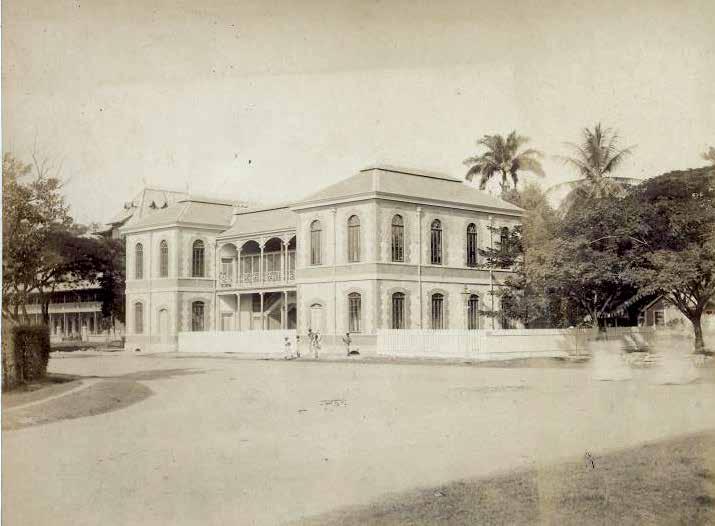
Dargan House is said to have been named after Patrick Dargan, a barrister who decided to dedicate his life to defending the poor classes against the planters and colonial authorities of British Guiana.
Born in 1850, Dargan, who was described as a “coloured”, became known as the “Defender of the People” and was honoured in the 20th century with a large painting of his image alongside other notable Guyanese on the domed ceiling of the GBTI bank Water Street location here in Guyana.
Dargan also spent his time running for political office, advocating “free and liberal education” for everyone in British Guiana society, and that civil servants should be hired “based on
competitive examination” rather than social standing – this at a time when class and social segregation were practiced.
While he did not gain a seat in the 1891 election campaign to fill three newly created seats in the Court of Policy after a new constitutional arrangement that same year, he campaigned again and was elected in the 1897 election along with Andrew Benjamin Brown, a black candidate.
Dargan also published a newspaper called “The Creole”, which was often referred to as “Tribune of the People”, as it maintained his advocacy and voice for justice and equality for the poor.
Patrick Dargan is reported to have died in 1908, after which his wife and three

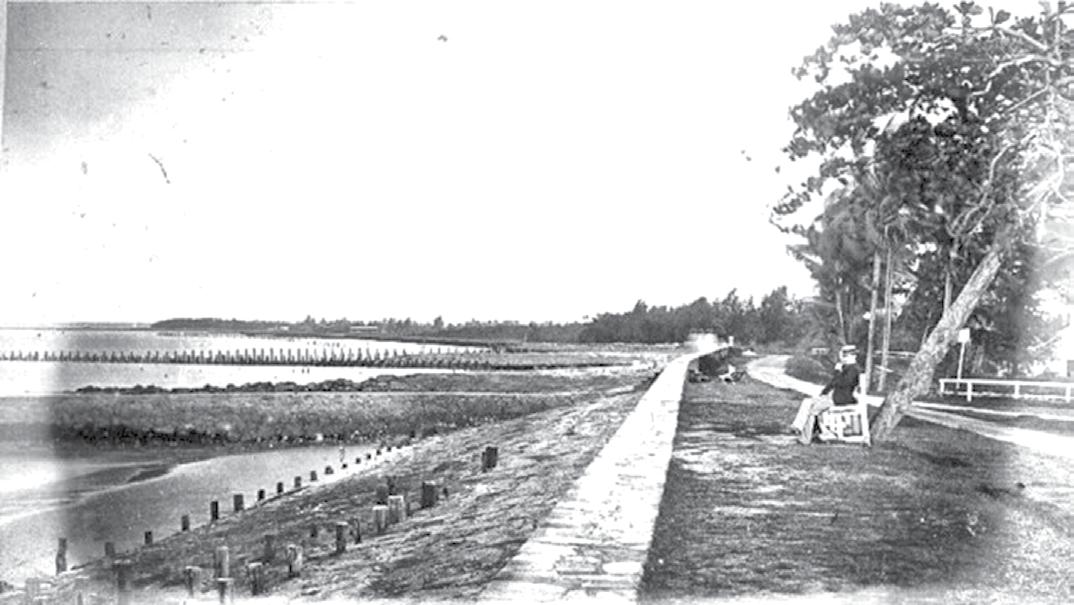

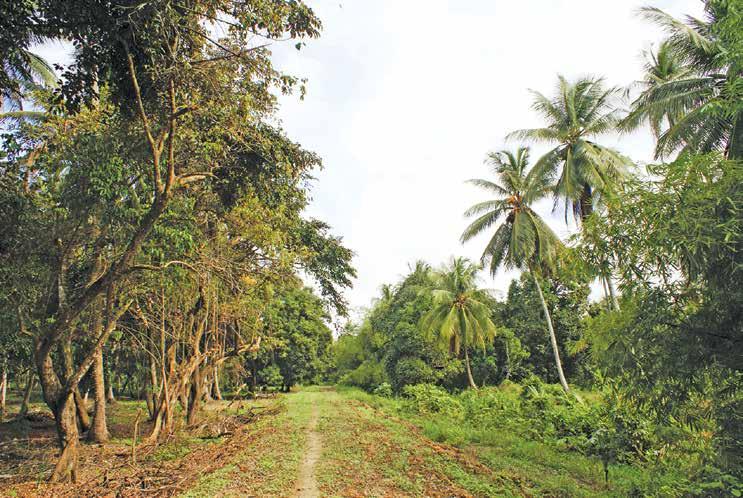
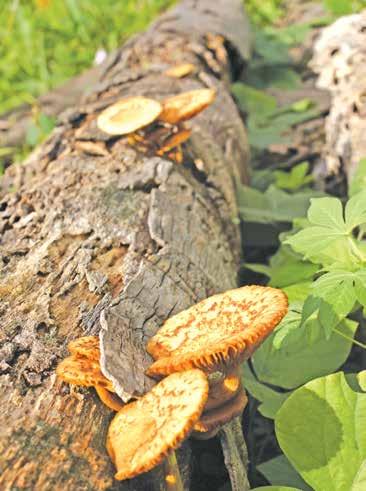
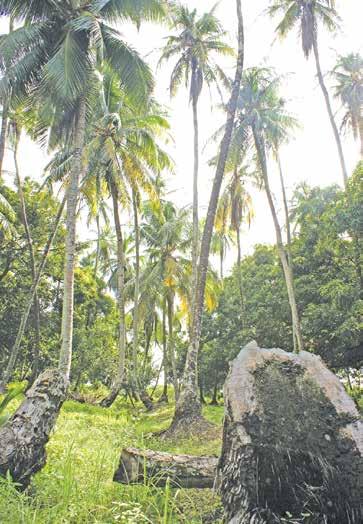
Enjoy a quiet and scenic tour of
on
some
a

In 1909, a British writer recorded thousands of Victorian slang words to make sure they were never forgotten. Reader’s Digest has put together a few for you to use them and sound awesome!
Juggins-Hunting
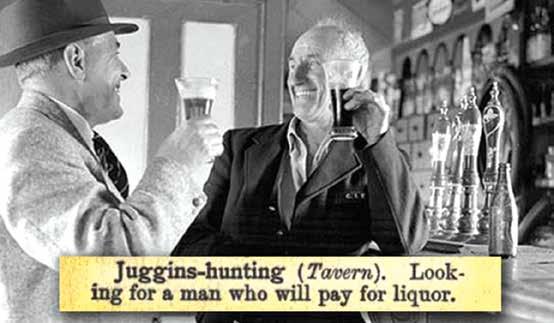
Usage: "Jess forgot all her cash at home, so she's off juggins-hunting again."

A blonde gets on an airplane and sits down in the first class section of the plane. The stewardess rushes over to her and tells her she must move to coach because she doesn’t have a first class ticket. The blonde replies, “I’m blonde, I’m smart, I have a good job, and I’m staying in first class until we reach Jamaica.”
The disgusted stewardess gets the head stewardess who asks the blonde to leave. The blonde yet again repeats, “I’m blonde, I’m smart, I have a good job and I’m staying in first class until we reach Jamaica.” The head stewardesses doesn’t even know what to do at this point because they still have to get the rest of the passengers seated to take off; the blonde is causing a problem with boarding now, so the stewardess gets the co-pilot.
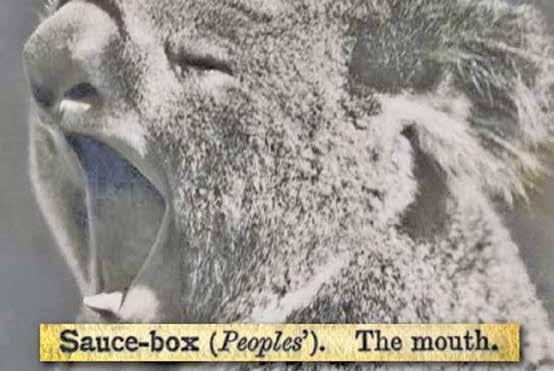
Sauce-box
Usage: "When my kids won't stop talking, I give them some chips just to fill their little sauceboxes."
bags o' mystery
Usage: "Hope there's no intestine in these bags o' mystery; I'm trying to cut down on intestine."

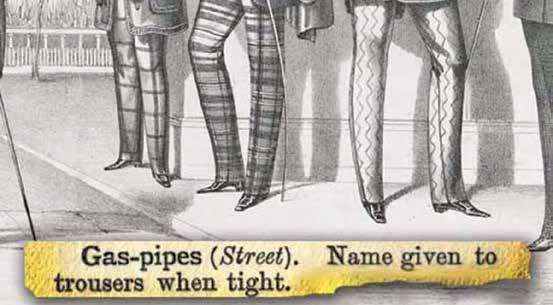
Gas Pipes
Usage: "I just saw this poor hipster get his gas-pipes stuck in his unicycle spokes and totally eat curb."
The co-pilot goes up to the blonde and whispers in her ear. She immediately gets up and goes to her seat in the coach section. The head stewardess asks the co-pilot in amazement what he said to get her to move to her correct seat. The co-pilot replies, “I told her the front half of the airplane wasn’t going to Jamaica.”
A couple of young boys were fishing at their special pond off the beaten track. All of a sudden, the Game Warden jumped out of the bushes.
Immediately, one of the boys threw his rod down and started running through the woods like a bat out of hell. The Game Warden was hot on his heels.
After about a half mile, the young man stopped and stooped over with his hands on his thighs to catch his breath, so the Game Warden finally caught up to him.
"Let's see yer fishin' license, Boy!" the Warden gasped.
With that, the boy pulled out his wallet and gave the Game Warden a valid fishing license.
"Well, son," said the Game Warden, "you must be about as dumb as a box of rocks! You don't have to run from me if you have a valid license!"
"Yes, sir," replied the young guy, "but my friend back there, well, he don't have one."
It had been snowing for hours when an announcement came over the intercom: "Will the students who are parked on University Drive please move their cars so that we may begin snow ploughing."
Twenty minutes later there was another announcement: "Will the twelve hundred students who went to move 26 cars please return to class."
There was this Christian lady that had to do a lot of travelling for her business, so she did a lot of flying. Flying made her nervous, so she always took her Bible along with her to read and it helped relax her.
One time, she was sitting next to a man. When he saw her pull out her Bible, he gave a little chuckle and went back to what he was doing. After awhile, he turned to her and asked, "You don't really believe all that stuff in there do you?"
The lady replied, "Of course I do. It is the Bible."
He said, "Well, what about that guy that was swallowed by that whale?"
She replied, "Oh, Jonah. Yes, I believe that, it is in the Bible."
He asked, "Well, how do you suppose he survived all that time inside the whale?"
The lady said, "Well, I don't really know. I guess when I get to heaven, I will ask him."
"What if he isn't in heaven?" the man asked sarcastically.
"Then you can ask him." replied the lady.
The Pastor
A pastor is walking down the street one day when he notices a very small boy trying to press a doorbell on a house across the street. However, the boy is very small and the doorbell is too high for him to reach.
After watching the boy’s efforts for some time, the pastor moves closer to the boy's position. He steps smartly across the street, walks up behind the little fellow and, placing his hand kindly on the child's shoulder leans over, gives the doorbell a solid ring.
Crouching down to the child's level, the pastor smiles benevolently and asks, "And now what, my little man?"
To which the boy replies, "Now we run!"
The Woods
In the back woods of Arkansas, Mr. Stewart's wife went into labour in the middle of the night, and the doctor was called out to assist in the delivery.
To keep the nervous father-to-be busy, the doctor handed him a lantern and said, "Here, you hold this high so I can see what I'm doing."
Soon, a wee baby boy was brought into the world.
"Whoa there Scotty!" said the doctor. "Don't be in a rush to put the lantern down... I think there's yet another wee one to come."
Sure enough, within minutes he had delivered another little baby.
"No, no, don't be in a great hurry to be putting down that lantern, young man... It seems there's yet another one besides!" cried the doctor.
The new father scratched his head in bewilderment, and asked the doctor: "Do ya think it's the light that's attractin' them?"