



Showcasing women in a positive light, their work, achievements, successful endeavors and talents, is the idea behind the Regional Women’s Affairs Committee (RWAC) Women’s Exhibition to be held on 24 September.
in Regions Five, Six, and Ten, while the Region Four space would launch this Wednesday,” Allen noted.
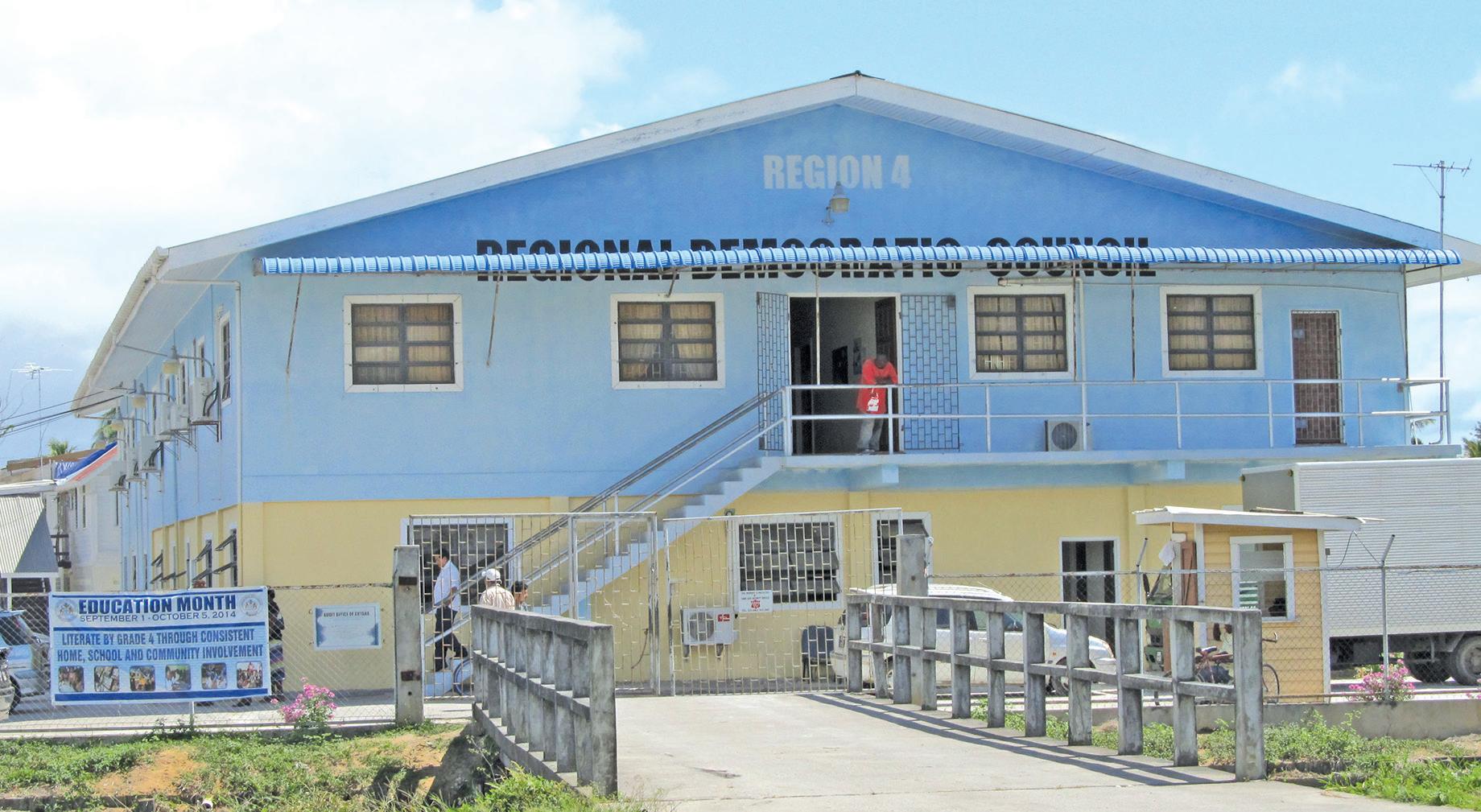
The new Women’s Space will be found in the Regional Democratic Council’s building in Triumph, East Coast Demerara, after its launch at the Women’s Exhibition. It will facilitate close collaboration with the Promotional Welfare department and is planned to be opened for two days a week initially and, depending on the frequency of visitors, extended to three days per week.
the development of women in the region and around Guyana.
The committee works in collaboration and welcomes the support of many women organisations in Guyana, including the Women’s Affairs Bureau, the Guyana Leadership Women’s Institute, and Help and Shelter.
Some of the most notable achievements made in last three years include: Two workshops in 2012 on the ‘Elimination of violence in schools and communities’; month of the elderly; numerous outreach and training sessions; and presentation of various honours for outstanding women on womenrelated days.
In an interview with Guyana Times Sunday Magazine, chairman of the RWAC, Genevieve Allen, outlined what the committee seeks to achieve through
The exhibition is expected to host over 20 booths showcasing the talents of women organisations, groups, individuals, and secondary school girls in several sectors.
the exhibition: “We have invited several women organisations, groups, and individuals to come and display their skills and achievements. Some in craft, garment construction, foods and even the health sector…nurses are coming in to demonstrate their skills. There will also be represen-

tation from a few secondary schools, young girls who will showcase projects from the Home Economics department, Agriculture Science, Industrial Technology and Visual Arts.”
The committee decided on the exhibition after agreeing that women issues, domestic violence and the rise of violence against women in Guyana are often highlighted in the media and social networks, thus creating the need for lighter topics. As a result, the committee chose to “bring something positive” to the table by showcasing women’s talents and skills.
“It is my hope that after the exhibition, seeing the skills and talents of women, the general public can identify with women and support their work,” Allen declared.
In keeping with their mandate to promote development of women across the region, the RWAC will also launch their ‘Women Space’ at the exhibition, a Women’s Affairs Bureau initiative that seeks to establish a space or facility in all regions where persons who need help can visit to seek assistance whether through counselling, representation or referrals.
“Women spaces have already been established
The Regional Women’s Affairs Committee, established in June 2012, was formed under the Regional Democratic Council to identify and solve issues affecting women in the region. It is comprised of two executive members, the chairperson, appointed by the Regional Chairman, and the secretary, the principal person in
With their most recent endeavour, the RWAC hopes that bringing women together for the exhibition will facilitate peer learning by ‘providing a forum where so-
the committee.
The committee, which seeks to be as diverse and impartial as possible, is currently made up of 13 members, including representatives of each major political party both males and females; the secretary, Rhonda Marshall; and Allen.
Since its inception, the RWAC meets monthly to address issues by planning workshops, discussions, presentations and numerous programmes to promote
cial interactions can strive, learning from each other and building on past mistakes’.
The Women’s exhibition, which is scheduled to begin at 11am and conclude by 4pm on Wednesday to accommodate the participating students, will be held in the Regional Democratic Council’s compound in Triumph, East Coast Demerara.
Call 220-8917 or 6097549 for more information.

For 15 years, the Rotaract Club of Georgetown, via its Sophia Literacy Programme, has provided necessary tools for youths to become future leaders
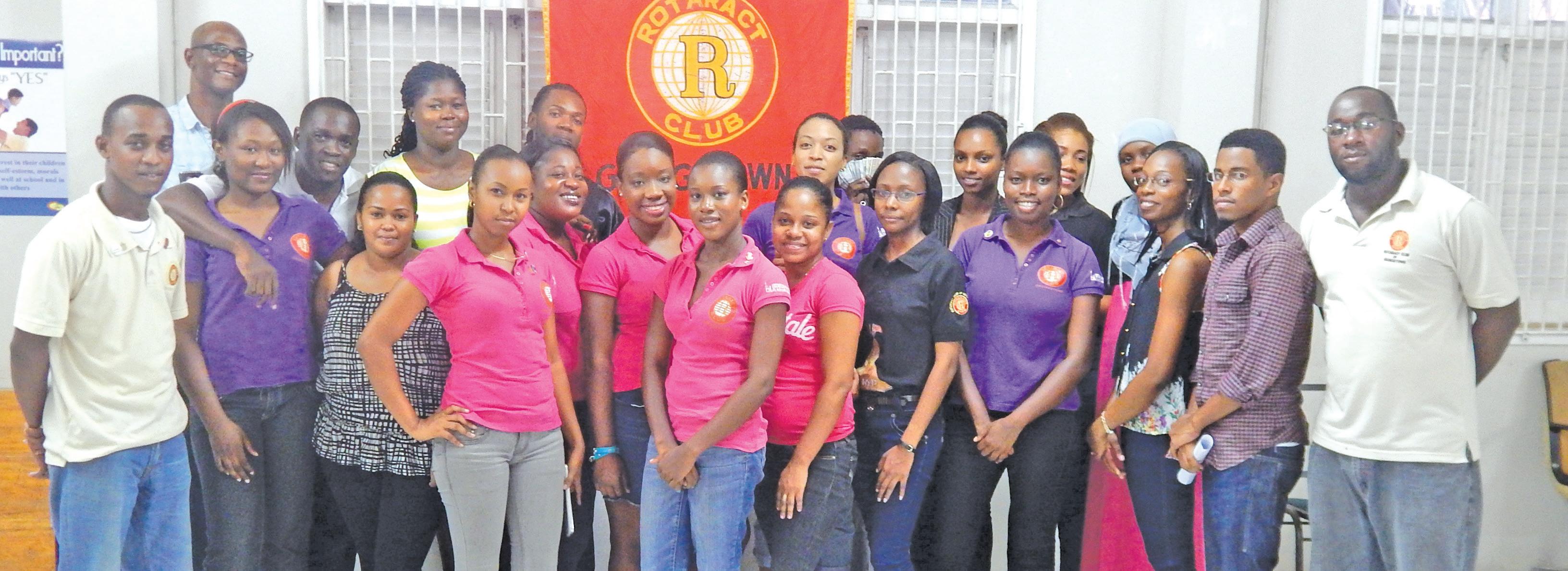
In keeping with the spirit of Education Month 2014, the Rotaract Club of Georgetown (RCG) launched their newly restructured Sophia Literacy Programme yesterday at the Sophia Exhibition Centre.
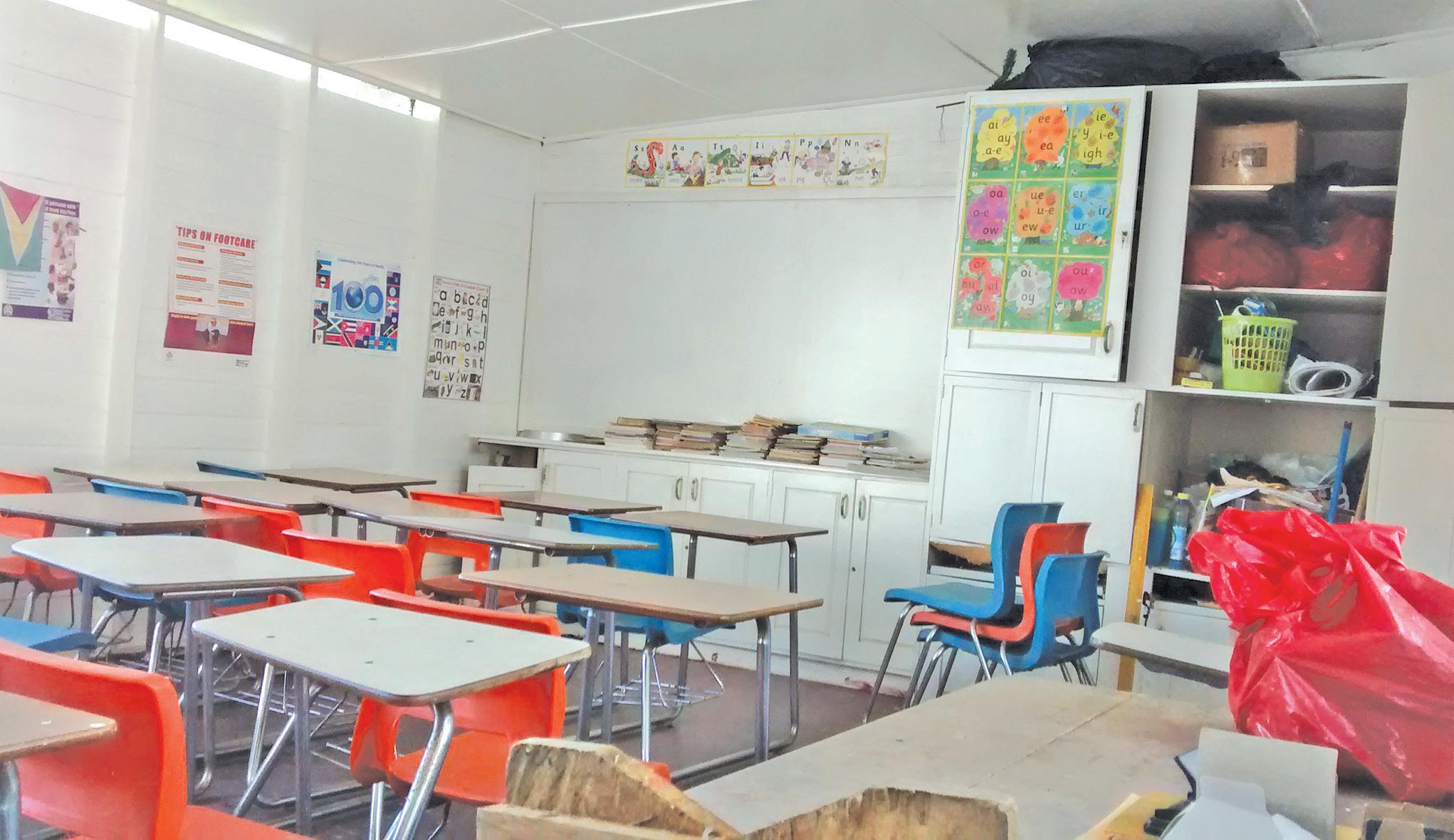
At 15 years old, the programme, which has been in existence since 1999, was implemented to provide remedial literacy classes, in reading, writing, and phonics, offering academic assistance for students ages 4 to 12 in and around Sophia.
During an interview with the club’s current president, Kevin Fogenay told the Guyana Times Sunday Magazine that the Sophia Literacy Programme has undergone several changes for the new term.
“Several changes were made to the programme. It
was revamped to accommodate present conditions in finances, environment and so forth. For instance, the classes catered for children from Grades One to Six; however, we will now focus on students from Grades One to Four,” Fogenay pointed out.
Other changes made from the initial proposal includes a reduction in the amount of teachers hired by the RCG to tutor the children, class room composition, procedure for composition selection and a reduction of class time.
“Initially, classes were held on every Saturday from 9am to noon, however, while the day remains the same, classes will now be conducted from 9.30am to 11am,” Fogenay explained.
A mixture of fun and learning, the literacy pro-
gramme includes field trips and annual Christmas parties. “We try to keep it fun. It’s not just a place for learning, but a place with a lot of extracurricular activities, field trips, kite flying, Mashramani parades and the like,” he noted.
Fogenay continued: "At the end of each class, we also try to provide snacks for each child. Thanks to our donors, we have been able to continue this tradition. However, in the pass year it has become increasingly difficult to do so and, sadly, this term's snacks have been suspended from the programme.”
Nonetheless, the RCG has pressed on over the years against all odds by running the three-month long programme annually with two terms each year

similar to that of a regular academic schedule.
“On the first day of class, the Ministry of Education’s diagnostic test will be administered to the students which will allow the teachers to place them in a class based on their reading ability. We are no longer going to group them by age,” Fogenay disclosed.
He explained that at the end of each semester, the diagnostic test is given to gauge the progress of the students for the next term. Fogenay added that the test is “devised in such a way to ensure that all the students at the end of the year will be able to at least read at a Grade Four level”.
True ‘givers’ in every sense, the RCG employs three trained teachers (five before the restructure) to conduct the classes, while no less than six Rotaract members are on hand to assist
the teachers and conduct a fun and educational activity
with the children during the break period.
With the grand total of GY$500,000 to keep the programme running annually, and the direct contribution of the RCG members, coupled with solicited funding from various public and private sector entities, and a series of fundraising activities, the club strives to get by.
The Rotaract Club of Georgetown established on 1 July 1985, is the oldest Rotaract Club in Guyana with 29 years of service. It was created for individuals from ages 18 to 30 residing, employed or studying in Regions Three or Four who are dedicated to community and international development.


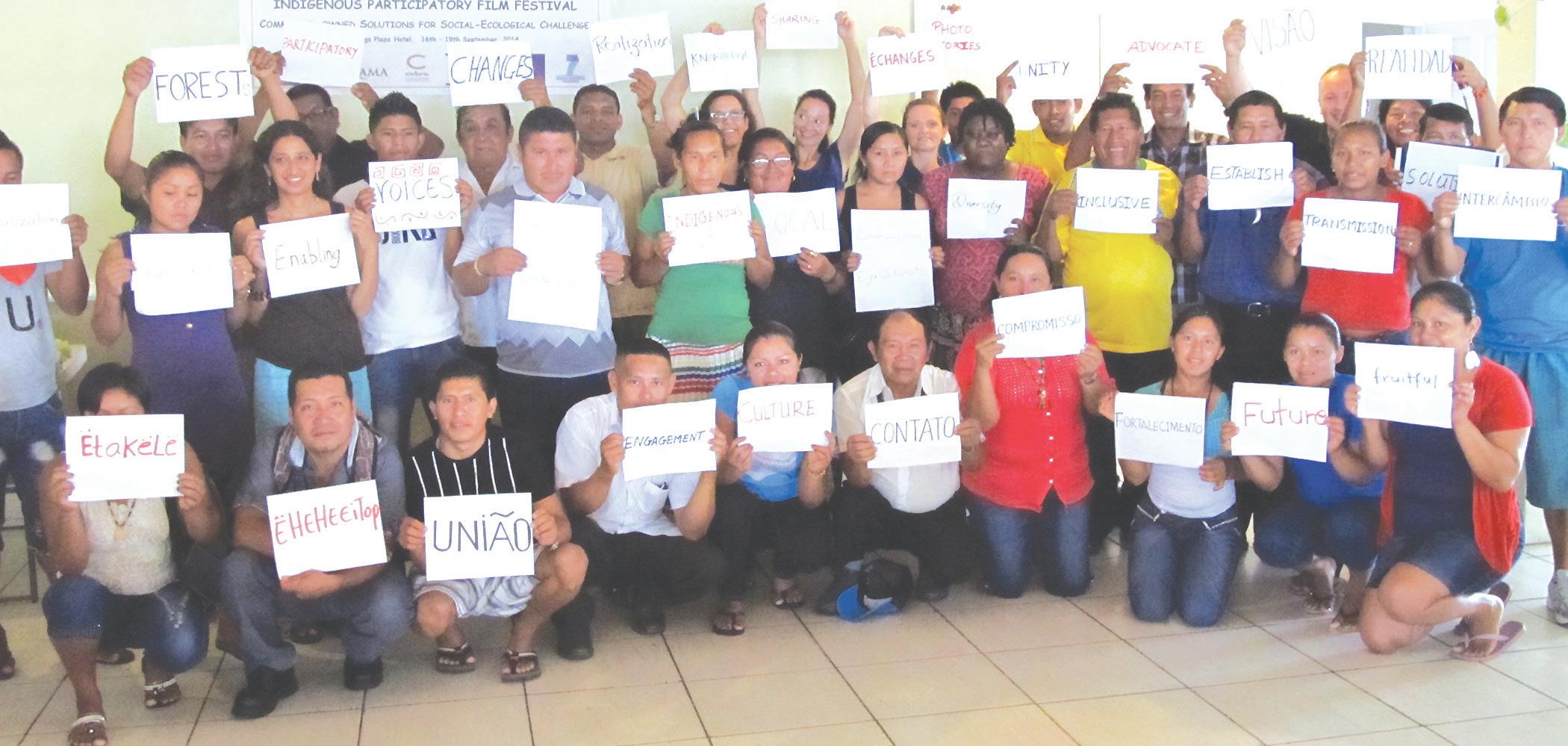
‘Contato’ (contact), ‘realidad’ (reality), ‘compromisso’ (engagement), sharing, cooperation and solutions are just a few of the words the indigenous society used to describe their experiences and thoughts of the Project COBRA, Indigenous Participatory Film Festival, during a storytelling activity.
Promoting community-owned solutions in the Guiana Shield region by identifying best practices among indigenous communities; utilising participatory
videos and photography; and to engage other communities in sharing experiences and solutions is the basis upon which the Cobra Project, which was established in September 2011, is created.
In the final six months of the project, the COBRA team shared the fruits of its labour with the rest of the world through a series of short films made across the region via its Indigenous Participatory Film Festival and on the official webpage.
“The festival has really opened dialogue for indigenous peoples, been a source of empowerment with the ability to showcase their work, and provided solutions to a wide spectrum of indigenous and non-indigenous people,” the project coordinator Dr Jay Mistry, told the Guyana Times Sunday Magazine.
Mistry noted that after viewing the film at the opening ceremony of the threeday festival, many representatives of the various indigenous communities felt comfortable enough to voice their concerns during the discussion period.
The data collection and community engagement were done entirely by indigenous researchers who were trained in the project’s infancy stage on the use of video
and key concepts of research, and the project itself.
“None of the research working with these communities was really done directly by the European workers. We mainly facilitated the process and provided necessary support for the indigenous researchers with much emphasis placed on the capacity building of the team,” Mistry explained.
Each day, from the 17 to 19 September, a film was revealed to an enraptured audience on the various com-

nities and backgrounds were able to share similar challenges,” Mistry disclosed.
The project used a very different approach for engagement; the process begins with the assumption that communities have solutions for issues they face. Thus moving away from what is called the “deficit model” to addressing issues that encourage dependency.
munity-owned solutions to numerous community, social, environmental and cultural issues across the Guiana Shield.
Some of the tribes that participated in the production of the film included the Tiriyo, Makushi, Wapishana, Wayana and Pemon and was in conjunction with members of the North and South Rupununi region of Guyana.
Born through the collaborative efforts of ten groups/ institutions, including supporters from the European Commission, Iwokrama International Centre, Royal Holloway University, Apitikatxi and the Open University in the United Kingdom, Project COBRA was created for the common love of indigenous societies and the need to see sustainable development in the communities.
The project is separated in into two major phases: Phase one includes dealing with the identification of community owned solutions and narrowing down the best practices; and phase two includes the exhibition of the best practices through the engagement of other groups with short films and discussions.
“Using visual methods proved very useful since it assisted persons to project themselves and voice their opinions easier and without barriers. It promoted horizontal-to-horizontal learning as people from different commu-
Mistry expounded: “The communities were able to identify with the problem and hence opened to adopting the community owned solutions from their counterparts. They were able to learn from each other not just some foreign expert coming in to say do this or that. No! These solutions are coming from the community themselves which is very inspiring and empowering for them.”
Therefore, a need arises to rethink the way indigenous communities are engaged by using community-owned solutions and visual methods. This has resulted in the creation of a Declaration Video by the Project COBRA team.
In the evening, the team showcases the films and has discussions, but in the morning the COBRA team works on a Declaration Video which seeks to group the opinions of all the participants to make a ‘statement’ on how organisations/institutions should engage them and some of the ways this can be done.
According to Barnie Robertson, a community researcher and the cameraman, “it is a declaration for decision makers around the world, to show them that local solutions are working for indigenous societies. So that these decision makers and further stakeholders can in turn implement these solutions”.
The COBRA team’s next conference is set to take place in Brussels, Belgium, January 2015 to engage policy makers and stakeholders along with members of the European Commission to garner input from European parliament, international nongovernmental organisations and other funders.
It is the aim of Project
COBRA to present the Declaration Video, filmed in Guyana during the Participatory Film Festival, at the next conference in Brussels.
All the short films at the festival were showcased under a different theme with exhibition sessions, video screening, film trailers, photo stories and storytelling corner. The highlight of the event was the showing of the short films followed by a panel-led discussion.
At the Kings Plaza Hotel on Main Street, the film festival began with the ‘Cultural Transmission of Best Practices’ film and progressed to include natural resource management productions and climaxed with the arrival of the Minister of Foreign Affairs, Carolyn RodriguesBirkett.
“I would like to express my gratitude to the participants of the project especially those who have travelled to get here particularly in September for Amerindian Heritage Month”, RodriguesBirkett thanked the attendees at the film showing.
The COBRA Project is supported by a three-year grant from the European Commission Seventh Framework Programme. For more information, visit Project COBRA on Facebook.
In the rustic surround-
ings of a new housing scheme, with neighbours close and frequent sightings of caimans and coral snakes in one’s backyard, Melanie McTurk, nee Kirkpatrick, reminisced about growing up in Jamoon Drive, Meadowbrook.
“My parents were among the first to move into the that area when it opened up ‘cause places like Meadowbrook, Lodge and South were on the outskirts of Georgetown,” McTurk recalled.
Sitting with Melanie in a cool air-conditioned office of Cuso International, Guyana Times Sunday Magazine gained a glimpse into the life of a true humanitarian.
Growing up in a nuclear household, with her parents and two younger brothers, Melanie, as she is commonly called by her loved ones, had a religious and strong family-oriented background.
“Our family was small, but up to the 1980s we were a larger family with my maternal uncles and cousins very close to the family… having family lunches and so on,” she remembered.
She jokingly recalled how her family grew apart dur-
her past, one can trace the strength of her character and in her genes with mother Margery and paternal grandfather, Keith Isle Raulluxs Kirkpatrick, OBE. Melanie’s mother is well-known for her contributions to the Chinese community in Guyana and the nation at large for which she was awarded the Medal of Service and, more recently, chronicling both the Guyanese Chinese experience and the family trees of the older Chinese families in Guyana. Keith Isle Raulluxs Kirkpatrick was the first Guyanese Post Master General of Georgetown, honoured for his work supervising the construction of the original GPO building. He even has a street named after him in central Georgetown just outside the National Museum.
“Family is very important to me and I remain in daily contact with them… I see them every day.” she further noted. “Also I would say we are very inclusive in that we collect people we aren’t necessarily related to but feel affection for; valuing the social bond that goes beyond genetic linkages.”
As a child, Melanie de-
with dyslexia in her primary school days.
“At 12 years old I remember envying people in church who would read out loud, it wasn’t until well into high school that I mastered reading and even now I confess I am a slow reader,” she disclosed.
As the time to write the Common Entrance Examinations, now Grade Six Exam, approached Melanie recalled her headmistress at St. Agnes Primary School barring her from taking the exam because of her grades.
“The headmistress at St. Agnes Primary told my mother she wasn’t going to let me write the exam because I was struggling so much and I wasn’t smart enough. So my mother, confident that I can overcome it, took me to Stella Maris. She just figured I was a child who was struggling, it was until later that I realised it was dyslexia. In those days people in Guyana didn’t really know about such things,” she revealed.
Melanie was able to sit the Common Entrance Examination and was awarded Bishops’ High School against all odds.
Melanie from higher education or professional success. She later graduated from the University of Guyana with a Bachelor’s Degree in Chemistry and today promotes community development in her role as the acting Country Director of Cuso International.
When asked why community development after studying chemistry, McTurk answered, “Because I feel our country has a long way to go and I enjoy being a part of the process that enables people to realise their dreams.”
Moreover, working at Cuso International, a Canadian-based voluntary organisation that sends volunteers around the world to work with local partners to build capacity for sustainable development, she attains this fulfilment.
“I immensely enjoy my work…it is a wonderful thing being able to support local partners to recognise and articulate their own ambitions and to be able to implement programmes that allows the access of these skills to recognise those dreams,” Melanie pointed out.
The humanitarian added
ing the second depression of the late 70s early 80s: “I remember when the financial hardships of the 70s and 80s really hit, many of what in those days would call the middle class Guyana started leaving, our family contracted increasingly as I am sure many others did.”
Delving deeper into
scribed herself as shy, terrified of common childhood games and refusing to run thinking of it as undignified. She stated: “People thought of me as a difficult child but I don’t think so, I was just reserved.”
Down to earth and fun to be around, Melanie sobered as she spoke of her struggles
“I am a December baby, and as such we only have one shot at Common Entrance, so at Stella Maris, with incredibly supportive teachers, I managed to do good enough to get Bishops’ High School, my parents were the one who knew I wasn’t a stupid child,” she expressed. Dyslexia did not stop
friends from her university days almost ten years ago. The name Eiripan is taken from a Macushi word meaning “to share”. Central to all Eiripan projects are the ideals that every child is entitled to a sense of personal worth, that literacy is a necessary tool for development, and that personal participation in the development process is key to stronger and better futures.
According to Melanie, the organisation was established after she spent five years living in the Rupununi with her husband and in-laws assisting with the daily administration of Karanambu ranch. “I had just had a baby and was fully immersed in the lifestyle of the Rupununi.”
As a result, Melanie was able to gauge the hardships of the people in the region, particularly those with children in accessing basic tools for education. Subsequently she established Eiripan with the primary objective to encourage children in the Northern Rupununi to go to school and become educated.
“This project is about recognising the value of individuals and knowing that literacy is key to development. Before we can dream about a better community we must be able to dream of a better way. Inspiration is garnered through reading …its one of the ways that that we learn what is possible,” she declared.
awareness to the Rupununi region and the beauty of Guyana.
Truly altruistic, Melanie does not view her good deeds as giving back to the community but as, “…fundamental to being a part of society”.
“I think I have been immensely fortunate in life. I am this way because this is the way people are as far as I know it. The people I have known in my life are all people who have given tirelessly to promote development, my heroes like Lynette Dolphin, where would culture and education in Guyana would be without Lynette. Billy Pilgrim, music and culture, Mashramani…Diane McTurk, my own mother Margery Kirkpatrick, Edith Peters; who used to be with the Ministry of Education, Carmin Jarvis who was with UNICEF for so many years. Magda Pollard, one of the founders of Carnegie and one of the first women to sit on at the Caricom’s Gender Desk, and Derek Barnard, former Minister of Education. I was surrounded by all these role models as a child. Even in terms of my grandfather, whose pride was that he was one of the first Guyanese to hold such a prestigious position as the Post Master General.”
that she believes “development should always be driven by people themselves and should not be determined by external factors”.
This conviction, it is assumed, is responsible for her valiant efforts with Eiripan, a non-profit organisation she established with her husband and several
Consequently, the Eiripan project, for the last ten years, has provided Christmas gifts, backpacks with school supplies and toiletries, nursery kits with learning toys to nursery schools and most recently ‘Good Job’ awards for students who excel at the nursery and primary level in the Rupununi region.
“We also collect books to donate to several villages to assist in building libraries again in keeping with the theme literacy is the key to development.”
Melanie also spoke of Eiripan’s mandate to bring
Melanie concluded highlighting the unfortunate fact that we hardly find heroes in our own culture when Guyana produce people who dedicate their lives daily to make the country a better place. “I don’t know how to be any other way with the example I have had…we not only need to show youths they are the future but provide positive examples and opportunities.”
Melanie believes that there is a lot we can do to support each other and being selfish and thinking about one’s own advancement is not the way “because if you truly want a better life you need to affect change for the better in others too”.
By PetamBer Persaud
Victor Ramraj was always prepared to promote the apprecia-
tion of literature whether it was the literature of Guyana, the Caribbean, Canada, or the wider world. In his work, covering several decades,
Ramraj had presented papers and lectures on significant and established writers like Wilson Harris, Denis Williams, V S Naipaul, Derek

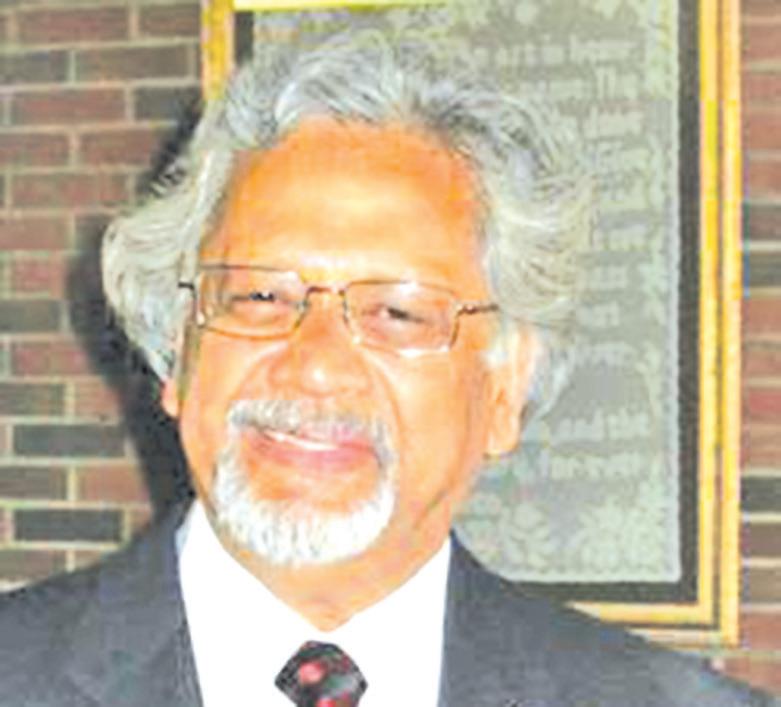
Walcott, Samuel Selvon, Neil Bissoondath, Jean Rhys, Arundhati Roy, Timothy Mo, Salman Rushdie, Mordecai Richler, and Paul Theroux, portraying the range of his scholarship. On his final trip to Guyana, the land of his birth, Ramraj delivered a sterling presentation on Alice Munro of Canada, Ramraj’s adopted home since the 1970s. (Munro is the first Canadian woman writer to win the Nobel Prize for Literature.)
Ramraj was born in British Guiana where he exhibited a leaning towards literature before migrating to North America. In the late 1950s, his imaginative writings were published in the Chronicle Christmas Annual at a time when it was a distinct honour to be published in that magazine. (That magazine, now published under the title ‘The Guyana Annual’, will celebrate its centenary in 2015, having being launched in December 1915.) One of his stories, ‘The Dead Son’, performed at the Theatre Guild, Guyana, earned him the Playwright of the Year Award. That was the first of many awards to crown his impressive literary output. In the 60s, he taught English at one of Guyana’s most prestigious learning institutions, Queen’s College, eventually heading the Department of English. That firm literary foundation he attained in Guyana was extended on with a BA in English (Honours) from the University College of the West Indies (London) – now UWI, Mona Campus – in Kingston, Jamaica. At that university, he also found his helpmate, wife, and lifelong friend, Ruby. Ruby Ramraj is attached to the University of Calgary. Victor Ramraj went on to gain his M A and PhD from the University of New Brunswick. His dissertation was titled, ‘The Ambivalent Vision: Mordecai Richler and the Satirical Tradition in the Canadian Novel’. He was an authority on post-colonial studies including satire, comedy and humour. At the time of his passing, Ramraj was Professor of English at the University of Calgary, previously have served in the capacities of Assistant and Associate Professor.
While the University of Calgary was his base, Ramraj’s ambit of operation included the far reaches of the earth, supported by invitations to share his knowledge, sit on panels of judges, moderate at conferences, supported by numerous research grants and awards, and his devotion to family. Victory Ramraj served on the panel of judges for the Commonwealth Prize, the Annual Raja Rao Award (for most distinguished writer of the Indian Diaspora), New Delhi, and on more than
Literature and Language Studies. He also served on the Board of Directors for the Canadian Federation for the Humanities; and was a member of the Editorial Advisory Board (Humanities), Broadview Press, Peterborough, Ontario.
‘Concert of Voices: An Anthology of World Writing in English’, can be considered his magnum opus. ‘Concert of Voices’ was an ambitious project consummately executed by Ramraj who admitted it was a “formable task” buffeted by numerous constraints which he overcame with his overriding concern for “human commonalities”. Ramraj took great pain and pleasure in highlighting the parameters within which he worked: ‘the selections can be used to show that literature alerts us to the common and shared in human experience, whatever our own particular cultural, ethnic, historical, national, or political attachments – “the old Adam is the same”’. Other endearing qualities of that massive anthology were the inclusion of writers whom may be slighted by specialised/formal anthologies and the inclusion of eight Guyanese writers who had to ‘define themselves in relation to current or resid-

one occasion he was elected to chair the panel of judges for the Guyana Prize for Literature. His contribution to world literature included securing grants for publication like the journal ARIEL and for researching Caribbean short fiction.
Ramraj was president of the Canadian Association of Learned Journals; editor of ARIEL: A Review of International English Literature; president of CACLALS: The Association for Commonwealth
ual imperial presences or to dominant cultures within their societies or to both’. ‘Concert of Voices’ combines poetry, fiction, drama, and essays in an anthology of world literature in English.
Victor Ramraj made an enormous contribution to literature - a legacy that will continue to benefit mankind for a long time.
Responses to this author telephone (592) 226-0065 or email: oraltradition2002@ yahoo.com
There are endless rationalisations that we can use to explain why we settle for less than what we have the capacity for. We can get into the habit of accepting less from ourselves and, in turn, start expecting less from life. It’s so easy to fall into the habit of using where we have been, or what has happened to us, as a reason, explanation and defence as to where we are now. But, as much as this word may feel uncomfortable because it shines the light back on ourselves, aren’t they all just excuses?

by Dr Julie Doobay
Excuses serve as justification to limit our ability to rise to our true potential. When you believe the excuses you habitually use, you also unconsciously set a bar as to what you are capable of achieving. Many of the reasons we use to explain why we continue doing what have always been doing stem from our own self beliefs. But when the life you are living is not in alignment with the life you were meant to live, it feels as though something is missing.
You can hear yourself saying all the right things to explain why everything is the way it is. There is a logical reason to justify your current situation, but deep down inside something does not sit right with you. You know that you haven’t even tapped into your potential. Within your heart, you know that there’s a deeper reason for your life. There’s a dream deep in your heart that is bigger than the life that your mind can ever conceive. You do yourself a disservice anytime you allow an excuse to extinguish your ambition.
Think about how many times you have given up on something because you told yourself, “I’m not smart enough”, “I’m not strong enough”, “I’m too fat”, “I’m too small”, “I don’t have enough money”, or “I don’t have enough time”. The most interesting thing about excuses is that they are not fact. You will never really know that you do not have what it takes to succeed if you never try. Excuses are what you tell yourself to justify not taking a risk and moving out of your comfort zone.
Start to question the validity of the excuses you make for your actions or inactions. You’ll start to see that an excuse is not based on truth and only exists to keep you from stepping outside of your comfort zone. Yes, it is inevitable that you will experience up and downs while you’re chasing your dreams. You will encounter obstacles that make you question yourself and your abilities. But it’s what you tell yourself in the face of those obstacles that make all the difference, that keep you growing and moving towards your dreams and purpose. When you’re willing to think outside of your limitation, excuses disappear. You may not have excelled at something in your past, but that doesn’t preclude you from future accomplishments. Best of all, possibilities and opportunities start to present themselves when we focus on what we can achieve.
Anything worth achieving in life will always come with complications and uncertainty. Sometimes these complications actually result in unleashing strengths and attributes you were unaware that you even possess. Don’t let excuses keep you from realizing your true potential. Making excuses as to why you couldn’t achieve your goals, or move forward with them, will only help to keep you where you are. When you look back on your life so far, whatever excuse you can come up with is never going to be the true reason you didn’t achieve your goals. Instead, ask yourself, “What excuses did I use, believe in and give in to? Did I give up too soon?”
Don’t let what has happened in your past be your excuse not to move forward with life.
“The only thing standing between you and your goal is the b*****t story you keep telling yourself as to why you can't achieve it.” - Jordan Belfort
Dr Julie Doobay, of Guyanese heritage, is a wellnessfocused Chiropractor whose personal journey of conquering a debilitating brain infection to becoming a chiropractor is a unique and powerful story about learning to trust in the restorative capacity of the human body and in the power of focus and determination to overcome incredible odds. Drawing on both her professional and personal experiences, Doobay has developed a unique and effective five-step programme entitled, “Dr. Julie’s Abilities Realization Process”, which guides patients through a process of healing that begins with discovering how their body holds stress, trauma and perceived limitations and ends in believing in and realising their own unique abilities and gifts.

After winning the title, Miss Amerindian Heritage 2013, Analisa Andrews continues to promote youth development, not only in her community but throughout Guyana. Born 3 September 1992 and raised in Moraikobai, Region Five, Andrews attended Moraikobai Primary and Mahaicony Secondary. The reigning Miss Amerindian Heritage is now reading for her Bachelor’s Degree in International Relations at the University of Guyana. It was no surprise her platform was youth development because Andrews consistently demonstrates that she truly believes that youths can play an integral role in the development of their communities through education. She continues to work with her youth groups, Boratahu Youth Organisation and St. George’s Lancer Youth Group, promoting education and support for youth people in Guyana. Recently, she visited the Mahaicony student dormitory “to inspire and share [her] own experience of living in a dormitory for five years”. Andrews advocates the importance of education and ask youths to “remember change begins with [them] and if there is anything [they] can do to make a difference, this is the time to start doing it”. The beauty continues to “honour her culture while advancing her future” by pursuing her degree, advocating for youth development, promoting her culture, and still finding to sit back and enjoy a serving of crispy fried otocumba (tacuma worms) with thin cassava bread and a long glass of cassiri. She lives by the adage by Mahatma Ghandi to “be the change you want to be in the world”; enjoys travelling and giving back through social and voluntary service.

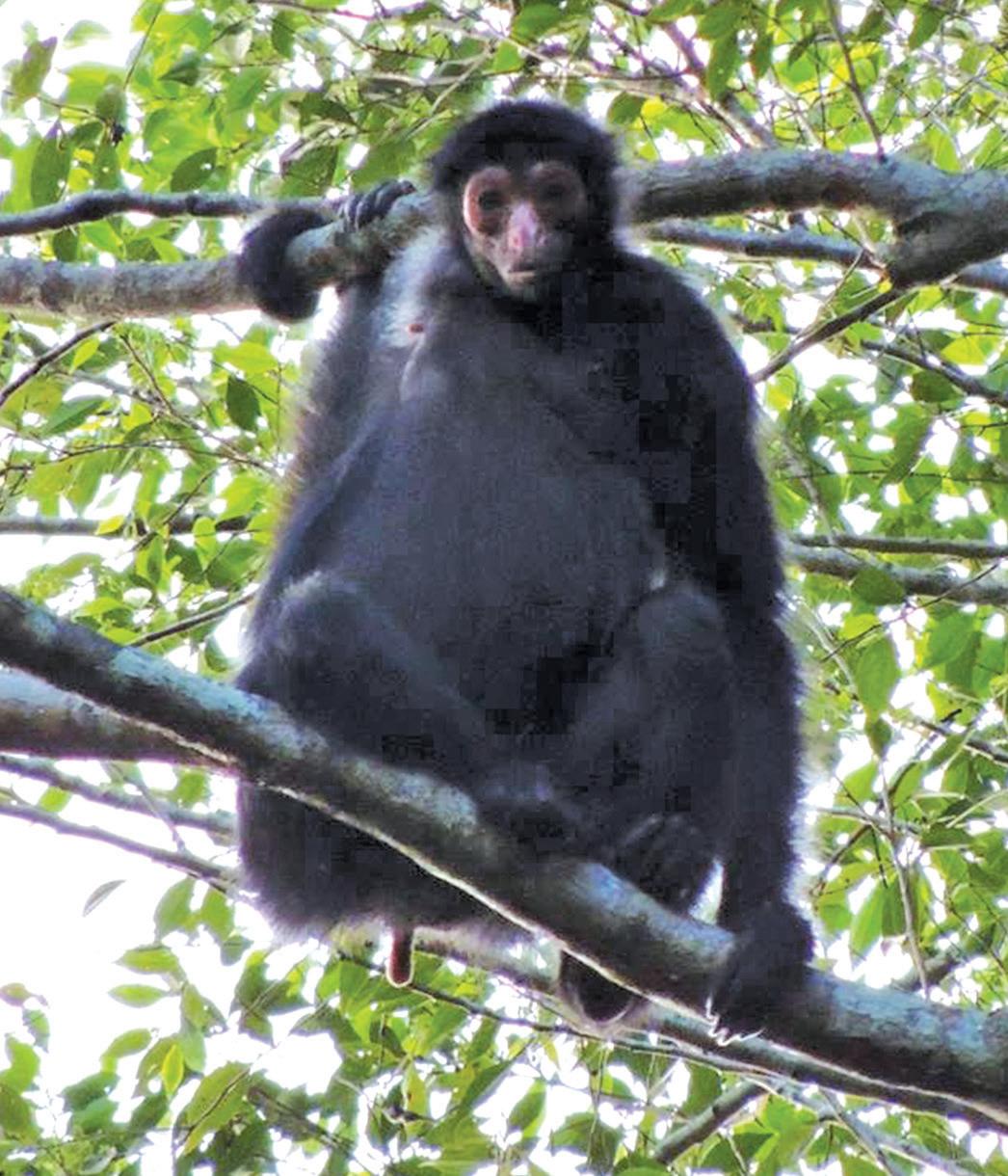
Spider monkeys, scientific name Ateles, (of several species) live in the tropical rain forests of Central and South America and occur as far north as Mexico. They have long, lanky arms and prehensile (gripping) tails that enable them to move gracefully from branch to branch and tree to tree. These nim ble monkeys spend most of their time aloft, and maintain a powerful grip on branches even though they have no thumbs.
These New World primates are social and gather in groups of up to twoor three-dozen animals. At night, these groups split up into smaller sleeping parties of a half dozen or fewer. Foraging also occurs in smaller groups, and is usually most intense early in the day. Spider monkeys find food in the treetops and feast on nuts, fruits, leaves, bird eggs, and spiders. They can be noisy animals and often communicate with many calls, screeches, barks, and other sounds.
Typically, females give birth to only a single baby every two to five years. Young monkeys depend completely on their mothers for about ten weeks, but after that time they begin to explore on their own and play amongst themselves. Mothers continue to care for their young for the first year of their lives, and often move about with their offspring clinging to their backs.
Some often hunt spider monkeys for food, and the animals are usually agitated by human contact. Logging and deforestation continue to shrink the space that spider monkeys are able to call home.
Fire is a chemical reaction between oxygen in the air and some kind of fuel, like gas or wood. For a fire to take place, you have to heat up the fuel to a high-enough temperature for it to ignite (burst into flames). For example, an adult gets wood and heat it up to a very high temperature, either with a match, friction (rubbing two pieces together), or focused light (like when you use a magnifying glass to concentrate the sun’s rays). When the wood gets to the temperature of around 300 degrees Fahrenheit (148 degrees Celsius), some of the material that it is made up of decomposes (crumbles). Then, some of this material is released as smoke, while the rest forms charcoal and ash. Ash is made up of minerals in the wood, like calcium and potassium, which don’t burn. When the gases released from the decomposing wood get to around 500 degrees Fahrenheit (260 degrees Celsius), the wood breaks apart and burns. A side effect of this chemical reaction is lots of heat, which keeps the chain reaction going. That’s why the fire keeps going, too.

The objective of the game is to fill all the blank squares in a game with the correct numbers. Every row of 9 numbers must include all digits 1 through 9 in any order. Every column of 9 numbers must include all digits 1 through 9 in any order. Every 3 by 3 subsection of the 9 by 9 square must include all digits 1 through 9.
Type: Mammal
Diet: Omnivore
Average life span in the wild: 22 years
Size: 14 to 26 in (35 to 66 cm)
Weight: 13.25 lbs (6 kg)
Group name: Troop Size relative to a 6-ft (2-m) man:



Modern horses are the descendants of the tiny Eohippus, or “dawn horse.” Just 10 inches (25.4 cm) tall, this horse lived in the swamps and forests of North America.
Horses have been on Earth for about 55 million years. Prehistoric horses evolved in North America and then migrated to Asia and Europe. They died out in North America, but were reintroduced by the Spanish in the 1500s. The wild American mustang is a descendant of these domesticated Spanish horses. The Australian equivalent to the mustang is the brumby, descended from horses brought by English settlers.
There are two known horse species that were never tamed by man and are truly wild: the tarpan and Przewalski’s horse Where in the world?
Pockets of feral horse populations can be found in the Bahamas, Brazil, Namibia, Portugal, Scotland, western North America and several Atlantic coastal islands, from Sable Island off Nova Scotia to the Shackleford Banks of North Carolina.
Wild horses tend to live in groups, or herds, of three to 20 animals. A stallion leads and protects the herd, which consists of a harem of mares and young foals. When a male colt comes of age, around the age of 2 years, it must challenge the dominant stallion or be forced to leave the herd. Colts gather with other young males until they can attract their own band of females.
Feral horses eat mostly grass, but will feed on leaves, twigs and even tree bark when they have to. Their coats may appear dirty and mangy because of conditions in the wild.
By Laurie Triefeldt
Almost all feral, or wild horses can trace their ancestors to once tame horses who escaped domesticity and roamed for generations. Wild horses can be found in many parts of the world.
The undomesticated and now extinct tarpan, or Eurasian wild horse, lived on steppes of Eurasia. The last of this species died in captivity in 1909.
An iconic romantic image, the Camargue horse is often depicted galloping at the water’s edge.
Przewalski’s horse (pronounced sheh-VALskees) is also known as the Mongolian wild horse or takhi. This stocky, solid animal was native to Central Asia and the Gobi Desert. Last seen in the wild in 1968, today Przewalski’s horses can only be found in captivity and small breeding populations in Mongolia and China.
In the mid-1800s, millions of mustangs ranged across the American West. In the early 20th century, mustangs were hunted for pet food, but in 1971, laws were passed to protect them.
Wild horses have harder hooves than their domesticated cousins.
A popular symbol of the American West, mustangs are the descendents of horses that were brought to North America more than 400 years ago. These animals are celebrated for their stamina and speed.
Konik
The Konik is sometimes called the Polish pony. It may be a cross-breed of the (now extinct) tarpan and Polish peasant horses. Feral and semi-feral populations can be found in Poland, the Netherlands and England. The Konik has a dun coat and a dark stripe down its spine, typical of primitive horses.
The Camargue is a small, hardy, grayishwhite horse from the wetlands of southern France. It is thought to be one of the world’s oldest horse breeds. It is a calm, intelligent and agile animal appreciated for its stamina and endurance.
A baby horse is called a foal
When it turns 2 years old, a male is called a colt and a female is called a filly. An adult female is a mare, and an adult male is a stallion
Nevada has more wild horses than any other U.S. state. There are about 15,000 wild horses and 800 wild burros roaming Nevada.
The Bureau of Land Management estimates that in the spring of 2014, there are about 40,815 horses and 8,394 burros roaming BLM-managed lands across 10 Western states.
The word “mustang” comes from the Spanish word mustengo, which means “ownerless beast.” Horses can sleep both lying down and standing up.
In the wild, a foal will suckle for at least one year, sometimes longer.
Sable Island in Canada has a herd of about 300 wild horses, one of the largest herds of unmanaged horses in the world. They are strictly protected, and a permit is required to visit the island.
Only one wild horse survives today on Abaco in the Bahamas. The herd was tested in 1998 and found to be descended from Spanish Barbs, untouched genetically for 250 years.
A population of about 200 wild horses live in Brazil’s northern, rural province of Roraima. The horses are known as lavradeiros, or savanna horses
In the 1800s, about 2 million wild horses could be found in the United States. For decades, feral horses struggled to survive, suffering starvation and being shot for sport. In 1971, wild horses gained federal protection.
Velma “Wild Horse Annie” Johnston was an advocate for wild horses in the U.S. during the 1960s and ’70s.

Match your accessories
This may sound overly simple, but always remember to match your belt with your shoes.


There is a myth that being a stylish man requires tremendous effort. The truth is there are dozens of quicker and easier ways to look better, more with it, more stylish – all with a minimum of effort. Here are some simple, ready-to-impress tips for instantly upping your style quotient.
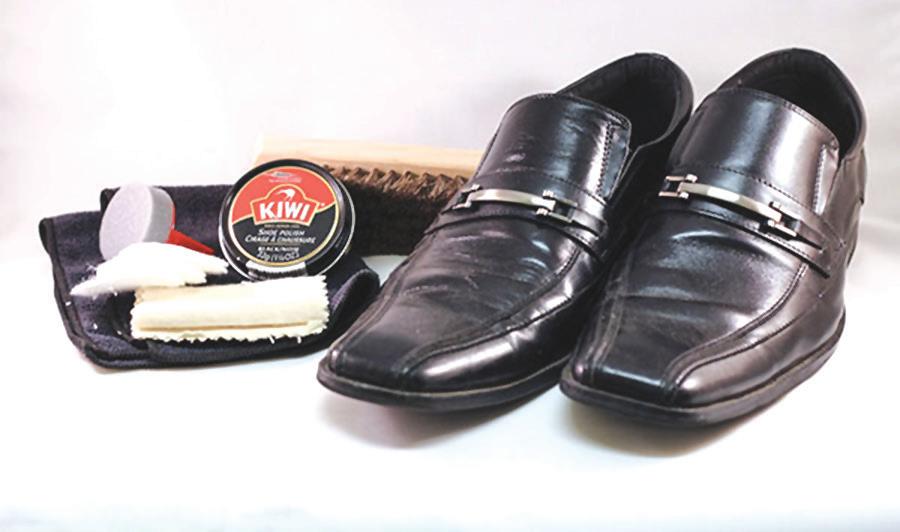
Put some shine on those shoes
They may not be the first thing you think about but a fresh shine makes all the difference. Not only does it look snappier, but your kicks will live longer, too.

Rediscover wristwatches
In an age when phones keep us on track, a watch's primary duty is as an accessory. And it's a simple and often inexpensive way to up your style game. A clean, classic look over chunky modern metal pieces looks better. Watches with leather or alligator bands are ideal.
Invest in a leather jacket
Almost every outfit can be upgraded easily with the addition of a well-fitted black leather jacket. Unlike many items, a leather jacket almost always improves with age.

Toss the T-shirt
Many men think wearing a white tee beneath a collared dress shirt is a must. To the contrary, it's a fusty relic of the 1950s – and not the stylish part of the decade. Unless your shirt is see-through, consider going commando.


Change the basics
Take a long look at the staples in your wardrobe, like the simple white oxford shirts. Then flip the script subtly. Use a spread collar as an alternative to a button-down or try a denim shirt with snaps instead of buttons.
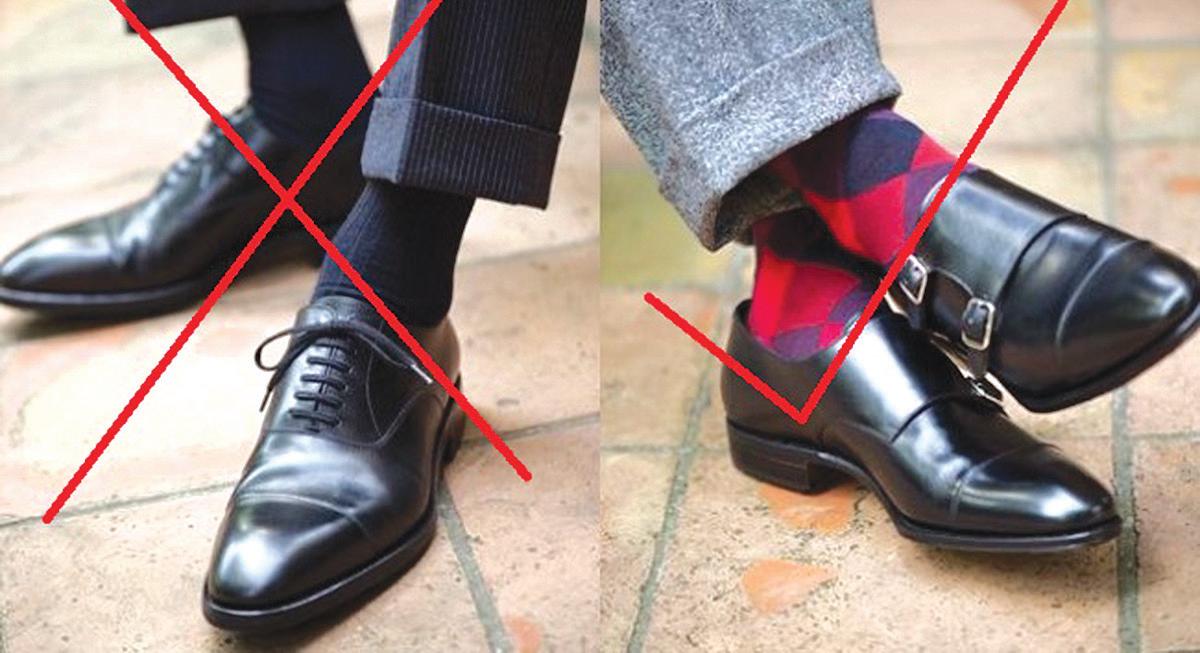
Socks matter
The simplest rule of thumb when selecting socks is that their colour should never match the shoe. Choose a single element of your getup – the tie, the shirt, the blazer – and match that.

Maximillian Alberto George, commonly known as Max George, is a British singer best known as a member of the successful boy band the Wanted. Born on 6 September 1988, in Manchester, England, George grew up loving sports and played for the Preston North End football club. He also developed a love for music and eventually joined a boy band called Avenue, which was featured on the UK hit TV show The X Factor but was later disqualified. After the band broke up, George went on to join another boy band, the Wanted, which has gone on to global success, including two No. 1 singles. The Wanted's self-titled debut album was released in October 2010. Powered by a hugely successful debut single, ‘All Time Low’, which reached No. 1 on the UK singles chart, the album jumped to No 4 in the United Kingdom, going on to launch three U.K. Top 20 singles. The group's second number one single, ‘Glad You Came’, their biggest hit thus far, came from their second album, Battleground, released in November 2011.
Awoman has been taken into custody for breaking into Keanu Reeves' home. According to TMZ, the incident took place on Monday, September 15. The "Speed" actor was sleeping when he heard some sound from his library at 4am.
Reeves then found a woman in her 40s sitting in the library. The "John Wick" actor calmly asked her what she was doing there and the woman reportedly told the star she wanted to see him. Reeves called 911 and the woman later was sent for a psych evaluation.
According to the report, Reeves' home which is located near Leonardo DiCaprio's pad is built like a fort. The Neo depicter in "The Matrix" trilogy, however, reportedly did not set his

alarm.
Reeves' co-star in "Speed", Sandra Bullock, also came face-to-face with a home intruder earlier this year. Back in June, Bullock reportedly heard a banging sound at 1 A.M. and went out of her room. She then saw the intruder, a man named Joshua Corbett, standing in the hallway. The "Gravity" star got scared and ran back into her bedroom before calling 911.
During the uninvited visit, Corbett reportedly carried a book featuring cut-out of magazine photos and creepy notes. "I will forever be thinking of you and Louie, my son, as you are my wife by law, the law of God and you belong to me and me to you," read one note. (AceShowbiz)
Jay-Z is being sued over a sample on his track "Run This Town".
According to a lawsuit obtained by Tech Dirt, the rapper is stealing the word "oh" on the 2009 song featuring Rihanna and Kanye West from Eddie Bo's 1969 record called "Hook and Sling".
The lawsuit was filed by TufAmerica, a record label which in 2012 sued West
for sampling the same song on his "My Beautiful Dark Twisted Fantasy". The company is seeking damages and royalties.
Jay-Z's lawyers have responded to the allegations, saying that ownership cannot be placed on a single syllable. The rapper's legal team states, "First, it is black letter law that words and short phrases are simply not protectable under
the Copyright Act. Thus, Plaintiff cannot state a claim based on the alleged infringement of a generic lyric such as, 'oh,' or the sound recording thereof, and Plaintiffs claims should be dismissed as a matter of law."
"Second, even if the word 'oh' or the minuscule portion of Plaintiffs Recording featuring the single word was somehow


original enough to warrant copyright protection, the alleged copying here of a sound lasting a fraction of a second in Plaintiffs Works is de minimis and thus not actionable," they continue.
They additionally noted in their legal documents that TufAmerica lost a similar case to Beastie Boys last year. (AceShowbiz)
‘I feel violated as a woman’

Deepika Padukone has spoken out about the cleavage tweet storm.
The actress complained on Twitter after The Times of India published an article focusing on her cleavage, with a picture captioned: "OMG: Deepika Padukone's cleavage show."
In an interview with The Hindustan Times, Padukone explained: "Every girl deserves to be treated with respect... whether an actor, a dancer or a girl walking into a restaurant.
"How we choose to dress doesn't give someone the right to peddle voyeurism, or even tease or do anything that is disrespectful to a woman.
"It was unethical for the photographer to click a picture like that. This has nothing to do with being a celebrity or actor. I feel violated as a woman."
Her peers in the industry have also spoken out in support of Padukone fol -
lowing the incident.
“Haider” star Shahid Kapoor praised Padukone for speaking out.
"I think what Deepika did is great. And I'm glad that so many people are supporting her. The guy who shot it should also think how he would feel if somebody did that to his family. I think that would give all the answers," he said.
Aamir Khan, who has been vocal in representing women's rights on “Satyamev Jayate”, said: "We need to end this hypocrisy. There isn't anyone who publishes stories on how to respect women.
"On the other hand, (even after such a story) they use their scantily dressed photos later. I am proud of the way Deepika handled it.
"We need to make sure that this is not just another 'talked about' thing. I'd like to see journalists maintain one stand - to respect women. (Hindustan Times)
Arnold Schwarzenegger has asked Tamil director Shankar for a role in his next film.
The actor was attending the music launch of “I” in Chennai when he made the announcement.
According to NDTV, Schwarzenegger said: "I want do your next movie. I came all the way from Hollywood for a job interview here.
"I want to do your next movie, OK? Maybe King Conan? How about that?"
The star-studded launch event was attended by Shankar, South Indian actor Vikram and Rajinikanth, who was seen applauding Schwarzenegger as he made his announcement.
Vikram, who performed at the event said to the Hollywood star: "Sir, it is such an honour to have you here. You won't believe the legion of fans you have all over India, who are crazy about you."
In the film, Vikram plays a character called Mr Tamil Nadu, inspired by Arnold Schwarzenegger's days as a bodybuilder and Mr Universe.
Releasing this Diwali, “I” also stars British actors Amy Jackson and Upen


Chitrangada Singh is an Indian film actress. She is known for starring in “Hazaaron Khwaishen Aisi” (2005) and for her first mainstream commercial film, “Desi Boyz” (2011). The role in “Hazaaron Khwaishen Aisi” got her wide acclaim. A Washington Post review noted her for giving “her character a deep sense of dignity and decency”. She began her career in Delhi as a model before making the transition to the silver screen. After completing her education from Lady Irwin College, New Delhi, in Home Science she entered modelling, where her ad credits include ICICI bank and Alukkas Jewellery, and gradually shifting to music videos, she performed in Gulzar's ‘Sunset Point’. Her most recent appearance was in “I, Me Aur Main”, which is a directorial debut by Kapil Sharma starring John Abraham and Prachi Desai.

By Zenica DaBichan
Recently, the internet has been overrun by videos of celebrities and regular folk alike posting videos of themselves taking the ALS ice bucket challenge. The ALS Ice Bucket Challenge, is an activity involving dumping a bucket of ice water on the participant’s head while on video to promote awareness of the disease amyotrophic lateral sclerosis (ALS) and encourage donations to research. Since the beginning of the Ice bucket challenge there has been over US$100 million donated to ALS research and care of patients.
What is ALS?
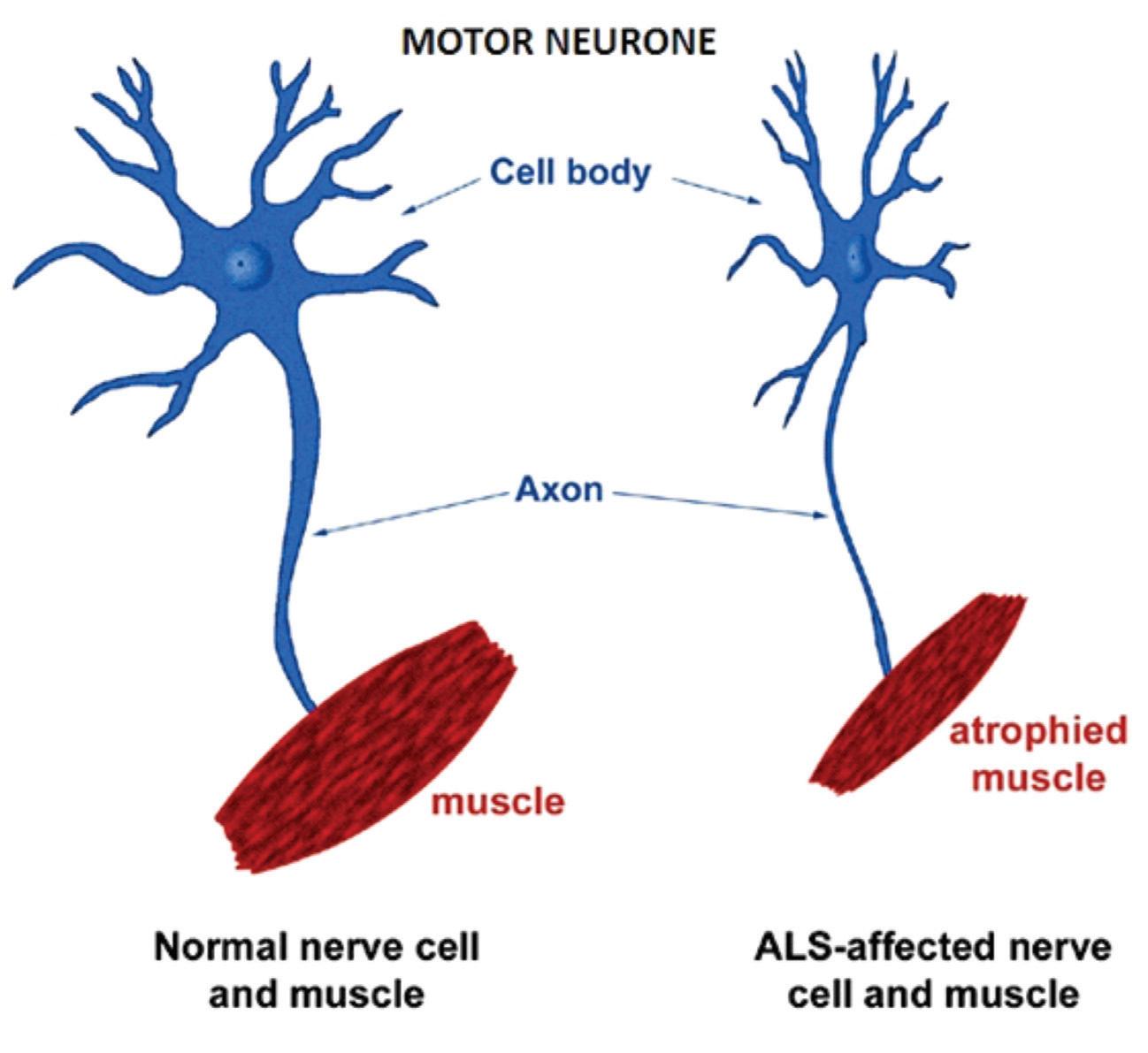
Amyotrophic lateral sclerosis also referred to as Motor Neurone Disease or Lou Gehrig’s disease is a progressive condition where there is degeneration of nerve cells in the brain and spinal cord. Motor
nerve cells reach from the brain to the spinal cord and then from the spinal cord to the muscles throughout the body. These motor nerve cells progressively degenerate until they die. When these cells die, the brain loses its ability to initiate and control muscle. With voluntary muscle action progressively affected, patients in the later stages of the disease may become totally paralyzed. Possibly the most popular person to suffer from ALS is Professor Stephen Hawking known for his extraordinary work in physics and cosmology.
Approximately 10% of ALS is due to a genetic problem while the rest is due to an unknown cause.
Signs and Symptoms of ALS
• Muscle weakness usually starting in the fingers or toes and progressing to complete paralysis.
• Spontaneous twitching of muscles, stiffness of the muscles and wasting of the muscles.

If you’re one of the millions for whom diet sodas and artificially sweetened desserts play leading roles in efforts to shed pounds and help prevent long-term diseases like diabetes, new research might give you pause.
The work, done with mice and humans, suggests that artificial sweeteners could raise your blood sugar levels more than if you indulged in sugar-sweetened sodas and desserts.
Blame it on the bugs in your gut, scientists say. They found that saccharin (a.k.a. Sweet‘N Low), sucralose (a.k.a. Splenda) and aspartame (a.k.a. NutraSweet and Equal) raised blood sugar levels by dramatically changing the makeup of the gut microorganisms, mainly bacteria, that are in the intestines and help with nutrition and the immune system. There are trillions of them -- many times more than the cells of the body -- and they account for roughly 4 pounds of your body weight.
Scientists in recent years have focused more and more on the link between the gut microorganisms and health.
In the latest research (September 2014) in the US, “what we are seeing in humans and also in mice is this previously unappreciated correlation between artificial sweetener use” and microorganisms in the gut, said Eran Elinav, MD, one of the scientists involved in the new study. Elinav and a collaborator, Eran Segal, PhD, spoke at a press conference held by Nature, the journal that published their team’s findings. Both of the scientists are on the faculty of the Weizmann Institute of Science in Israel.
“Initially we were surprised by the results,
• Difficulty with chewing, swallowing, movements of the tongue and breathing.
Muscles that control eye movements, bladder and bowel function are usually spared until the final stages of the disease.
Treatment
Currently there is no cure for ALS. One medication exists that can slightly increase the patient’s lifespan and other aspects of treatment are supportive e.g. physical therapy, braces or wheelchairs to maintain mobility and ventilators to support breathing. However, irrespective of these efforts most people with ALS die within three to five years from the onset of symptoms.The cure for this terribly debilitating disease can only come from research and funding. You can read more about this disease and possibly donate at the following websites www.alsa.org, www.als.net or mda.org
which is why we also repeated them multiple times,” Segal said.
One industry group said the small number of mice and people studied make the findings hard to apply to larger populations. But one scientist not involved in the research called the small study of humans “profound.”
Although saccharin, sucralose, and aspartame are three different compounds, “the effects were quite similar to each other,” Segal said. Those three sweeteners make up the bulk of the market. Segal said more research is needed to see whether others, such as stevia, can also change the collection of microorganisms in the gut.
The scientists also studied nearly 400 people and found the bacteria in the guts of those who ate and drank artificial sweeteners were different from those who did not. People who used artificial sweeteners also tended to have higher fasting blood sugar levels and a forerunner of Type 2 Diabetes called impaired blood-sugar tolerance.
Finally, the researchers recruited seven volunteers, five men and two women, who normally didn’t eat or drink products with artificial sweeteners and followed them for a week, tracking their blood sugar levels. The volunteers were given the FDA’s maximum acceptable daily intake of saccharin from day two through day seven. By the end of the week, blood sugar levels had risen in four of the seven people. Transfers of faeces from people whose blood sugar rose increased blood sugar in mice, more evidence that the artificial sweetener had changed the gut bacteria.
“It’s small,” said Martin Obin, PhD, of the seven-person study, “but it’s very, very profound.” Obin was not involved in the research but read the paper. Obin is an adjunct scientist in the nutrition and genomics laboratory at Tufts University’s Jean Mayer USDA Human Nutrition Research Center on Aging.
Haley Stevens, PhD, president of the Calorie Control Council, an industry group, said the human as well as the mouse studies were too small to conclude that the findings apply to larger groups.
“In contrast to the assertions made by the researchers of this study, the overall evidence from studies on low-calorie sweeteners shows that these sweeteners are safe and do not have adverse effects on blood glucose control,” Stevens said in a statement.
But previous observational studies about the safety and effectiveness of artificial sweeteners have not unanimously concluded that they're safe for managing diabetes, Elinav said.
Obin said the new research might provide an explanation for mixed findings in previous studies. As in the people studied, drinking artificial sweeteners did not affect blood sugar levels in all of the mice. That points out differences in the gut bacteria collections from person to person or animal to animal. Besides diet, genetics, health status, and sex all contribute to these differences. “Perhaps not all of the (individual) microbial compositions would indeed be susceptible to the action of the sweeteners,” Segal said.
Why the sweeteners changed the gut bacteria
in some people and mice isn’t known. “This field is still in its infancy,” Obin said. But, he added, “with all the sweeteners that people are taking, this is a major health issue.”
Between 1986 and 2010, the number of American adults eating and drinking sugar-free foods and beverages jumped from 78 million to 187 million, according to the Calorie Control Council. Diet soft drinks are the most popular sugar-free products, followed by non-carbonated soft drinks, gum, and sugar substitutes, according
to the organization. “By no means do we believe that, based on the results of this study, we are prepared to make recommendations on the use and dosage of artificial sweeteners,” Segal said.
Elinav did say, though, that their findings have spurred him to stop using artificial sweeteners in his coffee. He doesn’t use sugar, either. “I think we must stress that by no means are we saying sugary drinks are healthy,” Elinav said. (Excerpted from WebMD)



Create a storage-packed kitchen with these clever solutions for making the most of your kitchen cabinets, drawers and pantry.

Open shelves provide plenty of storage while keeping everyday serve ware, pots and pans within easy reach.

Keep little ones busy while you finish up dinner prep with hideaway kitchen storage for art supplies. Roll-out shelves make the most of the storage space at the end of this colourful island and make it easy for kids to access crayons and paper then neatly put everything away again.
Instead of precarious stacks of cookware piled in the back of a cabinet, store your everyday pots in a handy drawer. This drawer features two separate sections: a deep area for housing big pots and a shallow roll-out for storing potholders, lids and trivets.


Ingredients:
2 packages (1/4 ounce each) active dry yeast
1/2 cup warm water
1/2 cup warm milk
1/3 cup butter, softened 1-1/3 cups sugar, divided
3 egg yolks
1 teaspoon salt
3 to 3-3/4 cups all-purpose flour
3 tablespoons jelly or jam
1 egg white, lightly beaten Oil for deep-fat frying
Method:

In a small bowl, dissolve yeast in warm water. In a large bowl, combine milk, butter, 1/3 cup sugar, egg yolks, salt, yeast mixture and 3 cups flour; beat until smooth. Stir in enough remaining flour to form a soft dough (do not knead). Place in a greased bowl, turning once to grease top. Cover and let rise in a warm place until doubled, about 45 minutes. Punch dough down. Turn on to a lightly floured surface; knead about 10 times. Divide dough in half. Roll each portion to 1/4-in. thickness; cut with a floured 2-1/2-in. round cutter. Place about 1/2 teaspoon jelly in the center of half of the circles; brush edges with egg white. Top with remaining circles; press edges to seal tightly. Place on greased baking sheet. Cover and let rise until doubled, about 45 minutes. In an electric skillet or deep-fat fryer, heat oil to 375°. Fry doughnuts, a few at a time, 1-2 minutes on each side or until golden brown. Drain on paper towels. Roll warm doughnuts in remaining sugar.
Yield: 16 doughnuts
Ingredients: 3/4 cup uncooked white rice
2 cups milk, divided 1/3 cup white sugar 1/4 teaspoon salt 1 egg, beaten 2/3 cup golden raisins
1 tablespoon butter 1/2 teaspoon vanilla extract

Method: Bring 1 1/2 cups water to a boil in a saucepan; stir rice into boiling water. Reduce heat to low, cover, and simmer for 20 minutes. In a clean saucepan, combine 1 1/2 cups cooked rice, 1 1/2 cups milk, sugar and salt. Cook over medium heat until thick and creamy, 15 to 20 minutes. Stir in remaining 1/2 cup milk, beaten egg, and raisins; cook 2 minutes more, stirring constantly. Remove from heat and stir in butter and vanilla.
Purchase a small spray bottle, and then fill it with one cup of water, one tablespoon of fresh lemon juice, and one tablespoon of baking soda. Shake gently to mix it together (it will bubble and fizz a bit) and spray fruits and veggies to clean.
For the bakers, parchment paper is different than wax paper. Parchment paper will hold up to the heat of the oven, while wax paper won’t.
Frozen grapes are fantastic little cubes for keeping your wine chilled without watering it down.
Use unscented floss to cut through soft foods such as cakes and cheese.
Keep lettuce fresh longer by placing a dry paper towel over it to absorb moisture and prevent it from getting soggy. It’s also important to get the lettuce as dry as possible before storing.
Use the classic combo of sponge and baking soda to get rid of scuffs on vinyl flooring. Get rid of lime build-up on sinks by soaking an old rag in vinegar, then wrapping it around the faucet and clasping with a hair clip. Let sit for an hour, then take off rag and dry faucet.
Shine brass using a dab of Worcestershire sauce or ketchup. Squeeze the condiment onto a cloth, rub the item, then rinse with water and dry with a towel.
Use a new tennis ball to wipe scuff marks off tile, vinyl, woodwork—even painted walls. It won’t harm the surface.
Did your child use the painted walls as a canvas? Mist them with hairspray and wipe immediately to remove coloured marker. For crayon, scrub with a toothpaste-covered toothbrush, or gently massage with baking soda and a damp microfibre cloth.
Replace each word or words in parentheses with a one-word synonym to decipher a common phrase.
1. (Diversity) is the (zest) of (existence).
2. (Training) (creates) (excellence).
3. (Adoration) is (sightless).




Deep within the forest stood a massive tree.
This tree was a very unusual tree because it had magical qualities that enabled it to produce all kinds of fruits on its wide leafy branches. It also had an immense trunk and was much taller than any other tree, rising like a majestic mountain in the middle of the forest).
Large knots protruded from its bark, and its branches were so thickly covered with leaves that they blocked the sunlight from reaching the ground. Nevertheless, it was always full of life since large flocks of birds and swarms of insects occupied its branches and fed on its delicious fruits, which emitted a pleasant fragrance all around.
All the people in the surrounding countryside came to this special tree for its abundant supply of fruits and most of them felt that they must make special efforts to ensure that it was carefully
protected. For its colossal size and magical properties, it was known as the tree of life.
But Pia, the well-known powerful and muscular woodcutter, was determined to test his skills by cutting down this mammoth tree. One day he expressed his thoughts to the men in his village.
“All over the land everyone would regard me as the greatest woodcutter if I chop down this tree,” he boasted.
But Akuri, the short rotund farmer, immediately objected to his plan.
“How can you ever think of cutting down the tree of life?” he remonstrated. “It provides fruits for us all year round. If you chop it down, we will lose a most valuable resource, and, furthermore, our ancestors warned us that if ever that tree is cut down a destructive flood will spread all over the land.”
But Pia shook his head in
disbelief.
“It’s just an old superstition that cutting down the tree will bring about a flood,” he declared. “I don’t believe that will ever happen. And if I cut down the tree, we can easily transplant pieces of its branches all over the land, thus enabling more fruits to be available after a little while.”
Opinion was divided over his statement, and while some agreed with him, others, including Akuri, continued to raise objections.
But nothing could deter Pia, so he grabbed his heavy axe, threw it across his broad shoulders, and strode into the forest towards the magic tree. Akuri, worried as ever, hustled behind and pleaded with him to desist from any rash action.
Soon after, Pia arrived at the magic tree and stood beside its huge trunk under the thick branches looming overhead. He
lifted his axe and made a heavy chop on the trunk. But the wood was so hard that the heavy axe bounced back without leaving a mark on it. Again and again he swung the axe, but it had no effect at all.
Standing close by, Akuri pleaded for Pia to stop his madness, but the woodcutter ignored him and continued to chop away.
As Pia realised he was making no headway, he suddenly remembered that he could call on the forest spirit to soften the wood of the magic tree. This he did, and almost at once, the forest spirit who had always protected him, softened the wood and the heavy axe began to cut deep into the trunk.
Seeing this, Akuri begged, “Please, Pia, don’t cut down the tree or else a dangerous flood will emerge from it.”
But Pia continued to ignore him, so in frantic haste he began to collect bees’ wax and fallen fruits which he stuffed into the sharp gashes the axe made on the tree trunk. Akuri hoped that his action would prevent any flood that he feared would spew from the damaged tree. But as fast as Akuri kept filling the gashes, Pia continued to hew away at the tree trunk.
Then Pia’s axe sank far into the trunk which had become as soft as a papaya tree, and at any moment it seemed as if the tree
would tumble over. By this time, a large crowd of people had gathered at the scene and they watched as Pia chopped away while Akuri tried desperately to stuff the deep cuts with wax and fruits.
Soon, the great tree began to sway, but just as it was about to fall, the onlookers heard a loud shout. It was Anzik, Pia’s close friend, who came rushing up to save tree of life. He had been away from the village and, on his return, had learned from some children of what his friend intended to do.
He shouted to the forest spirit, who was his protector as well, to make the tree trunk as hard as rock. At once, the forest spirit heeded his call and immediately Pia’s axe no longer had any effect on the tree.
But the damage was already done. With the trunk cut more than half-way across, the mighty tree swayed and then crashed heavily with a loud creaking sound to the ground. Its wide-spreading, heavy branches knocked over all trees nearby, and its fruits flew off in all directions. And as slammed to the ground, the force of its weight split a large section of the trunk and tore up the deeply embedded roots which erupted from the soil, causing a destructive earthquake all over the land. Great blocks of rock were ripped up and thrown in
the air as well, and as they fell back they formed a range of high mountains stretching as far as the eye could see.
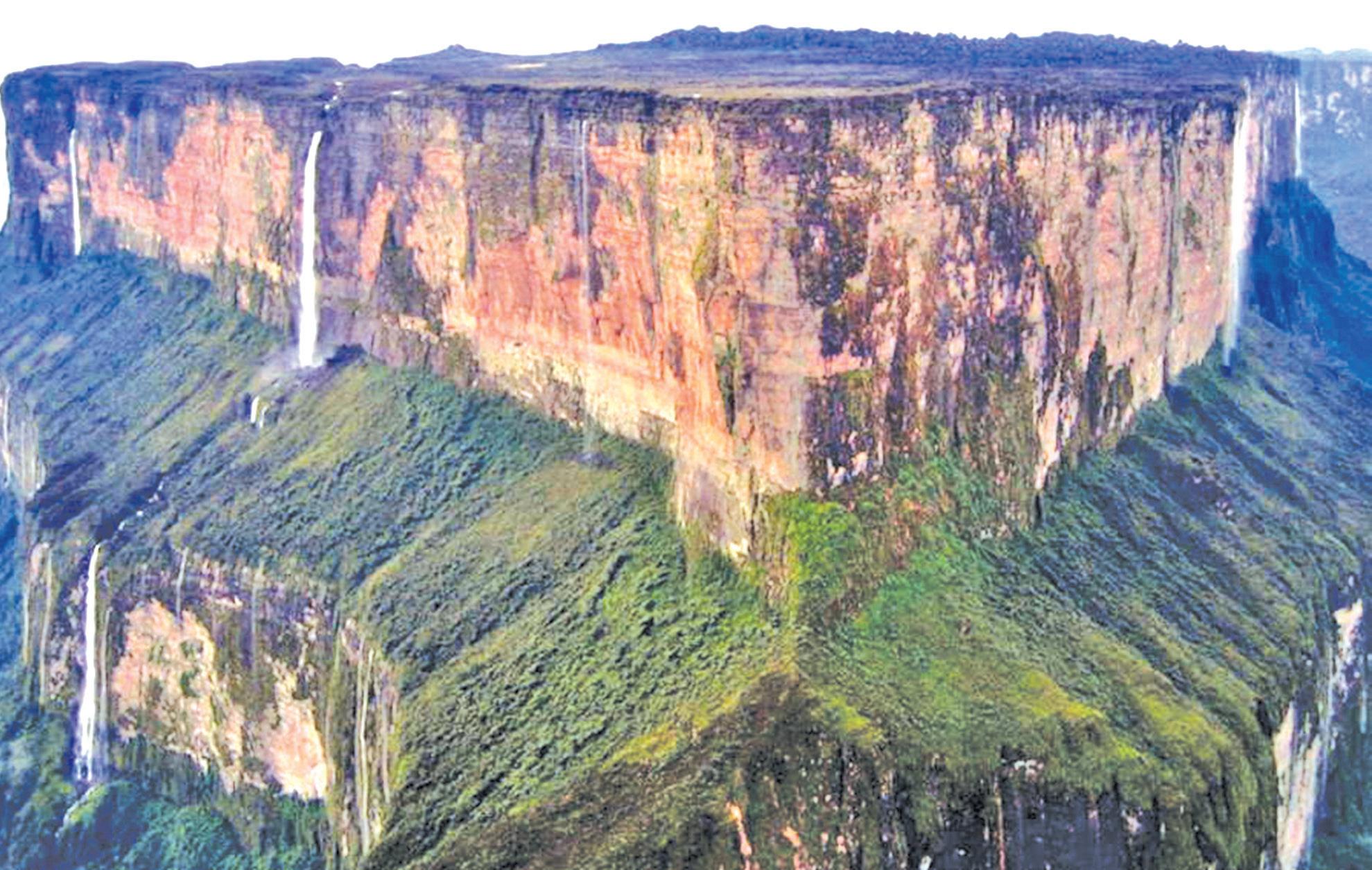
As for the enormous trunk of the tree of life, it also rose up to the sky in the form of a massive rock, and created a towering mountain which later became known as Roraima. And from its base where the ripped-open trunk once stood, a gigantic spout of water shot out and began to flood the entire countryside. While Pia and some of the villagers saved themselves by rushing to higher ground, many people and animals in the surrounding areas could not escape the deluge. The flow was so fast and furious that large numbers of them drowned because they could not reach high land quickly enough.
One of those lucky enough to escape was Akuri. He ran as fast as he could, but his short chubby legs proved to be a disadvantage. As the flood waters were almost upon him, the forest spirit mercifully transformed him into an agouti, and his new-found swiftness of feet enabled him to scamper rapidly up the steep side of Mount Roraima, high above the raging waters of the mighty flood. (Taken from “Guyana Legends – Folktales of the Indigenous Amerindians” by Odeen Ishmael. Published 2012)

Apple has expanded its use of "two-step verification" checks to protect data stored online by its customers.
It follows suggestions third-party software had been used to steal intimate photos of celebrities - posted online last month - from iCloud.
The action should stop the tool from being able to infiltrate Apple's internet storage service if the safety measure is implemented.
However, the security facility remains an opt-in choice.
One expert suggested that Apple should instead make it the default option.
The process works by introducing an extra step after an account holder has typed their username and password into a device they have not used before.
They are also required to enter a four-digit code that is either texted to a trusted mobile phone number or sent via Apple's Find My iPhone app.
If the person does not enter the code, they are refused access to iCloud and are blocked from making an iTunes, iBooks, or App Store purchase.
They can, however, use a 14-character recovery key to regain access to the account in the event their trusted device is lost or stolen. They are told to keep this in a safe

Gplace to avoid being locked out.
While Apple had offered the two-step verification system in the past, until now it had not come into play when device owners used the firm's back-up service.
That meant that even if people had switched on the two-step feature to prevent cyber-thieves logging into their accounts with a stolen or guessed password, the attackers could still download a complete back-up of their data by using Elcomsoft's Phone Password Breaker.
Several hackers' forums contain discussions about
using of pirated copies of Elcomsoft's "forensic" software, which is marketed as a tool for law enforcement agencies to access iCloud content without needing to be in possession of a suspect's iPhone or iPad.
ElmcomSoft's Moscowbased owner told the BBC earlier this month that he believed his software had been used in the recent hacks, as it was "the only one able to do that".
He has now acknowledged that Apple's changes guard against the technique he had used.
"I think that implemen-
tation is secure, and so there is no workaround," Vladimir Katalov told the BBC, adding that his program could no longer even get a list of devices and back-ups linked to a user's account.
"The other security improvement, which I like, is that now the owner of the Apple account gets a notification by email immediately when a back-up starts downloading - whether or not two-factor authentication is enabled."
However, he added that he still had concerns about Apple's security system.
"The recovery key is hard
to remember. And as far as you are not going to use it frequently - it is not needed at all while you have the trusted device handy - there is a good chance that you lose it," he said.
"And if you lose your device too, there will be no way to get your data back.
"Secondly, the recovery key might be stolen. And someone who managed to get your Apple ID password and your security key could make a lot of trouble for you, not just downloading your selfies."
But another security expert downplayed the risk of lost recovery keys, and said that Apple should do more than just recommend people switch on the two-factor test.
"We've seen so much in recent times that singlestep verification - ie passwords - is vulnerable, we're at the stage that two-fac-
tor authentication should be the default," said Prof Alan Woodward, from the University of Surrey.
"It's a case of turn it on by default, and let people turn it off if they really don't want it.
"And that applies to not just Apple, but companies like Microsoft and Google too."
Apple has told the Wall Street Journal that it "plans to more aggressively encourage people" to turn two-factor authentication on and use stronger passwords.
"When I step back from this terrible scenario that happened and say what more could we have done, I think about the awareness piece," chief executive Tim Cook told the newspaper.
"I think we have a responsibility to ratchet that up. That's not really an engineering thing." (BBC)

oogle has announced that its next mobile operating system, Android L, will encrypt users' data by default.
The measure will make it more difficult for private information to be hacked or handed to law enforcement agencies.
On Thursday, Apple said that devices running its new iOS8 software would be encrypted by default, with even the company itself unable to gain access.
Both firms have offered encryption for some time, but many users were unaware of its existence or had not enabled it.
Earlier this week, Apple's boss Tim Cook posted an online message assuring users the company's philosophy was that a "great customer experience shouldn't come at
the expense of your privacy".
As well as announcing default encryption for all devices running the new iOS8 software, Mr Cook took a thinly veiled swipe at Google, saying that Apple would not use its customers' information to sell things to them.
"We don't 'monetise' the information you store on your iPhone or in iCloud," he wrote, "and we don't read your email or your messages to get information to market to you."
He added that although Apple does have an advertising business, called iAd, the function can be disabled by users.
Shortly after, Google announced its stance on privacy, also embracing default encryption. A spokesman said: "For over

three years, Android has offered encryption, and keys are not stored off of the device, so they cannot be shared with law enforcement.
"As part of our next Android release, encryption
will be enabled by default out of the box, so you won't even have to think about turning it on."
Both Apple and Google follow in the footsteps of the now somewhat beleaguered
Blackberry, which has encrypted data by default for some time.
The firms' focus on privacy comes after nude photos of celebrities were leaked online earlier this month.
The breach, which affected actress Jennifer Lawrence, among others, was linked by some security experts to vulnerabilities in Apple's iCloud storage service.
The introduction of default encryption also protects US firms from having to hand over data to law enforcement agencies.
As the companies themselves do not have access to users' passwords, which unlock the encryption, they are not actually in possession of the data concerned.
Several of the largest US tech firms have been fighting government requests for their users' private data, including Microsoft, Google, Twitter, Facebook and Dropbox.
David Emm, a senior researcher at security firm Kaspersky Lab, told the BBC that automatic encryption was "probably more about privacy than about protection".
"Customers will find some reassurance in the fact that their data can't routinely fall into third-party hands," he said.
However he added that the measure only "applies to stuff on a [Apple or Android] device, but not necessarily to stuff you put in the cloud, which could still be accessible to law enforcement agencies". (BBC)
ByTe

You can never have enough storage. This is true both of the homes we choose to live in, and in the digital realm where we keep memories and content backed up for safe keeping. SanDisk has now announced its, and the world's, highest capacity SD memory card so far.
The 512 GB SanDisk Extreme PRO SDXC UHS-I memory card is designed
with professional videographers and photographers in mind. These are, after all, the people most likely to need to shoot 4K video, full 1080p HD video, or high-definition photographs. The high capacity is coupled with write speeds up to 90 MB/s and transfer speeds up to 95 MB/s, meaning the ability to capture lots of content is augmented by a speedy post-production workflow.
This latest addition to the SanDisk range
is shockproof, waterproof, and X-ray-proof, and can operate at temperatures ranging from -13 to 185 ºF (-25 to 85 ºC). It comes with a limited lifetime warranty, and has an RRP of US$799.
For a reminder of how quickly things have changed, bear in mind that SanDisk unveiled its first 512 MB SD card in 2003, meaning a 1,000-fold increase happened in a little over a decade. (Gizmag)

‘Simplicity’ is the title of the current art exhibition at Castellani House showcasing contemporary ceramics created by Sigrid Sandker, a Guyana-based Austrian artist who spent a year studying at Burrowes School of Arts.
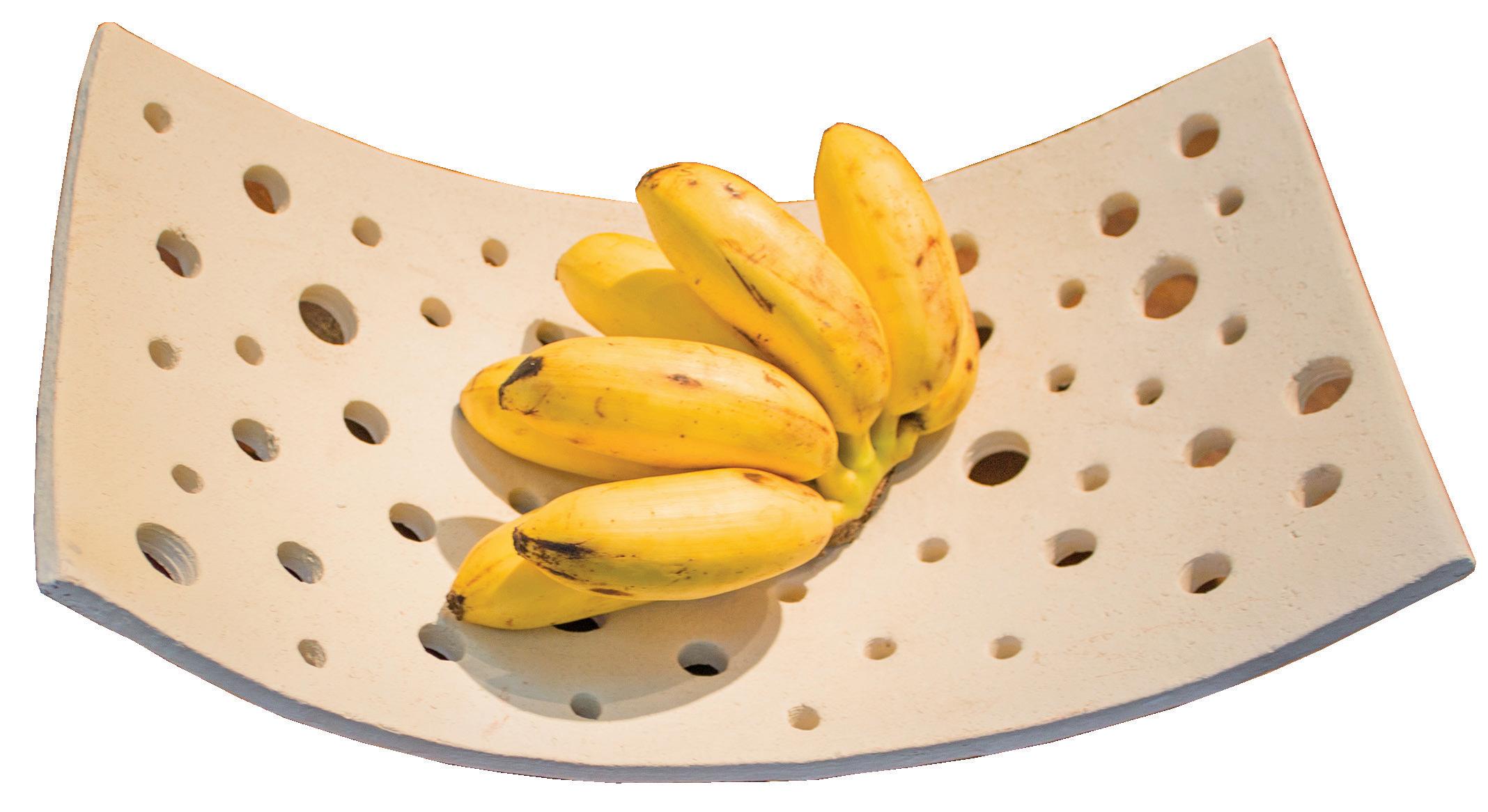
The exhibition displays a series of functional clay items made of fired and glazed dark clay in simple colours, ‘minimal’ designs and subtle elegance. Intended to showcase mainly ceramic items, only a few paintings from Sandker’s ‘second passion’ is displayed.
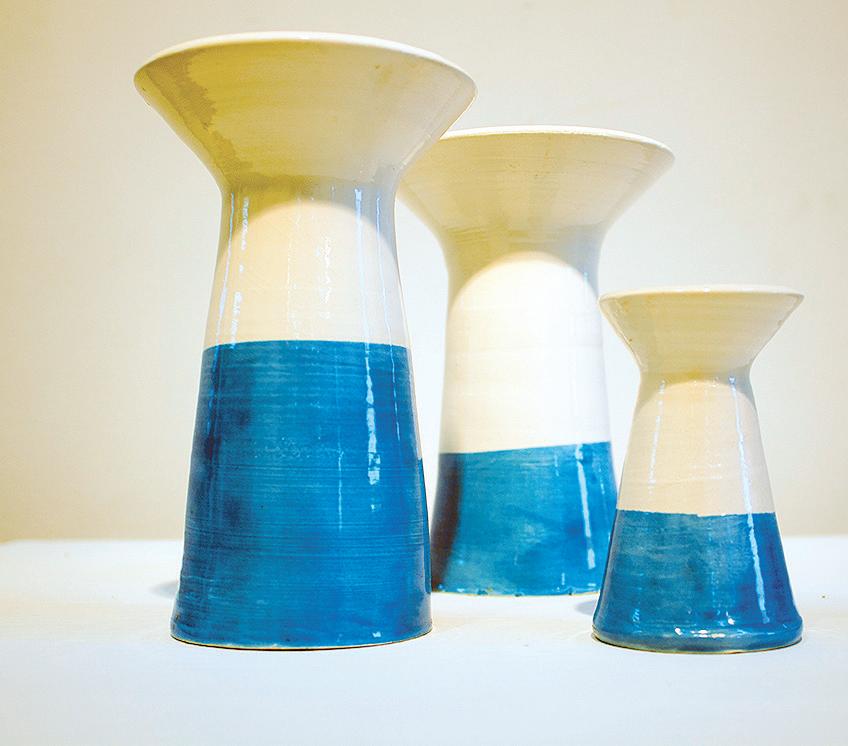
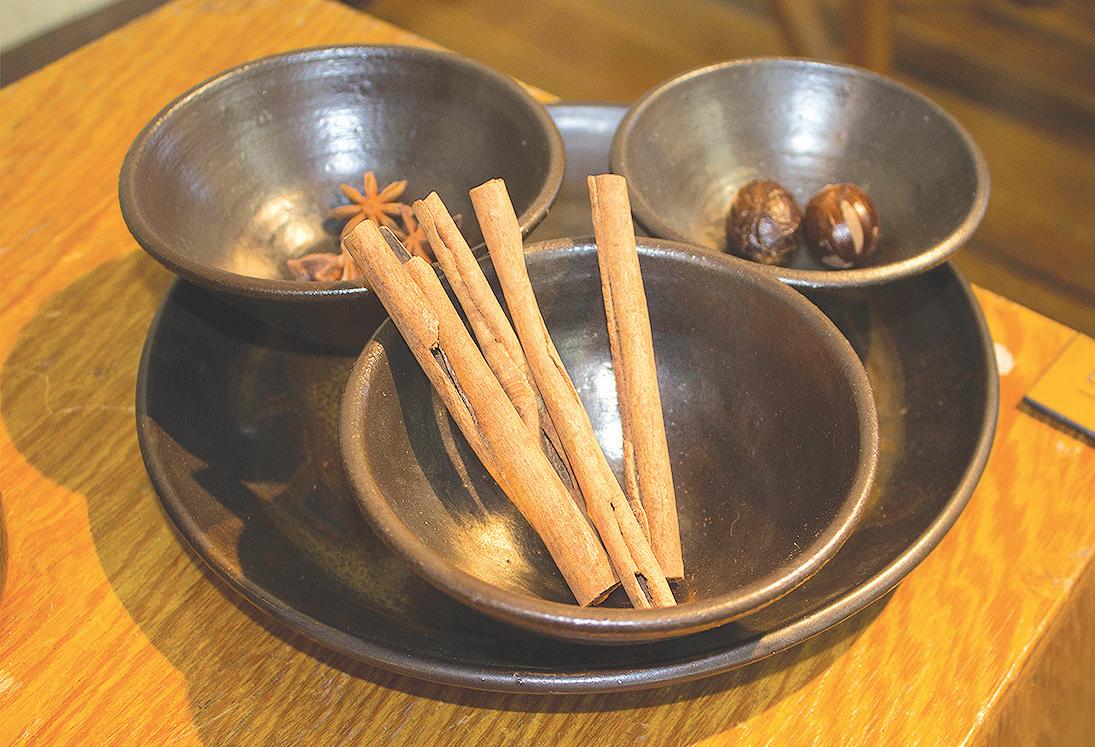
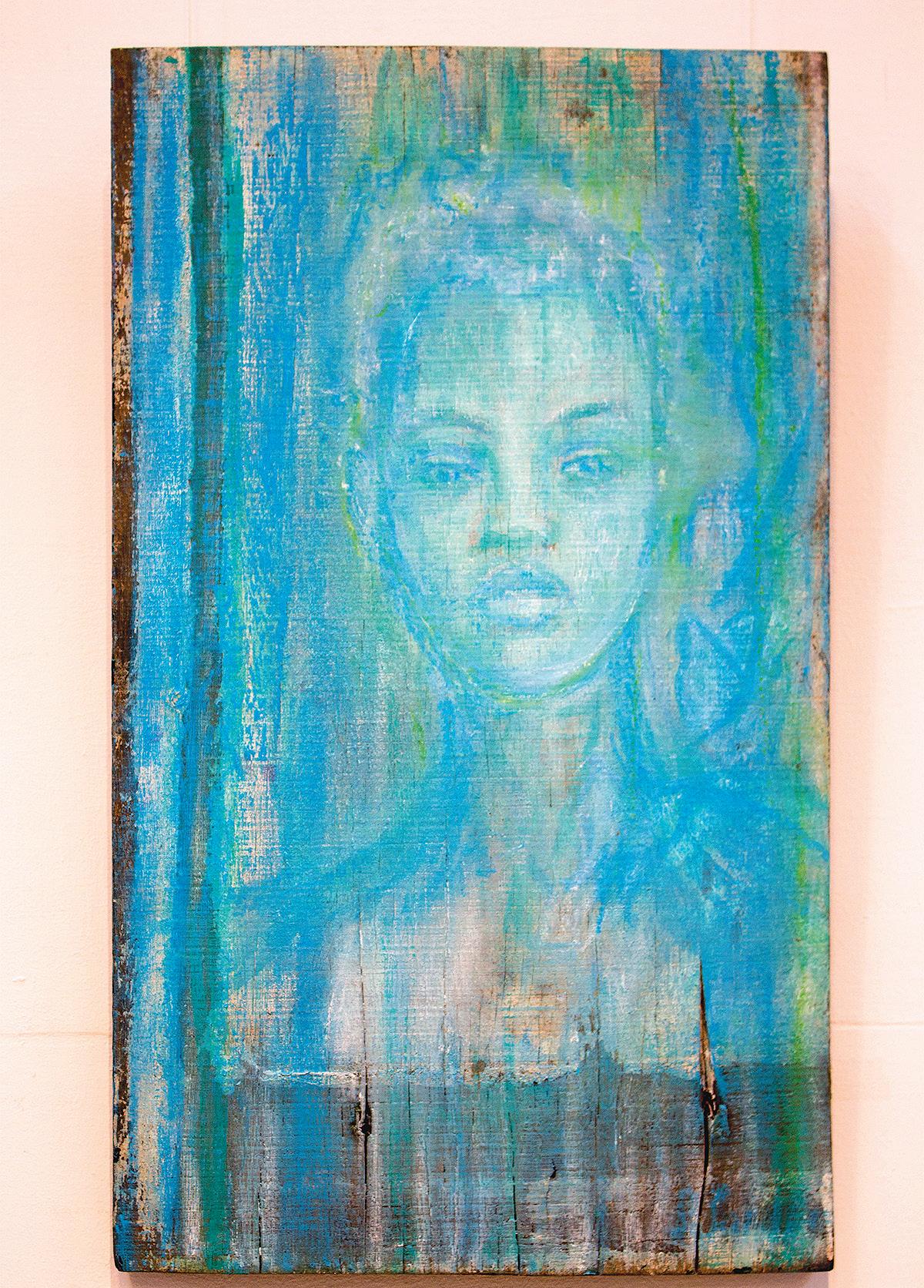
“It was in Guyana, that I fell in love with clay and the ability to produce beautiful items with my hands,” Sandker told Guyana Times Magazine “The exhibition is separated into two parts: ‘Earth and Jewelry’ and ‘Air and Water’, to best display the natural theme of my work.”
The artist noted that the exhibition was set up in a way that best display the functionality of the items, arranging them in a cozy setting to give a “homey” feel. “I bought items from my garden at home to demonstrate the functionality of the pieces.”
Experimenting with deformity, as displayed by her Japanese plate set piece, among other ceramic techniques, allowed her to be more interactive with her work, being able to use her hands to shape
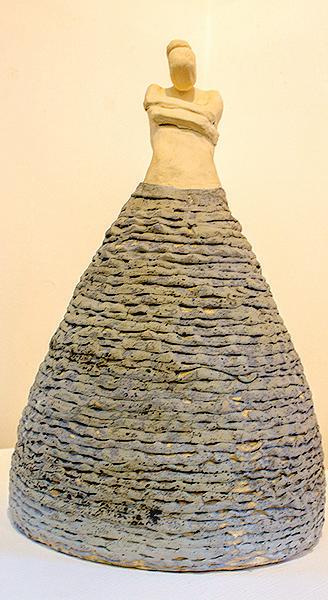
the clay and getting in touch with nature, which inspired Sandker’s passion for ceramics.
‘Simplicity’ opened on 18 September and will
continue until 4 October 2014 at Castellani House on Vlissengen Road, Georgetown. Admission is free. Gallery hours are 10am to 5pm on MondaysFriday and 2pm to 6pm on Saturdays; the gallery is closed Sundays and holidays. (Photos by Neketa Forde)

Like buildings, monuments and traditions preserved as part of our Guyanese heritage, our natural heritage is also an
important aspect of national pride. Guyana is home to a multitude of animals, birds, fishes, plants and insects, more of which are now being
discovered or still to be discovered.
The Protected Areas (PAs) Bill was passed 7 July 2011 for the protec-
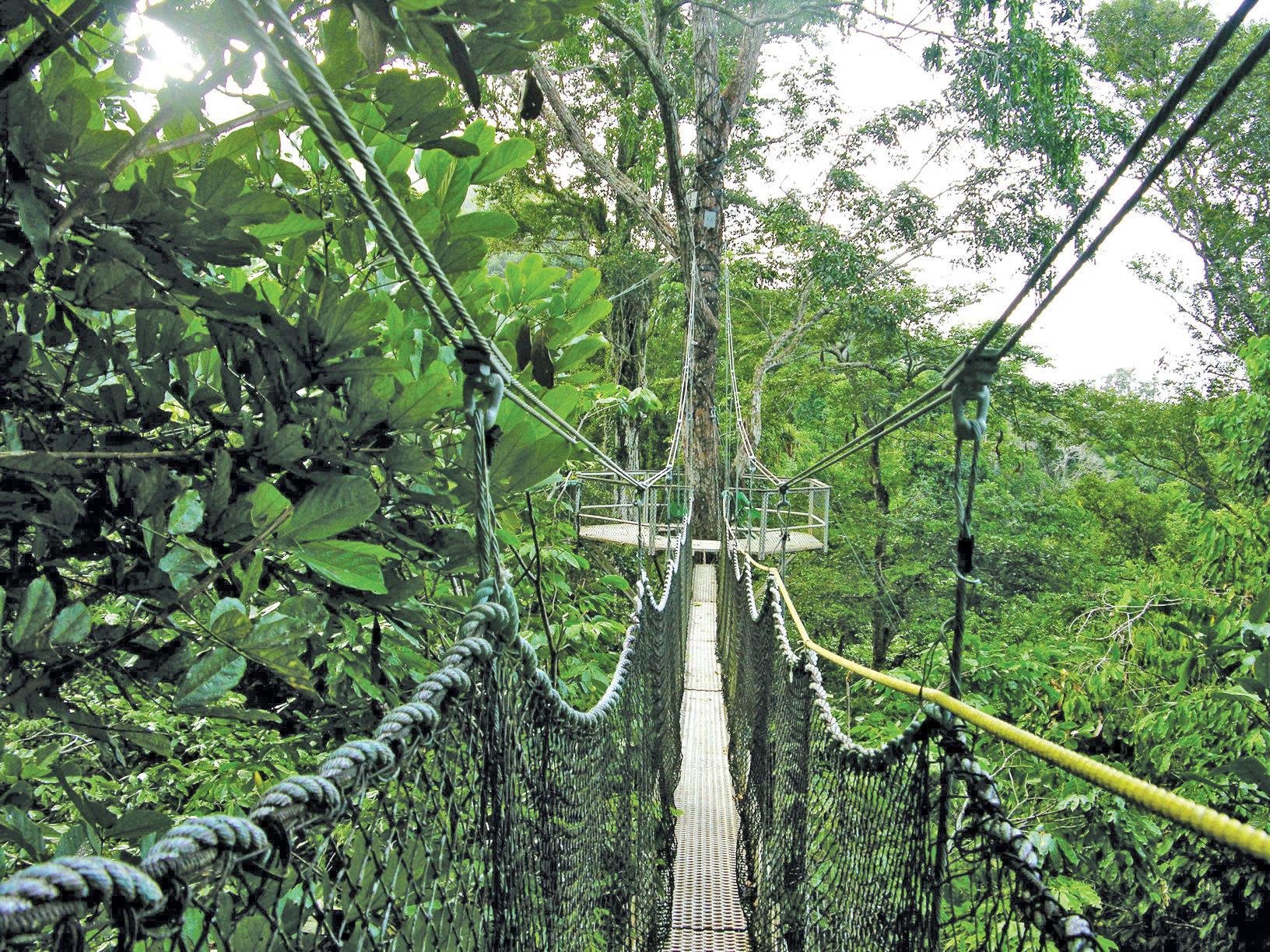
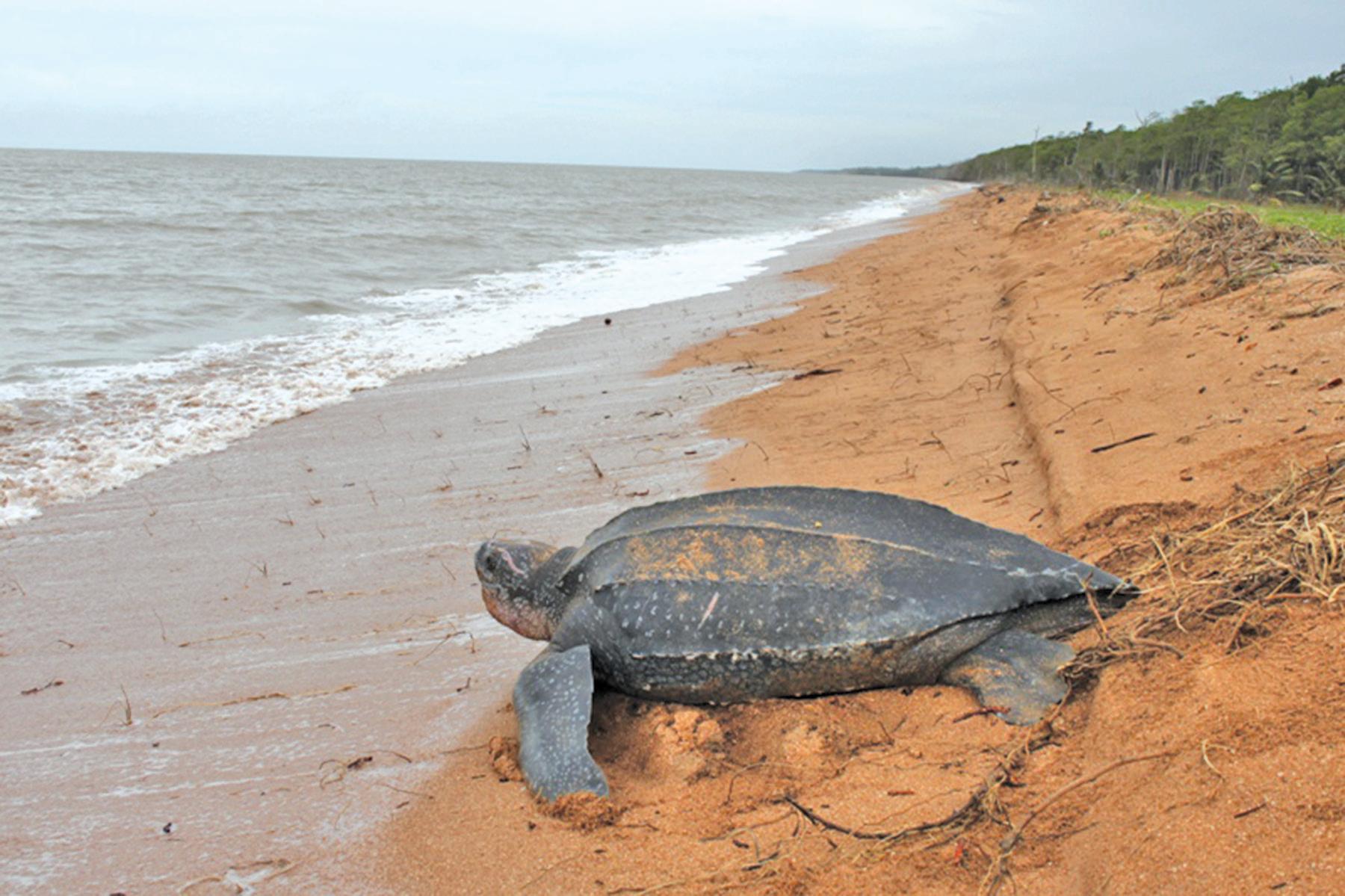
tion of Guyana’s natural heritage. This event would see Guyana upholding its commitment to the requirements of the International Convention of Biological Diversity (CBD).
Among other things, the Bill allows for “the protection and conservation of Guyana’s natural heritage and natural capital...” as well as the creation of a Protected Areas commis-


sion and Trust Fund which would be responsible for and aid with, developing a working plan to manage Protected Area systems.
The Bill ensures that many natural ecosystems are preserved for the benefit of its inhabitants, some of which are considered threatened species internationally. Many of what are known as “Guyana’s giants” could be found on endangered species lists, but Guyana is one of the few places remaining
where they are less so.
While Guyana’s natural heritage is awe inspiring for some, it is ignored by others who take its lush green habitats for granted, even destroying them for economic gains. The Bill is intended to control and prevent this abuse and misuse of our natural heritage and conserve it for future generations. It is hoped that the recently passed Bill would ensure the future prosperity of our natural heritage.
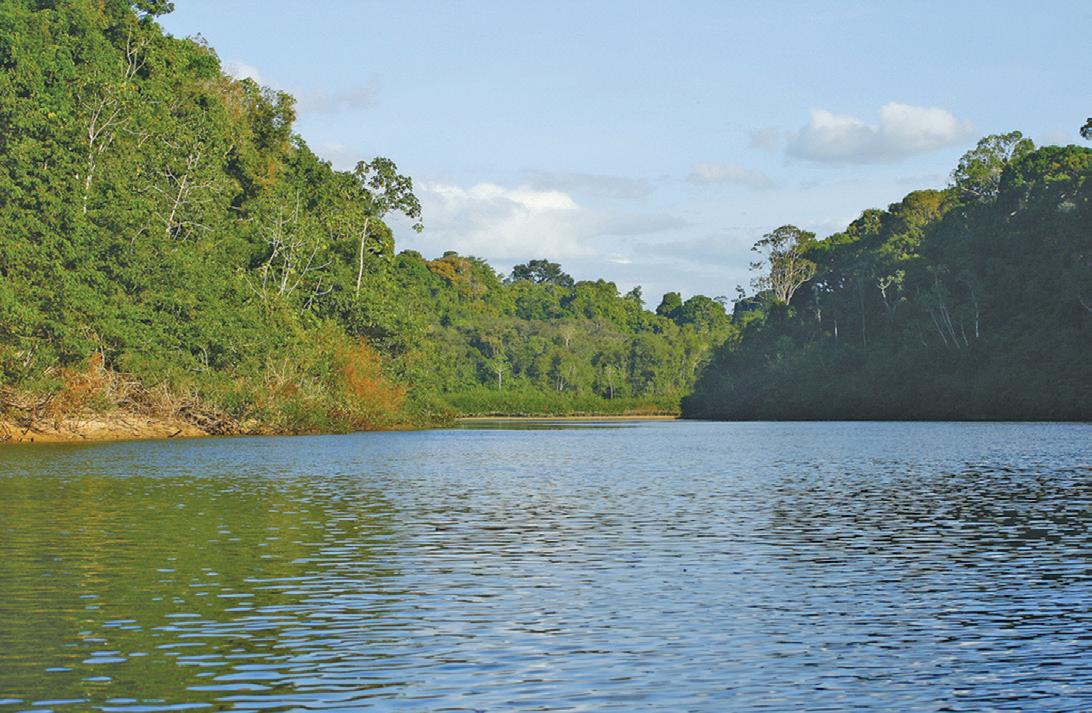



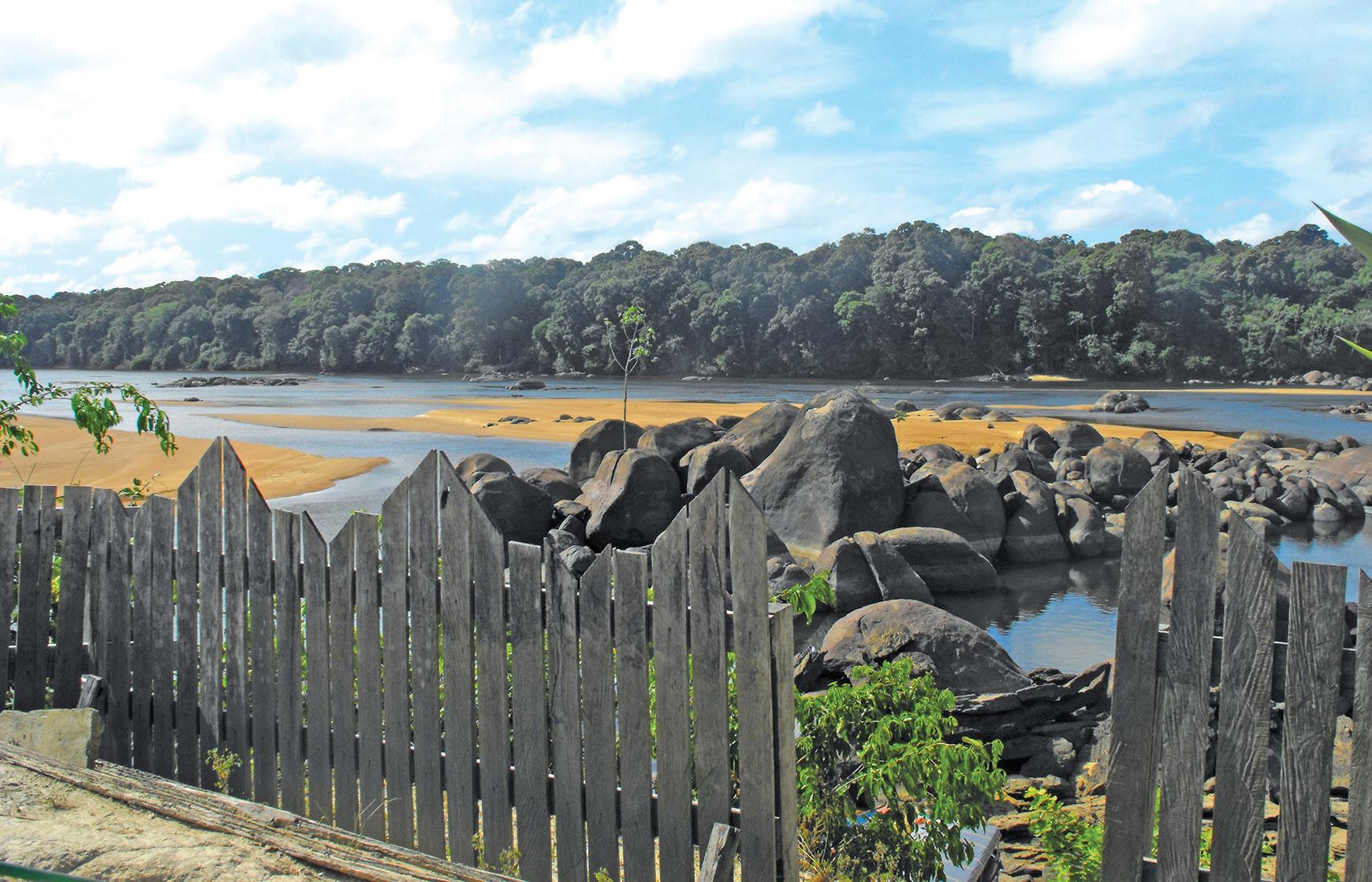
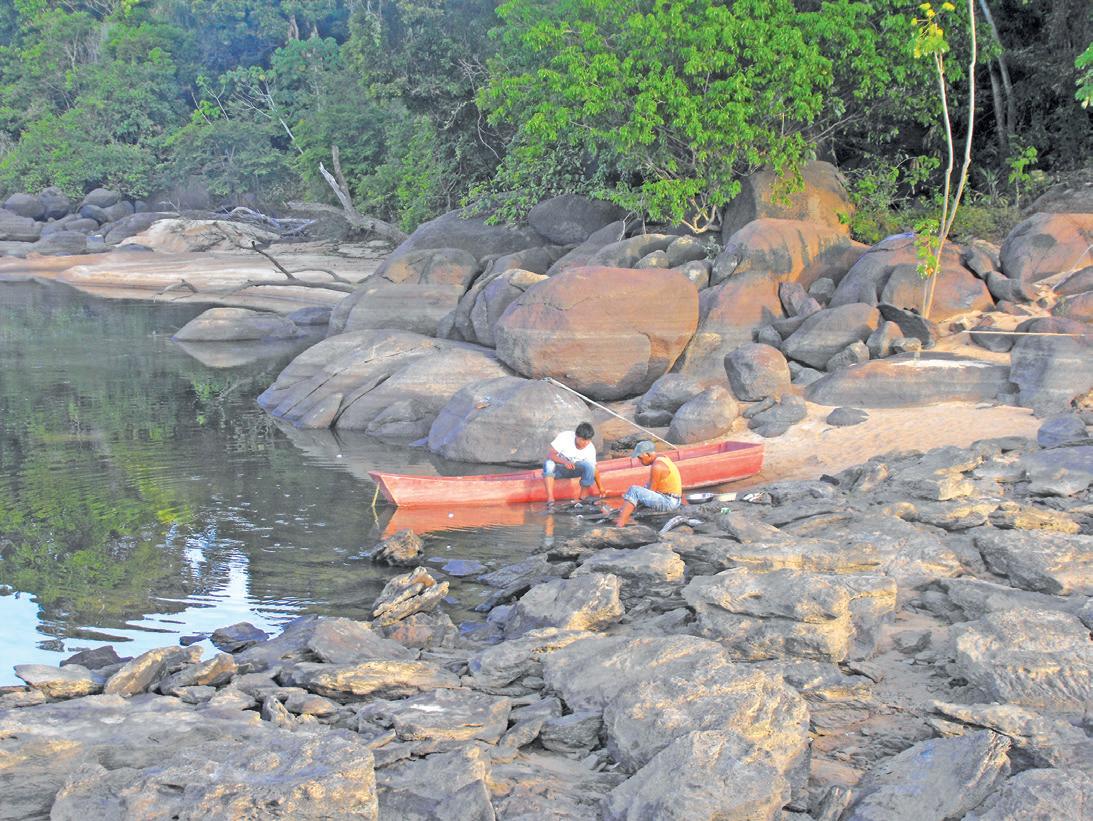
The trip begins in Crabwood Creek, Corentyne River, Berbice. Cow Falls, according to author of ‘Bradt Travel Guides’ Kirk Smock, is located 120 miles up the Corentyne River – a sixhour journey.
The journey to Cow Falls is an exhilarating experience on the Corentyne River. Upon nearing and also entering Cow Falls, there are huge boulders, which are sometimes covered by water. There is only one building in Cow Falls that provides accommodation for tourists. It is built on rocks raised above the river.
Fishing and other fun water activities can be enjoyed at Cow Falls. There is no internet or electricity and so enjoying nature in all its glory is another highlight of the trip.
Travelling 90 miles, according to Smock, from Cow Falls is Wonotobo Falls. The waterfall borders Guyana and Suriname, in an area inhabited by Trio Amerindians (native to Suriname).
For more information on this tour, visit www. guyana-tourism.com
y M elvin D urai
B
My sister, Irene, and brother-in-law, Santosh, recently celebrated their 25th wedding anniversary. It’s a very significant anniversary, and like many couples who are lucky enough to reach the milestone, they had a big party to mark the occasion.
Will they celebrate their 30th anniversary with as much excitement? Probably not. The 30th anniversary, by tradition, isn’t quite as significant as the 25th and neither are the 35th and 40th. When they reach their 50th anniversary, however, they will be showered with congratulatory messages from all seven continents, as well as the human settlement on Mars.
After the 50th anniversary are two significant anniversaries: 60 and 75. Only a few couples are lucky enough to reach their 75th anniversary. Those who do are usually in their mid90s (or older) and not always sure what they’re celebrating.
Nursing home aide: “Jack and Delores, congratulations! Seventy-five years is a big achievement.”
Jack: “Seventy-five years? You mean we’ve been in this place for 75 years already? How old am I anyway?”

Delores: “She’s talking about our wedding anniversary. We’ve been together 75 years, Jack.”
Jack: “Seventy-five years?
Goodness gracious, Lord Almighty. When the reverend said, ‘Till death do us part,’ I didn’t realize it would be this long!” It’s curious to me how some numbers are more significant in our lives than others. Here are some of the most important ones:
2 – We love this number because it denotes a couple, a pair. Two is a number we use a lot, whether we’re reserving a
“Table for Two” at a restaurant, dividing a sandwich by two at Subway, or yelling “Number 2!” from the bathroom.
4 – This is one of my favorite numbers. It’s the number of years we usually spend in college to earn a degree, the number of seasons in a year, the number of weeks in a month. Four is the number of grand slam tournaments in tennis and major championships in golf. It’s also the number of years we have to wait between Olympic Games, World Cups, and Charlie Sheen marriages.
7 – We gave importance to 7
when we decided how many days to have in a week and how many dwarfs to help Snow White. The National Basketball Association (NBA) and other sports leagues follow a best-of-seven format in their playoff rounds. Seven is a lucky number for director M. Night Shyamalan: The critics love every seventh movie he makes.
10 – Here begins our infatuation with multiples of ten. Whether it’s 10, 20, 30 or 40, it’s somehow extremely significant to us. We feel a lot older when we turn 30 than when we turn 29, and not just because we’re stuck on 29 for several years.
12 – A dozen is how we prefer to acquire a lot of things. Try selling people a carton of 11 eggs and they’ll probably laugh in your face. But a dozen is perfect, whether it’s eggs, roses, or Saudi wives.
13 – Thirteen is the unlucky number, the number we try to avoid. Many high-rise buildings don’t have a 13th floor –they just skip to the 14th. Tiger Woods’ marriage fell apart when he made the regretful mistake of getting a 13th girlfriend. For most professional athletes, a dozen is perfect.
16 – This is a significant birthday for girls, Sweet Sixteen, signifying their pas -
sage into womanhood. Sixteen is also the number of hours in a day that the average teen-ager spends on Facebook.
21 – This is a significant birthday for boys, signifying their passage from soft drinks to hard drinks. Twenty-one is the minimum drinking age in many parts of the world, and also the minimum number of empty beer cans lying around at the birthday celebration.
50 – This is a half-century, an extremely significant number. When you get to 50, you’re halfway to 100, and you might just get there, especially if you’re as good as Sachin Tendulkar. (The retired Indian cricketer is the only player to have scored 100 International centuries.) Fifty is the age when you can get senior discounts at a number of places, and it’s also – if you bother counting – the strands of hair you have left.
100 – Few numbers can compare to 100 in significance. Getting to 100 makes you a centenarian, old enough to say “Hi kids!” to everyone at the shuffleboard tournament. It’s truly an honor to be in a list of 100, whether you’re a Top 100 tennis player, one of the “100 Most Influential People in the world” or the first 100 people to get selfies with the Dalai Lama.