
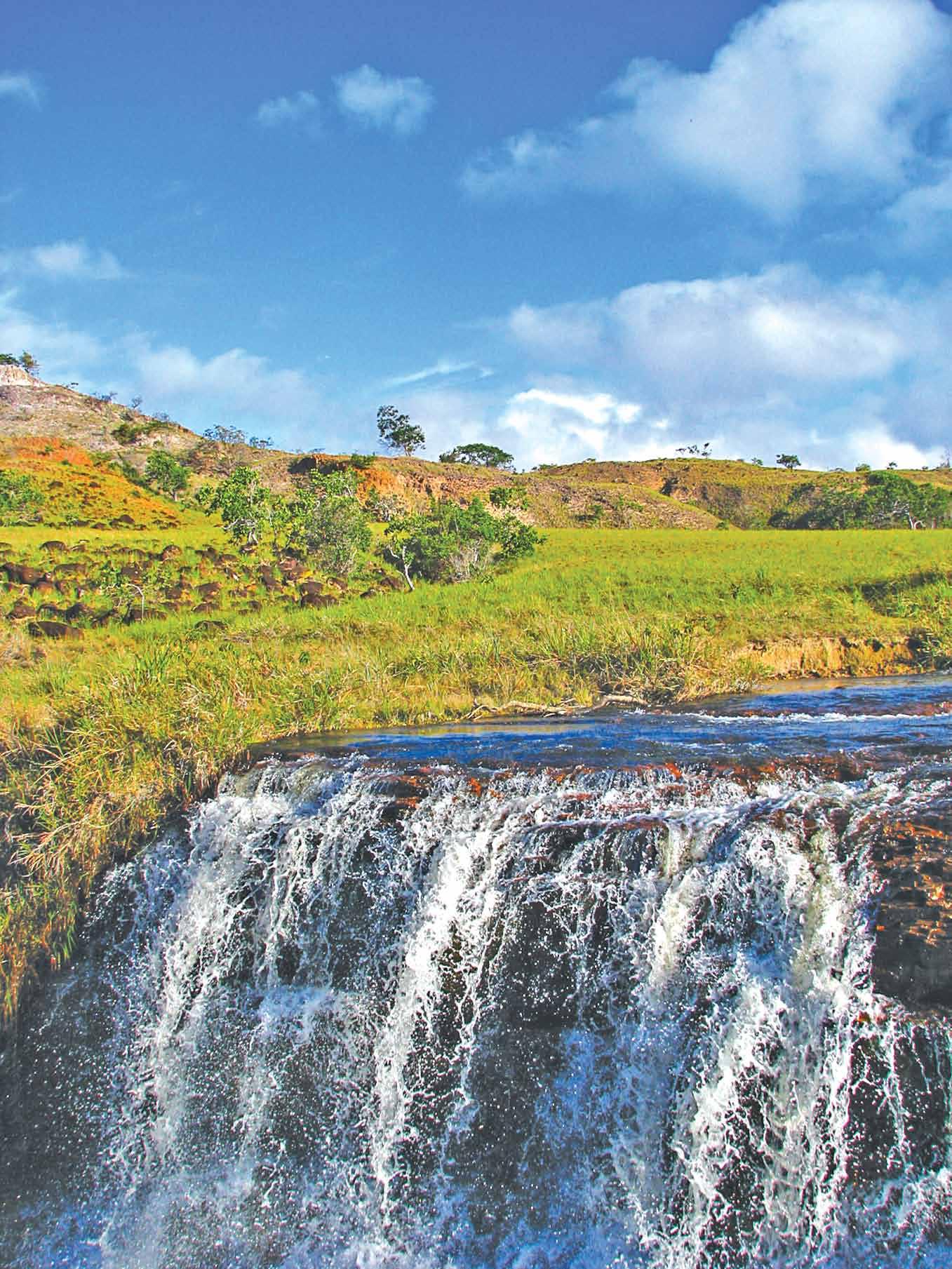

Yei Winon Merison Sepo is the local Makushi name which means “medicine/soap from trees”. The name was adopted by a group of women from different Amerindian communities in the North Rupununi that produce traditional medicines and soaps from locally cultivated plants and trees.
The core members of the group are Veronica Farias and Rita Francis, from Kwatamang, and Cecilia Goffreys, now retired, from Massara.
The group was founded under the auspices of the NGO Pro-Natura UK, but with the help and support of NRDDB (North Rupununi District Development Board) is moving towards a state of complete self-sufficiency. The entire research and development process is managed by Amerindian residents of the North Rupununi. Intracultural transmission of medicinal knowledge is facilitated by the Makushi Research Unit (MRU).
The majority of raw materials are sourced from Amerindian titled lands in neighbouring communities,
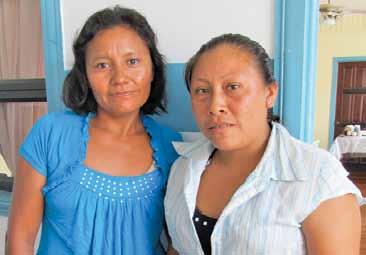
becoming therefore a community-based enterprise so, as the business grows so does the capacity for benefit sharing. Thus a financial incentive to preserve the pristine environment of the North Rupununi is born. All products adhere to traditional methods of production and resolutely refrain from mechanization, which means that all work is done by hand following Makushi tradition.
This business is a proponent of practices that maintain the integrity of both culture and the environment. The soaps, creams and tinc-
tures are made from the different plants and trees.
The main goal of the group is to become a sustainable and sufficient community-based enterprise, providing job opportunities to the younger Amerindian generations and preserving the Makushi traditional knowledge about medicinal plants and trees.
In an interview with Guyana Times Sunday Magazine , Farias, also based in Annai, said Medicine from Trees was founded in 2006, and she, Goffreys, and Francis were selected to be

trained in researching trees and their medicinal value, and then using these in producing coconut oil, a natural skin moisturizer; crabwood oil and soap, a natural remedy for itches, rashes, insect bites; Neem Cream for itches and rashes; Kiambee Cream for cuts and sores; and Shusuwa tincture (from the female tree) to relieve the pain caused by rheumatism and arthritis, which is also used as a tonic for mature men – just to name a few.
“Our lab is located at Bina Hill Institute. We market our products in our community and surrounding areas including eco-lodges. Since the beginning, we always do questionnaires for our customers to get feedback on how effective our products are. Since Goffreys has resigned because of old age, Francis and I have continued. We meet to plan what to produce and the timeframe to do so. We also plan how and where we can market our products. We also have to write a report to submit to our CEO Ivor Marslow,” she revealed.
The most recent product added, Farias disclosed, is the Bloodwood Cream, which is ideal for skin fungus such as ringworm.
“We want to get companies in Georgetown to purchase and distribute our products. If we can collaborate with more companies then we can easily distribute our products,” Farias declared.
“A man met me in Annai and told me he bought our product for diabetes at GuyExpo last year. He said he bought five of our products that help with diabetes, for his mother who was very ill and could not walk and was dying. He said that our medicine has been helping since he gave her and so he travelled to Annai to buy more of it. He also said he will share it with other dia-

Tradition brings progress as cultural heritage and knowledge of the environment are used to develop indigenous communities
betics,” Farias said in outlining the effectiveness of Medicine from Trees products.
Farias also expressed her passion for researching the health benefits of various plants, and knows their names in Makushi and also their scientific names. Last year, she was part of an ethnobotany research project. Compilation and documentation were done by Guyanese activist Vanda Radzik.
“I enjoy going out in the
community is the Shulinab Women’s Group. The group’s secretary Goretti Louis, speaking with Guyana Times Sunday Magazine, stated that it was started in May 2012 with 15 women within the Shulinab community.
“We do wine making, pepper sauce, craft, knitting; we make mosquito nets, hammocks, and sew uniforms for children. We also make peanut butter and cassava bread for the school feeding project done by the Ministry

field to do research on these. We are continuously researching new plants and documenting these. A lot of persons are interested in our products but would usually ask if we’re certified. We really need more training and certification. Although we tell people our products are organic they still want to see certificates because they want to take it overseas. We have seen a vast market for our products but we need certificates,” she disclosed.
Another group focused on empowering women and the
of Education. A lot of tourists buy our products. We have exhibited at rodeos and fairs locally and in Brazil. Our group is progressing and I see it continuously expanding in the future. We are empowered because we have the earning power, but we need to broaden our network to get our products out there,” she noted.
For more information on Shulinab Women’s Group call 696-7091 and for Medicine from Trees call 658-0020, 772-9292 or email medicinefromtrees@yahoo. com
By Dmitri Allicock
The once popular and well known
1897 Demerara Essequibo Railway (DER) provided valuable and safe transportation of commuters and cargo between the Essequibo and Demerara rivers. It was Guyana’s first inland railroad.
Gibraltar born Hugh Sproston, died June 1907, entered British Guiana in 1840 and saw the dire need for transportation across Guyana’s waterways and hinterlands. He established steam powered vessels across Guyana and built the first dry dock in 1867, where damaged vessels could be repaired and new ones constructed.
Sproston had steam brigs and other vessels plying the Georgetown route to as far as up the Demerara River since the 1850s. There were also other privately run vessels of that time period.
Access up the mighty Essequibo River was a different matter. Navigation was very dangerous because of the many rapids and waterfalls. Many died by drowning as boats frequently capsized in the torrents of the Essequibo. The idea was born to construct this railway from Wismar to Rockstone. The calm and navigable Demerara River had the width and depth to allow ocean going vessels up to Wismar and it provided access from Georgetown to this railway with transportation continuing from Rockstone via launches to Tumatumari on the Essequibo.
The Demerara River is obstructed by large rocks that sit in the middle of the river in the Watooka area. These rocks may have influenced the choice for the railway terminus in Wismar.
John Dagleish Paterson’s, of Christianburg, land and sawmill business were bought by the then British government in 1894 to set up this railroad. Sproston’s Company Ltd then constructed the DER in the years 1895-1897. A loan of $200,000 dollars was given to Sproston’s Company Ltd by the British government, to be repaid in 20 without interest.
This ‘light railway line’, as it was referred to, was just over 18 miles long and ran westward from the Wismar terminus to the Rockstone terminus. It provided access through Guyana’s primeval forest to the Upper Essequibo’s Potaro gold fields, balata trees and endless supply of hardwoods. The demand for greenheart appeared limitless and British Guiana was
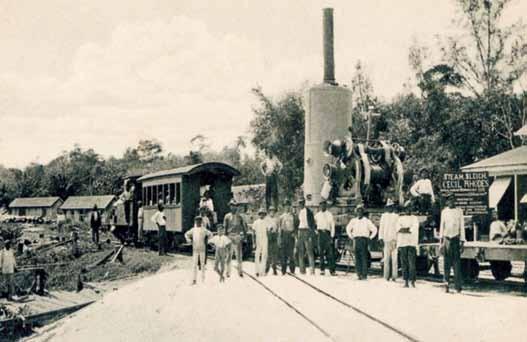
Empire Exhibition Wembley - Guiana’ read, “The terminus of the colonial steamers which ascend the Demerara River daily is at Wismar about 65 miles from the sea: but sailing vessels can be towed for 15 miles further up to load timber supplies of which for many years been obtained and exported from the valuable forest Country through which the river flows. Opposite Wismar is ‘Mackenzie City’ the headquarters of the Demerara Bauxite Co. Ltd. From Wismar a railway runs across to Rockstone on the Essequibo River and small launches run regularly twice a week to the foot of the Malali rapids on the Demerara about 104 miles from Georgetown where the influence of the tide ends.”
Pivotal railroad
The dawn of 1900 saw this spanking new railroad linking the two rivers, moving people, equipment, timber, cargo of many varieties and most of all hope for a brighter future. Bauxite would later take over as the new king. The Demerara Bauxite Company would soon be established with the 1912 land purchased by George Bain Mackenzie. The year of 1917 saw the first mining of bauxite at Akyma and later the construction of the bauxite plant and housing areas on the eastern shores of the river.
With this railroad, Wismar became the focus and hub of economic activity overtaking Christianburg as the center of
the only country that exported this prized hardwood at the time.
The train tracks ran south along the Demerara River until it reached the area near the current of the Wismar/Mackenzie Bridge. The railway then swung westward through the forest until its destination at the Rockstone Essequibo River terminus.
The 1924 publication from the ‘British
the community. However within two decades, as the bauxite industry developed, the eastern bank of the Demerara River raised eclipsing Wismar. The Mackenzie or eastern shore of the Demerara River still maintains this level of importance today. This railroad brought all sort of jobs for the people in the area. A network of related businesses grew around the railroad
and life improved for many.
My special cousin Manly Binning worked from 1919-1927 as a machinist at the Sproston’s Wismar Workshop. One of my grandfathers, Alfred Allicock, used to square timber delivered by this train on the Wismar bank of the river. Others travelled to Upper Essequibo to work in the timber, balata industry or to mine gold and diamond. The steamer and railway service became an integral part the lives of our family and people of Upper Demerara.
Ralph Hamilton Carr
Ralph Hamilton Carr (1880-1926) was chairman of Sproston’s, managing director of Demba, and vice president of Northern Aluminum Company of Canada. The steamer was named in his memory. The R H Carr Steamer, commissioned in 1927, continued service long after the railroad was closed. The steamer service came to end shortly after the Linden/ Soesdyke Highway opened in 1968 and brought to an end over 100 years of steamer service between upper Demerara and Georgetown.
In 1960, one of the descendants of John Blount, of Three Friends referred to as ‘Miss Blount’, spoke with the author Zahra Freeth of ‘Run Softly Demerara’. Miss Blount said of the railroad, “When Christianburg went down, so Wismar became bright; with the railway to Rockstone, Wismar became the centre of importance on the upper river which only shows that God will always provide.” She added, “As one place closes down another place opens up, and after Wismar it was Mackenzie.” She went on to say, “I don’t understand how people can say there is no God, when here we see the bauxite dug out of the ground, bauxite that God put there so that it would bring work and money to the people of Demerara.”
A bauxite ship was passing her home at Christianburg at that moment. The ocean going ore ship was only a stone’s throw from the house, and dwarfed the surrounding scene as it passed along the Wismar waterfront. Miss Blount added, “And when I see the big ships, I say to myself, there, if you need it, is another proof of the greatness of God.” Miss Blount was in her 80s at the time of the interview and was also one of my family members. This railway would continue running well into the bauxite era until it was closed in the 1940s. The gold decline in the Potaro fields and the switch to the much cheaper petroleum based rubber were believed to be some of the reasons for its closure. Nothing remains of this historical railway today. The Wismar Steamer Stelling which was closed in 1968 lies in ruins at present. Some rail lines are covered by the now Burnham Drive main road in Wismar.
The artistic musings of the Nappi Balata Artisans Star of the Week

The Nuance of Natural Fibres
Selena Gomez parts ways with her manager parents
Ancient Egyptian Coffin Unearthed in Israel


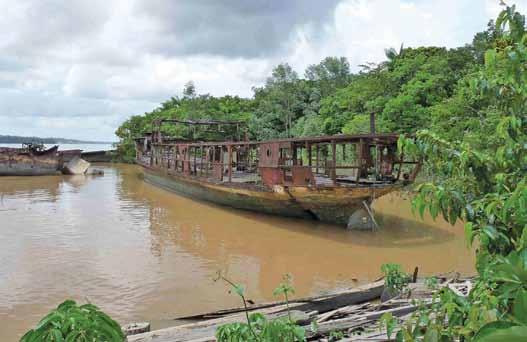
The ruin of the steamer, R H Carr, is at Skull Point located at the Cuyuni and Mazaruni River junction. The nostalgic memories of this particular ship are remembered and bring a particularly sad feeling upon viewing the ruins. Most of upper Demerara residents, including all of our family members, used the R H Carr for transportation to Georgetown. The exceptions were the many speed boats and launches available. The speed boats took only one hour but did not complete the entire journey to the port of Georgetown but stopped short at the Atkinson base where taxi or bus completed the trip.
I still remember running down the steep steps of the R H Carr’s third class as a child to buy gynip and drinking a cold Coca Cola from D’Aguiar while watching the large propeller of the boat churning up the brown water. We would wave as we passed the people on shore or in boats on the river in a kind of a farewell salute.
There were other businesses that provided employment like logging, balata bleeding, farming and gold mining in the area of Lucky Spot and Kanaimpoo. But their influence was dwarfed by the importance of this railway and the other industries that it supported.
The turn of that century saw the first automobile and the electric bulb take center stage in Upper Demerara, however steam power still dominated. DER was a major pillar in Upper Demerara’s development. Sproston’s Steamers, Railway and Construction Company lead the way as the Demerara Bauxite Company became established. The story of the area’s influences, which molded our ancestors, must be kept alive and passed on to the new generations. Once in a while, we should close our eyes and take a trip on a sailboat up the Demerara, a train ride on the Wismar to Rockstone rails or a peaceful nostalgic river voyage on the R H Carr Steamer to Georgetown.
The value placed on our esteemed heritage equates the importance of pride in us. Remembering the past is a vision of the future.
By Behi Barzegar
Sixty-eight-year-old master craftsman
George Tancredo scaled more than 15 feet up the tall balata tree, as agile as a man a quarter of his age. Harnessed by thick steel rope and spiked shoes, he continued to score the bark, high on the trunk of the tree, into a pattern of converging ridges that would allow the milky resin to drip through the narrow channels and down into a collection bottle at the base of the tree.
“You need a special thinblade cutlass to cut into the bark,” he explained. “And if you don’t cut correctly, the resin will not flow into the channels and will be wasted.”
He demonstrated this by creating an irregular cut that soon filled with resin overflowing, but not in the direction of the bottle.
According to Tancredo, it is possible for a trained balata worker to extract 60–80 pounds of balata from one tree in the rainy season when the resin is more fluid.
Commercial balata latex harvesting started in Guyana’s Kanuku Mountains region in the late 1880s. Tancredo was barely out of school when he started working in the then thriving balata industry. Back in 1976, two companies had been operating in the Rupununi since the late 1950–1960s, training and employing young men and school leavers to harvest the resin from the balata trees in the forest for export sales as insulation or vehicle tyre components. However, by the 1980s, the balata industry was in decline due to the emergence of cheaper, synthetic alternatives, forcing Tancredoe, and others like him, to seek new sources of income.
While he was still at school, Tancredo had been
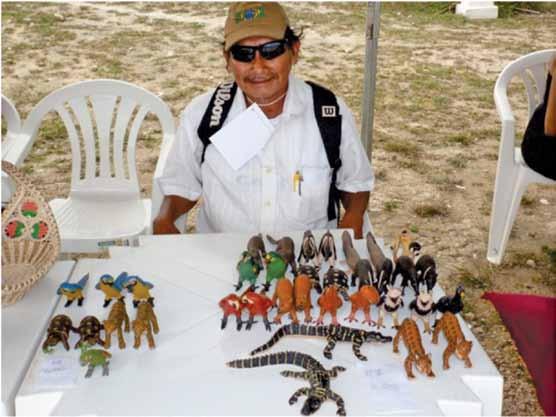
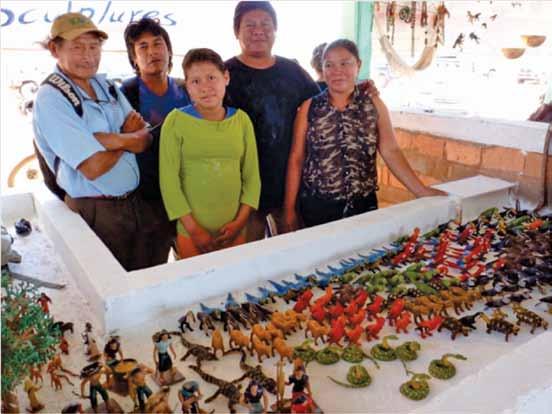
inspired by his school teacher, Patrick Abrahams, who ran after-school classes in handicraft, especially miniature sculptures which he first taught using bees wax and then moved on to balata. Tancredo and a few others in the village of Nappi, who had by then practiced and developed their artistic skills into a recognised craft form, looked into transforming their craft into their livelihood.
“Finding colours to make the sculptures realistic was a problem,” disclosed Tancredo. “It took me years to find how to make colours, before it became possible to buy some in Lethem. I learned from the Wai Wai craft, from deep South Rupununi, how to make red dye from Annatto fruit picked from the tree, then I accidentally discovered the use of clay mixed with coconut oil for orange and brown, potato starch for violet, and kerosene oil for black,” he recalled.
“George did all the hard work and cleared the path,
so by the time we came along, finding colours was easy!” confessed Nicodemus Joseph, himself an accomplished balata artisan who started his career as Tancredo’s apprentice.
In the absence of resources and markets, Tancredo’s creativity stretched to inventing his own tools for his craft. Clipped bicycle spokes, butter knives, deliberately twisted scissors, are all now firmly established as essential items in the inventory of ‘specialist tools’ used by the current balata artisans in Nappi.
As sales advanced, orders began to build for the balata artisans in Nappi. Tancredo’s reputation started to spread, as his craft evolved from miniature sculptures to ‘scenes’ of local and Amerindian life; images of the animals in the forest; and later to chess table and pieces; even Noah’s Ark, complete with Noah’s family and several pairs of animals, inspired by a drawing he saw in a bible.
“I get my inspiration

Fredricks revealed, another balata artisan and a member of the original NBA. “We started receiving orders for container loads and we could not meet the demand. A single order would take three months to manufacture and we did not have an agent in Georgetown to handle the shipping.”
There were other problems too: payment from Washington was made by wire transfer and the whole thing from start to receiving payment could take months; poor infrastructure made transportation to Georgetown unreliable and expensive and, in the absence of telephones and internet services, simple communications were a laborious process.
from nature, people and everything around us, but I also look at books, drawings, and photographs for details and accuracy of colours.” Tancredo noted.
The first Nappi Balata Artisan’s (NBA) group was formed with support from Conservation International (CI) in 1995, with approximately ten members, and soon begin to flourish. With two main US-based distributors supplying primarily to CI-Washington customers, the group achieved solid growth in that market, while at the same time developing a national market in Georgetown. The work of NBA members was soon on display alongside major world artists, in various locations including the Smithsonian Museum in Washington and, through the initiative of a British volunteer, a permanent display of some of George Tancredo’s work has been housed at Castellani House art gallery, in Georgetown, for the past 15 years.
“Cracks began to show in our business just as we reached our peak production levels,” Toshao Guy
The combination of these challenges was not encouraging the young people of Nappi community to develop their interest in balata crafting, according to Fredricks who learnt the craft from his father. The group collapsed by mid 2000s and each artisan started pursuing a solo enterprise with their individual customers, while remaining flexible to help each other out if any one of them was under pressure for production. Currently, less than a handful of persons remain in Nappi who can practice this traditional art. Among them is Julita Fredricks, the only female balata artisan who learnt the craft from her husband Guy.
Like Nicodemus who apprenticed with George, Julita started by painting the sculptures made by Guy. “As I watched what Guy was doing, I started to practice by sculpting the finishing patterns and textures and adding small features like eyes, ears, hands and tails,” stated Julita.“Now I do my own figures, especially my favourite, the Cock of the Rock.”
The NBA has recently experienced a surge in revival among the surviving members. Renewed in-
terest in balata sculptures has led to increasing orders from private and public sectors including the Protected Areas Commission who is responsible for the management of National Parks such as Kaieteur Falls, among other natural attractions. Regular orders in manageable quantities have been streaming in; the growth of tourism in the Rupununi alongside improvements in road, transportation, and communications infrastructures, as well as banking services have reduced some the obstacles the group has for accessing markets. Growth of events such as the Rupununi Christmas Fair, Rupununi Business Forum and Expo, the rodeo and the 3-Nation Frontier Festival in Brazil have all helped increase the profile of this unique art form and the amazing skills of the people engaged in the craft. Today, far from the bustle of markets and cities, the Nappi Balata Artisans can still be found practicing their art using simple traditional methods and experimenting with producing new animals, forest scenes and local culture imagery.
“Whitie tree has the best fire wood for using with balata. It gives the best charcoal, which is what you need for moulding, decorating and finishing the products,” Guy Fredricks pointed out.
Additionally, he said as he shapes his latest creation, the White Bell Bird, which has proven to be a hit with customers, much to Guy’s surprise.
“Usually people like bright colours,” Guy muses, as he and Julita sit by their craft benches, working calmly in the tranquil beauty of the Kanuku Mountains that landscape their community.
One thing is for sure, the NBA artisans will never run out of subject matter to satisfy their creative flare yet give so much pleasure to so many people around the world.
‘Iam proud to be Guyanese’
“Although I have not been back in years, I am proud to be Guyanese,” says Sasha Pilgrim - author, motivational speaker and budding entrepreneur.
Born in Linden in 1987, Sasha spent a few years of her childhood in Berbice before relocating to US. She currently resides in New Jersey where she studied and obtained two degrees in General Sociology from Bloomfield College and BA in Business Administration & Management from Pillar College.
A devoted Christian, Sasha attends New Beginnings Christian Outreach Ministries, located in Paterson, New Jersey, under the leadership of Apostle Lilisa Mimms. She serves as an adju-
the upcoming release her new book Understanding & Embracing Your Season of Singleness: Single, Saved & Young. Here’s her story.
GGR: Tell us a little bit about your family history.
Sasha: My paternal grandparents came from Suriname. My great-great grandfather, who is still alive, came from India. And my maternal grandfather is mixed with Portuguese. I love how diverse my family is, because it is a reflection of my homeland Guyana. “One People, One Nation, One Destiny”.
GGR: When did you start your career/business?
Sasha: There’s so many different hats that I wear, but my heart and passion is to help people. I remember volunteering at the age of 19 at a centre for youths in a city where violence

tant, a member of Judah Performing Arts Ministries, Assistant Director on one of the many outreach projects of New Beginnings, a Sunday School Teacher, and member of New Beginnings Media Ministry and currently in the New Beginnings Minister in Training programme. She also serves as a member of Greater Life Inc, an outreach organisation for young people within the city of Newark New Jersey.
Sasha is a motivational speaker and offers mentoring services through her website, www.sashapilgrim. com. She also finds time for her photography business, and her online boutique at www.officalsp.bigcartel. com.
GuyaneseGirlsRock. com, a Facebook page that celebrates the achievements of Guyanese women, caught up this busy young entrepreneur to discuss her business and career, future goals and
to gain access to many of the things I would want to get involved in. As I mentioned before, my heart/passion is to help others. It took people that I crossed paths with that did not count me out, but poured into me. I grew to have mentors and advisors. This helped me to believe that I can be more than my circumstance and more than my resources. And because of this, it has helped me to believe that I can do what I thought I could not do. Hench, I stepped out on faith to write my first book and prepared to launch my own business.
GGR: Why did you decide to write a book?
was an everyday thing. My first case involved assessing the needs of a single mother after losing her children’s father to a homicide. My second case was talking to a group of young people about victims of violence. As time went on, the cases multiplied and I knew that I would one day want to establish a company that would help others. Not only will this company give back, but it will help others work boldly towards their life goals.
GGR: What made you want to start your career/ business?
Sasha: I wanted to be able to make a difference through giving back. Growing up in a single parent household was hard. I didn’t always get what I wanted. And I often felt as though I had to work just a little harder than anyone else. Nothing was every handed to me. I knew education would be key to be able
Sasha: Understanding & Embracing Your Season of Singleness: Single, Saved & Young is a book that was written at a time when I started to get serious about my Christian walk. It took a total of 2-3 years before it was completed. I wanted to share with others how important it is to have a strong relationship with God. What it means to really think about the direction of one’s life and tap into the greatness that has been placed within. Each one of us was created with a divine purpose and with a great destiny. We just have to be the one to realize that we are of importance. However, in order to do that we have to be in relationship with the one that create us. If not, we will continue to walk aimlessly searching for what makes us happy. The book is not one that forces a person to become saved, but it encourages it. It is a motivational and inspirational read for those that aspire to be more than just someone who is “ordinary”. This book is very much a part of me, as it is written from a pace of no longer being fearful of walking into who God has called me to be. In addition to that, it pushed me to learn how to live life on purpose.
GGR: What are your goals for the future?
Sasha: As firm believer in Jesus Christ, I see my future in Him. I will continue to pursue the things that will bring Him glory. I will continue going after the things that will show people His love and allow others to know who He is. With God, all things are possible. He will give us the desires of our hearts. It could be a business, a change in career, change in life and so forth. Whatever it is, once we place it in his hands it is well. The future as of now is unknown, but I will boldly walk towards it.
GGR: What’s your advice for aspiring writers?
Sasha: To those that aspire to be future writers, begin to write. Keep a journal with you write down the thoughts that comes to your mind throughout the
day. Make an outline, if you can, of what it is you want to write on. Stick to the plan. Know that deadlines can be extended; just make sure that you set them. Remain focused and don’t get discouraged. There will be times where you will not feel like writing and you will want to give up. Just remember why you started and how far you’ve gotten. Make it your business to find time to be in your own space and write. Creativity flows at all hours, be open to great ideas. Have just a few people you trust (I had only two), that can read your work and give you feed back. This will help to get you to really think about the clarity of your work and how you can make improvements. Stay motivated and stay encouraged. And remember, you can do it. (www.guyanesegirlsrock.com)


By PetamBer Persaud
Godfrey Chin died in 2012 but his legacy will live on in our hearts and in our memories.
On Thursday, 10 April 2014, the Moray House Trust hosted ‘An Evening of Nostalgia: The work of Godfrey Chin’. Chin was a man of many parts, all of which he played with consummate ease. He will be best remembered for his monumental book, Nostalgias - Golden Memories of Guyana 19401980, a publication that has become a source document for cultural historian and other academics, a publication that has enriched the literature of this country by its rich firsthand look at the story of this country during the period covered.
In my autographed copy of his book, Chin wrote “[c]arry on the tradition”. Mindful of that mandate, I hereby reproduce an extract of a ‘gaff’ we had in 2011.
PP: My formative years were filled with books and films. There were times when one source fed off the other; what I mean is that sometimes I would read a book and hanker to see the film adaptation or vice versa - see the film and hanker to read the book. But more often it was the movie first then the book. I was intrigued how the masters worked – the master writer, the master filmmaker and how one artist treat the work of the other.
Godfrey, when I called you this morning, you said you were up since early reading – one of your great loves, the other love of your life is film. Let’s talk literature and film.
GC: Actually, Petamber, your first preamble is correct – which came first, reading about the great literature books or seeing the movies and then becoming interested.
Let me start at the beginning of the forties when Classics Illustrated was very popular. What they did there on a 52-page colour, they started to give us the great classics. I can remember The Three Musketeers, then the Adventures of Robin Hood, Treasure Island, Westward Ho. So what that meant in the days when there was no television, just radio, we were just at public school, so here you could buy a comic book for 12 cents and have in pictorial form the story of the classics. It was not only the story done especially for us but at the back was the story of the authors - Dumas, Stevenson, and there you could read how they were inspired to write these stories.
PP: Interesting that you should mention that because it brings to mind another art form: on the labels of vinyl 331/3 records, you could find information and titbits about the writer of the song and the performer and the band and loads of other related things.
GC: That’s a good point because in later years, on the 331/3 vinyl, there was the history of that particular music and the artistes. And I remember spending days in Radio Demerara… PP: All of these things make up our literature…
GC: Yes, reading about the music and the artistes. So I was reading everything in Radio Demerara that one day the General Manager welcomed me as an employee
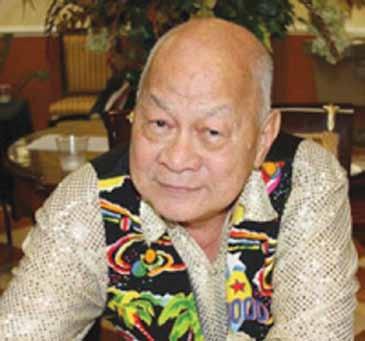
- he thought I worked there.
PP: Let’s get back to Hollywood.
GC: Hollywood was the creative school looking for good literature to make into movies even from silent days they had started to make Moby Dick by Herman Melville, Rafael Sabatini’s Scaramouch and Prisoner of Zenda with Rex Ingram. So coming through the 30s, when people like David O Selznick recognised the possibilities of bringing the classics to the screen…. One I can remember was Mark Twain’s Adventure of Tom Sawyer, Prisoner of Zenda –Ronald Colman, all eagerly awaited by movie fans.
PP: What you are saying then that many of the screen scripts came from books.
GC: Yes.
PP: Even from the silent days.
GC: Yes, actually what happened when they realised the potential of producing movies from the clas-

sics books, they started to buy them.
PP: The rights?
GC: Yes, they were already printed. A Tale of Two Cities – Ronald Colman.
PP: Written by Dickens.
GC: That came in the 40s and coincided with our studies in my days.
PP: In your days?
GC: Yes. But let’s go back to the 30s–1939, one of the greatest movies ever made, written by Margaret Mitchell, she wrote that in 36-37, and even before
‘Gone with the Wind’, why?
GC: Because of the dearth of movie houses today they can buy a copy and look at it on their television but the interaction and seeing these movies…
PP: On the big screen was a total different experience…
GC: Yes, the people of my time learnt creativity. I have a two-hour film on the making of ‘Gone with the Wind’ and I am hoping and longing one day to show it even at the Theatre Guild so people can see all aspects, I mean just studying the craziness of David O Selznick is a history by itself – he fired four directors, twenty screenwriters. I am talking about filming – production, costume, the burning of the set of King Kong – fascinating…
PP: When I raised the point of connectivity to the younger generation, another thought crossed my mind – the younger generation maybe not reading as much and perhaps have not gone to the classics.
GC: Before I answer that let me move you to the 40s all these literature books were being made into films. I am talking about ‘Great

it was published David O Selznick had already paid over $50,000 for the movie rights. When it came out, it was a run-away bestseller, it sold a million copies in the first six months. And he announced he was going to make ‘Gone with the Wind’, it was sensational in that everyone all over the world started to say we wanted to have Clarke Cable play Rhett Butler and the search for Vivien Lee was on – there were over 500 starlets vying to play opposite Clarke Cable. Eventually ‘Gone with the Wind’ – the literary masterpiece and bestseller – became one of the three top movies of 1939.
PP: Godfrey, let’s pause for a while, and look at this through the eyes of the younger generation. I know many young people who do not get the same impact that you acquired from watching
Romans, Countrymen, lend me your ears.”
PP: Wow, one thing led to another in our overall education.
GC: Yes, we moved from pre-school, public school, into the classics, high school – learning about the novels into Shakespeare into theatre…
PP: How were you able to retain all these things all these many years?
GC: Actually, I have a remarkable memory in that anything I read (and write a note on) I would remember.
PP: So, Godfrey, this note writing of yours was an aid to memorising things?
GC: Yes, reading and writing.
PP: Godfrey, before we go on, let’s talk about the cinema as a social space. Later we’d talk about the library as a social space...
Responses to this author: Telephone (592) 226-0065 or email: oraltradition2002@ yahoo.com
What’s happening:
The 2013-2014 issue of ‘The Guyana Annual Magazine’ is now going into production. This issue is dedicated to A J Seymour and will focus on the increase interest in photog-

Expectations’, which was shown every three months at the Astor Cinema, private viewing so we knew the story of Mrs Haversham and David Copperfield so our exposure into literary classics continued.
The Academy Award film for 1948 was Lawrence Oliver – ‘Hamlet’. At eleven years that was introduction to tragedies and comedies of Shakespeare. By the time I went to Central [High School] we had Shakespeare in prose so we read the stories in prose form and the next thing you knew you wanted to read the plays – Julius Caesar, Hamlet. Julius Caesar eventually became a big hit in the 60s. Eventually you migrated to Theatre Guild where you wanted to be part of the actual production. I can see myself saying: “Friends,
raphy, the expanding arenas for cultural activities, what’s happening in the diaspora (Guy-Aspora) and will continue its role championing the cause of locally based emerging writers and of Guyanese writers in general, offering space and encouragement for their work.
World Book & Copyright Day will be commemorated by the National Library on 23 April.
It is here: ‘Anthology of Contemporary Guyanese Verse: Volume 1’ published by The Caribbean Press, compiled by Petamber Persaud with an introduction by Dr Lynne Macedo, University of Warwick. The work of 21 writers is captured in this 164-page book. Standby to restart THE JOURNEY, an evening of literature.

Below are 20 pertinent tips for young professionals who want to be successful in their careers.
1. Establish your personal brand. Decide what you want your reputation in the workplace to be, and let your actions define you. Keep promises, and make deadlines. Underpromise and over-deliver. Avoid behaviour in your personal life that could hurt your professional life (even more true today with all the risks of social media in the mix). Remember that details count, especially when getting the details right sets you apart from others.
2. Seek out a mentor. Many busy professionals might say, "I don't have time to be a mentor," but most mentor relationships happen naturally rather than being established formally. Be on the lookout for them.
3. Keep up with the news every day. Read the paper, check news websites and blogs, listen to NPR on the way to work. Know what's in the news about your organisation or industry before your boss or client asks.
4. Get away from your desk, and walk outside. Even if it's just to walk around the block or grab a sandwich, at some point during the day your brain needs natural light and a whiff of fresh air, and your body needs to stretch.
5. Plan the work before you work the plan. Having no plan gets you nowhere. Plans will change either by force or circumstance. Be flexible, but have a plan regardless of whether it's a work project, a trip, a major purchase, or an important life decision.
6. Don't pass up a chance to learn. Find out what your boss or leaders in your profession are reading (books, professional publications, websites, etc). Seek out professional development opportunities; pay for them yourself, if necessary. Join professional organizations, and get involved.
7. Go to your boss with a solution, not a problem. Your boss is solving problems all day. Make her life easier by presenting a solution when you present a problem. Even if it's not the solution that ultimately solves the problem, it keeps your boss from dreading the sight of you at the door.
8. Write thank-you and follow-up notes (handwritten, not emailed). Collect cards from people you meet at events, in meetings, or just out and about. A handwritten "nice to meet you" note will set you apart and help the people you meet remember you. Technology is good, but the personal touch still matters.
9. Travel any chance you get. Travel to small towns and big cities across the country and around the world. Don't put off travel. You'll never tell your grandchildren about that great trip you didn't take because you were too busy at work.
10. Be interested and inquisitive. Ask good questions, and ask them often. Young professionals have a great deal to offer a work environment. Speak up when you have something to offer, but remember to balance your enthusiasm with senior-level colleagues' experience.
11. Remember that everyone carries their own sack of rocks. You never know what type of personal issues the coworker who missed a deadline is dealing with at home or with his family.
12. Create your own personal style. That doesn't mean wearing flip-flops in a formal corporate environment. However, you can set yourself apart from the pack with a twist on the ordinary. To each his own, but just find your own.
13. Stay in the loop, but avoid the gossip. Be a "boundary spanner" — someone who is respected and trusted by people in all parts and at all levels of the organisation.
14. Look for "reverse mentoring" opportunities. You can be a resource to your older colleagues. Seasoned professionals can learn a great deal from their younger peers.
15. Looking busy doesn't equal being productive. The coworker who crows about his heavy workload and long hours is probably much less productive than the one who is organised and prioritises his days.
16. A good editor will make you shine. Don't look at having your writing edited as you would look at a teacher correcting a paper. Editing is a collaborative process, and there's always room for improvement in your writing.
17. Don't come to work sick. No one appreciates the stuffynosed martyr. That's why you're afforded sick days.
18. Cultivate contacts outside work. Your next job will probably come from someone you know through church, nonprofits, friends, and professional organisations.
19. Take risks. It's OK to mess up occasionally. No one can expect perfection. You can often learn more from mistakes than successes. Yes, really, you can.
20. Strive for work/life balance. The "balance" will probably fluctuate daily, but creative outlets, exercise, and hobbies make you a more valuable (and saner) employee. (www.prdaily.com)


or 20-year-old Christian Sobers, music has always been a significant part of his life. Both of his parents, Sean and Michelle Sobers, are also music aficionados. But it wasn’t until Sobers was 16 that music began to matter to him. As a self-taught musician, Sobers researched books, self-help guides and even YouTube for guidance. As he progressed, the musician took a few online courses to sharpen his knowledge and has been able to gain much knowledge from performing and working with other musicians. Every day he learns about music as he views it as an “unending” field and, therefore, is constantly challenging himself to explore and understand it even more. Since he began with acoustic guitar, Sobers has learnt bass and piano and his recent challenge is drums – which he loves. Now, through Music Unlimited, a flourishing music school he founded that aims to promote self-development through the lyrical power of music, Sobers passes on his passion for music and helps others find their inspiration through it. Music Unlimited offers courses in guitar, piano, drums, and vocal coaching. There are also live and online courses available. The passionate musician credits music as his saviour because it changed who he was and gave him purpose. He is also convinced that the possibilities with music are vast and it gives room for exploring one’s creativity through different genres and artists, both past and present.
Howler monkeys are the loudest of all monkeys. They call to let others know where their territory is, alerting them to stay away. The calls sound like a loud whooping bark or roar. After one group of howlers call, another group answers.
Howler monkeys usually sound their calls in the morning and at the end of the day, so all the howlers in the vicinity know where each group's territory lies. One howler group doesn't generally want to come in direct contact with other groups.
These monkeys live in Central and South America. At home in the forest, they hardly ever leave the treetops. Howlers mainly eat leaves, as well as fruits, nuts, and flowers. They don't move very far each day, feeding leisurely at the very top of the forest canopy. They're hard to spot from the ground, but they can certainly be heard when they call.
Howler monkeys get almost all the water they need from the food they eat. One of the few times they can be spotted on the ground, however, is during very dry spells when they need to find extra water.
Howler monkeys have prehensile tails, or tails that can grip. The monkeys use their tails as a fifth limb to grip branches.
The tops of the tails are furry; the undersides are not. The lack of fur underneath gives the monkeys' tails a better grip. A howler's tail is strong enough to hold its entire weight, but the animal rarely hangs from branches by its tail. Mostly it uses its tail to help grip branches as it eats and moves around high in the trees.


ctually, bubbles are not always perfectly round all the time. You probably have noticed this if you've ever used a toy wand to blow soap bubbles. But bubbles want to be round, and if you blow one that's more tubeshaped, it struggles to reshape itself. That's because bubbles are thin layers of liquid whose molecules stick together because they are attracted to each other. This creates what we think of as surface tension. Surface tension is a barrier that resists objects trying to move through it. Inside the layer, air molecules that are trapped can't get out, even though they're pushing against the water. On the outside, more air is pushing inward. The best way for the liquid layer to resist those forces is to take the most compact shape, which happens to be round, like a ball. (Discovery Kids)
The objective of the game is to fill all the blank squares in a game with the correct numbers. Every row of 9 numbers must include all digits 1 through 9 in any order. Every column of 9 numbers must include all digits 1 through 9 in any order. Every 3 by 3 subsection of the 9 by 9 square must include all digits 1 through 9.
The Howler monkeys live in family groups made up of males, females, and young.
The number in the group varies, but a troop is generally made up of 15 to 20 howlers. As they move from tree to tree, they stick together as a family. The leader is usually an old male.
A group of monkeys is called a troop.
There are nine recognised species, or kinds, of howler monkeys. They have brown, reddish, or black fur.
Howler monkeys have large throats and specialised vocal chambers that give them the ability to call loudly through the rain forest.
Wild howler monkeys live, on average, 15 to 20 years.
Howler monkeys range in size from 22 to 36 inches (56 to 91 centimeters) in head and body length, with tails that are 23 to 36 inches (58 to 91 centimeters) long. They weigh from 15 to 22 pounds (7 to 10 kilograms).
Several howler monkey females often help a mother take care of her baby.

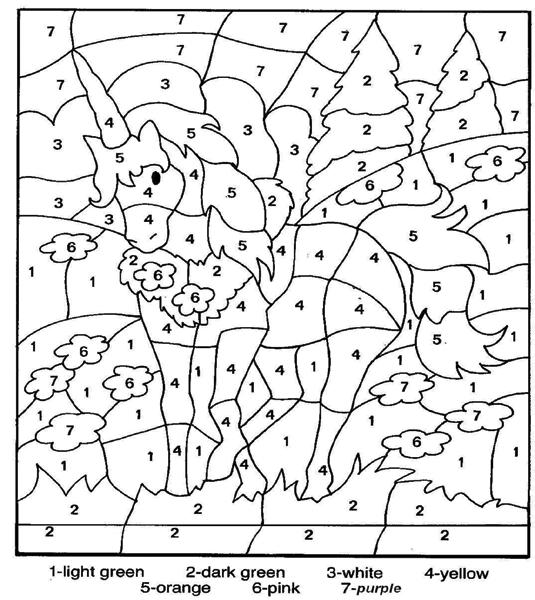
The Amazon rain forest is an ancient, enormous and fragile ecosystem. It is home to millions of rare species, including more than 1,300 species of birds, 40,000 plant species, 3,000 freshwater fish species, at least 370 types of reptiles and about 2.5 million different insect species.
The Amazon rain forest produces more than 20 percent of the world’s oxygen and could be considered the lungs of our planet.
This tropical forest has an average annual rainfall of 60 to 175 inches (152 to 445 centimeters), and temperatures average about 80 °F (27 °C).
The Amazon River is the world’s second-longest river — about 4,000 miles (about 6,400 kilometers) long. It carries more water than any other river — more than the Nile, the Mississippi River and the Yangtze River combined.
Each day, the Amazon discharges enough freshwater into the ocean to supply New York City for several years!
Because of its strong current, freshwater from the Amazon can flow 125 miles out to sea before mixing with Atlantic Ocean salt water. Early sailors could drink freshwater out of the ocean before even sighting South America.
The source of the Amazon has long been debated, and five tributaries have laid claim to the honor over the years. Geographers have not been able to agree on the definition of a river’s source. Since 1971, Lake Ticllacocha at the base of a mountain called Nevado Mismi has been recognized as the headwaters, and the Apurímac River as the longest upstream extension of the Amazon River.
The Amazon rain forest serves as a drainage basin for the mighty Amazon River and its many tributaries. The basin covers about 40 percent of South America (2.6 million square miles or 4.1 million square kilometers). It is estimated that one in 10 known species on Earth can be found in the forests of the Amazon Basin.
By Laurie Triefeldt
Leafcutter ants can carry up to 12 times their own weight.
The green iguana can grow to be to 6 feet (1.8 m) long.
Two-toed sloths sleep up to 15 hours a day. Their algae-covered fur is green-tinged and often infested with moths
Despite its enormous value as a home for millions of species and its clear link to the health of our planet, the Amazon continues to lose huge tracts of forests to cattle pastures and cropland. You can help by checking out some conservation organizations on the Web and learning about how small actions can make a big difference.
The spectacled caiman is also known as the white caiman or common caiman. Habitat destruction and pollution threaten this small relative of the crocodile and alligator.
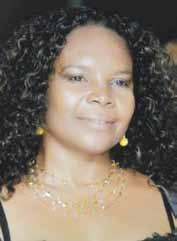
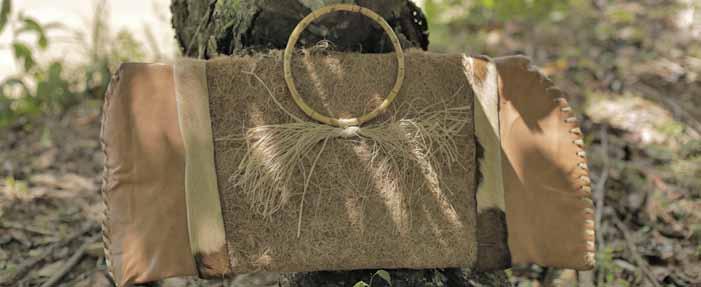
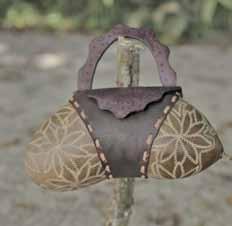
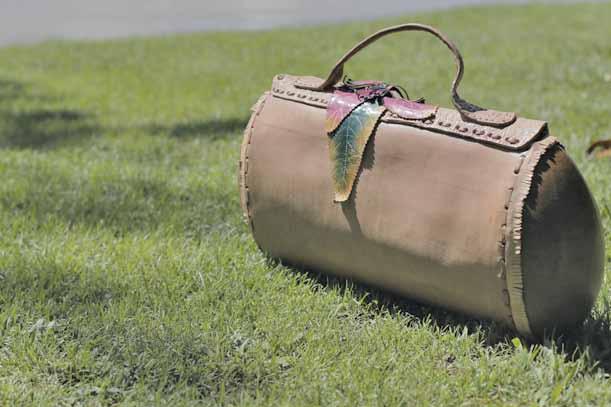
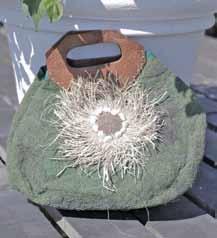
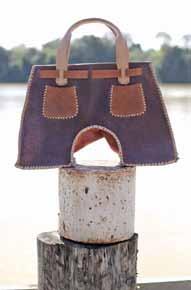
Local designer Carol Fraser’s impressive line of fashionable hats and bags explores the beauty of natural fibres.
In an interview with Guyana Times Sunday Magazine, Fraser said her eco-friendly collection is all made of natural fibres garnered from her homeland.

“I am very happy to be a culture ambassador for my
country. My plan is to educate an international audience of Guyana’s rich and diverse culture while at the same time promoting our Low Carbon Development Drive. This ‘green’ initiative will give innovators from around the world an opportunity to view some of Guyana’s natural fibres and creations,” she declared.
For more information on this collection, call 612-7846.




Joe Jonas is an American pop singer, musician, actor, and dancer. He was a member of the Jonas Brothers, a pop-rock band made up of him and his two brothers, Nick and Kevin. He starred as Joseph Lucas on the Disney Channel original series “Jonas”, and released his debut solo studio album, ‘Fastlife’ in October 2011. The album debuted on Billboard 200 charts at No. 15. It was announced on May 2, 2012, that Joe Jonas had parted ways with Hollywood Records; he bought the rights of his music.
Нe co-wrote the song ‘Dreams’ for the 2013 John Legend album ‘Love In The Future’.
Hilary Duff and her estranged husband Mike Comrie, who announced their divorce in January, reportedly are going back together. According to Radar Online, the couple rekindled their romance after a family trip which took place in February. "Hilary and Mike hooked up when they were in the Bahamas," a source said.
According to the source, the couple was trying to arrange the custody of their son Luca and talk about their assets, but they ended up calling off their divorce. "Once they were together with their son Luca in the Caribbean, it got emotional and real. Mike broke down and begged Hilary for a second chance," the source explained.
"They've been meeting for hookups ever since, and Hilary's softened and the two are moving forward to see if they can work it out," the source added. "Hilary's one stipulation is that Mike step up to full-time parenting duties while she works on her new TV show and her

music career."
Duff and Comrie got married in 2010. Back in January, a representative for the "Cheaper by the Dozen" star confirmed that the pair were separating, "They remain best friends and will continue to be in each other's lives. They are dedicated to loving and parenting their amazing son, and ask for privacy at this time."
The pair were recent-
ly seen meeting up at the Chanel store in Beverly Hills. An eyewitness told E! News that the two were standing close and Duff leaned on his shoulder at one point. The former professional hockey player was also seen hugging Duff and the two looked happy during the Thursday, April 10 outing. A source, however, told the site, "They are still separated, but are friends."
(AceShowbiz)

be best man
Sad news for Kanye West as it's been alleged that Jay-Z has turned down his offer to be best man at the rapper's wedding to Kim Kardashian.
Apparently Kanye asked his buddy Jay-Z to be his best man but he reportedly turned the offer down as he didn't want to be associated with the Keeping Up With The Kardashians.
It's believed that Kim and Kanye's wedding will appear on the show, which makes it less surprising that Jay-Z might not want to be involved, as he is notoriously private.

According to Life & Style, a source told them, "Of course, Kanye asked Jay to be his best man at the wedding. But Jay politely declined the request," the insider revealed. "Jay just didn't want to be associated with the Kardashian reality show. Kanye told Jay he understands why he would decline, but he's still very hurt."
The eagerly anticipated wedding is believed to be happening in May but the couple have remained quite tight-lipped about the details.
Earlier in the year Kim revealed it is going to take place in Paris (but not in the Palais of Versaille, much to our disappointment) and it is going to be a fairly small affair. (Glamour)
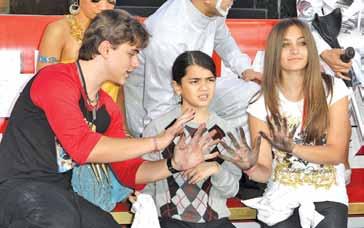
Michael Jackson's baby mama Debbie Rowe reportedly will take over the guardianship of his three kids. Rowe is the biological mother of Prince and Paris Jackson but she is willing to take the youngest, Blanket, who is not hers, under her legal
guardianship if it's possible. Michael's mom Katherine Jackson is the judge-granted guardian of the three kids. Although she loves Katherine, Rowe allegedly believes that she is too old to take care of the kids. "Katherine's not connected with the kids or involved
in their lives," Rowe told a friend, per TMZ. Meanwhile, co-guardian TJ Jackson is often away for long tours. Rowe is concern about the environment the teens are brought up in. Michael's brothers, particularly Jermaine Jackson, have brought terrible influence on the kids. Prince reportedly has filthy mouth and is rebellious. Paris, according to Rowe, is not making progress after her suicide attempt and her safety is worrying.
TMZ reported that Rowe will file legal documents to ask the judge to appoint her as their legal guardian. She wants to move them to her ranch in Palmdale CA and will not ask the estate for money. (AceShowbiz)
Call her the Princess of Waves.
Kate trounced her husband, Prince William, in a yacht race around the Auckland harbor Friday during their visit to New Zealand, showing herself to be the more talented sailor, at least on this day, as the couple took to the wheels of America's Cup yachts.
"Take care!" Kate teased her husband before setting off, patting him on the back. "Yeah, see you later," he replied.
"There are no friends on the water. No quarter given. I'm sure Prince William would not want to be beaten by his wife," Grant Dalton, managing director of Emirates Team New Zealand, told reporters.
In the end, though, he was. Kate, 32, who grew up sailing, handled the 31-foot boat with such confidence that she gave William, 31, a cheeky victory salute as

she sailed past him. It was sweet revenge for the Duchess, who lost to the Duke in a Dragon Race across a lake in Canada in 2011.
Husband and wife raced around a series of buoys in New Zealand's sailing capital. Kate was sporting a white Breton-style striped shirt by ME+EM, which she'd worn to meet local air force servicemen and their families, along with skinny navy jeans by Zara and a
navy baseball cap and with her hair in a ponytail. Dean Barker, the captain of New Zealand's America's Cup team, said the outing was a nice break for the couple. "With all the formal parts of the tour, the functions and the different appearances, it must be nice to do a few of the fun things like going for a sail," he said. "It's good to see they are human and like to do all the things that we all like to do." (People)

Adah Sharma is a Bollywood actress. Her debut film “1920”, directed by Vikram Bhatt, was a box office success for which she garnered rave reviews for her performance. She made her Tollywood debut with the film “Heart Attack” starring opposite Nithiin. Adah’s father is a captain in the merchant navy and her mother is a dancer. The actress graduated from Mumbai University with a degree in psychology. She is also a gymnast.
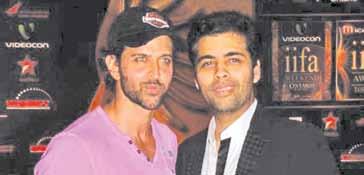
Karan Johar has expressed his outrage at false reports regarding Hrithik Roshan's decision to opt out of “Shuddhi”.
It had been suggested that the “Krissh 3” star had been seeking a share of the profits, but quit the film when he was unable to come to an agreement about his fee.
Writing on Twitter Johar said: "Article insinuating that Hrithik asked for a large percentage of profit for Shuddhi is baseless, untrue and completely uninformed."
The filmmaker also responded to reports suggesting that he is to play the lead in the film.
"I am playing the lead in Shuddhi! Sounds ridiculous? Well as ridiculous as some of the news reports making the rounds!" he added.
Casting of the film has been the focus of ongoing speculation after the original two leads Roshan and Kareena Kapoor dropped out of the film.
Deepika Padukone has reportedly been confirmed for the film, while the male lead is yet to be decided. (Digital Spy)
Tiger Shroff wants to be successful like his father

New Delhi, Actor Jackie Shroff's son Tiger is all set make his Bollywood debut with "Heropanti" and says he will be happy if he is able to do only half of what his father has attained.
The 23-year-old looks up to Jackie, who is popular for films like "Hero", "Parinda" and
"Khalnayak".
Having a star dad may has its own benefits, but as of now Tiger is scared of all the comparisons to Jackie.
"If I achieve half of what my dad has achieved, I would be a happy man," Tiger said in a statement. "Heropanti" will hit the screens May 23. (Times of India)

odel-turned-actress
MDeepika Padukone, who can give her contemporaries a run for their money when it comes to style, says her style statement is "simple" and "elegant" like her mother Ujjala.
"In my growing up years, my mother was my style icon and she still is. She is someone who has influenced my style a lot," Deepika said on Thursday at the launch of
Kumar. It's purely his effortlessness that makes him look the way he does. I think the fact that he has always been so athletic that really adds to the way he carries off clothes," the actress told reporters here Thursday.
Among women, Deepika named veteran actress Rekha as her top choice when it comes to dressing.
"She is someone who has always dressed the way she

a limited collection of Van Heusen spring/summer collection designed by her.
On being asked about what she thought of Sonam's statement on her fashion sense, Ms Padukone remained diplomatic and said, "Sonam is entitled to her opinion and I respect that."
"The best dressed man (in the industry) is Akshay
wants to. Trends have come and gone, but she stands by something she believes in and she has stood by that and I appreciate that," said the actress on the sidelines of the launch of a limited collection of Van Heusen designed by her, Thursday.
Deepika is currently busy shooting for Farah Khan's "Happy New Year". (IANS)
Bollywood actor-pro-
ducer Anil Kapoor has launched a global media and entertainment company called Antila Ventures. The company is domiciled in the UK and is targeting its subsidiaries and offices in strategic locations like London, Dubai, Singapore and Los Angeles.
Projects that will immediately go into production under Antila’s Film & TV verticals are: “24 Season 2”, “7 Hindustani” and “Battle for Bittora”, an adaptation of Anuja Chauhan’s bestseller.
“Creating such an institution and making it a state of the art content provider has always been an enterprise close to my heart. I now feel the time is right, the market is vibrant and the audiences primed for selective and intelligent content.
“The way I see it, people will not settle for any old stuff, there is too much to choose from and a professional provider becomes vital in the chain so that the end-user gets the best options,” Kapoor said.
Kapoor has established an association with MAS Clearsight Limited, an investment banking advisory firm regulated by the Dubai Financial Services Authority (DFSA) and based

out of Dubai International Financial Center (DIFC) that was mandated to provide arrangement and strategic advisory services.
“Kapoor and MAS worked as a team to put a strategy and structure in place leading to the formation of Antila Ventures. MAS Clearsight within its global network and through its clients has arranged to seed this venture referring strategic investors,” said Anish Bhatia, CEO & Founding Member of MAS Clearsight Limited.
Antila also intends to set up a world-class studio facility on the outskirts of Mumbai. “Having acquired land, the company intends to develop the property soon,” Kapoor said. Eventually, the company is targeting an IPO sometime in 2019-2020. (Indian Express)

Some men tend to be neglectful regarding their health. To live a longer and healthier life, your diet is important. Try these health tips and keep your health intact.
Lean Red Meat
If you're a steak-and-potatoes guy, you're in luck. Red meat can be good for you, says Leslie Bonci, MPH, RD, a dietitian for the Pittsburgh Steelers. Lean cuts of beef and pork are packed with protein and have only a little more fat than chicken breast. Red meat is also a good source of leucine, an amino acid that helps build muscle.
Avocado
Sure, this creamy fruit is high in fat, but it's the good kind. The monounsaturated fat in avocados packs a onetwo punch against cholesterol. It can knock down total cholesterol and "bad" cholesterol (LDL), too. The trick is to use a "mono" fat instead of saturated or trans-fats. And eat no more than 25 per cent-35 per cent of all your calories from fat. Olive oil and nuts also contain good fats.
Fatty Fish
Fatty fish like salmon, herring, sardines, and halibut are another excellent source of healthy fat. They have a special type known as omega-3 fatty acids. These protect against heart disease. Two servings of fatty fish a week can lower your chances of dying from heart disease.
Ginger
Slices of this spicy root are often served with sushi or grated into an Asian stir-fry. Health-wise, ginger may help calm inflammation in the body -- which can come in handy when you push yourself too hard. Eating ginger regularly may help reduce the pain of exercise-related muscle injuries.
Milk and Yogurt
The whey in milk and yogurt is another source of leucine, a muscle-building amino acid. Greek yogurt is recommended, with a thick, creamy taste that men may like better. It's also packed with protein, potassium, and friendly bacteria that keep the gut healthy.
Bananas
The banana is celebrated for its bounty of potassium -- and with good reason. Potassium is critical for muscle contractions and bone health. It also helps blood pressure. Getting enough potassium may be as important as eating less sodium when it comes to lowering blood pressure.
Pistachios
Nuts provide protein, fibre, and zinc while satisfying the urge for a crunchy, salty snack. Pistachios are a stand out -- higher in plant sterols that can improve cholesterol levels. Eat them from the shell, so you work harder for each one. It's a fun way to snack and keeps you from gobbling up too many calories too quickly.
Tomato Sauce
Tomatoes are rich in lycopene, a substance that may protect against some cancers. Some research suggests that men who eat tomato sauce regularly are less likely to get prostate cancer, but not all studies support this. Tomatoes have many other plant nutrients, too, that support good health. Adding salsa to a burrito or tomato sauce to pasta is an easy way to make a meal more nutritious.
Mixed Vegetables
Vegetables are packed with phytochemicals, nutrients that boost cell health and protect against cancer. There are many different phytochemicals, and the best way to get a variety of them is to eat different coloured veggies.
High-Fibre Cereal
Fibre may not sound manly, but it can be a performance enhancer. Executive or athlete, you can't focus on your goals if your gut is acting up. Fibre keeps you full longer and helps your digestive system run smoothly. This doesn't mean you have to give up your favourite cereal -- just try mixing in some shredded wheat. (WebMD)
Did you know that ginger appeases a lot more than just your taste buds? It also offers many health and beauty benefits. “The root tackles a diverse array of ail ments both efficiently and, most important, naturally,” says David Gilmour, founder of Wakaya Perfection – the wellness company responsible for bringing the world’s most powerful form of ginger to the mar ket.
It eases queasiness
From motion sickness to morning sick ness to just plain old flu sickness, ginger has been long used to settle upset stom achs. (That’s why mom always gave you gin ger ale.) In fact, back in the day, fishermen would chew on raw ginger root to alleviate nausea from seasickness.

It keeps things moving
Ginger is an antispasmodic, meaning it helps reduce cramping—even the ones associated with being (ahem!) gassy. Its warming properties also increase blood flow within your gastrointestinal system to help stimulate digestion. Bonus: While doing this, ginger can also enhance your me-
What's
tabolism!
It’s oh-so soothing Ginger is known to increase circulation, which is why it’s been used in eastern massage practices for centuries. Its essential oil has also been shown to help reduce anxiety and fatigue by lessening the body’s negative reactions to stress.
It’s a natural pain reliever
Got an ache? Ginger can help. Its anti-inflammatory properties help make sore muscles, creaky joints and even arthritis feel better, naturally. “I am an avid golfer, so whenever I have a shoulder ache after a great game, I soak a washcloth in a bowl of warm water with 1 teaspoon of Wakaya Perfection Organic Ginger,” says Gilmour. “I leave the washcloth on my shoulder for 10 minutes, and it eliminates my pain.” An ancient Ayurvedic remedy calls for something similar: applying crushed ginger on the forehead to soothe a headache.
(Dr Oz)
Your epidermis is showing—and it's trying to tell you something. It turns out that the body's largest organ is an excellent early warning system for all sorts of maladies: "Almost every health condition translates to the skin," says Francesca Fusco, MD, assistant clinical professor of dermatology at Mount Sinai Medical Center in New York City. "When something isn't functioning well on the inside, the clues start appearing on the outside." Give yourself a quick check for these five surprising signs.
If you have: Many deep wrinkles
It could mean: A heightened risk for bone fractures
In a new study on 114 postmenopausal women, researchers discovered that subjects who had numerous deep wrinkles on their neck and face were more likely to have low bone density in their hips, spine, and heels. "The collagen in your skin is the same as the collagen in your skeleton," explains lead researcher Lubna Pal, of the Yale School of Medicine. "So a loss of collagen can result in both wrinkles and bone deterioration." Ask your doctor about a bone density scan. If you are at risk for osteoporosis, exercise, calcium, vitamin D, and drugs called bisphosphonates can help slow bone loss.
If you have: Velvety, brownish-gray patches of skin
It could mean: Diabetes Called acanthosis nigricans, this kind of discoloration commonly appears in creases and folds around the groin, underarms, and the neck; it can be an early warning sign for type 2 diabetes— a disease that can involve elevated levels of the hormone insulin. (Excess insulin cir-
culating in the blood may trigger abnormal growth in skin cells.) Dermatologists can sometimes diagnose acanthosis nigricans just by looking at your skin. The next step would be to see an internist for a diabetes test. If the result is positive, your doctor can recommend lifestyle changes and medication to manage the disease.
If you have: Dull, dry skin
It could mean: A deficiency in omega-3 fatty acids Omega-3s are famous for their health perks: They support brain function, reduce inflammation, and can help lower the risk of heart disease, cancer, and arthritis. "They also play a vital role in skin," Fusco says, "strengthening cell membranes and regulating cell turnover, which ensures skin stays hy-
drated and radiant." A deficiency can slow the natural exfoliation cycle, resulting in dryness—even dandruff. The best way to get omega-3s is from your diet. Eat plenty of salmon, sardines, flaxseeds, walnuts, and soybeans, all of which are rich in fatty acids.
If you have: Intense itchiness
It could mean: Hodgkin's or non-Hodgkin's lymphoma
Severe, persistent itchiness—triggered by an overabundance of abnormal cells circulating in the bloodstream—can be a very early sign of these two types of cancer. "It's not a normal itch. It feels like something is underneath your skin," Fusco says—and neither over-the-counter anti-itch creams nor antihistamines offer relief. If you notice
other symptoms, like painless swelling of the lymph nodes, unexplained weight loss, fatigue, and shortness of breath, see your doctor. When caught early, these cancers can have a good prognosis.
If you have: Discoloration or swelling of your lower legs
It could mean: Venous insufficiency
Once blood flows down to your legs, your veins have to pump it back up to your body's core. Veins that are not working properly struggle to transport blood against gravity, so the blood collects in the lower legs, causing redness and swelling. A variety of conditions may be the cause. Make an appointment with an internist to begin pinpointing the problem. (www.oprah.com)



If your boudoir could use a boost, find some inspiration here and create your own romantic retreat — whether you dream of a lavish suite or prefer beautiful on a budget.




Ingredients:
3 - 3½ lb chicken
1 - 2 cloves of garlic
Eschallot and celery, chopped
1 - 2 onions, peeled and chopped
2 oz margarine
2 large tomatoes, skinned and chopped
1 oz flour
Method:
Clean and wash the chicken in a solution of lemon juice or vinegar and salt water. Dry the chicken on a clean towel, and joint the chicken (i.e. cut into parts at the major joints).
Season with salt, pepper and a little of the chopped garlic.
Heat the margarine in a frying pan without browning. Fry the chicken until slightly brown, cooking legs and breast first.
Salt and pepper
¾ pt stock (made from the chicken giblets) or 1 chicken bouillon cube
1 small pineapple
1 tsp shee-yow and tomato ketchup, or shee-yow and vinegar
1 pinch nutmeg
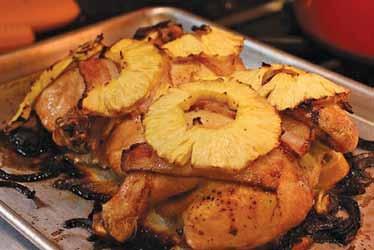
Remove the chicken from the pan and place in an oven-proof dish. Skim off any brown bits from the pan. To the pan, add chopped onion, garlic, eschallot and celery, and fry. Blend the stock, sauce or shee-yow, tomato ketchup and nutmeg. Pour over the chicken.
Cover with a lid or tin foil.
Place the dish in oven at a temperature of 400°F and bake for 20 minutes. Remove the lid, arrange sliced pineapple and chopped tomatoes on top and leave to cook uncovered for a further 15 minutes. Decorate with chopped parsley.
Ingredients:
½ lb margarine
½ lb sugar
3 eggs
Method:
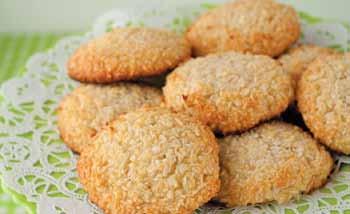
Cream margarine and sugar. Beat in eggs singly with essence. Add flour, baking powder and mix. Add grated coconut and mix to a soft dropping consistency. Place in baking pan. Get fork and spread dough into thin flat cookie shape. Bake at 425°F (Hot Oven)
Tip: You can add currants before you bake it for a nice accent.
flour 1 level teaspoon baking powder ½ of large grated coconut ¼ teaspoon essence
Set aside some pasta water before draining cooked pasta. Use it to loosen up his dish, if needed, after tossing the pasta with sauce. The starch in the pasta water helps keep the sauce nice and thick.
Revive a day-old loaf of bread by spraying it lightly with water, wrapping in foil and placing it in an oven at 350 degrees until it’s heated through.
Prolong the lifespan of greens by wrapping them loosely in a damp paper towel and placing in a resealable plastic bag.
Want to know if your oil is hot enough for frying? Stick a wooden skewer or spoon in the oil. If bubbles form around the wood, then you are good to go.
When a recipe calls for zest, instead of grating it into a separate container or onto parchment paper, hold the zester over the mixing bowl and zest directly onto the butter or cream. The aromatic citrus oils that are sprayed into the bowl will give the dessert a zesty finish.
Drain Cleaner: Dissolve ½ cup salt in about 4 litres of hot water, then pour down the pipes. For tougher clogs, pour ½ cup baking soda down the drain, followed by ½ cup vinegar. Let stand for a few minutes, then flush the pipes with hot water. (Boiling water should only be used in metal pipes.)
Furniture Polish: Combine equal parts olive oil and lemon juice and apply to a cleaning cloth sparingly. Use the cloth to wipe down furniture in broad strokes.
Deodorizer: Remove odours from items like storage containers or cooking utensils by soaking them in warm water mixed with baking soda. To deodorise a room, place a bowl of vinegar in the centre of the room until the odour dissipates.
Laminate and Resilient Floors: Use a solution of 1 cup vinegar to 1 gallon water to dampmop the floor.
You are given a starting word (a clue). Your job is to fill in the blanks with a 4-letter word that matches the clue already given. This 4-letter word must complete the 7-letter word next to it.






Once in a before time, there lived an old woman who had magical powers. Her name was 5. She was also so evil that some people called her a witch. 5 hated her name. No one knows why her parents named her the number 5. When she was a child, other children would make fun of her name. Sometimes when she was within earshot, they would look out the corner of their eyes and giggle as they said.
"Give me 5!"
When she grew up, 5 decided to put an end to the name-calling. So, she created a weird spell.
"Anyone who says '5' will drop dead,” she said. Then she changed her
tough, boy! I must make this witch's spell work for me".
Anansi went to the road that led to the village's marketplace. He chose a spot on the side of the road where everyone on the way to market would have to pass. There, near a large Guangu tree, he decided to pile up five mounds of the rich brown soil. These mounds he called "yam hills". In the top of each yam hill, he planted an African yellow yam. Then he drove a stake next to the yam on which its vine could grow. Anansi carefully watered the yams until each one began to sprout.
Anansi made a web-like a hammock in the Guangu tree and patiently

mind. “From this day on, anyone who says ‘5’ will disappear,"
This spell immediately caused a problem in the country. No one could say that number again without disappearing. Children could no longer recite their five times tables. People had to drop the word 'five' from their vocabulary. In 5’s village, the unlucky number was no longer 13.
Once, a customer asked a merchant, “How much is that blue T-shirt?”
“That shirt is 5 doh... ” Suddenly there was a loud “SWOOSH!” before the merchant could finish his sentence. He disappeared right in front of the dumbfounded customer's eyes!
A crafty spider named Anansi lived in 5's village. He had heard about the witch’s spell. Times were very hard. Anansi was not a farmer and he had no food at all to eat. His wife and children were starving. Since Anansi was small, and not a very good worker, he could only rely on his brain to get whatever he needed to survive.
He said to himself. "Things are
waited for someone to come by. Early one morning, after each yam shoot had poked its head out of a mound, Anansi sat down next to his yam hills. Soon, Brother Dog came by on his way to the market.
Dog balanced a bankra basket of sweet-smelling fruits on his head as he walked down the road.
"Good morning Brother Dog," said Anansi in a sugary voice. "I know that you are busy, and I feel so stupid. I am not an educated man like you. Would you help me to count how many yam hills that I have planted here?" Anansi asked.
"You should have gone to school to learn how to count!"Brother Dog said grumpily as he walked away from Anansi towards the market.
Anansi climbed up into the Guangu tree and waited.
The next person to come by was Brother Bull. He carried large basket of fruits on his head.
"Good day Bro' Bull." Anansi said in a sad voice.
"Could you just spare me one minute?" Anansi begged.
"What can I do for you, Anansi?" Bro' Bull asked.
"I was a yikki [small] and sickly child. So, my parents did not send me to school. I never learned my ABC's.
I planted all these yam hills... Can you help me to count them?" Anansi said.
"But, of course Anansi" Bro' Bull replied.
"You have 1, 2, 3, 4, 5...."
SWOOSH!
As he said that number, Brother Bull disappeared into thin air. The basket of sweet ripe fruits that he had been carrying on his head, fell to the ground.
Anansi snatched up the basket of fruits and rushed home to eat them all.
For a long time, Anansi did very well tricking some passersby into counting his yam hills. He grew fat from all the baskets of food he had gathered. He had tricked Brothers Turtle, Owl, Mongoose, Hare, PeenieWallie the firefly, and even the tough Bro' Scorpion.
Mrs. Guinea fowl was a nice young mother of newly hatched children. She could not say 'no' to anyone. She and her husband shared the chore of selling their produce in the village. That day it was her turn to go to the marketplace. She loaded up her hand basket and headed for the market. As she got closer to the yam hills Anansi was nowhere in sight. Just as she was about to pass yam hill number 4, Anansi the spider lowered himself down from his perch in the Guangu tree. He called out in his sugary voice.
"Good morning Mrs. Guinea Fowl. Could you help me with a problem?"
"Of course Anansi". The polite Mrs. Guinea Fowl said.
"I have these yam hills here, and I don't know how to count ...would you help me... ? Pleeezz." Anansi begged. Mrs. Guinea Fowl, who had seen Anansi trick Bro' Scorpion, walked over to the last yam hill and climbed up on top of it.
She said. “You have 1 ... 2 ... 3 ... 4 ... and the one I am standing on".
"What! What are you doing? That is not the way you count!" Anansi shouted angrily.
"What do you mean, Anansi?" Mrs. Guinea Fowl said.
"I don't know of any number called 'the one I'm standing on'. Start again!” Anansi ordered.
Mrs. Guinea Fowl began again. "You have 1, 2, 3, 4 ... and the one I am standing on".
"That is not what you are supposed to say!" Anansi shouted even more angrily.
"Well ... If you are so smart... What am I supposed to say?"

Mrs. Guinea Fowl asked. Anansi shouted, "You are supposed to say 1, 2, 3, 4, 5 ... Oops…”
Suddenly, Anansi disappeared, leaving Mrs. Guinea Fowl with all the loot that he had gotten from tricking his victims. (By Michael Auld)
The Jamaican moral of this story is: "Greedy choke puppy" (or, "A greedy puppy will soon choke"). Have you ever seen a puppy eat so fast and so much that it may sometimes choke? Similarly, it was Anansi's greed that got him into trouble.

Had we but world enough, and time,
This coyness, lady, were no crime. We would sit down and think which way To walk, and pass our long love's day; Thou by the Indian Ganges' side Shouldst rubies find; I by the tide Of Humber would complain. I would Love you ten years before the Flood; And you should, if you please, refuse Till the conversion of the Jews. My vegetable love should grow Vaster than empires, and more slow. An hundred years should go to praise Thine eyes, and on thy forehead gaze; Two hundred to adore each breast, But thirty thousand to the rest; An age at least to every part, And the last age should show your heart. For, lady, you deserve this state, Nor would I love at lower rate.
But at my back I always hear Time's winged chariot hurrying near; And yonder all before us lie Deserts of vast eternity.
Thy beauty shall no more be found, Nor, in thy marble vault, shall sound My echoing song; then worms shall try That long preserv'd virginity, And your quaint honour turn to dust, And into ashes all my lust. The grave's a fine and private place, But none I think do there embrace.
Now therefore, while the youthful hue Sits on thy skin like morning dew, And while thy willing soul transpires At every pore with instant fires, Now let us sport us while we may; And now, like am'rous birds of prey, Rather at once our time devour, Than languish in his slow-chapp'd power. Let us roll all our strength, and all Our sweetness, up into one ball; And tear our pleasures with rough strife Thorough the iron gates of life. Thus, though we cannot make our sun Stand still, yet we will make him run.
Andrew Marvell
I leave me people, me land, me home For reasons I not too sure I forsake de sun And de humming-bird splendour
Had big rats in de floorboard
So I pick up me new-world-self And come to this place call England
At first I feeling like I in a dreamDe misty greyness
I touching the walls to see if they real They solid to de seam And de people pouring from de underground system Like beans
And when I look up to de sky
I see Lord Nelson high - too high to lie.
And is so I sending home photos of myself Among de pigeons and de snow And is so I warding off de cold
And is so, little by little
I begin to change my calypso ways
Never visiting nobody
Before giving them clear warning And waiting me turn in queue Now, after all this time
I get accustom to de English life
But I still miss back-home side
To tell you de truth
I don't know really where I belaang Yes, divided to de ocean Divided to de bone
Wherever I hang me knickers - that's my home.
Grace Nichols
id Jesus have a wife?
DA controversial papyrus scrap making that suggestion dates to the eighth century A.D., asserts a series of just-released scientific reports, which may point to earlier Christian beliefs.
Announced at a 2012 conference in Rome by the Harvard Divinity School's Karen King, the "Gospel of Jesus's Wife"—a scrap of papyrus with Coptic writing—contained some intriguing lines.
The words "Jesus said to them, My wife . . . she is able to be my disciple . . ." are written on the center of the fragment. Initially dated by King to the fourth century, the message from the past resonated with ongoing debates about the role of women in Christianity, as well as echoing themes from Dan Brown's popular thriller, “The Da Vinci Code”.
The claim also attracted scepticism from religious scholars, who saw the fragment as a likely forgery. But in the series of reports released by the Harvard Theological Review, various experts report analyses of the chemistry and ancient handwriting of the fragment. They conclude that the fragment's ink is consistent with ancient inks and that its papyrus fibers date from the seventh to eighth centuries. King suggests it is a copy of an earlier text.
"All of the evidence points to it being ancient," King said in a telephone briefing. "As historians, the question then becomes, what does it mean?"
Clever Forgery?
The new results say nothing about whether the historical Jesus indeed had a wife, King notes. But similarities to other papyrus gospel texts from the centuries after Christ point to the long-running debate on the
Scientists find no evidence of fakery in an ancient papyrus scrap saying that Jesus had a wife
The papyrus fragment is owned by an unnamed private collector, with bills of sale going back only to 1999
role of women in churches.
And the results do not conclusively prove the papyrus isn't a very clever forgery, caution the scientists. Instead, they remove previously raised objections to the text, finding no evidence of it being a fake.
Yet there is still scepticism. One report in the journal, by epigrapher Leo Depuydt of Brown University in Providence, Rhode Island, claims grammatical errors dog the text and concludes, "The author of this analysis has not the slightest doubt that the document is a forgery, and not a very good one at that."
Overall, he suggests that the papyrus was forged from a copy of the ancient Gospel of Thomas text, discovered less than a century ago in Egypt.
King refutes those criticisms in a response in the journal, arguing that the grammar errors are misinterpretations by Depuydt. She also argues that writings similar to the Gospel of Thomas were then prevalent in the eastern Mediterranean, so words from that gospel would not necessarily be a sign of forgery.
Ancient Papyrus
Troves of ancient papyrus documents have long emerged from sites in Egypt, seen as the likely source of the fragment, which is only 3.2 inches wide by 1.6 inches tall (8 by 4 centimeters). But its origin and author are a mystery, as it is owned by an unnamed private collector, with bills of sale going back only to 1999, according to King.
King says the owner may donate the fragment to Harvard, possibly for later display.
In the journal reports, a chemistry team led by MIT's Joseph Azzarelli concluded that the age of the papyrus scrap matches that of a verified Gospel of John papyrus from antiquity. The team relied on microspectroscopy of the papyrus, which found the fragment only slightly less oxidized—aged by exposure to air—than the verified gospel.
Likewise, Columbia University's James Yardley and Alexis Hagadorn looked at the pigments in the ink on the fragment. They found it similar to "lamp black" ink used on other ancient texts.
Crucially, the scientists
Mars is covered with weird-looking geological formations and this is no exception. As spied by the High Resolution Imaging Science Experiment (HiRISE) camera aboard NASA’s Mars Reconnaissance Orbiter (MRO) orbiting 170 miles above, this messed-up heart shape is located on the Red Planet’s famous Tharsis Bulge, a region home to some of Mars’ biggest ancient volcanoes.
The heart, which was most likely formed through volcanic activity itself, was spotted south of the huge shield volcano Ascraeus Mons and measures approximately 200 meters across (a little under twice the length of a football field). The feature is multi-layered and rises above the surrounding landscape.
“Perhaps this feature is an ancient vent structure (an opening in the ground from which volcanic lava emerges) that has been more resistant to erosion than the surrounding area, so that it resembles ‘inverted’ terrains,” writes planetary sci-

entist Ramy El-Maarry.
Inverted terrains often occur when some part of the landscape becomes hardened to erosion. In this case, the candidate vent is composed from ancient lava that likely pooled inside a depression or valley. After the lava cooled and the surrounding landscape became eroded, the raised multi-layer feature emerged creating the ringed heart shape that can be seen today. This is a process known as “topographic inversion”. (Discovery News)
find no evidence of the ink being applied to the papyrus in recent times, which would have led to it pooling in damaged sections of the fragment. They also did not find any signs that the word for "wife" in the text was changed from "woman" by a later writer, as some skeptics suggested (King points
this out in an online commentary).
Carbon dating puts the age of the fragment at between 659 and 869.
The debate over the grammar of the Coptic text partly reflects the writing style of the author of the papyrus, who perhaps was not a professional scribe but an untutored member of the lower classes, suggests Malcolm Choat, an ancient writing expert at Australia's Macquarie University.
Choat compares the writing to brush-drawn "magical" texts of the era, ones that often featured invocations asking for blessings or curses.
"I have not found a 'smoking gun' that indicates beyond doubt that the text was not written in antiquity, but nor can such an examination prove that it is genuine," Choat writes. But he says it's certainly not a simple forgery, as critics have suggested.
Women in Church Women were among the strongest early supporters of Christianity when it was gaining converts in an often hostile Roman Empire.
Christian writers were initially silent on the marital status of Jesus, King says, with claims that he was unmarried starting only in the late second century.
If the papyrus fragment reflects religious writing copied from earlier texts, perhaps ones in the fourth century, it would speak to early Christian concerns about the role of the family in the early Church, which famously called upon its adherents to put aside family and civic loyalties, she suggests.
"This is not evidence that Jesus was married. We don't know," King emphasized. "But early Christians were extremely interested in questions about whether they should be married or be celibate." (National Geographic)


just yet, but it is projected to overtake those archaic cheque books and bank notes you've been lugging around.
Gto create this infographic, which details the past, present and possible future of mobile commerce. The company shares the three types of mobile payments that browser
oogle Glass will go on sale to the US public on 15 April for a single day, the company has announced.
Users must be 18 years old and are required to fill in an online form in order to be eligible to buy the device.
The eyewear will cost US$1,500 (£894) and the BBC understands UK developers may have access as early as May.
The high price will be likely to deter many enthusiasts, who may be forced to wait for price reductions.
The tech giant sold the device to 8,000 individuals in 2013 as part of their Explorer programme. Google will now give more people the opportunity to test the computer, a sign that the company is getting closer to an official release.
The BBC understands that UK developers may have access to the device as early as May or June, making Britain the first country outside the US to gain additional prototypes.
The Glass team said they were "excited to meet our new Explorers, and we can't wait to hear your thoughts about Glass."
'Limited functionality'
While the £894 asking price
seems high, Steven Graves, deputy editor of Stuff.tv, told the BBC this was likely to change: "The thing you have to bear in mind is it is still in development and that people are buying into that development.
"I think it's quite a high price but that doesn't necessarily reflect what the price will be when it is eventually released to consumers. At this stage they just want to get it in a few more hands."
Google Glass will be sold on a first-come, first-served basis after an initial online sign-up process.
Evan Kypreos, editor of TrustedReviews, said: "US$1,500 is far too expensive for something that has very limited functionality at the moment.
"Google is targeting just a few early adopters to understand how to further develop Glass and doesn't actually want average Joes using it until it's a much more mature product.
"It's similar to how mobile phones came about," explains Mr Kypreos. "In the 80s, only a handful of people used them. They were bulky, expensive and could only be used to make calls. Thirty years later and most of the population has a smartphone that can do pretty much anything a PC can." (BBC)
Tcurrently 17 million unbanked adults in the US
But many smartphone users welcome the convenience of mobile payments (87 per cent in the UK), while others worry about the privacy factor (79 per cent in Asia).
Still, 49 per cent of consumers in the US found shopping on a smartphone awkward. Then again, many people found paper cheques awkward and credit cards confusing the first time around.

he appointment of ex-US
Secretary of State Condoleezza Rice to the board of technology firm Dropbox is being criticised by some service users.
Protests on social media say she is a controversial figure after revelations of widespread wiretapping on US citizens during her time in office.
A petition has been launched inviting supporters to boycott the firm.
However some analysts claim the bigger concerns for the file-sharing company are competing services.
Following the launch of Mailbox for Android and the wider implementation of Dropbox for Business, the company also announced the addition of Condoleezza Rice as a new board member.
Ms Rice, who served as former President George W Bush's Secretary of State from 2005 to 2009 and National Security Adviser 2001-2005, was appointed by the company to expand its global footprint, according to its official blog.
However, this has been condemned by some Dropbox users who have launched a campaign.
Voicing concerns on social media, some have said it is inappropriate for the file-sharing company to hire Ms Rice, accusing her of being involved
in widespread wiretapping during her time in office.
Those pressing Dropbox to revoke Ms Rice's appointment are using the hashtag #DropDropbox in an attempt to boycott the company. A petition has also been created which amassed approximately 3,000 signatures in its first few hours.
One section of the petition reads: "This is deeply disturbing, and anyone - or any business - who values ethics should be concerned," before listing a number of Dropbox alternatives for those who wish to boycott the company.
It also says Ms Rice should not hold power at Dropbox because of
her role in the Iraq war.
However, Chris Green, Principal Technology Analyst of Davies Murphy Group, told the BBC that most users probably wouldn't be concerned over Ms Rice's appointment.
"The vast majority of the company's 275 million users are unlikely to be swayed or concerned by the short-term negative PR that Condoleezza Rice's appointment is generating for Dropbox," he said.
"The backlash is fuelled far more by pent-up anger at the administration she served in than a genuine concern for the security of Dropbox users' data.
The bigger concern for Dropbox, says Mr Green, is the growing competition it faces, which includes big names such as Microsoft, Google and Amazon.
All of them "are offering competing services with either more free storage or more compelling commercial packages than Dropbox offers."
The company has yet to release an official statement addressing the backlash, but a recent Dropbox blog post said: "We're honoured to be adding someone as brilliant and accomplished as Ms Rice to our team." (BBC)
ByTe
Abattery that can charge in under 30 seconds has been shown off at a technology conference in Tel Aviv.
Israeli start-up StoreDot displayed the device - made of biological structures - at Microsoft's Think Next Conference.
A Samsung S4 smartphone went from a dead battery to full power in 26 seconds in the demonstration.
The battery is currently only a prototype and the firm predicts it will take three years to become a commercially viable product.
In the demonstration, a battery pack the size of a cigarette packet was attached to a smartphone.
"We think we can integrate a battery into a smartphone within a year and have a commercially ready device in three years," founder Dr Dorn Myersdorf told the BBC.

The bio-organic battery utilises tiny self-assembling nano-crystals that were first identified in research being done into Alzheimer's disease at Tel Aviv University 10 years ago.
up of peptide molecules.
The technology has a range of uses, founder Dr Myersdorf said.
"Batteries are just one of the industries we can disrupt with this new material. It is new physics, new chemistry, a new approach to devices," he said.
The team has also used the nanocrystals in memory chips which could write three times faster than traditional flash memory and as a non-toxic alternative to cadmium in screens.
Dr Myersdorf said that the batteries are likely to be 30 to 40 per cent more expensive to manufacture compared to traditional ones and the final product will be twice as expensive than those on the market today.
But making them should be a relatively easy process.
"It is about letting nature take its course. We just need a facility that can do chemical processing," he said. (BBC)
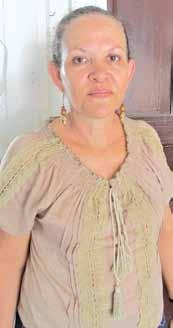
Inspired by her indigenous heritage, Anna Correia-Bevaun has become one of Guyana’s most celebrated artists. She began her career in art in 1988 as a ceramist under the tutelage of her mother, the late renowned Guyanese artist Stephanie Correia.
For years Anna explored ceramics as her principle medium. Wishing to explore new techniques, materials and approaches, she took short courses in design, batik and discharge, Vedic art and watercolour.
In 2007, Correia-Bevaun won both the second and third prizes in the National Watercolour Competition (Guyana). In 2009, she also won the first and second prizes in the National Watercolour Competition.
In an interview with Guyana Times Sunday Magazine, Correia-Bevaun disclosed that as a child she never had an inclination to become an artist, but being surrounded by art, because of her mother, she developed an enthusiasm for it.
“My mother, who was from Pomeroon, introduced me to art, and eventually I developed a love for it. She was an extraordinary potter. She did thorough research on different types of clay in Guyana and due to this she was able to work effectively with them, and this she taught me. I never did art in school; instead I did Food and Nutrition. However, learning from my mother encouraged me to delve into art,” she recalled.
Correia-Bevaun joined the Guyana Women Artists’ Association in 1995. She has held the positions of secretary, vice-president, and president of the association. Being with this group helped Correia-Bevaun to explore new art media. In 2003, she decided to learn pen and ink drawing. Later, she explored watercolour after being inspired by her mother’s work with the medium.
“When my mother passed she left some watercolour tools. I decided to try
my hand at this and joined a 12-week art course held at Castellani House. For me art is very therapeutic and relaxing and that is why I try to learn as much as I can about it just as my mother did,” she declared. Due to the artist’s diverse ethnic background, her paintings are not subject to one recurring image. She paints images of Amerindian hunters and certain traditions of the group. Women of various ethnicities are also part of her collections.
Speaking on what inspires her, Correia-Bevaun explained, “I’m inspired by my environment. I paint what I see. Also, I have learnt a lot from my mother, who was an avid reader. I have also gathered a lot from
fellow artists. Persons interested in art work tend to ask what it is about or what inspired the painting, and listening to the explanations from my colleagues I was able to broaden my knowledge on art. I am fortunate to have worked with many veteran artists and was able to apply what I learnt from them into my work.”
Correia-Bevaun comes from a line of creative and passionate ancestors who were very dedicated to their work. One such individual is her grandfather Stephen Campbell, Guyana’s first indigenous MP.
Among the indigenous people, Campbell is revered as a hero. He is credited with advocacy for land rights for Amerindians; a goal that the present government
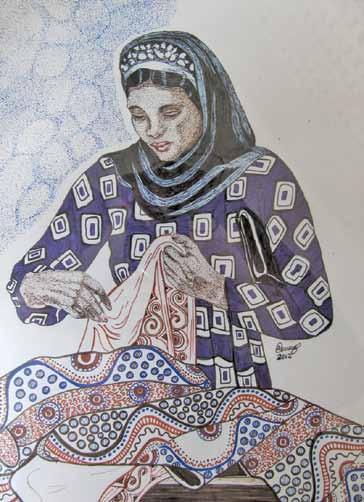
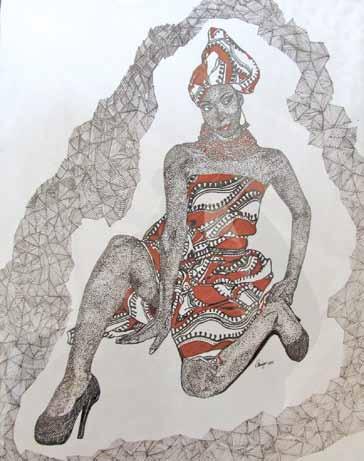

continues to advance, to ensure that Campbell’s aspiration for his people is made possible. Campbell served as member of the legislature from 1957 until his death on May 12, 1966 – two weeks before Guyana gained independence from Britain. He died, and was buried, in Canada.
“When he died I was 3. I vaguely remember him but what I have heard about him is from my mother who was his second daughter. He would call her ‘little scout’ because everywhere he went she was with him. He was very instrumental in her life and taught her to be the great person she was, and in turn she passed down her heritage to me and my siblings. I have learnt from them to make the most of God's gifts, always striving to improve and work to the best of my ability,” CorreiaBevaun affirmed.
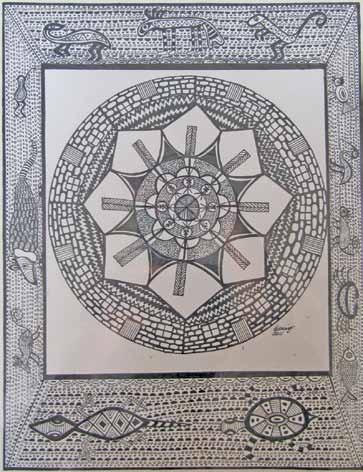

Along the Georgetown to Rosignol route and spanning the Mahaicony River, the Mahaicony Bridge lies some 35 miles east of Georgetown. Completely rehabilitated during 2003-2004, the Mahaicony Bridge was built on the same site of what was formerly the Mahaicony Railway Bridge, which has been shifted downstream to preserve the now historic railway bridge.
The new bridge was designed by US firm Figg Bridge Engineering Inc and built by DYWDAG International GmbH of Germany. The mainly precast and reinforced concrete structure replaced the old steel bridge, which was constructed in 1934.

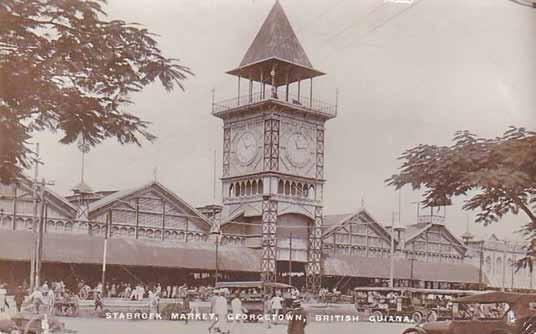


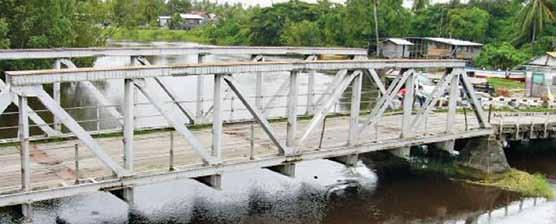
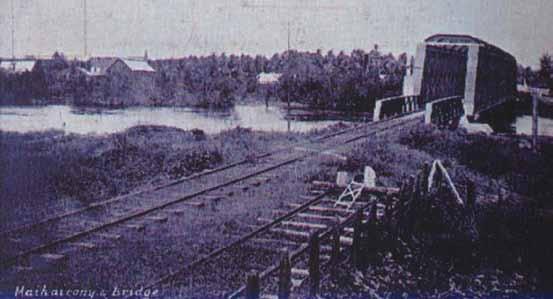



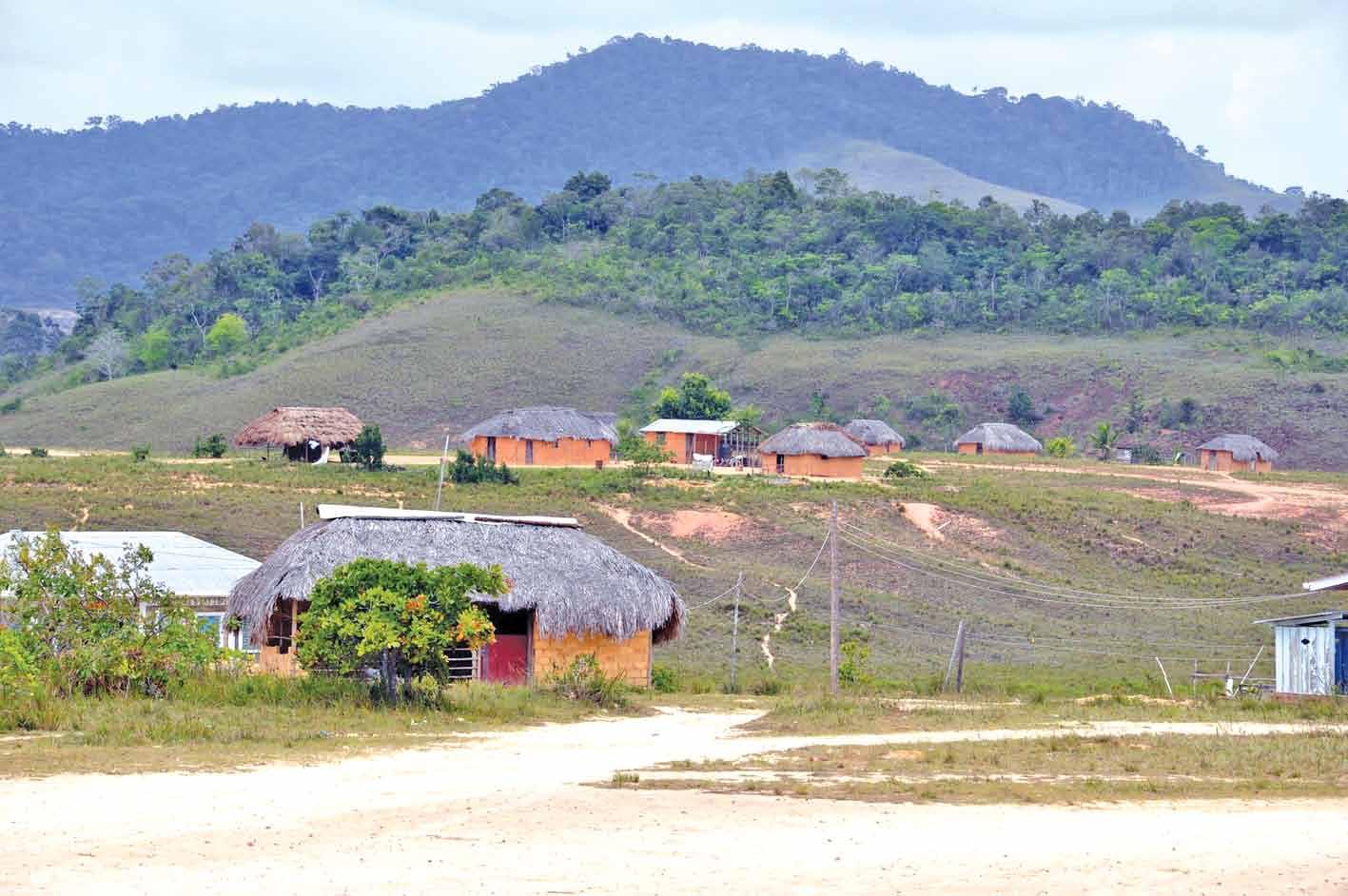
Kato is located in Region Eight and is known for its resplendent nature scenes. In the village, there are government buildings such as the nursery/primary schools, a Guest House, a Police Outpost, medical facilities, and school dormitories. Neighbouring is Paramakatoi. Kato is made up of a close-knitted, self-sufficient community, which cherishes its indigenous heritage. (Photos by Marco Basir. Cover photo, showing Chiung Falls in Kato, copyright to Michael Lam. TheMichaelLamCollection.com)

Irecently read an article about pet peeves, those somewhat trivial things that drive us crazy and make us question other people's sanity.
It seems like everyone has pet peeves, even our pets.
Our dogs are peeved that the shoes we leave lying around are never flavored. And they absolutely hate working for free in beer commercials. Isn't there a minimum wage of one bone an hour? Someone call the American Dog Union.
Our fish are peeved that they never get any privacy. How would humans like to live in a house of glass? And how would they like to eat flakes all day? In a big bowl of water.
Our cats are peeved about their irregular feeding times. It messes up their tight schedules. They often have to inter rupt their dates with the sofa cushion.
Unfortunately, pets have trouble expressing their displeasure. They can't talk and they haven't quite mas tered the art of ob scene gestures.
We humans are so blessed. We have all the tools of communication. We can make statements with al most any body part. And even our clothes.
But despite our communication skills, we seem to always get on each other's nerves. As a result, we have more pet peeves than even Congress could handle.
companies, because my friends never call."
Effective response: "Please take me off your calling list or I'll send my personal friend, O.J. Simpson, after you. He has a lot of free time."
Even better response: "Hold on while I put my 5-year-old on the line. He likes to talk. And he has a perfect credit record."
As you are opening the latest issue of Cat Fancy, a subscription card falls out of the magazine.
Polite response: You pick up the card and give it to your neighbor, who also fancies cats.

As a public service, I've decided to suggest some possible responses to a few common pet peeves. These are only suggestions and should be followed only after reading all the fine print on the classified pages.
There are usually two types of responses: polite responses and effective ones.
Consider these situations:
A telemarketer wakes you up at 8 a.m. to ask if you'd like to receive the new Elian Gonzalez NFL Visa card. It features a picture of the Cuban boy wearing the helmet of your favorite football team.
Polite response: "Yes, please send me one and please keep calling me with similar offers. And please give my number to other
Effective response: You pick up the card in a mail box. The magapay for the postage.
Even better response: Before mailing the card, you fill it out with the name and address of your favorite politician. Those cards will soon be outlawed.
You're waiting an eternity at the fast food drive-up window. You are hungry and angry.
Polite response: You take a deep breath and continue waiting, realizing that the restaurant is probably understaffed.
Effective response: You place an order, then drive off to another restaurant. They'll get the hint.
Even better response: You park your car and haul your lazy butt into the restaurant. It'll be faster and the exercise may burn some of that lard.
You receive mail inscribed with words like "urgent" and "immediate attention required." When you open the envelope, you find that it's just a solicitation (junk mail).
Polite response: You reply to the mail, making sure you include your credit card number. You even write it on the outside of the envelope.
Effective response: You toss the mail in the trash.
Even better response: You send an empty envelope inscribed with words such as "check enclosed" and "cash immediately."


There was an old man sitting on his porch watching the rain fall. Pretty soon the water was coming over the porch and into the house.
The old man was still sitting there when a rescue boat came and the people on board said, "You can't stay here you have to come with us."
The old man replied, "No, God will save me." So the boat left. A little while later the water was up to the second floor, and another rescue boat came, and again told the old man he had to come with them.
The old man again replied, "God will save me." So the boat left him again.
An hour later the water was up to the roof and a third rescue boat approached the old man, and tried to get him to come with them.
Again the old man refused to leave stating that, "God will save him." So the boat left him again.
Soon after, the man drowns and goes to heaven, and when he sees God he asks him, "Why didn't you save me?"
God replied, "You dummy! I tried. I sent three boats after you!!"
A first grade teacher explains to her class that she is an American. She asks her students to raise their hands if they were American too.
Not really knowing why but wanting to be like their teacher, their hands explode into the air like flashy fireworks.
There is, however, one exception. A girl named Karen has not gone along with the crowd.
The teacher asks her why she has decided to be different.
"Because I am not an American."
"Then," asks the teacher, "What are you?"
"I'm a proud Guyanese," boasts the little girl.
The teacher is a little perturbed now, her face slightly red. She asks Karen why she is a Guyanese.
"Well, my mom and dad are Guyanese, so I'm a Guyanese too."
The teacher is now angry. "That's no reason," she says loudly. "What if your mom was a moron, and your dad was a moron. What would you be then?"
A pause, and a smile. "Then," says Karen, "I'd be an American."
Your tax dollars
When NASA first started sending up astronauts, they quickly discovered that ballpoint pens would not work in zero gravity.
To combat this problem, NASA scientists spent a decade and $12 billion developing a pen that writes in zero gravity, upside down, underwater, on almost any surface including glass and at temperatures ranging from below freezing to over 300° C.
The Russians use a pencil.
Lonely Adam
One day God was talking to Adam and he said, "Adam you look lonely, I know I'll give you a woman but it will cost you an arm and a leg."
Adam said, “What can I get for a rib?"
The rest is history.
Joan, who was a rather well-proportioned secretary, spent almost all of her vacation sunbathing on the roof of her hotel. She wore a bathing suit the first day, but on the second, she decided that no one could see her way up there, so she slipped out of it for an overall tan.
She'd hardly begun when she heard someone running up the stairs. She was lying on her stomach, so she just pulled a towel over her rear.
"Excuse me, miss," said the flustered assistant manager of the hotel, out of breath from running up the stairs. "The Hilton doesn't mind your sunbathing on the roof, but we would very much appreciate your wearing a bathing suit as you did yesterday."
"What difference does it make?" Joan asked rather calmly. "No one can see me up here, and besides, I'm covered with a towel." "Not exactly," said the embarrassed man. "You're lying on the dining room skylight."
This is grandma`s house
Little Johnny and his family were having Sunday dinner at his grandmother’s house. Everyone was seated around the table as the food was being served.
When Little Johnny received his plate, he started eating right away.
“Johnny! Please wait until we say our prayer.” Said his mother
“I don’t have to,” The boy replied.
“Of course, you do,” his mother insisted. “We say a prayer before eating, at our house”
“That’s our house,” Johnny explained. “But this is Grandma’s house and she knows how to cook!