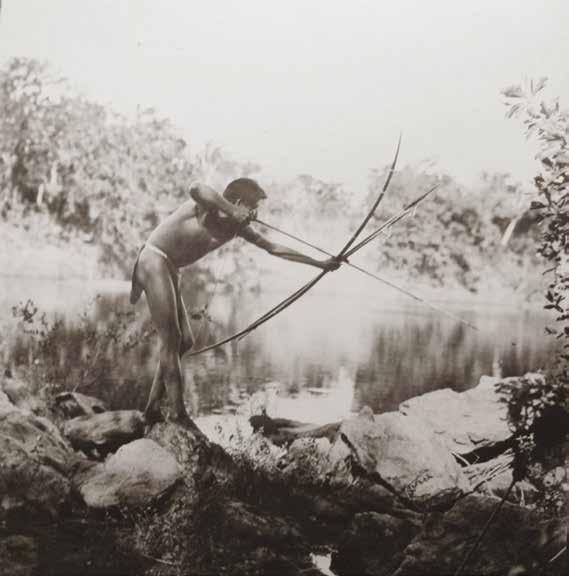
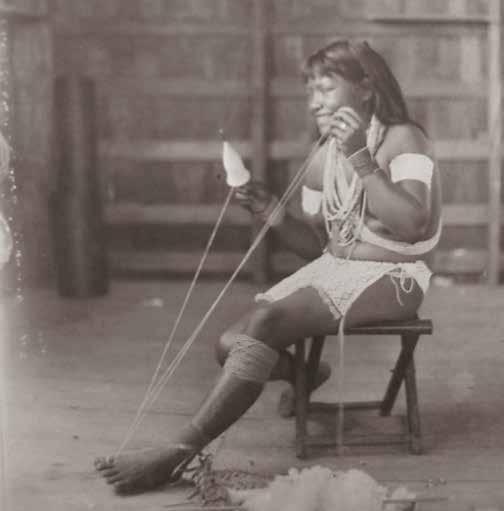




Founded in 1974 from the collection of the late Guyanese archaeologist, Dr Denis Williams, the Walter Roth Museum of Anthropology and Art History (as it was originally called) was the first Museum of Anthropology in the English speaking Caribbean.
Although it was planned to site the museum in the town of Bartica, this was changed at the last moment due to the fuel crisis of 1974, which caused the original funds allocated to be withdrawn.
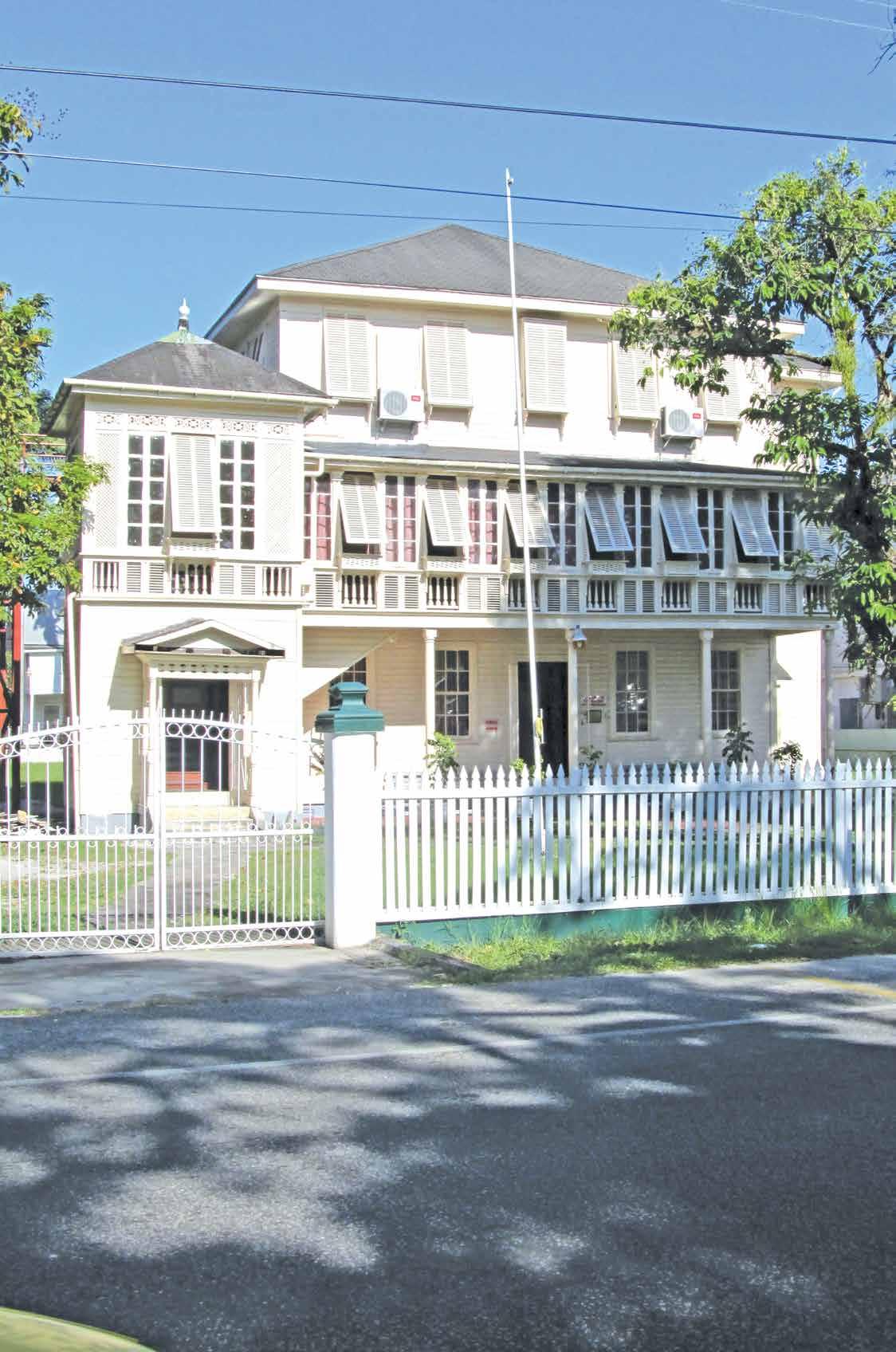
In 1980, the museum, now renamed the Walter Roth Museum of Anthropology, was moved to its present location at 61 Main Street, North Cummingsburg, Georgetown (next to the President of Guyana’s official residence).
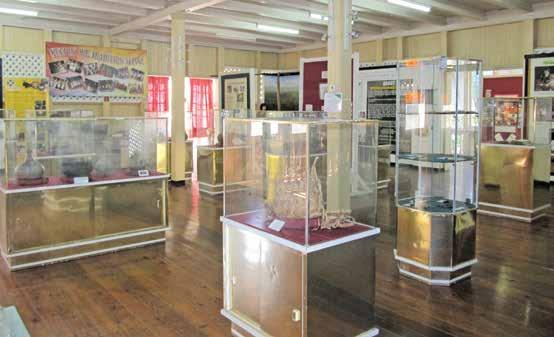
Following this move, the collections of Sir Everard Im Thurn, Dr Walter Roth and Mr John J Quelch were transferred from the Guyana National Museum. Dr Williams’ archaeological collections were also transferred from the Department of Culture. A typological study from the collections of Dr Betty J Meggers and the late Dr Clifford Evans of the Smithsonian Institution was
donated to the museum and in 1991, Guyanese Cultural Anthropologist, Dr George P Mentore, donated an ethnographic collection from the Wai-Wai of southern Guyana. The museum’s collections eventually included excavated artefacts from all

of the ten administrative regions of Guyana as well as small ethnographic and archaeological collections from elsewhere.
It is generally believed that John Sharps (18451913) was the architect of the building, which was constructed before 1890. Duncan McRae Hutson, a Guyanese barrister-at-law and legislator, bought it in 1891. When McRae Hutson’s wife passed away in 1942, he sold the
ing and surgeon positions. But it was with his later work on Australian ethnology that he made his mark. After serving successfully for several years as an Anthropologist and Protector of the Aborigines, he eventually moved to British Guiana in 1907 where he accepted an appointment as Government Medical Officer, Stipendiary Magistrate and Deputy Protector of Indians in the Pomeroon district. In 1920, he was appointed commissioner of the Rupununi.
After many years of service in the interior of British Guiana, he finally retired in 1928 to become Curator of the Museum of the Royal Agricultural and Commercial Society (now renamed the Guyana National Museum) and Government Archivist. Due to his strong interest in anthropology, his work resulted in two major monographs on the Arts, Crafts and Customs of the Guiana Indians published in 1924 and in 1929
Additional Studies of the Arts, Crafts and Customs of the Guiana Indians was published by the Bureau
works of fiction. In recognition of all his achievements, he received the Cacique Crown of Honour and an Honorary Doctorate from the University of the West Indies, St. Augustine, in 1989.
Over the years, the Walter Roth Museum has been engaged in numerous research programmes. Of these, the most important was the archaeological research conducted by Williams throughout the ten administrative regions of Guyana. This work yielded much valuable information on the history, pre-history and past and present culture by the Walter Roth Museum in partnership with foreign researchers and students. Also of note is the museum’s outreach programme, Junior Archaeology. In this museum programme, staff regularly corresponds with children across Guyana and the Caribbean. Members receive publications and newsletters specifically designed for Junior Archaeology. Workshops are also occasionally held in their respective schools in the regions,
building to the government of British Guiana. The government used it to house the Teachers Training College and later, the Attorney General’s Chambers. In 1976, the National Trust of Guyana gazetted the building as a national historic monument, and in 1978 the building was acquired by the Ministry of Education, Culture and Social Development. It was then decided that the building be used as a museum. The Walter Roth Museum was officially opened to the public in 1982.
This museum is named in honour of Walter Edmund Roth (1861-1933). Roth was a noted anthropologist, administrator and surgeon who was born and educated in England. After qualifying as a surgeon at St. Thomas Hospital, London, he followed his two elder brothers to Australia. There, he held a succession of appointments including teach-
of American Ethnology, Washington. Walter Roth died in Georgetown in 1933.
The first Director of the Walter Roth Museum was Dr Denis Williams who served from its founding in 1974 up to his death in 1998. Williams, originally an artist and writer, had first been exposed to archaeology in the Sudan. This interest was rekindled when he returned to Guyana in 1968 to live in the Mazaruni district. He was eventually able to pursue this interest fulltime when he was appointed Director of the newly created Walter Roth Museum of Anthropology and Art History in 1974. Williams’ primary interests as a researcher were on Amerindian petroglyphs (rock engravings) and the paleoclimatic and archaeological investigations of the shell middens on the northwest coast of Guyana. His skill as a writer served him well with his scientific papers and articles, as well as his numerous
and visits to the museum are organised whenever possible. Older members, who are interested, are given the opportunity to participate in field exercises. This programme has no age limits. The museum also has an active publishing programme. Its annual ‘Journal of Archaeology and Anthropology’, which is overseen by a scientific advisory board, was first published in 1978. Since that time, apart from journals, several other publications and leaflets, dealing with exhibitions, ethnography, prehistory and the Junior Archaeology programme, have also been produced. For more information, call 225-8486. The museum’s opening hours are Monday to Thursday from 8am to 4.30pm and on Friday from 8am to 3.30pm. Researchers are welcomed anytime during normal opening hours. School trips must be organised in advance.
By Toshao James Cornelius
As is customary every year during the Amerindian Heritage Month celebrations, a heritage village is identified where many will converge to celebrate the indigenous cultural heritage of that village. This year we celebrate the picturesque Karrau.
Village profile
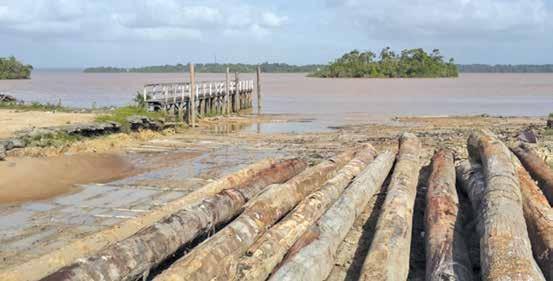
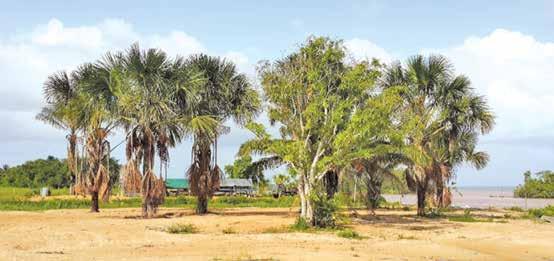
Nestled approximately 36 miles from the mouth of the giant Essequibo River, a peaceful and tranquil Amerindian village named Karrau is located - just obliquely opposite the busy mining town of Bartica. It is a small Amerindian village located on the lower right bank of the Mazaruni River. The reservation covers a total area of approximately 23 sq miles stretching from the mouth of the Karrau creek along the Mazaruni River to the mouth of Tiger creek
village, which was initially called Karrau Creek, got its name after a local bird KAROW that was discovered in the nearby creek by early settlers.
Karrau became a titled Amerindian village in 2007. It has a population of approximately 310 persons representing around 80 households with the majority of inhabitants descending from the Arawak tribe.
Karrau’s prime location is easily accessible by boat with the nearest town Bartica being a mere five minutes away. From Georgetown, it takes approximately one hour to get to Parika via bus and another hour travelling up the Essequibo River to Bartica via boat. The fare is $2,500 per person and this will take you close to your destination. Another boat ride will take five minutes and a small fee of $500 will take you from Bartica to Karrau.
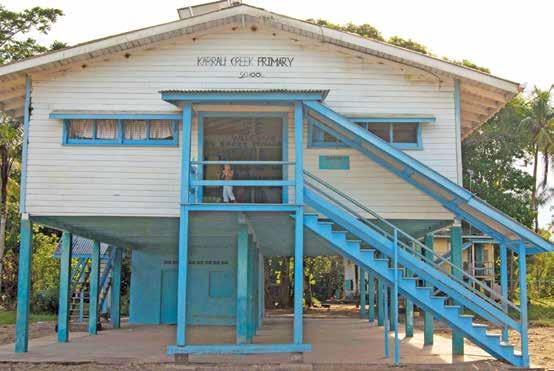
The village has a primary school with a population of 36 pupils. It must be noted that the primary school also houses 15 nursery students. As such, a nursery section is urgently needed. The school has a total of four teachers. Additionally, the school is a beneficiary of the national school feeding pro-
along the Essequibo River.
The village of Karrau was established in the 1940s initially as a logging grant by Harry Lorrimer from the Demerara River. However, after Harry departed, two of his workers, John Cornelius and Herman Cornelius who came from Wakapoa, Region Two, remained and laid the foundation for the establishing of this village. Karrau
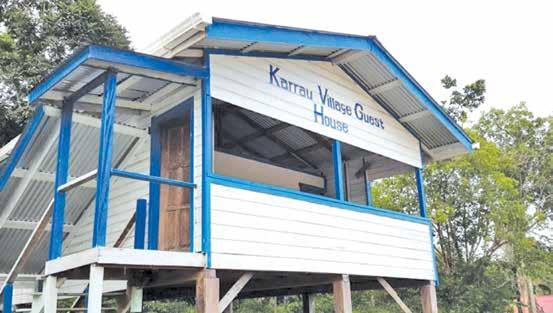
There is a privately owned guesthouse with eight rooms that caters for all your needs within the heart of the village. Additionally, the village has a community guesthouse that accommodates the busy traveller. However, do not let your heart be troubled since there is an abundance of hotels and guesthouses just five minutes away in Bartica.
gramme.
There is a health centre within the village, which has two local community health workers. The main economic activities of Karrau are logging, mining and transportation services.
Currently, there are nine residents who are part of the Karrau Loggers Association. The loggers generate income for their family and the vil-
lage council. Additionally, there are 13 mining operations by both residents and non-residents who have contractual agreement with the village council to operate on village lands. With logging and mining being the main income-generating activities, farming is done on a small scale by residents. Also, residents provide transportation services, such as vehicle services and boat services, which generate income for their family. Moreover, the village council obtains revenue from a
a boat and 40HP engine was purchased; in 2008, the construction of the community pavilion was done; in 2009, the construction of a bridge and purchase of solar system for the community pavilion; in 2010/2011, there was the construction of a guesthouse; in 2012, assist in purchasing of village ATV; and 2013, Village Landing Rehabilitation and Reclamation project.
The village benefitted from the Ministry of Amerindian Affairs’ Amerindian Development
lected cassava processing as the targeted area with the intention of developing packaged farine as the final product. Currently, more than five acres of cassava is ready to be harvested.
There will be lots of exciting Amerindian games, such as cassava grating, warashee racing, arrowshooting activities, piwari drinking and much more that encapsulate the traditional way of life of the Karrau people.
There will be a variety of traditional delectable Amerindian foods and drinks, such as the infamous tuma pot and tokoma worm. Furthermore, there will be numerous craft items made by talented indigenous artists on display.
A rich cultural show is expected with traditional dances and stage performances by the young and old. Introduction of the delegates for the upcoming Region Nine heritage pageant is also expected to be a feature at the village cele-
tool gate that charges vehicle owners for passing through the reservation.
The majority of households in this village get their electricity from personal generators. However, 52 households get basic electricity from the government’s solar electrification programme.
The youths of Karrau participate in male and female softball cricket. Also, the youths play volleyball and football.
The village of Karrau has been forever grateful to the government for its presidential grant initiative, in which the village benefits yearly from a sum of $1M. Some of the noteworthy projects that fell under this initiative are: In 2007,
Fund programme in the following areas: In 2011, the construction of the village office was completed and in 2012, 40 water tanks, pipe lines, and one brush cutter were purchased.
The village also benefitted in the following areas, which come under capital projects for different years: In 2008, a sewing machine was purchased; in 2009, the construction of a village landing and walkway was completed and a John Deere tractor was bought; and in 2013, the construction of an eco-tourism village benab was completed.
Notably, Karrau was selected among the first 27 communities under the Amerindian Development Fund Phase 1 project where it received $5M for the development and execution of a community development plan. The village se-
brations. Music will be provided by the Mighty Chief and his Calibro Band and the Mighty Pakuri, among other talented Amerindian artistes.
Karrau needs the continued support of the Government of Guyana in order to continually develop. Additionally, a resilient Village Council with a strong leadership is paramount so that the village develops in the way that our people want it to be. Management of our natural resources by the Village Council is another way development will take place. The Village Council therefore aims for self-sufficiency through diversified economies with assistance from the Government of Guyana so that we can develop ourselves as we see it.
Fr Anthony Metcalf
SJ, in 1994, in collaboration with Rock View, St Ignatius Mission in Rupununi, published his “Journal of a flying priest”, an account of his piloting adventures in the region. The following is an excerpt of one of his experiences with Amerindian cuisine.
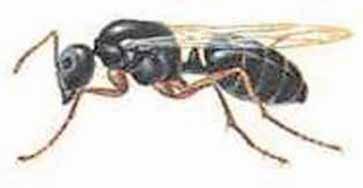
“Me, I was willing to try anything so long as I knew someone had tried it before me (and lived). Only once did I draw the line when I saw young boys swatting flying ants at Copinang and stuffing them live into their mouths.
There’s a three inch green and black cater-
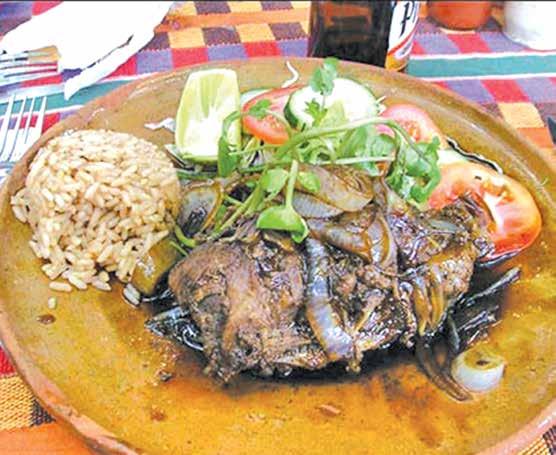
pillar that defoliates a Eucalyptus tree overnight – very tasty, a little like peanuts, when roasted. The flesh of the armadillo makes a good substitute for chicken, and it was “safe” for me to eat because
I was celibate. If their wives were pregnant, married Amerindians won’t touch it, as it was said to affect, adversely, the unborn child.
The sweetest meat I ever ate in my life was

Maam – bush chicken – a bird which hops around the floor of the Mora forest, turning leaves and grubbing for insects; it hardly ever flies, and gives a white tender meat, when roasted or broiled.
Iguana, monkey, acoushi ant, and many other birds and animals are eaten. I never saw an Amerindian using a frying pan. Occasionally we smoked fish or meat –couldn’t stand it myself: dry and tasteless. However, I discovered a method of resuscitating the stuff: one day I was given a basket full of smoked ‘logo-logo’, the Amerindian name for a small, sardine-sized fish, caught by poisoning the creek with Hiari roots – the roots of a cactus-type plant which they pound to a pulp and then soak in the creek. Not sure how it works but the fish surface with open mouths and are caught by hand.
Anyway, after tasting a couple of the smoked variety, I remembered I had a tin of rancid butter in my supplies. Melting the butter into a pan I tried frying a couple of the smoked fish – amazing- they began to swell up in the butter. They were delicious – I feasted well that night.
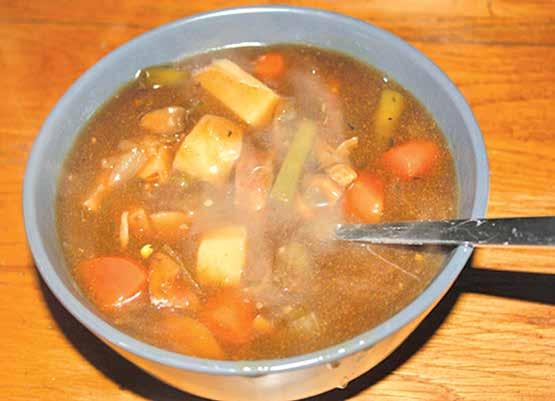
After travelling by canoe from Waipa to Kaibarupai one day, I was royally entertained...They had a huge trestle table down the centre of the village. There was only one chair – for me! I was expected to eat alone with the whole village looking on! The food was in white enamel buckets –piping hot! One bucket of fish, one bucket of venison stew, one bucket of calalou, one bucket of hot peppers, plus a mound of cassava bread and cake. I ate and enjoyed...And after my departure from the table, the whole village ate their fill.
At Waipa I had witnessed an elderly lady
catching acoushi ants for roasting and eating. She pushed a straw into the ant’s nest and withdrew it full of clinging ants and then wiped them off into a jar; repeating the process until the jar was full.
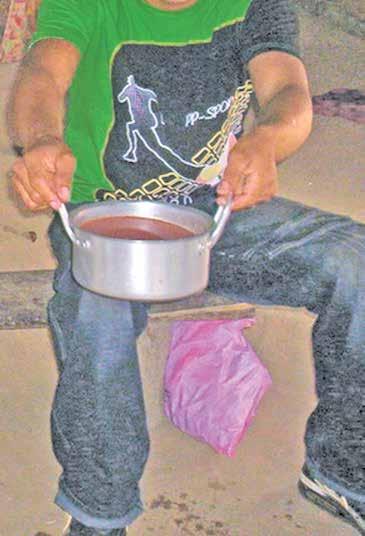
What I found very refreshing was the cassiri drink made by the Patamona Indians After a hot walk, or climb up a steep hill to the village, you could usually drop into any hut and the custom was to offer you a bowl of this drink. I witnessed the ladies making it one day in eight-gallon earthen ware pots or cauldrons; the ladies were sitting round the pot chewing the cassava and spitting it into the receptacle; this same pot was boiled for 5-6 hours; red, sweet potato was added for colouring and flavouring, then the potage was
left to cool and ferment for a few days. The parakari made by the Macushi and Wapishana Indians is not tasty in my opinion, looking like a thin watery porridge with black thing floating in it. It was the height of bad manners to refuse a bowl of drink; the least expected was that you touch the bowl to your lips. If there were more people present the bowl was passed around, and always by custom, back the same route it started out, to be handed back to the host by the first person to receive it. The drink is a staple food – two bowls of ‘cari’ for breakfast. Limes were always in abundance, and another popular drink was “swank” – lime, sugar and water (unfermented). We used it often at children’s parties.”
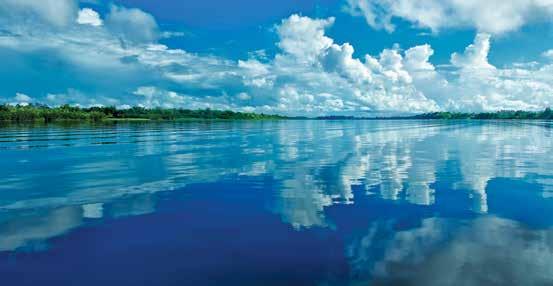
According to ‘The Arawak Language in Guyanese Culture’ by Canon J P Bennett of the Amerindian Research Unit at the University of Guyana, all rivers in Guyana that flow into the sea except one, have Arawak names, and so it is important that we rightly familiarise ourselves with these names.
The one river that does not bear an Arawak name is ‘Waini’. The word ‘Waini’ is a Warrau word and refers to a bird, a kind of crane which was once plentiful in the lagoon in the mouth of the Waini River. The publication stated that it is not Waini but instead ‘Wauna’.
‘Barima’, the river which flows in Guyana but empties in Venezuela, is an Arawak word. In Arawak ‘Bará’ means sea and ‘Eima’ means estuary -- two words. As bará connotes ‘rough sea’, it would appear that the mouth of the Barima River was invariably rough and so
the associated meat was already cooked, much time was saved.
Nearly all the creeks up the Pomeroon River, which are tributaries, have Arawak names. This shows that Arawaks at one time numerously inhabited most of the rivers in Guyana. For example, Wakapoa creek is on the left bank of the Pomeroon River. Wakapoa
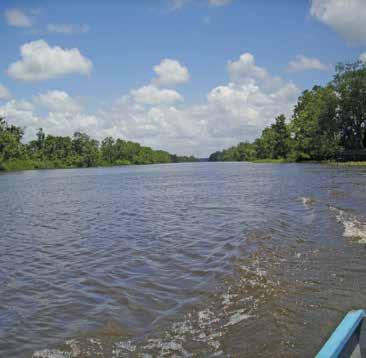
the people called it “rough river mouth” in Arawak: Baraeima.
When you go to Mabaruma by steamer, the steamer stelling is known as ‘Kumaka’ stelling. ‘Kumaka’ is Arawak for the silk-cotton tree. There is a river, a branch of Barima River, called Aruka. Aruka is the Arawak word which means “to cut.” Then Aruka could mean ‘a cut’, ‘a shortcut,’ or a ‘division’. Local archaeological evidence points to Loko Arawak settlements at Hosororo Creek on the Aruka River almost 4,000 years ago.
Moruka, in the BarimaWaini region, is two Arawak words. ‘Moró’ is a small fish known as the ‘dog fish’ and ‘Kan’ means ‘to’. In the upper Moruka River there are several islands in the savannah that carry Arawak names such as Aiomorakabura, Akhoyoro, Thabula and Waromuri.
Next is Pomeroon which is thought to come from ‘Bioroma’, a preparation of baked cassava meal moulded into balls and each wrapped in a leaf. It was mostly used while travelling long distances, and as
is Arawak ‘Wakokoa’- a type of pigeon common in the savannah.
Akiwini (or Akawini) creek is two Arawak words‘Eke’ means to eat and ‘Oni’ which means rain. The meaning of Eke Oni is eating rain. The story of how the creek got its name stated that after a rainy season the savannahs on both banks were flooded. Many people became ill and died. The rains got the blame for causing the death of the inhabitants; so the creek got
its name. However, it was not the rains that caused the deaths but the leaves of a poisonous tree known as ‘Hiari’, which grew in great numbers in the area. During the dry season, the leaves would litter the ground. In the rainy season these leaves were washed into smaller creeks. People drank the mildly poisoned water and became ill and even died. On the Pomeroon, up to the creek called ‘Wayuwaro’, a name of a shrub, all the tributaries, but one, have Arawak names.
Essequibo is the largest river in Guyana, and people of the past believed it would take a very long time to cross. So they proclaimed that if anybody wished to go from one bank to the other, he or she would have to carry a fireside in order to cook a meal in mid-stream. This account may sound lighthearted, but when we consider that the fireside of the Arawak was a prized possession, the risk of losing even a part of it was a serious matter. This fireside, ‘Dishiki’, consisted of three rocks, almost identical in height, size and weight. They could be adjusted to accommodate any size cooking pot. If you lived in a rocky area it was not difficult to make up a fireside, but if you lived in a sandy or swampy area, suitable pieces of rock were greatly prized. The name ‘Dishikibo’ was given to the river; ‘Dishiki’ meaning ‘fireside’ and ‘Abo’ meaning ‘with’.
A few kilometres up the Demerara River is a series of rapids called ‘Malali’. Malali in Arawak means ‘fast run-
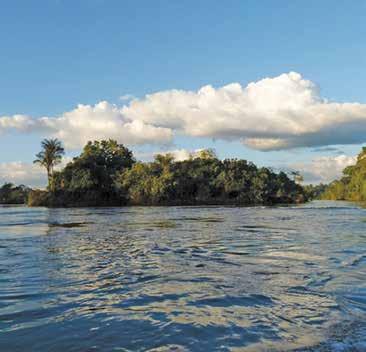
carry Demerary. However, years later, the ‘y’ at the end of the word changed to ‘a’ so that at present we have Demerara.
The names of the two rivers Mahaica and Mahaicony derived from the same source, ‘Mahóka’. Mahóka is the name of a tree that once thrived on the banks of these rivers. The Mahaica was called ‘Mahóka’ because of those trees that grew bountifully along the banks. Mahaicony also had
meaning a song.
The Abary River story goes that a couple of hunters in the Abary district found what looked like a human jawbone. One of the hunters remarked in Arawak, “Aba” meaning someone and “ari” meaning teeth. The river was known as the ‘Abary’ ever since.
The name ‘Berbice’ comes from the Arawak word ‘Beribishi’ a type of banana. It was said that this particular type grew wild in
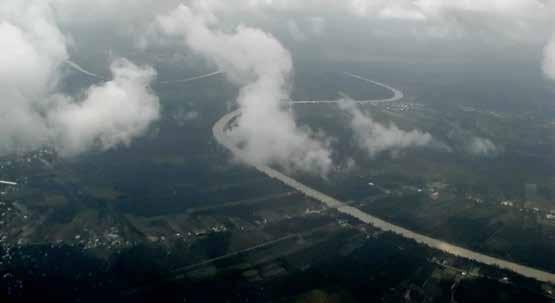
ning stream’. The entire river was given the name Malali, and for a long time it was known by that name; when the Dutch ruled the country they always spoke and wrote of “de Malali.” Later, the two words were combined to form ‘Demalali’. Later still the ‘I’ at the end of the word became ‘y’ and the two ‘l’s became two ‘r’s, hence ‘Demerary’. Some of the old manuscripts still
lots of similar trees along its banks, so this posed rather a problem in finding a suitable name. After some time they noticed that whenever the wind blew the leaves of these trees rustled and made a special sound as if they were singing so they felt they ought to name the river ‘song of the Mahóka trees’ and so Mahaicony got its name, ‘Mahóka’ meaning a kind of tree and ‘Yeni’
certain areas of this river. People went there to collect the fruit and also suckers to plant in their fields. In time, the river became known as the river of this particular type of banana plant and so it acquired its name. At the present time we know the river by the shortened form, Berbice. (Excerpted from ‘The Arawak Language in Guyanese Culture’ by Canon J P Bennett)

By PetamBer Persaud
Would you like to know why honey seems always in short supply? If so, then turn to entry number 135 in Walter E Roth’s book, “The Animism and Folklore of the Guiana Indians”.
In olden times bees’ nests and honey were very plentiful in the bush, and there was one man in particular who earned quite a reputation for discovering their whereabouts. One day, while chopping into a hollow tree where he had located some honey, he suddenly heard a voice from the inside calling, ‘Take care! You are cutting me’. On opening the tree very carefully, he discovered a beautiful woman, who told him she Maba [lit. ‘honey’], the Honey-Mother, that is, the Spirit of the Honey. As she was quite nude, he collected some cotton, which she made into a cloth, and he asked her to be his wife. She consented on condition that he never mention her name, and they lived very happily together for many years. And just in the same way he became universally acknowl-
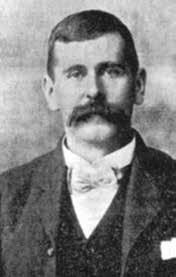
edged as the best man for finding bee’s nests, so she made a name for herself in the way of brewing excellent cassiri and paiwarri. She had to make only one jugful, and it would prove quite sufficient, no matter the number of visitors; more than this, the one jugful would make them all drunk…However, one day the made made the mistake of mentioning her name, quite innocently, and instantly she flew away back to her bee’s nest. He was unable to stop her as she flew off… And with her, his luck
flew and since that time honey has always been more or less scarce.
That is one of the 370

stories in this “landmark compilation of the cosmology and beliefs of three of Guyana’s indigenous peoples – Arawak, Carib and Warau”. And there is more.
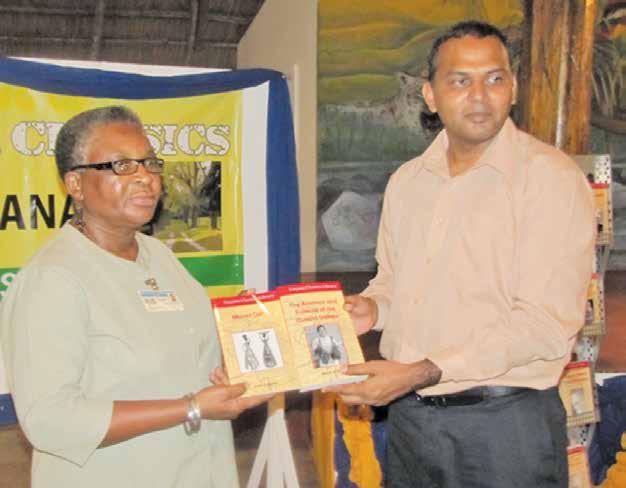
Would you like to know how the moon got a dirty face? Would you like to know how pain, misery and death came into the world, how alligator came to have its present shape, how the birds obtained their distinctive markings, how the Indians learned to paddle, how the lazy man was cured, how the world was created, then turn to Walter E Roth’s book, “The Animism and Folklore of the Guiana Indians”, which was reissued by The Caribbean Press in June 2011 as part of a series titled the Guyana Classics Library.
“The Animism and Folklore of the Guiana Indians” by Walter E Roth was first published in June
1913. It was the result, according to the author’s preface, of a determination to devoting “all my spare time – and there has been plenty of it – to an ethnographical survey of the native tribes of British Guiana, somewhat on the lines I had already followed in the case of North Queensland” [Australia]. He further stated, “In the course of my ethnographical work, I collected sufficient material in the way of myth, legend, and fable to warrant the publication of a separate volume on Animism and Folk-lore, and so the following pages have come to be written.” In 1970, it was republished by Johnson Reprint Corporation.
The 2011 reissue by The Caribbean Press is accompanied by a scholarly introduction written by Janette Bulkan. Listing the merits of the book, Bulkan writes that “the scrupu-
lous care which Roth characteristically brought to the task of recording the words of his interlocutors” and “Roth’s separation of his comments from the text...permits each reader to experience a story directly”.
Further, Bulkan states, that we can read these narratives on different levels: “Firstly, as a window into the fascinating neotropical world with its endemic profusion of plant and animal life forms. We, to like the European explorers and naturalists, can immerse ourselves into this biodiversity through the medium of these stories. Secondly, we can also marvel at this glimpse into the sophisticated cosmology and complex world views of Guyana’s first peoples.”
The efficacy of the book is strengthened with a detailed table of contents, skilful illustrations, listing of stories, a bibliography and a glossary. This Bulkan says is “a bequest to our nation”. Responses to this author telephone (592) 226-0065 or email: oraltradition2002@ yahoo.com
What’s happening: • The Caribbean Press has commissioned Petamber Persaud to produce as Editor a Volume 2 of contemporary poetry and a Volume 1 of contemporary prose by local Guyanese writers. Please contact Persaud for further information at the above mentioned telephone number and email.

On September 10, many will gather at the Umana Yana to celebrate the life and work of Stephen Campbell, Guyana’s first indigenous MP.
Among the indigenous people, Campbell is revered as a hero. He is credited with advocacy for land rights for Amerindians; a goal that the present government continues to advance so as to ensure that Campbell’s aspiration for his people is made possible.
Stephen Esterban Campbell was born 26 December 1897 in Moruca. His father was Tiburito Campbell and his mother Maria Los Santos. He was a student of the Santa Rosa Mission School and was someone who had a passion for learning. He left school in his primary level at “sixth standard”.
In 1921, he taught in Sawariwaru, Rupununi and then in Siriki, Pomeroon in 1923. He married Umbelina da Silva, a daughter of a Pomeroon coffee planter. From 1931 to 1948, Campbell worked as a coffee planter. From 1948 to 1954

Dhe managed the wallaba concessions of John Fernandes, Demerara, and from 1952 to 1954 he managed the da Silva sawmills in Lower Waini. After working with that sawmill, Campbell worked at the Government Trade Store in Kamarang, Upper Mazaruni. From 1955 to 1957, he taught at St Dominic’s, Aruka River in the North West District. His political resolve was roused during his tenure at the Waini sawmill where Amerindians and other sections of the Guyanese population were seeking representation. The proposal of Universal Adult Suffrage in 1951 gave Amerindians the opportunity to participate in general elections, and Campbell began to show keener interest in politics. In 1957, he won the North West District seat at the general elections as member of the National Labour Front. He became the first Amerindian to contest the general elections in British Guiana.
This historical event was the turning point in Campbell’s personal life, which was influenced by a
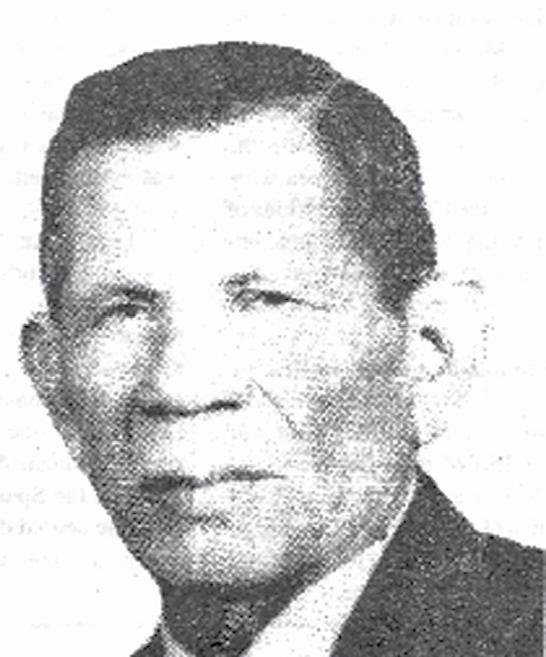
sense of duty towards the Amerindian people. “In the year 1957, I entered politics at the request of the Amerindians who felt that they had no one to represent their interests in the Central Government,”
Amerindian rights, with emphasis on land rights, to the Secretary of State at the British Constitutional Conference London.
Campbell also presented the ‘Joint Opinion’, which contained recommendations in relation to Amerindian land rights, at the British Constitutional Conference. He was Parliamentary Secretary in the Ministry of Home Affairs with special responsibility for Amerindian affairs. In 1964, he became the president of the Amerindian Association.
The following year he submitted a Memorandum prepared by the United Force on The Protection, Well being, Advancement of Amerindians, a blueprint for Amerindian land rights and other legal rights, at the British Constitutional Conference.
In
he served as
of the
Front. He was a member of the Steering Committee of the United Force, and in 1962 presented a petition on
Among his greatest achievements was the move towards crafting the Amerindian Act and to develop agriculture, better health facilities and a postal service in the North West District.
Minister of Amerindian Affairs, Pauline Sukhai, at
a past ceremony in recognition of Campbell, acknowledged that his achievements and vision for the advancement of the Amerindians earned him a place in the history of this country. She noted that he was a “selfless and charismatic leader who dedicated his life to help to improve that of his fellow Amerindians and his efforts to promote Amerindian development, especially in lobbying for support for road construction linkages among remote Amerindian communities, were supported by the People’s Progressive Party (PPP)”. Minister Sukhai also noted that with the support of the government, many of Campbell’s dreams have become reality, such as Amerindians’ access to education, healthcare, improved infrastructure, transportation and communication.
Campbell served as Member of the Legislature from 1957 until his death on 12 May 1966 – two weeks before Guyana gained independence from Britain. He died, and was buried, in Canada.
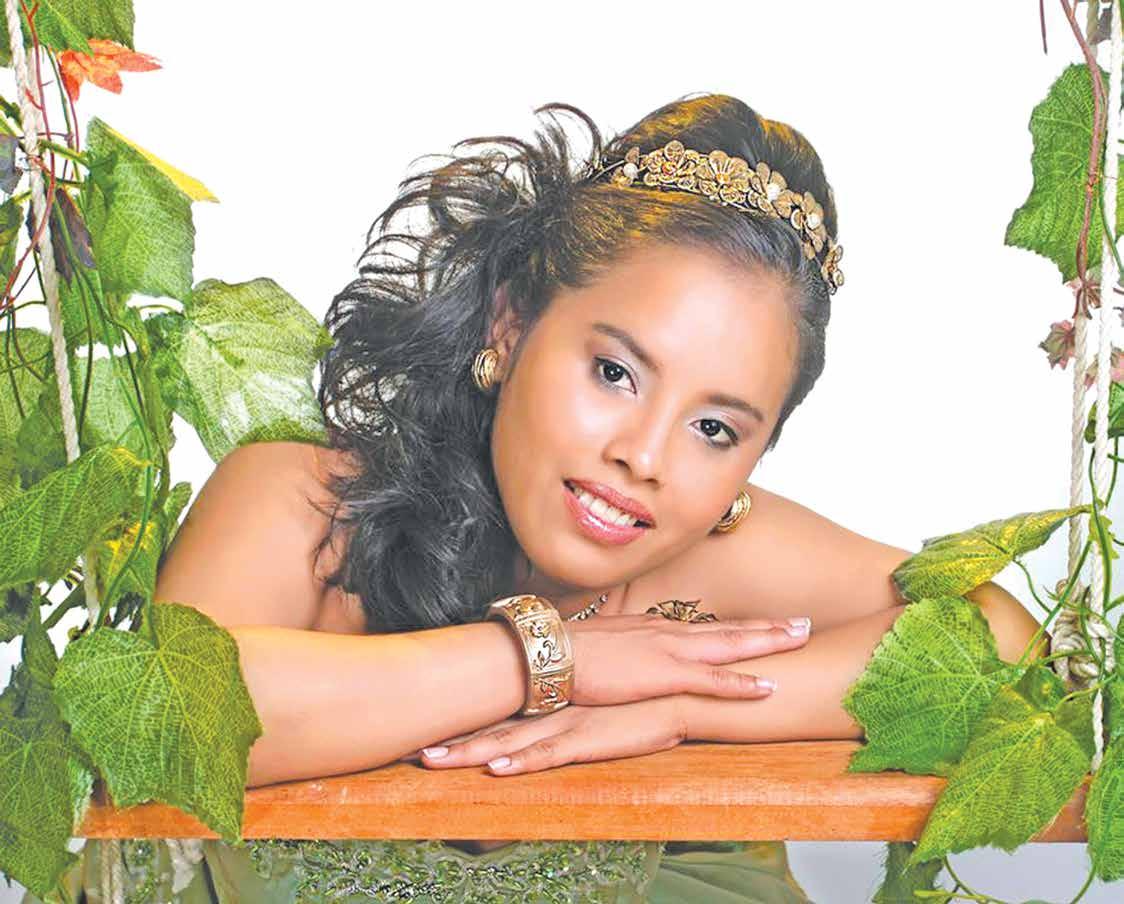
efying odds to fulfil her dream of becoming a doctor, Iliana Edwards has become a role model for indigenous youths wishing to follow in her footsteps. Iliana, from Paruima village, Upper Mazaruni in Region Seven, attended Paruima Primary School before excelling in her examinations to earn a government scholarship to attend Central High School in Georgetown. After graduating with eight subjects at CSEC, she worked for a year with USAID/Guyana HIV/AIDS Reduction and Prevention as a phlebotomist. Getting firsthand experience in the medical field would help her be more adept when studying medicine. Iliana applied for a government scholarship to study general medicine in Cuba. As a child, she dreamt of becoming a doctor and was elated when she was accepted to study in Cuba. Iliana, after seven years of study, was finally awarded her doctorate. She was overwhelmed with emotions, knowing that all her hard work helped with her success. The sacrifices she made were well worth it because she was able to accomplish what she had set out to do. Looking back at her journey, Iliana recalled the comments received from persons who doubted her abilities because of her ethnic background. However, she used those criticisms as motivation to achieve her goals, which she did expertly. Although the doctor has been exposed to different cultures, her indigenous heritage was never forsaken. She admires the unity in her village and enjoys being part of its activities. Iliana speaks the Arekuna language, although she is not fluent in it. Her mother, an Arekuna, and her father, an Akawaio, have always been her main supporters. She noted that they have repeatedly encouraged her to upkeep traditions, something she credits as her guide in becoming a doctor.
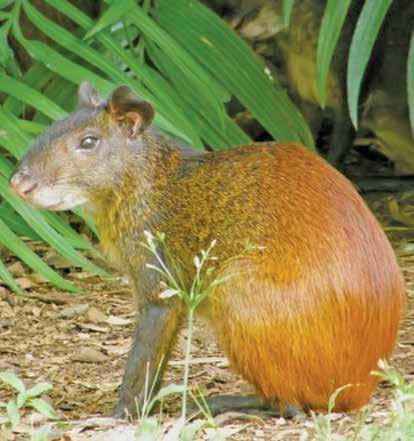
The agouti is a rodent from Central and South America rain forests that looks a bit like a really large guinea pig. Its coarse hair is covered with an oily substance that acts like a raincoat. The hair is longest on its rump. The agouti has five toes on its front feet and three on the hind feet. It walks on its toes, not flat-footed like many rodents, giving the agouti a dainty look.
Although it is hard to see it, the agouti does have a tail: it is very small, looking like a dark jelly bean stuck on the animal's rump!
Just like other rodents, agoutis have teeth designed to gnaw on very hard items, with one pair of sharp incisors in the front of the mouth. These are the teeth they use to chew through tough items like nutshells. The layers of enamel on their teeth are twisted in a way that makes them much stronger. Brazil nuts may be hard for us to crack, but they pose no problem for agoutis! The sharp incisors keep growing throughout their lifetime, ensuring that they always have nut-cracking tools at the ready! Agoutis use their molars to grind food items.
Much of this rodent's time is spent searching for food or taking a dip in a pool of water. At rest, the agouti stays in a burrow or hollow tree trunk, safe from predators such as jaguars, and ocelots. Sharp hearing and a keen sense of smell help the agouti prepare when a predator is near: it may freeze, make an alarm call, stamp its feet, or raise the long hairs on its rump to scare the enemy away.
To make an escape, an agouti can run pretty quickly. More amazingly, this rodent can jump up to 6 feet (1.8 meters) straight up in the air from a standing position, spin around, land, and dash off in the opposite direction. Fallen fruit is the agouti's favourite food, with nuts a close second. Its sensitive ears can even hear when the fruit hits the ground. The agouti often eats upright, holding its food with the front feet.
When there's lots of food, an agouti buries the extra portions around its territory for future meals. That keen nose helps the animal locate the food again in times of need. If the agouti buries a nut and never returns to eat it, the nut just might grow into a tree, making agoutis good rainforest gardeners. It can be hard to see in a dark rainforest habitat, so the agouti marks its territory with urine as a smelly way to tell other agoutis to keep out.
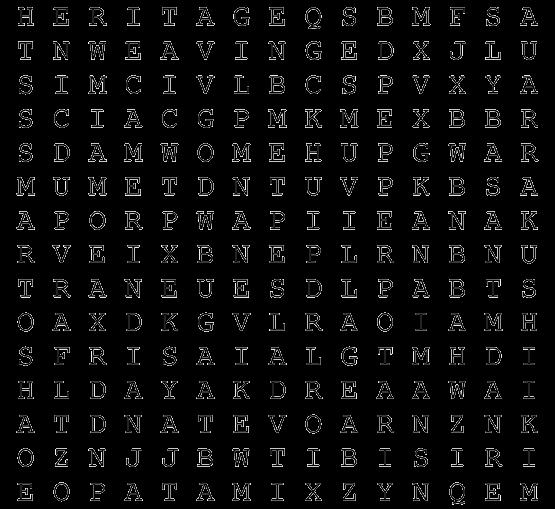
Amerindian Heritage Month Word Search
The objective of the game is to fill all the blank squares in a game with the correct numbers. Every row of 9 numbers must include all digits 1 through 9 in any order. Every column of 9 numbers must include all digits 1 through 9 in any order. Every 3 by 3 subsection of the 9 by 9 square must include all digits 1 through 9.

please see solution on page 22
was
By Laurie Triefeldt
coexisted with early humans and became extinct about 4,000 years ago.
Life on Earth has shown a great ability to rebound after disaster. Fossil evidence shows that the planet has experienced at least two mass extinctions, yet life has continued.
One mass extinction took place at the end of the Permian period (251 to 299 million years ago), eliminating 90 percent of ocean dwellers and 70 percent of land plants and animals. Another mass extinction occurred at the end of the Cretaceous period (65.5 to 145.5 million years ago). This event killed off 80 to 90 percent of marine species and 85 percent of land species, including all nonflying dinosaurs.
Mass extinctions can be caused by a variety of catastophic events, such as major volcanic eruptions or the impacts of large asteroids. Scientists do not always agree on what caused a particular mass extinction.
Fossils give us a unique glimpse into the prehistoric world and provide clues about many extinct animals and how life evolved.
Trilobites are extinct marine arthropods that thrived in oceans around the world until about 250 million years ago.
Extinction occurs when all members of a species have died or have reached such small numbers that recovery is impossible. When a species fails to adapt to a changing environment or is overwhelmed by another species, it may become extinct. There have been several mass extinctions over the course of the Earth’s history. In a mass extinction, more than 50 percent of the world’s species die off. This is not always a bad thing — for example, the extinction of the dinosaurs allowed mammals to diversify and thrive. Some scientists believe that another mass extinction is taking place right now and that humans may be responsible for it.
The elephant bird lived on Madagascar for 60 million years, but became extinct in the 17th century. It is thought to be the largest bird ever to have lived. It stood 10 feet (3 m) tall and weighed about 880 pounds (400 kg).
The New Zealand moa is another large extinct bird. It was hunted to extinction by the Maori people and died out in the 15th century.
None have been seen since 1989.
Humans contribute to the demise of species largely through overhunting and habitat destruction. And despite efforts to protect many endangered species, the threat continues to be very real. Recent studies suggest that a quarter of the world’s species may go extinct by 2050.
Once the most common bird in North America, the passenger pigeon had a population in the billions.
Early Europeans settlers hunted this bird for its meat and as a pest on a massive scale.

The last Tasmanian tiger died in captivity in 1936.
Tasmanian tiger was wiped out by human hunters and habitat loss.
The Xerces blue butterfly was found in the coastal sand dunes of San Francisco. Last seen in the 1940s, it is thought to have been the first American butterfly to become extinct as a result of habitat loss.
It is estimated that 3,000 to 3,900 tigers remain in the wild. It will be difficult for this animal to avoid extinction.
The Alliance for Zero Extinction has identified 587 global sites that represent last refuges for 920 critically endangered species. This pie chart shows a breakdown of critically threatened species.
The tiger has lost 93 percent of its historical range.

It is estimated that about 50 percent of coral and sponge species will face extinction by 2100. Coral reefs are home to a quarter of all marine life and play a vital role in ocean ecosystems.
Make a difference
If we want to preserve Earth’s biodiversity, we have to change how we think about the world around us. It’s easy to get involved and join a group or community dedicted to saving the species we share our planet with. Let’s try to restore damaged habitats, reduce pollution, respect endangered-species laws and conserve our natural resources.
By Samantha JameS
The beauty of the Rupununi is vast, unique, legendary
and celebrated in arts and literature. From Robert Schomburgk’s early 19th century travel descriptions and Charles Bentley’s infa-
mous sketches of the savannahs, forests and people to modern day representation of mythology, culture and environment in the art of

Guyanese artists, George Simon and Roland Taylor. Poetry and songs celebrate the subtle beauty of the charismatic and life giving Rupununi River and the land named after it. Basil Rodrigues, or Uncle Basil, as he is fondly referred to, originally hailed from Mourca in the North West District, spent over 40 years teaching in the South Rupununi, wrote poems and songs about the Rupununi. School children in the region today still recite his work which describe Amerindian life, culture and the beauty of “Rupununi, my dear, dear, home”.
Administratively known as Region Nine, but fondly known as The Rupununi by those who live there, derives its name from the Rupununi River, which runs from the south savannahs, north and eastward where it meets
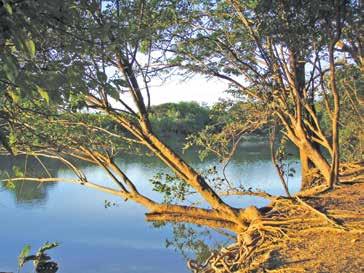
endless horizon and beautiful vistas, the wonderful hospitality and culture of the people or maybe it’s something in the water.
During the rainy season (May/June), the heavens open, creeks and rivers swell, burst their banks and meet the flooded savan-
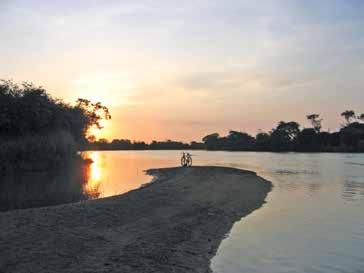
the Essequibo River. The Rupununi River and its tributaries are the mainstay of life for the 14,000, mainly Amerindian people, Makushi and Wapichan, who live in the area.
What is the fascination with this place, this river, this land called Rupununi? Come and visit the golden savannahs which melt into deep, green forests, lined with silver creeks to discover its magic. Mountains with names like Makarapan, Shiriri, the Kanakus and Pakaraimas are the distinguishing landmarks which divide the Rupununi into geographical regions but are the kingdoms of wildlife, legends and spirituality. The vast savannah lands are dotted with cattle ranches: Dadanawa in the Deep South, Karanambu, Meterzero and Point Ranch in the North, where vaquero, or cowboys, ride barefoot and manage wild cattle which range for hundreds of miles of open country.
Cattle, cashew nuts, peanuts, cassava and casareep are some of the products from the Rupununi, and you hear English, Makushi, Wapishana and Portuguese spoken by its inhabitants. But there is something else that makes the Rupununi special and keeps some of us coming back: maybe it’s the sweet grass scented air,
nah, as a result the landscape changes dramatically. What were once roads are now only navigable by boat; fish now use the bicycle tracks, and the areas along the river become a magical and tangled flooded forest. The Rupununi is actually a massive wetland and this seasonal flooding is responsible for the overwhelming biodiversity (and
vides a waterway for transportation from north to south whether visiting family, friends or going to the farm. To date over 800 species of fish have been catalogued from the rivers making this a source of protein and game for inhabitants and visitors alike. Avifauna is impressive: Jabiru Storks, Roseate Spoonbills, Cocoi Herons, Buffnecked Ibis, and Double-striped Thick-knees all strange and beautiful with long legs built for stalking in long grass and river shallows.
The Rupununi’s diverse ecosystems make it a haven for bird watchers and nature lovers: the Red siskin, a rare seedeater, thought to be extirpated from Guyana, was found to be thriving in south savannahs by local scientists from Dadanawa a few years ago. Incredibly beautiful but very rare, Sun Parakeets have a stronghold in the Pakaraima mountain ranges and the strange, nearly fluorescent orange Cock of the Rock leks (nesting behaviour) throughout the North Rupununi. To see this bird and its flamboyant dance, visit the Wowetta Cock of the Rock Trail or Iwokrama. Guyanese writer, Robert Fernandes wrote a poem, which was later sung by
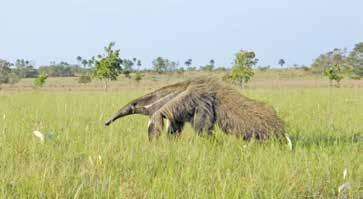
some of the strangest looking things) that live here. This is the land of giants: giant anteaters, giant otters, giant river turtles, giant fish (arapaima) and black caiman. All endangered and strange species, but once you see them, you will be awed by their size, incredible adaptations, and although endangered internationally, by their abundance in this special place.
The Rupununi River is a source of life for many people; it’s winding course pro-
Anthony Xavier on the album Rediscover El Dorado, called “Rupununi”, in which he refers to the land and the river after which the poem is titled, but he spells out what makes the place special: “R, U, P, U and U and I. You and you and I; when you visit the Rupununi, one thing becomes clear: your visit would not be what is was without the wonderful hospitality and charismatic people you met on the way and those you shared your journey with.”

Marisa Quinn is an American film, television, and theatre actress. She is best known for her role as Huilen in “The Twilight Saga: Breaking Dawn Part 2”. She is of Lipan Apache and Mexican-American descent. She has appeared in national commercials, print ads, indie films, studio films, movies of the week, and portrayed memorable characters in popular Network TV shows like “Sons of Anarchy” and “Private Practice”. Marisa is also a professional vocalist and photographer. She has worked as a photographer in Los Angeles, New York and Europe. She is the Principal and Executive Director of Monarch Media Productions. Marisa has her own collection of clothing with the upscale, eco-friendly women's wear company EcoCouture.
She flew into Seoul from California less than 48 hours earlier with her two young children, however there was no sign of any jet lag or lack of sleep for Megan Fox, of Native American ancestry, on Wednesday.
The actress looked stunning as she attended a press conference for new movie Teenage Mutant Ninja Turtles, the day after the South Korea premiere.
The 28-year-old turned heads in her thigh-skimming, star-print dress, while her long tresses were worn in loose, glamorous waves over one shoulder.
The Hollywood beauty - whose long pins were impossible to miss in the stylish black outfit - gave birth to her second child just six months ago.
Cinching in her waist with a thick belt, Megan was spotted posing with her hands poised in a karatestyle stance before chatting to reporters.

She was accompanied on the day by director Jonathan Liebesman as well as producers Andrew Form and Brad Fuller, however there
was no sign of co-stars Will Arnett or William Fichtner. (Daily Mail)


Taylor Lautner, of Native American ancestry, girlfriend is possibly the luckiest girl in the world - not only is she dating the Twilight hottie, but she looks just as hot herself.
The loved up couple were spotted leaving the MTV VMAs pre-show in Los Angeles last night hand-inhand, and we can't help feeling a stab of jealousy - for
Sboth of them.
While the hunky actor dressed down in a baseball cap, jeans and a denim waistcoat, his other half Marie Avgeropoulos stole the show in a tiny print mini skirt and black top.
Flaunting her perfectly tanned and toned pins, the brunette beauty held on tight to her man as he lead her out through the crowds - and yes girls, it's not just
Vampire films he's protective in.
The pair had been watching Iggy Azalea perform, and no doubt felt a touch sympathetic for the star like the rest of us - after she took a nasty stumble off stage during the rehearsals.
The blonde bombshell forgot to mind the gap when she was stomping all over stage at the bash in Hollywood - oops.
A video filmed by a member of the audience shows the gorgeous star belting out a tune, stepping back, and taking an almighty plunge.
The audience can be hear gasping - but good 'ol Iggy showed she's a pure professional as she kept on singing despite the embarrassing gaffe.
Bounce hitmaker Azalea seemed to only suffer a bruising to her ego and was quickly ushered back on stage by security. (Mirror)
he has admitted in the past to being a hippie at heart.
And it appears Vanessa Hudgen, of Native American ancestry, is even getting spiritual, as well as physical, at her regular Soul Cycle sessions.
The “High School Musical” star sported a mystical-themed top as she left her daily workout in Los Angeles on Tuesday.
The superfit actress kept the rest of her workout gear down-to-earth, however, wearing a black vest and Lycra pants.

And Vanessa ensured she was


Alex Meraz is an American dancer, actor and martial artist. Alex is best known for playing the werewolf named Paul in the film “New Moon”. He is an avid painter and illustrator. Besides break-dancing, Alex excels in indigenous and contemporary dancing. He has studied mixed martial arts, winning numerous tournaments in karate and the martial art of capoeira. Alex's first big film was “The New World” as one of the Powhatan core warriors, inspiring him to continue acting. Alex also starred in the latest season of “CSI: New York”.
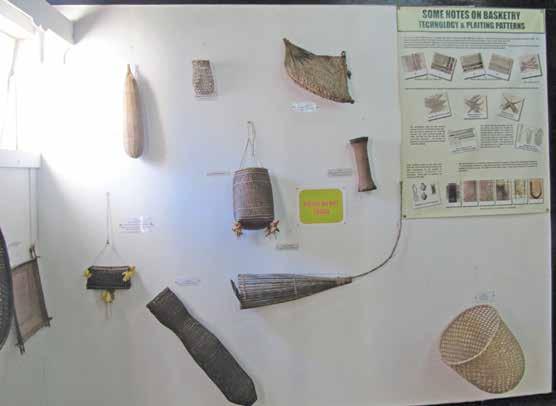
Observing the Umana Yana edifice we see complex weaving techniques. The designs in that building hold underlying meanings and symbols indicative of the Waiwai culture and traditions.
Dr George P Mentore is a leading Guyanese social anthropologist on the Waiwai of Guyana in the world. He is affiliated as a social anthropologist with the University of Virginia. He has spent many years with the Waiwai tribe studying their way of life. Mentore’s PhD thesis in 1980 was on the Waiwai and he has published many papers on this Amerindian group.
In this article he describes the dynamics of a Waiwai house and the many symbols contained in them. He explained that in a Waiwai system of belief, as with many other Amerindian peoples of lowland South America, everything can be interpreted as being linked to each other so as to achieve cosmic harmony and balance. In such a belief system, for example, the house, body, and dress relate to each other in shape, position, terminology, and even meaning, thus conveying collective ideals of society and culture.
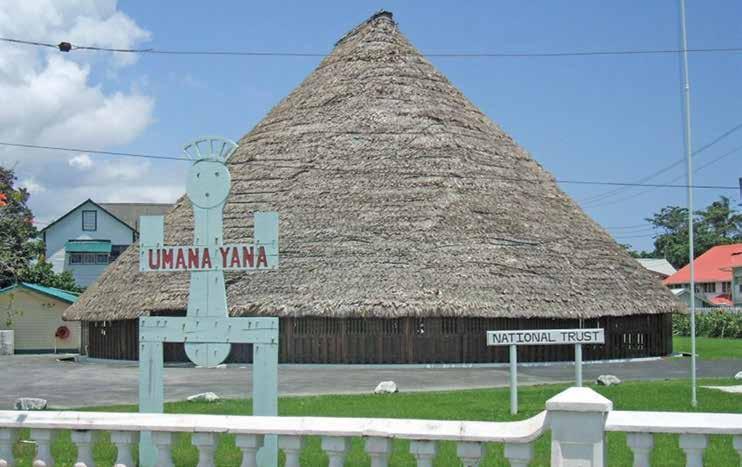
Mentore stated, or from the house, the environment and the cosmos. For the Waiwai, a miimo (house) of the tamnonim (conical shaped) design is their ewtopono (place where people live). Additionally, Mentore
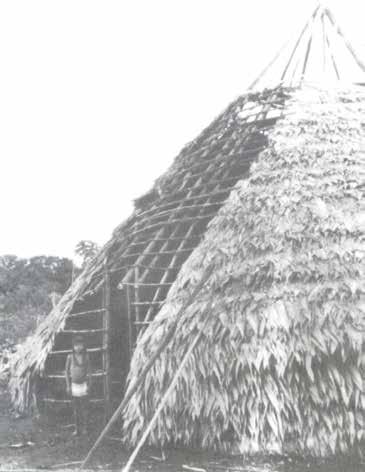
The house, according to Waiwai belief, he noted, incorporates themes of encompassment, containment, concentric circles and the strata of the celestial realm. It further displays elements related to gender symbolism, as well as the symbolic relationship between the body of the anaconda and the human body. The Waiwai come to know power as being encountered during every moment of an individual’s life. It is experienced in everything and everyone and can be found everywhere. It emanates from the body,
said as with most other Amerindians, the Waiwai house construction depends mainly upon the labour of men. The materials for house construction come from the forest, the site most associated with the activity of men. It can be claimed, from Waiwai ideology, that because men have greater knowledge and higher status in society only they have legitimate primary access to the forest and its products. They utilize two types of leaves for house building; leaves plaited to form the equivalent of tiles (pacanay).
Mentore mentioned they say that these tiles resemble the
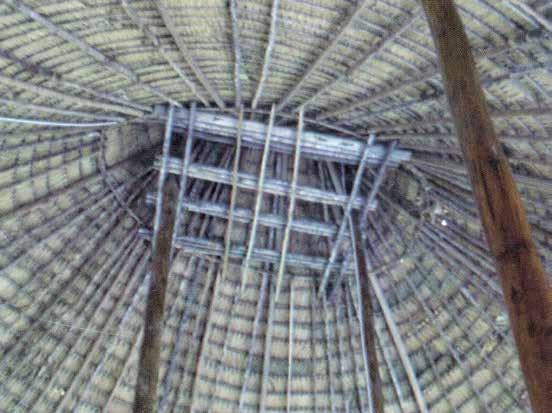
wings of giant birds, and often refer to them as “the feathers of a house” or the “hair of the house.” They further suggest that the leaves can be male or female. The long kunyan leaves can emphasize masculinity while the round mina leaves symbolize women. Thus, Mentore said that it can be interpreted that the roof of a traditionally built Waiwai house represents both men and women in complementary opposition to each other and actually symbolises the balanced wholeness of the village.
In Waiwai society everything must further have an inner and outer design in order to achieve social harmony. The roof of the house encircles the community and contains the forces controlling society. Each individual living within a house exudes vital spiritual energy which flows outward to society. In its association with the feminine body, the house can specifically represent the womb or woman as container of life.
The central pole in a traditional Waiwai house often does not support the roof. It most often just hangs from the roof and may not even touch the floor. The central pole seeks to symbolize masculinity and the containment of male energy. It is also identified with the anaconda whose markings are frequently painted along its base. Encircled by the roof as womb, the pole (sometimes two of time like in the Umana Yana) installs a powerful masculine energy at the centre, but a power completely contained and controlled by the feminine symbol of the womb.
The Waiwai refer to the different parts of the house as parts of the body such as rafter poles (upper back of the house), inner support poles (arms of the house) and so on. They design the
up meaning at the centre of the house while womanhood does so with the outer area of the building (away from the axis of cosmic energy). It should be noted, Dr. Mentore said, that the centre space while providing access to the lowest level of the sky realm, also provides access to taritari (the spiritual world), which is occupied by spiritual being with the attributes of flying insects.
The concept of passageways also has important significance, for through them people can communicate with their ancestors and the spirit world.
Conclusively, Mentore mentioned that present day Waiwai society still adheres to many of the old ways and beliefs. So the next time you visit the Umana Yana, take some time to observe the intricate details of the
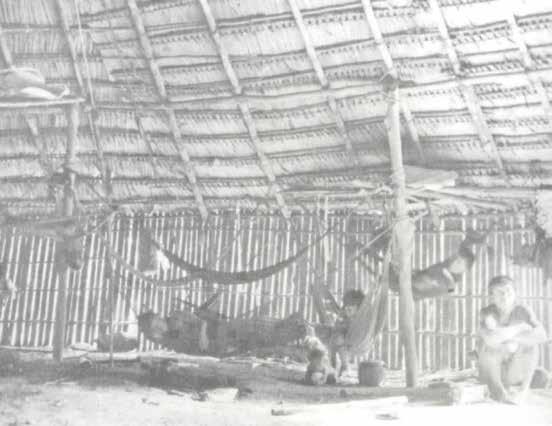
roof to give the impression of concentric circles (circles with a common centre) which gradually get smaller and smaller until they reach a point in the roof. While lying in the hammock looking up at the roof, the concentric design gives an impression of cosmic infinity and spiritual ascent.
The different parts of the house also have symbolic meaning. The floor carries the meaning of womanhood while the roof carries that of manhood. For its part manhood additionally takes
building. If you want to know more about the building dynamics of traditional Amerindian homes then visit the Walter Roth Museum of Anthropology, the nucleus of everything indigenous.
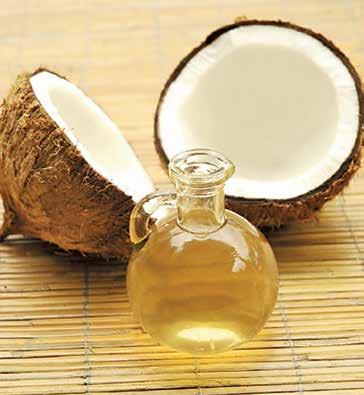
Conventional thought used to consider fats like coconut oil to be unhealthy and contribute to heart disease. But research has found that this isn’t true. In fact, coconut oil is actually a heart-healthy food that can keep your body running smoother in a few different ways.
Studies have shown that intake of coconut oil can help our bodies mount resistance to both viruses and bacteria that can cause illness. Ev en more, it also can help to fight off yeast, fungus and candida.
What are the benefits of coconut oil
Coconut oil can also positively affect our hormones for thyroid and blood-sugar control. People who take coconut oil also tend to have improvements in how they handle blood sugar since coconut can help improve insulin use within the body. Coconut oil can boost thyroid function helping to increase metabolism, energy and endurance. It increases digestion and helps to absorb fat-soluble vitamins.
Can coconut oil reduce cholesterol?
Coconut oil has a saturated fat called lauric acid, a type of MCT. It has been shown that lauric acid increases the good HDL cholesterol in the blood to help improve cholesterol ratio levels. Coconut oil lowers cholesterol by promoting its conversion to pregnenolone, a molecule that is a precursor to many of the hormones our bodies need. Coconut can help restore normal thyroid function. When the thyroid does not function optimally, it can contribute to higher levels of bad cholesterol.
How does coconut help keep weight balanced?
Coconut fats have special fats called medium chain triglycerides (MCTs). It has been shown that breaking down these types of healthy fats in the liver leads to efficient burning of energy. One 2009 study found that women who consumed 30 milliliters (about 2 tablespoons) of coconut oil daily for 12 weeks not only did not gain more weight, but actually had lowered amounts of abdominal fat, a type of fat that is difficult to lose, and contributes to more heart problems.
Is it true coconut can help with aging?
The oils found in the coconut have a positive antioxidant action in the body. This means they help our body stop the damage to other healthy fats and tissues in our body. Oxidation is considered a major contributor to cardiovascular problems and skin aging. Coconut oil can actually help our bodies reduce the need for antioxidant intake.
Is coconut oil good for my skin and hair?
From the time of infancy through the senior years, coconut oil is a wonderful moisturizer for skin and hair. It has good amounts of the antioxidant vitamin E, which is very protective. If you are using on the skin regularly, it is best to try to find an organic coconut oil, to reduce the absorption of toxins and pesticides through your skin.
It is recommended that new parents massage infants with coconut oil after a bath. One 2005 study of 120 babies showed that a coconut oil massage is safe and has health benefits.
How can I use coconut oil?
Coconut oil works in both baked goods like banana bread and with vegetables. It is especially tasteful when paired with bitter greens like kale. You can use it as part of the onion and garlic sauté, where it offers a surprisingly different and pleasant full-bodied taste. It is also a wonderful addition to oatmeal to make it even creamier, while staying healthy. Coconut oil can withstand the heat – making it a better cooking option.
Having healthy fats and plenty of protein is a wonderful way to control blood sugar, and stave off mood disorders and depressive feelings. Does coconut oil have side effects?
Coconut oil is quite safe to take in reasonable amounts. While no formal study has figured out the exact amount for optimal benefit, it appears one to two tablespoons a day can be beneficial. (www.doctoroz.com)
Using herbs or plants, along with animal parts and insects, to cure a variety of ailments have been part of indigenous tradition for millennia, now being investigated by scientists and researchers.
Over the years, the village medicine man has been a powerful and important figure in traditional communities for his knowledge of herbal medicines and cures for injuries, diseases and ailments. Many of Guyana’s indigenous communities are no different as they still rely on such individuals in the absence of modern clinics or hospitals nearby.
The publication, written by Clifford Stanley, “Uses of medicinal plants in Guyana”, looks at more than 100 plants in Guyana that are being used as non-traditional medicine for a variety of ailments.
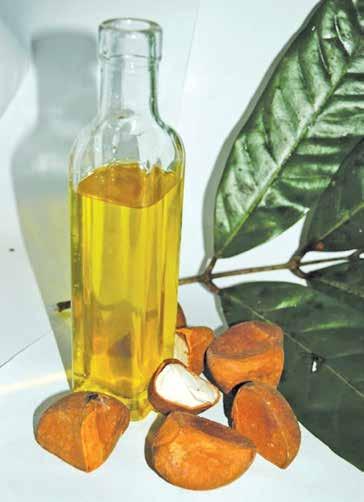
The commonly known crab oil, made from the seeds of the crabwood tree, is widely used as hair oil, mosquito repellent and tonic.
Along with plants, insects are also used in medicinal treatments. One report noted that the Patamona tribe, without the availability of modern pain reliever medicines, treats a simple headache using the Uyuk, a small black, shiny insect; a person would sting himself or herself around the temples with the insect’s sting to relieve the pain.
For injuries like snakebites, the report stated that the Patamona would use caiman’s teeth to draw the venom out of the individual’s blood.
Patamona boys also drink a certain vegetable and push a plant called “busy- busy” down their throats to aid regurgitation,
as a way of building up their resistance to the common cold.
While many such remedies are unorthodox to modern societies, there is nevertheless much interest in traditional indigenous medications worldwide.
At the end of the last century, several Amerindian villages were proposed as study fields for, among other things, the preservation and documentation of Amerindian medicinal practices and traditional health practices.
The villages included the Makushi villages of Annai, Kwatamang, Surama and Wowetta. The Patamona of
Paramakatoi and the mixed Amerindian settlement of Kurupukari were some of the communities identified for the research.
Malaria in particular was noted as a health issue, and among the Makushi there was knowledge and use of certain plants for the relief and treatment of the disease.
Further research and documentation of indigenous health practices should help to preserve indigenous knowledge in a rapidly changing world that sees traditional native culture losing ground to modern developments and ways of life.
As the traditional ways of conveying such knowledge of nature through oral communication and experiencing the natural environment are lost when many new generations leave their communities, the documentation of Amerindian ageold knowledge of the land is vital to future generations.
However, it is also important that there should be equal sharing of the benefits of Amerindian knowledge when modern science relies on such sources to develop future medications.
Local crab oil and soap are available at the Ministry of Amerindian Affairs’ craft shop. Call 223-7392 for more information.
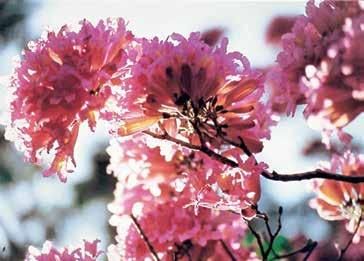
If you are looking to lower your blood pressure or boost your mood, a bite of dark chocolate or a sip of hot cocoa might be the perfect answer. In Guyana, there are various groups, like the North West Organics - a project of the Guyana Marine Turtle Conservation Society, which are producing numerous beneficial products using cocoa. Proceeds from the sales of North West Organics products are reinvested in the local communities in areas such as equipment, training for women, environmental education, and the promotion of agro-tourism.
Flavonoids
Cocoa contains flavonoids, a type of chemical found naturally in plants. These phytochemicals are known to help fight a wide array of diseases, including heart disease and diabetes. Make sure you’re getting all of the benefits of flavonoids
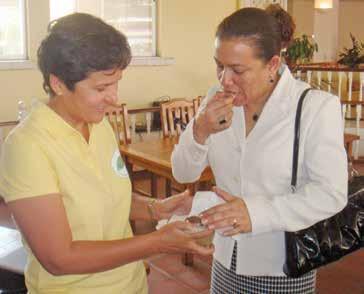
by buying dark chocolate that is at least 70% cocoa. If you aren’t sure, look for bars with “pure,” “dark” or “unprocessed” on the label.
Lowering Blood Pressure
High blood pressure can be combated with a daily dose of cocoa. The flavonols
found in cocoa can thin blood and relax blood vessels. If you are worried about high blood pressure, even a small amount, like a sprinkle of cocoa on your oatmeal every day, can help lower your numbers.
Skin Softener
Cocoa contains antioxidants that work toward repairing damaged skin. This will make your skin softer, especially when paired with other homeopathic skins cures like honey or yogurt. Next time you are giving yourself a manicure, use a homemade cocoa lotion. Mood Booster When you’re feeling down, sometimes there’s nothing better than eating chocolate. And as it turns out, there is a scientific reason why cocoa is so often the perfect answer for a case of the blues: it contains hundreds of compounds that boost endorphins and serotonin, two of the best-known chemicals that are responsible for making us feel happy. Next time you need a quick mood boost, try making yourself a cup of hot cocoa, and your day is sure to turn out more delicious. (Information from doctoroz.com)



Ingredients:
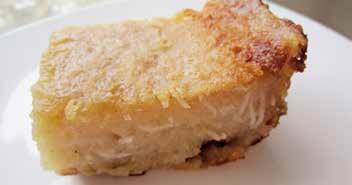
Method: Preheat oven to 350 F. Peel and grate the cassava. Combine all of the ingredients in a large bowl and mix well. Pour in a greased dish. Bake for 45 minutes until golden brown and the top bounces back when it is pressed (similar to firm jello). Cool, cut into cubes and serve.
Turn your home into an earthy escape with warm wood, botanical motifs, a nature-inspired palette and more with these functional organic looks.
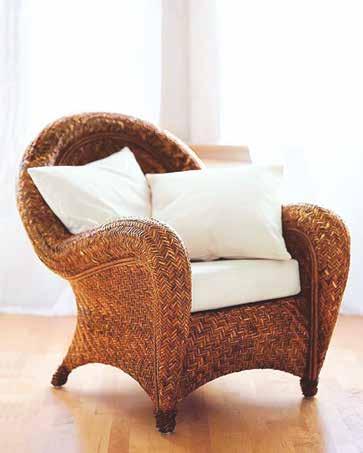
and graphical interest that takes your decor to the next level

Add rich, organic texture with woven seating
Ingredients:
Method: Mix together flour, baking powder, nutmeg, and salt. Add margarine and chop into flour. Using fingertips lift mixture until crumbly. Add sugar, dried fruit, and coconut. Bind together with beaten egg, and milk if necessary. Grease muffin pans. Drop mixture into pans. Bake at 375 F for 15 minutes until golden brown. Makes about six.
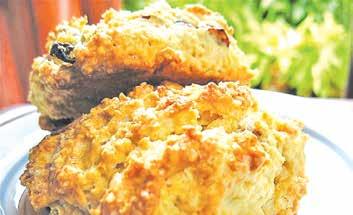

Made from wild plants or trees, some beverages made by Amerindians are reputed to have certain medicinal properties, while others are just a delicious way to enjoy the start or end of the day.
Rose of the mountain: The bark of this small tree is boiled in water, until the liquid gets brown. The tea is strained, after which sugar and milk are added to make a hot, nutritious beverage that resembles Ovaltine.
Locust (Stinking toe): A popular beverage among some indigenous groups, a piece is cut off from the bark and the rough outer layer removed. The bark is then dried in the sun. When dry, the bark is chipped, boiled, and drunk with milk and sugar, similar to chocolate milk. (It is the fruit that gives it its name).
Turu: Also known as chocolate palm, it is made into “turu tea” from the ripe fruits of the tree that are first soaked in warm water for about 10 minutes until their shells become soft and burst. (If the water is too hot the pulp becomes hard.) The flesh is then scooped out from the shells, seeds and shells removed, and the thick liquid is strained, boiled for a short period, and mixed with milk and sugar. The dark brown and oily “turu tea” resembles chocolate milk.
Wood pieces bring the organic landscape of nature into your home
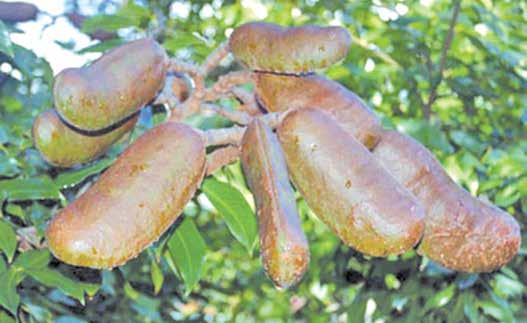
There are over fifty members in my family; Yet none quarrel. We all live merrily. Four leaders have we, all with a bride; Each has a son who has great pride. We also have servants who make funny gestures; But they are hardly used, as they often pester. The peasants are at the bottom of the line; Although they outnumber us, they haven't a right mind. What are we?


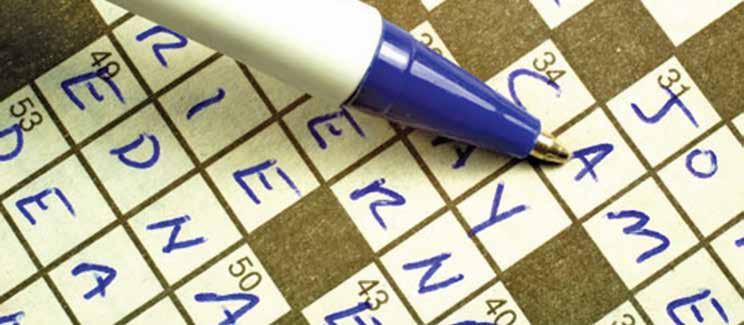
The Giant Shrimp Moruca, situated in the North West of Guyana, is a wonderful place to visit with its glistening and meandering river, its variety of flora and fauna, and the admirable hospitality of its inhabitants. There are many wonderful stories about Moruca and how it became settled.
However, there are also a few that used to send shivers up my spine.
The most notable ones I remember my 86-year-old grandmother, Francesca James, telling me about was a giant shrimp that terrorized persons, and the ghost horseman.
The so- called giant shrimp used to live in an area of the Moruca River called Dark Bush. The name
The Ghost Horseman
Gallop, gallop, gallop.
The hooves were fast approaching. Anyone daring enough, or unfortunate enough to be on the road at night quickly pulled into nearby bushes, hiding their faces and whispering a prayer for protection.
Gallop, gallop, gallop. The galloping gets nearer and nearer, while beads of perspiration drip from frightened faces. And then, like thunder and strong wind, the heavy hooves pass…the ghost horseman had made his first run for the night.
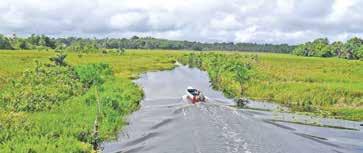
of the area came about because of the huge moca moca bushes alongside the river. The water was also pitch black, which gave the area a most eerie appearance.
According to my grandmother, her father, Ignatius James (now deceased) was the one who used to tell them about the giant shrimp.
It is said that the shrimp, which was believed to be a supernatural being, used to sink canoes as they attempt-
ed to pass the Dark Bush area at nights.
This shrimp, which was said to have been the evil work of Spaniards who had fled from Venezuela during the revolutionaries led by Simon Bolivar, was never known to have eaten anyone or attacked them after capsizing their boats, but many a time intoxicated individuals died by drowning.
Unable to rid the area of this evil spirit, it is said that
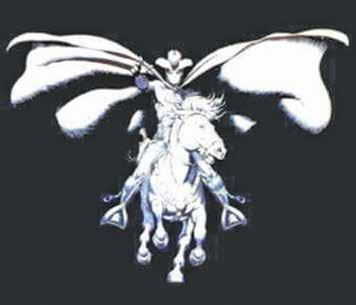
According to legend, the horseman that storms the Kumaka, Moruca main road at nights may have been a soldier who had died on duty and was now haunting the road. is said that the horseman was snow white as his horse.
How the Warraus found earth
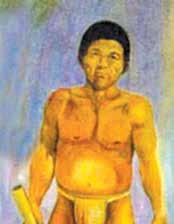
Warraus believe that their ancestors lived in sky–land. One day, long, long ago, Okonorote, a famous hunter, shot a bird while hunting in sky-land, and the bird fell into a pit.
Going to retrieve the bird, Okonorote saw daylight and many animals walking below. Using a bush rope, he climbed down, hunted his fill and returned to sky-land. Soon, many others decided to go down, but then a very fat woman got stuck in the hole, and it was impossible to move her.
The Warraus who were already on earth below could not get back to skyland. (A Warrau fable taken from “The Amerindians and Europeans” by Sr Mary Noel Menezes)
The drought Guyana was not as now, a land of many waters, only a few small rivers were to be seen. And it came to pass that when the clouds withheld the rain, that the Warrau people suffered thirst, and they said one to another, “Oh that we were in our former country; let us now call upon Kanonatu, the Great Spirit, least we all be consumed by this drought.”
And so they made petition: “Karima, father, we have forsaken you, and so suffer this great misery. All things are at your command, for you are Ka-idamo, master of the world. Save us before we perish.”
And Kanonatu, throne on high, heard their prayers, and soon the heavens were black with clouds, and the rain fell, and through the parched land great and mighty rivers came into existence. (A Warrau tale)
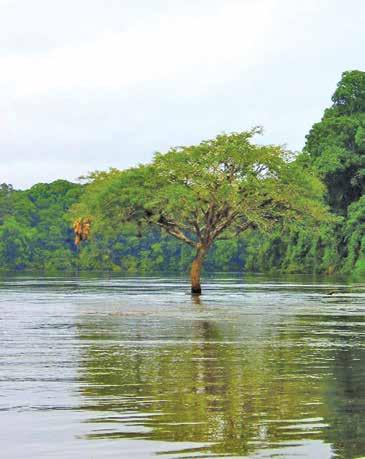
Morucans decided to bypass that area by taking their canoes through another route, and eventually the giant shrimp was never heard or seen again, much to the relief of residents.
As a little boy and although I was scared of the area, I had my doubts, but there were also things that made me doubt my doubts. The water in that area still runs like tar, and if you ever try to touch the river bottom with poles, you would find that it’s almost impossible to do so even in the very dry season.
Maybe one day you might want to see for yourself. But beware the giant shrimp might still be in his underwater lair…waiting.
(A Moruca legend)
And maybe he was a very clean soldier since, after charging down the Kumaka Road he would ride straight into the river and would not reappear until around 4am. The horseman would just burst from the water and, along with horse, would speed up the road and just vanish at some point.
That nightly occurrence certainly disturbed the residents, who were very scared to walk the roads at nights to go fish or hunt.
Finally catholic priests were called in and after numerous prayers and sprinkling of holy water the ghost horseman vanished forever. (Compiled by Reuben Stoby)

Like the Kanaima, water spirit, also known as ‘water muma’, and other folklore, the we-geellee is a night walker and feared by the Amerindian people.
The we-geel-lee is said to be humanlike: three- toed, hairy, with its feet turned backward, and its heels in front and toes pointing in the opposite direction.
It is also very smart in that when it is far it makes itself sound near with its scary whistle. (Excerpted from ‘Through Young Indians’ Eyes’)

I think of woodskins, I think Of quick arrows. I think Of things Indian. And still I think of their bright, still Summers when these hills And meadows on these hills Shone in the morning Suns before this morning.
Ian McDonald
A shaman Crouches in my pen Who shapes my poem This shaman too Resides within my lens.
The shaman frames Timehri that communicate Signatures moving in the skin of thought Yielding their jewelled soul Invested with warm affection.
A J Seymour
Two men walked into the bush
The boss man said, “Cut down that tree.”
Then he started to chop Whax! Plax! Plax!
The bee came buzzing in his ears, “Bzz”
The snake came hissing in his ears, “Hiss, hiss”
The parrot came and said, “Squack, Squack”
The tiger said, “Grr, grr”
The frog came and croaked, “Ribbit, ribbit”
All of the animals asked the man to save the tree Because the tree was their house
So when the man woke up
He went away and did not chop down the tree
Collective narrative poem (El Paso Primary School, Potaro-Siparuni Region)

Apple has tightened its privacy rules re-
lating to health apps ahead of next month's product launch, which is expected to see the unveiling of an updated iPhone and could include new wearable technology.
The technology firm has told developers that their apps, which would use Apple's "HealthKit" platform on the forthcoming products, must not sell any personal data they gather to advertisers. The move could stave off concerns users might have around privacy as Apple seeks to move into the health data business.

consent.
The rules state: "Your application must not access the HealthKit APIs unless it is primarily designed to provide health and/or fitness services, and this usage is clearly evident in your marketing text and user interface.
ogy. In typical Apple fashion, the invitation included the date of the event and the line: "wish we could say more".
It is anticipated that Apple will launch an iPhone with a larger screen, as well as a new operating system on which it will run.
There are rumours that the company will launch a smartwatch to compete with similar products from Google, LG, and Samsung, among others. It is still unknown whether that launch will take place at the 9 September event. (The Guardian)
Its new rules clarify that developers who build apps that tap into HealthKit, of which Nike is rumoured to be one, can collect the data it holds.
But, they stated, the developers "must not sell an
Apple announced in June this year that a new standard app called "Health" will collect data on blood pressure, heart rate, and stats on diet and exercise.
Hend-user's health information collected through the HealthKit APIs to advertising platforms, data brokers or information resellers".
Although, the rules add that they could share their data with "third parties for medical research purposes" as long as they get users'
"You and your application may not use the HealthKit APIs, or any information obtained through the HealthKit APIs, for any purpose other than providing health and/or fitness services in connection with your application (eg not for serving advertising)."
This week, Apple sent out invitations for an event on 9 September that is believed to be the launch of the latest iPhone and a range of wearable technol-

P has ordered a worldwide recall of power cords that had been sold with its laptop computers and other accessories, including docking stations.
The callback affects products sold between September 2010 and June 2012.
The US Consumer Safety Commission (CPSC) said more than six million of the affected cables had been sold in the US and Canada alone.
It follows reports that people had been injured as a result of the China-made kit burning users.

The announcement comes nine months after a separate issue forced the company to pull its Chromebook laptops from sale after reports that their chargers had been overheating. The latest case involves power cords
ByTe
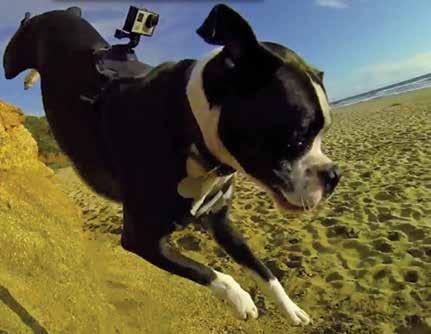
While most of us dog-lovers are obsessed with snapping photos of our pooches, there’s now a way to let your pup take the camera. Go-Pro has released the Fetch, a dog harness that holds a GoPro Hero camera.
You can attach the camera to the front of the dog, by his chest, or on the dog’s back. It’s adjustable and designed to fit dogs from 15 lbs to 120 lbs. A tether is included, which you can tie to the harness so that if the dog’s activities get a little bonkers and the camera comes loose from the mount, it won’t get lost.
Like all GoPro products, the Fetch can be used in mud, snow and water. If the harness gets dirty, toss it in the washing machine.
The Fetch sells for US $59.99. (Discovery News)
Fuji Xerox has developed a new robotic printer that can move around a lounge or office to bring documents to the person who printed them.
The printer is designed to be used primarily in public places as a way to keep sensitive documents secure.
Sensors on the machine prevent it from bumping into people on the way.
However, some analysts argued that the idea was not cost effective when compared with other secure printing methods.
Describing use of the printer in, for example, an airport business lounge, IDC analyst Maggie Tan told the BBC there are better methods already available.
"The majority of these business lounges would have higher printing demand, especially from business travellers who always need to print urgently using a secured method.
"There are several mobile printing solutions available today that users can submit the print job online through their mobile devices or laptops and they are given a secured password to collect their printouts."
Bryan Ma, also from IDC, complimented the ingenuity, if not the
marked with LS-15 on their sides that were sold alongside HP and Compaq "notebook" and "mini notebook" PCs as well as other hardware.
"HP customers affected by this program will be eligible to receive a replacement AC power cord for each verified, recalled AC power cord at no cost," said a message on the firm's site.
A CPSC webpage adds details of previous incidents: "HP has received 29 reports of power cords overheating and melting or charring resulting in two claims of minor burns and 13 claims of minor property damage." (Extracted from BBC)

practicality of the device.
"Sounds like something very unique to Japan. "One might even argue that it seems more like technology for technology's sake."
Fuji Xerox - a joint venture between the two firms - has been testing the printer this month at a business lounge in Tokyo.
Each desk in the lounge is given a unique web address from which to print. Users access the address and upload documents to be printed.
Once the printer receives the job, it moves to the intended recipient who then has to display a smart card to activate printing. The battery in the printer lasts for up to a day. (BBC)
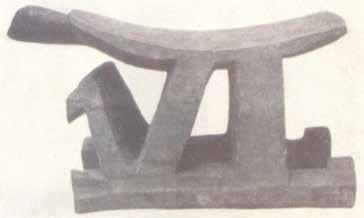
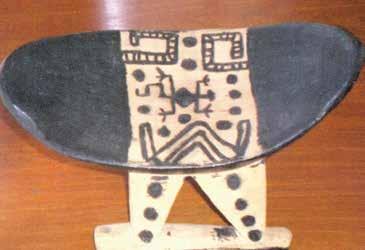
Wooden stools were mainly used by Amerindian men to indicate their headship in their families and villages. These continue to be a “craft marvel” for many, as these stools exhibit years of acquired artistry. Although mainly used by the men, women would use them on ceremonial occasions such as initiation ceremonies. Only among the Makusi was it normal for women to use stools at any time.
Indigenous benches or stools are carved in one piece from a solid wooden block and may have two to four limbs or legs - straight, angular or curved. They were often made with the heads portraying tortoises, frogs, armadillos, alligators, jaguars and other animals which symbolised animal spirits. However, not all stools were carved with animal figures.
For the ‘Peiai-man’ or ‘Shaman’ the wooden stool is his most important item. It is used when he is communing with the spirits. While sitting on his stool he drinks tobacco juice and smokes his tobacco so that he can “call down” the spirits from the spirit world.
The Peiai-man would sometimes place other wooden stools to face him. These are for the purpose of providing seats for his spirit guides after they have descended the spirit ladder to join him.
The Waiwai tribe is still noted for making wooden stools, although they do not carve animal figures on their benches. However, they paint geometric and animal designs on their stools using black ‘genipa’ dye.
These stools and many other ceremonial tools are exhibited at the Walter Roth Museum on Main Street.
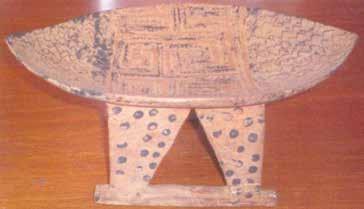
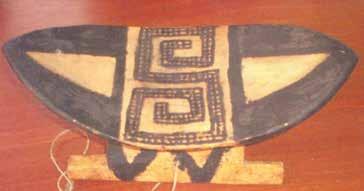

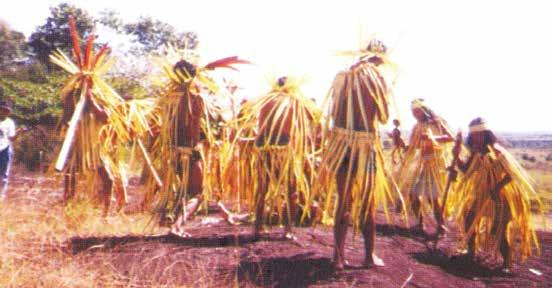
The Parishara dance is an Amerindian dance done to form a bond between man and nature, and this, the indigenous people believe, will bring bountiful food for their villages.
Dancers wear long flowing costumes made from either ‘kokerite palm’ (scientific name Maximiliana regia) or ‘Ite palm’ (scientific name Mauritia flexuso) leaves. The leaf dress relates to the palm trees found along the edge of the forest and in the savannah swamps. It is the ripe
fruits of these palms that attract the forest animals, particularly the peccary (wild hogs) herds.
The dancers show their connection to the peccary herds by using the musical instrument, flageolets, which make noises similar to the peccary. The flageolets also have representations of the animals painted on them, as well as wooden animal and fertility figures fixed to the ends of the instrument.
The Parishara dance and songs all relate to the vari-
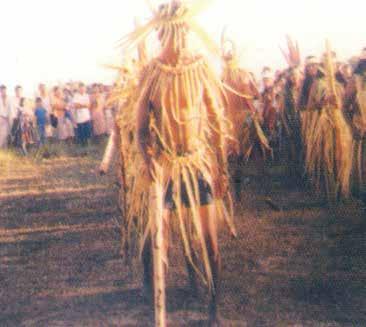
ous forest animals and the acquiring of meat for the people. This is done by appealing to the ‘Master of Animals’ to send out his children (animals) from the forest.
The dance is frequently performed along with the ‘Hummingbird dance’, which signifies the hummingbird (Tukui in Makusi language) and its connection to the fish in rivers and ponds. This dance helps to strengthen the Parishara dance to further ensure that there will
be bountiful meat and fish to feed the people.
According to the Wapisiana tribe, the Parishara dance was performed when meat was in short supply. This is because the dance is part of their hunting ritual that calls the wild animals, particularly the peccary, out of the forest into the savannah. By dance, songs, musical accompaniment, mimicking actions of the animals, painting and decorating the body and musical instruments, the animals are enticed out of the forest within the reach of the villagers.
In order to preserve this dance, form which was said to be a slowly dying tradition, in March 2002, Ministry of Culture, Youth and Sport and UNESCO collaborated to launch a project, ‘Preservation and Revitalisation of Community Art Forms’, designed to study the intangible cultural heritage of Guyana and was divided into four areas, one of which was the Macushi/ Wapisiana customs.
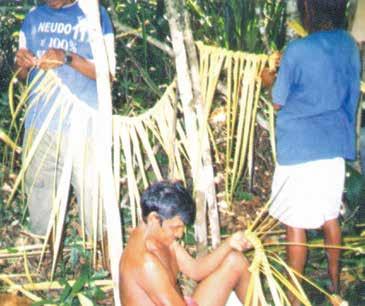
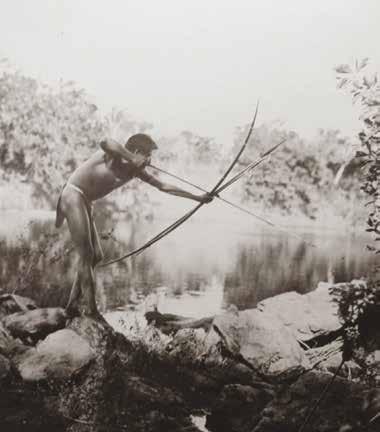
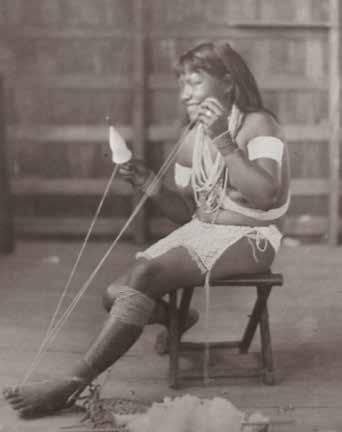
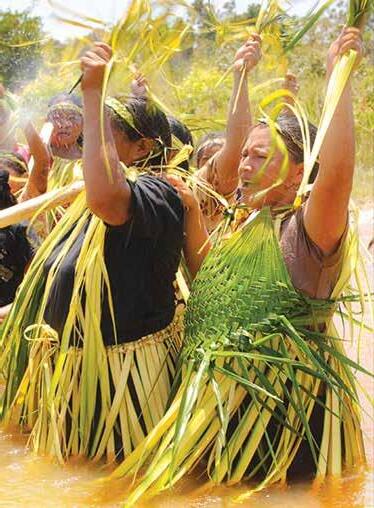
Contact was made with the Macushi village of Karasabai in south Pakaraimas sub-district and the Wapisiana village of Maruranau in south sub-district. Both villages enthusiastically embraced the project and the end result was a Parishara dance was held in each village in September 2002. Notable was the fact that Parishara dances of this size, which involved most of the villagers, had not been held in both villages for more than 20 years. It was the first
time most of the younger generations in those villages witnessed such an event.
In 2013, in Yupukari, Rupununi, a campfire event was held, attended by villagers, where cultural practices such as the Parishara dance, the Hummingbird dance and other traditional practices were showcased. The village aims to make this event a regular feature on its list of cultural activities. (Information provided by the Walter Roth Museum of Anthropology)
A Deck of Standard Playing Cards
Fifty-four cards in a standard deck. Four Kings, four Queens, and four Jacks. The servants are the Jesters. The peasants are the number cards.
SUDOKU KID SUDOKU


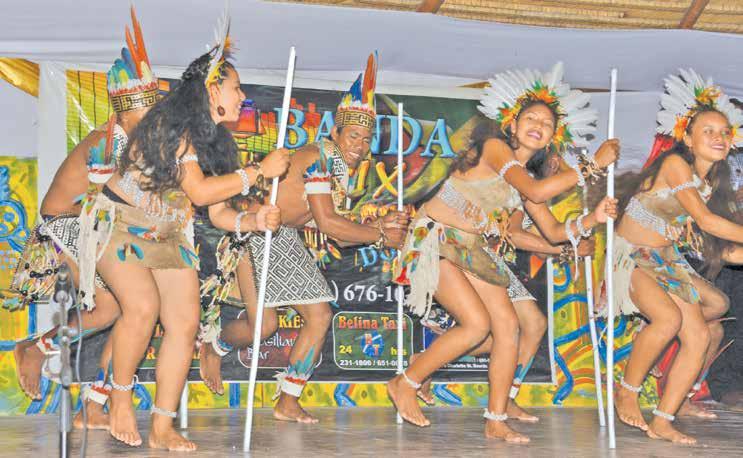
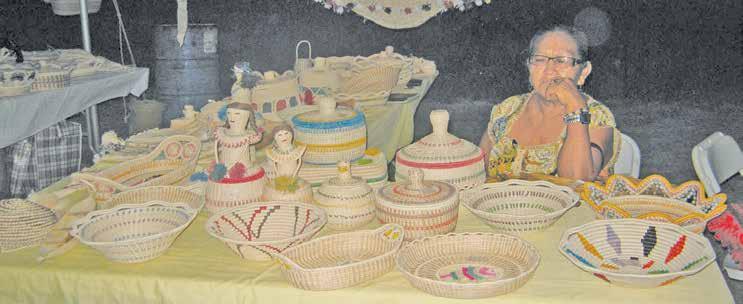
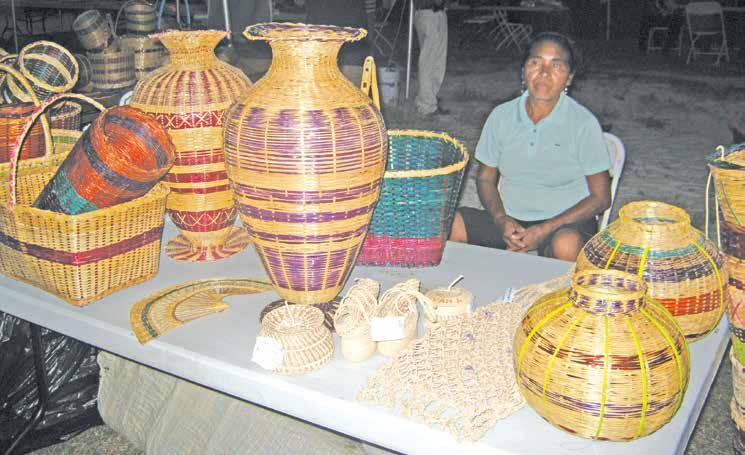
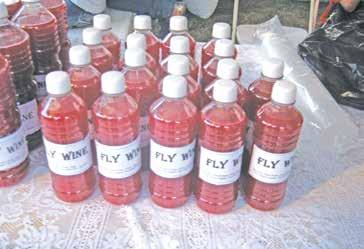
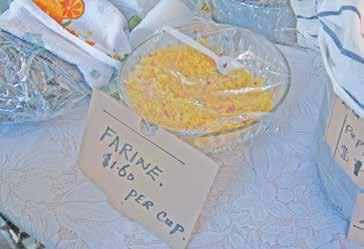
The entire nation will commemorate the invaluable contributions of Guyana’s indigenous people throughout September, which is designated as Amerindian Heritage Month, and the Ministry of Amerindian Affairs has planned a series of activities to celebrate the occasion.
Under the theme “Traditional Embodiment for Amerindian Development”, the activities will commence on 31 August with an interfaith service at the Umana Yana at 5pm. The service will highlight the initial religion that was practised by early Amerindian families, along with other religious denominations.
On 1 September, the launch of Amerindian Heritage Month will be held at 5pm at the Heritage Village, National Exhibition Complex, which will be graced by numerous dignitaries. This launch will include cultural performances, such as dance, song and poetry.
During the course of the month, numerous activities will be held throughout the country. From 2 to 6 September,
there will be a cultural extravaganza, commencing at 8am daily at the Heritage Village, National Exhibition Complex.
The craft and food exhibition will also be held at the Heritage Village, from 2 to 6 September. The craft exhibition will feature the display and sale of bamboo, tibisiri and balata products, as well as indigenous jewellery, such as beads and necklaces. The food exhibition will have on sale a variety of Amerindian dishes.
Heritage Day will be celebrated on 10 September at Umana Yana, and will highlight Stephen Campbell, the first Amerindian to be a Member of Parliament. Heritage Village celebrations will be held at Karrau village, Region Seven on 13 September.
Sporting activities will be held from 20 to 21 September at Everest Cricket Club at 9am daily. Tickets cost $200.
There will be a Dinner and Appreciation event at the Georgetown Club, Camp Street, on 26 September at 7pm. A cost of $7,000 is attached, which will go towards humanitarian efforts.
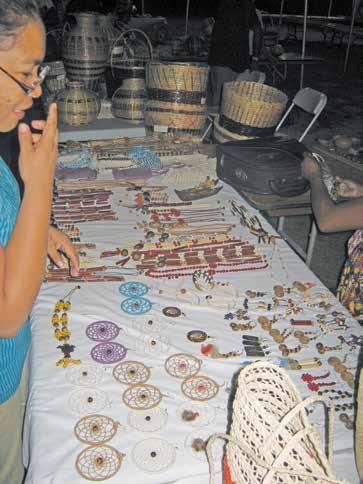
Petroglyphs and pictographs, which are among the numerous archaeological site-types of northern Amazonia and the Antilles, have not been fully utilised in the reconstruction of local prehistory. As Denis Williams, Guyanese painter and archaeologist, discovered, petroglyphs and pictographs are not simply “rock art” or “doodles and past time”, they signify the earliest methods of conservation practiced in these areas and also revealed certain aspects of belief in the supernatural world.
Williams spent many years in the savannahs of Aishalton, on the Kassikaityu, Berbice and Mazaruni Rivers, among others, recording petroglyphs and pictographs of Guyana. He actually devised a system of classification for these artefacts, systemically
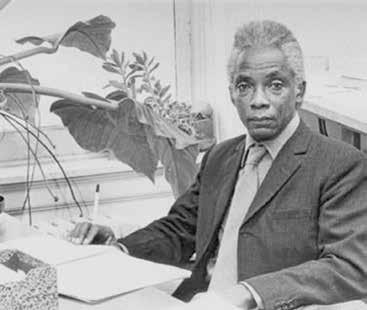
The ideational records states that in northern Amazonia, key petroglyph elements may occur in other media: in body painting,
Enumerative Type
Elements of the Aishalton or Enumerative type of petroglyph fall into two classes: biomorphic and geometric. Geometric glyphs
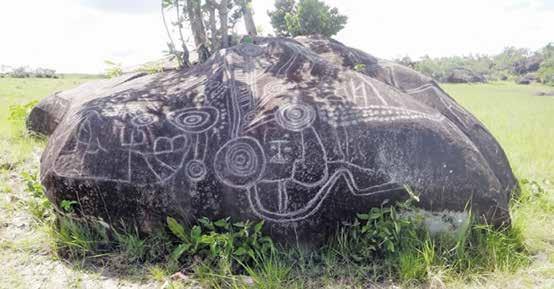
recording not only the rock surfaces on which they were engraved or painted by also measuring each glyph by its depth, width, height and
on women’s bead aprons, on calabashes, as well as on basketry and ceramics. Petroglyph elements also occur widely in pictographs.
are more numerous in assemblages. Occurrences include both petroglyphs and pictographs. According to Williams, the diagnos-
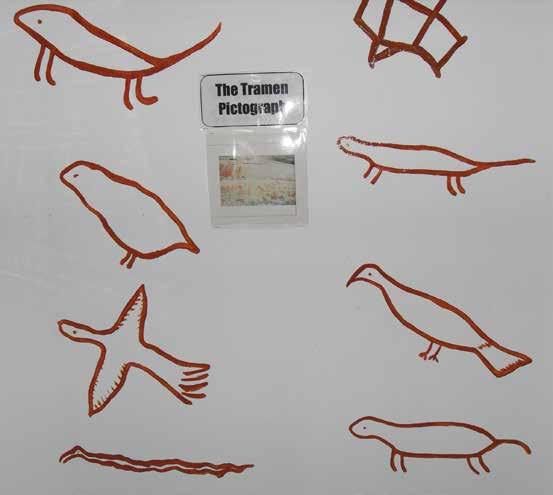
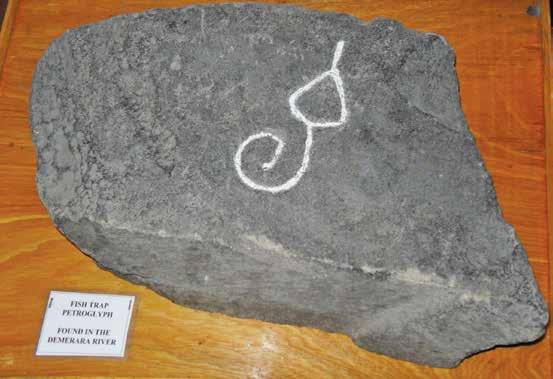
tic elements and locations of the three types of petroglyphs identified in northern Amazonia and the Antilles imply different functions. An enumerative interpretation of certain elements in the Aishalton petroglyph type is compatible with ethnographic accounts describing
erine environments in the rainforest. The majority of its elements appear directed towards food conservation through controlled exploitation of the available fish fauna.
Timehri Type
The Timehri type is anthropomorphic and derives
Following advances in the world of archaeology, Denis Williams in 1994 and 1996 recorded some 20 petroglyph sites in the Iwokrama Forest. A new type of petroglyph he designated the Cuneiform type was recorded on the Essequibo, Takatu and Siparuni rivers in the
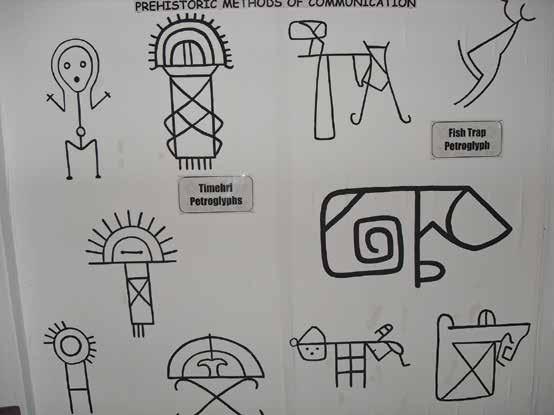
or implying a symbiotic relationship between humans and animals used as foods.
Fish Trap Type Fish trap petroglyphs seem to be restricted to certain southern rivers of northern Amazonia where they tend to be located near cataracts. Associated with such cataracts are pools in the riverbed, to which various fish species migrate annually to spawn. Fish type petroglyphs occur in the Essequibo, Berbice, Corentyne and Tapanahoni river in the Guianas, as well as the Amazon and on the Caqueta in Columbia. Fish type petroglyph implies specialised adaptation to riv-
its name from Timehri Rock on the Suriname side of the Corentyne River. It is a stereotype associated with a costume used in a fertility dance on the upper Vaupes, a tributary of the Amazon. The Timehri stereotype seems to have functioned differently from the Aishalton and Fish Trap types. Its iconographic stability throughout northern Amazonia and the Antilles indicates significance as a symbol rather than a sign. The ethnographic evidence from the Upper Amazon suggests the dance costume from which it seems to derive figures in a ritual of increase amongst horticulturalists.
Reserve. Williams later interpreted the Cuneiform petroglyphs to be a sub-type of the Enumerative type. According to the archaeologist, cuneiform petroglyphs were reported in Guyana for the first time and are extremely rare. In Guyana alone, where over 435 archaeological sites have so far been reported and/or recorded, more than 100 of these are petroglyph and pictograph sites. (Extracts taken from Jennifer E Wishart’s seminar paper titled: ‘Prehistoric Methods of Conservation: Petroglyphs in the Prehistory of Northern Amazonia and the Antilles’ 2007)