
Shah Rukh Khan tops Forbes 'Indian Leaders in


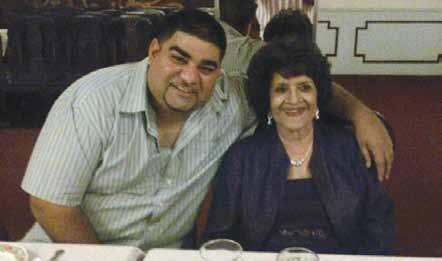
For some material inheritance is the most cherished, but for Dax Kissoon, entrepreneur and grandson of Lyla Kissoon – a local business magnate who has received countless awards and plaques in recognition of her sterling contribution to the sector and to the nation at large – the invaluable heritage he received from his ancestors on how to be a great entrepreneur is what he values the most.
Dax completed his Bachelors of Business Administrations at Temple University in Philadelphia with a dual major in Risk Management and Insurance, Marketing. He also minored in Management Information Systems. Dax has done his fair share of professional courses in relation to technology, risk management, wood/lumber grading, wood and kiln drying, and decorative concrete installation, just to name a few. He has become particularly fond of learning new things and is constantly reading and researching.
In an interview with Guyana Times Sunday Magazine, Dax spoke about his beloved grandmother, Lyla Kissoon, and how she helped him to become an exemplary businessman.
“My grandmother has provided me with much wisdom, not only through words but also through her actions and her experiences in life. I'd like to think I've inherited some of her and my grandfather's business savvy - but that is probably wishful thinking. Her accomplishments, especially during the era of an independent, young Guyana exemplifies a charismatic, determined woman who undoubtedly broke barriers and glass ceilings to achieve so much.
“To this day she advises me, questions me on the simplest of business activities and basically keeps me on my toes. I appreciate and admire her work ethic and strength, she successfully manages walking the line between being a strict businesswoman, and loving mother, grandmother and great grandmother - she is without a doubt, the greatest,” expressed Dax.
Dax is especially grateful to his
grandmother on always helping him to understand that he needs to “creep before he walks” and “he should always do everything to the best of his ability”. This may sound like simple words of advice, but for Dax, learning from his experiences, it was immeasurably sound advice.
“I remember while attending university, I felt pressured to succeed and pushed myself well beyond what I perceived to be my limits. I know my grandmother was part of the driving force behind that. Even in her golden years, she still managed to find the time to send an email (yes an email) with well wishes and support. She would say to me, ‘Work hard son- make the best of your opportunity’,” Dax recalled.
The entrepreneur disclosed that Risk Management and Insurance (RM&I) was the number one ranked major in the Fox School of Business, and at the time ranked #7 in the United States. He added that students were advised not to take more classes outside the RM&I major during a single semester because of the excessive workload and how difficult the major was. However, wanting to still graduate within four years, Dax stated he had no choice but to disregard his grandmother’s advice and juggle courses from his other marketing and MIS disciplines. It was extremely difficult, but Dax felt that was the motivation he needed to prove to himself and find out the extent of his own capability. In fact, he was one course away from also attaining a minor
in Economics, but felt he had done enough.
“I did exactly what my grandmother told me to do - I made the most of my opportunity. There is no greater feeling than surpassing expectations, not anyone else's expectations, I might add, but your own,” Dax declared.
Branching out from the traditional Kissoon family business, Dax formed DKG Inc. (Dax Kissoon Group of Companies Inc.) He described it as a “small company that is dedicated and focused on niche markets with new high quality products in various industries”.
“Initially, we went into the offroad trucking business to move lumber/logs for my father’s logging company. However, the lack of infrastructure in the interior, rough terrain and unscrupulous people made it a challenging and demanding trade. However, with determination and perseverance we continue to prosper in this venture. Since then we have also entered the construction finishes industry. I am proud to say we are the first to introduce decorative concrete finishes to Guyana through our supplier, Elite Crete Systems Inc,” Dax pointed out.
A humble businessman, Dax said he would not necessarily consider himself “successful” - as he has set the bar very high for himself and is trying to evolve with the changing business environment. Dax believes his wealth has been acquired through those who are close to him, those who care for his well-being and happiness.
“Too often we are caught up in

attaining success solely through material items, when success is often right at home with our friends and family. I may not be old and wise, but I like to listen, learn, and debate. One might say I have the gift of gab - I have acquired friendships from all backgrounds, from different walks of life, class and creed. I learn from them and I hope they may sometime learn from me - I believe that to be part of my success. I find satisfaction in acquiring knowledge - I read, read and read some more. I am always on the computer researching, investigating and analysing different ventures. I accredit this to the Fox School of Business and my grandmother and the discipline they instilled within me,” noted Dax.
In dealing with challenges, Dax mentioned he keeps a positive frame of mind - even in the worst of situations. A challenge, Dax believes, gives an experience that should not be forgotten – “something that cannot be studied, bought or read in a book”. In
his share of unfair situations, Dax is overjoyed he emerged wiser and did not waste the lesson he learnt. Notably, he takes “great pride in earning an honest living and providing opportunities for honest, hardworking Guyanese people”.
“Family is still very important to me. After all from its beginning, Kissoon's was always a family company. My mother and father have provided me with a firm foundation, which I try to build upon. I am also the youngest of four children - so from a very young age my siblings have always set the bar very high back then and they still continue to raise the bar. My family is large and they are scattered all over the world, some of them I have never met before, but I’ve heard amazing things. We may not see each other often, but when we do, it’s always a good time,” Dax said contemplatively.
Dax’s plans are to continue to grow and tap into unique, profitable and developing markets, which he is currently assiduously pursuing.

By Matt Hallett
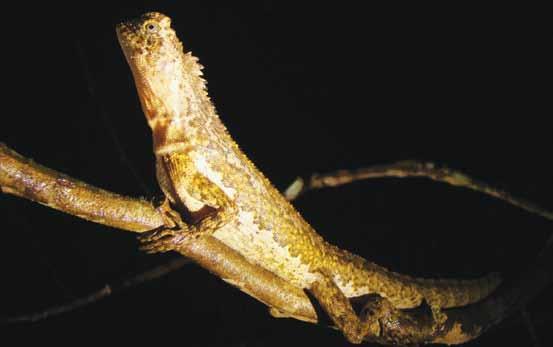
Down in the Rupununi
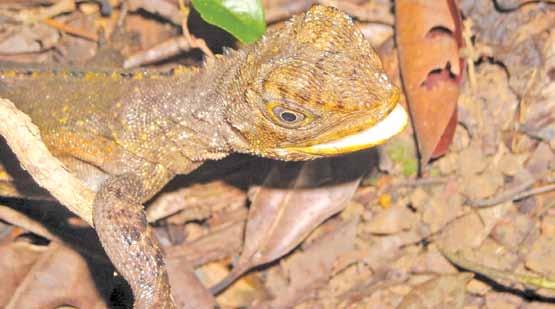
there is a lizard that goes by many names. It is commonly known as the Mop-Headed Iguana, Brown Tree Climber or Diving Lizard. In the Makushi language it is called Tumakray. Its scientific name is Uranoscodon superciliosus. Whatever you call it, this lizard has developed a very unique strategy for survival in the seasonally flooded gallery forests that can be found in this region. Due to its unique technique of adaptation it has gained a divine reputation.
For those who have not seen a mop-headed iguana, in order to fully appreciate its special ability you have to visualise it. Imagine yourself winding your way through
the flooded forests of the Rupununi in a corial (dugout canoe). The scenery around you is quite surreal. The tropical sun burns brightly in the sky, but much of the light is shaded out by the dense canopy of the forest above. The backdrop is illuminated in a rich green colour, as light is projected through millions of leaves above your head. The bright yellow beams of sunlight that fight their way through openings in the canopy leave bright spots on the water’s surface all around you.
Just when you are caught appreciating the incredible scenery around you, the sights and sounds of the forest catch your eyes and ears.
A group of brown-throated parakeets announces their presence with a great deal of squawking. A ringed

kingfisher whizzes past in a streak of bright orange, white and iridescent green feathers. A red-faced spider monkey bounds through the trees, its strong extended arms shaking branches and leaves as it goes. With all the movement and sound around you, the forest begins to feel as if it is alive. You scan back and forth across the watery landscape in front of you, but what catches your eye next is not movement.
Rather, you spot a slight inconsistency in colouration at the base of the tree in front of you. This is when you spot a medium-sized brown lizard firmly affixed to the trunk of a tree. Immediately you are impressed by its camouflage. The various shades of brown in the horizontal banding that run the length of its body allow it to blend perfectly with the coloration of the tree. With the limited amount of light reaching the forest understory, you contemplate how easy it would have been to paddle pass it without noticing. As you steer the boat closer, you notice how the small spines of its dorsal crest form a near perfect match for the lichens, knobs, scrapes and other imperfections of the bark. You are left admiring the entire makeup and ability of this animal to blend into its natural environment.
As often occurs when you move in on an animal for a closer look, you cross a

A lizard that goes by many names is a testimony to
threshold that causes it to change its behaviour. You realise that you have crossed this line when you see the lizard shift from trying to stay still and blend in to moving away. You consider what it must be like for an animal that depends on camouflage for its survival simply waiting out situations where a potential predatory approaches in hopes that it does not actually see you. You wonder how close is too
plunging below the surface, the lizard hits the surface of the water in almost an upright position with its rear legs hitting the surface first. Instead of crashing awkwardly into the water with a splash and swimming on to the next tree, this lizard hits the water running. Immediately after touching the water’s surface, the lizard’s rear legs spring into action and it scampers its way across the surface of the wa-
you consider a very familiar motion – riding a bicycle. You know from years of experience that when riding a bicycle, you must keep moving forward to stay upright. It occurs to you that there is a similarity here, but you do not make the connection until you remember the lizard’s feet slapping hard on the surface of the water. Only a powerful movement pushing down and then away from the lizards would create a small
close and what is the distance that causes the lizard to react and move. This must be a nerve wrecking way to live. The lizard that you are observing has clearly shifted strategies from hiding to action. Its first move is to work its way laterally around the trunk of the tree to the opposite side where it is out of sight. As it scurries around the tree, you notice that it moves somewhat strangely for a lizard with its body low and flat and its legs spread out wide, something almost more characteristic of a spider than a reptile. This new movement only increases your interest and you steer your way around to the opposite side of the tree to get another look. You meet eyes with the lizard again and observe another change in its behavioural strategy. This time the lizard leaps for the water. You know that one of the common names for this species is the diving lizard, so you expect to see it break the surface of the water, plunge below and swim away much like you have observed in green iguanas on the river. But what happens next is perhaps what you least expect and perhaps something that you did not even think was physically possible. Instead of diving head first, or even belly first, and
ter to the safety of another tree quite some 20 meters away. It all happens so fast that it almost seems commonplace. But as the events that you just witnessed settle in your head, you realize what you just saw was truly miraculous.
“Did I just see that?” is the first thought that crosses your mind. You are confident in the fact that the experience was not some sort of delusion, but you rub your eyes in disbelief anyway. Naturally, your inquisitive mind automatically shifts to, “How did it do that?” As you replay the event in your head, you know that you can figure this out for yourself.
As you sit back to contemplate, you notice a pair of water striders moving quickly across the surface of the water. Seeing the long legs and flattened posture of these insects triggers the memory of when you first noticed the lizard clinging to the side of a tree with the help of long toes on its rear legs. It occurs to you that like the water strider, maximising the surface area of the body part making contact with the water helps the lizard stay above the surface of the water.
But can feet with increased surface area alone keep you afloat? As you continue to take the event apart in your head piece by piece,
pocket of air and enough momentum to keep the lizard both upright and afloat as it moves across a surface that provides a unique challenge in that it provides neither the support nor resistance of solid ground. As you paddle away, you know that you have just witnessed something truly special – a reward for getting out and exploring the amazing natural environment that surrounds you. But in the end, it is not just what you saw that contributes to your overall satisfaction, but also the feeling that were an active participant in the experience. You feel like a scientist because you acted as one. You actively observed the world around you and you leave with the confidence gained from answering your own questions out in the environment. The more you seek to observe, the more you will see. The more questions that you ask, the more you will learn. Nature is full of amazing and miraculous behaviours, traits and events but the only catch is that you have to be out there to experience them. The Rupununi is definitely the place you will want to visit for a firsthand experience to nature’s best. For more information on amazing creatures in the Rupununi, visit Rupununi Learners on Facebook.
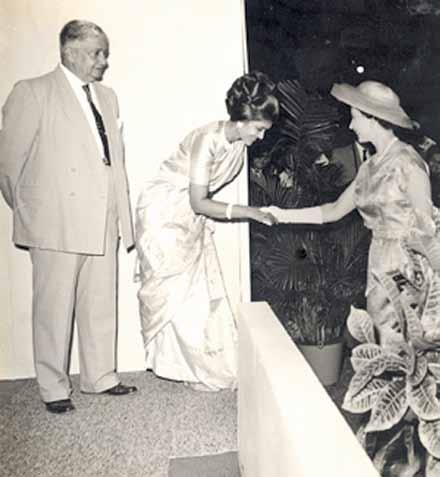
Jill Gomez, Countess of Northesk, was born in Guyana to a Hispano-Trinidadian father and British mother and was raised in Trinidad and Tobago. After studying briefly at St Joseph’s Convent (Port of Spain) in Trinidad and dominating at the islands’ biennial Music Festival, she moved to England at 13, where she studied at London’s Royal Academy of Music and Guildhall School of Music and Drama. She has made her career primarily in the United Kingdom.
She made her stage debut as Adina in Donizetti’s “L’elisir d’amore” with the Glyndebourne Touring Opera in 1968. She then created the role of Flora in “The Knot Garden” at the Royal Opera, London in 1970 and that of the Countess in Thea Musgrave’s “The Voice of Ariadne” at the Aldeburgh Festival in 1973. She also appeared in productions by the English National Opera (Governess), Scottish Opera (Elisabeth, Pamina, Anne Truelove, Leïla), Oper Frankfurt (Cleopatra), Kent Opera (Tatyana, Violetta, Aminta, Donna Anna), Glyndebourne (Mélisande, La Calisto), Grand Théâtre de Bordeaux (Fiordiligi), Wexford (Thaïs and Rosaura) and Teresa at the Berlioz Festival in Lyon.
She worked closely with Jonathan Miller in La traviata for Kent Opera (Edinburgh Festival and UK tour), and Eugene
Onegin and The Turn of the Screw (with ENO). She also played the governess with the English Opera Group with the composer, Benjamin Britten, present.
Gomez was outspoken about the “international opera circus” and had no ambition to sing at the largest houses, preferring smaller venues such as Zürich where there is sufficient rehearsal time. She appeared in Jean-Pierre Ponnelle’s production of Lucio Silla there, conducted by Nikolaus Harnoncourt. She also sang Arne cantatas with Jaap Schröder
Concerto Amsterdam. She took part in Mahler’s Symphony No. 2 with the Israel Philharmonic under Solti. As well as recording of Ravel, with Boulez she performed the Webern Opp. 13 and 14 song cycles.
In 1995, Gomez created
the difficult task of making a figure of ridicule into a person who evokes sympathy from the listener.” Alongside “The Knot Garden” and “The Voice of Ariadne”, she was also in the premieres of “Miss Julie” (William Alwyn, 1979) and “Maddalena”
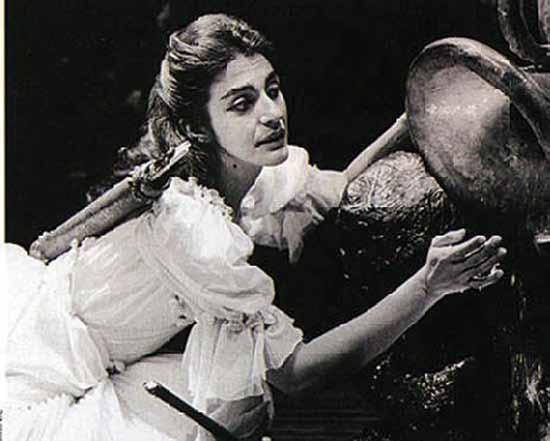
the lead role of the Duchess of Argyll in “Powder Her Face”. Her recording of the latter role was nominated for a Grammy Award in 2000, and in Allmusic Erik Eriksson wrote: “Gomez’s portrayal is a tour de force, alternately opulent and unhinged. She achieves


duced by John Drummond in 1968-69, and other TV and film credits include the French film “Une Femme française” and television programmes ‘A Ladies Knight!’ (1987), ‘Rattle on Britten’ (1985) and a ‘BBC programme Opera in Rehearsal: The Marriage of Figaro Act 2’ with Anthony Besch (1973).
(Prokofiev, radio, 1980). Her TV debut was in the series ‘Music Now’, pro -
In an interview with caribbeanbeat.com, Jill shared, “When people see my passport, they give me very odd looks because it says Guyana – New Amsterdam – British. I was virtually born in the bush, on a sugar estate in what was then called British
Guiana, where my father was working. After three weeks my parents and I flew to Trinidad in a tiny rackety plane. Apparently I screamed in agony the whole way because of the noise and the air pressure, but when we landed and everyone was enjoying the silence, I suddenly broke into a huge belly-laugh. That may have something to do with the way my lungs developed later!” Gomez lives in Cambridgeshire, England, with her husband and music critic Patrick Carnegy, 15th Earl of Northesk. (www.guyanesegirlrock. com)

By PetamBer Persaud
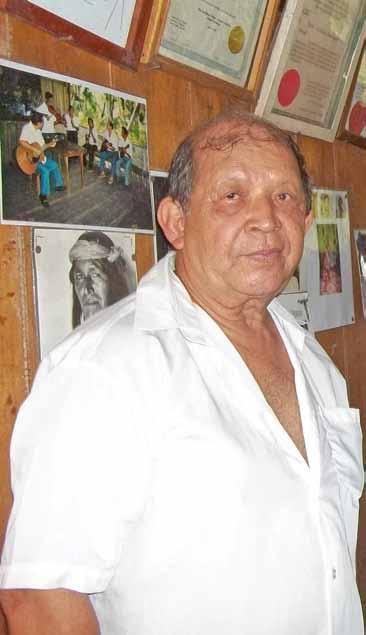
Although he came from a nation facing extinction, born in a poor, desolate settlement in the jungle of Guyana, Basil Rodrigues was thrust onto the world stage to present at an international writers’ conference in the frenzied city of Miami, Florida. That was not his only moment on the world stage: Rodrigues was honoured by Pope John Paul II and he was also the recipient of an award from the Guyana Cultural Association of New York.
In 1991, he was awarded a Medal of Service (MS) by his country for “exceptional dedication in the fields of education, culture and community work in the Rupununi”.
In 1998, he was again honoured by his country with an Arrow of Achievement (AA) for his ability to utilise poetry and music as teaching aids. Rodrigues was proponent of the bancikili (Spanish Arawaks) music.
Educator, folklorist, musician, cultural activist, Basil Cuthbert Rodrigues was born on June 1932 in Waini, Bullet Tree, North West District, and is the tenth of 13 children. His father, Stanislaus, was a carpenter and his mother, Ignacia, an organiser of co-
operative projects among a people who perfected the art of cooperation long before the word came to prominence in our quasi-socialist society. Both parents were of mixed Scottish, Portuguese, and Arawak blood.
He grew up in a highly religious society, steeped in Catholicism with a strong Spanish influence. Despite that religious intrusion, his people, the Arawaks, were able to hold onto some of their customs and beliefs.
Quite early in his life he took to cricket and boxing. His progress with cricket was so inspiring that he was able to field his team in uniform, a team that went on to become regional champion for 11 years. Newspapers accounts of Joe Lewis and Billy Kohn propelled him into boxing. He erected his own ring by clearing a patch of sand and roping it off, fists were padded in grass or rags; everything was makeshift but the exchange of blows.
But for all those action-filled undertakings, Rodrigues was very lonely at times, crying to himself – perhaps, searching for his true calling in life.
That calling was writing poetry, putting music to those words and singing his composition. His writing re-
defined the Amerindians who were denigrated and
maligned for centuries. In a poem, he said, “Sons
of Moruka/we’re proud of you/…you’ve made this place show/what potential it has/for producing such a class/of workers and craftsmen/professionals too.”
Perhaps in reference to internationally known poet and singer, David Campbell, potter and ceramicist Stephanie Correia, the first female Amerindian doctor since the coming of Columbus to this part of the world, Dr Desrey Fox, and the first Amerindian to be elected to the British Guiana Legislative Council, Stephen Campbell.
The songs of Rodrigues were designed for children, entertaining and instructive. His singing was influenced by Los Indios Tabajaras, Hank Williams and Nat King Cole. And it was this singing that led him into a higher calling, to become a teacher for over forty years.
Undoubtedly, he was an enterprising young man, investing his talents and his money wisely. In 1958, he bought a motorcycle for $900.00 and would traverse 77 miles of rough terrain to visit Dolores (Doli), who became his wife in 1959.
That was a great union for it was his wife who convinced him despite all the hardship it would entail -
separation of family and alienation in the mainstream of Guyanese society - to formalise his education which he did at the Teachers Training College, Georgetown, during 1972 –1974.
However, he opted to retire from teaching in 1987, relinquishing his post of headmaster and all its privileges. This was also the end of his sojourn in the Rupununi.
His contribution in education will be written in the history book and perhaps hidden away but his songs and poems will live on in the hearts of men and women he touched and moved to action.
Basil Rodrigues performed several times at the annual Guyana Festival of Arts (GuyFesta), winning many commendations. He was on show at the first Caribbean Festival of Arts (Carifesta) held in Guyana, 1972. On my television programme, Oral Tradition, he performed ‘Merry Indian No More’, the lament of a continuous battle of the Amerindians against misconceptions and encroachment.
Responses to this author: call (592) 226-0065 or email: oraltradition2002@yahoo. com

By Vahnu Manikchand
For 23-year-old
Najuma
Nelson, achieving whatever she desires comes with hard work and sacrifices. However, she has not allowed challenges to deter from accomplishing her goals; rather she continues to work diligently to become a distinguished chemist.
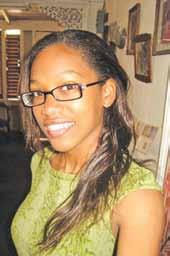
Growing up in a small community in the mining town of Linden, Watooka, Nelson started school at an early age. By the time she was 10, she had written the Secondary School Entrance Examination, from which she gained a spot at Queen's College.
According to Nelson, she had to move in with an aunt in Georgetown so that she could attend Queen's College. This transition was quite a challenge for her, since she had to be away from her close-knit family at such a tender age. During her days in secondary school, Nelson spent most of her time focusing on her studies but would visit her hometown, Linden, every opportunity she got. In 2006, she wrote her CSEC examination and gained passes in 11 subjects.
Nelson noted that, from her formative years, science has always been her strong point. While in secondary school, she was preparing to enter the medical field, following in her mother’s footsteps, however another field captured her interest. Residing with her aunt in Georgetown, she had the company and guidance of her older cousin, who helped her to cope with being away from her family. So when her cousin pursued studies in chemistry, Nelson was also influenced to do the same.
“Growing up, I was not exposed to the options available for professionals in the science fields, so I had thought that I would get into medicine like my mother. But then my cousin introduced chemistry to me and my passion for it drew me away from medicine,” Nelson said in an interview with Guyana Times Sunday Magazine
During her two years in Sixth Form, Nelson got involved in extra-curricular activities such as sports, and joined several social clubs in her community. After she graduated from Sixth Form in 2008 with nine subjects, she went on to the University of Guyana (UG) where she pursued a degree in chemistry.
The degree programme lasted for four years, but Nelson was able to complete it in three years - taking advantage of her excellent performance at CAPE. She was granted exemptions from most of her first year courses. In 2011, she graduated with distinction from the university and immediately began working at Demerara Distillers Limited (DDL).
Nelson explained that while at UG, she had become good friends with two employees from DDL who were on a company-sponsored cadet programme. They told her about the numerous opportunities available in the company, but it was when officials from the company gave a lecture to final year chemistry students on job opportunities at DDL that Nelson was convinced she wanted to work there.
“What caught my attention was the fact that [DDL] was expanding. I liked that it was a dynamic company and I was curious and eager to be a part of that growth,” expressed Nelson.
After the presentation, Nelson approached the officials who expressed interest in her. She was then asked to do a job interview and, a few weeks later, was hired. She commenced working at DDL in September 2011.
Starting off at DDL was not challenging for Nelson since she had mentally prepared herself to work. She noted that her co-workers and management were very supportive in helping her to deal with various challenges and made her feel at home in the company. Additionally, she credited her two friends from UG, who were her pillars of support.
Currently, Nelson is employed as a Quality Control Chemist at the Diamond Distillery, where the renowned El Dorado rum is made. Her responsibilities include doing quality checks during the process of fermentation and on the final product.
Nelson aims to further her studies in Process Optimisation and remains committed to advancing her capabilities within the company.


Carlus Savory is a relatively new artist, making a name for himself within the local art industry. The artist was born and raised in Coomacka Mines, a small village in Linden where pristine nature abounds just outside his front door. Inspired by nature, Carlus uses his paintings as a medium to build appreciation for the rich biodiversity he witnesses everyday he steps out his house. Additionally, he is inspired by veteran artists, like the late Phillip Moore, and tries to emulate them in producing quality work. After completing high school, Carlus attended Burrowes School of Art where he further developed his talent as a well-rounded artist. At Burrowes, where he graduated in 2010, Carlus learnt a lot on all aspects of art. In high school, Carlus was into architecture, and that built his appreciation for art and motivated him to pursue studies in it. The visual artist credits his talents to heredity: his entire family is artistic, and he lately found out that veteran Guyanese artist Ron Savory is a distant relative. Art for Carlus is a mean of self-expression. He enjoys painting about nature including landscapes, animals and lakes. His most recent obsession, which he has made a career out of, is animation. Carlus described animation as a “different level of art which pushes an artist to think out the box”. The artist thoroughly enjoys the art process because of its unpredictable end result. Initially, Carlus would start painting with just one image in mind then that is developed into more images, which he cohesively puts together. His debut exhibition was at the National Drawing Competition Exhibition held at Castellani House. He entered three pieces of his most notable work and received positive reviews. Exploring all aspects of art is what Carlus enjoys. One such aspect is capoeira- a Brazilian martial art that combines elements of dance, acrobatics and music. For his future plans, Carlus would like to further his studies in art abroad and continue to develop himself as an artist. He advises youths to find something they are passionate about and vigorously pursue it. Carlus encouraged: “If you really love something you will find a way to make it happen.”



ndre Hall is an American actor and model. He is best known for his role as Danny Harris in the new sitcom “Love Thy Neighbor”. He moved from Indianapolis, Indiana to Los Angeles, California in 2008 to pursue his career dreams of being an actor. He was a model for many campaign advertisements including UGGS Australia, Nike and Bose. In 2013, Hall was announced as one of the cast members of Tyler Perry's new sitcom “Love Thy Neighbor”.
"As a result of the public release of the elevator security footage from Monday, May 5th, there has been a great deal of speculation about what triggered the unfortunate incident. But the most important thing is that our family has worked through it," an exclusive statement to The Associated Press said Thursday.

"Jay and Solange each assume their share of responsibility for what has occurred. They both acknowledge their role in this private matter that has played out in the public. They both have apologised to each other and we have moved forward as a united
family," it added. Following Beyoncé's Instagram snaps on Wednesday, Solange also took to Instagram following her fight with Jay Z at the Met Ball gala last week.
Using Instagram, Solange marked Throwback Thursday by posting a childhood picture of herself with
her big sister Beyonce, both wearing matching plaid dresses. Like Bey, Solange kept her update simple with the caption, "Good morning."
As reported on Thursday, the Standard Hotel employee who leaked the surveillance footage to TMZ was fired. (Glamour)

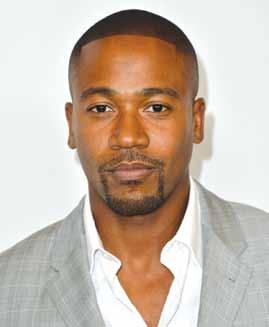
Former ‘Scandal’ star Columbus Short has pleaded not guilty to felony battery for a fight that seriously injured a man at a West Hollywood restaurant earlier this year.
Short, 31, appeared in court Wednesday for a brief arraignment hearing on the case filed after he was accused of punching a man at the restaurant in March.
The actor's attorney Jeff Jacquet had sought to fast-track the case, but Deputy District Attorney David Schorr said the injuries involved were too serious to qualify. He said Short is accused of cold-cocking a man, knocking him unconscious and fracturing his left eye socket.
Superior Court Judge Keith L. Schwartz said based on the injuries the case wasn't eligible for the so-called early disposition program, which could have settled the case before a preliminary hearing in which more details about the altercation would be disclosed.
Short was ordered to return to court on June 5 to set a date for the preliminary hearing. The case is one of several involving Short and allegations of violence. He faces a misdemeanour spousal battery case and his estranged wife has a temporary restraining order against him. Tanee Short claims her husband threatened her with a knife during a fight in April. She filed for divorce after the incident, and a hearing on the restraining order is scheduled for May 21. Jacquet has said Short will contest the restraining order and it will require a lengthy evidentiary hearing.
Short announced last month that he wasn't returning to the hit series ‘Scandal’ for its fourth season. (People)

They say imitation is the sincerest form of flattery, but Scarlett Johansson certainly doesn't agree.
The actress is reportedly suing a French author who has used her likeness in his latest novel.
‘The First Thing We Look At’ by Grégoire
Delacourt tells the story of a model who looks so much like Johansson that she pretends to be her. But it leads to the heroine's demise when she realises that men treat her as a "sex object" while women seek to destroy her due to jealousy.
Incidentally, the male lead who falls for Scarlett's doppelganger is a dead ringer for Ryan Gosling. This is one good-looking fictional world.
A court case to contest the matter began in Paris on Wednesday, with Johansson suing Delacourt for "violation and fraudulent and illegal exploitation of her name, her reputation and her image".
Scarlett and her lawyer also hope to prevent the book from being made into a film and from being published in any further languages.
However, the author says he was "speechless" after he learned of her objections, claiming: "I thought she'd get in contact to ask me to go for a coffee with her. I didn't write a novel about a celebrity," he said. "I wrote a real love story and a homage to feminine beauty, especially interior beauty." (Glamour)
Gwyneth Paltrow has won a permanent restraining order against an overzealous fan. The fan named Nickolaos Gavrilis allegedly tried to gain entry to the actress' houses in the U.S. and the U.K. He most recently tried to enter her Los Angeles home in April.
According to Wenn, the "Iron Man 3" star obtained permanent restraining order against the fan earlier this week. Gavrilis is not allowed to approach Paltrow and her family until 2017. According to a document related to the case, obtained by TMZ, Chris Martin is included as one of the people who are protected and still lives with Paltrow after announcing their separation in late March. A handwritten note beside Martin's name reads, "Lives [with] petitioner."
Paltrow requested the restraining order in late April. According to her filing, obtained by E! News, Gavrilis has been "stalking and harassing Petitioner on two continents, has not stopped despite warnings from police, has previously been convicted of harassment by a criminal court and presents an immediate danger that great or irreparable harm would result if an order
did not issue immediately."
He once gained entry to her London residence in September 2012 "by falsely claiming that he had a business appointment
On

Hansika Motwani is an Indian actress who predominantly appears in Tamil and Telugu films. She made her film debut as a leading actress in the Telugu film “Desamuduru” (2007), winning the Filmfare Award for Best Female Debut – South. She then appeared in several high-budget Telugu films, including “Kantri”(2008) and “Maska” (2009). She started her career in Tamil cinema with “Mappillai” (2011) and then appeared in several commercially successful Tamil films including “Velayudham” (2011), “Oru Kal Oru Kannadi” (2012), “Theeya Velai Seiyyanum Kumaru” (2013) “Singam II” (2013) and “Maan Karate” (2014) establishing herself as one of the leading contemporary actresses of Tamil cinema.
Shah Rukh Khan has been featured on the cover of a special edition of Forbes Middle East.
The magazine has rated him the first in its 'Top Indian Leaders in the Arab World' list.
On his way to attend the launch of the magazine in Dubai, Shah Rukh wrote on Twitter: "Forbes Middle East made me feel special with their special edition cover story on my work in entertainment. Off to Dubai for the launch. Thank you all."
The event will include a glamorous gala dinner and an awards ceremony on Tuesday in the Godolphin Ballroom, Jumeirah Emirates Towers.
Shah Rukh was recently in Dubai shooting scenes for ‘Happy New Year’.
He described Dubai as "a beautiful city that felt like home".
Farah Khan, the director of ‘Happy New Year’, said that Dubai was another character in the film. (Digital Spy)

Filmmaker Sanjay Gupta revealed that he has signed Bollywood actress Aishwarya Rai Bachchan for his upcoming thriller film ‘Jazbaa’.
The actress, who was last seen in Sanjay Leela Bhansali’s ‘Guzaarish’ (2010) is reportedly making her comeback in a Mani Ratnam’s bilingual (Tamil and Telugu) film.
However, it looks like the

actress is all set to make her come back in the ‘Shootout at Wadala’ director’s film.
Sanjay Gupta tweeted, that Aishwarya has given her nod to play ‘the dynamic female lead’ in his actionthriller ‘Jazbaa’.
Aishwarya Rai is currently busy with Cannes Film festival, which she has been attending on behalf of L’Oreal Paris for 13 years.
Aishwarya Rai, who has been off screen for almost

four years now, has however pleaed her fans with social appearances in the last few years.
The former beauty queen came back to lime light at the the Miss India competition in 2013, where she performed on her songs. She next performed at an award show in Florida with her actor husband Abhishek Bachchan. And later at the Cannes last year. (Indian Express)
Preity Zinta has spoken out as "the collective voice of celebrities" on Twitter.
The actress described the negative experiences of fame in a series of emotive tweets.
She wrote: "I MUST smile all the time, be perfectly behaved, let any1 say or write anything about me even if it’s not true & be grateful that I'm famous.
"I've few friends as most people only want 2know me cuz Im famous & not4 who I am. I'm admired like a trophy & must always shine & be perfect.
"I cannot have a pimple, put on weight or cover my face when photographers aim bright flashes at me in the dark & scare the hell out of me.
"Big crowds make me nervous & men grab me 2touch me yet i cannot react cuz after all they are my fans ! Agreed... But am i not a woman too?
"Perverts morph my face over half naked bodies & circulate it on da net & defame me & my modesty yet i MUST not complain cuz im a celebrity.
"Hope ur getting seriously uncomfortable & emotional by my brutal honesty? 2day i dont speak as me but as da collective voice of Celebrities.
"Now that I've given u a glimpse of the other side hope u all will be more compassionate & sensitive towards all celebrities as i spoke4 all."
The ‘Salaam Namaste’ star first found fame after starring in a series of TV commercials.
She recently turned producer with the ill-fated Ishq in Paris, which failed to release.
Zinta earlier had to contend with reports that she was bankrupt and slammed claims that she faced arrest for nonpayments of writers' fees to Abbas Tyrewala. (Digital Spy)
Tiger Shroff has said that the expectations on a star kid are greater than for any other debutante.
The actor, who is the son of veteran Jackie Shroff, said he knew he had to work twice as hard to be successful.
He told Bollywood life: "It might be easier for us to get the first film, but the expectation is twice as much because our father had made it big.
"But people don't know the amount of hard work that goes into it. A star kid has to work twice as hard to surpass the expectations," he said.
The 24-year-old said the process of filmmaking has changed vastly since his
dad's days.
"I think the actors nowadays make a lot more preparations. There is a different kind of expectation and rule book that actors now follow.
"Earlier, actors used to be more carefree and do four to five films. I remember my father used to do three shifts a day, and now we focus on one film and give everything to that film," he explained.
Tiger added that he has never wanted to use his father's name as a stepping stone into the industry.
"I worked too hard for two years and tried not to take advantage of my father's name. I wanted to make my own identity and make him feel proud.
"I had never thought of coming into Bollywood. I

was crazy about dance… I was lost academically. I never paid attention in the class and I didn't have any qualification unfortunately.
"I was also getting a lot of offers and I thought I wanted to do a film which allows me to explore my skills and luckily, ‘Heropanti’ came my way," he said.
Directed by Sabbir Khan and starring Kriti Sanon, the action drama releases on May 23. (Digital Spy)
Sonakshi Sinha: 'I am not dating Shahid Kapoor'

Sonakshi Sinha has denied the ongoing rumours that she is dating Shahid Kapoor.
The stars worked together for the first time in ‘R… Rajkumar’ and their relationship has been the focus of speculation ever since.
According to Bollywood Life, the actress attempted to set the record straight by saying: "I'm not dating Shahid Kapoor. I should put it on a tape recorder or I should tattoo that on my head.
"We've always got along very well. People have seen that. I just find it funny;
while we were shooting and promoting the film, no one spoke about it.
"Now, when the film is over, and I barely get to see him, people are saying I'm dating him. I think he is very honest and a real person which is very rare to find. He is chilledout and easy to get along. I think anyone would get along with him."
The ‘Holiday’ star added that she is in no hurry to find love.
"I've been in a relationship and my family knew about it," she said. "But in the past few years, I've not been in one because I've been working round the clock. Everything has a time and place.
"When it has to happen, it will happen. It's not like I'm stopping it. I would like to be in love. I love being in love. But it's just not happened yet," she added.
Shahid Kapoor was previously in relationships with Kareena Kapoor and Priyanka Chopra, and has been linked to Huma Qureshi, Nargis Fakhri, Sinha and most recently Jacqueline Fernandez
The ‘Haider’ actor said he does not intend to date a fellow actor again.
Kapoor, Sinha and Fernandez are part of the line up for the forthcoming Bollywood Showstoppers stage show which takes place on Sunday, August 3. (Bollywood Life)



Just because a bathroom lacks square footage doesn't mean it can't be both functional and beautiful. Turn to these small bathroom pictures for inspiration




Method:
Dissolve yeast in warm water with two teaspoons of sugar and set aside until frothy. Mix together flour, sugar, salt, and margarine. Add essence to milk. Add the yeast and milk to flour mixture and knead until smooth.
Leave to rise in a warm place until double in size. Divide into egg-size pieces and shape into rolls. Place on a greased baking tray and leave to rise again until double in size.
Sprinkle sugar on the tops. Bake in a 375 degree oven until lightly golden.

Ingredients:
cans evaporated milk
Method:
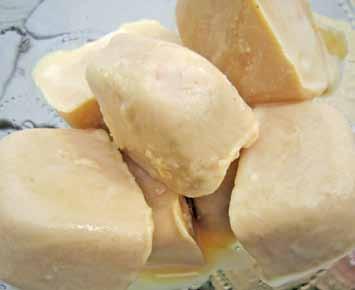
Mix the 2 envelopes of custard with one cup of regular milk. Whisk the three eggs into the mixture, set aside.
Pour the four cans of evaporated milk into a pot to heat under a low fire, but do not boil. Once warm, add the custard mix into the pot and mix, do not boil.
Add sugar till the sweetness is as desired. Pour the mixture into the pan to cool, and once cooled, put it into the freezer.
When ready to serve cut into blocks.
Easy tip for grating cheese: Simply spray the cheese grater with cooking spray before grating! The "grease" makes the cheese glide easily across the grates with less effort. This is key for mozzarella and other softer cheeses.
Ginger can be tricky to peel with all its bumps and irregularities. Rather than using a paring knife or vegetable peeler, reach for the spoon. Scrape it against the skin and it'll come right off, following every contour and minimizing waste.
To slice avocados, split them in half, remove the pit by whacking it with the heel of your knife and twisting it out, then slice it directly in the skin using the tip of a paring knife or chef's knife. When you then scoop it out with a spoon, you'll have slices ready to go, with less mess than trying to fiddle with slippery peeled avocado a cutting board.
The empty half of an egg shell is the best tool to extract stubborn bits of cracked shells that have ended up in the bowl.
You know what to do when the grease gets on your shirt, but unfortunately kitchens can have other types of fabrics that can't be tossed in the wash. For un-washable fabrics, like rugs, chair cushions and carpets, mix 1 part salt with 4 parts rubbing alcohol. Use a cloth to rub the solution hard into the stain until it lifts away. After the grease is gone and your solution dries, vacuum up the excess salt and use a damp cloth to wipe away any salt marks left behind.
For tough, caked-on grease stains like those you find hardened to the stove and the inside of the oven or stuck to baking dishes after an overnight in the sink, spray vinegar directly on the stain and let it soak in for about five minutes. The acidic vinegar will help dissolve and soften the tough, crunchy part (mostly a food-grease mixture), making it easier to scrub away with a soft sponge.
One way to disinfect a kitchen sponge is to heat it in the microwave -- but be sure to do it safely, and never microwave a sponge containing metal! While most germs can only survive about 30 seconds in the microwave, you'll need to nuke your kitchen sponge for two minutes at full power to eliminate E. coli. Before you hit "start," be sure to saturate your sponge with water, since a dry sponge may catch fire. Look out for a burst of steam when you open the microwave door, and let the sponge cool before you remove
--
will be very hot! You may want to use tongs to pick it up.
Each group of three definitions describes three words that are spelled the same, except for one letter (each group describes a different set of words). Example: king, ring, wing.
1a) a bone in the leg
1b) arboreal mammal, common to Madagascar
1c) to take exception or object
2a) a mixture of liquids, as for medicine
2b) a liquid preparation for cosmetic use
2c) an opinion or view
3a) something having a spiral or twisted form
3b) to hold back or restrain
3c) the thick part of coagulated milk
4a) to beat or damage with repeated blows
4b) to trade by exchange of goods
4c) good-natured witty joking

solution on page 22


solution on page 22




Anansi grew more and more conceited and arrogant.
In fact, God became so annoyed by Anansi's boast that he had "tricked" him and was seriously considering removing his patronage from Anansi.
Anansi lived in the same African village, as the Chameleon.
Anansi was rich and owned the finest fields in the area, while the Chameleon was poor and worked hard in his meagre fields to make ends meet. However, one year rain fell on Chameleon's fields, which were now abundant with beautiful crops. To teach Anansi a lesson, God let no rain fell on Anansi's land and the crops dried up, and dust blew everywhere.
Anansi then resolved to take Chameleon's fields for himself. Anansi first tried to buy the fields, but Chameleon refused to sell. Anansi offered more and more in exchange, but Chameleon still held on to the land. Early one morning,
Anansi walked boldly down the road to Chameleon's fields and began harvesting the crops.
When Chameleon saw this, he became very angry and chased Anansi away. When a chameleon walks, it leaves no tracks; it is virtually impossible to tell where a chameleon has been. Knowing this, Anansi took Chameleon to the tribal court to sue for possession of the fields.
The chief asked Chameleon to prove that the fields were his; Chameleon had no proof to offer. Anansi, on the other hand, took the chief to Chameleon's fields, showing the many footprints on the road. These were Anansi's footprints, and the chief awarded the fields to Anansi right then and there. Although the court decision gave the land to Anansi, God has a higher justice than that which the courts mete out. Chameleon dug a deep, deep hole and put a roof on it. From the outside, the hole looked tiny. But, in fact, Chameleon had dug a
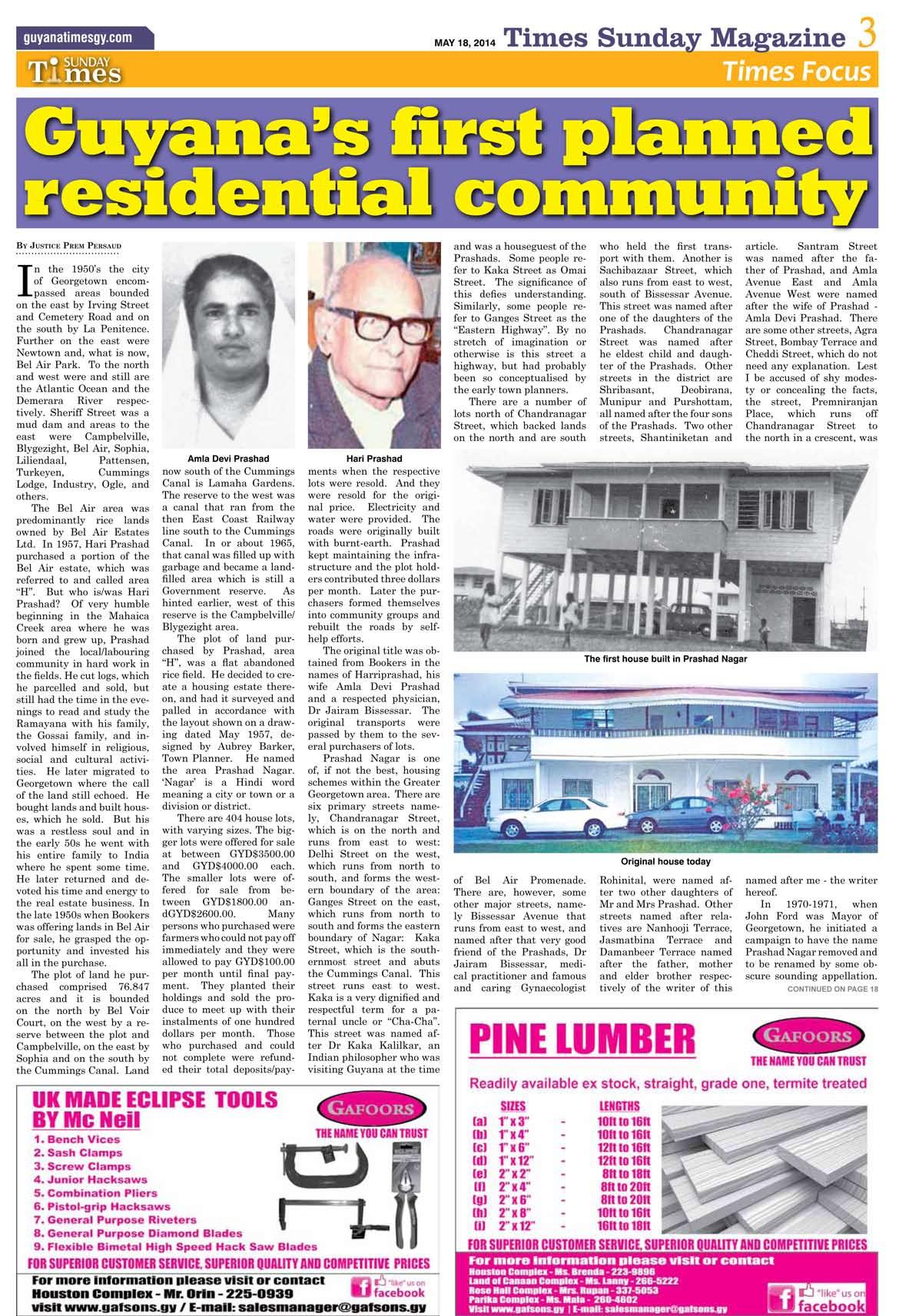
I protested and reminded those to whom it concerned that Prashad Nagar was a privately developed housing estate and no one had the right, authority or else to dictate a name for the project. The Hon Prime Minister, Forbes Burnham requested that Ford quietly back away from any intention to change the name. It may not be inappropriate for me to mention that Ford later had his name inscribed when the East Street Canal was filled in and then renamed John Ford Car Park.
Incidentally, I must point out, the owners of the scheme lost control of the administration of the area when by the Municipal and District Council Act, 1970, the area became vested in the Georgetown City Council. As a matter of fact, the boundaries of the city of Georgetown, by that piece of legislation, were extended on the south to cater for all properties up to and including Plantation Rome on the East Bank of Demerara, and on the east up to and including Cummings Lodge on the East Coast of Demerara. Wiser counsel must have prevailed and there was no attempt to extend the boundary northwards or westwards! Six areas of land were reserved and dedicated for social, cultural and religious purposes. Regrettably, all the lands were not utilised for the purposes for which they were intended. Sachibazaar Street was identified as the commercial centre of the scheme, but it did not
vast cavern under-ground. Then the Chameleon took some vines and some flies and made a cloak. When the sun hits flies, they shine a variety of colours, but they are still flies.
Chameleon went down the road wearing this cloak of flies and vines when he encountered Anansi.
Anansi's first words to Chameleon were, "Hello, my friend. I hope that there are no hard feelings between us." Anansi saw what appeared to be a beautiful cloak and offered to buy it.
Chameleon pretended to be magnanimous and told Anansi that the cloak would be his if only Anansi filled Chameleon's "little hole" with food.
Anansi readily agreed, bragging that he would fill it twice over. Anansi then took the cloak to the chief who had acted as judge in the lawsuit, and gave the cloak to the chief as a gift. The chief admired the cloak and thanked him profusely.
Anansi worked day and night to fill Chameleon's
attract entrepreneurs at that early stage in its development. The Georgetown “Green Belt” was violated without objection from the authorities and businesses of all shades and description began to mushroom in areas east of Vlissengen Road, Georgetown.
An area named Gandhi Park, Plot “A”, was dedicated as a children’s playground. It is south of Premniranjan Place and was fenced. It is opposite the Vedic Mandir which is on the North side of the street. The public has little or no access to it as it was vandalized and used for pasturing donkeys, horses, and it now appears to be some sort of a parking lot.
Plot “B”, an area west of Plot “A”, was identified as a car park, but has since been converted for residential purposes.
Plot “C” is a public park and situated in Shribasant Street and bounded on the east and west by Amla Avenue East and Amla Avenue West and on the south by Cede Street.
Plot “D” is at the junction of Amla Avenue East and on the south by Purshottam Street. It was dedicated as a site for a Church and School, and vested in the Diocese of Guyana. It had remained unoccupied for many years and eventually; quite recently, it was used as a residential complex.
Plot “E” is called Nehru Park. It runs north to south from Bissessar Avenue to Sachibazaar Street. This plot is beautifully kept by res-
hole with food and still the hole was not full. He worked weeks and still the hole was not full. After a while Anansi realized that Chameleon had tricked him.
In the meantime, the chief was walking down the road wearing the cloak of flies. One day the vines broke and the flies buzzed off in every direction, leaving the chief naked and livid with anger at Anansi.
The chief grew angrier with each step he took, for he began to see the conceit and arrogance of Anansi. When the chief found Anansi, he ordered him not only to return Chameleon's property but to give Chameleon the best of his own fields as well.
As soon as Chameleon took possession of Anansi's best field, it rained on that field for the first time in months, and now Chameleon was the richest in village.
Moral of the story: Conceit and arrogance, just as humbleness and hard work, has rewards, each in its own way (An African tale)
Pretty women wonder where my secret lies.
I'm not cute or built to suit a fashion model's size
But when I start to tell them, They think I'm telling lies. I say, It's in the reach of my arms
The span of my hips, The stride of my step, The curl of my lips. I'm a woman
Phenomenally.
Phenomenal woman, That's me.
I walk into a room
Just as cool as you please, And to a man, The fellows stand or Fall down on their knees. Then they swarm around me, A hive of honey bees. I say, It's the fire in my eyes, And the flash of my teeth, The swing in my waist, And the joy in my feet. I'm a woman
Phenomenally.
Phenomenal woman, That's me.
Men themselves have wondered
from page 3

idents and a kind-hearted Sheriff Street business enterprise and it is serving the purpose for which it was dedicated.
Plot “F” is not without considerable interest. It is a plot dedicated for Local Administration and Community Centre. The land immediately south of this plot was reserved for a car park. The land is in Sachibazaar Street, on the south side. This plot was given over to the Mahatma Gandhi Youth Organisation (GYO) in 1961 and in that year the cornerstone for a huge structure was laid by the then Governor Sir Richard Luyt. (He had loved his dal puri, which he called “flattened bake”.)
Scores of steel rods and tons of stone and sand were stored on the grounds for construction to begin. But some residents, three in number and who were very closely related to officials of the Gandhi Youth Organisation protested.
The Attorney General’s Office of the day intervened and filed an action in the High Court. A restraining order was granted by the Judge and all operations ceased. The objection taken by the authorities was that the land should not be given to any particular organization and should be reserved for use by members of the public. The matter never went to trial and remained in limbo.
What they see in me. They try so much But they can't touch My inner mystery. When I try to show them They say they still can't see.
I say, It's in the arch of my back, The sun of my smile, The ride of my breasts, The grace of my style. I'm a woman
Phenomenally.
Phenomenal woman, That's me.
Now you understand
Just why my head's not bowed.
I don't shout or jump about Or have to talk real loud. When you see me passing It ought to make you proud.
I say, It's in the click of my heels, The bend of my hair, the palm of my hand, The need of my care, 'Cause I'm a woman Phenomenally.
Phenomenal woman, That's me.
Maya Angelou
Shortly after, Viola Burnham, wife of the Prime Minister, approached me with a request for the land to be given over to her organisation, the Women’s Revolutionary Socialist Movement. They needed a place to house a workplace/factory to produce wares. I respectfully declined on the ground that the matter was pending before the court, but in any event it was first given to the GYO.
They eventually found a place on the East Bank of Demerara, at Coverden, where a factory was set up and they produced Vanceram wares, and so on.
Prashad Nagar is a relatively quiet and peaceful community. There are religious organisations established there, namely, the Sanskritik Kendra of the Guyana Hindu Dharmic Sabha in Ganges Street, the Arya Samaj movement with its Central Vaidik Mandir in Premniranjan Place, and the muslim community catered for by the East Georgetown Sunatul Jamaat in Sachibazaar Street. There are also the Georgetown American School at Delhi and Chandranagar Streets, and the New Guyana School in Delhi Street.
The foregoing is a short history of Prashad Nagar, which I have attempted to do as a result of requests from a number of citizens who wish to be aware of all aspects of life in Guyana, more especially during the “good old days”. (Article first published in the Horizons magazine)
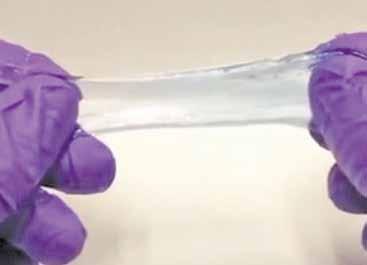
Researchers have developed a collection of new plastics that are recyclable and adaptable - and the discovery began with a laboratory mistake.
They include strong, stiff plastics and flexible gels that can mend themselves if torn.
The findings, reported in the journal Science, could lead to cheaper and greener cars, planes and electronics.
It is the first time that durable "thermoset" plastic has been produced in a recyclable form.
Dr Jeanette Garcia, from IBM's Almaden Research Center in San Jose, stumbled upon the first new class of thermosets in many years when she accidentally left one of three components out of a reaction.
"I had this chunk of plastic, and I had to figure out what it was," Dr Garcia told the BBC. "I had to smash my roundbottomed flask with a hammer."
That chunk of plastic, produced from unexpectedly simple ingredients, proved to be tremendously hard and stable. Crucially, it could be digested in acid, reverting to its original components.
This digestion reaction allows the chemical building blocks, or monomers, to be reused.
Bakelite telephone
"It was definitely fortuitous," Dr Garcia said. "The first thing I did, of course, was to hit the literature, to try and see if it'd been done before. I just assumed that it had been - it's such a simple reaction."
But her search turned up nothing. This was new.
Once she understood what she had created, Dr Garcia set about repeating her finding. "We wasted a lot of flasks," she said.
Because they are strong and light-weight, thermosets are used throughout modern cars and aircraft, often mixed with carbon nanotubes to form composites. Some 50% of the new Airbus A350 jet, for example, will be made from composites.
Yet until now, none of this thermoset plastic could be recycled.
"The potential impact here is phenomenal," said Dr Charl Faul, a materials chemist at the University of Bristol. He says the study offers a "very simple, elegant answer to a very old problem".
Microchips
Dr James Hedrick, who was in charge of the research at IBM, is excited by the possiblities. When a large or expensive component is damaged or reaches the end of its useful life, he explained, it could be repaired or recycled instead of thrown away.
"The ability to rework saves a tremendous amount of money and mitigates waste."
Beyond replacing thermoset-based composites in current technology, Dr Hedrick sees the potential for many more innovative applications. "We're at the discovery phase," he said. "Every time you discover a new polymer-forming reaction it leads to all sorts of new materials."
As well as very hard and durable plastics, the researchers adapted their procedure to a different monomer and produced flexible, self-healing gels. These could be useful in anything from cosmetics, to paint, to the design of drug capsules, because of their particular solubility properties.
"Applications are running like water," Dr Hedrick said. "We don't even know where to go with this yet." (BBC)
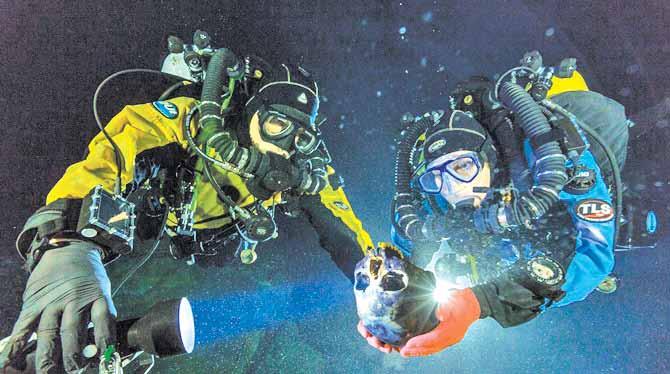
Divers mapping the underwater caves within Mexico's Eastern Yucatan Peninsula came upon a surprising find -- a superbly preserved skeleton dating close to the time when people first entered the New World.
"It was like a magnet and I remember swimming over to her remains and hovering in place about 12 inches from the skull, absolutely spellbound, for several moments," Susan Bird, a Bay Area Underwater Explorers diver, told Discovery News.
Subsequent underwater testing and analysis of this oldest, most complete skeleton found in the Americas has since provided evidence that modern Native Americans are directly related to the earliest inhabitants of the Americas, according to a study published today in the journal Science.
Dating close to the time when people first entered the New World, the early American, or Paleoamerican, skeleton features Native American DNA while showing a distinctly different skull shape. The research provides new clues to how the Americas were first populated.
It suggests the morphological differences between Paleoamericans, the first people to inhabit the Americas after the most recent ice age, and modern Native Americans are not the result of separate migrations from southeast Asia or even Europe. Rather, they belong to the same population that "evolved in place" in the Americas and Beringia, a now partially submerged landmass including parts of Siberia, Alaska and the Yukon.
Belonging to an adolescent girl, the skeleton was found in 2007 in a submerged chamber named Hoyo Negro (Spanish for Black Hole), deep inside a cave system on Mexico's Eastern Yucatán Peninsula, about 12 miles north of the city of Tulum.
"The moment we entered the site, we knew it was an incredible place. The floor disappeared under us, and we could not see across to the other side. We pointed our lights down and to the sides. All we could see was darkness," Alberto Nava of Bay Area Underwater Explorers, one of the divers who found the skeleton, told Discovery News.
About two months later, armed with powerful underwater lights, the divers reached the floor of the pit at about 170 feet. They found themselves in a bell-shaped structure 200 feet in diameter, whose center was littered with large boulders stacked on top of each other.
"As our eyes got accustomed to the environment, we started to notice large animal bones resting at the bottom and on the walls of the
pit," Nava said.
Then one of the divers spotted a human skull resting on the top of a small ledge. The small cranium lay upside down and rested on the left humerus (upper arm bone) with other remains nearby.
"It had a perfect set of teeth and dark eye sockets looking back at us. We could see the rest of the upper torso spread to the left and down on the ledge," Nava said Using photography, videography, three dimensional modeling and minimal sampling, researchers studied the skeleton without removing it from its watery grave. Only recently, due to unauthorized dives risking to damage the remains, the skull and other four bones were recovered and placed in an artifact conservation lab in Campeche, Mexico.
The international team of anthropologists, archaeologists, geneticists, and geologists was led by anthropologist James Chatters, owner of Applied Paleoscience, a consulting service in Bothell, Wash. He was the first to study Kennewick Man, a 9,300-year-old skeleton found in Washington in 1996.
Also showing the distinctive Paleoamerican rather than modern Native American traits, the Kennewick skeleton triggered a nine-year legal battle between scientists, the U.S. government and Native American tribes who claimed him as one of their ancestors and sought permission for reburial.
In 2004, a U.S. court ruling established there was no evidence connecting Kennewick Man with any
existing tribe because the remains date back before recorded history and no cultural or biological link could reasonably be made. The Hoyo Negro skeleton, which might reopen the debate, turned out to be much older than Kennewick Man.
"The skeleton produced the earliest radiocarbon age, confirmed in two separate laboratories, of any on the Americas," Chatters told Discovery News.
Indeed the human remains were dated between 12,700 and 12,900 years old.
"However, because the material we had to use for the age is one that is not entirely safe from contamination by old carbon in the rocks, we are being more conservative and giving the age as between 13,000 and 12,000 years," Chatters added. (Discovery News)

Apple Inc. (APC) is close to striking a deal with Dr. Dre.
In what would be the largest-ever purchase by the iPhone maker, Apple is in advanced talks to acquire headphone maker and music-streaming service Beats Electronics LLC for $3.2 billion, people with knowledge of the matter said.
A deal for the Santa Monica, California-based company, which was founded by music-industry executive Jimmy Iovine and hiphop artist Dr. Dre, would bolster Apple’s online music capabilities by giving it ownership of the Beats Music service that started earlier this year. For $10 a month, subscribers get unlimited access to all of the songs in the service’s catalog through a smartphone, tablet or Web browser.

Although representatives from Apple and Beats declined to comment, a video posted to YouTube shows Dr. Dre alluding to the deal, saying “the first billionaire in hip-hop, right here”.
AMusic has long been one of the cornerstones of Apple’s business, with its iTunes store and the iPod music player that reignited the company’s growth more than a decade ago. Yet digital-download sales fell for the first time ever last year
as people turn to streaming services such as Spotify Ltd., Google Inc.’s YouTube and Pandora Media Inc. to listen to music, according to Nielsen SoundScan.
“The age of digital downloads is basically over,” said Aram Sinnreich, a media professor at Rutgers
University who studies the intersection of technology and music.
While paying $3.2 billion would use just a fraction of the $150.6 billion in cash and investments on Apple’s balance sheet, a deal would signal that the Cupertino, California-based company
is serious about introducing its own music-subscription service to rival Spotify. Apple co-founder Steve Jobs had long resisted such a move, insisting that people don’t want to rent their music.
“They are buying into the future and the future is going to be streaming and subscription,” said Jon Irwin, the former president of rival music service Rhapsody International Inc. “Revenue from streaming and subscription is
growing. Files and downloads are shrinking. Everyone has to engage in streaming and subscription.”
Apple took a step in that direction last year, introducing iTunes Radio, which is an advertising-supported music streaming service that competes with Pandora. ITunes remains the world’s largest seller of music, but is only for downloads of single tracks and albums. (Excerpted from Bloomberg)

man who tried to kill his family is among the latest to request removal of search results from Google.
A European court this week ruled that an individual could force the removal of some search results.
The BBC has learned that more than half of requests sent to Google from UK individuals involved convicted criminals.
A business has also sought for links to negative reviews on a forum to be removed.
As the European Court of Justice made its ruling on Tuesday, many speculated that a flurry of similar requests would come Google's way.
On Thursday it emerged an ex-politician seeking reelection has asked to have links to an article about his behaviour in office removed.
A man convicted of possessing child abuse images had also requested links to pages about his conviction to be wiped.
Since Tuesday's ruling many have come forward to question the practicality of the EU's decision.
Wikipedia founder Jimmy Wales described it as "as-
ByTe

Ctonishing" and a form of "wide-sweeping censorship".
However, the EU has defended the move, saying that in cases where the public interest case is more pressing than the individual's privacy rights, links should not be taken down.
'Slow and cumbersome'
Getting that balance right is a delicate issue, said Michael Sandys from Liverpool-based Jackson & Canter Solicitors.
"Lawmakers will need to ensure they find a way to allow some information to be removed in a timely fashion while at the same time not allowing history to be rewritten," he said.
"If an individual goes to court about an article or piece of data which is found to be defamatory or inaccurate then there are levers in place for Google to quickly remove it from the search results."
But he argued that Google could do more to deal with genuine cases of incorrect information.
"I have made requests on behalf of clients a number of times for the removal of content which defames them. Sometimes it is dealt with well but other times the process can be slow and cumbersome."
Google's official statement on the matter, unchanged since Tuesday, described the EU's ruling as "disappointing". (BBC)
hinese budget smartphone maker Xiaomi unveiled on Thursday its first tablet, expanding its product lineup to directly challenge established rivals Samsung Electronics Co Ltd and Apple Inc.
The Mi Pad, which comes in six colors, will have a 7.9 inch screen, the same size as an iPad Mini.
Like other tablets, it comes equipped with wireless internet, front and back cameras and a built-in memory capacity of 16 gigabytes or 64 gigabytes. But it is priced cheaper than comparable iPad Mini and Samsung Galaxy Tab models at 1,499 yuan ($240) for the smaller version.
The company did not say anything about a 4G version.
"We wanted the hardware to come close to, or even surpass Apple's iPad," Xiaomi's founder Lei Jun said at the launch event in Beijing. Xiaomi's flagship smartphones, which are among the fastest selling in China, resemble Apple's iPhone.
Lei said an initial version of the tablet would be available for testing by the public in mid-June, but he declined to specify a launch date or sales targets. It was also not clear if the Mi Pad would be sold outside China.
The worldwide tablet market, which saw shipments of 195.4 million devices in 2013, is forecast to grow nearly 40 percent this year, according to consultants Gartner, Inc, with China especially seeing significant growth.
Privately held Xiaomi became the world's sixth-largest smartphone vendor in the first quarter of 2014, according to data firm Canalys, after repeatedly doubling its sales. It's cheap yet sleek phones are popular in China, the world's largest market for smartphones.
The company expects to sell 40 million phones this year, compared to 18.7 million last year and 7.2 million the year before.
Xiaomi said its Mi Pad will have a plastic case and run on its own Android-based op-
erating system. The company, founded in 2010, leads a group of young Chinese homegrown handset brands that have successfully attracted local consumers with advanced features at lower prices than global brands.
"Xiaomi has a different business model than Apple or Samsung," said Ben Thompson, founder of Stratechery.com, a technology and strategy website.
"Apple makes it profits on the hardware, while Xiaomi claims they will make their profits on services."
Xiaomi is now looking to expand abroad, and has already started selling its phones in Singapore and Taiwan.
Xiaomi lists Sharp as a supplier and said it had provided the displays for the tablet.
(Excerpted from Reuters)


Yupukari village, situated in Rupununi, is home for the Yupukari Crafters, a group of quintessential weavers who have created a new age in perfecting the art form to support their community’s sustainability.
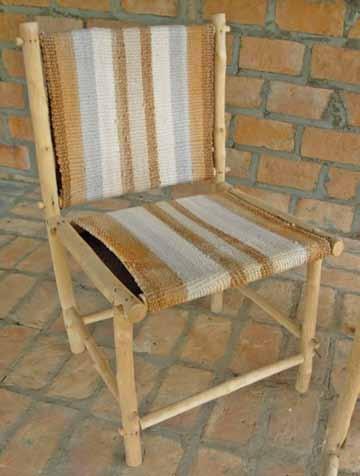
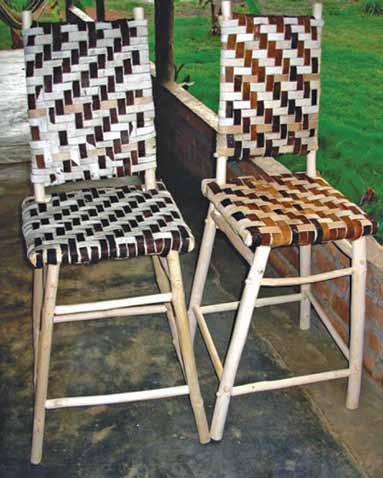
The first Yupukari Crafters piece came about because seating was needed for the village library. The village woodworkers who built the Caiman House Field Station (CHFS) were drafted as furniture makers. Many prototypes, later a dining set, went on display at a local crafts fair. Orders began to come in from local eco-tourist guesthouses and visitors. Pieces placed in a local shop sold out in two weeks.
Using local ‘moonwood’ (saplings harvested only during periods of full moon when insects depart); cowhide, wild-picked, homespun, hand-woven cotton, and a variety of reeds and woody plants, the pieces are joined without glue, screws or nails. Precise tenons yield a rustic, handmade chair that nonetheless packs flat and assembles with simplicity.
With the mentorship of Jocelyn Dow at Liana Cane in Georgetown, the original group of woodworkers, along with interested ‘termites’ (members of the youth woodworking group), formed Yupukari Crafters, a for-profit project to provide jobs in the village and to create an income stream for literacy in an under-resourced community. Both salaried
positions and a steady market for piecework have been created, with profits directed toward the building of classroom and public libraries, instruction in the teaching of reading, and librarian training.
Currently, the crafters are displaying and selling their craft in the CHFS guest house, and are looking to approach other interested sites to display and sell the functional pieces. The sale of craft creates local income, honours traditional skills, and supports conservation of natural habitats. The crafters are pursuing indigenous knowledge
sure of their creativity.
The challenge in each community remains reaching available and interested markets. The costs associated with transporting goods, coupled with assigning true value to the crafts, create a challenge also. In each com-
programmes, where elders pass on their knowledge and links to interested university programmes also, as youths tend to become interested in the available local lessons when outsiders take an interest in them as this would provide needed expo-
munity where individuals strive to practice their art, a developing ‘craft tourism’ is creeping up behind. Current forms of eco-tourism looking to complement what is on the ground, are seen as a way to help support and guide this initiative.
Combrencent
Ernest
Artist
Combrencent
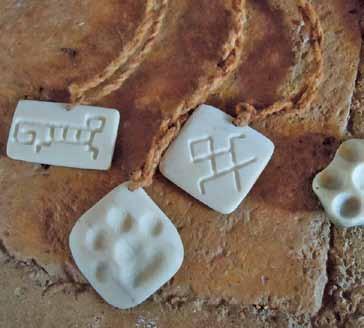
Ernest carved out a name for himself a couple years ago. Literally in a block of rubber stamp he carves “Made in Yupukari by Combrencent
Ernest - Practical Artist”. The essence of his selfassumed title and his variety
of works is mirrored by other crafters in the Rupununi as one of applied art.
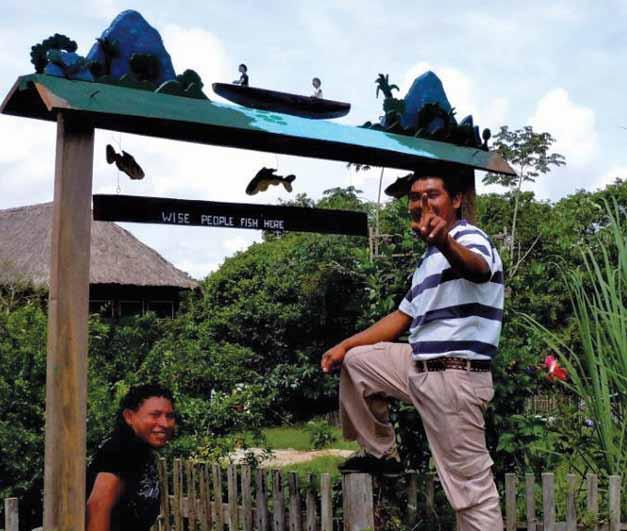
Pieces are pulled, cut, formed and woven from within the environment that everyone naturally negotiates, relates, and survives on. Combrencent feverishly pursues works through wood, paint and clay, as well as experimenting in other local materials. His most notable work, a collaborative effort with Yupukari artist Matthew Dorrick, is a three dimensional mural of the Kanuku Mountains serving as a gateway into Caiman House Field Station. The other entry into Caiman House is another product of Combrencent’s hands: a pair of wood carved black caimans.
Much like this acclaimed artist, many of the crafters in the Rupununi move comfortably between many different materials. That comfort perhaps developed through a trial of familial
apprenticeship or self-interest. Cotton hammocks for rest, clay bricks for security, and a variety of tools borne from leaves serve as an introduction for a lengthy list of needs for life in that region. This effortlessly transitions to be artefacts of culture, local ingenuity and creativity.
Markets emerging from tourism and Lethem as the burgeoning gateway to Brazil, create new opportunities to sell these functional “canvases”, allowing today’s entrepreneurial artisans to continue the traditions passed through generations while pursuing novel forms of presentation.
When considering his next idea of artistic pieces and that people are demanding them, Combrencent usually contemplates what resources are available to make something new, and that is similar to his process for creation.
So what inspires him?
“When I get it I just do it. I start on the page with the pencil then I move to wood carving and rubber. Now I’ve been carving in small bone and wood,” he says. Ernest hopes to carve larger pieces of wood and continues working on pendants, making leaves and fish bone carvings.
Combrencent and the Yupukari Crafters are but some examples of the range of loosely organised “guilds” seeking new markets, partners, and opportunities. Formed through a disparate set of talent in Yupukari and its satellite communities, the “crafters” create baskets. Guests to Yupukari can now visit to witness the ladies spinning organically grown cotton, weaving a hammock, or take part in the magical technique of making a “fish basket” out of a single leaf. For more information visit Rupununi Learners on Facebook.