


B y D mitri A llicock
Almost gone from Guyana is an ageold tradition and fashionable affection for the words and opportunity of public speaking, letter writing with prose, imperfect grammar of command, said with peculiar accentuation to words and sentences, without a trace of self-consciousness or amusement.
One letter in the 1950s, asking for employment, opened like this:
“Even though none of my applications was successful, I still nevertheless
have, beyond contemplative imagination, sincerely high hopes in securing a suitable post into your beneficial highly productive staff – especially so, where all such matters lie under your most competent, influential, and altogether applaudable versatile management. There is, therefore, no doubt to the fact that one’s ambiguous hopes brightens tremendously wherever there is a man of your overwhelming personality, integrity and high prestige together with your immense popularity and most deservingly accorded you in your greatly
appreciated, well acknowledged aid towards assisting others in dire need. As a result, therefore Sir, my obstinate aspiration has already found consolidation in you. My obstruent, persistent endeavors to obtain congruent employment in the rather bewildering past have been gruesomely unfortunate.”
A colorful wedding speech of the 1870s:
“My friends, it is with feelings of no ordinary nature which have actuated my inner most heart on this present occasion, for on such festivities so full of mirth and aggrandizement, when the Bridegroom and Bride in all their splendor repair of the house of reception, and there we find familiar friends and neighbors heralding the consumption of their enterprise, it fills me with that enthusiasm which otherwise would fail to draw our congratulations.”
A letter to Magistrate Henry Kirke, 1874 British Guiana, reads: “Sir, You yourself is a mortal man that God Almighty has made, and through your dignity and wisdom Her Majesty has appointed you to assist the Governor to rool the nations. Therefore Sir, you become not only a Magistrate, but as a father for us in this Demerara River District.
So Sir, I trust with all confidence that you will be hearken to my humble statement. I am obliged to inform Your Worship that on the 11th March 1874 about seven o’clock in the night I was barbarously beaten by Joseph Adonis

and his wife with sticks, and inflict wounds on my body and Bloodshed. Also deprived me of the sum of twelve dollars and seventy-two cents I had brought from town with me, the very night, was tied into a

handkerchief and was in my pocket.
Both parties deprived me all. I am obliged to confess to Your Worship that I was overtaken in liquor and became drunk, so that I could not defend myself.
Afterwards they hit upon the results of what they had done, they planned out to take the first steps of the Law before Your Worship so as to make their ends right, and before I recovered my health from the beating, her husband already set up his wife before Your Worship with their compliant.
Moreover the Complainer have many witnesses that are living with her in one aboad and her husband soporting them.
They will no doubt purge themselves before Your Worship, and I having only one though a sconstable and slow speech. I hereby subject myself to Your Worship decision on Court day, and trust that the Almighty will enhance Your Worship to greater Honor for justice sake.”
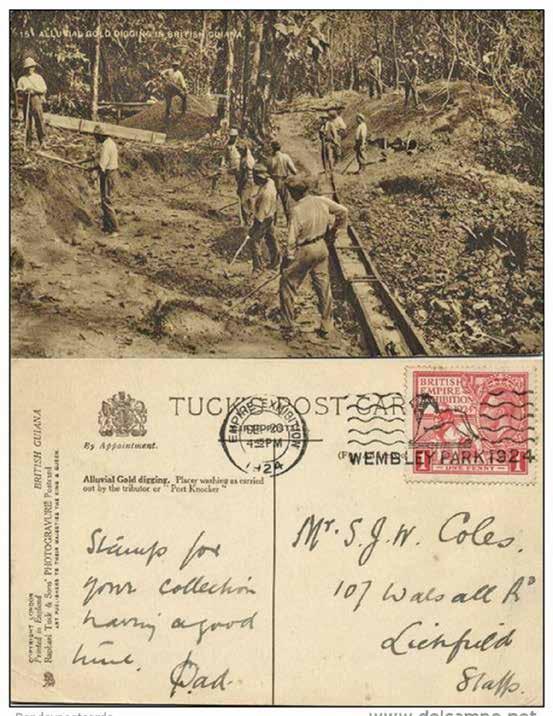
A historical porknocker love letter reads: “Most Illustrious and Venerated Madonna, I successfully yearn the right to lay first claim to your heart in preference to my vanquish rival. Matchless Damsel, as I contemplate your codigious
beauty, I yearn to possess you as my eternal conductric.
Give me your benevolent agreement and before the calendar marks another year, I will contribute thee my matrimonial bride.
I would labor with ferocious energy to afford you conducialfalitsies. I would erect for you a formidable mansion to accommodate multi various progencies. I would purchase for you an enamulate quadruped-a motor car, which’s carbonatious headlights would resume the night into day.
Do not refuse this opportunity for the rejection of such an enormous titanic love could only terminate my catactlemonact affection and decrease my intense adoration.
I remain yours, Affectionate, Carrelous, Ignatius, Orrilous, Fitzpatrick Thimble.”
The same love of the uncommon words with an imposing sound also was shown in the choice of Christian names of many Guyanese of history, as the porknocker letter demonstrated.
A time of dress code, structure and propermannerism, perhaps a makebelieve world of leisure and taste, now faded into memories of times to remember.
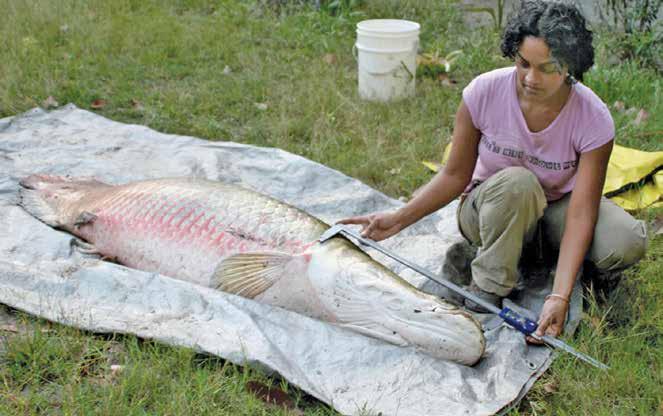
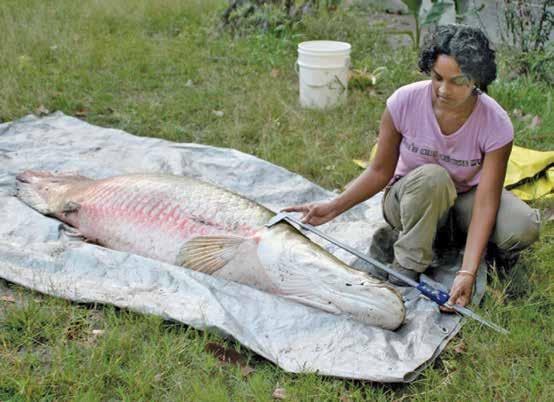
The arapaima is the largest freshwater scaled fish in the world and is legally protected in Guyana. The North Rupununi District Development Board (NRDDB), in collaboration with Iwokrama and other partners, developed an Arapaima Management Plan (AMP), which is legally recognised by the Government of Guyana and has recently been revised.
The NRDDB was given a small grant from the Global Environmental Fund’s Small Grants Programme for the AMP project. This grant is called “Strengthening Capacity to Support Local Implementation of Fisheries Monitoring and
entists worked together to survey the existing population of arapaima in the North Rupununi wetlands and started the AMP - a conservation, monitoring and management plan.
Regulations made under the 1953 Fisheries Act forbid the exploitation of arapaima in Guyana. The people of the North Rupununi did not harvest Arapaima before 1960; harvesting began with trading to Brazil in the early 1960s. The arapaima fishery developed into an important local income source because arapaima was abundant and the-then Guyana governmentlacked resources to enforce regulations. However, by 2001, local livelihoods and ecosys-
agement of fisheries resource. The National Inland Fisheries Policy has also recognised this initiative.
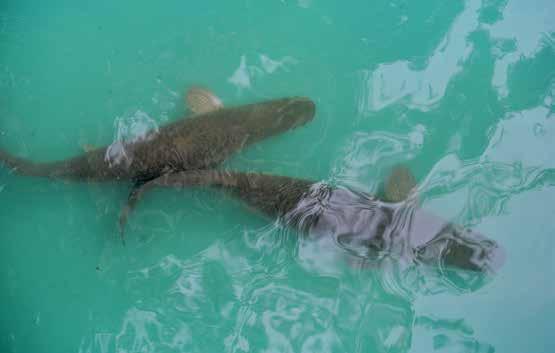
Recently, two adult and 25 juvenile arapaima were safely moved from a drying pond located upstream of the Essequibo River from the Iwokrama River Lodge. The dedicated team of Iwokrama staff and community residents spent the day carefully transferring the fish to the river body.
Iwokrama management was informed of the stranded arapaima by officials from the EPA and sent a monitoring team the next day, led by the head ranger, to investigate. One adult
Management in the North Rupununi Wetlands”.
There are 16 indigenous communities in the North Rupununi, and fishing is an extremely important activity. As such, over-harvesting because of continued illegal exploitation of arapaima has depressed fish stocks in the last four decades. Consequently, local and international sci-
tems were threatened as the population of these key wetlands predators was reduced to an estimated 822 individuals.
The NRDDB recognises that fisheries are a shared resource and hasworked with the Ministry of Agriculture, Iwokrama, Department of Fisheries and Environmental Protection Agency (EPA) for co-man-
arapaima and several juveniles were seen in the pond that was drying out and very muddy. Concerned Fair View residents, who reside within the Iwokrama Reserve on 22, 000 hectares of their titled land, later reported that they had seen not one, but two adults in the pond.
With the critical dry season currently being experienced in that region from
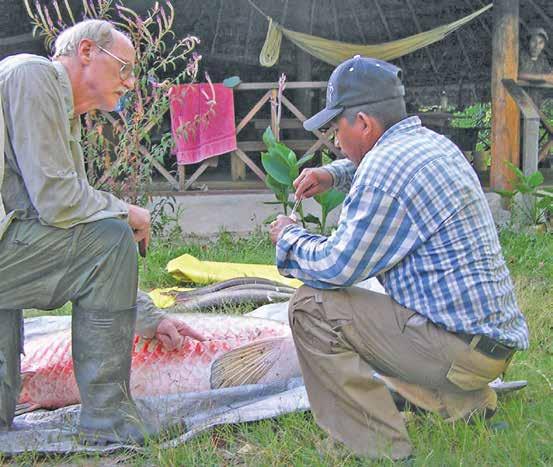
the El Nino effect, the partners soon realised that if the fish were not moved from the pond, they would perish. Consultations were quickly held with relevant partners including NRDDB community experts, Fisheries Department, EPA and researcher Dr Lesley de Souza to come up with a rescue plan.
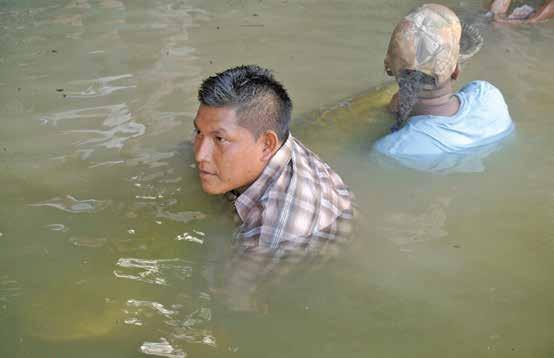
An expert team of local fishermen from Fair View, Kwatamang and Rewa Villages and some Iwokrama staff executed the rescue mission. Special protocols were applied to ensure safe transfer to the river.
The rescue team included Micah Davis, Iwokrama head ranger (Toka Village); KevinEdwards, Iwokrama tourism coordinator (Kwaimatta Village); Lakeram Haynes, Kwatamang Sr. Council and NRDDB treasurer; Stephanu Honorio, Rewa Village Council; Dennis Edwards, Iwokrama boat captain/Fair View; Bernard Williams, Iwokrama boat captain/Fair View; Rojas Jonas, Fair View Village; Dora Jonas, Fair View Village; Lucy Marslowe, Toshao, Fair View; Everton Allicock, Fair View Village;
Ivor Ignacio, Fair View Village; Samantha James, Iwokrama, Outreach manager/Kwatamang Village; Rockland Leo, Fair View Village; Deon Bernard, Fair View Village; and Carmella Williams, Kwatamang Village.
The NRDDB
The NRDDB is a registered trust and an established non-governmental, non-profit, community-based organisation representing 16 communities. It is an autonomous body, initially comprising of representatives from 12 indigenous communities in the North Rupununi.
In 1996, it was legally established to link the 12 communities with the Iwokrama International Centre for Rain Forest Conservation and Development, government agencies, and other institutions, on issues relating to community development in the North Rupununi.
The NRDDB provides a mechanism for community leaders to meet, discuss, and make decisions relating to the NRDDB operation for their respective communities. The NRDDB is recognised as one of the leading
community based organisations in Guyana. Since the formation of the NRDDB, membership has increased from 12 to 16 communities.
The NRDDB meetings are open to government, NGOs and other agencies and relevant organisations would usually be invited to attend the monthly meetings based upon the specific issues to be addressed.
Membership representation of the board has been changed to 16 community leaders, one other elected community member from each village, a youth group leader, Toshao for Annai District, an elder and one woman leader.
This type of decisionmaking structure is innovative for communities in the North Rupununi. This model allows for the sharing of ideas and experiences, problem-solving, decision-making, highlighting problems and issues to find solutions relating to their respective communities. The NRDDB is recognised locally, nationally and internationally as a legitimate body that serves the purpose of consultation and collaboration for social and economic development in
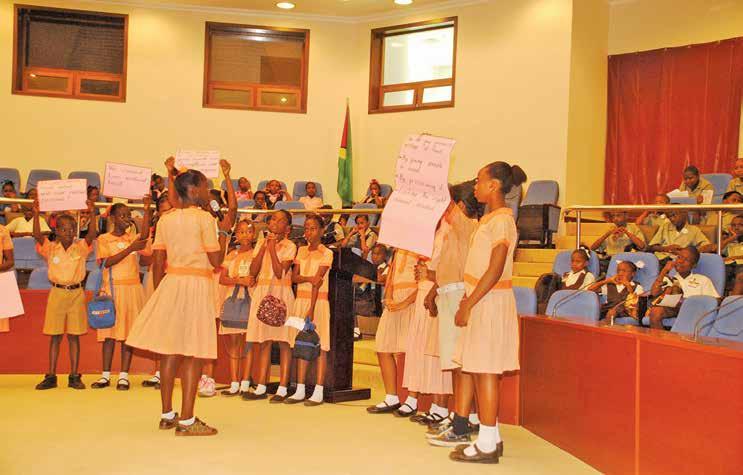
The Environmental Community Health Organization (ECHO) unites with other advocates against poor environmental practices, to protect communities, and develop Guyana in this era of climate change.
The mission of ECHO is to increase the eco-consciousness and social responsibility of members by providing them access to the
and clubs with volunteers that support ECHO’s mission and vision. The EcoField Trips support and fund eco-educational field trips for low-income schools. Additionally, the Eco-School Projects support and fund eco-enhancing classroom and club needs. The Youth ECHO Leadership Training offers workshops, seminars, and conferences to develop
to explore and interact with nature, and to provide a forum of exchange of information on approaches to environmental issues. The camp’s activities included nature walks, constructing a nature table, swimming, outdoor and indoor nature games, and talks about the conservation of environmental resources.
The organisation also
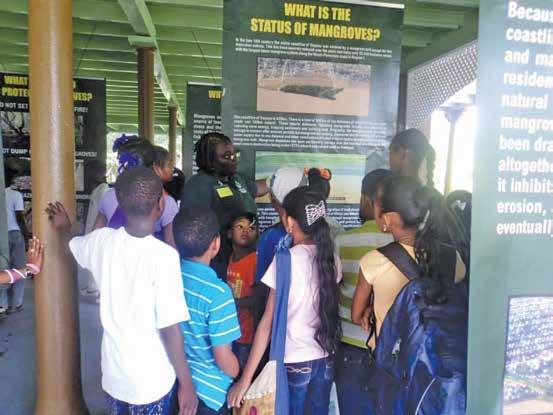
natural world, state-of-theart social media, innovative educational programmes and resources.
The organisation’s programmes include OnCampus “EchoClubs”, which support after-school and classroom clubs on the campus of lower, middle and high schools, involving children in environmental projects.
The Volunteer Match programme connects schools
and train children involved in EchoClubs nationwide, focusing on developing the next generation of environmental leaders.
In the past, ECHO successfully held nature camps,attended by children from various regions,on the Soesdyke Highway. The camp’s objectives were to raise awareness of the importance of the natural environment to human society; to encourage children
launched 25 EchoClubs in Region Five, West Coast Berbice. Notably, the ecoclubs are increasing in number throughout the country. The objectives of the clubs are to raise awareness on environmental issues; to provide “Green Education” for children and young adults; to organise children in structured groups to take leadership on environmental issues; and to improve the aesthetics of school
yards and local communities.
In an interview withTimes Sunday Magazine, founder Royston King said a unique aspect of the EchoClubs is the united curriculum and integrated social media platform that will link clubs and classrooms across the country.
“Clubs will initiate and share information about environmental projects and events at their schools to address not only the most pressing issues in their communities, such as water conservation, habitat restoration, energy efficiency and air quality improvements, but also national and global issues,” King outlined.
He added that the special media platform will reach and help youths to learn about ways to protect the environment. It will expand the collective environmental awareness of countless youths by giving them access to notable volunteers, scientists, conservation artists, engineers and more.
Through an informative television programme, Fun with Nature Quiz, ECHO has been educating children on protecting the environment and raising awareness on environmental issues.
Through diverse collaborative partnerships, ECHO plans to develop the next generation of leaders, who will have the knowledge, passion and skills to promote and work toward environmental sustainability.
The vision of ECHO is to be the largest and most widespread and comprehensive organisation for youth environmental education, connecting the community with youths, offering expansive programmes, and providing resources for schools
Switching from chemistry to law, recent law graduate
Luckhoo has already received an impressive list of accolades
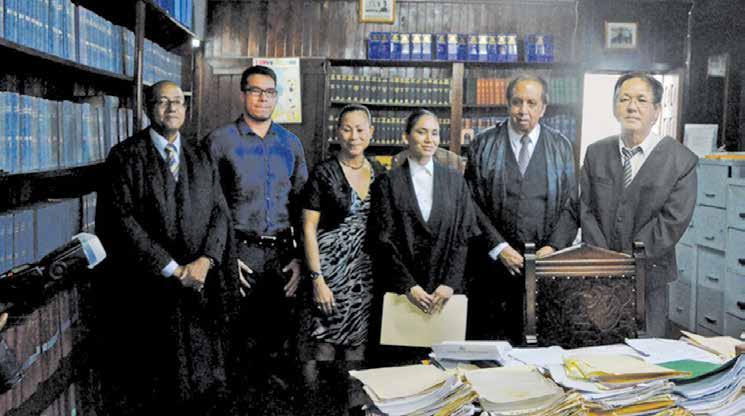
Following in notable footsteps in pursuing a career in law, recent law graduate Eleanor Luckhoo’s aim is to do whatever she can to improve the Guyana’s legal system.
Eleanor’s father is Edward Luckhoo SC, her grandfather was C. Lloyd Luckhoo and her grandfather's brother was Sir Lionel Luckhoo– all distinguished men involved with Guyana’s legal system. Sir Lionel Luckhoo is arguably the most well-knownmember of her family.
Interestingly though, Eleanor’s initial career path was in no way linked to becoming a lawyer.
“As a student, I have always been interested in the sciences, which culminated in me obtaining a Bachelor of Science degree in chemistry from UG. Mathematics also appeals to me and I enjoyed working in accounting at the Bank of Nova Scotia prior to pursuing law. Although these areas are not directly connected to law, I have found that my background has immensely assisted with the analytical skills necessary to study
The biggest challenge for the 31-year-old was abandoning her previous career path and starting over at a time when most persons were becoming settled in their careers. But Eleanor’s family was very supportive; they encouraged her to recommence her studies and supported her throughout law school.
Now, Eleanor plans to contribute to the local jurisprudence by presenting thoroughly researched submissions to the Court. She is particularly interested in Family Law and is excited by the impending introduction of the new family court rules, which she hopes, through her submissions, to assist the court with interpreting the rules and legislation behind them, in accordance with the demands of our particular society.
“I am currently in private practice with my father at Luckhoo & Luckhoo. I am aware that there is a gap between the academic study of law and the practical aspect, so my short term plans are to gain practical experience and conduct research in as many areas of law as possible. I expect that my long
Prize (Best Performance in Probate Practice and Procedure), the Pelham Sloan-Seale Memorial Prize (Best Performance in Conveyancing & Registration of Title), the Book Specialist’s Prize (First Outstanding Year II Student), the Guyana

law,” Eleanor said in an interview with Times Sunday Magazine.
Eleanor revealed that being part of a family of lawyers, she was initially tempted to choose a career removed from the legal field – as there might be a level of expectation that she would be required to live up to. She also mentioned that her family indicated that it was up to her to choose a career that she would enjoy doing and so she never felt pressured to pursue law. However, she later found law to be fascinating and eventually decided to pursue a career in the legal profession.
term plans will evolve based on the practical experience gleaned,” she declared.
Eleanor recently graduated from Hugh Wooding Law School, where she received her Legal Education Certificate – and an impressive list of accolades already.
She was awarded Most Outstanding Student Over Two Years, Most Outstanding Year Two Student, Chairman’s Prize (Evidence & Forensic Medicine, Remedies, Civil Procedure & Practice II), the H Aubrey Fraser Memorial Prize (Best Performance in Ethics, Rights & Obligations of the Legal Profession), the RBC Royal Bank Foundation
Government Prize (Best Performance by a student from Guyana), the Peterson, Lambert Peterson & Co. Prize (Best Performance in Evidence & Forensic Medicine), the Phelps & Co. Prize (Best Performance in Civil Procedure & Practice I), and the Book Specialist’s Prize (Second Outstanding Year I Student).
“It was an honour to receive them. As a student at Hugh Wooding one is not just seen as an individual but as a Guyanese and I was happy that Guyanese students were able to receive a number of awards. I was also humbled by the well wishes of Guyanese in attendance at the gradua-
tion who were very supportive,” sheexpressed.
Her advice for those who want to pursue a career in law is to ensure it is something “they love to do”. She pointed out that there is a saying that “the law is a jeal-
ous mistress” and so she advises that persons intending to take a similar path must be prepared to dedicate endless hours to its study.
“I would advise them to have a thirst for knowledge and keep reading,” she urged.
When she is not engrossed in her law books, Eleanor finds joy in philanthropy work. She volunteerswith the Interact Club Teaching Programme at Joshua Home.

B y P etam B er P ersaud
The Management Committee of the Guyana Prize for Literature has released its 2014 Shortlist, revealing among other things that the relatively new Caribbean Press has produced two of the books appearing on that list.
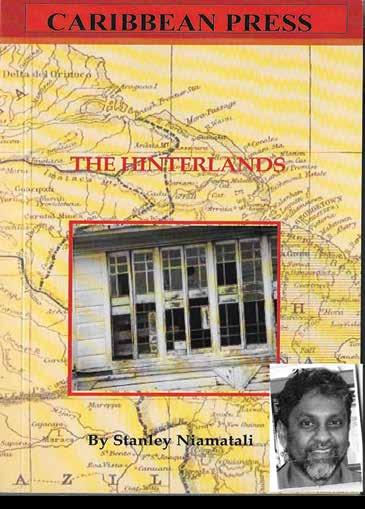
Those titles, “Rasta Lyrics” by Cedric Castello, and “The Hinterlands” by Stanley Niamatali, are debut collections of poems.
“Rasta Lyrics” is described as “a first collection by a Rastafarian teacher/singer/songwriter: these rich and very readable poems range over the author's many interests and activities and celebrate Rastafarianism and its founder, Haile


Selassie I.”
“The Hinterlands” is a “wonderful debut collection of poems centred around the author's haunting memories of life on a sawmill in the Berbice river. The poet, now living in the US, straddles two cultures and his poems depict and question the values of both.”
History of the Caribbean Press (CP)
The idea for the founding of this publishing house was sounded out in 2008 during the staging of Carifesta X in Guyana. In the short span of its existence, it has produced an astounding number of books consisting of reprints of rare books, contemporary writing and books winning the Guyana Prize, historical texts, and speeches of past presidents of this country…
The role of publishing houses
Too often we see only the end product in a long line of machinations it takes to publish a book. Publishing houses play an important role in the promotion of literature. A major aspect of the book industry/literature is publishing – book publishing.
Writers are important, so too are editors, literary agents, critics, readers, proof readers et al . Book publishing is not a consideration in the determination of the winner/s of a literary prize, but book publishing could tell a lot about the development and direction of a people’s literature. Here one example will suffice:
Peepal Tree Press (PTP) has cemented its place for its advocacy of Guyanese and Caribbean literature, having decades of experience in the field of publishing. Peepal
Tree Press is responsible in a major way for the burgeoning Guyanese literature.
In fact, Peepal Tree Press has contributed to The Prize and Guyanese Literature in a major way since The Prize was initiated in 1987. A look at the shortlisted books from then to now reveal that the Peepal Tree Press produced more than 35 of those books. Another look would reveal that the Peepal Tree Press has produced more than 14 winners.
The 2014 Guyana Prize for Literature shortlist has added another set of imaginative books/writings to our literature.
Since the first Prize award in 1987, there were more than 110 entries on shortlists; works authored by more than 60 writers. If each entry on the shortlists has the potential to be a winner, then The Prize was responsible for bringing to the fore more than 100 outstanding books/manuscripts.
Additionally, The Prize was responsible for refocusing attention on the established writers, and opening a world of opportunities for emerg -

ing writers, bringing them to public attention and a new readership. So the Guyanese bibliography has been extended and the “Who’s Who” of men and women of letters enhanced.
Furthermore, whether you subscribe or not to The Prize for varied reasons (and many are the reasons for seeing the machinations of The Prize unfavourably), it evokes some interest. It must if you are a writer or if you work in literature.
Another thing about a shortlist is that each work on the shortlist has the potential to be a winner and that for at least the author of the work is exciting, raising hope, fulfilling a wish.
Another thing you can read in a shortlist is how many times a particular writer has being shortlisted for The Prize without winning. Well, that’s another story. And persons interested in the Prize, Guyanese literature, and literature generally can make a game of choosing a winner.
For the 2014 shortlist, as stated before, there are two books vying for the winning position in the Best First Book of Poetry Category…take your pick. All of these things adding something to the atmosphere in the run-up to the declaration of the winners.
Two more feathers in the publisher’s cap.
This effort by the CP is only bettered by another press that produced three books to appear on the shortlist.
Hats off to the Caribbean Press…
Responses to this author telephone (592) 2260065 or email: oraltradition2002@yahoo.com
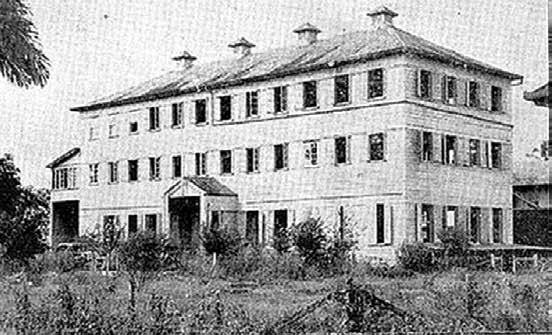
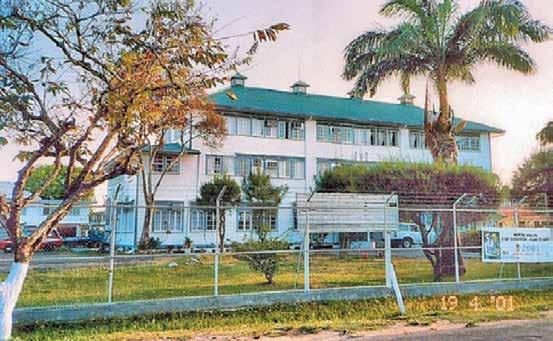
Over the years the building at the corner of Vlissengen Road and Brickdam Street,once described as “handsome and hospitable”, was at first an orphan asylum; then the site for Queen’s College, one of the country’s premier schools, before it became the current address for Guyana’s health ministry.
The lot 1 Brickdam St. building standing today is a rebuilt edifice,after a July 2009 pre-dawn fire destroyed the original historic timber construction.
The Orphan Asylum, known officially as the Orphan Asylum and School of Industry, was established in March 1852 by the
British colonial government,after the government acquired the land from an Edward Carberry in 1838. It originally housed juvenile offenders, orphans and destitute children. In 1906 it was considered “undesirable” to mix destitute children with offenders, and offenders were removed to an Industrial School.
It became an Orphan Asylum, where children whose parents were either dead, too poor to provide for them, in prison for petty crimes or ill in hospital and unable to look after them, were taken in.
According to the Ordinance establishing the institution, such children no older than
14 years who were “not idiots or lunatics” were eligible. The Ordinance also advised however that children whose parents were both dead would be given preference over those who had at least one parent.
The orphan asylum began by accepting children for six months at a time. By 1905, children were being accepted for two years, and by the end of March 1909 there were 61 boys and 30 girls in the institution.
Upon attaining the age of 14, they were apprenticed out at the discretion of the director, for no more than five years.
The Orphan Asylum was maintained from the public treasury; it was also supported by a “two percent duty on all public sales”. In 1903 it came under the supervision of the Chairman of the Poor Law Commissioners.
According to “The New Local Guide of British Guiana” (1862) both boys and girls were “instructed in reading, writing and arithmetic”. Boys were further taught agriculture and other trades the asylum’s director thought “proper”, while girls learned
“plain sewing, cooking, washing, scouring, and all other matters of domestic economy.”
The Orphan Asylum was closed in 1917 and, when a government committee on education in British Guiana recommended that same year that Queen’s College be relocated to the Orphan Asylum Buildings and Ground in Brickdam, students of Queen's College moved into the building in 1918 and remained there until 1951.
It has been reported that while at Brickdam, a pavilion was erected in 1920 from funds provided by the Combined Court, but begun by the proceeds of school concerts.
Subsequently, when the school moved to its current Thomas Lands site, the building became the headquarters for the Ministry of Health (MOH) up to today.
Joseph Hadfield, a well-known architect of the time,is said to have designed the colonial block of the original building. Then Chief Justice William Arrindell is said to have founded and promoted the Orphan Asylum during his career as colony lawyer and legislator.









Yupukari village, situated in Rupununi, is home of the Yupukari Crafters, a group of quintessential weavers who have created a new age in perfecting the art form to support their community’s sustainability.
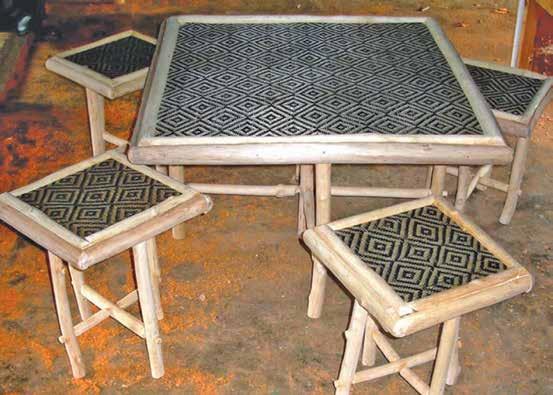
The first Yupukari Crafters piece came about because seating was needed for the village library. The village woodworkers who built the Caiman House Field Station (CHFS) were drafted as furniture makers. Many prototypes, later a dining set, went on display at a local crafts fair. Orders began to come in from local eco-tourist guesthouses and visitors. Pieces placed in a local shop sold out in two weeks.
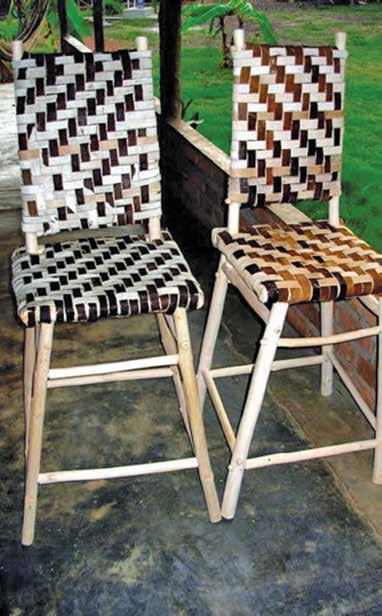
Using local ‘moonwood’ (saplings harvested only during periods of full moon when insects depart); cowhide, wild-picked, homespun, hand-woven cotton, and a variety of reeds and woody plants, the pieces are joined without glue, screws or nails. Precise tenons yield a rustic, handmade chair that nonetheless packs flat and assembles with simplicity.
With the mentorship of Jocelyn Dow of Liana Cane in Georgetown, the original group of woodworkers, along with interested ‘termites’ (members of the youth woodworking group), formed Yupukari Crafters, a for-profit project to provide jobs in the village and to create an income stream for literacy in an under-resourced community. Both salaried positions and a steady market for piecework have been created, with profits directed toward the building of classroom and public libraries, instruction in the teaching of reading, and librarian training.
Currently, the crafters are displaying and selling their craft in the CHFS guest house, and are looking
to approach other interested sites to display and sell the functional pieces. The sale of craft creates local income, honours traditional skills, and supports conservation of natural habitats. The crafters are pursuing indigenous knowledge programmes, where elders pass on their knowledge and links to interested university programmes also, as youths tend to become interested in the available local lessons when outsiders take an interest in them as this would provide needed exposure of their creativity.
The challenge in each community remains reaching available and interested markets. The costs associated with transporting goods, coupled with assigning true value to the crafts, create a challenge also. In each community where individuals strive to practice their art, a developing ‘craft tourism’ is creeping up behind. Current forms of ecotourism looking to complement what is on the ground are seen as a way to help
support and guide this initiative.
Combrencent Ernest Artist Combrencent Ernest carved out a name for himself a couple years ago. Literally in a block of rubber stamp he carves “Made in Yupukari by Combrencent ErnestPractical Artist”. The essence of his self-assumed title and his variety of works is mirrored by other crafters in the Rupununi as one of applied art.
Pieces are pulled, cut, formed and woven from within the environment that everyone naturally negotiates, relates, and survives on. Combrencent feverishly pursues works through wood, paint and clay, as well as experimenting in other local materials. His most notable work, a collaborative effort with Yupukari artist Matthew Dorrick, is a three dimensional mural of the Kanuku Mountains serving
through a trial of familial apprenticeship or self-interest. Cotton hammocks for rest, clay bricks for security, and a variety of tools borne from leaves serve as an introduction for a lengthy list of needs for life in that region. This effortlessly transitions to be artefacts of culture, local ingenuity and creativity.
Markets emerging from tourism and Lethem as the burgeoning gateway to Brazil, create new opportunities to sell these functional “canvases”, allowing today’s entrepreneurial artisans to continue the traditions passed through generations while pursuing novel forms of presentation.
pencil then I move to wood carving and rubber. Now I’ve been carving in small bone and wood,” he says.
Ernest hopes to carve larger pieces of wood and continues working on pendants, making leaves and fish bone carvings.
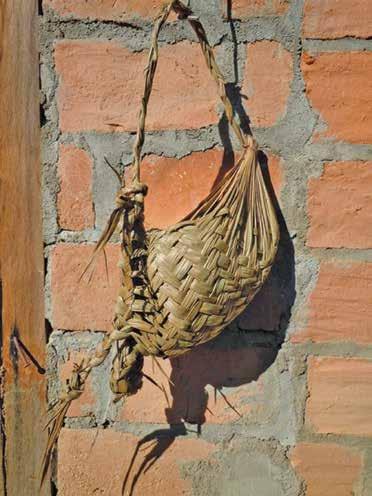
Combrencent and the Yupukari Crafters are but some examples of the range of loosely organised “guilds” seeking new markets, partners, and opportunities. Formed through a disparate set of talent in Yupukari and its satellite communities, the “crafters” create baskets.
Guests to Yupukari can now visit to witness the ladies spinning organical-
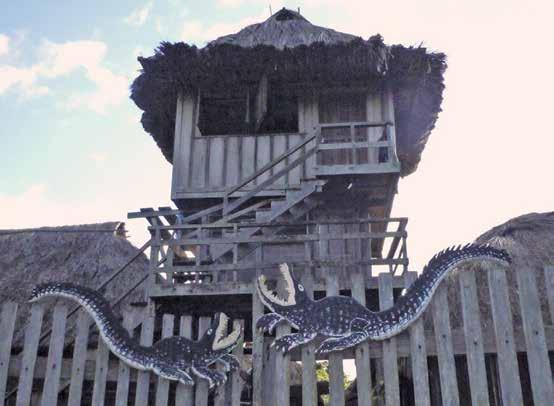
as a gateway into Caiman House Field Station. The other entry into Caiman House is another product of Combrencent’s hands: a pair of wood carved black caimans.
Much like this acclaimed artist, many of the crafters in the Rupununi move comfortably between many different materials. That comfort perhaps developed
When considering his next idea of artistic pieces and that people are demanding them, Combrencent usually contemplates what resources are available to make something new, and that is similar to his process for creation.
So what inspires him?
“When I get it I just do it. I start on the page with the
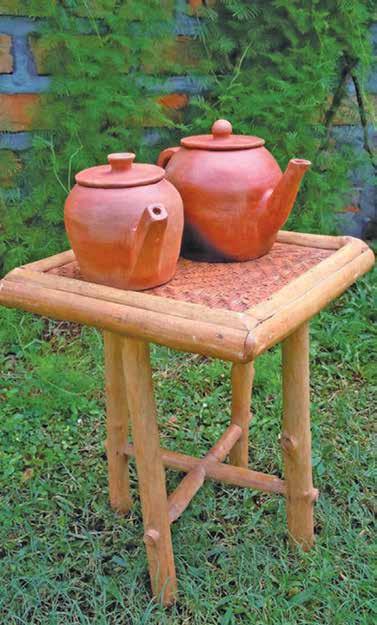
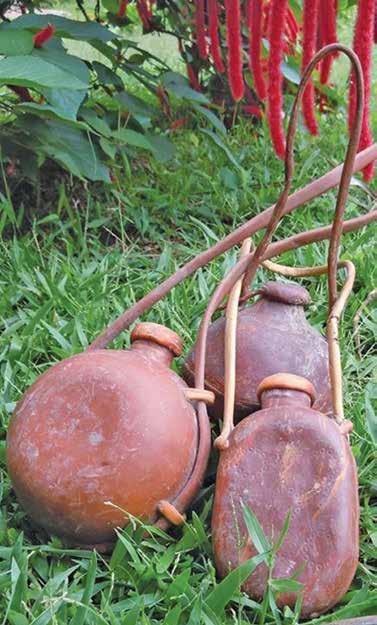
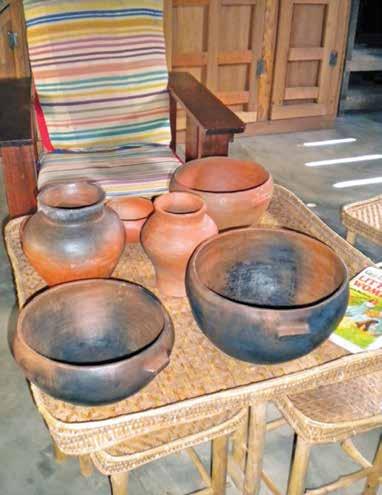
ly grown cotton, weaving a hammock, or take part in the magical technique of making a “fish basket” out of a single leaf. For more information, visit Rupununi Learners on Facebook. (Cover photos - Clay teapots from Toka , Cowhide chairs and Mini balata canteens from Katoka village)


ctor Katrina Kaif, who is rumoured to be Ranbir Kapoor’s current ladylove, feels that it would be a disrespect to her “existing relationship” if she talks in public about her former beau Salman Khan. During an appearance on screenwriter-lyricist Niranjan Iyengar’s talk show “Look Who’s Talking with Niranjan” - Season 2, Katrina was asked about her relationship with the “Dabangg” actor.
To that, she replied: “He is an amazing person and everyone in and out of the industry knows that. His parents and family treated me like a daughter always. But it does not seem respectful to my existing relationship if I talk about Salman or his family in the media hence I choose not to mostly.”
On being prodded about her “existing relationship” and her marriage plans with Ranbir, she said: “Ranbir is my all-time friend.” (Hindustan Times)

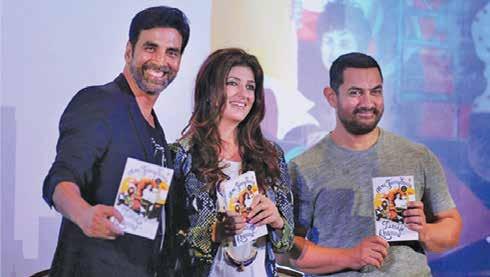
Several Bollywood actors have recently come out with books or are planning to do so in the near future - among them being Anu Aggarwal, Twinkle Khanna, Emraan Hashmi, Shilpa Shetty and Shadaab Amjad Khan.
In her book "The Modern Gurukul: My Experiments with Parenting", Behl shares her three principles of parenting which she says will help find a balance between tradition and modernity, and show how to raise a child in the digital age.
A few months ago, Khanna's "Mrs Funnybones: She's Just Like You and a Lot Like Me", Aggarwal's memoir "Anusual: Memoir of a Girl Who Came Back from the Dead" and Khan's debut novel "Murder in Bollywood" were published.
Full of wit and delicious observations, "Mrs Funnybones" is based on Khanna's popular column. The book, published by Penguin India, captures the life of the modern Indian woman.
Ayushmann Khurrana has also written a book called "Cracking the Code" in which he outlines a step-bystep guide to making it big in tinsel town, drawing on his personal experiences in Bollywood.
Hashmi is coming out with a book next year which will be a combination of his personal story and an emotional journey, along with practical reference and resources to help families whose loved ones are battling cancer.
Even a rich star like Justin Bieber can have a problem finding the right home. The pop superstar reveals he's currently looking for a new, nice pad in Los Angeles, but he's facing a great dilemma.
"I don't know where I really live," the 21-year-old Canadian says with a laugh during an interview with Us Weekly. "I'm just trying to figure it out, dude ... Me and Corey [Gamble] are laughing in the room right now, because he's helping me try to find a house. We just died laughing because we can't find, like we can, but we can't, 'cause I won't make a decision."
What exactly is Bieber's biggest consideration when buying a new house? "I don't want neighbors!" he admits. He further explains, "I'm loud, I'm really loud. I'm gonna play my music really, really, really loud every night, I'm gonna play the drums. I'm gonna have a lot of people over, probably. And I can't have neighbors, just because I don't want to piss anyone off."
He adds, "That's what I want to do at this young age: I want to have fun, I want to listen to music really, really, really loud. But we can't find that residence that's fully done yet ... that I don't have to wait for it to have two years of construction. It's a process, but we're gonna find it. Hopefully we

find it in the next six months or so."
Not less important, Bieber also wants privacy. "Something really gated so you have to go through a couple of gates to get there," the "What Do You Mean?" hitmaker shares what he wants from his future home. "That's what we need. No photographers."
(AceShowbiz)
Missy Elliott has released new music after a seven year hiatus, and like any artist would want from a comeback track, her release of “WTF” (or “Where They From”) has set the internet into overdrive.
The track, which features Pharrell Williams, was released with an accompanying music video.
The video is Missy Elliott through and through: it features amazing dancers, cool urban backdrops and funky street fashion. There's also dancing puppets.
It's clear that the artist hasn't lost her signature style and the world loves it. (Glamour)

Actor Daniel Craig, who reprised his role as the iconic super spy James Bond in “Spectre”, is in love with the merriment, music and thrill of Bollywood.
He says the Hindi film industry has mastered the art of capturing the “exuberance” and “celebration” of life on camera “exceptionally well”.
The actor, who has travelled to Kerala and shot in Goa in the past, also shared that he loves to watch Bollywood films and thinks they are “fabulous”.
“Yes! I have watched them [Bollywood movies] and they are fabulous. The exuberance, the life, the celebration, which Bollywood movies showcase, that’s what movies are about really. In the end it boils down to making movies for the audience that they enjoy watching and experience thrill which is what we try to do with Bond. Bollywood does that exceptionally well,” Craig said in an interview.
As far as his character is concerned, Craig asserts that with every film Bond gets “a bit older and a bit wiser”.
“I have a script to work

on, and we work on that very carefully for a long period of time before we start shooting the film. I believe in exploring the character and seeing what he’s capable of doing and gauging his limits and then pushing those limits,” said Craig, who is dropping hints that “Spectre” can be his last Bond film.
“Spectre”, also starring Christoph Waltz, Léa Seydoux, Monica Bellucci and Ralph Fiennes, is the 24th instalment of the film franchise.
Albert R. Broccoli’s EON Productions, Metro-GoldwynMayer Studios and Sony Pictures Entertainment’s “Spectre” will release in India on November 20 in English, Hindi, Tamil and Telugu. (Indian Express)
Christina Aguilera supports Blake Shelton and Gwen Stefani's romance
Christina Aguilera is totally on Team Blake Shelton and Gwen Stefani. During an interview in a Los Angeles event raising awareness of domestic violence, the mother of two gave her stamp of approval on the blossoming relationship between her two co-judges on "The Voice".
"She's an awesome girl. She's such a dedicated mom," she told Access Hollywood. "Knowing them for so long and having gone through my own divorce, it's rough no matter how you want to twist it. And then, under a media microscope, that just sucks. I feel for them, in both of their separate situations."
"Happiness deserves happiness. They're good people. I just know that divorce is tough and so they deserve some laughs and happiness and if it's [with] each other, then they deserve each other," she added. "I just saw them yesterday, actually, and I got the chance to tell [Gwen] in person ... 'You get that cowboy, girl!' "
Xtina also offered her advice to the couple on deal-

ing with media scrutiny amid their divorce proceedings.
"Don't read it! ...You don't need to fill your mind or give your energy to any of it. Keep it positive. Do what makes you happy. Do what makes your soul feel good," so she said to Billboard.
The new couple also got support from another co-judge Adam Levine. "They're my friends," he previously said in a radio interview with Ryan Seacrest. "Gwen and I have
really bonded lately. She's just the coolest, most wonderful person ever and people don't really realize that they are humans and they have problems just like everybody else."
"I love my friends and I support my friends through everything," he added without specifically mentioning Blake and Gwen's romance. "I've been actually really enjoying getting to know Gwen better in the past two months."
(AceShowbiz)
Taylor Swift can now ‘shake off’ that copyright lawsuit
IAccording to Jesse Graham, he has copyright ownership of the phrases "haters gone hate" and "playas gone play".
“Shake It Off” topped music charts around the world and reached number two in the UK. The video for the song has been watched more than 1.1 billion times on YouTube. (Glamour)
t was reported that Taylor Swift was being sued for US$42m (£27m) for allegedly stealing the lyrics to her hit 2014 song “Shake It Off”. US R&B singer Jesse Braham has claimed Taylor Swift stole the words from a song he wrote in 2013 called “Haters Gone Hate”. Now the case has been dismissed out of court. As well as the monetary compensation, Jesse Braham wanted his name added as a writer on the track.


Whilethere are no hard and fast rules for throw pillow placement and style, there is something to be said for finding the right combination and arrangement, whether by theme, contrast, same colour palette...
One bold pattern + one small pattern. Small meaning subtle pattern


One pattern + one solid. This is a simple mix that can have a big impact. Keep your background clean and simple Floral prints + one solid. Mixing and mingling



Method Melt butter in a Dutch oven over medium-high heat. Remove green tops from green onions. Chop green onion tops; set aside.
Thinly slice white portion of each onion. Add sliced onions to pan; sauté 2 minutes. Add flour; cook 1 minute, stirring constantly with a whisk. Stir in chicken, salt, pepper, 1 package of corn, and broth; bring to a boil.
Reduce heat, and simmer 5 minutes.
While mixture simmers, combine the remaining corn and milk in a blender; process until smooth. Add milk mixture to pan; simmer 2 minutes or until thoroughly heated.
Ladle 2 cups chowder into each of 4 soup bowls; sprinkle evenly with green onion tops.
Top each serving with 2 tablespoons cheese.
Makes 4 servings.
When a recipe asks you to start by browning the meat, really go for it –it's not the change of colour that's important here, but the flavours it brings with it. Searing meat over a high heat will caramelise the outside, adding an injection of savoury goodness to the finished dish; if you just push it round a warm pan, it'll end up tasting as beige as it looks. Make sure you don't overcrowd the pan either; if the meat starts to steam in its own juices, it will never brown.
Keep avocadoes out until they're ripe (when they give a little when pressed), then put them in the fridge to halt the process and keep them ready to eat. Once you've cut them, keep the stone in the remaining half squeeze on a little lemon juice to preserve them even further.
To keep spiders or any other nasty surprises out of shoes you keep outside, place old stockings over the top of them. Make sure the stockings don’t have holes in them, and if they don’t fit snugly over the top, use an elastic band to secure them.
To prevent buttons from becoming loose or undone, dab a little clear nail varnish on the top thread or onto the stem of the thread and leave to dry.
To keep pinking shears or scissors sharp, cut through a sheet of folded aluminium foil or coarse sandpaper.
Use buttons to hold small earrings together that tend to get separated in your jewellery box. Pair them through the button holes and there would be no hunting around for them or their backs ever again.

Six retired Irishmen were playing poker in Monaghan's flat in Dungarvan when Sean O'Toole loses €700 on a single hand, clutches his chest and drops dead at the table.
Showing respect for their fallen brother, the other five continue playing standing up. Michael Lennon looks around and asks, “Oh, me boys, someone's got to tell Sean's wife. Who will it be?”
They draw straws. Cavan Colquhoun picks the short one. They tell him to be discreet and gentle and not to make a bad situation any worse. “Discreet? I'm the most discreet Irishmen you'll ever meet. Discretion is my middle name. Leave it to me,” announces Cavan.
He goes over to O'Toole's house and knocks on the door. Brenda O'Toole answers and asks what he wants. Cavan declares: “Your husband just lost €700 and is afraid to come home.”
“Tell him to drop dead!” snarls Brenda.
“I'll go tell him,” says Cavan.
The way to Hell?
Adrunken man gets on the bus late one night, staggers up the aisle, and sits next to an elderly woman.
She looks the man up and down and says, “I've got news for you. You're going straight to hell.”
The man jumps up out of his seat and shouts, “Oh no, I'm on the wrong bus, I wanted to go to Baltimore.”
How to get really smart
Acustomer at Stingray Fishmongers marvelled at the owner's quick wit and intelligence.
“Tell me, Simon, what makes you so smart?”
“I wouldn't share my secret with just anyone,” Simon replies, lowering his voice so the other shoppers won't hear. “But since you're a good and faithful customer, I'll let you in on it. Fish heads. You eat enough of them, you'll be positively brilliant.”
“You sell them here?” the customer asks.
“Only $4 apiece,” says Simon.
The customer buys three. A week later, he's back in the store complaining that the fish heads were disgusting and he isn't any smarter.
“You didn't eat enough,” says Simon.
The customer goes home with 20 more fish heads. Two weeks later, he's back and this time he's really angry.
“Hey, Simon,” he complains, “you're selling me fish heads for $4 apiece when I can buy the whole fish for $2. You’re ripping me off!”
“You see?” says Simon, “you're smarter already.”
New will to live
An elderly gentleman named Morris had had considerable hearing problems for a number of years. Naturally, Morris went to his doctor and the doctor was able to have him fitted for a set of hearing aids that enabled Morris to hear perfectly.
Morris returned in a month to the doctor for his check up and was told, “Morris, your hearing is perfect. Your family must be really pleased that you can hear again.”
Morris grinned, “Oh, I haven't told my family yet. I just sit around and listen to the conversations. I've changed my will three times, already.”
Rupert and Elaine, young couple, got married and went happily on their honeymoon.
When they got back, Elaine immediately 'phoned her mother and her mother obviously asked, “How was the honeymoon, dearest?”
“Oh, Ma,” she replied, “the honeymoon was wonderful. So romantic...”
Then Elaine burst out crying. “But, Ma, as soon as we returned home Rupert started using the most ghastly language... saying things I've never heard before! I mean, all these awful 4-letter words! You've got to come get me and take me home.... Please Ma.”
“Calm down, Elaine!” said her mother, “Tell me, what could be so awful? What 4-letter words?”
Still sobbing, Elaine whispered, “Oh, Ma...words like dust, wash, cook, and iron.”
Part 1
Dropping out of school severely limits the chances of future success for far too many children. It deepens and continues the cycle of poverty into future generations. Receiving a good education is the lifeline by which many youth can lift themselves out of poverty.
Families can play an important role in making sure their student with or without disabilities graduates. Staying involved in your teen’s life during school is critical.
Middle school and high school students whose parents remain involved tend tomake better transitions,maintain the quality of their work,develop realistic plans for their future,have higher gradu-

ation rates, andadvance to postsecondary education.
Mula came upon a frowning man walking along the road to town. "What's wrong?" he asked.
The man held up a tattered bag and moaned, "All that I own in this wide world barely fills this miserable, wretched sack."
"Too bad," said Mula, and with that, he snatched the bag from the man's hands and ran down the road with it.
Having lost everything, the man burst into tears and, more miserable than before, continued walking.
Meanwhile, Mula quickly ran around the bend and placed the man's sack in the middle of the road where he would have to come upon it.
When the man saw his bag sitting in the road before him, he laughed with joy, and shouted, "My sack! I thought I'd lost you!"

Parents should make sure that their child completes his/her homework. Even if the child doesn’t have any,set aside time every day for homework. Limit the amount of time a child watches television and plays video games to no more than one or two hours each day.
Know your child’s friends and their families.Let teachers know that you want to be contacted immediately if your child has problems with homework or behaviour.
If your child is struggling, seek help. Parents and other adults can reduce the likelihood of dropout if they take steps to help youth cope with their problems.(To be continued)
I choose the mountain
The low lands call I am tempted to answer
They are offering me a free dwelling Without having to conquer
The massive mountain makes its move
Beckoning me to ascend
A much more difficult path
To get up the slippery bend
I cannot choose both I have a choice to make
I must be wise
This will determine my fate
I choose, I choose the mountain
With all its stress and strain
Because only by climbing Can I rise above the plane
I choose the mountain And I will never stop climbing
I choose the mountain
And I shall forever be ascending
I choose the mountain
Howard Simon
By Grammar G

Derived from Greek meaning “beyond” (some say “contrary”) and “expectation” comes the word paraprosdokian. In Greek times it was para prosdokian meaning “contrary to expectation”.
Its earliest known use is said to be around 1884 by a German philosopher of language. By the time it was used in non-Greek it was one word.
A paraprosdokian is a figure of speech or kind of wordplay in which a sentence or phrase starts out saying one thing but the latter part of itis surprising and unexpected – and often a source of humour.
Comics (and satirists) love to use the paraprosdokian and it often forms the basis of many jokes and satire.
Think of the famous Groucho Marx’s example: “She got her good looks from her father…he’s a plastic surgeon.”
Often tagged as witticisms as well, it is not only popular among stand-up comedians, but also in music, poems and prose for its unexpected contrast-

ing or comic effect: “Trin Tragula–for that was his name–was a dreamer, a thinker, a speculative philosopher or, as his wife would have it, an idiot…” (The Restaurant at the End of the Universe by Douglas Adams)
Here is an example of a paraprosdokian in Charles Stuart Calverley’s poem “Shelter”:
By the wide lake’s margin I mark’d her lie–The wide, weird lake where the alders sigh–A young fair thing, with a shy, soft eye; And I deem’d that her thoughts had flown…, All motionless, all alone.
Then I heard a noise, as of men and boys, And a boisterous troop drew nigh.
Whither now will retreat those fairy feet?
Where hide till the storm pass by? On the lake where the alders sigh... For she was a water-rat.
Each group of words has one four letter prefix that fits in front of them to form another word or phrase. Can you figure out which word it is for each group?
1. Nail, man, out, ten
2. Sick, work, room, plate
3. Do, up, shift, believe 4. Range, shot, horn, bow
5. Back, baked, way, hour
6. Dress, band, ache, rest



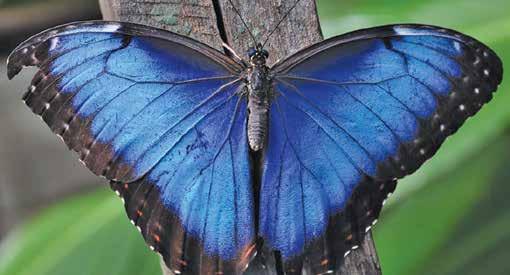
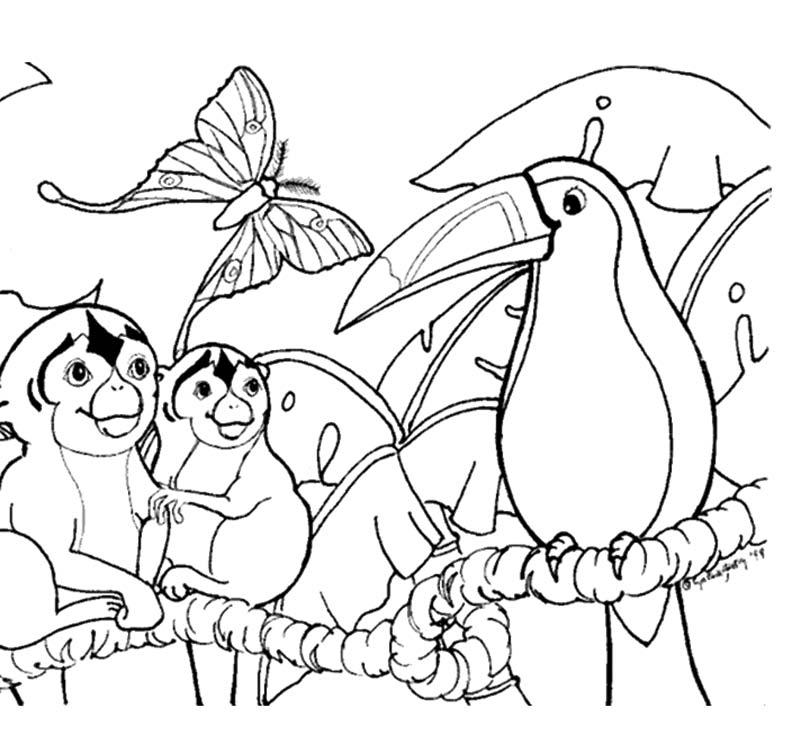
The Blue Morpho Butterfly (Morpho menelaus) lives in the tropical rainforests of Central and South America, and some parts of Mexico.
It is one of the world’s largest butterflies, with a wingspan of 5 to 8 inches.
It lives high in the rainforestcanopy and generally eats rotting or fermenting fruit using its proboscis. Adults do not eat nectar.
Blue Morpho Butterflies lay eggs which become caterpillars. When the larva or cat-
Acave is described as a natural opening in the ground, extending beyond the zone of light, which is large enough to permit human entry.
Caves occur in a wide variety of rock types and sizes, and are created by widely differing geological processes.
A simple classification of caves includes four main types and several other relatively less important types. These include Solution caves, lava caves, Sea caves and glacier caves.
Most of the caves in the world – as well as the largest –are Solution caves.
Solution caves are formed in rocks such as limestone, dolomite, marble, and gypsum by the action of slowly moving ground water that dissolves the rock to form tunnels, irregular passages, and even large caverns.
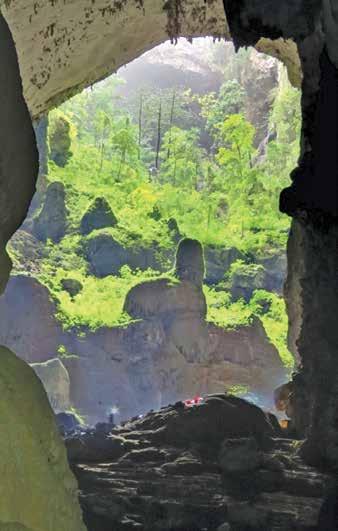
Hang Son Doong in Vietnam is the world's largest cave.At more than 200m (656 ft.)high, 150m (492 ft.) wide and 5km (3.10 miles) long, it has its own river, jungle and climate.
erpillar emerges from the egg, it is brightly coloured in reds and yellows. Stiff hairs on its head can irritate a human hand or anything else that touches them.
In its caterpillar form, the butterfly eats several different plants but particularly seeks out those in the pea family.
The Blue Morpho only has a lifespan of 115 days – which is still longer than many other butterflies. Like other insects and animals, it is also threatened by deforestation.

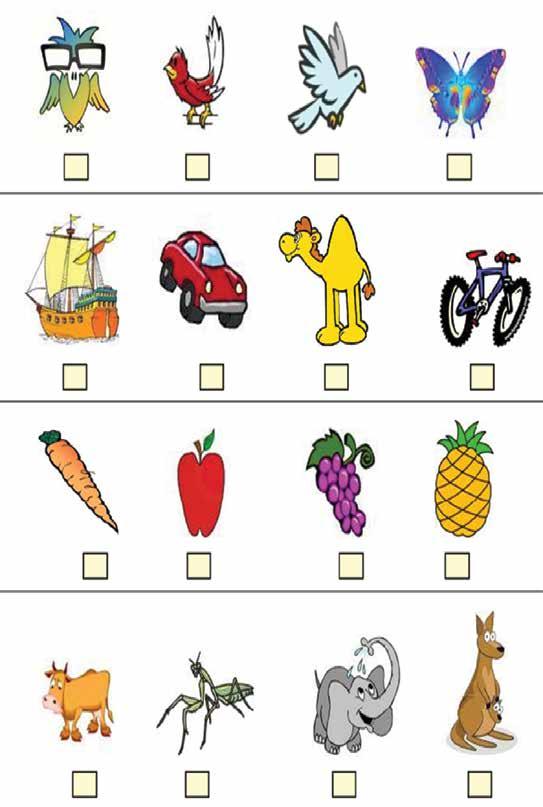
Find the odd one out
The objective of the game is to fill all the blank squares in a game with the correct numbers. Every row of 9 numbers must include all digits 1 through 9 in any order. Every column of 9 numbers must include all digits 1 through 9 in any order. Every 3 by 3 subsection of the 9 by 9 square must include all digits 1 through 9.
Domestic cat babies are called kittens. Kittens are born with their eyes closed. The eyes usually open about a week after birth. At first, all kittens’ eyes are blue; their true eye color will develop by about 3 months old.
Baby lions, leopards and tigers are called cubs. Lion cubs are vulnerable to predators such as hyenas and leopards, but other lions are the most dangerous of all.
Baby gorillas and other apes are called infants Infant gorillas weigh about 4 lbs. (1.8 kg) at birth.
It is rare for two hyena pups to survive, as the larger pup usually kills its littermate.
By Laurie Triefeldt
Almost all baby animals appear adorably cute to humans. Their big, innocent eyes and small, plump bodies make even the wildest of animals seem less aggressive. Scientists have theorized that babies of all kinds pull at our heartstrings because we are instinctively programmed to protect human babies and that we empathize with infants of other species.
is
Baby chickens are called chicks. A young hen (female) is called a pullet; a young rooster (male) is called a cockerel
A baby swan is called a
baby mouse can be called a pup,
or
A baby owl is called an
Baby spiders are called a
Baby bears are called cubs Polar bear cubs are born in snow dens. The den keeps them safe from predators and out of the elements.
Newborn dogs are called pups or puppies. They are born blind, deaf and toothless. During its first week of life, a puppy spends about 90 percent of its day sleeping and 10 percent eating.
horses and zebras are called foals. Male foals are called colts; female foals are called fillies
baby sheep is called a lamb, lambkin or
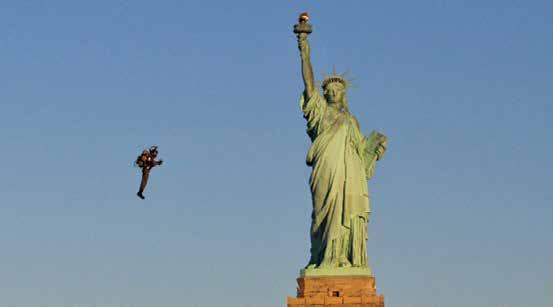
David Mayman and his Jetpack Aviation team, who posted a video to YouTube, showed off their JB-9 Jetpack with a flight around the Statue of Liberty, a New York landmark, on the Hudson River Nov. 3.
The Australian entrepreneur behind "the world's only real jetpack", as they call it, which is powered by scaled-down airplane
engines, told the Australian Broadcasting Corp.'s Hack podcast: "As far as we're concerned, a jetpack is something that you can take off and land from vertically…So if you can imagine walking out your front door and being able to take off from your porch..."
Mayman's jetpack contrasts with those worn by the Swiss Jetman team, Yves Rossy and Vince Reffet.
The head of Indonesia's National Narcotics Agency wants drug trafficking offenders to be placed in a prison surrounded by crocs, because "you can't bribe crocodiles."
Gen. Budi Waseso, chief commissioner of the National Narcotics Agency, or BNN, is proposing the Ministry of Justice and Human Rights construct a remote island pris-
on for drug traffickers and surround it with crocodiles to prevent the prisoners from contacting the outside world.
"We will keep sending them food supplies every day.
But they have to survive on their own," Waseso was quoted as saying by news website Tempo.co.
"We will place as many crocodiles as we can there. I will search for the most fe-
rocious type of crocodile," he said. "You can't bribe crocodiles. You can't convince them to let inmates escape."
"I have informed the Justice Ministry about [the crocodile plan]," he said.
The ministry has yet to give a green light to the commissioner's plan, but he announced plans to visit a crocodile breeding centre in Medan to view potential prison guards.
"I will also travel to Papua and Sulawesi to see which crocodiles are fiercer," he said.
The crocodile prison is not Waseso's only proposal for punishing drug dealers.
"Let them overdose by their own drugs," he said.


Indonesia's current drug laws allow for traffickers to face the death penalty, usually by firing squad. Waseso said the BNN is looking into whether the laws could be updated to include his drug overdose proposal as an execution technique.

Yves Rossy has shared the sky with an Airbus A380 airliner.
In incredible video footagethat can be seen at telegraph.co.uk, the fearless aviator was joined by pilot Vince Reffet in flying over Dubai with the huge aircraft.
be seen manoeuvring over the Airbus above the Palm Jumeirah and Dubai skyline.They flew at 4,000 feet alongside the plane and with a helicopter above.
'World's tallest man' dies aged 26
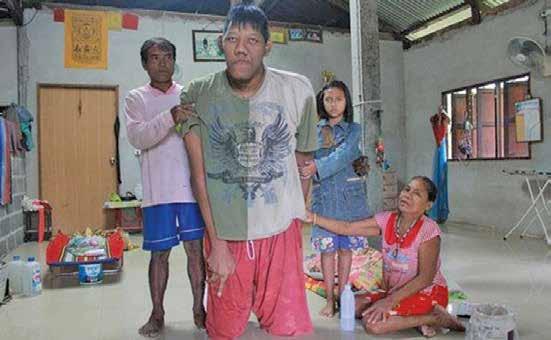
Aman who was thought to be one of the tallest in the world has died aged 26.
Pornchai Saosri, who measured 8ft 8ins (269cm), had been plagued by several illnesses related to his unusual rate of growth and had recently been treated in hospital.
Pornchai was bedridden and being cared for by his father Saran, 60, his mother Mrs Woen, 56, and their 15-year-old granddaughter before his death.
Mrs Woen reported that her son had died at 10.05am on November 9 at their home on Ban Takaeo village in the Prasat district of Thailand.
arious reports suggest there are several high-flying birds in the world who can fly as high as and higher than the 29, 035 feet high (8,850 metres) Mount Everest, the tallest mountain in the world.
In one report, the Ruppell's griffon vulture is said to have ascended some 37,000 feet (11, 277 metres) high.
The Common Crane has been recorded flying over the Himalayas at 33,000 feet (10,000 metres)
Bar-headed geese have been reported at heights of 27,825 feet (8, 481 metres) – 29,000 feet (8,800 metres).
Whooper swans have also been recorded flying as high as 27,000 feet (8,200 metres). Such dizzying heights would easily cause a human to loose consciousness. Scientists report that among oth-
She said she had found her son dead after returning from washing dishes.
Pornchai had recently been treated in hospital for eight days before being released and allowed home.
His funeral is yet to be organised.
After the media originally reported Pornchai's illnesses, locals had donated 110,000 baht (around £2,020) to the family.
Mrs Woen used some of the money to redeem her house which had been mortgaged to pay for Pornchai's medical bills.
There is approximately 50,000 baht (£920) of donations left over which will be used to pay for Pornchai's funeral.
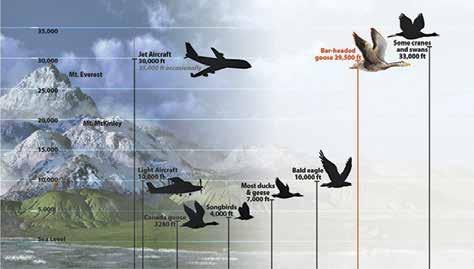
er adaptations, these birds have specially adapted haemoglobin that allows quicker absorption of oxygen
than other
so in
altitude they can extract more
from each breath.



ARIES (March 21April 19)


TAURUS (April 20May 20)



GEMINI (May 21June 20)

(June 21July 22)



LEO (July 23Aug. 22)

VIRGO (Aug. 23Sept. 22)



LIBRA (Sept. 23Oct. 23)

SCORPIO (Oct. 24Nov. 22)


SAGITTARIUS (Nov. 23Dec. 21)




(Jan. 20Feb. 19) (Dec. 22Jan. 19)


PISCES
(Feb. 20March 20)

Focus inward. Spend quality time with someone you love. Don't look for an argument when you should be offering affection and understanding. Positive personal changes should be your goal.
Expand your interests and make a point to include the people you love in your pursuits. Trying something you've never done before will be eye-opening and will help you discuss and resolve personal issues.
Problems with authority figures or dealing with institutions will crop up if you haven't followed the rules. Overindulgence or overreacting will lead to limitations and regret.
Enjoy what life has to offer. Plan to get out and do things that interest you. A family gathering or reunion will inspire you to make the effort to stay in touch.
Say little and do a lot. You'll be criticized if you don't deliver what you promised. Once your responsibilities are complete, you'll feel less stressed and more romantically inclined.
Enjoy yourself, but don't overspend. You don't have to pay for others in order to gain approval or love. It's important to keep your relationships equal.
Stick to what you enjoy doing and spend time pampering and pleasing yourself. Don't let life's little aggravations get to you. Shut out trouble and embrace your inner self.
Preparation is the key to accomplishment. Your unique skills and relentless desire to excel will give you the edge when faced with a competitive situation. Trust your instincts.
Focus on staying within budget and avoiding mishaps. Don't depend on others to pitch in and help. Do your own thing and take full credit for your accomplishments.
Physical injuries or minor health issues are best taken care of quickly. Being receptive to help when you need it will ease your stress and ensure that you get back on track fast.
Don't make decisions based on what someone tells you. Step back and look at the big picture. Focus on your personal image and spending time with the one you love.
Get out and participate in events going on in your community. Someone you encounter will give you a different outlook on life and ideas on how to cut corners and ease stress.