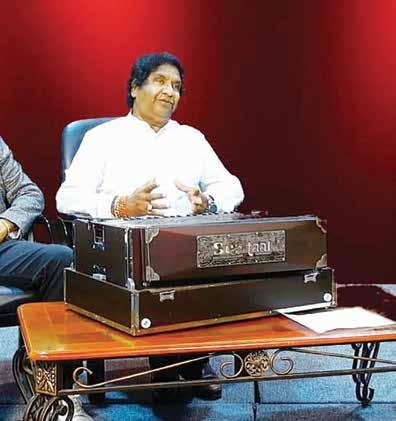
World-renowned Bhajan singer Raviraj Nasery to perform at “Daylight of Music”
“Become champions for ethical AI use” –US Ambassador tells local Journalists Revora Energy aims to bring Guyanese expertise to energy pricing markets
Driver of vehicle in fatal Long Creek crash was speeding, lost control – Police
Wash bay attendant arrested as probe deepens into AK47 assault rifle bust in Berbice
Scotiabank Guyana backs “Green” growth with $2M seed capital for 20 start-ups
The Berbice Bridge will be closed to vehicular traffic on:
Sunday, June 7 – 16:35h–18:05h and Monday, June 1 – 17:10h–18:40h
BRIDGE OPENINGS FERRY SCHEDULE
Parika and Supenaam departure times – 05:00h, 10:00h-12:00h, 16:00h, 18:30h daily
WEATHER TODAY
Thundery showers are expected during the day and at night. Temperatures are expected to range between 23 degrees Celsius and 29 degrees Celsius.
Winds: East-North-Easterly to Easterly between 2.23 metres and 4.47 metres.
High Tide: 16:31h reaching a maximum height of 2.44 metres.
Low Tide: 10:06h and 22:14h reaching minimum heights of 0.63 metre and 0.79 metre.
Teixeira calls out Opposition for “cherry-picking” issues to paint Guyana negatively – defends
Guyana’s
arliamentary Affairs and Governance Minister Gail Teixeira has called out the Parliamentary Opposition for highlighting only issues that put Guyana in a bad light, ignoring the progress the country has made on the international stage.
“We must be proud of what we’ve done in legislation to fight corruption... [But] the problem with the Members of Parliament (MPs) on the other side is that they’re not reading; they’re not looking up stuff. They’re just looking, cherry-picking what makes Guyana look bad and what makes the Government look bad,” Teixeira stated
anti-corruption efforts
during Friday’s sitting of the National Assembly.
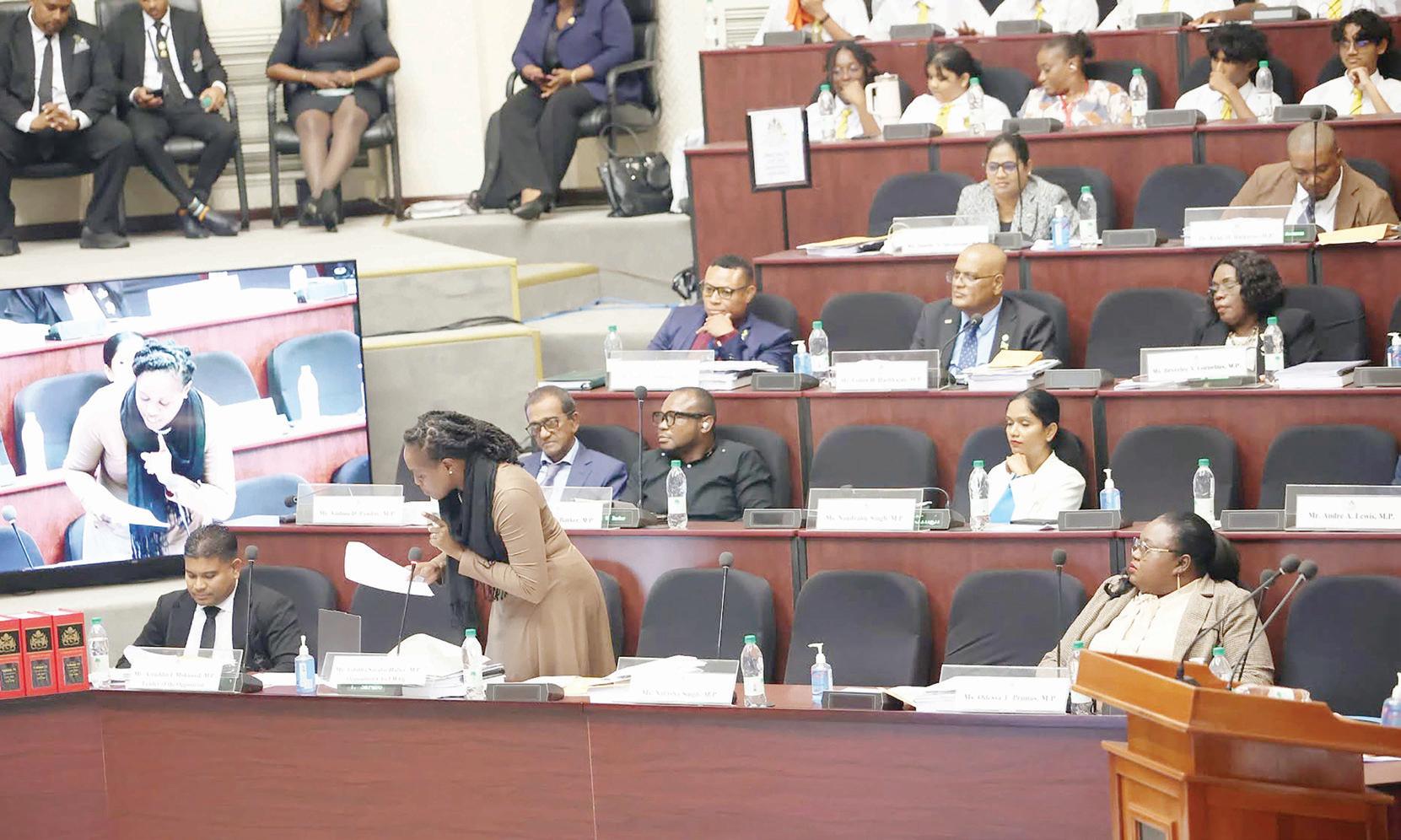
She was at the time responding to questions posed by Opposition Chief Whip, Tabitha Sarabo-Halley, about Guyana’s poor ranking by Transparency International (TI) on its Corruption Perceptions Index (CPI).
In its latest report in 2025, TI ranked Guyana 92 out of 180 countries, with a score of 39 out of 100 on its Corruption Perceptions Index – something which the Government had strongly criticised at the time. Reiterating the same concerns in the National Assembly on Friday, Minister Teixeira was quick to point out that this is a perception index and does not use any empirical data to truly reflect the actual situation in the country.
According to the Parliamentary Affairs and Governance Minister, “What it does is that it selects, in every country, based on population, the
number of people that are asked to comment on their perception, their subjective views, that is, on what is going on in the country with specific things to do with state corruption, Government efficiency, etc. ...Based on the population, it might be two people, it might be one person, or it might be five people over the years... That is how perception is... what you believe, what you think. It’s not what is fact. It’s not what data is.”
In fact, Teixeira noted that even TI itself has indicated in its report that the CPI does not measure actual corruption levels but reflects perceptions. For this reason, the Minister noted that Guyana, and many other countries, do not rely on the CPIs produced by TI, which are often used politically against Governments. Moreover, she went on to spotlight the double standards of the international body, which works in over 100 nations to combat corruption. According to the Minister, TI is funded by 14 countries from the Global North – all of which receive high rankings in their CPIs. This, she argued, is a clear conflict of interest, which happens to be one of the tenets of corruption.
Parliamentary Affairs and Governance Minister, Gail Teixeira
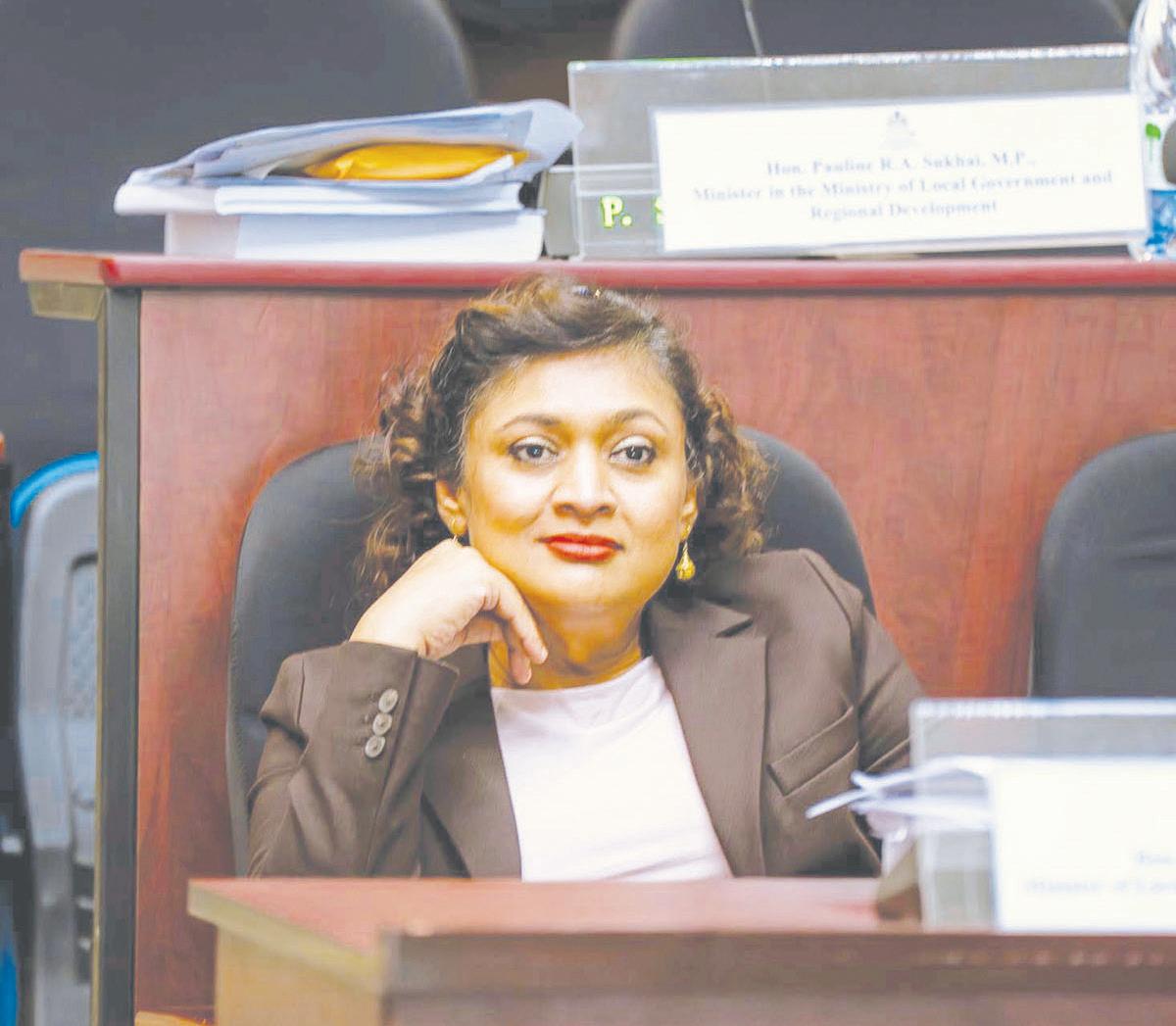
Opposition Chief Whip Tabitha Sarabo-Halley during the sitting of the National Assembly on Friday
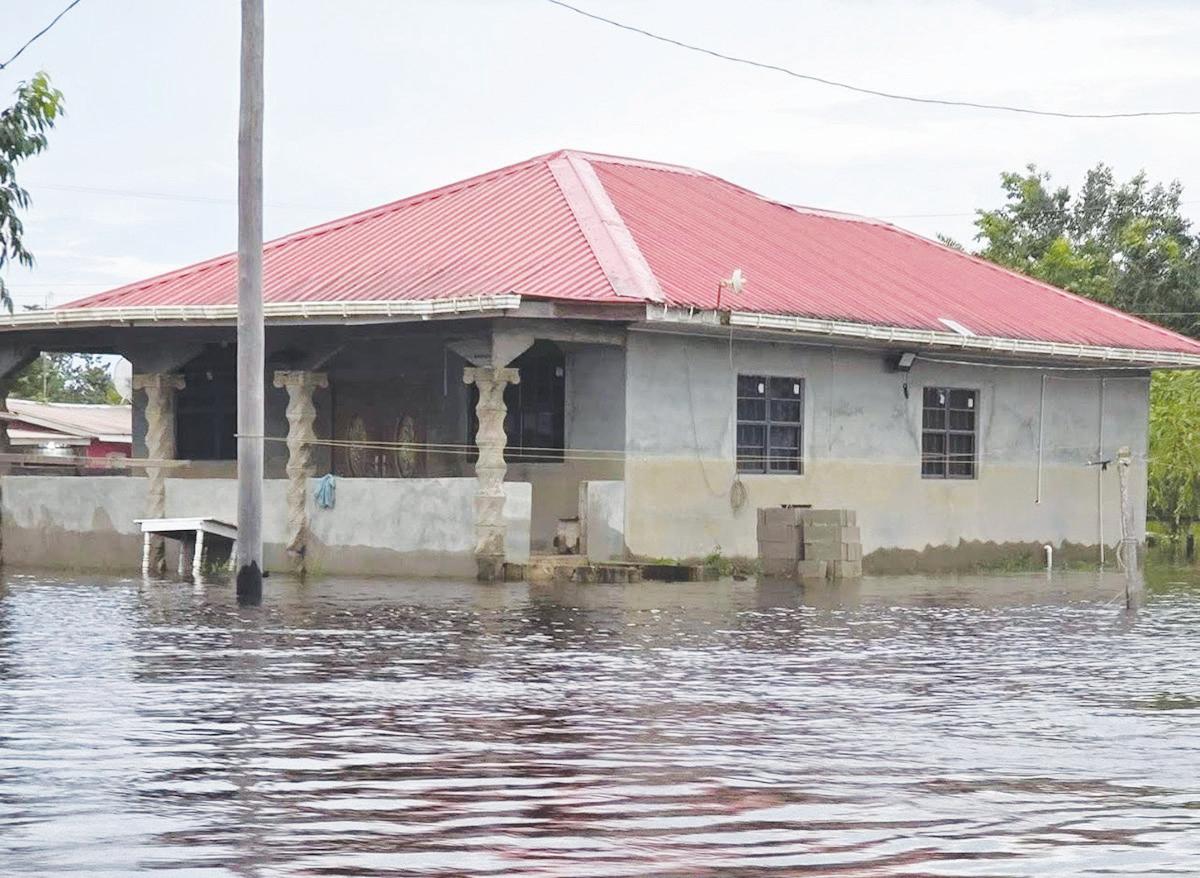
Another wave of floods has hit our country – including, this time, some interior areas. Historically, our coastland has always been existentially threatened by floods – carved out as it was from mangrove swamps that had been formed by silt precipitated from the Amazonian waters that pour into the Atlantic and are brought by currents around the shoulder of our continent and across its northern coast. The coastland is between three and four feet below sea level, and the Dutch made it habitable during the 18th century – as they had done in the previous three centuries in their native Holland – through the creation of an intricate network of dams, canals, and sluices (kokers).
The threat from flooding arises from two sources – the Atlantic on the north, and excessive rainfall that periodically overwhelms the drainage system. The Atlantic is kept out by a combination of concrete seawalls, earthen sea dams, and mangrove stands. The latter uses the root systems of the red, black, and white mangrove trees to break the force of the waves and facilitate the accretion of silt to raise the level of the land. The seawalls and sea dams are maintained by the Ministry of Public Infrastructure, and of late, there have been no extensive floods from this quarter, even though it has been shown conclusively that the sea level is rising.
The rise of 0.9 mm annually, at this time, isn’t significant, but plans will have to be made for the future. The mangrove forests are maintained through the Mangrove Restoration and Management Department of NAREI with the assistance of the GFC, the EPA, and the PAC. Their challenge is to deal with the 25-year cyclical changes in the deposit and erosion of the Atlantic silt that removes large swathes of mangroves. There have been limited floods from this source, and as such, efforts at restoration must be intensified.
Most of the floods, then, have been caused by excessive rainfall that overwhelms the man-made drainage system and raises the levels of some rivers and creeks over their banks. The Government is quite cognisant of this threat and has intensified its initiatives to address the threat to our livelihoods and health. In the last five years, they have spent some GY$140 billion on drainage and irrigation, which, inter alia, deals with the threat of flooding. This year, a whopping GY$81 billion has been budgeted in this area.
The principles of the coastal drainage system were established by the Dutch centuries ago, as mentioned earlier, and have not changed fundamentally. Their purpose was to create arable land for agriculture, and this function remains that of the “National Drainage and Irrigation Authority” (NDIA) within the Ministry of Agriculture. Cultivable acreage of between 500 and 2000 acres was laid out in a grid on contiguous plantations, first along the river banks and then on the coast, with a “back dam” mile inland to control accumulated interior water. South-north irrigation canals brought in water to the centre of the plantation, which was laid out in fields separated by east-west cross-canals. The outer edges of the plantation had drainage canals (side-lines) into which the side canals emptied and which ran to the seawall or riverbank controlled by sluices or “kokers”. These sluices would be opened at low tides to expel excess water.
Almost every village, town, or city on our coast was once a plantation, and if they experience flooding, it means the drainage system isn’t working due to a combination of many factors that have to be addressed by the NDIA. Siltation and blockage of drains and canals by garbage, astronomical increases in concreted yards decreasing the permeable area for absorbing water, and closure of sugar plantations – all combined with shorter but more intense periods of rainfall. The Government has created multi-linked canals and sluices in several coastal regions; constantly desilted and widened canals; and worked with local bodies to discourage the dumping of garbage.
But there still remain the flooding. We have to begin planning strategically to move inland.
A bank that finally meets the challenges of the small Guyanese entrepreneurs
For decades, the most familiar story in Guyanese small business has not been one of failure but of frustration. A seamstress in Sophia with three steady clients and a waiting list cannot expand because she has no land title to pledge. A young agro-processor in Region Two has the recipes, the labels, and the buyers – but no bank willing to lend GY$2 million without a cousin’s house as security. A wheelchair-using software developer in Linden builds apps from her bedroom because the cost of a small office is locked behind an interest rate she cannot service.
These are real examples. They are the everyday architecture of exclusion in our financial system, and this is precisely what President Ali’s vision of a development bank is designed to dismantle. The new bank will be capitalised at US$200 million, and its core offering will be loans of up to GY$3 million at zero interest with reduced collateral requirements.
This initiative deserves the full support of the Guyanese public – not as a handout, but as one of the most strategically timed economic interventions of the post-oil era.
The timing could not be better Guyana is in the midst of the fastest economic transformation in the Western Hemisphere. Our GDP grew by more than 43 per cent in 2024 and continues to expand at double-digit rates. Roads are being built, ports are being expanded, hotels are rising, and demand for goods and services – from catering to construction supplies to creative content – is multiplying faster than local suppliers
can meet it.
The danger in a boom of this size is not that there is too little opportunity. It is that the opportunity flows almost entirely to those already capitalised: large firms, foreign contractors, and established importers. Without deliberate intervention, the small Guyanese entrepreneur becomes a spectator in his or her own country’s prosperity. The SME Development Bank is that deliberate intervention.
What the bank actually changes
Three features make this institution different from anything we have tried before.
First, zero interest. Commercial bank lending rates for small businesses in Guyana have historically sat between 10 and 14 per cent. On a GY$3 million loan, that is roughly GY$300,000 to GY$420,000 a year in interest alone – often more than a micro-enterprise’s annual profit. Removing interest does not just lower costs; it changes which businesses are mathematically viable and sustainable.
Second, reduced collateral. The collateral requirement is the single greatest barrier to credit for women, young people, and persons with disabilities – groups statistically less likely to hold titled property in their own names. By relaxing this requirement, the bank effectively unlocks the productive capacity of demographics that the formal financial sector has too often excluded.
Third, targeted inclusion. The explicit emphasis on youth, women, and persons with disabilities is not a symbolic gesture. These three groups together represent the majority of Guyana’s work-
ing-age population, and they are over-represented in the informal economy, where productivity gains are hardest to capture. This strategy moves them out of the informal economy and into the formal economy. Bringing them into the formal credit system is how an economy converts demographic potential into measurable growth.
The wider economic case
There is a temptation, in a country with our oil revenues, to assume that direct cash transfers or large infrastructure projects are sufficient; however, on closer observation, the evidence suggests that while these initiatives are necessary, they are far from sufficient. Oil revenue is finite, volatile, and concentrated. A diversified small business sector is the only durable insurance policy against the day when oil production slows down.
Every GY$3 million loan that capitalises an agro-processor in Berbice, a tour operator in Region Nine, or a tailoring shop in Linden does three things simultaneously: it creates jobs that do not depend on the oil sector, it adds to the existing tax base, and it keeps money circulating in Guyanese communities rather than leaking offshore through imports. A US$200 million capitalisation, lent and recycled prudently, can finance tens of thousands of such loans over the life of the institution.
The priority sectors the government has identified –agriculture and agro-processing, tourism and hospitality, services, and creative industries – are also the sectors where Guyana has a genuine comparative advantage and
where small firms, not multinationals, are the natural unit of production.
The legitimate concerns and how to address them No serious supporter of this bank should pretend the risks are zero. Zero-interest lending, if poorly administered, can create dependency or encourage poor lending decisions, or the institution can simply lose money. Reduced collateral, if combined with weak underwriting, can produce default rates that erode the capital base. In addition, the combination of zero interest and reduced collateral can lead to perverse incentives or what is referred to as the “cobra effect”. This is where a well-intentioned reward structure inadvertently motivates people to act against the system’s actual goals.
The answer is not to abandon the idea. It is to build the bank correctly from day one. That means a governance structure with a clear framework that defines authority, responsibilities, and decision-making processes. It must ensure organisational activities align with objectives while managing risks. It must incorporate the following core pillars:
· Transparency: Open, clear, and accurate communication with stakeholders
Accountability: Answerability at all leadership and operational levels.
· Responsibility: Ethical decision-making aligned with the organisation›s goals
· Fairness: Equitable treatment of all stakeholders without bias or conflicts of interest
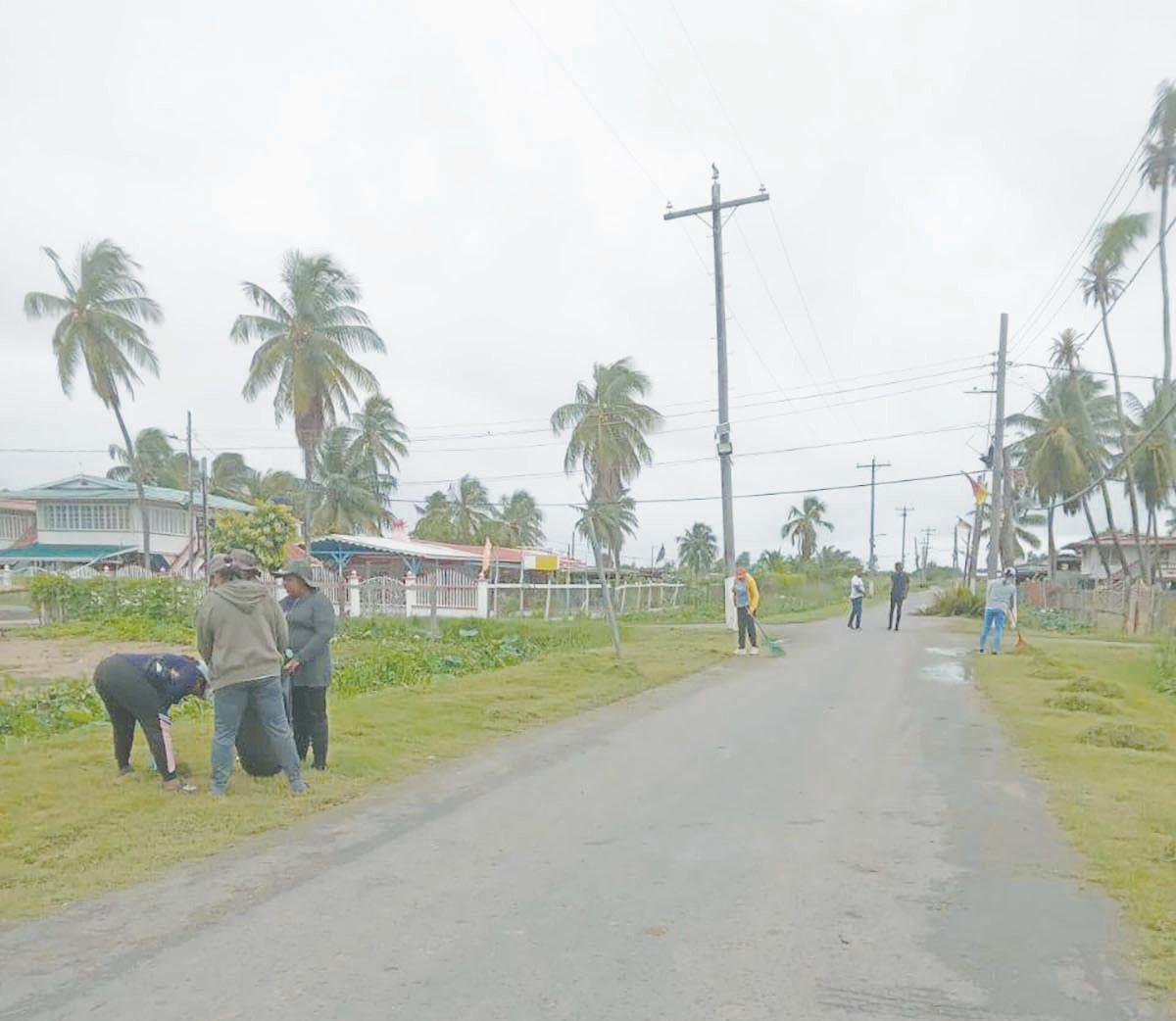
In observance of World Environment Day 2026, employees from several departments at the Oko West Project in Region Seven (CuyuniMazaruni) participated in a site-wide clean-up campaign aimed at promoting environmental stewardship and reinforcing the importance of maintaining a safe and sustainable workplace
GETTING AN ANNUAL CHECK-UP
By Ryhaan Shah
An annual physical is vital for the elderly as it acts as a proactive defence against age-related conditions. It allows healthcare providers to catch silent issues early, manage existing chronic illnesses, prevent falls, and perform necessary medication reviews – all of which would significantly improve our quality of life.
Last week, I wrote that I have just had my annual check-up and stated how much peace of mind it gives me. I also advocated for this kind of comprehensive medical examination to be provided free of cost for every senior citizen by our Government. This makes sense all around; there is no downside to providing this particular care for the elderly.
It is not just detecting the onset of chronic conditions early when they can be successfully treated or reversed, but keeping the ageing population healthy can have spinoff benefits for the nation in that the wealth of experience we have can be tapped for national benefit. There are also the long-term cost benefits to the national budget if there are fewer medications and treatments required for the ageing population.
Many serious conditions – such as heart disease, diabetes, and cancer – can develop without obvious early symptoms. Regular tests and screenings can catch these before they reach a more critical stage.
An annual visit to the doctor for a comprehensive physical would also allow for a review of medications and for making adjustments that may have become necessary. Early detection of such conditions as Alzheimer’s and dementia could also help with both treatment and long-term planning for care.
A leading cause of injury for the elderly slips and falls because of balance and mobility issues. If doctors can assess strength and balance early enough to advise the use of canes or walkers, this could help prevent falls that sometimes result in serious injuries to hips and other joints, which, in turn, lead to disabling issues and negatively affect our independence.
A yearly meeting with a doctor could just be a chance to ask questions and get answers about our health and, for the doctor, also to recommend lifestyle changes – such as nutrition, exercise, and medications – to support healthy ageing.
While my annual check-up does not yet include checking on mobility issues, hearing, or eye examinations, these could be necessary for others who may be developing cataracts that would require surgery or have hearing issues or trouble with their balance when walking that would require some attention or medical intervention.
While ageing itself is not a disease, this natural process makes us more susceptible to developing chronic illnesses because of the wear and tear on our bodies during our more youthful years when many of us may not have taken as much care of our health – poor diet and lack of exercise come to mind – as we should have. This would make us more prone, perhaps, to becoming frail, weak, and ill as we age.
While biological ageing is not reversible, lifestyle factors can dictate when we begin to feel old. These factors include diet and nutrition, our exercise regimen, sleep patterns, stress, and our mental health. If these are all poor, they can be massive contributors to premature ageing.
These, however, are mostly ignored until there is a medical crisis such as a stroke, heart attack, or cancer. While not every illness is preventable, helping ourselves to allay the risks by living healthily can bring about the major payoff of keeping us free of health issues.
Unfortunately, we do appear to have a culture of critical health care-seeking help when there is a crisis and it may be too late-rather than preventative care that would detect symptoms of an illness early enough to treat it successfully.
It is not that there are no programs or information to educate the general population about disease symptoms, but we tend to pay little attention until we actually feel ill or fall ill. And there is still a significant reliance on “natural” remedies or bush medicine for serious ailments stemming from a distrust or misinformation about medical science.
Establishing a free annual check-up programme can help reverse these trends even as it would be vital to assessing our physical and mental well-being and taking the necessary steps to counter any developing illness or disease. It is said that ageing is not a disease but a triumph. Just so.
And, overall, there is no doubt that Guyana will have a healthier and happier elderly population if every senior citizen is afforded a free and comprehensive annual medical examination.
The Development Bank will catalyse SMEs in all critical sectors
Dear Editor,
Currently, there are more than 520 development banks and development finance institutions worldwide. These institutions collectively account for approximately 10 per cent of total global investment. These institutions are created to address a persistent market failure: the exclusion of strategically important but higher-risk sectors from traditional financing channels.
Firms operating in these sectors – often critical to national development –face prohibitive borrowing costs, stringent collateral requirements, or outright credit denial from commercial banks. Development banks are therefore established to bridge this gap, enabling investment where private finance is either unwilling or unable to act.
In Guyana, a development bank was created in 1970 to extend credit to businesses, especially cooperatives. However, by the late 1990s, the bank collapsed as a result of poor management and the deterioration of the economy, which saw the demise of all key sectors. Under the Economic Recovery Programme, the Government had no option but to close the bank as part of its effort to divest underperforming state entities and liber-
alise the financial sector.
The situation today is fundamentally different. Guyana is experiencing rapid economic expansion in every sector. This growth is accompanied by significant bankable investment opportunities in both the oil and non-oil sectors. Small and medium-sized enterprises (SMEs), in particular, are poised to play a pivotal role in broad-based growth, job creation, and economic diversification. Recognising this fact since 2020, the Government is in the process of establishing an SME Development Bank to not only provide financing to these businesses but also to actively support their long-term viability.
This new institution, as conceptualised by the president, will catalyse SMEs in all critical sectors by offering zero-interest loans without collateral for amounts below GY$3 million, directly addressing the most binding constraints faced by small businesses. Beyond financing, the bank will provide technical assistance, training, and other support services to improve business capacity, enhance survival rates, and foster sustainable growth.
Importantly, the SME Development Bank is not intended to compete with commercial financial institutions.
Instead, it is designed to complement them. For SMEs requiring larger financing, the bank will play a catalytic role – de-risking enterprises and preparing them to access private capital. In doing so, it will help crowd in investment, strengthen financial intermediation, and expand access to credit across the economy.
By targeting underserved sectors, supporting entrepreneurship, and facilitating private sector participation, the SME Development Bank will serve as a critical instrument for advancing Guyana’s development agenda – driving diversification, creating jobs, and ensuring that economic growth translates into broad-based prosperity. Importantly, it will be part of the financial system that supports sustainable development.
With the tabling of the Bill in the National Assembly yesterday to establish the SME Development Bank, the government will deliver yet another manifesto promise, fulfilling the dream of SMEs to access finance on terms and conditions available only in Guyana.
Kind regards, Professor Tarron Khemraj and Sukrishnalall Pasha
CHAOS on East Bank Road to CJIA
Dear Editor, I’ve had to commute to and from Cheddi Jagan International Airport over the past five years, on an average of three times a year, and on every occasion, the trips seem to be getting from bad to worse. I’ve been intending to write on this nightmare for over two years, but procrastination intruded.
I felt some degree of hope after a particular incident when travellers were seen in photographs “pulling suitcases” to reach the airport, which prompted His Excellency to summon the contractor(s), Minister and others responsible to an urgent meeting.
However, after an initial alleviation of the trauma, the issue has reverted to ut-
ter CHAOS once again. I had to travel this route two weeks ago and saw lines of vehicles extending for MILES with little or no movement for periods in excess of 15 minutes at a time.
I was reminded of this long overdue letter after seeing a travel advisory that passengers should leave for the airport in enough time (?) in order to reach it three hours before check-in time. I know as a fact that persons who can afford it have resorted to staying at the newly opened hotel in close proximity to the airport.
I can only imagine what persons travelling to and from the CJIA, who live in Essequibo, Berbice, and hinterland areas have to go
A bank that finally...
The bank should also have independent and professional credit assessment; transparent, published criteria; strict separation between political officeholders and lending decisions; mandatory business training for firsttime borrowers; and public quarterly reporting on disbursement, repayment, and sector outcomes. Done well, the Development Bank could be one of the most impactful institutions in the country.
A bank for the Guyana we are becoming For too long, the question facing the small Guyanese entrepreneur has been, “How do I prove I deserve credit?” The right question, for a country at this moment in its history, is the reverse: how does the financial system prove it deserves the entrepreneur?
The SME Development
FROM PAGE 4
Bank is the first serious answer this country has given to that question. It is not a perfect institution, and it will not single-handedly solve poverty or inequality. But it does something rare in public policy – it directs real money, at a meaningful scale, at the precise people whose exclusion has held back our economy the longest.
If we get this right, a decade from now we will look back on the establishment of this bank as the moment Guyana decided that prosperity would be built from the bottom up, not handed down from the top.
It deserves our support. More importantly, it deserves our vigilance – so that it lives up to its promise.
Floyd N Haynes Chairman, NewyHayven Merchant Bank
through. I confess that I am NO expert in construction, but on many occasions, I’ve seen very few workers “on site” doing actual work, with equipment both on and off the carriageways, just parked. I often wonder if this project doesn’t have a supervisor, and if it does, how often reports are required and who these are sent to. I know the weather has been unpredictably adverse and erratic, but surely after so many years in construction, much better can be done.
I’ve heard comments that too long “stretches” of construction are being done simultaneously, with sometimes no traffic control, forcing the “law of the jungle” to take over, obviously causing additional chaos and frayed nerves.
I know there would be criticism for not suggesting
solutions to this unacceptable situation, but my answer to that is twofold: Who listens? And don’t we any longer have the experts who we are already paying to provide efficient and workable solutions to this seemingly endless “Cassandra Crossing”?
I know as a fact that for contracts of this type, a clause for liquidated damages is mandatory for delays which are not force majeure. Can the responsible agency please let the Guyanese people know when this contract is supposed to be completed and, if the time stipulated in the contract has elapsed, whether this clause is being enforced?
Anxiously awaiting some response, Editor, if it is found useful to publish my concerns.
Kind regards, Harry Nawbatt
How well do climate laws help reduce global warming?
orld Environment
WDay was celebrated on Friday, June 5, reminding people everywhere that taking care of Earth is everyone's responsibility. While individuals can help by recycling, conserving water, and planting trees, Governments can also take action.
One way they do this is through climate laws – rules aimed at reducing pollution and protecting the environment. But how effective are these laws? Let's find out how climate laws help in the fight against global warming.
Climate change has been in the news a lot lately. Politicians often talk about the laws that they’re making to reduce greenhouse gas emissions and prevent global warming. But are they helping?
You might have heard of the Paris Agreement, which aims to avoid dangerous climate change by limiting global warming to under 2°C (ideally under 1.5°C!). Over 190 countries have signed it, yet we’re still not on track to meet this goal. In fact, we aren’t even close. Some scientists predict that global greenhouse gas emissions over the next 30 years will be too high and that we are heading for 3°C instead of under 2°C.
But countries are taking some action – every country in
least one climate change law, and there are over 1800 laws worldwide!
Researchers wanted to find out
what these laws have achieved. They must have had some impact, right? Global emissions would surely have been higher without them, but by how much?
Researchers believed that once a new law comes into force, it starts to affect national emissions. Some laws may kick in immediately, whilst others may take longer. They wanted to find out exactly how much
put into place in 133 countries between 1999 and 2016.
This database includes:
• Lots of different types of laws – including Parliamentary acts and executive orders.
• Laws that directly target climate change, and others that indirectly have an impact on climate change.
• The laws of every country in the world over the past 30 years or longer.
Researchers used statistical modelling to investigate the link between new climate laws and greenhouse gas emissions. When they did this research, there were over 1800 global laws. Some were not about greenhouse gas emissions but climate risks like heat waves and floods, and others were in countries researchers didn’t cover. Therefore, they included 1092 climate change reduction laws in their analysis.
Researchers explored three questions:
1. What were the impacts of new climate laws on greenhouse gas emissions in the short term (within three years) and the long term (over three years)?
2. How does a country’s ability to implement a new climate law affect how much it reduces greenhouse gas emissions?
3. What type of law is more powerful in cutting emissions: Parliamentary acts or executive orders?
They found out that:
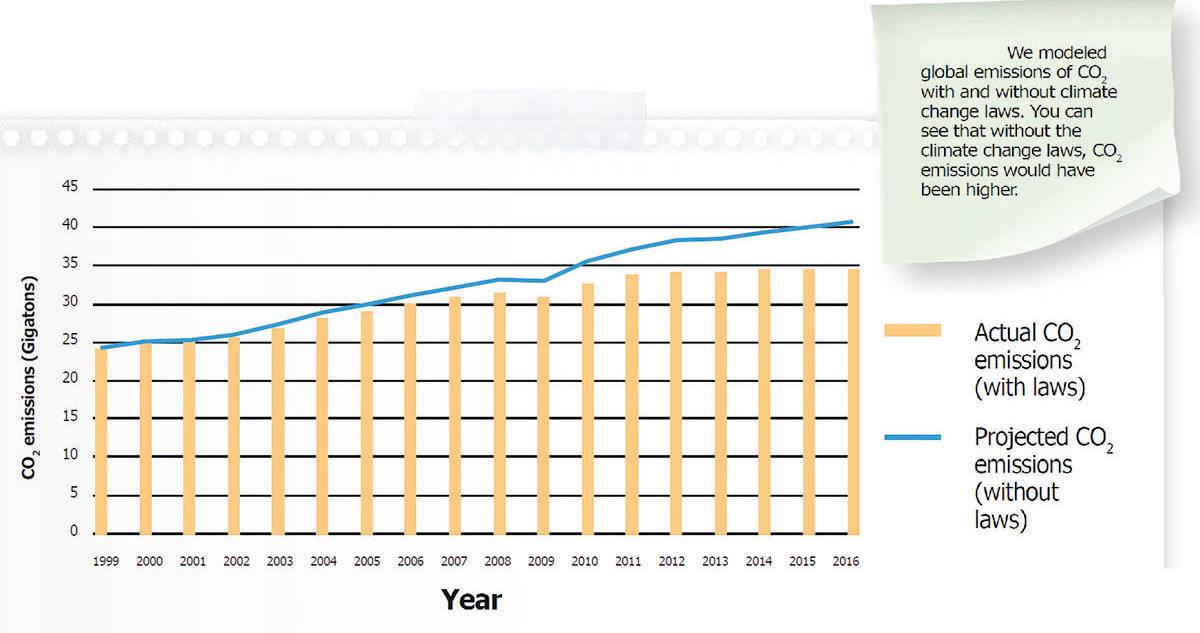
• Each new law reduces yearly carbon dioxide (CO2) emissions by 0.8 per cent in that country in the short term and by 1.8 per cent in the long term.
• Countries with a stronger ability to implement these laws had a bigger fall in emissions in the long term – of 2.4 per cent.
• In 2016 alone, climate laws led to 5.9 gigatonnes less CO2 being emitted. That’s more than the whole of the USA’s emissions that year!
shape and size. Researchers measure the effectiveness of a climate change law by how much it reduces emissions. This depends on how well it is implemented by the country’s Government.
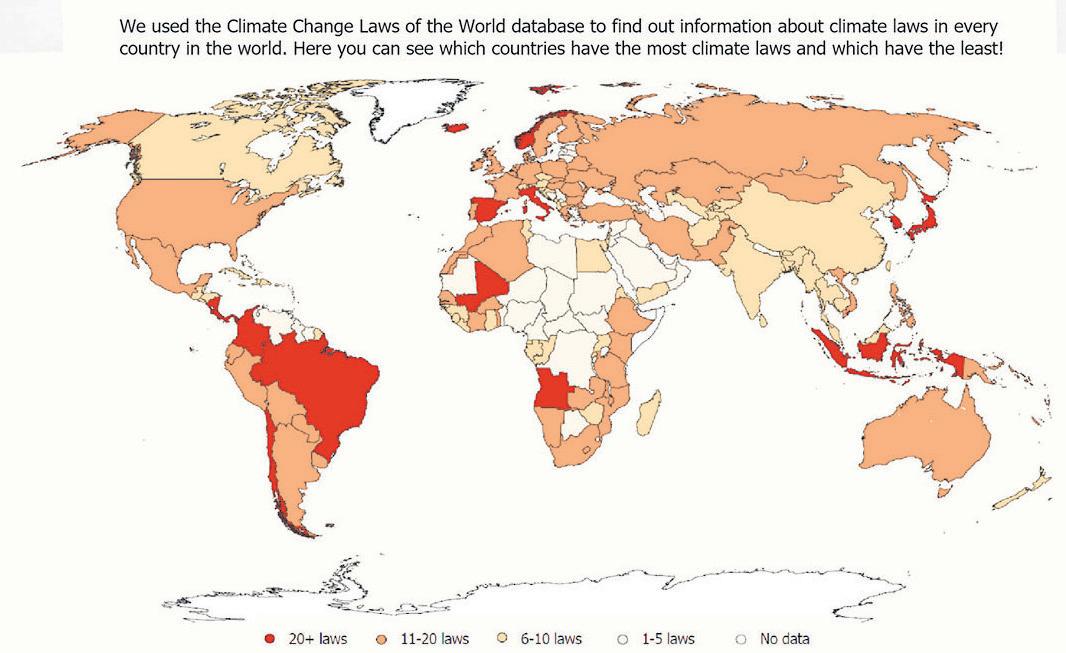
Some countries are doing well at making climate laws –for example, Brazil has 28, and Spain has 38! Some are very ambitious and tackle a lot of issues, whereas others aren’t as good. Brazil’s 28 laws have not all been implemented very well and have not helped to stop deforestation. Researchers have painted a global picture of climate change laws and their impact on global greenhouse gas emissions. Their findings show that they have made some difference, but we won’t meet the goals of the Paris Agreement unless we do more. Across the world, we need stronger, better-implemented laws!
• From 1999 to 2016 (18 years), we’ve only saved 38 gigatonnes of CO2 – that’s only one year’s worth of global CO2 emissions. And the impact of these laws on other greenhouse gases is even lower!
• About 40 per cent of climate laws are Parliamentary acts, and 60 per cent are executive acts.
• Parliamentary acts are a more powerful way to cut emissions – they’re responsible for most of the reductions.
Climate scientists have spent years trying to get politicians to agree to new climate laws. Climate change laws don’t all come in the same
The COVID-19 pandemic and lockdowns showed that politicians can make laws that will change people’s behaviour. When people had to stay at home, greenhouse gas emissions were reduced. However, the pandemic also negatively affected lots of countries’ economies. Some politicians would like to help the economy and reduce emissions by spending more money on renewable energy, like wind farms and solar power, and they would like us to drive electric cars. Have you seen any signs of this where you live? You can also help the environment by cutting down on energy use in your home. You can avoid leaving appliances on standby, switch to LED lightbulbs and reduce the use of a car, for example.
(Adapted from sciencejournalforkids.org)
the world has at
these laws help to limit global warming and how long it takes. They looked at all the national climate laws which were
“Become champions for ethical AI use” – US Ambassador tells local Journalists
- as GPA President urges use of AI to strengthen democracy & protect people's rights
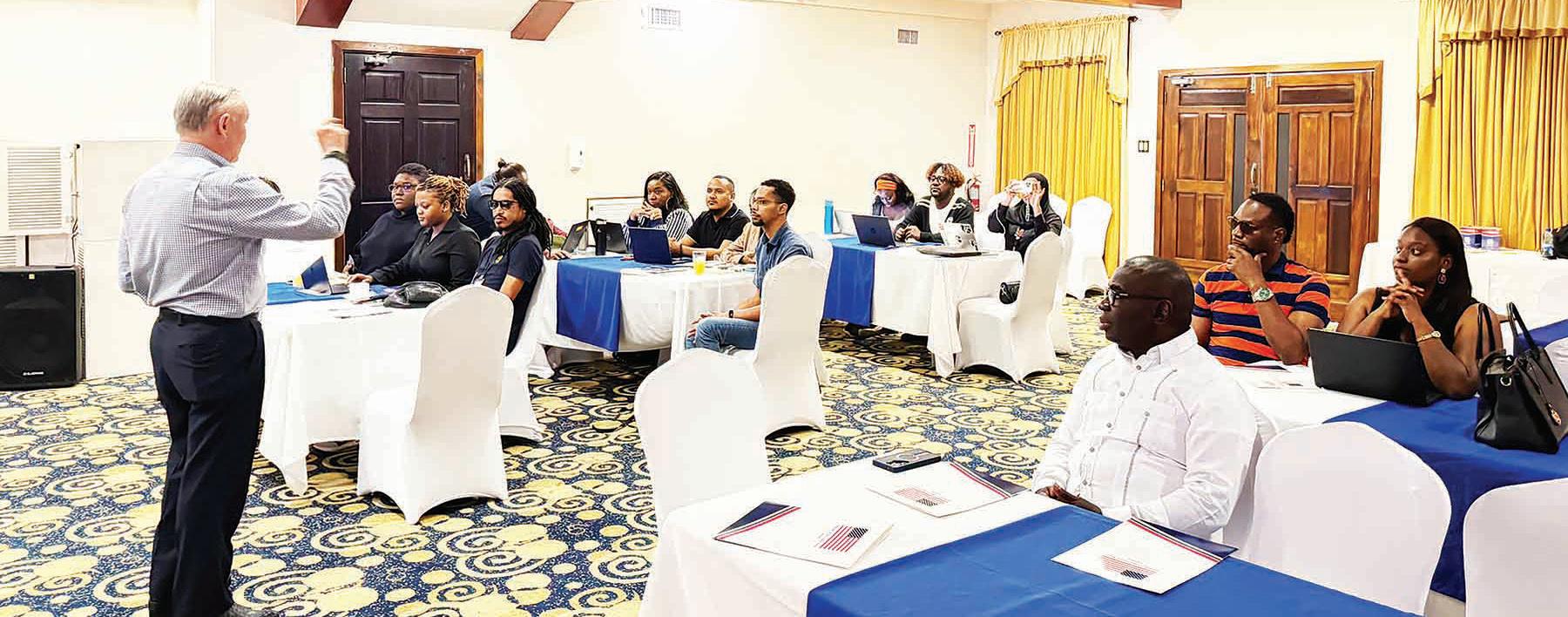
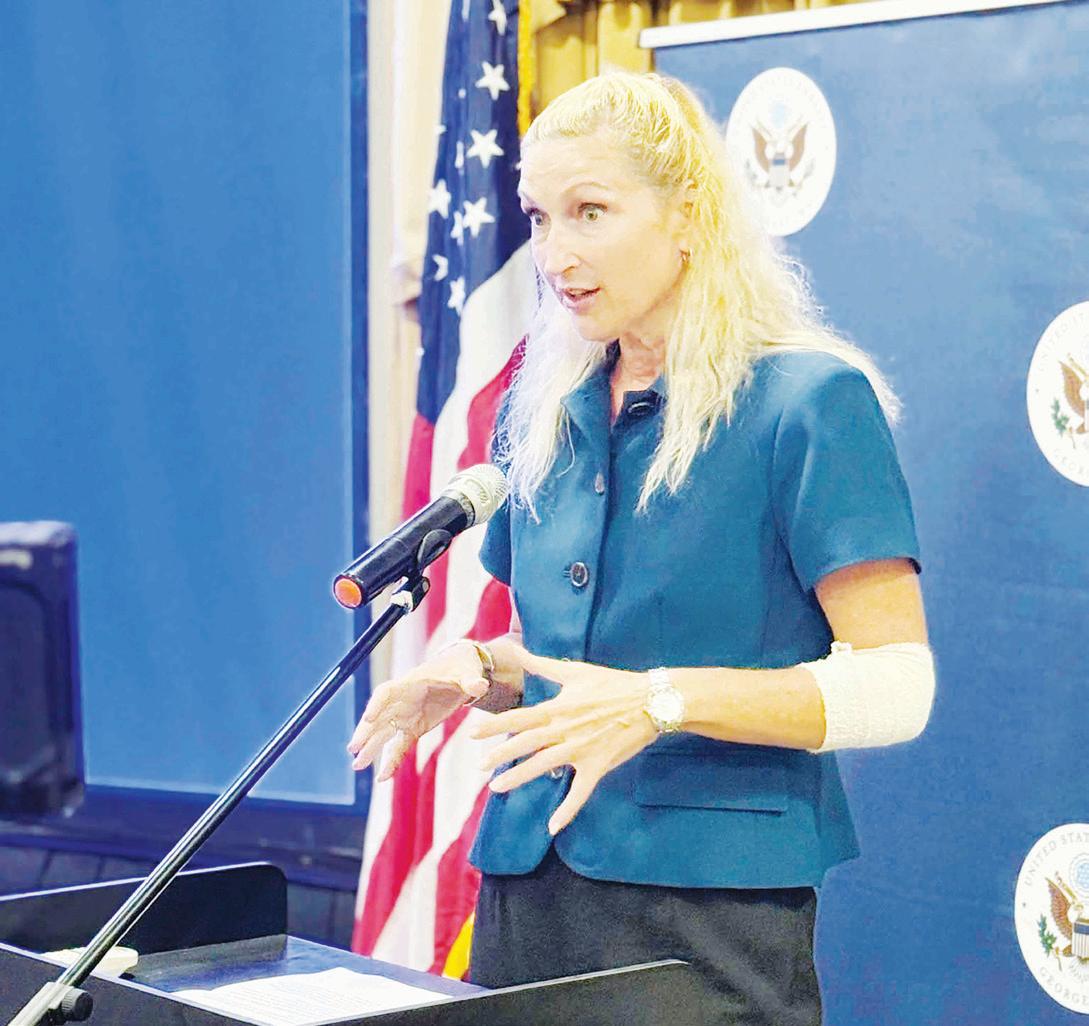
US Ambassador to Guyana, Nicole Theriot, on Saturday urged local Journalists and media representatives to embrace ethical artificial intelligence (AI) practices and leverage technology responsibly to strengthen democracy during the opening ceremony of a two-day hybrid workshop hosted by the United States Embassy in collaboration with the Guyana Press Association (GPA).
The workshop, titled "AI and Democracy: Promoting Ethical Technology Governance and Media Literacy in Guyana", was held at the Herdmanston Lodge and brought together media practitioners from across the country.
During the opening ceremony, Theriot called on Journalists to be responsible. "Think about how you can apply what you've learned and consider how to become a champion for ethical AI use. The future of AI in Guyana is bright, and the United States is proud to support you in that journey," Theriot said.
In addition, GPA
President Iva Wharton highlighted the dual opportunities and challenges that AI presents. "More than 20 years ago, as an Information Technology teacher, we would discuss AI as something of the future; today we are living that future. AI comes with both opportunities and challenges. This workshop offers a unique space to learn how AI intersects with democracy, governance, and ethical technology use. I ask participants to ask questions and ensure we understand how we can use AI to strengthen democracy and protect the rights of our people," Wharton said.
She emphasised that media professionals must use AI responsibly not only for personal productivity but also to train others and empower citizens through accurate information.
Further, Minister within the Office of the Prime Minister, Kwame McKoy, stressed the need for fact-checking and careful adoption of AI.
"It is important for Journalists to always keep in mind the importance of fact-checking and the impor-
tance of utilising the technology while ensuring that you have a system, a mechanism that would prevent us from going in the direction of creating harm and danger for our society. I therefore commend the US Embassy for yet another genuinely committed effort to provide training opportunities to our Journalists here in Guyana," McKoy said.
The workshop was facilitated by former CNN Managing Editor and Senior Global Media Consultant with Frank N Magid and Associates, James LeMay, who guided participants through practical applications, ethical considerations, and newsroom policies related to AI.
The workshop covered a wide range of AI-related topics, including disinformation, generative AI, natural language processing, data mining, and pattern recognition.
LeMay provided practical guidance for newsroom use, highlighting AI's potential to assist with research, transcription, drafting, multimedia production, translation, and cross-referencing
Teixeira calls out Opposition...
“Therefore, the question arises of how it is that with TI, the countries that do well all the time are the same countries funding TI, and the countries that do poorly are the Global South – countries such as Guyana, [those in] Africa, India, Pakistan, all those. Doesn’t that bother you as politicians? It doesn’t bother you as politicians, or is it only to use the phrase ‘Oh, here’s data; make the Government look bad’? Use this data and throw it at the Government to make the Government look bad. But you’re not thinking.” Teixeira, who is the Government’s chief whip in Parliament, questioned.
Nevertheless, the
Minister highlighted some of the progress made in strengthening and modernising Guyana’s anti-corruption framework. In fact, she noted that Guyana has signed onto a number of international treaties, including the United Nations Convention Against Corruption (UNCAC), the Inter-American Convention Against Corruption, the Lima Commitment, the United Nations Declaration on Corruption, the Caribbean Financial Action Task Force (CFATF), and even the Extractive Industries Transparency Initiative (EITI), among others – all of which have reported on Guyana’s progress
in fighting corruption.
“In the confines of Guyana, what is it we want? Do we want a country that is making efforts... to improve the efficiency, transparency, and accountability of our systems and our agencies and that is governed by law, constitution, protocols, audits, acts, and standards? Or is it the political football that we [use] to shame our country and make our country look bad? Why is that?... Why are we here as Parliamentarians if all we want to do is make Guyana look like a banana republic or something? Why do we want to do that?” Teixeira contended.
sources. He cautioned, however, that AI is a tool, not a replacement for Journalists.
"Reporters remain one of the most valuable roles in journalism. AI can assist with speed, scale, and analysis, but humans must decide the story, confirm facts, and ensure ethical reporting," LeMay said.
He outlined the "Three Pillars" of responsible AI use: transparency, human
supervision, and human verification. As such, he encouraged newsrooms to develop clear AI policies detailing approved tasks, red lines, and standard disclosure practices for transparency. Practical demonstrations included using AI to turn interviews into accurate transcriptions, analyse large data sets, and identify trends in public records, budgets, and contracts.
The Caribbean approach to AI ethics was also emphasised, advocating for skill-building, fairness, and regional collaboration.
LeMay underscored the importance of disclosing AI use responsibly to maintain trust with audiences.
"Transparency works best when it explains what AI did, confirms human oversight, and reaffirms accuracy standards."
Journalists were also trained to detect disinformation and AI-generated content, including deepfakes and softfakes, using tools such as Deepware Scanner, InVID, and Google Fact Check Explorer.
LeMay stressed that human verification remains essential. Participants were urged to adopt a "Detect, Verify, Educate – Together" approach, combining technology with collaboration to strengthen media integrity. The training reinforced the message that AI, when used ethically and transparently, can amplify journalism's reach and empower citizens with accurate, timely information.
US Ambassador to Guyana Nicole Theriot
US Ambassador to Guyana Nicole Theriot, Minister within the Office of the Prime Minister Kwame McKoy, and former CNN Managing Editor James LeMay, along with executive members of the GPA
James LeMay during one of his sessions on Saturday
CWC barber busted with illegal firearm during CANU raid
A29-year-old barber from Sea Dam, Crabwood Creek, was arrested following the discovery of a .22-calibre rifle during an operation on Friday by the Customs AntiNarcotics Unit (CANU). According to reports, ranks attached to CANU went to the residence of the suspect, where a search was conduct-
ed on the property.
However, during the search, a salt bag was found under the counter of a barbershop, containing a .22 calibre rifle.
The barber was arrested and escorted to the Springlands Police Station, where he remains in custody pending investigations and charges.
Cattle owner gets bail for allowing animals to stray
Fifty-four-year-old Denesh Rohit, a cattle owner from Garden of Eden, East Bank Demerara (EBD), was granted bail on Friday on four counts of allowing animals to stray. The offences, Police stated, were allegedly committed within the Prospect Young Professional Housing Scheme, EBD, and the Farm Housing Scheme, EBD.
However, Rohit appeared before Magistrate Dylon Bess at the Diamond Magistrate's Court, where the charges were read to him.
He reportedly pleaded not guilty to all four charges and was granted bail in the sum of $40,000. Rohit will return to court on June 26, 2026, as the matter continues.
Charged: Denesh Rohit
Telling it…
…like (sanction) is P
NC leader Aubrey Norton came out firing from both hips last week. To his critics – mostly disgruntled PNCites who haven’t moved to the side-lines or over to WIN! – he defiantly announced that he ain’t gonna step aside, step down or sidestep from his job!! Seems he’s a born-again Democrat who believes that once he’s elected to a position, he gotta represent those who elected him till the next (rigged?) elections at the PNC Congress!! That most folks who might’ve supported him at the last party elections – before last year’s General Elections – subsequently deserted him for WIN doesn’t faze him one bit!!
In fact, from the other hip, he fired away at Sanction Man – the leader of WIN – when asked about collaborating in the Opposition with the man who replaced him as Opposition leader. “Mohammed’s interest here is to ensure that he isn’t extradited. We don’t have an interest in that. We have an interest in promoting the development of the people of Guyana,” said the old street fighter sanctimoniously!! Now some might say it’s a matter of “sour grapes" – but shouldn’t we taste the grape before we buy the story??
No one can deny Mr Norton’s assertion that Sanction Man was sanctioned by the Yanks for smuggling tonnes of gold out of our country – and depriving the GRA of almost a billion dollars in taxes!! That’s what earned him the moniker “Sanction Man", innit?? And he’s been fighting a strenuous rear-guard in all the courts –Magistrate, High, Appeal and even the CCJ – to prevent his extradition to Miami for trial – and possible fitting for that orange jumpsuit they wear in US penitentiaries!! So, Norton’s not really unreasonable to suggest that Sanction Man isn’t only about helping the poor with (albeit large) handouts!!
In fact, Norton explicitly addressed that last contention: “They give a pittance to the people and keep the hog [of the smuggled proceeds!] for themselves, and so, while I appreciate some people getting help, I am very clear in my mind that the focus here is not on making Guyanese society get a better life. It is doing the things that will allow you to protect your interests, and, therefore, in many regards, the approach of the Mohameds more than WIN is one in which there is selfprotection and the people happen to get some crumbs in the process of self-protection!!”
Your Eyewitness thinks that Norton might be looking at the precedence set by that fella Pablo Escobar from over in Colombia, who was also sanctioned by the Yanks for smuggling – and ran (successfully) for his country’s Congress explicitly to hold off extradition!! He also was a great philanthropist from his ill-gotten gains!!
…on oil revenues
There are some – mainly in the Opposition – who’re vociferously insisting that the PPP throw down the gauntlet to Exxon’s consortium – including the Chinese behemoth CNOOC!!! They demand that the PSA – signed by Raphael Trotman on behalf of the then Government of Guyana led by the PNC – be “renegotiated” so that we can come out with a bigger haul!!
Now nothing would please your Eyewitness more than if we could get mo’ money for our oil!! But in the real world the PPP’s operating in, they’ve decided that this would be tantamount to abandoning the “sanctity of contracts" – the foundation stone of the economic world order!! Shouldn’t we give them the benefit of the doubt – seeing as how they’re actually IN the game??
Your Eyewitness is reminded about that story “The Dog and the Bone” where the dog loses the bone he has and ends up with nothing!!
After all, the US$761M deposited in the NRF in the first quarter is a pretty large bone!!
…on pecking order
With Parliament convened last Friday, the Parliamentary Committees were launched and their members nominated!! Interestingly, there’s no Black Pudding Man or Chicken Man among the Opposition nominees!! Instead, Norton tried to get Walton-Desir in!! OOOOHH!!
The rifle that was found in the barber shop
Revora Energy aims to bring Guyanese expertise to energy pricing markets
- marks new chapter in Guyana’s energy sector development
Guyana’s capacity in the burgeoning oil and gas sector continues to expand with a new locally owned company launching what is being described as the Caribbean’s first dedicated energy pricing, benchmark and valuation advisory to support industry stakeholders. Revora Energy, which was established by Georgetown Capital Management Inc, will focus on crude oil, natural gas, liquefied natural gas (LNG) and benchmark-linked pricing systems.
Operating at the intersection of physical and financial markets, the specialised advisory firm has been established to support governments, commodity traders, producers, refiners and industrial consumers in understanding energy pricing, navigating physical market transactions, and managing market volatility.
According to a missive from the company, much of the public discussion surrounding the sector focuses on production volumes as well as infrastruc-
ture and investment, but the mechanisms that ultimately determine the value of energy commodities often receive far less attention.
Recognising that benchmark systems, pricing methodologies and market dynamics influence billions of dollars in commercial decisions, Revora Energy says it is investing in leading price reporting agencies, benchmark data, and specialised research resources to support its advisory activities across crude oil, natural gas and LNG markets.
“We have selected leading providers with access to real-time satellite imagery, vessel tracking systems, and infrastructure monitoring capabilities. This investment is complemented by the development of Revora’s proprietary energy market intelligence framework designed to transform market information into actionable commercial insight for Guyana and the wider region,” Chief Market Strategist Alex Armogan said.
He added, “The competitive advantage does not come from access to data alone. It comes from the ability to connect developments across physical markets and financial markets to identify risks, opportunities, and potential commercial outcomes.”
A key focus of the firm is physical crude oil marketing and bidding advisory. Revora Energy will support clients throughout the crude oil marketing and sales process through market intelligence, bidder analysis, contract negotiation, benchmark assessment, and commercial decision support. “Three of our five positions have been filled, and we are currently recruiting internationally for the remaining two roles due to the need for candidates with experience and familiarity with the products we use. However, we encourage individuals who are passionate about energy pricing and market intelligence to periodically visit our website for future vacancy announcements.”
According to the specialised advisory firm, Guyana is entering a transformative period in the region’s oil and gas history. As the country’s production continues to expand, Suriname prepares to bring new barrels to market, interest in exploration acreage grows across the region, and natural gas emerges as a significant component of the region’s energy future, Revora Energy is strategically positioned to help clients navigate and capitalise on these evolving market dynamics.
The launch of Revora Energy is being seen as a demonstration of Guyana’s expanding capabilities within the oil and gas industry.
Only earlier this week, President Dr Irfaan Ali announced that the Government is working on expanding the local content framework to include additional areas such as financial services and insurance to further diversify and increase opportunities for Guyanese firms to benefit from not just local but also re-
gional opportunities.
“I think because of the growth and sophistication of our local private sector, we are now in a position to negotiate opportunities for Guyanese businesses in the region, whether it’s Barbados, Grenada, or Antigua. And we have to now look, as we grow in our sophistication and our financial models, at how we can now be part of the opportunities in these islands,” the Head of State noted at the Local Content Summit reception held on Tuesday evening at the Sheraton Four Seasons Hotel, Georgetown.
The Local Content Act outlines some 40 specific areas where goods and services must be procured from Guyanese companies and individuals. But the president reasoned that by including financial services in local content, it would provide Guyanese firms direct access to large financial projects. In this way, instead of foreign banks and insurers monopolising contracts, local firms could compete for broking, advisory and underwriting roles. This, in turn, he said, has the potential to stimulate the growth of domestic financial institutions and encourage partnerships with global players.
“So I think that the local content frame is evolving, the economy is evolving, and our influence across the region is also evolving. And we have to maximise that influence so
that we can bring optimal benefit to our local private sector and create great opportunities for us,” he added. Labour Minister Keoma Griffith and Natural Resources Minister Vickram Bharrat have been tasked with analysing and consulting on the current local content framework to see what additions can be made and taking to the President’s Cabinet their recommendations for additional services that can go on that local content list and, in certain categories, seeking increases.
According to the Guyanese leader, financial services and insurance are among the areas “we have had a lot of interest” in expanding under the local content framework, particularly for broking and insurance services.
Chief Market Strategist of Revora Energy, Alex Armogan
“Independence” within Coloniality
As we move on after our week-long euphoria of celebrating our 60th anniversary of our independence, we have to reexamine the substance of that “independence”, even as the two political protagonists pushing for independence – Jagan and Burnham – offered competing critiques of the colonial order and what was to replace it. Britain and its successor, the USA, offered the old, ironically named “Liberal” paradigm that had produced slavery and indentureship but was now fiercely anti-communist.
The ideological attempts to peel off the effects of colonialism in Guyana ranged from Jagan’s Marxism from the 1940s to Black Power in the 1960s and 70s, challenging Burnham’s “cooperative socialism” after he was handed “independence” for his assistance in removing Jagan. But after the 1980s, the ideological battles petered out with the end of the Cold War, and we supposedly arrived at “the end of ideology”. After Burnham’s socialist cooperative experiment ended disastrously, the PNC adopted – and the PPP continued – the neoliberal principles of the Washington Consensus in 1989, which collapsed in 2008.
One radical synthesising critique of the new, supposedly independent order was presented by the Latin American theorist Aníbal Quijano, which he called the “Coloniality of Power”. He demonstrated that while “colonialism” might have ended, its structural features, dubbed “coloniality”, remain firmly in place. Quijano posits that we were all conscripted by a Europeandefined “modernity” that began in 1492 with the conquest of the Americas. Modernity developed and extended the structures of power, control, and hegemony that emerged during the era of colonialism. He posits that the coloniality of power takes three forms: systems of (racial) hierarchies, systems of knowledge, and cultural systems.
Race was created to justify the enslavement of Africans using Christian myths, including a “Great Chain of Being” with God on top, followed by his angels, then mankind, with Whites on top and Blacks at the bottom. Other groups, like Indians and Chinese, were placed in intermediate positions – for which they fought each other to maintain their subaltern statuses. Remember the newlyminted lawyer Gandhi insisting that as a “Caucasian”, he shouldn’t be treated like a “Kaffir” in South Africa?! Race still matters and complicates intergroup relations created in multi-ethnic colonies like Guyana. It is ironic that we are still fighting while Whites globally remain on top.
Quijano asserts, in addition to racial classification and slavery, “The other process was the constitution of a new structure of control of labour and its resources and products.” The global racial/ ethnic hierarchy of Europeans and non-Europeans was an integral part of the development of the capitalist world system. That included transitional forms such as indentureship, in which the control of labour was guaranteed without the moral opprobrium of slavery. The Girmit/indentured, then, is an important cog in the extension of coloniality from slavery. They represent the contradictions inherent in the myth of “free labour” from slave labour in the “accumulation by dispossession” stage of capitalism.
The “systems of knowledge” should be especially relevant to the academics at our local university. Quijano writes, “Europe’s hegemony over the new model of global power concentrated all forms of the control of subjectivity, culture, and especially knowledge and the production of knowledge under its hegemony.” This leads to the third element of the coloniality of power – the creation of cultural systems that revolve around a Eurocentric hierarchy and that enforce Eurocentric economic and knowledge production systems. We all ape Eurocentric norms in which we will invariably be second-class.
We, therefore, all live within a multiplicity of colonialities: conquest and modernity; race; the nation; sexuality; motherhood; the hegemonic mind, etc. For us to have a clear idea as to what we hope to accomplish for real independence, we need to appreciate the constraints at the individual, group, state/nation, and global levels. For instance, why should we look down racially/ethnically at other groups when we ourselves are suffering from that scorn from others through hierarchies of race? Shouldn’t we fight for equity and equality of opportunity for all groups in each country we live in, plus gender justice and environmental sustainability?
Flight to the metropolitan countries is not the answer: we see the contradictions playing out there in virulent nativism and racism. As the western-dominated world system crumbles after 200 years, “natives” fleeing its contradictions in the periphery would gravitate to the metropoles to face a seething, anti-immigrant machinery that combines racist populism with arbitrary applications of the rule of law. Let us instead focus on building an equitable Guyana.
Driver of vehicle in fatal Long Creek crash was speeding, lost control – Police
Following a fatal smashup at Long Creek on the Linden/Soesdyke Highway on Thursday evening, Police have confirmed that the driver of the motor canter involved was speeding when he lost control of the vehicle and crashed into the rail of a concrete bridge. The incident claimed the life of 23-year-old Isiah Malachi Williams, a porter from
Wismar, Linden.
Based on initial reports, the accident occurred at about 21:30h and involved motor canter GRR 7067, which was at that time being driven by a 31-year-old truck driver from One Mile, Wismar, Linden.
Police stated that the vehicle was proceeding along the highway at a fast rate of speed and, in the vicinity of Long Creek, the driver lost control and collided with the left side rail of a concrete bridge.
As a result of the collision, the driver and Williams were flung from the vehicle and fell onto the roadway. Another occupant, a 27-year-old porter from Wismar, Linden, was also pinned inside the wreckage.
The driver and the other injured men were taken to the Linden Hospital Complex, where Williams was pronounced dead. The driver and the other occupant, however, were treated and discharged.
A breathalyser test conducted on the driver showed no traces of alcohol in his system. He remains in Police custody assisting with investigations.
Ravi Dev
The scene of the accident on Thursday evening
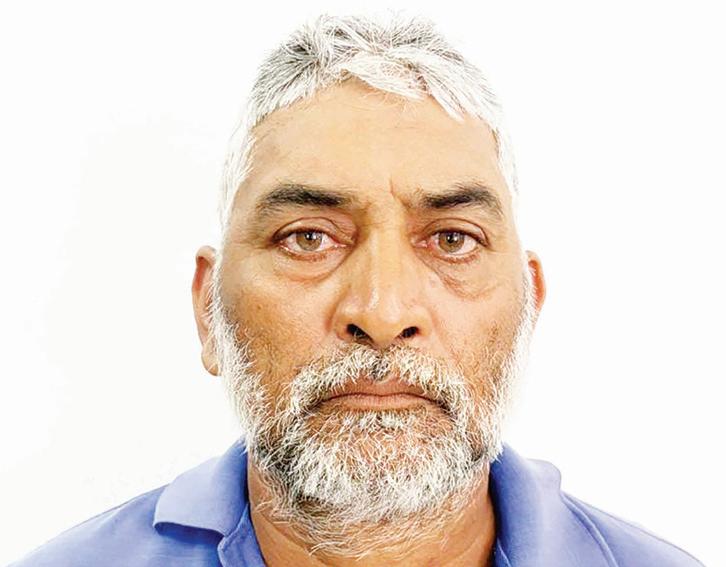
Dead: Isiah Malachi Williams
Wash bay attendant arrested as probe deepens into AK-47 assault rifle bust in Berbice
Following the arrests of Gregory Anthony Persaud, also called “Greg”, and Antonio Alonzo
Lawrie, also called “Lanzo”, both from Farm, New Housing Scheme, East Bank Demerara (EBD), in connec- tion with the discovery of 10 AK-47 rifles in Berbice last
month, the Police have arrested a third person as the investigation intensifies. Police stated that follow-
ing the arrest of the duo last week, they conducted a further search at Farm, EBD, which led to the discovery of one extended magazine for a 9mm firearm and the arrest of a 21-year-old wash bay attendant. According to reports, the magazine was found in a clothes basket in the suspect’s bedroom. The suspect, along with Persaud and Lawrie, remains in custody as investigations continue. Another suspect, Ryan Singh from Parika Outfall Seadam, East Bank Essequibo (EBE), for whom a wanted bulletin was issued, is yet to be apprehended.
It was reported that the Police were executing a stop-and-search exercise in the vicinity of the Berbice River Bridge Access Road late last month. Reports indicate that Police ranks attempted to stop a black Toyota Fielder waggon bearing registration number HC 9018, but the vehicle fled the scene. It was also reported that, acting on information received afterward, investigators conducted a search along the Number 11 Village Public Road, East Coast Berbice (ECB), where the 10 rifles were allegedly found wrapped in plastic and cloth.
Police said the weapons bore markings consistent with 7.62x39mm AK-47 rifles. Investigators also reported that sections of the firearms appeared to have been tampered with, leading to suspicions that efforts were made to obscure the serial numbers.
Further investigations later led Police to 33-yearold Stephen Rajah, a taxi driver of Back Street, Goed Fortuin Village, West Bank Demerara (WBD), who was intercepted at Nabaclis, East Coast Demerara (ECD), while allegedly driving the same Toyota Fielder waggon identified during the operation.
He has been charged and remanded to prison.
Police have also linked a second vehicle, a white Toyota RunX bearing registration number PSS 4272, to the investigation. The car was later discovered abandoned at Second Street, Savannah Park, New Amsterdam. Investigators suspect the vehicle may also have been used to transport the weapons.
The AK-47s that were left abandoned in Berbice
Arrested: Gregory Anthony Persaud and Antonio Alonzo Lawrie
Wanted: Ryan “Satan” Singh
Charged: Stephen Rajah
Suspected killer in horrific murder of 7year-old boy nabbed at home – Crime Chief
One day after the brutal murder of seven-year-old Adriel Aftab Mohamed and the attempted murder of his great-grandmother, the Police have arrested the suspected perpetrator. This was confirmed by the Deputy Commissioner of Police and Crime Chief, Wendell Blanhum, on Saturday, who stated that the alleged suspect was arrested at his residence in Region Three (Essequibo Island-West Demerara).
“He was arrested earlier today and is currently being interviewed by detectives,” Blanhum added. The throat of the sevenyear-old child was slashed, and his great-grandmother was stabbed in the neck during an apparent home invasion on Friday at their Phase 3, Zeelugt New Housing Scheme, East Bank Essequibo (EBE) home.
The lifeless body of the child was found lying in a pool of blood, while his
great-grandmother was found stabbed in the neck and lying on the ground at about 05:05h on Friday.
According to reports received, a relative went to the home, where he discovered the 72-year-old woman injured and the child motionless inside the house. The injured woman was taken to the De Kinderen Regional Hospital, where she was admitted as a patient. Her condition is listed as stable.
On the other hand, the child suffered a gaping wound to his neck. A knife, suspected to have been used during the incident, was recovered at the scene.
Following the gruesome discovery, the child’s uncle, Naseeb Mohamed, said he was at home when he received a telephone call informing him that someone was inside his mother’s house. Upon arriving at the residence, he pushed open the door and entered. After switching on the lights, he discovered his mother lying
Adriel Aftab Mohamed
on the floor.
He said he could not explain what happened but noted that the two adults who usually stay in the home with his mother and the child had travelled to Essequibo for work. The aggrieved uncle also mentioned that they obtained CCTV footage from nearby
residents, which shows a single individual climbing over the gate.
The boy’s father, Altaf Mohamed, is struggling to come to terms with the loss of his son, expressing deep regret that he was not present to protect him. He said the child had been left at home alone because he had
gone out to work, adding that he had previously taken his son away from his mother because he did not want him raised by a stepfather. Mohamed explained that he had intended to collect his son on Friday morning but was told by his father that he would instead handle the pickup.
That plan changed when he later received a phone call from his sister informing him that his son had been killed. He appealed
for the Police to fully investigate and bring those responsible to justice. On Saturday, the crime scene was still being processed, and as such, the family members were not given access to the house.
“Now that the suspected killer has been arrested, he will be taken to the scene, and once investigations are completed, the house will be handed over to the family,” a Police source told the Guyana Times
Xen Aviation boosts domestic air services with new Britten-Norman Islander
Anewly acquired Britten-Norman BN2T-4S Islander by Xen Aviation and Services Limited landed at the Eugene F Correia International Airport on Saturday, with the company confirming that the aircraft is now ready to provide its services to the populace.
The arrival marks a major milestone for Xen Aviation, a Guyanese aviation company headed by Ronaldo Alphonso, as it continues to expand its operations and strengthen its ability to support domestic and regional air connectivity. The businessman stated that the acquisition of the aircraft represents a significant step forward for the company and the services it is now positioned to provide.
“This new aircraft significantly expands the services and capabilities of Xen Aviation,” Alphonso stated, adding, “As a company, we are currently expanding, and we remain committed to continuing to offer more ser-
vices to the Guyanese community." The arrival of this aircraft gives us greater capacity, flexibility and reach as we prepare to serve more communities and customers across Guyana.”
The BN2T-4S Islander is an enlarged turboprop variant of the renowned Islander aircraft and is the first of its kind to be operated in Guyana. It offers approximately 30 per cent more interior space than the piston-engine Islander and has a significantly increased maximum take-off weight of up to 8925 lbs, or 4048 kilograms (kg). Powered by twin Rolls-Royce 250 B17F engines, each generating 460 horsepower and flat-rated at 400 horsepower, the BN2T4S offers a range of up to 1006 nautical miles, or 1863 kilometres (km), with endurance of up to eight hours.
The aircraft also retains the Islander's well-known ability to operate in challenging conditions, including on short and unprepared landing strips, making it well
suited to Guyana's geography and hinterland aviation requirements. Configured with a maximum of 12 seats, the aircraft is certified under its United Kingdom (UK) Type Certificate to carry up to 10 passengers with either a single pilot or a two-person crew, subject to local regulatory requirements.
The aircraft can also be fully certified for instrument flight rules (IFR) operations and comes equipped as standard with a Garmin glass cockpit based on the G600 TXi series. The Garmin avionics suite includes fully electronic engine instrumentation across Islander variants, providing operational and engineering data that support safer and more efficient operations.
Britten-Norman recently secured type acceptance for the BN2T-4S from the Guyana Civil Aviation Authority (GCAA) in preparation for the aircraft’s delivery. The aircraft is already type certified in the UK, the European Union (EU),
the United States (US) and several other jurisdictions.
The BN2T-4S is also part of Britten-Norman’s ongoing development programme, including its “Green Futures” initiative, with the aircraft expected to have the option to operate using sustainable aviation fuel in the future. Alphonso related that the aircraft is well matched to Xen Aviation’s long-term vision for domestic aviation.
“We believe this variant of the Islander is a perfect fit for our mission to introduce superior safety, comfort and choice to the Guyana aviation market,” he said. “It will allow us to better
serve everyday commuters, Government agencies, international business operators and other customers who require reliable air services at a competitive price.” The Chief Executive of BrittenNorman, William Hynett, welcomed the milestone and noted the significance of the aircraft’s deployment in Guyana.
“We are delighted to confirm this order with Xen Aviation & Services Inc., marking a significant milestone as the first BN2T-4S Islander to be used for commuter services in Guyana,” Hynett added.
“The BN2T-4S is the
largest and most powerful variant in the Islander range, offering exceptional load-carrying capacity while maintaining our well-renowned STOL (short take-off and landing) performance. I am excited to see this aircraft thrive in its new role with Xen Aviation, providing essential services to the people of Guyana.” The arrival of the aircraft at Ogle positions Xen Aviation to begin deploying the BN2T-4S into service as part of its wider expansion plans and its commitment to improving aviation access, connectivity and service options in Guyana.
Chief Executive Officer of Xen Aviation, Ronaldo Alphonso
The newly acquired Britten-Norman BN2T-4S Islander by Xen Aviation and Services Limited
Skeldon Line Path Sec student wins
SHOUT4Change 2026 competition
- secures $1M for turning waste into seating, vertical gardens
Randy Mangal, a student of Skeldon Line Path Secondary School, is this year's “Top National Youth Environmental Advocate” after winning Recover Guyana's SHOUT4Change Competition. The four-
ness and sustainable action throughout Guyana. This is the fourth edition of the competition hosted in collaboration with the Ministry of Education, with support from ExxonMobil Guyana. Founder and President of Recover Guyana, Dr Dave
eos from Grades Nine and 10 students from secondary schools across Guyana detailing the sustainable changes they would make to their school's environment if given $1 million.
This phase commenced on February 9, 2026, and at-
phased competition, open to secondary schools across Guyana to engage more youths in environmental protection and preservation, concluded on World Environment Day, Friday, June 5, 2026.
Randy Mangal, a student of Skeldon Line Path Secondary School, has emerged as Guyana's Top National Youth Environmental Advocate after capturing first place in Recover Guyana's SHOUT4Change Competition.
The four-phase national initiative, designed to inspire greater youth participation in environmental protection and preservation, engaged secondary school students from across the country and culminated on World Environment Day, June 5, 2026.
Mangal's achievement highlights the growing role of young people in advancing environmental aware-
Lalltoo, noted that the 2026 edition of the competition represents a significant advancement in the NGO's commitment to youth empowerment through Science, Technology, Engineering, and Mathematics (STEM) integration and practical environmental learning.
"This year, the competition welcomed national finalists from 20 secondary schools across Guyana, reflecting geographic diversity and ensuring youth representation from various regions of the country. Through a structured, multi-phase competition process and extensive capacity-building engagements, finalists have been supported not only to strengthen their public speaking skills but also to deepen their environmental awareness, emotional readiness, and leadership capabilities," he noted.
The competition began with the submission of one-minute vid-
tracted over 70 submissions from which 20 candidates were identified as national finalists by a selection panel using set criteria.
Friday's event at the Ramada Georgetown Princess Hotel featured Phases Two, Three, and Four of the competition.
These entailed candidates delivering prepared environmental speeches, engaging in an impromptu speech segment, and the four top students being asked one environmental question to determine the national winner: How would you incorporate STEMbased solutions in the execution of your project idea to address the major environmental issues affecting your school environment, should you be given $1,000,000 to do so?
Mangal emerged as the winner of the competition. His project aims to convert waste into opportunities at his school. Delivering his re-
sponse in the final segment of the competition, he noted that he would invest his $1,000,000 win in converting waste materials into seating and vertical gardens, among other initiatives. With the
Carlson lauded the initiative by Recover Guyana, which creates a platform for students to be action thinkers who identify issues and develop sustainable remedies.
implementation of water refill stations, he also intends to reduce plastic bottle use.
Coming in second place was Bhomika Singh of Tagore Memorial High School, while the third and fourth places were taken by Brandon Holder of Hope Secondary School and Orlando Reynolds of Presidents College.
ExxonMobil's socioeconomic manager Lorna
"At ExxonMobil, we're guided by a very simple model, and we live it every day: ‘Protect tomorrow today’ –our commitment to protect the environment while delivering the energy the globe needs. This means responsibly developing Guyana's resources while also safeguarding its rich natural environment."
JC Chandisingh Secondary; and Raphieal Jacobis of Leguaan Secondary School. The Best Speaker Award was won by Orlando Reynolds of President's College, while the prize for the Most Influential Speech was awarded to Brandon Holder of Hope Secondary School.
Others in the top ten are Elijah Ryan Toolsie of Stewartville Secondary School; Hadassah Harris of Friendship Secondary; Ruqayyah Mohamed of Qayyim Academy; Emma Munro of St Joseph High School; Jolena Camacho of
Bhomika Singh was presented with the Go Green Award by Recover Guyana, while Reynolds also received the prize for Best Environmental Impact Speech.
The competition was first hosted in 2023 on World Environment Day, and the winner, declared after extensive judging, was Vassana Persaud of Queen's College. Vassana later went on to launch a water purification project on her school's premises to combat plastic bottle waste.
The winners in 2024 and 2025 were Gabriella Arjun of Queen's College, who launched a hydroponics kitchen garden, and Anushka Singh, also of Queen's College, who launched a cycle smart project.
The winner along with other finalists and officials
ExxonMobil's Socioeconomic Manager Lorna Carlson
Randy Mangal collects his million-dollar cheque from Dr Dave Lalltoo and Lorna Carlson
The four top finishers of the SHOUT4Change Competition 2026
Founder and President of Recover Guyana, Dr Dave Lalltoo
For the first time in Guyana, globally acclaimed Indian devotional, bhajan and ghazal singer Raviraj Nasery is set to perform on local soil, marking a historic moment as he joins devotees and music lovers for a special musical gathering hosted by the Sri Sathya Sai Organisation of Guyana. Expressing gratitude ahead of the event, Nasery said he feels “truly blessed” to have been invited to perform at “Daylight of Music”, scheduled for Sunday, June 7, 2026, at 10:00h at the Prema Nilayam Centre in Queenstown.
Known for his soulful voice and emotive compositions, Nasery has spent over two de cades performing and produc ing devotional music world wide. Originally from Madhya Pradesh, India, he started his musical journey at the age of 13 and is a dedicat ed devotee of Sri Sathya Sai Baba. He has performed more than 200 times in the pres ence of Sai Baba and has recorded thou sands of bhajans while collaborating with prominent spir itual music channels, including T-Series, Lokdhun Spiritual, and Wave Music.
Earlier in his career, he worked as a voice-over art ist for Discovery Channel and contributed as a choir singer in Bollywood films such as Raees and Airlift. His spiritual music has amassed billions of cumulative views across digital platforms, and he has toured extensively across the United States of America (USA), Canada, the United Kingdom (UK), Mauritius, Sri Lanka, South Africa, Malaysia, Singapore, Indonesia, Tanzania, Nepal and several other countries. Nasery’s soulful voice, heartfelt lyrics, and original devotional compositions create deep spiritual connections
with listeners.
He belongs to a rare league of artists who sing from pure love and inner creativity, transforming every performance into a moving experience. His rich and emotive renditions continue to inspire devotion, peace and reflection, leaving audiences immersed in divine emotion. Speaking with Guyana Times, Nasery described finally reaching Guyana as both a dream fulfilled and a divinely timed opportunity.
“Personally, I feel that time has to come for everything. With immense joy and gratitude, I am excited to an
me through Bhagawan only. I was hardly 12 and a half or 13 years old. People should know how I became a Sai devotee. A lot of people are interested to know. I am from Echanwada in Madhya Pradesh, central India, very close to Nagpur, about a two-and-a-half-hour journey by car.”
In Indian culture, a Swami is an honorific title given to a Hindu monk, ascetic, or spiritual teacher who has renounced worldly life (sannyasa) to pursue enlightenment. Literally meaning “master of oneself”, a Swami is dedicated to spiritual mastery, selfless service and guiding others on the path to self-realisation. During the interview, it was also revealed that Nasery wrote a song about Guyana, with the singer describing the creative process behind his music as something that appears naturally and effortlessly. He explained that both the writing and composing processes themselves are an experience, saying that “it just happens”, echoing his belief that the music simply flows
Caribbean countries are very close to my heart. They love my music, and I was trying to come to Guyana for almost 30 years. I met many people and sent many emails. At that time, WhatsApp was not there, so through email and telephone we used to communicate [but I never reached Guyana],” he said. Nasery said his music goes beyond self-praise and accolades, noting that he does not enjoy the attention his singing attracts.
“I don’t like people to admire my singing. I am happy if they talk about Swami because this music has come to
Listeners can explore his wide catalogue of devotional singles and albums on Apple Music and Spotify or watch live performances through his devotional YouTube channel. Bhajan singer Raviraj Nasery in TVG Studios on Saturday
Audiences were told they may receive a surprise performance of the song during his visit. Nasery has shared the stage with acclaimed bhajan and ghazal singer Anup Jalota, as well as Shankar Mahadevan, Shobha Paswan, and several other renowned performers. Recently, he performed at the Sri Sathya Sai Baba Organisation event in Queenstown on Sunday, June 7, where he inspired and mesmerised hundreds of devotees.
World-renowned singer Raviraj Nasery
Scotiabank Guyana backs “Green” growth with $2M seed capital for 20 start-ups
Awhopping GY$2 million in seed funding was awarded to 20 outstanding entrepreneurs from the ENGAGE 2.0 Green Entrepreneurship Programme to support business ideas showing strong potential for innovation, sustainability, and positive community impact.
In addition, 110 young persons from Regions Two and Four successfully graduated from the programme, bringing ENGAGE’s total national impact to 273 young entrepreneurs across Guyana.
ENGAGE 2.0 builds on the success of its pilot programme developed by Recover Guyana to equip young people with the skills,
training in sustainability, green entrepreneurship, business planning, digital marketing, and financial literacy.
The programme also introduced a Business Refresher Clinic for participants from the Region Three cohort, providing mentorship, targeted feedback, and strategic guidance to support business sustainability and long-term growth.
ENGAGE 2.0 awarded GY$2 million in seed funding to 20 participants whose business concepts demonstrated exceptional promise. These were selected through evaluations of their business models, sustainability plans, and entrepreneurial readiness through in-person
dence needed to lead in environmental sustainability and green entrepreneurship.
He highlighted that, together with its partners, the initiative has now reached 273 young persons across Guyana, creating a growing ecosystem of changemakers who are transforming innovative ideas into sustainable enterprises and practical solutions that strengthen communities and contribute to national development.
Scotiabank Guyana played a pivotal role in strengthening participant capacity through financial literacy training and mentorship delivered by its team
confidence, and resources needed to create sustainable livelihoods while contributing to a greener and more resilient Guyana.
Through training in green entrepreneurship, business development, financial literacy, mentorship, and employability preparation, participants were empowered to transform innovative ideas into viable green enterprises.
The 2025 pilot phase graduated 100 young entrepreneurs from Regions Three and Six and supported a further 63 participants to complete the programme, reaching a total of 163 young persons.
As part of its original vision, ENGAGE expanded into Regions Two and Four in 2026, further extending its national reach and impact. Participants received
pitches and the submission of comprehensive business plans.
Speaking at the graduation ceremony, President of Recover Guyana, Dr Dave Lalltoo, pointed out that the training sought to bridge a serious gap facing young people as they navigate their professional careers.
“Too often, young people have ideas but lack access to mentorship, resources, and opportunities.
ENGAGE was created to bridge that gap by equipping young people with the tools, mindset, and practical skills through mentorship and financial literacy,” he said.
He further noted that ENGAGE is more than just a programme, describing it as a movement shaping Guyana’s future by equipping young people with the tools, mindset, and confi-
of volunteer professionals.
These sessions focused on budgeting and cash flow management, savings and investment planning, credit and debt management, business finance fundamentals, and financial decision-making, ensuring participants were better equipped to establish and sustain successful enterprises.
Reflecting on the partnership, Senior Manager (Finance) at Scotiabank Guyana Inc., Shellon Garner, stated that Scotiabank believes that long-term social and economic prosperity depends on empowering the next generation.
According to her, when young people succeed, families are strengthened, communities grow stronger, and countries become more
resilient.
“That belief continues to drive our partnership with Recover Guyana. Our commitment to initiatives like ENGAGE is guided by ScotiaRISE – our global social impact strategy focused on removing barriers to economic inclusion and creating more resilient communities.”
Through ScotiaRISE, we invest in programmes that expand access to education, improve employability, and strengthen financial inclusion because we believe op-
portunity should be accessible to all. This is not just about funding programmes; it is about unlocking potential.”
The successful completion of ENGAGE 2.0 demonstrates the value of strong partnerships in advancing youth empowerment, environmental sustainability, and inclusive economic growth.
Through continued collaboration between Recover Guyana and Scotiabank Guyana, the programme is helping to build a new gen-
eration of entrepreneurs whose businesses and innovations will contribute to Guyana’s long-term social, environmental, and economic development. Recover Guyana is a registered non-profit organisation dedicated to uplifting vulnerable communities and families, particularly those with children. Its mission is to create sustainable opportunities that foster resilience and empowerment through education, environmental restoration, and community engagement.
The awardees at a ceremony on Saturday at the Ramada Georgetown Princess Hotel on 6 June 2026
Senior Manager for Finance at Scotiabank Guyana Shellon Garner delivering remarks at the ENGAGE 2.0 Graduation Ceremony
A section of the audience at the event on Saturday
Known to many Guyanese as an energetic performer and fitness enthusiast, Melissa “Vanilla” Roberts is now stepping into a new chapter of her professional journey, adding lifestyle entertainment to her growing list of ventures. Vanilla is among the driving forces behind a new initiative dubbed “First Fridays with Axis 22”, a live music and social experience debuted at Black Magenta in Georgetown Friday evening.
For years, she has built a reputation in the entertain-
ment industry as a recording artiste and performer while simultaneously inspiring many through her commitment to health and fitness. Now, she is seeking to channel that experience into creating upscale entertainment opportunities aimed at mature audiences seeking more than the traditional nightlife experience.
The event is being staged in partnership with Black Magenta, a collaboration Vanilla said was inspired by the success of the live entertainment experiences already being cultivated at
the venue by herself and her band. Recognising a growing appetite for quality live music and sophisticated social gatherings, she saw an opportunity to build on that momentum while introducing a new concept tailored to professionals, entrepreneurs, creatives and lovers of live entertainment.
The event, which is being organised through Axis 22, the band, and managed by Kross Kolor Records, is expected to offer patrons a blend of live music, networking opportunities, premium hospitality and an
elegant social atmosphere. According to Vanilla, the concept was developed to provide a space where pro fessionals, entrepreneurs, creatives and music lovers can gather in a sophisticat ed environment that encour ages meaningful interaction while enjoying quality live entertainment.
“We are not simply trying to host another event,” she explained. “We want to cre ate an experience that is stylish, memorable and consistent that people can look forward to every month.” The June 5th edition will function as an introducto ry evening and preview of the larger First Friday’s con cept sched uled to official ly roll out in July. Patrons attending the inaugural gath ering can ex pect live perfor mances from Axis 22, curated enter tainment, visual presentations and an atmosphere de
InterEnergy unveils roadmap for modernising Guyana’s electricity system
- No country can build tomorrow on an electricity system designed for yesterday – CEO
Chairman and Chief Executive Officer (CEO) of InterEnergy Group, Rolando González Bunster, recently presented his company’s progress, vision, and long-term roadmap to support the transformation of Guyana’s electricity system into a more reliable, resilient, and digitally managed network capable of sustaining the country’s rapid economic growth.
The presentation was made on Thursday evening at the inauguration of InterEnergy’s new office in Georgetown, which reinforces the company’s long-term commitment to Guyana and its energy future.
“The countries that prosper in the decades ahead will be those that build the infrastructure to match their am-
bitions. Guyana has that opportunity today,” Bunster told the invitees, including President Dr Irfaan Ali, senior Government officials, and business leaders at the event.
He added, “No country can build tomorrow on an electricity system designed for yesterday. Guyana has a unique opportunity to build a modern, resilient, and intelligent energy system capable of supporting the next generation of growth.”
As such, he stated that InterEnergy is ready to support the Guyana Power and Light (GPL) and the Government of Guyana by bringing technical expertise, accelerating execution, strengthening local capabilities, and helping create a stronger system for future
generations.
Guyana is experiencing one of the fastest rates of economic growth in the world, creating unprecedented demand for reliable electricity to support new industries, expanding cities, digital infrastructure, investment, and improved quality of life.
Under its agreement with GPL, InterEnergy is supporting the modernisation of the country’s electricity sector through infrastructure supervision, project management, power plant optimisation, asset life management, and the development of a smart grid roadmap through 2030.
The objective is to help create a modern electricity system capable of supporting Guyana’s long-term eco-
nomic and social development.
To date, InterEnergy has been providing supervision for the development and construction of key electricity infrastructure projects, including more than 350 kilometres (km) of transmission lines, 240km of distribution networks, 16 new or expanded substations, and the deployment of 20,000 smart meters. These investments are helping strengthen the reliability, resilience, and modernisation of Guyana’s electricity system.
The partnership also includes the development of a smart grid roadmap through 2030 to support the modernisation of Guyana’s electricity system through advanced technologies, renewable energy integration, and battery storage.
Beyond the current scope of work, InterEnergy highlighted how its broader regional platform could support Guyana’s long-term
energy ambitions. The company brings proven experience from operating one of Latin America’s most advanced smart grids through CEPM in the Dominican Republic, complemented by
capabilities in power generation, battery energy storage systems, digital utility platforms serving more than five million users, and electric mobility infrastructure through Evergo.
Chairman and CEO of InterEnergy Group, Rolando González Bunster, speaking at the event
President Dr Irfaan Ali and Chairman and CEO of InterEnergy Group, Rolando González-Bunster
Linden-Soesdyke Highway rehabilitation project now stands at approximately 90 per cent complete, according to the Construction Manager at Namalco, Vishal Maharaj.
Maharaj on Saturday in an interview with the Department of Public Information (DPI) stated that significant progress had been made across all major components of the project while explaining that drainage infrastructure is also advancing steadily, with concrete drain construction around 70 per
cent complete.
“We also have drainage works continuing. We have basket works to accompany the drainage and the different layers of paving taking place in conjunction. We are working simultaneously with each other,” he noted.
Maharaj noted that work is being carried out in sections to maximise efficiency while adapting to weather conditions.
“Based on the breaks in the weather, we are doing key works in various places to complete them on time. We are trying to do our best with
the continuation without compromising the quality of the works,” he said.
Despite periodic rainfall, the project remains ahead of schedule. Electrical works have also commenced, marking another major milestone in the project.
Contractors have begun installing light pole pedestals and power boxes along the corridor.
Street lights are expected to be installed shortly. The contractor has already acquired 700 of the 1300 street lights required. The remaining lights have been shipped
and are expected to arrive in Guyana within a month and a half.
Meanwhile, the massive infrastructure project, once completed, will transform the Linden-Soesdyke Highway into a modern transport corridor capable of supporting increased traffic while improving safety and connectivity. It will also strengthen economic activity between the two regions.
The upgrade is being executed through a joint venture involving Trinidadbased Namalco Construction Services and local firm GuyAmerica Construction Inc. The Government has repeatedly urged contractors to complete the project ahead of its September 4, 2026 deadline.
Back in January, Public Works Minister had reported that the upgrade was about 50 per cent complete when he met with the contractors to review the progress of the project, address challenges, and discuss the way forward.
During that meeting, he urged the contractors to complete the project ahead of its September 4 deadline, noting that major activities are upcoming and the corridor is a vital artery.
At the time, that progress of work varied across the project’s sections. Section one is slightly behind schedule, with about 16.1 kilometres of roadwork still to be completed, while section two is ahead of schedule, with around 90 per cent of work executed.
It was reported that rehabilitation work along the vital corridor is 95 per cent complete, while reconstruction work stands at approximately 60 per cent complete.
Sections of the upgrade
Linden/Soesdyke Highway
Construction Manager at Namalco, Vishal Maharaj, along with Minister within the Ministry of Public Works, Madanlall Ramraj, during an inspection of ongoing works back in 2025
$8.5B invested in part-time workers initiative since 2022 launch
- over 17,000 jobs for Guyanese created
The Guyana Government has expended approximately $8.5 billion to date on the National Pathway Workers Project (NPWP), which created part-time job opportunities for vulnerable and unemployed Guyanese. This was revealed by Local Government and Regional Development Minister Priya Manickchand in response to questions raised by the Parliamentary Opposition.
A Partnership for National Unity's (APNU) Member of Parliament (MP) Ganesh Mahipaul had posed a series of questions on the initiative, to which the Minister provided written responses during Friday's sitting of the National Assembly.
"The sum expended on wages and other related costs to date is $8,550,790,010," Manickchand indicated in her response. In 2025, the National Assembly approved $12.7 billion for the NPWP as well as the Community Enhancement Workers (CEW) Programme.
This year, some $13.6 billion was allocated in Budget 2026 to continue supporting these two initiatives.
Additionally, the Government also increased the stipend paid to these workers from January 2026. This saw pathway workers, Community Enhancement workers, Community Service Officers, and Community Policing Groups benefiting from $50,000 monthly, compared to the previous $40,000
per month.
This stipend adjustment places an additional $2.8 billion of disposable income in workers' hands and aggregates to an annual injection of $14 billion.
However, Manickchand also reported that as of October 31, 2025, the total number of persons employed under the
NPWP was 17,450. Though the question was for that specific period, it is anticipated, however, that this figure has since increased.
Of these 17,450 workers, some 1200 are from Region One (Barima-Waini); 2099 from Region Two (PomeroonSupenaam); 1672 from Region Three (Essequibo IslandsWest Demerara); 976 from Region Four (DemeraraMahaica); 2911 from Region Five (Mahaica-Berbice); 4400 from Region Six (East BerbiceCorentyne); 279 from Region Seven (Cuyuni-Mazaruni); 1956 from Region Nine (Upper Takutu-Upper Essequibo), and 1957 from Region Ten (Upper Demerara-Berbice).
According to the Local Government and Regional Development Minister, these pathway workers are deployed within various regional programmes. These include the Regional Administration in the capacity of clerical support staff, enhancement workers, support staff to Local Democratic Organs (LDO), etc; the Education Delivery Programme; the Health Services Programme; the Agriculture Programme; the Public Works Programme; and other Government agencies regionally.
"These workers are all employed with Government agencies (Public Sector) regionally and are expected to adhere to the agency's assigned management system, policies and guidelines. The Ministry of Local Government and Regional Development continues to monitor in collaboration with the RDCs (Regional Democratic Councils) to ensure the project objectives are accomplished," the Minister explained in response to Mahipaul's inquiry about the oversight of the project and the
workers.
She further pointed out that there are several systems outlined to the Regional Administration to ensure employees' standards and codes of conduct are in keeping with the public service rules and regulations. These are as follows but are not limited to: Job descriptions of what is expected of pathway employees based on their skill set and standardised time/attendance and monitoring sheets to assess employees' performances.
Moreover, the Heads of Agencies to whom pathway workers are assigned are also authorised to endorse stipend payments and enforce work ethics or report any breaches of the public service rules and regulations to the Regional Administration. In addition, clauses are also outlined within the pathway employees' contract for them to adhere to and/ or prevent breaches of work ethics/public service rules.
Initially dubbed the 10-day part-time workers programme, this initiative was introduced by the People's Progressive Party/
Civic (PPP/C) Government in 2022 as a cost-of-living relief measure and allows persons to join various Government agencies and offices within their communities and regions for 10 days per month and receive a salary of $40,000. This programme has significantly expanded since President Irfaan Ali announced plans last year to upskill these participants and offer them better opportunities. He had indicated that the goal is for these part-time workers to graduate into full-time employees and migrate into higher-paying jobs or own their own businesses.
"We are looking to graduate part-time workers into full-time workers because we are building out these services to advance our society," the Guyanese leader had stated.
The part-time jobs initiative was one of a series of strategic measures rolled out by the PPP/C Government to mitigate the effects of the rising cost of living, the COVID-19 pandemic, and several other global factors.
Pathway workers attached to the Whim/Bloomfield Neighbourhood Democratic Council (NDC) in Region Six weeded and cleaned the streets and parapets in the community last month (May 2026)
Local Government and Regional Development Minister Priya Manickchand
Guyana to have 24 EV charging stations in operation by year-end
- as more technicians trained to support renewable energy transition
The Guyana Government continues to invest in the infrastructure to push its clean energy agenda, with plans underway to install more than a dozen new publicly accessible electric vehicle (EV) charging stations across the country by the end of this year.
This was revealed by the Chief Executive Officer (CEO) of the Guyana Energy Agency (GEA), Dr Mahender Sharma, during the graduation ceremony for participants of the Electric Vehicle Systems and Solar PV Charging Infrastructure training programme held on Friday at Windjammer Hotel in Georgetown.
Currently, seven publicly accessible EV charging stations have been installed at Amazonia Mall, Providence, Gifland Mall, GEA's head office, Ogle Airport, S and R Parking Lot in Parika, the Cheddi Jagan International Airport, and Little Rock Suites in New Amsterdam.
According to Dr Sharma, an additional 13 charging stations will be installed before the end of the year. These will be complemented by another four charging stations to be installed by the United Nations Development Programme (UNDP) in Guyana.
This brings the total number of public EV charging facilities across the country to 24.
Dr Sharma explained that the expansion of EV infrastructure falls under Guyana's commitment to renewable energy, energy efficiency, and climate resilience, as outlined in the country's Low Carbon
Development Strategy (LCDS) 2030.
To further encourage the transition to cleaner transportation, the Government has maintained a range of incentives for EV owners and investors.
"For fiscal support, electric vehicles, regardless of the power rating, attract zero taxes and duties. Additionally, the annual write-down allowance applicable to all electric vehicles has been increased to 50 per cent to encourage businesses to invest in eco-friendly vehicles," the GEA head noted.
The expansion of Guyana's EV charging is expected to strengthen public confidence in electric transportation while contributing to the country's goals of reducing emissions and building a more sustainable future.
Specialised technicians
Meanwhile, Friday's graduation ceremony saw 22 individuals now joining Guyana's pool of skilled renewable energy technicians after completing specialised training in electric vehicle systems and solar PV charging infrastructure.
The initiative was implemented through a partnership among the Board of Industrial Training (BIT), the Guyana Energy Agency (GEA), the International Organization for Migration (IOM), and the United Nations.
Delivering remarks on behalf of Prime Minister Brigadier (Ret'd) Mark Phillips, Dr Sharma highlighted the Government's commitment to building a skilled workforce to support Guyana's transition to renewable energy and electric mobility.
He noted that Guyana con-
tinues to invest heavily in renewable energy, energy efficiency, and climate resilience while creating an enabling environment for the adoption of electric vehicles and clean technologies. This training initiative complements those efforts by ensuring we develop the local expertise needed to install, operate, and maintain technologies that will power the future," the GEA head noted.
He further stated that the programme comes at a critical time as demand for renewable energy technologies and electric vehicles continues to grow.
Dr Sharma also pointed out the Government's ongoing grid-connected solar programme and encouraged graduates to participate in installing solar-powered EV charging stations being established countrywide.
In addition, the UNDP
Resident Coordinator Katy Thompson reaffirmed the UN's commitment to supporting Guyana's sustainable development and energy transition goals. She noted that the long-term success of the transition will depend on technicians, trainers, educators, innovators, and leaders who can sustain and expand the impact of renewable energy initiatives.
The programme also produced two comprehensive training curricula covering electric vehicle systems and solar PV-powered EV charging infrastructure. The books were handed over to BIT and will support future technical and vocational education programmes nationwide.
During an interview with the Department of Public Information (DPI), one of the graduates, Marion Glasgow, expressed how elated he is to have completed the "terrific" training session.
He said that due to his love for electric vehicles and after seeing the advertisement for the programme, he hopped on board with the training. According to him, the skills he
gained will now be used in his professional space. Meanwhile, Ayesha Bovell said the programme provided an opportunity to expand her understanding of vehicle electrical systems, an area she had not previously explored despite being a driver.
She noted that the knowledge gained will also benefit her professional career as a science teacher, allowing her to better educate students about renewable energy technologies, including solar panels.
Krishan Kempadoo also spoke with DPI, stating that the training was educational and informative. He believes that Guyana is advancing in the energy sector, and electric vehicles are in demand more than petroleum vehicles because of their many advantages. Similarly, Bobby Samuels said he was passionate about his training and is heavily interested in technology. With the country transitioning to the gas-to-energy project, Samuels believes there will be more solar power across the region, which will accommodate electric vehicles.
Pumps deployed to Mahaicony as rising water continues to threaten residents, farms
- Sections of Kwakwani & surrounding communities under threat
Following President Dr Irfaan Ali's visit to Mahaicony Creek, he promised residents that the Government would address the rising water levels. Two new pumps were installed at New Providence and Pine Ground, Region Five (Mahaica-Berbice). Intense rainfall over the past several weeks has left hundreds of acres of farmland and households along Mahaicony Creek in Region Five (MahaicaBerbice) severely affected.
President Ali, on his social media page, stated, "Following my recent visit to Mahaicony Creek and my commitment to residents and farmers, an additional drainage pump has now been installed and is operational at New Providence. This intervention forms part of the ongoing efforts to improve drainage and provide relief to communities affected by the unusually intense rainfall."
He further noted that an additional 40-cubic-feetper-second (40 ft³/s) drainage pump has been installed and is now fully operational at Pine Ground, Mahaicony Creek, adding that this is part of the immediate measures committed during his recent visit. However, Regional Chairman Recardo Phillips, when contacted on
Saturday, related that water has receded in Moraikobai by about two feet, but water levels continue to rise in the Mahaicony River.
He said additional mobile pumps and excavators have been mobilised by the National Drainage & Irrigation Authority (NDIA) to ensure embankments are not breached. In a further update, he noted that the Civil Defence Commission (CDC) has distributed 300 cleaning hampers to affected residents.
"The status of the rainfall and flooding is manageable. We are monitoring the situation. If there is any inconsistency or increase, we are aware of it and will put the necessary measures in place to counteract it," he said. In Region Two (PomeroonSupenaam), Regional Chairman Devin Mohan reported that as of Saturday, heavy rainfall was recorded within the region, but there are currently no signs of flooding.
He nevertheless added that the authorities will continue to monitor the situation while noting that measures are in place to activate the region's emergency plan. Over in Region Three (Essequibo Islands-West Demerara), Regional Chairman Inshan
Ayube, in a recent social media post, revealed that following the heavy downpour that began last month, some 2134 residents were affected by flooding.
However, he noted that this is no longer the case. "When the downpour started on the 29th of last month, by the 30th, we had 2134 residents who were affected. I am pleased to say with clarity, honesty, and truthfulness that, as of today, water has receded from all 2134 residents' homes or properties, which is a great achievement because of the type of infrastructure work that was put in place and the work that will continue to be done," he said. He explained that some farmlands in Canals One and Two are still underwater; however, the water is receding at a rapid pace, particularly with the easing of heavy showers experienced over the past few days.
He noted that this did not happen automatically, as several interventions were carried out during the period to support drainage and water management efforts.
The Regional Chair explained that the recent heavy rainfall highlighted several issues that need to be addressed, noting that many of the existing bottlenecks be-
came visible during the flooding.
"This heavy downpour also gave us insight into what needs to be done. All the bottlenecks that presented themselves have now been identified, and I want to assure you that these will be addressed. I am not making any excuses, but some of these problems were difficult to detect under normal conditions. However, because of the heavy rain and the volume of water within the respective NDC (Neighbourhood Democratic Council) areas, we were able to identify several of the issues."
He also mentioned that some residents had installed very small tubes across key drainage systems, which were unable to handle the volume of water, resulting in backflow that flooded residents' yards. He said this issue will be addressed immediately.
He further noted that in some areas, residents have occupied drainage reserves, which has also affected operations. Despite having machinery on standby, he said timely access was restricted, limiting the ability to respond quickly to the situation. Meanwhile, in Region 10 (Upper Demerara-Berbice), the Kwakwani Waterfront, Lamp Island, and Jeep Landing are experiencing yet another flood, reminiscent of the 2021 floods that displaced many residents for weeks.
In addition, information reaching the Guyana Times revealed that the water levels in the Berbice River con-
tinue to rise, with low-lying areas along the waterfront already inundated. Homes, businesses, and access roads have been affected, with residents reporting water entering yards and threatening property.
New Providence Mahaicony Creek Pump
Flooding in Region 10 – Update from the Sub-Region Two area
An electric car is being charged at one of the existing EV charging stations
Officials with the 22 newly specialised technicians who graduated on Friday
Around the World
Pentagon said to raise threat level on Israeli spying to “critical”
The Pentagon’s intelligence arm has raised the assessed threat level on Israeli spying from “high” to “critical” in recent weeks, according to US media.
NBC News first broke news of the change on Friday, with The New York Times issuing its own report the following day.
The news outlets cited anonymous sources as saying the switch came in light of concerns over increasingly aggressive tactics related to the US-Israeli war with Iran.
They said the Pentagon’s Defence Intelligence Agency (DIA) had raised the alert level amid fears that Israel is increasingly attempting to surveil top US officials. The aim is allegedly to understand internal White House deliberations about ending the war.
US President Trump and Israeli Prime Minister Netanyahu have publicly diverged in their approach to the war, which the US and
Israel started on February 28.
Trump, on one hand, has repeatedly said he wants to bring the war to a close, amid mounting political pressure at home.
Netanyahu, meanwhile, has called for war to resume, despite an April 8 ceasefire. The fighting has been mostly paused since the temporary truce was announced, but efforts to reach a lasting agreement have repeatedly stalled.
The New York Times reported that, while Israel has been known to spy on the US, the DIA cited an uptick in activities beginning in late 2024, as the Administration of US President Joe Biden increased pressure on Israel over its genocidal war in Gaza.
That increase continued into 2025, as Trump returned to the presidency and began deliberating about how to approach Iran.
(Excerpt from Al Jazeera)
US strikes Iranian sites after Iran launches drones in latest Gulf
flare-up
US forces struck Iranian coastal radar sites on Saturday after shooting down drones launched by Iran toward the Strait of Hormuz, the US military said, in the latest escalation complicating efforts to end the war between the two countries.
The US military believed the four Iranian drones were targeting regional maritime traffic, a US official told Reuters. US Central Command said on X that the US then struck Iran’s surveillance sites in Goruk and Qeshm Island, both in the
Strait of Hormuz.
Iran’s Foreign Ministry said that the US action broke an April 8 ceasefire and that such repeated violations showed Washington had no intention of reducing tensions. It warned that the United States would bear responsibility for the consequences of its “illegal actions”.
Iran’s Revolutionary Guard said it had attacked US bases in Kuwait and Bahrain in retaliation for US strikes and fired at four tankers trying to cross the strait without its permission.
Kuwait’s army said on Saturday it engaged seven ballistic missiles that passed over residential areas, resulting in material damage but no casualties. In Bahrain, sirens sounded and residents were urged to seek shelter. Kuwait and Bahrain condemned the strikes.
Iran later said it had hit US bases in both countries with ballistic missiles, but the US military said six missiles were intercepted and a seventh did not reach its target. (Excerpt from Reuters)
Ebola spread in central Africa could match 2014 record outbreak
Central Africa’s Ebola outbreak could spread to be similar in scale to the worst outbreak in history, West Africa’s 20142016 outbreak that killed more than 11,000, according to a new analysis by US health officials.
The US Centers for Disease Control and Prevention (CDC) on Friday published a range of scenarios generated by computer models, from 10,000 cases to more than 20,000. In the West African outbreak, more than 28,000 cases were reported.
The analysis from the CDC said cases could grow to 20,000 or more, depending on how quickly infected people are isolated to slow the spread.
Incident manager for the CDC’s Ebola response, Dr Satish Pillai, said without strong public health interventions, “The modelling work suggests an outbreak of that scale is possible.”
Jennifer Nuzzo, director of Brown University’s Pandemic Center in the United States, said the modelling “affirms what we have worried about since the be-
ginning: this outbreak is following a dangerous trajectory” if more is not done to stop its spread.
But she cautioned it can be extremely difficult to predict how outbreaks will progress. “It’s really hard to make an accurate projection when you have limited data,” she said.
Africa’s CDC said Friday there have been about 400 confirmed cases, including 63 deaths. Experts say there are probably other cases that haven’t been diagnosed or reported. (Excerpt from The Guardian)
Brazilian airline Azul plans further frequency cuts as fuel prices rise
Brazilian airline
Azul is stepping up capacity cuts amid higher jet fuel prices linked to the Iran war, and the carrier will continue to trim flying to protect cash in an uncertain environment, CEO John Rodgerson said.
Rodgerson told Reuters the industry’s largest companies were reducing capacity to better align with demand at higher cost levels, and Azul would follow suit, going beyond earlier cuts as the conflict drags on.
“When we made our initial cuts, we thought the war would be over by now,” he said in an interview on Friday, in the build-up to a meeting of global airline chiefs in Rio de Janeiro.
“But it’s continuing, so we’re going to continue to opportunistically cut some frequencies and make
British
sure that we’re only flying things that make sense.”
Most of Azul’s reductions in the second quarter were on international routes, with further adjustments focused on domestic frequencies rather than pulling entire cities, Rodgerson said.
“Do you fly to Curitiba six times a day? Maybe with these fuel prices, it should be four.” The air -
man
fined
line was prioritising its main hubs in Campinas, Belo Horizonte and Recife, he added.
“We’re yet to pull cities, but that’s always on the table. But you first start with utilisation and cutting frequencies.
“You don’t want to be utilising an aircraft 13 or 14 hours a day when fuel prices double.” (Excerpt from Reuters)
$15,000
for rifle seized in St Lucia
ABritish national living in Laborie has been fined $15,000 after pleading guilty to firearm-related offences following the seizure of a rifle at the Vieux Fort Seaport.
According to the Royal Saint Lucia Police Force (RSLPF), the firearm was discovered during a joint operation carried out on Wednesday by the Gangs, Narcotics and Firearms Unit, the K-9 Unit, and the Customs and Excise Preventative Unit.
The RSLPF said the operation formed part of intensified efforts to combat criminal activity and involved searches at targeted courier companies and cargo sheds in the Vieux Fort district.
Officers conducting a
search at Shed 2 of the Vieux Fort Seaport found a rifle concealed within a shipment. The discovery was made in
the presence of David Charles Mulvany, who was listed as the shipment’s consignee. He was arrested and subsequently charged with possession of a firearm without a valid licence and importation of a firearm without a valid licence. He appeared before the Second District Court today and pleaded guilty to both offences.
The court imposed a fine of $10,000 for possession of a firearm without a valid licence and a further $5000 for importing a firearm without a valid licence.
The total fine of $15,000 was ordered to be paid immediately. In default of payment, Mulvany faces a prison sentence of five years. (St Lucia Times)
OUR gives JPS till Monday to provide a report on island-wide blackout
Jamaica has emerged from a rare island-wide power outage that struck the Caribbean nation overnight, running from about 21:00h Friday, June 5 to around 05:00h Saturday, June 6.
On Saturday morning, Daryl Vaz, Jamaica’s Energy Minister, announced that he had received an update that “all affected customers have been restored”. He added that residents should contact him if they are struggling with “isolated issues” related to the blackout. But he and Prime Minister Andrew Holness both shared statements online communicating that the
situation was “unacceptable”.
With the JPS indicating that power has been restored to customers island-wide, the Office of Utilities Regulation (OUR) has requested a preliminary report from the company by Monday.
In a statement on Saturday, the OUR said it is actively engaging JPS to determine the cause of the outage, assess the adequacy of its response, and get an update on system stability.
Included in the report must be the sequence of events, contributing factors, and the nature and impact of the outage on the gener-
ation, transmission, and distribution systems, as well as on its supply to customers.
The OUR has also asked for information regarding immediate corrective measures to minimise the likelihood of recurrence.
The utilities regulator says this will be a precursor to the more detailed report, which JPS is obliged to provide to the OUR within 30 days of the restoration of power, as stipulated in the Electricity Act, 2015. It is unusual for Jamaica to experience an island-wide power outage, except in cases of weather emergencies. (Excerpts from Jamaica Observer, Al Jazeera)
The border between Israel and Southern Lebanon, featuring both Israeli and US flags
Brazilian airline Azul’s CEO John Rodgerson
David Charles Mulvany
TAURUS (April 20May 20)
GEMINI (MAY 21June 20)
CANCER
VIRGO (Aug. 23Sept. 22) (March 21April 19)
Being emotional about decisions will set you back. Keep your personal information to yourself. Someone will take advantage of you if given the opportunity. Focus on getting ahead financially, lowering your expenses and taking better care of your possessions and mental wellbeing. Exercise will help you blow off steam and maintain a healthy body and lifestyle.
Clean up a mess or unfinished business. Step outside your comfort zone and do what’s necessary to ease stress and to get back on course. Personal satisfaction will come from self-love and feeling comfortable and content in the space you live in. Live life your way, and surround yourself with those who share the same wants and needs.
Take a moment to sort through mixed emotions and how to deal with any unexpected changes that pop up. Use your memory, experience and charm to zigzag your way through any difficulties you face. Ignoring what’s happening around you won’t make it go away, but enlisting an expert or using discipline and ingenuity will help you move forward.
LEO (July 23Aug. 22)
LIBRA (Sept. 23Oct. 23)
SCORPIO (Oct. 24Nov. 22)
CAPRICORN (June 21July 22)
Trust your gut feeling, not what someone else tells you or wants you to believe. Misinformation is apparent, leaving you in charge of what you do next. Learn from mistakes and experience to command attention and to control situations rather than letting them control you. Consider turning one of your skills, assets or knowledge into a moneymaking opportunity.
Plant your feet firmly on the ground and repeat your mantra until your brain adapts permanently. You have plenty to gain if you are adamant and innovative. Keep the momentum flowing, and connect with those who can aid you in turning your pursuit into something worthwhile. Don’t let anyone convince you that you can’t follow your dreams.
Listen, delineate and do what you must to get what you want. Speaking out for those less fortunate will lead to interesting connections that offer strength, courage and motivation to make your community a better place. Your input will attract opportunities and partnerships that help you advance. Love and romance are on the rise.
Keeping a low profile and high expectations will help you reach your destination and change your financial situation for the better. Whether you lower your overhead or increase your earning potential, hard work, inspiration and originality will carry you forward and help you outperform any competition you encounter. Avoid temptation and overindulgence.
Sign up and learn something new and exciting. Whether you are trying to gain physical strength or mental agility, your quest will come to pass if you compete with yourself instead of trying to outmaneuver someone else. Put ego aside and be mindful of your needs and objectives. Clear a space to hone your skills. Love and romance are featured.
SAGITTARIUS (Nov. 23Dec. 21)
Spend time at home, and avoid dealing with emotionally manipulative people. A change of heart will help you sort through what’s important to you and what you can discard. A shift in perspective and what you need and want will help you create a lifestyle that puts a smile on your face instead of a frown.
You can turn a negative into a positive with an energy push to reconstruct how you use your skills to make your life manageable. Less time wasted on someone who is all talk and no action will give you the freedom to do your own thing. A heart-to-heart chat will lead to a better relationship.
AQUARIUS
(Jan. 20Feb. 19) (Dec. 22Jan. 19)
PISCES
(Feb. 20Mar. 20)
Don’t labor over what you cannot change. Thinking ahead will motivate you to make a long-overdue move that changes your quality of life and turns your negativity into something new and refreshing. It’s up to you to remove what you don’t like and to build and market what you enjoy doing most to bring in additional cash.
You aren’t alone, but you do have to be selective when choosing who to believe or hang out with. Get out and do things that interest you. It’s time to connect with people who share your interests. Selfgrowth and improvement will improve your confidence and attract interest. Explore the possibilities of new friendships, creative outlets and romance.
ARIES
Peanuts
Calvin and Hobbes
Pickles
Sri Lanka skipper Chamari
Athapaththu made a statement of intent by blasting 94 as her side beat Pakistan by nine wickets in an International Cricket Council (ICC) Women’s T20 World Cup 2026 warm-up match.
South Africa and New Zealand were among the day’s other winners, with Laura Wolvaardt and Amelia Kerr in the runs against Ireland and Bangladesh, respectively, while Scotland defeated the Netherlands.
Athapaththu leads the charge Pakistan batted first in Derby and started well, with Muneeba Ali (36) and Gull Feroza (26) posting 60 for the opening wicket.
Muneeba fell to Chethana Vimukthi, the first of four scalps for the Sri Lankan seamer, sparking a wobble which saw Pakistan slip to 105 for six.
Skipper Fatima Sana’s 26-ball 37 dragged them to 168 for eight, but Sri Lanka made light work of the chase.
Athapaththu fired nine fours and five sixes in her sparkling 94 from 58 deliveries, falling with the job all but done.
Her opening partner
Vishmi Gunarathne contributed 63 not out, with three fours and three sixes, as Sri Lanka eased home with nine balls to spare.
South Africa squeak past Ireland
Laura Wolvaardt and Marizanne Kapp made valuable contributions as South Africa defeated Ireland by 15 runs in a low-scoring encounter which was reduced to 18 overs-a-side.
Wolvaardt struck seven fours and three sixes in her entertaining 66 from 39 balls, but fell in the midst of a collapse which saw the Proteas slip from 112 for two to 134 for eight, with Arlene Kelly taking three for 29.
Cara Murray (2/13) and Ava Canning (2/8) also impressed with the ball for Ireland, but they were soon in trouble in reply as Kapp removed both openers cheaply.
Leah Paul top-scored with 29 but became the seamer’s third victim as wickets continued to fall at regular intervals. Kapp ended with four for 24 before Tumi Sekhukhune wrapped it up with the final two wickets as Ireland were dismissed for 120 with two balls remaining.
Kerr in form as White Ferns win
A half-century from skipper Amelia Kerr and Nensi Patel’s four-wicket haul led New Zealand to a 68-run victory over Bangladesh.
Kerr made an unbeaten 51 from 28 balls on a day which proved fruitful for the Kiwi top order. Georgia Plimmer (28), Suzie Bates (45) and Izzy Sharp (46) also chipped in, Sharp blasting three sixes in her 26-ball knock, while Flora Devonshire added 20 not out from eight deliveries at the death.
Ritu Moni took two for 36 for Bangladesh, who lost two early wickets in reply.
Opener Juairiya Ferdous led a recovery of sorts with 26 from 15 balls, but Bangladesh had no answer to Patel, who finished with four for 18 from three overs.
Captain Nigar Sultana compiled an unbeaten 32, but her side finished comfortably adrift of their target.
Fraser and Fontenla shine for Scotland
Katherine Fraser’s three wickets helped Scotland beat the Netherlands by 58 runs in Derby.
Scotland batted first and lost Fraser for a second-ball duck, but Darcey Carter
Scores in brief
Scotland v Netherlands – County Ground, Derby
Scotland 163/5 in 20 overs (Darcey Carter 33, Priyanaz Chatterji 32 not out; Silver Siegers 2/15, Myrthe van den Raad 1/12).
Netherlands 105 all out in 20 overs (Frederique Overdijk 28 not out, Phebe Molkenboer 25; Katherine Fraser 3/21, Gabriella Fontenla 2/2).
Result: Scotland win by 58 runs.
South Africa v Ireland – Loughborough University, Loughborough
South Africa 135/8 in 18 overs (Laura Wolvaardt 66, Annerie Dercksen 26; Arlene Kelly 3/29, Ava Canning 2/8).
Ireland 120 in 17.4 overs (Leah Paul 29, Rebecca Stokell 19; Marizanne Kapp 4/24, Tumi Sekhukhune 2/18).
Result: South Africa win by 15 runs.
Sri Lanka v Pakistan – County Ground, Derby Pakistan 168/8 in 20 overs (Fatima Sana 37, Muneeba Ali 36; Chethana Vimukthi 4/31, Nimasha Meepage 1/16).
Sri Lanka 169/1 in 18.3 overs (Chamari Athapaththu 94, Vishmi Gunarathne 63 not out; Fatima Sana 1/20).
Result: Sri Lanka win by nine wickets.
New Zealand v Bangladesh – Loughborough University, Loughborough
New Zealand 193/3 in 20 overs (Amelia Kerr 51 not out, Izzy Sharp 46; Ritu Moni 2/36, Nahida Akter 1/48)
Bangladesh 125/8 in 20 overs (Nigar Sultana 32 not out, Juairiya Ferdous 26; Nensi Patel 4/18, Lea Tahuhu 1/12).
Result: New Zealand win by 68 runs.
Athapaththu shines as Sri Lanka make statement
(33) and captain Kathryn Bryce (32) steadied the ship.
Priyanaz Chatterji’s unbeaten 32 from 20 balls provided late momentum as Scotland finished on 163 for five, with Silver Siegers (2/15) the pick of the Dutch attack.
Gabriella Fontenla, who only turned 18 earlier this week, struck twice early on, including the prized scalp of skipper Babette De Leede, to help reduce the Netherlands to 13 for three.
Phebe Molkenboer (25) and Frederique Overdijk (28 not out) were the only batters to make meaningful contributions, with the former among Fraser’s scalps as the Dutch fell to 105 all out. (ICC)
Antonelli’s “magic lap” pips Verstappen to Monaco pole
Mercedes’ Kimi Antonelli pipped Red Bull’s Max Verstappen to pole position in a gripping qualifying session at the Monaco Grand Prix.
The top spot changed hands three times in the final seconds of qualifying as Antonelli became the last man standing, edging Verstappen by just 0.043 seconds to take his fourth pole of the year.
Lewis Hamilton was third as the fastest Ferrari, a place ahead of team-mate Charles Leclerc, who had been briefly top with two minutes to go but crashed on his final lap.
Antonelli’s title rival George Russell in the second Mercedes was only sixth, behind Red Bull’s Isack Hadjar. McLaren’s
Oscar Piastri and Lando Norris could manage only seventh and eighth places.
Antonelli keeps raising the bar in the second season of his career, and this was as impressive as it has gotten so far.
A Monaco pole is a statement performance for any driver, and one of the biggest prizes in Formula One. To deliver in this fashion at the age of 19 underlined his potential as the most likely world champion this year at this early stage.
He and Verstappen were separated by just 0.001 seconds after their first runs in the final session, and Antonelli said he had produced a “magic lap” to beat the Dutchman.
Leclerc went out early for the final runs after missing his first lap with a lock-
up at Mirabeau, and he put himself at the top with his first effort.
Verstappen then beat that mark by 0.257 seconds to take top spot, only for Antonelli to displace him.
Leclerc was not finished – he had given himself time to have one final lap as the last driver on track. But he went over the limit and slid wide on the entry to Tabac, crunching his right rear wheel against the wall and breaking his rear suspension.
However, Russell struggled for grip throughout the session and never looked likely to get into the fight for pole, and he ended up 0.394 seconds behind his teammate. He admitted to being baffled as to why he had lost performance in recent races.
Norris had been fourth quickest on the first runs in the final session, but a mistake into the chicane on the harbour on his final run dropped him down.
The top stands as Kimi Antonelli (Mercedes), Max Verstappen (Red Bull), Lewis Hamilton (Ferrari), Charles Leclerc (Ferrari), Isack Hadjar (Red Bull), George Russell (Mercedes), Oscar Piastri (McLaren), Lando Norris (McLaren), Pierre Gasly (Alpine) and Liam Lawson (Racing Bulls). (BBC Sport)
Mercedes’ Kimi Antonelli
Laura Wolvaardt and Marizanne Kapp made valuable contributions as South Africa defeated Ireland by 15 runs (ICC)
Sri Lanka skipper Chamari Athapaththu blasted 94 (ICC)
Need for Speed Karting Championship moved to Thomas Lands venue
The opening round of the Need for Speed Karting Championship has been relocated to the Guyana Motor Racing and Sports Club (GMR&SC) facility at Thomas Lands following challenges with preparations at the original venue on the West Bank of Demerara.
Organisers announced that ongoing renovation works at the West Bank venue have affected the completion of track preparations, preventing the facility from meeting the required timeline for safety testing and event readiness.
As a result, the decision was made to move the event to the Thomas Lands cir-
cuit, which organisers believe is well-equipped to host the championship.
According to organisers, the move will allow the competition to proceed as scheduled while ensuring a safe environment for competitors and spectators.
Work at the original venue is expected to continue before future events are
Aqua Sun Designs joins Over-40s Cricket World Cup as sponsor, design partner
Aqua Sun Designs Inc has joined the International Masters Cricket (IMC) Over-40s Cricket World Cup 2026 as an Official Bronze Sponsor and Design Partner ahead of the tournament scheduled for Guyana in October next year.
The announcement was made by the tournament's organising committee, which welcomed the company on board for what is expected to be one of the largest Masters cricket events ever staged in the Caribbean. The competition will feature 16 nations and hundreds of players, officials and supporters from around the world.
As part of the partnership, Aqua Sun Designs will provide support to the tournament while showcasing the architectural, design, and project management services that have established the company as a recognised name in the industry. The company brings more than 15 years of experience in architectural design, interior design, construction planning, project management, and development consulting.
Aqua Sun Designs offers a wide range of professional services, including architectural planning and design, interior design, site planning, cost estimating, construction
administration, and feasibility studies. The company also works alongside specialist consultants in fields such as structural and civil engineering, landscape architecture, and project planning.
Cricket West Indies Masters Association (CWIMA) Secretary Roy Singh welcomed the partnership, describing it as an important boost for the tournament.
Singh said partnerships with innovative and forward-thinking companies are critical to the success of major international events and noted that Aqua Sun Designs' commitment to excellence and professionalism aligns with the values of the World Cup.
The Over-40s Cricket World Cup is expected to generate significant international attention, with 72 matches scheduled across multiple venues in Guyana. Organisers have also planned extensive media coverage, live streaming, community engagement activities and tourism promotion initiatives throughout the tournament.
The organising committee thanked Aqua Sun Designs for its support and expressed confidence that the partnership will help deliver a successful tournament for players, officials and fans.
staged there.
The organisers also announced that the planned meet and greet activity at West Central Mall has been
postponed. A new date for the event will be announced at a later time.
The Need for Speed Karting Championship is
expected to feature many of Guyana's leading young drivers as they compete for championship honours throughout the season.
Persistent rain in Kingston washes out 2nd ODI between West Indies, Sri Lanka
Match abandoned: West Indies v Sri Lanka
West Indies won the toss and put Sri Lanka into bat, but that was the extent of the action from the second One Day International (ODI) at Sabina Park, as persistent rain put an end to proceedings before they had even begun.
The washout means West Indies' hopes of winning the series are wiped out, but they can still draw level in the final game on Monday. Perhaps more importantly, a win there will give the hosts a much-needed rankings boost, with qualification
for next year's World Cup hinging on their final position come March next year.
The toss itself had been delayed by 30 minutes following rain earlier in the day, and it was the possibility of rain intervening later on that had influenced Shai Hope's decision to field first.
Both teams had also made changes, with Amir Jangoo due to get a game for the injured Matthew Forde, while Eshan Malinga had been drafted in for Asitha Fernando. Shai Hope, playing his
(ESPNcricinfo)
150th ODI for West Indies, received a special jersey before rain came along.
Aqua Sun Designs Chief Executive Officer Orin Boyce (left) hands over the company's sponsorship cheque to CWIMA representative Raj Singh
The Sabina Park staff clear the water on the ground (Getty Images)
Officials with the winning team (St Lawrence Primary)
President's College retain Region 4 title, advance to national championships
President's College (PC) successfully defended their Region Four East Coast Demerara title in the Blue Water Shipping Girls' Under-15 National Championship, securing their place in the national finals where the country's zonal champions will battle for overall honours.
The defending champions dominated the competition, recording two convincing victories without conceding a goal. They opened their campaign with an emphatic 11-0 win over Lancaster Secondary before defeating Annandale Secondary 6-0 to seal the regional crown.
Annandale Secondary finished second in the zone after registering a 5-0 victory over Lancaster Secondary in their final match.
PC’s success was driven by outstanding performances from Neisa Lewis and
Luiza Pugsley, who were named joint Most Outstanding Players of the tournament.
The adjudication ended in a tie after both players produced exceptional displays throughout the competition. Lewis and Pugsley each scored five goals and played key roles in guiding Presidents College to another regional title.
Their attacking contributions helped PC maintain their dominance in the zone and secure qualification for the national championships, where they will look to continue their impressive form against the other regional winners.
The Blue Water Shipping Girls' Under-15 National Championship is organised by the Guyana Football Federation and provides young female footballers with a platform to showcase their talent while competing for national honours.
Newcomers Lancaster Secondary
Part of the action between President’s College and Lancaster Secondary
The victorious President’s College girls' team
Annandale Secondary
President's College's Neisa Lewis and Luiza Pugsley were awarded the Most Outstanding Player trophies for their exceptional performances during the Region 4 leg of the Blue Water Shipping Girls' U15 National Championship
Good outing for Jockey Ross on International debut
Colin Ross, one of Guyana’s most decorated Jockeys in this era, created history when he made his international debut in Barbados on Saturday afternoon.
Ross saddled up for two races in the World Heritage at the Garrison Savannah. Ross saddled up on “Barnabas” in his maiden race, and he piloted “Gun Smoke” in his second.
The first race for Ross was the Chamberlain Bridge (Condition Race) for West
Indian-bred three-year-olds, running over 1100m with a purse of US$16,500, while his second event was the Carlisle Bay (Handicap) for three years and older rated 45-20, going at a distance of 1100m with a purse of US$15,000.
Jockey Ross, who has won multiple champion Jockey titles in Guyana’s horse racing, secured third on his debut outing with Barnabas.
Barnabas, owned by Round Table Stud Farm and
trained by Antonio Burch, was in the betting at 3-1.
In Ross’ second appearance of the day, with Gun Smoke, he did not place in the top four, but he walked away with valuable lessons. Gun Smoke is trained and owned by Eddie Bell.
Ross is expected to return to Guyana for the CARICOM Cup, which is set for July 5 at the Port Mourant Turf Club. This will be the final competitive preparation ahead of the Guyana Cup on August 23.
West Indies Head Coach Daren Sammy has praised white-ball Captain Shai Hope, describing him as one of the finest OneDay International (ODI)
Sammy hails Hope as one of West Indies' greatest ODI batsmen
the format. The Barbadian has scored more than 6000 runs, including 19 centuries and 31 half-centuries, while maintaining a batting average above 50.
batsmen produced by the Caribbean.
Speaking ahead of Hope's latest career milestone, Sammy highlighted the Captain's consistency, dedication and leadership, noting that his achievements are the result of years of hard work and preparation.
"I see him as one of our greatest ODI batsmen," Sammy said. "His record and consistency speak for themselves. Having worked closely with him, there is no surprise to me when I see the numbers he continues to produce."
Since making his ODI debut in 2016, Hope has established himself as one of the leading batsmen in
The 32-year-old has been a key figure in the West Indies batting lineup for several years and remains among the world's top-ranked ODI batsmen.
Sammy said Hope's success is rooted in his attention to detail and commitment to improving his game.
"He pays a lot of attention to preparation and works extremely hard to remain consistent," Sammy said. "Averaging more than 50 in ODI cricket is a special achievement, and he has been the leader of our batting unit."
Since taking over as West Indies white-ball Captain, Hope has continued to lead from the front with both bat and leadership, helping to guide the team's rebuilding process.
Sammy also congratulated Hope on reaching his latest milestone and expressed hope that the occasion would be marked with a victory for the West Indies. "So congratulations to you, Shai, on this milestone. Hopefully you and the rest of the team can make it a winning one," Sammy said.
Rama Krishna, West Ruimveldt record impressive wins in Windball tournament
Rama Krishna Primary and West Ruimveldt Primary were among the standout performers when the primary school girls' windball cricket competition resumed at the National Gymnasium.
The tournament is being organised by the After School Training Programme (ASTP) in collaboration with Smalta, the National Sports Commission (NSC), and the Ministry of Culture, Youth and Sport (MCYS).
West Ruimveldt Primary secured a comfortable victory over Saint Stephens Primary. Batting first, Saint Stephens scored 27-3, with Akelah Henry making
20 runs. West Ruimveldt responded with 32 without loss, led by Alliana Pollard's 14.
Saint Margaret's Primary also registered a win after posting 23 without loss. Jissell Kendall topscored with an unbeaten 14, while Saint Pius Primary fell just short despite Sophia Razac's 10 runs in a reply of 22 without loss.
Rama Krishna Primary produced one of the most dominant performances of the day against Tucville Primary. Aset David struck an unbeaten 50, including eight boundaries, while Nickeishna Campbell added 18 as Rama Krishna posted 68 without loss. Tucville
was then restricted to 258, with Campbell claiming four wickets and Maliya Williams taking three.
Saint Thomas More Primary also enjoyed success after scoring 64 without loss against Enterprise Primary. Keziah Washington made 16, while Enterprise replied with 35 without loss, led by Janiah Wickham's 12.
Rama Krishna continued their winning run in another girls' match, posting 74-2 against St Agnes Primary. David led the scoring with 29, while Williams contributed 22 and Campbell added 16. St Agnes were then limited to 27-6, with Williams taking three wick-
ets and Campbell two. The boys' competition also produced several exciting encounters.
Saint Agnes Primary defeated Smith Church Primary after successfully chasing 50-4. Devontae Blair scored 30 and Emerson Eastman added 10 for Smith Church, but Kishan Chance's unbeaten 32 guided Saint Agnes to 54-4.
Rama Krishna Primary completed another victory after defeating Grahams Hall Primary. Grahams Hall posted 55-7, with Keron Ramlochan making 16. Kevin Klass starred with the ball for Rama Krishna,
claiming a hat-trick on his way to figures of 3-7, while
2-6.
with Persaud scoring an unbeaten 28 and Neymar Kisson finishing not out on 24.
Chidarth Persaud supported with
Rama Krishna then
reached 56-4 to secure victory,
Shai Hope featured in his 150th ODI match against Sri Lanka yesterday
Players in action during the Windball competition at the National Gymnasium
Star performers during the Windball tournament
Jockey Ross mounted ahead of his first ride in Barbados
Green Machine falls to Barbados as Tier 2 hopes suffer setback
Guyana’s national men’s rugby team Green Machine suffered a 21-3 defeat to Barbados in their Rugby Americas North (RAN) Tier Two Fifteens clash at the Garrison Savannah on Saturday night, a result that dealt a significant blow to their hopes of retaining their place in the competition.
The visitors made a promising start and took an early 3-0 lead, but a combination of controversial officiating, costly er-
rors in transition from defence to attack, and missed opportunities allowed Barbados to seize control of the contest and build a decisive advantage.
Despite trailing, Guyana showed plenty of determination in the second half and continued to battle until the final whistle. However, a series of mistakes at crucial moments, coupled with more contentious decisions, prevented the Green
Machine from mounting a successful comeback.
The defeat leaves Guyana’s future in the competitive Tier Two competition hanging in the balance, with confirmation still pending on whether they will face Trinidad and Tobago on home soil in their next fixture.
A detailed match report will appear in tomorrow’s edition.
Guyana’s Godfrey Pollydore receives a pass as the Green Machine launches an attack during their Rugby Americas North (RAN) Tier 2 Fifteens clash against Barbados at the Garrison Savannah in Bridgetown on Saturday night. Barbados went on to secure a 21-3 victory (Photo: Michelangelo Jacobus)
Guyana locked in a set scrum with Barbados during their RAN Tier 2 XVs at the Garrison Savannah in Bridgetown