Atop rice miller here has slammed what he described as poor marketing for the current rice crop, saying that it shows a lack of planning on the part of the authorities who knew in advance that it was going to be a bumper harvest.
The miller also blamed what he deemed as negative media reports, which he said have already created panic and will be to the advantage of foreign buyers. Mohindra Persaud, General Manager of Nand Persaud and Company Limited – one of the largest millers in Guyana – is accusing the relevant authorities for not making provisions in terms of securing appropriate markets for this current rice crop. He is of the view that while the country has been experiencing a bumper crop and the yield is beyond expectations, solutions should have been worked out to alleviate the situation
… Ramsammy says chance for Guyana to enter bigger markets
and not be publicised by irresponsible people.
He also blamed the media for “blowing” the situation out of proportion, and this he said, has contributed to the low prices being offered. “News articles have contributed to the drop in price, it was irresponsible and even if it was true, there was no need to publicise it, if people make statements as such then obviously news is a big deal, everyone reads it and this has contributed undoubtedly to our current situation,” he stated.
He said the Venezuelan market was above the market price however, based on media reports, the Venezuelans may be now looking to secure the market price only. He reiterated that the statement emanating from the media were “bad” and this has led to frustration. “Those statements were irre-
sponsible and buyers in the Caribbean and European markets will use that to exploit us and also to their advantage…” Persaud also said that the relevant authorities should have sought an early market and not wait until the crop has commenced harvesting to do so. The bottom line, he acknowledged, is that everyone looks for cheaper prices. He disclosed that Nand Persaud is doing its utmost to secure its own market for exportation. “This thing is taking its toll on all rice millers across the country,” Persaud said.
According to him, rice farmers and millers are both scared and it is a cause for concern. “We buy lots and sell little and they have to store at a very fast rate, we are not accustomed to this, we have to be very cautious and hope nothing happens for the price to get worse, additionally at this point in time we really do not want buyers to come
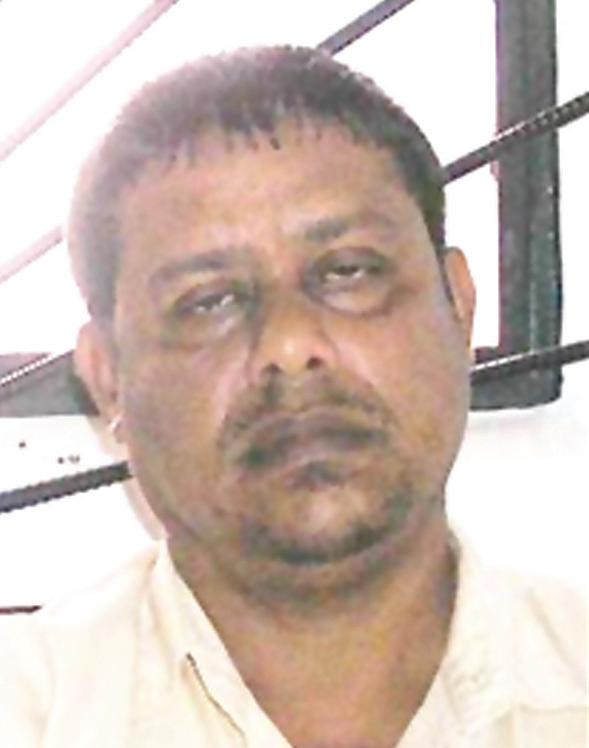
General Manager of Nand Persaud and Company Limited Mohindra Persaud
to Guyana to inspect what is going on here,” he said. He said they are storing too much, too fast and if something drastic doesn’t happen soon “we will max out our storage bonds and this has never happened before.”
Trucks
The Guyana Hindu Dharmic Sabha’s Shelter for abused women and children will be completed some time next year, officials of the body have said.
Through its programme“Voices against Child Abuse”, which started in 2009, the Sabha has been able to start construction of its “Bal Nivas” in Ankerville at Port Mourant on the Corentyne.
East Berbice Praant
President Nariendat Dhanraj Berbice Times that the initiative was the brainchild of the late Sabha’s President, Pandit Reepu Daman Persaud. The building, he explained, will accommodate persons in need of assistance, mainly women and children, and will be equipped with living quarters.
The building will be managed by a group of people drawn from nearby communities with assistance coming from the central Sabha.
“The construction per se was done basically from funds that were raised mostly at the central level and the various Praants would have contributed minimally to the construction. The East Berbice Praant donated $50,000 towards this venture,” he said.
Another ongoing fundraiser, the buy-a-block initiative will facilitate the fencing and other remaining construction work at the location, Dhanraj said. He noted that this project will be undertaken through the joint efforts of the three Praants in Berbice to raise $320,000 to purchase blocks.
Dhanraj pointed out that they are working assiduously to ensure the fencing is done, while noting that the building is nearly completed and is slated to be commissioned next year. The project itself came about after a feasibility study revealed that there are many abused women and children in need of a safe place to recover.
Dhanraj said armed with this fact, the late Pandit decided to embark on the project.
He said it was an exceptional project as it would not only cater for the needs of Hindus but all groups, with no discrimination, as persons from all ethnic and religious groups will benefit.
Upkeep Funds for the upkeep of the facility will come basically from collaborations between other organisations and the Guyana Hindu Dharmic Sabha, through its President, Dr Vindhya Persaud, who is exploring ways to have this done.
“Other organisations and stakeholders will assist, but the major maintenance and upkeep will come from the Sabha and assisted by the Praants across the country,” he said.
Apart from counselling, residents will be exposed to life skills and educational programmes to help
them build their self-esteem.
“Because, basically these would be persons who would have had very low self-esteem,” Dhanraj said, adding that yoga classes will also be introduced as part of the healing process for victims.
Residents of the facility will also be attending sensitisation conferences and seminars dealing with the various social ills in society. This, he explained, will be done for both battered wom-
en and abused children. “We will be having volunteers, but we will also be having a paid staff that will be manning the operations, because, at both the Central and Praants levels, there are persons who will be able to provide classes… so what you will find is a collaboration between the public as well as the private sector where we will have a paid staff plus volunteers, all of whom will be committed persons…”
Persaud said that thus far, he accommodates all the paddy intake from farmers but there may come a time when he will be unable to do so, since if ‘nothing happens in a big way soon’, storage bonds the paddy will exceed his capacity.
He reiterated that with the alleged media reports that Guyana has over exceeded its paddy production, he is suspicious that buyers will wait to see if they can get as low as possible prices. He was however optimistic that within the next two to four weeks everything will be finalised and a resolution to the issue will be made and hopefully, both farmers and millers can breathe easily again.
Meanwhile, Agriculture Minister, Dr Leslie Ramsammy on a recent visit to Berbice said that he was happy to see rice farmers continuing to produce. However, he said he thinks it will be a
mistake for anyone to think “we are producing too much rice. There is a huge rice market internationally, the challenge we have is that Guyana has been accustomed to a premium price market, we have always sold our rice at premium price, as you produce more you will have to begin to also sell rice into the bigger markets which is determined by the world market price,” Ramsammy disclosed. He said there is a lucrative opportunity there so in addition to selling on the premium market, Guyana must also enter the other markets. This he said means that Guyanese millers and farmers will have to look at greater efficiency in their production so that they can compete with other countries. “It is not whether there is a market that is available, there is a huge market, we don’t have to go far, right in our region we can sell another two, three thousand tons.
Farmers waiting to discharge their paddy at the Nand Persaud Rice Mill
The Guyana Hindu Dharmic Sabha building at Port Mourant
The Government of Japan under the Grant Assistance for Grass-Roots Human Security Project (GGP) last week signed a US$101,275 contract with the Mibicuri Community Developer, a partner of the St Francis Community Developers/ Friends of St Francis, for the expansion and remodelling of the development centre in Mibicuri, Black Bush Polder, Corentyne.
When completed, the expanded vocational training and early childhood centre facilities will benefit residents of Black Bush Polder and its environs by promoting safe learning and early childhood education. The building will also boast a confidential room where residents can receive counselling, refurbished offices, and rooms to accommodate increased skills training activities, Information Technology rooms, and a kitchen to host culinary classes.
The expansion will also allow the organisation to host conferences, workshops, and training sessions in a more spacious and comfortable manner. Mibicuri Community Developers Director Jacqueline Cummings expressed gratitude to the Japanese Government, saying that the venture will greatly assist the group in helping to reduce the social problems plaguing the community.
Region Six Chairman David Armogan expressed thanks to the Japanese Government.
“Having been a great friend to the people of Guyana over the years, they have assisted tremendously in many areas of development.” He congratulated the group for tackling the social issues in Black Bush Polder, noting that the community, with a population of about 4000 people, had 17 rum shops. He said for a small population, the majority of which are youths, 17 rum shops tells a story of a shrinking community.
He remarked that you would find all sorts of social problems in a community with that number of rum shops, so a development centre, which can provide counselling, recreation, skills training, and opportunities for people, young and old, to occupy their time can help keep them away from the rum shops and hence reduce the social ills in Black Bush Polder.
He went on to say that Black Bush Polder also has the highest rate of suicide in the country and the Caribbean, an unwanted stigma; hence the need for a place that offers proper counselling and training for people to take their minds away from negative thoughts and make them feel worthwhile, skilled and employable.
Human security
He acknowledged that opportunities are lacking in the area, and the expansion of the building will lead to more.
“Things have to be created for young people to occupy their time usefully and now there is skills training here.”
Japan’s Ambassador to Guyana, Yoshimasa Tezuka said the GGP was designed to promote human security in the
world by assisting non-profit organisations. He noted the project mainly targets areas that aim to improve basic human needs. He said he has seen that the group is already on track and is optimistic that it will address those needs and more.
In addition, Tezuka noted that the agreement demonstrates how strong bilateral relations are built and good relations between the Japanese and Guyanese Governments can help foster growth and development.
He drew reference to a logo created by Guyanese Ganesh Somrah to represent the 20th anniversary of the JapanCaricom relationship. He said the logo, which was selected out of 98 entries from across Caricom states, portrays harmony and partnership between the Origami Crane and the Heliconia flower. He explained that the Origami Crane is iconic to Japan and connotes strong cultural representation while the Heliconia flower is exotic and colourful like the territories of Caricom. “These two unite as our governments have been doing – to exchange and share opinions, to tackle many important social issues over the years.”
He was very pleased with the efforts of the group and said he can safely say the project truly addresses basic human needs.
Better relationships
Black Bush Polder Neighbourhood Democratic Council Chairman, Mr Thakur pledged his full support for the group and the project. He recalled the days when Black Bush was known only as a “reservoir for people who planted cash crops”. Now with the expansion of the building and the new services offered, better relationships will be forged with residents and the neighbouring communities, to provide more social and educational services in the community to the youths.
St Francis Community Developers President Alex Foster said 17 years ago when the group was established, members were told it would not last 17 days and 17 years later, “we are still here because of committed people who have given their time”. He applauded the efforts of everyone who made it possible and noted that the
Self-respect
Do you ever think about what it means to respect someone? In general, we tend to respect people with high social economic status and those who are more accomplished than ourselves. The level of respect we have for others will vary, and even the way we express it varies from people to people and culture to culture.
Starting off with practising basic respect toward yourself is probably a good first step. There are many situations where we often do things to ourselves that we would never do to others.
For example, some of us do not like the way we look and we go as far as to call ourselves ugly and we fail to follow our dreams, but instead sabotage our happiness. Whatever respect may look like to you, apply it to yourself, do not insult yourself. It is like stealing from your own self.
Having a sense of awareness and being able to recognise when people disrespect you and take every step to stop it is encouraged in a professional way, meaning that you do not want to do the same thing that someone did to you.
centre, which is the only facility of this nature within the 22-mile zone of the Black Bush Polder, was built in 2000 by the Government of Guyana under the President’s Youth Choice Initiative and has now outgrown its current space. The building is fully utilised and the expansion is timely.
Foster expressed thanks to the Japanese and to the many persons who would have worked tirelessly for the past 17 years to make the centre a success. “We are thankful for the confidence the Japanese have placed in us, because after completing the centre at Port Mourant, they sign a contract with Black Bush. We are grateful for the anticipated benefits that would be had from their investments.”
He said the centre has been able to bridge the gap between the young and the old, the rich and the poor, the educated and the not-so educated, and has helped to tackle several major social issues such as domestic violence, suicide, HIV/AIDS, providing counselling, education and skills training for all, free of cost, thanks to the support of numerous organisations.
The expanded building, when complete, will be fully stocked with all the necessities by Food For The Poor Guyana Inc. Foster assured the Ambassador that the building will be fully operational in a very short time.
Also in attendance representing the Peace Corps was Flavio Rose who pledged the continued support of the organisation in capacity building. He was extremely pleased with the success of the group and noted that as it moves into another phase of expansion, it will need to rely heavily on the services of volunteers to achieve its goals.
The expansion project was made possible through a grant by the Japanese government, upon completion the group seeks to expand their current services and cater to the needs of the growing population in BBP by providing increased access to skills, training and enhancement of qualifications for employment opportunities and to increase the opportunities for residents to be engaged in positive and healthy activities which will decrease the incidences of social ills in the area.
The truth is someone with self-respect will not allow other people to treat them bad and would mostly not associate with people who are disrespectful. Though this might seem like commonsense, there are many situations where people accept being treated with disrespect.
Narine Dat Sookram
This usually happens because some of us believe that who knows better will do better, or in some cases, we are a little too attached to people and are not willing to let those people go, worse yet, we in some cases do not feel that we deserve better.
Taking care of your body is another important piece of self-respect, because anyone who neglects his/her health looses the opportunity to see how lucky they are to be alive. For those of us who take the time to make an effort to keep our bodies in good working order, will know that not only does it makes you feel physically better, but it also gives you a sense of self pride.
If you want to look at it a little deeper, basically, when someone respects their body, it also means they are not insulting it for what it is. The key thing to remember is that you should put effort in the things that are manageable and do it because it feels good, but not because for some reason you think you are not “good enough” or anything like that.
And finally, take the time to know yourself, because the more you understand about yourself, it is more likely that you will appreciate how distinctive you really are, and the more you will respect yourself.
With the expansion of the U.S. Agency for International Development (USAID) Skills and Knowledge for Youth Employment (SKYE) programme to Region Five in January, the programme now provides services to youth in six of the 10 administrative regions –Regions Three, Four, Five, Six, Nine, and 10.
Programme support in Region Three began in November 2013, the U.S. embassy here said. The programme’s direct support to youth is integrated through the pairing of a coach with each youth, according to the embassy’s release. “The coaches assess and work with youth to develop Individual Employability/Livelihood Plans, which focus on all of the
inputs needed to assist youth in reaching their development destination – employment, education, or further training,” the release added.
It said project activities include life and work skills training, job placement support, re-integration support for youth following their departure from the New Opportunity Corps (NOC), and diversion and alternative sentencing for youth within the justice system.
On Wednesday, 16 youths from Region Five graduated after completing life and work skills training. The training was implemented by the SKYE programme’s local partner Volunteer Youth Corps and utilised a curriculum which infused literacy strengthening strategies. The curriculum
was adapted to Guyana’s employment context and designed to provide young Guyanese with the foundational skills and knowledge necessary to become healthy, productive employees and community members.
The all-male group of youths, drawn from several communities stretching from Rosignol to Mahaicony, are now able to demonstrate appropriate entrylevel behaviour once employed.
As of December 31, 2013, 741 youths have completed life and work skills training and 306 were placed in fulltime employment. Thirtytwo youths passing through the juvenile justice system received alternative sentences and were attached to the SKYE programme.
Japan Ambassador Yoshimasa Tezuka hands over the cheque to Director Jacqueline Johnson
Region Five youths posing with their certificates after completing the SKYE course
This week, Berbice Times spent a day in the small but beautiful village of Number 27 Bush Lot, Corentyne.
Located approximately 21 miles from New Amsterdam and 22 miles from Corriverton, the village of Bush Lot sits in the centre of the Corentyne coast.
Home to some of the more popular families in Guyana such as the Kennards, headed by former Chief Justice and Head of the Police Complaints Authority, Cecil Kennard; the Singhs –close relatives of Finance Minister, Dr Ashni Singh; the Molai Family, famous for horse racing; the Mobeens; the Chickrees; the Sadoos; the Ramnarayans – owner of Metro; and many others.
With approximately 800 residents, the village has a rich history of horse racing dating back to 1930 when the Kennard Memorial Race Course was established by the late Charles Cecil Kennard. Amazingly, the racetrack was made by the Kennards and residents us-
well as the Bush Lot Health Centre, two churches, and a mandir. While there are nurses, teachers, lawyers, and other professionals, most of the villagers, like so many on the Corentyne Coast, rely mainly on cash crop farming and rice harvesting as their main sources of income.
Another very popular source of income in Bush Lot is cattle rearing.
“Lovie” and “Milky”
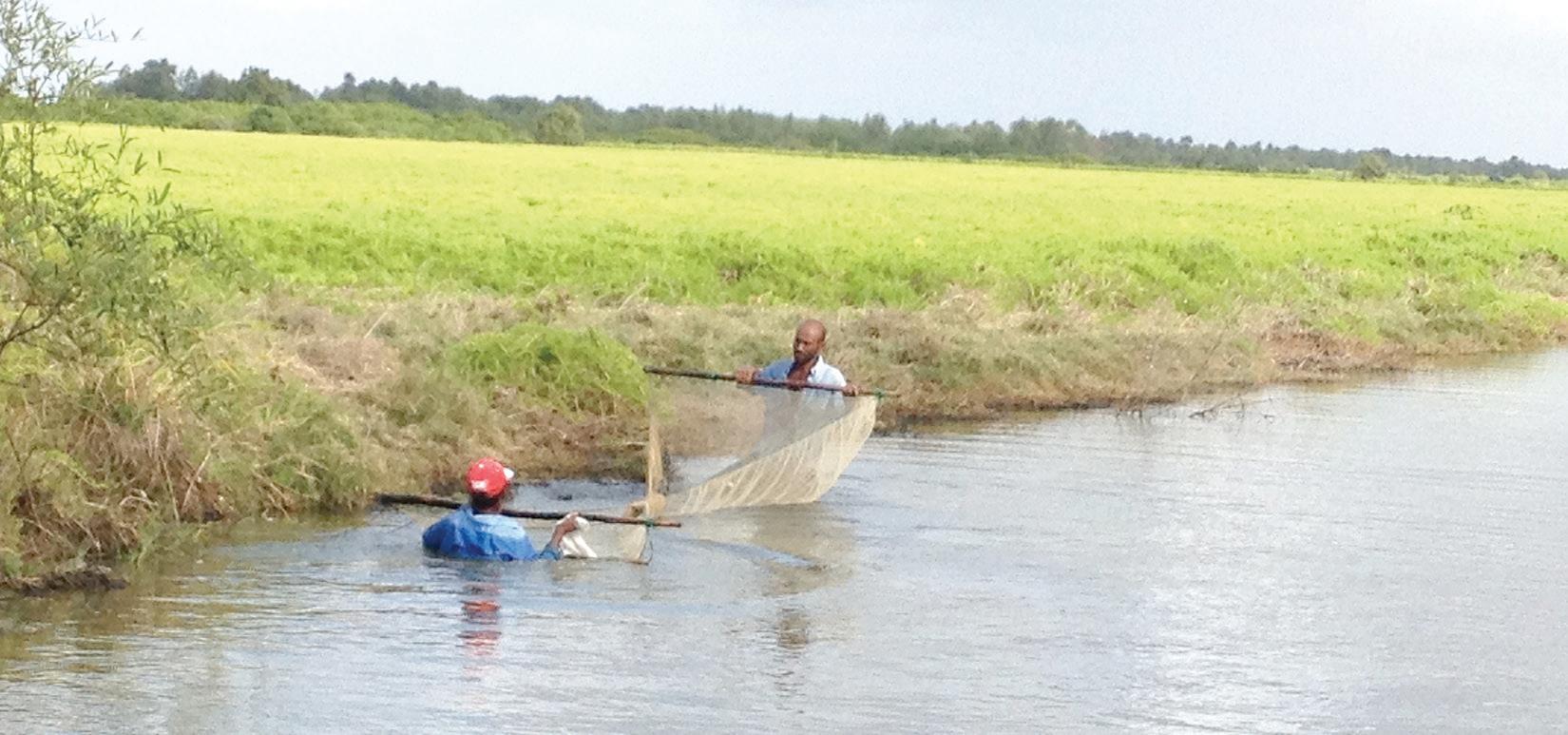
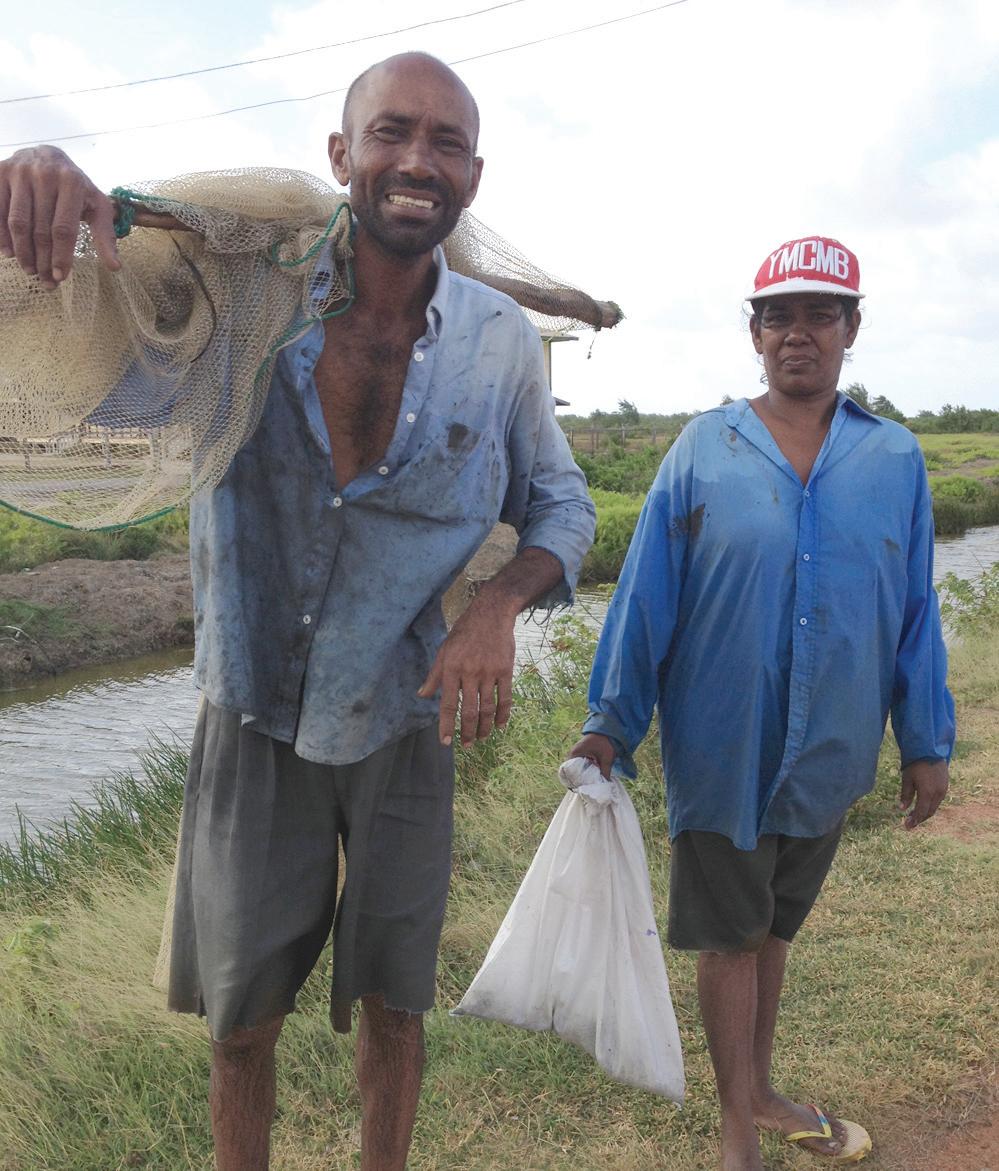
When Berbice Times arrived in the village, “Lovie” and “Milky” were making their way from the Atlantic Ocean with a small amount of shrimp in a bag. Not satisfied with the catch, they made their way into the nearby trench where they used their drag seine to better their catch. Forty-three-year- old Chetram “Lovie” Ramnarace and his wife “Milky” have been living in Bush lot for the past 23 years. “Lovie” related that he worked various jobs in the backlands to make ends meet until he met “Milky”. He joked that he had about seven ladies be-
hind the Central Corentyne Secondary School, there were several youths flying kites and playing a game of “ready catcha”, while another small group was playing cricket.
On the other side of the street, Zabida Latiff, 78, sat on a bench in front of her home with her daughter and great grandson, observing the children playing and taking in the cool north Atlantic breeze.
She recalled that at age 16, she got married and moved to Bush Lot. There were only two houses in the street at the time – her house and another a little distance away, while the school was in the first stages of construction. Now the street is filled with houses and people. “I used to fish, make broom to send my seven children to school so that they can have a better life. It pains my heart to see so many children squander the opportunity they now have. In my days, we would never been able to do half the things these school kids are doing now or we would have gotten sound
ing only shovels. The race course was established to serve as entertainment for the villagers and today has become home to one of the most popular horse racing clubs in Guyana.
At present, Bush Lot is buzzing with commerce as there are several shops, a gas station, an auto body workshop, a Chinese restaurant, several welding/fabrication workshops, electronic repair shop, a goldsmith, a rice mill, a poultry outlet, two bars, and several roadside stands that sell mouth-watering goodies.
The village also has two schools namely Central Corentyne Secondary and Bush Lot Nursery School, as
fore he finally settled down and has been doing better, since he has settled. “I get the right one now,” he said as “Milky” playfully punched him. Their favourite activity together has been fishing and they do it as often as they can, mainly for fun but whenever the catch is exceptional, they would sell some to get an extra dollar. Further up the beach, there were several people exercising and a family having a “bush cook” in the mangroves. The beach is very popular for exercising and is crowded on Easter and Emancipation Day. Folks also use the beach for religious services.
Nearby at the playfield be-
thrashing.”
Apart from low pressure, Auntie Zabbie, as she is popularly called, enjoys good health. She does everything for herself from cooking to washing, walking to the market and to the mosque a village away every Friday and every day in the Month of Ramadan. She related that she has a small kitchen garden in the yard that she cultivates to occupy her time.
Local chiropractor
Out at the roadside resides Rameshwar Persaud Ram, 70, better known as “Skatcha”, a local chiropractor who offers services for people with stroke, fractures, nervous breakdown, head-
aches, and slipped disks, among other ailments. When Berbice Times stopped by his place, he was in the middle of a session with one of his clients.
“Skatcha” was told by doctors he would not live to see 30 as he had a heart condition. He recalled that at six weeks old, he had surgery for the condition and at the age of 16, it began to “act up” and he was told that in 14 years, his heart would give up. Because of his condition, he did non-strenuous work such as small-scale cash crop farming and some cattle rearing. He was an avid reader and was fascinated by the human body, so he started reading books on the body and nervous system, which lead him to his current trade. “I know exactly the nerve that pinch in the lower back, I have been doing this for
Chetram “Lovie” Ramnarace and his wife “Milky”
over 40 years. People come from all over the world to see me. I see a maximum of 20 persons per day with patients from Pakistan, Kenya, Sri Lanka, India, U.S. among others.”
“Skatcha” was recently flown to North America to render his services to several people who could not come to him. He does not attach any price to his services and is very thankful for whatever is offered to him.
turn to page 8
Bush Lot Heath Centre
Global Youth Movement–Guyana (GYM-G) will soon embark on a one year community health, environment and recycling project in Region Five.
The $23 milliom project seeks to stimulate community action on environmental issues by increasing awareness and build capacity of people to reduce pollution. The project is being undertaken with a grant from the Global Environment Facility (GEF) Small Grants Programme which is executed by the United Nations Development Programme (UNDP). To date the project has received support from the Regional Administration of Region Five and the Environmental Protection Agency (EPA).
Executive Director of GYM-G Mark Ross signed a Memorandum of Agreement with the UNDP which will see the youth organisation receiving the first tranche of US$25,000 which represents fifty per cent of the total grant.
According to Ross, the main components of the project are; reducing use of chemicals by farmers through training and exchange visits, reducing the burning and dumping of untreated and harmful solid waste in communities by piloting a solid waste programme which will see 2600 recycling bins distributed and training of householders in composting and the 3R’s, reducing the use of mercury by Artisan and Small Gold Miners (ASGM) by training them on the effects of mercury on humans and the environment and the recycling and composting of large amounts of animal waste by piloting four bio-digester units to produce biogas for household cooking.
“The project will launch a comprehensive public education campaign, which
will see the establishment of new or support to existing environmental clubs in seven secondary schools, training of 35 students as environment ambassadors, encouraging Parent Teacher Association (PTA) environmental programmes, clean up campaigns, television programmes and tree planting exercises across the region.” He added.
While the group’s main target audience is adolescents and young people, due to the nature of the project, it will be involving persons of all ages, which is evident in its plans. Ross pointed out that GYM-G believes that with community actions there can be national and global impacts. “GYM-G began discussion with the UNDP in August 2013 with a project concept being first submitted, followed by a proposal and it was approved in September 2013.”
The GYM-G received the grant award of $1 million for the project last December but is still seeking additional funding and support for other components. Global
Youth Movement–Guyana was formed three years ago by Mark Ross, Rondha LamSingh and Abbas Hamid as a platform to celebrate United Nations designated International Year of Youth 2010-2011.
It is a youth advocacy group which aims at engaging key stakeholders working in youth development on various issues affecting young people. The group had initiated International Year of Youth Activities in Guyana and has since undertaken many projects in coastal regions.
Among the key policy issues the youth movement has been advocating for are the National Youth Policy, the formation of a National Youth Commission, a Youth Development Fund and the establishment of a nonpartisan youth parliament. Recently Ross called for more investment in youth and for the implementation of meaningful youth development programmes so that young people can be better guided in making rational decisions when challenged.
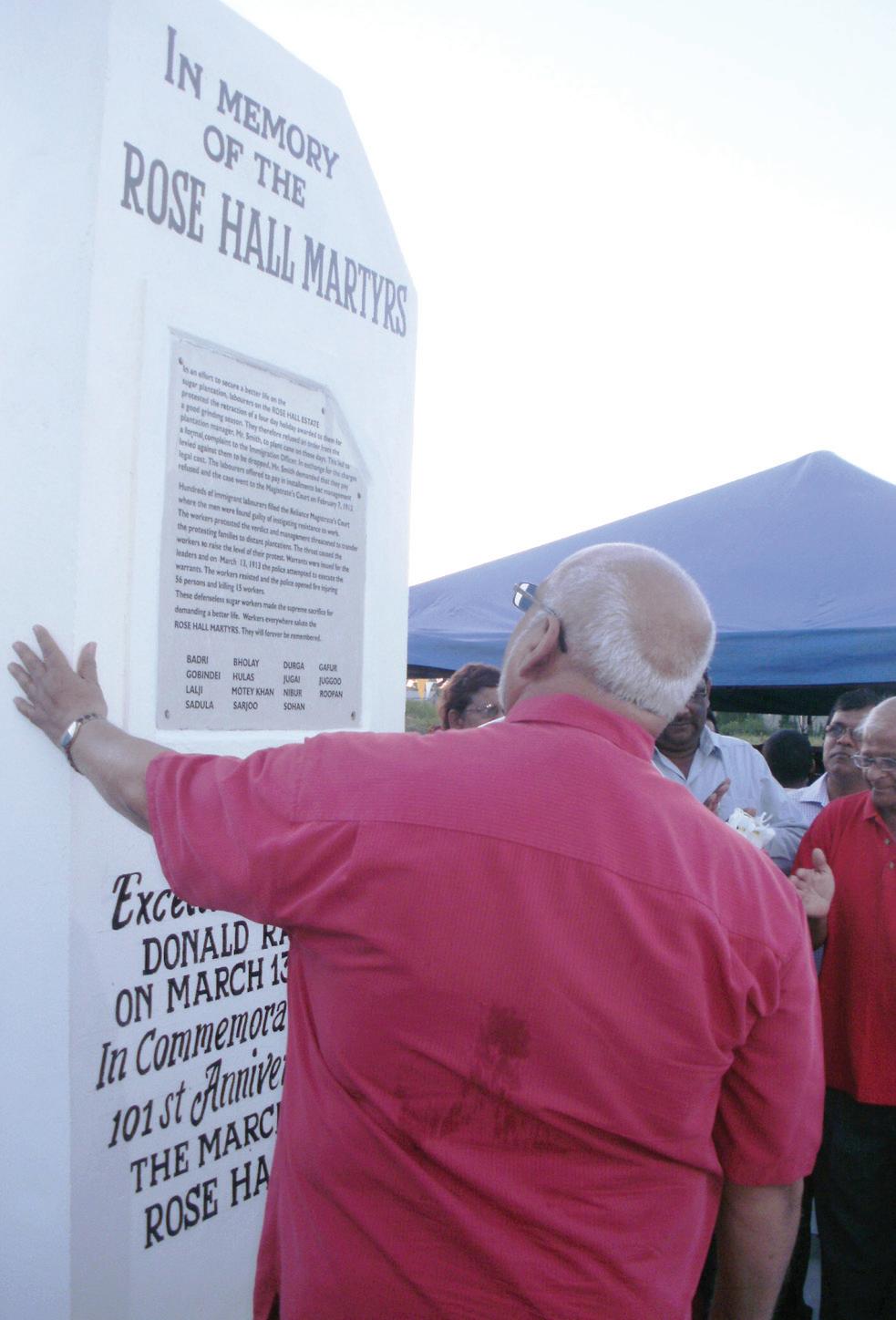
President Donald Ramotar on Thursday unveiled a monument to honour the 15 Rose Hall Estate sugar workers who were killed by British Guiana police 101 years ago while protesting unfair treatment on the plantation.
On March 13, 1913, police shot and killed the 15 protesting workers. In an effort to secure a better life on the sugar plantation, labourers on the Rose Hall Estate protested the retraction of a four-day holiday award to them for a good grinding season.
They therefore refused an order from the Plantation Manager, Mr Smith, to plant cane on those days. This led to a formal complaint to the immigration officer. The plantation manager demand that they pay legal cost. The labours offered to pay in instalments but management refused and the case went to the Magistrate’s Court on February 7, 1913.
Hundreds filled the Reliance Magistrate’s Court where the men were
persons of which 15 sugar workers were killed along with a Police Corporal, James Ramsay.
Among the martyrs are: Sadulla, aged 23, indentured labourer; Sarjoo, aged 21, indentured labourer; Roopan, 25, indentured labourer; Badri, 26, indentured labourer; Hulas, 25, indentured labourer; Motey Khan, 26, indentured labourer; Gafur, age 27, indentured labourer; Sohan, age 33, indentured labourer; Bholay, 33, indentured labourer; Juggoo, 37, indentured labourer; Gobindei, age 32, free labourer; Lalji, age 45, free labourer; Jugai, aged 30, free labourer; Durga, aged 52, free labourer; and Nibur, age 42, free labour-
found guilty of instigating resistance to work. The workers protested the verdict and management threatened to transfer the protesting workers. The threats caused workers to raise the level of protest.
Warrants were issued for the leaders and on March 13, 1913, as police attempted to execute the warrants, the workers resisted and the lawmen opened fire injuring 56
er.
President Ramotar speaking at the ceremony noted that it is commendable to remember those martyrs. “We should never forget what we enjoy today. The foundations were laid by those who came before us… Some people have even said that the history of this country is largely the history of sugar.”
Executive Director of GYM-G Mark Ross receiving the grant certificate of US$50,000 from UNDP representative in Guyana Khadija Musa while Ian Kissoon, GEF-SGP National Coordinator looks on
President Ramotar unveils the monument in memory of the Rose Hall Estate Martyrs
A section of the audience
Simply the
Truth
Honouring work
On March 1, the Felix Austin Police College (FAPC) B Division honoured a set of people –myself including – for the work they have done for the FAPC and the police in general. Quite correctly, Commander Brian Joseph was honoured as were others. But I want to focus on just one of those people: Assistant Commissioner (retired) and former Training Officer Clinton Conway.
Before I go to the excellent Mr Conway, however, a word about the event and the setting. It was a fund-raising dinner. A dinner, my goodness! The place was decorated tastefully: red serviettes curled into glasses; ribbons and balloons; blanched linen over tables and chairs; plush chairs for those on stage.
And those attending were equally tastefully garbed: ladies looking and behaving as ladies do; the recruits of FAPC in black suits, black ties, and white shirts; and gentlemen behaving and dressed as gentlemen do. It was not stuffy at all. Even the music was good: the great tenor Andrea Bocelli sweet to the ears and easy on the mind.
A far cry indeed from the barbeque and drunken jump up that is the order of the day. I was told there were two such usual drunken revelries in the surrounding neighbourhood, one at the Berbice Campus. Unlike those, this FAPC dinner
was dignified. Thank you, Mr Javon Hamer, Mr Elton Davidson, Mr Alex Foster, and Mr Khali Pareshram.
But to Mr Conway. In his address, the former Training Officer spoke about the evolution of FAPC B: from bush to something functional. He is a learned and eloquent man, with a wealth of knowledge locked up in that head of his.
Shamefully, his head was recently beaten by bandits who invaded his home. Be assured that he gave as good as he got, though the criminals were armed. Intelligence, honour, and courage, all wrapped up in one man. The man put out to pasture, a man wasted, as it seems to be the habit of this nation.
Conway spoke of the importance of education and training. Everyone does, of course. But for this man, education and training are things lived, living things. He was full of praise for what we did with and for the force from 2009 to 2013. For the first time, “the university was taken to FAPC and FAPC was taken to the university”. It felt good to hear. Those days are gone now.
After the event, I rushed back to where I live and gushed my praise for the good policemen and women that were there and were not there. I babbled to a woman I adore. She listened in her half-smiling tolerant way.
The next day, driving a loaned car, she was pulled over by a clutch of policemen in the presence of an officer. Instead of “Good day, Madam. Your driver’s licence, please,” she was told, “You looking sweet, Baby!”
Shame on you fellahs! You have stained the uniform and shamed good policemen and women past and present. Shame! Go take a long bath in the clean waters of professionalism.
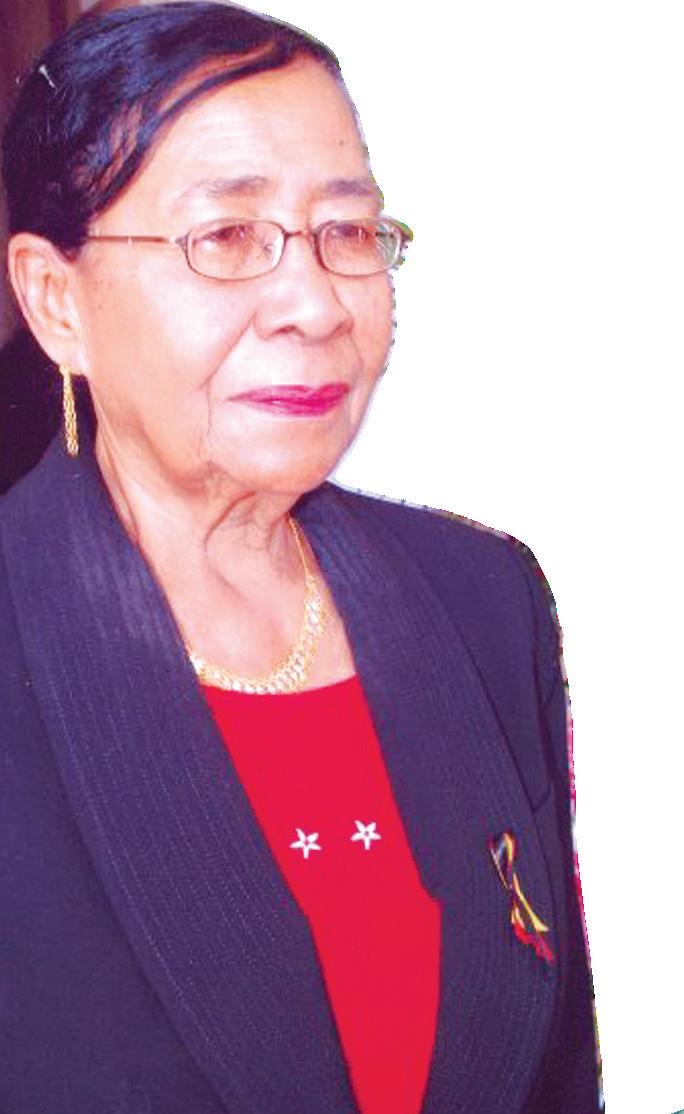
National Director of Community Development Councils in Guyana, Philomena Sahoye-Shury is calling for more ‘fireballs’ in Guyana. She made the call last Wednesday at an award ceremony to honour outstanding women in Berbice in observance of International Women’s Day, which was celebrated on March 8. Wednesday’s event was organised by the Berbice Regional Health Authority (BRHA) and the Region Six Administration.
Sahoye-Shury, who is affectionately known as the “Fireball”, said women have a great role to play in the development of Guyana and the family, but enough of them are not taking up the challenge. “Some of us women allow men to do the things that they think they should be doing and we sit back and accept that… We need to stand up! I would like to see more “fireballs” in Guyana
before I die,” the politician challenged the dozens of women in attendance. She urged them to be in the forefront of the fight to develop a society where there is a strong family unit. “Many mothers use the TV as a comfort for their children; don’t do that. You need to talk to your children, and don’t be too busy for them… Don’t only be their mother, be their friend,” the 83-year-old “Fireball” said.
The local female icon quoted a verse from the Holy Bible in admonishing women to maintain discipline in the home. “Don’t spare the rod and spoil the child… Love must come with discipline.”
Sahoye-Shury noted that much has changed over the past three decades in Guyana for the betterment of women. “I remember the days when a woman had to join the National Service before they could get a job in the public service. I don’t have to tell you, both you and I know what happened in there and I was one woman who was not going to let my two daughters go through that, because when they say ‘no’ is no.”
Future of Guyana in women’s hands
Sahoye-Shury, who was imprisoned in New Amsterdam during the colonial days because of her political beliefs and actions, noted that because of compulsory National Service she left Guyana and took her children abroad. Reference was also made of the colonial days when women in the public service were forbidden to bear children and had to work eight-hour shifts. “Never let those days
return I beg of you, My Dear Daughters and Sisters.”
She admonished women to unite and not let ethnic differences cause separations, and to be tolerant to each other. This is so, she added, because the life and future of Guyana lie in the hands of women. “Let us be good mothers; let us guide our children, let us show that path of moral, ethical and religious values and let us come together as mothers preparing our children for the future.”
Eighteen women were honoured by the BRHA, including women from the disciplined services, social organisations, politicians, teachers, media operatives, administrators, and medical personnel.
In brief remarks, Regional Executive Officer (REO) Paul Ramrattan lauded the contributions women have been making towards the development of Region Six while New Amsterdam Hospital Chief Executive Officer (CEO) Alan Johnson said if the women of today were like the women of yesteryear, then most of the current problems of the world would not exist.
In a message from the Regional Men, Women and Rights of the Child Committee, Chairperson Imran Alli said the Committee acknowledges the contributions women have been making in the various institutions they serve. BRHA CEO, Dr Vishwa Mahadeo referred to women as greater than men for the simple reason that they can bear children. “None of us would have been there if our mothers did not protect us from day one.”
Veteran politician Philomena Sahoye-Shury
Professor Daizal Samad
A recent sponsor hands over the sponsorship cheque to the BCBC
– concerns being raised over funds donated to BCBC
Concern has been raised over the spending or rather the lack of spending of sponsorship money for competitions run off by the Berbice Cricket Board of Control (BCBC).
The current Telenec U-15 Cricket Competition shows that a sponsorship sum of in excess of $500,000 was given to the BCBC for the staging of that tournament. Despite this sum, which, according to the sponsorship document, covers transportation, meals, and umpire fees, clubs have to provide transportation for teams to get players to matches and no umpires are being provided for these matches. At a recent game, the youngsters had buns and Kool-Aid for lunch.
The winning team will receive $60,000, but one club official is question-
ing this. “The prize money for this competition is way below the six digits. Well, how can we have development when there are no umpires for matches? How can a 15-year-old or even a 17-year-old control a cricket match (as umpires) with the youths of today? If the Berbice Cricket Board of Control can say to us that no money was allocated for umpires, it leaves one to wonder, where the money is going?” the official questioned.
“Clubs pay their own transportation, provide balls and meals for all preliminary matches and this is no burden on the sponsorship sum. Mind you, the executive of the BCBC, I am not attacking you but I am just seeking clarification in the way our future stars are being nurtured,” the official who asked not to be named
added.
Another recent competition that raised concern was the 2013 Universal DVD 20/20 competition. For the final of that tournament, the sponsor provided the prize money to the winning team on the spot despite a sum being catered for in the prize money that was handed over to the board before the commencement of the competition.
Insufficient funds
In clarifying the issue with Berbice Times Sport, BCBC Treasurer Anil Beharry noted that the sponsorship money only covers meals, transportation, and umpire fees from the quarterfinals. He also said the funds provided by the sponsor were insufficient to cover all the costs of the Telenec U-15 Tournament.
Nine-year-old Hemwattie Komal of Number 68
Primary School emerged victorious in the Rotary Club of Corriverton Annual Spelling Bee Competition. She held the crowd’s attention with her confidence as she boldly spelt the winning word ‘synchronise”.
The event saw participation from several schools in the Number 48 to Crabwood Creek District and was held at the Guyanese Outreach Centre, Number 71 Village.
Prizes were awarded to the first, second and third place winners, while each of the participants were presented with certificates.
Second place was awarded to Deoraj Chan of New Market Primary while Alex Ram of Skeldon Primary walked away with the third-place prize, – they both received a trophy and monetary prizes.
The Rotary Club Corriverton Treasurer said the aim of the competition was to encourage students
to expand on their reading, pronunciation, fluency and word awareness.
In addition, the competition will assist children to boost their self-esteem, and learn to spell correctly. He expressed thanks to all the participants and the Rotarians for their contributions.
The competition is an annual one and was conceptualised as part of the club’s commitment to improving vocabulary, reading and writing skills.
“If we had to provide transportation for all the players and umpire fees for the preliminary matches, then we would have needed over $3 million,” Beharry said.
Beharry added that the host team is responsible for providing meals at matches during the preliminary rounds of the tournament. He explained that in the staging of competitions, the largest chunk of the sponsorship money goes towards transporting players and umpire fees. “There is also money that goes into the launching of the tournament and for advertising.”
The launch and advertising, Beharry noted, are very important to the sponsor. According to him, while there are other administrative costs associated with running a tournament, the Board has had to provide
from page 6
The sugar workers he said, led the fight for independence and today the proceeds of the industry belong to the people of Guyana. “Had it not been for the determination and courage of these 14 men and one woman along with others at others estates, then the sugar estate might not have been what it is today.”
Also speaking at the unveiling ceremony was Culture, Youth and Sport Minister, Dr Frank Anthony who said he is saddened at the fact that much of Guyana’s history has been lost because it has not been placed in the history books that our children read. He noted that the Rose Hall Estate incident started the end of indentureship. “Make sure that everybody who comes to Berbice must come and visit this site.”
Minister Anthony said that through the National Trust, his Ministry will transform the current site into a park. The monument stands on the spot where the 15 martyrs were buried in a mass grave. Earlier workers and residents of East Canje marched from the estate to the site of the monument.
funds for some competitions. For the 20 competitions run by the BCBC annually, only three of the sponsors cover the costs. “That is why we have to have fundraisers here at the Board but strangely many of the clubs do not support those fundraisers in terms of purchasing tickets.”
Speaking of the 2013 Universal DVD 20/20 final, Beharry said it was the sponsor who decided during the final to increase the prize money to ensure that the competition had the biggest purse yet in Guyana. The sponsor also provided meals for officials during the final, this was also a decision that the sponsor took and was not as a result of a lapse by the BCBC, Beharry added.
page 5
When quizzed on the developments of the village, he said for the past 65 years, he has never had any trouble with anyone –the village is a very good community, which has seen much development, with larger and beautiful houses being built. He related that while many of the folks of his time have migrated or have died, the younger generation has multiplied.
He opined that more needs to be done for the youths in the community, as if they get too idle they may look to make trouble. He did acknowledge that while the facilities are available at the cricket club and playfields, more activities needed to be organised, apart from cricket, to capture the attention and appeal to the youths.
A few streets down in the village was Suresh Ishri, a cash crop farmer of 13 years. He was just making his way out of the backdam with a tractor full of watermelons, boulangers, and tomatoes. He lamented the state of the access dam, saying it was in terrible condition, while urging the relevant authority to fix it, especially in light of the recent rainy season.
However, Region Six
Chairman David Armogan expressed disappointment that the Canje Development Committee did not mobilise more persons to be part of the march. He noted that what occurred 101 years ago is the only time in the history of the Caribbean where so many persons were killed on a sugar plantation. Wreaths were later laid by President Ramotar; Culture Minister, Dr Anthony; the Regional Chairman; Member of Parliament, Dr Vishwa Mahadeo; and Davi and Pamela Sukhdeo (relatives of Nibur who is one of the martyrs). Also laying wreaths after the unveiling on the monument were President of the Guyana Agriculture and General Workers Union (GAWU) Komal Chand, Manager of the Rose Hall Estate Shiv Persaud, President of the Canje Community Development Association Mohammed Akeel, Chairman of the National Trust of Guyana Lennox Hernandez and representatives from the Progressive Youth Movement and the Canje Humanitarian Society.
Berbice Times also made a stop by one of the largest buildings in the village which once housed the Odeon Cinema, popularly known as “Guts Cinema”. The cinema, which was built in 1962 by Mr Ponai and his family, was one of the longest running cinemas in Guyana until 2004 when the family decided to close its doors after business drew to a standstill. The proprietor’s son “Spenk” recalled the days when the cinema was packed on weekends, as it was the major source of entertainment for the people of Bush Lot and its environs. He recalled the overflow of patrons who never minded standing.
While everyone is very happy with the development taking place in Bush Lot, several of the older folk reminisced on the market days. They related that the market used to be held every day from 05:30h to 09:00h at the Bush Lot dam, north of the public road next to the Kildonan Dam. There, they were able to get fresh produce and fish daily while having an opportunity to socialise. Everyone would bring a little to sell, but would buy something in return. While they do not foresee a return of the market, they believe the youths need something similar to help them get out more and interact face to face with others rather than communicating over the phone or social media.
Participants and members of the Corriverton Rotary Club with their trophy and prizes