Berbicians came out in their thousands on Sunday as they took to the streets to celebrate Mashramani Berbice style.
Revellers of all ages lined Main Street, New Amsterdam to get a glimpse of the eight spectacular bands that took part in this year’s parade. The bands assembled at Marks Bridge and then made their way along Main Street, accompanied by loud soca and dancehall music, as revellers and spectators alike gyrated to the booming sounds from the massive sound systems that accompanied each float.
There was something for everyone as the bands showcased various aspects of Guyana’s rich folklore while sending positive messages as in the case of the Health Ministry float. Five floats participated in the event namely those of the Regional Democratic Council Region six, Education Ministry, Tourism Ministry, Health Ministry and a local contingent from New Amsterdam.
By the time the bands finally made their way to Stelling Road, the sun had set but that did not stop patrons from continuing the party as there were several after-fetes in New Amsterdam and its environs planned.
There were several overseasbased Guyanese who came back home just to be part of the Berbice Mash. “I am having the time of my life, this is what I needed to get me back to normal from that cold of North America”, said Natasha Singh, who was gyrating to soca. There were also several members of the Peace Corps and persons from Essequibo and Georgetown.
The children were also treated as they enjoyed photo shoots with cartoon characters, face painting, bouncy castle and much more. Despite the limited number of floats, Berbicians expressed satisfaction with this year’s event as they look forward to a bigger and better Mash in 2015. Mashramani 2014 was celebrated under the theme “Cultural folkore, celebrating 44”.
Berbicians lined up along the roadways to witness the Mash Parade
Revellers making their way along Main Street New Amsterdam
This float is advocating against obesity
One of the many colourful floats on display on Sunday
Berbice Mash 2014 saw a massive turn out
By Shiran ramnauth
The Chairman of a major fishing complex on the Corentyne said that around 30 per cent of the fisherfolk who operate in the area were involved in piracy. He said because many of them are allowed to get away with the crime, the scourge of high seas piracy will continue.
Number 66 Fishing Complex Chairman Parvinchandra Deodat, who also heads the Berbice Anti- Piracy Unit, made the comments in wake of a recent incident where known fishermen attacked their colleagues, but were later released by police after reportedly compensating their victim with some $1 million.
The incident has since sparked a major row in the industry, as several fishermen on the Upper Corentyne are furious. The incident further strengthens the arguments by many that a number of the pirate attacks on the high seas are being carried out by fishermen.
On February 17, about 20:30h, fishing vessel Sharmilla, owned by Sharmila Khelai of 12 Lancaster Village, was attacked by the five men in another vessel OMI 3, property of Anilla “Dolly” Alfred, 48, of Number 67 Village. Four men who confessed to the crime were arrested, but were released, since the two parties settled the incident to the tune of $1 million. The incident occurred in Surinamese waters.
Growing frustration
In interviews with several fisherfolk on the Upper Corentyne, Berbice Times was told that there is growing frustration among persons in the fishing business. Deodat said he was fully aware of the incident, and even though he cautioned both parties not to make any settlement, they still went ahead.
He insisted that the men held for the alleged piracy and hijacking should have remained in custody and should be jailed for life, with the vessel used to carry out the attack seized by the state, regardless of which territorial waters the incident occurred in. Deodat maintained his clean record regarding the fight against piracy in the Upper Corentyne. According to him, a Bill was passed in Parliament assented to by former President Bharrat Jagdeo in July 2008 stating that for any act of piracy, hijacking, or any other high sea offence, the culprit should be slapped with a life sentence.
Information was that the owner of OMI 3 is related to an executive of the Number 66 Fishing Complex. It was reported that after receiving threats, the owner of Sharmila was forced to make the settlement. Deodat said no interference should have come from the executive. He said protocol should be observed and those who committed the offence should face the consequences.
“At the fishermen level, we need to take a stand and ban those caught in the act for life, they should no longer be associated with the fisheries,” he posited. He noted that there was an incident whereby some men were banned from doing any business there; however, during his absence, a certain member of the committee allowed them to return.
Deodat also alleged that the two fishermen who were killed at Tain some time ago died because they recognised their attackers. He stated that fishermen from other fisheries have been able to infiltrate their system at Number 66 and commit the acts with the full cooperation of those in top positions. Ironically, other fisherfolk from various organisations are saying that the officials at the Number 66 Fishing Complex are carrying out these despicable acts and are trying to put the blame on them.
Not involved
“The executive members of the Upper Corentyne Fishing Complex are not involved in piracy, but are only committed to fight this scourge. No matter what this act cannot be stopped completely, to my opinion when you analyse what triggers piracy, you will see one area as being greed, where fishermen become greedy and rob each others to get more finance,” Deodat said.
Asked what might be triggering this behaviour, he acknowledged that some fishermen’s expenses are high…” and therefore, when they are not able to make a profit due to circumstances, they then resort to robbing each other to manage their expenses. Some of them are honest and try to make a decent living, but the expenses become extreme,
now especially with the rise in the price of fuel. We have been disconnected from GPL for a number years now, so the expense incurred are contributing to these illicit activities,” he posited.
Climate change
Additionally, Deodat said with the change in climate: “The water gets colder and sometimes too warm for fishing; more so, there are thousands of rice and cane farms that are being cultivated in the area, all of which contribute to manmade disaster when the chemical used are released into the river, the fishes automatically move away from danger,” he said. Deodat noted that this results in the men having to go out additional miles in order to catch fish, thus doubling their expenses.
He also alleged that a truck from Georgetown owned by someone who was associated with them is now coming to Berbice and immediately purchasing the fish that have been hijacked, so there is no trace.
Meanwhile, regarding the settlement between the owners of OMI 3 and Sharmilla, B Division Commander Brian Joseph said he has since sent the file to the office of the Director of Public Prosecutions for advice.
Little business going on at the Number 43 Village Fishing Complex
Allegations have been swirling that a number of fishermen operating out of this complex are into piracy
Number 66 Fishing Complex Chairman Parvinchandra Deodat
BY ALEXIS RODNEY
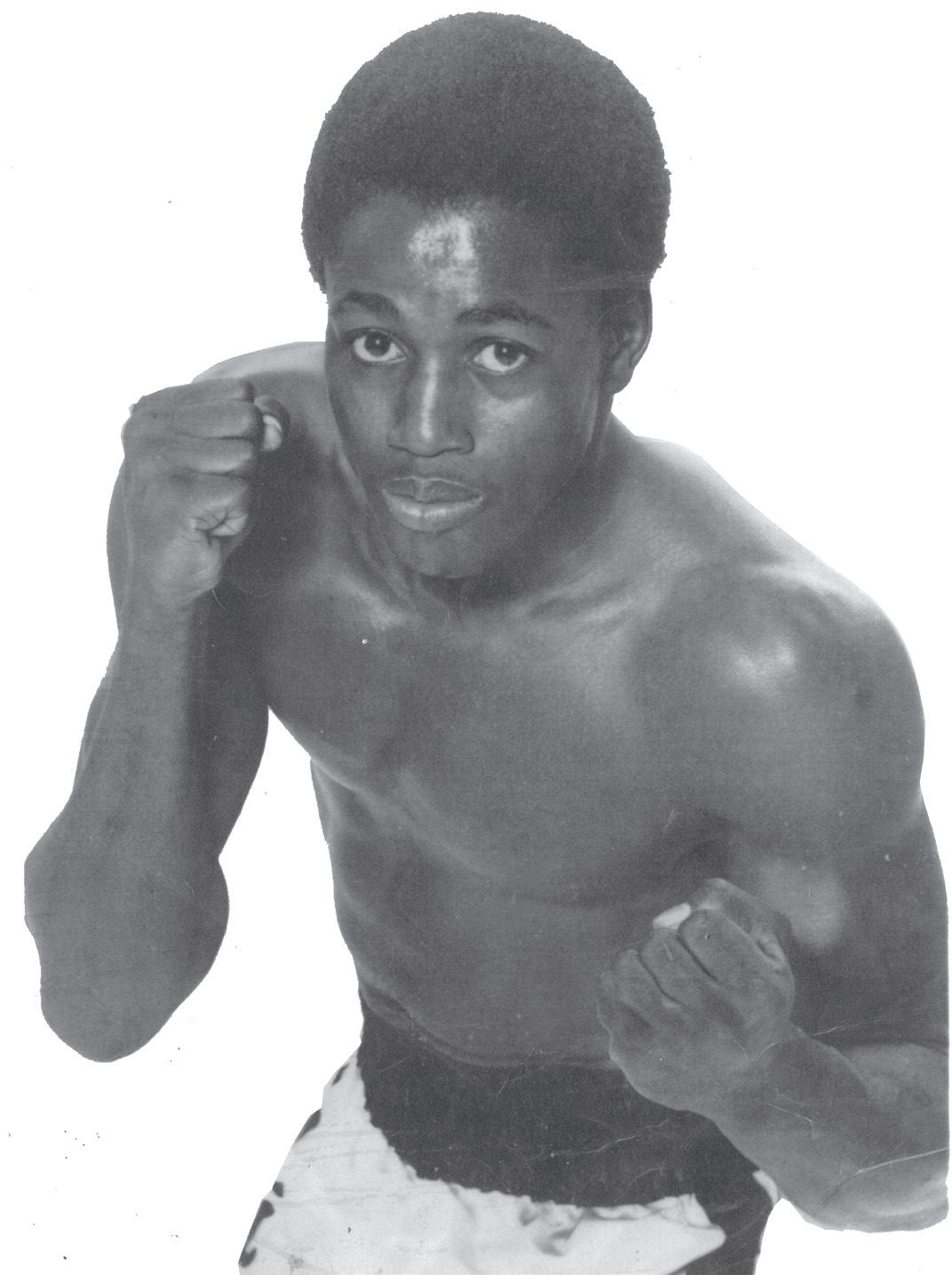
Terrence Halley did not become “Terrence Alli” just because some American doctor could not understand his lilting voice and hear the elusive ‘H’. In fact, the trouble started when, in 1979, the perpetual motion-fighting machine emerged from the mining town of Linden, much to the amusement of sport enthusiasts, especially those in the boxing arena.
His streaks of local knockout bouts began when at the age of 17, he fought against Winston Goodridge in a local amateur attack. That fight was one of many to follow, inscribing his name in the annals of time as the most influential and talented fighter of the day. But as fate would have it, he was finally knocked out by another Guyanese counterpart, Walter Smith, the following year.
That defeat did not cloud his judgment and perseverance as he purposefully weighed in the balance and decided to throw his fist at another level, in another country. In 1980, in the twin Island of Trinidad and Tobago, his first fight against Cleophaus James registered him as a force to be reckoned with. He cleverly out-boxed seven other contenders on the Port of Spain soil.
Alli kept on moving and by 1982, he found himself in Ontario, Canada, fighting against renowned fighters such as Nedrick Simmons, Rick Pappa and Johnny Summer Hays, winning two out of the three fights. That same year, Alli registered to fight in the United States of America and between 1982 and 1997, the fighter rated number one in the world, found himself in a gruelling combat for the NABA light welterweight, the International Boxing Association (IBA), the WBC light welterweight and the World Boxing Association (WBA) titles. He was the only Guyanese to win three international titles and almost all of his fights on American soil were broadcast on the Entertainment and Sports Programming Network cable (ESPN).
His battle for the WBA world title against Harry Arroyo in 1985 saw him crumbling in the 11th round. He would later make two other failed attempts for the World Title. In 1993, his bout against Julio Caesar Chavez in Las Vegas reduced him to a state of nothingness, since that fighter was also rated among the better contenders of his day. A few months later he was again defeated by Brandon Croly.
Things were not always bright for the legend who crossed the Atlantic in search of
wealth in the prize ring. After his two pro fights in Guyana and nine in Trinidad and Tobago, Alli took his 9-2 record and the clothes on his back to North America, at the request of his cousin, who had been living in Canada for several years. “I was lonely, I missed my family, so I asked him to come and live with me.” The two lived in Canada for some 18 months, during which Alli was able to land three fights. They both moved to New York in 1982, where they were expecting to strike it big. However, it took him three months to land a fight. “I had no job, no income, no money,” he recalled. He would later return to Guyana in 1996 to fight Guyanese Andrew “Sixhead” Lewis, affording him that golden opportunity to win the World Title. He was the first Guyanese boxer to win all 15 of the amateur fights in Guyana, and the first Guyanese to make three attempts at the World Title. “Many Guyanese made one attempt and stopped, but I was the only fighter who made three attempts”.
Since then, the 53-year-old Alli has been living in Catherine, Mahaicony, on the East Coast of Demerara. Life has not been a bed of roses for the father of five. He has been living alone, since he was recently separated from his wife, who now resides overseas. He said he chose to return to Guyana because of his age and his family. “Well, after fighting I realise I can’t fight no more... sports on the whole is for young people. When you are young you can take part in sports. And being in the cold and after you look for jobs all over, because after boxing you have to find a job, especially when you have to take care of a family”, he told Berbice Times in a recent interview at his home.
Growing up in Linden was a tough battle he said, “I came from a family of 14 kids, and often my mother couldn’t work because every year she was having a baby. Times were pretty hard. I grew up knowing what it is like not to have enough to eat.”
Mad man
He said he is sometimes withdrawn as many persons in the community consider him to be “a mad man”. “They would go around the place saying things like, ‘Terrence Alli is a mad man’, but I don’t worry with them”. He said at one time, rumours were out that he was dead. He laughed as he relived that experience. “I heard the news that I was dead, and so people were coming to my home and told me they heard that I was dead… And as they come, I would go on my veranda and shout, I ain’t dead yet”.
Alli, like many other fallen stars, said he had a lot of businesses that have crumbled. He continuously blamed their failures on bad stewardship. “I was in America and I had a lot of big trucks and businesses. Today I can’t tell you where they are… Bad management, management”, he lamented. He is now engaged in cash crop farming. And although it was not obvious to this reporter, Alli maintained that he is financially stable in Guyana.
Woman alleges husband destroyed clothes with bleach
ACorentyne teacher will have to purchase new clothing after her entire wardrobe was allegedly destroyed by her husband.
The husband, Shivsarlat Persaud has been charged and placed on $75,000 bail when he appeared in court last Thursday. Police charged him with damage to property.
Natasha Hussain, a teacher of Corentyne Comprehensive Secondary is alleging that her husband destroyed her clothing with bleach and police were slow to act on her complaints. According to the 26-year-old teacher, on Valentine’s Day when she returned home from work, she first got the scent of bleach. “When I went into the closet everything was sheer bleach. It splash all over, nothing is good to wear… they are all discoloured and damaged. I went to the next room, when I checked my working clothes – all of it in bleach,” the teacher related. She said since then, she purchased new clothes for herself and her three children. “Even down to the kid’s school
clothes soaked in bleach,” the woman complained.
The English teacher is accusing her husband – who recently moved out of the family home and now resides at his mother’s house at Hampshire Village which is situated in front of the couple’s home – of committing the act. This she said took place two weeks before Valentine’s Day. “My husband and I, we had an argument... I heard that he was seeing someone, so when I confronted him, he just made a big fuss and he left the house… Since then, he would do everything normal like take the kids to school, but we never had any talking or any dealing since then.”
Hussain said she immediately went to the police and made a report but was asked to return the following day. When she returned to the Albion Police Station she was asked to go the Rose Hall Police Outpost. “The police sent for him and when he come in the CID, they just look at him and told us to go back to Albion.”
According to her, last Monday, she was forced to
visit the station three times after being told on each occasion to come back later. Eventually on Tuesday; four days after the incident she was able to get an officer to visit the house. She said during the visit, a brotherin-law rushed into the house and opened the refrigerator and said “look how she has this house, look she has stale curry in the fridge.” “I want to know how he knows what is in my fridge if he did not come into my house.” Hussain noted that during the visit, her husband said that he also suffered the same fate in that some of his clothes were also damaged. However, she told this publication that his clothes were not at that house since he had already moved. According to Hussain, the police put the matter to rest claiming that she had no evidence. Not satisfied with that, the matter was reported the Commander of B Davison, Assistant Commissioner Brian Joseph on Thursday. According to Hussain, it was then that she got some action and the man was charged.
A young Terrence Alli preparing for a world title fight
Under the motto “To make a difference today and tomorrow”, School of The Nations – Berbice branch –is using education not only as a tool to help build capacity among youths, but also to develop problem-solving and life skills.
In an exclusive interview with the Principal of the institution Mrs Shashi Ade Thomas, an Indian national who married a Guyanese 18 years ago, said although children may be successful at the CXC level, many times they are not able to solve their problems and make right choices. “We are helping them to learn how to consult, to be humble and inculcate many of the virtues, that they become skilled in whatever field they desire to adopt in the future and become meaningful citizens in society,” she noted, while disclosing that the school has been in existence approximately seven years now.
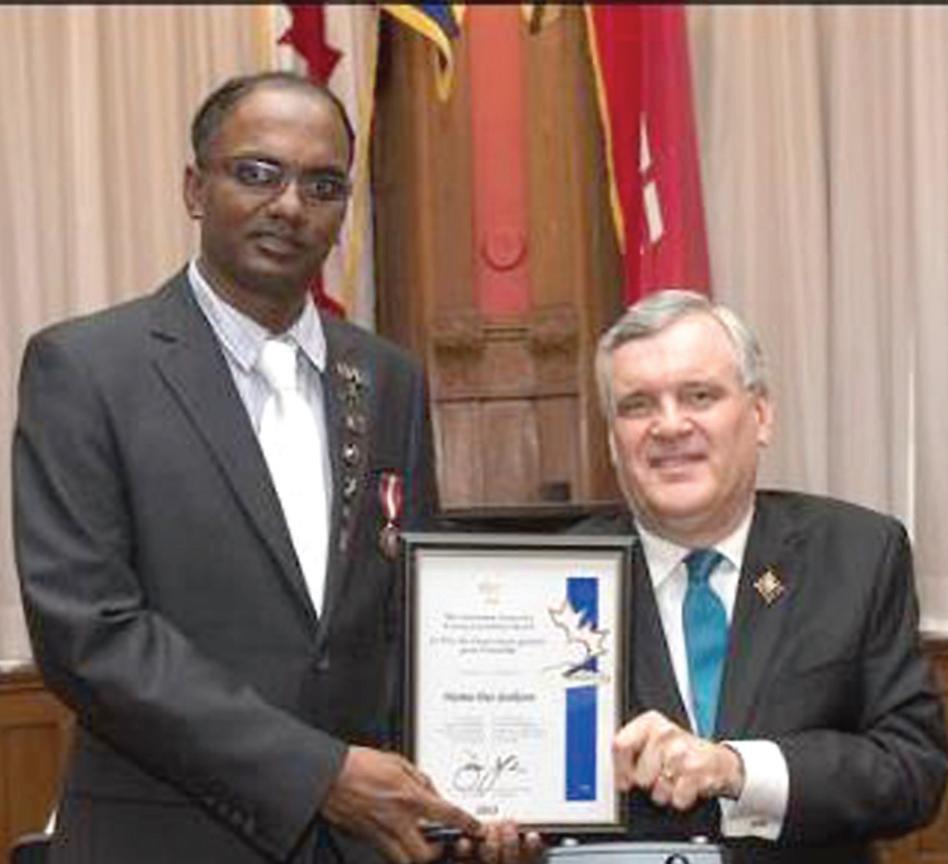
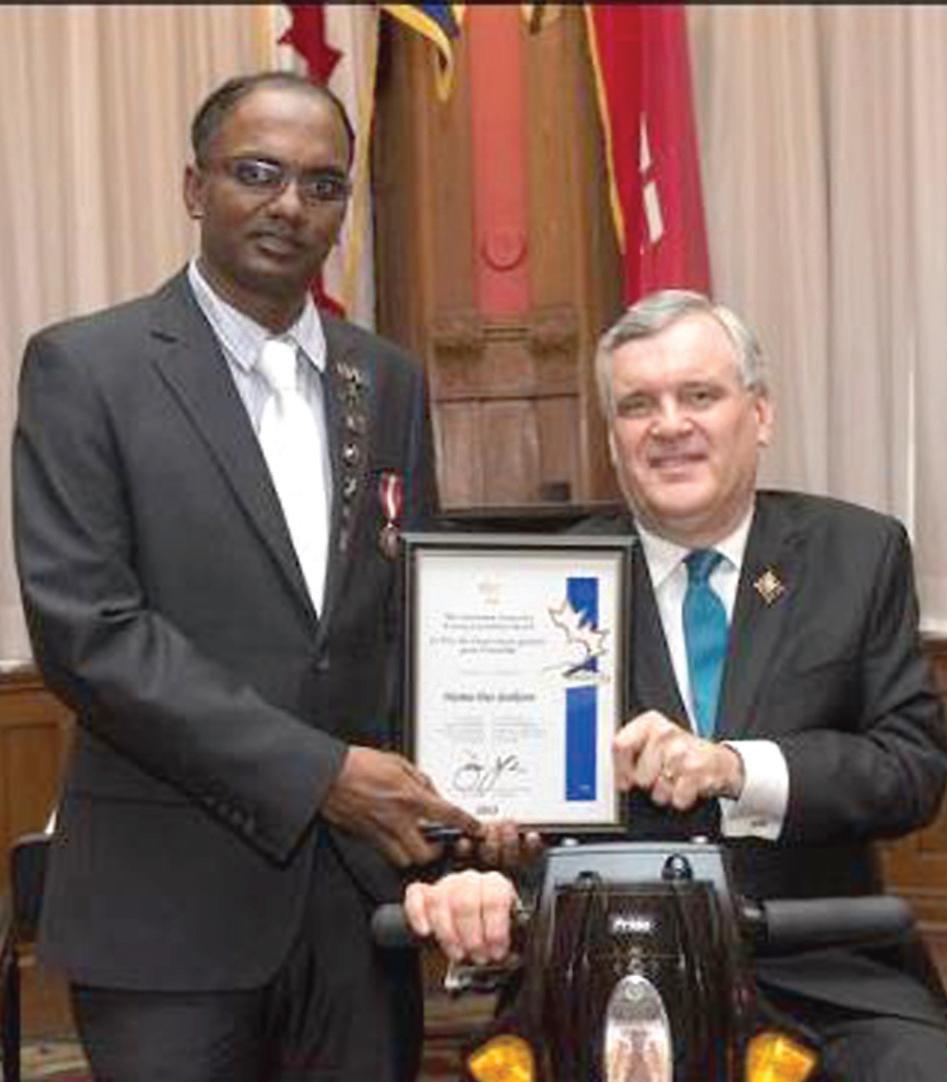
Guyanese Narine Dat Sookram, founder of Active Vision Charity Association and host of the award winning weekly community radio show, Caribbean Spice, has received the Governor General’s Caring Canadian Award.
The award recognises outstanding individuals who have volunteered their time to help others in order to strive to create a more intelligent and caring nation. The Lieutenant Governor, The Honourble David C Onley, presented the honour to Sookram among 21 other recipients at Queens Park, Toronto, Ontario on Wednesday ,February 19.
School of the Nations situated in Stanleytown, was established by a couple’s love and dedication for their country; Dr Brian O’Toole and his wife. In their quest to give back to their community and serve their country, the town of New Amsterdam was chosen. The couple purchased a building that once housed a bicycle factory and renovated it into a conducive learning institution.
Thomas pointed out that although it is a private school, fees still remain very low resulting in everyone being able to access their type of teaching. “We open doors to all levels; nursery, primary, secondary and tertiary. We also offer online courses like English, sociology and psychology,” she explained.
She said the standards of the institution were set by its pioneer Principal Ellen Taramele who also wanted to serve the country she loved. “We have been doing pretty well. In the initial stages, our population was approximately 100, however, that has been increasing annually. Currently we have a population of over 200 and we are proud of that,” she boasted, disclosing that she entered the system in 2008 as the Deputy Principal.
Since she was a trained graduated from a public system, she was able to incorporate some of the public standards, strategies, principels and management into the school. “The School of the Nations in New Amsterdam is a blend of both private and public, we look at our school as complementing the Ministry of Education... we are in full support of their guidelines and events in the education system, we have also been able to produce great results and are mindful of the fact that not all our children are highfliers,” she said.
Thomas credited her school with being able to provide individual attention to students when necessary and the school caters for those with special needs. “We do not administer corporal punishment,
no one is allowed, we do find alternative approaches, and we instil virtues, our teachers are exposed to virtue projects, because we believe our children are gems and only we have the ability to bring out the best in them, so we do not want to treat them like animals and force them to do things where they will retaliate with aggression but we want to give our children the opportunity to mould their character as well as becoming academically qualified,” she asserted. Teachers are also taught on how to administer discipline and the active parent/teacher body allows for parents to be engaged and work alongside the teachers.
“We offer a wide variety of subjects in the secondary area like any other public school and at a given time, our children may sit 10 to twelve subjects. We have a very large contingency of part-time students who wanted to repeat some of their subjects…” Thomas said.
Speaking about challenges, the principal said the Education Ministry does not invite them to participate in meetings, especially clusters and subject committee meetings. She said involving the teachers in these meeting will assist them to broaden their knowledge and whatever they have learnt could be implemented into their system.
At the primary level, she said the school has the Grade Two, Four and Six assessment examinations and noted that at the last Grade Six sitting, the school did very well. “Three of our students were in the top 10 and we are very proud of that, while in the Grade Two and Four assessments, we always come up with very high flying results…” she stated. “At the nursery level we have also been doing well, parents want their children to come here, as a matter of fact, many times they bring children that are below the age because they are anxious for their children to go through our nursery system of education,” the principal said.
The tertiary education being offered at the school was originally of the Cambridge University and consists of advanced subsidiary programmes such as chemistry, biology and advanced Mathematics. All of these the principal said are from Cambridge University Certified Programmes.
The school comprises 16 teachers, both part- and full-time and caters for differently abled students as well.
“I am always honoured to be recognised, especially when it is from the mainstream. I never thought a small boy who grew up in one of the smallest villages in Berbice, Guyana will make such an impact. For me it was more prestigious to be amongst other heroic recipients who have one thing in common and that is to maximise their potential to make Canada a better place” said Sookram.
“This award is important to me because this tells me that the hard work that I have been doing for over two decades now is making an impact, not only locally but nationally. The good thing about this award is that its mainstream and I am glad that I can be a role model for other West Indians”.
“My passion for volunteerism started way back in Guyana, since when I was in primary school. I think it started with my involvement at a local community temple, because I was always engaged in different activities, such as initiating a youth group to bring the youths together. Many people do not know this, but I used to be the assistant priest growing up as a teenager and where I had led many services in the village I grew up in, Number 64 Village, Corentyne, Berbice, Guyana. I have learned from a very educated priest, Pandit Dave Deonarine Chetram who now resides in the U.S.A. Another thing I could remember is that I used to give water to the schoolchildren, because we used to run a “cake shop” in Guyana which is popularly known as a corner store here in Canada. And these are all good values I try to carry up to this day, because I find it very fulfilling to give back”.
The Governor General’s Caring Canadian Award encompasses traits such as compassion and engagement, qualities that are synonymous with Canadian character. It also aims to recognise and thank recipients for the contributions and positive impact they have had on the lives of others.
The award was created in 1995, when the Right Honourable Roméo LeBlanc came to be Governor General and was determined to recognise selected individuals who generously volunteer their time and effort to their fellow man while asking nothing in return. The award also aims to recognise individuals who have made unpaid, substantial and continued contributions to their community. The caring Canadian award itself is made up of a certificate and lapel pin that is appointed to recipients by the Governor General or by Lieutenant Governors, territorial Commissioners, Mayors or partner organisations. The award’s emblem is indicative of Canadians who unselfishly dedicate their time and energy to their fellow citizens. The maple leaf symbolises the spirit of Canadians; the heart depicts the open-heatedness of volunteers; and the outstretched hand symbolises limitless generosity. Sookram has always been engaged in his community, both in the Region of Waterloo and his homeland, Guyana. He has received over 100 awards/recognitions, including the RBC Top 25 Canadian Immigrant Award in 2013.
The Berbice branch of School of the Nations
Nursery level pupils
New Amsterdam Magistrate’s Court
Man on $75,000 bail for burglary
Aman appeared in the New Amsterdam Magistrate’s Court last Friday on charges of break and enter and larceny.
Kerwin Duff, 36, of Angoy’s Avenue, New Amsterdam, pleaded not guilty to both charges during his arraignment before Magistrate Sherdel Isaacs-Marcus. It was alleged that between December 07-18, 2013 at Burn Bush Dam, East Canje, Berbice, he broke and entered the Church of Jesus Christ of Latter-Day Saints and stole several articles amounting to approximately 1.5 million dollars. It was further alleged that between December 15 and 16, 2013 at Winkle Road New Amsterdam, he also broke and entered a restaurant and stole a quantity of items totaling $218,000; property of Allowis Angel.
The prosecution’s case is that the parishioners of the church secured the building and went home on the day of the incident. On the following day at about 06:00h, a member of the church returned and noticed that the western door to the church was wrenched open. Checks were also made inside of the church where it was discovered that several articles were missing from the building. According to the prosecutor, several fingerprint samples were taken from the scene and were sent to Georgetown for examination and were matched to the fingerprint samples of the accused who was later arrested and charged for the offence.
Two men are on trial for chopping the wrong man to death at Tain Village, Corentyne, Berbice in 2012.
State Prosecutor Renita Singh in presenting the state’s case before Justice Dianna Insanally last week explained that there are two eyewitnesses to the murder.
On trial for the June 3, 2012 murder of Marlon Andrew Ramcharran who was 18 at the time are Joshua Persaud, called “Sunny Boy” and “Bun Boy”, and Raphael Rene Morrison, called “Red Head”.
Singh told the court that on the day in question, Ramcharran who lived at Tain at the time was at a bar in the village when he met his neighbour Nicholas Beharry and a friend Rakesh Jaikarran.
One of Nicholas Beharry’s friends came and borrowed his bicycle to go to Dust Till Dawn (another bar in the
Meanwhile, in regards to the break and enter and larceny at the restaurant on Winkle Road in New Amsterdam, the prosecutor disclosed that the victim who is a business operator and runs a restaurant and bar at Winkle Road in New Amsterdam, secured his businessplace and went out at about 22:30h. The following day at about 07:30h, the victim, returned to his premises where he observed that the door to the restaurant was opened. The virtual complainant (VC) made further checks and discovered the articles missing. The VC later received information that the accused was seen with one of the missing items and as a result, the accused was later contacted and he denied having any knowledge of the offence. The prosecution’s case also revealed that based on further investigations carried out by the police, they were able to arrest and charge the accused for this offence as well.
The accused who appeared to be agitated about the two charges brought against him, requested that the Magistrate set a date for an early trial into both cases since he claims has no knowledge about both break and enter and larceny incidents. “Maam, meh nah know about any robbery… them people nah like me and them always accusing me” the accused stated. After hearing the case, the Magistrate placed the accused on $75,000 bail and he is expected to return to court on March 28 for trial.
village). After he did not return, the three went to Dust Till Dawn to look for him.
The Prosecutor said while at the bar, the three friends noticed a fight between the two accused who were also at the bar.
About 02:30h on June 3, 2012, Ramcharran left the bar, and his two friends following behind. As Beharry and Jaikarran continued to walk they heard Marlon shouting “you chopping the wrong person”.
Prosecutor Singh went on to tell the jury that as Beharry and Jaikarran then ran to where Ramcharran was screaming, they saw the two accused chopping him. They saw the now deceased man fall to the ground. As they moved closer, the accused saw them and Jaikarran then asked “wha you chopping Marlon fa?” The two defendants then began to run behind Beharry and Jaikarran.
The Prosecutor further added that Beharry then ran into an empty plot and hid while Jaikarran ran towards the road front. According to Prosecutor Singh, the deceased was later found lying in a pool of blood.
A post mortem-examination preformed on the body of the deceased by Government Pathologist, Dr Nehaul Singh revealed that the deceased had incised wounds to the body caused by a sharp heavy instrument. “The wounds to the head were delivered with a great amount of force. The cause of death according to the doctor was haemorrhage and shock due to multiple incised wounds.”
The State called three witnesses to give evidence including a neighbour of one of the accused, Mochan Raghubir who told the court that the first defendant, Joshua Persaud is a cousin of his wife.
He said that on the night in question, the accused came to him and demanded a cutlass. “I gave the cutlass to him,” the witness said. He also told the jury that Persaud was at the time in the company of the second defendant, Raphael Rene Morrison. According to the witness, he was later shown the weapon used in the attack (a cutlass) by the police and asked to identify it.
Both accused are being represented by Attorney Mursaline Bacchus. The trial continues.
It is important to have open communication with your children and to take every step to be involved in their friends’ and school activities. It is probably best to ask open-ended questions and use phrases such as "tell me more" and "what do you think?".
These kinds of questions will assure your children that they have someone who will listen to them and that their opinions and views in life matter. It is probably difficult to talk to your children about violence, drugs, sex, death, etc, but it is much more difficult to have a teen come to you.
Parents should spend the time to set clear rules and limits for their children, so that they know what is expected of them and the consequences for not obeying. However, make sure your children understand the reason behind the rules once you set them, because discipline is more effective if children have been involved in establishing them. It is important to be fair and have some flexibility as well, because once they get older, they would expect the rules to change.
Early warning signs
One important thing for parents to know, is what “normal” behaviour is for your children, because this can help you recognise early warning signs that something is troubling your child. For example, this could be things like your child withdrawing
from friends and weakening in grades and even starting to lie. In situations as such, parents need to step in and ask for help if necessary, because parents don't have to deal with problems all by themselves. It is probably a good idea to inform the school and have a health professional involved to monitor the child
According to the World Health Centre, there are two distinct types of violence experienced by children (defined by the United Nations as anyone aged 0-18 years) – child maltreatment by parents and caregivers in children aged 0-14, and violence occurring in community settings among adolescents aged 15-18 years.
These different types of violence can be prevented by addressing the underlying causes and risk factors specific to each type. Child maltreatment by parents
Reyah Khemraj of Cropper Primary is the Region Six Spelling Bee champion. She took the title last Thursday when the Department of Education held the finals of the 2014 Spelling Bee Competition.
After winning the Lower Corentyne Catchment Area title earlier, Khemraj was stretched to the limit to prove that she was the best Grade Five speller in the region. More than 400 students took part in the competition with 30 advancing to the finals at the St Aloysius Primary School.
It was down to the final five and there seemed to be no word that the students could not spell relating to the four subject areas: mathematics, social studies, science and English. Rajiv Jagdeo of All Saints Primary, Chandinie Mathoor of Wellington Primary, Andre Rajaram of Cumberland Primary and Hemwattie Komall of Number 68 Primary repeatedly exhausted the list of words selected with the expectation that the competition would have ended.
A lunch break did the trick and immediately after the break, three of the competitors stumbled and were out. The words photosynthesis, meringue, and precipitation could not be spelt by Jagdeo, Rajaram and Komall respectively.
The judges were forced to wait for a further half hour as Khemraj and Mathoor kept on spelling and then Mathoor, who was bursting with confidence throughout the competition, stumbled and was out leaving Khemraj as the winner. However, the competition was not over as Jagdeo, Rajaram and Komall had to then battle it out for the
and caregivers can be prevented by: reducing unintended pregnancies; reducing harmful levels of alcohol and illicit drug use during pregnancy; reducing harmful levels of alcohol and illicit drug use by new parents; improving access to high quality pre- and postnatal services and providing training for parents on child development, non-violent discipline, and problemsolving skills. Whereas violence involving children in community settings can be prevented through: pre-school enrichment programmes to give young children an educational head start; life skills training; assisting high-risk adolescents to complete schooling; and reducing alcohol availability through the enactment and enforcement of liquor licensing laws, taxation and pricing.
Having the parent being involved in their child's school will be a great idea to show your children that you believe education is important and that you want them to do their very best. This can be done by parents being involved in their children’s education. If parents were to take some time to get to know their child's teachers, it will help them to get to know both the child and the parent. However, it will be important to communicate with the teachers continuously and not just when problems arise with the child.
remaining positions, Mathoor gained second place. Komall copped the third place with Rajaram earning fourth. The competition was sponsored by the Berbice River Bridge Company Inc. Words were chosen in from several categories, including food and related words, culture and sport and related words, and names of persons and places.
Narine Dat Sookram
I am the best speller! Reyah Khemraj receives the Berbice River Bridge trophy
St Aloysius Primary is the winner of the Heart of Oak Masters Football Club interPrimary School Football Tournament.
The tournament, which marked the start of the 2014 schools’ football season, was held at the All Saints Scotts School Ground on Princess Elizabeth Road in New Amsterdam. Only six of the four schools that were slated to compete turned up for the competition.
In game one, All Saints and St Therese Primary played to a goalless draw in the one-day tournament, while in game two, St Aloysius got the better of New Amsterdam Primary 3-0. Kelly Amsterdam scored a double and Anthony Williams netted the other goal.
New Amsterdam Primary then went down to All Saints 2-0 in game three. Como Adams and Tyrese Williams scored for All Saints. Game four saw St Aloysius getting past St Therese 2-1. Jaden Nedd and Anthony Williams netted for St Aloysius and Shamar Welcome, for St Therese.
The penultimate game between All Saints and St Aloysius ended in a nil-all draw. The final game saw New Amsterdam Primary being beaten for a third consecutive time as they surrendered to St Therese 1-0, with Rickford Blaiogool scoring the winning goal. For its performance, St Therese was awarded second position.
The Most Valuable Player (MVP) award went to Kelly Amsterdam of St Aloysius and the best goalkeeper award to Shevwire Duff of All Saints Primary. Anthony Williams took the most goals award with his two goals, while the best defender award went to Shamar Myers of St Aloysius Primary. He received a pair of hose and a pair of trunks. The event was coordinated by Neil “Grizzly” Humphrey.
The National Assembly last Thursday passed a motion for the reintroduction of the Berbice River Ferry Service from New Amsterdam to Kwakwani. Alliance For Change (AFC) Member of Parliament Trevor Williams moved the motion, stating that the Berbice River Ferry had previously served communities along the New Amsterdam to Kwakwani route, providing critical and affordable transportation to hundreds of Guyanese.
He contended that the Government of Guyana without offering any explanation “unilaterally” removed the critical service,
which bridged the gap between the hinterland and the coast. “Individuals, families, organisations, and institutions from communities of the Berbice River benefited from this service in the past and now have to be severely altering their way of life to the extent of relocating and abandoning their primary economic activity.”
He called on the Donald Ramotar Administration to take stock of the situation, explaining that the route was once plied by more than one vessel which took persons from New Amsterdam to Ituni, Region 10 for them to engage in farming activities. He further pointed out
Simply the
Truth
Berbician cynicism
My fellow Berbicians come to me with all kinds of stories. Mostly stories about woes and frustrations and deep unhappiness. There are money woes, relationship problems, worries about children, complaints about neighbours, and so on.
The personal problems out of the way, they invariably go on and on and on about our politicians. I have heard my share of cynical sentiments about politicians in places like the United States of America and Canada especially.
To be called a politician is like being insulted in the worst way. When someone tells you: “Man, you is a POLITICIAN!”, they are not paying you a compliment.
All the political parties in Guyana come in for a beating. It seems for all the world that Berbicians have lost all belief in the idea that our politicians mean well and that they work for the welfare of the people. They have lost faith.
I have this sick feeling that this cynicism can be found throughout the nation. The pervading sentiment is that our politicians are in the “game” for
(Part one)
their own benefit. Money and power are the goals. Cynicism is the muddy residue that remains after faith has evaporated.
They say things like this: “Professah! De police dem corrupt! De teachas dem corrupt! The teefman dem corrupt! But wat you expect, when dem people at the tap corrupt?” They simply look at what is going on around them, and they see very few good examples. They read the bleakness in the papers; the “nice” stories are quickly skipped. They are deafened by the brazen noise that passes for music.
They cringe at the small-time bickering that passes for politics. And they are terrified that the beating inflicted by criminals on their neighbours will soon be visited upon them.
The place either goes deathly quiet when there is a black out, compliments of Guyana Power and Light (GPL); or else, there is loud laughter and a chorus of “black out again!”
We Guyanese are experts of making jokes out of tragedy. It is a way of coping. Go to a wake and you may hear more laughter than you would hear at a wedding ceremony. It is
Professor Daizal Samad
so true: “All skin teeth nah laff!” In Berbice, there is much skin-teeth! But it is no laughing matter.
I try to say that there are still good people around, good people at all levels, but the folks that speak to me are not convinced.
They do not argue with me. They just listen out of what I think is respect. But the departure of belief in the goodness of our political leaders is clear. There have been too many promises made and too many broken. On all sides. What is conveyed is the idea that no one genuinely cares about the “ordinary” citizens. And when one reads the newspapers (I don’t watch the boob tube) and look at the arguments put forth from the various political quarters, I cannot help but understand the root of the cynicism that has gripped Berbice.
It is sad, really. So, what can be done to bring belief back into our hearts?
that the removal of the ferry service and the imposition of private arrangements has forced residents to travel, even among lumber, cattle and fuel in very uncomfortable conditions for approximately 20 hours.
Youths affected
“Mr Speaker, youths are affected… over the years, the Berbice River has been one of the places where the production of marijuana has increased… regrettably so, the residents have acknowledged that these things came about because people have no work.” Arguing that the ferry service remains a critical component
of the development of the Berbice riverine communities, Williams championed the cause for the reintroduction of the service.
Meanwhile, Public Works, Transport and Hydraulics Minister Robeson Benn endorsed the motion on behalf of the People’s Progressive Party/ Civic (PPP/C), but sought to clarify some misconception. He told the House that the PPP/C had made it clear in the past that it would restore ferry services. “Mr Speaker, I recall also saying what would be the deployment of our older riverain assets, marine assets, those which go to the North
West District when we put in place a new ferry vessel for the North West District.”
Minister Benn added that through the Foreign Affairs Ministry, the government has approached the Government of India with designs for a new ferry vessel for the North West District, expressing the hope that by the end of 2014, the matter would be resolved. “But I don’t want to be specific, because the designs have to be completed, accepted and the vessel bid, and I repeat that the Kimbia, which was specifically designed for the Berbice River Ferry Service will return to the Berbice River.”
He was keen, however, on pointing out that the PPP/C administration, over the years, has restored the overland transport routes into the Upper Berbice River area and “that alternative is there”. He maintained that the government has remained proactive in its approach to address the transportation issues along the Upper Berbice River. A Partnership for National Unity (APNU) Member of Parliament Joseph Harmon also endorsed the motion, but made it clear that the coalition is not optimistic about the promises made by the administration.
The winning St Aloysius Primary School team and their coach
BY ANDREW CARMICHAEL
Howard “Battersea Bomber” Eastman is hoping to rise again. After being featured in the Berbice Times in an earlier edition, the boxer said that the article awoke his senses. “Reading it was like seeing myself from the outside.”
What is good about that is the former world title contender plans to do something about it. Eastman is one of several boxers who signed up to participate in the elimination contest in Jamaica slated to begin on March 5 and which will run for five weeks. Boxers from around the world will participate. Eastman, who has the ability to undergo rigorous training is preparing for that event.
Yes, it’s now nine years since the “Battersea Bomber” travelled to Los Angeles, U.S.A. to face Bernard Hopkins to challenge for the WBC, WBA, IBF and WBO middleweight titles. Hopkins comfortably outpointed Eastman and shattered his dream of holding a world title. At age 43, Eastman
feels he is not too old to step into the ring again, asserting that he is determined to defy all odds in his redemption quest.
In an exclusive interview with Berbice Times, Eastman noted that he is currently practising rigorously on a daily basis to stay in shape so he can return to the ring with renewed resolve to take on his counterparts in the Caribbean in a few days. Eastman seemed enthusiastic and very optimistic that he will succeed at his endeavours and said his motivation and determination to achieve his goals stemmed from the thought of doing something others believe he could not. This dream fulfilled opportunity, was made possible through the generosity of an overseas based Guyanese Mark Anthony Thom, who explained that he is training Eastman to represent Guyana in Jamaica. According to the former Berbice amature boxer, the competition, now in its third year, is an annual event. “We have been selected by the Guyana Boxing Federal Association for this upcoming event on the game they call ‘The Contender’. This competition is being hosted annually in Jamaica and this is the first year other Caribbean countries are invited.”
Thom acknowledges that there has been a decline in Eastman’s life but unless someone is aware of the circumstances and experience the trauma and difficulties faced, they would not be able to relate to it. “Mr Eastman approached me and asked if I will support him, be by his side and manage his aspirations and his quest to regain his status in the ring and I think if someone like him could come and ask you that, it shows that he is not a quitter.”
He said he has the utmost respect for Eastman for realising that he needed assistance and having the decency and will power to seek it. “It’s not whether you get knocked down; it’s whether you get up.”
Meanwhile, Eastman, who is currently in Jamaica and slated to fight later this week, is confident of success and is fully prepared. Eastman won the Guyanese middleweight title in 2008 by defeating Denny Dalton, after which he made one defence against Andrew “Sixhead” Lewis – the first Guyanese boxer to hold a world title. Eastman has since fought for the local title in 2011, losing to Edmund DeClou, and the vacant WBC Caribbean title twice, losing to Kirt Sinnette in 2011 and Sakima Mullings in 2013.
After back-to-back defeats to Arthur Abraham in 2005 and Edison Miranda in 2006, Eastman fought for, and won the vacant British middleweight title in 2006 and vacant Commonwealth title in 2007. In recent times, he has been one of the crowd pullers at the Cliff Anderson Sports Hall.
That will not be enough if this will be the last chance the Berbician has to make a comeback. “I am grateful, appreciative and very excited for the opportunity given me to once again rise from the rubble and desolation of my life and career, to get back in the ring again and fulfil my potential in the boxing arena.”
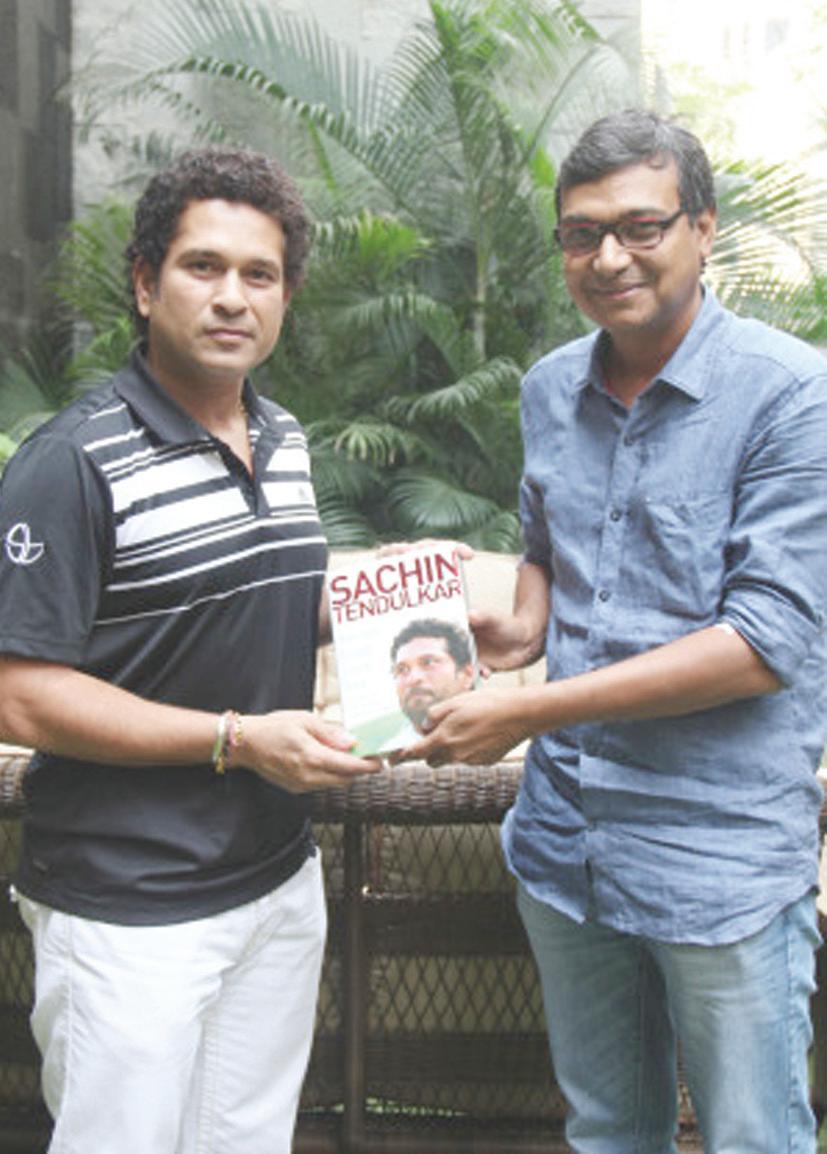
Former India captain Sourav Ganguly has said that Sachin Tendulkar was a better leader than people made him out to be, considering the circumstances under which he captained.
In an article featured in ESPNcricinfo's new anthology, Sachin Tendulkar: The Man Cricket Loved Back, Ganguly writes: "He led on some very tough tours – South Africa, West Indies, Sri Lanka, Australia – and it must be said he didn't lose eight in a row. This when he didn't have a very good team around him. The older players were fading and the newcomers were too raw."
Ganguly, who captained Tendulkar in 143 of the 341 international matches in which the two played together, also writes of the necessity of making allowances for exceptional players like Tendulkar.
"When it came to being Sachin's captain, it was about giving him due respect: treating him like a teammate but also as the special player he was. He was central to the side doing well. He had to feel relaxed and comfortable."
Tendulkar was unhappy, Ganguly
writes, about having to bat at No 4 in ODIs in 2002-03. "You say, please, do it for a short while; of course, you'll be back up, let's see how long it goes. Once he settled down to the idea and saw it work, it was fine. When things went a bit wobbly at the 2003 World Cup, he was back up straight away."
The book contains tributes from other teammates and coaches who played and worked with Tendulkar, among them Rahul Dravid, VVS Laxman, Yuvraj Singh, John Wright, and Greg Chappell.
Dravid, who made a record 6920 Test runs with Tendulkar, writes of how the two had an inauspicious start, when, in their first time batting together in an international, in Singapore in 1996, Dravid was run out. "It wasn't a sign of things to come, though," he continues. "Only three of our 143 partnerships in Test cricket would end as runouts."
The two played 391 internationals together and developed an almost intuitive understanding of each other's game. "One sure indicator that [Tendulkar] was in good touch was when he played the flick to the leg side," Dravid writes. "Cricket is a game
where you naturally have more fielders on the off side, and especially in limited-overs cricket, bowlers like to bowl tight lines… [Tendulkar] would be on his toes, on top of the bounce, and would often beat midwicket to the fielder's right. Sometimes he even beat square leg to his right with that flick, not to the full ball but the ones pitched short of a length. That made you marvel from the other end."
John Wright, who coached India from 2000 to 2005, and also worked with Tendulkar at Mumbai Indians, speaks in the book of Tendulkar's respect for the game and the intensity he brought to his preparation. "A net practice to Sachin was a learning, part of his development as a batsman, which extended to what happened at the game that followed. He was his own coach and his own trainer.
"The time he spent with cricket, he spent with utter focus. [He was] never late – whether for the bus, meetings or nets. It was like going to church or to school; there's no negotiating those timetables. So it was with Sachin's training. The nets were his laboratory, his studio, and once there, he immersed himself." (Cricinfo)
Eastman working out at the Pocket Rocket Gym in New Amsterdam before leaving for Jamaica
Howard Eastman and Mark Thom
ESPNcricinfo editor-in-chief Sambit Bal presents Sachin Tendulkar with a copy of the book