



Illegal mining will not be condoned – Persaud
Gouveia flays parties for blacklisting Shot bandit nabbed while seeking treatment at hospital
Sexual exploitation of women, girls big issue in Guyana – GHRA
Gordon blasts Whittaker over order to shut down toll booth
Guyana commits to working with Suriname to improve relations

Ateenager is in a critical state at the Georgetown Public Hospital after his Jailing motorcycle slammed into the median at Rahaman’s turn on Sunday morning.
The accident occurred about 09:00h. Akeem Alli, 18, also called “Lil Boy” of Lot 80 West Ruimveldt, Georgetown, was listed as critical after he was diagnosed with internal head injuries, a broken femur and other wounds. According to reports, the teenager was taken to the medical facility about 09:15h in a semi-unconscious state.
Based on reports, the teenager left home early on Sunday morning with the intention of returning to work at Beterverwagting, East Coast Demerara, where he had to collect his brother, Kevin. It was while he was heading there, he met in

the accident. At the time, he was wearing his safety helmet, but due to the impact, the head guard broke, resulting in him sustaining severe head injuries. In addition, the roadway was wet and this may have contributed to the teenager losing control of his motorcycle.
Alli has been riding for the past four months, and
buys and sells fish for a living. The badly mangled motorcycle, according to reports, is at the Ruimveldt Police Station.
At the Georgetown Public Hospital on Sunday, the teen’s relatives were visibly worried. Devica Alli, the teen’s mother revealed that she was at a neighbour’s home looking after business when her son arrived home, dropped off some fish, but after a few minutes, left to collect his brother who was still on the East Coast.
In tears, she added that after a few minutes, she received a call informing her that Akeem had met in an accident and was rushed to the Georgetown Public Hospital and that she must head over there. In so doing, she saw her son lying on a bed with doctors around him.
The tearful woman stat-
ed that she could not have stayed in the room and that the doctors were working hard to keep her son alive. She added that at the time she saw him, he was bleeding from his nostrils, head, mouth and ears. They were asked to leave the Accident and Emergency Unit as they were preparing him to undergo surgery.
From reports gather, Alli was supposed to be taken to the St Joseph Mercy Hospital to perform a CT Scan since it was obvious that he had sustained severe head injuries.
The teenager’s brother, Kevin, stated that he left work at 09:00h and soon after received a call from a relative saying that his brother was involved in an accident. They both worked at Beterverwagting, but his brother left earlier.

Two Guyanese are likely to be sentenced to life in prison after they were recently found guilty in Florida, U.S.A, of two counts of violating the U.S. Maritime Drug Enforcement Act.
Desmond Wilson, 54, and Yugool Persaud, 61, are to be sentenced on February 20, 2014 in a Florida court. The two Guyanese were arrested on September last with close to 2800 pounds of cocaine in their fishing vessel Miss Tiffany as it was travelling across the Caribbean Sea. The drug was found among other cargo onboard the fishing boat.
The conviction came based on the evidence that was presented at the trial by the U.S. Drug Enforcement Agency. It stated that the U.S. Coast Guard (USGC) law enforcement detachment team onboard the British Royal Fleet Auxiliary ship WAVE KNIGHT observed the suspicious fishing vessel stopping at a known drug trafficking corridor in the Caribbean Sea.
The agency said after the USGC called over the radio, the vessel attempted to use evasive measures which ultimately forced them to throw the white bales containing marijuana in the Caribbean Sea.
The actual amount was disclosed to be 1265 kilograms of marijuana.
Following the discovery, Persaud and Wilson were
detained and subsequently handed over to special agents from the Panama Express Strike Force. This investigation was conducted by the DEA, the Federal Bureau of Investigation and the U.S. Immigration and Customs Enforcement’s Homeland Security Investigations. The Jamaican registered fishing vessel was busted in the Caribbean Sea as it was making its way to Guyana.
The bust took place last Thursday in the Caribbean Sea aboard the fishing vessel Miss Tiffany. U.S. and British Navy patrols in the area carried out the operation.
It was reported that in a multiagency operation involving UK and U.S., the fishing vessel Miss Tiffany was detected and one of WAVE KNIGHT'S boats was launched to investigate. The report said soon after the Royal Fleet Auxiliary ship’s arrival, and upon hailing the vessel Miss Tiffany, crew members were seen jettisoning a number of suspect packages overboard.
Upon realising what was happening, a second boat from WAVE KNIGHT was called in to render assistance in recovering the weighted bales before they sank. A total of 55 bales were eventually recovered from the sea. The packages were estimated in the region of 1800 kilograms, with an estimated street value of over US$15 million.
Hours after a shootout between police and a gunman in Queenstown, Georgetown in what appears to be a potential robbery, the man was nabbed at the Georgetown Public Hospital as he sought medical treatment.
Jamal Cromwell, 20, of Tucville, South Ruimveldt, Georgetown, was shot on his left finger during the confrontation with the police, but he managed to escape on a waiting motorcycle in the area.
Police stated that about 18:30h on Saturday evening, a plainclothes rank observed a man walking behind a couple in the vicinity of Anira and Irving streets, Queenstown.
Upon seeing this, the policeman gathered that a robbery was about to take place
and challenged Cromwell, who retaliated by pulling out a firearm from his pants waist and discharging a round in the policeman's direction.
The policeman returned fire, but the suspect managed to escape on a motorcycle ridden by a waiting accomplice, the police said in a statement.
About 20:30h, the suspect reportedly turned up at the Georgetown Public Hospital seeking medical attention for a gunshot injury on a finger on the left hand.
The police were informed and a rank who was involved in the shootout with the suspect turned up at the medical facility and positively identified the man. Cromwell is under guard at the hospital.

Countrywide: Heavy rain showers are expected to prevail during the day, with thundery showers in the evening. Temperatures are expected to range between 24 degrees and 28 degrees Celsius.
Winds: Easterly between 2.68 and 3.12 metres per second.
High Tide: 09:31h and 21:55h reaching maximum heights of 2.19 metres and 2.20 metres respectively.
Low Tide: 15:26h reaching a minimum height of 1.06 metres.






The Guyana government has made available lands in the Canje Basin for farmers in Trinidad and Tobago to invest in largescale agriculture projection, TT Food Production Minister Devant Maharaj has said.
According to a statement by the Government Information Agency (GINA), Maharaj pointed out that there would be scientific and empirical data regarding the potential for farming in accordance with the Resettlement Policy Framework (RPF) before the land is offered to investors. “It’s not farmers, but we want investors to come in to farm with their primary function to invest,” Maharaj emphasised.
Only last Thursday during a press conference, Maharaj told local media operatives that a decision would be made within two weeks,
OAI
as to the land that would be made available for this venture. Maharaj, who is on a visit to Guyana, said discussions with his local counterpart, Dr Leslie Ramsammy had been fruitful. He said the working meeting was to further cement the agreement between the two countries, which follows through on the Jagdeo Initiative proposed to Caricom decades ago.
Despite TT receiving most of its revenue from the blooming oil sector, he said the Kamla Persaud-Bissessar administration has revisited its strategy, hence the signing of the Memorandum of Understanding (MoU) with the government of Guyana earlier this year. Maharaj added that the objective of the initiative is to use it as an example for Caricom.
Both ministers have now agreed to the areas in which entrepreneurs could look to invest. These include: cultivation of corn, soya, other legumes, and root crops; livestock rearing; value-added products such as cassava flour; and aquaculture. A technical team will meet in two weeks to agree on the harmonisation and standardisation of policies and strategies that would facilitate importation of products and crops from Guyana to Trinidad.
TT will advertise for expressions of interest among local entrepreneurs there. Site visits will be arranged, plans solicited, and those proposals evaluated by both sides before a final allocation is made.
Processing plants may be set up in Guyana for products that would require some processing before export, includ-
ing meat. This, he noted, would provide economic opportunities for both countries. “These strategies being utilised are geared towards the goal of TT, and also Guyana, reducing our food import bill from countries outside of the region, increasing our own food security interregional and bringing down food inflation in respective countries – all with the backdrop of creating sustainable employment and diversification of our economies,” the Trinidadian minister added.
Asked whether there had been any interest shown by Trinidadian entrepreneurs in the project, Maharaj said he was hopeful that there would be, to the extent that it would be oversubscribed and his country would have to request more land.
– sees increase in profits after LIAT flights
By Samuel Sukhnandan
Boasting increased revenue since regional carrier LIAT began operations there, the Ogle International Airport is now looking to expand its operations in the coming years. This was disclosed by Ogle International Airport Inc (OAI) Chief Executive Officer Anthony Mekdeci during an exclusive interview with Guyana Times
Mekdeci said any regional carrier that was interested in operating out of Ogle was welcome. “Regional carriers, especially those from neighbouring countries, can come no problem. We are happy to receive them.”
At present, LIAT operates daily flights out of the airport. The OAI chief said since the commencement of these flights from the Caribbean in May, the airport has seen an increase in daily flights, revenue and passenger traffic (about 1500), with a possibility

of annual traffic moving from 60,000 to 80,000.
“I understand Brazil and Suriname are interested in onward traffic out of here into the Caribbean,” Mekdeci said. According to him, Caribbean Airlines has had discussion with OAI, looking to operate a flight to that airport to deliver luggage for its passengers. In addition, Surinam Airways has expressed interest.
Mekdeci said while no con-
crete decision had been made by the two airlines, he was optimistic that more carriers were likely to seek meetings with OAI about operating out of the airport. As demand increases, OAI will look at further expanding its runway, to accommodate additional flights and carriers.
According to Mekdeci, the airport can expand its 4000foot runway to a maximum of 5500 feet.
On November 5, 2001, OAI, comprising a group of aviation pioneers, entered into a 25-year lease agreement with the government for the management, operation, and development of the airport. This lease agreement is renewable for two more 25-year periods.
OAI assumed management of the airport on December 1, 2001. It was given the mandate to develop the airport to comply with the requirements of the International Civil Aviation Organisation (ICAO).
This involved a private investment by the shareholders
of some US$3 million. The airport gained international status in 2009 after completion of its phase one development. International scheduled passenger flights then commenced. In the same year, government and OAI signed a Memorandum of Understanding (MoU) for the funding of the second phase of development, with funding from a 2007 European Union grant of 1.5 million euros.
In May, OAI was declared a regional hub and presented with a runway Class Two C certificate by the Guyana Civil Aviation Authority. The airport, which is closer to Georgetown than the main Cheddi Jagan International Airport, gives LIAT a competitive advantage, in terms of reduced flying time and an annual fuel reduction.
The OAI currently accommodates aircraft like the Turbo Prop, Dash 8s and ATRs, as well as executive-class aircraft. (samuelsukhnandan@ guyanatimesgy.com)



Editor: Nigel Williams
Tel: 225-5128, 231-0397, 226-9921, 226-2102, 223-7230 or 223-7231. Fax: 225-5134
Mailing address: 238 Camp & Quamina Streets, Georgetown
Email: news@guyanatimesgy.com, sales@guyanatimesgy.com
On November 20, the world observed Universal Children’s Day where there was a huge focus on issues affecting children all over the world. Universal Children’s Day marks the anniversary of the United Nations (UN) Convention on the Rights of the Child, and five independent UN child rights experts utilised the opportunity to make a passionate call for governments to make protection from violence a priority in the post-2015 development agenda and back their commitments with adequate funding.
The agenda will succeed the anti-poverty Millennium Development Goals (MDGs) programme adopted by a UN Summit in 2000 and scheduled to end in 2015. As we had said some time ago, violence not only does severe harm to our children in every possible manner, it also undermines the fabric of society, affecting productivity, well-being, and prosperity.
Violence against children takes many forms, including domestic violence, sexual assault, and harsh disciplinary practices. It can inflict both physical harm and psychological damage on children. Experts have pointed out that very often this abuse occurs in the shadows: undetected, unreported, and – even worse – too often accepted.
Every day, millions of children are affected by conflict, suffer from violence, neglect, abuse and exploitation at home, in schools, in institutions, in the community, and in places where they work. These situations are not inevitable and they can be effectively prevented, but every stakeholder must play their part.
A survey by the World Health Organisation (WHO) estimated that 150 million girls and 73 million boys under 18 years experienced forced sexual intercourse or other forms of sexual violence involving physical contact (UN study on violence against children).
What is even more worrying is that, according to the findings of the research, millions more are likely exploited in prostitution or pornography each year, most of the times lured or forced into these situations through false promises and limited knowledge about the risks. Sometimes, some of them even get into these dangerous situations and never find a way to escape thereby resulting in a lifetime of abuse and misery.
Further, countries which are affected by violence tend to lag behind, with higher levels of poverty and malnutrition, poor health and school performance, and special risks for vulnerable children, including those who migrate or belong to minorities. It also has far-reaching costs for society, slowing economic development and eroding nations’ human and social capital.
It should be mentioned that Guyana has done reasonably well in terms of enacting child protection legislation and putting the necessary mechanisms in place to ensure children are safe, but there are still troubling cases, or we should say, horrific tales of children being sexually abused in our society.
Just a few days ago, it was reported in the media that the Guyana Women Miners Organisation (GWMO) rescued four girls, among them being a 14-year-old, who, from reports gathered, were engaged in forced prostitution.
One of them recalled that she travelled to Mahdia in search of employment but suffered severe beatings at the hands of her employer. She was then forced to seek employment at another shop where she was forced to grant sexual favours to customers in exchange for money. And no doubt there are similar stories elsewhere, especially in communities where mining is being done.
We applaud the efforts of those who would have reported the incident which subsequently led to the authorities going in to Mahdia to see firsthand what was happening. We believe that for Guyana to be successful in child protection efforts, it is necessary for our communities to become the eyes and ears of the police and the relevant child protection agencies. Citizens must be encouraged to report all suspicious cases of child abuse so that the authorities can take the necessary action.
The call made by head of the United Nations Children’s Fund (UNICEF), Anthony Lake is worth repeating. He said: “We all have a responsibility to ‘make the invisible, visible’ – from governments enacting and enforcing laws to prohibit violence against children, to private citizens refusing to be silent when they witness or suspect abuse.”

Dear Editor,
The Health Ministry in collaboration with the University of Guyana (UG) recently hosted a one-week health and wellness campaign.
The event offered students and lecturers, among many others, a wide range of health services free of charge, including eye care, voluntary HIV testing and counselling, checking of body mass index (BMI),
blood pressure testing, blood sugar testing, cholesterol testing, in addition to offering several types of vaccinations.
It is evident that many of the canteens on campus very rarely offer healthy foods and snacks to students. Continuous research shows that regular access to better nutrition and increase in physical activity contributes greatly to the overall performance of a
student.
I strongly recommend that the university continuously promote health awareness. The compound greatly allows for and facilitates field activities and other sports.
The next initiative would be to implement a track field; however, the student society must seek to upgrade the land since it floods very easily.
Additionally, aside from
encouraging students to be more involved in physical activities, I urge the respective individuals to forbid the current hangout sessions that take place in the evenings, particularly on Fridays and weekends.
The University of Guyana should not tolerate alcohol consumption on its premises.
Yours truly, Jermaine Collins
Dear Editor, Just recently, three school students were victims of a road accident, after an intoxicated driver proceeded to knock them down while manoeuvring his vehicle.
Driving under the influence (DUI) has, for some time, been an atrocious habit of many people in Guyana. Some drivers physically
go into bars and shops and have a few drinks before getting behind the wheel; others simply drink while they are driving.
People who sell alcohol must display some amount of concern, common sense, and responsibility. They must refuse to sell people who appear under the influence of alcohol. Additionally,
those who sell to already intoxicated persons should be charged.
In many countries, it is illegal to sell alcohol to anyone who shows signs of being visibly intoxicated. We must consider implementing proper laws to address individuals guilty of DUI and also one which will implicate individuals who serve alco-
hol to such persons. Too many lives have been claimed on Guyana’s roadways and so it is imperative that we seek such additional measures to curb drunk driving and those who contribute to such occurrences.
Yours respectfully, Kwesi Joseph
Dear Editor,
The crime rate in Guyana continues to escalate and our opposition continues to condemn all measures proposed to help battle crime. Under a guise of being concerned about a seemingly bad police force and human rights violations, it has become apparent that the opposition parties are not supporting anti-crime measures implemented by government.
Many of the members of the Guyana’s Police Force (GPF) try their best to perform their duties with dedication and integrity. There be a few indiscriminating ones,
but that does not mean that our police force is incompetent.
Too often, Guyanese are at the mercy of criminals who threaten to steal from them, inflict violence and even execute them. It is the government’s responsibility to put measures into place that will protect and shield our nation from such encounters.
In 2013, during the Linden protest, several accusations pertaining to being responsible for the death of a few individuals were hurled at Clement Rohee, the home affairs minister. Shortly after, the commissioner of inquiry
himself exonerated the said minister from the accusations made against him. The opposition at this point was highly infuriated.
On a daily basis, police officers risk their lives to protect citizens. It is also their prerogative to protect themselves when they are under attack. After all is said and done, the A Partnership for National Unity (APNU) and the Alliance For Change (AFC) continue to blame the government for crime in Guyana. Globally, police enforce social order through the legitimised use of force. This refers to the amount of effort
required by police to compel compliance by an unwilling subject. Police officers have the right and discretion to use the amount of force necessary to control an incident, warrant an arrest, or protect themselves or others from harm or death. It is a government’s responsibility to protect its citizens, and I can only hope that the opposition parties will comprehend the importance of the proposed measures outlined to help fight crime in Guyana.
Sincerely,
Lorris Beaton
You can send your letters with pictures to: Guyana Times, 238 Camp & Quamina Streets, Georgetown, Guyana or letters@guyanatimesgy.com
Dear Editor, Dissatisfaction is most times guaranteed when people are left unattended, which is the case for many who have filed written complaints over the year to the Police Complaints Authority (PCA). It often results in matters being taken into an individual’s own hands, which may not always be the best and legal approach.
Though time is of essence, the PCA needs to develop a better strategy of reviewing and addressing written complaints made by citizens. The recent accusations made against the institution are quite unflattering.
The problem often lies in the inability of police officers to efficiently perform their duties. Failure to investigate a matter, prepare proper written reports, and

the absence of a substantial amount of evidence to present to the court are often the leading factors. In most court hearings, the absence of a police officer often results in the dismissal of a case, causing injustice to one party or the other.
Attending all levels of court to provide evidence on
a case is one of the key duties of a police officer. It is, therefore, an imperative role on their behalf, and failure to execute this task should result in some form of disciplinary action taken against the officer.
Sincerely, Curtis Charles
Dear Editor,
Many persons have concluded that our youths are behind most of the ongoing criminal activities in Guyana, but I dare say that this is a worldwide pandemic.
In the U.S.A, the church I was involved in specialised in offering counselling and support to individuals who managed to be led astray and became involved in illegal activities.
Many times, people are quick to judge youths who have committed serious crimes. They seek contentment by blaming the government for not adequately taking measures to protect the nation and they often question the perpetrator’s character.
We all fail to realise that most criminally inclined youths have common features and personality traits. Many of them are angry, bitter, unoccupied and often have some source that manipulates and supplies them.
Additionally, a large percentage of these individuals are uneducated and unskilled and further lack the care and attention that they deserve. They opt for the easy way out which often leads to a life filled with criminal activities.
Moreover, many of these youths come from broken families where a father figure is not always present. This eventually establishes a culture and lifestyle that breeds criminals.
Many individuals who participate in illegal activities often evade the law for quite some time, but it is essential that when they are caught that they not only serve jail time, but are also given the guidance and counselling that they need to set them on the path to a decent life.
At the church that I was associated with, we indoctrinated youths with religious and academic values. I strongly suggest that Guyana takes a similar innovative and revolutionary approach.
Sentences can comprise gaining good grades and skills in exchange for their freedom.
Yours faithfully,
Edwin DeFreitas
Dear Editor,
Many citizens live peaceful lives when they know that people who can cause harm to them are removed from society. A prison is a safekeeping place for individuals who have committed unlawful acts in society. These individuals often have their freedom taken away from them and their every move is monitored for some time. They are barred from the luxuries of everyday life.
Dear Editor, Too often, infested stray dogs can be seen roaming the streets and the compounds of many schools and other institutions. Aside from being far from appealing to the eye, many stray dogs often create a mess when they rummage through garbage cans and other trash in an attempt to find food.
For quite some time, the University of Guyana (UG) has been plagued with the presence of stray dogs. Several complaints have been made to the university’s student society, but no action has yet been taken to address the issue.
There is indeed a rapid increase of stray dogs on the streets and it is imperative that this situation be
addressed. Many of these dogs may be carriers of several diseases, including rabies. I urge the relevant authorities to determine the best approach to handle this matter before it, sooner or later, raises concerns of people’s health and safety.
Yours sincerely, Sunil Chaitram
Dear Editor, Just recently, a Jamaican woman was attacked and chopped by her jealous reputed husband. She was subsequently admitted to the Mahdia Hospital. Stories of women being abused by their spouses continue to spread across Guyana ever so often. Many of these men are aware that their actions are malicious and immoral, but they continue to abuse women, primarily because they seldom ever retaliate.
Like most relationships, many households depend solely on the man to provide for them. Most women in abusive relationships choose not to leave or report incidents of abuse, because they have no other means of sustaining themselves.
It is essential that we target and focus on men who see it necessary to inflict pain on a woman. Some men are egotistical and it may be difficult to approach them to encourage them to get counselling.
I urge the establishment of a facility of some sort where men can go and seek the assistance and support that they need.

A group therapy approach may be more conducive in such a situation, where men can focus on developing traits of respect, effective communication skills, honesty, and non-violent approaches to solving problems. We must instil in these individuals that violence against women is immoral.
With regards, Melissa Sanford
A recent incident at the Camp Street Prison, Georgetown stemmed from several inmates rioting in objection to the placement of the officer in charge. They were in fear and disagreement because of the officer’s association with the killing of an inmate a few years ago.
An effort has to be made to improve the quality and standard of our prisons. Inmates should be allowed
Prisoners are often isolated and jaded and there is no doubt that the environment in which they are confined can have an impact on their psychological well-being. It is for this reason that we must show careful discretion when appointing officers to be in charge of the prison.
to read the newspapers, listen to the radio and even prepare themselves for the working world by re-sitting relevant examinations.
Though they are facing the consequences for their actions, we still need to implement measures that will better them in the long run. Nevertheless, I must commend the relevant authorities for responding promptly to the situation. I am glad that they managed to control the riot and further prevent it from getting out of control.
Sincerely, Felicia
Campbell


Retailers are starting to gear up to sell the latest generation of Christmas toys, but some campaigners are advocating a change in attitude. Do some Western children have too many toys, asks Joanne Furniss.
I stood in the playroom holding an empty suitcase.
terest in the toy in the past month?
An ancient game of Pass the Pigs passes muster. A bucket of unisex Duplo and then, after a tantrum, a second bucket of pink Duplo.
At the last minute, I spot a “snakes and ladders” game that my son enjoys (provided he gets to take all the turns).

We were emigrating and could only pack a few toys to keep us going until the rest arrived by ship months later.
In went the Story Cubes – ingenious picture dice that inspire stories, drawings or full-scale theatrical productions. Both children are “crafty”, so in go pom-poms, pipe cleaners and paper punches. Next, a kingdom of animal figurines marches two-by-two into the case.
I subject the rest to an eligibility test before I transport them half way round the world from Switzerland to Singapore – has either child shown the slightest in-
But the rest has not been touched in a month – and the shelves are still packed with dolls and jigsaws and trains and kazoos and knitted muffins and the emergency vehicles of several nations and enough wooden blocks to build a bridge to Singapore.
So why do we have so many toys?
Psychologist Oliver James, author of the parenting book Love Bombing , believes children don’t “need” a vast panoply of toys.
“Most children need a transition object,” said James, “their first teddy
bear that they take everywhere. But everything else is a socially generated want.”
It seems we are keen to generate our children’s wants – the Toy Retailers Association reports that the British alone spend £3 billion each year on toys.
At London’s V&A Museum of Childhood, Catherine Howell oversees a collection that includes a 400-year-old rocking horse and Buzz Lightyear. She agrees that children typically have far more toys than any previous generation.
But while spin-off merchandising has been a huge hit ever since Star Wars figures appeared in the 1970s, Howell says traditional toys like dolls and building blocks have retained a consistent popularity. “A child always comes back to a set of bricks because it allows them to use their imagination.”
Certainly, my own threeyear-old is a marketer’s dream, desperate to adventure with the Octonauts (an animated series). And yet, when his much-anticipated Gup-B arrived last Christmas, his underwater enthusiasm had ebbed by Boxing Day.
According to James, toys that pre-determine play –and this is especially true of merchandising – offer limited possibilities for fun. So while Buzz Lightyear can only ever be a space ranger, a doll might become a hungry baby, a tea party guest –or a space ranger – depending on the child’s desires.
These prescriptive toys could even be damaging, says James. “Young children discover their identity through

fantasy play. If their toys offer a limited repertoire, this process is eroded.”
The toy-free nursery
In the 1990s, two German researchers Elke Schubert and Rainer Strick conducted an experiment where toys were taken away from a Munich nursery for three months.
After a short period, researchers say children re-adjusted and their play became
In the 1990s, two German researchers Elke Schubert and Rainer Strick conducted an experiment where toys were taken away from a Munich nursery for three months. After a short period, researchers say children re-adjusted and their play became more social and creative.
Schubert and Strick wrote up their findings in the book Der Spielzeugfreie Kindergarten (The toy-free nursery). They believe that what occurs in childhood, particularly during play, affects our competences and life skills. The following is an excerpt from Der Spielzeugfreie Kindergarten:
“It is an essential need of children to play, and in doing so, they take possession of the world and develop their personal skills. However, as soon as playing is more and more influenced by finished products predetermining the game, while children’s needs and their imaginative capacities play a subordinate role, it might be important to provide enough scope for children to be able to “grasp their normal selves again” in order to make possible what was described at the beginning as promotion of life skills.”
more social and creative.
Schubert and Strick wrote up their findings in the book Der Spielzeugfreie Kindergarten (The toyfree nursery). They believe that what occurs in childhood, particularly during play, affects our competences and life skills. The following is an excerpt from Der Spielzeugfreie Kindergarten: “It is an essential need of children to play, and in doing so, they take possession of the world and develop their personal skills. However, as soon as playing is more and more influenced by finished products predetermining the game, while children’s needs and their imaginative capacities play a subordinate role, it might be important to provide enough scope for children to be able to “grasp their normal selves again” in order to make possible what was described at the beginning as promotion of life skills.”
It is the “play value” that is most important, says Liat Hughes Joshi, author of Raising Children: the Primary Years . “There are enormous benefits to toys –they bring joy, creativity and learning.”
She sees three factors that make a brilliant toy: “Social value – a dolls’ house allows children to play together; versatility – Lego bricks can be made into anything; and durability – such as a wooden train track that the child will use for years.”

But James says it’s even better for children to “colonise objects”. A quick glance into the bedroom shows me that my two have recently colonised my baking trays (drums), towels and pegs (den) and a large plastic storage box (my son’s ark, decorated with a portrait of God). It also explains their fascination with sticks, the Swiss Army knife of the imaginary world.
The sheer creative potential offered by found objects is a force that toymakers do try to harness.
Thierry Bourret, the founder of the Slow Toy Awards, says there are many ways that well-designed products surpass “colonised objects”, but one in particular is crucial. “How do you know an object is safe? Every toy we recognise has been safety tested and develops life skills.”
But how many toys is too many?
Those who advocate fewer toys say it is not just the nature but also the sheer number that threaten to overwhelm our children. And for parents who think that sibling rivals will bicker less if they have a wide choice of novelties – more toys could actually make them more selfish.
Joshua Becker, a father of two who writes about how to simplify both home and lifestyle, says: “People cooperate better and share when resources are limited, and the same is true for children.”
This minimalism extends to the whole Becker family, with the children given a confined space to store their toys, forcing them to adopt a “one in, one out” policy. He sees his children “filling their time with creativity” – taking their scooters to the park, practising baseball and football, inviting friends over to play with dolls, and devising art projects. In addition, he says, they develop longer attention spans, take better care of their possessions, and grow more resourceful.
Crucially, Becker hopes these habits will last a lifetime. “The children realise they don’t have to conform and be consumed by consumerism.”
In his book Affluenza , James outlines how the populations of the UK and the U.S. suffer a high degree of emotional distress related to the kind of materialism that Becker rejects. Meanwhile, residents of continental Europe are only half as likely to be plunged into misery by their frustrated desire for more stuff.
Is it a coincidence that the educational cultures of mainland Europe promote real-life learning experiences? The forest playgroup – or Waldspielgruppe – is a rite of passage in Switzerland, where I lived for seven years.
(Excerpt from BBC)
Natural Resources and Environment Minister
Robert Persaud said there will be no tolerance for illegal mining since his ministry is doing a lot to improve the state of the sector.
The minister was at the time speaking to a gathering of miners and business operators at Port Kaituma, Region One. He said that persons found involved in irresponsible mining will be penalised.
“We will promote and we will support legal mining, we will promote and support safe mining, we will promote also mining that takes into account social issues as well as very important environmental issues,” he stated.
Persaud pointed out that the government has been criticised for being too facilitative of mining and pays no attention to its challenges; however, he noted that it will make no apologies for being committed to the development of the sector.
“We believe that if there is a resource that is utilised in a responsible and environmentallyfriendly way and we put the necessary controls and regulations, there ought to be absolutely no reasons why we should frustrate and prevent the development of that resource for the wealth and prosperity of our nation.”
Crack down
He explained that one of the mechanisms government is using to crack down on illegal mining is a lottery system. Persaud said the ministry recently held a lottery, targeting those miners who do not have mining properties, so that miners cannot use that as an excuse for their illegal work.
The natural resources minister disclosed that in Region One,
some 65 mining licences were issued. In addition, close to 430 medium scale permits, 30 mining permits and 63 special mining permits have been issued, and currently in excess of 123 permits for blocks awarded during a recent lottery process are being processed.
“This is indicative of the government’s and ministry’s commitment, working through the Guyana Geology and Mines Commission, facilitating the orderly development of the mining sector,” he stated.
Meanwhile, Persaud emphasised that with the introduction of integrated solutions in mining equipment, suppliers should not only focus on profits and sustainability, but also support responsible mining.
“If you want mining to stay, progress and to be efficient, you must also ensure that it is done in accordance with our laws, our regulations and also with good mining practices… Integrated solutions have to run the entire gamut and ensure that it addresses all the variables that are concerned and connected with responsible mining.”
Information sharing
On this note, the minister urged companies providing the high tech equipment, to help the ministry is curbing illegal mining by sharing information.
He highlighted that when equipment are rented or leased, companies should ensure that they are being used in legal mining activities. He said machinery with global positioning system can go a long way in assisting the ministry.
Persaud went on to talk about corrupt staff within the ministry. He said these are issues the


GGMC is faced with on a daily basis, and the ministry is also working to address it; however, they need the help of the miners to do so.
The minister noted that staff found culpable of not performing their jobs in accordance with the laws and regulations will not be pardoned. “We will not tolerate our staff condoning or even looking the other way because it could be an act of omission or an act of commission… and we are calling on everyone to help us address this,” Persaud mentioned.
The minister acknowledged that there are corrupt employees within the sector and his ministry is constantly training, reviewing guidelines, and adding regulations to address this situation.
“We recognised that there are some holes in our side but I want to say also that the mining community should adopt zero tolerance for compromising our officers,” he said.
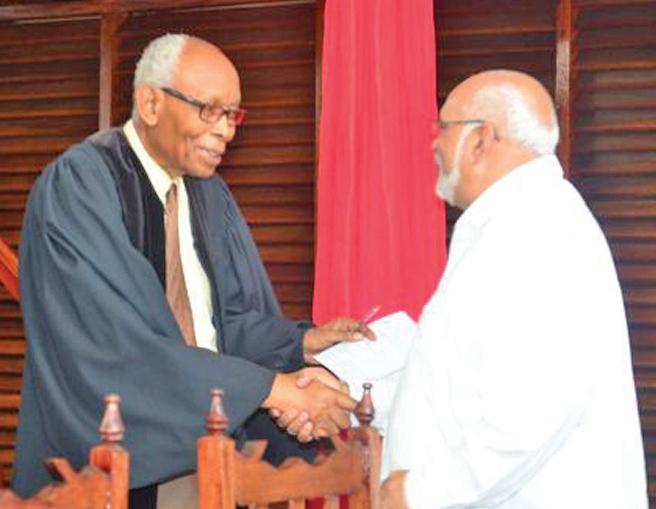
The Smith Memorial Congregational Church at Brickdam, Georgetown celebrated its 170th anniversary on Sunday morning, in a ceremony attended by Head of State Donald Ramotar.
Also in attendance were Opposition Leader David Granger and Georgetown Mayor Hamilton Green. The church was constructed in recognition of the missionary Reverend John Smith, who travelled from London to Guyana, to preach the message of the gospel to enslaved Africans.
Smith died in 1824, while incarcerated after being identified by colonial elites as being responsible for inciting the 1823 Demerara rebellion. The privileged colonials feared his compassion for the disenfranchised slaves.
Reverend Edwin Angel Walbridge, a London Missionary Society minister sanctified the church in Smith’s honour in November 1843. On Sunday, the
church was packed to capacity with its members, who had gathered to celebrate the anniversary under the theme “Maintaining our relationship with God as initiated by our forefathers”.
President Ramotar extended his congratulations to the church’s pastor and its members. He commended the church for continuing through the years Smith’s stance of taking the side of the poor and the oppressed, and for using education as a way of enlightening these classes of persons.
He appealed to the congregation to continue to use the example of Smith as well as those who fought against slavery in doing God’s work and in bringing good to those confronted by the social problems that exist in today’s world. He singled out domestic violence, pointing out that it was a national problem that every social organisation must unite to fight, and called on the church members to play their part in this fight. (GINA)

monday, november 25, 2013| guyanatimesgy.com
By Andrew CArmiChAel
An East Canje woman lost her baby while giving birth at the New Amsterdam Hospital on Friday. “I really don’t know what happened, because I was in so much pain and I was calling for help and I wasn’t getting any help at the time.”
Those were the words of Shawnann Kendall, who was admitted a patient at the institution on Friday morning. She said shortly before her delivery, she could not breathe and called for help.
“They were just sitting there looking, they weren’t moving and by the time I got some assistance… it was just too much for me.”
This publication understands that the infant, Kendall’s second, was born with a heartbeat, but the umbilical cord was wrapped around the neck, causing the child to suffocate.
baby was coming out, she noticed that the cord was wrapped around the neck and she clamped it and cut, but as the baby came further out, she discovered that there was a second wrap and by the time she got back up, there was a minimal heart beat.”
She added that the story was inconsistent and doctors were not coming forward to say anything to the family.
“It is not normal after birth to be feeling so much pain. You can’t even touch the tummy.” Murray told Guyana Times an ultrasound was done on November 9 and everything was okay.
“I was in so much pain…I was calling for help and wasn’t getting any…”
According to the 26-year-old housewife, when the midwife on duty realised that there were complications, she called for a doctor but by the time two doctors arrived about 15 minutes later, it was too late.
“They took the baby away and then about 30 minutes later, they returned and told me that they tried, but the baby did not make it. They told me that the baby died of strangulation.”
Kendall is still waiting on a report from the doctor. However, her mother, Mira Murray said she was told that the midwife was also at the time attending to another patient.
“The nurse told me that when the
The baby’s father, Stephen Kendall said they were not being told the truth, noting that he had been told two stories.
“She tell me that the cord de wrap around the neck two times and she cut it and couldn’t do anything. Then when my mother asks she say the cord wrap around the neck three time…”
According to a source close to the New Amsterdam Hospital, the midwife tried to do all that was possible to save the infant. “It was after the first wrap was cut and the baby was not coming out that she realised that there was another wrap around the body.”
The source said the umbilical cord could have been wrapped so tightly around the body that oxygen delivery to the baby was compromised. A postmortem is to be performed on the baby’s body today.
I...on “Jagdeo past”
t didn’t create much of a stir down here, but last week was the 50th anniversary of the assassination of John F Kennedy. The man’s become such a legend, even young people can tell who we’re talking about by those initials.
The source of his legend might have been his “charisma”, but he was more concerned about his image of being “soft on communism”. In those days in the U.S., “them were fighting words”.
He ousted the People’s Progressive Party (PPP) government to prove he was macho. But it wasn’t enough and he was assassinated – some say by the Central Intelligence Agency (CIA).
The assassination spawned a veritable “conspiracy theory industry” around “whodunit”. Its 50th anniversary must’ve put it in the air where it infected Editor of the MuckrakerKN, Adam Harris.
Saturday, in his column, he blurted out that it was former President Bharrat Jagdeo who caused all the imminent tragedy that’s going to come down from the Caribbean Financial Action Task Force (CFTAF) blacklisting!
Now we all know the opposition – especially Harris’ People’s National Congress (PNC) – are in a deep funk as to how they’re going to handle the fallout from their callous refusal to pass the anti-money laundering bill.
Payback’s a bi*ch!! So Harris has decided to take their ka-ka and daub it on the government’s behind.
But this put Harris and his boss Mohan “Glenn” Lall in a quandary. To

blame the government would be to blame President Donald Ramotar... and Lall’s been working overtime lately to get back in the prezzie’s good books.
So Harris, the old PNC spin doctor, came up with the conspiracy theory: it was all Jagdeo’s fault. “Blame Jagdeo” will become the mantra so that the Odd Couple over at the Muckraker can have their rum and drink it too.
Now we know that Lall wouldn’t know logic if it crept up and bit on him on his bamzee, but Harris has to do better to earn his keep.
He said Jagdeo received notification from CFATF of changes that had to be made to Guyana’s legislation in November 2011, and he’s guilty of “shelving the threat by the CFTAF”.
Now, even a conspiracy theory needs a shred of logic! For the November 28 elections, JAGDEO HAD ALREADY PROROGUED PARLIAMENT BACK IN SEPTEMBER!!!
We know Jagdeo is smart but do Lall and Harris believe he’s clairvoyant? And more to the point: with Parliament prorogued, how the arse could he have the National Assembly even look at any anti-money laundering bill, much less debate it in November, two weeks before the election?
...on “Jagdeo future”
Ralph Ramkarran doesn’t need a conspiracy theory to blame Jagdeo: he’s had Jagdeo on his brain ever since he shot himself in the foot back in 1997 and Jagdeo subsequently
became president. And didn’t support him for the post subsequently.
So we’re not surprised he’s on the opposition’s “blame Jagdeo” bandwagon. You don’t think he’s opposition? He’s a columnist of their Stabber News, isn’t he? Professor Clive Thomas, Dr Henry Jeffrey, Khemraj Ramjattan, Ramkarran. Opposition row.
Anyhow, he’s sweating whether Jagdeo could run as the PPP/ Civic (PPP/C) candidate at the coming election. From his cohorts’ shenanigans, they know snap elections are in the air... they’re trying to suss out the PPP/C’s plans.
So off he goes on a detour and frolic, parsing the Constitution on whether Jagdeo can run for another term – like Vladimir Putin did in Russia. This must be the opposition’s – and definitely Ramkarran’s – worst nightmare.
It really bothers Ramkarran that Jagdeo is still accorded so much respect in the international arena – especially on climate change. It’s pathetic he thinks Jagdeo is burnishing presidential ambitions.
...on media
It’s also pathetic the MuckrakerKN sees a conspiracy in this newspaper’s parent’s investments in the media. They ignore that it bought its television station fair and square and received its radio station after a challenge to the government in court.
The newspaper it launched, and didn’t steal it from its founder.

BY SVETLANA MARSHALL
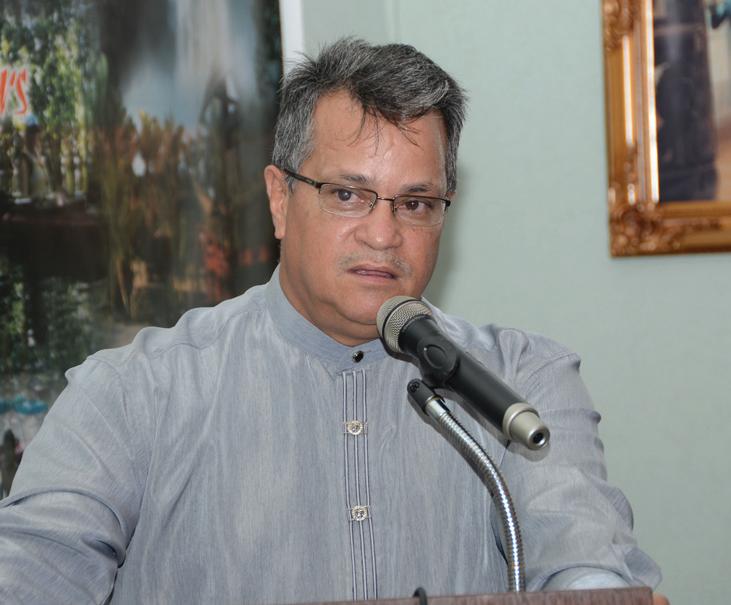
Government and the opposition have been irresponsible in tackling the Anti-Money Laundering and Countering the Financing the Terrorism (Amendment) Bill, Private Sector Commission executive member Gerry Gouveia said, as he complained bitterly about the country being blacklisted.
“I am furious, I am extremely disappointed in our Parliament,” Gouveia said during an exclusive interview with Guyana Times
He said it is a shame that Guyana has been formally blacklisted by the Caribbean Financial Action Task Force (CFATF) due to the carelessness of the People’s Progressive Party/Civic (PPP/C), the A Partnership for National Unity (APNU) and the Alliance For Change (AFC) at the level of the National Assembly.
The anti-money laundering bill was read in the
National Assembly for the first time on April 22. It was subsequently read on May 7 when a decision was made to send the bill to a parliamentary special select committee.
But from the onset, the AFC made its position clear, that it would support the bill only if government establishes the Public Procurement Commission (PPC).
Poor bargaining tactics
However, the PSC executive member rubbished the AFC bargaining tactics, describing it as poor.
“I say don’t bargain for things like this, I understand politics… but on issues like this, when we have to meet international standards, we should not be playing political games with the image and economy of Guyana,” he lamented.
According to Gouveia, the AFC is not only holding the government, but the entire Guyana at ransom. The same can be said for
the APNU and the PPP/C, which have all employed poor tactics in their attempt to pass the anti-money laundering bill.
“This is the highest display of irresponsibility and recklessness I have seen by our Parliament. I am extremely disappointed, it’s irresponsible and it is reckless,” Gouveia said as he blasts the three main political parties.
On November 7, the
APNU and AFC voted down the bill, despite the government’s attempt to comply with CFATF’s November 18 deadline.
APNU said more work is needed to be done on the bill, although it has not tabled one amendment at the level of the parliamentary special select committee. Their decisions have now resulted in Guyana being blacklisted.
However, Gouveia is
hoping that good sense will prevail before the Financial Action Task Force (FATF) meets in February 2014.
CFAFT, however, will meet again in May 2014.
Days before the opposition voted down the antimoney laundering bill, the government had announced that a Special Organised Crime Unit (SOCU) will be established to investigate financial transactions suspicious of money laundering and financing of terrorism. It was stated that the unit will also be working closely with the Financial Intelligence Unit (FIU).
Turning his attention to the Public Procurement Commission (PPC), Gouvia said the government must not underestimate the importance of the body.
“The government ought to be told to get off their tail and get the procurement commission up and the Integrity Commission and Office of the Ombudsman up, we need those things as well,” he said.
Less than a week ago, AFC executive member Dominic Gaskin had called for the appointment of the Ombudsman, the establishment of the Human Right Commission and the Public Procurement Commission.
“We recognise that filling these offices calls for consultations between the president and the leader of the opposition and we call on the holder of these two offices to get on with the job.”
According to Gaskin, to leave these critical offices vacant is to betray democracy and the oath taken to uphold the Constitution of the country.
In addition, he said it does not harbour well for the promotion and preservation of law when the nation’s Constitution, the supreme law of the land, is being subverted by way of non-compliance or disregard for sections of that document. (svetlana@guyanatimesgy.com)
The Guyana Human Rights Association (GHRA) and the United Nations (UN) general secretary are calling for more to be done regarding the elimination of domestic violence against women in society.
Their pleas come as the world observes the International Day for Elimination of Violence Against Women today. In observance of the occasion, the UN traditionally starts a 16 days of activism from November 25 to December –Human Rights Day – whereby special efforts are made to organise and combat violence against women, an egregious human rights violation. However, this year, awareness will be raised by wearing the colour orange to symbolise the UN’s commitment to this cause.
The GHRA, in a statement, pointed out that sexual and physical exploitation and abuse of girls and women remain the most pressing human rights violation in Guyana. It further highlighted that a series of measures to protect women and girls remain unimplemented, as such, the gap between laws on the books and implementation is growing.
The human rights organisation stated that domestic laws such as the Convention on the Elimination of All Forms of Discrimination
Against Women (CEDAW) and the Declaration on the Elimination of Violence Against Women (DEVAW) apply to every woman without any exception.
“The (laws) emphasised that violence against women stems from discrimination and inequality and that governments needed to put measures in place to prevent the various categories of violence against women, for example, within state institutions, in the economic and social arena, the family environment, within religious institutions as well as in the entertainment industry. Indigenous and migrant women were seen as vulnerable groups needing special attention. For the first time, domestic violence was recognised as a crime,” the organisation stated.
Increased alcohol consumption
GHRA mentioned the negative impacts women are experiencing, both on the coast and in the interior, resulting from the gold rush.
“Family and community life is under threat due to the absence of males in the mining fields. More responsibility is being thrown on women as homemakers and child nurturers as well as being burdened with maintaining kitchen gardens, farms and community “clean-ups”.
A number of commu-
nities, for example, on the West and East Coast Demerara, in Essequibo, Berbice and interior locations are witnessing the results of increased cash flow from mining, that is, increased alcohol and drug consumption, mental illness, multiple partner relationships, breakdown of traditional marriages and higher levels of violence against women and young girls. The impact is still to be assessed in other economic and socio-health areas,” the GHRA stated.
Another abuse of women is trafficking, the organisation pointed out. The GHRA highlighted that the trafficking of young women to mining areas and even Brazil, under the guise of cooks, cleaners and consent-
ing sex workers, from the coast and other parts of the interior, is increasing.
The organisation disclosed that a recent meeting with female community leaders in Essequibo, revealed the rising statistic of family violence, especially in the rural areas where women and girls are expected to be “first up and last to go to bed”.
Another issued raised at the meeting is the frequency at which male and female students visit the beaches during daylight hours at the missions (Mainstay and Capoey) under the pretext of “extra lessons” or skipping classes from some schools.
“There is no single formula or magic remedy to deal with violence against women, which has devel-
oped over centuries. Women in Parliament play a pivotal role. At a minimum, they should ensure relevant laws are being implemented, and be alert as to whether budgetary allocations are made or matched with requirements, in a transparent and accountable manner. They can also devise strategies to cooperate with independent civil society and grass roots organisations.”
Harming humanity
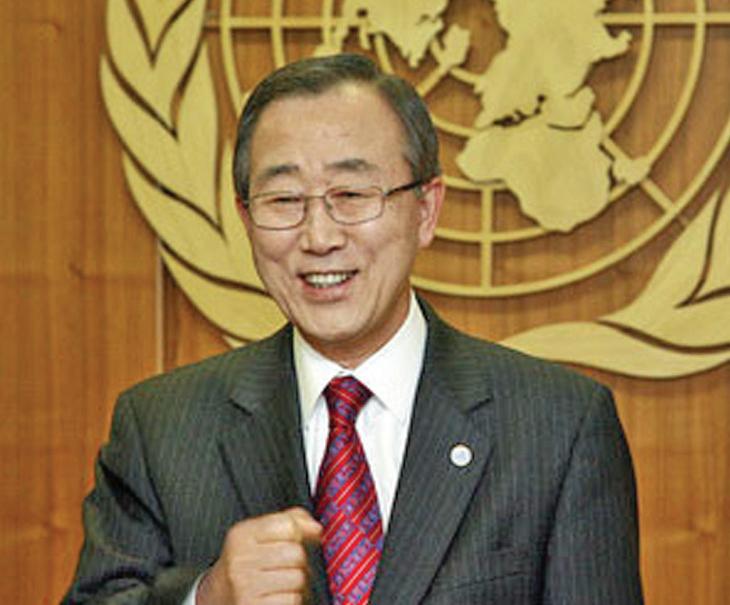
Meanwhile, UN Secretary General Ban Kimoon in a statement said violence against women and girls directly affects individuals while harming common humanity. He reflected on his UNiTE to End Violence against Women campaign, which was launched in 2008 and was joined by international partners to protect the rights of women and girls to live free from violence.
“I welcome the chorus of voices calling for an end to the violence that affects an estimated one in three women in her lifetime. I applaud leaders who are helping to enact and enforce laws and change mindsets. And I pay tribute to all those heroes around the world who help victims to heal and to become agents of change,” Kimoon added.
He quoted Dr Denis Mukwege, the founder of the Panzi hospital in the
Democratic Republic of the Congo, where women go after experiencing terrible atrocities, who said “Many times we are reduced to tears. Everything is so damaged. But we get to work. We operate. We fix what we can, and that is a lot”.
The UN secretary general said, “Although Dr Mukwege is dealing with violence against women in the context of armed conflict, his spirit to confront and fix this problem should apply to all of our efforts to help women facing violence in homes, schools and other civilian settings throughout the world, in every country, every society.”
He pointed out that one way to make a difference in this fight is to support the United Nations Trust Fund to End Violence against Women, which is used to respond to human rights violations and facilitate needs from physical safety to economic security.
“I appeal to all partners to help meet this vast unmet demand for resources to further advance efforts to prevent and end violence against women and girls. This International Day to End Violence against Women is an opportunity for all people to recommit to preventing and halting all forms of violence against women and girls,” Ki-moon said.

After undergoing three weeks of training, 29 hinterland network operators on Friday graduated, primarily in the transmission and distribution aspect. The graduation ceremony was held at the Guyana Power and Light (GPL) Sophia branch.
The training, which was focused on identifying and understanding transmission distribution and safety, was organised through a collaborative effort of the Office of the Prime Minister and GPL.
The training commenced on Tuesday, November 5 and concluded on Friday, November 22, the Government Information
Agency (GINA) reported. It attracted operators from Port Kaituma, Mabaruma and Mathews Ridge, Region One; St Cuthbert’s Mission, Region Four; Moraikobai, Region Five; Orealla-Siparuta, Region Six; Mahdia, Region Eight; Lethem, Region Nine; and Kwakwani, Region 10.
Some of the areas looked at during the training were voltage, pole positioning, and transformer connections.
The trainees were also given a tour of GPL’s sub-station on Mandela Avenue.
GPL Training Manager Stanislaus Ellis highlighted that this was only the first phase of the training, as the
GPL team will be going into these areas to conduct reviews and further the training.
GPL Chief Executive Officer (CEO) Bharat Dindyal highlighted that more training was necessary and owing to the short duration of the sessions, the trainees were not exposed to enough practical training. To facilitate further practical training, they will be attached to GPL teams to get the necessary exposure. He added that the power company will continue to support such training interventions, and expressed hope that the operators will return to their communities and contribute
by implementing what they have learnt.
Also present at the ceremony was Prime Minster Samuel Hinds, who told the technicians that this was just the beginning and that there was still a long road ahead. He congratulated the operators and encouraged them to return to their respective communities and pass on their skills, and to carry out their functions effectively at their workplaces using what they learnt as guidance.
He encouraged them to elevate themselves by doing some additional reading not only in their field but also in the wider range of electrification education.


Thief don’t thief from dem mattie thief
Christmas comin up and it look like every body lookin fuh a holiday raise. Even de bandits lookin fuh a raise. Just that de bandits method of gettin a raise is to thief a raise from people who wukkin honest and hard fuh dem own raise. So while de honest and hard wukkin people lookin out fuh a raise from de boss man, dem also have to keep lookin out fuh de bandits. And talkin bout lookin out and bandits, Mook Lall also lookin out every day, although he is a bandit he self. De Mook definitely not lookin out fuh bandits though. That’s because thief don’t thief from dem mattie thief. Old people seh two thief does mek God laugh, but de Mook alone thief so much that he mek God hold he head and cry.
Dem boys who seh dem is boys, but dem is not real boys, seh Mook Lall always love a big fat raise, but that’s a different kinda raise altogether. In any case, de Mook does get a big fat raise from de exportin of people and de exportin of pumpkins.
And although some of de raise from de exportin business does be use fuh givin a raise in suitcase fuh a job well done, like de one pun Main Street, de Mook does still leff wid a big fat raise fuh heself. One of dem boys who use to send out de Mook official photos, but now sendin out de Mook official diary of illegal actitivies, seh de Mook exportin Guyanese and importin Jamaicans. De sugar workers done get dem raise and dem happy. De public servants get a bigger raise than de sugar workers and dem still ain’t happy. Green Jah and Lin Con only remember de public servants. Dem don’t tink bout de sugar workers who does wuk more hard than de public servants.
Ting-a-ling-a-ling…friend tell friend…mattie tell mattie! Simple logic shoulda mek that Green Jah and de Con Man tell de public servants to be content. But neither Green Jah nor de Con Man are logical people after all. And it look like dem lookin fuh a bigger and fatter raise than de Mook!



As terrible climate disasters take lives and make living miserable for hundreds of thousands in different parts of the world, representatives from 195 countries are meeting in Warsaw, Poland in the 19th United Nations (UN) Climate Change Meeting to continue negotiations to stop climate change. Guyana must be unrelenting in calling for urgent action now.
November 2013 will forever be memorable because of climate change events like Typhoon Haiyan and the unprecedented 59 tornadoes that have hit the Midwest of the U.S.A. so far in November. In the meantime, Typhoon Haiyan left almost 4000 people dead in the Philippines during the second week of November.
This year is likely to be among the top 10 warmest years on record. All of the warmest years in recorded climate history have occurred since 1998.
Atmospheric concentrations of carbon dioxide and other greenhouse gases reached new highs in 2012, with carbon dioxide (CO2) reaching 400 parts per million in 2012. It is expected that greenhouse gases will reach unprecedented levels in 2013.
Climate disasters
In the past 12 months, Australia has suffered terrible climate disasters at a time when the country has recorded some of its warmest months.
Haiyan was shocking, but not surprising. Since 2002, the Philippines has recorded 184 natural disasters, including an average of six typhoons (as hurricanes are known in the Pacific) each year. The storms are becoming more frequent and more intense. Haiyan came 10 days after the traditional end of the typhoon season.
Haiyan, known as Yolanda in the Philippines, was the 30th named storm of the 2013 Pacific season and the second Category 5 (winds in excess of 150 miles an hour) to hit the Philippines in the last 11 months. Haiyan is the most powerful typhoon ever to hit land.
Recently, World Bank President Jim Yong Kim warned that global warming and climate change could no longer be ignored. He urged action to reduce emissions to minimise the likelihood of disasters like Typhoon Haiyan. U.S. Secretary of State, John Kerry and former U.S. Vice President Al Gore have added their voices again. Guyana’s President
Donald Ramotar and former President Bharrat Jagdeo continue to speak out.
Solidarity in climate change
Prime Minister David Cameron of Great Britain urged at the Commonwealth Heads of Government Meeting last week in Sri Lanka that there needed to be solidarity in fighting climate change. The UK’s Disasters Emergency Committee (DEC) has urged countries to take urgent action on climate change. The DEC, comprising 14 aid agencies, said Typhoon Haiyan was a glimpse of the future for millions who will be at risk from extreme weather.
People in many parts of the world are hoping that the Warsaw meeting would agree to rapidly cut carbon emissions, but a global deal is not expected until 2015, if at all. The lack of urgency that some of the countries display in the face of compelling evidence of climate change is now also being reflected by frightening and disgraceful retrogressive ac-
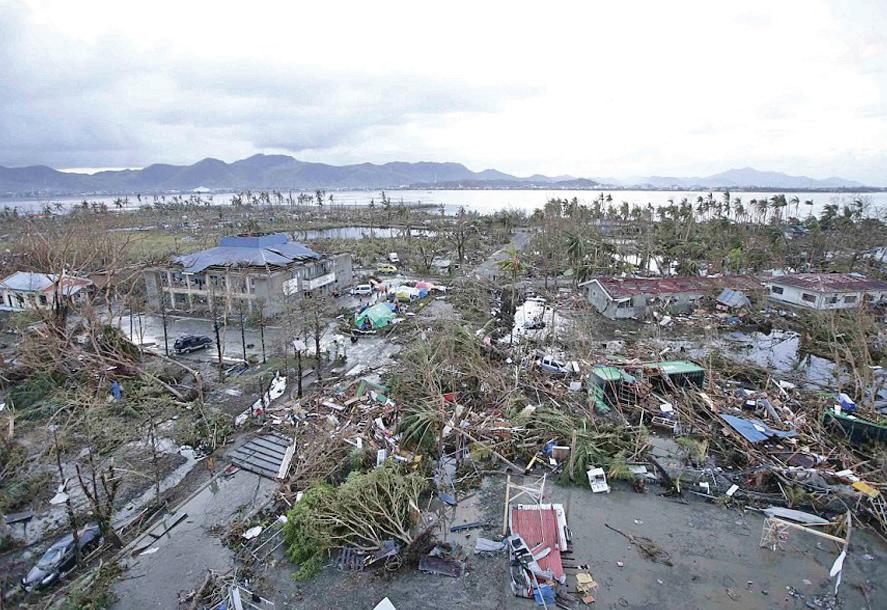
Loss: Around four million people in the Philippines are said to have been affected, according to the the country's national disaster agency
tion by some very important countries.
The U.S.A. continues to be slothful. On November 15, Japan announced that as a result of the Fukushima disaster due to an earthquake
and typhoons in 2011 that disabled some of its nuclear plants, it would have to renege on its promises to make massive emission cuts from 25 per cent to 3.8 per cent by 2020.
Australia has now abol-
ished its carbon tax law and has signalled its intention not to reduce CO2 as much as it had promised. Canada has pulled out of the Kyoto accord to reduce CO2 emissions to below 1990 levels. All these actions have de-
ferred sound judgments in preference for lunacy and have put the earth and its people at risk for overwhelming disasters.
We urge President Ramotar and our government to continue to speak out and to play a lead role to mobilise global action in response to climate change. We must call on rich Western nations to commit to establishing a compensation scheme for future extreme weather events, as the impact of global warming is increasingly felt.
Developing countries must call for urgent action on carbon emission reduction and demand that rich countries find at least US$100 billion a year by 2020 to help developing countries adapt to severe climate extremes. Climate change will destroy all our economic and social gains. What more must we see and feel before we act?
Readers are invited to send their comments by email or Facebook to times. notebook@gmail.com.

President Donald Ramotar and Surinamese Ambassador to Guyana Nisha Kurban on Saturday evening toasted to the solid partnership between the two countries at a celebration to mark Suriname’s 38th independence anniversary, which is observed today.
President Ramotar said Guyana remained committed to working with Suriname to enhance the level of cooperation that exists between the nations. He noted that they have developed a culture of sharing experiences and cooperating to achieve mutual development and peace. The relationship encompasses the trade, culture, health, and security sectors.
According to the Government Information Agency (GINA), the president applauded the Surinamese government
for its innovative strides over the years, particularly in the field of economic development. “This is evident in the recently-released Debt Sustainable Analysis published by the Surinamese Bureau of State Debt which indicates the economic prospects for Suriname are promising during the period 2013 to 2017, with an expectant economic growth of 5.5 per cent.
Rewarding relationship
Not only is this testimony to the economic policies, but also the embracing of some fundamental values of democracy, equality and social justice which transcends political differences, religious affiliations and social class.
“It is these values that make the relationship a rewarding experience for both countries,” President Ramotar stated.

Surinamese Ambassador Nisha Kurban, President Donald Ramotar and the ambassador’s husband cut a cake to mark Suriname’s 38th independence anniversary
Guyana is pleased to be in the company of Suriname, which, along which other countries, has led South America in terms of recent economic growth.
As the only two Caricom countries to share a border,
The Youth Coalition for Transformation (YCT) believes that the beating of children at home and in schools has resulted in many becoming cultured to the use of violence as a way of being powerful.
The group, the unofficial youth arm of the opposition coalition, the A Partnership For National Unity (APNU) made the comments last week during its presentation to a parliamentary select committee on Guyana’s commitment to The United Nations Human Rights Council with regard to the abolition of corporal punishment in schools. The YCT said corporal punishment is part of the general cycle that violence is a medium for conflict resolution.
Noting that it is aware that Guyana has a history in which the use of violence, especially violence by the state, not only in schools, but by the Guyana Police Force and other forces, have been exacted to achieve power and domination, the YCT said it believes that this larger tolerance of violence has resulted in an increase in the levels of violence in the school.
“The transformation has to come from saying no to the use of violence in our schools and homes against those who are weakest,” the youth group stated.
The youth coalition said it has committed to working
with all Guyanese to transform the society in which “our children and youth do not have to suffer violence and do not have to use violence to assert their own sense of value”. According to the YCT, it is also concerned that the beating of children is also part of a culture of violence which includes domestic violence, gang violence and the rapid escalation of conflict between citizens into violent situations rather than access mechanisms to mediate and adjudicate disputes before they become violent.
Transformation possible
“We have seen from our work with children in Agricola on a literacy programme, that it is possible to transform our educational settings into one in which children enjoy learning and in which their challenges are met by adults. We did not have to beat any of the children who participated in our literacy programme and we have no intention of doing so. The beating of children in our schools contravenes elements of the Constitution of Guyana that guarantees the rights of citizens, especially the vulnerable to the right to protection against harm and abuse,” the YCT asserted.
The group said in its commitment to transform Guyana, “we do not believe that culture and attitudes are static and that the culture of violence must be changed. We also re-
ject the idea that Guyana cannot honour its obligations to the Convention on the Rights of the Child, the United Nations Convention against Torture because of a culture of violence whether by the actions of state agents from corporal punishment to extra judicial killings to actions among citizens from domestic violence to gang violence.
In the 21st century, we do not wish Guyana to be seen as a country which cannot honour its own Constitution as well as the international human rights standards as they relate to the most vulnerable in the society.”
Alluding to the events at Marudi Mountain in March 2013 and Linden in July 2012, the YCT said unwarranted police violence and killings have already giving Guyana a negative image.
“We call on the National Assembly to lead the way forward by outlawing corporal punishment in schools and removing this legacy of slavery and oppression. We also call on the National Assembly to ensure that school managers, teachers, students and parents are provided with the policies and resources to reverse the rising tide of violence in schools. We believe that members of Parliament in their investment in Guyana’s education system must ensure that the next generation of Guyanese are nurtured and educated without violence.”
Guyana and Suriname’s relationship has seen the largest movement of persons between the two. This, the head of state said, will be further enhanced with the building of a bridge across the Corentyne River;
plans for this structure are closer to becoming a reality.
Ambassador Nisha Kurban, reflecting on her country’s achievements since independence in 1975, said Suriname will
continue to advance its integration agenda and formal ties with numerous countries. Suriname has revitalised the region with creative and innovative ideas which have strengthened Caricom; the Union of South American Nations (UNASUR); and the Community of Latin American and Caribbean States (CELAC), the ambassador noted. “Let us combine our strengths to face the challenges of the global economic and financial crisis”.
Ambassador Kurban called for deeper ties in the fields of trade, agriculture, health, climate change, and the fight against crime and violence.
“It’s better to have a good neighbour than a distant friend,” she stated. She also called on the private sectors of both nations to forge closer ties and explore new opportunities.
Junior Local government Minister Norman Whittaker on Friday met with members of the Linden Interim Management Committee (IMC), including Chairman Orrin Gordon and municipality councillors to address the toll booth closure, among other issues.
He also made reference to the $9.2 million that was recently approved by Cabinet, which is expected to be made available to the council next week, to pay the municipality workers’ salaries up to the end of 2013.
However, the IMC chairman said it would be a difficult task for the municipality to pay workers’ salary next year, noting that the recent five per cent increase by government allowed for workers’ salaries to be increased from approximately $24,000 per month, to approximately $35,000, only until the end of the year. This, he noted was just a temporary solution to the problem, which remains a problem for the municipality.
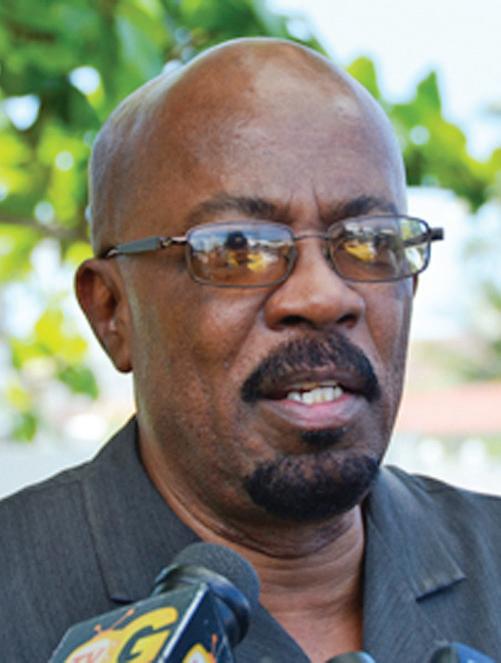
“You come now to tell us about the $9.2 million, which over a month or two ago should have been put in place so that it would have cushioned the effect of this thing, so at least there would have been some consultation going on. Now the fact of the matter is that you come now after the fact, to clean up the act. I call that disingenuous,” Gordon told the minister.
He said it was suggested by Whittaker that the municipality would have to
step up in order to secure more revenues from rates and taxes, but said the toll booth, which the municipality had set up at Kara Kara, Mackenzie, Linden was in an effort to garner more revenues to assist in paying workers’ a better salary.
No sacking
The IMC chairman acknowledged that the municipality will not resort to sacking any of its employees.
The Local Government Ministry recently ordered the closure of the toll booth which has been in operation for some 16 years. The reason cited for the closure was that its operation was illegal.
“The councillors were indeed peeved over the fact that we thought we had something good going with the toll booth... now the municipality is being put under severe pressure to find somewhere in the vicinity of about $30 million to $35 million and I don’t know where exactly that would come from to balance the budget

for 2014... so that was a specific concern that we wanted to have addressed,” Gordon stated.
“We felt that we had a reasonably decent rapport with the minister, and if there was such a serious decision to be made, we felt that some kind of serious continuous discussions should have been going on, to find ways to deal with the shortfall, even before that decision was put in place,” he said.
Speaking on the issues after the meeting, Whittaker said the municipality workers will not be receiving any additional increases on wages and salaries next year since the recent increase was quite a significant one as it has brought the workers’ salaries on par with the national minimum wage.
He also noted that payment of National Insurance Scheme (NIS) benefits remains an issue for employees as it is not being paid while the toll booth was in operation.

Windsor Estates, a multibillion-dollar housing scheme, was officially launched in Guyana on Saturday, with Prime Minister Samuel Hinds being the first person to get a tour of one of the eight North Haven model houses.
After touring the “Heritage”, a luxurious
1900-square-foot two-storey, three-bedroom house, inclusive of a kitchen, dining room, living room, bathrooms and a garage, Prime Minister Hinds expressed appreciation that the developer of Windsor Estates, Navigant Builders Inc, can meet the housing needs of the diaspora and even locals.
Navigant Builders Inc Chief Executive Officer Danny Sawh, a U.S. basedGuyanese entrepreneur said Windsor Estates seeks to bring a new style of living to the Guyanese populace based on designs developed in North America. During the construction process, keen attention will be given to details and quality.

Additional persons who capitalise on the offer to be part of the Windsor Estates family will be given a five-year warranty on the foundation and the exterior of the house, in addition to a 10year warranty on the roof.
Navigant Builders Inc is currently situated at Bel Air Park, Georgetown; however, it is the sister compa-
ny of Stonewall Contracting Corporation in College Point, New York. Windsor Estates is optimistic about providing a new quality of living to Guyanese through the provision of a superior environment parallel to that of the U.S.
According to Navigant Builders Inc, the initial phase of its gated commu-
nity includes the provision of spacious living quarters that will receive 24-hour security, via the gated entrance, street lighting and night-vision Closed Circuit Television (CCTV) cameras strategically placed in key locations of the community. The North Haven homes range from $25 million onward.
96 per cent of banks in Caribbean view small enterprises as important clients –
An annual survey of banks in Latin America and the Caribbean regarding the small and medium enterprise (SME) sector shows overwhelming interest in SMEs as banking clients.
Ninety-six per cent of the 100 banks interviewed in 21 countries in Latin America and the Caribbean consider SMEs to be a strategic part of their business, and 92 per cent have a dedicated financing policy for SMEs in place.
The sixth edition of the survey “SMEs in Latin America and the Caribbean: Closing the Gap for Banks in the Region” was commissioned by the Multilateral Investment Fund (MIF), a member of the InterAmerican Development Bank (IDB) Group. It was produced with support from the Inter-American Investment Corporation (IIC), the IDB’s Structured and Corporate Finance Department (SCF), and the Latin American Banking Federation (Felaban). It is the sixth in a series of banking surveys on SME finance and was again conducted by the Argentinean consulting firm D’Alessio.
Eighty-two per cent of the banks surveyed have specialised loan programmes for SMEs, and 67 per cent consider themselves to be specialised in SME financing. Additionally, the banks’ outlook for the SME sector is optimistic. More than half of the banks interviewed (54 per cent) believe that SMEs’ economic situation will im-
prove in the next two years.
The majority of the banks forecast increases in their own SME loan portfolios –half of respondents predict a growth rate between one and 20 per cent, and another one-fourth believe it will grow between 21 and 40 per cent.
This year’s survey shows that banks in the region have begun to develop differentiated services for small enterprise and for medium enterprise clients.
Seventy-two per cent of the banks interviewed have differentiated services for each of the small and medium enterprise segments, such as establishing adequate marketing strategies, internal procedures, underwriting methodologies, and risk management for each segment. Eighty-five per cent of the respondents have a different risk analysis tool for small enterprises from that of medium enterprises.
One in four banks cites the informality of many SMEs as the main constraint to serving SMEs. Some banks have begun to develop innovative underwriting methodologies and credit scoring models, such as “psychometric” tests, to overcome the restrictions that informality may cause. For the second year in a row, the survey included questions about the presence of SMEs managed or led by women in bank portfolios. Analysing this issue remains a challenge, as more than half of the banks in the

region (51 per cent) do not collect data disaggregated be gender. However, of the banks that do collect such data, 65 per cent use it to make decisions.
Other topics explored in detail by the survey include trends in SME financing and products, credit methodology, and financing

sources.
The MIF, a member of the Inter-American Development Bank (IDB) Group, is funded by 39 donors and supports private sector-led development benefiting low-income populations and the poor. The aim is to give them the tools to boost their incomes: access to markets and the skills to compete in those mar-
kets, access to finance, and access to basic services, including green technology. A core MIF mission is to act as a development laboratory – experimenting, pioneering, and taking risks in order to build and support successful micro and SME business models. The IIC, a member of the IDB Group, promotes private-sector development in Latin America
and the Caribbean with a focus on SMEs. The IIC helps companies streamline management processes and provides them with financing in the form of equity investments, loans, and guarantees. In 2011, the IIC reached the one billion-dollar mark in disbursements of its own and third-party funds. Throughout its history, the IIC’s operations have benefited more than 1.6 million SMEs.
Through the SCF, IDB partners with businesses at all stages of the investment process to achieve breakthrough financial results with high development impact. beyondBanking is a programme developed by the Financial Markets Division of SCF that seeks to promote sustainable environmental, social and corporate governance principles among Latin American and Caribbean financial intermediaries through financial and technical cooperation.


Hondurans voted for a new president on Sunday, choosing between a tough militarised response to drug gang violence fuelling the world’s highest murder rate, and a shift to the left that could revive the political career of deposed leader Manuel Zelaya.
A photo-finish finale is expected in a race that pits the ruling National Party’s candidate, conservative Juan Hernandez, the head of Congress viewed as Honduras’ most powerful politician, against Zelaya’s wife, Xiomara Castro.
A Castro win would put Zelaya, who was ousted in a 2009 coup that triggered a deep political and constitutional crisis, back at the heart of the presidency and decision-making.
The two rivals offer distinct visions for Honduras, the biggest coffee exporter in Central America – and a nation saddled with a murder rate of 85 per 100,000, the world’s worst. How to tame drug gangs is a key focus of the vote.

“We can’t bear the violence anymore,” said 61-year-old widower Gloria Zuniga as she waited in line to vote in a school yard-turned polling station in the capital Tegucigalpa.
“This has to radically change. We can’t leave our houses to walk freely in the street,” she added.
The atmosphere at the polling station was calm, with little visible security presence. Five people were killed near a polling station in La Mosquitia, in eastern Honduras, though police said the violence was not election-related.
FCastro promises to “refound” Honduras and level the playing field in a society riven by inequality, while Hernandez pledges to “do whatever it takes to bring peace and tranquillity to the country”. (Excerpt from Reuters)
ilver Cuevas
WBetances was born in The Dominican Republic and never left until he ran into some soldiers at a bus station in Santo Domingo who demanded his passport.
“I don’t have a passport. I’m Dominican,” the 29-year-old recalled telling the soldiers. Ignoring his pleas, his perfect Spanish, and the Dominican identification card showing his birthplace, they deported him the following day across the border to Haiti.
Four days later, after a night on a park bench in the Haitian capital of Portau-Prince, he sat in wrinkled clothes in the office of a migrant assistance group, struggling to make himself understood in the unfamil-
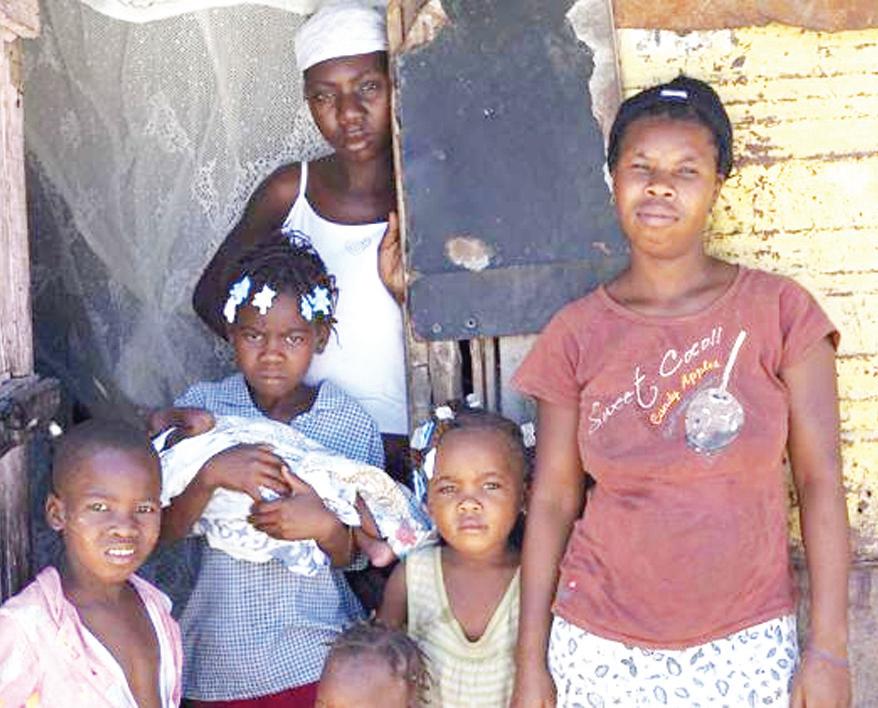
iar language of Creole, the French-based language spoken in Haiti.
“I have nothing here,” he said. “I don’t know anyone.”
Justice Geoffrey Henderson has been elected as a judge of the International Criminal Court, according to a statement issued by the Trinidadian Foreign Affairs Ministry on Saturday.
It said Henderson, a former director of public prosecution with 24 years’ experience in the criminal justice system, was the island’s candidate at the ICC’s 12th session of the assembly of States Parties to the Rome Statute.
“Mr Justice Henderson’s candidacy was approved by the Assembly of States
Parties in the first and only round of voting, and he secured 98 votes out of a maximum 99 votes (with one abstention), easily surpassing the two-thirds majority required for election whilst drawing support from all regions of the world,” the statement said. Henderson will serve the unexpired portion of the term made vacant as a result of the resignation of another Trinidad and Tobago judge, Anthony Carmona, who has since been elected head of state.
Justice Henderson’s term of office will expire on March 10, 2021. (Excerpt from CMC)
Migrant advocates are bracing for more abrupt deportations to impoverished Haiti as a result of a recent Dominican court ruling
that narrows the definition of citizenship. So far, there have not been mass deportations, but there are growing accounts of people being summarily kicked out of the country, in some cases apparently based solely on the colour of their skin.
In September, the Dominican Constitutional Court ruled that being born in the country does not automatically grant citizenship, and it directed officials to purge voter rolls of non-citizens, including people born to non-legal residents going back to 1929. Advocates say 200,000 people could be stripped of citizenship, along with the documents they need to work or attend school, although the government says an initial count came to about 24,000.
(Excerpt from Yahoo!)
Impasse prevents start of Belize’s 201314 sugar cane season
An impasse over a share of the profits from the sale of bagasse is preventing the start of the 2013-14 sugar cane season in Belize.
The Belize Sugar Industries (BSI) and the Belize Sugar Cane Farmers Association (BSCFA) are at odds over the profit-sharing scheme, with the farmers demanding a greater say on how the profits should be shared.
BSCFA Committee of Management Vice-Chairman Alfredo Ortega said the farmers have already made a plea to the government urging that it intervene in the matter.
Ortega said the farmers want the BSI to come “to the table” to
discuss the matter.
“We remain on our fight that we would go to the table to negotiate once it is for the bagasse and the new agreement,” he added.
Agriculture Minister Gaspar Vega said the cane farmers have been consistent in their positions and “they will not start a crop unless they finalise some agreement regarding the bagasse”.
“My plea to them is to go back to the table,” he said, indicating that he intends to meet with the other stakeholders “to see what kind of compromise they can reach”. (Excerpt from CMC)
oreign Affairs and Foreign Trade Minister AJ Nicholson has rejected suggestions that Jamaica ban imports from Trinidad and Tobago as a retaliatory strike against the summary denial of entry to Jamaicans into that country.
On Tuesday, 13 Jamaicans, including an 11-year-old girl and a man who is married to a Trinidadian woman, were denied entry upon arrival at the Piarco International Airport in Port of Spain and were sent back to Jamaica the following morning.
Immigration officials at the airport seized the Jamaicans’ passports and ordered them to sit on a hard bench all night before shipping them out of the country, despite the fact that the Caricom Single Market and Economy (CSME) allows for free travel between countries by Caribbean Community nationals.
The move by the Trinidadians is also a direct breach of the Revised Treaty of Chaguaramas and defies a recent ruling by the Caribbean Court of Justice (CCJ), which handed down a judgement in favour of Jamaican Shanique Myrie who had sued the Barbados government.
Myrie was refused entry into Barbados on March 14, 2011, was detained, subjected to a dehumanising cavity search, and deported to Jamaica the following day.
The CCJ, in its ruling on October 4, 2013, said evidence Myrie presented about an illegal cavity search and detention in an unsanitary cell at the Grantley Adams International Airport and subsequent deportation was powerful enough for the court to award her Bds$2240 in pecuniary damages and Bds$75,000 in nonpecuniary damages. (Excerpt from Jamaica Observer)
Prison reform has long been on the agenda of successive Trinidadian governments. Within the past seven decades, more than 10 reports on prison reform have been completed, and hundreds of recommendations have been made.
The Wright Report (1945); the Garrat Report (1963); the Interim Report I (1973); the Interim Report II (1974); the Interim Report III (1975); the Memorandum on Remand Prison, Golden Grove Report (1977); the Abdulah Report (1980); the Task Force Report (2002); the Deosaran Report (2003); and the Inspector of Prisons Report (2012) have all suggested measures to improve horrific conditions at the Port of Spain Prison, Carerra Prison (which has been closed down) and Remand Prison at Golden Grove, Arouca. However, successive governments have done little to implement the recommendations. The answers to many of
the problems today lie within the pages of all of the reports and reviews that have been done over the years at great cost to taxpayers.
After a week of protests at Golden Grove following the murder of prisons officer Andy Rogers on November 7, Prime Minister Kamla Persad-Bissessar appointed a Special Prisons Committee to probe the existing conditions at the facility. The committee’s report was submitted on Friday. The recommendations included a commission of inquiry into the criminal justice system. The committee said the system had “collapsed and is running on auto-pilot”, and it was thus critical to probe why it had reached to this stage. The committee also advised, among other things, that the government build a new remand facility within 18 months, implement full body scanners at prisons so all who enter would be searched, and provide clothing for accused who are on remand. (Excerpt from TT Guardian)
Iran and six world pow-
ers clinched a deal on Sunday curbing the Iranian nuclear programme in exchange for initial sanctions relief, signalling the start of a game-changing rapprochement that would reduce the risk of a wider Middle East war.
Aimed at easing a long festering standoff, the interim pact between Iran and the United States, France, Germany, Britain, China and Russia won the critical endorsement of Iranian clerical Supreme Leader Ayatollah Ali Khamenei.
U.S. President Barack Obama said the deal struck after marathon, tortuous and politically charged negotiations cut off Tehran’s possible routes to a nuclear bomb.
But Israel, Iran’s archenemy and a U.S. ally, denounced the agreement as an “historic mistake”. Critics in the U.S. Congress were quick to voice concern, with some raising the spectre of failure to rein in North Korea on its nuclear programmes, but they signalled
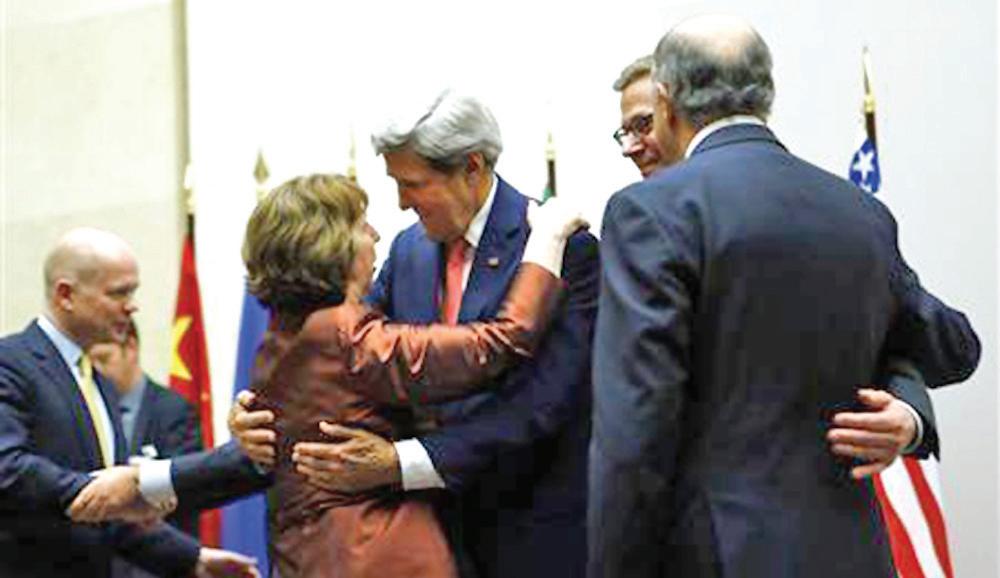
Adrunken homeless man — who police say resembles Kris Kringle — was charged Saturday with attempted murder for allegedly pushing an elderly stranger onto the subway tracks in Harlem.
Meanwhile, the victim, Shou Kuan Lin, remained in intensive care at St Luke’s Hospital Centre.
Witnesses had jumped to the tracks to hoist him back onto the crowded northbound A and C platform before a train could arrive.
that Congress would likely give the deal a chance to work.
The agreement, which halts Iran’s most sensitive nuclear activity, its highergrade enrichment of uranium, was tailored as a package of confidence-building steps towards reducing decades of tension and ultimately creating a more stable, secure Middle East.
Indeed, the United States held previously undisclosed, separate direct talks with Iran in recent months to encourage diplomacy towards a nuclear deal, a senior U.S. official said.
Washington and Tehran have not had diplomatic relations since the Iran’s 1979 Islamic Revolution. Any new détente between the two will be opposed by Washington’s Israeli and conservative Gulf Arab allies as it could tilt the regional balance of power towards Tehran. (Excerpt from Reuters)
More than 11,000 children have died in Syria’s civil war in nearly three years, including hundreds targeted by snipers, a new report says.
Summary executions and torture have also been used against children as young as one, the London-based Oxford Research Group think tank says.
The report says the majority of children have been
killed by bombs or shells in their own neighbourhoods. It wants fighters trained in how not to put civilians’ lives at risk.
Their report, “Stolen Futures – the Hidden Toll of Child Casualties in Syria”, examines data from the start of the conflict in March 2011 to August 2013.
Of the 11,420 victims aged 17 and under, 389 were killed by sniper fire. Some 764 were summarily execut-
ed, and more than 100 – including infants – were tortured, the report says.
Boys outnumbered girls among the dead by around two to one. Boys aged 13 to 17 were most likely to be victims of targeted killings, the report says. The highest number of child deaths occurred in the governorate of Aleppo, where 2223 were reported killed.
Report co-author Hana Salama said the way chil-
dren are being killed is disturbing. “Bombed in their homes, in their communities, during day-to-day activities such as waiting in bread lines or attending school.
“Shot by bullets in crossfire, targeted by snipers, summarily executed, even gassed and tortured,” she said. The data was provided by Syrian civil society groups recording casualties. (Excerpt from BBC News)
Karzai gives no date to sign U.S. security pact
Hamid Karzai, the Afghan president, has agreed to sign a strategic agreement with the United States if it brings peace to the nation after more than three decades of conflict.
Speaking at the conclusion of the “consultative” Loya Jirga, Grand Assembly, on Sunday morning, Karzai said the result of the Bilateral Strategic Agreement between Kabul and Washington must be peace.
“Starting from today, security is our first condition,” Karzai said before warning that any more raids on Afghan homes would result in a nullification of the agreement approved by the more than 2500 men and women in attendance at the gathering.
The Afghan president went on to say that it has been made clear to him
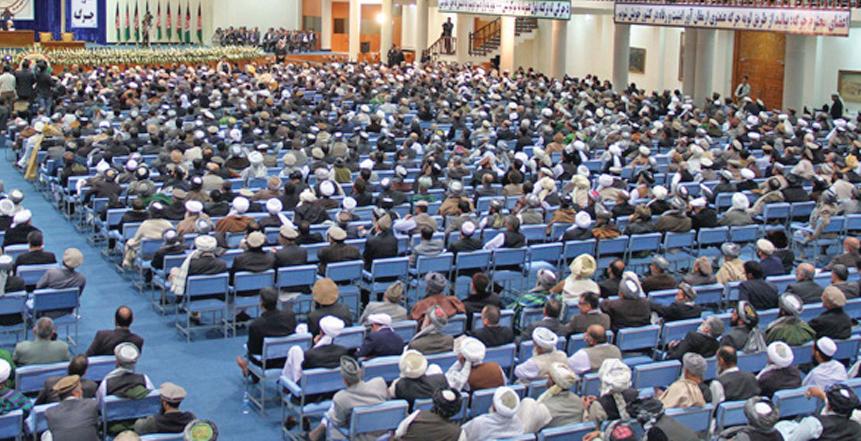
that peace in Afghanistan is “first in U.S. hands” and second in Pakistani hands. Karzai said he had seen documentation proving as much.
Alluding to the role of neighbouring Pakistan in the decades-long Afghan
conflict, Karzai said: “If we started the war, we can end it; if we haven’t, we can’t. This war was started by someone else.”
The president went on to deliver a message to the United States, including James Cunningham, U.S.
ambassador to Afghanistan, who was seated in the audience at Kabul’s Polytechnic University.
“Afghanistan has proved its friendship to you… Now, the U.S. should prove its honesty with us.” (Excerpt from Al Jazeera)
It was on the St Nicholas Avenue line that police say Rudralall Baldeo, 57, randomly shoved the 72-yearold man, leaving him clinging to life Saturday night with a fractured skull.
“The guy looks like Santa Claus,” one law enforcement source said of Baldeo, a Guyanese man who earns change collecting cans and bottles.
“He has a full head of white hair and a full white beard.”
“He looked bewildered,” the source added.
“He wasn’t drunk anymore. He had this, ‘What the f-?-k did I do?’ face on him.”
Baldeo wore green scrubs and a slight smile as he was led out of the 30th Precinct station house to be booked and arraigned downtown on attempted-murder and assault raps.
He has no history of violence or psychiatric treatment, police say, and his only arrest is sealed.
“The victim is in a lot of trouble, the swelling is not going down,” the source said, noting that doctors had drilled a hole in his skull to relieve pressure.
“The whole city needs to think about how to protect innocent bystanders,” the family’s pastor, Eliyah Shira, of the Church of Grace in Chinatown, said as he left the hospital.
Baldeo had been riding trains looking for recyclables Friday afternoon when he hopped off at 145th Street, allegedly mistaking it for 59th Street in his drunkenness.
He told police at the 30th Precinct station that Lin fell accidentally and that he had said “excuse me”, to the victim right before. But numerous witnesses insisted Baldeo inexplicably shoved Lin.
“Push!Push! Push!” Lin’s wife told arriving police, pointing at Baldeo. (New York Post)
Angela Merkel’s conservatives and the Social Democrats (SPD) head into a decisive week of German coalition talks on track to form a government, but under fire from their own members for a series of policy compromises.
The chancellor’s Christian Democratic Union (CDU) beat the SPD in an election two months ago, but failed to secure a parliamentary majority, forcing her into talks with her arch-rivals.
Negotiations have draged on, leaving Merkel’s outgoing centre-right coalition in charge, but unable to move on urgent European policy decisions. The parties are expected to overcome their remaining differences and divide up Cabinets posts this week.
But complaints within the CDU about policy compromises have grown louder in recent weeks as the SPD has demanded and won concessions from Merkel on a minimum wage and other measures conservatives fear could hurt the economy.
“The news from the coalition talks is setting off alarm bells in industry,” Kurt Lauck, president of a business lobby within the CDU, wrote to Merkel in a letter published in German newspapers at the weekend.
Meanwhile, SPD leader Sigmar Gabriel faces a major challenge in convincing the grassroots of his party to back a coalition deal that may not contain the big public spending boost they had called for in the German election campaign. (Excerpt from Reuters)
Dr Janet Yellen’s nomination to be Chairman of the Federal Reserve was confirmed by the Senate Banking Committee on Thursday by a vote of 148. She was approved by 11 of the 12 Democrats on the Banking Committee and three Republicans.
Barring something totally unseen happening, Dr Yellen will be approved by the full Senate which is expected to vote in the week of December 9. This will be the first time in the 100- year history of the Federal Reserve that a woman has headed the institution.
Since the release of the Federal Open Market Committee (FOMC) minutes on Wednesday about the meeting on October 29-30, there has been tremendous debate once again about “tapering” or the cutting back of bond purchasing now totalling US$85 billion a month.
According to the minutes, “tapering” will most likely start in the coming months and the Fed is trying to find a way of cutting bond purchases but not pushing up interest rates. One possibility is to reduce the interest rate the Central Bank pays on reserves held at the Fed by member banks to less than 0.25 per cent, which is paid currently. This is also an option that is being discussed by the European Central Bank with the idea being that instead of paying zero per cent on bank reserves, it will be -0.1 per cent.
Yet, most people think that there is no way that the Fed is able to cut back on bond purchases but keep interest rates from rising. This week, for example, 10-year yields have risen from 2.77 per cent to 2.79 per cent and the 30year bond from 3.79 per cent to 3.87 per cent purely on talk of future tapering. The reality is that the Federal Reserve can discuss many options, including lowering its key unemployment target of 6.5 per cent, but decreasing bond purchases is a means of tightening of monetary policy and that leads to higher interest rates. This is why the entire decision about “tapering” is data dependent and particularly whether or not the U.S. economy is growing strongly led by the labour market.
If the economy is weak,
Dr Yellen will not allow a repeat of 1936 when the central bank stopped easing after the Great Depression years which turned out to be too soon in the recovery.
Economists are worried that inflation is too low today in many countries, which gives rise to higher real interest rates, which probably adds another inhibitor to spending. Unfortunately, even though the U.S., Eurozone and Japan have targets of two per cent for inflation, this is simply not being met. In fact, this week in the U.S. consumer and wholesale prices, both actually fell and the consumer price deflator is under one per cent, which is a 50year low.
Overall, in the Group of Seven countries, core inflation is 0.7 per cent with consumer prices showing no change in Japan over the past 12 months. The big danger to the world economy is not any increase in prices but just the opposite and no one knows how to raise prices when interest rates are effectively zero. And, trying the new techniques of lowering interest rates on bank reserves as well as bond purchases is only marginally helpful. It is also a lot easier to start than to exit “unconventional” policies.
Source: OECD
in the opposite direction growing by 7.7 per cent this year and 8.2 per cent in 2014.
Growth in the U.S. is expected to be 1.7 per cent in 2013 and 2.9 per cent in 2014, with a modest growth in Japan of 1.8 per cent and 1.5 per cent. For Europe, the OECD sees a contraction of 0.4 per cent for the euro area this year and an expansion of one per cent next year.
All of this compares with the view of the International Monetary Fund (IMF), which is almost identical with a growth rate of 2.9 per cent for the world economy in 2013, followed by a growth rate of 3.6 per cent in 2014.
The major difference is in China which the IMF sees growing at 7.6 per cent in 2013 and slightly less next year at 7.3 per cent. Otherwise, the world economy is expected by both institutions to grow slowly with neither industrial or emerging markets (except for China) doing
foreign exchange market, Justice Department probes into JP Morgan’s energy-trading bonuses, recruiting practices in Asia and its relationship with Bernard Madoff, fines and legal bills have become a serious issue for the bank and its profits.
The six biggest U.S. banks have already allocated more than US$100 billion to these costs and Europe’s biggest banks led by Lloyd’s and Deutsche have already reached up to US$77 billion in legal and litigation costs as well as fines.
Two top regulators are arguing that the “Volcker Rule” is too soft on banks and are threatening to delay its implementation. This is one of the few instances of a rule being toughened rather than weakened and again shows the new power of the regulators.
The rule has been mired down for three years and the expectation is that something will happen be-

the consumer price index decreased 0.2 per cent. Initial jobless claims dropped by 21,000 to 323,000 (Thursday) in the week ended November 16th but with Veteran’s Day falling in this period, the numbers are suspect. The Philadelphia Fed’s survey slowed in November to a reading of 6.5 from 19.8 in October. There were no major reports Friday morning.
In overseas news, the Bank of England kept monetary policy unchanged in November, and said that a record low interest rate may be needed even after unemployment falls to the threshold set under forward guidance. Governor Mark Carney has said that the Bank of England will not consider raising its key interest rate from 0.5 per cent at least until jobless rates hits seven per cent (and probably lower).
No other central bank had formal meetings scheduled for last week, and it was no surprise when a board member of the Swiss National Bank said that it would maintain the cap of 1.20 per euro for the Swiss franc covering a long-time ahead. A much more contentious issue in Switzerland was Sunday’s vote on the restriction of pay by executives to 12 times the average work-
BY GEOFFREY BELL
to 2.29 amid rumours of a possible downgrading of the Brazilian economy and with more optimism about the U.S. and world economy in some quarters, the price of oil rose from just under US$94 a barrel the previous Friday to US$95 Friday morning. By contrast, gold prices continued to fall and are currently US$1245 an ounce and were US$1287 a week ago. It seems a long time ago when gold almost reached US$1700 an ounce in early 2013 and a very long time ago in 2012 when gold hit almost US$1800. There is little doubt that the sparkle has left gold and John Paulson, the best-known gold bull, has told clients at his firm’s annual meeting Thursday in New York that he would not invest more in his gold fund because he is not clear when inflation will accelerate. Gold has lost 63 per cent in the year to date and is headed to its first annual drop in 13 years. The Dow Jones was about flat last week but managed to achieve 16,000, an increase of 22 per cent in 2013.
The issue of whether to “taper” or not is high on the agenda of the Federal Reserve even if the final decision is totally data dependent. If the economy is doing well, then tapering will be permitted to start and not if the economy is growing slowly.
The Organisation for Economic Cooperation and Development (OECD) has just cut its global growth forecasts for 2013 and 2014 as emerging countries, including India and Brazil, cool. According to the institution, the world economy will grow by 2.7 per cent this year and 3.6 per cent next rather than the 3.1 per cent and four per cent predicted in May. India’s economy is now expected to grow by only 3.4 per cent in 2013 and 5.1 per cent in 2014 down from 5.7 per cent and 6.6 per cent previously. It cut its forecast for Brazil to 2.5 per cent and 2.2 per cent from 2.9 per cent and 3.5 per cent, with China going
very well.
JP Morgan reached a US$13 billion deal with the U.S. Justice Department last week which ends a probe into the bank’s sale of residential mortgages and is the largest amount paid by a financial firm to the government. This was a civil settlement and does not shield the bank or its employees from criminal liability, and about US$4 billion goes to homeowners, with both sides claiming that they achieved more than the settlement itself.
But, with the settlement of the “London Whale” fiasco, the likely fines in the Libor inquiry, the possible rigging of the
fore the end of this year. And, the idea is to restrict proprietary trading but not harming permitted activities such as hedging. Nevertheless, it has been not only delayed but made excessively complex principally by the efforts of bank lobbyists but it will become the law.
Last week’s U.S. economic data started on Thursday with the employment cost index, which only rose 0.4 per cent. Retail sales rose 0.4 per cent in October which was more than forecast and sales excluding gasoline climbed 0.5 per cent.
On the other hand, existing home sales fell 3.2 per cent in October while
er’s.
Interest rates are back up rising to 2.76 per cent for the 10-year U.S. Treasury and 3.85 per cent in the 30-year area, an increase of six basis points since Friday, November 15. The euro has stayed at US$1.35 while the pound sterling rose from US$1.61 to US$1.62. The Swiss franc was unchanged at 0.91 but the Australian dollar fell from $A0.94 to $A0.92 with more negative reports coming from Australia.
The Japanese yen continued to slide, falling to 101.1 Friday morning from 100.1 the previous Friday. The Brazilian real rose a little from 2.31
We have now had five years since the financial crisis of 2008 and the amount of spare capacity in industrial countries remains high. Is this because easy monetary policies have had less and less of an impact as interest rates have come down or is there something else happening behind the scenes? No one knows the answer but it is worrying that inflation rates have come down so much that a two per cent target seems beyond reach for central bankers try as they might!
Friday was the 50th anniversary of John F Kennedy’s death and everyone who was alive at that time remembers where they were when they received the tragic news. This is extremely rare and shows what a shock his assassination was to the United States and the world. He will not be forgotten whether it is the 100th or another anniversary many years away.

The Guyana Hindu Dharmic Sabha’s Dharmic, Sanskritik Kendra, which was recently renovated, was on Sunday renamed after its late president, Pandit Reepu Daman Persaud at a spe-
Hindu academy in Guyana that would provide training for pandits and more so, promote all forms of the culture and tradition of Hinduism. The Sabha’s kendra holds the distinction of being recognised by the government
dholak, kathak and other dance forms, counselling, dressmaking, Indian cookery and craft. There is also a pandit’s training programme.
At the unveiling ceremony, President Donald

cial ceremony at its headquarters, Prashad Nagar, Georgetown.
It is now known as the Pandit Reepu Daman Persaud Dharmic Sanskritik Kendra
It was the late Pandit Persaud’s vision to have a
of India as the first Hindu academy in the Caribbean, built by Caribbean nationals.
Since its opening in 1991, thousands of students have been trained for free at the kendra in sanskrit, Hindi, singing, tabla, harmonium,
Ramotar reminisced on the struggles and contributions of the former parliamentarian and People’s Progressive Party/Civic (PPP/C) stalwart, Pandit Reepu Daman Persaud. The head of state described the late Persaud as a freedom fighter, not-

ing that his idol was Indian freedom fighter Mahatma Gandhi.
Courageous leader
He noted that Persaud dedicated himself for the betterment of all Guyanese and moreso was able to build the Guyana Hindu Dharmic Sabha in a very difficult time; a time when courage and dedication was badly needed.
“It was just after the 1973 elections when our country was going through some very difficult political periods in our history and then it called for courage for people to come forward and stand up and comrade Reepu was one such person,” the president recalled.
Against this backdrop, he thought renaming the facility in honour of the late Persaud, was indeed worthwhile.
“His prestige… his strength and his personality grew in this organisation largely because he promoted the culture with the fight for the oppressed and ordinarily people for freedom and for democracy. And that identi-
fication with the poor which he was able to link was extremely important in bringing this organisation to build the strength that it actually had.”
Ramotar also explained that Persaud followed the footsteps of some great leaders before him and was able to link religion and politics. “He pursued tolerance and preached it… everyone could have identified with him,” the president said.
He congratulated the new executives of the Sabha, and lauded the move to rename the facility in honour of the late Pandit Persaud.
Keep the tradition alive
The president charged the new executives to keep the Hindu philosophy alive by teaching and promoting tolerance as the late Pandit Persaud did.
Prime Minister Samuel Hinds, who was also present at the event, congratulated the Sabha for renaming its headquarters and reminisced that the late Persaud was kind to him in Parliament.
He also recalled that
Persaud had a vision and knew what he wanted. He wished the Sabha all success and urged its members to keep Persaud’s name alive.
Immediately after the unveiling, the Sabha hosted its annual Kala Utsav, which featured more than 150 young people under the age of 25 participating in a friendly competitions of Ramayan chanting, male and female singing, duet singing, classical dance, junior folk dance and kirtan.
Kala Utsav, which began in 1994, was conceived as an innovative way to propagate and preserve the Indian art forms. Its intention is to motivate young people to continue the traditions of their foreparents and to achieve excellence in the various art forms, while simultaneously building talent bases in the various regions. It is a launch pad for identifying and developing youth talent.
Trophies, certificates and cash incentives were given to all the participants in the Utsav.
As countries around the world observe International Day for the Elimination of Violence Against Women today, Human Services and Social Security Minister Jenifer Webster declared that there is no place for violence in Guyana.
The occasion is being observed under the theme “From Peace in the Home and Community to Peace in the World, Let’s End Violence Against Women”. The human services minister issued a statement lobbying for more to be done to curb this stigma.
Webster said violence cuts across all borders, ethnicity, socioeconomic status and religion and is no longer a gender or an economic issue, but one that involves human rights and security. She noted that when women and girls are adversely affected, the welfare of society suffers and children grow up with
behavioural patterns that perpetuate the cycle of violence.
“We must promote role models of family life and good moral behaviour. We need to address the root causes underlying this unabated violence and abuse, which includes gender discrimination, low morale of our girls, poverty, religious and cultural belief. There is also a greater need for enforcement of the current laws to protect our women and to facilitate perpetrators being brought to justice,” the minister said.
The human services minister pointed out that it is necessary for everyone in society, especially young people, to be involved in the fight against domestic violence.
Boys must be advocates
She noted that young boys and men should be encouraged to become the advocates needed to eradicate this stigma from society since its peo-

aware of the negative impact violence has had in many societies in the world. Here in Guyana, at the level of the government, there is zero tolerance for violence,” Webster declared.
ple is an important factor for any country’s development.
“It is therefore necessary for all of us to recognise the need to ensure that our country’s most valuable asset, our people, are equipped with the requisite skills and tools to support development within our society. Our challenge is to preserve and advance this process. In our quest for development, violence should have no part. We are all
Webster highlighted that women significantly impact the economy of every country; however, there is little research done to reflect their contributions to the economic growth in Guyana. She pointed out that while both girls and boys have equal access to human rights, they face different challenges. “Girls are more likely to be stereotyped and experience rape or other form of sexual violence.”
Legislative policy
The minister further stated that there is a strong and robust legislative policy in place for protecting women, making reference to the Domestic Violence Act (1996) and the Sexual Offences Act (2010).
Meanwhile, the minister applauded the efforts of non-governmental organisations (NGOs) which actively support the fight to eliminate violence within society. She acknowledged that there is still more to be done since too many victims still suffer in silence while the children are harmed as a result of cowardly acts. She further stated that too many people are losing their lives, disclosing that to date, 18 persons have died as a result of domestic violence.
“Hence, there is the need for further continued commitment and resources to accelerate action to strengthen interventions.
“We need to strengthen the support system by providing them with options to enhance their continued education, sexual and reproductive health services, livelihood skills, and recourse from violence in the home,” Webster said.
Education The human services minister went on to highlight that education is a key factor for women, but pointed out that enrolling more girls in the school system is not enough. She explained that the challenge is to ensure that girls maximise the opportunities provided. “We need to encourage our women, and men, to speak out against violence and exit violent relationships. There is a need for all of us within our society to support the creation of more rehabilitative programmes for victims and perpetrators,” she said. Webster called on all Guyanese to join forces to resolve domestic violence in Guyana. “The endemic culture of violence generally, and gender-based violence in particular, demands specific and innovative actions to address this issue. Let’s not turn a blind eye to this issue...















There is plenty to accomplish. Set your goals high and be persistent in your pursuits. Don’t let anyone guilt you into lending or making a donation. Charity begins at home.

By Bernice Bede Osol

(June 21July 22) (Jan. 20Feb. 19) (Dec. 22Jan. 19)
Play by the rules and stick to a budget or plan if you don’t want to be subjected to discord or end up in a compromising position. Listen carefully and do what’s necessary.


Don’t feel pressured because someone wants to make an unexpected change. Continue along a safe and comfortable route that shows personal promise and financial safety. Romance will improve your evening. Expect demands, but don’t let anything stop you from taking part in or attending something you’ve been planning. Make a couple of adjustments, and you should be good to go.

(Aug. 23Sept. 22)
(July 23Aug. 22) (Feb. 20-March 20)
False information will surface and must be sorted out quickly before someone gets the wrong impression. Offer what you can, but make sure you take care of your personal situation first.

(March 21-April 19)
Double-check what you are getting for your money before making an impulsive purchase or financial decision. Minor ailments will be due to stress and poor choices.

(April 20-May 20)
Don’t sit still waiting for someone else to make a move. Take control of a situation you face, and you will make interesting discoveries that result in personal benefits.

(May 21June 20)
Nurture an important relationship with diplomacy and patience. Listen to what’s said and respond honestly. Emotional misrepresentation and arguments will not solve a personal dilemma.
A serious look at someone or something from your past will bring you up to speed, helping you move forward without regret. A romantic evening should be planned.

(Sept. 23Oct. 23)
Helping others will make you feel good as long as you don’t overdo it or let anyone take you for granted. Complete the jobs that pay before you get involved in freebies.

(Oct. 24Nov. 22)
Expand your interests and your friendships. The people you interact with now will give you plenty in return. Focus on making your surroundings more conducive to reaching your creative desires.

(Nov. 23Dec. 21)
Avoid conflicts. Put more effort into family matters and taking care of responsibilities. A change of heart will be based on secret information. Don’t share personal opinions.


SAT/AP/CXC/IGCSE English classes, personalized tutoring. Phone: 6124821 after 4pm, 274-0437 after 7pm.


1 stall stabroek market phone: 718757-8031, 658-0145
Mecury in large quantities, 99.9999% purity in grey flask. Phone: 219-4535
60FT Antenna (Mass) for Radio, TV, Cellular, with cables, brackets, sky light $500,000 227-3939, 621-4000 73” 3D TV Mitsubishi Like new
$450,000 227-3939, 621-4000
DIESEL Generator silent 28 kva
SDMO John Deere engine, missing Fuel Pump, Panel, Avr MAKE OFFER 227-3939, 621-4000
CLARKE forklifts 2000, 3000, 4000 Lb, lifting capacity MAKE AN OFFER TEL: 227-3939, 621-4000
Generac Generator 15 kva, portable, $500,000 cash or credit available Tel: 227-3939, 621-4000
Diesel Generator, 3 cylinder Lister pitter (England) key start, 15 kva, $650,000 cash or credit Tel: 2273939, 621-4000
Chicken Hatchery (Robbins), 28,000 eggs capacity fully ready, $ 5.5 million or CREDIT available TEL: 2273939 621-4000

R.Sookraj & Gift Shop for the best in hand made jewellery ,(made to order) Phone: 612-2125/223-6156

low self-esteem, loneliness, unloved, anger, conflicts and relationship problems? For appointments call 592621-0552. 12:00pm -6:00pm, Email: healthworldhc@gmail.com




One Dog which answers to the name Zion. Colour Cream/White/ Brown about 1 foot tall. Last seen on Wednesday, November 13, between Success & LBI, ECD. If seen please call on numbers 619-8086, 699-7077, 220-3183.

Learn transcendental meditation and reduce stress & anxiety, develop full brain potential, increase creativity and intelligence, concentration, focus and memory, be healthier & happier, increase energy vitality and longetivity, enjoy more success in life, improve relationships and develop higher states of consciousness, a technique that works for everyone, for next introductory lecture. Contact Ashoke phone 233-6921, 6093701, email: kashokejp_68@yahoo.com or Sherlock phone 2252243, 614-9726


PRIME COMMERICAL PROPERTY, AT BUSY JUNCTION CUMMINGS AND MIDDLE STREETS IN ALBERTOWN, 3 LOTS WITH BUSINESS, (NUT CENTRE) PRICE NEG. TEL 621-4000, 227-3939
1 flat concrete house at Parfaite Harmonie. Phone: 643-4740
Lot 48 Light Street, Alberttown. Contact Ram on 619-4483, 6017883 or 227-1454, 226-6325.
1 property at reasonable price, located in Bareroot, East Coast Demerara. Phone: 612-6417.
One two storey house at lot 93 Atlantic Gardens, ECD; upperflat-3 bedrooms, kitchen and bath; lower flat-2 bedrooms, kitchen and bath. Call 592-619-4483, 592-656-7471
EXECUTIVE TWO STOREY BUILDING 3 BEDROOMS WITH ALL MODERN CONVIENCES, MEADOW BROOK GARDENS, MR NARAINE. PHONE: 696-8230
Gas station land. Size: over one acre Phone Ms Liverpool on 625-7582, 681-9293.
1 three-building centrally located downtown in Thomas Street, South Cummingsburg, Georgetown, recently renovated, fully air conditioned, ideal for office with spaces for boardroom, or any other business. Immediate possession. Phone: 609-2876.

Alberttown, Georgetown (Between Cummings & Lights Sts) Tel: 225-1540, 622-8308, 655-3105. Email: balwantpersaud@yahoo.ca
and ground work (strictly interior operation). Phone: 662-1247.


powerful protection. Private and confidential. Phone: 674-2112.
Cleansing of spiritual problems of all kinds. Powerful Ifá protection against evil. Get help to overcome problems with love, relationship, legal, sexual, pregnancy, business, sickness, jobs, enemies, work, money. Call 10am - 4pm. Tel: 592690-1824. Email: anew-life@live. com
Dutch Spiritual work. Unite lovers, get rid of evil, enhance prosperity, good luck baths and charm bowu guards, etc. Phone: 220-0708, 612-6417, 687-5653

Small business space suitable for technician shop, taxi base, etc. Phone: 691-7164, 231- 2619.
Business place for rent , Plantain Walk ,Vreed –en Hoop. Phone:649-0707.
House at Lamaha Gardens. Hot & cold water, AC, etc. Phone: 2194535.
Two modern apartments at Campbellville, hot & cold water, etc Phone: 219-4535
One house located in Lamaha Gardens, hot and cold water. Call 219-4535
EXECUTIVE TWO STOREY BUILDING 3 BEDROOMS WITH ALL MODERN CONVENIENCES FURNISHED/ UNFURNISHED, MEADOW BROOK GARDENS, MR NARAINE. PHONE: 696-8230
Two-bedroom self contained apt. Caneville, Grove. PHONE: 669-1954
Two modern apartments at Campbellville, hot & cold water etc. Call: 219-4535
Recently constructed bond with house and office space on the same lot, centrally located in Broad Street, ideal for business or manufacturing. Phone: 623-0425, 609-2876


One customs clerk with at least three subjects CXC including English Language, mathematics. Applicant must be computer literate. Please submit application before the October 11, 2013 to email: windsortechhomes@gmail.com or call 669-6874 or 682-3481




Trike Can-Am style motorcycle, 200cc new, unregistered $450,000 neg or credit TEL 227-3939, 6214000
LEROY TRIDENT car 250 CC, 4 doors, power window, $495,000 cash or credit TEL 227-3939, 621-4000
HILUX SURF 4 DOORS, minor parts needed, sold as is $750,000 TEL: 227-3939, 621-4000
Nissan Maxima, fully powered needs repairs sold as is $300,000 cash 227-3939, 621-4000
Stretch limousine, Lincoln Town car, fully powered $6.5 million or credit available Tel 227-3939, 621-4000
Mitsubishi 3000 GT sports car, fully powered, $1.7 cash or credit available TEL: 227-3939, 621-4000
Toyota Hilux extra cab, pick up $3.m. Phone: 264-2682.
Titan (hardly driven) $3.5M neg. Phone: 691-9984
JUST ARRIVED: TOP QUALITY RECONDITIONED VEHICLES; TOYOTA PREMIO; TOYOTA ALLION; TOYOTA COROLLA AXIO; TOYOTA NOAH; SUZUKI SWIFT; MERCEDES BENZ C200 COMPRESSOR; BMW 318i; COROLLA AE100 WAGON; HONDA CRV; LAND CRUISER (FULLY LOADED); MAZDA PROCEED; TOYOTA HILUX 4WD EXTRA CAB PICKUPS - 3RZ, 5L, SOLID DIFFERENTIAL; MITSUBISHI CANTER TRUCKS 3, 3.5 TONS OPEN TRAY; 2 TONS 4WD; 3 TON DUMP TRUCK; NISSAN ATLAS 2-TON TRUCK. PRE-ORDER YOUR UNITS EARLY AND GET THE BEST PRICES. FULL AFTER SALES SERVICE AND FINANCING AVAILABLE.
DEO MARAJ AUTO SALES, 2 CHIMNEY ROAD, CHATEAU MARGOT, ECD. 6240762, 220-5177. A NAME AND A SERVICE YOU CAN TRUST.
One 450 Honda ATV. Phone: 6263817
Toyota Hilux 172 diesel extra-cab pick-up, 4x4 manual (5-speed transmission) a/c, p/s p/w p/l, winch, off road front bumper, KC lights, side baranka bars, bush-ready, Old Man Emu, rear leaf springs, lifted Old Man Emu shocks, snorkel, bed liner. Phone: 623-0425, 609-2876

BODYWORK MAN TO SPARY MOTORCYCLE, HANDYMAN TO WORK IN STORE, MAID GO AND COME CLEANING ONLY (UNDER 30 YRS) APPLY GUYANA VARIETY STORE Tel 227-3939
One experienced production manager to work in Furniture Factory and one AutoCAD/draft person. Contact 657-1414
Urgently needed! One plot of land in Parfaite Harmonie, Herstelling and Eccles. Phone: 675-7292
One female babysitter, between 40 & 45 years, must be from Georgetown, be able to work flexible hours and some weekends, applicant with a sound secondary education may apply. Phone: 614-5711, 9am- 3pm

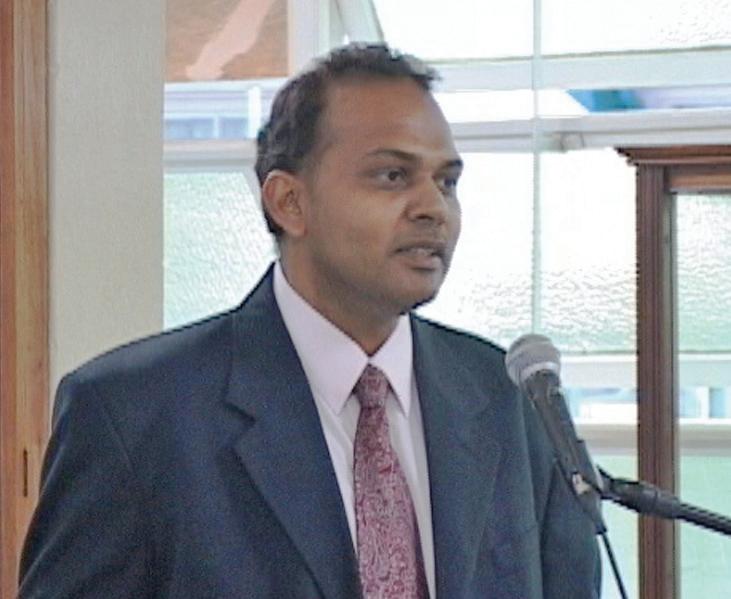
More than 200 students graduated from the Tain, University of Guyana (UG), Berbice Campus on Saturday at the staging of the 12th convocation exercise.
Addressing the ceremony, Culture, Youth and Sport Minister, Dr Frank Anthony noted that since the start of the campus, there has been growth in the physical infrastructure, student population, staff and the range and quality of education offered.
He said that growth does not come without challenges, and it was pleasing to see that the challenges did not overwhelm the campus. While highlighting the importance of the campus, Minister Anthony stressed that it represents one of the government’s primary mandate of making tertiary education accessible and affordable.
The minister highlighted that the government recognises that development could only be sustained if investments are made in the people.
“The late Cheddi Jagan had a mantra, that we must have development with a human face – meaning that we must consistently and continuously invest in our people and our people reciprocally must use their knowledge and skills for development; this has been a guiding principle of the PPP government,” he said.
This graduation comes at a time when the university is celebrating its 50th anniversary. The minister explained that when the concept of tertiary education was introduced, many felt that it was too ambitious, and that a small colony like Guyana must be shackled to external universities that are devoid of cultural particularities, that adumbrate paradigms of development that were alien to Guyana’s local needs.
Critics Minister Anthony indicated that the critics refused to recognise that paid education to the external institutions was teaching the people to stay subservient to and to perpetuate the policies of the colonial empire. He added that Dr Jagan always advocated for a better and equitable education system. He thought
that the time had come for British Guiana to have its own university and with independence on the horizon that this university would help to mould the new Guyanese man and woman.
“A Guyanese who understands the rights and wrongs of his/her history, would work to forge better relationships between its people, who understand the inequities within our inherited society, and who would work to better the governance systems, strengthen the public education systems at all levels, create more accessible health care and to open up economic opportunities for all,” Minister Anthony said.
This also saw the PPP/C government passing the University of Guyana Ordinance in the senate on the March 18, 1965 and then in the Legislative Council on April 9, 1963, bringing into effect the legislative framework for the establishment of the University of Guyana.
Humble start In October 1963, the first 164 students started their classes at Queen’s College. At that time, the skeptics used a derogatory epithet to rename the institution instead of the University of Guyana – the “Jagan Night School”.
“Today, you graduate from an institution that has a proud history, that has withstood the scorn of the critics at its conception, and has now grown to be the main provider of tertiary education in Guyana,” Minister Anthony said.
He pointed out that the graduating class is joining more than 15,000 other managers, scientists, entrepreneurs, engineers, agriculturalists and educators who lead and manage various national and international organisations to make the country and the world a better place. In this regard, the graduates were urged to carry with them the philosophy of the founding fathers.
Minister Anthony lauded the lecturers for their efforts and working beyond the call of duty. He also applauded the parents for supporting and encouraging their children, the Government Information Agency (GINA) reported.
England slumped to a humiliating 381run defeat in the first Test as Mitchell Johnson once again blew their fragile batting away.
Facing a target of 561 to win, or two days to bat through for the draw, England disintegrated from 142-4 to 151-8 and then 179 all out late on the fourth day to go behind in an Ashes series for the first time in seven years.
Only captain Alastair Cook with 65 offered any prolonged resistance as his side lost four wickets for nine runs in 18 frantic midafternoon minutes at the Gabba.
Poor shots cost Kevin Pietersen and Matt Prior but Johnson was rampant as he finished with 5-42 to go with his 4-61 in the first innings.
This was sweet revenge indeed for the left-arm fast bowler, a figure of fun when he recorded figures of 0-170 here three years ago but man of the match this time around.
It was England’s second biggest defeat in Ashes cricket in Australia, in terms of runs, and leaves them with several critical issues to address before the second Test begins in 11 days.
Australia had lost seven of their last nine Tests coming into this game, and had not won in the five-day for-

mat since last January.
But they have dominated the last three days at a ground that has not seen an Australian Test defeat in 25 years, and appear a side transformed from the unsettled, insecure unit that has struggled badly for so much of the past 12 months.
With only a two-day game against a weak opposition in Alice Springs to come before the second Test in Adelaide, it is England - 3-0 victors in the corresponding series three months ago -
with all the headaches.
Cook and Pietersen had begun the day looking comparatively comfortable, the pitch still doing little to assist the bowlers despite the emergence of a few cracks.
They had taken the overnight score of 24-2 up to 72 when Pietersen tossed all that diligence away by taking the short-ball bait from Johnson and pulling straight to substitute fielder Chris Sabburg at long leg.
It was a dismal way to get out in the circumstances,
The debutants Anwar Ali and Bilawal Bhatti had been selected primarily to bowl Pakistan to victory. They did that with five wickets between them, headlined by Bhatti’s superb use of the yorker at the death. They were not expected to bat Pakistan to a win, but they did that too, with a 74-run partnership for the eighth wicket that breathed life into an innings that was gasping for air.
Pakistan were floundering at about three runs an over for two-thirds their innings before the rookie pair got together to post a defendable total. The buoyancy that stand gave Pakistan was evident in the field. They put in a disciplined performance to strangle South Africa, and even though Jacques Kallis, who was playing in his first ODI in a year and nine months, scored a half-century, the hosts could not find their way back. With a modest total to defend, Pakistan needed to make early incisions and Junaid Khan bowled Hashim Amla behind his legs in the third over. Misbah-ul-Haq immediately brought on Mohammad Hafeez to trouble Quinton de Kock but the offspinner got the better of Graeme Smith, when the Test captain reached forward to play him on the legside and was stumped.
South Africa’s oldest and youngest players put on the team’s highest partnership42. Kallis appeared in particularly good nick, hitting Junaid when he was too full and too short, launching Hafeez over
midwicket and pulling Bhatti. He ushered de Kock through nervous periods but the lefthand batsman eventually played a lazy drive and was bowled through the gap between bat and pad. (Cricinfo)
Pakistan innings (50 overs maximum)
Nasir Jamshed c Kallis b Steyn 24
Ahmed Shehzad c †de Kock b Kallis 35
Mohammad Hafeez c Amla b Steyn 5
Sohaib Maqsood c Imran Tahir b Kallis 22
Misbah-ul-Haq* c †de Kock
b Morkel 13
Umar Akmal† c †de Kock
b Philander 0
Shahid Afridi b Steyn 26
Bilawal Bhatti lbw b Morkel 39
Anwar Ali not out 43
Saeed Ajmal c Duminy b Morkel 3
Junaid Khan not out 0
Extras (b-2, lb-1, w-5) 8
Total (9 wickets; 50 overs) 218
Fall of wickets: 1-49 (Nasir
Jamshed, 15.2 ov), 2-58 (Mohammad Hafeez, 17.3 ov), 3-73 (Ahmed Shehzad, 23.3 ov), 4-97 (Misbah-ul-Haq, 28.6 ov), 5-98 (Umar Akmal, 29.4 ov), 6-124 (Sohaib Maqsood, 34.3 ov), 7-131 (Shahid Afridi, 35.5 ov), 8-205 (Bilawal Bhatti, 47.3 ov), 9-213 (Saeed Ajmal, 49.2 ov)
Bowling: DW Steyn 10-2-33-3 (2-w), VD Philander 10-0-37-1 (2-w), M Morkel 10-0-39-3, JP Duminy 5-0-23-0, Imran Tahir
7-1-30-0, JH Kallis 8-0-53-2 (1-w)
South Africa innings (target:
219 runs from 50 overs)
GC Smith st †Umar Akmal b Mohammad Hafeez 12
HM Amla b Junaid Khan 3
Q de Kock† b Bilawal Bhatti 19
JH Kallis b Anwar Ali 50
AB de Villiers* b Shahid Afridi 10
JP Duminy c †Umar Akmal b Saeed Ajmal 49
DA Miller c †Umar Akmal
b Anwar Ali 4
VD Philander c Sohaib Maqsood b Saeed Ajmal 14
DW Steyn b Bilawal Bhatti 15
M Morkel b Bilawal Bhatti 17
Imran Tahir not out 0
Extras (w-2) 2
Total (all out; 48.1 overs) 195
Fall of wickets: 1-12 (Amla, 2.2 ov), 2-20 (Smith, 3.5 ov), 3-62 (de Kock, 12.1 ov), 4-79 (de Villiers, 17.2 ov), 5-115 (Kallis, 25.4 ov), 6-123 (Miller, 29.4 ov), 7-155 (Philander, 37.4 ov), 8-168 (Duminy, 43.1 ov), 9-192 (Steyn, 46.6 ov), 10-195 (Morkel, 48.1 ov)
Bowling: Junaid Khan 8-0-381, Anwar Ali 6-0-24-2 (1-w), Mohammad Hafeez 10-0-341, Bilawal Bhatti 7.1-0-37-3, Saeed Ajmal 10-0-28-2, Shahid Afridi 7-0-34-1 (1-w)
He and Ian Bell then dealt extremely well with a nasty spell of fast bowling from Johnson and Ryan Harris, swaying from the path of the short stuff and keeping hands low.
It took some surprise extra bounce from Peter Siddle to have Bell caught behind by Haddin for 32 with the score on 130, and although a spectacular sub-tropical storm then saw the outfield covered in hail and puddles, it delayed play for just an hour and a half - an inconvenience to Australia rather than a lifeline for England.
If anything it interrupted Cook’s previously excellent concentration.
In the second over after the restart he tried to cut Nathan Lyon but was caught behind for 65, and in that moment any crazy hopes of a rescue act to match that of three years ago finally disappeared.
even if England’s task was already near impossible.
Pietersen had fallen for the same obvious trap in the Sydney Test on England’s last tour down under, and can expect more of the same as this series continues.
Cook slow Cook was contrastingly cautious. His half centurythe third slowest of his Test career - came off 158 balls and was greeted with the most muted of acknowledgments.
In the off-spinner’s next over, Matt Prior played needlessly at a ball outside leg stump and deflected it straight to leg slip for a paltry four, leaving his side 146-6.
That became 151-7 when Stuart Broad gloved the rampant Johnson down the leg-side, and when Swann went for a second-ball duckchasing a wide one and edging it to Steve Smith at third slip - England had lost four wickets for nine runs.
Sammy began with two singles, then played out a maiden from Ravindra Jadeja, but that didn’t worry him. His partner Simmons always tried a big shot whenever he faced a few dots. Sammy, though, knew he could wait. Unlike in the Tests, he backed his game here.
The maiden that Sammy was played was at the start of the Powerplay. There was a concerted effort from Sammy and Simmons to not lose a wicket in the Powerplay - India had lost two for 15. West Indies too managed only 15, but they had wickets in hand to score 86 off the last 10 overs.
Sammy began the assault in the 41st over, taking 12 off Mohammed Shami, and it was clear West Indies were edging ahead. Simmons, though, nearly threw it away in the 42nd but was dropped by Yuvraj Singh at long-on. Perhaps the wetness of the ball caused that slip, but it came a night before India discuss Yuvraj’s shaky position for the tour of South Africa.
Sammy kept backing himself to clear the field whenever he wanted to, but he also played with the field, beating short fine leg on more than occasion while dragging short balls from outside off. Every time an attempted yorker went too full, Sammy put it into the
Another rain shower briefly delayed the inevi
table, but when play resumed in the late afternoon sun, Ryan Harris had Chris Tremlett caught by George Bailey at short leg for seven. And although Joe Root hung around for 86 balls for a 26 not out, Johnson caught and bowled James Anderson for two to trigger wild celebrations among his teammates. (BBC Sport)
crowd. He had to contend with one final brain fade, though.
West Indies needed 22 off 19 when Jadeja got one to skid and trap Simmons in front. The game was still in West Indies’ grip, which was tightened with a four and a six from Sammy in the next over. This is where Jason Holder and Sunil Narine went for the glory, and made it four required off nine deliveries with two wickets in hand. Sammy, however, made sure he had crossed over before Narine’s top edge was caught, and took a single to keep strike for the last over. The field came up, but the runs were scored, and Kohli’s effort earlier in the day - which could have made him the first man to have scored five centuries each in consecutive years - was overshadowed. (Cricinfo)
India innings (50 overs maximum)
RG Sharma c Sammy b Rampaul 12
S Dhawan lbw b Permaul 35
V Kohli c Holder b Rampaul 99
Yuvraj Singh c Samuels b Sammy 28
SK Raina c DJ Bravo b Rampaul 23
MS Dhoni*† not out 51
RA Jadeja b Rampaul 10
R Ashwin c †Charles b Holder 19
B Kumar not out 1
Extras (lb-1, w-9) 10
Total (7 wickets; 50 overs) 288
Fall of wickets: 1-21 (RG Sharma, 4.5 ov), 2-69 (Dhawan, 13.2 ov), 3-138 (Yuvraj Singh, 27.4 ov), 4-203 (Raina, 37.2 ov), 5-209 (Kohli, 39.6 ov), 6-240 (Jadeja, 46.3 ov), 7-287 (Ashwin, 49.5 ov)
Bowling: R Rampaul 10-0-60-4 (2-w), JO Holder 10-0-63-1 (2w), DJ Bravo 8-0-54-0, V Permaul 10-0-55-1 (4-w), SP Narine 102-39-0 (1-w), DJG Sammy 1-011-1, LMP Simmons 1-0-5-0
West Indies innings (target: 289 runs from 50 overs)
J Charles† c & b Kumar 12
KOA Powell st †Dhoni b Ashwin
monday, november 25, 2013

Manny Pacquiao put on a dazzling boxing display to beat American Brandon Rios and win his first fight in two years.
The man from the Philippines said he would win to bring “pride and hope” back to his beleaguered nation, which is struggling to come to terms with the loss of life and devastation caused by Typhoon Haiyan.
In front of a crowd unanimously in his favour, he dominated former world lightweight champion Rios to win on points, landing at will and never looking in trouble.
In truth, Rios was not in the class of previous Pacquiao opponents. His ponderous style of walking forward without using a consistent jab was tailor-made for the 34-yearold, who showed no rustiness, even though he had not fought since he was knocked out in losing to Juan Manuel Marquez last December.
His victory - at the Cotai Arena, inside Macau’s Venetian Hotel - was watched by a near-capacity crowd of 13,200 fans, who cheered as pictures of Pacquiao meet-
ing former England footballer David Beckham in his dressing room before the fight were beamed into the arena.
Aside from Beckham, a host of stars had made the trip to this quirky casino resort in East Asia, some from Hollywood and others from China.
Pacquiao was smiling as he entered the ring, in contrast to the earlier arrival of his 27-year-old opponent, who scowled.
After a cagey opening 60 seconds, Pacquiao controlled the first round, landing jabs and hooks at will.
He drew roars in the second when he hit Rios flush with a left hand and several follow-up blows, but the Texan took them all and stayed on his feet.
The pattern continued in the third - Pacquiao beating the oncoming Rios to the punch, his speed the dominant factor in the bout.
By the end of round six, Rios’s right eye was closed after absorbing numerous straight punches. There were moments in the seventh round when a stoppage seemed pos-
sible, with Rios on the back foot and not offering much in return.
Now cut above his left eye, his most notable achievement was the repeated warnings from the referee for holding and hitting when in clinches.
It was a surprise to see Rios come out for the 12th and final round, so comprehensive had the beating been. When it finished, the two boxers stood and eyed each other, before embracing.
The judges scored the fight 120-108, 119-109 and 118-110 in Pacquaio’s favour, as Rios suffered only his second defeat in 34 fights. Pacquiao, who fell to successive defeats against Marquez and Timothy Bradley before this victory, has a record of 55 wins, five defeats and two draws.
On the undercard, there was disappointment for the American-based Liverpudlian Liam Vaughan, who was pulled out of his light middleweight contest with Dan Nazareno after two rounds.
The 23-year-old took a beating from his Filipino opponent on his way to a second defeat in 10 fights. (BBC Sport)
est Indies A team
Wbatsman Leon Johnson has been appointed captain of the Demerara team for the upcoming Guyana Cricket Board’s senior four-day intercounty championships.
Johnson, the left-handed middle-order batsman, will have dashing West Indies T20 all-rounder Christopher Barnwell as his deputy.
The 14-man squad, which includes discarded West Indies batsman Ramnaresh Sarwan, was selected following a rain-interrupted threeday trial game last week.
The squad reads: Leon Johnson (captain), Christopher Barnwell (vicecaptain), Ramnaresh Sarwan, Trevon Griffith, Rajendra Chandrika, Chris Pattadin, Derwin Christian, Steven Jacobs, Amir Khan, Totaram Bishun, Trevon Garraway, Randy Knights, Zaheer Mohamed and Paul Wintz.
The reserves are Ryan Ramdass, Vishal Singh, Robin Bacchus, Kellon Carmichael, Joseph Perry, Shemroy Barrington, Yatesh Dhanpaul, Andre Stoll, Jeetendra Sookdeo and Shaquille Williams. Sherlock Atwell is the manager, while Orin Bailey is
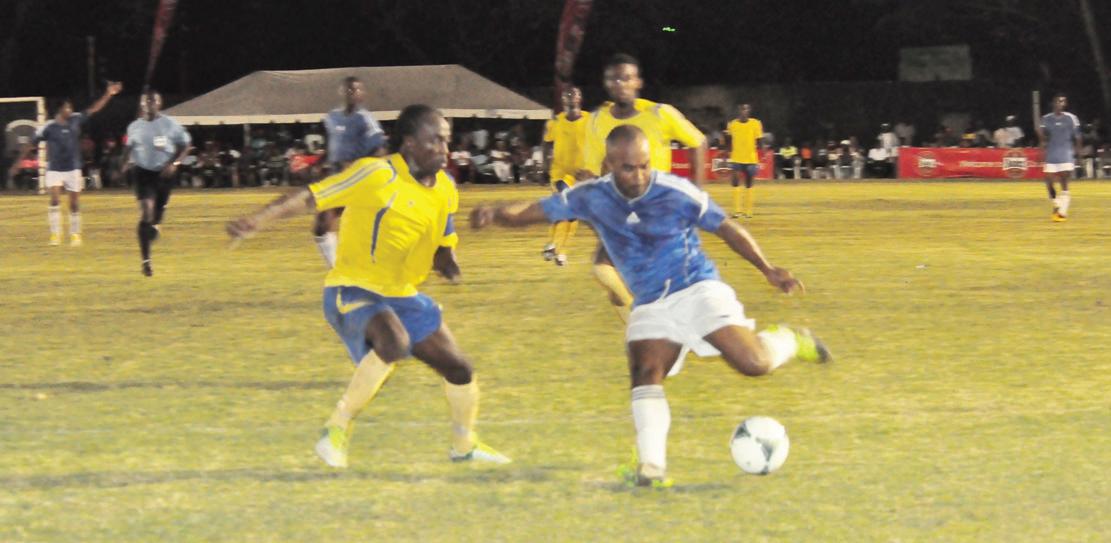
By Avenash Ramzan
Defending champions Camptown sent a strong message to the other teams in the third annual Georgetown Football Association’s (GFA) Banks Beer Knockout Cup by hammering Essequibo 10-0 in the opening game of this year’s competition on Saturday evening at the Georgetown Football Club (GFC) ground, Bourda.
Playing in front of a fairsized crowd, Georgetown side Pele FC needled Linden’s Topp XX 1-0 in the feature contest to stay alive in the 32team competition, which is sponsored mainly by Banks DIH Limited, with support from Star Party Rentals, Shauntee Auto Rental, Sterling Products Limited, Colours Boutique, Talk is Cheap Internet Café, Sleepin International Hotel, McNeal Enterprise, Trophy Stall and Money Gram.
In the opening game, which commenced immediately after the official opening ceremony, Camptown wasted little time in stamping their authority on the Essequibians, blasting in goals at will to start their defence on a winning note.
Devon Forde, who scored the opening goal in the 14th minute, added three more to lead the rout with a helmettrick. Apart from registering the first goal of the 2013/14 edition of the tournament, Forde netted again in the 44th, 50th and 71st minutes.
the coach. The Demerara Cricket Board in a press release stated that promising opener Tagenarine Chanderpaul was not considered for selection, as he would be on duty with the West Indies Under-19 team in Bangladesh.
Jahall Greaves was equally devastating, breaching the feeble defence of the visitors, by blasting in a hat-trick. He found
the back of the nets in the 17th, 54th and 60th minute. Daniel Favourite added to the woes of the Essequibo side by netting a double in the 45th and 90th minutes, while Stephen McPherson got his name on the score sheet with a single strike two minutes from full time.
While the curtain raiser was a goal spree, the main attraction was a hard-fought encounter, as the disparity between the teams was not so evident.
It required a solitary goal to separate the teams, and it was Okenny Fraser who provided the winner for Pele, scoring in the 45th minute to send Topp XX home.
While both sides had their chances at goal, it was the Pele lads who were often guilty of squandering many opportunities after failing to finish some clinical build-ups.
The biggest cheer for Topp XX came late in the second half when one of the Vicepresidents of the Guyaan
Football Federation (GFF) and a former star player in his days, Collie “Hitman” Hercules”, came on as a substitute, much to the delight of his colleagues on the local governing body executive.
The competition, which will conclude on January 1, 2014, with the grand final, will continue on Wednesday with another-double at the GFC ground, Bourda. In the opening game at 18:00 hours, Santos will take on Houston Stars, while the feature game at 20:00 hours will bring together 2011 champions Alpha United and Grove Hi-Tec.
Prizes
As was the case in 2012, the champion team will receive $4 million, while the runner-up, third and fourth placed finishers will collect $2.5 million, $1.5 million and 1$ million respectively.
A new addition to this year’s tournament is the monetary incentives for all the teams, including $250,000 each for the losing quarter-finalists, $150,000 each for those knocked out at the second round and $100,000 each for teams booted at the first round. There will also be individual prizes for the Most Valuable Player, highest goal scorer, best goalkeeper and most discipline team. The most outstanding coach will pocket $100,000 cash.
Each association will also receive 20 percent or a maximum of $250,000 as gate receipts after expenses from all games played in their jurisdiction.
Red Bull’s Sebastian Vettel brought the F1 season to a close with victory in an action-packed Brazilian Grand Prix.
He controlled the race despite a scare caused by a pitstop mix-up to equal a record of nine consecutive F1 victories set by Alberto Ascari in 1953. Mark Webber made it a Red Bull one-two in his last F1 race after a battle with Ferrari’s Fernando Alonso in third.
Webber celebrated by taking his helmet off to enjoy the crowd’s cheers on the slowingdown lap. Vettel was in control of the race from the moment he re-took the lead at
the start of the second lap from Mercedes driver Nico Rosberg, who had passed him off the line.
But a mix-up at his final pit stop on lap 47 cut his 12-second lead over Webber to just six and put Alonso right on the Australian’s tail.
Red Bull had called Vettel in late fearing they might be caught out by a safety car following a collision between Mercedes driver Lewis Hamilton and Williams’s Valtteri Bottas. The safety car never came, but the late decision meant Vettel’s tyres were not ready when he arrived at his pit box
and he sat there for several seconds while they were retrieved from the garage. By the time they had been fitted, Webber was already stacked behind him and he only just got out in front of Alonso.
Alonso set a series of fastest laps straight after rejoining but Webber held him off and then began to edge away as both closed on Vettel. For five laps after the stops, Webber inched closer to Vettel but when his lead had been cut to just 5.1 seconds, the German began to move clear again and the race was settled. (BBC Sport)

– with the 53rd national schools championships now over, our reporter Treiston Joseph looks back at the event, its highs and lows and what can be done to make 2014 better

After four days of hard, intense and tough competition at the Guyana National Stadium, Providence, defending champions North Georgetown (District 11) retained their title in a close finish with Upper Demerara/Kwakwani (District 10) that saw them becoming the most successful district with 14 titles.
With the championships now over, it is time to put the event into retrospect.
Competition and crowd support
The championship, the competitive atmosphere and the individual rivalry all added to the event that was brilliant in the final three days, as the athletes definitely made the 2013 edition of the championships a success.
This was amplified by the close race for the overall title between North Georgetown and Upper Demerara/Kwakwani as the athletes ran with a sense of urgency and determination.
However, it was unfortunate that such competitiveness was only witnessed
by a handful of people who flocked to the stadium, especially on days two and three.
More needs to be done by the organisers to enthuse the public into attending the event and the public should become more interested in their athletes, after all, should one of these athletes win Olympic gold it would not just be the sporting nation’s pride, but all Guyanese as well.
Organisation and judging.
The organisers had only about four weeks to put together the event, which was not to be hosted this year.
However, with the limited time to prepare, the organisers did a good job, especially on the final three days of the meet at the stadium.
Other than a confusing first day with events being held simultaneously at various venues, the event was smooth flowing without much hitches compared to previous years.
The area of judging nevertheless, needs to be improved, as a clear case in

point was the close finish between Hamzah Eastman and Paul DeNobrega in the cycling road race. While video and photographic evidence revealed that Eastman was clearly ahead, the race was deemed a tie.
Such mishaps must be stamped out for the event to reach its pinnacle.
On track, judging seemed fairly acceptable, except for some occasions when the call room was moving a bit

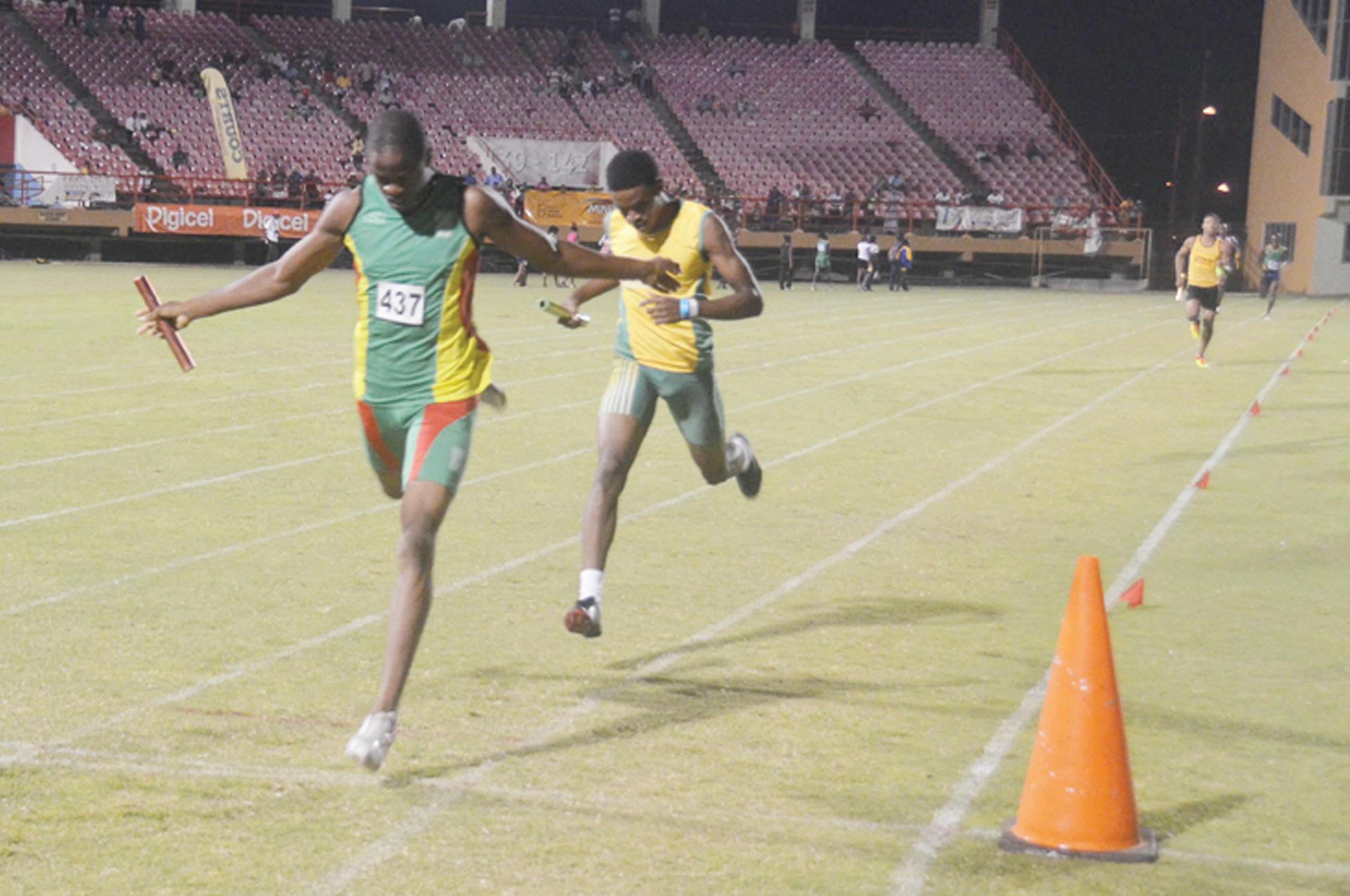
slow in getting events on the track, which at times caused a lull in proceedings.
There should also be a clear ruling on how athletes are allowed to celebrate after winning events since it has caused some districts to feel that judges are biased when a ruling of sort does not go their way.
However, despite some issues with identifying records the track judging on the final three days for the most part always seemed accurate and fair.
Memorable moments and standout performances
The most memorable moment that will be etched in most people’s minds would be Jason Yaw’s 4x400 metres final leg run. The 6’3”, 16-year-old came from approximately 20 metres behind to run past a talented 400 metres runner in Arinze Chance. Yaw clocked 48.1s on the final leg that brought the stadium to its feet.
Yaw’s remarkable comeback crowned a sprint treble as he had earlier crowned
record breaking performances in the Boys’ Under-18 200 and 400 metres.
Tirana Mitchell’s hamstring pull left the stadium in shock when the 200 metres Carifta bronze medalist grasped at her leg 40 metres into the race and fell to the ground in the Girls’ Under-18 100 metres.
Mitchell’s picked up the injury in September, but obviously tried to make a comeback too early and pulled the right hamstring. Hopefully, the talented 16-year-old recovers fully and returns to peak form in 2014.
Jevina Sampson was a class act as she looked to be her usual explosive self, returning to form. Sampson won all three of her sprint events in the Girls’ Under-16 category and capped it off with a brilliant 4x400 metres final leg to win the relay for North Georgetown.
Jamal Johnson of Linden broke two middle distance records in the Boys’ Under-16 800 and 1500 metres. Johnson is a bright star and prospect in the making
and after basically going unnoticed for the past couple years, his performances at “nationals” definitely caught the eyes.
Fascinating fact
With North Georgetown winning again this year, it is now 23 years since any district besides North Georgetown or Upper Demerara/Kwakwani has won. The last time another district won was in 1990 when East Coast Demerara (District Four) lifted the title.
Against this backdrop, it is safe to conclude that more needs to be done to enable the other districts to compete more meaningful at the premier schools championships.
Moreover, the sport needs an injection of new life and the Education Ministry must collaborate more with their counterparts from the Sport Ministry in order to get the best results out of the event, that has become one of Guyana’s main staples in sport.
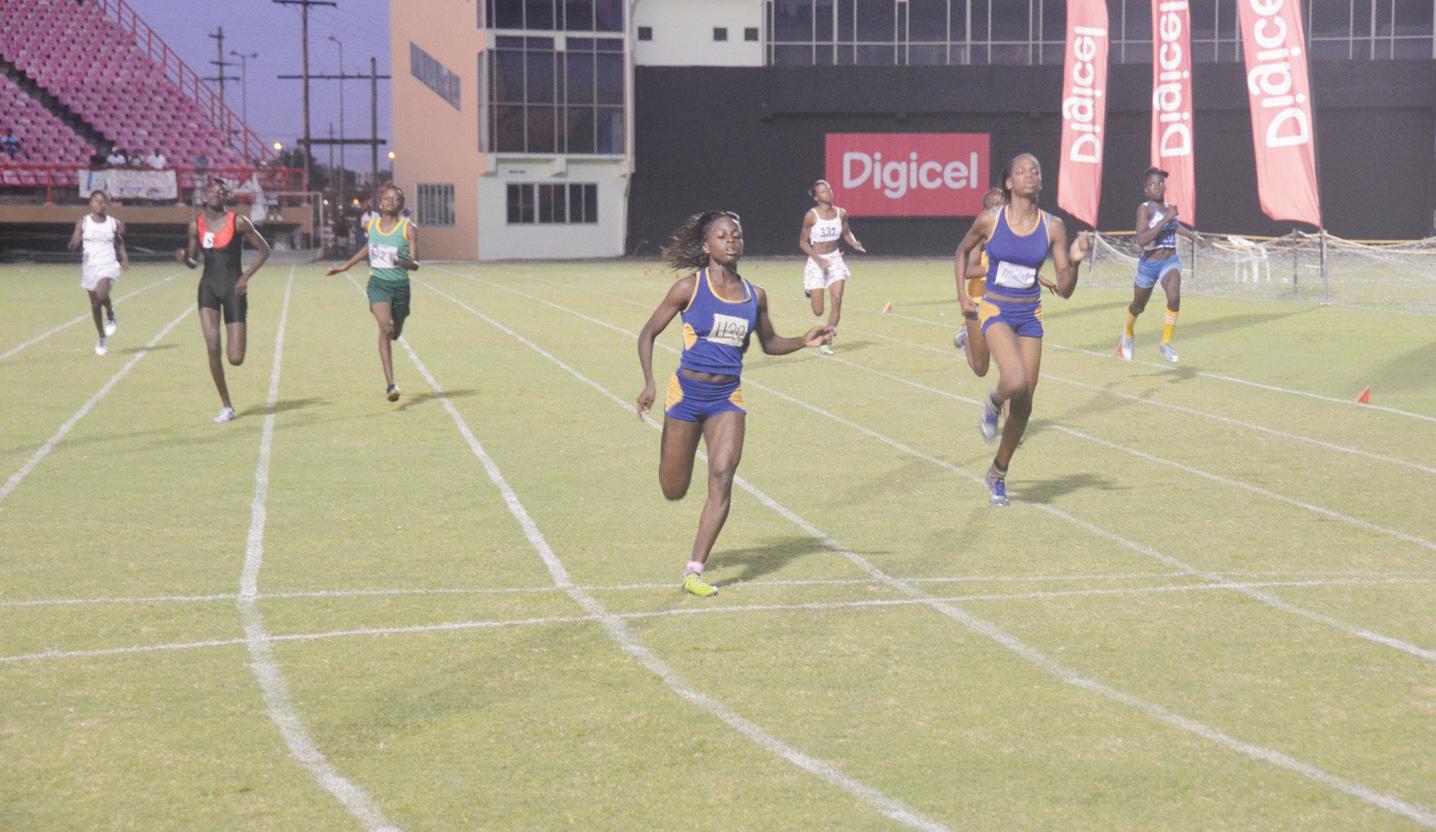

Report
by Rajiv Bisnauth
The South Dakota Circuit was transformed into a battle ground on Sunday when the final leg of the increasingly popular Caribbean Motor Racing Championships (CMRC) took place.
The event produced some scorching times and breathtaking rivalry among the lo-
cal racers and their counterparts from Jamaica, Trinidad and Tobago, Barbados, the United States of America, Canada and Suriname.
Up to press time, the official overall results were not released. Jamaica entered the final leg on 170 points, with Barbados in second place on 56, and Guyana in the cellar position on 34 points. In Sunday’s action,
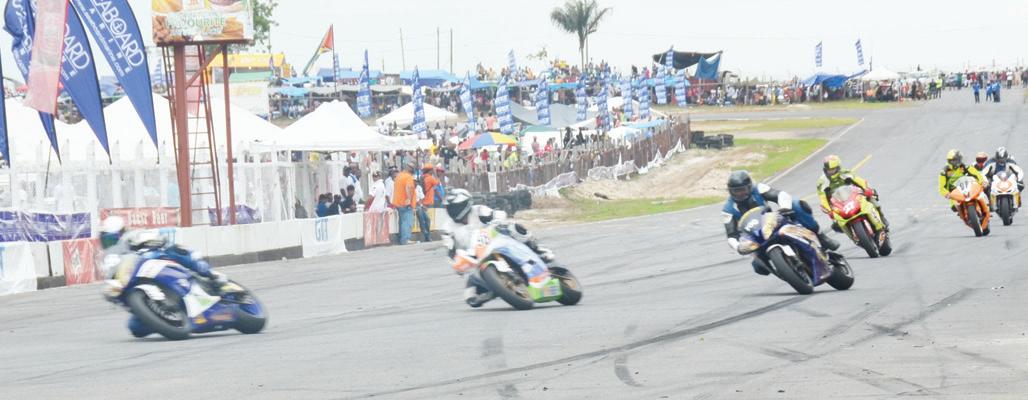
Guyana fought back courageously in the CMRC events with drivers Kevin Jeffrey and Mark Vieira, along with superbike riders Joel Neblette, Stephen Vieira and the fast improving Nikhil Seereeram keeping home pride alive by their dominance.
Jeffrey showed the might of his Mitsubishi Lancer Evo VIII, dominating the first two CMRC Group Four
races to grab the chequered flag, while his compatriot Mark Vieira took pole position in the final race.
Jeffrey was also leading race three for the first three laps, but suffered a mechanical problem, which rendered his machine incapable of completing the race, allowing Vieira to win with ease. The victory crowned a rewarding day for Vieira, who had earlier chalked up
a second and third in the first two races.
Jamaica’s Doug “Hollywood” Gore, who was leading after the first two legs with 75 points, finished third and second respectively in the two first races, while Mark Maloney and Peter Rae finished second and third respectively in the final CMRC Group Four race.
It must have been a dis-
appointing day for Gore, whose Audi TT has been touted as the fastest car in the Caribbean at the moment.
In the Superbike category, it was all Guyana as Neblette, Vieira and Seereeram grabbed the chequered flag in the three races. Meanwhile, results for the other events and the overall country and individual winners will be available in subsequent edition.

By Andrew Carmichael
Junior Niles in a time of two hours, eleven minutes, twenty nine seconds (02h: 11m: 29s) won the second annual Banks Malta Supreme 50-mile cycle road race in the Ancient County of Berbice on Sunday.
Niles, riding out of Team Coco (Guyana), outsprinted rising star Hamzah Eastman to the finish line to cop the top prize. The experienced Godfrey Pollydore was a close third.
The day’s activities commenced with 22 riders facing the starting line, and were locked in a bunch for less than a mile after they were sent off. Six of the cyclists used the steep climb of the Canje River Bridge to break away from the pack. First
out was Pollydore, followed by Niles and Berbician Neil Reece. They were joined by Romello Crawford, Kurt LaRose and Eastman.
The next 20 miles saw the six riders sharing the leading position as they opened up on the tail. However, at Adventure Village, Reece, LaRose and Crawford could not keep up with the scorching pace and started their own three-man race as the watched the trio move away from them.
Niles, Eastman and Pollydore reached the turn-around point at Nand Persaud Rice Mills at Number 37 Village well ahead and increased their speed on their way back as they were now being pushed by a strong Corentyne wind.
They second group of
three to get to the finish line also had to sprint the last 200 meters to determine their positions. Crawford outsprinted LaRose to take bragging rights as being the best sprinter in Berbice. Reece ended sixth overall, while Wasim Hasnoo and Syborne Fernandes rounded up the top eight finishers.
In the Juveniles category, Crawford was first ahead of Odrell Ross, while Eastman was the first junior to complete the event. For the Veterans, Fernandes was first with Surland Sewhang second.
The sprint point prizes were shared by Pollydore (three), Niles and Eastman (two each) and Reece (one).
During a simple presentation ceremony which

followed the race, Banks DIH Limited’s Berbice Sales Supervisor Jagnarine “Balram” Persaud thanked all the riders for participating.
He said through the event the cyclists have helped to promote the product under which the beverage company sponsored the race. “Banks Malta is a healthy drink and what you did today [Sunday] brought some awareness to healthy lifestyles. Apart from giving back to the community which has shown great support for Banks Supreme Malta, we want to encourage persons to eat and drink healthy and to exercise.
That’s what today was all about,” Persaud reckoned.
He said the company is committed to sponsoring the event, which was organised by the Flying Ace Cycle Club (FACC), next year.
Coach of the FACC, Randolph Roberts, thanked the company for its support over the past year and noted that this was that the end of the cycling season in Berbice.
The first three members of the FACC to cross the finish line also received club prizes. They were Reece, Hasnoo and Fernandes. The only female to start the race, Marica Dick, took the female category prize.
Meanwhile, last year’s winner Ray Millington could not participate due to a pre-race accident. He was however, at the finish line to witness the end of the race.


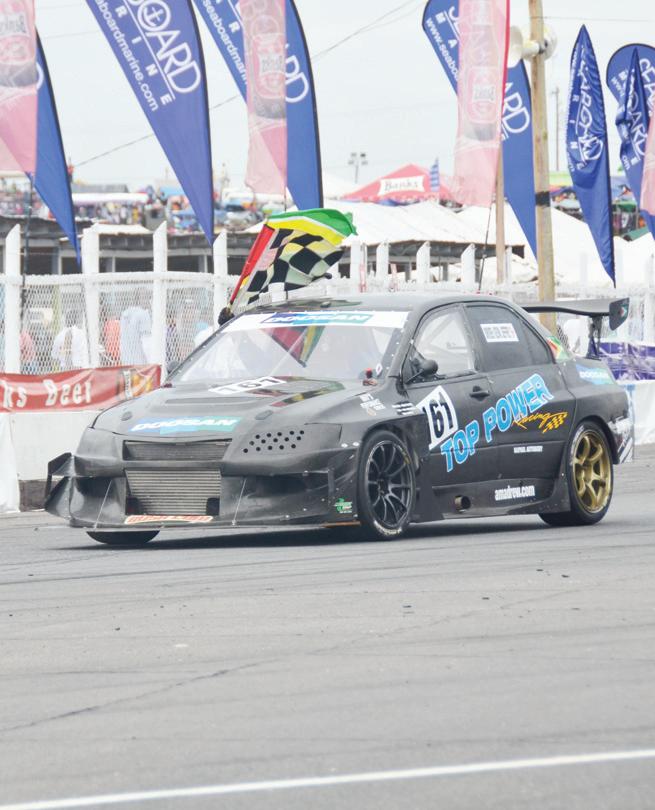

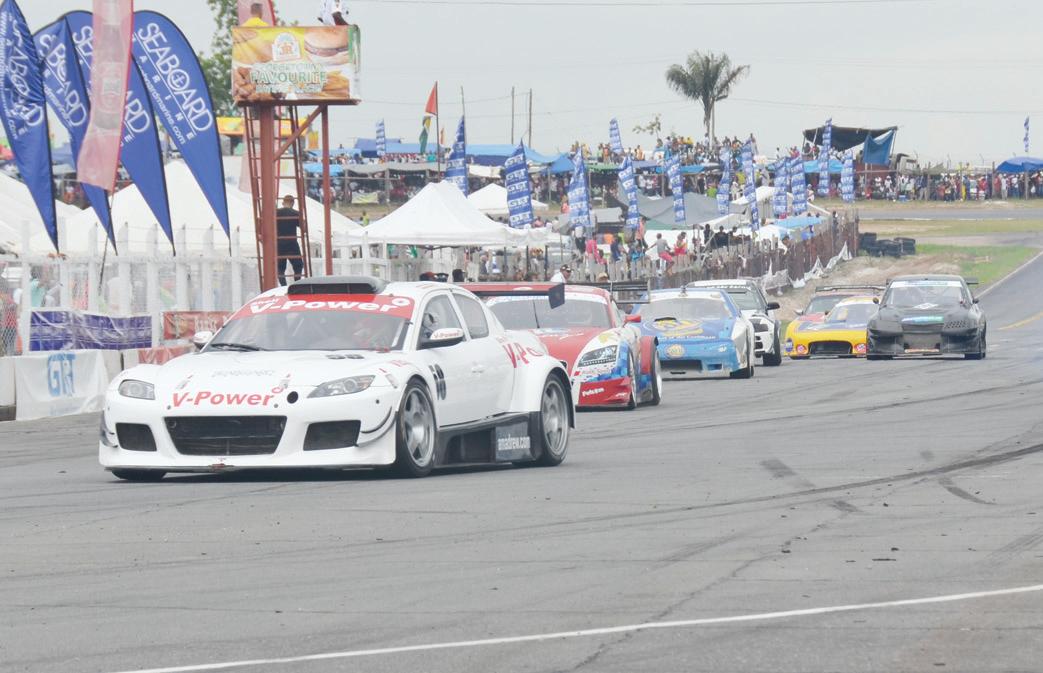

Chasing 289 on an outfield that looked like it was wet because of persistent rain and not dew, West Indies had it all to lose, and some of their batsmen tried their best to do so. Ultimately, the cool head of deposed ODI captain Darren Sammy prevailed to level the series 1-1. Kieran Powell and the brothers Bravo threw their wickets away, and Lendl Simmons tried to do so unsuccessfully, but Sammy timed the final assault well to carry a stumbling West Indies to their first win of the tour.
The West Indies bowling towards the end of the Indian innings played a key role in keeping the series alive. India were 194-3 when the 36th over began, with
Virat Kohli on course for an 18th ODI century. Ravi Rampaul, Jason Holder and Sunil Narine pulled them back, and Kohli fell for 99. Narine bowled his last five overs, coming back in the 37th, for just eight runs, bowling two maidens while Rampaul took the wickets. Despite MS Dhoni’s assault towards the end, a total of 95 in the last 15 overs meant a manageable chase, which became easier as the dew got heavier.
The balls must have felt like bars of soap to India and had to be changed on three occasions. They skidded on, negating the slowness of the surface that had pulled India back when the conditions were dry. West Indies, though, were benevolent.
Darren Bravo was dropped three times in four deliveries before he went to cut a length ball from R Ashwin and was dismissed. That ended West Indies’ best partnership of the tour, an even 100, and left Powell kicking the ground in disgust at the other end.
Soon, Powell would show an equal lack of situational awareness. In the 26th and the 27th over, both the wet balls were changed for drier ones. And once again, Powell had the best seat in the house to learn from his partner’s mistake.
Lendl Simmons went driving at the first delivery of the 26th over, but the drier ball gripped and turned past the bat. The second took the edge, and fell short of slip.
Powell, though, wasn’t observing, and premeditated a skip-and-defence to the first dry ball he faced, missing the line of the ball by at least six inches, and getting stumped by a mile. That was R Ashwin’s second wicket; he bowled 10 overs for 37, a big achievement for a spinner in wet conditions.
At 123-2, West Indies needed 166 in 28 overs; at 185-4, the 104 required off 15.4 overs seemed even more manageable with a wet ball. Somehow, they managed to throw it away on both occasions, this time Dwayne Bravo pulling to the only man in the deep. Sammy, though, came out and showed his team-mates how to do it.