

Caricom suspends DR’s application for membership

APNU takes note of alleged theft at NCN
CARIFORUM, EU reaffirm commitment to trade partnership

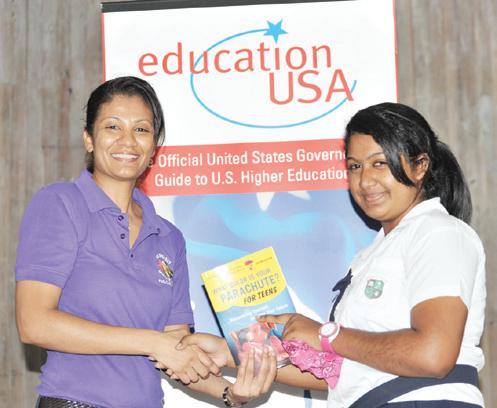
Armed fishers sink piracy on Corentyne River U.S. embassy conducts knowledge session for Int’l Education Week Two Timehri squatters nabbed with stolen items – CJIA alleges


wednesday, november 27, 2013 | guyanatimesgy.com
BY BHISHAM MOHAMED
The battered body of a male sex worker was on Tuesday morning discovered in a street in the vicinity of Day Clean Bar, Port Mourant, Corentyne, Berbice hours after he left a party at a friend’s house.
The dead man was identified as Nandkumar Poonwassie, 33, also called “Vishal” and “Darshanie” of Lot 132 Tain Settlement, Port Mourant. At the time of his discovery, he was clad
in a plaid short pants and a white t-shirt, bracing a metal pipe on the roadside.
A piece of wood with blood stains suspected to be the murder weapon was retrieved from the scene and lodged at the Whim Police Station as evidence.
According to information received, the man, along with his friends, went to a party in the area, but he left in the company of a male about 20:30h, claiming that he was heading home. He
was not drunk, according to reports.
His cousin with whom he shares his grandparents’ home did not see him at home after 22:00h and attempted to telephone him, but the call was disconnected.
Several other attempts to make contact with Poonwassie proved futile. However, passers by reportedly discovered the man’s body in a pool of blood and immediately contacted his
relatives and the police.
“Dato”, an aunt of the dead man, said she last saw him about two weeks ago after he performed a pooja at a mandir. The tearful woman explained that about 06:30h, she received a call from a woman who lives close to her nephew, informing her of the murder.
She panicked, but went straight to the mortuary where she saw her nephew’s body.
“He hand went behind



Dead: Nandkumar Poonwassie
he head like he de sleeping and he face bin full ah blood… He look like he de sleeping… Meh can’t believe that they kill am.”
Dato went on to say that her nephew would leave home and return before 22:00h, claiming that wherever he is, or whichever party he was at, he is always time conscious. She cannot recall him having any trouble with anyone in the community.
Liming spot
Guyana Times understands that the road where Poonwassie was found is sometimes dark and is a liming spot for drug addicts and vagrants.
His father, David Poonwassie told Guyana Times that he does not keep in contact with his son, nor does his son contact him, mainly because of the latter’s lifestyle. He explained that it has been a while since he last saw his son.
The father said he received a call about 06:00h, indicating that his sister wanted to see him. He lives in Chesney, Corentyne, thus it took a few minutes to reach her house.
Upon arrival, he was told the devastating news; his son was beaten to death. Poonwassie Sr recalled that he was shocked, but in the same breath, said “There is nothing we can do now… he is gone.”
This publication was informed that the male sex worker’s aunt and mother were also murdered a few years ago in the same house he resided. The man leaves to mourn his father and four siblings.
His body is at Ramoo’s Funeral Home awaiting a post-mortem examination.
Police are investigating the matter, but an asset is yet to be made.
Similar killing Sex workers in Guyana have routinely come under attacks. Earlier this year, Wesley Holder, 19, called “Oraysha” and “Tiffany” of 65 Cross Street, Werken-Rust, was found dead in the compound of St Phillips Green, High Street, Georgetown. According to a police statement, the man’s body was found around 08:25h with a gash to the back of the neck, one to his throat and cuts to his wrists.
There were other marks of violence on the body. Several persons were arrested, but no one was actually charged.
Police were working on the theory that Holder was lured to the area where his body was found. A used condom, the man’s slipper, and a knife were found under a tree nearby.
Just recently, the Caribbean Sex Workers Coalition called on regional governments to give recognition to their work so that they can be on par with other professions where labour conditions are just.
In a statement following their August 28-30 annual meeting held in Montego Bay, Jamaica, the coalition, a collective of sex workerled civil society organisations and sex worker advocates, said sex work is serious work and must be given due recognition.
The group said selling sex should not be a crime and practices and policies should not harm sex workers. (bhisham@guyanatimesgy.com)









By Svetlana MarShall
The United States Department of Transportation (DOT) is standing firm on its decision not to permit direct Fly Jamaica flights between Guyana and New York, denying the airline for a second time.
In July, Fly Jamaica and Caribbean Airlines (CAL) applied for an exemption under 49 U.S. C 40109 for extrabilateral authority to conduct seventh-freedom turnaround service between Guyana and New York but their applications were rejected by the U.S. Department of Transportation on September 30.
Fly Jamaica subsequently filed a petition for Review of Staff Action arguing that there was a high demand for direct flights, as it alluded to the reason behind the OpenSkies agreement signed between the U.S. and Guyana. However, the initial decision was upheld.
“We have decided to grant Fly Jamaica’s petition for review, and on review, to affirm the action of the staff. After reviewing the record… we fully endorse the director’s statement of the applicable standards and his decisional analysis and public interest determination,”
the Assistant Secretary for Aviation and International Affairs, Susan L Kurland stated in a DOT document dated November 22. It was explained that the extrabilateral seventh-freedom turnaround service is only granted when the circumstances show compelling public interest considerations, which Fly Jamaica and Caribbean Airlines (CAL) were unable to provide in their applications from the initial stage.
No compelling need – U.S. DOT
“We do not find now that Fly Jamaica in its petition has demonstrated a compelling need for additional Georgetown-New York services… notwithstanding the lack of services provided by U.S. carriers, Fly Jamaica has not provided any new evidence that demonstrates un-
purely on reaping commercial benefits.
In the initial statement when Fly Jamaica and CAL applications were denied on September 30, the Director of the Office of International Aviation, Paul Gretch said the Air Line Pilots Association (ALPA) and A4A had objected to the applications put forward by the two regional air carriers.
“ALPA asserts that the request of Fly Jamaica and CAL are extrabilateral, and that the department should deny the applications. ALPA further asserts that CAL’s operations are being subsidised by the government of Trinidad and Tobago. In this regard, ALPA cites a press article in which Trinidad and Tobago’s finance minister is reported to have acknowledged a $40 million fuel subsidy paid to CAL

met demand in the market,” the U.S. transport regulatory body explained. Alluding to the U.S.-Guyana OpenSkies Agreement, Kurland said Fly Jamaica’s argument was weak. The Airlines for America (A4A) had also stated that Fly Jamaica was unable to provide any new information. Similarly, Delta Airlines pointed out that the Georgetown-New York market is served with four nonstop flights per week in each direction, positing that Fly Jamaica’s request is based
in 2012. ALPA asserts that a foreign subsidy of the alleged type would impede the ability of the U.S. carriers to compete,” the director explained. A4A had cited similar reasons behind its objection, emphasising that fuel subsidies can be damaging to U.S. carriers’ ability to compete.
It was on these grounds that the DOT decided to signal its objection. However, the TT government had announced early in September that the CAL subsidy was to be removed, effective October

1. Additionally, Gretch stated that Fly Jamaica and CAL were unable to provide sufficient evidence that a need exists for the flights. He too agreed that the flights in question would have an impact on U.S. flag carriers.
“Against that background, we have reviewed the applications of CAL and Fly Jamaica and determined that we cannot make the necessary public interest finding. In this case, the Open-Skies Agreement that we have in place both with Jamaica and with Trinidad and Tobago provide rights for licensed carriers to conduct fifth freedom services with full traffic rights on all segments,” he said.
Fly Jamaica in its application had stated that “comity and reciprocity” between Jamaica and the U.S. support the approval of direct Guyana-New York flights, although they are not provided for under the U.S.-Jamaica agreement. Meanwhile, CAL had acknowledged that its application was extrabilateral in nature, going beyond the scope of services provided in the U.S.-Trinidad and Tobago agreement, but noted that there was a compelling need for the flights. (svetlanam@ guyanatimesgy.com)



Editor: Nigel Williams
Tel: 225-5128, 231-0397, 226-9921, 226-2102, 223-7230 or 223-7231. Fax: 225-5134
Mailing address: 238 Camp & Quamina Streets, Georgetown
Email: news@guyanatimesgy.com, sales@guyanatimesgy.com
In 2006, when the U.S. Agency for International Development (USAID) was being reorganised, the U.S. think tank “American Enterprise Institute” wrote the following excerpted analysis:
The end of the Cold War thrust USAID into political limbo. Since the agency’s primary purpose had been to use foreign development assistance to help win the Cold War, many in Congress saw no further need for it.
Foreign aid spending steadily declined (and it was) eventually agreed to keep it alive on three conditions: USAID would shrink; it would be held accountable to the State Department; and it would embrace private sector reforms.
Subsequent Bill Clinton-era transformations of USAID had an immediate impact on the character of U.S. development assistance. As part of the initiative to streamline government through privatisation and make the agency acceptable to Congress, USAID became largely a contracting organisation.
USAID closed 24 missions between 1993 and 1997 and reduced its full-time professional staff from 11,150 to 7609. With an eye to its own survival, USAID supplanted its national security constituency with an influential interest group of commercial supporters.
Prohibited from lobbying for funds in Congress itself, USAID now actively beseeches its “partners”, as it calls its contractors, to push for greater funding through what, for lack of a better term, we may call the K Street consultants’ money-go-round.
Though USAID is not unique in pursuing its objectives primarily through contracting, it has drawn sharp criticism for its particular way of doing business. One major criticism is the agency’s strong preference for using large, U.S.-based organisations with which it has long-term relationships.
Ruben Berrios’ insightful analysis, “Contracting for Development” (Library of Congress, 2000) found that the market structure for development aid contracting was segmented and largely uncompetitive. Since a significant part of the supposed advantage of contracting lies in competition, drawing from only a small pool of organisations seriously hampers USAID’s efficiency and increases the likelihood of rentseeking behaviour.
Adding to this “insider” culture, USAID employees tend to trade jobs between the agency and its contractors with great frequency. From the contractors’ perspective, inside knowledge of the agency is valuable for procurement purposes. Indeed, a quick search of any international development job board shows that previous experience in procuring USAID funding is a highdemand skill.
Other criticisms of USAID persist as well. One of the most serious is that the work typically performed by contractors actually undermines the local institutions and indigenous capacities the aid process is presumably trying to build.
Why does USAID continue to pay contractors U.S. rates for work that local organisations could do much more cheaply? Largely because the mission closings of the 1990s made the agency incapable of monitoring operations in remote locations. Consequently, the agency has little knowledge of local operators capable of doing the job at a cheaper rate.
The corollary is that local contractors have no access to the USAID lobbying process nor, without expert help, do they have the capacity to fulfil the regulatory requirements for aid projects.
This raises a larger issue: the incompatibility between what the rich world wants for the developing world and what the developing world desires for itself. Aid recipients with few resources are not in a position to complain about aid they receive, even if it eventually proves counterproductive. The fact that USAID hires almost no local people compounds its insular thinking.
U.S. contractors often share the same aims as the U.S. government, or at least know how to pay lip service to them, thus reinforcing approaches that are often unwarranted.
Another criticism of USAID’s contracting process is its lack of transparency. USAID policy forbids the disclosure of “proprietary” information related to its contracts, which keeps the financial details of the bidding process hidden from public view. In addition to its secrecy, USAID also has a habit of punishing contractors or employees who criticise the agency.

Dear Editor,
Football is considered as the beautiful game with its symmetry and the ballerina-like effect it has when it is in full flow. Look at Cristiano Ronaldo, Lionel Messi and Ronaldinho Gaúcho, just to name a few when they have the ball at their feet as they dazzle the spectators and their opponents with their grace, chemistry and skill.
In Guyana the game is (was) sliding to an alltime low with the various distractions. Enter Christopher Matthias, customs officer and sport administrator, who took up the reign as president of the Guyana Football Federation (GFF) sometime in March 2013.
Since then he has transformed the institution and game to some form of respectability with his charismatic and sometimes unconventional style of leadership. He was and still is preaching accountability, transparency, technical and tactical development and inclusiveness to all as he goes along to ensure that the GFF has a structure.
Associations and clubs are managing their business in a more professional manner and it is evident on a daily basis. As an employee I am privy to what
is going on and things are only getting better.
After being involved in football for approximately 40 years and still counting as a player – Lodge Rovers, St Barnabas, Santos and Georgetown Football Club (GFC), administrator/secretary for Santos, Georgetown Football Association (GFA) and GFF, and referee – FIFA International Assistant Referee, FIFA Futsal Referee, FIFA Referee Assessor and FIFA Referee Instructor, I am quite confident that I am qualified to pronounce on the stewardship of Matthias as president during his few months at the helm of this troubled organisation.
I am quite appalled by the ill things that are being pedalled in the dailies about Matthias. With all fairness, this goodly gentleman has only been in office for approximately eight months and he entered with a massive debt in the vicinity of $40 million.
For someone to enter an organistion with such debt, one must have cohunes, and I have pledged as an employee to work diligently, to ensure that the GFF becomes an organisation that will be highly respected. However, there are distracters who have
their own agenda to destroy this beautiful game just for their personal aggrandisement.
After being one of the few pilot countries to have a goal project assigned to us, there is no evidence of same being completed much less being commenced any time soon, so why blame the present regime? Guyana has – no proper ground, no training facility, no uniform sponsor, huge debts, no proper structure, no proper player data base, just to name a few – inefficiencies that are prevailing within the football fraternity and we at this end are diligently trying to fix same.
I have known Matthias for quite a while and I have found him to be a very diligent, honest and hardworking individual who has the development of sport at heart – he is a community based individual and has under privileged children at heart.
Ladies and gentlemen, I am appealing to you all to allow Matthias to function with some amount of parity and suppleness, since I know he means well. Don’t judge him until he has been given the time, space and privilege to perform. You out there are not seeing the changes and only time will tell. Just be pa-
tient; benefits will be the reward in the long run. It really amazes me how people in Guyana could be so haughty and mischievous. We in Guyana, I assume and hope, want football to develop and run in a structured manner. Yet the distracters usually assemble and gossip at street corners or beer gardens about the perceived wrong that they say are being perpetuated in the football arena.
What they should be doing instead is to sit with the leaders of the football fraternity and voice their concerns in constructive remedial meetings so that Guyana will benefit. Why should we sit and criticise, when we can create a cordial relationship with the administrators, as this will only enhance football’s development for the entire country and all will benefit.
“Fools live to regret their words, wise men to regret their silence.” Bill Vaughn once said, “An optimist stays up until midnight to see the New Year in. A pessimist stays up to make sure the old one leaves.” Where do you place yourself? You decide.
Thank you, Lawrence Griffith
You can send your letters with pictures to: Guyana Times, 238 Camp & Quamina Streets, Georgetown, Guyana or letters@guyanatimesgy.com
Dear Editor,
We refer to a letter published in the November 22 edition of Guyana Times headlined, “The Swan Community Development Housing Project”, in which the writer, Keshwar Mootoo, applauded the Guyana Water Incorporated (GWI) for establishing a water system for the newly developed community, situated at Swan, Soesdyke/Linden Highway.
We wish to point out that GWI only assisted Food For The Poor (Guy) Inc with the testing of the water system and provided an additional solar panel to boost the project. GWI has been thanked for its assistance.
We would appreciate the correction made soonest.
Food For The Poor, apart from collaborating with other entities in constructing quality homes, also assists in providing other necessi-
ties to the poorest of the poor throughout our country.
Yours truly, Wayne W Hamilton, Public Relations Manager
Food For The Poor (Guy) Inc
Editor’s Note
We have also dispatched this letter to the sender of the original letter.
Dear Editor,
Many companies often have a high staff turnover rate but my reading has revealed that it is quite evident that the technically oriented employees are the ones that have managed to keep their positions intact.
Companies have become generally dependent on their technical staff and so they often think twice before dismissing these individuals.
Technical skills reflect detailed practical knowledge. There is a variety of technical professions that one can specialise in, each of which encompasses its own area of expertise. Such areas include computers and electronics, operations and systems analysis, networking, programming and operating.
In a world that is rapidly on the rise, it is pertinent that we are able to ac-
commodate education in this area.
Just recently, 394 persons acquired their diplomas in several technical areas from the Government Technical Institute (GTI). In addition to the Georgetown headquarters, GTI has established training facilities in Berbice, Essequibo and Linden in order to extend their services.
At the recent graduation, the government declared its full support of the institution and pointed out that it is indeed critical to the country’s development.
The Education Ministry and other stakeholders have proceeded to introduce the Secondary Competency Certificate Programme in approximately 70 secondary schools countrywide.
The initiative is expected to guarantee those who leave secondary schools at a level one position, the op-
portunity to pursue studies at GTI. Additionally, the foundation which they would have received from high school would further allow them to advance to level five.
Ultimately, the intention is to make GTI a polytechnic institute. Though this may not happen overnight, the initiative is expected to make education much more broad-based and fundamental.
The availability of new cars, new factories, new equipment and generally, a revolutionised way of life has made it quite evident how pertinent the need for diverse technical skills is. If Guyana will compete, then the technical aspects of today’s society must be appreciated.
Respectfully, Carletta
Grant

one day
Dear Editor, I strongly detest the hollow praises that many shower on Guyanese cricketer Shivnarine Chanderpaul. Like many other cricketers, he should be praised by the public for his performance.
The President of the West Indies Cricket Board (WICB) Dave Cameron recently congratulated this outstanding cricketer on achieving 150 tests during the ongoing tour in India.
If he is so important and West Indies cannot really abide for 50 overs against the better cricketing teams
in the world, should he not be in the one day side as well? Only a cricketing fool argues for run rate when his side cannot bat out the stipulated overs. The most cardinal rule in limited over competitions is that of batting out the quota, when taking first strike.
Jacques Kallis averages 72 runs per hundred balls and he plays for South Africa (I know he bowls); Darren Bravo is at 69 (plus his batting average is below that of Chanderpaul); Marlon Samuel is 72 (and like Bravo, he is below Chanderpaul in
terms of runs per innings). Chanderpaul’s strike rate is 70 and his runs per innings are in the 40s. These say that he must be in the present one-day line-up. Let me debunk a myth. Chris Gayle scores slower than Sachin Tendulkar (just retired) in one day cricket (let us forget about the average and other statistics – Gayle does not compare). I am saying that we can be fooled. Or maybe we are just biased – at least some of us.
Respectfully,
Oudit Lalchand
Dear Editor, A man was recently charged for the possession and cultivation of marijuana in Region Two. Recent police raids on the Soesdyke/ Linden Highway and in Berbice have revealed acres of marijuana farms that were subsequently destroyed by the police.
Additionally, aside from large scale cultivation,
many amateur individuals are yielding these illegal plants in their homes.
Many people associate marijuana with the Rastafarian culture. Also known as ganja or weed, for most Rastas, the ritualistic use of this substance is sanctioned. Additionally, several religious quotes have advocated the daily use of marijuana for several reasons in-
cluding meditation. The topic marijuana often creates mixed feelings for many. The cultivation, possession and use of marijuana are considered illegal in Guyana, but there will continue to be individuals who disregard this.
Sincerely, Tyrone Allicock

Many people get sick during the rainy season. They either capture colds or flu due to the sudden fluctuations in temperature. As a student or a working citizen, you must protect yourself from getting sick.
Once rain starts to pour, your initial reaction is to run to a shaded area and wait until the shower subsides. You may be safe from getting totally drenched but the risk of getting sick is still high. If your immune system is low, you may instantly catch a cold after being exposed to the cool breeze that often accompanies rain showers. You should apply certain countermeasures to keep yourself healthy during the rainy season. Here are some sickness-preventing countermeasures you can try:
Prepare your rain gear – The most effective way not to get sick during the rainy season is to wear rain gear. The primary components of rain gear are the umbrella, rain coat or hooded jacket, and waterproof shoes. If you have a complete set of rain-repulsing items, your chances of getting sick totally decreases. They’re a bit tedious to bring so you can just leave them in your school or office locker, when it is not raining.
Load up on vitamin C –Vitamin C, as a cure for the common cold, is still being debated upon by medical researchers. What it really does is reduce the severity of the cold’s symptoms, making them tolerable. With a healthy supply of vitamin C in your body, your antibodies will repulse the cold virus faster. Some doctors even say that the vitamin stands as a form of cold prevention. Always remember to take your vitamins.
Cut down on smoking –
Smoking brings temporary relief during cool rainy days since each puff brings a small amount of heat to the body. Unfortunately, cigarette smoke weakens a person’s respiratory system, which is the usual problem area when you’re soaked in rain water. You should stop or at least minimise smoking during rainy days so you can withstand drizzles better.
Take a shower when you get

your case, you can be a bit more selective and head straight to the nearest convenience store or mini mart. Those establishments often have rain gear and medicine for colds and flu. Pick up everything you need and walk in the rain with confidence.
Sweat out the symptoms – Before a flu develops, you will feel your body weaken and your mind clouded. You can stop those

soaked by rain – At first glance, this suggestion seems far-fetched. If you think about it clearly, taking a shower right after getting drenched by rain actually makes sense. Diseases develop when your body experiences a drastic change in temperature. Taking a shower stabilises the cold temperature brought by rain drops then enforces a gradual shift back to your normal temperature once you dry yourself.
The convenience store – Rain showers tend to surprise people, especially those who are unprepared. Everyone will run to the nearest covered area to take shelter. In

symptoms from developing into a full-fledged fever by sweating. Of course, the best form of sweating is through exercise. You can jog around the area of your home when you start to feel cold and do some indoor exercises. By doing so, not only will you sweat out the symptoms, but you will also be healthier in the process.
Hot soup – Consuming a bowl of hot soup is healthy, especially during the monsoon months. Its temperature will give your body some warmth, that will help you withstand rain and the cold monsoon breeze longer. For people soaked in
rain water, soup provides instant relief since its warm base clears up phlegm in the nasal cavities and general throat area. It also cleanses your body as it carries away bacteria and waste products to the body’s excretory system. Clean hands – According to medical researchers, the best way to contract the common cold is by having dirty hands. We use our hands in almost every activity so the cold virus can easily enter our bodies at any time. You probably know how the common cold’s symptoms can escalate during the rainy season. To keep yourself safe, clean your hands regularly and always bring a hand sanitiser.
Power of suggestion – The human mind is more powerful than what some people would expect. Some sicknesses actually develop through sheer belief even if no virus is present in the human body. This occurrence is called the placebo effect. Given the responsiveness of the human body to the mind, you can believe that you will not get sick when you get soaked by rain. Your body will act accordingly if your will is strong enough. Of course, this method’s efficiency is questionable so just use your positive thinking in conjunction with the other countermeasures.
Drain your sickness away –Drinking water is an indirect form of prevention and sometimes treatment to all sorts of illnesses. Water hydrates the body, helping it deal with cold and flu viruses. Water also cleanses the body as it washes away germs and bacteria through your excretory systems. The “eight glasses a day” rule isn’t really necessary. You should just drink to your heart’s content daily. (Lifehackery)


BY DR PHIL
* Understand “intrinsic” versus “extrinsic” motivation. Intrinsic motivation is when people do things because they feel proud of themselves when they do it. They feel a sense of accomplishment and achievement. Extrinsic motivation is when someone does something because of external motivation. For example, they will receive money, a toy or privilege if they do the task. If you are always rewarding your child with material things, he/she will never learn how to motivate themselves with internal rewards like pride. They also will never learn to value things because there are so many things and nothing is special.
* Make sure your child understands the value of hard work. For example, Dr Phil explains, “I always told our boys, ‘If you make Cs, you’re going to have a C standard of living. If you make Bs, you’re going to have a B standard of living. If you make As, you’re going to have an A standard of living.’”
* Dr Phil reminds one young guest who aspires to be wealthy that it’s not a bad goal, but it takes a lot of hard work to get there. “The difference between winners and losers is winners do things losers don’t want to do. And that’s work hard to get ready to be a star,” he says.
* Your child does not have to love you every minute of every day. He’ll get over the disappointment of having been told “no.” But he won’t get over the effects of being spoiled.
* Help your child set goals. Teach him/her that striving to own nice things is fine if he/she understands how much hard work it takes to afford that, and then doesn’t base his/her self-worth around what she buys.
(drphil.com)
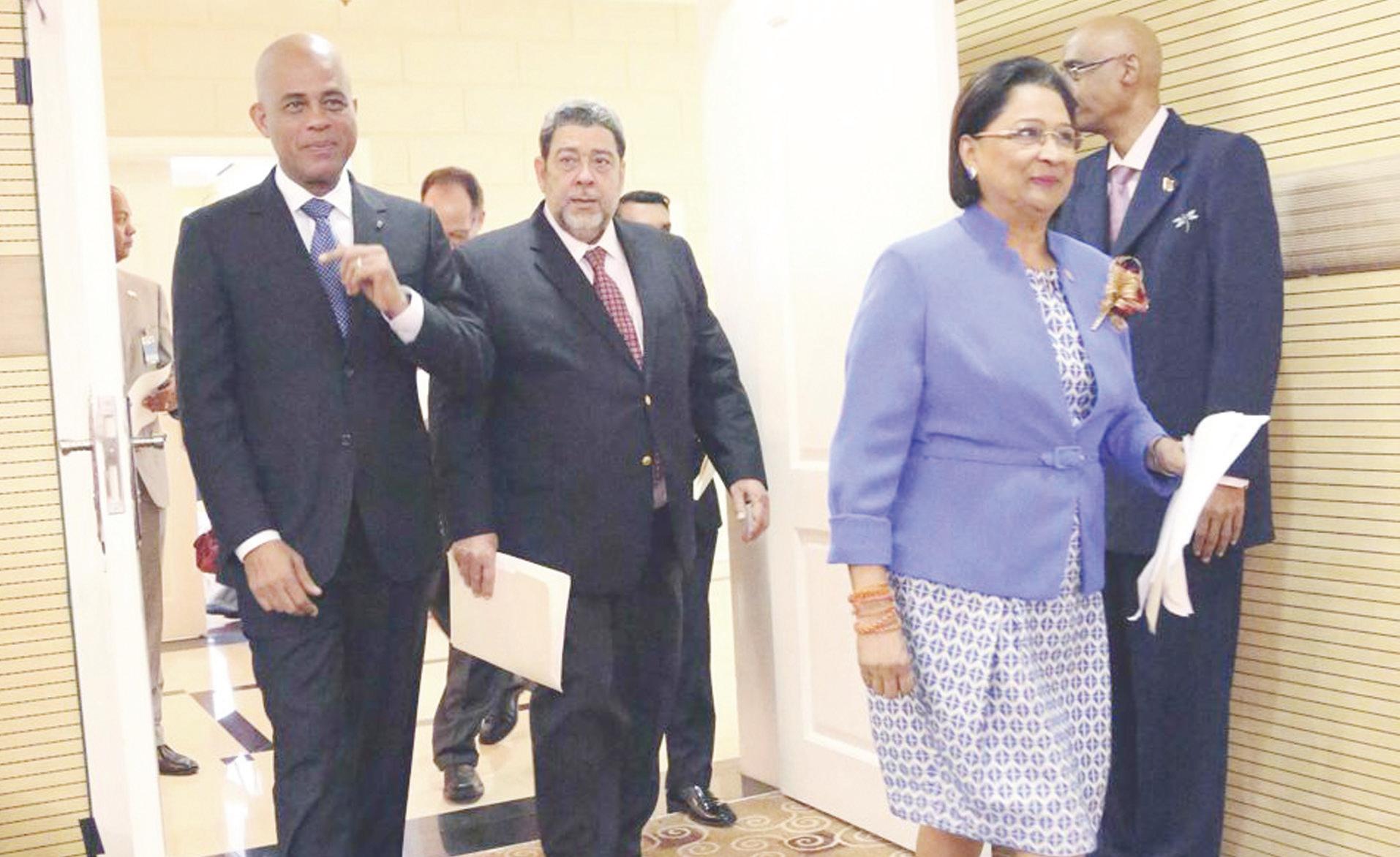
Caricom on Tuesday said it would defer consideration of the application by The Dominican Republic to join the regional integration grouping, as the fallout continues from the Constitutional Court ruling in the Spanish-speaking country that could render stateless, thousands of people of Haitian descent living there.
Leaders of the three- member Caricom Bureau, comprising host country Trinidad and Tobago, St Vincent and the Grenadines, and Haiti, met in Port of Spain on Tuesday and said the 15-member regional grouping would also seek to raise the court ruling with several bodies, including, CARIFORUM, the Association of Caribbean states (OAS), the Community of Latin America and Caribbean States (CELAC), as well as maintain “our interest”.
“We look forward to the outcome of the visit to The Dominican Republic of the Inter-American Commission on Human Rights (IACHR), which will travel to that country in early December,” Caricom Chairman and TT Prime Minister Kamla Persad-Bissessar told a news conference.
Repugnant Persad-Bissessar said the decision on deferral was taken in light of the values and principles which have underpinned the Revised Treaty of Chaguaramas that governs Caricom.
A subsequent statement by Caricom condemned “the abhorrent and discriminatory ruling of September 23, 2013, of the Constitutional Court of The Dominican Republic on nationality which retroactively strips tens of thousands of Dominicans, mostly of Haitian descent, of citizenship rendering them stateless and with no recourse to appeal.”
Caricom said it is especially repugnant that the ruling ignores the 2005 judgement made by the Inter-American Court on Human Rights (IACHR) that The Dominican Republic adapt its immigration laws and practices in ac-

cordance with the provisions of the American Convention on Human Rights.
“The ruling also violates The Dominican Republic’s international human rights obligations. Furthermore, the ruling has created an environment where, with the abrogation of rights that flow from citizenship, arbitrariness can flourish as illustrated by recent media reports of the forced deportation to Haiti of persons claiming to be Dominican and with no linguistic or familial ties to that country,” the regional grouping said.
Redress
“The Caribbean Community reiterates its call to the government of The Dominican Republic to take the necessary political, legislative, judicial and administrative steps urgently to redress the grave humanitarian situation created by the ruling. The community also calls on regional and hemispheric countries and organisations to lend their voice to urge The Dominican Republic to right this terrible wrong. The community welcomes the intervention by Venezuela to assist in resolving the issue, but given the grave humanitarian implications of the court ruling, the community cannot allow its relationship with The Dominican Republic to continue as normal… It cannot be business as usual.”
According to Caricom, it supports the visit of the Inter-American Commission on Human Rights and will request an advisory opinion from the Inter-American Court of Human Rights. The

community will also consider the introduction of a resolution at the United Nations General Assembly condemning the ruling.
Moreover, “we call on the global and regional community to pressure the government of The Dominican Republic to adopt urgent measures to ensure that the jaundiced decision of the Constitutional Court does not stand and that the full citizenship rights of persons of Haitian descent born in The Dominican Republic are guaranteed. The Caribbean Community accords this matter the highest priority.”
Caricom said it was prepared to engage The Dominican Republic but the government of The Dominican Republic must show good faith by immediately taking credible steps as part of an overall plan to resolve the nationality and attendant issues in the shortest possible time.
The Constitutional Court
in Santo Domingo has ruled in favour of stripping citizenship from children of Haitian migrants. The decision applies to those born after 1929 – a category that overwhelmingly includes descendants of Haitians brought in to work on farms. But in defending the ruling, Dominican Republic officials said it ends uncertainty for children of Haitian immigrants, allowing them to apply for residency and eventually for citizenship.
The Geneva-based office of the United Nations High Commissioner for Human Rights has called on authorities in Santo Domingo to ensure that the ruling did not leave persons of Haitian descent in “constitutional limbo”.
A UN-supported study, released this year, estimated that there were around 210,000 Dominican-born people of Haitian descent and another 34,000 born to parents of other nationalities.
wednesday, november 27, 2013 |
Two men, who are squatters living in the Timehri area, were caught on Close Circuit Television (CCTV) cameras plundering the AmeriJet Bond, Timehri between November 19 and 20, the Cheddi Jagan International Airport (CJIA) alleged in a statement on Tuesday.
The surveillance video led police to Albert Ramjaram and Ryan Waddel. Nearly $1 million in office equipment was stolen. Thirty-four-yearold Ramjaram, also known as “Bonnie” was sentenced to three years imprisonment for break-and-enter and larceny offences when he appeared at the Georgetown Magistrates’ Courts on Monday. He pleaded guilty to the charges.
However, his alleged accomplice, 22-year-old Waddel, also known as “Patchie”, denied any involvement and was remanded to prison until November 29 for another hear-
ing. He was unrepresented. According to police records, of the stolen equipment, only a computer and backup system were recovered – under a house in the vicinity of the Timehri Fire Station. This is the second such incident in two weeks whereby individuals have been arrested and charged for breaking and entering the airport facility.
At the moment, a 17-yearold is behind bars awaiting trial after police confiscated four motorcycles (three of which were dismantled into their constituent parts); one camera; one refrigerator; three cellphones; two laptops; and one pair of computer speakers in a dwelling in the squatting area. The Public Works Ministry has, and continues to express, worry over the security aspect of the dwellings around CJIA, citing cultivation of narcotics and thefts committed on aeronautical and airport facilities.

University of Guyana Pro-Chancellor, Professor Prem Misir will be launching his new book on HIV/AIDS and stigma today at the Guyana International Conference Centre, Liliendaal, Greater Georgetown.
The book – a cross-sectional study – used a purposive sample of 379 high school students from 15 urban and rural high schools in Guyana, and assessed their HIV and AIDS knowledge and stigma-related attitudes, and the relationships among gender, age, religion, and race/ethnicity and HIV and AIDS knowledge.
According to a release, Dr Misir said most of the high school students displayed an overall moderate knowledge on HIV and AIDS.
He said the students understood the modes of HIV transmission; they recognised the symptoms of HIV and AIDS; nearly half of them believed that a blood donor was

at risk of contracting HIV; and about one-fifth of the students embraced myths and misconceptions surrounding HIV and AIDS.
According to him, there was no statistically significant difference in the knowledge scores of male and female students. Knowledge scores, nevertheless, differed significantly between the 13 to 15 and 16 to 18 age groups, and among the religious and ethnic groups.
“Stigma-related attitude
scores did not differ significantly for gender and age, but differed significantly for religion and ethnicity among students.
The study showed fissures in HIV/AIDS knowledge and substantial stigmarelated attitudes. Limited understanding of the myths and misconceptions of HIV and AIDS demands a new focus on how HIV is not transmitted through moving beyond conventional strategies toward a social constructivist approach,” Misir said.
He said the book is essential reading for medical professionals, policymakers and educators throughout the Caribbean region.
Misir’s many publications include Cultural Identity and Creolisation in National Unity: The Multiethnic Caribbean and Leader Behaviour and the Compliance Structure in Education: A Sociological Study of Ideology and Social Change in Guyana
The A Partnership for National Unity (APNU) said it has taken note of the reported theft of cash and gold from Raymond Azeez, an employee of the National Communications Network (NCN).
“APNU is of the view that if the property involved in the theft belonged to the state –NCN, then Raymond Azeez should not have had it in his drawer,” the coalition said in a statement.

...but no thanks, USAID
here’s going to be a whole lotta handwringing about the government turning down the “governance” programme from the U.S. Agency for International Development (USAID). What’s going on? Is the government looking a gift horse in the mouth? Maybe...but if the gift horse is a Trojan Horse, it makes a helluva lot of sense.
It’s rather interesting that the government’s action came on the 50th anniversary of the assassination of U.S. President John F Kennedy. He was the president who launched USAID in the first place. And in that simple fact explains the government’s beef.
The acronym USAID suggests that the agency is to provide aid. The question is “aid for whom?”
When JFK formed the organisation in 1962, we all know he was trying to prove that he was as macho as the rednecks in the South in “fighting Commies”. The People’s Progressive Party (PPP) government of the time, of course, was defined by JFK as “Commie” and it was duly removed.
that are more clearly related to controlling foreign governments. Witness its programmes in Afghanistan, Pakistan and Egypt, among others. Right now, while Guyana is like a fly on an elephant’s behind...the U.S. would still like to control that fly. The PPP’s historical “baggage” will always factor in their calculus...as will the facilitation by the People’s National Congress (PNC) of its coup against the PPP in 1961-1964. Show me your friends and I’ll tell you who you are!!
...to TI
Transparency International (TI) is on a roll. As one of the non-governmental organisations (NGOs) the U.S. and western countries have facilitated to push their line, all the requisite ambassadors were on hand to give them their blessings.
“APNU feels strongly that the perpetrator of this crime (if found) should be duly charged and prosecuted according to the law.”
However, APNU charged that the attitude of the People's Progressive Party/ Civic (PPP/C) government to due regulatory and accounting procedures has created a condition where personnel at NCN feel empowered to break the law and not be penalised.
“The Permessar Report into investigations of irregularities at NCN recommended
It added that if the stolen items were his personal property, then Azeez should have had it at his home, or somewhere other than his place of employment.
an audit of the entire system of accounting of assets of that government agency, to date, no action has been taken on this.”
The coalition said though the National Assembly voted down a subvention of $81 million for NCN, the government went ahead and spent the money.
“It is APNU’s firm belief, that in this type of environment where employees see high ranking government officials behaving in such a manner, with no respect for the law, they feel justified in acting in a similar manner.”

Some of the funding for the local labour organisations that actually arranged for their removal, with help from the Central Intelligence Agency (CIA), came from USAID. Along with the Peace Corps and the Alliance for Progress and a host of organisations with nice sounding names, USAID had one purpose – to further U.S. foreign policy interests.
The question at any point in time as to “what’s USAID up to?” is to ask what are the U.S.’s interests at that moment and in that place.
On its website, in answer to the question, “What we do”? The answer is very simple and honest: “to open new markets for American goods, promote trade overseas, and create jobs here at home (the U.S.).”
Now that the “Commies” might have all been rolled back (except the Castros...and the embargo’s still going strong), it’s still the task of USAID to ensure that the government in the country in question accepts the primacy of U.S. interests.
However, USAID right now is under a lot of pressure from the Congress to show it’s of some use to U.S. foreign policy aims. Because of this, it’s taken on a hard line of pushing programmes
We wish TI would encourage their U.S. affiliate to make the connections between Wall Street and the U.S. Treasury a bit more transparent. Or maybe the connections between USAID and the domestic contractors that it now hires to execute its projects in foreign countries. Everyone’s concerned there’s no competitive bidding for these contracts. And that there’s a revolving door between USAID officials and the executives of the contracting companies. Or that ever since Congress prohibited USAID from lobbying it for funding, the organisation has surreptitiously been using these contractors to do its dirty work.
Come on now...transparency, like confession, it’s good for the soul. And even bureaucratic organisations like TI and USAID have souls, don’t they?
...for omniscience
After the government cancelled the Memorandum of Understanding (MoU) on the waste processing facility, TI came out with a statement. It snarkily claimed this was “an indication that the government is acknowledging that it no longer considers itself to have possessed the only reservoir of knowledge”.
How dare the government?! The facility and possession of omniscience belongs wholly and solely to TI and its executives, doesn’t it?

Major Collin Henry is the new commanding officer of the Guyana Defence Force (GDF) Coastal Battalion. Command of the battalion on Monday was passed to Major Henry from its first commander, Lieutenant Colonel Jaswick Williams, who had been at the helm since March 2011.
In parting remarks, Lieutenant Colonel Williams, who is also proceeding on pre-retirement leave, reflected on what he deemed a challenging but rewarding journey.
“When I joined the Guyana Defence Force, there was a military presence on the Essequibo Coast, and in fact, Suddie was my first deployment. Today, we have a battalion headquartered at Anna Regina with specific responsibility for coastal oper-

ations,” he said, according to a Government Information Agency (GINA) report.
Noting that the battalion was the GDF’s newest unit,
he lauded its professionalism over the past 33 months of its existence.
“This battalion is in a fortunate position for its
continuing development is consistent with the transformation taking place in the GDF, with respect to its operations, training, administra-
tion and logistics. Guyana is evolving and so too must the military if we are to remain relevant in today’s society.
"But, as we continue to evolve, as we continue our transformation process, I stand here today, proud that we have remained a professional and stable band, of which the rest of our society can be justifiably proud,” he said.
Williams thanked the leadership of the GDF for having faith in his ability to not only command, but build the battalion. He also thanked his wife who supported him throughout his career and all the officers and ranks whom he had the privilege to command.
The regional administration and the civil society organisations along the Essequibo Coast, which sup-
ported the battalion and aided it with the conduct of its mandate, also came in for praise from Williams.
The change of command occurred at a simple yet significant ceremony at the compound of Guyana Fire Service’s Anna Regina compound, on the Essequibo Coast. Major Henry previously served and supported Williams as the battalion’s second in command for the past two years. On hand to witness the change of command parade were Chief-of-Staff, Brigadier General Mark Phillips; Deputy Chief-ofStaff and General Staff Colonel Kemraj Persaud; other senior officers of the force, Region Two Chairman Parmanand Persaud and other officers of government agencies in Anna Regina.
CARIFORUM and European Union (EU) trade officials held a one-day meeting in Grenada last Thursday at which they reaffirmed the two regions’ commitment to their close trade and development partnership.
The two sides discussed progress made so far in putting the CARIFORUMEU Economic Partnership Agreement (EPA) into practise. The EPA aims to promote trade and investment, underpin regional integration, and foster sustainable development.
Strategy
Commenting, CARIFORUM senior representative and meeting chair, Junior Mahon, said: “The CARIFORUM-EU EPA presents a strategy to assist the CARIFORUM grouping to build larger markets, foster trade in goods and services as well as stimulate investment.”
The head of the European Union’s Delegation to Barbados and the Eastern Caribbean, Ambassador Mikael Barfod highlighted the EU’s ongoing development as-
sistance to help Caribbean governments and businesses put the EPA into practice and exploit its opportunities.
“The EU recognises the specific challenges which the Caribbean faces as it seeks to win a larger share of global trade. That’s why we’re currently investing over €140 million in regionwide aid for trade up to 2015. From then until 2020, we’ll provide a further €350 million for regionwide development programmes. Regional integration and EPA implementation will be among their main goals,” said Ambassador Barfod.
Excellent opportunity
EU trade official Remco Vahl said the meeting provided an excellent opportunity to reaffirm the EU’s continuing commitment to its longstanding partners in the Caribbean.
“Making the EPA work for people across the Caribbean is our shared responsibility. And it’s an important one, given the hopes and aspirations inherent in the agreement – promoting trade and investment, underpinning regional integration, and fostering sustainable development,”

Vahl said.
Talks focused on involving civil society in the EPA process, trade in agriculture, and monitoring the EPA. Officials discussed the involvement of civil society, which will have its own Consultative Committee under the EPA.
Five-year review
On agriculture, they launched talks on measures to promote and protect Geographical Indications (GIs) – such as Blue Mountain coffee from Jamaica or Rocquefort cheese from France.
The regular monitoring and review of the EPA was also on the agenda, with discussion of the first five-yearly review, due for completion in 2014, and the creation of a long-term mechanism to monitor the EPA’s results.
The EU is CARIFORUM’s second largest trading partner, after the U.S. In 2011, trade between the two regions came to over €8 billion.
The main exports from the Caribbean to the EU are in fuel and mining products, notably petroleum gas and oils; bananas, sugar and rum; minerals, notably gold, corundum, aluminum oxide and hydroxide, and iron ore products; and fertiliser.
The main imports into the Caribbean from the EU are boats and ships, cars, constructions vehicles and engine parts; phone equipment; milk and cream; and spirit drinks.
The EPA trade and development partnership was signed in 2008 by the 15 states that make up CARIFORUM and the EU.
Its goals are simple – to make it easier for people and

businesses from the two regions to invest in and trade with each other, and to boost growth across the Caribbean.
The EPA has three main features. Firstly, it introduces asymmetric reciprocity in trade between the CARIFORUM states and Europe. But it also reflects the current level of development in the Caribbean, and the region’s specific characteristics and challenges.
The EPA also covers trade in a much wider sense than the rules that came before it. It covers not just goods but also services – the backbone of modern economies – and areas where rules and regulations can help promote trade: competition, innovation and intellectual property, public procurement and environmental and labour standards.


Cooperation and collaboration were the emerging themes at the recent opening ceremony for the International Criminal Police Organisation (INTERPOL) advanced criminal intelligence analysis training course held at the Courtyard Marriot in Port of Spain, on November 18.
Hosted by the Caricom
Implementation Agency for Crime and Security (IMPACS) from November 18-22, this was the third phase in a series of training initiatives coordinated by INTERPOL’s Capacity Building Programme on Organised Crime for the Americas, and funded by the Canadian Department of Foreign Affairs, Trade and Development (DFATD),

Anti-Crime Capacity Building Programme (ACCBP).
According to a statement released by the Caricom Secretariat, the programme was declared open by William Lippert of INTERPOL, who noted that criminal intelligence analysis makes the work of investigators and policymakers more efficient and effective, in an environment where resources are always constrained for both financial and human resources.
"Criminal analysis will optimise the use of available resources and focus them on collecting additional information by targeting key suspects and groups," he said.
During the week-long training, 22 participants, representing 15 countries from law enforcement and other security agencies across the region, were exposed to tools intended to build capacity in their respective agencies, aid in the timely delivery of actionable intelligence to assist in their criminal investigations and ultimately enhance cooperation among regional crime fighting and security bodies.
Participants were encouraged by IMPACS representative Hayden Exeter, to form working relationships such that upon returning to their home state, they would have strengthened their regional and international network and created relationships that would

foster greater interstate cooperation.
High commissioner for Canada, Gérard Latulippe in his remarks observed that “transnational organised crime and drug trafficking continue to infiltrate and taint the fabric of the societies of the region” and that “perpetrators continue to run their illicit and illegal activities, ignoring all borders and international boundaries”.
High Commissioner Latulippe alluded to the need for a collective response to transnational crime and criminality, noting that, “the most important objective of the course is to improve coordination and cooperation among the law enforcement community and research in the region as a whole”.
In delivering the feature address on behalf of the Trinidad and Tobago Police Service, which also provided logistical support to the training, Assistant Police Commissioner Glen Hackett, reiterated the need for closer collaboration, when he encouraged participants to “immerse yourselves into the realm of intelligence analysis and explore the possibilities as they relate to networking with your regional and international counterparts”.
Hackett affirmed that, “the imposing realities of globalisation and its effects as a precursor to transnational criminal activity, dictate that if we are to successfully ameliorate the current and expected crime challenges, collaboration must include international sovereignties and law enforcement agencies”.

Satiricus wasn’t too hot about Trinis in general. They just loved to throw their weight around – especially when it was Guyanese who were around. Satiricus had had the misfortune of having to in-transit in Piarco once. Never again, he swore – in much more colourful language. But he had to admit he was proud of the Trinidad army. Now first of all, he wasn’t sure exactly why Trinidad needed an army. Was Grenada going to invade them? They’d already done that. You just had to go to their biggest slum, Lavantelle (if you dared), and you’d see the result of that invasion. It wasn’t just the Americans who had reason to moan and groan about Welfare Queens and Crack Kings. And didn’t the army once try to stage a coup against the government back in the day?
Satiricus felt that in countries like Trinidad (with no threats in sight), the army had too much time on their hands...like in Guyana. And since he was a toddler attending Bible classes, Satiricus knew what happened to people with too much time on their hands.
Anyhow, the reason for Satiricus’ warm feeling for the guardians of Trinidad’s honour (such as it was) had welled up when he read that they were going to destroy TT$1.6 million – which worked out to over G$50 million worth of camouflage uniforms.
Why? Because the colours “ran” when the garments were washed. The colours became more “washed out”... that is...more like natural earth tones to make the soldier “invisible”. But Satiricus understood the soldiers perfectly. How could any self respecting member of a crack military outfit like Trinidadian soldiers be seen in camouflage outfits that were...ummm –made to look more like camouflage uniforms.
Since the uniforms were only used on march pasts and displays to impressionable young ladies in the stands, what was the point of camouflage outfits if they didn’t look like they just came out of the store? Crisp and well outlined. So of course they had to be burnt or buried or thrown out to sea.
Satiricus in fact felt that the Trinidadian soldiers had shown a heck of a lot of restraint when it came to the matters of uniform. If camouflage was intended to make soldiers blend in...how the heck would the military kind of camouflage – whether it “ran” or not – work in Trinidad?
The only thing that would do the trick would be for them to put on some of those coloured feathers and butterfly wings Trinis sported during the Carnival season. No invading enemy would suspect that these were the highly trained, crack, elite units of the Trinidad army.

BY ANDREW CARMICHAEL
Government’s move to allow fishermen on the Upper Corentyne, Berbice, to bear arms while at sea might not be enough to alleviate their fears, but it has put a significant dent in piracy operations there.
About a year ago, piracy used to be a regular occurrence in the Corentyne River, but of late, these incidents have become calm, almost like still waters, and most members of the Number 66 Fisherman Coop Society are breathing a sigh of relief.
The co-op Society has about 100 members, supports some 50 vendors on the Corentyne, providing direct and indirect employment to thousands, and is unarguably among the largest industries in Region Six.
But even though the coop exports an average of 50,000 pounds of fish per week, raking in a net income of some $10 million, it has lost most of its experienced fishers.
One boat operator told Guyana Times that on several occasions while at sea, where his crew spends as much as two weeks, his workers have seen instances where fishermen were robbed.
In one incident, he said, a man was tied up and thrown
overboard, and his boat is yet to be found. The incident occurred about two months ago.
However, since then, there has been only one reported attack, and during the raid, the fishers at were able to radio the co-op, which responded in a timely manner.
Region Six Chairman David Armogan said the move to allow members of the co-op to carry arms is part of the government’s ef-

forts to protect them while at sea.
He explained that the weapons are kept at the police station and those who are authorised to use them, sign a book before delivery. Government has also provided the co-op with a boat and outboard engine to track piracy. However, acting

chairman of the co-op, Parmeshwar Jainarine claimed that government has not been providing the support the fishermen need.
According to him, where fishing is done in the Surinamese side of the Corentyne River, co-op members rent licences at exorbitant prices from Surinamese businessmen, to operate.
“When we operate under such a licence, the government doesn’t get any revenue from the licence,” he said, noting that the co-op has been pushing to have a licence recognised by both countries.
On September 12, then Guyana Defence Force (GDF), Chief-of-Staff, Rear Admiral Gary Best announced that Guyana and Suriname have agreed to jointly patrol the borders
of the Corentyne River to clamp down on illegal activities.
Soon after, Caribbean News Now contributor Ray Chickrie reported that Suriname was equipped with a modern coast guard.
“Suriname finally has a coast guard of which the government can be proud,” said Vice President Robert Ameerali, during the ceremonial inauguration of the service, which took over 20 years to be realised,” the article said.
Jainarine, however, said the Surinamese have not been patrolling their side of the Corentyne River. The co-op, he said has been informed that the Surinamese have not been patrolling the waters as expected, because of the high cost of fuel.
On International Day for the Elimination of Violence against Women, the Guyana Association of Women Lawyers (GAWL) said it has reiterated its stance against all forms of violence against women.
“We remain in solidarity with all women who are victims of violence and with all institutions, organisations and individuals involved in the struggle to rid society of this scourge,” the body said in a release. According to GAWL, while efforts of the relevant authorities to implement a more strategic approach to ending violence against women are recognised, “we will continue to lobby for improvements in the system, as well as challenge the wider cultural attitudes that tolerate and condone violence against women”.
GAWL notes that although the National Policy on Domestic Violence was launched in 2008, the National Domestic Violence Oversight Committee, which is to be tasked with oversight of its implementation, is yet to commence functioning after more than five years. This committee is also required to submit an annual action plan, which should receive
tangible support through the process of budget preparation.
The policy is very comprehensive and if implemented diligently, would result in the strengthening of prevention mechanisms as well as increased protection and service provided to those in need. The full implementation of the policy would be part of the national response to violence against women and be evidence of Guyana’s due diligence obligations under international law to implement the UN Convention on the Elimination of All Forms of Discrimination Against Women and the Inter-American Convention on the Eradication of Violence Against Women, both of which are enshrined in the Constitution of Guyana. If we are all serious about reducing and ultimately eliminating violence against women, improving outcomes for victims and changing attitudes towards the issue, in addition to supporting the efforts to address the issue, there is need for the national policy to be fully implemented and for new ways of responding to the issue to be developed. GAWL is willing to do its part to support the policy’s implementation.

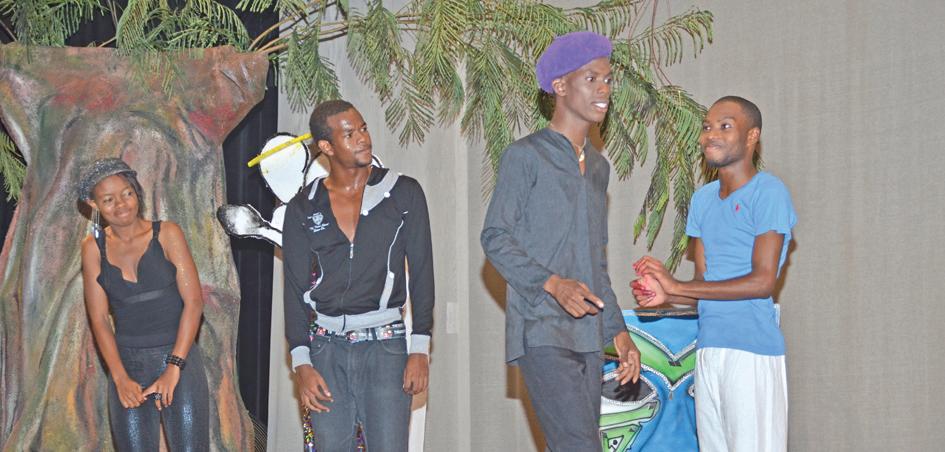

The finals of the 2013 National Drama Festival culminated at the National Cultural Centre on Friday evening with three interesting plays, which for the most part, commanded the attention of the sizable audience.
The three plays were “Creative Burial Ground”, “Duplicity” and “Deep Wounds”. They were all fairly well executed by quite a young cast, who appeared eager to display their theatrical talents.
The cultural centre intermittently exploded during the productions either with laugher or disgust. Nevertheless, after several hours of drama, the curtains were drawn on the junior category.
The activity, which was supposed to begin at 18:00h, started after 19:00h, causing some anxiety among patrons who arrived on

time.
The set changeovers was also a lousy process, resulting in long intermissions, and according to organisers, one of the sets took about two days to assembly.
Creative Burial Ground received great reviews from the judges, and despite some technical glitches, this did not stop the young actors from doing what they love. The play was filled with a
thriller, and understandably, won the nod of the judges.
Creative Burial Ground was written by Rae Wiltshire and directed by Nickose Layne. Its stage managers were Candacy Baveghems and Randolph Critchlow, with costumes done by Cindy Legall.
It depicts an avant garde theatre, set entirely in a cemetery and chronicles the life of four friends who died in a war.
The second play of the evening, Duplicity, related to sensitive and real life experiences. It was marked well for plot and scenery.
Duplicity was written by Keron Bruce and directed by Natasha Azeez and Marissa Primo. In the play, one of the characters – Janice was having an affair with her sister’s lover, Ryan. Ryan decided to
end the relationship, but Janice got upset and lost her mind, killing Sherry’s daughter and severely injuring Ryan, who subsequently dies. She then commits suicide, but not before confessing her sins to her sister.
The final play of the evening saw a more or less confusing act, which left certain sections of the audience stunned as it featured a lot of violence.
Deep Wounds written by Melinda Primo Solomon, was directed by Melinda Primo Solomon and Marissa Primo. It centres on a young girl who lost her brother. The finals of the drama festival started more than a week ago at the National Cultural Centre and saw at least 34 plays. The winners will be announced on November 30.

BY VAHNU MANIKCHAND
President Donald Ramotar said the violence in some children’s video games and flaws in the judicial system
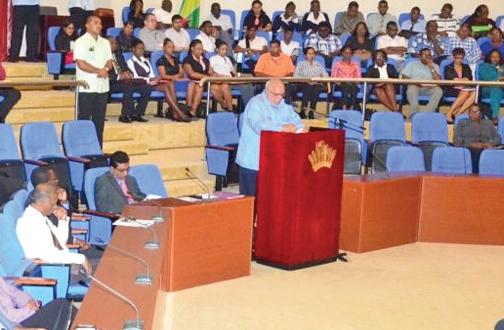
are contributing in a major way to the high level of interpersonal violence in the country.
He made the comment on Monday while addressing a forum to commemorate International Day for Elimination of Violence against Women.
The forum hosted by the Home Affairs Ministry at the Guyana International Conference Centre, Liliendaal, Greater Georgetown, sought to ex-
amine and adopt current violence prevention methodologies, develop a national plan of action towards violence prevention and establish a body to coordinate violence prevention efforts in Guyana.
The conference was attended by diplomats and stakeholders from all sections of society. President Ramotar told the conference that while there is no fixed approach in addressing interpersonal violence, he is counting on those participating in the conference to work as a cohesive unit to develop a strategic plan to tackle violence in all its forms.
The president said interpersonal violence is becom-
ing a major economic burden on Guyanese as too many young people are being cut down by the senseless acts of their fellow citizens.
Public security concern
“Interpersonal violence is not just a personal and social matter; it is also a public security concern. The state has a general responsibility for law and order and for the protection of its citizens… interpersonal violence presents a threat to the social order and the safety of citizens and is therefore a legitimate concern to those entrusted with ensuring public safety,” the president said.
He added: “Everyone has a role in reducing violence in our country, it is therefore the responsibility of all sectors of society and all stakeholders to take a stance against violence and contribute towards ensuring public safety and security… it is vitally important for there to be a multi-sectoral and multi-stakeholder approach to this problem. Together, we must reject and condemn all forms of violence,” Ramotar stated.
He pointed out that while there may be a vast array of factors contributing to violence, prevention should be practised in the homes, and
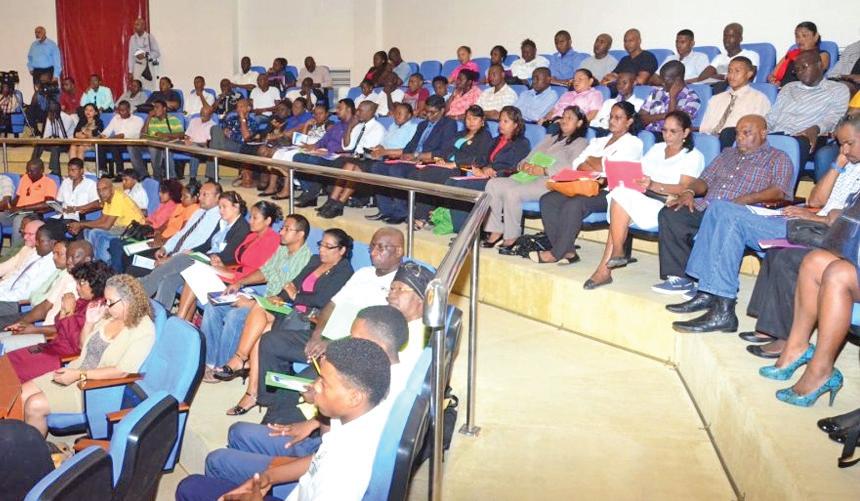
parents must not allow their children to play video games with violence.
Flaw
The president also noted that placing first time offenders with hardened criminals contributes to interpersonal violence, and is a flaw in the judicial system.
The president reminded the participants to take into account their own experiences, along with those of other countries, when determining resolutions and suggestions to curb this social stigma.
After close to two weeks
away from work due to illness, Home Affairs Minister Clement Rohee resumed duty on Monday, and appeared at the event.
The minister said the conference is timely, pointing out that the forum should focus on the prevention of interpersonal violence, noting that fighting and prevention of violence is much broader than fighting crime.
Meanwhile, International Development Bank country representative Sophie Makonnen said interpersonal violence does not only affect
citizens, but also hurts the economies of their country.
“When we think about the consequence of violence, the first thing that comes to mind is suffering and trauma, which more than often, last a lifetime to the victims, but as a bank, I can tell you there are other effects… interpersonal violence is expensive to the public sector who bears most the costs,” she noted.
She pledged the banks continued support in combating the scourge. (vahnum@guyanatimesgy.com)


Valance Cole has at least two key facts on his side in his long struggle to overturn a manslaughter conviction for a 1985 Brooklyn killing that has kept him in prison for more than a quarter century. The first is that the homicide detective who built the case against him is closely connected to an evidence-faking scandal that has prosecutors – and now a New York State Supreme Court judge – re-examining dozens of old convictions. The second is that another man has been trying for years to confess to the killing in question.
Denzil Smith, 54, is the first to admit that he shot Michael Jennings on August 4, 1985. He has confessed in detail no less than four times since 2007, most recently on video. Smith said he spoke up because he thinks it is unfair that Cole has spent all this time in prison for a crime he did not commit. The killing went down, Smith said, after he discovered someone had swiped his cocaine stash. He blamed a guy named “Trini” and went looking for him on Fulton Street in Brooklyn’s rough – in those days, anyway – Bed Stuy neighbourhood. Soon enough, he found him.
“So I’m talking to him, ‘Listen big man, if you don’t give me what I want, I’ma
hurt you,’” Smith told an investigator in a video-recorded interview last March. “And then I’m talking to him – now here comes another guy.” The other guy was Jennings, a friend of Trini. Before long, Smith and Jennings were getting into it. Smith recalls Jennings reaching for something silver and shiny in his waistband.
“What am I supposed to do?” Smith asked the video camera. “He’s the one who initiated it.” Smith drew a .38 revolver and shot Jennings twice. But the shiny object was just a Walkman. Smith tossed his gun under a car and fled. Jennings died that day.
Native Guyana
Smith told the story from his native Guyana, beyond the easy reach of American law enforcement. He was deported from the U.S. a decade ago after threatening to kill a girlfriend and refuses to return to New York. But for years he has been trying to get Cole released, and for years the Brooklyn district attorney’s office has dismissed his confessions as irrelevant. “I was just helping an innocent man in jail,” Smith told the investigator. “Because I know he was.”
Cole, a social club own-

er who had had run-ins with the police over drugs and an earlier shooting, was arrested seven months after Jennings’ killing. Based mainly on the testimony of two witnesses –one a drug user who later recanted saying he had been coerced, the other a man whose version of events stood in stark contrast to that of other witnesses – Cole was convicted of first-degree manslaughter in 1987 and received a 25-year sentence. When his prison term ended this year, he was handed over to federal custody, where he awaits deportation, also to Guyana.

He has been fighting the conviction all along and said his main motivation now is to spend time with his grandchildren. “I missed that chance of being a part of my children’s lives,” Cole, the father of six, said. “I want to be part of my grandchildren’s lives.”
Scandal
An unfolding scandal around retired Brooklyn homicide detective Louis Scarcella has given Cole and his legal team new hope. Scarcella landed on the front page of the New York Times in May and dozens of his cases dating back to the eighties and nineties have come under review by the Brooklyn district attorney’s office and a state Supreme Court justice. Already, David Ranta, the man whom Scarcella helped to convict in the 1991 killing of a prominent rabbi, has been freed. A witness in the 1995 shooting of a little girl claimed to have been coached, prompting the New York State Board of Parole to release the man convicted of her killing. In its reporting, the Times noted that Scarcella had relied very heavily, across many cases, on the testimony of a well-known crack addict named Teresa Gomez. To say the least, she claimed to have seen a remarkable number of murders.
The lead detective in the killing of Michael Jennings – the man who built the case against Cole – was Louis Scarcella’s longtime partner, Stephen Chmil. While Chmil has not been the primary focus of the inquiry, some of the convictions under review by the District Attorney’s Office are cases that he shared with Scarcella – as the two jointly worked the Ranta case. But the Cole case has not been reopened, despite sharing some notable characteristics with convictions now under review, including a drug-addicted key witness, claims of coerced testimony, and charges that detectives ignored evidence that pointed to another killer. (Scarcella was not involved in the Cole case.)
“Valance is most certainly innocent,” said Rebecca Freedman, the assistant director of the Exoneration Initiative, a non-profit organisation that works to clear innocent people without DNA evidence, and which has tak-
en up Cole’s case. “The police files suggest that Detective Chmil and his partners engaged in questionable practices when it came to certain witnesses, putting pressure on them to either implicate Cole or to prevent them from exonerating him. And it’s a great injustice.”
Even Chmil acknowledged that Jeffrey Campbell, one of the main witnesses against Cole, was a crack addict. Campbell implicated Cole after being arrested for robbery. Years later, dying from AIDS, Campbell recanted and said Chmil had promised the robbery charges would be dropped if he testified against Cole.
Speaking to Daily Intelligencer, Chmil conceded the similarity between Campbell and Theresa Gomez, the crack-addicted serial witness that his partner relied upon so heavily. “Campbell was a lot like her,” Chmil said. “He was a street guy. I know I dealt with him a few times. Sometimes he’d tell you the truth, sometimes he wouldn’t.”
Still, Chmil said he did nothing wrong in the Jennings case. “We put away enough bad people,” he said. “To frame somebody … ” He paused. “I’m Christian. I couldn’t do that in my heart.”
But a defence lawyer who went up against Scarcella and Chmil in the eighties remembered Campbell saying police threatened him if he did not testify.
“Campbell was probably the most unreliable witness you could ever want because he was such a bad drug addict. He was such a bad crackhead, and certainly easily manipulated,” Michael Baum said. “These guys were pros at using these junkies and druggies and prostitutes to come in and testify.”
The other main witness against Cole, Charles Ford, did not identify him from a lineup until six months after the shooting. And Ford’s account of what happened that day – that the shooter was a disgruntled customer angry about inferior drugs he had bought – was at odds with everyone else’s from the scene. By contrast, Cole’s legal team points to Smith’s four separate confessions, five witnesses who identified Smith as the shooter, and multiple other witnesses who provided a description of the shooter that matched Smith. (The two men were far from lookalikes: Smith stands five foot eight, while Cole is over six feet; at the time of the shooting, Smith was 25 years old, Cole was 39.)
Cole has challenged his verdict at least 10 times, always unsuccessfully. “NonDNA work is really difficult and courts are reluctant to grant relief even in the face of very powerful evidence of innocence,” said the Exoneration Initiative’s Director Glenn Garber.
Now, in what could be
Cole’s last chance to clear his name, the Exoneration Initiative is again trying to overturn his conviction. At the centre of a new legal motion filed in July in New York State Supreme Court is Smith’s videotaped confession.
“This is his last shot at justice,” Freedman said. “It deserves a real searching inquiry into the truth of what happened with this murder and who did it. And even if he is deported that doesn’t change the fact that there was a wrong done to him and it needs to be righted – not just for him but for the entire system.”
Though Cole and Smith were both from Guyana and had met, they say they were not friends. Cole owned the social club in Brooklyn, but lived with his family in an apartment in Queens, and on the afternoon of the shooting, said he was at home waiting for relatives to arrive. His nephew had just died, and the funeral had been the day before.
Heroin possession Cole, who also has a conviction for heroin possession, wonders if he was targeted because in street slang, he had “beat a body”: He was found guilty of manslaughter after killing a man at a store he owned on Marcy Avenue – he said the gun went off during a robbery, prosecutors accused him of selling marijuana from the store – but he never went to prison. The reason he did not is that the judge in the case disagreed with the jury’s decision, stating at sentencing:
“It’s a repugnant verdict, it’s a little inconsistent with the facts in the case. In this case, I do not feel it’s necessary to give you jail time.”
The Brooklyn District Attorney’s Office declined to comment. But in legal papers, it called Smith’s confession yet another unreliable account of Jennings’ killing, calling it inadmissible hearsay. It focused on one unclear reference to the time of the murder to discount the entire statement. Cole’s 29-year-old son Marlon said his father has never seemed bitter or angry. But life became difficult for the family after Cole was sent to prison. “When he went, everything changed,” Marlon Cole said. “It was hard. My mother became an instant single mother.”
Cole recalled one prison visit when his wife did not have the 35 cents to allow Marlon, then about five years old, to buy a bag of chips. “She said all the money I have in my possession is for us to catch the train to get back home,” he said. “I went back to my cell and I cried about it, knowing I’m innocent and my family had to suffer.” When asked about whether Cole should be exonerated, Chmil said: “You can quote me: If things work out for him, fine. But I stand by cases I worked on.” (NYMAG.com)
The laboratory facilities at the National Agriculture Research and Extension Institute (NAREI) will undergo major rehabilitation over the next few months. Approximately $121 million in total has been approved for this project.
Agriculture Minister Dr Leslie Ramsammy said Cabinet gave its no-objection to a $35.2 million contract recently to undertake civil works at the institute’s laboratories. According to him, that contract will look at upgrading mainly the electrical network, which will have to power many pieces of sophisticated equipment that will be now placed in the labs.
Some infrastructure modification must also be done. The monies will be used mainly to support the bio-control and the tissue culture labs. The bio-control lab is used mainly for testing of crops and the storing of chemicals, some of which could be harmful.
The tissue culture lab
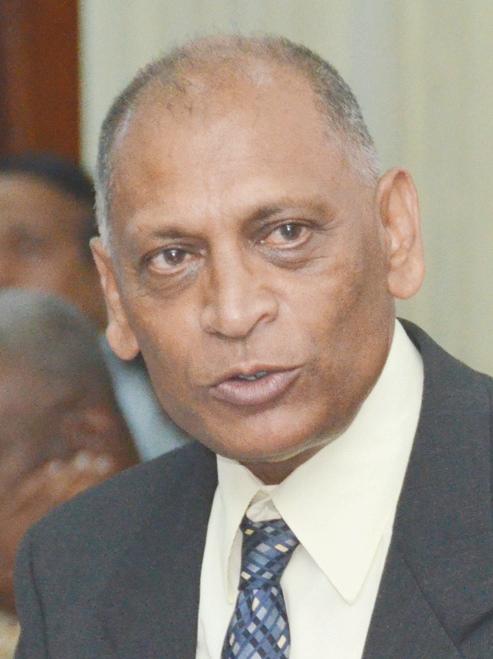
looks at the growth of tissues or cells separate from the organism. This is typically facilitated via the use of a liquid, semi-solid, or solid growth medium, such as broth or agar. Tissue culture commonly refers to the culture of animal tissue, with the more specific term plant tissue culture being used for plants.
“Guyana is, indeed, privileged to have an agriculture sector that has such capacity; most developing countries don’t have that,”
the minister noted. He said while some countries import stem cells and tissue culture, Guyana has the capacity to produce its own.
He, however, stressed the need to have these facilities upgraded, especially to improve crop yields. “Overall, it is enhancing our capacity for agriculture. Overall, these labs are going to set Guyana at a stage where Guyana can modernise agriculture that we can increase our research capacity and we have other options of how a new crop... gets tested.”
The minister said this will provide significant support to farmers. Government recently announced that it was looking to establish a soil and water laboratory to be located at the Guyana Sugar Corporation (GuySuCo). The laboratory will provide comprehensive services.
This is all aimed at enhancing agricultural crops and maintaining the high standard of the local agriculture industry.
Members of the Berbice private sector on Saturday donated eight water dispensers and a Hewlett and Packard computer printer to the New Amsterdam and Port Mourant hospitals.
Berbice Regional Health Authority (BRHA) Chief Executive Officer, Dr Vishwa Mahadeo lauded the gesture, describing it as a timely boost.
“The private sector has been contributing to health care in Region Six and across Guyana; we hope to continue receiving their support and monitoring to ensure that their donation is used for its intended purposes.”
The simple handing over ceremony was held at the New Amsterdam Hospital’s boardroom.
The donations were made by Upper Corentyne Chamber of Commerce member Bhigrooj Poonai, who is also BRHA board chairman.
Dr Mahadeo congratulated Poonai for his proactive leadership and expressed gratitude to the donors.

The water dispensers were donated by Imran and Daughters, Nazir Hamid, Fazil Hamid, Hamid Store of Williamsburg, Pharmacy Depot, Balram Shane and Dr Sugrim and Dr Narine, while the computer printers were provided by M Raffik Construction Firm.
Meanwhile, New Amsterdam Hospital Chief Executive Officer Allan Johnson was happy to receive the items.
“It is against the law not to provide (drinking) water for employees of any organisation and with this donation; we are going to honour the law,” Johnson said. Poonai also thanked the donors and made a call for the BRHA to foster closer relations with the private sector.
“The business community is always willing to support the BRHA, but we have to go out at times and reach them,” the businessmen said.
Akeem Alli, 18, of Lot 80 West Ruimveldt, Georgetown, who crashed into the median in the vicinity of Rent-a-Tent, Rahaman’s Park, is still unconscious, his brother, Kevin, disclosed.
The young man stated that his brother remained in serious condition. He is presently in the High Dependency Unit (HDU) of the Georgetown Public Hospital.

He added that the family and the police went back to the accident scene. From all indications, his brother might have been struck from behind which ultimately forced him off the road. “We come here to see if we can get any information about the accident, but no one was willing to talk… we want to believe that Akeem did not lose control of his motorbike and crashed… something not right,” he added.
Akeem Alli, who is employed with BV Enterprises at Houston, Georgetown, left home and was heading to work when he reportedly lost control of his 125 Jailing motorcycle and slammed into the median at Rahaman’s turn. The accident occurred about 09:00h.
Alli was rushed to the Georgetown Public Hospital in an unconscious state with head injuries, a broken femur, and other injuries about his body. He was immediately prepared for emergency surgery. Based on reports, the teenager left home early on Sunday morning with the intention of returning to work where he had to collect his brother. He was wearing a helmet, but the head guard broke; hence, the severity of his head injuries. In addition, the roadway was wet which may have contributed to the teenage losing control of his motorcycle. He has been riding for the past four months.
The badly mangled motorcycle, according to reports, is at the Ruimveldt Police Station. Police are continuing their investigations.


The first touch-screen tablet manufactured in Haiti, and its affordable price, have captured the interest of Haitians, particularly within low income households and the youth, who believe they now have a unique opportunity to fulfil their dream to own one, as the use of technological devices grows in popularity in the Caribbean country.
The Android operating
system-based tablet, called Surtab, the very first to be assembled in Haiti is a source for pride and hope for many who wish to have access to such technological tools to connect to the Internet and enjoy the benefits of so many online programme and opportunities.
The Surtab company CEO, Belgian entrepreneur Maarten Boute, said his commitment is to offer a big-
value product at affordable cost to make sure the youth and many professionals can have access to a tool that they can use for their studies and their daily work.
“We want to democratise access and we want almost every single Haitian to be able to afford our product to serve the purpose of their technological needs,” Boute told HCNN. (Caribbean News Now)
Barnes and Noble Inc, the largest U.S. bookstore chain, reported an eight per cent drop in quarterly revenue as sales fell across all its businesses, including its stores and Nook ereaders and e-books.
Barnes and Noble shares fell 3.8 per cent to US$15.80 in premarket trading, with the sliding revenue highlighting again the bookseller’s battle with giant Internet rival Amazon.com Inc.
The Nook sold well after its launch in 2009, but the ereader has not kept pace with aggressively priced Kindles from Amazon, along with rival tablets from Apple Inc and others.
Revenue in the Nook business, including e-books and devices, fell 32.2 per cent to US$108.7 million as Barnes and Noble sold fewer e-readers and slashed prices.
The company has lost hundreds of millions of dol-
lars trying to compete with ereaders from large tech companies. This year it said it would only make more tablets if it found a partner.
Overall revenue fell to US$1.73 billion in the second quarter from US$1.88 billion a year earlier. The net profit jumped to US$13.2 million from US$501,000 a year earlier, after the company cut costs in the face of the falling revenue. (Reuters)
The Bank of England is to review whether it needs more powers to control banks’ balance sheets. Bank governor Mark Carney said Chancellor George Osborne had asked the Bank’s Financial Policy Committee (FPC) to review its powers. The FPC regulates banks, but not how much capital they must hold in relation to total assets – the leverage ratio. He also queried the quality of official data and called claims about RBS’s treat-
ment of small firms “shocking”.
On the leverage ratio, Carney said he personally felt the FPC should have this power. Being able to vary the leverage ratio helps to rein in risktaking by banks. The governor, formerly head of Canada’s central bank, told the Treasury Committee on Tuesday that regulators in his home country had similar powers, and this had helped them during the global financial crisis.
He said: “If I could pick
one element that was essential to the performance of the Canadian banking system during the crisis, it was the presence of a leverage ratio.”
Carney told the committee that he expected the FPC’s review to take about a year, and hoped that new powers would be granted “quickly thereafter”.
International regulators are already finalising details of a leverage ratio, although these may not come into force for several years. (BBC News)
Amapping exercise to register businesses and infrastructure in Mogadishu, Somalia’s capital, aims to provide the government an opportunity to engage in urban planning, raise revenue to fund civic programmes and help settle land disputes, which are increasing as people return to their former homes after decades of conflict.
The Sustainable Employment Creation and Improved Livelihoods for Vulnerable Urban Communities in Mogadishu (SECIL), a joint project between UN-Habitat
and the Somalia government, is developing a geographical information system (GIS)-based inventory of public, institutional and economic infrastructure in all 17 Mogadishu districts.
It provides district-level detail about enterprises, where they are located, their size, the number of employees and access to basic infrastructure. It also gives a description of goods sold or produced, or services provided, as well as the source of the goods.
The programme uses satellite images and prominent persons – who help to identify busi-
ness owners and abandoned buildings – in the districts to help map the businesses. Clare Sadd, a programme support expert at UN-HABITAT, told IRIN: “In Mogadishu... there is an urgent need to coordinate, control and guide developments. Lack of urban planning will increase the already existing chaos, lead to construction at undesirable locations, duplication of efforts, omission of space allocation for municipal services – developments that are very difficult to correct after they have taken place.” (allAfrica)
China’s anti-trust investigation into Qualcomm, the world’s biggest smartphone chip maker, is likely tied to the impending US$16 billion rollout of commercial fourth-generation services by China’s big telecoms carriers. The probe by the National Development and Reform Commission (NDRC), China’s top economic planning body and price regulator, is a likely pre-emptive measure that will allow China’s tel-
ecom providers to gain leverage in royalty negotiations ahead of the rollout of new high-speed mobile networks, analysts said.
China Mobile, China Unicom and China Telecom are investing more than 100 billion yuan (US$16.4 billion) in system equipment for the next-generation wireless networks, which are expected to be introduced nationwide over the coming year.
Qualcomm is positioned to reap the vast majority of
licensing fees for the chip sets used by handsets in the world’s biggest smartphone market, providing the San Diego-based chipmaker with a fresh source of royalties.
“This is a big deal for Qualcomm,” said Alen Lin, a telecoms analyst at BNP Paribas in Hong Kong. “For the first six to nine months Qualcomm will be the only chipset provider that can support a handset using both 3G and 4G in the China market.” (Reuters)
Kuwait has suspended the chairman of state-owned Kuwait Airways in a dispute over his plans to buy five used aircraft from India’s Jet Airways, which the company has since abandoned.
Kuwaiti newspaper al-Qabas quoted the Communications Minister Esa al-Kandari as saying he had suspended Sami al-Nisf after he announced plans to
buy the used aircraft despite a government request to stop the deal. It said Nisf’s deputy, Jassar al-Jassar, has been appointed as acting chairman.
Nisf confirmed on Monday that he had been suspended. The plan to buy the used Airbus A330 planes was announced on Sunday, with the company adding that it would not affect a previous deal to buy new Airbus jets.
Nisf had said that Airbus,
owned by aerospace and defence group EADS, would act as a mediator in the deal with Jet Airways, even though the five-year-old planes are owned by the Indian carrier.
In a meeting after Nisf’s suspension, Kuwait Airways decided to abandon the plans to buy the used aircraft, it said in a statement on Monday, adding that it would discuss any deal to lease or buy aircraft at a later meeting. (Gulf Business)
Needless to say, practice went smoothly after that, as the other concubines realised that the punishments would be severe but consistent, and that favourites meant nothing.
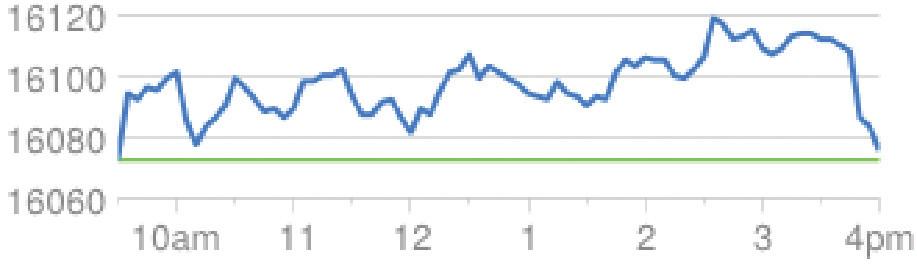
We’re obviously not advocating such an extreme action, but the lesson is clear. As a manager, when you set the rules, they can’t be broken –not even by your top employees or by yourself. Punishing your favourite employees or yourself for rule violations sends a loud, clear message
– no one is exempt, and the rules are final.
Positive reinforcement
Enough talk of military style strictness. Positive reinforcement is also a valuable tool in successful management. Ben Franklin famously stated, “Tart words make no friends; a spoonful of honey will catch more flies than a gallon of vinegar.” While you need to discipline employees for underperforming, you should also reward and compliment them when they im-
two)
press you. Positive behaviour needs nurturing, and letting them taste honey is far more effective than force feeding them vinegar. The popular “Yes Sandwich” – in which a manager leads with a compliment, “sandwiches” in the negative comment, then closes with a second compliment – is a popular example of Franklin’s philosophy. While the request for improvement was received, the employee doesn’t feel insulted in the process. (Business Dictionary)
the parties involved.
At least 10 Haitian migrants were killed and 110 were rescued, after clinging for hours to the hull and mast of an overloaded wooden sloop that capsized in The Bahamas, U.S. and Bahamian officials said on Tuesday.
Rescuers were still searching for potential survivors from the 40-foot (12-metre), sail-powered coastal freighter that ran aground and capsized near Staniel Cay in the central Bahamas on Monday night, officials said.
It was unclear how many people had been aboard the ship and how many had died. The U.S. Coast Guard said 30 migrants were reported to have died and 110 had been rescued.
A Royal Bahamas Defence Force spokesman, Lieutenant Origin Deleveaux, said at 20 passengers were confirmed dead, but confirmed that 110 had been rescued.
Thirteen severely dehydrated survivors were hoisted aboard a U.S. Coast Guard helicopter and taken to Staniel Cay for treatment, U.S. and Bahamian officials said.
Crews in U.S. Coast Guard planes and helicopters dropped 10 quick-in-
flating life rafts into the water to help keep the other survivors afloat until a Royal Bahamas Defence Force patrol boat could take them aboard, said Petty Officer Mark Barney, a Coast Guard spokesman in Miami.
“They drop it right next to them and they can swim over. Once they’re out of the water they have a better chance of surviving,” Barney said. “There’s just so many people in the water.”
Tilted over Coast Guard photos from the scene showed the vessel tilted almost completely over on its side, with passengers tightly packed and holding on. Some sat on the gunnels and others climbed the mast.
Bad weather and rough seas were hampering rescue efforts, Deleveaux said. Winds were up to 30 miles per hour with waves up to five feet, the Coast Guard said.
The cause of the accident was unknown and will be investigated by Bahamian authorities, Barney said.
Migrants from Haiti, Cuba and other Caribbean countries frequently sail through The Bahamas in
an attempt to reach the United States, often in overloaded and unseaworthy vessels. Miami is more than 600 miles from Haiti’s northern coast, where such voyages frequently begin.
These vessels often capsize; in mid-October, four Haitian women died off Miami when their boat sank. There have also been fatal incidents near the Turks and Caicos Islands, between Haiti and The Bahamas, and in the rough Mona Passage that divides The Dominican Republic and Puerto Rico.
“Unfortunately, we see these types of tragedies occur on a monthly basis,” said U.S. Coast Guard Chief Petty Officer Ryan Doss. “Every year, we see hundreds of migrants needlessly lose their lives at sea taking part in these dangerous and illegal voyages.”
This latest incident occurred late Monday off Harvey Cay, about 80 miles (125 kilometres) southeast of New Providence, the island that includes the capital of Nassau.
Most of those rescued will likely be brought back to a military base in New Providence for processing and eventual repatriation to Haiti. (Excerpt from Reuters)

Some of the children who were treated during the medical outreach
Residents of Moblissa and Silver Hill, along the Linden Soesdyke Highway, recently benefited from a medical outreach programme conducted by the newly-formed Reach All Community Group.
The Linden-based group has reported an overwhelming response by residents of both areas as well as neighbouring communities.
Some of the services offered include dental care, compliments of the Cheddi Jagan Dental School, diabetic foot care, VIA (Visual Inspection
with Acetic acid), malaria smear, blood pressure testing, blood sugar (glucose) testing and general check-ups. The outreach saw nurses and doctors from the Linden Hospital Complex (LHC) administering to patients.
Solar panels were also donated to the Moblissa Primary School by Prime Minister Samuel Hinds, who visited the outreach. The prime minister, after taking a tour through the area, made a promise to residents to address the deplorable road conditions. Additionally, he told resi-
Almost three months after the murder of a Diamond, East Bank Demerara businesswoman, Sirmattie Ramnaress, the police have little to report on their investigation of the case that could lead to possible charges being instituted.
Police Public Relations Officer Ivelaw Whittaker on Tuesday stated that the police have no new leads in the murder of the 48-year-old woman. “This does not mean that investigations have closed, we are continuing our investigations with the leads that are in our possession,” he added.
Attempts to make contact with Crime Chief Seelall Persaud on the issue proved futile.
Two months ago, investigators were reviewing footage recorded by the CCTV cameras along the East Bank, Georgetown and East Coast corridors, with the intention of getting a close shot of the driver of the car that was removed from the woman’s house ,which was later found abandoned at Liliendaal, Greater Georgetown.
Moments after the woman’s body was found in her home, her reputed husband, Sergeant Colin Bailey was extensively grilled. He later told reporters that he would have never committed such
an act, noting that he and Ramnaress had been together for the past 21 years.
Detectives have also taken DNA samples from Bailey and a few of the businesswoman’s close associates in the hope of finding the perpetrators of the wellplanned murder. DNA samples from a few beverage bottles were also taken. The bottles were reportedly on a table in the house.
With three months now elapsed since the crime, there is little hope of finding the perpetrators of this heinous crime.
The lifeless body of Ramnaress, also called “Sabo”, of Lot 2430 21 Avenue, Diamond Housing Scheme, was found about 10:00h lying face down in her office near her garage.
Her throat was slit, her head bashed in and her hip was disjointed; sections of her multimillion-dollar property were also destroyed by fire.
The entire bottom-flat of the house was completely drenched with kerosene and her house was ransacked, which suggests that the woman was robbed before she was killed.
The perpetrators also set alight a bond aback the house, which was complete-

ly destroyed. After the robbery, the killers escaped in one of the woman’s motor cars.
Further information received revealed that the recordings from the internal and external surveillance cameras were missing. This indicates that the perpetrators were well briefed as to the locations of the devices. Investigators believe that the robbery might have been an inside job, since there were no signs of forced entry into the premises.
In addition, the woman’s property is protected by a high grilled fence and an alarm system, which, according to neighbours, did not go off during the night of the gruesome murder.
dents of Silver Hill that some of their major concerns, including the supply and delivery of solar panels will be addressed.
The group said it plans to continue services to the residents of Region 10 as well as other neighbouring communities, not only in the areas of health, but in humanitarian aid as well.
Though not politically-affiliated, the group reported that it will be getting full support from the government of Guyana and non-governmental organisations (NGOs).
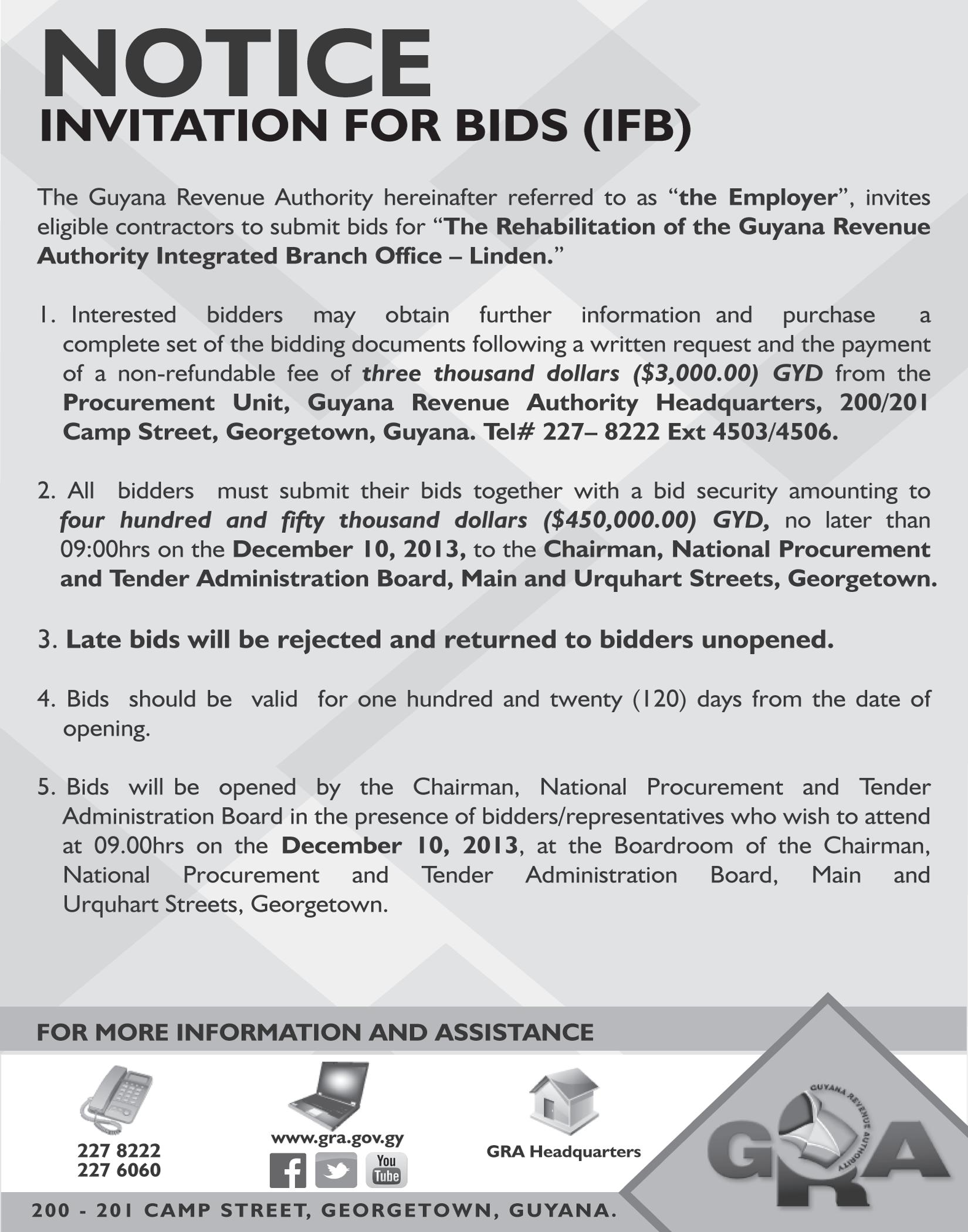






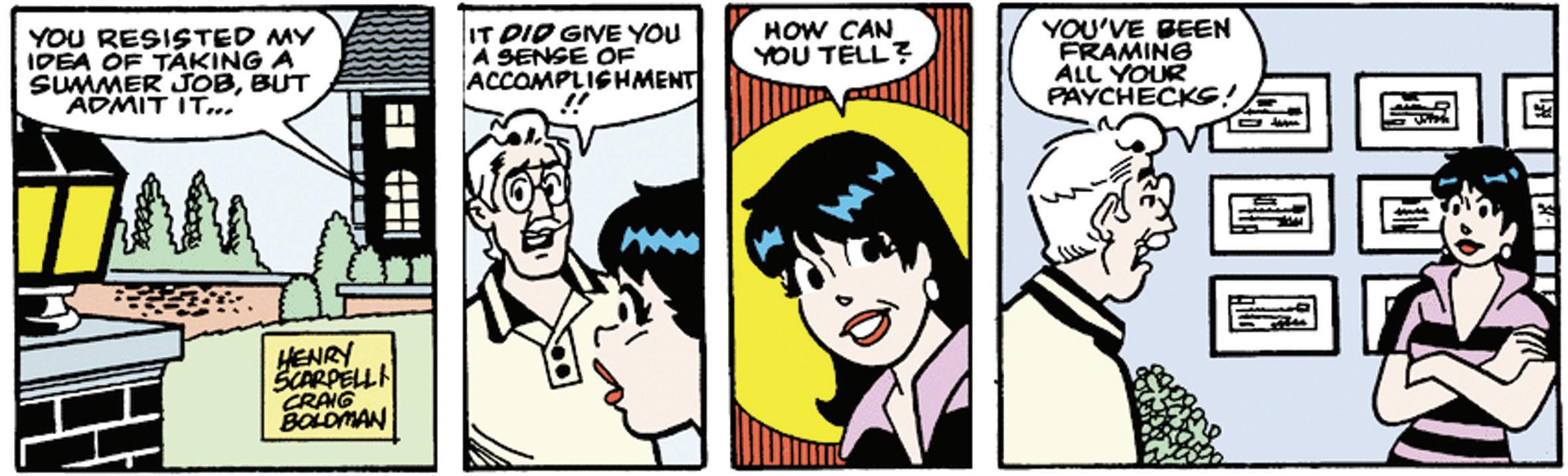

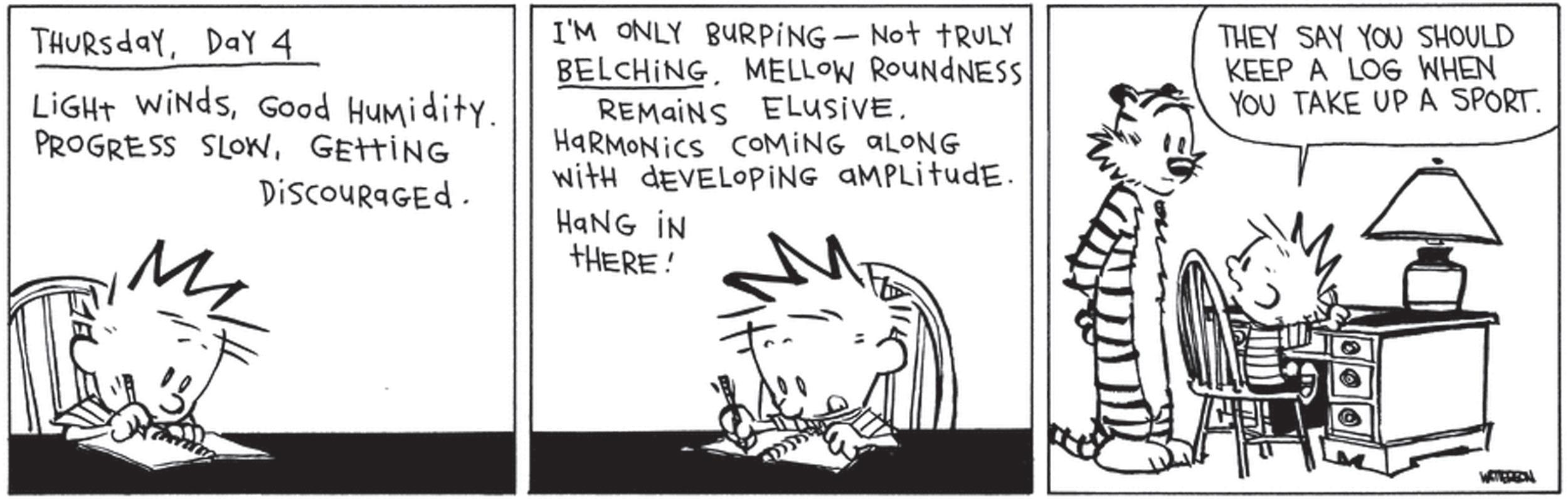






Take a trip down memory lane, reconnect with old friends and relive moments that will inspire you to reach for new heights. A new twist to an old plan will excel.

By Bernice Bede Osol

(June 21July 22) (Jan. 20Feb. 19) (Dec. 22Jan. 19)
Don’t believe everything you hear. Get firsthand information before you make a move. Workrelated incidents turn out to be beneficial as long as you don’t fold under pressure.

No matter what you do, you will shine. Explore new possibilities and learn new skills. Opportunity will be in abundance if you are receptive to what’s being offered.

A change of location or hanging out with different people will be enlightening. Don’t let problems that arise slow you down or hold you back. Deal with demands swiftly and move on.

(Aug. 23Sept. 22)
(July 23Aug. 22) (Feb. 20-March 20)
Travel plans will not run smoothly. Focus on small gatherings and making plans and promises with someone you feel comfortable sharing with. Love and romance will ease stress.

(March 21-April 19)
Keep a low profile and avoid damaging your reputation. Work quietly behind the scenes, trying to perfect whatever you are doing. Minimal interaction is in your best interest.

(April 20-May 20)
Spend time with the people who mean the most to you. Engaging in home improvements that will enhance your comfort and family fun should take top priority.

(May 21June 20)
A problem with personal information will develop if you haven’t been completely honest about your past. Address issues before it’s too late, or you are likely to be compromised.
Use your intellect and knowledge to wheel and deal your way into the limelight. The early bird catches the worm. Don’t waste time contemplating. Get the ball rolling.

(Sept. 23Oct. 23)
Take care of pressing matters concerning home or family so that you can get back to jobs that lead to greater cash flow. Develop an idea and present it to unique groups.

(Oct. 24Nov. 22)
Changing the way or where you live will be inspiring. Taking on a project that allows you to work from home will lead to even greater opportunities that involve travel and expansion.

(Nov. 23Dec. 21)
Get along regardless of how annoying a situation might be. It’s in your best interest to do what you can without making a fuss. Downtime at home will be your salvation.

Dentures provided in 72 hours from as low as $4500. Contact Dr B Stuart, 209B Charlotte St, Lacytown. Tel: 225-5034

SAT/AP/CXC/IGCSE English classes, personalized tutoring. Phone: 6124821 after 4pm, 274-0437 after 7pm.

Available: Fresh long-stemmed roses, fresh dried and silk floral arrangements, gift items, bridal boutiques and wreaths. Nesha’s Flowerland. 78 Church Street (opposite St George’s Cathedral). Tel: 227-3553/225-3315

1 stall stabroek market phone: 718757-8031, 658-0145
Mecury in large quantities, 99.9999% purity in grey flask. Phone: 219-4535
60FT Antenna (Mass) for Radio, TV, Cellular, with cables, brackets, sky light $500,000 227-3939, 621-4000 73” 3D TV Mitsubishi Like new
$450,000 227-3939, 621-4000
DIESEL Generator silent 28 kva
SDMO John Deere engine, missing Fuel Pump, Panel, Avr MAKE OFFER 227-3939, 621-4000
CLARKE forklifts 2000, 3000, 4000 Lb, lifting capacity MAKE AN OFFER TEL: 227-3939, 621-4000
Generac Generator 15 kva, portable, $500,000 cash or credit available Tel: 227-3939, 621-4000
Diesel Generator, 3 cylinder Lister pitter (England) key start, 15 kva, $650,000 cash or credit Tel: 2273939, 621-4000
Chicken Hatchery (Robbins), 28,000 eggs capacity fully ready, $ 5.5 million or CREDIT available TEL: 2273939 621-4000

R.Sookraj & Gift Shop for the best in hand made jewellery ,(made to order) Phone: 612-2125/223-6156


One Dog which answers to the name Zion. Colour Cream/White/ Brown about 1 foot tall. Last seen on Wednesday, November 13, between Success & LBI, ECD. If seen please call on numbers 619-8086, 699-7077, 220-3183.

Learn transcendental meditation and reduce stress & anxiety, develop full brain potential, increase creativity and intelligence, concentration, focus and memory, be healthier & happier, increase energy vitality and longetivity, enjoy more success in life, improve relationships and develop higher states of consciousness, a technique that works for everyone, for next introductory lecture. Contact Ashoke phone 233-6921, 6093701, email: kashokejp_68@yahoo.com or Sherlock phone 2252243, 614-9726

See
wednesday, november 27, 2013
powerful protection. Private and confidential. Phone: 674-2112.
Cleansing of spiritual problems of all kinds. Powerful Ifá protection against evil. Get help to overcome problems with love, relationship, legal, sexual, pregnancy, business, sickness, jobs, enemies, work, money. Call 10am - 4pm. Tel: 592690-1824. Email: anew-life@live. com
Dutch Spiritual work. Unite lovers, get rid of evil, enhance prosperity, good luck baths and charm bowu guards, etc. Phone: 220-0708, 612-6417, 687-5653

Small business space suitable for technician shop, taxi base, etc. Phone: 691-7164, 231- 2619.
Business place for rent , Plantain Walk ,Vreed –en Hoop. Phone:649-0707.
House at Lamaha Gardens. Hot & cold water, AC, etc. Phone: 2194535.
Two modern apartments at Campbellville, hot & cold water, etc Phone: 219-4535



Trike Can-Am style motorcycle, 200cc new, unregistered $450,000 neg or credit TEL 227-3939, 6214000
LEROY TRIDENT car 250 CC, 4 doors, power window, $495,000 cash or credit TEL 227-3939, 621-4000
HILUX SURF 4 DOORS, minor parts needed, sold as is $750,000 TEL: 227-3939, 621-4000
Nissan Maxima, fully powered needs repairs sold as is $300,000 cash 227-3939, 621-4000

A U.S. embassy official presents a book to a student
TPhillip A
Shannon
OD, Natalie Da Silva OD. 248 South Road, Bourda. Phone: 227-3529, Linden: 444-6376, Corriverton: 339-3536, Meten-Meer-Zorg: 275-0322, Grand Cayman Islands: (345) 943-1515 for the perfect trendy touch.

PRIME COMMERICAL PROPERTY, AT BUSY JUNCTION CUMMINGS AND MIDDLE STREETS IN ALBERTOWN, 3 LOTS WITH BUSINESS, (NUT CENTRE) PRICE NEG. TEL 621-4000, 227-3939
1 flat concrete house at Parfaite Harmonie. Phone: 643-4740
Lot 48 Light Street, Alberttown. Contact Ram on 619-4483, 6017883 or 227-1454, 226-6325.
1 property at reasonable price, located in Bareroot, East Coast Demerara. Phone: 612-6417.
One two storey house at lot 93 Atlantic Gardens, ECD; upperflat-3 bedrooms, kitchen and bath; lower flat-2 bedrooms, kitchen and bath. Call 592-619-4483, 592-656-7471
EXECUTIVE TWO STOREY BUILDING 3 BEDROOMS WITH ALL MODERN CONVIENCES, MEADOW BROOK GARDENS, MR NARAINE. PHONE: 696-8230
Are you suffering from abnormal behaviors, addictions, stresses, or psychosomatic sickness? Feeling suicidal, low self-esteem, loneliness, unloved, anger, conflicts and relationship problems? For appointments call 592621-0552. 12:00pm -6:00pm, Email: healthworldhc@gmail.com Da Silva’s Optical. For Your Eyes Only, Look



Immigration & Visa Services We handle all Canadian, USA and UK immigration and visa matters. Self sponsorships, holiday/ visitor’s visas, work permits, students visas, family, class, immigration forms, embassy enquiries, appeals for refused cases, US green card lottery, business class waivers, pardons, etc. Get your visa approved. High success rate. Balwant Persaud & Associates. Certified Immigration Consultants, 68 Sixth Street, Alberttown, Georgetown (Between Cummings & Lights Sts) Tel: 225-1540, 622-8308, 655-3105. Email: balwantpersaud@yahoo.ca

CuttiNg
Professional Key Shop, 125 Carmichael Street, Georgetown. Phone: 225-3923, mobile: 6213249. We cut any type of key, service and repair all types of locks. Get your extra key today.

Gas station land. Size: over one acre Phone Ms Liverpool on 625-7582, 681-9293.
1 three-building centrally located downtown in Thomas Street, South Cummingsburg, Georgetown, recently renovated, fully air conditioned, ideal for office with spaces for boardroom, or any other business. Immediate possession. Phone: 609-2876.

ground work (strictly interior operation). Phone: 662-1247.

Suriname astrology palmist and Djuka healer. The most powerful spiritualist in the world. Are you suffering from the following problems? (any religions) love, marriage, family, health, business, husband and wife relationships, property, court, children, promotion, visa, pregnancy, education, depression, job, sexual, jealousy, enemy, money, drinking, also you can have all evil forces destroyed such as black magic, witchcraft, voodoo, obeyah, etc, and gives
One house located in Lamaha Gardens, hot and cold water. Call 219-4535
EXECUTIVE TWO STOREY BUILDING 3 BEDROOMS WITH ALL MODERN CONVENIENCES FURNISHED/ UNFURNISHED, MEADOW BROOK GARDENS, MR NARAINE. PHONE: 696-8230
Two-bedroom self contained apt. Caneville, Grove. PHONE: 669-1954
Two modern apartments at Campbellville, hot & cold water etc. Call: 219-4535
Recently constructed bond with house and office space on the same lot, centrally located in Broad Street, ideal for business or manufacturing. Phone: 623-0425, 609-2876


One customs clerk with at least three subjects CXC including English Language, mathematics. Applicant must be computer literate. Please submit application before the October 11, 2013 to email: windsortechhomes@gmail.com or call 669-6874 or 682-3481

Stretch limousine, Lincoln Town car, fully powered $6.5 million or credit available Tel 227-3939, 621-4000
Mitsubishi 3000 GT sports car, fully powered, $1.7 cash or credit available TEL: 227-3939, 621-4000
Toyota Hilux extra cab, pick up $3.m. Phone: 264-2682.
Titan (hardly driven) $3.5M neg. Phone: 691-9984
JUST ARRIVED: TOP QUALITY RECONDITIONED VEHICLES; TOYOTA PREMIO; TOYOTA ALLION; TOYOTA COROLLA AXIO; TOYOTA NOAH; SUZUKI SWIFT; MERCEDES BENZ C200 COMPRESSOR; BMW 318i; COROLLA AE100 WAGON; HONDA CRV; LAND CRUISER (FULLY LOADED); MAZDA PROCEED; TOYOTA HILUX 4WD EXTRA CAB PICKUPS - 3RZ, 5L, SOLID DIFFERENTIAL; MITSUBISHI CANTER TRUCKS 3, 3.5 TONS OPEN TRAY; 2 TONS 4WD; 3 TON DUMP TRUCK; NISSAN ATLAS 2-TON TRUCK.PREORDER YOUR UNITS EARLY AND GET THE BEST PRICES. FULL AFTER SALES SERVICE AND FINANCING AVAILABLE. DEO MARAJ AUTO SALES, 2 CHIMNEY ROAD, CHATEAU MARGOT, ECD. 624-0762, 220-5177. A NAME AND A SERVICE YOU CAN TRUST.
One 450 Honda ATV. Phone: 6263817
Toyota Hilux 172 diesel extra-cab pick-up, 4x4 manual (5-speed transmission) a/c, p/s p/w p/l, winch, off road front bumper, KC lights, side baranka bars, bush-ready, Old Man Emu, rear leaf springs, lifted Old Man Emu shocks, snorkel, bed liner. Phone: 623-0425, 609-2876

BODYWORK MAN TO SPARY MOTORCYCLE, HANDYMAN TO WORK IN STORE, MAID GO AND COME CLEANING ONLY (UNDER 30 YRS) APPLY GUYANA VARIETY STORE Tel 227-3939
One experienced production manager to work in Furniture Factory and one AutoCAD/draft person. Contact 657-1414
Urgently needed! One plot of land in Parfaite Harmonie, Herstelling and Eccles. Phone: 675-7292
One female babysitter, between 40 & 45 years, must be from Georgetown, be able to work flexible hours and some weekends, applicant with a sound secondary education may apply. Phone: 614-5711, 9am- 3pm

he U.S. embassy here observed the 14th Annual International Education Week from November 18-22 by conducting information-sharing sessions at several secondary schools in Georgetown, Berbice, Linden and Essequibo.
Embassy representatives shared information on tertiary education in the U.S. with more than 1800 students during visits to the Bishops’ High School, St Roses High, Queen’s College, New Guyana School and Marian Academy in Georgetown; JC Chandisingh Secondary, Rosignol Secondary and Berbice High in Berbice; Wismar/Christianburg Multilateral in Linden; and Abram Zuil Secondary and Anna Regina Secondary in Essequibo.
Students learned about the U.S., higher education system, the opportunities for study that exist in the U.S., and the university application process. Each school was presented with a book and pamphlets with information on the U.S. university application process.
High quality education
According to a release from the embassy, International Education Week 2013 was observed under the theme, “International Education: Learning Matters Around the World”, with the aim of highlighting the benefits and value of a high quality education and study abroad.
In observance of International Education Week, Secretary of State John Kerry said, “international education prepares our youth for the globalised 21st century workforce, whatever their field of study. Students with experience overseas gain the skills, selfreliance, and worldview they need to compete in a global economy”.
Earlier this year, during the launch of one of the American spots at the National Library, U.S. Ambassador D Brent Hardt also underscored the value of international education exchange.
He stated: “The importance of international educational exchange in promoting understanding across
national, cultural, religious, and racial borders really should never be underestimated.
Hundreds of thousands of students who study overseas each year help to create a global citizenry that is culturally aware and respectful of people from different backgrounds, and can help to build the close, interpersonal connections that will solve scientific problems, meet social challenges, and develop new forms of creative, artistic expression.”
During the 2012/13 academic year, the number of international students at colleges and universities in the U.S. increased by seven per cent to a record high of 819,644, while U.S. students studying abroad increased by three per cent to an all-time high of more than 283,000, according to the Open Doors report, which is published annually by the Institute of International Education (IIE) in partnership with the U.S. Department of State’s Bureau of Educational and Cultural Affairs (http:// www.iie.org/Research-andPublications/Open-Doors).
Currently, 206 Guyanese students are studying in the U.S. In the 2011/12 academic year, there has been a significant increase of 67 U.S. students studying in Guyana, compared to 31 the previous year.
The U.S. embassy in Guyana is committed to continue working with potential students to guide them with the admissions, visa, and financial information they need in order to successfully prepare and apply for study in the U.S.
Through its American spots located at the National Library and University of Guyana library, the embassy also offer resources year round to assist young people pursuing university studies in the U.S.
The American spots feature guide books on selecting a college or university, information on the university application process, scholarship guides, books on how to write strong college application essays, and resources to help students prepare for standardised tests.
ST JOHN’S, Antigua –
Over 600 Scotiabank Kiddy cricketers are set to participate in camps in the coming weeks. The aspiring cricketers will be part of training sessions in Antigua and St Maarten. The activities in Antigua will start on Saturday, continue on Sunday, and also run on December 7 and 8. The training in St Maarten will be held from December 2-5.
Earlier this year, several hundred Scotiabank Kiddy cricketers completed another year of summer camps all across the region as part of the West Indies Cricket Board (WICB) Scotiabank Kiddy cricket programme.
The camps were hosted from July 1 to August 30 in
eleven territories across the region. The participating territories were Anguilla, Barbados, Dominica, Grenada, Jamaica, Montserrat, Nevis, St Kitts, St Lucia, St Vincent and the Grenadines and Trinidad and Tobago.
An investment of more than US$150,000 was made by title sponsor Scotiabank to host the eleven Kiddy Cricket summer camps which were geared at giving the top performing boys and girls at the grade six level exposure to advanced cricket concepts and skills development training. They were also prepared for the next level of development (Grassroots Cricket) in the WICB development pathway.

The camps included sessions on the history of cricket, nutrition, personal development and hygiene, the
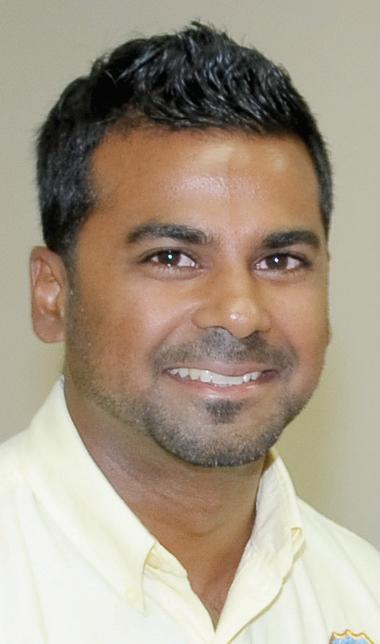
dangers of illegal substance use and the rules of the cricket. The practical side of the camp introduced Kiddy
cricketers to advanced cricket equipment and gear, including new cricket skill development and training concepts in batting, bowling, wicketkeeping and fielding.
“The Kiddy Cricket summer camps have been designed to provide young cricketers with both personal and advanced cricket development training, preparing them for the transition to the next level in the cricket development pathway,” said K J Singh.
“It was WICB’s main objective to use a holistic approach. Classroom sessions were added to the agenda which included advanced on-field training and net sessions. This is to cultivate well rounded young cricketers,” Singh added.
Simone Hull, Scotiobank’s Regional Manager – Marketing and Sponsorship also commented: “Scotiabank believes in the power of opportunity, and we are very happy to be in this partnership with the West Indies Cricket Board for over 14 years in providing opportunities to our Caribbean youth through cricket.”
“We hope that the Kiddy Cricket Summer Camps brings more success to the development of our regional pass time by equipping our youth with the necessary tools and training to start and propel them to the next levels of their development and cricketing careers,” Hull concluded.
Dunedin, New Zealand
- The University Oval pitch in Dunedin is expected to have some zip to it when New Zealand take on the West Indies in the
first of the three-test series starting on Tuesday. The pitch came un-
der fire in March, when New Zealand and England played out a dull draw in


which only 25 wickets fell in the 341 overs that were sent down over the five days.
At the end of the test, English commentator and former test batsman
Geoffrey Boycott was one of the people to slam the University Oval pitch, saying similar pitches would kill Test cricket.
“You could play a timeless Test on that. You could play for 10 days and not get a result,” he said.
Otago Cricket Association boss Ross Dykes said he expected a pitch with a bit more pace and bounce to it come the first Test against the West Indies.
He said there was a fine line between in preparing a pitch that does not offer too much for the bowlers and one that is not a road where the bowlers are cannon fodder for the batsmen.
Dykes believes groundsman Tom Tamati was starting to get the right balance.
“The pitch looks in really good shape. If we get some warm weather between now and Tuesday, I think we’ll have as good a pitch at University Oval as we’ve had,” Dykes said.
“It looks like it might be a little quicker than nor-
mal with a bit more bounce, which it probably needs to have. I think what Tommy has done up here over the last three or four years has been taking the conservative route and say ‘well I’m not going to be criticised for ending a game in two days’ so he’s probably flattened it out.
“But he’s growing in confidence and he now understands what his grass and soil can do. Right now it’s going to have good pace in it.” Dykes said he was unsure what sort of crowd numbers they would get over the five days but acknowledged there were some things stacked against them.
They included the fact the game started on a Tuesday and also that one of world cricket’s most highprofile stars, Chris Gayle, would not be playing for the West Indies because he is injured.
For the March Test between New Zealand and England, temporary seating was put in to increase the ground capacity to 4000.
However, Dykes said that same seating would not be put in this time around, with seating capacity at 3400. (www.windiescricket.com)
Barbados – The West Indies Under-19 team will face the Sagicor West Indies High Performance Centre in two 50-over matches before departing for their tour of Bangladesh.
The matches will be played on Thursday and Friday at the 3Ws Oval at the Cave Hill Campus of the University of the West Indies. First ball is 09:00 hours (08:00 hours Jamaica Time).
The West Indies Under19s will then depart on Saturday evening for their tour of Bangladesh which will feature seven 50over matches against the Bangladesh Under-19s.
Both teams are using the series as preparation for the ICC Under-19 World Cup to be played in United Arad Emirates in February, 2014.
“We are happy to be able to play these matches before we head off to what we expect will be a tough series in Bangladesh, but one which we believe we
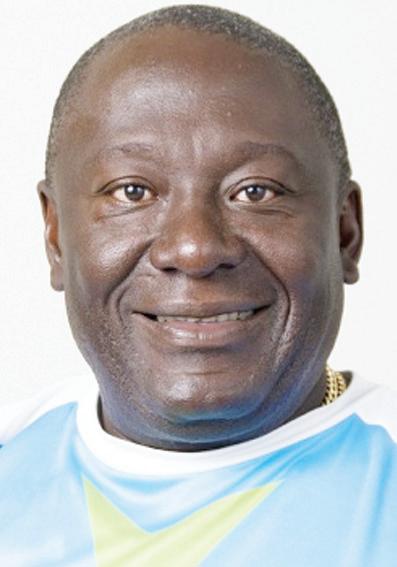
can win,” said Head Coach Roddy Estwick.
“We want our players to get a ‘feel’ and before we head off. All 15 players will get an opportunity so no one will be left out. We will look to continue the work we started when we played against Bangladesh in Guyana last month.”
Estwick added: “We have to get better at rotating the strike, creating singles, hitting the gaps and looking to bat out the 50 overs. These
are the main areas of concern and we want to make sure we get better in this department.”
The West Indies Under19s leave Bangladesh on December 21.
The squad reads: Ramaal Lewis (Jamaica), Jeremy Solozano (T&T), Fabien Allen (Jamaica), Tagenarine Chanderpaul (Guyana), Bryan Charles (T&T), Tristan Coleman (Jamaica), Jonathan Drakes (Barbados), Shimron Hetmyre (Guyana), Jerome Jones (Barbados), Ray Jordan (Windwards), Brandon King (Jamaica), Preston McSween (Windwards), Marquino Mindley (Jamaica), Gudakesh Motie (Guyana) and Nicholas Pooran (T&T)
The team management is Altamont Solomon (Manager), Roddy Estwick (Coach), Robert Samuels (Assistant Coach), Dwain Gill (Analyst), Janel Springer (Physiotherapist) and Ronald Rogers (Fitness Trainer)
Action in the third annual Georgetown Football Association (GFA) Banks Beer Cup 201314 is set to continue this evening with a double-header at the Georgetown Football Club (GFC) ground, Bourda.
In the opening game of a double-header at 18:00 hours, Santos FC will take on Houston Stars, while in the feature contest at 20:00 hours, 2011 champions Alpha United will tackle East Bank side Grove Hi-Tec.
The winners from tonight’s contests will join defending champions Camptown and fellow Georgetown side Pele FC in the round of 16.
On the opening night last Saturday, Camptown mauled
a hapless Essequibo unit 100, while Pele needled Topp XX 1-0 in a Georgetown/ Linden clash.
As was the case in 2012, the champion team will receive $4 million, while the runner-up, third and fourth placed finishers will collect $2.5 million, $1.5 million and 1$ million respectively.
A new addition to this year’s tournament is the monetary incentives for all the teams, including $250,000 each for the losing quarterfinalists, $150,000 each for those knocked out at the second round and $100,000 each for teams booted at the first round.
There will also be individual prizes for the Most Valuable Player, highest goal
Tillakaratne Dilshan, the Sri Lanka batsman, has signed with Sydney Thunder for the coming season of the Big Bash League. He will miss Thunder’s first two matches because of Sri Lanka’s ODIs against Pakistan in the UAE until December 27 but will be available thereafter.
‘’I’m really keen to play in the Big Bash. It’s such a wonderful, competitive tournament,’’ Dilshan said. ‘’I’ve been hoping to play for the past three years but [each time] I’ve had to go for international duty. This year I’m
free to play almost the entire tournament. It’s really exciting. I’ve always enjoyed Australian wickets, with the extra bounce. I’m really eager for this opportunity.’’ Dilshan, who had retired from Test cricket in October, said his decision was influenced by his relationship with the Thunder coach, former Sri Lanka batsman Chandika Hathurusinghe, who had taken over in April after the side finished bottom of the table. Dilshan also said he was looking forward to playing with former Australia batsman Michael Hussey. (Cricinfo)

Ten contenders have been shortlisted for next month’s 60th BBC Sports Personality of the Year award.
Athletes Mo Farah, Christine Ohuruogu and Hannah Cockroft are included along with tennis star Andy Murray and cyclist Chris Froome.
Golfer Justin Rose, sailor Sir Ben Ainslie, jockey AP McCoy, cricketer Ian Bell and rugby union player Leigh Halfpenny also make the list.
The public will vote for their favourite on December 15.
scorer, best goalkeeper and most discipline team. The most outstanding coach will pocket $100,000 cash.
Each association will also receive 20 percent or a maximum of $250,000 as gate receipts after expenses from all games played in their jurisdiction.
Voting for the main award will be by phone and, for the first time, online during the programme, which will be presented by Gary Lineker, Clare Balding and Gabby Logan.
In front of an expected 12,000 crowd at the First Direct Arena in Leeds, the latest name to join an illus-
trious roll of honour will be announced.
With an array of candidates to choose from, an expert panel faced some difficult choices finalising the shortlist.
Ainslie helped mastermind an America’s Cup sailing victory, Bell won cricket’s Ashes with England, and there were World Championship doubles for athletes Cockroft (wheelchair racing) and Farah (5,000m and 10,000m).
Froome ruled in cycling’s Tour de France, Halfpenny starred in the British and Irish Lions’ triumphant tour of Australia and McCoy rode an unprecedented 4,000th winner.
Murray ended Britain’s 77-year wait for a Wimbledon men’s singles winner, Ohuruogu regained her world 400m title and Rose secured his maiden golf major at the US Open.
In addition to the main
prize, there will also be seven other awards: Team of the Year, Coach of the Year, Overseas Sports Personality of the Year, Young Sports Personality of the Year, Sports Personality of the Year Diamond Award, Helen Rollason Award and Sports Unsung Hero. Three former Sports Personality nominees were on an expert panel which decided the shortlist - and the winner will be decided by the public vote on the night.
Baroness GreyThompson, Dame Kelly Holmes and Marcus Trescothick were joined by Liz Nicholl, chief executive of UK Sport, and representatives from the BBC and the newspaper industry.
The panel was put together following criticism of an all-male list decided via a different method in 2011.
(BBC Sport)


The Diamond Mineral Water (DMW) international indoor hockey festival will be graced this year with the presence of as many as 11 foreign teams from Canada, Trinidad and Barbados. These, coupled with top local qualifying clubs, Hikers, Old Fort and GCC are sure to put on an impressive show of high quality, entertaining indoor hockey for which the Festival has become known.
This year the Canadians, Revamp Hockey Club, led by Guyanese Jonathan Roberts pose the strongest challenge for the gold in the Men’s division. Roberts migrated to Canada some 13 years
ago and has represented his adopted home internationally, including the last indoor World Cup in Poland in 2011.
Another member of the team of Guyanese linage is another Canadian international, Scott Sandison, whose mother would have represented Guyana several years ago before migrating to Canada herself. Both Roberts and Sandison have competed and were victorious in the local festival on two occasions, including the inaugural one in 2004.
The Canadians are further strengthened by several other internationals and junior internationals completing a side that will be difficult to defeat.
Local Men’s indoor giants, the Hikers, boast the best results in the festival, winning it a record four times. The defending champions have regained the services of indoor national Shane Samuels, who will anchor the youthful additions of Jamarj Assanah and Aroydy Branford to produce a solid contingent.
Former champions Old Fort of Guyana will hope to regain their glory of 2010, and much will be riding on the shoulders of the phenominal Aderemi “Dove” Simon, whose misfortune left him on the injured list for the recently concluded national championships.
Not to be taken ligtly
The YMCA of Barbados have competed in the festival before and have clearly improved with every outing. Judging from their last performance in 2011, they are not to be taken ligtly. They are spearheaded by former Barbados national captain Rohan “Teno” Thomas who honed his hockey skills for some years in the United Kingdom before returning to the island. Newcomers Queens Park is a top indoor side from Trinidad who will
alented all-rounder
TAnthony Adams, discarded national middle-order batsman Vishal Singh and former West Indies opening batsman Sewnarine Chattergoon will lead their respective team, Essequibo, President’s XI and Berbice in the upcoming Guyana Cricket Board (GCB)/GT&T senior inter-county four-day competition.
The tournament, which gets underway on Thursday, forms part of preparations for next year’s regional four-day competition.
This year, the GCB has included a President’s XI, increasing the number of teams to four.
Essequibo team reads: Anthony Adams (captain), Royan Fredricks (vicecaptain), Kevon Boddie, Ricardo Peters, Avenish Persaud, Herry Greene, Mark Tryll, Parmesh Parsotam, Rajiv Balgobin,

Rovindra Parsaram, Kemo Paul, Keanu Harry, Dellon Heyliger and Gilford Moore. Vibert Johnson is the coach, while Totaram Ramnarine is the manager.
President’s XI team reads: Vishal Singh (captain), Shemroy Barrington (vicecaptain), Robin Bacchus, Ryan Ramdass, Seon Hetmyer, Shaquille Williams, Jason Sinclair (wk), Romario Shepherd, Collis Butts, Steven Sankar, Kellon Carmichael, Andre Stoll, Dominique Rikhi and Seon Daniels. The coach is Esaun Crandon, and the manager is Robert Adonis.
Berbice team reads: Sewnarine Chattergoon (captain), Devendra Bishoo (vice-captain), Anthony D’Andrade, Assad Fudadin, Kandasammy Surujnarine, Eugene LaFleur, Jonathan Foo, Royston Crandon, Rajiv Ivan, Devon Clements, Anthony Bramble, Krisendatt

Ramoo, Raun Johnson, Keon Joseph and. The coach is Hubern Evans and the manager is Albert Smith.
Meanwhile, Leon Johnson was named captain of the Demerara team.
Round one of the tournament will see a clash between Demerara and President’s XI at the Enmore Community Centre ground, while Essequibo face Berbice at the Demerara Cricket Club ground.
Round two is scheduled from December 5 and will see Berbice playing President’s XI at the Everest Cricket Club ground and Demerara opposing Essequibo at the Wales Community Centre ground.
The final round is fixed from December 12 where Demerara face Berbice at the Enmore Community Centre ground and Essequibo oppose President’s XI at the Police ground, Eve Leary.
be testing the waters for the first time in Guyana and local national champions GCC round out the solid pool of top class sides. This year the Men’s division is littered with contenders as each side appears a genuine contender for the title.
Equally competitive
In the Women’s competition, the Canadians once again seem the side to beat as several of the players from last year’s victorious Toronto Academy return under the banner of the Toronto Toros this year. The side was founded in 2011 and fields a full squad of top players from their home city of Toronto, including national midfielder Krie Sher. Last year’s silver medallists Magnolias of Trinidad with their superstar striker Stacey Sui-Butt return with a vengeance to improve on their second place finish. The inaugural victors have a good crop of young players who are sure to make them genuine contenders for the crown once again.
Three-time festival champions and local top side GCC has entered their strongest side to date in this year’s festival. The team features a number of players who have
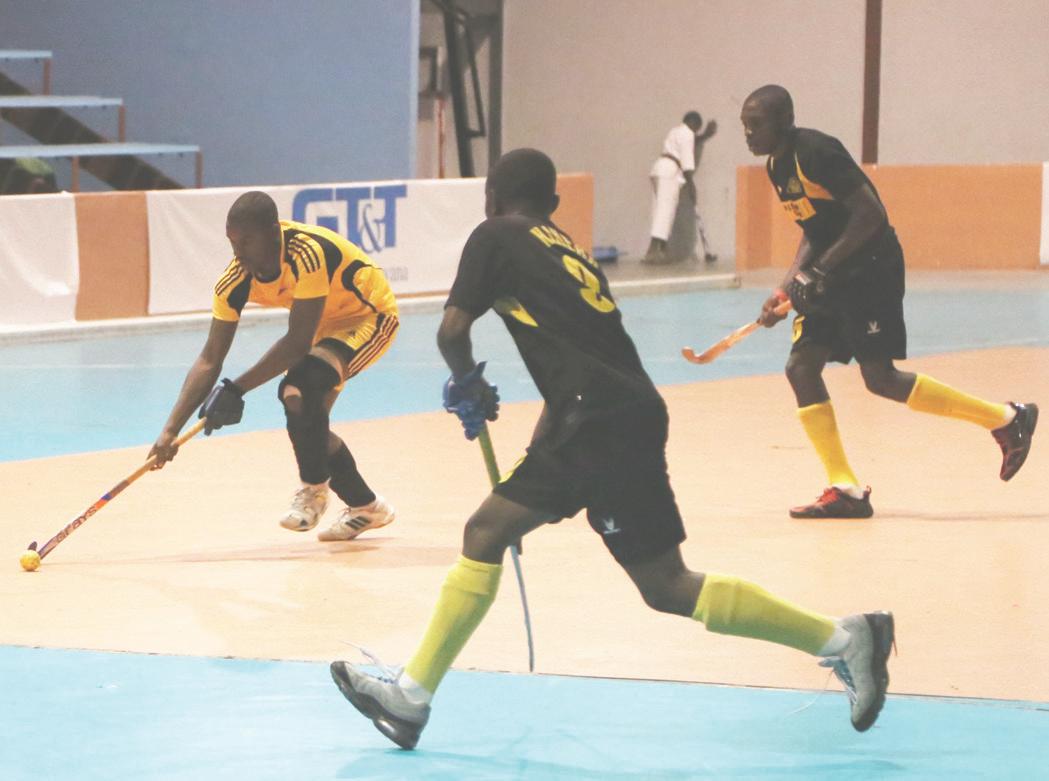
trained on the Guyana national squad over the past few years, including national sweeper Ulrica Sutherland and dynamic striker Gabriella Xavier. Moving up from the junior ranks is the skillfull Aliyah Gordon, who will complete a potent GCC attack.
Malvern Hockey Club of Trinidad has also worn the festival crown in the past and will produce one of the more experienced sides in the festival, while the rebuilding Hikers will be looking to establish a name for themselves this time around.
The Carib Veterans Challenge will feature the largest collection of teams
with eight sides vying for the top honours. Local sides GCC, Hikers and Old Old Fort feature among the most consistent sides, but former champs Fatima along with Malvern, Carib, TT Defence Force and TT Police forge a strong Trinidadian challenge. Defending champs the Hikers will be strengthened this year by the inclusion of Jerazeno “Skillaxe” Bell, but will have their hands full with the challengers abound. The tournament will begin this evening with three matches between local sides and will continue until Sunday when the catgeory finals will be contested.
The rescheduled semifinals of the Demerara Cricket Board (DCB) Over-40, 20/20 competition sponsored by Raj Singh Insurance Brokers and Trophy Stall will be played today at two separate venues in Georgetown.
Lower East Coast Bulls will lock horns with West Bank Demerara Mavericks, while Upper East Coast Tigers clash with West Coast Demerara Seals.
The battle between Bulls and Mavericks will be contested at the Georgetown
Chelsea qualified for the Champions League knockout stages despite suffering a late defeat in Basel.
Mohamed Salah’s goal three minutes from time earned victory for the Swiss side but Schalke’s goalless draw with Steaua Bucharest means the Blues cannot slip to third in Group E.
They will be disappointed by their display in Switzerland as they did not register a shot on target.
Petr Cech made several saves before Salah steered in to seal the win.
The Egyptian had suffered a torrid time in the first half after missing two clear chances when his side were well in control.
But he cut in from the
Cricket Club ground, while the clash between Tigers and Seals will take place at the Everest Cricket Club ground. Both matches will commence at 13:00 hours.
After the preliminary rounds, Bulls finished at the top of the points table with 27 points, followed by Tigers with 26, Seals with 18 and Mavericks with 17.
In addition to their three victories (12 points), Bulls amassed 11 bonus points for exceptional achievements. They also had one loss, one tie (two points) and two no-
result matches (two points).
Tigers recorded four victories (16 points), had one loss, two no-result matches (two points), and eight bonus points.
Seals won three, lost two, two were no-result, and had four bonus points, while Mavericks won two, lost one, tied one, had three no-results, and accumulated four bonus points. The winners of today’s games will collide in the final at the Everest Cricket Club ground on Friday from 13:00 hours.

left to race clear of Branislav Ivanovic, controlled Fabian Schar’s cross-field pass superbly and found the net to send St Jakob Park into raptures.
Basel’s victory means they move into second in the group and have completed the double over Jose
Mourinho’s side, having beaten the Premier League team 2-1 in their opening Group E fixture. And a point for Murat Yakin’s side in their last game against Schalke will put them through to the last 16 of Europe’s elite competition. (BBC Sport)

By Rajiv Bisnauth
The Guyana Cricket Board (GCB) senior inter-county, four-day competition will bowl off on Thursday and will form part of Guyana’s preparations for next year’s regional four-day competition.
This year, the GCB has included a President’s XI, increasing the number of teams to four. The four- day competition is of utmost importance to the GCB as it is being used by the senior selectors to formulate the best possible Guyana team.
On Tuesday, telephone agency the Guyana Telephone and Telegraph Company (GT&T) and Hand-in-Hand Insurance joined forces with the GCB as co-sponsors for the tournament.
At GT&T’s head office on Brickdam, the company’s Director - Sales, Marketing and Public Relations, Roma Narayan-Singh, handed over a cheque for an undisclosed sum to the GCB secretary, Anand Sanasie.
Speaking to the media at the handing over ceremony, GCB Marketing Manager Raj Singh emphasised the importance of this tournament to Guyana’s preparation for next year’s regional tournament.
Further, he stated that this tournament cannot be underestimated, since the best possible team will be selected to represent Guyana.
“The GCB hopes that this year’s competition will better promote and enhance the talented cricketers we are nurturing. We expect that this
competition will build on their mental capabilities and develop their other character traits of discipline, teamwork, and respect [for] authorities,” Singh said.
The Marketing Manager said he is happy with the commitment of GT&T and the support it has given to the local tournament.
“After several years of not having any sponsor for the competition, the GCB is thrilled to have GT&T as a co-sponsor onboard this year. Four-day cricket is the foundation of Test cricket which no doubt needs urgent attention in the West Indies.
In the past, Guyana has produced some world-class Test cricketers and it is the GCB aim to do so again. But
for lengthy competitions like the four-day to be of high standard, the GCB needs help from the business entities. Hence, we are grateful that GT&T saw the need to be involved,” Singh concluded.
Narayan-Singh, in her remarks, said that GT&T is extremely proud to be a part of the tournament.
She said the sponsorship is part of giving back to society, adding that the company stands committed the development of sport.
Meanwhile, Hand-inHand Insurance is the other co-sponsor of the tournament. The insurance company also confirmed its sponsorship on Tuesday.
Fixtures
Round one of the tournament will see a clash between Demerara and the GCB President’s XI at the Enmore Community Centre ground, while Essequibo face Berbice at the Demerara Cricket Club ground.
Round two is scheduled from December 5 and will see Berbice playing the President’s XI at the Everest Cricket Club ground and Demerara opposing Essequibo at the Wales Community Centre ground.
The final round is fixed from December 12 where Demerara will face Berbice at the Enmore Community Centre ground and Essequibo will oppose the President’s XI at the Police ground, Eve Leary.
Jonathan Trott’s county side Warwickshire say there is no timescale on when he will play again following his return home from England’s Ashes series in Australia.
Bears batsman Trott has flown back to be with his wife and young family in Birmingham after leaving the tour because of a stressrelated illness.
“It’s all about Trotty getting better,” said director of cricket Dougie Brown.
“There’s no timescale from us and I’m sure there’s not from England either.”
Trott, 32, left Australia in the wake of England’s 381-run first Test defeat in Brisbane to recover from a “long-standing stress-related condition”, having scored only 19 runs in two innings as he struggled against the hostile bowling of Mitchell Johnson.
“Whilst he might be an England player, and I’m sure England will have his wellbeing at the front of his mind, we’ll be giving him and [wife] Abi as much as support as we can,” Warwickshire chief executive Colin Povey told BBC Coventry & Warwickshire.
“We’ve been aware that he’s been managing the situation for a while now, a number of years.
“In the past, where he’s having to deal with difficult circumstances, we’ve sort of rallied the wagons around him. He’s been a centrally contracted England player
for a number of years but, at the end of the day, he’s still a Bear.
“He’s very close to a lot of people at the club. He has a lot of good friends, a lot of close friends and supporters at club. And he knows that.
“We just want to see him back playing some cricket and enjoying himself. That’s the most important thing.”
Brown has consulted both with former Warwickshire coach Ashley Giles, England’s one-day coach, and former England opener Marcus Trescothick, who also returned home from Australia in 2006 with a similar condition.
And he admits there is ignorance over the sort of problems that Trott has had to face which caused him to call for help. “I’ve never had any sort of illness like he is going through,” Brown said. “So I don’t really know what he is going through.
“But the Warwickshire guys are all very supportive and understand it’s a tough time for him. Suffice to say, he’s welcome back here any time, into a safe, good environment.
“He is in good hands. He has a great support network around him. And we all hope Trotty gets back to playing his best cricket as and when is good for him and the time is right.
“It would be a shame if somebody of his calibre isn’t able to go back to where they’ve come from. (BBC Sport)