





9 errant fishing vessels nabbed at sea Cop killed by Guyanese truck driver in US
10% spike in murders, gun robberies soar –Police COHSOD taking steps to reduce adolescent pregnancy

saturday, august 9, 2014 | guyanatimesgy.com
APolice officer who operated in the North Jersey Area, USA was on Thursday afternoon killed after the rear of a tractor trailer crashed into his parked vehicle near a residential neighbourhood.
The impact pushed the cruiser into a retaining wall just before 01:30h.
According to information received, Christopher Goodell, 32, was operating radar to look for speeders, on Route 17 at Begen Avenue when the tractor-trailer driven by Guyanese, Ryon Cumberbatch of Brookyln veered into the shoulder and struck his unmarked Chevrolet Impala parked on the shoulder that did not have its emergency lights blinking.
A preliminary investigation concludes Cumberbatch made no attempt to brake before striking Goodell’s car and drove directly into it without stopping or attempting to stop. Goodell died from blunt force injuries directly related to severe trauma to the head, according to Bergen County Prosecutor John Molinelli.
Cumberbach is being held on $25,000 bail and is scheduled for a court appearance on Monday in Bergen County Central Municipal Court.
It was reported that an out-of-state Police Sheriff saw the incident and was first on the scene to help, according to the Record. The truck, still with its hazard lights blinking, had come to a stop on a grassy strip between the road shoulder and a raised backyard.

Its cab was at a 90-degree angle from the rest of the truck and had smashed into a white picket fence and stone wall. Fencing and rocks were strewn along the highway. Cumberbatch was hauling a trailer half-full with produce, the Prosecutor said, and was not injured.
In a new release, Police Chief Mark Messner said Goodell was a five-year veteran of the department, a Marine Corps veteran and a proactive officer.
At the early morning press conference, an emotional Messner said, “He
was an outstanding and proactive officer who loved his family, his fiancée, his job and his comrades, and he will be sorely missed.”
“We extend our deepest sympathy and friendship to his family and his fellow Police officers,” said Waldwick Mayor Tom Giordano in a statement posted on the township website. “Rest in peace Chris, you will never be forgotten for the good deeds you have done for the residents of Waldwick.”
Goodell is the second North Jersey Police officer to lose his life this week.
The Guyana Power and Light Company (GPL) has reported on Wednesday that the Number One Wartsila engine at Essequibo was removed from service as a result of a fault in the automatic voltage control circuitry.
The company in a release said the resulting shortage in capacity led to several communities in Essequibo being without electricity while
troubleshooting and repairs were being carried out.
With only the Wartsila Number Two engine in service, customers in the North stretching from Anna Regina to Charity and in the South from Anna Regina to Supenaam were supplied with electricity alternatively every four hours.
However, around 15:30h on Wednesday, output from this unit was unavailable
due to failure of a component within its main circuit breaker.
Both units were unavailable until 20:00h when the circuit breaker of the Number two was replaced and power restored incrementally.
Meanwhile, repairs to the number one unit were also completed and full restoration of power was accomplished at 01:00h on Friday.


The Guyana Government says repeated high rice production levels have brought many challenges ranging from lucrative markets to the capacity to store large amounts of paddy.
Agriculture Minister, Dr Leslie Ramsammy said the Government has been making major investments in the rice sector over the past three years in the area of drying and storage.
This was confirmed by residents on the Essequibo Coast.
Scores of Essequibians had complained about the frequent blackouts by the “inefficient” GPL.
The sudden shutdown on Wednesday night has resulted in businesspersons closing up shop early for security and other reasons.
One wholesale and retail depot in Golden Fleece was closed at 19:00h and businessman Kuldeep Singh said he did so for security reasons.
A few wedding houses on the Essequibo Coast were also forced to halt celebrations due to the power outage.
Power was restored in several villages, including Golden Fleece and Suddie.
Several attempts were made to contact GPL Essequibo Branch Manager but to no avail.
GPL said it apologises for the inconvenience caused.
But other challenges such as millers’ inability to pay farmers in a timely manner, the need for energy efficient management at rice mills, and for more emphasis on value added rice production are confronting the industry.
Despite these problems, rice and paddy production is estimated at 15.4 per cent higher than last year, while exports are 23.4 per cent higher.
Dr Ramsammy said the Government is sparing no effort to have more rice exported in a bid to reduce the need for storage space.
He noted that if the sector has to store and keep rice for an ideal pricing, then there would not be enough storage capacity and this is a major area of concern.
“On top of the European and Caribbean markets, Venezuela came onboard… and Venezuela took up 70

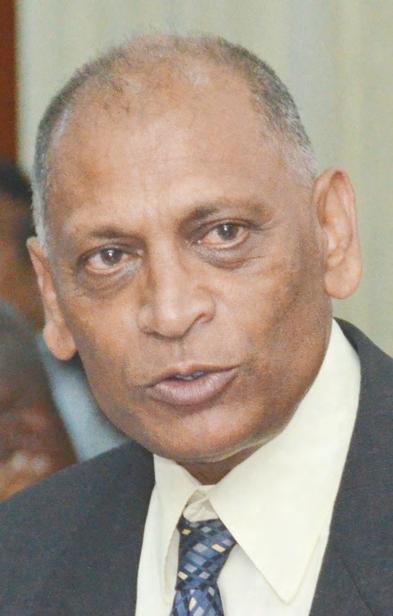
per cent of all our rice and paddy and because of the price differential most of our farmers and millers opted for the Venezuela market and gave up some of the European and Caribbean markets. We have had to recover those markets in the last year… we are now looking for new markets.”
He said the Agriculture Ministry has managed to attract markets in Haiti, Panama and Belize and is looking to capture markets in Guatemala and several African countries.
Dr Ramsammy said Guyana has the capability to sell all 600,000 tonnes of rice produced almost immediately, but the country is used to premium price and in recent times, large world market competitors, particularly those from the Asian continent, have been slowly infiltrating the country’s market domain, resulting in a decline in pricing.
In 2013, Guyana exported 395,000 tonnes rice for a value of US$246 million and this year is expected to produce over 600,000 tonnes of rice.
The authorities say they intend to export more than 461,000 tonnes of rice, noting that it would result in approximately US$251 million being ploughed into the local economy.












As Guyana’s National Stadium swelled with patrons and exhibitors for the inaugural Guyana Festival, President Donald Ramotar urged Guyanese to hold steadfastly to their cultures as Guyana progresses.
Declaring the festival of Guyanese food, culture, and art officially open, the President underscored the need for Guyanese to hold onto their roots. He said the event reminded him of the saying: “Man shall not live by bread alone” and “epitomises the meaning of Guyana’s motto: “One People, One Nation One Destiny.”
“Let the arts develop, let the cultures develop, because culture is not something static... and as the quality of life improves, people will learn to love more and more and enrich their culture... these are the dreams that we have and we can do it together... we can work and give real meaning to our national motto.”
On that note, the

President remarked that in just a short while, Guyana will be moving from its current disposition of a middle- income country and will soon be referred to as a developed country, joining the ranks of other nations around the world.
Meanwhile, Guyana’s acting Tourism Minister Irfaan Ali made light of
the no-confidence motion tabled against the Peoples Progressive Party Civic (PPP/C) Government led by President Ramotar.
In delivering his remarks at the opening, Ali made optimum use of the word “confidence”. The Minister said the Guyana Festival was an “excellent opportunity to celebrate in
confidence”.
Further, he noted that it is with “confidence” that Guyanese celebrate and are proud of their culture.
As the inaugural festival got under way, thousands of patrons poured into the stands to witness a spectacular air show by the Guyana Defence Force.
Although the performance by the Defence Force was exhilarating, it served only to whet the appetite of the large gathering as they peered into the skies for more parachuting pilots.
When the crowd returned to the tarmac of the stadium, they were treated to a magical display of cultural dances and poetry, and African folklore.
There were skits depicting mythical creatures of Guyanese history, which included the ever popular ole higue and baccoo.
Interestingly, there was also a musical rendition of a tale that spoke of the warning issued by older Guyanese and the need to heed those warnings.
The body of a 57year- old woman was discovered in her Prince William Street, Plaisance, East Coast Demerara (ECD) home about 22:00h last evening.
The bound and covered body of Ann Mendonca was discovered by her son Gregory, who explained that he made the gruesome discovery when he arrived home from work.
Guyana Times understands that the now deceased woman used to live alone with her son. He worked while she tended to the home. Police are
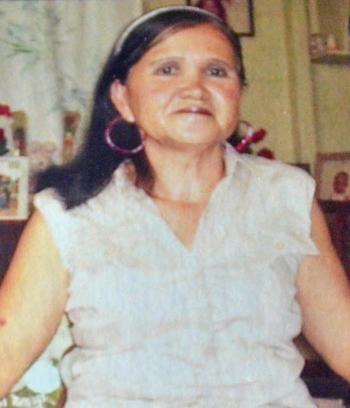
working on the theory that the woman was murdered during a home invasion.
Mendonca’s son Gregory said he last spoke
to his mother around noon on Friday, when she told him that she was in the process of preparing lunch. He believes that the gruesome act took place sometime after then, since the food was still on the stove uncooked when he returned home from work.
He explained that when he arrived, the house was in darkness and that is not a norm since his mother usually ensures that the lights are on.
“I come home from work and saw the darkness cause the neighbour
was complaining that the place in darkness, something wrong,” said the young man in tears.
He further explained that the dogs were barking and the door was open when he got home, which caused him to suspect that something was wrong.
“When I go and put on the lights, I go and see me mother on the bed tie up in duct tape and murdered,” he explained.
The young man explained that while the home was ransacked, nothing was missing except for a DVD player.



Editor: Nigel Williams
Tel: 225-5128, 231-0397, 226-9921, 226-2102, 223-7230 or 223-7231. Fax: 225-5134
Mailing address: 238 Camp & Quamina Streets, Georgetown
Email: news@guyanatimesgy.com, sales@guyanatimesgy.com
No leader of the over 50-year-old People’s National Congress Reform (PNCR) has been elected to that office under so much cloud as was retired Brigadier David Granger just over two weeks ago. Even when Robert Corbin had out manoeuvred the late Winston Murray for the party’s top post, he did it with less bickering from his rival and members did not leave Congress Place feeling disenfranchised, even if they had cast their vote.
This cannot be said of the recent Congress held by that party, yet its leaders continue to deny allegations of jiggery-pokery, although these were made by very senior party officials. The PNCR is no fly-by-night party. It poses a reasonable challenge to the ruling People’s Progressive Party/Civic (PPP/C) and has ruled this nation for 28 years under the leadership of two Presidents.
Its role in and out of Government, a series of unsavoury deeds, none more egregious than the assassination of Dr Walter Rodney, cannot be glossed over and as such its internal operations would have to bear the scrutiny of a nation-wary of its past and suspicion that it has not changed.
It is from this dark hole that the PNCR has emerged since 2001 when former President Desmond Hoyte in an attempt to recreate the party’s image, brought together a group of businessmen and young leaders to form the ‘Reform’ component. But soon after the 2001 elections, some of the leading ‘reform’ members faded into the background, including livewire investment banker Eric Phillips and Peter Ramsaroop, who was critical of Hoyte’s leadership.
By the time Hoyte passed away, Leader of the Reform Stanley Ming quitted and soon after the likes of Jerome Khan and others exited. Though it still retains the name, there is no real ‘reform’ at Congress Place. The old Socialist Party of Burnham remains entrenched in old thinking and habits and its new leader Granger has done little to erase that perception.
Catapulted into the leader’s seat ahead of the 2011 elections, Granger who was ironically billed as a “disciplined leader untouched by the political muck and stain of the PNC” by some supporters has brought in several ex-military men into the party.
His aim, in addition to trying to instil discipline among members and supporters seems also to import that military culture where subordinates do not question instructions given by their commanders. It was this culture that drove out, or in some cases alienated, an army of youthful leaders from the party under Corbin and one would have thought that Granger would have earnestly worked to get these men back.
But instead, buoyed by the reputation of holding three titles – Opposition Leader, PNCR Leader and Leader of APNU, the retired Brigadier has further alienated these men, some of whom do not even visit Congress Place and have not renewed their membership.
The 18th Biennial Congress provided Granger another opportunity to demonstrate his ability to lead the political movement and bring together his charges at their common venue to iron out problems and strengthen the party.
What happened at that Congress is forgettable. The former Guyana Defence Force Commander presided over an election which returned him as the party leader, and which was massively flawed and descended into mass chaos. Such level of opprobrium at any party Congress has never been seen and it has certainly raised questions about the legitimacy of the poll and whether Granger has a mandate to lead the PNCR.
In the circumstances, though it might have felt like him giving in to his rivals, Granger would have earned more respect from both the rank and file membership and the wider Guyanese society had he cancelled those elections and arrange fresh ones; but for him to have accepted the leadership when almost all of the Region 10 delegates walked out and his main challenger Aubrey Norton refusing to contest, is to be governing with a shaky mandate.

Dear Editor,
With the escalation of the conflict in the SouthEast of Ukraine, the Russian Federation proposed to form an international humanitarian mission in the Donetsk and Lugansk regions.
According to the official information of the UN Office for the Coordination of Humanitarian Affairs, 1367 people have been killed and 4087 have been injured including 2589 civilians since the beginning of the punitive operation by the Ukrainian army.
There are about 3.9 million people in the area of the military activities. Vital infrastructure, including power supply and water supply, state and residential buildings continue to be destroyed.
About 200,000 people have no access to drinking water. According to the Russian Federal Migration Service since the beginning
of August, 163,000 internally displaced persons have been recorded.
The most dramatic situation is in the health care area. About 70 per cent of medical personnel have been forced to evacuate to safer regions, but those who stayed are in danger.
The Office of the United Nations High Commissioner for Human Rights, the UN Office for the Coordination of Humanitarian Affairs, the Office of the United Nations High Commissioner for Refugees, the International Organisation for Migration and the International Committee of the Red Cross share Russia’s concerns with the severe humanitarian consequences of the Kiev’s military operation in the South-East, perceive Russian initiatives positively and express readiness to discuss modalities of deployment of a humanitarian mission.
Despite this Ukrainian
authorities irresponsibly refuse to recognise the evident humanitarian problems in the South-East of the country.
Russia is continued to be criticised by some Western countries for alleged supply of armaments to the militia in the South-East of Ukraine. On August 5, the UN High Commissioner for Human Rights Navi Pillay confirmed that there is no proof of this.
Those who are engaged in the search and spinning of such insinuations instead of this should show their political will and the influence they have to stop the bloody punitive operation conducted by Kiev.
At the same time, Russian authorities and ordinary people are perplexed that such a statement by Navi Pillay was simply ignored by the Western mass media. Probably it did not fit the targeted disinformation campaign, the purpose of
which is an attempt to shift the blame for the events in Ukraine on Russia.
For some period of time the Russian Federation has warned that the sanctions of some Western countries against it are unacceptable and contradict the international rules and norms. It has been expected that the sanctions would be reconsidered, but no changes came.
So on August 6, President of Russia Vladimir Putin signed the Executive Order on Special Economic Measures to Protect the Russian Federation’s Security that envisions ban or restriction on import of particular kinds of agricultural produce, raw materials and foodstuffs originating in countries that decided to impose economic sanctions on Russia.
Denis V Kopyl Head, Consular Section Russian Embassy
Dear Editor, The Guyana Geology and Mines Commission (GGMC) in its continued efforts to enhance the conditions under which its staff operates had invited bids for Civil Works for its building at High and Princes Streets, Georgetown.
Further to a letter of protest submitted to the Natural Resources and Environment Minister Robert Persaud and following a meeting with the Chairman of the Board of Directors and other officials, a review by the
Board was requested before proceeding.
The submitted bids were evaluated and a recommendation was made to the Board for approval. However, given the nature and scope of the project, the Board at the request of
Minister Persaud is currently reviewing the recommendations and a decision will be forthcoming in the immediate future.
Chairman Board of Directors, GGMC
Dear Editor,
The People’s Progressive Party/Civic (PPP/C) has noted with grave concern a ruling by Speaker of the National Assembly Raphael Trotman not to refer two Opposition MPs to the Privileges Committee.
Both of the MPs, Khemraj Ramjattan and Kathy Huges – being members of the AFC – have admitted to having pecuniary interest on matters which were before the National Assembly which constituted a case of conflict of interest and a breach of parliamentary ethics.
It is clear that the Speaker has chosen to ignore the merits of the matter brought before him by PPP/C Chief Parliamentary Whip Gail Teixeira and instead arbitrarily ruled against the sending of the two Opposition MPs to the Privileges Committee.
This is a violation of the parliamentary procedures and Standing Order 107 which states that a Member of Parliament is not allowed to appear before the Assembly or any Committee thereof as Counsel or Solicitor for any party or in any capacity for which he or she is to receive a fee or reward.
The case against both Opposition MPs could not have been more clear-cut. Cathy Hughes was the Public Relations Consultant for Sithe Global and she failed to disclose such information to the National Assembly of which she is a member.
In the case of Ramjattan, one of the bidders for the construction of the Specialty Hospital was his client and in clear violation of parliamentary ethics, he voted for the project during the bidding stage of the project.
However, after his client lost out on the contract award, he then voted against the project in 2013 and again in 2014 during consideration of the Budget Estimates.
The PPP/C is convinced that the ruling by the Speaker is indicative of a widely held perception that the Speaker of the National Assembly is not only biased in favour of the Opposition parties in Parliament but also is an integral part of a much broader and sinister Opposition plot to frustrate the parliamentary agenda, and ultimately to destabilise the current PPP/C Administration.
The party is not oblivious to the apparent political leaning and pre-disposition of the Speaker having regard to his political DNA but at the very least expected that he would have displayed some measure of fairness and objectivity in the conduct of his parliamentary duties as Speaker of the House.
Regrettably, his most recent ruling has shattered whatever little hope one may have of him in that regard, especially when seen against the unbridled haste to commit the Finance Minister, Dr Ashni Singh before the Privileges Committee in the performance of his ministerial duties which, unlike the two Opposition MPs, is in full conformity with the laws of the country.
The PPP/C stands in full solidarity with the Donald Ramotar-led Administration as it seeks to navigate the turbulent political waters and remain confident that it will ride the huge waves and steer the ship of state to stability and economic and social progress.
The party also calls on the Guyanese people to be on guard against those elements who individually and jointly seek to reverse the social and economic gains that have been achieved over the past years by the current Administration.
Sincerely, PPP/C, Freedom House
Dear Editor,
Once again, the Mayor and City Council (M&CC) of Georgetown has expressed disgust at the unprecedented unilateral action to deduct monies from the allowances of certain Councillors for the month of July. The Council loathes this action.
The Mayor and Councillors have repeatedly complained about this action but, Government seems to be in support. The acting Town Clerk has no authority or right under the law, to interfere in any way with monies already approved for Councillors. This action is unacceptable. Further, the situation at City Hall is restive.
This is affecting Councillors – the people’s representatives –from carrying out their functions to citizens, in their local communities. Consequently, citizens are unable to effectively participate, in the management and governance of their neighbourhoods.
The Mayor and City Council is calling on citizens to take careful note of what is happening, in the council, and to raise their voices against this unlawful action that is inhibiting the work of the Mayor and Councillors.
This is happening in face of
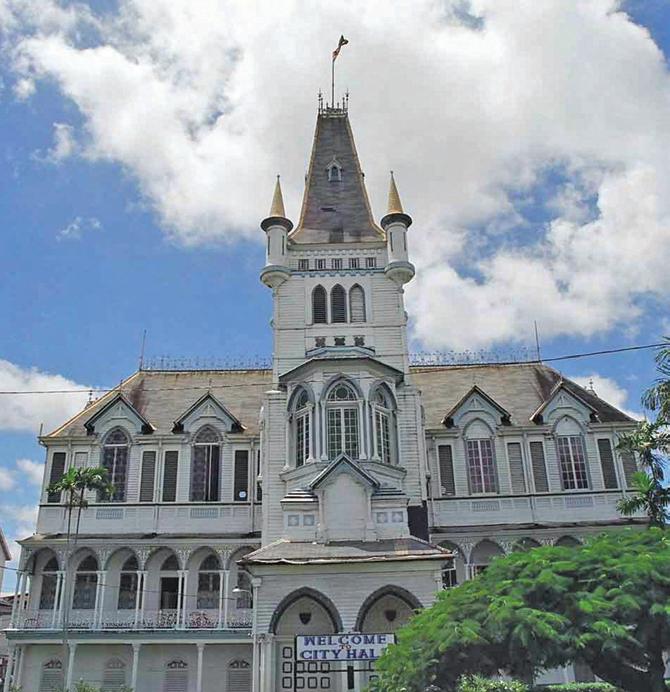
the fact that the acting Town Clerk reportedly made a nonpriority purchase of a sofa for almost half a million dollars, for her office. This could not be right, fair or justified.
The Council will now begin legal proceedings in the court, to have all monies deducted restored and for the acting Town Clerk to cease her action.
Sincerely, Mayor and City Council City of Georgetown, Guyana
Dear Editor,
The entire issue of a possible “no-confidence” motion being presented in the National Assembly is one for our parliamentary political leaders to pontificate and decide upon.
If a majority no confidence verdict is carried, then Blue Caps will respect whatever guidance is offered by the Constitution to deal with such a circumstance. However, we believe that Local Government Elections (LGE) should predate General Elections.
We advance several reasons for adopting this position. Twenty years of no LGEs is a contemptible and unconstitutional situation. Fix broken and neglected communities first, which effects hit closer to home, then attempt to fix the national system.
Moreover, there is no guarantee that General Elections will remedy our current governance issues between the Legislature and Executive. We could end up with a similar dispensation and which would further exacerbate and prolong the rot at the local and community levels.
Local Government Elections will give citizens a closer and more accessible say in the conduct of public affairs that affect their lives and communities than at the centralised national level.
Local government structures and leadership have decayed and become ineffective. Fresh LGEs will allow for new leaders to emerge and for the design of new approaches to solving community and municipal problems. If effective, these new leaders can potentially be presented at
the national level as candidates for general elections.
New and more effective management can result from LGE and this would allow central government and other bodies to focus more on issues of strategic national importance and relieving them of considerable administrative burden of managing both local and central demands.
Most young people have never participated in a LGE and many would love the opportunity to do so, both as voters and contestants. The new local government system allows for individuals to contest their constituency, thus allowing them to potentially become leaders of their communities without having to align to any political party.
Respectfully, BLUE CAPS

By Gwen Dewar, PhD
(Continued from friday)
What’s the bottom line?
Children need help coping with night-time fears, and they need a helper who is sensitive to their developmental stage and individual temperament. They need someone to reassure them, to provide them with a sense of security, and to teach them how to overcome their night-time fears. In short, they need responsive, rational parenting.
Helping children cope with night-time fears: A checklist
• Always question parenting advice that encourages parents to leave distressed children alone at night. As noted above, children lack the coping tools to work things out by themselves. And even advocates of “cry-it-out” strategies of sleep training warn that such approaches are inappropriate for young babies and children who are especially fearful or anxious.
• Talk to children about the difference between fantasy and reality, and prove to them that there is no monster in the closet. As noted above, children who have trouble distinguishing fantasy and reality may be at higher risk for night-time fears.
Consider sources
of daily stress. Children who suffer from daytime anxieties – about school, separation from parents, or other concerns – are more likely to fear the dark and fear sleeping alone. You may be able to reduce your child’s night-time fears by helping him cope with daytime stress.
• Review your child’s sleep requirements and sleep sched Sometimes parents over estimate how much sleep their children need. As a result, they send their children to bed long before children can fall asleep. Children left to stew in the dark have more time to dwell on night-time fears.
• frightening television, sto ries, and imag ery – especially before bedtime This includes pas sive exposure, which occurs when your child is present while you watch po tentially disturb- ing material on TV. A recent study reported that five to sixyear-olds exposed to adult TV programmes – including the evening news – slept less overall and experienced more sleep disturbances.
affection switches off separation anxiety.
• Offer your child the comfort of a soft toy animal or doll. There is experimental evidence that this old standby really helps: In a study that randomly assigned fearful children to receive a toy “huggy puppy,” children exhibited fewer
feels rejected, this will only intensify his separation anxiety and make things worse.
• Respond promptly to nightmares. Assure your child that the nightmare wasn’t real, and explain that everybody has nightmares sometimes. The more quickly you break the spell of a frightening dream,

• Be a model of calm, confident behaviour
When your child comes to you in a fearful state, be warm, sensitive and responsive. Tell him you understand that he is scared, and that everybody gets scared sometimes. But don’t let sympathy turn into overprotectiveness. Many animals –ranging from birds to monkeys – are sensitive to social cues about fear. They pick up fears by watching others model them. Children are no exception. If your child believes you are worried or anxious, he may become more fearful.

toy was presented as a protector or as a creature needing protection.
• Fight fear with the power of touch. Physical
• Try to be patient. If your child’s night-time fears are depriving you of sleep, it’s natural to feel resentment. But it’s important not to direct anger or irritation at your child. If your child

switch to progressively dimmer lights. But word to the wise: Find a nightlight that gives off soft, warm light, not light with a blue cast. The latter inhibits the production of melatonin in the brain, and thus may prevent your child from feeling drowsy at bedtime.
Show your child how to relax. For instance, as you soothe a crying child, you can show her breathing exercises. In a study aimed at reducing anxiety in young children scheduled for a medical procedure, researchers taught children how to take slow, deep breaths by having them exhale into party blowers. These breathing exercises appeared to reduce distress in 40 per cent of the children.
• Counteract frightening thoughts with images of happiness, safety, and bravery. When he is fearful, help your child think of situations that make him feel happy and in control. For instance, you might encourage him to imagine he is playing with his favou-
rite pet. You might also have your child practice telling himself that he is brave. This technique was used in the study mentioned above.
• Teach coping skills through role playing. Many children overcome their fear of medical checkups by playing doctor. You can apply this approach to night-time fears as well. During the daytime, talk about your child’s fears and discuss how she can counteract them. Help your child practice the tactics mentioned above – thinking happy thoughts, telling oneself that one is brave, rehearsing relaxing techniques, and transforming frightening imaginary creatures into something silly and nonthreatening. Then try a little role playing. If you have another adult or older child to help, the two of you can act out the parts of frightened child and helpful parent. The parent shows the child how to counter her night-time fears, and the child tries each technique out. After this demonstration, have the child play the part of the comforting adult. You – or a favourite toy –can take the part of the fearful child.
• During the daytime, create stories with your child in which the protagonist (your child’s favourite fictional character or hero) learns to overcome his nighttime fears . This technique – called story desensitisation – is designed to make children less fearful by having them confront their fears in small steps. Start by telling a story that lacks any frightening elements. Then introduce something that is just a little bit scary. For instance, if your child is afraid of spiders, you might add a very small, non-threatening spider to the story (one that keeps its distance from the hero). The hero responds by successfully practicing the fear management techniques mentioned above. If this story doesn’t distress your child, you can intensify the frightening element in the next story – perhaps by making the spider come closer. In this way, you may gradually desensitise your child’s fears.
• If your child suffers from severe night-time fears, consult with a doctor or licensed therapist. Recent research suggests that children with problems at night often suffer from a variety of problems during the day, including anxiety, impulsivity, and abnormal attentional control. A specialist can recommend a program of help tailored to the individualised needs of your child.
(parentingscience.com)
The People’s National Congress Reform (PNCR) has declared that it will reject any attempt by the Government to secure additional funding for the ongoing Walter Rodney Commission of Inquiry (CoI).
According to the party, there is no clear- cut indication that the proceedings will come to an end anytime soon. The CoI has thus far been exposing the sordid past of the party.
The PNC, a majority partner in the coalition, A Partnership for National Unity (APNU), which has recently indicated that it will support the Alliance For Change (AFC) no-confidence motion against the Government, is claiming that Government, rather than seeking to ascertain the real issues surrounding Dr Rodney’s death, has been using the Commission to besmirch its good name.
The inquiry was set up in February of this year to probe the circumstances surrounding the death of the WPA co-founder and Historian, Dr Walter Anthony Rodney, who met his demise when a bomb-installed walkie-talkie exploded in his lap while in his car outside the Camp Street Prison on the evening of June 13, 1980.
The instrument was re-
portedly given to him by William Gregory Smith, who fled Guyana, with the help of the Guyana Defence Force, the Walter Rodney Commission was told.
President Donald Ramotar had indicated that he took steps to set up the three- member tribunal following a request by the Rodney family members.
However, the PNCR, the political party fingered as the mastermind behind the assassination, has claimed that the establishment of the Rodney Inquiry may have very well been a political move by the People’s Progressive Party/Civic (PPP/C) Administration to put the party in bad light.
At a press conference at the party’s headquarters, Sophia, Greater Georgetown, on Friday, PNCR Leader David Granger said the party will not support an “open- ended Commission”.
He said over the last five months, evidence coming out of the Commission speaks only to one section of the Terms of Reference (ToR), which seeks to understand the political, economic and social atmosphere at the time.
He noted that ToR number one, which speaks to the circumstances which led to Dr Rodney’s death, has not yet been explored.
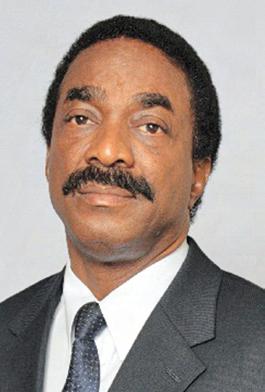
“Despite the manifest deficiencies which have become evident over the past five months, the PNCR remains committed to the pursuit of the truth about the circumstances under which Dr Walter Rodney died,” said Granger, who was a Commander of the army at the time, but has thus far refused to appear before the Commission.
Granger’s estimation
The National Assembly in April of this year had approved some $112 million to fund the work of the Commission. However, Granger said by the time the Commission, which has been bringing the dark days of the PNC to light, is completed, the fund may exceed US$1 million.
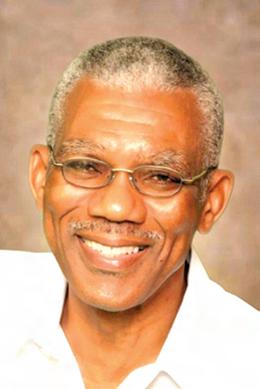
PNCR Attorney Basil Wiliams, who is representing the interest of the PNCR at the Rodney CoI, said the Government is wasting time and money on the CoI, which in the end will bring little or no satisfaction to anyone, including the PPP/C. Wiliams was corrected several times by the Commissioners during the hearing after he tried to block pertinent questions that would reveal or confirm damning actions, including thuggery by the Burnham dictatorship.
According to him, should pertinent witnesses be brought before the Commission, everything would be resolved.
“We believe that core witnesses like Cecil “Skip” Roberts, who was crime
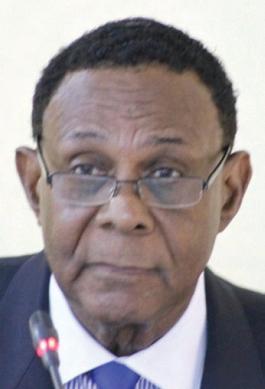
Chief at the time and who was in charge of the investigation, was brought to Guyana for 11 days and was allowed to leave without testifying. I don’t know how there could be an inquiry without bringing him, he being alive.”
The comments by Williams placed him in the hot seat on the last day of session four of the inquiry on Thursday, when he questioned the Commission’s Counsel for delaying the appearance of witnesses he deemed important to the work of the Commission.
Williams had claimed that Roberts was not being sought after by the Commission to present his case. However, time and again the Commission’s Council and Commissioners
had explained that Roberts would appear at the appropriate time, since his name is being mentioned in questionable circumstances.
According to Williams, who is also PNCR Chairman, millions of “taxpayers’ dollars” is being spent on the Commission and its work is lacking.
Commission Chair, Sir Richard Cheltenham defended himself and fellow Commissioners, Senior Counsel Seenath Jairam and Queen’s Counsel Jacqueline Samuels-Brown.
“I am not responsible for our being here … the point that you want to make is a propaganda point and I have no time for that. I am not here to facilitate propaganda,” Sir Cheltenham said as he rubbished Williams’s assertions.
Williams at the Press Conference had also indicated that the main witnesses to the bomb blast have also not yet appeared before the Commission. According to him, Donald Rodney, the main witness should have already been before the Commission. But Trinidadian Attorney Keith Scott, who is representing Donald Rodney, said his client, who was reportedly falsely charged for his brother’s death by the PNC Administration will appear before the Commission.
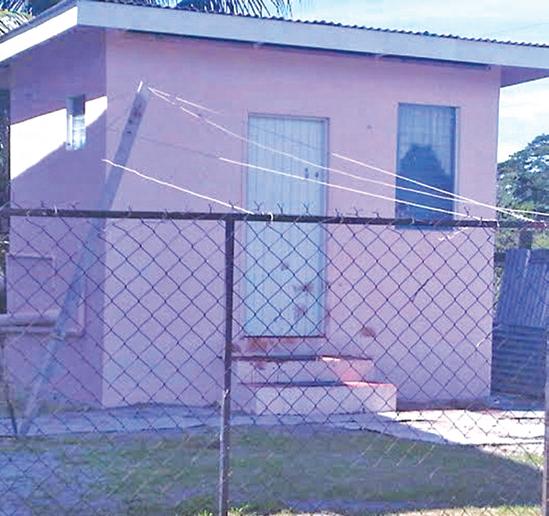
Ranks investigating the gruesome death of 51-year-old Joan Carter, who was mauled to death last Tuesday by two pit bull dogs, are seeking advice as to whether they should institute charges against the owner and what charges should be instituted.
Crime Chief Leslie James told Guyana Times that his officers are currently investigating the matter thoroughly before any decision is made to in -
stitute charges.
“We have to investigate (this matter) completely and based on the evidence gathered, it will be determined whether charges will be laid and what charges should be laid.”
On Tuesday, Carter was found dead outside her apartment located at the back of the Lot 232 Block N Lamaha Springs, Georgetown house. She was living with her sister and brother-in-law Thomside.
According to the owner, he returned home around midday to have lunch when he made the gruesome discovery.
“I walked down the back and they were running ahead of me; they went into their pen. As soon as I get where I could have seen the back of the house, I cast my eyes in that direct and saw her (sister-in-law) lying on the ground,” he stated.
Thomside disclosed that the woman was in a kneeling position and braced against the stairs of her apartment. She bore injuries to her neck, right shoulder, upper back and on both arms. After making the gruesome discovery, the man went to the next door neighbour and immediately informed the Police.
According to Thomside, he has had the two mixedbreed dog for the past five years and was keeping them for security purposes.
Thomside revealed that Carter would go outside to sweep and wash the concrete surrounding her apartment. He said she usually does this early in the morning and late in the afternoon. It is be -

saturday, august 9, 2014| guyanatimesgy.com
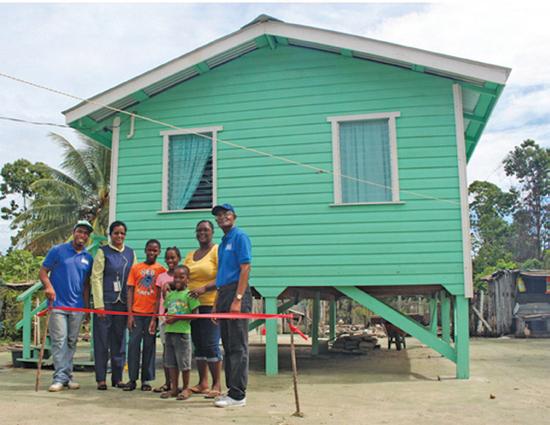
Two families of Onderneeming Sand Pit Road, Essequibo Coast, Region Two, are now the proud owners of new two-bedroom homes complete with sanitation facilities, thanks to the collaboration between Food For The Poor (Guyana) Incorporated and Republic Bank (Guyana) Limited.
The families previously lived with their relatives in extremely poor and cramped conditions.
Speaking at the presentation ceremonies of the
homes to Melissa Alexis Lett, a single parent with three children and Ron Norton and family, Food For The Poor Public Relations Manager Wayne Hamilton, said the non-governmental organisation is extremely thankful for the support afforded by Republic Bank in the construction of the homes and depends on businesses and individuals for donations to accomplish projects of this nature. He implored the families to care their homes as it was a gift from God.
In her address to the gathering, Anna Regina Branch Relief Manager Sereva Rampersaud said the financial institution was happy to be a part of the project and that it is always good for the corporate entity to assist in the community.
She further stated that Republic Bank was happy that the families were able
their new homes.
Food For The Poor has already constructed over 3000 two-bedroom structures, free of cost, for very poor families in the various regions of the country.
The organisation intends to build 120 homes this year.
In June 2014, 40 families benefited from the organisation’s humanitarian project

to acquire a home they so richly deserve.
Both families thanked God and the entities for providing homes for them and pledged to take good care of
“Whitewater Community Development Project” where 40 homes were built, a community school was rehabilitated and a new library installed.
An Enmore, East Coast Demerara (ECD) woman was on Thursday afternoon arrested after she allegedly dropped a quantity of cocaine in her home during a
search conducted by ranks of C Division (East Coast).
Devi Persaud, 40, of Hope West Enmore, ECD was reportedly in the house and upon arrival of Police ranks, she dropped the illicit sub-
stance which later when weighed amounted to 12 grams. During interrogation, she admitted to the offence of possession of narcotics for the purpose of trafficking.
Guyana Time under-

stands that the woman’s sister, Oma Persaud was recently charged for the said offence. In that case, Police confirmed that the woman was also arrested at her home during an operation by Police ranks.
She was caught with a quantity of cannabis.
However, Devi made a court appearance at the Vigilance Magistrate’s Court on Friday afternoon and was remanded to prison.
Meanwhile, an officer attached to the Lusignan Prison was taken into custody after a quantity of cannabis was found in her motorcycle helmet.
According to information received, the woman reported for duty on Thursday evening and at the same time the Police were conducting an operation at the prison.
During the search, the Police unearthed the cannabis in the officer’s helmet. She was cautioned, told of the offence and taken into Police custody. She is expected to be charged shortly.
Recently, ranks of C Division have been working around the clock in several villages on the East Coast with the intention of getting rid of criminal elements.
An official stated that several teams are placed at strategic locations along the coast line. He also added that a special team of welltrained ranks were placed in Sophia following several robberies in the area.

The Crime Chief was asked to assess three possible “theories” as to why Rodney was killed – suggested by the Rodney COI. He might’ve caused his own death – death by misadventure. He could’ve been snuffed out by his party, the Working People’s Alliance, or done in by the PNC state. The Crime Chief said that based on the files in his possession, he can’t make any firm conclusion.
Well, we know that he has to be playing some games. Is he referring to ALL the files that had been compiled over the years – or just the ones that he brought, saying that he can’t find the others?? Even we who aren’t privy to all the info available to this “crack crime sleuth” can do better than this. Let’s take the proposition that Rodney took his own life. At least, no one claimed he wanted to commit suicide.
So they’re suggesting it could’ve been an “accident”. This would mean that Rodney knew the “walkie-talkie” was actually a bomb or had a bomb inside...and it went off accidentally. Up to now, this has been the PNC’s favoured theory – seemingly replaced only very recently by their suggestion that “the PPP dunnit”.
Rodney’s buddy Roopnaraine’s claims that the WPA was “stockpiling” weapons might back up this view. But we have to ask, what the heck was Rodney doing taking a bomb near Camp Street jail?? Trying to spring some prisoners?? Well, he wouldn’t be fiddling with the bomb in his lap, would he?? He’d be hurling it over the fence. Or setting it at the base of the fence.
That he was testing what he thought was a communications device is more plausible since the metal fence around the jail could plausibly be accepted as presenting a challenge to unbroken communication. So we don’t see how the Crime Chief couldn’t at least rule out “negligence” or “accident” as a cause of death or accept that this was extremely implausible.
So we consider that the killing was done by a bomb that was deliberately planted in the walkie-talkie – either by the WPA or the PNC state. And let’s now pick sense from nonsense – even if the Crime Chief doesn’t want to. The WPA had no reason to kill Rodney – and every reason to have him live.
But nobody doubts the State had a motive for removing Rodney: even the PNC leadership has insisted Rodney was a threat to Burnham’s rule and the state organs had to prevent that.
Couldn’t the Crime Chief at least conclude this from the files he has??
For a fella that’s supposedly trained in history, Granger is certainly not heeding the lessons of Clio, History’s Muse. Fresh from his rigging of the PNC’s leadership elections, his first meeting is with the temporary top gun from the American Embassy. Is this like getting absolution from the Pope – or in this case, a priest, since the fella wasn’t an actual Ambassador –after you’ve committed a sin??
It appears that after genuflecting and kissing the ring (or whatever rites are required) must’ve been sprinkled with water because he went on to explain the PNC’s support of the AFC’s no-confidence motion. Now Granger has to know he’s invoking some sore memories of his founder leader’s meetings with US Embassy officials back in the day. When Forbes went ahead with the CIA’s violent overthrow of the then PPP Government. He would’ve read the declassified files, no??
If there are snap elections, lots of folks won’t forget this when they step into the voting booths.
Shaun Samaroo’s miffed that the Muckraker KN did a hatchet job on him for his coverage of the Rodney CoI. Made up stuff and all that. But he won’t take them to court for libel because he was a “founder” of the scandalous rag. Hoisted by his own petard??
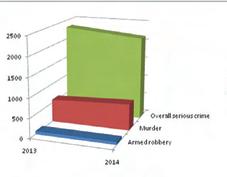
There has been a 10 per cent increase in murders even as armed robberies climbed by over 16 per cent, Police said in their periodic crime update released on Friday.
The statistics related to the offences of murder and robbery under arms for the period January 1 to July 31, compared with corresponding statistics for the same period in 2013.
A total of 80 murders were recorded at the end of July 2014 in comparison
to 73 murders for the same period in 2013. Of the 80 murders committed, three were of the execution type, 16 were committed during robberies, 21 were domestic-related, 17 were of the disorderly type, and 23 were undetermined.
At the end of July, there were 679 reports of robbery under arms compared to 585 for the same period in 2013. The statistics indicate an increase of 27 per cent in the number of armed robberies involv-
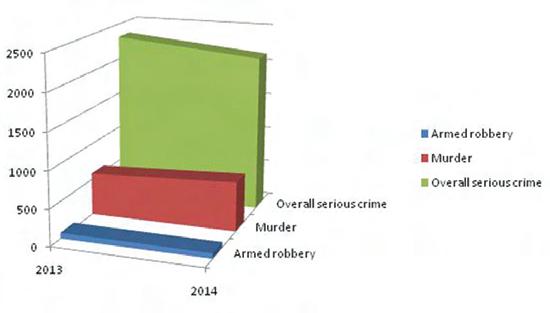
Despite the spike in murder and armed robbery, the Guyana Police Force said there was an eight per cent drop in total serious crimes over the period January 1 to July 31, when compared with the corresponding period in 2013
ing the use of firearms, and a two per cent decrease in armed robberies where instruments other than firearms were used by the perpetrators.
Decrease in serious crime
However, according to the Guyana Police Force, an eight per cent drop in total serious crimes was recorded over the period January 1 to July 31, when compared with the corresponding period in 2013.
The total number of reports
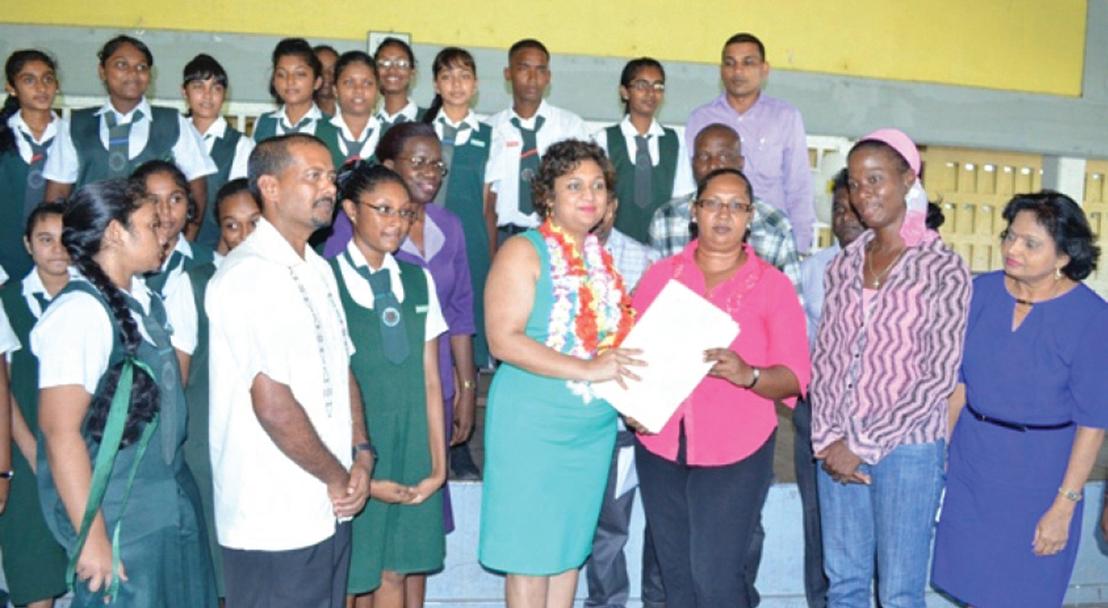
The West Demerara Secondary School is set to undergo a $22.6 million expansion project which will add an additional six classrooms to the building, as Government pushes to achieve the Millennium Development Goal (MDG) of universal secondary education.
This was announced by Education Minister Priya Manickchand at a meeting with the stakeholders of the school on Thursday. Minister Manickchand posited that these projects will aid the drive to that particular goal, which President Donald Ramotar said he was aiming to achieve before the end of his first term in office.
Minister Manickchand proudly boasted of the work the Ministry has so far completed, noting that a new secondary school at Parfaite Harmonie will be opened by 2016 and the Zeeburg and St John’s Secondary Schools, rebuilt. She said these projects will help pave the way for all children in Region Three to have full access to secondary education.
Speaking at the event, acting West Demerara Secondary Headmaster Harri Narine spoke of the school’s development and contributions made to the
education sector by the Education Ministry over the years, complimenting Minister Manickchand on the hard work she has put in to improve the sector. Narine added that he was hoping that the school would be upgraded to a sixth-form facility after the expansion to offer the Caribbean Advanced Proficiency Examinations (CAPE), since there is no school in the region that offers CAPE.
The two-storey extension, with three classrooms on each flat, on the southern section of the school, will be constructed by Vision General Construction Services. The school currently has 19 classrooms, which accommodate over 600 students. The extension is expected to be completed in the next five months, with a six-month defects and liability period. Minister Manickchand said the new building will cater for persons with disabilities in accordance with the Disability Act, adding that every building a Ministry constructs will cater for persons with disabilities.
Value for money
Acknowledging that there have been a number of contractors who have ‘’conned’’ the Ministry and
have done ‘’shady work’’, she noted that the Ministry has recently implemented a policy to guard against such persons. The Minister called on persons in attendance (parents, teachers and students) to supervise the construction of the project, to ensure taxpayers receive value for money, and introduced the attendees to Vision General Construction Services Representative Marlon Andrews.
Manickchand noted that the project represented yet another move by Government to expend substantial funds towards the improvement of Guyana’s education sector, explaining that the administration believes that “the only way we can change the lives of people is to invest in education and we have been doing that, and that has been giving us serious results such as universal primary education”.
Manickchand also related that Guyana’s education sector has improved significantly. She noted that some countries were still talking about universal access to primary education when in Guyana, numerous primary schools have been built and primary education is available to every school age child. She asserted that Guyana
The Education Minister, who was accompanied by a team of Ministry officials, also engaged in discussion with parents, teachers and students on various issues such as automatic promotion, uniform vouchers and the $10,000 grant to be given to each student. Parents queried as to when the grant would be given and they were informed that it would be distributed in the second week of school. Discussions were also had as to where the monies should be collected from –a bank, post office or Western Union outlet; most persons were in favour of distribution through the banks. Minister Manickchand related that the discussions were ongoing by the Ministry to decide on the mode of distribution.
of serious crimes made between January 1 and July 31, 2014, was 2134 compared to 2317 for the same period in 2013. Counted among the serious crimes are murder, robbery under arms, robbery with violence, robbery with aggravation, larceny from the person, break and enter and larceny, burglary, rape, and kidnapping.
In relation to traffic, 67 road fatalities from 61 accidents were recorded at the end of July 2014 in comparison to 61 fatalities from 58 accidents for the same period in 2013.
The other categories of accidents – serious, minor and damage – have seen reductions in comparison to the same period last year. Pedestrians have been the main road users affected, with 28 having lost their lives at the end of July 2014. Eight motor cyclists, 14 pedal cyclists, six drivers and 11 persons travelling in motor vehicles also lost their lives.
Speeding continues to be a major contributing factor to fatal accidents and was the cause of 37 of the 61 fatal accidents recorded at the end of July 2014. Traffic enforcement by Police has resulted in a total of 43,487 cases being made against errant motorists for the January 1-July31 period this year; of this total, 11,637 cases were for speeding. To date, eight persons have lost their lives from seven accidents on the roads for the month of August 2014.

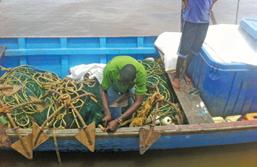
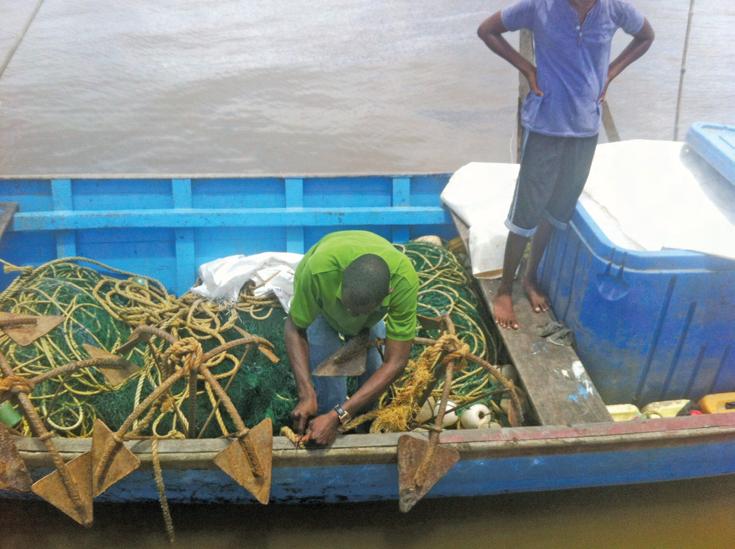
Operators of nine fishing vessels felt the brunt of law enforcement when the Guyana Defence Force (GDF) Coast Guard, in collaboration with the Agriculture Ministry’s Fisheries Division recently conducted a joint maritime patrol.
The patrol was done along Guyana’s coast from Port Georgetown to Anna Regina in the Essequibo, on Wednesday. Breaches of law included not having a vessel registration and fishing licenxce on hand, operating a vessel that was not licensed for fishing, having an expired licence, and the illegal use of anchor seines.
Those found to be operating a vessel that was not licensed for fishing had their fishing lines confiscated, while operators who had not their licences on hand or were in possession of expired licences, received warnings and were instructed to put their affairs in order.
The illegal anchor seines were cut loose from the vessels of those operators using them and discarded in the sea.
Coast Guard Commander Gary Beaton explained that the joint patrol was undertaken following the receipt of information, which indicated that a number of operators of fishing vessels were using the illegal anchor seines.
He further explained that drifting seines rather than anchor seines were permitted and use of the latter was in direct contravention of the fisheries regulations.
“The Coast Guard is an enforcement agency, and, once called upon by the
relevant agencies to provide support, will collaborate to ensure that operators of vessels plying any of Guyana’s waterways comply with the laws and regulations in force. When fisheries said they needed assistance to address the reported issues, I advised that it had to be a joint patrol,” he said.
“The Coast Guard does not have the authority to discard the seines of operators and therefore that was something that had to be done, by the officer from the Fisheries Division of the Ministry of Agriculture. In instances
where breaches of Maritime Laws occur, the Coast Guard will first issue a warning. Thereafter, transgressors are exposed to more severe penalties as the law stipulates.”
During the patrol, no incidents of piracy were reported. Other exercises are being conducted in the waterways and along the coastland in order to ensure that maritime rules and regulations are being adhered to and that vessels are being operated in a safe manner.
The Indigenous Peoples Commission (IPC) said resource constraints coupled with the fact that its Commissioners are not on full-time duty have affected the proper execution of its mandate.
In a message to mark International Day of the World’s Indigenous People today, the IPC has nevertheless extended greeting to the indigenous community, saying that it has fully recognised the tremendous contribution of the indigenous peoples of Guyana to the nation’s overall development, especially to the rich cultural heritage.
The body has also recognised the priority and importance of policies and legislation that fully protects the rights of the first peoples, particularly to their traditional lands and territories.
“The IPC is pleased to support this year’s theme of the UN International Day of the World’s Indigenous Peoples, “Bridging the gap: implementing the rights of indigenous peoples”, and in this regard, it has committed to helping bridge the gap by promoting the implementation of rights through policies and legislation that respect and protect the rights of the indigenous peoples.
The International Day of the World’s Indigenous People (August 9) was first proclaimed by the United Nations General Assembly in December 1994, to be celebrated every year during the first International Decade of the World’s Indigenous People (1995-2004).
In 2004, the Assembly proclaimed a Second International Decade, from 2005- 2014, with the theme of “A Decade for Action and Dignity”.

According to the United Nations, the theme aims to highlight the importance of implementing the rights of indigenous peoples through policies and programmes at both the national and international level, working together towards this common goal with Governments, the United Nations system, indigenous peoples and other stakeholders.
The IPC is one of four rights commissions established by virtue of Article 212G of the Constitution of Guyana with the primary goal of these commissions being the strengthening of social justice and the rule of law.
Article 212S provides that the IPC shall establish mechanisms to enhance the status of Indigenous peoples and respond to their legitimate demands and needs.
In addition, the main functions of the IPC as stated by constitutional Article 212T are among others, “to promote and protect the rights of the indigenous peoples”, “to raise awareness of the contribution of, and problems faced by, indigenous peoples” and “to promote empowerment of the indigenous peoples, especially with regard to the Village Council in the local Government system and the scope and authority of the Council of Toshaos”.
The Commissioners of the IPC were sworn in during September 2010 and the Commission began work in April 2011. The IPC as a constitutional commission has the duty to uphold the Constitution and to fulfill its obligations to the indigenous peoples as prescribed by the Constitution.

Sometimes some people does be right to lose hope wid some tings in this country. De Linden people done lose hope with Green Jah and de Plaisance people done lose hope with Green Jah. In fact, it look like de Linden and Plaisance people lose hope wid de whole of de Pee-N-C ever since Oscar de bite man try to give a no-teeth bite to a decent Kiss woman.
Now Green Jah he self turn a hopeless case by followin a hopeless no-confidence motion. And to add insult to injury, is a set of hopeless people who start up de no-confidence motion in de first place. So is no wonder dem ain’t got no confidence in dem own no-confidence motion.
One party a couple of years ago end up realisin all too late that dem ain’t got no hope in Rum Jhaat and de Nagga Man, and de two of dem had already turn hopeless just like Green Jah. Old people gotta tru tru sayin bout birds of a feather, so is a set of hopeless birds flockin together.
Another hopeless case look like de Crime Chief. Accordin to one newspaper, de Crime Chief blank wheh de death of Walter Rodney concern, despite all de evidence whah he got right before he two eyes, plus all de other people who gee evidence before he. So people losin hope because dem wanna know if blank mean deaf, dumb or blind, or all three at one time.
On de one hand, some hopeless people leadin another set of hopeless people, as wid de Rum Jhaat party leadin de Green Jah party, now a man who supposed to be full of ideas to stop crime in de country seh he gone blank. Wonder then if he name shoulda change from Crime Chief to de Chief of Crime.
Ting-a-ling-a-ling…friend tell friend…mattie tell mattie! Now one newpaper man lose hope in he own wood and he goin after a Chinese man wood. Now de Chinese ain’t ever known fuh good wood, so imagine how hopeless is de newspaper man wood!
–
The Guyana Power and Light Company (GPL) has reported that on Sunday, maintenance will be carried out on the six 13.8 feeders directly supplied by the Kingston Plant that provide power to a major portion of Georgetown, including the commercial district.
While arrangements will be put in place for alternative supply to some areas, customers in Kingston, Lacytown, Waterloo Street, Middle Street between Waterloo and Camp Streets and Cummingsburg will be without power from 08:00h to 17:00h.
The company in a release said maintenance activities are in keeping
with GPL’s programme to improve the reliability of these feeders and reduce the likelihood of shutdowns at the Kingston plants due to faults on any of the feeders.
“The opportunity will be taken to replace defective poles, cross-arms and insulators, as well as to upgrade and service switches and jumper connections.
“Our company solicits the patience of our valued customers while we work together to eliminate incidents of unscheduled outages. Customers are advised to check our website at www.gplinc.net and our Facebook Page (GPL Inc) for the weekly line maintenance guide,” GPL said.

















The Caribbean Public Health Agency (CARPHA), the new single regional public health agency for the Caribbean, says the risk of the Ebola Virus Disease (EVD) being imported to the Caribbean is low.
Executive Director of CARPHA, Dr C James Hospedales said, “There have been no confirmed cases of Ebola in the Caribbean, and overall, the risk of becoming infected with the Ebola virus in this Region remains low.”
He added that in countries where the virus is present, people who have direct contact with the organs, blood, or other bodily fluids of dead or living infected persons or animals are those at greatest risk.
Following an increase in the number of cases of Ebola in Guinea, Liberia and Sierra Leone recently, and reported cases in Nigeria in the last few days, CARPHA evaluated the risk of impor-
tation of the disease to the Caribbean Region, including the risk to Caribbean travellers in the affected areas in West Africa.
The current outbreak occurring in Africa affects four countries: Guinea, Liberia, Nigeria and Sierra Leone and, according to the World Health Organisation in these countries, there have been 1711 confirmed cases of EVD and 932 deaths as at August 4. This makes it the largest EVD outbreak ever reported, both in terms of cases and the geographical spread. As a result, the World Health Organisation began a two day emergency meeting on Friday to discuss new measures to tackle the Ebola virus. (Excerpt from Caribbean News Now)
Anti-HIV activity found in Jamaica’s national flower, say scientists
Jamaican scientist, Dr Henry Lowe and his team of researchers say they have discovered potent bio-activity against the deadly HIV in Lignum Vitae, Jamaica’s national flower.
The discovery, Dr Lowe said, was made last year, but because of its significance, the tests were repeated several times to ensure data accuracy.
“Since then, the findings were published in the April 2014 issue of the prestigious European Journal of
Medicinal Plants under the title: ‘Anti HIV-1 Activity of the Extracts of Guaiacum officinale L (Zygophyllaceae)’.
Following on that, a significant amount of additional data has been developed, Lowe said. Noted for his anti-cancer research, Dr Lowe and his Bio-Tech Research and Development team were assisted by the Institute of Human Virology at the University of Maryland Medical School.
The findings, he said in a news release, are very important because HIV re-
mains a major public health concern despite the discovery and development of highly active antiretroviral therapies.
“In Jamaica, it is estimated that 32,000 people are living with HIV and as many as 50 per cent are unaware of their status. Beyond that, UNAIDS reports that out of the over 30 million people reported to be living with HIV worldwide, only about six million (20 per cent) are receiving antiretroviral therapy,” the release stated. (Excerpt from Jamaica Observer)
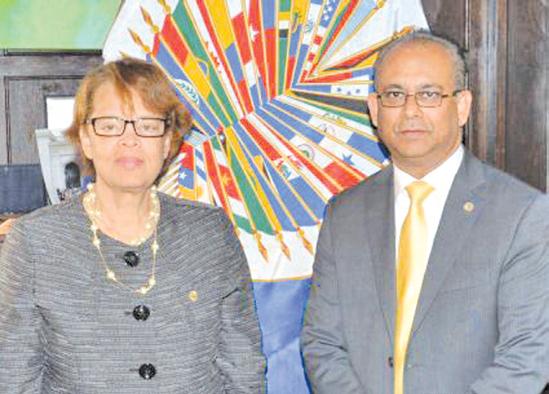
Representatives of countries from across the hemisphere met at the informal gathering of the Group of Friends of Haiti in at the headquarters of the Organisation of American States (OAS) in Washington, DC this week to engage in dialogue on developments in the country.
The meeting was chaired by the Assistant Secretary General of the OAS, Albert Ramdin, and included presentations from the Permanent Representative of Haiti to the Organisation, Bocchit Edmond, representatives of OAS member states, officials from the General Secretariat and the head of the United Nations Stabilisation Mission in Haiti (MINUSTAH), Sandra Honoré.
According to Ramdin, “Progress and development are evident in Haiti and it is our hope that all stakeholders, including political forces, work together on key issues.”
Acknowledging that par-
tial Senate elections are overdue, Ramdin said, “This is a matter which can be resolved by the main political stakeholders. I urge cooperation on the passage of the electoral law, in the interest of democracy and economic development.”
Briefing the Group of Friends, Honoré expressed the hope that, as agreed, elections would be held in
ANigerian doctor who has not been to Africa for the past five years, caused a major scare at the Piarco International Airport after he arrived on a British Airways flight from London on Thursday.
The aircraft and passengers were isolated after the doctor had been flagged as having contracted the deadly Ebola virus that spreads through mucous and other body fluids or secretions such as stool, urine, saliva and semen of
infected people. The British Airways flight BA 2159 originated in London Gatwick, then went on to St Lucia before landing in Trinidad just before 16:00h (local time).
Piarco International Airport was alerted by the Barbados-based Joint Regional Communications Centre (JRCC), via the Advance Passenger Information database that contains a complete list of persons, including crew and passengers on the flight including their bio -
graphic data and carrier information.
But the Principal Medical Officer here, Dr Collin Furlonge told Trinidad’s TV6 News Thursday night that the passenger was a Nigerian doctor living in London.
“We have sent personnel to go and confirm the information. But there seems to be little or no risk at all,” he said, adding that the passenger was eventually cleared, because he had not been to Africa in years.
(Excerpt from Caribbean360)

CManuel Santos said peace talks could falter if left-wing FARC rebels do not halt attacks, as he was sworn in for a second term.
“Gentlemen of the FARC: you have been warned,” the President said, to a crowd of more than 2000 guests, including foreign delegations from 73 countries.
The 62-year-old was reelected for a second term in June. His victory was a resounding vote of confidence for the peace process
he began with the rebels in November 2012.
Colombia has suffered more than five decades of conflict which has led to more than 200,000 deaths.
President Santos reiterated his commitment to peace talks at his inauguration ceremony in Bogota on Thursday.
“Acts of peace, that’s what the Colombian people ask for today... I will employ all my energy to bring peace during this mandate,” he told the crowd. The challenges facing President
Santos are many.
First he will be expected to reach a final agreement with the FARC, which even though its numbers had dwindled, still has an estimated 7500 active fighters. Then he will have to negotiate a peace deal with the National Liberation Army (ELN), a smaller left-wing guerrilla group which commands some 2500 rebels. He will also have to ensure that any deal he reaches with the rebels has the support of the population. (Excerpt from BBC News)
P2014. “I urge political actors to rise above their differences and reach consensus in the highest interest of the nation, to ensure the holding of elections in 2014,” said Honoré, who also called on the Senate to “vote without further delay on the amendments to the electoral law, a prerequisite for the organisation of elections.”
(Excerpt from
rime Minister (PM) Kamla PersadBissessar has reassured the nation that there is nothing to fear about the proposed electoral reform which she proposed in the Parliament last Monday. In her first public statement since the public raised concerns about the proposal and in particular the runoff poll, Persad-Bissessar said her Government had taken its times in ensuring the legislation was well thought out. “You have nothing to
fear. This did not come like a thief in the night,” Persad-Bissessar said during her Eid-ul-Fitr function at the Diplomatic Centre, St Ann’s. She said what she announced in Parliament, the two-year term limits for Prime Ministers, right for recall for MPs and runoff second ballot, came after much the work the Constitution Commission did during its consultations with the public. That Commission was chaired by Legal Affairs Minister Prakash Ramadhar.
The PM said an initial report was prepared and brought to Government on December 2013, but PersadBissessar said Ramadhar asked for more time for further consultations and time to get feedback for proposals. The final report, she added, was submitted in April this year and then submitted to Cabinet in July, where the recommendations were considered. “Be not afraid. This will place more power in your hands. You have nothing to fear.” (Excerpt from The Guardian)
The World Health Organisation (WHO) has declared the Ebola outbreak in West Africa to be an international public health emergency that requires an extraordinary response to stop its spread.
WHO declared similar emergencies for the swine flu pandemic in 2009 and for polio in May. The WHO Chief, Dr Margaret Chan, said the announcement on Friday is “a clear call for international solidarity” but acknowledged that many countries would probably not have any Ebola cases.
“Countries affected to date simply do not have the capacity to manage an outbreak of this size and complexity on their own,’’ Chan said at a news conference in Geneva.
“I urge the international community to provide this support on the most urgent basis possible,” she added.
The agency had convened an expert committee this week
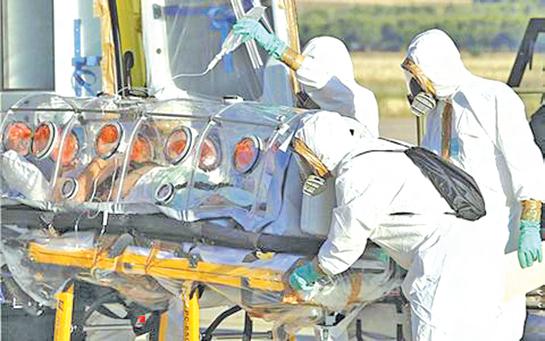
to assess the severity of the ongoing epidemic – the largest and longest in history.
The current outbreak of Ebola began in Guinea in March and has since spread to Sierra Leone and Liberia.
The WHO said the situation is likely to get worse in the coming months. There is no licensed treatment or vaccine for Ebola and the death rate has been about 50 per cent.
The impact of the WHO
declaration is unclear; the declaration about polio does not yet seem to have slowed the spread of virus. During a WHO meeting last week to reconsider the status of polio, experts noted countries had not yet fully applied the recommendations made in May, that there have been more instances of international spread and that outbreaks have worsened in Pakistan and Cameroon.
(Excerpt from Al Jazeera)
China sentenced a British corporate investigator to twoand-a-half years in prison on Friday for illegally obtaining private records of Chinese citizens and selling the information on to clients including drugmaker GlaxoSmithKline Plc.
Peter Humphrey and his American wife, Yu Yingzeng, who ran risk consultancy ChinaWhys, were tried in a Shanghai court. They said they were unaware such acts were criminal. In a late evening verdict, the court said it found Humphrey and Yu guilty
and handed Yu a slightly more lenient sentence of two years in jail. Humphrey was fined 200,000 yuan (US$32,500), while Yu was fined 150,000 yuan.
According to a statement read out by a court official at a press conference, Humphrey will be deported. The court gave no further details about that aspect of the judgment.
“The two defendants illegally collected Chinese citizens’ information over a long period of time and on many occasions. They collected a large amount of data and had also used il-
legal means, including investigative methods,” said Tang Liming, Vice President of Shanghai Number One People’s Intermediate Court.
The couple have the right to appeal their sentence within 10 days, the court said, adding that it had confiscated a laptop and hard drive from them. They were detained last year following work they did for British pharmaceuticals giant GSK, which is at the centre of a separate Government corruption investigation involving hundreds of millions of dollars. (Excerpt from Reuters)
Thirteen years after she was killed, a man has been convicted of murdering India’s banditturned-politician Phoolan Devi. Sher Singh Rana was arrested after Devi was shot dead at the age of 38 in front of her home in Delhi in July 2001.
He escaped from pre-trial custody in a Delhi high security prison in February 2004, but was recaptured in 2006. Phoolan Devi became one of India’s best-known political figures after giving up years of crime.
Rana will be sentenced on Tuesday. Ten others were acquitted. Phoolan Devi was part of India’s bandit folklore. A member of the lower castes, she rose to notoriety in 1981 when she had 22 upper caste Hindu men massacred on Valentine’s Day to
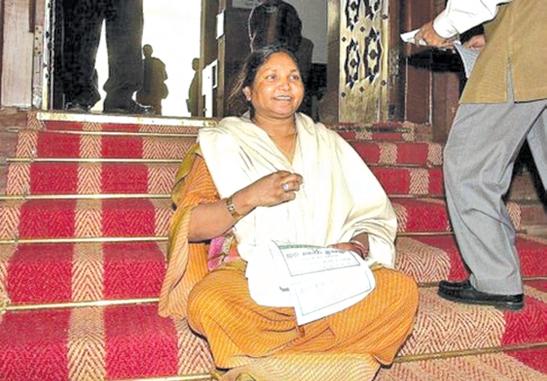
avenge her gang rape.
Devi surrendered to the authorities in 1983 and served a prison sentence until February 1994. Two years later she became a member of the Indian Lower House of Parliament. She
lost her seat in 1998 but made a comeback the following year.
Her life was immortalised in the 1996 film Bandit Queen by Indian film Director Shekhar Kapur.
(Excerpt from BBC News)
The US says it has launched an air strike against militants from the Islamic State (IS) group in Iraq. The Pentagon said American aircraft attacked artillery that was being used against Kurdish forces defending the northern city of Irbil.
President Barack Obama authorised air strikes on Thursday, but said he would not send US troops back to Iraq. The Sunni Muslim group IS, formerly known as Isis, now has control of large swathes of Iraq and Syria.
In June, IS took control of the city of Mosul. Earlier this week, its fighters seized Qaraqosh, Iraq’s biggest Christian town. The advance of IS also forced tens of thousands of people from the Yazidi community – another minority group in northern Iraq – to leave their homes and seek shelter on a nearby mountain.
According to the Pentagon statement, two F/A-18 aircraft dropped 500-pound laser-guided bombs on mobile artillery near Irbil, where US personnel are based.
The air strike is the first time the US has been directly involved in a military operation in Iraq since American troops withdrew in late 2011. US Secretary of State John Kerry said the world needed to wake up to the threat posed by the IS group. Its “campaign of terror against the innocent, including the Yazidi and Christian minorities, and its grotesque targeted acts of violence show all the warning signs of genocide,” he said. (Excerpt from BBC News)
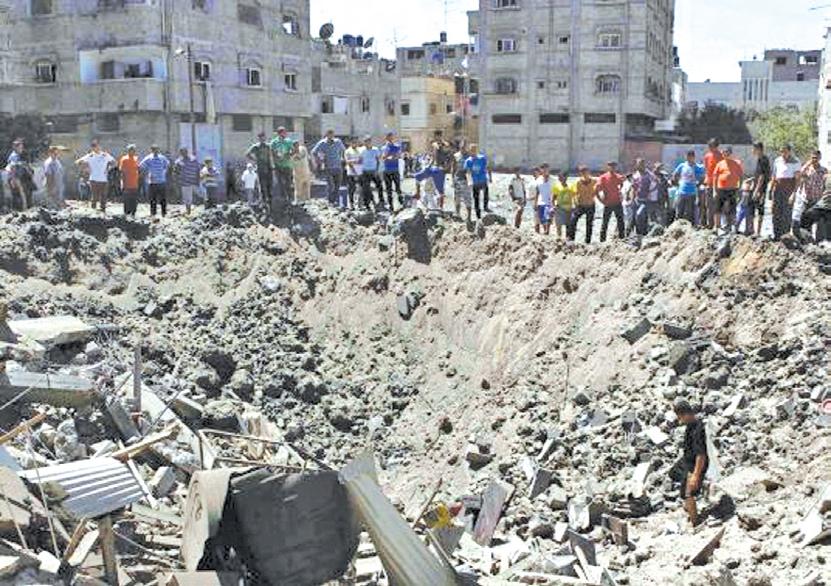
Israel launched air strikes across the Gaza Strip on Friday in response to Palestinian rockets fired after Egyptianmediated talks failed to extend a 72-hour truce in the month-long war.
Egypt later called for a resumption of the ceasefire, saying only a few points remained to be agreed.
Palestinian factions said they would meet Egyptian mediators later in the day, but there was no sign of any imminent deal.
There was also no imme-
diate response from Israel. However, a Government official said earlier that Israel would not negotiate with Palestinians while militants continued to unleash missiles.
As warning sirens sounded in southern Israel, the military said Hamas had fired at least 45 rockets on Friday morning and Israel’s “Iron Dome” interceptor system had brought down two. By resuming its attacks, Hamas appeared to be trying to put pressure on Israel, making clear it
was ready to fight on to end a blockade of Gaza that both Israel and neighbouring Egypt have imposed on the impoverished enclave. In the first casualties since hostilities resumed on Friday, Palestinian medical officials said a 10-year-old boy was killed in an Israeli strike near a mosque in Gaza City. An Islamic Jihad militant was killed in a later hit, local officials said. In Israel, police said two people were injured by mortar fire from Gaza (Excerpt from Reuters)
Afghanistan’s two feuding presidential candidates on Friday signed a deal confirming they would form a national unity government after an audit of votes is completed to decide the winner of the fraud-tainted election.
US Secretary of State John Kerry, visiting Kabul to try to mediate an end to the country’s election impasse, welcomed the deal as a major advance in bringing Afghanistan back from the
brink of political chaos.
The threat of spiralling ethnic unrest has loomed large since Abdullah Abdullah refused to accept a preliminary vote count that put Ashraf Ghani ahead, saying that the June 15 election had been stolen by massive ballot-box stuffing.
“Today myself, our team, and Dr Ghani and his team have taken another step forward in the interests of strengthening national unity in the country... and also
to bring hope for the better future for the people of Afghanistan,” Abdullah said. But the two candidates have clashed repeatedly in recent weeks over both the audit and the draft powersharing plan, and attention will focus on whether all their supporters accept the deal. “We trust each other,” Ghani said. “We will work with each other to fulfil this national duty and obligation for every Afghan. (Excerpt from France24)
The Agriculture Ministry on Friday hosted a cook-off of locally grown produce as it seeks to promote the use of local products in authentic Guyanese cuisine.
The cook-off competition held in the Ministry’s Vlissengen Road compound kicks off Agriculture Month 2014.
The Ministry’s Permanent Secretary George Jervis pointed out that the cook-off is, for the first time, bring on the floor various dishes that are prepared using mainly Guyanese ingredients.
He said the initiative is in keeping with the strategic plan in order to ensure that Guyanese “grow what we eat and eat what we grow”.
Meanwhile, Agriculture Minister, Dr Leslie Ramsammy said that the event is aimed at promoting local food and recipes while at the same time support farmers and agro-processors.
He added that the initiative seeks to support a developmental programme that creates employment and entrepreneurial opportunities.
The Minister explained
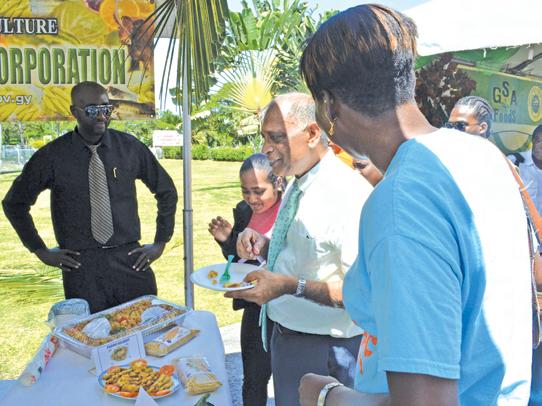
that every time Guyanese uses products that are imported, they are supporting employments in other countries while making it difficult for people here to get employment.
Dr Ramsammy said the activity seeks to enlighten the population that preparing their food with local produce is a healthier choice.
“Today’s exercise is how to use Guyanese products to prepare healthy food; food that will keep us healthy on
The European Union (EU) has joined the indigenous peoples the world over in celebrating their rich cultural heritage as it pays tribute to their enormous contribution in the areas of traditions and knowledge to the world’s cultural heritage.

In a message, the EU said it continues to be a staunch supporter of the 2007 United Nations Declaration on the Rights of Indigenous Peoples (UNDRIP). Indigenous peoples´ rights, as defined in the UNDRIP, form an integral part of the EU´s human rights policy.
The EU has underlined the importance of the successful realisation of the World Conference on Indigenous Peoples (WCIP) in September 2014.
“We continue our engagement in the discussions and we support the participation of indigenous peoples’ delegates aiming to translate the UNDRIP into concrete action and changes on the ground. We also note the importance of the engagement of indigenous peoples in the elaboration of the post-2015 Development Agenda.
“The EU raises the rights of indigenous peoples wherever relevant in contacts with third countries and regional organisations, as well as in multilateral forums such as the United Nations, the Organisation of American States and the African Union. It also gives financial support to civil society projects, to indigenous peoples’ delegates at UN bodies and relevant activities of the International Labour Organisation. Under
the European Instrument for Democracy and Human Rights (EIDHR), the EU will in 2014 finance up to €5 million of new projects that aim at promoting the rights of indigenous peoples,” the release said.
The EU also recognised the measures which Guyana has taken towards protecting the rights of Amerindian communities and considers Guyana to be a worldwide model for countries with indigenous populations, citing Guyana’s Amerindian Act as an example.
The EU complements the work of the Government of Guyana in protecting and developing Amerindian communities, and to this end has been working with indigenous groups and nongovernmental organisations in various areas such as the protection of indigenous rights, capacity-building within Amerindian communities, and enabling indigenous communities to participate in the Voluntary Partnership Agreement negotiations for the EU Forest Law Enforcement, Governance and Trade project. Over G$130 million in grant funding has been disbursed by the EU to aid for various projects in Amerindian communities in Guyana, the EU said.
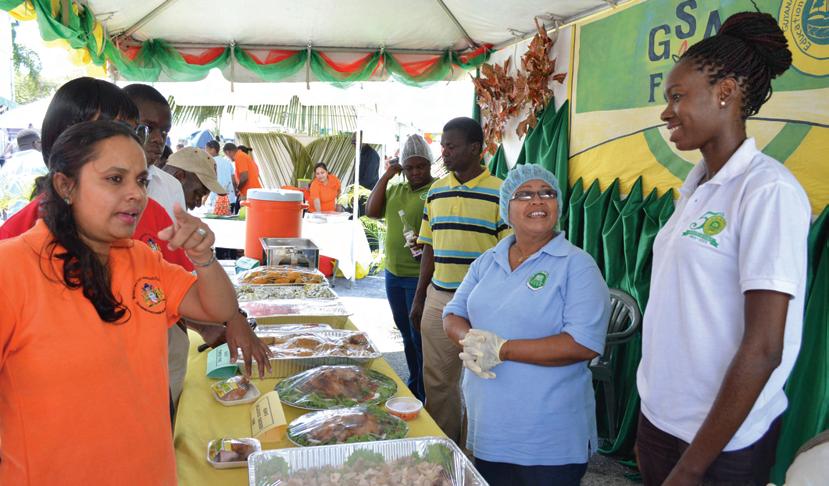
a daily basis,” the Minister noted.
Dr Ramsammy pointed out that the Guyanese population is not eating healthy as they ought to.
As a result, the Agriculture Minister explained that there is an increase in the levels of obesity and micronutrients deficiency.
“Part of the problem comes from the fact that we are increasingly consuming more canned and packaged
stuff with greater than the recommended amount of salt and transfat,” he noted.
Guyana is currently recognised as a food secure country; however, Dr Ramsammy noted that he wants the country to be nutrition secure, and as such, the cookoff competition will be annual event aimed at sensitising the public and developing a new culture, geared at eating
local produce.
The Minister is urging Guyanese to make this an everyday practice.
“I ask you to join us in ensuring that every day you eat Guyanese products and every time you do so, you can smile and say I’m helping our farmers, I’m helping our entrepreneurs, I’m helping to create jobs for our own people,” he added.
Some of the participants
included various branches with the Agriculture Ministry such as the Administrative, Food and Nutrition Security and Fisheries departments. The FAO; the Guyana Rice Development Board (GRDB) and the National Agricultural Research Extension Institute (NAREI) also participated in the competition.
Caricom’s Council for Human and Social Development (COHSOD) has approved a strategy and plan to reduce the number of adolescent pregnancies in each country of the English and Dutch speaking Caribbean by at least 20 per cent, over the five-year period 2014-2019.
The plan was developed by a multisectoral and multidisciplinary Regional Task Force led by the United Nations Population Fund (UNFPA) in collaboration with the Caricom Secretariat.
COHSOD commissioned development of the strategy after the Caribbean Cooperation in Health (CCH III) identified the reduction of adolescent pregnancy as an issue to be addressed and treated as a priority by Caricom member states.
The CCH is the mechanism of Caricom responsible for uniting the Caribbean territories in a common goal to improve the health and well-being of the people of the Region.
It is estimated that around 20 per cent of women in the Caribbean have had at least one child by the age of 19. Furthermore a considerable percentage of adolescent girls give birth before the age of 15. Available data indicate that girls who become pregnant at 15 or younger are more likely to experience premature delivery, low infant birth weight, perinatal mortality and health problems with their new-borns. Additionally, pregnant adolescents are more likely than adults to have unsafe abortions,
which contribute substantially to permanent health problems and maternal deaths. Their education is also likely to be interrupted, thereby reducing the opportunity to realise their full potential.
Expected results of the plan include ensuring that all adolescents have access to age appropriate, accurate information as well as quality sexual and reproductive health services and commodities; access to age appropriate, comprehensive sexuality education for young people in and out of school; implementation of social protection mechanisms for the prevention of all forms of violence against adolescent girls and boys, especially the poorest and most marginalised; and the adoption of common legal standards across the Region concerning age of marriage and consent; prosecution of perpetrators of sexual violence; and access to social protection and sexual and reproductive health services.

and Dutch-speaking Caribbean countries
cial factors that influence adolescent pregnancy.
Dr Morella Joseph, Programme Manager for Human Resource Development at Caricom Secretariat had high praises for the process used to develop the strategy.
people of the Region, and as such, represents an effective multi-faceted approach to achieving the objective of reducing adolescent pregnancy in the Region.”
Sheila Roseau, Director UNFPA Sub-Regional Office for the Caribbean, said UNFPA was pleased to lead the development of a holistic approach and coherent strategy for the reduction of adolescent pregnancy in the Caribbean. This, she believes, should contribute to increased opportunities for adolescents and improvements in their health and well-being.
“The strategy will allow adolescent girls to fully exercise their rights including to reproductive health, education and security; to grow to their full potential and to contribute to the development of the Region. Since the process of developing the strategy was a collaborative one, I hope countries will implement it with the urgency the issue demands,” she added.
It is also expected that by 2019, Caribbean Governments will systematically exchange knowledge, information and adopt good practices in addressing so-
“The strategy is the culmination of a series of consultations involving a broad range of stakeholders including high-level decision makers, adolescents and youth. The various inputs received at all stages were taken into consideration and informed the final version. We are satisfied that it reflects the realities and perspectives of the
Caricom will monitor the implementation of the strategy; identify and coordinate country and regional level needs for technical assistance. Caricom will also serve as knowledge broker for South-South cooperation, sharing of best practices on addressing adolescent pregnancy and in identifying high-level technical expertise. Select international organisations, including UNFPA will collaborate with Caricom on these activities.
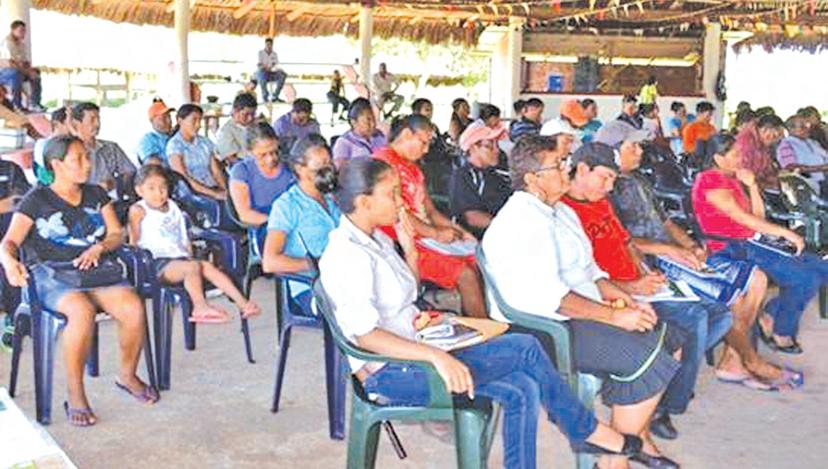
Representatives of the indigenous communities in the South and North Rupununi, Region Nine met for two days this week to pronounce on the Low Carbon Development Strategy (LCDS.)
The engagements, which were spearheaded by the Office of Climate Change (OCC), in collaboration with the Amerindian Affairs Ministry, as part of its national outreach programme to highlight and inform citizens on the LCDS were conducted on August 6, at the Annai Primary School, and on August 7 under the St Ignatius Benab.
During the engagement, Amerindian Affairs Minister Pauline Sukhai called on the communities to become more actively involved in the strategy. She indicated that indigenous communities have been among the first beneficiaries of the LCDS.
Under the Government of Guyana’s agreement with the Kingdom of Norway, the indigenous communities
are benefiting under the Amerindian Development Fund (ADF). Each of the 27 communities was given $5 million to pilot a project in their village that supports eco-friendly development.
Further, in the second phase, which is soon to begin, the remainder of the more than 180 indigenous communities in Guyana will benefit from financing for the execution of similar projects.
Under the LCDS, funding has also been allocated for the titling and demarcation of Amerindian lands. An agreement in this regard was signed in 2013, and this project is progressing, with a round of consultation with indigenous leaders already underway.
Minister Sukhai noted that since the indigenous communities are part and parcel of the LCDS, and its implementation, it is important for them to learn more about what the strategy entails.
The Minister said that the onus is on the indige-
nous population to recognise that they are involved in the process, and the important role that they play in this regard.
She also urged greater participation and involvement at the level of the
with respect to participating effectively in the LCDS.
The success at the level of the communities also has impacted the future of the ADF, the Minister noted, as she called for the residents to invest wisely and take their projects to successful completion. The future of the ADF and the CDPs relies on the success of those projects currently being piloted, she pointed out.
As part of the battle against climate change, one of the key aspects of the OCC’s work has been its outreaches and awareness raising workshop.
OCC Head Gitanjali Chandarpal explained that the OCC tries as much as possible to put different programmes in place to educate citizens on the issues covered in the strategy, as it is important to engage
During the outreaches the residents were informed that the increase in the burning of fossil fuels is causing an increase in greenhouse gases, which leads to global warming.
Chandarpal, who spearheaded the address on climate change and its impact, explained how globally, countries have decided to take action and put programmes in place to address climate change. A general warming of the earth by one degree Celsius over the last century has resulted in climate change. This has led to extreme weather events which can lead to high levels of flooding.
Chandarpal explained how many poor and developing countries, which are not equipped to deal with the issue, have had to partner with other countries
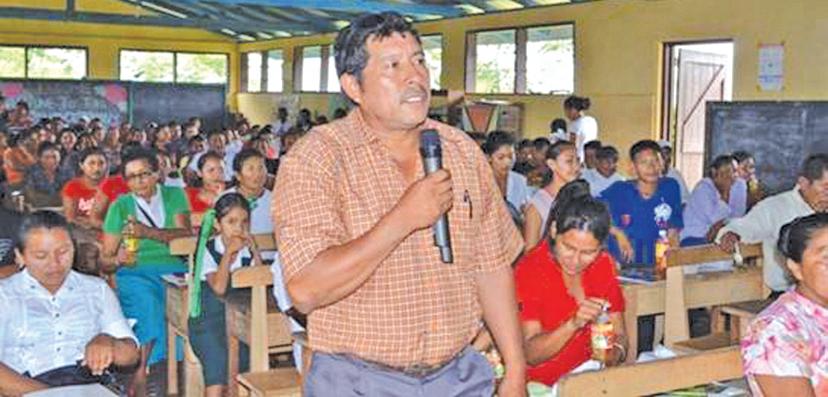
community in Community Development Plans (CDPs), noting that their readiness, preparedness, and commitment and responsibility for this aspect will tell how prepared the villages are
communities in the process as far as possible.
She explained that the team ventures into communities to talk about the LCDS, to get residents’ ideas and to document these.

Government continues to support Amerindian communities with regards to transportation assistance, and
supply of equipment that will enhance village life.
On August 6 and 7, while on an outreach to Region Nine, a team from the
Amerindian Affairs Ministry
including Minister Pauline Sukhai delivered on commitments made to the communities of Fly Hill, Rewa,
Apoteri and Karasabai.
A boat engine costing $600,000 was handed over to Fly Hill to support the children in accessing educa-
crease of greenhouse gases, she explained. She also spoke about the Government of Guyana collaborating with a number of partners in this regard.
The United Nations created a framework called Reduced Emissions from Deforestation and forest Degradation (REDD), which looks at how forests can be used in addressing climate change. Even while this framework is being developed and funding is low, Guyana has moved ahead to develop a REDD mechanism under the LCDS.
The Norwegian agreement has since earned Guyana US$115 million, which has funded several projects, including the Micro and Small Enterprise Development project, climate adaptation projects like the Cunha Canal project and the ADF under which indigenous communities are benefitting, the residents heard.
Also present at the meeting were President of The Amerindian Action Movement of Guyana (TAAMOG) Peter Persaud and Region Nine Chairman Wilson Lorentio.
and developing partners to garner support in meeting the challenge.
This includes looking at adaptation measures to address what has happened, and as well as mitigation efforts to reduce the in-
tion. Meanwhile, the communities of Rewa and Apoteri, both received a generator costing $250,000 that will support village economic ventures including providing lighting to the village shops and benab for the hosting of meetings and other village activities.
A backhoe costing $10 million was delivered to
Persaud, who briefly addressed both meetings, told the indigenous representatives how happy he was as an Amerindian leader to know that Amerindians because of the strategy will be among those playing an active role in addressing climate change in Guyana and the world.
He noted that this was a role that their ancestors would be proud to see being carried out.
Karasabai. It will mostly help with the upgrading of trails in the Karasabai subdistrict, which comprises seven villages -- Karasabai, Tiperu, Rukumoto, Tiger Pond, Pai Pang, Taushida and Yurung Paru. The villages were urged to make the best use of the equipment and to find means of ensuring their sustainability.
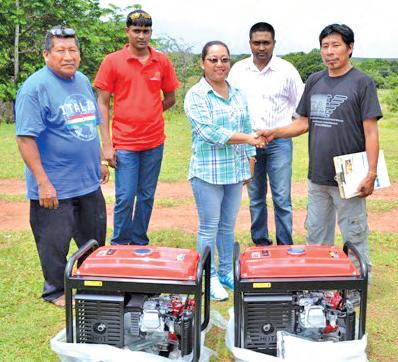










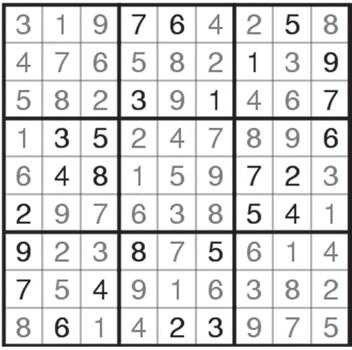
By Bernice Bede Osol

If you don’t want to do something, don’t be afraid to say no. Have a heart-toheart talk with someone who is making life difficult or uncertain. Trying to please others will be emotionally and physically draining for you.

20Feb. 19) (Dec. 22Jan. 19)
Unless you have the relevant details, don’t feel that you have to make a decision. It’s likely that someone is withholding the information you need. Do your own fact-finding.

20-March 20)
Meeting people is easier if you participate in community activities and events. If you follow your intuition, you will meet someone who will lead you down an exciting new path.

21-April 19)
Spend more time doing things you enjoy. Downtime is just as important as time spent working, especially when it comes to mental health. Gather your friends and have a good time with them.

(April 20-May 20)
Make sure your calendar isn’t overloaded. If you have too many tasks to complete, you won’t have time to enjoy friends or family. Pace yourself accordingly.

(May 21June 20)
Take a look at your bank account, assets and valuable possessions. You may have miscalculated expenses. Do away with non-essential purchases until you can get your finances sorted out.

(June 21July 22)
Get all the facts. Serious discussions should be postponed until you feel ready and capable of acting responsibly. Legal or governmental matters are best handled with facts to back up your position.

(July 23Aug. 22)
Make a move now. If you are offered an interesting position, accept the challenge it offers. You are overdue for some changes, and this can be the first step.

(Aug. 23Sept. 22)
Stay in control of a situation that will influence your future. If you take action quickly, you will receive positive results. Be secretive to prevent others from meddling in your affairs.

23Oct. 23)
Keep your opinions to yourself. Others may be particularly disagreeable, so work on something that you can do alone. Being drawn into petty arguments will be a waste of time.

(Oct. 24Nov. 22)
Add some zest to your life. The use of all your talents will lead you to a new business venture. Keep working toward your goal, and an amazing and profitable project will develop.

(Nov. 23Dec. 21)
Avoid getting involved in joint ventures. Your generosity will cause problems. Control your spending, and keep tabs on how much you have and how much you owe.





Former and current stars will turn out for the Masters’ XI and President’s XI this afternoon when the Guyana Festival 20/20 exhibition match is staged from 16:00h at the country’s leading sport facility, the Guyana National Stadium, Providence.
The two teams will be led by Clayton Lambert (Masters’ XI) and Ramnaresh Sarwan (President’s XI).
While the game is an exhbition and is geared to give Guyanese a glimpse of their cricketers live in action, the two teams will no doubt be going hard at each other with the aim of winning.
Lambert, the former hard-hitting West Indies opener, will lead a strong Masters’ team that includes several high quality players.
These include Travis Dowlin, Sudesh Dhaniram, Rabindranauth Seeram,
Faoud Bacchus, Steve Massiah, Sew Shivnarine, Derrick Kallicharran, wicketkeeper Sheik Mohamed, Kevin Darlington, Arjune Nandu, Clyde Butts and Colin Stuart. Former FirstClass middle-order batsman Mark Harper is the Manager/Coach. The President’s XI is equally impressive with Sarwan leading a strong
unit that includes ace West Indies batsman Shivnarine Chanderpaul, Azeemul Haniff, former Test opener Sewnarine Chattergoon, Assad Fudadin, Vishal Nagamootoo, Mahendra Nagamootoo, Lennox Cush and Reon King. Garvin Nedd is the Manager/ Coach.
President’s XI reads: Ramnaresh Sarwan
(Captain), Shivnarine Chanderpaul, Azeemul Haniff, Sewnarine Chattergoon, Assad Fudadin, Lennox Cush, Vishal Nagamootoo, Mahendra Nagamootoo, Roderick Lovell, Rayon Griffith, Zaheer Mohamed, Chanderpaul Hemraj, Anthony Bramble, Reon King, Easun Crandon and Jermaine Neblette. The

Two of cricket’s great entertainers meet today in the Limacol Caribbean Premier League as Chris Gayle’s high-flying Jamaica Tallawahs take on a rejuvenated St Lucia Zouks, who will welcome Kevin Pietersen to their team.
Speaking ahead of his CPL debut, Pietersen said he is looking forward to experiencing the atmosphere and energy of the St. Kitts crowd and entertaining them with some hard-fought cricket.
Pietersen said: “Warner
Park is a tight ground and the wicket looks very good for batting, so we should be in for the kind of cricket the crowds want to see. The Zouks have been very competitive in their matches in the tournament without quite getting over the line in a few close games. This weekend we will be looking to build on our first win in the last game and take up the challenge of playing two of the form teams in the competition”.
Jamaica Tallawahs’ captain, Chris Gayle said: “This is a big game for us against
the Zouks, as we have the opportunity to go to the top of the table if we win.
With Trinidad & Tobago Red Steel losing last night [Thursday], the door is ajar for us to try and qualify automatically for the final, so that is what we are focused on this weekend.”
Pietersen also spoke of the responsibility experienced players such as himself and Gayle have in offering advice to young team-mates and helping inexperienced players to develop their game.
He said, “Competitions such as the CPL and IPL are very important in giving new talent in the Region the opportunity to play against
some of the best local and international players. As an experienced player, I try to help any young player in my team by offering whatever advice they would like in relation to their game. The Caribbean is a wonderful place to play cricket and the CPL is the best type of academy for the next generation of cricketers in these islands, and it is really nice to be a part of that.”
Today, the St. Lucia Zouks play against Chris Gayle’s Jamaica Tallawahs at noon and the Antigua Hawksbills take on the Trinidad & Tobago Red Steel at 16:00h, both at Warner Park, St. Kitts. (CPLT20)

Manager/Coach is Garvin Nedd.
Masters’ XI reads: Clayton Lambert (Captain), Travis Dowlin, Sudesh Dhaniram, Rabindranauth Seeram, Faoud Bacchus, Steve Messiah, Sew Shivnarine, Derrick Kallicharran, Shiek Mohamed, Kevin Darlington, Arjune Nandu,
Following the completion of the cricket match, the footballers will take centre stage with the Guyana Defence Force playing Slingerz FC in an exhibition encounter.

World number one Rory McIlroy has the early halfway lead
orld number one
WRory McIlroy has the early halfway lead at the US PGA after a second-round 67 at Valhalla.
Northern Ireland’s McIlroy is nine under par heading into the weekend and two shots clear of American Ryan Palmer, who carded a one-under-par 70.
American Steve Stricker and Canadian Graham DeLaet are five under after 68s, alongside Sweden’s Henrik Stenson (71).
England’s Lee Westwood, a joint overnight leader on six under par, was a late starter on Friday.
Four-time champion Tiger Woods, who needs an under-par round to stand any chance of making the cut after a first-round 74,
also went out late.
McIlroy, 25, is hunting his fourth major title and his second in a row having won his first Open Championship at Hoylake last month.
Having trailed the leaders by one shot overnight after a five-under-par first round of 66, McIlroy cemented his tag as pre-tournament favourite with some spectacular golf in difficult conditions.
Only 20 minutes after the first group teed off, play was suspended for almost an hour because of torrential rain in Louisville, Kentucky. But when play resumed, 2012 champion McIlroy made light of the odd muddy ball and reduced run on the fairways.
He eagled the 18th, his ninth hole, to go out in 33 and had chances on his back nine to make his score even better than it was.
He missed a makeable eagle putt at the seventh after a magnificent five-wood approach from 240 yards, before leaving a birdie putt just short at the par-three eighth.
But he curled in a 16-foot birdie putt at the ninth to put daylight between himself and the field. (BBC Sport)
It rained water and milestones in Galle on the third afternoon. Kumar Sangakkara and Mahela Jayawardene came together for their 18th century partnership in Tests, moving two short of the record of 20 set by Rahul Dravid and Sachin Tendulkar. Sangakkara made his 37th hundred, Jayawardene his 49th fifty. It was Sangakkara’s tenth century against Pakistan, making him the seventh batsman to do so against a team. All this was squeezed into 20 overs as periodic showers ate into an extended second session, and a threatening dark cloud forced tea to be taken five minutes early. The ensuing downpour prevented any further play, washing out the remaining 44 overs.
Kaushal Silva’s fall was the only success for Pakistan on the day before the familiar partnership flourished. Sri Lanka added 75 in 26 overs in the morning session without taking much risk, and barring the odd jaffa from Saeed Ajmal, there was little encouragement for Pakistan from the placid surface. As the attack flagged in the af-
ternoon, Sangakkara and Jayawardene took 78 at almost four an over between
lunch and tea. Ajmal, who had probed away almost through the en-
tire first session, lost some control in the second. Abdur Rehman offered long hops often, and Sangakkara, in particular, capitalised. Both batsmen used the crease and also walked out to milk singles and twos. They watched deliveries closely and defended solidly. Jayawardene lofting a spinner over extra cover is usually a danger sign for opposition, and soon he paddled Rehman to reach fifty. Junaid Khan did ping him on the helmet with a sharp, angled bouncer, but that was against the run of play.
A few overs later, Sangakkara drove and cut the same bowler for two fours in an over to get to his fourth Test hundred this year, in addition to seven fifties, all of them over 16 innings.
The Pakistan quick bowlers tried gamely in unhelpful conditions, especially in the morning. Junaid even had Jayawardene padding up on 11, but the batsman reviewed successfully, replays showing the ball had not straightened enough and would have missed off. Mohammad Talha bowled a tight line outside off stump,
and was rewarded when Silva nicked a drive to the wicketkeeper on 64, ending the second-wicket stand on 120.
Silva had been troubled the most by Ajmal. But he was quick to drive Ajmal for successive fours when the bowler was too short and too full, and was tighter against the quick bowlers. He pulled Junaid for four to reach his fifty, but was consumed by the fuller length from Talha just before drinks.
Jayawardene, given a long and loud welcome of bursting crackers in his penultimate Test, also had his nervy moments against Ajmal. He failed to read the doosra on occasion and also inside-edged past short leg but he was also prepared to
take on the offspinner. He stepped out to loft him for four soon after he came in and whipped the next delivery, which went in the air, just past midwicket.
Sangakkara was more at ease against the offspinner, and a rushed single that needed him to slide in was his only moment of danger. He edged Talha past the cordon to move to fifty, but was in absolute control as he pulled Junaid in front of square to stride into the 90s. It came down to the rain to halt Sangakkara and Jayawardene. Play will start 15 minutes early on the fourth morning, but a fair chunk of this match has already been lost to bad weather. (Cricinfo)
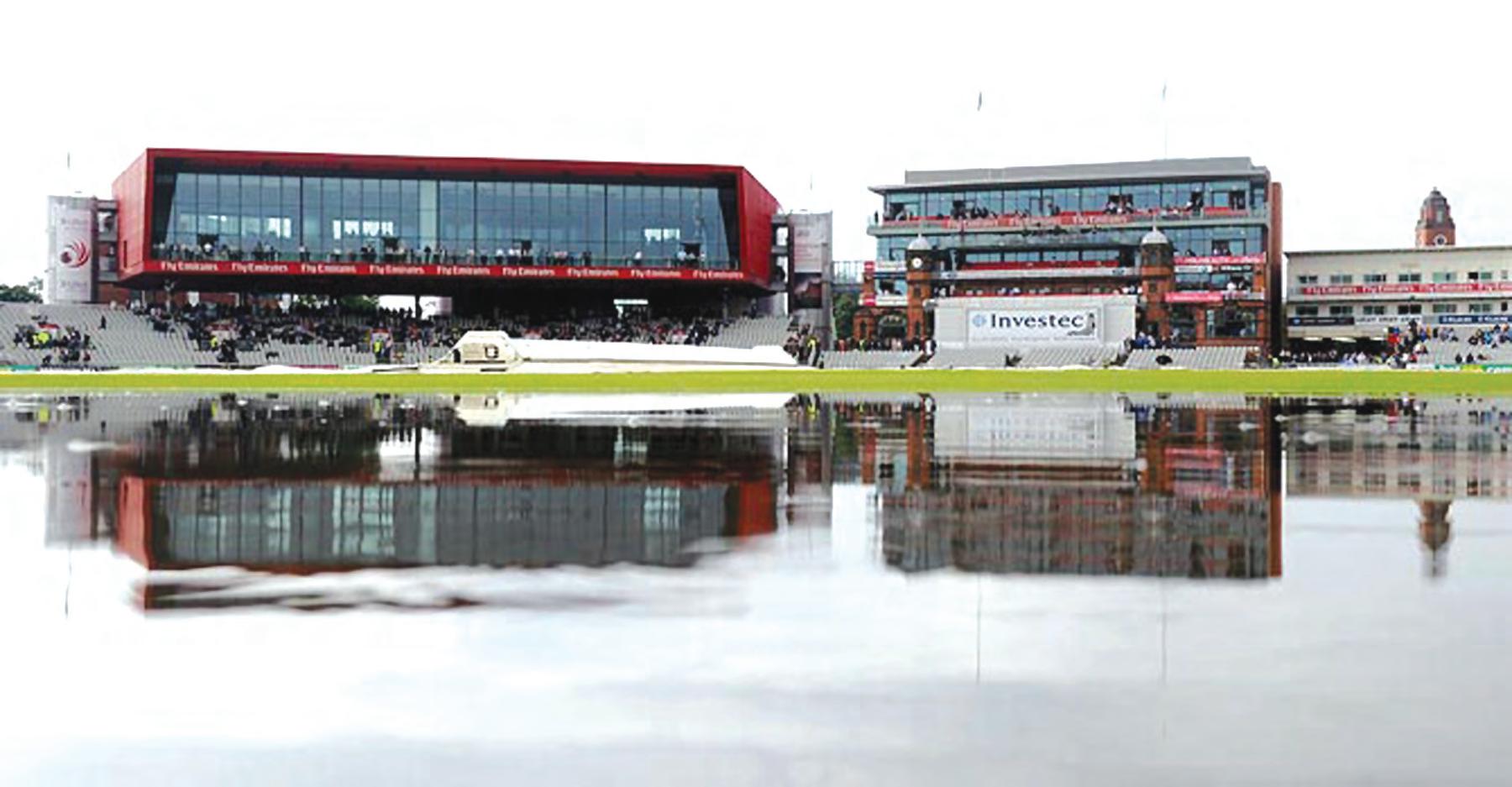
An unbroken partnership of 67 between Joe Root and Jos Buttler helped England build a healthy lead over India before rain curtailed the second day of the fourth Test at Old Trafford. England appeared to be wobbling when they lost three wickets in the space of an hour - including Ian Bell for 58 - to fall to 170-6 in reply to India’s 152.
But Root’s unbeaten 48
and Buttler’s 22 not out helped them to 237-6, an 85run lead, before heavy rain stopped play at 14:15 BST. After a torrential downpour, the weather improved and most of the surface water was cleared, but the umpires ruled that a particularly damp corner of the outfield remained unsafe for play, prompting an official abandonment at 17:39 BST.
With better weather forecast for Saturday, England
will be hoping to increase their advantage before repeating their first-innings dominance over India’s batsmen.
A victory would put Alastair Cook’s men 2-1 up in the series going into next week’s final Test at The Oval.
A riveting morning session saw both sides jostling for position in the knowledge that every run could be crucial in a low-scoring match. England, resuming on
113-3, lost nightwatchman Chris Jordan after half an hour when he swatted a Kumar bouncer to mid-wicket for 13.
And when Bell nicked an away-swinger from the same bowler to Mahendra Dhoni, England were five wickets down and still 12 runs adrift of the tourists.
India then set about probing Moeen Ali’s weakness against the short ball to the batsman’s obvious discom-
fort.
One ball after being hit on the gloves by a Varun Aaron bumper, Moeen was caught out by a fast, full ball and bowled for 13.
Buttler, whose swashbuckling 85 on his Test debut in Southampton helped swell an already huge England total, reacted well to a more challenging situation as he played himself in under overcast skies.
He worked the gaps for ones and twos and took 28 balls to hit his first boundary, a powerful drive wide of mid-off from the bowling of Ravichandran Ashwin.
Root displayed the timing you would expect from a player with previous unbeaten scores of 200 and 154 this summer, striking five fours to move within two of his half-century.
He took a particular liking to the luckless seamer Pankaj Singh, who has conceded 258 runs in the series and is still searching for his first Test wicket. (BBC Sport)
saturday, august 9, 2014



Stuart Broad will undergo surgery on his right knee at the end of the Investec Test series between England and India. Broad, who claimed the 12th five-wicket haul of his career on the first day of the
Old Trafford Test, expects to be out of action for up to three-and-a-half months, but is confident that he will be fit to play a full part in the World Cup which starts in February.
Broad, 28, overtook
Graeme Swann’s wicket tally during the day and now stands sixth on the all-time list of England’s Test wicket-takers. But he has struggled with tendonitis in the knee for some time and, while the timing of the operation has not been confirmed, it seems highly likely he will miss the limited-overs internationals against India that follow the Test series.
“In the past 18 months I could have had an op at any stage but it has got to the stage where it needs to be done,” Broad said. “The timing is not confirmed. The surgeon is flying over from Sweden at the end of the Oval Test to have a look. It will either be after that Test or after the one-day series, depending on what he suggests.”
Toby Roland-Jones, the Middlesex seamer, and Surrey’s Stuart Meaker have had the same type of surgery recently, giving Broad an idea of his recovery time.
“Toby and Stuart had it done at the end of last season and it’s about three months, or three-and-a-half months. I should be fine for the World Cup.
“It’s actually a really good opportunity for me to get the knee sorted and to use the time as a strength and conditioning period. The 2015 schedule looks really busy so all the players will have to be as fit as they possibly can going into that period.”
(Cricinfo)

Didier Drogba has announced his retirement from international football.
The Chelsea striker scored 65 goals in 104 appearances for Ivory Coast over a 12-year period. He played in three World Cups.
Drogba returned to Stamford Bridge last month, signing a one-year deal after leaving Turkish side Galatasaray.
The 36-year-old said: “I’m proud to have cap-
tained this team for eight years and to have contributed to putting my country on the world stage.”
Drogba hopes his decision will help him make a big impact on his return to the Premier League after a two-year absence.
He has been backed by Chelsea team-mate John Terry to reproduce the form that saw him score 157 goals in 342 games during his first eight-year spell at Stamford Bridge.
Drogba added: “It’s with much sadness that I’ve decided to retire from international football.
“I can’t convey enough thanks to the fans for all the love and support during these years. All my goals, all my caps, all our victories are for you.
“I owe much gratitude to my team-mates, the players with whom I’ve shared all these emotions and I wish them all much success for the future.” (BBC Sport)
The Guyana Football Federation (GFF) will reconvene its Annual Ordinary Congress today from 10:00h at the Conference Room of the Regency Suites/ Hotel on Hadfield Street, Georgetown.
“In accordance with Article 25:2 of the Constitution of the Guyana Football Federation (GFF) and following consultation with members of the Executive Committee of the GFF, I wish to inform you that the date fixed for the reconvening of the Annual Ordinary Congress of the GFF is Saturday 9th August, 2014,” a statement signed GFF President Christopher Matthias and addressed to executives of the GFF, Presidents/Honorary Secretaries of Football Associations/Affiliates read.
Issues that weren’t dealt with when the Congress was first convened on April 26 at the same venue will be up for discussion, including the filling of two key positions within the GFF.
“Consequent on vacancies that have arisen for two positions of Vicepresidents of the GFF as a result of resignation in one instance and suspension by the Congress in the other, and consistent with the provisions of Article 31:8 of the GFF Constitution, which refers to the procedure for re-
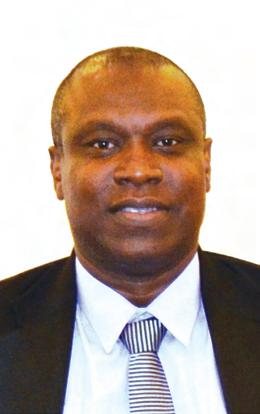
placement of members of the Executive Committee, the two offices will be up for elections at the Congress, for the remainder of the fouryear term in each instance,” the GFF statement read.
Written nominations proposing the names of the candidates for the two positions and appropriately seconded, had to be submitted by July 11 last. The posts became vacant after Ivan Persaud resigned and Collie Hercules was suspended.
The Ordinary Congress was aborted in April after Matthias had survived a vote of no-confidence by some disgruntled members.
The Congress, observed by CONCACAF’s Director of Legal Affairs Marco Leal, FIFA’s Developmental Officer Howard McIntosh

Millions will be at stake on August 24, when the biggest horse race meet on local shores- the eighth annual Guyana Cup- is staged at the Port Mourant Turf Club with the country’s top thoroughbreds set to do battle.
Nine races are carded for the day, and with over $25 million in cash and prizes at stake, nothing but a competitive day of racing is envisaged.
The feature race will be for horses classsified C1 and Lower with the champion pocketing $4 million and the runner-up half that amount. The race will be contested for a distance of 1800m.
The Three-year-old West Indies bred 1600m event will see the winner
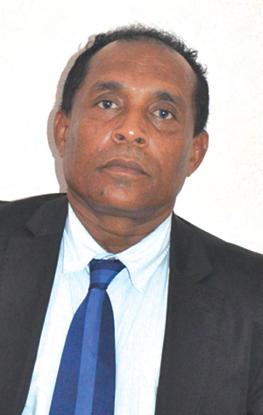
and CONCACAF’s Legal Advisor Bruce Blake, was a heated one from the onset as the leading local football executives sat down to discuss the state of affairs with regard to the game’s administration.
The reconvening of the Congress was arrived at by Matthias, who sought to settle the differences between the discontented associations, following a walking out and subsequent return of six associations during the Congress.
These associations were the Georgetown Football Association (GFA), Guyana Football Coaches Association (GFCA), East Coast Football Association (ECFA), National Women’s Football Association (NWFA), Guyana Football

Referees Council (GFRC) and East Demerara Football Association (EDFA).
The associations withdrew after the no-confidence motion against Matthias, which was filed by the EBFA and seconded by the ECFA, was discarded following a 9-9 tie at the voting.
It is understood that the no-confidence motion did not follow the protocols required for its filing, as it did not state a reason for the motion, nor did it contain a letterhead or returning address. Among the unfinished business were the election of two Vice-presidents and the presentation of the GFF’s forensic audit for the period January 1998 to December 2012.
NSC 11-race programme on today
Young riders participating in the 38th annual Teach Them Young cycling camp will today get a chance to showcase their skills in a competitive environment when the National Sports Commission (NSC) stages its annual 11-race programme from
for the next few weekends. The youngsters will compete in the BMX races, which will cater for different age groups, namely 6-9, 9-12, 12-14, Open and Boys and Girls. The other races for the senior competitors will be headlined by the gruelling 35lap School Boys and

09:00h.
Every year, the NSC would sponsor two 11-race programmes to coincide with its Teach Them Young event, thereby affording young riders the opportunity to experience competitive racing at the country’s premier cycling track- the inner circuit of the National Park.
This year is no different, and according to National Coach and chief organiser of the camp, Hassan Mohamed, this will be the first of many races carded
Invitational, which was won last year by Albert Philander of the newly formed United Bikers Club. Philander won in a time of one hour, 35 minutes, 01 seconds (01h: 35m: 01s).
Some of the other category winners of 2013 were Alonzo Ambrose (Juvenile), Junior Niles (Veteran) and Keon Thomas (Mountain Bike). Director of Sport Neil Kumar is expected to witness the day’s proceedings and assist in the presentation of prizes at the conclusion.
Wilford ‘Billy’ Heaven, the president of the Jamaica Cricket Association (JCA), said he has been assured that the state-of-the-art floodlights at Sabina Park will consume electrical power efficiently, thus minimising the burdensome charges of the Jamaica Public Service Company (JPS Co).
carting off $2 million, while the Two-year-old West Indies bred 1000m race has a top purse of $1.5 million.
Other races carded for the day include the Twoyear-old Guyana bred, E and Lower, G1 and Lower, H1 and Lower, I1 and Lower and J and Lower.
The deadline for the submission of entries is August 16 and interested jockeys/ stables can register by calling Chandu Ramkissoon on 624-9063/232-0633, Kris Jagdeo on 6246123/322-0369, Rajendra (Jim-Jo) on 618-7278, Chattergoon Ramnauth on 697-1979/337-5311, Sancho on 690-0569 or Romell Jagroop on 624-1798. Musical entertainment will be provided by Slingerz Family.
The freshly installed lights were commissioned on Sunday, and Heaven, defending the absence of the use of solar technology to illuminate the ground, argued that in the short term, Sabina Park Holdings, the entity responsible for the cricket venue and its facilities, was forced to connect to the power company’s grid.
“We are connected to the JPS Co grid, but my understanding from the technical people is that the technology that we use [for the lights] is more efficient, which is not unusual. Technology advances by the day so you get a more efficient system that will help you to use less energy,” Heaven told the Jamaica Observer on Tuesday.
“Outside of that, we also have two generators which we can also use to provide the current that is needed to support the lights,” he continued, though not providing the cost of operating the generators.

He explained that based on what he has been told, the Sabina lights would be more efficient than the less modern ones installed at the National Stadium.
Heaven said the switch to solar energy is “one of the long-term plans” in the pipeline, but added that the high cost associated with its implementation means stakeholders have taken “one step at a time”.
Heaven could not put a figure on how much the installation of solar panels to power the four light towers at Sabina Park would cost; however, it is understood that such a project could cost several million Jamaican dollars.
The lighting project was funded by a US$2.1-
million grant from the government of India and a further US$600,000 contribution from the Tourism Enhancement Fund (TEF).
Given the exorbitant and ever-swelling cost of electricity in Jamaica, the JCA boss was asked to estimate what the monthly JPS bill for the lights could look like when the park is used for night events.
“At this point, we are not sure because we don’t have the benefit of the use of the light to measure the cost associated with it, especially on a per-hour basis. I would have to wait until some trend is developed, whether per event or per month,” Heaven answered.
Outside of the playing of night cricket, the installa-
tion of lights is intended to allow for the staging of various events at Sabina Park. Heaven, who also heads the state-run CHASE Fund, reasoned that some events may not require the lights to be on full blast, therefore lessening the power usage.
“It is not every event that will require the full beaming of the lights. There are three levels of illumination, and for particular events we may only need a lower level.”
Earning revenue from turning on the lights is also a major focus.
“We have to justify the outlay, so remember that when the lights are turned on they are turned on in support of an event. We intend to have commercial events where we expect to get an income, as well, from that. We expect to cover cost and to have a profit margin from it,” the local cricket president insisted.
For cricket, he boasted that the lights have met International Cricket Council (ICC) standards.
“It would be full activation for cricket and my understanding from the technical people is that the brightness would be 95 per cent of what we see at daylight. So the ICC standards are satisfied and also the television requirements,” he added.
(windiescricket)






onSeestory page19
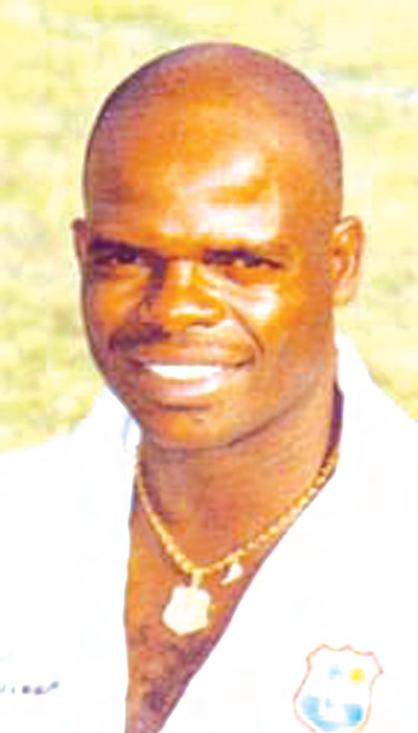
immy Neesham, the New Zealand allrounder, has been left looking for a new bat after a brush with overzealous customs officials in the USA.
Neesham was travelling through the country between games for Guyana Amazon Warriors in the Limacol Caribbean Premier League when his bat attracted the interest of
customs officials. In a sure sign that cricket remains a mysterious and largely unknown sport in the USA, the officials feared that the bat could be used to transport illegal drugs so drilled several holes into it to enable closer inspection.
Neesham subsequently tweeted a picture of the ruined bat, saying: “Imagine if your cricket gear went through America and they
drilled holes in your bat to look for drugs...” It subsequently spawned an amusing raft of puns on Twitter using the hashtag #drugbat. Among the more imaginative suggestions were Richard Hadl-E, Co-Kane Williamson, Whispering Meth and Arul Supplier. Malcolm Speed was not asked to comment. (Cricinfo)