



monDay, December 30, 2013 |
As investigations continue into the accident at Canal Number Two Polder which claimed that lives of Shamir Haniff, 18, and Roy (only name given), 20, of Canal Number Two Polder on Saturday evening, an eyewitness claimed that the car was swaying on the road before it slammed into the parked low bed trailer.
Mohamed Ramzan Ali, who was sitting on the trailer, recalled that he was making a telephone call when he saw the red Toyota Fielder approaching him at a fast speed.
Ali said that as the car got closer, it ran off the road and onto the parapet a few times, and then “blam”! It smashed into the trailer.
As a result of the impact, he was flung into the air and landed on the roadway and as he looked around, he saw the mangled body of the two men. Roy’s head, he added, was almost severed while the driver also received seri-
ous facial injuries.
He explained that as he got up, he fell back to the ground and at that point realised that he had received injuries. He called out to one of his uncles who picked him up and took him to the West Demerera Regional Hospital, where he was treated and sent away.
He revealed that the two men were drinking at a popular bar n the area.
Inconsolable
At the home of Haniff, of Lot 11 Diamond Squatting Area, his mother was inconsolable. Bibi Haniff explained that she was at home on Saturday afternoon and about 19:30h, they received a call informing them that her son was involved in an accident.
In tears, the woman added that her son recently bought a new car and worked at a taxi service at Eccles, and might have been dropping off someone when

the accident occurred. Upon receiving the devastating news, her husband went to the scene.
“Up to now dem nah tell me weh me son deh… me want see meh son but they nah tek me to he… they tell me he get in accident but meh wan see he,” he told Guyana Times.
The mother confirmed
that her son worked as an operator at BK International and as a part-time taxi driver. She said that he left home early Saturday morning and after he did not return home, she asked her daughter Shifan to inquire about his location.
In response, the now dead teenager reportedly

told his sister that he was on a "job" and asked her to tell his mother that he will be home soon. This, she cried, never happened but rather, his “dead body” will return.
The sister, who was also in tears, said Roy and her brother have been friends for sometime now, claiming that they worked together in the interior.
Ever since they linked up, Roy persuaded her brother to return with him to the interior, but his parents were not in agreement.
This caused some family conflicts, resulting in Haniff’s departure to the interior, but after spending about three months, he returned, but instead of going to his parent’s home, he went to his grandparents.
Request granted
After two months, the mother finally got him to return home and promised to provide him with anything as a bribe for him not returning to the interior since she claimed it was too dangerous. At this point, Haniff told his parents that he wanted a car and that desire was fulfilled.
The sister went on to say that he would work the car as a taxi, but never stays out too late. She added that they do not try to make contact with him since he gets angry quickly.
“If we try to find out where he is… he does say that we crying on he… but is not that… it’s just that we worried about him,” the sister cried.
The aggrieved sister further stated that about 19:30h, they received the news of the accident, but initially were told that only Roy had passed away, which gave her some hope. After a few minutes, she said their worst fears were confirmed.
Meanwhile, Dharmindra Persaud, an uncle of Roy stated that he was at home when he received news that there was an accident close to the conservancy dam and his nephew might have been one of the two people involved.
Persaud told Guyana Times that as he arrived on the scene; he saw the two bodies in the car under the
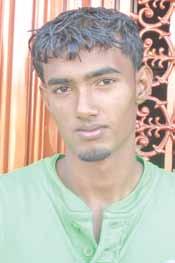
low bed trailer. He said that from all indications, both of them were dead as it was a bloody scene.
He claimed that he did not see his nephew for more than a year, noting that he works in the interior.
“I didn’t even know that he come out, is when I get the message about the accident, I know… the last time I see he, his hair was short but when I see he on Saturday night, his hair was long up to he shoulder.”
The uncle stated that whenever Roy comes out of the interior, he would stay at hotels.
Haniff and Roy were on Saturday evening killed after the car in which they were travelling slammed into a parked trailer along the Canal Number Two Polder Public Road.
Hanging out
According to information received, the two men were hanging out in the area on Saturday evening and left about 19:30h with the intention of going to Georgetown. Haniff was the driver of the motor car at the time of the accident.
The car was believed to be travelling at a fast rate and the driver might have lost control of the vehicle and slammed into the low-bed trailer, resulting in the two men receiving severe injuries.
Their bodies were subsequently taken to the Ezekiel’s Funeral Home. Haniff leaves to mourn his parents and three siblings, while Roy is survived by his mother, who is overseas and one sister who resides on the East Bank of Demerara.


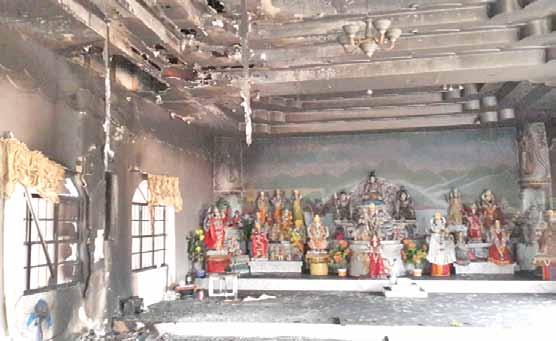
The Shri Krishna Dharmic Mandir located at Lot 7 Hydronie, East Bank Essequibo was over the weekend set on fire by unknown persons in the area after they gained entry into the building by breaking a front window.
Winds: East north-easterly between 5.36 and 4.02 metres per second.
High Tide: 14:51h reaching a maximum height of 2.68 metres.
Low Tide: 08:21h and 20:56h reaching minimum heights of 0.71 metre and 0.50 metre respectively.





Portions of the ceiling and sections of the worshipping area were scorched, while there were also signs of other areas in the place of worship that were set alight.
From all indications, the fire was set at strategic locations, but mysteriously did not spread throughout the building. A number of curtains were also set alight, but due to their thickness, the fire fizzled out.
Building secured
President of the mandir, Krishna Samlal told Guyana Times that the last service was held on Thursday, after which the building was secured.
He added that some members went back to the place of worship on Friday to collect instruments to take to another location for a service and again, they made sure that the building was secured.
However, on Sunday about 07:45h, a few carpenters went across to the mandir to complete some work when they saw that the window was broken. Samlal disclosed that he was immediately summoned and upon arriving at the location, he saw about 15 burnt spots with several curtains destroyed by the blaze.
The air conditioning units were also burnt. “First, I thought it was electrical in origin but after I saw the spots and the curtains and the murti, I knew something was wrong,” he said. Samlal also related that he contacted the police and the fire department and both entities have since launched an investigation.
He added that the mandir was renovated in 2008 and catered for at least 800 worshippers. Samlal does not have any suspects in mind. Inquiries were made from persons in the community if they saw any strange movements in the mandir but no positive response was forthcoming.
There were no fuel containers around, which would have suggested that flamma-

ble liquid was used. He also claimed that if fuel was used to set the interior of the mandir on fire, the entire building would have been gutted.
He also suspected that the perpetrators just struck a few matches and thought that the curtains would have been enough to start a huge fire. The president estimated the losses to be in the millions.
Morals in society President of the West Demerara Guyana Hindu Dharmic Sabah’s Praant, Pandit Jagmohan condemned the act, noting that it is a testimony that morals in the society have deteriorated to such an extent that the target is now shifted on destroying places of worship.
On this note, he called on civil society to be cognisant of their surrounding and protect the integrity of their community. He also charged parents to show more interest in molding the lives of their children, pointing out that a bad


monday, december 30, 2013

Editor: Nigel Williams
Tel: 225-5128, 231-0397, 226-9921, 226-2102, 223-7230 or 223-7231. Fax: 225-5134
Mailing address: 238 Camp & Quamina Streets, Georgetown
Email: news@guyanatimesgy.com, sales@guyanatimesgy.com
In direct reference to developing countries, World Bank
President Jim Yong Kim recently described corruption as “public enemy number one”, and in detailing the steps the organisation is taking to fight corruption, he made a passionate call for world partners and the private sector to be part of the solution.
Corruption could be defined as the abuse of entrusted power for private gain. Corruption impacts societies in a multitude of ways. It costs lives. It costs people their freedom, health, or money. Ordinary citizens are the ones who end up paying the price for corruption. Transparency International (TI) says the cost of corruption can be divided into four main categories: political, economic, social and environmental.
Corruption is a major obstacle to democracy and the rule of law. Offices and institutions lose their legitimacy when they’re misused for private advantage. This is harmful in established democracies, but even more so in newly emerging ones.
Corruption depletes national wealth. Corrupt officials invest scarce public resources in projects that willline their pockets rather than benefit communities. Corruption hinders the development of fair market structures and distorts competition, which in turn deters investment. Corruption corrodes the social fabric of society. It undermines people’s trust in the political system, in its institutions and its leadership.
Environmental degradation is another consequence of corrupt systems. The lack of, or non-enforcement of, environmental regulations means that precious natural resources are carelessly exploited, and entire ecological systems are ravaged.
The latest TI ranking suggests that more than two-thirds of countries surveyed scored less than 50 out of 100 in the Corruption Perceptions Index (CPI).Many of the lowest scoring countries face the troubles of corruption alongside political instability and conflict.
As in 2012, last place is shared by Afghanistan, North Korea and Somalia. With a score of only eight, corruption perceptions in these countries indicate a near-total absence of an honest and functioning public sector. Libya and Syria have also seen decreases in their scores, falling even further down the rankings over the past year.
But previously high-scoring countries haven’t been safe from the risks of corruption either. Spain’s six-point decline was not only the most dramatic drop of all European Union (EU) countries, but one of the largest globally.
TI pointed out that Australia is yet further proof that no country can afford to be complacent. Despite having one of the world’s highest gross domestic products (GDPs), the country fell by four points this year. This warning against complacency, while important for all countries, is perhaps particularly pressing for the Brazil, Russia, India, China, South Africa (BRICS) bloc.
Authorities in Guyana have made it clear that they object strongly to the rating the country has received for 2013. Since this government took office in 1992, there have been a number of initiatives to ensure corruption is minimised.
It is not yet known what were the main sources of the information the authors used to rank Guyana. But it is clear that they ignored some critical facts that would have allowed them to arrive at a more informed conclusion regarding what the country has done to fight corruption.
Government has always insisted that those with evidence of corruption and abuse of public office come forward so that action can be taken against those found culpable. The government cannot reasonably be held accountable for every corrupt transaction undertaken by every public official in the country.
Corruption is not just a problem in government or in the public service alone. Too many times corruption is clouded as a government issue exclusively. The private sector suffers too, as corruption erodes corporate identity, undermines confidence between business partners and destroys the reputation of once-trusted companies. The contribution of the private sector in addressing corruption is therefore a “must”.


– delivered at the service held on December 28, at St Andrew’s Lutheran Church, Chateau Margot, East Coast Demerara
While I believe that I am less qualified than many in this audience here today to give a tribute to Oswald Singh, I am indeed honoured to have been asked to do so. Firstly, I knew Oswald personally only for about a year now. And secondly, I am not a broadcaster and even if I was, I strongly doubt I would have been one in the calibre of Oswald. Indeed, there are not many who can claim to be.
I grew up hearing Oswald’s voice on radio and at the time I never thought I would have had the opportunity of working with him. In those days of radio dominance, that is, when compared to television at that time, Oswald’s voice had long become unmistakable, distinctive and astonishlingly precise.I had created this image in my mind of a tall, towering, yet warm and welcoming character.
I later learned that, at some point in time, we both left Guyana headed in different directions to pursue media careers, albeit of a different sort. So imagine my apprehension, having returned to Guyana about 15 months ago,and still in the process of settling into the media group where I now serve, only to learn that there was an interview scheduled, not too long after the launching of Radio Guyana Inc (RGI), and that the name of the inteviewee was Oswald Singh.
As I recall, it was a week day morning, and as I passed the front desk area of the Guyana Times/Television Guyana (TVG)/RGI building on the way to the room where the interview was to be held, I saw this invidividual seated in a cellphone conversation.
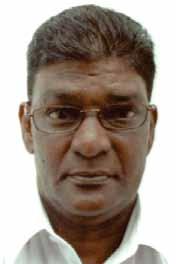
At the time, he wasn’t speaking. But just briefly as I passed, he responded to something obviously being said to him from the other end. It was a short response and something to the effect of a mere acknowledgement -- an “I will call you back shortly” kind of thing. Immediately, and without being introduced, I knew that was Oswald Singh. We merely nodded to each other as I passed,and in my mind I thought, “We have to get this voice on RGI,” almost momentarily forgetting that there was still an interview process to go through. Eventually, in about two weeks, all the formalities were over and Oswald was on board at RGI, effective February 1.
Being no stranger to radio, for someone like Oswald, there was no need for an orientation. But coming in to a new radio station, there were obviously new people to meet and new programmes to produce. Yet, it felt as though Oswald was there from the start.
The people at RGI gravi-
tated toward him. Everyone was more his friend than his colleague.He nurtured people. He groomed people.I look back with regret now that I really did not interact with him much, and more via email than anything else after he was appointed.
But that was because Oswald never caused trouble. Even in his illness he wanted to work. That’s how much he loved radio. He did not stay around with us long enough to do a Christmas Day greetings programme. That was his own request, as it was not required of him. That’s how much he loved his listeners.
On that day of the interview, his very first impression on me had left a smile in my heart. Fast track to the night when I learned that Oswald was in hospital. Regrettably, by the time I visited, Oswald had departed this life.
Graciously, one of his sisters invited me to see him.
There were not many steps, but it was a long walk up. As the cover was lifted and I saw Oswald’s face, I saw a smile. Indeed, it was typical of him to smile in life.
Death is never pleasant and I didn’t expect to see such a smile. It did bring some tears to my eyes, but I felt happy with that smile. It is almost superstitious of me to say that I believe Oswald died a happy man.Undoubtedly, he also left a smile as a last impression on me.
And that’s the way I feel he lived. He made people happy. He made his listeners happy. Certainly, he made RGI a happy radio station to listen to.
My own three daughters, 14, 12 and 8, not having
grown up listening to much radio, having heard his voice, wanted to see him. I allowed them one day, and hereafter, they wanted to see him every day. He played a song for them once and called their names on radio. They would never forget that. They were sad and tearful when they learned of his passing.
One radio colleague had this to say about Oswald:“He was humane and versatile. He never lost his temper when his relief did not show up to take over a new shift.”
Another put it this way:“I haven’t known Oswald for a long period, but for me, Oswald’s simplicity, humility, warmth, sense of humour and immense knowledge of Indian music (especially the older ones) stood out for me. This, in addition, to his very distinct and powerful voice, which resonated with many listeners....Additionally, he always had an ease about him despite his obvious health challenges. That sort of courage is admired.”
On behalf of the board, management and staff of Queens Atlantic Investment Inc, the parent company for the media group that includes RGI, I extend deepest sympathy to Oswald’s family. Oswald also had an extended family, which reaches to all of Guyana, the Caribbean and beyond.
A void has been created at RGI and indeed in radio in Guyana. It will never be filled. No doubt, we all miss him already and we are still to discover many other ways in which we will miss him.
Daniel Singh General Manager
Guyana
Dear Editor, Kindly permit me space in your news letter column to express my position on our former and current presidents of the University of Guyana Student Society (UGSS). For some strange reason, the current president chooses what issues to tackle.
I have not gotten my confirmation as yet from the Admission Division because some of my test papers are not yet marked from last semester. I brought this to the attention of the president who said to me that patience is virtue. Can you believe that? Additionally, my friends and I were chased out of lectures because we are not yet registered and this is by no means our fault.
I can vividly remember the days of Ganesh Mahipaul when he created mass confusion on campus over the $10,000 late fee that was suddenly imposed on students. Many of us benefited. The $10,000 was waviered for those who had genuine reasons for not being registered.
There is the famous physics story where the main lecturer wanted to hold an inclass test and more than half of the students did no tutorials or labs.
Mahipaul led that protest action against the administration and that test was postponed until all students were equally taught. Mahipaul was famous for assisting students with their registration issues. Whenever there were long lines at the Bursary, Loan Agency and admission building on campus, he was there assisting students.
Notwithstanding the above, everybody knows that it is Mahipaul who introduced Camex
Restaurants to the UG campus. Yes, the contract has been completed during this administration, but it started with Mahipaul. He made that promise and unfortunately he is not around to see it through. For Mahipaul, every issue, be it big or small, was considered important and he fought all with the same strength.
I can flood this newspaper with benefits that my fellow students would have received from the actions of Mahipaul and in some way or the other, all students benefited, but unfortunately time does not permit.
Nelson Mandela made mistakes, Mahatma Ghandi made mistakes, you make mistakes and even I make mistakes. Ganesh is made of flesh and blood. Is he not supposed to make mistakes?
The UGSS’s decision to suspend Mahipaul was pre-emptive and immature in nature.
More so, it was never a unanimous decision. I did not weigh in on the discussion of this matter in the public domain mainly because I was hoping that reporters would have conducted an investigative report and tried their best to ascertain the truth.
Unfortunately they have not done so. Permit me therefore to shed some light on the matter and hopefully the UG Council (board of governors) will intervene and bring final closure to this mayhem.
I was in the UGSS office on both occasions (December 3 and 5, 2012) when Mahipaul requested to borrow funds. Also present in the office were the other two signatories and five other officers. Mahipaul was the one who
summoned them to the office.
Mahipaul then informed them that his parents are not around and that he has some medical expenses and that he would like to borrow some funds. He asked for their blessings. Two members then asked Mahipaul about repayment. Mahipaul said that he will re-pay in full before he leaves office. All six of them had no problem facilitating the president’s request primarily because in my view they understood at the time, and I still do, that he had medical expenses.
Unfortunately the council members, who promised the president to do so, did not ratify this borrowing because of their own negligence. They apparently forgot and maybe did not deem it important. Every other event unfolded because of their negligence, which included the unfortunate damage to Mahipaul’s reputation.
Mahipaul was a president who treated every student issue as important and never turned away any student that came to him with an issue. He was a loved person on campus and always had a solution to a problem.
He constantly gets into fights with the administration for students. He has helped thousands of students. This is indeed a sad world we live in.
I end with one of Mandela’s famous quotes, “I am no saint, unless a saint is someone who makes mistakes and tries to correct them”.
Yours faithfully,
Vanessa M Andrews Third Year International Relations student, UG
Dear Editor,
The story of Sir Learie Constantine comes right on the heels of one recently highlighted of Cecile DeNobrega, who recently passed away at the age of 95. These two individuals will inevitably always be remembered.
In Stockwell, London stands a 10 foot bronze sculpture of a woman holding a child.
This physical emblem represents a poem entitled Bronze Woman that was written by Cecile DeNobrega and has over the years become a staple in many literature courses.
Sir Learie Constantine, a late West Indies son and race relations champion has been honoured with an English Heritage blue plaque at his
old home in West London.
As West Indians, we should all take pride in knowing that these extremely outstanding people share the similar culture and heritage like us all.
To be honoured in this manner, one has to be considered most eminent by a majority of members of their own profession, and must have made an outstanding contribution to human welfare or happiness.
Sir Learie was well recognised for his dedication to the sporting arena and beyond and, however, subsequently embraced his fascination of politics and law.
He also authored the book Colour Bar that placed emphasis on race issues of the era. He made a great choice indeed, for he became
Dear Editor, Residents from the Annandale/Enterprise areas on the East Coast of Demerara have been experiencing frequent and long lasting power outages. Several attempts have been made to contact the Guyana Power and Light (GPL) but they were all futile.
Moreover, many are displeased with the manner in which GPL chose to address the issue. A better approach would have been to inform the public via some form of media advisory indicating what the problem was and also what was being done to address the matter.
The extended period of
power outage greatly inconvenienced many people, particularly those who had perishable goods that required refrigeration.
For us to suffer such extended periods of blackouts without any explanation indicates the inability of GPL to perform efficiently, particularly after the company only just recently underwent several upgrading measures including the installation of two new generators.
Guyana has for many years embraced blackout as a norm, but we should not encourage this kind of culture to be accepted. GPL needs to realise that electricity is essential for
our everyday living and if it calls for a complete overhaul of infrastructure and personnel then this is the way we must go. In many countries, people who suffer losses due to power outages are often compensated in some way or another.
I know of several people who have experienced capital losses in the form of cheese, chicken and other meat products, but sadly GPL does not embrace any form accountability for these losses.
Sincerely, Resident of Annandale Name withheld by request
Dear Editor,
Not so long ago I visited one of the many fast food outlets in Guyana and to my surprise, the place was so crowded with people that I just decided to leave. What was even more shocking is that a very large percentage of the crowd comprised of school children.
In the U.S.A fast food is known for contributing greatly to many health issues. However, just recently, Mexico managed to surpass the U.S. as the country with the highest obesity rates
in the world. The country’s health authorities confirmed that there are more than five million obese children in the country and that there is a 9.2 per cent chance of diabetes in children.
Fast foods are known to be quite oily meals and though an occasional indulgence is fine, regular consumption can contribute to serious health issues. These meals have low nutritional value, but are high in fat content and contribute to health issues such as obesity, diabetes and cardiovascular dis-
eases all of which can be life threatening.
Cases of obesity and diabetes have been known to have an effect on overall school and work performances. Eating the right foods contribute significantly to a healthy life.
Additionally, many fast foods are often costly and I would therefore like to discourage individuals from over indulging in these oily, health threatening foods.
Yours, Nirmala Ramdass
the first person of African descent to sit in the House of Lords.
Sir Learie, in 1921, met the woman he eventually married on July 25, 1927. The couple’s only child, Gloria, was born in April 1928, and throughout their marriage, no one could utter a negative word of their union. Sir Learie died in 1971, and was shortly after followed by his wife, who died two months later.
This great legend must continue to be remembered for his outstanding work. He proved that sport and academics can be easily and successfully combined; and his moral rectitude remains a standard.
Sincerely, Rehman Gaffoor

Huge progress has been made in many critical areas involving children’s health. Yet there is still important work to be done, and most of it doesn’t involve expensive
new drugs or surgical procedures. Instead, it’s about the basics that most of us take for granted. We have identified five issues that desperately need the world’s attention for the sake of
The joy of giving birth is usually accompanied by a sense of wonder while watching a tiny, fragile creature take those first breaths. Luckily, for most new mothers, skilled medical attendants are on hand to make sure that all goes well during and just after delivery.
The first 28 days of life –the “neonatal period” – are the riskiest in a child’s life:
half of all mothers and newborns do not have medical care during and after birth.
Most of these babies would survive if their mothers had a skilled birth attendant, especially if delivering in a health care facility. After birth, a newborn must be breathing well and kept warm.
to maintain premature and low-birthweight babies’ body temperature. You can donate, volunteer, or spread the word.

children and their families. Please help the less fortunate in your communities or seek help from one of the many civil society or governmental programmes.

Almost half the world’s population – more than three billion people live on US$2.50 ($500) and 1.4 billion of those are in extreme poverty, earning less than US$1.25 a day.
of the world’s hungry: India, China, Indonesia, Pakistan, the Democratic Republic of the Congo, Bangladesh, and Ethiopia.
feeds the cycle of poverty, as these children are less likely later to be able to earn a living wage to support themselves and their families.

Almost three million babies die within the first month of life each year; that’s 44 per cent of all deaths in children younger than five years old.
About 50 per cent of all newborn deaths are within 24 hours of birth; up to 75 per cent occur in the first week of life.
Birth asphyxia (the inability to breathe immediately after delivery) claims one million babies every year.
More than half of these deaths are after a home birth without any health care.
Almost all newborn deaths occur in low- and middle-income countries (particularly Africa and South Asia), where nearly
Millennium Development Goal Four addresses child mortality: “Reduce by two thirds, between 1990 and 2015, the under-five mortality rate.”
The global underfive mortality rate has dropped (from 90 deaths per 1000 live births in 1990 to 48 in 2012); however, deaths in the neonatal period increased from 37 per cent to 44 per cent.
Many of these deaths can be prevented through simple, affordable interventions that can be used in home births. Here are a few that could use your help:
Embrace: This social enterprise developed an innovative, low-cost infant warmer that stays at a constant temperature for up to six hours
Every beat matters: Save the Children’s newborn and child survival campaign works to make basic lifesaving health care available to children in the world’s poorest countries by training and supporting frontline health workers. You can donate, advocate, and spread the word.
In developing countries, poverty means starvation, disease, squalid living conditions, unclean water and poor sanitation, limited or no access to education and medical care, and high crime rates. Seven countries account for 65 per cent
But it’s not just people in developing countries who struggle – about 15 per cent of Americans fall below the poverty line; and 44 per cent of those (20.4 million, or 6.6 per cent of Americans) live in deep poverty, which is defined as an income 50 per cent or more below the poverty line.

Children suffer the most in poverty-stricken areas. According to UNICEF, 22,000 children die each day because of poverty-related causes. Almost 30 per cent of all children in developing countries are thought to be underweight or have stunted growth, with South Asia and sub-Saharan Africa especially hard hit. This

The issue of extreme poverty was at the forefront of the Millennium Development Goals (MDGs) developed in 2000. In this global partnership, world leaders committed their nations to eliminating poverty and hunger, which would help ensure the right of “each person on the planet to health, education, shelter, and security.”
MDG one is to “eradicate extreme poverty and hunger”. Much progress has been made since then, but poverty and food insecurity still mean that an estimated 842 million people –about one in eight – suffer from chronic hunger. Often, reading about or seeing the effects of poverty make people to want to help – especially around the holidays. Although it can be hard to know where to start, numerous charities and organisations have stepped up to fight the many facets of poverty. Even families with little or no extra money to donate can contribute in other ways – for example, showing support via social media, organising an event and donating the funds raised, and educating others.
If you want to help fight poverty in general, consider contributing to these organisations:
UNICEF (The United Nations Children’s Fund): As little as U.S. 50 cents a day can make a big difference, and there are many volunteer opportunities.
Grameen Foundation: This group provides financial services, as well as information on agriculture and health, to poor households and communities.
BRAC: The focus is on giving loans for enterprises that can pull some of the world’s poorest families out of poverty (for instance, raising chickens for eggs and meat). Besides lending the money, BRAC provides training and support to its borrowers.
Freedom From Hunger: This international development organisation offers sustainable, self-help solutions in 24 countries.
(Excerpt from kidshealth)
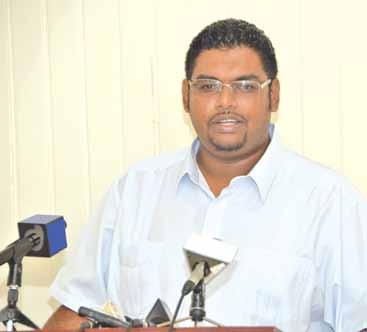
Housing and Water Minister Irfaan Ali said that major achievements were made this year in the water sector with approximately $2.7 billion invested under capital programme.
Ali, during a press conference on Friday, said in excess 100,000 people benefited from improved service and water quality this year. According to him, 20,000 new persons benefited from new services on the coastland, Linden and the hinterland.
There was also a reduction in the complaints relating to sewage system in Georgetown.
The investment made in the hinterland has also improved the quality and standard of living in these communities. The programme also resulted in the creation of 1600 jobs and a rise in the demand for local and imported construction materials.
Linden
In referring to Linden, Ali said per capita investment is in excess of $25,000 per person there. Works on the two new water treatment plants are scheduled to be completed in 2014.
Upgrade of 1500 service connection and installation of in excess of 20km transmission and distribution mains and the continuation of a nonrevenue programme to reduce wastage are all expected
to come on stream in the New Year.
Meanwhile, in Georgetown, Ali said rehabilitation of 24 sewer stations is expected to begin in the New Year, so too the distribution of medication for the spread of tropical diseases and the implementation of an energy efficiency pilot project to aid in the reduction of high energy consumption.
A water dispensation system will also be built in Port Kaituma, Region One, where residents would be able to access water free of charge.
The housing minister stated that the drilling of wells in Port Kaituma to improve the quality of water supply
will also take place in 2014. Commencement of an exploratory drilling at Mabaruma for access to underground water so as to improve the quality of service upgrade of water supply systems will also be undertaken.
Similar works will be done in Mathews Ridge, Region One; Ituni, Region 10; Purina, Region Seven; Akawaini, Region One; Kumu, Region Nine; and the Rockstone region, among several other locations.
GWI, he said has obtained unqualified audit opinion in 2012 as a result of robust financial management and corporate governance.
“This has a positive im-
pact of the company’s outlook and strategic plan 2012-2016. They have also completed financial regulations, review of the credit policy, procurement strategy and improvement of financial strengthening as a result of Oracle Business Fee implemented in 2013, which improved inventory and procurement management and provides full integration of other modules already implemented,” Ali added.
The provision of new services for residents, reducing non-revenue water, increased in treated water coverage, access to potable water in the hinterland, improvement in energy efficiency, sewage disposable in the city and general improvement in water quality were among the main areas in which special attention was paid.
“Over the last two years, GWI has made significant strides in its financial management, removing backlog in the financial reporting requirement. The financial statements were ready for submission to the National Assembly within the statutory deadline in 2013.
"In addition, the implementation of oracle financial software has enhanced the integrity of the financial reporting system of GWI and it enabled real time audit of financial transactions,” said the minister.
Junior Local Government Minister
Norman Whittaker on Sunday said that the $56 million set aside by government was not intended for the restoration of Georgetown.
In a letter to the editor which appeared in a local newspaper under the headline, “How can $56M restore Georgetown?”, City Mayor Hamilton Green said the funds assigned by the government are woefully inadequate.
“How can $56M restore Georgetown? Or was it intended as a joke for Xmas?” were among questions posed by Green in his letter.
However, the junior local government minister said the $56 million was never intended for the restoration of the city. “The $56 million has nothing to do with the restoration project,” he said during a telephone interview with Guyana Times
According to Whittaker, on a yearly basis, the administration sets aside funds to clean-up the 10 wards of the town in light of the festive season.
The ongoing campaign is being conducted in partnership with the local gov-
ernment and public works ministries, the National Drainage and Irrigation Authority (NDIA) and the Georgetown Mayor and City Council.
The Public Works Ministry has the mandate to clear clogged drains and canals around the city while the Local Government Ministry and the NDIA along with community development councils (CDCs) have been clearing the streets of garbage. In addition to the primary commercial areas, North and South Ruimveldt, Agricola, McDoom, Alexander Village,
Lodge, River View, Middle Road and East La Penitence are also being cleared.
In the upcoming week, Whittaker said attention will be given to illegal dumpsites within the city. According to him, 18 major illegal sites have been identified.
In addition to the $56 million, the city mayor also bashed the government over the resolution passed in the House earlier in the year.
“In August, the National Assembly approved a motion for the restoration of Georgetown. After months, it is now crystal clear that the government has no interest in making a reality of this democratic decision of the National Assembly and continues the sad and sorry state of stultifying the city,” Green claimed.
But Whittaker said the restoration plan will soon be presented to the National Assembly by the Environment Minister Robert Persaud.
The terms of reference formulated by the technical, solid waste, public awareness and resource mobilisation committees have already been submitted to Minister Persaud. “It
Ris expected that the natural resources and environment minister will submit his report to the National Assembly soon," said Whittaker. It is during this presentation that the overall cost to restore city will be made public.
The next sitting of the National Assembly is set for January 19, 2014; however, it is unclear whether the report will be submitted then.
On March 14, government backed the Alliance For Change (AFC) and A Partnership for National Unity (APNU) in passing the motion for the restoration of Georgetown to its former glory.
egardless of the reasons we celebrate Christmas, there is that one thing in common – joy. As a child growing up in Berbice, Guyana, I always try to have a few laughs and a lot of fun through a gettogether with friends to look at each other’s family photos from past Christmases. Each time it amazes me to see how much I have changed. I remember my very first ‘Santa Claus’ picture was taken out at my neighbour’s shop, ‘Pat Shop’ with my big glasses and curly hair and I have to say that every time I look at the same picture, I get the same amount of fun.
As we celebrate the Christmas season, I encourage you to load the family into the car and drive around your village looking at Christmas lights. This alone can bring lots of joy to the entire family. Another thing I encourage you to do is to drop anonymous notes to someone you know, thanking them for something good they have done for you. This reminds me of when I was in college. I was in my social services programme and I only stepped out for five minutes from the classroom and there was a note that said “you are always willing to go beyond to help others”. It was a nice feeling knowing that my peers recognised the work I do and yes it did feel great.
Spread love
That is why in times such as Christmas we must do a little extra to spread some love. And by no means am I saying that we should wait for an occasion like this before we can be joyful, but at the same time what other ways are there to celebrate such of a joyous time?
One of the things I am really passionate about is respecting our diversity in Berbice and Guyana as a whole. That is why I would like to challenge you to try a new recipe this holiday season from a different culture. For example, if you are of East Indian heritage, try something from the African culture and vice versa. And if you are a churchgoer, go to your church one day when no one else is there and bring a single candle to light and sit in the silence, enjoying the peace of the season. Having some ‘me’ time is always a good thing as it allows us to reflect on our ‘purpose’. And I have to say that, speaking from experience, I find it to be good therapy for human relaxation.
Not too many of us like to journal, but keeping a journal of all your favourite Christmas memories from this year so you can share the next Christmas is probably a good thing to do. You know it’s hard enough for us to remember what happens yesterday, so just imagine how much more difficult it is to remember activities from one Christmas ago.
With this little advice I hope you have had a great Christmas and I wish you all the best for the Happy New Year 2014.
Banalo Motilall also known as “Dumbman” of Herstelling, East Bank Demerara has been reported missing.
Motilall, who is of East Indian descent was last seen by relatives on Thursday. At the time, he was clad in a grey and white stripped T-shirt and grey pants.
Banalo’s distraught relatives told Guyana Times that Motilall regularly drinks alcohol, but would not stray away from the village because of his disability. They fear the man may have been the victim of amnesia.
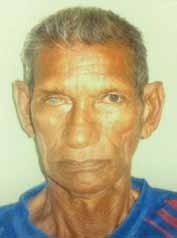
Anyone with information regarding the whereabouts of Motilall can make contact with the nearest police station or his relatives Shameer on telephone number 265-4933 and Rishi on 688-8696. Motilall
monday, december 30, 2013| guyanatimesgy.com
ommonwealth
CSecretary General Kamalesh Sharma has appointed Deodat Maharaj, from Trinidad and Tobago, to the post
of deputy secretary general (Economic and Social Development) at the Commonwealth Secretariat.
Sharma said: “I am
very pleased to announce the appointment of Deodat Maharaj. He brings to the secretariat and the Commonwealth a wealth of experience in diverse ar-


Commonwealth Secretary General
eas of development. He also has strong management credentials in areas of priority and direct relevance to the secretariat’s new strategic plan. Maharaj will be a valuable addition to the secretariat’s leadership team.”
Responding to the appointment by the secretary general, Deodat said: “I am delighted with the opportunity, and it will be an honour to serve the Commonwealth.”
Maharaj will report to the secretary general on economic affairs, trade and debt, social development and public sector governance. He will also have responsibility in particular for the sound management of the Commonwealth Fund for Technical Cooperation.
The incoming deputy secretary general is currently chief of the Regional Bureau for Asia and the Pacific at the United Nations Development Programme (UNDP) headquarters in New York.
He has held the post of chief-of-staff in the UNDP’s Regional Bureau for Asia and the Pacific, and has worked in Trinidad and Tobago, Suriname, Guyana and Tanzania.
Maharaj had also worked at the Caribbean Development Bank in Barbados and was head of the secretariat on the Ministerial Council for Social Development with the government of Trinidad and Tobago.
He holds a master’s of science degree in international affairs from Florida State University, U.S.A.; first degrees in government (University of West Indies) and law (London University, UK); and a post-graduate diploma in international affairs from the University of West Indies. Maharaj is expected to commence duties in the first quarter of 2014.

In the middle of the Test series between India and South Africa, Jacques Kallis decided to call it a day. Up to then he hadn’t been exactly knocking them dead in the field or in the stands...but every sportsman has their bad patches, no?
However, it’s emblematic of the kind of cricketer Kallis has been since he entered the international arena in 1997, that his standards for himself have always been higher than even that of his fans.
Kallis is one of a dying breed – the exceptional allrounder. Most cricketers entering the game can bat and field or bowl. But as they move up the ranks, they settle into a speciality – either batting or bowling. The true allrounder remains competitive in all three aspects of the game.
In Kallis' case he was extraordinary. With the century in his farewell game, he surpassed Rahul Dravid to become the third highest test scorer ever, with 13,289 runs. Only Sachin Tendulkar and Ricky Pointing are ahead of him. His average of 55+ is right up there with the very best.
And if that were not enough, there’s the 292 wickets he’s bagged with his fast medium pace that could clock up to 90 mph disconcerting even the finest batsman. It’s no wonder that opponents swore it was like playing against 12 men when Kallis was in the South Africa team.
In his later years, he would develop severe back problems that made him ease up with his bowling. Then to top it all, in his last test, he also became the second test player ever to take 200 catches!
Very few would be surprised if in his final post-game interview he bared his shirt and revealed a big, red capital “S” on a blue skintight top. While those “Super” numbers give him the undisputed bragging rights (not that Kallis was ever a bragger – he let his actions on the field speak for him) to being the “all rounder” of the age, comparisons with the great Gary Sobers for the all-time title are inevitable. This will be a source of arguments in bars for decades to come!
The raw numbers themselves don’t give the real picture, since Sobers played only 92 tests to Kallis’ 166. In batting, it wasn’t just the number of runs, but the swashbuckling way Sobers made them. In bowling, Sobers did take 235 scalps.
Perhaps the best statistic to distinguish the two greats is the difference between their batting and bowling averages. Sobers’ batting average of 57.78 puts him ahead of Kallis with 55.12, while Kallis’ bowling average of 32.53 compares with 34.03 for Sobers.
Let the arguments begin!
...from duty to country
It’s really pathetic what’s going on (going down?) with the endorsement and encouragement by the opposition A Partnership for National Unity (APNU) and Alliance For Change (AFC) of the U.S. to trash Guyana’s sovereignty.
It’s not that the opposition doesn’t know the bottom line. We already have an experience in the 1960s of the perfidy of the opposition People’s National Congress (PNC) and the United Force (UF) providing cover to the U.S. for regime change while “exporting democracy”. The AFC is now slavering at its chops to replay the UF’s junior partner role. It would do them well to remember the fate of the UF.
But the entire opposition should remember too what real Guyanese patriots do when our sovereignty is threatened. Just look at the actions of Dr Cheddi Jagan and the People’s Progressive Party (PPP) when Venezuela rattled its swords at our western border. Even though they were aware of Forbes Burnham’s waffling on the border issue, the PPP stood shoulder to shoulder over Ankoko and later the Venezuelan “Decree of the Sea” in 1968.
Is the opposition willing to hand over both the blade of grass and the cuirass now?
...into the cesspool?
As we predicted, MuckrakerKN Mohan Lall is plunging directly into politics. He had his pet Peeper nominate him as “Man of the Year”. He should remember that “self praise is no recommendation”. Just narcissism.
The Alliance For Change (AFC) said it has noted with amusement the alarm uttered by Cabinet Secretary, Dr Roger Luncheon regarding his reservation about the United States Agency for International Development (USAID) funded Leadership and Democracy Project.
In a statement, the AFC said any “effort which enhances democracy promotes, rather than undermines sovereignty and at a time when there has been no local government elections for over 14 years, and where the country is governed by a minority party which is continuously at war with the legislative arm of the state, any effort which improves the participation of a broader cross section of the population in the decision making process of the country is not only welcomed but necessary”.
Democracy
The party added: “The PPP/C [People's Peogressive Party/Civic] government seems to have conveniently forgotten that it was none other than their founder leader, Dr Cheddi Jagan, who not only sought but insisted on the participation of former U.S. President Jimmy Carter in his efforts to enhance democracy in Guyana in 1992.”
The AFC said it is therefore perplexed by what circumstances might have changed since then that now categorises efforts at enhanced democracy as a challenge to sovereignty.
“But what could be the justification in not wanting to support a project as this which has increased participation of the citizenry in democracy building, consensus building in the National Assembly, funding for research and legal drafting skills for Parliamentarians, women and youth civic education festivals, and local government education and awareness? It could only be the downgrading of participatory democracy and the abandoning of a once loudly heralded PPP/C’s goal ‘No development without de-
mocracy’,”.
According to the AFC, this newfound political approach of confrontational diplomacy and harsh assailing of a most senior ranking diplomat from U.S., is a retrograde step towards fullfledged authoritarianism.
“All Guyanese and perhaps equally importantly, the members in the Guyanese diaspora in the U.S.A, must speak out against this unacceptable stance adopted by the government. AFC supports the position taken by the U.S. government and looks forward to the positive contribution this project will provide to enhanced leadership and democracy in Guyana. The AFC endorses this project,” the statement said.
Repercussions
The government last week warned that there could be serious repercussions over the U.S. government’s insistence on carrying out the USAID project here, which the Donald Ramotar administration has rejected.
The government has also written the U.S. ambassador to Guyana, D Brent Hardt on comments he made in an exclusive interview with the Stabroek News recently, insisting that the project would go ahead with or without the Guyana government’s support.
Dr Luncheon told a news conference on Tuesday that the administration will view Ambassador Hardt’s response as the official reaction of Washington.
In a letter to the editor of this newspaper, Dr Luncheon said he noted the ambassador, reportedly stating the U.S. intention to implement the project notwithstanding Cabinet’s disapproval. He said he has also noted the insistence of the ambassador that the government of Guyana was consulted on the project.
“I have also noted the political opposition supporting the U.S. ambassador’s line that the government had no good reason to reject the project.

The Agriculture Ministry said heavy rains are expected in the next 24 hours and warned of possible flooding, particularly in the Berbice region.
The ministry in a statement on Sunday said frequent showers over the next 24 hours are expected along
the coastal regions, with heavy rainfall expected over Regions Five and Six.
“Given high water levels in canals and saturated land, flooding conditions can result,” the release added.
Areas for attention include Black Bush Polder and villages of Lower and Central Corentyne, Canal
Polder, Pomeroon and a number of villages along the Essequibo.
According to the ministry, the National Drainage and Irrigation Authority (NDIA), regional officials and neighbourhood democratic councils are closely monitoring the situation.
“We are cautioning resi-
dence, especially in low lying regions, to take precautionary measures against flooding. Please feel free to contact us on our hotline numbers 227-5049,223 -7291 and 643 4369 to report any flooding or breach.”
The ministry said it will continue to closely monitor the situation.
The security sector continues to focus heavily on training of its personnel, and only recently several officers benefited from overseas training at various levels.
The Home Affairs Ministry in a release recently announced that Detective Sergeant Shivram Murguyya and Detective Corporal Devon Lowe attended the junior criminal investigation course in Christ Church, Barbados.
The aim of this course was to develop the requisite investigative skills of junior officers that would enable them to execute their duties in a professional manner.
Inspector Clifton Davis of the Tactical Services Unit (TSU) attended the regional armoury management training course in Port of Spain, Trinidad and Tobago, to bolster the capacities of government armourers in the
specific technical skills and management processes necessary for the safe, effective and efficient accounting, inspection, repair, maintenance, storage, security and destruction of firearms and ammunition.
Meanwhile, Deputy Commissioner (Law Enforcement) Seelall Persaud attended a special meeting on the establishment of a regional counterdrug intelligence school for the Caribbean in November.
Aim
The aim of this forum was to seek the input of regional security officials on specific counterdrug intelligence training needs to form the basis for the curriculum of the proposed school.
With regard to the Guyana Fire Service, Cadet Officer Andrew Holder and Section Leader Dehola Jacobs attended the third ex-
ecutive meeting and the seventh biennial conference of the Caribbean Association of Fire Fighters (CAFF) in Castries, St Lucia. This was aimed at promoting cooperation, standardisation and enhancing the quality of service by regional firefighters.
Meanwhile, cadet officers Suresh Persaud and Cleon Thom-Fernandes attended the Junior Officer Leadership Academy training event in early December in Dominica.
This programme was designed for the development of junior officers in fire and rescue organisations throughout the Caribbean.
Additionally, it provided classroom training on information critical to the success of fire professionals and included various peer group activities. Ashley Williams and Devendra Ramzit from the Customs Anti-Narcotics Unit (CANU) attended the second
regional Container Control Programme (CCP) meeting in Panama. This meeting focused on money laundering, UN sanctions, arms trafficking, intellectual property rights and storage of medicaments.
Meeting
Meanwhile, Kavita Bhowani from the Home Affairs Ministry attended the fourth Caribbean – United States Security Cooperation Dialogue in Washington D.C. This meeting allowed delegations to examine several of the flagship programmes that have commenced under the Caribbean Basin Security Initiative (CBSI) and consider the next steps forward in respect of cooperation and information sharing in order to reduce illicit trafficking, promote social justice, and improve citizen security, the Government Information Agency (GINA) reported.
Organisation of American States (OAS)
Secretary General José Miguel Insulza recently received a significant contribution from the People’s Republic of China for the remodelling of the headquarters of the organisation in Washington, DC.
“We warmly welcome this important contribution from the People’s Republic of China on an issue as important to us as is the remodelling our headquarters,” Insulza said, adding that “this contribution joins others already made by China in various key areas of our organisation such as trade and competitiveness, natural disasters and environmental protection, migration, education and early childhood, for which we thank them also.”
The donation was made during a luncheon offered by the White House ambassador and permanent observ-
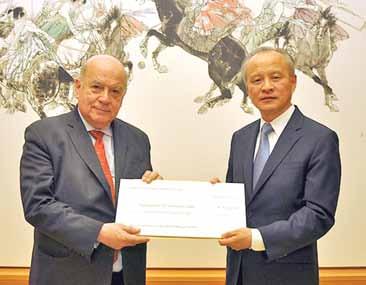
OAS Secretary General José Miguel Insulza received the contribution from White House Ambassador and Permanent Observer of the People’s Republic of China to the hemispheric institution, Cui Tiankai
er of the People’s Republic of China to the hemispheric institution, Cui Tiankai, for the OAS secretary general in the country’s embassy in Washington.
Secretary General Insulza expressed his grat-
itude for the contribution that China has made to the OAS in recent years, both financially and in other areas.
Since 2009, the Beijing government has also made contributions to allow students in the region access schol-
arships for education in the country through the OAS, through which students from 29 member countries have done masters’ and doctoral studies.
The OAS secretary general and the permanent observer of China also discussed the main issues on the regional agenda, and issues of mutual interest between the Western Hemisphere and Asia.
In this context, Secretary General Insulza said that 2014 will mark a decade since the People’s Republic of China first participated in the OAS as a permanent observer, an anniversary that the head of the multilateral institution and Ambassador Cui agreed should serve to further strengthen relations between the two bodies.
Secretary General Insulza attended the Chinese embassy accompanied by the OAS External Relations Secretary Alfonso Quiñonez.

Dem boys who does call dem selves boys and who does wear boy clothes to fool people comin outta dem closet now. Dem just can’t keep in certain feelins no more. Dem like to keep other tings in, but de feelins runnin over. It too much fuh dem to lock down. Old people seh whah deh inside does come out at some time. Some at de top and some at de bottom.
Some of dem boys who does call dem selves boys does wuk in the press, but dem gettin depress because dem shame fuh express dem selves in public. That is why some of dem does plant pumpkins only night time. And dem same ones does pick and ship out pumpkins night time too.
Rum Jhaat join dem boys who does call dem selves boys a long time now. But he was gettin dem same feelins whah dem boys does get a long time before that. Is when he couldn’t hold it in no more that he decide fuh join dem. Is old people who seh if yuh can’t beat dem yuh have to join dem.
Rum Jhaat believe in that real bad. De feelins fuh dem boys was stronger than fuh de P-P-PEE-SEE. That is why he ass get kick out. But Rum Jhaat like that kinda kickin. Any ting to do wid ass is right up Rum Jhaat alley. And dem boys done tell people that Rum Jhaat gotta big alley.
Well it look like Rum Jhaat was hopin that Ali woulda eye up he alley. So he turn around and talk till he get Ali attention. But Ali show he a different kinda attention without any intention. Ali expose de ass man. Just like how de prezzie had expose de jack ass man.
Ting-a-ling-a-ling…friend tell friend…mattie tell mattie! Wid a ass man and a jack ass man among dem boys, that is right up all dem boys alley. And de man who like tell people to haul ass does get a lotta maul ass!
AWest Demerara man was found hanging in a cell at a North West District (NWD) police station on Saturday night.
Dead is 31-year-old Vivian La Cruz, a miner of Zeeburg, West Coast Demerara. The incident occurred at the Acquero Police Station.
According to a police press release, La Cruz used his pants to hang himself. He was found “hanging from a metal bar in his cell by one of the legs of his pants” the release
stated. The man was the only prisoner in the lock-ups at the time.
The release further stated that La Cruz was arrested by the police on Saturday around 17:00h after a report was made against him by his girlfriend. The woman claimed that Cruz physically abused her at Quibana, NWD.
The miner’s body is presently at the Charity Hospital Mortuary awaiting a postmortem examination. Police are investigating the matter.
“Mister Editor, at this stage, the issue is the U.S. ambassador’s apparent contempt of the Cabinet of Guyana – an act that can have serious repercussions,” Dr Luncheon warned.
The Cabinet secretary said Hardt was playing with words with regards to consultation. “I still contend Guyana was not consulted. The project was conceived by the American authorities, the project was funded by Congress,” he said. A bid was then tendered, and the U.S. organisation International Republican Institute (IRI) won that bid and was awarded the contract to implement the project. According to Dr Luncheon, it was subsequent to those actions by
the American authorities that the U.S. ambassador approached the government of Guyana.
“I challenge the ambassador to indicate at what point was the government of Guyana consulted about this project. The U.S. ambassador presented the government with a fait accompli.” Dr Luncheon further stated that Hardt’s apparent contempt of the Guyana government begs the question and supports “our contention that the ambassador is of the opinion that the U.S. authorities can execute projects in Guyana at will. This is a dangerous proposition that all right-thinking Guyanese and indeed sovereign states must repudiate.”


Guyana can be proud of many things in 2013, but there were also disappointments. Guyana continues on an upward development trajectory.
Several countries in the Caribbean Community (Caricom) experienced negative economic growth, but Guyana’s gross domestic product (GDP) of about five per cent for 2013 was the highest in the region. This has been so for at least the last five years.
Guyana’s debt continues to be stable. Many Caricom countries were warned by the International Monetary Fund (IMF) of the devastating impact of debt burdens on their economies and on the social welfare needs of their people. Jamaica has a debt ratio of more than 140 per cent its GDP.
Never before has the IMF engaged in bail outs as much as it is doing today in Caricom countries. Even Barbados seems to be on the path to IMF interventions. Yet the IMF continues to be upbeat with development in Guyana.
Wages and salaries
For 21 years, government has increased workers’ wages and salaries. The five per cent increase that public servants and others received for 2013 appears modest, but compared to reduced salaries in Grenada, a freeze in salaries in Jamaica, Barbados and other countries; and the termination of 3000 public servants, with more anticipated in 2014, in Barbados; Guyana continues to increase wages and salaries.
2013 is the first time in Guyana’s history that rice production topped 500,000 tons, rice export reached 400,000 tons, export earnings from rice topped US$200 million, and gold broke production record of more than 460,000 ounces. External investment topped US$1 billion in 2013.
Guyana’s students again took the majority of prizes for top students at the Caribbean Examinations Council (CXC) in 2013. Guyana now has universal access to primary and secondary education. No country in Caricom matches Guyana’s housing growth in 2013.
Guyana is approaching 100 per cent access to drinking water. Open heart surgery, dialysis and kidney transplants are becoming routine services in Guyana. Life expectancy continues to increase, surpassing 71 for the first time in Guyana’s history. Electricity, telephone and internet connection are accessible to more

This year marks the first time in Guyana’s history that rice production topped 500,000 tonnes; rice export reached 400,000 tonnes with export earnings from rice topping US$200 million
people in the country.
Guyana won several prizes for tourism products at the Caribbean Tourism Exhibition and the country has been recognised by international organisations, including National Geographic, as one of the top 10 destinations in the world for 2014. Guyana earned high praise for successfully hosting the Caribbean Week of Agriculture.
Yet on reflection, 2013 was a frustrating year. The worst offenders for causing frustration in Guyana in 2013 are opposition politicians who blatantly used Parliament as a pawn in their brazen war for political power.
Budgetary allocations
They voted in Parliament against budgetary allocations for the Amaila Falls Hydro Electric Project, the Amerindian Fund, the Specialty Hospital, the One Laptop Per Family Programme, the Cunhia Canal, the Cheddi Jagan International Airport expansion, and other projects.
The A Partnership for National Unity (APNU) and Alliance For Change (AFC), disregarding the calamity of nationalisation through the 1970s and 1980s, now essentially want to nationalise the Berbice River Bridge, seeking to have Parliament take over policy decisions. Yet for years, they opposed government’s efforts to liberalise the telecommunications sector.
They agree that the anti-money laundering bill meets all requirements, but the AFC continues to vote against the bill because they want the government to appoint the Public Procurement Commission. APNU says the anti-money laundering bill is flawed, but will not say what changes they want. APNU and AFC voted against the bill to stop trafficking of arms and ammunition because they hate Home Affairs Minister
Guyana has an abundant mass media and social media that is unimpeded. There is a commissioner of information under the Freedom of Information Act.
Yet, Parliament has twice silenced the voices of Guyanese citizens. The opposition parties combined to stop the private sector from petitioning parliamentarians in November and, in December, sport administrators and stakeholders were denied from petitioning.
Both parties earlier in 2013 tried to prevent Rohee from speaking in Parliament.
These same politicians
were silent when women were at least twice denigrated by the Kaieteur News simply because that newspaper is opposed to such women occupying important positions in Guyana.
These are frustrating experiences. Without them Guyana would be on an even steeper upward development trajectory. 2013 must be a barometer of who cares for Guyana, and of how the lust for power can derail national development and diminish national aspiration. Readers are invited to send their comments by email or Facebook to times. notebook@gmail.com.

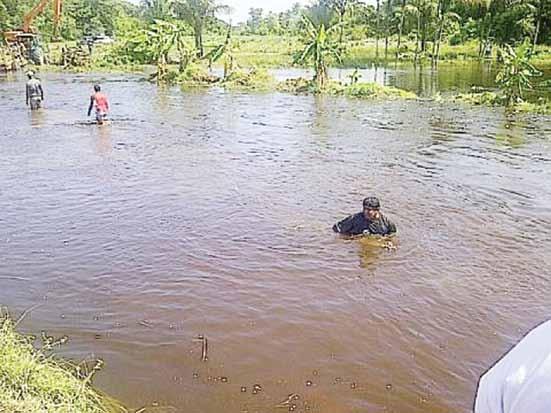
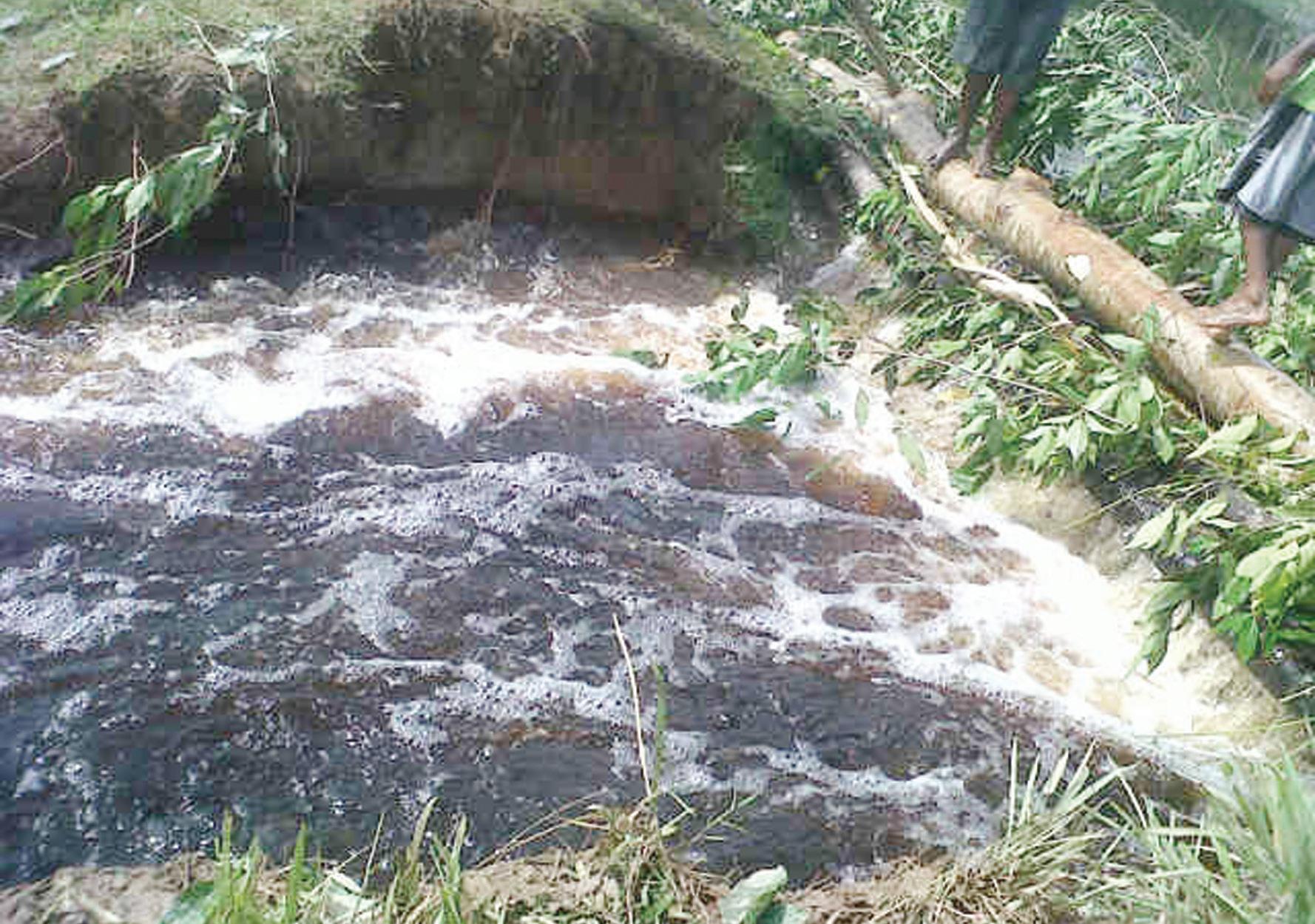
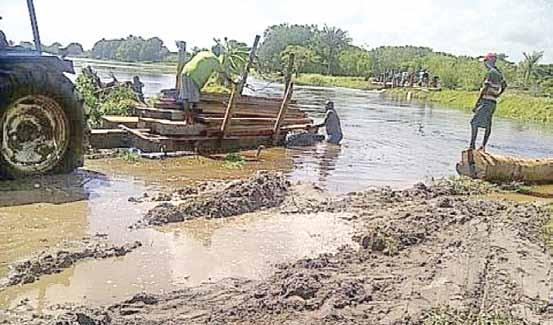
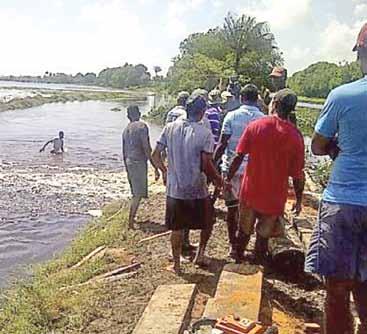
The Region Two administration has dispatched workmen as well as two hymacs to the Airy Hall/Riverstown area on the Essequibo Coast in an effort to help seal a huge breach in the conservancy dam there.
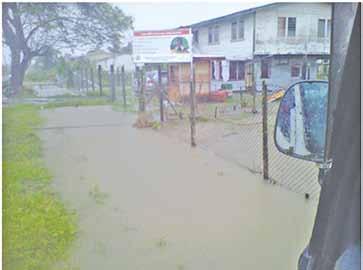
The rupture in the earthen dam on Saturday has resulted in approximately 300 acres of rice lands, cash crops and residential areas being flooded.
Although the Region Two administration with as-
sistance from the National Drainage and Irrigation Authority (NDIA) is trying to remedy the problem, farmers, residents and livestock owners are frustrated over the situation. Rice and poultry farmers are predominantly affected by the breach.
Farmers, who spoke with Guyana Times say they are frustrated and credited the breach to the negligence of the Region Two administration.
One farmer said that the
area has been eroding and despite several reports made to the regional office, nothing was done. The breach has resulted in some parts of the Airy Hall/Riverstown community being flood five inches high.
Sankar Persaud, a rice farmer, said his five acres of rice land is inundated and is worried over the seedlings he sowed months ago.
Persaud commended the Region Two administration for its effort in sealing the breach, but felt that the
situation could have been avoided.
Livestock farmers have also been affected as some chicken pens were flooded out.
Junior Agriculture Minister Alli Baksh said workmen and volunteers are on site desperately trying to seal the breach. Baksh and a delegation from the Region Two administration, including Regional Chairman Parmanand Persaud visited the area.
He commended residents for their effort in helping to fix the breach.
Workers are plugging the breach with sandbags and many residents are forced to stay indoor as their yards have been flooded.
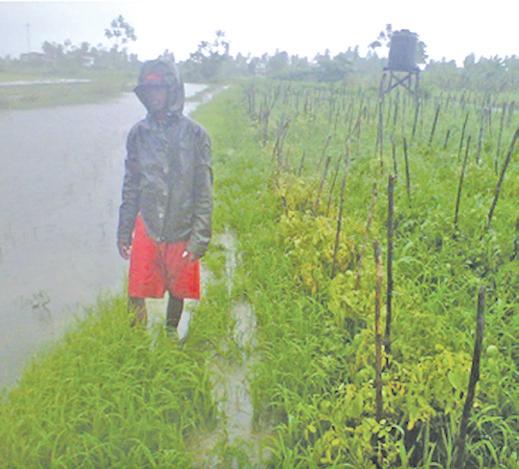
Black Bush Polder rice and cash crop farmers are bracing for widespread damage to their crops from floodwaters that have already caused millions of dollars in losses.
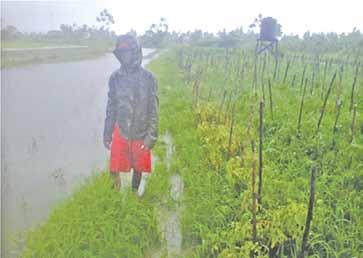
The main concern is the immediate threat the floods pose to several cash crops such as cabbages, tomatoes and sweet peppers.
“Farmers are suffering huge losses since the water that has swamped their farms are not draining away,” said Sally Singh, a frustrated cash crop farmer from Mibicuri.
“Over two weeks now this water deh here and nobody care, when the chairman come, he drive on the road top and say the place okay, he nah come in ah back here and see suffering,” the woman lamented. The farmer said she lost over two acres of cabbages and one acre sweet pepper and tomatoes.
“Everybody knows how dem thing this expensive to plant and now when you about to reap, everything destroyed,” she lamented, blaming her woes on the regional administration.
She also revealed that her family has been working tirelessly to save their crops, but the inundation is not receding.
Singh said whenever government would assist in these situations, the farmers never benefit.
“Me husband pump out water day and night and now the water get so high there is nowhere to pump it, now we don’t know what to do and even if government send flood relief, we never get nothing because when you go and ask, they say it done,” she stated.
Another farmer John Mangal said he is thinking of leaving the area as his entire bottom house is flooded.
“Me whole place flood out, all me garden and when you see them go bring flood relief is dem own people dem go give, we never get none,” he said.
Mangal said the Neighbour Democratic Council’s (NDC) performance leaves much to be desired.
“The NDC na able with nothing, they need to close it down, trust me, we living in a savannah here, they take the savannah and plant rice and all the water coming here and flood we out,” he said.
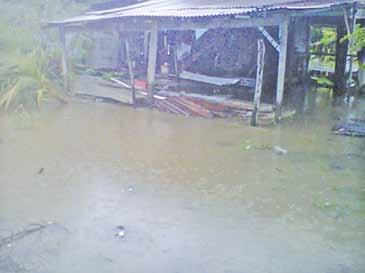
Many other cash crop farmers suffered great losses, some of them seemed perplexed and in a state of distress as they contemplate their next move. Krishna
Persaud said he used his entire savings to invest in tomatoes and sweet peppers but now he does not know what to do as everything has been destroyed.
“Me use all me money to plant and now when me about to reap, every-
thing gone, there is no proper drainage and when they bring flood relief dem just give you a half bag fertiliser or a quarter litre pesticide, what that go do?” he said. He told this publication that poor management and supervision of the NDC are the cause for the woes and discomfort being faced by farmers. Meanwhile, rice farmers who would have cultivated their fields recently are hoping that the floodwaters will recede as soon as possible as it is posing a threat to their livelihood.
monday, december 30, 2013
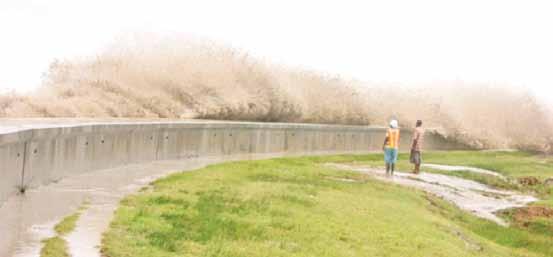
The government of Guyana will receive a loan of US$25 million from the Caribbean Development Bank (CDB) to fund a project which will protect a number of communities from flooding and other hazards brought on by the effects of climate change.
Components of the project include the reconstruction and improvement of approximately 5.4 kilometres of sea and river defences, as well as for capacity in shoreline change monitoring and analysis. The project will also include a Community Awareness and Education
Programme.
The project will involve 20 rural communities in Regions Two, Three, Four and Six along the coastline and in Leguan Island which is in the Essequibo estuary.
These communities have a combined population of about 45,000 people in about 9000 households.
ASophia, Georgetown man is hospitalised after he was shot in the abdomen during a confrontation with an armed bandit on Saturday night.
The injured man has been identified as Paul Hutson, 43, a mechanic of Lot 485 ‘C’ Field Sophia. According to reports, the man had returned home around 21:15h when he was held up at gunpoint by a lone gunman.
A police press release said the gunman relieved Hutson of his jewellery and cellphones but not before he put up a fight. It was during the confrontation that the 43-year-old father of three was shot in his abdomen.
Hutson is currently in the Intensive Care Unit of a private hospital.
According to the injured man’s wife, she and her three children, ages two, six and 10 were at home sleep-
ing when she was awakened by the sound of a gunshot. The woman said upon investigating, she saw her husband clutching his stomach and immediately sought help to get him medical treatment.
The sill traumatised woman related that her husband is in a stable condition. However, she noted that she did not ask him about the incident since she wants him to rest and get better.
AWest Demerara man was on Sunday accosted after police on patrol found an unlicensed firearm in his possession.
According to a police press release, the discovery was made around 13:50h at Pouderoyen, West Bank Demerara (WBD).
“The police conducted a search on a man at Pouderoyen, WBD, in whose possession was found an unlicensed .38 revolver,” the release said.
The police further stated that the perpetrator, whose identity was withheld, has been taken into custody and is assisting with investigations. He will be charged with possession of an unlicensed firearm, which carries a maximum penalty of three years, along with a fine of $30,000.
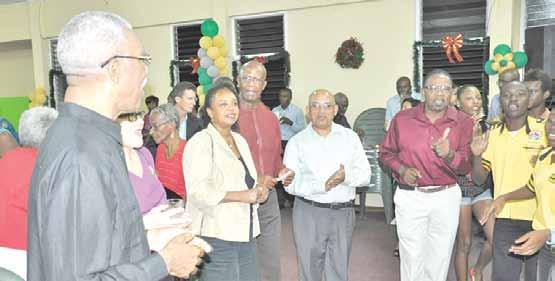
The People’s National Congress Reform (PNCR) headquarters was the scene of a lively and spirited Christmas concert just over a week ago.
The air was filled with Christmas cheer, songs, and dances as the party held its annual Yuletide celebration, “Christmas at
Congress Place”. The event, which was hosted by the Central Executive Committee of the PNCR, attracted a wide cross-section of citizens, including A Partnership for National Unity (APNU) members of Parliament (MPs); members of the diplomatic corps; the Private Sector Commission; re -
gional democratic councillors from surrounding regions; and rank and file members of the PNCR.
According to a release from the party, several well-known artists and groups entertained the capacity crowd.
There were performances from the Linda Griffith Dance School, the Success
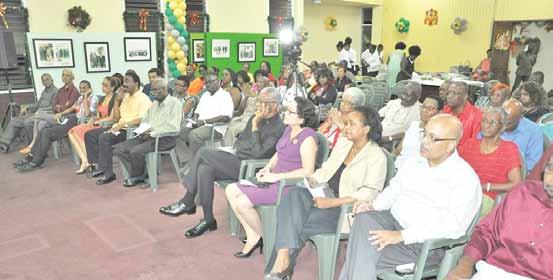
Elementary School Choir, Circle of Love, the Woodside Folk Group, Steel Pan music, as well as a violin solo by Chee Clark.
PNCR Chairman and parliamentarian Basil Williams expressed greetings on behalf of the party; MP Christopher Jones delivered Christmas greetings on behalf of the
Guyana Youth and Student Movement (GYSM), the youth arm of the PNCR; and Cheryl Sampson brought greetings on behalf of the National Congress of Women (NCW), the women’s arm of the party.
APNU leader, retired Brigadier David Granger thanked all the performers and wished all pres -
ent a Merry Christmas. In extremely brief remarks, Brigadier Granger said it was his wish that good things would come their way from the National Assembly in 2014. The event was held in the Hall of Heroes at the PNCR Secretariat, Congress Place, Sophia, Georgetown.
Muri Brasil Ventures Inc has not received formal notification that its application for the construction of an airstrip in the New River Triangle has been denied by the Public Works and Transportation Ministry.
In a local newspaper report on Sunday, headlined, “Muri denied approval for New River airstrip”, Public Works Minister Robeson Benn was quoted as saying “they had submitted an application but it was not approved”.
It was explained that the application was being processed, but the increas -
ing questions surrounding permission being granted to Muri Brasil Ventures Inc to survey the sensitive New River Triangle had caused the ministry to reject the application.
Response In response, on Sunday, the company’s spokesman Alex Graham said “when this decision of the government is formally conveyed to the company, it will then in due course have to determine the way forward, that is to say, how if at all the survey can proceed.”
In an earlier release, Muri Brasil Ventures dis -
closed that it was awaiting permission to construct a
small airstrip before exploration activities commence. The airstrip would have facilitated the airborne aspect of the survey. However, research activities have taken place.
The Natural Resources and Environment Ministry has come in for heavy criticisms since disclosures were made that Muri Brasil Ventures was granted Permission for Geological and Geophysical Survey (PGGS) to be conducted in South East Berbice for several types of minerals. Permission was granted on November 7, 2012.
The locally registered
company said it was never issued a prospecting licence or mining licence, but expressed the hope of acquiring the relevant documents to facilitate mining if the study proves to be feasible.
“These kinds of exploration activities cost millions of U.S. dollars which can only be sourced as exploration investments from outside of Guyana.
Investments
"No such investments would be available if the investor is given no assurance that he will be granted prospecting licences. The investor takes a risk.
If he or she is not assured of a potential return, investment capital will dry up and so will Guyana’s mining industry,” the company had said.
South East Berbice has long been an area of interest to miners. In the 1970s, the late Chris Barron of the UK did enormous work in mapping the terrain in that area, some of the toughest in the country, including the Muri Mountain area.
In 1976, he led a UN supported survey team to the area which identified phosphate and rare-earth bearing carbonitate, sylvine and other minerals.

Mysterious oil spills over the past 12 days have left the residents along Trinidad’s southern coastline in a state of upheaval. Nine oil spills in the first 10 days left residents battling heavy slicks, noxious smells and tiring clean-up operations even while the source of the spills has not been determined.
But while the residents, members of the Oilfields Workers Trade Union, the state-owned Petrotrin and the US-based Oil Spill Response Ltd have pitched in to assist with the local clean-up, neighbouring islands are still reeling from the massive deluge on Christmas Day that left 18 dead, several missing, and millions of dollars in damage in St Lucia, St Vincent and the Grenadines, and Dominica.
Two containers packed with emergency supplies arrived in St Lucia late Friday night, and Prime
Minister Kamla PersadBissessar said then that it was the only island to request assistance to deal with the level of damage sustained after the Christmas Day storm. But Saturday, the Office of Disaster Preparedness (ODPM) confirmed that St Vincent and the Grenadines (SVG) also applied for assistance to restore the affected areas.
ODPM head, Dr Stephen Ramroop said five containers would be packed and shipped to SVG by Tuesday. Those will contain emergency supplies and hardware items to help with the rebuilding exercises on the island.
“They are doing a comprehensive needs assessment, which we are waiting for. The ODPM will also issue a press release of the items that they need in case residents want to contribute to the containers or add to our reserves,” Ramroop said. (Excerpt from Trinidad Guardian)
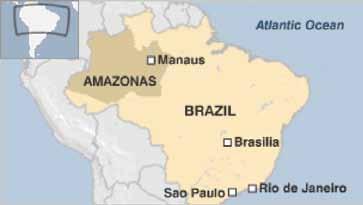
More than 200 Brazilian police are carrying out a search inside an indigenous reserve in the Amazon region.
The local Tenharim tribe is accused of holding three contractors who went missing nearly two weeks ago.
The authorities had promised to renew efforts to find the three men, after some groups in the neighbouring town of Humaita attacked government buildings and set fire to cars.
Tribal leaders deny any involvement. Local groups say the contractors were abducted in retaliation for the death of an indigenous leader.
The police say the man, Ivan Tenharim, was run over by a vehicle on a road that crosses the reserve, but tribe members believe he was murdered.
Clashes between indigenous groups and non-indigenous locals are not uncom-
mon in Brazil as they are often in conflict over land, logging and mining rights.
On Friday morning, more than 150 members of the tribe fled the reserve and sought refuge in a nearby military base.
Later, loggers and farmers set fire to houses in a reserve located in the nearby town of Manicore. The security secretary for Amazonas state, Paulo Roberto Vital, said the situation was now “under control”. (BBC News)
Residents of Castries, St Lucia, work together to clean up their area which was badly affected by flooding on Christmas Day (photo
Aworld-renowned clinic in Haiti that has become a leader in the fight against HIV/AIDS has won a top global health prize.
The Haitian Group for the Study of Kaposi’s Sarcoma and Opportunistic Infections (GHESKIO) has been named a recipient of the 2013 World Health Organisation’s Stop TB Partnership Kochon Prize in Tuberculosis, according to the Miami Herald.
Founder Dr Jean William Pape was informed of the honour in a December 20 letter from Partnership Executive Secretary Lucica Ditiu, the paper said.
The annual prize is given to organisations that have made a significant contribution to combating TB.
This year’s US$65,000 prize was designated for fighting TB in conflict and
refugee areas.
“GHESKIO’s leading work in HIV and TB for the past three decades and more recently for providing treatment services for the 1.5 million people who were internally displaced by Haiti’s earthquake in 2010 were especially commended,” says Ditiu in her letter.
After Haiti’s devastating earthquake, four years ago next month, Ditiu noted that GHESKIO sent mobile teams into the newly-erected refugee camps to screen people for TB and opened a field hospital to provide care.
Ditiu said the group has continued to work with those affected by the disaster, and a subsequent cholera outbreak.
Pape said the funds will help toward the construction of a TB hospital in Haiti. (Excerpt from Jamaica Observer)
The Chaparrastique volcano in eastern El Salvador belched a column of hot ash high into the air on Sunday, frightening nearby residents and prompting authorities to order evacuations in the area.
There were no immediate reports of injuries in the San Miguel region, where the volcano is located and that is known for its coffee plantations.
Civil protection authorities said they would evacuate people from within three kilometres (1.9 miles) of the volcano and set up emergency shelters.
“The evacuations began almost right after the explosion,” said civil protection official Armando Vividor. He said some 5000 people lived around the volcano.

The volcano, which is about 140 kilometres (86 miles) to the east of the capital, spewed ash over a wide area and the smell of sulphur hung over surrounding towns, according to reports on social media. Authorities recommended breathing through moist handkerchiefs.
on December 29,
Santos Osorio, a member of a local coffee growers union, said heavy ash was falling in the area and local coffee plantations would be checked for damage.
El Salvador’s crop has al-
ready been blighted by an outbreak of leaf rust that has reduced output in all five of Central America’s coffee producers.
El Salvador has 23 active volcanoes and the Chaparrastique volcano is
considered one of the most active, with 26 eruptions in the last 500 years, the Environment Ministry said. In a 1976 eruption, lava gushed from the volcano and it shook violently in another event in 2010.
The Cuban government has eased restrictions on loans to private borrowers in the latest measure aimed at boosting the island’s troubled economy.
Individuals and small businesses can now borrow smaller amounts and have more time to pay back the government. President Raul Castro had launched the programme two years
ago as part of measures to reform Cuban socialism.
The minimum lending has been reduced from 3000 to 1000 pesos (US$67).The measure was published in the official gazette.
People will also be allowed to use their houses or jewellery to guarantee their loans.
The maximum period of the loans has been extend -
ed from five to 10 years. Earlier this month, the Cuban government lifted restrictions on private individuals buying new and second-hand cars.
Any Cuban citizen or foreigner with enough money will now be allowed to import the vehicles through an official agency.
Previously, official permits were required and they were often issued to
government officials, doctors and other people with access to the authorities, such as sports stars.
The main aim of the reforms introduced in the last few years is to keep the economy afloat, says the BBC’s Sarah Rainsford in Cuba.
Our correspondent says the latest announcement appears aimed at promoting the culture of credit,
which remains a novel concept on the island. Although Cubans have been able to request bank credits since 2011, barely 500 are reported to have borrowed money. The government wants to boost that figure as part of its efforts to encourage 1.5 million people to switch from the state payroll to the new private sector. (Excerpt from BBC News)

Asuicide attacker set off a bomb in the entrance hall of a Russian train station on Sunday, investigators said, killing at least 16 people in the second deadly attack within three days as Russia prepares to host the Winter Olympics.
Authorities said the attacker detonated a shrapnel-filled bomb in front of a metal detector just inside the main entrance of the
station in Volgograd, a busy hub north of the violenceplagued North Caucasus region on Russia’s southern fringe.
Islamist militants in the North Caucasus have carried out a long string of attacks since President Vladimir Putin came to power in 2000. They now confront him with his biggest security challenge, threatening to disrupt the Olympics that start in the Black Sea
resort of Sochi in 40 days.
Footage shown on TV captured the moment of the blast, as a massive orange fireball filled the hall of the stately, colonnaded station and clouds of grey smoke poured out of shattered windows.
The station – a Stalinesque architectural monument with a clocktower and spire topped by a Soviet-style star – was busier than usual, with people travelling home for the New Year, one of the main holidays in Russia.
“People were lying on the ground, screaming and calling for help,” a witness, Alexander Koblyakov, told Rossiya-24 TV. “I helped carry out a police officer whose head and face were covered in blood. He couldn’t speak.”
The city once bore the name Stalingrad in honour of Soviet dictator Josef Stalin, a figure held in opprobrium by many in the North Caucasus. (Excerpt from Reuters)
Turkish Prime Minister Tayyip Erdogan swore on Sunday he would survive a corruption crisis circling his Cabinet, saying those seeking his overthrow would fail just like mass anti-government protests last summer.
Erdogan accused his opponents of trying to sap the power of Turkey, which has seen rapid economic growth and assertive foreign policies under his 11-year leadership, in the service of an international plot cloaked as criminal proceedings.
Yet striking a somewhat milder tone, Foreign Minister Ahmet Davutoglu appeared to seek common ground with a U.S.-based
Turkish cleric whose rivalry with Erdogan is widely seen as having stoked the controversy.
On Friday, thousands of Turks demanding Erdogan step down clashed with riot police in central Istanbul. The trouble recalled protests in mid-2013 which began over development plans for the city’s Gezi park but broadened into complaints of authoritarianism under Erdogan’s Islamist-rooted AK party.
Erdogan, who is touring Turkey to drum up support before local elections in March, defied his accusers over the detention for suspected graft of three ministers’ sons and the head
of state-run Halkbank on December 17.
“They said ‘Gezi’ and smashed windows. Now they say ‘corruption’ and smash windows. These conspiracies will not succeed,” he told a cheering crowd in western Manisa province. “Their concern is not corruption, law or justice. Their only concern is damaging this nation’s power.”
Erdogan’s government has purged about 70 police investigators involved in the case, while financial markets have taken fright and one AK official said national elections could be brought forward from 2015 if the crisis persists. (Excerpt from Reuters)
Saudi Arabia is to give Lebanon’s army a grant of US$3 billion.
Lebanese President Michel Sleiman made the announcement in a televised address after the funeral of a senior Lebanese politician killed in a car bomb attack. He said it would help fight terrorism.
Mohamad Chatah, a Sunni Muslim, was a staunch critic of Syrian President Bashar al-Assad and Lebanon’s Shia Hezbollah movement that backs him.
Saudi Arabia and Hezbollah have taken opposite sides in the Syrian conflict.
Saudi Arabia’s deci-
sion to grant the aid to the Lebanese army is a clear attempt to counter Iran’s influence in Lebanon, which it exercises through the power of the Shia militant group Hezbollah.
The war in Syria and the spillover in Lebanon are a part of a regional proxy war between Riyadh and Tehran, in which the Saudi kingdom feels let down by what it sees as timid American support for the rebels.
“The king of the brotherly Kingdom of Saudi Arabia is offering this generous and appreciated aid of US$3 billion to the Lebanese army to strengthen its capabilities,” Sleiman said in his address.
He said it was the larg-
est assistance provided in Lebanon’s history and would be used to buy weapons from France.
French President Francois Hollande said his country would “meet” any demands for weapons from Lebanon during a visit on Sunday to Saudi Arabia aimed at boosting commercial ties with the kingdom.
“I am in touch with President Sleiman... If demands are made to us, we will meet them,” he said.
President Sleiman said the Saudi aid would finally allow the Lebanese army to “confront terrorism” and put an end to the proliferation of arms. (Excerpt
Tens of thousands of Cambodian opposition supporters, backed by striking garment-factory workers, have gathered to demand long-serving Prime Minister Hun Sen step down and call an election.
The garment workers have in recent days joined the opposition protests to press their demand that the government raise the minimum wage to US$160 a month from US$95, as recommended earlier this week.
“Hun Sen and his illegal government can hear us, they can’t ignore us, the people show their will for change,” Sam Rainsy,
leader of the main opposition Cambodia National Rescue Party, told the rally in a Phnom Penh park on Sunday.
“We demand that Hun Sen steps down and a new election,” the former finance minister told the crowd, some of whom have been camping out in the park since December 15.
Hun Sen’s long-dominant Cambodian People’s Party won a July election, but with a reduced majority. It has rejected opposition complaints of vote-rigging.
Hun Sen, who has been in power for 28 years, has ignored opposition demands
for an investigation into the election and says that he will not resign or call a new election.
Under Hun Sen, Cambodia has been transformed from a backwater scarred by the “Killing Fields” rule of the Khmer Rouge, into one of Southeast Asia’s fastest growing economies, helped by a burgeoning garment industry and growing political and investment ties with China.
But his authoritarian rule has earned the condemnation of rights groups and that, along with widespread corruption, has alienated many voters. (Excerpt from Al Jazeera)
There are conflicting reports from South Sudan where youths loyal to rebel leader Riek Machar are said to be marching on the strategic town of Bor.
In an interview with the BBC, a spokesman for President Salva Kiir denied earlier reports that most of the youths had been persuaded to go home.
Instead, Ateny Wek Ateng said the group had clashed with government forces.
At least 1000 people
have died in this month’s fighting. More than 121,600 are believed to have fled their homes. A United Nations surveillance flight earlier located the group of youths 50 kilometres (30 miles) north-east of Bor, but did not reveal its size.
Tens of thousands of civilians have sought refuge in UN camps, and reinforcements have been arriving to give them extra protection.
What began as a power struggle between Machar and President Salva Kiir has taken on overtones of a
tribal conflict. The Dinka, to which Kiir belongs, are pitted against the Nuer, from which Machar hails.
The government has offered a ceasefire, but the army says its forces are still battling rebels over oilfields in the north.
UK Foreign Secretary William Hague said he had contacted President Kiir and Machar “to urge them both to commit to an immediate ceasefire”.
Hague said he had encouraged them “to enter into negotiations immediately and without preconditions” and offered the UK’s diplomatic support.
East African mediators have given both sides until Tuesday to agree a ceasefire.
The group said to be marching on the town are part of an ethnic Nuer militia known as the White Army because of the white ash they put on their skin to protect them from insects.
(Excerpt from BBC News)
The Syrian government has evacuated about 5000 people from an embattled industrial town near the capital Damascus, where rebels linked to al-Qaeda have been battling government troops for more than two weeks.
The evacuation on Sunday comes as the Syrian Observatory for Human Rights confirmed that more than 500 people, including 151 children, have been killed during weeks of government air strikes on opposition-held areas of the northern city of Aleppo and its suburbs.
The majority of the dead were civilians, said the human-rights watchdog,
which relies on a network of activists, doctors and lawyers on the ground.
“The observatory considers all those who remain silent in the international community as complicit in the massacres that have been committed and continue to be committed by the Syrian regime,” the group said in a statement.
On Saturday, helicopters dropped TNT-packed barrels on a vegetable market and next to a hospital in Aleppo city, killing at least 25 civilians. The Syrian government has not commented on the aerial campaign.
Opposition fighters from Jabhat al-Nusra swept into Adra, northeast of
Damascus, in mid-December, reportedly killing civilian members of the Alawite and Druse sects, minority communities that support President Bashar al-Assad.
Shortly afterwards, Syrian soldiers surrounded the area, and there has been heavy fighting there since.
On Sunday, Social Affairs Minister Kinda alShammat said more than 5000 people were evacuated from the town. In a statement carried by the SANA state news agency, Shammat said the people were moved to a safe place, and the ministry was offering aid and support. (Excerpt from Al Jazeera)
Two tech companies in Haiti have open competing businesses to sell Android tablets. Startups Surtab SA and Handxom SA began production last month and plan to sell the seven-inch touchscreen devices to phone stores nationwide and markets overseas. Surtab executives say they have already sold a batch of the tablets to the University of Pittsburgh.

A Handxom executive says that the company has sold 300 units in the past two weeks and will open a showroom in January. Both companies purchase parts in China and assemble them in Haiti. The businesses are unusual in a country with little recent ex-
perience in electronics manufacturing. Most of the assembly companies have been limited to sewing T-shirts, which are exported to North America. (Trinidad Guardian)
More than a million Americans will lose their unemployment benefits after an emergency federal programme expired on Saturday. Lawmakers failed to agree on an extension of the scheme before the U.S. Congress began its winter recess.
Former President George W Bush introduced the assistance plan in 2008 at the start of the recession. Under the programme, jobless people received an average monthly
stipend of US$1166 for up to 73 weeks.
The White House says the benefits have kept millions of families out of poverty, but many Republicans argue that the scheme’s annual US$25 billion price tag is too expensive.
The stalemate comes two months after a budget fight in the U.S. Congress led to the partial shutdown of the government. President Barack Obama has vowed to push for the renewal of the expired
programme when Congress reconvenes in early January.
“The president said his administration would, as it has for several weeks now, push Congress to act promptly and in bipartisan fashion to address this urgent economic priority,” White House spokesman Josh Earnest said. An estimated 1.3 million people will initially be cut off with the end of the “emergency unemployment compensation”, U.S. officials say. (BBC News)
Increased average yield in the seven-year bond auctioned on Tuesday failed to entice huge investments, ending up with under subscription of 0.16 per cent.
Similarly, Christmas holidays as well as fulfilment of year-end obligations by investors contributed to decreased investment in the long-term maturity government securities. The auction results post-
ed by the Bank of Tanzania (BoT) show that weighted average yield was up to 15.8 per cent compared to 15.1 per cent offered in the previous session.
The government planned to raise 25 billion/- in the seven-year bond, but it ended up raising only 21.02 billion/-, with bids for only 14.1 billion/succeeding, an indication that some investors bid below market price offered by the bank.
Despite improved liquidity in circulation, investors’ participation in the seven year government paper deal was low, the fact that some analysts attribute to outstanding performance of the listed firms at the Dar es Salaam bourse. Over 60 per cent of the key players in long-term maturities are commercial banks, with only five per cent as retail investors. (allAfrica)
Japan’s most influential business lobby has agreed to raise workers’ base pay for the first time in six years as the economy gains momentum and corporate earnings improve, the Asahi newspaper reported on Sunday.
Many economists say an increase in base pay is essential to Prime Minister Shinzo Abe’s pledge to end 15 years of mild deflation and to help the
The UK will be in a position to overtake Germany as Europe’s largest economy, according to the think tank the Centre for Economic and Business Research (CEBR).
The CEBR predicts that Germany will lose its current top spot in Europe by 2030.
It cites the UK’s population growth as an aid to economic acceleration.
The report echoes the recent confidence of other business groups such as
the British Chambers of Commerce (BCC). Earlier this month the BCC said that the UK economy will surpass its pre-recession peak in 2014.
In its annual World Economic League Table, where it ranks the ups and downs of global economies, and forecasts their future position, the CEBR said in addition that China will overtake the U.S.in 2028, which is later than some analysts have suggested.
The UK will overall per-
form second best of all advanced economies, the CEBR said.
Yet, this performance will still lag behind growth in emerging countries such India and Brazil.
The CEBR in its report added that in addition to the UK’s population growth boosting economic expansion, that “lesser dependence on other European economies” would also aid progress, as well as “relatively low taxes by European standards.” (BBC News)

Bank of Japan (BoJ) meet its two per cent inflation target.
The Keidanren business lobby will encourage its member companies to raise base pay next year in annual spring wage negotiations, the Asahi reported, citing a draft of the business lobby’s negotiations strategy.
The Keidanren will leave it up to each industry to decide how much it will raise base pay, but its approval of
wage hikes could encourage labour unions to request even higher pay and help lift wages throughout the economy.
BoJ officials have expressed some concern that workers’ salaries have been slow to rise this year, so indications that pay will increase next year could make it more likely that the BoJ can meet its inflation target in the twoyear time frame allowed for.
Drake and Skull International (DSI) said on Sunday that it has secured a US$16 million contract to provide turnkey mechanical and electrical plumbing solutions for the New Cuffe Parade project in Mumbai, India.
As per its agreement with the project’s real estate developer Lodha Group, DSI will perform MEP works for four towers in the development, which is spread across 23 acres of land near South Mumbai.
The New Cuffe Parade project is the latest in a series of infrastructure deals signed by the Dubai-based contractor in India. “We are achieving significant progress with our expansion drive in India where the government has launched widespread initiatives to speed up private investment in infrastructure sector through Public Private Partnerships (PPPs),” said Khaldoun Tabari, CEO of Drake and Skull International.
“DSI is well-positioned to provide expertise, technologies and resources especially in hospitality, aviation, railways, urban infrastructure and housing, thermal and renewable energy and water and wastewater sectors via our water and power and MEP business units.” DSI’s portfolio of completed projects in India includes a US$25 million thermal power project in Orissa and a solar power project in the southern state of Tamil Nadu. (Gulf Business)
Alternative career paths that will help you enjoy your job again
Sales engineers
If you are afraid of forever being stuck in the construction field then you can look forward to finally throwing away your hard hat by working as a sales engineer.
Sales engineers are especially hired to sell technology and equipment to businesses. Unlike typical engineers, working in sales allows you to earn additional commissions apart from your regular salary.
Forensic science technicians
If you have the brains of CSI’s Grissom but would rather stay in a laboratory instead of working on the field then you can still fulfil your CSI
dream by working as a forensic science technician.
Forensic laboratory technicians are responsible for and most concerned with analysing physical evidence instead of collecting any from the crime scenes. Acquiring additional background in legal management is also an advantage beyond simply earning a bachelor’s degree.
Corporate attorney
If your heart can no longer take the stress of working at a law firm, why not become a corporate attorney instead?
Your work as a corporate attorney will primarily be limited to giving legal advice to businesses especially with
regards to contracts, patents and IPOs. Apart from the joy of not having to worry about length court proceedings, you also get to enjoy a hefty salary.
If you’ve discovered the career path you started isn’t all you hoped, there are lesser known jobs out there that will allow you to put your skills to work in an environment closer to your liking. College career counsellors warn graduating students that they should expect several career changes over their working life. Figure out what you love about what you currently do, and how you can use those skills in an area that appeals to you more in the long term. (Business Dictionary)
Former presidents of Brazil, Luiz Inácio Lula da Silva, and Chile, Ricardo Lagos have called for a qualitative leap in the region’s integration at the opening of a recent seminar held at the headquarters of the Economic Commission for Latin America and the Caribbean (ECLAC) in Santiago.
The former leaders were received by ECLAC Executive Secretary Alicia Bárcena, who opened the seminar entitled “Development and integration in Latin America”, along with InterAmerican Development Bank (IDB) President Luis Alberto Moreno, CAF-Latin American Development Bank President and Chief Executive Officer Enrique García, and Lula Institute President Paulo Okamotto.
Seminar
The former Brazilian president highlighted the importance of this seminar at ECLAC headquarters, and stated that “Latin America now has all the necessary conditions to take its place as a centre for development, peace and social justice”.
According to Lula da Silva, “Now is the time for a qualitative leap in the in-
tegration process [...] Latin America can progress in the next four years and do everything it did not during the last 10 years.”
In this regard, the former leader pointed out that “the region’s physical integration cannot be further delayed”, while calling for an increase in intraregional trade and a strengthening of political commitment.
The former president pointed out that “there can be no integration without political conviction from governments and the bureaucratic machine”, including national parliaments.
UNASUR role
Da Silva emphasised the role of the Union of South American Nations (UNASUR) in this regard, as since its creation in 2008, it had put forward peaceful solutions in the face of conflict and demonstrated that the region is “capable of dialogue and able to build solutions to its own problems”.
Former Chilean President Lagos agreed that Latin America “is going through a defining moment” thanks to its advances in democracy, economic management, and social progress”. But he also affirmed that it is entering “a new economic
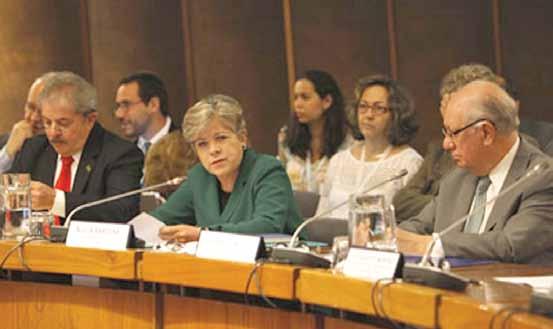
and social cycle”, linked to the emergence of demands from those who have escaped poverty, although some underlying poverty remains.
In terms of integration, the former leader was critical of the results achieved. “I do not like what I see. The state of our integration processes is nothing to be proud of,” Lagos said, as he questioned the geographical divisions at the heart of some of these initiatives and stated that the Pacific Alliance “could also include countries
on the Atlantic”.
In terms of the Community of Latin American and Caribbean States (CELAC), Lagos called it the most important political instrument, because “the region can be seen as a whole”. He commented: “If Latin Americans want to be listened to, then we must speak with one voice on the world stage.”
ECLAC Executive Secretary Bárcena pointed out the need for commitment not only from governments
but also civil society when it comes to building popular willingness for integration. It can then be a strategic approach based on equality that can take on structural gaps to achieve its purpose.
The senior United Nations official reflected on the low percentage of intraregional trade in Latin America and the Caribbean, where it represents just 19 per cent of the total, compared with 40 per cent in Asia and two thirds in Europe. In this context,
Bárcena called for the building of productive linkages, the regional promotion of enterprises and efforts to expand intraregional trade and set up partnerships between peoples.
Integration
She declared, “For our region, we believe that –through the use of collective efforts and integration – equality must be our aim, structural change, our path and policies, our instrument.
"We believe that, in this region (the one with the world’s worst wealth distribution), we must increase equality in order to grow, as in Brazil, and we must grow for equality.”
“Now the south, we, can and must rethink development based on our own strengths and advantages.”
The two-day seminar will consist of several panel debates on the political and institutional architecture of integration, Latin America in the world economy, development and the environment, culture, diversity, democracy, equality and human rights.
The seminar will also analyse integration from the productive, physical, energy, financial, social and employment perspectives.
St Vincent and the Grenadines’ diplomats in the United States are appealing for urgent aid to help their homeland in the wake of the Christmas storm that left several people dead and a trail of destruction.
In a letter commissioned to nationals in the diaspora by St Vincent and the Grenadines Consulate General in New York, Consul General Selmon Walters on Saturday appealed for donations of cash, food, clothing, toiletries, water, and medical supplies.
Walters, a former government minister in the administration of Prime Minister, Dr Ralph Gonsalves, noted that the country suffered estimated damage in the region of EC$150 million as a result of the December 24 storm.
“Severely affected”
He said nine lives were lost, five people are still missing, and 64 persons remain in shelters. In addition, the envoy said a number of houses, roads and bridges were destroyed, and that the potable water system is “severely affected”.
As a result, Walters said the consulate general, in collaboration with a number of Vincentian organisations in
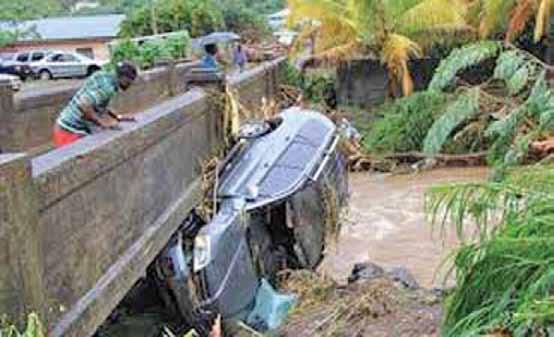
the United States, is “spearheading” relief efforts to send much-needed supplies home.
Meanwhile, St Lucians in New York have mobilised an urgent relief effort to get needed supplies to the island- nation in the wake of deadly rains and flooding on Christmas Eve and Christmas Day in the Eastern Caribbean.
Regionwide, at least 14 persons were killed and there was major infrastructure damage in St Lucia, St Vincent and the Grenadines, and Dominica. According to the St Lucia House Foundation and the St Lucia
Consulate in New York, much-needed relief donations – which are due to be delivered to the island today – are children’s and adults’ clothing, blankets, shoes, school supplies and diapers.
“St Lucians in the tristate pulled together with generous donations in the aftermath of Hurricane Tomás a few months ago, and I have no doubt that we will see them duplicate their last effort in assisting this time around,” said Curtis Brown, of the St Lucia House Foundation, which is working with the St Lucia Consulate in New York to determine the im-
mediate needs on the island and develop the list of relief supplies.
“Our prayers are with all those traumatised by the damage caused and in desperate need of food, medical supplies, water, and shelter,” said Foundation President Matthias Wilkie. “We hope that the government, agencies, churches and individuals will respond generously to help all those affected in order to recover and rebuild their shattered lives.”
The St Lucian government reported on December 26 that water supply, which experienced interruptions
after the storm, should be operational by the weekend. Tourism, Heritage and the Creative Industries Minister Lorne Theophilus reassured that tourism is sound — all air and seaports are functional, four cruise ships at the Castries harbour and vendors, tour operators and taxi drivers are working.
Trinidad help
On St Vincent, flooding and landslides caused by the heavy rains killed at least eight people and injured five others, reported the Associated Press last week.
Among the eight killed was Cassian Gonsalves, a cousin of St Vincent Prime Minister Ralph Gonsalves. Cassian died December 24 when a landslide crashed through his house.
Trinidad Express reported on December 27 that the Trinidad and Tobago government would be aiding the relief effort in St Vincent and the Grenadines by sending supplies. Prime Minister Kamla Persad-Bissessar spoke with St Vincent Prime Minister Gonsalves about damage to the Milton Cato Memorial Hospital, the ET Joshua Airport, roads and bridges.
Dozens of homes and at least two hotels on Dominica were evacuated because of
the danger of landslides and several roads were blocked by mud, according to the AP. For information on relief efforts to St Vincent and the Grenadines, call the Manhattan consulate at (212) 687- 4490 or send email to svgconny@aol.com. And other diaspora communities, such as the Caribbean-American residents of Houston, are pitching in to collect relief supplies for St Vincent and St Lucia flood victims.
Hurricane Tomás
“We came together in the aftermath of Hurricane Tomás three years ago and were able to ship over 1500 pounds of clothes, water, first aid supplies, food, etc to aid in recovery,” said event organiser Nicke Joseph, adding that the Houston Caribbean Festival Radio Station was due to hold a live broadcast from relief event at the city’s D’Vybz nightclub.
The Caribbean Disaster Emergency Management Agency reported on December 27 that National Emergency Operations Centres have been activated in Dominica, St Vincent and the Grenadines and St Lucia, and “damage and needs assessments are being conducted in each country”.











It’s time to make positive changes, but now is not the moment to share your thoughts in advance. Reflect on the past year and make decisions about how to proceed in the future.

By Bernice Bede Osol

(June 21July 22) (Jan. 20Feb. 19) (Dec. 22Jan. 19)
Networking and making new friends will keep your mind active. Join a new group. Alone time will not be sufficiently challenging or stimulating. Interaction will lead to innovation.


Think carefully before promising something that you can’t deliver. If you’ve been exaggerating your abilities, you may get stuck with a job that leaves you feeling out of your depth. Keep your opinions to yourself. Get to know your colleagues better through social activities. Distant friends or people from your past may turn up unexpectedly. Prepare to reminisce.
(July 23Aug. 22) (Feb. 20-March 20)
Your partner will express frustration if you avoid your chores. If you take an honest approach, you may save yourself the hassle of having a needlessly emotional day.

21-April 19)
Chasing excitement will turn out to be costly. Focus on being productive and acquiring useful information. Your choices will set the tone for the year to come.

(April 20-May 20)
A financial venture may reach a dead end. Do not take legal action, though you may be tempted. Someone unexpected may cause difficulties. Try to be helpful without being critical, and meet your responsibilities without complaint.

(May 21June 20)
You should make time for social activities today. Be cautious if you are juggling relationships. If you are asked for an honest, clear answer, you may have to make a difficult decision on the spot.

(Aug. 23Sept. 22)
If you use your imagination, you can turn your home into a palace. Assess the costs involved carefully before proceeding. Someone will oppose you fiercely if they think you are overspending.

23Oct. 23)
Make sure to complete your domestic duties before relaxing or socialising. Don’t rush through things, or you may injure yourself. Try not to get into a bickering match.

(Oct. 24Nov. 22)
Focus on what you want to see change in the new year. You can advance professionally if you network with well-connected people. Make a point of revealing your abilities.

(Nov. 23Dec. 21)
Your emotional vitality will be strong, leading to greater self-confidence. Try new things and chase your dreams. Your ability to challenge others will catch someone’s eye.


– through collaboration between Human Services Ministry and U.S. couple










The Human Services and Social Security Ministry and former Melanie Damishana residents, now residing in the Unites States, Mr and Mrs Linden Cadogan hosted a party for over 300 children of that East Coast Demerara village on December 24.
Speaking at the party held in village, Ministry of Human Services and Social Security Deputy Permanent Secretary Patrick Findlay pointed out that this was a good gesture on the East Coast of Demerara where all the children were given presents because the season affords the opportunity
to share.
He thanked the couple for allowing the children to experience such an opportunity and advised the children to appreciate and take care of the toys given to them.
Cadogan made it possible for the children to enjoy games, dancing, and singing. He said that extending Christmas cheer to the children has been an annual venture which he hopes to continue in the coming years.
Toys were also distributed to children in Edinburg, East Bank Berbice on December 26, compliments of the couple.

Ministry
party
The police in the western parish of St James are probing the murder of a mother and her sixmonth-old baby.
On Saturday, the police in the western city of Montego Bay reported that the bodies of Melissa Grant and he six-month-old child were discovered in the community of Irwin, just on the outskirts of the tourist resort town.
The body of Grant, a sales representative, was
found behind a pumping station with the throat slashed and the child’s body was found in a nearby septic tank.
Grant was sexually assaulted. The police have since arrested her boyfriend.
Meanwhile, local lobby group, Citizens’ Action for Principle and Integrity (CAPI) has urged the Portia Simpson Miller-led administration and the opposition Jamaica Labour Party (JLP) to be more responsive
in addressing the problem of crime in the new year.
In a statement on Saturday, co- convener of the group, Dennis Meadows said the current dialogue by both parties over Jamaica’s crime situation does not facilitate “well-needed solutions to the problem”.
He said successive governments have always taken a short-term and reactive approach to the issue, rather than pursuing sustainable and proactive policies
aimed at addressing its root causes.
Meadows added that crime is a disincentive to economic growth and flourishes in an environment where its perpetrators feel they can act with impunity.
“The possibility of them being apprehended within 72 hours of committing a crime is increasingly unlikely. This is reflected in the barefacedness and brazenness of the crimes being committed. (Excerpt
The vastly varying scoring rates that Test cricket allows were on vivid display as the game meandered in the morning, before South Africa stepped on it post-lunch in search of a declaration, after which India’s batsmen put up a backs-to-the-wall display in the murky light at Kingsmead.
Despite the fluctuating run-rates, it was a day on which South Africa progressively increased their advantage, first taking a substantial lead and then prising out the Indian openers. India face a fight for survival on the final day of the series.
The morning was all about one man. Jacques Kallis slowly and steadily made his way to an emotional farewell century, his 45th in Test cricket, went past Rahul Dravid to become the third highest run-getter in Tests and gradually pushed India towards an unwinnable position.
The sentiments involved were clearly evident early in the day itself, when nightwatchman Dale Steyn hugged Kallis after a miscommunication over a single. No South African wanted to be remembered as the person responsible for causing Kallis to be dismissed in his final Test, especially not before he reached a century.

ed him with a standing ovation, the South African team greeted him with hugs outside the pavilion, and the captain Graeme Smith kissed him on his head.
There wasn’t too much initiative from South Africa even after that dismissal, but a short rain break after lunch shook things up. Robin Peterson and Faf du Plessis came out looking to play the big shots, and in the first three overs they plundered 29 runs - almost as many had been made in 16 overs leading to lunch.
India were clueless against the adventurous batsmen, and the flood of runs continued after the umpires finally forced a ball change midway through the session.
Orthodox Peterson galloped to a half-century off 44 balls, and the highlight of his innings was a stunning switch hit over the right-hander’s longon for six. Du Plessis was marginally slower, playing more orthodox but equally eye-catching strokes - such as a gentle flick over mid-on off Mohammed Shami - and in little time the lead had ballooned past 150.
bat out about two-and-a-half hours on the day. Steyn and Vernon Philander turned in a high-intensity spell with the new ball. Steyn harried the batsmen with the short ball but couldn’t get the breakthrough as he delivered 5-4-1-0.
Ineffective
Philander had been ineffective in the first innings but had more impact this time as he set up Vijay perfectly - a series of short balls, followed by the fuller one which Vijay nicked through to slip after taking only half a step forward.
Shikhar Dhawan, who has had a mediocre tour so far, survived the initial examination, constantly urging himself to concentrate, and leaving as many deliveries as he could. Cheteshwar Pujara was struck on the armpit with a vicious bouncer ear-
ly on but slowly he gained a measure of the pitch.
The light wasn’t great in the evening, but not so poor that they could come off with a significant chunk of the session still left to play. India would have wanted this on the first day when they were dominant, instead of today but Dhawan and Pujara were showing signs that they could make it through till stumps. That feeling grew as the umpires deemed that only spinners could bowl in the fading light.
Dhawan though went for a big hit off Robin Peterson, only to see du Plessis at short midwicket pull off one of the catches of the year with a one-handed leaping effort. India’s best batsmen, Pujara and Virat Kohli, were in the middle at stumps, and how long their partnership lasts could determine the course of the match. (cricinfo)
India 1st innings 334
South Africa 1st innings
GC Smith* c Dhawan b Jadeja 47
AN Petersen c Vijay b Jadeja 62
HM Amla b Mohammed Shami 3
JH Kallis c †Dhoni b Jadeja 115
AB de Villiers† c Kohli b Jadeja 74 JP Duminy lbw b Jadeja 28
Bowling: Z Khan 28-4-972, Mohammed Shami 27-2104-1, I Sharma 31-7-1140, RA Jadeja 58.2-15-138-6, RG Sharma 11-1-29-0
Steyn c †Dhoni b Khan 44 F du Plessis run out (RG Sharma) 43 RJ Peterson c Vijay b Khan 61 VD Philander not out 0 M Morkel c & b Jadeja 0
Extras:(b 3, lb 15, w 2, nb 3) 23
In that session, it seemed as if both teams were waiting for the other to make the play. South Africa weren’t playing with the intent of setting up a declaration, and India were content sitting back and limiting the runs with an increasingly ragged ball which was used for as long as 146 overs.
The bowling was almost entirely about one man too.
As Kallis walked back, there were poignant scenes.
The Sunday crowd salut-
Ravindra Jadeja bowled unchanged for half the day in a marathon 25-over spell as he provided the control India were searching for. Jadeja also finally broke the stubborn 86-run partnership between Kallis and Steyn by getting Kallis to top edge a slog sweep and complete his five-for.
Peterson perished going for another big hit to end a partnership of 110 off 108 balls, and the rains returned to cut the session short, giving time for Smith to mull over whether it was time to declare. The decision was taken out of his hands when play resumed as Jadeja ran to his right and dived to secure Morne Morkel’s leading edge to take six for the match and end the innings.
That left India needing to
Total: (all out; 155.2 overs) 500
Fall of wickets: 1-103 (Smith, 27.1 ov), 2-113 (Amla, 32.6 ov), 3-113 (Petersen, 33.1 ov), 4-240 (de Villiers, 73.6 ov), 5-298 (Duminy, 103.2 ov), 6-384 (Kallis, 133.3 ov), 7-387 (Steyn, 136.1 ov), 8-497 (Peterson, 154.1 ov), 9-500 (du Plessis, 154.6 ov), 10-500 (Morkel, 155.2 ov)
India 2nd innings S Dhawan c du Plessis b Peterson 19 M Vijay c Smith b Philander 6 CA Pujara not out 32 V Kohli not out 11 Extras: 0 Total: (2 wickets; 36 overs) 68 To bat: RG Sharma, AM Rahane, MS Dhoni*†, RA Jadeja, I Sharma, Z Khan, Mohammed Shami Fall of wickets: 1-8 (Vijay, 5.3 ov), 2-53 (Dhawan, 27.5 ov) Bowling: DW Steyn 7-5-50, VD Philander 6-2-9-1, M Morkel 6-2-11-0, RJ Peterson 9-2-23-1, JP Duminy 8-2-20-0
The Gunners created several chances early on but Newcastle almost went ahead in firsthalf stoppage time when Moussa Sissoko’s shot was saved and Mathieu Debuchy headed against the bar.
As the game became disjointed, Giroud nodded in Theo Walcott’s free-kick.
Walcott had a lob cleared off the line before Arsenal withstood late pressure.
The hosts sent goalkeeper Tim Krul forward in search of a late equaliser, with Hatem Ben Arfa firing wide from a great position.
Yet the Gunners will now be top of the league on New Year’s Day for the first time since the 2007-08 season with a point advantage over Manchester City.
That season, their title challenge faded away, but after a run of three games without a win, Arsenal have now earned consecutive victories after a 3-1 triumph

win at West Ham on Boxing Day.
After a tough festive period, Arsene Wenger’s team have favourable league games to come against Cardiff, Aston Villa, Fulham and Southampton, sand-
wiched around a tantalising FA Cup tie against north London rivals, Tottenham.
Striker Giroud underlined his importance, ending a seven-game run without a goal, although the Gunners were also fortunate
when Wojciech Szczesny’s clearance smacked into Loic Remy’s head and trickled wide.
Exactly a year ago, Arsenal crushed Newcastle 7-3 at Emirates Stadium, but this was a cagier con-
test, with both sides looking short of their best.
The visitors carved out several promising opportunities in the first half but, when they did have space to shoot, they either missed the target or failed to test Krul.
Jack Wilshere, who returned after a two-game ban, was wasteful. So too were Tomas Rosicky, Santi Cazorla and Per Mertesacker, with Arsenal missing the injured Mesut Ozil.
After sustaining early pressure, Newcastle grew into an absorbing first half as Yohan Cabaye, an Arsenal transfer target last summer, dropped deep to collect the ball.
And it was Alan Pardew’s side who came closest to taking the lead before the break when, in injury time, Sissoko drew a fine save from Szczesny, before Debuchy hit the woodwork from the following corner.
The game became disjointed in the second period but Arsenal took the lead when Cheick Tiote, returning from suspension, fouled Cazorla 30 yards out. Walcott chipped the freekick into the area, where Giroud nodded his 11th goal of the season.
Arsenal almost doubled the lead when Wilshere found Walcott in space but Krul saved his low effort, before Debuchy headed the rebound off the line.
With Kieran Gibbs being replaced by Mikel Arteta and Mathieu Flamini moving to left-back, Newcastle began to put pressure on the visitors with Flamini fortunate to survive a penalty appeal after hauling down Debuchy.
But, despite the late scare for Szczesny and wastefulness from substitute Ben Arfa, the Gunners defended stoutly to hang on.
(BBC Sport)
This time last year, the thought of Australia’s cricketers reaching Sydney with a 4-0 Ashes margin in their pockets seemed about as likely as that of the long discarded Chris Rogers making a century in the Boxing Day Test. So there was rare joy experienced by Australia, Rogers and another bounteous MCG crowd as both events came to pass, with the considerable assistance of a staggeringly listless England.
A successful chase offered vindication to Michael Clarke, who sent England in to bat in the knowledge that the dropin pitch would improve across the match. A first Test century in Australia provided rich satisfaction for Rogers, plus the assurance that he will be on the plane for next year’s South Africa tour. But another day of humiliation left England in a state of total despair, having coughed up their fourth defeat from a day three position that had looked close to impregnable.
Dropped catches
The wretchedness of England’s display was total, from dropped catches and misfields to Alastair Cook’s increasingly leaden tactics. The touring bowlers, so often betrayed by their batsmen in this series, lost progressively more vigour as the target neared, allowing Rogers and a free-swinging Shane Watson to take far too many liberties. Few touring teams to Australia can possibly have put in two worse days of a Test than these.
Australia still required 201 when the day began, but Cook’s men effectively surrendered the match with a pair of missed chances early in the morning session. By the time Ben Stokes struck to remove David Warner, English shoulders had slumped in anticipation of defeat, and they would slouch ever further as Rogers and Watson rolled up the target with plenty of flair in the best batting conditions of the match.
Rogers perished with 30 still to get, but even that dismissal had a silver lining. Clarke was able to walk to the wicket and collect his 8000th Test run, earning warm applause before ending the match in the company of Watson. The unbeaten and sometime estranged pair embraced warmly at the moment of victory, another scenario few would have been game to predict a year ago.
Resuming at 0 for 30, Warner and Rogers began ticking down the required runs, but would offer England a pair of chances to gain a foothold. Befitting of their play the day before, the tourists

test century, helping Australia to a decisive win against England
spurned them with all the disdain of a team that has lost all confidence or sense of how to grasp a match.
On 19, Rogers edged a fine delivery from Stuart Broad moving across him, and watched helplessly as the edge flew towards the slips cordon. Though it was well within reach of Jonny Bairstow, England’s gloveman did not move, and Broad cursed his misfortune as the ball scuttled away to the boundary. Rogers only enhanced his feeling of injustice by upper cutting the next ball for four over the cordon.
Stokes replaced Broad after only two overs, and duly created his own chance when Warner drove at a delivery not quite there for the stroke. This time the ball travelled straight to Cook at an ideal height. When that chance went down, no-one quite knew where to look. A few overs later Warner did fall, a square slash attempt settling into Bairstow’s gloves, but the muted nature of England’s celebration indicated a team aware their moment may have passed.
Infuriating Rogers meanwhile carried on in a manner so infuriating to bowlers, one inside edge past the stumps further cruel and unusual punishment for Stokes. There were other more fluent shots from there, however, as Rogers moved to his second half century of a low-scoring match. Watson joined in with a few sweet blows, and their partnership was soon motoring along.
As if transfixed by his own error, Cook seemed even slower to react than usual, and furrowed many brows at the ground by opting for Joe Root before Monty Panesar. Rogers was not perturbed by either, but shortly after lunch
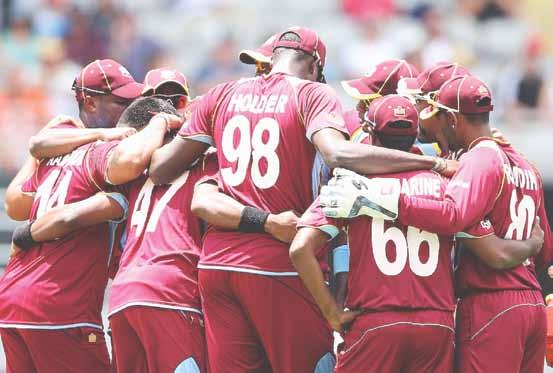
West Indies’ ODI captain Dwayne Bravo feels the team has been “lacking in unity” and hence recent results have been poor. Following West Indies’ first success on the ongoing tour of New Zealand, in the first ODI in Auckland, Bravo said he had emphasised the importance of unity in the lead-up to the match.
did offer another half chance - Bairstow diving over a low edge that bounced fractionally after passing under his glove.
The rest was a procession. Accompanied by Barmy Army songs that sounded evermore like gallows humour this series, Rogers and Watson unfurled numerous smart strokes, not least the punch through the off side that took Rogers to his hundred. He celebrated with a raised bat, a beaming smile and perhaps the shot of the match, cuffing Tim Bresnan through point in the next over to split Cook’s attempt at a restrictive field.
Panesar eventually defeated Rogers, procuring a thin edge to Bairstow from an attempted back foot forcing stroke. But it was the merest bump on Australia’s passage to victory, which Watson secured with a mow through the leg side and a fist raised in triumph. It was a win for Australia to savour, a defeat to mortify England. (cricinfo)
England 1st innings 255 Australia 1st innings 204 England 2nd innings 179 Australia 2nd innings (target: 231 runs)
CJL Rogers c †Bairstow b Panesar 116
DA Warner c †Bairstow b Stokes 25
SR Watson not out 83
MJ Clarke* not out 6
Extras: (nb 1) 1
Total: (2 wickets; 51.5 overs) 231
Did not bat: SPD Smith, GJ Bailey, BJ Haddin†, MG Johnson, PM Siddle, RJ Harris, NM Lyon Fall of wickets: 1-64
(Warner, 17.6 ov), 2-200 (Rogers, 45.5 ov) Bowling: JM Anderson 112-26-0, SCJ Broad 10-0-580, MS Panesar 7.5-0-41-1, BA Stokes 12-0-50-1, JE Root 4-1-8-0, TT Bresnan 7-1-48-0
“Before we played the game, I really stressed on unity as the team was lacking in that lately and hence the reason why we have been playing so poorly. I made a concerted effort to bring everyone together and get everyone involved.
“We sat down Wednesday morning, Christmas morning, and watched Invictus the movie with Morgan Freeman acting as Nelson Mandela. That inspired us. It showed the importance of sport. We are fortunate to represent our nation. We are the few players to do that. It hurts our fans when we don’t win cricket games, and not only losing, but the way we lose at times.
“I keep stressing [on unity], and if you have noticed [after] every wicket I get the team together and one player says something positive. It doesn’t come from me all the time. It can be a Darren Sammy or a Kieron Powell or a Lendl Simmons.”
West Indies hardly competed in the Tests that preceded the ODIs, and the few times they held the advantage, they
let it slip through poor cricket and eventually lost the series 0-2. Before arriving in New Zealand, they had struggled in the two-Test series in India, though they managed to win one of the three ODIs in a close, high-scoring game.
In Auckland it was a close, low-scoring game. West Indies’ revamped bowling attackBravo, Ravi Rampaul and Jason Holder came into the ODI side - made life difficult for New Zealand on a pitch that offered the seamers help, and they scythed through the line-up to restrict them to 156. However, it was not easy going for the visiting batsmen either, and they were reduced to 96 for 6 before Darren Sammy slammed an unbeaten 43 off 27 balls to get them home with two wickets in hand.
Confident
Bravo had been confident of the team pulling through even after the top-order collapse, though he admitted it was not the most convincing of wins. “Yes, we were 100 for 6, but we still had a very small ground. We had one of the cleanest hitters in world cricket at the crease. As long as Sammy is there, we still have a good chance. The way he went out, the intent he took out there, to put the pressure back on the New Zealand attack.
“I think a win is very important at the moment. Confidence has been low as a team. It was good we got over
the line. We scratched, but we got over the line.”
New Zealand captain Brendon McCullum said even though his bowlers had West Indies in trouble, he didn’t think they were at their best.
“I don’t think we bowled particularly well to be honest, I thought we could bowl better than that. But we kept picking up wickets and that’s a fighting characteristic. I thought [the pitch] was a little bit twopaced, and with the new ball swinging as well, it certainly favoured the new-ball bowlers.
“[But] when you have got a low total to defend you need to be on song throughout. I thought Mitchell McClenaghan was outstanding for us today, and showed why he is such an attacking force. But we did give up too many extras, and I thought we bowled both sides of the wickets at times, and our lengths were not quite right either. Fighting performance, but not good enough...”
The batsmen too, McCullum said, could have perhaps done better despite the difficult conditions. “Some of the batting, when you come up against a two-paced surface, it can take a little while to adjust, and if we are honest we probably didn’t give ourselves long enough to get in and create some partnerships. Not a great performance from us, but I guess if you play poorly and still manage to take them right to end that is still a good sign.” (cricinfo)
Athletes have been warned not to make any political gestures or demonstrate at the 2014 Winter Olympics in Sochi. Russia has been criticised for its human rights record and for passing a law banning gay “propaganda”.
But International Olympic Committee (IOC) boss Thomas Bach says athletes should avoid making any kind of statement during the Games.
“As an athlete, you do not want to be confronted with any kind of political controversies at the Games,” he
said.
A former Olympian himself, Bach says he is trying to protect competitors from getting caught up in controversy. “I know from my own experience, this is key,’’ said Bach, who won a team fencing gold medal for West Germany in 1976.
The IOC plans to draw up a letter to send to athletes when it meets in Lausanne on Tuesday, and has already asked Russia to clarify how the law might affect the Games.
According to the Olympic Charter, the IOC can expel
athletes who violate Rule 50, although it has said the rule would be “interpreted and applied sensibly and proportionately”.
Russia recently enacted a law banning promotion of “non-traditional sexual relations” to minors. That move provoked widespread criticism of its government and president Vladimir Putin. It also raised questions about the treatment of athletes who wear a pin or patch or carry a rainbow flag - a sign promoting diversity and inclusivenessto support gay rights. (BBC Sport)
By Rajiv Bisnauth
Organisers of the Jumbo Jet Racing Stable and Business Establishment were forced to push back the grand oneday horse race meet due to persistent heavy rainfall, which swept the entire Corentyne Coast in Berbice early Sunday morning.
The eight-race event was scheduled to be held on Sunday at the Port Mourant Turf Club (PMTC), but persistent rainfall left the venue in a waterlogged state, leaving the organisers with no other choice but to postpone the event.
New date
According to coordinator Chattergoon Ramnauth, organisers will seek further guidance from the Guyana Horse Racing Authority (GHRA) for a new date which will be announced shortly.
However, a close source from the GHRA told Guyana Times Sport on Sunday that a new date for the meet will be made available after the staging of the Kennard Memorial Turf Club (KMTC) rescheduled Boxing Day meeting, which will take place on January 19, 2014, at the club’s track at Bush Lot Farm, Corentyne.
The KMTC Boxing Day
meeting was also postponed due to persistent heavy rainfall last Thursday. Meanwhile, Ramnauth indicated that there will be no changes from the original programme when the race staged.
The D1 and Lower class will be the marquee event of the day with the winner pocketing $1.5 million. Competitors will go head-tohead over a distance of 1600 meters. The Three-YearOld race for horses bred and born in Guyana and the West Indies has a winning tag of $1 million over 1600 meters.
The Two-Year-Old Guyana and West Indies bred horses will gallop over 1200 meters for the $700,000
first prize on offer. The G1 Class horses will run also over 1200 meters and will see the champion horse taking home a winners money of $500,000.
The race for Guyana bred Three-Year-Old horses has a winning purse of $400,000, also over 1200 meters. The I and Lower 1200 meters has a winning prize of $250,000, while the other event is for animals classified J, K and L and Lower, which is also a 1200 meters affair for a winner’s pocket of $200,000.
On the other hand, the Rising Sun Turf Club race meet is scheduled for January 5, 2014. However, that race will also depend on the weather.

Top long distance athlete, Alika Morgan showed her interest in football by donating the best goal keeper and best midfielder trophies to the Kashif and Shanghai (K&S) organization on Saturday for their ongoing school football tournament.
The distance star known
Chelsea end the year just two points behind Premier League leaders Arsenal after an impressive performance against a Liverpool side which has now suffered successive league defeats.
The visitors were ahead within three minutes as Martin Skrtel tapped in.
But parity was restored when Eden Hazard rifled in from distance.
Chelsea deservedly went ahead before the break when a Samuel Eto’o shot crept underneath Simon Mignolet, though the visitors had chances to level.
A Mamadou Sakho header struck the crossbar, while Luis Suarez was denied what seemed like two strong penalty appeals with first John Terry and then Eto’o impeding the striker.
The last time these two sides met, Suarez, in the words of manager Brendan Rodgers, reached the lowest point in his career. The Uruguayan’s rehabilitation since he bit Branislav Ivanovic’s arm in April has been remarkable, with the
striker scoring 19 goals this season.
But Chelsea shackled Liverpool’s chief tormentor in a performance which saw the Londoners outmuscle and overpower their opponents.
Top-four finish Rodgers’ side, who topped the table on Christmas Day, are now in fifth after defeats by Manchester City and Chelsea, and the Merseysiders must hope Rodgers can guide his team to victory over Hull on New Year’s Day to maintain their hopes of a top-four finish.
Liverpool could not have wished for a better start as Skrtel side-footed in at the near post. The defender reacted quicker than anyone in a blue shirt as Suarez nodded on Philippe Coutinho’s free-kick.
It was a free-kick awarded for a clumsy shin-high tackle by Eto’o on Jordan Henderson. The striker was fortunate to escape without further punishment and, to Liverpool’s annoyance, he would later go on to make
his presence felt in a number of ways.
Chelsea’s response to going behind was to surge forward relentlessly.
Gary Cahill went a fraction wide with a bullet of a header, Hazard had a penalty appeal turned down, while an acrobatic save from Mignolet prevented Frank Lampard from finding the top corner.
The hosts were dominating the midfield and there was a sense of inevitability about Hazard’s leveller. Although, arguably, the visitors could have cleared the danger as Oscar’s pass ricocheted off Sakho’s shin and fell kindly to the Belgian, who clinically found the top corner for his eighth goal of the season.
Hazard’s virtuosity combined with the ballast provided by Lampard, David Luiz and Willian in the middle of the pitch forced Liverpool into uncharacteristic rash passes.
A second goal was no more than Chelsea deserved, with Oscar’s cut
back finding Eto’o, though Liverpool’s goalkeeper should have dealt better with the Cameroonian’s first-time shot across the goal.
The first half belonged to Chelsea, but, after the break, the visitors showed glimpses of the effervescence which had seen them score 13 goals in their last four games.
Sakho directed Jordan Henderson’s chipped pass towards the woodwork, a Suarez half-volley forced Petr Cech into action and then came the first penalty appeal as John Terry clambered on top of Suarez.
In between a flurry of Liverpool chances, Mignolet came to his team’s rescue, preventing Eto’o from grabbing his second of the match, but it was the visitors who finished the stronger.
An alert Cech dived low to stop Glen Johnson’s dipping strike and, as the game neared a conclusion, Eto’o was fortunate to escape punishment after needlessly making contact with Suarez inside the box.
for her many 10 kilometers road wins and junior Carifta medals believes that the tournament is a talent spotting tournament, stating, “ I applaud the initiative of our footballers for the future is getting the opportunity to play in such tournaments,” Morgan noted at the K&S head office.
Meanwhile the tournament will head into its semifinal stage today from 16:00hrs when Wismar Christianburg battles St. Georges Secondary while Ash Education Trust will take on Waramadong Secondary from 18:00hrs at the Georgetown Football Club (GFC) ground.

Retired seven-times
Formula One world champion Michael Schumacher is in critical condition following a fall while skiing off-piste in the French Alps resort of Meribel, his agent said on Sunday.
The 44-year-old German was taken to hospital in Grenoble and placed under the care of Professor Gerard Saillant, a brain and spine injury expert.
"He suffered head trauma with coma that needed prompt neurosurgical treatment," Schumacher's agent said in a statement late in the evening, which a hos-
pital official read to reporters. "He remains in a critical condition."
A hospital official declined to give more details but said more information would be given out on Monday.
Schumacher is the most successful Formula One driver of all time with a record 91 race victories. He won his titles with Benetton and Ferrari.
He left the sport last year after a three-year comeback with Mercedes following an earlier retirement from Ferrari at the end of 2006. He lives in Switzerland with his wife and two children. (Reuters)
With the sport of basketball in dire need of a face lift with the 2013 year coming to a close, organizer of the Youth Basketball Guyana (YBG) Chris Bowman took time out to share his thoughts on the sport that is dying despite having the most successful basketball tournament in Guyana.
“It is of my view to everyone who is genuinely concerned about the state of basketball in Guyana while I am not throwing any stones, since I am of the view that the failures of basketball have accumulated over many years. It is a combination of factors that have led to its current state: neglect, poor administration, selfishness, indiscipline, ineptitude and the lack of a unified approach.
Blame
“Some are quick to blame the National Federation for everything. But we must remember that the Federation can’t succeed by itself. It is the construct of the sub-associations and represents all stakeholders,” Bowman noted in the letter.
According to Bowman everyone involved with the sport and interested in the sport needs to question why such a once prominent sport in Guyana is practically in the drains.
“The right thing for each stakeholder, players, clubs, sub-associations, government, sponsors and fans at large to do is to ask of themselves where have we failed and more importantly how can we help to improve the game?,” he stated.
Further the YBG organizer pointed to his organization, to the Haynes Foundation, to Ann Gordon and her Kwakwani teams, to Lugard Mohan’s estab-
lishment of the Guyana Basketball Official’s Councils (GBOC) and to the Ministry of Sport/ National Sports Commission as model of organizations and persons who have selflessly dedicated themselves to improving the sport.
“That’s exactly what my associates and I have done and our efforts have resulted in (a) eight successful years of organizing the National School Basketball Festival (National Championships) and (b) the establishment of Youth Basketball Guyana with its various components.
“It (questioning how to improve the sport) is what Paul and Patrick Haynes of the Haynes Foundation with their establishment of the Guyana Basketball website and through their many acts of charity. It is what Lugard Mohan did by establishing the Guyana Basketball Official Council (GBOC) and now voluntarily giving of his time to developing the next generation of elite athletes.
Challenges
“It is exactly what Ann Gordon is doing in Kwakwani. Despite all the challenges she faces, she still selflessly dedicates her life to nurturing young people through basketball and education.”
He added: “Further it is exactly what the Ministry of Youth, Sports and Culture and the National Sports Commission have been doing for the last eight years, through the Inter- Guiana Games. They are providing the only pathway our junior basketball players have had in order to gain international exposure and experience,”
Bowman noted in the letter.
Bowman noted that responsibility for the sport falls on everyone in the sport and administered in his let-
The second ODI between New Zealand and West Indies at McLean Park, Napier was called off after persistent afternoon rain left wet patches in the outfield. The umpires inspected the ground at 5pm - two-and-ahalf hours after the scheduled start - under sunny conditions, but deemed the outfield unfit for play. The play was finally called off at 5.20pm to boos from the
crowd.
A drizzle had greeted the teams before the start of the match, but the prospect of play diminished as soon as the downpour increased in intensity around 1.30pm, half an hour before the scheduled start.
New Zealand are trailing 0-1 in the five-match ODI series. The teams will travel to Queenstown for the third ODI to be played on the New Year’s day. (cricinfo)
Chris Bowman
ter that he hopes for a fair and good elections at the upcoming Annual General Meeting of the Guyana Amateur Basketball federation (GABF) despite noting that the YBG will have no presence at the meeting.
Further Bowman listed points on how to remedy the dying sport through his letter:-
In my humble opinion, what we need in basketball is:
To establish a common vision- essentially a clear sense of where the game is going for the short and long term and to effectively communicate this to key stakeholders for them to embrace
as a framework for the future. In addition, the sport needs to clarify its values and have consensus on priorities.
To change the way the game is structured and managed. We must move beyond electing a few volunteers just because they show up or have been around a long time.
We need a broader more professional model of governance and one that includes all stakeholders and is managed by skilled professionals. While the game should remain amateur at its core- we need to employ new methods
if we are going to change the trajectory.
Establish an aggressive strategy for fundraising, marketing, promotion and fan development.
Change the culture- we need a new breed of committed leaders who can get the job done and who do not have anything to prove other than the development of the sport.
Meanwhile with Bowman sharing his views on the sport that has not improved much over the past couple of years except at a youth level, it is left to be seen what the 2014 year will bring for the sport at the GABF is set to host their Annual General Meeting in the new year.