
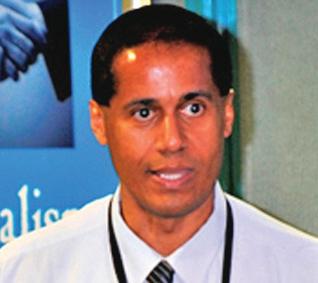



Several members of the Guyana Police Force continue to receive training in order to enhance the force’s professionalism and quality of services, acting Police Commissioner Leroy Brumell said.
During a recent press briefing, Brumell disclosed that a number of ranks have attended overseas training in Jamaica, Russia, USA, South Korea and Trinidad and Tobago in areas such as cyber crime, anti-corruption, information technology and financial investigations.
“We also continue to aggressively pursue training locally at the Felix Austin Police College and at the new officers training centre. We have completed programmes that include electronic intelligence operations which was conducted by the Brazilian Federal Police, staff development, financial procedures, disciplinary procedures, traffic investigation, crime in-
vestigation and fraudulent documents,” the acting commissioner noted.
Brumell also revealed that a maritime training programme aimed at equipping ranks to deal more effectively with piracy is presently on stream, along with a number of other programmes which are scheduled, including a station management course, a special prosecutor’s course, a junior officer’s course and domestic violence seminars.
On the note of more specialised training, Crime Chief Seelall Persaud explained that there are several policing models, noting that in the most resourceful countries, there are a lot of specialised training and a lot of overlapping while in Guyana.
“We have to adapt a model that allowed for general training and some level of specialisation due to the limited resources at their disposal.
“In training for general policing, you have to explore people in all different areas and it is for that reason they have this notion
of transfers,” Persaud added. Guyana Times understands that as police ranks get themselves qualified in various fields, they are be-
ing transferred to man stations out of the city and within specific departments of the Guyana Police Force.
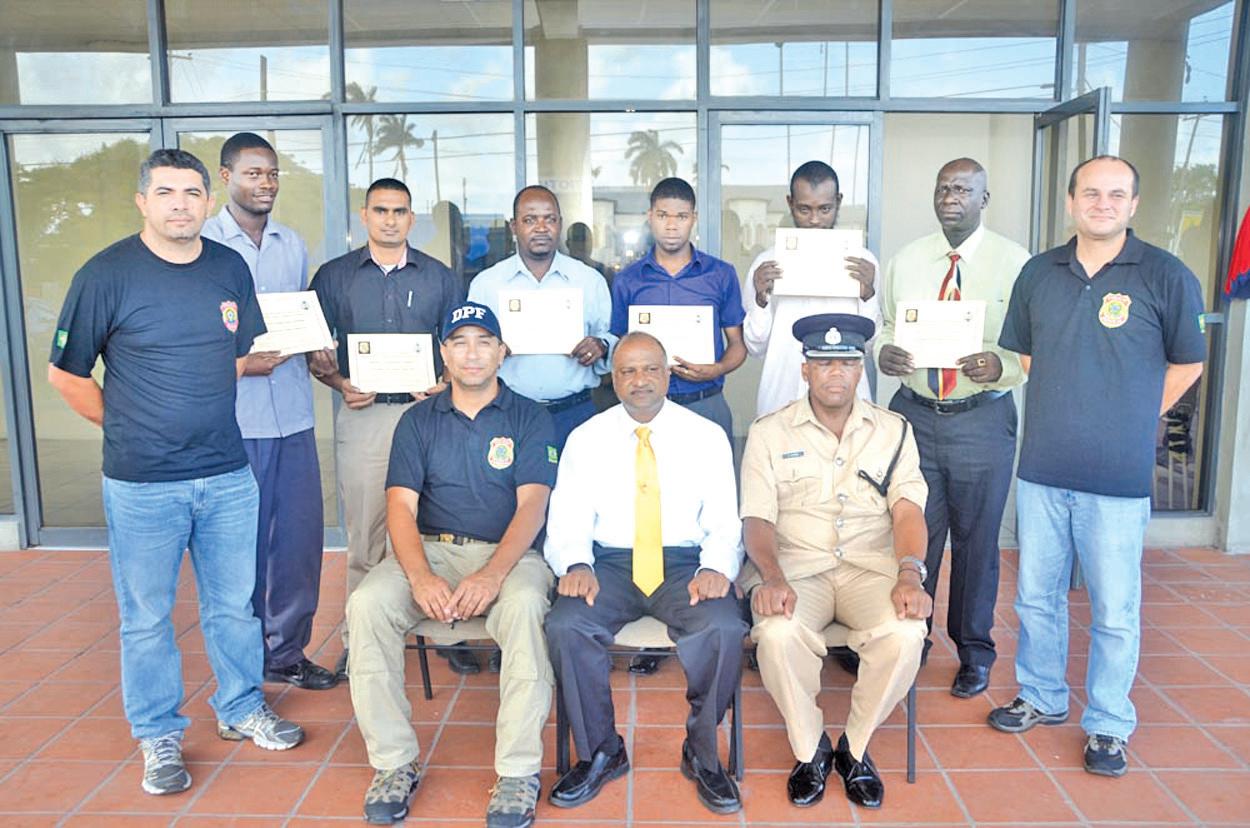
Recently, six ranks from
the force were certified in electronic intelligence operation after undergoing a threeday training session from Brazilian specialists in fighting organised and network crimes. The six officers from various sectors of the force gained a wealth of knowledge through practical exercises. The training was a collaborative effort between the Guyana Police Force and the Brazil Federal Police, and focused on audio and video surveillance operations.
Deputy Police Commissioner, Crime Chief Seelall Persaud said the training is an example of the cooperation between the two police organisations, noting that they have collaborated in previous exercises such as drug and people trafficking. Persaud was also cognisant that organised and network crimes are increasing, hence, he stated that Guyana must develop the capacity to effectively tackle these issues.
Inter-American Development Bank (IDB) natural disaster risk management specialist, Dr Cassandra Rogers said Caribbean governments have traditionally placed tremendous emphasis on disaster response, rather than early identification and risk detection.
She explained that the IDB has developed a Risk Management Index (RMI), which measures the performance of countries in terms of their progress in disaster risk management. According to Dr Rogers, this was highlighted in data from a 2010 study on the RMI, which revealed the placement of 23 of 26 coun-
tries, which have a borrowing relationship with the bank, on a scale of 1-100.
It also shows Guyana’s risk management compared to that of seven countries of the Caribbean, which all recorded less than 50 per cent in risk management. Dr Rogers presented the findings at a national workshop on the draft Disaster Risk Management Bill organised by the Civil Defence Commission (CDC) on Thomas Lands.
Risk identification
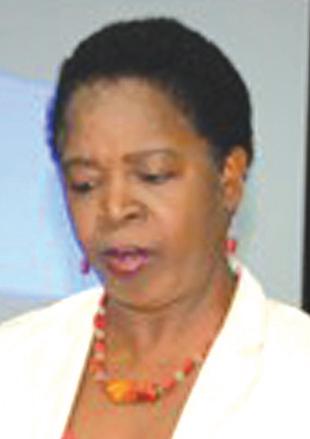
She revealed that the 23 countries all fall below 50 on the RMI scale regardless of their size. Dr Rogers disclosed that based on these results, the IDB committed to supporting countries such as Guyana
to take action in disaster risk management, with specific emphasis on risk identification, prevention, and mitigation that would improve performance on the index.
“It shows that the countries have made good progress only in terms of preparedness and response. This is, however, not surprising, considering the fact that governments have historically focused on response rather than risk identification and prevention,” the disaster specialist noted.
She said the bank has developed a system of indicators of disaster risk management which measures progress in four public policy areas, including governance and fi-

nancial protection, risk identification, prevention and mitigation, and disaster management.
Prevention and mitigation speaks to the measures implemented to reduce vulnerability to risks through the use of structural intervention such as flood control, coastal infrastructure, as well as nonstructural measures such as legislation and building codes.
Guyana’s performance was not up to par and the country did not do well in managing financial disaster risk.
Dr Roger’s pointed out that this finding was consistent with the impact of the 2005 flood when loss of Gross Domestic Product (GDP) set Guyana 10 years back.
Financial disaster risk
It is important that every country vulnerable to these types of hazardous events have a financial strategy to manage disasters, the IDB specialist noted. In this regard, the IDB has pledged US$1 million towards a technical cooperation grant, with the objectives of evaluating climate-related disaster risk and strengthening local and national capacity in integrated disaster risk management.
The objectives include flood risk evaluation, vulnerability assessment, provision of equipment to host risk databases, designing a public education campaign, guidelines for incorporating disaster risk management in environmental management and agricultural planning, the provision of the services of a disaster risk management specialist for a one-year period, as well as training for staff of critical agencies, including the National Drainage and Irrigation Authority (NDIA), the Environmental Protection Agency (EPA) and the Sea Defence Unit.
Dr Rogers applauded government for embracing the concept of comprehensive di-
saster risk management – the Caricom-endorsed regional strategy for managing disaster risks. The advantage of this strategy is that it articulates that traditionally countries have focused on preparing for and responding to a disaster, but it does not significantly reduce vulnerability which should be the much sought-after goal.
“So, comprehensive disaster risk management is a concept that all phases of disaster management must be looked at, if we are to reduce risks. Moving from preparedness and response to comprehensive disaster management is critical, since legislation would provide the teeth for a comprehensive disaster risk management framework, which seeks to reduce risks and improve livelihood to result in a safer, more resilient country,” Dr Rogers stressed.
National hazards
She further emphasised that there must be a shift in focus to risk management associated with national hazards rather than the management of disaster itself, although it is a significant part of the process. She believes that in order to reduce the vulnerability of countries, the risk must be identified and measures implemented to reduce it by employing the four public policies.
“The legislation document should clearly demonstrate the shift from preparedness to identifying risks. All sectors must be involved, since it is a comprehensive approach, multi-sectoral and multi-institutional at the national, regional, and community level,” the disaster expert said.
She cautioned the participants to carefully consider and include the roles of citizens and all sectors and the level of ownership each person should take in comprehensive disaster risk management in reducing Guyana’s vulnerability.

Countrywide:
PWinds: East north-easterly at 2.05 to 2.68 metres per second.
Low Tide: 08:09h and 20:30h reaching minimum heights of 0.63 metre and 0.72 metre respectively.







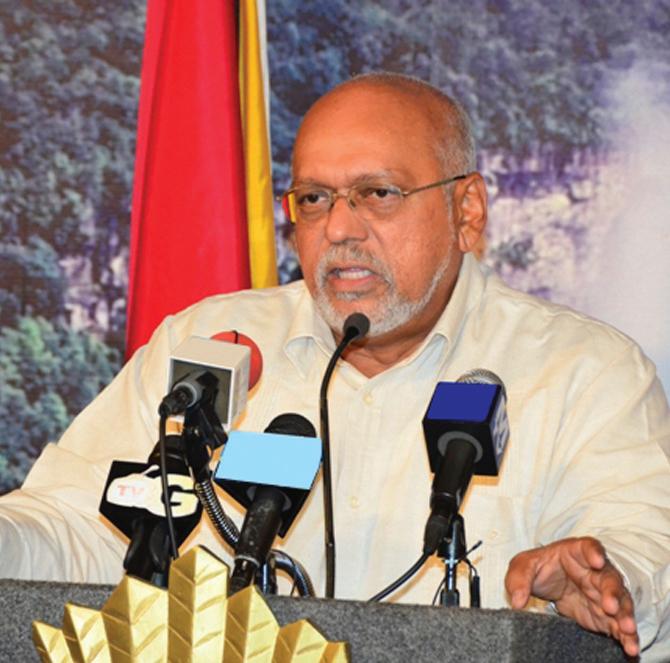
resident Donald Ramotar on Friday said the current configuration of the Amaila Falls Hydro Project may well be in jeopardy as he condemned the opposition for voting down of a bill and a motion crucial to the advancement of the multimillion dollar project.
In an address to the nation, Ramotar said that following the 2011 elections, he was hopeful that this unprecedented configuration of Parliament would have allowed for the opportunity to move forward. “I had hoped that all the political parties in Parliament would have worked together in the interest of the Guyanese people. Last evening those hopes were dashed.”
He said Thursday, the opposition in Parliament voted against a bill to amend the Hydroelectric Act and a motion to raise the debt ceiling that would create the financial architecture to implement the Amaila Falls Project.
Jeopardy
“Their actions now place the Amaila Falls Hydroelectric Project, the largest project in Guyana’s history, in jeopardy.” According to the president, government had made it clear that support of the bill was a pre-condition to complete due diligence by the Inter-American Development Bank. The legislative amendment was expected to be completed by the end of July.
“Government has met with the joint opposition on numerous occasions to brief them, supplying them with all information requested and answering all questions asked. There is no question that they asked which was not answered. At least three technical presentations were made
(March 2012, March 2013 and June 2013). We’ve held several political meetings also. We invited them to tour the access road that leads to the proposed site.”
The president noted that the opposition had various meetings with other stakeholders. These included meetings with the IDB, including one just this Wednesday. Sithe Global, the private sponsor, has also met with key stakeholders, including the opposition parties. He said too that over the last 18 months, government, Sithe Global, IDB and other parties have maintained an ongoing dialogue with the opposition.
The president said electricity is one of the most basic needs of a population.
“The need for and impact of cheap electricity is not something that any reasonable person should think is open for debate. We have spoken about this many times before. Hydropower will bring great benefits to every single Guyanese.”
The head of state noted that in the first place, it will bring to an end the blackouts that even though

at a minimum of 75 years. This means that at least for 55 years, the cost of generating electricity from that station would be just its operational cost.”
He said hydropower in Guyana is overdue by a generation. “And yesterday, (July 18) the opposition in Parliament, in spite of all of the explanations and reasons on the necessity of completing the various activities in Parliament, took action to further delay it. Moreover, despite no serious objections by the opposition in any of these fora, the joint opposition still voted against the bills.
reduced, are still an annoyance and an inconvenience.
“It will bring down the cost of electricity to consumers by between 25 –40 per cent of what we pay now. It will also allow us to reduce our carbon footprint further and earn millions of U.S. dollars in carbon credits,” Ramotar said.
Additionally, he said it will save “our country billions from reducing the importation of fuel oil for the generation of electricity. Indeed at today’s price, we would save as much as $40 billion per annum.”
According to the president, with cheap energy, “we can do much more processing – more value added and we can build a vibrant manufacturing sector. All of these will create many jobs and enhance the technical capacity of our working people. It has the potential to increase investments and enhance our country’s competitiveness internationally.”
Noting that the project is a build, operate and transfer project, Ramotar said 20 years after operating, it will belong to all Guyana. “The life of the station is expected to be
Hostage More troubling is that they fully understand the negative ramifications for Guyana’s development. Yesterday (Thursday), the opposition continued to hold the project hostage to other demands by voting down Amaila. This politics of blackmail will not get us anywhere.”
The president said it is difficult to predict what will happen next, but what is clear is that the Amaila project in its current configuration may well be in jeopardy.
“I want to assure you that this government will continue to pursue options to bring cheap and reliable electricity to you the Guyanese people. We will not be swayed by narrowminded political agendas looking to stymie our development thrust. We will persevere.
We will continue to act in the best interest of our Guyanese people. I ask you to support your government in this pursuit. As your president, my action will only be in your best interest and the progress of this nation,” Ramotar asserted.



Editor: Nigel Williams
Tel: 225-5128, 231-0397, 226-9921, 226-2102, 223-7230 or 223-7231. Fax: 225-5134
Mailing address: 238 Camp & Quamina Streets, Georgetown
Email: news@guyanatimesgy.com, sales@guyanatimesgy.com
The words of Malala Yousafzai at a recent United Nations (UN) meeting in New York continue to ring throughout the world: “I speak – not for myself, but for all girls and boys. I raise up my voice – not so that I can shout, but so that those without a voice can be heard. Those who have fought for their rights – their right to live in peace, their right to be treated with dignity, their right to equality of opportunity, and their right to be educated.”
Malala Yousafzai may not be a name that is famous among Guyanese, but surely her story is worth being told a thousand times as it could serve to inspire the younger generation here that they too can make a difference and help to create the kind of society they wish to live in.
Malala is a young Pakistani girl who was shot in the head by the Taliban in 2012 because of her public efforts in demanding education for young girls in her country. Her survival and courageous spirit to not be silenced and to speak out for what she believes in has inspired millions around the world. Now she has become a global advocate for education and has been using major platforms such as the UN to lobby stakeholders for more educational opportunities for the world’s children. This certainly ties in well with the Millennium Development Goal (MDG) on education agreed on by UN member states to have every child in school by 2015.
Recently, Malala gave a very powerful speech at the UN where she spoke about the importance of education. Even former UK Prime Minister and UN Special Envoy on Education Gordon Brown was quoted as saying that the teenager’s inspiring speech on every child’s right to go to school is just the beginning of a major push on education. Malala will return to the UN in September where she will address an education summit of world leaders during the week of the full General Assembly to demand action on behalf of 57 million children around the world who have no access to any schooling.
During her maiden speech at the UN she related: “On the October 9, 2012, the Taliban shot me on the left side of my forehead. They shot my friends too. They thought that the bullets would silence us. But they failed. And then, out of that silence came, thousands of voices. The terrorists thought that they would change our aims and stop our ambitions but nothing changed in my life except this: Weakness, fear and hopelessness died. Strength, power and courage was born. I am the same Malala. My ambitions are the same. My hopes are the same. My dreams are the same.
She added: “We realise the importance of light when we see darkness. We realise the importance of our voice when we are silenced. In the same way, when we were in Swat, the north of Pakistan, we realised the importance of pens and books when we saw the guns. The wise saying, ‘The pen is mightier than sword’ was true. The extremists are afraid of books and pens. The power of education frightens them.”
She also reflected on the real dangers faced by teachers and students in Pakistan. In January, five teachers were killed near the town of Swabi in the volatile northern Khyber Pakhtunkhwa province, the United Nations says. And, in June, a suicide bomber blew up a bus carrying 40 schoolgirls as it made its way to a girls’ campus in Quetta. Fourteen students were killed in that incident.
Malala said peace is necessary for education. “In many parts of the world, especially Pakistan and Afghanistan; terrorism, wars and conflicts stop children to go to their schools. We are really tired of these wars. Women and children are suffering in many parts of the world in many ways. In India, innocent and poor children are victims of child labour. Many schools have been destroyed in Nigeria. People in Afghanistan have been affected by the hurdles of extremism for decades. Young girls have to do domestic child labour and are forced to get married at an early age. Poverty, ignorance, injustice, racism and the deprivation of basic rights are the main problems faced by both men and women,” she added.
In a passionate plea, she called for leaders to wage a global struggle against illiteracy, poverty and terrorism. “One child, one teacher, one pen and one book can change the world. Education is the only solution,” she said. Hopefully, Malala’s efforts will result in millions more gaining access to educational opportunities that seemed impossible before.
Dear Editor,
I have just a few comments as I think about the Lusignan Massacre, for which the trial is now ongoing. In order for something to be deemed a massacre, the event should include the unnecessary, indiscriminate killing of a large number of humans. This did take place at Lusignan in January 2008, as 11 people were ruthlessly killed. The second factor is that a massacre indicates the slaughter of helpless or unresisting victims, like non-combative peasants. On this sad day, the residents were either asleep or simply resting in their homes.
The Hama massacre occurred in February 1982, when the Syrian army bombarded the town of Hama in order to quell
a revolt by the Muslim Brotherhood. I was a teenager in high school then, and I could not fathom the death of an estimated 40,000 people. The attack was described as possibly being the single deadliest act by any Arab government against its own people in the modern Middle East. It was reported that even Saddam Hussein could not have believed it.
Here in Guyana, this Lusignan massacre, along with the ones in Bartica and Lindo Creek, still gives me the creeps. I think that it is because I am so accustomed to living in relative safety in Guyana.
I know we have had a few brushes along racial and political lines, but nothing close to what took place in the three separate counties, as I have just
mentioned. That is why this trial is so important. It must prove seminal, so that a very strong and deterring message is sent.
One important piece of information on the actual incident is that of the date. It is not a trivial matter either. The massacre took place on the Friday night, in reality, January 25, 2008, not January 26. Is this important? I think that it is. We need to record our history as accurately as possible.
I spoke to quite a few of the residents and relatives of some of the victims, and they talk freely about it. One of them even said that maybe that date being used is to make the police look not so bad. Why?
Repeated calls were made to the Vigilance Police Station for response
to help. These calls were placed before the midnight hour of January 25, yet the presence of the police was only obvious way past midnight, that is on January 26. This date then was used as the one to record the massacre, and it is the one that is used annually in commemorating the event.
If this information is an indictment on the force, so be it. It goes to show what negligence can lead to. I recall an eyewitness explaining that the shooter took his time in carrying out his deadly assault.
Let us fix the record please, and let this trial leave no stone unturned. It is very pivotal to our young country. Guyana must not tolerate this.
Yours sincerely, Commett Durant
Dear Editor,
This story about a jaguar in the North Ruimveldt area is a most interesting one. One resident could have almost run into it. He then quite rightly informed his neighbours and various authorities about it.
I think it could have just wandered off and if
so maybe a few others or at least another one is likely to be around. We have to watch this. If it is a case, where it is a loner, it could have smelled and spotted possible preys. This too spells danger.
Animals of this type tend to stay away from people, but if it is hun -
gry, humans will prove to be just as good as any other type of prey. This animal should not be left uncaptured.
Jaguars are master hunters and they are deadly. The public should be apprised and there must be an attempt to get this animal – alive if possible.
I ask for everyone to be very alert and maybe to set a trap. However, no chance should be taken. For the many of us who champion the rights of animals, this is a good occasion to come forward and lend some help.
Yours truly, Easton Francis
your
Dear Editor,
This upcoming 36th biennial Caribbean Union of Teachers (CUT) conference is going to be most critical. It will address some very burning issues, some of them not that comfortable at all – issues such as violence against teachers, increased wages, and marking of school based assessments will be foremost on the agenda.
The School Based Assessment (SBA) needs a lot of work. The idea is most wonderful, but its implementation, as of yet, leaves a lot to be desired. I know of many teachers who charge a fee, and they make extra money like this. Many of our students choose this route, and there is no way to monitor a thing like basic honesty at this level. The SBA must be re-examined and its original intent must come back.
Now about violence in our schools, I suggest we heed President Donald Ramotar’s warning – if violent children have to spend time in jail, so be it. There is no place for attacks against teachers – not verbally and for sure not physically. This total want of respect must not characterise our students. I hear students referring to their teachers by all kinds of degrading names. Violence must not only be tackled from the outside. The bat -
tle starts with basic mannerisms.
When it comes to equating corporal punishment with a violation of children’s rights, I am not for it. Corporal punishment can be misused and teachers can indeed couch their evil tendencies by resorting to it. That is why we need to have consultations on how this form of punishment and discipline must be employed. We need to think about what acts of rebellion call for its use, who does the administering and how it should be done. It is a serious matter and we still have it hanging half-way.
About our teachers, the feeling is most mixed for me. We have very fine ones, but many are leaving the profession all together. I am very puzzled by this move. It is also a serious blow to the investment made by the government. We cannot excuse this defection by saying that they paid off their contracts. When even a private school contracts a government trained teacher, it is not about paying back government. Nobody can really do that.
To me, this is a very burning issue and it must be addressed.
Yours sincerely, Schoolteacher Name withheld by request
Dear Editor,
The many summer camps and other programmes around this time of year make full use of the long holiday season. The Culture, Youth and Sport Ministry is offering more than 10,000 children the opportunity to participate in different types of activities, all geared at teaching them new things in a fun way. These camps will be held in all 10 administrative regions.
A comment on the word “summer”, as many have become quite finicky on its usage. People talk about the golden summer of one’s life and it is not literal – no gold and no summer as such. When used in this way, summer refers to the wonderful culmination of something. Put into the local perspective, I think that we can see how the word aptly describes why we can use it to account for what the ministry is embarking on.
The season, the final of the school year, is tantamount to actual summer when we think of autumn or fall, winter, spring and summer, where summer is really the height and plateau of all things.
In terms of actual months, summer comprises June, July and August in the U.S., and from the middle of May to the mid-

dle of August in Great Britain. In Guyana, it is all about July to August and this has nothing to do with weather, even though normally, summer months in cold countries are the hottest ones.
Then, by virtue of the word, extending and transporting its polysemous nature, summer is the period of finest development, perfection, or beauty previous to any decline. Thus we have the very summer of life. So on with the summer camps and programmes.
I cannot think of a time and place where this kind of investment in children is taking place. If we are talking quality of life, I am seeing it right here. I really hope that this input will be fully maximised by parents in giving their children something of substance.
It is about providing a fun-filled educational exercise for Guyana’s children to get involved in sports, and also for those who may already be involved, to better their skills. We never know where all of this can lead. For the moment it is about making them happy and fulfilled. Kudos to all the stakeholders for this venture.
Faithfully yours,
Yollande Morrison
Dear Editor,
A group of people recently wrote boldly: “We were distressed when we opened the July 3 issue of the Stabroek News and saw the faces of the three young men who have been condemned to death. How can killing these three young men counteract the violence of the gold dealer’s death?”
From a semantic point of view, it is wrong to say that these three murderers are being killed. Ask the legal experts and they will be able to pin point the difference between and among terms like killing, murder and sentencing to death. These three men took the life of an innocent person and justice must be served most condignly.
They were not in a fight. It was not a case of revenge. The act was not spontaneous. These three simply exhibited non-civic and evil behaviour and they earned for themselves the death penalty. Nobody is killing them.
I really want these advocates, who campaign against the death penalty, to explain how the death penalty violates the right to life (as proclaimed in the International Declaration of Human Rights). I do not get it.
The word human presupposes a kind of behaviour and, when that is missing and murder results, then the victim must be accounted for. Who speaks for any victim? If the death penalty violates a basic human right,
then I shudder at what murder does, and hence the logicality of the death penalty. Also, and still staying with the question as to how “killing” these three young men can counteract the violence of the gold dealer’s death, I make reference to the fact that the death penalty is a deterrent to potential murders and murderers.
Since only murderers, who are sane and plan their crimes in advance are subject to the death penalty, these same individuals have the time and presence of mind now to consider the death penalty while planning their murders.
Most murderers think that they can beat the system. Imagine what they will do, if they know that, in the event they do not beat it, they still will not die. This is an incentive for them to murder.
I ask doubters to go and check what obtains in places where the rule of the law is a religious “eye-for-an-eye” one. Even thievery is not known in some of these places. I make another request and it is that scholars revisit the deterrence theory, which is basically that of using fear positively.
From a behavioural perspective, it is about preventing or controlling actions through fear of punishment. This thinking has shaped many criminal justice systems.
Yours truly, Xavier Wilson



CWhat is culture?
ulture is the values, beliefs, attitudes, customs and behaviours of a particular social, ethnic or age group. Culture distinguishes one group of people from another and is passed on through language, material objects, rituals, institutions and art.
Nowadays, we live in a multicultural world where many cultures, races, ethnicities and religious communities live together. The differences and diversity that come from multiculturalism enriches Australian culture and brings new ideas and energy. Although there is openness and acceptance towards diversity and multiculturalism, unfortunately racism and discrimination continues to exist.
This hot topic aims to help parents and carers understand how racism and discrimination can affect children and young people, and provide tips on assisting children and young people to effectively manage diversity and cross cultural issues.
Racism and discrimination against children and young people
Unfortunately, racism is an everyday reality for many children and young people in our community. People can be racially discriminated against simply because they are different, for example, because:
• of the colour of their skin
• they speak a different language or with an accent
• they come from a different country or culture
The most common acts of racial discrimination among children and young people are:
• racial vilification – that is; being called insulting names
• other verbal and emotional abuse
• bullying and harassment
• physical abuse and violence
How does discrimination affect children and young people?
Discrimination can occur:
• between members of majority and minority groups
• between minority groups
• between majority groups
Racism can take place anywhere that children lead their lives. For example:
• in schools
• in communities
• among peers
• with adults and authority figures
How does racism and discrimination affect young people?
Racism and discrimination can affect children’s health and development, as well as their behavioural and mental health. Racism can have a significant impact on young people’s selfesteem and self-confidence. It can also affect their sense of connection and belonging to the broader community.

Racism threatens personal and cultural identity and is associated with psychological distress, anxiety, depression, low self-esteem and anger, and in some extreme cases, attempted suicide. Furthermore, racism can impact on education, employment and housing.
How can we deal with cultural, racial, ethical and religious intolerance? In order to promote anti-racism and diversity it is important to support young people so that they feel welcomed and their cultural background is valued. One way to overcome racism and discrimination is to encourage and support multiculturalism and diversity by promoting:
• sensitivity
• empathy
• understanding
• respect
• acceptance
• tolerance
• equality
• fairness
• sense of belonging
• openness
• a welcoming environment/community
Suggestions for parents/carers
Parents can teach their children to appreciate diversity and treat it with respect. Below are some ways in which parents/carers can assist children and young people to do this. (www.kidshelp.com.au)
to be Continued

Genealogy is more than just names and dates. Genealogy is the study of our ethnic makeup, where we come from, and where our ancestral homelands lie. Teaching children about their cultural backgrounds is very important; if Junior has always had an unexplainably strong tie to Ireland, wouldn’t he be thrilled to learn that he is actually descended from Irish immigrant ancestors? If he can’t explain why he has a fear of snakes, could his great-great-grandfather have been bitten by one? No one is sure if “ancestor memories” projected onto current generations are real, but we can surely discover ourselves when we use genealogy to

give ourselves a cultural identity!
One way to teach children about their ancestry is to draw maps. Find a large piece of paper or a poster and draw basic outlines of the countries that your ancestors came from. The outlines can be coloured in with marker, glitter glue, or anything else you wish. If you know these ancestors’ particular cities or towns, mark them prominently on the map. Children can proudly say that they know exactly where their ancestors lived before coming to the Caribbean and South America.
Learning cultural dances and games is another way to get children interested in their ancestral origins. Find out if you can duplicate any folk costumes; countries such as Germany and Poland have beautifully coloured folk clothing that is admittedly hard to duplicate but is definitely worth the effort. Another important part of cultural identity that children will be happy to partake of is food! Every country has its own unique foods. If you’re of Asian ancestry, teach children to make curried dishes or noodle soup. There are many websites with ethnic recipes.
Don’t just tell children that they are of so-and-so ancestry; tell them about their immigrant ancestors, where they came from, what the circumstances were, and why they left their homeland. Show photos if possible; genealogy means much more when you can give people faces instead of just names and dates. Teach children that being proud to be Guyanese doesn’t mean you can’t also be proud of your origins. If applicable, try to get children to study other languages. It’s not easy, but nothing puts you more “in tune” with your ancestry than to speak the language your great-great-greatgreat grandparents spoke! If children don’t have enough of an interest in genealogy to do this, they may enjoy learning basic phrases or even just a few words. (www.voices.yahoo.com)
The Central Islamic Organisation of Guyana (CIOG) said it has noted with concern the opposition’s non-support for the Hydro-Electric Power (Amendment) Bill 2013.
“As an organisation whose aim is to promote development in all its facets and to reduce poverty, the non-supporting of the Hydro-Electric Power Bill can have far-reaching negative effects on Guyana’s development,” the CIOG said in a statement.
It added that currently, Guyana’s fuel bill is probably the highest in the Caribbean and the hydropower project would see a drastic reduction in electricity cost, thereby enhancing the nation’s competiveness. “We have seen how robust
the economy has performed despite the exorbitant cost of fuel, imagine what could be, should this cost become negligible. CIOG believes that with a fuel bill reduction, the nation’s engine of growth – the private sector – will be better equipped to compete nationally and internationally and this will lead to an overall level of development for all Guyanese.”
According to the organisation, while it appreciates that there is an ongoing evolutionary process as manifested in the current parliamentary dispensation, “we hope and trust that our leaders exercise maturity and responsibility in an enlightened, cooperative and trusting manner taking the interest of all Guyanese, particularly the working class,

the poor and the disadvantaged with great interest.
The CIOG believes that supporting the Hydro-Electric Power (Amendment) Bill is a step in this direction”.
The combined opposition
Thursday night voted down a motion to raise the debt ceiling on loans and also the Hydro-Electric Power Amendment Bill, both crucial to the advancement of the multibillion-dollar
Amaila Falls hydro project.
The second reading of both items were done without any debate by the opposition, which was angered by government’s refusal to take forward the four local government reforms bills when that matter came up for debate earlier in the day.
Crucial step
In moving the motion for the second reading for the hydropower bill, Prime Minister Samuel Hinds told the House that the existing law governing hydropower development dates back to December 1956. “There is much that needs updating in this legislation and one would think there is cause or good reason to even rewrite it all together...”
Until it is rewritten, the
prime minister had emphasised the need for approving the bill to facilitate closure on the Amaila Falls Hydro Electric project. By this time, the joint parliamentary opposition had signalled to the National Assembly that they will not debate the bill. Nonetheless, Natural Resources and Environment Minister Robert Persaud defended the bill pointing out that close to 150 countries have various capacities in hydropower and 20 per cent of the world’s electricity is generated by hydropower. Minister Persaud said the Amaila Falls project was not only about utilising the country’s vast electrical power capabilities, but creating greater economic opportunities for Guyanese.
Natural Resources and Environment Minister Robert Persaud said steps are being taken to scale up efforts to integrate the Low Carbon Development Strategy (LCDS) into the operations of Guyana’s mining sector.
Persaud made the remarks at the presentation of a publication “Guyana’s Extractive Industry Sector” by Conservation International (CI), on the synopsis of issues and recommendations for the mining sector as a sustainable element of the LCDS.
He said government recognises that for the extractive industry to be successful and viable, it must be on a low-carbon trajectory. Many persons initially viewed the LCDS as infringing on the traditional activities within the extractive sector, such as mining and forestry.
However, fears that the LCDS would conflict with traditional pursuits dissipated over time, and the report is an effort to examine the harmonisation of the LCDS with activities in the extractive sector.
Persaud explained that one of the first steps in establishing such linkages was the creation of the Natural
Resources and Environment Ministry, which brought together agencies that regulate extractive industries as well as those looking at environmental protection.
Environmental management
“The ministry has allowed international partners to work in a much more uniformed and cohesive way in furthering the development of the extractive industry and ensuring the balance we need in terms of sustainable utilisation of resources and proper environmental management,” the minister said.
He related that a number of initiatives were undertaken by the ministry, having reviewed the recommendations, which were used as a tool to ensure that decisions taken at the policy and operational levels of different agencies are in sync with the advice and direction offered. Policy framework review was one such initiative.
Speaking on the social impact assessment recommendation, Persaud said the ministry has worked with those who operate in the sector to see how best it can address the impact of smalland medium-scale operation. Persaud revealed that
the Guyana Geology and Mines Commission (GGMC) has been mandated to development a database and establish a monitoring and evaluating system on the impact of mining.
Interactive process
In terms of the legislative stipulation, the ministry has been sharing and summarising public documents with agencies so as to reach various tiers of understanding within the stakeholder grouping.
The ministry has also developed an interactive process with stakeholders for every proposed amendment to the primary or subsidiary

legislation.
“We removed the element of surprise in drafting legislation without knowledge of those involved. We currently have two volumes of proposed regulations in terms of updating the mining sector. We have engaged the GGDMA [Guyana Gold and Diamond Miners Association], and are receiving comments, so by the time these are put in the books, there would not only be that understanding, but also we would have benefited from that type of contribution.”
Persaud explained that the ministry has also started a quarterly supplement, which targets various areas where extractive industries are located.
He said government has also sought to examine support that can flow from various partners and result in a more enlightened approach to enable sustainable, integrated national resources management. Government has also encouraged the incentivising of prospec-
tive exploration as an economic activity through the Investment Act.
However, Persaud acknowledged the needs for strengthening and enhancing monitoring abilities.
Commenting on the linkages, the minister said work has started on establishing a coordination platform between national institutions and local level administration.
“We need these linkages and have started both the formal and informal mechanism to see how it is we can have better consultations and interaction. We have done outreaches, have sought to use various subcommittees at the central level and engaged the ministries of local government and amerindian affairs.”
However, pointing out the adequacies of the report, Persaud said he was concerned that the document did not achieve the objective of detailing how the extractive industry can be inte-
grated with the LCDS.
He noted that while the publication diagnoses the situation and presents practical recommendations, it failed to outline how Guyana can have a profitable extractive sector, which fits into the paradigm of an LCDS.
“We don’t see an obvious framework or methodology of integrating sustainable, traditional sectors with the LCDS, and I wanted to flag that, because what it tells us is that we need to do more work,” Persaud said.
He also pointed out that the report selectively focused on the gold mining sector although there are other extractive industries.
“If we want to be comprehensive, we have to include the entire sweep of activities, which relate to forestry and some of the subsectors.
We recognise that it is the largest growing sector within the industry, it is very important to economic, social and national development,” the natural resources minister said.

Three men were brought before Chief Magistrate Priya Sewnarine-Beharry at the Georgetown Magistrates’ Courts on Friday after they were charged with cultivation of a prohibited plant and possession of a narcotic.
Rickford Jacobs, along with his son, Josiah, and Daniel Jones were allegedly cultivating cannabis on July 17 at Aradio Creek. The magistrate asked each man individually to plead to the
charge, and they all pleaded not guilty. It is further alleged that on July 17, the trio had in their possession 909 grams of cannabis in their possession. They also pleaded not guilty to this charge.
According to Prosecutor Vernetté Pindar, around 16:00h, ranks from the Mackenzie Police Station, acting on tip, went to a farm on Aradio Creek. When they got there, a search was conducted and a salt bag containing leaves, seeds and
stems suspected to be cannabis were found. A further search was conducted of the farm and a total of 33 marijuana plants were found.
The leaves, seeds, and stems were tested and weighed. The defendants were arrested and cautioned. While being told of the allegations, Rickford Jacobs said the substance did not belong to them, since they have only been there for only two months.
The Jacobs reside at
Gold Hill, Demerara and are coal burners. The other accused, however, bears no relation to them. He resides at 18 Section C Christiansburg Wismar, Linden and is unemployed at the moment.
The prosecution objected to bail on the grounds of the nature of the offence. Chief Magistrate Beharry denied the trio bail and the matter was transferred to the Christiansburg Magistrates’ Courts for report and fixture on July 23.
Amechanic charged with unlawful assault appeared before Chief Magistrate Priya Sewnarine-Beharry at the Georgetown Magistrates’ Courts on Friday.
Quaison Roberts, of Lot 22 Tucville Squatting Area, pleaded not guilty to the charge, which stated that on July 7, he unlawfully assaulted Candacy Thompson.
According to reports, the virtual complainant and the defendant were in a relationship. On the day in question, around 08:48h, the VC was hurrying home when the accused pulled her in a car and asked the VC to enter. Thompson refused and Roberts grabbed her and dealt her several slaps. The matter was reported, and the defendant was later arrested and charged with the present offence.
Magistrate Fabayo Azore sentenced a man in absentia to 12 months in prison and a fine of $100,000 after he was found guilty of a fraudulent conversion charge on Thursday at the Georgetown Magistrates’ Courts.
Rawlwayne Cappel, 41, of Stanleytown, West Bank Demerara, was convicted of committing fraudulent conversion on August 12, 2011 at Lot 55 Tucville Housing Scheme.
The accused was solely entrusted by Dexter Bovell with a quantity of clothing
In his defence, Roberts stated that Thompson chucked him and spat in his face.
The prosecution did not object to bail. The magistrate placed the accused on a bond to keep the peace and he was released on his own recognisance. Roberts will appear in Court Six on July 23.
valued $177,900 to sell and return the proceeds to the virtual complainant (VC), he instead converted it to his own use and benefit.
On Thursday, three witnesses testified on behalf of the prosecution.
The prosecution had closed its case on June 13,

and the defendant, who was on $75,000 bail was to lead his defence on June 18, but he never showed up.
According to reports after being called the first time, the matter was adjourned to June 24; however Cappel was again absent and a relative brought in a medical, stating that he was ill.
The matter was then adjourned until July 2 when the defendant was again absent and no document was submitted to justify his nonappearance. Finally, the matter was called for the fourth time on July 18.
Alabourer was on Friday brought before Chief Magistrate Priya Sewnarine-Beharry at the Georgetown Magistrates' Courts charged with unlawful damage to property.
It is alleged that on May 15, at Hibiscus Street, South Ruimveldt Park, 20-year-old Travis Payne unlawfully and maliciously damaged one window screen. He pleaded not guilty to the charge read against him. The unrepresented Payne, who resides at 461 West Ruimveldt, has another matter pending in another court.
The prosecution objected to bail on the grounds that the defendant was remanded on a robbery charge. The chief magistrate Payne refused bail. The matter was transferred to Court 10 for July 22.

Enough is enough! When will the people of Guyana stand up and draw the line on the tragedy that’s unfolding in Parliament? Whether by design or serendipity, the elections gave control of the Parliament to the opposition – if they were co-joined at the hip. But the Alliance for Change (AFC) had promised to vote with either the People’s Progressive Party/Civic (PPP/C) or A Partnership for National Unity/People’s National Congress (APNU/PNC) – depending on the issue. Little did people know that the AFC would become so reflexively anti-PPP/C that APNU would be hard pressed to keep up with it.
But whatever forces gave control of Parliament to the opposition – which the PPP/C has not disputed – also gave control of the executive to the PPP/C. This is crucial to the survival of a country: the ship of state must be steered by one set of hands so that the country is not pulled hither and tither until it inevitable crashes on the rocks of existential threats. And this is what the opposition has refused to concede, as was graphically exhibited once again in Parliament, Thursday night.
A government has to be allowed to determine its priorities in dealing with its programme for the country. In Parliament, this is reflected in the order in which it places the motions for debate. Last Thursday, the opposition pulled rank through their one-seat majority and arbitrarily decided to reverse the order in which the “local government” and “hydroelectric” bills were to be debated. The Speaker admitted the move was “unpalatable”, “distasteful” and “unprecedented”... ***but yet allowed the move because the decision was within his prerogative!!!***
Now we must understand that this was not a trivial move. The opposition didn’t even bother to disguise its motives by pretending that the change of order had to do with some great national “good”. Khemraj Ramjattan of the AFC callously allowed that it was simply to test the government’s fortitude on the hydro bills – which the opposition had signalled they wouldn’t support. They figured the government would be willing to sacrifice the principles of the rule of law and parliamentary traditions to try to placate them on the reversal of order – hoping they would vote for the hydro bills.
But the government put their money where their mouth was: they would not bargain away the foundations on which this country’s stability rests by giving in to political blackmail. As we said, the people of this country should open up their eyes and extrapolate where this willingness to seize power by any means will lead this country.
On the substance of the bills that were before the House, the opposition remained adamant in rejecting the Amaila Falls Hydroelectric project (AFHEP) ones. Now we’re not saying that they shouldn’t have concerns about the cost of the project. All Guyanese, including the government, share those concerns.
The AFC had already said they’re supportive of AFHEP in principle but they’ll wait for the due diligence report of the Inter American Development Bank (IDB) before making their final decision. So what’s the problem with raising the quantum of debt the country can guarantee? Not even the AFC has proposed that the present quantum of guarantee is sufficient for a hydro project of any consequence. The opposition’s move is just another in their quest since the last elections to humiliate the government and show “who has the power”.
But the way they are going, it’ll be “power” over an even more impoverished country. The AFHEP is only one of a number of major infrastructural projects that the opposition has blocked. The Cheddi Jagan International Airport (CJIA) expansion is another. At what cost, power for the opposition?
...on Linden
The Stabber News continued their agitation on the Linden killings again without mentioning the organisers’ responsibility for the tragic loss of lives. They published pictures of some persons in front of Parliament holding a candlelight vigil. Shouldn’t some of them be in front of the opposition’s headquarters?
saturday, july 20, 2013 | guyanatimesgy.com
“The State of Black African Guyana: Time for Renewal and Empowerment” will be the theme for a forum to be hosted by the Ghana Day Committee in collaboration with the Cuffy 250 Committee at the African Cultural and Development Association (ACDA) headquarters on August 4.
The all-day forum, which is the first in a series of conversations in the AfricanGuyanese community to mark the 250th anniversary of the Berbice Slave Rebellion, will feature presentations on the current socio-economic, political and cultural condition of African Guyanese by leading intellectuals, members of civil society and well known Africanists, a release from organisers said.
challenges it faces in contemporary Guyana.
“We feel that such a plan is pivotal to African Guyanese’s ability to participate in Guyana’s growth and development,” organisers said.
Two hundred and fifty years after the epic 1763 rebellion and 175 years since the abolition of the European slave project, African Guyanese and their counterparts in the African diaspora continue to confront the legacy of slavery, according to the

release.
Organisers said the attainment of independence from colonial rule created an opening for African empowerment and ultimate freedom which are critical to the attainment of ethno-racial equality in plural societies such as Guyana. The post-emancipation advances and the progress of the early post-independence period have been overtaken by a cultural drift away from the rich heritage of the group.
The committee said while
government and other national institutions have a primary role to play in this regard, it believes that each ethnic group has an equal responsibility to tackle its own problems and search for solutions to them.
“Hence, this initial initiative to launch this fact-finding conversation is aimed at establishing the true extent of the economic, political and cultural decline in the community. We feel that there is no better symbol around which to have this discourse than

the Berbice Slave Rebellion.
The spirit of resistance and freedom embodied in that rebellion is the perfect reminder to African Guyanese that overcoming obstacles and downturns is part and parcel of the local and global African praxis.”
the USA – which have been working together for the past year.
The forum will feature four broad plenary sessions covering the economic, political, social and cultural/historical condition of African Guyanese.
The list of presenters includes noted African Guyanese scholars and activists such as Hugh Tommy Payne, Nigel Hughes, Andaiye, Melissa Ifill, Carl Greenidge and David Hinds. International presenters include acclaimed African American scholar-activist Anthony Browder, and Guyanese-American businessmen George Abrams and Floyd Haynes.
Plans for this forum and others to be held later in the year have been jointly undertaken by two committees of the sponsoring organisations – a local committee based here in Guyana and an international committee based in
“With lengthy periods set aside for discussion, we are encouraging all African Guyanese to come out and have their voices heard. Let us look together at where we are and where we want to go together,” the release said.
The forum would be held at ACDA headquarters, Thomas Lands, Georgetown and starts at 09:00h
These presentations will be followed by in-depth discussions by participants aimed at generating needed inputs for the evolution of a plan of action for the African Guyanese community to collectively begin to address some of the Europe”.
Head of the Presidential Secretariat, Dr Roger Luncheon on Thursday said Cabinet has approved measures to facilitate the installation of Vessel Monitoring Systems (VMSs) on Guyana’s trawler fleets.
He said the installation of VMSs would help secure the integrity of the sector, and “this, of course, has
to do with sea bob and the contribution to the economy and food and nutrition of Guyanese”.
Dr Luncheon added that the installation of the equipment would also assist Guyana in obtaining the Marine Stewardship Certification, which plays a big role determining “the destination of our fisheries products in North America and in
As the spate of break an enter and larceny in Berbice continues, the home of a serving member of the Guyana Police Force was broken into and hundreds of thousands of dollars in cash and jewellery were stolen.
The police are presently investigating the alleged break and enter and larceny committed on the home of Gail Bennons, a police rank attached to Albion Police Station, who resides at Lot 172 Tucber Park, New Amsterdam, Berbice.
The incident reportedly occurred between 21:00h on Wednesday and 06:00h on Thursday.
The bandits reportedly carted off one flatscreen television valued $150,000, one digital camera valued $40,000, one Panasonic digital video player valued $40,000, one Dell laptop computer reportedly worth $150,000, one gold chain valued $250,000, one gold band valued $250,000, one pair of gold earrings valued $100,000 and $150,000 cash.
According to information reaching Guyana Times , the police rank resides in a two-storey wooden and concrete structure in a well-fenced yard.
The woman reported secured her home on Wednesday afternoon and left to visit her relatives, but upon her return on Thursday about 06:00h, she observed an access door opened with two pieces of board from the wall missing.
This prompted the corporal to make a check, and on doing so, she discovered that the articles were missing and her home ransacked.
She immediately contacted police at the New Amsterdam Police Station who visited the scene and dusted for fingerprints. One print was obtained and a crow bar was found in the living room which was lodged as evidence.
Several persons were contacted and questioned but no arrest was made. Investigations are continuing.

The Cabinet secretary said the Guyana Association of Trawler Owners and Sea Food Processors has been in consultation with the Agriculture Ministry under which the Fisheries Division falls, and has hammered out an agreement for the installation of monitoring devices on the fleets.
Cabinet has approved duty-free and VAT waivers for the equipment and

the appropriate undertakings by the National Frequency Management Unit “to make this initiative a reality”, Dr Luncheon said.

The Food and Agriculture Organisation (FAO) of the United Nations is transforming the way it works in the Caribbean to ensure a greater and more effective contribution to national and regional development.
This was the main message delivered by the organisation’s director general, Dr Jose Graziano da Silva, on a recent 12-day mission, which saw him meet with government, civil society, private sector and partner agencies in several countries of the region.
Discussions focused on the future of the Caribbean food and agriculture sector, the challenges facing it, and how FAO can reengineer its assistance to better equip the region to establish more efficient and sustainable food systems. Dr Graziano spoke about reforms that are underway at FAO, which are making it more responsive and effective, as well as its new strategic objectives and renewed focus on the eradication of hunger around the world.
Dr Graziano began the mission by attending the opening ceremony of the Caricom heads of government meeting in Trinidad and Tobago where he met with President Donald Ramotar, the lead head of government for agriculture; the prime ministers of The Bahamas, Grenada and St Kitts Perry Christie, Dr Keith Mitchell and Dr Denzil Douglas respectively, as well as the foreign ministers of Dominica and Suriname. He also held discussions with head of the Caribbean Development Bank, Dr Warren Smith,
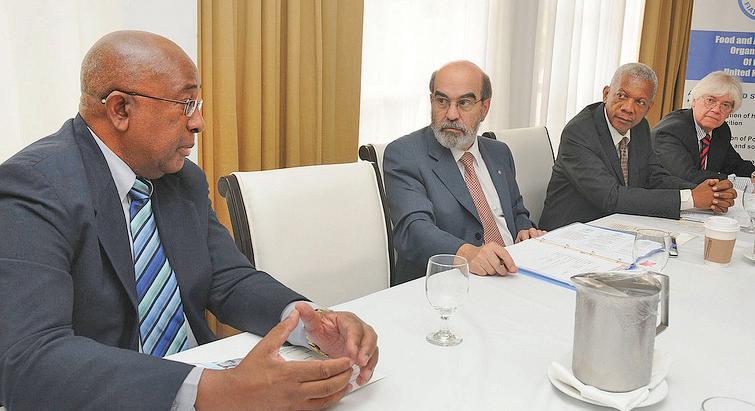
about how the two agencies can better cooperate to serve the region.
Diversification
While in Trinidad, he also met with the agriculture and planning minister and paid a courtesy call to the new Faculty of Food and Agriculture at the St Augustine Campus of the University of the West Indies, which is seeking to grow as a centre of research and innovation in the sector.
The delegation travelled on to the Eastern Caribbean, stopping first in St Lucia where Dr Graziano met with agriculture officials to discuss that country’s food insecurity caused by the decline of income from bananas – the main livelihood of thousands of small, rural farmers – and compounded by the global economic crisis. FAO has already offered its assistance in the management of Black Sigatoka Disease, which has severely impacted bananas, as well as in the exploration of alternative crops and the development of value chains in an effort to diversify the
base of rural livelihoods.
In St Vincent and the Grenadines, Dr Graziano lauded the government’s efforts to reduce hunger, which saw the country named last month as one of 38 in the world to have achieved the United Nation’s Millennium Development Goal One – halving the number of people suffering from hunger and undernourishment, well ahead of the 2015 deadline. While in the country, Dr Graziano reiterated plans to create closer ties with the Eastern Caribbean member states of FAO, which have been hit by the decline of the banana industry and face ongoing vulnerability to natural disasters.
In Antigua and Barbuda, the delegation visited community projects which form part of the FAO-led Zero Hunger Challenge pilot initiative in the Caribbean. The project is currently focusing on strengthening the National School Meals Programme and developing backyard gardens and small farmer enterprises in the most vulnerable communities. Other initiatives will
High winds upturn chicken pens in Essequibo – several yards flooded
Athunderstorm complete with heavy winds and lightning woke residents of Region
Two Friday morning.
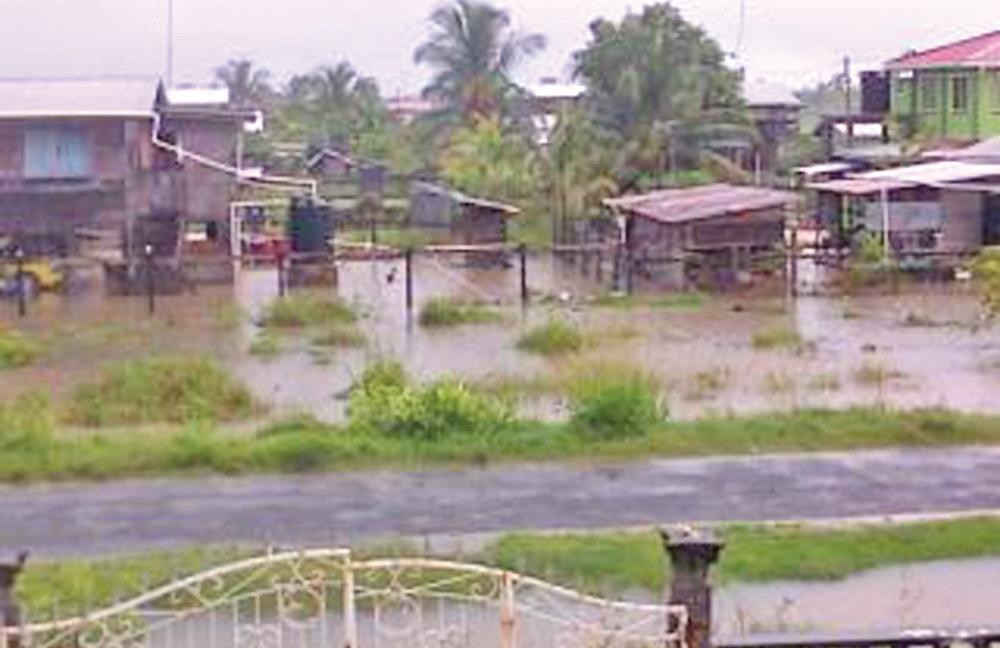
The fierce winds also resulted in many old trees collapsing and the roofs of poultry pens being removed or the pens themselves being blown away. The continuous rainfall experienced during the past two days added to residents’ woes resulting in many flat houses being inundated with floodwater.
One Anna Regina resident said she was awakened by the booming sound of thunder. Hardai Singh said she woke up around 03:00h to loud sounds coming from her chicken pen. Singh related that the pen had collapsed and some chickens were roaming around, while others were trapped in the broken down pen.
Vendors at the Bush Lot and Anna Regina markets who would normally construct makeshift stalls to
carry on their business were also inconvenienced by the winds. They took shelter in nearby residents’ homes until the intense winds subsided.
At the Pomona Housing Scheme, many residents complained about flooding caused by the rainfall. Residents, especially those living in flat houses, said water swept into their homes soaking their household articles. Houses in vil-
lages such as Reliance, Anna Regina, and Affiance were also under water.
The Region Two administration is presently using the Anna Regina pump to drain excess water from the residential areas. Regional Vice Chairman Vishnu Samaroo said the drainage and irrigation department is looking at putting the pump in the Hampton Court area to drain excess water in the low-lying areas.
target expansion and diversification of agriculture, improved nutrition, pro-poor employment, income opportunities, and improved governance. FAO is in the process of expanding its Zero Hunger work across the region.
The mission came to an end with a visit to Jamaica where the FAO director general met with the prime minister, the agriculture minister and environment minister, and engaged with several partners and key stakeholders in the food and agriculture sector. They heard firsthand from farmers about the severe challenges facing the industry including the devastating impact of plant diseases on citrus and coffee crops, as well as praedial larceny which is robbing farmers of their livelihoods.
Challenges
FAO, which currently has several projects in the country, promised its continued support to combat these challenges. Graziano was accompanied throughout the region by his special adviser, Carlos Hartog, and Subregional Coordinator for the Caribbean, Dr JR Deep Ford. Dr Ford described the visit as a success and said it signalled a new closeness in the region’s dealings with the organisation.
“The director general has left the region with a good understanding of the challenges and opportunities in the Caribbean region. He has pledged his commitment to make FAO a critical player in the revitalisation and transformation process underway in the food and agriculture sector,” he said.

G-PEE-L like fuh call dem selves Guyana Power and Light. But power and light is exactly de two tings that dem don’t have. Dem also seem to have no power to give any body light. So every where yuh go right now is no power and no light. Day and night is blackout. At this rate, G-PEE-L gon soon mek day time look like night time. De only power G-PEE-L seem to have is de power to give blackout.
One man pun de East Coast seh he call G-PEE-L de other day to find out what goin on. De staff explain that dem doin upgrade in de whole country. Well, upgrade suppose to mean tings getting better. But de more G-PEE-L do upgrade is de more it look like people power supply gettin downgrade.
Tings that used to wuk in people house does suddenly stop wukkin. And G-PEE-L never tek blame fuh nutting. When is not low voltage is high voltage. So people either getting high voltage, low voltage, or no voltage.
A woman in Bourda market seh de less light she get is de more she light bill gettin high. That is what G-PEE-L call upgrade. Dem upgrade people light bill figures. Wid all this talk bout upgrade, what G-PEE-L really need is fuh somebody go and grade dem out from dem AC office pun Main Street.
One week ago, G-PEE-L seh dem upgrade de East Coast. One man so fed up he seh he gon go back to de fireside and bottle lamp days. At least, he gon have light and fresh food. Wid all dem blackout, that gon be a real upgrade from G-PEE-L.
Ting-a-ling-a-ling…friend tell friend…mattie tell mattie! But G-PEE-L still hold press conference and tell people to remember to pay all dem light bills. And de Bell Crier seh look out fuh more blackout!
The heavy wind which flipped a single engine aircraft on Thursday at the Ogle International Airport was recorded travelling at a speed of 35 knots per hour, a very unusual occurrence.
Guyana Civil Aviation Authority Director Zulfikar Mohammed told Guyana Times that the wind speed on Thursday was abnormal, as on a normal day it is between five to 10 knots per hour.
Nevertheless, he stated that the aircraft is back on its wheels but has received extensive damage and will take some time before it takes to the sky again.
Mohamed said the owners of the aircraft are assessing the damages to the engine and the exterior of the vehicle. The aircraft is very light and is used for personal missions.
The hydrometeorological office confirmed that the maximum wind speed recorded thus far is 43 knots per hour. The year of this
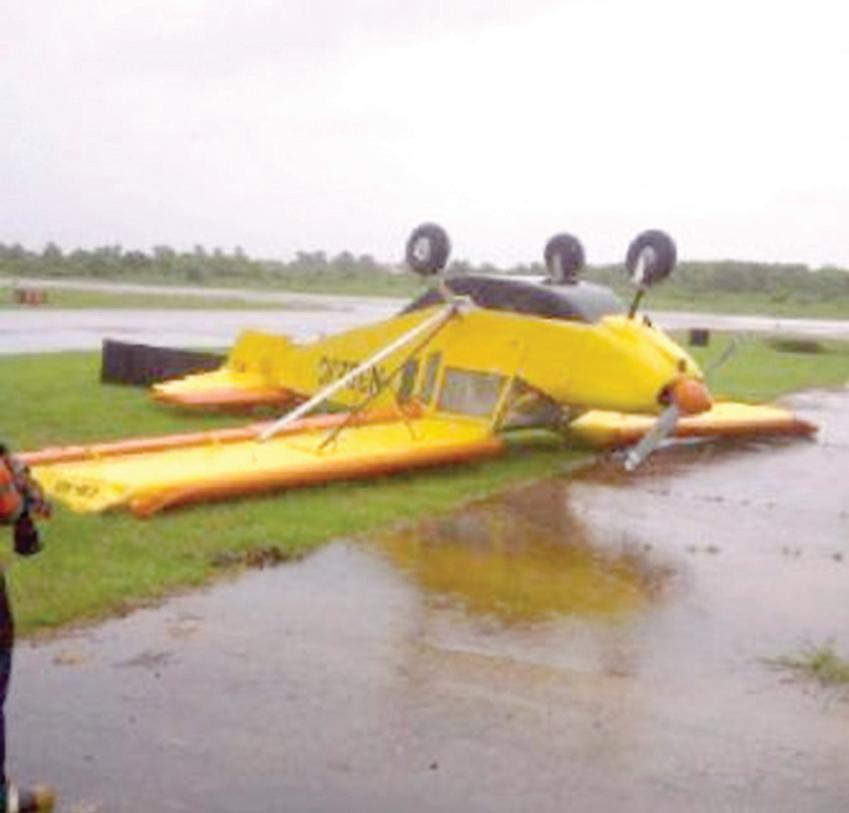
The plane that flipped on Thursday due to a heavy wind
occurrence was not immediately available. An official stated that the last time Guyana experienced such heavy wind was four years ago at Timehri, when the wind speed was clocked at 32 knots per hour. That occurrence resulted
in a number of system disruptions, including at the meteorological office and the air traffic control tower. There were several other reports of zinc sheets on houses being ripped off and trees falling during Thursday’s heavy wind.

saturday, July 20, 2013 |
Government believes it is odd that the Guyana Elections Commission (GECOM) would seek to prohibit Gocool Boodoo’s reappointment as chief elections officer over the alleged mathematical formula used in tabulating results, when checks and balances could have been implemented to ensure reform.
This was revealed by head of the Presidential Secretariat Dr Roger Luncheon on Thursday, as he questioned the rationale behind GECOM’s removal of Boodoo. Dr Luncheon noted that it cannot be denied that the very commission was prepared to disenfranchise over 7000 Guyanese voters in its attempt to close the Claims and Objections Period of the 2011 elections.
“You might recall the strenuous objections that had to be made to overtake or overcome chairman Surujbally’s intention to close claims and objections that led to the extension during which 7000 additional Guyanese voters were enfranchised.”
As such, given the com -
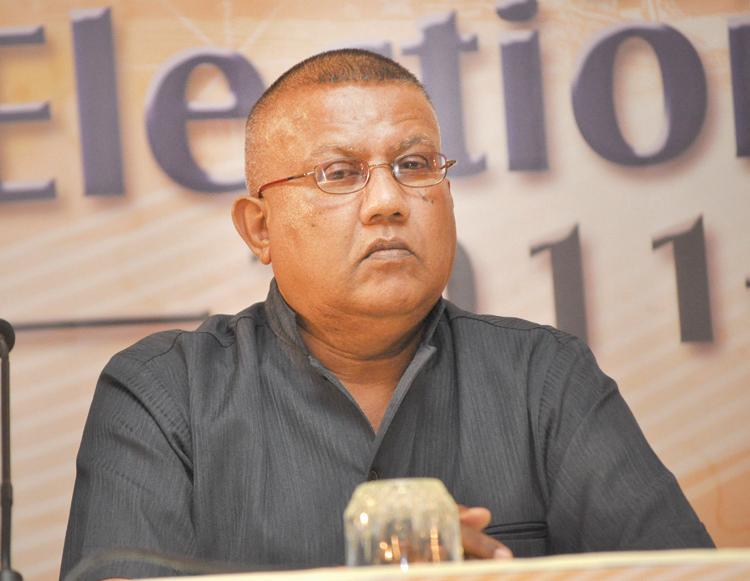
mission’s proposed move, the Cabinet secretary questioned if the body should have been sacked for its loose decisions, as it sought to remove Boodoo for his alleged flaws.
He said the incidents were eventually corrected but pointed out that it must be emphasised that before constitutional amendments to the relevant provisions that dealt with GECOM and its functions, the problem could have been possible.
“Indeed the records would show that the fail -
ure of the free and fair elections prior to 1992 repose primarily in flaws in the functioning of GECOM. The constitutional reform corrected flaws,” Dr Luncheon noted.
He added that “GECOM’s postConstitution amendment is a different GECOM from pre-Constitution amendment.”
“Those amendments were designed to do a job to provide checks and balances. It is odd that having done so, the commission and its chairman
would turn around to seek to impose the type of sentiments among Guyanese about the functions that were discharged by the then chief elections officer.”
GECOM's Chairman Dr Steve Surujbally on Tuesday broke a tie among commissioners when he voted against the reappointment of Boodoo.
However, Commissioner Jaya Manickchand, who along with commissioners Dr Kishav Mangal and Mahmood Shaw who voted in favour of Boodoo’s reappointment, did not feel that the matter was dealt with fairly.
Manickchand argued that at no time was the former CEO ever appraised during his 13 year stint, while also highlighting that despite requests made for information that could prove him unworthy of reappointment, none were provided.
The decision made by GECOM not to reappoint Boodoo, now paves the way for the entity to advertise and recruit a new substantive chief election officer as soon as possible.

The Guyana Sugar Corporation (GuySuCo) Training Centre at Port Mourant held its 52nd apprentice graduation exercise on Wednesday at which 57 students sponsored by various sugar estates across the country all received certificates, allowing them to now be employable.
The areas in which the students were trained are refrigeration and air conditioning, fitting and machining, welding and fabrication, electrical installation, motor vehicle service and repairs and supervisory management.
The students achieved 103 distinctions and 36 credits.
Labour Minister Dr Nanda Gopaul congratulated the students and highlighted that they must view their future with optimism. He added that it is a necessity in the sugar industry at this time.
Such training opportunities are available through the management of GuySuCo and the minister stated that government wants to create more openings.
Despite the challenges being faced by the sugar industry, there have been many positive steps made of which the industry can be proud. He noted that all the areas in which the students excelled are neces-
sary to the viability of the industry, and said that adjustments to the current academic curriculum are needed to lift the industry’s standards.
Manager of the training centre, Jainarine Sookpaul said it was another proud day for the institution, and that it is customary that before the start of the new training year, the students and instructors have to participate in a two-week camping exercise.
“We have proposed to reduce the general engineering programme in the first year to six months, after which we will have the apprentices in their specialised areas. Also to further enhance our in -
strumentation programme to satisfy the current needs of our industry, (we are) upgrading our facility's standards and concentrating on an increase of in-plant training, in both field and factory for our second year apprentices and staff,” added Sookpaul.
The GTC in collaboration with the board of Industrial Training (BIT) reintroduced the evening programme at Port Mourant after 15 years. This year, 224 persons applied for such programmes, of which 115 were selected. This programme attracted students from as far as Bath Settlement to Corriverton.
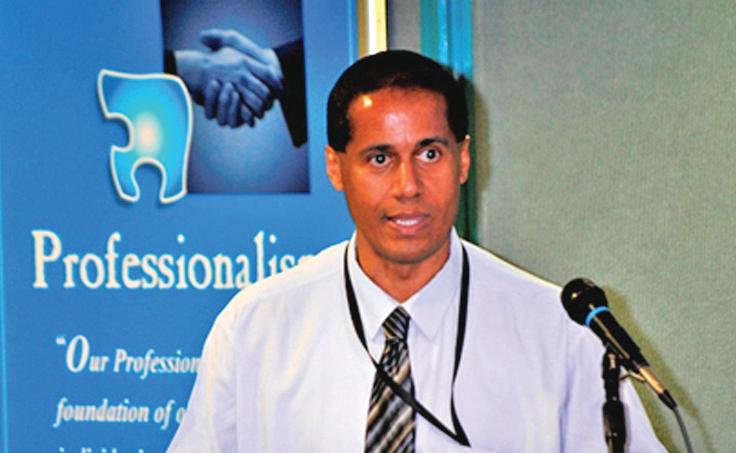
Newly-appointed chairman of the board of directors of Republic
Republic Bank (Guyana) Limited has announced the appointment of Nigel Mark Baptiste as chairman of the bank’s board of directors.
Baptiste is currently executive director of Republic Bank Limited, Trinidad. He replaces David Dulal-Whiteway, Republic Bank’s managing director, who served as chairman of the Guyana operations since 2005 and was a director since 2002, a release from the bank said.
“Dulal-Whiteway continues to maintain a keen interest in Guyana even as he broadens his focus on advancing the Republic Bank Group’s international expansion. Under his leadership, Republic Bank (Guyana) Limited increased and modernised its branch network, expanded its community involvement
through its flagship social investment programme, the ‘Power to Make a Difference’ and experienced an increase in profitability of more than 250 per cent.”
According to the bank, Baptiste is well known to the Guyanese community, having previously served as the managing director of Republic Bank (Guyana) Limited, then National Bank of Industry and Commerce Limited, from 1999 to 2002, following which he returned in 2003 to serve as a member of the board of directors. A Trinidad and Tobago national scholarship winner, Baptiste holds a master’s of science degree in economics from the University of the West Indies, St Augustine, and brings to the chairmanship extensive experience in regional banking and finance.
“There are still critical gaps to be filled, including more focused and concerted action to deal with the difficult issue of stigma and discrimination and human rights,” said Jamaican Health Minister and Pan Caribbean Partnership against HIV/ AIDS (PANCAP)Chairman, Dr Fenton Ferguson in his opening remarks to the 20th meeting of the executive board in Kingston, Jamaica, on Thursday.
The executive board was meeting to discuss the development of a new framework to guide the strategic and programmatic direction of the partnership over the next five years.
While drawing attention to the substantial changes that have been made to the Caribbean’s regional public health architecture by the establishment of the Caribbean Public Health Agency (CARPHA), the minister reiterated the need for PANCAP.
“No doubt PANCAP is a partnership in transition, it’s value-added through its collective goal and vision for the health and development of this region; however,
should neither be understated nor underemphasised… [it] needs to be part of the regional leadership in the conversation on HIV and sustainable health, which is the theme of the UNAIDS/ LANCET Commission,” he said.
Alluding to the progress that the partnership has made in its 12 years of existence, the minister called on the body to think outside the box and to “find new solutions to age-old problems”. On the wider issue of regional health, the minister noted that there is need to look at other areas where similar partnerships could be established. Health challenges have to be resolved through a regional lens, “We can do nothing in health without a team approach,” he added PANCAP was established in February 2001 to respond to the HIV and AIDS epidemic in the Caribbean. Its vision is to substantially reduce the spread and impact of HIV and AIDS in the Caribbean through sustainable systems of universal access to HIV prevention, treatment, care and support.
Several government officials have condemned the parliamentary opposition for sabotaging the US$840 million Amaila Falls Project by voting down the Hydroelectric Power Amendment Bill and the debt ceiling motion during Thursday sitting of the National Assembly.
The debt ceiling motion sought to raise the guarantee limit of loans from $1 billion to $150 billion. Both the motion and the hydropower bill are both essential to the multimillion dollar hydropower project..
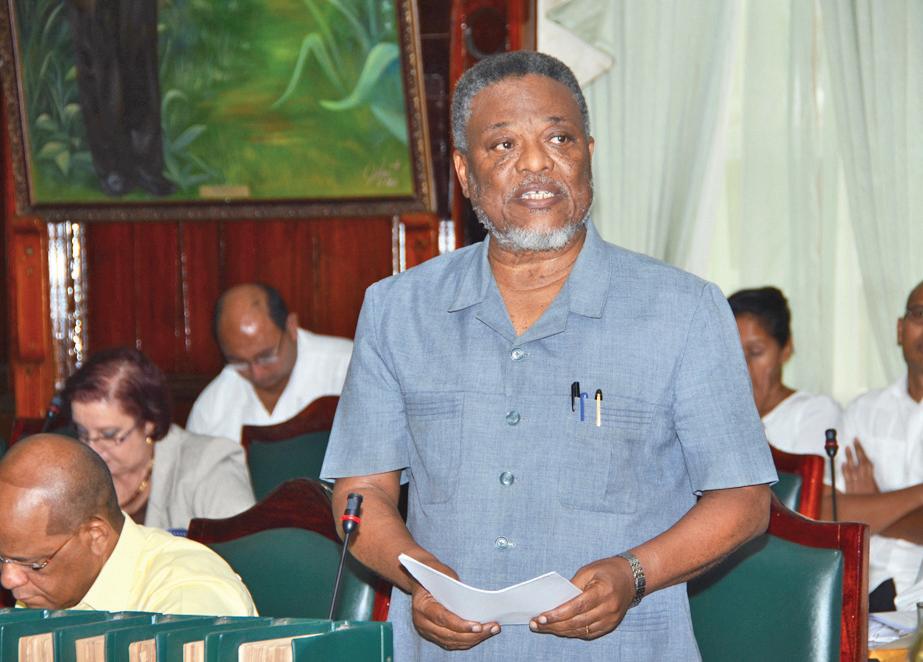
At a press conference immediately after the adjournment of Parliament late Thursday night, Prime Minister Samuel Hinds said that the action of the combined opposition has proven to be the “funeral” of the US$840 million Amaila Falls Project.
Astounded Hinds said he was astounded by the events which occurred earlier in the House, noting that the combined opposition and the government would have “closed the gap” and would have came out smiling, cognisant of the fact that they made sacrifices for the “good” of Guyana and its people. Disappointingly, he said, it turned out to be the opposite.
The prime minister stated that he has been involved in the project since 1996 and would not give up on it. Hinds underlined that the project has been killed because the bill and the motion were voted down and they were crucial elements of meeting the necessary requirements for the Amaila hydropower project to proceed.
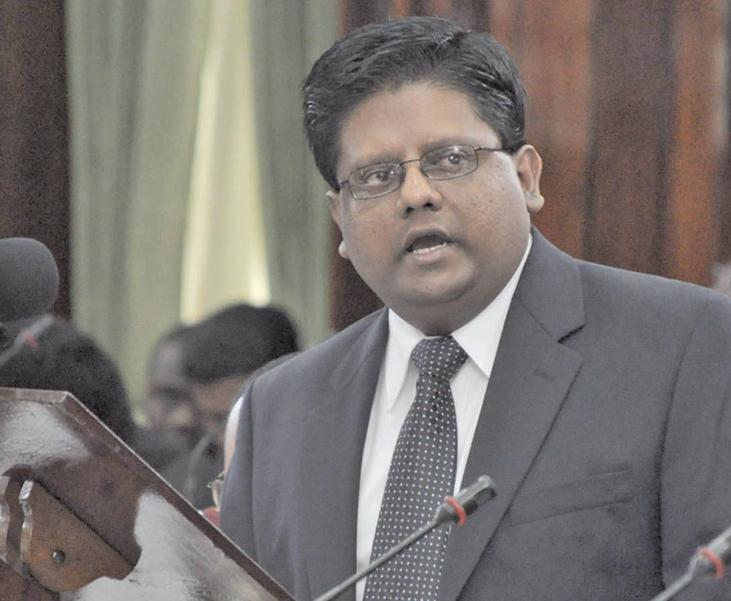
Meanwhile, Finance Minister Dr Ashni Singh called the action of the opposition “a grave travesty” against the people of Guyana since the dream of generations to harness hydroelectrical power cannot be realised because the
ACrabwood Creek farmer is a patient at the Georgetown Public Hospital, nursing a stab wound to the neck he received during a brawl on Thursday evening. The incident occurred about 18:30h at School Dam, Crabwood Creek.
project was the only means that came close to do so.
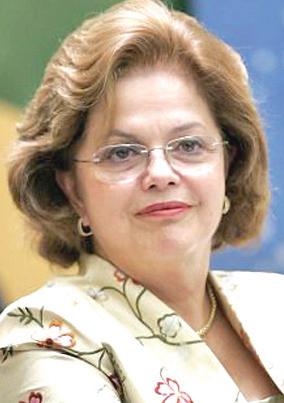
Economic Commission for Latin America and the Caribbean (ECLAC) Executive

be equality for growth and growth for equality”.
The minister pointed out that the opposition’s actions will impact the investment of international financers, who have plugged millions of dollars in the project. “Dozens of entities, hundreds of persons have invested man years, several man years each, in getting us to this point and millions of dollars.”
“hijacked” the project and held it hostage as a pawn in the game of “political horse-play”.
“A project that is as important as this should never be made the subject of political bartering and horse-trading. One cannot, with a straight face, look the people of Guyana in their eyes and say that one is a responsible political leader but yet sabotage
Hijacked
Dr Singh pointed out even though the opposition was aware of the benefits that Guyana stands to garner from hydroelectric power through the Amaila Falls Project; they
a beneficial national development project in a manner that the opposition did (Thursday night) by casting their vote in the manner they did,” vented the minister.
He explained that the profitability, expansion, growth and job creation
of thousands of Guyanese businesses will be constrained because of the lack of reliable power in Guyana and this is caused by the opposition’s action to sabotage the project for “partisan political gain”.
The minister further highlighted that to this day, Guyanese do not have the comfort of enjoying uninterrupted, reliable and adequate supply of electricity for a full 24-hours.
Disappointed
At the press conference, the government’s Chief Whip Gail Teixeira also reiterated the views of the prime minster and the finance minster. She expressed her disappointment at the behaviour of the opposition; however, she noted that the government will not give up on the project and will find a way to have it restored while urging the opposition to reconsider its decision.
Teixeira said that they are working “… in trying to restoring the Amaila Falls project back on the agenda… it is not impossible, that can happen, but would require the opposition declaring that they support the issue and support it coming back to the house.”
Secretary Alicia Bárcena highlighted the need to move forward with social and fiscal covenants in Latin America and the Caribbean, in order to consolidate equality, diversify the economy, and improve the distributive impact of public policies.
She made the comments while speaking in Brazil as part of the international seminar on development, which was organised by Brazil’s Economic and Social Development Council (CDES) to mark its 10th anniversary.
Speakers included Brazilian President Dilma Rousseff, who referred to the various structural reforms under way in her country which are aimed at continuing along the path of growth with equality. The aim of the meeting, held at the Itamaraty Palace (which is the headquarters of the Foreign Affairs Ministry), was to reflect on the challenges of global governance and the Brazilian model.
The meeting was attended by government officials, civil society representatives, and international experts.
Guiding ethical principle
Bárcena gave an overview of the region’s socio-economic situation, describing aspects such as the effects of the international economic crisis on growth, capital flows, and inflation. In her address, the ECLAC executive secretary stated that “outlining our region’s future involves recognising that equality must be our main guiding ethical principle and the ultimate objective”.
“Structural change can only be achieved with equality covenants. We need a new market-state-society relationship, whereby each country defines its own mechanisms. We must urgently renew fiscal covenants and mutual trust between the state and citizens,” she said. This is because “tax collection in the region is low and inefficient”.
In 2012, ECLAC launched the document “Structural Change for Equality: An Integrated View of Development”, which deepened the reflection that began in the document “Time for Equality: Closing Gaps, Opening Trails”, which was presented in the Brazilian capital in 2010. According to Bárcena, “inequality conspires against development, security, investment and against everything”. She added that the region “is rethinking its development models to prioritise increases in productivity, innovation, and the creation of quality jobs”.
The executive secretary called on the region’s countries to invest in education and research and development, as well as prioritising natural resource governance and moving towards solidarity-based regional integration.
Solomon Deonarine, 21, of Lot 60 Grant 1780 Crabwood Creek, Corentyne, Berbice, was transferred to the Georgetown Public Hospital from New Amsterdam due to the seriousness of the wounds.
Investigations revealed that the suspect and two
friends were imbibing at a popular drinking spot when he saw Deonarine walking on the street. The suspect confronted the victim on an old grievance which resulted in a scuffle.
During the confrontation, the suspect reportedly broke a beer bottle and
stabbed Deonarine to the left side of his neck, resulting in him falling to the ground. He was rushed to the Skeldon Hospital by public-spirited citizens, but was treated and transferred to the New Amsterdam Hospital. The suspect was arrested and is assisting with investigations.
The senior official informed participants of ECLAC’s proposal on structural change with equality, to ensure sustained economic growth, equality rights, and environmental sustainability. She emphasised the fact that “Brazil and Latin American can increase and improve growth, and the paradigm for this must now
Bárcena declared that a politically legitimate state is one capable of proposing a future development path and coordinating stakeholders around far-reaching projects. She stressed that the equality agenda “is not a voluntary paradigm, it is not yet another good idea thought up by people in a room, but rather it is the expression of the will of our peoples, the voice of our times, the act of listening to the demands on the street, in the fields and throughout our shared homeland”.
The seminar was also attended by ECLAC Deputy Executive Secretary Antonio Prado, and ECLAC Brazil Office Director Carlos Mussi.

The Jamaica Association of Transport Owners Operators (JATOO) is calling for an immediate meeting with the Transport and Work Ministry to discuss the ministry’s plans to introduce a flat-tax on operators of public passenger vehicles (PPV).
The ministry last Thursday announced that an agreement was reached with the island’s transport operators for them to pay the flat tax. However, JATOO President Louis Barton said the association was taken by surprise by the decision as the group was excluded from the discussions on the matter and would be vigorously opposing the introduction of the tax.
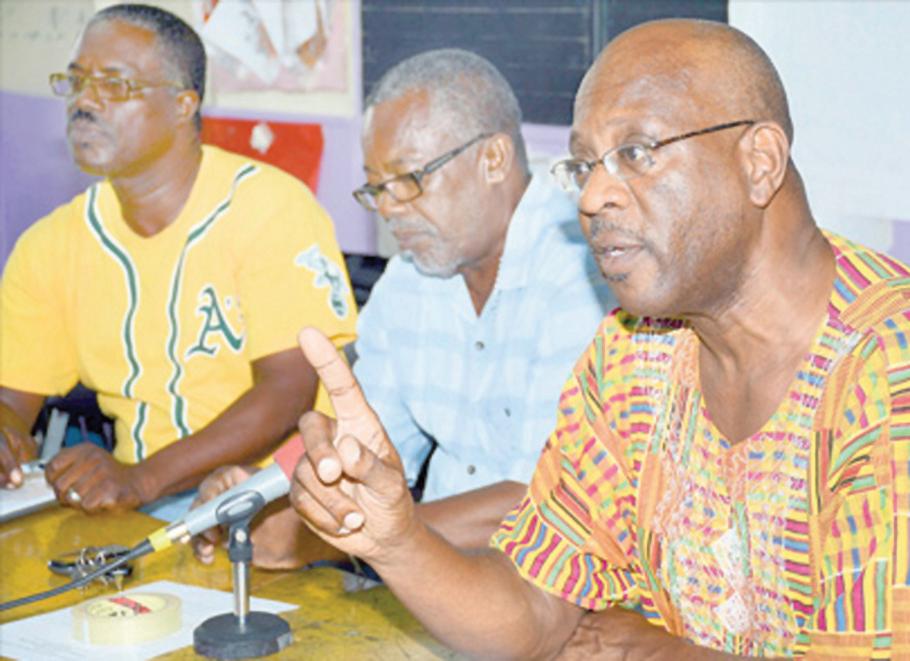
were already burdened by insurance, fitness, drivers licence, and registration costs, and described as discriminatory and regressive plans to tax taxi operators, whom he said were being unfairly targeted.
“Why attack PPV operators? We have barbers, doctors, lawyers, carpenters and thousands of other professionals and the only one they want to tax is the PPV operators,” Barton said.
The Inter-American Press Association (IAPA) condemns the killing of journalist Alberto López Bello from the newspaper El Imparcial of Oaxaca, in Mexico. IAPA demands that the government investigate the crime and find solutions that will effectively punish attacks against journalists, violence and lack of safety.
“One of the worst things that can happen to us is the

On Tuesday evening, the Cuban Foreign Ministry released a statement taking responsibility for the undeclared missiles discovered aboard a North Korean-flagged ship by Panamanian authorities.
Earlier Tuesday morning, Panamanian authorities stopped the Chong Chon Gang and detained its 35-member crew on suspicions that the ship was carrying illicit drugs. However, upon a routine search of the vessel for drugs, the inspectors discovered concealed and undeclared missiles in the shipment of brown sugar that the ship was allegedly transporting to North Korea from Cuba. The local authorities then alerted
UN officials and requested that the UN carry out the remainder of the inspection.
Havana claims that the purpose of the weapons shipment was to rehabilitate and modernise the missiles and have them returned to Cuba, rather than to directly transfer arms to the internationally sanctioned regime in Pyongyang.
In defence of its actions, the Cuban government argued that it has the right to carry out this arrangement in order to “maintain [its] defensive capacity to preserve national sovereignty”, and also expressed its unfailing commitment to “peace, disarmament – including nuclear disarmament – and respect for international law”. (Excerpt from Caribbean News Now)
flat tax,” he told a meeting of taxi owners on Sunday. He added that operators
Government, he added, should have taken into consideration that the public transport operators have not been granted an increase since 2010 and that the operators were operating at a loss. (Excerpt from

Independent Liberal Party leader Jack Warner said he has been asked by the Immigration Department to return his diplomatic passport – on the Peoples’ Partnership (PP) government’s instructions. Warner, in a release on Thursday, said that at 13:05h on Thursday, he received a call from acting Chief Immigration Officer Keith Sampson on the issue.
“The acting CIO called to inform me that on the instructions of the government, I am to immediately return my diplomatic pass -
port,” Warner said. “Mr Sampson, who sounded embarrassed to make the request, agreed to give me a one-week facility that would allow me to transfer my 10-year U.S. Visa on to my regular passport, after which it would then be immediately returned.
“I recall in 2007 when I was elected as a Member of Parliament in the UNC opposition, on my own volition I offered up my diplomatic passport to Prime Minister Patrick Manning, who dignified his office by returning it to me indicating that it was not necessary.” (Excerpt from Trinidad Guardian)
Aformer CIA station chief convicted by an Italian court of kidnapping a terror suspect has been detained in Panama, Italian officials say. Robert Seldon Lady was sentenced to nine years in jail for his involvement in the abduction of the man, an Egyptian cleric, in Milan in 2003.
The cleric, known as Abu Omar, was allegedly flown to Egypt and tortured.
Lady was convicted in absentia with 22 other Americans for their role in his “extraordinary rendition”.
But the Italian authorities have so far only sought the international arrest of the former Milan station
chief, Italian media said.
The CIA said it had no immediate comment on the arrest, while Panamanian officials have so far denied knowledge of the detention.
Panama and Italy do not have an extradition treaty, so it is unclear if Lady will be sent to Italy to serve his prison sentence. Lady was reportedly ar-
rested near Panama’s border with Costa Rica.
According to Italian media reports, an international warrant was sought by the justice minister in Italy’s previous government in December 2012.
A prosecutor on Lady’s case said the Interpol warrant reflected Italy’s determination to have him extradited. (Excerpt from BBC News)
IAPA in a release said López Bello, 28, was killed during the early hours of Wednesday, July 17. According to local media, information was released around 07:00h regarding the discovery of two bodies in the neighbourhood La Humedad, located in the municipality of Trinidad de Viguera just outside of Oaxaca, the capital of the Mexican state. The journalist’s body presented several gunshot wounds and was found next to the body of Alejandro Franco Rojas, who apparently worked for the local police.
The president of the
Freedom of the Press and Information Committee and director of the weekly newspaper Busqueda, Claudio Paolillo, expressed his solidarity with López Bello’s family and colleagues. Paolillo stated that “cases like this demonstrate the ineffectiveness and fragility of government policies to ensure the physical integrity of journalists. They also fail to sanction those responsible for the crimes”.
According to the State Police Commissioner César Alfaro, the bodies presented “severe injuries”. However, the commissioner did not specify the nature of the attack.
The newspaper El Imparcial of Oaxaca condemned the killing in a brief press release and demanded that the crime be promptly solved; a crime that “comes to show the vulnerability to which journalists are exposed daily in their job to provide accurate and prompt information to citizens”.
Expedia, the world’s leading online travel agency, has revealed its Expedia Insiders’ Select 2013 list, an annual ranking of the very best hotels on Expedia sites from around the world, predominantly determined by Expedia customers. Four hotels in the Caribbean ranked in the top 100 of the list. These are Round Hill Hotel and Villas in Montego Bay, Jamaica; the Royal Sea Aquarium Resort in Willemstad, Curacao; the Grande Bay Resort in St John, US Virgin Islands; and Galley Bay Resort and Spa All-Inclusive in St John’s, Antigua and Barbuda
Hotels on the Insiders’ Select list are rated on a number of factors, the most important of which is the scores from more than one million verified Expedia customer reviews received during 2012. Just 650 hotels are exclusively selected from a pool of more than 205,000 properties available on Expedia-branded sites worldwide.
The exclusive Insiders’ Select list empowers travellers by helping them identify the hotels in their chosen destination that have been recognised by other travellers as delivering an excellent guest experience. (Excerpt from Caribbean News Now)
The authorities have imposed a 24-hour curfew on a section of Annotto Bay in St Mary after gunmen shot and killed three people including a woman.
Police said 27-year-old Dwayne Harris, 41-yearold David McIntosh and his common-law wife, 44-yearold Maureen Pinnock were shot and killed after the gunmen gained entrance to the premises.
Police said the victims were shot several times and taken to hospital where they were pronounced dead. The authorities have not given any motive for the killings but said during the curfew people are required to remain inside their premises unless otherwise authorised in writing by the member of security forces in charge of enforcing the curfew. (Excerpt from Caribbean360)

U.S. President Barack Obama has said that “Trayvon Martin could have been me, 35 years ago”, in his first comments on the case since last week’s verdict.
The unarmed 17-year-old was shot and killed in Florida in February 2012.
George Zimmerman, 29, said he opened fire on the teenager in selfdefence and was acquitted of murder by a Florida court last week.
In an unexpected press call, Obama said very few black men in the U.S. had not experienced racial profiling.
Police focus on cooking oil container in Indian mass poisoning case
Indian police suspect that India’s worst outbreak of mass food poisoning in years was caused by cooking oil that had been kept in a container previously used to store pesticide, the magistrate overseeing the investigation said on Friday.
Health officials in the eastern state of Bihar were due on Friday to release autopsy results for many of the 23 schoolchildren who died on Tuesday after vomiting and convulsing with agonising stomach cramps.
The children fell ill with -
in minutes after eating a lunch provided by their school in the village of Gandaman.
The free meals are part of a national scheme aimed at tackling malnutrition and encouraging children to attend school.
“Circumstantial evidence suggests that cooking oil was kept in a container which was previously used to store pesticides or insecticides,” Abhijit Sinha, district magistrate of Saran district, said by telephone. Gandaman is in Saran district. (Excerpt from Reuters)
Palestinian politicians reject Kerry’s map for peace talks
Palestinian politicians rebuffed on Thursday a hard-fought blueprint for resumed talks with Israel thrashed out by U.S. Secretary of State John Kerry in a blow to his marathon peace efforts.
A U.S. official had warned that Kerry was unlikely to be able to announce any breakthrough on resuming direct peace negotiations with the Palestinians despite extending until Friday his sixth visit to the region in as many months.
The setback for the U.S. plan came from the governing Revolutionary Council of Palestinian President Mahmud Abbas’s own Fatah movement, which demanded changes.
The broader Palestine Liberation Organisation, which also includes leftwing factions less sympathetic towards a compromise, said it would meet later on Thursday to draw up a formal response to Kerry’s proposals.

Obama said the pain that African Americans felt around the case came from the fact that they viewed it through “a set of experiences and a history that doesn’t go away”.
He shared his experiences of being racially profiled in the past, such as being followed when shopping in a department store.
“There are very few African American men who haven’t had the experience of walking across the street and hearing the locks click on the doors of cars.
“There are very few African Americans who haven’t had the experience of getting on an elevator and a woman clutching her purse nervously and holding her breath until she has a chance to get off.”
He also hailed the “grace and dignity” of Trayvon Martin’s parents in the way that they reacted to the verdict. (BBC News)
Abomb hidden in a Sunni mosque exploded while worshipers listened to a sermon Friday in northeastern Iraq, killing at least 18 people and injuring 56, police and health officials said.
The bomb had been hidden under a podium from which an imam was speaking in the mosque, located in al-Wajihiya in the largely Sunni province of Diyala, said police officials in the nearby provincial capital of Baquba.
Al-Wajihiya is a small Sunni village close to Muqdadiya, a largely Shiite district. It is about 25 kilometers northeast of Baquba, which itself is about 60 kilometers north north-east of Baghdad.
Over the past few weeks,
many Sunni families fled from their houses in small villages close to Muqdadiya because of ongoing threats by Shiite militias, according to a Sunni lawmaker who spoke to CNN on condition of anonymity because of security concerns.
The bloodshed comes amid a recent uptick in violence, much of it stemming from discord between Sunnis and Shiites.
Sunni Arabs had more political clout in Iraq during Saddam Hussein’s rule, before his government was deposed in 2003 by the U.S.-led invasion.
Sunnis have long felt politically marginalised under a Shiite-led government in the post-Saddam era. (Excerpt from CNN)
AMilan court on Friday convicted three of ex-premier Silvio Berlusconi’s former aides of procuring prostitutes for the media mogul’s infamous “bunga bunga” parties.
The court also handed down stiff prison terms: seven years to Emilio Fede, a longtime executive in the mogul’s TV networks; seven years to Dario “Lele” Mora, a talent agent, and five years to Nicole Minetti, a former regional politician who professed love for the expremier.

Berlusconi was not on trial in this case, but he was convicted separately last month of paying
Kashmir curfew imposed after four killed

city of Jammu.
Early Friday, thousands of police and paramilitary troops fanned out in Srinagar and other towns to enforce the restrictions on movement of pedestrian and vehicular traffic.
The security forces had erected barricades at road intersections. Coils of razorfitted wire also were used to enforce the curfew.
for sex with a minor and trying to cover it up.
Both he and the young woman, a Moroccan who goes by her stage name “Ruby”, had denied having sex. The conservative leader contends he is an innocent victim of prosecutors he says are sympathetic to the left.
In that case, Berlusconi was given a seven-year prison term and banned from politics for life. He is expected to appeal.
In Italy, prostitution among adults is legal but exploiting prostitutes is a crime. (France24)

ISndian security forces
“During the leadership meeting... most of the Palestinian factions... rejected restarting peace talks based on Kerry’s proposals,” he said.
PLO executive committee member Wasel Abu Yusef said the Palestinian leadership had “decided to form a committee to respond to Kerry’s proposals”, which would meet later on Thursday to prepare an official answer. (Excerpt from France24)
Palestinian member of parliament Mustafa Barghuti said “most factions” within the PLO had rejected Kerry’s proposal.
Friday enforced a strict curfew in Srinagar and other major towns of Indianadministered Kashmir to stymie protests sparked Thursday when four civilians were shot and killed by the paramilitary border security force.
Kashmiri separatists had called for a strike and Friday post-prayer protests in reaction to the deaths in the mountainous village of Gool in the Ramban district, 190 kilometres north of the
Nonetheless, people staged protests at several places, sometimes clashing with the security forces. Two people were wounded in the clashes and were evacuated to hospital, according to police.
The shooting erupted after scores of protesters attacked a security force camp Thursday morning, said the minister of state for home, Sajjad Kichloo.
In addition to the four killed, 40 people were reported wounded.
The villagers were protesting the alleged beating of the imam of a local mosque by the security force, officials said. (Excerpt from CNN)
upporters of Egypt’s ousted president, Mohamed Morsi, have staged large new protests across the country.
In Cairo, the numbers outside the Rabaa alAdawiya mosque, scene of a weeks-long sit-in, reached tens of thousands.
Pro-military crowds were also gathering for a rival rally in central Tahrir Square, though in smaller numbers.
The UN’s top rights official is pushing Egypt’s interim leaders to state why Morsi has been arrested and when he will be put on trial.
Egypt’s first freely elected president was ousted on July 3 in what his supporters, many of them members
of his Muslim Brotherhood movement, have said was a military coup. He is being held by the army at an undisclosed location.
The spokesman for the UN’s High Commissioner for Human Rights, Navi Pillay, said she had spoken to Egypt’s ambassador on July 10 and had written to Cairo for information on how many people were being held with Morsi and the legal basis for their detention. Pillay also wanted more information on the shooting outside the Republican Guard barracks in Cairo on July 8 in which more than 50 people were killed, said Rupert Coleville. (Excerpt from BBC News)
The United Statesbased Standard and Poor’s has revised its outlook on its long-term rating on Barbados to negative from stable and at the same time affirmed its ‘BB+’ longterm and ‘B’ short-term sovereign credit ratings for the island that has “fallen back into recession”.
It said the outlook revision reflects the potential for a downgrade if the wider fiscal deficit is not reversed or if external pressures as -
sociated with persistent current account deficits mount.
The net general government debt burden is expected to rise to above 70 per cent of Gross Domestic Product (GDP) this fiscal year from 67 per cent last year and 60 per cent in fiscal 2011.
The international rating agency said Barbados uses more than 13 per cent of general government revenues to pay interest on its debt and that the “econom-
ic fundamentals continue to weaken, reflecting not only the tough global economy, but also competitiveness and other structural shortcomings. “Barbados’ narrow and open economy continues to suffer from the 2008 global financial crisis. Results for the first half of 2013 show that Barbados has fallen back into recession after a very weak recovery in 2010-2012, with average annual real GDP growth of just 0.4 per cent in those years.” (Caribbean360)
Michigan Governor Rick Snyder has said Detroit may have hit rock bottom with its bankruptcy filing, but the move will reverse decades of decay. The Republican said the city –once the birthplace of the U.S. car industry, now groaning under US$18 billion (£12 billion) of debt – deserves a fresh start. Detroit has faced decades of problems linked to industrial decline. Public services are
nearing collapse and about 70,000 properties lie abandoned. Governor Snyder said the city had filed for bankruptcy on Thursday because it was “basically broke”.
“We’re the comeback state in Michigan, but to be a great state we need Detroit on the path to being a great city again,” he told Friday’s news conference.
“Now is the opportunity to stop 60 years of decline,” he added. “We will come out with
a stronger, better Detroit and a format to grow this city. The citizens of not just this city but the state deserve it.”
Governor Snyder was flanked by state-appointed emergency manager Kevyn Orr, who suggested last month that the city’s longterm debt could be as high as US$20 billion. Orr addressed concerns that art works at the Detroit Art Institute or other assets would be auctioned to pay creditors. (BBC News)
Governments risk “global tax chaos” as they chase dwindling revenues from multinational companies unless the international tax regime is radically overhauled, according to a report commissioned by the G20 group of nations.
On Friday, the chancellor, George Osborne, will hail a two-year action plan drawn up by the OECD think tank to clamp down on questionable international corporate tax prac-
tices.
The long-awaited report, prepared for a meeting of the G20 finance ministers in Moscow this weekend, says a “bold move by policymakers” is necessary to prevent a worsening in the position. The OECD calls it “a turning point in the history of international co-operation on tax”.
The action plan sets out 15 initiatives for arming tax authorities around the world with the tools to crack down on some of the areas
international leaders agree are among the most widely exploited by multinational tax avoiders. These initiatives are to produce a range of recommendations for changes to the tax treaty rulebook, with deadlines ranging from 12 months to two and a half years.
Among the highlights are additional disclosures multinationals must make to all tax authorities, helping officials know where to look for the worst avoidance. (The Guardian)
Egypt market sentiment is likely to be upbeat on Wednesday after army-backed leaders swore in a new interim cabinet, made up of mainly liberal and technocratic ministers, that traders hope can lead the country out of a crisis.
“We’re bullish on the new cabinet, especially because most come from strong economic background,” says Ashraf Akhnoukh, senior equity sales trader at CIBC Brokerage. “The main problem
is building consensus about policies and showing to the public some sort of results.”
No ministers are from either of the main Islamist groups that have won five straight elections since 2011. Cairo’s benchmark climbed 0.9 per cent to a six-week high on Tuesday. In Saudi Arabia, Al Tayyar Travel Group said its second-quarter net profit rose 24 per cent to 302 million riyals (US$81 million). Arqaam Capital forecast Al Tayyar would make a quarterly profit
of 341 million riyals. Saudi International Petrochemical Co (Sipchem) 2310.SE will distribute 220 million riyals (US$59 million) to shareholders through a first-half dividend of 0.6 riyals per share. The global backdrop remains positive with Asian shares inching up in Tuesday trade. Investors expect Federal Reserve Chairman Ben Bernanke will reiterate later in the day that U.S. monetary policy will stay accommodative. (Arabianbusiness)

Chinese authorities have given the banking industry greater freedom by allowing banks to set their own lending rates. Previously they were not allowed to lend at rates below a certain level set by the People’s Bank of China (PBOC).
The People’s Bank said it hoped the move would lead to lower costs for companies.
It is being seen as a significant part of the government’s plan to make the
economy more market-orientated.
“When Chinese President Xi Jinping came to power in March, he promised to reform the country’s economy to encourage more balanced growth,” said BBC Beijing Correspondent Celia Hatton.
“The announcement on bank interest rates is the first major change since that time,” she added. Analysts agree that it marks an important development in policy.
“It’s a very big deal, probably more in terms of what it symbolises than the effect on the economy,” said Mark Williams, chief Asia economist at Capital Economics.
“China has been talking about interest rate liberalisation for a long time, this is one of the biggest steps they could have taken,” he said. Even before this move, Chinese banks had some freedom to lend at rates below the official level, but very few chose to do so. (BBC News)
Gulf carriers are likely to seek permission for more than 150,000 more seats a week in capacity from the Indian government, according to a report from a global aviation consultancy firm.
The Centre for Asia Pacific Aviation (CAPA), an international global aviation consulting firm, said access and flights to tier II Indian cities would see the need for increased capacity for Gulf carriers.
“CAPA maintains a large
dedicated aviation research practice in New Delhi so we monitor developments on foreign airline strategies in India and regulatory issues such as bilateral entitlements on a continuous basis. Our assessment that the Middle East carriers are seeking up to 150,000 additional weekly seats into India is based on this ongoing research,” a spokesperson said.
CAPA said the basis for its claims are “client confidential” but estimated that
the main Middle Eastern carriers – Dubai’s Emirates Airline, Abu Dhabi’s Etihad Airways, Doha’s Qatar Airways and UAE low cost carrier Air Arabia – are soon likely to seek permission from the Indian government for the extra seats. The report also claimed the carriers were likely to push for permission for the A380 – which they are currently not allowed to fly into Indian cities – to be used as part of the increased capacity. (Arabianbusiness)
Serving the local market
What opportunities exist to serve the local market? Are there products or services that are lacking a local business presence? There may be an opportunity to sell locally made products or global products that show a demand from townspeople.
Complementing area businesses
Are there offerings that would go along with existing businesses? For example, if a town has a significant number of farms, there may be a need for a store that sells produce, storage equipment or farm machinery. Or there may be a
need for a reliable equipment repair operation.
Selling local products elsewhere
If a local business provides desirable products, consider selling those products to larger markets.
Market to tourists
Towns that lie on travel corridors or are destination spots themselves provide opportunities to sell local products, such as town-related novelties or local specialties. If the town is a destination point, there may be a need for tour guides or taxi services.
Serve the local government
Municipal governments have needs from janitorial services to computer repair to office supplies. Investigate the needs of the local government
to determine if something is lacking or services are being delivered poorly.
Provide expertise to existing businesses
Business owners often need assistance with accounting, taxes, facility cleaning and other services. Look for a common need and become the local expert. There will be opportunity as long as there are businesses that are operating. Once the research into existing needs and opportunities is completed, strategy and planning are essential to ensuring that the grand opening is not followed by the resounding thud of an empty store. Finally, as with any business, money management is critical to making sure operations will continue if hard times hit the small town. (Business Dictionary)
By Svetlana MarShall
Private Sector Commission
Chairman Ronald Webster said the passage of the Hydro-Electric Power (Amendment) Bill should not have been up for negotiations on Thursday night, given its impact on the Amaila Falls Hydro Electric Project and the development of the country as a whole.
On Thursday, the A Partnership for National Unity (APNU) and the Alliance For Change (AFC) told the People’s Progressive Party/Civic (PPP/C) that they will only support the HydroElectric Power (Amendment) Bill if the local government reform bills were brought forward. However, after more than two hours of negotiating, the parties failed to compromise. Although the parliamentary opposition parties refused to participate in the debate, they used their one-seat majority to vote down the bill.
Economic landscape
On Friday, Webster said the multibillion-dollar Amaila Falls Hydro Electric Project, which has the capacity to transform the economic landscape of Guyana
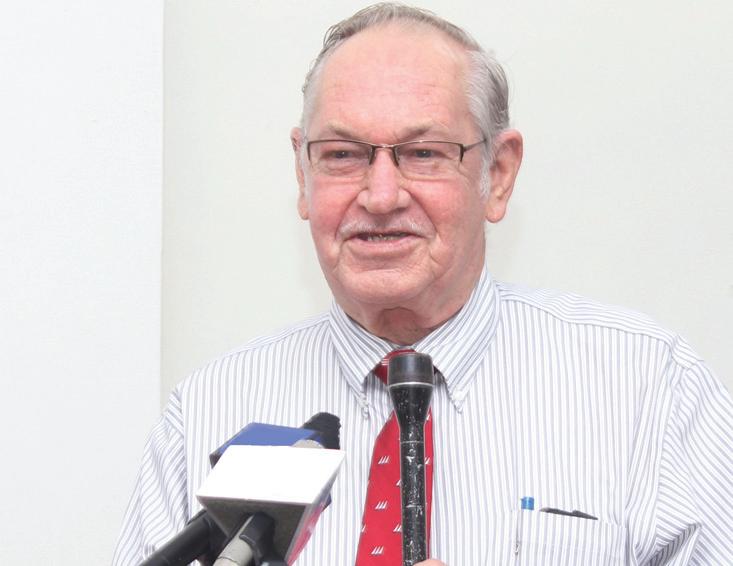
through the provision of cheaper and reliable electricity, has been severely affected due to party politics.
“The project is absolutely essential to reach Guyana’s energy needs. It’s absolutely essential for businesses to be competitive. It is absolutely essential for electricity to become affordable, and it is absolutely essential that we are to avoid the government either having to increase electrical rates’ subsidy or impose drastic tariffs’ increases,” Webster said as he expressed disappointment in the National Assembly’s failure to pass the bill.
He pointed to the demands made by the InterAmerican Development Bank (IDB) for the amendment of the bill to facilitate safe zones for Guyana’s wildlife before funding is released for the hydro project.
“A key requirement of the IDB is the amendment to the hydro-electric act. The express purpose of this bill was to meet the IDB’s environmental requirements by providing a Biodiversity Offset, an ecologically similar protected area, to compensate for the environmental impact of the project area and comply with IDB
Safeguard Policy,” Webster noted.
According to the PSC chairman, the business organisation stands ready and willing to work with the government and the opposition to avert the damaging effects posed by the absence of a hydroelectric system in the country. He said Guyana may not be able to recover from this tragedy for many years since the damage is irreparable.
Unaffordable levels
“The cost of electricity will escalate to unaffordable levels; the cost of expanding generation to meet demands will become prohibitive. The cost of mounting another hydroelectric project will be priced out of reach,” the PSC chairman lamented.
The failure to pass this legislation, which effectively means the project will not be presented to the IDB’s board in October will almost certainly result in the collapse of the project, the PSC further contended.
PSC also expressed disappointment at the National Assembly’s failure to pass the motion for the Guarantee of Loans (Public Corporations and Companies) Act. (svetlanam@guyanatimesgy.com)
President Donald Ramotar on Thursday received a copy of Volumes one and two of late President Janet Jagan’s speeches in the National Assembly, the preface for which was authored by President Ramotar.
Professor David Dabydeen, head of the Caribbean Press and Guyana’s ambassador to China, during a courtesy call presented the head of state with the books as well a copy of his latest novel Johnson’s Dictionary Professor Dabydeen was quoted by the Government Information Agency as saying a batch of the two volumes of speeches is on its way to Guyana via sea. Mrs Jagan was president from December 19, 1997 to August 11, 1999. She previously served as prime minister from March 17, 1997, to December 19, 1997.
On Monday, Professor Dabydeen presented the initial volume of speeches of the late President Linden Forbes Sampson Burnham to Speaker of the National Assembly, Raphael Trotman at Parliament.
He also gave insight into his latest novel. “It’s about the journey taken from the days of slavery and inden-
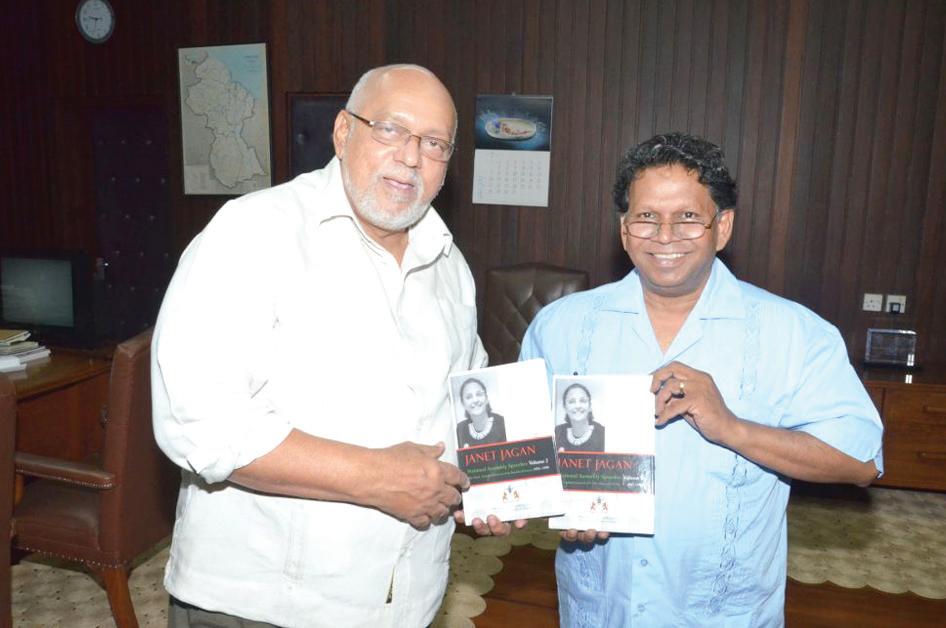
tureship, when they were barely literate in the English Language to the point at which they won the Nobel Peace Prize for Literature twice, so that’s the role of Johnson’s Dictionary in the way we achieved literary and linguistic excellence,” he explained.
The back cover of the book reads: Told by Manu, this novel journeys through 18th century London and Demerara
in British Guiana, recounting experiences that might be dreamed or remembered. With a diverse set of characters – including slaves, lowly women on the make, lustful overseers, sodomites, and pious Jews – these characters come alive from artist William Hogarth’s engravings; Hogarth himself also appears as a drunkard official artist in Demerara, from whom the slave Cato steals his skills and discov-
By SaBatini DanielS
Home Affairs Minister
Clement
Rohee
has assured citizens of government’s commitment in making certain Guyana achieves Universal Birth Registration and meets this component of the Millennium Development Goal (MDG).
Speaking at a workshop hosted at the Officers’ Mess, Eve Leary, Georgetown, he said government in every budget has been making good on the recommendations of the Guyana Registration Office (GRO).
The workshop was hosted by the GRO with registrars across the country to discuss several key issues.
Rohee noted that persons have asked why the government does not charge for registration of births, but he said the administration thought it best not to charge parents and continue to subsidise it through state fund.
He stated that in order to accommodate continuous and timely registration of births, the government has put in place 200 registration centres located in the 10 administrative regions.
“We decided sometime ago that we needed to decentralise the operations of the GRO because not everyone can afford to come to Georgetown to engage in these activities, and we have ensured in order to speed up registration of births and to reduce the cost… decentralising would make our system much more efficient.”
Bedside registration
He stated that the government has resorted to every conceivable measure to accomplish its goal of acquiring Universal Birth Registration, making reference to the GRO reintroducing bed side birth registration at hospitals since it recognised this as a very efficient way of capturing all births.
“We are hoping that in this way, we will be able to achieve a 100 per cent birth registration.” The minister said the administration is also open to initiatives which will assist it in achieving its objective.
the GRO to visit hinterland communities as often as it can since these areas are known to have problems with birth registration. He noted that at the annual National Toshaos Council Meeting, questions are frequently asked about how to acquire birth certificates, and as such, the government has ensured a representative from the GRO attend these meetings. He added that that Amerindian Affairs Ministry also receives request applications for birth certificates and these are forwarded to the GRO.
Social responsibility
He posited that it is the social responsibility of parents to ensure their children are registered, adding that children who do not have birth certificates are bound to face many challenges in society.
“Without a birth certificate, how will that child go to school? How will that child be able to sit exams? How will that child when he/she becomes an adult be able to exercise universal adult suffrage?” He said parents must do everything to ensure that their children are properly registered.
The minister also warned persons who engage in forging birth certificates to stop the illegal practise, as sooner or later they will be caught and severely punished.
Meanwhile, UNICEF representative to Guyana and Suriname, Dr Suleiman Braimoh pointed out that birth registration is important as it gives a child identity.
ers a way of remaking his world.
From the dens of sexual specialties, where the ex-slave Francis conducts a highly popular flagellant mission to cure his clients of their man-love and preach abolition, to the sugar estates of Demerara, this novel revels in the connections of empire, art, literature, and human desire in ways that are comic, salutary, and redemptive.
Rohee was cognisant that many parents are not aware of the steps they have to take and where they have to go to get their children registered; hence, he pointed out that more public awareness is necessary.
“We can’t blame those people… we also must recognise that it is the state’s responsibility to try as hard as it can to educate and build public awareness so that people can be more aware how to register a birth.”
The minister said the government has encouraged
He disclosed that in 2009, UNICEF conducted multiple surveys on birth registration in Guyana and it was revealed that Guyana has moved forward on birth registration.
He explained that not everyone has access to birth registration, especially the people in the hinterland communities, and UNICEF has a strong commitment to continue to give attention and support to Guyana to have every child registered. (sabatinid@ guyanatimesgy.com)














You’ll have the gift of arousing great interest in others regarding the things you’re passionate about. To the amazement of everybody, you’ll even excite a negative pal.

By Bernice Bede Osol

(June 21July 22) (Jan. 20Feb. 19) (Dec. 22Jan. 19)
You are presently in a promising financial cycle where increased earnings are a strong possibility. However, don’t think that you won’t have to work hard for what you’ll get.

A project that has been mismanaged could come under your direct control. You have the talent and the know-how to succeed where others have failed.

You’re likely to do unusually well if you are more concerned with the big picture than the little details. Laying a strong foundation will pay off.

(Aug. 23Sept. 22)
(July 23Aug. 22) (Feb. 20-March 20)
A rather unique opportunity is likely to be presented to you by an old friend. It might not look like much on the surface, but it will develop greater depth down the line.

(March 21-April 19)
You’re likely to be much more successful using traditional methods than you would be trying something unorthodox or new. Things that worked well before will do so again.

(April 20-May 20)
Certain information you get from one party could be of great value to another. If you bring these two divergent factors together, everyone could profit, including you.

(May 21June 20)
Developments that could improve the affairs of both yourself and your colleagues are brewing. Look for signals that things are happening, so you can get on top of matters posthaste.
There are strong indications that you’ll start cultivating an extremely important relationship. It won’t be established overnight, but it will eventually become one of your major alliances.

(Sept. 23Oct. 23)
New heights can be achieved if you have the motivation and desire to reach for the stars. Tenacious effort will be required, but all your striving will be worth it in the long run.

(Oct. 24Nov. 22)
Many of your associates will appreciate the value of your ideas and suggestions, giving them more merit than even you do. Graciously accept their sincere appreciation.

(Nov. 23Dec. 21)
Someone with whom you enjoyed success in the past will want to team up with you again. It could turn out to be an even a bigger coup than the first time.
saturday, july 20, 2013


cAr rENtAL
Journey Inn Apartments & car

Dentures provided in 72

ABOVE MATTS RECORD BAR (226-2874). BOOKLAND, ON A SALE MISSION “ TO GET BOOKS IN EVERY HOUSHOLD”.

boutiques and wreaths. Nesha’s Flowerland. 78 Church Street (opposite St George’s Cathedral). Tel: 227-3553/225-3315


rental. Rooms & car to rent from $3000 Premio, Vitz. Phone: 6896668, 639-4452. sPirituALity
Garden earth and builders waste also bobcat rental excavating clearing and leveling done phone:616-0617, /663-3285. Duckling phone:617-9300. All models of engines (Perkins, cummins, lister, deuez, john dere etc) enclosed and open air any size of KVA. Call Ram on 619-4483 or 226-6325
German Shepherd pups for sale. Phone: 619-6086, 699-7077.

Healthworld Holistic Centre: Psychotherapy available for all types of abnormal behaviors –addictions, emotional, suicidal, anger, relationship and sexual problems. Treatment of stress disorders, depression, fear, low self-esteem, insomnia, trauma, psychosomatic sicknesses, and children's disorders. We also conduct IQ evaluations and behavioral assessments. By appointments only. Clinic hours: 11:00 – 17:00h. Tel: 592-621-0552. Email:healthworldhc@gmail.com
Are you pouring on pounds? Then call Raul /Carol Wilson: 660-6818, 641-5923, 216-3016, 216-3601 for your healthy eating package.



Immigration & Visa Services We handle all Canadian, USA and UK, Immigration and Visa matters. Self Sponsorships, Holiday/Visitor’s Visas, Work Permits, Students Visas, Family, Class, Immigration Forms, Embassy Enquiries, Appeals for Refused Cases, U.S Green Card Lottery, Business Class Waivers, Pardons
Da Silva’s Optical. For Your Eyes Only, Look Better See Better. Phillip A Da Silva OD, Shannon L Da Silva OD, Natalie Da Silva OD. 248 South Road, Bourda. Phone: 227-3529, Linden: 444-6376, Corriverton: 3393536, Meten-Meer-Zorg: 275-0322, Grand Cayman Islands: (345) 9431515 for the perfect trendy touch.

PENPAL
INDIAN GUY NEEDS FEMALE COMPANION PHONE: 644-2306

FOr sALE
One business property , Lamaha Street. Phone 669-3313, 2314586, 695-4382.

Laptop & desktop repairs & programme in homes &services virus cleaning, ink refilling phone:218-5591, 675-7292.l
J. Eastman and Associates Chartered Accountants, services, taxation, financial services, VAT preparation, auditing, income tax, vehicle and building compliances. Phone: 2232105, 662-7467, located 190 Church Street, Georgetown (opp Pet Shop).

Suriname astrology palmist and Djuka healer, the most powerful spiritualist in the world, are you suffering from the following problems - (any religions) love, marriage, family, health, business, husband and wife relationships, property, court, children, promotion, visa, pregnancy, education, depression, job, sexual, jealousy, enemy, money, drinking, also you can have all evil forces destroyed such as black magic, witchcraft, voodoo, obeyah, etc, and gives powerful protection. Private and confidential. Phone: 601-5947.
Dutch Spiritual work. Unite lovers, get rid of evil, enhance prosperity, good luck baths and charm bowu guards, etc. Phone: 220-0708, 6126417, 687-5653 Divinations and cleansing of spiritual problems of all kinds. Powerful Ifá and Khemetian spiritual guards, pendants, crystals, and rune stones to help you overcome problems with love, relationships, legal, sexual, pregnancy, business, sickness, jobs, enemies, work, money and many more. Call 10:00-16:00h on: +592-690-1824. Email: anew-life@ live.com

LEt Office space 349 East Street , North Cummingsburg. No agents please. Phone: 226-6551, 225-0391 7-bedroom family/students/ individuals. Bungalow for long & short term rental (local & overseas guests), facilities included, vegetarian meals available. Contact BG Real Estate Agency on: 622-7071, Isha 624-7111/220-2130.

Email: balwantpersaud@yahoo.ca

Professional Key Shop, 125 Carmichael Street, Georgetown. Phone: 225-3923, mobile: 6213249. We cut any type of key, service and repair all types of locks. Get your extra key today.
AFTER SALES SERVICE AND FINANCING
AVAILABLE. DEO MARAJ AUTO SALES, 2 CHIMNEY ROAD, CHATEAU MARGOT, ECD. 624-0762 , 220-5177. A NAME AND A SERVICE YOU CAN TRUST.
Honda CRV, lady-driven. Phone 657-0482 SOLD AS IS.

wANtED
Wanted kitchen cook, helper, server and bartender. Call: 231-5857




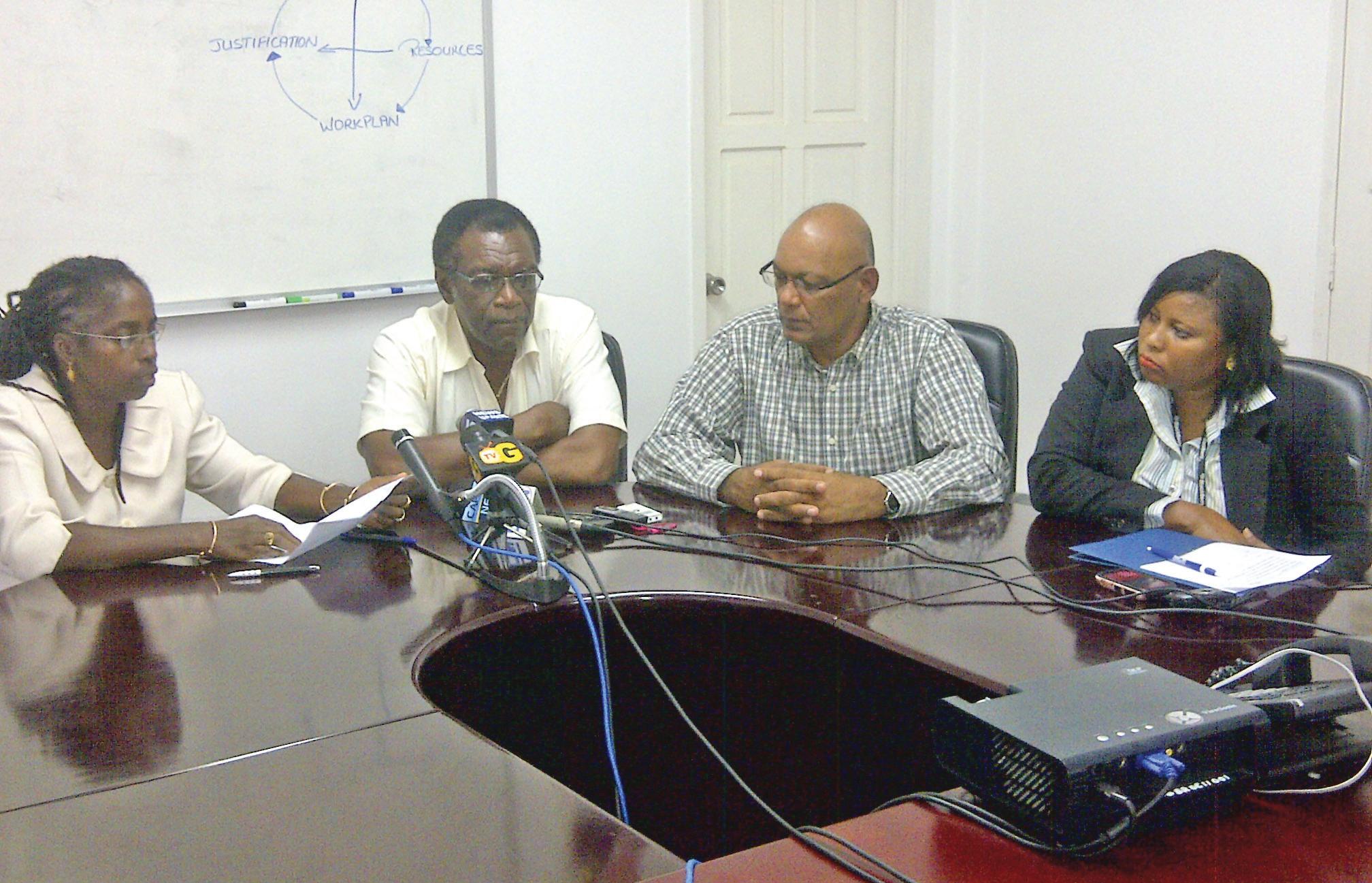
BY LEANA BRADSHAW
The Guyana Power and Light Company (GPL) said it is in the process of verifying a list of pensioners who are eligible to be granted a yearly subsidy to cover their electricity expenses.
According to GPL Chief Executive Officer Bharat Dindyal, the company received the list from the Human Services and Social Security Ministry recently and they are now matching that list with its database.
The list, he said comprises pensioners from Regions Two, Three, Four, Five, Six and Seven. “We actually received a match for either one of the names, either first name or the last name for over 12,000 pensioners, but then we tried to do a match of name and address. In fact, when we checked the 12,000 odd that match the addresses, in a lot of the cases didn’t match,” he pointed out.
Dindyal added that when they tried to match addresses alone, some 600 matches were found.
“We contacted GWI to see how they actually went through cleaning up their list and of course, what they did was to call in each customer where there was a match with either name or address and try to have a confirmation,” he explained.
As such, in the coming
weeks, GPL will be calling customers to verify when they find a match. “Hopefully in another month, we’ll finalise our list and be able to say exactly how many would benefit from this yearly subsidy.”
Parliament this year approved a move for government to pay part of the GPL bill for pensioners, as part of the 2013 National budget.
This will amount to $20,000 annually or $1666 monthly. Government has also been spending $200 million annually to assist senior citizens in paying the water charges they incur.
Meanwhile, the GPL CEO noted that the entity would be looking to move away from the use of wooden pole structures to hold transmission lines in the near future.
He said other alternatives will be sought, given the problems the wooden poles. “The supply of wooden poles of late has become quite problematic. The prices are rising constantly, the quality poles we’re getting a difficulty and the quantity being made available to us annually is well below what we actually need,” he explained.
As such, Dindyal said the company continues to look at “concrete and steel and of
course right now they have composite structures. They have other types of materials they're looking at to use for manufacture of these poles”.
He pointed out too that for the infrastructural development project that is being rolled out, GPL had the cause to import pine poles, which was an extraordinary move it made.
“Without the importation of pine poles to date, I think they would have imported up to 600 poles and that project would have been severely delayed,” he said.
Recently, another 400 of the pine poles arrived in Guyana and were planted along East Coast Demerara. However, the GPL boss cautioned that residents living near the new poles to stay away from them, as they are treated with a poisonous substance called arsenic. Dindyal said the switch in pole structures is being considered not only because of the troubles of the wooden ones, but also because of the poor soil problems along the coast.
“We continue to look at this because in Guyana as you know, on the coast in particular, in Georgetown, we have a lot of poor soil… we have a lot of experience in Georgetown where you plant a pole and you come over night and it’s actually sucked by 15-20 feet.” (leannab@guyanatimesgy.com)
Awoman was granted bail for making a false declaration when she appeared before Chief Magistrate Priya Sewnarine-Beharry at the Georgetown Magistrates’ Courts on Friday.
Devika Das, 31, of Lot 37 Mon Repos, East Coast Demerara, pleaded not guilty to the charge, which stated that on March 13,
2002 for the purpose of procuring a passport she made a false declaration claiming to be Bibi Zaicoon Alli.
Attorney Paul Fung-AFat stated that the matter against his client has been under investigation for 10 years now. In his application for reasonable bail, the lawyer told the court that the
mother of the defendant, who is deceased, is the person who used the passport at the time.
After some deliberation, Fung-A-Fat insisted that his client change her plea; however, she refused to do so, and the chief magistrate granted bail in the sum of $50,000. The matter was set for trial on September 6.
England took a major stride towards retaining the Ashes as Australia’s batsmen self-destructed on day two of the second Test at Lord’s on Friday.
Australia were largely to blame for their own demise as they crashed to 128 all out in reply to England’s 361, with Graeme Swann taking 5-44.
On an extraordinary day when 16 wickets fell, England stuttered badly at the start of their second innings, losing Alastair Cook, Jonathan Trott and Kevin Pietersen cheaply to close on 31-3.
However, with a lead of 264 and seven wickets in hand, England will remain confident of batting a demoralised Australia out of the match and all but guaranteeing a 2-0 lead in a fivematch series which the tourists must win to reclaim the Ashes.
Australia’s paltry total was their lowest at Lord’s since 1968, thanks to a batting display littered with errors.
Chris Rogers, Usman Khawaja and Phil Hughes fell to reckless shots, while Ashton Agar - their hero in the first Test at Trent Bridge - was needlessly run out.
Just as they had in their 14-run defeat last week, Australia also made woeful use of the decision review system: Shane Watson
and Hughes failed with referrals that were not even close to being overturned and Rogers opted not to review when the umpire’s lbw call would have been overturned.
Amid the mayhem, Swann collected the first five-wicket haul by an England spinner in an Ashes Test at Lord’s since Hedley Verity in 1934.
Australia’s implosion began on the stroke of lunch after a last-wicket partnership of 48 between Swann and Stuart Broad helped England add 72 to their overnight 289-7.
Watson, who had found the boundary six times to reach 30, planted his front foot, missed the ball and was lbw to Tim Bresnan.
After the interval Rogers fell for 15 in extraordinary fashion when, in attempting to lash a high Swann full toss into the stands, he was struck on the box. Swann appealed sheepishly and umpire Marais Erasmus raised the finger.
Wary of using up Australia’s last review, Rogers did not deploy the television umpire but was probably regretting his decision by the time he reached the dressing-room and saw replays showing the ball missing leg stump by some distance.

in front of leg stump.
Australia’s comedy of errors delivered a whole new chapter just before tea when Brad Haddin fended off a short one from James Anderson and Agar set off for a single.
Haddin did not move and wicketkeeper Matt Prior raced to short fine-leg and threw to the non-striker’s end, where Anderson took off the bails to comfortably
run Agar out. There was no let-up after tea as Haddin thrashed at Swann and edged to slip before Peter Siddle opened the face to steer Anderson to Swann.
Australia’s last-wicket pair added a plucky 24 before Swann completed the rout and his five-wicket haul when Pietersen held on to a skier from Ryan Harris. (BBC Sport)
England 1st innings A Cook* lbw b Watson 12
J Root lbw b Harris 6
J Trott c Khawaja b Harris 58
K Pietersen c †Haddin b Harris 2
I Bell c Clarke b Smith 109
J Bairstow c & b Smith 67
M Prior† c †Haddin b Smith 6
T Bresnan c †Haddin b Harris 7 J Anderson c †Haddin b Harris 12
S Broad c †Haddin b Pattinson 33
G Swann not out 28
Extras: (lb11, w4, nb6) 21
Total: (all out, 100.1 overs) 361
Fall of wickets: 1-18, 2-26, 3-28, 4-127, 5-271, 6-274, 7-283, 8-289, 9-313, 10-361
Bowling: J Pattinson 20.1-3-951, R Harris 26-6-72-5, S Watson 13-4-45-1, P Siddle 22-6-76-0, A Agar 13-2-44-0, S Smith 6-1-18-3
B Haddin† c Trott b Swann 7
A Agar run out (†Prior/Anderson) 2 P Siddle c Swann b Anderson 2
J Pattinson not out 10
R Harris c Pietersen b Swann 10
Extras: (b4, lb1, w2) 7
Total: (all out, 53.3 overs) 128
Fall of wickets: 1-42, 2-50, 3-53, 4-69, 5-86, 6-91, 7-96, 8-104, 9-104, 10-128
Bowling: J Anderson 14-8-251, S Broad 11-3-26-1, T Bresnan 7-1-28-2, G
Hughes took a wild swipe at Bresnan and was pouched by Matt Prior, and Khawaja tried to smash Swann over the top but spooned to Pietersen, who had time to back-pedal from mid-off and take a simple catch.
that spat out of the rough and fended a catch to Ian Bell at short leg.
Swann followed up with the wicket of Steve Smith, who was surprised by a ball
The prize wicket of Michael Clarke went the way of Stuart Broad, who pinned back the Australia captain with a full delivery that struck him on the pad
Chris Froome moved closer to securing Tour de France victory after finishing with his nearest rivals on the 19th stage to Le Grand-Bornand.
The Briton is five minutes 11 seconds ahead of Alberto Contador with one more day to survive in the high mountains.
“I definitely had a sigh of relief after getting today (Friday) out of the way - this was one of the stages I was most worried about,” Froome said afterwards.
Portugal’s Rui Costa claimed his second stage win of this year’s Tour.
But the mountainous 204.5km route, which included four tough climbs, did not deliver the expected attacks on Froome, who only really came under pressure in the final 20km of the day on the Col de la Croix Fry.
Contador’s Saxo-Tinkoff team set the tempo on the way up, but the only move of note came from fifth-placed Joaquim Rodriquez of the Katusha team, who was tracked by Contador, thirdplaced Colombian Nairo Quintana and Froome.
The Team Sky rider also had to worry about the descent, with Contador speeding down the 13km to the finish line despite heavy rain.
But Froome stayed on his Spanish rival’s wheel
in an otherwise drama-free stage from his point of view, and has only one more day of serious racing in the Alps to negotiate before Sunday’s traditional procession into Paris.
“I was ready for anything after the way the Tour has gone so far,” Froome added.
“There was a lot of climbing and, with bad weather forecast, it had the potential to get out of hand. The guys did take it up and attack on the final climb and go pretty quickly down the other side, so I am relieved to get through it.
“But I don’t want to get complacent at this stage. Tomorrow’s (Today’s) stage is only 125km but it is still one more day to get out of the way before relaxing and heading into Paris.”
The most significant movement of the day came in the King of the Mountains category, which Froome also still leads but only by a point after France’s Pierre Rolland picked up 52 points by leading the way over three of the categorised climbs.
Rolland only failed to take over at the top after being caught by Costa and the
men who were trying in vain to reel in the Portuguese rider on the final climb as the weather was closing in. He will still be wearing the polka dot jersey today, with Froome in yellow for his final test.
Stage 20 ends with a tough hors categorie (beyond categorisation) climb to the finish line at AnnecySemnoz. Even if Froome’s yellow jersey is safe, there will be a battle for the podium places with only 47 seconds separating Contador in second and Rodriguez in fifth. (BBC Sport)
Australia 1st innings
S Watson lbw b Bresnan 30
C Rogers lbw b Swann 15
U Khawaja c Pietersen b Swann 14
P Hughes c †Prior b Bresnan 1
M Clarke* lbw b Broad 28
S Smith c Bell b Swann 2
S Watson 4-2-9-0, P Siddle 5-3-4-3, J Pattinson 5-35-0, S Smith 1-0-1-0
From page 22
He is also the first Briton in 16 years to hold the 1500m European record, breaking the 3:28.95 mark set by Spain’s Fermin Cacho in 1997.
“Training has been going pretty well. The aim was to work on the speed. It would have been nice to get closer to Kiprop but he is a different class,” Farah told BBC Sport.
Farah was just two years old when Cram, then 24, became the first athlete to dip under the 3:30 barrier on a balmy evening in Nice 28 years ago.
“I am shocked in a great way,” said Cram, who was commentating on the race for BBC Sport.
“Mo jokingly said he was after the British record and I laughed but hats off to him. For a 5,000m runner to run like that is unbelievable.”
For all of Farah’s achievements, however, he finished a distant second to world champion Kiprop who is now the fourth fastest 1500m runner in history after his victory at Stade Louis II.
Farah was also reminded of the task ahead of him in Russia when Edwin
Cheruiyot Sol ran the quickest 5,000m of the year.
The Kenyan’s time of 12 minutes and 51.34 seconds pushed Bahrain’s Albert Rop into second.
Elsewhere, Britain’s Tiffany Porter was fourth in the women’s 100m hurdles, while a 6.74m leap secured third spot for Britain’s Shara Proctor in the women’s long jump and a season’s best 5.70m saw Britain’s Steve Lewis come sixth in the men’s pole vault.
America’s Justin Gatlin won the men’s 100m in 9.94 seconds and his compatriot Duane Solomon took the men’s 800m.
There was a surprise winner in the men’s 400m hurdles, a race which started without reigning world champion Dai Greene after the Welshman withdrew a few hours before the contest with an Achilles problem.
Diamond League leader Javier Culson was expected to record another victory but the Puerto Rican was overhauled on the home straight by Trinidad’s Jehue Gordon, who shaved a second off his personal best to dip home in 48.00s.
(BBC Sport)

Gros-Islet, ST LUCIA – Jason Holder collected 14 off the final over to take West Indies to a tie with Pakistan in a dramatic finish to their 700th One-day International on Friday.
Holder and compatriot, fellow fast bowler Kemar Roach, the Windies last wicket pair, scrambled two from the final delivery of the match – bowled by Wahab Riaz – to level the scores in the third ODI of the series at the Beausejour Cricket Ground.
The hosts, replying to Pakistan’s 229 for six off their allocation of 50 overs, seemed heading to defeat, when they lost five wickets for 27 runs in the final five overs on a bouncy, but slow pitch.
But Holder came to the crease and added 24 from 13 balls with Roach to earn West Indies a share of the spoils and leave the fivematch series level at 1-1.
The fourth ODI will be played on Sunday at this same venue.
Holder played a searing drive through extra cover off the third delivery of the final over from Wahab and then hoisted him over the top in the same direction for a six two deliveries later to give his side hope.
Needing three to win off the final ball, Holder got a thick edge to third man, where Junaid Khan collected.
Holder was desperately trying to make his ground with Khan’s throw in the air, but wicketkeeper Umar Akmal muffed the chance to run him out.
Lendl Simmons had put the Windies on course for victory with a typically enterprising 75 from 86 balls that included seven fours and two sixes that earned him a share of the Man-ofthe-Match award.
He put on 91 for the fourth wicket with Marlon
Samuels, whose 46 from 106 balls included just four fours.
But the Caribbean side’s push for victory was undermined, as off-spinner Saeed Ajmal captured 3-36 from his 10 overs and Junaid Khan grabbed 3-54 from his 10 overs to put Pakistan back in the match with a cluster of late wickets.
Earlier, West Indies had firm control until the last five overs, when Akmal and Wahab beefed up Pakistan’s total with an unbroken, seventh-wicket stand of 52.
The Windies had faced defiance from Misbah with three fours and two sixes in 75 from 112 balls that earned him the other share of the Man-of-the-Match award before he bowled in the 45th over, charging his opposite number Dwayne Bravo.
Holder had made the breakthrough for West Indies, after he and Roach

had kept the Pakistani toporder batting on a tight leash.
He had Ahmed Shehzad caught at deep fine leg for 17 off a top-edge and Nasir Jamshed was caught at midon from a similar stroke off Darren Sammy, leaving Pakistan 39 for two.
West Indies were kept waiting, when Misbah came to the crease and with Mohammad Hafeez started the recovery from the early damage with little trouble.
Bravo had Hafeez caught at mid-wicket from another miscued pull, as the Pakistanis inched past 100 in the 31st over.
But the home team could not stop Misbah and he reached his 50 from 91 balls before he was one of three wickets that tumbled for 25 in the space of 30 deliveries, leaving Wahab with 19 from 10 balls and Akmal with 40 not out from 31 balls to provide Pakistan with the late pyrotechnics. (WICB)
PAKISTAN (maximum 50 overs)
Ahmed Shahzad c Roach b Holder 17
Nasir Jamshed c Roach
b Sammy 20
Mohammad Hafeez c Sammy b *D.J. Bravo 14
*Misbah-ul-Haq b *D.J. Bravo 75
Harris Sohail c Pollard b Roach 26
+Umar Akmal not out 40
Shahid Afridi c Narine b Holder 6
Wahab Riaz not out 19
Extras (lb6, w11) 17
TOTAL (6 wkts) 229
Fall of wickets: 1-39; 2-39; 3-92; 4-152; 5-174; 6-177
Bowling: Roach 10-1-351; Holder 10-0-40-2 (w3); Sammy 10-0-30-1; Narine
9-0-55-0 (w6); D.J. Bravo
7-0-50-2 (w1); Samuels 3-14-0; Pollard 1-0-9-0 (w1)
WEST INDIES (target: 230 off 50 overs)
C. Gayle b Junaid Khan 8
+J. Charles c wkpr Umar Akmal b Mohammad Irfan 6
D.M. Bravo c Mohammad Hafeez b Wahab Riaz 17
M. Samuels c wkpr Umar Akmal b Mohammad Irfan 46 L. Simmons c Ahmed Shahzad b Saeed Ajmal
Extras (b1,
Tiger Woods and Lee Westwood edged into contention after a topsy-turvy second day of the 142nd Open Championship.
The pair finished on two under par and then watched as the frontrunners faltered to leave them one off the pace set by 49-year-old Miguel Angel Jimenez on another testing day at Muirfield.
The Spaniard carded a level-par 71 to inherit the lead, with Woods, Westwood, Sweden’s Henrik Stenson and American Dustin Johnson in the chasing pack.
Jimenez, who broke his leg in a skiing accident in the winter, would become the oldest major winner if he triumphs on Sunday, beating the 48 years four months of American Julius Boros when he won the US PGA in 1968.
“Enjoy yourself, what you do in life - that’s the secret - that’s what I’m doing,” he said.
“I feel relaxed, I play golf for a living and I’ve been doing the same thing for 25 years.”

Jimenez, famed for his quirky warm-up routine and love of Rioja wine, refused to alter his routine just because he was leading the Open. “I’m going to hit some balls, I’m going to have a nice cigar, have dinner with my girlfriend and with my sons and when the sun comes
up tomorrow I will deal with everything,” he said.
Rory McIlroy was unable to claw back ground on his opening 79 and carded 75 to miss the cut.
The 24-year-old admitted he used the second part of his round to practice after realising he was going to miss the cut and used his
driver where possible to prepare for upcoming tournaments.
“It’s the first time I’ve missed a cut at the Open, so it’s obviously quite disappointing,” he said. “But I have a clearer picture of what I need to work on and what I need to do to put things right.”
England’s US Open champion Justin Rose (75, 77) and former world number one Luke Donald (80, 72) also missed out on the weekend.
World number one Woods, chasing his first major since 2008, birdied the last for a 71, while Westwood made the early headlines with six birdies in his first 12 holes to take a share of the lead at five under before sliding back.
“It’ll be a fun weekend. This course will be difficult,” said Woods, who won the last of his three Opens on a similarly firm and fiery course at Hoylake in 2006.
Zach Johnson, the overnight leader, was still clear with five to play but dropped four shots for a
75 to end in a group on one under, with Scotland’s Martin Laird (71), Spain’s Rafael Cabrera-Bello (74) and Argentine Angel Cabrera (72).
American Ryan Moore, one shot further back, was the only other player at level par or better.
Northern Ireland’s Darren Clarke, the 2011 champion, bogeyed the last to finish one over after a 71 which included a quadruple-bogey eight on the sixth after taking three to get out of a greenside bunker.
Also in the group at one over were last year’s runner-up Adam Scott, the Masters champion, fourtime major winner Phil Mickelson, former Masters champions Charl Schwartzel and Bubba Watson and England’s Ian Poulter.
Poulter, who was scathing of the course set-up on day one, said there was only one “dicey” pin position - the 15th - on Friday, but insisted conditions were just as tough given the hot sun and drying wind, blowing from the east rather than the west.
By Rajiv Bisnauth
Former West Indies Under-19 pacer
Keon “Buffy” Joseph will don Guyana Amazon Warriors when the inaugural Limacol Caribbean Premier League bowls off on July 30 after compatriot and fellow quickie Ronsford Beaton picked up and injury weeks ago.
Beaton, one of the team’s Under-23 players, picked up a stress fracture that will take some time to repair.
However, Joseph, 21, will be relishing his opportunity when the tournament

rolls around.
Joseph, in an invited comment said he is excited and looking forward to the prospect of playing in the tournament, labeling his selection to the team “breath of fresh air”.
Joseph said, “It is a good feeling to be selected as Beaton’s replacement. I feel relieved. The CPL is something you want to be part of and it is going to be a huge tournament.
“It is the first time a tournament like this will be played in the Caribbean so I am happy to be part of it.”
Joseph’s first opportunity to play will be on July 31 when the Guyana Amazon Warriors face the Trinidad and Tobago Red Steel at Guyana National Stadium, Providence.
Speaking about the teams, Joseph, who represented Guyana in four FirstClass matches and three List A games, said “the
tournament will be a good one, taking into consideration the composition of each team. All the teams are looking strong so it is going to be a tough tournament to play.
“There are a lot of good players and I think the teams are well balanced. I think it is going to be a tough competition but also an exciting one as well.”
Despite being overlooked in the initial draft of players, Joseph said he welcomes the opportunity and will give his best.
“It is cricket. It is something I love doing. I will go out there and give it my best and hopefully we can get some good results,” he added.
In tournament bowls off on July 30 in Barbados and concludes on August 24 in Trinidad and Tobago.
The Guyana franchise will be coached by former West Indies off-spinner Roger Harper, with Curtly Ambrose as his assistant.

The Kennard Memorial Turf Club will come alive on August 1 when the country’s top horses compete for $2.5 million in the feature event.
With the Digicel Classic in its third year, the company did what they do best and got bigger and better with their top prize money for the eight-race event. In the cofeature, the winner will receive $1.3 million.
Coordinator of the event Compton Sancho praised the telecommunication giants as he urged Guyanese to support the event and Digicel.
“Digicel has been improving not just in horse racing but in sports as well and they have been doing an excellent job in enhancing sports in Guyana and they should be support-
ed for playing their part,” Sancho stated at a press conference held on Friday at the Digicel’s head office, Barrack Street, Kingston.
President of the Guyana Horse Racing Authority (GHRA) Cecil Kennard explained that all the jockeys are anticipating for the event since they have been race-starved.
“We expect a large crowd and they haven’t had a race like this since April 14 due to the rainfall and the jockeys are eager to take part in the event. The track while still a bit wet, is still in good condition and should be good to go for the event.
“So I want to say thank you to Digicel for organising this horse race meeting and everyone should come out and show their support,” Kennard stated.
By Treiston Joseph
The fourth edition of the Boyce/Jefford Track and Field Classic was officially launched on Friday at Digicel’s head office in Barrack Street, Kingston.
The event which has become Guyana’s marquee track and field event will allow the opportunity for Guyana’s top clubs to vie for the top prize of $500,000 as the event for the first time will he held on two days. There will also be cash prizes for the first time for teams finishing outside the top four.
August 17 will be the first day of the event at the Police Sports Club ground, while August 18 will see the athletes heading to Linden to compete at the Mackenzie Sports Club ground. Second place team will receive $300,000 while the third, fourth, fifth and sixth placed prizes will stand at $200,000, $100,000, $60,000 and $40,000 respectively.
At the press conference, Co-director for the event Colin Boyce thanked Digicel for their support while revealing the reasons to hold the games on two days.
“We recognised that some of the athletes would be heavily pressured with a number of event as one athlete might do three events and then double back to do relays to give their club the
best chance of winning. So we see it necessary to have the heats on Saturday along with finals for some of the longer versions of races and then finish of Sunday in Linden.”
Boyce added, “We chose the Police Sports ground because it is a central are in Georgetown and it would save athletes having to go to Linden travel down and then travel up the next day again, it was an idea the clubs suggested and we accepted, so form now the meet will two days,” Boyce noted as co-director of the event.
Further, there will also be added cash incentives for the Masters’ 60m event along with the possibility of incentives for athletes that break games records which organisers are seriously considering but have not fully made a decision on.
Meanwhile, with Boyce revealing that Trinidad and Tobago, Grenada and Suriname are slated to participate at the event, there will be no overseas-based Guyanese as were with the cases with Aliann Pompey and Marian Burnett in 2011 and 2012 respectively.
“The reason why we will not be having any of our overseas-based Guyanese is because we were looking at having Kadecia Baird but with her participating at the World Championships which
should conclude on August 16 it would make virtually impossible for her to fly to America and then to Guyana in time for the meet,” Boyce explained.
However, the four international races will command a price tag with first place receiving $50,000 while second and third will receive $30,000 and $20,000 respectively.
Events and sponsorship Manager of Digicel Gavin Hope urged the Lindeners to come out and support the event.
“We are urging the Lindeners to come out and support the event as Linden’s sensation Cassey George will be there because this meet will be of the highest standard.
“We have seen this meet grown from just having locals to now having internationals and we support anything that shows development and the growth is phenomenal and we will continue to support the Boyce/Jefford organisation,” Hope told media.
Meanwhile, with the champion male and female athlete for the event having a chance to win $50,000, Boyce cleared the air that while George is Under-16 her points will not count nor will she be eligible to receive money due to the age limit restrictions for athlete to receive money.
Double Olympic champion Mo Farah broke Steve Cram’s 28year 1500m British record at the Diamond League in Monaco.
Meanwhile, Events and Sponsorship Manager of Digicel Gavin Hope revealed that there will be special offers for patrons, saying that he hopes families come out and enjoy the event.
“This for the last three years has been the best horse racing event in the country and I hope that person can bring their families and come out. Special offers will be on I won’t say what but you will have to come out and see for yourselves,” Hope stated at the launching.
Meanwhile Public Relation Manager Shonnet Moore, who chaired the launch, revealed that there has been an overwhelming response by jockeys not just from Guyana but overseas.
Registration closes on Sunday. (Treiston Joseph)
The Briton is remarkably the sixth fastest man over the distance, clocking three minutes and 28.81 seconds to also become the European record holder.
Farah, the 5,000m and 10,000m Olympic champion, was second behind Kenya’s Asbel Kiprop who recorded a world-leading time of 3:27.72.
“I’m pleased, it was weird competing in a new event,” said the 30-year-old.
Former world-record holder Cram, whose time of 3:29.67 seconds had stood as a British record since 16 July 1985, said he was shocked after witnessing Farah’s “unbelievable” run.
The time also eclipsed the personal bests set by Sebastian Coe (3:29.77) in 1986 and Steve Ovett (3:30.77) in 1983 who are second and third respectively on Britain’s all-time list for 1500m.
The Londoner had decided to test himself in an unfamiliar event to improve his speed ahead of next month’s World Championships in Moscow where he will double up in the 5,000m and 10,000m. He would not have expected records to fall his way.
Farah finds himself higher on the world all-time list for the 1500m than he is over the events in which he is reigning Olympic champion.
By Rajiv Bisnauth
P&P Brokers Limitedsponsored 10th Guyana Tennis Association (GTA) annual camp concluded on Friday at the National Gymnasium with the presentation of certificates to 49 participants.
Aged four to 18 years old, they participated in the twoweek programme.
At the closing Ceremony, Varsha Panday, on behalf of P&P Insurance Brokers, expressed joy at seeing the large turnout of children.
“Despite the challenges of the weather we hope that the event was beneficial to the players and will assist in not only getting more persons interested in the game, but hopefully help in producing a few outstanding players who can go on to represent Guyana. This is our 10th year of sponsorship and it is consistent with P&P’s thrust in not only giving back to the community but in particular supporting activities with an emphasis in youth,” said Panday.
She applauded the GLTA for their commitment to the continuous development of tennis and in turn pledged the commitment of P&P Insurance Brokers towards next year’s event.
Vice-president of the GTA, Grace McCalman, conveyed to everyone, the fo-

cus of the GTA executive towards youth development.
She noted that tennis is not yet a prominent sport in Guyana, but with support of the business community, the GTA feels confident that the sport will one day be among the mainstream sporting disciplines.
“The GTA wants to ensure that children have an opportunity at a sport, it can be tennis, it can be cricket or any other sport, but tennis

Castries, ST LUCIA, - West Indies Test and Twenty20 captain, Darren Sammy, has etched his name into the history books by becoming the first West Indian sports personality to be named a brand ambassador for German automobile giant, BMW.
In accepting the role, the Windies skipper was presented with a BMW Sports Convertible from St Lucian BMW representatives, Ultimate Automobiles.
“Darren Sammy is the first West Indian to ever be appointed on be-
half of the BMW Group as a Brand Ambassador outside Germany,”said Mario Reyes, Managing Director of St Lucia’s Ultimate Automobiles.
“Typically sportsmen like golfers Bernhard Langer and Martin Kaymar and Rugby’s Alex Cordisio, have been endorsed as brand ambassadors for BMW.”
Sammy disclosed the news on his official Twitter account saying, “All in smiles with prestigeautos manager after signing the deal....#BMWambassador”. (CMC/WICB)
is just one of the sports with that foundation of discipline and with the support of the business community, tennis will reach where it belongs,” McCalman said.
The GTA vice-president congratulated the parents on their efforts to ensure that their children participate in healthy physical activities. She urged the parents to continue with the sport of tennis and encourage their children to maintain a healthy and balanced lifestyle.
She also thanked P&P Insurance and its Managing Director, Bishwa Panday, for investing in youths over the last decade.
Camp Instructor Shelly Daly-Ramdyhan said the inclement weather impeded the training sessions.
Nevertheless, Daly said she was satisfied with how the camp was run and acknowledged that the sport is on the rise.