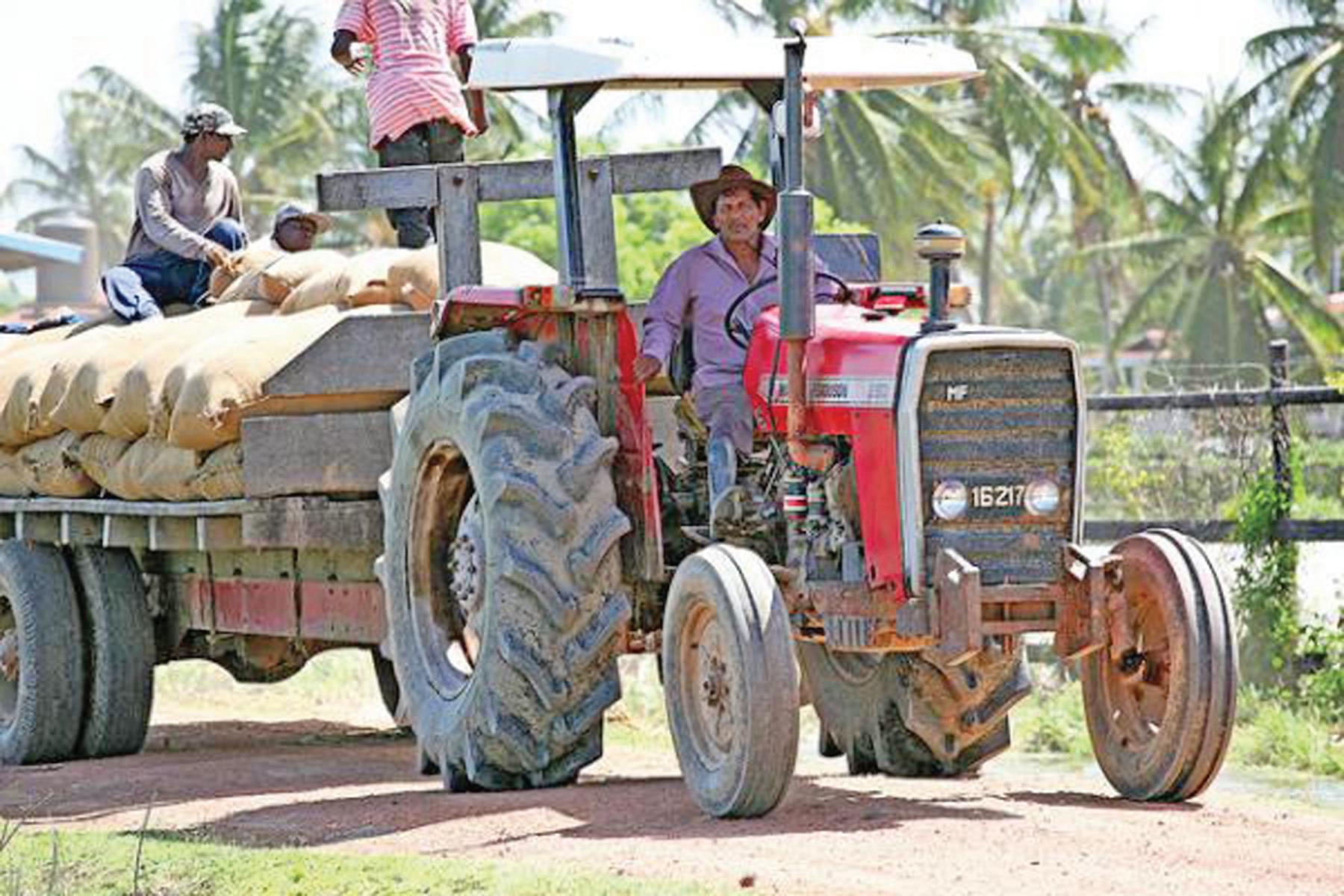
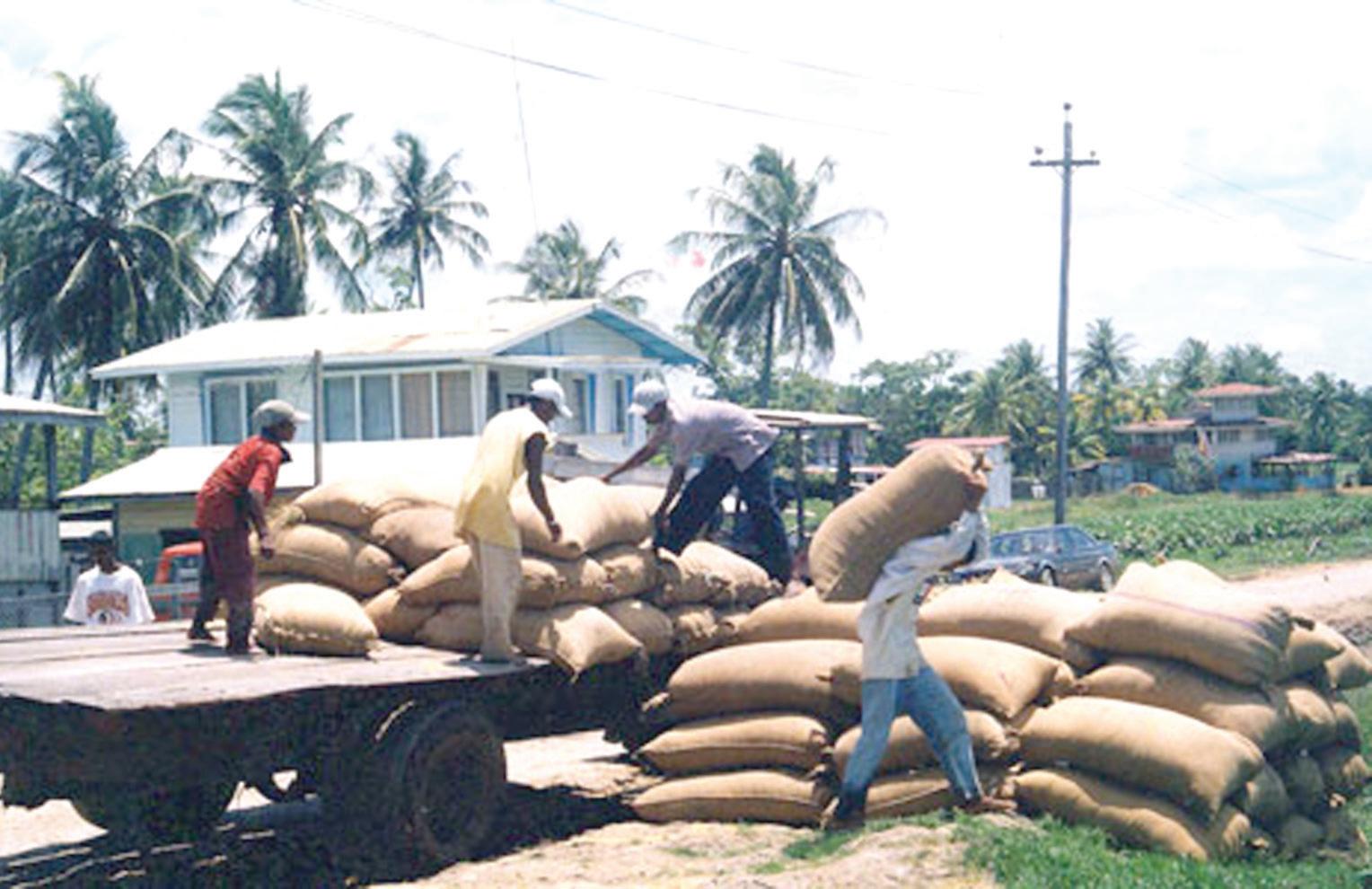
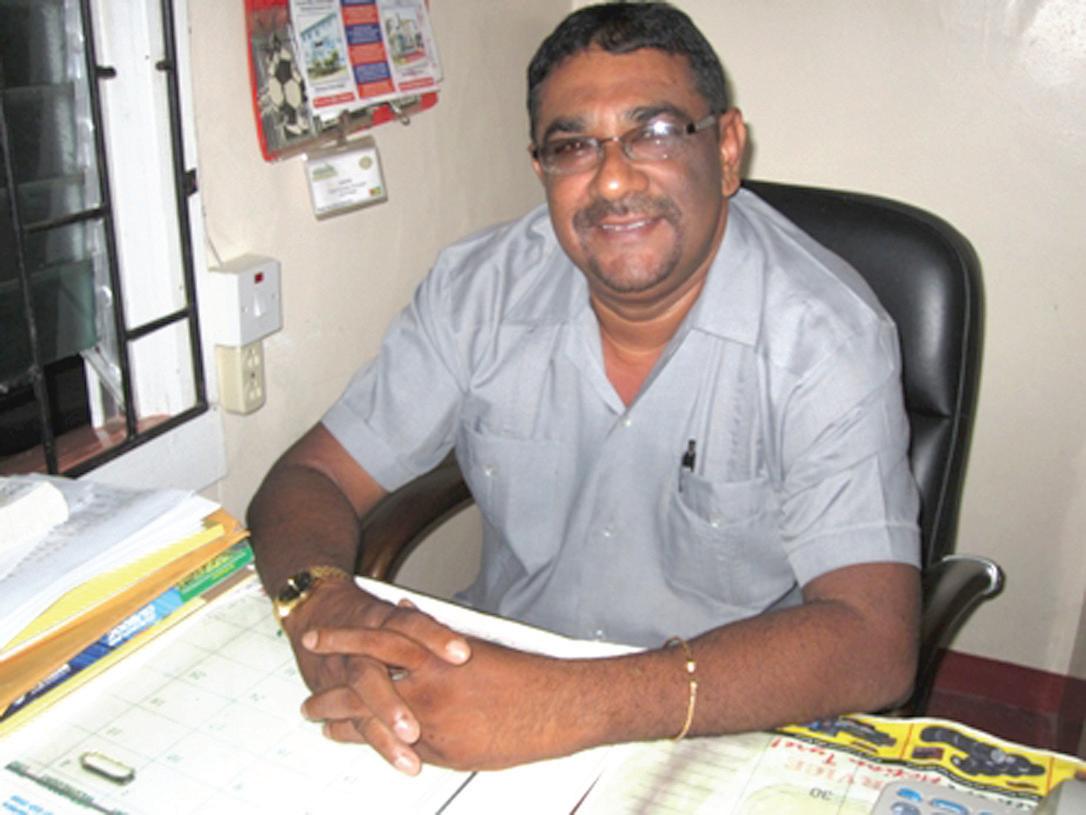
Chairman of Region Six David Armogan has stirred grave concern among rice farmers in Berbice, telling them that already there are more than 200,000 tonnes of rice which Guyana is trying to sell and does not have a market for.
He says the once-secure Venezuelan market has become unstable with the current unrest in that country and that ships with rice at ports in Venezuela cannot offload and are forced to wait for days. The demurrage cost has to be borne by Guyana. Only recently, Agriculture Minister, Dr Leslie Ramsammy announced that Guyana’s rice export to Venezuela is expected to resume once all logistics have been completed between the two governments. He stated then that the agreement, which is in its final stage, remains a significant one for Guyana, noting that in early February, a Memorandum of Agreement (MoA), was inked between La Casa (on behalf of the Venezuelan Government) and Guyana’s Ambassador to Venezuela Geoffrey Da Silva. “We have made progress in completing arrangements for shipment of rice to begin. There are three stages in terms of the annual shipment of rice to Venezuela… at the end of every year, we have to have a period of reconciliation in order for Venezuela to issue payment to the Ministry of Finance,” he said.
Re-commissioned in 2009, the Felix Austin Police College (FAPC) at Adventure, Corentyne has since trained six batches with a maximum of 30 ranks and through partnerships, has been able to add ICT to its curriculum in 2012.
Notwithstanding, there still remain several constraints and issues that are in dire need of attention. In an effort to address some of these shortcomings, a fundraising activity was recently held to garner income in order to assist in the more critical areas of need. The event was a formal dinner held in Port Mourant and was spearheaded by the current Commandant of the college Cadet Officer Javon Hamer, who highlighted some of the pressing issues at the college.
Upgrading of the library facility, accommodation, messing and the securing of a backup generator (for power supply during outages), were some of the things that needed immediate attention.
Hamer acknowledged that there has been a spike in
crime in Berbice, hence the need for training of larger batches of trainees is vital. In 2012, 179 persons applied and in 2013, 199 applied at the college, however, due to the lack of accommodation, only 30 could be accepted for training. “Thirty persons per course is terribly inadequate, this is what prompted me to host this fundraising activity, so that the public can become aware of the shortcomings and assist in any necessary way they deem fit, even support our youth and scout groups,” he said.
Alex Foster, Chairperson of the FAPC Management Committee, took the opportunity to reveal that President Donald Ramotar remains committed to the development of the Guyana Police Force (GPF) and especially the FAPC. Foster said based on a conversation between himself and Regional Chairman David Armogan, he was assured that the President has pledged his assistance to construct a spanking new building at the college, so as to facilitate the training of females in Berbice, as long as the 2014 National Budget allocation for the Office of the President is passed.
Mobilise resources
“The commitment has been given by the Regional Chairman and His Excellency to the GPF that once the 2014 National Budget is approved, from the Office of the President’s allocation, a new building will be constructed in the compound for the purpose of training female officers,” he said, while disclosing that Berbice’s contractor has also made a commitment to mobilise resources for the complete rehabilitation of the current building that is in dire need of repair. Foster, at the same time, pledged the Food For The Poor commitment to ensure that the dorms and kitchen facility are fully upgraded during the course of this year.
Also in attendance was former Assistant
Commissioner Clinton Conway who said the police cannot function unless the public has confidence in them. He said if there is no confidence in the force, it will not survive because “we will have people with ears that do not hear, eyes that do not see and tongues that will not speak,” he stressed, while remarking that the public is the police and vice versa and if both work together, crime and other issues can be solved.
In delivering the feature address, Commander of B Division Brian Joseph reiterated that although the community-police relationship is of vital importance to the GPF, it was not without its challenges. He said an event such as this one is very valuable since it helps to bring together civic leaders, businesses, NGO’s and law enforcement and gives them the opportunity to meet and discuss mutual needs and concerns.
“Speaking for myself, I firmly believe that I do so for the officers and other ranks of my division, policing must be approached from several positions; paramount among them is the concept of community-oriented policing. Elsewhere, the core of the law enforcement and crime prevention intervention is the citizen component augmented by the formal participation of civil society,” he explained.
He pointed out that based on the findings from analyses done, interventions will be made which will assist the GPF in crafting appropriate strategies with the safety and security of citizens in mind, which is important for collective safety and the freedom from fear of crime.
Growing threat of suicide
According to him, the growing threats of suicide, domestic violence, and drug trafficking also affect the police’s operational and administrative capabilities. “It is with that immediate context that our collaboration is without a doubt of absolute necessity if we are to be successful on all of those fronts,” Joseph said.
He added that there must be an open line of communication between and among constitutent members, however, police must go beyond just articulating open communication, and paraphrased U.S. Attorney General Eric Holder when he said “the communities we serve must see our commitment to the impartial enforcement of our nation’s law– every day.”
“Our communities must know that we enforce the laws that protect our civil and human rights with the same vigour that we enforce those that protect our public safety. I can assure you that B Division will, as far as practicable, enforce all of our nation’s laws, with equal conviction,” Joseph concluded.
Also gracing the event were several senior officers within the GPF B Division including Deputy Commander Stephen Mansell, Traffic Chief Calvin Brutus and Deputy Superintendent of Police (DSP) Khali Pareshram; members of the Central Corentyne Chambers of Commerce; members of the public; business owners; and Professor Diazal Samad. Additionally, several civilians and police were honoured for their sterling contributions towards the college.
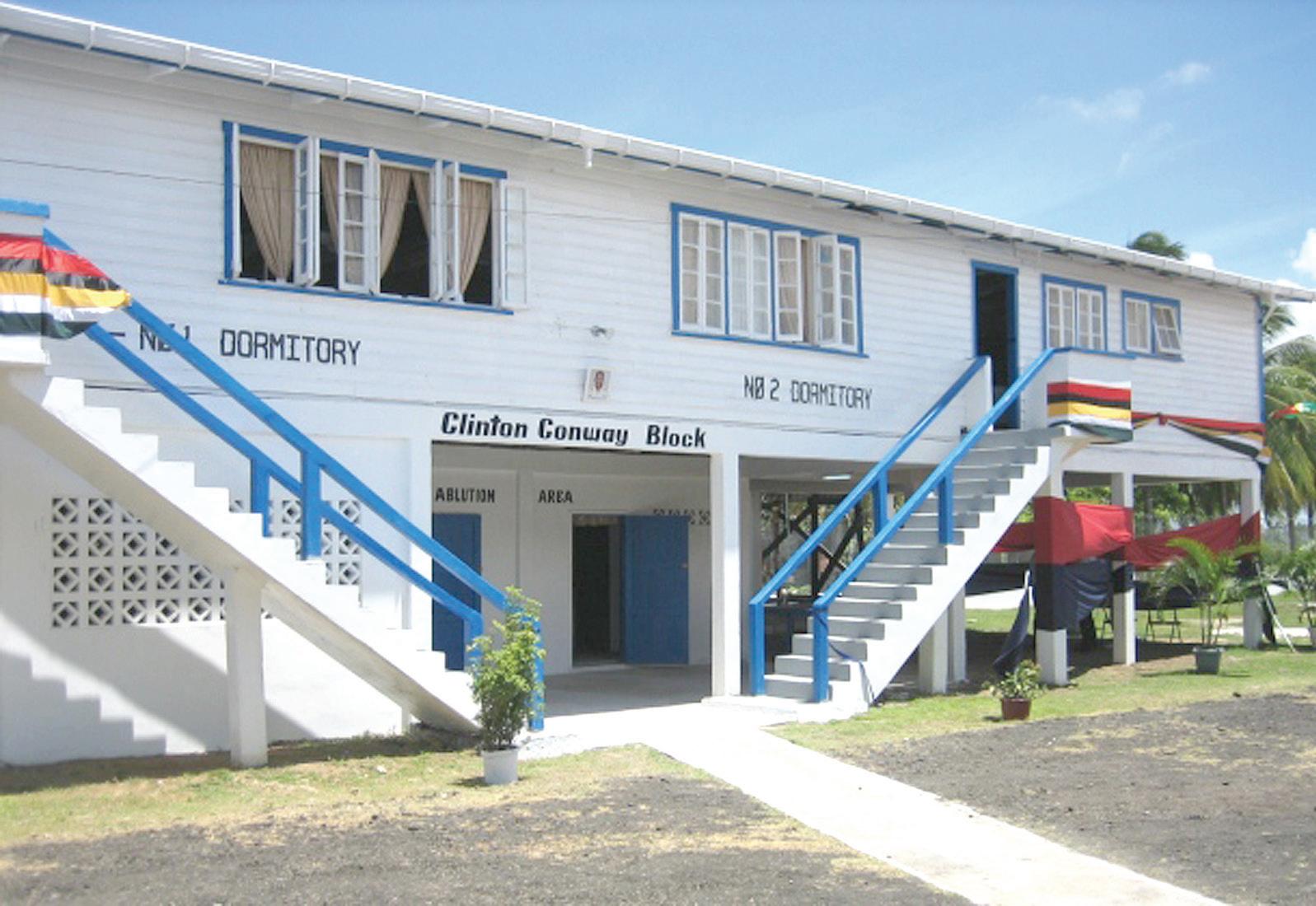
The dorms at the Felix Austin College in Berbice
Divisional Commander of Berbice, Brian Joseph
Chairman of Region Six, David Armogan has stirred grave concern among rice farmers in Berbice, telling them that already there are more than 200,000 tonnes of rice which Guyana is trying to sell and does not have a market for.
He says the once-secure Venezuelan market has become unstable with the current unrest in that country and that ships with rice at ports in Venezuela cannot offload and are forced to wait for days. The demurrage cost has to be borne by Guyana. Only recently, Agriculture Minister, Dr Leslie Ramsammy announced that Guyana’s rice export to Venezuela is expected to resume once all logistics have been completed between the two governments. He stated then that the agreement, which is in its final stage, remains a significant one for Guyana, noting that in early February, a Memorandum of Agreement (MoA), was inked between La Casa (on behalf of the Venezuelan Government) and Guyana’s Ambassador to Venezuela, Geoffrey Da Silva. “We have made progress in completing arrangements for shipment of rice to begin. There are three stages in terms of the annual shipment of rice to Venezuela… at the end of every year, we have to have a period of reconciliation in order for Venezuela to issue payment to the Ministry of Finance,” he said.
“There will be a change in paddy versus white rice and once the contract is inked, we will announce that, but the MoA has already established those numbers,” Minister Ramsammy said. With the MoA already inked, the final stage of the Guyana/Venezuela agreement is near completion. This would include the purchasing order and shipment schedule. With the 2014 rice harvesting (first crop) already started, shipment of rice has already commenced to Europe,
Single parents are soon to receive training which will provide them with the skills to operate businesses from their homes.
The project called “Distinctive Approach to Entrepreneurship Development Among Single Parents”, targets both males and females and is a collaborative effort by some students of the Berbice Campus and the Rotaract Club of New Amsterdam.
Coordinator of the project, Alesia Henry says the project will target persons in the New Amsterdam/Canje area. The objective, she says, is to provide skills training in the areas of cosmetology, catering and garment making so that single parents can
Chairman of Region Six, David Armogan
the Caribbean and to new destinations.
In the past, the reconciliation process, which is critical in the Guyana/Venezuela rice deal, took months to be completed; however, this year it was completed in a much shorter time and shipment is now closer to recommencement, Ramsammy had said. In 2013, 110,000 tonnes of white rice and 88,000 tonnes of paddy were shipped to the Spanish-speaking country. However, this new agreement will incur a slight change in shipment.
Bad boom
Meanwhile, Armogan said the boom in the rice industry could be detrimental, noting that already 2500 acres of paddy has been harvested in Region Six for this current crop, with farmers not receiving all the benefits that they enjoyed during the last crop. The farmers are receiving $5600 per tonne of paddy of A grade and $1000 less per grade downwards. Chairman of the Regional Agriculture Committee, Thakoor Persaud, weighing in on the matter, said while the yield is 42 bags per acre, farmers are already feeling the squeeze when they go to the millers. “No transportation by millers is being paid to farmers for this crop.”
Armogan predicts that if Guyana cannot secure markets quickly, the current spring crop production will see more rice being left on the hands of millers who may start refusing to buy paddy from farmers. “It is also going to be harder for us to get markets because right across the world, more rice is being produced and soon, we would not be able to sell all that we produce,” Armogan cautioned.
The Chairman noted that farmers have been making huge investments in the rice industry recently, but ques-
become self-sufficient. “What we are trying to do is to assist in the eradication of poverty among single-parent families by helping them to acquire the skills necessary to generate an income. We also want to empower both men and women by making themselves self sufficient.”
The objective, Henry noted, is twofold, as it also seeks to sensitise families of the negative effects caused by being single parents while reiterating the roles of a functioning family. “We also want to build the self-esteem of single parents, by reinforcing a positive attitude towards life.”
Giving a rationale behind the project, the Project Coordinator noted that fami-
tioned whether farmers will be able to make full use of the equipment that have been purchasing recently. “We are heading for a similar situation that existed a decade ago which resulted in some farmers pulling out of the industry and others downsizing their operations. Many also left expensive pieces of farming equipment idle,” the Chairman noted.
Caribbean diplomat Sir Ronald Sanders, in a recent publication, had urged leaders of Caribbean countries that are members of the PetroCaribe Agreement to “begin preparing for the worst-case scenario and start thinking about buying oil at market prices”.
He wrote: “This is especially important for the countries of the Eastern Caribbean that appear to have made little provision for the possibility that the arrangement with Venezuela would end abruptly.” He said that the Nicolas Maduro Government, which has been in power for the past 10 months, is facing one of its worst unrests over food and foreign currency shortages. He continued that there have been numerous calls for steps to be taken to reverse Venezuela’s economic decline. PetroCaribe accounts for 30 per cent of Venezuela’s production, Sanders revealed. Sanders predicted that countries that are benefiting from the deal will be required to increase their productivity and eventually pay the original price for oil. He said the effects will be strenuous on Guyana, which depends on fossil fuel. He noted that some of the monies Guyana receives under its rice-for-oil agreement with Venezuela are used to pay rice farmers. However, with the instability in Venezuela, the Guyana Government and farmers should be nervous, as the situation “spells real trouble”.
Some 21 persons have so far died in the massive political protests, which began some four weeks ago. More than 500 persons have been charged and 50 have been thrown in jail. And as the tension continues to mount, more than 150 persons have been injured.
lies have been plagued with numerous social ills, including domestic violence, child abuse, alcoholism, fathers/mothers neglecting their children, as well as suicide. “These are some of the main contributory factors for the increasing numbers of single-parent families. This forces that single parent who has been left behind to seeking employment.”
She said it has also been recognised that there are not enough job opportunities for such single parents. “In order to assist, we have to try to answer the cries of unemployment of this class of parents, most of whom would have already attempted to enter the job force, but who also have to take care of
the child/children. Here is an opportunity to learn a skill, while equipping them with the requisite techniques to market their product and services to generate their own income without leaving home.”
According to Henry, participants will be attached to agencies that can provide the training which will last for one month. Participants will attend programmes on their own schedules. While the programme could have a big impact on the lives of 30 single parents, Henry noted that the response has been slow. Interested persons are being asked to make contact with the Project Coordinator on telephone number 602-3601.
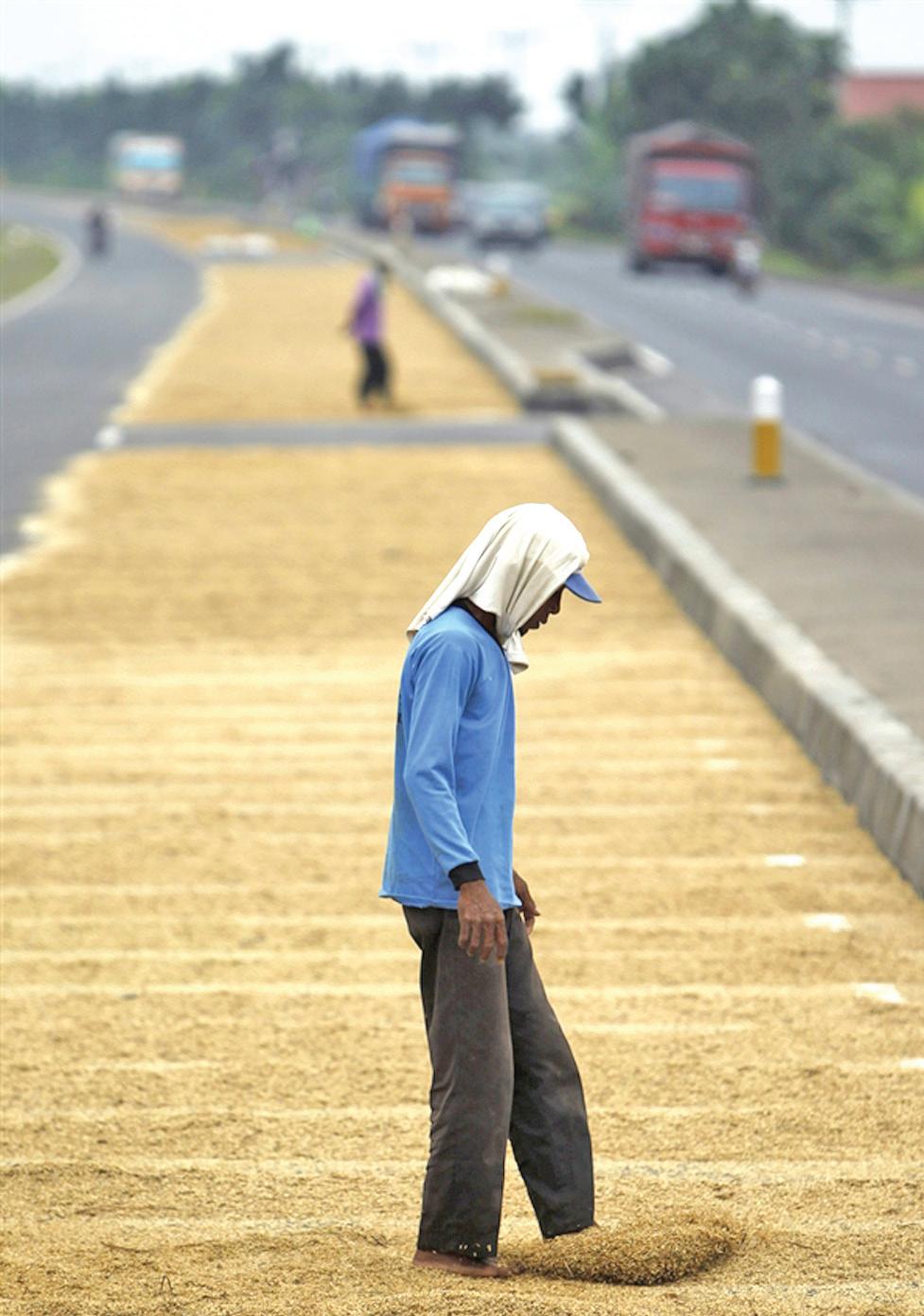
Paddy being stored
Since its establishment, the GBTI Port Mourant branch has made a big impact on agriculture in the area
BY ANDREW CARMICHAEL
In less than a quarter of a year, the Guyana Bank for Trade and Industry (GBTI) Port Mourant Branch has been able to make an impact on the Central Corentyne area.
The branch, which first opened its doors on December 9, has already become a strong brace for the agriculture sector and more particularly the rice industry along the lower and central Corentyne, Berbice.
Manager of that branch, Ghoeball Mahadeo says they have specially tailored programmes to suit the needs of the community. Noting that agriculture plays a big part in the development of the Corentyne, Mahadeo says in an effort to assist farmers in meeting their financial demands, the bank has developed a special type of loan called the Rice Farming Loan. “It does not stop there; because there are many farmers who are not into rice farming… we can facilitate them through our agriculture loan,” the manager stated.
if that person’s wage or salary is being paid through the bank. “We can set up a Quick Cash Card account which will allow them to access their money and that person can also use that card to make purchases at any of our point of sales terminals.”
Meanwhile, the former Corriverton branch supervisor noted that among the several other cards offered by the bank are VISA cards which can be used worldwide.
If people take the time to read and educate themselves, they will strengthen their understanding as to how their community is affected by poverty.
For example, lack of affordable housing, access to public education, and lack of public transportation, racial injustice and domestic violence all contribute to a never-ending cycle of poverty that affects every community.
Most will agree that people will get the knowledge and life skills they need to realise their full potential with a quality education, because education is essential in creating change in a person’s life.
If people can take advantage with what already exists to get the training they need or take the initiative to help others get the training they need, that will be a good start to break down some of the barriers that are preventing many people from attending school or any educational training programme related to poverty.
A community is better off by working together in partnership with other organised groups rather than working with individual persons, because it will help to strengthen and empower people in poverty through an organisation which is more effective to facilitate shared and organised actions.
In other words, providing assistance to individuals affected by poverty is not enough; however, through a shared group each person is advanced and the necessary steps are taken to address their current problems and other potential problems that may occur in the future as well.
Another key point to remember is that great results can be achieved when the people with life experience are involved in identifying their own issues. This process helps them to gain self-confidence and acquire capabilities in working together on some of the issues they are faced with. This means that there is an opportunity for them to share their experience which can be used towards addressing some of the issues, if not all.
In many cases, people who are affected by poverty can solve their own problem, providing that they have a high level of consciousness about it and with a little bit of support from the community, can go a long way. However, one should keep in mind that fighting poverty takes time. The process is certainly not an easy one, because the problem first has to be identified and then it takes even more time to facilitate the people who are affected to break the “culture of silence” and take action to make progress. But keeping the conversation going and continuously bringing the awareness forward will be a wise thing to do.
The bank is situated next to Rose Hall Town making it easily accessible to persons in the commercial sector. According to the bank manager, such persons are also catered for. “In fact, we cater for everyone who needs money to invest and offer loans for all purposes.”
Mahadeo, who was at the time discussing the branch’s first three months, said they offer overdrafts for existing checking account customers and manufacturing loans. “We realise that in this community there is great scope for the manufacturing sector to grow and develop, and so we are here to assist persons who need capital to invest.”
Mahadeo added that there are also personal loans that are offered, trading and services loans, automobile loans and customs care loans. “There are also loans for persons who want to get involved in lowcarbon projects like wind turbine, solar and such like… the Green Loan is for anyone who wants to promote a green environment; we offer these loans at a very low interest rate.” Mahadeo noted.
He said there is also an express loan, a housing loan and the corporate loan which is suited for large businesses. Noting that many persons who are employed in the agriculture industry may not have the relevant documents (proof of address, ID card) to open an account, Mahadeo said such persons can still have an account with the bank. However, this would only be possible
He said although the bank offers what they call the Kaieteur Classic card, persons can also obtain a VISA debit card which allows them to make online purchases. “This is good for the small person and even students who want to purchase their little gadgets online. It is simple. You put money on your account and then you can spend it online. You can purchase anything online the only thing is that you have to ensure that you put in enough money…”
Meanwhile, for any company the bank can do its payroll. Speaking of other services the branch offers, Mahadeo explained that there are several different types of accounts. Among them are the pass book and statement accounts which can be opened with an amount as low as $5000, along with the Early Savers and Prime Life accounts.
“The Early Savers Account is for persons from birth to age 17 and allows holders to receive a coupon with every one thousand dollars deposited… You can also get an Early Savers membership card which allows you to get discounts at certain stores. The Prime Life Account is offered to senior citizens and with it you are exempt from ATM and certain other fees.” He noted that Early Savers Account holders become eligible for GBTI’s NGAS bursaries. The night deposit service the bank offers which allows customers to use the drivethrough is one of the initiatives the branch is using to help fight crime.
There has been a two per cent increase in persons being infected with Tuberculosis (TB) in Region Six and Regional Councillors are calling on the New Amsterdam Hospital to have accommodation to isolate patients infected with TB.
Regional Chairman David Armogan says this is not necessary. Alliance for Change (AFC) Councillor Donna Mathoo, who is attached to the Regional Democratic Council (RDC) of Region Six, has expressed concerns over the lack of proper accommodation at Berbice’s premier medical facility – the New Amsterdam Hospital – to cater for TB infected patients.
Addressing the issue at the RDC’s statutory meeting last Thursday, Mathoo said infected persons should be isolated whenever they are receiving medical treatment
at the New Amsterdam Hospital. She added that this will help to reduce the spread of TB and called on the Regional Administration to put measures in place and start budgeting for relevant accommodation to have persons isolated.
People’s Progressive Party (PPP) Councillor, Gloria Beharry – a former Public Relations Officer (PRO) for the Berbice Regional Health Authority (BRHA) and a member of the Regional Health Committee, noted that the New Amsterdam Hospital has two rooms to isolate TB infected patients. “Whenever patients are admitted there is isolation and there is precaution,” she said.
Her case was supported by another AFC Councillor Michael Hintzen who said as a patient at the hospital recently, he experienced first-hand the difficulty nurses have when dealing
with TB infected patients. “There is a separate room for them in the ward but when the nurses go to clean the patients you have to leave the ward because of the smell...” Hintzen said, calling for a separate building to be constructed.
Acknowledging that there is an increase in the number of reported TB cases in the region, Armogan noted there is no need for alarm. He said, “A recent study revealed that there is a two per cent increase in terms of patients who are seen at medical facilities in the region, but the way TB is being treated today such patients do not have to be isolated.” The Chairman said what is needed is a more aggressive approach to tackle the disease. “We also have to train our nurses to be better able to cope with TB patients,” Armogan concluded.
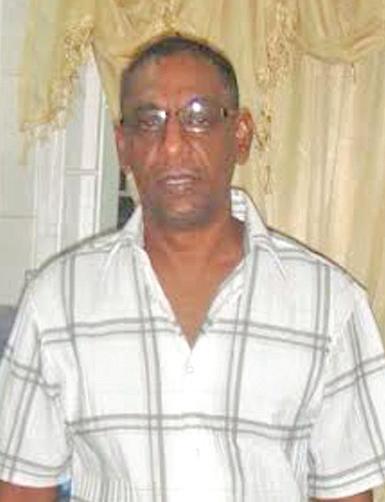
Narine Dat Sookram
Manager of GBTI Port Mourant branch, Ghoeball Mahadeo
New Amsterdam Magistrate’s Court
Corentyne man fined, jailed for gun, ammo possession
Forty-eight-year-old
Seenauth Ramlall of Bengal Farm, on the Corentyne was fined $100,000 and sentenced to four years in jail for possession of a gun and ammunition without a licence. Although the defendant was not present in court on Wednesday last, Magistrate Rhondell Weaver instituted her fine and handed down her sentence.
Ramlall had initially made his first court appearance at the Whim Magistrate’s Court on June 10, 2013 where he pleaded not guilty to the charge but was remanded to prison. It was alleged that on June 8, 2013 at his home, he had one 12 gauge shotgun and three live cartridges in his possession without being the holder of a licence.
After making several appearances in court, the accused was placed on $400,000 bail after which he stopped attending court and an arrest warrant was issued for him. Meanwhile, 19-year-old Dharmana
Bownauth, who was also at the home of the accused when the gun and ammunition were found, was also charged with both offences but denied having any knowledge of the gun as well as the ammunition.
The prosecution’s case revealed that on the day in question, the police acting on information received, went to a house at Bengal Farm on the Corentyne and conducted a search on the building during which one of the ranks observed that a board was missing from the lower flat of the wood and concrete structure.
When the rank further enquired, he found a black tube which was unsealed and made checks. This was when the ranks discovered what appears to be a 12 gauge shotgun which was disassembled and three live cartridges. According to the prosecutor, both men were cautioned about the offence and Ramlall told the rank that he collected the weapon from a friend and that he would usually use it to shoot
birds in the backdam. Both men were arrested and taken to the Number 51 Village Police Station.
During the trial, the prosecutor presented its case against the accused and the court ruled that a case was successfully made out against Ramlall and he was asked to lead his defence. During the trial, the accused in his unsworn statement told the court that he does not live at the house where the gun and ammunition were found and that he was at the house to clean the yard which had a lot of bushes. The accused also disclosed that the ranks found something in the house and took both men to the Number 51 Village Police Station where they were told that a gun and three live cartridges were found. At the ruling of the case, Ramlall’s attorney, Rodwell Jagmohan, who was present in court, asked for leniency for his client since the weapon was not used to commit any crime.
Labourer jailed for 18 months
Alabourer made his first appearance at the Number 51 Village Magistrate’s Court last Wednesday charged with break and enter and larceny.
Thirty-two-year-old
Dhankumar Ramnaraine of Number 58 Village on the Corentyne Coast pleaded guilty to the charge which stated that between October 22 and 23, 2013, he stole several items amounting to $359,000, property of Surita Persaud of Number 60 Village on the Corentyne. The accused, who was unrepresented in court, related that he is sorry for what
he did and that it will not happen again. The accused also begged the Magistrate for a short sentence.
Police Prosecutor Althea Solomon told the court that on the day of the incident, the virtual complainant (VC) secured her shop leaving everything in order and went home. On the following day, the woman returned to her shop about 06:00h and observed that the northern window was broken. The complainant then proceeded into the shop where she discovered that the interior of her premises was ransacked and as a result, she reported the matter to the
police. Acting on information, the police contacted the accused and a search was also conducted on his home where some of the stolen items were recovered. The items recovered from the defendant’s home were taken to the station where the complainant positively identified them as belonging to her. Further investigations were conducted and the accused was arrested and charged with the offence. After hearing the case, the accused was sentenced to 18 months in jail by Magistrate Rhondell Weaver.
Woman prays for justice eight years after child’s death
Amother is still grieving eight years after the death of her 13-year-old daughter. ”The only thing that can bring relief to my aching heart is knowing that the person responsible is apprehended.” Those are the words of Claudette David, mother of the late Kavita Panday.
On September 8, 2008, Kavita “Vinesha” Panday, 13, of Block D Bath Settlement, West Coast Berbice (WCB) ventured to her parents’ farm to chase some cows that had managed to get into the farm, which is located some distance from her home. After she failed to return home, a frantic search was launched and her battered body was discovered floating in a trench with her underwear, tights and skirt below her knee.
According to Claudette David, she is praying and hoping that her daughter’s killer is brought to justice so she can live in peace. She recalled vividly in tears, the day Vinesha’s body was discovered. “Vinesha see the cows in the farm, she collected the bicycle and left to chase them… when I look out I see a young man (name given) riding in the same direction with her. A little while after I see him come back, I asked him for her and he said he did not see her.”
David related she had a gut feeling that something was not right after some time passed and her daughter did not return home. She added that she looked around but could not locate her daughter, so she continued to plead with the young man about her daughter “I even fell at his foot and
begged him.” After some time the young man took the mother to a location where Vinesha’s battered body was found.
David recalled it was devastating to see her child in that state, the sight rendered her in shock as she could not come to grips seeing her daughter dead a few hours after seeing her leave home. Recalling that fateful day opened old wounds of pain, disappointment, anger and frustration.
A post-mortem examination revealed that the teen died from asphyxia and drowning along with multiple wounds on the body. There was mud on her tongue and throat as well as a foreign object in her right bronchi; all suggesting the victim was strangled and pushed face down into the water while she was still conscious. Several youths were arrested and released; however the prime suspect was the lad who was seen riding towards the victim’s home and later pointed out the spot where the child was found, to the mother. He was charged and brought before the courts. The trial took
place and he was acquitted of all charges against him by a 12-man jury at the Berbice Assizes three years later in October 2011. The verdict was given after the jury deliberated for a little over two hours. The case was one that attracted a lot of attention as it was a rare one; the 12-man jury along with the Judge, lawyers and court personnel were driven from the courthouse in New Amsterdam over the river to the crime scene in Bath Settlement, during the trial. The 13-year-old was a second form student of the Number 11 Secondary School. She was described as a quiet, kind, loving young girl who respected her elders and always lent a helping hand when needed. Since the youth was acquitted of all charges, no new arrests have been made nor have the police given any new information regarding the case. The relatives are adamant that the youth was guilty of the crime and are angry that the alleged killer is free while their loved one is no more. The parents are hurting as they look at her friends and how they have grown. Kavita would have been 19 this year and would have completed her studies and probably moved into the field of work. The mother said she would not rest until her daughter’s killer is brought to justice. She cites the lack of financial resources as the main reason for her not making much headway. She is appealing for any information from the public in bringing the perpetrator/s to face the full force of the law. Until this is achieved, she vows not to stop as her life would not be complete.
No date has been set for the final of the Mackeson Basketball tournament which should have been played since August 2013.
On three occasions ,dates were advertised for the game which should see Smithfield Rockers taking on Canje Nights. The games were never played. In early February, Berbice Times Sports enquired from the sponsor ANSA McAL and was told that inclement weather had hampered the staging of the final.
Organiser Kurt Fraser subsequently stated that the final will be played March 16.
However, the Berbice Amateur Basketball Association (BABA) has not been informed of this development. The association has to give approval before a game of that nature can be played. President of the body keith Myers says that the BABA is doing everything possible to ensure that the final is played.
Meanwhile the sports desk understands that that the cheque was presented to the organiser of the event several months ago. The sports desk was also shown the cheque in September 2013. Reports are that while at that time there was a one person association called
‘BABA’ there was no bank account in the name of the association. The monies for the winning teams and for trophies were included in the cheque along with referees’ fees.
The sports desk understands that that the cheque was given to a local businessman who handed over some of the monies. Now the cheque has expired and cannot be deposited.
The businessman has been left with it and the final is still to be played. Myers said while the current body was not in existence at that time, efforts will be made to see if the matter can be resolved.
Kavita Panday
TruthSimply the
At the age of 25, Imran Hamid resigned as an Allocation Attendant from the Rose Hall Estate, East Canje to follow his dreams of becoming a successful businessman.
Twenty-six years later, hard work and determination paid off as he is now the proud owner of three stores located in Rose Hall Town and Portuguese Quarter respectively. It all started after he was given one-week leave with pay which was $2000 and he decided to turn it into something big.
When he started to earn money for himself, he knew his path to success had begun. But admits he did not do it alone. The humble 51-yearold, during an interview with Berbice Times, recalled how he started his journey to success with a dream and it is that dream that gave him the strength to persevere despite not being born into of a rich family.
“After I collected my $2000, my wife and I decided to go to the Skeldon Market to buy some stuff, we bought small things like Maizena and milk; we then went to Port Mourant and resell those items. At our first sale I earned my week pay in a few hours. I realised this is what I wanted to do, so I resigned from the estate and entered the world of business”.
The businessman, then went on to rent a small place through the Rose Hall Market Street for a number of years, after the business began to thrive he decided to venture on to bigger grounds.
It was in 1996 that Hamid first acquired his property which now houses the main
The building was once an old two story wooden structure. Today, the store is fully renovated and boasts thousands of items ranging from household appliances, electronics, toys, gift items, gadgets, trophies, office supplies among many others.
“I rented a small place
to offer a bit of everything so persons do not have to travel all the way to Georgetown to get items. We try to stock all here so it’s convenient for Berbicians and not just Berbicians because we have customers coming all the way from Essequibo”.
Hamid who recently celebrated his 51st Birthday,
that my kids are capable and are running the business as
When quizzed on the business tactics that made him stand out from the rest, he replied it’s all about honesty, hard work and customer satisfaction “You need to take time out to interact and listen to customers, they are the people you depend on to buy your products.” While he agrees you won’t be able
through the Rose Hall Market Street, amidst the challenges my wife and I struggled to make the best of situation. After a while the business started to pick a up. We increased, we started stocking goods to suit the changing economy not to mention the difficulties obtaining items during those years.”
With the intention of providing a more sophisticated and modernised store to the town, Hamid’s dream for a second store location was realised in 2006 with the opening of Imran and Daughter’s just a stone throw away from the main store.
The store offers all you can think of in the area of home furnishing, appliances and gifts and decorative
was born on 17th February 1963 to parents who were labourers. He is a humble, devout Muslim a down-toearth man who rose from small vendor to being a family name in not only Berbice but across the country.
He attributes the success to faith in God, hard work, dedication and family support. “My family was with me throughout and always offered advice, were there through thick and thin and stuck it out when times were rough”.
Hamid, a father of three, said his children play an important role in the day-today operation of the businesses. “It’s blessing to have kids but very often you see families split and have differences. I’m blessed so far in
to please everyone, he tries his best to ensure everyone leaves satisfied.
In February of 2014, Hamid opened a new location “Imran the Family store” this he says is a store that got its name from his customers whom he considers family and sees it fit to have a new location offering products and services based on their suggestions. Hamid was the former President of the Central Corentyne Chamber of Commerce and has won several awards for his outstanding role as President and businessman. He is open to change and feels as a businessperson you need to adapt to be competitive; as such, he will continue to expand to meet the needs of the economy.
Last week, we conveyed what we hear from many Berbicians. Their lack of faith in political leadership is almost tangible. And this may very well be the prevailing sentiment across the country. How can we recall this faith that has fled?
This, of course, is up to our politicians at all levels and of all stripes. Only they can reinstate in our citizens that which our citizens say they have lost. This is a formidable task.
Incisive analysis of the past is important, but I have seen no such thing anywhere from anyone in Guyana. Analysis is not as simple as the ragged blame game that masquerades as analysis. And yet, for now, it matters not why the faith in our politicians has evaporated. What matters now is HOW our political leaders can place again in our breasts that faith which we may have had at one point.
Johann Wolfgang von Goethe, the German playwright, wrote: “Behaviour is the mirror in which everyone shows his true image.” It would do all of us a great deal of good to start our self-analysis by looking at our behaviour. But it is essential for our leaders to start with behaviour. But for us to behold our behaviour, we need to be honest with ourselves.
Why do I do what I do? What is my purpose and who am I serving? For whom do I do it? How well am I doing what I am supposed to be doing? Why do I say what I say? Why do I say what I say in the ways that I say it? What are the consequences of my words and actions? How is Guyana better for what I do and say and how I act?
This is not an easy undertaking. Indeed, very few have done this kind of self-analysis. And fewer still have done it with the kind of uncompromising honesty that is required. If our political leaders do just a bit of this, faith will return to the hearts of the society they are sworn to make better.
Nothing good comes from querulousness. Nothing good comes from pettiness, nor from shallow thinking. Too often, in too many of our political leaders, we find these habits exhibited in public: quarrelsomeness, pettiness, shallowness, thoughtlessness, self-aggrandisement, condescension, and so on.
We seem to be incapable of any kind of intellectual and political sophistication. It is rather like being at a meeting at Guyana’s ONE university. Worse, in fact, since University meetings mean little. But our political leaders determine our very lives and how we live them. And yet, when we speak with these same people in private ways, we find them to be thoughtful, caring, compassionate, almost philosophical, and without arrogance. We find them to be men and women with decorum. Would it not be a good thing for our leaders to relate to us and to each other in public ways the way they relate to us in private conversations? Show your nobility, O leaders!
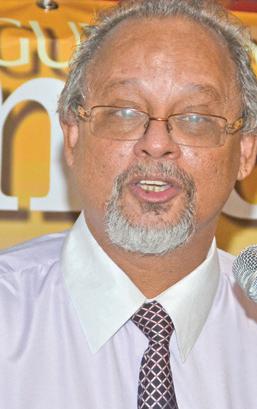
Professor Daizal Samad
Businessman Imran Hamid is following his dreams
Imran Hamid and family after receiving an award
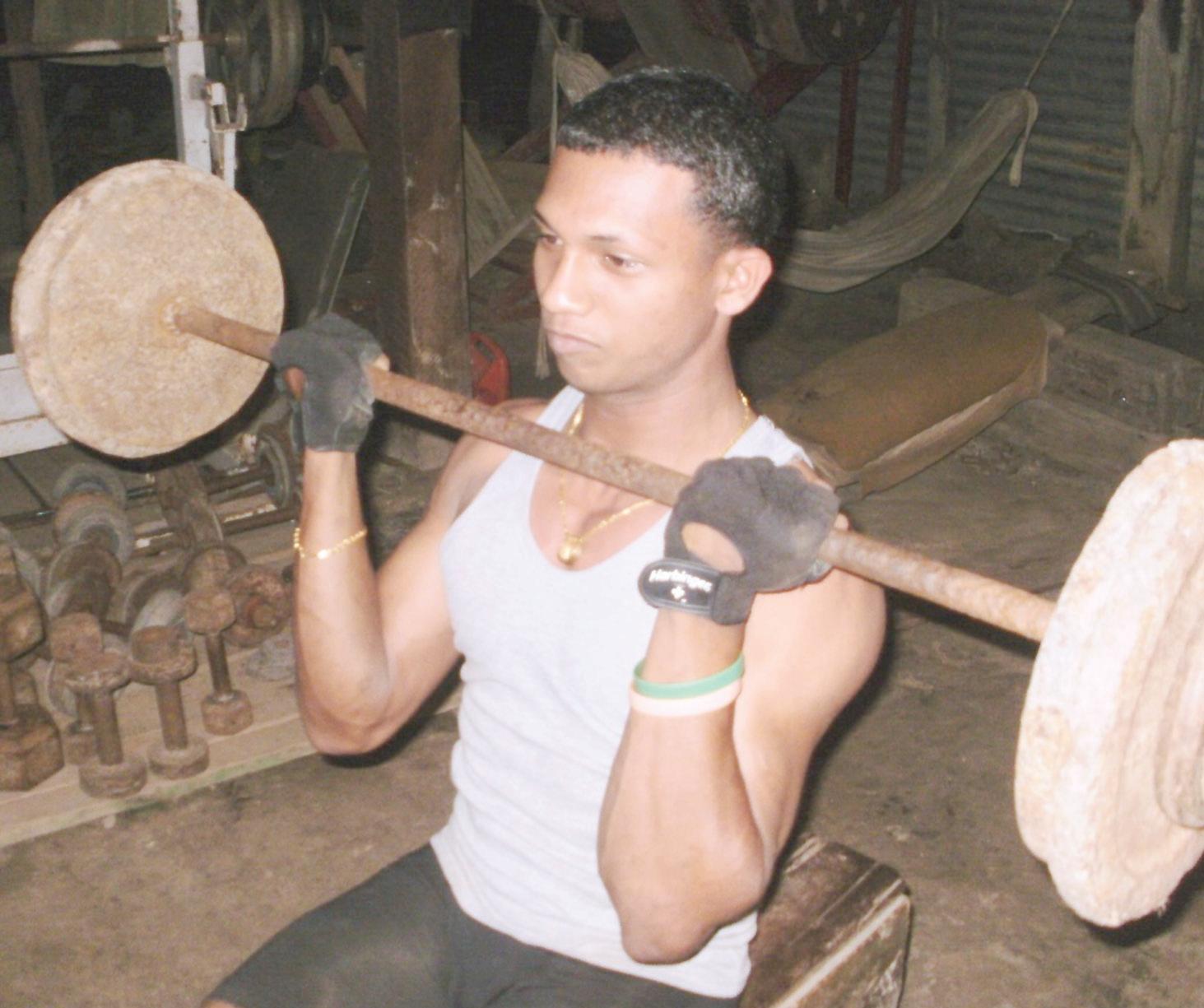
Banned power lifter Gumendra
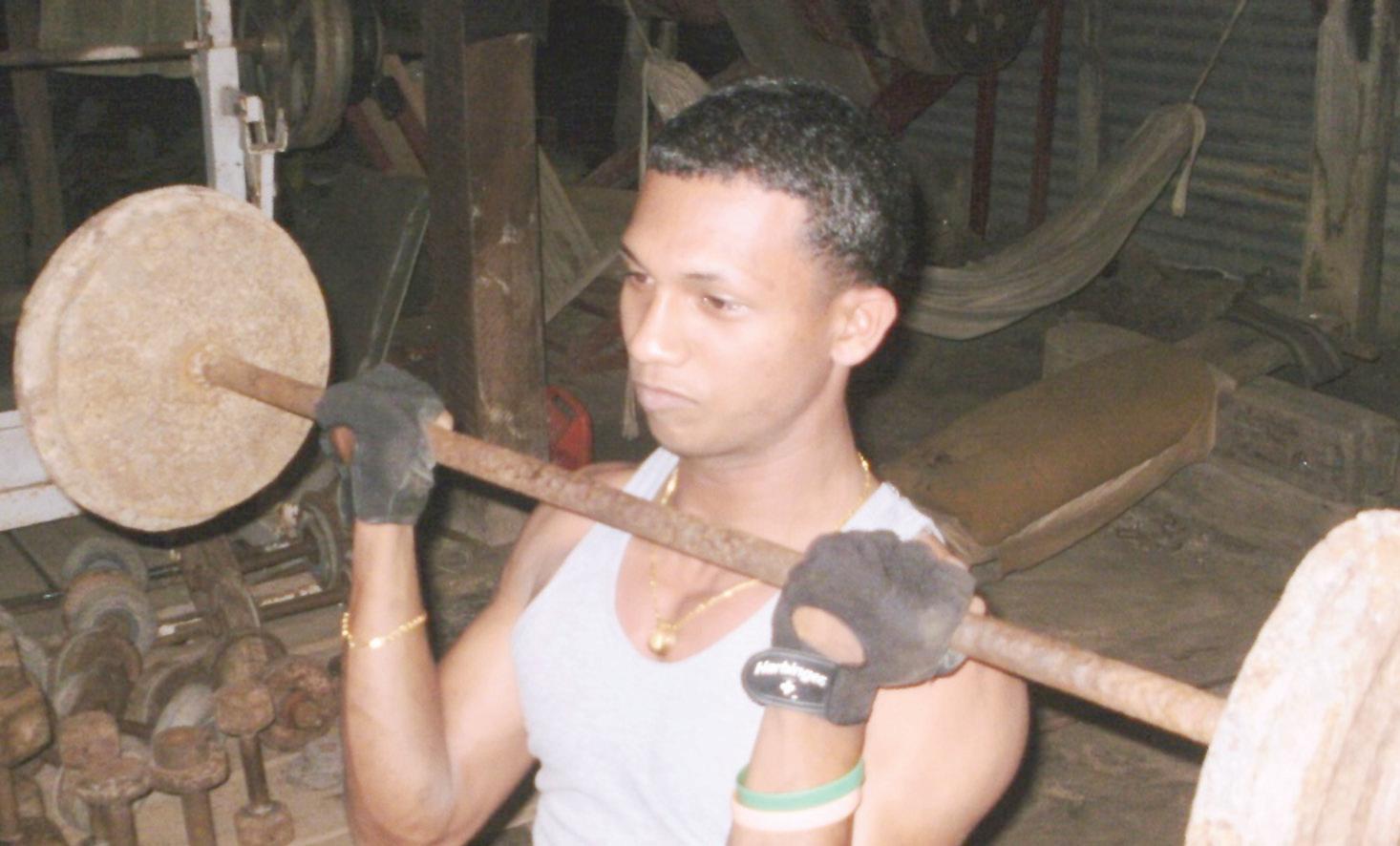
“The Golden Boy” Shewdas feels that the Guyana Amateur Powerlifting Federation (GAPF) has let him down.
The former Under-18 Sub-Junior World Powerlifting Gold Medalist and member of the Total Fitness Gym based at Line Path, Corentyne and coached by Egbert Jackson failed the in-competition doping control test conducted on August 26, 2013 in the course of the 2013 Sub Junior Powerlifting Championships held in Killeen, Texas, USA.
By way of an official letter from the International Powerlifting Federation (IPF), the GAPF was officially notified of the IPF Doping Hearing Panel’s decision on November 26, 2013.
Speaking with Berbice Times Sport, Shewdas said he got no support from the governing body GAPF when the announcement was made. However, he says that there is nothing that he can do now. “At first, I was disappointed, but I can’t do anything about it… Just continue training and wait until the two years are up” he said.
Shewdas was also asked to pay the fine of 2000 euros ($558,213 GYD) to GAPF after testing positive for banned substances. However, his coach Egbert Jackson who received a letter dated February 16, 2014 was informed that dis-
cipline action was taken against the gym as it was suspended from participating in the activities of the GAPF and the IPF because of what the Federation deemed as ‘utterances made in the media against the Governing Body for Powerlifting as well as the World AntiDoping Association which were deemed as slanderous and damaging to the image of the sport’.
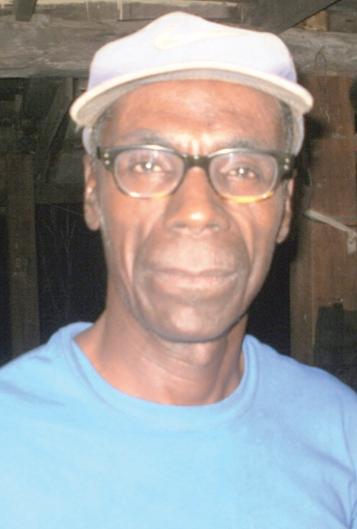
Jackson told Berbice Times Sports that the President of the GAPF, Peter Green who signed the letter to him, has never supported the gyms in Berbice. “He is not very happy that lifters from Berbice are coming on top in the sport locally now.”
On March 17, 2013, the GAPF held its Junior and Novices Championships at the New Amsterdam Multilateral School auditorium.
The Guyana Times covered the event and carried a caption which read, “Berbicians shine at National Novices powerlifting c/ships”. Green was
Nearly
not pleased with the caption and is quoted as saying “I was appalled when I opened up the newspaper and saw the headline.”
Green also objected to some of the information printed in that article. He was very critical of the opening statement of the said article. The article opened with this statement, “Mustopha Rahaman equalled the Pan American Junior Powerlifting record when he lifted 237.5kg, in deadlift”
However Wikipedia, the free encyclopedia, gives the American record to Shane Hamman who had a deadlift of 237.5 kg. which was set at the 2004 Summer Olympics in which he placed 7th and remains the record for an American.
According to Jackson the powerlifting boss has imposes sanctions on his gym which are unjustified. “All I said were the facts… The whole dope testing thing scenario is very subjective and prone to manipulation… the spineless zealous and jealous national bodies with their establishment bias…”
Jackson noted that while he was not in the U.S. when the test was done, it is his view that the GAPF should have supported the Guyanese and launched an investigation. He made reference to the support Jamaican athletes get from their respective bodies whenever there is a scandal involving them.
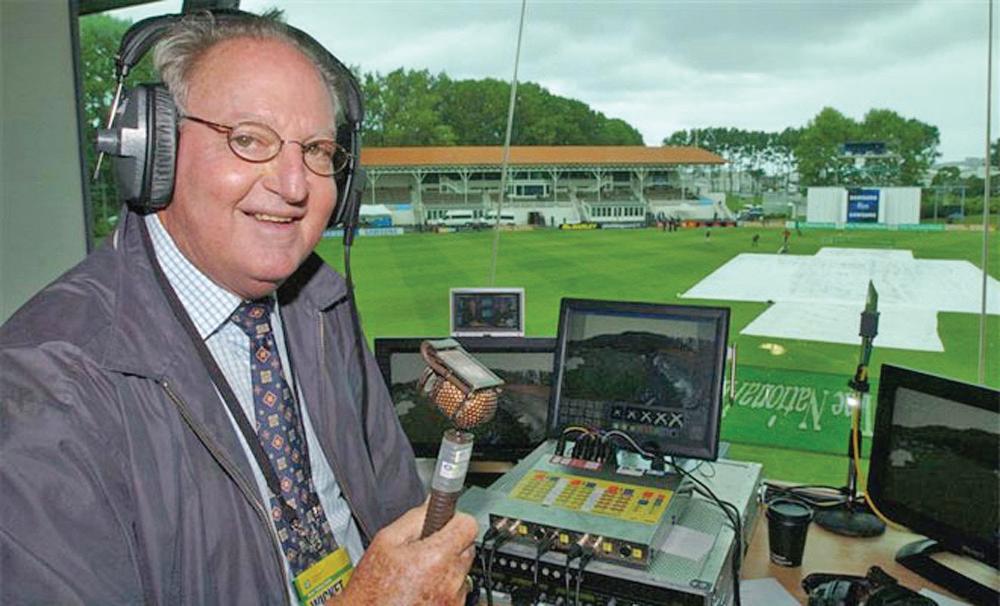
CAnthony Cozier on July 10 1940, he has made a name for himself for over five decades as the voice of cricket in the Caribbean.
How did he start off in cricket?
“I was at school, at Lodge School in Barbados,” he replied. “My father (Jimmy) was the editor of the Voice in St Lucia. I used to, as young boys do, listen to a lot of cricket and write something on the exercise books, some reports on the day’s play, that type of thing.
“When Australia were in the West Indies in 1955, I would have been just 15 or thereabout. The Voice of St Lucia was a five-day-a-week publication and I said to him (dad), “you think I can cover the match for The Voice?” He said, “yea, once you get some time-off from the head master”. He gave me timeoff and I covered that match (in Barbados).
“That was the famous match when (Denis) Atkinson and (Clairmonte) Depeiaza had their big partnership of 347. That was because my ‘old man’ was the editor of the paper and I was reporting for a very small paper in St Lucia.”
Did the writing genes pass from his dad to him? He responded, “Maybe, I don’t know. I was interested in cricket. He covered the tour of England in 1950 for all West Indian papers. When he came back, he did
some cricket as well, but he was into more day-to-day journalism, not cricket. He gave that up.
“Then he became the editor of The Voice of St Lucia, Barbados Advocate then, he came here as the editor of the Trinidad Guardian. Then, when I came back on holidays, I would work at the Guardian, the Evening News radio as it was then”.
Cozier continued, “In 1958, I had just left school, and I was on summer holidays (TT) here. I was going to Guyana, I had friends there and I would stay with them. I said to the Guardian “do you want coverage of the West Indies games” because there were West Indies Track and Field Championships in those days. I went to cover those in 1958.
“Then my father and some other investors started a paper in Barbados – the Barbados Daily News – in 1960. In 1958, I went to university in Canada, Carlton University. I studied journalism, but I knew a lot of journalism. It was more a Bachelor of Arts Degree, rather than journalism because I knew exactly what to do from the time I was probably 10 years old in St Lucia.”
The climatic conditions did not sit well with Cozier and he did not finish his stint at Carlton University.
“I had one more year to go, but the paper my father started in Barbados was
starting then. And I said there was no way I was going back up, I’m going to be with the Barbados Daily News from the start.”
He then reflected on his stint with the Daily News.
“At a small paper, you do all sorts of thing,” he noted. “I was sports editor and I would write all sorts of thing – football, track and field and so on, on a local basis. The paper closed in 1968 by at which time, I had done two tours of England for the paper. “In 1963, I went (on) the Frank Worrell’s tour,” he continued. “I said to my father “let me cover the tour for the paper” (and) he said “we’ll pay your way and that’s it. You get there, you got to look after yourself.” I stayed in YMCAs and so on. I got some work on the BBC Caribbean Service.
“Then I did the ’66 tour of England on a more formal basis. That was the first time I did radio commentary on BBC Test Match Special. Roy Lawrence, who was the Jamaica Gleaner Sports Editor and was the voice of West Indies cricket, a beautiful voice he had, and he had done a lot of tours around the Caribbean, was coming back from the Commonwealth Games in Kingston to oversee the Jamaica Broadcast Corporation’s coverage. He was doing the BBC (reports) and he left, missed the Test match in Leeds so I filled in for him.” (Newsday)