


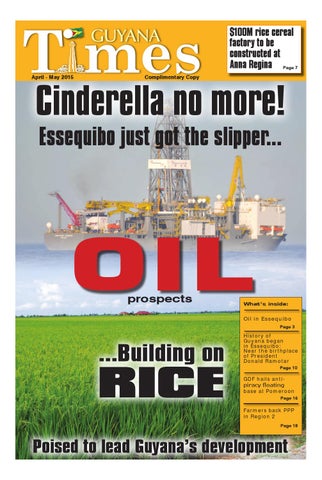
got the slipper...



Guyana Times: Mr President, I would like to thank you on behalf of the Guyana Times for agreeing to this interview for our Supplement on Region 2 during your very busy schedule in this elections season.
President Donald Ramotar: Well, let me say that with the First Lady coming from Huis T’Dieren, if I had passed on this opportunity to discuss my plans for the region, my dinner would’ve been very cold!! But seriously, with both of us coming from Essequibo – me from upriver at Karia Karia – the region is close to my heart.
GT: There is no better place to start with Region Two than with rice. Of recent there have been complaints that prices have been too low and that this is due to markets not being available for the increased production.
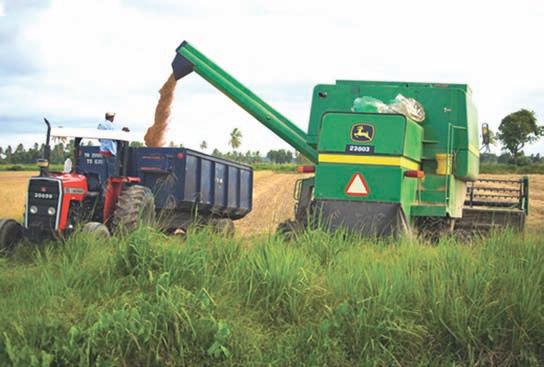
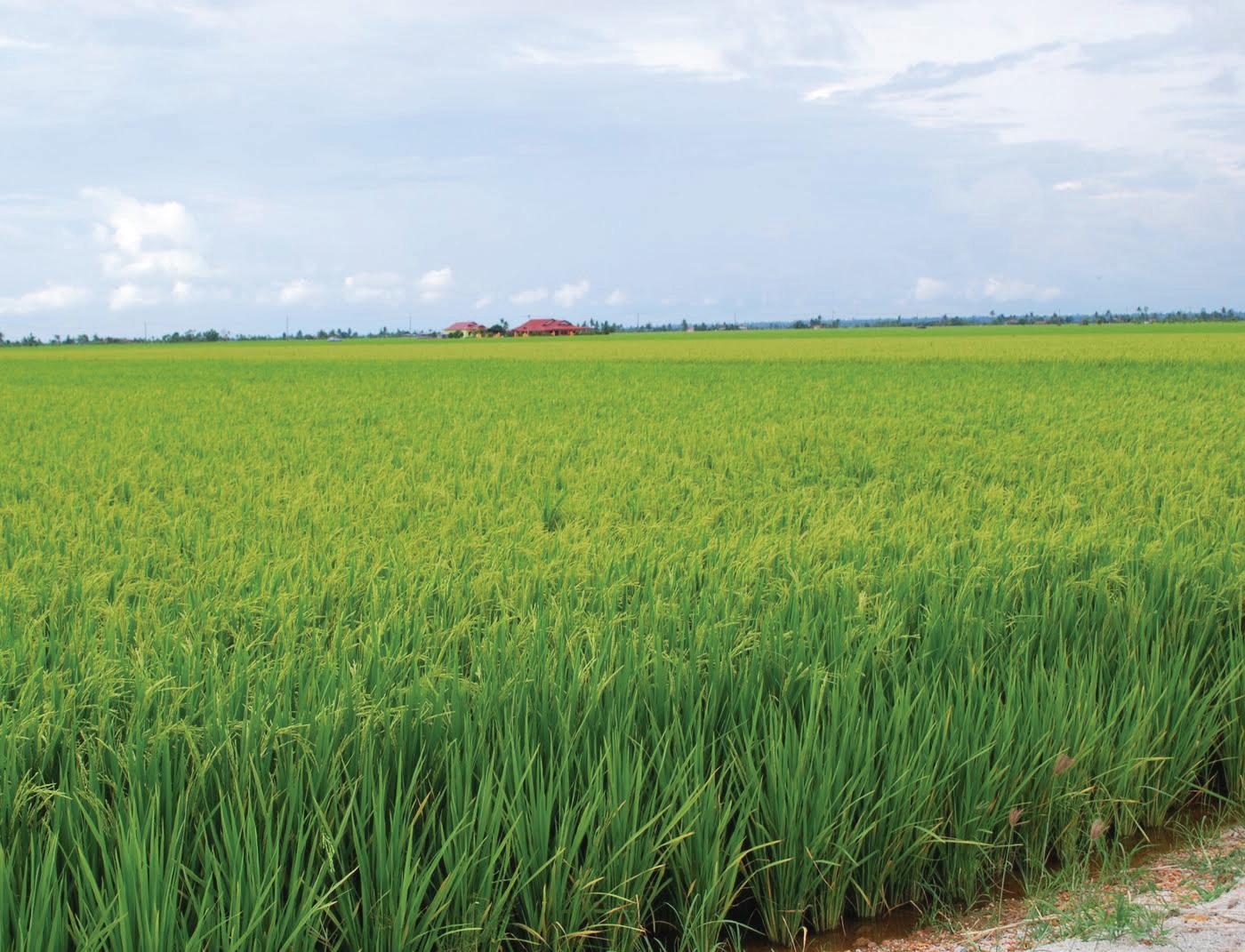
PDR: That’s a good place to start because most of the people of Region Two make a living from the 33,000 acres that are cultivated and reaped twice a year. But let me say that part of the farmers’ problem has been the result of the success of this Administration to improve the lives of rice farmers. As you might know, most rice farmers cultivate plots of 5-10 acres and to make a living from this we have done several things.
Firstly, we have improved the yields tremendously by introducing several high-yielding varieties such as GRDB 9,10, 11 and up. Combined with the improved Drainage and Irrigation (D&I) that we have extended – from the pumps at Dawa to the kokers on the Essequibo river – yields of paddy has increased tremendously.
One problem has been with the end of the Rice Marketing Board arrangement and the introduction of private enterprise mechanisms. Marketing the increased production –this year it will be more than 600,000 tonnes – is a challenge. But let it not be forgotten that it was the PPP administration, my predecessor President Jagdeo, who brought in the Venezuelan market which is now our largest.
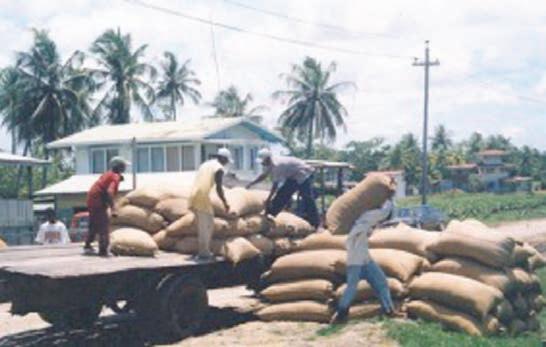
We are actively seeking new markets. And let me say this, I will be instituting a permanent Marketing Unit (MU) in the GRDB that will be solely concerned with opening up markets and giving us feedback of market demands. Some may say that we will now be competing with the private exporters, but so be it: competition was always good for private enterprise.
Secondly, we will be also introducing a fund to ensure stability of rice and paddy prices as well as ensuring that farmers are paid expeditiously – the Rice Price Support Fund (RPSF).
GT: But where will this money to service this RPSF come from?

PDR: This will be primarily from allocation from the Consolidated Fund. We will start by providing annual allocations to the RPSF. Further, after almost seven decades we finally have the petroleum potential of Essequibo being exploited. As you know, it had long been known that there are huge reserves of oil in the deep water off the coast of Region Two – some say it amounts to over 13 billion barrels. This is one of the largest deposits in the world. But because of the Venezuelan controversy over our border, the oil companies stayed away.
Back in 2000 when the Surinamese seized CGX rig in the East, Exxon – which was supposed to start drilling in the West, walked away. But now they’re back and announced last week that they are certain of success.
Well, you may say what this has to do with rice?? Everything. We plan to place our oil revenues into a Sovereign Wealth Fund that will underwrite our development plans. Our RPSF can be further financed from our Oil Sovereign Wealth Fund. The Jubilee Field off Ghana took just three years from location of oil to production.
GT: This sounds revolutionary and somewhat socialistic.
PDR: But it is absolutely not so. The very capitalistic US, EU and S Korea have schemes in which there are implicit subsidies to stabilise their farm output. It is capitalism with a human face!
GT: Mr President, while there have been schemes to help rice farmers such as the shipments to Venezuela and importation of less expensive fertilisers, there have been persistent reports of the local officials playing favourites. This is a form of corruption.
PDR: I agree absolutely. But that is always the danger in the schemes to assist ordinary people. Let me make this clear: I will be shaking up the local administration of Region
Two and also the agencies that are disbursing help to farmers. We will not tolerate this nonsense any longer!
GT: Mr President, Region Two has always produced good students and in recent years one of the success of your administration has been to take this trend to higher levels. What’s next for Region 2?
PDR: We have to begin training our young for jobs that are needed for our economy and which will also take our country forward. While there have been calls for a campus of UG to be on the Essequibo Coast, I would rather have it be a UG Technical Division, which, for instance, can train the petroleum engineers, IT specialists and the other skills and workers that would be needed to support new job opportunities. We will also enhance the access to university education in Region Two by the University of Guyana providing online degrees.
GT: Mr President, the petroleum industry would only supply so many jobs. With the experience of you and your wife who had to move to Georgetown to get “work”, what can be done to help the bright youngsters coming out of school?
PDR: In our Manifesto, we propose to establish a special development fund to support job creating activities. We have to continue with what we just launched – value added to our primary production such as the rice cereal factory. Essequibo produces jams, peppers, heart of palm, pineapples, that can all be processed. Essequibo is also a very scenic tourist destination that is relatively close to our capital, we will be expanding these opportunities as well as in the ICT sector which can create thousands of jobs.
In the meantime, I must say that I was a bit disappointed at all the work the late Minister of Agriculture Sash Sawh put into the diversification of some rice lands to simultaneously produce tilapia went to nothing.
GT: Thank you, Mr President, Any final words??
PDR: Essequibo’s connection to the rest of Guyana will be improved. We already have the two Chinese ferries and we have two more promised by Indian Prime Minister Narendra Modi, when I went to India. These will make travel from Region Two hassle free. Further, I would urge the people of Region Two to read our Manifesto as it relates to their region. They should familiarise themselves with our comprehensive plans to improve health care, education, infrastructure, Government services, security, job creation apart from other things in the next five years. We will need their help to implement these ambitious plans.


Being right next door to Venezuela with the largest petroleum reserves in the world, it was long suspected that Guyana also shared in those reserves. Exploration for oil has been going on for decades, starting in the Takutu Basin at the southern end of Guyana abutting Brazil. The coastal and offshore Essequibo region, next to Venezuela was left untouched by the oil exploration companies, primarily because of Venezuela’s claim to the area to be explored, ignoring an 1899 Arbitral Tribunal Award, which was declared as the full and final settlement of the boundary between the two South American nations.
However, all this changed at the turn of the millennium when the US State Department in its fact sheet on Guyana stated that “The United States Geological Survey (USGS) has identified the Guyana Suriname basin as having the second highest resource potential among unexplored oil basins in the world and estimates indicate recoverable oil reserves of 15 billion barrels of oil and gas reserves of 42 trillion cubic feet. Under the Energy Governance and Capacity Initiative (EGCI), the United States Government provides a range of technical and capacity building assistance as Guyana seeks to develop financial and regulatory regimes and address capacity issues that would maximise the development potential from prospective offshore oil and gas resources.”
Guyana Limited – the local arm of the company, said on Wednesday that the drilling was currently midway.
Simmons explained that it was expected that the team would conclude the initial stages of drilling shortly, at which time the project, valued some US$200 million, is expected to produce promising results.
The scope of operations spans a drillship, with approximately 200 crew and contractors; helicopter support flying out of Ogle International Airport a utility as well as a search-and-rescue craft, which is always on standby; four support vessels and two shore bases – Georgetown and Trinidad, as well as a waste treatment facility at the John Fernandes Site at Houston, Greater Georgetown. Further, Simmons said that the work has proceeded without any interference from Venezuela.
The company, which intends to pursue exploration activities over a 10-year period,
In 2000, a small Canadian Company, CGX, while drilling in the eastern portion of Guyana’s offshore reserves had its rig seized by the Surinamese authorities.
Exxon in Essequibo
In mid-1999, Exxon Corporation, the largest oil producer in the world, through its Guyana affiliate Esso Exploration and Production (Guyana Ltd), had signed a Production Sharing Contract (PSC) with the Government of Guyana for the deepwater “Stabroek Block” which it had been awarded a year before. However, the following year, it informed the Government that it was “unable to reform further obligations” under the agreement because of “developments concerning Guyana’s maritime boundaries with Suriname and Venezuela”.
In 2007, Guyana, which had taken the dispute over its maritime border with Suriname on which the latter had based its seizure of CGX’s rig, to the World Court, was vindicated. CGX, which had, in the meantime gone into several partnership agreements with some larger companies, resumed drilling, but had to abandon the well, not due to a lack of fossil fuel reserves but because of excessive pressure
making the well dangerous.
In October 2013, Research Vessel Teknik Perdana, of Anadarko Petroleum Corp, the third-largest independent US oil and natural gas producer which was surveying the seafloor for signs of oil on a Guyanese contract, was detained by Venezuelan authorities, who claimed the ship was in its water. The ship and crew were later released.
But in 2014, the largest oil company in the world, the US Based ExxonMobil Corporation, renewed its agreement with the Government of Guyana on the Stabroek Block. It sent a large ship-cum rig into the waters off Essequibo in early March to start drilling. The Venezuelans made a protest to Exxon’s Guyana subsidiary, but there was a firm Note Issued Verbale from the Guyana Foreign Ministry to its Venezuelan counterpart. ExxonMobil, for its part, insisted it was operating offshore “under licence from the Government of Guyana” and did not budge.
To be very blunt about it, against a background of US toughening stand against Venezuela at present it is certain that Exxon will proceed without any interruption. Guyana in general and Essequibo will at last be exploiting its petroleum and gas reserves.
ExxonMobil optimistic about striking oil
The oil major’s exploration activities in the Stabroek Block off Guyana’s Essequibo Coast are proceeding according to schedule, with results from current exploratory drilling expected soon. The company’s massive rig dubbed the “Deepwater Champion” commenced operations more than a month ago on March 5. With the total area allotted to Exxon covering 26, 806 square kilometres, the company has a target depth of 1750 metres.
Country Manager Jeff Simmons of Esso Exploration and Production
remains leery of a possible showdown with Venezuelan authorities, who had issued a warning for it not to proceed with the drilling, which was sanctioned by the Guyana Government.
With Venezuela’s insistence on its position, Guyana is considering judicial settlement of the boundary.
Guyana has been receiving sustained international attention from huge companies, especially in the oil sector, particularly since the US Geological Survey in 2000.
ExxonMobil, the largest public traded international company in the world, is an industry giant that has the leading inventory of oil and gas projects, and the world’s largest refiner of petroleum products.
ExxonMobil to invest over US$200M - Guyana lives up to image as attractive investment location
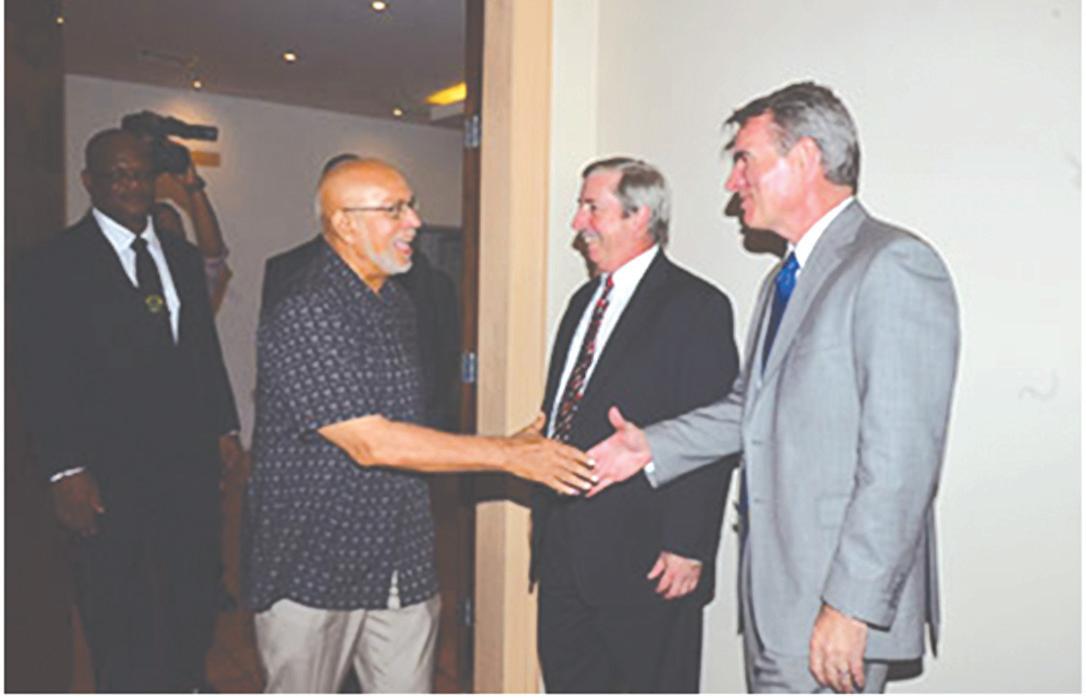
Its investmentwas welcomed by President Donald Ramotar.
Expressing optimism, the Head of State said: “We’d rather prefer to have investments in our productive sector, and this investment in that regard is very important. Hopefully, they will be successful very quickly, and Guyana will join the ranks of oil-producing countries.”
He said according to information reaching him, the possibilities are good and to have a company of Exxon’s reputation investing in Guyana adds to his optimism. “I think it is an exciting time, not only in our political history, but also in
our economics and our investments,” the President noted.
The investment was also welcomed by Minister of Natural Resources and the Environment, Robert Persaud, who described it as a milestone by Esso Exploration and Production (Guyana) Ltd. “The vision of Guyana’s upstream oil and gas sector is of a strong, vibrant and sustainable private sector-driven oil and gas industry which will contribute significantly to its socio-economic development.”
“It is important that we manage expectations; this is a risky undertaking, and the results cannot be predicted. Even when there is a significant commercial discovery, it will take several years for the development and production of our hydrocarbons,” Minister Persaud added.
He concluded by reassuring of “our continued commitment to make this venture a successful one and that Guyana remains an attractive place for investment”.
ExxonMobil’s Vice-President for exploration, Dr Eric Oswald, said the company, had a long history of using science and innovation to bring forth energy. He emphasised that Exxon’s commitment to safety was unequalled, noting “How we get results is just as important as the results we get” and the motto of “Nobody gets hurt”.
The company is partnering with strategic organisations such as Youth Challenge and the Volunteer Youth Corps as part of its corporate responsibility push.
The company’s local headquarters is located at 99 New Market Street, Georgetown. (GINA)
Exxon begins drilling today
…ignores Venezuelan sword rattling March 5, 2015 By GuyanaTimes
United States-based oil company ExxonMobil’s oil exploration ship, the Deepwater Champion is in position in the Stabroek Block off Guyana’s Essequibo Coast and will commence its US$200 million exploration project today, Country Manager Jeff Simons has said.
The company is locked in what could be a possible showdown with Venezuelan authorities who have warned it not to proceed with the drilling, which was sanctioned by the Guyana Government. Venezuela has repeatedly laid claim to the area to be explored, ignoring an 1899 Arbitral Tribunal Award, which was declared as the full and final settlement of the boundary between the two South American nations. With Venezuela’s obdurate insistence on its position, Guyana is considering judicial settlement of the boundary.
Following Venezuela’s warning to the oil company,
Guyana’s Foreign Affairs Minister, Carolyn RodriguesBirkett, dispatched a diplomatic note to her Venezuelan counterpart, warning against any action to prevent the oil rig from carrying out its work in an area of the Stabroek Block known as Liza.
Her note was in response to Venezuela’s Foreign Minister, Delcy Rodriguez Gomez, saying to Exxon Mobil:

“The Government of the Bolivarian Republic of Venezuela wishes to express its strongest protest against this serious situation and, accordingly, I take this opportunity to request the cessation of such activities as they will not be acknowledged or accepted under any such circumstances, since this will constitute, moreover, a hostile violation of the Venezuela territorial space,” Gomez told Simon in her letter.
She also cautioned that Venezuela would not recognise any law or contractual obligations by third states, agencies, international financial institutions or private corporations that engages “Guyana over the sovereignty or existing resources on the seafront of the Essequibo”.
Gomez also expressed concerns that the drilling of oil at such depths could cause untold environmental damage.
“The drilling in the mentioned sea area involves a major impact on the environment, given that the intervention in such significant depths could cause unacceptable environmental disturbances, which are prohibited by our legal framework and international agreements on environmental protection,” the Venezuela Foreign Minister stated. “Guyana has no valid land titles on the territory of Essequibo, including the seafront, which entitles such country to carry out projects of this magnitude.”
Guyana has asked Venezuela to desist from taking any actions that would stymie this country’s development.
“The Ministry of Foreign Affairs has requested that the Government of the Bolivarian Republic of Venezuela desist from taking any actions that could only result in the stymieing of the development of Guyana and its people and that would be in contravention of international law,” the Foreign Affairs Ministry said.
Meanwhile, President Donald Ramotar, along with Natural Resources and Environment Minister Robert
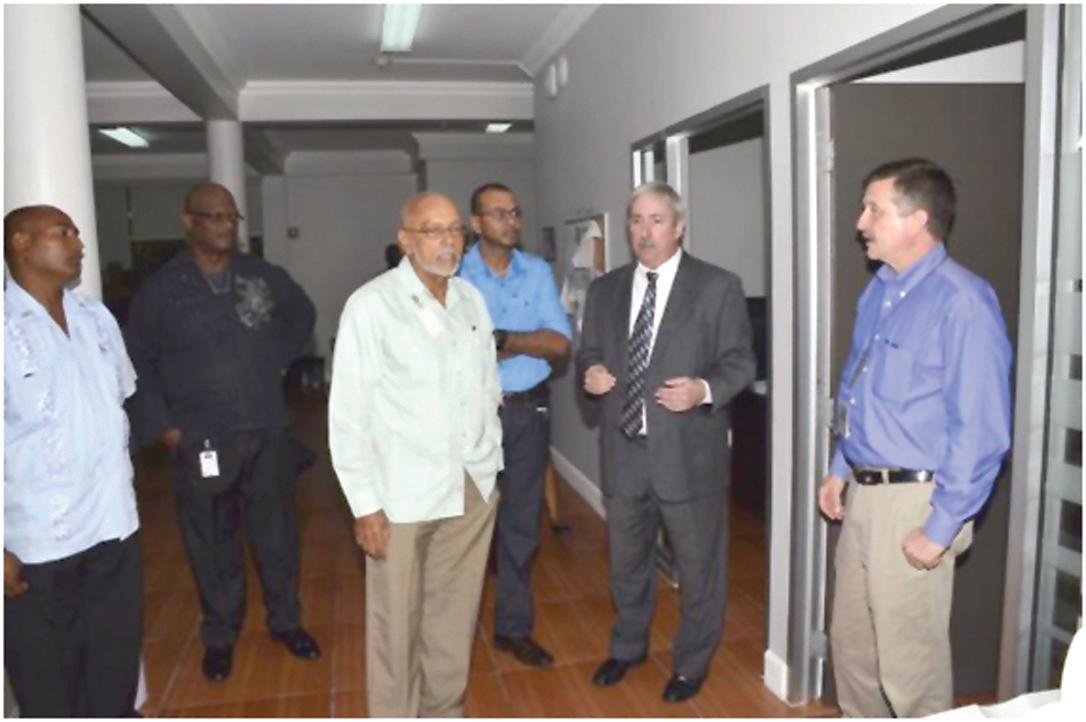
PPersaud visited the ExxonMobil’s head office located on New Market Street on Wednesday, where they were given a tour of the facility and briefed on the scope of its operations by the company’s Country Manager.
According to a Government Information Agency (GINA) release, ExxonMobil, the largest public traded international company in the world, is an industry giant that has the leading inventory of oil and gas projects, and the world’s largest refiner of petroleum products. It has a long history of using science and innovation to find safer and cleaner ways of bringing energy to the world.
The total area allotted to Exxon for exploration (the Liza Area of the Stabroek Block) covers 26,806 square kilometres. The company intends to drill at a depth of 1750 metres.
According to GINA, President Ramotar, who was impressed with the size of the company’s operations, described the exploratory staging area as a “small village”, noting that it ought to take a lot of effort to manage and execute all logistics. “I’m quite impressed with what is taking place, and looking forward to going out myself,” the President noted.
Additionally, Minister Persaud urged the company to ensure that the activities envisioned are within the specified timeframe. Persaud also stated that “all Government agencies are fully mobilised for an efficient and effective exploration”.
The project is expected to be executed over a 10-year period divided into three sections including two phases in each section which lasts for one to two years. The scope of operations include a drillship, with approximately 200 crew and contractors; helicopter support, with two from Ogle including a utility and a Search and Rescue at all times; four support vessels and two shore bases running from Georgetown and Trinidad, and a waste treatment facility at the John Fernandes Site at Houston, Greater Georgetown.
Guyana has been receiving sustained international attention from huge companies, especially in the oil sector.
ublic Works Minister Robeson Benn along with a team of the Ministry’s senior management officials and officials from the Ministry of Foreign Affairs and Foreign Trade in December 2011, toured the roll-on/roll-off ferries which had arrived at the Georgetown Ferry Stelling.
Minister Benn expressed gratitude to the representatives of the People’s Republic of China who financed the two vessels, the Ministry of Foreign Affairs and International Cooperation along with other Government agencies whose input made the arrival of the vessels a reality.

“The two vessels Sabanto and Kanawan are being welcomed into Guyana, after their construction in China and a 50-day passage from China to Guyana…the two vessels promised, now delivered, speak volumes about the partnership that the Guyana Government has with the People’s Republic of China, more so that we are realising the type of cooperation between the two countries,” Benn had said.
The Government of Guyana and China entered into an agreement to provide Guyana with two roll-on/roll-off ferries valued US$14.4 million, which allow for easier and faster loading and off-loading since they connect directly to the

stellings built to accommodate them.
The vessels represent an enormous boost in river transportation particularly in the Essequibo district. “The last time such an intervention was made in terms of river transportation was in 1959 when the Makouria class vessels came into Guyana followed by the arrival of the Torani in 1962… 52 years later we are here receiving new vessels… This is attributed to the insight of the PPP Government into these matters,” said a proud Benn.
In anticipation of the arrival of the vessels, a number of Chinese experts had arrived in the country 40 days in advance. “For the next two weeks they will work on certain adjustments, modifications and the conducting of the river and sea trials of the vessels; thereafter, there will be three weeks of necessary training for the crews of the vessels which is important as these vessels are end loading thus the training and operational requirements are more sensitive compared to the Makouria type vessels; therefore, the need for practising its operation and handling characteristics so to fully understand it,” Benn said.
The vessels began operations in 2012 and today continue to benefit thousands of residents in Region Two and across the country.
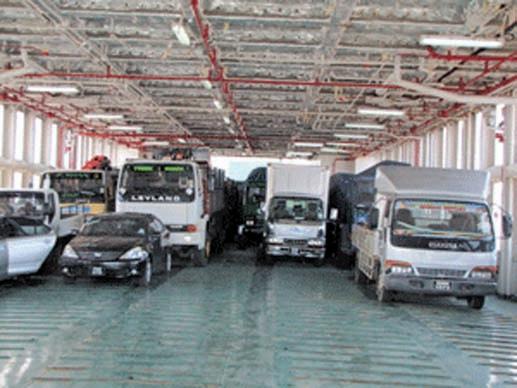
The modern vessels have a VIP Lounge and the necessary amenities to make passengers more comfortable and each has the capacity to seat 800 passengers with 20 lorries or 44 cars.
The vessels continue to provide services at the crossing between Parika, Region Three and Adventure, Region Two. In recent years, in excess of $2.4 billion was spent to improve the services of the Transport and Harbours Department, as heavy operational losses often occur due mainly to low tariffs, an aged fleet and competition from private operators, adding to some of the problems facing the ferry services.
The Abrams Zuil Secondary School on the Essequibo Coast was highly praised by the People’s Progressive Party/Civic (PPP/C) for its outstanding performance during the 2014 National Science, Mathematics and Technology Fair.
The secondary school emerged the winner in both the Oral Presentation and Best Project categories after it captivated the judges’ attention with its project “Husk particle board factory,” in the Industrial Category.
Speaking at one of his many press conferences, PPP/C General Secretary Clement Rohee applauded the Education Ministry for the successful staging of the event held at the Anna Regina Secondary School under the theme “Science, Mathematics and Technology: Providing solutions for the 21st century”. However, the party was keen on singling out the Abrams Zuil Secondary School, saying the school continues to shine in the academic arena.
“This is the most laudable performance given the fact that the school until recently was not considered as one of the high achievers both by national and regional standards. The fact that the school was successful in producing the overall best CXC student in Guyana and the Caribbean and has now excelled at the 2014 Science, Mathematics and Technology Fair, speaks to the enormous strides the school has made,” Rohee said while addressing the press at Freedom House.
He said the school’s administration, students and parents ought to be proud of themselves and be given full credit. Other winners in the secondary level were Queen’s College and the Mackenzie High School.
The Taymonth Manor Primary School also of Region Two received the PPP/C’s recognition as well. The school copped first place for Best Oral Presentation in the Primary Category. Turning to the overall performance of Region Two, Rohee said the PPP/C was particularly happy with its growing success in the field of education. The region, he added, must continue to strive for excellence in quality education delivery.
“The fact that the Anna Regina Multilateral School venue of the competition has produced top CXC students in the Caribbean is indicative of the strides made in education delivery in the region and the country as a whole,” he said.
He said too that the Education Ministry ought to be applauded in this regard, explaining that the trend of only
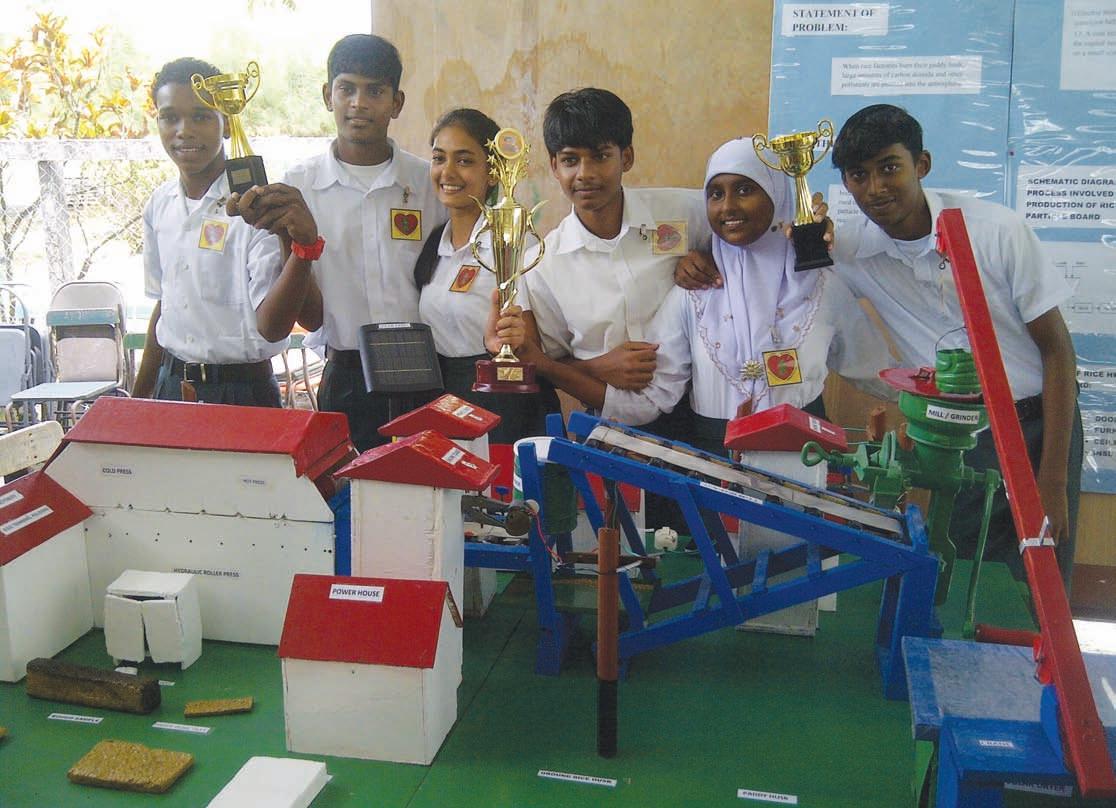
having top students from the central locations is a thing of the past.
“The interventions made by the Education Ministry over the years are yielding dividends, gone are the days when only a few city schools shone at national and regional examinations. Today, there is a much better spread of student performance throughout the country, including coastal and regional schools,” the PPP/C General Secretary further explained.
The PPP/C strongly believes that the future of Guyana is linked to the advances made in the areas of science and technology. “Our capacity to apply the latest advances in science and technology would determine the pace of our growth and development,” he added.
According to Rohee, the implementation of the One Laptop Per Family (OLPF) Programme brought about by former President Bharrat Jagdeo is a clear indication of the PPP/C Government’s desire to bring the people of Guyana on par with the rest of the world in the areas of Science, Mathematics and particularly Information Technology.
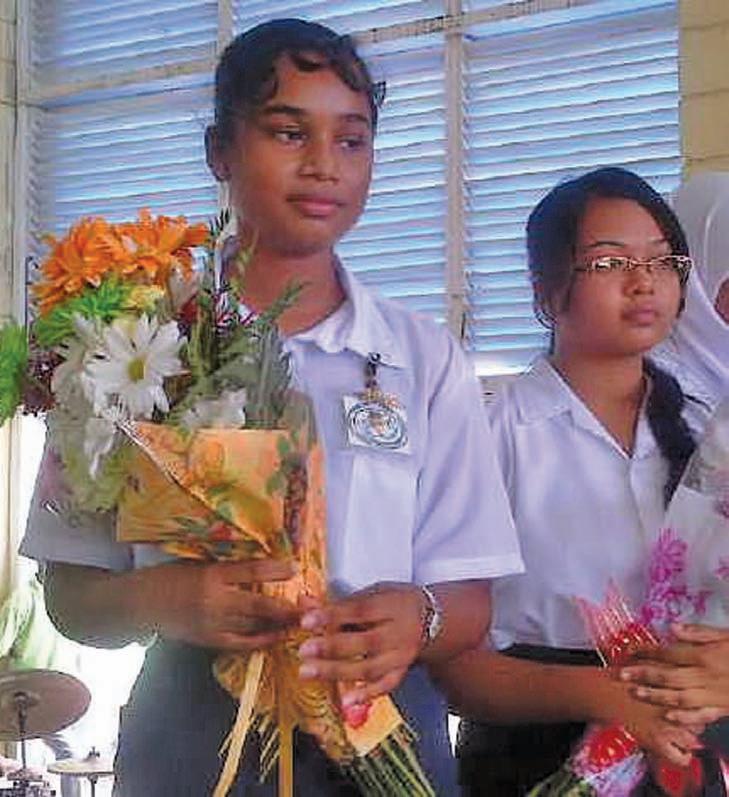
Anna Regina Multilateral Secondary (ARMS) student Zimeena Rasheed topped Guyana in 2013 at the Caribbean Secondary Education Certificate (CSEC) examinations with 20 subjects. 18 Grade Ones and two Grade Twos.
Coming in second was Yogeeta Persaud, also a student of the ARMS, with 18 Grade Ones.
Education Minister Priya Manickchand had announced the groundbreaking results, noting at the time that there was an overall improvement in the number of students gaining Grade Ones in Guyana.
However, students’ performance in Mathematics worsened from an overall pass rate of 29 per cent, Grades One to Three in 2012 to 28 per cent in 2013. And in English A, a 45 per cent pass rate was recorded, a decent improvement from the 37 per cent obtained last year.
“Mathematics… we haven’t seen the kind of results that I would like to see; 29 per cent passing Mathematics is nowhere near acceptable for us. It has to change. How we make that change would be something we really have to go back to the drawing table and pay attention to. The region has done poorly in Mathematics also and English, although Guyana has done better this year,” Manickchand had stated.
She added that: “These are subject areas that the world is struggling with and we have to find ways of making sure our children grasp these concepts better so that they can matriculate at higher rates.”
Manickchand said the Ministry needs to analyse what is being done at the primary level and the teachers’ training college in order to address the debacle in these two subject areas. In 2013, a total of 231 students gained eight or more Grade Ones, compared to 175 in 2012. Additionally, in 2013, Region Two, for the second consecutive year, produced the country’s top student at the CSEC examinations.
The ARMS produced 21 students who gained eight or more Grade Ones, but was not enough to dethrone Queen’s College, which produced the majority of the top students at the examinations.
Manickchand noted that the number of students sitting the examinations decreased from 13,878 in 2012 to 13,654 in 2013.
Students’ overall performance counting Grades One to Three had inched from 58.69 per cent in 2012 to 59.31 per cent in 2013, a distance away from the 64 per cent achieved in 2011, 63 per cent in 2010 and 68 per cent in 2009.
“If a government delivers services equitably, then people will benefit equitably and their lives will improve proportionately and equitably, and that’s what we’re seeing here,” Manickchand said.
Meanwhile, rounding out the country’s top five performers aside from Rasheed and Persaud were Phillipe Walker and Akeila Wiltshire, each with 16 Grade Ones and one Grade Two and Cecil Cox with 16 Grade Ones, all of Queen’s College.
In 2012, Sarah Hakh of Abrams Zuil Secondary School, Region Two emerged as the CSEC top student with 16 Grade Ones.
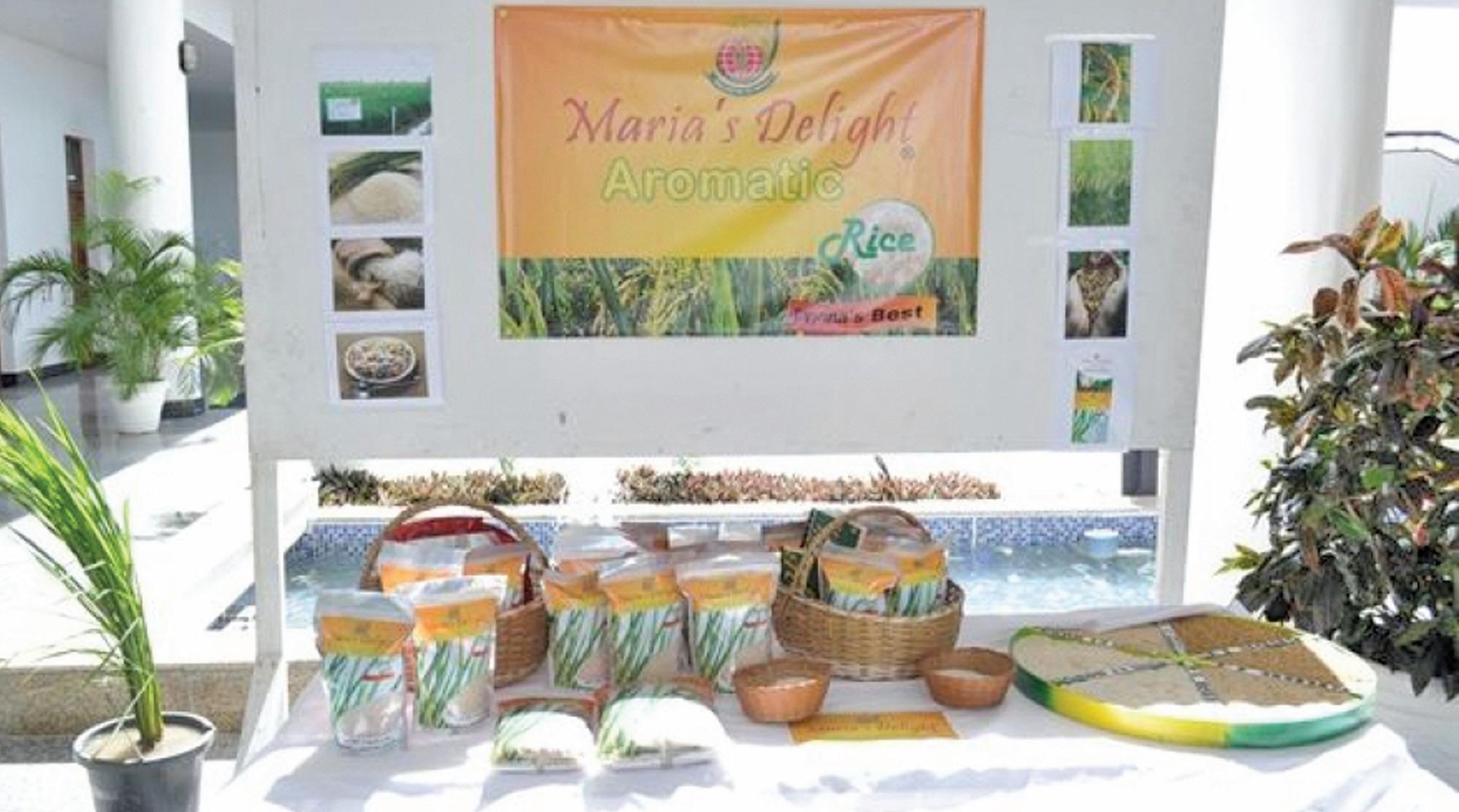
In an effort to boost rice yields, thereby increasing its production in Guyana, the Agriculture Ministry, in collaboration with the Guyana Rice Development Board (GRDB), introduced two new rice varieties: the GRDB 14; and the Maria’s Delight Aromatic. The rice varieties were introduced in February 2014, and have been experiencing growing success in several regions including Region Two.
When compared with GRDB 9 and 10, the GRDB 14 is a better option, in terms of production, since it generates high yields (as good as those of the GRDB 10). The aromatic rice is also high yielding, and has a robust plant type.
A semi commercial trial was done on a five-acre plot, to compare the GRDB 10 with the aromatic and the GRDB 14, and it was observed that the yields are very similar. The two rice varieties were developed locally, at the Burma Rice Research Centre, Region Five (Mahaica-Berbice).
At the launch back in 2014, Minister within the Agriculture Ministry, Alli Baksh, highlighted the significance of this new development, noting that agriculture is the backbone of Guyana’s economy.
He said that while the revitalisation of this industry came with the return to government of the People’s Progressive Party/ Civic (PPP/C), the farmers had a very significant role to play, and they (the farmers) must recognise the benefits that are derived from this critical industry. “Today, rice farmers’ children are going overseas, on scholarships and studying and returning to contribute to the sector,” Baksh noted.
Baksh also highlighted that while production was at its best, the question of storage posed a challenge, and he urged the farmers to add value to this commodity, and not just stick to the traditional way.
Under the management of the GRDB, which is responsible for the management of the rice industry, four high-yielding rice varieties had been introduced over the past three years, namely, GRDB 9, 10, 11 and 12.
Dr Mahindra Persaud, Chief Scientist, explained that about 20 trials were conducted to ensure that the GRDB
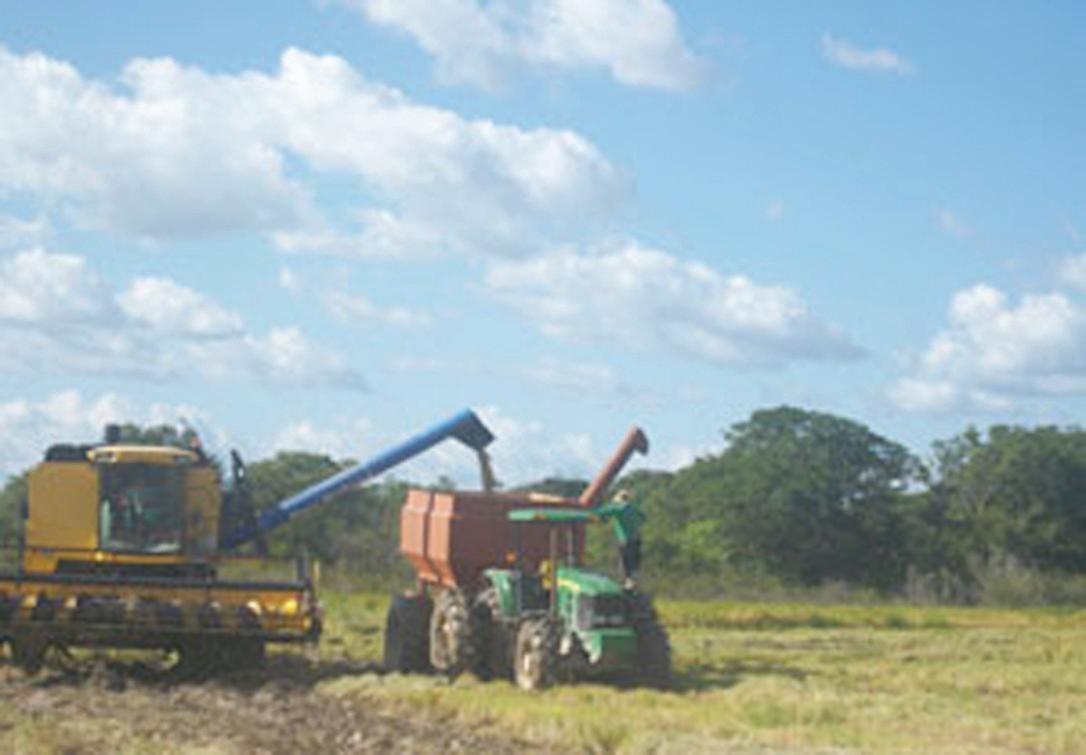
14 was better than the GRDB 10, which has the most productive yield thus far. It was concluded that the GRDB 14 has great potential, “as it has an excellent early vigour, and emerges well in four to six inches of water, high yielding (beyond 200 grains), tolerant to lodging, excellent plant type,
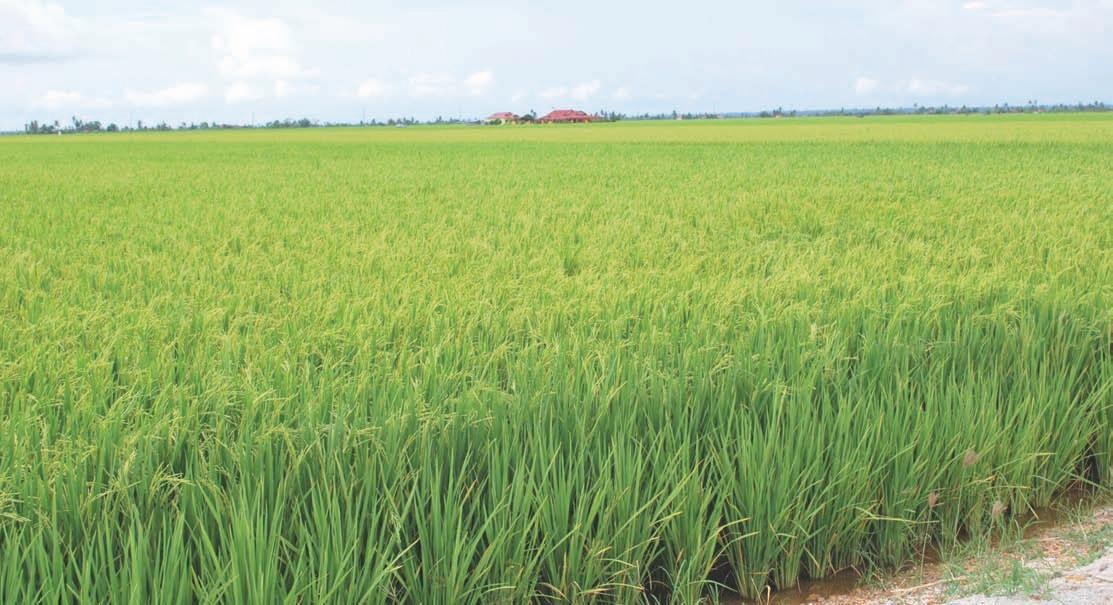
and resistant to blast disease and good cooking quality”.
He also said that the new variety was also used in several farmers’ plots, and touched as much as eight tonnes per hectare.
Persaud highlighted that while these new varieties were of good quality, there was much more to be done. He assured the farmers, that in a few years, the Ministry will develop more new varieties, which will take them to a minimum of nine tonnes per hectare.
Meanwhile, as it relates to the aromatic rice, he said that this grain has been a very important objective in the rice industry, and was very crucial in terms of market. Persaud further explained that due to the demand and the high price paid for produce worldwide, many programmes have been tried, by countries such as India and Pakistan, to develop the aromatic rice.
This aromatic variety is very difficult to breed, because one has to track the right set of genes, and have a good screening programme, since the aroma itself is influenced highly by the environment. But, Persaud pointed out, Guyana was able to develop this variety and it was performing as well as the GRDB 14.
This grain is less vulnerable to attacks from pests and diseases and is produced with significant resistance level.
“Once we are able to market this produce, we can very well say that the future of the rice industry depends on two things: the progress that we make in aromatic breeding… and how well we continue the programme; and secondly, how well we market it internationally,” Persaud emphasised.
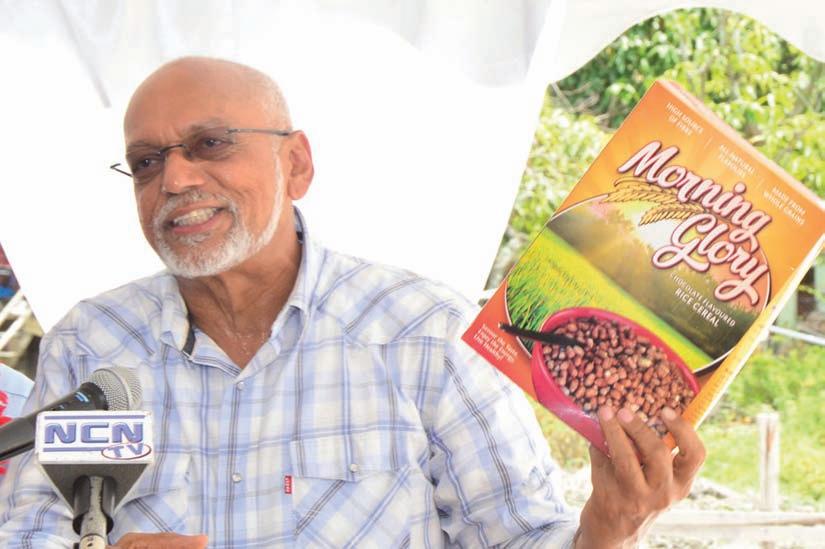
The Government is investing $100 million in the construction of a rice cereal factory at Anna Regina in Region Two (Pomeroon-Supenaam), which when completed will employ some 200 persons.
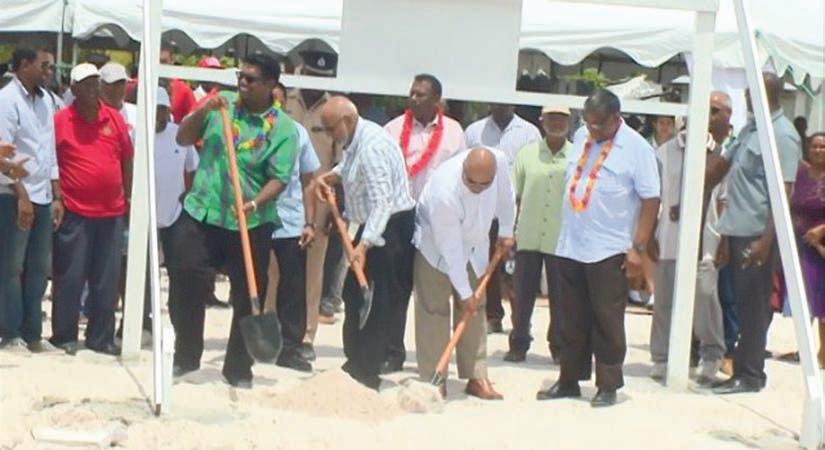
President Donald Ramotar, a delegation of ministers and other officials journeyed to the community last March for the historic sod turning ceremony.
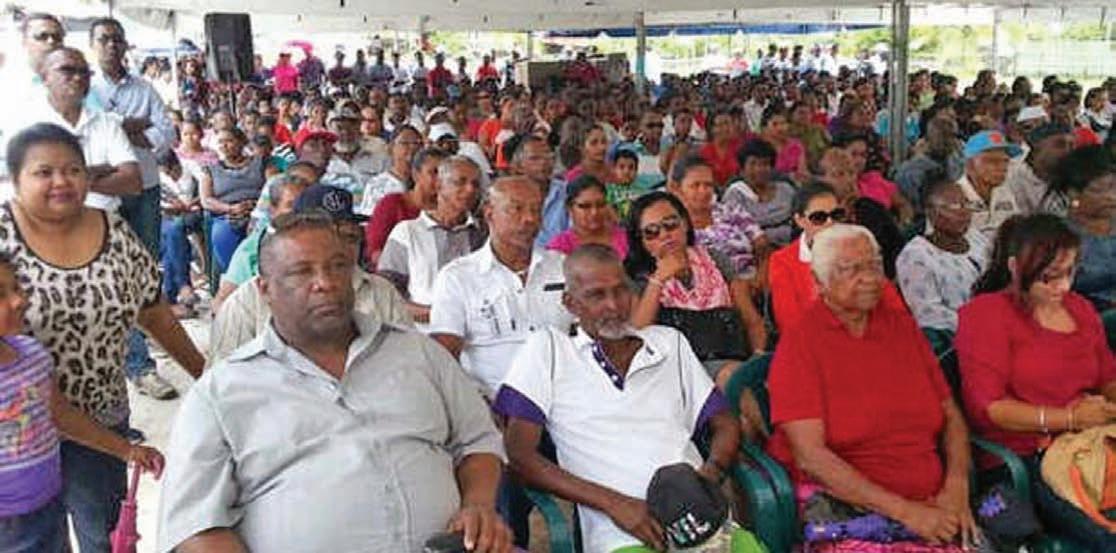
Ramotar, in his address to a large gathering, said the rice industry continued to be a driving force of Guyana’s economy and the factory will take this contribution to another level – value added production.
Committing that a People’s Progressive Party/Civic (PPP/C) Government will never let the industry down, the President noted that rice production has grown and the industry is consequently becoming more competitive.
“ You don’t have to get “A” quality to produce this cereal, from the broken rice it can be produce and still can fetch a good price on local and international markets,” he said, adding that the project is a classic example of how science and technology can help to change the lives of many Guyanese.
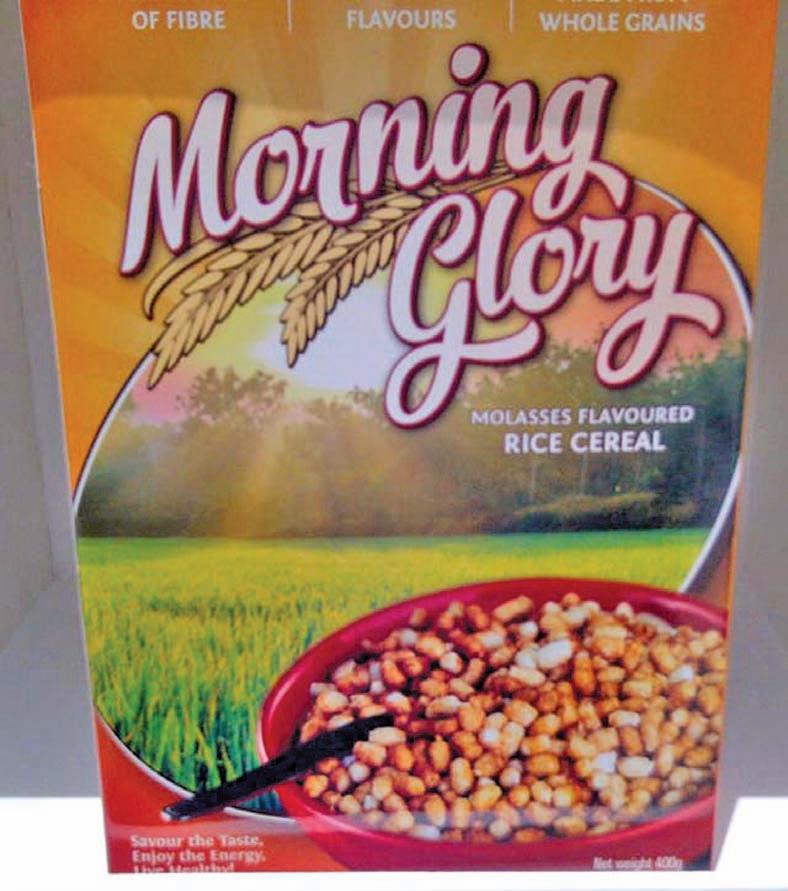
The rice cereal crisp project which is branded “Morning Glory” is being undertaken through collaborative arrangements between the Ministry of Tourism, Industry and Commerce and
handling certificates.
The facility he said will have a capacity to produce 20,000 tonnes of rice cereal, which will increase to 30,000 tonnes as time progresses. The facility will be constructed by Vish Turbo Contracting Service.
Also in attendance was acting Commerce and Industry Minister Irfaan Ali, who stated that the lives of many Guyanese have been
the Institute of Applied Science and Technology (IAST).
“We will continue to work to create more employment, to ensure that we use science and technology to improve the peoples lives, we will build a Specialty Hospital, West Demerara Highway, more efficient and faster travel and ensure security, I look to you as we begin this project to add value and also to highlight Essequibo both locally and internationally, the Region will become famous with this cereal,” Ramotar noted.
He called on the Private Sector to adopt similar initiatives of adding value to the rice such as ‘pre-cooked rice’ and ‘five minute rice’.
Director of IAST Professor Suresh Narine said markets locally and in the Caribbean will be targeted. A box of cereal will be sold for $600-$700 per box of 400 grams. Narine further explained in addition to the rice cereal crisp, a convenienct nutritional bar will be made.
Initially, some 105 persons from within the region will be employed. Those persons will be trained and given food
changed positively under the PPP/C Administration. Ali said that development was all about having a vision and implementing same.
According to him, he has advocated for the rice cereal crisp factory for Region Two and diversifying the economy in Leguan and Wakenaam establishing a plantain chips factory, “Island Chips”.
But these were dismissed as a “joke” by the Opposition in Parliament.
Ali outlined, “This is no longer a dream but a reality for the people of Essequibo, Morning Glory will be a pre-
ferred cereal on the market, to the Opposition this is not a dream, we are making it a reality today”.
“Rice is the essence of the economy, we cannot afford for the rice to fail, never allow rice to fail in Essequibo or anywhere in Guyana,” Ali said.
Ali said Government was cognisant of the need for a brighter future and as such is exploring investment options to make this possible for young people in Essequibo.
He pointed to the Government’s investment in infrastructural improvements which simultaneously creates employment for many. Ali also mentioned that a call centre will be established in the region.
The Tourism Minister also spoke of the small business development programme under which a grant is provided to a young person wanting to start up small business. “This programme will give young people $300,000 to help start up business,” he said.
At the ceremony, the members of the audience were given a taste of the cereal with milk.
Others in attendance were Minister within the Agriculture Ministry Alli Baksh; Labour Minister Dr Nanda Gopaul; Member of Parliament, Corrnel Damon; General Manager of the Guyana Rice Development Board (GRDB), Jagnarine Singh; Region Two Chairman Parmanand Persaud, and Regional Vice Chairman Vishnu Samaroo.
Former President Bharrat Jagdeo on Wednesday cleared the air on the workings of the Venezuela-sponsored Petrocaribe deal,dismissing claims by Opposition-backed rice farmers in Essequibo that the Guyana Government was using funds from the deal to subsidise it.
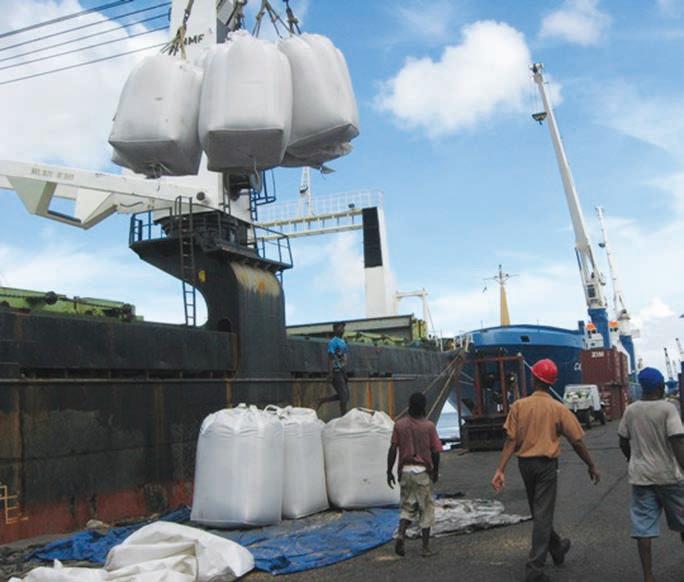
Petrocaribe, in addition to supplying oil at concessionary rates to Caribbean countries, is aimed at promoting trade among member states, and Guyana has been supplying rice to Venezuela under the initiative. Under the current trade agreement, Guyana is expected to supply approximately 210,000 tonnes of paddy and polished rice annually to Venezuela. The value of this supply amounts to US$130 million. Under this rice agreement which dates back to 2009, Guyana has been able to obtain increased prices every year, a development that has since brought added benefits to rice farmers and the economy as a whole. Actually, for Guyana it has spurred a rapid increase in rice production, due to the lucrative Venezuelan market, thus increasing the food supply in the region.
During a meeting with rice farmers at Anna Regina, Jagdeo heard misinformed complaints from farmers that the rice-for-oil agreement with Venezuela was not above board and that farmers were often shafted in the arrangement. Jagdeo told the meeting that he has heard a lot of “falsehoods” being peddled around by the Opposition about the agreement between Venezuela and Guyana.
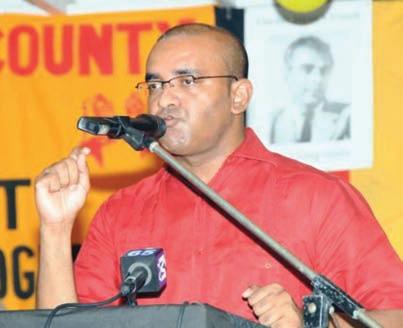
He said that the money from the fund usually sat in the Central Bank and dismissed accusations that the Government was using the money for development projects. “I heard Doerga (former CEO of Alesie Group of Company Turhane Doerga) saying we have tons of money and this Government doesn’t want to use it. This is gross misunderstanding, the money is at the Central Bank” Jagdeo noted.
Explaining to farmers how Guyana entered into the arrangement with Venezuela, Jagdeo said that a few years ago in 2009, Guyana had a large quantity of rice and was posed with the issue of lack of markets. He said at that time he was at a United Nations meeting when he spoke to the late Venezuelan President, Hugo Chávez who in turn directed him to speak with current President Nicolas Maduro, who at that time was the Foreign Affairs Minister of the country. He said following his engagement with Maduro, he was able to strike a rice contract. “I am hearing all kinds of claims, but let me say this – that the fund was not opened by chance. It was opened by a conversation, farmers need to understand this”.
He further added that the Petrocaribe deal was open to all Caribbean countries and it was as a result of the fluctuation of oil prices. “Let’s say oil prices are high, Venezuela
Agriculture Minister, Dr Leslie Ramsammy has criticised what he called the mismanagement of the rice industry by the People’s National Congress (PNC) Government two decades ago, while pointing to the extraordinary success achieved by the current Administration in reviving the sector.
Dr Ramsammy made the comments during a talk show on the National Communications Network (NCN) this month. He said back in 1964, Guyana was able to achieve some 200,000 tonnes of rice, and for the first time was able to export 100,000 tonnes. That was during the reign of the People’s Progressive Party/Civic (PPP/C) Government. However, there was a significant drop in this level of production, after the PNC took office, and according to Dr Ramsammy, Guyana did not reach 200,000 tonnes again in production until 1995, and indeed “we only reached 100,000 tonnes in export once between 1964 and 1992.
The Minister noted that the PNC had allowed the sector to become virtually dead, but since 1992, “rice has just parachuted upwards, and we now have a production of 635,000 tonnes last year, that is a number that just 10 years ago, people said was impossible for Guyana, and so far for this crop of 2015, when we have so far harvested 25 per cent of the crop, if the production continues to the end of this first crop, we will produce more than 350,000 tonnes of rice, which is more in one crop than we did anytime in the period before 1992.”
Dr Ramsammy related that just three months ago in January, some 45,000 tonnes of rice were exported, which is more in this first quarter than had been exported anytime between 1964 and 1992, in a year, irrefutable evidence that the industry has flour-
said we will give you some credit, this is for the entire Caribbean. If oil prices are high then 40 per cent of the oil payments can be kept by the country as a loan, 60 per cent you have to pay over a time span.”
He said the loans from the fund are being used for development projects in the Caribbean, but this was not so in Guyana, instead the money is placed at the Central Bank financing the purchasing of rice. He said that the Government, however, had used US$15 million from the fund to construct the Hope Canal from the Demerara Conservancy, because the Government saw it as important for the agriculture sector. He added the agreement enables Guyana to ship rice to Venezuela and said when that Government pays Guyana for its rice, the money is put as a loan to the Central Bank to be used for the purchase of rice.
Petrocaribe was established to act as an economic “cushion”, giving countries time to adjust their rates of consumption, make lifestyle changes, and move toward renewable energy sources. It also created a mechanism, whereby a fund could be established to be used for the development of the energy sector as well as other areas such as social projects.
Guyana’s total fuel bill at the time it joined Petrocaribe was about US$400 million annually and at 50 per cent co-financ-
ing under the agreement, the country was expected to develop an annual debt of about US$200 million. But with the aim to offset such a situation, Guyana took the position that for every shipment of oil, full payment would be made immediately. At present, the local fuel company buying the oil has to pay the full price to the Guyana Energy Agency, which acts as the agent to purchase. At the level of the Government, the Venezuelanfinanced portion is placed in a special account and the Finance Ministry issues a promissory note. The money accumulated in this process has been used to help in purchasing two power plants for the national electricity sector as well as funding other projects. For export of rice and paddy, the cost is discounted against what is owed by Guyana for Venezuelan oil.
In other words, Guyana’s debt to Petrocaribe is paid in paddy and rice as settlement for oil from Venezuela. Under this arrangement, three compensation agreements signed with Venezuela resulted in the cancellation of US$281.1 million of Guyana’s oil debt. This amount was equivalent to the value of rice and paddy exported to Venezuela from July 2011 to October 2013.
ished. Overall, in 2014, he said, the country exported over 500,000 tonnes. Focusing on the Essequibo, Ramsammy said Guyana was producing more rice now than at any other time in history. Figures show that by 1990, “we were only cultivating about 30,000 acres, but now, we are cultivating in Essequibo (alone) around 38,000 hectares”
Minister Ramsammy detailed, after compiling the figures, there was growth of more than 100 per cent. He also mentioned that the success is more than numbers as before 1992, in Essequibo more than half of the rice produced was by one entity, Kayman Sankar Group of Companies, but that today, 100 per cent of the production in Essequibo comes from thousands of farmers. This takes the success of rice into a new dimension where monopoly and exploitation were erased.
This important dimension is sometimes missed by the Opposition, he said, but challenged that “people take a step back and recognise that indeed before 1992, we had very few mills in the country, and that production was not there to support the mills.”
He recalled that at this juncture, there was little to show in terms of infrastructure, but that today there are large mills and whether it’s Essequibo, Regions Three, Four, Five or Six, there are mills that produce quality rice that could enter any market in the world.
Referencing the Venezuelan market, he said if that market was present in 1992, Guyana could not sell to Venezuela, because the quality of the mills that were present then could not have processed paddy to produce the rice which Venezuela buys.
Dr Ramsammy rubbished the Opposition’s idea that Government should “step aside” and that rice was a Private Sector business.’
“Will the farmers invest in all of this?”,
Ramsammy questioned, noting that Government has a role to accommodate the growth of the industry. Dr Ramsammy said Government is prudent where the rice sector is concerned, as there have been calculated moves to ensure that quantity, quality and variety be amalgamated. Since 1995 to now, the country has produced 14 new varieties of rice for Guyana, and recently, “we introduced GRDB 14, and in 300 acres, where it is now on farmers’ plot, including in Essequibo, and the average is between 55 and 60 bags per acre, GRDB 13 is the aromatic rice, and GRDB 12, 11, 10 are still very popular across Guyana.”
In sharp contrast, the Minister noted that before 1992, this was not possible. He recalled the Rustic (the extra-long grain, high quality locally developed rice variety) that was developed by an Indian scientist in Guyana, but this contribution under the then PNC Government was short-lived, as the PNC revoked his visa and sent him home.
Minister Ramsammy advised that when there are criticisms from the Opposition that “we have high production but no markets, they ignore the fact that last year we sold 501,000 tonnes and we had 33 countries,” and, therefore, there is no validity to what is being peddled.
He further elaborated that people needed to realise that rice is one of the most common commodities in the world, but many of these markets demand high quality rice, and this means that millers must ensure that they are sending the best quality of rice, or their reputation will be affected. This, he said, is what recently obtained with Alesie, having shipped substandard rice to Chile, and this had a huge negative impact, as it harmed
Guyana’s reputation
He cited that during the dry season, the irrigation pumps have to provide the water as a public good. He pointed out that the pumps, which were built by the late Dr Cheddi Jagan in 1957 and 1964, were either disabled or malfunctioning during the tenure of the PNC.
Currently, Government is building a pump station at Lima, and even though a pump station was built at Three Friends, a new one is being budgeted for. The Minister added that not only the ‘pump inputs’ but also work on the main canal, linking the conservancy, had to be seriously worked on, as “this was almost non-functional, and all the head regulators were disabled.”
Dr Ramsammy mentioned that under an Inter-American Development Bank (IDB) loan, this Government replaced all of the head regulators, and has maintained the main canals, even as “those very maintenance activities are continuing to be an issue with the Opposition”
Rice continues to be the star performer in the agriculture sector, recording successes every year, resulting in higher expectations and targets, the Government Information Agency (GINA) said.
In April 2013, the Agriculture Ministry reported that from 50 percent of the cultivated rice land that was reaped, 5.1 million bags of rice were accumulated at the time of the reporting period. In excess of 81,000 hectares or 201,000 acres of land was cultivated in this first crop.
The Ministry had projected that Guyana would have achieved rice production of more than 250,000 tonnes, exceeding the initial target set of 206,000 tonnes at the end of the first crop.
The past two years had recorded more than 400,000 tonnes of rice and Guyana was on trajectory for surpassing the 2012 record production of 422,000 tonnes.
Agriculture Minister, Dr Leslie Ramsammy had pointed out that at that rate of production, Guyana was on track to achieve the highest rice production ever.
This is extraordinary given the fact that such a production would be at the most, four times what was achieved in the early 90s. But with this great success comes the new
techniques and new ways of managing the crop. This new production is possible as well with the efforts of the GRDB that have assisted farmers with better seed varieties which have led to improved yield per hectare and to more land being brought under cultivation.
Improved rice yield and more land cultivation are also the result of the National Drainage and Irrigation Authority’s interventions, which have over the years ensured secure drainage.
Drainage and irrigation is the primary foundation of any form of agriculture, and in the past 21 years interventions in this regard have
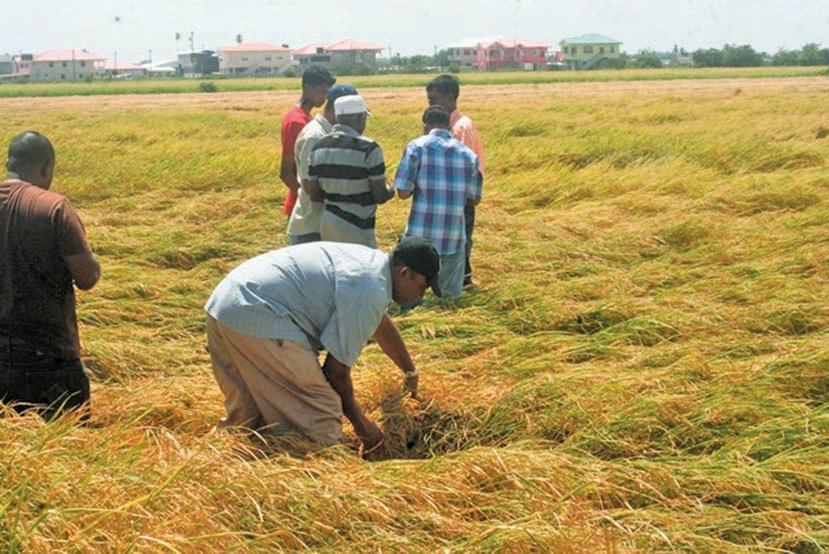
faced by the farmers.
This increased production is largely due to the success of the field school, where farmers learn new land preparation
been continuous, resulting in an improved system.
The Cane Grove/Mahaica area stands out as one of the country’s highest producers of rice, with farmers yielding approximately six tonnes per hectares. The overall average for the country is approximately 5.3 tonnes per hectare.
The reality is that Cane Grove/Mahaica has seen continuous drainage programmes. Under the Agriculture Support Services Programme (ASSP), the NDIA also rehabilitated the Cane Grove pump at a cost of $60 million, improving drainage capacity by 50 percent. The pump provides improved drainage for over 7000 acres of farmland in that location. Several canals in the area have also had been put under a schedule of monthly maintenance.
In Region Five, on the right bank of the Mahaicony, an area that can be easily affected by flood water, the NDIA has
set out to execute a huge project which targets the empoldering of 18,000 acres of land and the installation of drainage structures that would directly benefit rice cultivation.
Parallel to the Mahaicony River, the Retrieve Sluice was installed, providing increased drainage capacity.
Region Two is the next highest producer of rice where farmers are achieving in excess of 50 bags per acre. Importantly, in this region, five years ago, a new sluice was constructed at Golden Fleece and another at Westbury. Together, these two serve about 1300 acres of farmland.
The communities of Leguan and Wakenaam in Region Three are benefitting from the construction of the $93.4 million Waterloo sluice and the $16.37 million Noitgedacht sluice respectively. The Waterloo sluice drains 2000 acres of farmland, which is half the amount of cultivated area in Leguan, while the Noitgedacht sluice serves over 1000 acres of farmland in Wakenaam.
In Region Four, the Golden Grove/Victoria pump was rehabilitated at the cost of $61 million and forms part of a $254 million drainage boost to the area which also includes the rehabilitation of several structures, interventions that benefited over 5000 acres of farmland in the Golden Grove/ Victoria community.
Over the last five years, the Ministry of Agriculture through the NDIA has resuscitated nine sluices and built 13, directly targeting agricultural areas.
This year, the Ministry has budgeted that $6.5 billion be spent on drainage and irrigation to continue the efficiency of this sector, and guarantee that Guyana achieves the target set.
The Region Two (Pomeroon-Supenaam) Administration, through the National Drainage and Irrigation Authority (NDIA), invested more than $81 million to improve drainage and irrigation throughout the entire Essequibo Coast in 2014.
The desilting of the drainage canals was executed at a time when Guyana was experiencing unusually heavy rainfall, which had caused floods in several parts of Guyana. The works executed were aimed at helping to eradicate flooding in residential and farming areas on the Essequibo Coast.
Beneficiaries of the project, predominately rice farmers and residents, at the time, had expressed gratitude to the Government of Guyana for executing the project at an opportune time. The project, which entailed the clearing of most canals and the desilting of clogged facades and conser -
vancies, enabled more crop production and encouraged more and more farmers to open up more lands.
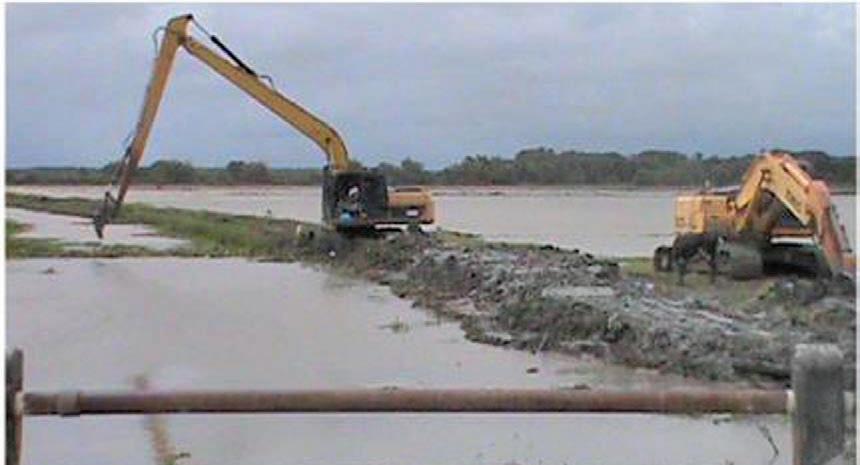
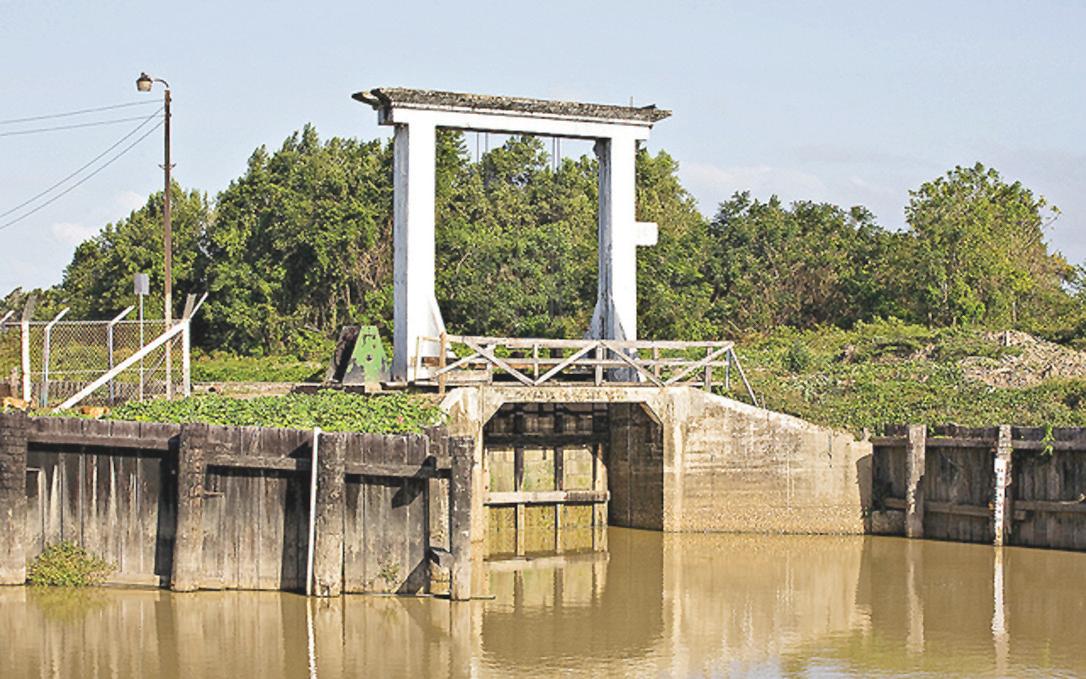
Region Two Chairman Parmanand Persaud inspected the work throughout the Coast, including the desilting works at Capoey. According to Persaud, the project helped to improve drainage between Johanna Cecilia and Dartmouth.
Inspections were also conducted at Queenstown which was also affected by flood. Persaud said he was pleased with the works done by the contractor.
At La Union, the Chairman, during his inspection, noted that works were done on the main canal leading to the sluice mouth. This, he said, allowed more water to flow easily, and further enabled water to flow smoothly from Queenstown and Annandale.
Additionally, inspections were done at Taymouth Manor and Three Friends sluice where desilting works were also executed.
At the time, farmers said that they were thankful and uttered loud praise for the work done. Most rice farmers pointed out that most of the canals and drainage trenches had been invaded by tall bushes and weeds, making the flow of water problematic. The project had minimised flooding significantly in areas as well as boost production.
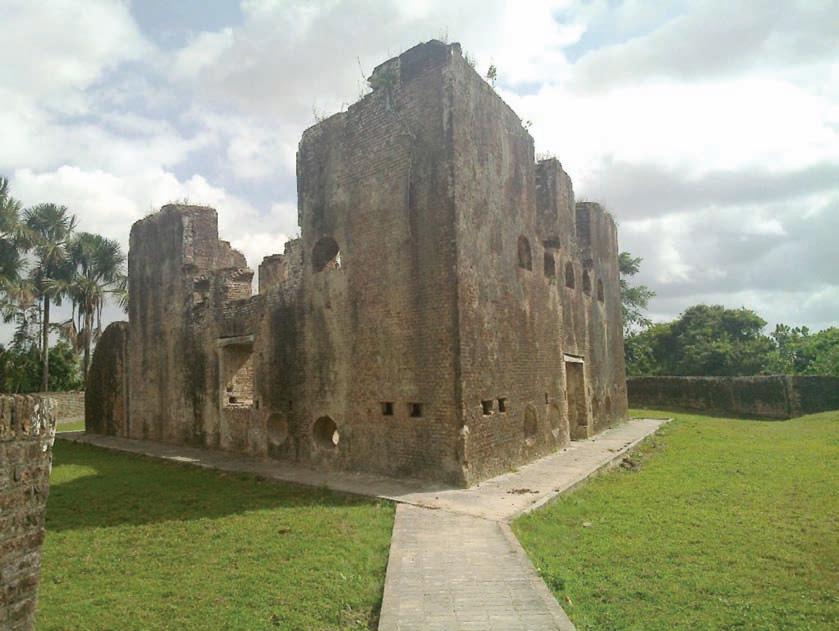
Most Guyanese believe that colonisation of Guyana began in Berbice because it is dubbed “The Ancient County”, but the fact is Essequibo pipped Berbice by a decade. The Dutch were the first Europeans to settle what is now Guyana.
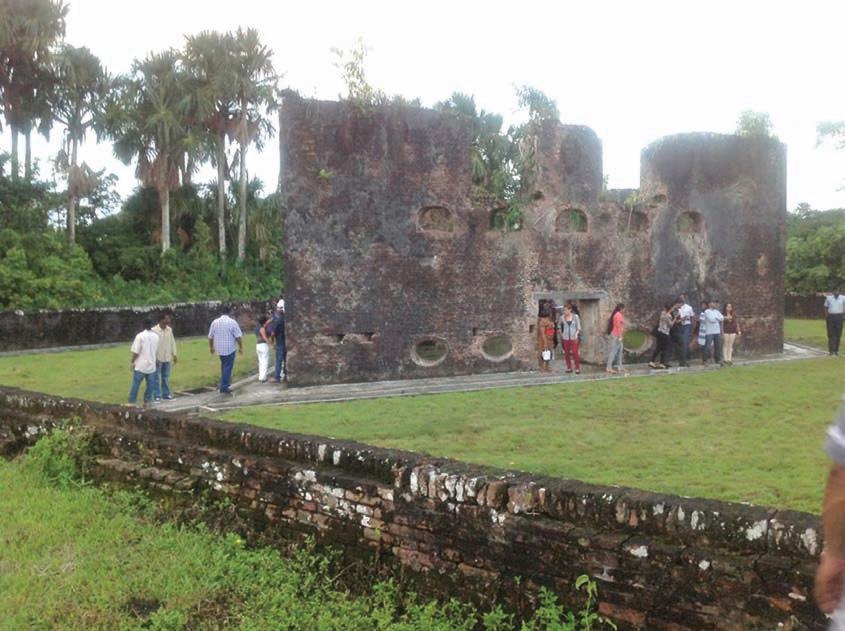
It is rather interesting that President Donald Ramotar was born at Karia Karia – just a few miles from the first Dutch settlement.
The Dutch aim soon changed to acquisition of territory as other European powers gained colonies elsewhere in the Caribbean. Although Guyana was claimed by the Spanish, who sent periodic patrols through the region, the Dutch
In 1616, the Dutch established the first European settlement in the area of Guyana, a trading post 25 kilometres upstream from the mouth of the Essequibo River. Other settlements followed, usually a few kilometres inland on the larger rivers. The initial purpose of the Dutch settlements was trade with the indigenous people.
gained control over the region early in the 17th century. Dutch sovereignty was officially recognised with the signing of the Treaty of Munster in 1648.
In 1621, the Government of the Netherlands gave the newly formed Dutch West India Company complete control over the trading post on the Essequibo. This Dutch commercial concern administered the colony, known as Essequibo, for more than 170 years.
Region Two is one of the only coastal regions in which the native Amerindian population is quite well integrated with other ethnic groups. There were approximately 8000 Amerindians in the region’s population of 50,000 as of 2002. The Amerindians are generally from two of the nine Amerindian tribes: the Lokono (Arawak): and the Carib.
Villages:
Most of the villages are isolated and located along the banks of the many rivers in the region. This area consists of dense rainforest and is accessible by airplane or boat.
There are three groups of Amerindian villages and settlements in this administrative region:
* The Amerindian villages along the mid- and upriver Pomeroon and its tributaries – Kabakaburi, St. Monica’s and Akawini;
* The villages along the Wakapao River;
* The Lake District inland of the Essequibo Coast and the Supenaam River.
Economy:
Cash activities: logging for coastal sawmills, gold mining deeper in the interior (Upper Supenaam and Berbice rivers); At the household level, there is also some subsistence farming and handicraft making.
Access to natural resources:
* Water: rivers and creeks
* Land: most communities in this region possess recognised land titles.
* Forest: The forests in this region have been exploited heavily. Consequently, logging activities shifted deeper into the interior locations. Certain tree species (Ite palm) have been overexploited due to craft activities.
* Minerals: quarrying (St. Monica’s)
Level of integration:
The younger generations totally lost their knowledge of their traditional language, except for some of the Carib communities on the Upper Pomeroon.
Government services:
All communities involved have health centres and school accommodation.
Wakapao and Moruca
Two Arawak communities in the coastal region, Wakapao and Moruca produce a lot of coffee. The last few years the farmers left the beans on the trees, because the low prices they were offered by the hustlers were not worth the effort of picking the coffee beans.
With some assistance, these communities can look into other marketing possibilities. For example, the price of green coffee in the Wakapao area is approximately G$25 Guyana Dollars per pound, while dried coffee beans go for two times as much. Assisting the community with the construction of a coffee house to dry the beans and a boat to transport it to the market would make a substantial difference.
Ecotourism
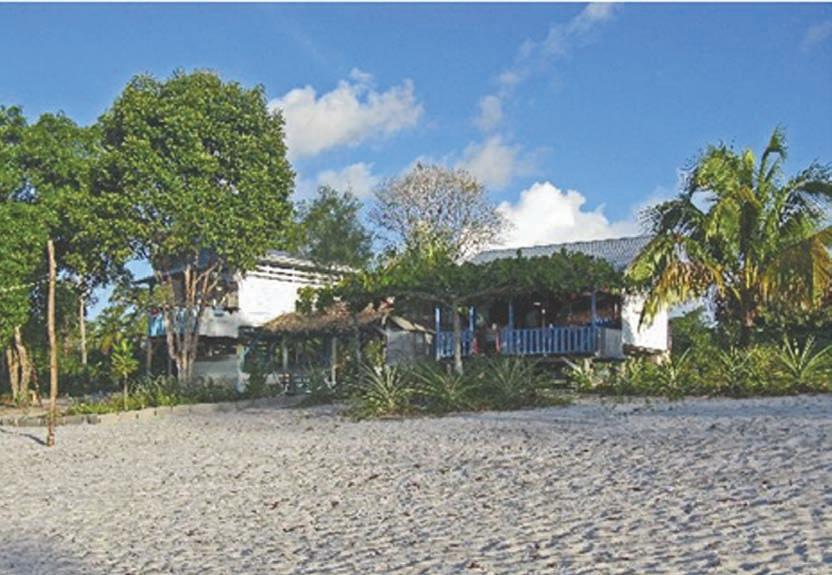
Ecotourism activities are mainly in the hands of a few first-class hotels which offer their customers the possibility to visit the interior. On the other hand, it has been identified, especially by coastal Amerindian communities such as in the Pomeroon, as a potential sector to work on.
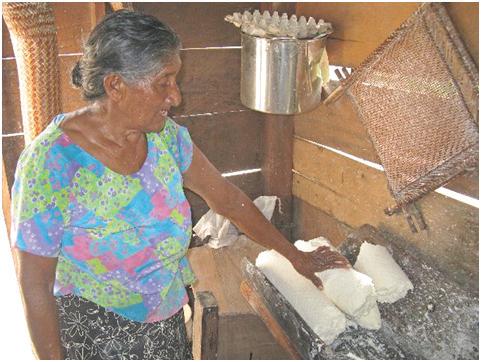
Making cassava bread
Although tourism in Guyana is a sector which still has to be developed for the greater part, Amerindian communities could try to focus upon certain groups which do not expect too much luxury while staying in the field. Possible groups are ornithologists and other nature-lovers, hunters and sport-fishers, botanical organisations, etc. Most communities interested in ecotourism understand that they need to look into possible negative effects as outcomes of an ecotourism project.
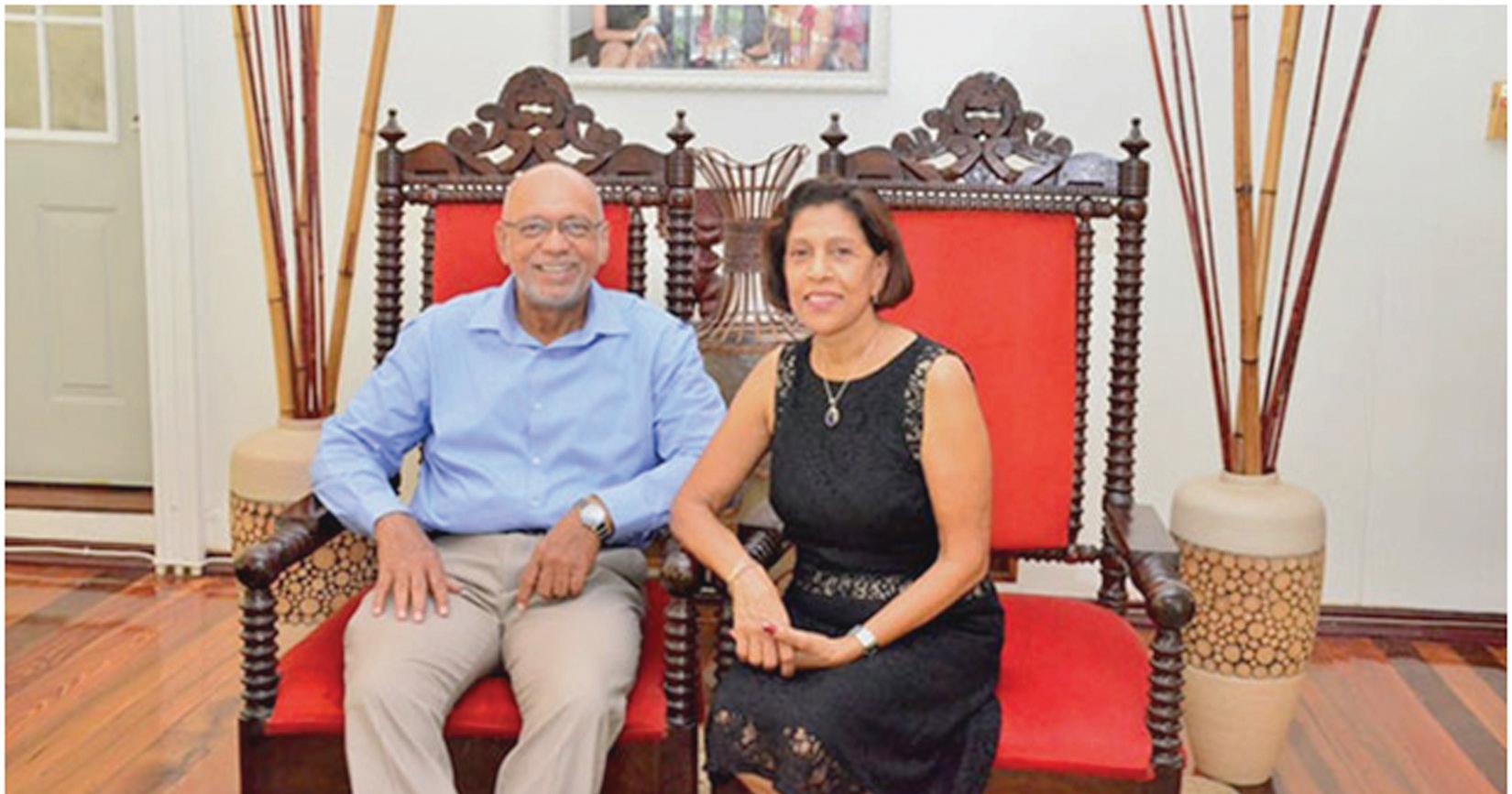
In what has to be a sign that the Cinderella County had been transformed to its rightful place as the “Princess Crown Jewel” of Guyana, in 2011 when Donald Rabindranauth Ramotar became the first President of the Republic of Guyana to hail from Essequibo. It was not coincidental that his wife of now forty years, Deolatchmee was also from that part of the country. But while Ramotar was born at Karia Karia up the Essequibo River, his wife was from Huis t’ Dieren on the Essequibo Coast - Region 2. Born into a Hindu home but embracing Christianity as well, like so many Essequibians had to leave for Georgetown when she wanted to further her education after teaching for a while at her village Primary School. She eventually pursued nursing as a vocation and gave birth to three children, the eldest being daughter Lisaveta Valantina, and sons Alexei and Alvaro Mario
First Lady says President Ramotar cares deeply for people
First Lady, Deolatchmie Ramotar extols her husband, President Donald Ramotar, for his humane, humble, considerate, caring attitude towards people, recalling his role as father singing their baby children to sleep while she worked as a nurse at a city hospital.
In an exclusive interview at State House in Georgetown, the First Couple talked freely and openly about their relationship, their family, and their marriage. The President and First Lady celebrated 40 years of marriage last Wednesday, and sat down together to talk about their amazing life journey.
President Ramotar played a hands-on role raising their three children, staying up late at nights to baby sit, singing the children to sleep when they were babies, Mrs. Ramotar said, and taking care of the home while she worked as a nurse.
He knew she disliked being in the kitchen alone, and so he joined her, working along with her to cook meals and do kitchen chores.
She described the President as an outstanding family man, with a character built on the rocks of humility, compassion and thoughtfulness.
These days, when he returns home at State House from the Office of President at night, after she would have retired to bed, he washes his own dishes that he used for his lunch, and puts them away.
The First lady revealed a side to President Ramotar that’s full of humanity and excellence of temperament.
Looking relaxed, at peace and comfortable with each other, with Mrs. Ramotar glowing and holding the hands of President Ramotar as they sat side by side for the television interview, the First Couple said when they got married 40 years ago they could not have envisioned becoming Guyana’s First Family.
They focused on building a life together, and in loving each other. Today, they both say that their love is intact and strong, with President Ramotar noting that they have become great friends and share “everything” with each other.
Not only are they the First Family of the nation, but their marriage is a role model for the Guyanese people, although President Ramotar said he would not want to uphold any particular way as the formula to achieve success in marriage and life. Everyone, he said, has their unique circumstances to deal with in life.
But they both underlined certain core values that work together to build a successful marriage and life. Some of these include absolute trust for each other, tolerating each other’s shortcomings, always communicating, remaining humble, and most importantly, allowing each other space to grow individually and to pursue individual careers and dreams.
said “in reflection” he has a lot to be grateful for, and praised Mrs. Ramotar for her understanding nature, and for standing by him through long years of poor pay and long nights out on the political field.
The couple got married on November 5, 1974, and remembers riding their bikes through the streets of Georgetown looking for an apartment. They eventually found one in Alberttown, ordered furniture, and embarked on their journey of life together.
However, the first night they lived in the apartment, they had to sleep on the floor, on cloth bags that their friends provided, because the furniture was not yet delivered. The bed arrived a few days later, and their
He agreed with Mrs. Ramotar that they achieved everything they ever wanted to, all their dreams, and now look forward to grandchildren and “another 40 years together.”
The President said his focus now is on his contributions to the nation.
The one who knows him best, who has been his constant companion and knows his heartbeat, Mrs. Ramotar, said she has full confidence that he will use the same qualities that made him such an outstanding family man to govern Guyana with success and amazing, inspiring results.(Chronicle) Guyana’s First Lady Deolatchmee Ramotar brightened the faces of hundreds of children in Region Two (Pomeroon-Supenaam) on Saturday when she showered them with kites to usher in the festive season of Easter.
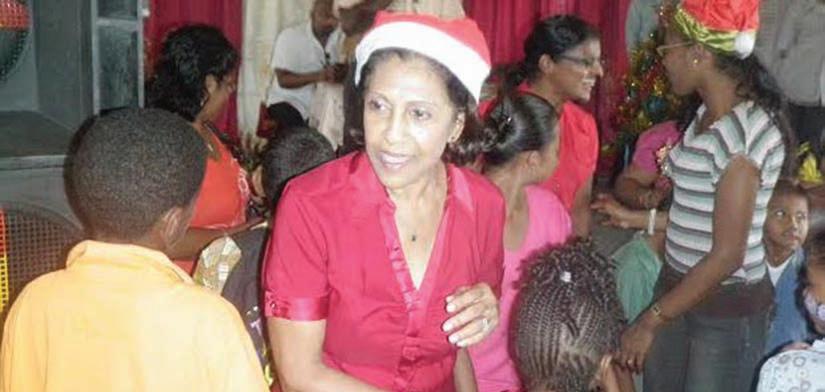
Ramotar began her distribution at her place of birth, Huist Dieren, where she interacted with children in the area. She then ventured to Golden Fleece Estate, Anna Regina, Dartmouth, Bounty Hall and Charity, where the children were not only overwhelmed with joy to receive their kites but also to meet the First Lady.
To this end, Mrs. Ramotar understood what would constitute a life in politics, and so when her husband came home late or had to dedicate time to political work, she understood, and supported him.
However, there were times when she felt “angry” at him, but, instead of fuelling a fight, the President simply communicated with her, telling her about his day and engaging her in conversation.
She said President Ramotar is an excellent communicator, and always shows deep consideration for the feelings of others.
Her praise for him as an adoring father and outstanding husband flowed from her heart of gratitude and contentment for a life well-lived.
As the First Couple celebrated their 40th marriage anniversary, President Ramotar
amazing voyage from humble Essequibo kids falling in love on the ferry traversing the Demerara River in 1973 to State House and the Presidential Office got underway.
Today, the nation’s destiny lies in the hands of their character of personal humility and humble service, their inner values and principles, and the First Lady, in a sombre voice, with an authentic tone of belief, said she knows that her husband would succeed as President of their country, just as he succeeded as father, husband and family man.
She said President Ramotar’s care and consideration for people, his humility and humanity, his constant reaching out to understand and lend a helping hand, would serve Guyana well.
President Ramotar said he is contented and thankful for achieving the milestone of their 40th wedding anniversary, and noted with his usual humble attitude that this achievement is not “unique” in Guyana, as many couples in the country celebrate long marriages.
At the time, she was accompanied by Region Two Chairman Parmanand Persaud and Regional Education Officer, Bharamdai Seepersaud.
During the distribution exercise, the First Lady told the children to take their education seriously. She advised them that education is critical to their development and reminded them to attend school regularly and punctually.
During the First Lady’s visit, she mingled with parents and community members as well. She also engaged the children in an interactive session on the meaning and symbolism of Easter and kite flying.
The children were also reminded of the significance of Easter. “It signifies when Jesus Christ was crucified and then he was resurrected. He rose from the dead, from the grave and he went into Heaven, when you raise your Kite remember Jesus Christ,” the First Lady encouraged the children.
In return, the children showed their appreciation by reciting poems and songs for the First Lady and her team.
President Donald Ramotar, accompanied by Agriculture Ministers, Dr. Leslie Ramsammy and Ally Baksh, and officials from the Rice Producers’ Association (RPA) yesterday met with rice farmers at Golden Fleece and Hampton Court on the Essequibo Coast.Last week a number of rice farmers led by an Alliance For Change (AFC) Councillor took to the streets in an unlawful demonstration, burning tyres, blocking roadways and assaulting police officers over delayed payments for paddy by millers. A number of them were taken into custody and later placed on bail.
The Head of State emphasised the importance of the rice industry, not only to individual farmers, but to the country’s economic development as a whole. He explained that the Government has been working over the years to diversify the economic base of the economy so as not to be solely dependent on a few traditional industries.
He noted that even though the sugar industry has been facing quite a lot of struggles, the country’s economy has remained strong, and the rice sector has made significant contributions to this.
in 2014.
However, new challenges have arisen in the form of locating new markets, higher prices, and finding new ways to make the industry more productive and competitive. In this regard, the Government has dispatched a team of Indian scientists to visit the various mills across the country to determine how energy can be used more efficiently and to expand the industry by using by-products of rice.
The Government is also looking at other forms of marketing that will be competitive for farmers.
With regard to Guyana’s rice deal with neighbouring Venezuela, President Ramotar said, “We do not know what is going to happen in Venezuela, the political situation there is not very good…we have to think beyond that to protect the industry.”
He added that even if Guyana continues to hold the Venezuelan market, the percentage of rice being sold there will continue to fall as production continues to increase. In light of all of this, the President assured that his Government is committed to exploring avenues to ensure that the industry is protected.
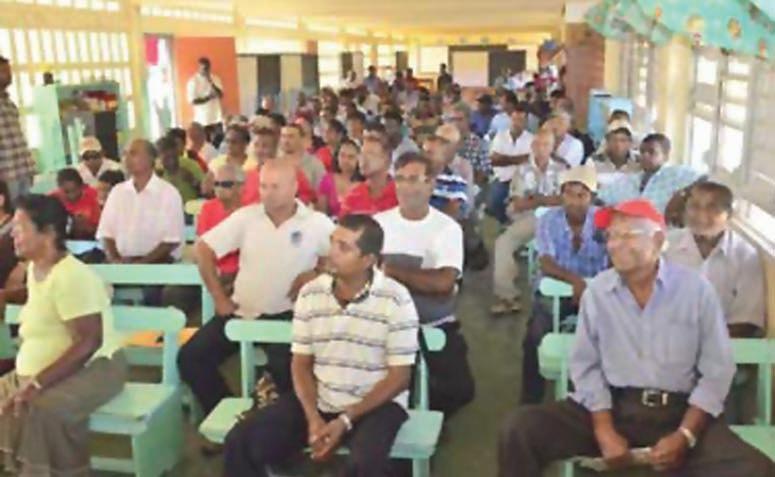
The President spoke of the support that his Party has given to rice farmers over the years, and took the gathering back to 1964 when the PPP lost the general elections to the PNC. He reminded that some of the first people who faced victimisation were rice farmers. In 1965, the then PNC regime reduced the price to farmers and when they attempted to protest in front of the Parliament, police dogs were released on them.
“The best friend that this industry has ever had has been the People’s Progressive Party in Government…the industry was on its knees when we got in government in 1992, the production was just about 90,000 tonnes of rice,” President Ramotar reminded.
As a result of massive investments in drainage and irrigation, opening up of lands, and subsidised prices for fertilizer, farm to market roads, new rice, among other interventions, the rice industry continues to record strong production. Even under the most testing of conditions, it recorded a production of over 400,000 tonnes for the first crop
Meanwhile, Minister Ramsammy explained that Guyana is a small country; it cannot consume all the rice it produces.
“We consume totally industrially and for food approximately 120,000 tonnes…it means that we have to export close to 500,000 tonnes. In 2006, we were only exporting about 200,000 tonnes. Last year, we exported 394,000 tonnes. As we are speaking right now, we have increased the export by 25 percent…by the end of the year between 475,000 and 500,000 tonnes would have been exported,” the Minister said.
More rice has been exported to traditional markets such as Jamaica and Europe, and new markets have been added as well, such as Haiti and Panama, which have been buying increasing amounts of rice. The Government is also in the process of negotiating with markets in Central America and Africa.
Only last week, an invitation was received to send a team to Africa to negotiate terms for them to purchase rice from Guyana.
On the issue of millers’ failure to pay farmers in a timely manner, the Minister recalled that earlier this year, President Ramotar immediately ordered funds to be released to pay farmers who were owed about $300M from the previous year (almost $200M of that amount were for farmers on the Essequibo Coast).
To date, the Government has only collected a small amount of this money that was released.
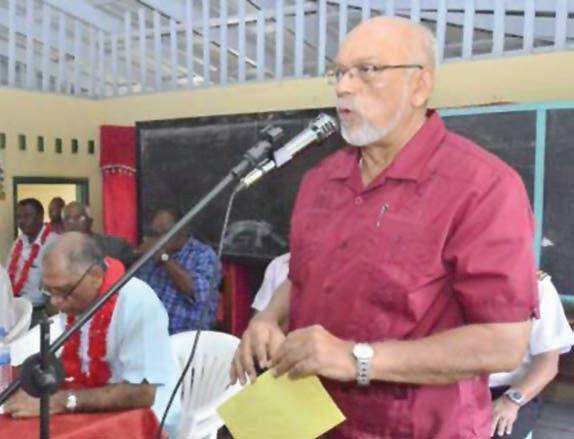
“Instead of the farmers being owed, we are now owed that amount of money. That is the kind of support we gave. In the last several months, we have released further amounts…our position is that rice farmers must be paid fully and on time,” Minister Ramsammy stated.
General Secretary of the RPA, Dharamkumar Seeraj, in his remarks said that the rice industry benefitted from very good prices at the beginning of the rice deal that is a part of the Petrocaribe arrangement. As a result, farmers took it upon themselves to invest in more acreage, so much so that the acreage cultivated per season moved from 175,000 acres to 226,000 acres, some outside of drainage and irrigation areas.
This year, there was an increase in production plus carryover stock and only a 200,000 – tonne market to Venezuela. This led to serious implications such as delayed payments, which affected farmers throughout the country.
“We wanted more from Venezuela, both in terms of quantity, as well as duration, but we are taking these issues into consideration before going ahead with plans to rent additional rice lands at high prices and expanding cultivation.
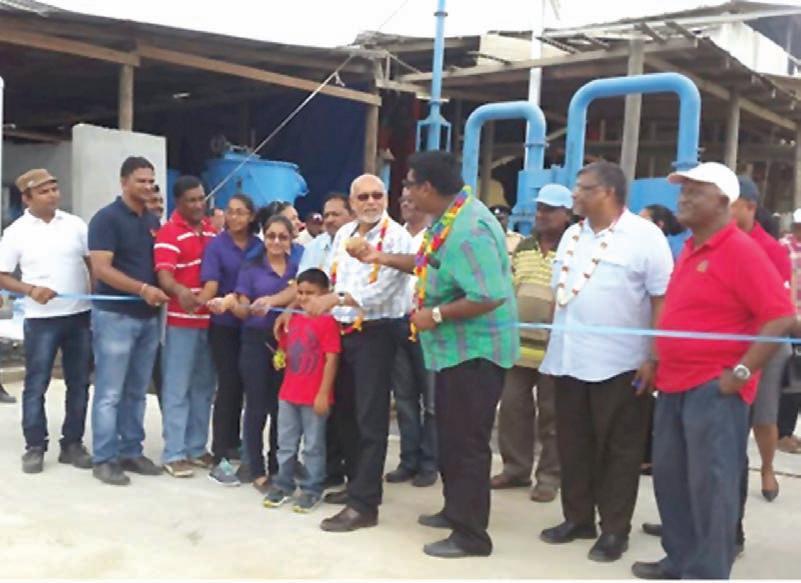
Almost $20B has already been paid to farmers across the country. Recently, some $400M was paid out to rice farmers in Region 2. (GINA) Gasification Plant Commissioned at Ramlakhan’s Rice Mill – Essequibo has been forging ahead in turning to alternative sources of energy in line with the Low Carbon Development Strategy (LCDS)
Smart investors are already smelling the transformation of the Essequibo economy, which is just around the corner with oil in the offing and a Rice Stabilisation Fund about to be established to ensure that the rice farmers of the Region enjoy the bonanza they deserve.
The good news is that a contract has already been signed by a solid local corporation for the establishment of a call centre on the Coast that will employ several hundred mostly young persons who will be working in air conditioned offices. While there has been call centres set up for years in Demerara and Berbice, Essequibo was off their radar because of the lack of high quality density in telephony - whether broadband or land lines. A small “20 seat” facility could not overcome the major challenge due to GT&T not providing the telephone connectivity.
And this was in spite of Essequibo having an abundance of well educated, English speaking youths who the overseas customers are demanding. These call centres, which are

a subset of a new type of business referred to as Business Process Outsourcing (BPO) companies, perform such services as outbound sales / telemarketing; inbound customer support; voicemail transcription; medical records transcription; and data warehousing for clients in the United Kingdom , the United States , Canada and Mexico.
To overcome the telephony issue, the Guyanese conglomerate has arranged to have its own, independent broadband connectivity. One added benefit is that it might be possible that the excess brand with might be shared with the rest of the Coast, and thus eliminating one-off the major problems that Essequibians face daily.
The Pomeroon-Supenaam region comprises forested highland and low coastal plain, but also takes in a small portion of the hilly sand and clay region.
The 42,769 people of this region live in Amerindian settlements and more established villages concentrated along the coast. The town of Anna Regina, on the West bank of the Essequibo River, grew out of a Government land development scheme and is made up of former plantations such as Henrietta, Lima, La Belle Alliance.
The Tapakuma Project in this region links the Tapakuma, Reliance and Capoey lakes into one large conservancy, which supplies irrigation water for rice fields which dominate Region Two.
Besides rice farming, some people cultivate coconuts and care for beef and dairy cattle. Timber production is conducted on a very small scale in this region. Not surprisingly, the Region is known as ‘the Rice land’.
Region Two - From Supenaam to Charity, View from a bicycle
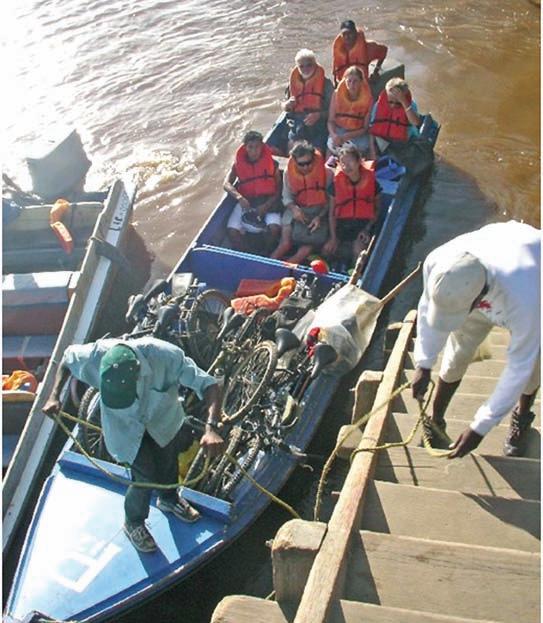
Supenaam, on the West bank of the Essequibo River, is another place that requires a boat trip for access. The “buses” of the Essequibo are long, deep-V hulled speedboats. Between Supenaam and Charity is 65 kilometres of paved road paralleling the coast, but that pretty much sums up the asphalt in the region.
Supenaam
To fit more compactly in the boat, the packs and pedals need to come off the bicycle, and sometimes it is advantageous to remove the front wheel. All of this requires a bit of reassembly before we can get underway again.
The view from the road is a collage of rice fields, houses on stilts, canals, churches, temples, businesses and Guyana’s beautiful variety of people. The whole package would keep it interesting for at least a dozen more trips.
Good Hope Nursery School, Fear Not
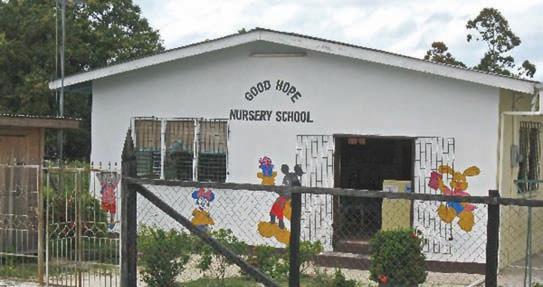
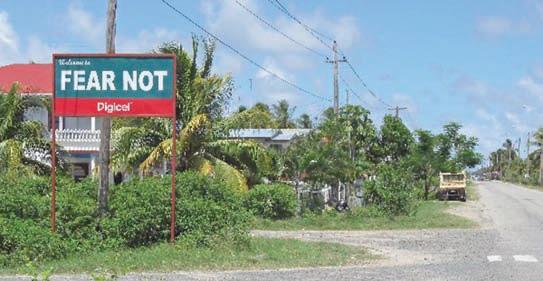
Spring Garden and Charity, to name a few. Reflecting history some seem to have a Dutch pedigree (Onderneeming) and other solid British roots (Dartmouth, Danielstown, Hampton Court, Taymouth Manor, Henrietta and Queenstown). Many only occupy a couple hundred meters of roadside, but almost all have a sign.
Suddie Post Office; Chinese restaurant, Suddie
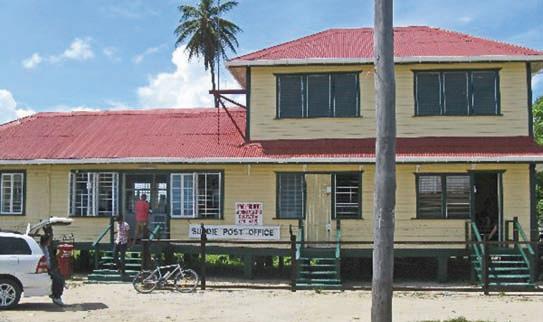
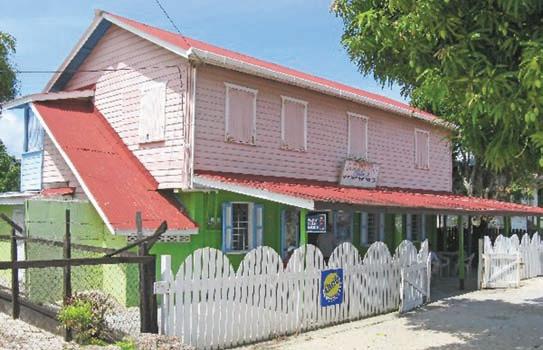
Being a little bigger, Suddie has a post office and a Chinese restaurant (above). Including Supenaam’s and Charity’s, there are probably four post offices in the corridor and twice as many Chinese restaurants. Between the post office and the Chinese restaurant is an almost invisible Creole restaurant. It is worth searching out if you are in the area.
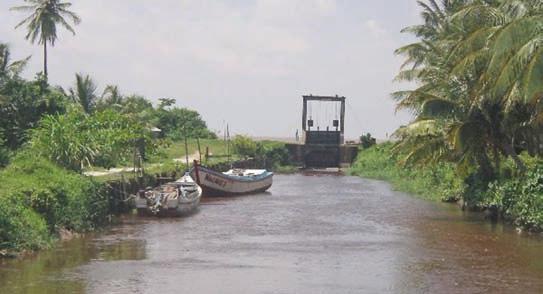
Canals and kokers (or sluice gates) are a regular feature along the coast. A koker is the gate at the end of the canal. Much of coastal Guyana is below sea level and protected by dykes and seawalls. At low tide, the koker can be opened and water will drain through the dyke and into the sea. The koker needs to be closed at high tide or the land will be flooded with sea water.
Guyana in 1630. It also seems to have some kind of connection with Queens, New York, or at least they sponsored the road sign for the town. It is a fair bet that there are more Guyanese in Queens than in Queenstown.
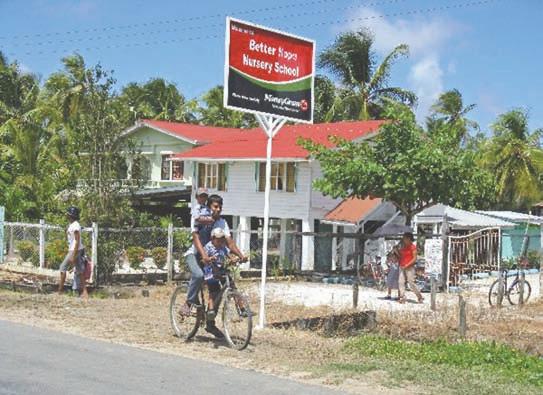
“Carpools” after my own heart. As I passed the Better Hope Nursery School, more kids were being picked up by bicycle than by motor vehicle. Thumbs up for a healthy lifestyle.
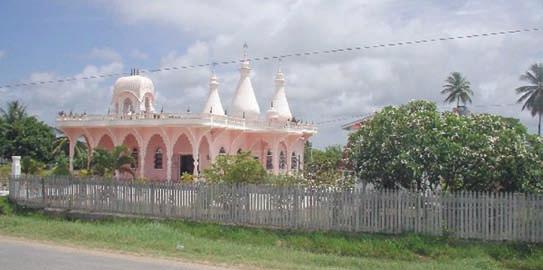
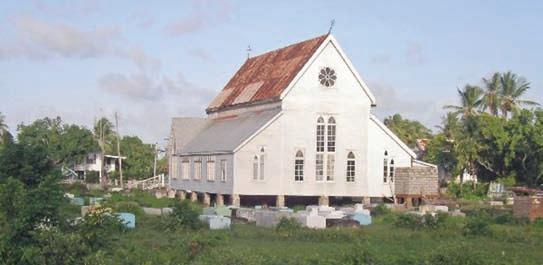
The population of the Essequibo coast is split – not evenly – between people of Asian descent and people of African descent. This leaves a vestige of religious buildings that are mostly a mixture of Hindu Temples and Christian Churches, with a few Mosques added in.
One of the cross benefits of going bicycle speed and the ethnic diversity is the sound track for the ride. The music wafting from the house could alternate between Reggae, Hindu music, the driving drum and dance music of Bollywood, Soca, Calypso and some indigenous Guyanese genres.
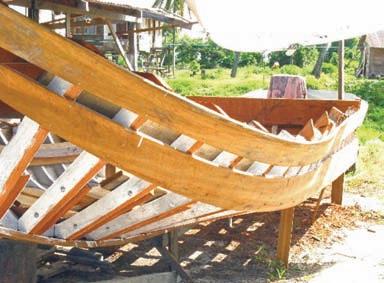
I never noticed as much boat building in this section as I did on the trip when a classic wooden boat builder was a member of the team. It is amazing how the eye sees differently sometimes. I assume the boat builders have always been there, but I never focused on them. On this trip I picked out at least a half dozen along the road. At the workshop where we stopped, there were four boats under construction. Most of the other boat yards also had multiple boats in the works. It seems like a thriving business.
Queenstown is another one of the larger communities. It’s first historic significance is as the site of the landing of the first slaves in

This smoke stack was likely part of the boiling house of a sugar cane operation. There is no longer much sugar production in this area.
The broad agricultural land in this district is now primarily used for rice cultivation.
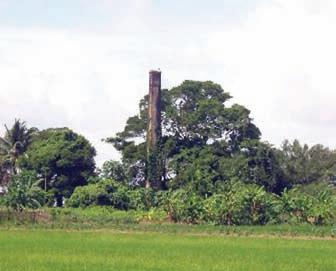
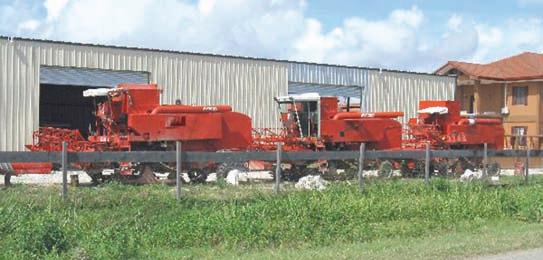
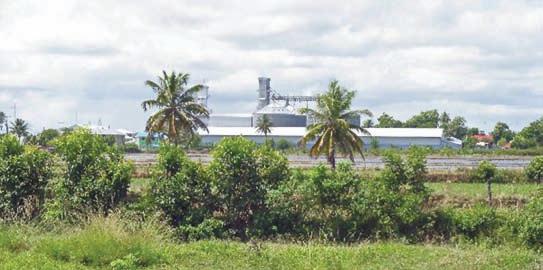
ditions in Guyana seem to have made the decision-makers choose machinery over people.
A vendor sells his snacks by bicycle
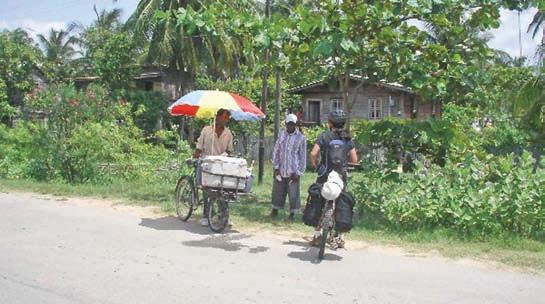
Vegetables at the road side, for purchase by passers-by Examples of the other economy include a vendor selling snacks along the by bicycle and a few vegetables displayed on a simple table at the road edge, for purchase by passersby.
On one occasion I was in the area on Father’s Day. For
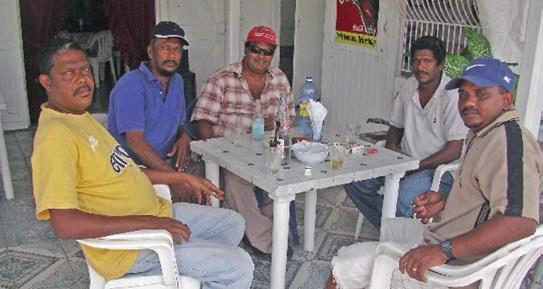
Father’s Day, at least one of the traditions is to get together with other fathers and drink. As a dad myself, I was invited to join them.
Charity on the banks of the Pomeroon River
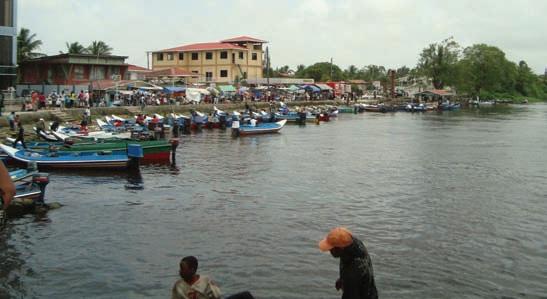
If you followed the road to its other terminus, you would have reached Charity on the banks of the Pomeroon River. A quick look at the map confirms the roadless region west of Charity. There aren’t any roads in a vast area west of
Charity, but there are a number of rivers. The map also indicates that a lot of the coastal area is marshy.
Charity has a busy stelling (dock) where boats bring in people and produce from the farms up and down the river network, and return people and market goods in the other direction.
market
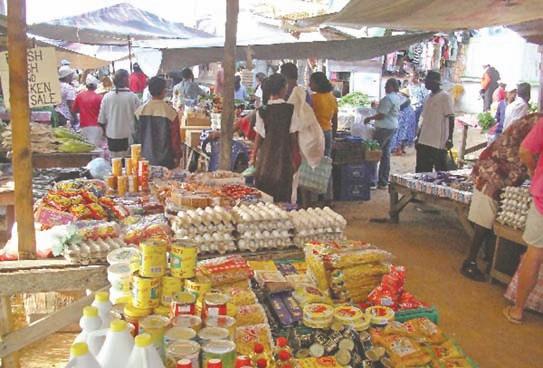
The markets in Charity seem healthy. High rise buildings and fast food chicken restaurants have come to town. At least one of the buildings has two levels of retail shops and markets itself as a “mall”.
To help local producers get a fairer price, a chalkboard in the produce market shows the average wholesale prices at the major Georgetown markets for a list of local commodities (i.e. apple banana, cayenne banana, sweet-fig banana, sourfig banana, plantain, cassava, eddo, sweet potato, pumpkin, squash, tomato, hot pepper, cucumber, cabbage, bora, wiriwiri and a variety of citrus and other tropical fruits.)
Former National Executive Member of the Alliance For Change (AFC) and former Regional Democratic Council (RDC) Councillor of Region Two (Pomeroon-Supenaam) Francis Darchiville, expressed with greatest disappointment over the new direction in which the AFC is headed, noting that prime members such as Leader Khemraj Ramjattan and Vice Chairman Moses Nagamootoo now breathe “hate” and “vindictiveness.”
“They have an obsession with power grabbing. The leadership, to my mind, especially Mr Nagamootoo and Mr Ramjattan, is filled with too much hate and too much venom in their veins to run anything as far as I’m concerned…everything that comes out of these people mouth is all hate and I don’t think I would support these people to run this country. They are so obsessed with power,” Darchiville exclaimed during a recent exclusive interview with the Guyana Times
He noted that he joined the party sometime in 2006 because he believed in the principles of national unity that the party had once preached. “Initially I joined because I liked what they were saying, it was two young attorneys and the late Sheila Holder from the Working People’s Alliance (WPA), who were fed up of their respective parties and they got together to form this alliance and I decided to get on board with them because I thought it was a good thing for Guyana,” he explained.
But as time progressed, Darchiville said he noticed several shifts in the system and certain members began to ‘change’. Eventually, he said the party deviated from its original concept of a mul-
tiracial party whose purpose was to transform politics in Guyana and effect change in society.“I left because I didn’t like what I was hearing and what I was seeing and the direction the party was heading…they were headed in a totally different direction and I feel that it is a total betrayal to their supporters,” the former executive related. Consequently, Darchiville resigned in 2012.
“Right now, what I’m hearing has sort of made me glad that I left when I did,” he firmly declared.
Further, Darchiville said he believes Holder would strongly condemn the marriage between the AFC and APNU if she was still alive.
Hypocrisy
Darchiville also spoke of the hypocrisy the AFC represented during his tenure with them. One classic example of this, he stated, would be the “love” displayed between Ramjattan and Raphael Trotman. “Mr Ramjattan and Mr Trotman would be embracing each other in front of the crowd and in front of people and calling each other brothers …but believe me, there is no love between those two people. So don’t try to fool me and hug up and call yourself ‘brother’ and then as soon as they turn their backs, there is no love between them,” Darchiville said. Additionally, he disclosed that Ramjattan told him during a telephone conversation that he (Ramjattan) would not support the idea of Trotman becoming Speaker of the National Assembly after the 2011 elections.
“Ramjattan did not want him to be Speaker. Mr Ramjattan told me that he would try his “darnest” to make sure that Moses Nagamootoo would be Speaker,” Darchiville related.
Darchiville also disclosed that Trotman constantly expressed sentiments of jealousy against Ramjattan. “Trotman did not want to be second to Ramjattan. He said that he did not want to be a baggage boy for Ramjattan.”
Heartless nature
Meanwhile, Darchiville reflected on a situation where Ramjattan blatantly revealed his ‘heartless nature’. “The man lacks compassion, common decency or gratitude. I was ill…Ramjattan stayed at my house and enjoyed my hospitality for six years plus. I was sick with heart trouble at the Suddie Hospital struggling for my life and a friend of mine was driving him to catch a boat and he said ‘let’s go in to see Mr Darchiville’ and Ramjattan said he doesn’t have time, he needs to catch a boat,” he sadly related, noting that he does not want someone like that to rule his beloved country. He said leaders must show they care for ordinary people, much less those who may have helped them.
Meanwhile, recently resigned AFC member Balwant Persaud had alleged that the party’s financial records were vague, inaccurate and questionable in nature. Darchiville was questioned about this, but said he has no knowledge about those operations in Georgetown. But he noted that his function was to control the operations in Essequibo, all of which he did with no financial help from the AFC. “I have contributed myself when I was regional councillor. I took care of all the expenses required for the operations of the office in Essequibo. I never asked for a nickel to run the office. Everything I paid for and when I came to central, I would bring money. They cannot say they sent a nickel because everything I ran from my own resources, I got money from supporters and all that was accounted for,” he explained. He noted that, to date, the AFC never provided any financial support for the Essequibo operations, for hosting national executive meetings and travelling expenses.
More than 300 Region Two residents benefited from training, under the Micro and Small Enterprises (MSE) Development and Building Alternative Livelihoods for Vulnerable Groups Project, under the Ministry of Tourism, Industry and Commerce, through its Small Business Bureau (SBB) in 2014.
Subsequent to the training programme, the Essequibo Coast entrepreneurs benefited from a $300,000 grant which assisted them in starting up their businesses.
At the time of the launch in March 2014, acting Tourism, Industry and Commerce Minister Irfaan Ali, speaking on the issue of unemployment in the Essequibo area, said that every young person in the region, like any other person, must be able to see a viable future.
“That future cannot be accomplished if we do not have employment opportunities, and we recognised this as a Government, and that is why we are building the infrastructure that will enable us to bring employment. For example, if we did not invest in the fibre-optic cable, the more than eight companies that are coming here to invest in call centres would have never come, creating more than 10,000 jobs in different areas,” Minister Ali had explained.
Under the next PPP/C Government, he said the Administration will have a call centre company investing in Essequibo, bringing a minimum of 1000 jobs to the people. This, he added, would not be accomplished if the fibre-optic cable is not built.
The MSE Development and Building Alternative Livelihoods for Vulnerable Groups Project was launched in 2013, and has created jobs and provided training for hundreds of Guyanese entrepreneurs.
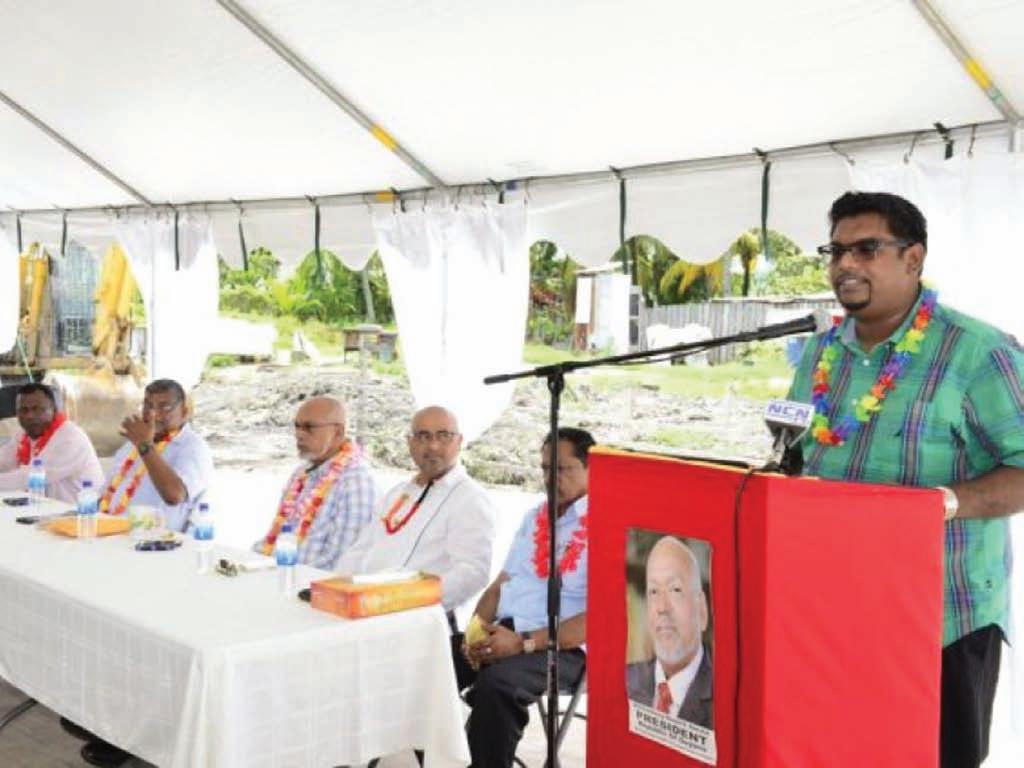
brings home 21st century shopping to Essequibo
Residents of Region Two continue to benefit from the $400 million five-storey complex which was commissioned in Charity on the Essequibo Coast back in 2011.
The complex houses a shopping mall, fast food outlet and pharmacy among other departments.
The complex also caters to the needs of the populace in Charity and further afield and won the reputation as the first in Guyana to offer Canadian Dixie Lee chicken and seafood.
At its announcement, proprietor Alfro Alphonso had indicated that the complex would create employment for 100 persons.
In recent years, Guyana has seen a spur in Private Sector-driven investments motivated by the development transformation which Guyana has experienced
over the years and the proprietors have all attested to this fact.
Around Georgetown and its environs alone there are signs of major business ventures either up and running, recently completed or in the making.
In 2008, Regent Multiplex, a multimillion-dollar shopping mall located on Regent Street, was commissioned, while the following year at the Cheddi Jagan International Airport, Roti Hut, Rituals Coffee House and Nestle Ice Cream were opened with an investment of $100 million.
That same year witnessed the grand opening of the multimillion-dollar Princess Casino located at the ground floor of the Princess Hotel, Providence, East Bank Demerara.
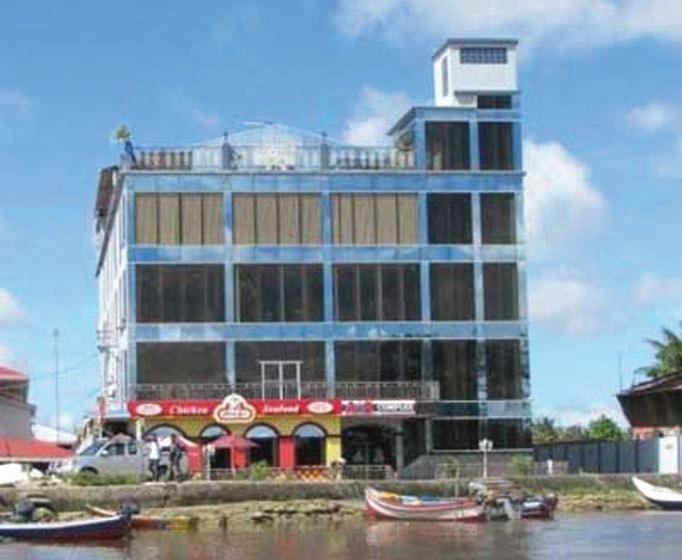
– preparing youths for Guyana 2.0
The Essequibo Technical Institute (ETI), which has been training young people of that region for excellence in the technical and vocational fields, is celebrating 14 years of existence.
The institute is located behind the Anna Regina Housing Scheme on the Essequibo Coast.
According to ETI Principal Michael Turner, the institution, over the years, has grown into a more accountable and reputable one, providing technical and vocational training to many students, especially school drop-outs.
Turner said anniversaries were a time to note progress made and examine achievements. He said as the institution celebrated 14 years of existence, its achievements must be noted.

ETI was established on March 12, 2001 under the stewardship of then Education Minister, Dr Dale Bisnauth. Turner lauded the efforts made by Minister Bisnauth to develop ETI.
Principal Michael Turner
The institute
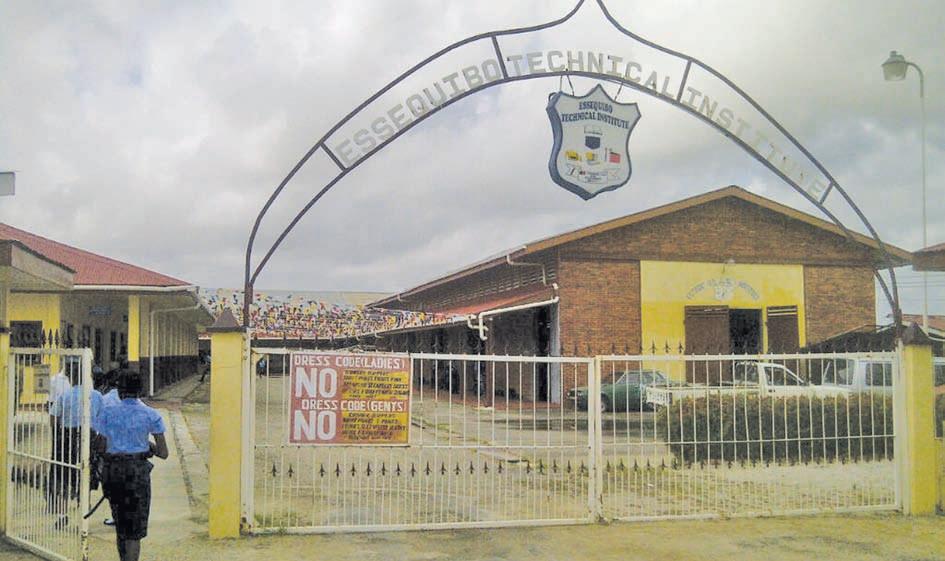
Under the stewardship of four principals and two deputy principals, over the years, the school has grown from a population of 200 students to 780 students. The Principal outlined that one of the biggest challenges for the institute is the increase in school drop-outs, which has taxed the resources of the school. However, in an effort to retain and accommodate students, the facility was extended, a dormitory was constructed, and a new bus was purchased. Skills programme
is
and
Operation. Turner said in 2012, Memorandums of Understanding (MoUs) were signed with the Barama Group of Companies and the Caricom Rice Mills Ltd to facilitate students gaining work experience as well as sponsorship.
The Guyana Defence Force (GDF) Coast Guard said its floating base at Pomeroon was proving to be a valuable national asset in the fight against piracy, particularly in the Essequibo River.
In May, 2013, the Coast Guard Commander Gary Beaton, who led a team of Coast Guard officers on one of the regular inspection visits to the base, said since the base’s deployment in November 2012, there have been no reports of piracy in the area.
The upsurge in piracy along the coast of Guyana gave rise to the need for the construction and deployment of the base. The commander explained, according to a release, that the base was deployed to engage in anti-piracy operations and the ranks have commenced the development of a maritime information database. This database, he said, is developed from what is known as Visual Sighting Reports (VSRs). The VSRs log the movement of vessels in the area with a view to determining their patterns of “behaviour” or activity.
Beaton indicated that Coast Guard officers regularly patrol the seas off the Essequibo Coast.
“The Coast Guard has responsibility for the security of Guyana’s territorial waters, including the Exclusive Economic Zone and inland waters,” he said.
“The presence of Coast Guard ranks on patrol in these waters is not meant to only serve as a deterrent to potential wrong-doers, but to enforce the laws as they relate to the nation’s waterways. To this end, our ranks can interdict vessels operating illegally in our waters of which may be operating in contravention to established national safety regulations and arrest persons engaged in such breaches or other illegal activities while at sea.”
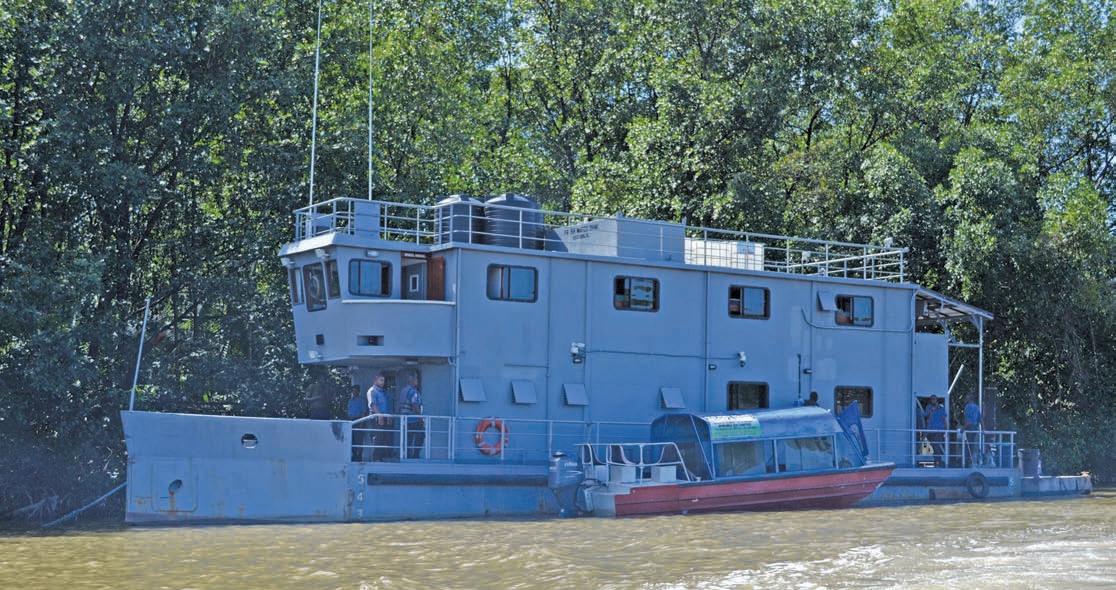
The Commander visited the base to check on the operational state of the facility and included an inspection of the communications equipment and a probe into the efficacy of the communications protocols between the base and other GDF bases. Beaton indicated that the operational state of the base was good and the morale of the troops located there
was high. The floating base was deployed on November 4, 2012 with 13 ranks, including the officer-in- command onboard. It is located at the mouth of the Pomeroon River. It is envisaged that in the future, other such facilities will be deployed along the coast.
Ahead of the May 11 General and Regional Elections, President Donald Ramotar in January promised to further advance development in Essequibo.
Meeting with residents of Good Hope, Aurora, Huis t’Diren, Adventure and neighbouring communities, the President promised residents that another PPP/C Government would deliver cheaper electricity and would create a bridge between the islands of Leguan and Wakenaam.
Ramotar noted also that shortly a call centre would be established at Anna Regina in an effort to create job opportunities for young people, while a modern building to house the Abrams Zuil Secondary and a new wing at Suddie Public Hospital would be constructed.
“Comrades, you know for yourself, you know what Essequibo Coast was in the past, the Essequibo Ferry used to take hours, the journey used to be so long, the roads were very bad, Essequibo is not Cinderella in rags but Cinderella the Princess,” Ramotar noted.
During his first meeting at Good Hope, the President
told residents that the upcoming elections were crucial, underscoring that everything was in the hands of the people. He said together as a people, collectively, PPP/C can return to Government.
“Guyana has a bright future, but that future is in everyone’s hands. Older persons need to talk to young people about the struggle, the struggle was difficult, in the past we couldn’t even have a loaf of bread in our hands; if you get caught then, you will be jailed,” Ramotar explained.
He cautioned residents
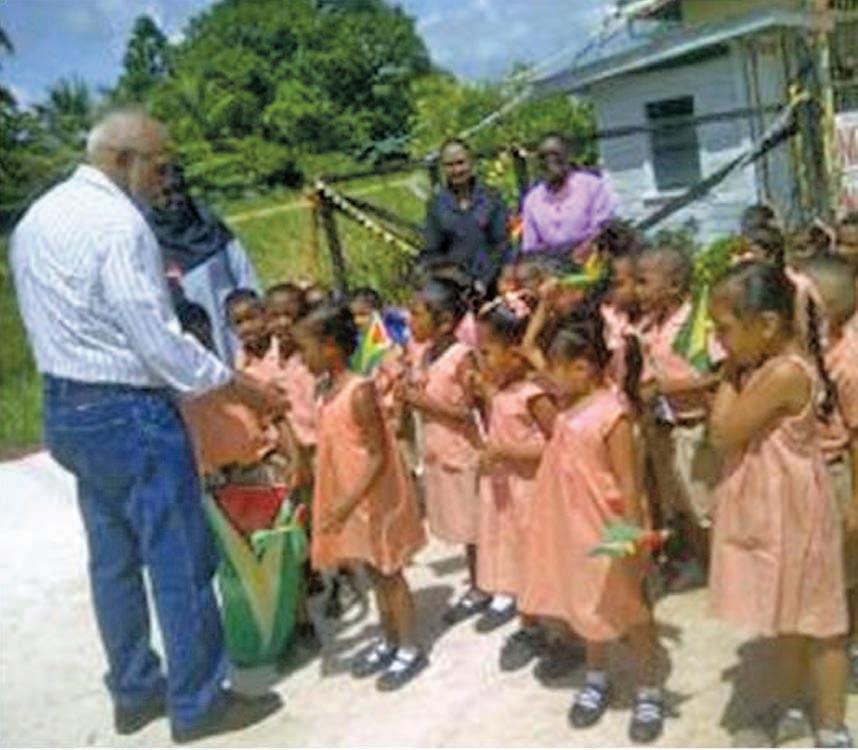
to not be fooled by the promises being made by the Opposition parties, pointing out that the Opposition was just interested in getting into power and had no development plans for the people. Highlighting that the Opposition was not a good partner, Ramotar said with its majority in Parliament, it used its power to block developmental projects. He listed the AntiMoney Laundering Bill, the Amaila Falls Hydro Project, the Speciality Hospital and the Cheddi Jagan International Airport expansion as projects that were blocked by the Opposition. Ramotar stressed that the Opposition was not
an ideal partner for the PPP/C Government, noting that because of the lack of partnership, he was forced to prorogue Parliament.
Region Two (Pomeroon-Supenaam) Chairman Parmanand Persaud, who also addressed residents at the various meetings, said the region has progressed under the PPP/C.
He noted that Region Two had 13 booming housing schemes, and two water treatment plants would be established at Dry Shore, and Somerset and Berks. In an effort to boost electricity capacity in the region, three Wartsila power plants will be commissioned at Anna Regina. The Chairman noted that construction of roads and rehabilitation of culverts and streets were done over the years.
The President’s delegation included Minister within the Ministry of Agriculture, Alli Baksh; Rice Producers Association General Secretary Dharamkumar Seeraj; Chairman Persaud; and Regional Vice Chairman Vishnu Samaroo. President Ramotar said his two-day visit to Region Two was aimed at interacting with residents and outlining his Party’s plans for the development of the country.
Essequibo just got the slipper...
$521,824,370 spent on infrastructure; $1.2B on water – wells for Aurora,
The Housing and Water Ministry distributed 4000 house lots in Region Two during its series of ‘OneStop Shop’ outreach programmes since 1993. There were a number of multimillion-dollar wells drilled in the area, mainly in Anna Regina, Charity and Onderneeming Phases 1&2.
One typical programme saw thousands of residents converging at the Anna Regina Town Council Building to secure a chance of owning their own homes. According to a Government Information Agency (GINA) press release, Housing and Water Minister Irfaan Ali and a team, including representatives from the Guyana Bank for Trade and Industry, Republic Bank and New Building Society (NBS), conducted the exercise. The Minister also addressed housing and water issues, including allocation, identification and payment for house lots, processing and distributing of titles and transport, customer complaints, bill queries and leakage reports.
Ali, in his address at the opening of the programme, said despite the constraints of resources, Government continued to deliver goods and services to the region. He said the exercise was part of the Ministry’s efforts to stimulate the housing sector and to ensure that persons can access financing needed for construction. In keeping with this, he said
Government has moved to increase the loan ceiling and has made special provision for low-income earners, creating an environment for reducing interest rates and as such special interest rates are now offered for mortgage agreements between the commercial banks and the Government.
“We have seen very aggressive works by the banks in promoting the service and I urge you to make use of this opportunity and incentives that are given to you so as to have easier and more affordable access to financing,” Ali told residents. Prior to the agreements, NBS was the only bank that offered such arrangement. Ali said across the Caribbean there was a ‘bust’ in housing development; however, he noted that Guyana has been fortunate as a result of stringent measures embarked upon by the President.
The Minister then encouraged residents to take full advantage of the available opportunities to build their dream homes. He also said that, as part of the integrated service added to the Ministry’s head office, representatives from three commercial banks would be available daily.
Meanwhile, Chief Executive Officer (CEO) at the Central Housing and Planning Authority (CHPA) Myrna Pitt said the exercise in Region Two wass part of the Ministry’s continuous efforts to “improve the quality of our performance as it relates to the services that we provide. We believe in the user-based definition of quality and embrace the quality principle of being customer focused as we seek in this tangible way to be of service to you.” Pitt noted that the CHPA was committed to providing a responsive service that would meet the needs of citizens in this regard.
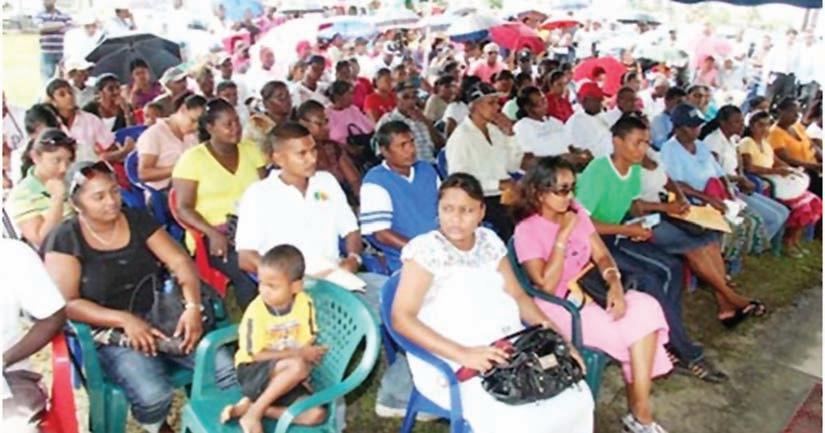
Additionally, then Regional Chairman Alli Baksh in outlining developments in the region said it now boasted 10 new housing schemes. He said too $450 million has been used to construct a water treatment plant which has benefited over 20,000 residents, while
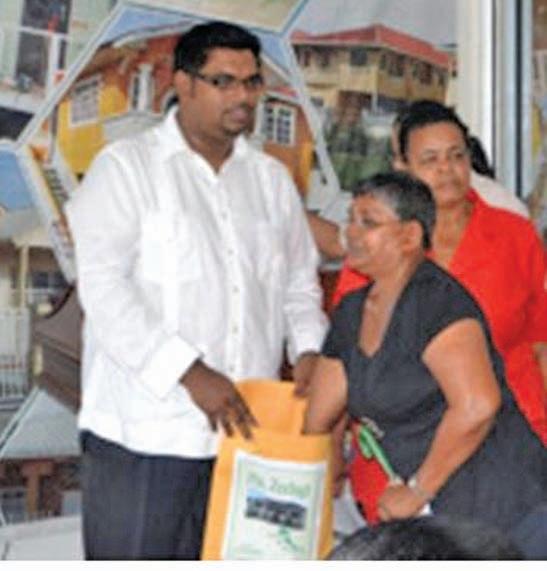
$24 million has been spent to upgrade service connections and install water meters in the Queenstown and Walton Hall areas.
Baksh noted that a new well was also drilled at Somerset and Berks at a cost of $20 million. “The amount we have spent last year alone is over $502 million benefiting each community. Additionally, we have spent, through the Ministry in collaboration with the region, $230 million for the installation of a transmission main from Queenstown to Walton Hall. This is to ensure that the water flows better,” he said.
For 2011, the Regional Chairman had also said 4000 Aurora residents would benefit from a new well, which would be drilled at a cost of $70 million. Plans are also in train to build wells at Lima Sands costing $46 million and Onderneeming at a cost of $31 million. In total, in Region Two since 2007 nearly $ 1.2 billion has been invested by the Guyana Water Inc (GWI). These projects have resulted in significant improvements in the region where residents on the Essequibo Coast can continuously receiving service above five meters pressure. It is to be noted that the per capita investment in Region Two was nearly $25,000. And in excess of 30 per cent of the population presently receives treated water from the Lima water treatment plant.
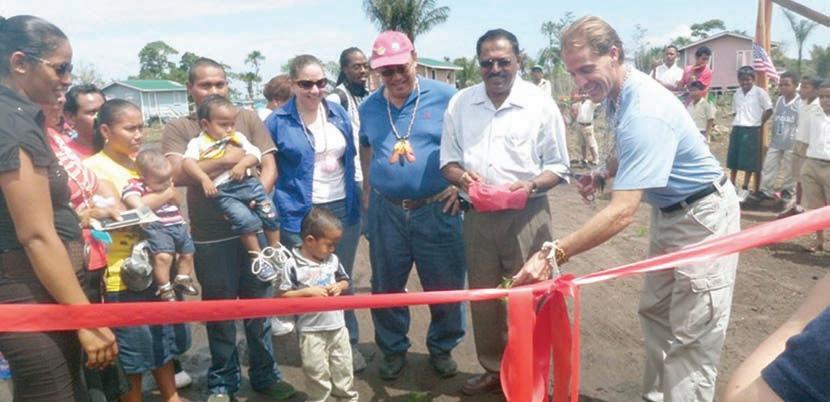
In spite of its challenges in 2014, Food For The Poor (FFTP) Guyana Incorporated constructed 94 houses under its continuing housing programme and undertook other Community Development Projects.
Fifty-eight of the homes were constructed under the White Water and Akawini Community Development Projects while the remaining 36 were done under the General Housing Programme.
The homes were constructed in Sophia, Greater Georgetown; Onderneeming, Essequibo Coast; White Water, Region One (Barima-Waini) and Akawini, Region Two; and on the East Bank and East Coast of Demerara.
Multimillion-dollar housing scheme
The construction of the 94 homes is a clear indication of FFTP’s commitment to meet the needs of Guyanese through housing development. Back in November, 2011, the humanitarian organisation commissioned a $65 million housing project named Theresa in Tapakuma, an Amerindian community located in Region Two.
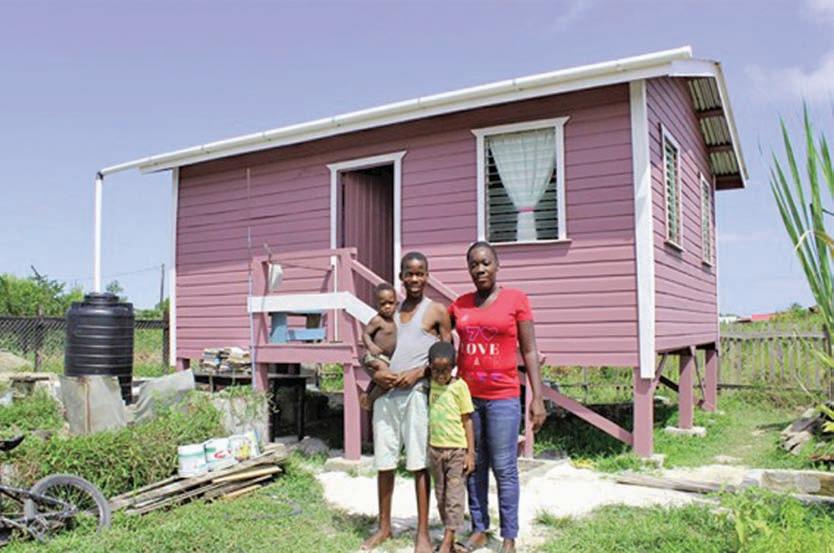
The then Region Two Chairman Alli Baksh had told residents that Theresa Village was a classic example of true partnership between the Government of Guyana and local and international agencies.
He said the project has transformed the landscape of Tapakuma and displayed a true sense of partnership. Baksh had urged beneficiaries to work together in enhancing the development of the community.
“I am sure the donors will feel happy if families can extend their houses and open small cottage industries,” he said. Baksh lauded the efforts of FFTP Guyana Inc for its continued support in developing the region.
He said that Essequibo was lucky enough to have been gifted with six spanking housing schemes in various vulnerable communities from FFTP. He said FFTP was one of the long-time organisations that really and truly supported and reached out to the vulnerable.
FFTP Executive Director Leon Davis had described the project as a true example of “wise decision-making”. He said over the years the organisation has managed to build a strong
relationship with the Region Two Administration.
He said Theresa village was finished within 38 days by contractor Punraj Singh Contracting Service. He congratulated US donor Darren Dwyer for supporting FFTP and extending his heart to the organisation.
“This village was purely God’s work and we at FFTP are happy in presenting such a wonderful gift of a house to Tapakuma residents. We at Food for the Poor are self driven by God: we are his tools, and we are executing his duties in serving and providing for the less fortunate and vulnerable,” Davis said.
He said the project provided employment for more than 20 persons in the community and all the logs were also purchased from the community.
Davis said 50 houses and sanitation blocks, a wooden community centre, nursery school as well as water pipelines throughout the community were constructed. He said FFTP will also fund a goat and fruit tree project for the community whereby residents will be provided with an income.
Scores of rice farmers throughout Region Two are endorsing the People’s Progressive Party/Civic (PPP/C) Administration, saying that it is the only Government that can move the rice industry forward.
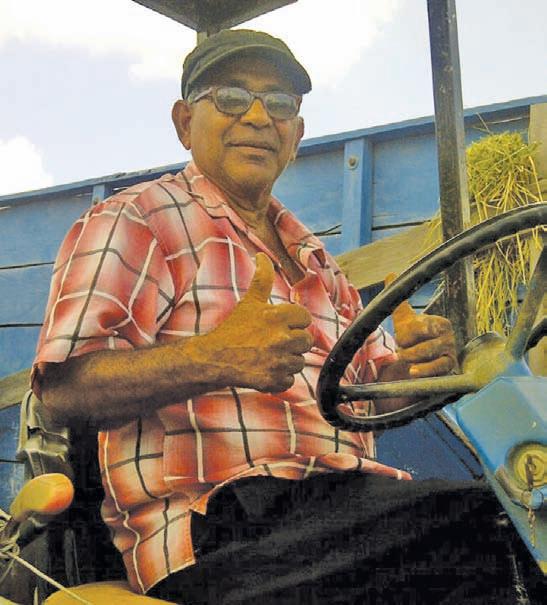
The farmers said due to the investments made in the sector, they are reaping the benefits with higher yields; hence, gaining better paddy.
Rice farmers’ views
Orpheus George, 60, of Dartmouth Village, told the Guyana Times that the PPP/C Administration, the Rice Producers’ Association (RPA) and the Guyana Rice Development Board (GRDB) ought to be applauded for their significant contributions towards the development of the industry.
According to George, from 1933 to 2015, he has seen tremendous transformation in yield, noting that from 28 bags in the 80s he was now reaping 35 bags. George added that Government was doing well for the rice sector, but said better negotiations were needed for pricing.
Meanwhile, Purhase Kishore, who has been farming for 35 years, said that from 1992 to 2015 he has seen tremendous transformation in the rice sector particularly in the increase in yield and prices. Kishore, who has seven acres of rice fields, said he learnt a lot from the many training programmes done by the GRDB. He strongly believes that the industry can only prosper under the PPP/C Administration.
Another optimistic rice farmer, Chaitram Narine, from Paradise Village, said only the PPP/C Government can take the rice sector forward. Narine, who is the owner of six acres of rice land, attributed his success to the work of the GRDB. During the years, he said, there has been more bags per acre, and despite the fluctuation of prices, his rice field continued to blossom.
Another farmer from Sparta, Jagmohan (only name given), owner of eight acres, said he was very optimistic about the rice industry in Essequibo.
He said thanks to the investments made by the current Government, he was receiving better yields and better grades. Despite the challenges the industry was facing, he opined only the PPP/C had a bright future.
A female farmer, Ramadai Benjamin said she has been planting rice since 1997, and over the years she has seen massive improvement in the sector, from 20 bags to 35 bags. She said only the PPP/C Government can move the sector forward.
Ibrahim Baksh, who cultivates 62 acres of rice land, said that he started with a “bull plough” in the ancient days. Today, he said he was proud of the modern technology and the machinery introduced in the industry. He too said he started with 20 bags and today he was reaping 40 bags. Baksh said the Government should not be blamed for the price of rice but the international market.
Drew Persaud said he was optimistic that the PPP/C would win the upcoming elections and would continue to move the industry forward. Persaud began rice cultivation in 1981 and according to him, those were the dark days. Persaud said that farmers today are now exposed to good agronomic practices. He said the key to a sustainable rice industry was to observe the six-point practices. Persaud noted that the rice industry has a bright future under the PPP/C Administration.
Haimant Chulie, from Hibernia, said that he has gotten good yields from his 40 acres of rice land. Today, he said he was enjoying the benefits and can offer his family a better standard of living. Chulie said that the PPP/C Government, along with the GRDB, was doing everything to foster growth within the industry.
Hansraj, who cultivates nine acres of rice land, said he was pleased with the PPP/C Administration, and what it has done over the years for rice farmers.
By IndrawattIe natram
The Chinese-made ferries Kanawan and Sabanto introduced in 2012 under the present People’s Progressive Party/Civic (PPP/C) have undoubtedly assisted and addressed the transportation needs of thousands of Essequibians. We solicited the views of residents on the service.
Hazarul Bacchus, Manager, Makkah Halaal Restaurant, Affiance – “ I personally think the introduction of the Chinese-made ferry service is of great assistance to businesses on the Essequibo Coast. For me, I get to transport my goods from Region Three and Four faster, it’s a reliable service and it has helped my business to prosper. The service is cheaper and much more comfortable as compared to the MV Torani and speedboats.”
Nandranie Ramlall, Chef at Makkah Halaal Fast Food Restaurant – “ For me, I always get excited travelling with the ferry, the timings are convenient and fast, when I go visit my relatives in the City of Georgetown I reached faster, it’s much cheaper and clean. Previously, we had to wake up very early, rush to the Adventure Stelling and wait long hours; the ferry service has assisted a lot thanks to the PPP Government.”
Suruj Lall, Supermarket/Business Owner - “Every week, I travel one time; my trucks are always on transporting a variety of goods to the supermarket, it’s much safer and faster than the MV Malali I am really happy over the service it has really assisted me in my business. I want to thank the Ministry of Transport and the PPP Government for introducing the service and to keep it going.”
Meenwattie, Social Worker – “ When we had the MV Malali, the service took six hours from Adventure to Parika, which was very boring and tiresome, that took a lot of time; compared, the Chinese which is a 90 minutes travelling; it’s easier to go Georgetown to conduct your business before losing a lot of time.”
Shondelle Hercules, Education Officer – “The new ferry service has impacted us tremendously. Previously, the crossing from Region Three to Region Two would be a tiring three to four hours whereas with this new service it’s faster, reliable and efficient. Residents are very elated to have this service which has been implemented by the PPP Government; persons can travel to Georgetown conduct their business and return to Essequibo in a timely manner. We are very grateful for this service.”
Devindra Sukhai, Pensioner – “I think it is a good service that was introduced by the PPP Administration, a service that is assisting businesses and residents. I love to travel within the confines of the boats, the environment is clean and I love the scenic view, the schedule is also nice, everyone is benefiting.”
Melrose Henry, Businesswoman – “Personally for me, it is a plus for Region Two in that it has impacted many lives positively not Essequibians alone but persons travelling from other regions. Persons are having more easier access; for business there are more better arrangements
whereby your goods can be transported much easier, before time it was very long. It is a positive development for the region.”
Victorine Alllicock, Housewife – “ The service is very fast and reliable as compared to the MV Malai, the fare is affordable and it’s much safe, vehicles can also have easier access from Region Two to Region Three. I enjoy travelling visiting my families from Georgetown.”
Yvette Hastings, Resident of Region Two – “My view on ferry service, there is no difference between speedboats and the new ferries mainly, because you meeting Region Two in a timely manner. The ferry is much more comfortable, you are more relaxed and you enjoy the pristine environment. It is a very good venture which reaches out to all category of people.”

Chandroutie, Housewife – “ I think it is a good initiative introduced by the PPP Government. It is one that helps businesses as well it is a cheaper travel for persons who wish to visit their family outside of the region. The service has replaced a long waiting tiring one with a timing that can be compared to that of the speedboats. It is also a most favoured service, many persons prefer to travel with their family and vehicle in a more clean and comfortable environment, the time has significantly reduced.”
20 Cinderella no more! Essequibo just got the slipper... OIL
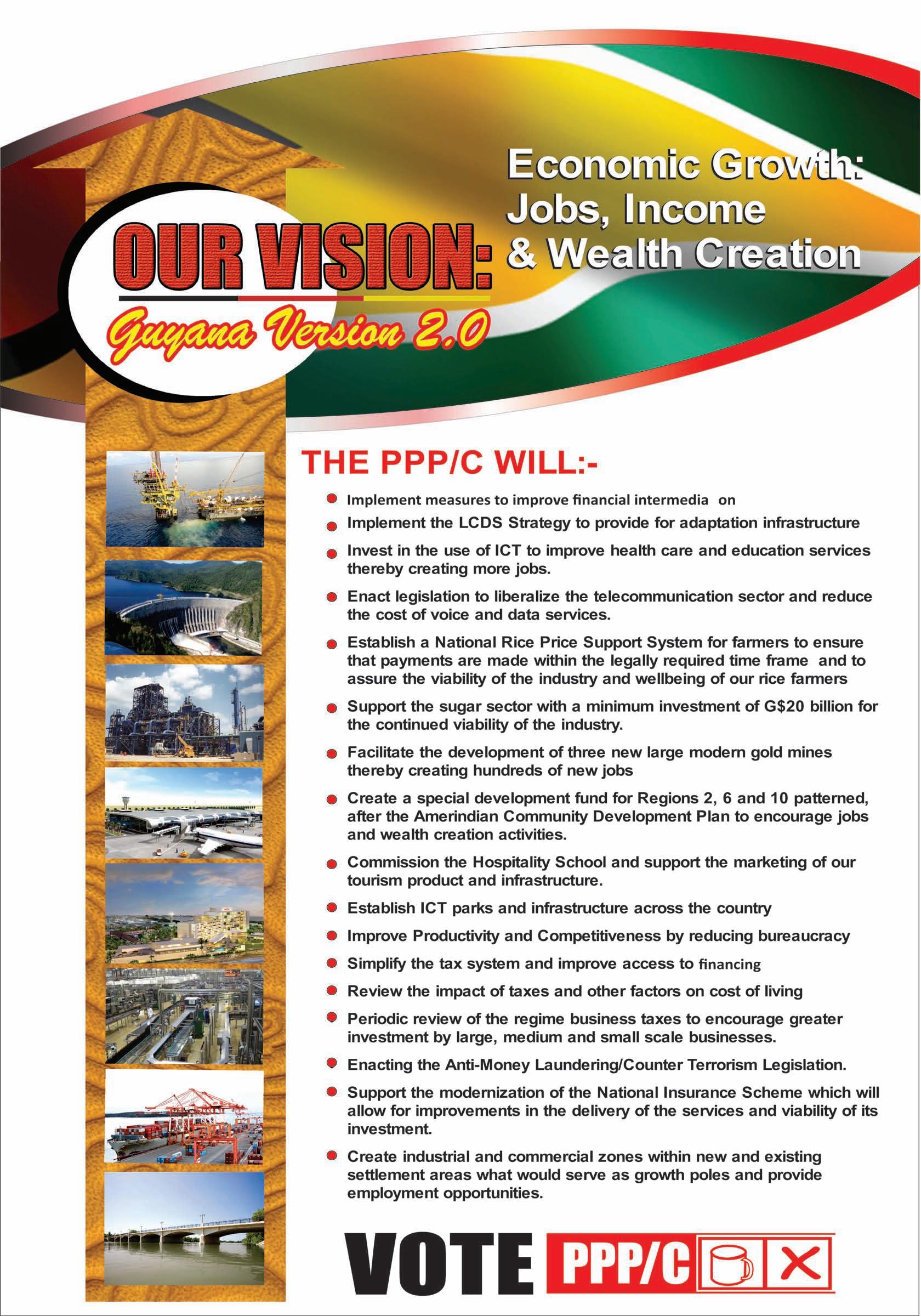
President Donald Ramotar commissioned a spanking new multimilliondollar hotel and restaurant located at Aurora, Essequibo Coast, Region Two (Pomeroon-Supenaam).
The new restaurant and hotel complex is owned and managed by Essequibo businessman Nazeer Buksh and his wifem Bibi Shaleeza who have invested over $45 million into the project.
Speaking at an official commissioning ceremony last February, President Ramotar lauded the investment, expressing his satisfaction with the magnitude of the investment made thus far.
He said the fact that such an investment was made was indicative of the confidence that domestic Private Sector officials continue to have in the Guyanese economy and Government’s prudent fiscal macroeconomic policy initiatives.
The Gold is Gold Family Hotel and
Restaurant owner said that he was impressed with the positive economic growth in Region Two and this encouraged his investment in the multimillion-dollar venture.
The 50-year-old father of one said the hotel and restaurant was opened eight months ago and has been constantly upgraded since then. Buksh said he decided to embark on the venture since there were no other conveniences of this nature around the southern end of the Essequibo Coast (towards Supenaam).
He added that families in communities in and around Supenaam often did not have a proper family dining facility to go to in the evening to relax and enjoy family time apart from the confines of their own homes.
He said having noticed the desire for such an entity, he proceeded to construct the modern facility that caters for the needs of families and relaxation.
Buksh said his business not only ad-
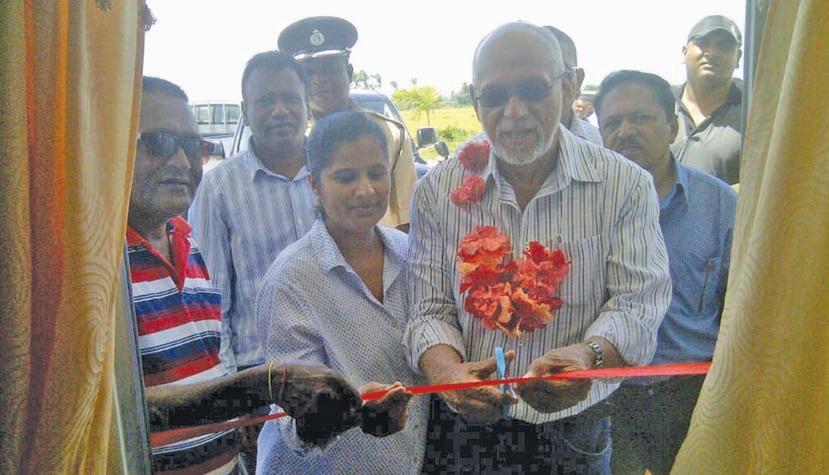
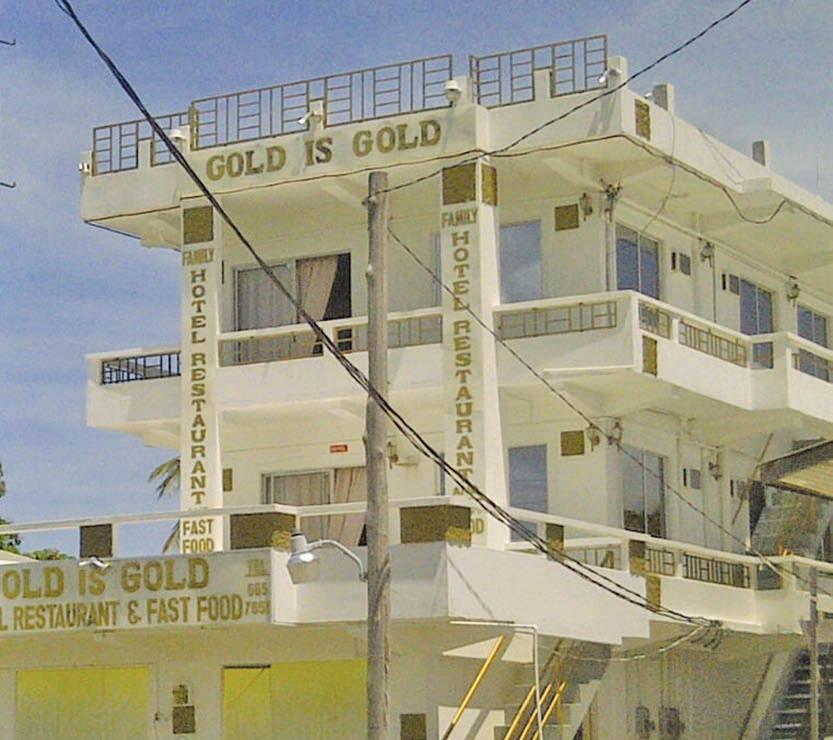
He said persons are employed as cooks, maids, housekeepers, receptionists and care-takers. The restaurant also does catering.
The rooms are fully air conditioned and self-contained with prices ranging from $8000 for a single room to $12,000 for a double room. After commissioning the new modern edifice, President Ramotar and oth-
businessman Ganesh Jaigobin opened a three-storey Chinese restaurant Red Bud at Cotton Field. That restaurant also created employment for 10 persons.
Guyana Rice Development Board (GRDB) General Manager Jagnarine Singh said the price for a bag of Grade A paddy should range between $3000 and $3500. Singh was at the time speaking during a live call-in television programme aired on a local channel last March.
He was accompanied by General Secretary of the Rice Producers Association Dharamkumar Seeraj and Anna Regina Branch Supervisor Deoram Prahalad.
The General Manager told viewers that harvesting was in full swing in Region Two (Pomeroon-Supenaam) and as such, every farmer is anticipating a “fair” price, one that can offset their expenses and simultaneously give them a profit.
Singh disclosed that millers in Essequibo have been beneficiaries of high-price markets. “Essequibo millers export 30 per cent of their rice to high priced markets,” he said.
Speaking on the issue of export, Singh said that in January, some 51,000 tonnes of rice were exported. It was explained by Singh that the large Venezuelan market has not increased. He added that the high-price market is a small part of the export, while the low-price market forms a large part. He said, however, that Ghana, Panama and Belize have all shown interest in Guyana’s rice.
It was noted by the General Manager that more than 94 per cent of the payments were made to farmers for the last crop.
“The paddy value of the crop was some $3.4 billion and just over $173 million is outstanding to farmers,” Singh further explained.
He noted that the issue of timely pay-
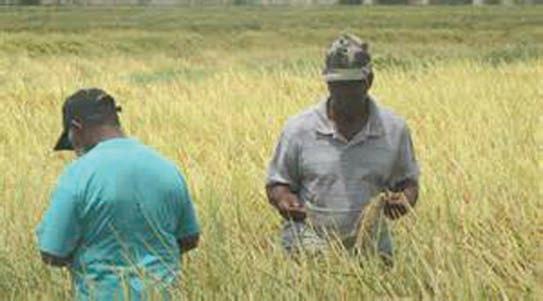
ments will be addressed during this crop, and the Board was hoping that full payment could be made to farmers within 42 days of sale.
It was explained that in every crop, there was need for some $22 billion to pay farmers, but the commercial banks were unable to meet the demand. He, however, noted that, the Government stepped in after the last crop to assist in the payments and cheques were written directly to farmers.
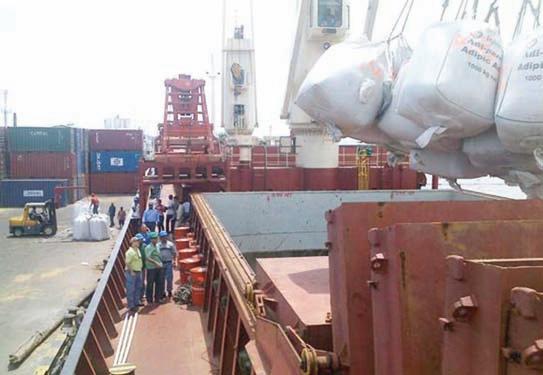
Seeraj echoed similar sentiments, adding that the responsibility to pay farmers lay with the millers. However, he said farmers were often of the opinion that it was the responsibility of the Government to issue payments; hence the State was often blamed when pay-
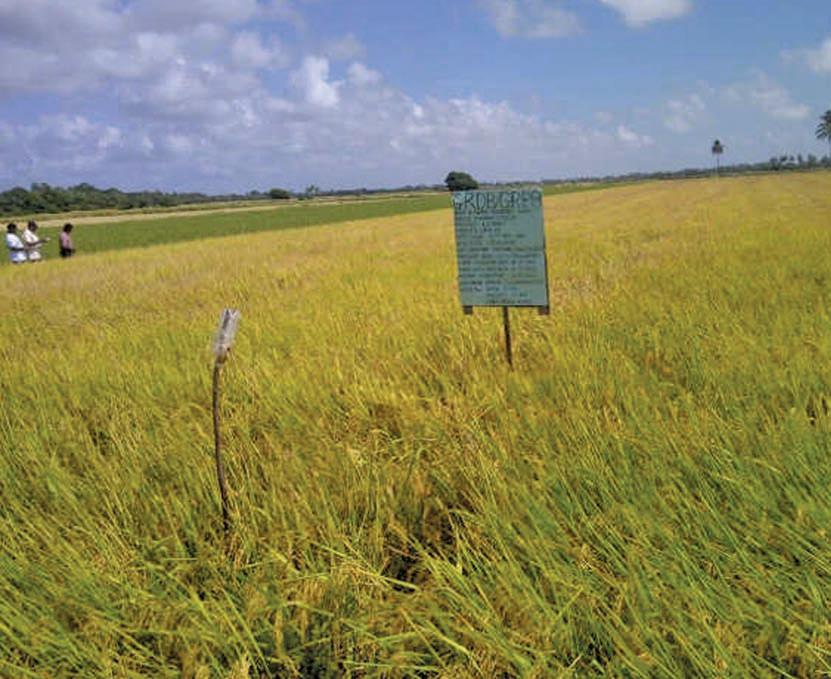
ments were late.
He added that while the Agriculture Ministry and major rice stakeholders often intervene, they should not be burdened with the task of paying farmers.
He said that following several protests by farmers due to non-payments, the Government had intervened, loaning huge sums of money to millers to assist the situation.
Seeraj said that farmers needed to be realistic when it came to the rice industry, noting that there were marketing strategies.
“Some farmers are saying that rice farming is not paying them, I know of one farmer who recently bought eight acres of rice land for $16 million. If rice is not paying then why the investment?” Seeraj questioned.
It was noted that production in the rice sector has been increasing due to high yields. He added that the increase in production came about due to the new varieties developed by the GRDB/RPA’s agronomic practices, efficient drainage and irrigation services, technical advises and the farmers field school training.
“Last year the production was some 501,000 tonnes rice, production gone up, but the market is also catching up,” Seeraj said. In Region Two, the acreage under cultivation has increased from 32,500 to more than 37,000.
By IndrawattIe natram
Former President Bharrat Jagdeo on Tuesday told the business community and young professionals in Region Two (Pomeroon-Supenaam) that the A section of the business communiity in Region Two who attended the forum
People’s Progressive Party/Civic (PPP/C) has a clear vision for Guyana, promising them the setting up of a development fund for rice and also the building of a world class call centre in the region.
During his address to entrepreneurs at the Regional State House at Anna Regina, Jagdeo said a Development Fund and Rice Support Fund, call centre and improved Information Communication Technology (ICT) within the Region were top priorities for Government. He said that the People’s Progressive Party/Civic (PPP/C) Administration remains committed to businesses, recognising the importance of the sector to Guyana’s economy. According to him the Donald Ramotar Administration and officials were working together to craft a manifesto that would ensure a safer environment for businesses to operate and to create jobs.
With the implementation of the Development Fund, he said, farmers from the Pomeroon would benefit by diversifying in their crops. Making reference to Government’s investment in ICT, Jagdeo further explained that businesses have to take full advantage of the benefits that accrue from the use of cutting edge technology in order to overcome many of the challenges.
He said the Government of Guyana during both the Dr Cheddi and Janet Jagan’s administration had drafted many strategies, including the National Development Strategy that outlined the development of Guyana. “We can compete about the clarity about our vision; we don’t make wild promises, we are practical,” Jagdeo said.
The former President warned the business community
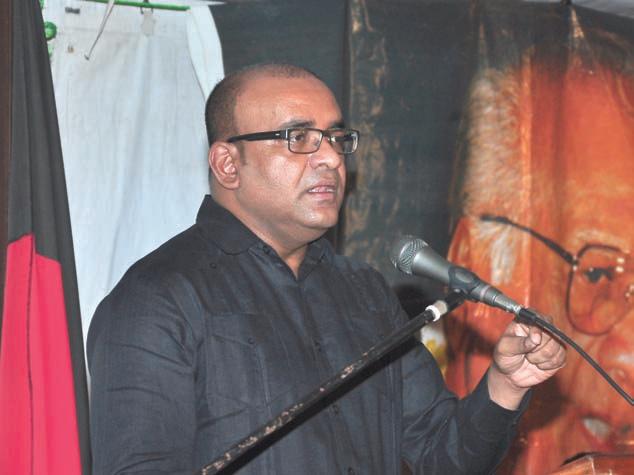
about the opposition’s plans to create an unstable environment, adding that the PPP/C has examined the economic philosophy of Guyana hence creating a manifesto that is attractive to the business sector.
Jagdeo said that the PPP/C Administration has recognised that Guyana was rapidly changing and as such, growth poles have been identified, particularly in the rice, sugar and bauxite industry.
He added that focus will be on those industries, which have the potential to create national wealth for the country. “These industries are our backbone… with those industries up and sustainable – then wealth can be created; hence, opportunities for young people,” Jagdeo noted.
In terms of the ICT growth pole, Jagdeo said greater bandwidth will foster business development, boosting the
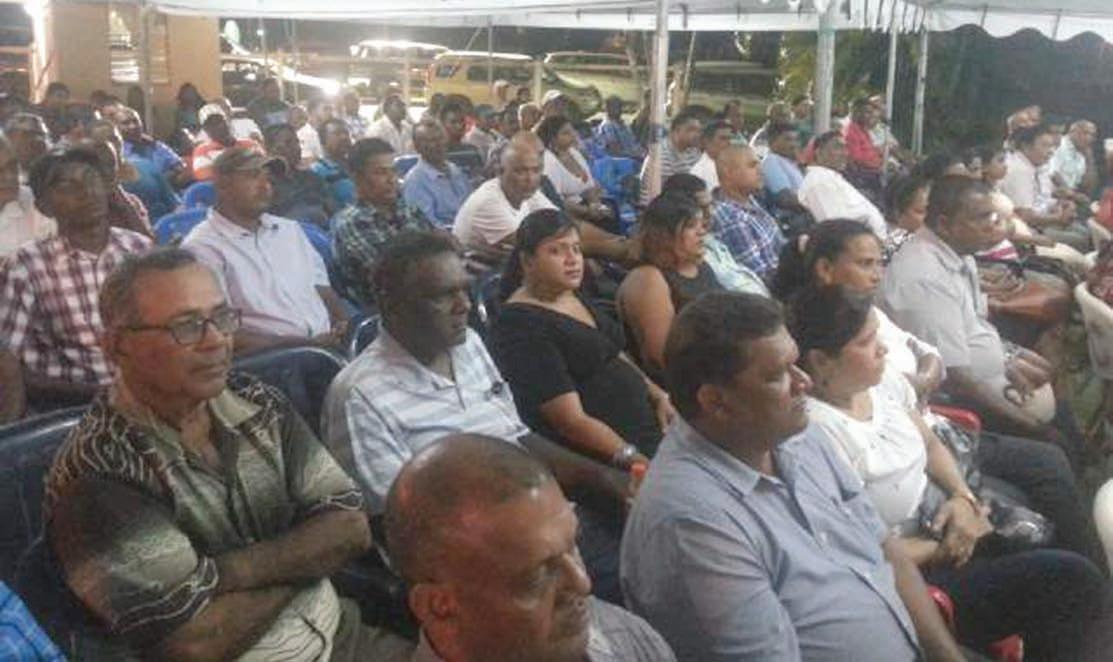
agricultural sector and thousands of jobs can be created ranging from “$60,000 to $200,000” with the call centre, the economist by profession explained. He noted that the Administration has also realised that E-Governance was important. He said incentives like tax holidays would make the sector more attractive.
With other spin-off business opportunities, Jagdeo said that the Government was focusing on connecting Brazil with a deepwater port, opening up markets. “A deepwater port on Guyana’s coast can provide South America’s largest economy with an Atlantic outlet for trade from the northern states. The former President said that development would foster trade financing and trucking services. With exploration activities for oil and gas and other mineral resources ongoing, other opportunities will be created for eco- tourism.
Jagdeo said that under the present Administration over the years, fiscal management has remained relatively stable. He explained that once the fiscal deficit was down and the inflation rate was low, the economy can remain stable. “ Presently, Guyana has US$800 million in the Central Bank, the Opposition is proposing plans that will cause Guyana to be unstable, [and] hence eat up every cent from the reserve,” Jagdeo said.
Turning his attention to the development of Guyana’s human resources, the former President said Government was pushing to enable Essequibians to read for their degrees from the University of Guyana right in the county via distant education programmes. He told residents that Guyana was one step closer to achieving many things and their support at the upcoming elections was vital.
Housing and Water Minister Irfaan Ali, who also addressed the audience, said that under the Small Business Development Fund, loans will be given to over 300 persons in the rural areas to boost business activities. He said the loans would empower the people as well as create a more entrepreneurial environment and development.
Ali said the process has commenced and prospective beneficiaries (young people and single parents) who applied through the public mechanism have been trained.
He further explained that the programme would aid in the creation of wealth as well as the expansion of businesses. Part of the outlook, he mentioned, was to provide employment opportunities and invest in infrastructure that would expand the Region Two economy. He testified that one such initiative was the rice cereal crisp factory.
“Once PPP Government is allowed to go in power with majority, there will be a continuation and expansion of ICT creating more bandwidth, creating export possibilities; hence, ensuring investments in call centres, similar to those under construction in Enmore and Tushen that would have the capacity of creating 1000 jobs,” Ali added.
At the end of the forum, the team consisting of Labour Minister Nanda Gopaul, Housing and Water Minister Irfaan Ali and Suresh Narine interacted, with audience. Residents revealed that some of the issues them was the system at Guyana Revenue Authority (GRA) and poor Internet services.
By: muneshwarIe JaIlall
With the PPP, there is guarantee of a new Essequibo, a better place for the youths. Essequibo is continuously being focused on. It is the home to so many top CSEC students in the country and the Caribbean. In the year 2007, I was one of the top 10 performers in the country for CSEC, graduating from the Abrams Zuil Secondary School. I moved on to the University of Guyana, graduating with a distinction. There have been many like me, who have attended public schools throughout their lives and still managed to excel. This is proof that the public school system is already doing well. Under the PPP Government, there is promise to focus on further improving the public

school system countrywide, particularly in Essequibo, where many brilliant minds come from. Already, there is the distance learning programme via IDCE, the Essequibo Technical Institute and the One Laptop Per Family programme, ensuring Essequibians have access to laptops for education.
Gone will be the days when job opportunities only existed in Georgetown. With the PPP back in Government there will be more resources allocated towards the development of the Cinderella County, focusing particularly on the well-being of the youths, tomorrow’s leaders! A new state-of-the-art call centre, oil exploration ventures and the launching of a new tourism campaign with Essequibo in the spotlight are only some of the goodies the PPP has lined up. These ventures will create numer-
ous job opportunities for the high school graduates and even the university graduates who will no longer have to fear returning to Essequibo with their degrees and being rendered jobless.
With the implementation of a rice development fund, the new PPP Government seeks to ensure that our parents in Essequibo are no longer at the mercy of the private millers every crop for their paddy payments. Our wise parents will now be worry free, happy and at the same time continuously proud of their children.
A drive along the coast these days proves to be a smooth one enhanced by the street lights in the night, which once only existed in the wishes of the Essequibians who often visited the city and saw the brightly lit streets. This wish was fulfilled under the PPP Government.
For a better Essequibo, we, the youths, must ensure we take education and development seriously and vote for an improved public educational system, job opportunities and security, infrastructural development and overall progress this election - things that only a PPP Government can produce for tomorrow’s leaders.

Diversification has been a major issue on the Ministry of Agriculture’s agenda, as the Government sees it as an easy way to cushion unexpected losses in one area of the market, while also earning a little extra income. In this regard, the Ministry, through bilateral cooperation with Mexico, on April 9, launched a three-day coconut training programme, at the Guyana School of Agriculture (GSA), Mon Repos, East Coast Demerara.
The sessions focused on sustainability, a renewed emphasis, improving competitiveness, and maximising benefits to stakeholders in the coconut industry.
Dr Oudho Homenauth, Chief Executive Officer (CEO), National Agricultural Research and Extension Institute (NAREI), who was also the chairperson of the event, pointed out that the sessions will allow the participants to access quality planting materials, identify various value-added coconut products, and have a wider knowledge of the industry.
Behind rice and sugar, coconut is the next largest agricultural land occupant country wide, making it ideal for diversification.
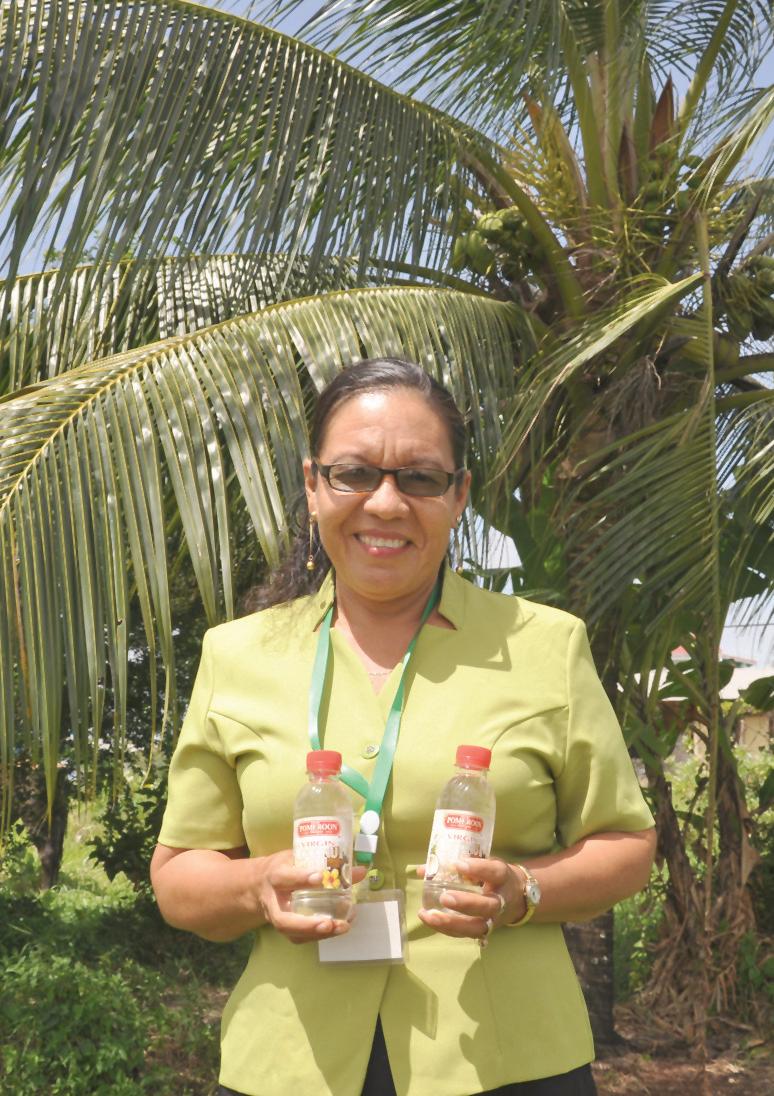
Dr Homenauth further noted that there was heavy focus on this product, not only in Guyana, but in the entire Caribbean Region. That is why the Government is trying to create a coconut industry instead of small commodities, he added.
Meanwhile, Wilmot Garnett, Inter-American Institute for Cooperation on Agriculture (IICA) Guyana Representative, said that “investing in coconut in Guyana can lead to a highly profitable business. The coconut industry in Guyana ranks next to rice and sugar in terms of land area…in excess of 25,000 hectares, representing both productive as well as abundant growth”. Garnett also pointed out that this programme was a revitalisation one that has seen collaboration
among the Ministry, Mexico, and the IICA, explaining that it will be expanded in the future.
He also reiterated that some of the challenges that the industry has faced included poor drainage, access to certified planting materials, and high cost of production inputs. However, the sessions served to address these issues by educating individuals on cost-effective practices that can provide solutions to some of these problems.
He further encouraged the attendees to actively participate in the sessions and to try as much as possible to learn the most they can.
In addition, Gabriel Ferrer, Representative of the Mexican Embassy, expressed gratitude on behalf of his country, and emphasised the strength of the bilateral relations that the two countries share, noting that the partnership began in 1973.
He said: “At a bilateral level, a Technical and Scientific
Also present at the ceremony was Permanent Secretary of the Ministry of Agriculture, George Jervis, who said that this programme was a follow-up to a regional consultancy that was done in 2014, to identify the deficiencies in the project.
Further, he noted that the 11th European Development Fund (EDF) will see a significant sum of money being invested in Guyana, Suriname, Trinidad and Tobago, Jamaica and Belize for the operationalistion of key areas covered in the training session. He added that Guyana will be the leading country in this regard.
He pointed out that there were a lot of value-added products that can be derived from this industry, and that lately there was a new “buzz”, that coconut oil can be used for medicinal purposes.
Jarvis imparted his knowledge with the gathering, through several stories about when he started his career in
Cooperation Agreement was signed between Guyana and Mexico in 1966. A Caricom-Mexico Cooperation Programme is in effect at the regional level….IICA and the Mexican Secretariat of Agriculture (SAGARPA) developed training programmes, aimed at promoting human capacities, to improve the productivity of Caribbean agriculture.”
He added that he was certain that this programme would be of great interest and huge benefit to Guyana.
agriculture, particularly and coincidentally in the area of coconut cultivation. In closing, he encouraged the participants to make the best of the training, to ensure that their products would be of a high quality, upholding the standards that the Ministry was putting in place. Among the gathering of stakeholders at the ceremony were Food and Agricultural Organisation (FAO) representatives. (Extracted from GINA)
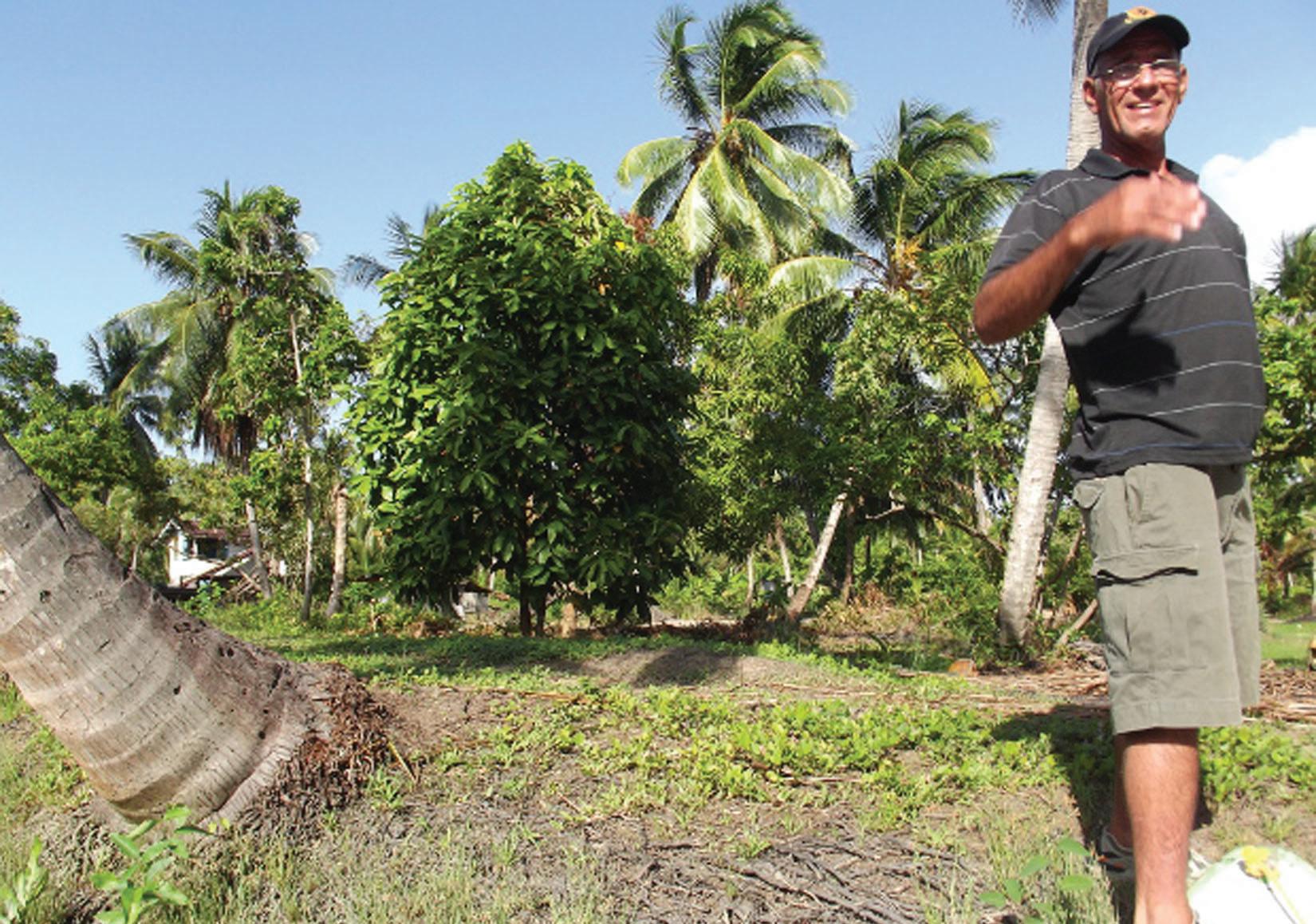
The Local Government and Regional Development Ministry has handed over five tractors and trailers and a quantity of bins to Neighbourhood Democratic Councils (NDCs) in Region Two.
The beneficiary NDCs are: Charity-Urasara, Evergreen-Paradise, Aberdeen/Zorg-en-Vlygt, Annandale/ Riverstown, and Good Hope/ Pomona. Charity-Urasara and Evergreen- Paradise will be sharing one tractor and trailer. The Anna Regina Municipality benefited from 100 bins.
The tractors were procured at a cost of $4.43 million each, while the trailers cost $1.25 million each and the bins $4500 each bringing the total expense to Government for this initiative in Region Two to $23.7 million.
Local Government and Regional Development Minister Norman Whittaker, who presented the vehicles to the NDC representatives, urged them to see this initiative as a fulfilment of Government’s promise to its people, as well as aid to the NDCs and municipalities to sustain the “Clean Up My Country” initiative.
He also pointed out that this undertaking was not an electioneering initiative. He urged them to ensure that they made full use of the bins and tractors. Further, for security and usage purposes, a Memorandum of Understanding (MoU) was signed between the Regional Democratic Council (RDC) and the NDCs.
In addition, the Minister emphasised that when recruiting operators for these vehicles, consideration should be given to employing persons who are
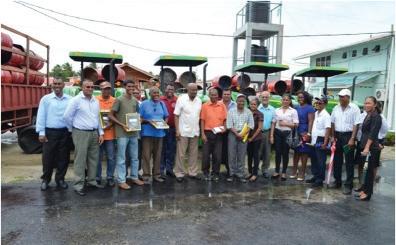

able to exercise caution and care when handling the vehicles.
Recently the Ministry handed over seven John Deere 65-horsepower doublewheel drive tractors, along with seven Bison Hydraulic lift trailers, and 25 45-gallon bins to 10 NDCs in Region Five (Mahaica-Berbice).
The bins will be placed in public spaces, including school compounds, health centres and other areas, to aid in garbage collection and disposal.
Each of the NDCs received a tractor and trailer, with the exception of Profit/ Rising Sun and Seafield/ Tempie, as these will be sharing one; the same applies to Hamlet/Chance and Mahaicony/Abary.
A similar initiative was done in Regions Three and Four. In Region Three, 12 65-horsepower double-wheel
drive tractors, along with 12 Bison Hydraulic lift trailers, and 25 45-gallon bins were given to 12 of the 14 NDCs in the Essequibo Islands-West Demerara Region.
In Region Four (Demerara-Mahaica), three tractors and trailers were handed over to three NDCs along with 25 45-gallon bins. The Local Government and Regional Development Ministry will soon be receiving a quantity of garbage bags, which will also be distributed to the various NDCs. (Extracted from GINA)