
GUYANA


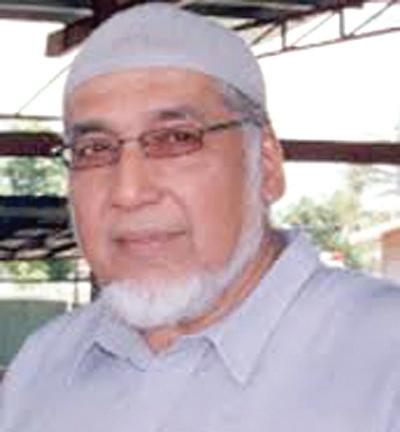
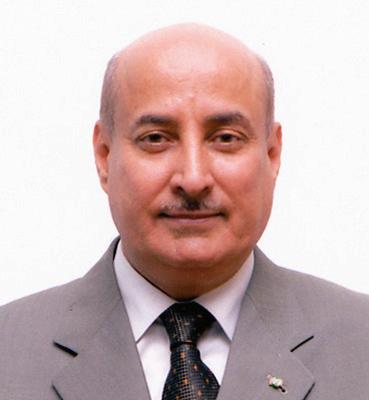
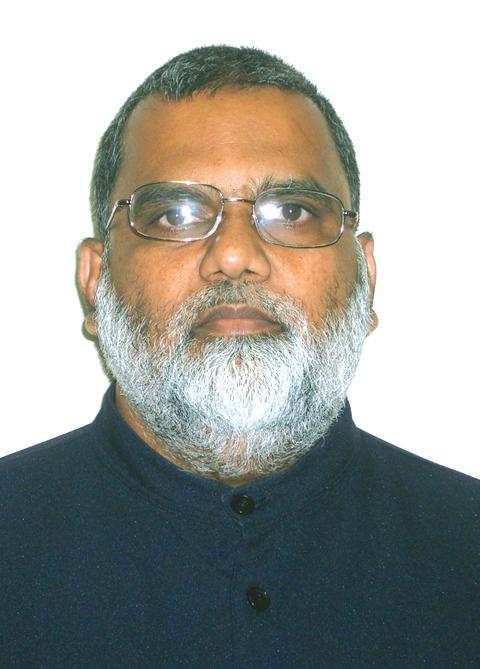
Al Hajj Fazeel M Ferouz President of the Central Islamic Organisation of Guyana (CIOG)
In the name of Allah, Most Gracious, Most Merciful.
Indeed, All Praises are for Allah (SWT), and I send Peace & Blessings upon our Noble Prophet Muhammad (SAS).
I greet you with the Greetings of Peace, the Greetings of Paradise – As Salaamu Alaikum Wa Rahmatullahi Wa Barakathu (May the Peace, Mercy & Blessings of God Almighty be upon you).
Guyana is extremely honored to be hosting the Ninth Congress of The Islamic Organization for Latin America and the Caribbean (OIPALC). On behalf of the Islamic community of Guyana, I extend a warm and cordial welcome to my fellow Presidents, leaders within OIPALC and to our many distinguished invitees.
Our Ninth Congress is expected to be graced by the esteemed presence of H.E. Dr. Abdulaziz Othman Altwaijri, Director General of ISESCO; Dr. Abdel Benarafa, Head of Cultural Policies & Diversity –ISESCO; and Br. Muhammad Yusuf Hallar – Secretary General of OIPALC.
Our meeting is also expected to be honored by the eminent attendance of Dr. Awadh Alasaime; Bro. Hossam Bahgat Senior and Prof. Dr. Abdelrahman Elzahi Saaid Ali, representatives of the Islamic Development Bank (IDB); And the notable representative of the Organisation of Islamic Conference (OIC) - Bro. Ibrahim Alkhuzayem.
It is our distinct pleasure to be hosting such a stellar list of Islamic leaders.
The presence in Guyana of so many illustrious Brothers is indicative of the fraternal relationship that exists amongst the members of OIPALC, and the strong ties between OIPALC and sister Islamic organizations and governments. It is my hope that these bonds will be fortified during our deliberations in Georgetown so that we can better discharge our respective and collective mandates.
The Ninth Congress of OIPALC is tasked with the important responsibility of advancing dialogue and cooperation between var-
ious faiths and cultures. This objective is consistent with the initiative of the Custodian of the Two Holy Mosques, King Abdullah Bin Abdulaziz- Ruler of the Kingdom of Saudi Arabia, for Dialogue among Followers of Religion and Culture.
My country’s own experience in fostering harmonious inter-religious dialogue will serve as a most useful and timely backdrop to our Congress which hopefully will inspire more fervent efforts at promoting greater religious and cultural dialogue across our hemisphere.
I am pleased to report that this Ninth Congress enjoys the blessings of the Government of Guyana. We are indeed grateful for the invaluable help of the Office of the President, the Ministry of Tourism, the Ministry of Culture, the Ministry of Foreign Affairs and all of our volunteers; their support for our meeting is hereby acknowledged.
I wish to take this opportunity also to express my deep appreciation to ISESCO & OIPALC, without whose assistance we would have been unable to host this important gathering of Islamic leaders and luminaries. In addition, I wish to express my thanks for all those who have sent wishes and greetings to our Ninth Congress or otherwise are assisting us with hosting this historic gathering in Georgetown, Guyana.
I am confident that we will have a highly successful Ninth Congress as we, the Islamic organizations across Latin America and the Caribbean, join hands in advancing the goal of religious harmony across the western hemisphere.
Most importantly, I pray that our deliberations will enjoy the Mercy and Graces of Allah (SWT) and find His Favour.
May Allah (SWT) bless us All. Wa Salaam.
The Islamic Educational, Scientific and Cultural Organization (ISESCO) will hold the 9th Meeting of the Heads of Islamic Cultural Centers and Associations in Latin America and the Caribbean, in collaboration with the Ministry of Awqaf and Islamic Affairs of the State of Kuwait, and in coordination with the Islamic Organization of Latin America, and the Central Islamic Organization of Guyana, in Georgetown, Republic of Guyana, on 9-12 February 2014.
Mr Donald Ramotar, President of the Republic of Guyana, will give an address during the meeting’s opening ceremony on the occasion of his country’s accession to ISESCO.
The meeting will see the participation of the heads of Islamic cultural centers and associations in the following countries: Argentina, Guyana, Ecuador, Mexico, Peru, Venezuela, Chile, Puerto Rico, Columbia, Costa Rica, Jamaica, Trinidad and Tobago, Barbados, the Virgin Islands, Antigua and Barbuda, Grenada, the Dominican Republic, the Cayman Islands, Saint Martin, Martinique, Turks and Caicos, Bermuda, Suriname, the Bahamas, and French Guiana. The representatives of the Ministry of Awqaf and Islamic Affairs of the State of Kuwait, the OIC and the IDB will also take part in this meeting.
The meeting will discuss ways to put into effect the Initiative of the Custodian of the Two Holy Mosques for Dialogue among the Followers of Religions and Cultures and its Executive Plan in Latin America and the Caribbean. It will also consider the progress reports by the Islamic cultural centers and associations in Latin America and the Caribbean on the implementation of the Strategy for Islamic Cultural Action outside the Islamic World.
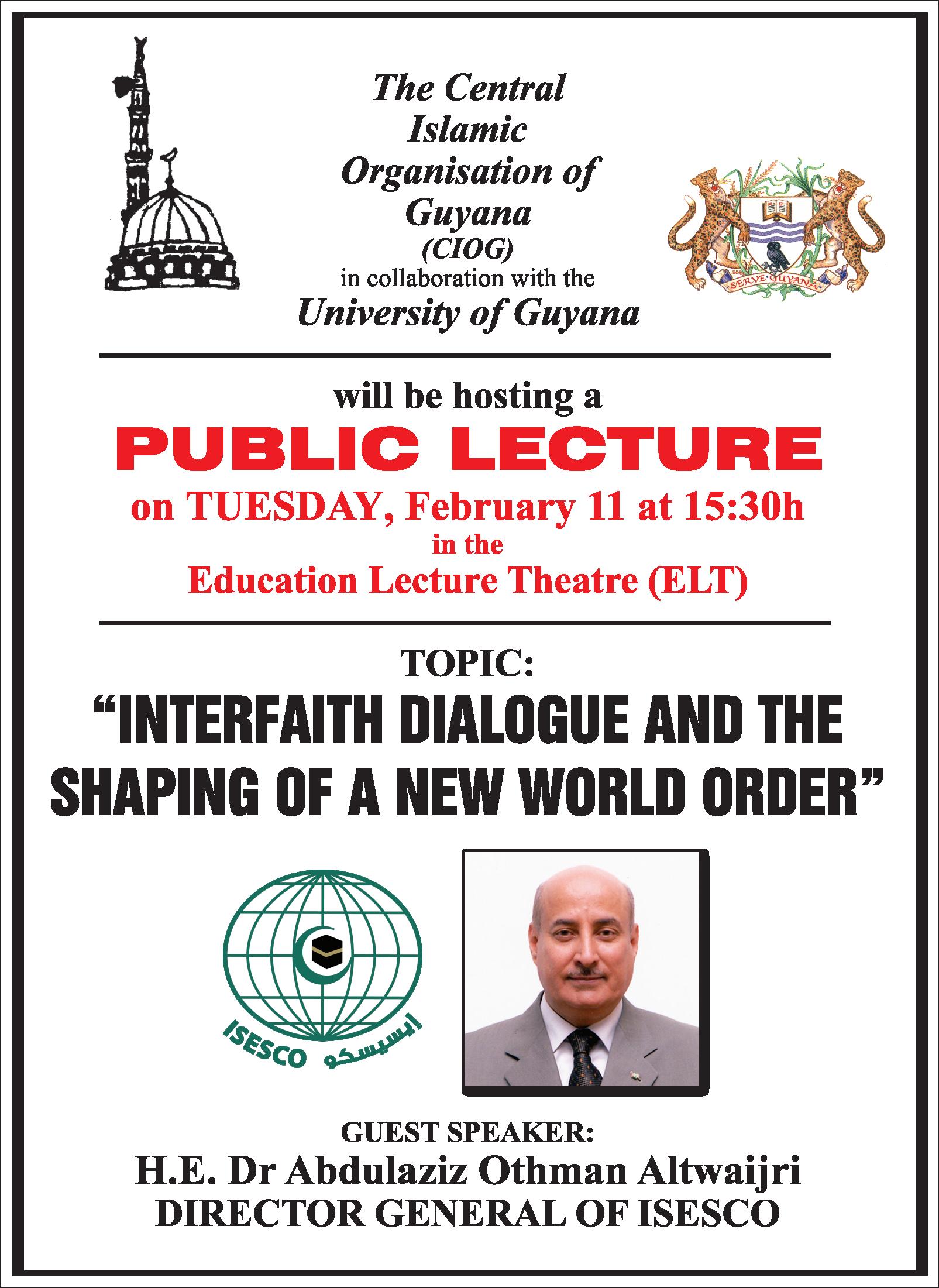
In parallel with this meeting, and at the invitation of the University of Guyana, Dr Abdulaziz Othman Altwaijri will give a lecture on “Dialogue of Cultures and Building a New World Order”.
Dr Abdelilah Benarafa, expert in cultural policies and cultural diversity at the Culture and Communication Directorate, will supervise the organization of and take part in this meeting.
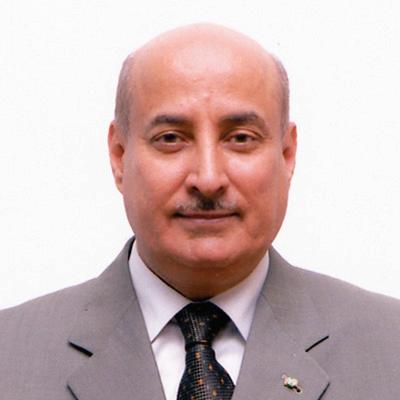
Dr Abdulaziz Othman Altwaijri Director General of the Islamic Educational, Scientific and Cultural Organization (ISESCO)
Iam pleased to visit the Republic of Guyana on the occasion of the ninth meeting of the Heads of Cultural Centres and Islamic Associations in Latin America and the Caribbean, organised in Georgetown by the Islamic Educational, Scientific and Cultural Organization (ISESCO).
The visit and the meeting are part of ISESCO’s sustained effort to assist Muslim communities and minorities beyond the member states in preserving their cultural identity and help them fully integrate into their society and most effectively contribute to its development.
The meeting is all the more important as it comes at a time marked by a great many changes associated with the crises covering almost all parts of the globe, mostly in the Muslim world, with as a most common source, wholesale violation of international laws, abuses of all aspects of human rights, attendant socio-economic problems and unrelenting waves of hate, discrimination and extremism. The scope and scale of these changes and problems are such that the only solution is to promote dialogue among cultures and spread the values of understanding, coexistence and mutual respect between peoples and nations.
ISESCO is actively engaged, through a large network of cooperation and partnership with 195 regional and international organizations, in deepening the culture of justice and peace, promoting intercultural dialogue and the alliance of civilizations and advancing education, science and culture in the member states.
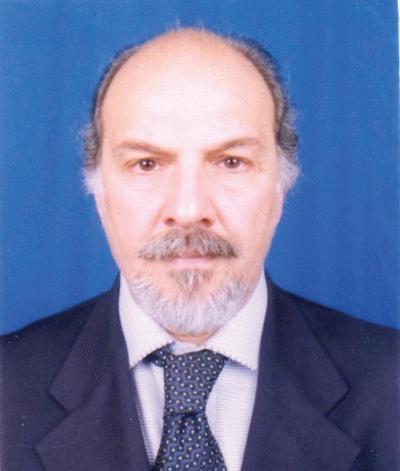
Muhammad Yusuf Hallar General Secretary of the Islamic Organisation for Latin America & the Caribbean (OIPALC).
This Ninth Congress of Leaders of Latin America and the Caribbean to be held in the city of Georgetown, Guyana from February 9 to 11: will be considered a historical event by our Islamic Organisation for Latin America and the Caribbean (OIPALC).
As from its creation in 1997 and with the presence of 14 Latin American countries; Our Islamic Organisation has been interested in expanding its scope towards the Caribbean.
In spite of language barriers when some brothers from that part of the continent such as Imtiaz Ali, from Trinidad and Tobago, Fazeel Ferouz from Guyana, Sulaiman Bulbulia from Barbados joined the organization, they were the ones that started to analyze together with OIPALC the need and importance of including more Islamic organisations from the Caribbean.
Our aims were the same, we agreed on our wishes and decisions: to make the Islamic Culture known. The True Islam, the one promoted by men of goodwill who are determined to make a better world of harmony and understanding.
It’s due to them that today we are celebrating the arrival of this International Congress, with the unconditional support of ISESCO (The Islamic Educational, Scientific and Cultural Organization), and with the presence of its Director General Dr Abdelaziz Othman Altuweijri, and also with high level authorities of the Ministry of Worship of the State of Kuwait and with employees of the Islamic Bank of Development, all determined to collaborate with educational projects in the Caribbean for our future generations.
And last, we would like to thank the authorities of the Government of Guyana, to His Excellency Mr President of the Republic D. Donald Ramotar, to its Ministers and to our brothers of ClOG, without whose support we would not have been able to hold this meeting, and to all those people who have collaborated in one way or another.
May the Almighty reward you and enlighten you and help us to find the right way.
















The profound changes the world has undergone at the end of 19th century, coupled with the rapid mutations witnessed by humanity at the dawn of the third Millennium, have brought about a new generation of ideas to promote world peace and secure a safe future for mankind where harmony, coexistence and dialogue would prevail among the followers of religions, cultures and civilizations.
Amid this constantly changing trend of ideas aiming to redress international relation- ships and reinforce rapprochement, understanding and acquaintanceship among peoples and nations, the United Nation General Assembly adopted, in 1998, a resolution proclaiming the year 2001 as the (United Nation Year of Dialogue among Civilizations).
Four years later, these ideas having substantially matured and permeated world public opinion, the United Nations adopted the concept of the Alliance of Civilizations. It is in this context that former UN Secretary General Mr Kofi Annan established the United Nations Alliance of Civilizations, an organ tasked with setting to motion this idea.
Amid escalating hostility, racism, discrimination and religious disdain, the need was ever more urgent for a strong, daring and balanced initiative to foster dialogue among the followers of religions and cultures, and promote the values of dialogue and peace culture the world over.
It is in this context that the initiative of the Custodian of the Two Holy Mosques for Dialogue among the Followers of Religions and Cultures has come, as an attempt to materialize the aspirations of people in the world for justice and peace. It is a significant contribution to the global effort being made to address the dangers threatening to undermine the stability of human societies, mainly because of escalating hostility, racism and enmity, coupled with ever-growing hot-spots of international tension, especially in the Muslim world.
As a matter of fact, this initiative has evolved through three main phases: the first, was the International Islamic Conference for Dialogue, held in June 2008 in Makkah Al Mukarramah; the second was the World Conference on Dialogue, held in July 2008 in Madrid; and the third was the High-Level Meeting for Dialogue among Religions, Cultures and Civilizations, held in November 2008 at the UN Headquarters in New York. The focus during these three phases was on how to find a practical way to set into motion the initiative. It is in this spirit that the Inter- national Centre for Interfaith and Intercultural Dialogue was established in Vienna, as part of the global engagement to best translate into action the Initiative of the Custodian of the Two Holy Mosques, in its being an invaluable conduit for genuine dialogue, at all levels, between the followers of human cultures and civilizations, within creative cultural diversity.
In a bid to push forth the initiative on a global scale and stimulate research in dialogue, and in recognition of the outstanding efforts in this area, the Kingdom of Saudi Arabia established the King Abdullah bin Abdul Aziz International Prize for Dialogue of Civilizations. This, along with Abdullah bin Abdul Aziz Programme for the Culture of Dialogue and Peace, which was set up by UNESCO, will help enlarge the scope for this breakthrough initiative launched as part of contribution to the effort to promote peace, tolerance and harmony in the world.
Given the international acclaim the initiative has received, as a true embodiment of the Muslim world’s view to the dialogue issues that are raised in international conferences; and with the view to promote this initiative in the Muslim world, the Islamic Educational, Scientific and Cultural Organization (ISESCO) presented to the 7th Islamic Conference of Culture Ministers, which it held in cooperation with the Organization of Islamic Cooperation (OIC) in December 2011, in Algiers, a document pertaining to the Initiative of the Custodian of the Two Holy Mosques for Dialogue among the Followers of Religions and Cultures. The document underlines the religious, cultural, civilizational and human dimensions of the initiative, situating it within a broader vision that is expressive of the principles underpinning the Islamic civilization’s perception of dialogue as a means for greater cooperation between peoples and nations. After discussion and adoption of the document, the Conference commissioned ISESCO to follow up implementation of recommendations made in this context.
Therefore, the Islamic Educational, Scientific and Cultural Organization (ISESCO) has the pleasure to publish this document in a single edition in the Arabic, English and French languages. The objective is to contribute to widely circulating this historic, pioneering initiative to the large community of researchers, scholars, journalists, religious leaderships and intellectuals.
May Allah guide us to the right path and grant us success.
Dr Abdulaziz Othman Altwaijri Director General of the Islamic Educational, Scientific and Cultural Organization
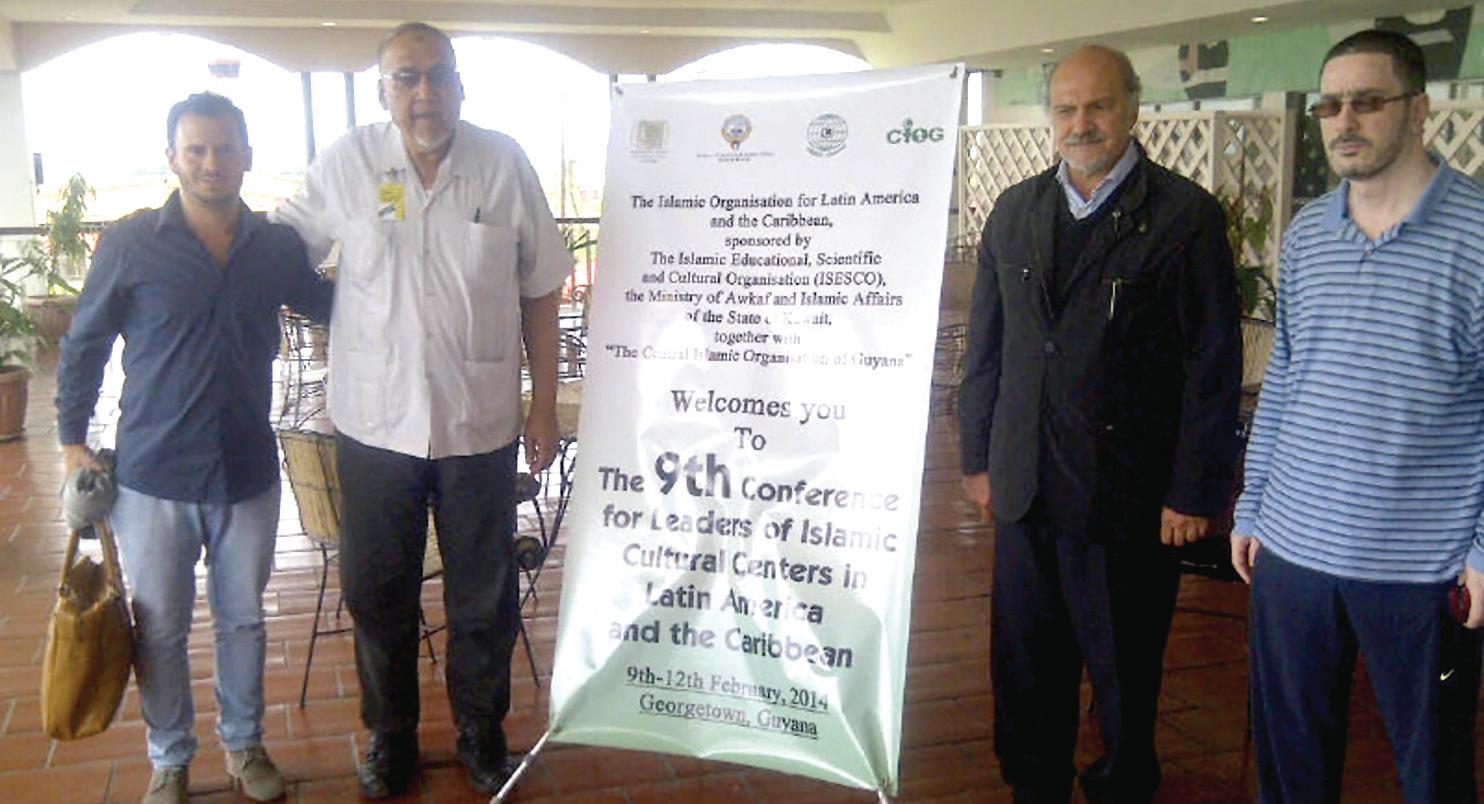
Today marks the opening of the 9th largest Islamic Conference as it partners with the Islamic Organisation for Latin and the Caribbean (OIPALC) and the Islamic Education, Scientific, and Cultural Organisation (ISESCO).
Speaking with the Guyana Times in an interview the Secretary General of OIPALC Architect Mohammed Hallar noted that Guyana which has the second largest population of Muslims which would be approximately 12%. He said Guyana was chosen not only because of that fact but also because the head of the Central Islamic. He said the “the custody of the two holy mosques, the Abdel King has been one of the precursors in the interfaith dialogue and for that reason, we have chosen Guyana today, represented by our President Mr Fazeel Farouz, in order to try to leave another footprint in this present day, to explain and to make it known to the world that God is all powerful, through the sacred Quran which tells us about harmony and understanding among all human beings, for that we would like the presence and the support of the most structured culture of the Islamic world, that is ISESCO”.
He added that he would like to thank the support that has been shown to the dialogue by President Ramotar and those in Parliament. Hallar noted too that the conference was also held in Argentina, Peru, Paraguay, Curacao, Holland, Venezuela, Guatemala and other Latin American Countries. He further that the message would have remained constant, that is, “Promote the initiative of the custodian of the Two Holy Mosques in dialogue between different faiths and cultures of Latin America and the Caribbean”.
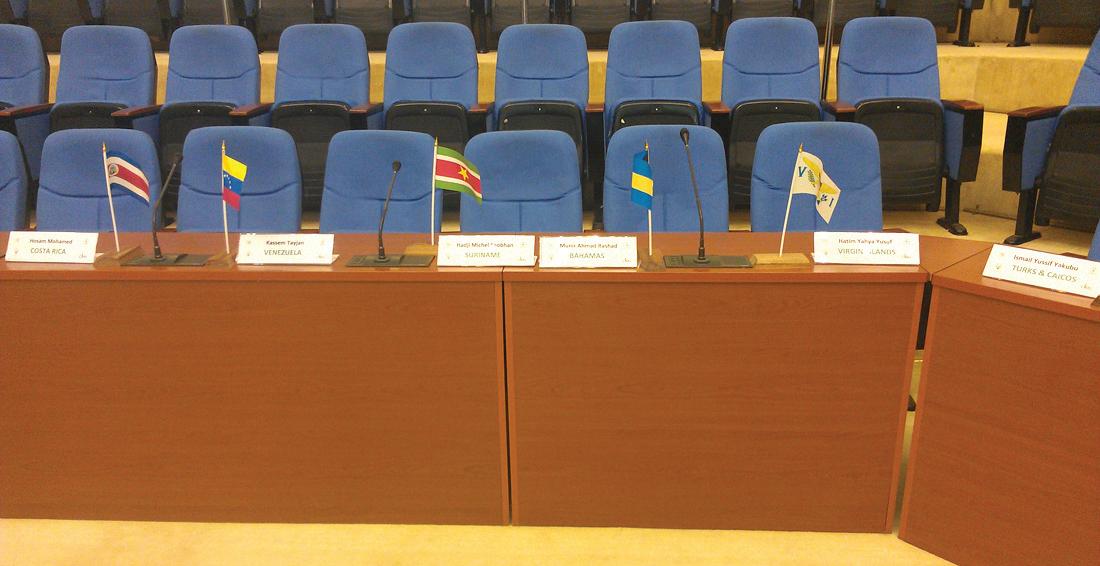
The delegates’ seating in preparation for the conference
CIOG President Fazeel M Farouz said that he lobbied for the conference to be held in Guyana since the inaugural conference was held. He said “Our brothers in OIPALC, we told them that they should have one of their meetings in Guyana,” The CIOG head went on to say that “Guyana is the headquarters of Caricom and we have one of the largest populations of Muslims in the Caribbean, and every day more and more people are seeing the beauty of Islam, more and more people are coming to Islam every day”. Guyana in fact has the second highest number of Muslims in the Caribbean with only Suriname having a higher percentage which would be 25%.
The congregating Islamic leaders will endeavor to present Islamic traditions and its responsibility of enhancing the accurate perception of Islam. Additionally, they will open discourse amid other cultures and religions for diplomatic co-existence.
The conference is projected to attract approximately 40 leaders from Latin and Caribbean Islamic organisations, in addition to officials from the Islamic Development Bank

and the Kuwaiti Islamic Affairs Ministry. ISESCO Director General Dr Abdul-Aziz Othman Altwaijri will be in attendance, as well as Under Secretary of the Islamic Affairs Ministry of Kuwait, Dr Adel Al-Falah.
Guyana’s President Donald Ramotar, Prime Minister Samuel Hinds, ministers of government, members of the diplomatic corps and leaders of local Islamic organisations are also expected to be in attendance during the grand opening ceremony scheduled for this evening.
OIPALC is an arm of ISESCO in Rabat, Morocco. Additionally, ISESCO is also an arm of the Organisation of the Islamic Conference. OIPALC is made of 35 countries within Latin America and the Caribbean. The last conference was held in Chile in February 2013.
ISESCO was founded by the OIC in May 1979. ISESCO is one of the chief international Islamic organizations and specialises in the education, science and cultural fields of Islam. It seeks to endorse and fuse cooperation among member states of OIC in the fields of education, science, culture and communication. Additionally it develops practical science and the use of highly developed technology within the framework of Islamic values and ideals.

The Central Islamic Organisation of Guyana (CIOG) in association with the Islamic Education, Scientific, and Cultural Organisation (ISESCO), and the Islamic Organisation for Latin America and the Caribbean (OIPALC) will host the 9th OIPALC conference on February 9 in Georgetown, Guyana.
OIPALC was formed about fifteen years ago to promote awareness of the needs of Muslims in South America and the Caribbean. ISESCO has sponsored many of OIPALC programmes since ISESCO deals with the cultural and educational aspects of the Organisation of Islamic Cooperation (OIC).
Guyana with a population of about 12% Muslim is a member of the OIC. Neighouring Suriname with a Muslim population of about 15%, is also a member of the OIC, the Islamic Development Bank (IsDB) and ISESCO since 1996.
The conference will be attended by some important figures from the Middle East and the region. ISESCO Director General Dr Abdulaziz Othman Altwaijri will visit Guyana to attend the meeting, as well as the Under Secretary in the Ministry of Awqaf and Islamic Affairs of Kuwait, Dr Adel Al-Falah. In addition, officials from the Islamic Development Bank, (IsDB) the Islamic Solidarity Fund are expected in Guyana for the meeting.
Dr Abdulaziz Altwaijri, is a social justice advocate, and is one of the founder of the East West dialogue. He has written and contributed in the field of human rights, democracy, modernity, ecnomic and social justice.
According to Dr Altwaijri, the upcoming visit and the meeting in Guyana are part of “ISESCO’s sustained effort to assist Muslim minority communities in preserving their cultural identity and help them fully integrate into their society and most effectively contribute to its development.”
Dr Altwaijri said that the meeting in Guyana is very important because of the rapidly changing world.
“Mostly in the Muslim world, with as a most common source wholesale violation of international laws, abuses of all aspects of human rights, attendant socio-economic problems and unrelenting waves of hate, discrimination and extremism. The scope and scale of these changes and problems is such that the only solution is to promote dialogue among cultures and spread the values of understanding, coexistence and mutual respect between peoples and nations,” says Dr Altwaijri.
President of Guyana, Donald Ramotar, Prime Minister Samuel Hinds, ministers of government, members of the diplomatic corps and leaders of local Islamic organisations will also attend the conference.
ISESCO, which is headquartered in Rabat, Morocco, was founded by the OIC in 1979 with the objective of promoting and consolidating cooperation with member nations in the fields of education, science and culture. ISESCO aims to promote and consolidate cooperation among member states of OIC in the fields of education, science, culture and communication. And to consolitate understaning and contribue to the achievement of world peace.
Guyana is considering ISESCO membership, which could lead to some tangible cooperation with the University of Guyana and other areas of education and the arts in Guyana. ISESCO is also willing to consider membership fee waiver and reduction for Guyana.