


















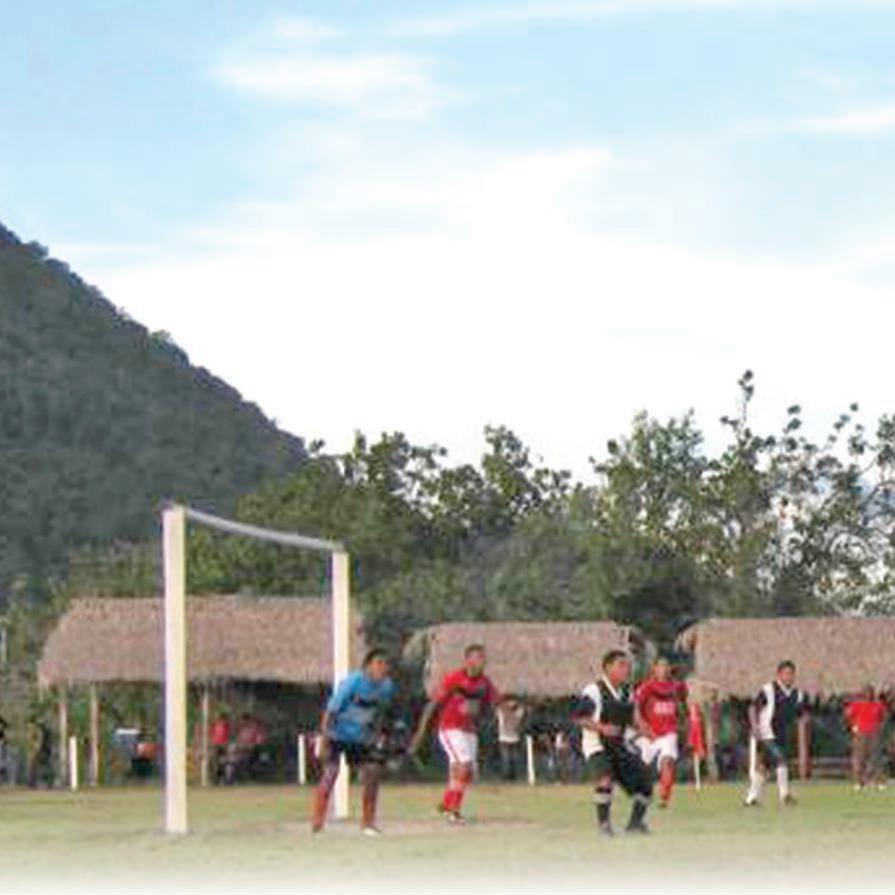







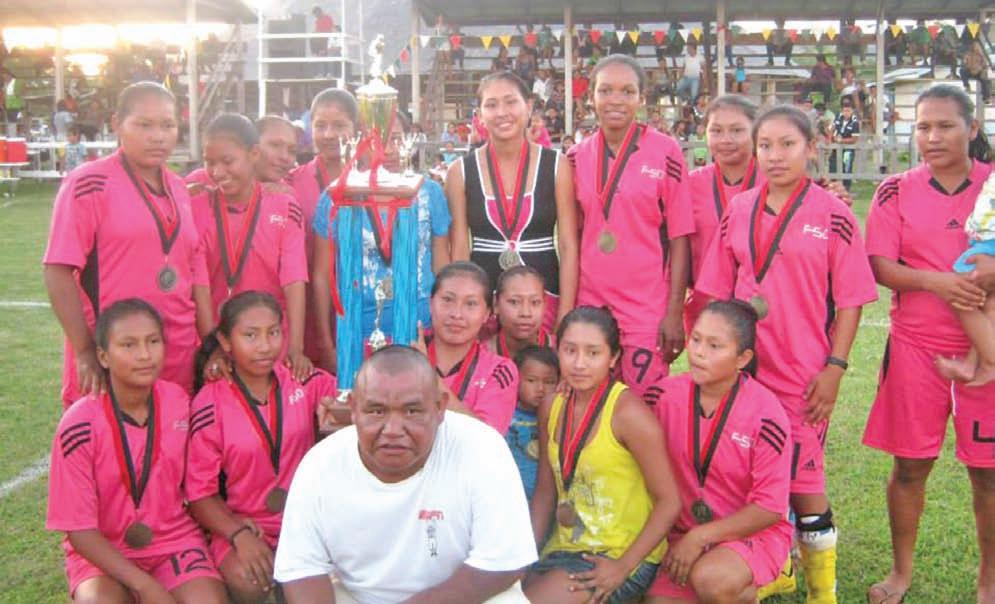
Football is by far the most popular sport in the North Rupununi. The North Rupununi Football Sub Association (NRFSA) realises the importance of sport in the integration and cohesion of communities across the North Rupununi and also the positive social impact it has on the general population, more so the younger generation.
NRFSA was founded in 2000 and included the first ever Chair of the NRFSA, Michael DeMendonca, who was ably assisted by other individuals such as Lloyd Vanlong, Eugene Isaacs, Terrence Brasche and Ricardo Cabral.
In the formative days of the NRFSA, football was played just for the love of the game with no incentives and with little or no scope for development. The NRFSA played a vital role in the development of the game and is widely recognised as the most organised and efficient football association in the Rupununi.
Currently, nine individuals sit on the executive committee of the NRFSA. The committee is tasked with the day-to-day management of football in the North Rupununi, which includes the organising and managing of various tournaments, organising of coaching and refereeing sessions for officials and providing accommodation for teams during tournaments.
For the calendar year 2015-
16, the NRFSA has already held its Male and Female Annual Football First Division Championships. This will be followed by the Champions League in November and Under 15 and Under 20 male and female tournaments, which will be held in January and February 2016. Also in the pipeline are coaching and referee courses for persons from clubs within the North Rupununi. This is intended to be done with assistance from the Guyana Football Federation (GFF).
At present, the following clubs are full members of the NRFSA: Annai United, Three Hills, Basin F.C., Kwatamang, Wowetta Premier Conquerors, Surama F.C., Net Rockers, Splashing Stars, Shooting Stars, Crashwater F.C., Rewa F.C. and Bina Hill. It is hoped that in the future more clubs will join the NRFSA. Sadly, a major deterrent for interested clubs is the lack of finance for gears and infrastructure.
However, without effective management and cooperation, football will become stagnated and fall by the wayside as is the case with most of the other subassociations in Region Nine. NRFSA aims to ensure that football in the North Rupununi keeps on developing.
Because it is a voluntary organisation, which means it receives no funding for its basic day-to-day activities and oper-
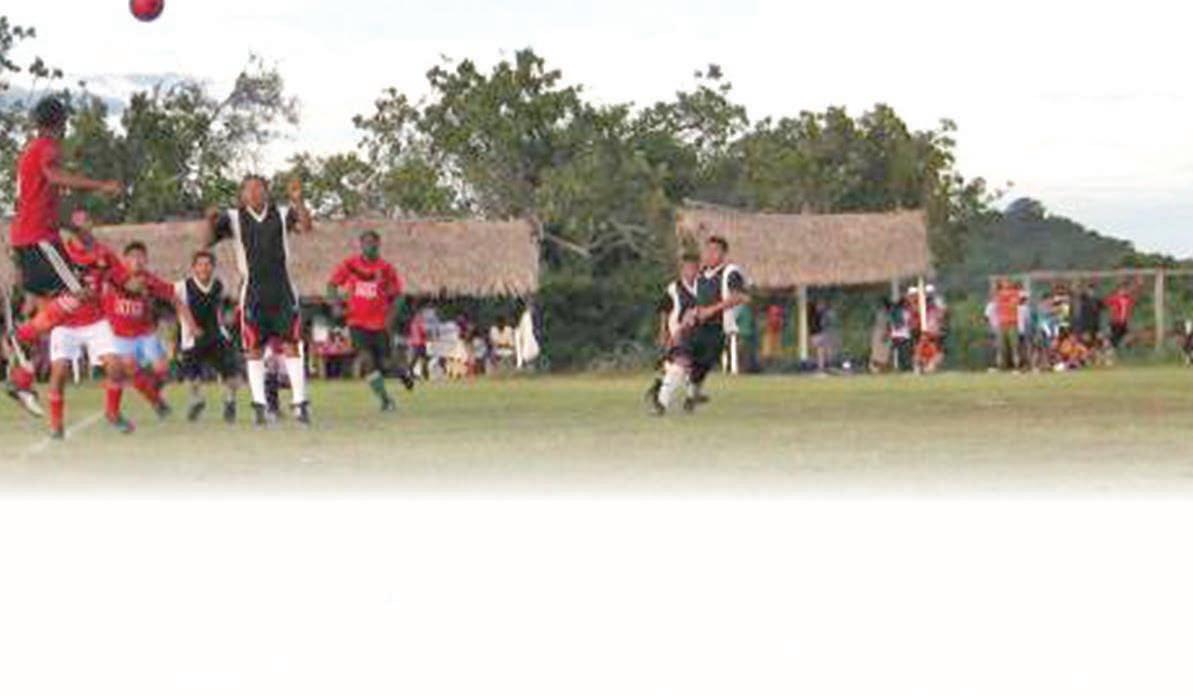
Football Federation, both organisations to which the NRFSA is affiliated.

Nevertheless, the NRFSA, through the collective efforts of its Executive Committee, will continue to strive for the continued advancement and development of football in the North Rupununi because the benefits of football are clearly evident.
Football has widespread social and economic benefits, not only for players and clubs but for communities that host football matches, which is why the NRFSA is doing all that it can to sustain its work in North Rupununi.
Additionally, NRFSA has seen the benefits of football in helping to keep young people occupied and preventing them from engaging in harmful habits, such as drugs and alcohol.
At present, the North Rupununi has the best youth

football in the North Rupununi is destined for greater things.
The association’s plans include ensuring that all duly qualified clubs in the North Rupununi apply for and receive GFF Association Level Club licenses; working in coordination with the government of Guyana to obtain a ground with modern training facilities for players; continuing to develop and enhance football at all levels; developing a financial plan to ensure the viability and selfsustainability of the NRFSA; helping talented, educated players to become recognised nationally with the hope that they may be able to receive scholarships to institutes of higher learning; and ensuring that persons from the North Rupununi are adequately trained as referees and coaches and are duly certified so that they can contribute to the

ations, the NRFSA seeks sponsorship from various organisations and individuals for tournaments, and this in itself is a long, drawn-out process, often with little success.
The parent body for the NRFSA, the Rupununi Football Association (RFA) has long been defunct, and as such no funding of any sort is received from either the RFA or the Guyana
team in Region Nine with the Annai Secondary School having recently placed third at the National Digicel Schools Championships.
The talent is there; it is just that it has to be harnessed and channelled in the right direction. Through cooperation, proper management and development, NRFSA is convinced that
continued development of football in the North Rupununi.
For more information on the work of the NRFSA, visit North Rupununi Football Sub Association on Facebook. (Information provided by John Abraham)
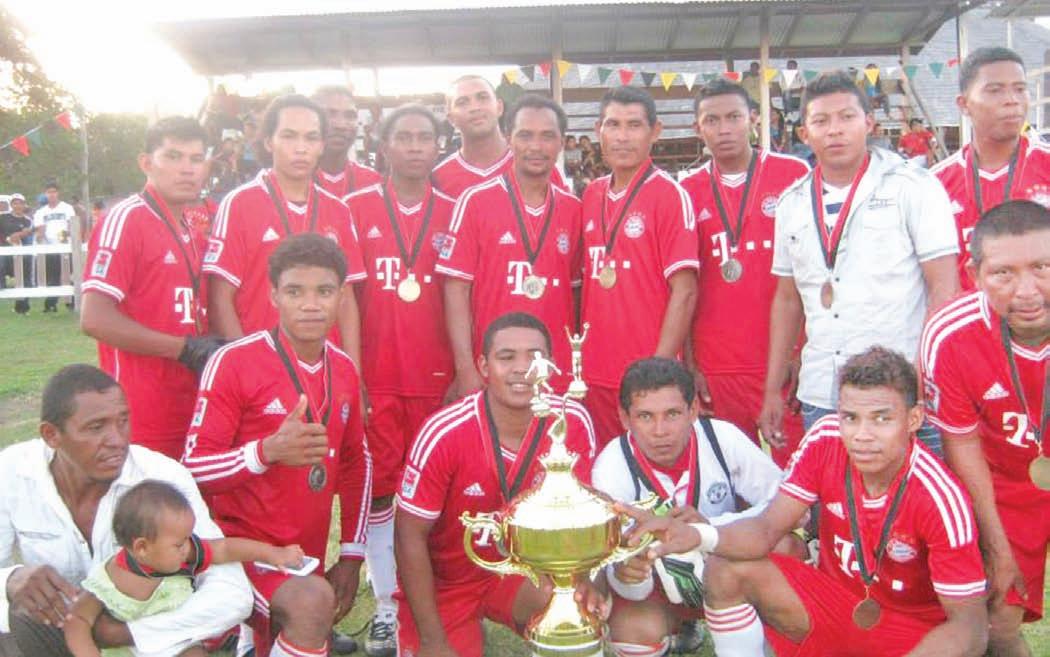
(Cover photo: NRFSA 2014 First Division ChampionsBasin F.C.)


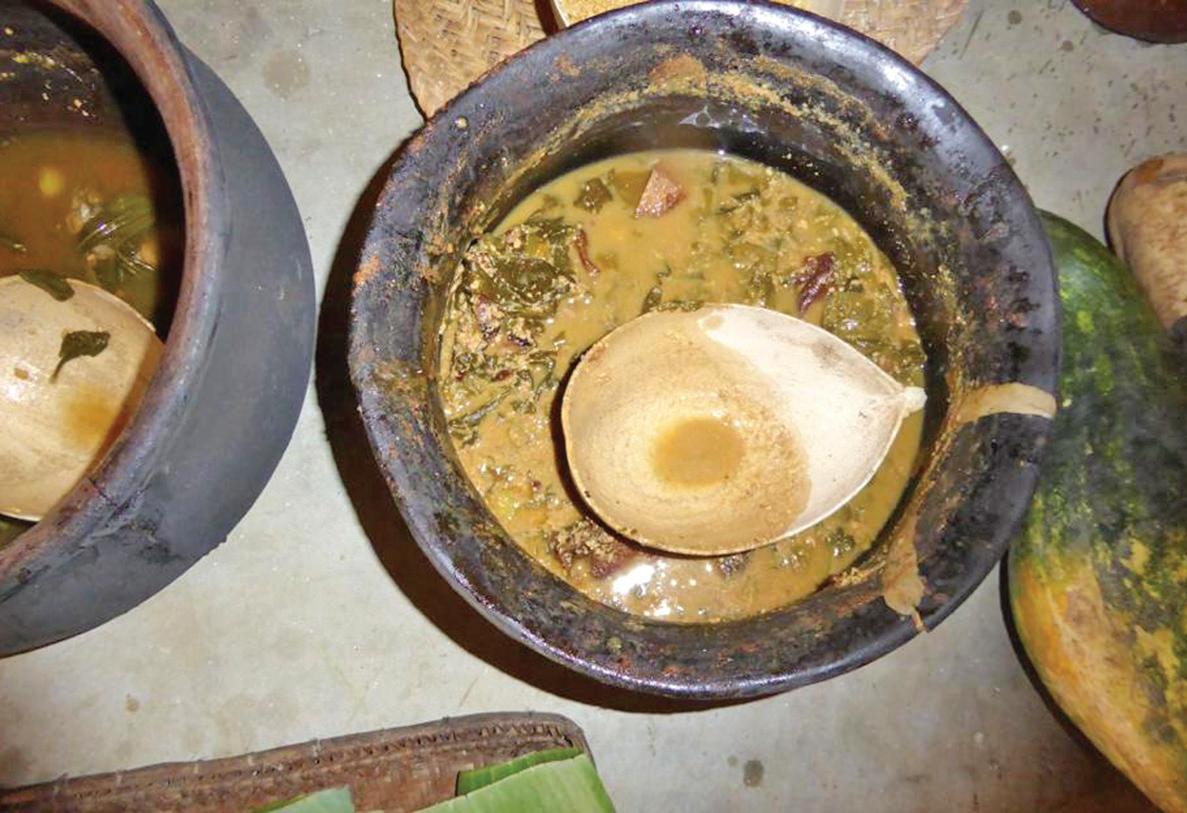
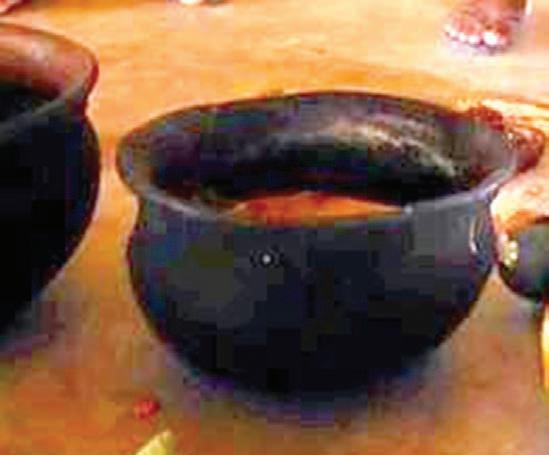
Last week, we spoke of the tuma pot as a meal, but further research revealed that the tuma pot is indeed an actual pot. Lokono Arawak archaeologist George Simon explains the making of the pot and the cuisines enjoyed from it.
Tuma pots are principally associated with the Rupununi savannah peoples, the Macushi in the north and Wapishana in the south. No doubt the tradition of pottery making once existed among coastal Amerindians, but today it is difficult to find potters who still make ceramic pots. Sadly, the skill seems to have been lost.
In the south savannahs, however, among the Wapishana, the tradition is still very much alive, though not every Wapishana village produces them.
The Wapishana village of Waranau still produces these
the skill has been lost with the passing of their skilled potters. The younger generation of Machusi in that village has not upheld the pottery tradition.
The tuma pot is made from clay and is fired at low temperature in an ‘open fire’ system of pottery making. The potter would have collected the clay from a particular clay source, not found in most villages. The clay is processed and refined and sometimes ash, crushed pottery fragments, and fine sand are included in the clay to strengthen it. Once the base of the pot is established, the body of the pot would be made, and from coils of clay, gradually building and fashioning the shape outwards towards the shoulder and then inwards to form the neck, which will then be developed outward to form the rim.
The base of the pot can
watering, hence tuma pot – “food that is delicious”. Another Wapishana word is “damuriid”, which refers to tuma pot or pepperpot.
Most importantly, the tuma pot brings people together in villages. The making of the pot is a collaborative effort and the meal made in the pot is enjoyed as a group.
Amerindian cuisine
In prehistoric times, indigenous peoples roamed about freely in the forests and savannahs as expert hunters, fishermen and tropical forest collectors.
Today, in Guyana, nine Amerindian tribes live in different parts of the country, some in the rich alluvial swamp lands of the coastal plain, and others in the terra firm of the hinterland. These two environments bid fair for providing the inhabitants with adequate food
particular pots. The Wai Wai also produce tuma pots. Villagers in the south savannahs would therefore access their pots from particular potters from other villages. Toka village in the north once boasted of a strong pottery making tradition, but
be flat or oval. The oval pots are placed on the ground in a shallow hole and supported by three rocks. The flat based pots can rest on the ground or be placed on three rocks over the fire wood.
Tuma refers to something that is tasty, mouth-
resources, which are used in a sustainable manner.
The Arawaks, Caribs and Warraus live on the north/west and east coast swampy region of the country, the Arecuna, Akawaio and Wai Wai in the forested and riverain region, the

Patamona on the part forest/ part savannah Pakaraima Mountains, and the Macushi and Wapishana on the flat Rupununi savannahs. Each tribe is a master of his environment.
In the wild coast of Guyana, the north/west region of the country has some 30 shell mounds. These mounds attest to the magnitude of subsistence resources available to the first inhabitants in the region, such as the Carib, Warrau and Arawak, who still live there.
Archaeologists have excavated some of these mounds and marvelled at the remains found in them, as they revealed that the inhabitants consumed a variety of animals, birds and seafood, which included a variety of fish, shellfish, crab, oyster, lobster, shrimp, and snails. Vegetables, fruits and nuts gathered from the forest and reefs supplemented their diet.
The Upper Mazaruni is home to the Arecuna and Akawaio, the Pakaraima Mountains to the Patamona, and the Upper Essequibo to the Wai Wai. These four tribes live in almost the same environmental situation and get their supply of food from the rivers and forest where there is an abundance of an-
imals, fish and birds. The most popular game animals are the deer, wild cow, wild hogs, labba, acuri (agouti), sloth, manatee, capybara, alligator and all types of monkeys. They also hunt birds like the powis, marudi, maam, and pigeons. Frogs, maggots and insects, both land and river turtles and turtle eggs, vegetables and fruits are collected from the forest, and a variety of fishes and eels from rivers are all part of their diet.
For the Macushi people, who live in the north, and the Wapishana, to the south Rupununi savannah, their
food supply originates from the savannahs, the Rupununi River and streams that drain the vast savannah. The Rupununi savannah and the Pakaraima Mountain region have an abundance of ants, armadillo, swamp birds, and savannah deer that add to their diet. The tuma pot is used to cook all these succulent meats, which is served with delicious cassava bread. Join us next week to learn more about the cuisine of Guyana’s indigenous people, which not only include meats but also plants. (Information by George


By Matt Hallett
Guyana is home to six species of wild cat – each with unique natural histories, beautiful physical attributes, and interesting behaviours. Each of the six species plays an important role in the vast forests and savannas of Guyana, a niche that evolved over millions of years.
Most people probably know of the large wild cats of Guyana simply as “tigers”. Many times I’ve been provided detailed explanations of the different types of “tigers” (deer tiger, tapir tiger and labba tiger), their habits and behaviours. There are many persons in Guyana who have spent
their lives farming, hunting, and fishing the land and thus are very knowledgeable about local wildlife, including Guyana’s wild cats.
But did you know that tigers have stripes while all of Guyana’s cats are either spotted or have no patterning at all? Did you know that tigers prey on buffalo, elephant and rhino calves, chital deer, Indian wild boar and more? None of these species exist anywhere in South America. Did you know that there are six living species of tiger, all of which are either ‘Endangered’ or ‘Critically Endangered,’ and that three have already gone extinct? Did you know that all six species are found exclusively in Asia?
While calling Guyana’s wild cats “tigers” is largely believed to be an interesting artefact of Creole culture, the so-called tigers of the Western Hemisphere actually have an interesting history that originates outside of the Caribbean. The “tigers” of the Neotropics actually comes from the Spanish word for the Asian tiger, El Tigre. Upon arriving in the new world in the 16th century, Spanish explorers had no native word in their language for the cats that they encountered.
These early explorers described the wild cats of this new world as smaller than a lion but bigger than a leopard. None had ever encountered such creatures in the Old World, and so they named the largest after the Asian tiger, whose ferocity was known to them through Roman writings, popular literature during the Renaissance. Despite

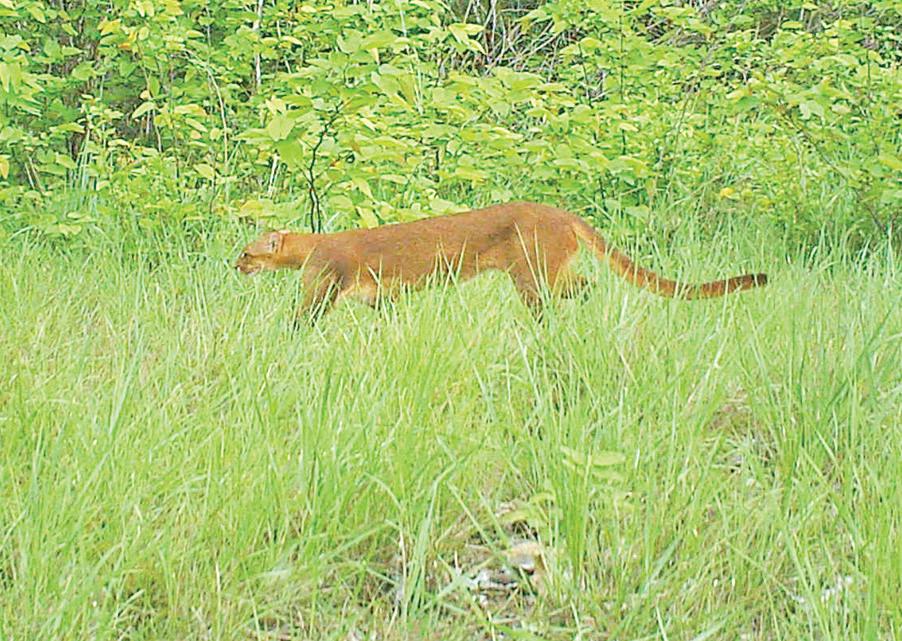
can cause them to be confused with similar looking small cats. However, margays are generally smaller than ocelots and larger than oncillas, with larger eyes, longer legs, and a much

its inaccuracy, the name El tigre stuck, was picked up by the Portuguese who colonized Brazil, and was adopted and passed on by the Spanish, French, Dutch, and British, who all played roles in Guyana’s colonial history.
Let me introduce to you the remaining “tigers” of Guyana, none of which are actually tigers at all.
The margay (Leopardus wiedii), also known as tiger cat, tigrillo, caucel, gatopintado, and tree ocelot, is a small wild cat that is similar in appearance to the ocelot, but it is unique in that it is the only one of Guyana’s six wild cats that is adapted for a truly arboreal lifestyle. Margays can hang from branches using only one foot and can rotate their hind legs a full 180 degrees, allowing them to run straight down the trunk of a tree like a squirrel.
Their presence in the upper canopy clearly differentiates them from other cats, but margays will also come to the ground to hunt where their brown or tan undercoat covered with black rosettes
larger tail.
In fact, the length of the tail is probably the defining characteristic of the margay and is approximately three-quarters the length of its body. Margays range from southern Mexico to Northern Argentina, where they are found exclusively in dense forest. Being an arboreal species, margay habitat needs to include large
stands of trees, from tropical evergreen forest to dry forest and cloud forest.
Margay wild cats are primarily nocturnal, resting during the day behind dense thickets or clumps of vines. Hunting in the trees and on the ground (mostly in the trees), margays feed on small mammals (including monkeys, porcupines and sloths), birds, eggs, lizards, and frogs. Along with birds of prey, margays are important arboreal predators that help keep arboreal ecosystems in balance.
Margays are considered ‘Near Threatened,’ with their populations decreasing due to overharvest and habitat loss. Because of the margays’ need of forested habitat, conversion of forest habitat for agriculture, mining, and other uses continues to threaten this species. Margay pelts are highly prized in the fur trade, greatly reducing their populations in the previous decades.
A ban on trade in their pelts has helped to reverse this trend, although illegal trade in their fur is still known to persist. Unlike the ocelot, the slow reproducing margay has had difficulty bouncing back from the impacts of heavy trading in their furs.




Sharon Maas spent many childhood hours either curled up behind a novel or writing her own adventure stories.
Sometimes she had adventures of her own, and found brief Guyanese fame for salvaging an old horsedrawn coach from a funeral parlour, fixing it up, painting it bright blue, and tearing around Georgetown with all her teenage friends. The coach ended up in a ditch, but thankfully neither teens nor horse were injured.
Boarding school in England tamed her somewhat; but, after a few years as a reporter with the Guyana Graphic and the Sunday Chronicle, she plunged off to discover South America by the seat of her pants.
Maas has always had a great sense of adventure and curiosity about the world we live in, and Guyana could not hold her for long. In 1971 she set off on a year-long
backpacking trip around South America. Her travel articles were published in the Chronicle.
In 1973 she travelled overland to India via England, Turkey, Iran, Afghanistan and Pakistan. After almost two years in an Indian Ashram, she moved to Germany (where she currently resides), got an education, got a job, got married, had children, and settled down.
Maas maintains close ties and great love for both India and Guyana; and, somewhat reluctantly, for England. Her first novel, “Of Marriageable Age”, was published in 1999 by HarperCollins, and is set in India, Guyana and England. Two further novels, “Peacocks Dancing” and “The Speech of Angels”, followed. She has penned other books and recently released “The Secret Life of Winnie Cox” – a fiction with a historical background.
In an interview with Guyana Times Sunday Magazine, the author said that her inspiration to write the book stemmed from a wedding photo of her grandmother, who was white, with her grandfather, who was black.
“Such a striking photo! I realised how shocking such a marriage must have been at the time (early 20th century) and thought it would make a great story. So I write it! Obviously, the details are very different, but there are a few parallels to her [grandmother] story and Winnie’s,” Maas explained.
The book tells the story of Winnie Cox who lives a privileged life of dances and dresses on her father’s sugar cane plantation. Life is sweet in the kingdom of sugar and Winnie, along with her sister Johanna, has neither worries nor responsibilities; they are birds of paradise, protected from the poverty in the world around them. But everything changed in a heartbeat when Winnie falls in love with George Quint, the post-office boy, a ‘darkie’ from the other side. She soon finds herself slipping into a double life and as she withdraws from her family, she discovers a shocking secret about those who are closest to her. Now, more than ever, Winnie is determined to prove her love for George, whatever price she must pay and however tragic the consequences might be.
“The Secret Life of Winnie Cox” is a breath-taking love story of two people fighting to be together in a world determined to break them apart.
Maas said she enjoyed writing the book because “it is going back into the past”, into the history of the place she grew up, and “imagining what it might have been, reconstructing the facts and weaving a story into them”.
“I know from an aunt that her [grandmother] marriage to a black man (or ‘coloured’ as he would have been called at the time) was outlawed by her father, and she was even sent to Barbados to separate her from him. It didn’t workjust as it doesn’t work for the

fictional Winnie,” revealed Maas.
Recently, the author held a launch for her book in Guyana, with a talk, question time, a raffle, and a book sale. At the end of October, Maas hopes to participate in an event for Black History Month in South London where she will promote her book.
Offering advice to young writers, Maas encouraged, “Don’t worry about if you can write or not. Don’t worry about not having ideas. Just keep writing, and the words and ideas will come.”
Maas pointed out that she has a need to tell stories. Sometimes a little idea
will spark a story, and this motivates her to write it. Consequently, she has started the second book in the trilogy of “The Secret Life of Winnie Cox”.
The book is available at Austin’s Book Store on Church St. Also, visit www. sharonmaas.com to view other books by the author.

By PetamBer Persaud
Pen pal letter writing has encouraged and enhanced penmanship, a dying art. There was a time when many people took great pride in their handwriting which opened doors of opportunity.
Gandhi wrote in his autobiography, “The Story of My Experiments with Truth”: “good handwriting is a necessary part of education.” And someone else said that education is the key to success.
Pen pal letter writing has encouraged reading: both reading for pleasure and reading for scholarship. Pen pal letter writing promoted and aided in the perfection of self-expression and in the preservation of languages. Pen pal letter writing has opened new vistas for many, lead-
ing to numerous memorable moments and life changing opportunities.
However, the art of letter writing and the pastime of pen pal writing have declined, resulting in the lost of the fine art of penmanship and, to some extent, the joy of reading.
Put pen pal writing and the joy of reading within the reaches of Indigenous person in a far off area of a small country in South America, add a few other enabling ingredients, and the result is the making of a remarkable man, an indigenous man of many firsts.
John Peter Bennett (Sept. 1914 – Nov. 2011)
He was the first indigenous person to be ordained an Anglican priest in Guyana; the first indigenous person to be canonized in the Anglican Church of Guyana. He
was the first indigenous person to write and publish “An Arawak-English Dictionary”.
Embodied in the above processes are many other firsts.
John Peter Bennett is his name and he was born in 1914 in Kabakaburi Village on the Pomeroon River, taking leave of this earth in 2011 from the same village in which he was born, coming a full circle as it were, after living a fruitful life.
At an early age, Bennett knew something was wrong when students were flogged for speaking their native tongue. He knew something was wrong when speaking their native language in school was discouraged. He knew this was wrong since he learnt much and understood more when his father spoke to him in

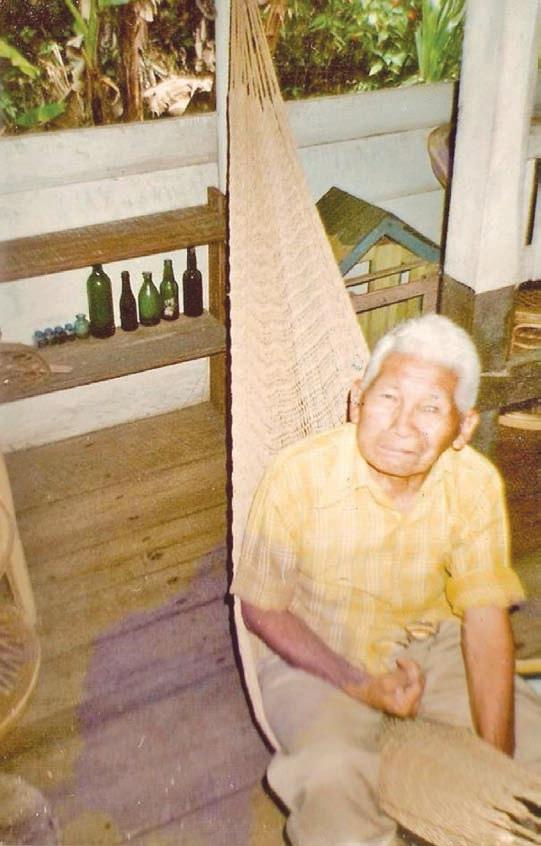
Loko – his first language. This realisation manifested itself in making Bennett a linguist, translator and author.
Educators are still caught in this shortcoming; victims of systems that need revamping. Language is important to a people. Take away that language of a people and they are at a disadvantage within the framework of another language. This is not something to discover. Educators like Beryl Loftman Bailey of Jamaica, Olga Bone and Desrey Fox of Guyana have already opened the way by sharing their findings as linguists and educators. Bone is quoted as saying “If children cannot learn the way they are taught, we must teach them the way they can learn.”
Bennett’s formal edu-
cation ended when he was about the age of twelve. But he furthered his education through reading, perhaps encountering Mark Twain’s “[d]on’t let schooling interfere with your education.” In this respect, the library of an Anglican priest, Reverend Martin B. Hirst was of enormous help to him.
One of his skill trainings came to his aid in a world where there were few opportunities available to a thinker and enterprising young man. As a tailor, Bennett knew how to cut his coat according to his cloth. He didn’t allow blindness and partial paralysis prevent him from doing his lifework as he tapped away long hours at his typewriter. And he didn’t miss out on reading; his grandchildren were ready and willing to read
to him.


In 1940, Bennett married Clara James and the union produced a boy, Maurice, and a girl, Jennifer. Their first daughter died in infancy. Even with a family to provide for, he pursued his dreams in service to his people. For this he had to equip himself with the necessary tools. He attended Codrington College in Barbados to train for the priesthood. After ordination, he served as priest in several parishes across Guyana. Later he was made canon of the Anglican Church.
This tribute started with letter writing/pen pal letter writing and the enormous benefits to be reaped. John Peter Bennett and Richard Hart started corresponding which lasted for many decades. Hart was a Jamaican lawyer, politician and academic. That encounter led to the publication of at least two books, “Kabethechino”, and “An Arawak-English Dictionary”.
In 1989, he was awarded the Golden Arrow of Achievement by the Government of Guyana. In September 2015, the National Art Gallery in collaboration with the Ministry of Indigenous Peoples Affairs paid homage to Bennett by mounting an exhibition of artwork by indigenous artists. The achievements of John Peter Bennett cannot be easily measured and his legacy will live on, inspiring others to safeguard our national patrimony.
Responses to this author telephone (592) 2260065 or email: oraltradition2002@yahoo.com
What’s happening:
The 2016 Commonwealth Short Story Prize is now open for entry; please go to the website for more information.


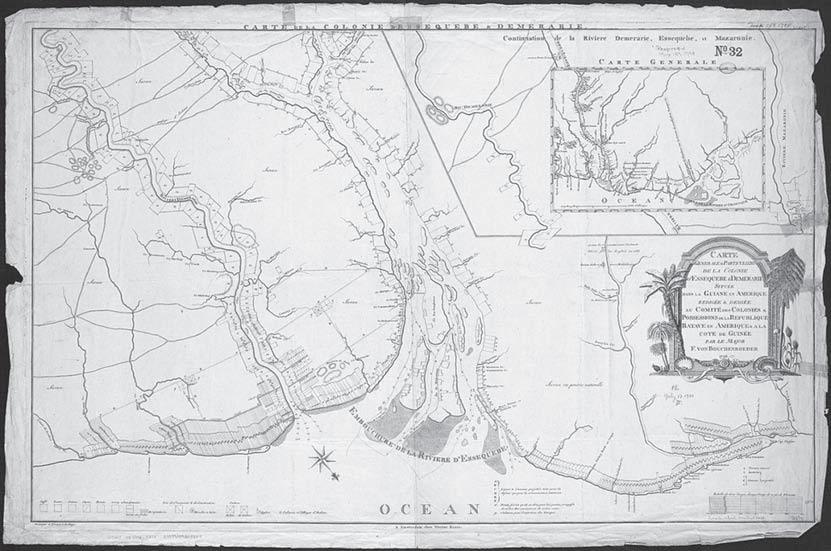
In 1790, other French privateers arrived up the Essequibo River to loot and burn before demanding ransom. One such group of privateers, after destroying all but two plantations in the colony (which were left badly damaged) departed with five hogshead* of sugar and most of the slaves, leaving private plantation owners ruined.
Not all raids were successful. About a year after Antoine Ferry’s raid at Bartica point, two more French privateers arrived in the Essequibo intending to raid the colony. However, with the help of the indigenous Indians, who used their knowledge of the bush to harass the raiders, they quickly abandoned their attempt.
Berbice would also continue to suffer pirate raids.
In 1712, the French corsair Jacques Cassard was outfitted to plunder Dutch colonies in the West Indies with troops provided by the French king. While in Surinam, he sent three large ships under the command of Baron Du Mouans, into Berbice where they arrived Nov. 8 at an unguarded Brandwagt called
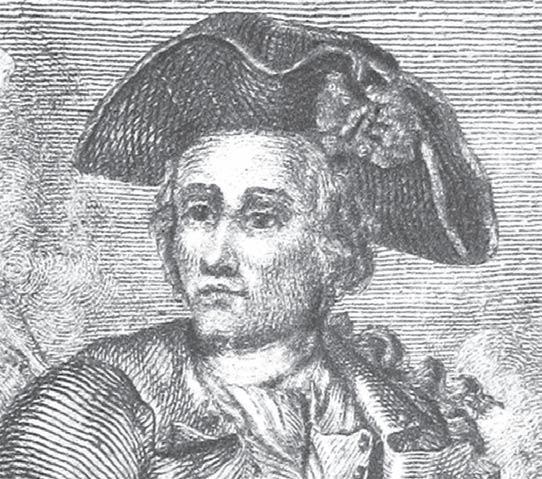
Redoubt Samson. Because of this they were able to easily reach a plantation called Hoofd without any alarm being raised. Easily taking possession of the plantation, the privateers raided small settlements along the river up to nearby Fort Nassau.
At Fort Nassau they laid down some earth works and proceeded to demand a “parley” (PAR-LAY: meeting) in which they called for the commander to surrender and take down his flag. This was re-
fused and the privateers proceeded to raze the fort from Nov. 11 to Nov 14, killing and injuring many inhabitants in the process.
The privateers were helped considerably by a French soldier who had deserted his Dutch post to show them the more vulnerable parts of the fort that was best to attack.
At the mercy of the privateers, the fort’s commander eventually agreed to surrender, and Du Mouans arrived Nov. 14 in the fort to
discuss the terms of surrender. However, his demands were considered too high and the commander and settlers were reluctant to agree. Du Mouans wanted some 600,000 guilders.
He then threatened them “with fire” and to destroy the
The inhabitants had no such cash so were expected to offer not only their store merchandise and property but also all jewellery and any such other valuables they may have had, including children aged 10 to 12. Despite this, they still could not reach
Dix, Pieter Schuurmans, and Cornelis van Peere, paid the ransom on Oct. 24, 1714, thereby acquiring the colony. Peace was restored by 1714 and privateer raids were no longer feared; the colonies, Essequibo especially, began to re-establish themselves.
entire colony if they did not agree to the terms. Eventually though, the amount was reduced to half; to be paid with slaves, produce, merchandise and all the sugar belonging to the Patroons** which, in monetary terms, amounted to around 118,000 guilders.
The remaining was to be paid by a bill of exchange drawn by the commander and his council on the house of Van Peere to the order of Baron Du Mouans.
This amount however was considered by the privateers as ransom only for the fort and six Patroon plantations and did not include private plantations and their merchandise. The private planters were forced to pay 10,000 guilders in cash to the corsairs.
the 10, 000 guilders demand.
As Du Mouans needed hostages as security for the bill of exchange, several prisoners, including two council members were taken aboard the pirate vessels. It is assumed that as the agreement was signed Jan 2, 1713, the privateers left the colony the following day.
But the Van Peere family did not want to pay a ransom to the French to free the colony, stating that the commander and his council had no authority to make such agreements with the privateers. In addition, some hostages had died during the voyage.
However, in order to not let the colony cede to the French, the brothers Nicolaas and Hendrik van Hoorn, Arnold
sizes.com notes that in the mid-19th century West Indies, a hogshead of sugar was some 1,456–1,792 pounds avoirdupois (a system of measuring weight based on the fact that sixteen ounces are in a pound) According to Wikipedia, in American history, a patroon was “the name given to a Dutch landowner who exerted manorial rights in colonial times”. The UK Land Registry describes manorial rights as rights which were retained by lords of the manor when land became freehold. They can include rights to mines and some minerals, sporting rights such as hunting, shooting and fishing, and rights to hold fairs and markets.



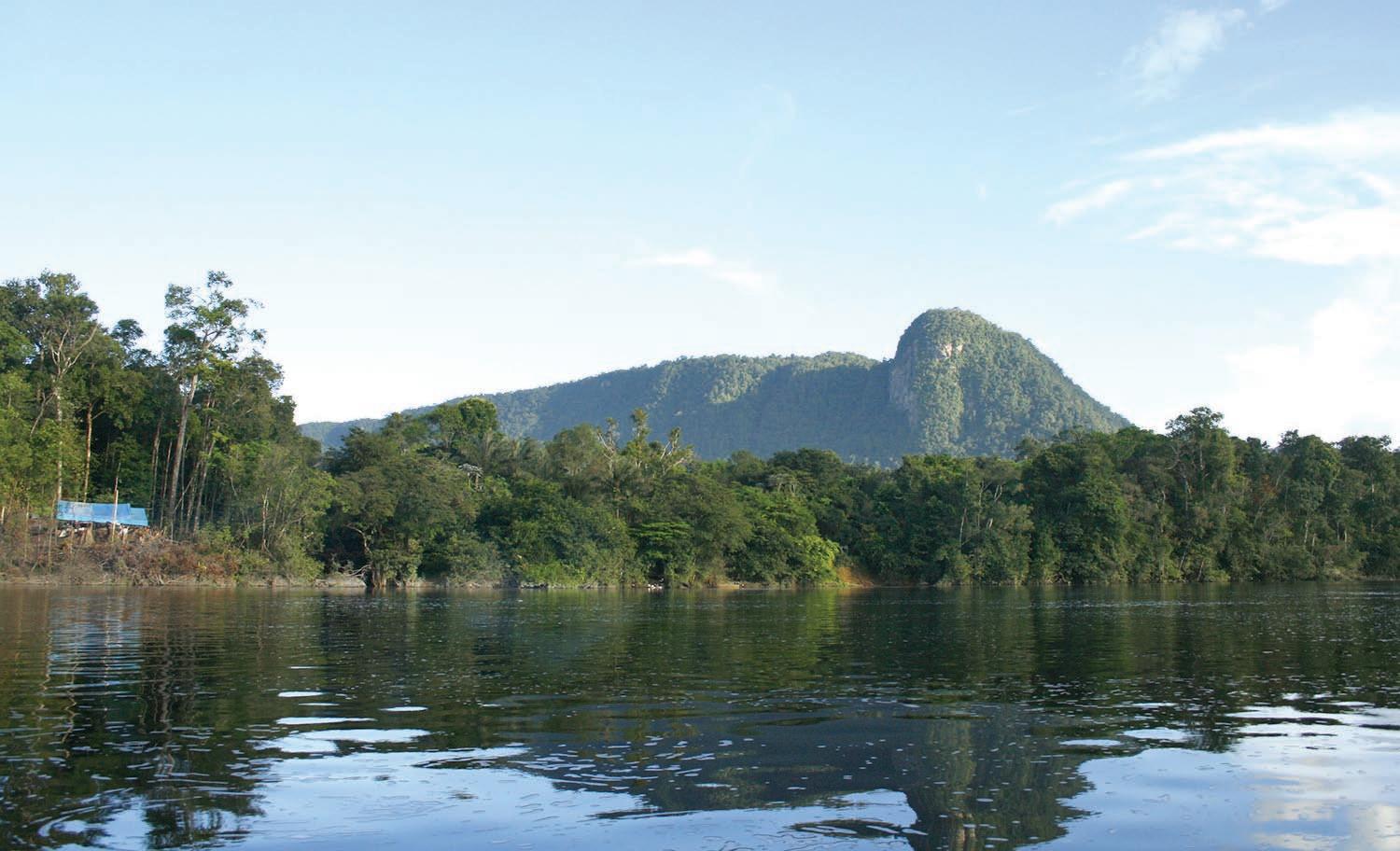

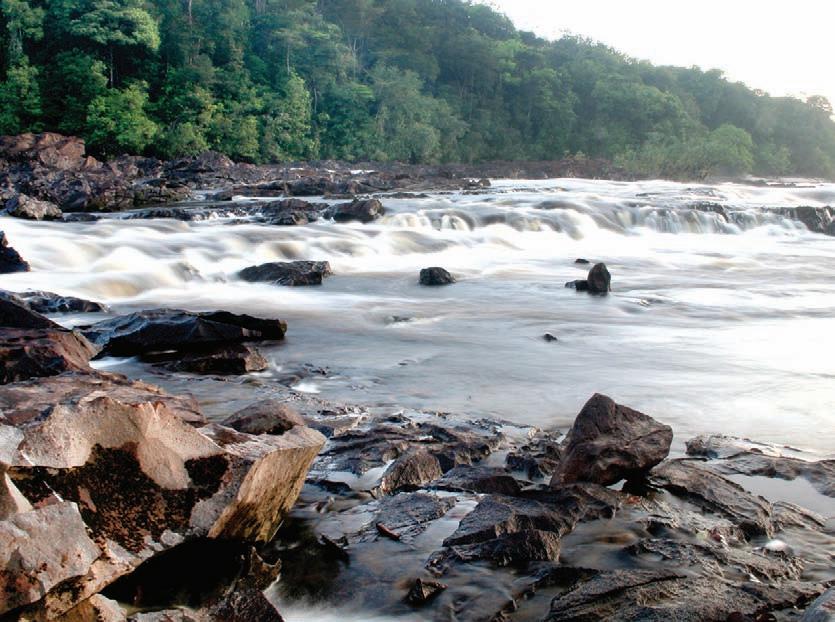


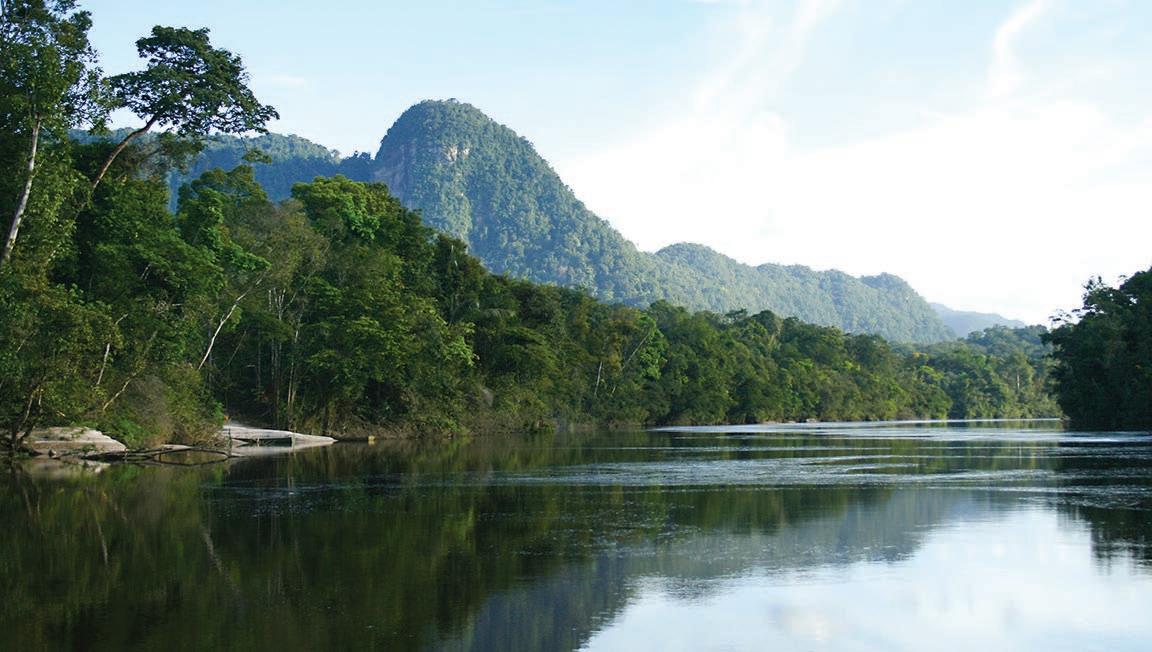
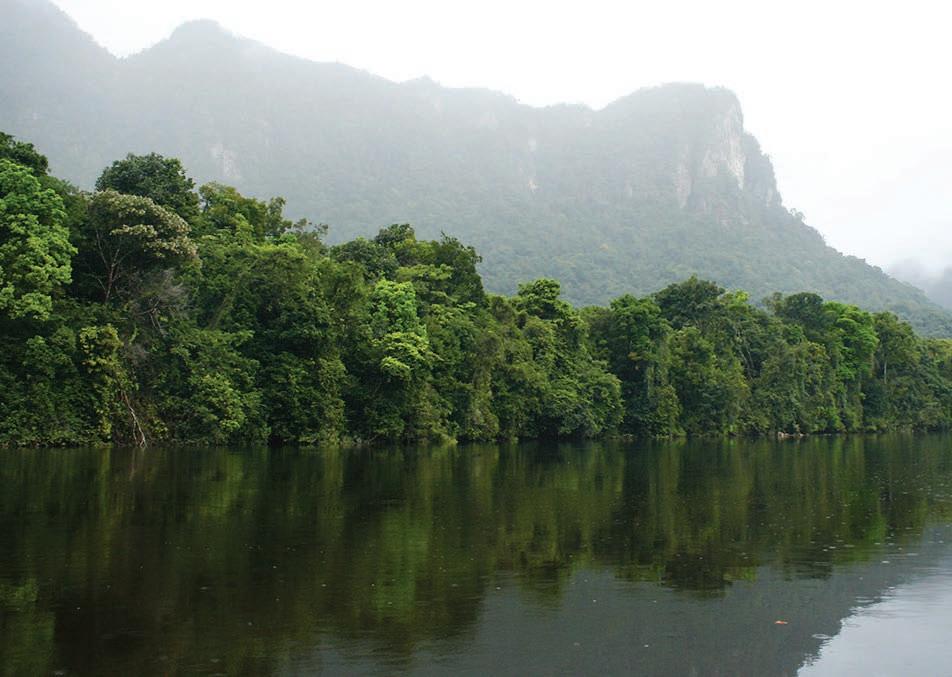
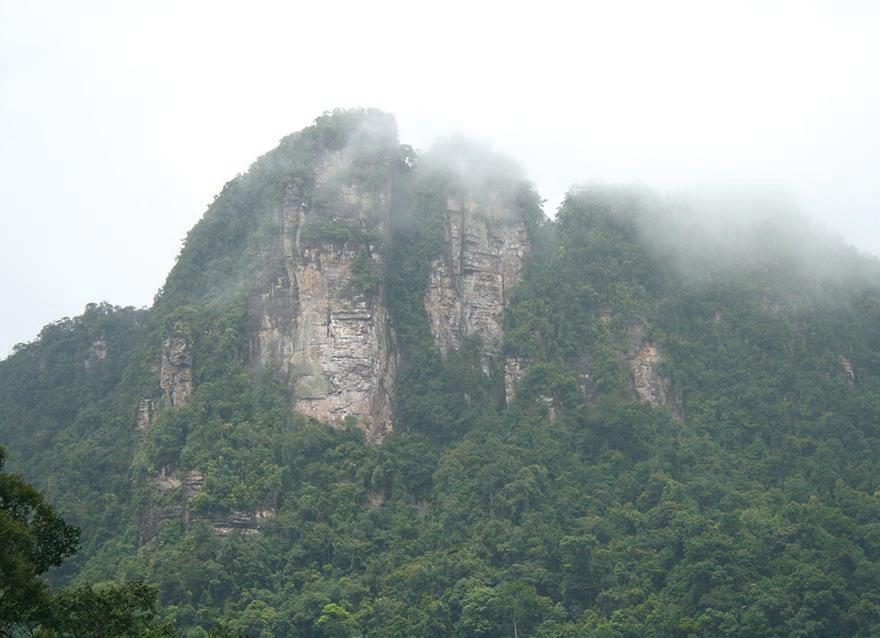
Crumpled, ancient Potaro River mountains are a sight to behold when travelling to the Kaieteur National Park to view the magnificent Kaieteur Falls. These mountains, made of sandstone conglomerate, are part of the Guiana Shield, one of the oldest rock formations in the world, stretching through Guyana, Venezuela and Colombia.
A tributary of the Essequibo River, the source of the Potaro is in the Mount Ayanganna area of the Pakaraima Mountains in the North Rupununi savannahs. (Photos by David Johnstone)
















How you wash your hair and the products you use can go a long way toward maintaining smooth, shiny hair, the American Academy of Dermatology advises.
When washing your hair, concentrate on cleaning primarily the scalp, rather than washing the entire length of hair. Washing only your hair can create flya-

How often you wash your hair should be based on how much oil your scalp produces. If your scalp is oily, you may need to wash it as often as once a day. If you have chemically treated hair, your hair may be drier, so you may want to wash it less frequently.
As you get older, your scalp makes less oil, so you may not need to shampoo as often. But if you see flakes in your hair, you may not be shampooing enough. This can lead to dandruff and other scalp issues.
way hair that is dull and coarse.
Use conditioner after every shampoo unless you use a “2-in-1” shampoo, which cleans and conditions hair. Using a conditioner can significantly improve the look of damaged or weathered hair by increasing shine, decreasing static electricity, improving strength and offering some protection from harmful UV rays.
Because conditioners can make fine hair look limp, they only should be used on the tips of the hair and not on the scalp
or length of the hair.
Choose a shampoo and conditioner formulated specifically for your hair type. For example, if you colour your hair, use a shampoo designed for colour-treated hair. If your hair is damaged or chemically treated, consider a “2-in-1” shampoo.
Protect your hair from the damaging effects of chlorine by wetting and conditioning your hair before swimming. Wear a tight-fitting swim cap and use a specially formulated swimmers shampoo and deep conditioner after swimming to replace lost moisture.
Eating for healthy hair ---SUBHEAD
According to a BBC report, just like skin, the condition of your hair is an outward sign of inside health. The cells that make up each strand of hair require a regular supply of key nutrients.
Eat the correct balance of vitamins and minerals to supply hair with all that it needs to remain shiny, lustrous and strong.
As hair is made of protein, ensuring you have enough protein in your diet is crucial for making hair strong and healthy.
If you are not consuming enough protein in your diet, your hair is likely to become dry, brittle and weak. Extremely low protein diets may result in hair loss.
Choose chicken, turkey, fish, dairy products and eggs as excellent sources of protein along with vegetarian sources such as legumes and nuts.
Iron is an especially important mineral for hair and too little iron (anaemia) is a major cause of hair loss. The hair follicle and root are fed by a nutrient rich blood supply. When iron
fish provide iron with a high bioavailability, meaning the iron is readily available to the body.
Vegetarians can raise their iron stores by including lentils and leafy green vegetables.
Vitamin C aids the absorption of iron so foods high in vitamin C are good to eat in conjunction with iron-rich foods.
Vitamin C is also an antioxidant so is used readily by the body. Vitamin C helps in the production of collagen that strengthens the capillaries that supply the hair shafts.
Omega-3 fatty acids are important fats
Make your own hair mask for a deep, nourishing treatment every two weeks. Whisk an egg yolk and mix with half a mashed avocado and a spoonful of honey. Massage onto damp, clean hair and leave for 30 minutes before rinsing thoroughly.
levels (serum ferritin) fall below a certain point, you may experience anaemia. This disrupts the nutrient supply to the follicle, affecting the hair growth cycle and may result in shedding.
Animal products such as red meat, chicken and
our body cannot make itself, and therefore must be obtained through our diet. Omega-3s are found in the cells that line the scalp and also provide the oils that keep your scalp and hair hydrated.
Vitamin A is needed by the body to make se-
bum. Sebum is an oily substance created by our hairs’ sebaceous glands, and provides a natural conditioner for a healthy scalp. Without sebum we may experience an itchy scalp and dry hair. Include animal products and orange/yellow coloured vegetables which are high in beta-carotene (which makes vitamin A) such as carrots, pumpkins and sweet potatoes.
Scalp protection involves other important minerals, notably zinc and selenium. A lack of zinc can lead to hair loss and a dry, flaky scalp. Fortified cereals and whole grains are a good source of zinc along with oysters, beef and eggs. The sun can damage our hair just like it can damage our skin so ensure you eat foods rich in vitamin E to provide protection for your hair. Nuts provide zinc and selenium as well as vitamin E, so try to include them as part of a balanced diet.
Biotin is a water-soluble B vitamin. Too little biotin can cause brittle hair and may lead to hair loss. Include biotin rich foods such as whole grains, liver, egg yolk, soy flour and yeast.
Growing a beard, says WebMD’s R. Morgan Griffith, can be an expression of freedom, but it’s also a commitment. Beards don’t take care of themselves any more than your lawn or your nails. They need some upkeep.
“If you don’t pay any attention to your beard, pretty soon, you’re going to look like a wanderer from the Alaskan wild,” says Sandy Poirier, celebrity stylist and owner of Shag, a salon in Boston, USA.
When it begins to itch, this is the point where the fainthearted give up. If you stick with it, it gets better after a few weeks, he says.
Let it grow; wait a few months before trying to shape a beard. That’s even if you plan to keep it short and close to the face in the long run.
Shaping and trimming a beard too early is a common rookie mistake – a mistake that can take weeks or months to fix.
“Let it get a little wild at first,” he advises. “Once you have about an inch or an inch and a half, then you can start shaping it.”
It’s a hard truth, but not all guys can grow a beard. It’s just a matter of genetics so know when to give up.
“If it’s been two or three months, and it’s still patchy and scraggly, it’s not going to get better,” says Poirier. “Let it go, shave it off, and move on.”
What next?
Now you’ve got your beard. How do you take care of it?
Good grooming is essential.
Lots of men don’t wash their beards – or if they do,

they use the bar soap they’d use on their armpits. This practice would dry out your beard and the skin beneath. Instead, shampoo at least a few times a week, Poirier says. Use a moisturizing shampoo to prevent the hair from getting brittle.
Poirier recommends a
thick, heavy-duty conditioner to keep your beard from getting too wiry. Let the conditioner sit there. Consider the leave-in kind that you don’t have to rinse out. Whatever you rub into your beard is bound to get on your skin, too. Use products that are noncomedogenic, says
Seemal R. Desai, MD, a dermatologist at the University of Texas Southwestern Medical Center. That means they won’t clog your pores.
Even if you grow your beard long, Poirier recommends a trim every two months. It’s like getting rid of split ends in your hair. If you’re keeping it short, trim your beard every few weeks or so.
A balanced, healthy diet is good in general for hair and skin. There are no special foods that will improve beard growth, Desai says.
And one final note: Eat with care. How do you keep your lunch out of your beard? Poirier recommends taking small bites, wiping your face after each one. “Always ask for extra napkins at restaurants,” he says.

















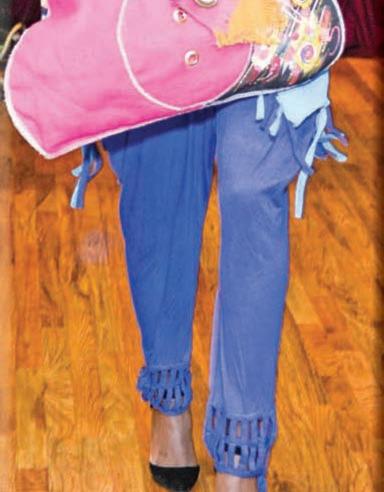
Da few weeks ago.
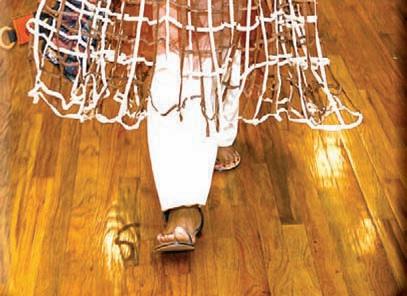
The prestigious fashion event was launched in celebration of Caribbean Month in NY and to present Caribbean designers, such as Noel’s fashionable designs, paired with bags by Christine Samuel from St Lucia.
For more information on these comfortable and chic designs, call (592) 6098388.











Jacob Adam “Jake” McLaughlin is an American actor, famous for playing Gordon Bonner in Paul Haggis’s “In the Valley of Elah”. McLaughlin starred as Tate in the short lived Spring 2014 NBC series “Believe”. He is currently co-starring as Agent Ryan Booth in the 2015 ABC drama series “Quantico” opposite actress Priyanka Chopra. McLaughlin joined the U.S. Army in 2002. He served in Iraq for four years, but was critically injured. For his efforts, he was awarded the Army Commendation Medal, Combat Infantry Badge, Global War on Terrorism Service Medal, Global War on Terrorism Expeditionary Medal, Army Good Conduct Medal and four army achievement medals for his service during Operation Iraqi Freedom. After leaving the military, McLaughlin worked on a crab boat in Oregon and as a security guard at Universal Studios. He was California doing concrete work and had only US$200 in his checking account when he heard about the casting session for “In the Valley of Elah”. After the success of his first movie, McLaughlin made cameo appearances in movies such as “The Day the Earth Stood Still” and “Cloverfield”. He appeared in episodes of “The Unit” and “CSI: Crime Scene Investigation”.


















Anumber of pop stars including Beyonce Knowles, Rihanna, Kanye West, Jay-Z and Pharrell Williams have filed a lawsuit against a French clothing company, Eleven Paris. The suit alleges that the company has unlawfully sold merchandise with their likeness or intellectual property.
“Defendants have repeatedly usurped Plaintiffs’ names, images, likenesses and/or trademarks for the sole purpose of profiting from the sale of unauthorized and infringing products, including, but not limited to, t-shirts, tank tops, sweatshirts, hats, backpacks and cell phone cases,” read the suit alongside some images of the products.

written warnings, but it’s still selling “dozens of infringing merchandise” at its New York City store and website.
The company allegedly tried to create “false association” with the pop stars by using their images, names, lyrics and “nearly identical in sight and sound” to Beyonce’s name for one of the labels. The suit claimed that the plaintiffs have sent the company
For its actions, the company was said to have been “causing immediate and irreparable harm to Plaintiffs.” To support the claim that the fashion retailer is damaging their reputations, each of the celebrities has had to establish exactly what their reputations are as they wrote their various accomplishments in the lawsuit. (AceShowbiz)
Justin Bieber is not really upset that photos of him nude during a vacation in Bora Bora went viral, according to TMZ. The website said that the “What Do You Mean?” singer was particularly happy because the photos let everyone know his private part is big.
Some sources told the website that Bieber was initially unhappy that paparazzi took some photos of him when he


wore nothing during his vacation. The 21-year-old singer felt that it was “a total invasion of his privacy.”
However, Bieber’s anger reportedly faded when the photos went viral. Multiple sources told the website that it was because “Bieber’s a really big deal, and ... he’s happy the world knows it now.”
As previously reported, Bieber’s legal team has sent a cease and desist letter demanding the removal of the nude pictures from the New York Daily News’ website within 12 hours. Nevertheless, the singer isn’t likely to sue the NY Daily News for spreading the photos because the photos was said to increase his confidence.
The controversial photos showed Bieber walking around the swimming pool at the beach resort in Bora Bora. Model Jayde Pierce was also photographed at the same deck but she wore white cloth robe. Both of them took to Instagram to share some photos from their getaway, but they didn’t share pictures of them together. (AceShowbiz)


The 23-year-old has revealed that she has undergone chemotherapy after being diagnosed with the autoimmune disease, lupus.
For those of you who don’t know, lupus is a chronic autoimmune disease which attacks the body’s immune system, and it becomes hyperactive and attacks normal tissue.
Last year Selena’s representatives were forced to deny substance abuse after she sought treatment at the Dawn at the Meadows rehab facility. It was only when her grandfather, Ricardo Gomez, revealed that she was diagnosed with lupus and was receiving treatment that she confirmed the news.
The singer has revealed her break was “really about” her lupus diagnosis, adding: “I could have had a stroke.”
Speaking to Billboard magazine, she said: “I wanted so badly to say: ‘You guys have no idea. I’m in chemotherapy. You’re assholes’.”
“I locked myself away until I was confident and comfortable again.”
Gomez went on to angrily criticise the tabloids for only concentrating on her relationship with Justin Bieber.

Symptoms of lupus include fever, a “butterfly” shaped rash on the face, hair loss, fatigue and painful joints.
The disease is currently treated by drugs, and by chemotherapy designed to suppress the action of the immune system. (Billboard)
“I’ve been working since I was seven. I’ve been a Unicef ambassador since I was 17. It’s so disappointing that I’ve become a tabloid story,” she said.
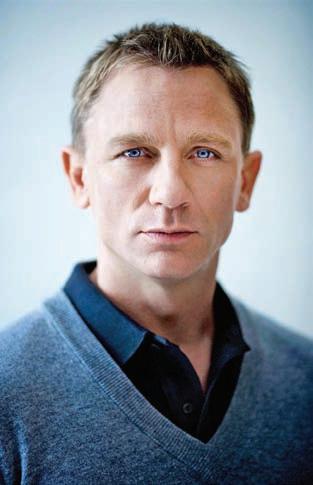
Daniel Craig has talked about the possibility on playing James Bond after “Spectre” and basically it’s not going to happen. “I’d rather break this glass and slash my wrists,” he joked during an interview with Time Out magazine. “We’re done. All I want to do is move on.”
The actor hasn’t talked to anyone about staying on in the role but he added that if he did do another 007 movie, “it would only be for the money”. The actor was paid $10.7m for “Skyfall”, making him the highest-paid Bond ever.
It’s not the first time that the actor has said he’s not planning a return. In August, he said: “At this moment, no. I have a life and I’ve got to get on with it a bit. But we’ll see….
I’m incredibly fortunate. But the day I can walk into a pub and someone goes, ‘Oh, there’s Daniel Craig’ and then just leaves me alone, that’ll be great,” he said.
The actor hasn’t got any strong feelings about who his successor will be. “Good luck to them,” he said. “All I care about is that if I stop doing these things we’ve left it in a good place and people pick it up and make it better.” (Glamour)
Jennifer Hudson has rarely discussed the 2008 murders of her mother, brother and 7-year-old nephew.
The singer’s family members were killed by her former brother-in-law William Balfour who is now serving life in prison after being convicted in 2012.
Opening up about the subject in a new interview with GLAMOUR US, the singer says she managed to get through it with the help of her son David who she gave birth to in 2009.
Reflecting on the 2008 horror, she said she struggled talking to anyone.
“It’s frustrating as hell to me to have somebody who ain’t lost nothing try to talk to me about it. I want to say, ‘Don’t even bother, because you know nothing.’ But you never know how much you can get through until you’re going through it.”
Jennifer Hudson credits her son, David, for getting her through it: “I went from being an aunt, having a mom, and being a child to not having a mom, becoming a mom, and raising my own child. I tell David [now six] all the time, ‘You saved my life.’ “ (Glamour)


Vaani Kapoor is an Indian actress and model. She played leading roles in two films: “Shuddh Desi Romance” (2013) and “Aaha Kalyanam” (2014). Kapoor received the Filmfare Award for Best Female Debut for her portrayal of Tara in the film “Shuddh Desi Romance”. Her subsequent leading role was in the romantic Tamil comedy, “Aaha Kalyanam”.
Kapoor’s father is a furniture exports entrepreneur and her mother is a teacherturned marketing executive.
The actress has a degree in tourism studies from Indira Gandhi National Open University, New Delhi, India.



After 2015’s surprise hit
“Piku”, Irrfan Khan has found a new level of acceptance in mainstream Bollywood cinema. He will be seen in pivotal roles in two back-to-back releases. Last week was Meghna Gulzar’s “Talvar” and this week is Sanjay Gupta’s “Jazbaa”.
Although Konkona Sen-
Sharma and Neeraj Kabi also play the main characters in “Talvar”, it is Khan whose face occupies the biggest space in the posters. And this is by design - pun intended.
Khan who until just a short while ago was considered a “Hollywood/Off-Mainstream” ac- tor in Bollywood is suddenly much in demand as a poster boy in mainstream cinema.
“In fact, the film went to the Toronto International Film Festival and got noticed because Irrfan is a known face outside India. Now in India too he is being seen as the face of Talvar,” says a source.
Sanjay Gupta’s “Jazbaa”, which opens next week, is designed as Aishwaya Rai Bachchan’s comeback vehicle. However Irrfan Khan gets equal prominence in the posters.
When asked about his sud- den rise to the claim, a place as Bollywood’s poster-boy, the actor brushes off the compliment and jokes, “It’s just a marketing strat- egy that I fit into…”
He added, “If today producers think I can bring the audiences in, it’s an honour for me, and a big responsibility. Today if my face is seen on the poster, audiences ex- pect not only a good performance but also a good film. To the audi- ence the performance only matters if the film appeals to them.”
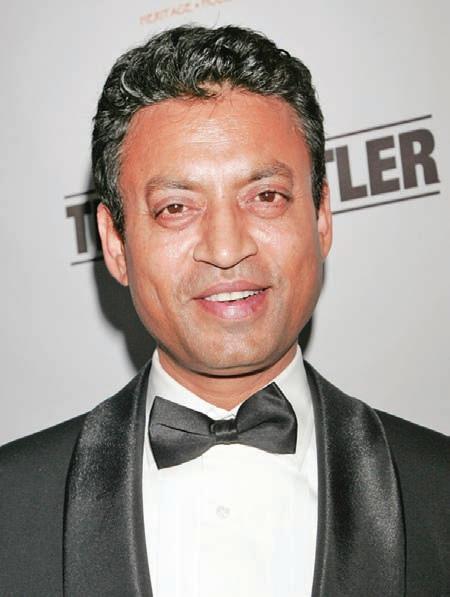
Arjun Kapoor: ‘I can reach out to youth, influence change’
He’s an entertainer on the big screen, but off screen, Arjun Kapoor has involved himself with environmental issues as the brand ambassador of the World Wide Fund for Nature (WWF).
He says that while he does not consider himself a torchbearer for change, he believes his star power among the youth can initiate change.
He has been renewed as the WWF ambassador for the second year. Talking about taking on such a role, Arjun told IANS: “My job as an actor is to start a conversation. For me, WWF is not about the fact that I’m going to be the torchbearer of change.

“One person alone cannot make a difference, but one person can remind many people that they can play a role in making a change, and be a part of the bigger picture. By being a young actor, I can reach out to the younger generation faster,” Kapoor told IANS.
The “Gunday” actor also pointed out that the younger generation can further influence the older generation, who have for years lived with a certain mindset about environmental issues.
“The older generation has a mindset because of which there have been a certain amount of issues that the environment has faced. So, the younger generation can influence the older generation, and I can influence the younger generation -- it’s a circle,” he added.
Arjun, 30, enjoys wide popularity after having acted in films like “Ishaqzaade” and “2 States”.
He says with the kind of connection he has with the youth, he can initiate a conversation with them over issues such as saving water.
“These are the things that we all learnt in school. These are things you are supposed to do... like taking care of animals. These are a part and parcel of daily activity, and we forget it over a course of time,” he said.
The actor was in the capital to host the eighth edition of WWF-India’s Wild Wisdom Quiz 2015 earlier this week. The theme for this year’s quiz was ‘Secrets of the Soil’, based on the UN’s Declaration of 2015 as the Year of the Soil. On the film front, Arjun will next be seen in “Ki and Ka” with Kareena Kapoor Khan. (IANS)

Gauri Khan voted most ‘famous and powerful star wife of Bollywood’

Yahoo lists Gauri Khan, wife of Bollywood’s biggest actor Shah Rukh Khan, as number one on its list of 10 Most Famous and Powerful Star Wives of Bollywood.
Whenever we think of Bollywood star wives, Gauri Khan’s name is sure to come up. Mother of three and the beloved queen of King Khan, Gauri is a talented and strong woman. She is a film producer (co-founder of Red Chillies Entertainment), and an interior designer. Her aura is such that it can challenge the charm of Shah Rukh Khan as well. She recently debuted her clothing and accessories collection for Satya Paul.
Next on the list is Twinkle Khanna. Daughter of the legendary Bollywood stars, Rajesh Khanna and Dimple Kapadia, Twinkle Khanna, who is married to Akshay Kumar, may not have an exemplary Bollywood career, but she sure is an exemplary Bollywood wife. She is a successful interior designer, columnist and film producer. She has shown her witty, feminist side through her writings on her personal blog as well as twitter.
Also included on the list are Kiran Rao, wife of Aamir Khan, Farhan Akhtar’s wife Adhuna Akhtar, Mehr Jesia Rampal, wife of Arjun Rampal, Malaika Arora Khan, wife of Arbaaz Khan, Manyata Dutt, Sanjay Dutt’s wife, Mana Shetty, Sunil Shetty’s wife, Seema Khan, Sohail Khan’s wife, and Shobha Kapoor, who is married to Jeetendra. (Yahoo)
Jacqueline
Jacqueline Fernandez, who is a complete animal lover, feels strongly about the issue of animal abuse and violence.
The actress, who was recently given a Persian cat by her friend, now looks to shedding light on the issue by creating awareness about animal protection across the country.

Jacqueline, who was named the Woman Of The Year by People for the Ethical Treatment of Animals (PETA), India, in 2014 for advocating the protection of animals, is flagging this off by visiting a few colleges in the country to talk about animal protection, the ethical treatment of strays and preventing animal abuse.
Confirms Jacqueline’s spokesperson, “Though she would love to have her own organization that would work towards animal protection someday, at the moment, she is connecting with colleges to raise awareness about the issue.” (Times of India)


Ripped jeans are coming back! This clothing item has a super casual feel, and it can be hard to make it look put-together and polished. But it’s definitely not impossible! In fact, when styled correctly, destroyed denim looks seriously street-chic and so cool. You just have to know what to pair it with so that it looks less grungy and more stylish.










Dominic Weekes, known popularly by his stage name Rémar, is making waves with his hit music. Since he was seven years old, Rémar had an inclination towards poetry. At age nine, he fell in love with the beats of hip-hop. At age 12, when he heard rapper Kanye West’s “College Dropout”, Rémar knew he wanted to rap.
He was further convinced to pursue a music career when he realised he could use his songs as an avenue of self-expression. Rémar learnt the hip-hop slangs, culture, enunciations and lifestyle, and was determined to perfect it so that the world would be able to hear his stories in a language they are familiar with. Like many others, Rémar has made many sacrifices to pursue his calling. Rémar raps about his experiences and believes that we all relate to the same situations in some way or the other, whether it is suffering, happiness, loss or joy, and his music is aimed at bringing those experiences through the tales of different life stories.
The rapper said his “God-given talent will allow others to identify with it, and when he is heard by the masses, they realise and feel that they are not the only ones who experience life with its trials and tribulations”. His song “Second Chances” is close to his heart. The song is based on his personal experiences and situations he witnessed. Rémar hopes that his music entertains and motivates each and every person who listens to it. Check out Rémar on Facebook for more info on the artiste.






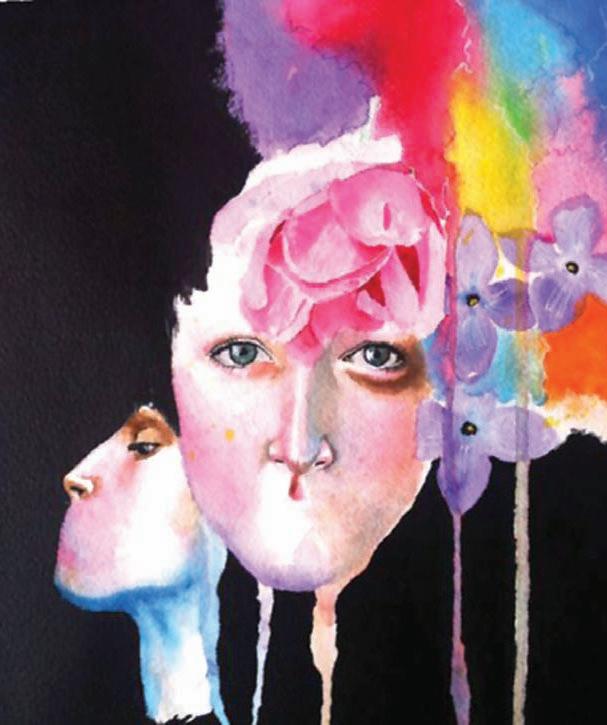
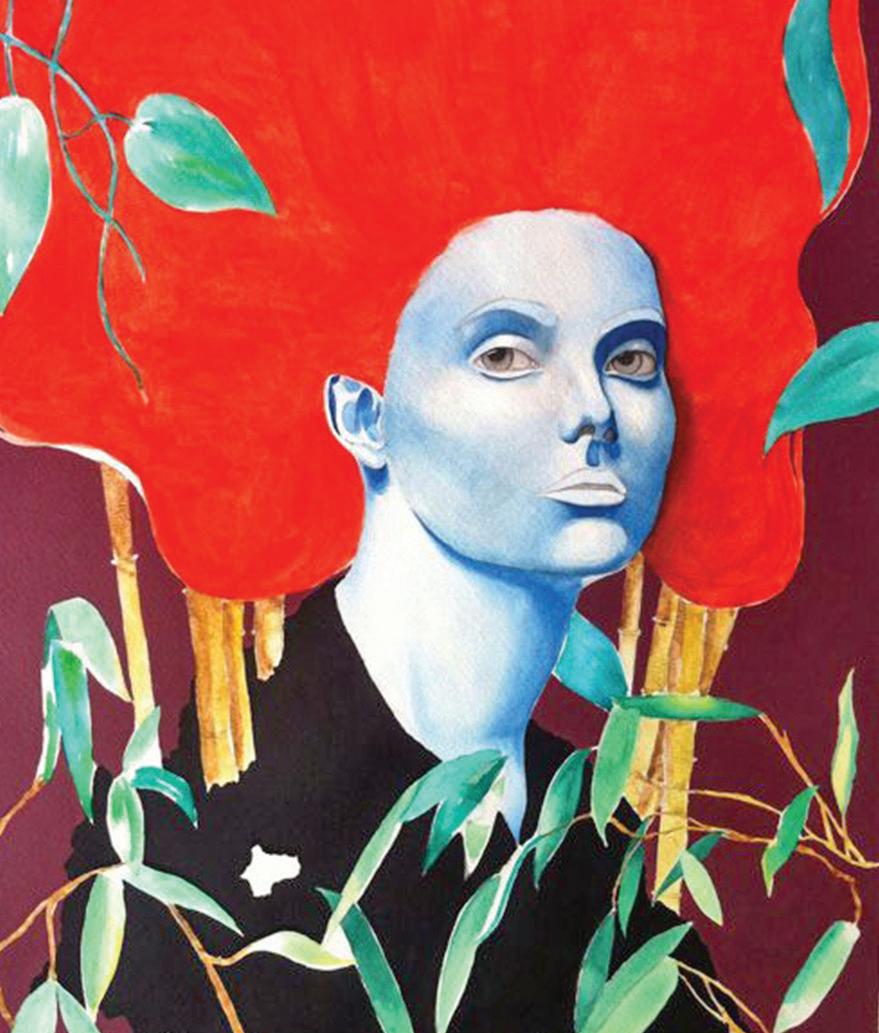





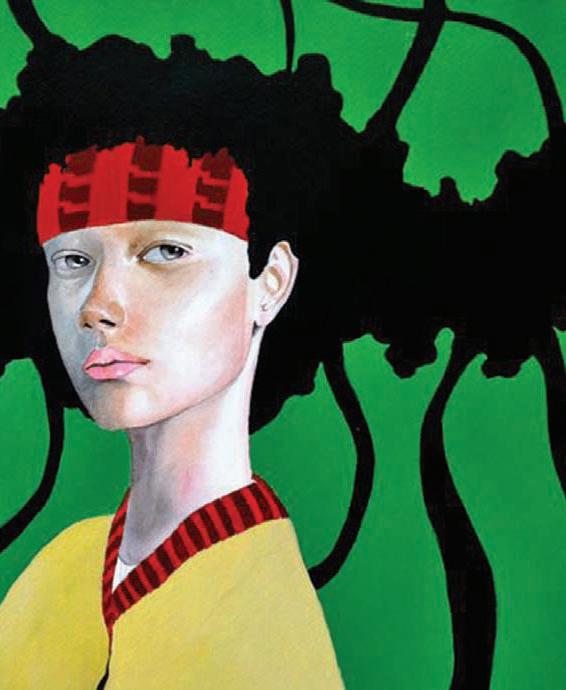
Contemporary, self-taught mixed media artist Raimund Angelo Rausch brings a fresh perspective to art in Guyana. His pieces are thought-provoking and speak of his everyday experiences with life.
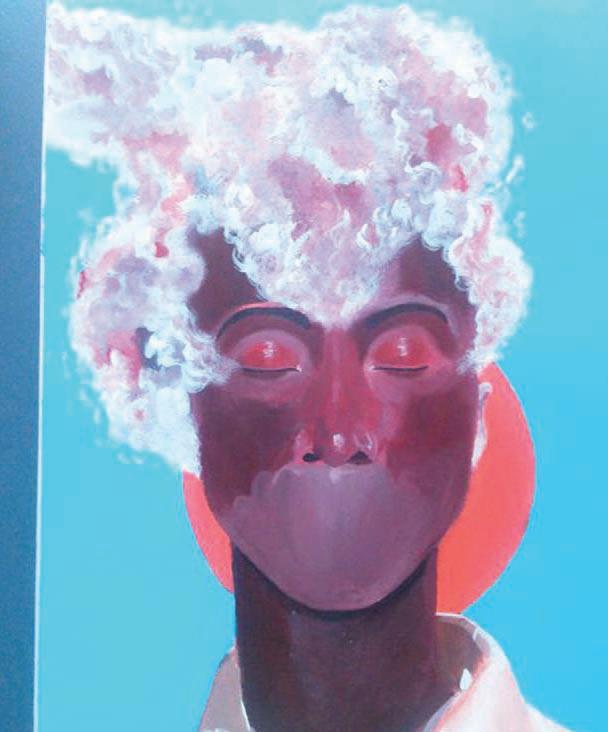
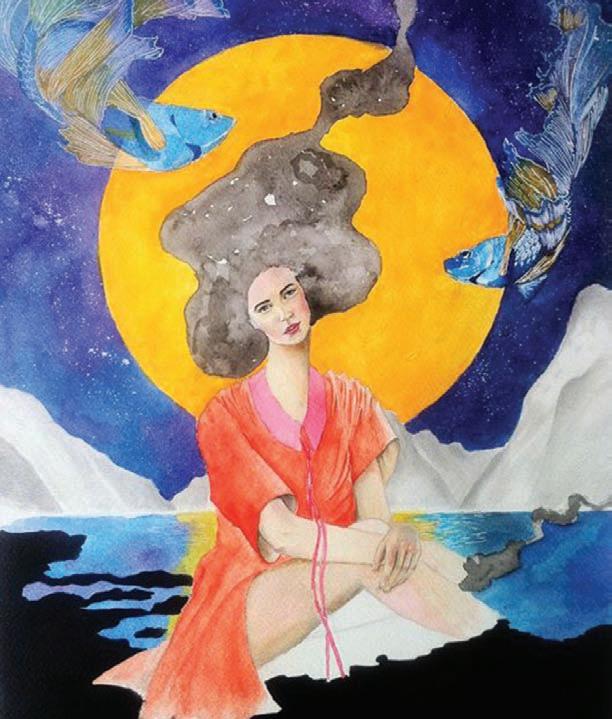
Speaking with Guyana Times Sunday Magazine , the artist said during his childhood days, he was always intrigued by the drawings of one of his friends. His friend was always sketching superheroes and preparing show cards for his mother, a nursery school teacher.
“So one day, long after my constant box figure sketches, I got the comic book “Ghost Rider- A Spirit Reborn” and I tried my hands at a portrait: the character’s famous skull engulfed in flames. Let’s just say it was accepted by everyone. But that’s how it all started,” the artist recalled.
Raimund said his inspiration comes from “simply someone...something, or being engaged in a casual conversation which may initiate an image, or good music, which hits those very nerve endings that emit a jagged feeling upon your skin, and not forgetting poetry.”
Lately, Raimund has been spontaneous with the genres of novels he would read. Reaching for random books has inspired his most recent absorbing pieces.
“I’m still within the concept of presenting the idea that change is necessary to oneself; that we need to be unbarred and allow our minds to explore. It’s important that we do so to acquire a peace of mind, to have a better understanding of ourselves. I’m hoping that viewers are appreciative of how much I’ve grown as an artist. I know I still have much more ground to cover,” he expressed.
Some of Raimund’s past paintings exuded his nostalgic feelings: images that reminded him of “what it was like”, whether photographs, paintings or drawings, his fears and every feeling he has encountered.
The artist described his art as being “contemporary art with a bit of abstract entwined within it.” The abstract, he noted, is to add “suspense” to his pieces.
In outlining his plans for his art, Rausch said, “I do have a few things planned for the future, but as they say, things can change within an instant. However, I can only say that I do hope as time elapses, the public is appreciative of my work, enabling me to, maybe, exhibit in galleries. And I hope that people accept my pieces into their homes too, both locally and internationally, young and old. I shall work each day to augment my skills, build and explore my thoughts.”
He added, “Art is a coherent interpretation of my thought; it enables me to be lost mentally, which I’m sure most artists will agree with me.”
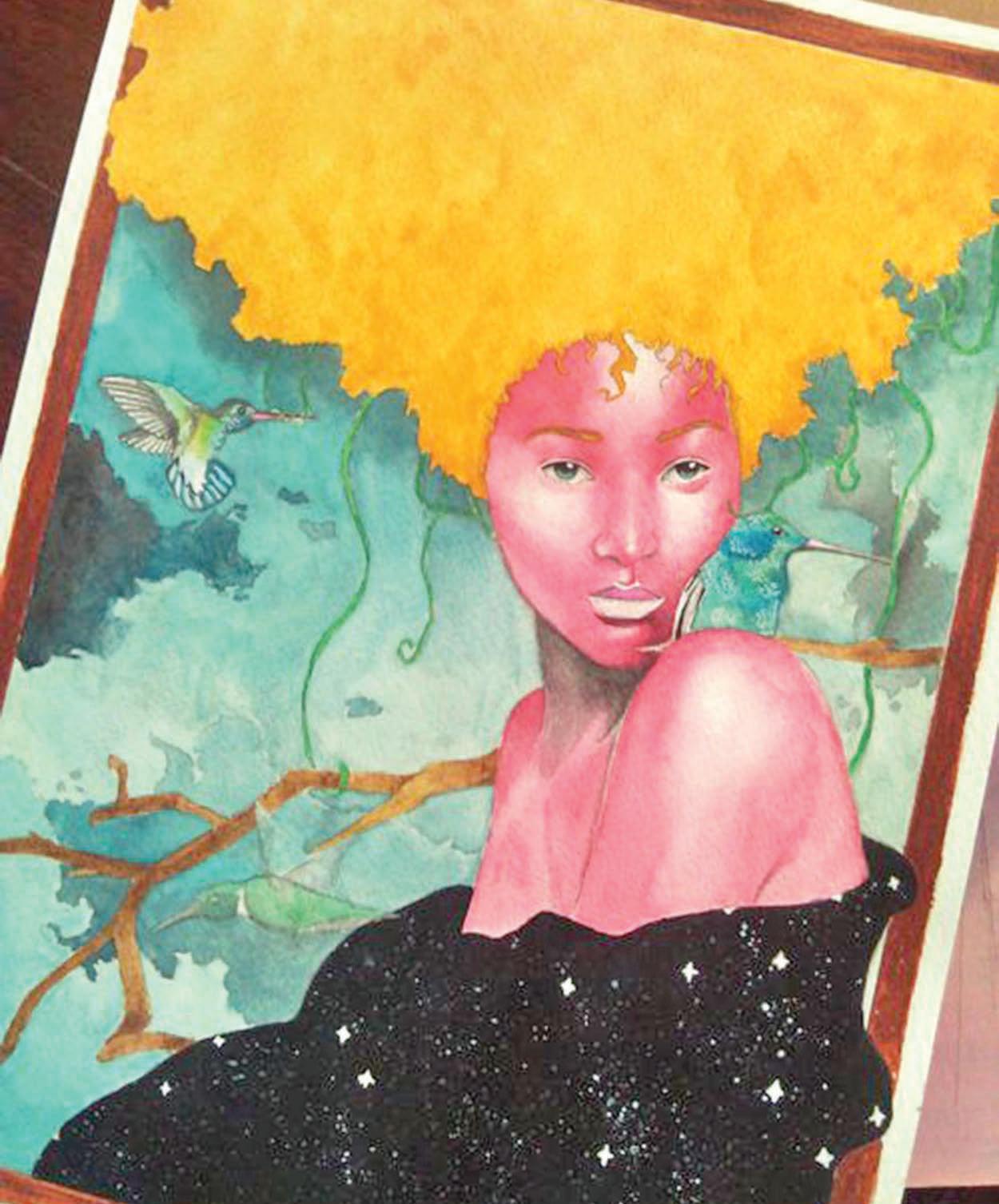
For more information on the artist, visit Great Simple Mind on Facebook. (Cover photo: Untitled III)




Apple is joining forces with J.K. Rowling’s Pottermore to bring fans a new immersive experience of all seven books in the Harry Potter series.
New enhanced editions, available exclusively through the iBooks store for the first time, offer the reader more than 200 illustrations, animations, interactive images and annotations from J.K. Rowling herself. The original digital versions were previously only available through the Pottermore Shop.
The enhancements are subtle, but offer an expanded imagination to certain scenes. For example, Aunt Marge will float on the page after Harry blows her up like a balloon, and readers can
select which winged key to use while on the hunt for the Sorcerer’s stone with Harry, Ron and Hermione.
The sporadically placed extras don’t inhibit the reading process but instead make it more of an experience. And the annotations don’t make you feel like J.K. Rowling is reading over your shoulder either, but instead that she’s slipped notes on parchment in between the pages.
The illustrations come from the Pottermore vault and were reimagined and reformatted for these editions to be read on the iPhone, iPad, iPod touch and Mac. You can also mirror your device with your Apple TV for a bigger experience.
There are new, modern covers themed to each book—

Lockheed Martin announced this week that production of its Advanced Test High Energy Asset (ATHENA) laser weapon system has begun at the company’s Bothell, Washington, USA facility.
The high-powered laser weapon modules will be used as the heart of a 60-kilowatt system designed to be fitted to a US Army vehicle.
like snakeskin for Chamber of Secrets and broken mirror glass for Deathly Hallows— and original fonts, including one called Fluffy that incorporates a lightning bolt and is used only for the first letter of each chapter.
Each book is priced at US
$9.99 and are now available for purchase in English in 32 countries.
Pre-orders begin Thursday for the enhanced editions in French, German and Spanish, which will be available on Nov. 9 in 18 additional countries. (TIME)


Among the intriguing concept cars from Suzuki, as this year’s 2015 Tokyo Motor Show gets underway later this month, is a roomy minivan that clearly borrows some inspiration from the Volkswagen Bulli.

transporters, someone else might as well step in and offer something as cool as the old-school Microbuses.
The Air Triser isn’t necessarily that immediately iconic, but its shape definitely offers a cooler, more distinct look than the average commercial van box or soccer team-hauling minivan.
Suzuki calls the AT a three-row compact minivan concept, and it’s designed to pack a comfy, flexible “private lounge” inside a modest set of dimensions.
When parked, the rear seats can be set up to face each other in “relaxation mode” or configured into a U-shaped sofa in “lounge mode.” While lounging and relaxing, occupants can play content from their mobile devices on the built-in digital display. (GIZMAG)


Lockheed Martin also says that the modular design means that the laser power can be varied across an extremely wide range to suit specific mission needs. Using off-theshelf commercial fibre laser components to keep down costs, the modules can be linked together to produce lasers of up to 120 kW.
ATHENA was tested in March when it took out a pickup truck with a sustained 30 kW burst. (GIZMAG)
The ATHENA laser can be operated by a single person and is made up of multiple fibre laser modules, which not only allows for greater flexibility, but also lessens the chance of the weapon being knocked out by a minor malfunction, so frequent repairs aren’t required.
Because of its short nose and redand-white colour scheme, it’s hard to look at the new Suzuki Air Triser concept and not think of the 2011 VW Bulli Concept, or even the original VW buses, like the Splittie.

“Yeah!”
Facebook CEO Mark Zuckerberg said excitedly in response to a big question for his company: is Facebook working on augmented reality? (AR)
“It’s a bit further out,” he followed up during a talk about virtual reality at the Vanity Fair New Establishment Summit in San Francisco.
Facebook’s intentions in virtual reality were already clear after buying Oculus, which is already shipping units in partnership with Samsung and is prepping the launch of its flagship headset.
Facebook’s Michael Abrash said virtual reality is already “past the knee of the curve,” and has basically arrived. But augmented reality, by its nature, presents a new type of problems, Abrash said — hence it taking a little longer for it to become as feasible as virtual reality.
AR represents a different opportunity for Facebook than virtual reality. With VR as is, the Oculus Rift is designed to be an immersive experience that essentially helps the user shut out the rest of the
world and focus only on the experience.
Facebook won’t be the only company working on augmented reality, but it certainly has the ability to become a juggernaut in the space. There’s also the looming presence of the notoriously quiet AR startup Magic Leap, which received a massive investment from Google. And of course, the classic problem case here was Google Glass, which ended up with social backlash rather than acceptance of the new technology.
Facebook knows more about people and the world they live in than almost any company. Eventually, it could overlay that information right on the world itself so you can look up from your screen, and instead look through it.
Zuckerberg earlier explained “If you think about phones, it’s still a little awkward to take it out of your pocket. In the future, if you want to look around you should be able to look around. If you want to select something, you should be able to look at it.”
(TechCrunch)
That’s not meant as a criticism, because if Volkswagen is going to keep giving us “Plain Jane”


oogle failed to secure Alphabet.com before launching Alphabet Inc., so it did the next best thing: purchase abcdefghijklmnopqrstuvwxyz.com.
Alphabet.com is owned by BMW, while ABC.com is home to the popular broadcast network, so Google had to get creative after it launched Alphabet, a new parent organization to oversee Google and its various side projects.
The company’s Web presence is currently housed at abc.xyz. “We realized we missed a few letters in abc.xyz, so we’re just being thorough,” an Alphabet spokesman told The Wall Street Journal.
As DomainInvesting.com pointed out, the full alphabet domain was created in 1999, then updated on Oct. 6 when purchased by Google.
As of press time, the lengthy URL is not active, though the company will probably soon redirect the link to its Alphabet
homepage. Similarly, the search giant owns Googl.com and Gogle.com, which get referred to the actual Google site.





If you are like so many who like curling up with a good book in bed then get inspired to create your own dream bedroom for you and your beloved books.



Forget the rule of no books under the bed when you can use a drawer underneath to stash your reading.
Note also the overhead library
Some persons prefer a quiet corner of the bedroom to read. Carve out your nook in the bedroom like this library alcove







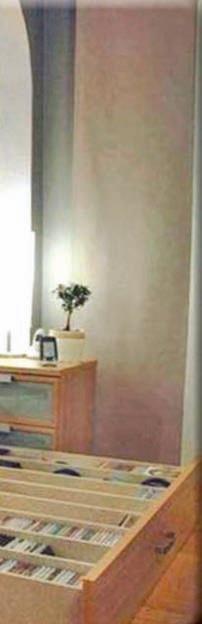

You don’t need a big bedroom to host a library. This simple and cosy bedroom works fine
Shredded cheddar cheese (optional and use any amount desired, or can use shredded mozzarella cheese)
Method
Preheat oven to 350°F.
Butter an 11 x 7-inch pan (if using more than 4 breasts use a larger pan).
In a bowl, combine melted butter with fresh minced garlic, 1 teaspoon garlic powder and salt.
In another bowl, combine the dry breadcrumbs with 1/2 cup finely grated cheddar cheese, Parmesan cheese 1 teaspoon garlic powder and coarse ground black pepper.
Dip chicken in butter mixture; then in crumb mixture.
Place in prepared pan and bake uncovered for 35-45 minutes or until cooked through, larger breasts may take more time (placing the chicken on a rack in a pan will produce an extra crispy crust).
Top with shredded cheddar or mozzarella the last 5 minutes of cooking (optional).
Serves 4
Muffin tins are handy helpers: Use a large muffin tin to cook stuffed peppers in the oven; it will help to keep them upright. Or, serve barbecue condiments in each holder; easy on the clean-up afterwards. For crunchy taco shells, turn over a muffin tin, fill the spaces with the taco, spray with cooking oil, and bake.
Freeze grapes to chill white wine without watering it down.
Chill your onions in the fridge or freezer or by running them under cold water to help avoid the cutting-onion-crying scene.
Keep your wooden cutting board clean and germ-free with kosher salt and half a lemon. Sprinkle the salt on the board and rub with the lemon. Rinse and dry.
Use corn meal to soak up a stubborn grease stain.
Make it easy to clean out votives after the candles have burned by coating the insides with cooking spray before putting the votive inside.
Turn bread upside down onto its soft side and cut it; this prevents the bread from getting squished and makes the bread easier to cut.
Cut ice cream with a knife for easier servings at a party.




Riddles for kids
Q: What musical instrument is found in the bathroom?
A: A tuba toothpaste.
Q: Why did the boy bring a ladder to school?
A: He wanted to go to high school.
Q: Where do pencils go for vacation?
A: Pencil-vania.
Q: What did 0 say to 8?
A: Nice belt!
Jokes from around the web
“I used to think the brain was the most important organ. Then I thought, look what’s telling me that.”
“A farmer in the field with his cows counted 196 of them, but when he rounded them up he had 200.”
“You kill vegetarian vampires with a steak to the heart.”
“If you want to catch a squirrel just climb a tree and act like a nut.”
“What kind of shoes do ninjas wear? Sneakers.”
“I started a band called 999 Megabytes — we haven’t gotten a gig yet.”
It was the end of the school year and Joey’s mother asked: “And were the exam questions difficult?”
“They weren’t bad at all,” her son replied. “It was the answers that gave me all the trouble.”
A family took a trip to Disney World. After three exhausting days, they headed home. As they drove away, the son waved and said, “Goodbye, Mickey.” The daughter waved and said, “Goodbye, Minnie.” The husband waved, rather weakly, and said, “Goodbye, Money.”
What is the difference between teenagers and parents?
The difference between the teenager and the parent is that the teenager still has the faults the parent outgrew.
A: Just look at that young kid with the short hair and blue jeans. Is it a boy or a girl?
B: It’s a girl. She’s my daughter.
A: Oh, I’m sorry, sir. I didn’t know that you were her father.
B: I’m not. I’m her mother.
Dr. Tim Elmore is a bestselling author of more than 25 books on children and founder and president of Growing Leaders, an organization dedicated to mentoring today’s young people to become the leaders of tomorrow.
He had this to share about the seven damaging parenting behaviours that keep children from becoming leaders – of their own lives and of the world’s enterprises:
7. We don’t practice what we preach
As parents, it is our responsibility to model the life we want our children to live. To help them lead a life of character and become dependable and accountable for their words and
actions. As the leaders of our homes, we can start by only speaking honest words – white lies will surface and slowly erode character. Watch yourself in the little ethical choices that others might notice, because your kids will notice too. If you don’t cut corners, for example, they will know it’s not acceptable for them to either. Show your kids what it means to give selflessly and joyfully by volunteering for a service project or with a community group. Leave people and places better than you found them,
and your kids will take note and do the same.
“I think both fear and lack of understanding play a role here, but it leads with the fact that each generation of parents is usually compensating for something the previous generation did. The primary adults in kids’

lives today have focused on now rather than later. It’s about their happiness today not their readiness tomorrow. I suspect it’s a reaction.
Many parents today had moms and dads who were all about getting ready for tomorrow: saving money, not spending it, and getting ready for retirement. In response, many of us bought into the message: embrace the moment. You deserve it. Enjoy today. And we did. For many, it resulted in credit card debt and the inability to delay gratification. This may be the crux of our challenge. The truth is, parents who are able to focus on tomorrow, not just
There was a learned Brahmin who lived in the outskirts of a city with his wife called Shandili. They were a happy couple but they were poor.
One morning, the Brahmin said to his wife, “Tomorrow is an auspicious day, there is a special festival. It will be a favourable time for alms. I shall visit the city, and I am sure to collect a lot of alms tomorrow to last us long.”
He continued, “At the same time, you must also invite a Brahmin, and provide him food and clothes. It is an auspicious day, and it will be a good deed.”
When the wife heard this, she said, “How come you say this? I cannot invite any Brahmin as we are already very poor. We have neither good food, nor good clothes. I cannot afford to invite any Brahmin!”
But the Brahmin explained, “Dear wife, even when we have a mouthful to eat, we must share half of it with someone in need.”
After much convincing, the Brahmani agreed, “I have some sesame seeds. I will clean and remove their husks, and cook a tasty dish for a Brahmin.”
The next morning, the Brahmin left for the city as
planned. After he was gone, his wife cleaned the sesame seeds in warm water, and carefully removed their husks. She then put the sesame seeds outside in the sun to dry. Meanwhile, she started doing her household chores.
During this time, a dog came and dirtied the sesame seeds. The Brahmani saw it, and immediately shooed the dog away. She thought, “Fate has undone my efforts. But these sesame seeds are all that I have. So, I will play a trick with the neighbour. I will offer to exchange these cleaned, unhusked sesame seeds with some husked sesame seeds. They will
not suspect, and fall for the offer.”
She went to her neighbour and proposed an exchange. The lady of the house was overwhelmed. It takes a lot of time to clean and remove the husks of the sesame seed. She found the offer very attractive, and offered some more sesame seeds in return.
As they were in the middle of the exchange, the neighbour’s son came out. He said, “Mother! Who would exchange cleaned sesame seeds with unclean ones? There must be some reason that she offers such lucrative offer. Please do not accept the exchange.”
When the lady heard her

son’s advice, she turned the offer down politely. When Shandili realized that she had failed to play the trick on her neighbour, she returned home.
The wise indeed say: When someone offers you something that is too good to be true, don’t be carried away by it –think and analyse.
One ship drives east and another drives west With the self-same winds that blow; ‘Tis the set of the sails And not the gales That tells them the way to go.
Like the winds of the sea are the winds of fate As we voyage along through life; ‘Tis the set of the soul That decides its goal And not the calm or the strife.


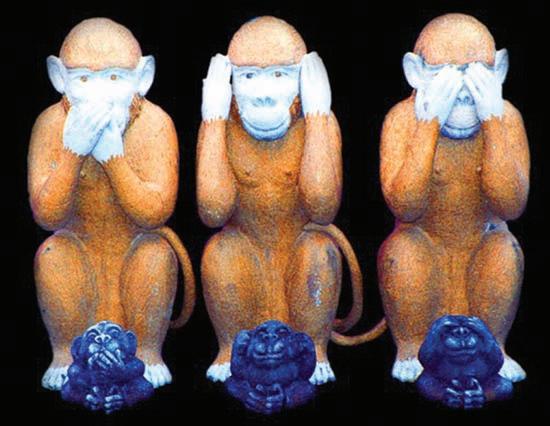
Many of us have heard of a euphemism (the use of a pleasant or neutral word/phrase in place of a derogatory or offensive one) but how many have heard of dysphemism [dis-fuh-mizuhm], which is the opposite of a euphemism?
From ancient Greek dys for “bad, abnormal, difficult” + pheme “speaking”, dysphemia meant “ill language, words of ill omen”, and dysphemism today is the use of a more harsh or offensive word/ phrase in place of a dignified, less offensive or normal one.
It is often used in certain circumstances: for humour, shock value, satire, criticism, casual conversation, among certain social groups etc. … You might for instance describe your friend’s fall from his bike to other friends as “he ate dirt” but you would
describe it to his parents or doctor differently.
You may have heard people call vegetable salads “rabbit food”, or army soup called “slop”. In older
times, soldiers put on the front lines were called “cannon fodder”; today they may be called “bullet stoppers” or “bullet sponges”. In some armies, military helmets are
unofficially called “brain buckets”. You may have also heard the term “Looney bin”, meaning mental hospital. Social situations can also bring out dysphemism. When someone dies it can be said he/ she “croaked”, “kicked the bucket” or “bought the farm”. A wedding or marriage can be described as “getting hitched “or being “shackled”. Other examples include, “snail mail” for postal mail, “shrink” for psychologist, and “quack” for doctor. Derogatory name-calling is usually a type of dysphemism. Literature is full of examples of dysphemism. Shakespeare’s plays are full of them – just to start you with a familiar literary example. Next time you pick up a book (or newspaper) to read, see how easily you can find dysphemism within.
Here is what the chips are worth in a chip trading game:
3 green chips have the same value as 5 blue chips.
2 red chips have the same value as 1 yellow chip.
4 red chips have the same value as 3 green chips.
How many blue chips can you get for 8 yellow chips?










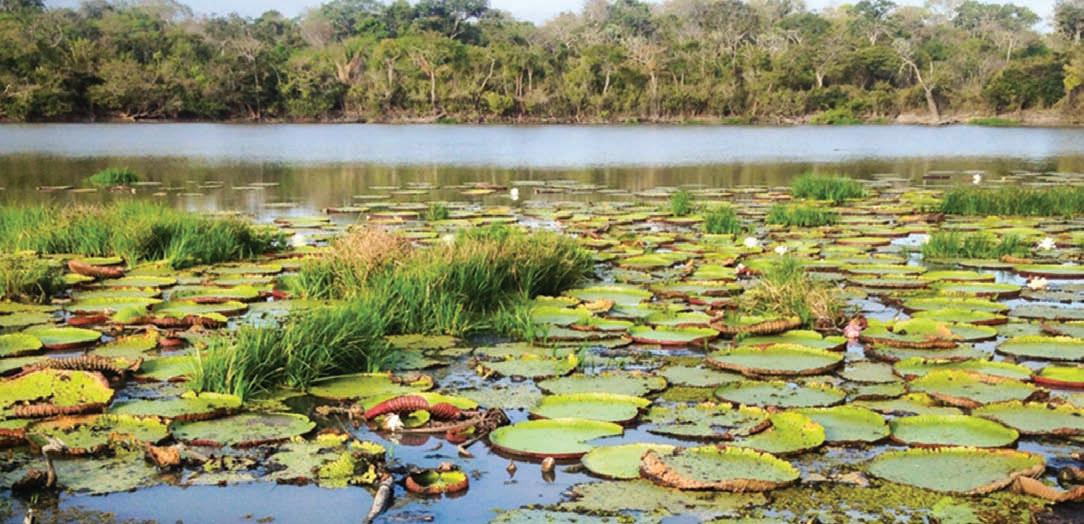
Awetland is a place where the land is covered by water, either permanently or seasonally.
Covered either by salt or freshwater or a mix of both, Wetlands vary widely because of differences in soils, climate, water chemistry, vegetation and other factors.
There are many different types of wetlands including marine wetlands (saltwater wetlands found along the coast), estuarine wetlands (coastal wetlands within estuaries – where fresh and salt water mix – and riverine wetlands (wetlands in the channels of rivers and streams).
extraordinary natural area in southern Guyana that, for the last thirty years, has been isolated from the public eye. It extends from the Siparuni River to the Kanuku Mountains and from the Essequibo River to the Brazilian border.”

According to Graham Watkins, Pete Oxford and Renee Bish in their book “Rupununi: Rediscovering a Lost World”, the North Rupununi Wetlands is “an
The flooded savannas on the Rupununi River and oxbow lake systems along the Essequibo and Rupununi Rivers are also rare wetland types in Guyana.

ARGENTINA BOLIVIA BRAZIL CHILE
COLOMBIA
ECUADOR
FRENCH GUIANA
GUYANA
PARAGUAY
PERU
SURINAME
URUGUAY
VENEZUELA
The olinguito (Bassaricyon neblina) is a recently discovered (2013) mammal and first carnivore species discovered in the Americas in 35 years. It was discovered in the cloud-covered jungles of Columbia, hence its Spanish scientific name neblina or “fog” in English. Scientists say it is also native to Ecuador, living in the same cloud-forest habitat.
According to National Geographic, while only recently designated as a new species, olinguitos have been hiding in plain sight for a long time. Specimens of the orange-
brown creature have been housed in museums for more than a century, mistakenly identified as members of a related group of tree-dwelling mammals known as olingos (genus Bassaricyon ).
The olinguito (pronounced oh-lin-GHEEtoe) also shares its family tree with raccoons, coatis and kinkajous.
Genetic analysis has revealed that olinguitos are not only different from olingos (it shares 90 per cent of its DNA with olingos) but also that there are actually four subspecies of olinguitos in existence.




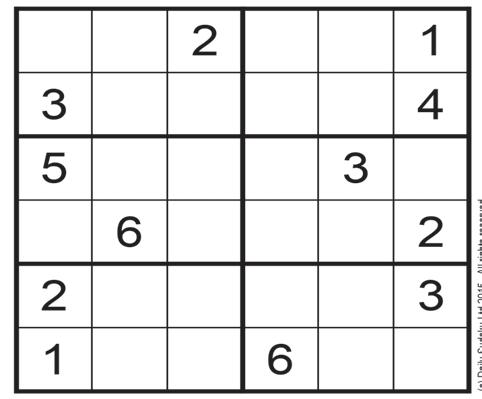


The objective of the game is to fill all the blank squares in a game with the correct numbers. Every row of 9 numbers must include all digits 1 through 9 in any order. Every column of 9 numbers must include all digits 1 through 9 in any order. Every 3 by 3 subsection of the 9 by 9 square must include all digits 1 through 9.
SUNDAY, OCTOBER 11, 2015
Exploring the realms of history, science, nature and technology
By Laurie Triefeldt
Mermaids are legendary creatures who are half human and half fish. Stories of these elusive water-dwellers can be found through the centuries in many cultures.
Since Hans Christian Andersen’s well-known fairy tale “The Little Mermaid” of 1836, mermaids have become a popular subject in paintings, books and films. Disney’s Princess Ariel is a modern animated adaptation of the famous fairy tale.
The word “mermaid” can be traced to Old English, when “mer” meant “sea,” and “maid” meant “girl” or “young woman.”
The ancient Babylonians (2000-1600 B.C.) worshiped a god name Uan. (The ancient Greeks called him Oannes.) This deity had the upper body of a man, but from the waist down he had a scaly fish tail. Uan was a sone of Ea, one of the foremost gods of the ancient Mesopotamia. The ancient Syrian goddess Atargatis (known as Derketo to the ancient Greeks) tragically caused her human lover to die. In despair and shame, she jumped into a lake with the intention of turning into a fish, but only half of her took that form.
In Greek mythology, Triton (the messenger of the sea) is the son of Poseidon and Amphitrite (the god and goddess of the sea).
Triton is depicted as a merman covered in seashell barnacles and carrying a conch shell.
One Greek legend relates that Alexander the Great’s sister, Thessalonike, changed into a mermaid after her death and dwelled in the Aegean Sea.


Mermaids are said to have some amazing skills. They can raise storms or calm the winds. They use magical music, songs and riddles to lure foolish sailors astray.
Uan (also known as Oannes) was a water god responsible for giving humans all knowledge. This illustration is based on an Assyrian relief of a fish-man.
Marble statue of Triton
A 2012 Animal Planet TV program called “Mermaids: The Body Found” presented a convincing (but fake) documentary of scientists finding proof of real mermaids. The show was so convincing that the National Oceanic and Atmospheric Administration issued a statement officially denying the existence of mermaids.
There have been many fake mermaids over the years. 19th-century sideshows, fairs and circuses often displayed the remains of mermaids, but these exhibits were deceptions. Some were the upper body of a monkey combined with the tail of a salmon.
Mermaids were often linked with bad luck and misfortune. Like their close cousins the sirens (who were half bird and half woman), mermaids were said to lure ships off course and into dangerous waters. However, not all mermaids were dangerous. In a few legends from Scotland and Wales, mermaids saved, befriended or even married humans.
It is quite likely that some of the mermaid encounters reported by sailors and explorers were actually aquatic mammals (manatees or dugongs).


SOURCES: World Book Encyclopedia, World Book Inc.; http://www.theoi.com; http://oceanservice.noaa.gov/facts/mermaids.html; http://www.livescience.com; http://mentalfloss.com;
This Greek god lived in a golden palace at the bottom of the ocean. He is sometimes depicted with two fish tails. Over time, an entire race of mermaids and mermen called the Tritons became part of the legends.
The ningyo is a humanlike fish from ancient Japanese folklore. If a fisherman caught a ningyo, he would throw it back to the sea because these creatures were said to bring storms and misfortune.
The scientific order Sirenia includes three living and one extinct species of manatee, as well as the dugong, a close cousin. Most populations of these aquatic, mammals are listed as endangered or vulnerable. Hunting, habitat destruction and collisions with ships and boats are serious threats to these gentle giants.

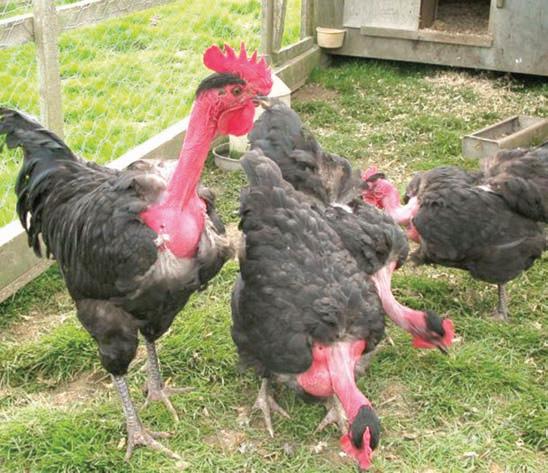
Q: Why do some chickens have no feathers on their necks?
Scientists recently discovered that a genetic mutation occurring centuries ago among domestic chickens in Romania is the cause for some breeds of chickens to be without neck feathers.
Also known as “churkey” or “turnken” (for its chicken body and turkey head once thought to be a hybrid result from a chicken and domestic turkey), this naked neck breed is also called the Transylvanian naked neck (no jokes about necks and vampires please). There is also a breed called the French naked neck.
This characteristic is described by scientists as a result of a random mutation that “causes the overproduction of a feather-blocking molecule called BMP12.” It appears the neck area is more sensitive to this “feather-blocking” since the neck, scientists discovered, produces an acid derived from vitamin A that enhances the BMP molecule’s effect, thereby making the birds’ neck naked.
Scientists suggest that naked necks equal cooler birds, and for poultry producers in hot climates like Mexico, bare-necked birds, which are more resistant to heat, produce better eggs and meat.
It is speculated that this may help wild birds such as ostriches and storks, who have lost their neck feathers, stay cool in their hot habitats, though it is not certain if the BMP molecule was at work among them as well.
You can get 20 blue chips for 8 yellow chips.
1 yellow = 2 red, 8 yellow = 16 red
4 red = 3 green, 16 red = 12 green
3 green = 5 blue, 12 green = 20 blue

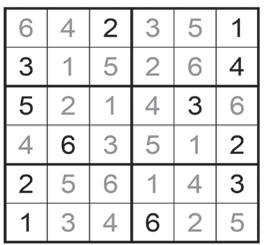
Wildlife populations seem to be increasing near Ukraine’s Chernobyl nuclear-disaster site, which people abandoned after a 1986 reactor explosion. Ukraine at the time was part of the former Soviet Union. Large areas of Belarus, Ukraine, Russia and beyond were contaminated in varying degrees.
Professor Jim Smith at the University of Portsmouth, UK, and his colleagues found that the Belarus sector of the exclusion zone around the devastated power plant had abundances of elk, deer and wild boar that were similar to those in four uncontaminated nature reserves in Belarus. Wolf numbers were more than seven times higher around Chernobyl than in the other reserves.
They say a long-term census of mammals in the area has shown that wild-
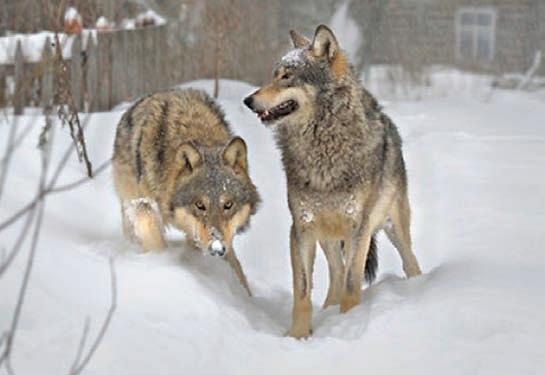
life numbers are likely to be “much higher than they were before the accident”.
Smith stressed however that this “does not mean that radiation is good for wildlife”. “It’s just that the effects of human habitation, including hunting, farming, and forestry, are a lot worse,” he told the BBC.
A 30km exclusion zone
now surrounds the infamous Chernobyl nuclear power plant. And Prof Smith says the picture from this study reveals what happens in terms of wildlife conservation “when you take humans out of the picture”.
But, he said, the study did not look at the health effects of radiation on individual animals.
Prof Tim Mousseau from the University of South Carolina, who was not involved in that study, said the study was a “very positive move forward in conducting research concerning the potential health and environmental impacts of nuclear accidents” but is troubled by “the characterisation that Chernobyl and the surrounding area is teeming with wildlife”.
“This study only applies to large mammals under hunting pressure, rather than the vast majority of animals - most birds, small mammals, and insects - that are not directly influenced by human habitation,” he told BBC News.
Prof Mousseau said that the study simply showed that, “if left unchecked, some populations of animals will grow exponentially and eventually overpopulate a region”.
Exercise pill could become a reality
Drugs that mimic the benefits of exercise could soon become a reality thanks to breakthrough research from the University of Sydney’s Charles Perkins Centre.
Published in Cell Metabolism, the research revealed molecular changes that occur in our muscles when we exercise, providing the world’s first comprehensive exercise blueprint.
The University of Sydney researchers, in collaboration with researchers from the University of Copenhagen in Denmark, analysed human skeletal muscle biopsies from four untrained, healthy males following 10 minutes of high intensity exercise.
Using a technique known as mass spectrometry to study a process called protein phosphorylation, co-author Dr Benjamin Parker
discovered that short, intensive exercise triggers more than 1,000 changes.
The majority of changes they discovered have not previously been associated with exercise, with existing research focusing on just a small number of changes.
“Exercise produces an extremely complex, cascading set of responses within human muscle. It plays an essential role in controlling energy metabolism and insulin sensitivity,” said co-author Dr Nolan Hoffman from the Charles Perkins Centre and Faculty of Science.
“This is a major breakthrough, as it allows scientists to use this information to design a drug that mimics the true beneficial changes caused by exercise,” Dr Hoffman said.
With this long-term goal in mind, researchers narrowed down the therapeu-

tic possibilities within the blueprint using mathematical and engineering-based analysis.
“Exercise is the most powerful therapy for many human diseases, including type 2 diabetes, cardiovascular disease and neurological disorders,” said Professor David James, Leonard P. Ullmann Chair
of Metabolic Systems at the Charles Perkins Centre and the head of the research group that undertook the study.
“However, for many people, exercise isn’t a viable treatment option. This means it is essential we find ways of developing drugs that mimic the benefits of exercise.”
“Chris” the sheep sets world record
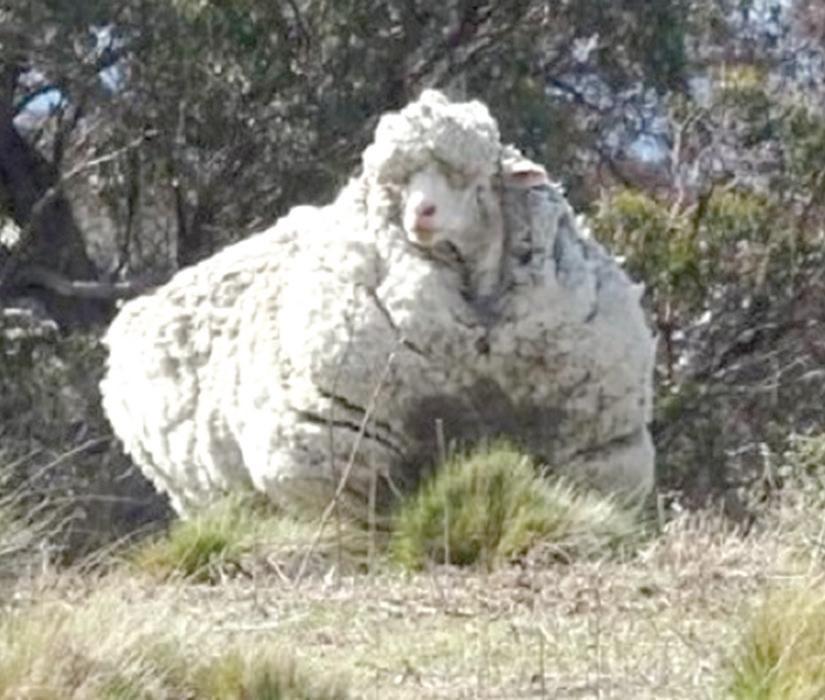
Chris the Sheep has claimed an official world record for his mammoth 41.1 kilogram (90.6 lbs) fleece. The Guinness Book of
World Records announced the new record for the heaviest sheep fleece on Wednesday.
The wild sheep, found covered in about six years’
worth of wool at Mulligans Flat Nature Reserve in Canberra, Australia earlier this month, has broken the previous record held by New Zealand sheep Big Ben whose 28.9 (63.7 lbs) kilograms of wool was shorn off in January 2014.
Australia’s national shearing champion, Ian Elkins, gave Chris a potentially life-saving haircut a day after the sheep was found and taken to Canberra’s RSPCA.
Elkin believes the fleece was the result of seven years of unmanaged growth; the fleece was double the sheep’s body weight.
RSPCA ACT chief executive officer Tammy Ven Dange, said breaking the record wasn’t a priority but the organisation appreciated the recognition.
“The priority has al-
ways been about looking after Chris and getting the wool off him as quickly as possible. Afterwards we realised, ‘Oh, I guess a world record is at stake. Maybe we should consider the record’.”
Ms Ven Dange said she hoped people didn’t lose sight of the animal welfare issues behind the record.
“We can only hope that record is never broken again because it would be unlikely that the animal would live to tell the story,” she said. “Chris the Sheep wouldn’t have made it through summer, that’s for sure. That’s the story most important to us.”
The newly-shorn sheep moved to his new home last week, an unnamed hobby farm in New South Wales, and his fleece was donated to a museum.
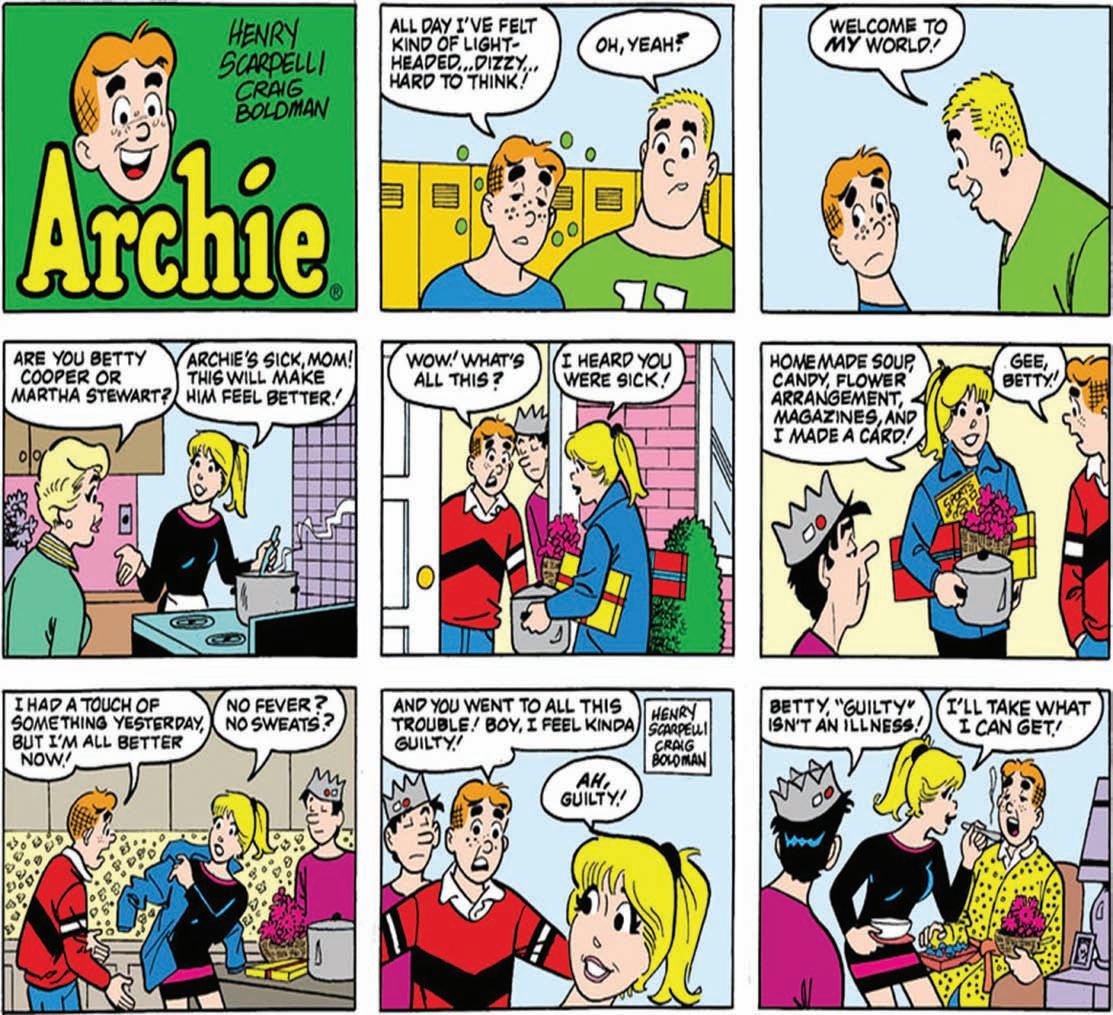








Anxiety or self-doubt will keep you from realizing your full potential. Take stock of your good qualities in order to realize that you have a lot to offer. Personal and professional opportunities are evident.

TAURUS (April 20May 20)




Use your imagination to come up with novel ways to increase your bank account. Mentoring, tutoring, teaching a course or sharing your skills can be a lucrative sideline.

(May 21June 20)



If you’ve been denying your own needs in order to accommodate others, it’s time to put yourself first. Love is on the rise, and special plans that encourage romance are favored.

(June 21July 22)





Emotional outbursts or aggressive tactics will not win you points with family or coworkers. Treat others as you wish to be treated, or prepare to face unhappy consequences.

LEO (July 23Aug. 22)



VIRGO (Aug. 23Sept. 22) ARIES (March 21April 19)
You can use your powers of persuasion to bring your talents to the attention of someone influential. Don’t be shy. You have the qualities necessary to succeed.



Look for ways to increase your earning potential. Ask people with entrepreneurial abilities to help you develop an idea that you want to market. Savvy investment or real estate strategies will prove beneficial.

LIBRA (Sept. 23Oct. 23)




You will be opinionated today. Don’t play with fire by upsetting someone you love or want to do business with. Let matters unfold naturally and be willing to listen to what others have to say.
SCORPIO (Oct. 24Nov. 22)






Before it becomes too difficult to manage, deal with financial, legal or health matters. Don’t let confusion set in. If you ask questions, you will get favorable results.

SAGITTARIUS (Nov. 23Dec. 21)


You can tilt the scales in your favor if you devote your time to charitable or benevolent organizations. In addition to helping needy people, you will attract new opportunities.






(Jan. 20Feb. 19) (Dec. 22Jan. 19)
Someone will try to lead you astray. Go over agreements or contracts thoroughly to avoid costly errors. Keep your assets and valuables in a safe place.


Love is prominent. Others will see your value and boost your confidence. If you have done something wrong, admit it and move on. Punishing yourself will not change the past.
PISCES
(Feb. 20March 20)



Don’t assume that everyone is as honest as you. Refuse to contribute to a dubious cause or unrealistic investment. Joint ventures and lending or borrowing money or possessions should be avoided.