AML/CFT Bill: Guyana gets until September next year to put house in order
Bartica student thrashed for allegedly spreading pregnancy rumour
Teen killed in Nismes accident
Benn wary of ‘fly by night’ airlines
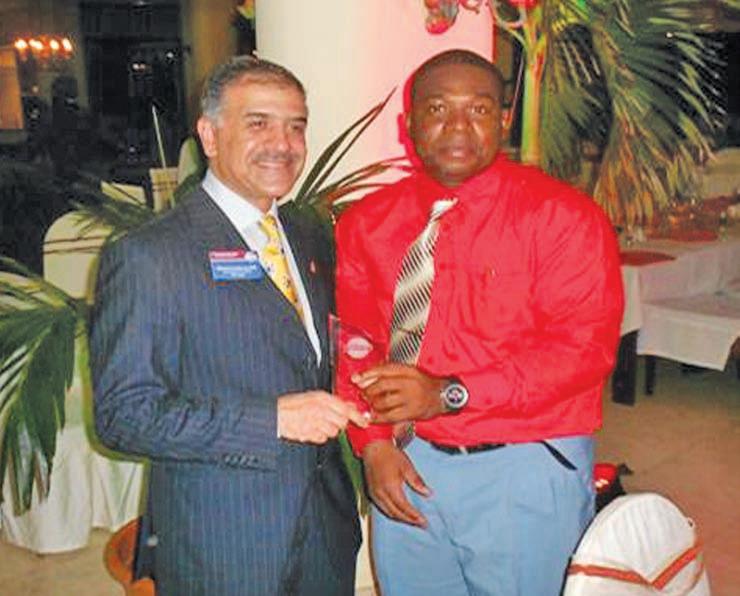
Digital Technology debunks Kaieteur News’ claims of favouritism
2 news
saturdaY, october 25, 2014 | guYanatimesgY.com
Guyana gets until September next year to put house in order
BY SVETLANA MARSHALL
Cabinet Secretary, Dr Roger Luncheon on Friday hinted at a September 2015 deadline for the government to get its “house in order” in the passage of Anti-Money Laundering Bill.
He said while the Government was pleased with the developments, President Ramotar was prepared to use the blacklisting of Guyana as a propellant towards calling General and Regional Elections.
“Who wants to be running a blacklisted country?” questioned the Cabinet Secretary as he contended that what the President had previously proffered was a “political nononsense statement”.
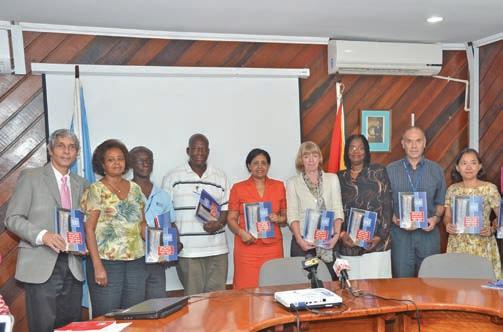
The Financial Action Task Force (FATF) has mandated Guyana to implement a seven-point action plan to strategically address its Anti-Money Launder and Countering the Financing of
Terrorism (AML/CFT) deficiencies.
On Friday, FATF indicated that Guyana has made a high-level political commitment to address the loopholes within its anti-money laundering regime by working with both the international financial watchdog and the Caribbean Financial Action Task Force (CFATF).
As part of the seven-point
action plan, Guyana is required to adequately criminalise money laundering and terrorist financing.
Additionally, the country is mandated to establish and implement adequate procedures for the confiscation of assets related to money laundering, establish and implement an adequate legal framework for identifying, tracing and freezing terrorist assets and establish a fully operational and effectively functioning Financial Intelligence Unit (FIU).
Effective measures for customer due diligence and enhanced financial transparency would also need to be established, in addition to a strengthened suspicious transaction reporting requirements. Guyana is also required to implement an adequate supervisory framework.
“The FATF encourages Guyana to address its AML/ CFT deficiencies by implementing its action plan,” the financial institution stated on
its website.
Guyana was among countries that were identified with AML/CFT deficiencies following FATF’s review for compliance.
“While the situations differ among each jurisdiction, each jurisdiction has provided a written high-level political commitment to address the identified deficiencies. The FATF welcomes these commitments.”
Call
The international body further called on the various jurisdictions, including Guyana to expeditiously complete the implementation of their action plans within the proposed timeframes.
“The FATF will closely monitor the implementation of these action plans and encourages its members to consider the information presented.”
The review process formed part of FATF’s plenary meeting which was held in Paris
from October 22-24.
On Thursday, the Attorney General and Legal Affairs Minister Anil Nandlall said Guyana will continue to be subjected to an “Ongoing process in improving compliance” to ensure it discharges its obligations under the Action Plan which was worked out with the AARG.
Earlier in the week, Guyana had committed to fixing loopholes in its antimoney laundering regime during the first day of its review by FATF International Co-operation Review Group (FATF-ICRG), in Paris, France.
Significantly, the Attorney General highlighted that a national task force has been established, comprising very high-ranking members of Government and important stakeholders/state agencies, and that the national task force is currently reviewing a five-year plan for Guyana’s AMLCFT regime.
“I also highlighted the technical and strategic ongoing assistance which the Government of Guyana continues to receive from the lo-
cal diplomatic community, including the Embassy of the United States, the British and Canadian High Commissions, and the European delegation,” the Attorney General said while in Paris.
Minister Nandlall handed over a Letter of Commitment from President Donald Ramotar to FATF President Roger Wilkins, pledging Guyana’s commitment to ensure that the country implements an AML/CFT regime that meets the requisite international standard.
FATF, through the ICRG Co-chaired by Darlene Boileau (Canada) and Maria Fernanda Garcia-Yrigoyen Maurtua (Peru), had executed a targeted review of Guyana’s deficiencies with respect to the AML/CFT framework earlier this year.
But despite these commitments, the Donald Ramotar Administration still has the “devil’s job” in passing the AML/CFT (Amendment) Bill which has been “hijacked” at the level of the Oppositiondominated Parliamentary Special Select Committee. The Opposition had imposed changes to the Principal Act of 2009, despite major protest by the Government.
Nandlall, prior to leaving for Paris had said that “We have come to the position of accepting the sad reality that in term of the Anti-Money Laundering and Countering the Financing of Terrorism (Amendment) Bill of 2013, the Opposition has demonstrated that they are not interested in having the Bill passed.” According to him, the Opposition parties will do all in their power to ensure that Guyana is blacklisted by FATF due to the non-passage of the AML/CFT Bill.
IDB suggests way forward to boost Caribbean exports
Anew study by the Inter American Development Bank (IDB) is urging Latin America and the Caribbean (LAC) to do more to facilitate trade in order to boost exports.
“Three years of sluggish growth in the exports of Latin America and the Caribbean make it urgent to implement policies that facilitate trade,” notes the study, entitled “Trade and Integration Monitor 2014”.
It notes that the fall in international demand and in the prices of many basic goods that are exported from the region highlight pre-existing vulnerabilities in the external sector.
Despite efforts to diversify exports, the study said that over the past decade, the region’s export basket has been concentrated on basic goods and their by-products, making Latin America and the Caribbean vulnerable to fluctuations in price and demand.
It said in 2013, the region’s exports rose only 0.1 per cent, after having grown 1.2 per cent in 2012.
The Monitor argued that, given uncertainty in multilateral trade-facilitation talks, the countries of Latin America and the Caribbean should implement unilateral reforms and other measures linked to preferential accords in the region so as to stimulate exports.
Conservative estimates indicate that only 20 per cent of the commitments included in the Agreement on Trade Facilitation negotiated through the World Trade Organisation (WTO) have taken force under regional preferential agreements, the report noted.
It includes a detailed report on recent trade performance indicators for the IDB’s 26 borrowing-member countries as well as profiles of free trade accords that are in effect.
The Monitor is part of a series of annual studies that analyse the evolution of Latin American and Caribbean integration within the global trading system using systematised data available in the INTrade data base. (Caribbean360)
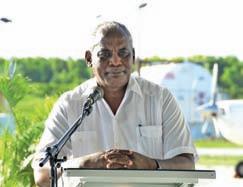
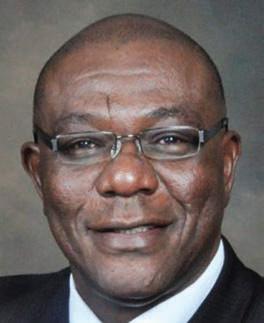
Cabinet Secretary, Dr Roger Luncheon
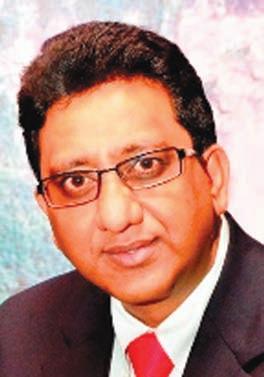
Attorney General Anil Nandlall
BRIDGE OPENINGS
WEATHER TODAY
Weather: Thundery showers can be expected in the morning and early afternoon, with sunny weather otherwise prevailing. Light rain showers are expected in the evening. Temperatures are expected to range between 24 degrees and 30 degrees Celsius.
Winds: East North-easterly to easterly between 0.89 and 1.34 metres per second.
High Tide: 17:15h reaching a maximum height of 2.81 metres.
Low Tide: 10:52h and 23:14h reaching minimum heights of 0.53 metre and 0.39 metre respectively.
GPHC monitoring woman for Ebola ...had travelled to West African country
By Alexis Rodney
Guyanese wom-
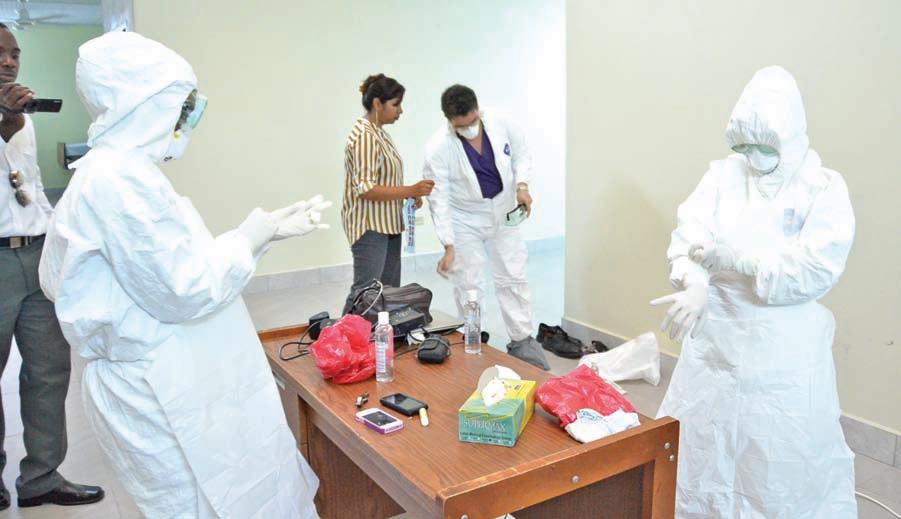
en who recently returned from a West African country is in voluntary isolation as the Georgetown Public Hospital Corporation’s Ebola Response unit monitors her condition for the deadly virus, which has killed close to 5000 people so far.
In a statement, the GPHC said on Friday it was notified by a private physician of a patient who had recently travelled to a West African nation where Ebola is not present. “She went to the physician for evaluation and treatment of leg pains.”
The hospital said during the physician’s interview, the woman reported some mild joint pain and was concerned about Chikungunya infection. The private physician referred her directly to the Georgetown Public Hospital. The GPHC said the woman had recently returned from a leisure trip to a region in West Africa. The Ebola response team was immediately summoned and convened and she was placed immediately in isolation for investigation.
“She reported returning to Guyana, via Suriname, from a West African country where Ebola is not currently present. She has not had contact with anyone with sickness of any kind in the last 21 days. She has not had fever at any point, but had taken non-steroidal anti-inflammatory medications for joint pains the previous day. This medication could mask a fever of any origin,” the GPHC release stated.
According to the GPHC, out of an abundance of precaution, she was monitored by Senior Infectious Disease Specialists until enough time had passed for the medication to wear off. “She re-
mained free of fever and had no other symptoms,” the hospital said. As such, she was discharged from isolation with any suspicion of Ebola Viral Disease discounted. “She will be followed on a daily basis to ensure that fever or other symptoms do not develop. As her exposure was very low-risk and she has no signs or symptoms of infectious disease, she will be kept in voluntary isolation.” There is no threat to her family or the community, the GPHC assured, adding that a team has been assigned to monitor her daily and this work has already commenced even in the first hours following her discharge.
Restrictions
Only last week the Guyana Government placed restrictions on the issuance of visas to nationals of Ebolahit West African countries, as this country takes steps to stave off the virus. Foreign Affairs Minister Carolyn Rodrigues-Birkett said in a statement on Thursday that as of September 9, 2014, Guyana’s consulates in West African states were instructed to stop issuing visas to those nationals. Via her Facebook page, the Minister said: “On September 9, 2014 all of our embassies and consulates abroad have been instructed by me not to issue
visas to nationals from West African countries for the time being.
The consulates and embassies have not issued any visas since.” She noted, however, that this does not stop persons from coming to Guyana from those countries, but that no new visas will be issued. “While this does not constitute a travel ban for persons from African countries, it is one measure aimed at dealing with this deadly virus,” the Foreign Affairs Minister said.
Amid criticism of its efforts to ward off any possible threat of the Ebola virus here, Government recently announced that it will train some 1600 medical personnel to deal with the virus.
This is according to GPHC Internal Medicine-Infectious Diseases Consultant, Dr Johanna Cole. Speaking at a Continued Medical Education (CME) session at the Regency Hotel, Hadfield Street, Dr Cole noted that
the Health Ministry has taken on a mass preparedness approach towards the virus. She pointed out that 1600 medical professionals are to soon commence training on dealing with the virus, and the necessary approach towards administering care to persons who have contracted the virus as opposed to those who are suspected to have it.
In addition, emphasis will be placed on safety and precautionary measures for health-care providers, who may come in contact with an infected person or environment, as the Ebola virus is highly contagious and spreads rapidly through direct or indirect contact with bodily fluids.
She added that surveillance at all ports of entry, including airports and shipping ports, as well as screening is being done. Further, meetings have been held to educate persons working at these points.
Dr Cole noted that isolation capacity is ready at the airports and the largest isolation housing unit is at the GPHC.
Guyana has also moved towards establishing an action plan to deal with the deadly virus, and in this regard a wide-cross section of stakeholders from various organisations had a recent meeting to discuss and establish the measures to be undertaken in order to put the plan into operation.
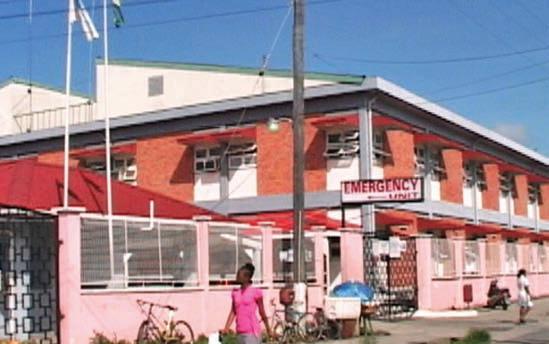
The Emergency Unit of the Georgetown Hospital
Editor: Nigel Williams
Tel: 225-5128, 231-0397, 226-9921, 226-2102, 223-7230 or 223-7231. Fax: 225-5134
United Nations Development Programme (UNDP) Administrator Helen Clark recently addressed students at the University of World Economy and Diplomacy in Uzbekistan. She spoke at length on the progress of the Millennium Development Goals (MDGs), the challenges faced by countries in meeting key targets, and the current global debate on what should succeed the MDGs at the end of 2015.
Important achievements have been made against the MDGs which Clark alluded to, for example, the proportion of the world’s people living in extreme poverty was reduced by half by 2010 – five years ahead of the 2015 target date. The target of halving the proportion of people without access to safe drinking water has also been met.
On average, gender parity in primary education has been achieved, and most children now enrol in primary schools, although completion rates and the quality of education are not high across all countries.
The lives of slum dwellers in urban areas have improved, and levels of infant and child mortality have decreased significantly. There is a downward trend of TB and global malaria deaths.
Guyana has made tremendous gains in achieving key MDGs. This country has advanced in its efforts to reduce hunger, increase access to social services and benefits, improve enrolment in and completion of primary education, increase empowerment of women and achieve environmental sustainability.
Guyana is also well on its way to achieving universal secondary education. However, there is still much work to be done in relation to meeting the other MDGs.
On the global level, there are still many challenges to be confronted. Around one billion people continue to live in extreme poverty. Lack of sanitation leaves many people vulnerable to the rapid spread of disease – particularly in the aftermath of the increasingly frequent and severe climaterelated disasters the world is experiencing.
A number of the world’s ecosystems are under serious stress, which threatens the ongoing supply of basic services on which we depend – like water.
The future of all countries is closely linked to global trends, be they economic, environmental, or peace and security. Clark explained that globalisation and interconnectedness bring benefits, but they can also increase vulnerabilities. To seize the benefits and build resilience to global risks is in itself a development journey.
According to Clark, inclusive and sustainable growth and developing institutions with strong policy and delivery capacity, transparent and responsive governance, and civil society –able to advocate for citizens – are all part of that development journey. In her view, to achieve all these objectives, “societies need to develop a shared understanding of the challenges and opportunities before them”.
Now that the deadline for achieving the MDGs is coming to a close, discussions around the “Post-2015 Development Agenda” are picking up pace. In 2012, the UN development system began facilitating global consultations to enable people from all walks of life to share their priorities for the Post-2015 Agenda.
At the United Nations Conference on Sustainable Development (Rio+20), held in Rio de Janeiro, Brazil, in June 2012, UN Member States agreed to establish an Open Working Group on Sustainable Development Goals (SDGs), which would be “coherent and integrated into the UN development agenda beyond 2015”.
And in January last year, by decision of the UN General Assembly, the Open Working Group (OWG) was established and tasked with the preparation of a proposal on the SDGs. This past July, the OWG proposed a set of 17 goals and 169 targets, covering all issues related to sustainable development, and placing poverty eradication as a core objective.
The report builds on the unfinished business of the MDGs with proposed goals on poverty and hunger eradication, health, education, gender equality, and the environment. It also broadens the scope with proposed goals on reducing inequalities, and a focus on infrastructure, energy, peaceful and inclusive societies, and other new areas.
The agenda would be applicable to all countries, and aim to shift the world towards sustainable consumption and production.
Keeping traditions alive
Diwali in US, Trinidad and Guyana
Dear Editor,
Diwali celebrations are usually fantastic in Guyana especially after the return of democratic rule in 1992 and the availability of traditional items needed for the celebrations.
Diwali celebrations are usually quite a spectacle in New York among the IndoCaribbean Hindus especially in areas where they are clustered as in Richmond Hill, Jamaica, Queens Villages, Cypress Hills, Parkchester, etc.
Rows of diyas and electronic lights usually brighten up these communities during the festive Diwali season. Often, lit diyas flicker next to fluttering jhandis and American flags. Diyas adorn windows and every step on the outside of homes.
Fancy light decorations hang from rooftops, fences and around windows as during the X-Mas celebrations. Rangoli shaped designs are sketched around concrete or on pavements. Diyas are placed around the yard. Glitter is everywhere.
Stores are well-decorated with lit diyas at the entrance. However, this year in the greater New York area, Diwali was pretty much washed-out because of heavy downpours over three days; intermittent showers on Thursday evening accompanied by heavy cold winds made it virtually impossible to light diyas outside.
Usually Guyanese communities in New York are quite lit up for Diwali similar to Guyana, with people displaying various designs and colours of diyas that are arranged in rows or circles and some mounted on wires that form ohms in front of homes. Not so this year. The celebrations were held indoors.
The wind and rain were
too much for the flames of the diyas. Thus, most celebrants stuck to subdued electronic lighting on the outside. Because of the eclipse and questions over which was the shortest night of the year (month) when Diwali is usually observed, some mandirs celebrated Diwali on Wednesday evening while others celebrated on Thursday evening.
Some celebrated the festival on both evenings. Some Guyanese celebrated Diwali on Wednesday evening claiming that the darkest moon was on that night. Many mandirs held celebrations Wednesday evening. In Richmond Hill, there were lusty fireworks for over an hour carried out by Punjabis on Thursday evening.
The fireworks attracted hundreds in the light rain and thousands in the temples (Gurudwaras). The Sikhs also dressed up their homes with colourful lights like the Guyanese though lighting diyas is not part of the custom.
The celebration was very impressive in Guyana during the motorcades. Unlike in NY and like in Guyana, there was a grand Diwali celebration in Trinidad although heavy rains (from a tropical depression) also affected the lighting of diyas there as well on Thursday night. As in Guyana, the holiday was observed on Thursday.
The Village of Felicity came alive with its magnificent shapes comprising diyas posted on various fanciful shaped props and electronic lights.
Unlike in Guyana which has motorcades, Trinidad has the fabulous Diwali Nagar with its spectacular lights. Prime Minister Kamla Persad-Bissessar delivered the feature address
at the final night (of nine) of the Nagar to close the festival in Chaguanas on Wednesday evening.
She handed out a cheque of TT$2 million to the organisers (NCIC – National Council of Indian Culture) of the celebration; several Guyanese flew in to attend the Nagar and to go shopping for traditional Indian dresses at the Indian Trade Expo. Thousands of Guyanese settled in Trinidad visited the Nagar.
There were fantastic fireworks to close out the celebrations.
Besides NCIC, several other Hindu organisations received grants from the Government to fund celebrations around the country.
Unlike in Guyana, every one of 41 electoral constituencies of T&T hosted Diwali celebrations, funded by business donors and Government grants. The 14 local governments as well as the House of Assembly of Tobago also hosted Diwali melas from their own budget.
Unlike in Guyana, the PM (Kamla) hosted a grand celebration complete with fireworks in her constituency of Siparia. Her nemesis, Jack Warner also hosted his own celebrations in Chaguanas with the complete works as he has been doing since 2008.
Unlike in Guyana, the Opposition People's National Movement (PNM) hosted a grand celebration in Macoya Ground, Tunapuna, that attracted thousands – a first for the party as it seeks to win over Indian support for elections due by mid- September. The party gave out TT$100 gifts to many and prizes to performers. All of the celebrations throughout the twin-island nation provided
complete meals and drinks to attendees.
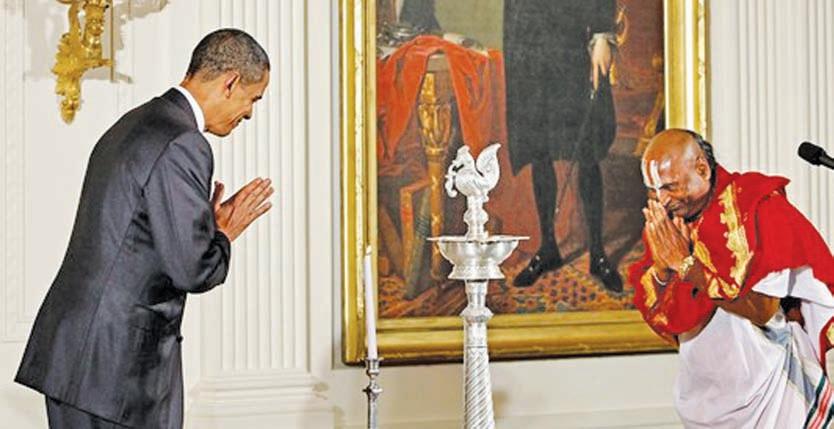
Diwali was also celebrated at the White House. President Barack Obama released a video on his blog delivering greetings to Hindu Americans on the occasion of the festival on October 22. Diyas were lit on Thursday evening by Secretary of State John Kerry; Indian Ambassador Jaishankar; and US Assistant Secretary of State for South Asian Affairs, Nisha Biswal, an Indian-American.
Prominent community leaders were invited for the reception at the White House.
In 2009, Obama became the first American President to light a diya to celebrate Diwali. However, the US President had started the Diwali tradition going back to 2001 with various Assistants or Secretaries lighting the diya.
Guyanese need to heed the message behind Diwali –let peace, truth and goodwill triumph over evil. Use the occasion to educate and illuminate minds and strengthen the family.
There is need for a change in attitude to building the nation rather than seeking vengeance for previous wrongdoings. People need to be reminded from where they came and how far the nation has progressed from the dark period of misrule.
The light of the diya should wake up people from their complacency and slumber lest they return to that dark period and be unable to get out of it again. At the same time, they need to speak out against wrongdoing and hold their leaders accountable.
Yours truly, Vishnu Bisram
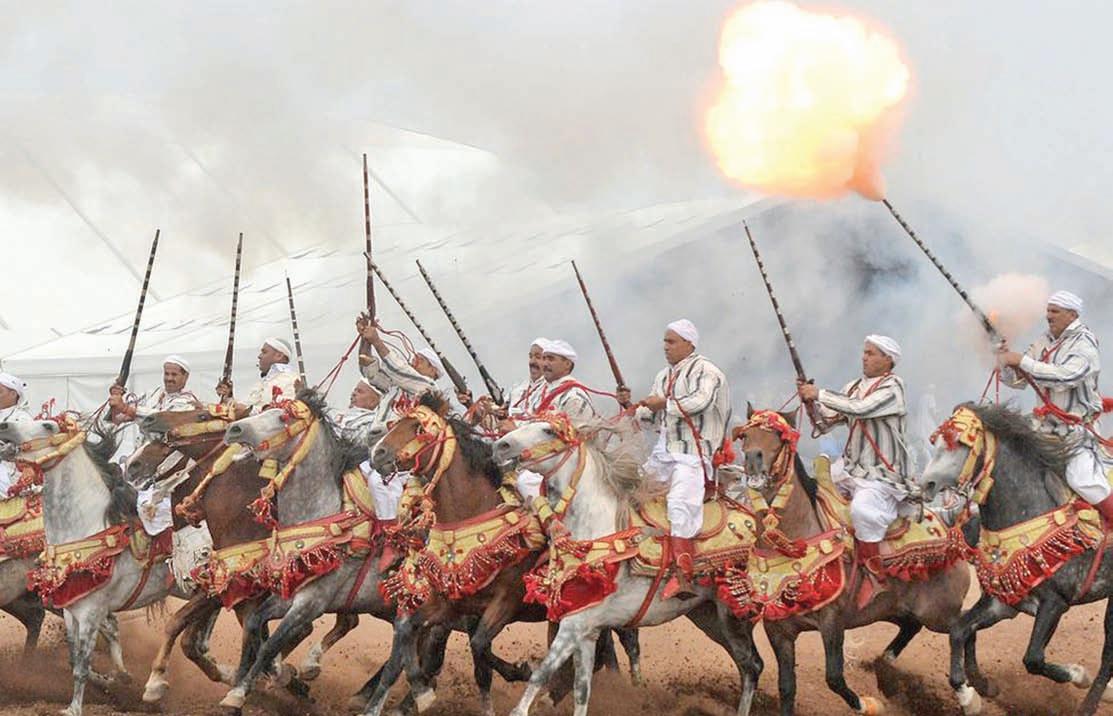
Moroccan horsemen perform during the seventh edition of the Salon du Cheval in the port city of El Jadida (BBC News)
Pinnacle was incorporated to enter the green business sector in Guyana (Part 1)
Dear Editor, Pinnacle Green Resources (Guyana) Inc notes the letter written by Assistant Professor Janette Bulkan, University of British Columbia, Canada, regarding our proposed investments in Guyana.
We wish to state that the company is quite happy to release information regarding itself and its activities in Guyana (and indeed around the world) to anyone who requests that information, particularly concerned Guyanese.
The letter writer has provided us with the opportunity to highlight the areas of concerns raised, and while we would have been equally pleased to provide this information in response to a polite request, we seek your indulgence in allowing us to publicly provide some information regarding our company, its antecedents, and our proposed investments in Guyana.
Pinnacle
Pinnacle Green Resources (Guyana) Inc is 100 per cent owned by Pinnacle Green Resources Pte Ltd (Singapore). Pinnacle is a specifically incorporated Special Purpose Vehicle (SPV), incorporated in 2013 to enter into the GREEN business sector in Guyana.
Pinnacle Green Resources Pte Ltd (Singapore) is 100 per cent owned by Pinnacle Commodities (Asia) Limited, Hong Kong. This Special
Purpose Vehicle was specifically incorporated in 2012 to enter into GREEN businesses around the world.
Pinnacle Commodities (Asia) Limited, Hong Kong was incorporated in 2007 and has the following shareholders, each having one-third equity contribution: Kuldip Kumar Gupta, Manish Gupta and Rajnish Gupta.
These three shareholders are a part of the Beekay Group, which is owned by the larger Gupta family.
The Beekay Group is a highly diversified group, having operations in steel, beverages, construction, energy, chemicals, etc, with global reach. We have information available, which describes some of the Beekay Group’s activities and partnerships, if you feel this is warranted.
While members of the public and some academics do resort to Internet searches to do financial research and research into companies, we wish to advise the public that this is not the best forum to do so, as there are many companies with similar names and many highly successful and respectable companies that do not even have a website.
There are well-known financial enquiry services that can be used to research companies; resorting to casting aspersions on companies simply because of an imperfect or mis-informed search is not fair nor is it in the best interests of any nation.
Some of the websites associated with the Beekay Group are: www.bsbkltd. com, www.mbl.in, www. beekaycorp.com and www. biltech.co.in.
In addition to the shareholders of the company, Dr Rajneesh Mehra is one of the principal officers and drivers behind Pinnacle Green Resources (Guyana) Inc. Dr Mehra brings a world-recognised reputation in converting waste to energy. He was the Managing Director and CEO of A2Z Infrastructure (P) Limited, focused on waste management.
He successfully grew A2Z into India’s largest and the world’s third largest waste management company in terms of volume of waste managed and volume of people served, in the process, becoming a household name in India and around the world in waste management and waste to energy.
Dr Mehra left A2Z to pursue opportunities of his own, and developed companies in biomass-based power generation, sustainable mechanised corporate farming, and associated waste management.
His companies are Purab Infrastructure Projects Limited (conversion of waste biomass to energy and energy plantation cultivation); Purab Urja (P) Limited (conversion of waste biomass to energy and energy plantation cultivation); and First Agrobiz (P) Limited, which is focused on the farming of greater than 2000 acres of
energy biomass plantation.
We can assure the public that simply because an Internet search does not yield companies with the name Pinnacle that are obviously involved in the areas of investment we have proposed in Guyana, that does not mean we do not have the experience, the personnel, the demonstrated capacity and the financing to back our investments.
We encourage real, valid and approved searches to be done on the names of the companies we have provided.
Soil types
This plant (in question) grows well in soil which is slightly acidic; pHs as low as 4.8 have been shown to be suitable for prolific growth, although the plant is often found naturalised in environments where pH is around 5.2 or slightly greater.
To suggest that the plant requires alkaline soils to grow to an economic size is simply not correct. To remind the public, alkaline pH values are above a pH of 7.
A direct quotation from a compilation of scientific reports on forage legumes (H M Shelton and J L Brewbaker, Leucaena leucocephala – The Most Widely Used Forage Tree Legume, in Forage Tree Legumes in Tropical Agriculture, eds R G Gutteridge and H M Shelton, Tropical Grassland Society of Australia Inc, 1998, Chapter 2, ISBN
Sharma Solomon should resign
Dear Editor,
Two years ago, the One Mile Primary School at Wismar was burnt down by arsonists during the mayhem protesting Government’s decision to withdraw the electricity subsidy for Lindeners.
I vividly recall calls from the opportunist Mark Benschop appealing to Guyanese in New York to help in the rebuilding by sending cash and other donations to the Region 10 (Upper Demerara-Berbice) Chairman, Sharma Solomon.
In a telephone interview with Benschop, the Regional Chairman made it clear that One Mile Primary School will be rebuilt solely by the people of Linden. He did not want the Government to play any part in the rebuilding.
As such, an estimated $17 million was raised, mostly from generous Guyanese living in the diaspora and from supporters of the Opposition at home. Two years have gone by and that money is yet to be accounted for.
Every effort made to get Solomon to account for that money has been coming up against a brick wall. In a report published in <<Guyana Times>> on August 24, a similar question was asked:
Where’s the money? That was two months ago.
I travelled to Linden on that very day, December 12, 2013, and took photographs of the burnt-out remains of One Mile Primary School. The photographic evidence which I shared then showed very limited work, all shoddy and incomplete, had been started on the ground level, but no work was evident on the top floor as was reported.
Initially, $60 million was allocated in the 2013 Education Budget for the construction of an additional wing to the building that Solomon and the self-help committee were supposed to have built from donations received, to make allowance for additional students, so as to avoid overcrowding.
Consultations were held between the Ministry and the Regional Chairman, and it appeared evident that children were being inconvenienced and their education compromised by the ongoing delays to get the project started.
By then, engineers from the Ministry of Education declared the existing remains to be unsafe to build on, due to structural damage caused by intense heat from the fire. When Government
realised that Solomon and the self-help committee were incapable of rebuilding the school in a timely manner, they refused to turn over the $60 million and instead took a decision to build a brand new modern school with the capacity to hold 1000 children.
The Regional Chairman wisely gave his approval and consent, and the rebuilding project was finally launched last February by Education Minister Priya Manickchand, at a cost of $170 million.
The new building will include 29 classrooms, capable of housing 1000 students, sick bay, facilities for disabled, information communication laboratory, administrative office and sanitary block among others.
So there is absolutely no need for additional monies to be spent by the so-called “rebuilt project” or anyone else to “modernise” a school that will have all the modern facilities and amenities.
This explanation is just a sham to stall the demands for accountability of the estimated $17 million in cash that was received as donations, money that must be accounted for by the Region 10 Chairman.
During the sod-turning ceremony in February, I tried to interview Sharma Solomon to get some answers.
When I introduced myself, he became arrogant and unwilling to speak to me, saying, “I know who you are.”
I specifically asked how much money was received in donations from the diaspora in New York, and he told me none – I recorded his comment. The only information he volunteered was that most of the contributions came from local supporters and businesses in the form of materials such as concrete blocks, cement and sand.
He also denied having knowledge of the amount of money collected and access to that money, and said that a committee is tasked to audit the accounts and the findings will be published shortly. When asked how soon, he said within two weeks. That was on February 12, over eight months ago.
Solomon needs to come clean with the people of Linden and the entire nation, and especially those Guyanese living in New York who willingly gave part of their hard-earned money to the idea of rebuilding a school set ablaze.
0-9585677-1-9) claims:
“It [<<Leucaena leucocephala>>] grows on a wide variety of soil types including mildly acid soils (pH > 5.2).”
Even a cursory search on a non-scientific search engine such as “Google” would ascertain, due to the wide number of studies that have been conducted on this species, that an alkaline soil is not required.
The soil in the area of the Pomeroon where we have been investigating in conjunction with the Guyana Lands and Surveys Commission has an upper layer of thin organic matter followed by a 20-inch layer of peat and acid sulphate.
The pH in this area is generally around 4 (information supplied by NAREI). Given our experience in growing energy plantations, we have already ascertained that we shall need to bring this pH value up to around 4.8, but we know exactly how to accomplish this with the application of lime.
In addition, in our areal and on-foot surveys of this proposed land for cultivation, we encountered prolific stands of coconut growing. Coconuts are well-known to grow in soils similar in pH to those supporting Leucaena, and these trees are growing prolifically even without the benefit of lime addition.
Furthermore, the addition of lime has been taken into consideration in our business plan. We are perplexed at why anyone would
This evasive strategy by the Regional Chairman to prevent disclosure of the total amount received in donation after two long years appears fishy to me.
The question must be asked: How could a man who solicited and received millions in cash donations that were never used and reportedly cannot be accounted for even after two long years, a public figure who appears to have violated the public’s trust, still have the cojones to remain in a leadership position in Linden?
Solomon should resign in disgrace with immediate effect. He is an embarrassment to the position he holds.
Like APNU, the Government of Guyana should distance themselves from Solomon, and refuse to rec-
think that we wish to “land grab” land that clearly has languished undeveloped for decades, and why, if the land is so unsuitable for cultivation, would we want to “grab” it in the first instance. We wish to inform the public that our MoU with Go-Invest stipulates standard lease rates in Guyana. We can also assure you that we have not been successful as a company by leasing land which is not useful to us and waiting for someone to come along and somehow compensate us for leasing land that has not been leased for many decades, if ever.
Primary agriculture in countries such as Guyana is risky business; it requires large injections of capital and one can still face many unknown challenges – related to fertiliser price fluctuations, climate changes, pests, etc. And also, whether or not one can grow the crops one wishes to, with the yields that one would prefer. Incidentally, this is exactly the same problems faced by your current sugar and rice industries, and Guyanese seem to have been able to grow sugar and rice for many decades. This business is not without risks, but it is not without reward, either.
Yours sincerely, Manu Bansal, Executive Director Pinnacle Green Resources (Guyana) Inc
ognise his status in the community until he accounts for this money. A full and complete investigation is now needed to determine exactly how much money was received by Solomon, APNU Parliamentarian Vanessa Kissoon, and Mark Benschop of the Benschop Foundation, if only to keep them honest and lift the veil of suspicion that hangs over them.
Interestingly, these are the same people who accuse the Government of corruption and whose common goal is to replace the current administration in office by hook or by crook. God help Guyana if that ever happens!
Sincerely, Harry Gill
What is being done to prevent ill travellers in West Africa from getting on a plane?
The Centres for Disease Control’s Division of Global Migration and Quarantine (DGMQ) is working with airlines, airports, and ministries of health to provide technical assistance for the development of exit screening and travel restrictions in the affected areas. This includes:
Assessing the ability of Ebola-affected countries and airports to conduct exit screening,
Assisting with development of exit screening protocols,
Training staff on exit screening protocols and appropriate PPE use, and Training in-country staff to provide future trainings.
Guyana, along with a few countries, has stopped issuing visas to persons from West Africa.
How do I protect myself against Ebola?
If you must travel to a country affected by the 2014 Ebola outbreak, protect yourself by doing the following:
Wash hands frequently or use an alcohol-based hand sanitiser.
Avoid contact with blood and body fluids of any person, particularly someone who is sick.
Do not handle items
that may have come in contact with an infected person’s blood or body fluids.
Do not touch the body of someone who has died from Ebola.
Do not touch bats and nonhuman primates or their blood and fluids and do not touch or eat raw meat pre-
pared from these animals.
Avoid hospitals in West Africa where Ebola patients are being treated.
Seek medical care immediately if you develop fever (temperature of 100.4°F/ 38.0°C or higher) and any of the other following symptoms: headache, muscle
pain, diarrhoea, vomiting, stomach pain, or unexplained bruising or bleeding.
Limit your contact with other people until and when you go to the doctor. Do not travel anywhere else besides a healthcare facility.
Ebola Outbreak Case counts*
*Case counts updated in conjunction with the World Health Organisation (WHO) updates and are based on information reported by the Ministries of Health (Updated October 22, 2014)
Countries with Localised Transmission CountryTotal CasesLaboratory-Confirmed
*The outbreaks of Ebola Virus Disease (EVD) in Senegal and Nigeria were declared over on October 17 and October 19, 2014, respectively. A national EVD outbreak is considered to be over when 42 days (double the 21-day incubation period of the Ebola virus) has elapsed since the last patient in isolation became laboratory negative for EVD.
By
Decide whether to sneak out
One decision you’ll have to make is whether to sneak away when your child isn’t paying attention. This is a subject of controversy in my own family. My husband sees no problem with it, while I want my girls to know that I’ll always say goodbye. I don’t want them to worry that I’ll suddenly disappear when they aren’t looking
Certainly, I see the benefit of leaving while your child is sleeping or playing with a toy – it lessens the opportunity for a crying fit. But I could never bring myself to do it. I
always wanted to be there to know if they were upset, even if I was just eavesdropping outside the door.
Use an engaging object or special treat
Objects carry power. Plan ahead by asking your child if he wants to bring in a special rock or picture to show his teacher. That can be your distraction ploy at the moment of goodbye.
You may also want to give your child something from
home to carry through the school day (check with the teacher first). Some ideas: a favourite teddy, a family photo, or a piece of your jewellery. I’m convinced that’s why schools have show and tell (or show and share) – to give children something to clutch instead of Mommy’s hand. If your child is going through a particularly rough time, think about planning an after-school outing. Whether it’s pizza night or an afterdinner walk to see the fire station, it gives her something to look forward to and talk about during the drop-off at child care.
Identify and avoid anxiety triggers Pay attention to the days when your child has trouble separating. See if there is a common thread that is triggering tears. Make sure you’re not pressured and rushing through the steps of the morning ritual.
Our middle daughter is always clingier when she arrives at daycare before her two closest friends. If I help her identify a child looking for a playmate, she’ll scurry off happily. Or, I just give an extra long hug and tell her the fun things we’ll do that evening.
Mondays are hard for many households. You may want to give some extra time and affection on the first day of child care after a weekend or vacation.
I’ve also noticed that my girls hit an emotional wall after eight hours in child care. If I can pick them up at 17:15h instead of 17:45h, it makes a world of difference. When I tell my four-year old that I’ll pick her up early – even by just a half hour – she finds it much easier to say goodbye.
Enlist your child’s caregiver
The transition to child care is like a football pass. You can set everything up perfectly only to have your child’s caregiver fumble the reception. Make sure the two of you are working together.
If your child is struggling with separation anxiety, ask her caregiver what might help. A plan the two of you agree on will be much easier to implement than something you dream up on your own. If you have success taming separation anxiety, please share your techniques. (about.com)
(Continued from Wednesday)
Katherine Lewis
Teen killed in Nismes accident
Moments after disappearing from his friends at a birthday party, a teenager met his demise on Thursday evening after he lost control of the motorcycle he was riding and ended up in a nearby trench at Nismes, West Bank Demerara.
Cecil Adolphus, 17, of Lot 99 Sideline Dam, Bagotsville, West Bank Demerara might have suffered a broken neck from the impact of the accident.
His motionless body was pulled from the trench about 23:30h, but by the time he arrived at the West Demerara Regional Hospital, he was already dead.
According to information reaching Guyana Times, the young man was at a party at Stanley Town, Canal Number 1 Polder when he unknowingly to friends collected the motorcycle and went for a ride.
He was not the holder of a valid driver’s license.
While in the vicinity of the Nismes Housing Scheme, he reportedly rode over a speed hump at a fast rate, plunging head first into a nearby trench.
At the home of the former Patentia Secondary School student, his mother Roslaline Gill explained that she was at home when she heard someone calling out to her.
As she looked out, a friend of her now dead son told her that Adolphus was involved in an accident.
At that time, she did not know the seriousness of it, but without hesitation, she rushed to the scene. There, she saw her son’s motionless body on the roadway and was made to understand that he has been there for a while since those around refused to take him to the hospital after he was pulled from the trench.
“All I see was he neck swell and no other injuries…. They had he on the road for a long time and it was when the Police come,
they take him to the hospital… to me, he was already dead,” she related as tears trickled down from her eyes.
Upon enquiring, the mother was told that her son was at a party at Stanley Town when he disappeared with one of his friends motorcycle.
She noted that from what she heard, after they realised that he was missing as well as the motorcycle, his friends contacted him via his mobile.
They claimed that Adolphus told them that he went for a ride and was on his way back.
The distraught mother told Guyana Times that her son left home about 19:00h, but did not say where he was heading.
A shocked mother could not believe that her son would be so irresponsible. He was not wearing a helmet at the time of the accident.
Gill recalled that her son was pleasant, jovial, very polite, never argued with anyone and was generally soft-hearted.
His body was taken to the Ezekiel Funeral Home and is awaiting a post -mortem examination. He leaves to mourn his parents and five other siblings. Police are continuing their investigations.
115 trained as environmental club ambassadors
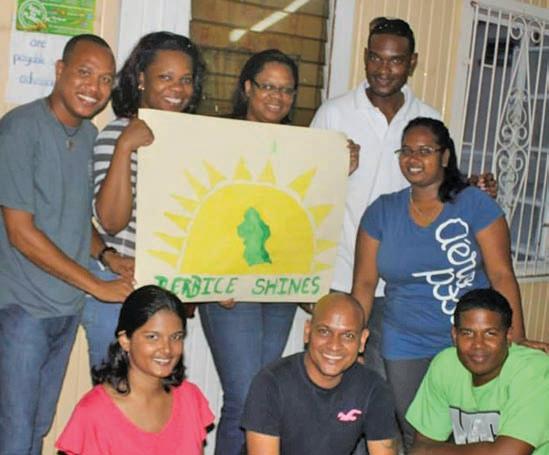
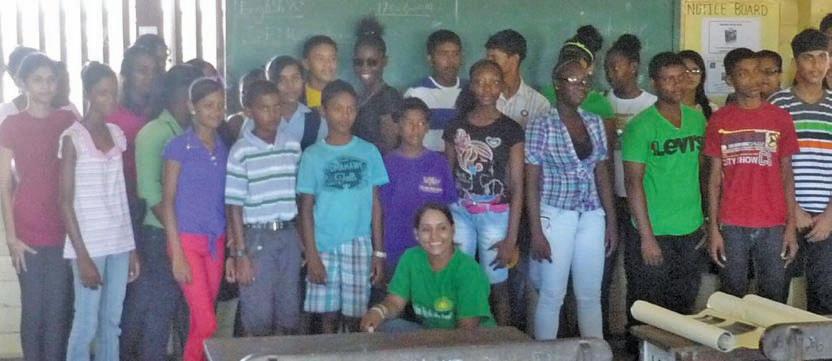
The Berbice Shines Project last weekend completed training of 115 youth volunteers as part of four training programmes that targeted Region Five.
The first training was held on June 28 at the Weldaad Youth Friendly Space and targeted 18 students from seven secondary schools, who now serve as environment ambassadors and managers of school environment clubs.
The second training was held on September 17 at Rosignol Secondary School and targeted 30 volunteers. The third was held on October 11 at Bath Primary School and targeted 37 youth volunteers and the fourth was held on October 18 at Bush Lot Secondary School in which 30 benefitted.
The trainings are part of the Berbice Shine Project,
The facilitators of the sessions are Berbice Shines volunteers who were initially trained in Region Six as trainer of trainers. The
with information on littering, consequences of littering, what can be done about littering, how to discard of waste appropriately and the
which secured funding from another project implemented by Global Youth Movement (Guyana) in Region Five and extended to Region Six.
The local non-governmental organisation (NGO) explained that the trainings were designed to provide basic information to students on environment issues as well as explore the solutions to these.
The trainings were delivered in a fun and simple way so that children and young people can learn easily and return to their schools, clubs, families and organisations and share the information. The main goal of the trainings was to provide information to volunteers so that environment issues are addressed.
Bartica student thrashed for allegedly spreading pregnancy rumour
Astudent of 3 Mile Secondary School, Bartica received a sound thrashing from three classmates after she reportedly spread rumour that one of them was pregnant.
The incident allegedly occurred on October 14 in the school’s compound, and the teen is said to have suffered several blows to the head, stomach and face.
Reports say Bowen was seen “coiled up” on the ground as her classmates rain down blows on her, including kicks and stamps while other students look as they encircle them.
“Her eardrums bore, her eyes black and blue, she get kick in her belly, all keep hurting still,” Bowen’s mother told Guyana Times
The young lady was initially approached by three of her classmates who inquired from her why she spread the nasty rumour, but she denied ever doing so.
But this did not help her cause; the upset set girls descended on Bowen and inflicted a vicious assault on her.
One of the girls who assaulted Bowen was reportedly placed on $30,000 bail, which was paid for by her mother.
The matter is expected to be heard in court on November 28.
The mother of the injured teen said she will have to bring her daughter to Georgetown for a thorough checkup as she has been in severe pain following the incident.
She claimed that the teachers of the school are very casual in their handling of the matter, and it appears as though they are reluctant to get involved.
Meanwhile, Bowen is unable to return to school as she is still recovering from the tragedy.
volunteers, who are now equipped with the same information, are expected to organise similar sessions in their community so the information can be passed on, causing a ripple effect. The volunteers were provided
3Rs – reduce, reuse and recycle.
The Global Environment Facility (GEF) is a partnership of various sectors in 183 countries to address global environmental issues. Since 1991, the GEF has provided
$12.5 billion in grants and leveraged $58 billion in co-financing for over 15,000 projects. The funds are used to support activities related to biodiversity, climate change, international waters, land degradation, and chemicals and waste in the context of development projects and programmes.
The Small Grants Programme (SGP) is implemented by the United Nations Development Programme (UNDP) and executed by the United Nations Office for Project Services (UNOPS). The GEF SGP works with communities and civil society around the world to grapple with critical global environmental problems.
Global Youth Movement (Guyana) is a registered organisation which was formed in 2011 by youth and works with young people in various communities across the country.
The organisation is also currently undertaking a backpack project and is urging businesses and individuals to sponsor a backpack filled with supplies for a primary school child. The backpacks will be distributed during the August holidays.
Berbice Shines is an environment project executed by Global Youth Movement (Guyana) in Regions Five and Six and supported by funds from the $23 million Community Health, Environment and Recycling Project. That project is funded by the United Nations Development Programme, Global Environment Facility, Small Grants Programme.
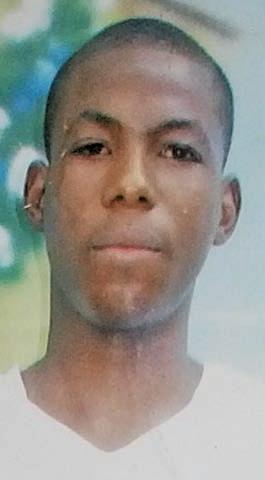
Dead: Cecil Adolphus
The co-founders and facilitators of the trainers of trainers Mark Ross (centre stooping) and Lauristan Choy (left back row) with some of the volunteers
Volunteers at last weekend training at Bush Lot Secondary School
Pilot's error blamed for Caribbean Airlines 2011 crash
By Bhisham mohamed
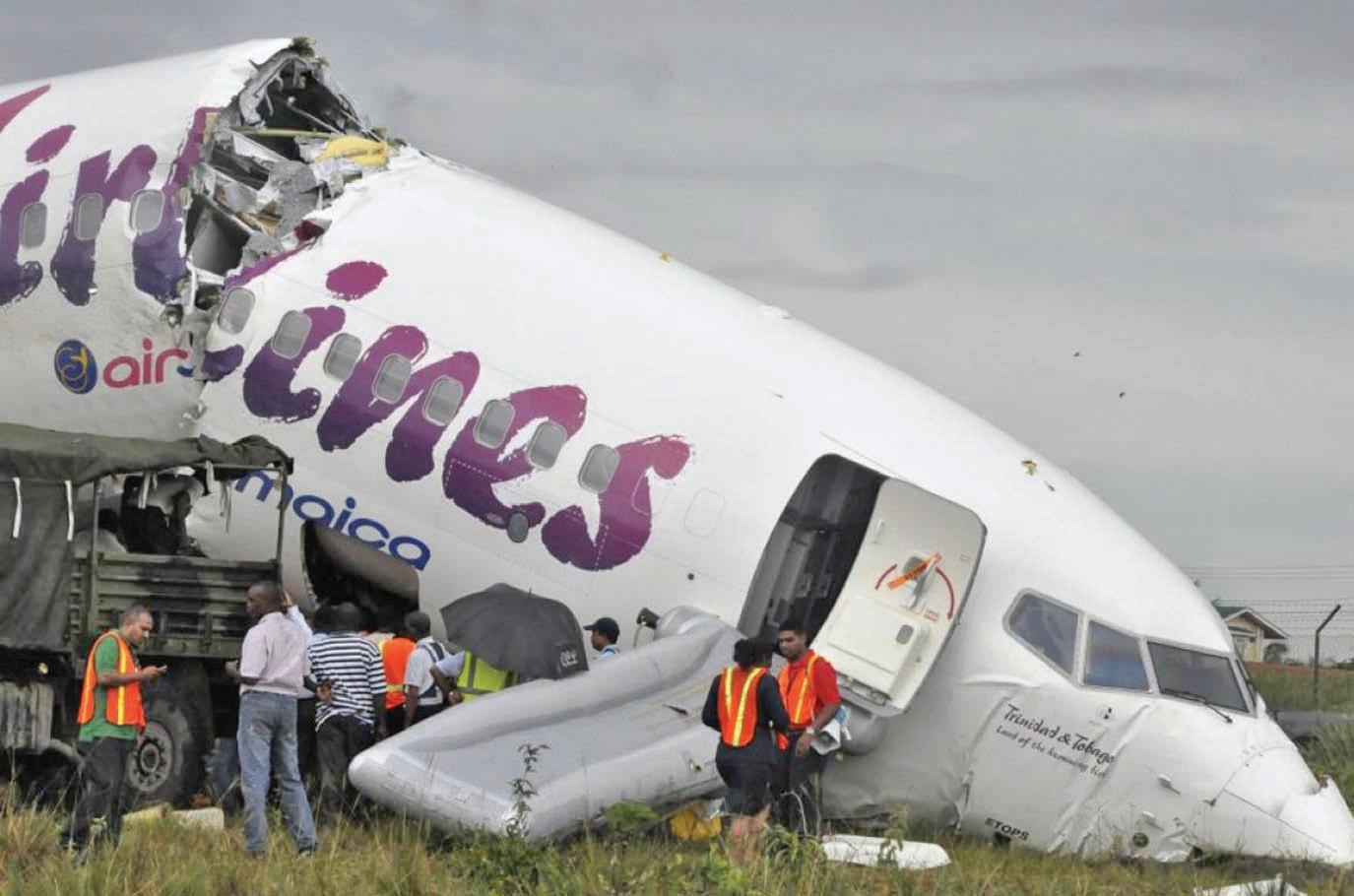
Some two years after a Caribbean Airlines Flight, BW 523, with 157 passengers and a sixmember crew, skidded off the Cheddi Jagan International Airport, investigators on Friday disclosed that human error was the instigating factor for the crash.
This was according to head of the investigative team, Paula Mc Adam. The team comprised several
cations, both of them erred.
The lead investigator said that the probable cause of the accident was that the airline (which was coming from Piarco International Airport just after midnight) touched down approximately 4700 feet beyond the runway threshold.
This, she noted, occurred as a result of the captain maintaining excess power during the flare, and upon touching down, failing to utilise the aircraft’s full de-
high-level aviation experts from Guyana, the Caribbean and the United States of America. “Our findings show that there was pilot error and more so, poor cockpit management,” she said. There was little or no communication between the pilot and co-pilot. She added that they both had duties to carry out and from all indi-
celeration capability hence the aircraft overshot the remaining runway and the fuselage was fractured.
Mc Adam further stated that the pilot increased power to maintain the glide path and did not significantly reduce power when crossing the runway threshold. Also, during the investigation, it was proved that the
crew did not command maximum brake pressure until the aircraft was 250 feet from the end of the runway. While the runway was wet, this did not affect the braking capability of the aircraft.
On this note, the report confirmed that the aircraft could have been brought to a safe stop on the remaining pavement if maximum braking pressure had been applied.
Mc Adam said that while investigations proved the accident stemmed from human error, the team still did not manage to ascertain exactly what took place. “I don’t know what happened in the cockpit. We did a report on the information that was presented to us…The captain is a veteran who has some 25 years’ flying with Caribbean Airlines; the copilot is fairly new but they both have a lot of experience flying into Cheddi Jagan International Airport... There is really no explanation for why certain things happened.”
Poor coordination
The official also admitted that there was poor coordination in the cockpit and the cabin during the landing, a physical phase of the flight. She explained that during their investigations, it seemed as though the suddenness of the incident prevented the cockpit crew from giving warning to the cabin
crew. In addition, she noted, there was damage to the aircraft which affected the communication equipment in the cockpit.
Due to the findings, a number of recommendations were made to Caribbean Airlines, including the training of flight crew to ensure that they confirm with and operate within Standard Operating Procedures.
Another recommendation, however, stated that cabin crew must be trained to develop the correct procedures that are pertinent to operating the exits when aircraft are in unusual situations.
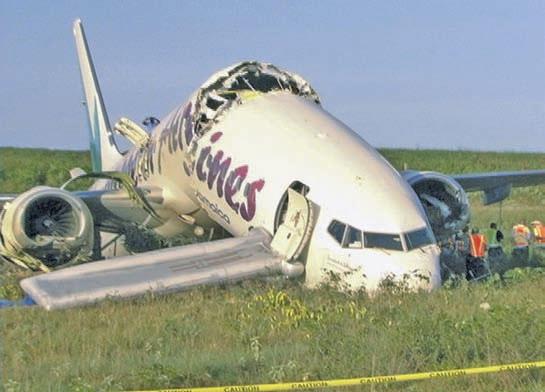
On July 30, 2011, the Caribbean Airlines Flight touched down at approximately 4700 feet of the approximately 7448-foot runway – some 1700 feet beyond the runway touchdown zone. The aircraft ran off the runway, broke through a fence and came to a halt at the bottom of an earthen embankment.
Due to the impact, the aircraft broke into two in the vicinity of the first-class bulkhead causing both engines to be destroyed, but fortunately there were no post-crash fire and only one passenger sustained injuries – to his leg which was subsequently amputated.
Moments after the crash, the Guyana Rescue and Fire Fighting Unit based at the CJIA went into action in keeping with the Airport Emergency Manual. Firefighters entered the aircraft and assisted passengers and crew members to evacuate.
Soon after, Caribbean Airlines ground handling staff entered the plane and took precautionary measures to prevent an explosion or fire. Due to the location of the wreckage, the runway was temporarily closed for an estimated 10 hours.
During this time, the aircraft was defueled and fuel samples were taken for testing. The same day, Caribbean Airlines officials out of Trinidad and Tobago arrived in Guyana as well as members of the National Transport Safety Board.
Eyew tness
Flaunting...
...residence
The question of “residence” has hit the headlines in Guyana. Now most Guyanese were blissfully unaware of any nuances of this term. Your “residence” was your home, no?? Then came the exodus to the US and a new refinement of the term came into vogue – the “permanent resident”. This was the exalted status, signalled by a Green Card that allowed holders to live (and work!) permanently in the US.
Just getting into the US to live – and not have even “legal residence” called for shelling out at least US$10,000 a pop!! Imagine what one of the Green Cards was worth!!
A fella from the back dams would return to Guyana with a Green Card, and the village belle, who wouldn’t have been caught dead in his vicinity much less company, would now gladly tie the knot before you could say, “I do!!” She too could then get “residence” in the US. Guyanese thought they knew all about “residence”. Until now.
The Government, trying to turn the tide of Guyanese only leaving to get “residence” abroad had a programme for the longest while. If a “resident” abroad wants to return “home” and become a “resident” here again, he could bring back his car duty-free. Now this is not an inconsiderable benefit – considering that the duty on a luxury model could easily touch $50 million or so of our Guyanese Monopoly money.
So fellas returned to “Guyanese residence”... and brought back fancy wheels. Not surprisingly (we’re dealing with Guyanese now!!), the scheme was scammed. Mook Lall, of the Muckraker infamy, was nabbed in one. He claimed a retired couple brought back not one but two luxury SUVs and rather than enjoy the comfy rides in their dotage, they lent them to the “crusading publisher” as a “security measure”!! Right!!
But the Mook brought up a wily defence. He claimed another remigrant had brought in a luxury SUV. But rather than lending it to his high-profile local relative or even the Mook (surely this would’ve provided more security), the fella just parked it outside his house. And Mook raised the question of “residence”. If the fella has “remigrated” to Guyana, shouldn’t he be “resident” here??
But the fella spent just two months in two years here. Can he be a “resident”?? Mook Lall should know the answer: he’s a Green Card resident of the US. But he spends only ONE month per year there.
If the Guyanese remigrant isn’t a “resident”, is the Mook still entitled to a Green Card?
...racist lens
David Hinds castigated the Editor of the Guyana Times in a letter to the Muckraker, which he didn’t have the guts to send to the Times. He likes to cuss people from behind fences. In the letter, he concedes that “newspapers take sides...that’s a fact of life”. And he doesn’t have a problem if the Times supports the PPP/C Government, since the Stabber supports the Opposition AFC and the Muckraker supports the Opposition APNU. So far so good. But where Hinds makes one doubt he ever earned a PhD is when he claims “all Opposition people” get the stick in the Times, but somehow he discerns a “racist demonisation” of the Opposition members who’re African Guyanese. The Indian Guyanese ones just get a “special kind of abuse” ...but it’s not “racist”. Hinds doesn’t say what are the criteria for his distinction for a simple reason. He can’t!!
What must be particularly galling for Hinds is that the Times has led the country in its defence of the legacy of Rodney and its integrity, while the soi-disant Rodneyite’s sleeping with the enemy!
...ignorance
Ironically just under Hinds’ letter is one that reiterates that Indians are “sheep” and while “intellectual black people” went after Burnham – it’s the case now with “Indians”. Is it that Nagamootoo and Ramjattan aren’t “intellectuals” or they aren’t “Indians”??
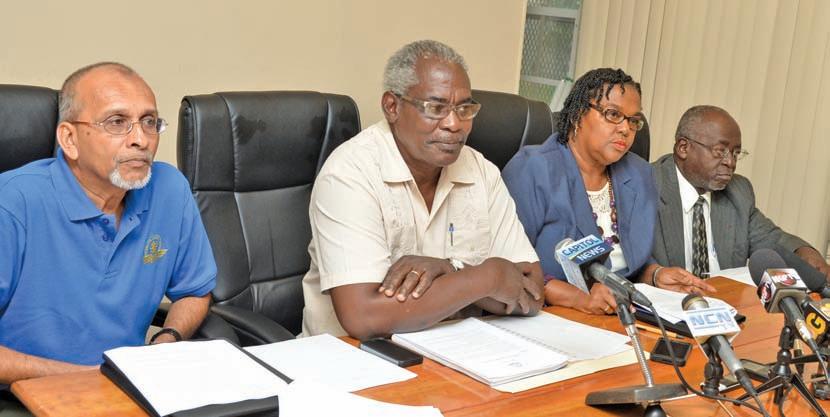
From left: Guyana Civil Aviation Authority (GCAA) Director General Zulfikar Mohamed; Transport Minister Robeson Benn; lead investigator Paula Mc Adam and GCAA Chairman Hugh Denbow during the media brief to release the report
The broken CAL aircraft
Benn wary of ‘fly by night’ airlines
…unaware of return of TravelSpan, Dynamic Airlines
BY BHISHAM MOHAMED
In light of recent me-
dia reporta of the return of Dynamic Airways and TravelSpan to the Guyanese market in time for the Christmas peak season, Transport Minister Robeson Benn on Friday disclosed that the Guyana Civil Aviation Authority (GCAA) was not officially contacted by the airlines.
He also expressed concern with airlines which may come into the Guyanese market seemingly to “cream off” the peak of the traffic.
“They are only here when you have peak conditions and as soon as the peak goes, they go,” he said.
Nevertheless, he noted
that they are looking forward to see that arrangements are put in place which would assure that there is optimised and sustainable air travel in and out of the country.
Almost three months ago, Dynamic Airways suspended flights from Georgetown to the John F Kennedy international Airport (JFK), owing to a number of issues, including ground handling personnel.
The airline entered the Guyanese market in June, but after a few flights, suspended services after it was unable to operate out of the JFK. The service was expected to resume on August 18, but more challenges had surfaced.
According to the airline, this temporary suspension will allow them to secure time slots at the JFK, organise better ground handling and check-in process, as well as secure schedule integrity which Dynamic Airways is well known for.
Cancelled In mid-august, the US authority on aviation, the Department of Transportation published its list of public charters for 2014 and Dynamic Airways’ operation on the Georgetown/ New York route was listed as being cancelled, effective August 6, two days before it was scheduled to re-enter the Guyanese market.
In October, the US Department of Transport has reportedly granted approv-
Ramotar leads high level Ebola talks
PDonald Ramotar on Friday met with top officials from several sectors including, security, aviation and medical officials to discuss Guyana’s preparedness for any possible Ebola cases. The meeting is one of several scheduled to keep all officials apprised of the latest developments, and possible constraints that may arise in addressing concerns across the sectors in dealing with any possible cases.
The meeting held at the Office of the President was also advised about facilities that have been prepared, and are being prepared for the quarantining of suspected victims of Ebola.
The Health Ministry has begun training more than 1,600 persons to deal with any suspected cases of the disease. Health care facilities are also being prepared to handle
suspected cases, along with the procurement of protective gear and medical supplies. In case of the latter, international support from agencies such as the Pan American Health Organisation (PAHO) and the World Health Organisation (WHO) it is anticipated would provide the necessary support on a case by case basis, to boost the capabilities of Caribbean member states as needed to respond to suspected cases.
About 5,000 people have already died from the disease, with close to 9,000 other cases being reported according to the WHO.
Guyana has instituted travel restrictions for persons from West African nations stricken by the disease.
Several Caribbean nations have also instituted similar travel restrictions; these include St Vincent, St Lucia and St Kitts and Nevis.
al for Dynamic Airways to operate at a variety of destinations in South America, and as such, plans are moving apace to resume regular flights between New York and Georgetown, in November.
Apart from that route, the airline will also inaugurate services between Orlando and destinations in Brazil, Canada, and US.
On the other hand, following a fallout with Vision Airlines, TravelSpan had announced that it would be suspending service out of Guyana, but with the hope
of returning to business once it secures another company from which to rent an aircraft.
It was reported that the company was in the process of finalising new arrangements with another airline, while noting its dissatisfaction with the services of Vision Airlines.
While the TravelSpan staff, including Flight Attendants and management has worked diligently to offer a much-needed solution for an alternative airline within the market, its rented planes have been plagued by mechanical issues, which result-
ed in unsatisfactory service on the flights.
In addition, due to the lack of consistent service proven by the significant amount of cancelled and delayed flights that caused major inconvenience to TravelSpan’s clients and the continued losses to TravelSpan and to Vision Airlines, the company discontinued its General Sales Agent (GSA) status.
TravelSpan re-entered the Guyana Market last December with fully-booked flights to the United States out of Guyana, but stumbled in
July of this year, with several cancellations which resulted in a dispute between Vision Airlines and TravelSpan. Just before the pull out, TravelSpan had applied to the Guyana Civil Aviation Authority (GCAA) for permission to operate a scheduled service, moving away from the charter service it is licensed to provide.
Officials at the airline had told this newspaper that the move to acquire such a licence basically indicates that TravelSpan is here for the long haul.
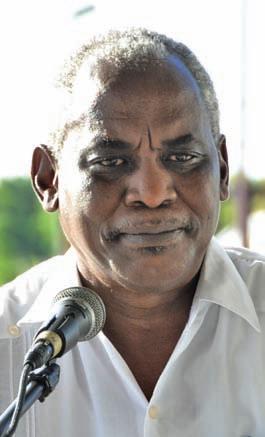
Transport Minister Robeson Benn
resident
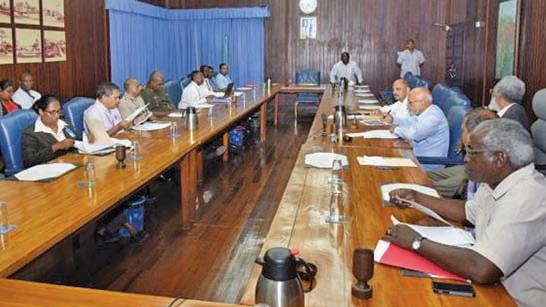
President Donald Ramotar, Cabinet Sector Ministers and other officials meeting to discuss Guyana’s preparedness for dealing with any possible Ebola cases
Another case of abuse of press freedom as...
Digital Technology debunks Kaieteur News’ claims of favouritism
Digital Technology
Group (DT) has refuted claims made by Kaieteur News that the company is involved in the trade of defective products.
Chief Executive Officer (CEO) Terrence Sukhu made the comment on Friday at a press conference at the company’s Brickdam office to clear the air about any controversy regarding its reputation and character.
This is yet another glaring attempt by the Kaieteur News to besmirch the character of prominent businessman and damage the reputation of their companies under guise of press freedom.
Ridicule, slander
On October 20, Kaieteur News published an article questioning the company’s reputation regarding the legitimacy of products and services. The newspaper also questioned the award of a multimillion-dollar contract to the company.
Sukhu also denied any act of preferential treatment in the bidding process.
“I think the article spoke
of some level of favouritism being extended to our company which is totally untrue; we abide by all the rules as it related in the bidding document for that project,” he said.
DT also responded to the article through a press release claiming the allegations are false and that the media entity has attempted to ridicule and slander the reputation of the company on two previous occasions.
“While these absurd statements are once again used as the basis for attempting to destroy DT’s
reputation, there was no evidence provided by Kaieteur News to prove them true,” the press release from DT stated.
The article questioned the authenticity of Dell products supplied by DT to a University of Guyana project, concluding that they were not authentic. However, the press release stated that Dell has awarded the company as “being ‘Partners’ Direct’ for 6 years”. The release further stated, “If Digital Technology’s reputation is being questioned in relation
to the authenticity of products and services provided, then why were the projects successful and why is Digital Technology still being awarded with multimillion-dollar projects?”
DT maintains that it adheres to ethical practices and provides high-value products and services to customers. It also maintains that they share strategic alliances with internationally well-known companies like Dell, Lenovo, and Microsoft, among many others.
"No beef"
“We have plenty experience in executing projects. We have executed a number of projects for government officials over the years and all of them have been successful and our track record in that area speaks for itself. All of our products that we supply for these projects are genuine products backed by warranty from manufacturers,” the CEO assured.
“In fact, Kaieteur News cover most of our donations or sponsorships that we have given to organisations, they are one of the media entities that run our advertisements so I’m not aware of any beef between us,” Sukhu stated.
Additionally, the article in Kaieteur News had highlighted some of the major projects that DT was awarded in the past.
David Blind gotta eye problem
De Festival of Lights come and gone and it supposed to bring wid it a lotta light and tek away a lotta darkness. But it look like is only some people who get some of de light and de rest of dem leff in de darkness.
David Blind not only leff in de darkness, but he beginnin to sound and look exactly how he last name spell. Although every body know that Rum Jhaat and de Nagga Man is two blind mice leadin one another, yuh can never be sure wid David Blind.
A big eye doctor seh that is partly because David Blind does see whah he wanna see and then turn blind when he don’t wanna see. Or, according to de eye doctor, it could be that only one eye blind, so he does only see outta de other eye.
That mean if David Blind right eye blind, he can only see tings from he leff side, and if he leff eye blind, he can only see tings from he right side. Either way, according to de eye doctor, he only seein one side of every ting whah he see. Or it could also be that David Blind does keep he eye half shut when he sleepin and half open when he wake up. Either way, according to de eye doctor, David Blind gon only see half of whah he supposed to see. And yuh not sure if he seein de bigger half or de smaller half, or back front, side, top or bottom.
Yet another eye problem wid David Blind, according to de eye doctor, could be that he born wid cock-eye. In that case, every ting gon look screwed up. And looking screwed up ain’t got nutten to do wid Rum Jhaat face in this case.
Ting-a-ling-a-ling…friend tell friend…mattie tell mattie! After all that diagnosis, de eye doctor conclusion is that whah ever is de problem wid David Blind eye, he definitely don’t see tings de right way. And it ain’t got no spectacle fuh that kinda eye problem!
Most Caribbean firefighters good at First Aid – TT Fire Chief
Fire Chief of Trinidad and Tobago Nayar Rampersaud said though Caribbean firefighters are faced with numerous challenges, it is not enough that most of them are proficient in administering First Aid.
But he said more training institutions need to be built in order to continuously improve the skills of firefighters.
Aside from being good at administering First Aid, he said firemen are not properly trained, and as such, they struggle to work efficiently.
This problem, he said is noted limited to the Caribbean as it is a worldwide issue.
He added that at the beginning of every training programme, fire officers are taught how to handle cases of emergency. The Trinidadian said too that although much
attention is not being placed on the First Aid aspect of the job, it remains one of the most important and should be given due attention.
Meanwhile, Fire Chief
Marlon Gentle said the Guyana Fire Service (GFS) has been working to continuously improve its services, pointing out that a training centre was recently opened in Leonora, West Bank Demerara to train firefighters.
The GFS, he said has been working hand-inhand with fire services in the region to open another centre in Guyana to train local and Caribbean officials.
Recently, a team of firefighters, along with the Trinidad and Tobago Fire Chief arrived here to be part of the Annual Caribbean Firefighters’ Conference.
The delegation was involved in a number of activities as part of Fire Prevention Week 2014. The week came to a close with a cricket match between Guyana and Trinidad and Tobago.
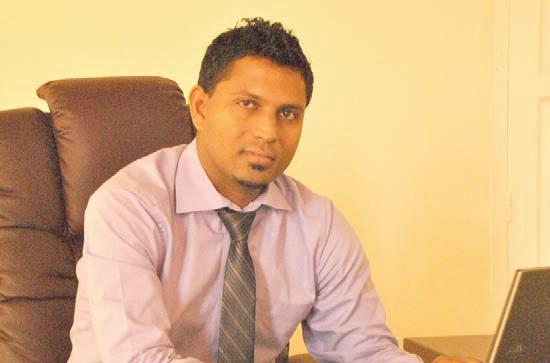
Digital Technology CEO Terrence Sukhu
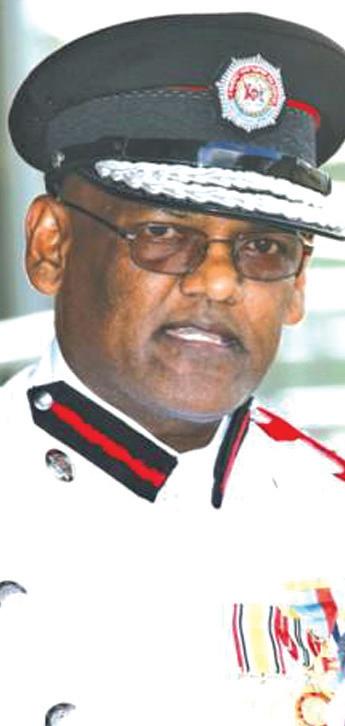
TT Fire Chief Nayar Rampersaud
Major overhaul for CANU
The Customs and Anti-Narcotics Unit (CANU) established several years ago to aid the Guyana Police Force in the fight against drugs has undergone a major revamping which has seen its manpower significantly increased.
This is according to Head of the Presidential Secretariat, Dr Roger Luncheon, who made the announcement at a PostCabinet press briefing at the Office of the President on Friday.
Since its establishment, CANU has successfully managed to interdict hundreds of persons who were attempting to traffic drugs, especially cocaine in and out of Guyana via several routes and ports of entry.
Only recently, ranks from CANU and the Guyana Defence Force (GDF) seized a semi-submersible craft in a creek off the Waini River in the North-West District.
Dr Luncheon said the security reform measure being implemented by the administration was one that is “extremely incisive where law enforcement is concerned in Guyana”.
He said the security reform measure “logically follow inter-current interventions and it recognises the many contributions made by CANU to law enforcement in Guyana. And specifically its functioning in the field of in-
vestigations, prosecutions and international collaborations in anti-narcotics trafficking”.
He also explained that the human resource capacity will be significantly increased to more than two times its current strength as the Government looks to hire additional staff for the unit.
“The current strength of the Customs and Antinarcotics Unit will be more than doubled at the end of the implementation of the project,” Dr Luncheon said.
Pointing to the organisational structure of CANU, Dr Luncheon said the revised organisational structure will be better able to respond to the functions of investigations, prosecutions and provide aid in the international fight against the narcotics trade.
It was also noted that the revision of CANU will also deal with job specifications, job description and will see a salary structure being implemented that “ensures relativity” between the other law enforcement entities such as the Guyana Police Force and the Guyana Defence Force.
Eradication exercise
In August, CANU destroyed in excess of $5 billion in cocaine and marijuana that were seized through several operations in 2013, and the first quarter of 2014.
The drugs, which totalled
close to two tonnes, were set alight in the presence of media operatives, members of CANU and the Guyana Fire Service on Homestretch Avenue, Georgetown.
A total of 1970 kilograms of marijuana with a street value of $196 million and 730 kilograms of cocaine with a street value of $5.2 billion, were destroyed.
The value was calculated on the basis of prices in the US and Europe, since the drugs were destined for those countries. The estimated cost per kilo for cocaine in Europe is reportedly 45,000 euro, while in the US; it is being sold at US$35,000.
Head of CANU James Singh at the destruction ex-
School Board trustee
“dials into meetings”
– billed taxpayers for roaming charges from Guyana
Trustee David Smith has literally been “dialing it in” — more often than not in the past two years, the Ward 19 Scarborough-Centre, representative attends Board meetings by phone or not at all.
So far this year, he has attended three meetings, missed three and phoned in for two, according to Board minutes of the Canadian school available online.
In 2013, he attended seven, sent regrets for three, and phoned in for 12 — or more than half of all regular or special Board meetings that year.
In 2012, he phoned in for five of 17 meetings, but in 2011 — the first year after he was elected — phoned in for just two and only missed one of 14 in total.
When asked, via email, about his attendance record, Smith replied “as you aware, trustees position is a part-time position,” he wrote.
“As a trustee I have never violated the rules and procedures of the Board. I have met all of the necessary requirements for attendance in person,” he said.
(Under the Education Act, trustees must be “physically present” for at least three Board meetings each calendar year.)
But the candidates run-
ning against him say his absence at the boardroom table means students and parents are not getting proper representation.
“A key flaw is his attendance,” said Scott Harrison, a firefighter and former trustee who is running against Smith after losing to him in the 2010 election.
“How can he represent the community if he’s never there? Things aren’t getting done in the community that should be getting done at the Board table.”
Another candidate, Christopher Copeman, even created a chart on his election website showing how Smith’s attendance has gone down over the years.
The phone has also caused other troubles for Smith, who
was cited in a trustee expense audit report for international long distance and roaming charges on his Board cellphone to and from Guyana, Trinidad and Suriname.
“Some of these international long distance charges occurred during the Christmas and summer breaks,” the report noted.
Smith said he has friends and family in Guyana, but does not have a home there, and that “since most of my calls were related to TDSB business, I was told all was cleared.”
In 2013 alone, according to other documents obtained via access to information, he billed taxpayers for roaming charges and long-distance calls on a monthly basis from March to December from Guyana.
Smith was also cited for spending US$8,700 for ward newsletters using a vendor not approved by the Board, though he said the expense was approved by the Chair of the Board.
He also was found to have charged taxpayers for US$7.33 for a bottle of beer — alcohol purchases are forbidden — which he said he has since repaid.
He also claimed mileage for Board meetings he did not attend, or attended by phone, the audit report found. (Toronto Star)
ercise told media operatives that the drugs were found at airports and other operations throughout the country. He also added that apart from Europe and the US, some of the drugs were destined for other parts of the Caribbean and Canada.
Singh noted that ever so often drug mules find the most innovative ways to export the illegal substance, but with the establishment of the task force by the Home Affairs Ministry, they were able to put a dent in the drug
trade.
Quite recently, there have been other innovations that were used to ship the drugs out of the country. These included achar, milk powder, fruits, vegetables, mail and frozen fish, among others.
Singh said despite the limited resources, he was elated to report that local law enforcement officers have seized more drugs than other countries which have the best drug enforcement units.
The official also stated
that a high number of prosecutions are also done.
CANU is not only focused on getting the bigger “fishes”, but also scouring the country for the middle men who will ultimately lead to the dealers. On this note, he stated that it is wrong to say that Guyana is a narco state.
“We are seizing them as they come in and go out… this is an indication that the Government of Guyana is supporting law enforcement officers in carrying out its mandate.”
Head of CANU James Singh
Trustee David Smith
saturDaY, october 25, 2014 | guYanatimesgY.com
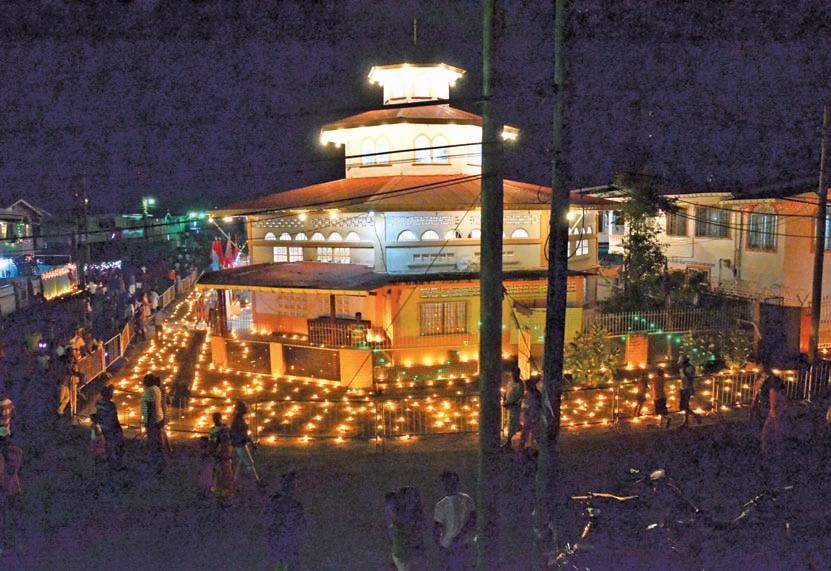
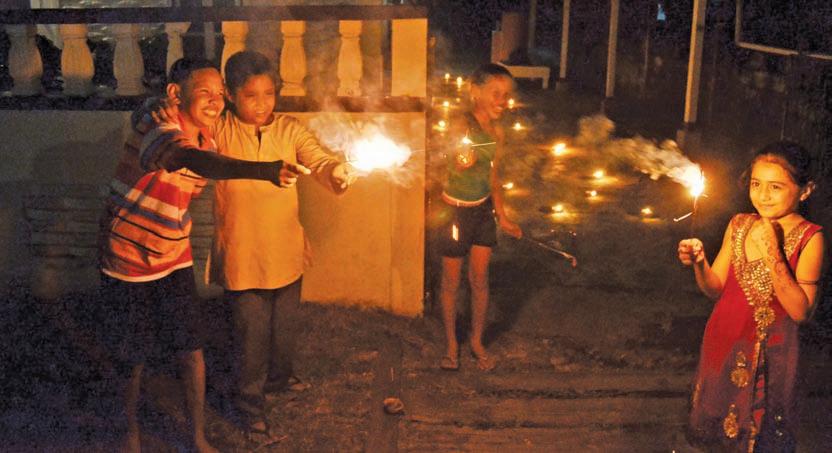
Diwali celebrated traditional style
Hindus decked out in traditional garments on Thursday turned out in full numbers at temples across the country to attend early morning worship in observance of Diwali.
Throughout the country, women and girls were seen dressed in colourful shalwars, many of whom were carrying basins of fruits and parsad as they made their way to various temples.
The men and boys, many elegantly bedecked in kurtas, others in white long sleeve shirts and jeans, followed in groups behind.
In the temples, they performed pujas, offering their fruits and parsad to the Devine Mother Lakshmi, seeking her
Rodney
By Alexis Rodney
Tblessing for a happy and prosperous life.
Most of the services lasted for two hours, during which bhajans (holy songs) were song by both the women and men alike, with support of the youth groups of the mandirs.
The pandits (priests) urged their gatherings to seek to discover the inner light within them as they celebrate the Festival of Lights.
This, the congregations were told is important as it is the recipe for peaceful lives, empowering them to shun greed, hatred, haughtiness and the many vices in life.
The devotees were told to always love their neighbours, ensure unity in their families and embrace their religion, but mostly impor-
he first week of the sixth round of the Walter Rodney Commission of Inquiry came to an end on Friday. Still on the stand and under cross-examination was Police Crime Chief Leslie James who, from his perusal of the 1980 evidence, said that Dr Walter Rodney probably lost his life because he was too trusting of Gregory Smith. Smith, the former Army Sergeant said to have been used by the People’s National Congress (PNC) regime of the 1980s to assassinate the world-renowned educator, was known to have been in contact with Dr Rodney for some time before his death. The Crime Chief, who was tasked with scrutinising the 1980 files of the investigation into Rodney’s death, was under cross-examination by Barbadian Queen’s Counsel and Attorney representing the interest of the Rodney Family, Andrew Pilgrim. Pilgrim was pressing to establish that while Dr Rodney could not have been reckless and caused his own death as was established by the Crime Chief dur-
At the conclusion of the worship, parcels of the blessed parsad were given out and worshippers greeted and wished each other a happy Diwali.
For many, on returning from temple, the cooking began. Seven curry and various sweetmeats were prepared, some of which were distributed to neighbours and friends.
Some families spend the day quietly, while for others, the occasion was more
fairly lights.
Soon after, amid the silence, firecrackers began to go off, with scores of youth appearing in the streets.
Some were seen “spinning” (rotating) lighted steel wool on binding wires, running through the streets, while others scamper for cover to avoid getting burnt.
At most street corners, squibs were lighted in discarded milk tins, in some cases, several together, fol-
gin of Diwali. Some believe it to be the celebration of the marriage of Lakshmi with Lord Vishnu.
In Bengal, the festival is dedicated to the worship of Mother Kali, the dark goddess of strength. Lord Ganesha, the elephantheaded god, the symbol of auspiciousness and wisdom, is also worshiped in most Hindu homes on this day.
In Jainism, Diwali has an added significance,
tant the values and virtues it teaches.
The latter, the gatherings were informed is necessary for the sustenance of the religion of their ancestors, and the maintenance of a disciplined and enlightened approach to life.
Aside from the extolling of the virtues of Hinduism, the messages of the priests were common: they called on parents to transmit the teachings of Hinduism to their children, and make every effort to ensure that they receive a sound education.
This, the pandits conclude is the road that will enable the “Triumph of darkness over ignorance” and ensure a generation of wise, humble yet brave, progressive leaders.
of a family get together.
But no matter how the day was spent, around 16:30h, preparations began for the lighting of diyas.
And at 18:00h, many residence were transformed, with a series of diyas (some artificial lights) laid out in elegant patterns, creating scenes to behold. Some homes were beautifully decorated with
lowed by laughter and a frantic race to safety.
As the night progresses, the contraband became more evident with explosions coming from every direction.
Historically, the origin of Diwali can be traced back to ancient India, when it was probably an important harvest festival. However, there are various legends pointing to the ori-
the attainment of nirvana (eternal bliss) by Lord Mahavira. Diwali also commemorates the return of Lord Rama along with Sita and brother Lakshman from his 14 year-long exile and the vanquishing of the demon king Ravana.
In joyous celebration of the return of their king, the people of Ayodhya, India, illuminated the kingdom with earthen diyas.
trusting of Smith – Crime Chief
ing an earlier cross-examination, he was a victim of his failure to discern the true intent of his alleged assassin.
The Crime Chief had said that Dr Rodney was an intelligent man. It was suggested, however, that while he was intelligent, he may have lacked what is de-
scribed as “road sense”. This was raised against the backdrop that his life was threatened on several occasions. He had even informed his wife, Patricia, that he was told at one point that a bomb would be placed in his car.
Dr Rodney had also told his wife that Smith was an “unreliable” person. This was surmised from his many dealings with the former Army Sergeant, especially as it related to keeping his appointments on time. All these things, he said, should have raised Dr Rodney’s suspicion of the late electronics expert.
The argument emanating from the cross-examination was that Dr Rodney was not all knowing and could not be aware that Smith would have double crossed him in such a manner. According to Pilgrim, based on the evidence provided by Donald, as far as the two were aware, when Donald was sent to Smith’s house to uplift the item on the evening of June 13, 1980, all they knew was that a walkie-talkie had to be uplifted.
They were at no time aware that a bomb was hidden in the de-
vice.
Meanwhile, the head of the police crime unit admitted too that the police work carried out in trying to find Gregory Smith was not “totally thorough”, based on the evidence provided.
But Commissioner Jacqueline Samuels-Brown, QC, seeking to offer some clarity based on the evidence, explained that the Police may have been working according to the availability of evidence.
She said the investigation could be divided into different periods. She said the Police first dealt with the information they had between April and June 13, 1980. There was also the availability of information between June 13 and 17, 1980 leading up to the trial of Donald Rodney, along with the information gathered from the end of the trial up until 1995, when an arrest warrant was issued for Gregory Smith, who was at that time living in French Guyana.
According to her, it was understood that the investigation was completed and the files either opened or reopened during the different periods. Based on
the information at their disposal then, the Commissioner explained, the Police might have taken steps accordingly.
Attorney Pilgrim directed the Crime Chief’s attention to period one, a few days after Dr Rodney was killed. The argument was that the investigative team, headed by Senior Superintendent Ignatius McCrae, failed to launch a search for Gregory Smith. Even upon examining the coroner’s report which suggested that Dr Rodney did not handle any explosive material at the time of death.
Dr Rodney had become a controversial figure in Guyana and several countries around the world. He was known for his nononsense approach to the affairs affecting the working class and human beings in general.
Returning to Guyana in May 1974, after living and teaching abroad, he had come into conflict with the then ruling Government, the PNC headed by Linden Forbes Sampson Burnham. That regime has been accused of assassinating the historian, who was also a founding leader of the Working People’s Alliance (WPA).
An illuminated Alexander Village Mandir
Children having fun on Diwali night
Rodney CoI:
was too
Dr Walter Rodney
Diwali not just India's festival
Perhaps it will come as a surprise to many to learn that Diwali is not just India’s biggest festival; many nations around the world follow this festival with great pomp and show.
About two decades ago, a couple from Nagpur visiting Singapore during Diwali holidays were very surprised to find the Singapore airport decorated with marigold flowers, roses, diyas and rangolis!
Not just Indians, every foreigner landing there
dentured people from India.
The name Indonesia came from two Greek words: “Indos” meaning Indian and “Nesos” meaning islands. The majority of population follows Islam and Hindus constituent just about two per cent of Indonesia’s total population.
However, the Indonesian island of Bali is famous for celebrating the festival of Diwali, as a majority of the population there is that of Indians. It is one of the most revered festivals of the lo-
was greeted with a cheery “Happy Diwali” and offered mithai.
Diwali is also celebrated outside of India mainly in Guyana, Fiji, Malaysia, Nepal, Mauritius, Myanmar, Singapore, Sri Lanka, Trinidad and Tobago, Britain, Indonesia, Japan, Thailand, Africa, Australia and the US, among the Hindus across the world.
Guyana, formerly known as British Guiana, is located on the northeast coast of South America. Guyana is 82,978 square miles in area and has a population of about 770, 000. Hindus constitute 33 per cent of Guyana’s total population.
The Co-operative Republic of Guyana, South America celebrates Diwali according to the Hindu Solar calendar. The day of the festival is declared as a national holiday in the official calendar of Guyana. The tradition of celebrating the festival is believed to have been brought to Guyana in the year 1853 by the first in-
cals. The celebration and rituals of the festival is mostly similar to that celebrated by their counterparts in India.
Fascinating in its diversity, Malaysia has many mesmerising charms and attractions. With a population of about 20 million, comprising of a harmonious multi-ethnic mix of Malays, Malaysia promises a colourful potpourri of cultural traditions.
The Hindu community of Malaysia constitutes about eight per cent of its total population .The community celebrates Diwali as a symbol of triumph of good over evil. It is interesting that Malay Indians celebrate Diwali as the South Indians of India do. The Malaysian people call Diwali as Hari Diwali. This festival is celebrated during the seventh month of the Hindu solar calendar.
The south Indian traditional of oil bath precedes the festivities. The celebration includes visits to temples and prayers at household altars.
CARPHA strengthening region’s ability to respond to Ebola
The Caribbean Public Health Agency (CARPHA) will host workshops geared at strengthening the Caribbean’s ability to prepare and respond to outbreak situations such as the ongoing Ebola outbreak in West Africa.
Small lamps made from clay and filled with coconut oil and wicks are a common sight to signify the victory of Lord Rama, the hero of the Hindu epic Ramayana, over the demon king Ravana. (Nagpur Today)
From November 1721, CARPHA, in collaboration with the Communicable Diseases and Health Analysis (CHA) unit of the Pan American Health Organisation/ World Health Organisation (PAHO/WHO), will provide two training workshops on infectious substances shipping training and bio-safety practices for the clinical laboratory, at its Port of Spain, Trinidad headquarters.
Laboratory professionals from across the Caribbean who complete the world health organisation shipping infectious substances course will be certified to prepare shipments of laboratory samples.
will
Successful participants will be certified for a period of two years to handle and package Category A infectious substances, such as samples from suspected cases of Ebola virus disease.
CARPHA will also train personnel in bio-safety measures, practiced in the laboratory, which include infection control, proper use of Personal Protective Equipment (PPE) and waste management measures.
It is expected that labo-
ratory technicians actively involved in the packaging of laboratory samples, for the purpose of international transport, will in turn provide similar training to other colleagues at institutional and country level.
Both the shipping and bio-safety courses are in accordance with WHO guidance on regulations for the transport of infectious substances 2013-2014 and WHO Biorisk Management Programme respectively.
CARPHA
host workshops geared at strengthening the Caribbean’s ability to prepare and respond to outbreak situations such as Ebola
US President Barrack Obama gestures on meeting a Swami (Hindu priest of high rank)
Diwali Lights at Leicester Belgrave, United Kingdom
Venezuela's Maduro slams Spain's Rajoy over jailed opponent
enezuelan President
VNicolas Maduro lambasted Spanish Prime Minister Mariano Rajoy on Friday and ordered a revision of bilateral ties over his call for an opponent of Maduro to be released from jail.
The conservative Rajoy met the wife of Venezuelan protest leader Leopoldo Lopez in Madrid this week, Tweeting a photo with an exhortation for him to be freed and protests allowed.
"I think you have made a mistake, Mr Rajoy,” the socialist Maduro thundered in a speech on state TV, accusing him of a patronising attitude towards Spain's former colonies.
"He thinks he's a king, the owner of the Americas ... You respect Venezuela, Mr Rajoy, as we respect
the Spanish people ... You are creating a disaster in Spain." Lopez, 43, was jailed in February on charges of
Brazilian puffer fish lunch poisons 11
Eleven people fell seriously ill in south-east Brazil after eating a deadly puffer fish for lunch, reports say.
The group of neighbours, including four children, were hospitalised after they made a mistake while preparing the fish – one of the deadliest in the world.
Within minutes all had become violently sick, according to Brazil's RJ TV news. Five have since left hospital.
masterminding anti-Maduro protests that raged for three months, stirring violent clashes that killed 43 Venezuelans. Lopez's trial is
currently taking place.
"I have ordered the Foreign Minister, (Rafael) Ramirez to review all relations with Spain due to this unfriendly and meddling act of support to the ultra-right groups who exercise violence in Venezuela," Maduro added.
Supporters, including his wife, Lilian Tintori, say Lopez is a scapegoat for protests borne out of frustration with a dictatorial government, failed economy, wasted oil revenues, and daily hardships from product shortages to soaring prices.
Authorities say he is a dangerous maverick directly responsible for killings and property damage during this year's protests which they call a coup attempt against Maduro. (Excerpt from Reuters)
US returns smuggled ancient artefacts to Peru
Missing Mexico students: Guerrero state governor to resign
The governor of Mexico's southern Guerrero state – where 43 students went missing after clashing with Police last month – has said he is standing down.
Angel Aguirre said he hoped the move would create "a more favourable political climate to bring about the solution to the crisis".
He has faced growing criticism since the disappearance of the students in the town of Iguala on September 26.
Eyewitnesses described seeing them being bundled into Police cars. Six people were killed during the clashes.
Mexico's Attorney General Jesus Murillo Karam on Thursday said there appeared to be deep ties across the southern state between politicians, the Police and drug gangs.
He said arrest warrants had been issued for Iguala
Mayor Jose Luis Abarca, his wife, and the town's Police Chief. They are suspected of ordering the Police to hand over the students to local gangsters.
On September 26, a group of students from a teacher training college in Ayotzinapa travelled to nearby Iguala to protest against what they said were discriminatory hiring practices, and to collect funds for their college.
The college has a history of left-wing activism and according to Mr Murillo Karam, Mayor Abarca had been angered by a previous protest they had held in the town.
On the same day, the mayor's wife was holding an event in the town.
Local media have long speculated that the ensuing Police crackdown on the students may have been related to her public appearance. (Excerpt
News)
The neighbours met for lunch on Wednesday in Duque de Caxias, a city on the south-east coast of Brazil.
Quoting a hospital doctor, RJ TV news reported that the group were eating at one of their homes and had known they were being served a puffer fish.
The creature, which contains a toxin more lethal than cyanide, must be expertly prepared to avoid poisoning. (Excerpt from BBC News)
Puffer fish are highly venomous and contain a toxin which can trigger severe paralysis.
The United States has returned about 20 ancient artefacts – some more than 1800 years old –to Peru.
The objects include pottery and pieces looted from ancient Peruvian graves dating back from before the arrival of the Spanish in the 16th Century.
They were found during four separate investigations over several years by the US customs service.
A spokesman said the objects belonged to the peo-
ple of Peru, and were part of the country's rich heritage.
Investigators say a middleman in Peru bought some of the pre-Columbian items from local farmers in Peru who robbed burial sites. They were then shipped by post to a smuggler in the US.
Since 2007, the US authorities have returned 7150 items to 27 countries, including France, China, Poland and Iraq. (Excerpt from BBC News)
Economic bounce, tough campaign point to Rousseff win in Brazil
President Dilma Rousseff looks positioned to narrowly win a second term on Sunday thanks to a slight rebound in the economy and her success in portraying her rival as an elitist who would take Brazil back to a more heartless era. Rousseff, a leftist, has a lead of about four percentage points in polls against Senator Aecio Neves of the centrist Brazilian Social Democracy Party (PSDB), who proposes more market-friendly policies focused on trade and fiscal austerity.
The President's lead is within the margin of error in most polls, which badly understated Neves' support in the first round of voting on October 5. Both camps, therefore, have warned against reading polls too closely and some analysts say the race is still a toss-up.
But the overall momen -
tum has been in Rousseff's favour, thanks to swelling support from Brazil's lower-middle class – generally defined as people in households earning between about US$700 and US$1800 a month.
That group, which accounts for about 40 per cent of the electorate, has benefited greatly under Rousseff's Workers' Party
over the past 12 years. Many of them seem to have concluded that things in Brazil just aren't that bad – so the risk of switching to Neves isn't worth it.
A senior adviser to Neves' campaign acknowledged that he has had a bad week, although he noted that he staged a late comeback in the first round and could do so again.
"It's been a campaign of fear," the adviser said. "It's disgusting. But we believe people will see the truth by Sunday."
TT: South families hit by flooding
A man swims through the floodwaters along
More than 150 families were forced to cancel their Diwali celebrations after heavy rainfall caused flooding and landslides in communities and homes across south Trinidad Thursday morning.
The hardest hit areas included Quarry Village, Siparia; and the constituency of Prime Minister Kamla Persad- Bissessar, Fyzabad San Francique where some residents could not cook as the water was four feet high inside some homes. They suffered property loss and were trapped in their homes. When a news team from the T&T Guardian visited the area residents said it was the worst flooding in decades, but yet they received no help from their Government representatives, the regional corporation or emergency response agencies.
In the community of Standard Road, Fyzabad residents were stranded as they were cut off from the main road. (Excerpt from Trinidad Guardian)
Honduras drought puts thousands 'at risk' of hunger
More than half a million people in Honduras have been affected by a severe drought, the Red Cross has said.
It said the most vulnerable families were in danger of hunger because of the loss of crops, higher food prices and lower in -
comes for farmers.
The Red Cross said some families were selling their belongings and livestock to survive, while others were leaving their homes to escape the drought.
It launched an appeal for US$1.28 million to assist 17,500 people.
In a statement, it said 3500 families were "experiencing food insecurity due to their loss of livelihoods and restricted access to food and water sources".
It added that children and poor households were particularly vulnerable, "a concerning fact given the levels of chronic malnutri -
tion in Honduras are 22.6 per cent [of roughly 8.5 million people], and considering that 42.5 per cent of Hondurans live in extreme poverty". The drought has also affected tens of thousands of farmers in neighbouring Guatemala and El Salvador. (Excerpt from BBC News)
Venezuela's President Nicolas Maduro addresses the audience during the opening ceremony of the ALBA-TCP Extraordinary Ebola summit in Havana on October 20
Quarry Village, Siparia
Brazil's President and Workers' Party (PT) Presidential Candidate Dilma Rousseff greets her supporters during a campaign rally in Duque de Caxias near Rio de Janeiro on October 22
(Excerpt from Reuters)
Around the world
Millions of Ebola vaccine doses by end of 2015 – WHO
Millions of doses of experimental Ebola vaccines will be produced by the end of 2015, the World Health Organisation (WHO) has announced.
It said “several hundred thousand” would be produced in the first half of the year. And vaccines could be offered to health workers on the frontline in West Africa as soon as December 2014.
However, the WHO cautioned that vaccines would not be a “magic bullet” for ending the outbreak. There is no proven cure or vaccine for Ebola.
In response to the largest epidemic of the disease in history, the WHO is accelerating the process of vaccine development It normally takes years
to produce and test a vaccine, but drug manufacturers are now working on a scale of weeks.
In other developments: Dozens of people are being monitored in Mali af-
“We won’t pay,” furious Cameron tells EU over surprise bill
In a vivid display of fury at European Union (EU) technocrats, British Prime Minister David Cameron refused to pay a surprise 2.1-billion-euro bill on Friday as EU leaders ordered an urgent review of the calculations used.
Eurosceptics at home branded the EU a “thirsty vampire” for seeking an additional, immediate sum worth a seventh of London’s annual payment following a major statistical review of national incomes. Cameron demanded action from fellow leaders at a summit, calling the sudden bill “completely unacceptable”.
He found some sympathy. Cameron told reporters Italian Prime Minister Matteo Renzi lambast-
ed “bureaucrats without a heart”, who made it harder to fend off the attacks of Eurosceptics.
Chancellor Angela Merkel of Germany, which like France is to get a refund in the same exercise, offered understanding for the peremptory way such a hefty demand was made – though she said Cameron did not tell his fellow leaders he would not pay at all.
“He just had concerns about the short deadline,” she said.
But in a show of anger in front of television cameras that some found at odds with a more collegial atmosphere in the summit room, Cameron said: “It’s an appalling way to behave.” (Excerpt from Reuters)
ter the country confirmed its first case of Ebola
Both nurses who were infected with Ebola in Dallas, Texas are now clear of the virus.
Health officials in New
York are seeking people who came into contact with a doctor who tested positive after returning from Guinea, the fourth case of the virus in the US European Union leaders agreed to increase their financial help to fighting Ebola in West Africa from some 600 million euros (US$758 million) to one billion
Two experimental vaccines, produced by GlaxoSmithKline (GSK) and the Public Health Agency of Canada, are already in safety trials.
The GSK vaccine is being tested in Mali, the UK, and the US. Research on the Canadian vaccine is also under way in the US with further trials expected to start in Europe and Africa soon. (Excerpt from BBC News)
Mali Ebola victim travelled while contagious
Mali's first Ebola victim, a twoyear-old girl, has died of the disease amid an alert she travelled across the country by bus while contagious, Al Jazeera reported.
The WHO on Friday said the two-year-old girl was bleeding from her nose during her journey on public transport and may have infected many people.
The girl was travelling from Guinea with her grandmother and passed through several towns in Mali, spending two hours in the Malian capital of Bamako before ending their journey in the west-
ern city of Kayes. Her death was confirmed on Friday by health officials speaking to news agencies. Her infection makes Mali the sixth West African country to record a case of the disease.
The WHO said 43 people who came into contact with the child, including 10 health workers, were being monitored for symptoms and held in isolation.
"The child's symptomatic state during the bus journey is especially concerning, as it presented multiple opportunities for exposures – including highrisk exposures – involving many people." (Aljazeera)
China punishes 17 officials after deadly village clash
Chinese authorities have arrested an official and punished 16 others following a deadly clash earlier this month in Yunnan, state media say.
Eight people died, including four construction workers who were burnt to death, and 18 others were injured in the violence in Fuyou village.
Villagers were reportedly unhappy about a land deal involving the construction of a trade and logistics centre.
The arrested official was the village chief who state media said took bribes.
There have been several high-profile village clashes over land deals in recent years amid rapid development.
All land in China is stateowned and farmers often have little say when stateappointed local officials sell off large tracts of land to de-
velopers, some pocketing bribes in the process and paying inadequate compensation to villagers forced to relocate.
Rwanda suspends BBC broadcasts over genocide film
Rwanda has suspended BBC broadcasts in the Kinyarwanda language with immediate effect because of a film questioning official accounts of the 1994 genocide.
The Rwanda Utilities Regulatory Agency (Rura) said it had received complaints from the public of incitement, hatred, revisionism and genocide denial.
At least 800,000 ethnic Tutsis and moderate Hutus died in the genocide.
The BBC has denied that any part of the programme constitutes a “denial of the genocide against the Tutsi”.
There are numerous memorials around Rwanda to those killed in the genocide
On Wednesday, Rwandan Members of Parliament approved a resolution calling on the Government to ban the BBC and to charge the documentary-makers with
genocide denial, which is a crime in the country. Those killed in the gen-
ocide are generally believed to be mostly members of the minority ethnic Tutsi group, and Hutus opposed to the mass slaughter.
The BBC programme “Rwanda, The Untold Story”, includes interviews with US-based researchers who say most of those killed may have been Hutus, killed by members of the then-rebel Rwandan Patriotic Front (RPF), which has been in power since 1994.
The programme also included interviews with former aides of RPF leader President Paul Kagame, accusing him of plotting to shoot down the presidential plane – the act seen as triggering the slaughter. (Excerpt from BBC News)
Xinhua news agency said that following the October 14 incident, authorities undertook an “in-depth investigation” of local offi-
cials, which included some involved in the Pan-Asia Trade and Logistics Centre project.
It found that 16 of them had “shirked their responsibilities and did not adequately resolve problems that had been forcefully pointed out by the people, resulting in serious and terrible consequences”.
Six of them had either been suspended or fired, while the others were “still being dealt with”. Xinhua named the arrested official as Li Jiaming, the chief of Fuyou Village Council, who had “received bribes several times during the project’s construction”.
Villagers had told local media they were unhappy with the amount of compensation and the developer had refused to show them proof of approval. (Excerpt from BBC News)
Dozens die in Sinai army checkpoint attack
Dozens die in Sinai army checkpoint attack
At least 26 soldiers have been killed in an attack on an army checkpoint in Egypt's North Sinai, state media has reported.
The attack on Friday afternoon hit an army checkpoint at Karm al-Qawadeis, southwest of Sheikh Zuweid.
Egyptian sources told Al Jazeera that a suicide car bomber detonated his explosives near the checkpoint's magazine, causing it and an army vehicle to explode. Fighters then attacked the site with guns and rocket-propelled grenades.
The source said the group attacked as soldiers were on break inside their tents. State media reported that 28 people were wounded, several of whom
were in critical condition.
"Most have been seriously injured and not all of them have been taken to hospital yet," Health Ministry official Tareq Khater told the AFP news agency.
Three more members of Egypt's security forces were killed in a separate attack at a checkpoint outside nearby alArish. It was not immediately clear whether the dead were soldiers or Police.
The Egyptian President, Abdel Fattah el-Sisi, announced three days of national mourning after the attack, and promised to eradicate those responsible.
Local media said the President also ordered a meeting of the Government's national defence council following the blast. (Excerpt from Al Jazeera)
The WHO says vaccines are likely to be key to ending the outbreak, even if cases fall in the next few months
Villagers were seen guarding the Fuyou village entrance following the October 14 incident
saturDaY, october 25, 2014 | guYanatimesgY.com
Norway clears US$35M for Guyana
The Government of Norway on Friday announced the latest payment under the Guyana-Norway forests and climate change partnership of US$35 million.
Norway will pay Guyana the US$35 million for the global climate services provided by its forest during 2012. The latest payment will bring total funds earned under the Partnership to US$150 million.
In an address to the nation, President Donald Ramotar said the announcement by Norway is also a strong rebuttal to those who have tried for several years to kill the Low Carbon Development Strategy and the Guyana-Norway partnership. “For many years, vested interests in Guyana tried repeatedly to prevent our country from receiving this money from Norway. On failing to do so, some politicians tried in three successive national budgets to stop the money from being invested in our people’s future. More recently, they attempted to kill the flagship of the Low Carbon Development Strategy, the Amaila Falls Hydro Project. I hope that they will now abandon their efforts to destroy one of Guyana’s most pioneering national initiatives,” the Guyanese leader said.
He said Guyana is on the threshold of achieving what few countries in the world have managed. “We should stop to reflect on the fact that we have spent five years building the foundations of a genuinely low carbon economy. We are maintaining 99.5 per cent of our forest, and showing the world that it is possible to do this while simultaneously generating jobs and economic growth from sustainable forestry and mining practices.
The United Nations (UN) launched a joint programme for HIV/ AIDS that puts emphasis on sex workers and homosexuals.
UN HIV/AIDS Joint Programme of Support (UNJPS) for Guyana is estimated to cost US$306,400 (GY$62,260,479)
The programme will involve the close cooperation of all of the UN agencies within Guyana as well as those initiatives and strategies that have begun internationally.
The launch took place at the United Nations Development Programme (UNDP) building. The representatives from the various UN agencies within Guyana as well as from the Health Ministry announced that UNJPS is being tried in Guyana with the aim of eliminating HIV/ AIDS from the country.
Marianne Flach, United Nations Children’s Emergency Fund (UNICEF) Country Representative to Guyana, informed those in attendance that the programme was “developed to strengthen the dialogue between the United Nations agencies and the national HIV
New low-carbon economic sectors are growing fast; small businesses are creating low-carbon jobs; Amerindians are achieving secure tenure over their land; and we are starting to invest in critical flood protection infrastructure.”
Global injustice Ramotar said the LCDS is grounded in a recognition that climate change is a clear expression of the inequality and injustice that exist in our world – as a problem primarily caused by rich countries, but whose negative impact is felt primarily by poor countries. He reminded that five years ago, Guyana was one of the first countries in the world to set out a vision on what practical steps were needed to begin correcting this global injustice, and called on the world to act before it was too late.
“We also set out a vision whereby Guyana would not just advocate
for others to act. Instead, we said that we too would play our part in fighting this global challenge if partnership for international action was forthcoming. And we were able to establish that international partnership with the Government of Norway in late 2009.” “As I said, we have now earned about US$150 million. Moreover, in the coming months the independent, international validation of deforestation rates in 2013 will be completed and Guyana will receive the fifth payment under our partnership with Norway. We expect that this will be an even higher payment than the one announced today –and the total payments earned by Guyana will soon come close to US$200 million, all of which is being invested in our Low Carbon Development Strategy.”
Setbacks
President Ramotar stressed that earning the funds through the partnership with Norway has not been easy. “But we prevailed against these setbacks, and money is now flowing into our priority investments – both from our own budgetary resources and from the money we have received from Norway. Most of this money is now allocated to transformative projects, and in most cases, it is flowing to create real benefits for Guyanese.”
Ramotar told the nation that over 11,000 Amerindian homes have electricity for the first time – powered by solar units. He said low-carbon industries are growing fast – ecotourism in the Rupununi is growing by 20 per cent a year; “our business process outsourcing sector has more than doubled employment in less than five years, and we are seeing innovative ini-
tiatives in agricultural development. We can become the world’s most inclusive digital society as 90,000 vulnerable households gain access to computers and training.”
He said using money received from Norway for climate services, “we are working with local banks and other financial institutions to stimulate the creation of 2200 low carbon jobs over three years in small businesses and vulnerable communities. GBTI has started to lend money to local entrepreneurs as part of this programme, I want to pay tribute to their initial efforts, and I look forward to the other private banks following suit.”
The payments from Norway, he said, are also enabling the advancement of the LCDS Amerindian Development Fund.
“One hundred and eighty-seven Amerindian villages, communities and settlements produced impressive Community Development Plans. In the last year, 26 of them received funding through this programme – creating low-carbon opportunities in ecotourism, sustainable agriculture and manufacturing. In the coming year, the remainder of the plans will start to be implemented. “
President Ramotar said individual examples of local leadership are starting to emerge in communities across the country – such as the eco-lodge in Santa Mission which was funded through the LCDS Amerindian Development Fund, and is enabling the community to leverage its already attractive ecotourism offerings. “Thanks to the fund, in the village of Karrau, the community is cultivating five acres of cash crops and has completed their processing facility to focus on the production of farine and
tapioca from cassava,” Ramotar said. Additionally, he said the payments from Norway are also enabling the rehabilitation of the Cunha Canal. “This 600 million Guyana dollar project is about to start, and will be a major achievement in dealing with the impact that severe weather has on the Conservancy. In the past, the Government has been forced to protect Georgetown from floods by letting water flow from the Conservancy into the Mahaica River and sometimes causing it to burst its banks and damage local farms and communities. But in the near future, we will be able to use the Cunha Canal to discharge the water into the much larger Demerara River which will be able to cope with far greater volumes of water than the river system to the east.”
According to the President, alongside these priority investments, “we are continuing to upgrade our domestic standards and capabilities in our traditional sectors. Global certification of our standards will facilitate increased investment in Guyana and improve the potential for value-added industrial activity, all while ensuring that our natural resources are managed in a sustainable and accountable way.”
Since 2009, Norway has been contributing to Guyana’s efforts to enhance economic development while maintaining over 99.5 per cent of its 185, 000 square kilometre forest. Friday’s announcement of the US$35 million payment to Guyana is based on Guyana’s deforestation rate in 2012, as well as the country’s progress on indicators that will enable agreed goals for forest governance.
stakeholders, and responds to agreed priority areas, which address the issues and challenges of the HIV epidemic in Guyana.”
She remarked on the ‘delivery as one’ (DAO) idea that the UN agencies are aiming for, as they will use their specific expertise within each agency to target the HIV/ AIDS issue as a unit.
The DAO initiative was added to the programme to enhance coordination among UN organisations, specialised organizations and civil societies. By doing this, UNJPS will also be aiming to achieve the sixth
Millennium Development Goal (MDG), which concerns the HIV threat and other diseases.
Local input
A presentation of the 2013- 2016 UNJPS was given by the UNAIDS Country Director, Roberto Campos. He informed that the UNAIDS division in Guyana will be heading the UNJPS. In his presentation, he explained that the programme started last year; however, the launch in Guyana was done on Friday to observe UN Day.
He shared that the pro-
gramme responds to the country’s priorities and concerns, and is not done in isolation without the input of local institutions or bodies; instead it makes a pint to have them involved as much as possible to enable success. The UNAIDS Country Director to Guyana stated that the programme is aiming to achieve “Universal Access to HIV prevention, treatment, care and support”, thus its alignment with the National HIV Strategic Plan (HIVision 2020) in a bid to attain five of the 10 targets on the plan by 2020.
These targets are: the reduction of HIV sexual transmission, the elimination of mother-to-child transmission and tuberculosis deaths, enabling more access to Antiretroviral (ARV) treatments and the elimination of stigma and discrimination.
According to the 20132016 UNJPS, the latter is still a problem in Guyana. This and the “removal of punitive laws related to sex work and buggery” will be particularly looked into by the programme.
The programme detailed that such legislation acts
as an obstacle to the true elimination of HIV/ AIDS as “female sex workers and men who have sex with men (MSM)” are the groups that have been recognised as the most affected by HIV/ AIDS. According to statistics, 16.6 per cent of the female sex workers are HIV/ AIDS positive, while 19.4 per cent of the MSM are as well (BBSS 2009, NAPS/ MoH).
The UNJPS programme describes this as a challenge, noting Guyana’s socioeconomic culture.
Even so, the UN has detailed a plan to make possible the “support of HIVrelated human rights initiatives of MSM, SW and transgender…” It is expected that once formal settings have been established where these groups can be heard and listened to, this shall activate a change in the statistics.
Otherwise, the static state of things will simply “derail the progress made in the response”. The very fact that Guyana is too dependent on international support has been listed as one of the challenges to overcome in order to ensure not only the achievement of the targets and goals, but the sustenance of them as well.
Health Ministry Permanent Secretary Leslie Cadogan, UN Representative Khadija Musa, UNICEF Country Representative to Guyana Marianne Flach, and other UN representatives from the various agencies
President Donald Ramotar
In less than 48 hours, reigning Miss Guyana
Universe Katherina Roshana will be handing over her crown to a young woman who will be charged with representing Guyana on the international stage on January 24, in Miami, Florida, USA.
Katherina Roshana who represented the nation with dignity and pride will sure have a few words of encouragement and more so, provide guidance as the crowned queen continues her quest for international stardom.
To date, the nine beautiful, talented and intelligent young ladies have been adding that final touches to for pageant
night which is set for Sunday at the Pegasus poolside. The nine delegates – Soyini Fraser, Nikita Barker, Jyoti Hardat, Alicia Kirton, Sonia Cummings, Cardella Hamilton, Rochelle Cheddie, Lakota Mc Phoy and Shonette Cain – have also been in the gym getting their bodies toned for the highly anticipated competition.
The delegates have completed one aspect of the competition – the intelligence segment, which was broadcast live on national television on Tuesday evening. This however, has been creating some buzz in the respective
camps. One who looked at the intelligence segment would agree that all the delegates answered quite eloquently and fluently as if they were rehearsed for the show. Nevertheless, there were some who were more outstanding than others, placing themselves in the top five as they vie for the coveted title.
Soyini Fraser, reigning Miss Jamzone International and the first Guyanese to win the Miss United Nations Pageant back
in 2012, was on top of her game and answered every question with confidence and command.
Like her, Cardella Hamilton also displayed a high level of maturity and calmness.
Taking another Guyana Times Entertainment top spot spot would be Jyoti Hardat who travelled from the United States of America to be here for the pageant.
Another top contestant picked by Guyana Times Entertainment after the question and answer segment was Niketta
Barker, whose focus is to win the pageant and making up for the year when she gave way to Ruqayyah Boyer.
And rounding off the final five in the view of Guyana Times Entertainment was Lakota Mc Phoy, who hails from the mining town of Linden. She was very calm and professional during the live television interview.
All eyes will be on the delegates on pageant night as they compete in the swimsuit segment, the evening gown segment and the final question.
The scores from the
y now, one would assume that everyone has their costumes as we head down to Gravity Lounge this Saturday evening for the most anticipated ‘Thriller party’ promoted by Pulse Entertainment. The event is dubbed, ‘Arabian Night’. Those who are prepared for to participate in the event can expected to be thrilled like never before. In 2013, hundreds partied in the ‘Heavens on Earth’ concept party at the Princess Hotel and it was a fabulous experience with the sexiest and most provocative
This year around, Pulse is taking you on a journey through a fable city – a city of flying carpets, soaring heroes, and more glitz and glamour than any other fictional city in the
As usual, Pulse Entertainment wants this event to be the sexiest Halloween costume party so patrons
should come out decked in the most sensual outfits. But not only that, Pulse will make sure that the entire Gravity Lounge be transformed into an Arabian Oasis; using rich influences from various Arabian countries.
Other attractions will include the Hookah Lounge, tarot cards reading, exotic henna designs, authentic finger foods, Pulse belly dancers, rope charmers, delicious specialty cocktails and fire breathers. Although, the theme is Arabian Night, all costumes will be allowed.
Advanced tickets cost $3000 (limited tickets available) after which they will be sold at $4000 while VIP tickets cost $8000. VIP tickets are only sold at Glamour Glamour Designer Brands.
Other ticket locations include That Look Boutique, Gravity Lounge, Gizmos and Gadgets and Movie Town DVD Club.
intelligence segment will be added to the final scores on pageant night. The grand coronation is set to commence at 20:00h. Apart from the contest, Trinidadian Soca Sensation, Kees Dieffenthaller, lead singer of Kes the Band will be performing Live.
There will also be several dance pieces by the Classique Dance Company and a High Level Display by Clearance Enterprise.
Tickets for the pageant cost $3000 for general admission and $6000 for VIP.
18 NEWS
saturDaY, october 25, 2014 | guYanatimesgY.com
Facts about slavery that shaped Guyanese society
The date of the first arrival of enslaved Africans in Guyana is not known. However, it is believed the first group was brought by Dutch settlers who migrated from Tobago from as early as the mid-17th century.
As plantations expanded on the coast of Guyana, more enslaved Africans were brought from West Africa in ships owned by the West India Company.
Upon the arrival of slave ships at different ports in Berbice, Essequibo and Demerara, auctions were held and planters came from all over to find bargains.
The enslaved Africans were exposed, naked and closely inspected by prospective buyers to determine if they were healthy. They were made to jump, swing their arms and legs and were examined like farm animals.
Entire families were auctioned, but buyers showed no concern for family bonds, making purchases that separated husbands and wives and children from their parents. Friends and relatives were also separated from each other in the process.
When the British took control of Guyana in the 19th century, English words were injected into the language, and it became the basis of the Guyanese Creole language.
Enslaved Africans were also prevented from practicing their religions. Quite a few enslaved men and women were Muslims, while many others had their own tribal beliefs. But since the European Christian planters saw non-Christians as pagans, they made sure that the enslaved men and women could not gather to worship in the way they were accustomed to when they lived in Africa.
Conversion
Later, Christian missionaries were permitted on the plantations and were allowed to preach to the enslaved Africans on Sundays. In time, many of them were converted to Christianity. It was the general feeling that the converted people became docile and were not willing to support rebellion on the plantations.
Plantation, led an army of enslaved Africans to fight against their white masters for their freedom.
Many plantation owners and slave masters were captured and killed.
The uprising had a strong impact on the British. It cost them financially, which in modern times would be equivalent to US$2 billion, and it pressured the country to accelerate the emancipation of enslaved Africans in Guyana.
The white plantation owners used various methods to maintain complete control over their enslaved Africans. Their principal method was “divide and rule”.
Another means of control was the creation of a class system among the enslaved. Enslaved Africans who worked in the fields were considered the lowest group, even though some of them had special skills. Then there were the facto-
ing generations thus had lighter complexions, and the white planters discriminated in favour of them. These enslaved men and women with white fathers or white relatives were placed in positions above those who worked in the fields. This was the beginning of colour discrimination in the Guyanese society.
The enslaved Africans fought for their freedom and had several revolts in Guyana. One was the Berbice Uprising, which began February 23, 1763, and lasted into 1764. It is seen as a major event in Guyana’s anti-slavery struggles.
The African men involved in the uprising numbered about 3000 and threatened European control over Guyana. The leader of the revolt was Cuffy, and he was accompanied by other key figures Atta, Accara and Accabre. They torched a plantation house, then went to other plantations to mobilise other enslaved Africans to join them. Plantation after plantation fell. Dutch settlers fled northward, and the African men began to take control of the region. For almost a year, they held on to southern Berbice, while the whites were able to hold on to the north. Eventually, only
about half of the white population that had lived in the colony remained.
Defeated
The insurgents were eventually defeated in the spring of 1764 with the assistance of troops from neighbouring French and British colonies and from Europe.
Another major uprising in Guyana’s history is the Demerara Revolution of 1823. This uprising involved more than 10,000 enslaved Africans and took place in the former colony of Demerara-Essequibo. On August 18, 1823, Jack Gladstone and his father, Quamina, of the Success
In 1834, slavery was abolished in Guyana. Many of the former enslaved Africans left the plantations to set up their own homes and were replaced by indentured workers mainly from India. With the end of slavery, the plantation owners in Guyana received very high compensation from the British government for the “loss” of their enslaved Africans.
For each enslaved African, they received an average of 52 British pounds, which was the highest amount paid in any British colony. For a headman or driver, white owners received as much as 230 British pounds. On the other hand, the once-enslaved Black people, who had laboured to produce wealth for the planters and the colonial Government, received not a single cent in compensation.
(ATLANTABLACKSTAR)
Guyanese toastmaster shines at Caribbean competition
With a scintillating speech titled “It’s time to upgrade” and laced with humour, Guyanese Toastmaster Travis Ferreira secured second place at the just concluded District 81 Humorous Speech Contest.
Members of the same tribe were separated and sent to different plantations to prevent communication between them. The goal was to prevent them from getting together to make any plans to rebel. This separation, however, created a problem with communication, since the plantation would have different groups of Africans speaking different languages. Therefore, the planters had to find a way to communicate to the men, women and children. Soon a new language, known as Creole-Dutch, developed, and it became a common tongue among the enslaved Africans.
ry workers who worked in the sugar-boiling process. Higher up were the artisan people, such as blacksmiths, carpenters and masons, who were often hired out by the planters.
Colour division
Then there were divisions based on colour. In the early days, it was relatively easy for a pure African to rise to the level of a driver. But the mixing of races occurred through the birth of children as a result of unions between white men and Black women (mulatto), white men and mulatto women and mulatto men and Black women. Some of the enslaved people of succeed-
The contest was held during the Caribbean Toastmasters bi-annual Conference activities in St Lucia, October 16-19. Toastmaster Ferreira is a member of the Digicel Extraordinaires Toastmasters Club, one of the recently established corporate toastmasters clubs in Guyana.
Toastmasters International is a non-profit organisation devoted to developing the communication and leadership skills of people. It has a membership of 313,000 in more than 14,650 clubs in 126 countries.
On October 22, Guyanese toastmasters joined with toastmasters around the world in celebrating the 90th anniversary of Toastmasters International which was founded by Ralph Smedley in Santa Anna, California.
Georgetown Toastmasters Club is the first toastmasters club to be established in Guyana and the oldest toastmaster club in the Caribbean.
It was established on March 18,
the
At present, there are nine toast-
masters clubs in Guyana: two community clubs which are open to the general public and anyone interested in developing their communication and leadership skills, six corporate clubs and one advanced toastmasters club.
Enslaved men and women with white fathers or white relatives were placed in positions above those who worked in the fields. This was the beginning of colour discrimination in the Guyanese society (ATLANTABLACKSTAR photo)
During slavery, entire families were auctioned, but buyers showed no concern for family bonds, making purchases that separated husbands and wives and children from their parents (ATLANTABLACKSTAR photo)
1959, by Guyanese Derek Adamson upon his return to Guyana after experiencing
toastmasters programme while he was residing in Canada and was eager to share the benefits with all.
Toastmaster Travis Ferreira (left) displaying his award with Toastmasters International President Mohammed Murad
Women’s Hockey team named
The final 16 members of the Women’s Hockey team have been announced by the Guyana Hockey Board (GHB) on Friday.
The team comprising of six overseas-based players, four of whom are temporarily displaced to pursue their studies while the other two reside overseas along with 10 locals will represent Guyana at the Central American and Caribbean (CAC) Games set for a November 15 start.
Six reserved players have also being training with the team for several months before the final squad was named.
Guyana will face Dominican for the first time in international competition when they open their campaign on the first day of competition.
Guyana known for its midfield build ups will go against a Dominican side that plays with a longer passing game and should prove and interesting contest against the first time
West Indies A one-day squad announced
opponents who were in the semi-finals of the CAC games four years ago finishing fourth. Guyana finished sixth that year.
Along with the Dominican Republic, Guyana will have a tough road to the championship having to face Bermuda and defending champions Trinidad and Tobago in group B action.
Guyana will meet
Trinidad on November 17 for their second match and face Bermuda on November 19 in their final group match.
Hosts Mexico and Cuba are expected to be the top contenders in group A which also includes Barbados and Jamaica.
However, the team will be under the watchful eyes of coaches Philip Fernandes and Peter De Groot.
In a clear demonstration of living up to its social and corporate responsibility, Tiger Sports on Sunday last presented a quantity of cricket gear to members of the Cotton Tree Die Hard Sports Club prior to the start of a feature cricket match between the two sides.
Tiger Sports, located at Enmore on the East Coast of Demerara, is owned and operated by Sheik Mohamed, the former national wicketkeeper/batsman and former senior national selector. Mohamed’s son, former national Under-15 opener Fawaz Mohamed, made the presentation to members of the Cotton Tree Die Hard team, who were more than happy to receive the gear. The donation included two sets of stumps and bails and wicket keeping pads and gloves.
S Mohamed said while Tiger Sports is a business, it is also cognisant of its obligations, one of which is give back to the society in which it serves. The cricketer/businessman said his establishment was pleased to support the work of the Cotton Tree Die Hard team, noting that they have made similar donations to other clubs in the past. Responding on behalf of Cotton Tree Die Hard was
skipper Roshan Gafoor, who said his boys welcome the donation. He promised to make maximum use of the equipment, noting that the youngsters of the club will be the main beneficiaries. (Avenash Ramzan)
Opener Kraigg Brathwaite has been named in the West Indies A squad for the one-dayers against Sri Lanka A in the first week of November. West Indies A are currently trailing Sri Lanka A 1-0 after two four-day matches, with the third and final match starting on Saturday. Brathwaite is available for the matches after the West Indies senior team pulled out midway of their India tour earlier this month.
Carlos Brathwaite, who is leading the squad for the four-dayers, will continue to be the captain for the three one-dayers. Among those will head home after the four-dayers are batsman Kirk Edwards, offspinner Shane Shillingford and legspinner Devendra Bishoo.
The three one-day matches will be played on November 1, 3 and 5 in Dambulla, Kurunegala and Colombo respectively.
Squad Carlos
Brathwaite (capt), Sunil Ambris, Ronsford Beaton, Jermaine Blackwood, Nkrumah Bonner, Kraigg Brathwaite, Jonathan Carter, Miguel Cummins, Andre Fletcher, Assad Fudadin, Shannon Gabriel, Nikita Miller, Ashley Nurse, Chadwick Walton. (CricInfo)
Murray keeps rolling in Valencia Open
Andy Murray
Andy Murray boosted his hopes of qualifying for the ATP World Tour Finals with a hard-fought win over Kevin Anderson at the Valencia Open.
The Briton won 6-7 (37) 6-4 6-4 to reach the semifinals, where he will face Spain’s David Ferrer in a
key contest in terms of ATP Finals places.
Top seed Ferrer beat Thomaz Bellucci 6-1 6-2 and will meet Murray for the third week in a row on Saturday.
The Spaniard is 10th in the Race to London, two places behind Murray.
“The match tomorrow will be an important match, as was last week and also in Shanghai,” Murray told the ATP website.
“But even if I don’t win the tournament this week, I will still have an opportunity in Paris if I play well there.”
Four places remain on offer following the news that Nadal has ended his season to undergo surgery to remove his appendix. Murray’s situation improved when Canada’s Milos Raonic, currently ninth in the standings, lost to David Goffin in the Basel quarter-finals. (BBC Sport)
The women going through some simulation drills at teh Guyana Cricket Club (GCC) ground
Kraigg Brathwaite
A member of Cotton Tree Die Hard (extreme right) receives the equipment from Fawaz Mohamed of Tiger Sports in the presence of his teammates. (Photo: Avenash Ramzan)
Crandon – Guyana preparations going well
By Rajiv Bisnauth
Head coach of the Guyana senior cricket team, Esaun Crandon, believes preparations ahead of the inaugural Professional Cricket League’s (PCL), Regional four-day tournament which is set to commence on November 14 are progressing well.
Speaking to Guyana Times Sport in the midst of a mid-morning net session at the Georgetown Cricket Club ground, the former First-Class fast bowler said he is satisfied with progress made so far.
He pointed out that much more needs to be done in the coming weeks to ensure the players reach peak condition.
This is the second phase of preparation which started on Friday and will last until Sunday.
Crandon acknowledged that he has already seen signs of improvement from the players.
“Yes definitely things have been going well and I’m satisfied with the progress we have made so far,” Crandon said.
Trinidad and Guyana. Each round will consist of three matches.
Each team will play 10 matches, five at home and five away.
The WICB Professional Cricket League comprises the Regional four-day tournament and the NAGICO Super50 Tournament which will be played in January 2015.
Guyana Jaguars will play their first three games at home, Leeward Islands Franchise from November 14-17, Windward Islands Volcanoes from November 21-24 and Barbados Franchise from November 28. All three matches will be played at the National Stadium.
The retained players
He added, “From the first day of the fitness sessions to now, there has been improvements and I think we can only get better as the tournament draws closer. We have a great bunch of guys at the moment and we’re doing all we can to ensure they get in top condition for the tournament.”
While fitness has been brought into sharp focus, Crandon is also keen on ensuring there is “camaraderie” among the players, and as such, will be using the two warm-up games to get the players to understand their roles and functions.
The first practice game commences on October 2730 while the second is scheduled for November 4-7.
The Regional four-day will be played on a home and away basis over 10 rounds from November 14, 2014 to March 23, 2015.
The league format tournament will commence with three matches in the opening round from November 14 to 17 in Jamaica,
ECCB/H Nauth & Sons CE&PS T/20
tournament...
Golden Grove CC and Lusignan SC ‘A’ through to final
Golden Grove Cricket Club and Lusignan Sports Club ‘A’ have qualified for the finals of the East Coast Cricket Board (ECCB) sponsored H Nauth and Sons Civil Engineering Contractors and Petrol Station T20 tournament, after winning their respective semi-final match-up played recently at the Strathavon Community Centre ground. Played in front a capacity crowd in one of the best organized tournament, Golden Grove Cricket Club edged Perseverance Cricket Club by 19 runs, while Lusignan
Sports Club ‘A’ defeated Strathavon Cricket Club by five wickets. See below summarised scores from the two semi-finals: Golden Grove Cricket Club 170-9 in 20 overs.
(Terrence King 55, Sherfane Rutherford 40, Keon Francis 5-20). Perseverance
Strathavon Cricket Club 92-9 in 20 overs (Randy Budhu 38, Gobindram Hemraj 21, Imran Khan 2-13, Brian Sattaur 2-15). Lusignan Sports Club (A) 93-5 in 16.2 overs (Vishnu Ramjeet 24, Sumnauth Bharrat 20, Steven Singh 2-7, Jermain Tindal 2-12). Meanwhile, President of the ECCB, Bissoondyal Singh said a date and venue of the final will be announced shortly.
BCB/NBS Second Division 40-over cricket competition….
Cotton Tree and Police through to playoffs
are: Veerasammy Permaul, Christopher Barnwell, Anthony Bramble, Tagenarine Chanderpaul, Ronsford Beaton, Narsingh Deonarine, Trevon Griffith, Leon Johnson, Assad Fudadin and Devendra Bishoo. The five the drafted players are: Keon Joseph, Rajendra Chandrika, Paul Wintz, Vishaul Singh and Raymod Reifer.
Other players eligible for selection under “Pay for Play” are: Zaheer Mohamed, Raun Johnson, Anthony Adams, Chanderpaul Hemraj, Amir Khan, Shimron Hetmyer, Steven Jacobs, Kemo Paul, Kevon Boodie, Gudakesh Motie, Ricardo Adams, Jason Sinclair, Kemol Savory, Jonathan Foo, Royston Crandon, Raj Nanan, Kandasammy Surujnarine, and Rajiv Ivan.
WICB contracted player Shivnarine Chanderpaul is an automatic pick to the squad.
Cotton Tree Die Hard and Police are the latest teams to advanced to the playoffs of the Berbice Cricket Board sponsored New Building Society second division 40-over cricket competition in Berbice.
See below the summarised scores from the latest round of games:
At cotton Tree, Cotton Tree Die Hard beat Monedderlust by 190 runs. Cotton Tree 320-9 in 35 overs (Iswar Singh 62, Permaul Singh 57, Abdul Subhan 42, Tage Singh 39, Pooran Persaud 39, Oswald Benjamin 4-35). Monedderlust 130 all out in 35 overs (Romesh Boodram 5-25).
At Vryman’s Erven, Police beat Young Warriors by 26 runs. Police 146 all out in 30 overs (Kwesi Mickle 45,
Mark Barker 31, Jermaine Henry 4-11, Ishwar Singh 2-30, Hubern Evans 2-32).
Young Warriors 120 all out in 32.5 overs (Hubern Evans 52, Keviin Sinclair 3-11, Michael Campbell 3-29, Wayne Richards 2-30.
At Gangaram, Young and Restless beat Reliance Young Strykers by 136 runs. Young and Restless 213 in 31 overs (Vishal Mohabir 80, Sasenarine Sukhdeo 26, Randy Jaggernauth 4-21, Mark Persaud 2-28, Azaad Hamid 2-36). Reliance Young Strykers 77 all out in 16 overs (Dhanesh Gopaul 4-14, Keishar Gangaram 2-20).
At No 43, No 55 Mayflower beat No 43 Scorpions by 21 runs. No 55 Mayflower 98 all out in 19 overs (Changur Persaud 3-17, Farouk Drepaul 3-26). No 43
Scorpions 77 all out in 18 overs (Mahadeo Anand 6-10, Ramnarine Appiah 2-17.
At Cumberland, Betsy Ground Triple Star beat Canefield by six wickets. Canefield 118 all out in 31.2 overs (Devendra Sunthgolam 30, Ramnarine Jugisteer 5-25, Outram Emamdin 3-25). Betsy Ground Triple Star 119-4 in 18.3 overs (Kishan Sobhai 31, Wahmeshwar Sobhai 28).
At Gangaram, Gangaram Strykers beat Rose Hall Community Center by seven wickets. RHCC 68 all out in 20.3 overs (Anil Sarjudas 25, Faurdeen Kassim 4-12, Bharat 3-16, Alex Dhanai 2-16). Gangaram Strykers 69-3 in 13.3 overs (Vinod Barran 29 not out, Keon Isaacs 2-27).
Trevon Griffith left one alone during his period in the nets
Leon Johnson
Narsingh Deonarine extended his arms from a ball bowled by leg-spinner Amir Khan
Cricket Club 152-9 in 20 overs (Ovid Richardson 30, Ronole Bourne 25).
Vishnu Ramjeet
Sherfane Rutherford
Brian Sattuar
Bissoondyal Singh
Iswar Singh
Vishal Mohabir
Romesh Boodram
PAGES
Shalom Enterprise Driving School, Lot
2 Croal Street, Stabroek. Obtain an International Driver’s Permit that covers 123 countries. Call 227-3869 or Like us on Facebook.
Healthworld Holistic Centre offers clinical psychotherapy for suicid
al thoughts, attempted suicides, de
pression, stress, mood disorders, psy
chotic disorders, homicidal thoughts, hallucinations, loneliness, conflicts, anger management, relationship & sexual problems, paranoia and much more. Call +592-621-0552 and make that appointment now before it’s too late. 12:00-6:00PM. Mondays-Fridays. Email: healthworldhc@gmail.com
and UK immigration and visa mat
ters. Self sponsorships, holiday/visi
tor’s visas, work permits, students vi
sas, family, class, immigration forms, embassy enquiries, appeals for refused cases, US green card lottery, business class waivers, pardons,
balwantpersaud@yahoo.ca
Da Silva’s Optical. For Your Eyes Only, Look Better See Better. Phillip A Da Silva OD, Shannon L Da Silva OD, Natalie Da Silva OD. 248 South Road, Bourda. Phone: 227-3529, Linden: 444-6376, Corriverton: 339-3536, Meten-Meer-Zorg: 275-0322, Grand Cayman Islands: (345) 943-1515 for the perfect trendy touch.
One house with 5 bedrooms, (2 large, 1 small, 1 master and 1 guest), Laundry room with half bath, kitchen with island, living room, dining area, gym, storage/freezer room, generator room with exhaust, two storage rooms, one small front office, 3 car-parking area. House is sold with a running document center with all equipment and supplies. Property (2900+sq) is located on a corner lot close to the public road. Contact Hans/Andrew: 6455596/638-8599
Eccles: two flat executive concrete house; three bedrooms upper, two bedrooms lower (separate flats). Price negotiable. Tel: 602-2135 Windsor Forest 2 storey, concrete building $27M. Phoenix Park (90ft x 47ft) land $3.5M. Call: 675-7292, 218-5591
One house at Parfaite Harmonie. Call 643-4740
For specialised repairs and servicing to all types of BMW vehicles, Lexus, Mercedes, Sedan etc. Diagnostic testing available. All job backed by three months warranty. Call 6869995 for more information and location. Mobile emergency service available.
32 Acres of transported land located at Lot 5 Plantation Content, Mahaicony, ECD; from the public road to sea shore. This property is ideal for residence, business, aquaculture, agriculture, etc. Price: $175,000(USD) or best offer. For more information or to make an offer please call Pooran at 813319-4219 (Florida, USA) or email rpooran@tampabay.rr.com
Parfaite Harmonie( 100ft x 50ft) $2.6M, Eccles(100ft x 50ft) $4.5M, Providence $4M & Herstelling $4M. Call 675-7292, 218-5591.
HEPHZIBAH MINISTRIES. 24hrs miracle line 322-5081/337-4510/3374259/337-4021/337-3070/337-
5103 For healing, deliverance, financial difficulties, marriage issues. Call now. Jesus cares.
Suriname’s Astrology, Palmist and Hindustani Spiritual Healer, solve all purpose problems, 100% confidential guaranteed. Phone: 679-4672
JUST ARRIVED: TOP QUALITY RECONDITIONED VEHICLES; TOYOTA NOAH; TOYOTA VOXY; TOYOTA IST (NEW SHAPE); SUZUKI SWIFT; DAIHATSU MOVE (660CC); MERCEDES BENZ C200 KOMPRESSOR; COROLLA AE100 WAGON; TOYOTA HIACE MINIBUS RZ; PITBULL-STYLE FREEZER VAN; LAND CRUISER (FULLY LOADED); MAZDA PROCEED 4WD EXTRACAB PICK-UP; TOYOTA HILUX 4WD EXTRA CAB PICKUPS - 3RZ, 5L, 3L SOLID DEFFERNTIAL; MITSUBISHI CANTER TRUCKS 4 TONS FREEZER; 3 TONS OPEN TRAY; 2 TONS 4WD; NISSAN ATLAS 2 TONS OPEN TRAY TRUCK. PRE-ORDER YOUR UNITS EARLY AND GET THE BEST PRICES. FULL AFTER SALES SERVICES AND FINANCING AVAILABLE. DEO MARAJ AUTO SALES, 2 CHIMNEY ROAD, CHATEAU MARGOT, ECD. 624-0762, 220-5177. A NAME AND SERVICE YOU CAN TRUST
One PPP series Mazda Axela in excellent condition and one white 2007 unregistered BMW, Price negotiable. Call 679-5842.
We buy all low income land in Parfaite Harmonie, Schoonord, Eccles, Herstelling & Providence. Call 675-7292, 218-5591.
Pakistan on top of Aussies
Same predicament, different country. Pakistan encircled Australia on the third day in Dubai, preying on batting weaknesses glimpsed on countless previous occasions, whenever Michael Clarke’s men have been confronted by a dry surface and diligent bowlers.
At one point in the afternoon, Australia’s coach Darren Lehmann could be seen with a hand shielding his face from the cricket in the middle and the Cricket Australia laptops in front of him. He had seen it all before, as recently as the tourists’ defeat in their only warm-up match, but seemed unable to prevent the unfolding of a familiar script. Brilliantly as Australia performed at home and then in South Africa last summer, they seem unable to transcend their antipathy for reverse swing, spin and sluggish pitches.
vantage of 189. The loss of two wickets for seven runs in the first half-hour of the Test now feels a distant memory, as does the suspension of Saeed Ajmal. On the evidence of day three, it is just as well for Australia he isn’t playing.
Misbah-ul-Haq began the day with Rahat and Hafeez in tandem, and Rogers was soon troubled by the old ball moving through the air and lower bounce than he preferred. Shaping to cut Rahat, he was cramped by a delivery angling back at him, and chopped it onto the stumps.
Doolan’s innings was strangely diffident, recalling his statuesque innings in similarly dry, slow and reversing conditions against South Africa in Port Elizabeth earlier in the year. Unable to puncture a ring field or rotate the strike, he
fretted over five runs and 34 balls before chancing a single from a ball struck firmly to mid-on and was found short when Rahat aimed unerringly.
Clarke’s hands were firm and his footwork uncertain, his brief stay ending when he squeezed Babar to short leg. And while Smith looked almost as comfortable as Warner in a stand of 48, he fell prey to mental error by slicing Yasir to backward point. Smith leaned angrily on his bat when the catch was taken, and the importance of his wicket was emphasised in the first over of the afternoon. Yasir then deceived Warner with a quicker delivery angled in from around the wicket, earning the Twittersphere praise of Shane Warne in the process. Haddin and Marsh hinted at a pivotal union when the wicketkeeper lofted Yasir into the stands as he sought to wrest back some momentum, but Imran and Rahat both moved the second new ball enough to cause misjudgments: Haddin’s edge onto the stumps went someway to levelling up his liberal allocation of good fortune during last summer’s Ashes. Marsh used his long reach to play the spinners with composure, but played around a straight delivery from Babar to fall lbw on review, causing his father Geoff to angrily motion a forward defensive in the stands. (Cricinfo)
A-Z Building construction, Plan drafting, foundation, masonry, carpentry, plumbing, electrical installation, surveillance cameras, landscaping, insurance, roofing. Contact us for all your building needs. Chromium Investments: 225-8061 / 672-4090
and
per word
Starting on a promising 113 without loss, Australia were rounded up for a mere 303. Only an ebullient 133 from David Warner, his third century in consecutive innings, gave any spine to the scorecard. But Warner’s effort was the exception that proved the rule, as a succession of batsmen failed to get comfortable, allowing a recently tentative Pakistan to take unexpected control.
Rahat Ali, Zulfiqar Babar and Yasir Shah were names unfamiliar to Australia before this series. All delivered quality spells, with Rahat finding reverse swing to dismiss Chris Rogers and becalm Alex Doolan, and Babar varying his flight and spin in a way Nathan Lyon and Steve O’Keefe could not on the way to deceiving a hesitant Clarke and the debutant Mitchell Marsh.
Yasir struck pivotally on either side of lunch, coaxing Steve Smith into an airy cut just when he appeared to be set, then bowling Warner when the opener misread the degree of turn. Brad Haddin tried to muscle the second new ball but dragged Imran Khan onto the stumps, and Marsh was lbw to Babar after successfully reviewing a caught behind verdict in favour of Rahat.
The tail could summon no miracles, and when bad light ended play, Ahmed Shehzad and Azhar Ali had glided to 38 for 0 and an ad-
SCOREBOARD
innings
Shehzad b Siddle 3
Hafeez lbw b
0
Ali c Doolan b Johnson 53
Khan lbw b Johnson 106
c Johnson b
69
Shafiq c Marsh b O'Keefe 89 Sarfraz Ahmed† st †Haddin b Lyon 109 Yasir Shah c Rogers b O'Keefe 2 Zulfiqar Babar retired hurt 7 Rahat Ali c Rogers b Lyon 0 Imran Khan not out 0
PM Siddle lbw b Mohammad Hafeez 0 SNJ O'Keefe c Misbahul-Haq b Yasir Shah 6 NM Lyon not out 4 Extras (b 4, lb 2, nb 1) 7 Total (all out; 103.1 overs) 303 (2.93 runs per over) Fall of wickets:
l aND FOr Sale
Pakistan celebrates the fall of a wicket
Inter-Guiana Games, second leg... Mohamed upbeat about cyclists’ chances
National cycling coach Hassan Mohamed has expressed great optimism of his charges doing well today when the cycling aspect of the Inter-Guiana Games (IGG) pedals off this morning in neighbouring Suriname.
Speaking to the media moments after the Guyanese riders completed an early morning training session on Friday, Mohamed was adamant his riders, especially the males, would conquer the competition.
“I’m very confident about their chances, especially the males. I’m a bit concerned about the females, but I’m sure they would give of their best,” the long-serving coach said.
Guyana hopes of success in the male category rest on the shoul-
ders of Alonzo Ambrose (Flying Star Cycling Club), Shaquille Agard (Linden Bauxite Flyers), Kravitz Jeffrey (United Bike Shop) and Akeem Arthur (Linden Bauxite Flyers), while the two-member female team comprises Toshawanna Doris and Ronella Samuels. Mohamed said he is particularly looking forward to the performances of Ambrose and Agard, who both had a good run in the recently concluded ‘Ride for Life’ Five-Stage in Guyana. Agard was runnerup in the junior category, while Ambrose was third. Ambrose is also fresh off copping a bronze medal in the Junior Caribbean championships, also in Suriname a few weeks ago.
During today’s Team Time Trial at 08:00h, the males will compete for 10km, while the females will go for 6km. On Sunday the road race
Letter to the sport editor
will commence at 09:00h with the males battling for 69km and the females half that distance.
Cycling is one of five
disciplines being contested during this leg of the IGG, which started on Friday and will conclude on Sunday. The others are
Chess, Badminton, TableTennis and Volleyball. Guyana copped top overall honours at the first leg when it was hosted in
August, winning track and field, placing runner-up in basketball and third in swimming.
Disciplinary action taken on Albion players demonstrates BCB's unprofessionalism
Dear editor,
The Albion Community Centre Cricket Club wishes to respond to a Press Release from the Berbice Cricket Board (BCB) that was printed in last Thursday’s edition (October 23rd) of the Guyana Chronicle Newspaper titled “Permaul heads list of players that were reprimanded by BCB”
This Press Release has once again demonstrated the high level unprofessionalism of the BCB and its utter disrespect that it continues to display toward the Executives and Members of the Albion Community Centre Cricket Club.
According to the Press Release, Albion cricketers Veerasammy Permaul and Anthony Bramble were fined $15,000 and $10,000 respectively and were also both paced on a one-year’s good behavior bond while Jonathan Foo was issued with a Warning Letter while two cricketers from the Rose Hall Town Youth and Sports Club were also sanctioned.
The Press Release further stated that the players were penalized as a result of their poor sportsmanship displayed during the final of the recently concluded Berbice Bridge Company 50 Overs First Division Cricket Final that was played at the Albion Community Centre Ground.
While the Albion Community Centre Cricket Club at no time will endorse poor sportsmanship from any of it members, the club is very much dissatisfied with the way in which the
BCB has opted to pronounce on the alleged misconduct of the cricketers since the Club nor its three cricketers Permaul, Bramble and Foo were not allowed an opportunity to be heard and only learnt of the Board’s decision via the press.
On October 14 at 10:24h to be exact, an email was received by the Albion Community Centre Cricket Club Secretary from the BCB Secretary seeking help with respect to the contacting of three players (Permaul, Bramble and Foo) who as the email stated “are summoned by the Board to attend a Meeting on Wednesday October 15 at 16:00h”.
The Club’s Secretary responded by asking what the meeting was about and the BCB Secretary responded by saying “The umpires that did the match on Saturday made a complaint to the Board about the players misbehaving on the field during the game. We would be having an Executive meeting on Wednesday so I was advised to invite all of the players involved at the meeting to deal with the matter.”
In reply, the Club’s Secretary questioned why the Club (Albion Community Centre Cricket Club) was not invited to attend this meeting since the allegations of misbehaving were during a Club match and it was the norm that in such cases for the Club to also be invited.
The Club’s Secretary further stated in his email that no player from Albion will attend this meeting unless the
management of the Club is also invited to attend.
On the October 15, at 10:09h, the BCB Secretary response was “This email was sent to you as an Executive of the Albion Cricket Club and it was expected that the Management of the Club would be present to defend their players as usual. If you did not interpret my email as an invitation, please consider this an invitation.”
Immediately, the Albion Community Centre Cricket Club Secretary replied as follows: “Thanks for officially inviting Albion to attend this meeting; however, your email sent early simply put it, did not say that. Unfortunately, we (the management of the Club and the three cricketers) will not be able to attend the meeting this afternoon since the notice is too short and we have prior commitments. Grateful for this meeting to be rescheduled for another date, preferably not on Wednesdays and Saturdays.”
There was no other communication received from the Board pertaining to the meeting until October 18, despite the Club’s Secretary had sent two other email to the BCB Secretary on October 16 and 17, respectively enquiring as to when will be the new date for the meeting.
On the October 18, the BCB Secretary wrote “The Board met on Wednesday with Members of Disciplinary Committee, other club members, offi-
cials and the umpires. The Executives decided to go ahead with the matter and a decision was taken. Copy of same will be sent to the Club and to the players in writing by Chairman of the disciplinary committee.”
The next day (October 19) the Club’s Secretary responded as follows “It is mindboggling to have learnt from your email below that the meeting was held despite the Albion Community Centre Cricket Club’s request for same to be rescheduled via email dated October 15.
Additionally, it is quite strange that this “matter” as you have called it, was pronounced upon by the “Board” whom I can only assume to be the “Executives of the Board” together Members of the Disciplinary Committee since the Albion Community Centre Cricket Club is never aware that both the Executives and Disciplinary Committee of the Board or any other Sub Committee of the Board for that matter, can simultaneously pronounce on an issue.
Further, it is against “Natural Justice” and “Procedural Fairness” for a pronouncement to be made on an issue or on issues pertaining to discipline in particular without the person or persons alleged to be involved and in this case, Albion cricketers Messrs. Veerasammy Permaul, Anthony Bramble and Jonathan Foo “not been given” an opportunity to be heard.
As you are very much aware, and the email below dated October 15 can clearly testify, the Albion Community Centre Cricket Club had requested for the date of the meeting to be rescheduled since the management of the Club and the three cricketers were not available to attend the meeting on the afternoon of October 15, since the notice was too short and both the management of the Club and the three cricketers in question had prior commitments.
Nevertheless, as you had advised, the decision(s) taken will be communicated by the Chairman of the Disciplinary Committee to the cricketers and the Club in writing, which the Albion Community Centre Cricket Club is eagerly awaiting to receive.”
No correspondence was since received from the BCB on the issue and the Club and the three cricketers (Permaul, Bramble and Foo) were only aware of the decisions taken via the BCB’s Press Release in the October 23, edition of the Guyana Chronicle.
Therefore, Club’s questions to the BCB are:
1. Why the BCB did not respond to the request of the Albion Community Centre Cricket Club to reschedule the meeting that was set for Wednesday, October 15, to a mutually agreed date?
2. Why did the Executives of the BCB deal with this matter in conjunction with the Board’s
Disciplinary Committee when the matter should have been addressed firstly by the Disciplinary Committee?
3. Why the rules of “Natural Justice” was breached and the Albion Community Centre Cricket Club and its three cricketers (Permaul, Bramble and Foo) were not allowed to be heard or is it a case of the BCB’s Executives being the Judge, Jury and Executioner?
The Albion Community Centre Cricket Club hereby request that the BCB rescind its decisions and allow “Due Process” to prevail. Failing to do so and this matter is not expeditiously resolved to the satisfaction of all concern, legal action will be sought.
The Albion Community Centre Cricket Club also found it strange that the BCB in its Press Release stated “The BCB is worried about the poor and hostile relationship that exists between the Rose Hall Town Youth and Sports Club and the Albion Community Centre.” This statement in the opinion of the Club can be deemed fictitious since the two clubs enjoy a cordial relationship; however, as expected in any professional sport, there is always a high level of competitiveness between the two Clubs.
Imtiaz Baccus Acting President
Albion Community Centre Cricket Club
Ready! Members of the Guyana Cycling team moments after a training session on Friday morning. Coach Hassan Mohamed and manager William Howard share the moment (Photo: Avenash Ramzan)
Inter-Guiana Games, second leg... Guyana crush French Guiana in male volleyball
– Suriname return favour to female team
By AvenAsh RAmzAn in PARAmARiBo, suRinAme
Guyana’s male volleyball team made an impressive start to the second leg of the Inter-Guiana Games (IGG), whipping French Guiana 3-0 while the females were on the reverse end of the results against Suriname at the Ismay Van Walgen Sporthal in Paramaribo.
less effort, toppling the hosts in a clinical display.
The males brought their combined skills together in an almost flaw-
Given constant encouragement by the experience coach Levi Nedd on the sidelines, the Guyanese took the first set 25-19, before making life tougher for their French counter-
parts, taking the second set 25-13 and the sealing the deal with a 25-15 success in the third.
Coach Nedd, in reflecting on the performance, said while he is impressed with the win, there are still a few areas that need
improvement, key among them the setting.
“We need to perfect the set more,” the experienced Nedd told the media.
While Nedd is clear on what he needs to rectify ahead of the next game, coach of the female team Trevor Smith has been left with more questions than answers following a lopsided performance against Suriname.
The females lost 6-25, 4-25, 14-25 to seal what was a night of mixed fortune for the Guyanese.
Courts Pee Wee heads for knockout stages today
during last week
Nadal ends season
Rafael Nadal has confirmed he will not play again this season and says he will undergo appendix surgery next month.
The 14-time Grand Slam title winner will therefore miss November’s ATP World Tour Finals in London.
Nadal, 28, made his announcement after losing 6-2 7-6 (7-4) to Croatian teenager Borna Coric in the quarter-finals of the Swiss Indoors on Friday.
“I’m not going to Paris and London - I’m not competitive enough,” the ninetime French Open champion said.
“I am going to have surgery on 3 November.”
Nadal had already qualified for the ATP World Tour Finals event, so the
Spaniard’s withdrawal means the player ranked ninth in the final ATP Race to London rankings will make it through to the season-ending event at the O2 in Greenwich.
Britain’s Andy Murray will compete in next week’s Paris Masters, which is the final ranking event of the season.
The Scot, 27, currently lies in eighth position in the Race to London standings.
The Swiss Indoors in Basel was just the third tournament Nadal had played since Wimbledon following a wrist injury, and he revealed earlier this month that he was on a course of antibiotics for his appendix.
Teenager Coric showed no fear as he raced into a 5-0 lead against a wayward Nadal and held his nerve to secure a stunning victory.
Coric learned his tennis travelling between Zagreb and north London under the guidance of British coach Ryan Jones, although the pair have gone their separate ways in recent days.
The Croat goes on to face Belgian David Goffin in the semi-finals, with Ivo Karlovic up against Roger Federer or Grigor Dimitrov in the opposite half.
The round of 16 of the Courts Pee Wee will kick off today at the Thirst Park ground from 10:00h with a number of thrilling games to be expected.
The first game of the day will feature South Ruimveldt Primary who has looked
dominant in their quest to win the championship and might have an easy pass in the round of 16 when they take on a presumed weaker opponent in St Stephen’s Primary School.
St Pius Primary will battle Green Acres in an expected nail biter as both teams have been playing well throughout the tournament.
Another strong contender in Tucville Primary will exchange possession with North Georgetown Primary in a game that can quickly become lopsided or turn into a thriller, depending on North Georgetown’s ability to play against the speed of the Tucville players.
While more teams are also set to take the field on the day, tense moments will be witnessed by teachers, parents and fans as the future of Guyana’s football will be on show.
Some of the action that occured
Rafael Nadal
IGG opens with pomp and ceremony
unity of the Guianas takes spotlight
By AvenAsh RAmzAn in PARAmARiBo, suRinAme
After an energetic performance by the New Experience Band and its accompanying dancers, followed by remarks by key officials, the second leg of the Inter-Guiana Games officially commenced on Friday afternoon in Suriname.
The Andre Kamperveen Stadium was the venue for the opening ceremony where delegations from hosts Suriname, Guyana and French Guiana gathered before the actual games commenced with male and female volleyball at the Ismay Van Wilgen Sporthal.
Suriname’s Minister of Sport and Youth Affairs, Ismanto Adna, said it is his country’s “satisfaction, appreciation and joy to host IGG 2014.”
“We are about to give the school youths again what they really deserve in sports and culture within the
Guianas and must so everything possible to assure the continuation of these Games the upcoming years,” Adna said.
He said the Suriname government is in full sup-
port of the growth and development of IGG, adding that his counterparts in Guyana and French Guiana should be commended for staying the course ever since the event began in 1967.
Inter-Guiana Games, second leg...
“We want sports to develop consistently and we want to give therefore the youths the ability to be aware of the benefits of sports and physical activity in order to have a healthy and productive com-
Guyana crush French Guiana in male volleyball
munity. We also want them to deal with, and respect victory and loss.
The Inter-Guiana Games have proven to be an event that supports this aspiration,” Adna explained.
Meanwhile, Guyana’s Director of Sport Neil Kumar echoed similar sentiments, adding that he is certain the Games will be very competitive.
“I’m quite certain the athletes are looking forward to the Games, and I’m quite certain we can expect it to be very competitive. To our counterparts here in Suriname hats off to you for hosting the Games this year,” Kumar said.
Kumar, who is leading Guyana’s 76-member contingent, apologised for the absence of his country from the football competition, noting that he is hopeful Guyana will be represented in future IGGs.
Over the next few days, the IGG will go into full swing with the three countries fighting for supremacy in male and female Football, Volleyball, Chess, Badminton, Table-Tennis and Cycling.
The women listen intently to coach Phillip Fernandes before the start of their training session
Part of the Guyana contingent during the team’s parade (Photos: Avenash Ramzan)
The jubilant Guyana male volleyball team after their crushing win over Suriname on Friday evening (Photo: Avenash Ramzan)